

















Tool ID: 11.5
Tool ID: 11.5
OT + SLP
Strong Evidence
Rank #1
Daily Use
₹150–800
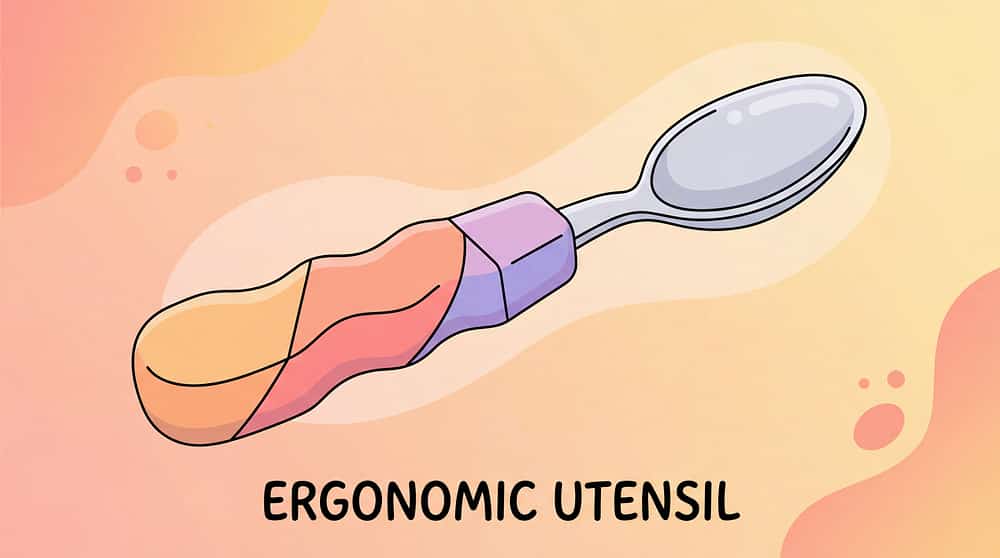
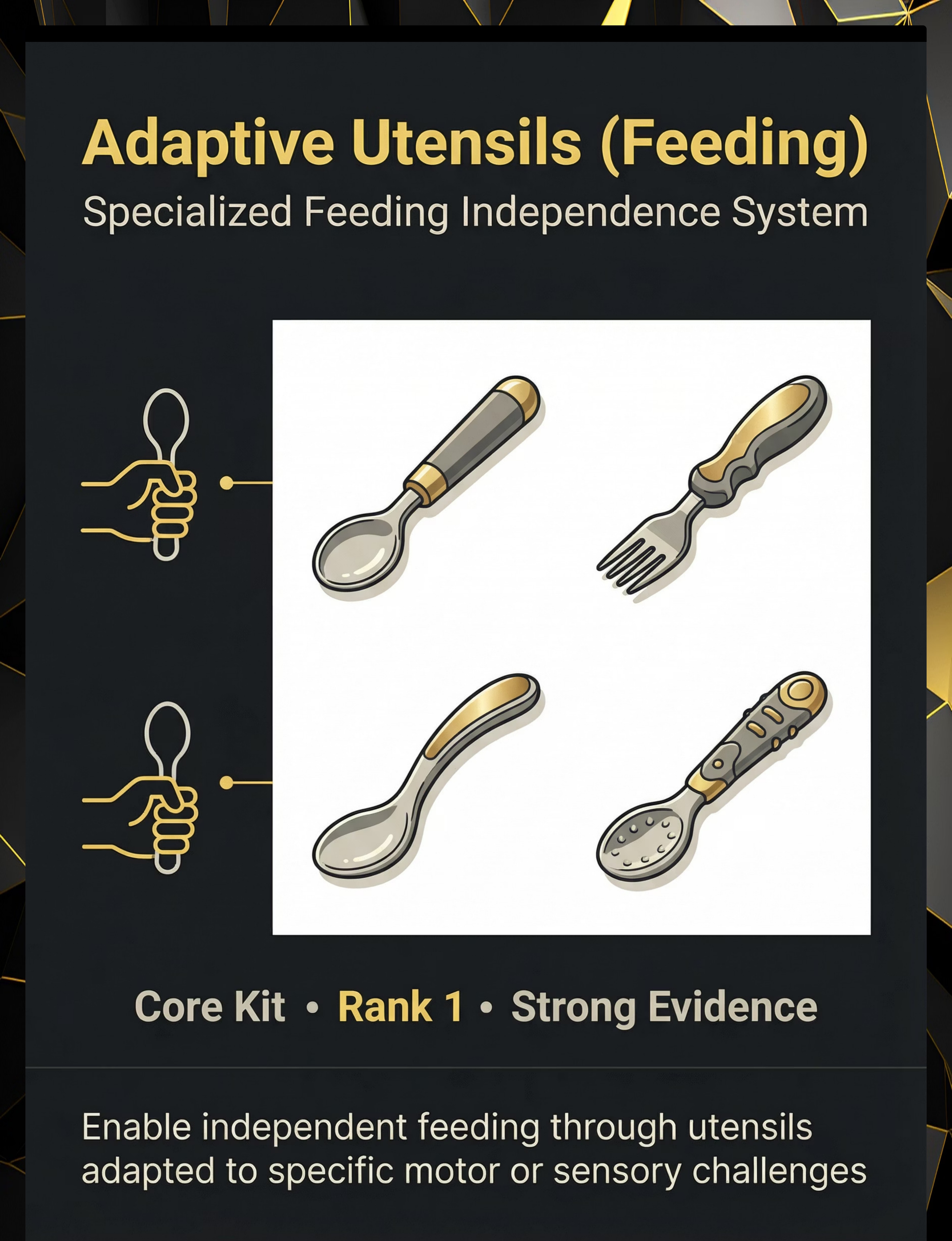
Adaptive Utensils (Feeding)
Specialized feeding independence system
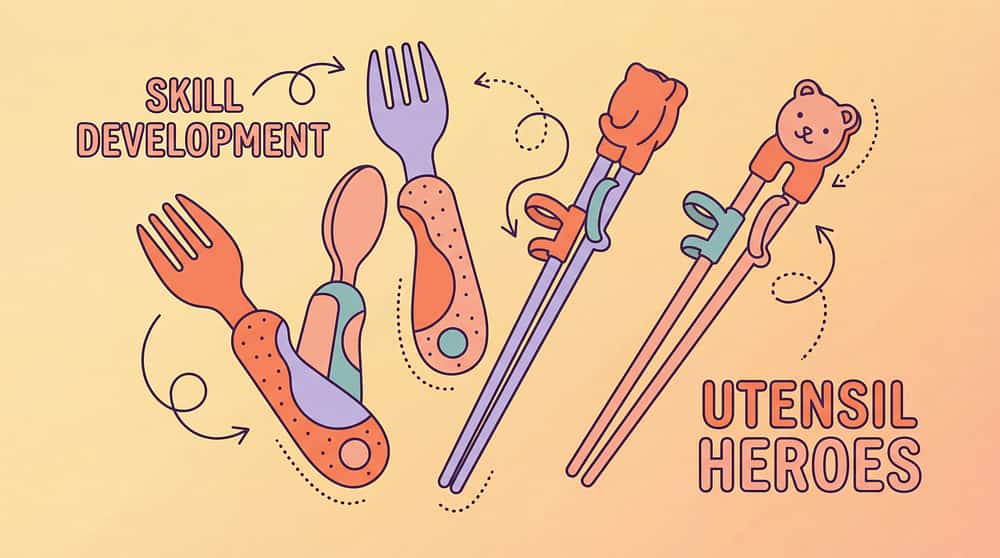
When the right utensil meets the right challenge, feeding transforms from frustrating struggle to achievable independence. These carefully designed adaptations enable children to feed themselves by addressing specific motor, sensory, and coordination challenges that make standard utensils difficult to use.
Who This Helps
Enable independent feeding through utensils adapted to specific motor or sensory challenges, supporting self-feeding, independence, motor accommodation, oral motor development, nutrition, and dignity.
Self-Feeding
Motor Accommodation
Oral Motor Support
Independence
Nutrition
Dignity
Ages 6 months+
Home
School
Clinic
Community
Children with tremors or coordination challenges
Weighted utensils provide stability, reducing shaking and helping food reach the mouth successfully
Children with weak grasp or grip difficulties
Built-up handles are easier to hold and maintain control throughout the meal
Children with limited wrist movement or oral motor needs
Curved utensils and specialized spoons compensate for range-of-motion limitations and support oral development
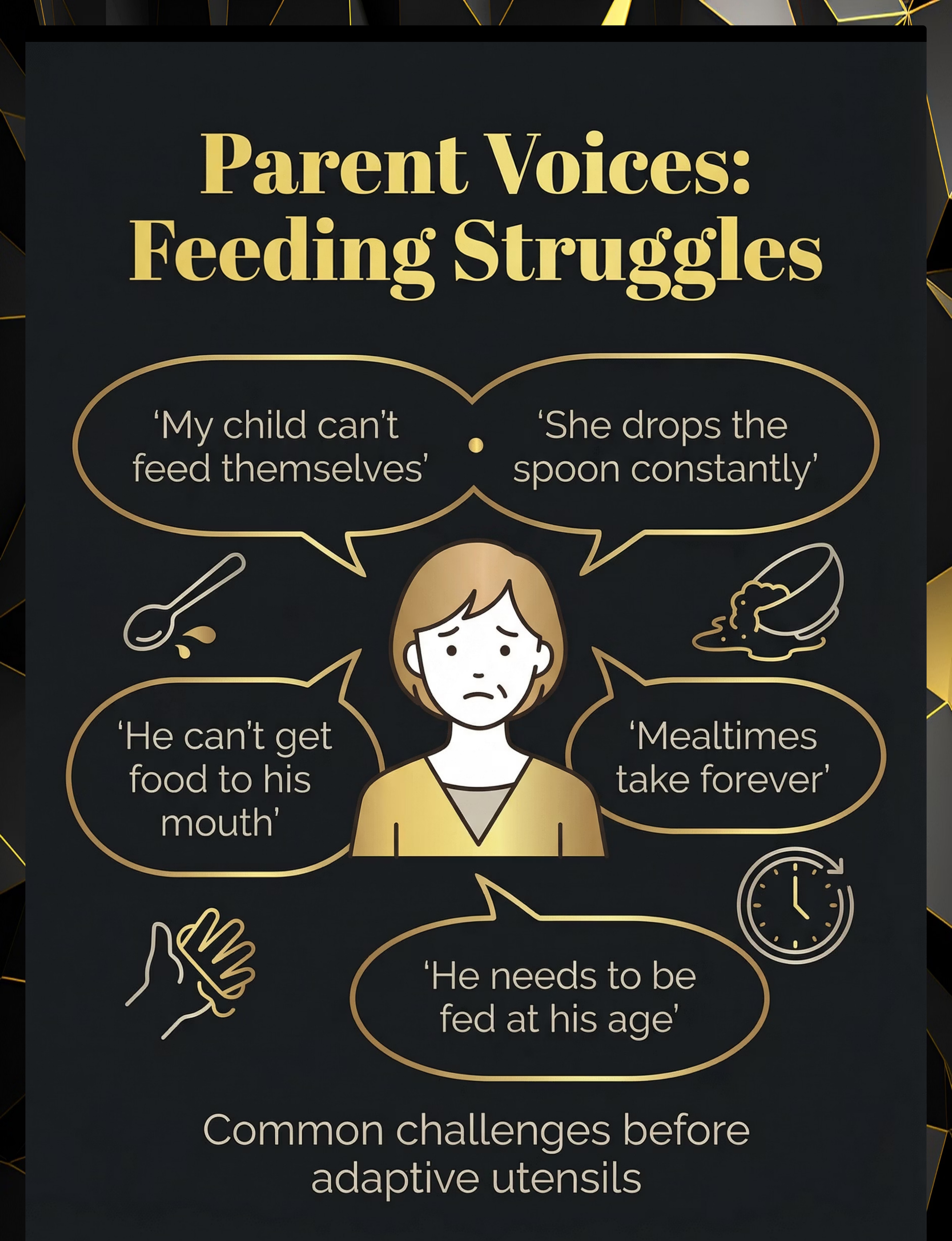
Does This Sound Familiar?
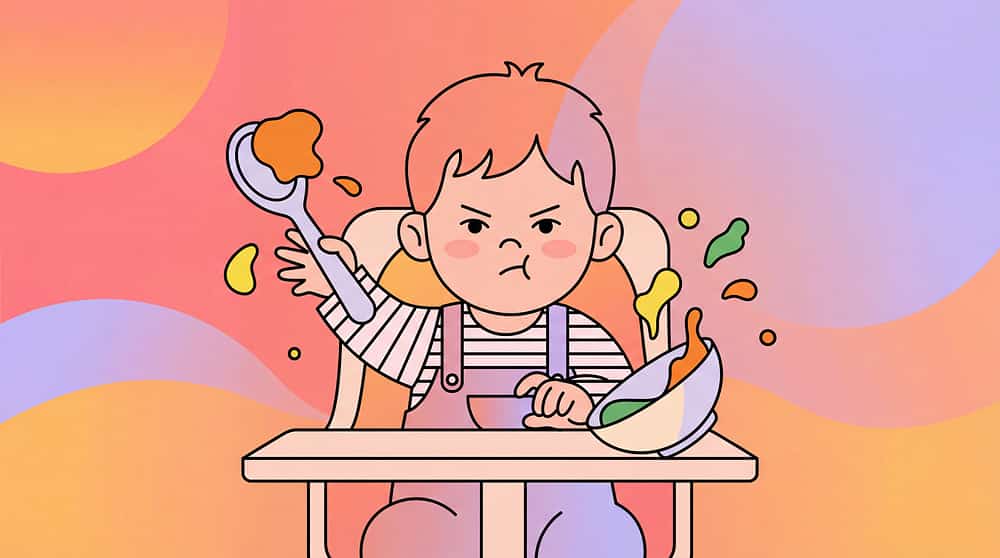
"My child can't feed themselves. She drops the spoon constantly and we end up having to do it for her. It breaks my heart."
"He can't get the food to his mouth. His hand just won't cooperate and the food falls everywhere before it reaches him."
"She makes a huge mess trying to eat. I know she's trying so hard, but it's just so difficult for her."
"He needs to be fed at his age. All his friends are eating independently and he still needs complete help. Mealtimes take forever."
You're not alone. These are common challenges faced by many families. The right adaptive utensil can transform mealtimes from struggle to success, restoring dignity and building independence one meal at a time.
A Day Without the Right Support
Morning Breakfast
Struggle begins early. Child can't hold cereal spoon. Parent has to feed while managing morning routine. Everyone starts the day frustrated. Independence missing from the start.
School Lunchtime
Peers eating independently while child needs assistance. Embarrassment and awareness of being different. Aide or teacher must help. Social isolation at lunch table grows.
Afternoon Snack
Another feeding moment becomes another reminder. Hand tremor makes yogurt spoon impossible. Mess everywhere. Clean-up takes longer than eating. Snack becomes a chore, not a pleasure.
Family Dinner
Should be together time but becomes stress. Child aware of needing help while siblings eat independently. Mealtime extended. Family conversation interrupted. Dignity impacted at day's end.
The Science Behind It
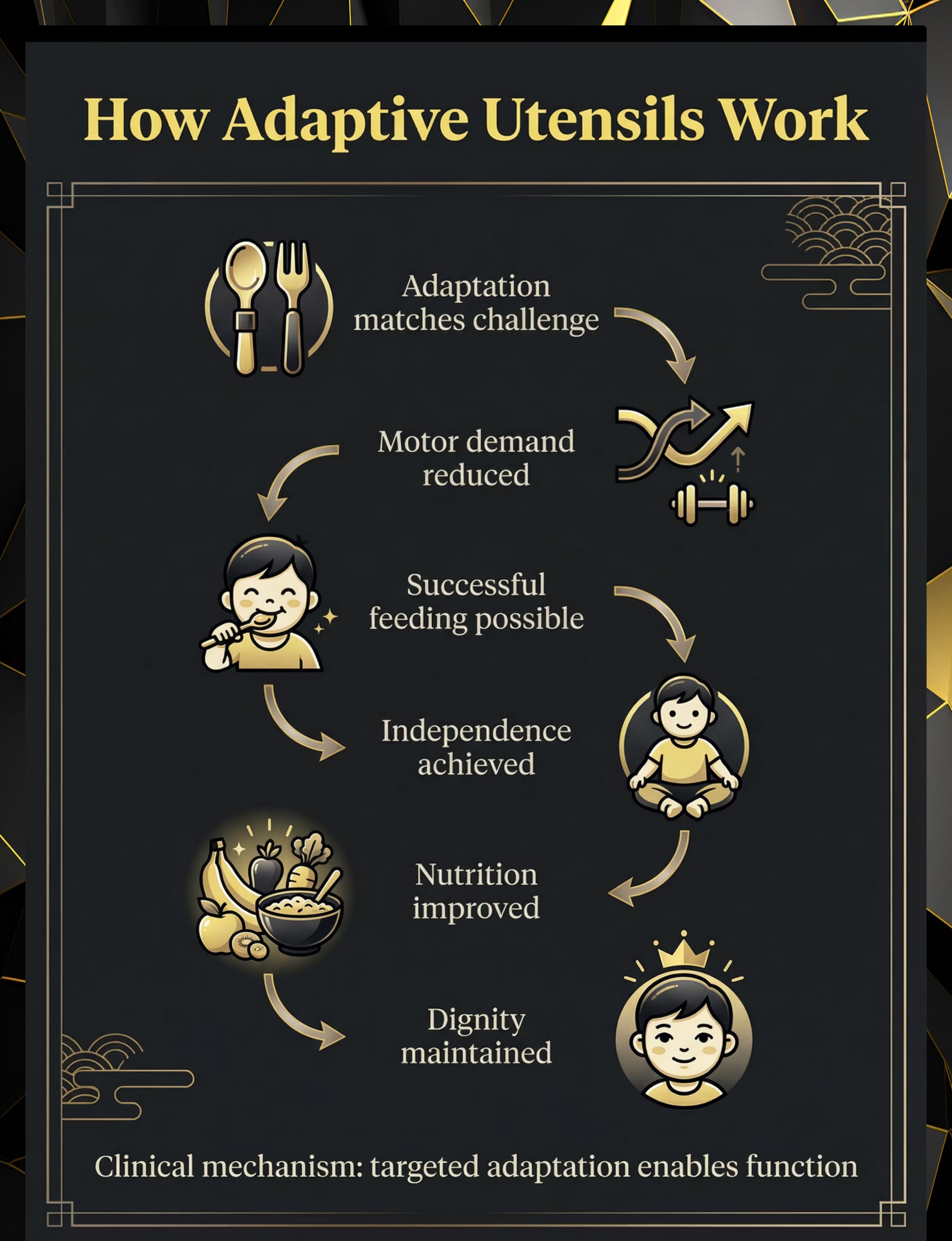
Understanding why adaptive utensils work reveals the elegant simplicity of matching solution to challenge. When motor or sensory barriers prevent successful feeding, precise adaptations create new pathways to independence.
Adaptation Matches Challenge
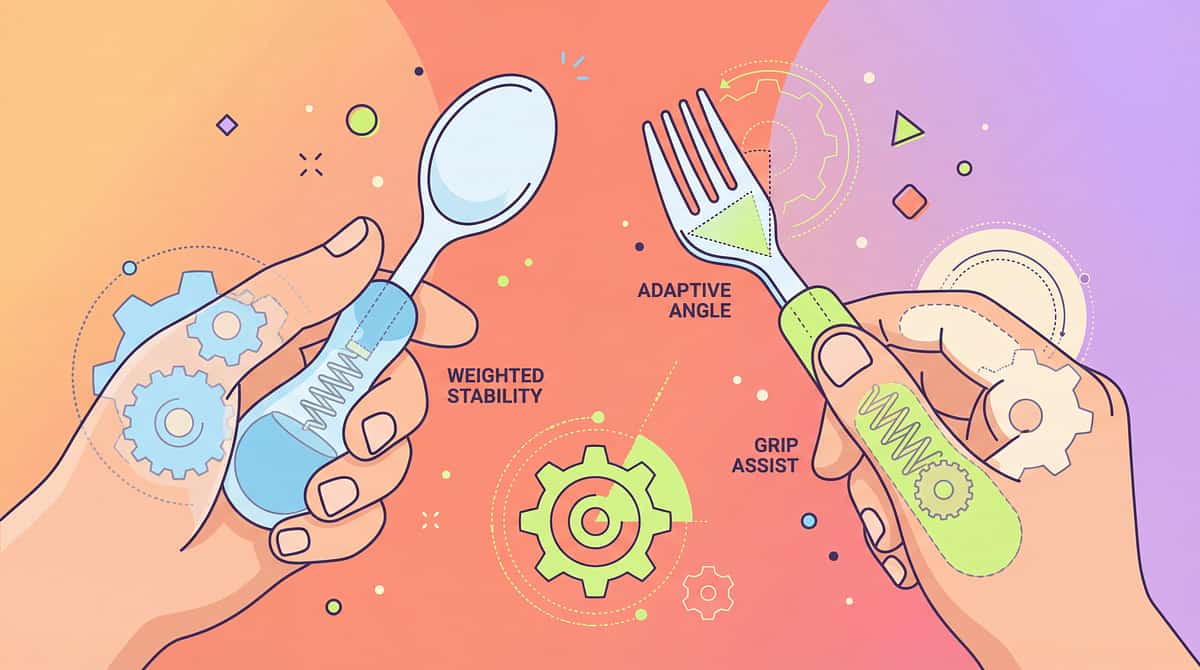
Weighted for tremor, built-up for weak grasp, angled for limited wrist - each adaptation targets a specific barrier
Motor Demand Reduced
The adaptation compensates for the limitation, lowering the physical requirement to achievable levels
Successful Feeding Possible
With reduced demands, child can now execute the feeding movement successfully
Independence Achieved
Repeated success builds confidence and skill, establishing self-feeding patterns
Nutrition & Dignity Maintained
Independent eating ensures adequate nutrition while preserving dignity and social participation
Self-Feeding
Independence
Motor Accommodation
Oral Motor Support
Nutrition
Dignity
How to Use It Right
Success with adaptive utensils depends on matching the right adaptation to the specific challenge and using it consistently with proper technique. These evidence-based practices optimize outcomes:
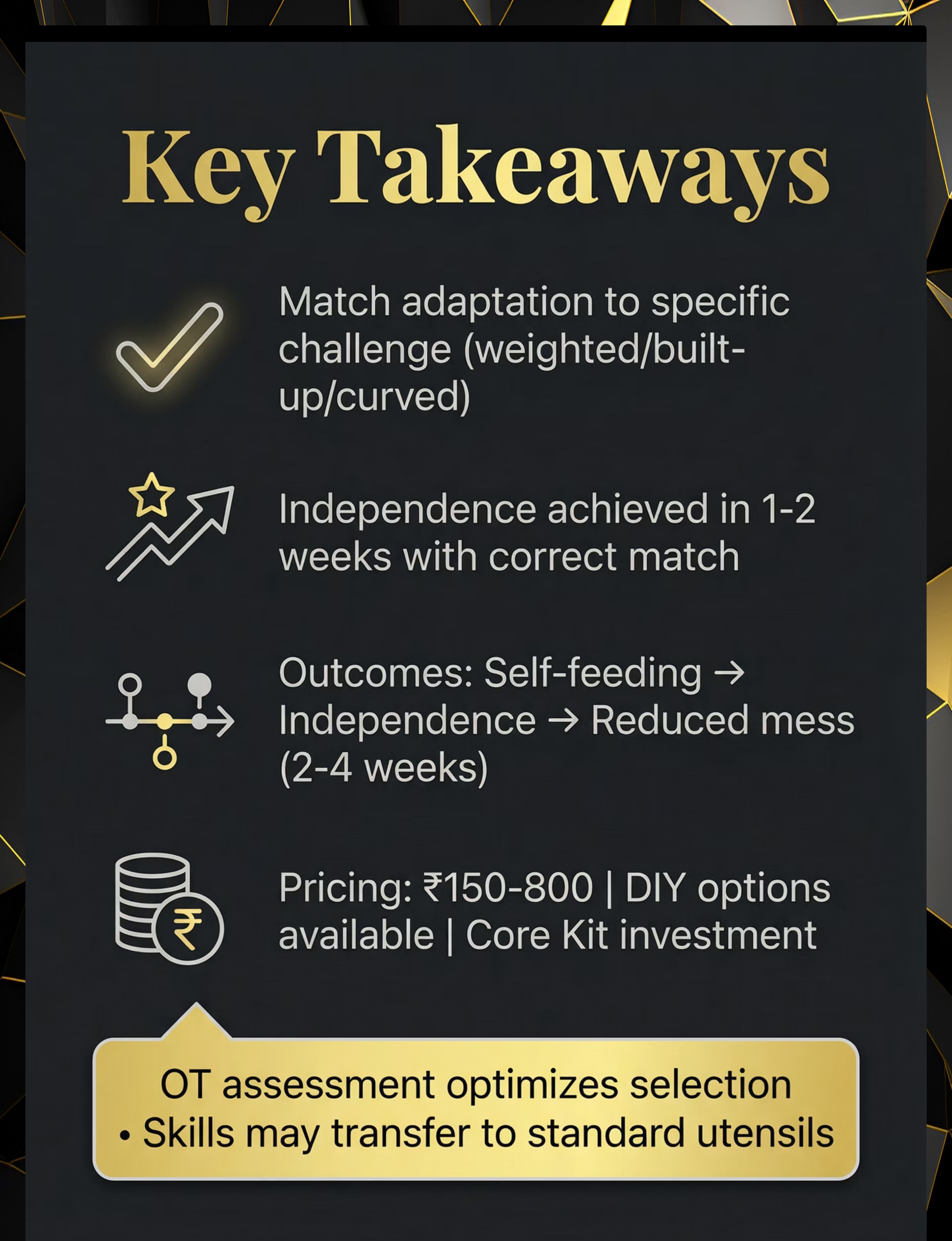
Match adaptation to specific challenge
Precise diagnosis of the feeding barrier ensures you select the utensil modification that addresses the root cause, not just symptoms
Try before buying if possible
Many therapy clinics and medical supply stores offer trial programs, allowing you to confirm effectiveness before investment
Consider multiple challenges
Some children benefit from combined adaptations like weighted AND built-up handles for complex motor patterns
OT assessment optimizes selection
Professional evaluation identifies subtle factors that influence adaptation choice, improving success rates
Transition to standard utensils if possible
For some children, adapted utensils are a bridge to typical utensils; track progress and transition when skills develop
Multiple sets for different locations
Having adapted utensils at home, school, and grandparents' ensures consistency across all feeding environments

Duration: Every meal; ongoing as needed. Consistency across all feeding opportunities builds skills fastest.
Expert Perspective
adaptive-utensils-feeding therapy material
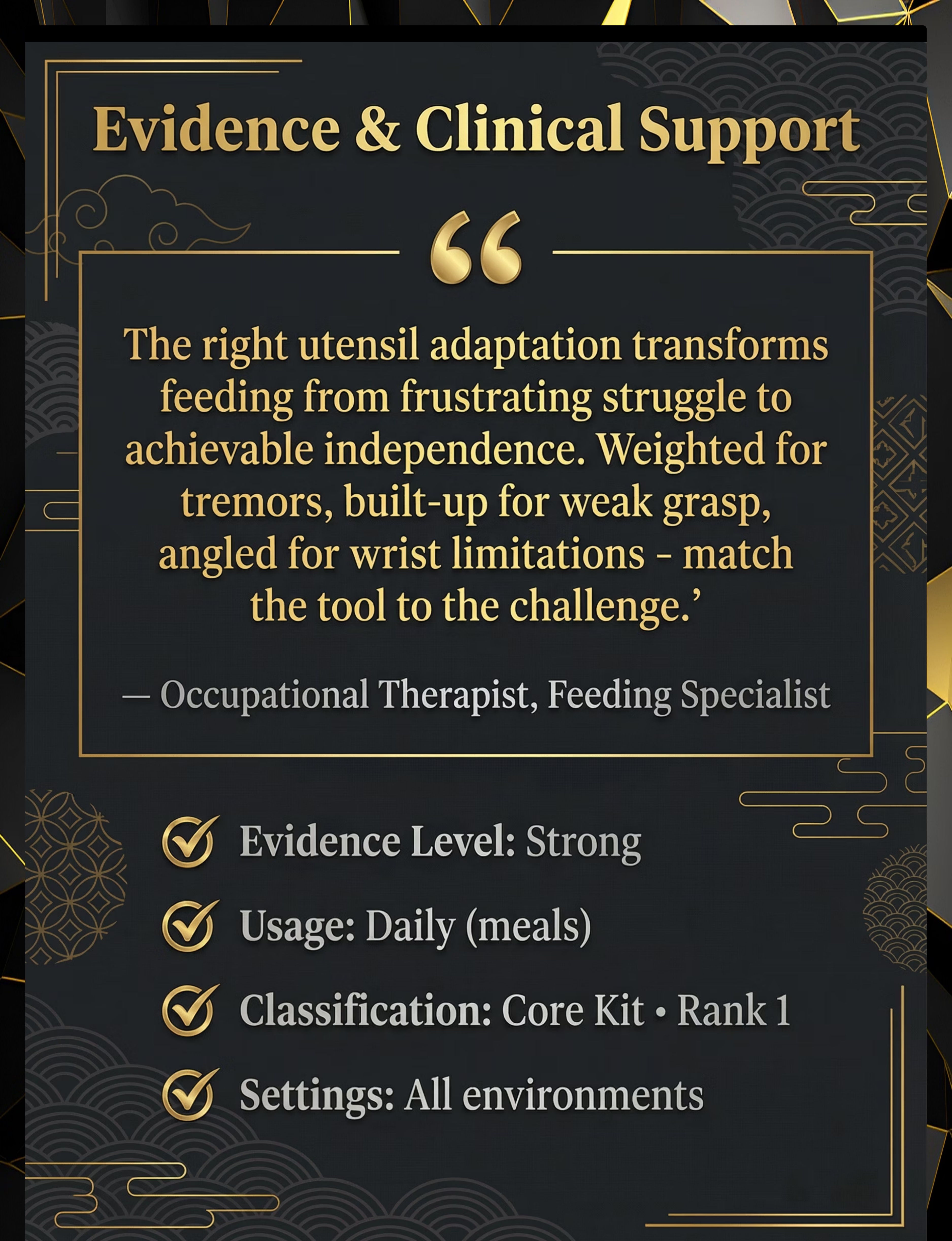
"The right utensil adaptation transforms feeding from frustrating struggle to achievable independence. Weighted for tremors, built-up for weak grasp, angled for wrist limitations - match the tool to the challenge."
— Occupational Therapist, Feeding Specialist
OT + SLP Recommended
Co-owned by both occupational therapy and speech-language pathology disciplines
Strong Evidence
Research-backed effectiveness for feeding independence
Rank #1 in Category
Top-ranked tool in Oral Motor & Feeding category
Core Kit Essential
Foundational tool for feeding support programs
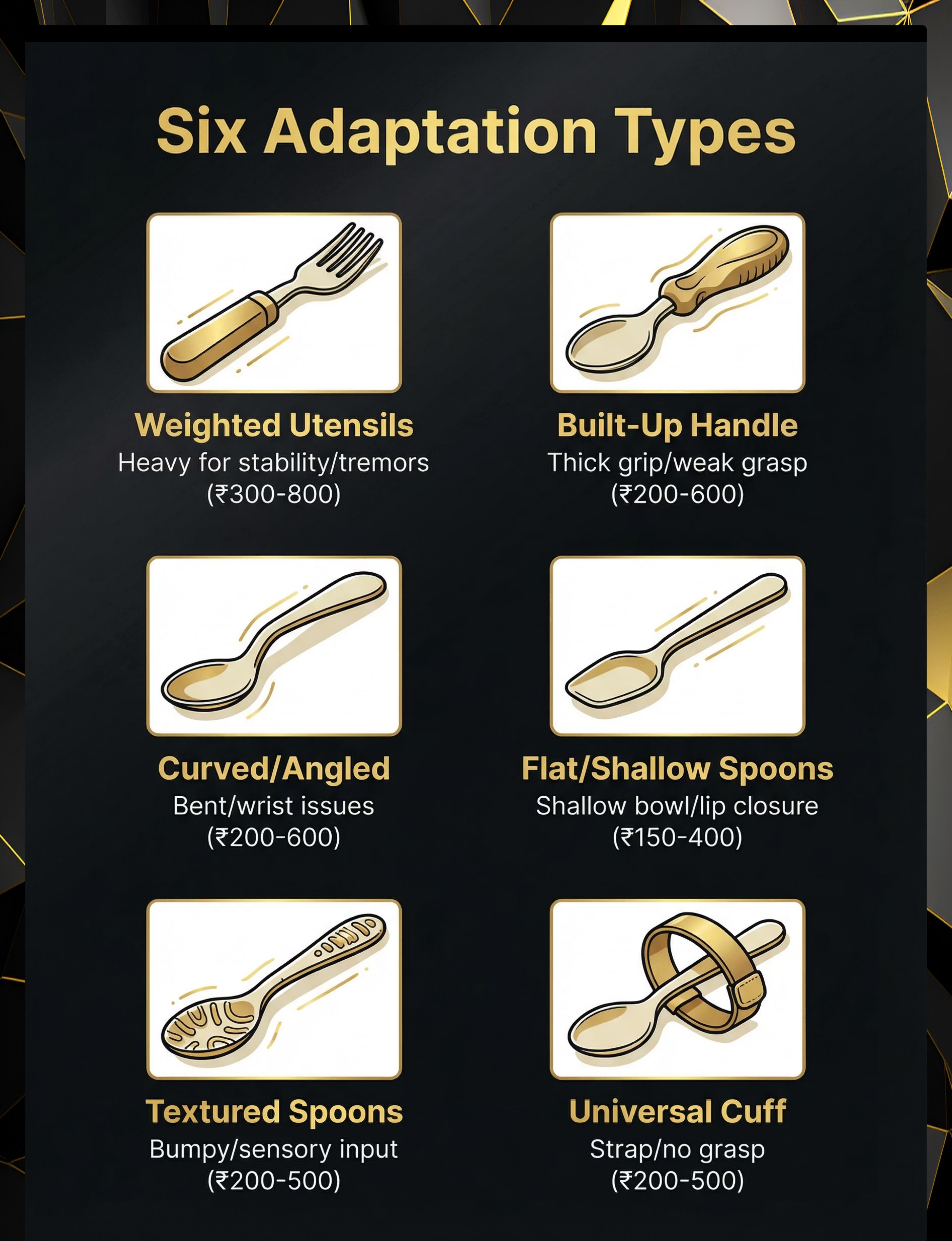
Choose Your Option (6 Variants)
adaptive-utensils-feeding therapy material
Weighted Utensils
Type: Proprioceptive assistance | Size: Heavy utensils for stability
Best for: Tremors, seeking input, coordination issues
Ages: 2+ years | Settings: All
Portability: High | Price: ₹300–800
  • Added weight dampens tremors and provides stabilizing feedback
  • Improves accuracy in getting food to mouth
  • Reduces spills from shaking movements
Built-Up Handle Utensils
Type: Grasp accommodation | Size: Thick, easy-grip handles
Best for: Weak grasp, arthritis-like grip issues
Ages: 2+ years | Settings: All
Portability: High | Price: ₹200–600
  • Larger diameter requires less grip strength to maintain hold
  • Soft materials add comfort and friction
  • Enables grasp with limited hand function
Curved/Angled Utensils
Type: Wrist accommodation | Size: Bent handles for easier access
Best for: Limited wrist rotation, motor planning
Ages: 2+ years | Settings: All
Portability: High | Price: ₹200–600
  • Pre-angled design compensates for limited wrist movement
  • Brings food to mouth without full supination
  • Reduces compensatory shoulder/elbow movement
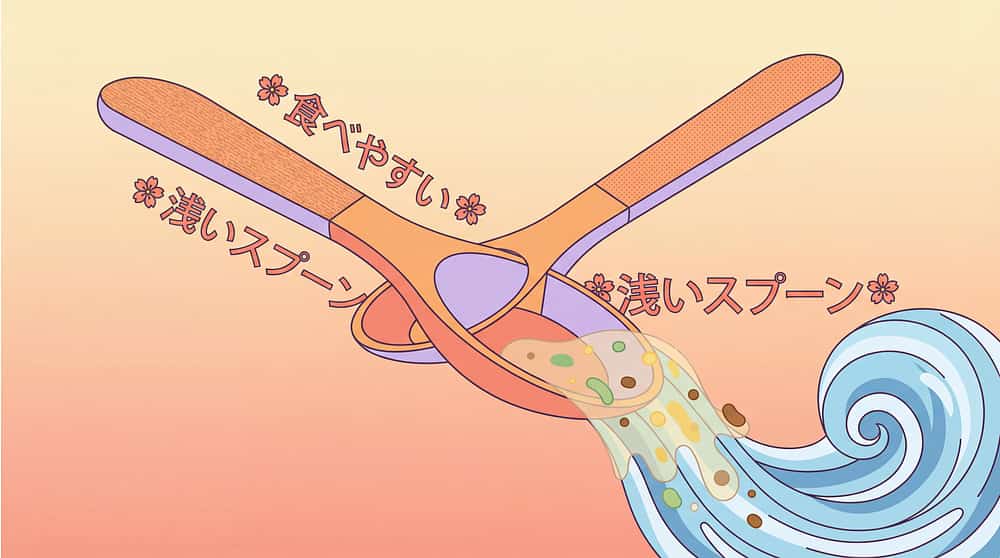
Flat/Shallow Spoons
Type: Oral motor accommodation | Size: Spoons with shallow bowls
Best for: Lip closure difficulty, learning to eat from spoon
Ages: 6 months+ | Settings: Home, Clinic
Portability: High | Price: ₹150–400
  • Shallow bowl easier to clear with immature lip movement
  • Supports oral motor skill development
  • Reduces gagging from excessive food volume
Textured Spoons
Type: Oral sensory input | Size: Spoons with bumpy texture
Best for: Low oral awareness, increased sensory input
Ages: 6 months+ | Settings: Home, Clinic
Portability: High | Price: ₹200–500
  • Textured surface increases oral sensory feedback
  • Improves awareness of spoon in mouth
  • Supports sensory integration during feeding
Universal Cuff/Utensil Holder
Type: Grasp replacement | Size: Strap holding utensil to hand
Best for: Cannot maintain grasp at all
Ages: All ages | Settings: All
Portability: High | Price: ₹200–500
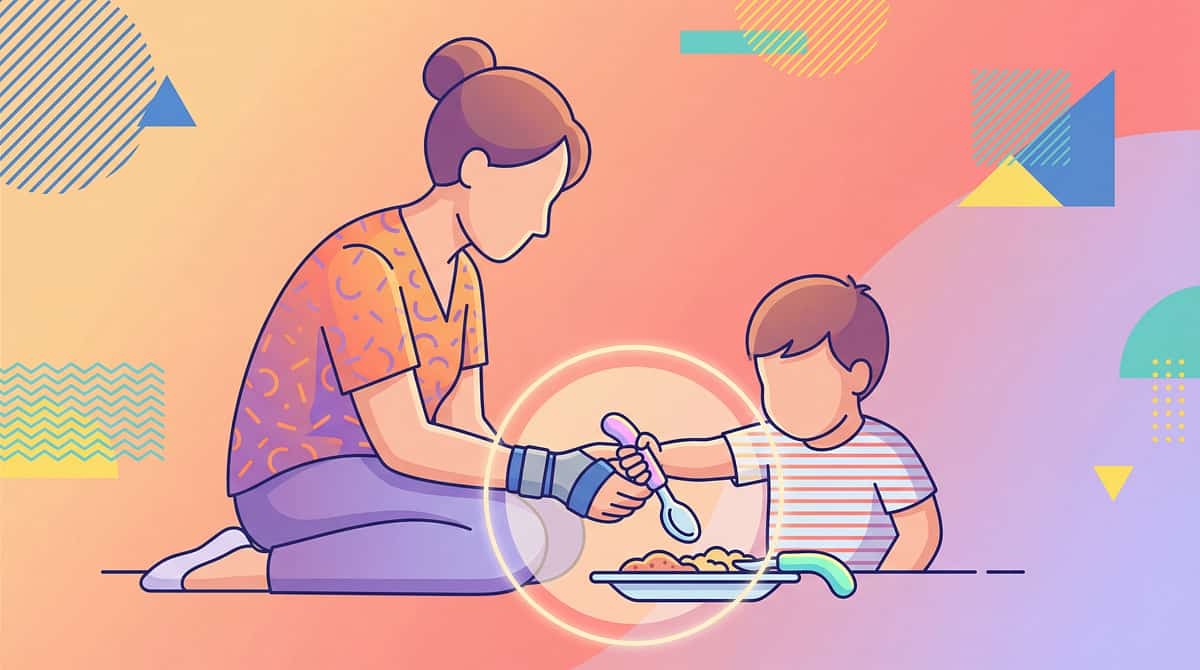
  • Secures utensil to hand when grasp impossible
  • Enables self-feeding without hand closure
  • Adjustable for different hand sizes
Each adaptation addresses specific feeding challenges. Understanding the relationship between challenge and solution ensures optimal selection for your child's unique needs.

How to Choose
By Challenge: Shaky/tremor → weighted | Weak grip → built-up | Wrist limited → curved | Oral motor → shallow or textured | No grasp → cuff
By Setting: All variants work in all settings due to high portability
By Goal: Independence at meals, reduced mess, dignity, improved nutrition
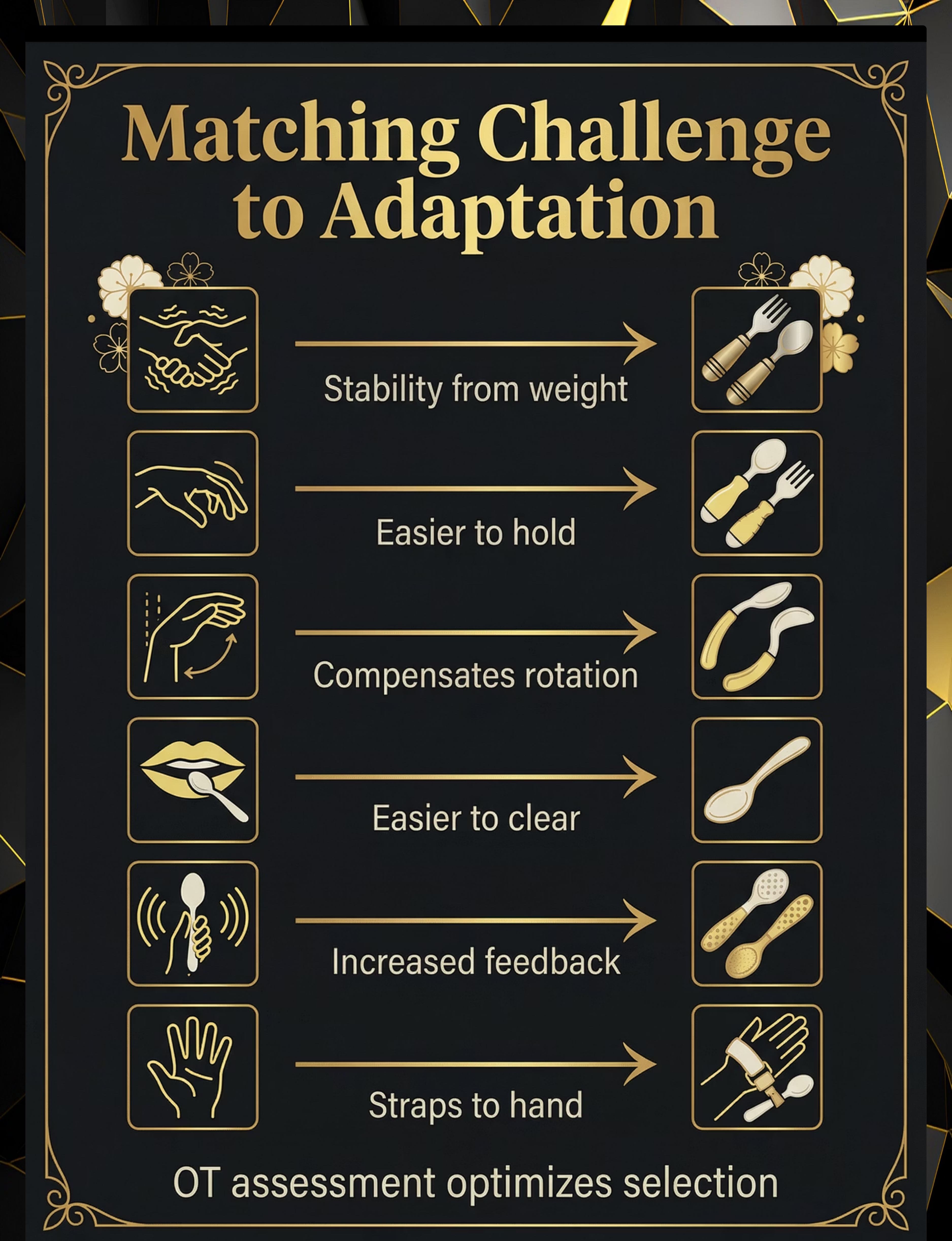
Adaptation Selection Guide
Precise matching between challenge and adaptation is the foundation of success. This guide connects specific feeding barriers to their most effective utensil modifications.
Tremors/Shaking
Weighted utensils provide stability from weight, dampening tremor and improving food transport accuracy
Weak Grasp
Built-up handles are easier to hold, requiring less grip strength to maintain control throughout the meal
Limited Wrist
Curved/angled utensils compensate for rotation limitations, bringing food to mouth without full supination
Lip Closure Issues
Shallow spoons are easier to clear with lips, supporting oral motor development and reducing spillage
Low Oral Awareness
Textured spoons provide increased sensory feedback, improving awareness of utensil and food in mouth
Cannot Grasp
Universal cuff straps utensil to hand, enabling self-feeding when hand closure is impossible
Key Features to Verify
  • Correct adaptation type for your child's challenge
  • Food-safe materials (stainless steel, silicone)
  • Appropriate size for child's hand and mouth
  • Durable construction for daily use
Materials to Look For
  • Stainless steel for durability
  • Food-grade silicone for soft components
  • Weighted materials safely enclosed
  • Soft grips that are easy to clean
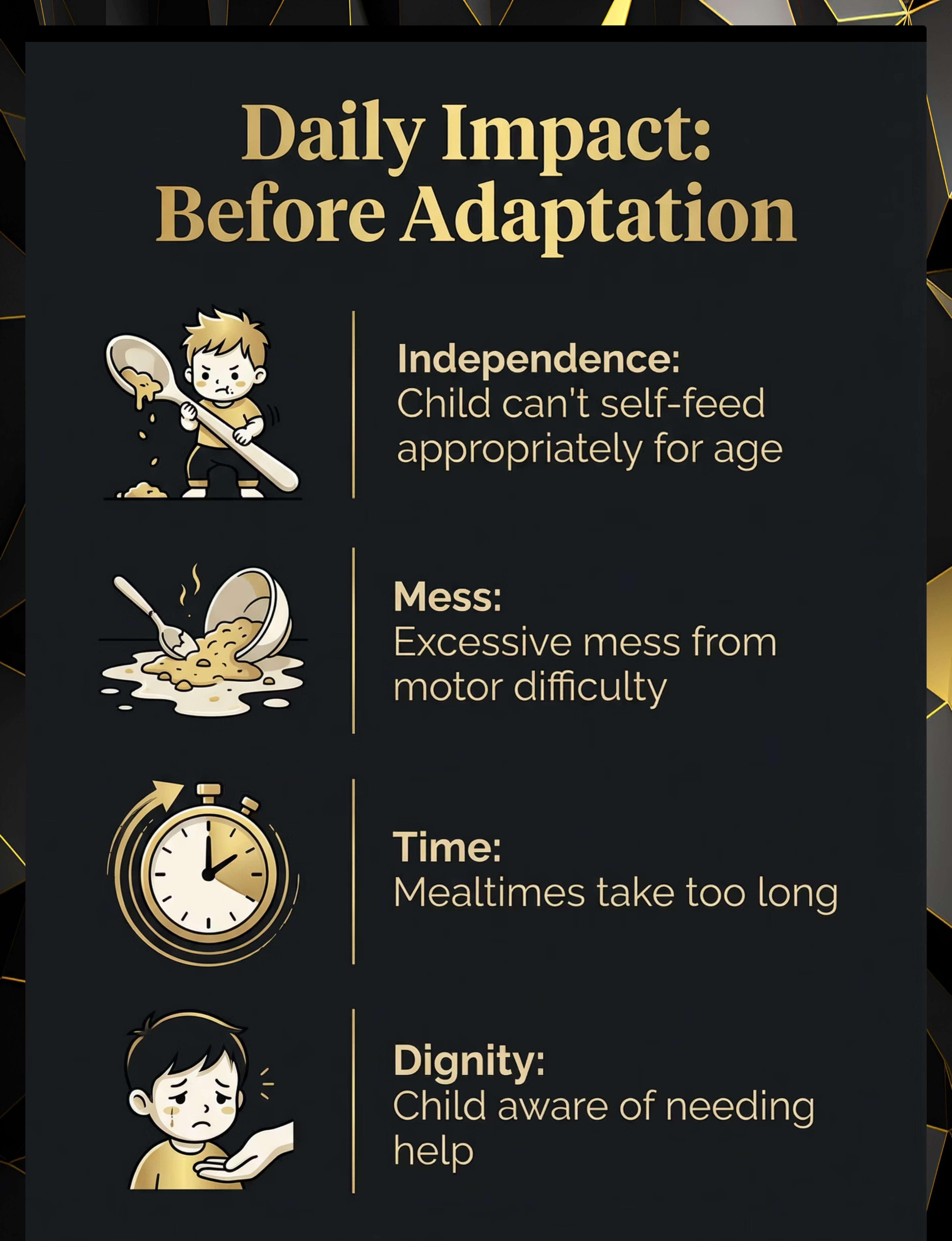
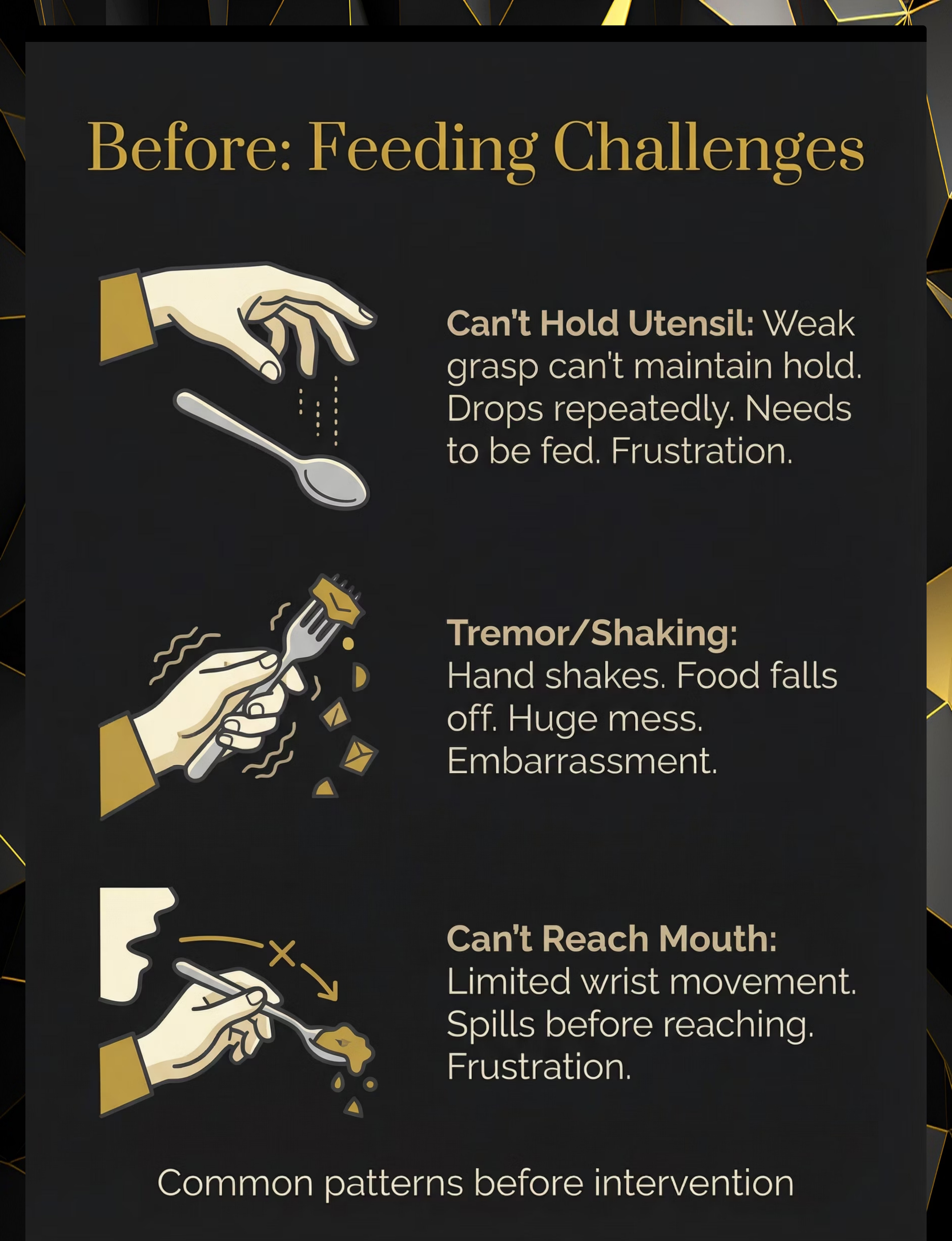
The Struggle (Before)
Before adaptive utensils, feeding challenges create daily frustration, dependence, and diminished dignity. These scenarios reflect the real experiences of families navigating mealtimes without proper support.
Can't Hold Utensil
Situation: Child's weak grasp can't maintain hold on standard utensils. Drops spoon repeatedly throughout every meal.
Experience: Needs to be fed like a much younger child. Independence is completely missing from mealtimes. Parents must be present for every bite.
Emotion: Frustration builds with each dropped utensil. Dependence feels permanent. Child aware of peers eating independently.
Tremor/Shaking
Situation: Child's hand shakes uncontrollably when attempting to use utensils. Food falls off spoon before reaching mouth.
Experience: Makes huge mess at every meal. Food everywhere - table, floor, clothes. Takes twice as long to eat. Embarrassed at meals with others.
Emotion: Embarrassment and isolation. Mess creates shame. Avoids eating in front of peers. Social meals become anxiety triggers.
Can't Get Food to Mouth
Situation: Child can hold utensil but can't navigate it to mouth. Limited wrist movement prevents proper angle.
Experience: Food spills before reaching mouth. Compensatory movements with whole arm cause fatigue. Meals exhausting and unsuccessful.
Emotion: Frustration with body's limitations. Exhaustion from effort. Defeated feeling after each failed attempt to self-feed.
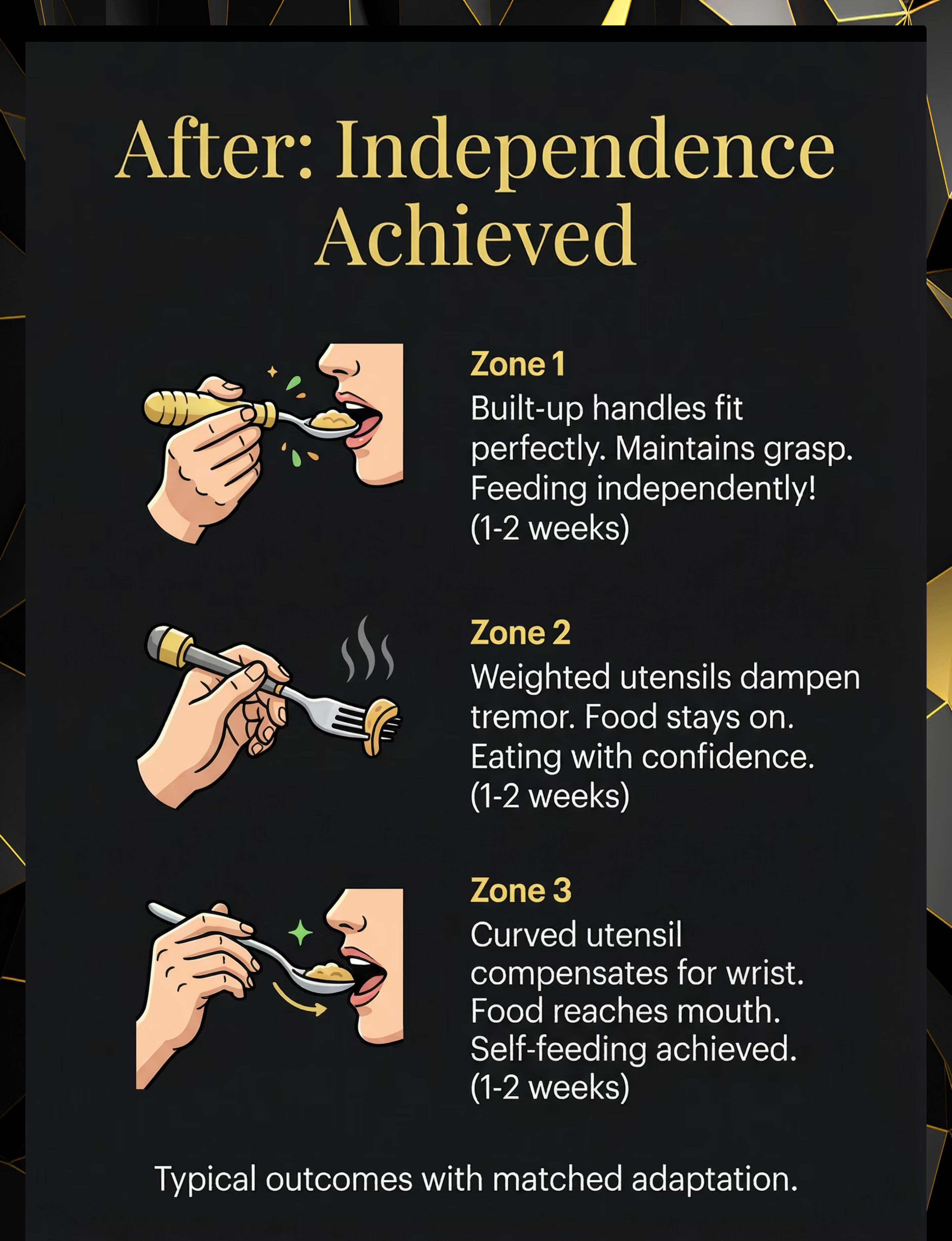
The Transformation (After)
Witness the profound positive shift that adaptive utensils bring to children's lives. From daily frustration to newfound confidence, these tools unlock independence and transform mealtimes into joyful experiences for the entire family.
Week 1-2: Initial Success & Confidence
The first attempts yield immediate relief. Less food spills, grip is secure, and the child's face lights up with a sense of accomplishment. Frustration is replaced with pride as they successfully bring food to their mouth.
Week 3-4: Growing Mealtime Independence
Confidence blossoms as the child consistently feeds themselves, requiring less parental assistance. Mealtimes become quicker and more relaxed, fostering a sense of self-reliance and joy. Parents feel less stressed and more connected.
Month 2: Improved Social Participation
The child actively participates in family meals and social gatherings, no longer avoiding them due to mess or embarrassment. They feel normal and included, building vital social connections and reducing anxiety around food.
Month 3+: Long-term Dignity & Autonomy
Adaptive utensils become a natural extension, enabling full independent feeding. The focus shifts to nutrition and enjoyment, restoring dignity and a strong sense of autonomy, profoundly boosting self-esteem and family harmony.
What to Expect (Realistic Timelines)
Success with adaptive utensils follows predictable patterns when adaptations match challenges. These timeframes reflect typical progress for well-matched interventions with consistent use.
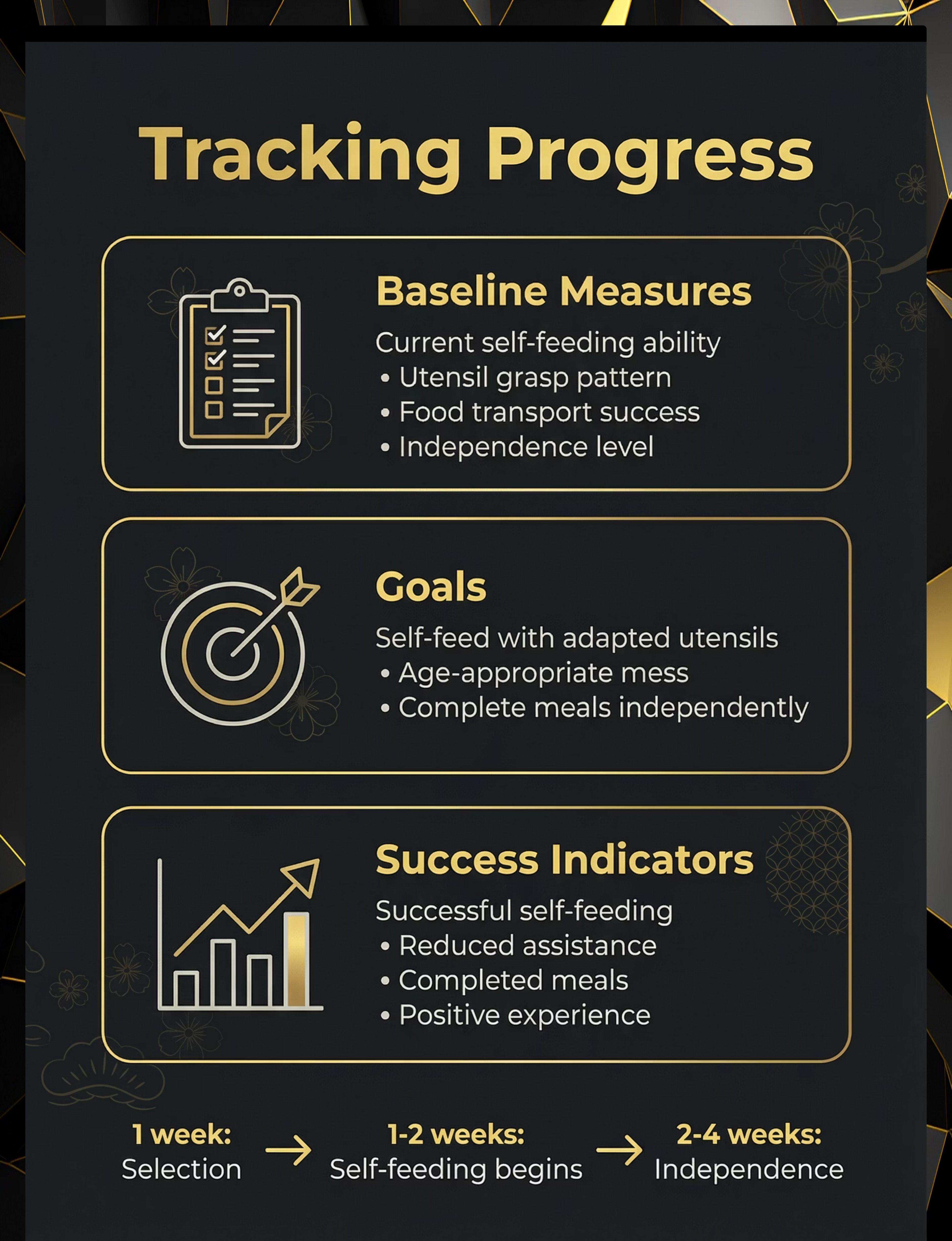
Adapted Utensil Selected
An OT assessment or careful matching process identifies the optimal adaptation type.
1 week
Self-feeding Begins
Child starts using adapted utensil successfully at meals, building initial confidence.
1-2 weeks
Mealtime Independence Achieved
Consistent self-feeding is established across meals; parent assistance is minimal or eliminated.
2-4 weeks
Reduced Mess & Frustration
Motor control improves, spillage decreases to age-appropriate levels, fostering positive mealtime experiences.
2-4 weeks
Potential Transition to Standard Utensils
For some children, skills develop enough to try regular utensils; others succeed long-term with adaptations.
3-6 months if appropriate

Remember: Not all children transition to standard utensils, and that's completely okay. Independent eating with adapted utensils is success. Function matters more than the specific tool used.
Is This Right for My Child? (2-Minute Check)
These screening questions help identify strong fit between your child's needs and adaptive utensil solutions. Honest answers guide optimal selection and set realistic expectations.
What is the main challenge with utensil use?
Understanding the primary barrier (grasp, tremor, wrist movement, oral motor) guides adaptation selection. Multiple challenges may require combined adaptations.
If you can identify specific challenge: This indicates strong likelihood of successful matching to appropriate adaptation.
95% confidence
Does your child have difficulty grasping utensils?
Weak grasp, inability to maintain hold, or dropping utensils frequently suggests built-up handle adaptations would help.
If yes: This indicates built-up handles may provide significant benefit and enable independent feeding.
92% confidence
Does food fall off the utensil due to shaking?
Tremor or coordination challenges that cause food to spill before reaching mouth respond well to weighted utensils.
If yes: This indicates weighted utensils may dampen tremor and dramatically improve feeding success.
90% confidence
Does your child have limited wrist movement?
Inability to rotate wrist fully or bring utensil to mouth angle suggests curved/angled adaptations would compensate effectively.
If yes: This indicates curved/angled utensils may compensate for range-of-motion limitations and enable access.
88% confidence
Scoring: 3+ "yes" answers = strong fit for adaptive utensils. Even 1-2 specific challenges warrant exploration of appropriate adaptations with OT guidance.
Usage Guide
When to Use
Category
Details
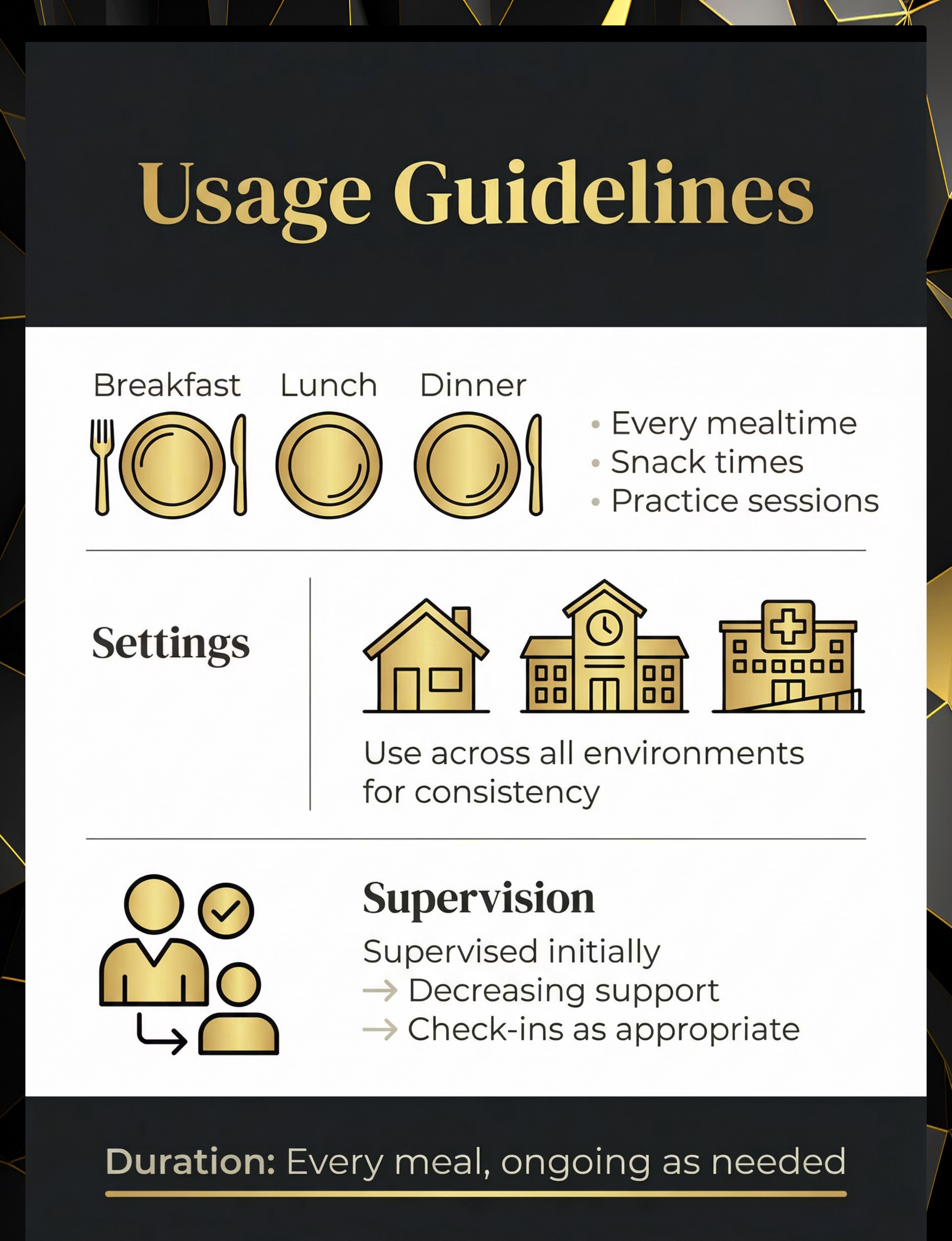
Every Mealtime
Breakfast, lunch, dinner
Snack Times
Throughout the day
All Settings
Home, school, or community
Practice Sessions
New foods or skills
When NOT to Use
Condition
Reason
Wrong adaptation type
Doesn't address the actual challenge
Increased frustration
Despite proper match or use
Damaged utensils
Sharp edges or compromised integrity
Supervision by Age & Skill
Stage
Supervision Level
Notes
Learning Phase
Full supervision at mealtimes
Adult present throughout meal; teaching proper use; ensuring safety
Developing Independence
Decreasing supervision
Adult nearby; periodic check-ins; child demonstrating skill
Independent Feeding
Check-ins as appropriate
Child feeds independently; adult available for support; age-appropriate autonomy
Optimal Settings
Home
School
Clinic
Community
All settings supported due to high portability of adapted utensils
Duration & Frequency
Duration: Every meal; ongoing as needed
Frequency: Daily use across all feeding opportunities
Consistency builds skill fastest; have sets at all locations
Safety First
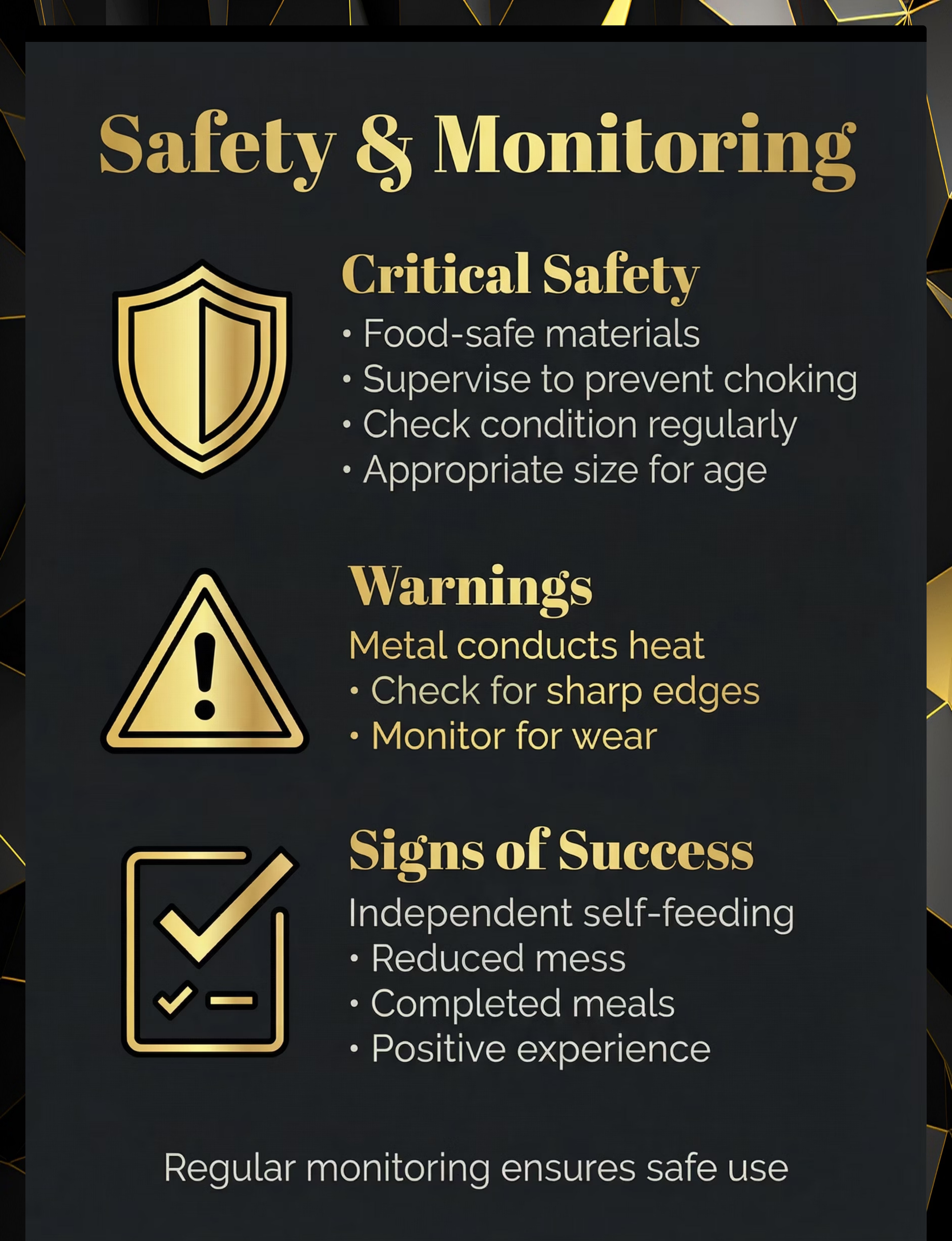
Critical Safety Requirements
  • Food-safe materials only (stainless steel, food-grade silicone)
  • Supervise to prevent choking, especially during learning phase
  • Check condition regularly for wear, damage, or sharp edges
  • Appropriate size for child's age, hand size, and oral cavity
Important Warnings
  • Metal utensils conduct heat - test temperature before giving to child
  • Check for sharp edges, especially on DIY modifications
  • Monitor for wear on grips, straps, and weighted components
Contraindicated - Do NOT Use
  • Non-food-safe materials (certain plastics, adhesives, coatings)
  • Wrong adaptation type for actual challenge (may worsen difficulty)
  • Damaged utensils with cracks, loose parts, or exposed sharp edges
Safety Checklist
Before Use
  • ✓ Utensil clean and intact
  • ✓ Correct adaptation for challenge
  • ✓ Child positioned properly
  • ✓ Appropriate food for skill level
During Use
  • ✓ Child using effectively
  • ✓ Successful food transport
  • ✓ Appropriate assistance level
  • ✓ Celebrating success
Signs of Success
  • ✓ Independent self-feeding
  • ✓ Reduced mess
  • ✓ Completed meals
  • ✓ Positive mealtime experience
Common Questions (Honest Answers)
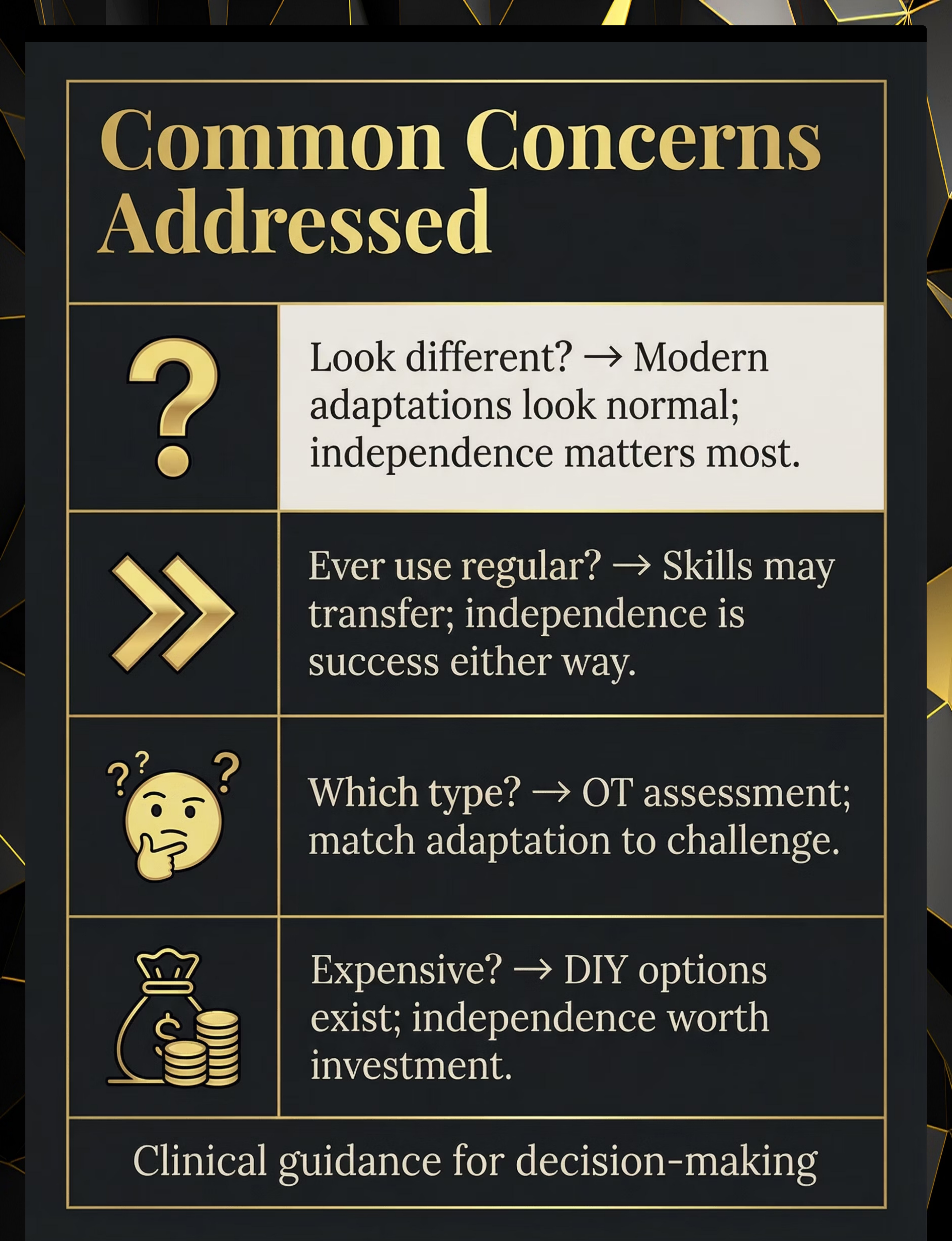
Q: They look different from regular utensils
A: Many adaptive utensils look quite normal now, with subtle modifications that aren't obvious to others. And here's the truth: dignity comes from independence, not from utensil appearance. Eating independently with an adapted tool matters infinitely more than how the fork looks to someone else.
Try this: Modern adaptations look increasingly normal; remember that independence matters most for your child's dignity and development.
Q: Will they ever use regular utensils?
A: Maybe! For some children, skills built with adapted utensils can transfer to standard ones over time. But if not, that's completely okay. Independent eating with adapted utensils is genuine success. Focus on function and independence, not the specific tool being used.
Try this: Skills may transfer over time; remember that independence with adapted utensils is success, regardless of future transition.
Q: I don't know which adaptation to get
A: OT assessment is ideal for precise matching. Generally: shaky/tremor = weighted, weak grip = built-up, wrist issues = curved, oral motor = shallow or textured. Start with one type based on primary challenge, then adjust based on actual results.
Try this: Seek OT assessment for optimal match; start with adaptation targeting primary challenge, refine based on success.
Q: They're expensive
A: Consider the cost of continued feeding assistance time, mess cleanup supplies, and most importantly, lost independence and dignity over months and years. DIY options exist for some adaptations like foam tubing for built-up handles. The investment in independence pays dividends in autonomy and dignity.
Try this: Explore DIY options for budget-conscious families; view as investment in independence that reduces long-term assistance needs.
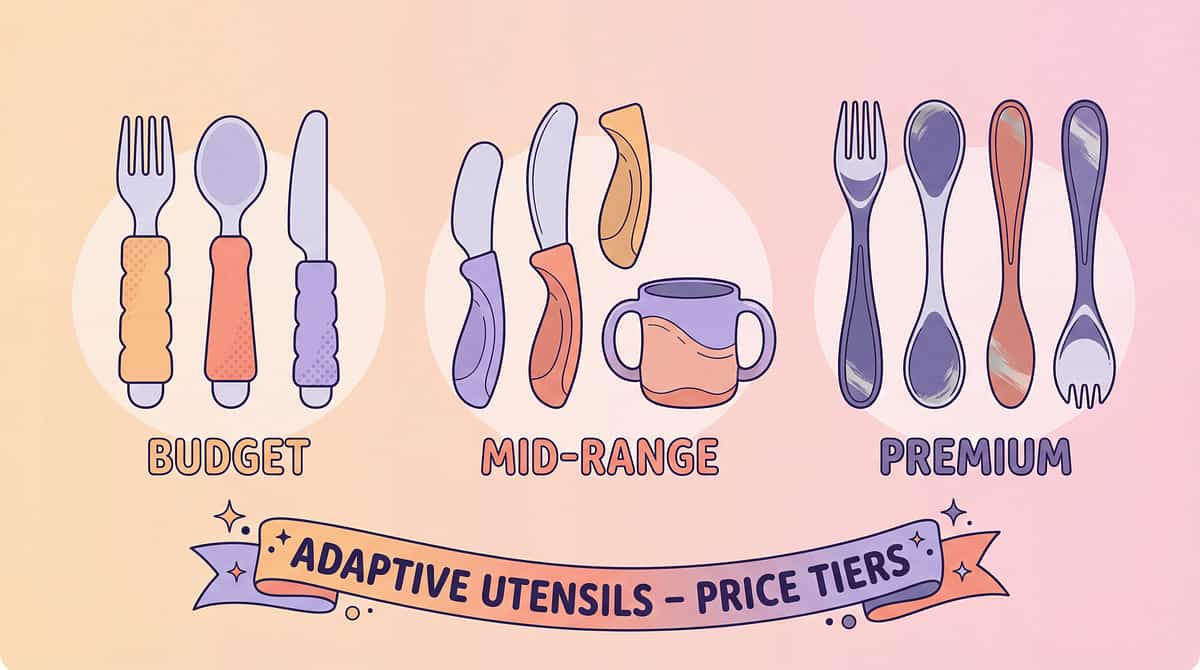
Investment Guide
Adaptive utensils span a range from budget-friendly DIY solutions to premium specialized sets. Understanding options across price points ensures accessibility while recognizing where investment in quality improves daily outcomes.
Feature
Budget Option
Premium Option
Cost Range
₹50-150
₹500-800
Primary Benefit
Effective grasp adaptation for weak grip challenges
Professional-grade adaptations for tremor/angle issues
Description
Simple foam pipe insulation slid over handles. Creates built-up grip at minimal cost.
Durable, high-quality materials. Often includes weighted or angled designs.
Brands
DIY (generic foam)
Homecraft, Sammons Preston, Good Grips
Durability
Moderate (foam may need replacement)
High (designed for years of daily use)
Customization
Highly customizable diameter
Limited to specific product designs
Suitability
Excellent starting point to test benefit for grasp issues
Optimal for complex challenges requiring precise weight or angle
Key Features
Cost-Effectiveness
DIY solutions offer an accessible entry point to adaptive feeding, minimizing initial financial outlay.
Enhanced Grip
Foam tubing provides a built-up handle, significantly improving grasp for individuals with weak grip.
Stability & Precision
Premium weighted or specialized utensils provide crucial stability for tremors and accommodate specific wrist limitations.
Long-Term Value
While a higher upfront cost, professional-grade utensils offer superior durability and optimal performance for complex needs.
Value Over Time
Initial Assessment
Identify primary feeding challenges (e.g., weak grasp, tremor, wrist issues) to guide initial choices.
Budget-Friendly Start
For grasp challenges, begin with DIY foam tubing to assess effectiveness without significant investment (₹50-150).
Targeted Investment
For tremor or wrist limitations, invest directly in quality weighted or angled utensils (₹400-800), as DIY alternatives are less effective.
Long-Term Independence
Regardless of initial choice, the investment in adaptive utensils pays dividends in enhanced autonomy and dignity, reducing long-term assistance needs.
Where to Buy in India
Availability: Moderately Available across online platforms and medical supply stores in major cities
Amazon.in
Search: "adaptive utensils"
Price Range: ₹300-700
Wide selection of types and brands; read reviews carefully
Amazon.in
Search: "weighted spoon"
Price Range: ₹400-800
Specialized weighted options for tremor and coordination challenges
Amazon.in
Search: "built up grip utensils"
Price Range: ₹200-500
Thick-handled options for weak grasp
Medical Supply Stores
Search: "adaptive feeding"
Price Range: ₹300-800
In-person assessment and trial possible in major cities
Amazon.in
Search: "foam tubing grip"
Price Range: ₹100-250
DIY material for creating built-up handles
Buying Tips
  • OT can recommend specific type based on assessment
  • Foam tubing is effective DIY solution for built-up handles
  • Consider your child's specific challenges before purchasing
  • Buy multiple utensils for use at home, school, and other locations
  • Quality matters for daily use - invest in durable options
Red Flags - Avoid These
  • Wrong adaptation type for your child's actual challenge
  • Non-food-safe materials or unknown material composition
  • Too heavy for your child to lift and control
  • Uncomfortable to hold or causing hand pain
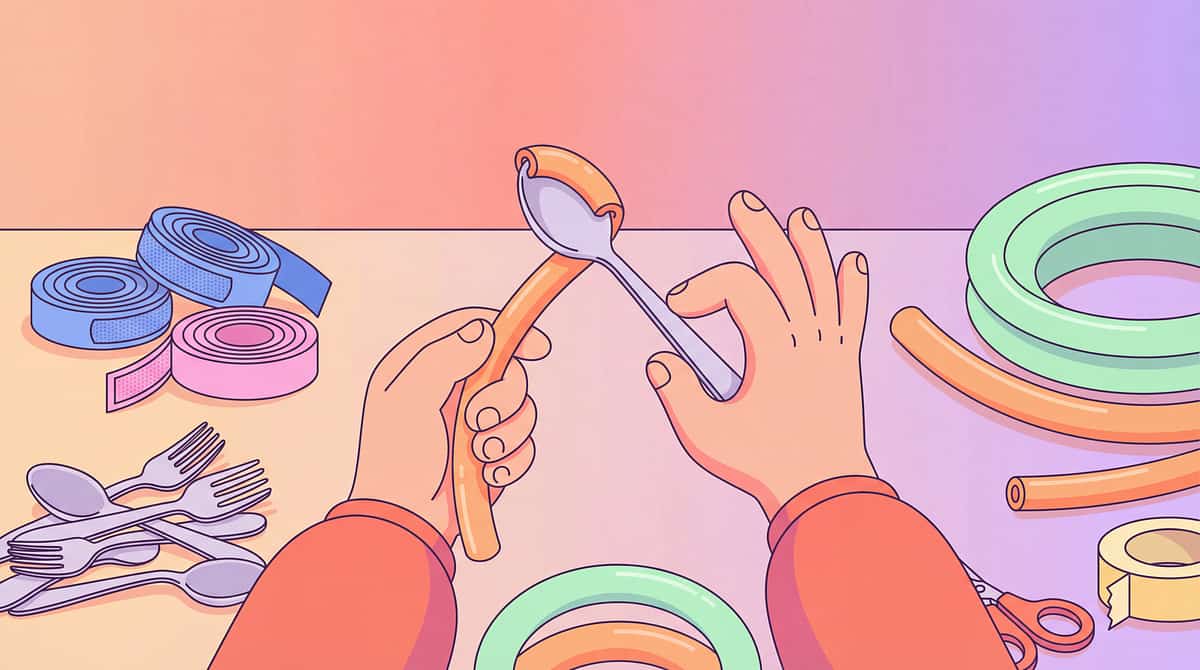
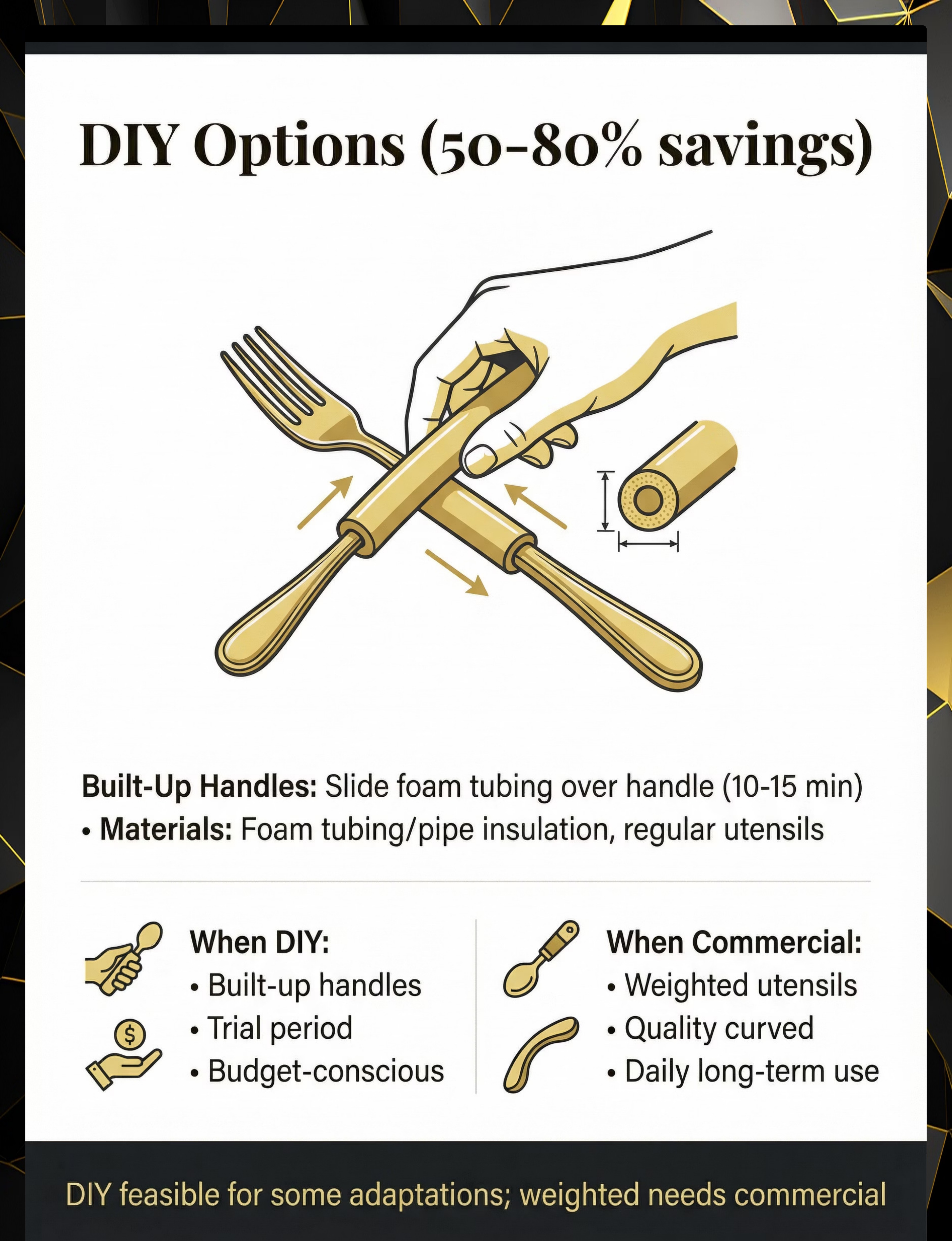
DIY Alternative (Save 50-80%)
Feasibility: Medium (some adaptations) | Time Required: 10-15 minutes | Cost Savings: 50-80%
Materials Needed
  • Foam tubing or pipe insulation
  • Regular utensils (spoons, forks)
  • Tape if needed for securing
  • For universal cuff: velcro strap material
What You Can DIY
  • Built-up handles (foam tubing) ✓
  • Weighted utensils ✗ (buy commercial)
  • Angled utensils (careful bending)
  • Universal cuff (velcro strap)
DIY Instructions
Built-up handles
Slide foam tubing or pipe insulation over utensil handle to increase diameter. Trim to appropriate length for comfort.
Weighted utensils
Difficult to DIY safely - weight must be properly balanced and securely enclosed. Recommend commercial products for weighted adaptations.
Angled utensils
Carefully bend metal spoon handle to desired angle, OR purchase commercial curved utensils for proper ergonomics and safety.
Grip assist
Wrap rubber band or textured material around handle to increase friction and tactile feedback.
Universal cuff
DIY possible with velcro strap material creating loop around hand with pocket for utensil handle. Measure carefully for proper fit.
DIY vs Commercial Comparison
When to DIY
  • Built-up handles (foam tubing)
  • Trial before buying commercial
  • Budget-conscious starting point
  • Testing whether adaptation helps
When to Buy Commercial
  • Weighted utensils (safety concern)
  • Quality curved utensils
  • Daily, long-term use
  • Specific therapeutic need
Tradeoffs
  • DIY less durable over time
  • Some adaptations need commercial
  • Commercial better for complex needs
  • DIY excellent for trial

Preview of adaptive utensils feeding Therapy Material

Below is a visual preview of adaptive utensils feeding therapy material. The pages shown help educators, therapists, and caregivers understand the structure and content of the resource before use. Materials should be used under appropriate professional guidance.

Page 1
Page 2
Page 3
Page 4
Page 5
Page 6
Page 7
Page 8
Page 9
Page 10
Page 11
Page 12
Page 13
Page 14
Page 15
Page 16
Page 17
Page 18
Page 19
Page 20
Link copied!
Measuring Success & Next Steps
Track Progress
Baseline (Measure First)
  • Current self-feeding ability level
  • Utensil grasp pattern description
  • Food transport success rate
  • Current independence level at meals
Goals to Set
  • Child will self-feed with adapted utensils
  • Mess will be age-appropriate
  • Meals completed independently
  • Transition to standard utensils if appropriate
Success Indicators
  • ✓ Successful self-feeding occurring
  • ✓ Reduced assistance needed
  • ✓ Appropriate mess level
  • ✓ Completed meals
  • ✓ Positive mealtime experience

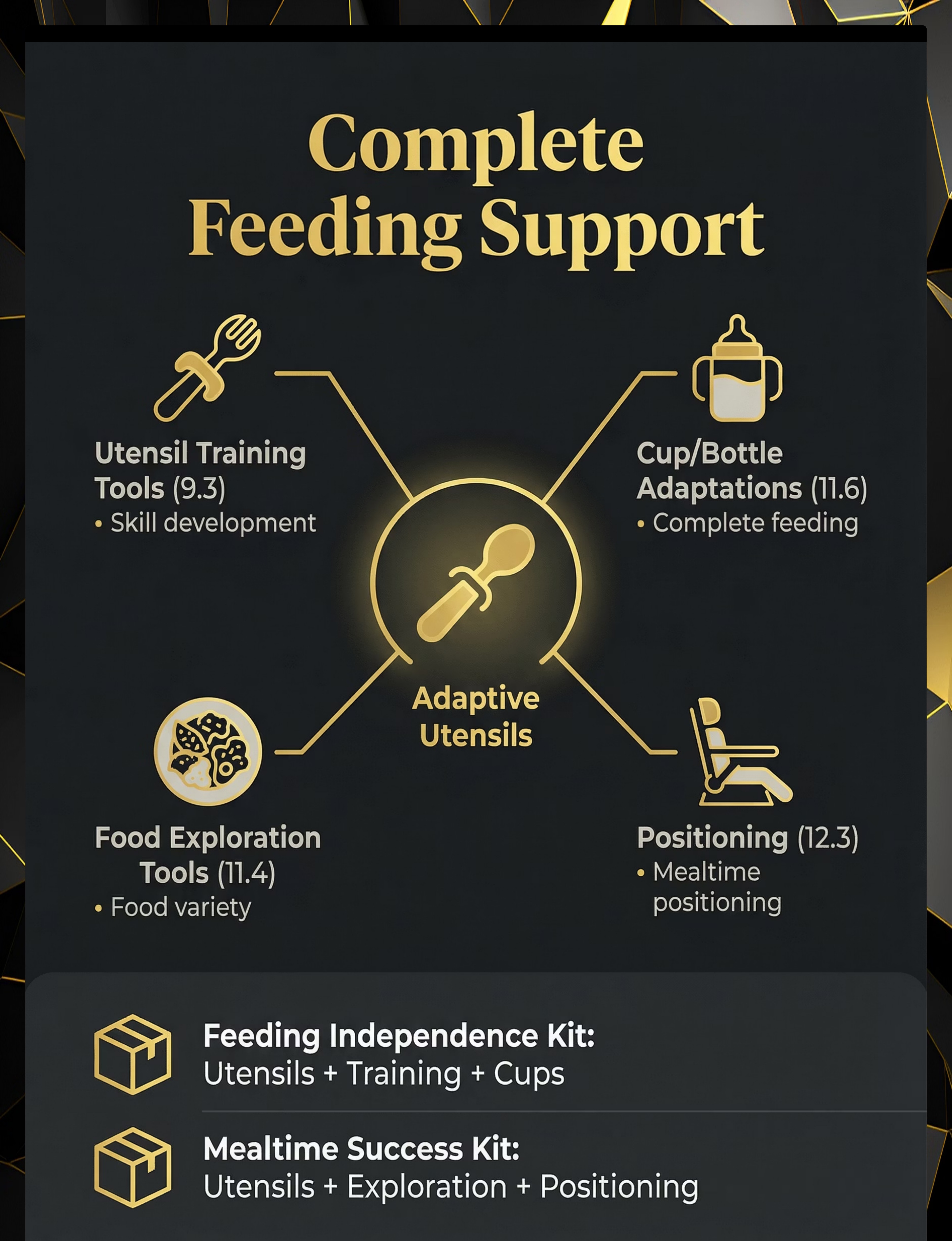
Complete the Kit - Pair It With...
These complementary tools work synergistically with adaptive utensils to create comprehensive feeding support:
Utensil Training Tools
Tool ID: 9.3
Why: Skill development - build foundational utensil skills that complement adaptive equipment use
Cup/Bottle Adaptations
Tool ID: 11.6
Why: Complete feeding independence - address drinking alongside eating for total mealtime autonomy
Food Exploration Tools
Tool ID: 11.4
Why: Food variety expansion - support willingness to try new foods while building utensil skills
Positioning Equipment
Tool ID: 12.3
Why: Optimal mealtime positioning - proper seating maximizes success with adapted utensils
Recommended Bundles
Feeding Independence Kit
Includes: Adaptive Utensils (11.5) + Utensil Training Tools (9.3) + Cup/Bottle Adaptations (11.6)
Use Case: Complete feeding support addressing eating and drinking independence together
Mealtime Success Kit
Includes: Adaptive Utensils (11.5) + Food Exploration Tools (11.4) + Positioning Equipment (12.3)
Use Case: Comprehensive mealtime support from positioning through food variety

Quick Summary
AI Summary: Adaptive feeding utensils enable independent eating by matching specific adaptations (weighted, built-up, curved) to motor and sensory challenges. Core Kit (Rank 1), strong evidence, essential feeding support.
utensils
adaptive
feeding
independence
motor
self-feeding
OT
SLP
core-kit
Common searches: adaptive utensils autism, weighted spoon kids, built up handle utensils, feeding therapy utensils, self feeding special needs, angled utensils, adapted cutlery

Get Support
FREE National Autism Helpline
Phone: 9100 181 181
Languages: 16+ languages supported
Website: pinnacleblooms.org
Access expert guidance on adaptive feeding solutions and comprehensive child development support
Platform Integration
Adaptive utensils integrate seamlessly with Pinnacle Blooms Network's therapeutic ecosystem:
  • AbilityScore® identifies feeding patterns and motor challenges requiring adaptation
  • TherapeuticAI® prescribes specific utensil adaptations matched to individual profiles
  • EverydayTherapyProgramme™ includes feeding independence goals with adaptive equipment
  • ADL Index tracks feeding independence progress over time with quantified outcomes

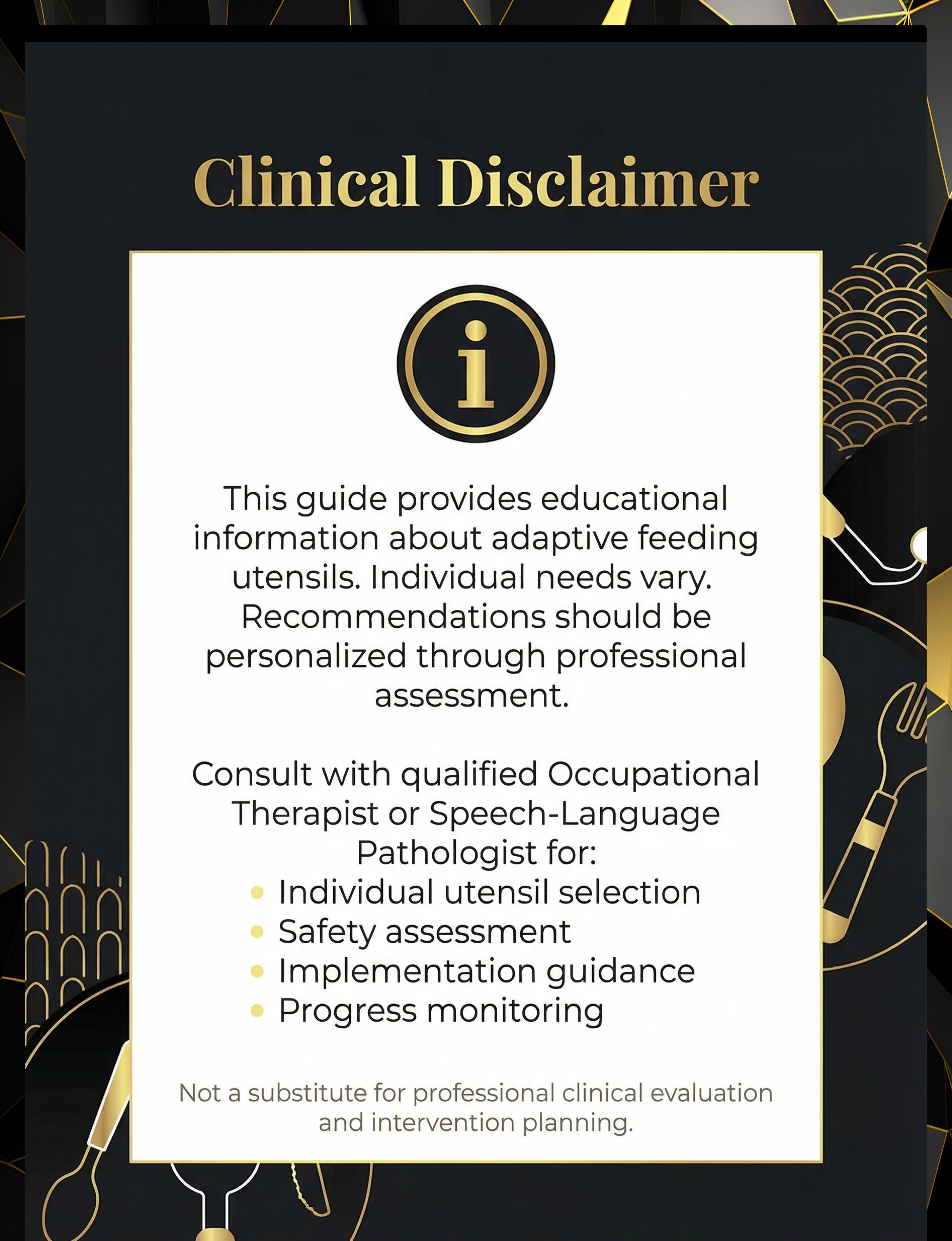
Disclaimer: This is educational information designed to support informed decision-making. Always consult qualified occupational therapists, speech-language pathologists, or pediatricians for assessment and recommendations specific to your child. Individual results vary based on specific challenges, consistent use, and proper adaptation matching.