
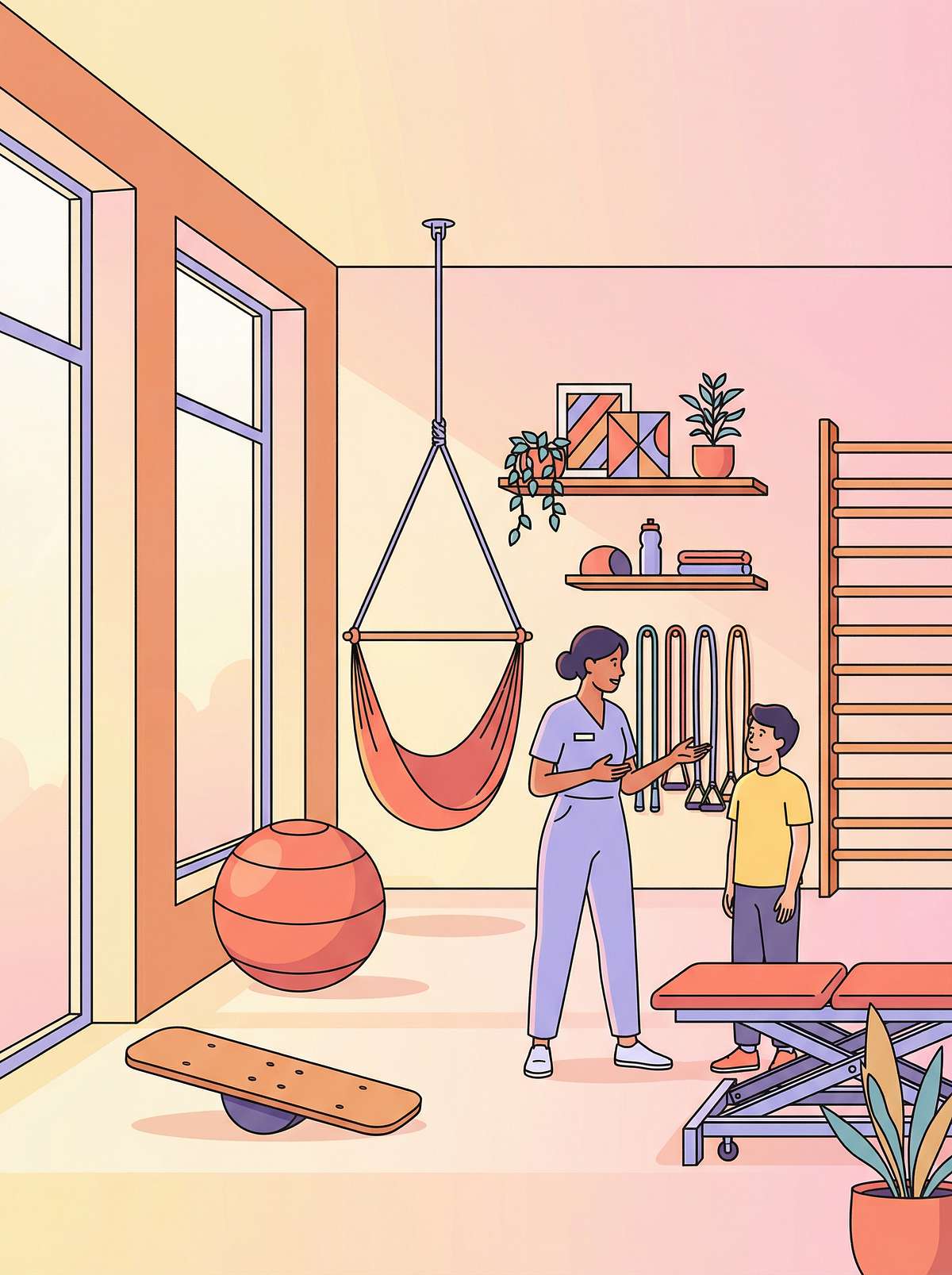
Gross Motor & Movement Materials
Evidence-based therapeutic tools for vestibular processing, proprioception, balance, coordination, strength, and motor planning in pediatric populations
Who Benefits From These Materials

For Parents
Home-based movement activities implemented with professional guidance to support daily sensory regulation and motor development. These materials help create therapeutic environments at home where children can access the movement input they need between therapy sessions.
For Therapists
Clinical assessment and intervention tools for occupational and physical therapy sessions. These materials support evidence-based treatment planning for vestibular processing, proprioceptive development, motor planning, and gross motor skill acquisition.
For Schools & Educators
Sensory room equipment and movement break tools that help students regulate their sensory systems and prepare for learning. These materials support classroom behavior management and attention through therapeutic movement opportunities.
For Doctors & Clinicians
Recommended equipment for developmental planning and gross motor prescriptions. These materials support medical recommendations for children with developmental delays, sensory processing differences, or motor coordination challenges.
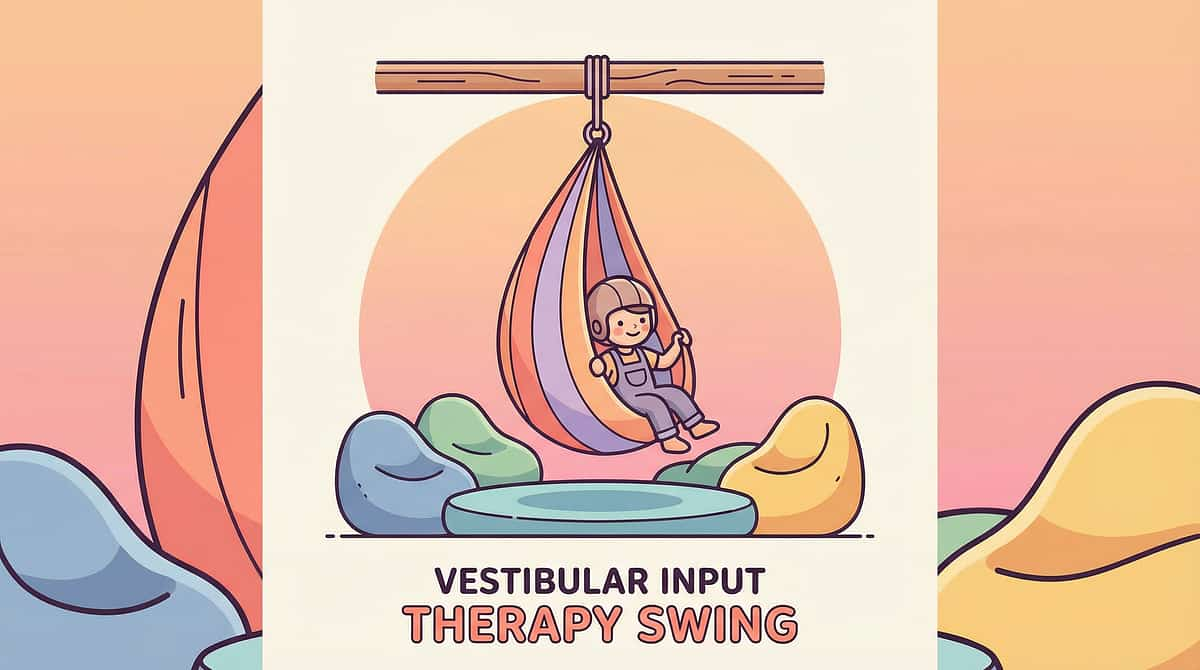
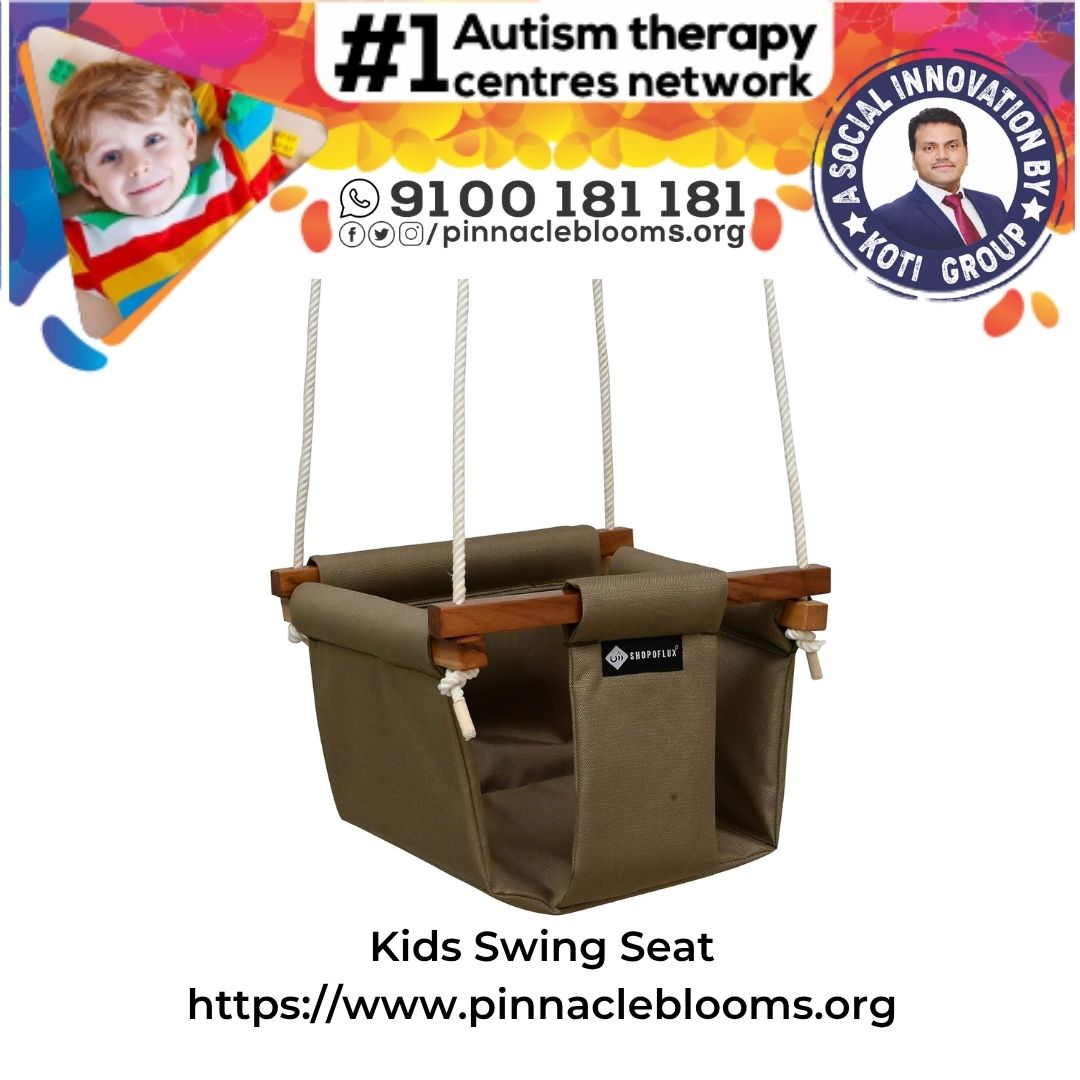
Material 6.1: Therapy Swing / Sensory Swing
Core Kit - Rank 1
Strong Evidence
Therapy swings serve as powerful vestibular input systems that support sensory regulation, nervous system organization, and improved focus. Available in multiple configurations including platform swings, pod swings, and bolster swings, these tools provide controlled movement experiences that help children organize sensory information from their environment.
Therapeutic Mechanism
Vestibular input delivered through swinging activates the sensory integration process, leading to nervous system organization. This cascade results in improved regulation, enhanced attention capacity, and better motor planning abilities.
Target Areas
- Vestibular processing and integration
- Sensory regulation and self-calming
- Core strength and postural control
- Motor planning and body awareness
- Attention and focus improvement
- Calming or alerting nervous system
Evidence-Based Best Practices
- Begin with slow, linear motion (back and forth movement only)
- Observe carefully for signs of sensory overstimulation
- Use rotary (spinning) input sparingly—it's extremely powerful
- Allow child to control intensity whenever clinically appropriate
- Integrate into sensory diet rather than recreational use only
Implementation Settings
Home environments with proper ceiling mounts, clinical therapy spaces, and school sensory rooms. Price range: ₹1,000 - ₹15,000.
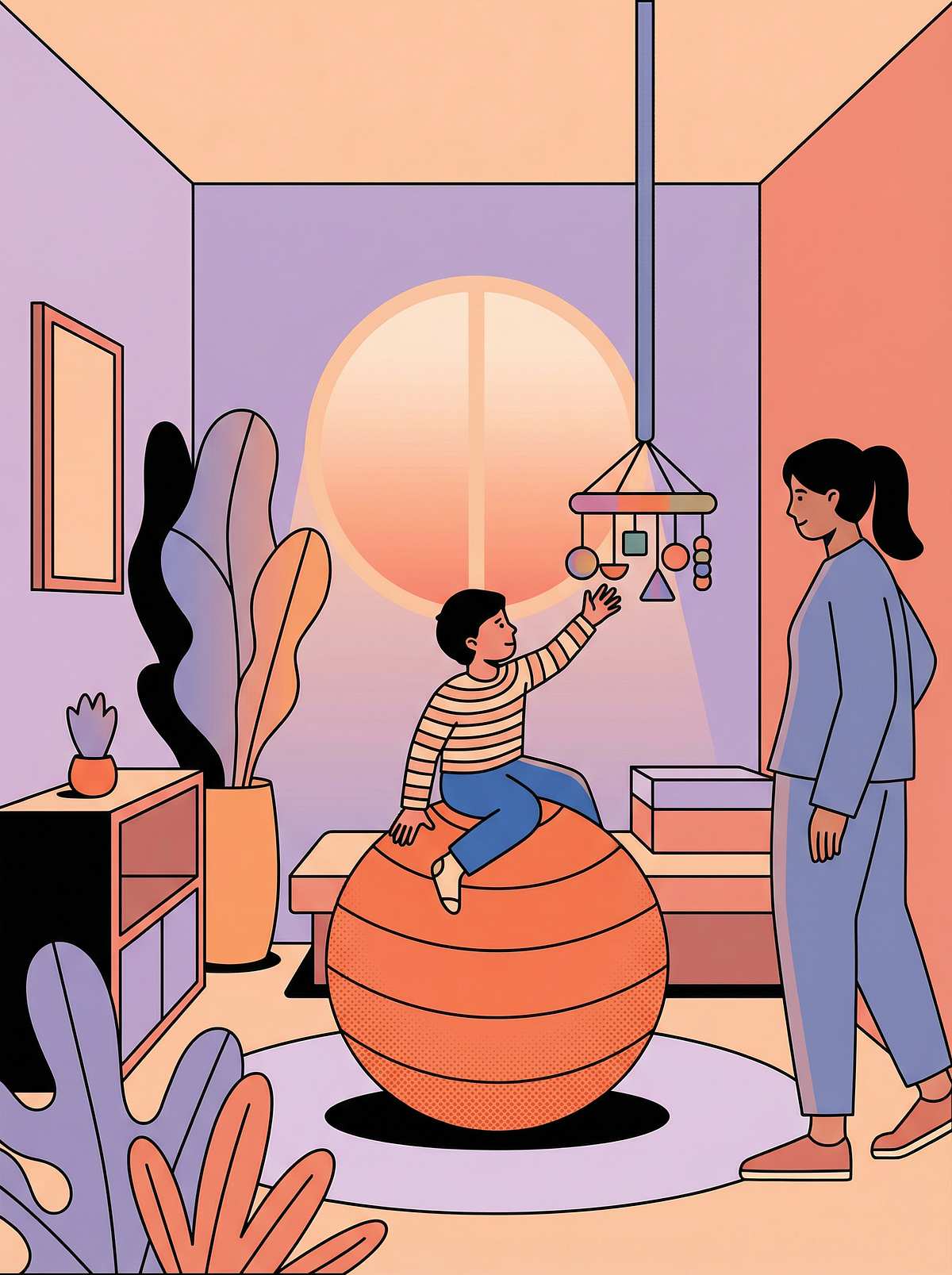
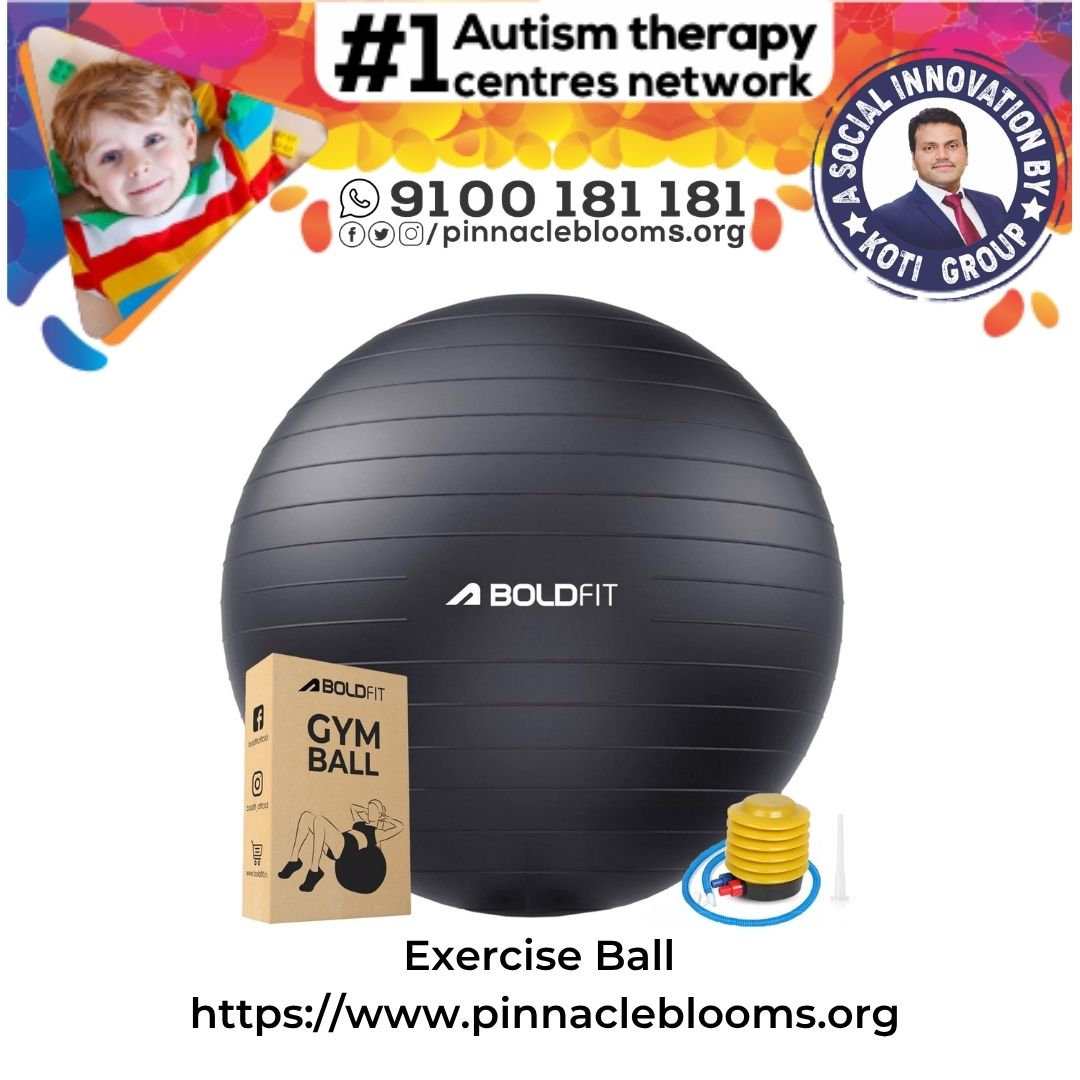
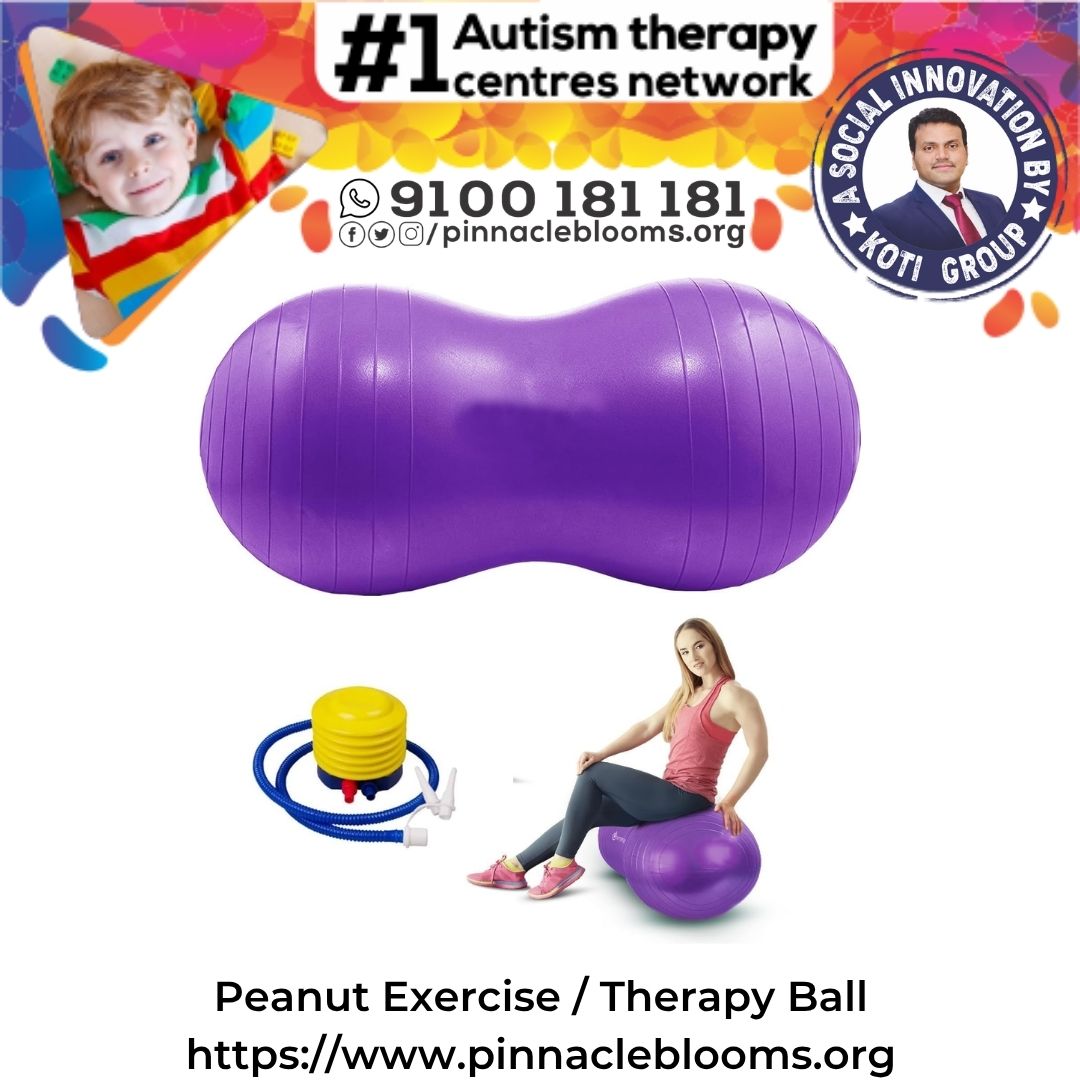
Material 6.2: Therapy Ball / Exercise Ball
Core Kit - Rank 1
Versatile Tool
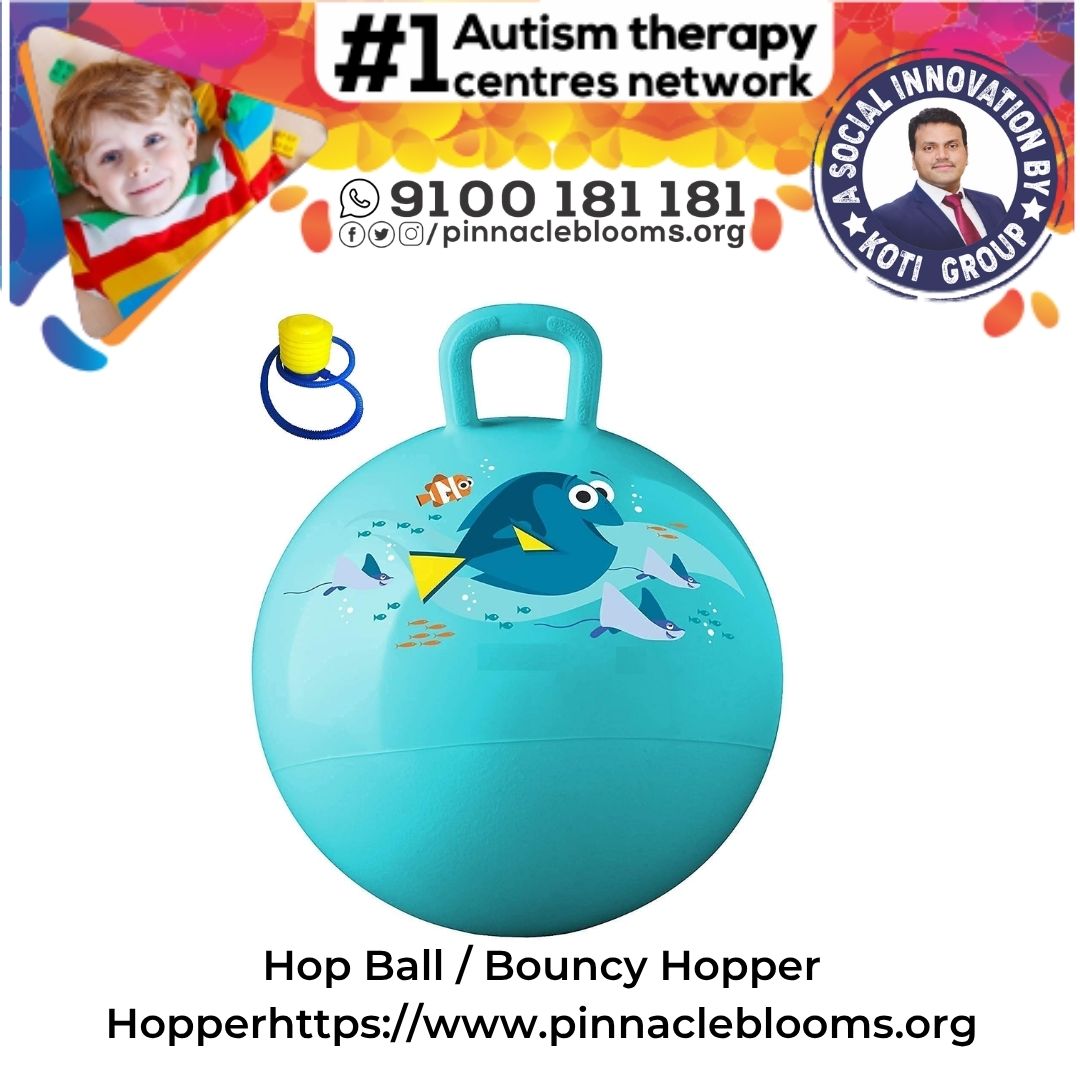
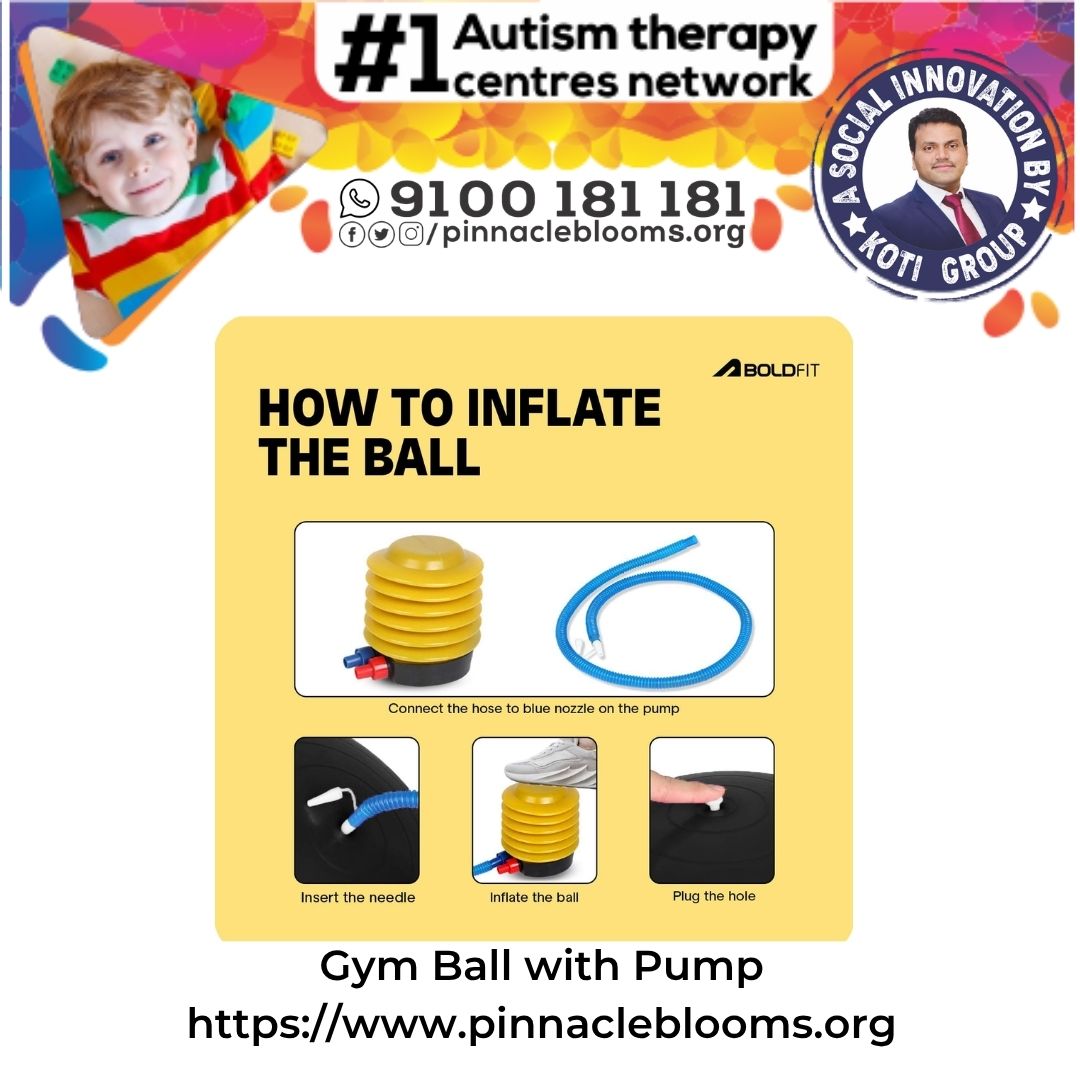
Therapy balls function as dynamic seating systems and vestibular-proprioceptive input tools that improve posture, balance, and seated attention. These inflatable spheres provide an unstable surface that requires constant micro-adjustments, activating core muscles and providing therapeutic movement input even during seated activities.
Therapeutic Mechanism
The unstable surface requires continuous postural adjustments, which activate core musculature. This ongoing vestibular input and muscle engagement leads to improved posture, increased strength, and better regulation during seated tasks.
Target Areas
- Core strength and stability
- Static and dynamic balance
- Postural control and alignment
- Vestibular processing input
- Active sitting for attention
- Proprioceptive body awareness
Evidence-Based Best Practices
- Size appropriately: sitting position should allow feet flat on floor with knees at 90 degrees
- Begin with supported activities before independent use
- Use for active seating, therapeutic exercises, and structured play
- Supervise until child demonstrates safe independent use
- Deflate slightly initially to increase stability during skill building
Implementation Settings
Home use for active seating and exercise, school classrooms and therapy rooms, clinical settings. Price range: ₹400 - ₹3,000.
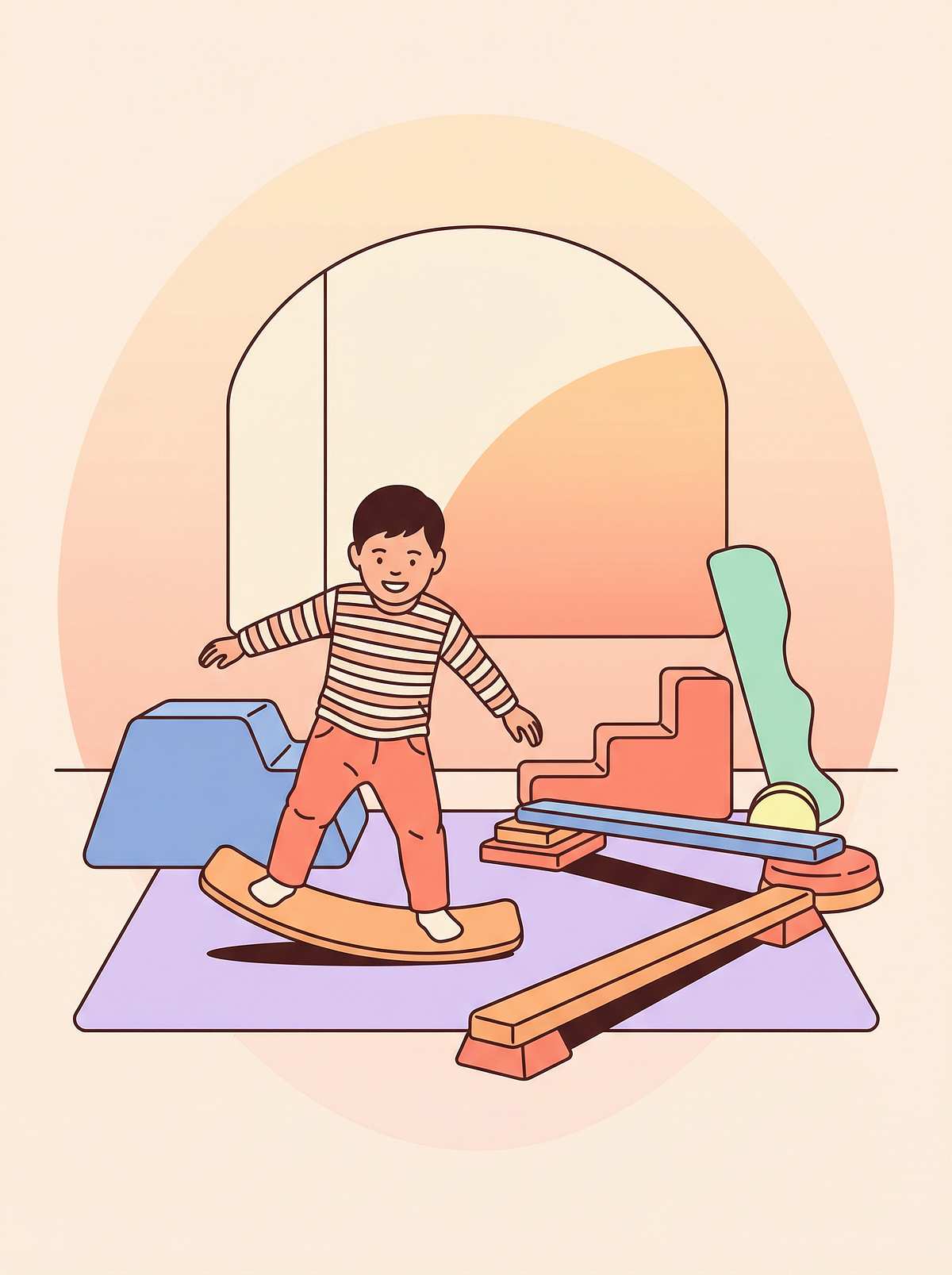
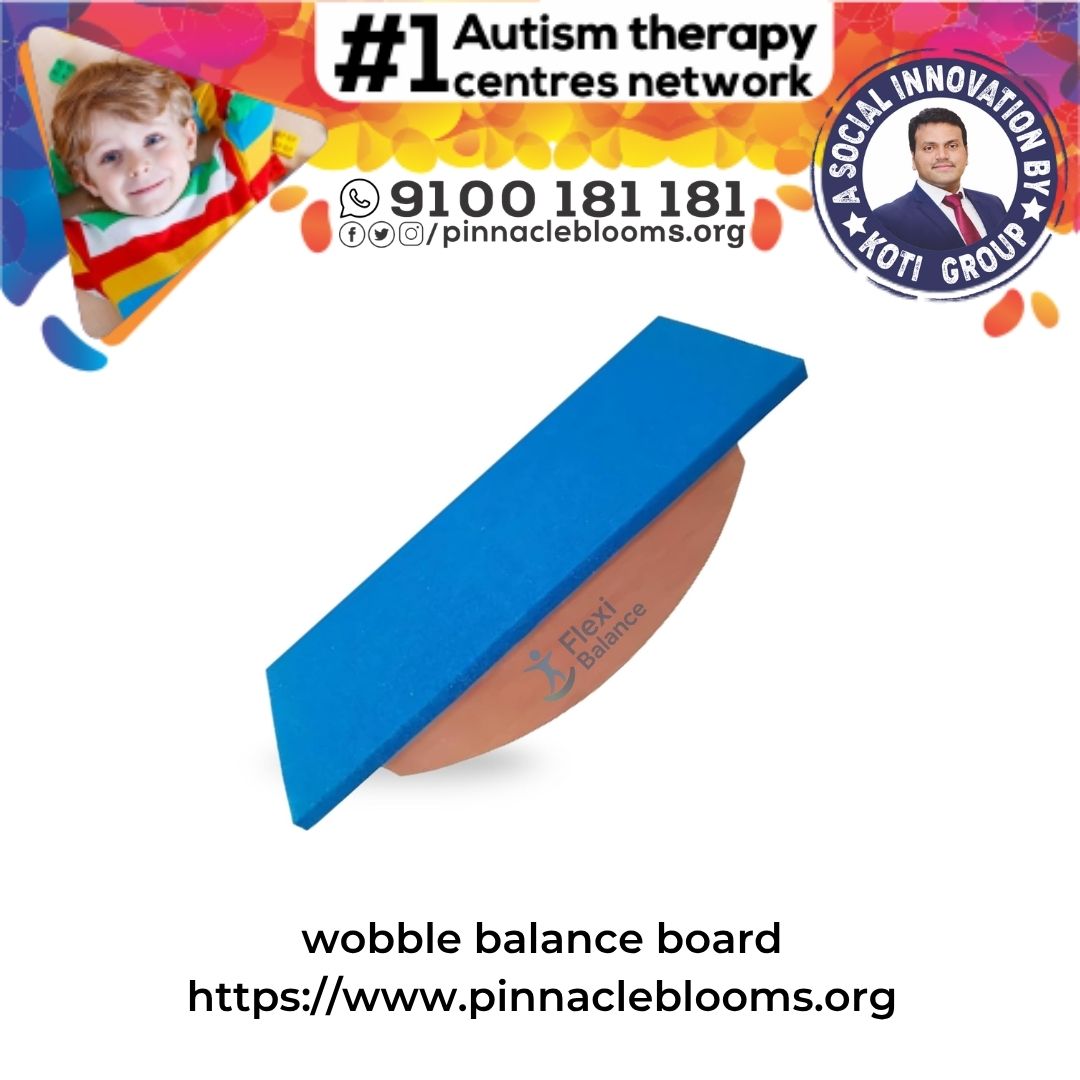
Material 6.3: Balance Board / Wobble Board
Core Kit - Rank 1
Strong Evidence
Balance boards are vestibular-proprioceptive integration systems designed to develop balance, coordination, and body awareness through controlled instability. Available in multiple configurations including rocker boards, wobble boards, and balance discs, these tools challenge the sensory and motor systems in therapeutic ways.
Therapeutic Mechanism
The unstable surface creates a balance challenge that requires proprioceptive feedback. The nervous system responds with motor adjustments, creating a feedback loop that improves balance skills and enhances body awareness over time.
Target Areas
- Static and dynamic balance skills
- Proprioceptive awareness and processing
- Core strength and stability
- Motor planning abilities
- Bilateral coordination
- Body awareness in space
Evidence-Based Best Practices
- Always start with physical support: wall contact or adult hand-holding
- Progress systematically from stable to increasingly unstable surfaces
- Build confidence and competence before increasing challenge level
- Incorporate into play activities and functional movement games
- Barefoot use often provides superior proprioceptive feedback
Implementation Settings
Home therapy programs, school physical education and sensory rooms, clinical therapy sessions. Price range: ₹300 - ₹5,000.
Material 6.4: Scooter Board
Core Kit - Rank 1
Strong Evidence
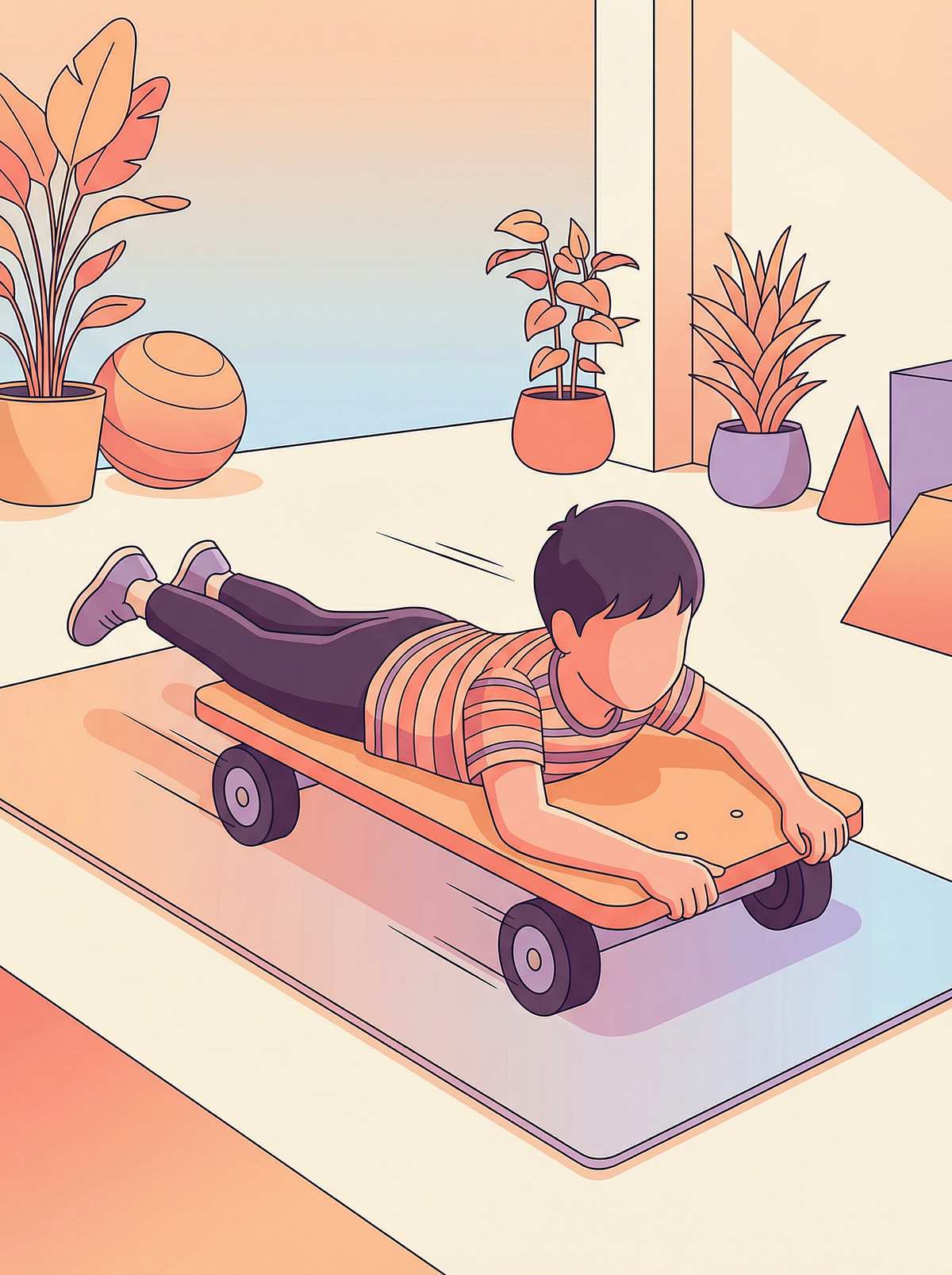
Scooter boards deliver intense prone vestibular input while simultaneously building upper body strength and bilateral coordination. These wheeled platforms allow children to move across smooth floors in a prone position, providing powerful sensory input combined with strengthening benefits.
Therapeutic Mechanism
The prone position combined with forward movement provides intense vestibular input. Pulling motions with both arms simultaneously develop bilateral coordination while strengthening the upper body and core musculature.
Target Areas
- Vestibular processing and integration
- Upper body and shoulder girdle strength
- Bilateral coordination skills
- Prone extension positioning
- Motor planning and sequencing
- Core stability and strength
Evidence-Based Best Practices
- Teach safe hand positioning: edges only, never near moving wheels
- Emphasize prone position to maximize vestibular input benefits
- Encourage pulling with arms to develop bilateral coordination
- Incorporate into obstacle courses and structured games
- Maintain close supervision for safety during all use
Implementation Settings
Home use on smooth floor surfaces, clinical therapy spaces, school gymnasium environments. Price range: ₹400 - ₹2,000.
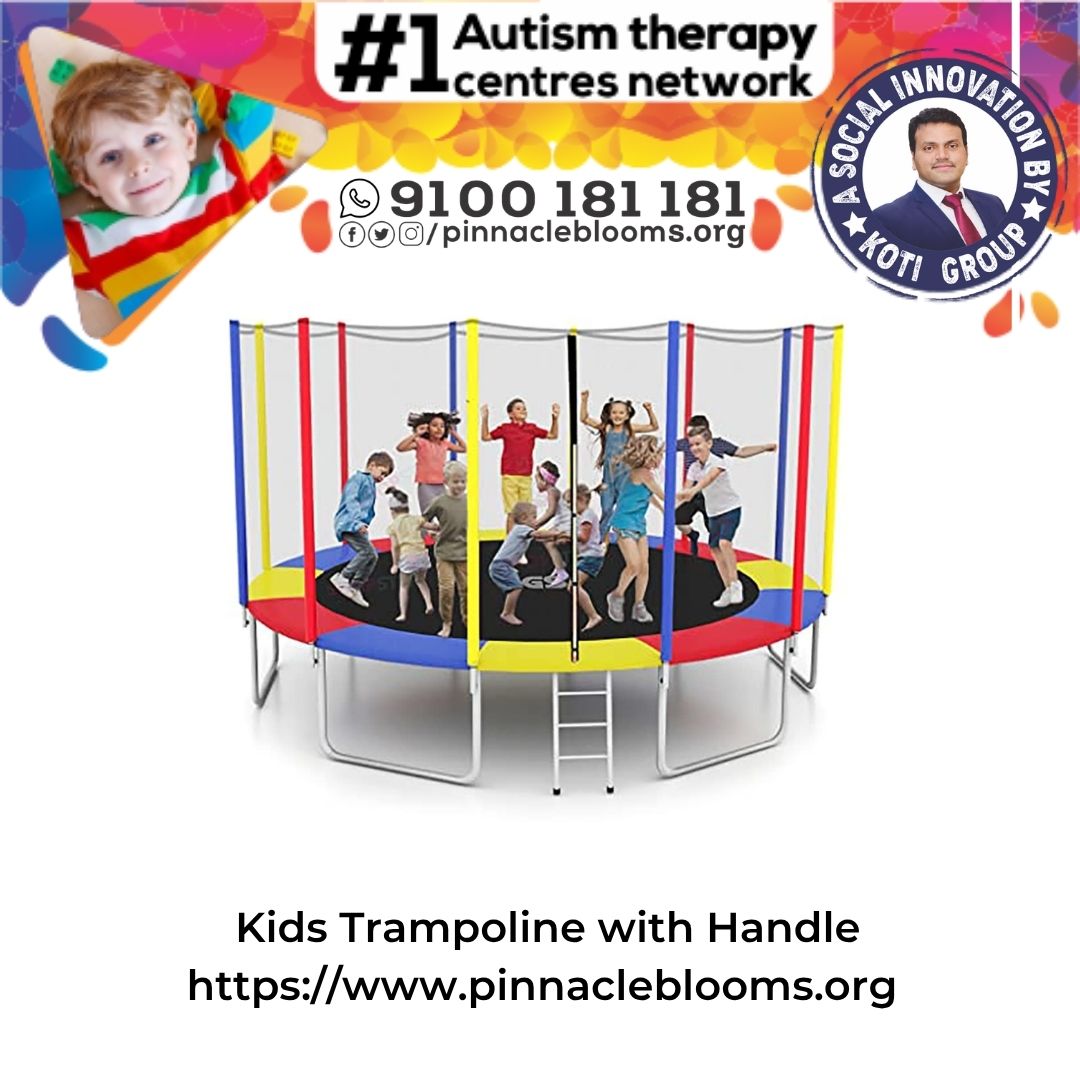
Material 6.5: Mini Trampoline / Rebounder
Core Kit - Rank 1
Strong Evidence
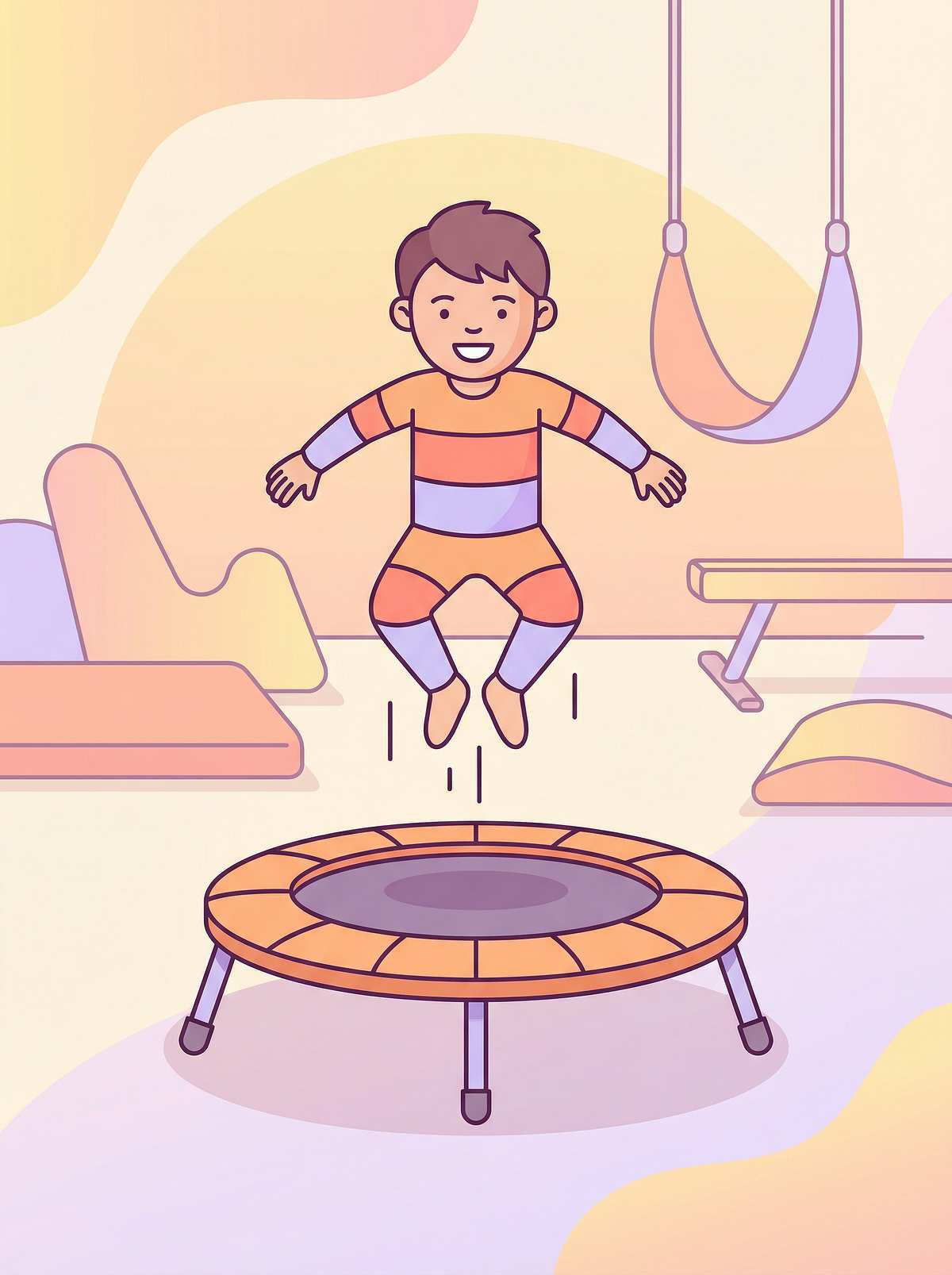
Mini trampolines provide powerful vertical vestibular-proprioceptive input that supports regulation, attention, and provides a safe movement outlet for children with high movement needs. The combination of vestibular input from up-and-down motion and proprioceptive input from joint compression creates significant therapeutic benefits.
Therapeutic Mechanism
Jumping creates vertical vestibular input while joint compression during landing provides intense proprioception. This sensory combination leads to nervous system regulation, which manifests as improved attention and calming effects.
Target Areas
- Vestibular processing system
- Proprioceptive input and awareness
- Sensory regulation and self-calming
- Leg strength and power development
- Motor planning and rhythm
- Attention and focus capacity
Evidence-Based Best Practices
- Enforce one jumper at a time—always, without exception
- Provide handle bar for beginners and ongoing safety support
- Supervise consistently until safe habits are firmly established
- Integrate into daily sensory diet as therapeutic tool
- Typical therapeutic sessions: 10-15 minutes often sufficient
Implementation Settings
Home therapy programs, clinical therapy spaces, school sensory rooms and movement areas. Price range: ₹1,500 - ₹10,000.
Material 6.6: Tunnel / Crawling Tunnel
Core Kit - Rank 2
Versatile Tool
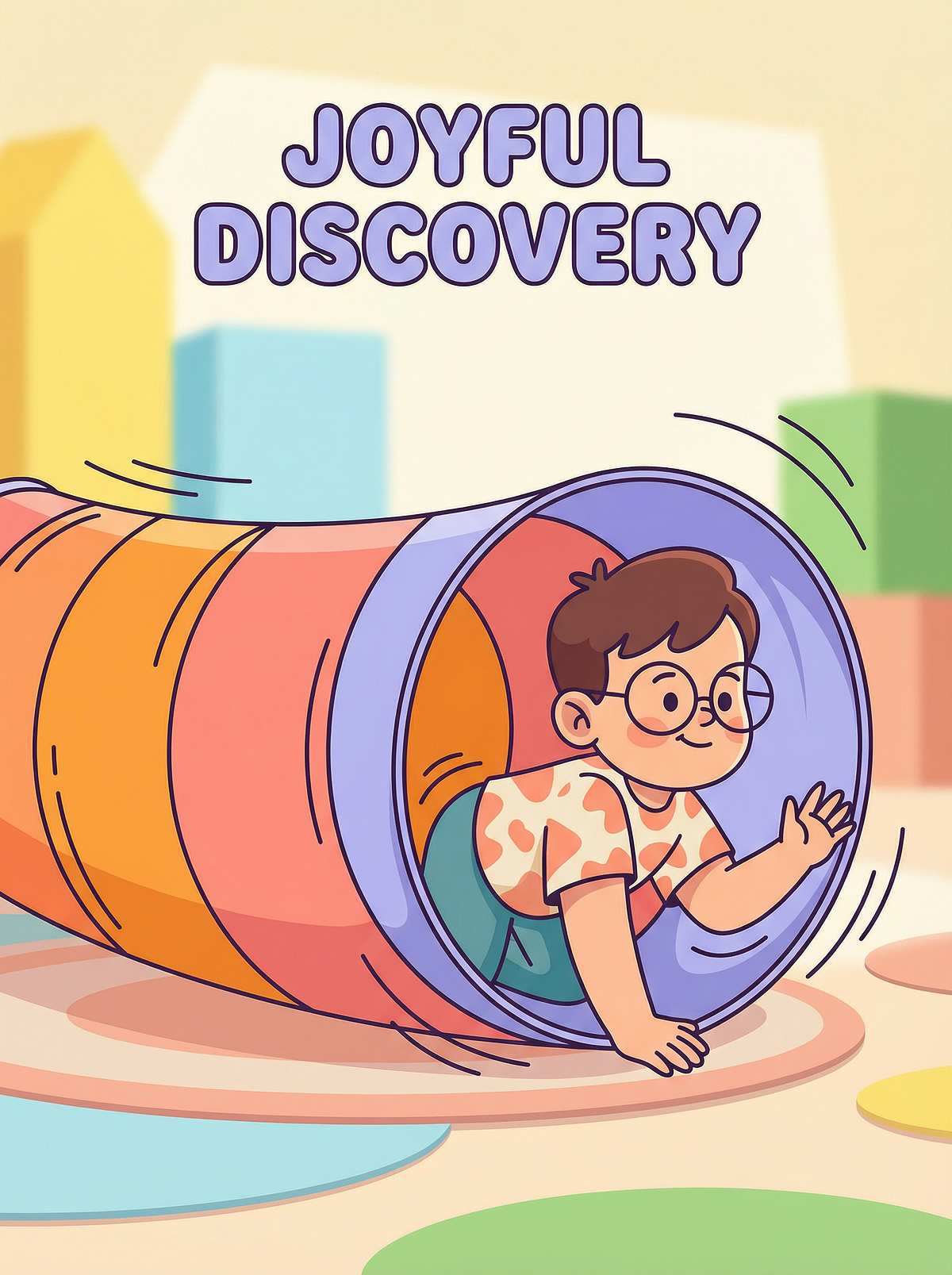
Tunnels develop fundamental crawling patterns, motor planning abilities, body awareness, and bilateral coordination through engaging, enclosed navigation challenges. These lightweight, portable structures create therapeutic opportunities for spatial awareness and movement pattern development.
Therapeutic Mechanism
The enclosed space combined with crawling requirements creates body awareness challenges that demand motor planning. This leads to proprioceptive input during movement and improved spatial navigation abilities.
Target Areas
- Motor planning and sequencing
- Body awareness and scheme
- Proprioceptive processing
- Crawling and creeping patterns
- Bilateral coordination skills
- Spatial awareness development
Evidence-Based Best Practices
- Begin with short, visible-through tunnels if child shows anxiety
- Incorporate into obstacle courses to develop motor planning
- Add complexity gradually: carry objects through, navigate backwards
- Never force entry if child demonstrates fear or resistance
- Ensure safe, cushioned surface underneath tunnel structure
Implementation Settings
Home play and therapy spaces, clinical therapy rooms, school settings for sensory breaks. Price range: ₹500 - ₹4,000.
Material 6.7: Climbing Equipment / Indoor Climber
Extended Kit - Rank 2
Strong Evidence
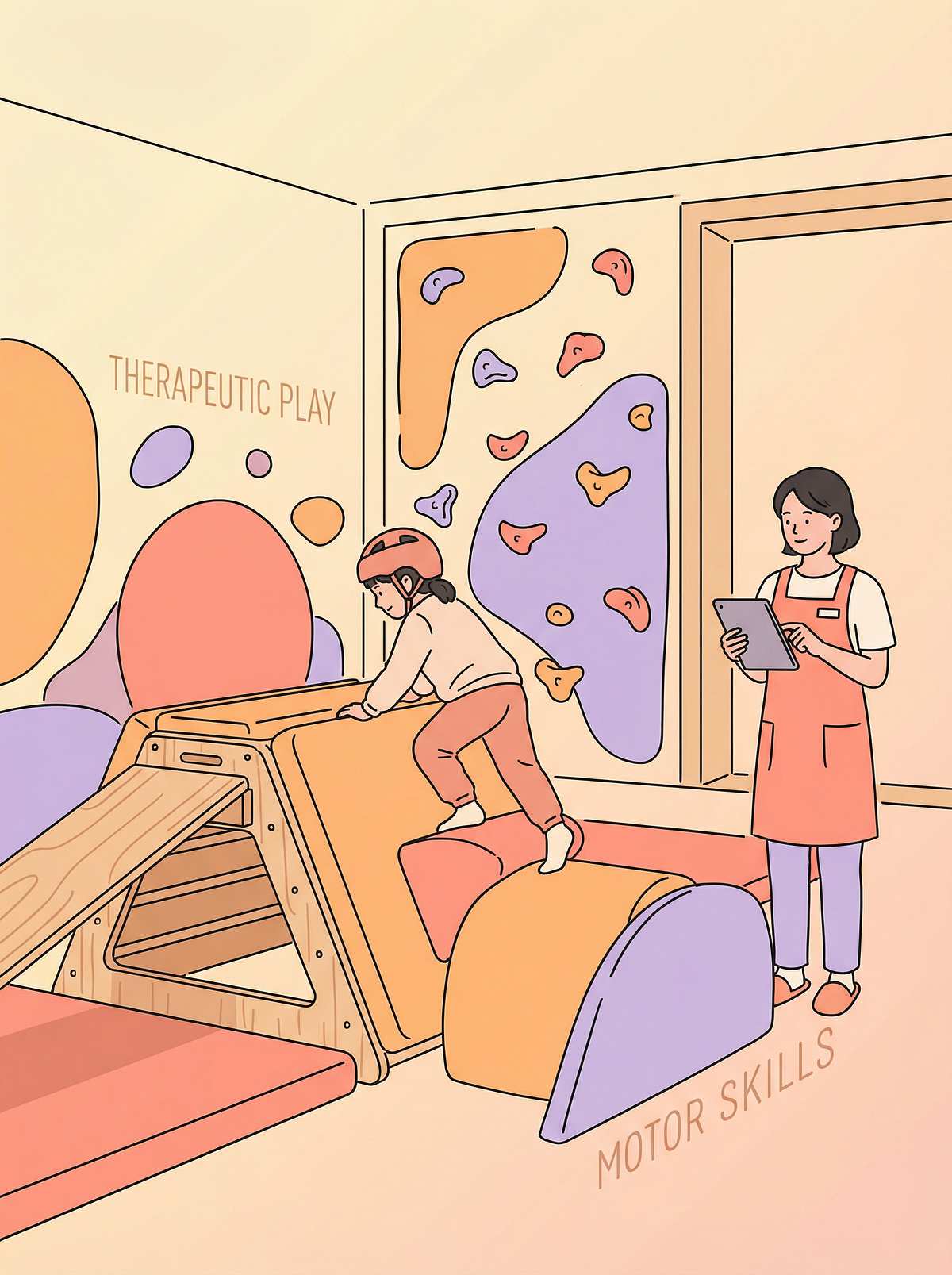
Climbing equipment provides safe outlets for natural climbing drives while building strength, motor planning, proprioception, and confidence. Options include Pikler triangles, indoor climbing walls, and climbing domes—each offering graduated challenges for developing gross motor skills.
Therapeutic Mechanism
Climbing challenges require motor planning, which generates proprioceptive feedback during movement. This builds strength through resistance while successful navigation creates confidence and motivation for continued skill development.
Target Areas
- Upper and lower body strength
- Motor planning and problem-solving
- Proprioceptive awareness
- Vestibular processing during vertical movement
- Bilateral and reciprocal coordination
- Confidence and self-efficacy
Evidence-Based Best Practices
- Always start at child's demonstrated comfort level
- Provide spotting support without removing problem-solving challenge
- Safe landing surface is essential—not optional
- Encourage independent route planning and decision-making
- Allow child to self-assess readiness for increasing heights
Implementation Settings
Home environments with space and proper setup, clinical therapy centers, school sensory and movement areas. Price range: ₹500 - ₹20,000.
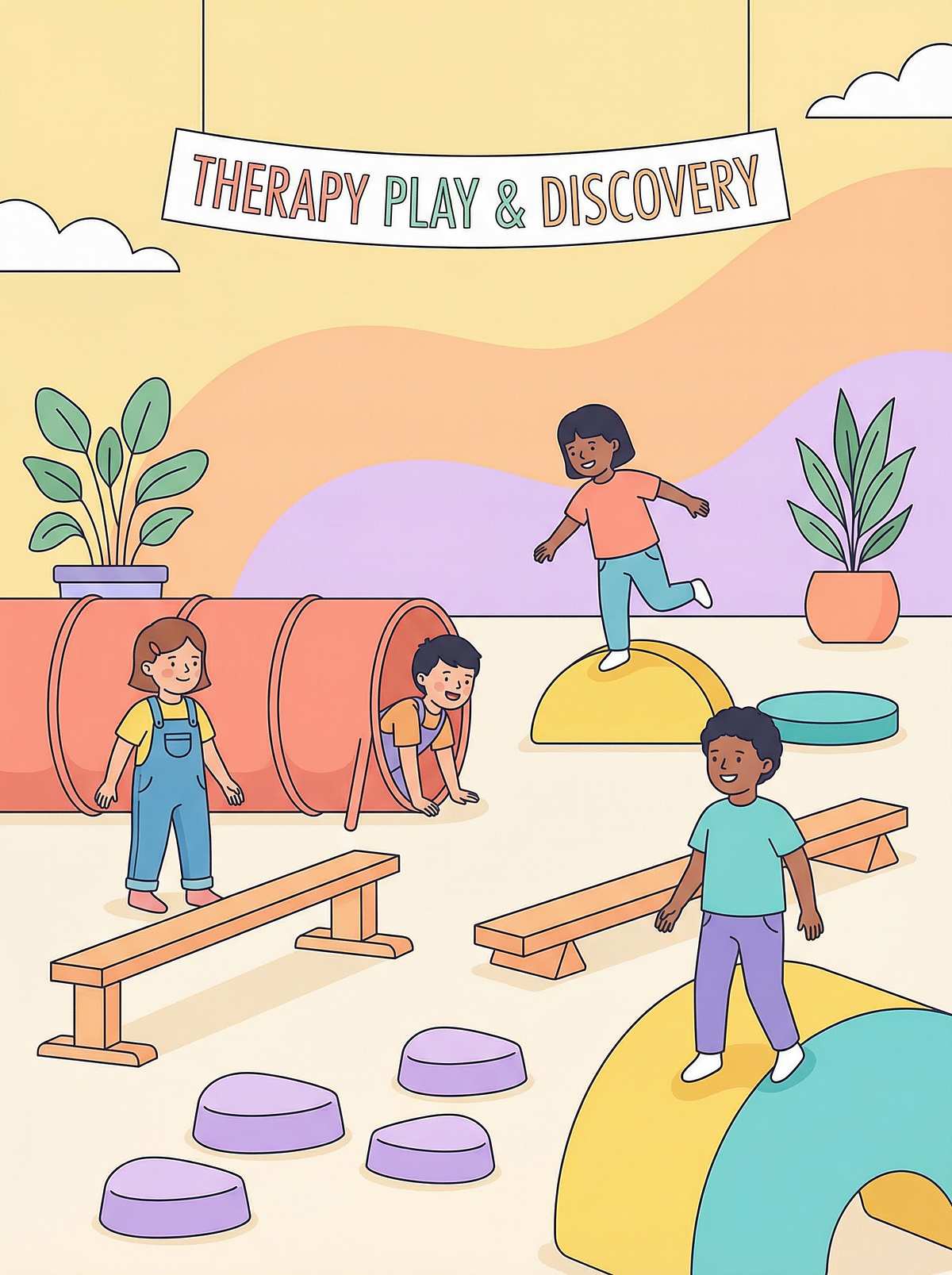
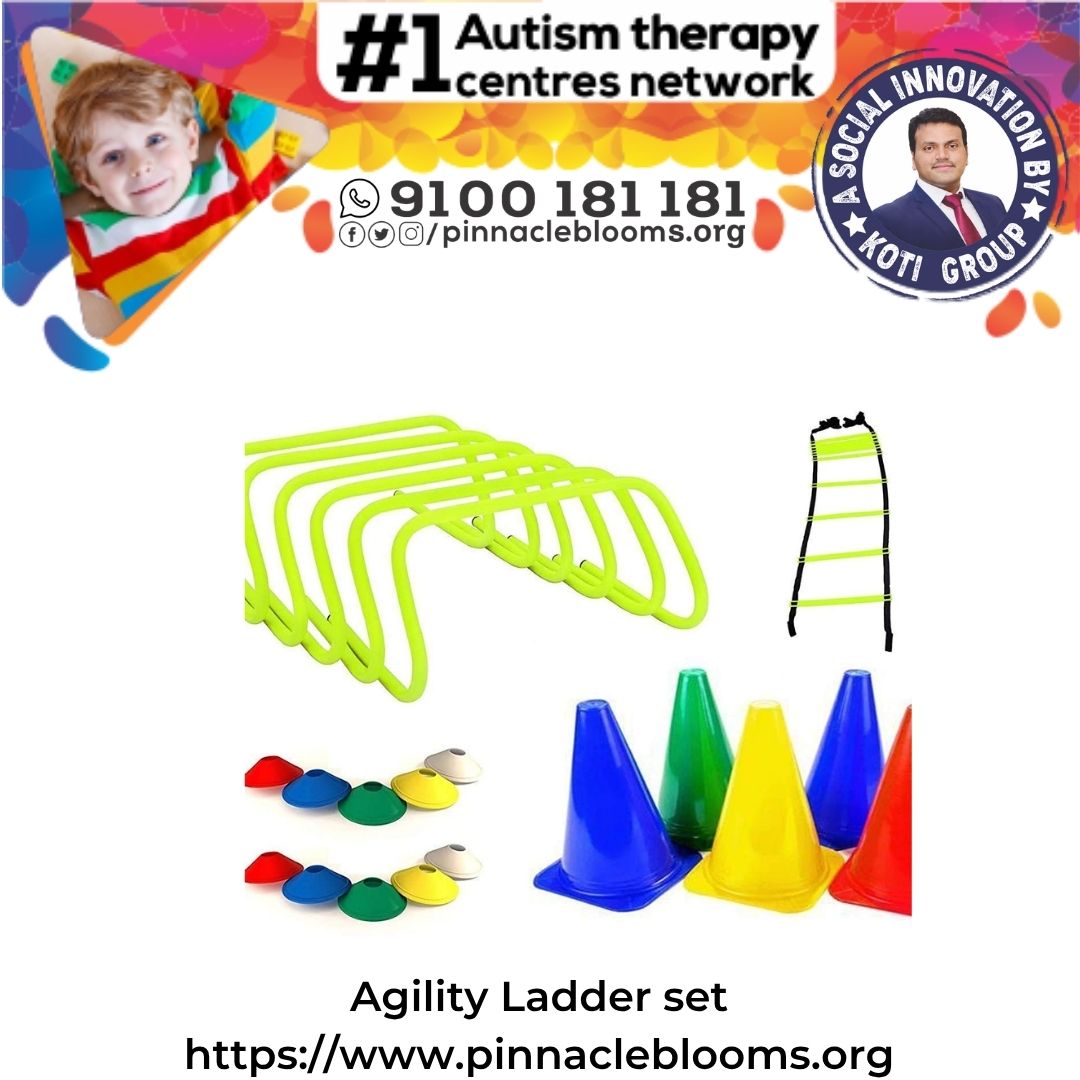
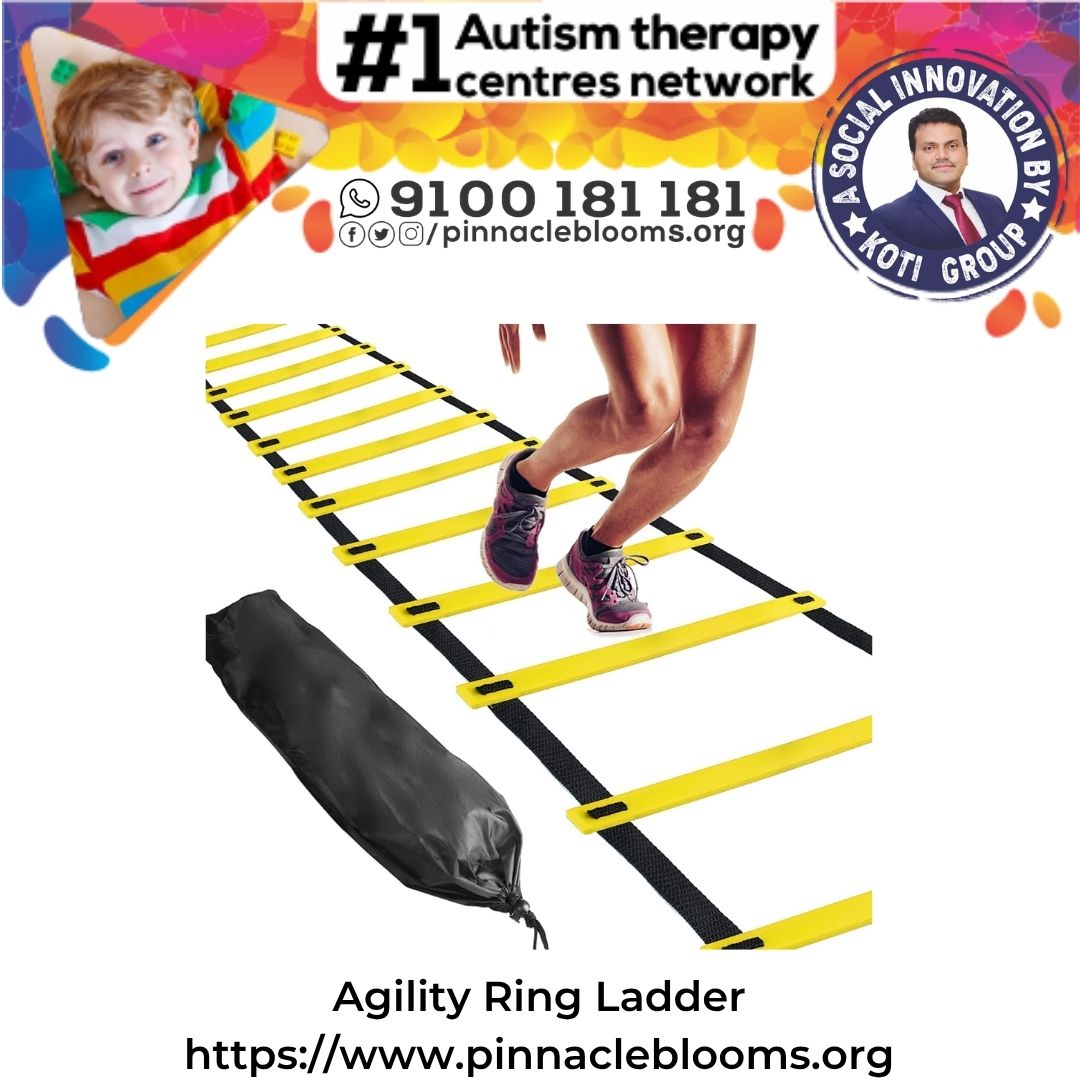
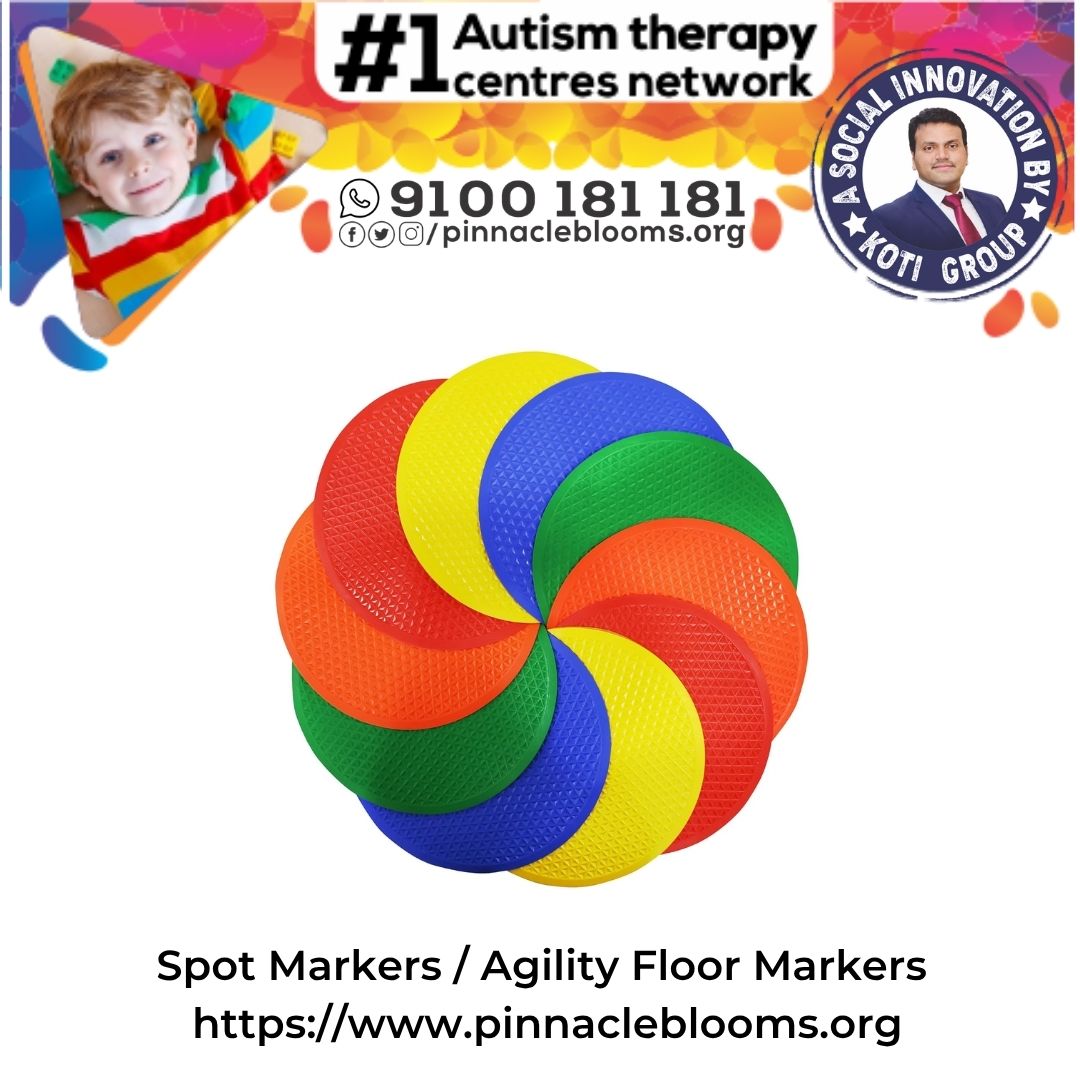
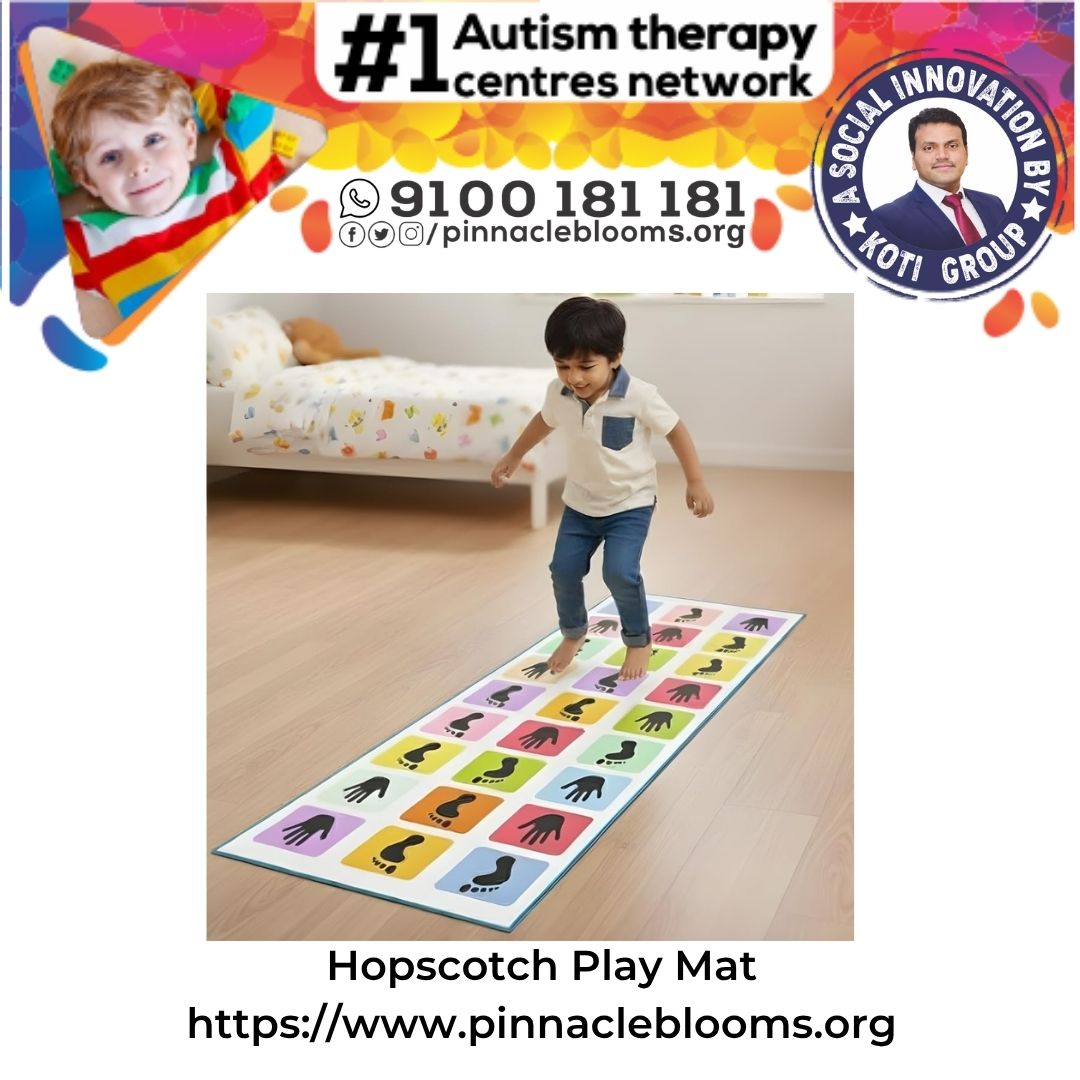
Material 6.8: Obstacle Course Materials / Motor Planning Kit
Core Kit - Rank 1
Strong Evidence
Obstacle course materials develop motor planning, sequencing, and coordination through structured multi-step movement challenges. By combining various gross motor tasks in sequence, these kits create therapeutic opportunities for developing executive function alongside physical skills.
Therapeutic Mechanism
Multi-step courses require advance motor planning. The sequencing challenge combined with whole-body coordination demands supports executive function development including planning, memory, and task completion.
Target Areas
- Motor planning and praxis
- Sequencing and memory
- Gross motor coordination
- Multiple gross motor skills
- Body awareness in movement
- Executive function skills
Evidence-Based Best Practices
- Start with 3-4 stations, add complexity as skill develops
- Use visual sequence cards or pictures to support planning
- Vary course configuration regularly to prevent pure memorization
- Include diverse motor challenges: jumping, crawling, balancing, throwing
- Celebrate task completion, not just speed or perfection
Implementation Settings
Home indoor and outdoor spaces, school gymnasiums and playgrounds, clinical therapy rooms, outdoor therapy programs. Price range: ₹200 - ₹8,000.
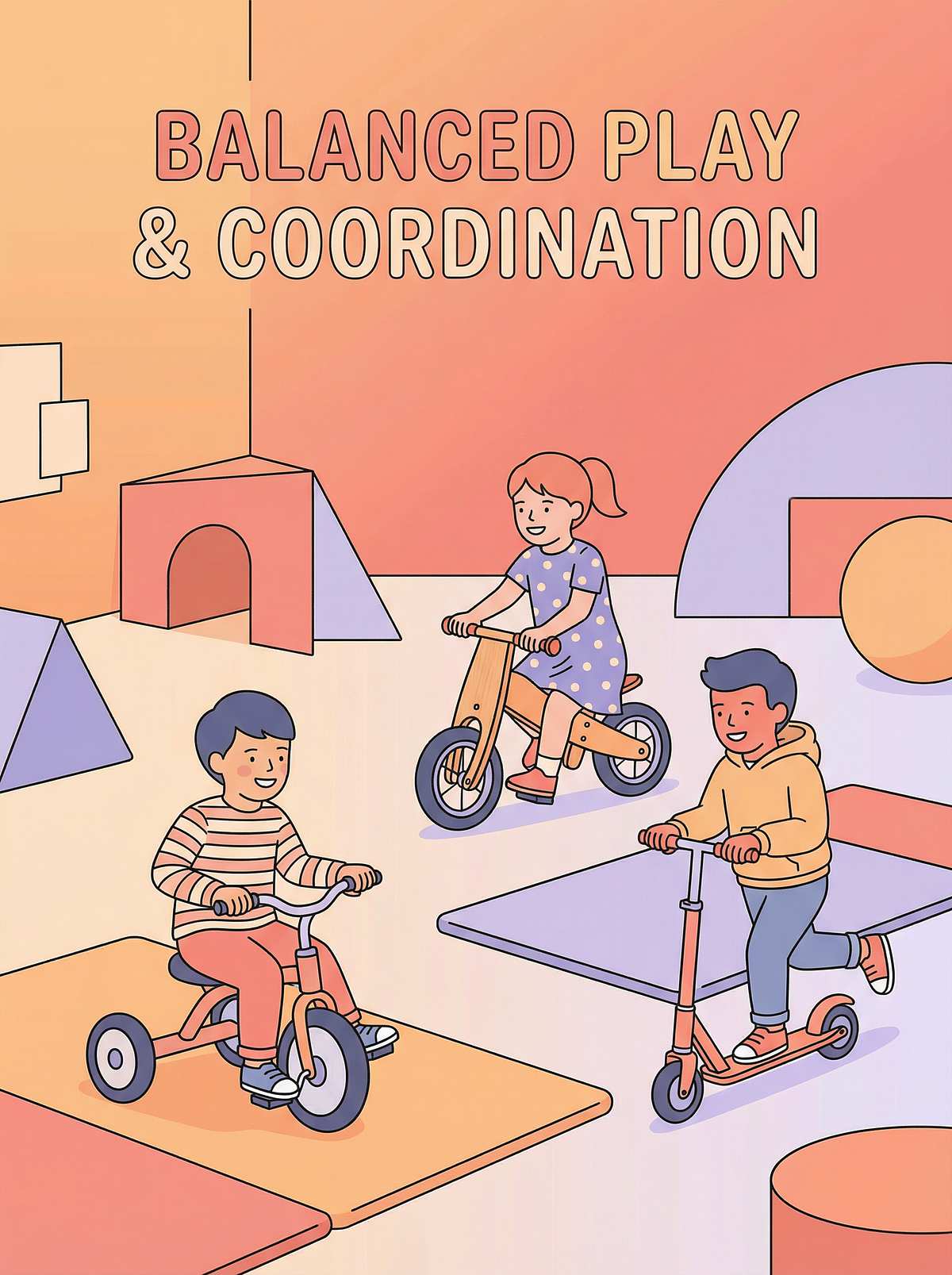
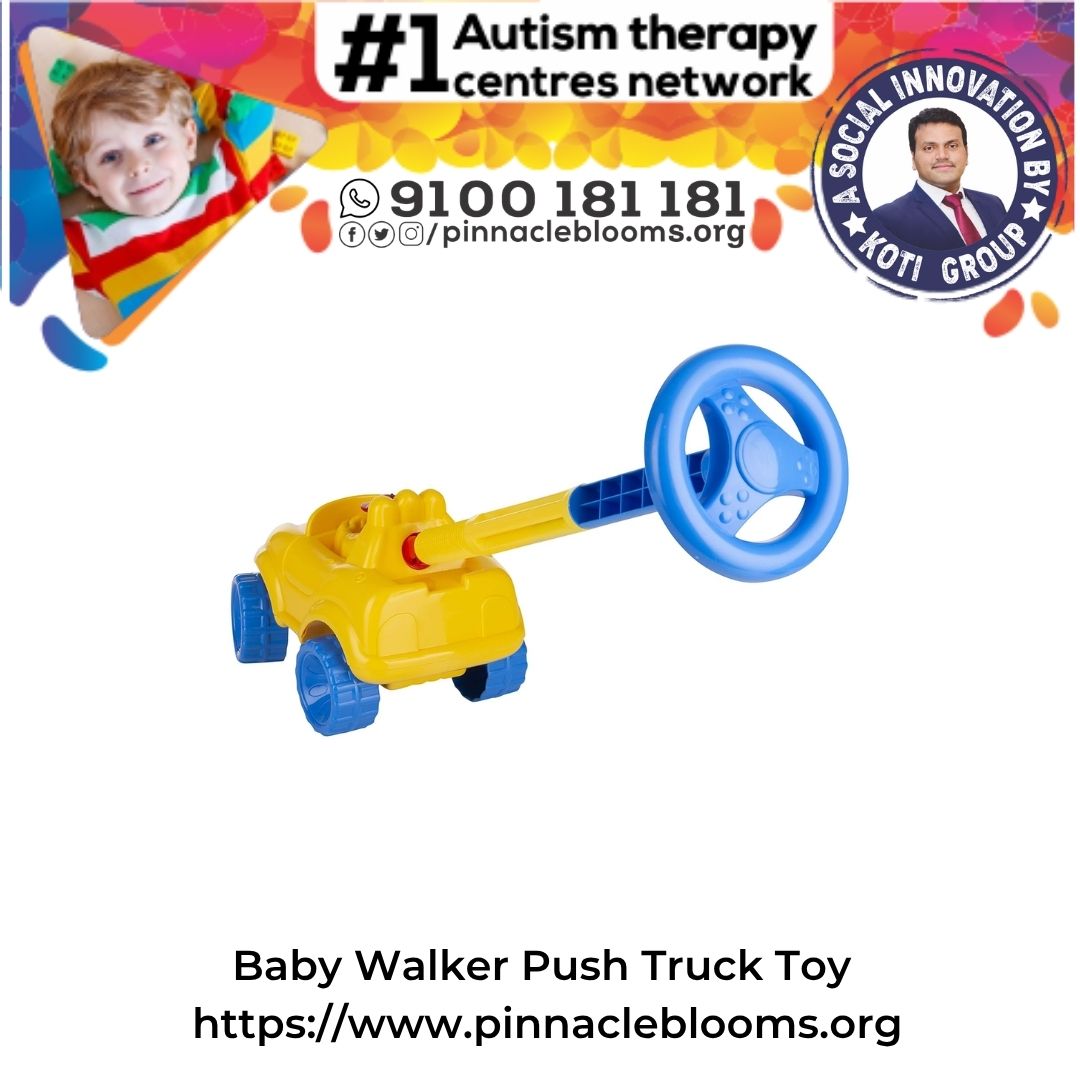
Material 6.9: Ride-On Toys / Tricycle / Balance Bike
Core Kit - Rank 2
Strong Evidence
Ride-on toys and bikes develop bilateral coordination, balance, strength, and independence through progressive wheeled mobility challenges. From simple push toys to balance bikes to traditional tricycles, these tools support graduated skill development in locomotion.
Therapeutic Mechanism
Wheeled movement requires bilateral leg coordination and creates balance challenges. The vestibular input combined with strength building through pedaling or pushing leads to independent mobility skills and confidence.
Target Areas
- Bilateral coordination patterns
- Dynamic balance skills
- Leg strength and endurance
- Motor planning for steering
- Vestibular processing during motion
- Independence and mobility
Evidence-Based Best Practices
- Match equipment to developmental level, not chronological age alone
- Balance bikes before pedaling often creates smoother progression
- Begin on flat, safe surfaces with clear boundaries
- Helmet use is mandatory—never optional
- Celebrate incremental progress, not just final success
Implementation Settings
Outdoor environments with safe flat areas, indoor spaces for push ride-on toys. Price range: ₹800 - ₹20,000.
Understanding Vestibular Processing
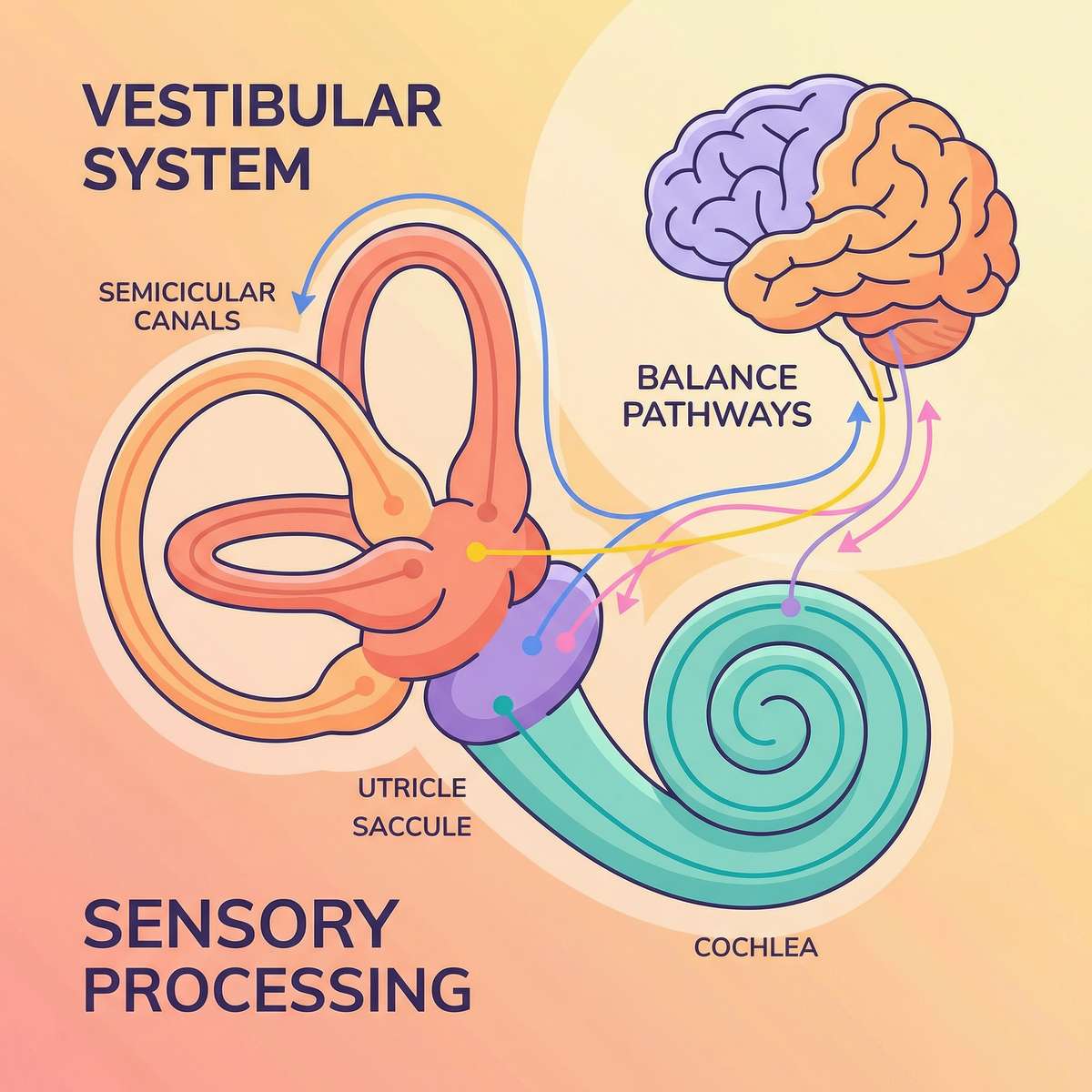
The vestibular system, located in the inner ear, processes information about movement, gravity, and spatial orientation. This sensory system is foundational to all other sensory processing and significantly impacts attention, regulation, and motor control.
When children receive appropriate vestibular input through therapeutic movement activities, their nervous systems become better organized. This organization manifests as improved attention, better emotional regulation, enhanced postural control, and more efficient motor planning abilities.
Many of the materials in this category specifically target vestibular processing because it's so fundamental to development. Swings provide linear or rotary vestibular input. Balance boards challenge the vestibular system's response to instability. Trampolines offer vertical acceleration and deceleration input.
Understanding the power of vestibular input helps parents and therapists use these materials more effectively. The vestibular system can be powerfully calming or alerting depending on the type, intensity, and duration of movement provided—which is why professional guidance and careful observation are essential.
Building Effective Sensory Diets
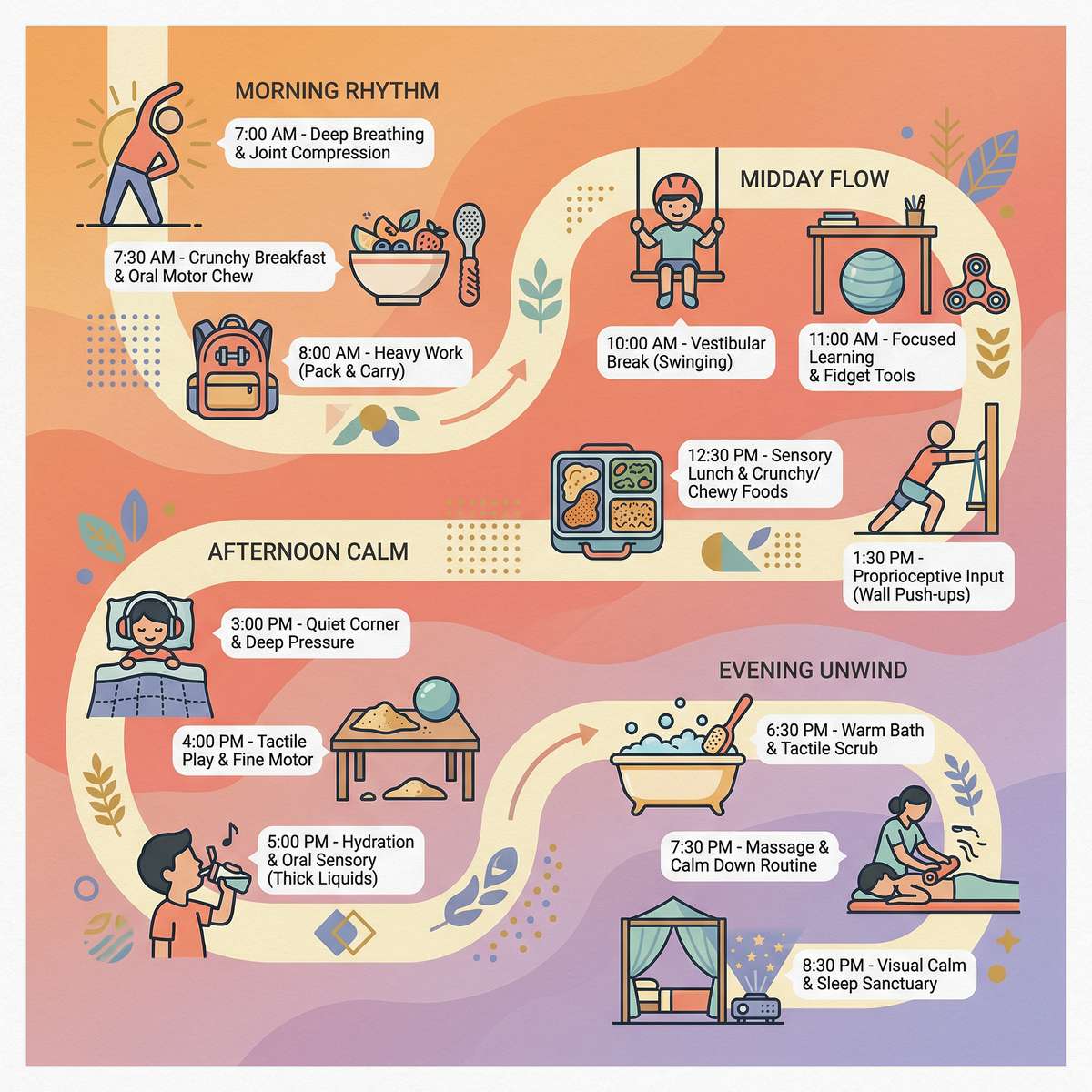
Important Note: Sensory diets should be developed with guidance from a qualified occupational therapist who can assess your child's specific sensory processing patterns and needs. What works for one child may not be appropriate for another.
A sensory diet is a planned schedule of sensory activities designed to meet a child's specific neurological needs. Just as nutritional diets provide essential nutrients, sensory diets provide the sensory input children need for optimal regulation and function throughout the day.
The gross motor and movement materials in this library are often core components of effective sensory diets. An occupational therapist can help determine which specific types of movement input a child needs, how much, how often, and when during the day.
Components of Movement-Based Sensory Diets
- Regular scheduled movement breaks, not just when problems arise
- Mix of calming and alerting activities based on child's needs
- Combination of vestibular, proprioceptive, and motor planning activities
- Consistency in timing while remaining flexible to daily variations
- Integration into natural routines rather than isolated "therapy time"
Cannons
Gross Motor & Movement MaterialsEvidence-based materials supporting balance, coordination, core strength, bilateral integration, and active movement across home, school, and therapy settings.


Link copied!