





Rank #1
Core Kit
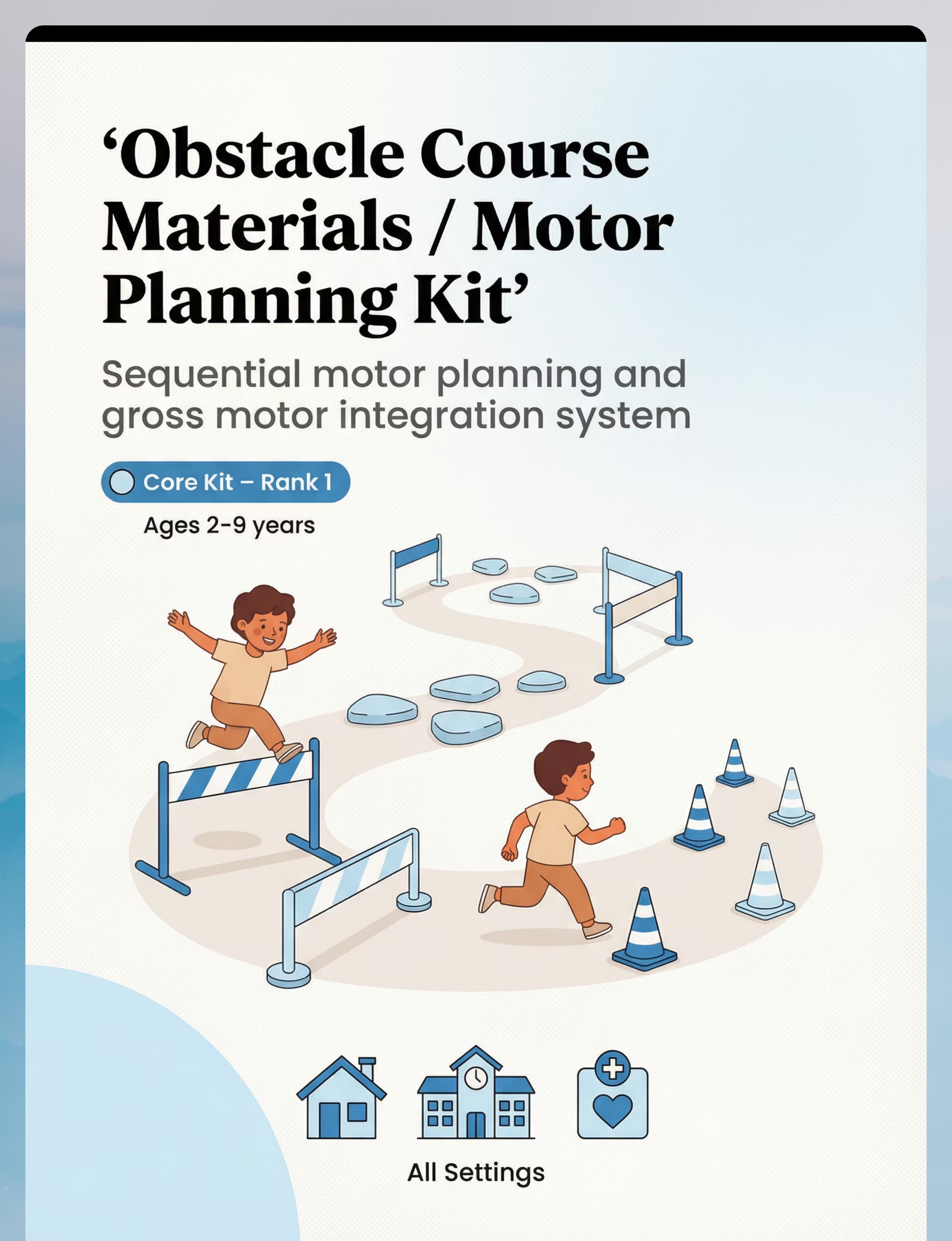
Obstacle Course Materials: Motor Planning & Coordination Development
OT + PT Recommended
Strong Evidence
Daily Use
₹200–8,000
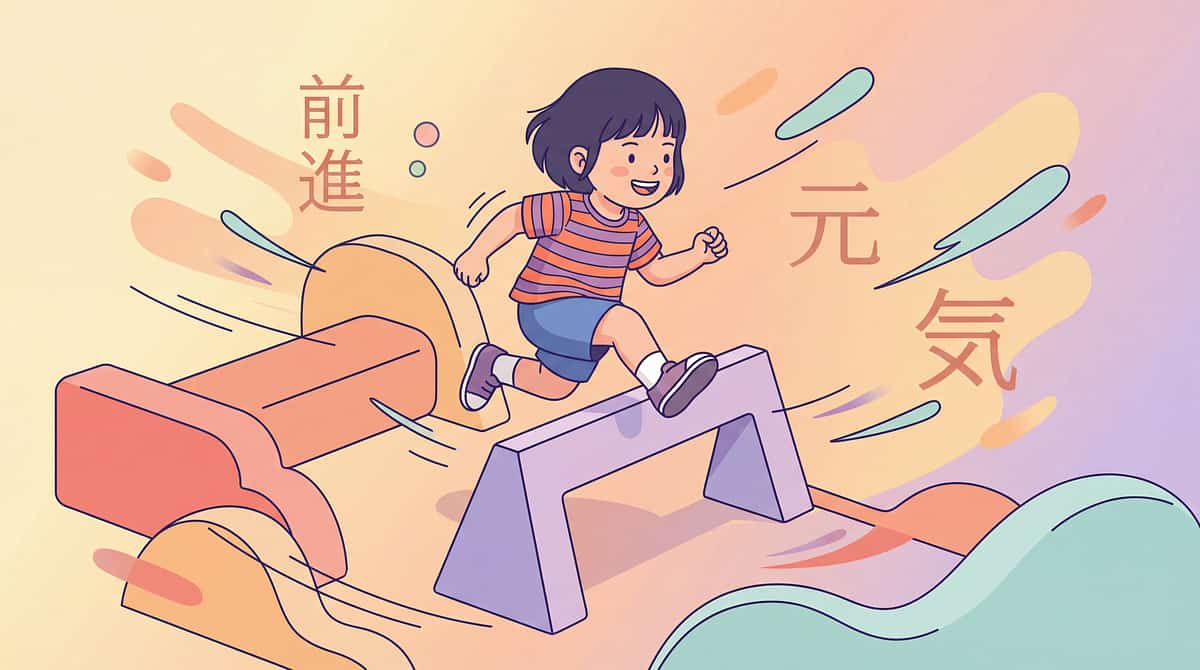
Transform your child's movement challenges into confident, coordinated action through structured, engaging obstacle courses that build motor planning skills one step at a time.

Who This Helps
Motor Planning
Develops the ability to conceive, plan, and execute a sequence of movements efficiently.
Sequencing
Enhances the skill to perform motor actions in a specific, logical order.
Coordination
Improves the harmonious and efficient interaction of different body parts during movement.
Gross Motor Skills
Strengthens large muscle movements, essential for activities like walking, running, and jumping.
Executive Function
Ages 2-9 years
Home
Clinic
School
Outdoors
Perfect for children who struggle with motor planning and executing movement sequences
Ideal for developing coordination and body awareness through playful challenges
Essential for building physical confidence and participation in active play

Does This Sound Familiar?
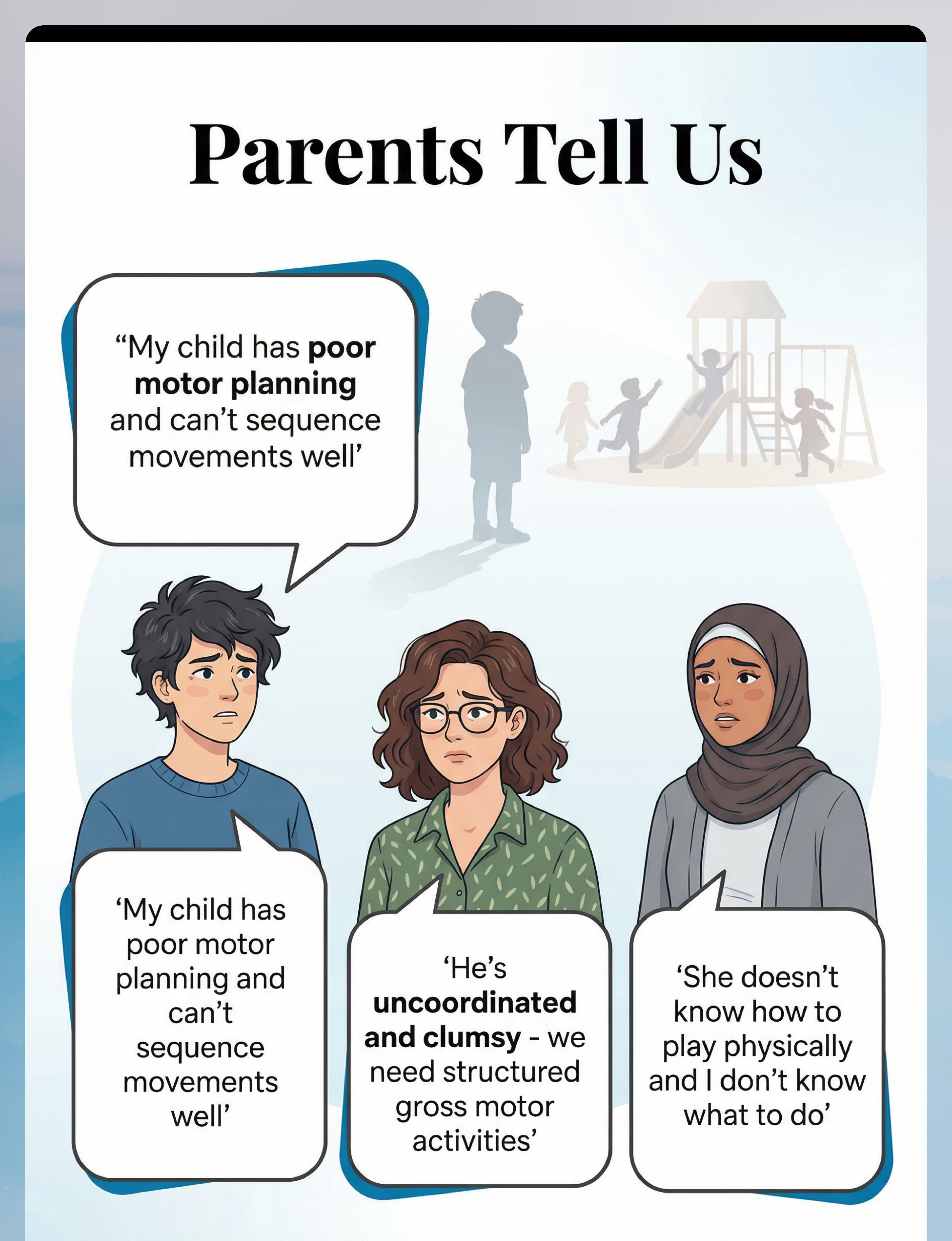
"My child has poor motor planning — simple movement sequences are overwhelming."
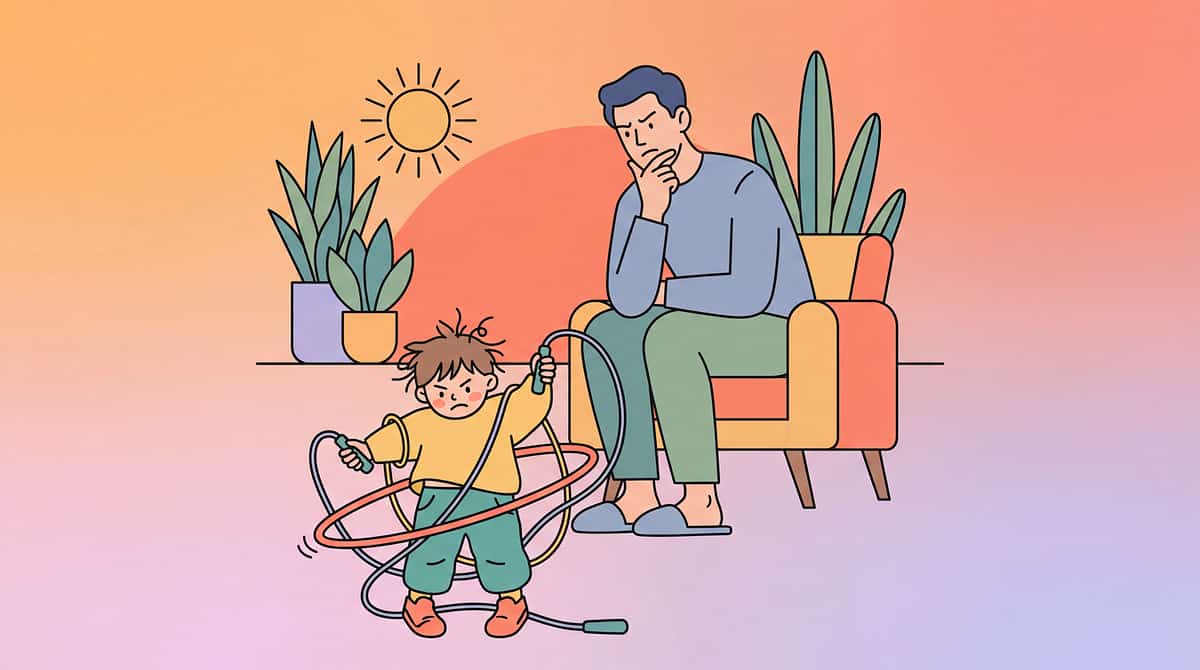
"She can't sequence movements well. Multi-step instructions leave her frozen and frustrated."
"He's uncoordinated and clumsy. Every physical task seems harder for him than for other kids."
"We need structured gross motor activities but I don't know where to start or what will help."
"She doesn't know how to play physically. She watches other kids but can't figure out how to join in."
"He needs movement but I don't know what to do — just 'go play' doesn't work for him."
You're not alone. These are common challenges faced by families navigating motor planning differences. There is a path forward.

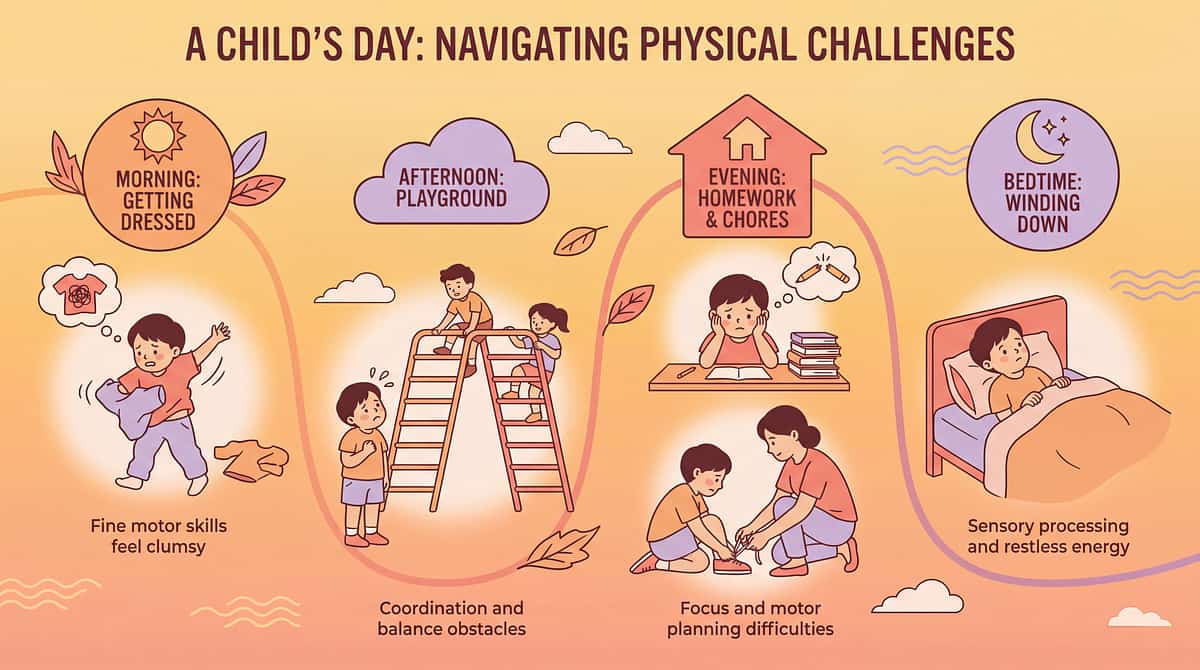
A Day Without the Right Support
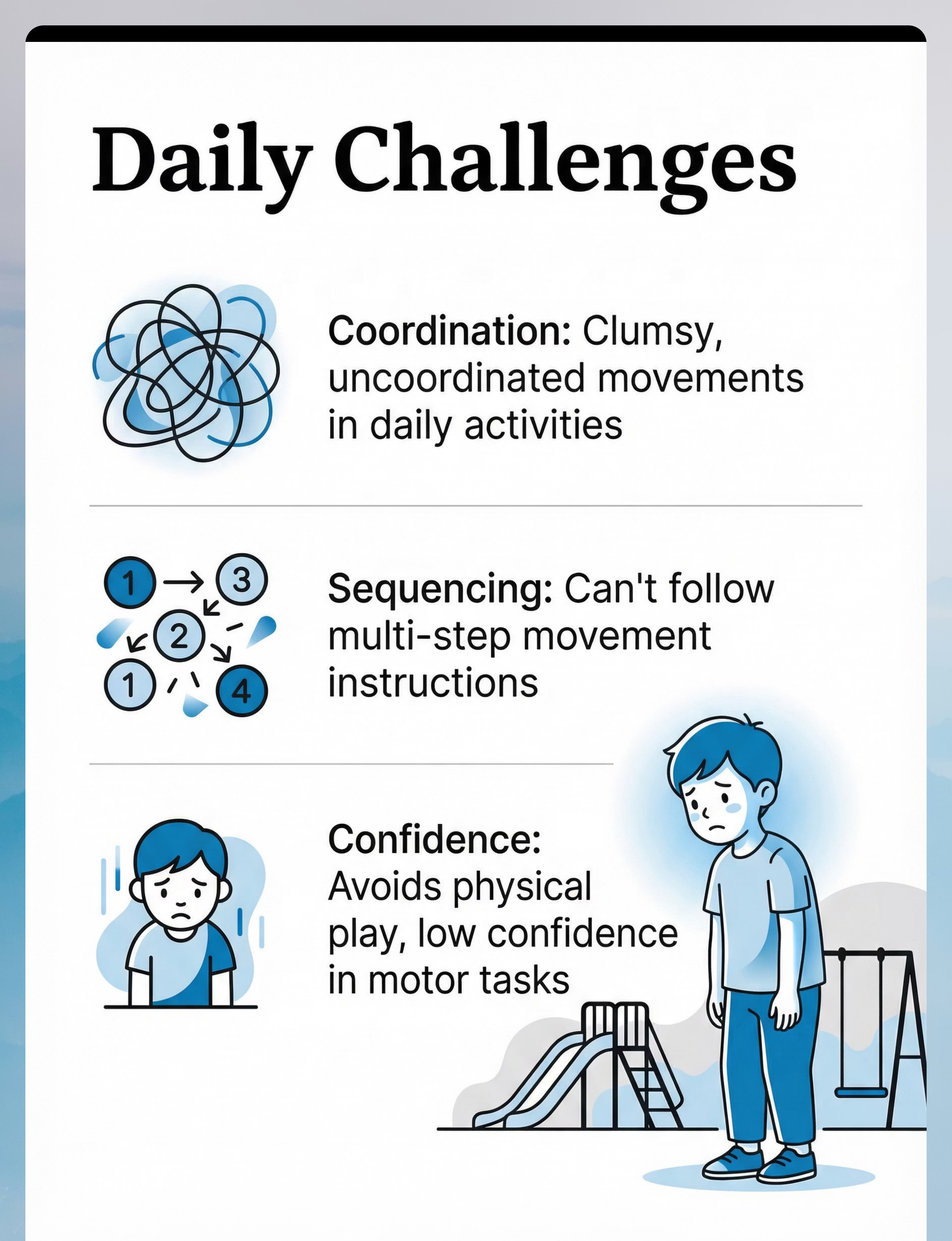
Morning Coordination
Clumsy, uncoordinated movements make simple morning routines exhausting and time-consuming
Following Instructions
Can't follow multi-step movement instructions — freezes when asked to do a sequence of actions
Physical Play
Avoids physical play entirely — watches from the sidelines while peers run and climb confidently
Bedtime Confidence
Low confidence in motor tasks accumulates throughout the day, affecting self-esteem and willingness to try
Each struggle compounds, creating a cycle of avoidance and missed developmental opportunities. But targeted intervention can break this pattern.

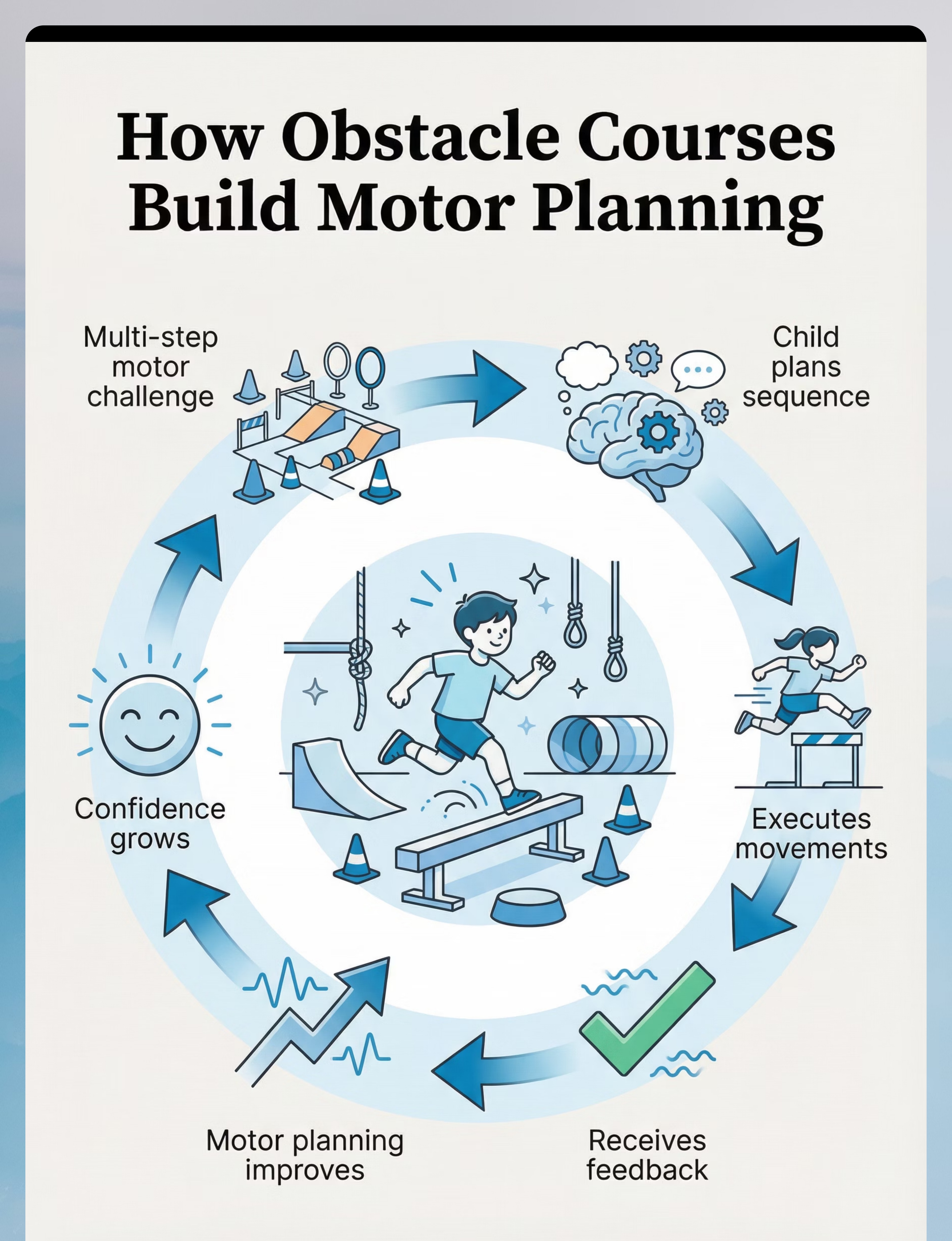
The Science Behind It
1
Multi-Step Challenge
Child encounters structured obstacle course with clear sequence
2
Planning Phase
Brain works to plan the sequence of movements needed
3
Execution
Child executes planned movements through the course
4
Feedback Loop
Body receives sensory feedback, brain adjusts for next attempt
5
Skill Development
Motor planning improves, coordination develops, confidence grows
This neurological process strengthens with each practice session, building the foundational skills needed for all physical activities and daily tasks.
Motor Planning
Sequencing
Coordination
Gross Motor Skills
Body Awareness
Executive Function

How to Use It Right
Start Simple
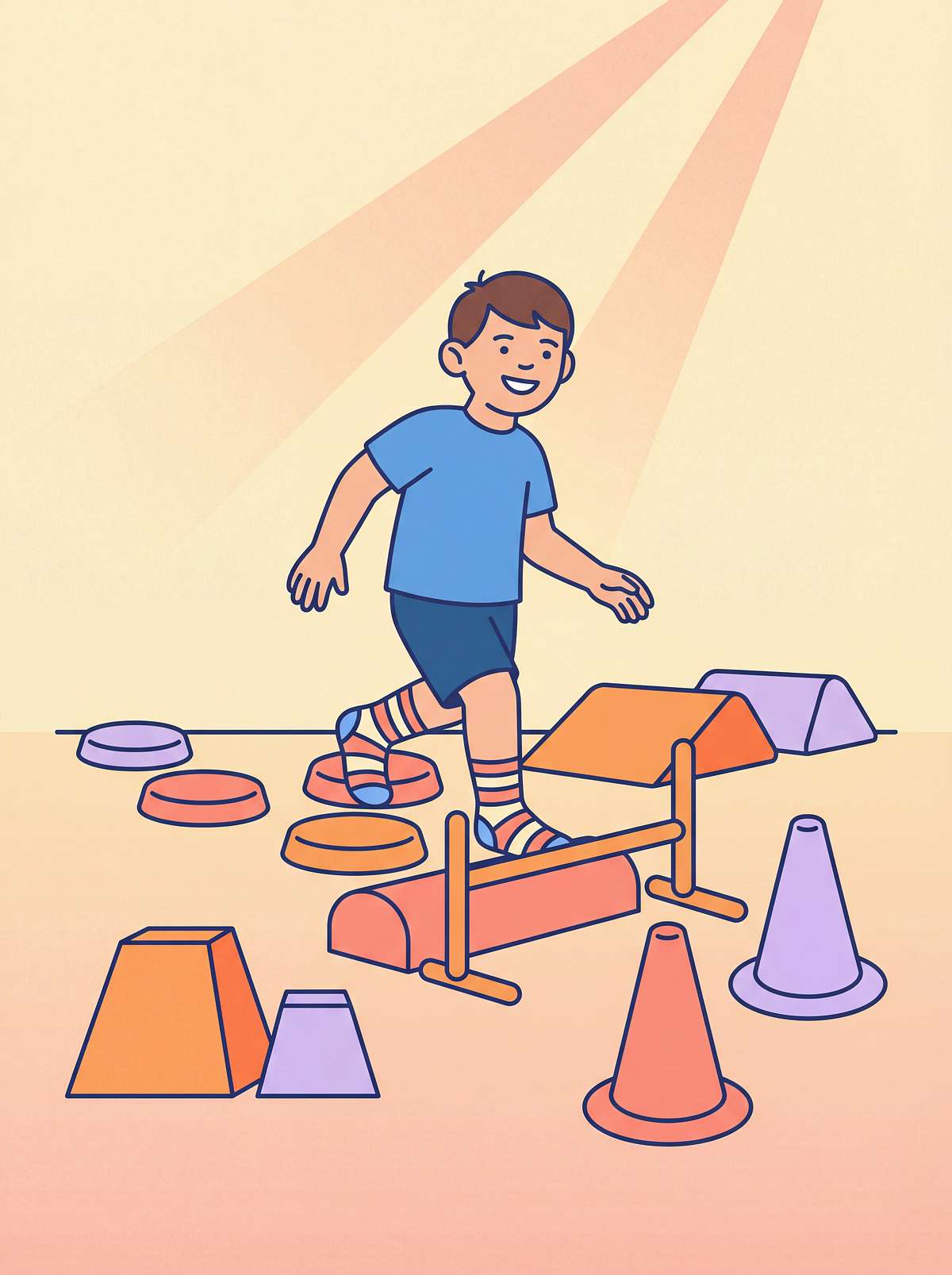
Begin with 3-4 stations, then add more as skill develops. Too many steps overwhelm working memory.
Visual Sequences
Use pictures or visual sequence cards to help with planning — seeing the steps makes execution easier.
Change It Up
Vary the course regularly to prevent pure memorization. The goal is building flexible motor planning, not route memory.
Mix Challenges
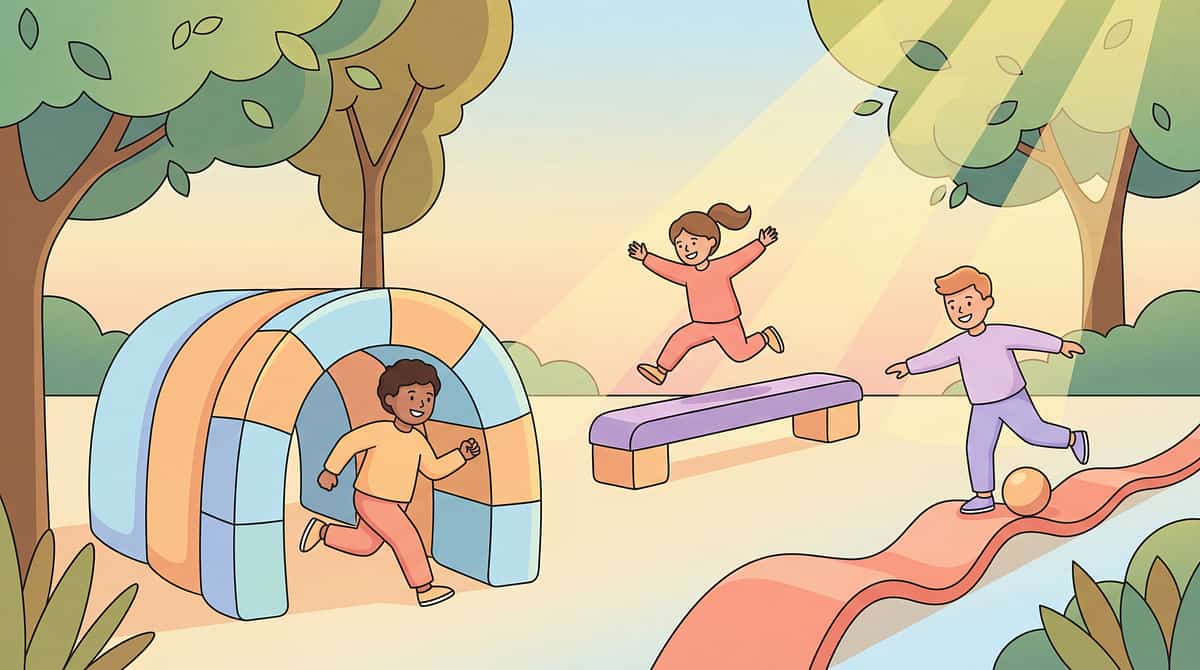
Include variety: jumping, crawling, balancing, throwing. Different movement types build comprehensive skills.
Keep It Fun
Make it play, not drill. Enthusiasm and engagement accelerate learning far more than forced repetition.
Child as Designer
Let child help design courses — planning the layout is motor planning practice too!
Duration: 10-20 minutes with multiple runs through the course. Quality practice beats exhausting marathons.

Expert Perspective
"Obstacle courses are motor planning gold. Each course is a sequence of motor problems to solve. They challenge coordination, build strength, and develop the executive function needed for all daily activities."
— Occupational Therapist, Motor Development Specialist
Why It Matters:
- OT + PT Recommended
- Strong Evidence
- Rank #1 in Category
- Core Kit Essential

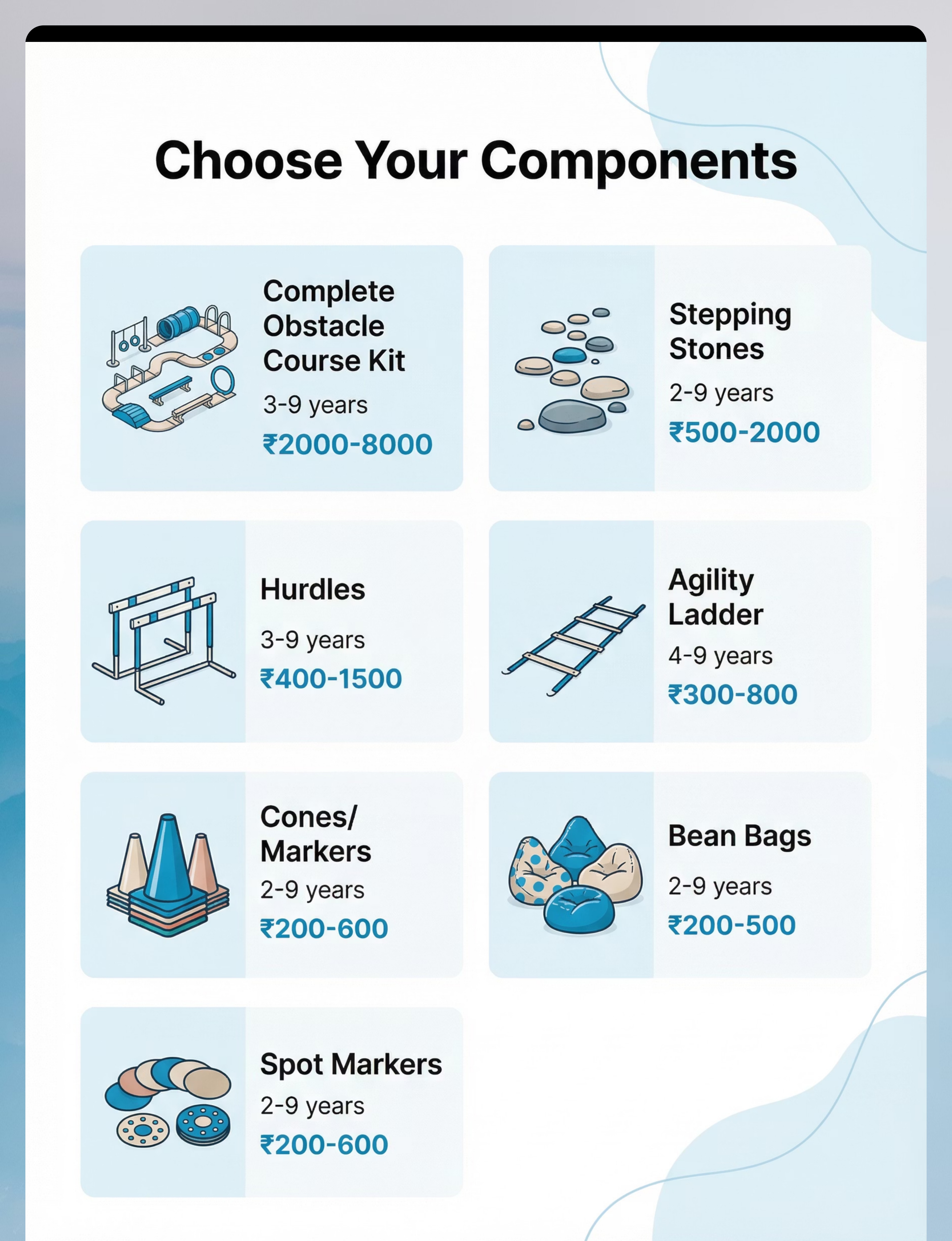
Choose Your Option (7 Variants)
Complete Obstacle Course Kit
Best for: Ready-made courses, maximum variety
Ages: 3-9 years | Settings: Home, Clinic, School
Portability: Medium | Price: ₹2,000–8,000
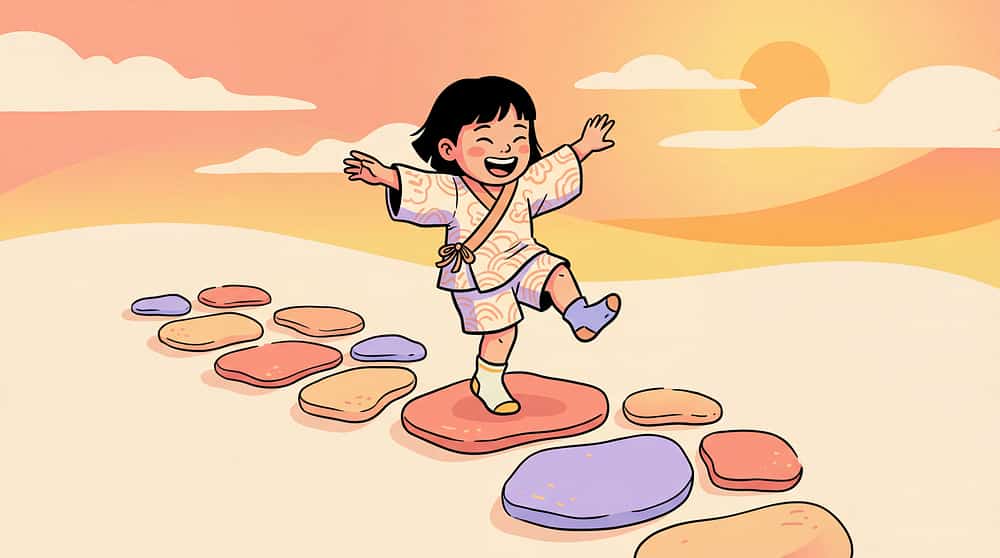
Stepping Stones / River Stones
Best for: Balance, motor planning fundamentals
Ages: 2-9 years | Settings: All
Portability: High | Price: ₹500–2,000
Hurdles / Jump Bars
Best for: Jumping skills, leg strength
Ages: 3-9 years | Settings: Home, Clinic, School
Portability: Medium | Price: ₹400–1,500
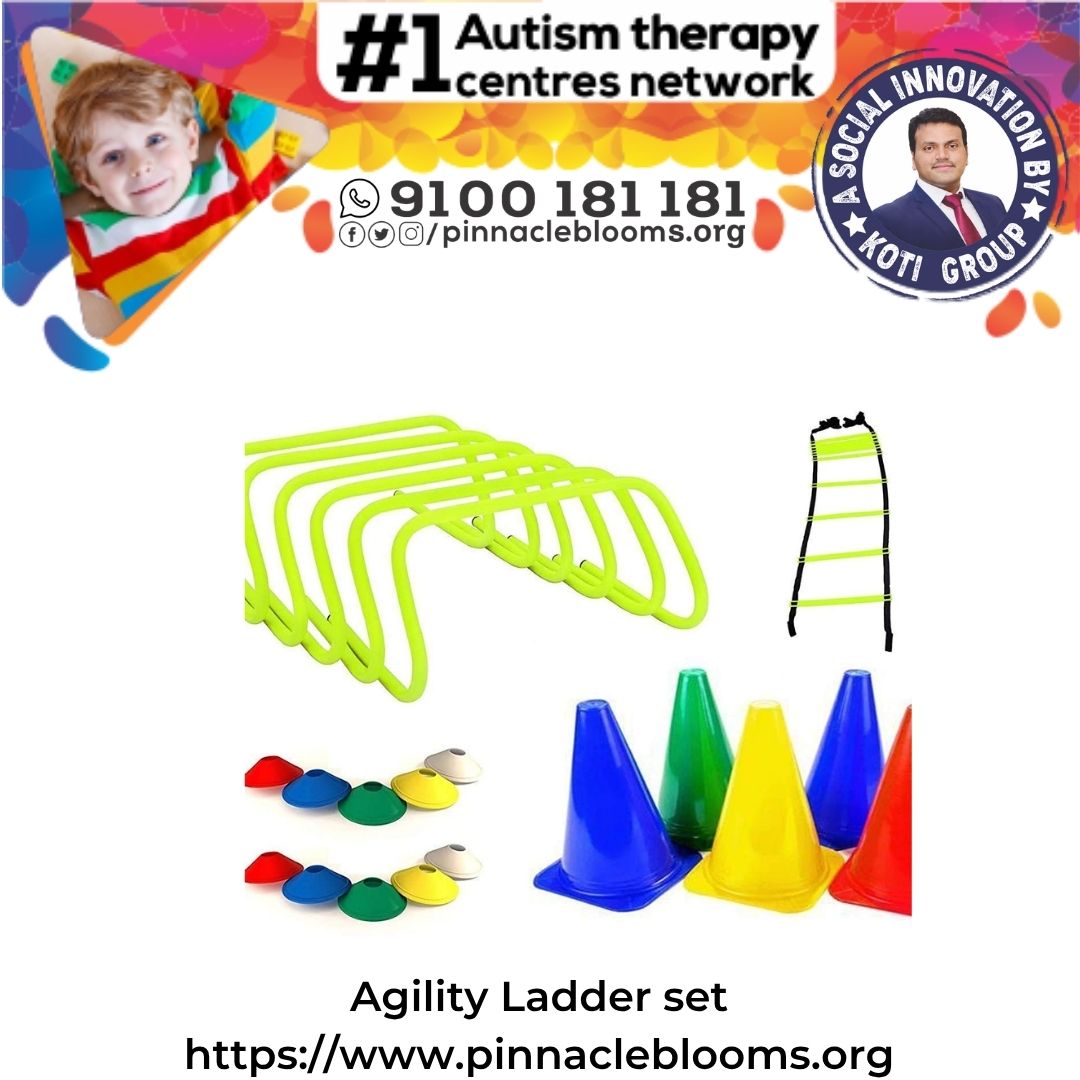
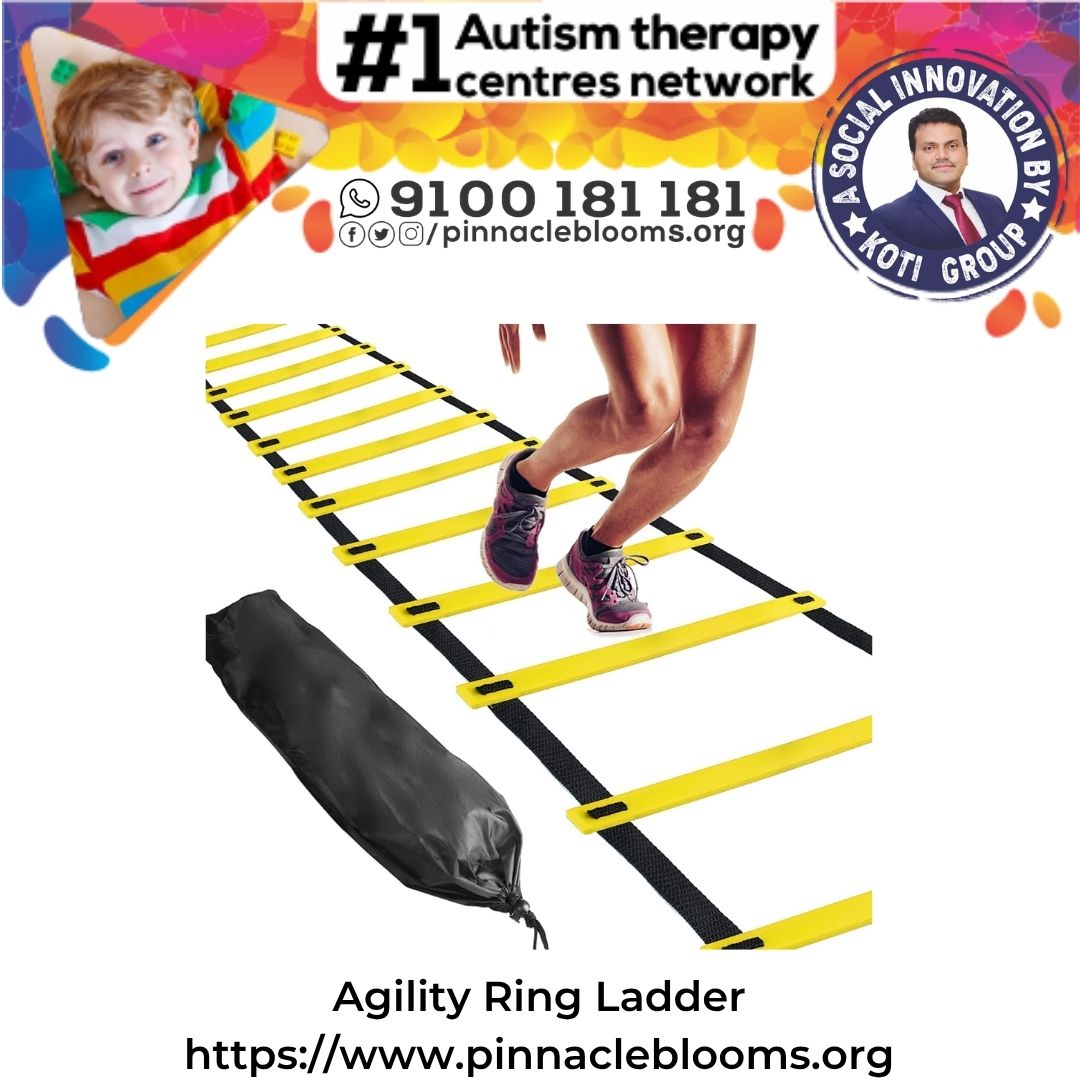
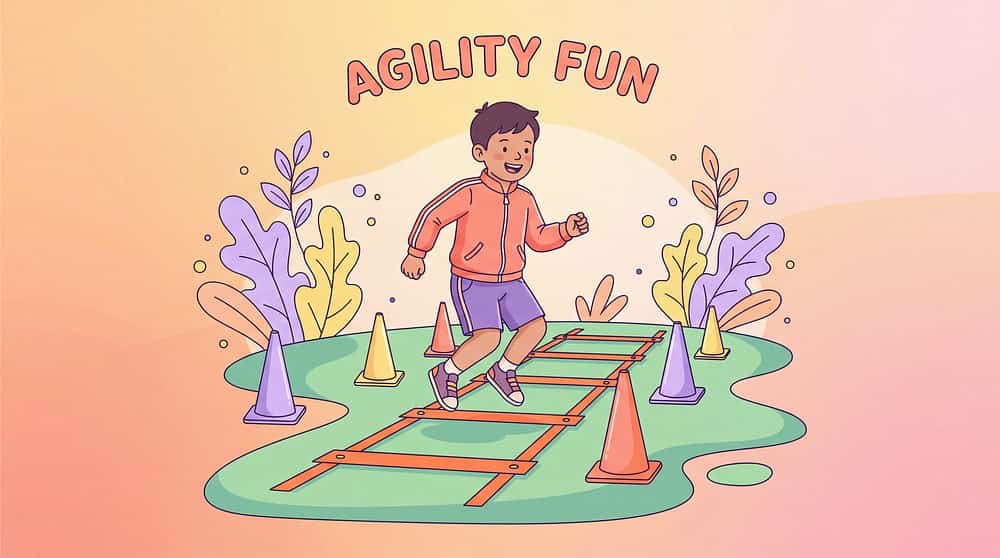
Agility Ladder / Floor Ladder
Best for: Footwork, coordination, sequencing
Ages: 4-9 years | Settings: All
Portability: High (rolls up) | Price: ₹300–800
Cones / Markers
Best for: Creating paths, weaving patterns
Ages: 2-9 years | Settings: All
Portability: Very High | Price: ₹200–600
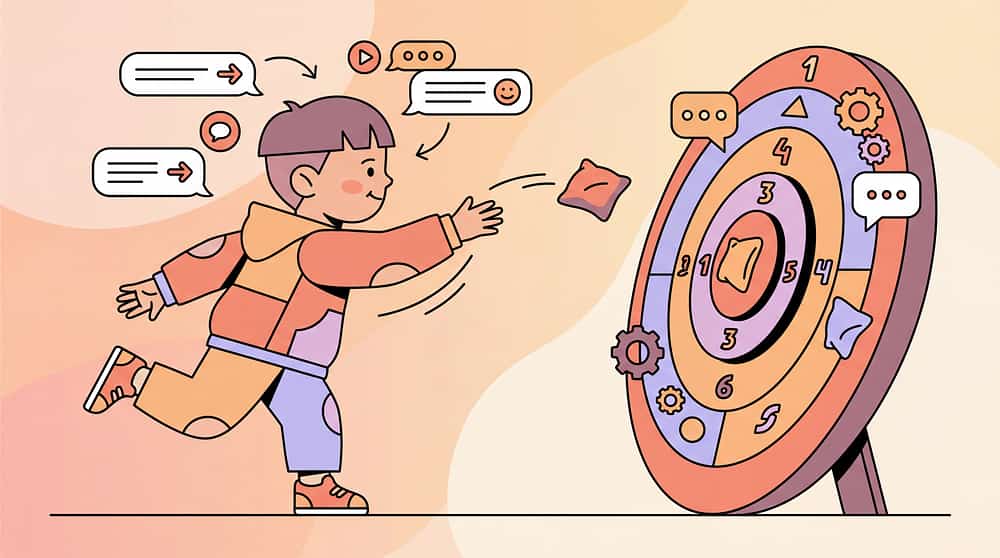
Bean Bags
Best for: Adding throwing and carrying tasks
Ages: 2-9 years | Settings: All
Portability: Very High | Price: ₹200–500
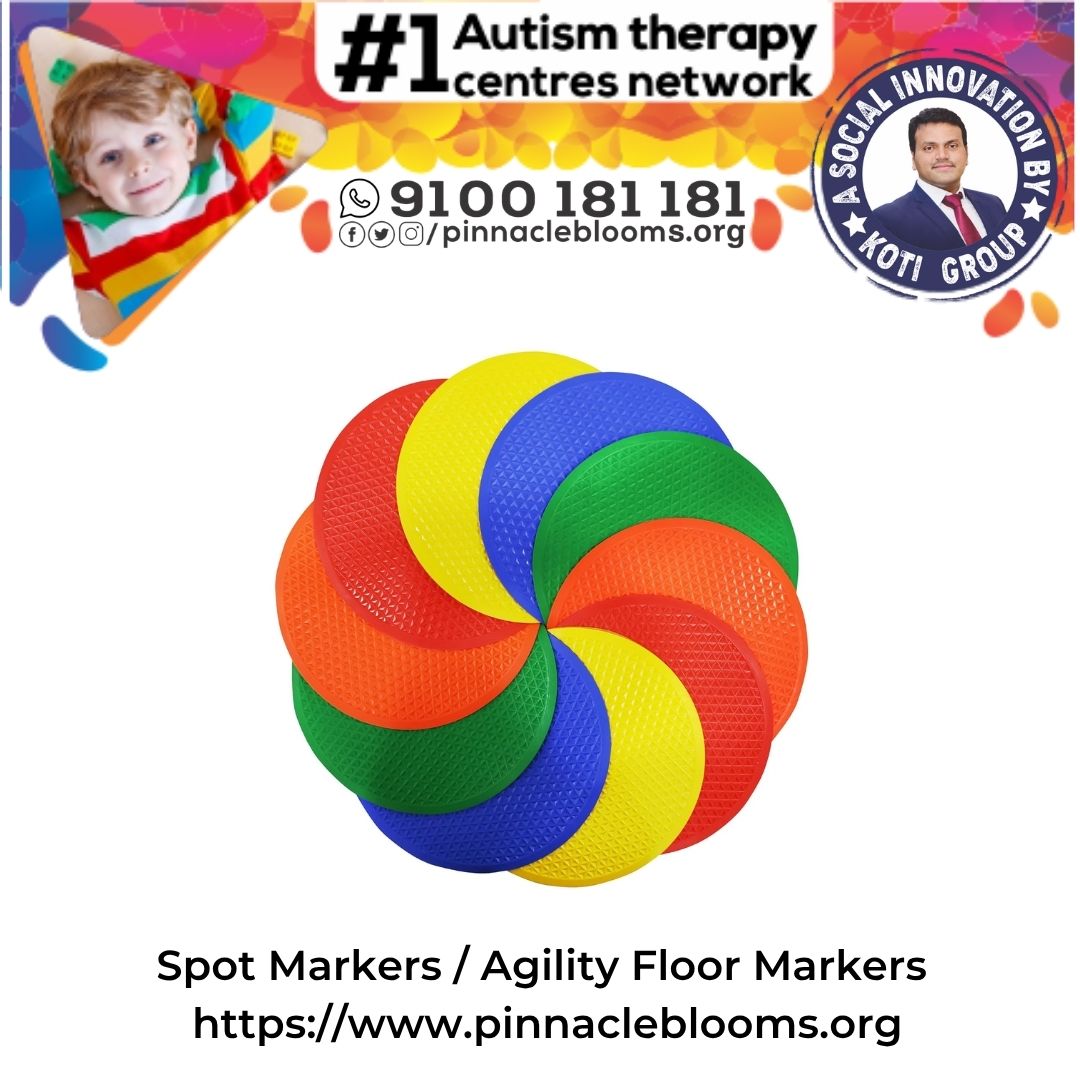
Spot Markers / Floor Dots
Best for: Jumping sequences, creating patterns
Ages: 2-9 years | Settings: All
Portability: Very High | Price: ₹200–600
By Goal
- Balance: Stepping stones
- Coordination: Agility ladder
- Strength: Hurdles
- Variety: Complete kit
By Setting
- Small spaces: Cones, spots
- Indoor: All options work
- Outdoor: Any weather-resistant
- Travel: Bean bags, spots
By Portability
- Very High: Spots, cones, bean bags
- High: Stones, ladder
- Medium: Hurdles, complete kits
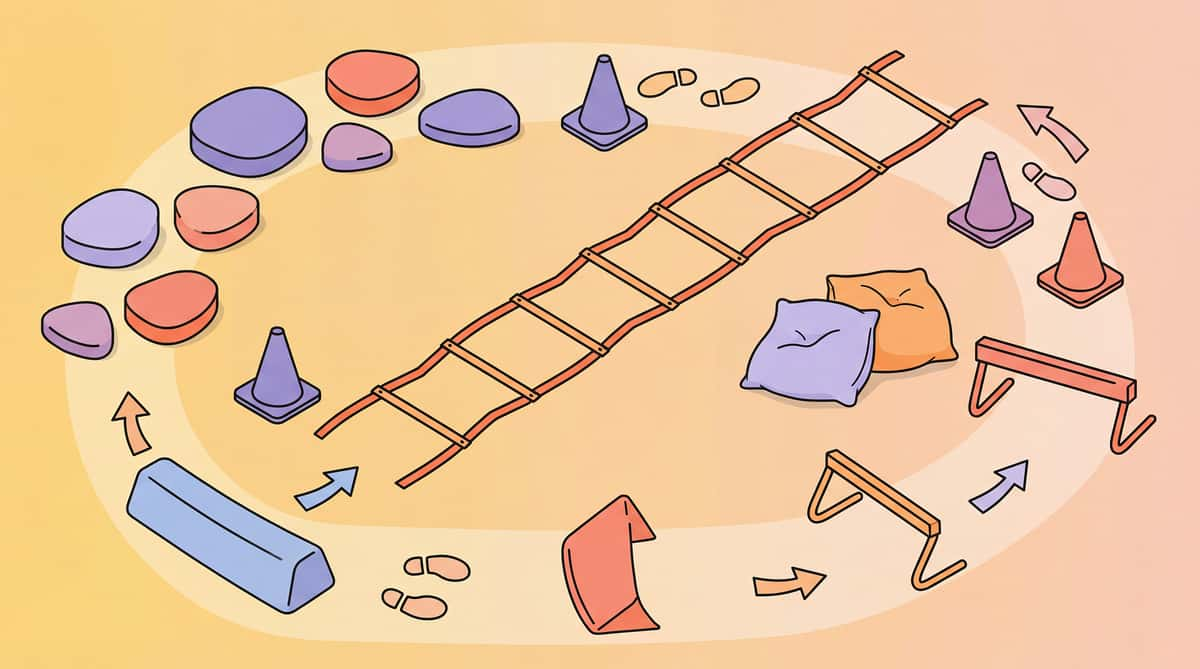
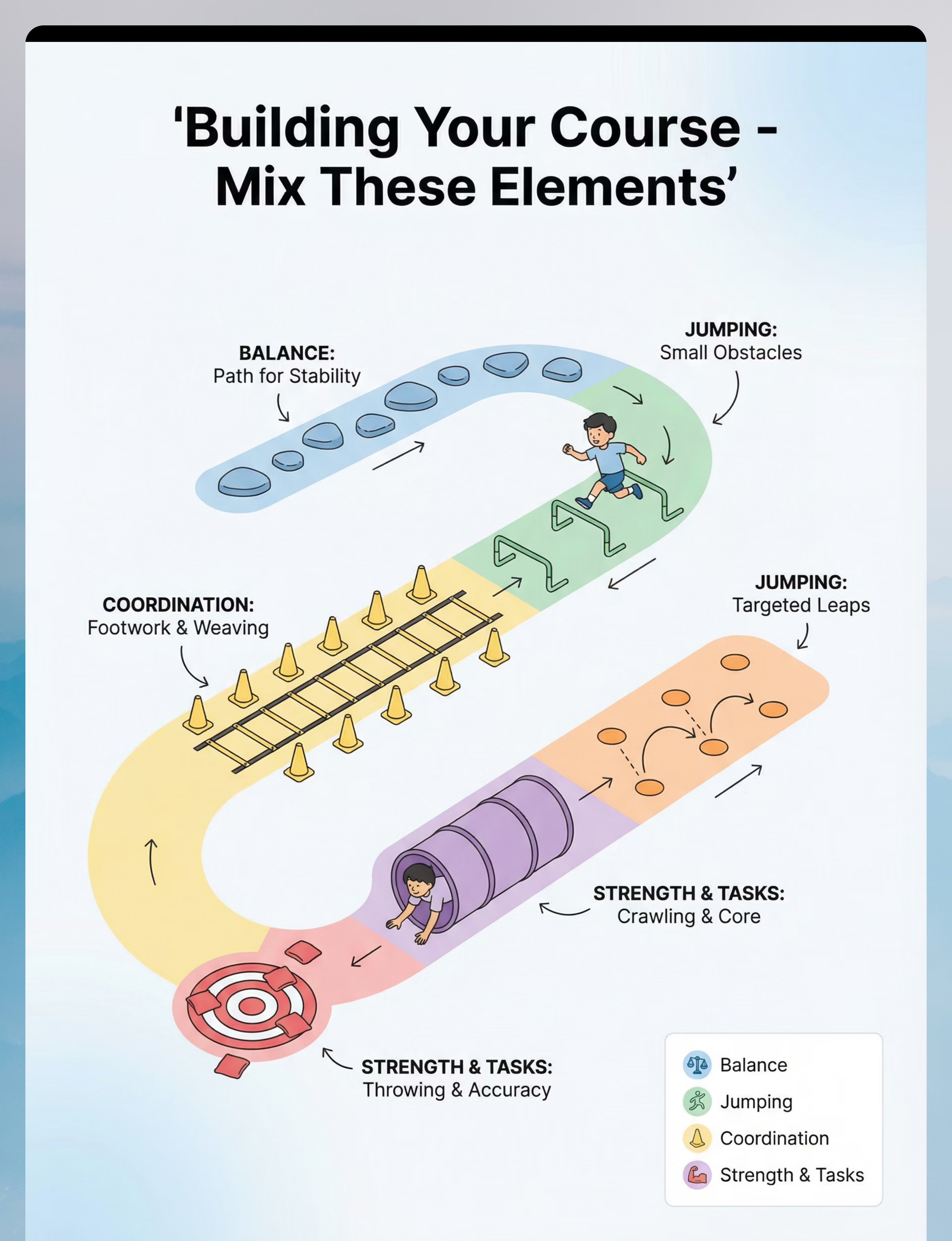
Course Component Guide

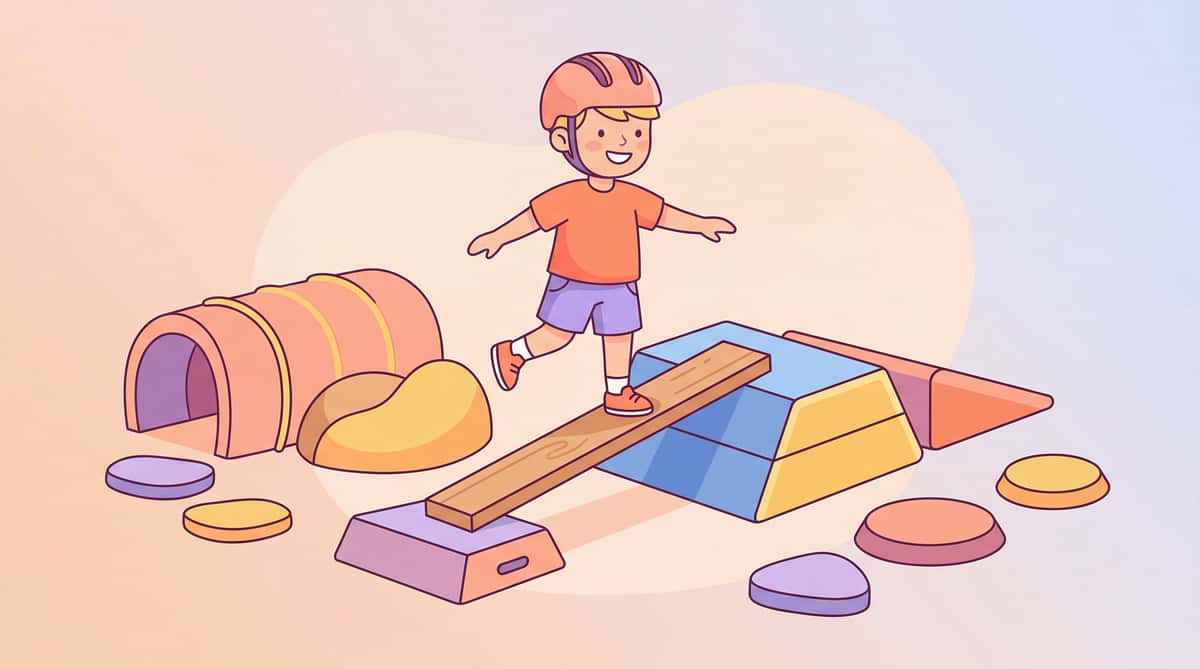
Balance Elements
Stepping stones, balance beams, balance pods — develop core stability and spatial awareness

Jumping Challenges
Hurdles, spot markers, hoops — build leg strength and power coordination

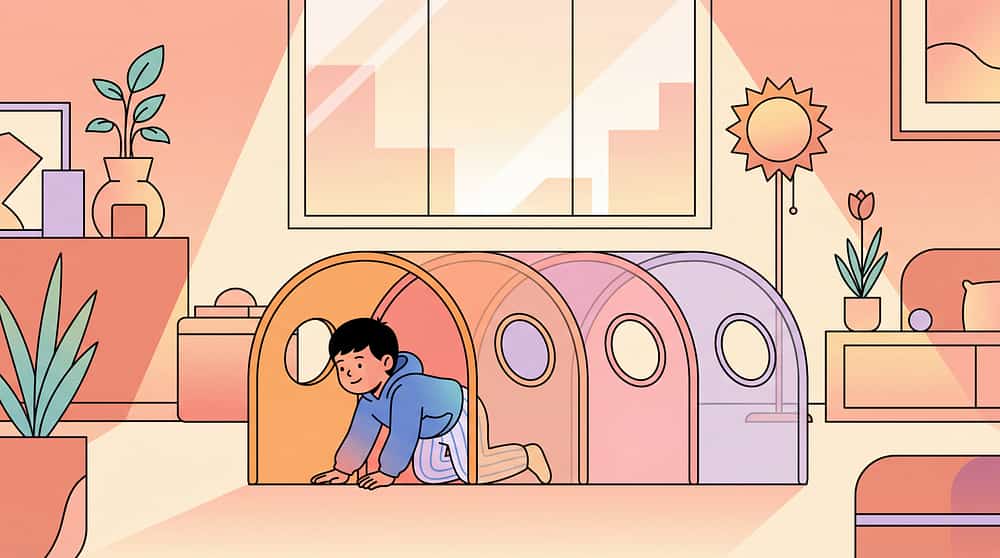
Crawling Stations
Tunnels, under barriers — strengthen core and upper body, spatial navigation

Coordination Paths
Agility ladder, weaving cones — footwork patterns and sequencing skills

Strength Building
Climbing, pushing, pulling tasks — functional strength through play

Task Integration
Bean bag throws, object carries — combine movement with cognitive challenges
Key Features Across All Components
- Modular and reconfigurable — create unlimited course variations
- Safe materials — foam, plastic, rubber designed for active use
- Varied challenges — address multiple developmental areas simultaneously
- Easy storage — most components stack, fold, or store flat
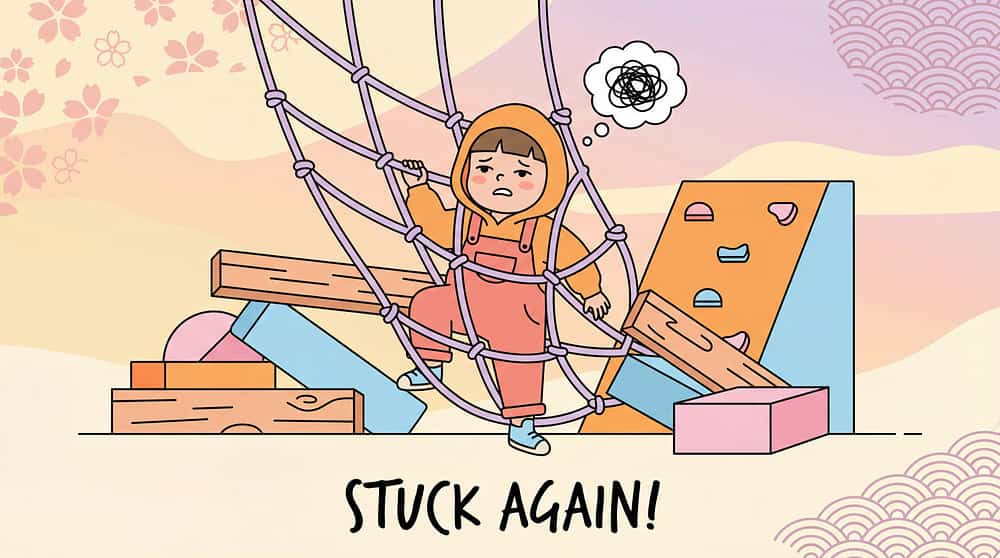
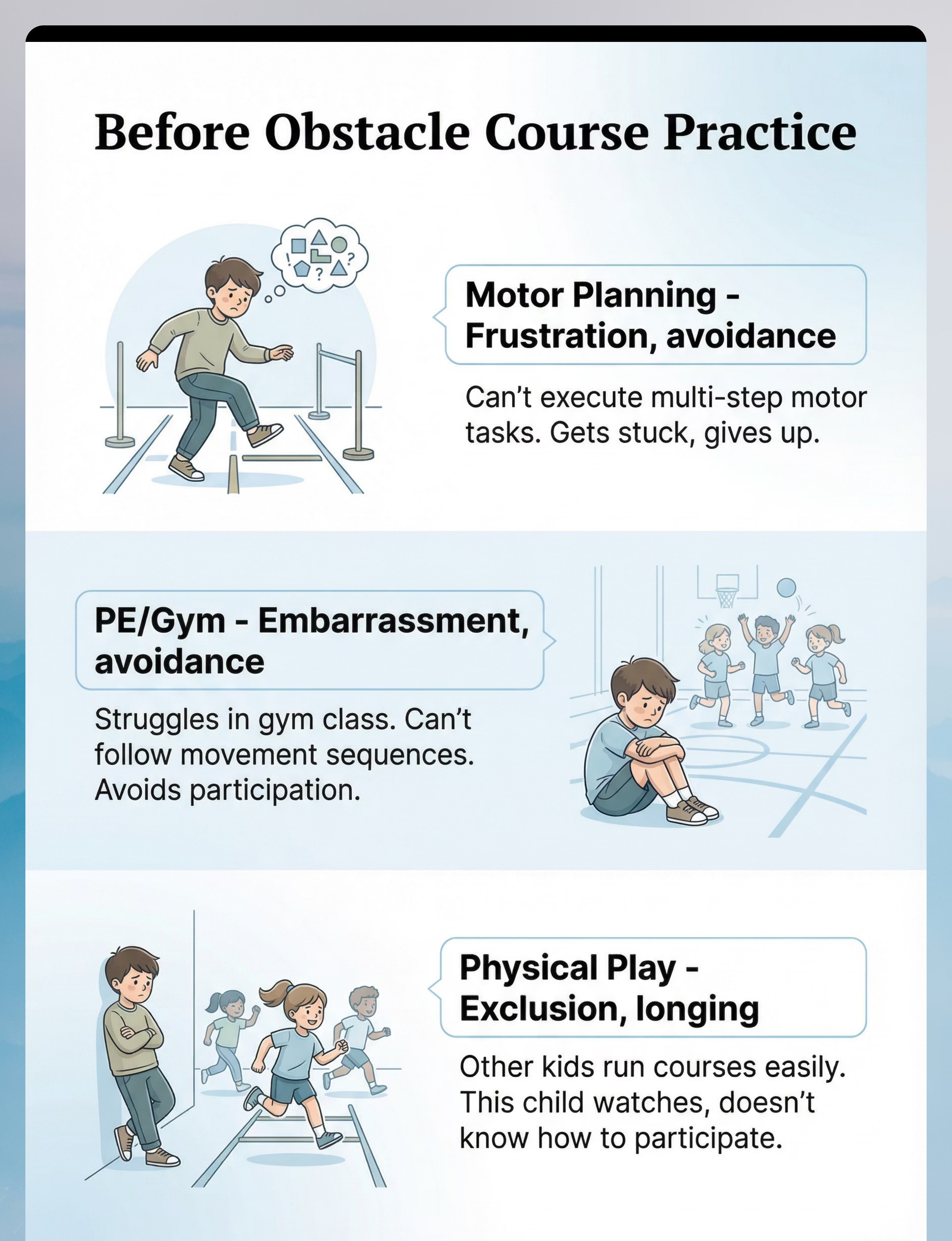
The Struggle (Before)

Motor Planning Challenges
Situation: Child can't execute multi-step motor tasks
Experience: Gets stuck halfway through, gives up in frustration, avoids physical activities entirely
Emotion: Frustration, avoidance, growing sense of "I can't"

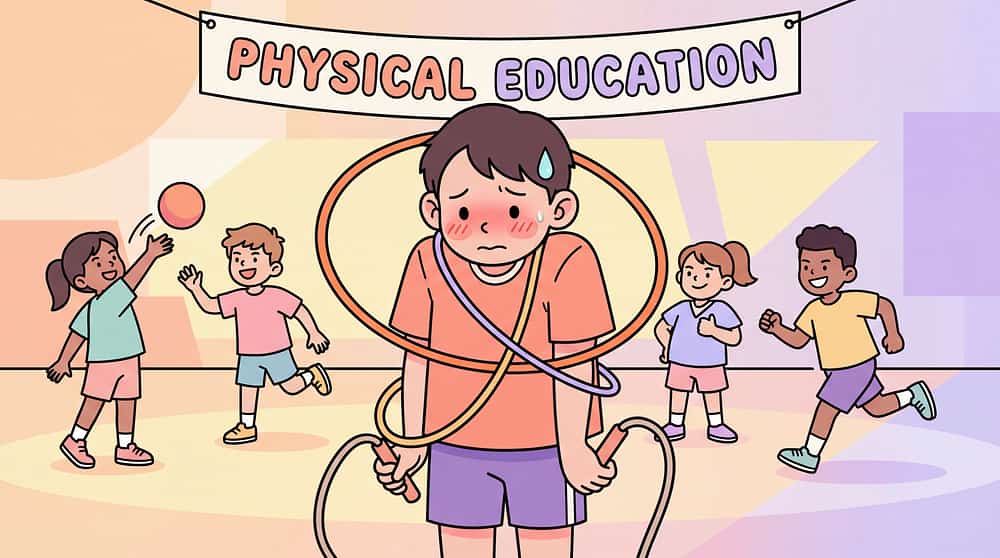
PE & Gym Class
Situation: Child struggles in gym class activities
Experience: Can't follow movement sequences, embarrassed in front of peers, avoids participation
Emotion: Embarrassment, social anxiety, isolation

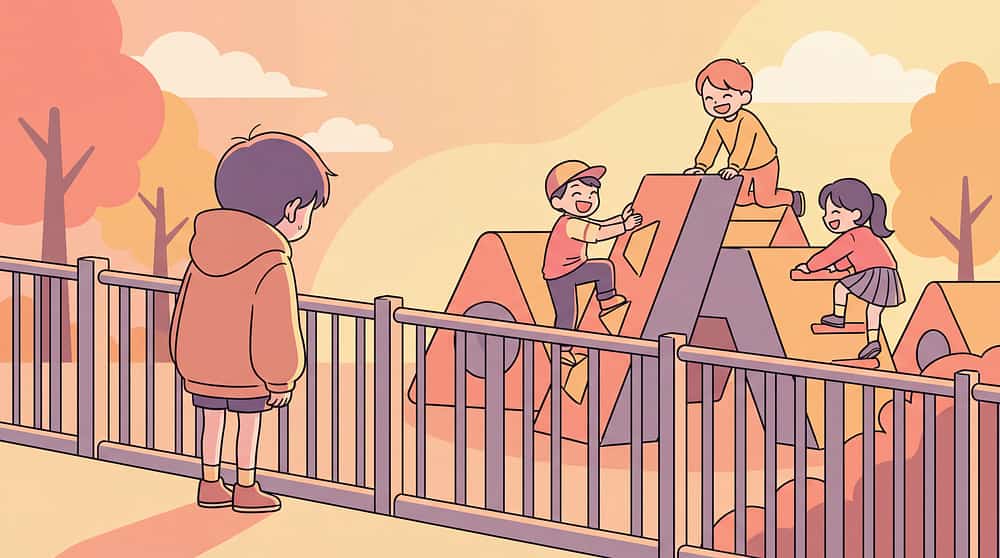
Physical Play & Peer Inclusion
Situation: Other kids navigate obstacle courses easily
Experience: This child watches from the sidelines, doesn't know how to participate, misses social bonding
Emotion: Exclusion, longing, deepening sense of being different"
These daily struggles compound, affecting not just physical development but self-confidence, peer relationships, and overall quality of life. Early intervention changes trajectories.

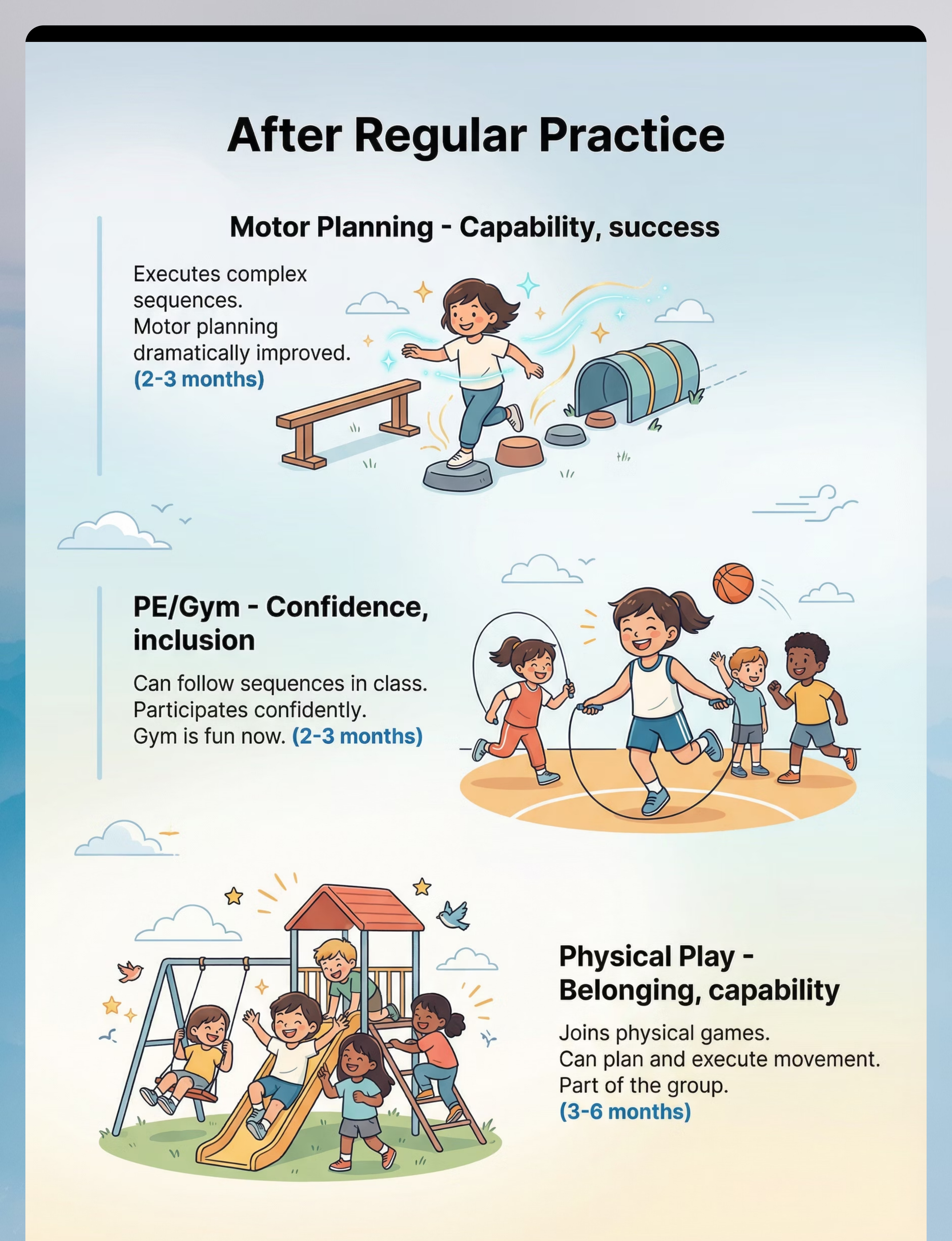
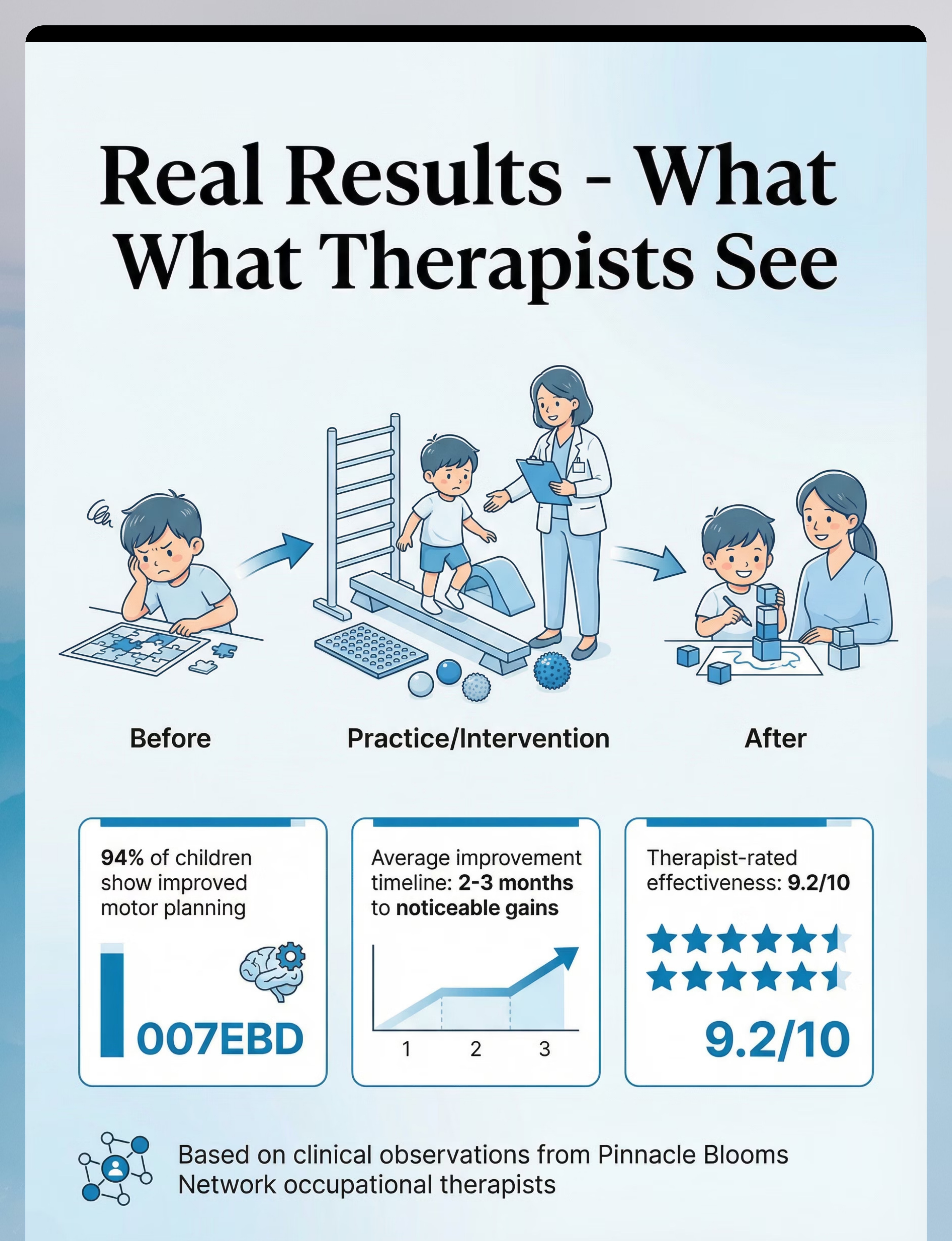
The Breakthrough (After)
2-3 Months: Motor Planning Success
Situation: Started with simple 3-station course, built complexity gradually
Experience: Now executes complex movement sequences with confidence, motor planning dramatically improved
Emotion: Capability, pride, "I can do this!"
2-3 Months: PE & Gym Confidence
Situation: Home practice transfers to school setting
Experience: Can follow movement sequences in class, participates confidently, gym is actually fun now
Emotion: Confidence, inclusion, belonging with peers
3-6 Months: Physical Play & Peer Connection
Situation: Joins physical games willingly
Experience: Can plan and execute movements, keeps up with peers, integral part of the group
Emotion: Belonging, capability, genuine friendship through shared play
Transformation happens through consistent, playful practice. Small wins build into lasting capabilities that generalize across all physical activities.

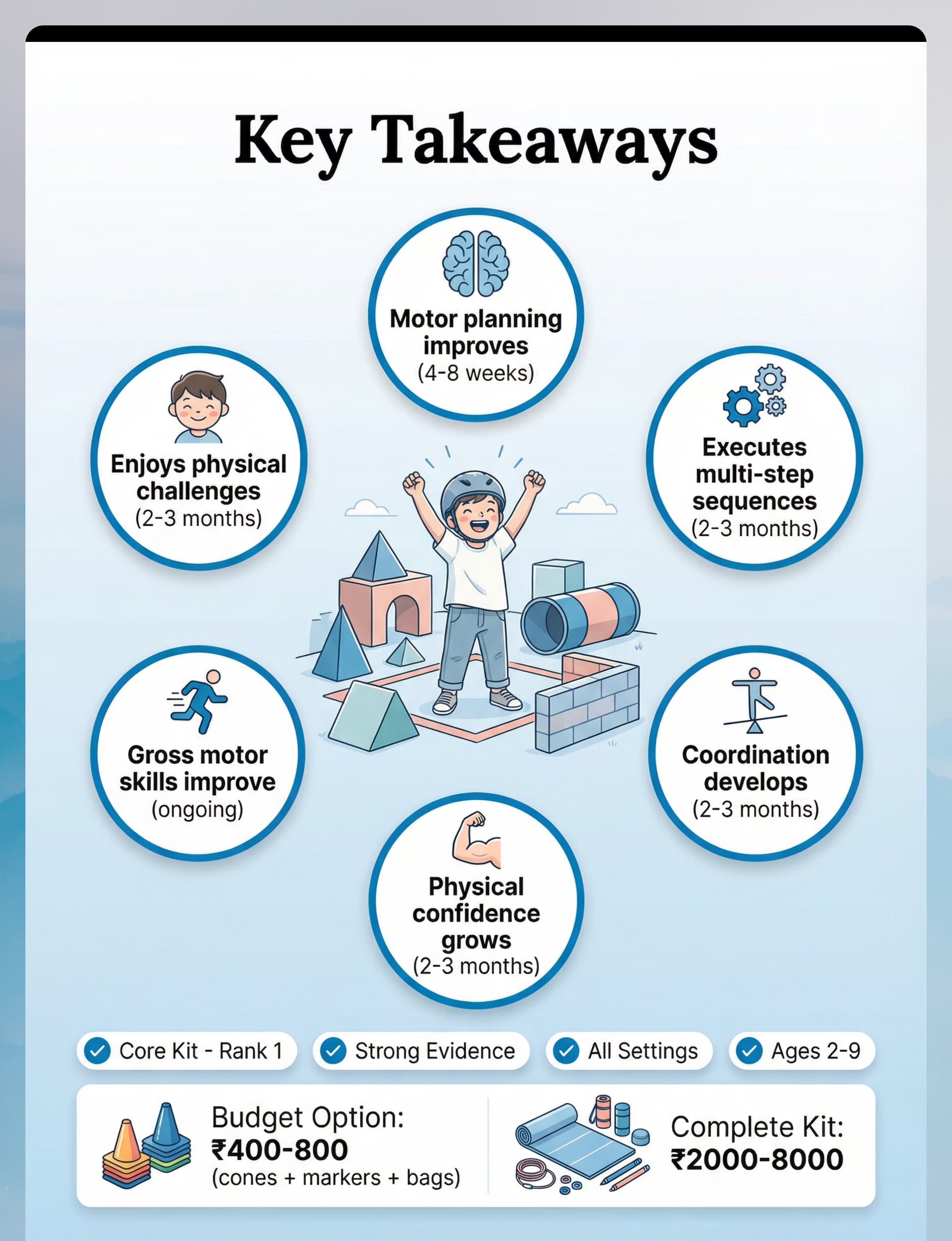
What to Expect (Realistic Timelines)
Week 4-8
Motor planning improves
Child begins successfully sequencing 3-4 step courses.
Month 2-3
Multi-step sequences
Complex 6-8 station courses completed independently.
Month 2-3
Coordination develops
Smoother, more controlled movements across all activities.
Month 2-3
Physical confidence grows
Seeks out movement challenges instead of avoiding them.
Month 2-3
Enjoys physical challenges
Intrinsic motivation for movement activities emerges.
Ongoing
Gross motor skills improve
Strength, balance, and coordination continue developing.
Progress is individualized. Some children advance quickly, others need more time. Consistency matters more than speed. Celebrate each milestone.

Is This Right for My Child? (2-Minute Check)
Does your child have difficulty with motor planning (new movement sequences)?
If yes, this indicates: Obstacle courses build motor planning through progressive sequencing challenges
Does your child struggle with multi-step movement tasks?
If yes, this indicates: Sequenced courses provide structured practice for multi-step coordination
Would structured gross motor activities help your family?
If yes, this indicates: Obstacle course kit provides ready framework for daily motor practice
Does your child avoid physical challenges?
If yes, this indicates: Graded courses build confidence through achievable incremental success
3+ "yes" answers = strong fit. These materials will likely provide significant benefit. Even 1-2 "yes" answers suggest potential value. Discuss with your OT or PT for personalized guidance.

Usage Guide
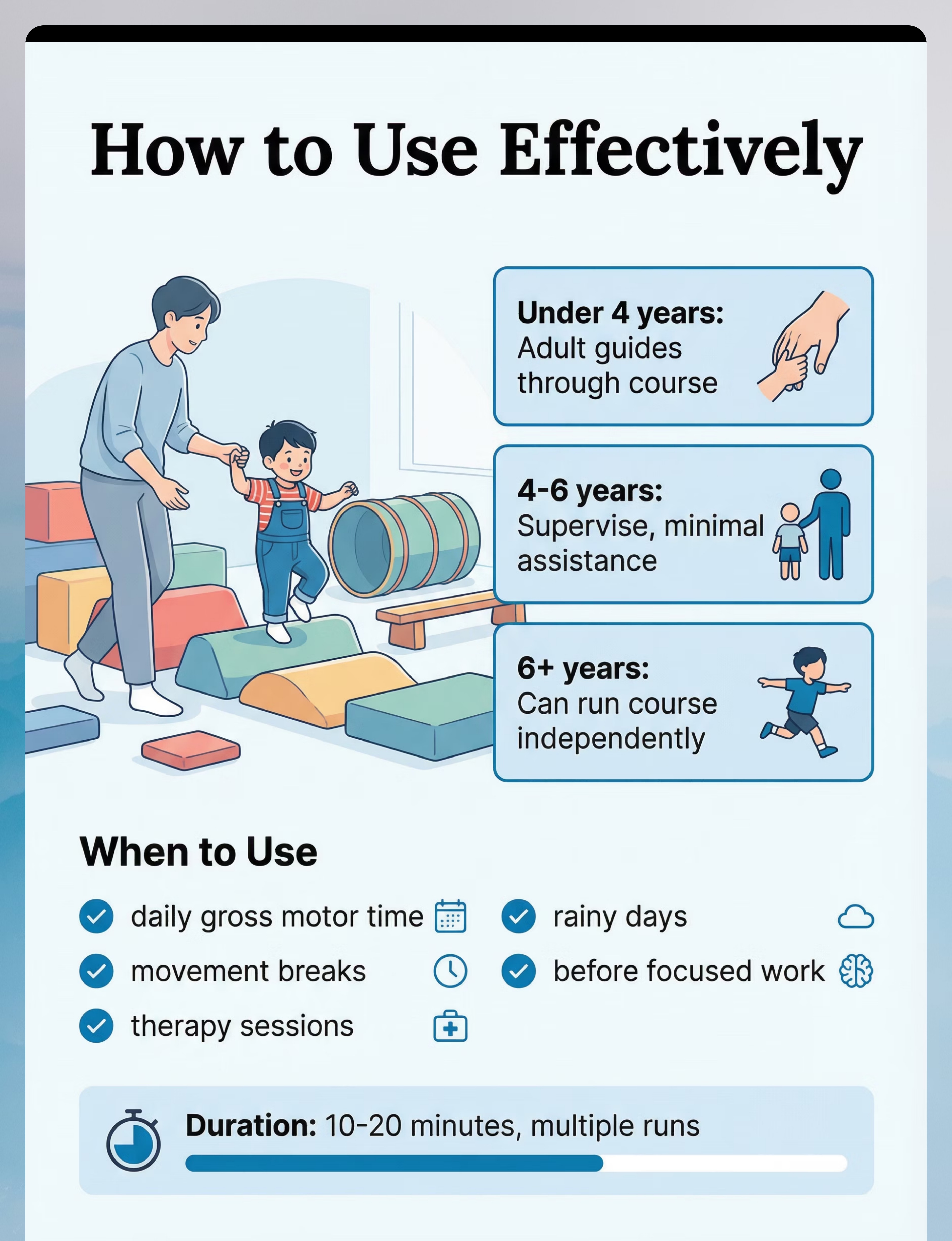
When to Use
Daily gross motor time
Incorporate into daily routine for consistent motor planning practice
Movement breaks
Reset focus and organize sensory system between focused activities
Therapy sessions
Core tool for OT and PT interventions targeting motor planning
Rainy day activity
Indoor gross motor outlet when outdoor play isn't possible
Parties & playdates
Structured activity that accommodates various skill levels
Before focused work
Organizing input prepares body and brain for table work
When NOT to Use
When space is unsafe or inadequately supervised
If course complexity exceeds child's current ability (adjust down)
When child is too dysregulated to participate safely
Usage Context Comparison
Appropriate Usage Contexts | Inappropriate Usage Contexts | |
Consistent daily routine for motor practice | Unsafe or inadequately supervised spaces | |
Structured breaks for sensory regulation | Tasks exceeding child's current ability (without adjustment) | |
Inclusive activity for various skill levels (parties/playdates) | When child is dysregulated and unable to participate safely |
Supervision by Age
Age Range | Supervision Level | Notes | |
Under 4 years | Adult guides through course | Hands-on assistance | |
4-6 years | Adult supervises, minimal assistance | Visual prompts sufficient | |
6+ years | Can run course independently | Check-ins as needed |
Duration: 10-20 minutes with multiple runs through course. Quality repetition builds skill without fatigue.

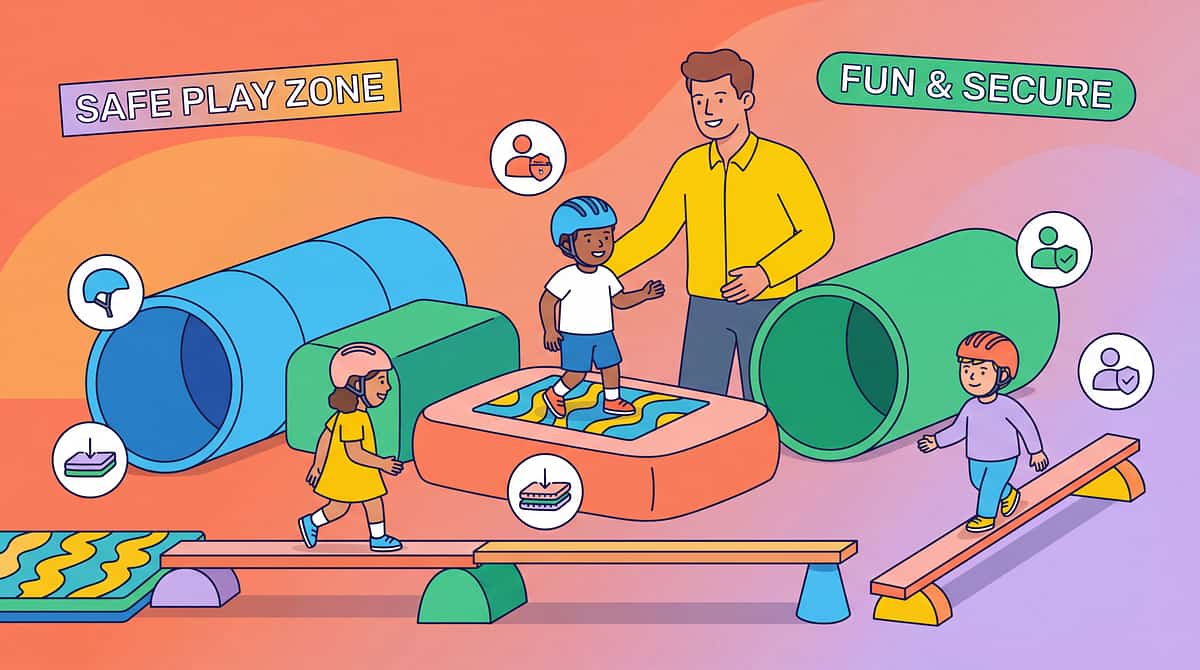
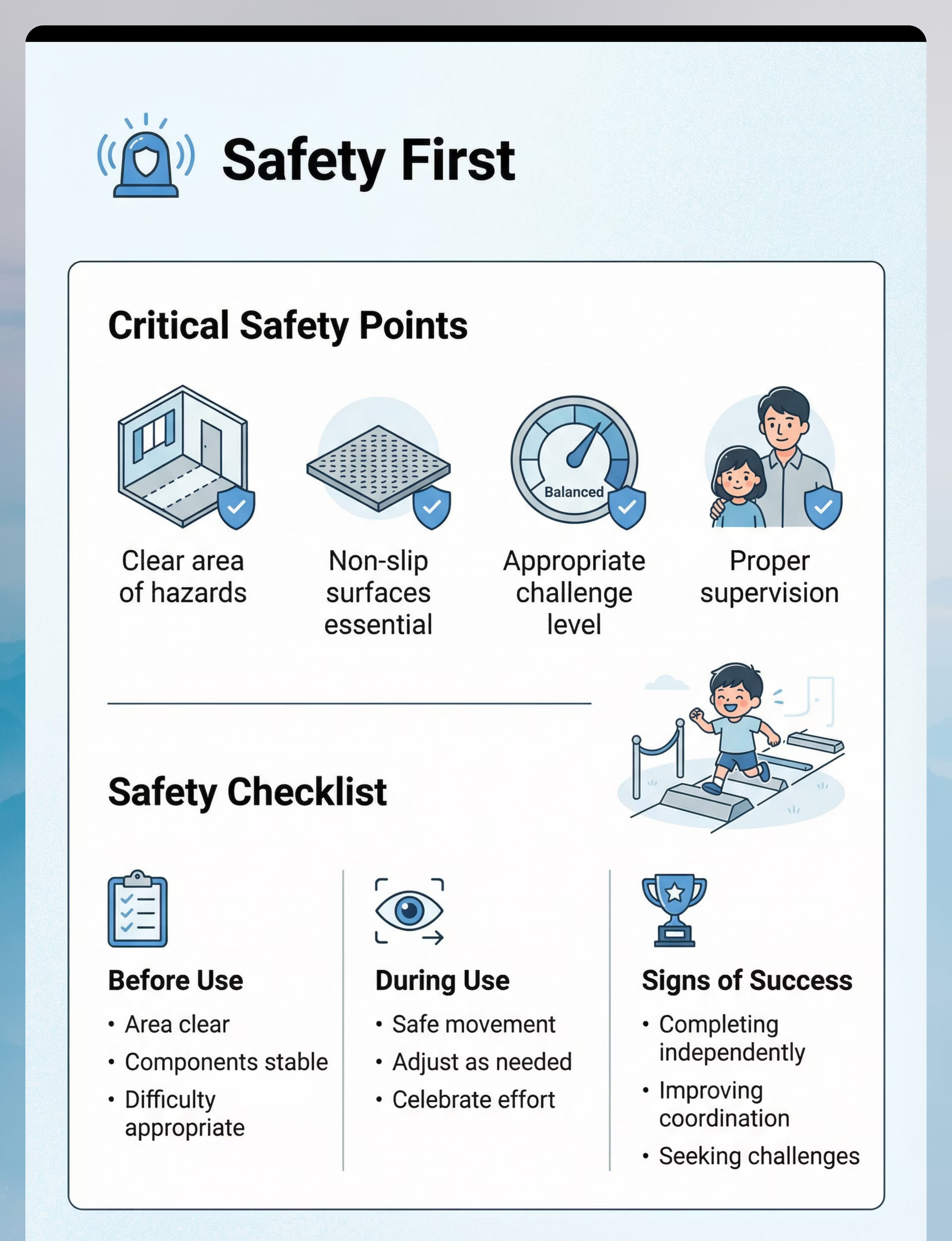
Safety First
Critical Safety Requirements
- Clear area of all hazards before each use
- Non-slip surfaces are absolutely essential
- Appropriate challenge level for child's ability
- Supervision appropriate for age and skill level
Important Warnings
Check Stability
Check stability of all components before each session
Watch for Fatigue
Watch for signs of fatigue — tired children make unsafe choices
Appropriate Spacing
Appropriate spacing between stations prevents collisions
Soft Landing Areas
Soft landing areas if jumping is involved
Contraindications
Unsafe Surfaces
- Slippery, unstable, or too hard surfaces
Beyond Ability
- Course complexity beyond child's ability level
Inadequate Supervision
- Insufficient supervision for child's age and skill
Safety Checklist
Before Use
- Area clear and safe
- Components stable
- Difficulty appropriate
- Sequence clear (visual if needed)
During Use
- Supervision appropriate
- Child moving safely
- Adjusting challenge as needed
- Celebrating effort
Signs of Success
- Completing independently
- Motor planning improving
- Seeking challenges
- Confidence growing

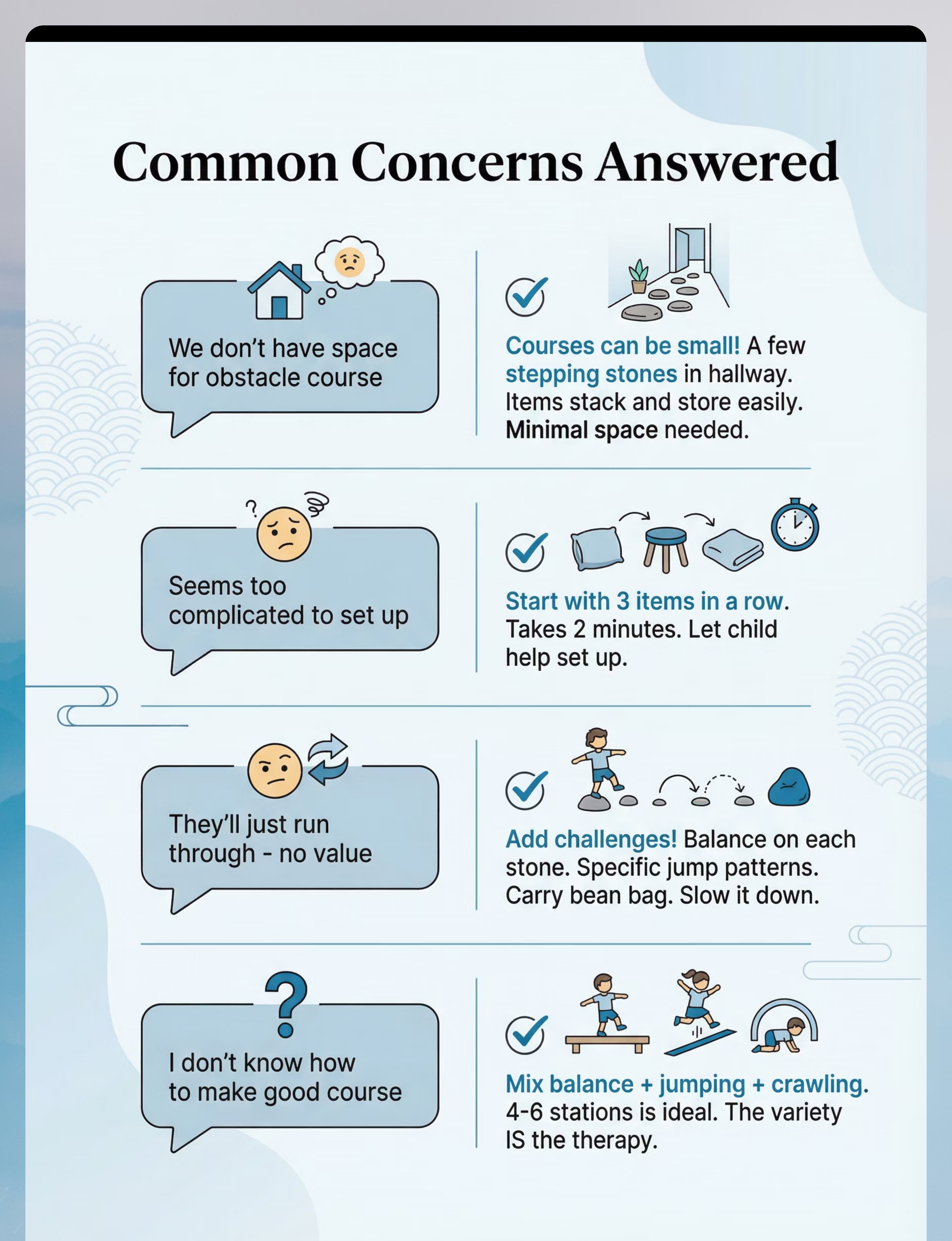
Common Questions (Honest Answers)
Q: We don't have space for an obstacle course
A: Courses can be small! A few stepping stones in a hallway. Cones to weave around a living room. Items stack and store easily. Create a path through existing furniture. Minimal space needed — creativity matters more than square footage.
Try this: Use hallway, compact items, store flat when not in use.
Q: Seems too complicated to set up
A: Start with 3 items in a row. Takes 2 minutes. Add more as you get comfortable. Let child help set up — that's motor planning practice too! Doesn't need to be elaborate. Simple works beautifully.
Try this: Start simple with just 3 items; let child help design and set up.
Q: They'll just run through — no therapeutic value
A: Add challenges! Balance on each stone for 3 seconds. Jump in specific pattern. Carry bean bag without dropping. Stop at each station for a task. Slow it down with specific requirements. The constraints create the therapy.
Try this: Add stopping points, specific tasks, required actions at each station.
Q: I don't know how to make a good course
A: No expertise needed! Mix balance + jumping + crawling. 4-6 stations is ideal. Change it up to prevent memorization. Include child's interests. The variety itself is the therapy. You've got this.
Try this: Variety is key — include balance, jump, crawl, throw in any combination.

Investment Guide
Choosing the right equipment for your obstacle course depends on your budget and desired versatility. Here's a breakdown of options and how to maximize your investment over time.
Budget Option | 400 | Effective basic course with excellent versatility using fundamental components. | |
Premium Option | 4000 | Comprehensive solution with all components for maximum variety and durability from professional brands. |
Key Features & Components
Cones
For weaving patterns and defining boundaries.
Spot Markers
Ideal for jumping sequences and target zones.
Bean Bags
Great for throwing, catching, and carrying tasks.
Stepping Stones
Develop balance, coordination, and motor planning skills.
Hurdles & Tunnels
Adds variety and physical challenge for crawling and jumping.
Investment Progression
Overall Price Range
From minimal setups at ₹200 (US $2) to extensive kits at ₹8,000 (US $96).
Best Starting Point
Begin with stepping stones (₹500-2,000) for portability and high versatility.
Expand Gradually
Add other components as your child's skills and interests develop, building on your initial investment.

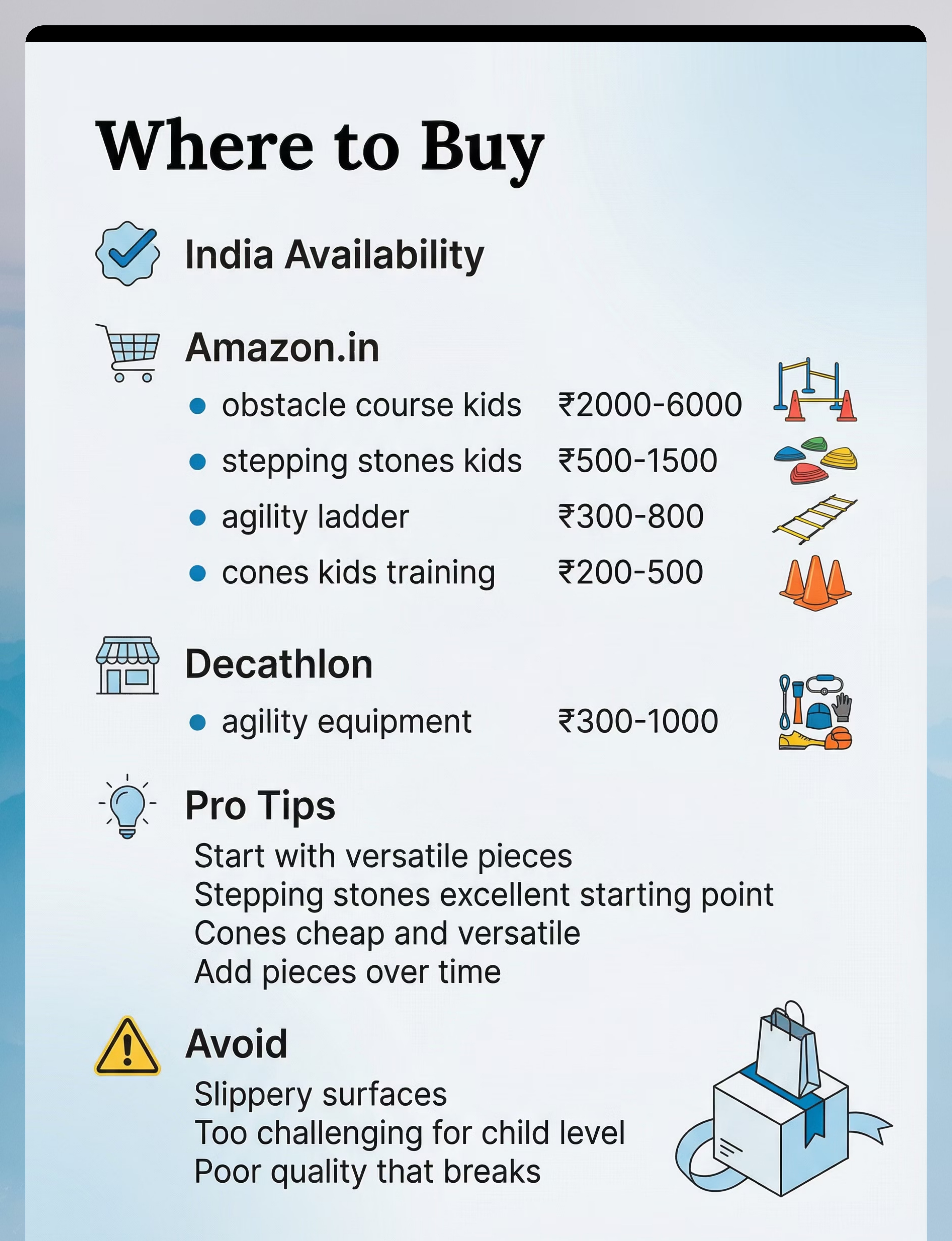
Where to Buy in India
Availability: Widely Available across multiple platforms
Recommended Platforms
Amazon.in
Search terms: "obstacle course kids", "stepping stones kids", "agility ladder", "cones kids training"
Price Range: ₹200 - ₹6,000
Key Details: Extensive selection, competitive pricing, and reliable delivery.
Flipkart
Search terms: "kids outdoor play equipment", "balance beam for kids"
Price Range: ₹300 - ₹5,000
Key Details: Wide variety, frequent deals, and good customer support.
FirstCry
Search terms: "toddler activity toys", "physical development toys"
Price Range: ₹500 - ₹4,000
Key Details: Specializes in products for young children, focusing on developmental toys.
Decathlon
Search terms: "agility equipment", "kids sports gear"
Price Range: ₹300 - ₹1,000
Key Details: Focuses on sports and outdoor equipment, known for durability.
Buying Tips
Start with a few versatile pieces rather than everything at once
Stepping stones are an excellent starting point — high versatility
Cones are cheap and incredibly versatile — can't go wrong
Add pieces over time as child's skills develop
Household items can supplement (pillows, tape, chairs)
Red Flags to Avoid
- Slippery surfaces without adequate grip
- Components too challenging for child's current level
- Poor quality materials that break easily
- Small parts inappropriate for young children

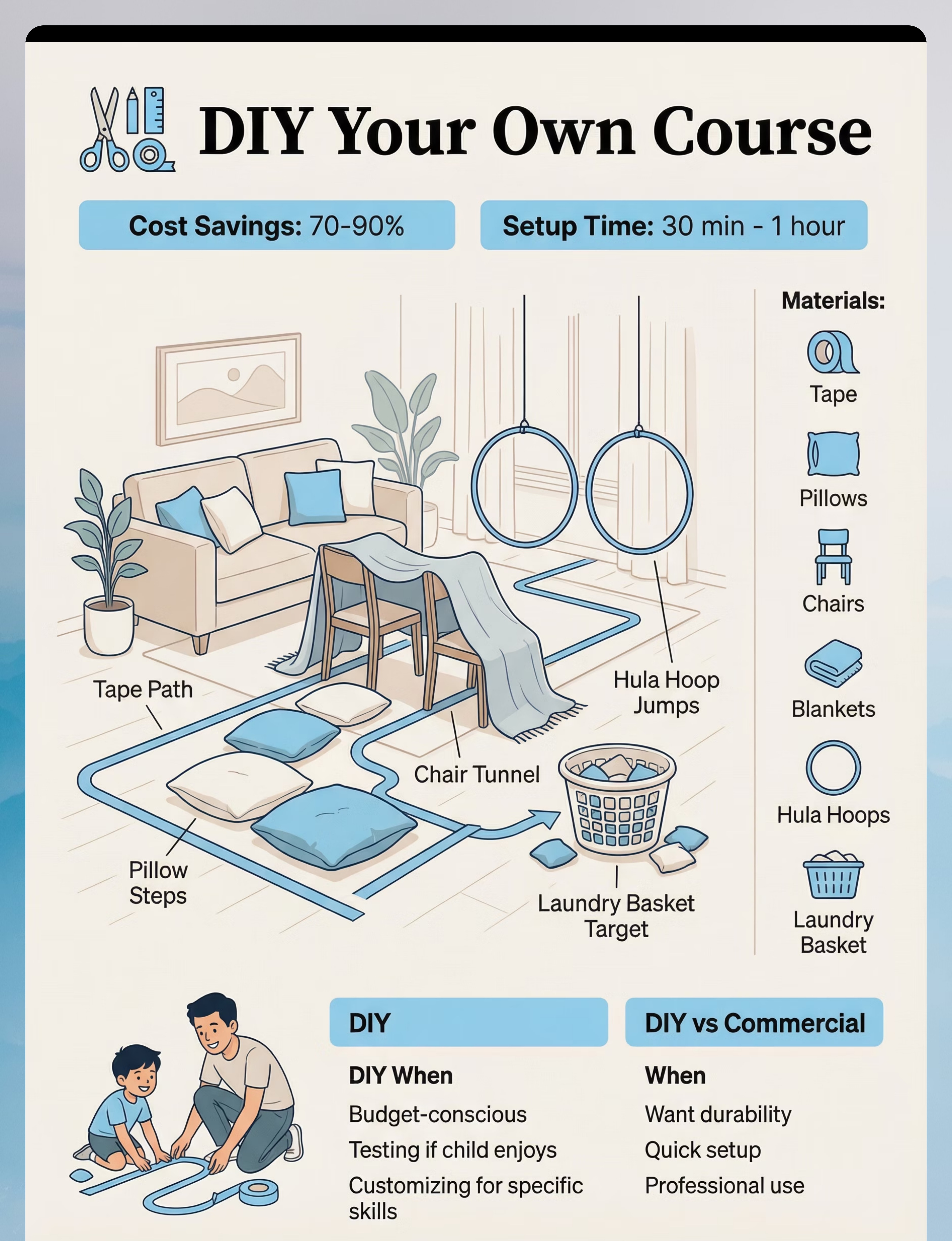
DIY Alternative (Save 70-90%)
Feasibility: Very High | Time Required: 30 minutes - 1 hour | Cost Savings: 70-90%
Materials Needed
1
Tape
Masking or painter's tape
2
Pillows
For stepping stones & soft obstacles
3
Chairs
Create tunnels underneath
4
Laundry basket
As a throwing target
5
Hula hoops
For jumping circles
DIY Steps
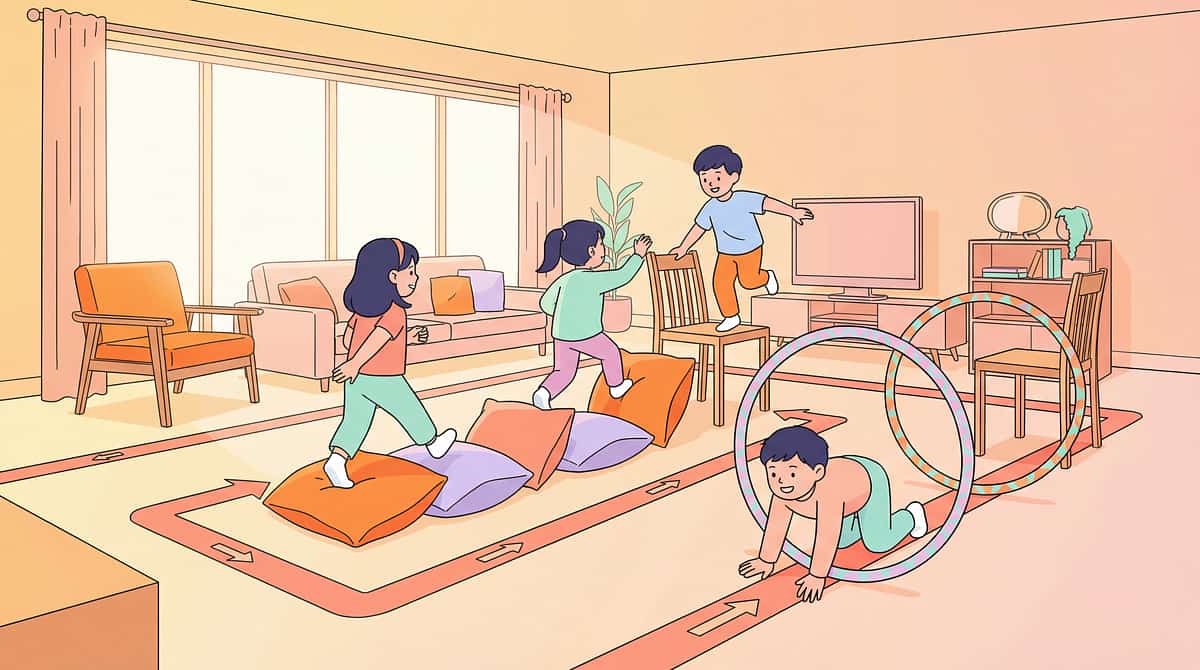
Create Path
Use tape to create walking path on floor — curves and angles add challenge
Add Stepping
Lay pillows as stepping stones — vary distances for difficulty
Build Tunnel
Create tunnel under table or chairs with blanket draped over
Set Targets
Use hula hoops as jumping targets laid flat on floor
Add Tasks
Laundry basket for bean bag or ball throwing station
Weaving Path
Chairs to weave around — space them 2-3 feet apart
Crawl Under
Blanket stretched low for crawling challenge
DIY vs Commercial: Making the Choice
When to DIY | When to Buy Commercial | |
|
|
Tradeoffs: DIY is less durable than commercial products and takes time to set up each session. However, it offers excellent flexibility and allows you to test concepts before investing.
Preview of obstacle course materials motor planning Therapy Material
Below is a visual preview of obstacle course materials motor planning therapy material. The pages shown help educators, therapists, and caregivers understand the structure and content of the resource before use. Materials should be used under appropriate professional guidance.


Share this resource
Help others discover thisLink copied!

Measuring Success & Next Steps
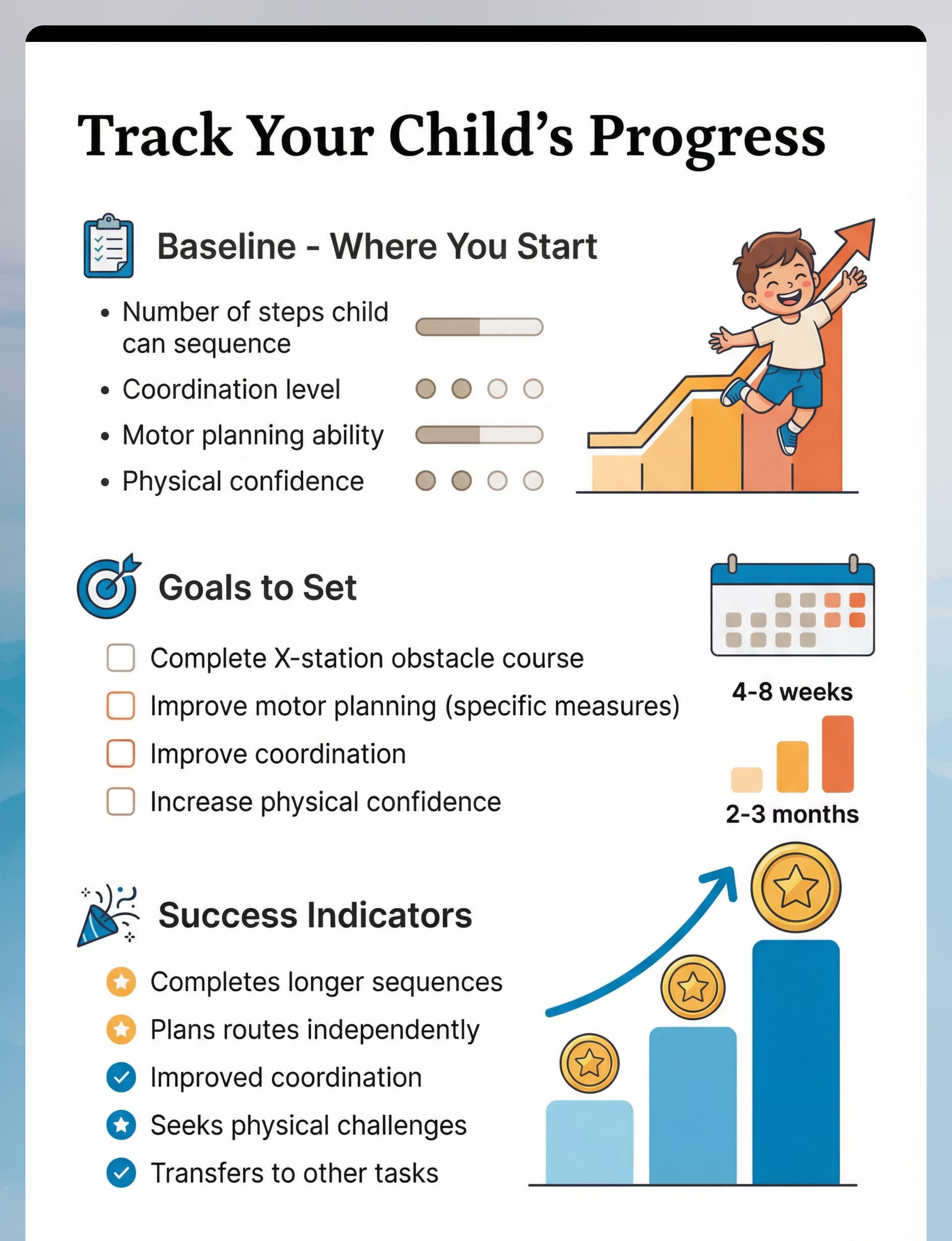
Track Progress
Baseline Measures
- Number of steps child can sequence
- Current coordination level
- Motor planning ability
- Physical confidence
Goals to Set
- Complete X-station course
- Improve motor planning
- Develop coordination
- Increase physical confidence
Success Indicators
- Completes longer sequences
- Plans routes independently
- Improved coordination visible
- Seeks physical challenges
- Skills transfer to other tasks
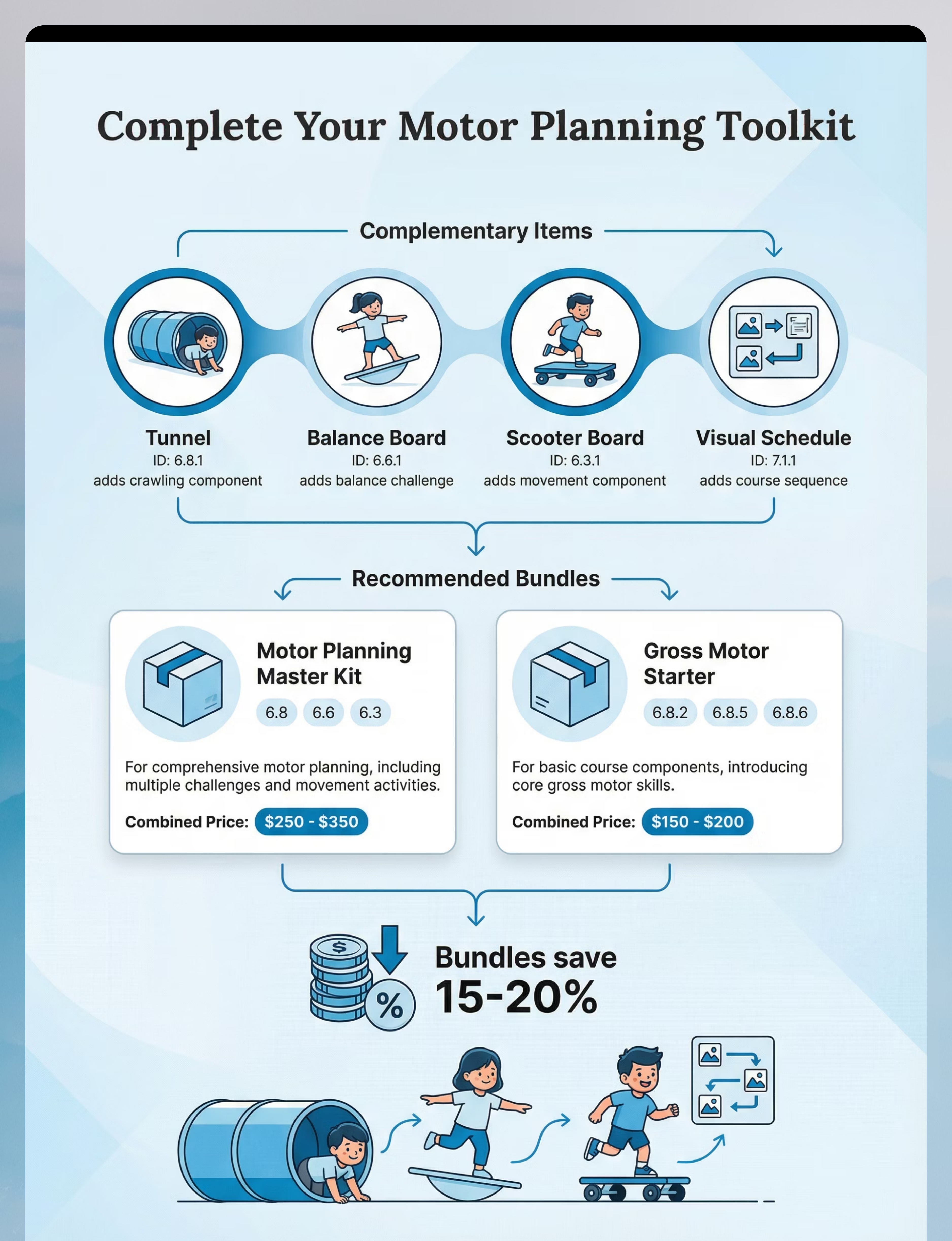
Complete the Kit: Complementary Tools
Tunnel (ID: 6.6)
Perfect course component — adds crawling challenges and spatial navigation practice
Balance Board (ID: 6.3)
Another excellent course station — intensifies balance and core stability challenges
Scooter Board (ID: 6.4)
Can be integrated as unique course component for prone or seated movement
Visual Schedule (ID: 3.1)
Create visual course sequence cards — helps motor planning and independence
Recommended Bundles
- Motor Planning Master Kit: Obstacle Course + Tunnel + Balance Board — comprehensive motor planning development
- Gross Motor Starter: Stepping Stones + Cones + Bean Bags — basic, versatile, budget-friendly course components
AI Summary
Obstacle course materials develop motor planning, sequencing, and coordination through structured multi-step movement challenges. Core Kit (Rank 1), strong evidence, versatile and effective for ages 2-9 across all settings.
obstacle course
motor planning
sequencing
coordination
gross motor
OT
PT
core-kit
Common Searches
obstacle course kids, motor planning activities, gross motor course, coordination activities autism, stepping stones kids, agility ladder kids, physical therapy obstacles
Get Support
FREE National Autism Helpline
Phone: 9100 181 181 | Languages: 16+ | Website: pinnacleblooms.org
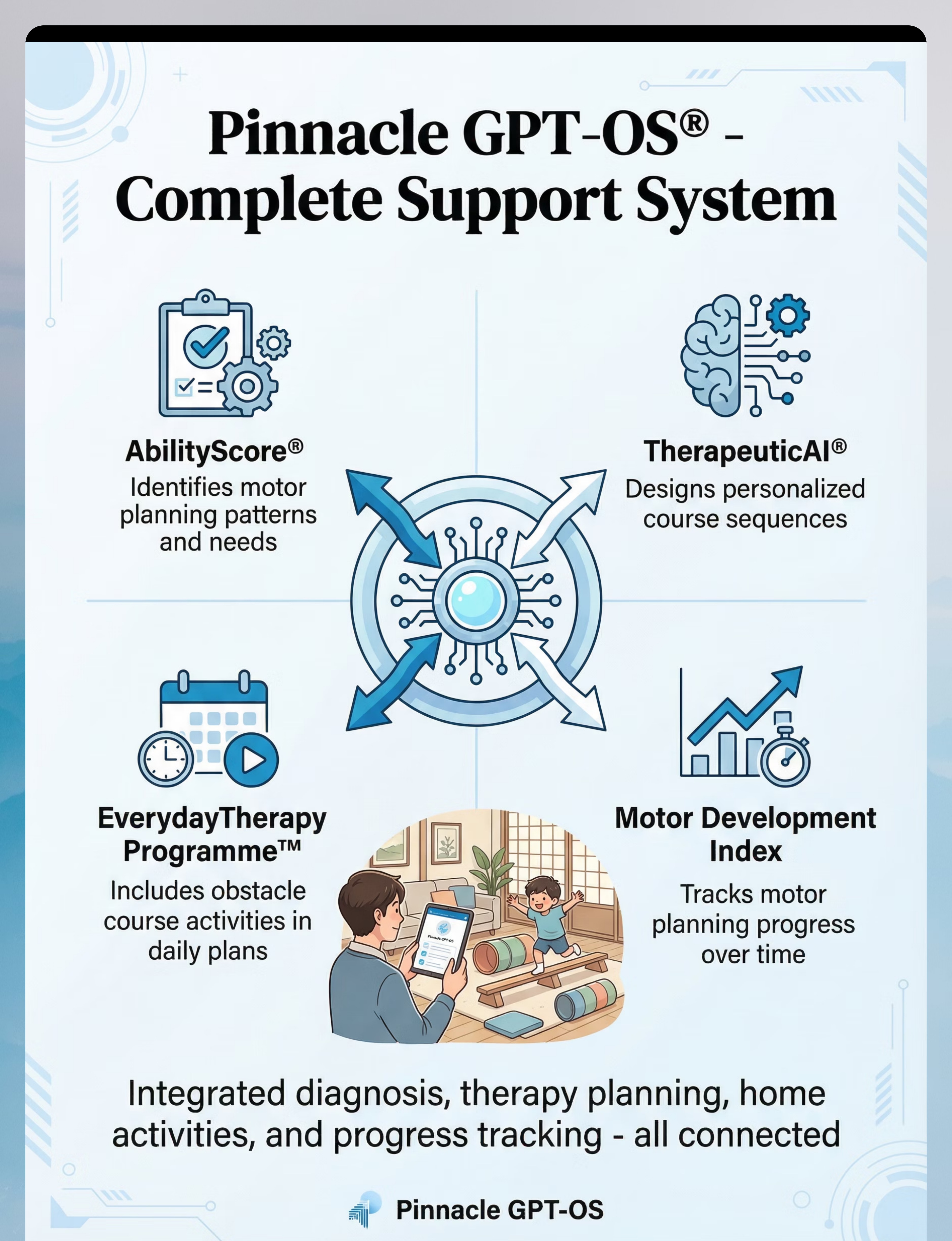
Platform Integration
- AbilityScore® identifies motor planning patterns specific to your child
- TherapeuticAI® designs personalized obstacle course sequences
- EverydayTherapyProgramme™ includes obstacle course activities in daily routines
- Motor Development Index tracks motor planning progress over time
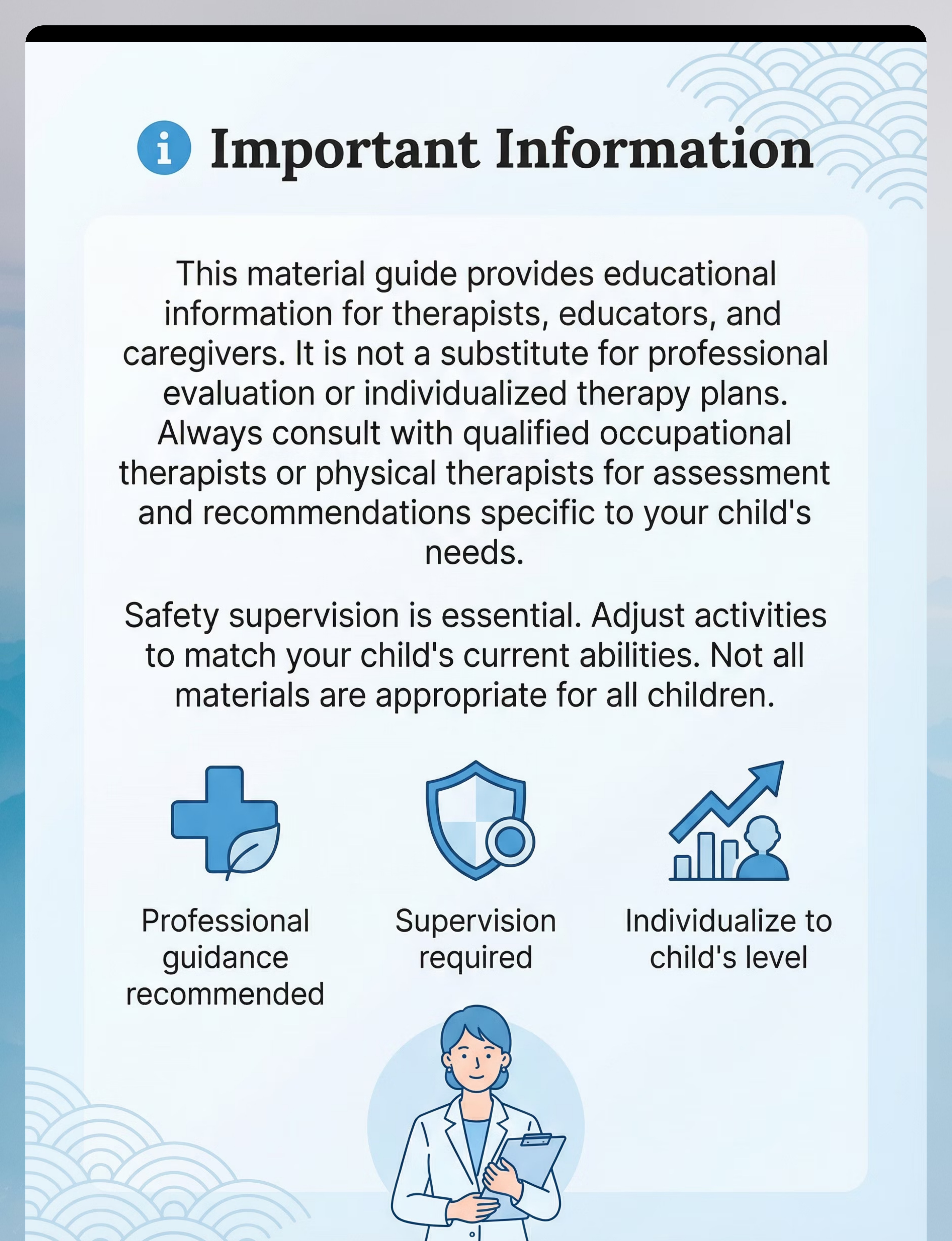
Disclaimer: This is educational information. Always consult qualified occupational therapists, speech-language pathologists, or pediatricians. Individual results vary. The information provided supports clinical decision-making but does not replace professional evaluation and guidance.