
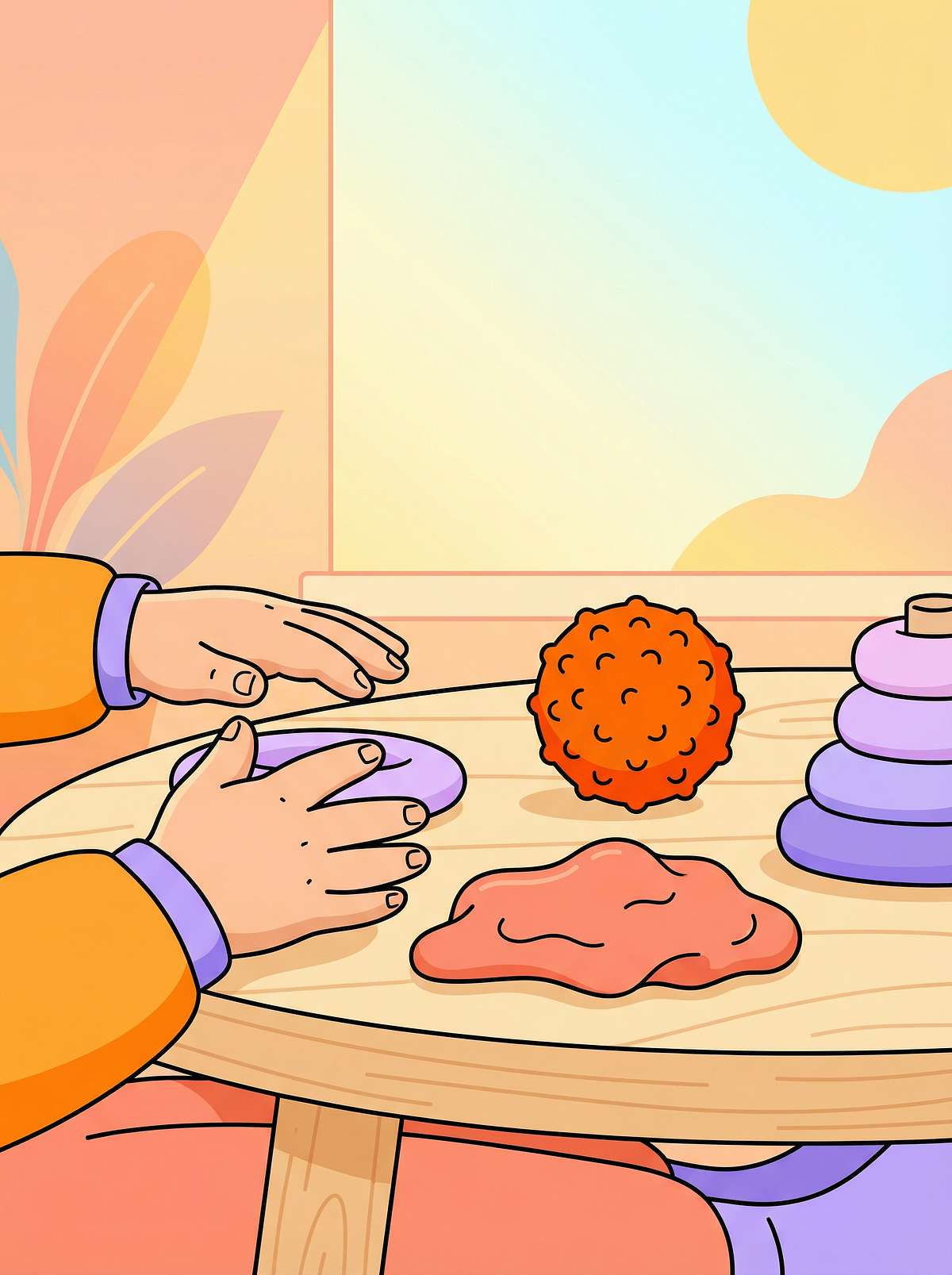
Fine Motor & Hand Skills Materials
Welcome to Pinnacle Blooms® Therapy Materials Library — your comprehensive resource for evidence-based fine motor development tools. These materials support hand strength, finger dexterity, grasp development, visual-motor integration, and precision manipulation skills essential for daily success.
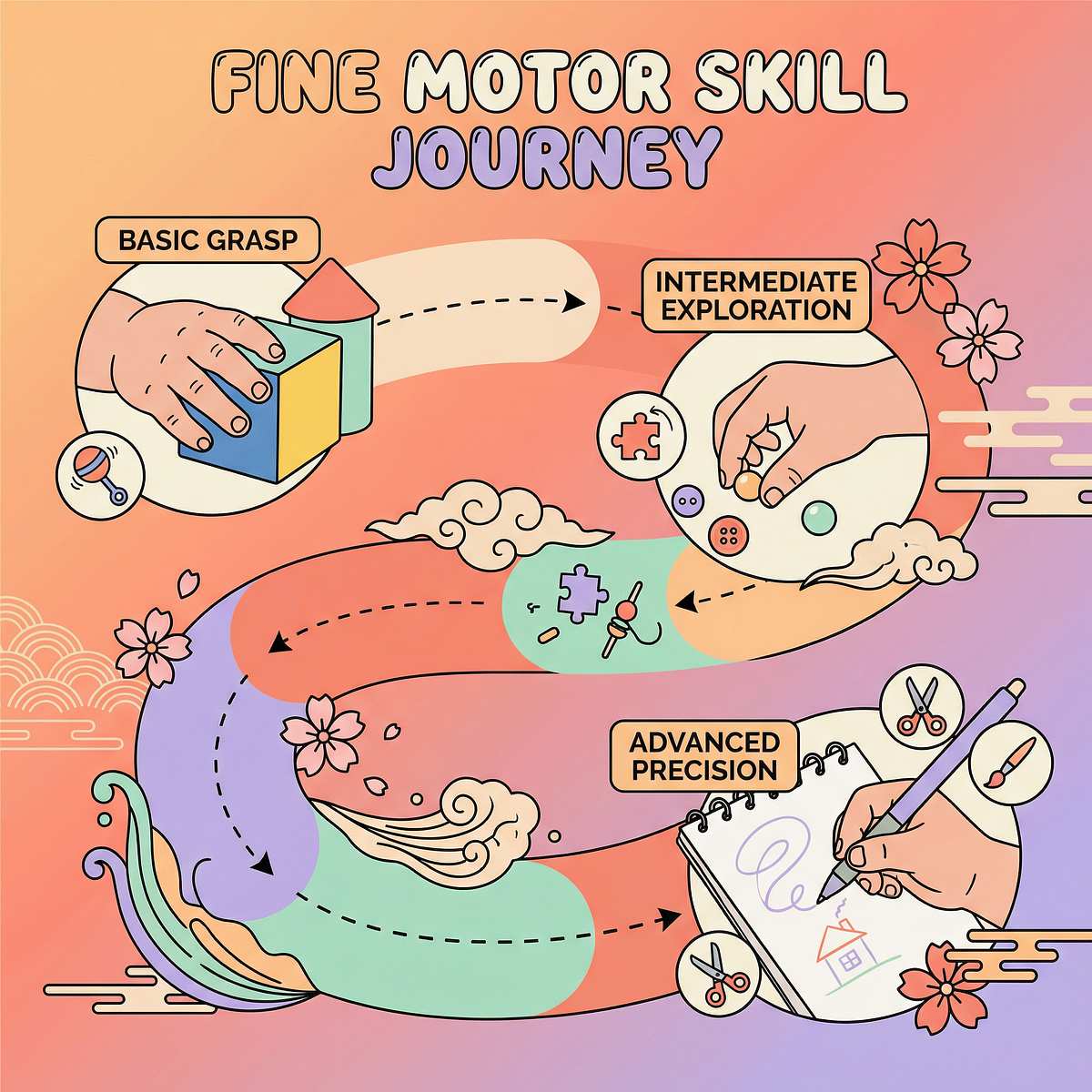
Guidelines for Effective Use
Successfully developing fine motor skills requires thoughtful planning and appropriate progression. These evidence-based guidelines ensure materials are used effectively to maximize skill development while maintaining engagement and preventing frustration.
Strength Before Precision
Build foundational hand strength through resistive activities before expecting detailed precision tasks. Strong hands create the base for controlled movements.
Progressive Complexity
Move systematically from large to small objects, simple to complex patterns. Each success builds confidence and readiness for the next challenge.
Playful Engagement
Transform skill-building into enjoyable activities. Children learn best when motivated, engaged, and having fun during therapeutic practice.
Address Underlying Issues
Consider muscle tone, postural stability, and core strength. Fine motor skills depend on a stable foundation throughout the body.
Proper Positioning
Ensure appropriate seating, table height, and postural support. Correct positioning optimizes hand function and prevents compensatory patterns.
Professional Collaboration
Consult occupational therapists for individualized assessment and program planning. Expert guidance ensures appropriate material selection and progression.
Who Benefits From These Materials
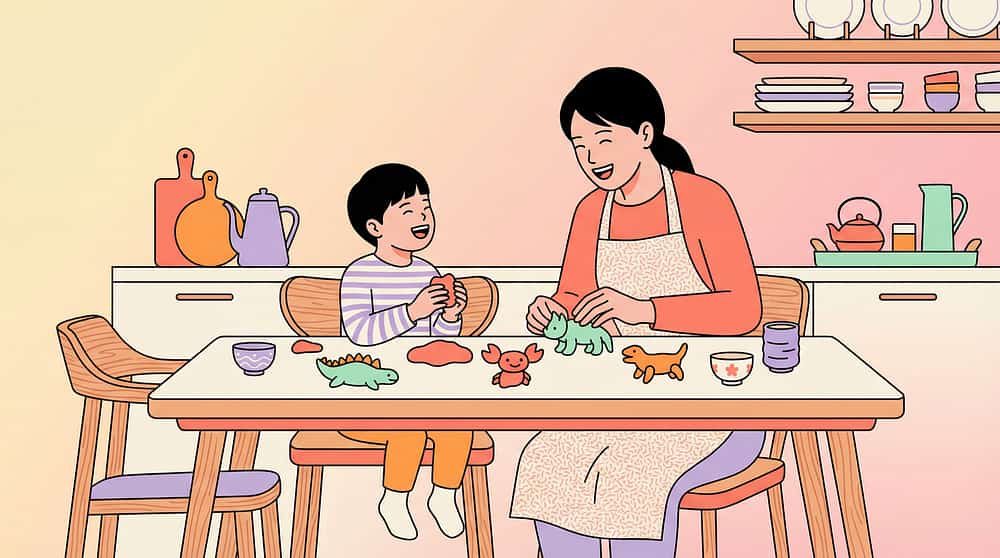
For Parents
Access professional-quality materials for home-based fine motor practice. Support your child's development with structured activities guided by therapeutic principles, building skills through daily play and meaningful practice.

For Therapists
Evidence-aligned tools for clinical assessment and intervention planning. These materials support comprehensive fine motor programs, from initial evaluation through progressive skill development and functional application.
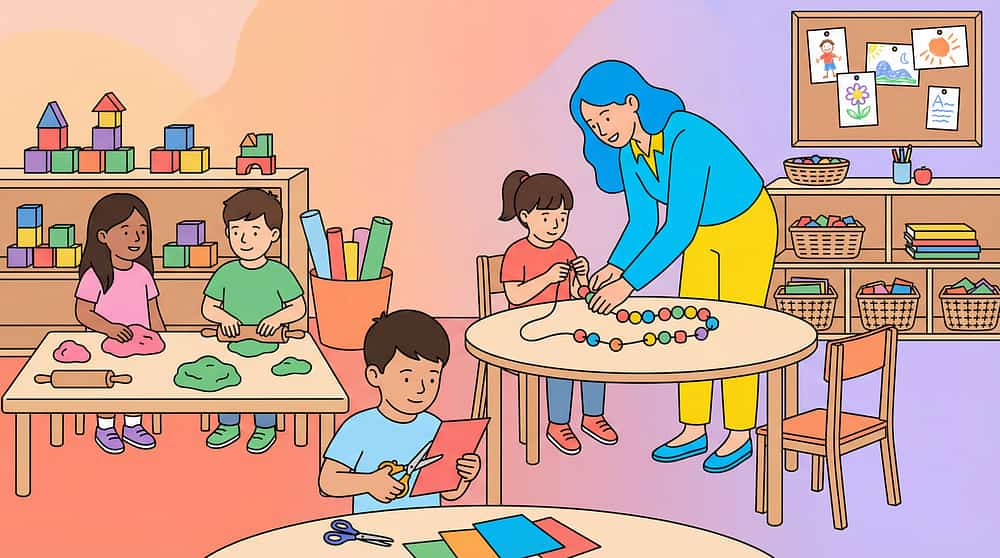
For Schools & Educators
Classroom-ready supports for handwriting readiness and fine motor development. Integrate therapeutic principles into educational settings, helping students build foundational skills necessary for academic tasks.

For Doctors & Clinicians
Resource library for developmental recommendations and family guidance. Support comprehensive care planning with evidence-based material suggestions aligned with therapeutic goals and developmental milestones.
Material 7.1
Core Kit
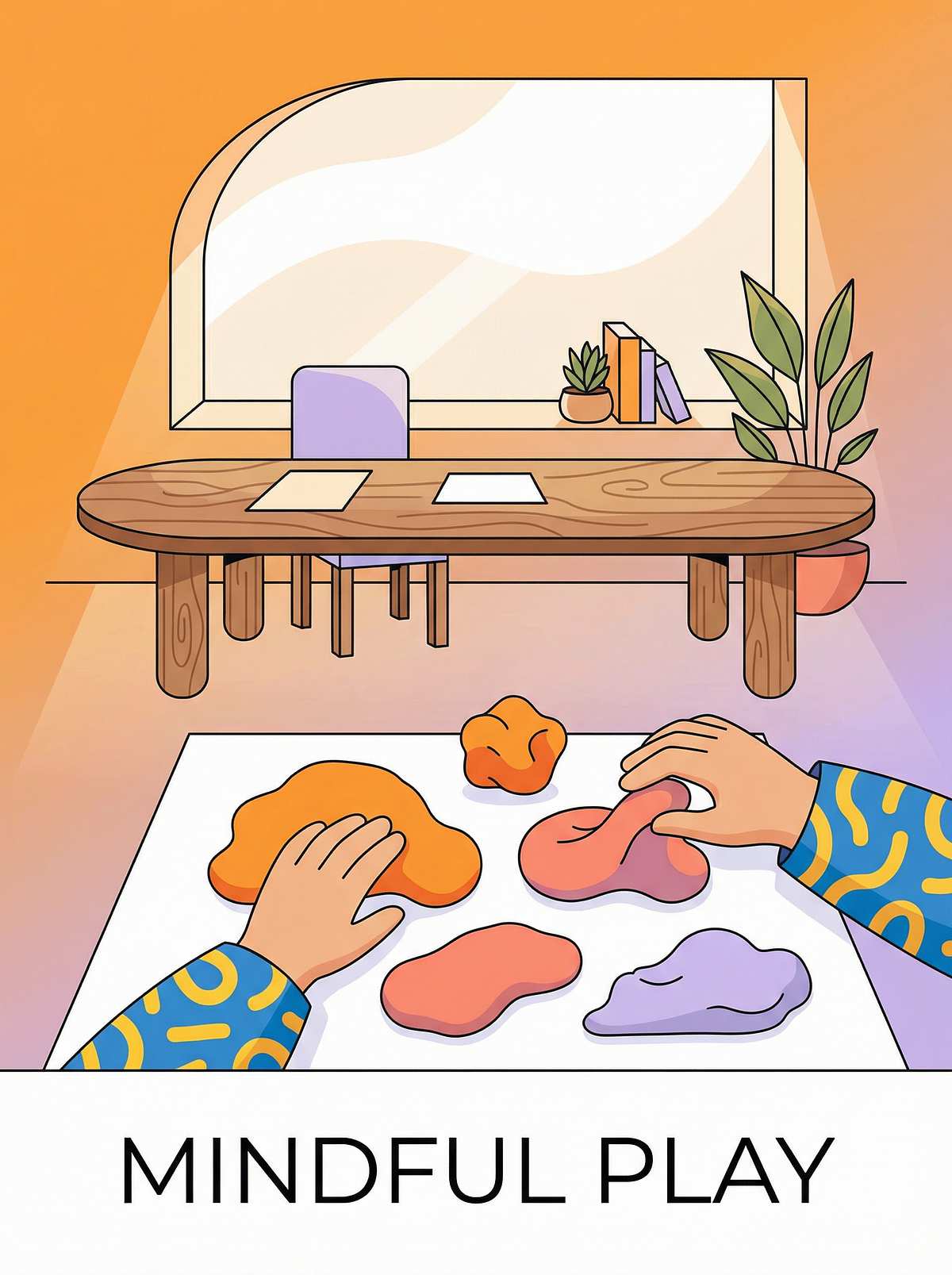
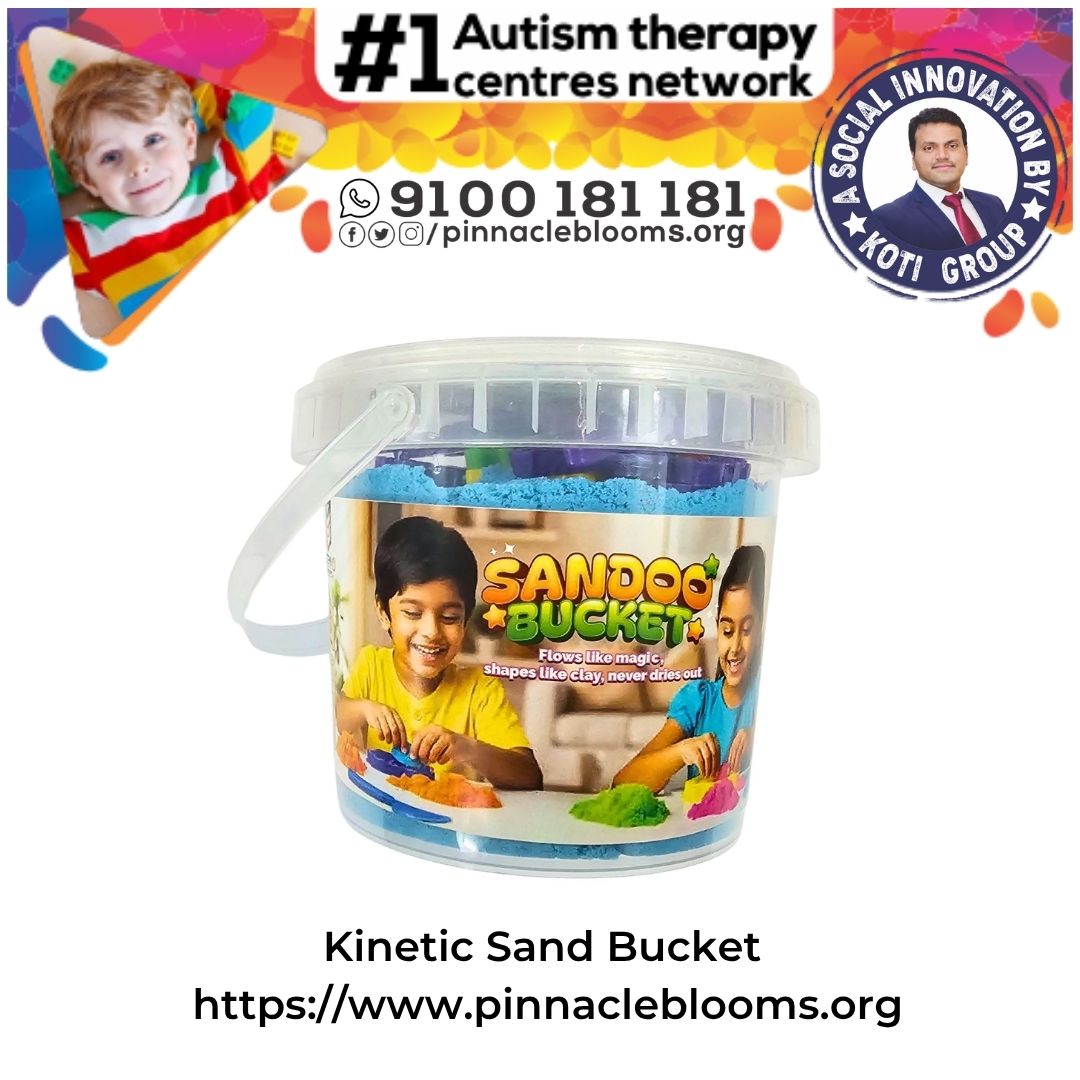
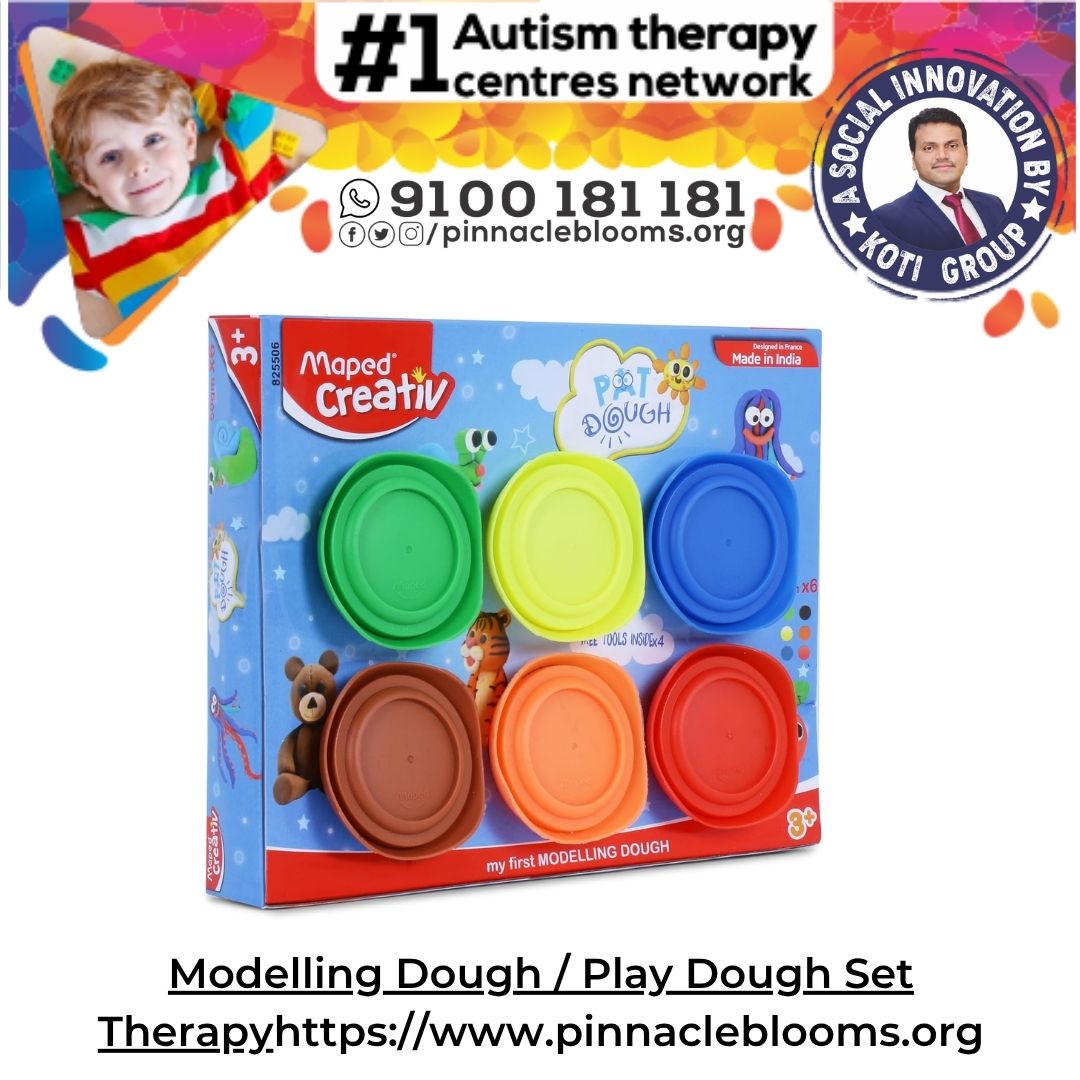
Playdough / Therapy Putty / Modeling Clay
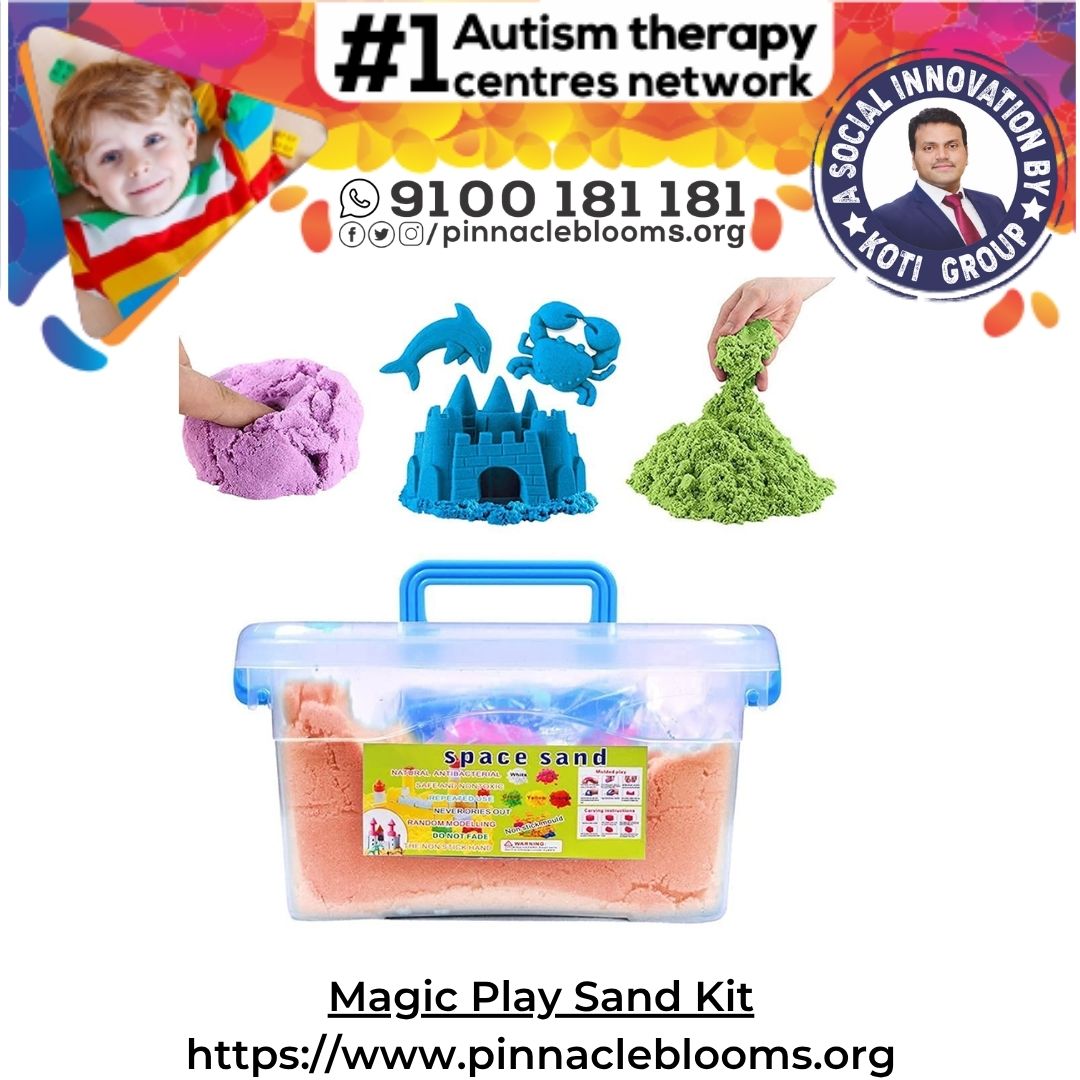
Playdough and therapy putty serve as foundational tools for hand strengthening, providing resistive manipulation opportunities that build the muscle strength necessary for all fine motor tasks. These versatile materials develop hand arches, strengthen intrinsic hand muscles, and improve bilateral coordination through engaging, sensory-rich activities.
How It Works
Resistive manipulation activates hand muscles, strengthening the small muscles within the hand that control finger movements. As children squeeze, pinch, roll, and shape the material, they develop graded force control and improved grasp patterns. This foundational strength translates directly to improved handwriting endurance, better tool use, and enhanced functional hand skills.
Target Areas
- Hand strength and muscle development
- Finger dexterity and isolation
- Fine motor control and precision
- Hand arch formation and support
- Bilateral hand coordination
- Sensory and tactile input processing
Best Practices
- Match resistance level to child's current strength
- Progress from soft to firmer putty gradually
- Hide objects for pincer grasp practice
- Use tools to extend activity variety
- Include rolling, squeezing, and pinching
Price Range: ₹50 - ₹800 | Settings: Home, School, Clinic
Material 7.2
Core Kit
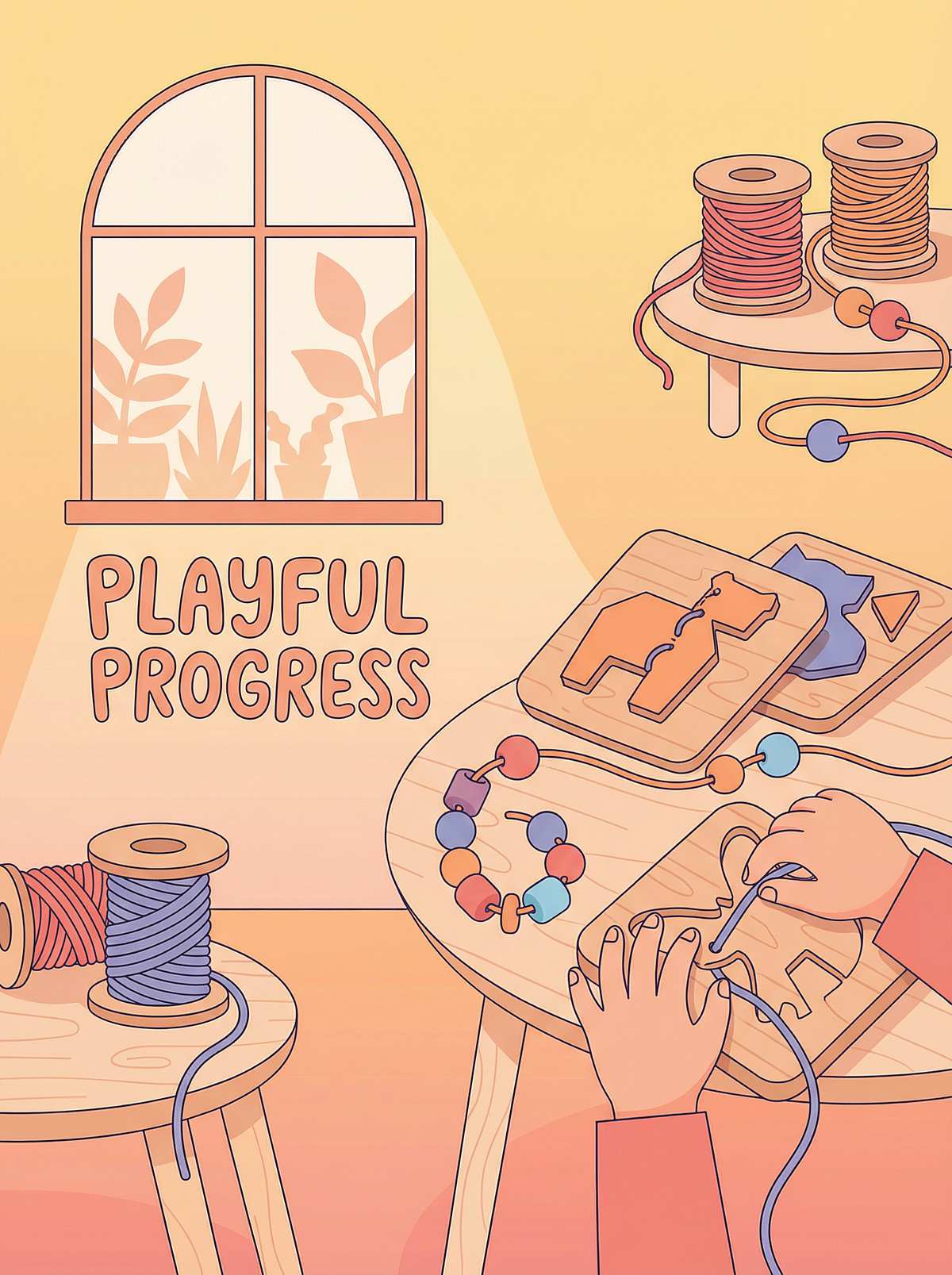
Lacing / Beading / Threading Activities
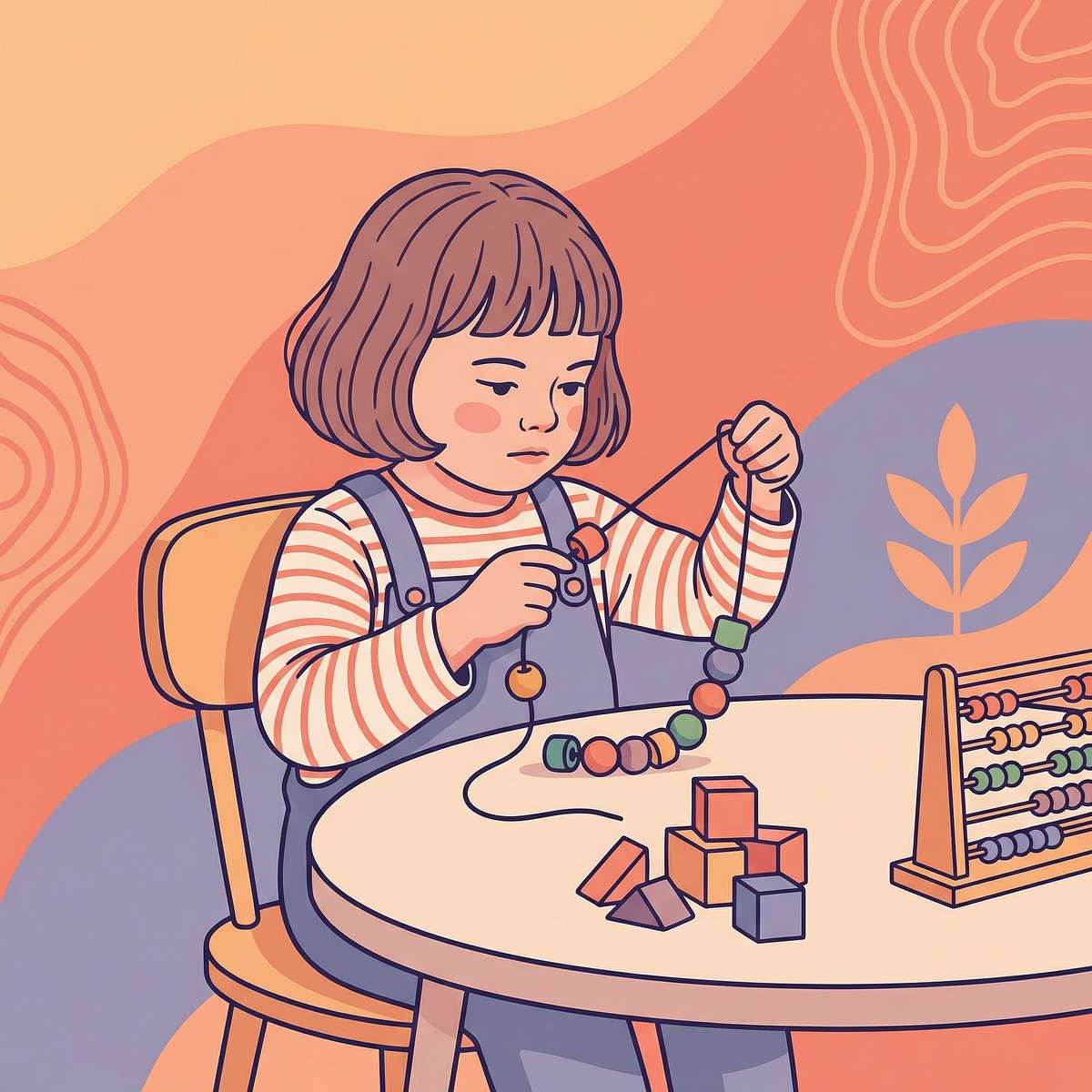
Lacing and beading activities develop bilateral coordination — the critical ability to use both hands together in complementary roles. One hand stabilizes while the other manipulates, creating the foundation for countless daily tasks from buttoning clothes to tying shoes. These activities also refine pincer grasp and strengthen visual-motor integration as children coordinate eye and hand movements to thread successfully.
Developmental Mechanism
Threading requires precise bilateral coordination, with the dominant hand guiding the lace or string while the non-dominant hand stabilizes the card or bead. This reciprocal hand use strengthens the neural pathways that support coordinated movements. As children visually track the lace through holes, they integrate visual information with motor planning, building the visual-motor skills essential for handwriting and academic tasks.
Target Skills
- Bilateral hand coordination and cooperation
- Refined pincer grasp development
- Visual-motor integration and tracking
- Eye-hand coordination precision
- Finger isolation and control
- Sustained attention and task completion
01
Start Large
Begin with big holes, large beads, and stiff lacing materials
02
Build Skill
Progress to smaller beads and more flexible string as coordination improves
03
Add Complexity
Introduce patterns, sequences, and directional lacing challenges
04
Refine Precision
Advance to fine beads requiring precise pincer control
Price Range: ₹50 - ₹600 | Settings: Home, School, Clinic
Material 7.3
Core Kit
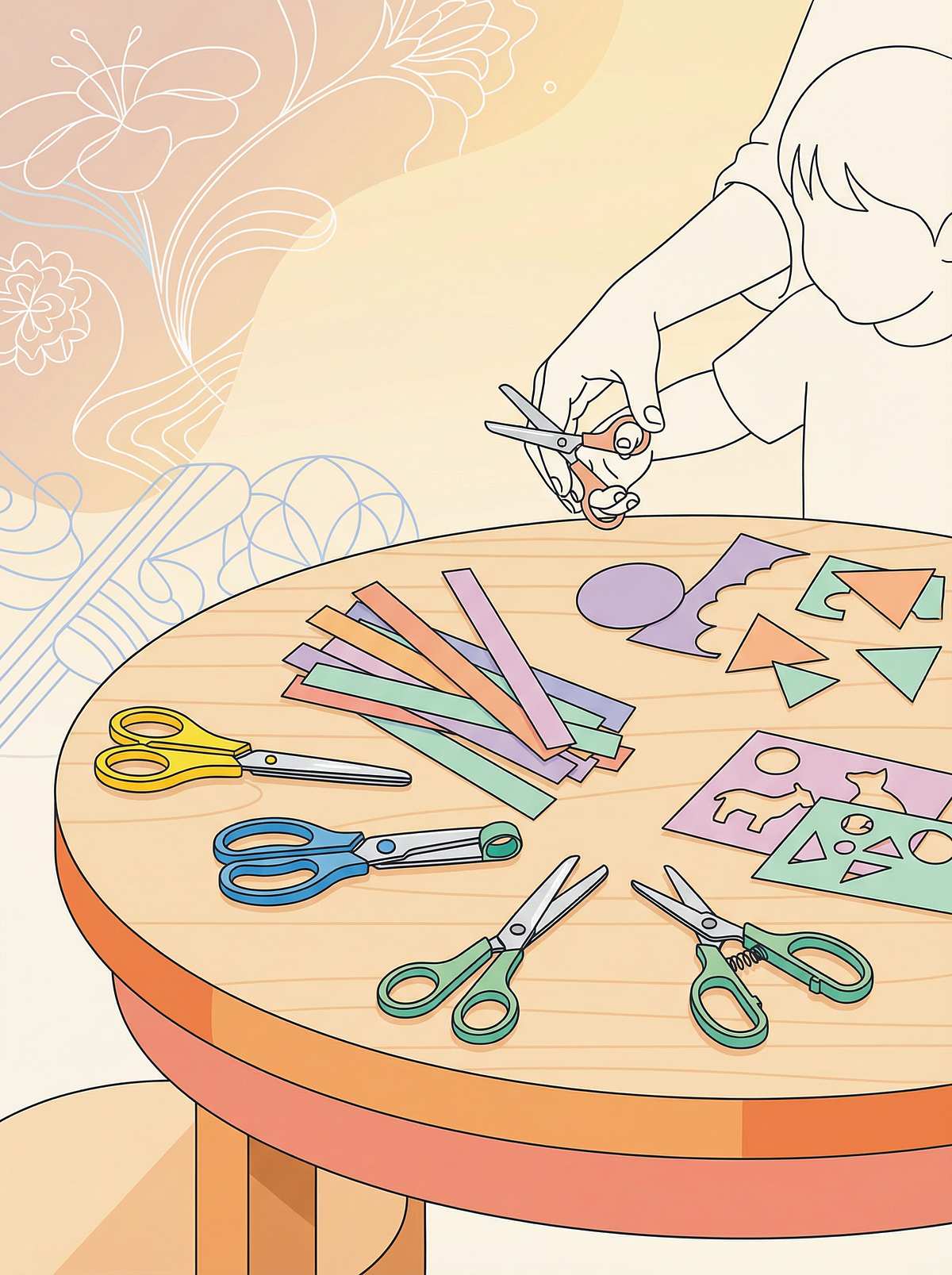
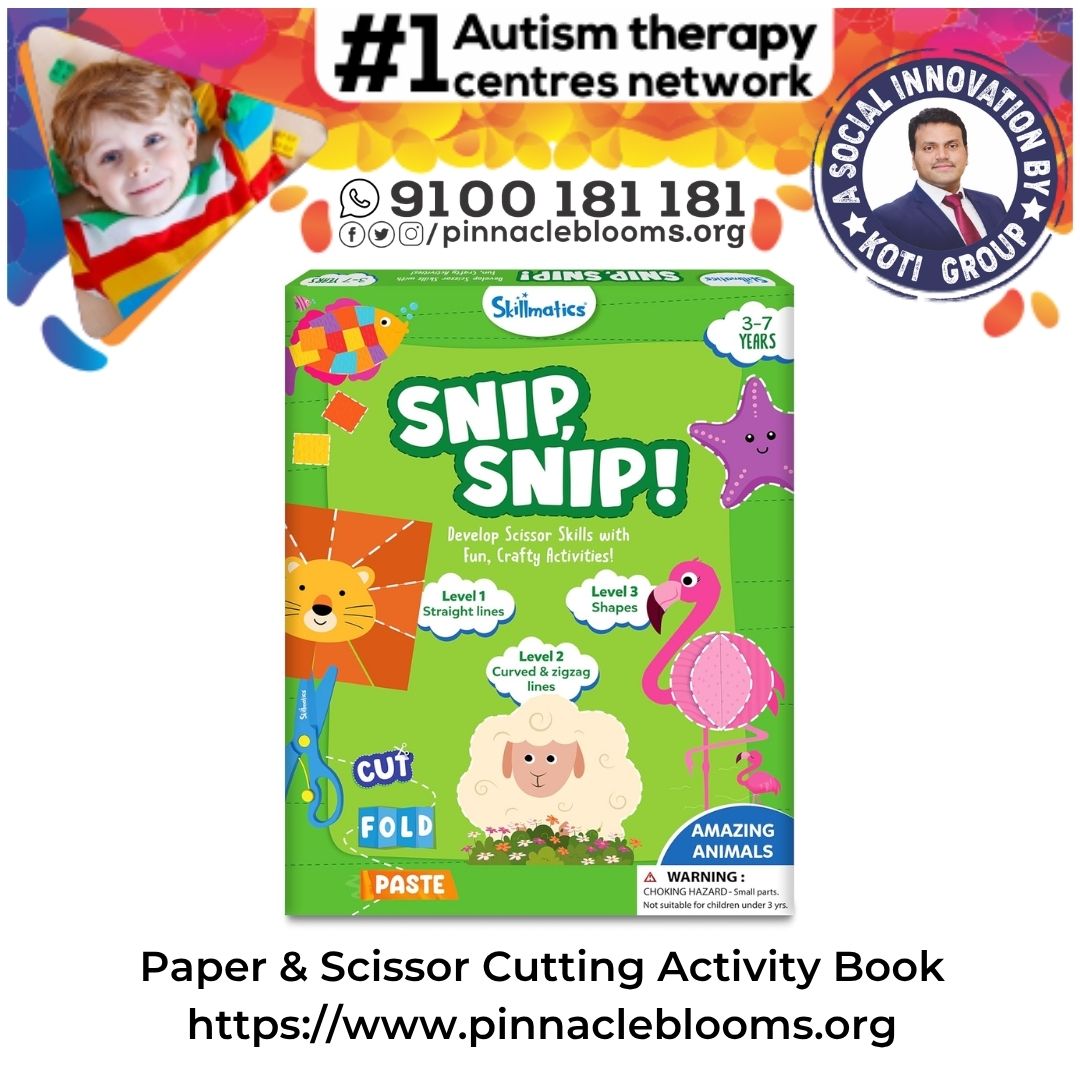
Scissors / Cutting Activities
Scissor skills represent one of the most important fine motor milestones, requiring complex integration of bilateral coordination, hand separation, graded motor control, and visual-motor precision. Cutting activities develop the radial-ulnar hand separation necessary for functional grasp patterns, establishing the foundation for efficient pencil control and handwriting. The precision and coordination required for successful scissor use transfers directly to improved performance across all fine motor tasks.
Why Scissors Matter
Using scissors demands sophisticated hand function — the thumb and first two fingers (radial side) must work independently from the ring and little fingers (ulnar side). This hand separation allows the radial fingers to manipulate tools with precision while the ulnar fingers provide stability. The bilateral coordination required — one hand cutting while the other turns the paper — strengthens the neural pathways that support all coordinated movement patterns.
Developmental Targets
- Hand separation (radial/ulnar division)
- Bilateral coordination and timing
- Graded motor control and pressure
- Visual-motor integration and tracking
- Open web space maintenance
- In-hand manipulation skills
Snipping
Single cuts across paper edges — building opening/closing control
Straight Lines
Continuous cutting along straight paths — developing sustained coordination
Curved Lines
Following gentle curves — adding directional control and paper turning
Complex Shapes
Cutting circles, zigzags, and intricate patterns — mastering precision control
Price Range: ₹50 - ₹400 | Settings: Home, School, Clinic
Material 7.4
Core Kit
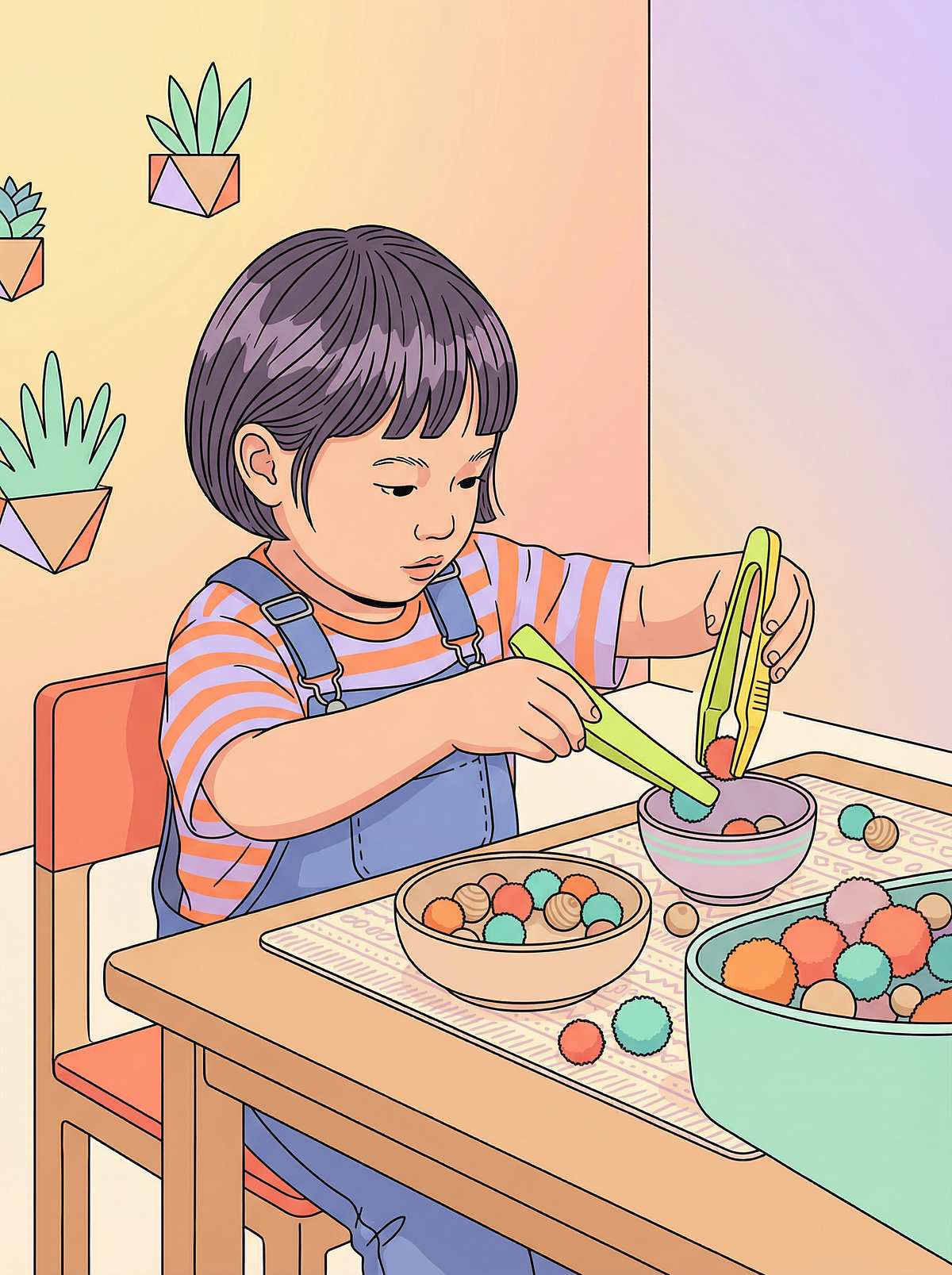
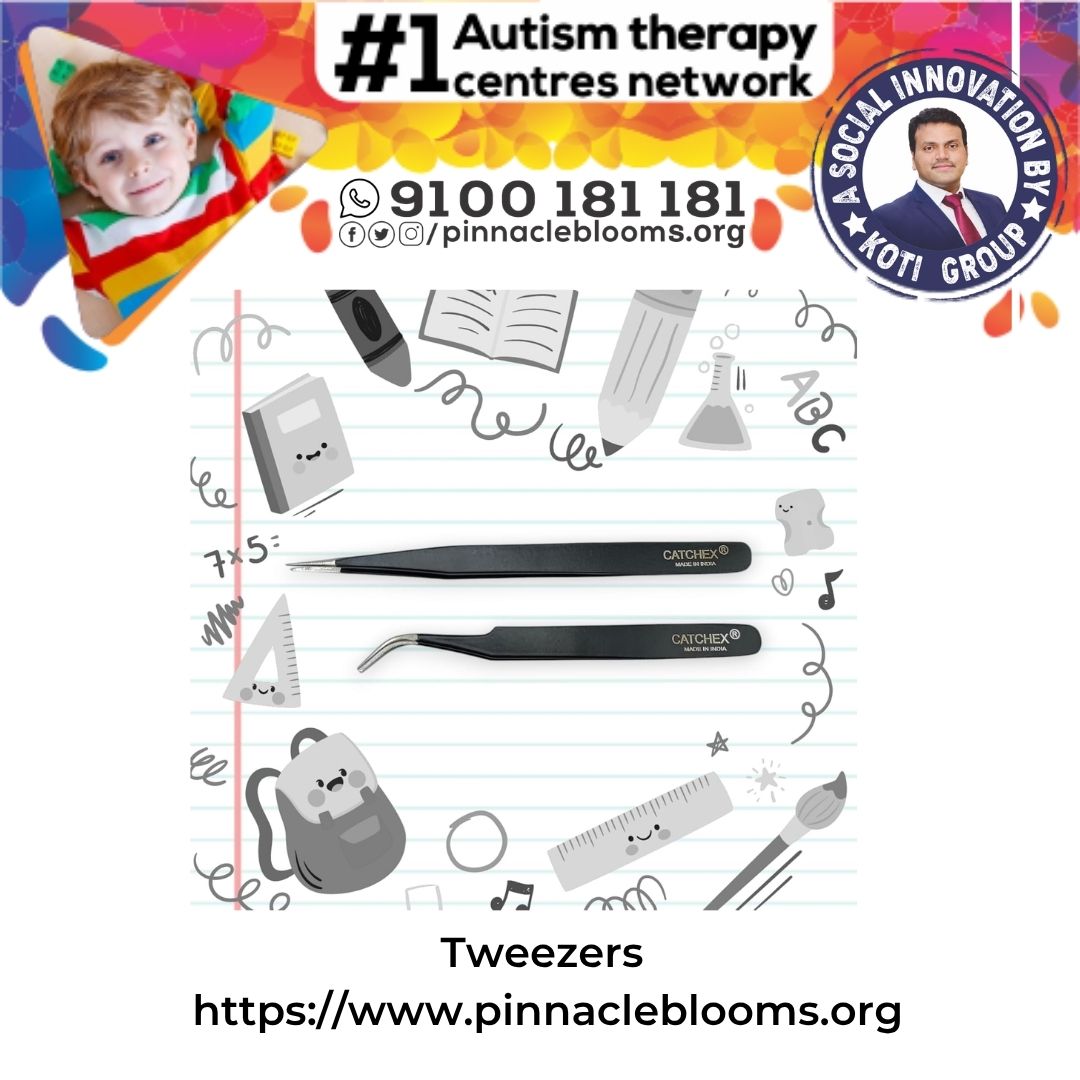
Tweezers / Tongs / Transfer Activities
Tweezers and tongs provide systematic practice for developing refined pincer grasp, graded pressure control, and controlled release — the triumvirate of precision manipulation skills. These tool-based activities strengthen the exact muscle patterns required for pencil control while adding the challenge of maintaining appropriate grip pressure throughout pick-up, transfer, and release sequences.
Skill Development Path
Transfer activities build precise motor control through repeated practice of grasp-hold-release sequences. Children learn to grade their pressure — squeezing just enough to secure the object without crushing it, maintaining that pressure during transfer, and releasing with control at the destination. This graded force control translates directly to improved pencil pressure, better manipulation of small objects, and enhanced overall hand function.
Target Skills
- Refined pincer grasp strength
- Graded pressure control
- Eye-hand coordination precision
- Tool use and manipulation
- Controlled release timing
- Sustained attention and focus
Progressive Challenge
Begin with large tongs and sizeable objects like pom poms that provide generous margin for error. As skill develops, transition to smaller tweezers and tinier objects requiring greater precision. The progression from large to small systematically increases the challenge while maintaining success and motivation.
Price Range: ₹50 - ₹1,000 | Settings: Home, School, Clinic
Material 7.5
Core Kit
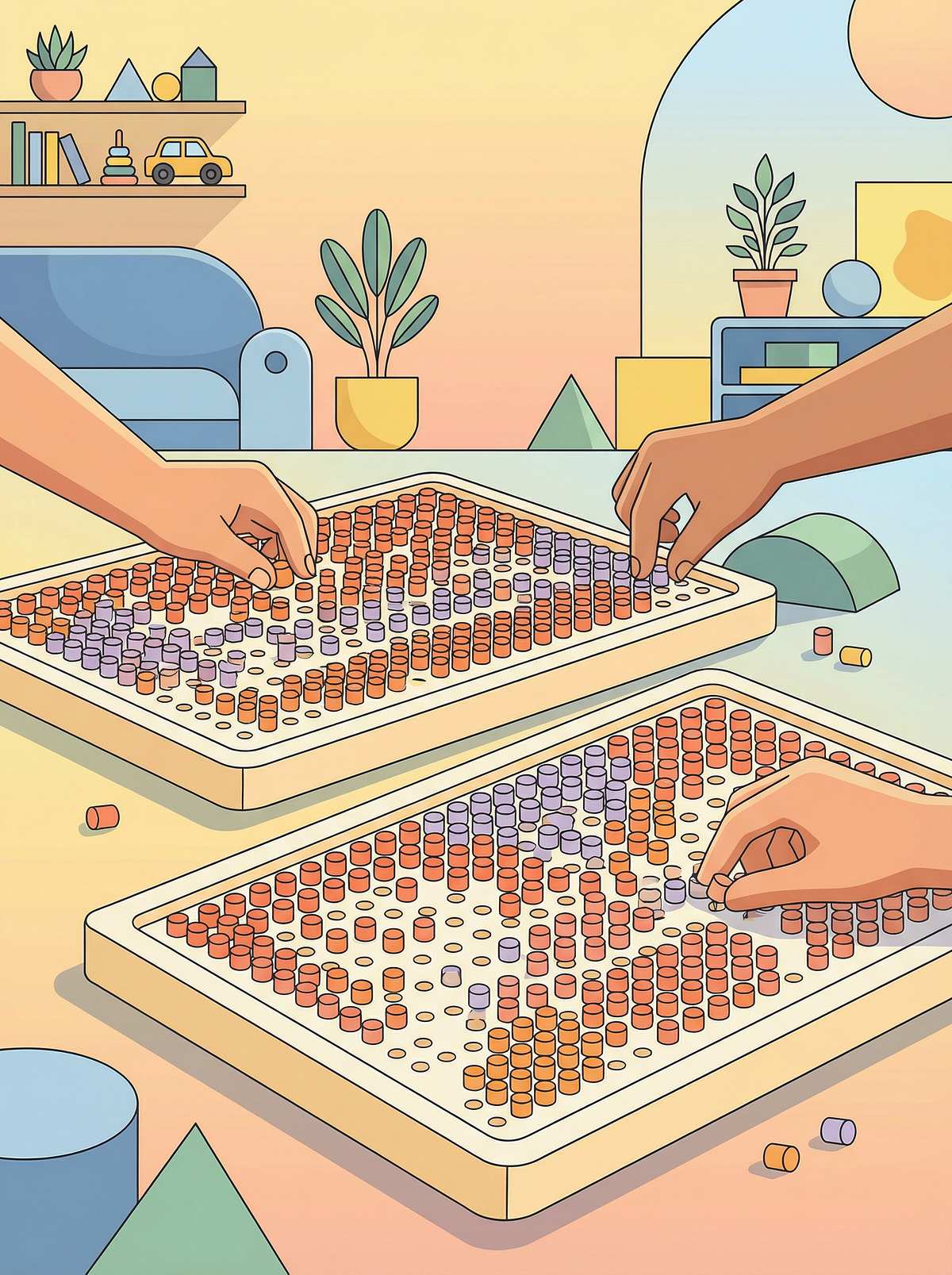
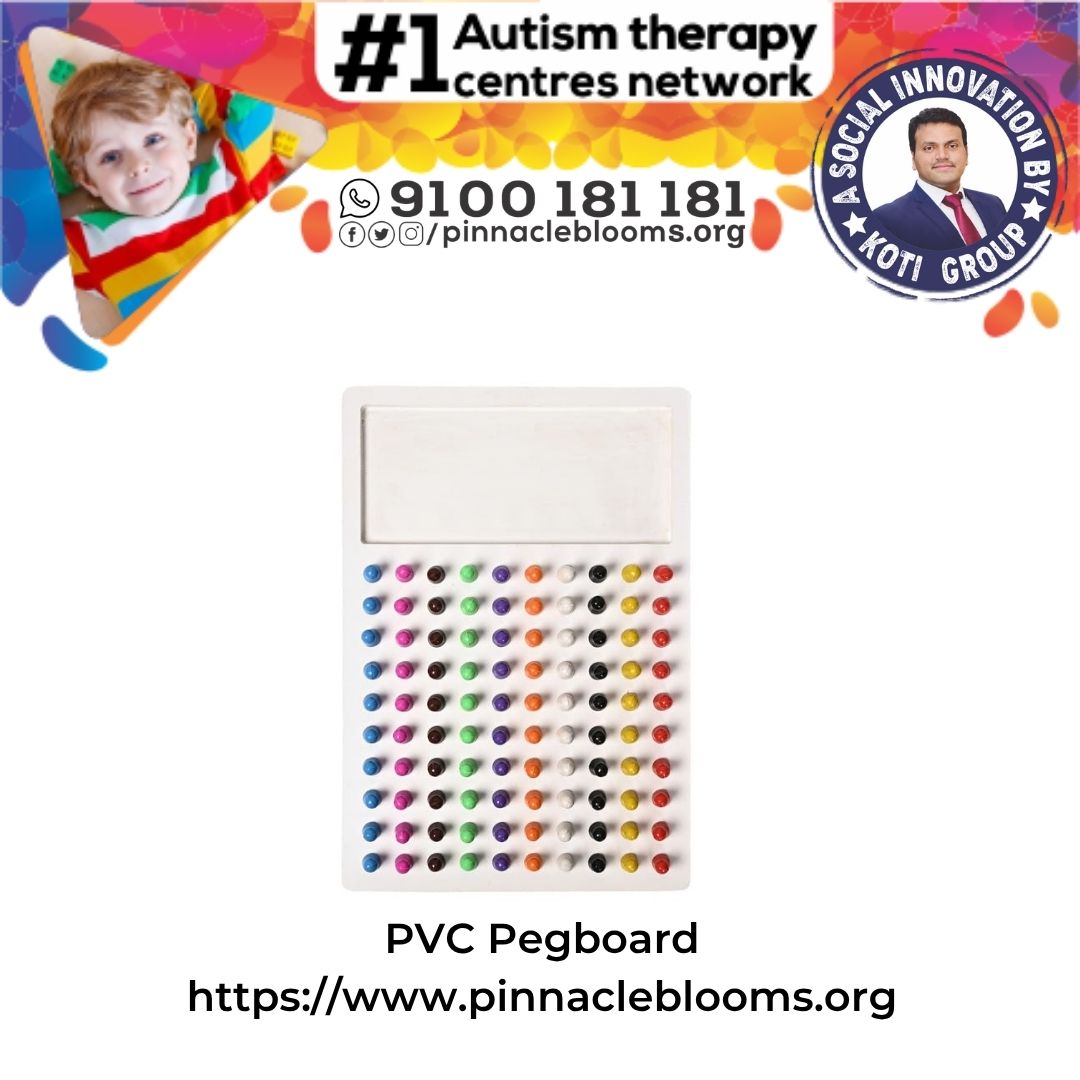
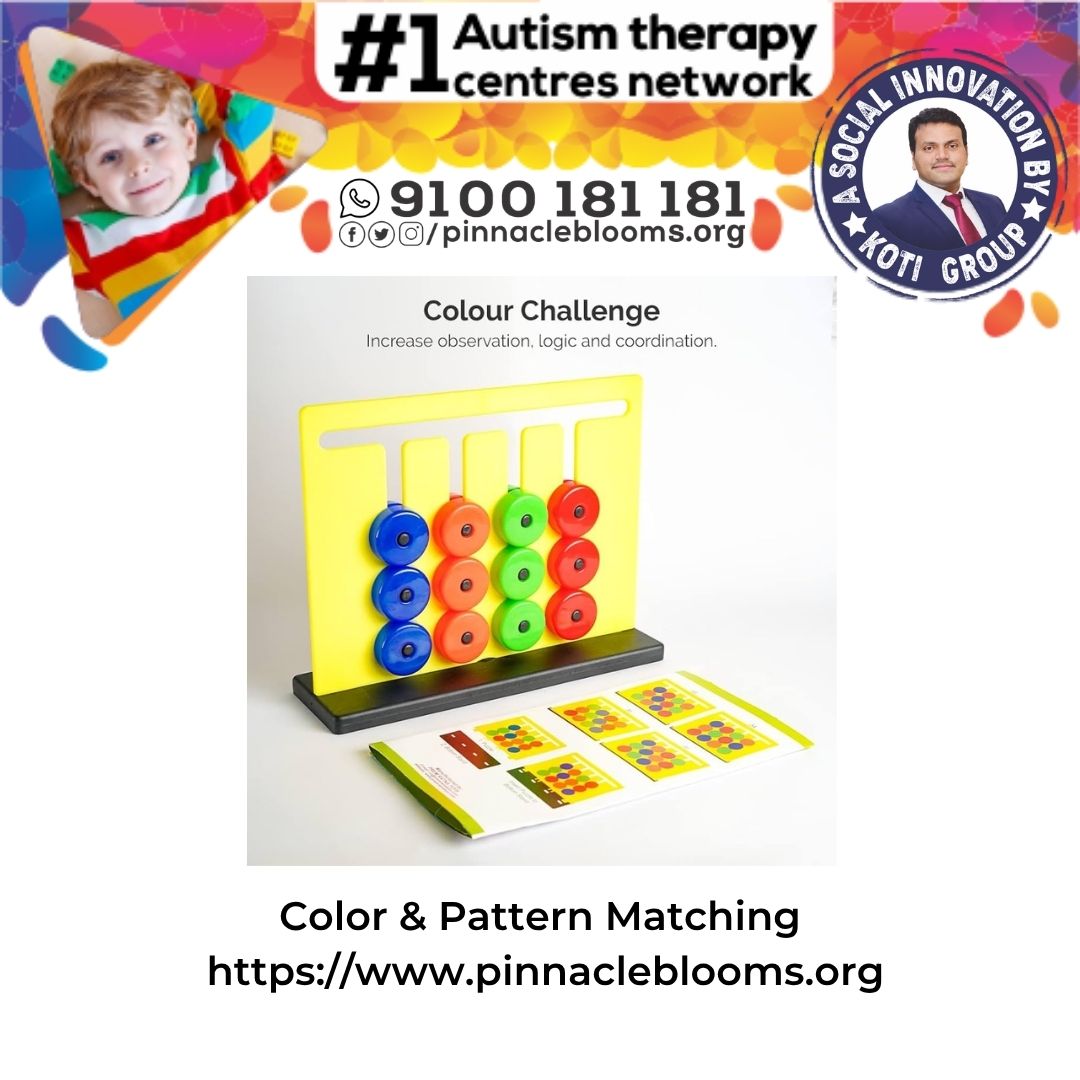
Pegboards / Mosaic Pegs
Pegboards offer structured opportunities for developing pincer grasp, visual-motor integration, and spatial precision through systematic peg placement activities. The combination of fine motor manipulation with visual pattern following creates powerful learning experiences that strengthen multiple skill areas simultaneously while maintaining high engagement through creative design opportunities.
Integrated Skill Building
Each peg placement requires precise pincer grasp to pick up the peg, accurate visual-motor coordination to align it with the hole, and controlled force to insert it fully. When following pattern cards, children add visual discrimination and spatial reasoning to this motor challenge. The repetitive nature of pegboard activities provides the practice volume necessary for skill refinement, while the visual results offer immediate feedback and motivation.
- Precise pincer grasp refinement
- Visual-motor integration development
- Pattern recognition and following
- Sustained attention and task completion
- Color and shape discrimination
- Spatial awareness and organization
1
Free Play
Explore peg placement without constraints, building basic manipulation skills and confidence
2
Simple Patterns
Follow basic color sequences and linear arrangements, adding visual-motor challenge
3
Complex Designs
Replicate intricate patterns from cards, refining precision and spatial accuracy
Price Range: ₹150 - ₹1,500 | Settings: Home, School, Clinic

Material 7.6
Core Kit
Pencil Grips / Writing Tools
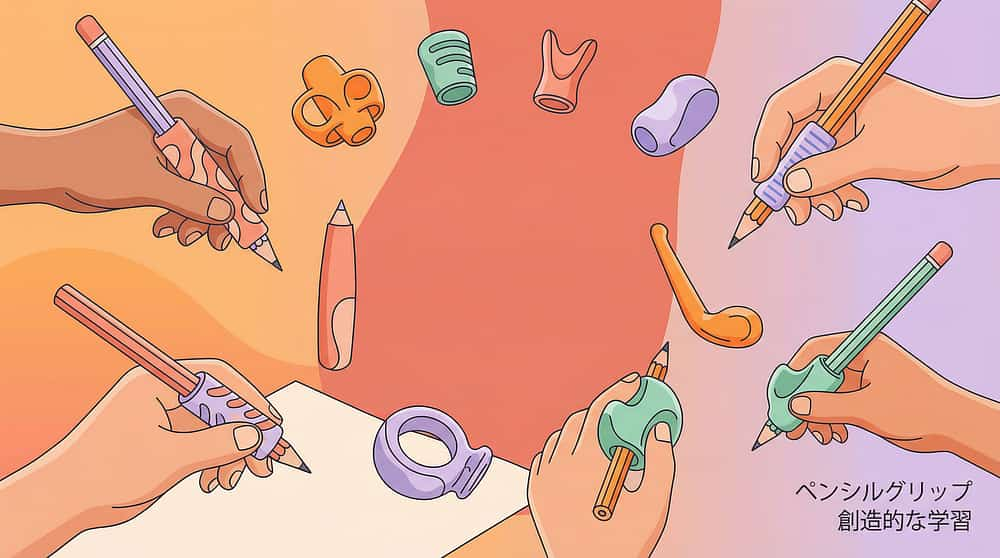
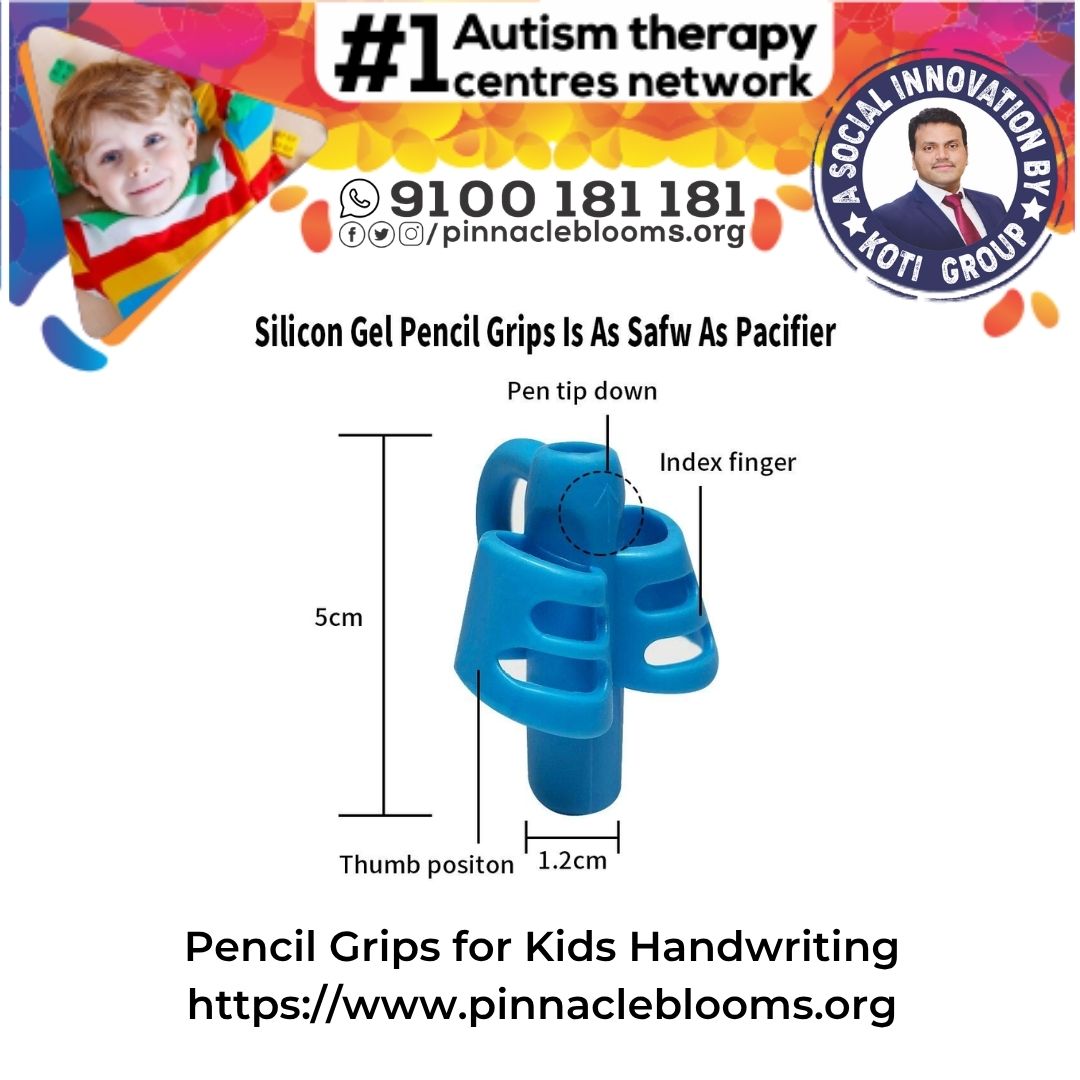
Pencil grips serve as supportive tools that facilitate proper finger placement and reduce fatigue during writing tasks. While grips alone cannot replace fundamental skill development, they provide valuable assistance when combined with appropriate hand strengthening and coordination activities. The right grip can help maintain a functional tripod position, reduce excessive pressure, and extend writing endurance for children working to establish efficient grasp patterns.
Strategic Grip Selection
Effective grip use requires matching the grip type to the specific challenge a child faces. Grips that guide finger placement help children learning tripod positioning. Cushioned grips reduce pressure for children who press too hard. Triangular grips provide tactile cues for finger spacing. The key is identifying the specific grasp difficulty and selecting a grip designed to address that particular issue while simultaneously building the underlying hand skills through complementary activities.
1
Identify the specific grasp problem before selecting a grip type
2
Combine grip use with hand strengthening for comprehensive improvement
3
Try multiple types to find the best fit for each child's needs
4
Maintain consistency across settings to establish new habits
5
Remember grips support but don't replace skill-building activities
Price Range: ₹20 - ₹500 | Settings: Home, School, Clinic
Material 7.7
Core Kit
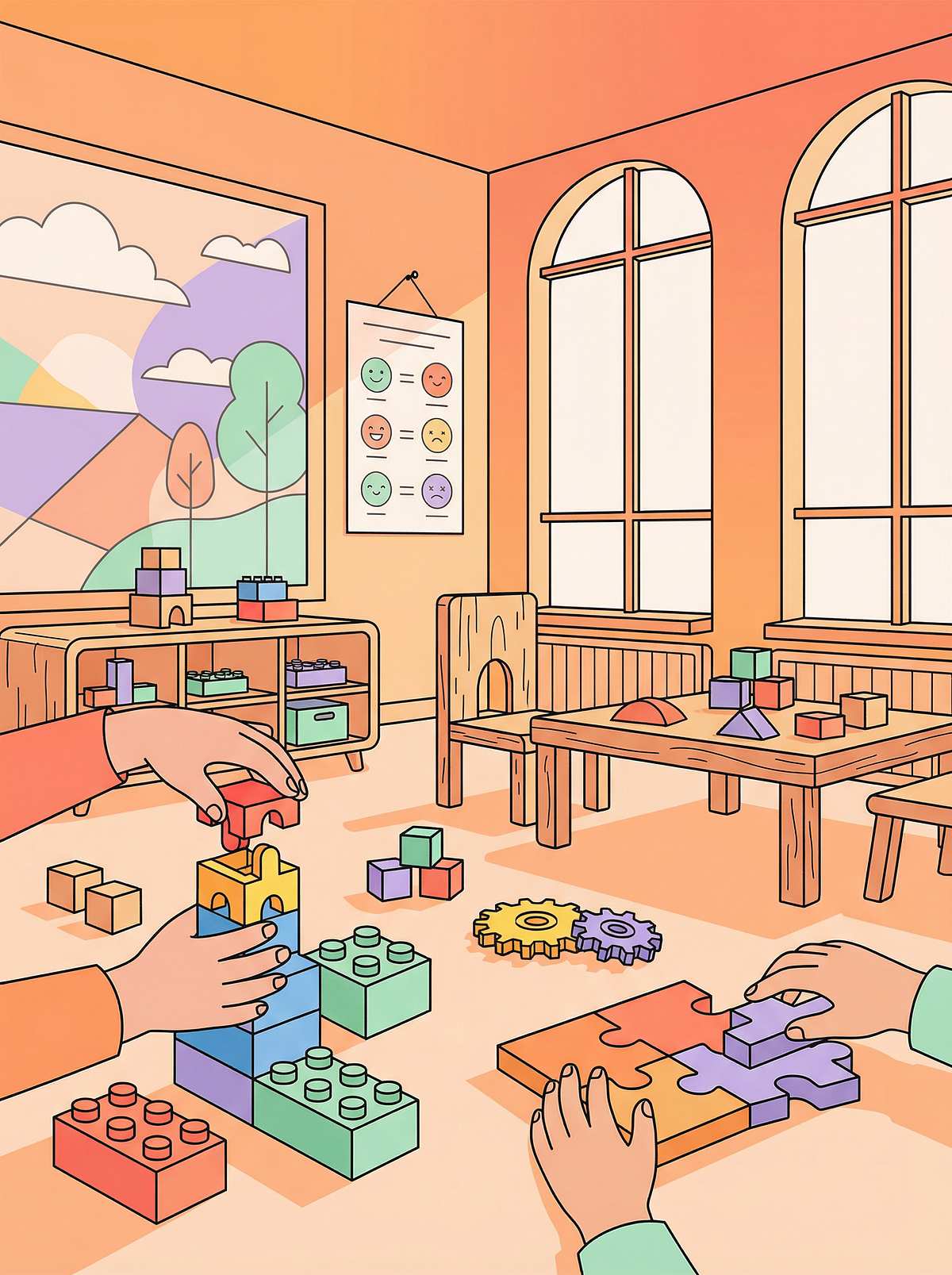
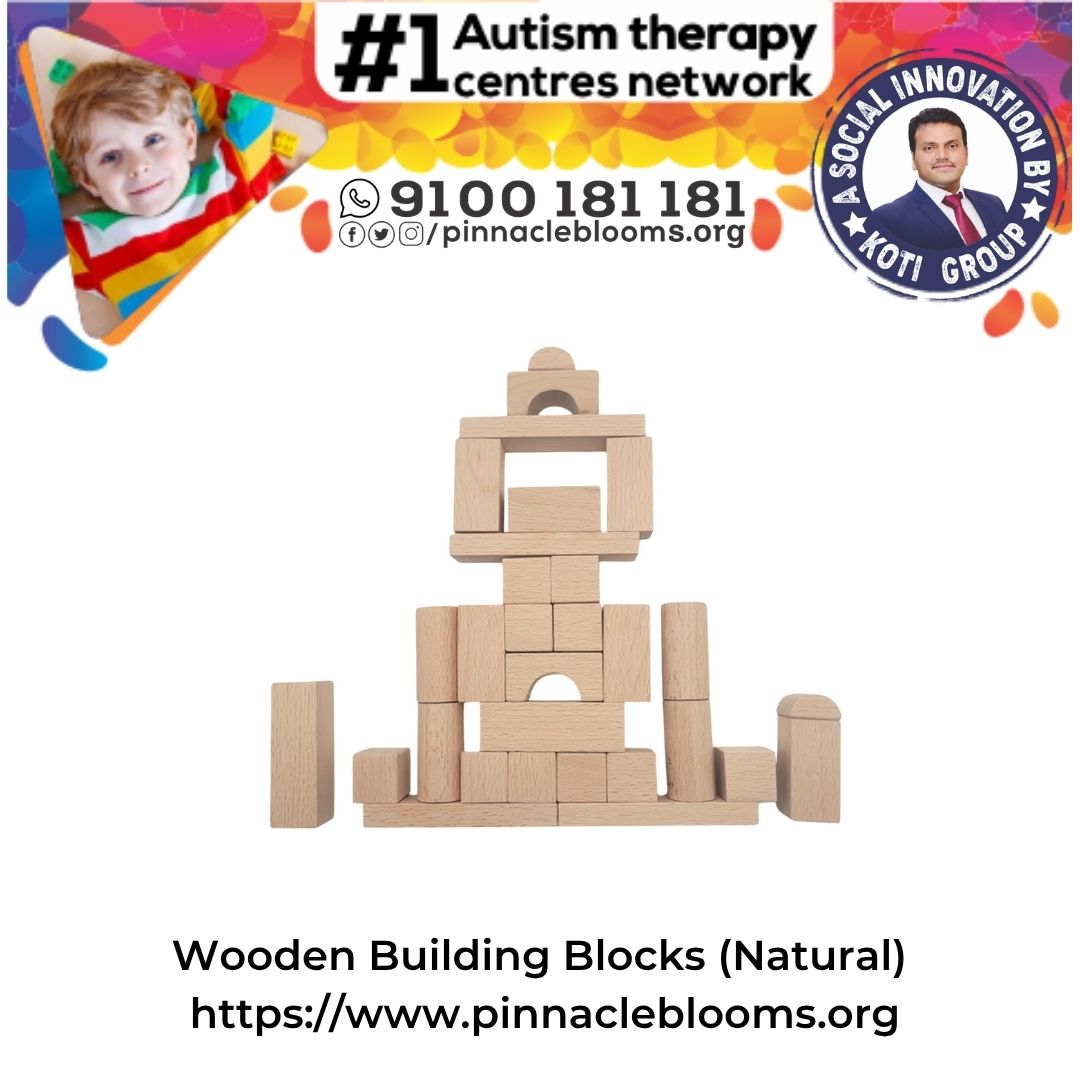
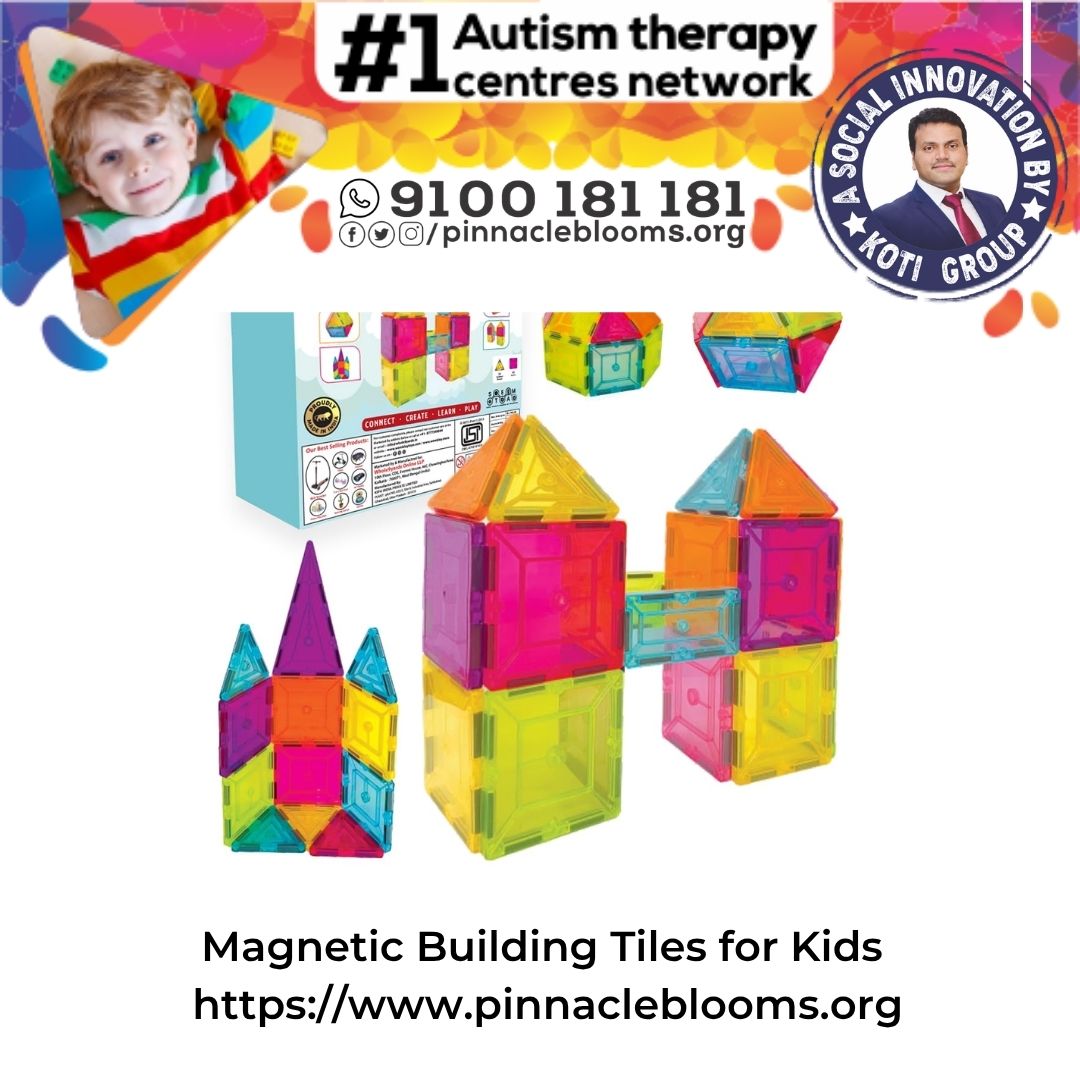
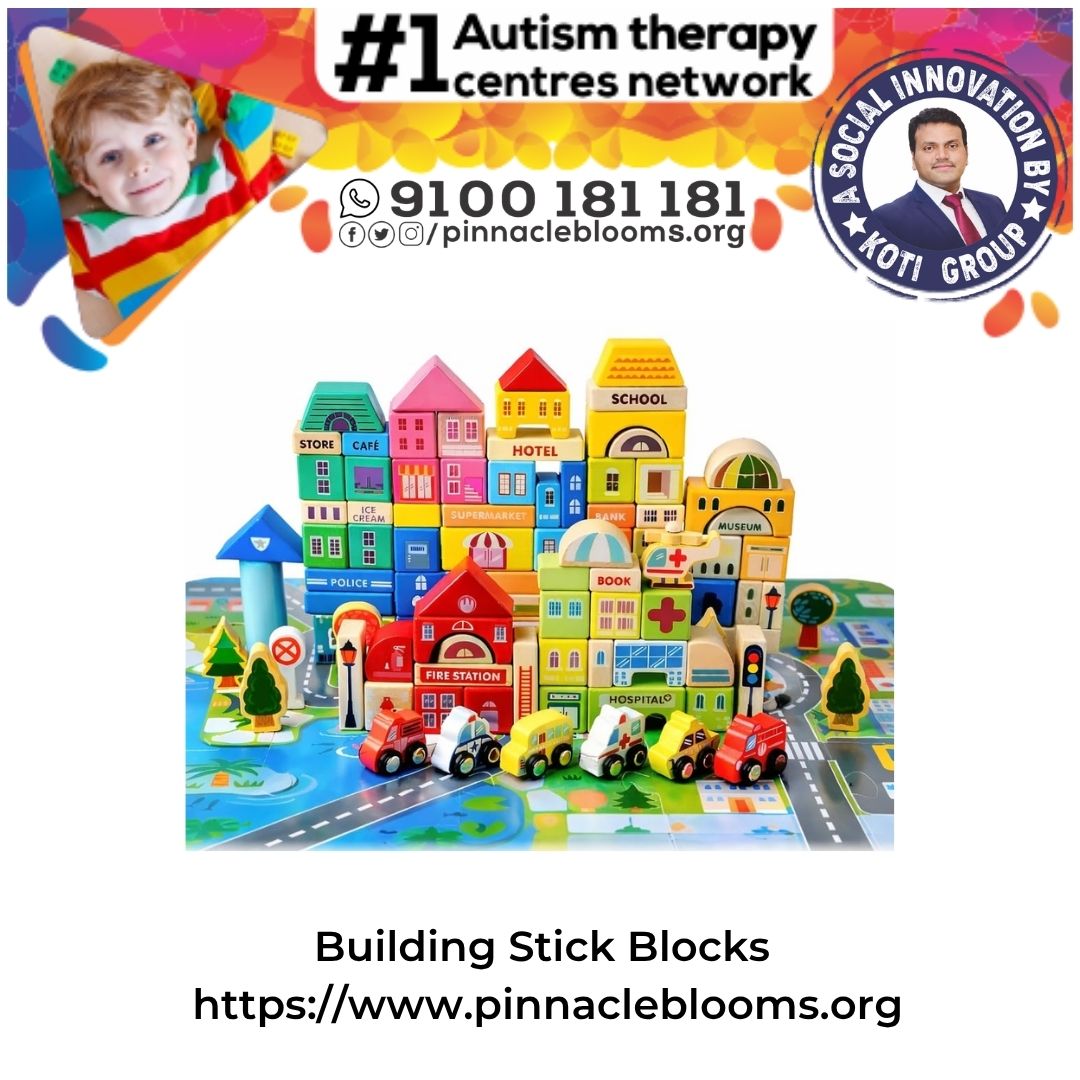
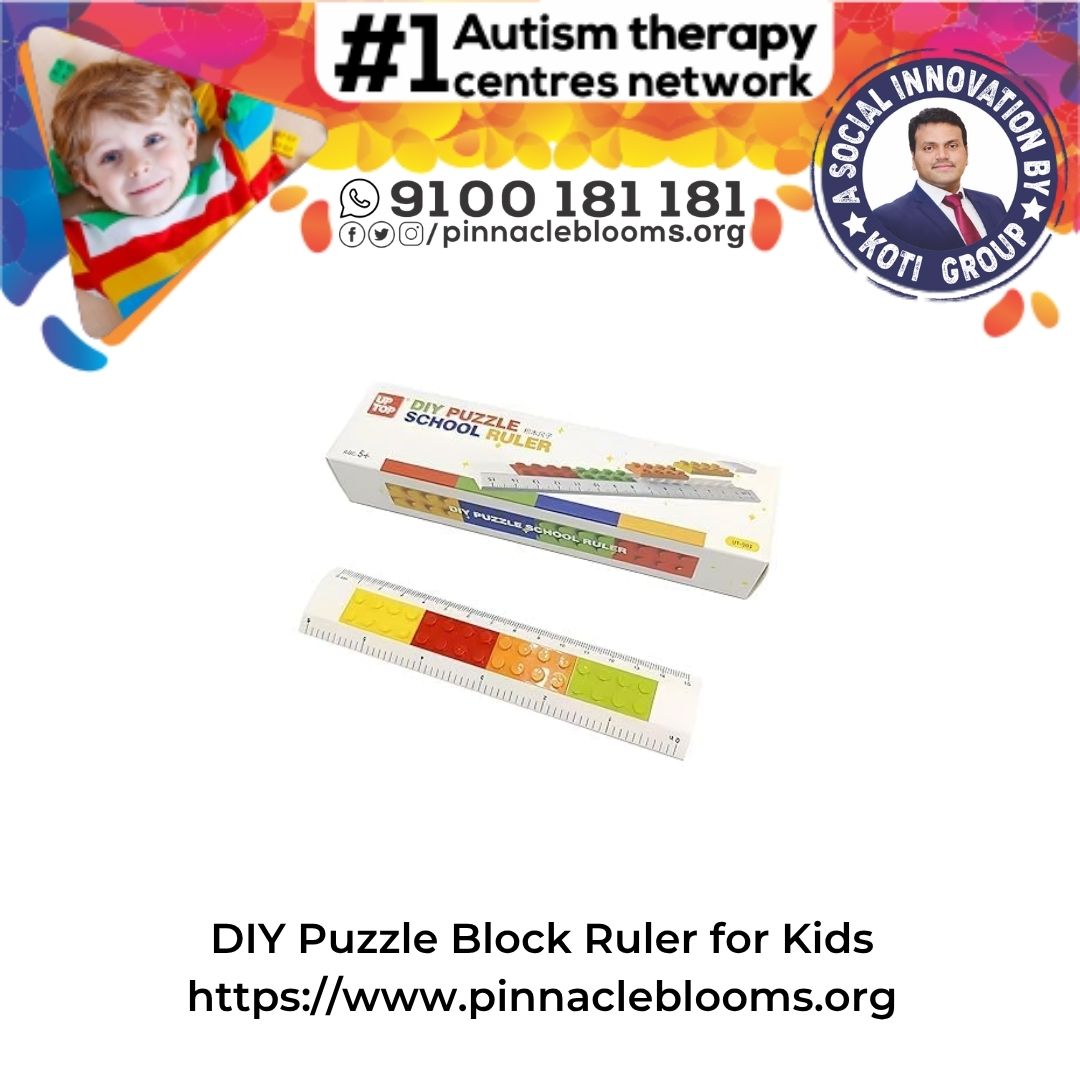
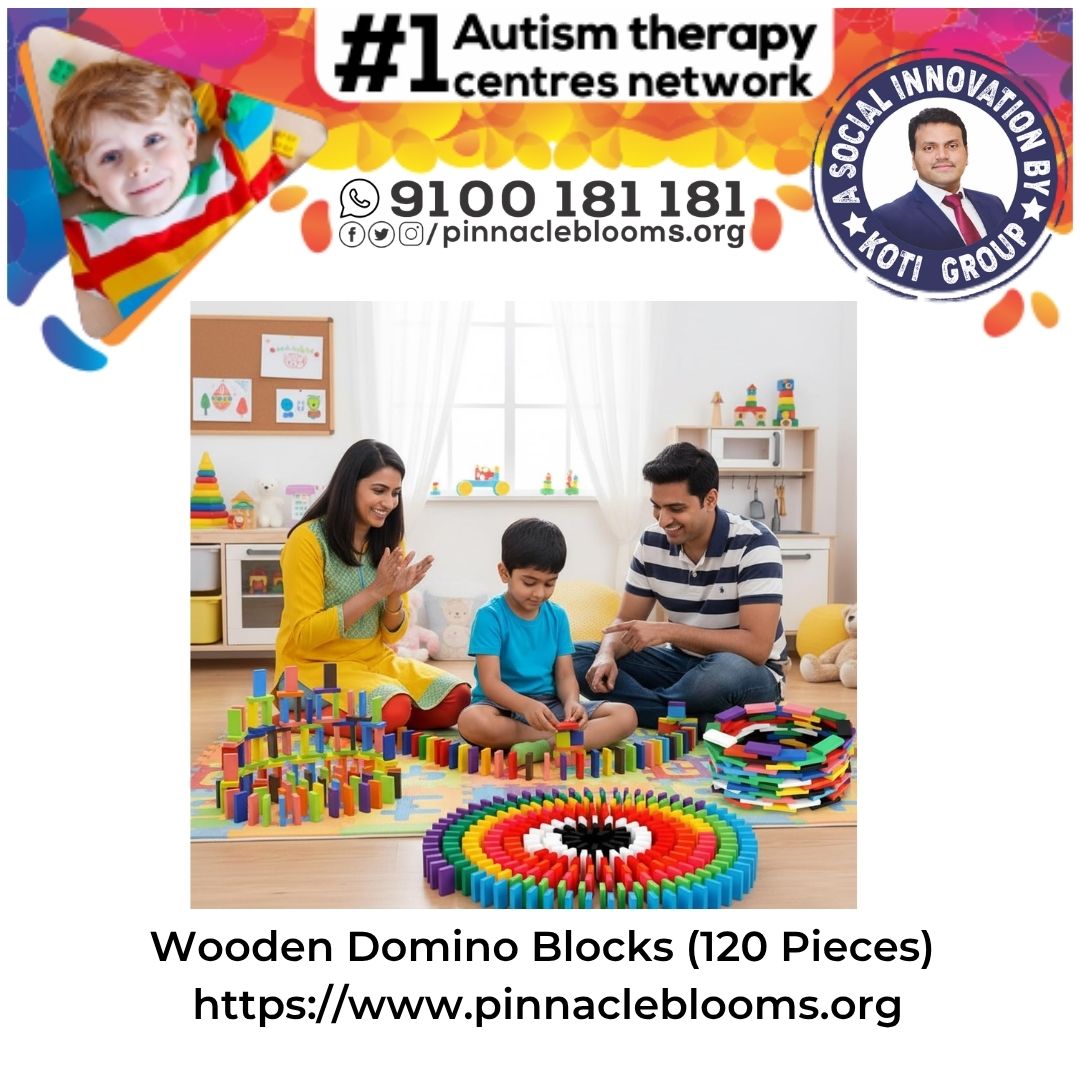
Building Toys (LEGOs, Blocks, Construction)
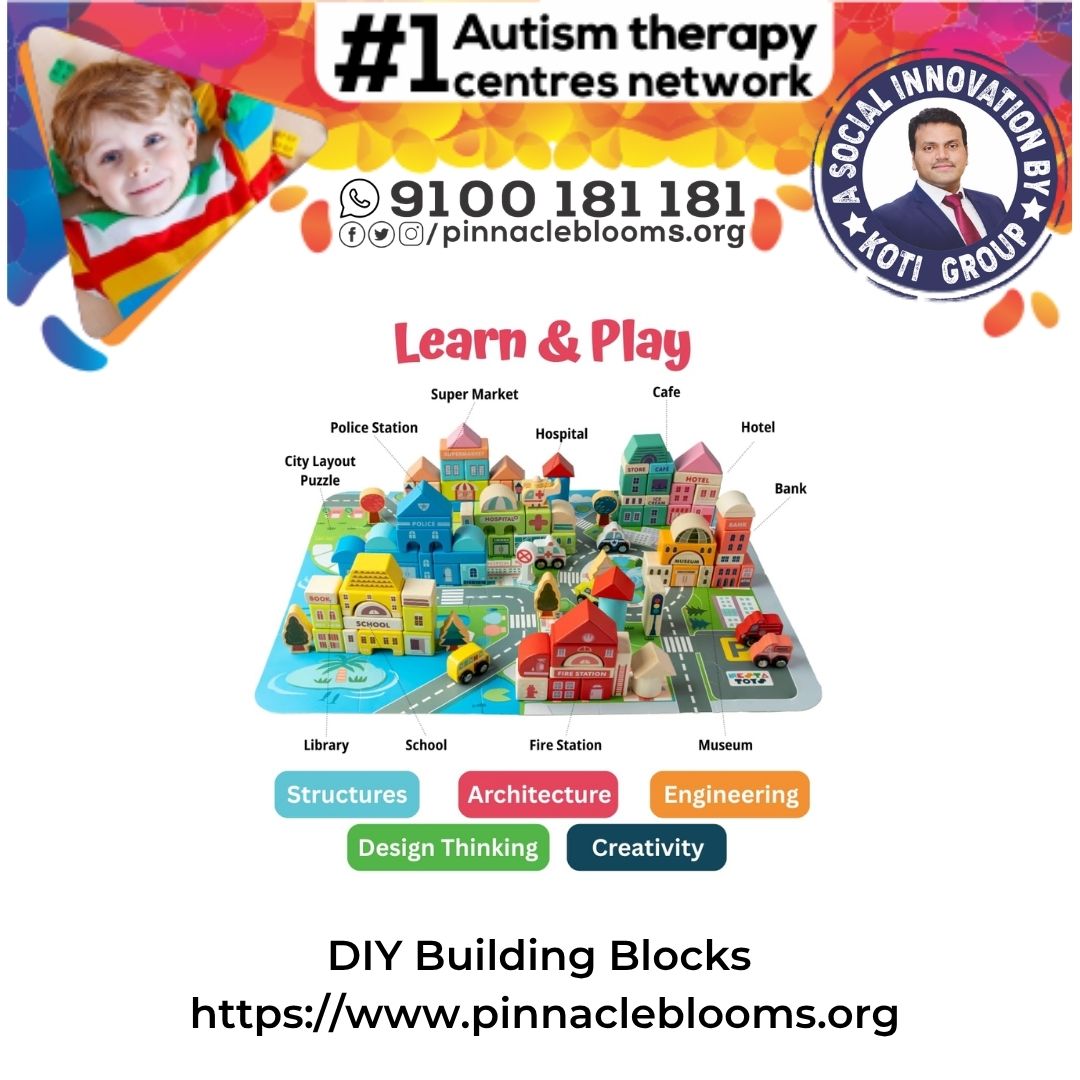
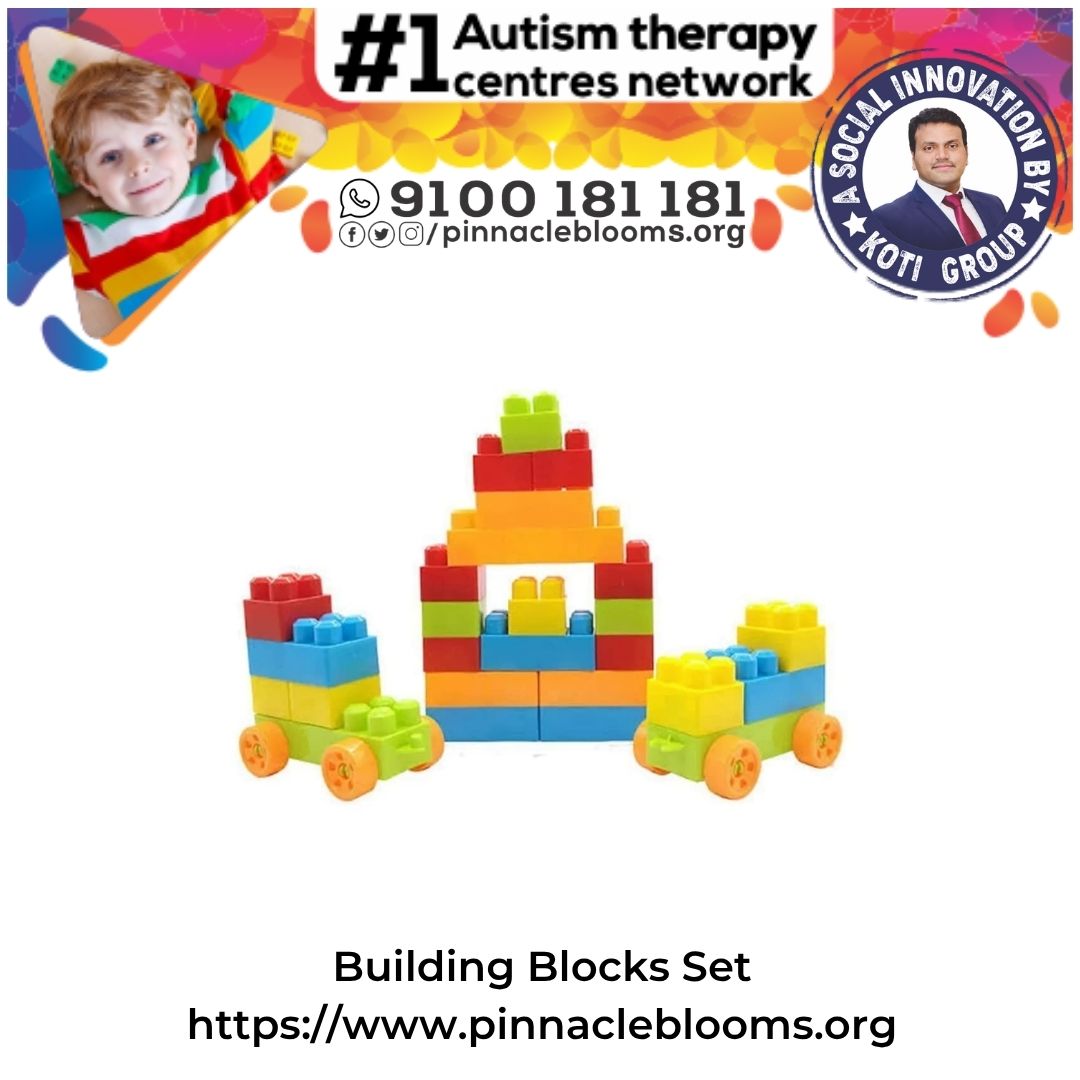
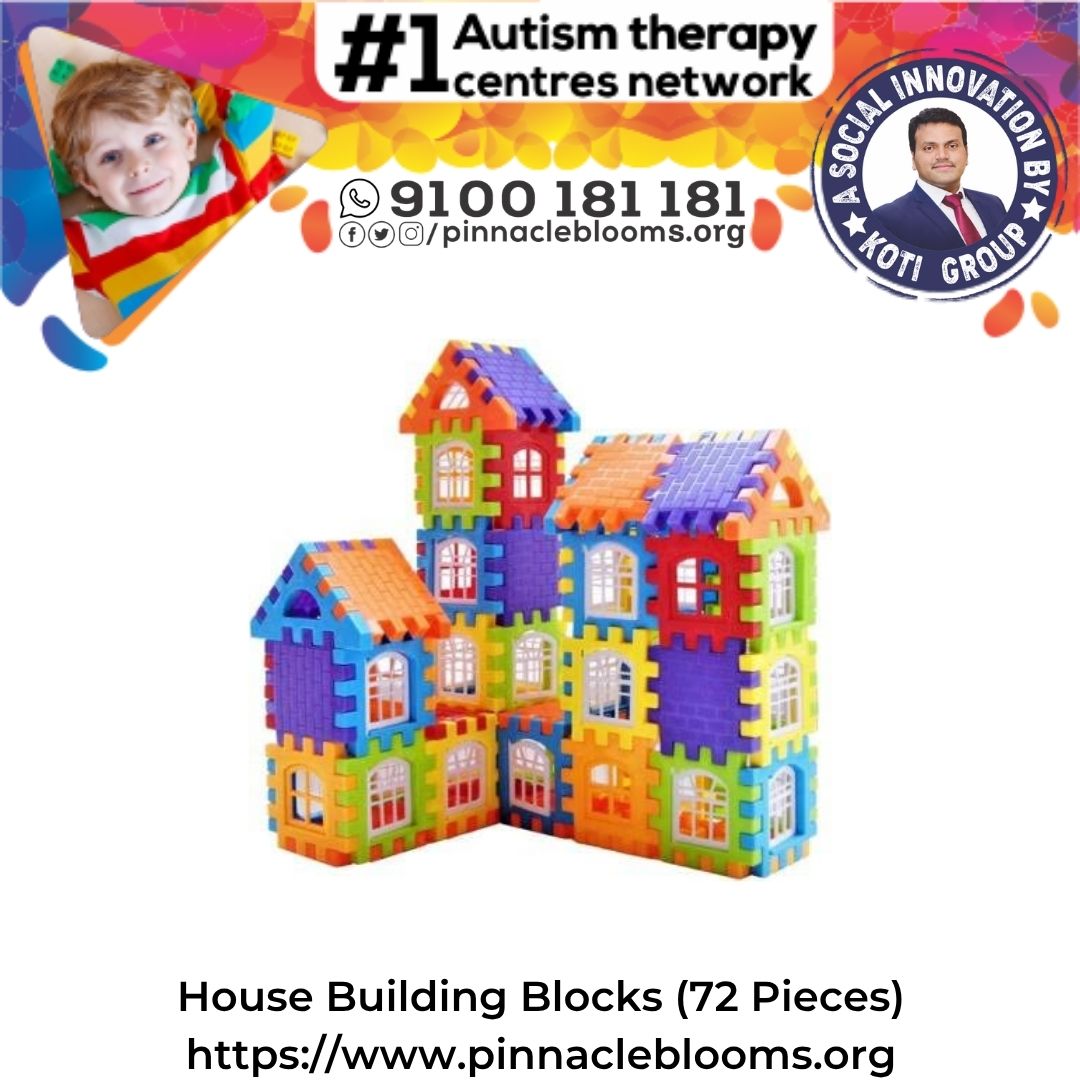
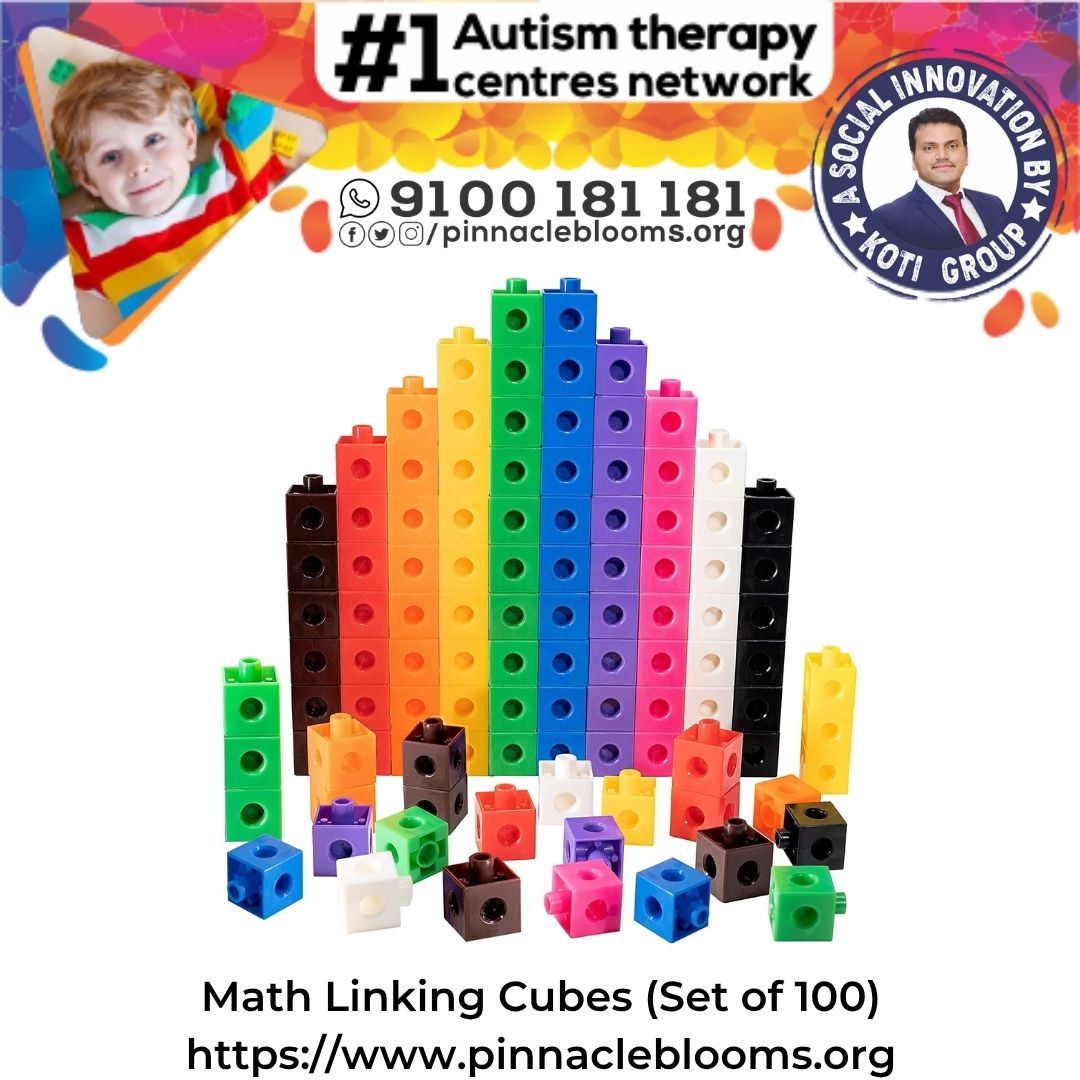
Building toys offer comprehensive developmental opportunities, simultaneously targeting fine motor precision, bilateral coordination, spatial reasoning, motor planning, and problem-solving abilities. The act of constructing three-dimensional structures from individual components requires children to integrate multiple skill areas while remaining highly engaged in purposeful, creative play. This combination of skill development and intrinsic motivation makes building toys exceptionally valuable therapeutic materials.
Multi-Domain Development
Each construction action engages multiple systems. Connecting LEGO bricks requires precise pincer manipulation, appropriate force grading, and bilateral coordination. Following building instructions adds visual-perceptual processing, sequential organization, and sustained attention. Free building encourages spatial planning, creative problem-solving, and motor experimentation. The complexity scales naturally — simple towers for beginners, intricate vehicles for advanced builders — providing appropriate challenge across all skill levels.
Targeted Skills
- Fine motor precision and control
- Bilateral hand coordination
- Spatial reasoning and planning
- Motor planning and sequencing
- Following multi-step instructions
- Problem-solving and persistence
- Creative thinking and design
Progression Strategy
Start with larger blocks requiring less precision, gradually transitioning to smaller pieces as manipulation skills strengthen. Begin with simple structures and free exploration before introducing instruction-following challenges. Balance guided building with creative construction to develop both technical skills and innovative thinking.
Price Range: ₹500 - ₹5,000 | Settings: Home, School, Clinic
Material 7.8
Core Kit
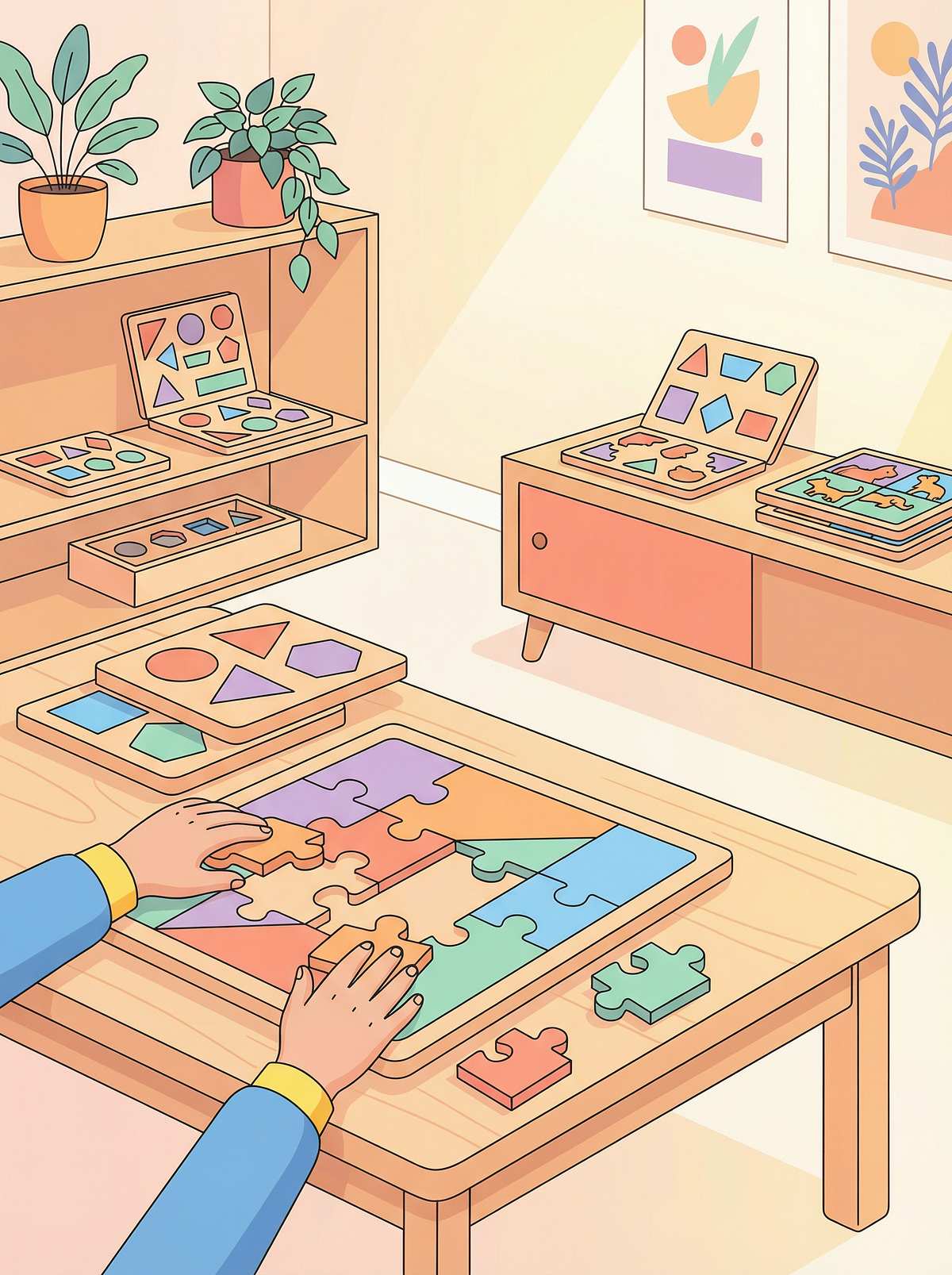
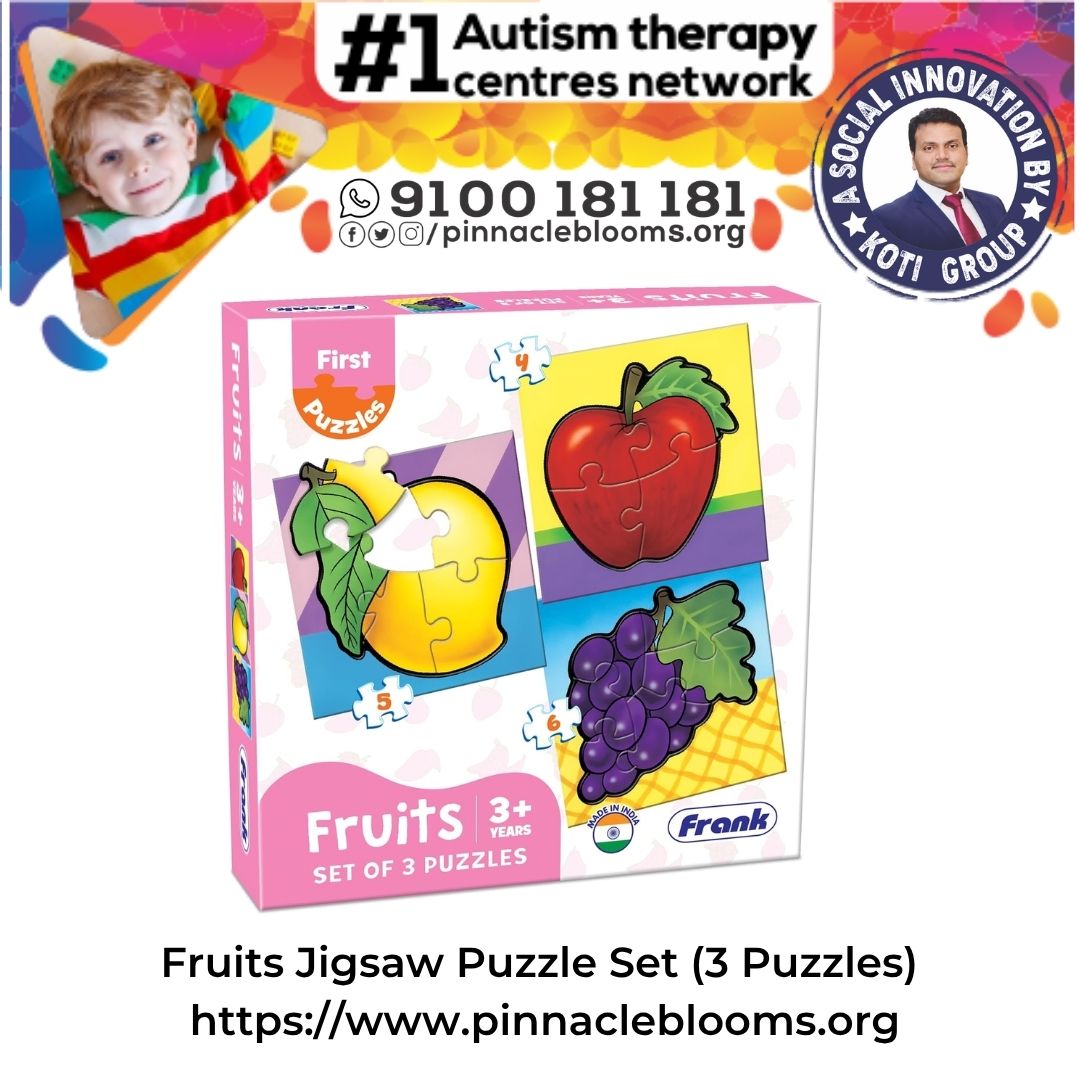
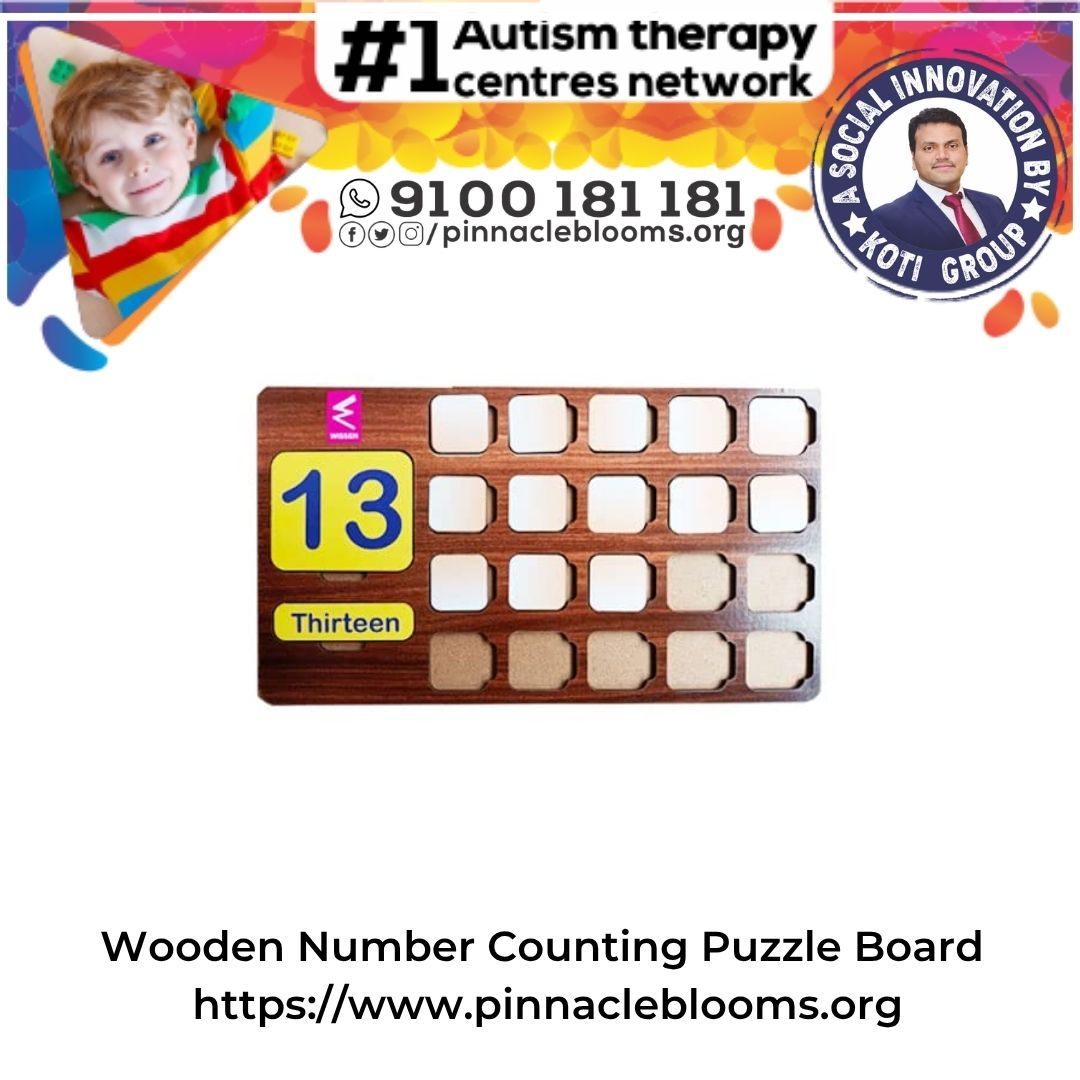
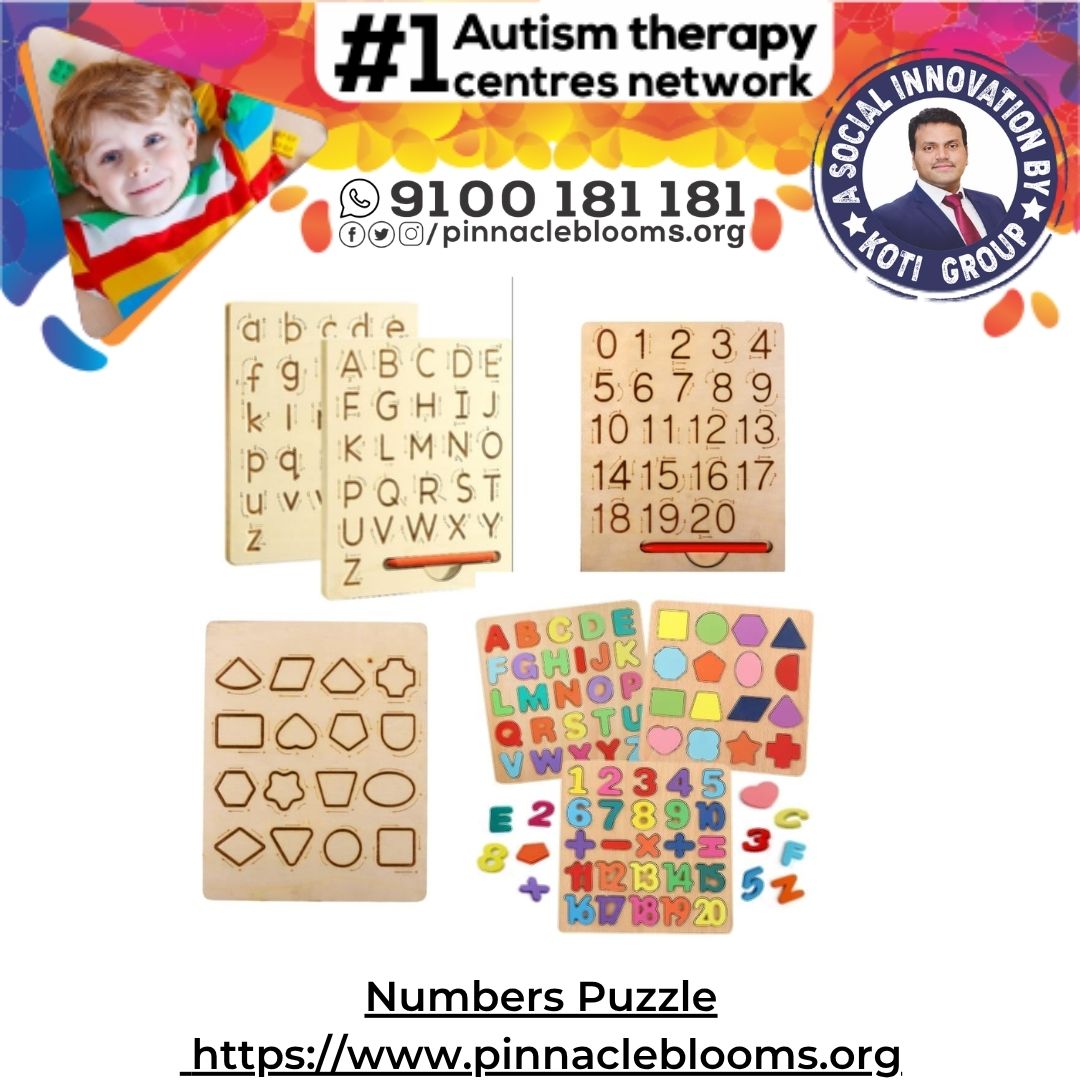
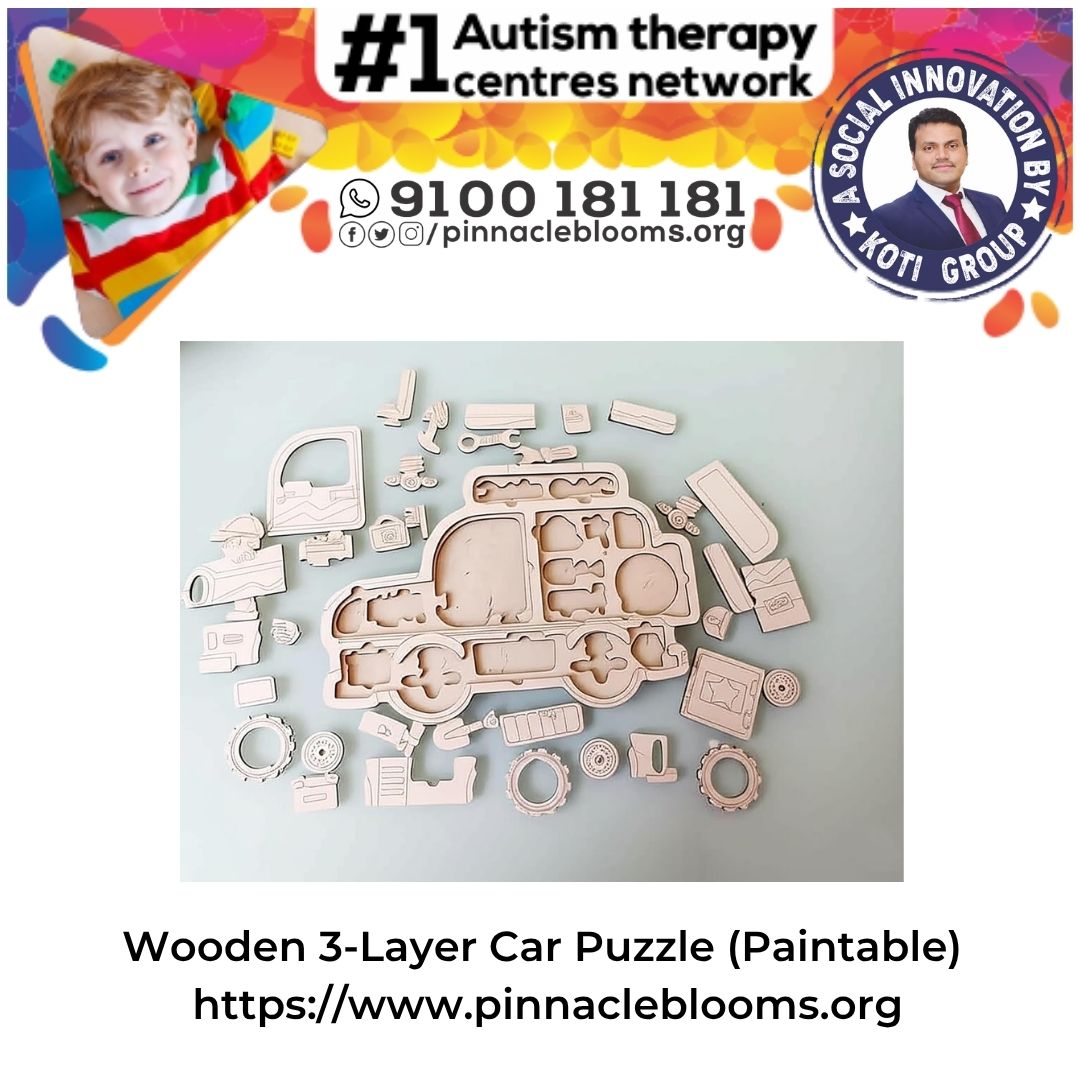
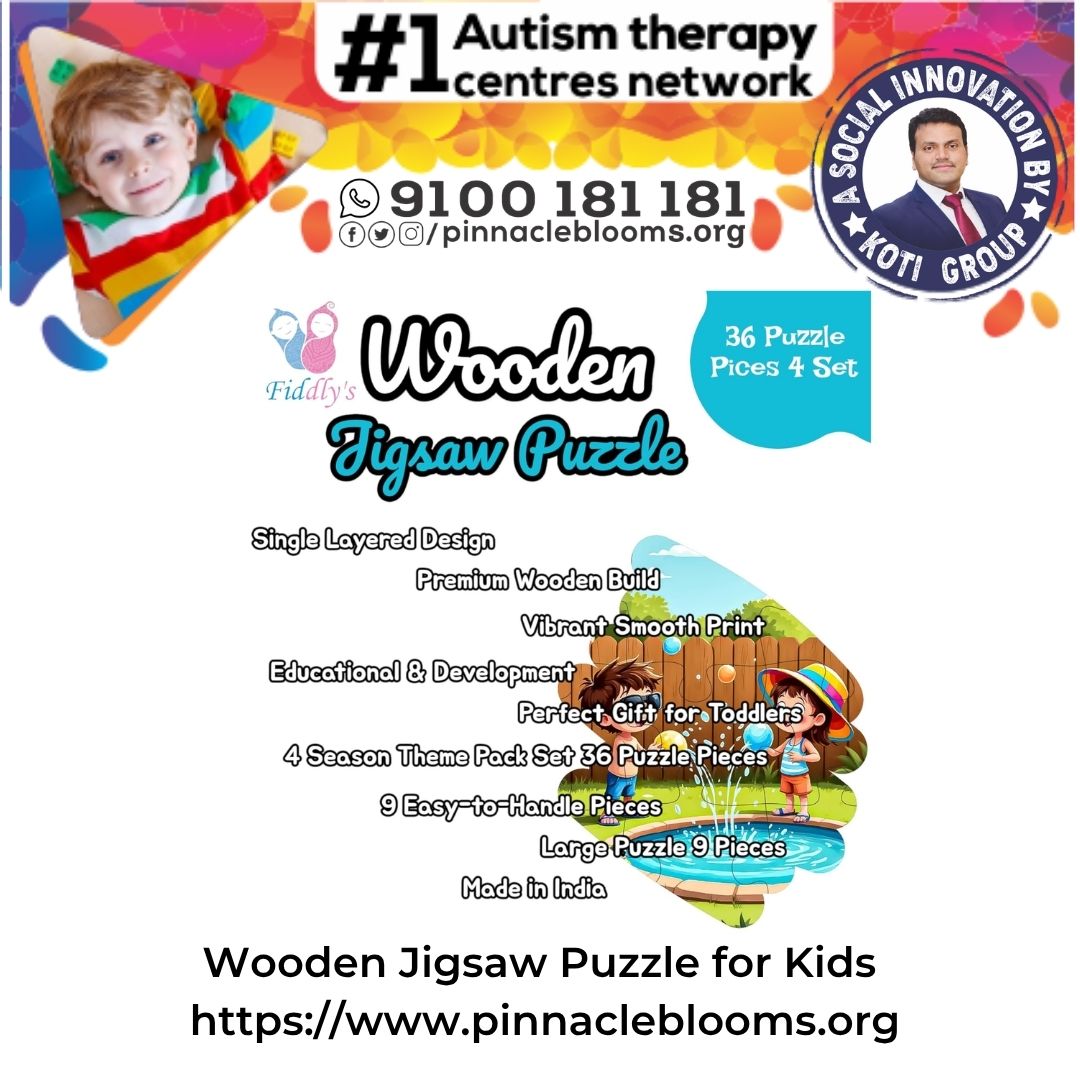
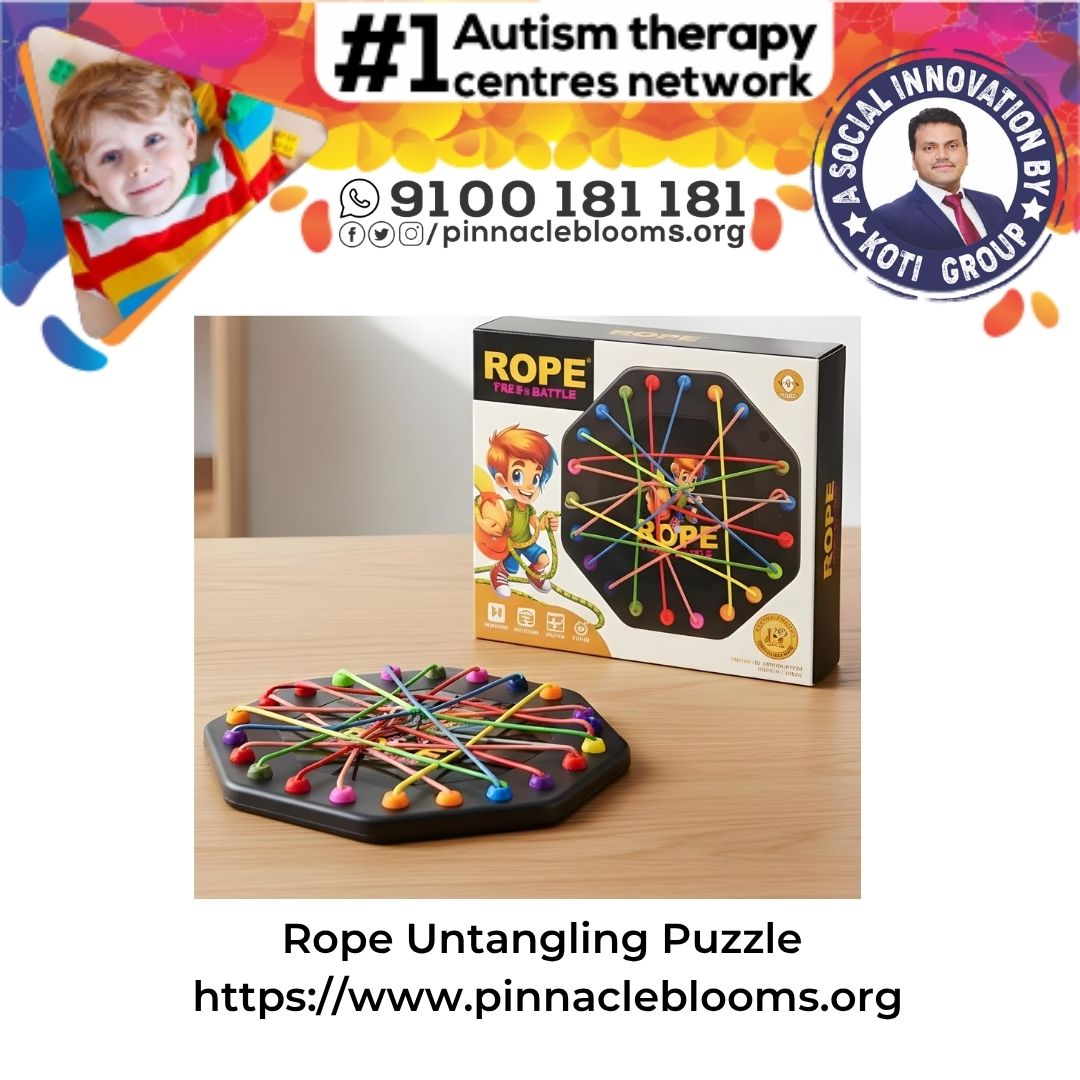
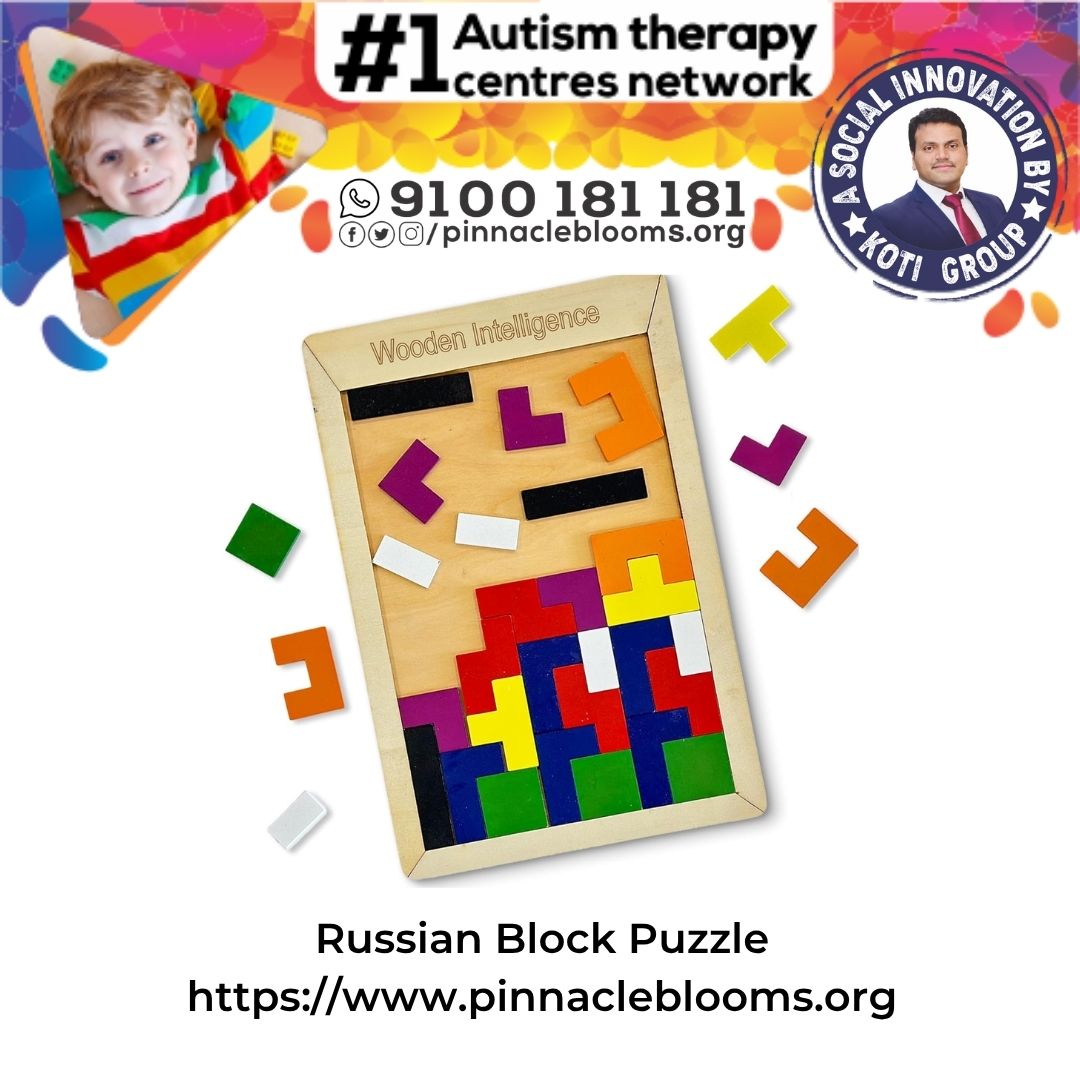
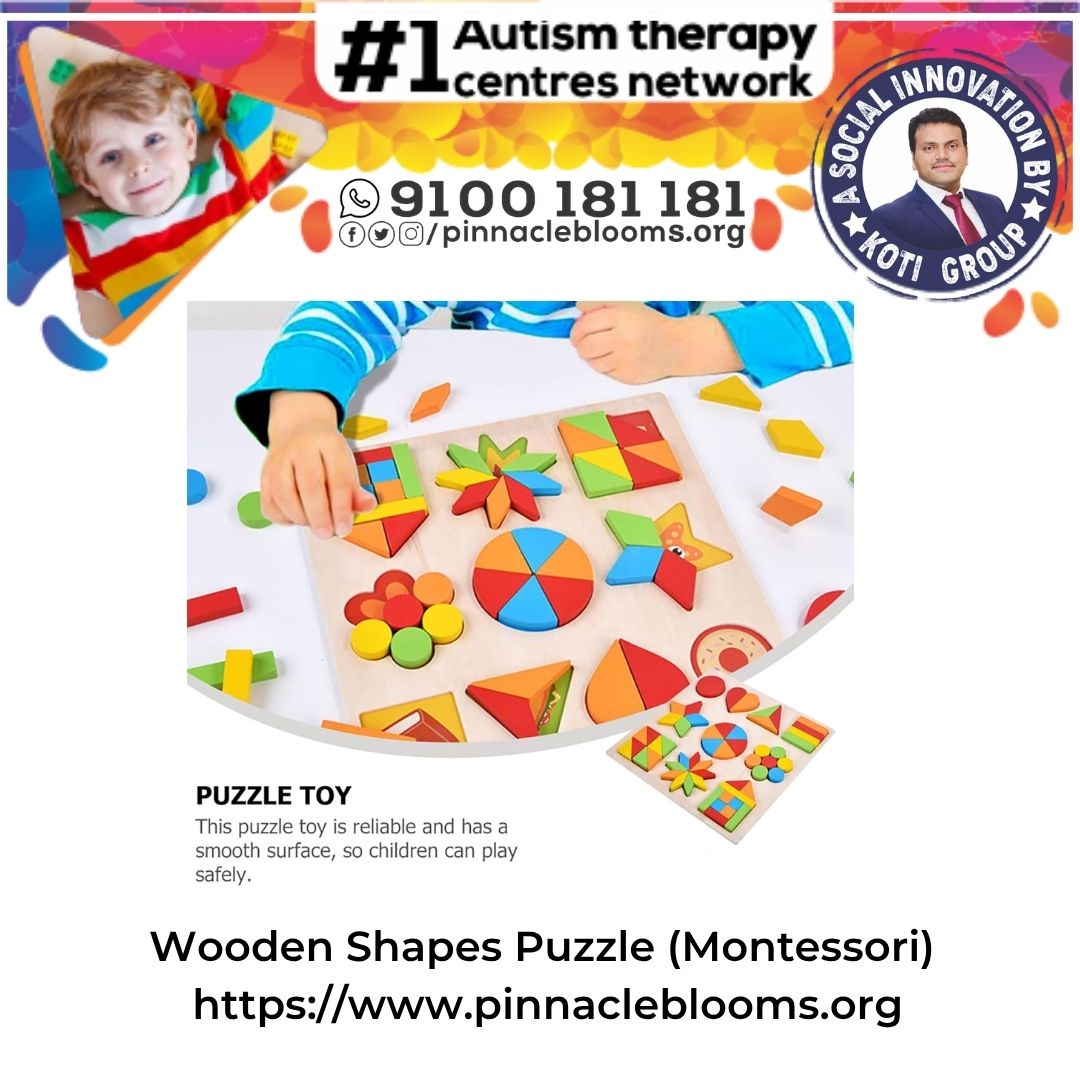
Puzzles (Fine Motor Development)
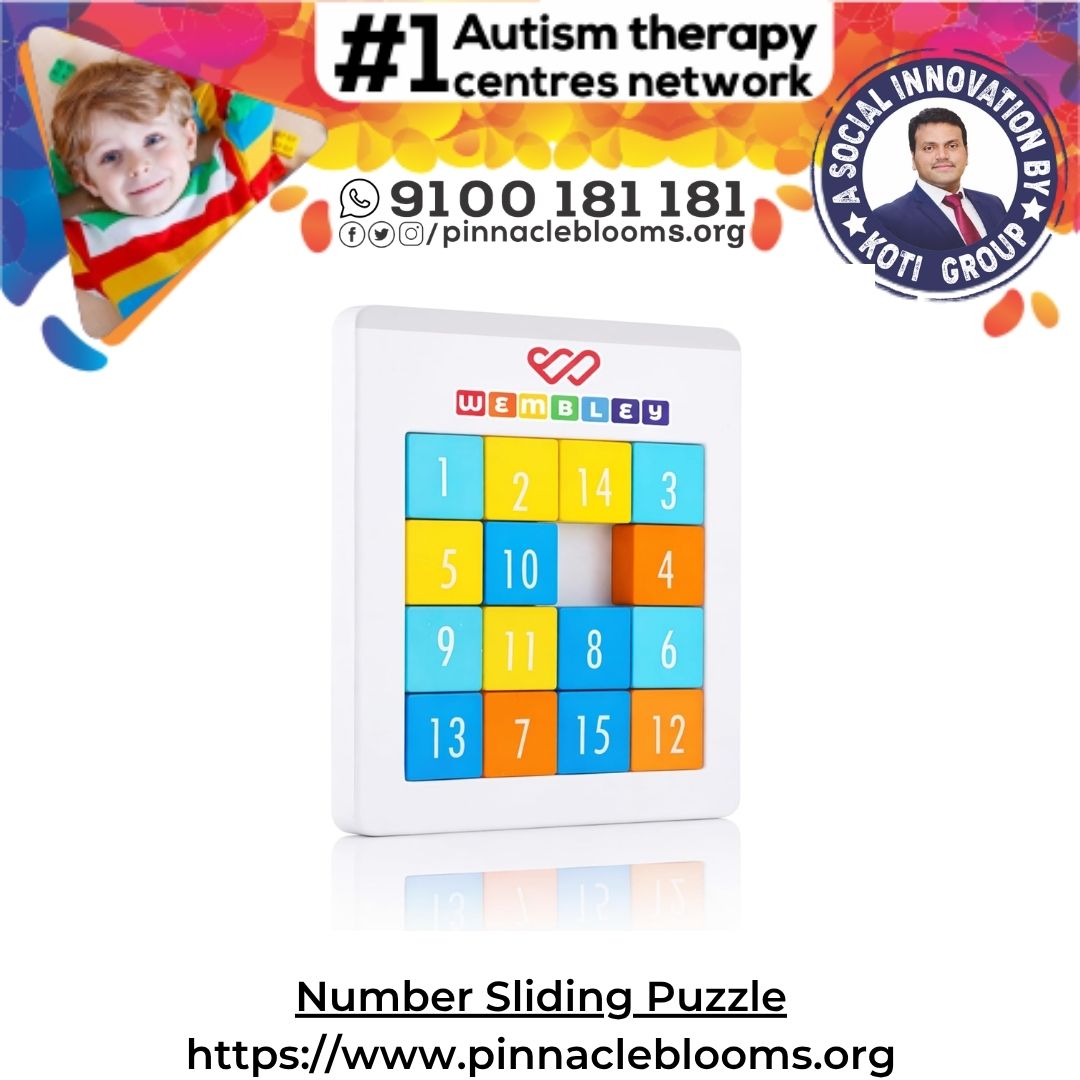
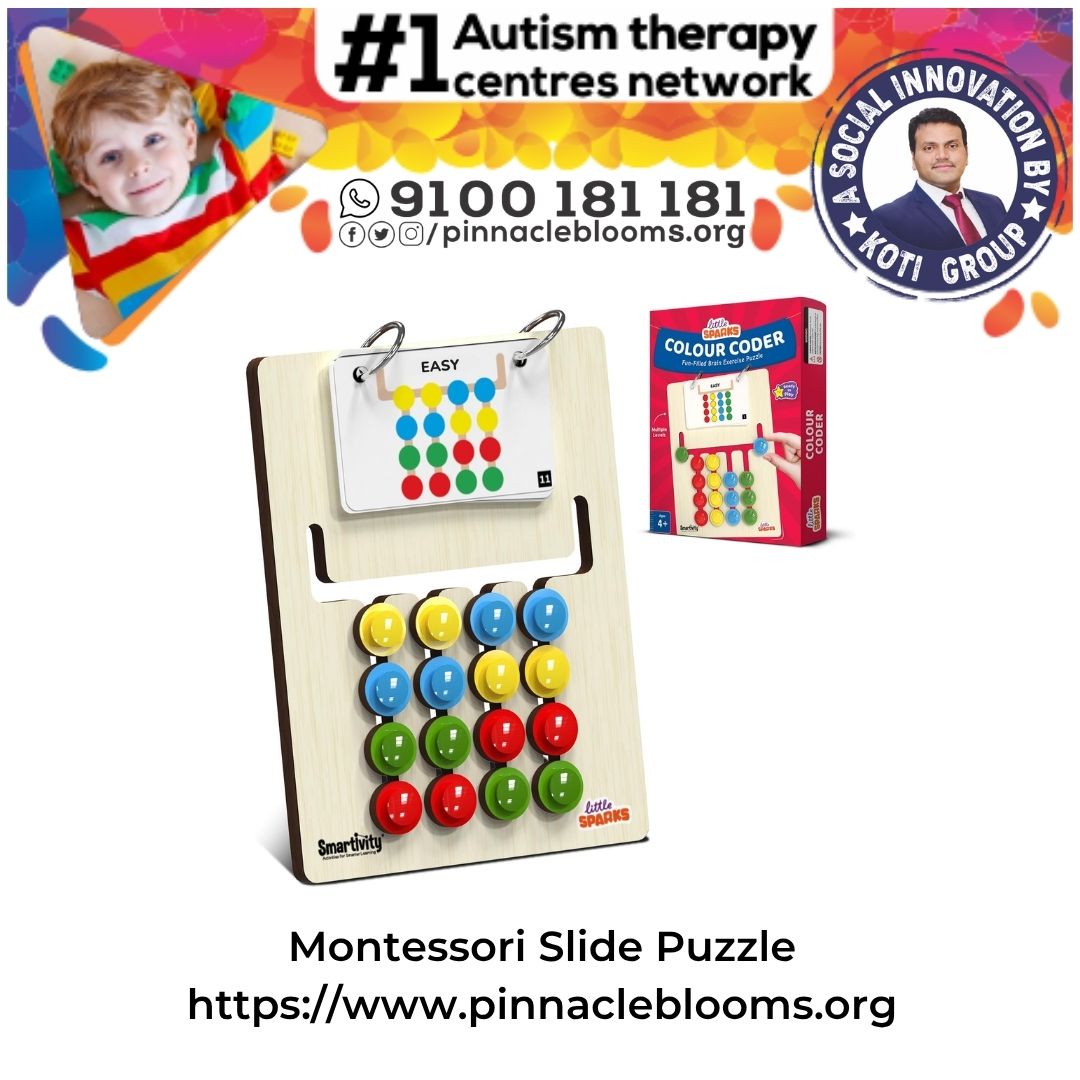
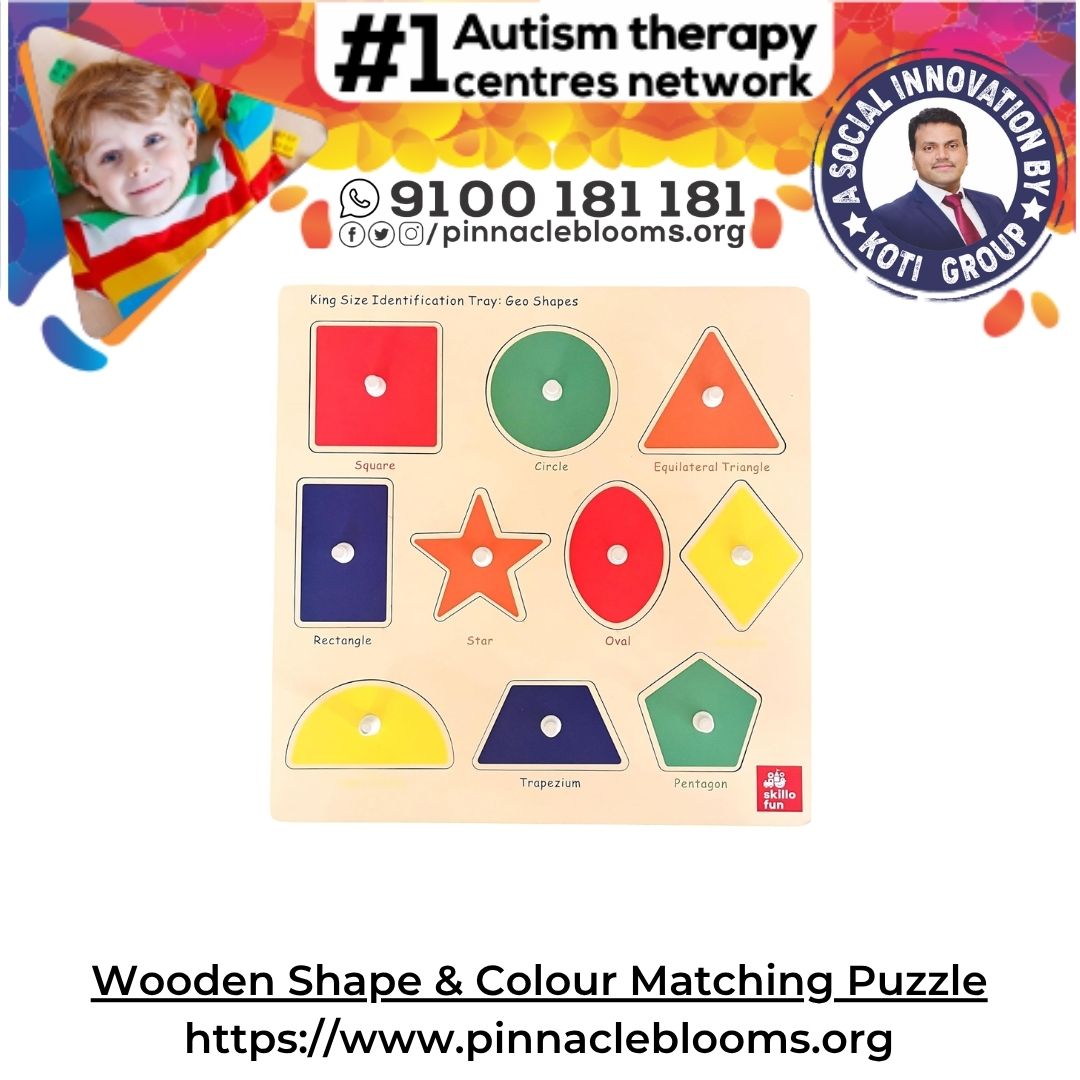
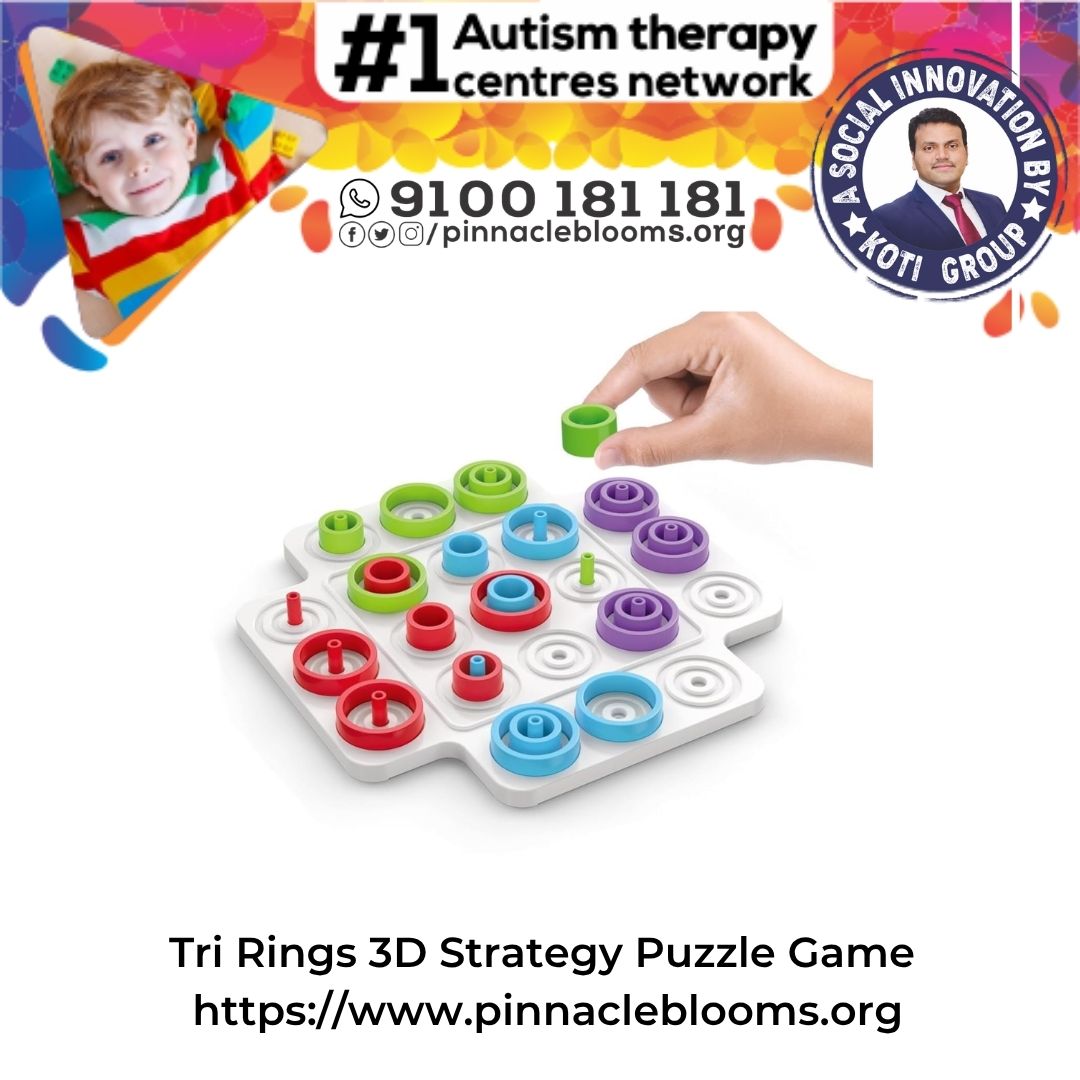
Puzzles provide structured experiences that integrate visual-spatial processing with fine motor precision, creating powerful learning opportunities that develop problem-solving persistence alongside hand skills. The process of analyzing shapes, testing fit, and manipulating pieces into correct positions requires sustained attention, systematic thinking, and precise motor control — building both cognitive and physical capabilities through engaging completion activities.
Cognitive-Motor Integration
Puzzle completion engages visual discrimination as children analyze piece shapes and colors, spatial reasoning as they mentally rotate and position pieces, and refined motor control as they manipulate pieces into precise alignment. The trial-and-error process builds flexible thinking and persistence, while successful completion provides powerful motivation and confidence. Knob puzzles specifically target pincer grasp development, while more complex jigsaws emphasize visual-spatial analysis and sustained problem-solving.
Development Targets
- Visual-spatial processing and analysis
- Fine motor precision and alignment
- Problem-solving and strategy development
- Eye-hand coordination refinement
- Shape and pattern recognition
- Persistence and task completion
Price Range: ₹150 - ₹1,000 | Settings: Home, School, Clinic
Knob Puzzles
Large knobs for pincer practice with simple shape matching
1
Simple Jigsaws
4-12 pieces with clear images and minimal complexity
2
Intermediate Puzzles
25-50 pieces requiring systematic strategy development
3
Advanced Puzzles
100+ pieces demanding sustained focus and refined skills
4
Understanding Hand Mechanics
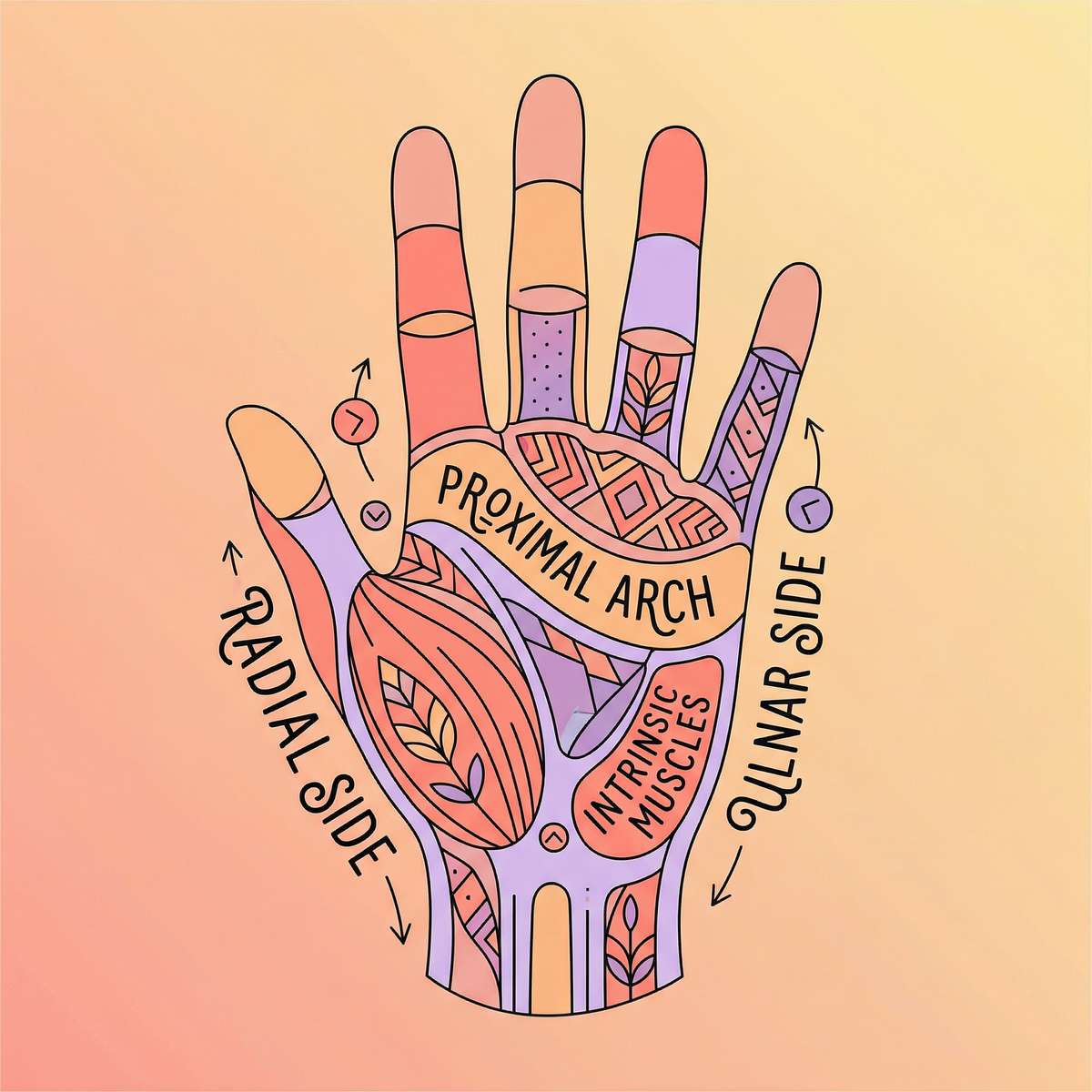
Effective hand function depends on sophisticated internal organization. The hand divides functionally into radial (thumb-side) and ulnar (pinky-side) regions, each serving distinct roles. The radial side provides mobility and precision for manipulation, while the ulnar side offers stability and power. This hand separation allows simultaneous precision and stability — essential for all skilled hand tasks.
Hand arches provide the architectural framework that enables skilled movement. The transverse arch runs across the palm, the longitudinal arch extends from wrist to fingertips, and the oblique arch forms the opposition space between thumb and fingers. These arches must develop properly to support precision grasp and skilled manipulation.
Radial Side
Thumb and first two fingers — mobility, precision, manipulation
Ulnar Side
Ring and little fingers — stability, power, object stabilization
Hand Arches
Three arches create curved palm structure supporting skilled movement
Creating Effective Practice Routines
Skill development requires consistent practice opportunities distributed across the day and embedded within meaningful, motivating activities. The most effective fine motor programs integrate therapeutic goals into naturally occurring routines and play experiences, providing sufficient repetition for learning while maintaining engagement and preventing practice fatigue.
Practice Principles
Frequent, Brief Sessions
Multiple 5-10 minute practice sessions throughout the day prove more effective than single extended sessions for building motor skills.
Varied Activities
Rotate materials and activities to maintain interest while targeting the same underlying skills through different engaging contexts.
Natural Integration
Embed skill practice into daily routines — dressing, eating, play — where children see immediate functional purpose and relevance.
Just-Right Challenge
Activities should be achievable with effort, providing success while requiring the skill level you aim to develop through practice.
Building Habit Patterns
Consistent practice schedules help establish new motor patterns as automatic habits. Consider designating specific times for focused fine motor work — perhaps morning playdough before breakfast, midday bead stringing, afternoon cutting practice — creating predictable routines that reduce resistance while ensuring adequate practice volume.
Adapting Materials for Individual Needs
While these core materials provide exceptional therapeutic value in standard form, thoughtful adaptation extends their utility across broader ability ranges and diverse needs. Simple modifications can make activities accessible for children with limited strength, poor coordination, or additional challenges while preserving the core therapeutic benefits each material offers.

Positioning Supports
Elevate work surfaces, provide wrist supports, stabilize materials with non-slip mats, or use vertical surfaces to reduce postural demands and optimize hand positioning for success.
Material Modifications
Enlarge handles, increase object size, reduce required force, simplify patterns, or add visual cues to match materials to current ability levels while building toward greater challenge.

Graduated Assistance
Provide hand-over-hand guidance initially, fade to verbal cues, then visual prompts, systematically reducing support as independent skill emerges through successful practice.
Cannons
Fine Motor & Hand Skills MaterialsEvidence-based materials supporting hand strength, dexterity, grip, pre-writing, and bilateral coordination across home, school, and therapy settings.





Link copied!