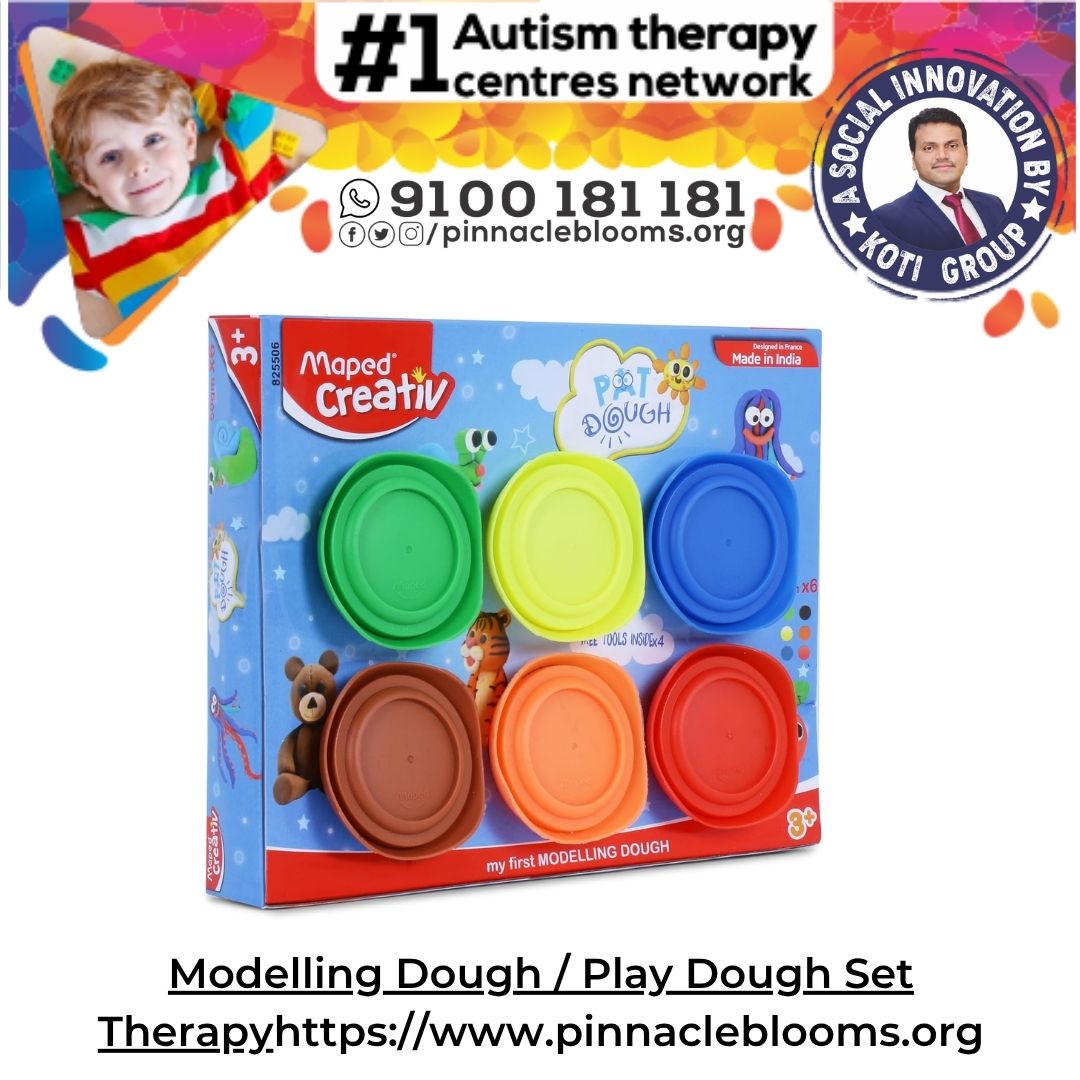













Playdough, therapy putty, and modeling clay: a resistive system for fine motor and hand strengthening
OT + SpEd
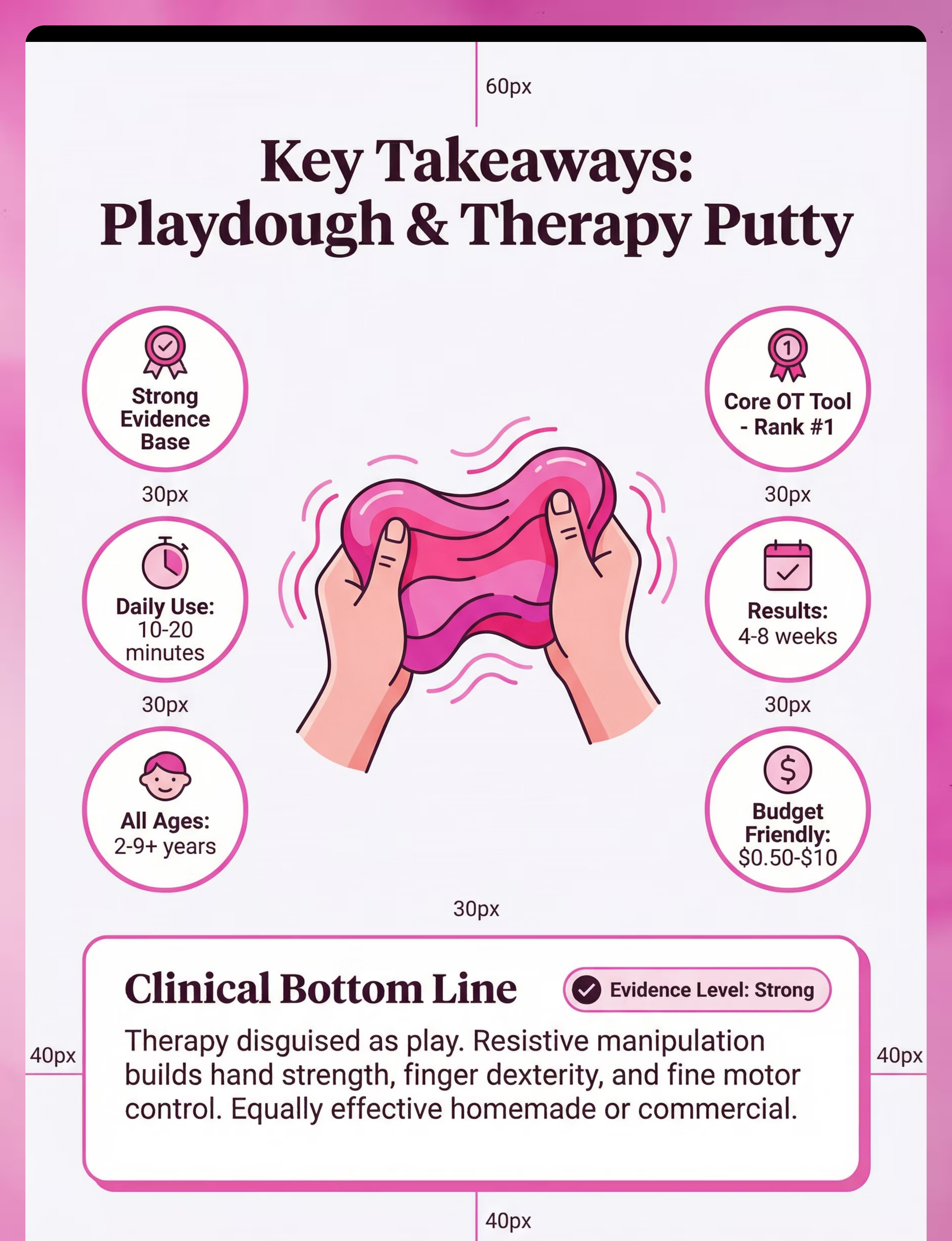
Strong Evidence
Rank #1
Daily Use
₹50–800
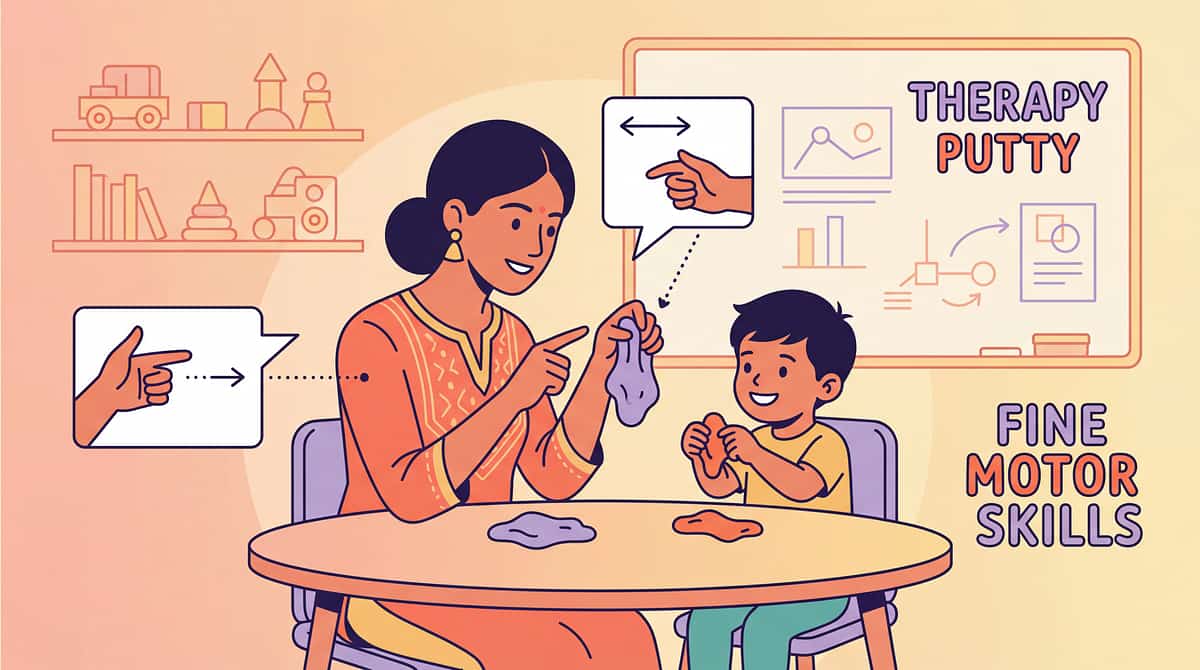
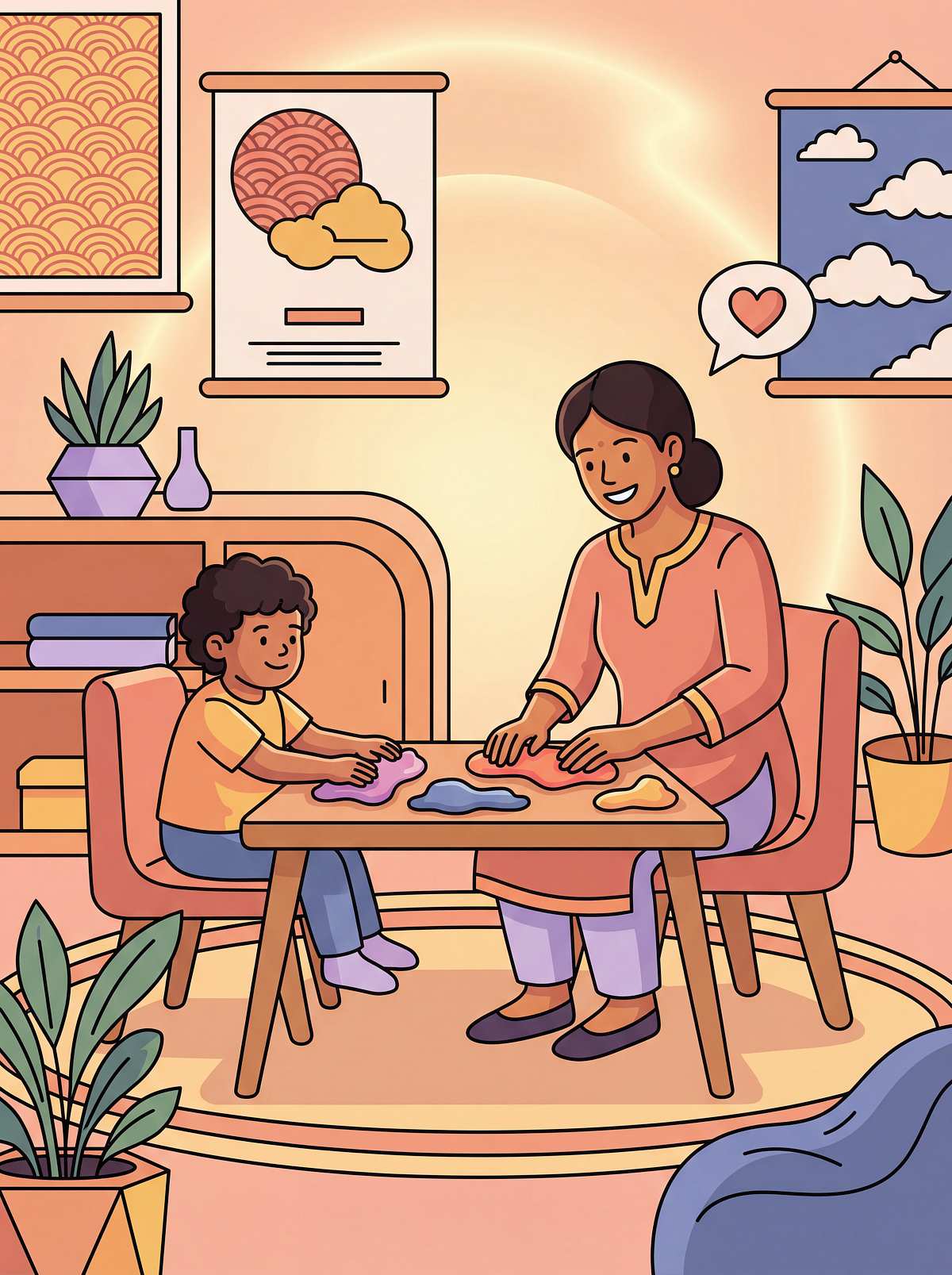
Build stronger hands through playful resistance. Therapy putty and playdough develop hand strength, finger dexterity, and fine motor control—the foundation for writing, self-care, and daily tasks. This is therapy disguised as play, proven effective by occupational therapists worldwide.
Who This Helps
Overall Hand Development
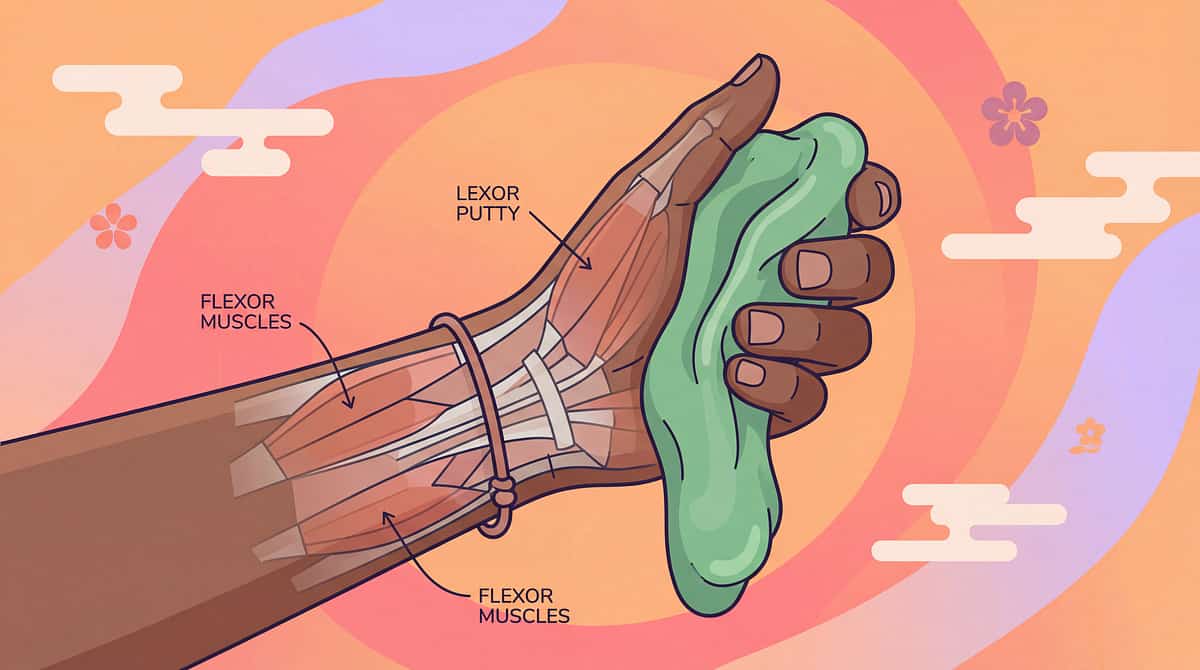
Playdough and therapy putty develop hand strength, finger dexterity, and fine motor skills through resistive manipulation—strengthening the muscles and arches that power every hand movement your child makes.
Hand Strengthening
Perfect for children with weak grip, poor pencil control, or hand fatigue during writing and fine motor tasks. Also targets hand arches.
Finger Dexterity & Fine Motor Control
Ideal for children needing to improve precise finger movements and overall hand-eye coordination for daily tasks and writing readiness.
Playful & Sensory Therapy
Great for children who avoid fine motor activities but love sensory play and creative expression, providing beneficial tactile input.
Self-care & Daily Skills
Helps children struggling with buttons, zippers, and fasteners develop the pinch strength and bilateral coordination needed for independence.
Ages 2-9 years (and beyond for therapy)
Home
Clinic
School
Does This Sound Familiar?
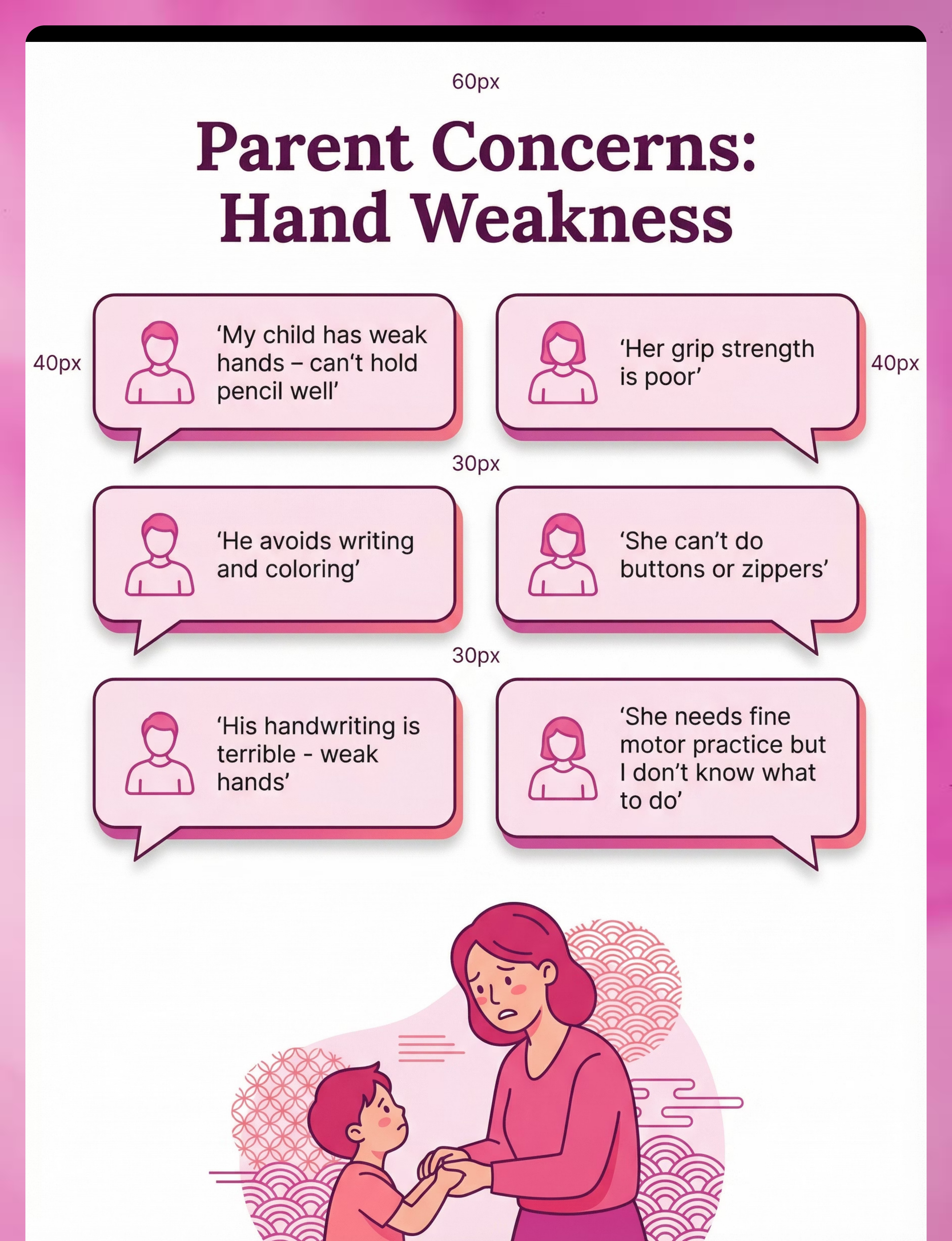
"My child has weak hands—can't hold a pencil well. Writing is a daily struggle."
"Her grip strength is so poor. She gives up on activities that require hand work."
"He avoids writing and coloring completely. I can see the frustration in his eyes."
"She can't do buttons or zippers. Still needs help getting dressed at her age."
"His handwriting is terrible—weak hands make every stroke labored and painful."
"She needs fine motor practice, but I don't know what activities will actually help."
You're not alone. These are common challenges faced by thousands of families. Hand weakness affects everything from schoolwork to self-care—but targeted, playful strengthening can transform these struggles into capabilities.
A Day Without the Right Support
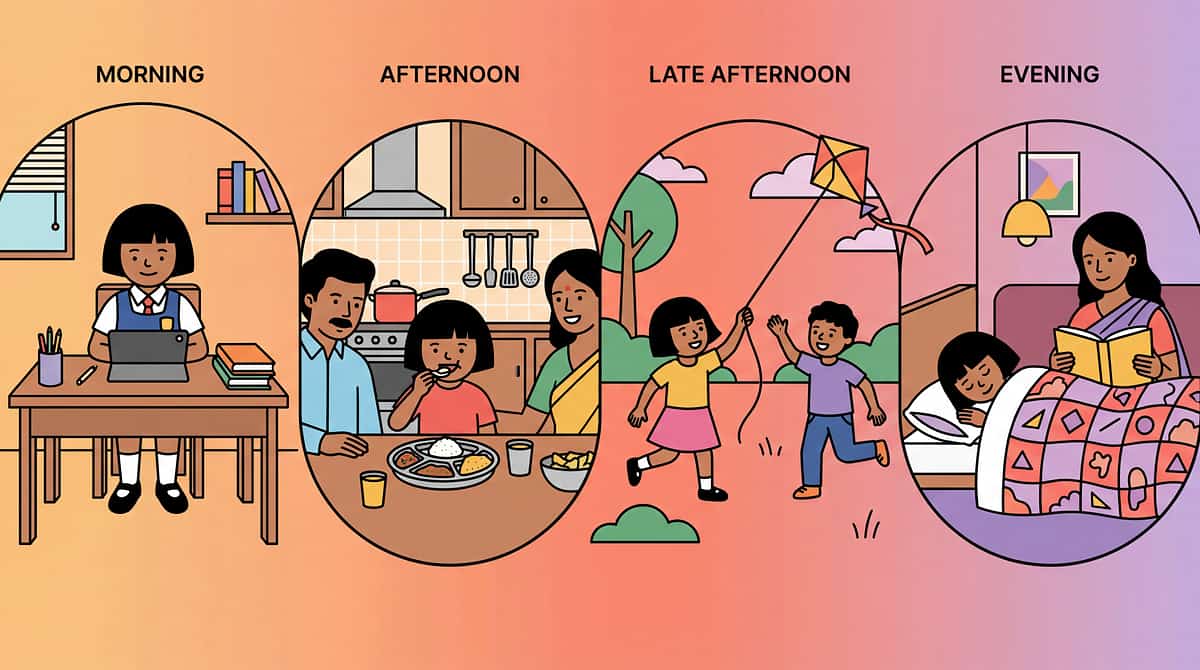
1
Morning Routine
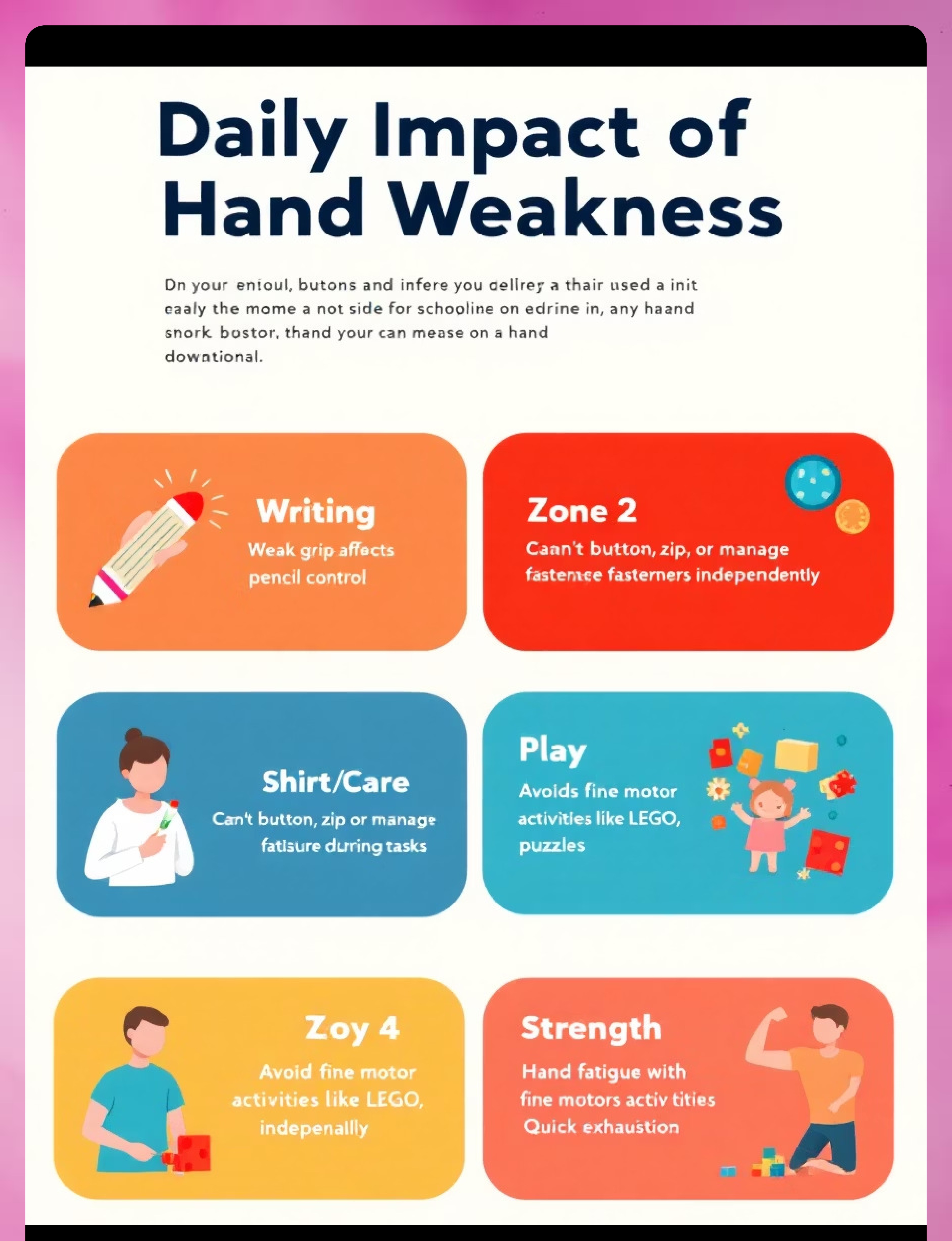
Weak grip affects pencil control during homework. Writing becomes labored and painful. Child resists morning writing practice, creating tension before school even starts.
2
Getting Dressed
Can't button own shirt or zip jacket independently. Still needs parent help with fasteners. Dependence creates frustration and delays the morning routine.
3
School & Therapy
Hand fatigue sets in quickly during writing tasks. Avoids coloring, drawing, and fine motor activities. Teachers notice reluctance and weak output.
4
Playtime & Evening
Avoids LEGOs, puzzles, anything requiring sustained hand work. Knows hands are weak compared to peers. Confidence drops with each avoided activity.
The Science Behind It
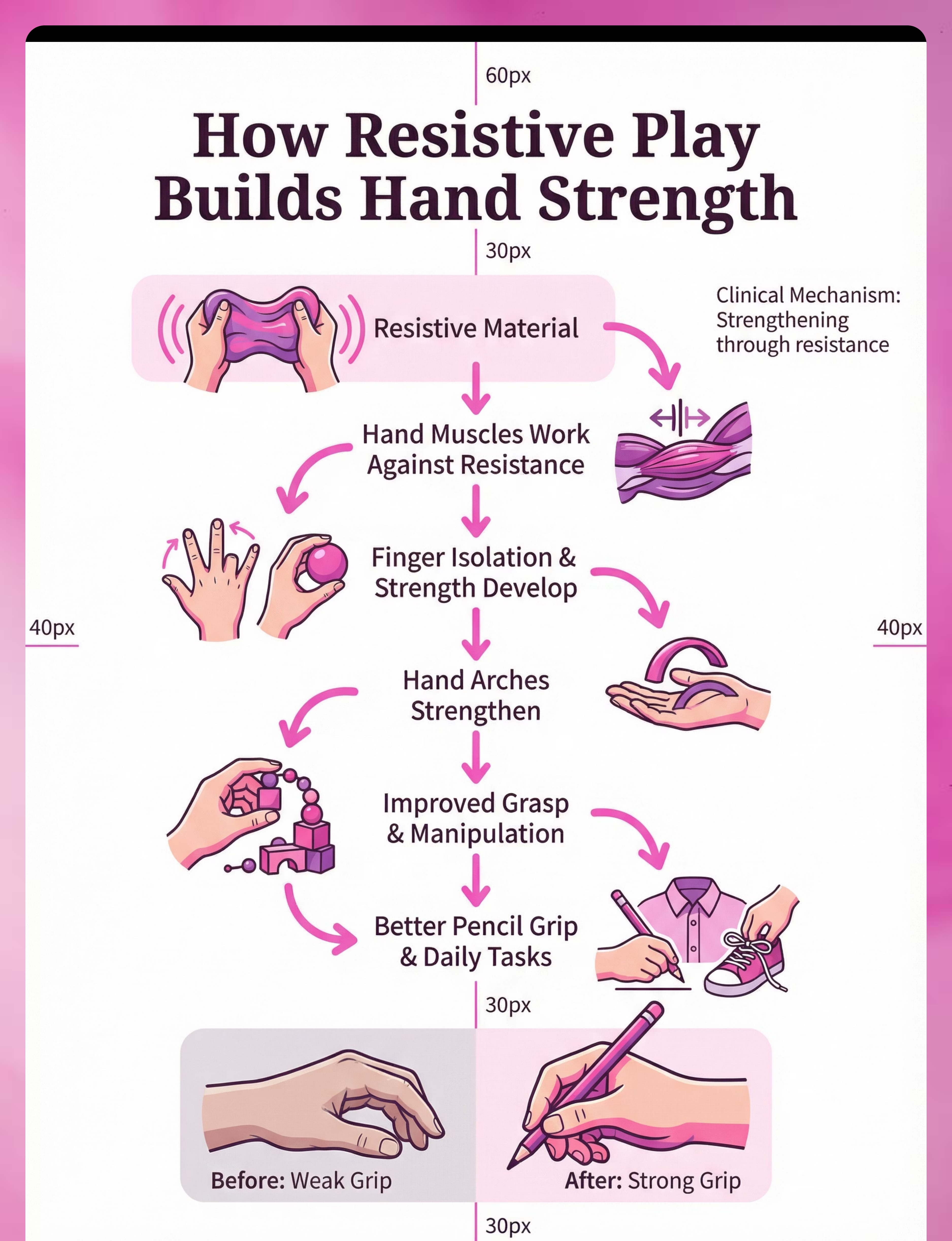
Therapy putty and playdough work through a scientifically proven mechanism: resistive manipulation strengthens the intricate muscles of the hand, building the foundation for all fine motor skills.
Resistive Material
Child squeezes, pinches, rolls dough or putty
Muscles Engage
Hand muscles work against controlled resistance
Isolation Develops
Finger isolation and targeted strength build
Arches Strengthen
Hand arches develop proper curve and power
Skills Improve
Better grasp, pencil grip, and daily task performance
Targets: Hand Strength
Finger Dexterity
Fine Motor Control
Hand Arches
Bilateral Coordination
How to Use It Right
Expert guidance: "Playdough and therapy putty are staples of pediatric OT because they work. The resistance strengthens hands, the manipulation develops dexterity, and children love it. It's therapy disguised as play."
— Occupational Therapist, Hand Therapy Specialist
1
Use therapy putty for targeted strengthening
Choose graded resistance levels that match your child's current hand strength. Start with softer resistance and progress as strength builds.
2
Incorporate tools for variety
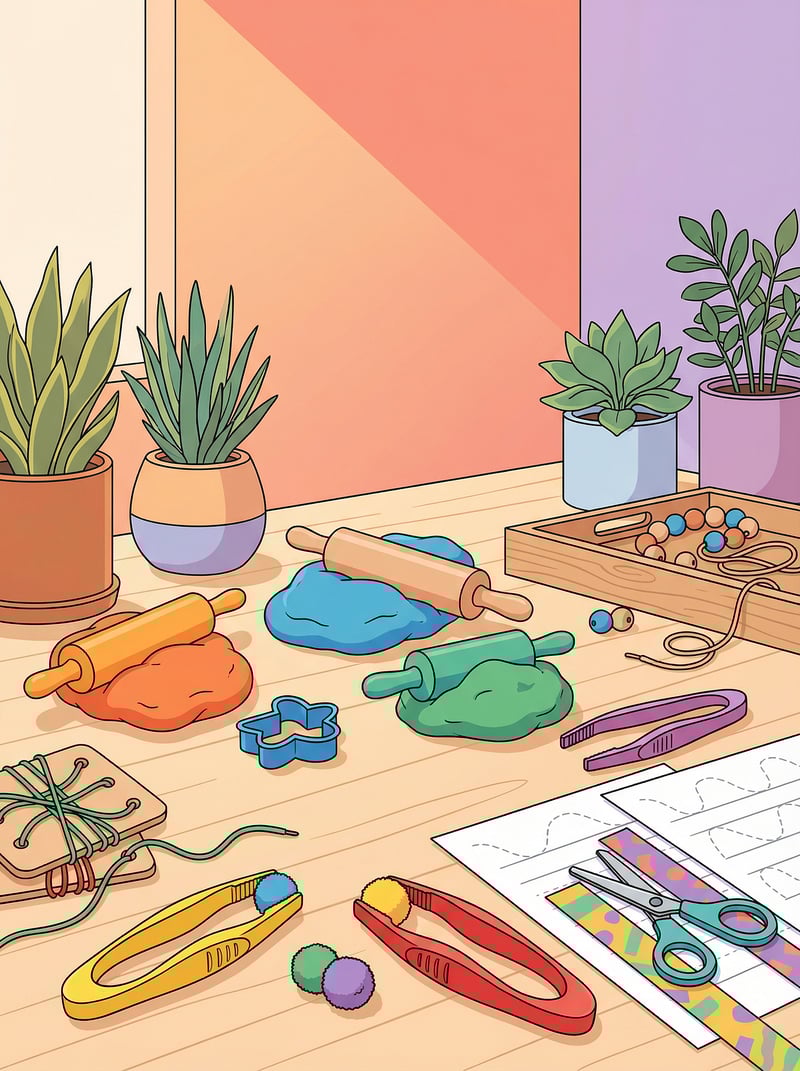
Add rolling pins, cookie cutters, and small objects to keep activities engaging and target different hand movements.
3
Hide objects to find
Bury small toys or beads in the dough. Searching develops finger isolation and strengthens individual finger muscles.
4
Roll snakes and balls
Rolling activities specifically develop hand arches—the curves in the palm essential for proper grasp and manipulation.
5
Practice pinching and squeezing
Pinch off small pieces, squeeze the dough flat. These actions directly build the grip strength needed for writing and fasteners.
6
Match resistance to hand strength
If putty is too hard, hands will fatigue without benefit. If too soft, minimal strengthening occurs. Find the "just right" challenge.
Duration: 10-20 minutes daily for best results. Consistency matters more than duration—regular practice builds lasting strength.
Expert Endorsement
"Playdough and therapy putty are staples of pediatric OT because they work."
The resistance strengthens hands, the manipulation develops dexterity, and children love it. It's therapy disguised as play.
— Occupational Therapist, Hand Therapy Specialist
Industry Recognition
OT + SpEd Recommended
Strong Evidence Base
Rank #1 in Category
Core Kit - Daily Use
Foundational Tool in Therapy
This is not experimental. Therapy putty and playdough are foundational tools in occupational therapy, backed by decades of clinical evidence and trusted by hand therapy specialists worldwide.
playdough-therapy-putty-modeling-clay therapy material
1
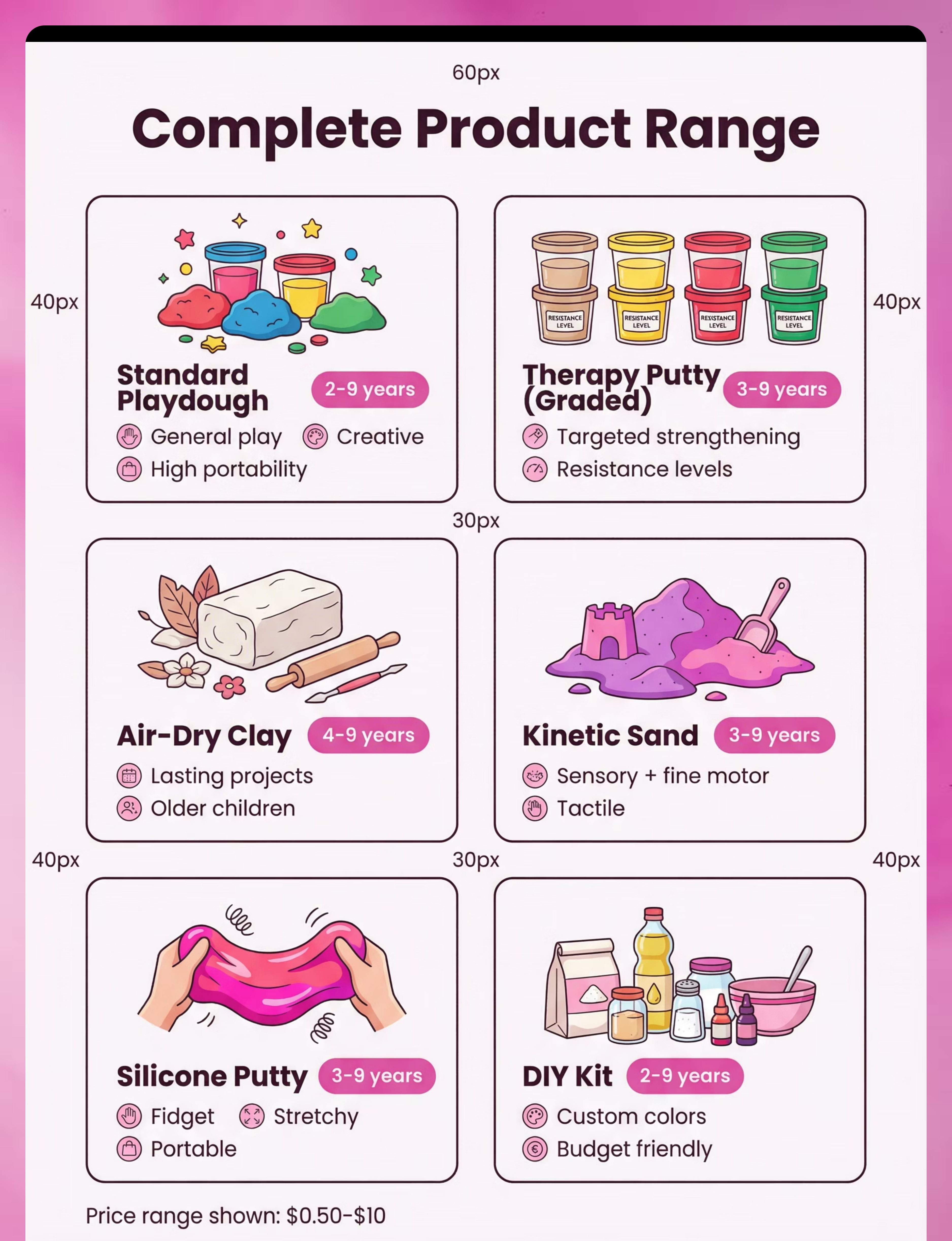
Homemade Playdough Kit
DIY, budget-friendly
2
Standard Playdough
General hand play, creative
3
Silicone Putty (Bouncing)
Fidget, novelty, portable
4
Air-Dry Clay
Lasting projects, older children
5
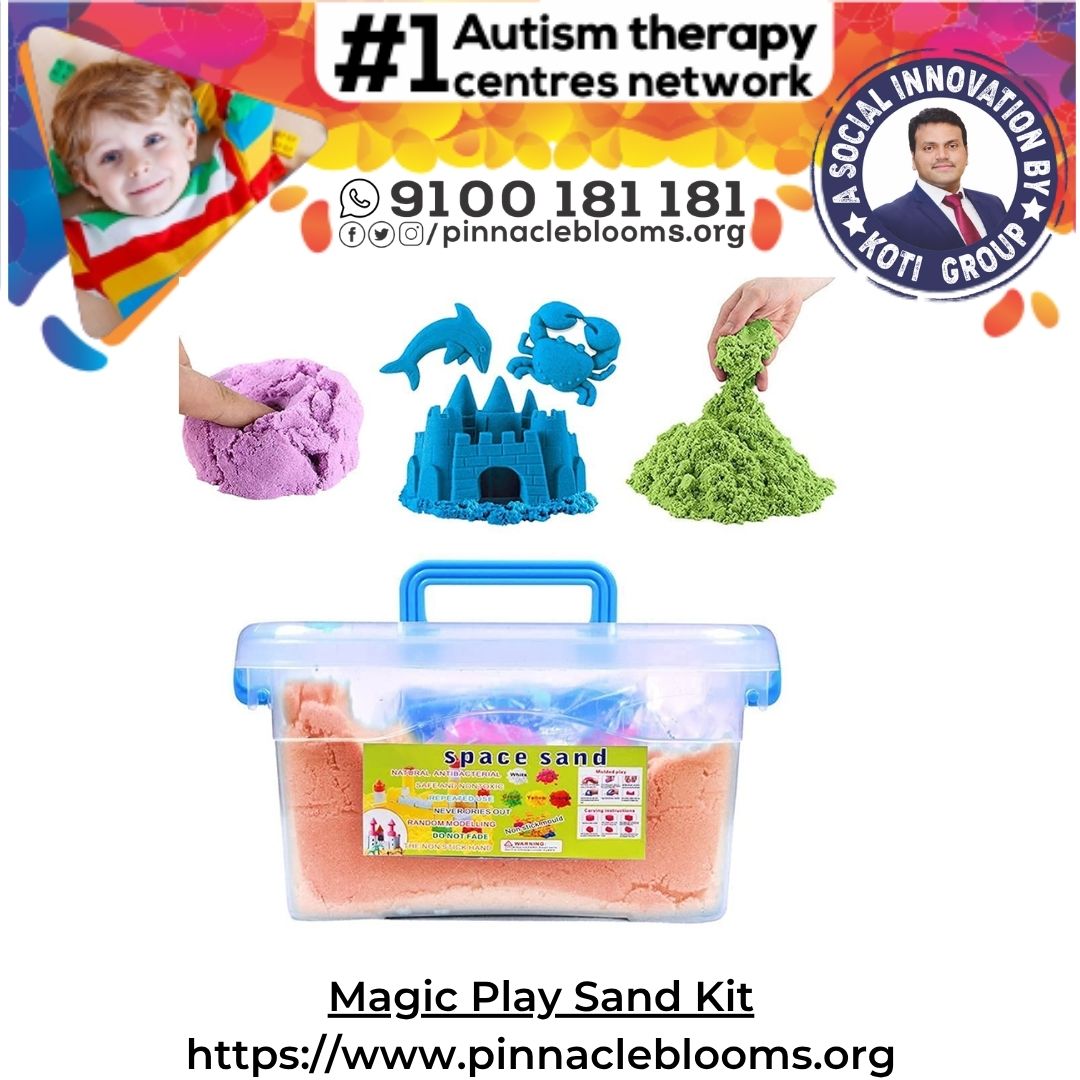
Kinetic Sand
Sensory, fine motor, tactile
6
Therapy Putty (Graded Resistance)
Specific hand strengthening, structured therapy
Choose Your Option (6 Variants)
From budget-friendly homemade playdough to professional-grade therapy putty, there's an option that fits your needs, budget, and child's strengthening goals. All are effective—choose based on setting, mess tolerance, and specific therapy needs.

How to Choose
  • By goal: Specific strengthening → Therapy Putty | Creative play → Standard Playdough | Sensory needs → Kinetic Sand
  • By setting: Clinic → Therapy Putty | Home/School → Any option | Travel → Silicone Putty
  • By budget: Minimal cost → Homemade | Best value → Standard Playdough | Clinical precision → Therapy Putty
Therapy Putty Resistance Levels Guide
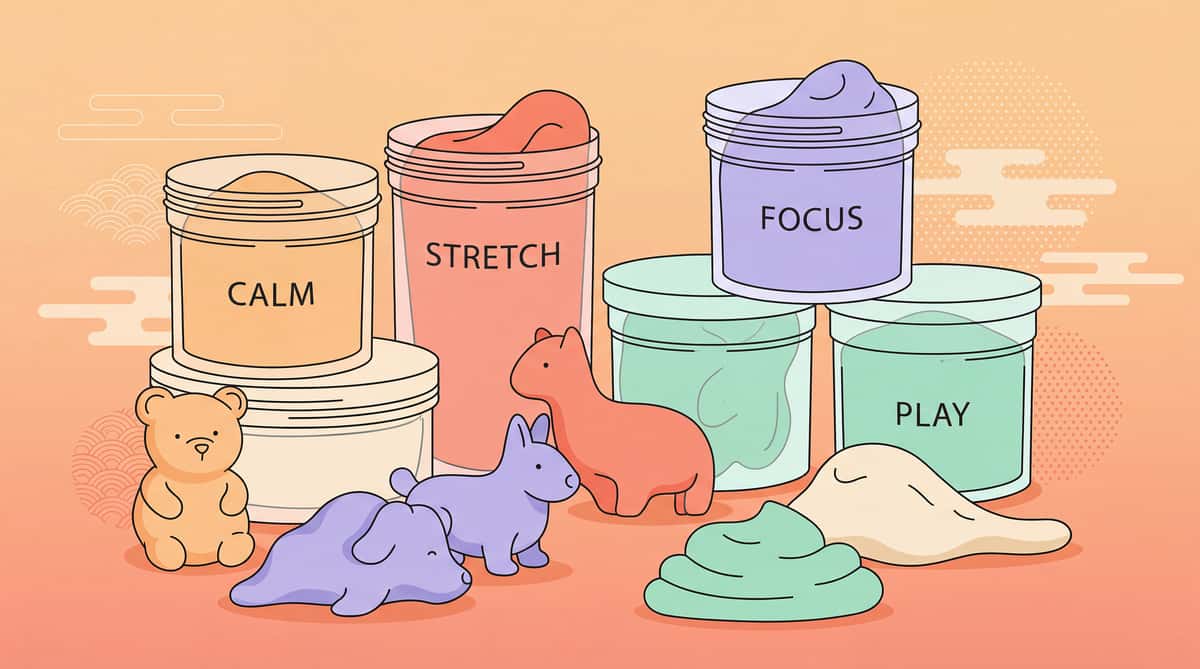
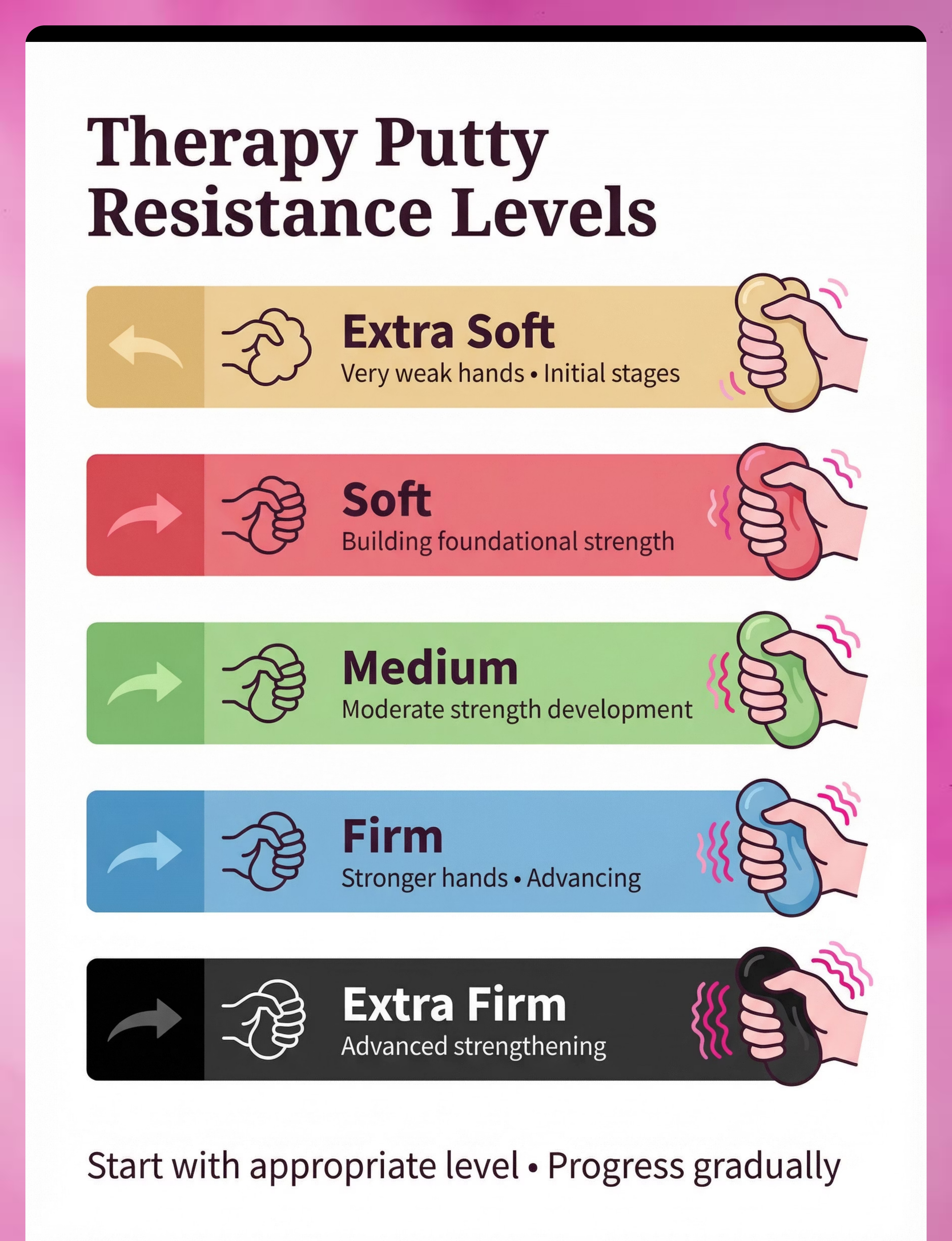
Professional therapy putty comes in graded resistance levels, color-coded for easy identification. Start with the softest level your child can manipulate comfortably, then progress as strength builds over weeks.
Extra Soft (Tan/Yellow)
Very weak hands, initial stages of therapy, young children starting hand strengthening
Soft (Red/Pink)
Building foundational strength, children progressing from extra soft, mild weakness
Medium (Green)
Moderate strength development, typical developing children, maintenance level
Firm (Blue)
Stronger hands, advanced strengthening, older children with good baseline strength
Extra Firm (Black/Gray)
Advanced strengthening, athletes, maximum resistance training for very strong hands

Choosing the Right Resistance
The correct resistance allows your child to manipulate the putty for 10-15 minutes without excessive fatigue, but still feels challenging. Too soft = minimal benefit. Too hard = frustration and fatigue without strengthening. When in doubt, start softer and progress up.
Key Materials & Features: Non-toxic formulations, appropriate resistance for therapeutic goals, reusable and long-lasting, pleasant texture that children tolerate well.
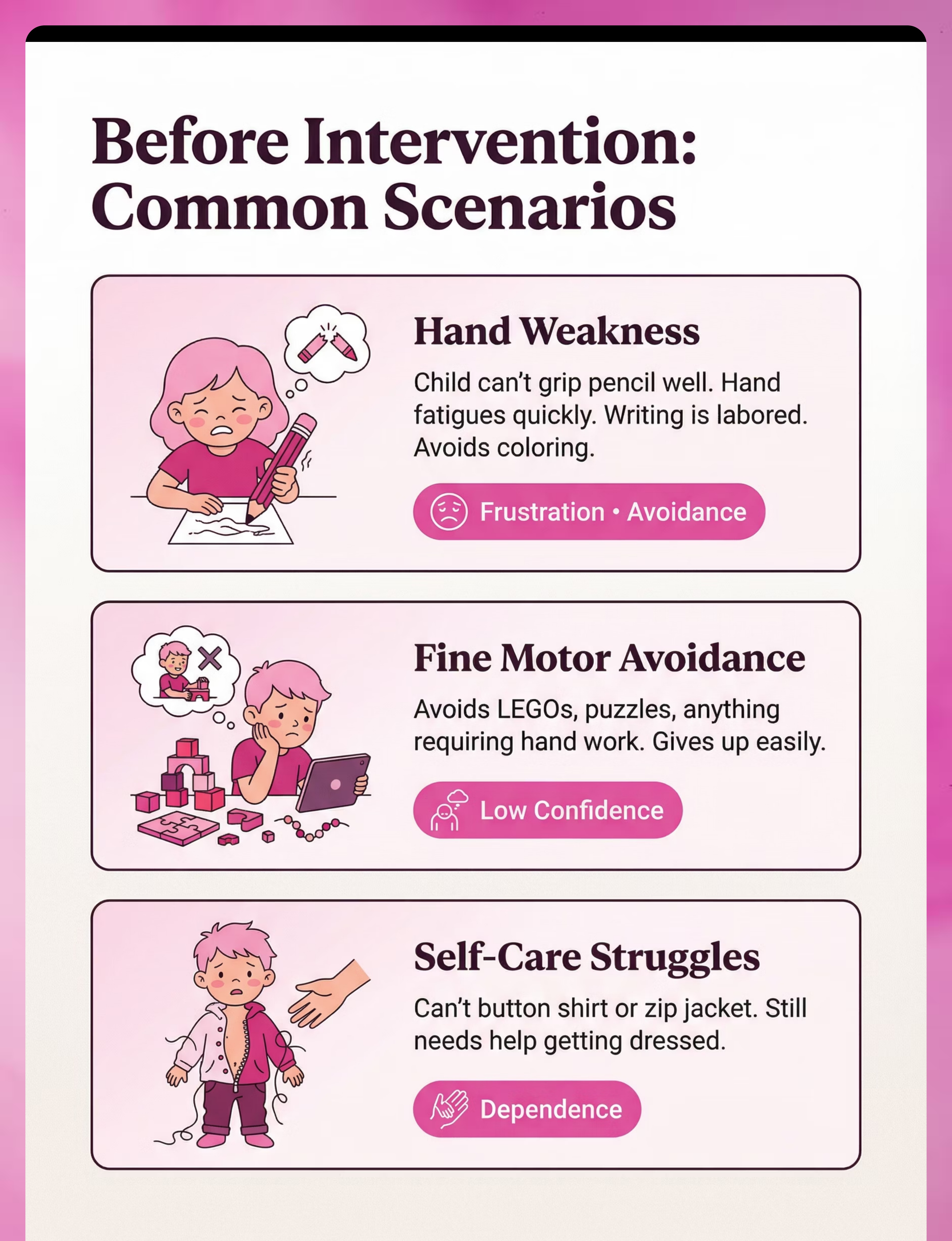
The Struggle (Before)
Hand Weakness
Situation: Child can't grip pencil well. Hand fatigues quickly during any writing task.
Experience: Writing is labored and painful. Every stroke requires effort. Avoids coloring and drawing completely.
Emotion: Frustration, avoidance, falling behind peers
Fine Motor Avoidance
Situation: Child avoids LEGOs, puzzles, anything requiring sustained hand work.
Experience: Knows hands are weak compared to friends. Gives up easily on fine motor activities. Confidence eroding.
Emotion: Frustration, low confidence, isolation from play
Self-Care Dependence
Situation: Can't button own shirt. Can't zip jacket. Still needs help getting dressed.
Experience: Can't manage fasteners independently. Relies on parents for basic self-care at an age when peers are independent.
Emotion: Dependence, frustration, embarrassment
The Breakthrough (After)
playdough-therapy-putty-modeling-clay therapy material
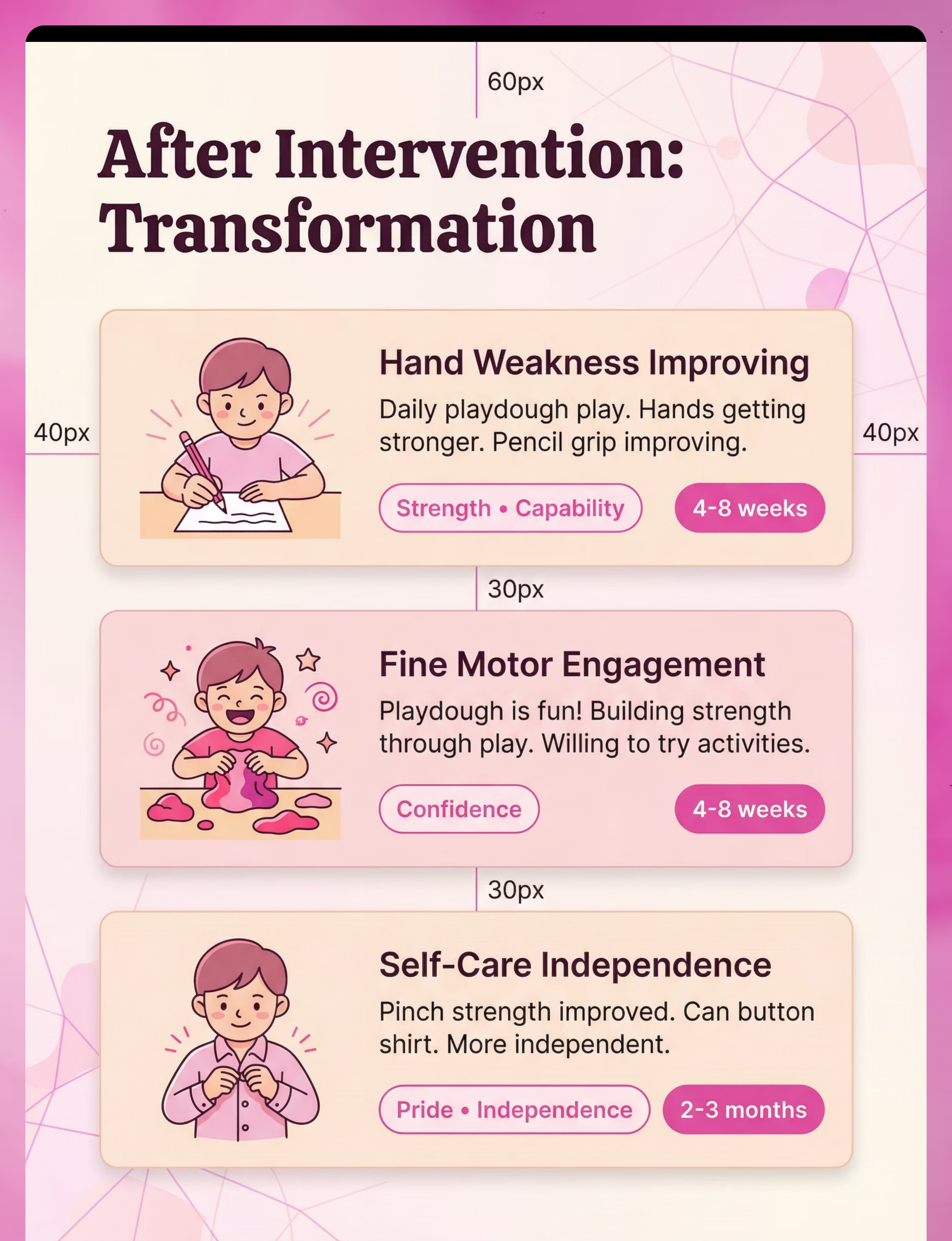
Hand Weakness Improving
Situation: Daily playdough and putty play integrated into routine. Hands noticeably getting stronger.
Experience: Pencil grip improving week by week. Writing becoming less labored. Can color for longer periods.
Emotion: Growing strength, capability, pride
Timeframe: 4-8 weeks
Engagement & Confidence
Situation: Playdough is fun! Building hand strength through enjoyable play.
Experience: Now willing to try other fine motor activities. Confidence growing. Joining peers in manipulative play.
Emotion: Engagement, confidence, inclusion
Timeframe: 4-8 weeks
Independence Achieved
Situation: Pinch strength improved dramatically from consistent putty practice.
Experience: Can now button own shirt independently. Zipping getting easier every day. Morning routine smoother.
Emotion: Independence, pride, self-sufficiency
Timeframe: 2-3 months
playdough-therapy-putty-modeling-clay therapy material
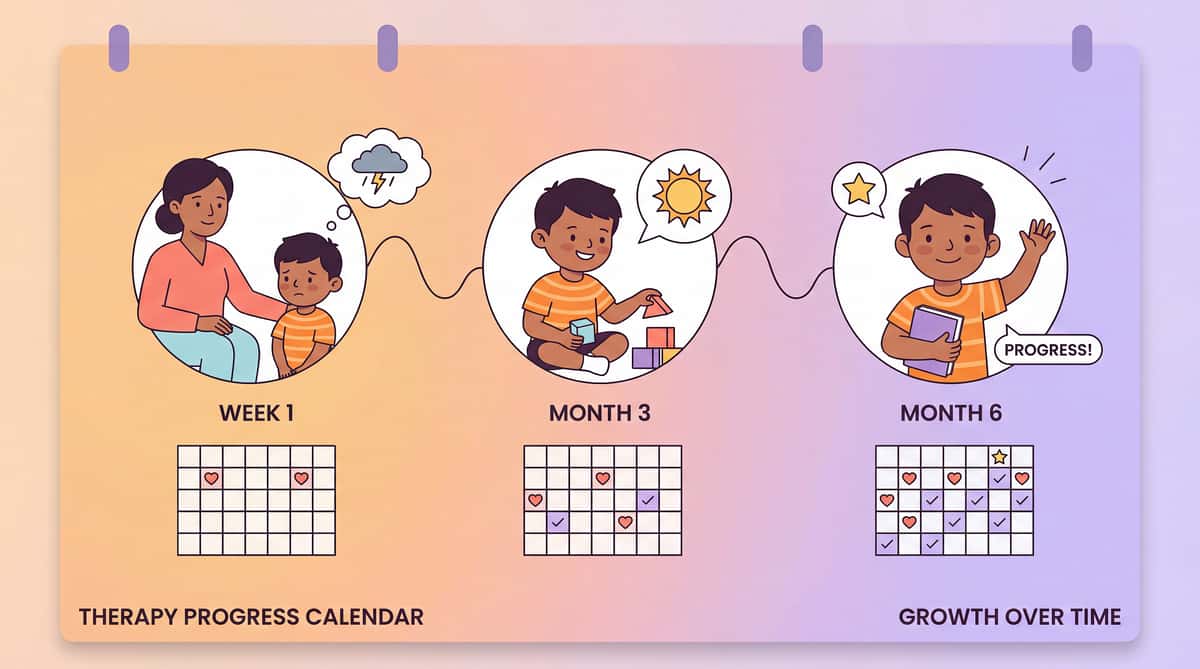
What to Expect (Realistic Timelines)
Strengthening takes time and consistency. These timelines reflect typical progress with daily 10-20 minute practice sessions. Every child progresses at their own pace—celebrate small wins along the way.
Initial Engagement & Readiness
Child shows increased willingness to participate in activities, exploring textures and tools.
Week 1-2
Hand strength & Tolerance Begin
Noticeable improvement in grip and pinch strength. Fine motor activities tolerated better, less avoidance.
Week 3-4
Finger Dexterity & Coordination
Better finger isolation and individual control. Hands gaining more stamina for sustained effort.
Month 2-3
Pencil Grip & Self-Care Refinement
More controlled, efficient pencil grasp emerging. Buttons, zippers, fasteners becoming manageable.
Month 3-6
Sustained Endurance & Independence
Longer writing and fine motor tolerance. Increased confidence and independence in daily tasks.
Month 6+
playdough-therapy-putty-modeling-clay therapy material
Is This Right for My Child? (2-Minute Check)
Answer these quick questions to assess fit. Three or more "yes" answers indicate therapy putty and playdough are likely to be highly beneficial for your child's hand development.
Does your child have weak hands or poor grip?
If yes, this indicates: Putty and playdough will build foundational hand strength through resistive manipulation.
Does your child's hand fatigue quickly with writing or coloring?
If yes, this indicates: Hand strengthening and endurance building are needed—exactly what resistive play provides.
Does your child avoid fine motor activities?
If yes, this indicates: Playful strengthening through playdough makes therapy engaging rather than clinical.
Does your child struggle with buttons, zippers, or fasteners?
If yes, this indicates: Pinch strength development from putty practice will directly help self-care independence.

Interpreting Results
3-4 "yes" answers: Strong fit—therapy putty and playdough should be a daily practice priority.
1-2 "yes" answers: Moderate fit—consider as supplemental strengthening tool.
0 "yes" answers: May not be primary need, but general hand development still benefits all children.
playdough-therapy-putty-modeling-clay therapy material
Usage Guide
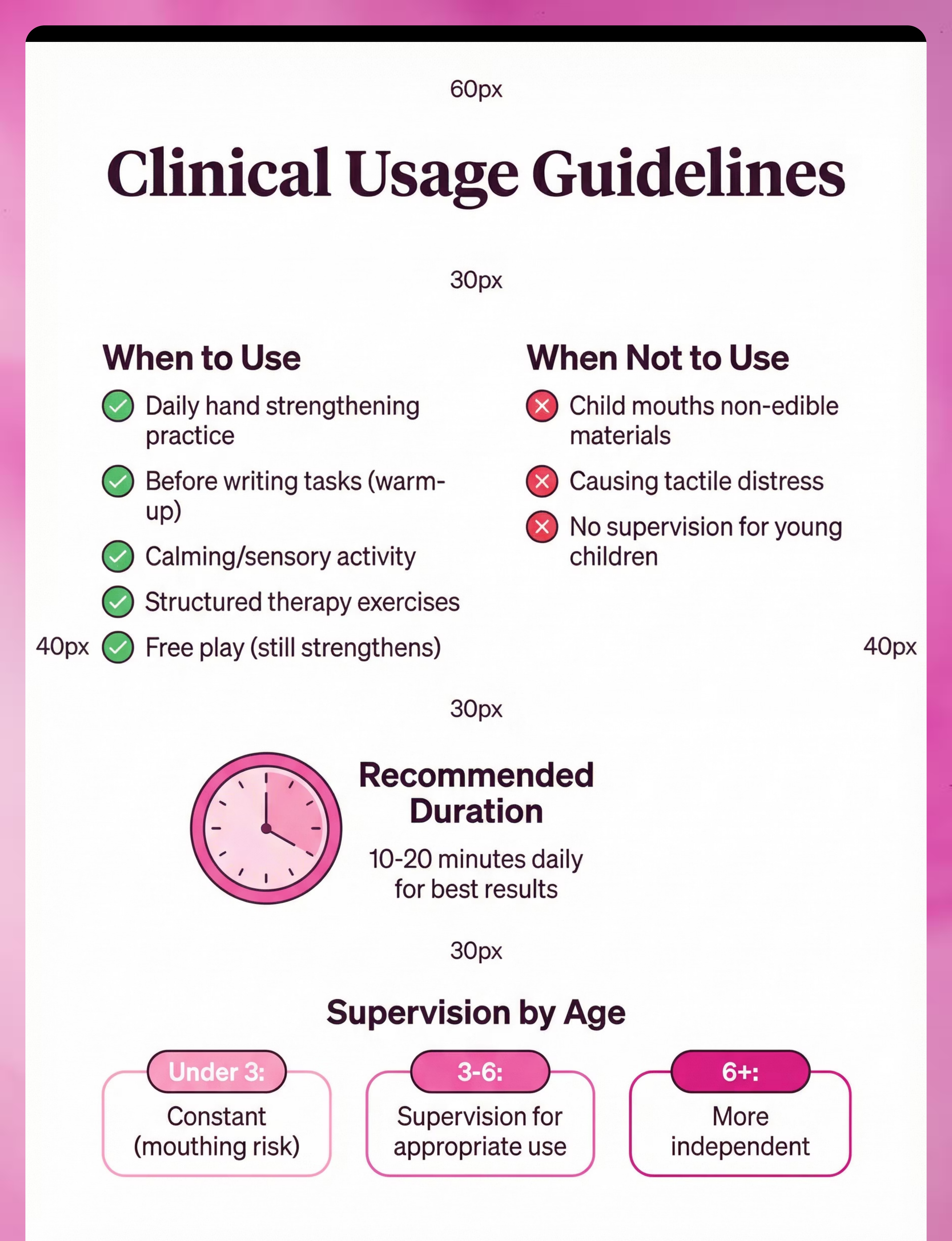
✓ When to Use
  • Daily hand strengthening practice (10-20 minutes)
  • Before writing or fine motor tasks as warm-up
  • Calming and sensory activity time
  • Structured therapy exercises with OT guidance
  • Free play (still builds strength even without structure)
✗ When NOT to Use
  • If child mouths and material is non-edible
  • If causing significant tactile distress (modify texture/approach)
  • When supervision isn't available for young children
Scenarios for Use
Situations to Avoid
Integrated into a daily routine for 10-20 minutes.
When the child is prone to mouthing non-edible items.
As a warm-up before engaging in writing or fine motor tasks.
If the child experiences significant tactile aversion or distress.
During calming or sensory regulation activities.
When appropriate adult supervision is not available for young children.
For structured therapy exercises under the guidance of an Occupational Therapist.
Ignoring the child's cues of discomfort or disinterest without modification.
During free play, as it naturally builds strength and creativity.
Pressuring a child to use materials if it consistently causes negative reactions.
Supervision by Age
Age Range
Supervision Level
Notes
Under 3 years
Constant supervision
Mouthing risk with non-edible materials; close monitoring essential for safety
3-6 years
Active supervision
Ensure appropriate use; monitor for mouthing; guide strengthening activities
6+ years
Periodic check-ins
Can use more independently; occasional guidance on activity variety and technique
Duration: 10-20 minutes daily
Home
School
Clinic
Best results: Daily practice is more effective than occasional long sessions. Consistency builds lasting strength. Integrate into daily routine—after school, before homework, or as calming activity.
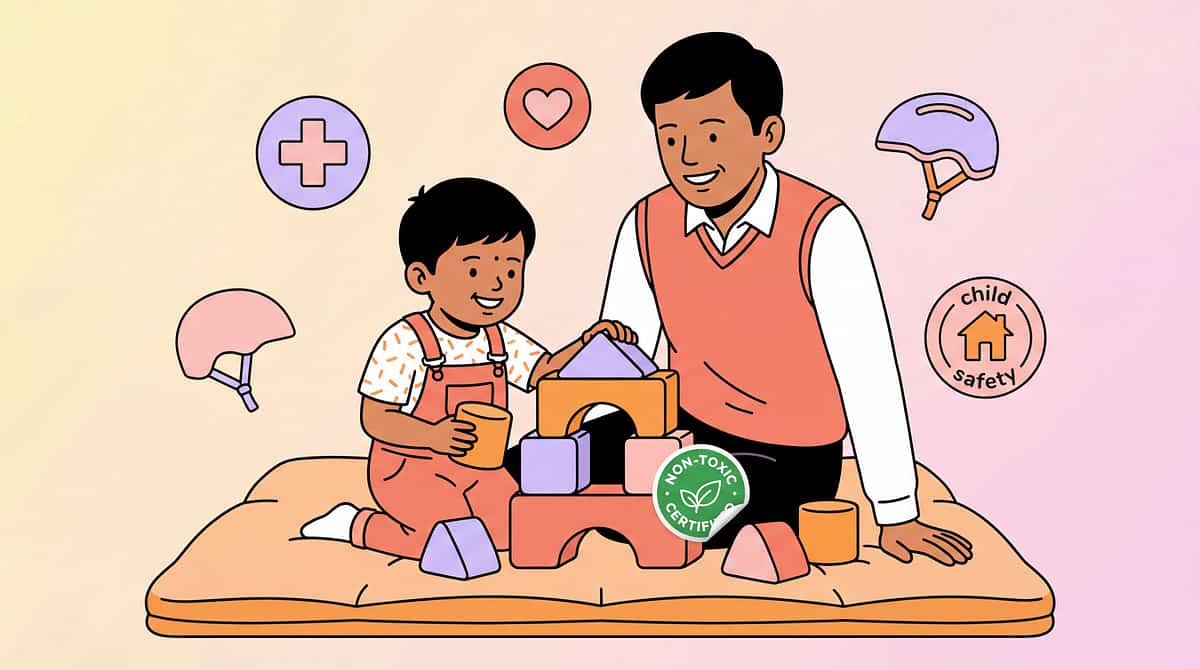
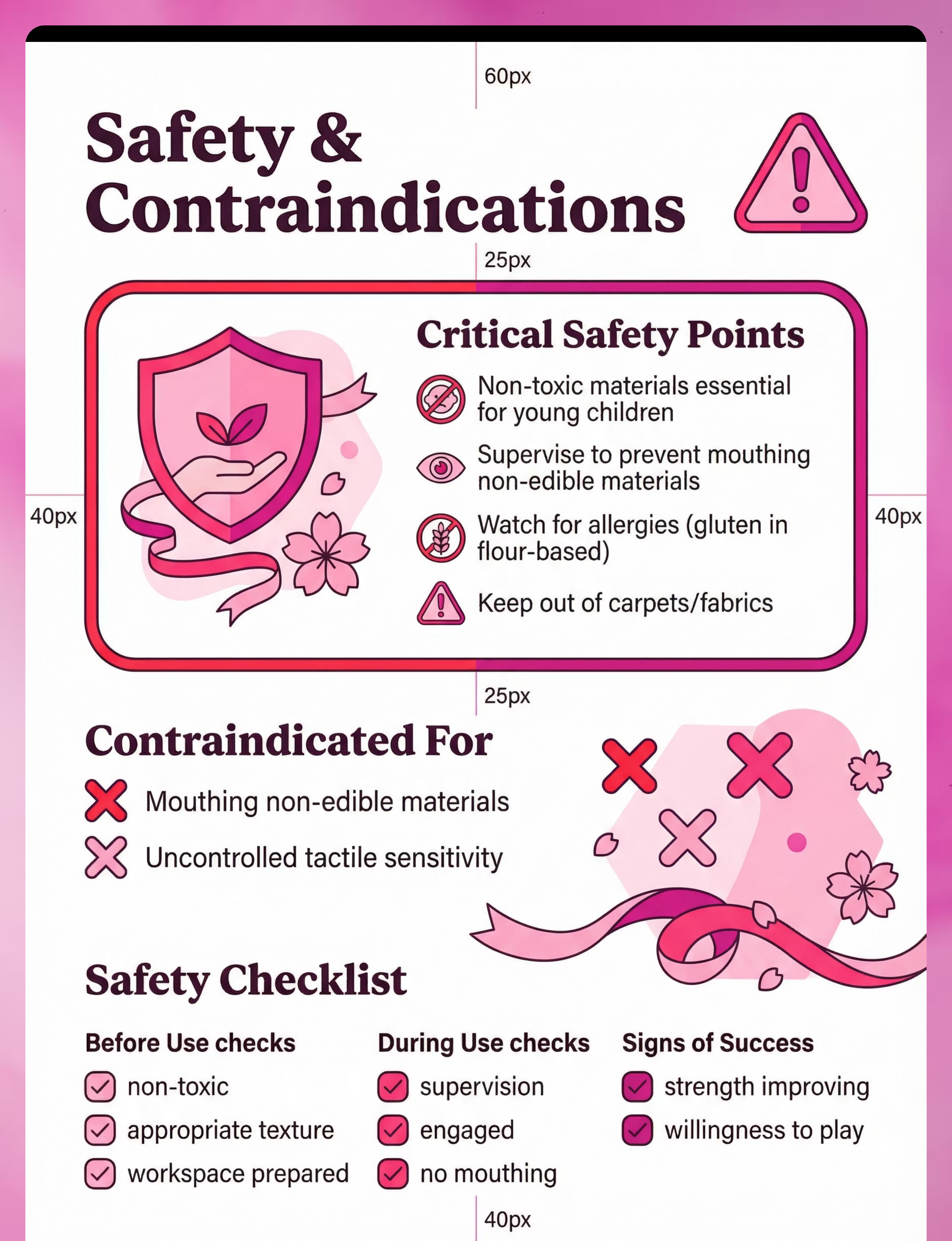
Safety First
Critical Safety
  • Non-toxic materials are essential for young children who may mouth
  • Supervise constantly to prevent mouthing of non-edible materials
  • Watch for allergies—gluten in flour-based playdough can trigger reactions
  • Keep playdough and putty out of carpets and fabrics (difficult to remove)
Warnings
  • Some therapy putty can stick to porous surfaces—test before use on furniture
  • Check for latex allergies with certain commercial putty brands
  • Store properly in airtight containers to prevent drying and maintain effectiveness
  • Clean up immediately if playdough gets on fabric—much easier when fresh
Contraindicated
  • Mouthing non-edible materials (choking hazard, ingestion risk)
  • Uncontrolled tactile sensitivity without gradual desensitization plan
Safety Checklist
Before Use
  • Material is certified non-toxic
  • Appropriate for child's age and mouthing risk
  • Workspace is prepared and protected
  • Storage container is ready for cleanup
During Use
  • Supervision level is appropriate for age
  • Child engaged in strengthening activities
  • No mouthing of non-food materials
  • Child enjoying the activity
Signs of Success
  • Hand strength measurably improving
  • Willing to play with material
  • Pinch and grip getting stronger
  • Fine motor tasks becoming easier
Common Questions (Honest Answers)
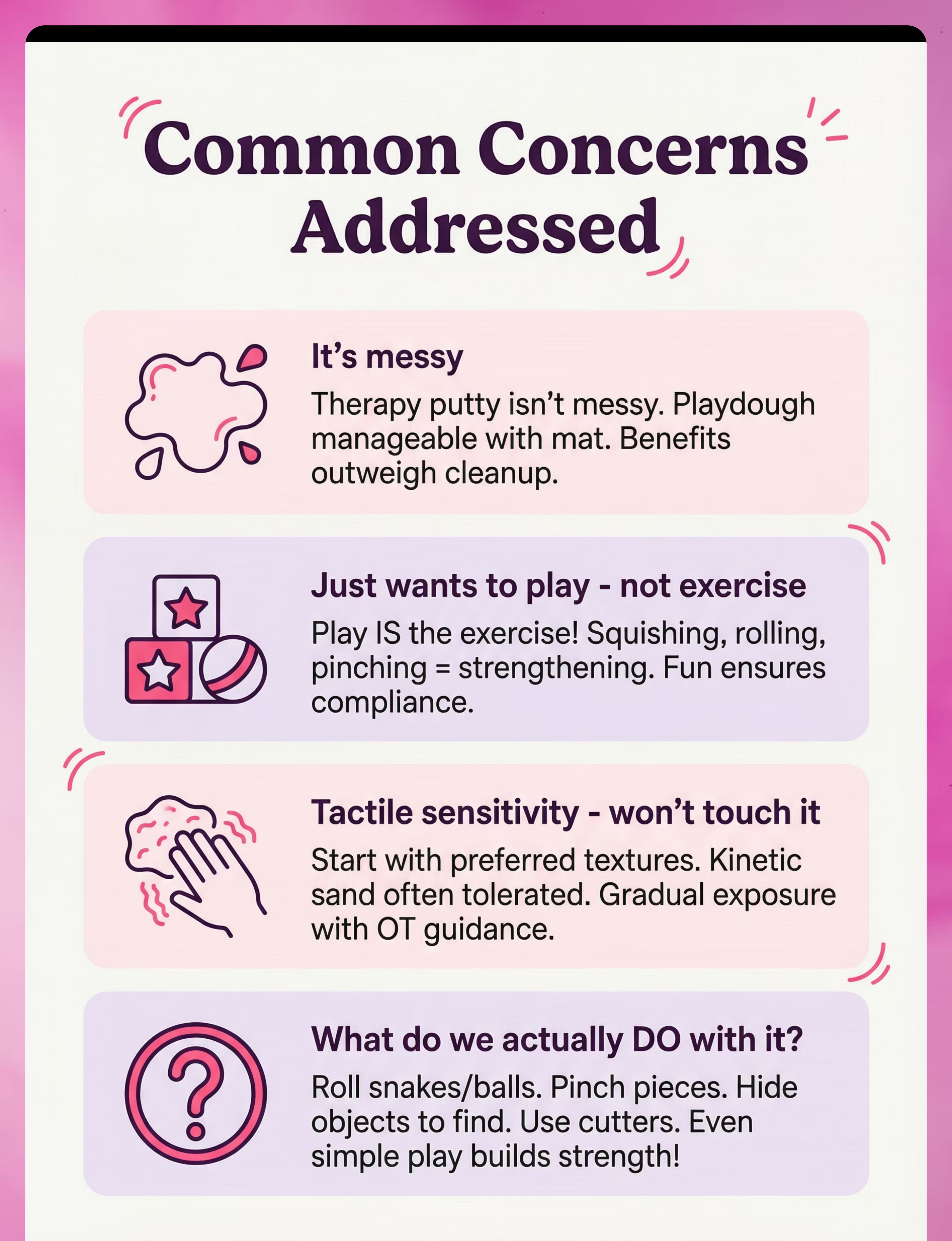
Q: It's messy—won't this create more problems?
A: Therapy putty is not messy at all—it stays together in one piece. Playdough is manageable with a mat or tray underneath. Kinetic sand contains itself beautifully. Choose the right material for your mess tolerance. The hand-strengthening benefits far outweigh the minimal cleanup.
Try this: Use therapy putty (zero mess) or contain playdough on a washable mat. Set clear "playdough stays on the table" rules.
Q: They just want to play—not exercise their hands
A: That's exactly the point! Play IS the exercise. Every squeeze, roll, pinch, and pull strengthens hand muscles. There's no need to make it clinical or structured. Fun ensures daily practice, and daily practice delivers results.
Try this: Let play be therapy. Unstructured playdough time still builds strength. Add occasional "games" like finding hidden objects for targeted exercises.
Q: My child won't touch it—tactile sensitivity is too high
A: Start with textures your child already tolerates. Kinetic sand is often accepted when playdough isn't. Work with your OT on gradual desensitization strategies. Never force touch—this creates aversion. Some children need a visual barrier initially (manipulate through a plastic bag).
Try this: Experiment with different textures; start with observation only; gradual exposure with OT guidance; never force participation.
Q: What do we actually DO with it every day?
A: Roll snakes and balls. Pinch off small pieces. Hide small toys or coins to find. Use cookie cutters to make shapes. Make letters and numbers. Roll flat with a rolling pin. Squeeze and pull. Even just free play builds strength—no complex activities required!
Try this: Simple daily activities: roll, pinch, squeeze, hide-and-find. Rotate activities to maintain interest. Free play counts as therapy.
Investment Guide
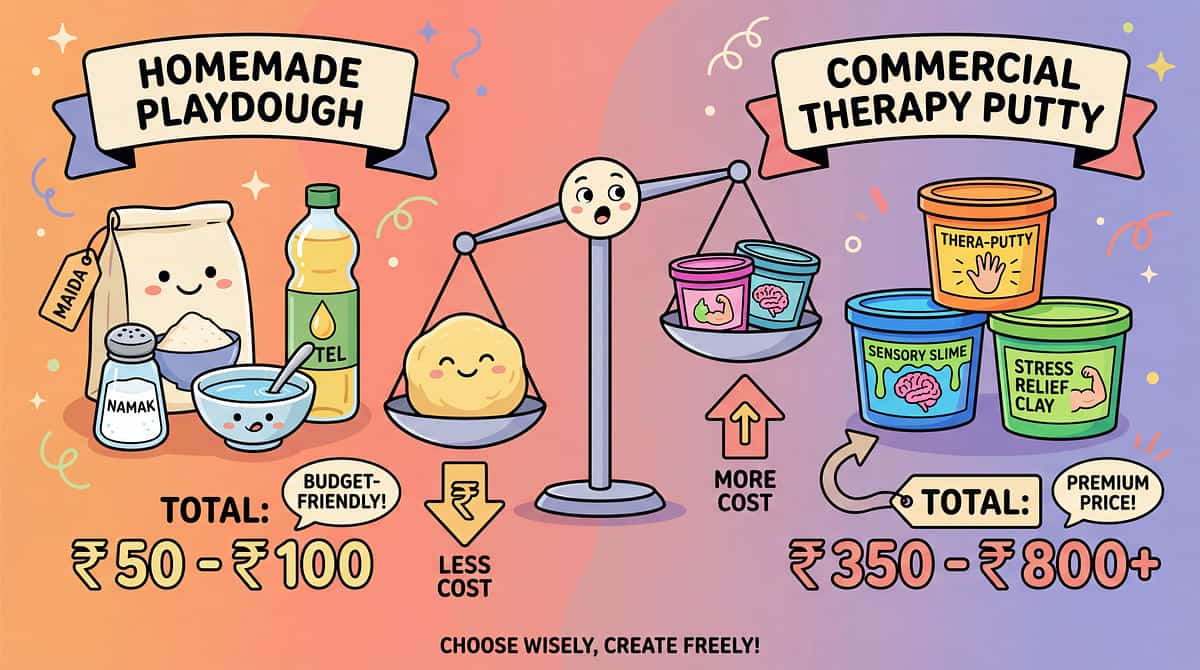
Therapy putty and playdough are among the most affordable therapeutic tools available. From homemade options costing under ₹100 to professional-grade therapy putty sets, effective hand strengthening fits every budget.
Price Comparison: Hand Strengthening Tools
Option
Cost (INR)
Key Features
Homemade Playdough
₹50–100
DIY, customizable scent/color/texture, equally effective, perfect for tight budgets.
Basic Store Playdough
₹150–200
Ready-to-use, equally effective, good for general hand strengthening.
Therapy Putty Set
₹400–800
Professional-grade, color-coded graded resistance, non-drying, clinical quality, ideal for structured therapy.
Value Points & Benefits
Affordable Entry
Homemade and basic options offer effective strengthening for under ₹200, making therapy accessible.
Customization & Control
Making playdough at home allows for control over ingredients, colors, and scents, catering to sensory needs.
Progressive Resistance
Therapy putty sets provide graded resistance levels for targeted and progressive hand strengthening, essential for structured therapy.
Durable & Professional
Premium therapy putty is long-lasting, non-drying, and clinically recognized for its quality and effectiveness.
Cost Progression & Value Over Time
1
Starting Point
Homemade Playdough (₹50-100): Minimal investment, immediate benefits. Ideal for exploring interest.
2
Basic Engagement
Store Playdough (₹150-200): Slightly higher cost for convenience, still very budget-friendly for consistent practice.
3
Structured Progression
Therapy Putty Set (₹400-800): Higher initial cost, but provides graded resistance for long-term, targeted hand strengthening and professional use.
4
Long-Term Value
Despite varying costs, all options offer significant therapeutic ROI through improved hand strength and fine motor skills.
Overall Range: ₹50–800
Budget Tier: Very Low

Best Starting Point
If budget is tight, start with homemade playdough—it's equally effective for strengthening. If you can invest, a therapy putty set offers progression through resistance levels as strength builds, making it ideal for structured therapy.
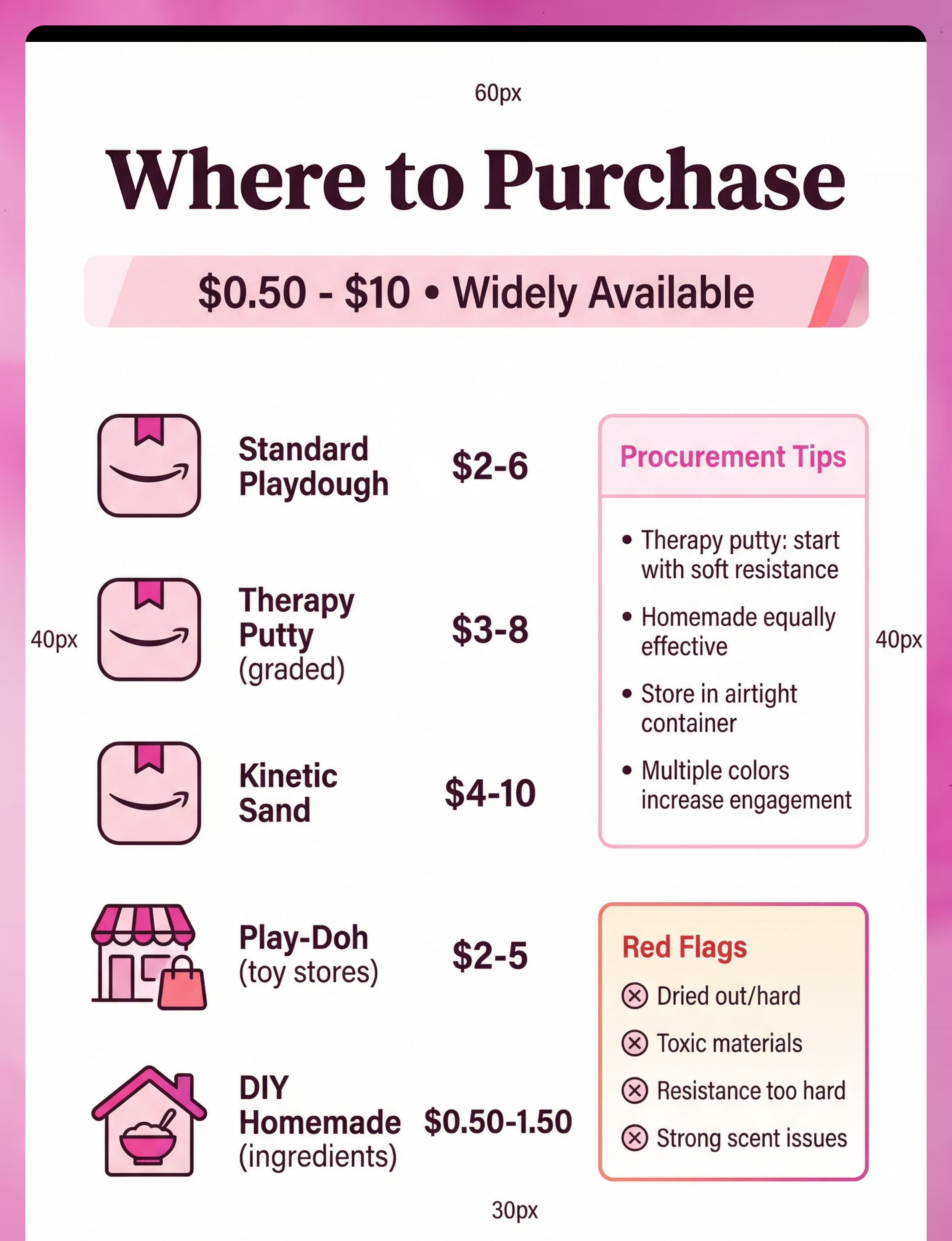
Where to Buy in India
Availability: Widely Available across India through online platforms and physical toy stores.
Platform Guide
Amazon.in
Search Term: "playdough kids"
Product Type: Standard playdough, sets
Price Range: ₹150–500
Amazon.in
Search Term: "therapy putty"
Product Type: Graded resistance putty
Price Range: ₹200–600
Amazon.in
Search Term: "kinetic sand"
Product Type: Moldable sensory sand
Price Range: ₹300–700
Local Toy Stores
Search Term: "Play-Doh"
Product Type: Brand name playdough
Price Range: ₹150–400
DIY at Home
Search Term: "homemade playdough recipe"
Product Type: Kitchen ingredient dough
Price Range: ₹50–100

✓ Buying Tips
  • Therapy putty comes in resistance levels—start with soft and progress as strength builds
  • Homemade playdough is equally effective and extremely affordable—great budget option
  • Store all playdough and putty in airtight containers to prevent drying
  • Add a few drops of essential oils (lavender, orange) for calming sensory experience
  • Multiple colors increase engagement—children love variety

Red Flags
  • Dried out or hard playdough (ineffective, frustrating to use)
  • Toxic materials if child has mouthing behaviors—verify non-toxic certification
  • Resistance too hard for child's current hand strength (causes fatigue without benefit)
  • Strong scent that bothers your child—unscented or mild scent better for sensitivity
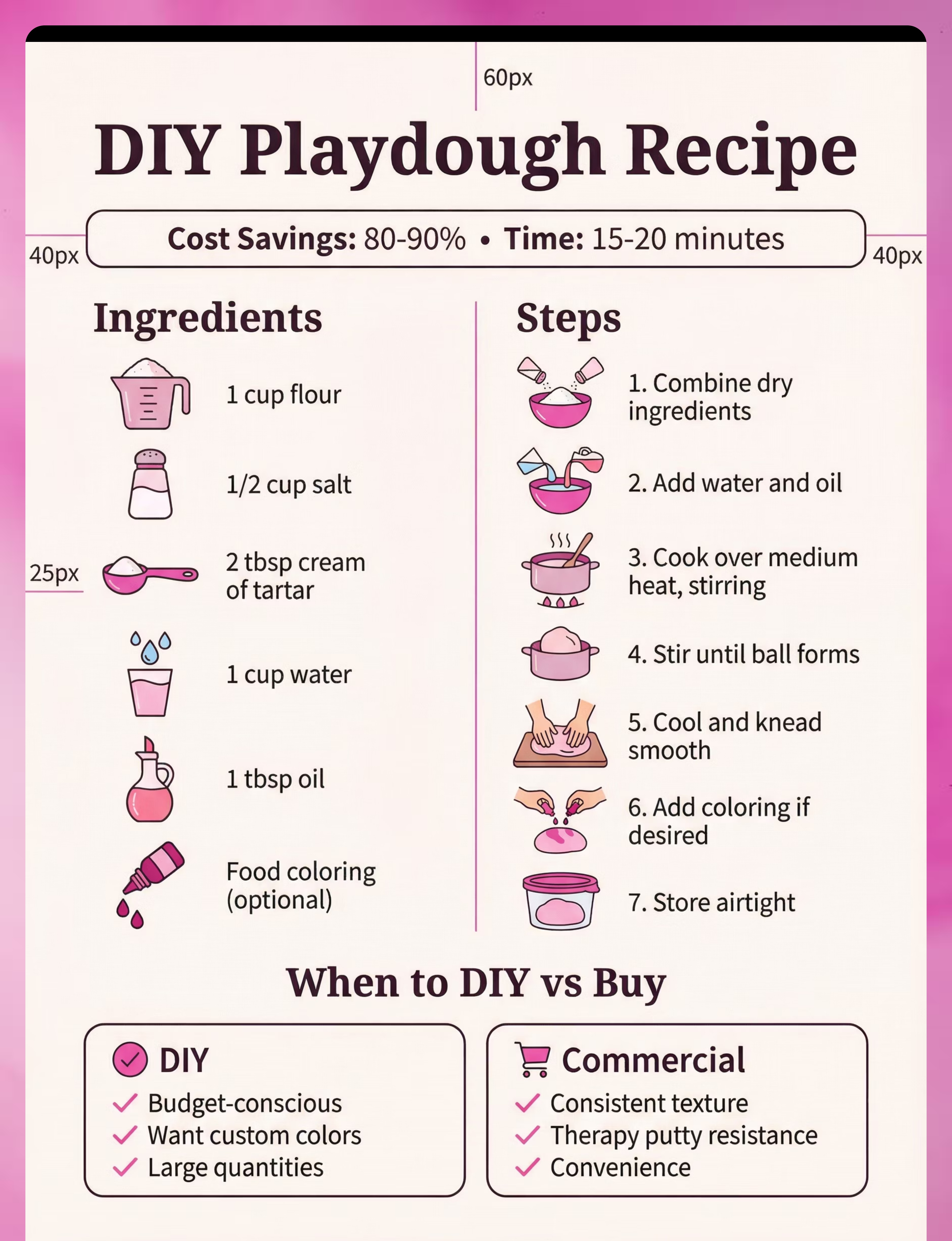
DIY Alternative (Save 80-90%)
Feasibility: Very High | Time Required: 15-20 minutes | Cost Savings: 80-90% compared to commercial options
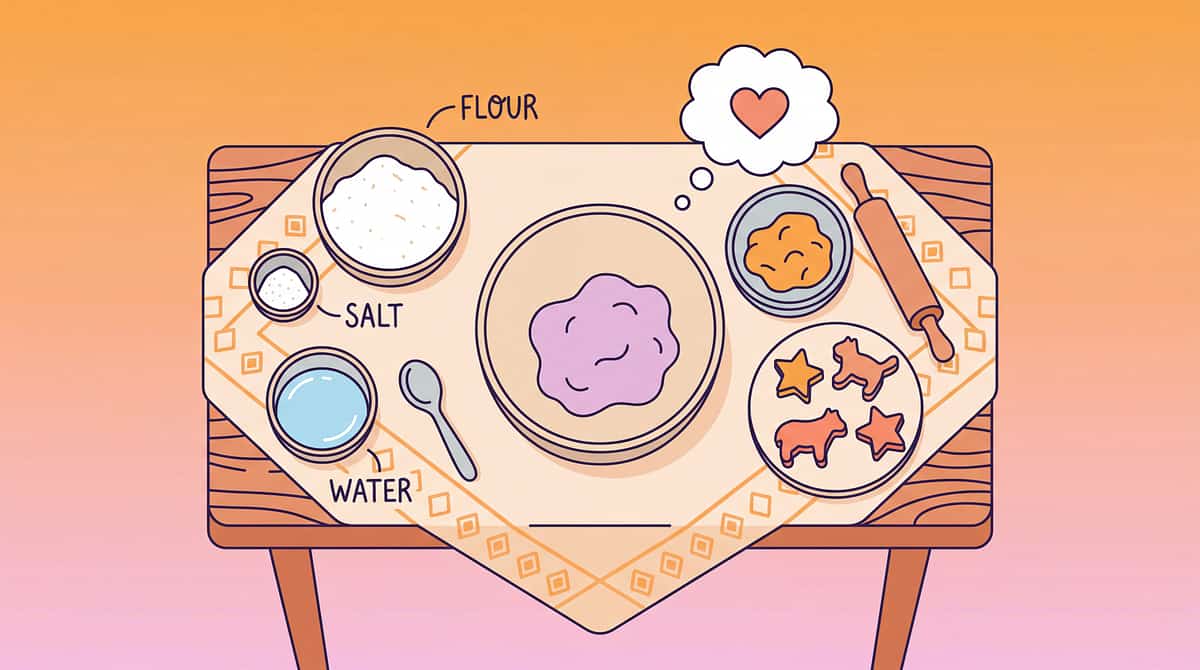
Gather Ingredients
Ensure you have all necessary items:
  • 1 cup all-purpose flour (maida)
  • 1/2 cup salt
  • 2 tablespoons cream of tartar
  • 1 cup water
  • 1 tablespoon cooking oil
  • Food coloring (optional)
Combine Dry Ingredients
Mix flour, salt, and cream of tartar thoroughly in a medium saucepan.
Add Wet Ingredients
Pour water and cooking oil into the dry mixture in the saucepan.
Cook & Stir
Cook over medium heat, stirring constantly to prevent sticking to the pan.
Form a Ball
Continue stirring until the dough forms a cohesive ball and pulls away cleanly from the sides of the pan (usually 3-5 minutes).
Cool Slightly
Remove the dough from heat and allow it to cool down until it's safe and comfortable to touch.
Knead & Color
Knead the dough on a clean surface until it's smooth and has a uniform texture. If desired, add food coloring and knead until the color is evenly distributed.
Store Properly
Store your homemade playdough in an airtight container or a ziplock bag to keep it fresh and prevent it from drying out.
DIY vs Commercial Comparison
Factor
When to DIY
When to Buy Commercial
Budget
Budget-conscious families (save 80-90%)
Budget allows, prefer convenience
Customization
Want custom colors, scents, textures
Standard options meet needs
Process
Involve child in making process (therapeutic activity itself)
Prefer ready-made convenience
Quantity
Need large quantities for groups or frequent replacement
Small amounts sufficient
Texture
Okay with slight texture variations batch to batch
Want consistent professional texture
Resistance
General strengthening; single resistance level fine
Need graded resistance levels for progressive therapy

Tradeoffs
DIY Advantages: Massive cost savings, customizable colors and scents, making process is bonding activity.
DIY Limitations: Requires cooking time, may dry out faster than commercial options, can't easily replicate graded resistance levels of therapy putty.

Preview of playdough therapy putty modeling clay Therapy Material

Below is a visual preview of playdough therapy putty modeling clay therapy material. The pages shown help educators, therapists, and caregivers understand the structure and content of the resource before use. Materials should be used under appropriate professional guidance.

Page 1
Page 2
Page 3
Page 4
Page 5
Page 6
Page 7
Page 8
Page 9
Page 10
Page 11
Page 12
Page 13
Page 14
Page 15
Page 16
Page 17
Page 18
Page 19
Page 20
Link copied!
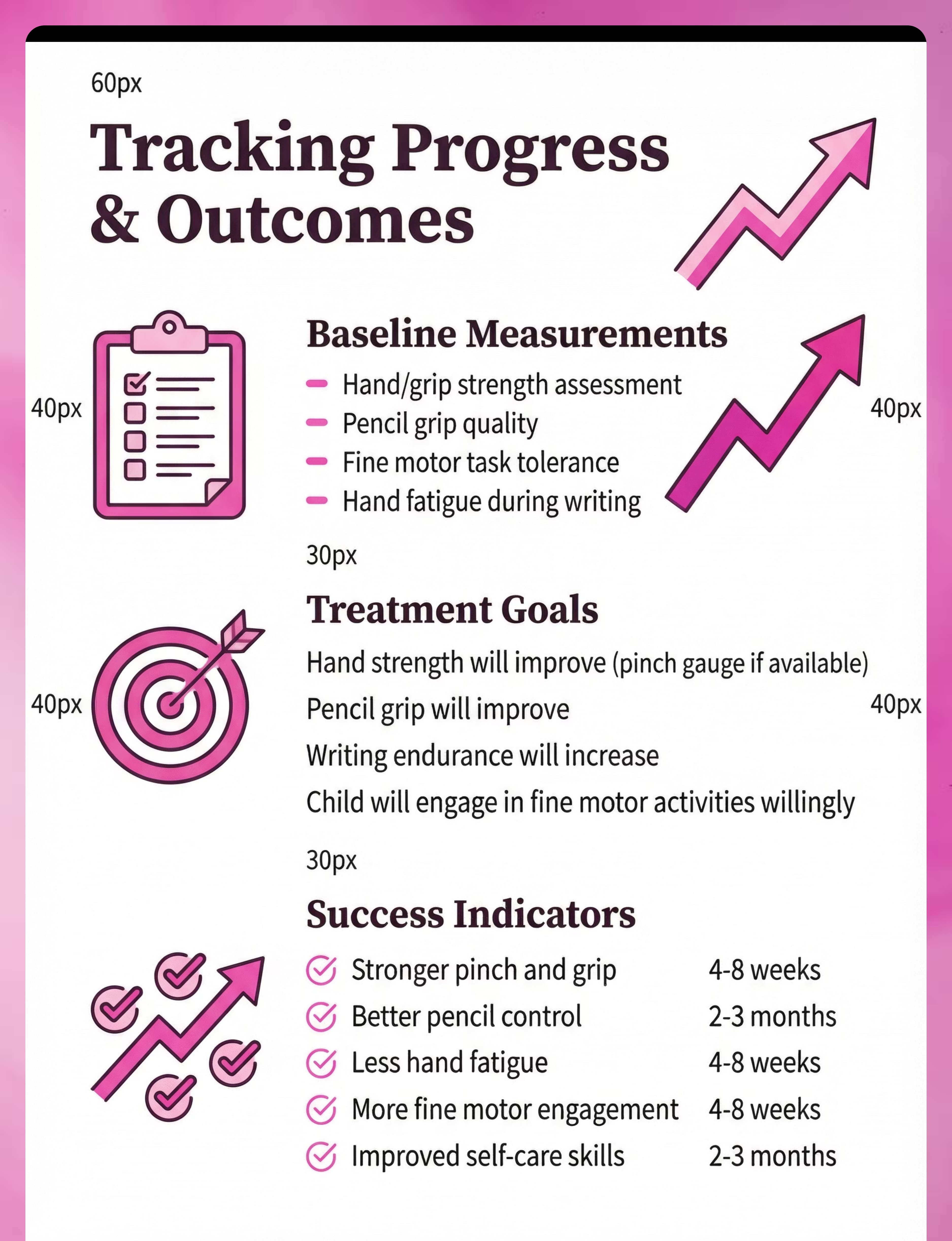
Measuring Success
Baseline (What to Measure First)
  • Hand and grip strength assessment (formal or informal)
  • Pencil grip quality and efficiency
  • Fine motor task tolerance and duration
  • Hand fatigue during writing or coloring activities
Goals
  • Hand strength will improve measurably (pinch gauge if available)
  • Pencil grip will become more functional and efficient
  • Writing endurance will increase without pain or fatigue
  • Child will engage in fine motor activities willingly
Success Indicators
  • Stronger pinch and grip during daily tasks
  • Better pencil control and handwriting quality
  • Less hand fatigue during extended fine motor work
  • More fine motor engagement and less avoidance
  • Improved self-care skills (buttons, zippers, fasteners)

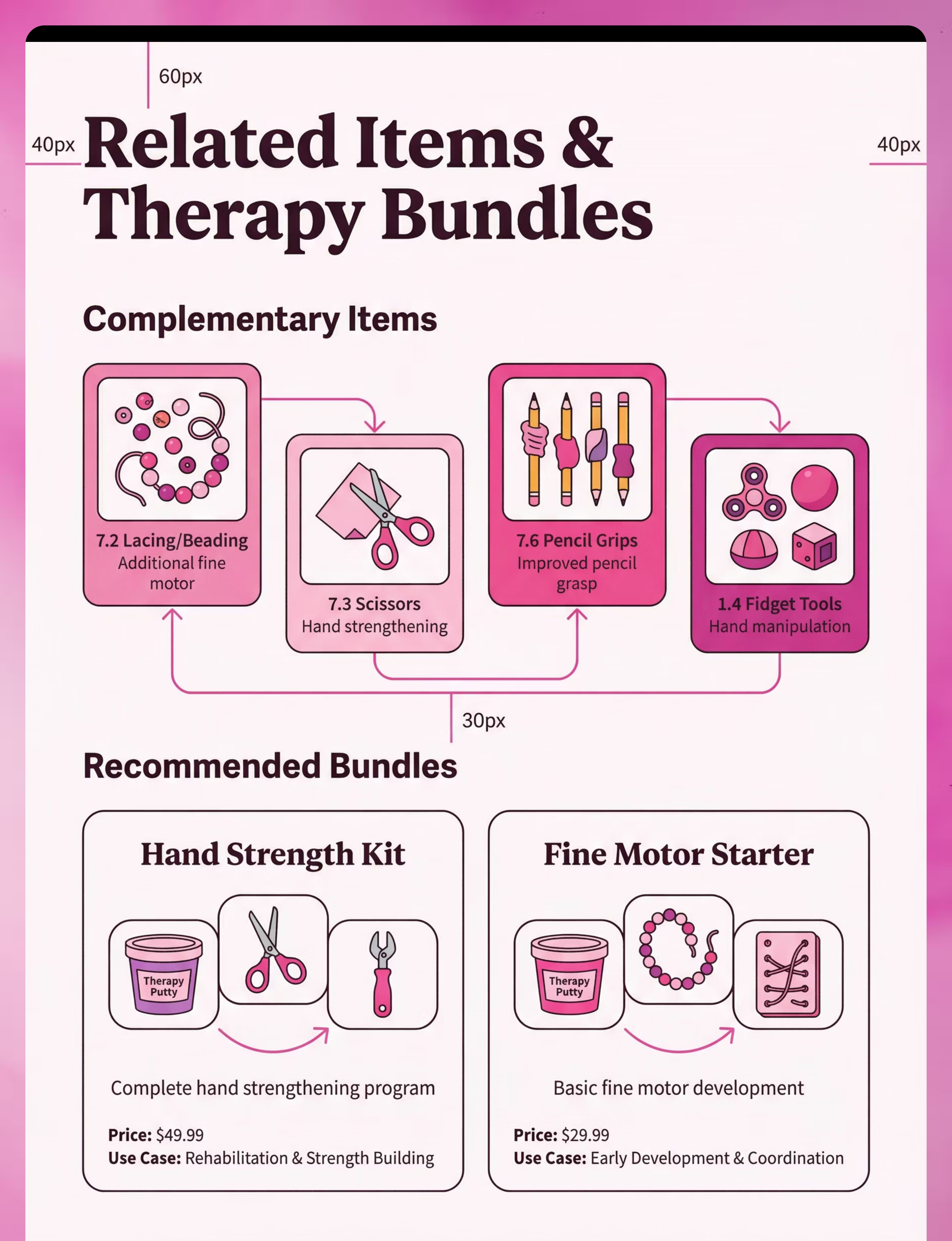
Complete the Kit
Pair It With...
Lacing/Beading (ID: 7.2)
Additional fine motor practice and bilateral coordination development
Scissors (ID: 7.3)
Hand strengthening through cutting activities
Pencil Grips (ID: 7.6)
Support improved pencil grasp as hand strength builds
Fidget Tools (ID: 1.4)
Ongoing hand manipulation and fine motor practice
Recommended Bundles
  • Hand Strength Kit (Tools 7.1, 7.3, 7.4): Complete hand strengthening system for comprehensive development
  • Fine Motor Starter (Tools 7.1, 7.2, 7.5): Basic fine motor development foundation for young children

Quick Summary
AI Summary: Playdough and therapy putty develop hand strength, finger dexterity, and fine motor skills through resistive play. Core Kit (Rank 1), strong evidence, fundamental OT tool for children ages 2-9 years.
playdough
putty
hand strength
fine motor
grip
dexterity
OT
SpEd
core-kit
Common Searches
therapy putty autism, playdough fine motor, hand strengthening kids, kinetic sand therapy, grip strength autism, fine motor playdough, occupational therapy putty

Get Support

FREE National Autism Helpline
Phone: 9100 181 181
Languages Supported: 16+ Indian languages
Website: pinnacleblooms.org
Expert guidance on therapy tools, implementation strategies, and individualized support for your child's development journey.
Platform Integration
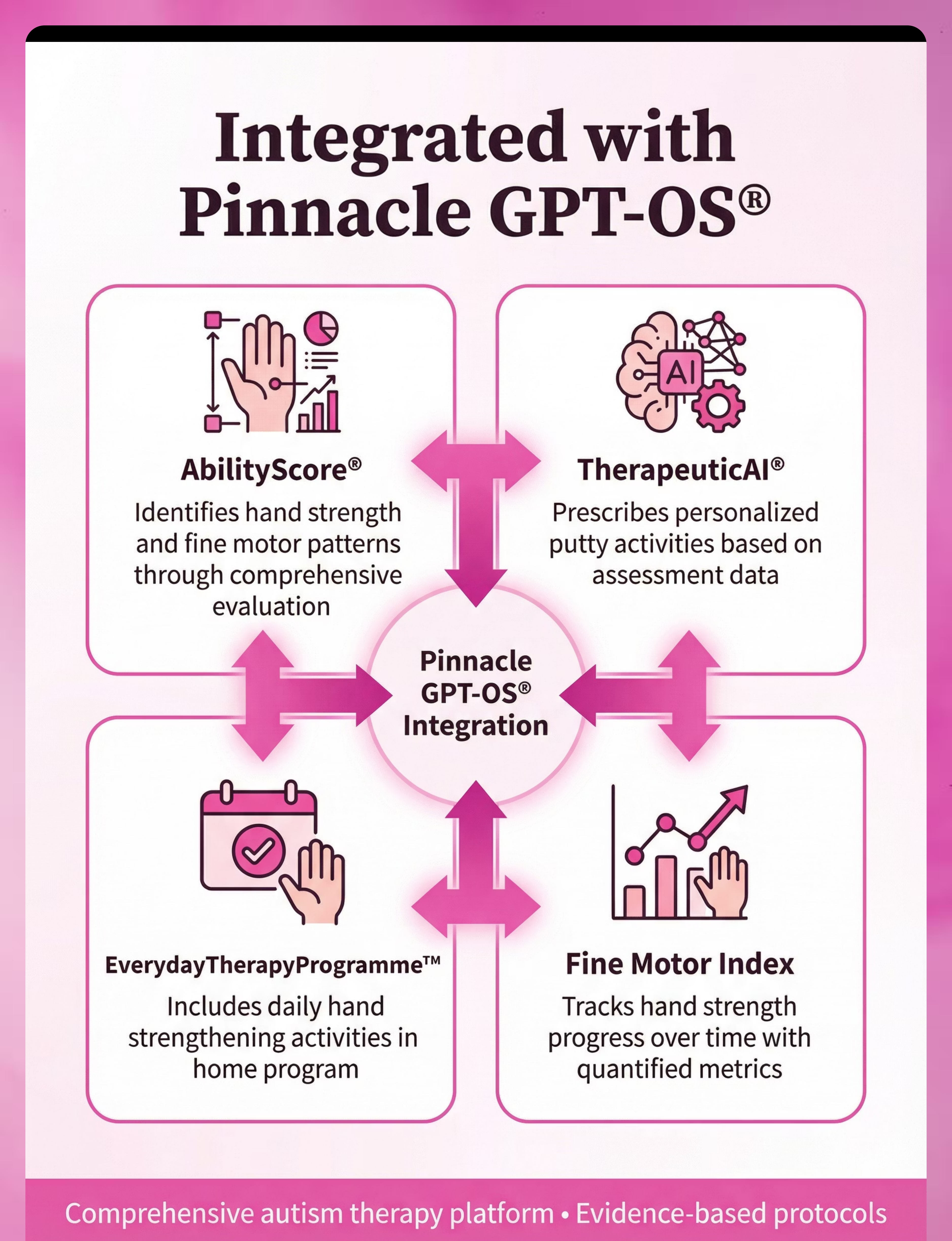
AbilityScore® identifies hand strength and fine motor patterns specific to your child. TherapeuticAI® prescribes customized putty activities matched to current abilities. EverydayTherapyProgramme™ includes daily hand strengthening routines. Fine Motor Index tracks hand strength progress over time with measurable outcomes.

Disclaimer
This is educational information designed to support families and professionals. Always consult qualified occupational therapists, speech-language pathologists, or pediatricians for individualized assessment and treatment planning. Individual results vary based on child's unique profile, consistency of practice, and quality of implementation.