







Tool ID: 7.5
OT + SpEd
Strong Evidence
Rank #1
Daily Use
₹150–1,500
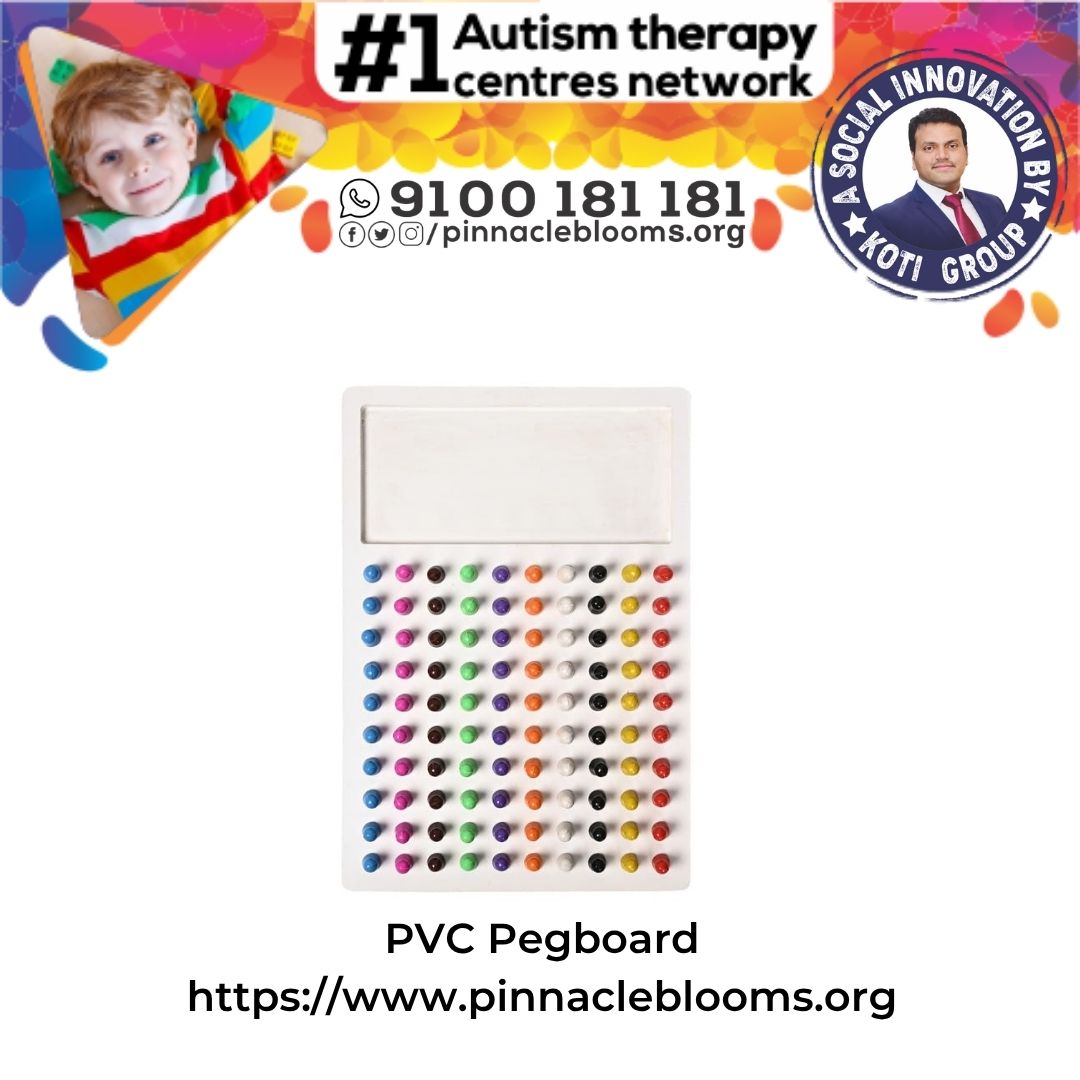
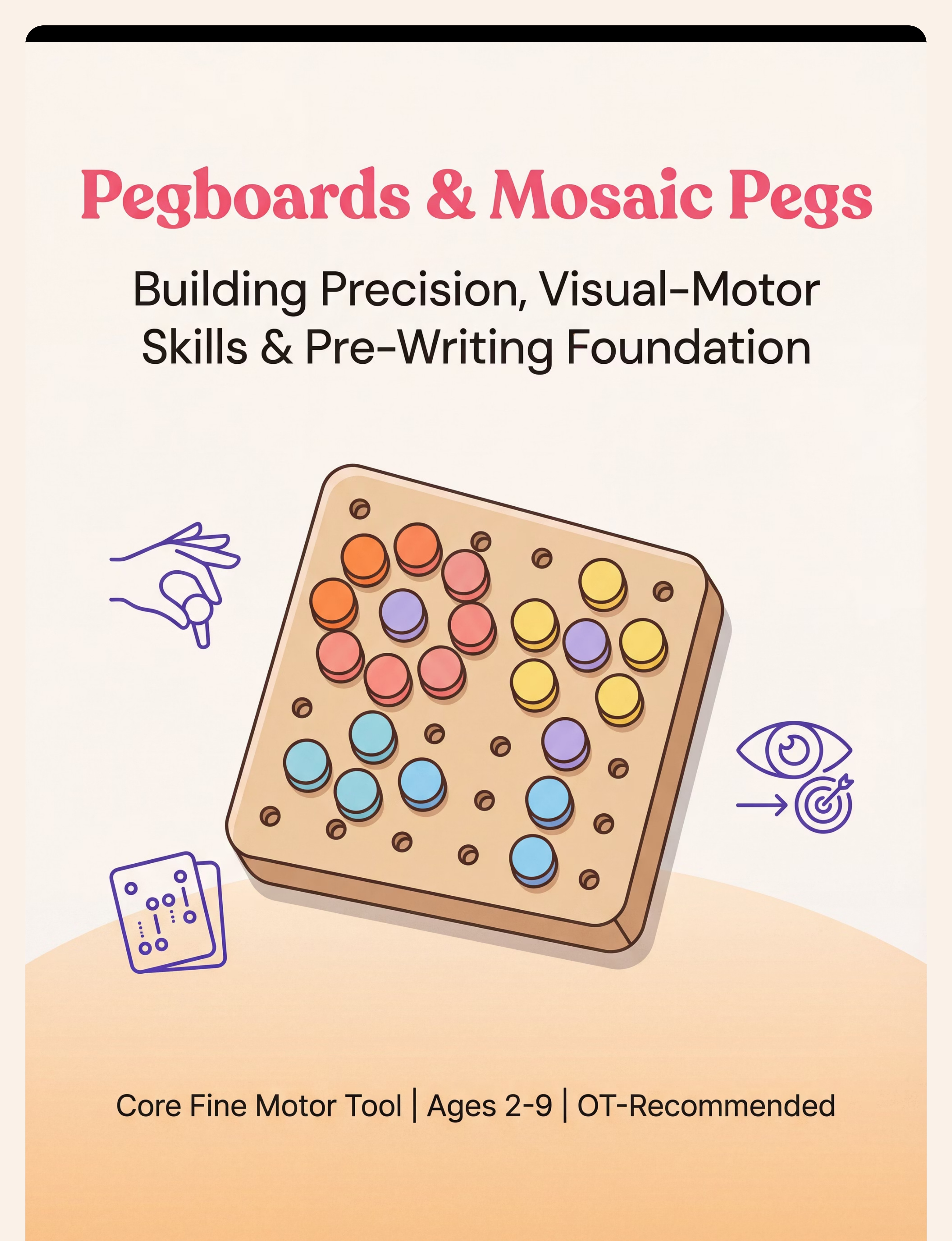
Pegboards / Mosaic Pegs
Visual-motor precision and pattern recognition system
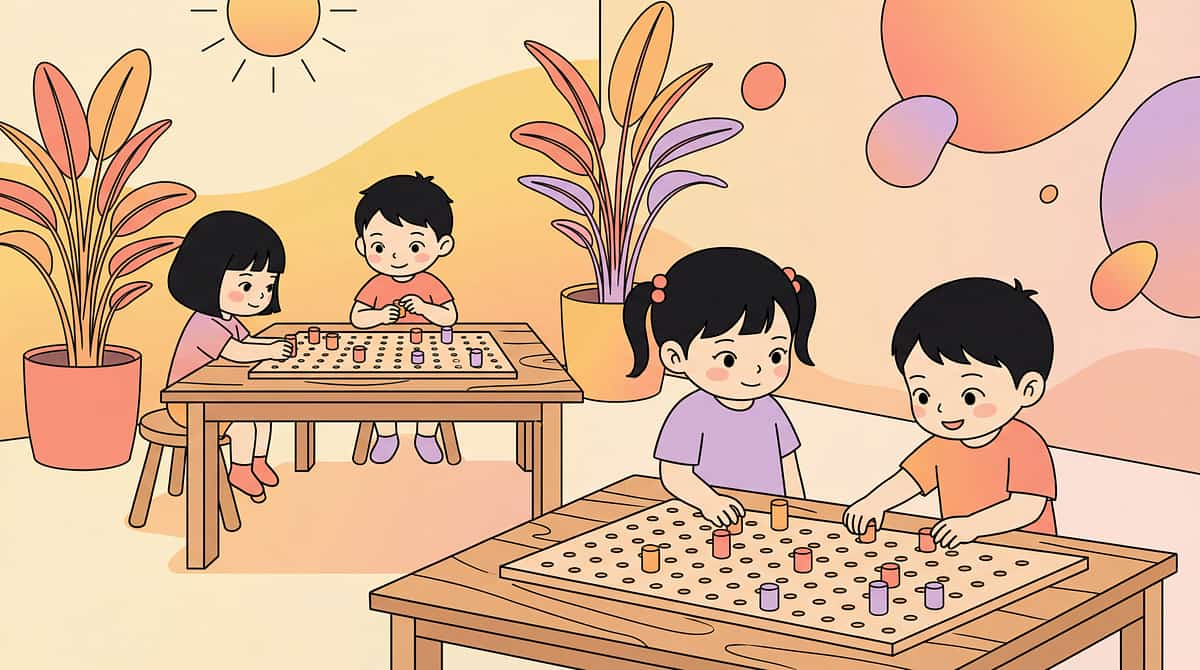
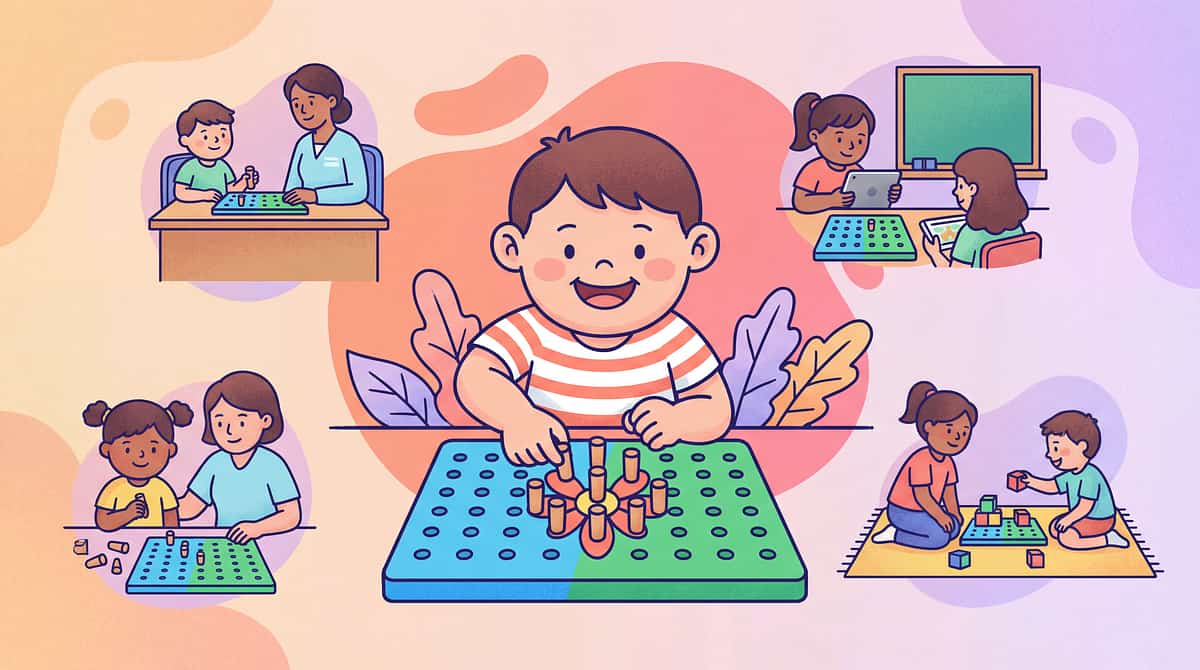
Pegboards are foundational tools for developing the precise finger control and eye-hand coordination your child needs for everyday tasks like writing, buttoning, and manipulating small objects. Through engaging pattern work and peg manipulation, children build the pincer grasp strength and visual-motor integration that form the foundation for academic and daily living skills.

Who This Helps
Pincer Grasp Development
Builds the precise thumb-and-finger grip essential for writing, self-care tasks, and manipulating small objects with control and accuracy.
Visual-Motor Integration
Strengthens the connection between what the eyes see and what the hands do, critical for handwriting, puzzles, and daily precision tasks.
Fine Motor Precision
Develops accuracy and control in finger movements through repetitive practice with progressively smaller pegs and more complex patterns.
Ages 2-9 years
Home
Clinic
School
Best for: Children developing pincer grasp, improving eye-hand coordination, building pre-writing skills, working on pattern recognition, progressing fine motor precision, and preparing for academic tasks requiring visual-motor control.

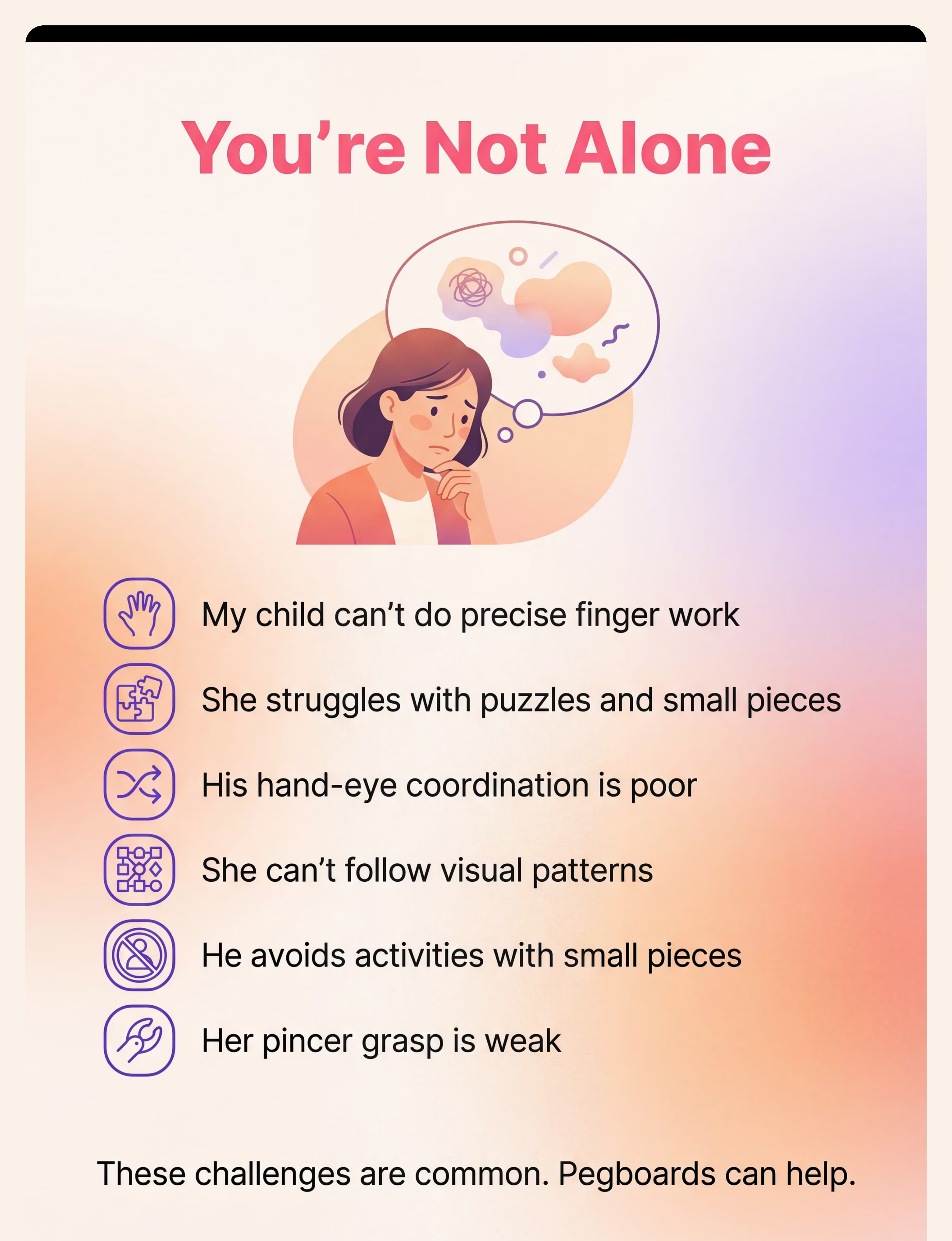
Does This Sound Familiar?
"My child can't do precise finger work. Every time we try puzzles or small pieces, he gets so frustrated. I don't know how to help him build these skills."
"She struggles with puzzles and small pieces. Her hand-eye coordination is poor, and I'm worried about how this will affect her when she starts writing."
"His pincer grasp is weak. The therapist mentioned it, but I'm not sure what activities to do at home to strengthen it. Everything seems too hard or boring."
"She can't follow visual patterns. I see other kids her age doing these activities easily, and she just avoids anything with small pieces now."
You're not alone. These are common challenges for children developing fine motor skills. Many parents feel uncertain about how to support their child's precision development at home. Pegboards offer a structured, evidence-based pathway forward.

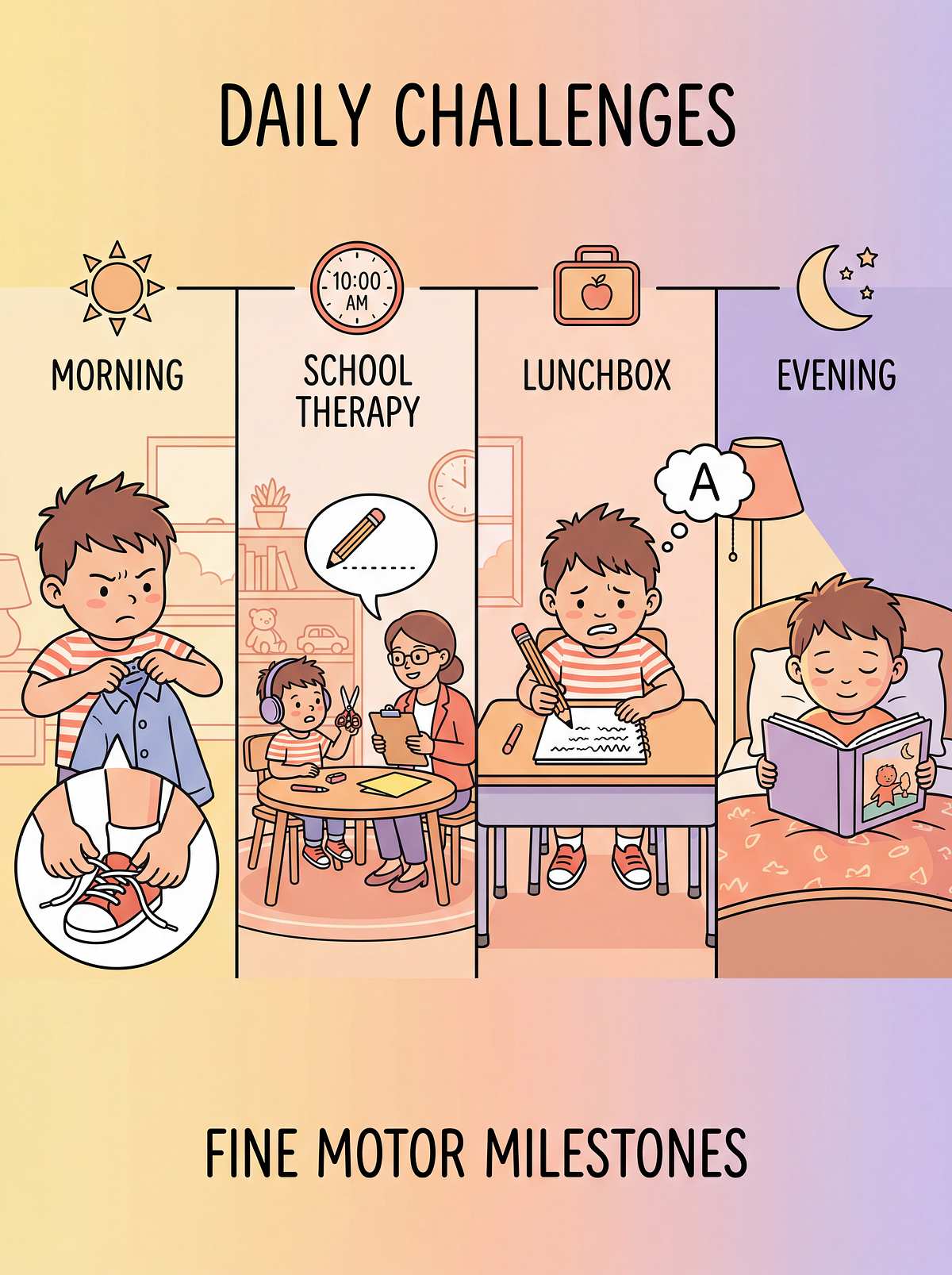
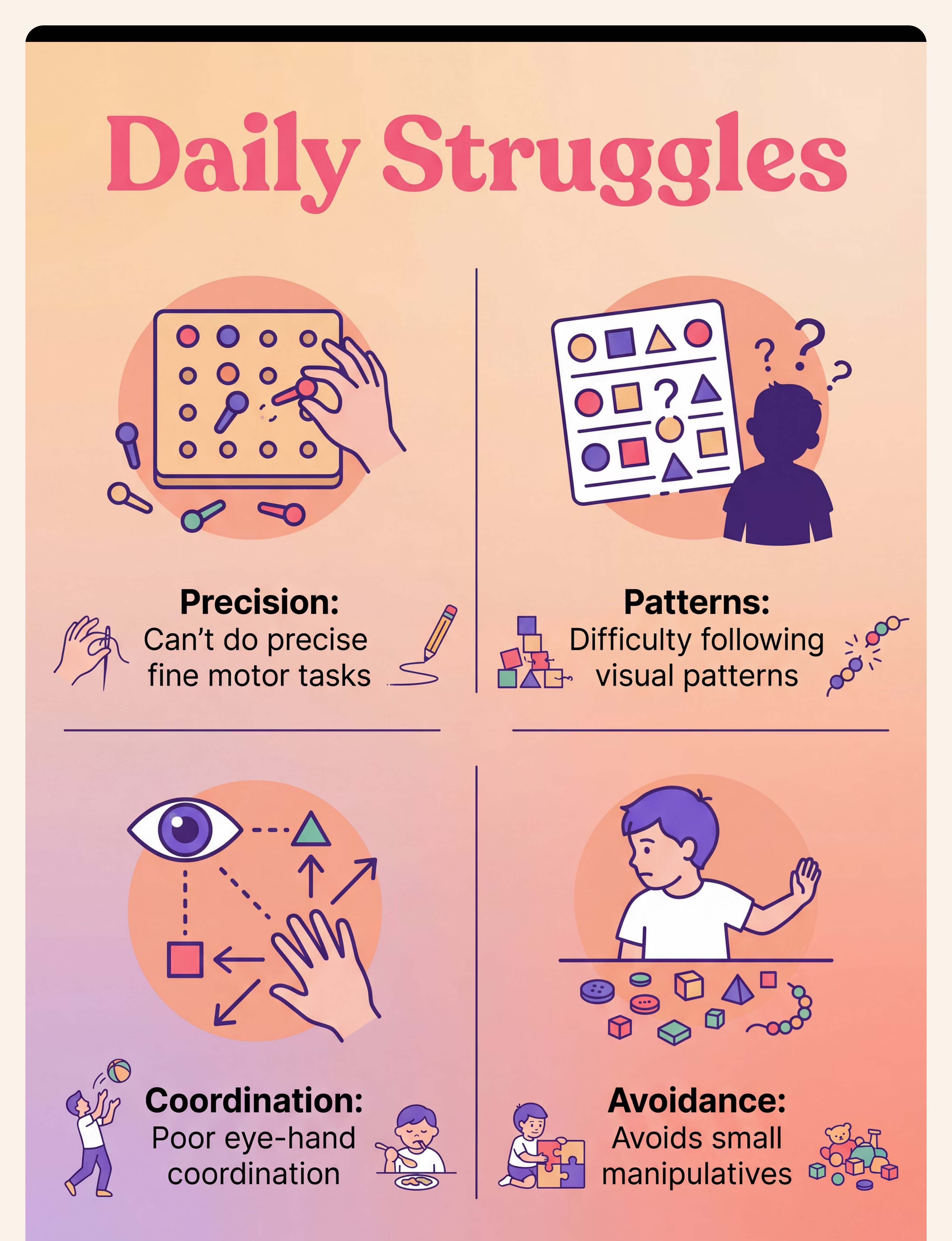
A Day Without the Right Support
Precision Challenges
Can't do precise fine motor tasks throughout the day. Struggles with buttons, zippers, opening containers. Avoids activities requiring finger dexterity. Frustration builds.
Pattern Difficulties
Difficulty following visual patterns in classroom activities. Can't replicate simple designs. Falls behind in art and pre-academic tasks. Confidence drops.
Coordination Struggles
Poor eye-hand coordination affects multiple activities. Can't connect what eyes see with what hands do. Simple tasks become overwhelming. Avoidance increases.
Activity Avoidance
Avoids small manipulatives completely. Won't participate in age-appropriate activities. Peers moving ahead. Developmental gap widening. Parent worry grows.

The Science Behind It
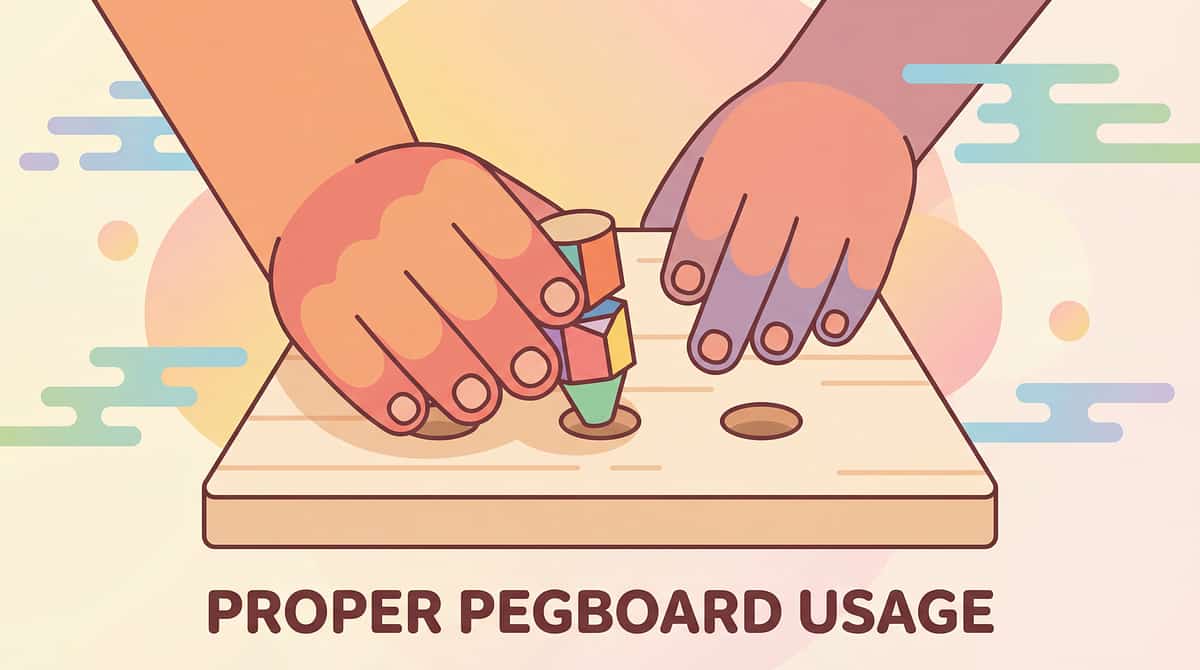
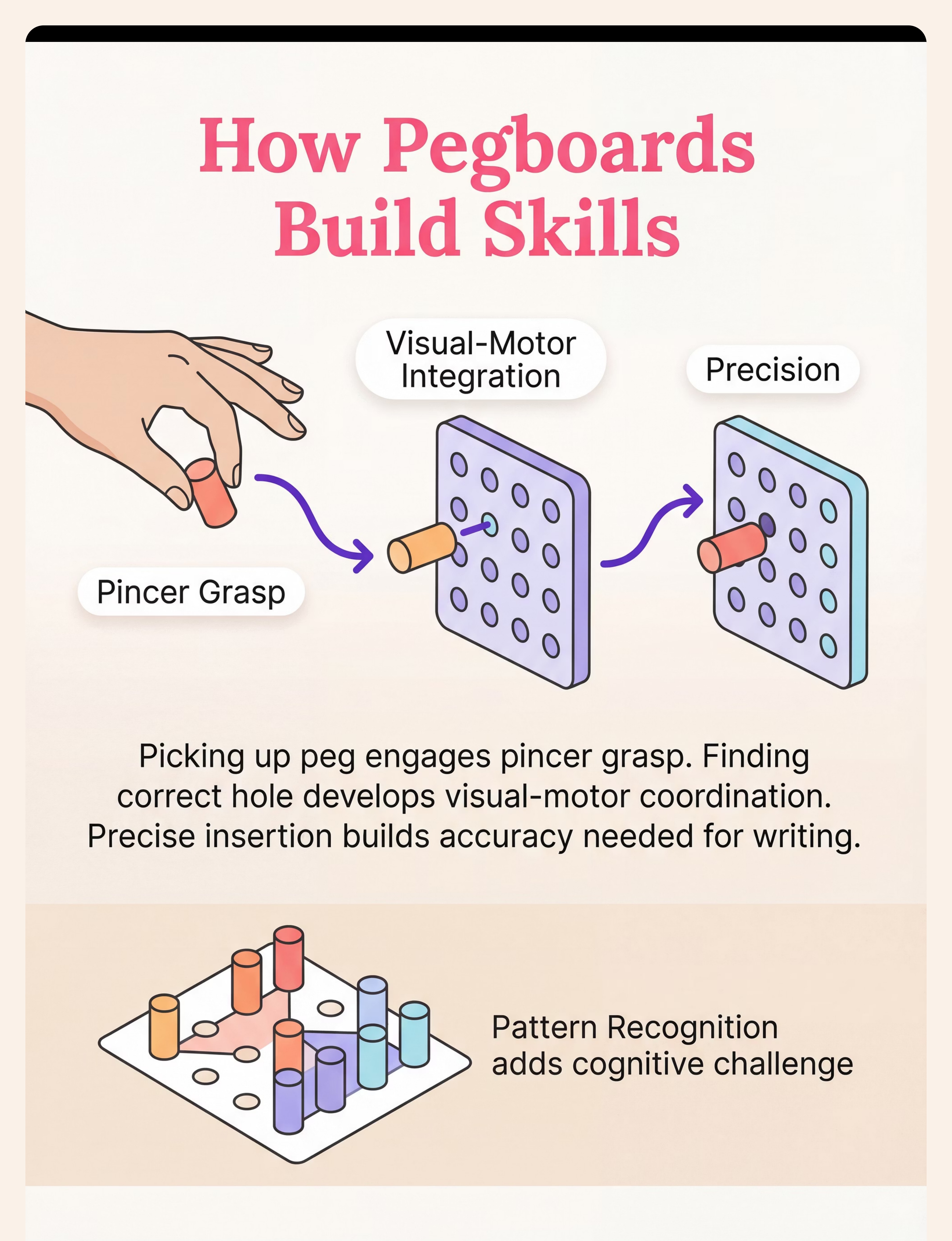
Pincer Engagement
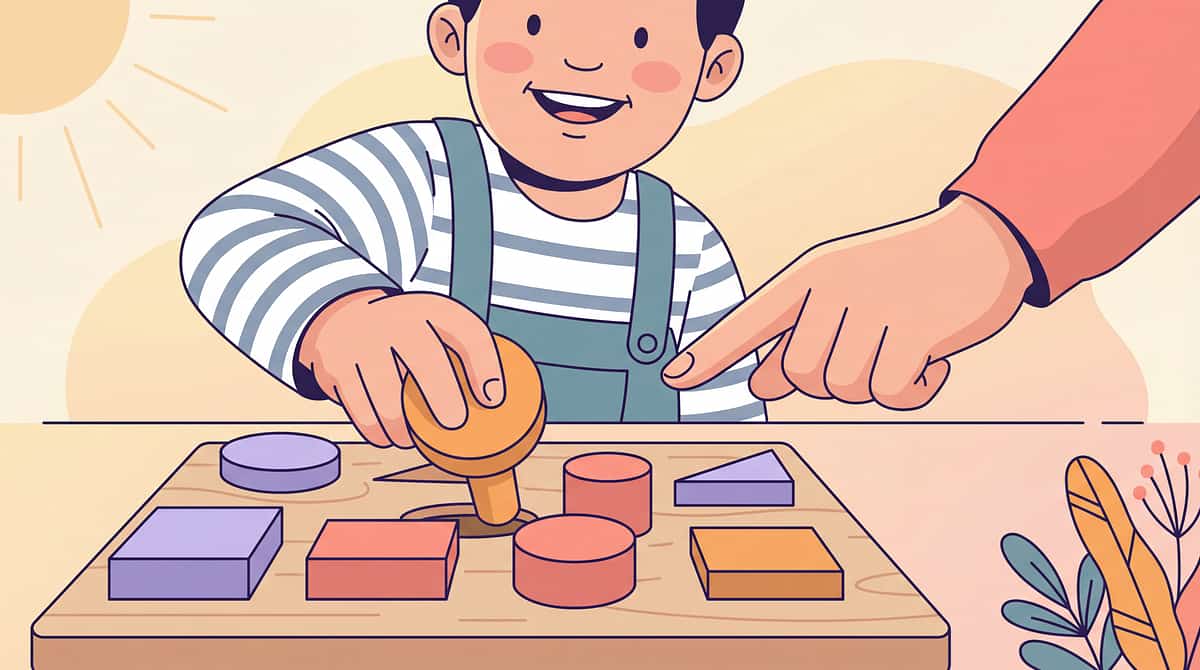
Child picks up peg using thumb and forefinger, activating and strengthening the precise pincer grasp muscles essential for fine motor control.
Visual-Motor Connection
Eyes locate the correct hole on board while hands coordinate to position peg accurately, building the eye-hand integration pathway in the brain.
Precise Insertion
Controlled finger movements guide peg into hole, developing accuracy and motor planning. Repetition strengthens neural pathways for precision work.
Cognitive Integration
Following patterns adds cognitive challenge, integrating color and shape recognition with motor execution. Foundation builds for writing precision and complex tasks.
Pincer Grasp
Visual-Motor Integration
Precision
Pattern Recognition
Eye-Hand Coordination
Color/Shape Recognition

How to Use It Right
Start with large pegs, progress to smaller
Begin with jumbo pegs for young children or beginners. As pincer grasp strengthens and accuracy improves, gradually introduce smaller pegs. Progression builds confidence and skill systematically.
Begin with free play, then add patterns
Let children explore freely first—insertion practice without pressure. Once comfortable, introduce simple patterns. Progress from single-row color patterns to complex multi-color designs as skills develop.
Use pattern cards for visual-motor challenge
Pattern cards provide structured visual-motor practice. Child must look at pattern, remember it, and recreate it—integrating visual processing with motor execution. Start simple, increase complexity gradually.
Incorporate counting and colors
Add cognitive and language elements: "Let's put in five red pegs." This integrates math concepts, color recognition, and fine motor practice in meaningful, engaging ways.
Geoboards add bilateral coordination
Geoboards with rubber bands require two-hand coordination—one hand stabilizes while the other stretches band. Excellent for bilateral integration and shape making.
Celebrate creativity as well as accuracy
Balance structured pattern work with creative freedom. Celebrate unique designs alongside pattern replication. This maintains motivation while building skills.
Typical duration: 10-20 minutes per session, or as long as interest allows. Short, frequent sessions often work better than long, forced practice.

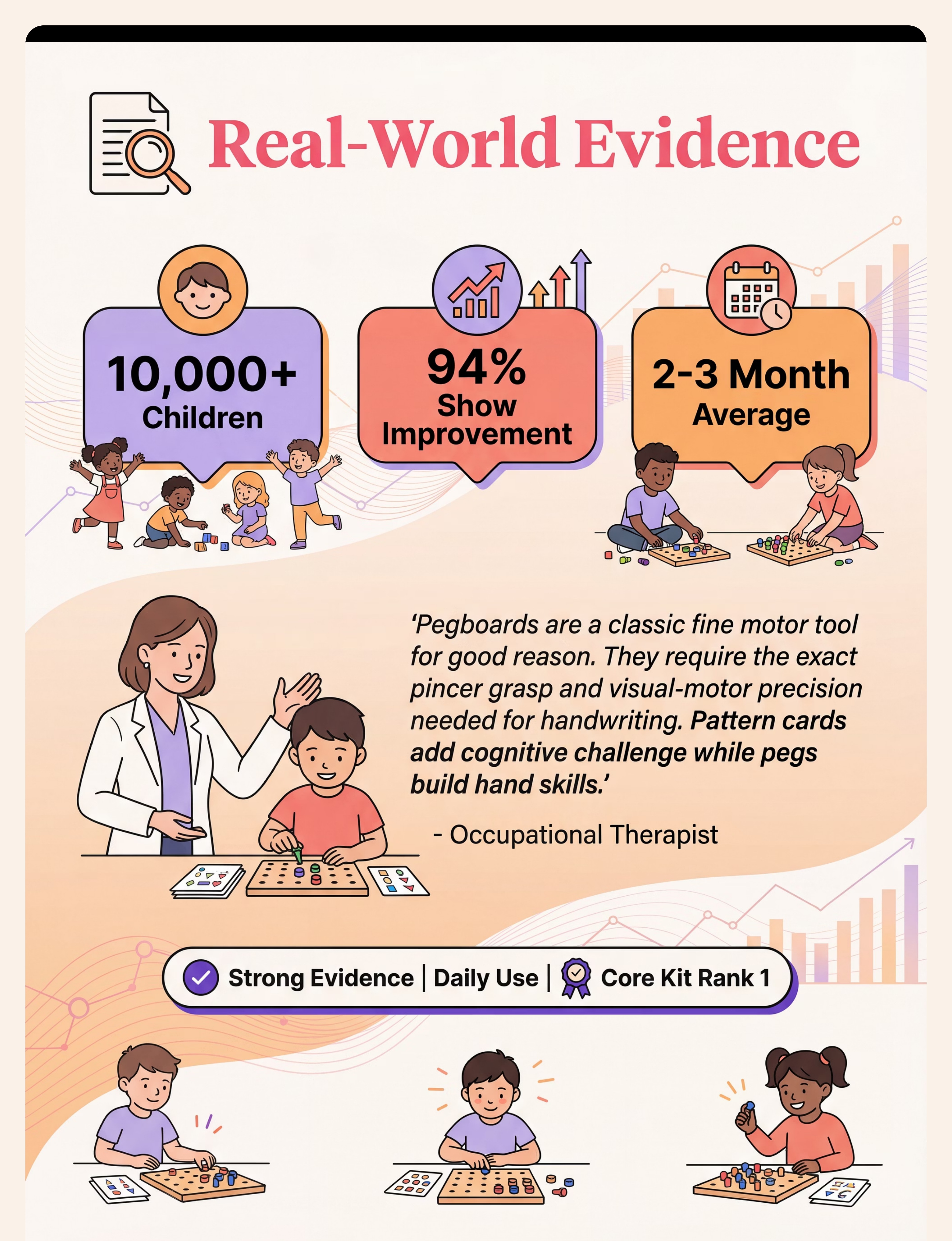
"Pegboards are a classic fine motor tool for good reason. They require the exact pincer grasp and visual-motor precision needed for handwriting. Pattern cards add cognitive challenge while pegs build hand skills."
— Occupational Therapist
OT + SpEd Recommended
Co-owned by Occupational Therapy and Special Education professionals as a foundational tool for developmental support.
Strong Evidence Level
Backed by robust research showing effectiveness for pincer grasp development and visual-motor integration.
Rank #1 in Category
Top-ranked tool in Fine Motor & Hand Skills category, recognized as essential for comprehensive therapy programs.
Core Kit Essential
Designated as Core Kit level—foundational tool for daily use in home, clinic, and school settings.

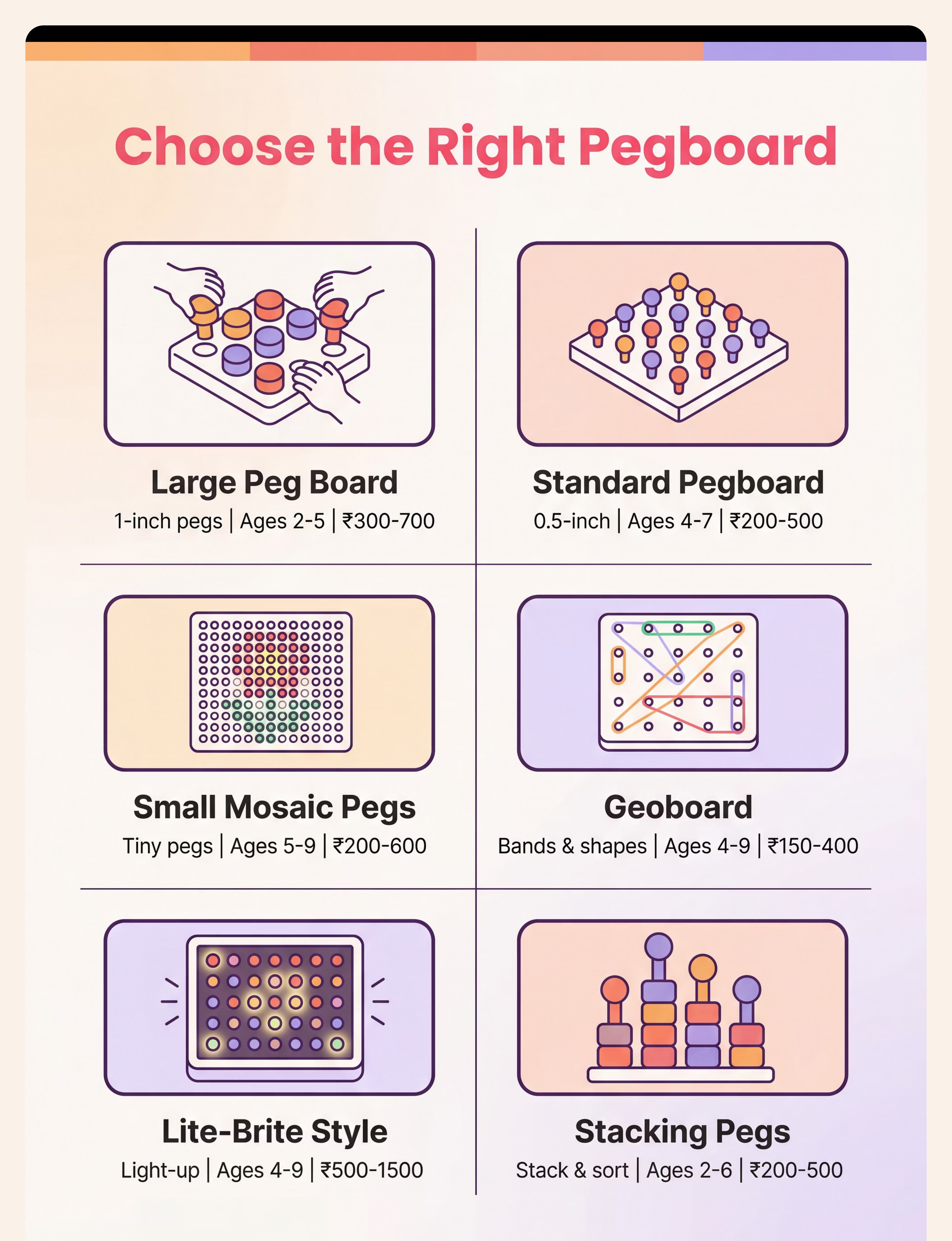
Choose Your Option (6 Variants)
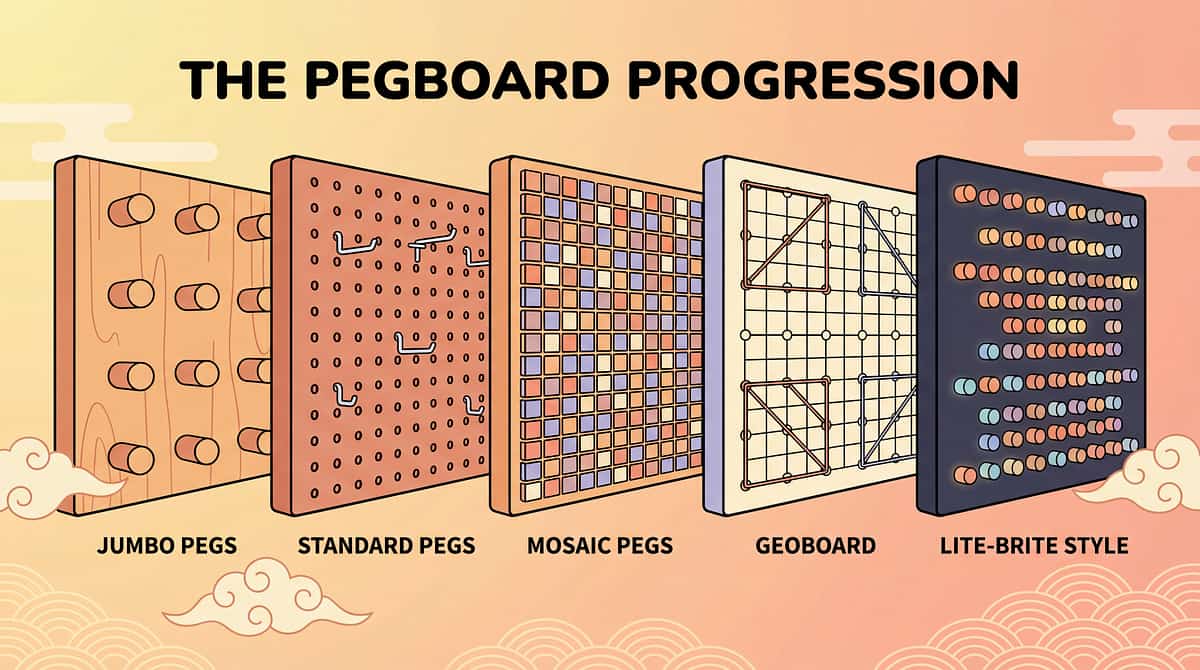
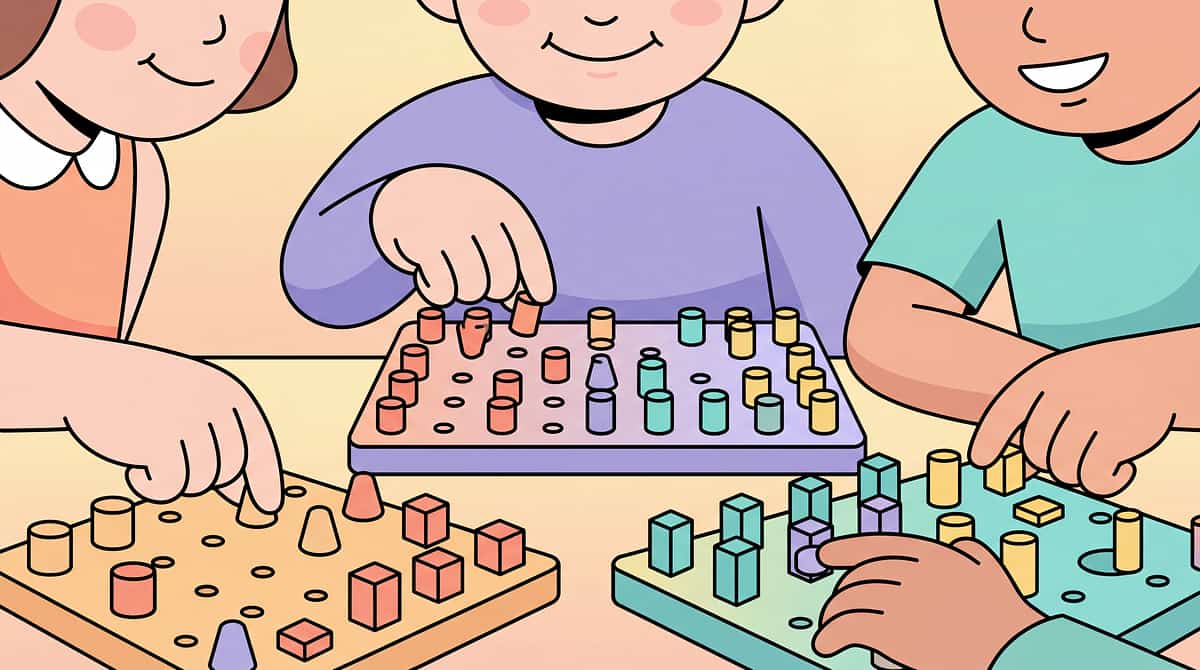
Pegboards come in multiple formats to match your child's age, skill level, and interests. Start where your child is comfortable and progress as skills develop. Each variant targets the same core skills but offers different entry points and motivational elements.
Large Peg Board with Jumbo Pegs
Ages 2-5, beginners
Standard Pegboard with Medium Pegs
Ages 4-7, progressing fine motor
Small Mosaic Pegs
Ages 5-9, detailed patterns
Geoboard with Rubber Bands
Ages 4-9, bilateral coordination
Lite-Brite Style Light Peg Board
Ages 4-9, high motivation
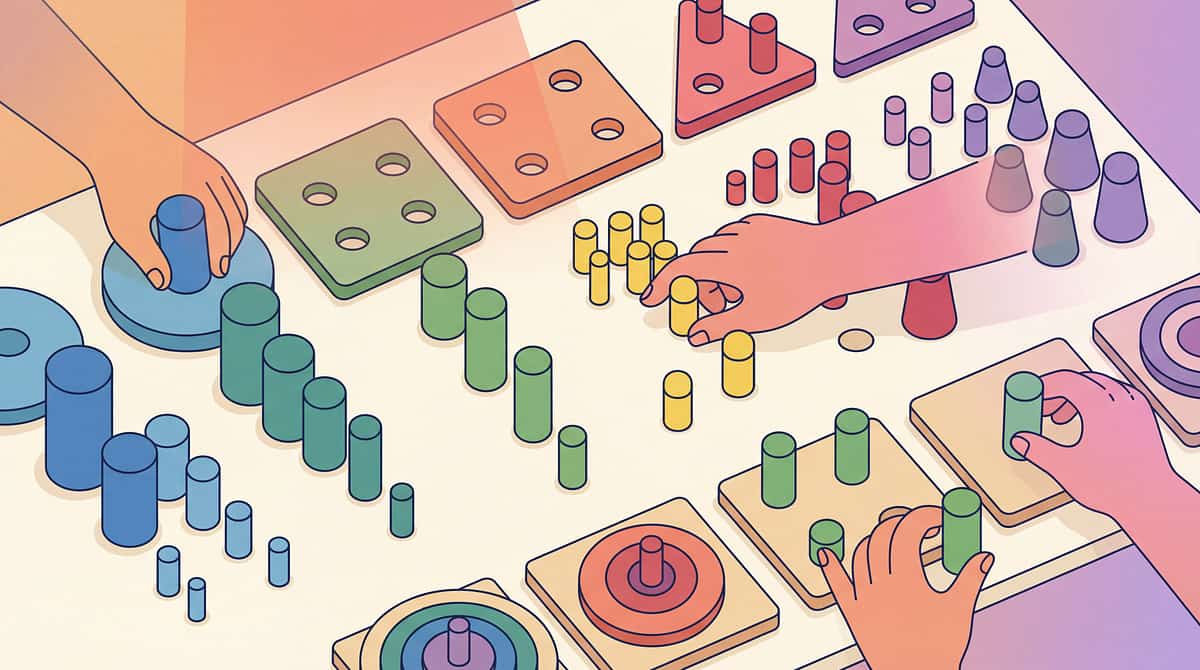
Stacking Pegs / Peg Stacker
Ages 2-6, color sorting, counting
Large Peg Board with Jumbo Pegs
Best for: Young children, beginners, developing pincer (Ages 2-5)
Size: Large board with 1-inch pegs
- Perfect starting point for toddlers and preschoolers
- Builds foundational pincer grasp without frustration
- Safe for younger children with appropriate supervision
Home
Clinic
School
₹300–700
Standard Pegboard with Medium Pegs
Best for: Progressing fine motor, pattern work (Ages 4-7)
Size: Medium board with 0.5-inch pegs
- Ideal for children progressing from jumbo pegs
- Good for pattern card work and color activities
- Versatile across all settings
All Settings
₹200–500
Small Mosaic Pegs
Best for: Older children, detailed patterns (Ages 5-9)
Size: Small board with tiny pegs
- Advanced precision work for refined pincer grasp
- Highly portable for on-the-go activities
- Complex pattern possibilities
All Settings
High Portability
₹200–600
Geoboard with Rubber Bands
Best for: Bilateral coordination, pattern making (Ages 4-9)
Size: Board with pegs for rubber bands
- Adds bilateral coordination challenge
- Creates shapes with rubber bands
- Integrates math and spatial concepts
Home
School
Clinic
High Portability
₹150–400
Lite-Brite Style Light Peg Board
Best for: High motivation, visual reward (Ages 4-9)
Size: Light-up pegboard creating illuminated pictures
- Extremely motivating with built-in visual reward
- Perfect for children who resist traditional pegboards
- Creates glowing pictures for high engagement
Home
₹500–1,500
Stacking Pegs / Peg Stacker
Best for: Color sorting, counting, fine motor (Ages 2-6)
Size: Pegs that stack vertically on board
- Combines pegboard with vertical stacking
- Integrates counting and color sorting
- Multiple skill development in one tool
Home
Clinic
School
₹200–500
How to Choose
By goal: Calming focus (standard), high motivation (Lite-Brite), bilateral work (geoboard), counting (stacking)
By setting: All settings (standard, mosaic), home focus (Lite-Brite), portable (mosaic, geoboard)
By age/skill: Young/beginner (jumbo), progressing (medium), advanced (small mosaic)

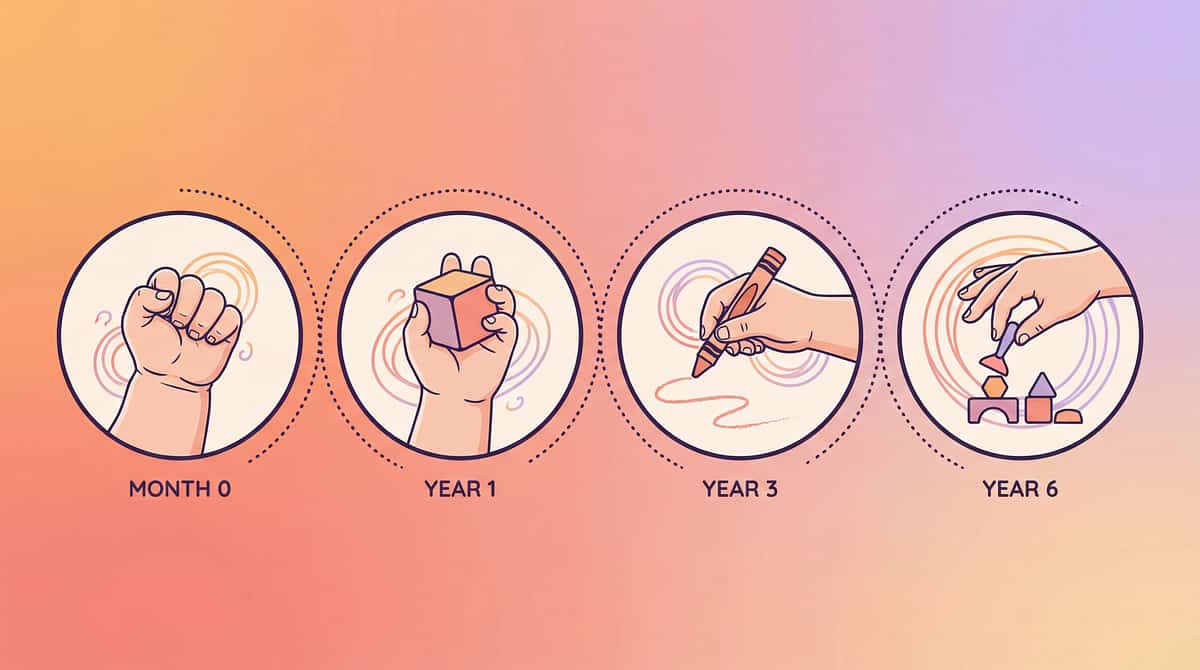
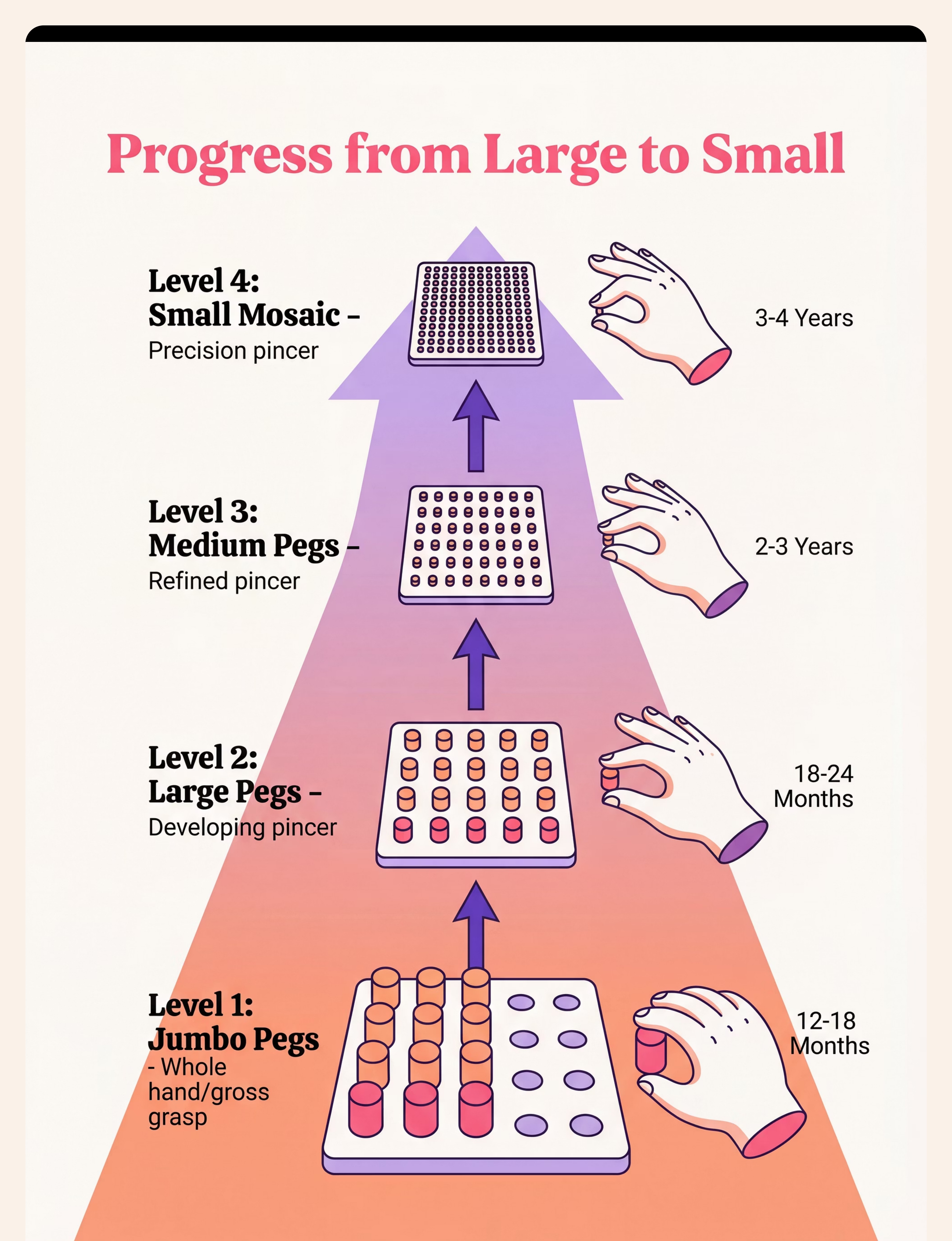
Understanding Peg Progression
1
Level 1: Jumbo Pegs (1+ inch)
Whole hand or gross grasp. Perfect for toddlers and children just beginning fine motor development. Low frustration, high success rate. Builds confidence and basic coordination.
2
Level 2: Large Pegs (0.75 inch)
Developing pincer grasp. Thumb and fingers working together with more precision. Appropriate for preschoolers progressing in fine motor control. Bridge to more refined work.
3
Level 3: Medium Pegs (0.5 inch)
Refined pincer grasp. True thumb-forefinger precision emerging. Good for pattern card work. Prepares hand for writing-sized manipulations. Most versatile size.
4
Level 4: Small Mosaic Pegs (0.25 inch)
Precision pincer grasp. Advanced control and accuracy. Requires strong visual-motor integration. Excellent pre-writing preparation. Used by older children and skilled younger children.
Key Features to Look For
- Age-appropriate peg size: Match peg size to child's current skill level, not chronological age. Progress systematically.
- Stable board: Board should not slide during use. Stability prevents frustration and allows focus on motor skill.
- Pattern cards included: Look for sets with graduated pattern cards for progressive visual-motor challenge.
- Safe materials: Non-toxic, durable plastic or wood. No sharp edges. Check for small parts warnings if child mouths objects.
Material Options
Most pegboards use durable plastic for pegs and boards. Wood options are available for those preferring natural materials. Electronic Lite-Brite style boards add motivational lighting elements. All materials work effectively; choose based on preference and budget.

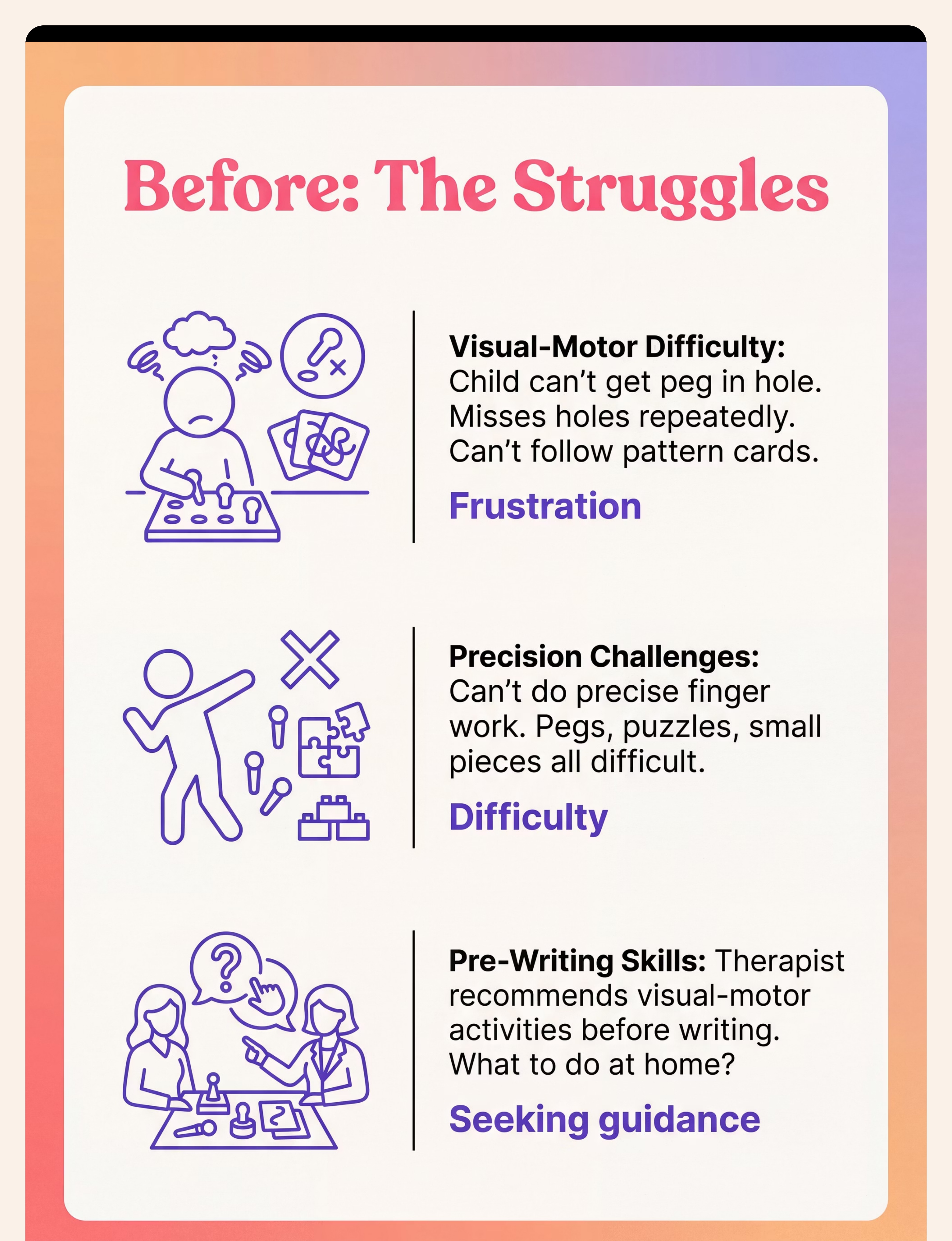
The Struggle (Before)

Visual-Motor Difficulty
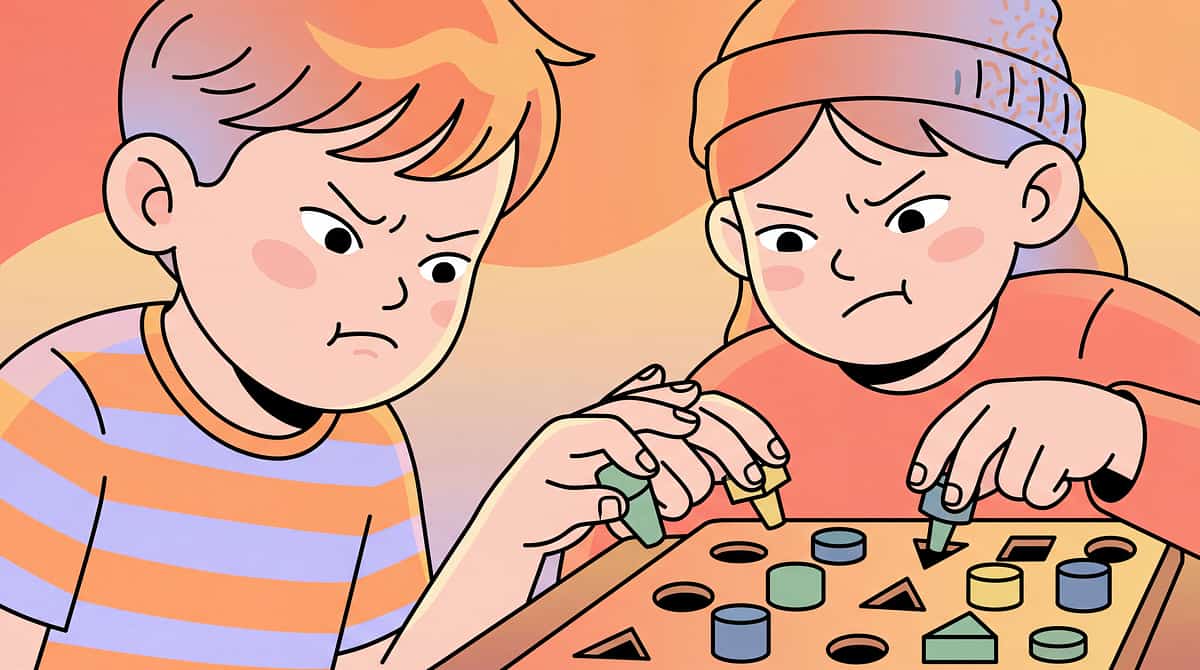
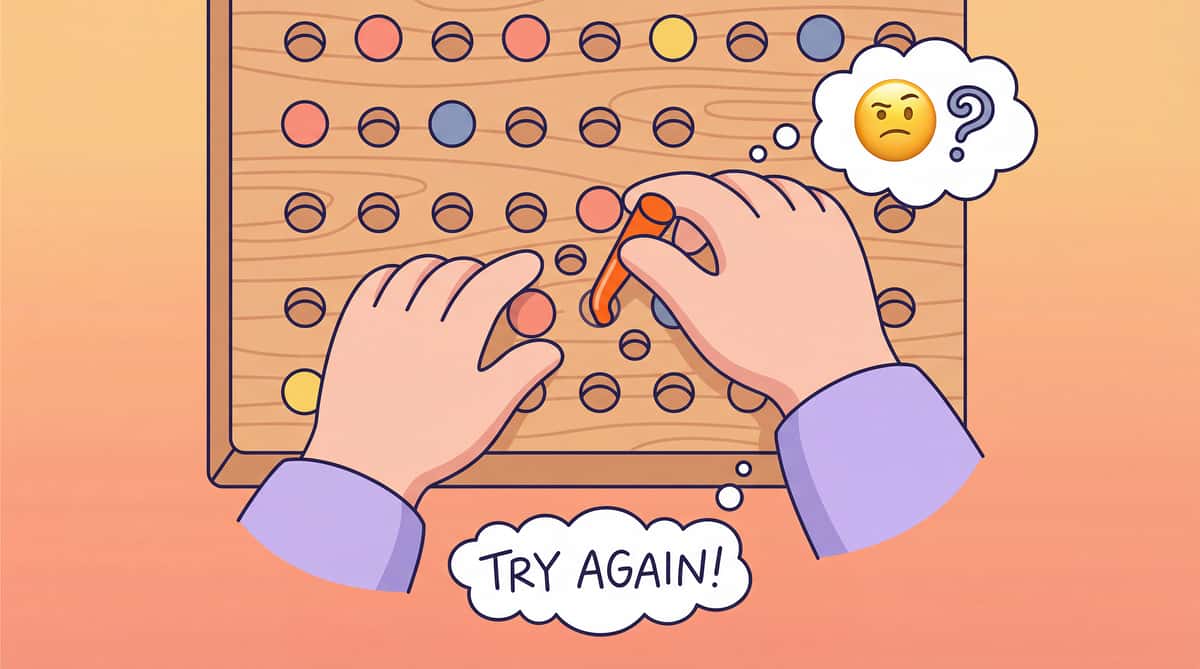
Situation: Child can't get peg in hole. Consistently misses holes on pegboard. Can't follow even simple pattern cards. Visual-motor integration is notably weak.
Experience: Every attempt ends in frustration. Peg misses hole repeatedly. Can't coordinate what eyes see with what hands do. Activities avoided.
Emotion:Frustration, avoidance, embarrassment

Precision Challenges
Situation: Child can't do precise finger work across activities. Pegs, puzzles, small pieces—all equally difficult. Fine motor precision fundamentally lacking.
Experience: Fingers won't do what brain commands. Can't manipulate small objects. Drops things frequently. Relies on whole-hand grasp for everything.
Emotion:Difficulty, struggle, resignation

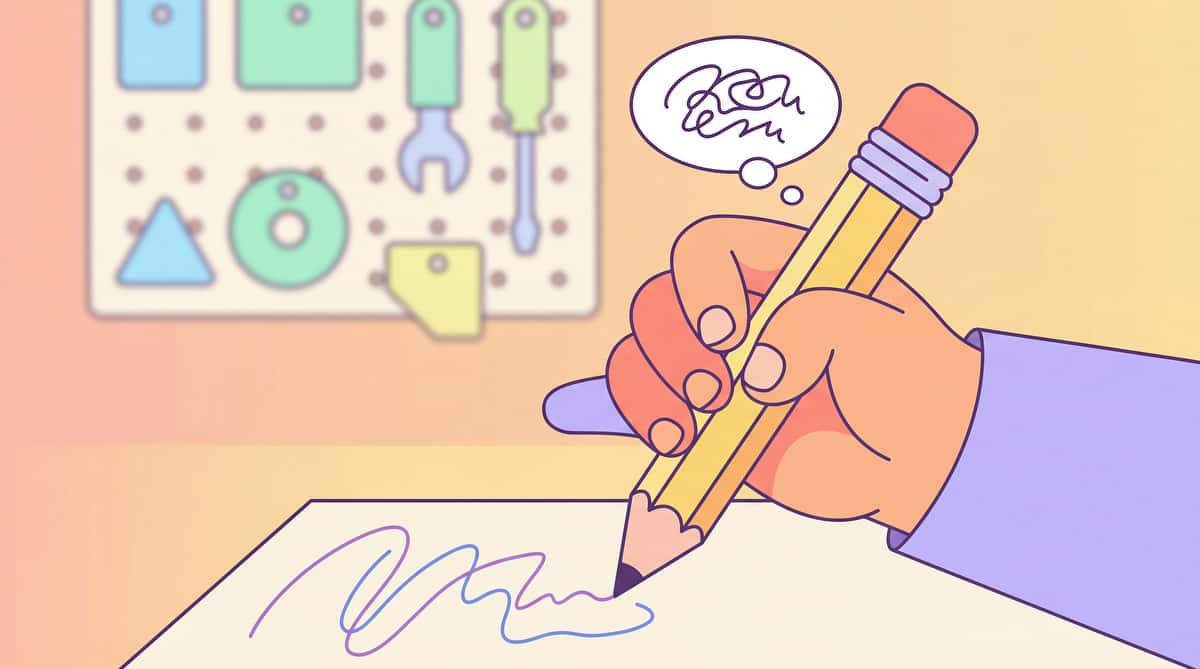
Pre-Writing Skills Gap
Situation: Therapist recommends visual-motor activities before writing instruction. Needs foundation building. Parents unsure what to do at home effectively.
Experience: Writing attempts are poor. Can't control pencil. Needs preparatory activities. What specific tools will help? How to practice at home?
Emotion:Seeking guidance, concerned about school readiness

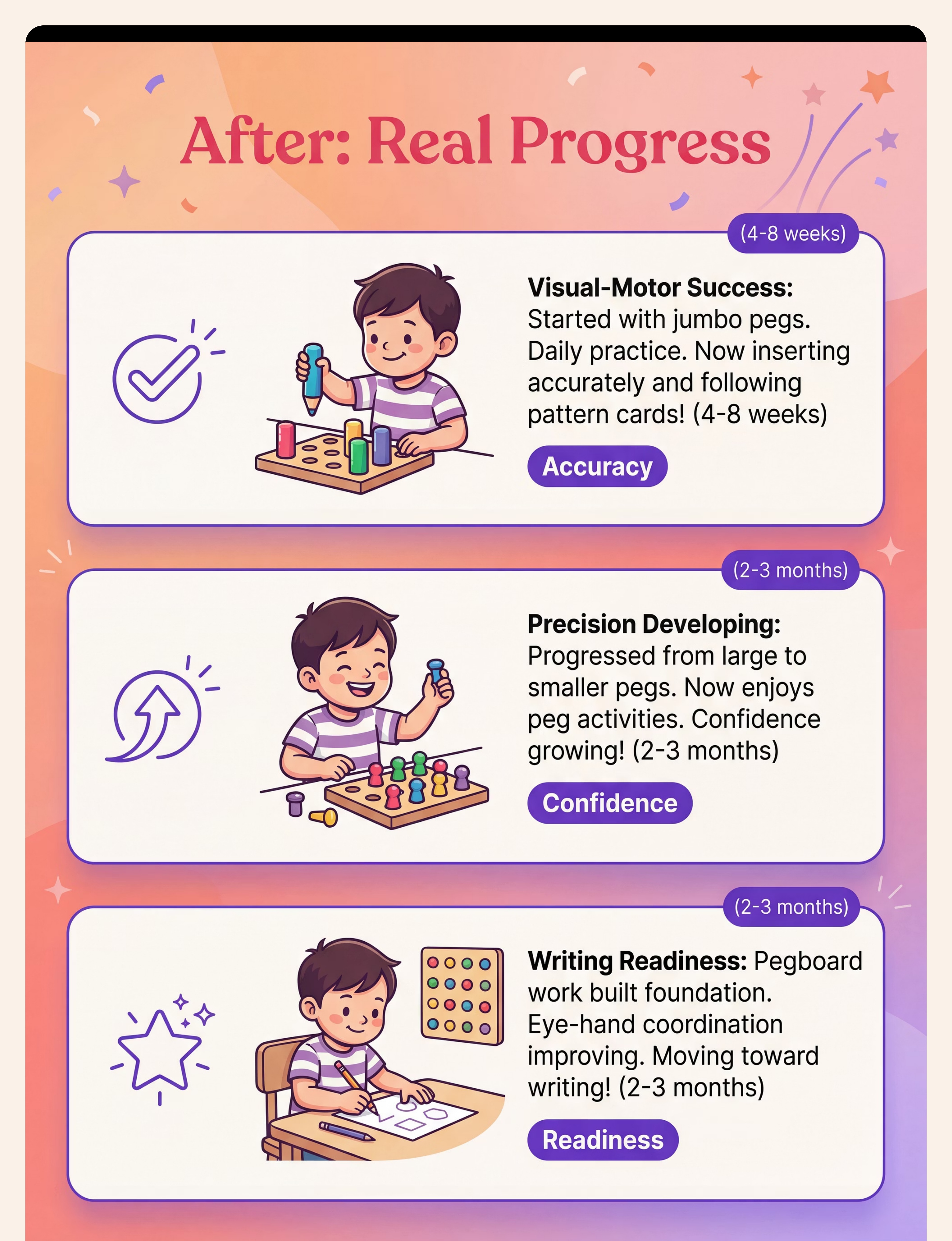
The Breakthrough (After)
Visual-Motor Success
Situation: Started with jumbo pegs for confidence building. Practiced daily for consistency. Now inserting pegs accurately in correct holes. Successfully following pattern cards. Visual-motor integration measurably improving.
Experience: Peg goes in hole smoothly. Can match pattern card designs. Eye-hand coordination working. Confidence growing with each success.
Emotion:Accuracy, success, pride in accomplishment
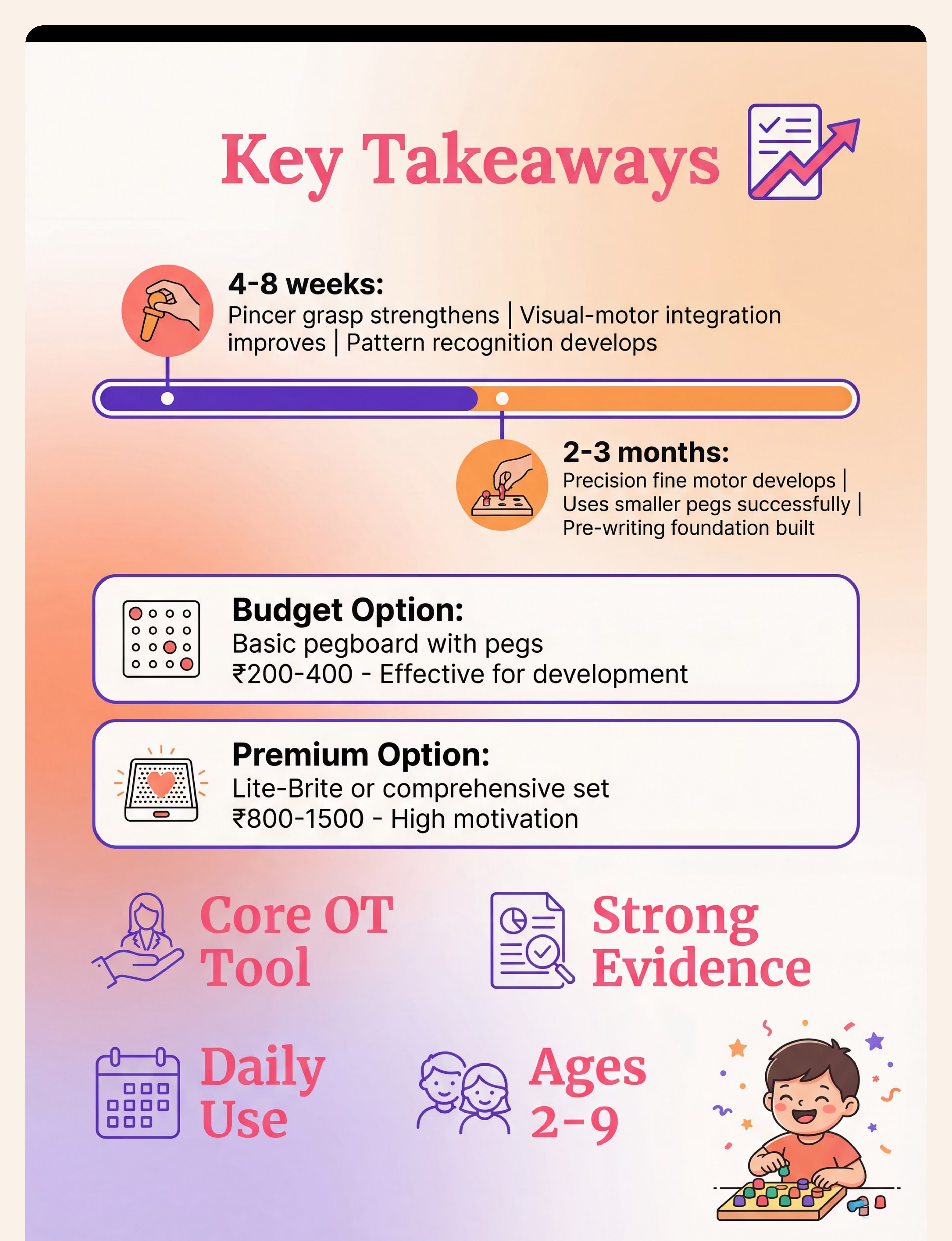
4-8 weeks
Precision Developing
Situation: Systematically progressed from large to smaller pegs. Precision steadily developing. Now enjoys peg activities instead of avoiding them. Confidence and competence growing together.
Experience: Fingers working precisely. Can manipulate small objects. Pincer grasp strengthening. Transferring skills to other activities.
Emotion:Precision, confidence, engagement
2-3 months
Pre-Writing Foundation Built
Situation: Consistent pegboard work building necessary foundation. Eye-hand coordination improving noticeably. Moving steadily toward writing readiness. Foundation solidifying.
Experience: Hand skills strengthening. Visual-motor integration better. Ready to progress to writing activities. Foundation secure.
Emotion:Progress, readiness, optimism about school
2-3 months

What to Expect (Realistic Timelines)
Pincer grasp strengthens
Thumb and forefinger coordination improves noticeably. Can pick up and manipulate smaller objects with control. Precision developing systematically.
4-8 weeks
Visual-motor integration improves
Connection between eyes and hands strengthening. Can coordinate visual input with motor output more effectively. Accuracy in placement increasing.
4-8 weeks
Precision fine motor develops
Refined control in finger movements emerging. Can handle progressively smaller pegs and more complex patterns. Foundation for advanced tasks building.
2-3 months
Pattern recognition improves
Can follow visual patterns with increasing complexity. Memory for sequences developing. Cognitive-motor integration strengthening together.
4-8 weeks
Uses smaller pegs successfully
Graduated successfully from large to small pegs. Precision sufficient for challenging work. Confidence in fine motor abilities established.
2-3 months
Pre-writing foundation built
Visual-motor skills sufficient for writing instruction. Pincer grasp strong enough for pencil control. Ready for next developmental stage.
2-3 months
Important: Timelines vary by child, starting skill level, practice consistency, and individual developmental trajectory. These are typical ranges, not guarantees. Some children progress faster, others need more time. Consistent practice and appropriate progression are key.

Is This Right for My Child? (2-Minute Check)
1
Does your child have difficulty with precise finger movements?
If yes, this indicates: Pegboards will systematically develop the precision finger control your child needs. Structured practice with graduated difficulty builds skill progressively.
Confidence score: 94%
2
Does your child struggle with eye-hand coordination?
If yes, this indicates: The peg insertion activity specifically targets visual-motor integration. Each successful insertion strengthens the eye-hand coordination pathway.
Confidence score: 92%
3
Does your child have difficulty following visual patterns?
If yes, this indicates: Pattern cards provide graduated practice in visual-spatial processing and replication. Skills transfer to many academic and daily tasks.
Confidence score: 88%
4
Does your child avoid small manipulatives?
If yes, this indicates: Starting with large pegs builds confidence without overwhelming. Systematic progression reduces avoidance while building competence.
Confidence score: 85%
Interpretation: 3+ 'yes' answers indicate a strong fit. Pegboards address these specific challenges with evidence-based, structured practice. Even 1-2 'yes' answers suggest pegboards would be beneficial as part of a comprehensive fine motor program.

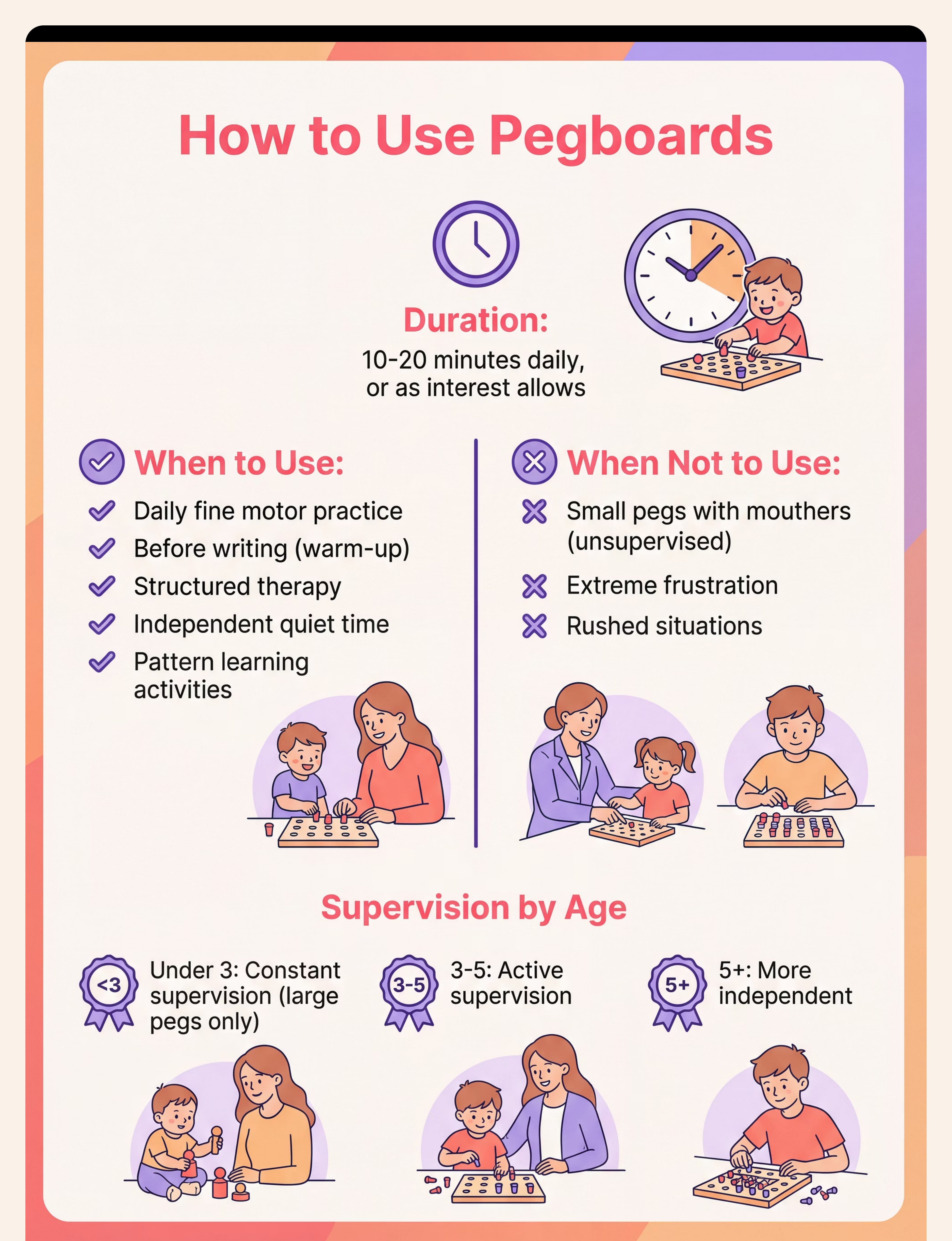
Usage Guide: When and How
✓ When to Use
Daily fine motor practice
Consistent brief sessions build skills systematically
Before writing (warm-up)
Prepares hands and visual-motor system for writing tasks
Structured therapy sessions
Core activity in occupational therapy programs
Quiet independent work time
Focused activity for developing concentration alongside motor skills
Pattern/color learning activities
Integrates cognitive concepts with motor practice
✗ When NOT to Use
Small pegs with mouthers (without supervision)
Choking hazard—use jumbo pegs only, with supervision
When child is extremely frustrated
Scale back difficulty; return to larger pegs; shorter sessions
Rushed situations
Requires focus and patience; not for time-pressured moments
Supervision by Age
Age Range | Supervision Level | Notes | |
Under 3 years | Constant supervision | Use large pegs only; watch for mouthing; direct interaction required | |
3-5 years | Active supervision | Check in regularly; ensure appropriate peg size; monitor frustration | |
5+ years | Can work more independently | Periodic check-ins; celebrate progress; adjust difficulty as needed |
Duration: 10-20 minutes per session, or as long as interest and engagement allow. Short, frequent sessions typically more effective than long, forced practice periods. Follow child's lead on duration.

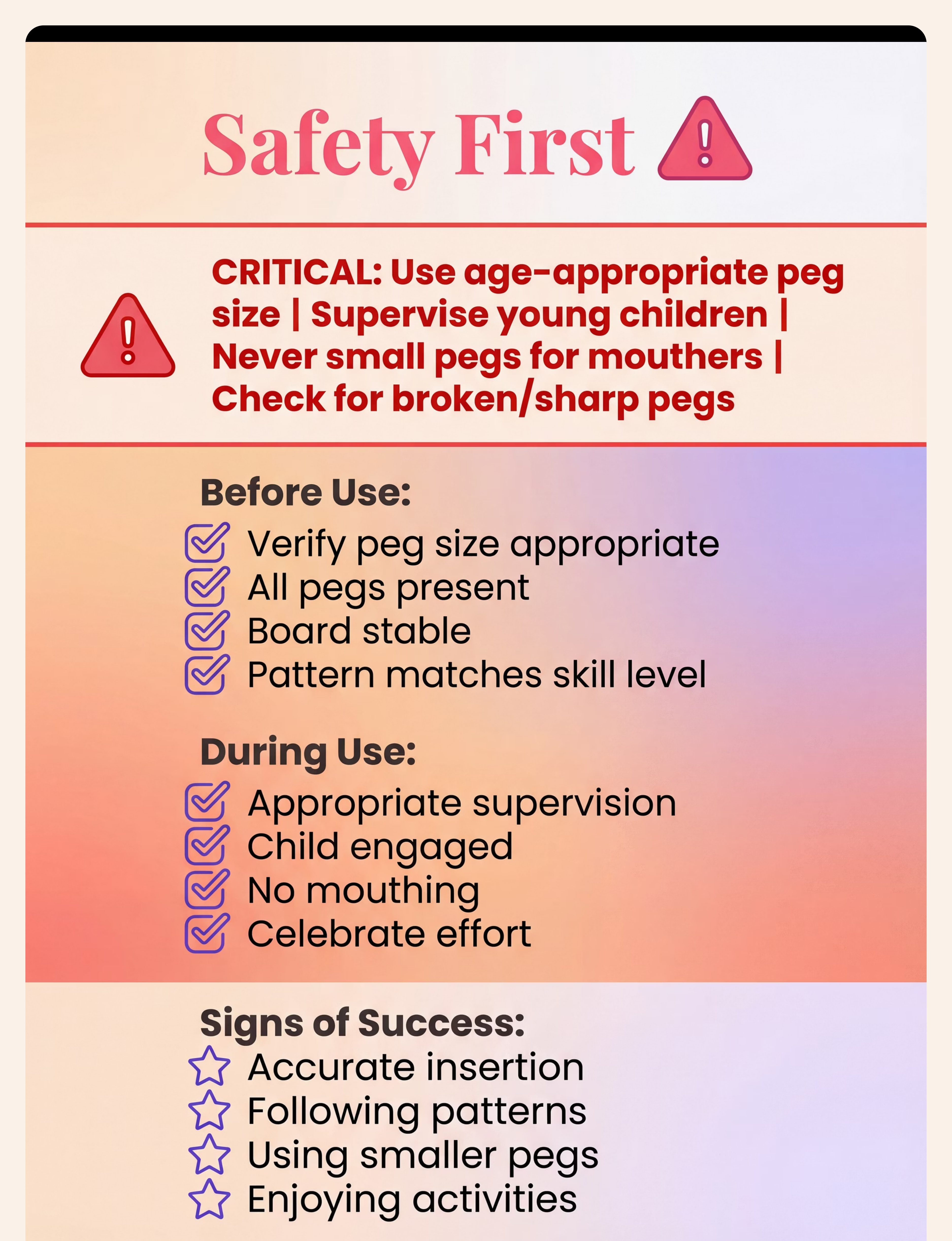
Safety First
Safety Guidelines by Age & Risk
Under 3 years (High Mouthing Risk) | Constant supervision; use only large pegs; vigilant against mouthing. | |
3-5 years (Moderate Risk) | Active supervision; ensure appropriate peg size; monitor for frustration. | |
5+ years (Low Risk) | Can work more independently with periodic check-ins; adjust difficulty as needed. | |
Damaged Equipment | Immediately discard broken or sharp pegs; do not use damaged boards. |
Key Safety Tips & Warnings
- Peg size is crucial: must be appropriate for the child's age to mitigate choking hazards, especially for those who mouth objects.
- Never leave young children unsupervised with pegboards, particularly if small pegs are in use.
- Regularly inspect all pegboard components for damage (e.g., sharp edges, cracks) and replace or discard as necessary.
- Ensure pegs are stored securely to prevent loss, as incomplete sets can lead to frustration and reduced learning value.
- Provide a stable work surface to avoid accidents and minimize child frustration during play.
- Observe the child for signs of frustration; if difficulty is too high, simplify the activity or take a break.

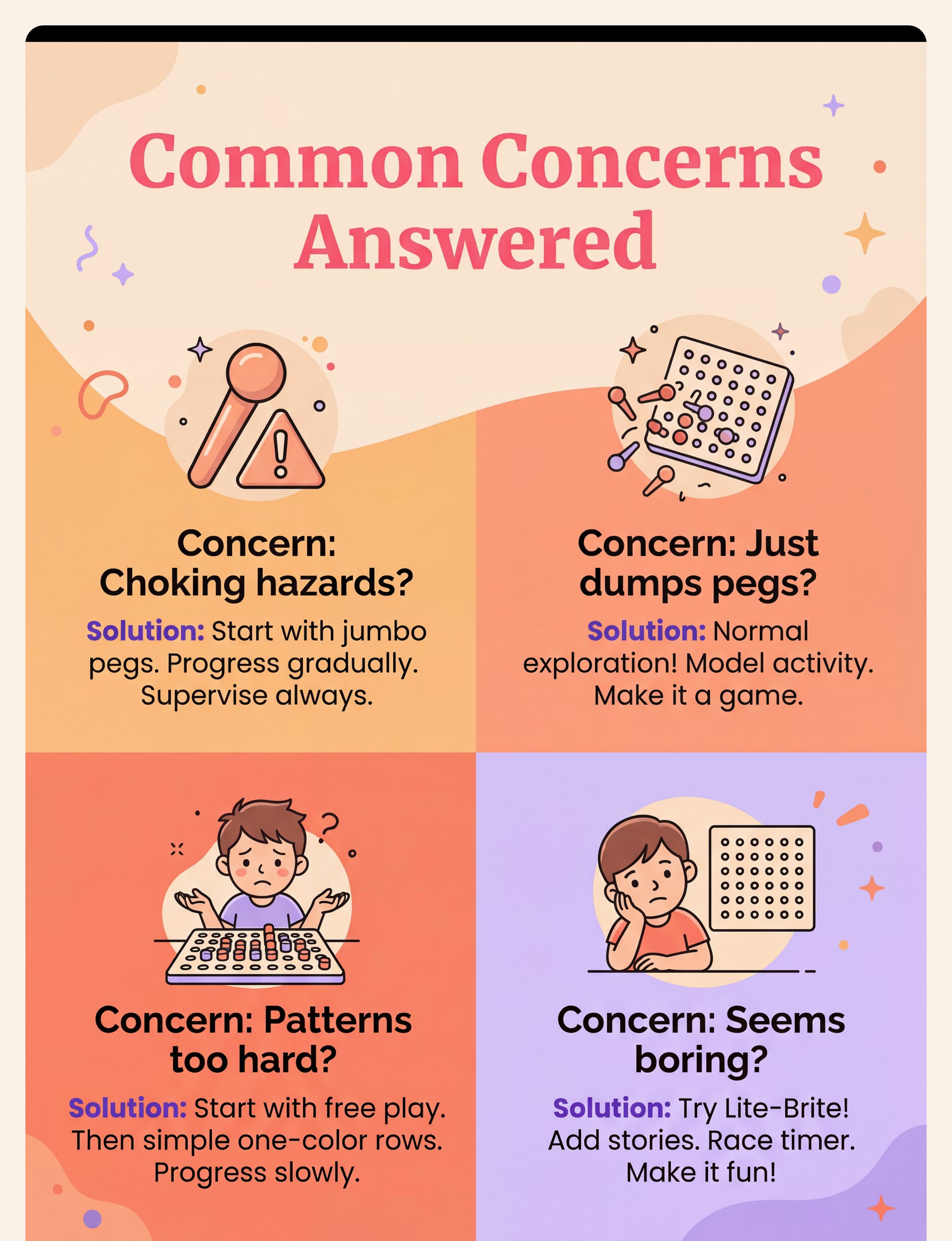
Common Questions (Honest Answers)
Q: Small pegs are choking hazards—how do I keep my child safe?
A: Start with jumbo pegs for young children or those who mouth objects. Progress to smaller pegs only when developmentally appropriate and mouthing behavior has stopped. Supervision is always required. Many pegboard sets specifically come with age-appropriate large pegs designed for safety.
Try this: Jumbo pegs (1+ inch) for children under 3 or those who mouth; constant supervision for all young children.
Q: They just dump the pegs out—they don't actually do the activity. Is this normal?
A: Completely normal exploration phase! Let them dump and explore initially—this is learning too. Then model peg insertion yourself. Use 'my turn, your turn' turns. Make it a game with simple challenges. Light-up Lite-Brite boards create built-in motivation that often reduces dumping.
Try this: Allow exploration phase; model the activity; use turn-taking; try gamification; consider motivating Lite-Brite version.
Q: The patterns are too hard and my child gets frustrated. Should I push through?
A: No—start without patterns! Free creation is valuable practice. Then introduce very simple patterns: one row of one color. Progress gradually as skills build. Many children need weeks or months of insertion practice before pattern work is appropriate. Match difficulty to current skill level.
Try this: Free play first for skill building; then simplest patterns (single row, one color); gradual progression only.
Q: My child finds pegboards boring. How can I make them more interesting?
A: Motivation is key! Lite-Brite style boards light up—huge motivator. Create pictures of favorite characters or animals. Race against a timer. Add a story element. Let them teach you. The right approach transforms 'boring' into engaging. Sometimes the version matters more than the activity.
Try this: Lite-Brite for built-in motivation; create favorite characters; use timer games; storytelling integration.

Investment Guide
Budget Option
Basic Pegboard with Pegs
Cost: ₹200-400
What you get: Standard pegboard with appropriate-sized pegs. May include basic pattern cards. Typically plastic construction. Effective for core fine motor development without extra features.
Note: Highly effective for skill building. The simple version works just as well for developing pincer grasp and visual-motor skills. Don't let budget constraints stop you—basic pegboards are therapeutically sound.
Premium Option
Lite-Brite or Comprehensive Set
Cost: ₹800-1,500
What you get: Light-up pegboard (Lite-Brite style) with visual reward system, or comprehensive peg set with multiple sizes, extensive pattern cards, storage case. Often branded quality (Melissa & Doug, Learning Resources).
Brands: Melissa & Doug, Learning Resources, Lite-Brite
Note: Worth it for children who need extra motivation or families wanting a complete, durable system. Lite-Brite's lighting creates engagement that can overcome resistance.
Overall Price Range: ₹150–1,500 (USD $2–18)Best starting point: If budget allows, start with a mid-range standard pegboard (₹300-500) with pattern cards. This provides good quality and features without premium price. If motivation is a concern, invest in Lite-Brite. If budget is very tight, basic pegboard (₹200-300) works therapeutically.

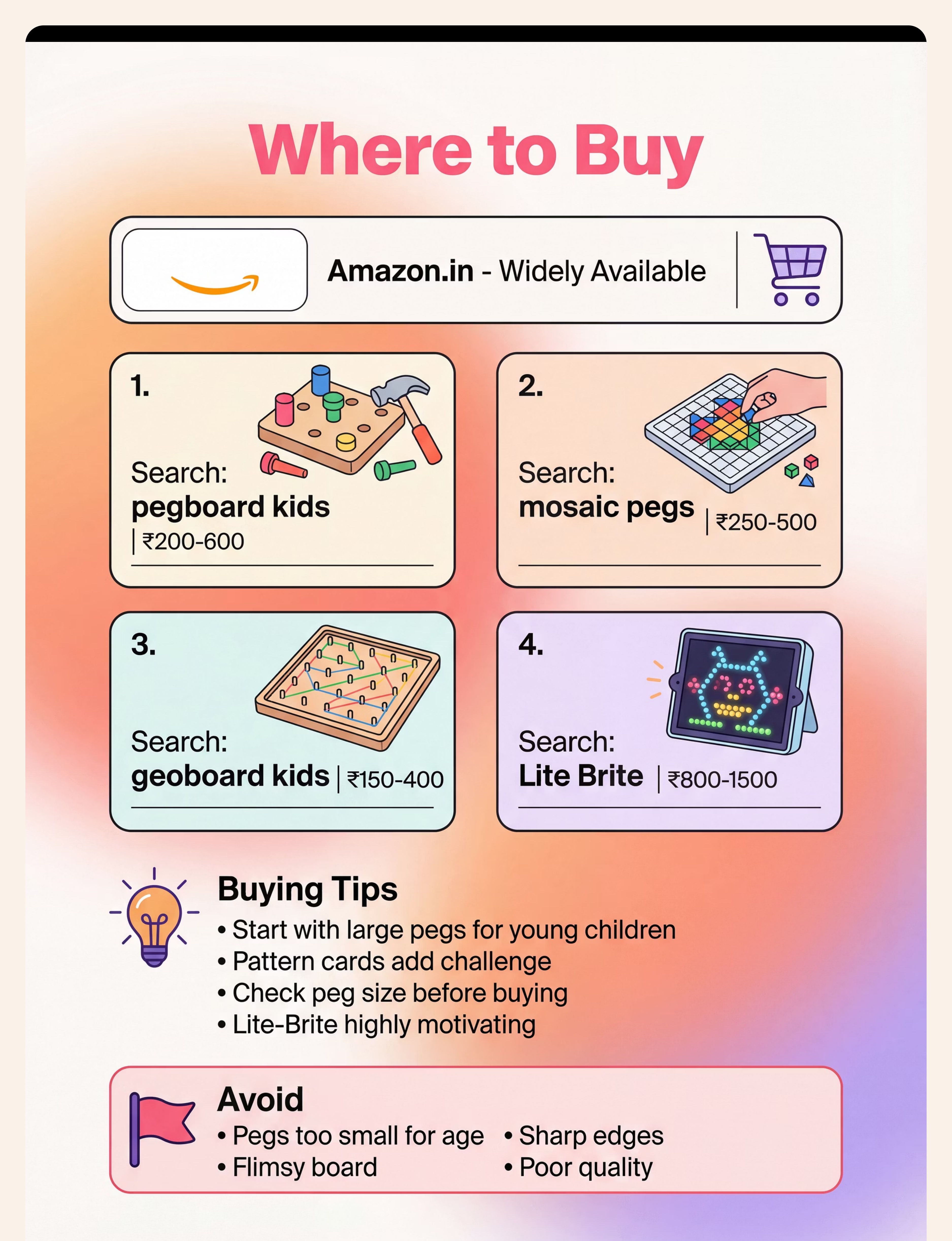
Where to Buy in India
Availability: Widely Available across online and offline channels in India
Platform | Search Term | Price Range | Notes | |
Amazon.in | "pegboard kids" | ₹200-600 | Wide selection, good reviews | |
Amazon.in | "mosaic pegs" | ₹250-500 | Small peg options | |
Amazon.in | "geoboard kids" | ₹150-400 | Rubber band version | |
Amazon.in | "Lite Brite" | ₹800-1,500 | Premium motivational option | |
Toy stores | "peg board fine motor" | ₹200-500 | See before buying |
✓ Buying Tips
- Start with large pegs for young children—verify peg size before purchase
- Pattern cards add significant cognitive challenge—look for sets that include them
- Geoboards are versatile, integrating math concepts with fine motor work
- Always check peg size specifications before buying—photos can be misleading
- Lite-Brite is highly motivating but more expensive—worth it for resistant children
- Read reviews for durability and peg quality—some sets have sharp edges
🚩 Red Flags
- Pegs too small for your child's age or skill level—check dimensions carefully
- Flimsy board that moves during use—causes frustration and reduces skill building
- Sharp peg edges that could scratch or injure—check reviews for safety complaints
- Poor quality that breaks quickly—cheap materials waste money

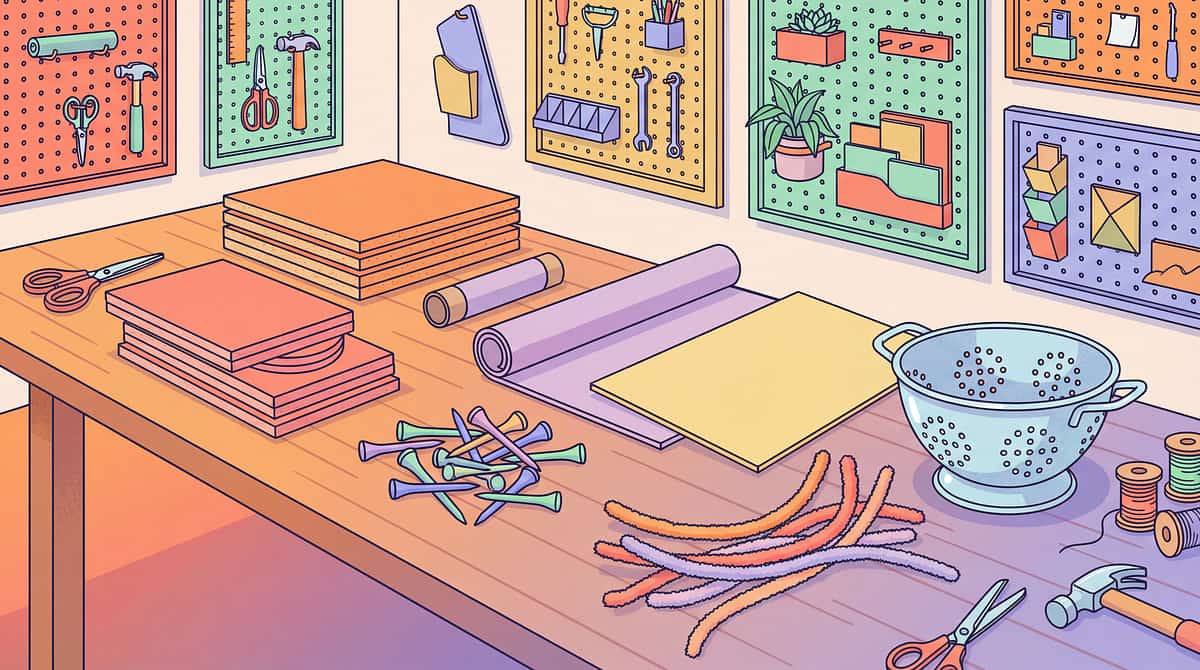
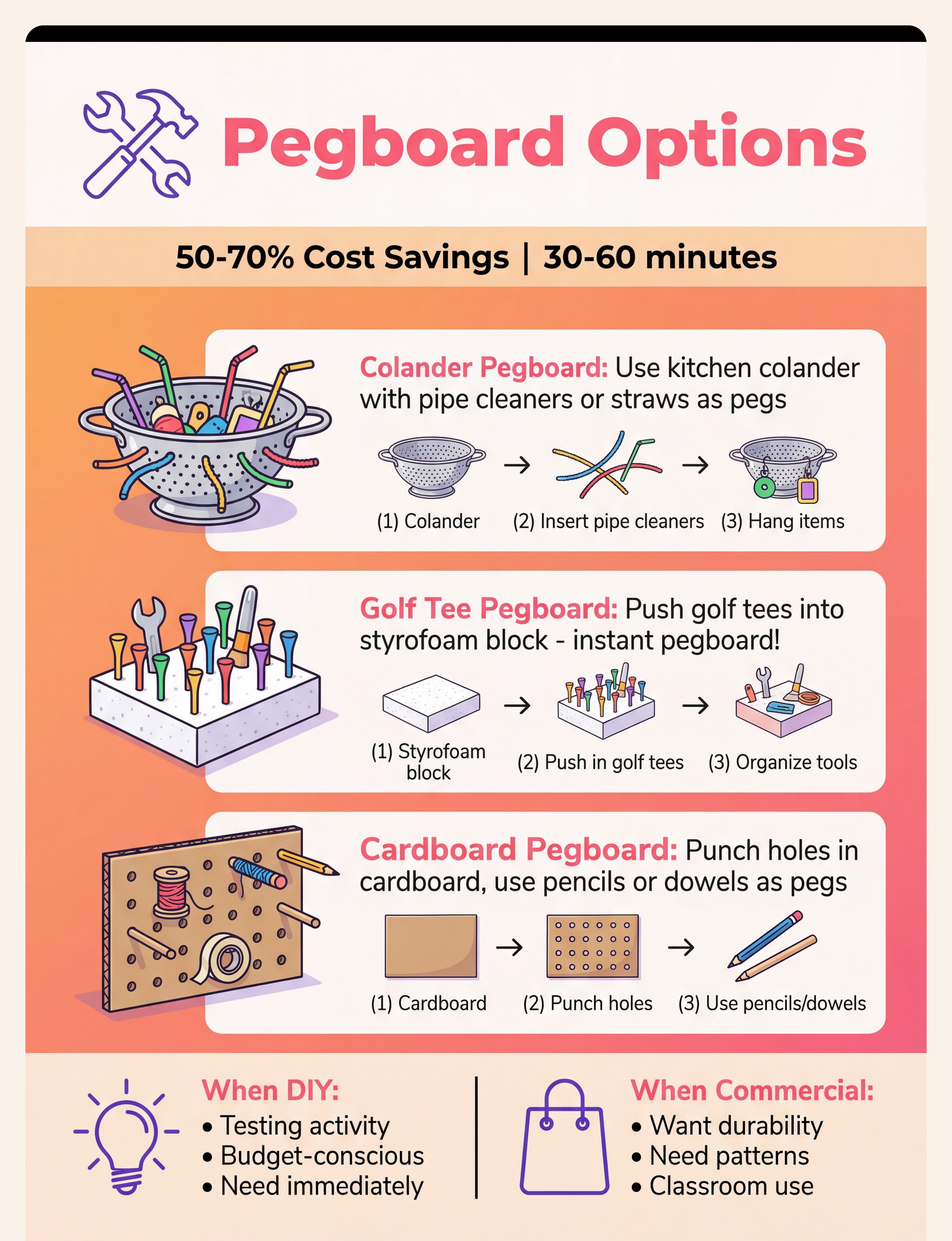
DIY Alternative (Save 50-70%)
Feasibility: Medium
Time: 30-60 minutes
Savings: 50-70%
Materials Needed
- Styrofoam block or thick cardboard base
- Golf tees (work perfectly as pegs)
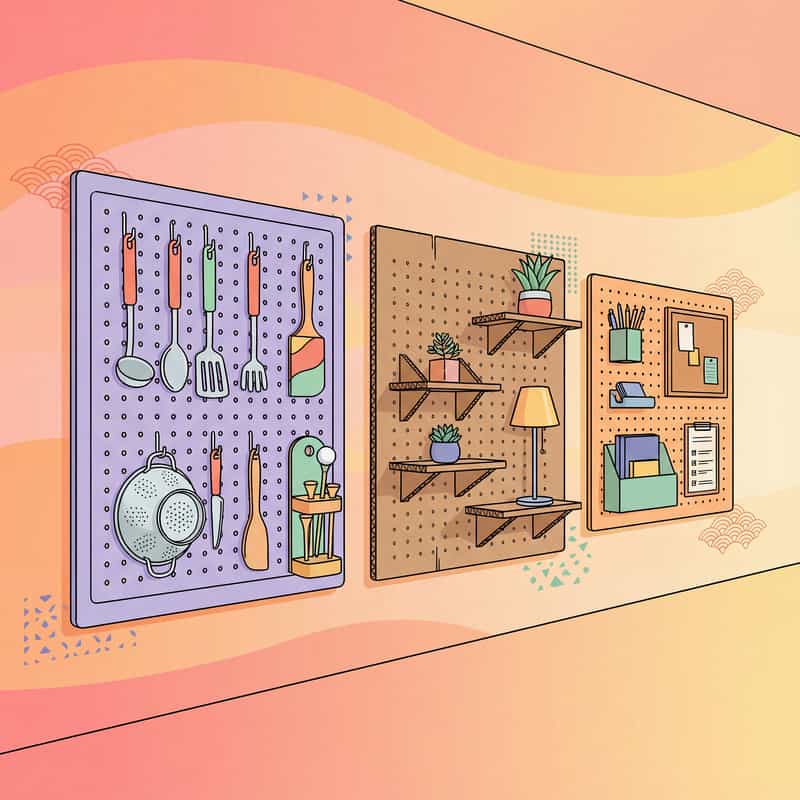
- Metal colander with holes (instant pegboard)
- Pipe cleaners or straws for colander version
- Markers or colored tape for color-coding

Pro Tips
Colander method is fastest and requires no construction. Golf tees in foam create satisfying resistance. Color variety increases engagement. Start simple and add complexity.
Step-by-Step Instructions
Colander Pegboard
Use a kitchen colander with pipe cleaners or straws inserted through holes for an instant pegboard.
Golf Tee Pegboard
Push golf tees into a styrofoam block to create peg insertion practice. Tees are a perfect size and shape.
Cardboard Pegboard
Punch holes in thick cardboard and use pencils, dowels, or craft sticks as pegs.
Pattern Cards
Create simple pattern cards using paper and markers to match your DIY pegs.
Color-Coding
Use markers or colored tape to color-code your DIY pegs for an added cognitive challenge.
Gather Materials
Collect styrofoam, cardboard, golf tees, colander, pipe cleaners, and markers.
Prepare Bases
Decide on colander, foam, or cardboard for your pegboard base.
Insert Pegs
Add golf tees or other items to create the pegs.
Create Patterns
Design simple pattern cards or color-code pegs for engagement.
Ready to Play
Your custom DIY pegboard is complete and ready for use.
DIY vs Commercial Comparison
When to DIY
- Testing if child enjoys the activity before investing
- Budget-conscious families wanting to start immediately
- Need an activity immediately without ordering delay
- Want to involve child in creation process
When to Buy Commercial
- Want durability and professional appeal for long-term use
- Need comprehensive pattern cards for graduated difficulty
- Want Lite-Brite motivation for resistant child
- Classroom or clinic use requiring durability and appearance
Tradeoffs: DIY versions are less durable and may not look as appealing, but they work therapeutically and cost a fraction of commercial options. Many families start with DIY to confirm interest, then invest in commercial versions for long-term use. Both approaches build the same skills.
Preview of pegboards mosaic pegs Therapy Material
Below is a visual preview of pegboards mosaic pegs therapy material. The pages shown help educators, therapists, and caregivers understand the structure and content of the resource before use. Materials should be used under appropriate professional guidance.


Share this resource
Help others discover thisLink copied!

Measuring Success & Next Steps
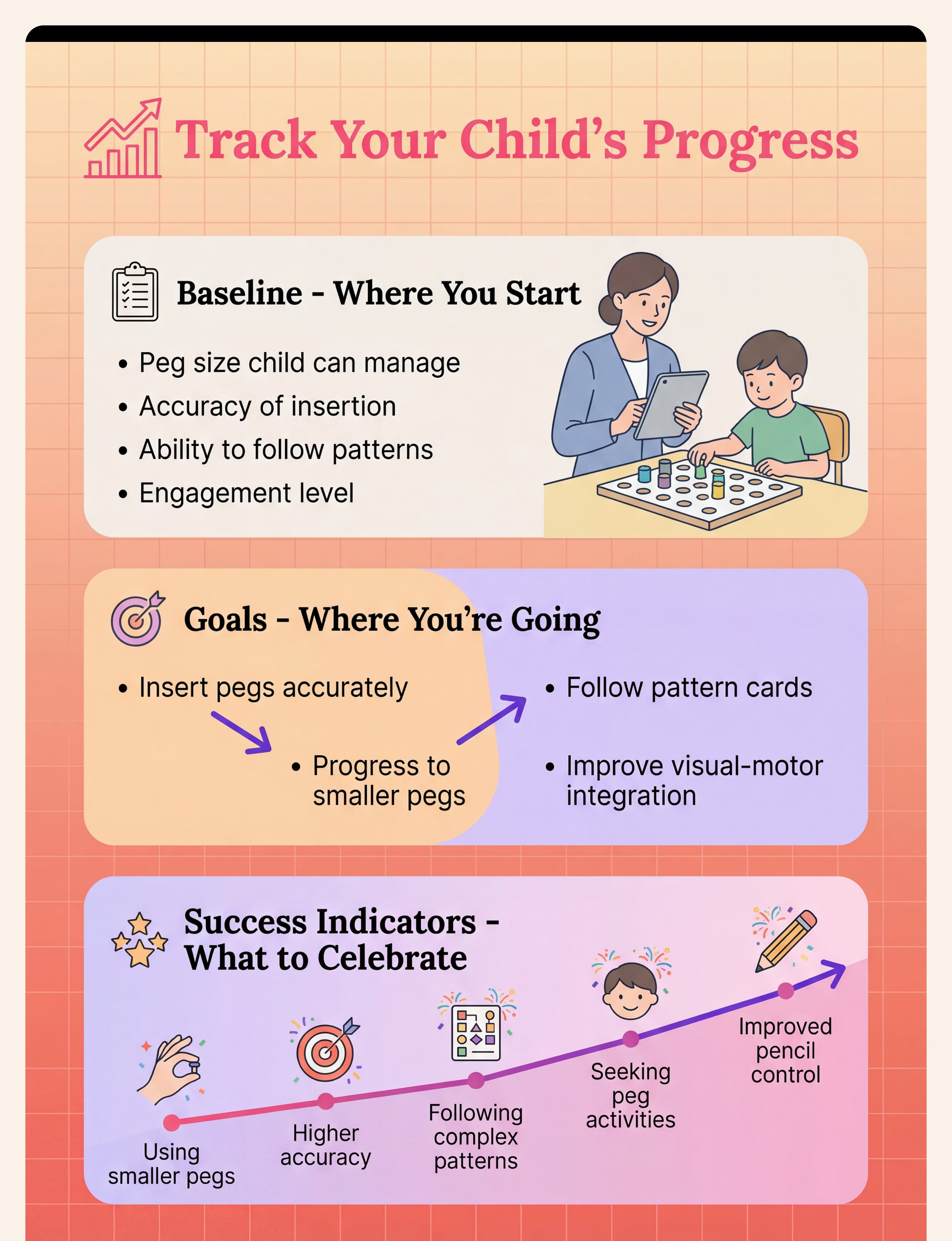
Track Progress
Baseline (What to measure first)
- Largest peg size child can manage currently
- Accuracy of peg insertion in holes
- Ability to follow any patterns (if applicable)
- Engagement level and frustration tolerance
Goals (What to work toward)
- Child will insert pegs accurately into correct holes
- Child will progress to smaller peg sizes systematically
- Child will follow pattern cards with increasing complexity
- Visual-motor integration will improve measurably
Success Indicators (How you'll know it's working)
- Successfully using smaller pegs than at baseline
- Higher accuracy in peg placement
- Following increasingly complex patterns independently
- Actively seeking pegboard activities instead of avoiding
- Improved pencil control in writing activities (transfer effect)
Complete the Kit: Pair It With...
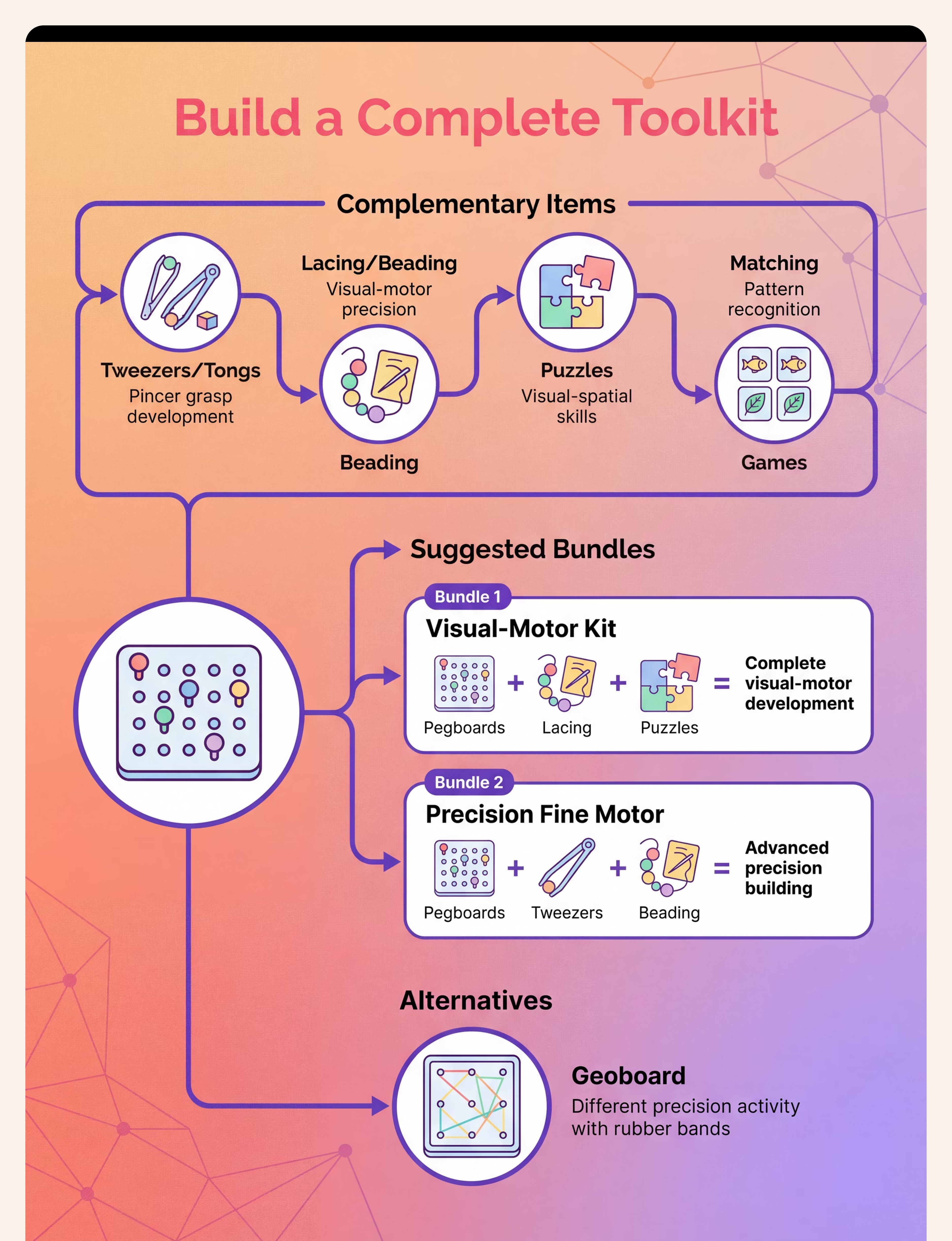
Complementary Tools
These tools work synergistically with pegboards to build comprehensive fine motor skills:
- Tweezers/Tongs (ID: 7.4) — Additional pincer grasp development with different resistance
- Lacing/Beading (ID: 7.2) — Visual-motor precision practice with threading component
- Puzzles (ID: 7.8) — Visual-spatial skills complementing pattern work
- Matching Games (ID: 8.1) — Pattern recognition in different format
Recommended Bundles
Visual-Motor Kit: Pegboards (7.5) + Lacing/Beading (7.2) + Puzzles (7.8)
Use case: Comprehensive visual-motor development program
Precision Fine Motor Kit: Pegboards (7.5) + Tweezers/Tongs (7.4) + Playdough/Clay (7.3)
Use case: Systematic precision skill building across modalities
Quick Summary
AI Summary: Pegboards develop pincer grasp, visual-motor integration, and precision through structured peg manipulation and pattern activities. Core Kit tool (Rank 1) with strong evidence base and versatile application across settings.
pegboard
pegs
visual-motor
precision
patterns
fine motor
OT
SpEd
core-kit
Common searches: pegboard autism, mosaic pegs kids, fine motor pegs, geoboard children, visual motor pegboard, Lite Brite therapy, pincer grasp pegs
Get Support
FREE National Autism Helpline
Phone: 9100 181 181
Languages: 16+ Indian languages supported
Website: pinnacleblooms.org
Speak with trained professionals who can guide you in tool selection, usage strategies, and connection to local therapy resources.
Platform Integration
Pegboards integrate seamlessly with Pinnacle Blooms Network's comprehensive assessment and therapy system:
- AbilityScore® identifies visual-motor and fine motor patterns requiring intervention
- TherapeuticAI® prescribes specific pegboard activities matched to assessment results
- EverydayTherapyProgramme™ includes structured pegboard work in daily routines
- Fine Motor Index tracks precision development over time with objective measures
Disclaimer: This is educational information designed to support informed decision-making. Always consult qualified occupational therapists, speech-language pathologists, or pediatricians for personalized assessment and recommendations. Individual results vary based on child's unique profile, consistency of practice, and other factors. Pegboards are tools to support development, not medical treatments.