



Tool ID: 7.7
Tool ID: 7.7
OT + SpEd
Strong Evidence
Rank #1
Daily Use
₹500–5,000
Essential Tools for Developmental Growth
Building Toys (LEGOs, Blocks, Construction)
Constructive fine motor and spatial reasoning system
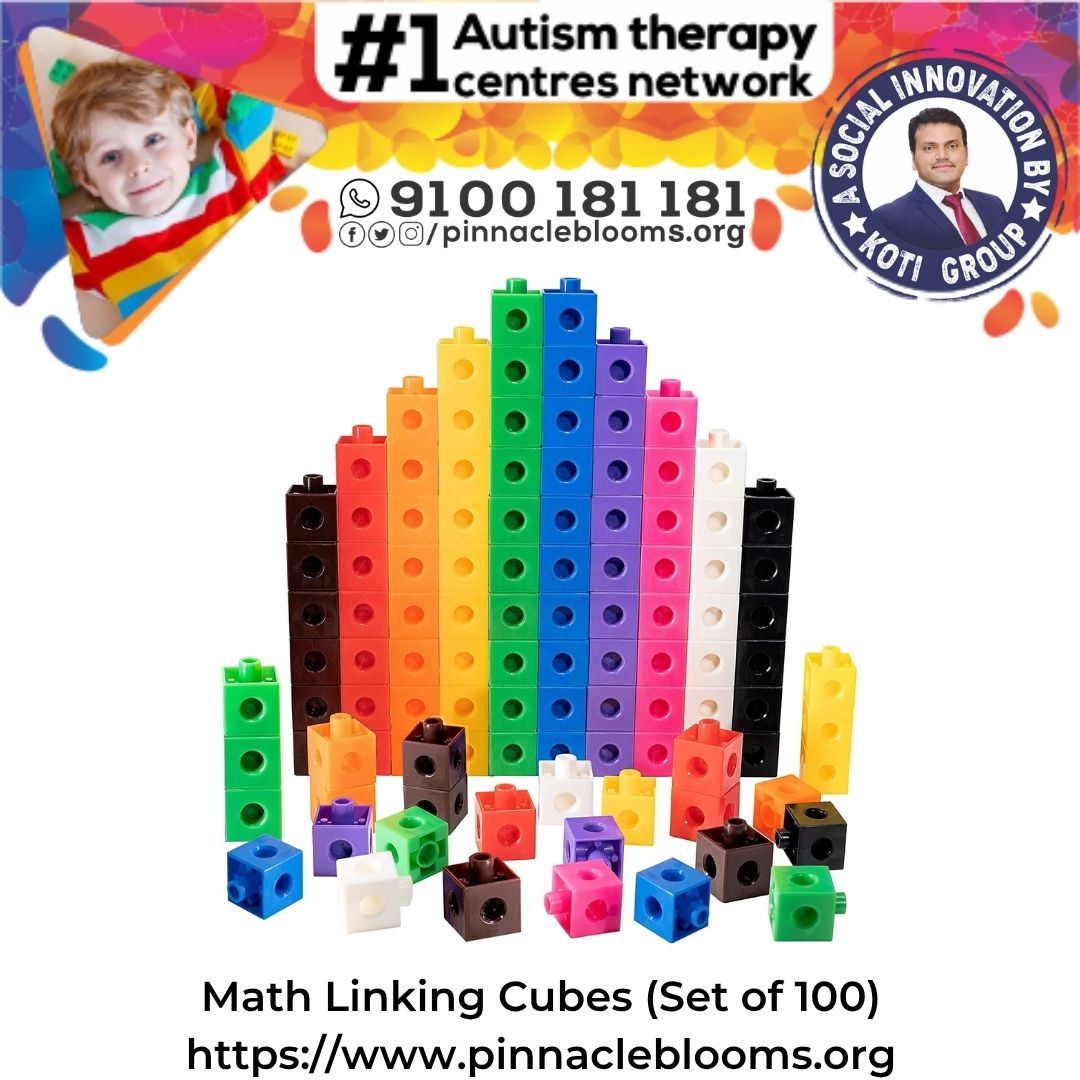
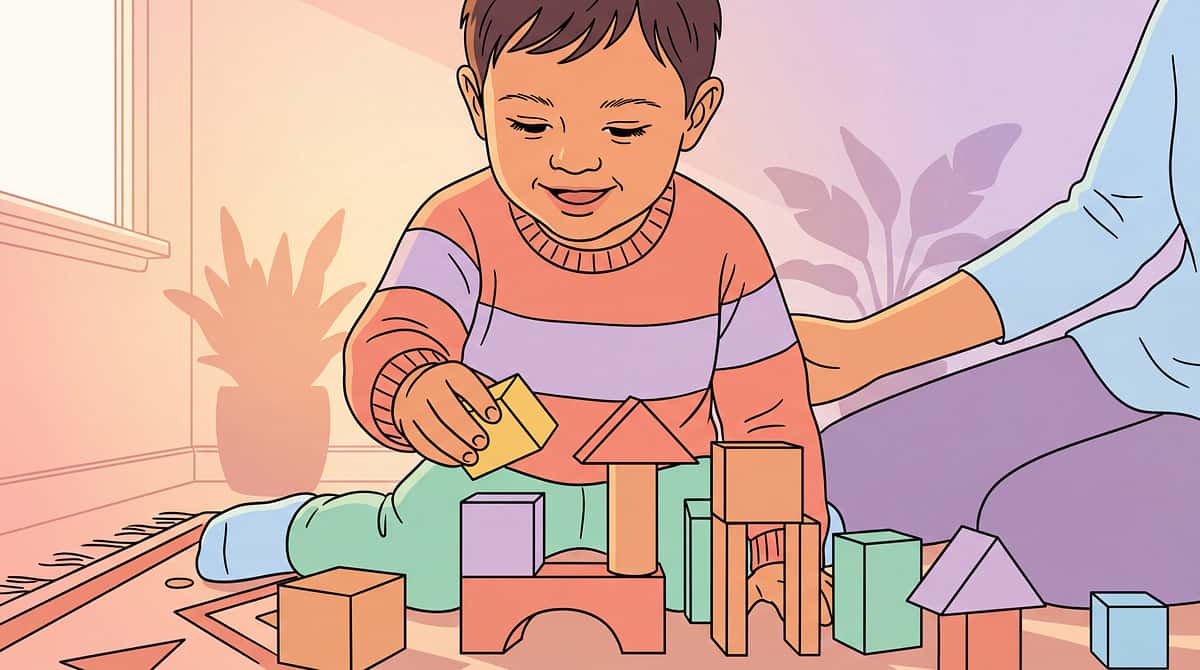
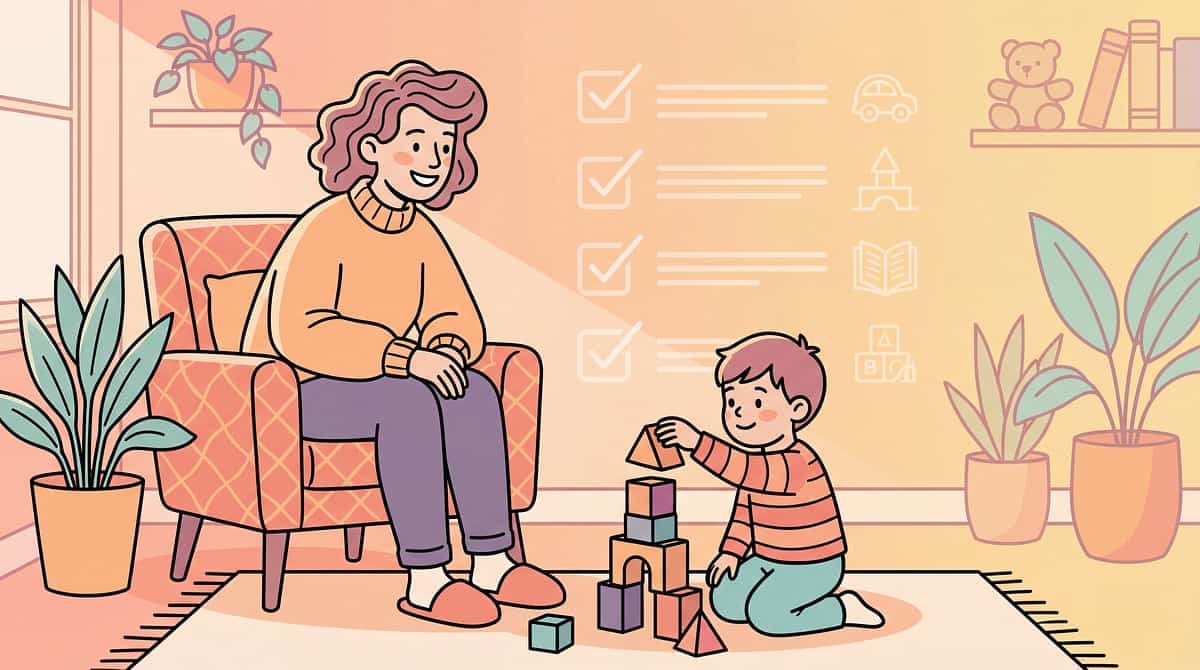
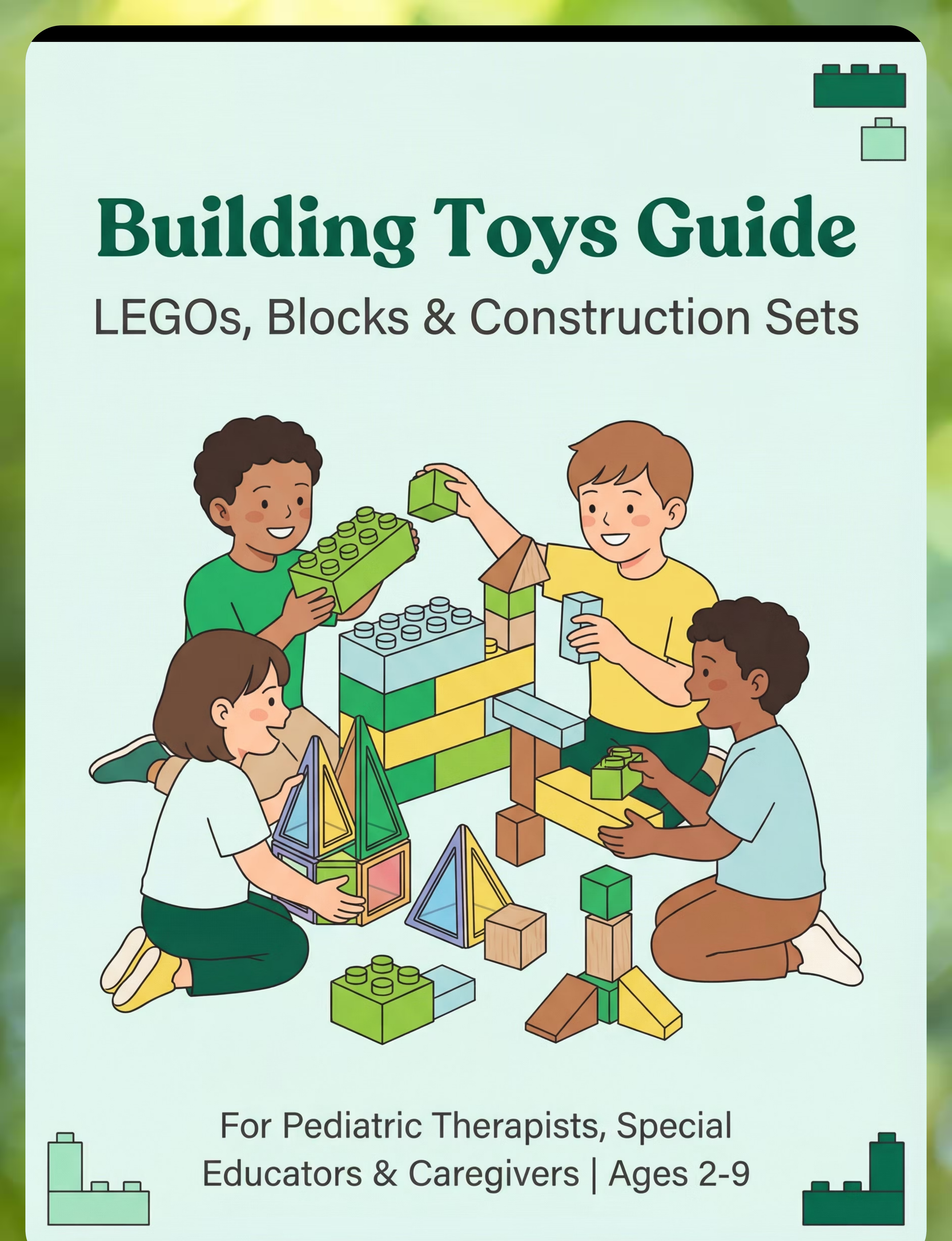
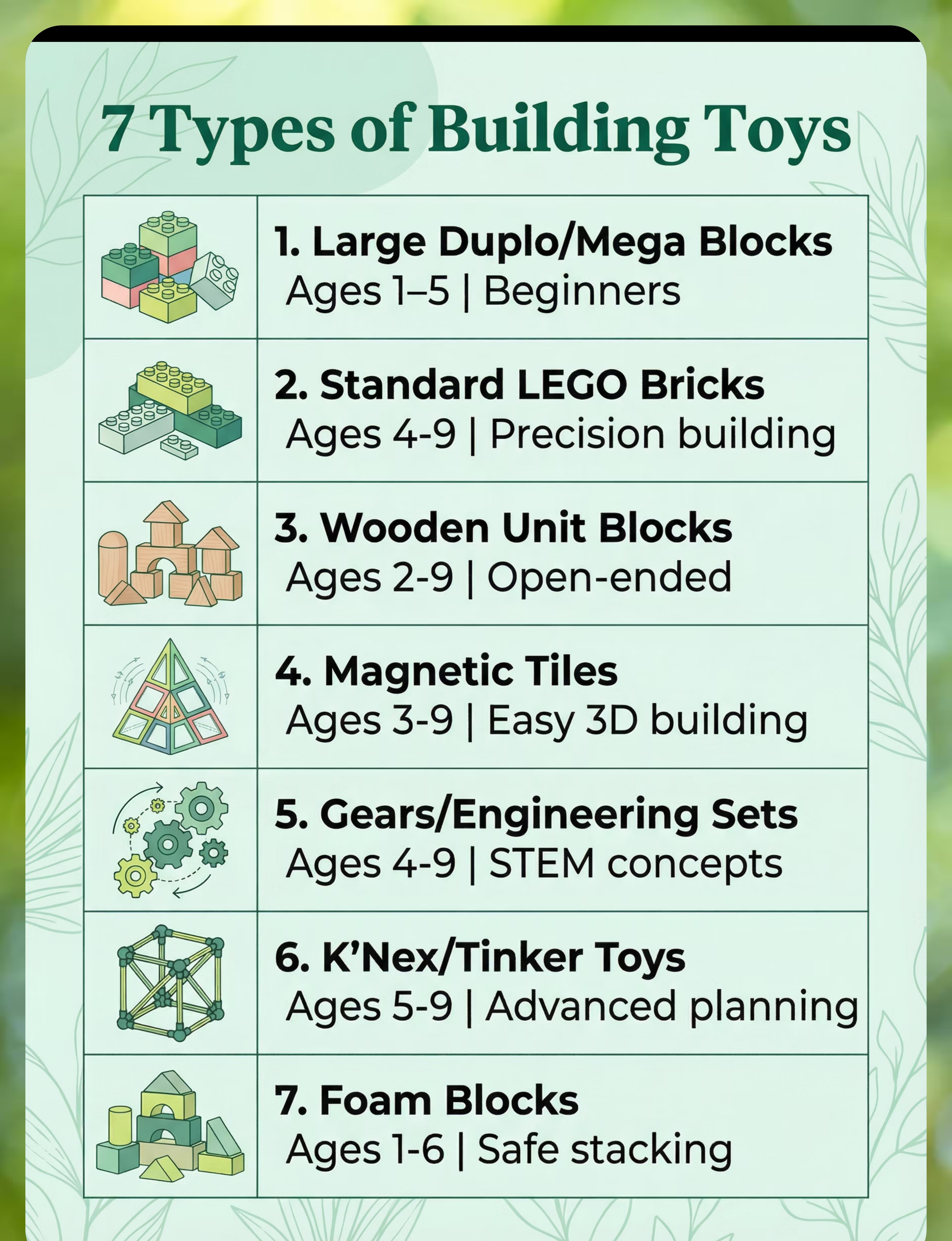
Building toys are comprehensive developmental tools that strengthen fine motor precision, bilateral coordination, spatial reasoning, and motor planning through engaging, creative construction play. From large Duplo blocks for beginners to intricate LEGO sets for advanced builders, these toys provide endless opportunities for skill development across multiple developmental domains.
Who This Helps
Developing Hand Strength & Precision
Manipulating and connecting building pieces naturally strengthens finger muscles and refines grasp patterns for improved fine motor skills.
Learning to Follow Instructions
Building sets with picture guides teach sequential thinking, bilateral coordination, and the ability to follow multi-step instructions effectively.
Practicing Spatial Reasoning
Three-dimensional construction develops mental rotation, spatial visualization abilities, and creative problem-solving skills.
Fine Motor Precision
Bilateral Coordination
Spatial Reasoning
Motor Planning
Following Instructions
Problem-Solving
Creativity
Ages 1-9 years
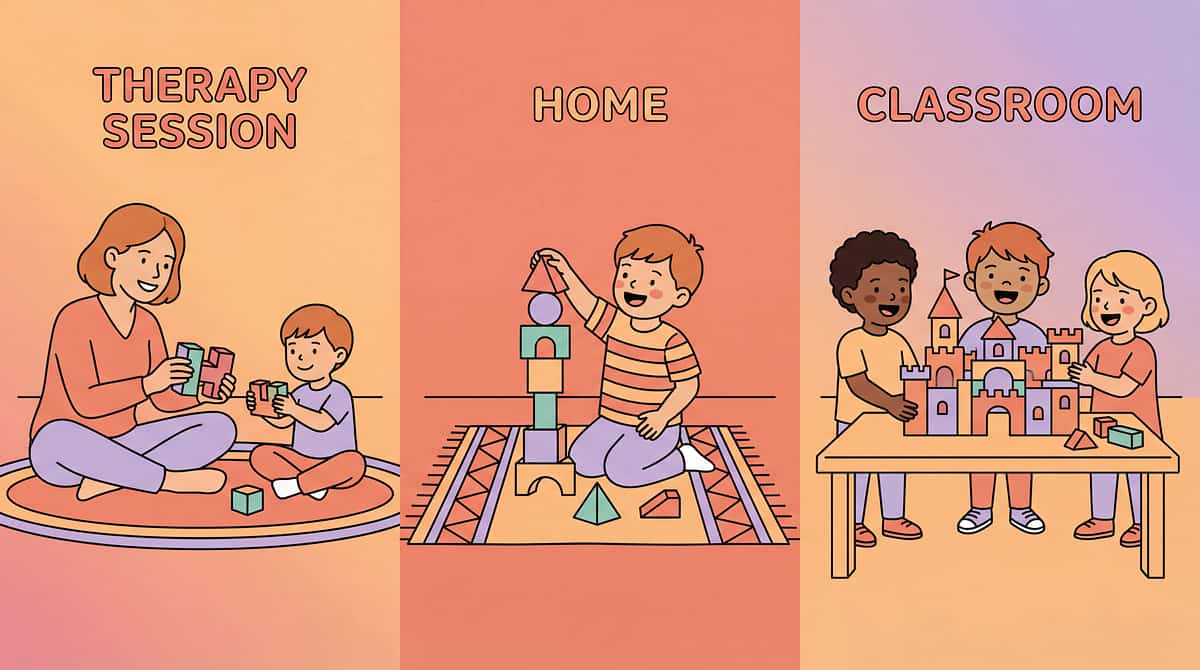
Home
School
Clinic
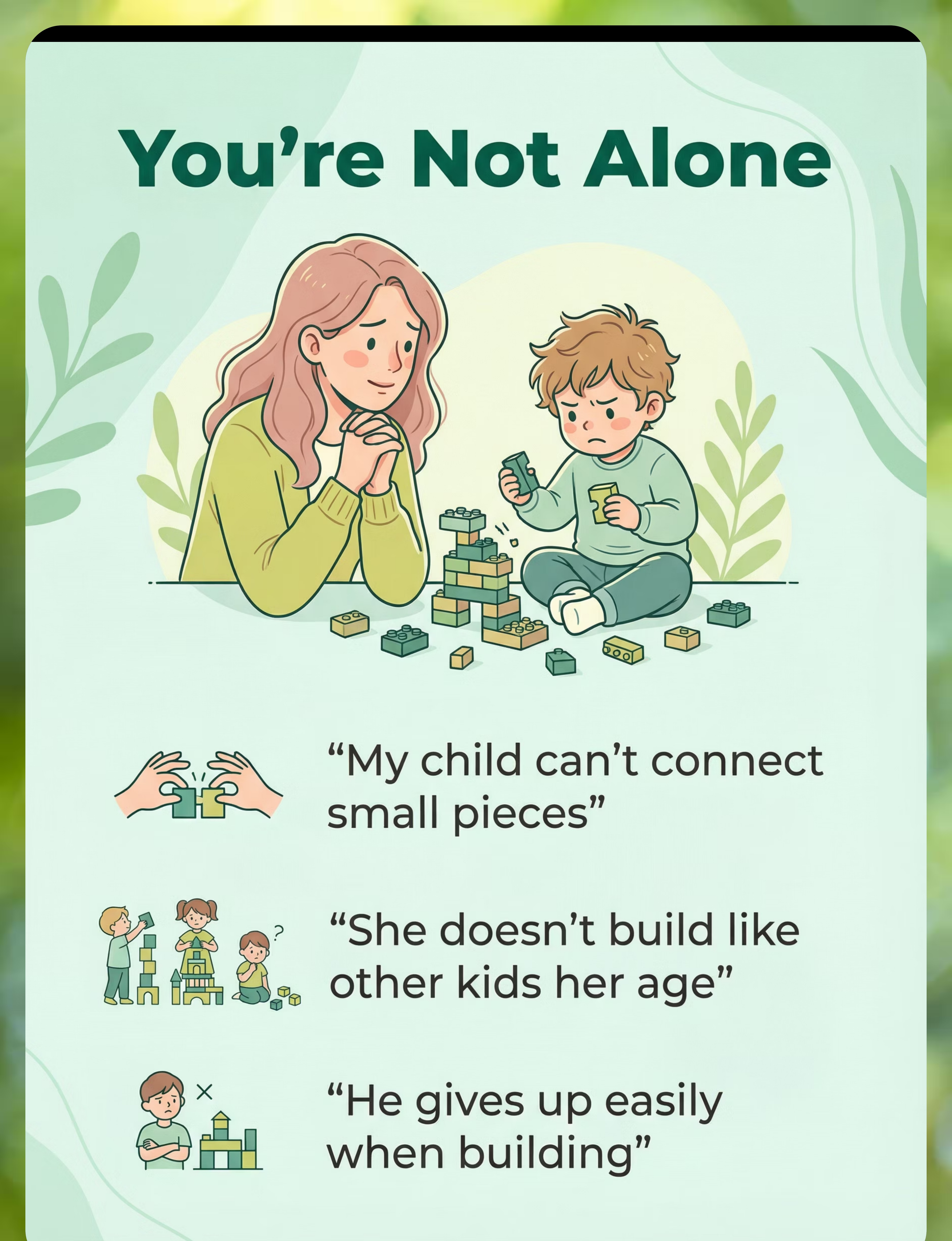
Does This Sound Familiar?
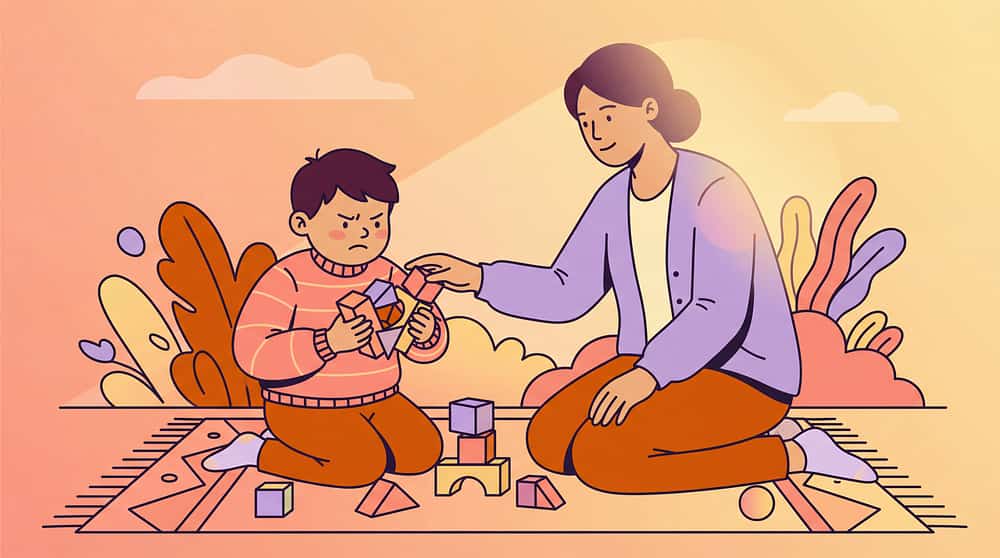
"My child can't connect small pieces - his hands just aren't strong enough yet and it leads to so much frustration."
"She doesn't build like other kids her age. While they're making elaborate structures, she's still just stacking single towers."
"He has no interest in construction toys at all. He just ignores them and I worry he's missing important developmental opportunities."
"She can't follow building instructions. The picture guides are too complex and she gives up immediately."
"His fine motor skills are so weak compared to his classmates. I see the gap growing."
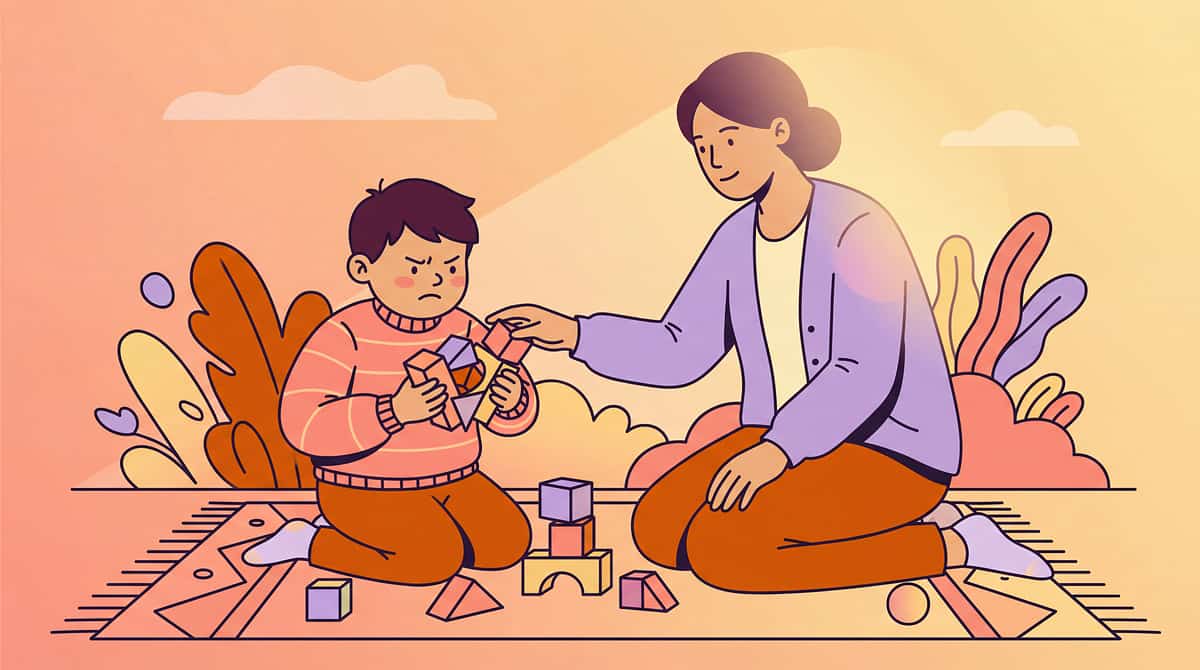
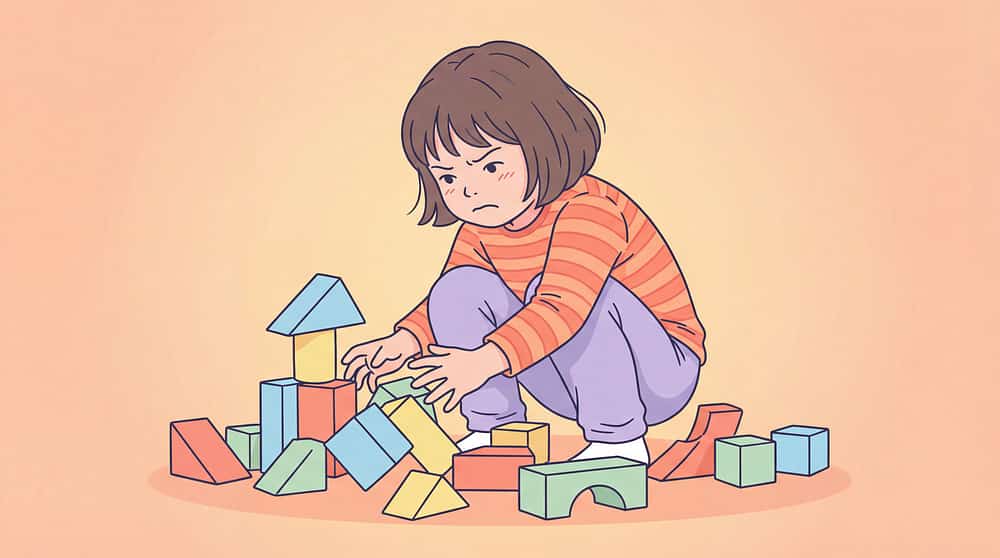
"She gives up so easily when building. One failed attempt and she's done - the frustration tolerance just isn't there."
You're not alone. These are common challenges that many families face. The good news? With the right building toys matched to your child's current level, and systematic practice, these skills develop beautifully over time.
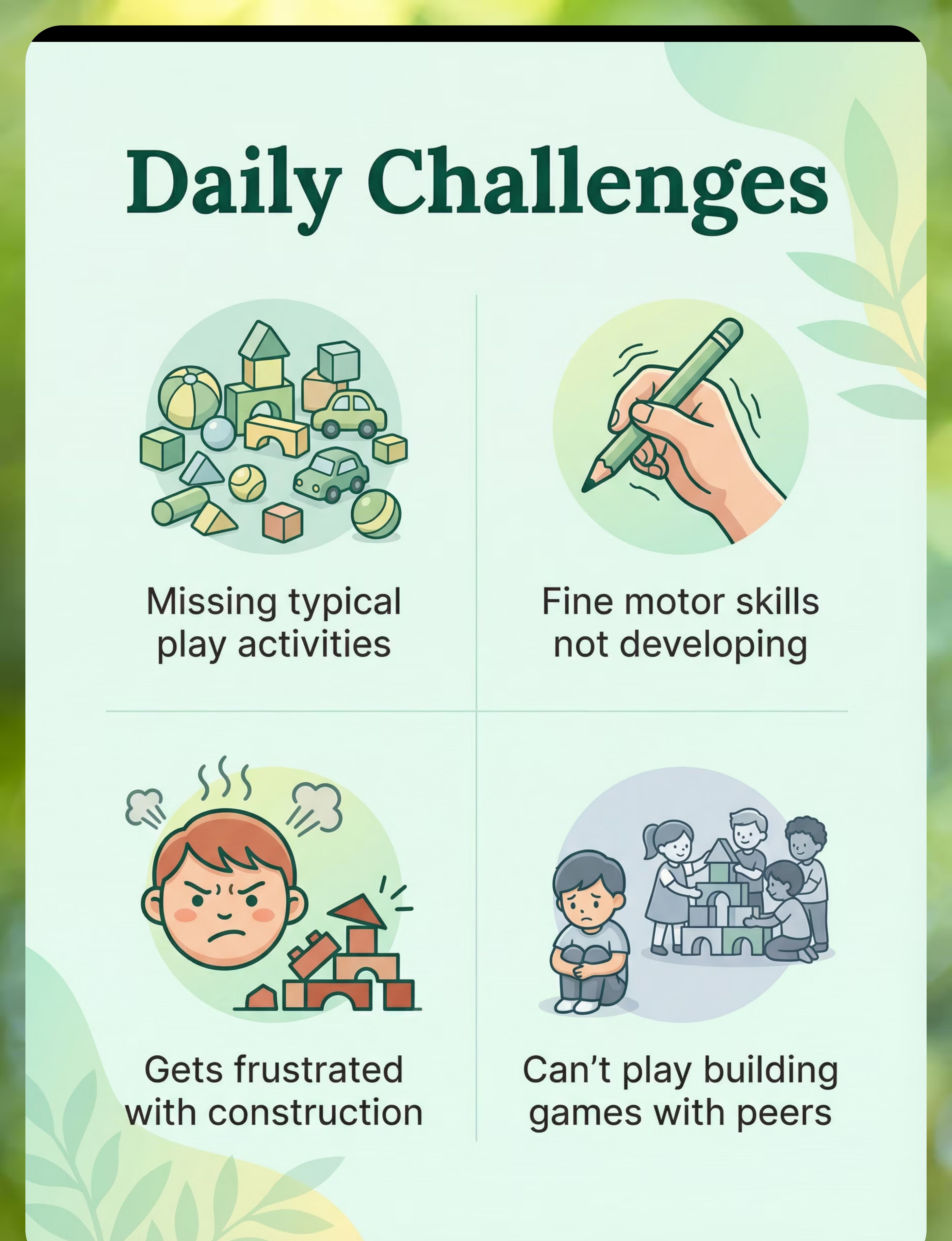
A Day Without the Right Support
Morning Play Time
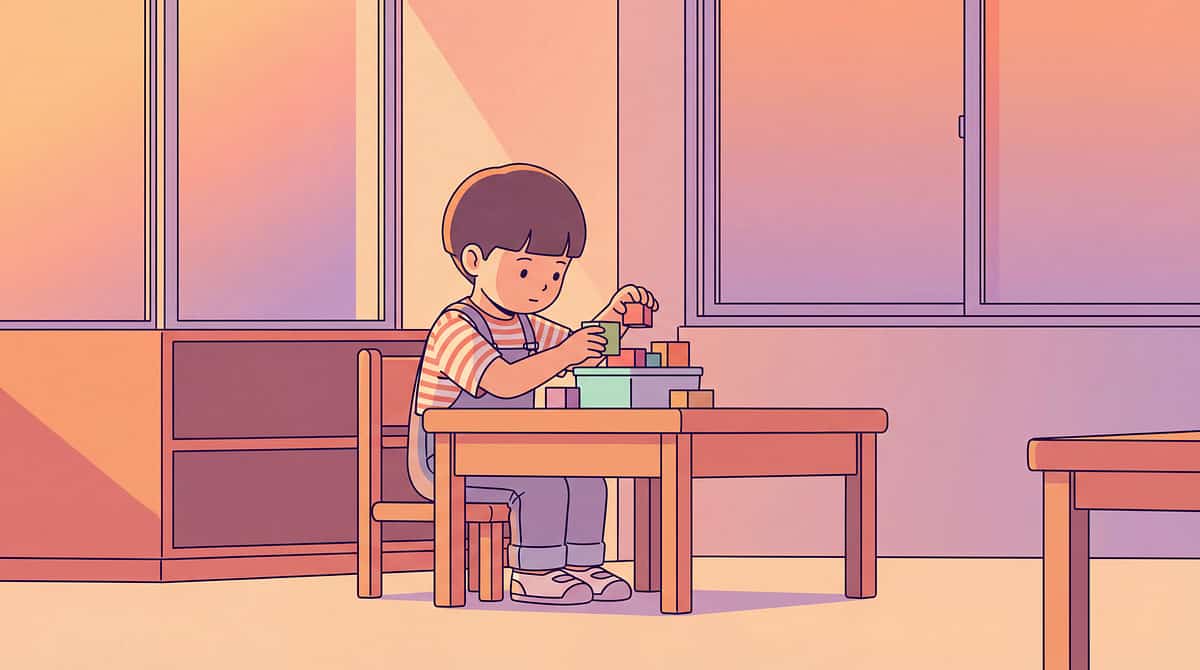
Peers building elaborate structures during free play. Your child stands back, watching, unable to join because the pieces won't connect. Missing out on social connection and skill-building through play.
Transitions & Activities
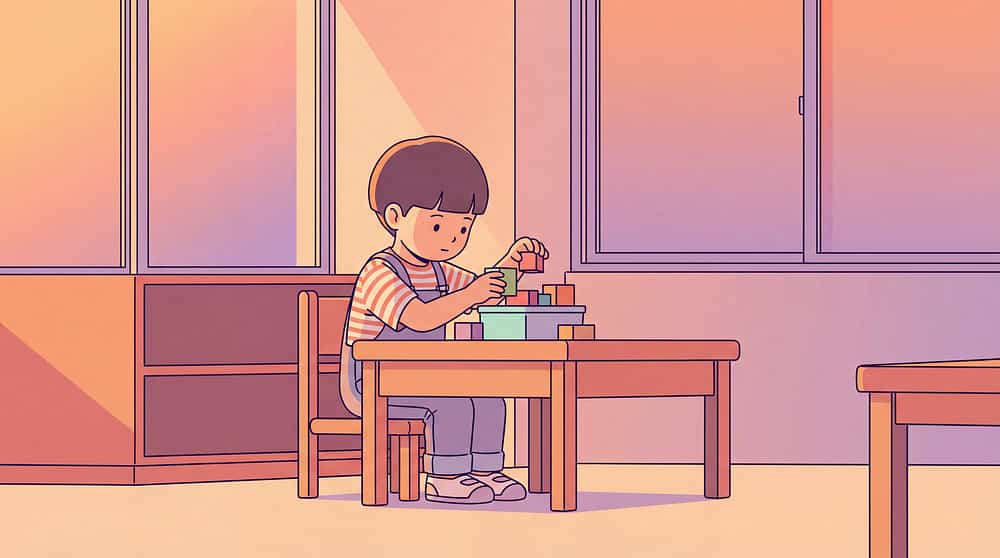
Craft time requires precise hand movements. Your child struggles with small manipulatives while others complete projects easily. Frustration builds. Teacher notices the gap.
Therapy or School Time
Building activity planned as developmental exercise. Set is too advanced. Child gives up quickly. Therapist notes weak fine motor skills and poor frustration tolerance. Progress stalled.
Evening & Bedtime
Sibling shows off impressive LEGO creation. Your child can't do the same. Awareness of the gap. Self-esteem affected. Another day of missed skill development opportunities.
The Science Behind It
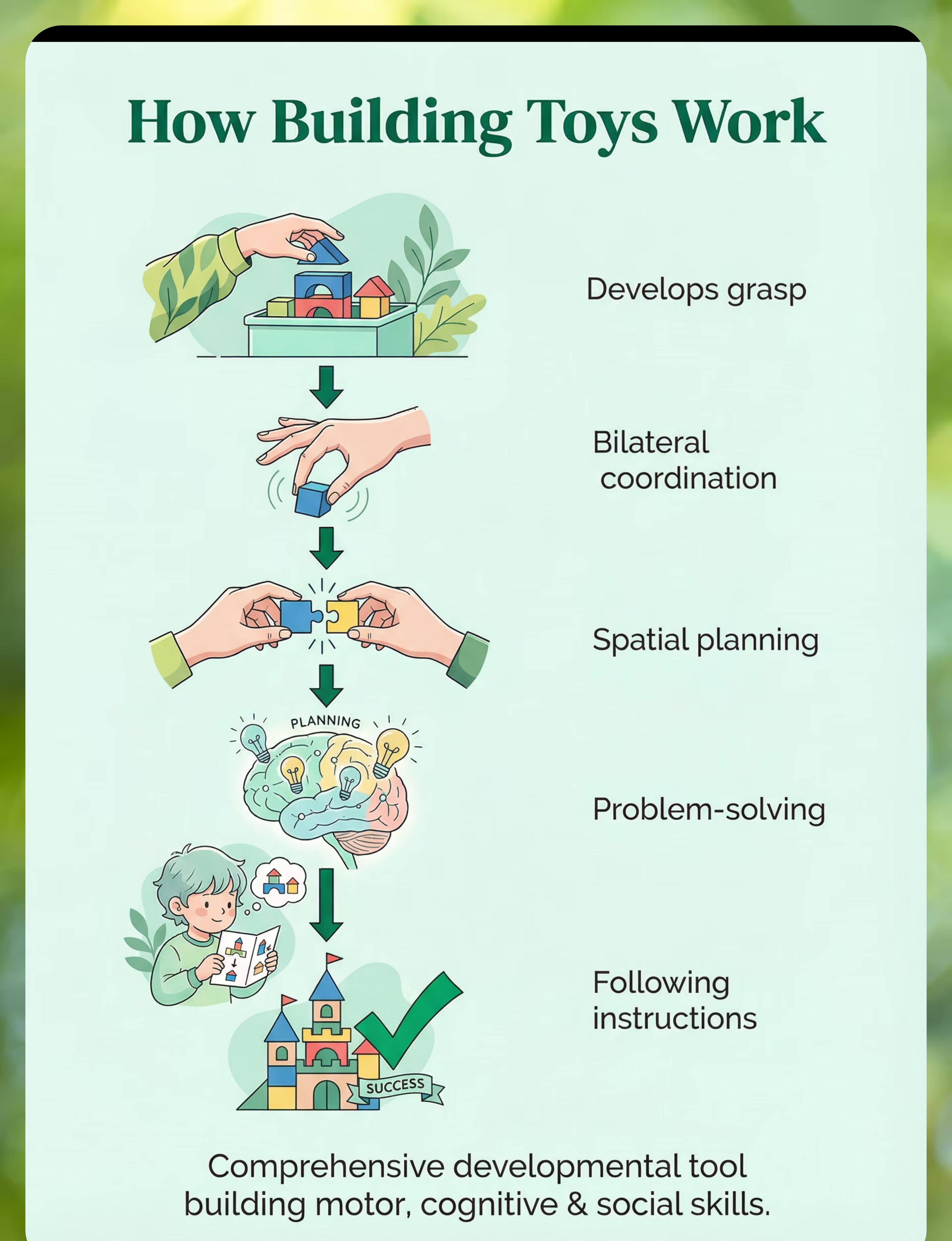
Building toys create a powerful developmental cascade that integrates multiple skill areas simultaneously. Understanding this mechanism helps parents and therapists maximize therapeutic benefit.
Picking Up Pieces
Child reaches for and grasps building pieces, activating pincer or palmar grasp patterns and strengthening finger muscles
Connecting Pieces
Bilateral coordination engages as one hand stabilizes while the other manipulates. Hand strength builds through pushing pieces together
Planning & Visualization
Mental rotation and spatial planning activate. Child visualizes structure before building, strengthening cognitive-motor integration
Creating & Following
Executive function strengthens through instruction-following or creative design. Problem-solving and persistence develop naturally
Fine Motor Precision
Bilateral Coordination
Spatial Reasoning
Motor Planning
Following Instructions
Problem-Solving
Creativity
How to Use It Right
Effective use of building toys requires matching complexity to skill level and systematically building capabilities. These evidence-based practices ensure optimal developmental benefit while maintaining engagement and motivation.
Match Complexity to Skill Level
Begin where success is achievable, then gradually increase challenge. Too easy causes boredom; too hard causes frustration and avoidance.
Start with Free Building, Progress to Instructions
Open-ended exploration builds confidence and creativity before introducing the cognitive load of instruction-following.
Use Larger Blocks for Younger/Less Skilled Children
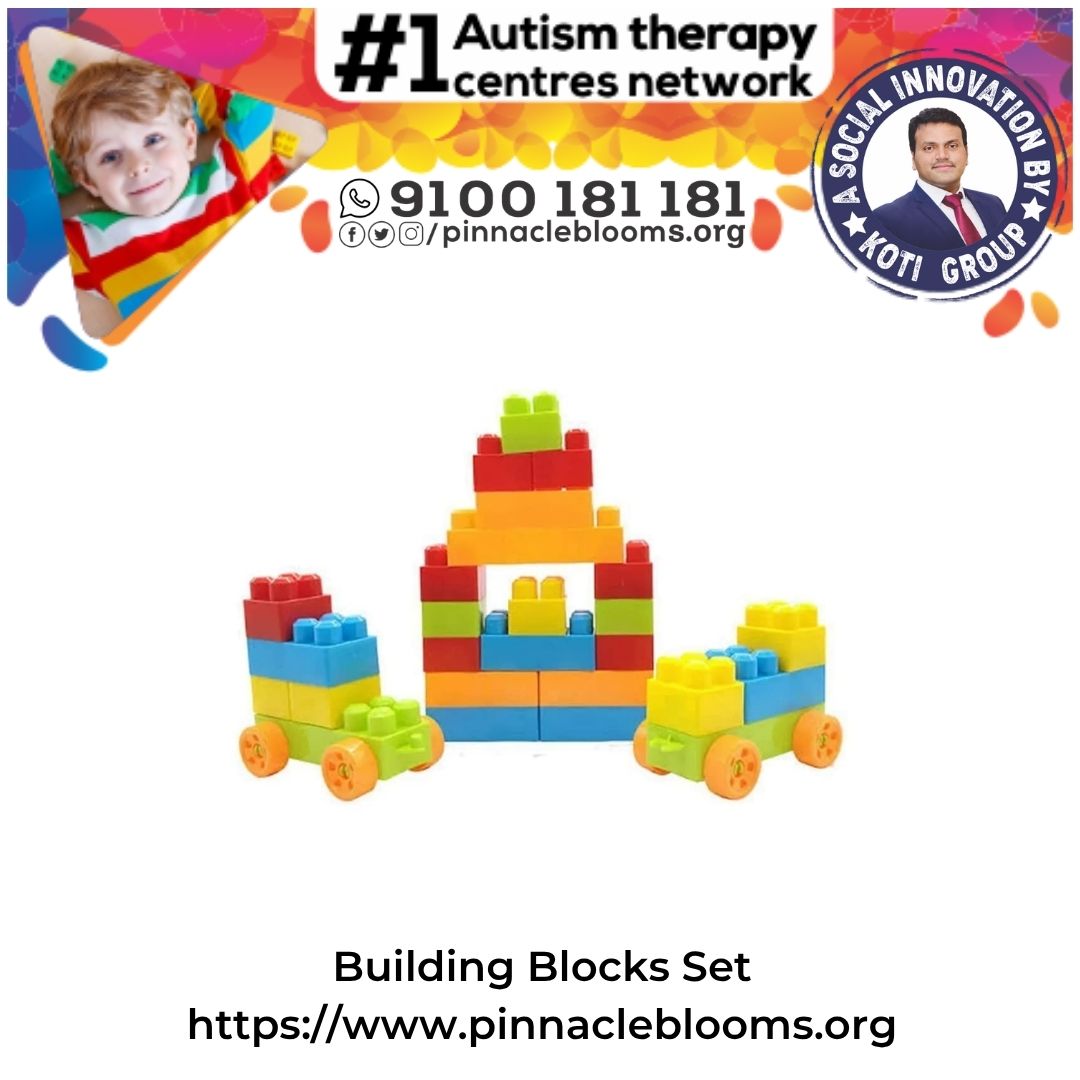
Duplo and Mega Blocks reduce fine motor demands while building foundational spatial reasoning and construction concepts.
Celebrate Creative Building and Instruction-Following
Value original designs equally with completed instruction sets. Both pathways develop critical skills.
Joint Building Promotes Social Skills and Modeling
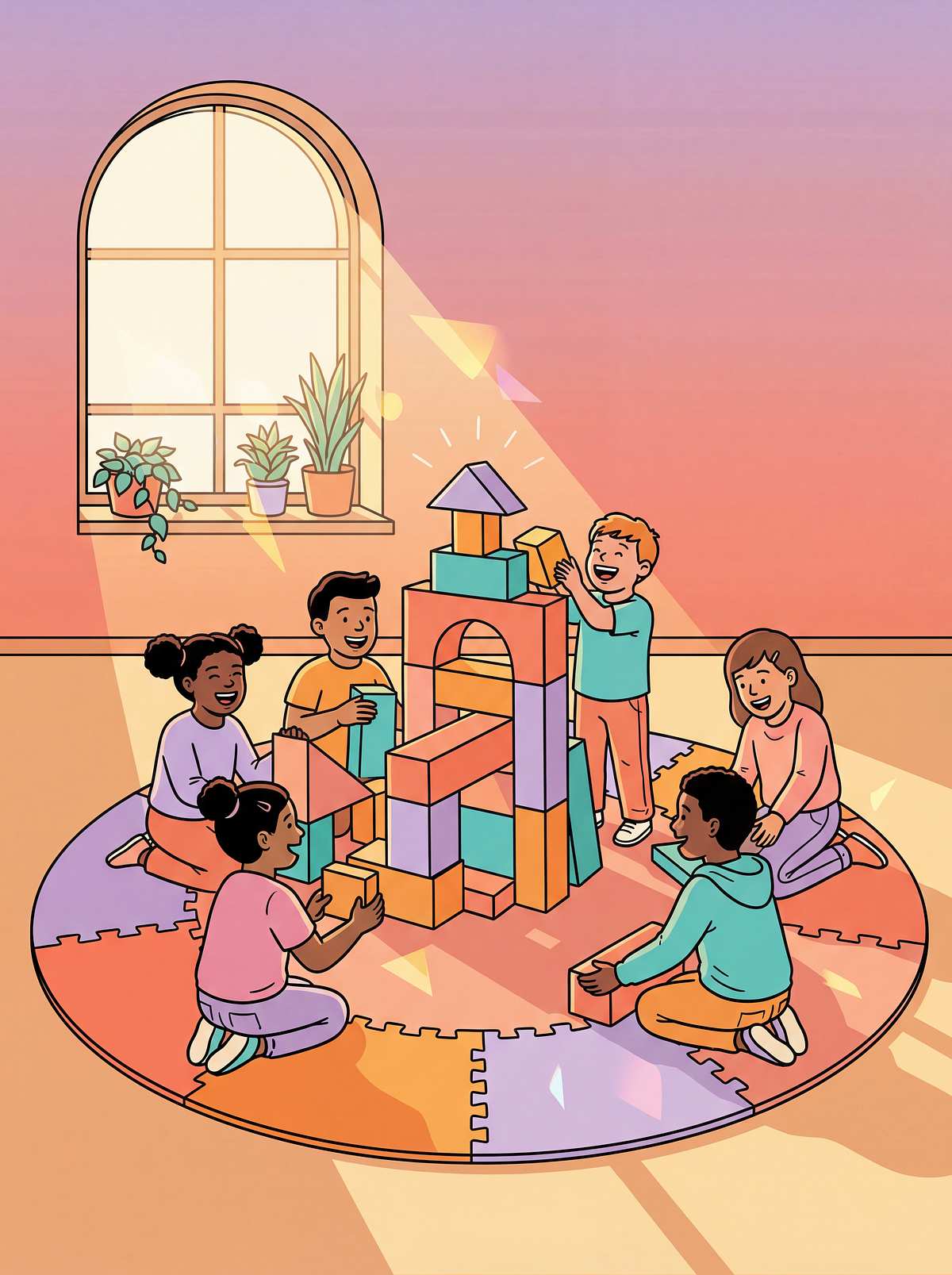
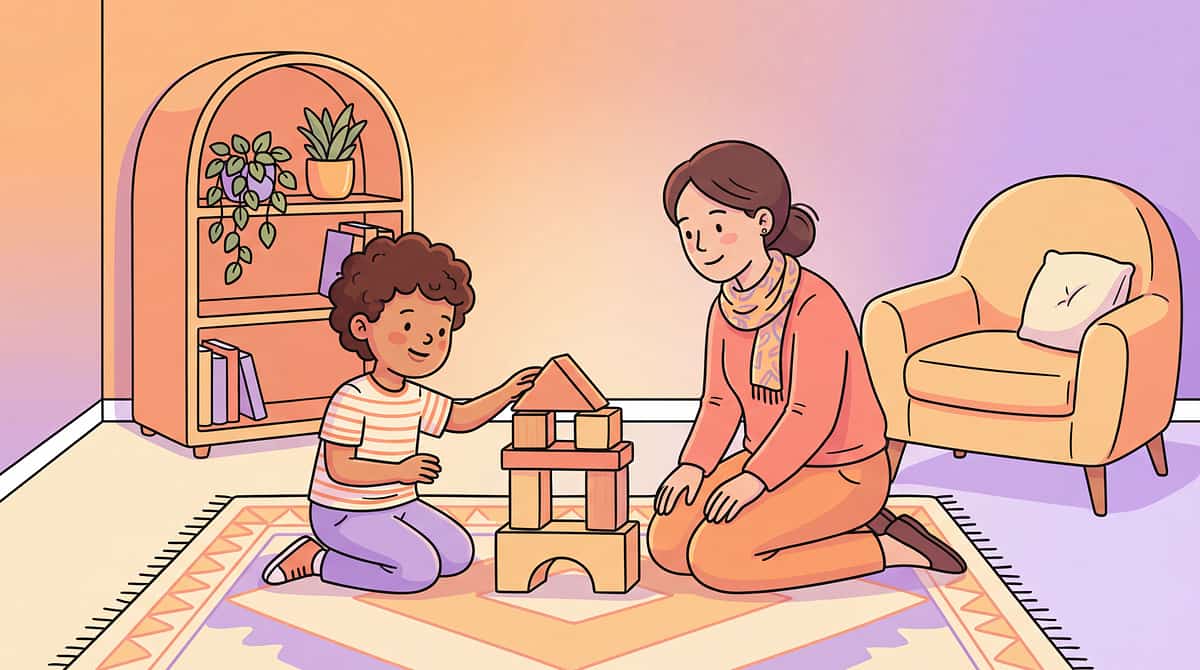
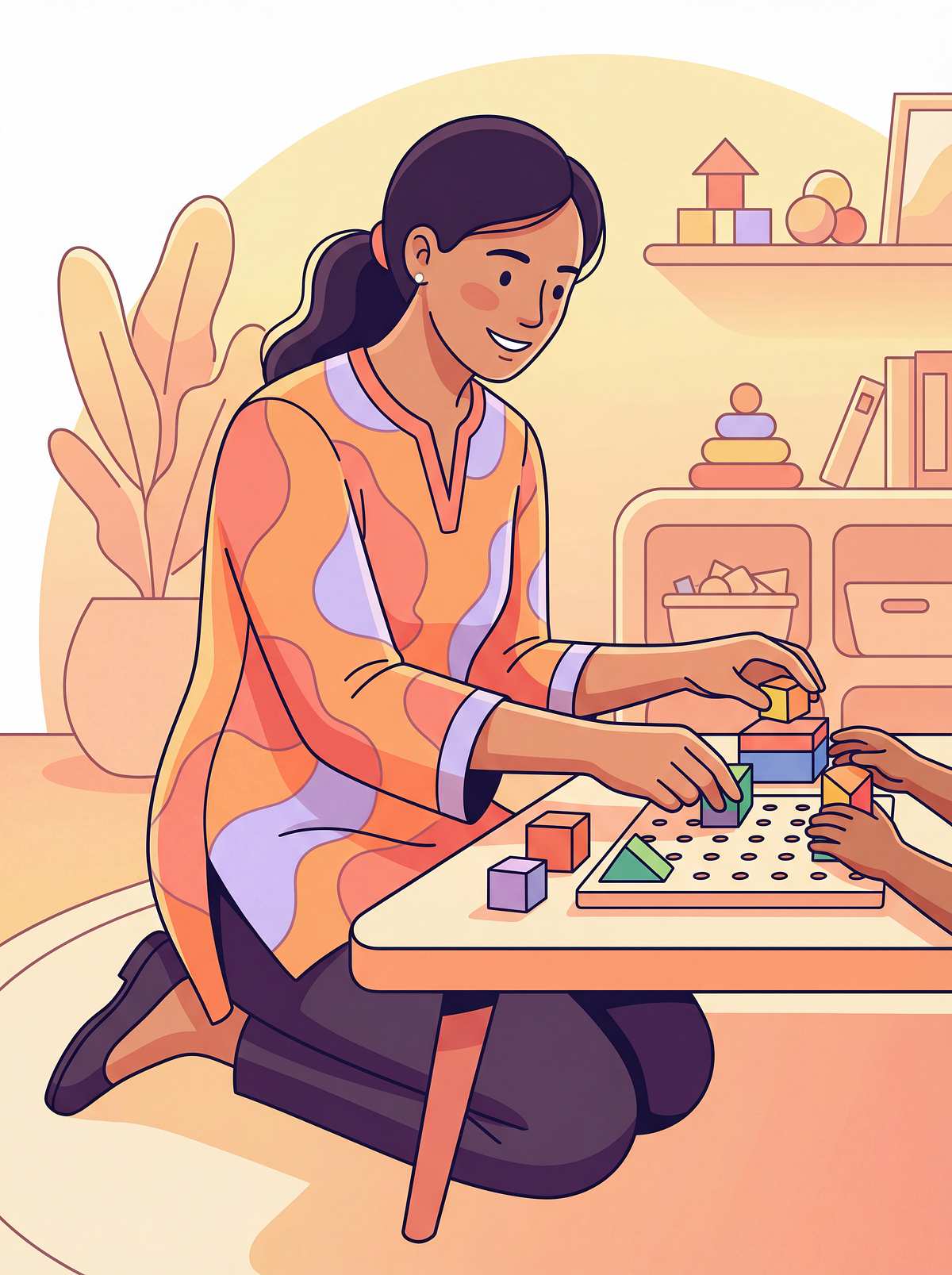
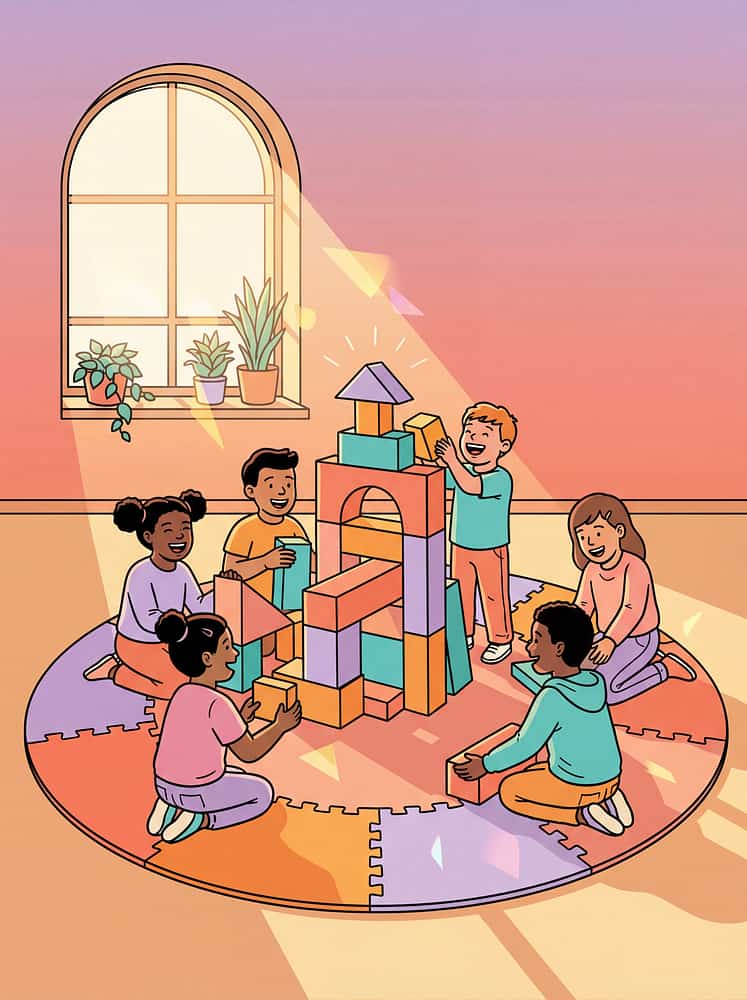
Building together provides natural opportunities for turn-taking, collaboration, communication, and learning through observation.
Build Toward Child's Interest Areas
Vehicles, animals, characters, or themes the child loves naturally sustain attention and motivation through challenging skill development.

Duration guidance: Building sessions typically last 15-60 minutes depending on age, skill level, and engagement. Follow the child's interest - forcing continued play when attention wanes reduces effectiveness.
Expert Perspective
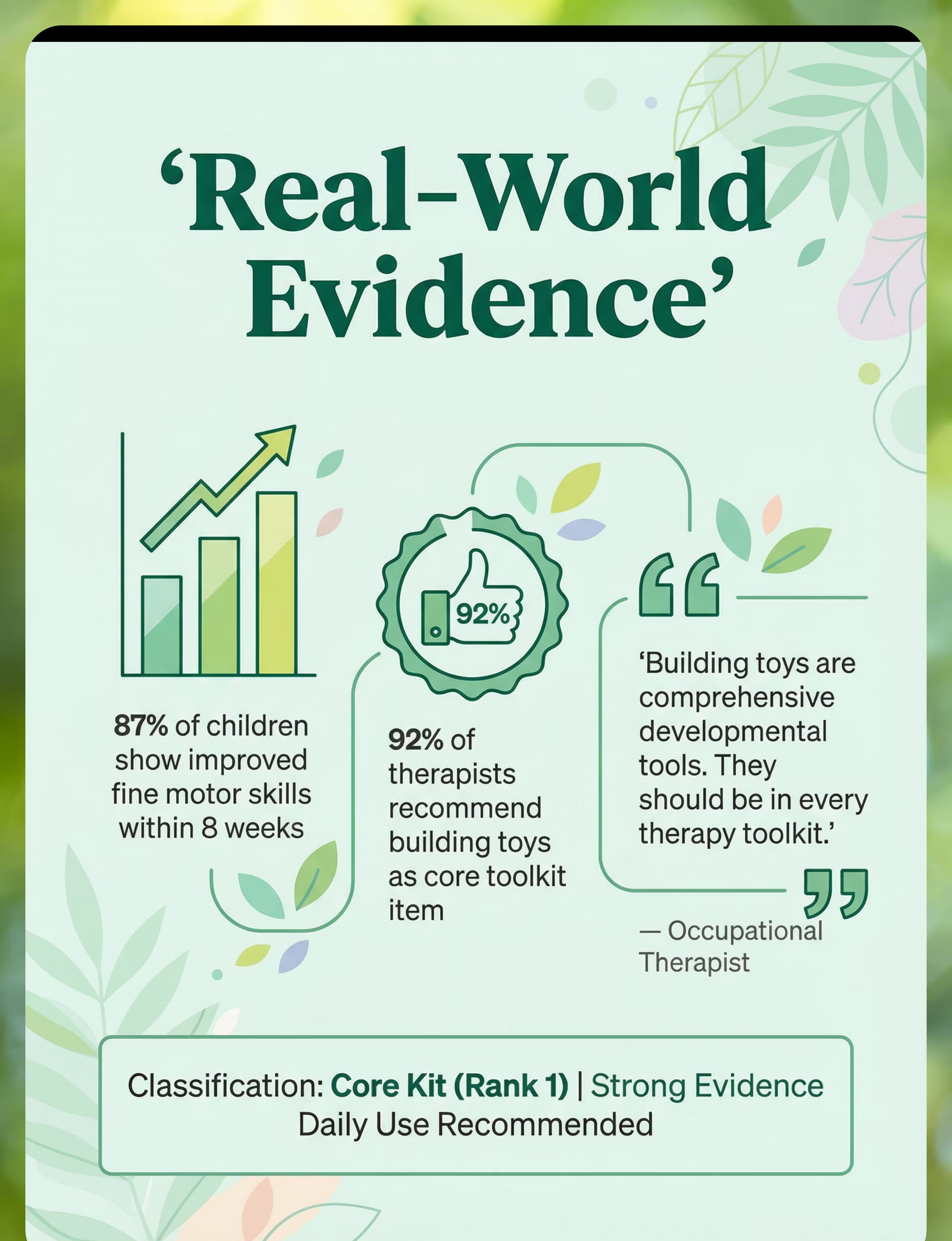
"Building toys are comprehensive developmental tools. They build fine motor skills through manipulation, spatial reasoning through construction, and executive function through planning. LEGOs and blocks should be in every therapy toolkit."
— Occupational Therapist
OT + SpEd Recommended
Co-owned by Occupational Therapy and Special Education professionals, building toys represent interdisciplinary consensus on therapeutic value.
Strong Evidence
Robust research base demonstrates effectiveness for fine motor development, spatial reasoning, and cognitive skills across diverse populations.
Rank #1 in Category
Rated as the top tool in the Fine Motor & Hand Skills category based on effectiveness, versatility, and evidence base.
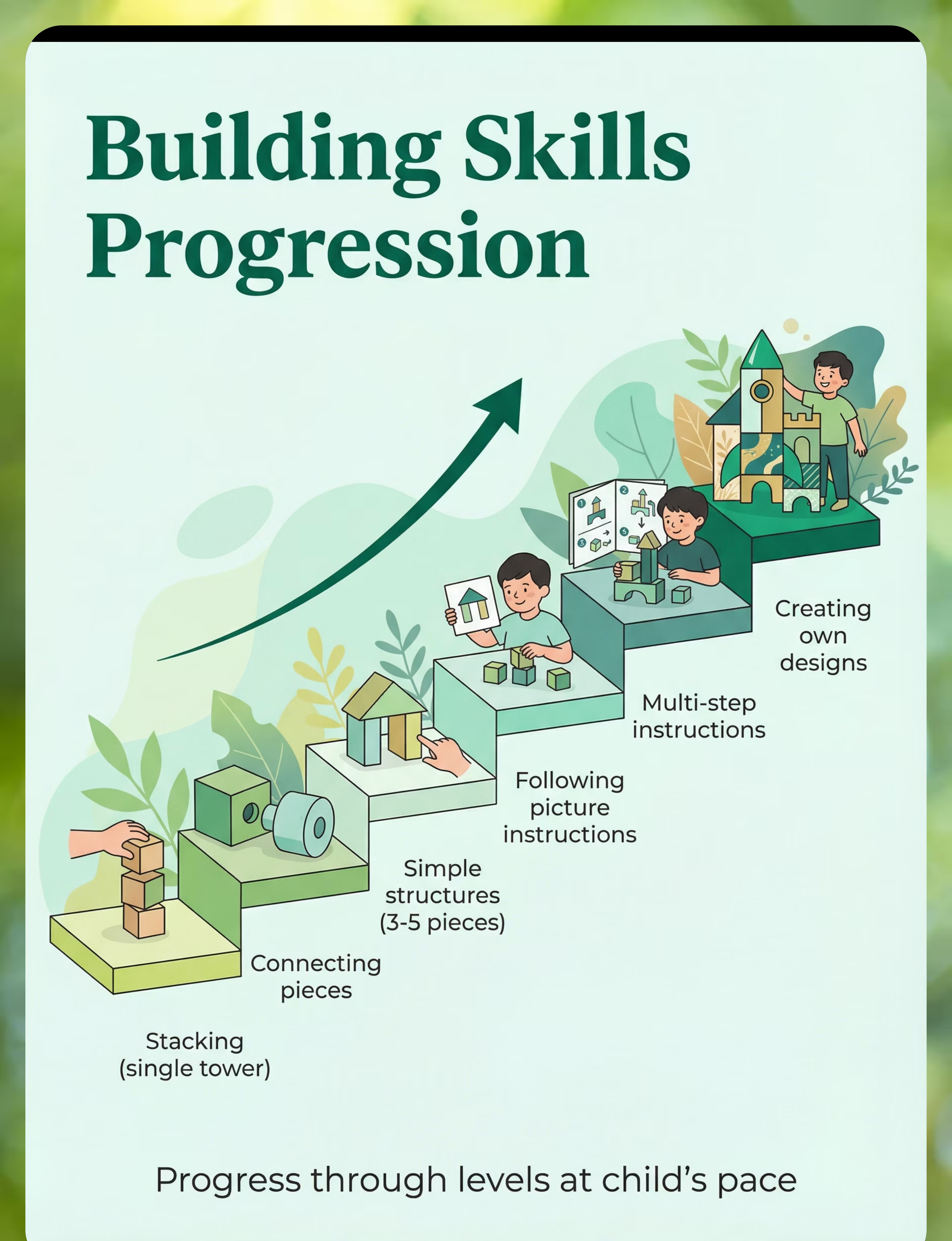
Building Skill Progression
Building skills develop in predictable stages. Understanding this progression helps set appropriate expectations and celebrate incremental progress. Most children move through these levels naturally with practice, though timeline varies significantly.

There was an error generating this image

Level 1: Stacking
Building single vertical towers. First construction skill. Develops hand-eye coordination and beginning spatial awareness.

There was an error generating this image

Level 2: Connecting Two Pieces
First bilateral coordination. One hand holds, other pushes pieces together. Beginning of true construction play.

There was an error generating this image

Level 3: Simple Structures
Building with 3-5 pieces. Creating basic shapes. Spatial planning emerging. Short sequences developing.

There was an error generating this image

Level 4: Following Picture Instructions
Copying simple models or picture instructions. Visual matching skills developing. Cognitive load increasing.

There was an error generating this image

Level 5: Multi-Step Instructions
Following sequential building instructions. Executive function engaged. Planning ahead required. Complex structures achievable.

There was an error generating this image

Level 6: Original Design
Creating own designs from imagination. Full spatial reasoning activated. Independent problem-solving. Creative expression flourishing.
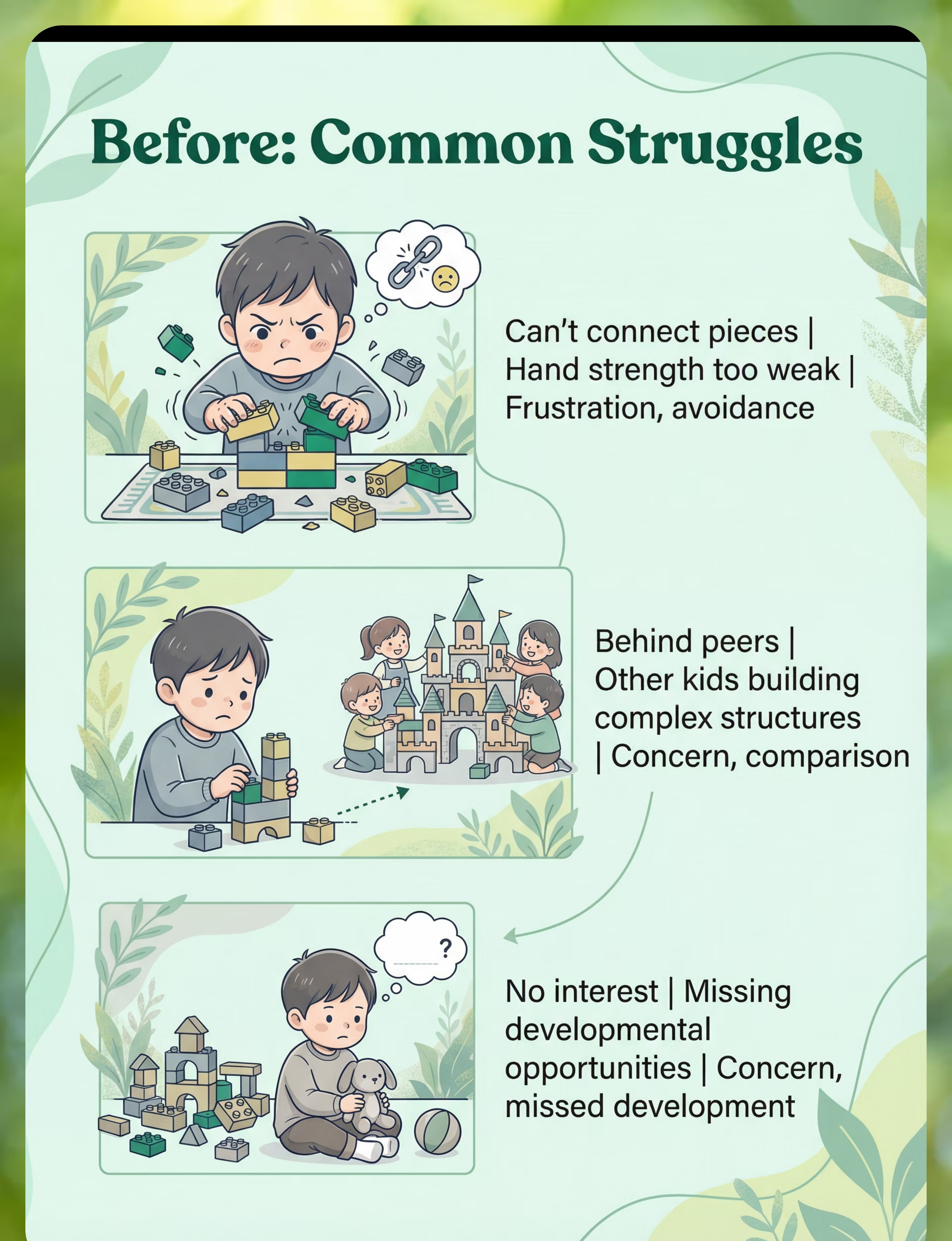
The Struggle (Before)
Can't Connect Pieces
Situation: Child can't push LEGO bricks together. Hand strength weak. Pieces pop apart immediately. Frustration builds quickly and leads to complete avoidance.
Experience: Watches peers build easily while struggling with basic connections. Gap obvious to child and parents.
Emotion: Frustration, inadequacy, avoidance
Behind Peers
Situation: Other kids building elaborate multi-story structures, vehicles with moving parts. This child still stacking single towers. Developmental gap impossible to miss.
Experience: Teacher notes concerns. Peers don't include child in building play. Missing social and skill development opportunities.
Emotion: Concern, comparison anxiety, isolation
No Interest
Situation: Child completely ignores building toys. Prefers repetitive activities. Avoids anything requiring fine motor precision or spatial planning.
Experience: Building corner of classroom unused. Therapy sessions struggle to engage child. Missing critical developmental windows.
Emotion: Concern, worry about missed opportunities, helplessness
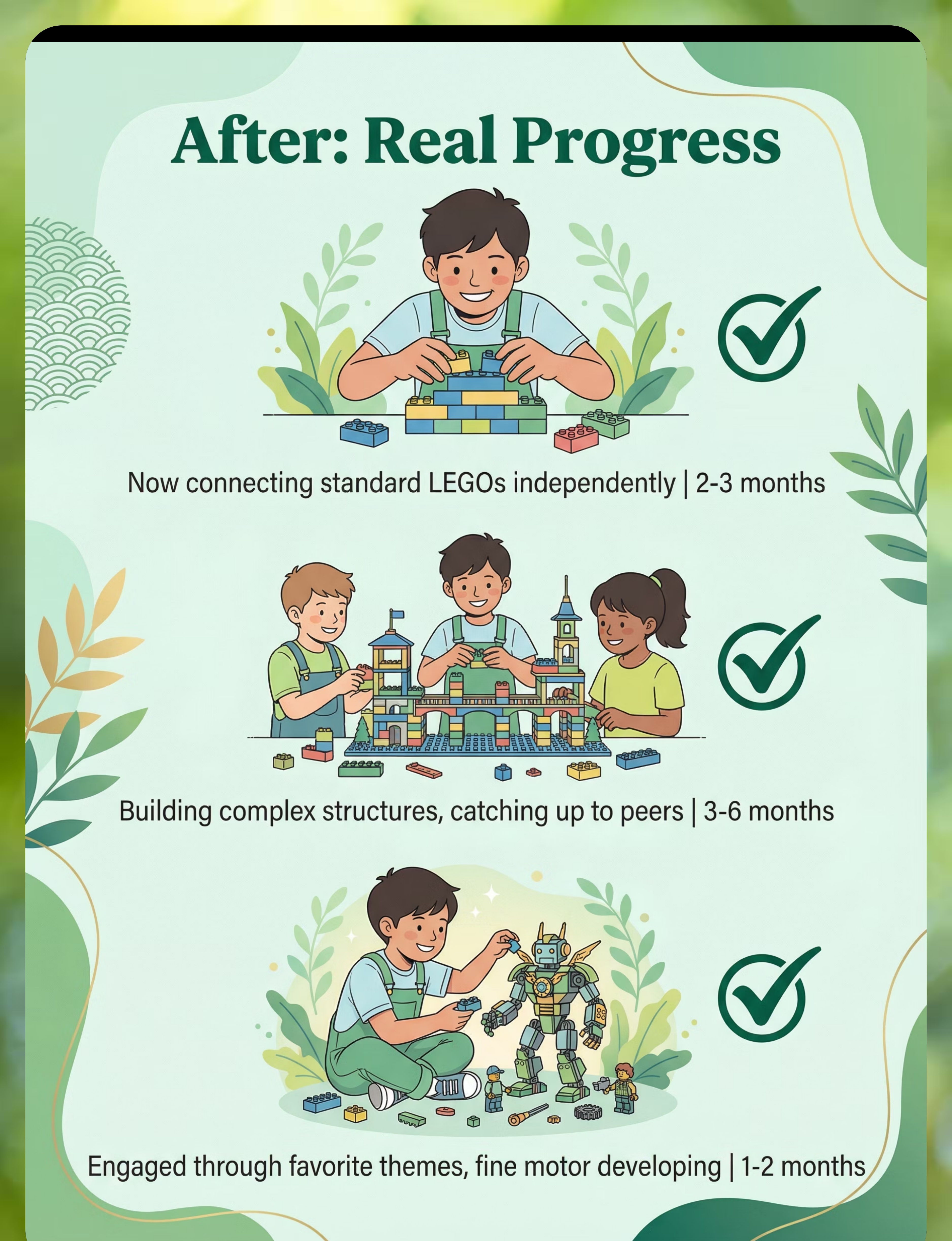
The Breakthrough (After)
building-toys-legos-blocks-construction therapy material
Can't Connect Pieces → Independent Builder
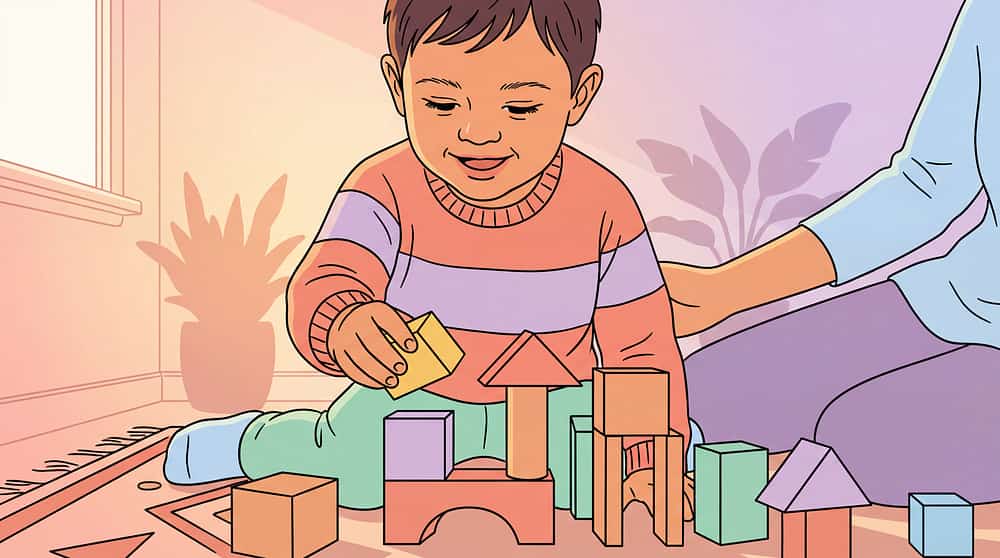
Situation: Started with large Duplo blocks and built hand strength with therapeutic putty exercises. Gradually progressed to standard LEGOs over several months. Now connecting pieces independently without frustration. This stage typically took 2-3 months.
Experience: Building confidence visible. Chooses building toys during free play. Creating increasingly complex structures. Skills transferring to other fine motor tasks.
Emotion: Capability, pride, success, confidence
Behind Peers → Catching Up
Situation: Systematic practice with developmentally appropriate building sets. Started with free building, progressed to simple instructions, now tackling complex multi-step sets. Building structures comparable to peers. This stage typically took 3-6 months.
Experience: Included in peer building play. Teacher notes significant progress. Skills advancing across multiple domains - not just building.
Emotion: Progress, belonging, confidence, hope
No Interest → Fully Engaged
Situation: Discovered building sets featuring child's favorite characters and interests. Motivation transformed overnight. Now requesting building time. Fine motor skills developing rapidly through preferred activity. This stage typically took 1-2 months.
Experience: Building for sustained periods. Creating original designs. Skills developing naturally through highly motivating play. Parents amazed at transformation.
Emotion: Engagement, joy, enthusiasm, development
What to Expect (Realistic Timelines)
building-toys-legos-blocks-construction therapy material
Building skills develop progressively with consistent practice. These timelines represent typical developmental trajectories, though individual variation is significant. Celebrate small wins - each connection made, each instruction followed, represents genuine neurological development.
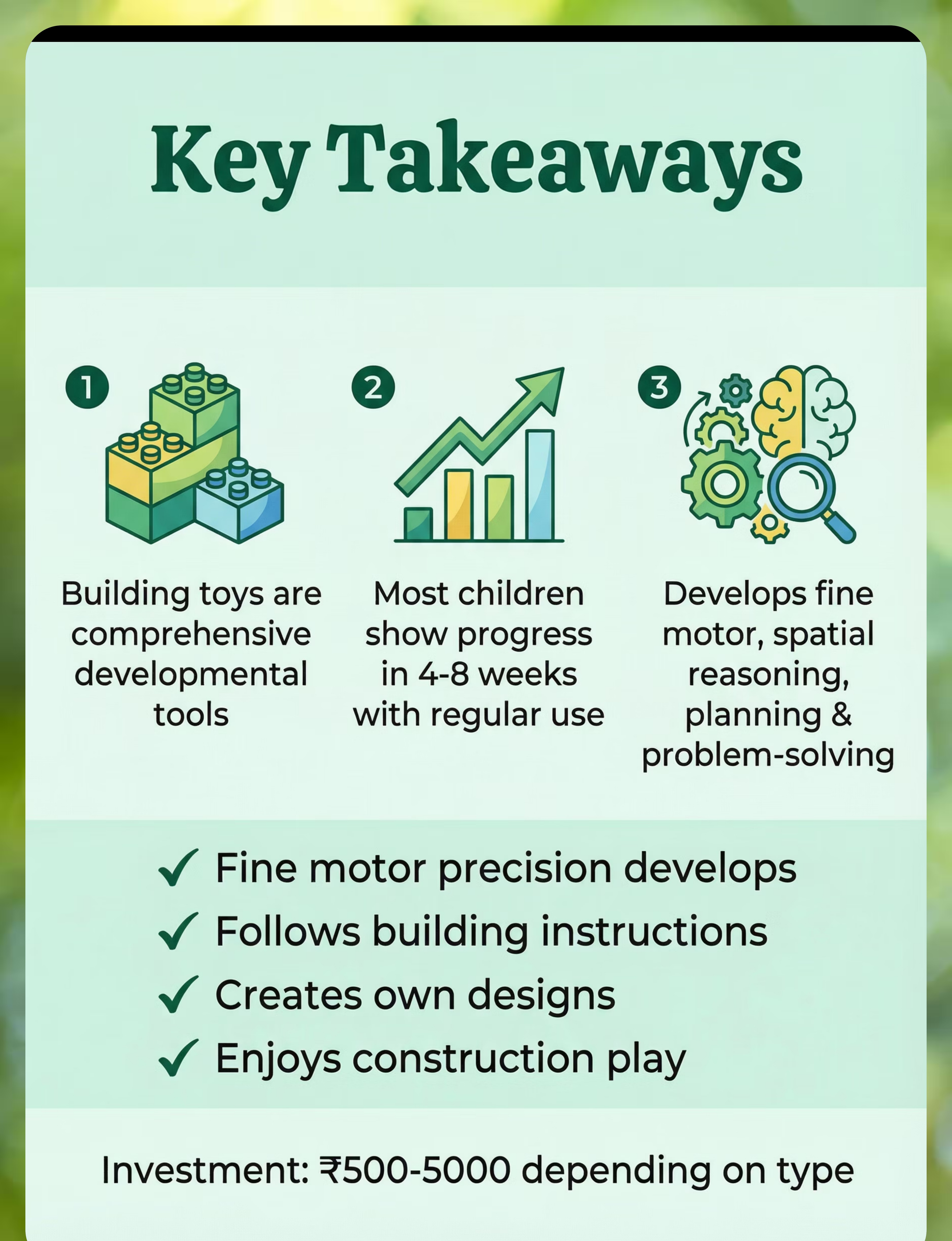
Fine motor precision develops
Finger strength and coordination improve. Grasp patterns refine. Connections become easier and more automatic.
4-8 weeks
Enjoys building activities
Attitude shift from avoidance to preference. Building becomes chosen activity. Self-directed practice accelerates development.
1-2 months
Can connect smaller pieces
Transition from large blocks to standard-sized pieces. Hand strength sufficient for firm connections. Success rate increases.
2-3 months
Follows building instructions
Picture-based instructions become manageable. Sequential thinking develops. Multi-step processes achievable.
2-3 months
Creates own designs
Imagination translates to construction. Spatial planning fully activated. Independent creative building flourishes.
3-6 months
Spatial reasoning improves
Mental rotation abilities strengthen. Three-dimensional thinking develops. Benefits transfer to math, reading, and problem-solving.
Ongoing development
Is This Right for My Child? (2-Minute Check)
These screening questions help identify whether building toys address your child's current developmental needs. Three or more "yes" answers indicate a strong fit and high likelihood of therapeutic benefit.
Does your child struggle with building toys?
If yes, this indicates: Start with developmentally appropriate level and systematically build skills. Gap exists but is addressable.

Confidence score: 90% - Strong indicator of need
Can your child connect interlocking pieces?
If yes: Ready to progress to more complex sets and instruction-following
If no: Start with easier connection types (magnetic tiles, large Duplo) and build hand strength

Confidence score: 88% - Strong indicator of readiness level
Can your child follow building instructions?
If yes: Ready for instruction-based sets that develop executive function and sequential thinking
If no: Build this skill gradually with very simple picture instructions and adult modeling

Confidence score: 85% - Good indicator of cognitive-motor integration
Does your child enjoy building activities?
If yes: Leverage this natural motivation for accelerated skill development in multiple domains
If no: Find motivating themes (favorite characters, vehicles, animals) to transform engagement

Confidence score: 82% - Motivation predicts practice frequency and outcomes
Interpretation: 3+ "yes" answers = strong fit. Building toys likely to address core developmental needs and provide measurable benefit within 4-8 weeks of consistent use.
Usage Guide
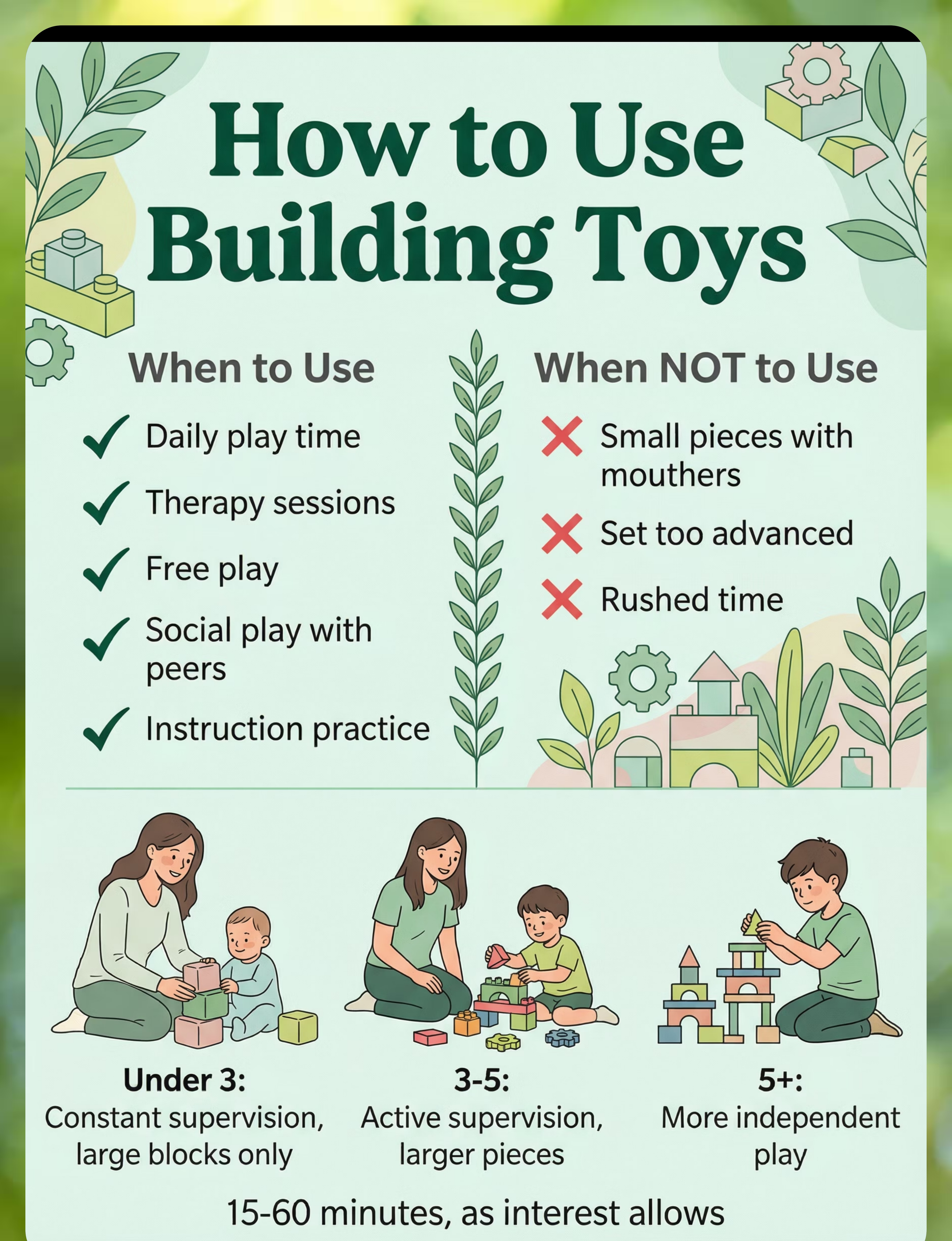
When to Use ✓
Daily play time
Regular exposure builds skills through repeated practice and natural skill consolidation
Structured therapy sessions
Therapist-guided activities target specific developmental goals with appropriate scaffolding
Free play periods
Child-directed exploration fosters creativity, problem-solving, and intrinsic motivation
Social play with peers
Joint building naturally teaches turn-taking, collaboration, communication, and shared attention
Following instructions practice
Building sets with guides develop executive function and sequential processing skills
When NOT to Use ✗
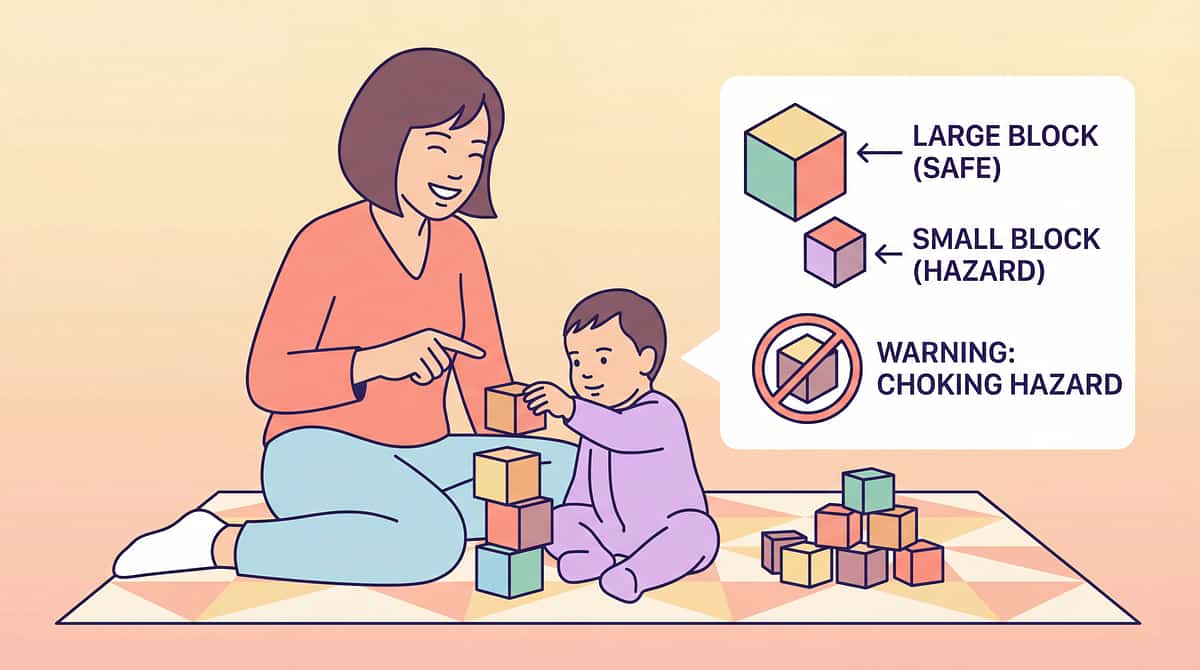
Small pieces with children who mouth objects
Choking hazard. Use only large blocks (Duplo, Mega Blocks) until mouthing phase passes
When set is too advanced for skill level
Leads to frustration, avoidance, and negative associations. Match to current capability
During rushed or time-pressured periods
Building requires focus and sustained attention. Rushed sessions increase frustration and reduce benefit
Considerations for Use
When to Use
When NOT to Use
To build skills through daily play and repeated practice.
With small pieces for children who mouth objects (choking hazard).
In structured therapy sessions for targeted developmental goals.
When the set is too advanced for the child's current skill level, causing frustration.
During free play periods to foster creativity and intrinsic motivation.
During rushed or time-pressured periods, as it requires focus and attention.
For social play with peers to teach turn-taking and collaboration.
As a replacement for other crucial developmental activities.
To practice following instructions and develop executive function.
If the child shows persistent aversion or distress, without adapting the approach.
Supervision by Age
Age Range
Supervision Level
Notes
Under 3 years
Constant supervision
Use only large blocks (Duplo, Mega Blocks, foam blocks). Watch for mouthing. Active engagement required.
3-5 years
Active supervision
Larger pieces still recommended. Check periodically. Ensure appropriate set complexity. Model building techniques.
5+ years
Periodic monitoring
Can play more independently with age-appropriate pieces. Check for frustration. Celebrate successes. Ensure safe storage.
Home
School
Clinic
15-60 minutes per session
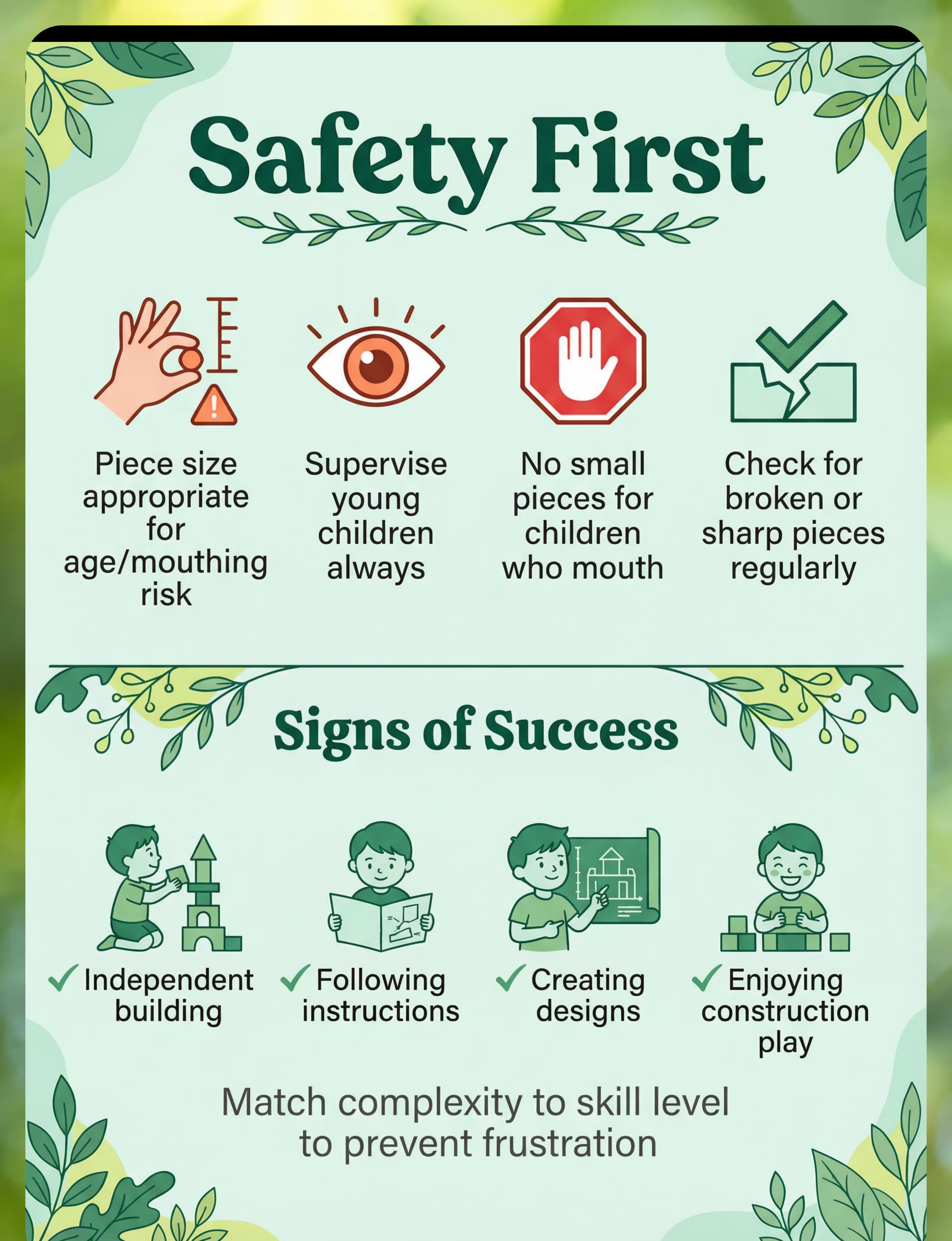
Safety First
⚠️ Critical Safety & Warnings
  • Piece size MUST be appropriate for age and mouthing risk - non-negotiable for choking prevention.
  • Supervise young children actively - especially under age 3 with any building materials.
  • Never give small pieces to children who mouth objects - use only large blocks until this phase passes completely.
  • Check regularly for broken or sharp pieces - damaged building toys can cause cuts or become choking hazards.
  • Small pieces hurt significantly if stepped on - establish consistent storage routines and designated building areas.
  • Watch for mounting frustration with complex sets - intervene early with simpler alternatives or adult assistance.
  • Ensure stable building surface - wobbly surfaces cause frustration and can lead to safety issues with large structures.
  • Store properly to keep sets complete - missing pieces reduce play value and can cause frustration.
🚫 Contraindicated
  • Small pieces for any child who mouths objects (regardless of age).
  • Sets that are significantly too advanced for current skill level (causes frustration and skill regression).
✓ Before Use
  • Verify pieces are age-appropriate size.
  • Confirm set matches current skill level.
  • Check pieces are clean and complete.
  • Prepare good, stable workspace.
👁️ During Use
  • Provide appropriate supervision for age.
  • Monitor engagement, not frustration.
  • Ensure no mouthing of small pieces.
  • Confirm building is progressing.
Signs of Success
  • Independent building increasing.
  • Following instructions improving.
  • Creating original designs.
  • Genuine enjoyment of construction play.
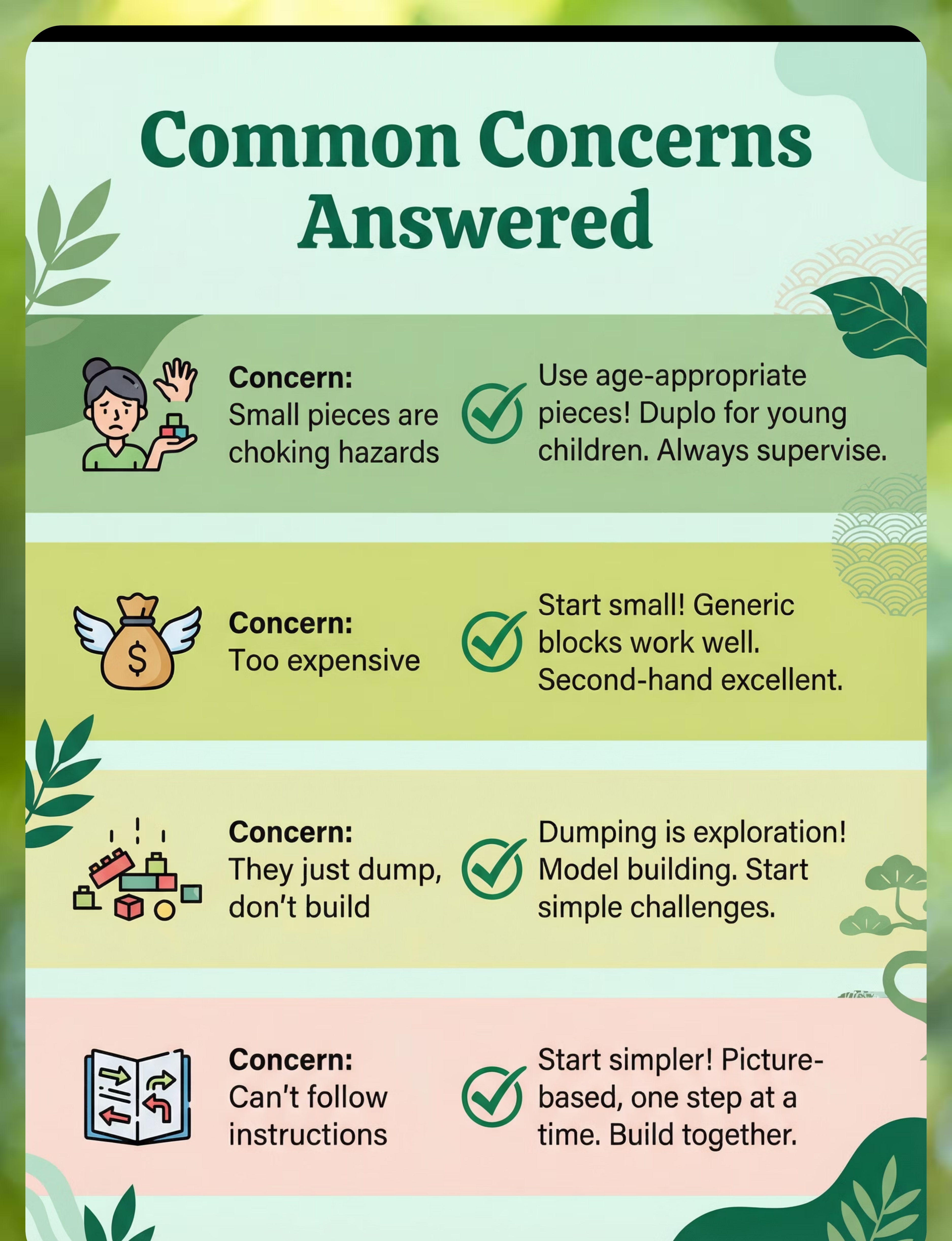
Common Questions (Honest Answers)
Q: Small pieces are choking hazards - is this safe?
A: Use age-appropriate pieces! Duplo and Mega Blocks for young children and anyone who mouths objects. Standard LEGO only when mouthing phase completely passes. Magna-tiles offer larger pieces with easier connections. Always supervise young children actively. Safety is paramount - never compromise on piece size.
Try this: Start with Duplo, Mega Blocks, or Magna-tiles for younger children or those with mouthing behaviors.
Q: These toys are too expensive for our budget
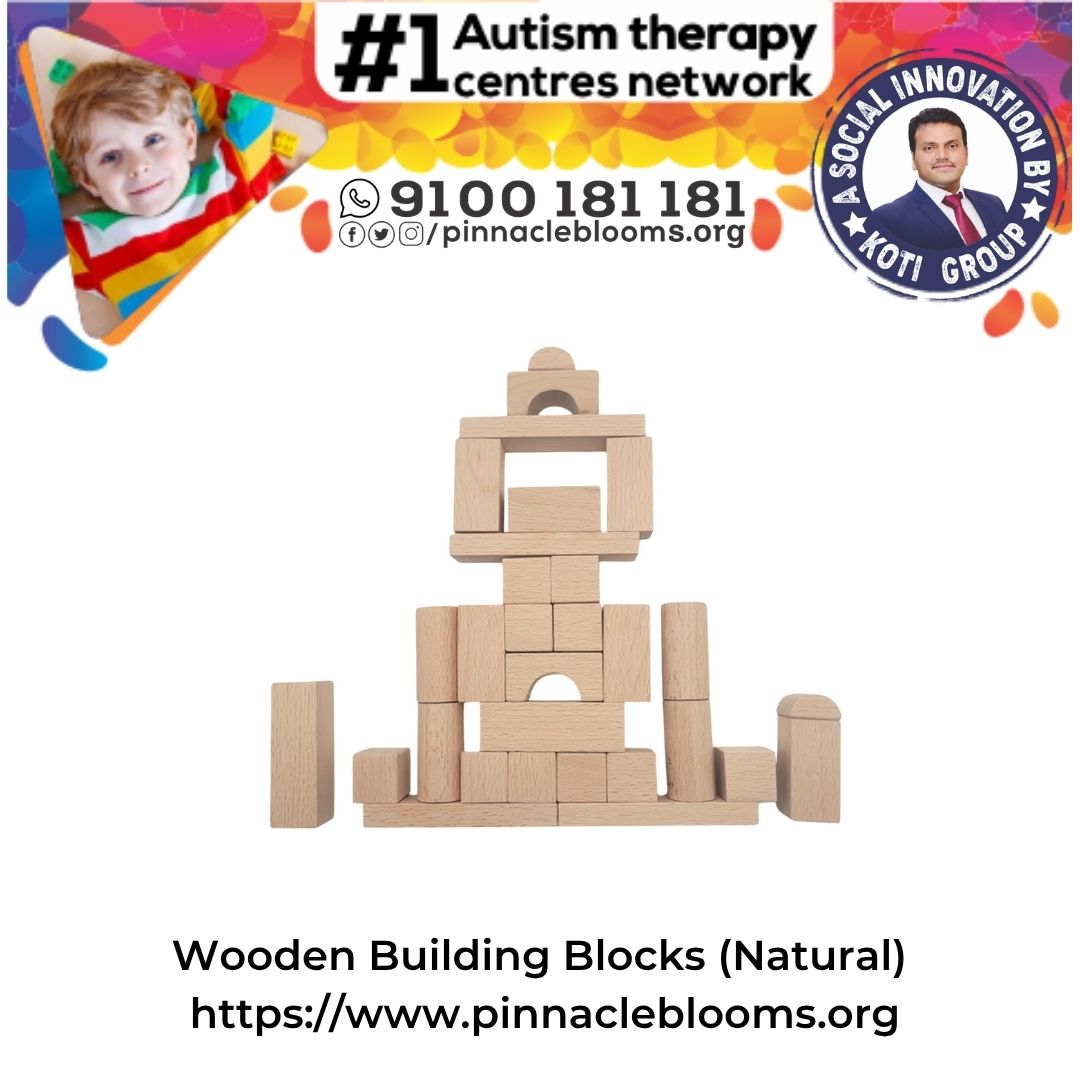
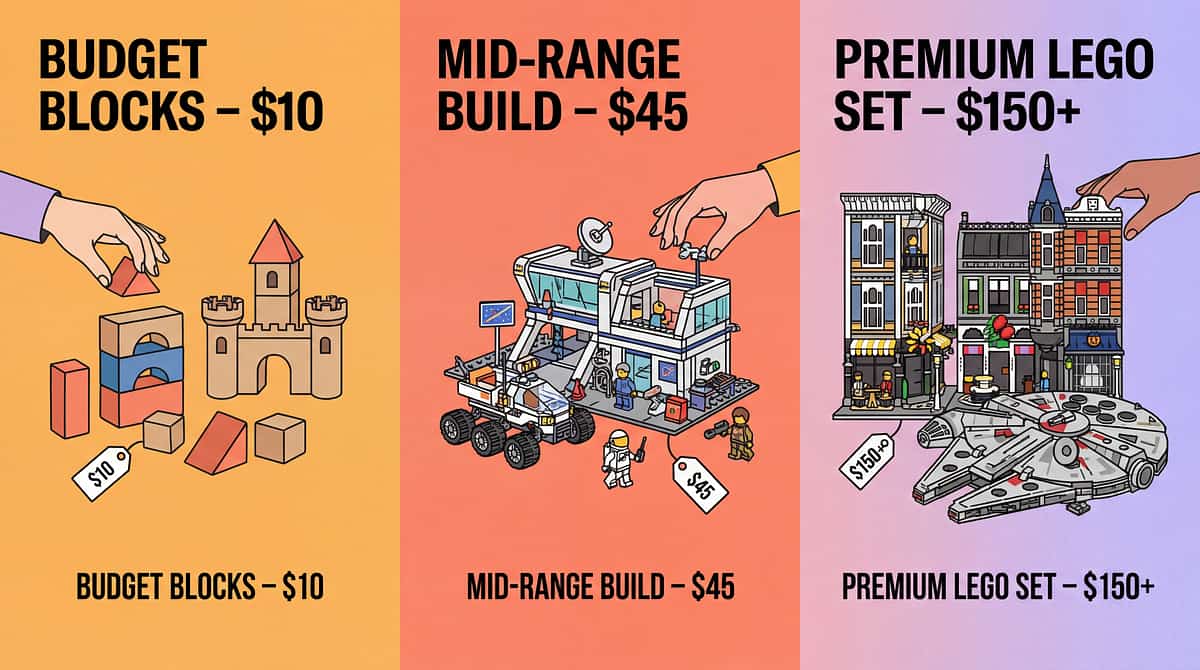
A: Start small and build gradually! Generic building blocks work just as well as branded options for skill development. Second-hand LEGOs are excellent - they last forever and function identically to new. Wooden blocks are a one-time investment that lasts through multiple children. Quality matters more than quantity - even a small set provides significant benefit.
Try this: Generic blocks, second-hand LEGO, or wooden blocks offer excellent developmental value at lower cost.
Q: My child just dumps and scatters - doesn't actually build anything
A: Dumping is a normal exploration phase! This is sensory and cause-effect learning. Build alongside your child - modeling is powerful. Start with very simple, achievable challenges: "Can you stack two blocks?" Build toward their specific interests (animals, vehicles, characters). Engagement and skill both grow with exposure and gentle guidance.
Try this: Model building, create very simple challenges, incorporate child's favorite themes and characters.
Q: My child can't follow the building instructions at all
A: Start much simpler! Picture-based instructions with very few steps. Work through one step at a time together - instruction-following is a learned skill. Build the model alongside your child, not just pointing to the manual. Many children need explicit teaching of this skill - it's not intuitive for everyone. Patience and systematic practice build this capability.
Try this: Choose sets with very simple picture instructions, build together step-by-step, celebrate small successes.
Investment Guide
Building toys range from budget-friendly basic blocks to premium branded sets. Both ends of the spectrum provide developmental benefit - the key is matching the option to your child's current needs, your budget, and your therapeutic goals. The overall investment range for building toys typically falls between ₹500–5,000 (US $6-60).
Budget Option
₹300-800
Generic building blocks, wooden blocks. Focuses on foundational skills, open-ended play, and spatial exploration.
Premium Option
₹1,500-5,000
LEGO, Duplo, Magna-Tiles. Develops instruction-following, themed building, advanced construction, and offers long-term durability and resale value.
Foundational Skill Development
From fine motor skills to problem-solving, building toys are crucial for cognitive growth.
Long-Term Value & Durability
Quality sets can last for decades, often retaining their value for resale or passing down.
Fosters Creativity & Imagination
Open-ended play encourages children to invent, design, and express themselves freely.
Instruction-Following & Executive Function
Complex sets develop sequential thinking, patience, and the ability to follow directions.
Phase 1: Early Exploration
Ages 0-3: Start with large, safe blocks like Duplo or Mega Blocks for sensory exploration and basic stacking.
Phase 2: Structured Introduction
Ages 3-5: Introduce Magna-Tiles or simple LEGO Duplo sets to develop early construction and pattern recognition.
Phase 3: Skill Building
Ages 5-8: Transition to standard LEGO sets with picture instructions, focusing on fine motor skills and sequential thinking.
Phase 4: Advanced Construction
Ages 8+: Engage with complex LEGO Technic, Creator Expert, or intricate building challenges that encourage advanced problem-solving.
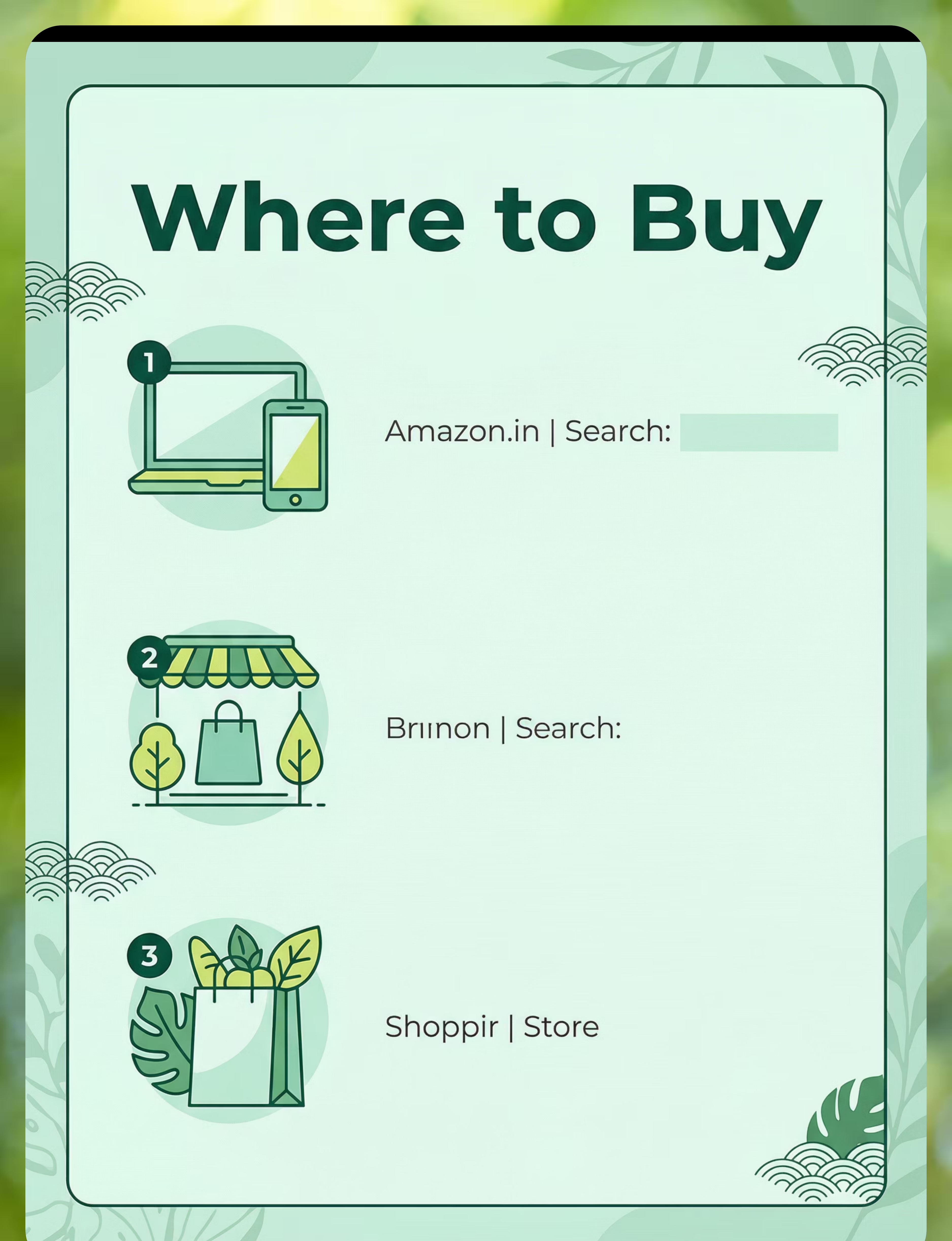
Where to Buy in India
Availability: Widely available through online retailers, toy stores, and educational supply shops across India.
Recommended Platforms
Amazon.in
Search Term: "Duplo blocks"
Price Range: ₹800-2,500
Amazon.in
Search Term: "LEGO classic"
Price Range: ₹1,000-4,000
Amazon.in
Search Term: "magnetic tiles kids"
Price Range: ₹800-3,000
Amazon.in
Search Term: "wooden blocks kids"
Price Range: ₹400-1,500
Local toy stores
Search Term: "building blocks"
Price Range: ₹300-2,000

Buying Tips
  • Match piece size to age and current skill level - this is the most critical decision factor
  • Generic blocks work as well as branded - for basic skill development, brand doesn't significantly impact outcomes
  • Magna-tiles are easier to connect than LEGOs - consider for children with weak hand strength
  • Wooden blocks never go out of style - timeless investment that works across ages and developmental stages
  • Theme sets increase engagement dramatically - vehicles, animals, or characters child loves transform motivation

🚩 Red Flags - Avoid These
  • Pieces too small for child's age - choking hazard and frustration source
  • Poor quality connections - pieces that don't stay together cause frustration and reduce therapeutic value
  • Sharp edges or rough surfaces - safety issue and indication of low manufacturing quality
  • Instructions too complex for skill level - leads to immediate discouragement and avoidance
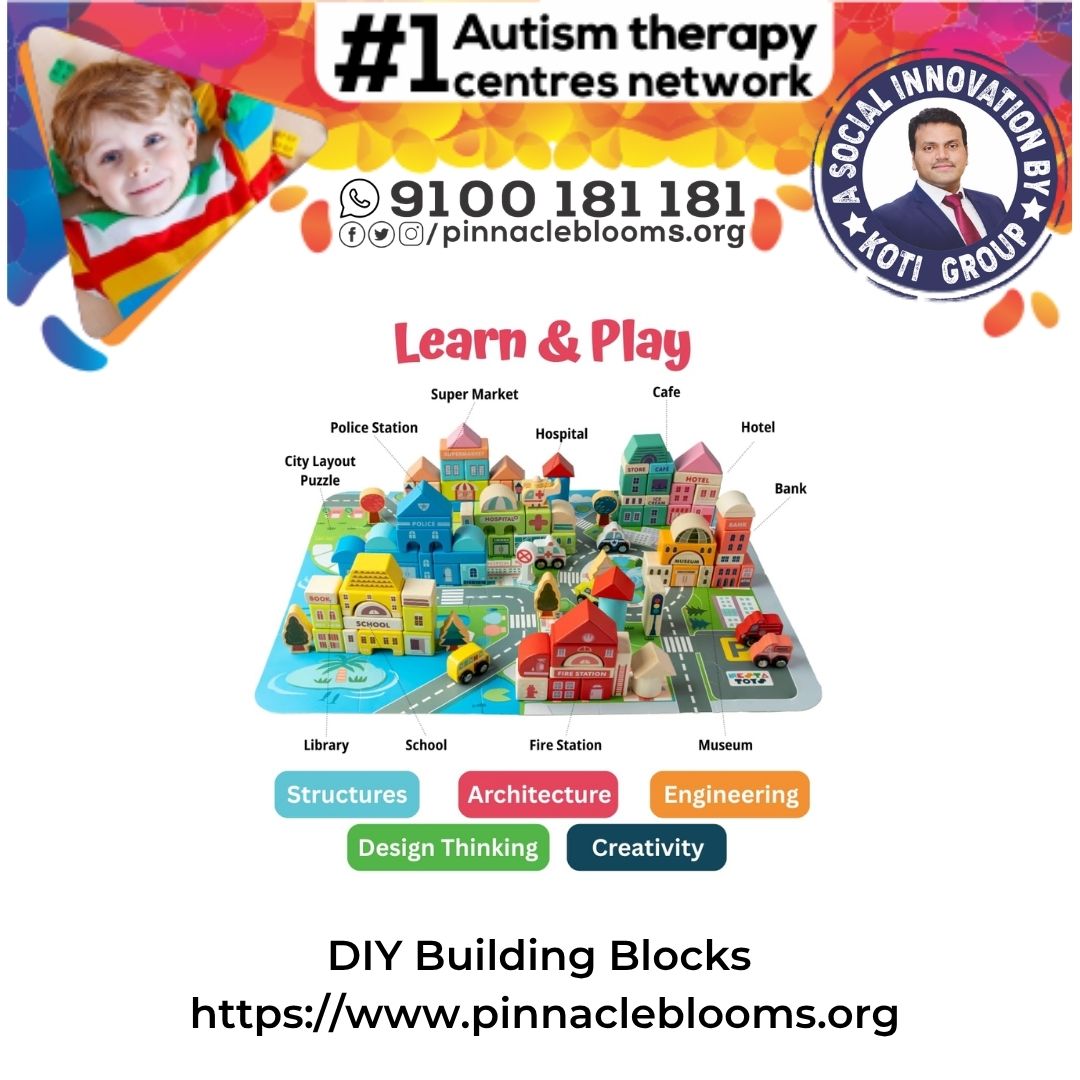
DIY Alternative
Feasibility of DIY building blocks: Low - building materials themselves must be purchased. However, DIY activities and challenges using purchased blocks are highly feasible and add significant therapeutic value.

Important: You cannot safely DIY the building blocks themselves. Purchase age-appropriate building materials, then create custom activities, challenges, and instructional supports to maximize therapeutic benefit.
Materials Needed
Purchase appropriate building toys (Duplo, LEGO, wooden blocks, or magnetic tiles based on child's age and skill level)
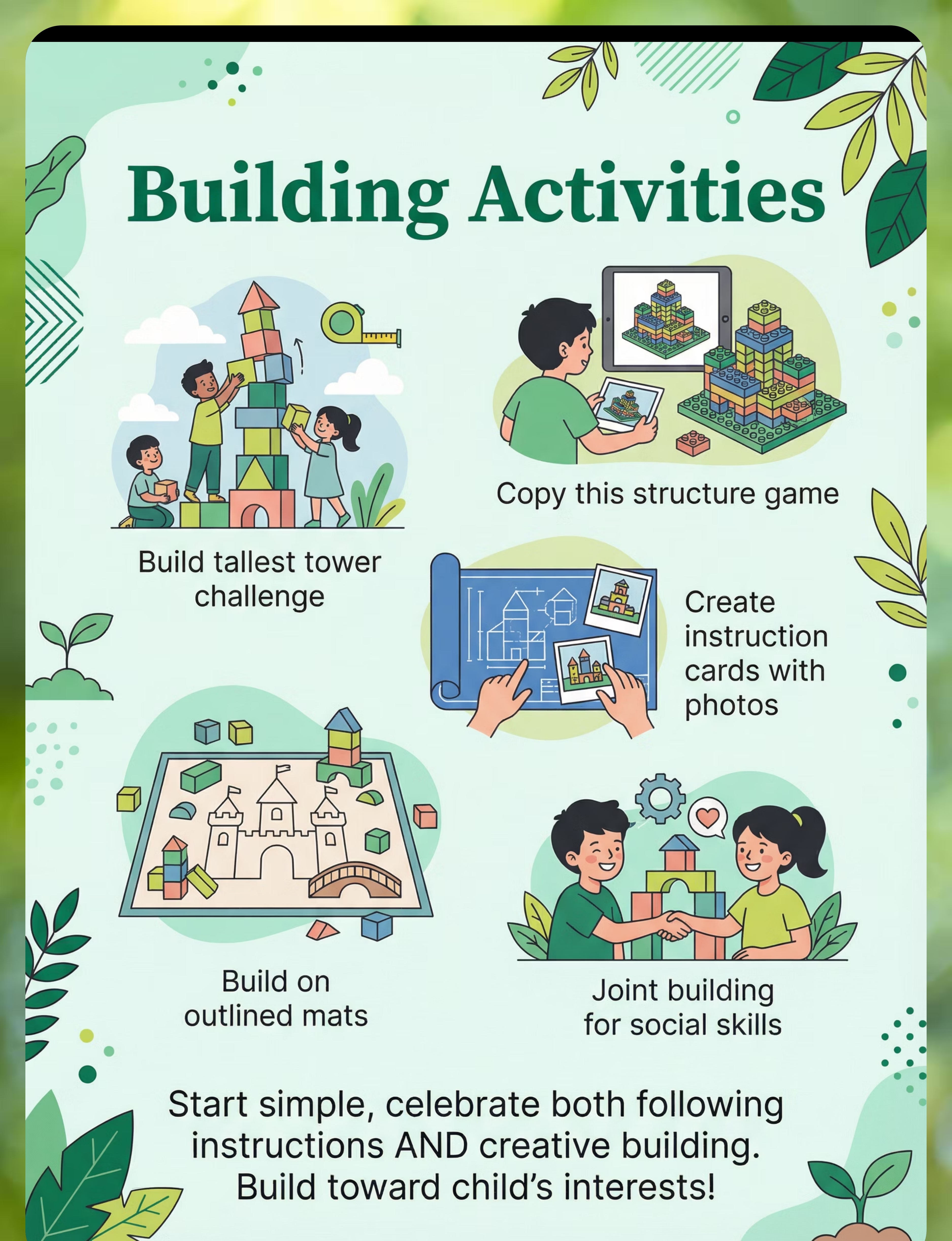
DIY Activity Ideas
Create custom building challenges
Take photos of simple structures and ask child to replicate them. Start very simple (3-4 pieces) and gradually increase complexity.
Make picture-based instruction cards
Photograph each step of building a simple structure. Print and laminate cards. Child follows one step at a time.
Design building mats with outlines
Draw or print outlines of structures on large paper or cardstock. Child builds within the outline guides.
Develop themed challenges
"Build a house for this animal figure" or "Create a vehicle that can roll." Link building to storytelling.
Create sorting games
Sort pieces by size, color, or shape before building. Develops categorization while preparing for construction.
Make building journals
Photograph child's creations. Print and create album with child's descriptions. Builds pride and motivation.
When to DIY vs. When to Purchase
DIY Activities
  • Creating custom building challenges and games
  • Making instruction cards for specific structures
  • Adapting activities for your child's interests
  • Designing building mats and templates
  • Creating documentation and tracking systems
💰 Purchase Materials
  • The building blocks themselves - always purchase
  • Cannot safely DIY interlocking systems
  • Quality connections are critical for therapeutic value
  • Safety requires manufactured building materials
Tradeoffs: Must invest in purchasing the building materials. However, creative DIY activities and challenges significantly extend the therapeutic value of purchased sets without additional major costs.
What Parents Say (Real Stories)
Discover how building toys have made a real difference in the lives of children, shared directly from their parents' perspectives. These stories highlight diverse journeys of growth and achievement.
"Rohan struggled with social interaction and repetitive play. Building LEGO sets together helped him make eye contact and initiate sharing ideas. He now asks to build with me!"
- Anjali S., mother of 6-year-old Rohan (Autism)
"Maya often lost focus, but Magna-Tiles captivated her. Her attention span has improved dramatically; she can now complete multi-step structures, boosting her spatial reasoning."
- Vikram K., father of 5-year-old Maya (Developmental Delays)
"Aryan had weak hand strength. Manipulating Duplo blocks and connecting pieces has visibly improved his pincer grasp and dexterity. He's more independent in fine motor tasks now."
- Deepa L., mother of 3-year-old Aryan (Fine Motor Challenges)
Progress takes time, but consistent engagement with appropriate building toys can unlock incredible potential and foster significant developmental gains in children.

Preview of building toys legos blocks construction Therapy Material

Below is a visual preview of building toys legos blocks construction therapy material. The pages shown help educators, therapists, and caregivers understand the structure and content of the resource before use. Materials should be used under appropriate professional guidance.

Page 1
Page 2
Page 3
Page 4
Page 5
Page 6
Page 7
Page 8
Page 9
Page 10
Page 11
Page 12
Page 13
Page 14
Page 15
Page 16
Page 17
Page 18
Page 19
Page 20
Link copied!
Measuring Success & Building Your Toolkit
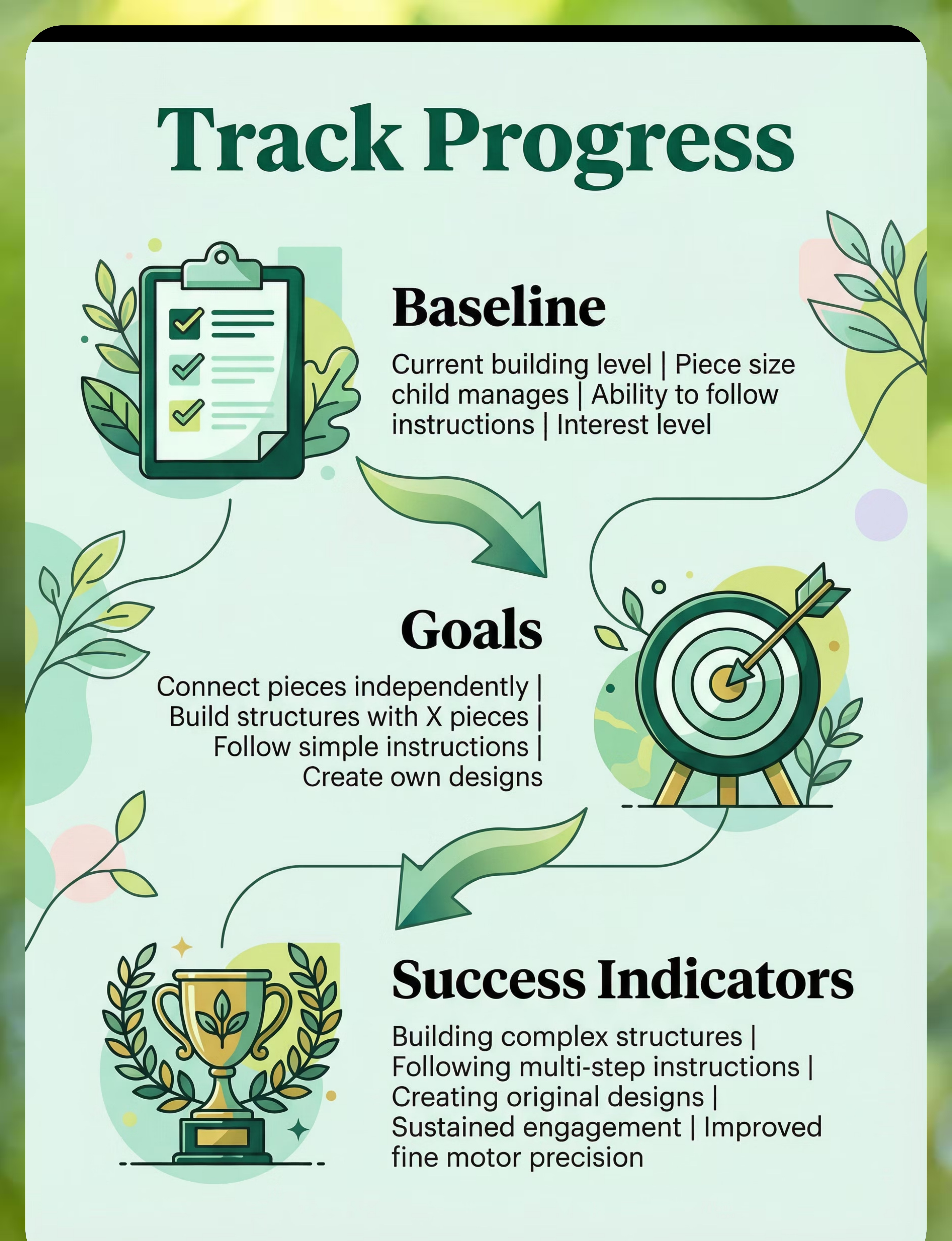
📊 Track Progress
Systematic tracking reveals progress that might otherwise go unnoticed and helps adjust therapeutic approach for maximum benefit.
Baseline (Measure First)
  • Current building level and complexity
  • Piece size child can manage comfortably
  • Ability to follow instructions (yes/no/simple/complex)
  • Interest and engagement level (1-10 scale)
Goals (Target These)
  • Child will connect pieces independently
  • Child will build structures with [X] pieces
  • Child will follow simple building instructions
  • Child will create own designs
Success Indicators
  • Building increasingly complex structures
  • Following multi-step instructions
  • Creating original designs
  • Sustained engagement with building
  • Improved fine motor precision
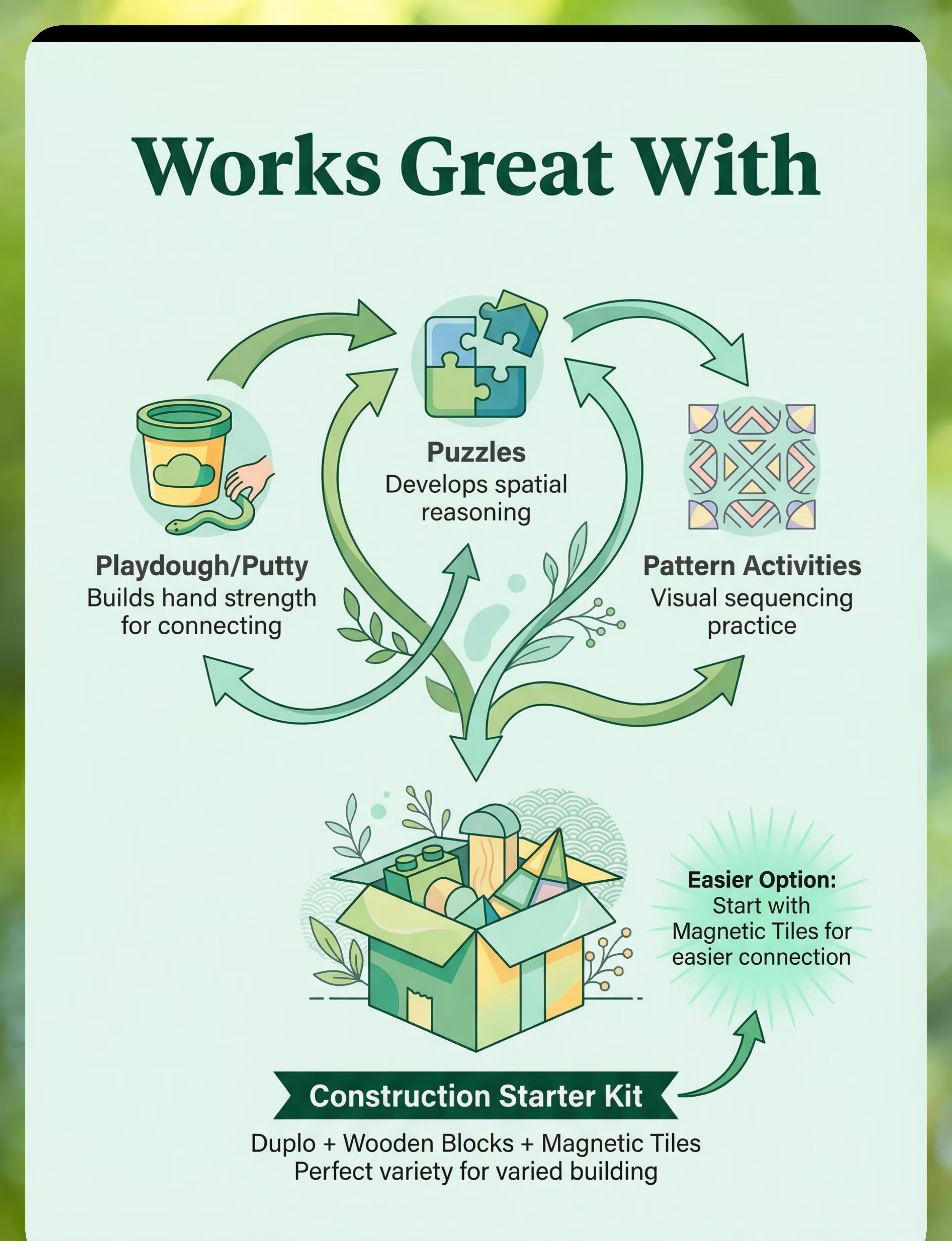
🔗 Complete the Kit
Building toys work synergistically with other therapeutic tools. Consider these complementary options:
Playdough/Putty (7.1)
Why pair: Builds hand strength needed for connecting building pieces. Use putty exercises before building sessions to prepare hands.
Puzzles (7.8)
Why pair: Develops complementary spatial reasoning and visual discrimination skills. Natural progression alongside building activities.
Pattern Activities (8.3)
Why pair: Strengthens visual sequencing abilities needed for following building instructions and replicating models.
Visual Schedules (3.1)
Why pair: Supports instruction-following skills. Visual schedules teach sequential thinking that transfers to building instructions.
Therapeutic Bundles
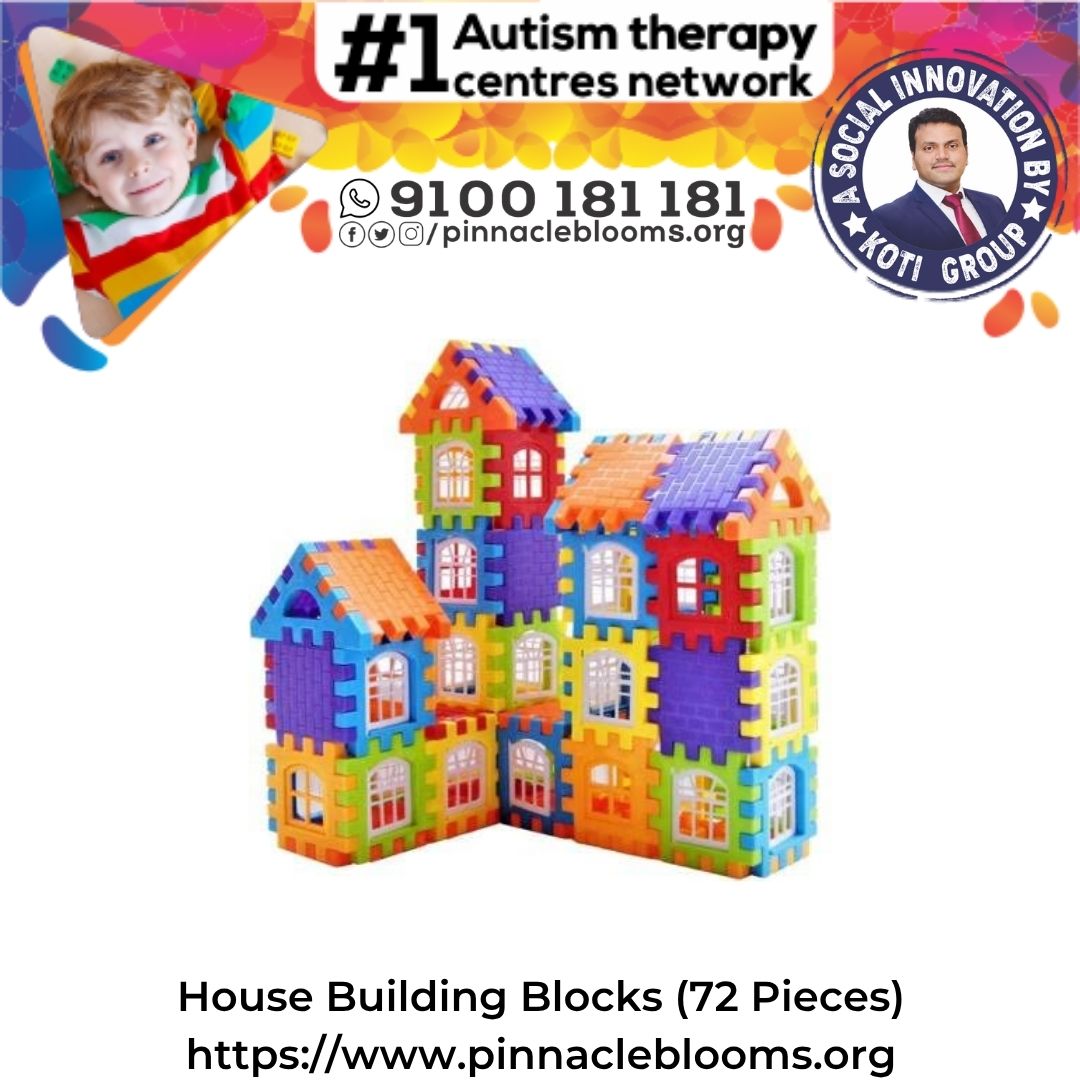
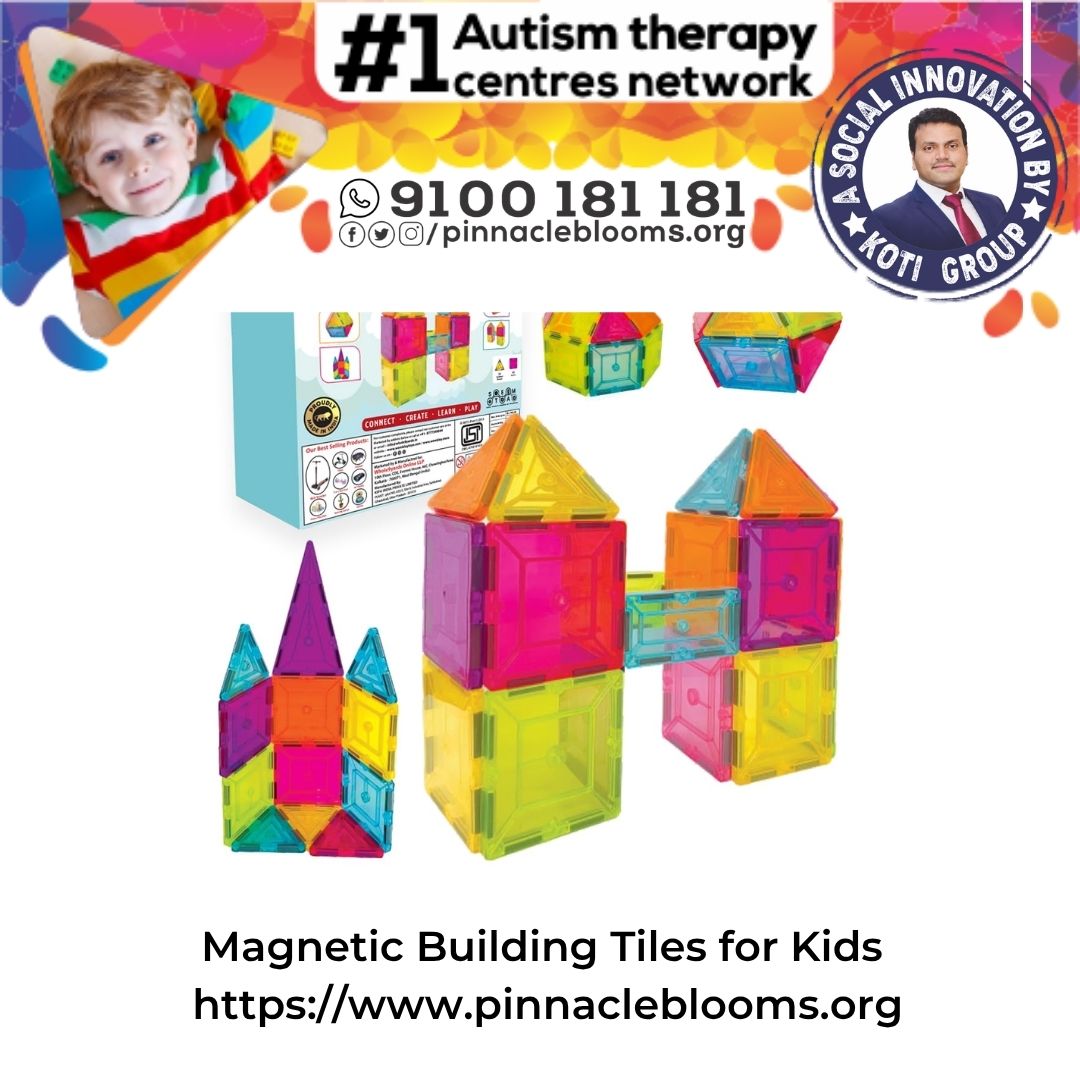
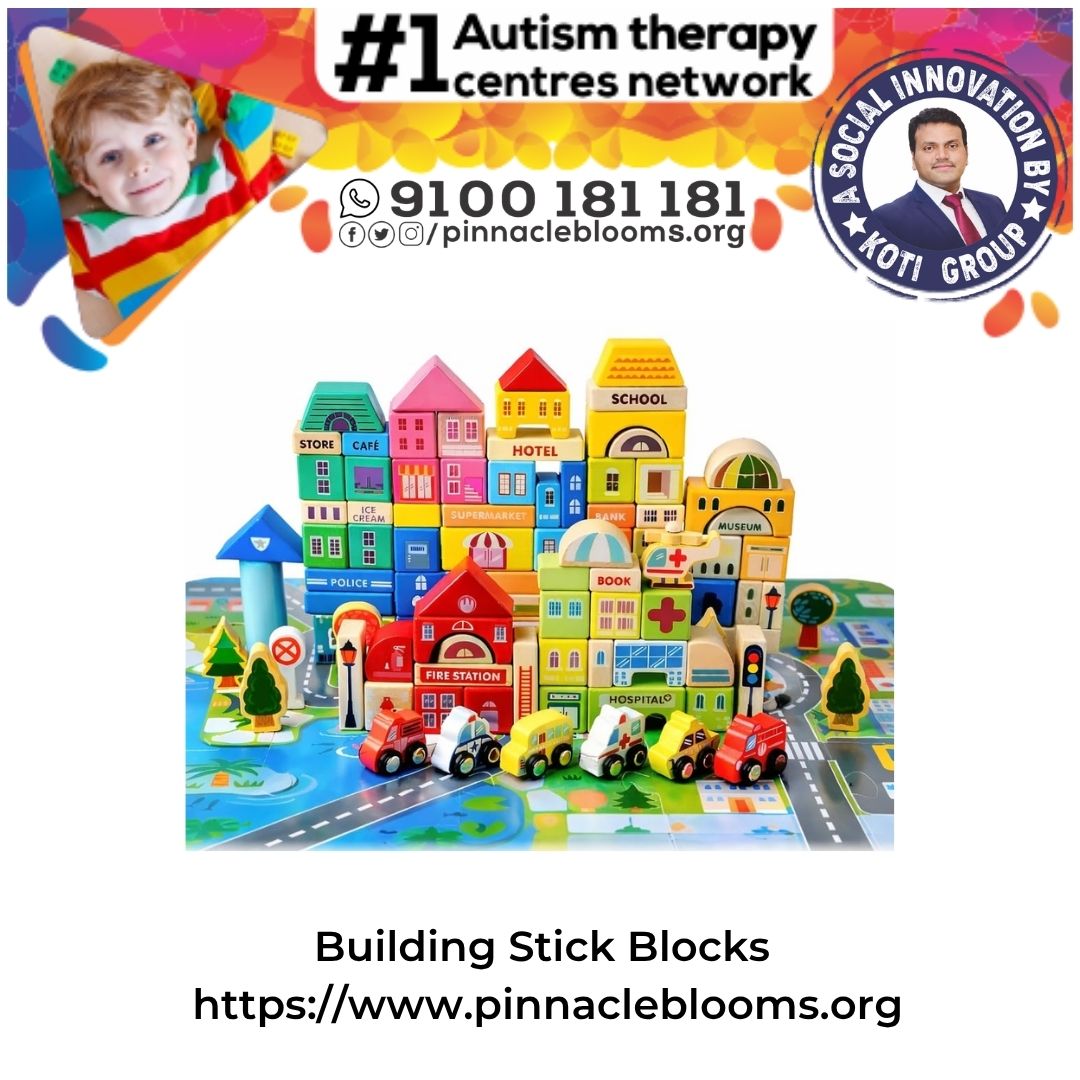
  • Construction Starter Kit: Large Duplo/Mega Blocks (7.7.1) + Wooden Unit Blocks (7.7.3) + Magnetic Building Tiles (7.7.4) - provides varied building options across different connection types and difficulty levels
  • Fine Motor Builder: Building Toys (7.7) + Playdough/Putty (7.1) + Scissors (7.4) - comprehensive fine motor development through strength building and precision activities
🤖 AI Summary
Building toys develop fine motor precision, bilateral coordination, spatial reasoning, and motor planning through engaging construction play. Core Kit tool (Rank 1) with strong evidence base. Comprehensive developmental benefits across multiple skill domains.
building
LEGO
blocks
construction
spatial
fine motor
bilateral
OT
SpEd
core-kit
Common Searches
LEGO autism, building blocks fine motor, Duplo toddler, magnetic tiles kids, construction toys autism, wooden blocks therapy, spatial reasoning toys
💬 Get Support

FREE National Autism Helpline
Phone: 9100 181 181
Languages: 16+ languages supported
Website: pinnacleblooms.org
Connect with expert guidance on therapeutic tool selection, implementation strategies, and developmental support.
Platform Integration
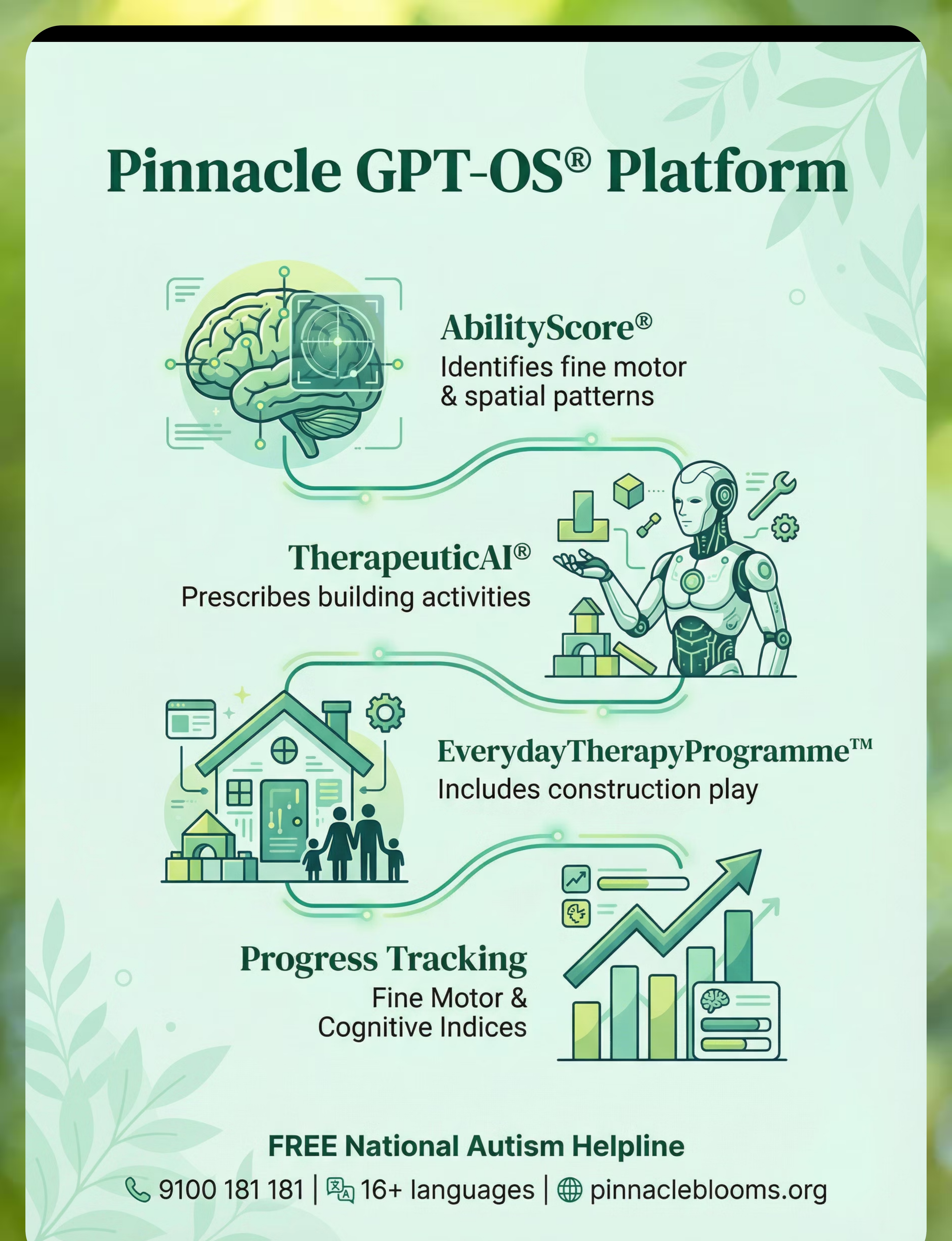
AbilityScore® identifies fine motor patterns and spatial reasoning capabilities, guiding building toy selection. TherapeuticAI® prescribes specific building activities matched to current skill level and therapeutic goals. EverydayTherapyProgramme™ includes structured construction play integrated into daily routines. Fine Motor Index and Cognitive Index track developmental progress across sessions.

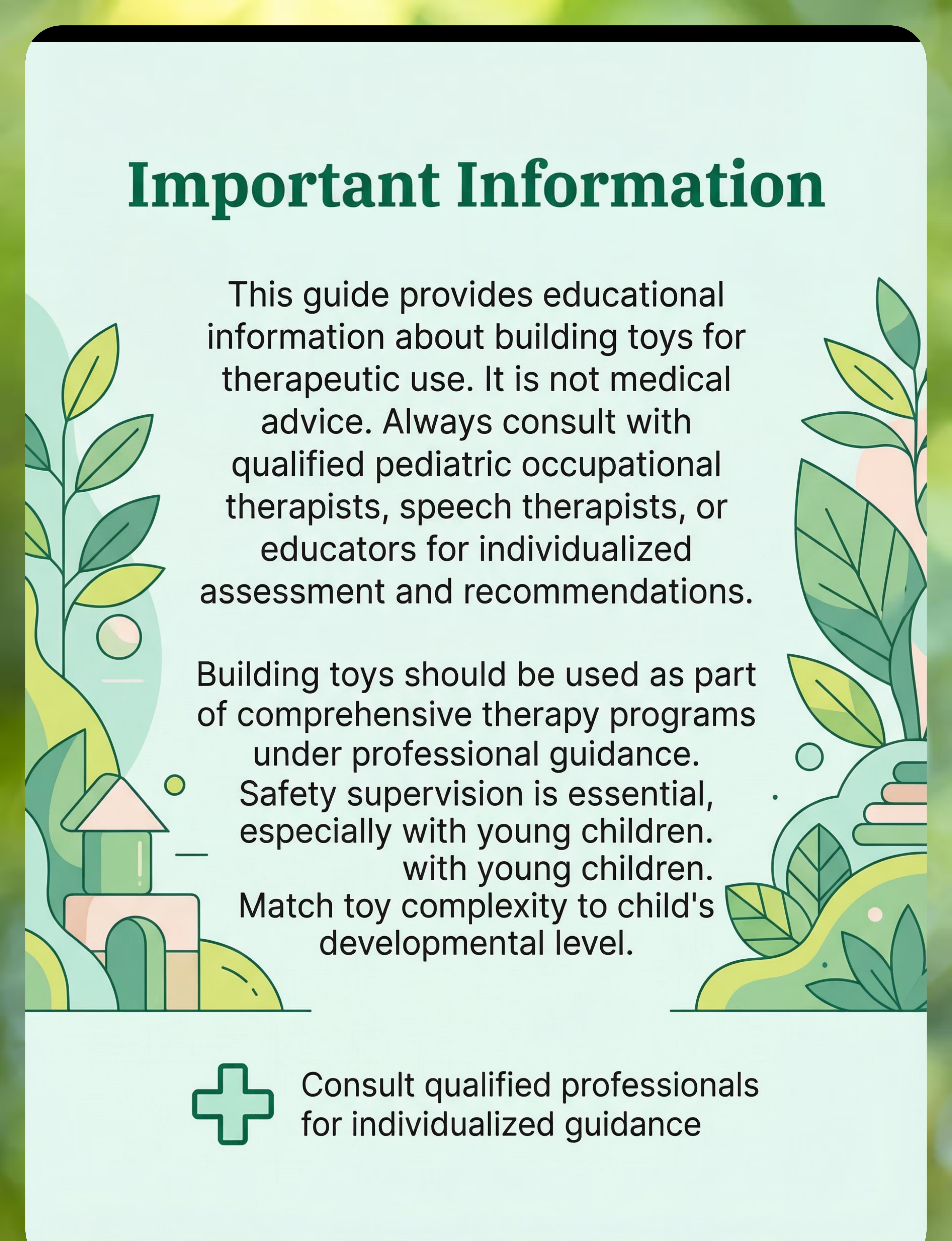
Disclaimer: This is educational information for parents, caregivers, and professionals. Always consult qualified occupational therapists, speech-language pathologists, or pediatricians for personalized assessment and treatment planning. Individual results vary significantly based on multiple factors including baseline abilities, practice frequency, and overall developmental context. Building toys support development but do not replace professional therapeutic intervention when indicated.