








Tool ID: 6.6
OT + PT
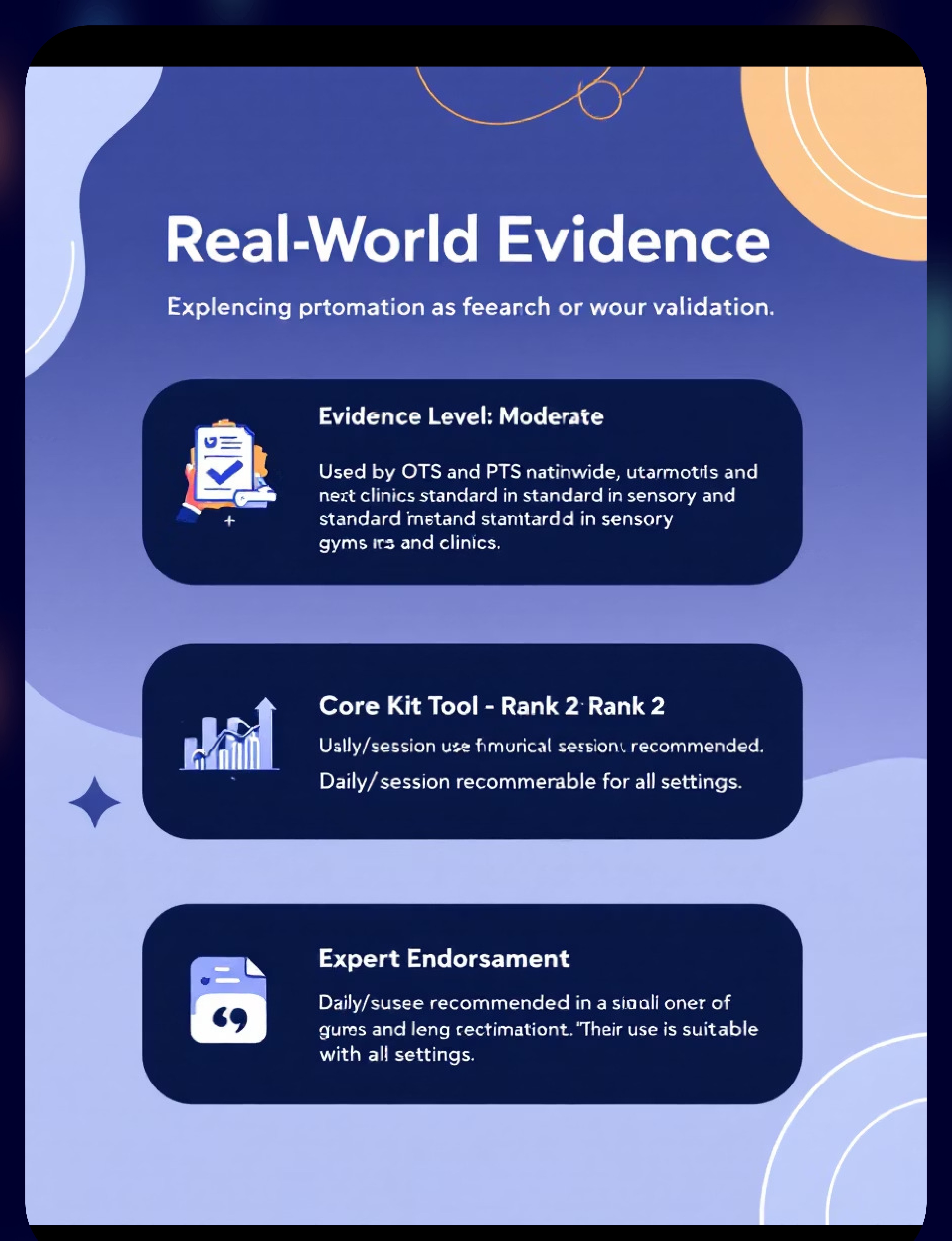
Moderate Evidence
Rank #2
Daily Use
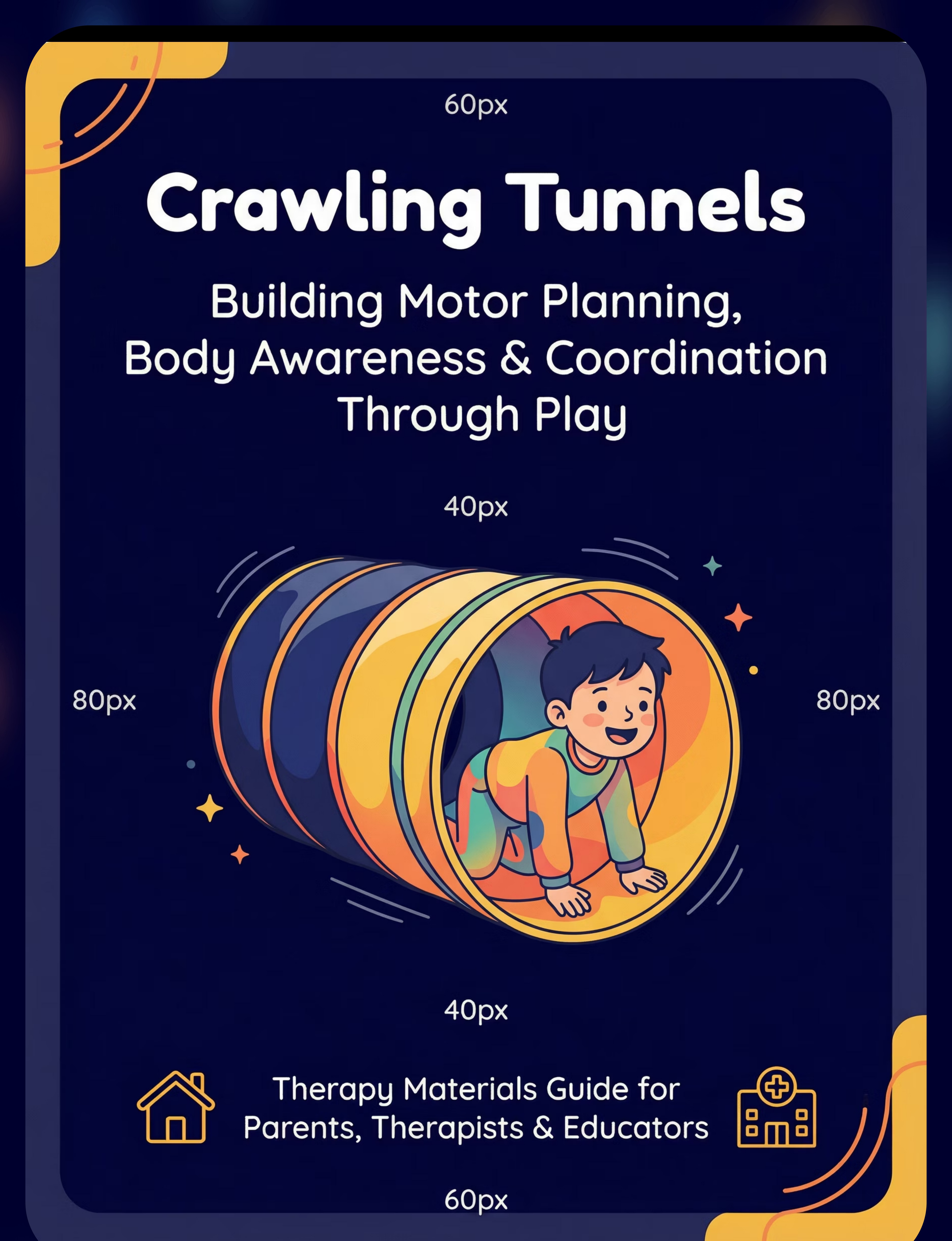
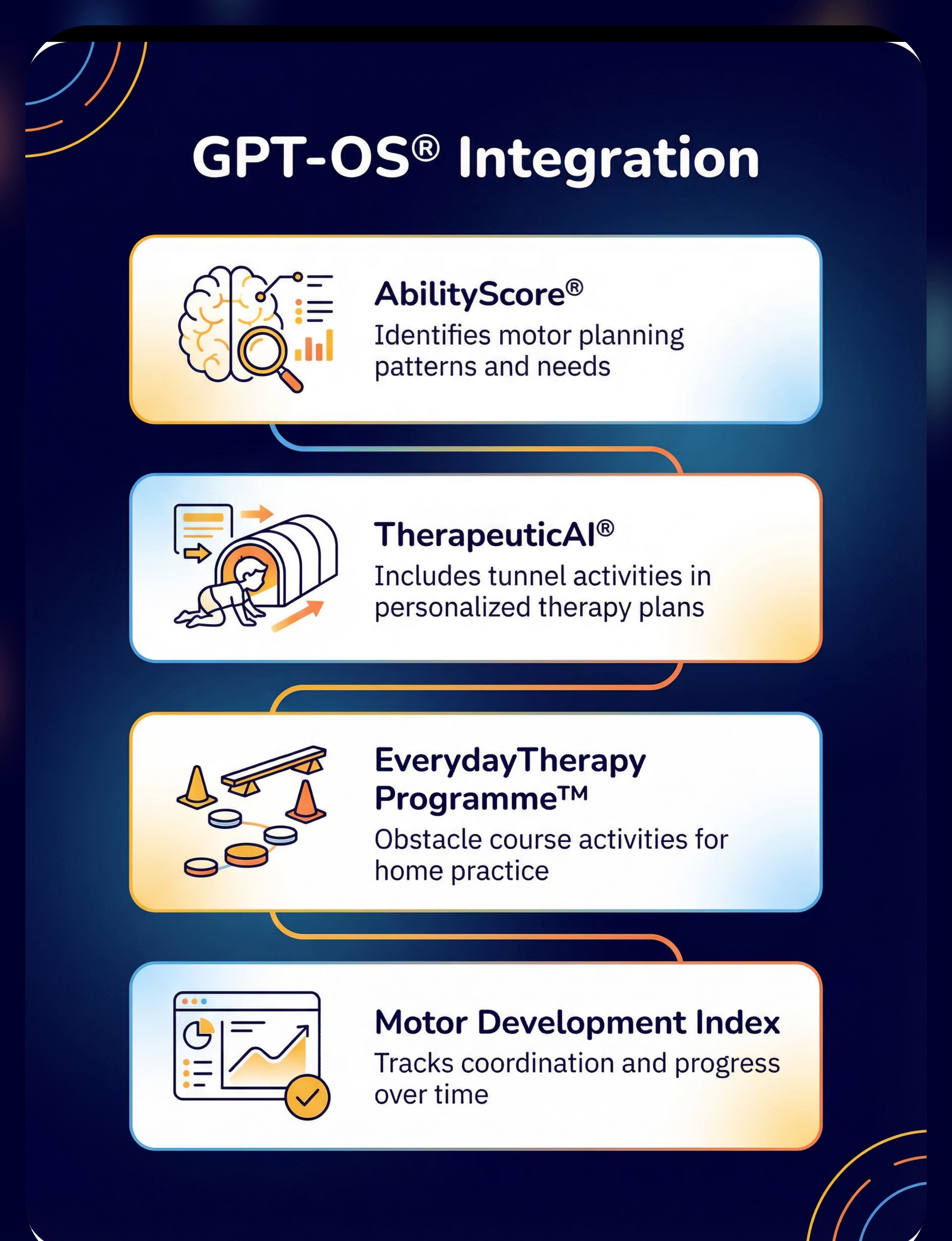
Tunnel / Crawling Tunnel
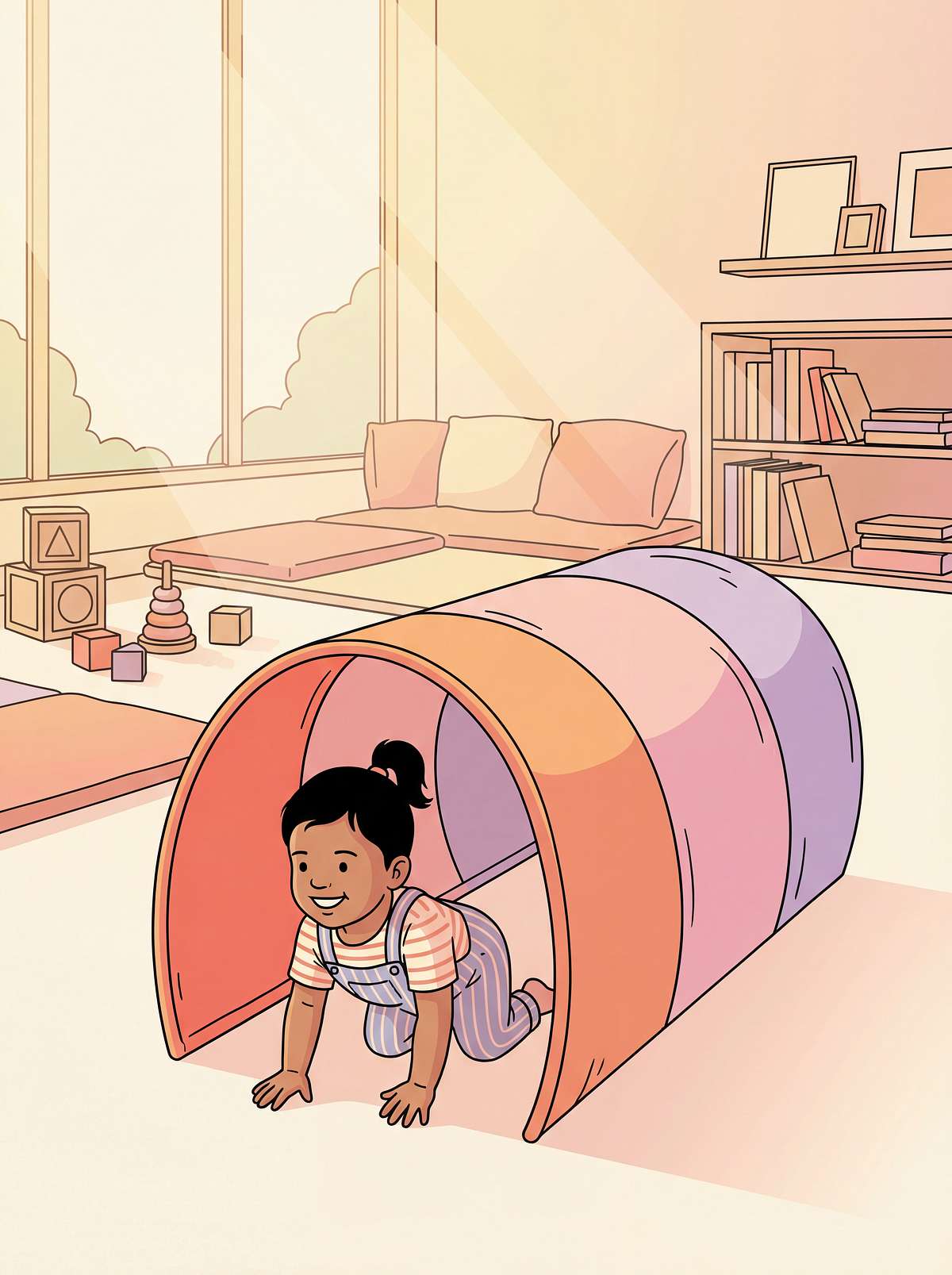
A proprioceptive-motor planning spatial awareness system that transforms crawling into purposeful play
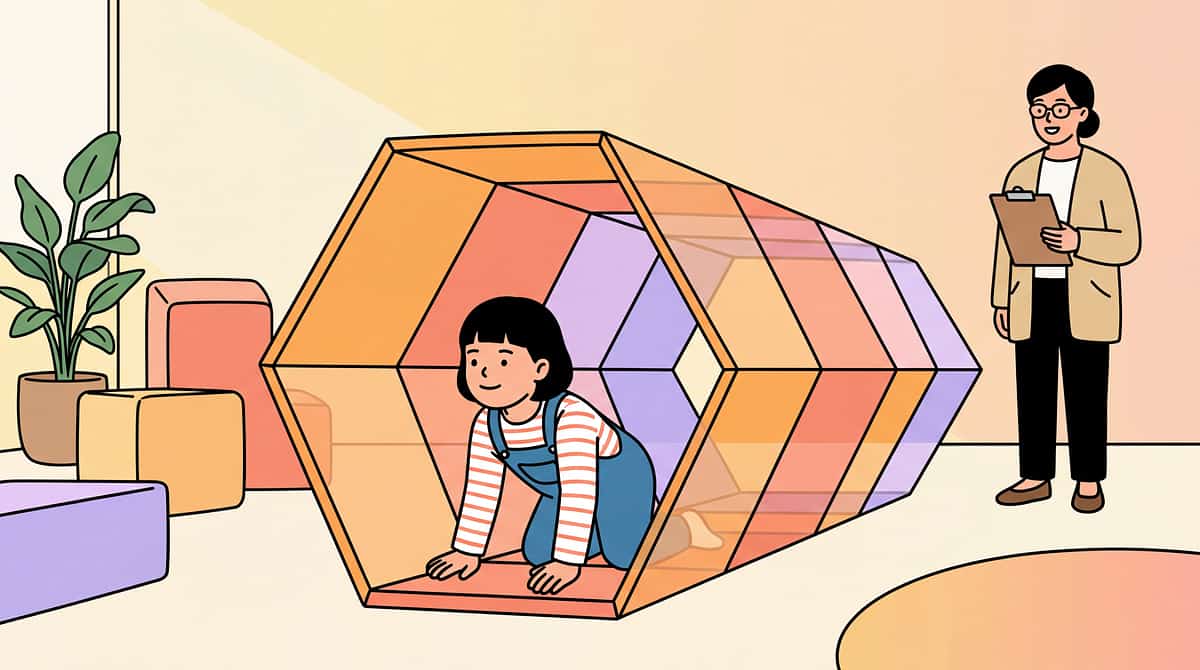
Designed to develop motor planning, body awareness, and bilateral coordination through engaging crawling activities. Whether your child skipped crawling as an infant or struggles with spatial navigation, tunnels offer a fun, evidence-based path to building essential developmental patterns.
₹500–4,000

Who This Helps
Motor Planning Development
This tool supports children in organizing and executing motor actions, enhancing their ability to plan movements effectively through engaging crawling activities.
Body Awareness & Proprioception
Tunnels provide rich sensory input that helps children understand their body's position in space and the effort required for movement, crucial for building confidence and control.
Crawling & Bilateral Coordination
Encourages natural crawling patterns, which are vital for developing bilateral coordination – the ability to use both sides of the body together in a controlled and organized manner.
Spatial Navigation
By maneuvering through an enclosed space, children improve their spatial awareness, understanding of distance, and how to navigate their environment safely and efficiently.
Children Who Skipped Crawling
Builds essential bilateral coordination patterns that may have been missed during infancy, laying a strong foundation for future motor skills.
Motor Planning Challenges
Teaches body awareness and spatial navigation through fun, enclosed movement experiences, helping children overcome difficulties in sequencing movements.
Sensory Seekers
Provides proprioceptive input and gross motor activity in a controlled, engaging format, satisfying sensory needs and promoting focused engagement.
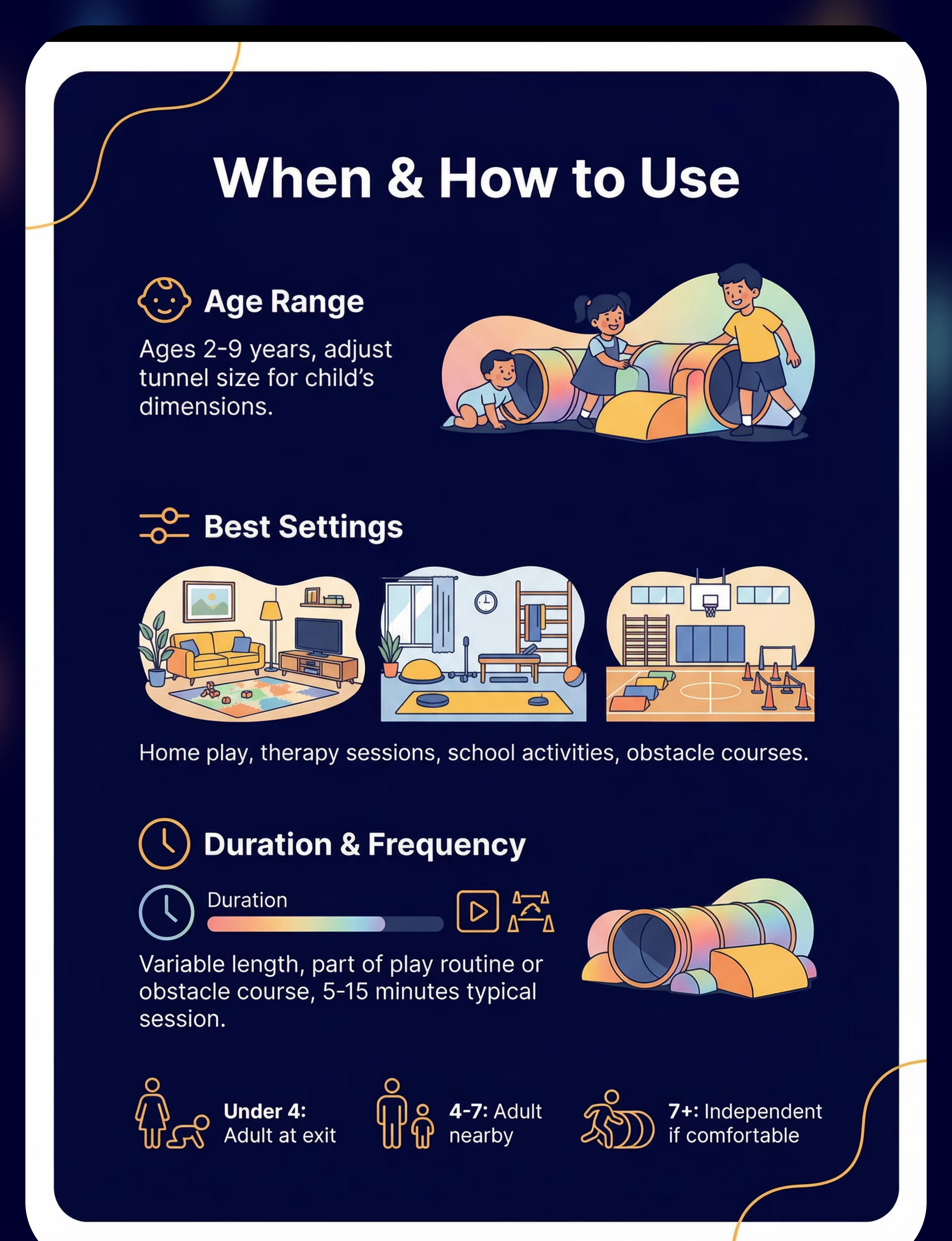
Ages 2-9 years
Home
Clinic
School

Does This Sound Familiar?
These are the voices of parents just like you, navigating similar challenges. You're not alone in this journey.
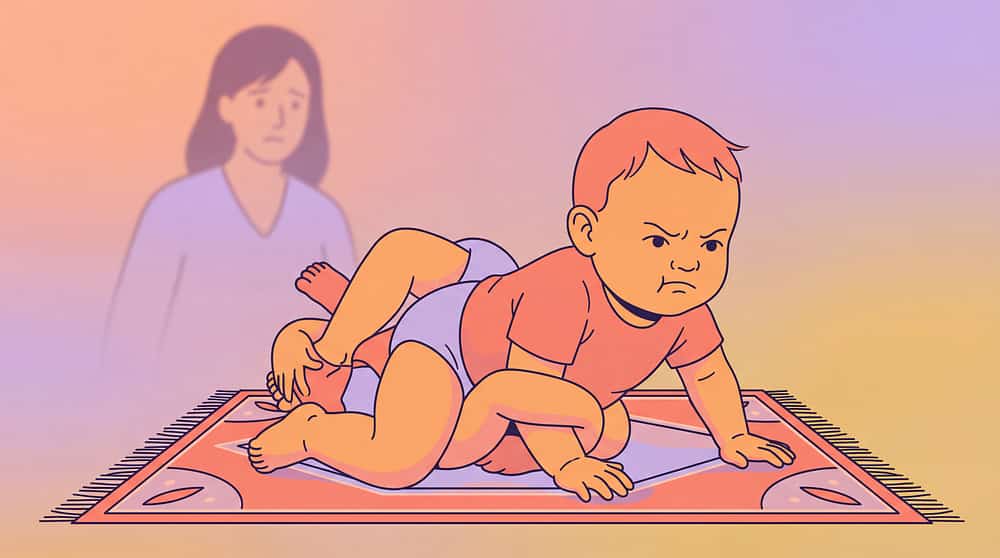
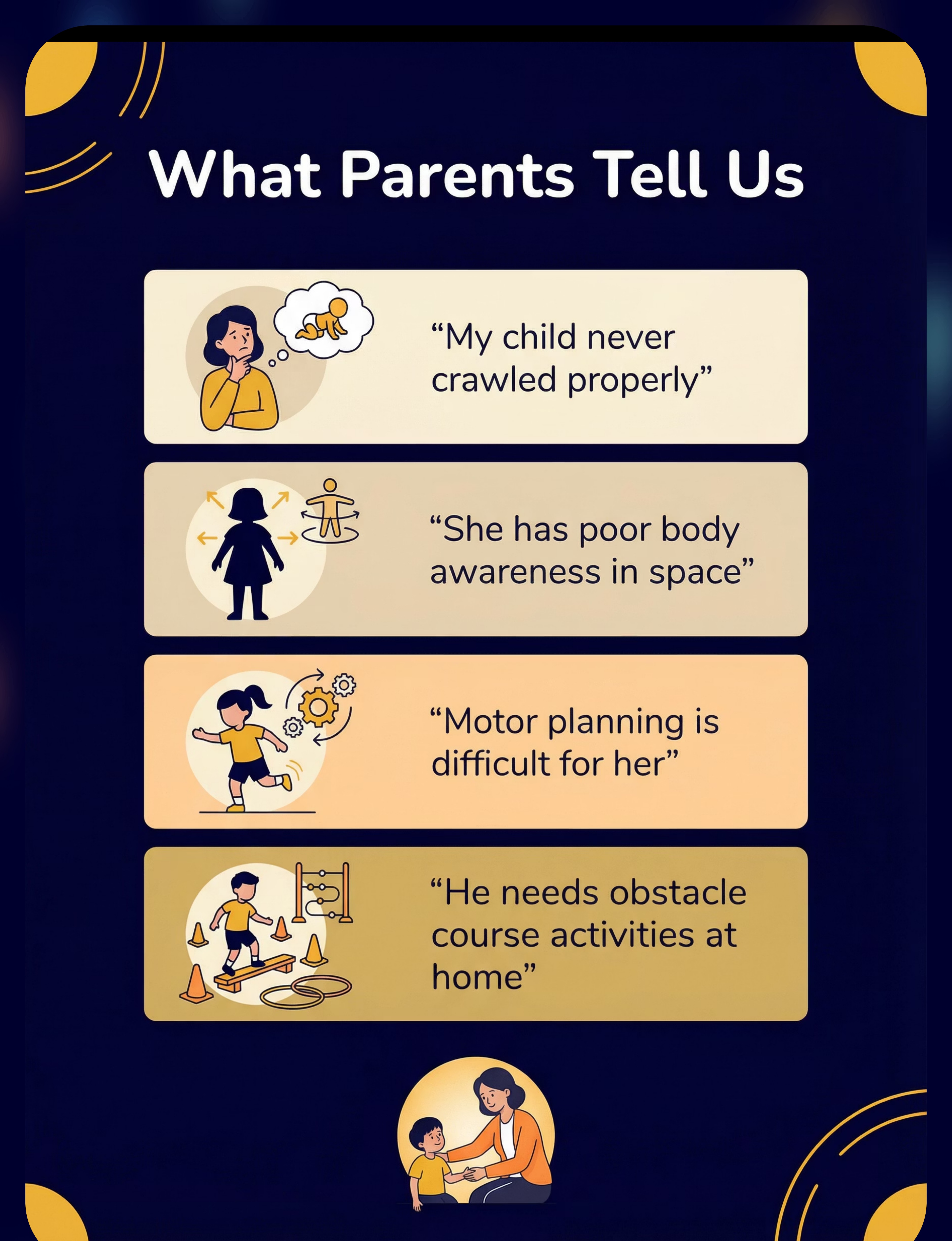
"My child never crawled properly as a baby, and now I'm worried about the developmental gaps this might have created."
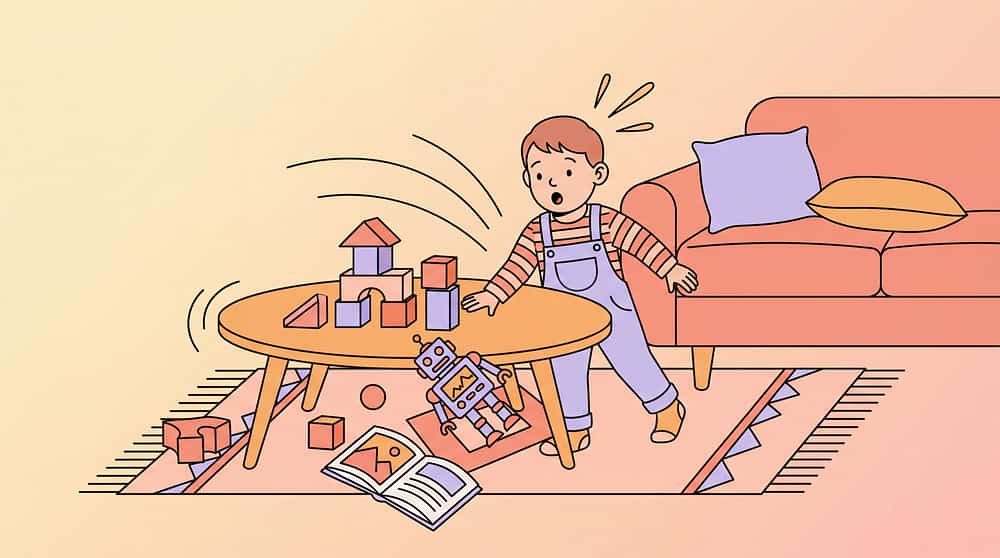
"She has poor body awareness in space—always bumping into furniture and struggling to navigate through doorways."
"He avoids crawling activities completely, which makes it hard to build the coordination skills he needs."
"Motor planning is so difficult for her—she can't seem to figure out how to move her body through obstacle courses."
Parent: "He needs obstacle course activities at home, but I don't know where to start or what equipment to get."
Parent: "Overall coordination is poor—simple activities that other children do easily are a real struggle for him."
You're not alone. These are common challenges that many families face, and there are proven strategies to help.

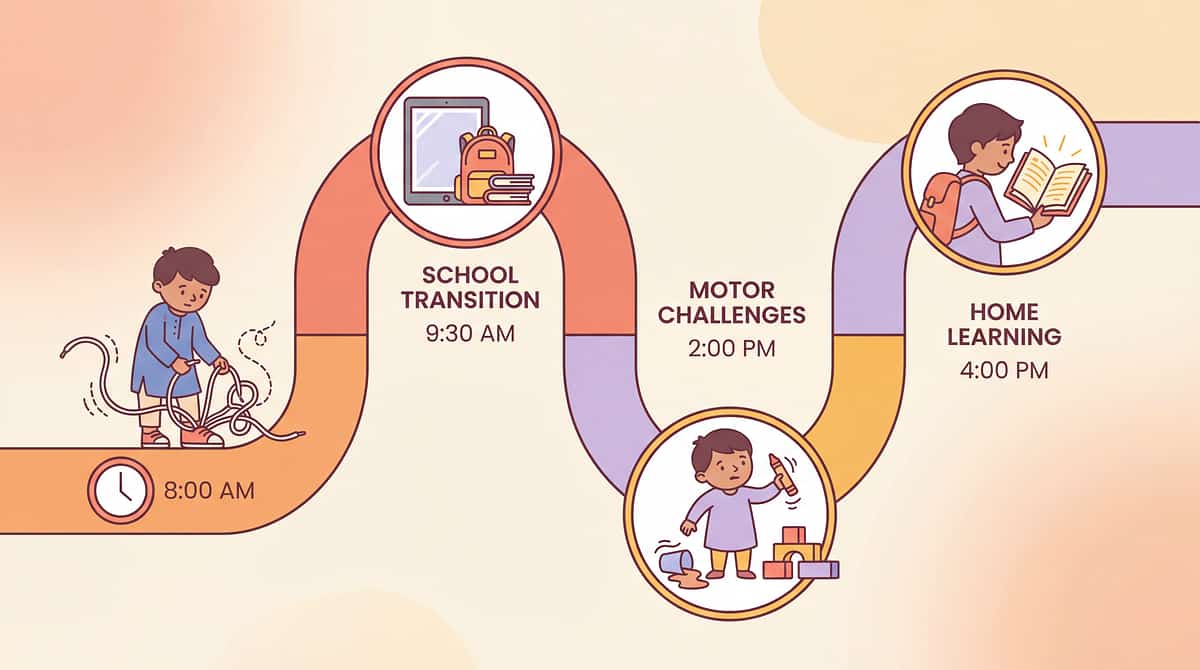
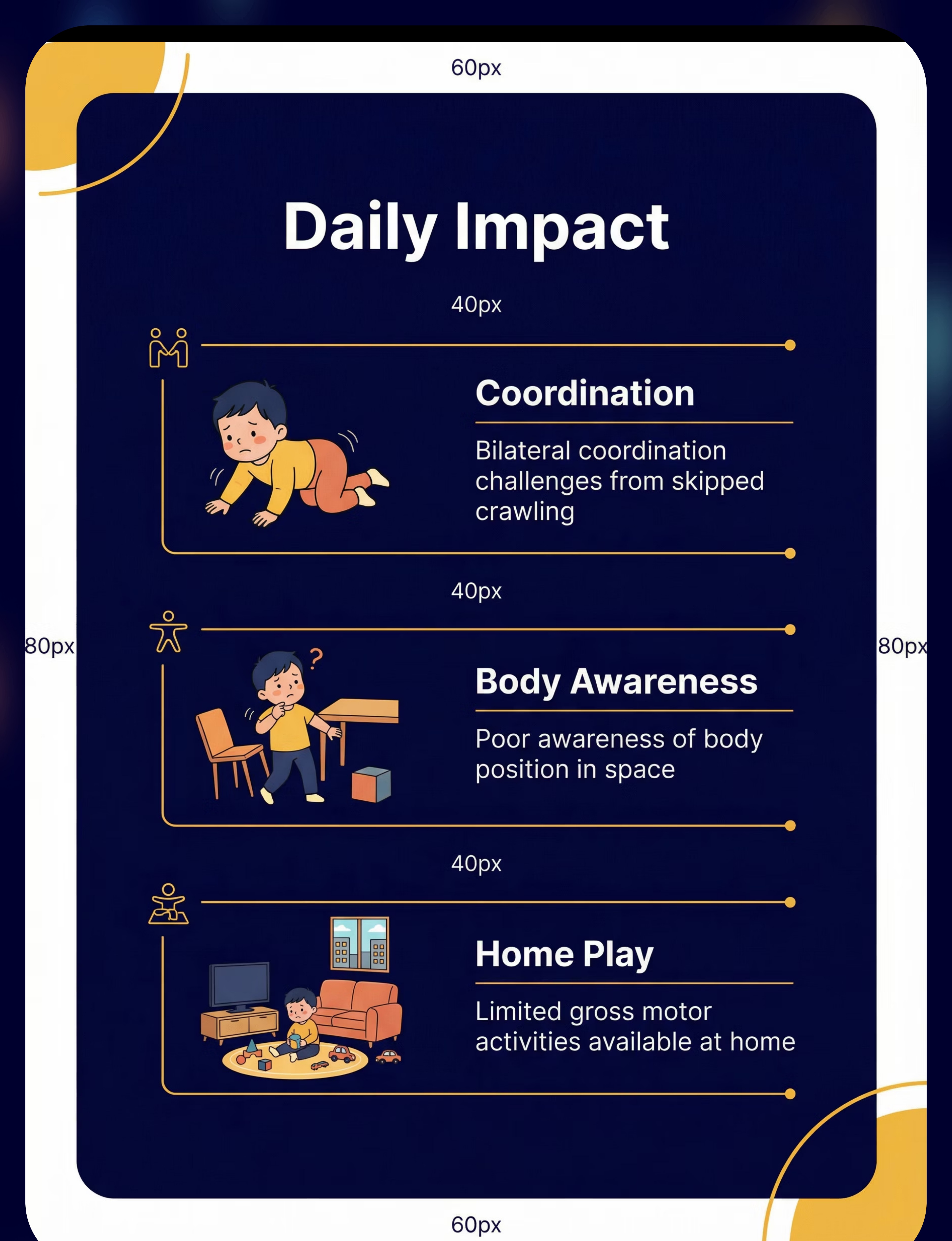
A Day Without the Right Support
Morning Struggles
Getting ready for school becomes a frustrating ordeal as coordination difficulties make dressing, eating, and simple bilateral tasks a constant challenge.
School Day Difficulties
Poor body awareness leads to bumping into classmates, struggling to navigate crowded hallways, and challenges in physical education classes, impacting confidence and participation.
Afternoon Obstacles
After-school activities or free play are marred by motor planning struggles, making it hard to engage in organized games or create complex movements with peers.
Evening Frustrations
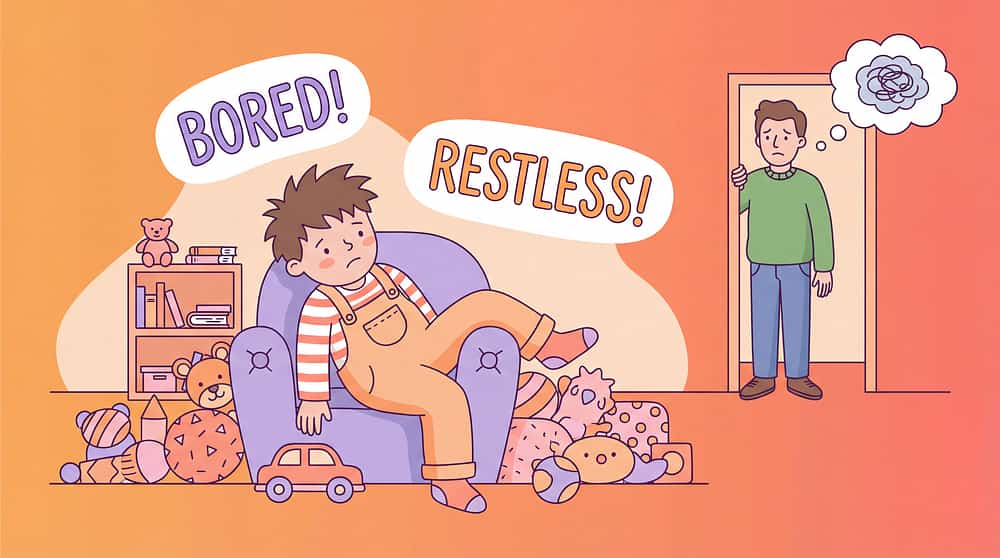
Limited active play options at home lead to bottled-up energy and emotional outbursts, as movement needs go unmet without appropriate gross motor equipment.

The Science Behind It
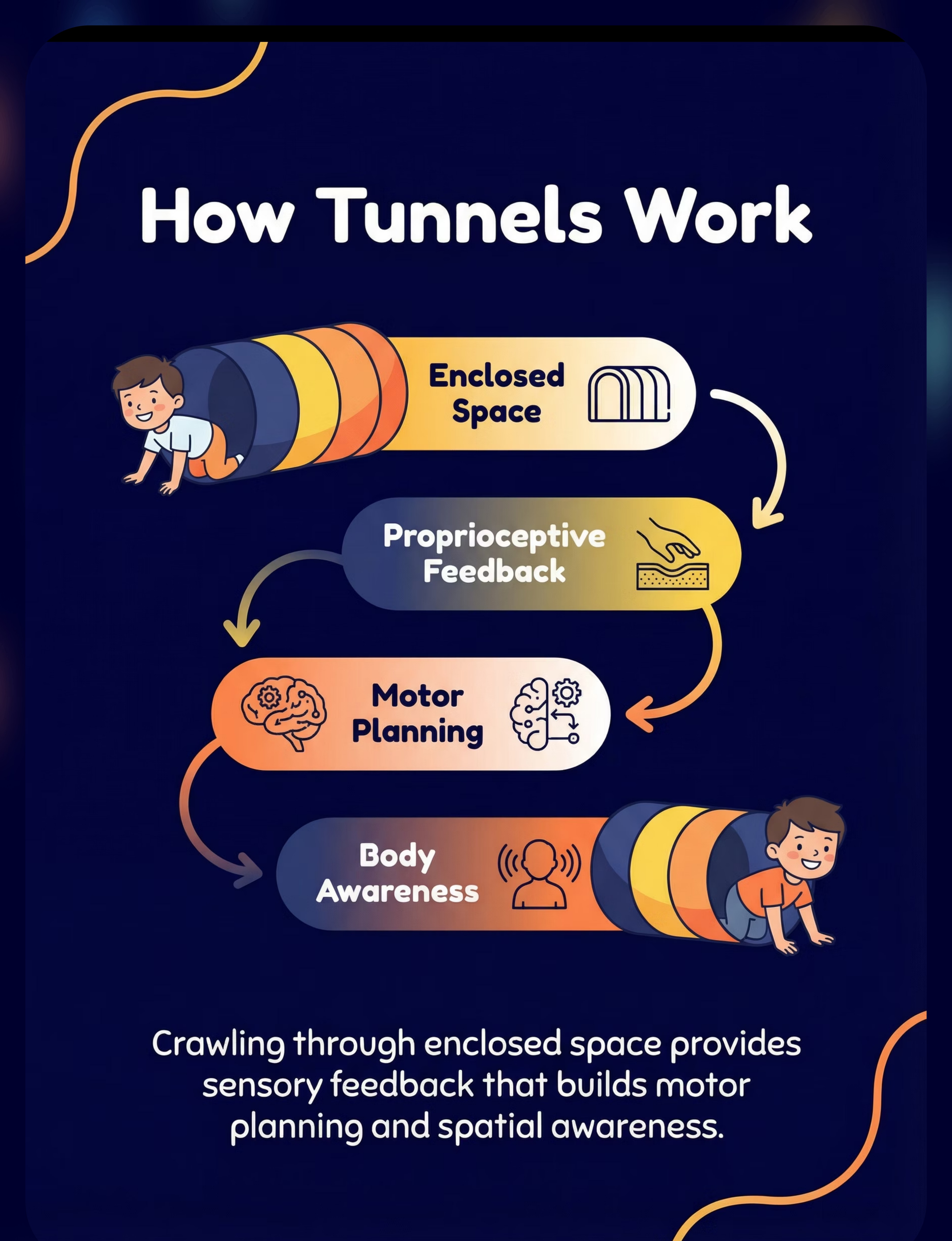
Understanding how crawling tunnels support development helps you use them more effectively. Here's the therapeutic mechanism that makes this tool so powerful:
Sensory Input
Enclosed crawling provides rich proprioceptive feedback (body position) and vestibular input (balance system), essential for processing environmental cues.
Motor Planning
Navigating the tunnel requires planning and executing precise movements, enhancing the brain's ability to sequence actions and coordinate the body.
Skill Development
The crawling pattern naturally fosters bilateral coordination (using both sides of the body together) and builds a strong sense of body awareness in space.
Functional Outcomes
Improved motor planning, coordination, and body awareness lead to enhanced confidence, better engagement in physical activities, and overall developmental progress.

How to Use It Right
These evidence-based best practices ensure your child gets maximum therapeutic benefit while building confidence and skill:
Start Gradually with Anxious Children
Begin with short, see-through tunnels if your child is nervous about enclosed spaces. Build comfort slowly and never force entry.
Integrate into Obstacle Courses
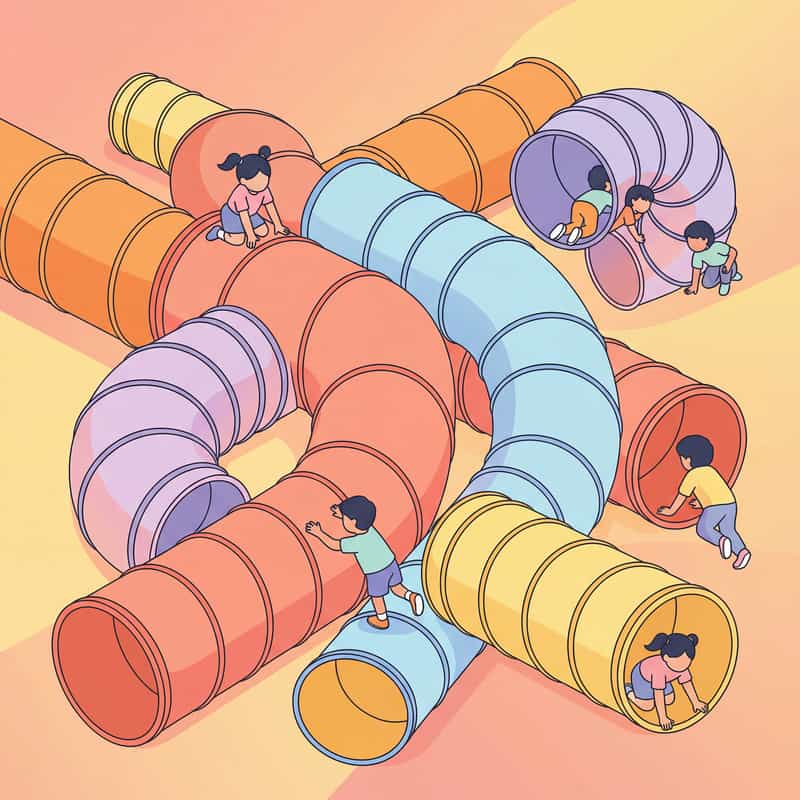
Use tunnels as components in larger motor planning sequences. This develops sequential thinking and complex movement patterns.
Add Progressive Challenges
As skills develop, introduce tasks like carrying objects through the tunnel, stopping to complete activities inside, or navigating backwards.
Provide Security and Encouragement
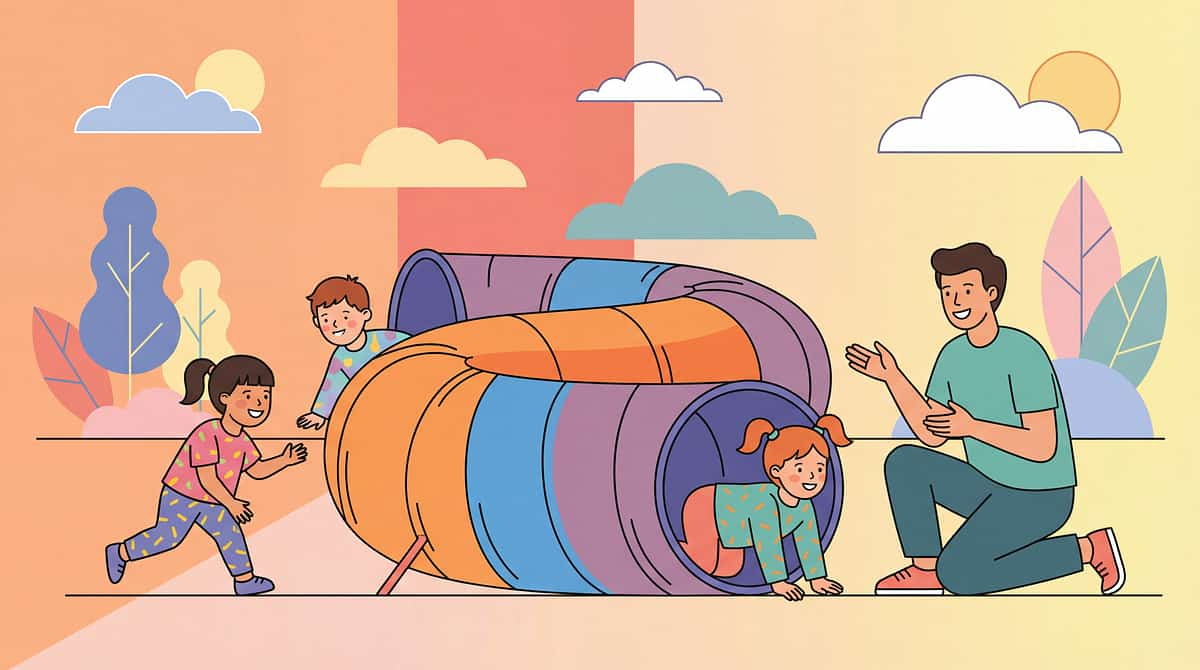
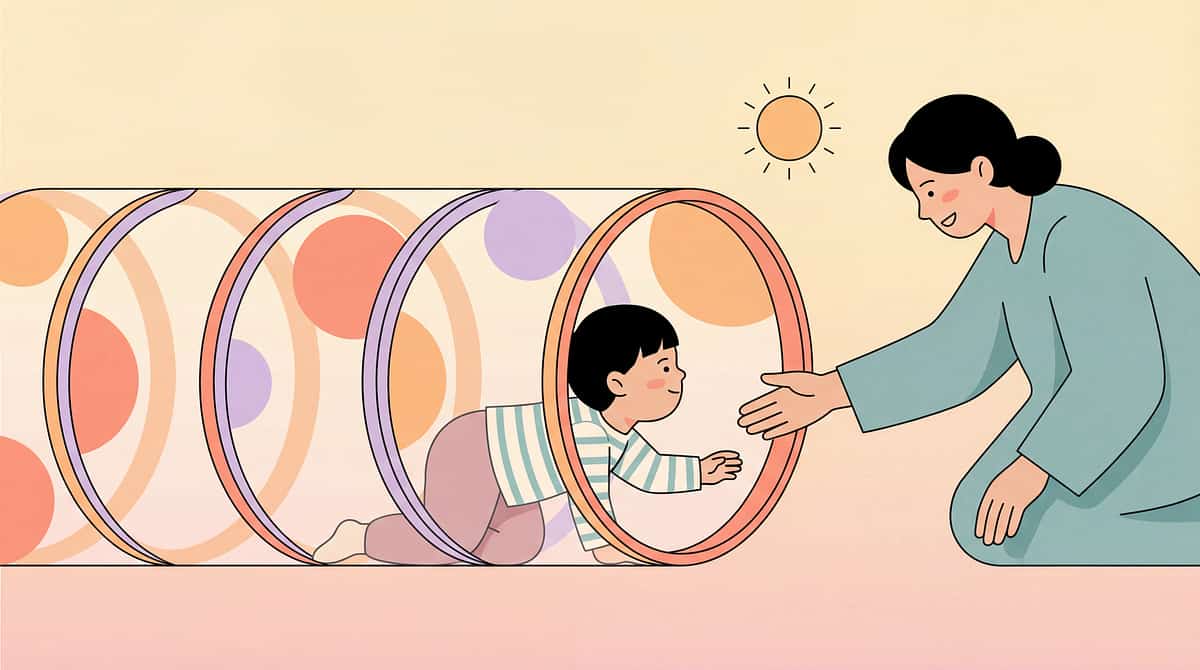
Position an adult at the tunnel exit to provide reassurance. Celebrate each successful navigation to build positive associations.
Include in Daily Sensory Diet
Regular tunnel play provides consistent proprioceptive input and movement opportunities as part of a comprehensive sensory approach.
Respect Individual Pace
Every child builds comfort at their own speed. Gentle, patient exposure leads to lasting confidence and skill development.
Duration: Variable—tunnels work best as part of play sequences or obstacle courses rather than timed activities. Follow your child's engagement cues.

Expert Perspective
"Crawling is a fundamental motor pattern that many children with autism skip or do minimally. Tunnels make crawling fun and purposeful while building essential bilateral coordination and motor planning."
— Occupational Therapist
OT + PT Recommended
Moderate Evidence
Rank #2 in Category
Daily/Session Use
This endorsement reflects the clinical consensus that crawling activities, when made engaging through tools like tunnels, address fundamental developmental patterns that support broader motor and sensory integration.

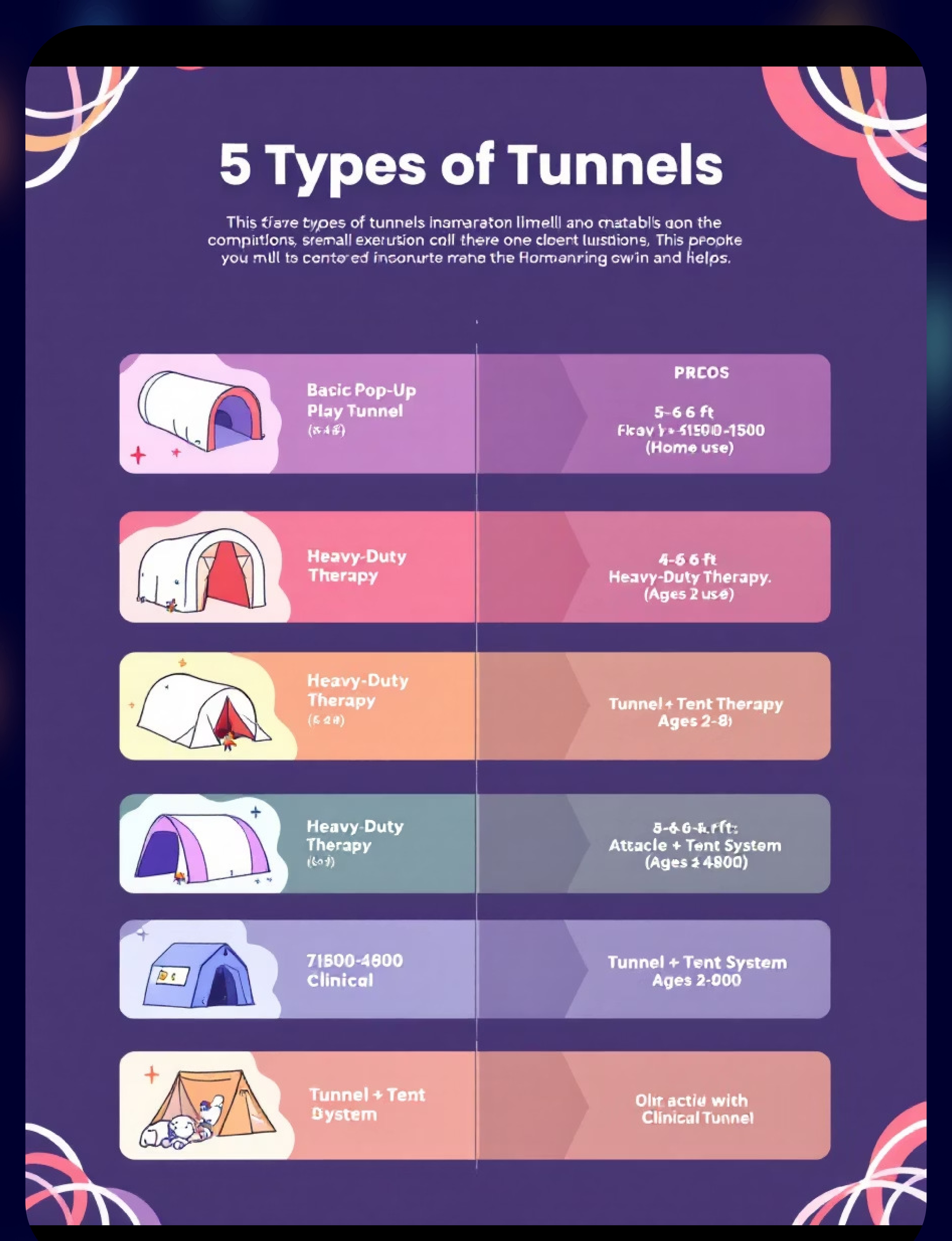
Choose Your Option (5 Variants)
Each variant serves specific needs and settings. Consider your child's comfort level, available space, and primary use case when selecting.
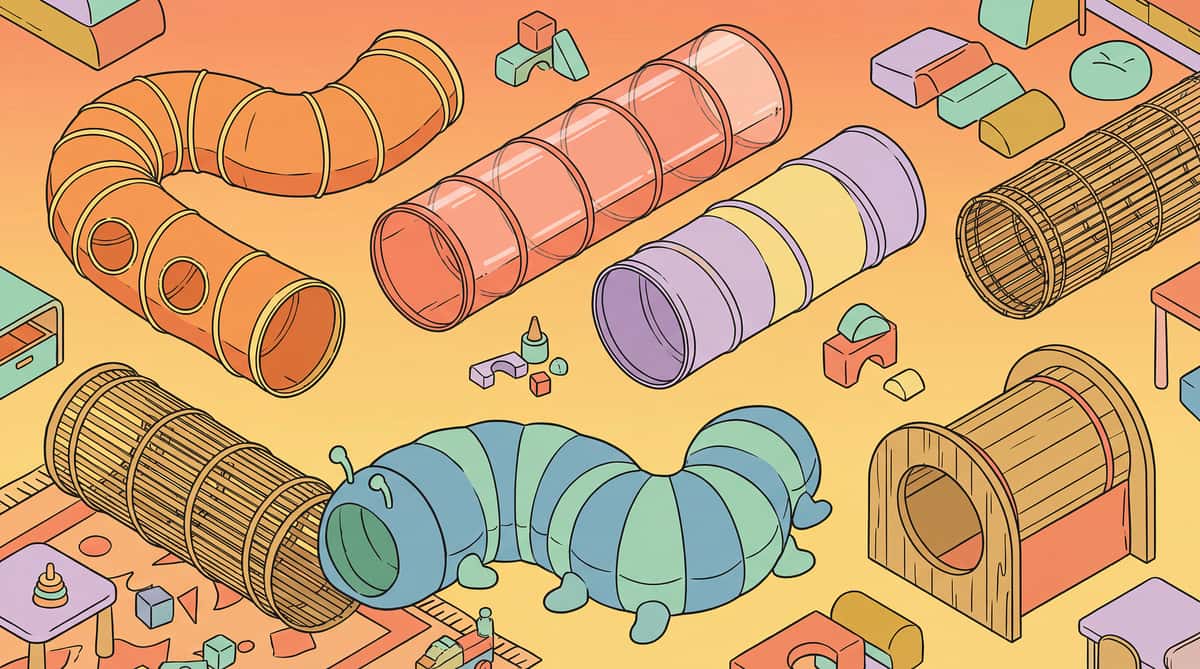
Tunnel Variants
Pop-Up Play Tunnel
Heavy-Duty Therapy Tunnel
Tunnel with Tent/Cube Attachment
Lycra Tunnel / Body Sock Tunnel
Transparent/Mesh Tunnel
Selection Criteria & Use Cases
Pop-Up Play Tunnel
- Best for: Home use, easy storage, play
- Ages: 2-8 years | Settings: Home, Clinic
- Size: 5-6 feet long, collapsible
- Portability: Very High ⭐⭐⭐⭐⭐
- Price: ₹500–1,500
- Lightweight fabric tunnel that folds flat for convenient storage—ideal for families with limited space.
Heavy-Duty Therapy Tunnel
- Best for: Clinical use, heavy use
- Ages: 2-9 years | Settings: Clinic, School
- Size: 4-6 feet, reinforced
- Portability: Medium ⭐⭐⭐
- Price: ₹1,500–4,000
- Durable therapy-grade construction withstands intensive clinical use and multiple children daily.
Tunnel with Tent/Cube Attachment
- Best for: Play spaces, imaginative play
- Ages: 2-7 years | Settings: Home
- Size: Tunnel + play tent system
- Portability: Medium ⭐⭐⭐
- Price: ₹800–2,500
- Expandable play system that combines motor activity with imaginative play opportunities.
Lycra Tunnel / Body Sock Tunnel
- Best for: Deep pressure while crawling
- Ages: 3-9 years | Settings: Clinic, Home
- Size: Stretchy fabric tunnel
- Portability: High ⭐⭐⭐⭐
- Price: ₹1,000–3,000
- Stretchy fabric provides enhanced proprioceptive input through gentle resistance during movement.
Transparent/Mesh Tunnel
- Best for: Children anxious in enclosed spaces
- Ages: 2-8 years | Settings: Home, Clinic
- Size: See-through material
- Portability: High ⭐⭐⭐⭐
- Price: ₹600–1,500
- See-through construction reduces anxiety while still providing motor planning challenges.
By Goal
- Storage priority: Pop-Up
- Deep pressure: Lycra
- Anxiety support: Transparent
- Heavy use: Therapy-grade
By Setting
- Home: Pop-Up or Tent system
- Clinic: Therapy-grade or Lycra
- School: Therapy-grade
- Multiple settings: Portable options
By Portability
- Very High: Pop-Up
- High: Transparent, Lycra
- Medium: Therapy-grade, Tent
- Storage: Pop-up folds flattest

Specifications & Types Guide
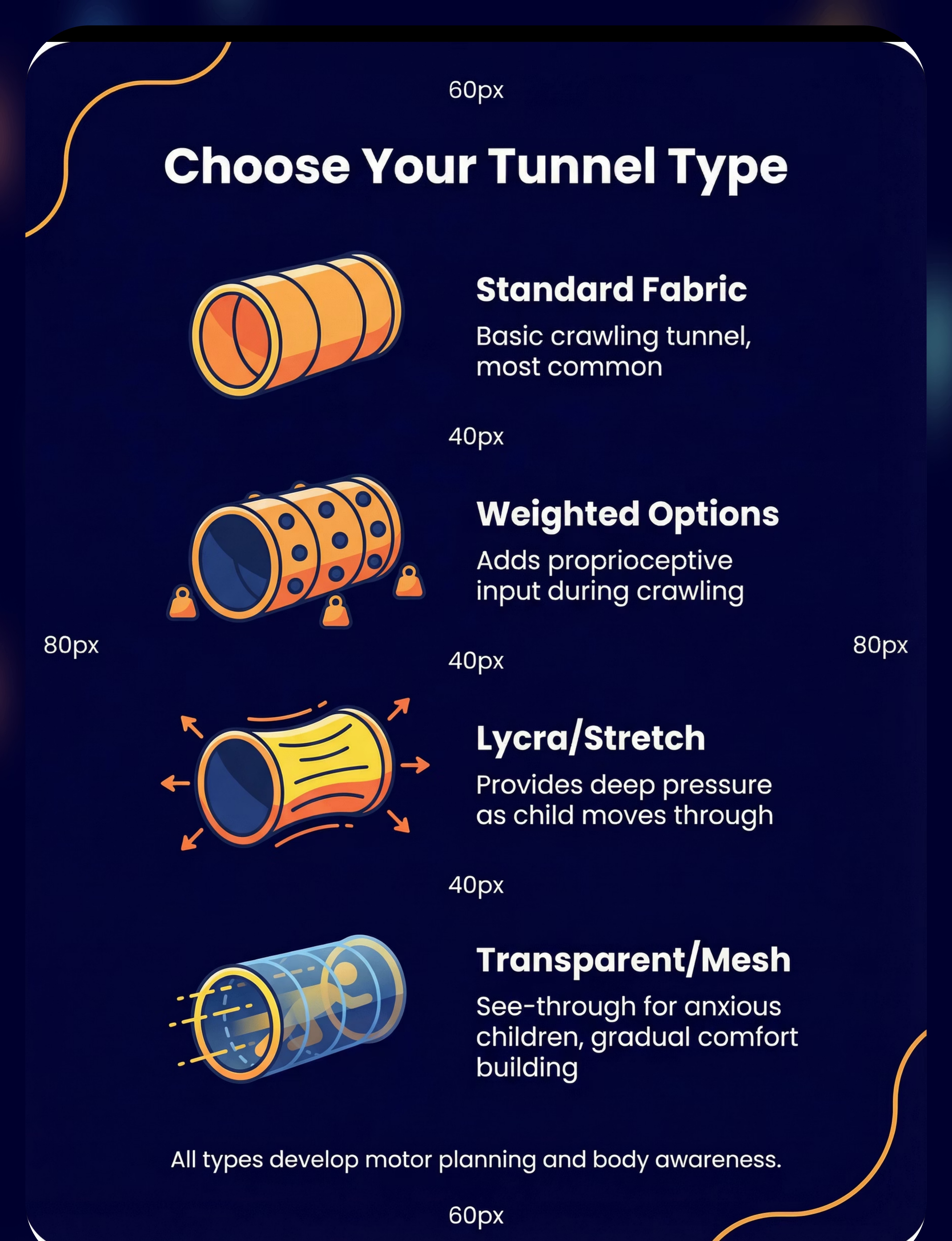
Tunnel Types & Materials

Standard: Basic polyester fabric crawling tunnels are versatile and economical. They're great for general motor planning activities and are often designed for easy pop-up setup and storage.

Lycra: Made from stretchy material, Lycra tunnels provide deep pressure feedback during crawling. This combines movement with valuable sensory input, ideal for proprioceptive exploration.

Weighted: These tunnels incorporate gentle weights to add enhanced proprioceptive input, making them excellent tools for sensory seekers to experience more resistance and body awareness.

Transparent: Featuring a see-through design, transparent or mesh tunnels help build comfort in enclosed spaces for anxious children by maintaining visual connection with their surroundings.
Key Features to Consider

Durability & Safety: Look for tunnels with reinforced seams and non-toxic materials, free from sharp edges, to ensure a safe and long-lasting play experience for regular use.

Setup & Portability: Easy assembly and convenient storage are crucial. Many tunnels feature wire frames that allow them to pop up quickly and fold flat, making them highly portable.

Diameter & Size: Ensure the tunnel's diameter is appropriate for your child's size to provide comfortable movement without feeling too constricted or too spacious. Always check product specifications for age and size recommendations.

Cleaning & Maintenance: Tunnels should ideally be made from wipeable or washable surfaces like durable polyester, ensuring hygiene and easy maintenance after playtime.
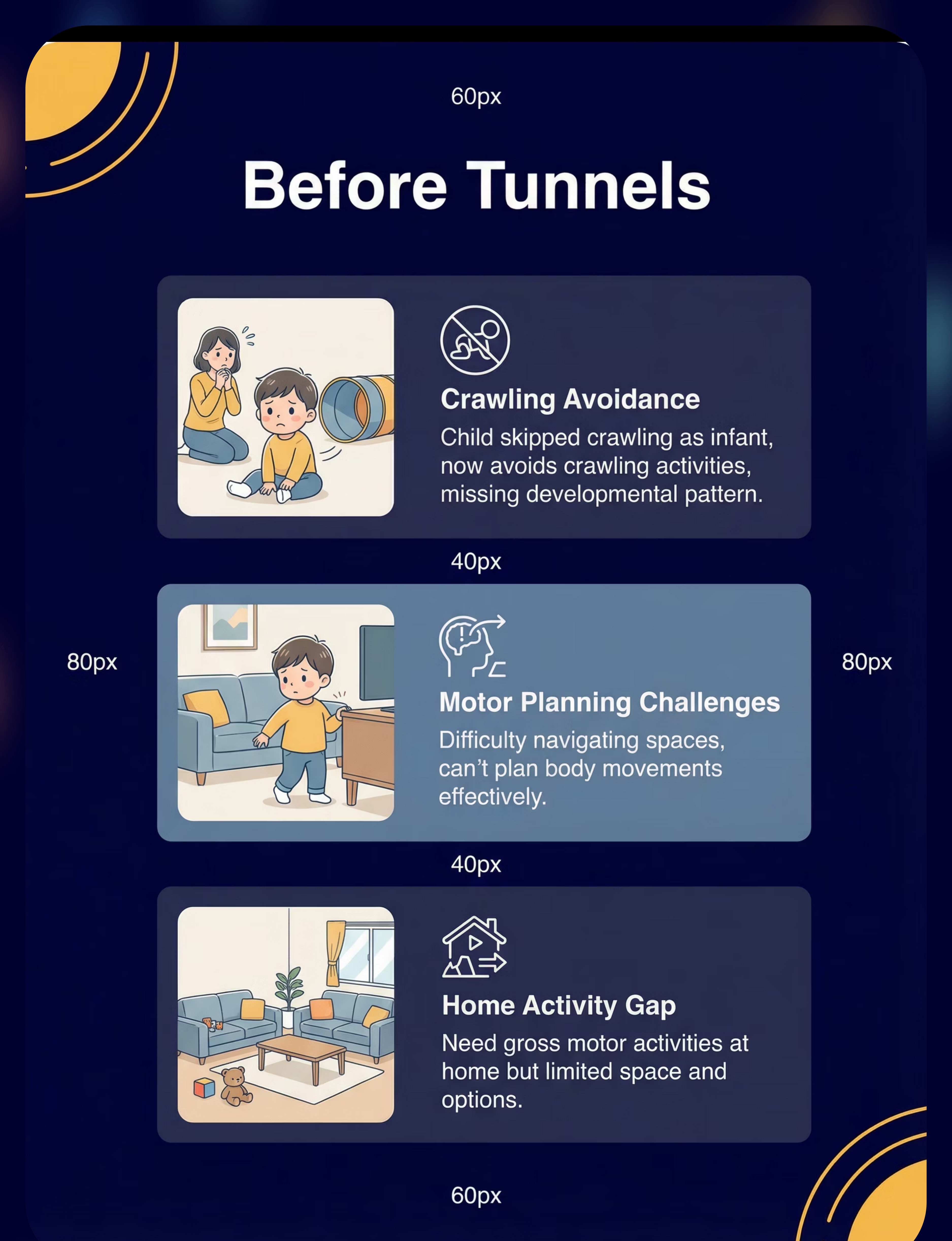
The Struggle (Before)
These scenarios represent the daily reality before finding the right support. Each family's journey is unique, but these challenges are remarkably common.

Crawling Avoidance
Situation: Child skipped crawling as an infant, now avoids all crawling activities
Experience: Missing this developmental pattern affects coordination throughout the day
Emotion: Parents feel concerned about the gap and frustrated by avoidance

Motor Planning Difficulties
Situation: Child can't navigate through spaces well, constantly bumping into things
Experience: Unable to plan body movements, leading to accidents and frustration
Emotion: Child feels clumsy, parents witness frustration daily

Limited Home Activities
Situation: Need gross motor activities at home but have limited space and options
Experience: Child's movement needs aren't being met, leading to restlessness
Emotion: Parents feel limited by circumstances and space constraints

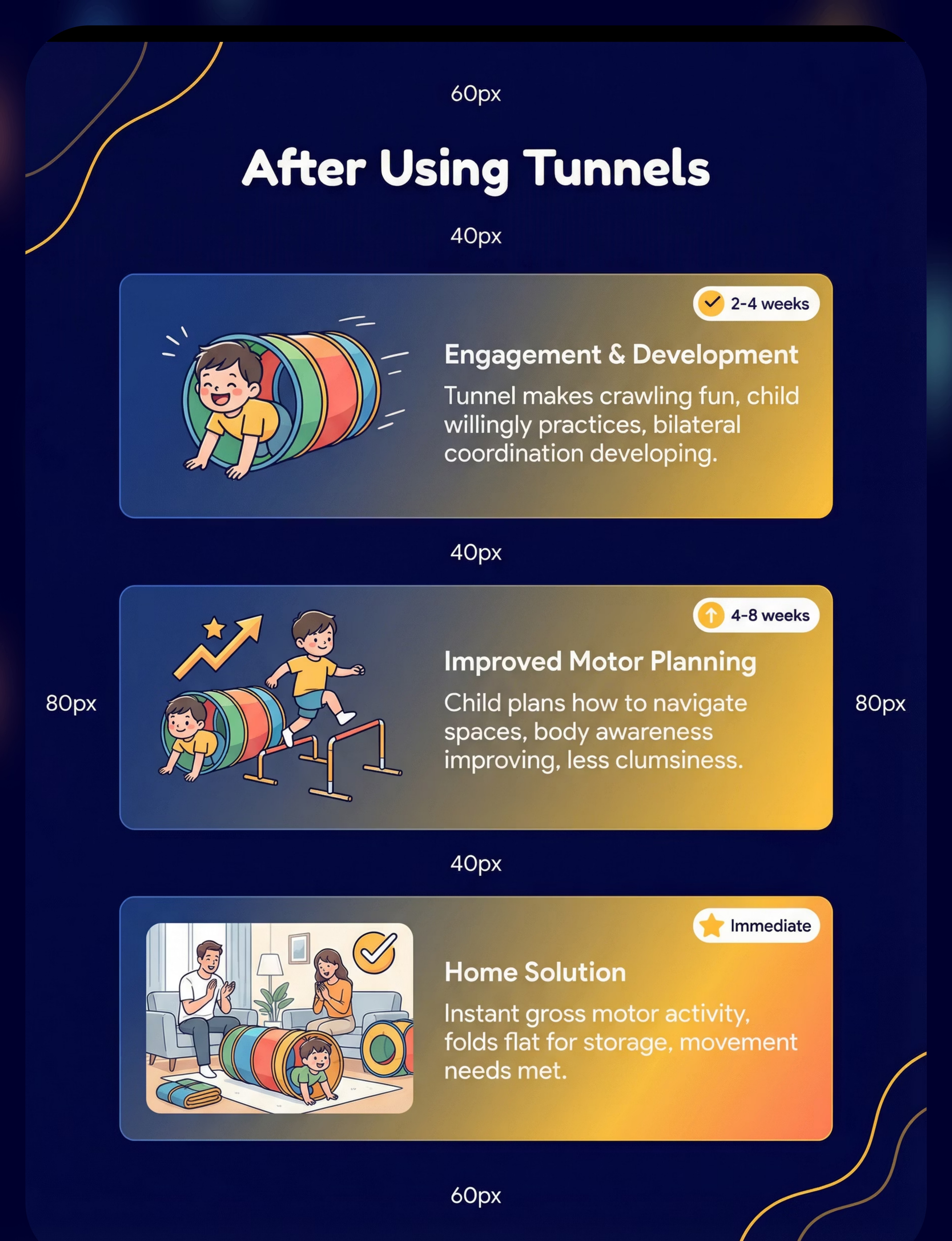
The Breakthrough (After)
With the right support and consistent practice, transformation happens. These are the same children, now experiencing success and building confidence.

Crawling Engagement
Situation: Tunnel makes crawling fun—child now willingly participates
Experience: Getting the bilateral coordination practice that was missed earlier
Emotion: Engagement and genuine enjoyment replace avoidance
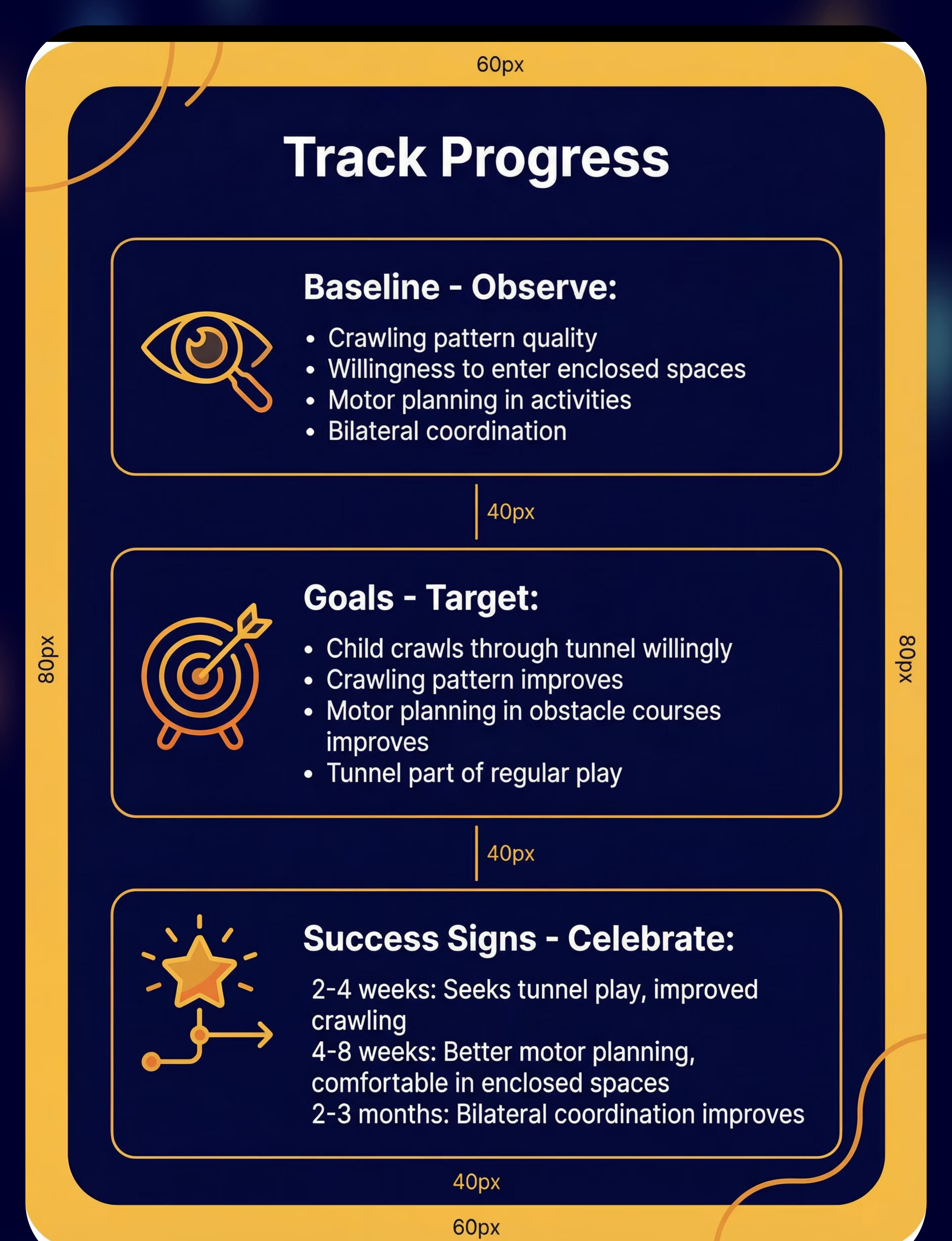
2-4 weeks

There was an error generating this image
Improved Motor Planning
Situation: Obstacle course with tunnel challenges planning skills
Experience: Body awareness improving, fewer collisions with furniture and doorways
Emotion: Growing awareness and capability build confidence
4-8 weeks

Home Activity Solution
Situation: Tunnel creates instant gross motor activity in any space
Experience: Part of regular play routine, folds flat for easy storage
Emotion: Convenience and fun transform daily movement needs
Immediate

What to Expect (Realistic Timelines)
Development takes time, and every child progresses at their own pace. These timelines represent typical patterns observed in clinical practice, but your child's journey may vary.
Immediate to 2 Weeks: Foundations & Engagement
The tunnel offers immediate gross motor play opportunities, providing crucial proprioceptive input that helps calm and organize the nervous system. Early crawling patterns begin to reinforce, setting the stage for improved coordination.
Immediate - 2 Weeks
1-2 Months: Enhanced Motor Skills
Noticeable improvements in motor planning emerge, as children become more adept at navigating spaces and executing movement sequences. Body awareness also develops, leading to fewer bumps and more confident movement through their environment.
1-2 Months
3 Months: Integrated Coordination
Bilateral coordination significantly strengthens. This integrated left-right movement supports the development of more complex skills essential for academic and daily tasks, such as writing, cutting, and two-handed activities.
3 Months
6 Months & Beyond: Sustained Development & Confidence
Consistent engagement with gross motor activities fosters ongoing physical and cognitive development. Children gain confidence in their movement abilities, explore their world more effectively, and build a strong foundation for future learning.
6 Months & Beyond

Is This Right for My Child? (2-Minute Check)
Answer these questions honestly to determine whether a crawling tunnel would be a beneficial addition to your child's developmental support. Three or more "yes" answers suggest a strong fit.
Did your child skip or minimize crawling as an infant?
If yes, this indicates: Tunnel activities help develop this fundamental pattern and build bilateral coordination that may have been missed
Confidence score: 90%
Does your child have difficulty with motor planning?
If yes, this indicates: Tunnel navigation builds planning skills as children figure out how to move their body through space
Confidence score: 88%
Would your child benefit from obstacle course activities?
If yes, this indicates: Tunnels are versatile obstacle components that add challenge and variety to movement sequences
Confidence score: 92%
Does your child seek proprioceptive input?
If yes, this indicates: Crawling through a tunnel provides organizing sensory input through movement and surface contact
Confidence score: 85%
Assessment Result: If you answered "yes" to 3 or more questions, a crawling tunnel is likely to be a valuable therapeutic tool for your child's development.

Usage Guide
Here are guidelines for using the crawling tunnel effectively in various situations:
When to Use ✓
As part of obstacle course sequences
When to Use ✓
For crawling pattern practice and reinforcement
When to Use ✓
When child needs proprioceptive input
When to Use ✓
During motor planning challenge activities
When to Use ✓
For active play and movement time
When to Use ✓
In occupational or physical therapy sessions
When NOT to Use ✗
If child is severely claustrophobic (build comfort gradually first)
When NOT to Use ✗
Never force a child to enter against their will
When NOT to Use ✗
When tunnel is damaged or structurally unsafe
Supervision by Age
Age Range | Supervision Level | Notes | |
Under 4 years | Adult at exit, continuous supervision | Reassurance needed; monitor for anxiety; celebrate successes | |
4-7 years | Adult nearby, active monitoring | Check in regularly; available for support; encourage independence | |
7+ years | Can use independently if comfortable | Periodic check-ins; respect individual comfort levels |
Duration & Settings
Duration: Variable—tunnels work best as part of play sequences or obstacle courses rather than timed activities. Follow your child's engagement and energy levels.
Home
Clinic
School

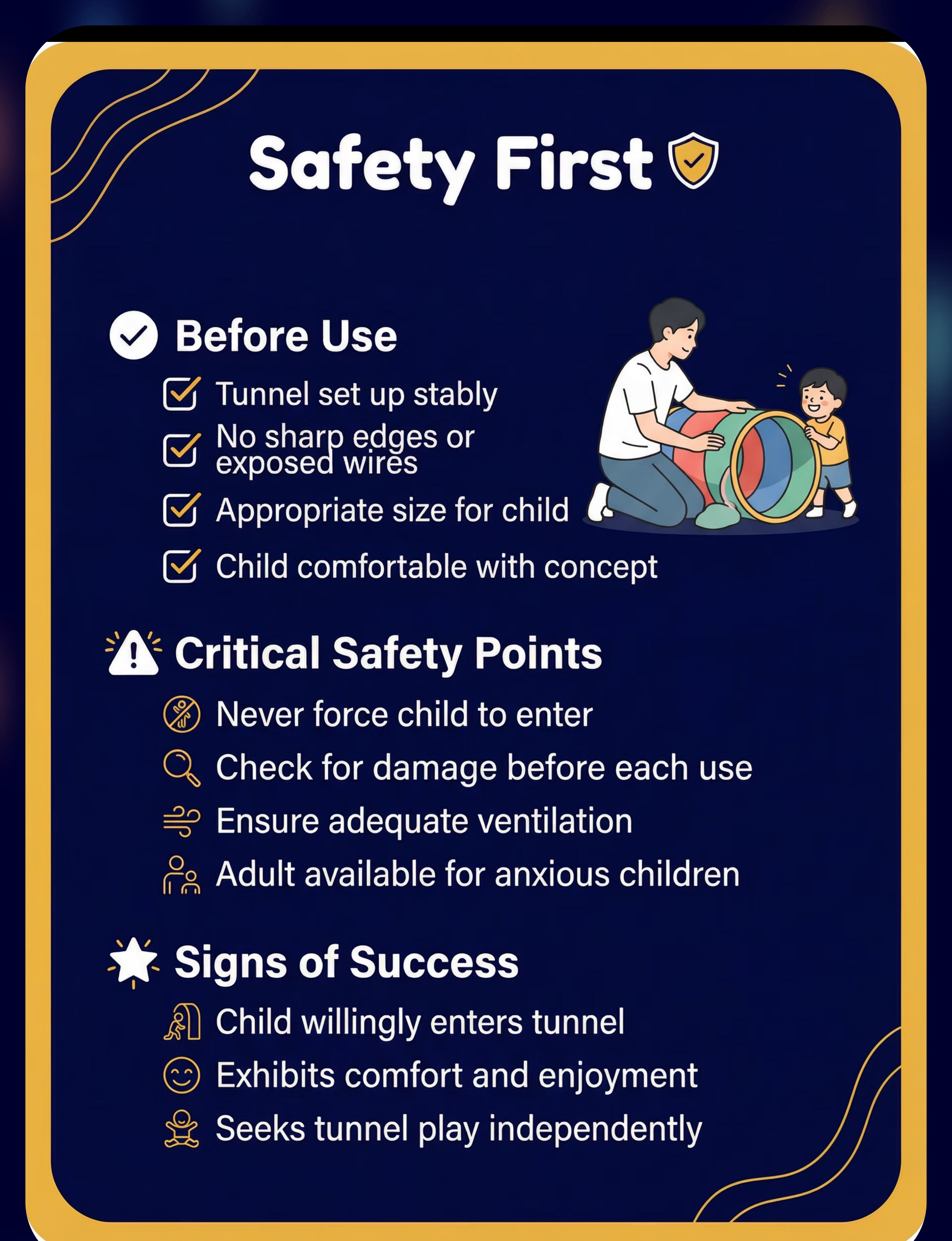
Safety First
Ensure optimal safety during play with the crawling tunnel by following these guidelines:
Critical Safety |
| |
Supervision |
| |
Maintenance |
| |
Environment |
|
Safety Protocols & Guidelines
Implementing robust safety protocols is paramount when children engage with crawling tunnels. This ensures a fun, developmental experience free from hazards. Prior to use, always conduct a thorough inspection of the tunnel for any potential damage, sharp edges, or structural weaknesses that could compromise safety. Verify that the tunnel is set up stably and will not collapse during play.
During activity, close adult supervision is essential, particularly for younger or anxious children. Encourage voluntary participation and never force a child into the tunnel against their will, as this can lead to distress and negative associations with play. Monitor for signs of discomfort or overheating, especially in enclosed fabric tunnels, and ensure proper ventilation. Regular cleaning also helps maintain a hygienic play environment. Adherence to these guidelines supports both the physical and emotional well-being of the child, fostering a positive and safe play experience.

Common Questions (Honest Answers)
1
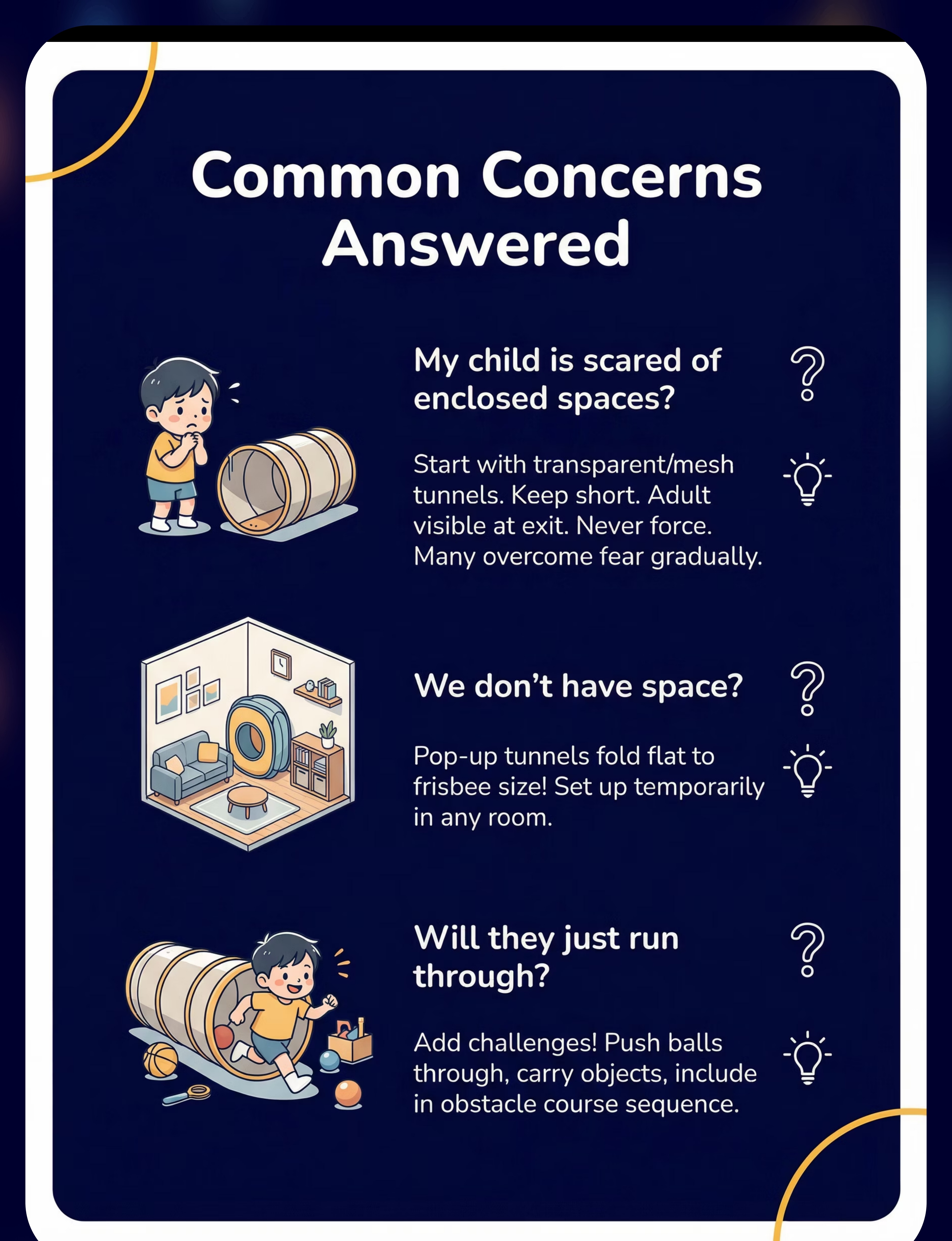
Q: My child is scared of enclosed spaces—will this work?
A: Start with transparent or mesh tunnels that allow your child to see through. Keep the tunnel short initially, and position yourself visibly at the exit. Never force entry—build comfort gradually through positive experiences. Many children overcome their initial hesitation with gentle, patient exposure combined with encouragement and celebration of small successes.
Try this: Begin with a transparent tunnel in a well-lit area. Sit at the exit with a favorite toy or treat. Let your child peek through before attempting to crawl.
2
Q: We don't have space for a tunnel at home
A: Pop-up tunnels fold completely flat to about the size of a frisbee! They can be stored in a closet, under a bed, or behind furniture. When in use, they take up only a narrow strip of floor space—a hallway or cleared living room area works perfectly. Set up temporarily for play sessions, then fold away.
Try this: Look for pop-up tunnels specifically designed for compact storage. Measure your hallway—most are only 2-3 feet wide.
3
Q: Won't they just run through without getting therapeutic benefit?
A: Transform simple crawling into meaningful challenges! Have your child push a ball through the tunnel, carry specific objects from one end to the other, stop halfway to complete a task, or navigate backwards. Include the tunnel as one station in a larger obstacle course sequence that requires stopping, thinking, and planning.
Try this: Create a "delivery mission" where they transport small toys through the tunnel to a basket at the other end.
4
Q: Is crawling really important at this age?
A: Absolutely! Crawling develops bilateral coordination, core strength, and motor planning at any age. Many children with autism skipped or minimized crawling as infants, missing this foundational developmental pattern. It's never too late to build these neurological connections. Even older children benefit significantly from crawling activities that strengthen the coordination between both sides of the body.
Try this: Think of it as "catching up" on a missed developmental stage while making it fun and age-appropriate.

Investment Guide
Tunnels are among the most economical therapeutic tools, offering excellent value across all price points. Your investment depends on durability needs and features.
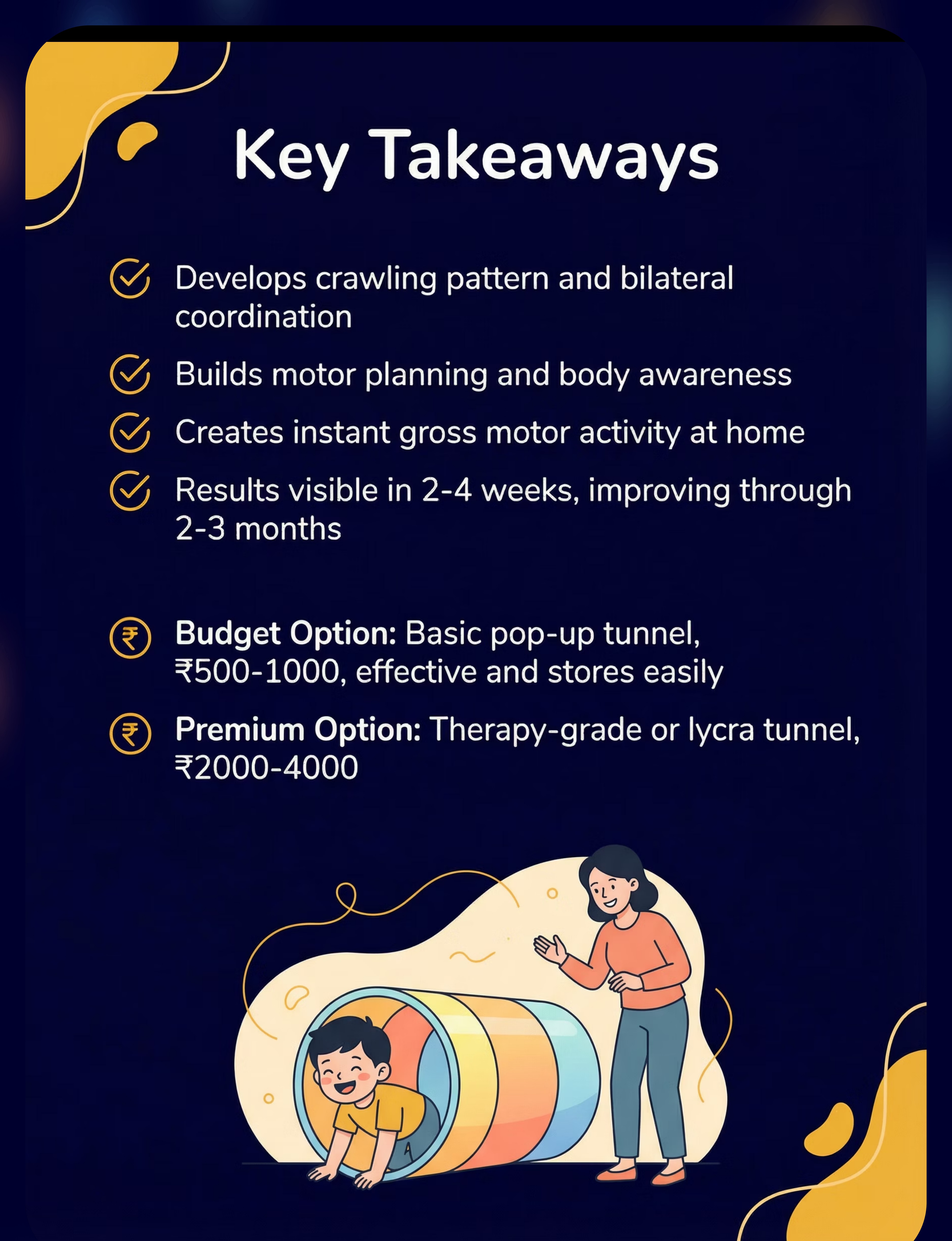
Budget-Friendly Option
Item: Basic pop-up play tunnel
Cost: ₹500–1,000
Note: Highly effective for home use and stores easily—excellent starting point for most families
- Lightweight and portable
- Folds flat for storage
- Suitable for regular home use
- Available from multiple retailers
Premium Investment
Item: Therapy-grade tunnel or lycra tunnel
Cost: ₹2,000–4,000
Brands: Southpaw, Fun and Function, IKEA BUSA tunnel
- Heavy-duty construction
- Enhanced proprioceptive features
- Suitable for clinical settings
- Extended durability
Initial Consideration
Starting with a budget-friendly option, around ₹500–1,000, provides an accessible entry point to therapeutic benefits without a large upfront cost. Ideal for exploring interest.
Optimal Value
The ₹800–1,200 range often delivers the best balance of effectiveness, durability, and practical home use, maximizing therapeutic impact for a moderate investment.
Long-Term Value
Investing ₹2,000–4,000 in a premium, therapy-grade tunnel ensures enhanced features and durability, offering sustained benefits and value over many years of use.
Overall Investment Range
₹500–4,000 (approximately $6–$48 USD)
Best Starting Point: For most families, a pop-up play tunnel in the ₹800–1,200 range offers the ideal balance of effectiveness, durability, and value. This provides all essential therapeutic benefits while remaining affordable and practical for home use.

Where to Buy in India
Availability: Widely available across multiple retail platforms and price points
Amazon.in | "kids play tunnel", "crawling tunnel kids" | ₹500–1,500 | Fast & Extensive | |
IKEA | "BUSA tunnel" | ₹500–800 | In-store / Pickup | |
Therapy Suppliers | "therapy tunnel" | ₹1,500–3,000 | Specialized / Varies |
Buying Tips ✓
Easy Storage
Pop-up versions are easiest to store and most practical for homes.
Check Diameter
Ensure it's appropriate for your child's size—measure first.
Visibility Options
Choose mesh or transparent options for anxious children.
Expand Play
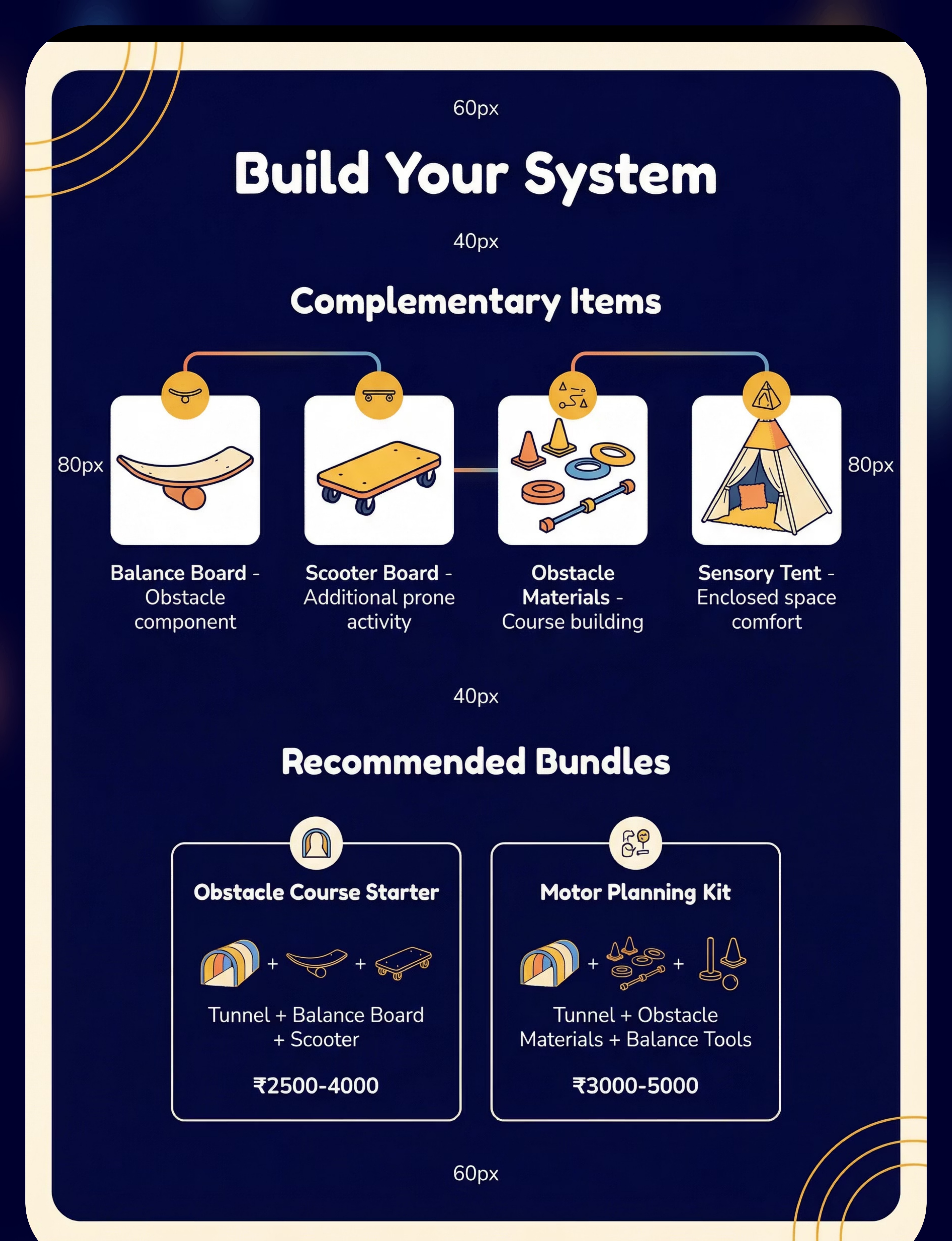
Consider adding a tunnel to a tent system for expanded play.
Durability
Look for durable fabric if planning heavy or daily use.
Purchase to Delivery Process
Browse & Select
Explore online platforms and choose your desired tunnel based on features and reviews.
Place Order
Complete the purchase securely through the retailer's website or app.
Processing & Dispatch
The retailer verifies the order and prepares the item for shipping.
In Transit
Track your package as it moves from the warehouse to your location.
Delivery & Setup
Receive your tunnel and set it up for immediate therapeutic play!
Red Flags 🚩
- Tunnel too narrow for child to crawl comfortably
- Poor quality wire frame that collapses during use
- Sharp wires that could poke through fabric
- Material that's difficult to clean or wipe down

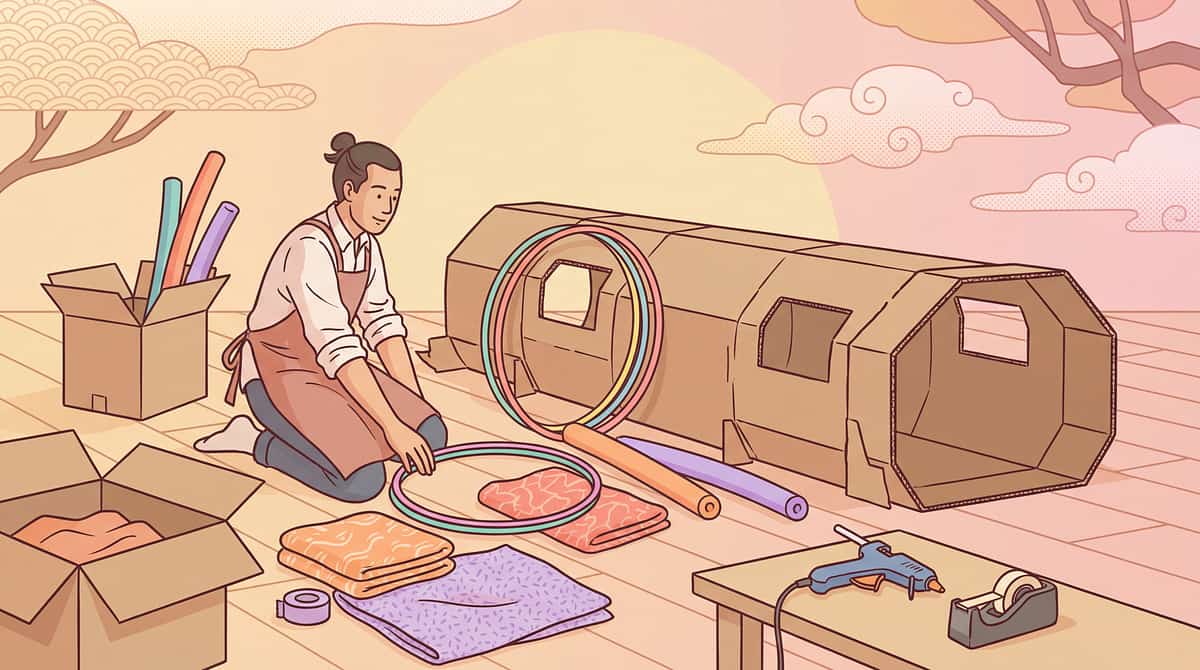
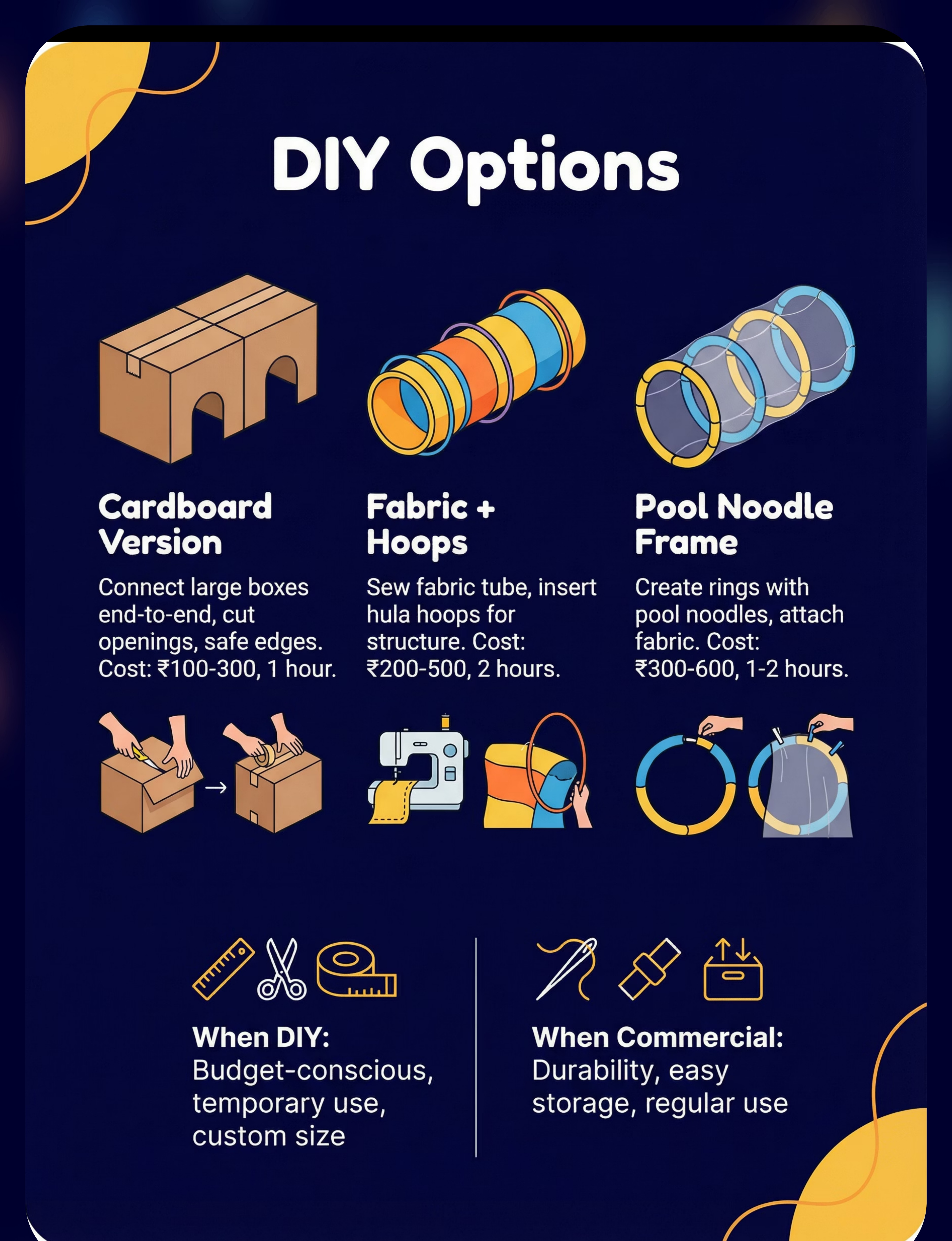
DIY Alternative (Save 50-70%)
Feasibility: Medium | Cost Savings: 50-70% | Time Required: 1-2 hours
Materials Needed
- Large cardboard boxes (connected) OR
- Fabric and hula hoops OR
- Pool noodles for structure support
Construction Steps
- Cardboard version: Collect large boxes, remove top and bottom flaps, connect boxes end-to-end with strong tape, cut matching openings to create continuous tunnel
- Fabric version: Measure and sew a fabric tube approximately 5-6 feet long, insert hula hoops at regular intervals (every 18-24 inches) to maintain circular shape and structure
- Pool noodle version: Create rings using pool noodles secured with tape or connectors, attach fabric between rings to form tunnel walls
- Safety finishing: Ensure absolutely no sharp edges, tape down any rough areas, check stability before use
- Size check: Make openings large enough for your child to crawl comfortably—test before finalizing
When to DIY
- Budget is a significant concern
- Need is temporary or for trial purposes
- Custom size required for specific space
- Want a craft project to do with your child
When to Buy Commercial
- Need durability for frequent use
- Want easy storage and portability
- Planning regular therapeutic use
- Clinic or school setting requires professional equipment
Tradeoffs: DIY tunnels are less durable than commercial options and typically don't collapse for storage. However, they can be customized to your exact space and are excellent for families wanting to trial the concept before investing.
Preview of tunnel crawling tunnel Therapy Material
Below is a visual preview of tunnel crawling tunnel therapy material. The pages shown help educators, therapists, and caregivers understand the structure and content of the resource before use. Materials should be used under appropriate professional guidance.


Share this resource
Help others discover thisLink copied!

Next Steps & Support
Empower your child's developmental journey with these practical steps and resources, ensuring a supportive path forward.
1
Start Today
Begin by observing your child's natural play. Introduce a simple tunnel activity and note their initial engagement and comfort. Focus on making it a positive and fun experience.
- Observe child during play
- Try a simple tunnel activity
- Note their response
2
Get Professional Guidance
If you have concerns about your child's development or specific sensory needs, don't hesitate to consult an occupational therapist for tailored advice and strategies.
- When to consult an OT
- Benefits of tailored interventions
3
Join the Community
Connect with other parents who are on similar journeys. Share experiences, exchange tips, and find encouragement through online forums or local support groups.
- Online forums
- Local support groups
4
Track Progress
Maintain a simple journal or use an app to record developmental milestones, behavioral changes, and responses to activities. This helps monitor growth and informs professionals.
- Journaling milestones
- Noting behavioral changes
A Gentle Reminder: Every child's journey is unique. Celebrate small victories and approach each step with patience and understanding. You're doing great!