












Tool ID: 6.7
PT + OT Recommended
Moderate Evidence
Rank #2
Daily Use
₹500–20,000
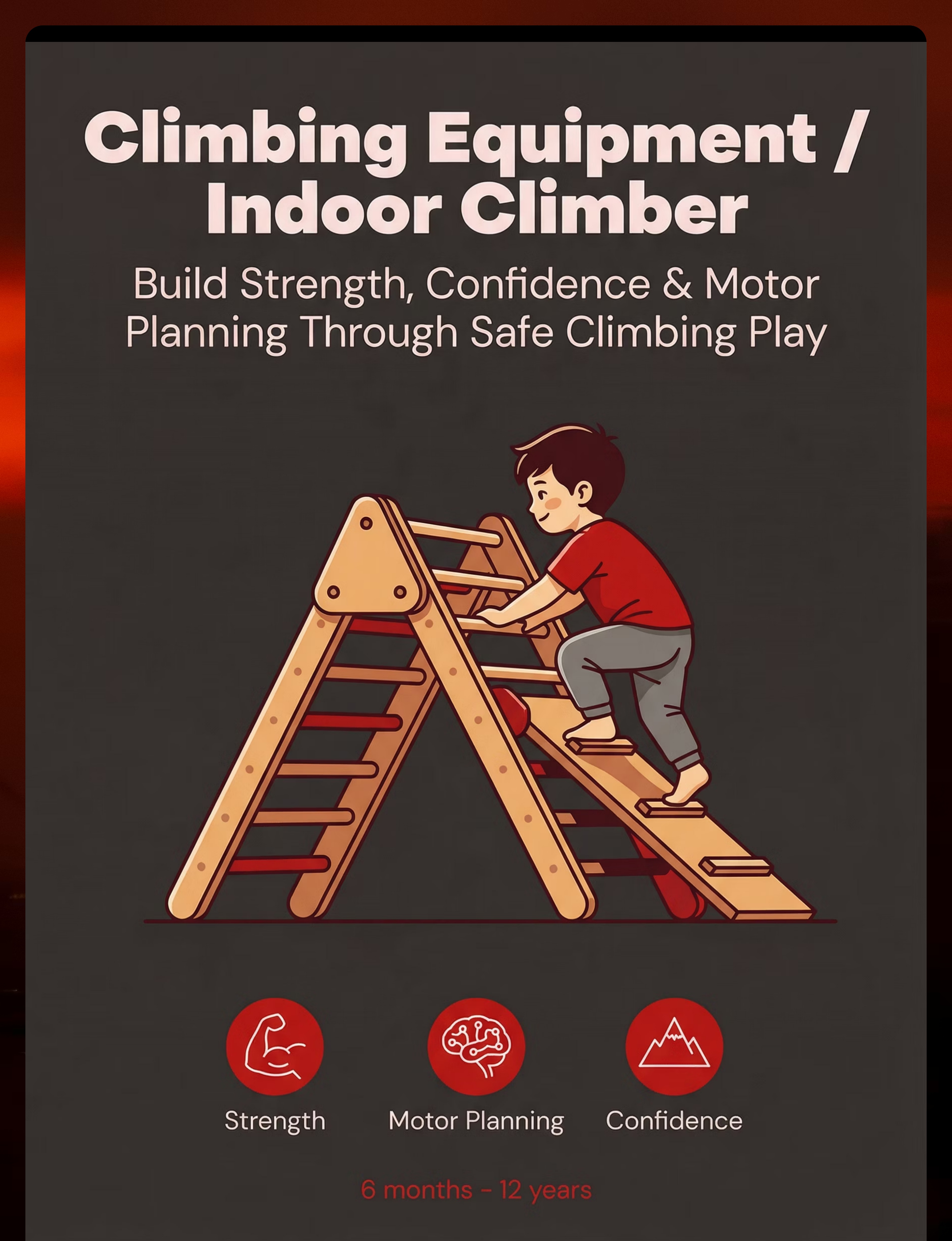
Climbing Equipment / Indoor Climber
Proprioceptive-vestibular vertical motor planning system
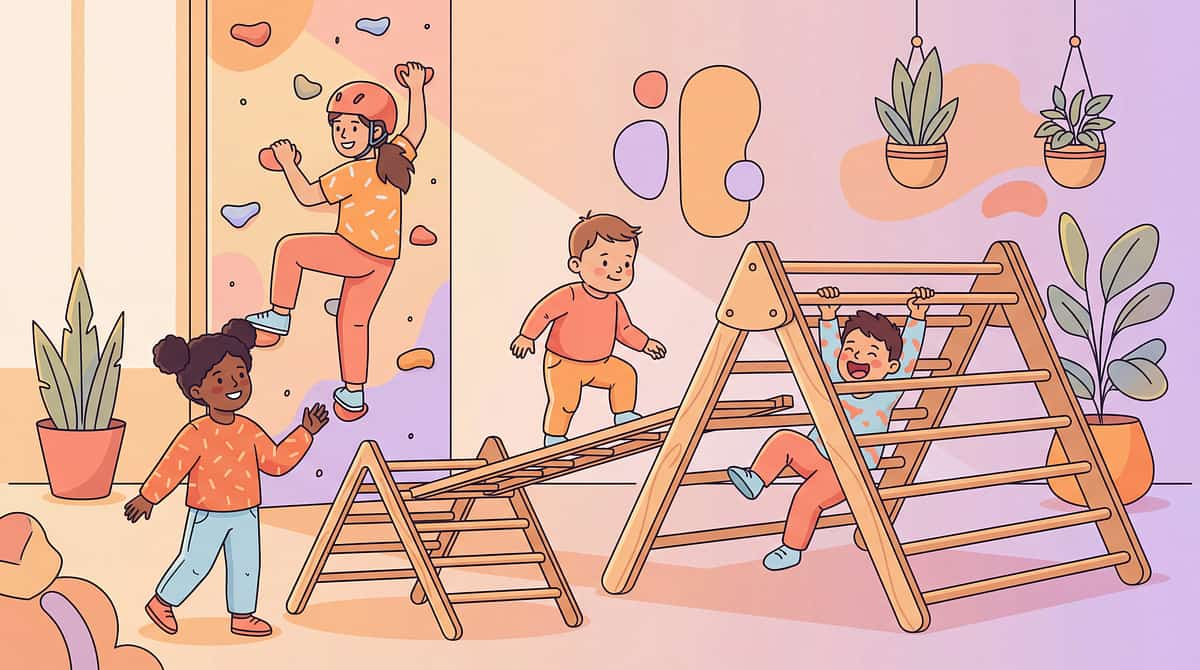
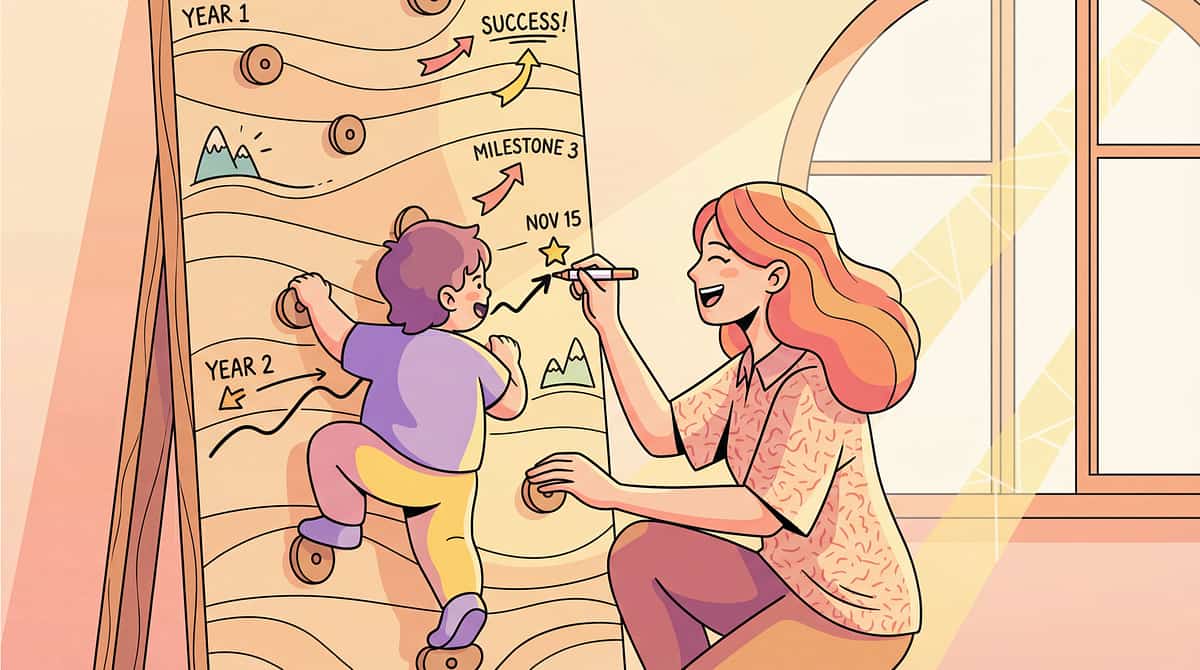
Safe climbing opportunities help children develop strength, motor planning, proprioception, and confidence through engaging vertical challenges. From foldable Pikler triangles to climbing domes and wall panels, these systems transform dangerous furniture climbing into purposeful skill-building activities.

Who This Helps
Core Function
Develops strength, motor planning, proprioception, and confidence through climbing activities that engage the whole body and mind.
Key Development Areas
Targets strength building, motor planning skills, proprioceptive awareness, vestibular processing, coordination abilities, and physical confidence.
Age & Settings
Suitable for children 6 months to 12 years (equipment-dependent). Perfect for home, clinic, and school environments with appropriate supervision.
Strength
Motor Planning
Proprioception
Vestibular Processing
Coordination
Confidence
Best for: Children who seek climbing opportunities, need strength development, require proprioceptive input, or lack safe outlets for their natural climbing drive.

Does This Sound Familiar?
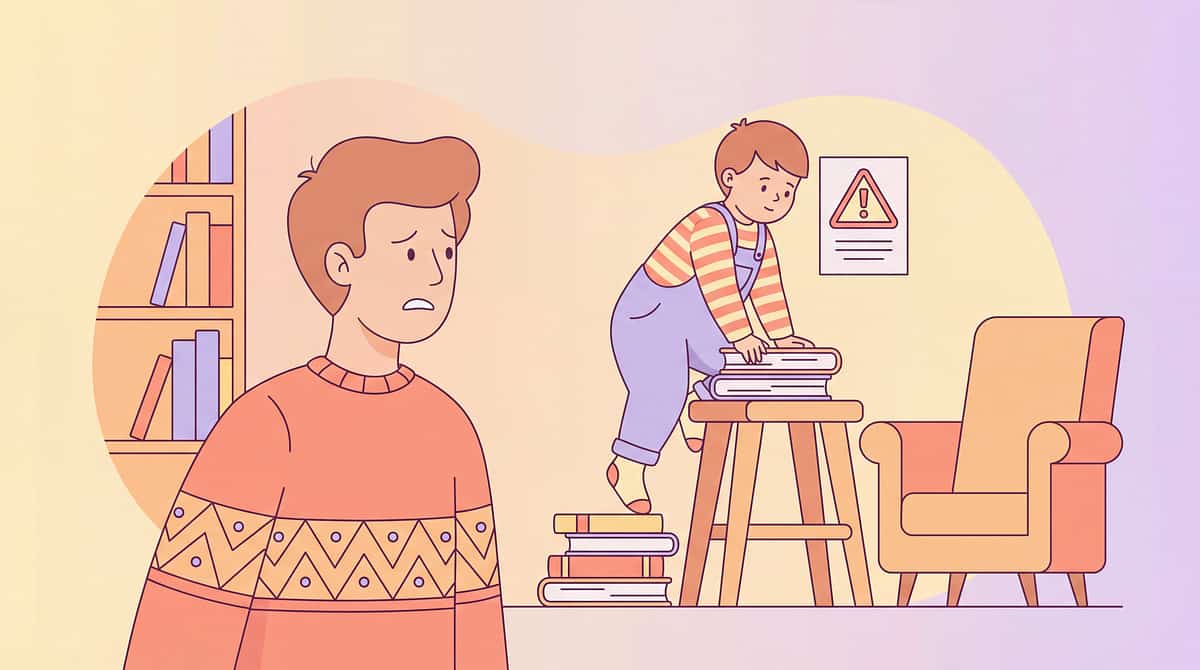
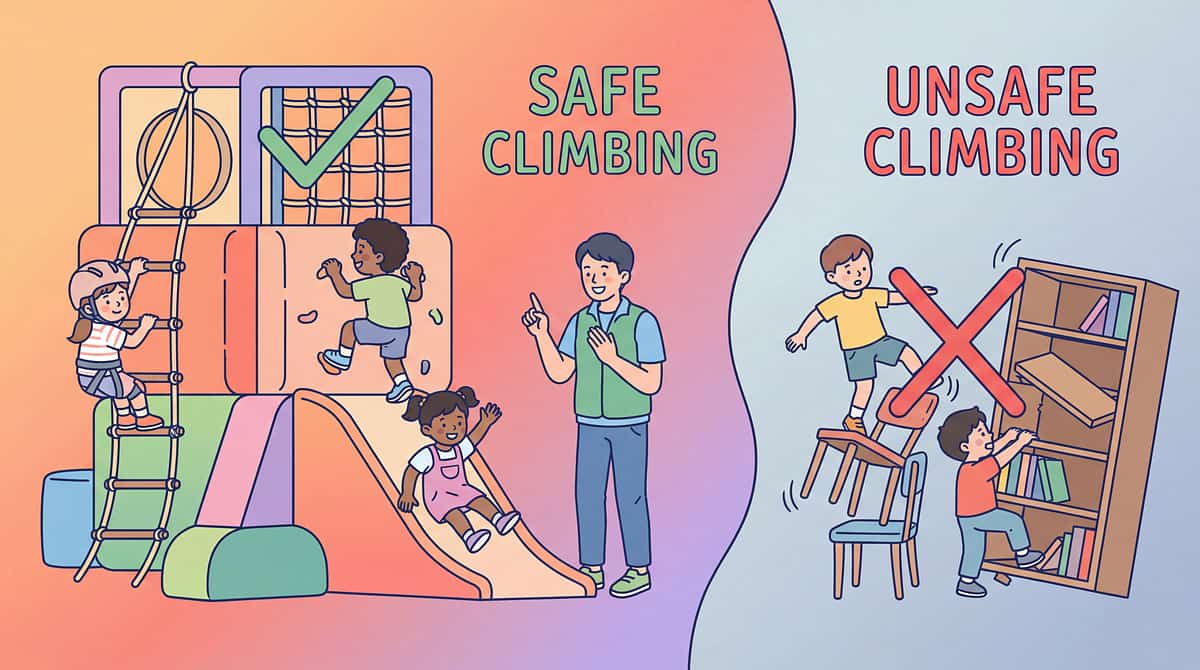
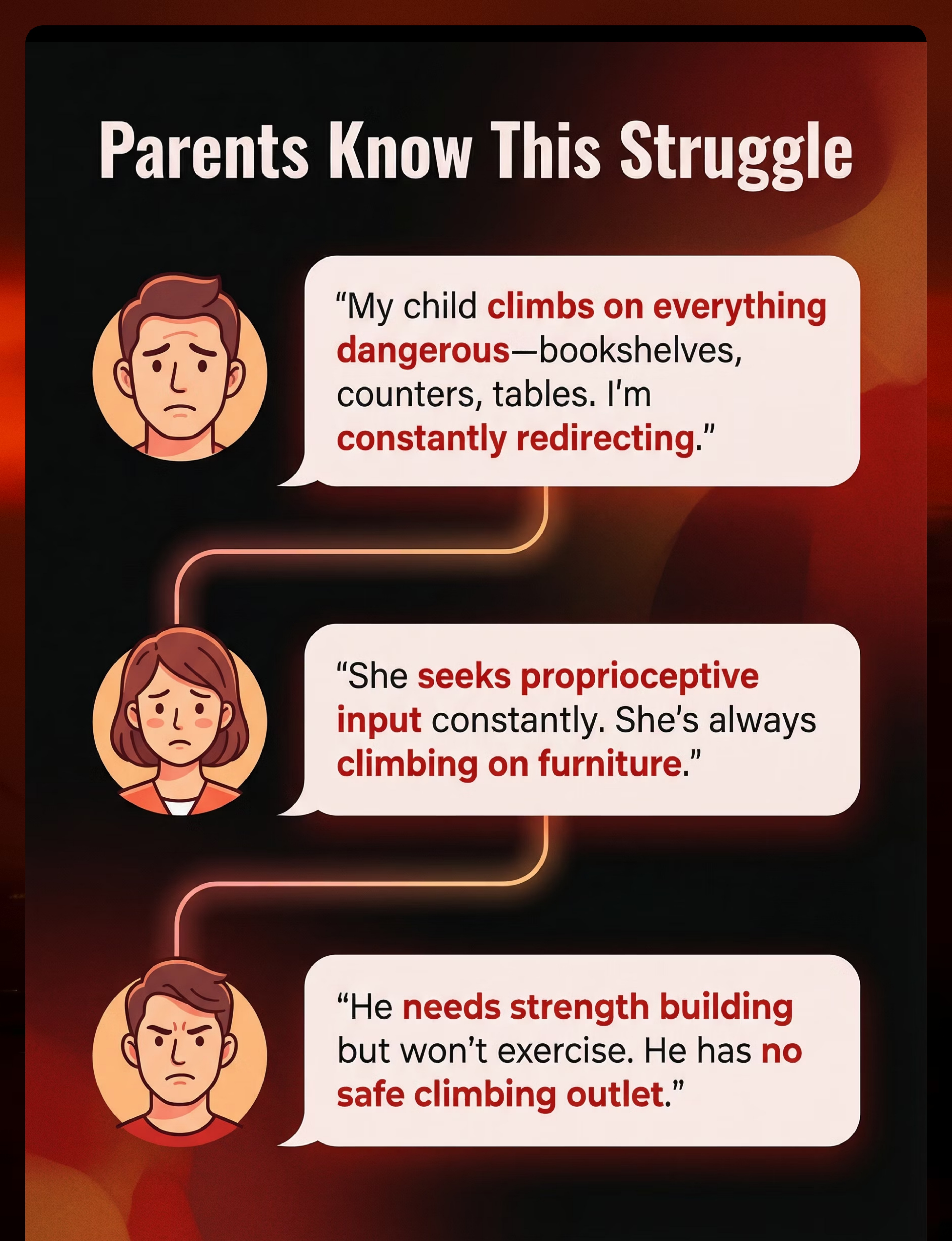
"My child climbs on everything dangerous – bookshelves, counters, tables. I'm constantly redirecting and worrying about falls."
"She seeks proprioceptive input constantly through climbing. I know she needs it, but I don't have a safe way to provide it."
"He has no safe climbing outlet at home. When we can't go to the playground, he becomes frustrated and climbs our furniture."
"She's always on the furniture – the couch arms, kitchen chairs, everything. I need a better solution than constantly saying no."
"He needs strength building but won't do traditional exercise. How do I help him develop physically?"
"She lacks confidence in physical activities and avoids challenges. I want to build her strength and self-assurance."
You're not alone. These are common challenges faced by parents of children with sensory processing differences and developmental needs.

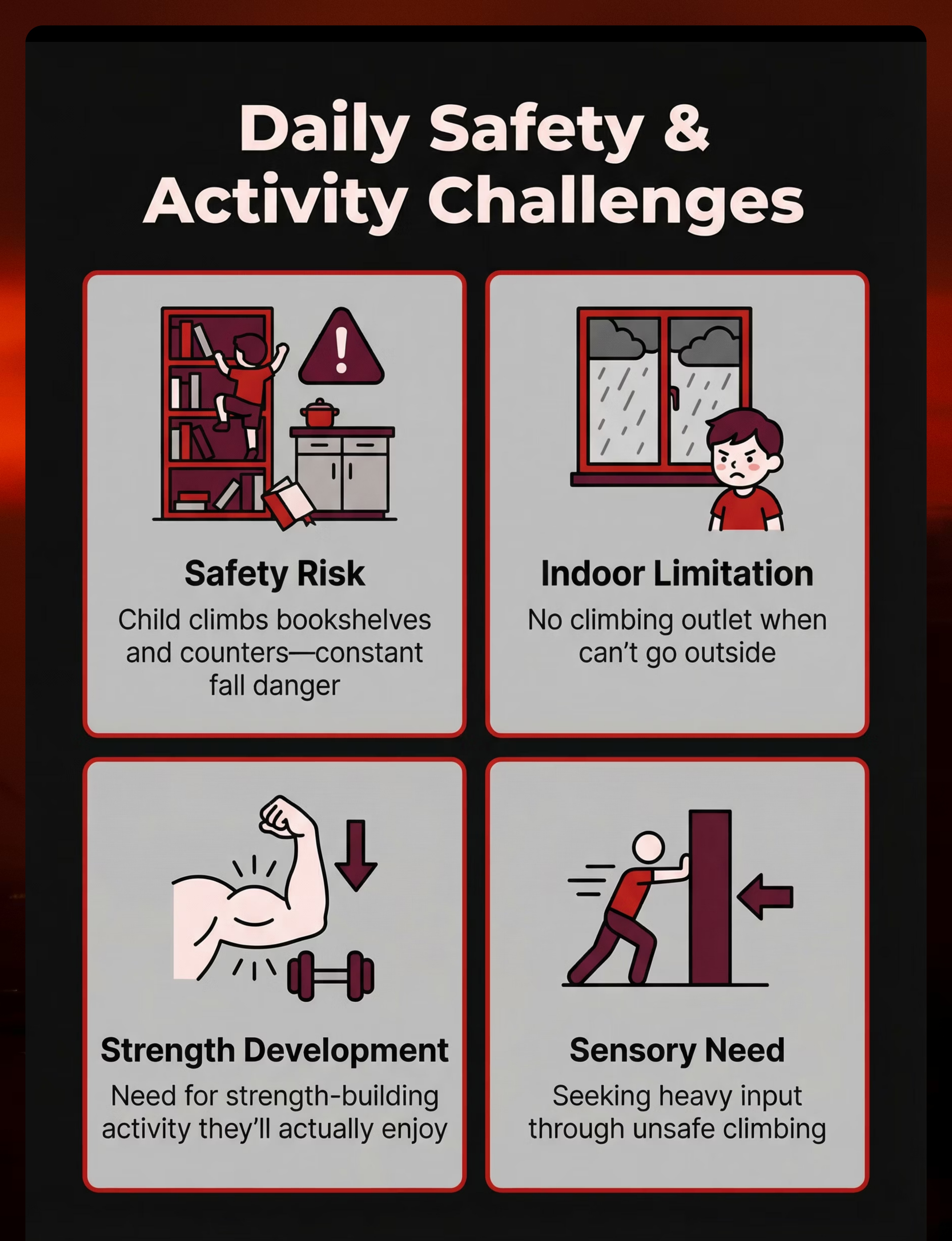
A Day Without the Right Support
Safety Concerns
Throughout the day, children climb on furniture, bookshelves, and dangerous places. Parents constantly redirect while managing fall risks.
Indoor Limitations
When weather prevents outdoor play or playgrounds aren't accessible, children have no appropriate climbing outlet, leading to frustration.
Strength Needs
Children need strength-building activities but lack engaging options. Physical development stalls without appropriate challenges.
Sensory Seeking
The drive for proprioceptive input through climbing creates constant tension. Children need this input but lack safe ways to get it.
Without appropriate climbing equipment, families cycle through redirection, limitation, and worry while children's developmental needs go unmet.

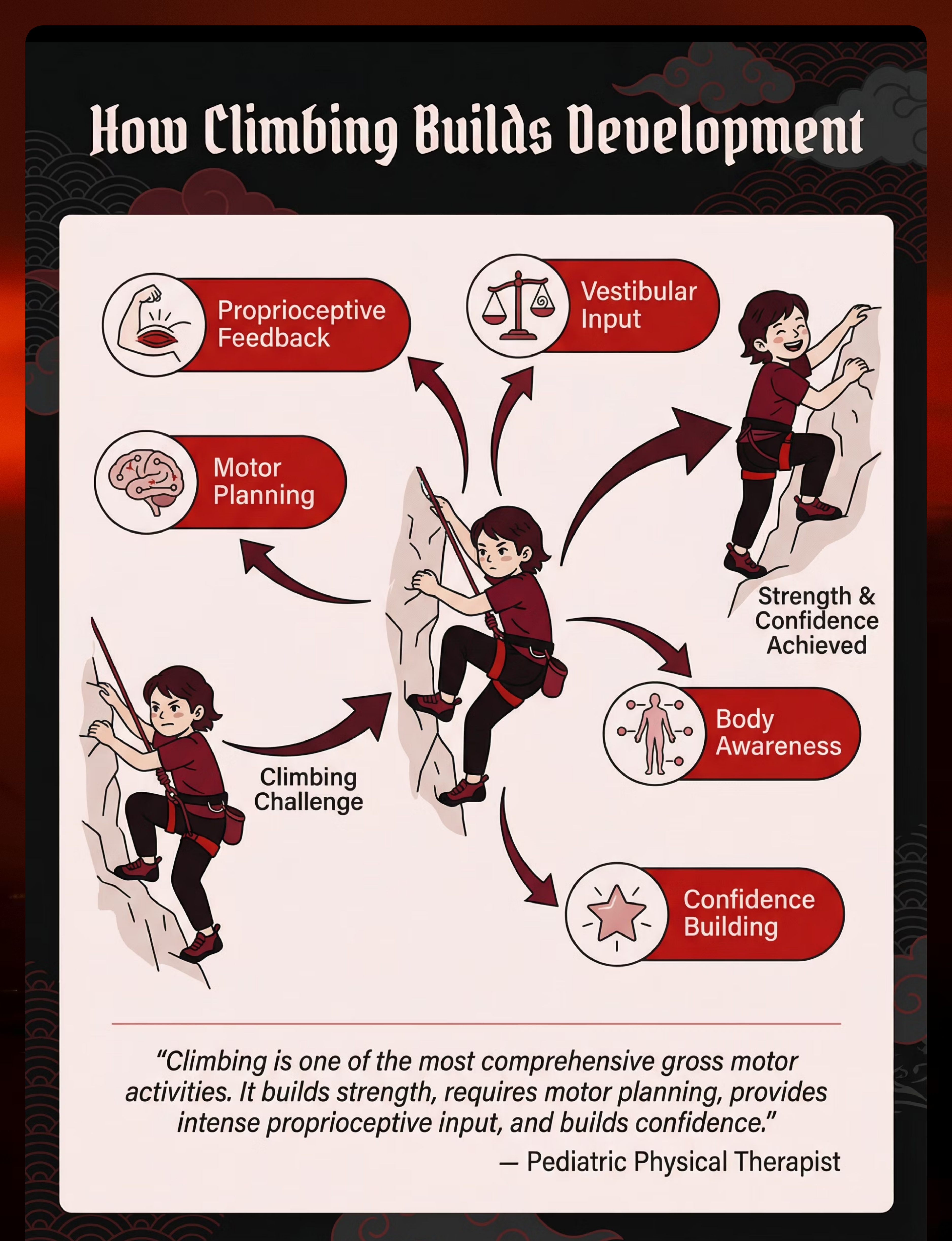
The Science Behind It
Climbing Challenge
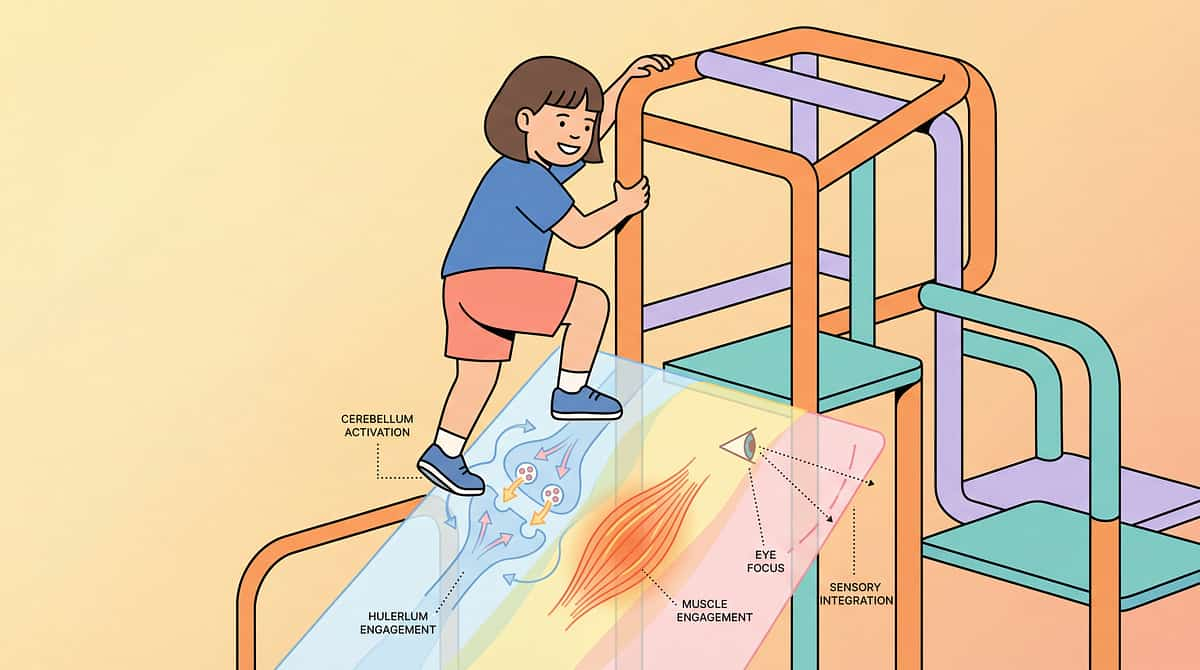
Child encounters climbing structure requiring physical effort and route planning.
Proprioceptive Feedback
Muscles and joints send signals about body position and effort during climb.
Motor Planning
Brain processes route options, plans movements, and coordinates body segments.
Vestibular Input
Position changes provide vestibular feedback, enhancing spatial awareness and balance.
Development Result
Repeated practice builds strength, body awareness, confidence, and motor competence.
Target areas addressed: This comprehensive process develops strength, motor planning abilities, proprioceptive awareness, vestibular processing, coordination skills, and physical confidence simultaneously.

How to Use It Right
Start at Child's Comfort Level
Begin with heights and challenges your child can manage confidently. Success builds motivation for harder climbs.
Spot Without Over-Helping
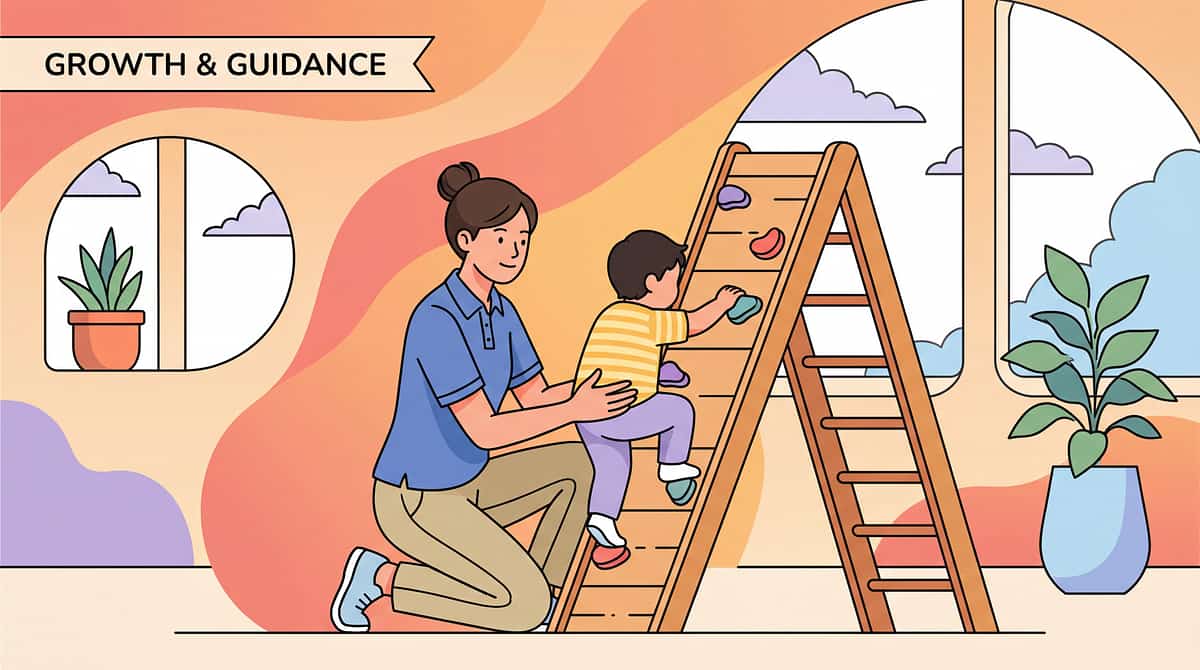
Stay close for safety but resist doing the work for them. Let them problem-solve and build competence.
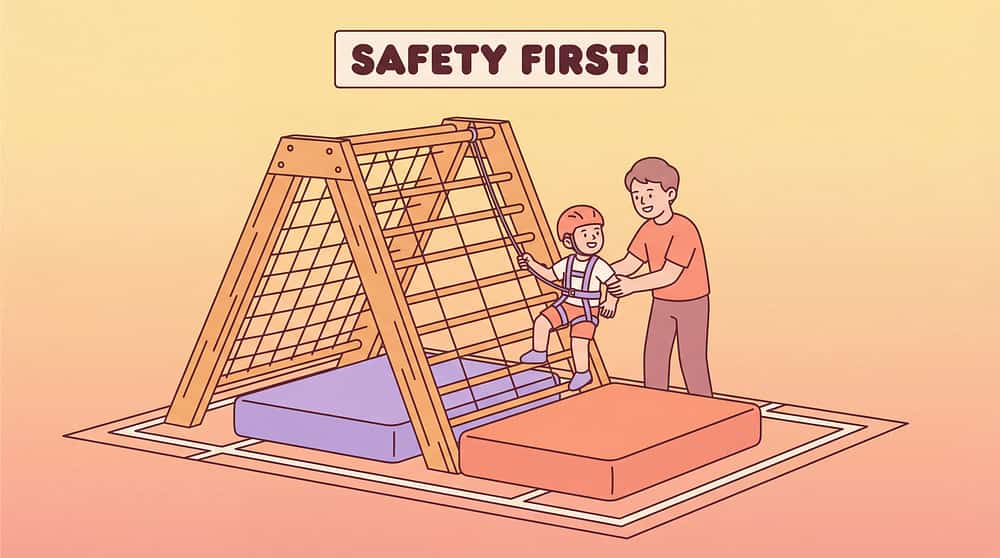
Safe Landing Surface Essential
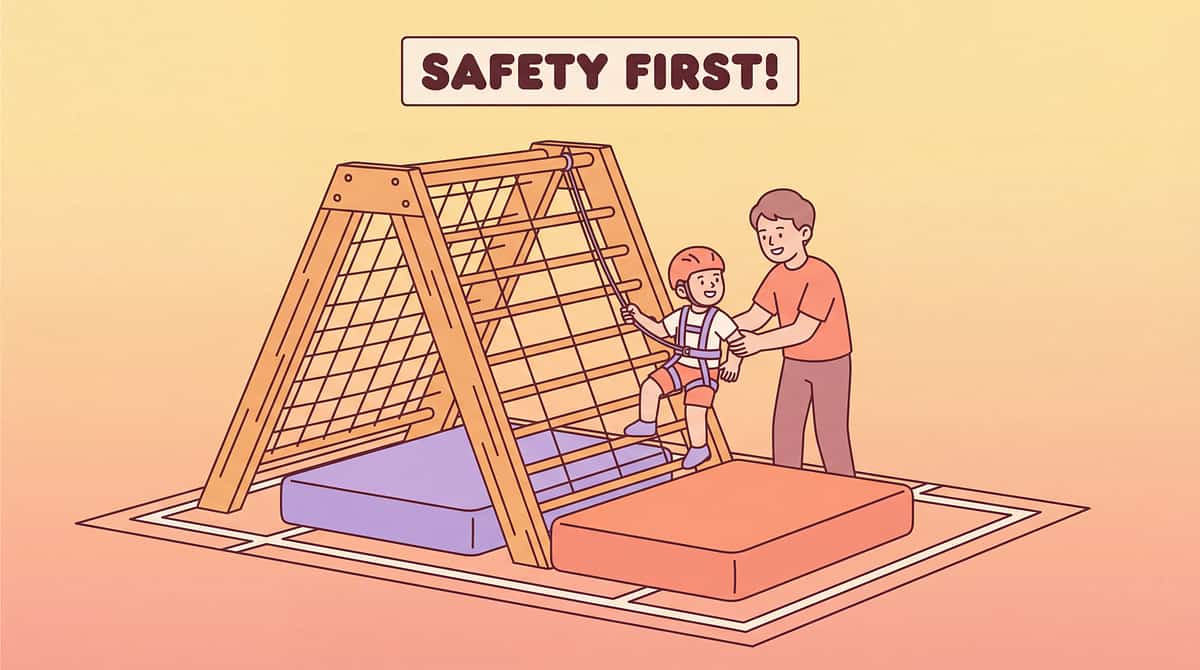
Always place foam mats, crash mats, or thick carpet underneath. Safe falls are part of learning.
Encourage Problem-Solving
Ask "Which way will you go?" or "Where should your foot go next?" to promote route planning.
Let Child Assess Own Risk
With supervision, allow them to evaluate challenges. This builds better risk judgment than prohibition.
Celebrate Effort and Persistence
Recognize attempts, creative solutions, and determination, not just reaching the top.
Duration: Self-limiting based on fatigue – children naturally stop when tired. Sessions typically range from 10-30 minutes of active climbing.

Expert Endorsement
"Climbing is one of the most comprehensive gross motor activities. It builds strength, requires motor planning, provides intense proprioceptive input, and builds confidence. Every child should have climbing opportunities."— Physical Therapist, Pediatric Specialist
PT + OT Recommended
Endorsed by Physical Therapists and Occupational Therapists as extended kit equipment for comprehensive development.
Moderate Evidence
Research supports climbing activities for strength, motor planning, and sensory integration in child development.
Rank #2 in Category
Second-ranked tool in the Gross Motor & Movement category for impact and clinical effectiveness.

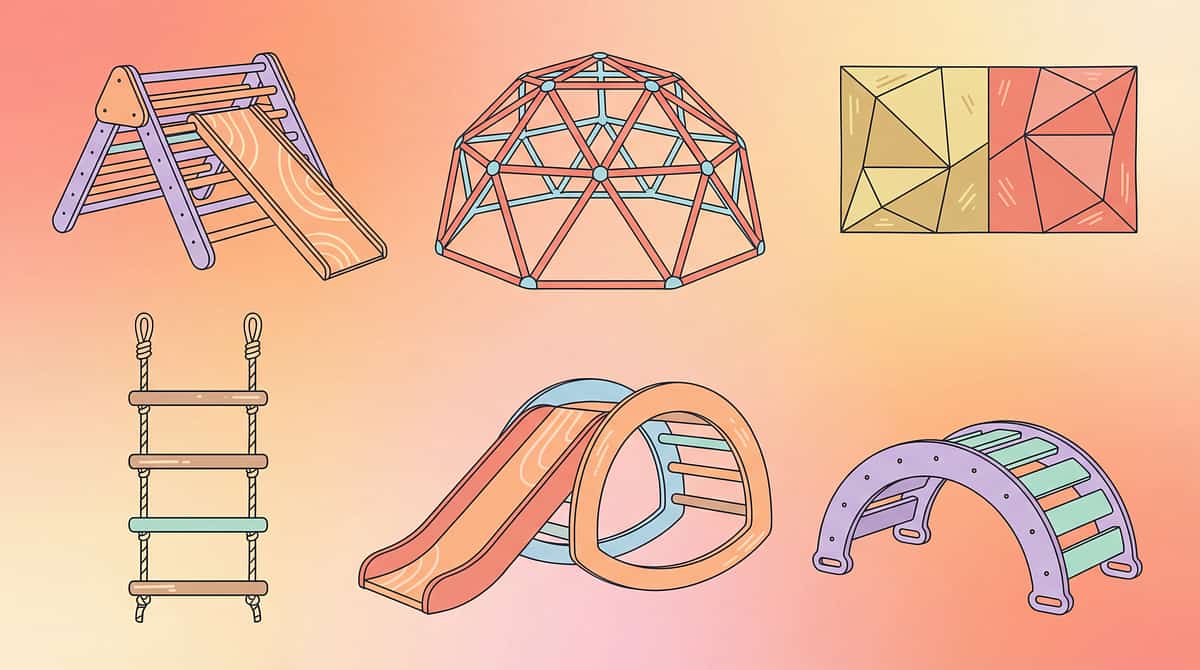
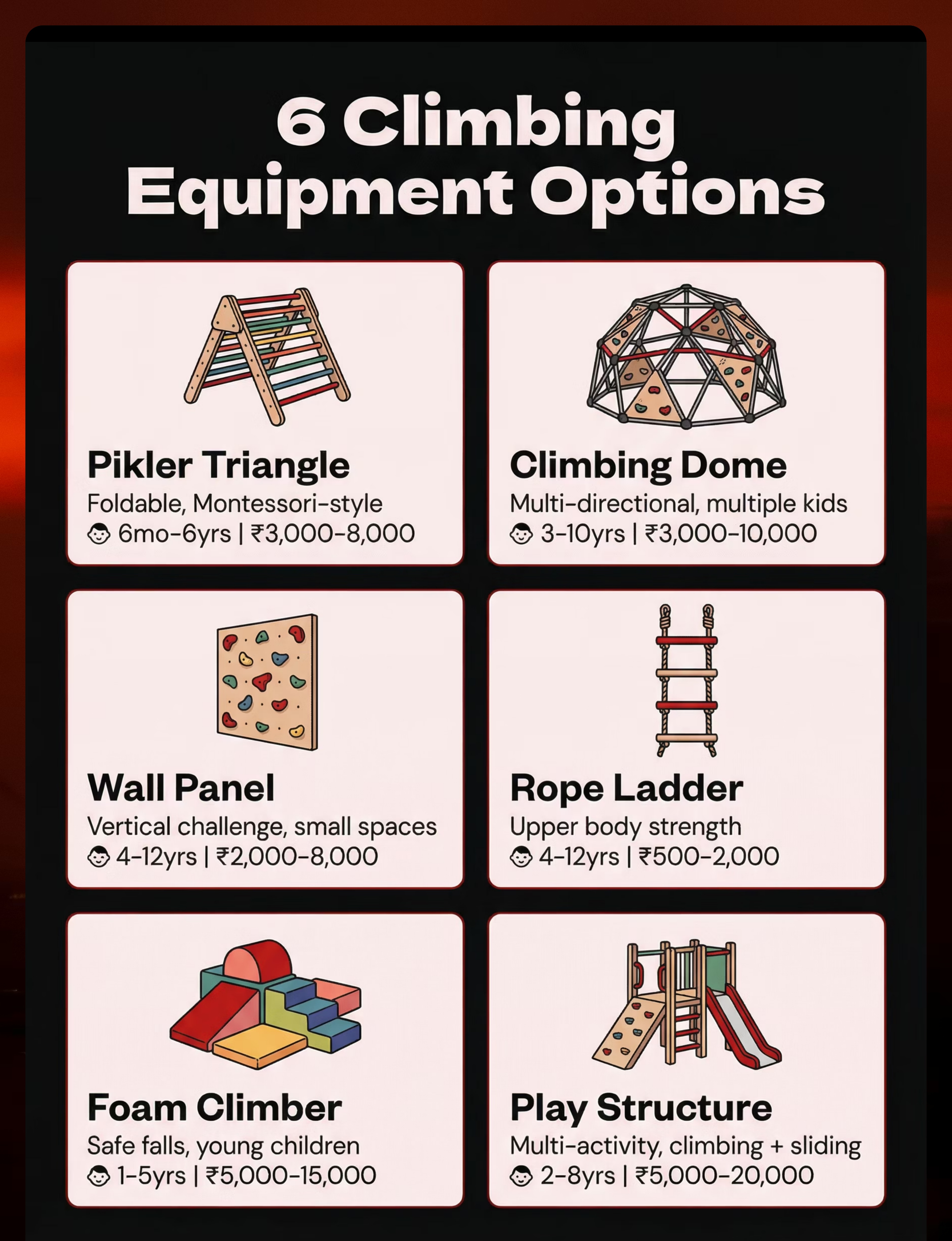
Choose Your Option (6 Variants)
Select climbing equipment based on your child's age, space availability, climbing experience, and developmental goals. Each variant offers unique benefits for different situations and needs.
1
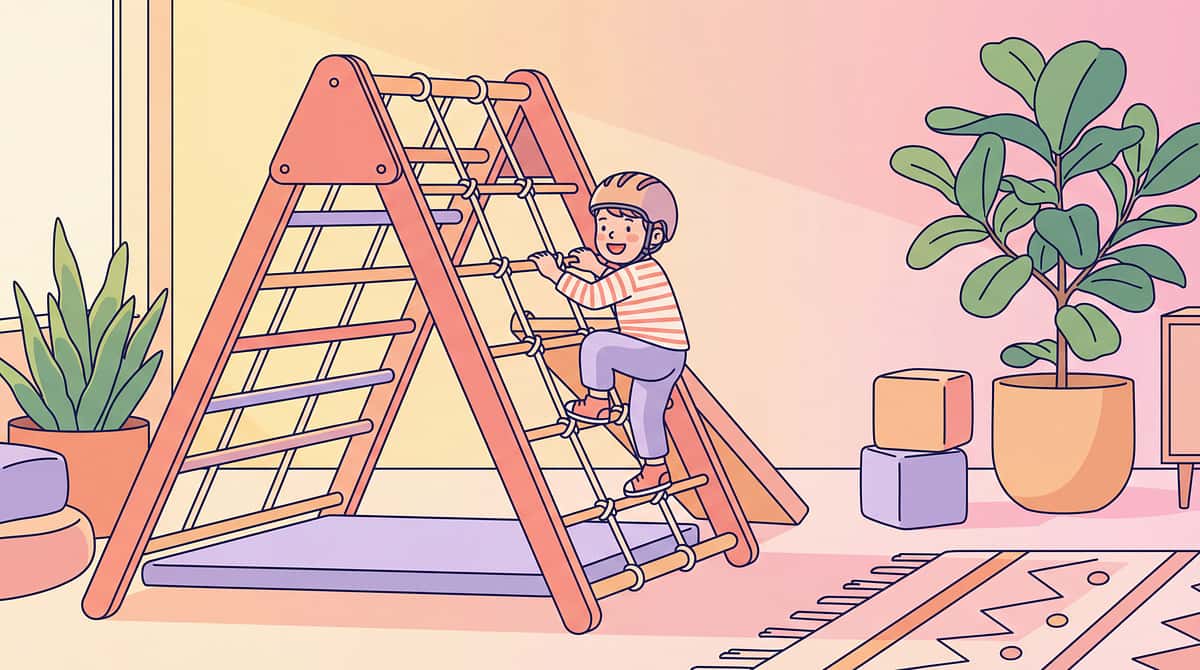
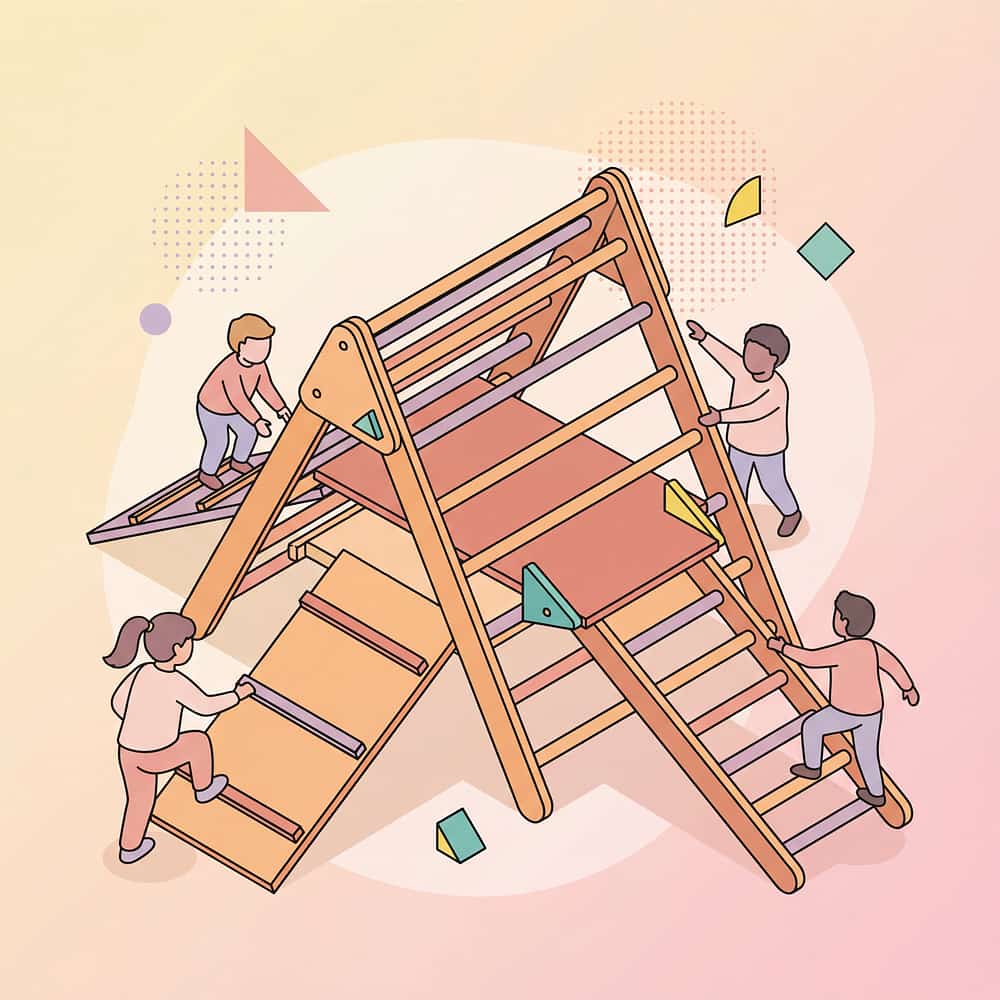
Pikler Triangle / Climbing Triangle
Best for: Independent climbing, open-ended play
Ages: 6 months - 6 years | Settings: Home
Type: Montessori-style climber | Size: Foldable wooden triangle
Portability: Medium (foldable) | Price: ₹3,000–8,000
2
Indoor Climbing Dome
Best for: Varied climbing angles, multiple children
Ages: 3-10 years | Settings: Home, School
Type: Multi-directional climbing | Size: Dome-shaped climber
Portability: Low | Price: ₹3,000–10,000
3
Climbing Wall Panel (Indoor)
Best for: Older children, strength building, small spaces
Ages: 4-12 years | Settings: Home, Clinic
Type: Vertical climbing challenge | Size: Wall-mounted climbing holds
Portability: Very Low (installed) | Price: ₹2,000–8,000
4
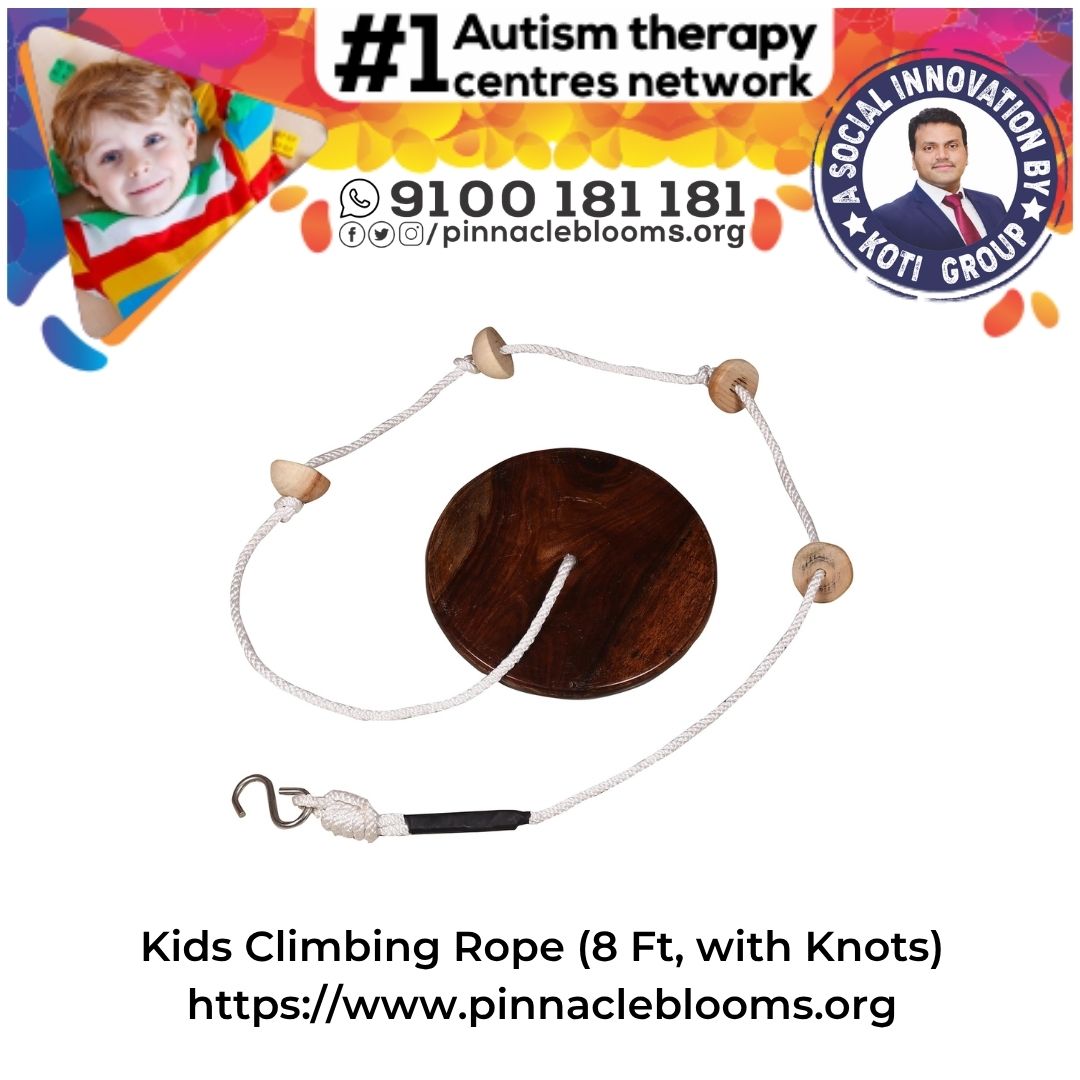
Rope Ladder / Climbing Rope
Best for: Upper body strength, proprioceptive input
Ages: 4-12 years | Settings: Home, Clinic
Type: Rope climbing | Size: Ceiling-mounted rope
Portability: Low (installed) | Price: ₹500–2,000
5
Foam Climbing Blocks / Soft Climber
Best for: Young children, safe falls, indoor use
Ages: 1-5 years | Settings: Home, Clinic
Type: Safe, soft climbing | Size: Foam block set
Portability: Low (bulky) | Price: ₹5,000–15,000
6
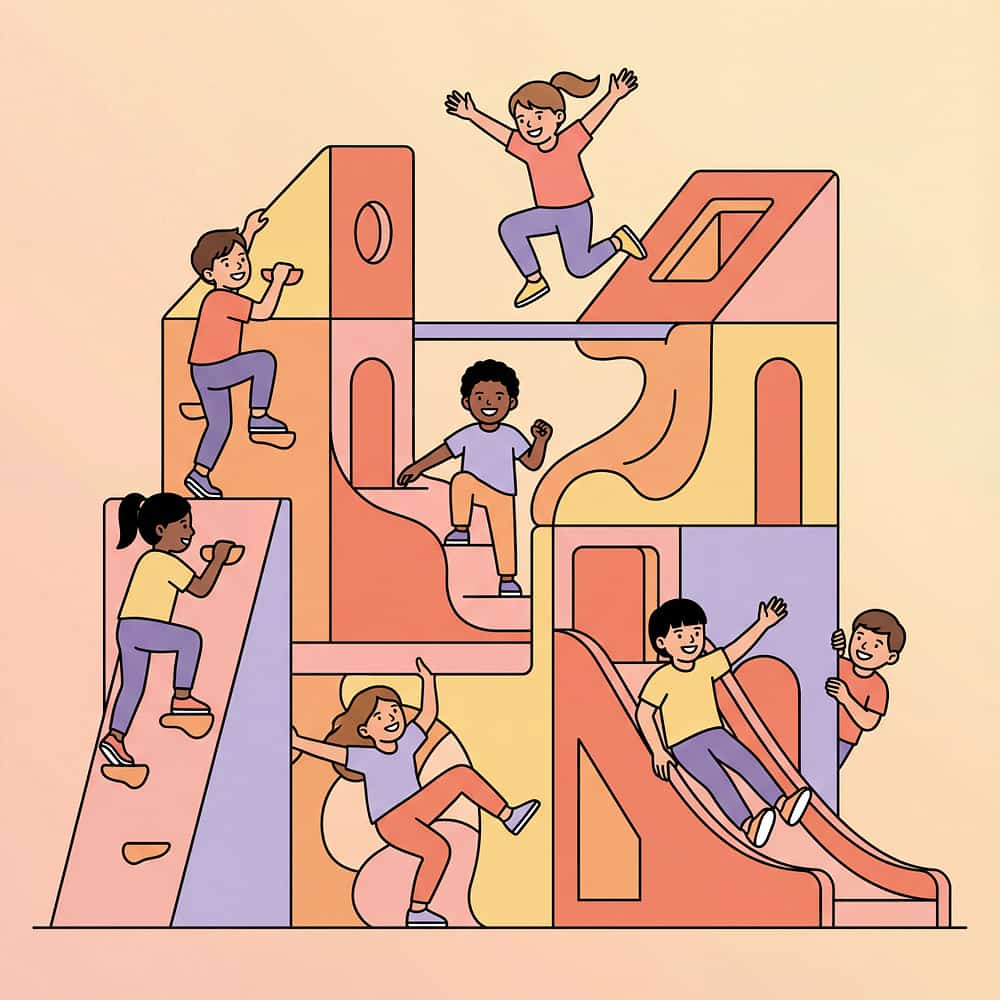
Playground Climber (Small Indoor)
Best for: Climbing + sliding + multiple activities
Ages: 2-8 years | Settings: Home, School
Type: Multi-activity climber | Size: Compact play structure
Portability: Very Low | Price: ₹5,000–20,000
How to Choose
By Goal
- Open-ended play: Pikler Triangle
- Multi-child use: Climbing Dome
- Space-saving: Wall Panel
- Upper body focus: Rope Ladder
By Setting
- Small spaces: Wall Panel, Rope
- Flexible: Pikler (folds)
- School/multi-user: Dome, Playground
- Young children: Foam Climber
By Portability
- Most portable: Pikler (folds)
- Permanent: Wall Panel, Rope
- Semi-permanent: Dome
- Reconfigurable: Foam Blocks
Specifications & Types Guide
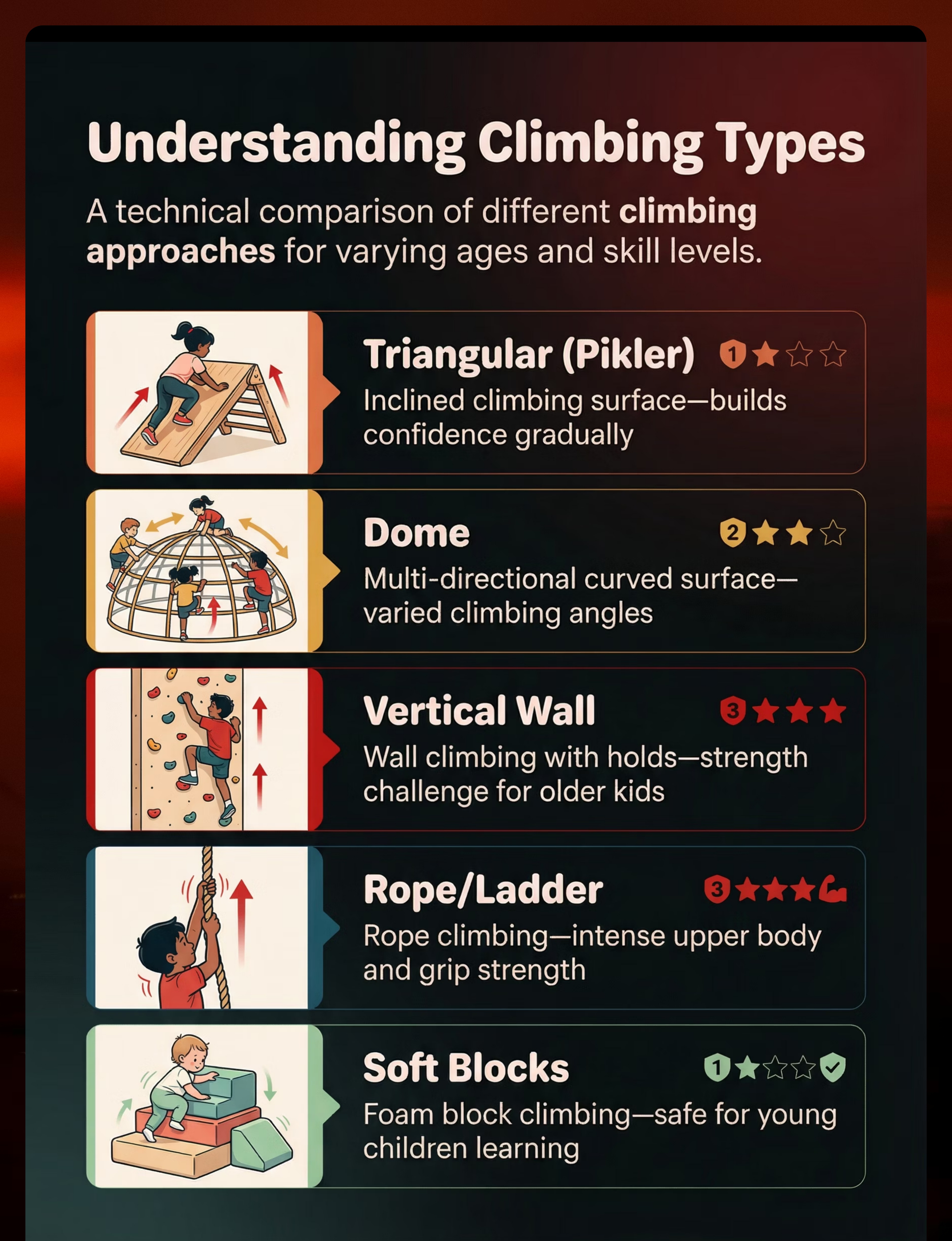
Climbing Types

There was an error generating this image
Triangular (Pikler)
Inclined climbing surface that adjusts to multiple angles, promoting independent exploration and risk assessment.

Dome
Multi-directional curved surface allowing varied climbing approaches and creative movement patterns.

There was an error generating this image
Vertical Wall
Wall climbing with holds that challenges upper body strength and problem-solving skills.

Rope/Ladder
Rope or ladder climbing providing intense proprioceptive input and coordination challenges.

Soft Foam
Foam block climbing designed for young children, offering safe exploration without fall risks.
Materials & Key Features
Common Materials
- Wood: Pikler triangles and natural climbers
- Metal/Plastic: Domes and play structures
- Foam: Soft climbers for safety
- Climbing Holds: For wall-mounted systems
Essential Features
- Sturdy construction meeting safety standards
- Safe surfaces without sharp edges or splinters
- Appropriate height for developmental stage
- Proper installation for mounted equipment
- Weight capacity clearly specified
- Non-toxic finishes and materials

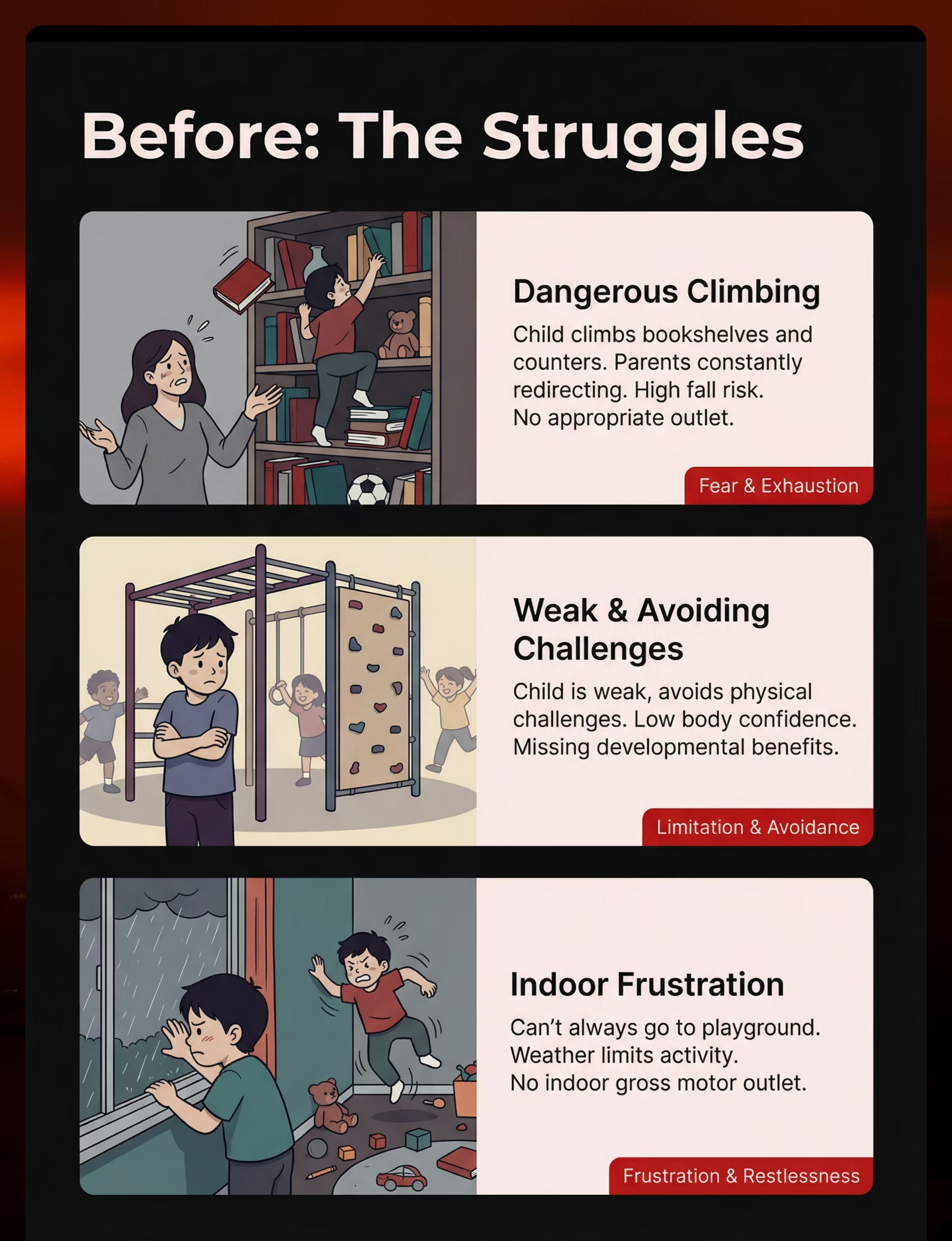
The Struggle (Before)
Dangerous Climbing
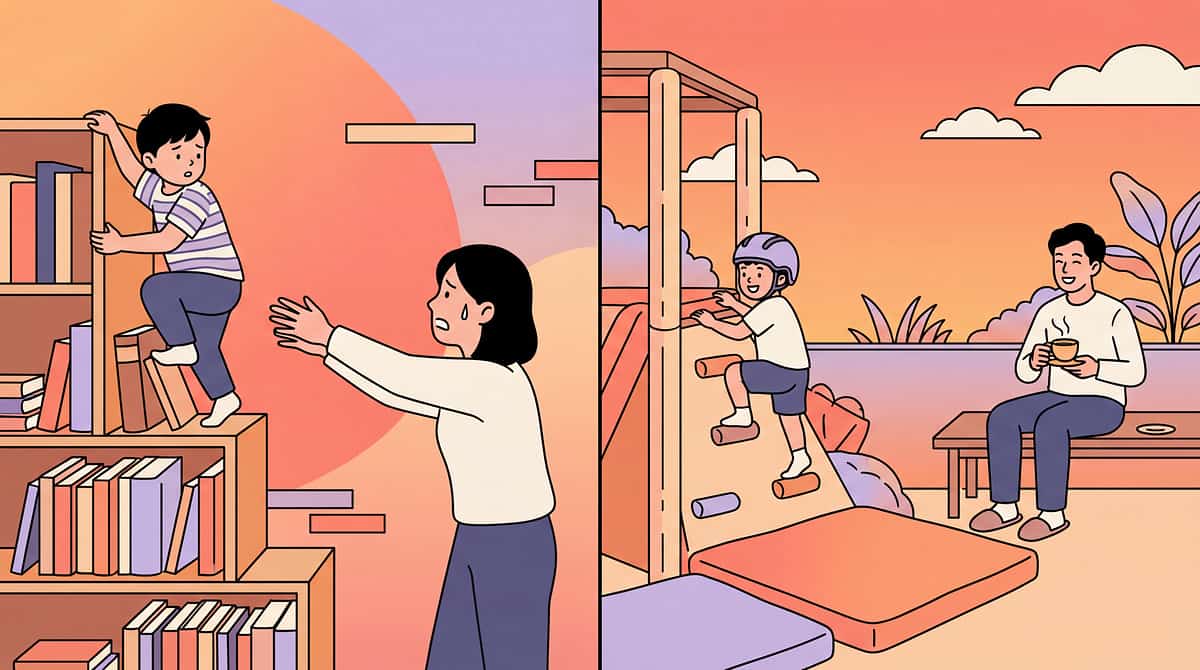
Situation: Child climbs bookshelves, counters, and unsafe furniture constantly.
Experience: Parents redirect repeatedly with high stress. Fall risk creates constant anxiety. No appropriate outlet means the behavior continues.
Emotion: Fear, exhaustion, helplessness
Strength & Confidence Gaps
Situation: Child is physically weak and avoids challenges.
Experience: Low confidence in their body leads to withdrawal from physical activities. Missing developmental benefits of climbing and strength-building play.
Emotion: Limitation, avoidance, frustration
Indoor Activity Limitations
Situation: Can't always access outdoor playgrounds.
Experience: Weather limits activity options. Child needs climbing but has no indoor solution. Energy and sensory needs go unmet.
Emotion: Frustration, limitation, restlessness
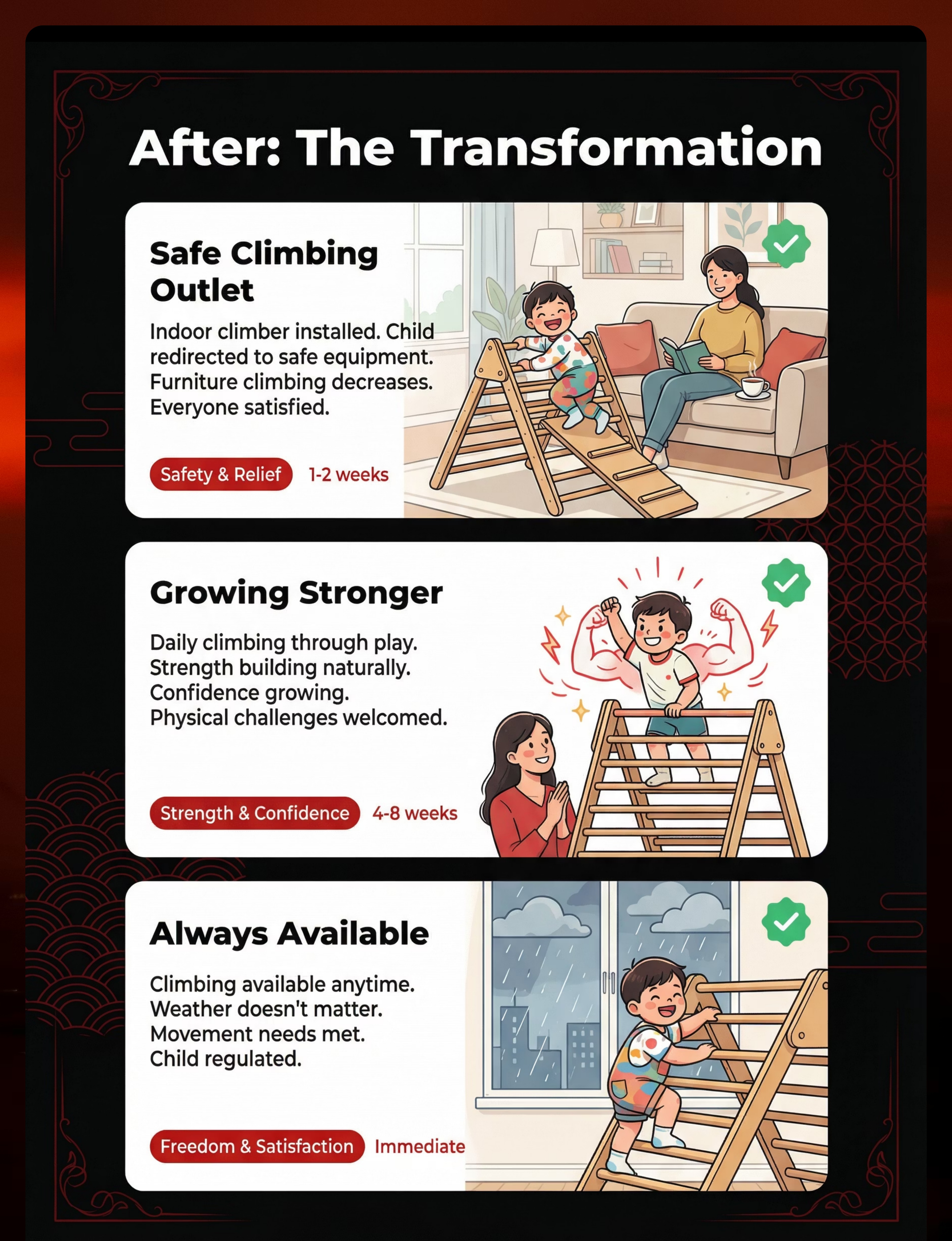
The Breakthrough (After)
1-2 weeks
Safe Climbing Solution
Situation: Indoor climber installed and integrated into daily routine.
Experience: Child has safe climbing outlet meeting their needs. Redirected successfully to appropriate equipment. Furniture climbing decreases naturally. Family feels safe and satisfied.
Emotion: Safety, relief, peace of mind
4-8 weeks
Growing Strength & Confidence
Situation: Daily climbing integrated as joyful play activity.
Experience: Strength building happens naturally through engaging play. Confidence grows with each successful climb. Child now welcomes physical challenges instead of avoiding them.
Emotion: Strength, confidence, pride
Immediate
Weather-Independent Activity
Situation: Climbing available regardless of outdoor conditions.
Experience: Weather doesn't dictate activity options. Movement needs consistently met. Child achieves regulation through climbing. Family has reliable solution.
Emotion: Freedom, satisfaction, consistency

What to Expect (Realistic Timelines)
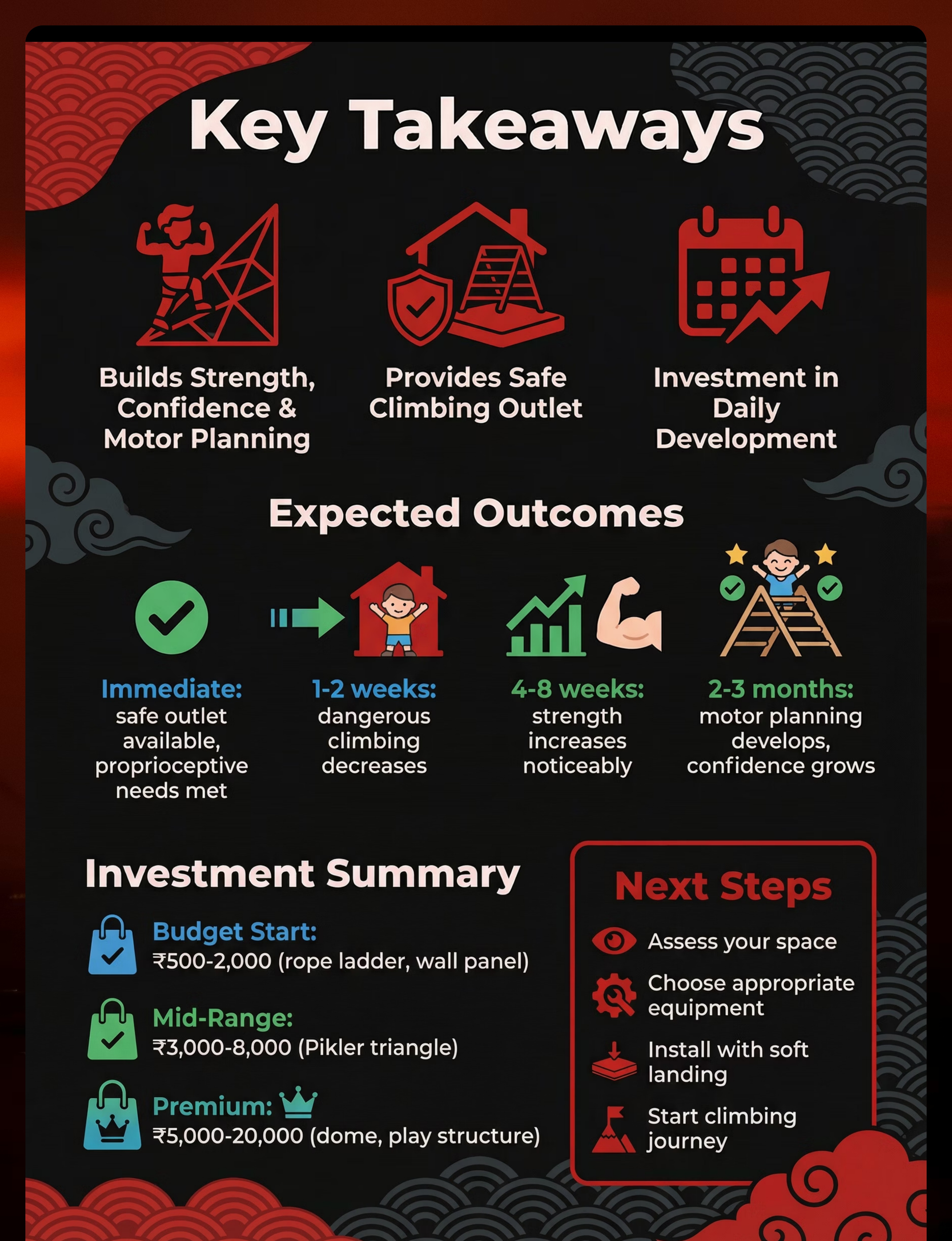
Safe climbing outlet available
Immediate
As soon as equipment is installed with proper safety measures, children have appropriate climbing access.
Dangerous climbing decreases
1-2 weeks
With consistent redirection to safe equipment, furniture and unsafe climbing behaviors naturally reduce.
Proprioceptive needs met
Immediate
Climbing immediately provides the heavy proprioceptive input sensory-seeking children crave.
Strength increases
4-8 weeks
Regular climbing builds visible strength in core, arms, legs, and overall muscle tone.
Motor planning develops
2-3 months
Route planning and movement sequencing skills improve with repeated climbing challenges.
Confidence in physical activities grows
2-3 months
Success with climbing transfers to other physical challenges, building overall confidence.
Important note: Timelines vary based on starting ability, frequency of use, and individual development patterns. Consistent daily use produces best results.

Is This Right for My Child? (2-Minute Check)
Does your child climb on furniture and unsafe things?
If yes, this indicates: Your child needs a safe climbing outlet to redirect this natural drive appropriately.
Confidence score: 96% match
Does your child seek heavy proprioceptive input?
If yes, this indicates: Climbing provides the intense proprioceptive feedback sensory-seeking children need.
Confidence score: 90% match
Would indoor gross motor equipment help your family?
If yes, this indicates: Indoor climbing equipment is a valuable investment for weather-independent movement.
Confidence score: 88% match
Does your child need strength and confidence building?
If yes, this indicates: Climbing naturally develops both physical strength and mental confidence simultaneously.
Confidence score: 85% match
Interpretation: 3+ "yes" answers indicate a strong fit for climbing equipment. Even 2 "yes" responses suggest significant potential benefit for your child's development.

Usage Guide
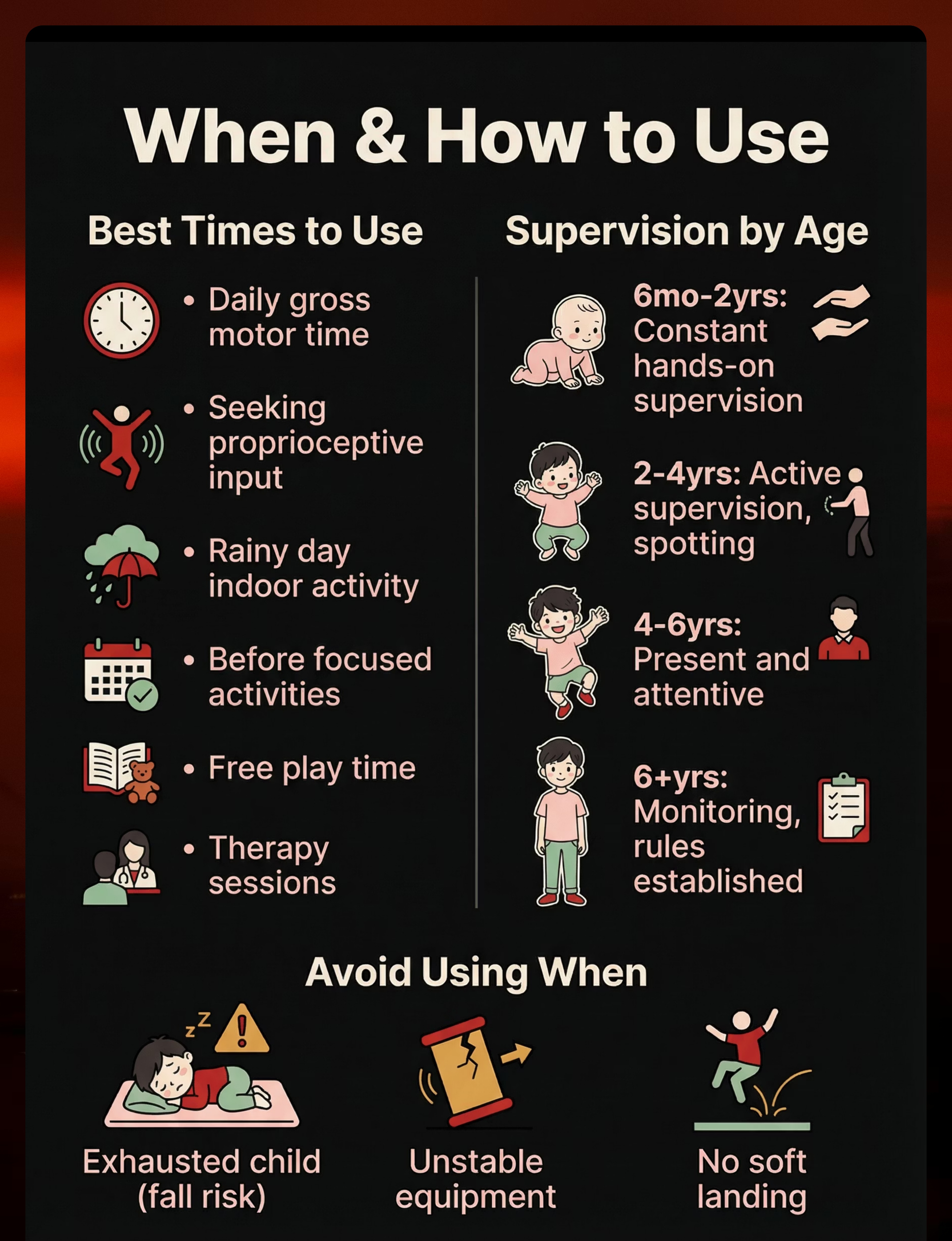
✓ When to Use
- Daily gross motor time for physical development
- When child is seeking proprioceptive input
- Rainy day indoor activity solution
- Before focused activities to help regulate
- During free play time exploration
- In therapy sessions for skill building
✗ When NOT to Use
- Without supervision for young children
- If equipment is unstable or damaged
- If child is exhausted or dysregulated (fall risk higher)
- Without soft landing surface underneath
Supervision by Age
Age Range | Supervision Level | Notes | |
Under 2 years | Constant hands-on | Stay within arm's reach at all times | |
2-4 years | Active supervision | Spot as needed, close presence | |
4-6 years | Present and attentive | Watch actively but allow independence | |
6+ years | Monitoring | Establish rules, check periodically |
Duration: Self-limiting based on fatigue. Children naturally stop when tired, typically after 10-30 minutes of active climbing.
Home
Clinic
School

Safety First
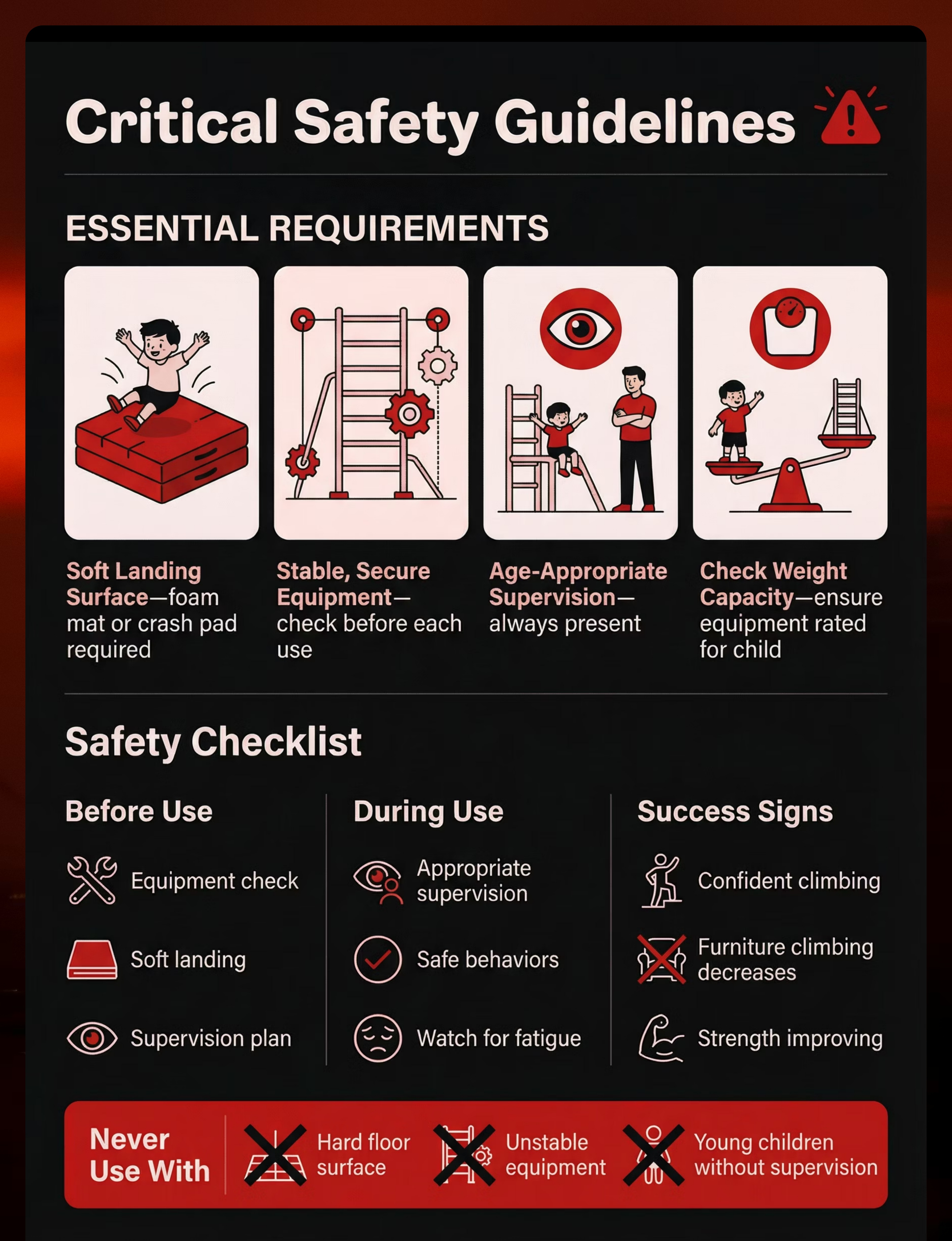
🚨 Critical Safety Requirements
- SOFT LANDING SURFACE essential: Foam mat, crash mat, or thick carpet must be underneath
- Stable, secure equipment: Check stability before each use
- Age-appropriate supervision: Match supervision level to child's age and ability
- Check weight capacity: Ensure equipment can safely support your child
⚠️ Warnings
- No unsafe hanging or jumping from equipment
- Check regularly for splinters and loose parts
- Keep area around climber clear of obstacles
- Teach safe climbing and dismounting techniques
- Watch for signs of fatigue (increased fall risk)
🛑 Contraindicated
- Unstable or damaged equipment
- Hard landing surfaces (tile, concrete, hardwood)
- Unsupervised use by young children
- Equipment exceeding child's abilities without support
Safety Checklist
Before Use
- ✓ Equipment stable and properly secured
- ✓ Soft landing mat or surface in place
- ✓ No loose, damaged, or broken parts
- ✓ Supervision plan appropriate to child's age
During Use
- ✓ Maintaining appropriate supervision level
- ✓ Child using safe climbing behaviors
- ✓ Not overcrowded (multiple children)
- ✓ Watching for signs of fatigue
Signs of Success
- ✓ Climbs confidently and safely
- ✓ Furniture climbing has decreased
- ✓ Strength visibly improving
- ✓ Enjoys and seeks climbing play

Common Questions (Honest Answers)
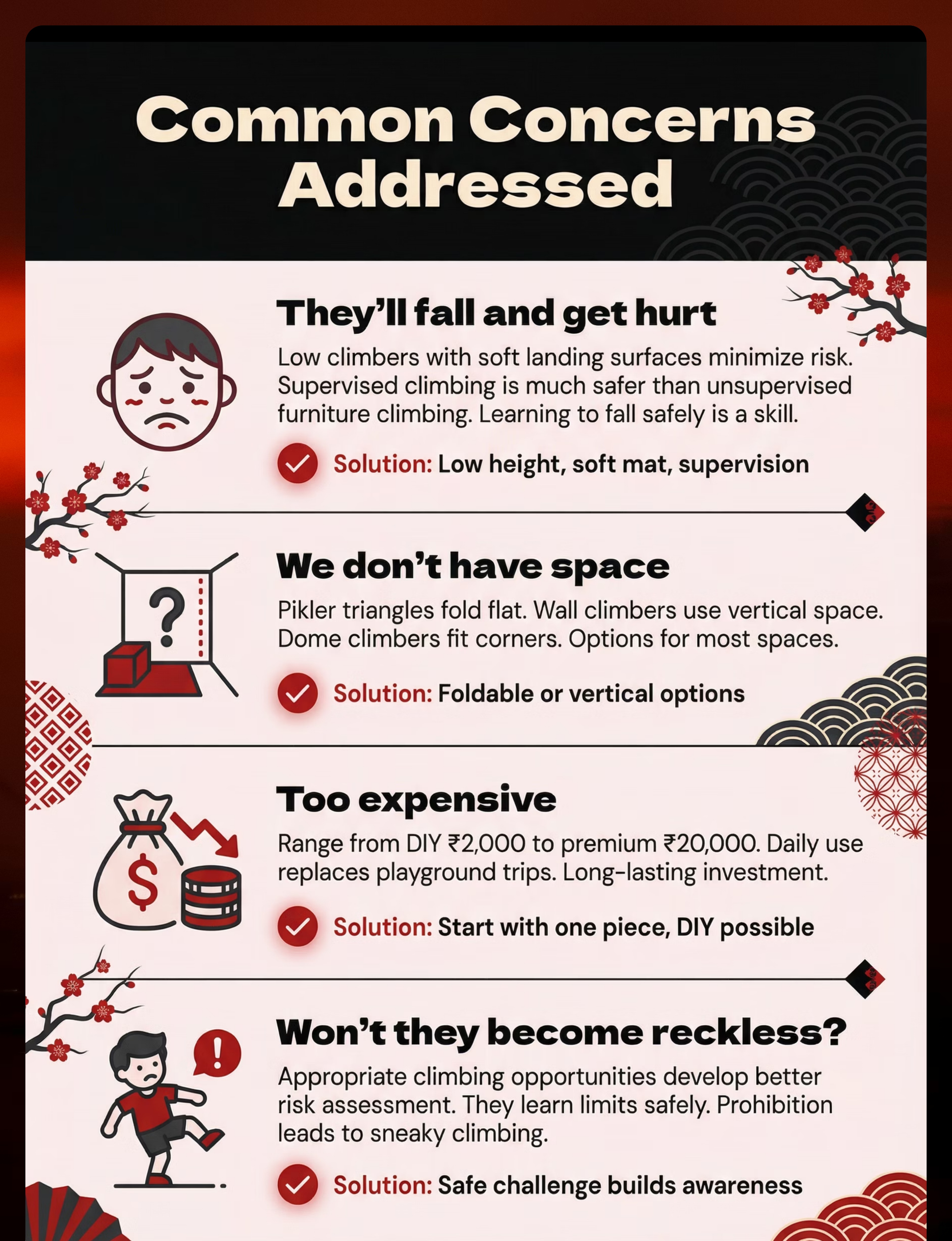
Q: "They'll fall and get hurt"
A: Falls happen, but low climbers and soft surfaces minimize injury risk. Learning to fall safely is actually an important skill. Supervised climbing on appropriate equipment is MUCH safer than unsupervised furniture climbing. Foam or thick carpet below is essential – this transforms a dangerous fall into a learning experience.
Try this: Start with lowest height setting. Use thick crash mat underneath. Supervise closely initially.
Q: "We don't have space"
A: Space solutions exist for most homes. Pikler triangles fold completely flat when not in use. Wall-mounted climbing panels use vertical space efficiently without floor footprint. Dome climbers fit in corners. Foam climbers can be reconfigured or stored. There are truly options for various space constraints.
Try this: Consider foldable Pikler, wall-mounted panel, or corner-fitting dome based on your space.
Q: "Too expensive"
A: Investment range spans from DIY Pikler triangles (₹2,000-3,000) to premium systems. Consider that daily climbing access replaces multiple playground trips and provides years of use. This is durable equipment that grows with your child. This is durable equipment that grows with your child. You can start with one affordable piece and expand over time.
Try this: Start with rope ladder (₹500-2,000) or basic wall panel. Explore DIY Pikler options. Consider long-term value.
Q: "Won't they just become reckless climbers?"
A: Research shows the opposite is true. Children with appropriate climbing opportunities actually develop BETTER risk assessment skills. They learn their limits safely through guided experience. Prohibition and lack of outlets lead to sneaky, unsafe climbing. Appropriate challenge builds safety awareness, not recklessness.
Try this: Provide appropriate climbing opportunities with supervision. Teach risk assessment through experience.

Investment Guide
Budget-Friendly Option
Rope Ladder or Small Wall Panel
Investment: ₹500–2,000
Best for: Affordable entry point for climbing needs. Provides proprioceptive input and upper body strengthening without major space or cost commitment.
Note: Great starter option to assess if your child enjoys climbing before investing in larger equipment. Can be added to existing play spaces easily.
Premium Option
Pikler Triangle or Climbing Dome
Investment: ₹5,000–15,000
Best for: Comprehensive climbing solution with years of use potential. Supports multiple children and varied developmental stages.
Trusted brands: Piccalio, Lily & River, EZPlay
Note: Durable investment that grows with your child from infant to school age. Often becomes favorite equipment.
Overall range: ₹500–20,000 (approximately $6–240 USD)
Best starting point: For most families, a foldable Pikler triangle (₹3,000-8,000) offers the best balance of versatility, longevity, and value. For tighter budgets, rope ladders or wall panels provide excellent entry-level climbing opportunities.
Investment tip: Consider this daily-use equipment that replaces gym memberships or frequent playground trips. Over 2-3 years of use, cost per use becomes minimal compared to one-time activity costs.

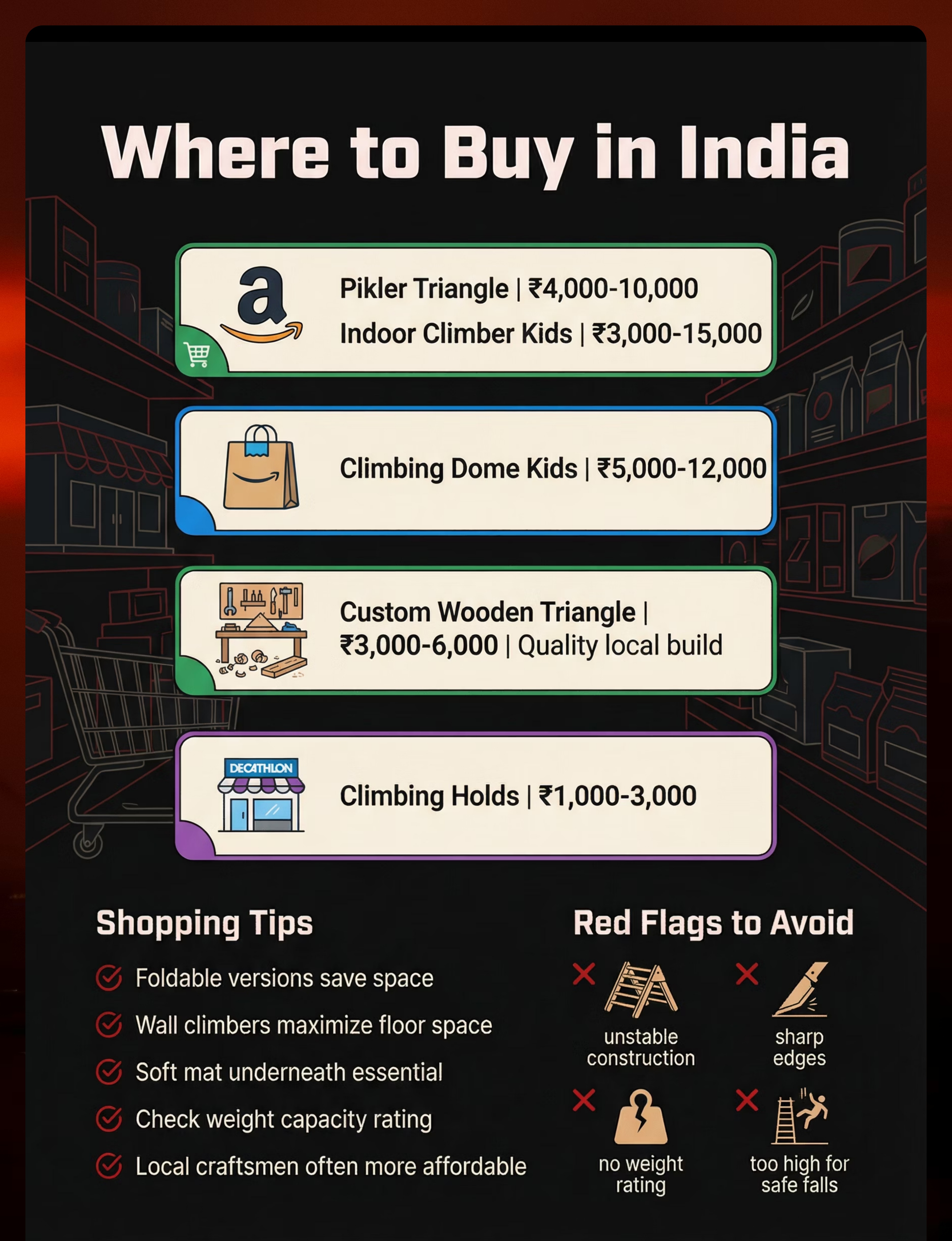
Where to Buy in India
Availability: Climbing equipment is available through multiple channels in India, though specialized Montessori-style equipment like Pikler triangles may require more searching.

There was an error generating this image
Amazon.in – Pikler Triangle
Search: "Pikler triangle"
Price range: ₹4,000–10,000
Wide selection of wooden climbing triangles from various sellers.

There was an error generating this image
Amazon.in – General Climbers
Search: "indoor climber kids"
Price range: ₹3,000–15,000
Domes, structures, and combination play equipment.

There was an error generating this image
Decathlon – Climbing Holds
Search: "climbing holds"
Price range: ₹1,000–3,000
Quality climbing holds for DIY wall installations.

There was an error generating this image
Local Craftsmen – Custom Pikler
Search: "wooden climbing triangle"
Price range: ₹3,000–6,000
Often more affordable custom-made options with quality wood.
💡 Buying Tips
- Pikler triangles from local craftsmen can be very affordable and well-made
- Foldable versions essential for small spaces – check folding mechanism quality
- Wall climbers maximize floor space – perfect for apartments
- Soft mat or foam cushioning underneath is non-negotiable for safety
- Always check weight capacity before purchasing
- Read reviews specifically about stability and construction quality
🚩 Red Flags
- Unstable construction or wobbly equipment
- Sharp edges, splinters, or rough surfaces
- No clear weight rating provided
- Too high for your child's safe fall distance
- Poor quality wood that may crack or splinter
- Inadequate hardware or loose joints

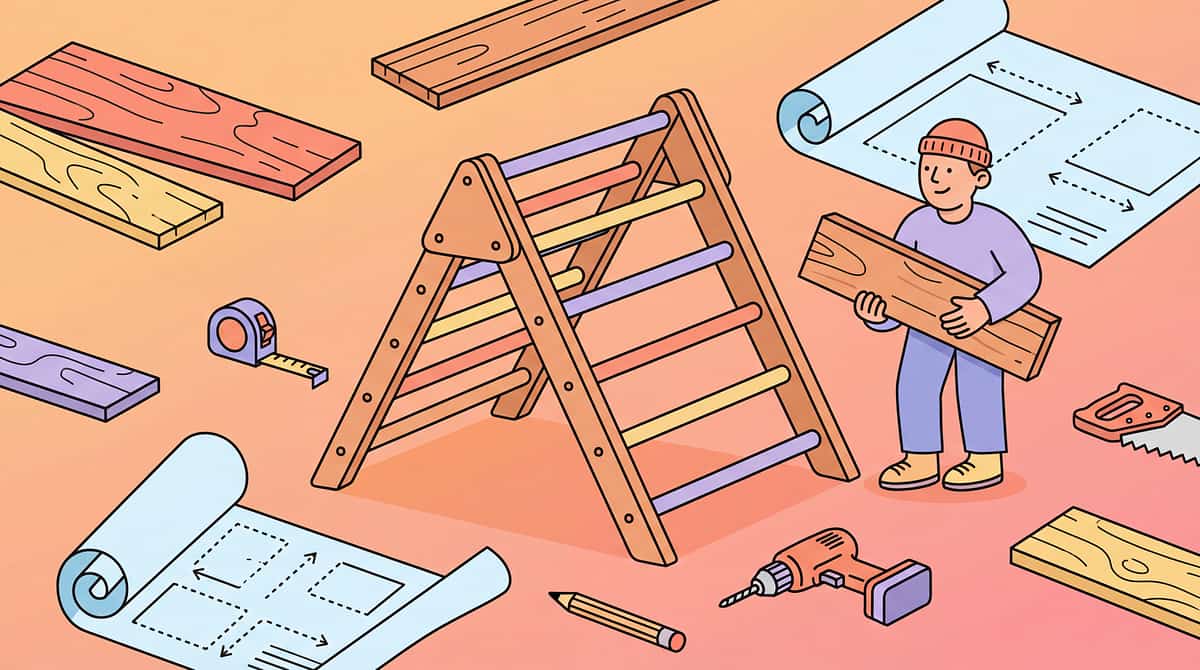
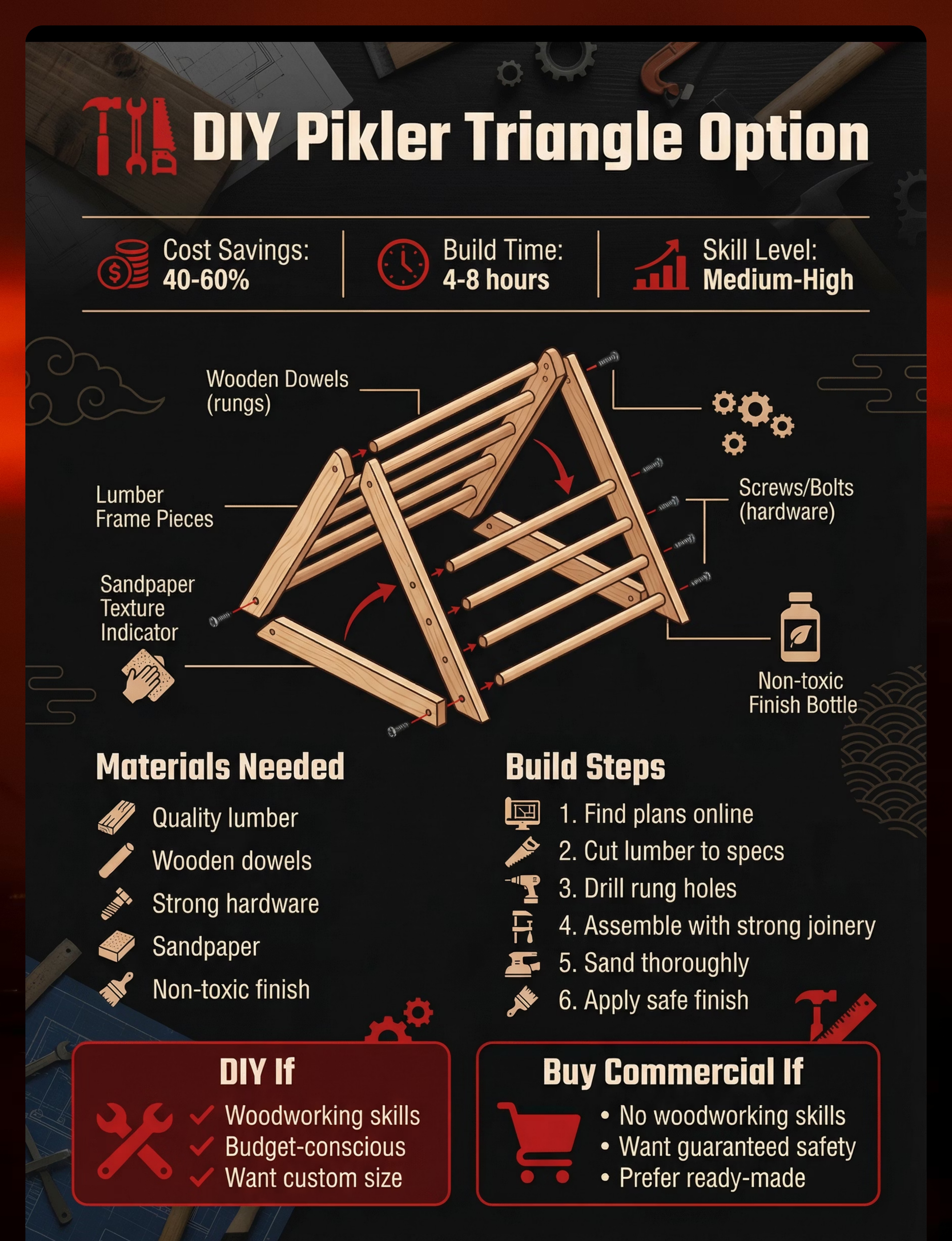
DIY Alternative (Save 40-60%)
Feasibility & Investment
Skill Level: Medium-High (woodworking skills required)
Time Required: 4-8 hours for complete build
Cost Savings: 40-60% compared to commercial options
Total DIY Cost: Approximately ₹1,500–3,000 for materials
Materials Needed
- Wooden dowels (for climbing rungs)
- Quality lumber for frame structure
- Screws and bolts for assembly
- Sandpaper (multiple grits)
- Non-toxic wood finish or sealant
- Optional: hinges for folding design
Step-by-Step Process
- Find detailed Pikler triangle plans online (many free resources)
- Source quality lumber from local supplier – avoid knots and cracks
- Cut all pieces to exact specifications using plans
- Drill holes for climbing rungs with precise spacing
- Assemble frame using strong joinery techniques (screws and wood glue)
- Sand thoroughly – absolutely no splinters allowed
- Apply multiple coats of non-toxic finish
- Add folding hinge mechanism if space-saving design desired
DIY vs Commercial: Making the Decision
✓ When to DIY
- You have woodworking skills and necessary tools
- Budget is primary concern and savings matter
- You want custom size to fit specific space
- You enjoy building and creating
- You have time to dedicate to the project
Trade-offs of DIY
- Requires significant woodworking skills
- Must ensure safety and stability yourself
- Time investment of 4-8 hours minimum
- Need proper tools and workspace
✓ When to Buy Commercial
- No woodworking experience or tools
- Want guaranteed safety and stability
- Prefer ready-made, tested solution
- Need dome or complex structure (not DIY-friendly)
- Value time savings over cost savings
Benefits of Commercial
- Safety testing and quality assurance
- Quick setup without construction skills
- Professional finish and design
- Warranty and customer support
Preview of climbing equipment indoor climber Therapy Material
Below is a visual preview of climbing equipment indoor climber therapy material. The pages shown help educators, therapists, and caregivers understand the structure and content of the resource before use. Materials should be used under appropriate professional guidance.


Share this resource
Help others discover thisLink copied!

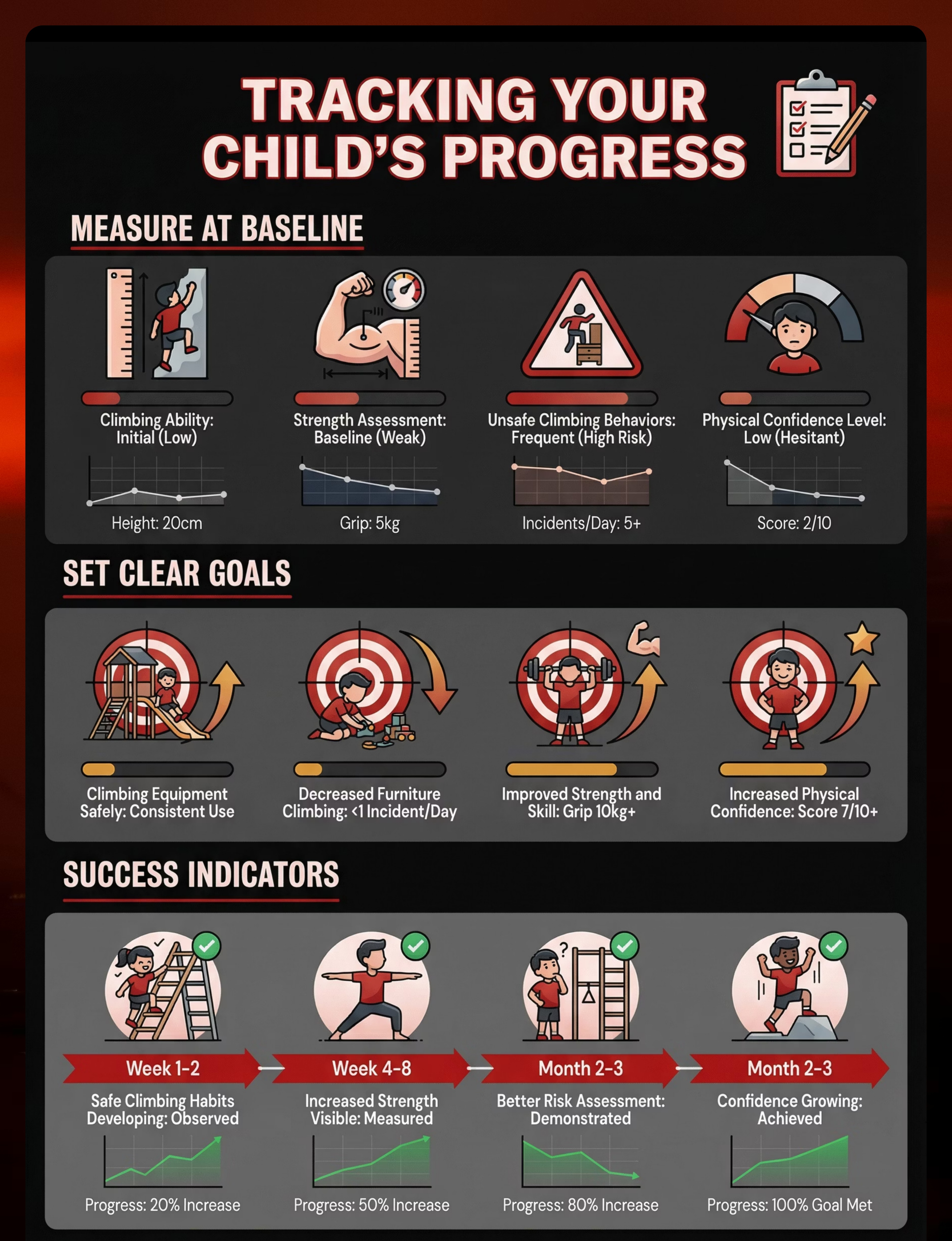
Track Progress & Measure Success
Measuring Success
📊 Baseline Assessment
Before starting, measure:
- Current climbing ability and confidence
- Strength assessment (how high can climb)
- Frequency of unsafe climbing behaviors
- Confidence level in physical activities
- Proprioceptive seeking behaviors
🎯 Goals to Set
- Child will use climbing equipment safely and independently
- Unsafe furniture climbing will decrease significantly
- Climbing strength and skills will improve measurably
- Confidence in physical challenges will increase
- Proprioceptive needs will be met appropriately
✓ Success Indicators
- Demonstrates safe climbing habits consistently
- Shows increased upper body and core strength
- Makes appropriate risk assessments
- Furniture climbing incidents decrease
- Shows enjoyment in physical challenges
- Seeks climbing equipment for regulation
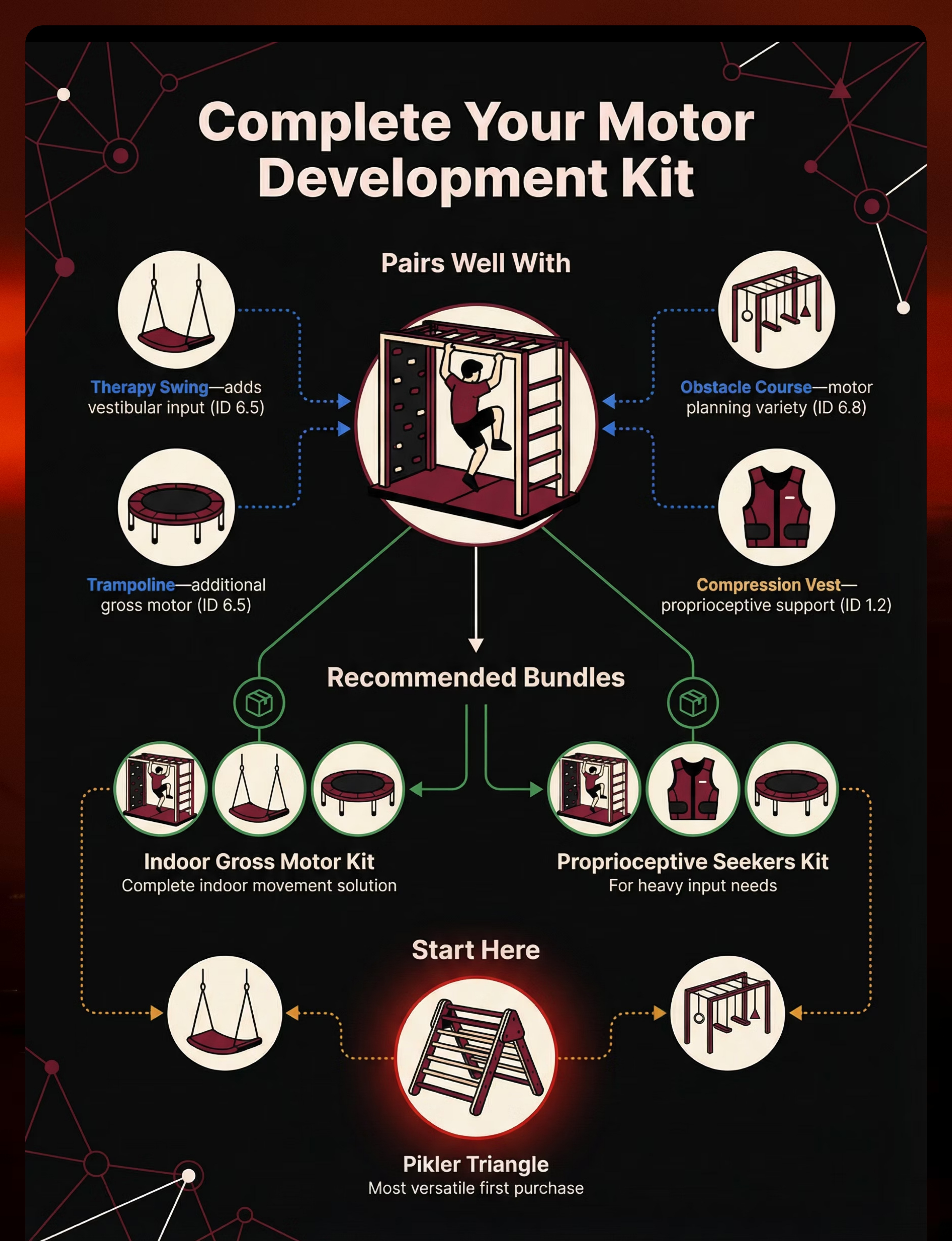
Complete the Kit: Pair It With...
Therapy Swing (ID: 6.1)
Why pair: Adds vestibular input to complement proprioceptive climbing input. Complete sensory movement solution.
Trampoline (ID: 6.5)
Why pair: Additional gross motor activity and proprioceptive input. Different movement pattern for variety.
Compression Vest (ID: 1.2)
Why pair: Provides proprioceptive support between climbing sessions. Helps maintain regulation throughout day.
Obstacle Course (ID: 6.8)
Why pair: Extends motor planning challenges beyond climbing. Creates comprehensive movement circuit.
🎁 Recommended Bundles
- Indoor Gross Motor Kit: Climbing Equipment (6.7) + Trampoline (6.5) + Obstacle Course (6.6) → Complete indoor movement solution
- Proprioceptive Seekers Kit: Climbing Equipment (6.7) + Compression Vest (1.2) + Trampoline (6.5) → For children needing heavy sensory input
Quick Summary
AI Summary: Climbing equipment provides safe outlets for climbing needs while building strength, motor planning, proprioception, and confidence. Extended Kit equipment (Rank 2 in category) with moderate evidence base and high impact for sensory-seeking climbers. Investment range ₹500-20,000.
climbing
Pikler
gross motor
strength
proprioception
confidence
PT
OT
extended-kit
Common searches: Pikler triangle, indoor climber kids, climbing dome children, climbing wall kids, Montessori climber, indoor playground climber, gross motor climber autism
Get Support
🤝 FREE National Autism Helpline
Phone: 9100 181 181
Languages: 16+ languages supported
Website:pinnacleblooms.org
Connect with expert guidance on climbing equipment selection, safety, and integration into your child's therapeutic program.
🔗 Platform Integration
AbilityScore®: Identifies motor and sensory patterns guiding equipment selection
TherapeuticAI®: Includes climbing activities in personalized therapy plans
EverydayTherapyProgramme™: Provides climbing recommendations integrated into daily routines
Motor Development Index: Tracks strength and coordination progress over time
Disclaimer: This is educational information provided by Pinnacle Blooms Network. Always consult qualified occupational therapists, physical therapists, speech-language pathologists, or pediatricians before implementing new equipment or activities. Individual results vary based on child's unique needs, abilities, and circumstances. Safety is paramount – always supervise appropriately and follow equipment guidelines.