




















Tool ID: 10.5
Core Kit
Antecedent Modification Tools
Proactive behavior prevention system
BCBA + SpEd Recommended
Rank #2
Strong Evidence
Daily Use
₹50–1,000
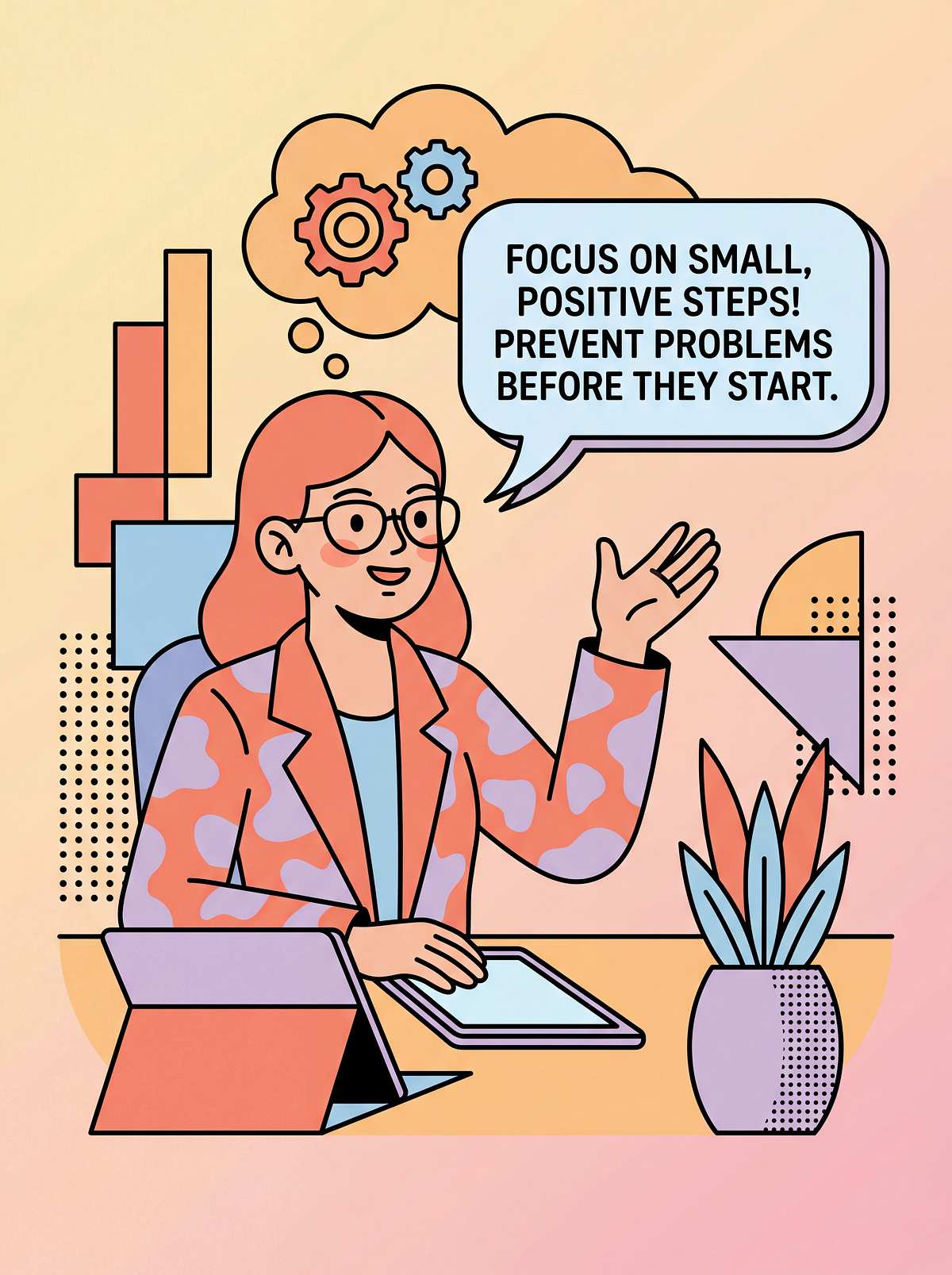
The most powerful behavior intervention is prevention. Antecedent modification tools help you prevent problem behaviors before they start by identifying triggers and modifying the environment, demands, and conditions that lead to meltdowns. Instead of reacting to challenging behaviors after they occur, these evidence-based tools allow you to create conditions for success proactively. When you know what triggers your child's difficulties—transitions, demands, surprises, or environmental factors—you can use visual schedules, timers, choice boards, and environmental modifications to reduce anxiety, increase predictability, and build cooperation. This proactive approach transforms family life from constant crisis management to peaceful routines where your child can thrive.

Who This Helps
Antecedent modification tools support children by preventing problem behaviors before they occur through proactive environmental and demand modifications.
Ages 2-12 years
Home
School
Clinic
Community
Behavior Prevention
Stop meltdowns before they start by identifying and modifying triggers
Environmental Modification
Adjust physical spaces and conditions to reduce behavioral triggers
Demand Adjustment
Match task difficulty to ability level to prevent overwhelm and refusal
Predictability
Provide visual schedules and warnings to reduce anxiety about unknowns
Proactive Support
Create success conditions instead of reacting to problems after they occur
Reduced Conflict
Decrease power struggles through choice-making and appropriate modifications
Does This Sound Familiar?

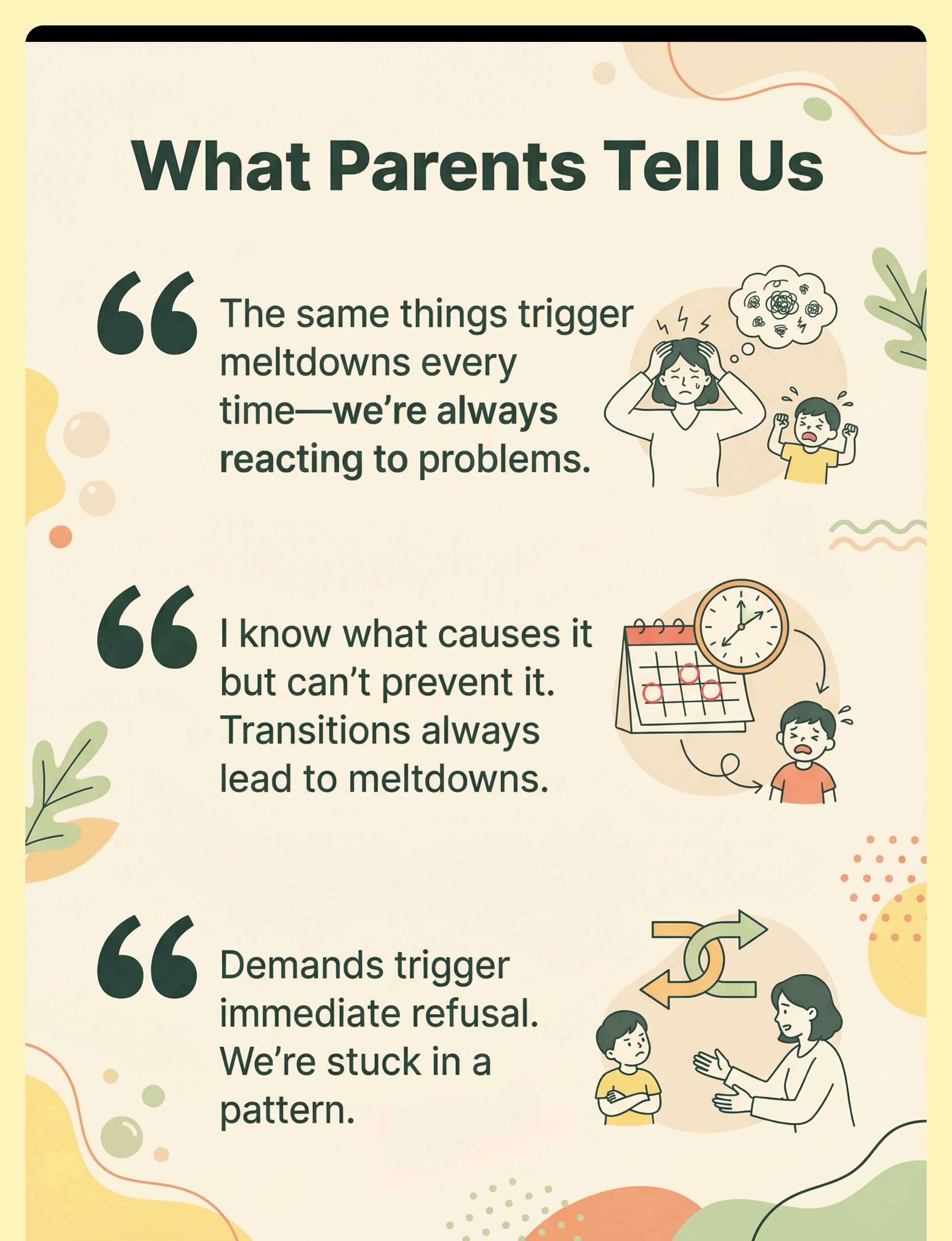
"The same things trigger meltdowns every time. We know it's coming but can't seem to stop it."
"We're always reacting to problems after they've already started. I feel like we're always one step behind."
"I know what causes his meltdowns but I don't know how to prevent them from happening."
"Transitions always lead to complete meltdowns. Getting ready for school, leaving the park—it's exhausting."
"Any demand triggers immediate refusal. Everything becomes a battle."
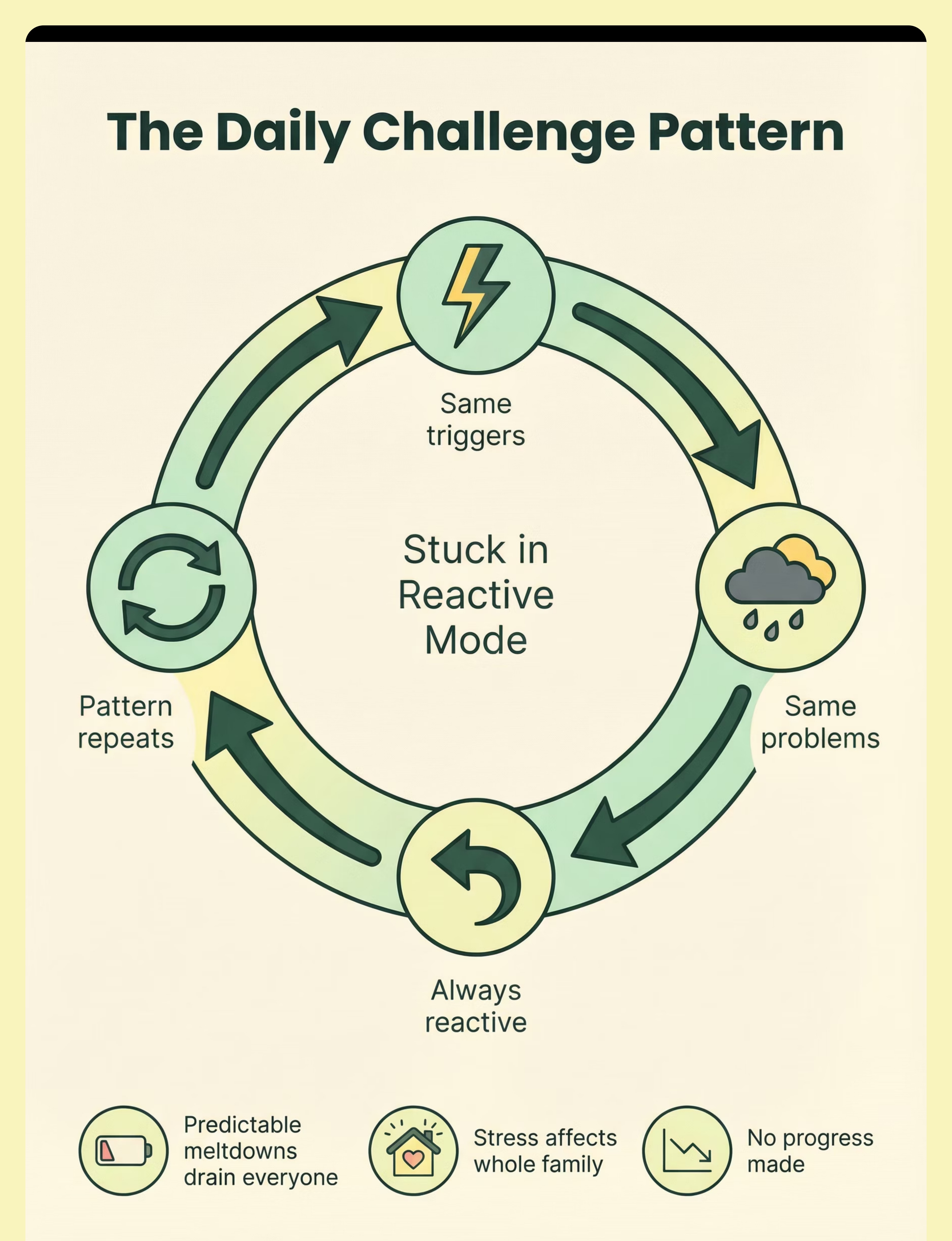
"We're stuck in this pattern. Same triggers, same reactions, every single day."
You're not alone. These are common challenges faced by families before implementing antecedent strategies. The good news? When you identify triggers and modify conditions proactively, you can break these exhausting patterns.

A Day Without the Right Support
Predictable Patterns
Same triggers cause the same problems every single day. You can see it coming but feel powerless to change it.
Always Reactive
Constantly responding after problems have already started, never getting ahead of the behavior cycle.
Daily Stress
Predictable meltdowns drain everyone's energy. The whole family walks on eggshells waiting for the next crisis.
Feeling Stuck
Same patterns repeat endlessly. Nothing changes because you're always in crisis mode with no time to plan ahead.
Without antecedent modification strategies, families remain trapped in reactive patterns where the same triggers lead to the same meltdowns day after day. This exhausting cycle leaves everyone feeling defeated and stuck.

The Science Behind It
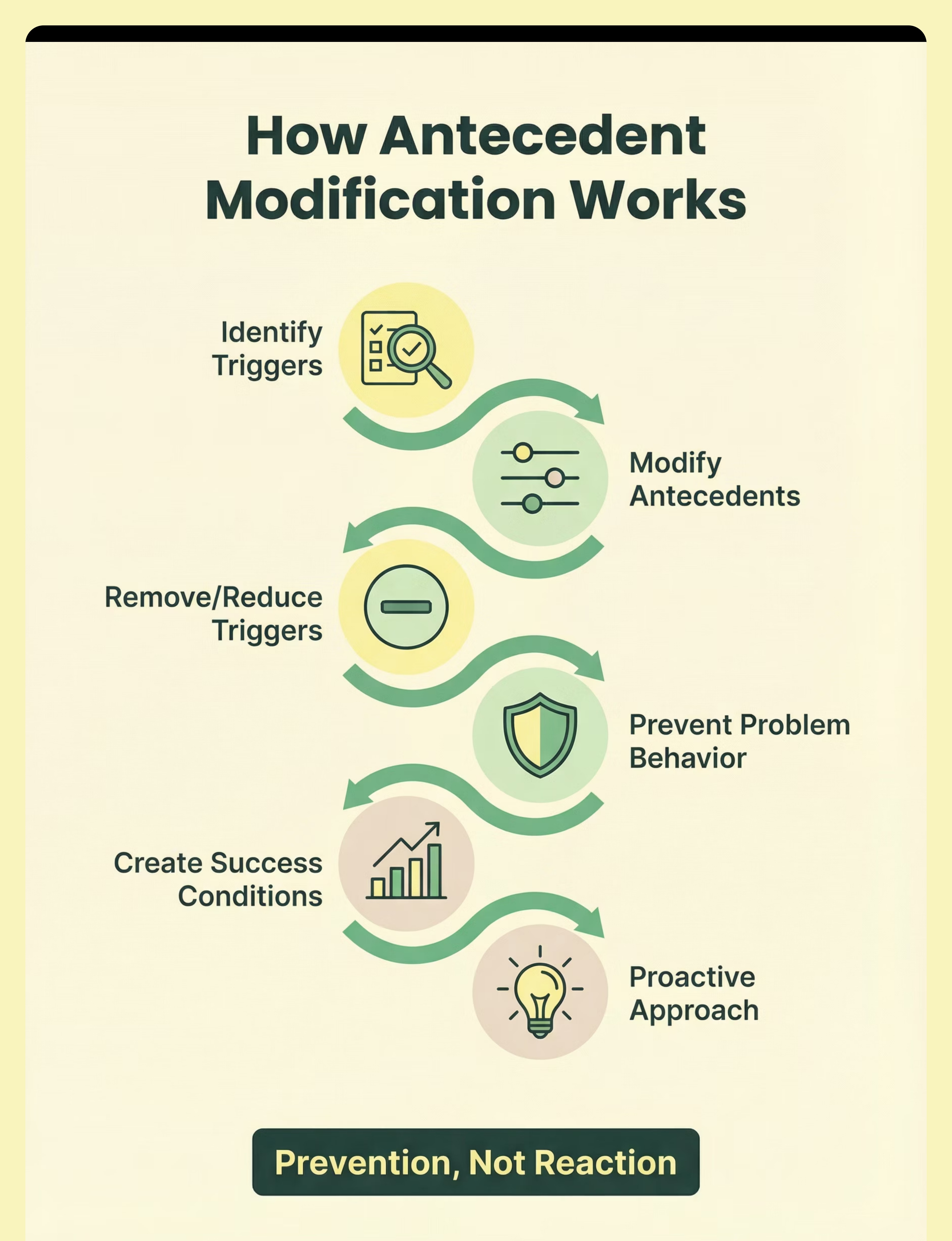
Antecedent modification is based on Applied Behavior Analysis (ABA) principles: behaviors don't happen in a vacuum—they're triggered by what comes before them. By identifying and modifying these "antecedents," we can prevent problem behaviors from occurring in the first place.
Identify Triggers
Observe what happens immediately before problem behaviors—transitions, demands, sensory issues, or environmental factors
Modify Antecedents
Change the conditions that trigger behaviors through visual supports, environmental adjustments, or demand modifications
Remove or Reduce Triggers
Eliminate unnecessary triggers and minimize unavoidable ones through preparation and support strategies
Prevent Problem Behavior
Without the trigger, the behavior doesn't occur—breaking the cycle before it starts
Create Conditions for Success
Build an environment where your child can succeed, then gradually increase challenges as skills develop
Proactive Rather Than Reactive
Shift from constantly managing crises to preventing them—a fundamental change in approach
Behavior Prevention
Environmental Modification
Demand Adjustment
Predictability
Proactive Support
Reduced Conflict

How to Use It Right
The effectiveness of antecedent modification depends on consistent, proactive implementation. These evidence-based best practices ensure you're using these tools to their full potential while avoiding common pitfalls.
1
Identify Triggers
Keep a trigger log for 3-5 days. What happens in the 5-10 minutes before problem behavior? Look for patterns in time, activity, people, or environment.
2
Modify Environment
Once triggers are identified, change what you can. Remove visual distractions, reduce noise, adjust lighting, or reorganize spaces to minimize trigger exposure.
3
Provide Predictability
Use visual schedules to show what's coming. Give 5-minute and 2-minute warnings before transitions. Prepare your child for changes in routine ahead of time.
4
Offer Choices
Reduce power struggles by offering controlled choices: "Do you want to brush teeth first or get dressed first?" Child has control, but both options meet your goal.
5
Match Demands
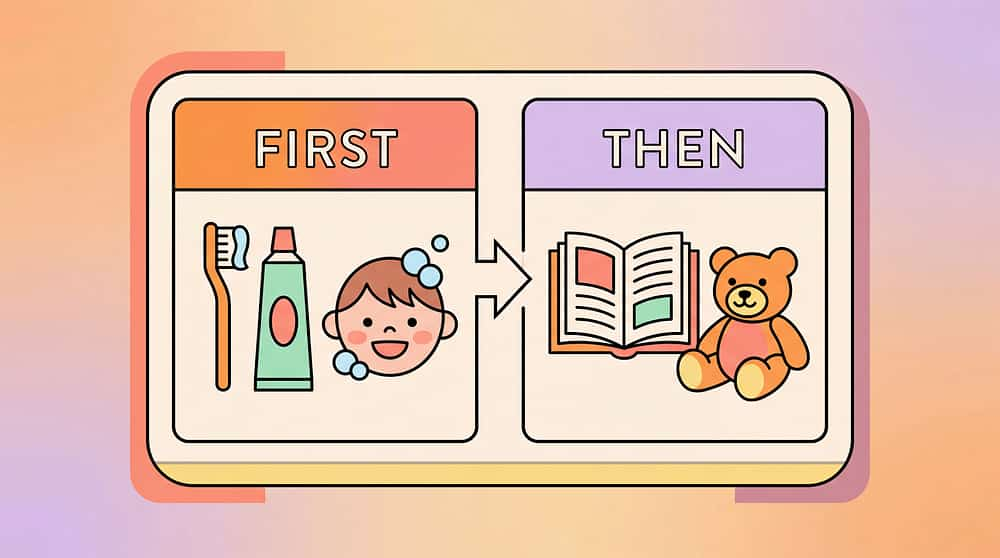
Break overwhelming tasks into smaller steps. Use first-then boards. Gradually increase difficulty as your child succeeds. Don't set them up for failure with impossible demands.
6
Be Proactive
Think ahead to known trigger times. Implement strategies BEFORE the trigger occurs. Shift from firefighting to fire prevention.
Duration Note: Antecedent strategies should be implemented consistently throughout the day. This is an ongoing approach, not a one-time intervention. As skills develop, you can gradually fade some supports.

Expert Endorsement
"The best behavior intervention is prevention. Antecedent strategies prevent problems before they start. Predictability, choice, appropriate demands, and environmental modifications create conditions for success."
— Board Certified Behavior Analyst
BCBA + SpEd Recommended
Strong Evidence
Rank #2 in Category
This approach is foundational in Applied Behavior Analysis (ABA) and special education. Rather than waiting for behaviors to occur and then responding, antecedent modification addresses the root causes proactively. The evidence base is robust: when implemented consistently, antecedent strategies significantly reduce problem behaviors while improving overall quality of life for both children and families.

Choose Your Option (6 Variants)
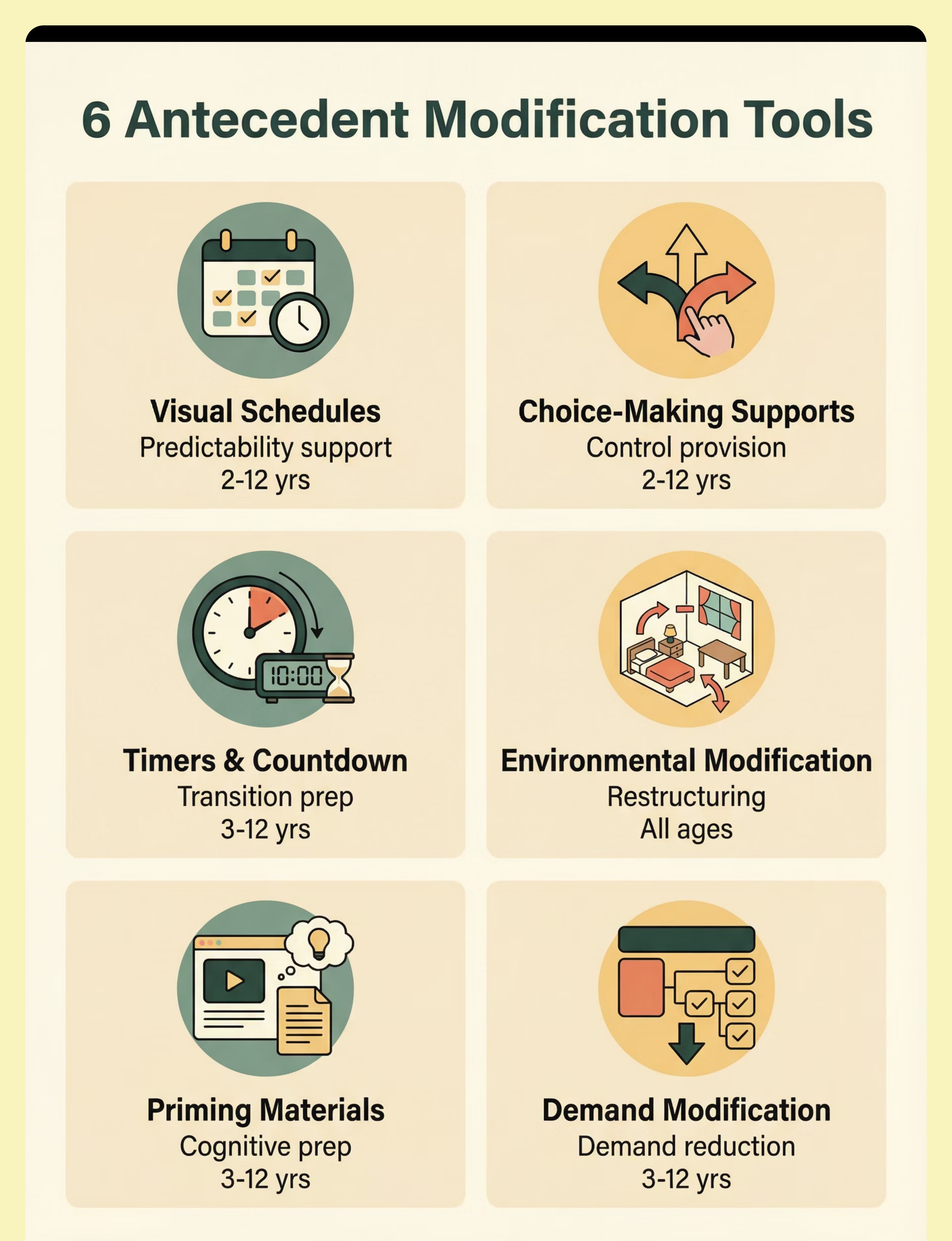
Antecedent modification isn't one-size-fits-all. Different triggers require different tools. Choose based on your child's specific behavioral patterns and the settings where support is needed.
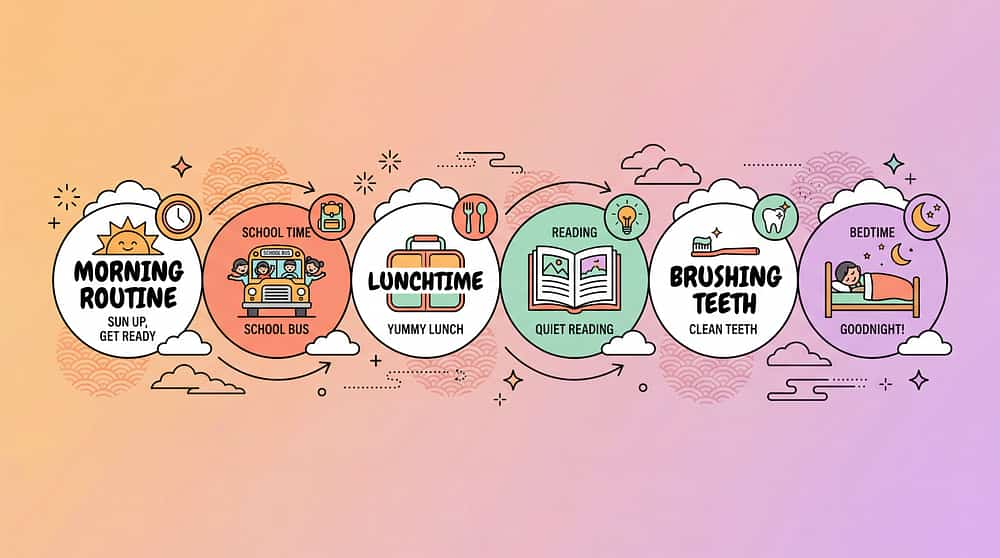
Visual Schedules
Schedules to prevent problem behavior by showing what's coming next.
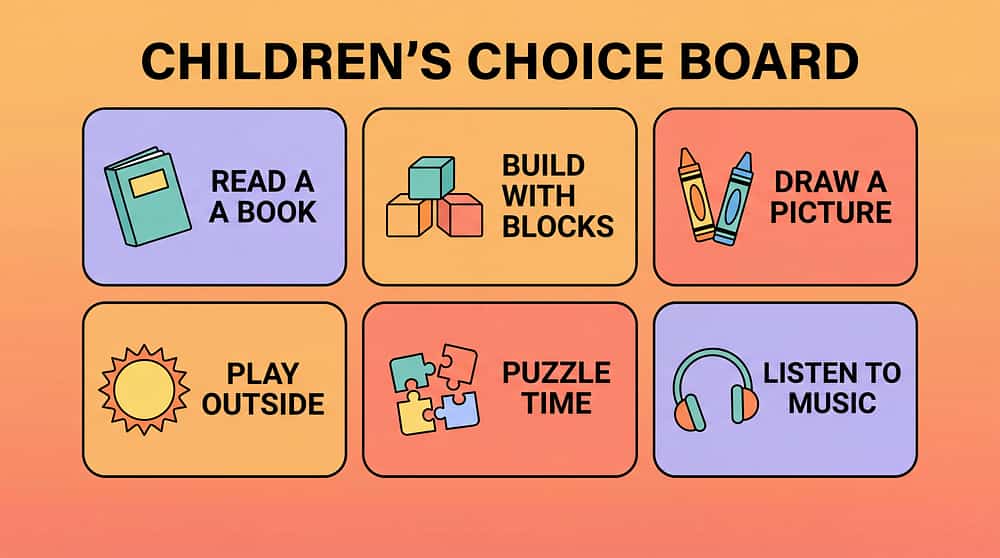
Choice-Making Supports
Tools for offering controlled choices, empowering the child.
Timers and Countdown Tools
Visual time warnings for transitions to reduce surprises.
Environmental Modification
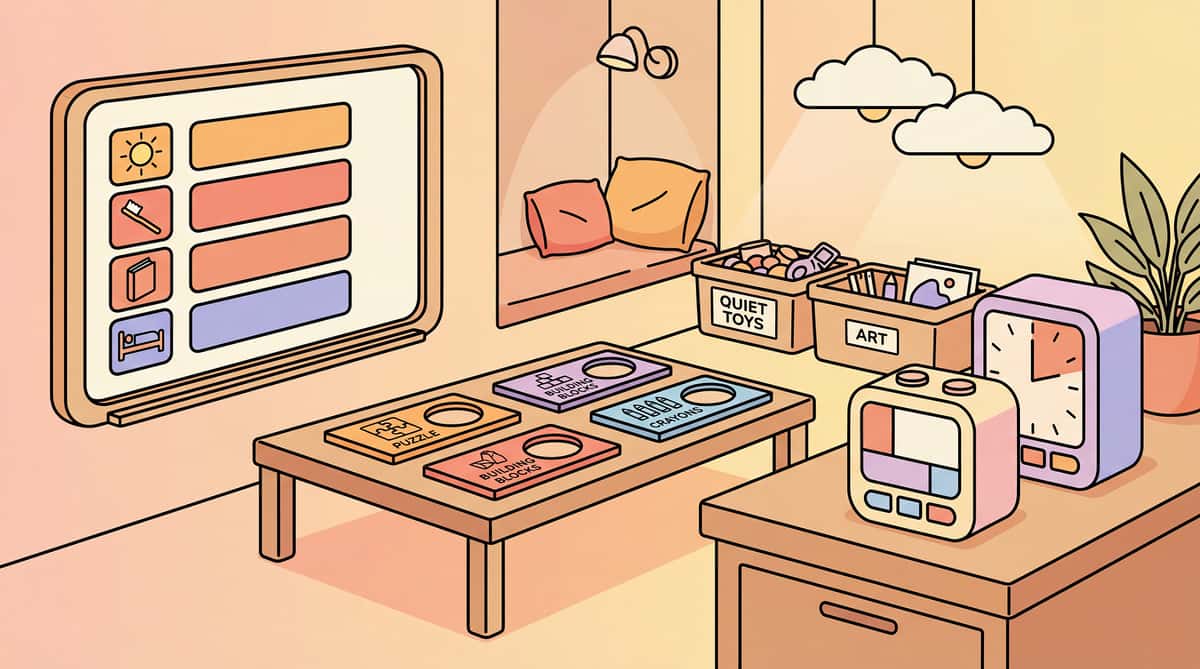
Adjusting the physical space to reduce triggers.
Priming/Pre-Teaching
Materials for preparing the child in advance for new situations.
Demand Modification Visuals
Cards for adjusting task demands to prevent overwhelm.
Visual Schedules (Antecedent)
Best for: Reducing anxiety, increasing predictability
Ages: 2-12 years | Settings: All
Portability: Medium-High | Price: ₹100–400
Schedules that prevent problem behavior by showing what's coming next. Reduces anxiety about unknowns and provides structure throughout the day.
Choice-Making Supports
Best for: Reducing power struggles, increasing cooperation
Ages: 2-12 years | Settings: All
Portability: High | Price: ₹50–200
Tools for offering controlled choices. Gives child sense of control while keeping you in charge of overall goals.
Timers and Countdown Tools
Best for: Preparing for endings, reducing surprise
Ages: 3-12 years | Settings: All
Portability: High | Price: ₹200–600
Visual time warnings for transitions. Shows time passing so endings aren't surprises. Reduces transition meltdowns significantly.
Environmental Modification Tools
Best for: Reducing triggers, modifying demands
Ages: All ages | Settings: Home, School, Clinic
Portability: Varies | Price: ₹100–1,000
Materials to adjust physical environment. Remove visual clutter, reduce noise, create calm spaces, modify lighting.
Priming/Pre-Teaching Materials
Best for: Preparing for difficult situations
Ages: 3-12 years | Settings: Home, Clinic
Portability: High | Price: ₹50–300
Materials for preparing child in advance. Social stories, visual previews of new situations, rehearsal tools.
Demand Modification Visuals
Best for: Breaking down demands, preventing overwhelm
Ages: 3-12 years | Settings: All
Portability: Very High | Price: ₹50–200
Cards for adjusting task demands. First-then boards, task strips, visual breakdowns of complex activities.
How to Choose
- By goal: Predictability → Visual schedules | Control → Choice boards | Transitions → Timers | Overwhelm → Demand modification
- By setting: Home → Start with schedules | School → Environmental + demand tools | Community → Portable priming materials
- By portability: Need on-the-go? → Choice boards, timers, priming materials (all highly portable)
Specifications & Types Guide

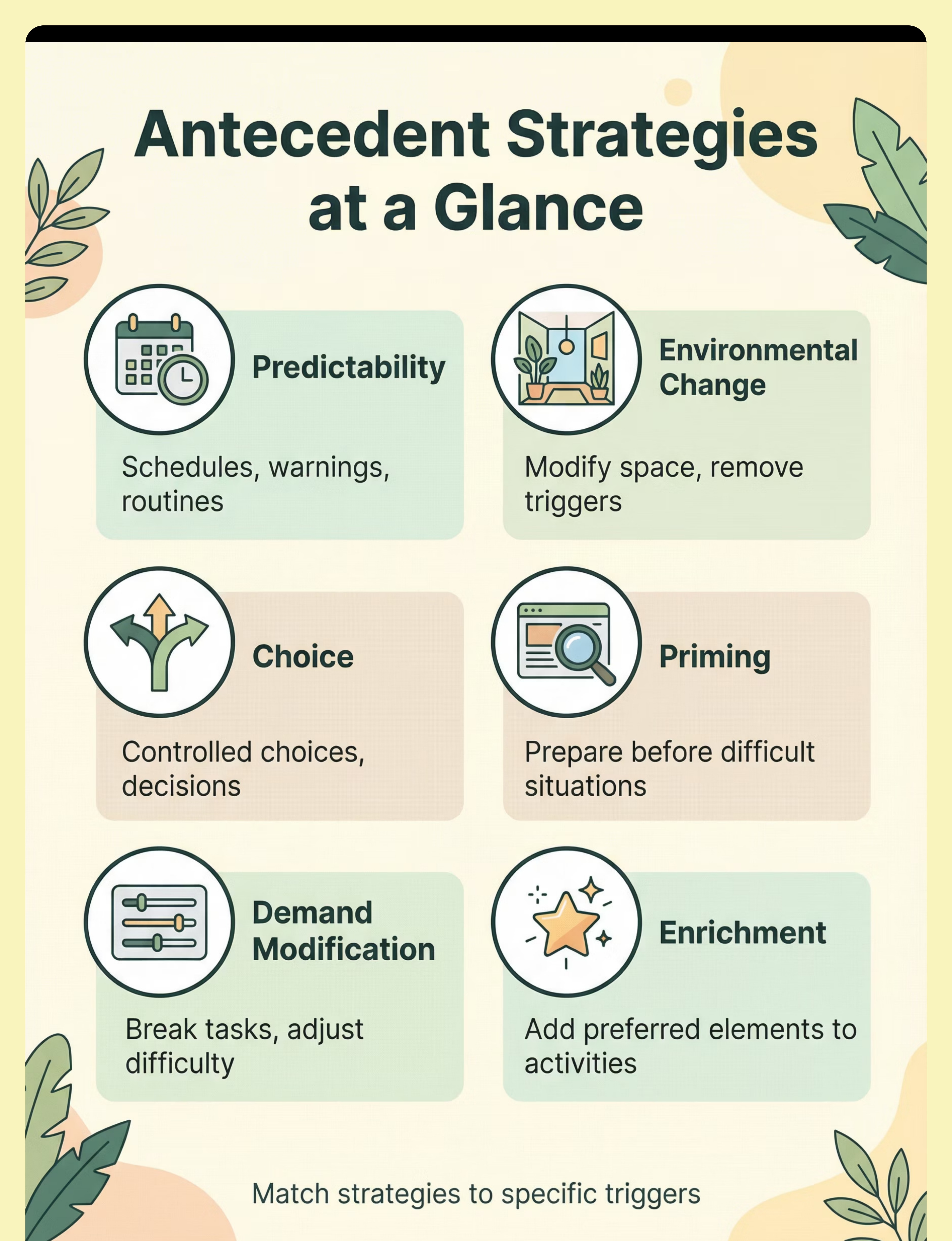
Predictability
Schedules, warnings, consistent routines that eliminate surprises and reduce anxiety about what's coming next.

Choice
Controlled choices, decision-making opportunities that give child sense of control within appropriate limits.

Demand Modification
Breaking tasks down, adjusting difficulty to match current skill level and prevent overwhelm.

Environmental Change
Modifying physical space, removing triggers from the environment proactively.

Priming
Preparing child before difficult situations through social stories, visual previews, or rehearsal.

Enrichment
Adding preferred elements to difficult activities to increase motivation and reduce resistance.
Materials & Key Features
- Visual supports (schedules, choice boards, first-then cards)
- Timers (visual countdown tools for transition warnings)
- Environmental modifications (sensory tools, space organization)
- Choice boards (visual options for decision-making)
Key Features
- Proactive approach: Prevents rather than reacts
- Trigger-focused: Addresses root causes
- Prevention-oriented: Stops problems before they start
- Individualized to triggers: Customized to your child's specific patterns
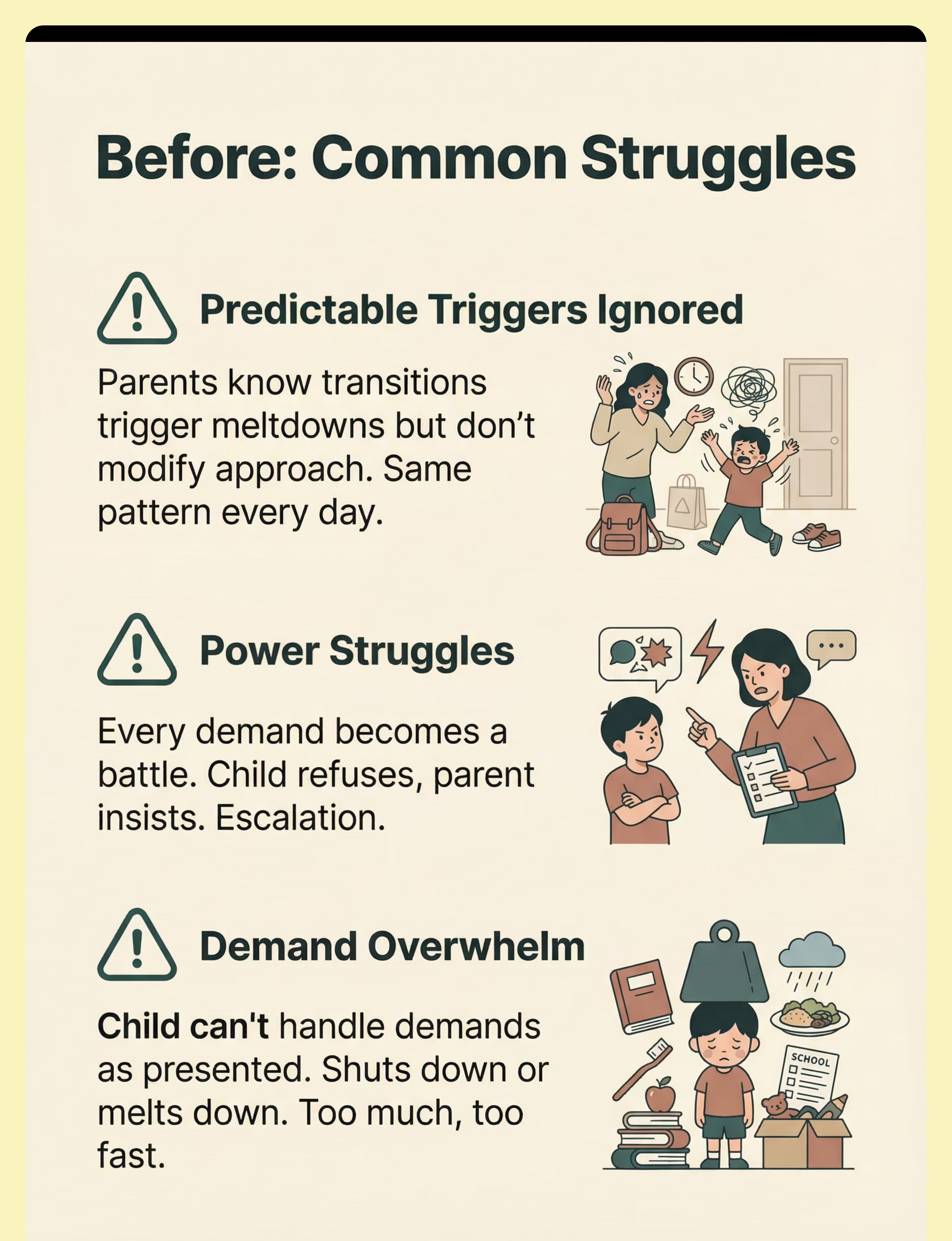
The Struggle (Before)
Predictable Triggers Ignored
Situation: Parents know transitions trigger meltdowns but don't modify approach. Same pattern every day. Reactive only.
Experience: Every transition becomes a battle. You can see the meltdown coming but feel powerless to stop it. The same triggers cause the same problems repeatedly.
Emotion: Stuck in pattern, reactive, helpless, exhausted
Power Struggles
Situation: Every demand becomes a battle. Child refuses, parent insists. Escalation. No flexibility on either side.
Experience: "Put on your shoes" leads to 20 minutes of fighting. Everything is a negotiation. Your child digs in, you dig in harter. Nobody wins.
Emotion: Conflict, escalation, frustration, anger
Demand Overwhelm
Situation: Child can't handle demands as presented. Shuts down or melts down. Too much, too fast, too hard.
Experience: "Clean your room" is impossible—too many steps, too overwhelming. Your child freezes or explodes. Tasks that seem simple to you feel insurmountable to them.
Emotion: Overwhelm, shutdown, defeat, inadequacy
Before implementing antecedent strategies, families often feel trapped in reactive patterns. They can identify what triggers problems but don't know how to prevent them, leading to daily stress and repeated crises.
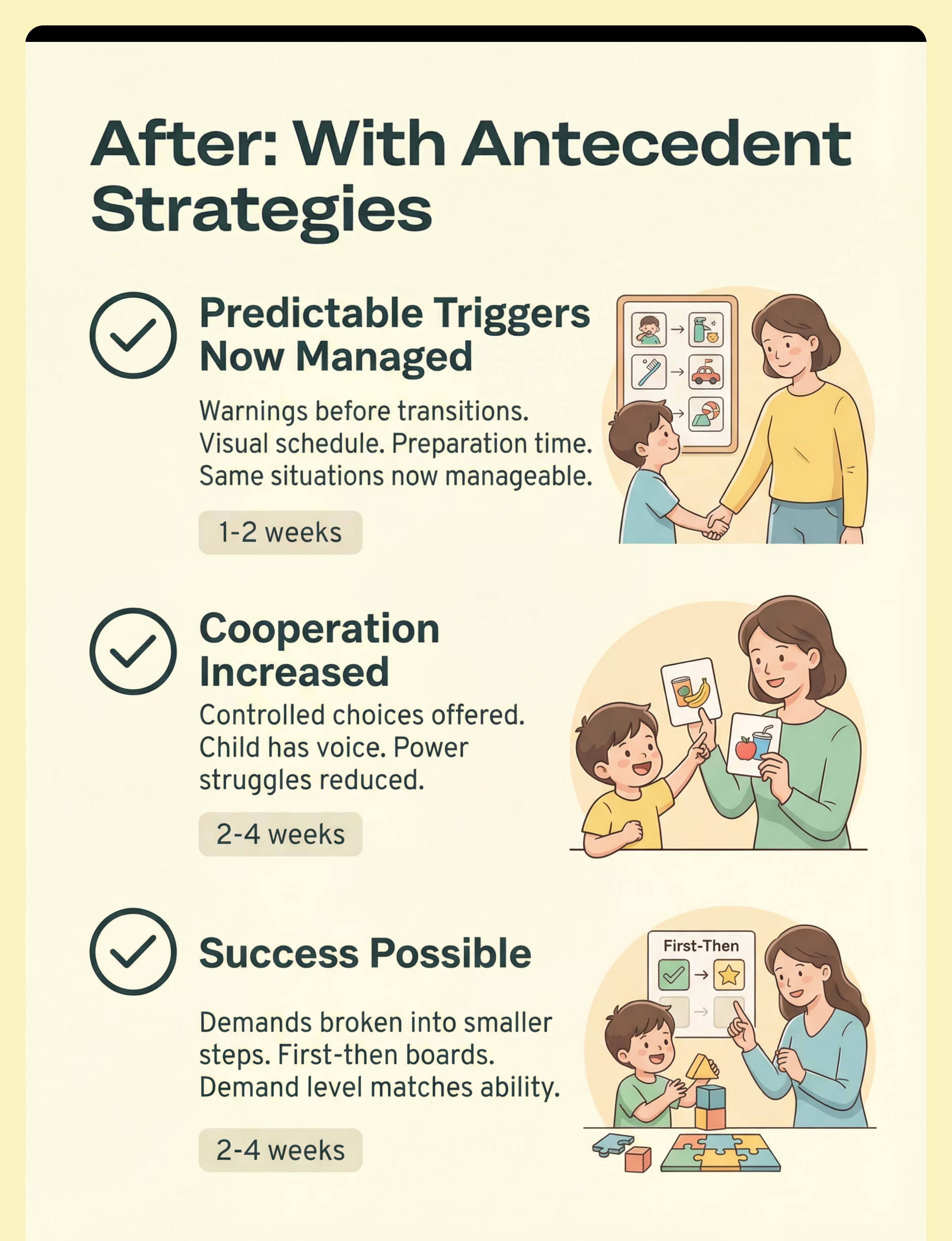
The Breakthrough (After)
Predictable Triggers Managed
Situation: Warnings before transitions. Visual schedule. Preparation time. Same situations now manageable.
Experience: "5 minutes until we leave" with visual timer. Your child can see time passing. When the timer goes off, they're mentally prepared. Transitions happen smoothly most days.
Emotion: Prevention, manageable, in control, relief
Timeframe: 1-2 weeks
Cooperation Increased
Situation: Controlled choices offered. "Do you want to do A or B?" Child has voice. Cooperation increased.
Experience: "Do you want to put on shoes first or coat first?" Your child chooses shoes. They feel in control. You still accomplish your goal (getting ready to leave). Battles decrease dramatically.
Emotion: Cooperation, reduced conflict, partnership, peace
Timeframe: 2-4 weeks
Success Possible
Situation: Demands broken into smaller steps. First-then boards. Demand level matches ability. Success possible.
Experience: "First put toys in bin, then you're done." One step at a time. First-then board shows exactly what's expected. Your child can succeed. Confidence builds with each success.
Emotion: Success, capability, confidence, pride
Timeframe: 2-4 weeks
With consistent antecedent strategies, the same situations that previously triggered meltdowns become manageable. Prevention becomes possible, cooperation increases, and your child experiences success instead of repeated failure.

What to Expect (Realistic Timelines)
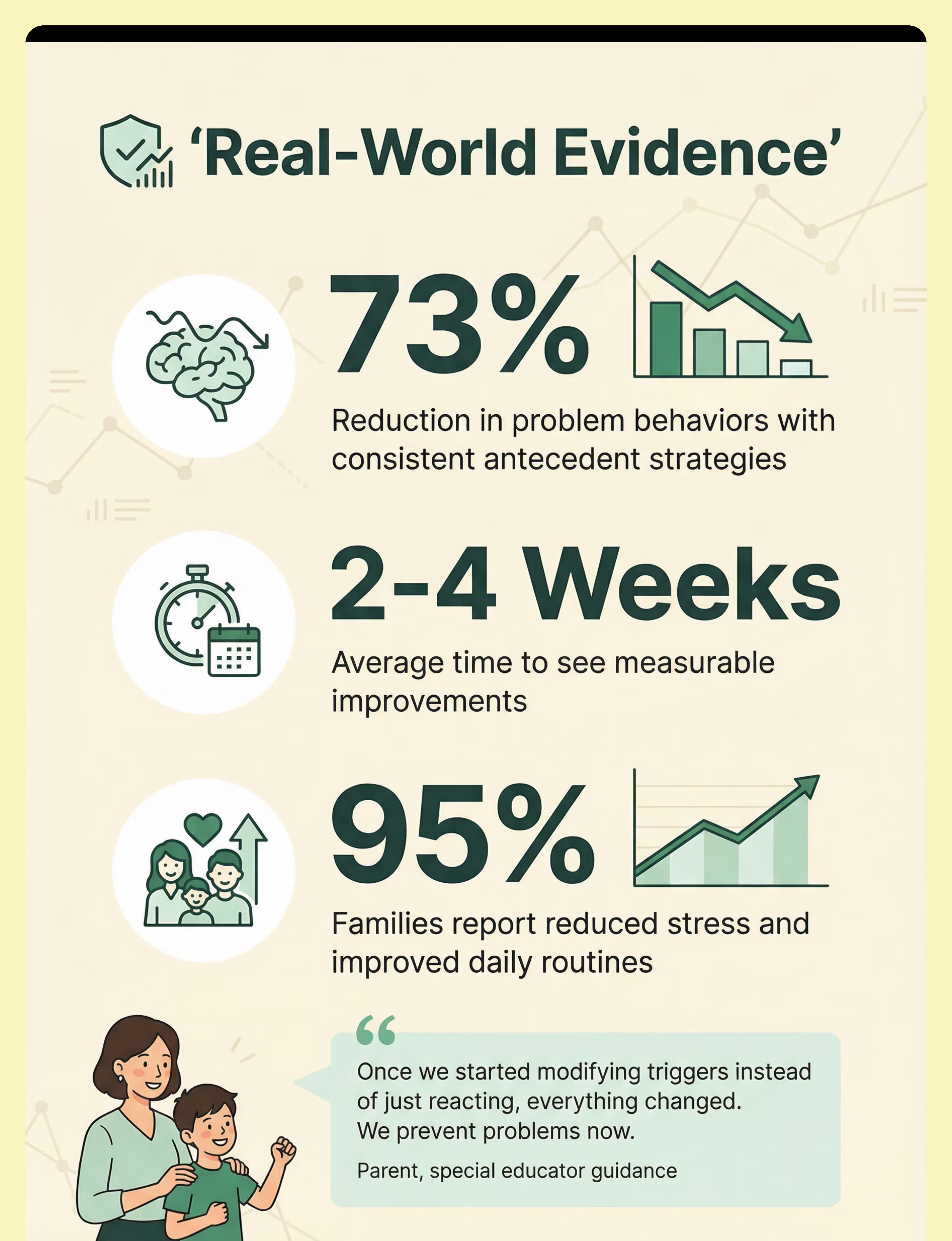
Antecedent modification doesn't work instantly, but most families see meaningful changes within the first month when strategies are implemented consistently. Here's what to expect and when.
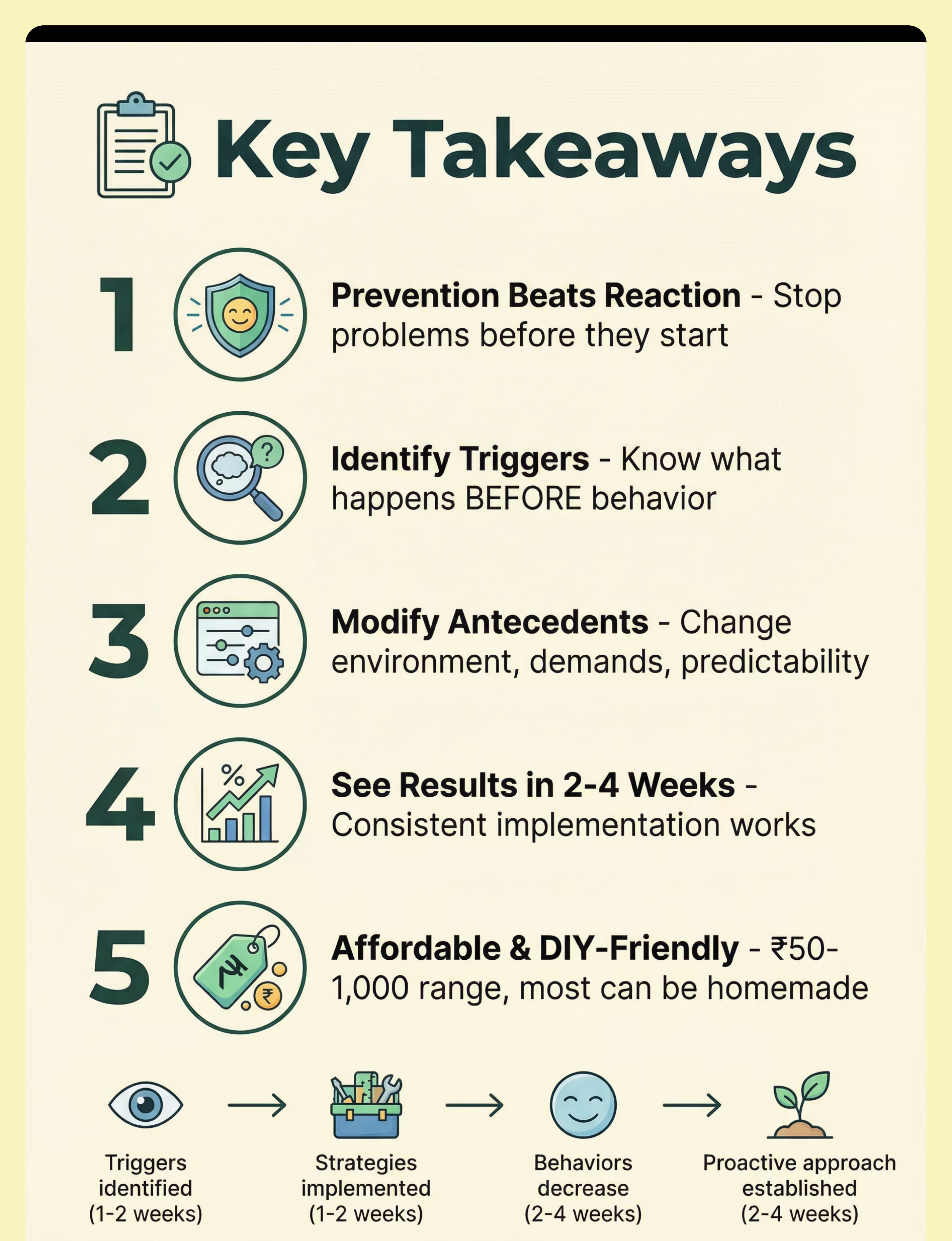
Triggers Identified
Within 1-2 weeks of observation, you'll clearly identify the patterns: what happens before problems, when they're most likely, and what conditions increase or decrease likelihood.
1-2 weeks
Antecedent Strategies Implemented
Once triggers are identified, you'll implement appropriate modifications: schedules for predictability, timers for transitions, choice boards for control, environmental changes for sensory triggers.
1-2 weeks
Problem Behaviors Decrease
As triggers are consistently modified, problem behaviors decrease in frequency and intensity. Some situations may improve dramatically while others show gradual progress.
2-4 weeks
Proactive Approach Established
Prevention becomes your default mindset. You automatically think ahead to potential triggers and modify conditions before problems occur. This represents a fundamental shift from reactive to proactive.
2-4 weeks
Family Stress Reduced
As problem behaviors decrease and success increases, overall family stress decreases significantly. Routines become smoother, relationships improve, and everyone experiences more peace.
2-4 weeks
Important: These timeframes assume consistent implementation across all caregivers and settings. Inconsistent use will delay results. Also remember that antecedent strategies are ongoing—they work as long as you use them, with gradual fading as skills develop.

Is This Right for My Child? (2-Minute Check)
Answer these four questions honestly. Three or more "yes" answers indicate antecedent modification strategies are likely to be highly effective for your child.
Do you know what triggers your child's problem behaviors?
If you can identify patterns—transitions, demands, sensory issues, surprises—then you're ready for antecedent modification. Knowing the triggers is the first step toward preventing them.
If yes, this indicates: Ready for antecedent modification
If no, this indicates: Need to identify patterns first (spend 3-5 days tracking what happens BEFORE behaviors)
Do the same situations cause problems repeatedly?
Predictable problems are modifiable problems. If bedtime always causes issues, or leaving the park always triggers meltdowns, these patterns can be addressed proactively.
If yes, this indicates: Predictable = modifiable
Are you mostly reacting to problems after they start?
If you're constantly in crisis mode, managing meltdowns after they occur rather than preventing them, you'll benefit enormously from shifting to a proactive antecedent approach.
If yes, this indicates: Need proactive approach
Would modifications to environment/demands be possible?
Consider whether you can provide warnings before transitions, offer choices, break down demands, or modify environmental triggers. If some flexibility is possible, antecedent strategies will work.
If yes, this indicates: Antecedent strategies feasible
Scoring: 3+ "yes" answers = strong fit for antecedent modification | 1-2 "yes" answers = may benefit but start with trigger identification | 0 "yes" answers = focus on identifying behavioral patterns first, then return to antecedent strategies

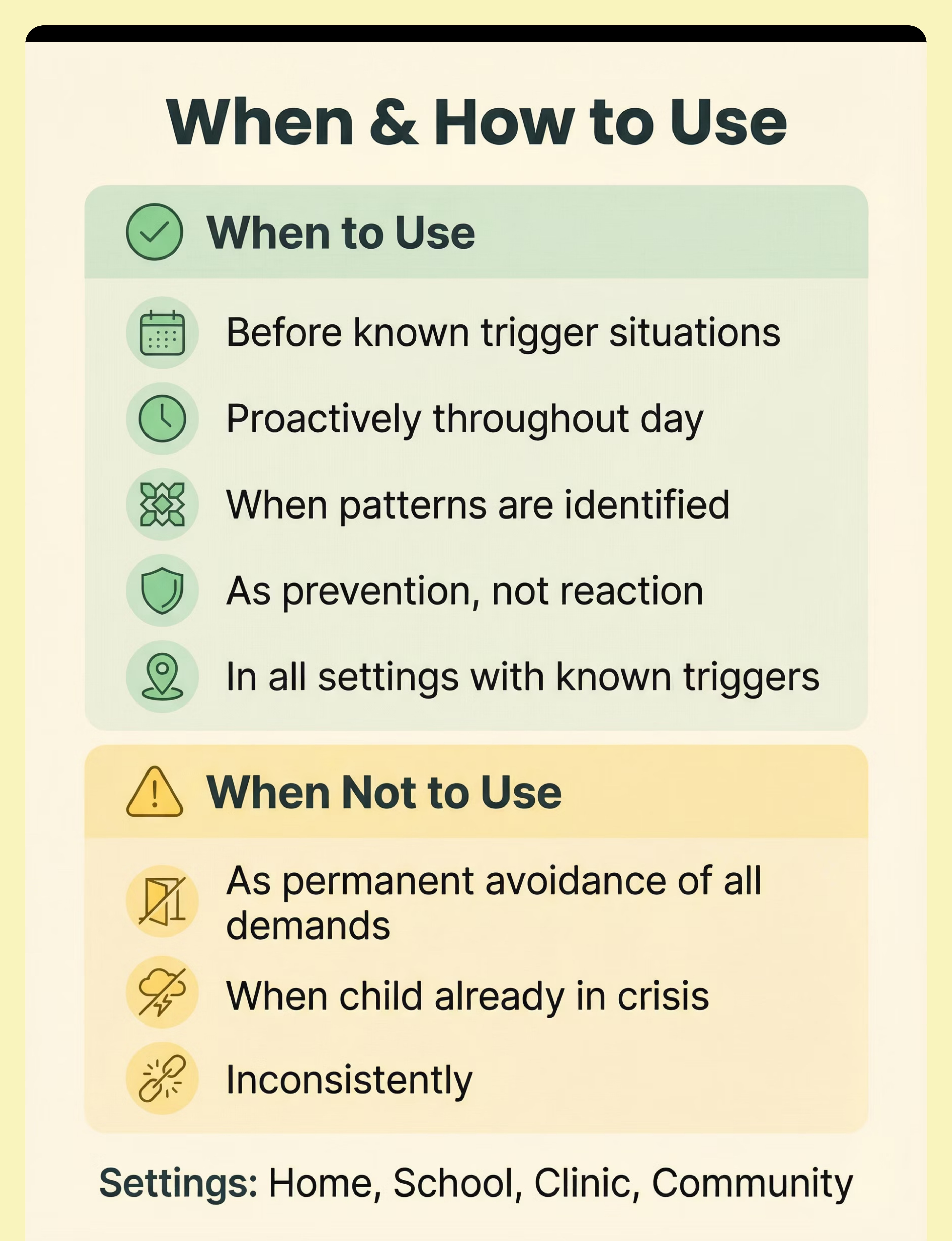
Usage Guide
When to Use | When NOT to Use | |
|
|
Duration & Settings
Duration: Ongoing; antecedent approach is a lifestyle, not a short-term intervention. As skills develop, some supports can gradually fade.
Settings: Home, School, Clinic, Community—anywhere triggers occur
Supervision by Age
Age Range | Supervision Level | Notes | |
All ages | Adult implements proactively | Adults are responsible for identifying triggers and implementing modifications | |
Older children | May understand and use own strategies | As children mature, they can learn to recognize their own triggers and request modifications |

Safety First
Critical Safety Considerations
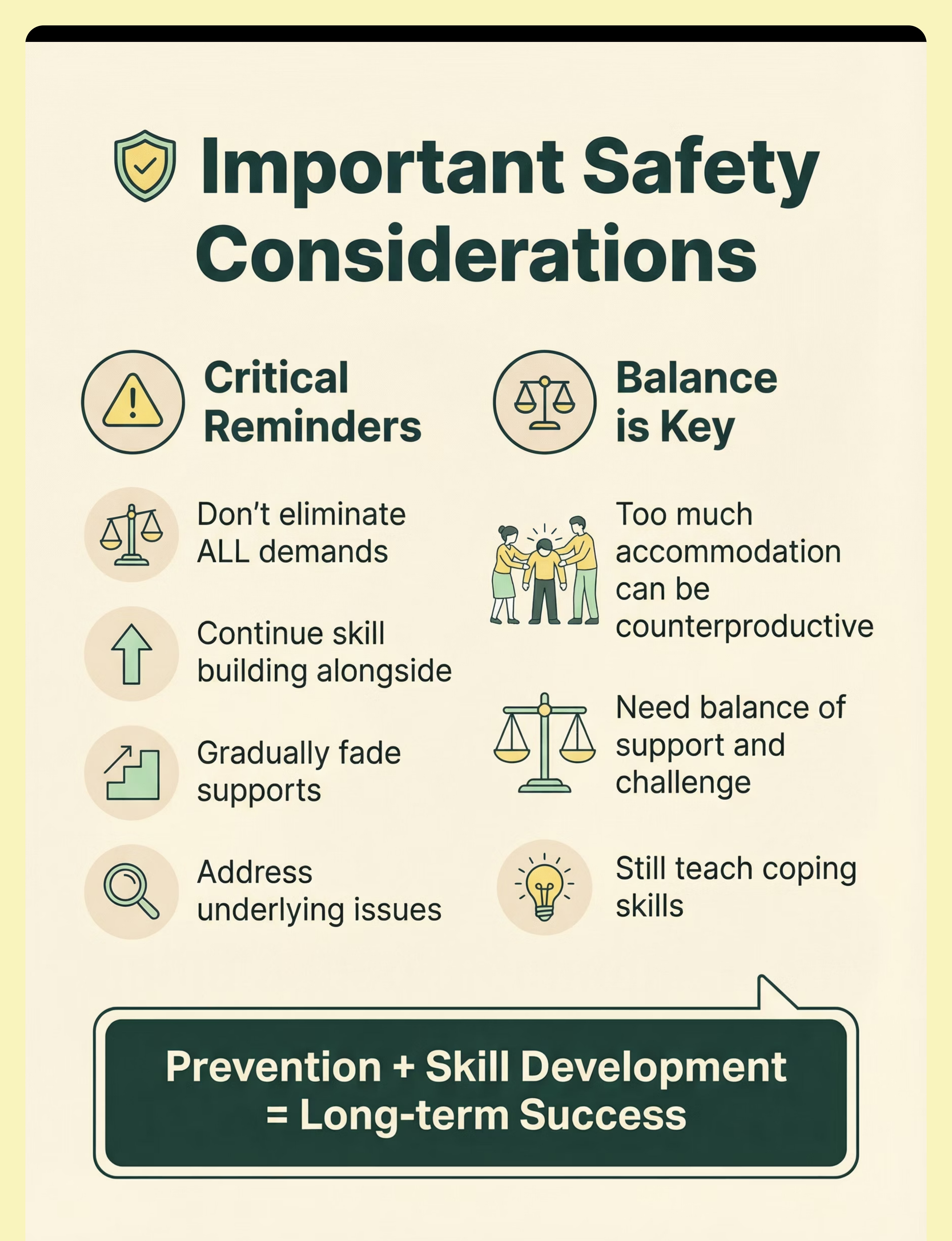
- Don't eliminate all demands — Over-accommodation can lead to learned helplessness. Continue skill building alongside support.
- Gradually fade supports as skills develop — The goal is independence, not permanent modification. As your child succeeds, slowly increase challenges.
- Continue skill building alongside — Prevention and skill teaching go hand-in-hand. Antecedent strategies create conditions where teaching can occur.
- Address, don't just avoid, underlying issues — If sensory processing is the trigger, address it through therapy. Don't just avoid all sensory experiences forever.
Warnings
- Too much accommodation can be counterproductive — There's a balance between support and challenge
- Need balance of support and challenge — Prevent overwhelming situations while still teaching new skills
- Still teach coping skills — Antecedent strategies buy you the calm space to teach skills; they're not a substitute for teaching
Contraindicated
- Complete demand avoidance (removes all expectations, preventing skill development)
- Inconsistent implementation (confuses child, undermines effectiveness)
- Without skill building (creates dependency without growth)
- Avoidance of all demands as mentioned in clinical data (leads to learned helplessness)
Safety Checklist
Before Use
- ✓ Triggers identified clearly
- ✓ Modifications planned
- ✓ All caregivers trained
- ✓ Skill building planned alongside
During Use
- ✓ Modifications implemented consistently
- ✓ Problem behaviors decreasing
- ✓ Child succeeding more
- ✓ Gradually challenging as ready
Signs of Success
- ✓ Reduced problem behaviors
- ✓ Smoother routines
- ✓ Less family stress
- ✓ Skills developing

Common Questions (Honest Answers)
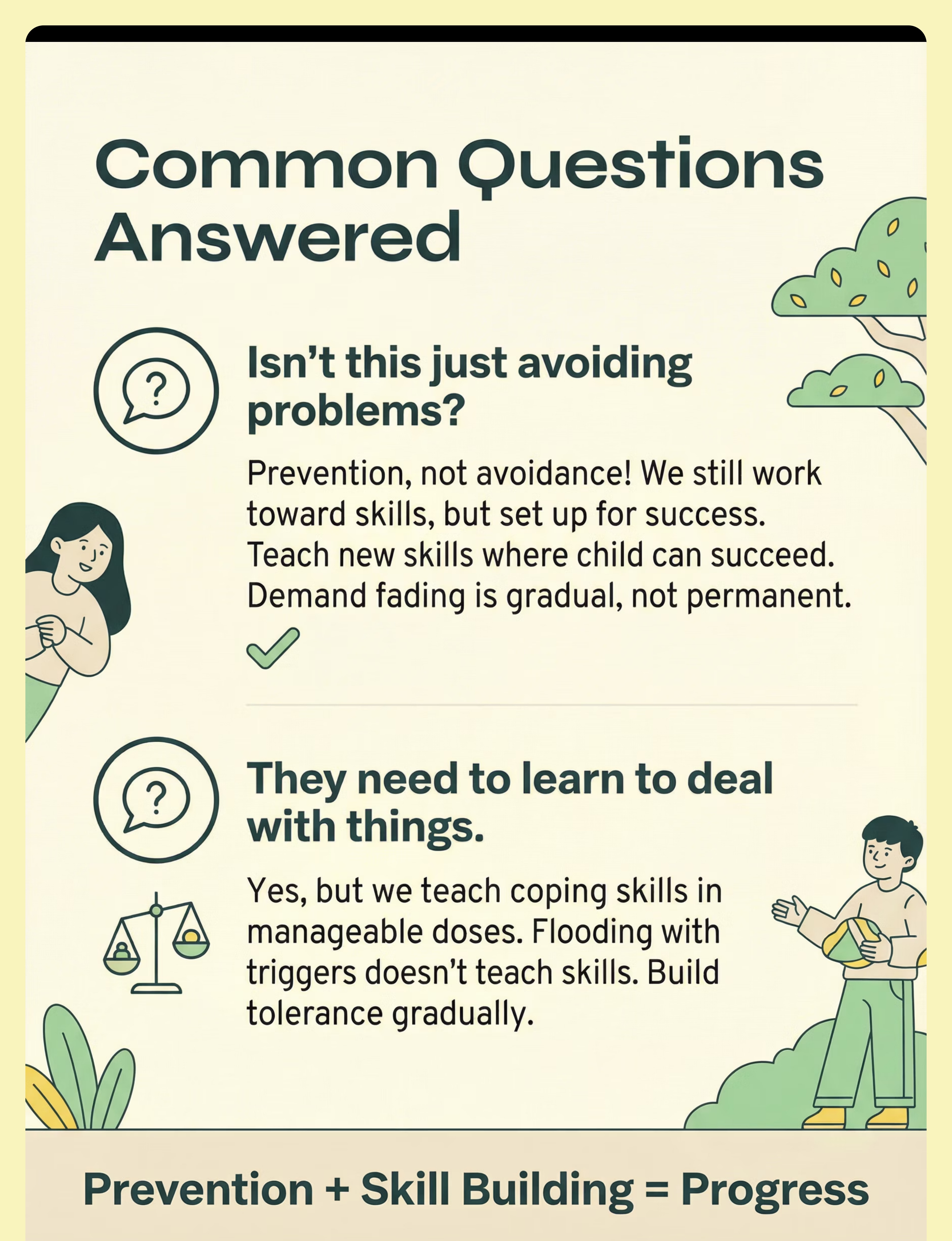
Q: Isn't this just avoiding problems?
A: Prevention, not avoidance! We still work toward skills, but set up for success. Teach new skills in conditions where child can succeed. Demand fading is gradual, not permanent. Think of it as scaffolding—you provide support while building, then gradually remove it as the structure becomes self-supporting.
Try this: Prevention + skill building; not permanent avoidance. As skills develop, gradually increase expectations.
Q: They need to learn to deal with things
A: Yes, but we teach coping skills in manageable doses. Flooding with triggers doesn't teach skills—it teaches that demands lead to meltdowns. Build tolerance gradually. You don't teach someone to swim by throwing them in the deep end; you start in shallow water and gradually increase depth.
Try this: Gradual skill building, not flooding. Success builds confidence and capacity for harder challenges.
Q: We can't change everything
A: You don't have to! Identify the biggest triggers, modify what you can. Even small changes can prevent major problems. Start with highest-impact modifications. If transitions are the biggest trigger, focus there first. You don't need to be perfect—you need to be strategic.
Try this: Start with biggest triggers; don't need to change everything. 80% of problems often come from 20% of triggers.
Q: School won't modify for my child
A: Educate about function of antecedent strategies. Small modifications prevent big disruptions. It's in everyone's interest. Many modifications are easy once understood. Share research showing prevention is more effective (and less disruptive to classroom) than crisis management. Frame modifications as "setting my child up for success" rather than "special treatment."
Try this: Advocate with evidence; modifications benefit everyone in the classroom, not just your child.

Investment Guide
Antecedent modification tools range from very low cost (DIY) to mid-range (commercial products). Most families start with basic budget options and add premium tools for durability or convenience.
Primary Tools | Visual schedule, choice cards, timer | Complete modification kit, environmental tools | |
Cost | ₹100-300 | ₹500-1,000 | |
Details | Core tools, effective DIY versions | Durable, commercial products available | |
Examples | Printed schedules, simple choice cards, phone timer, first-then board | Laminated schedules, commercial timers, multiple choice boards, portable materials |
Start Small
Begin with the most accessible and low-cost options to address immediate needs and test effectiveness.
Evaluate Needs
Assess which tools are most impactful and where durability or advanced features could offer greater benefit.
Gradual Upgrades
Invest in premium items for high-frequency use or critical functions as budget and needs evolve.
Phase 1: Foundation
Establish basic visual supports and choice systems using budget-friendly, DIY methods.
Phase 2: Enhancement
Introduce commercial versions of key tools for increased durability and functionality.
Phase 3: Integration
Expand into environmental modifications and comprehensive kits for broader support across settings.
Phase 4: Optimization
Fine-tune the system with advanced tools and personalized solutions for sustained progress.
Overall Range: ₹50–1,000 (₹0.50–12 USD) | Most families find the budget option sufficient to start, upgrading to commercial products for heavy-use items like timers or frequently-used schedules that need durability.

Where to Buy in India
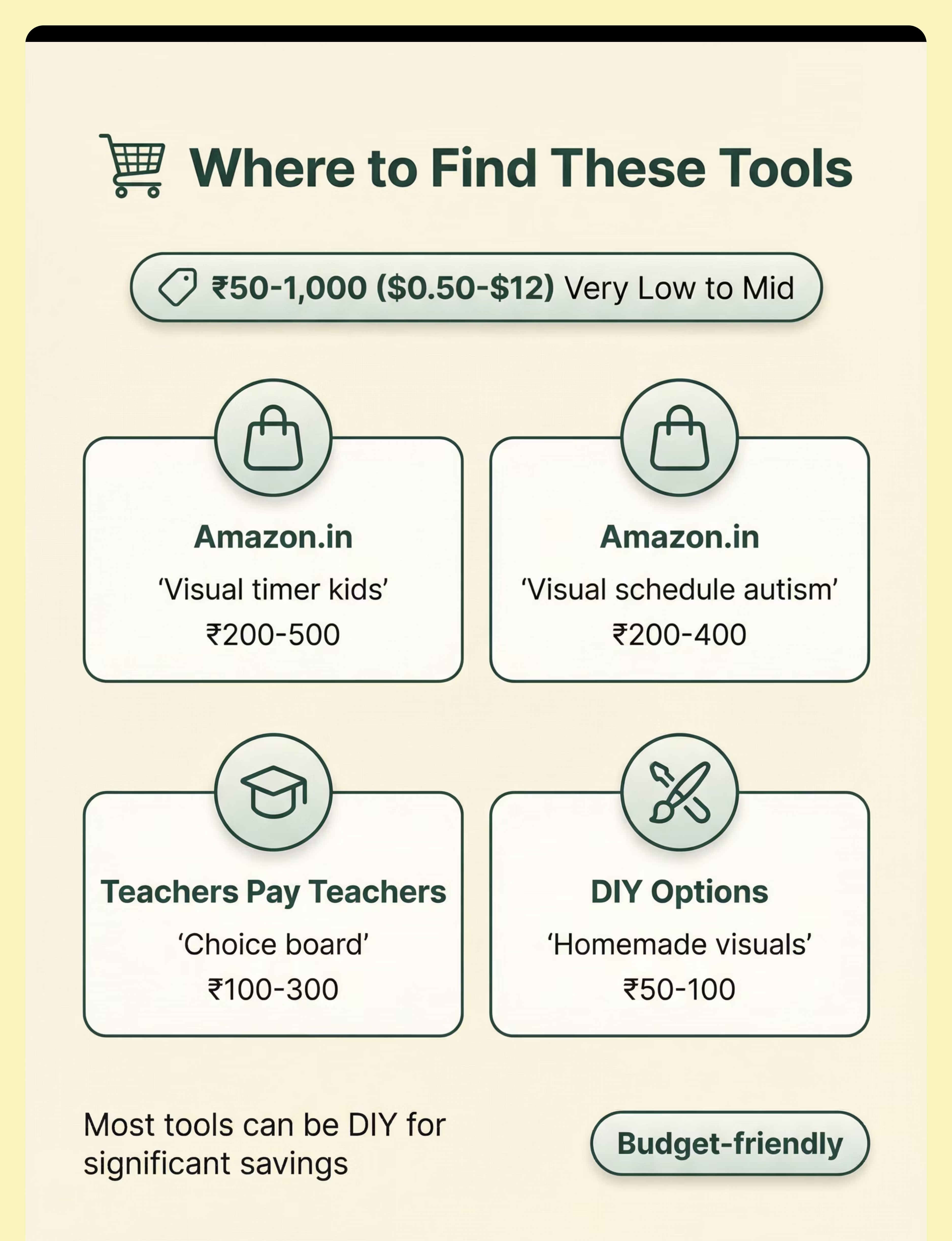
Availability: Mostly DIY/Available — Most antecedent modification tools can be created at home with basic materials. Commercial options are available for convenience and durability.
Amazon.in
Search: "visual timer kids"
Price Range: ₹200-500
Time Timer brand and similar visual countdown timers. Essential for transition warnings.
Amazon.in
Search: "visual schedule autism"
Price Range: ₹200-400
Laminated visual schedules with Velcro attachments. More durable than DIY for daily use.
Teachers Pay Teachers
Search: "choice board"
Price Range: ₹100-300
Downloadable, printable choice boards for various settings and purposes.
Amazon.in
Search: "first then board"
Price Range: ₹150-350
Commercial first-then boards for demand modification. More durable than DIY versions.
DIY
Search: "Antecedent visuals"
Price Range: ₹50-100
Create your own using pictures, lamination, and Velcro. Works just as well as commercial products.
Buying Tips
- Visual schedules are foundational antecedent tool—start here
- Timers provide transition warnings—invest in quality visual timer if budget allows
- Choice boards reduce power struggles—easy to DIY but commercial versions more durable
- First-then boards break down demands—simple to create at home
- Most tools can be DIY—don't let budget prevent you from implementing antecedent strategies
Red Flags
- Avoiding all demands (too far)—modifications should support success, not eliminate challenges
- Not matching to actual triggers—generic tools won't work; must be individualized
- Inconsistent implementation—antecedent strategies require consistency across caregivers and settings
- Tools not individualized—what works for one child's triggers may not work for another's
DIY Alternative (Save 80-95%)

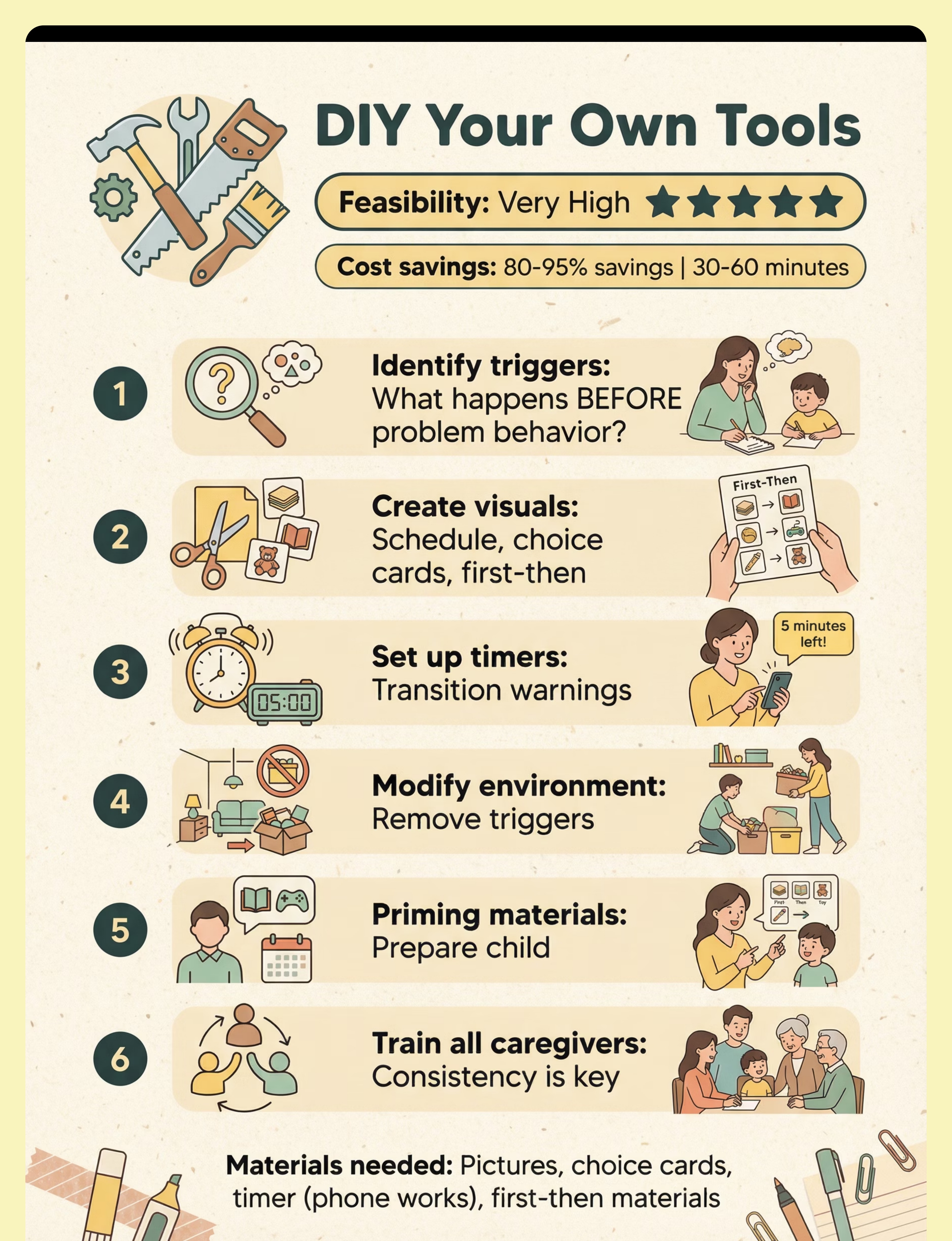
Feasibility: Very High | Time: 30-60 minutes | Cost Savings: 80-95%
Most antecedent modification tools are highly suitable for DIY creation. With basic materials and 30-60 minutes, you can create effective visual schedules, choice boards, and first-then cards that work just as well as commercial products.
Materials Needed
- Pictures for schedules (printed photos or clipart)
- Choice cards (printed or hand-drawn options)
- Timer (phone timer works, or make paper countdown)
- First-then board materials (cardstock, pictures, Velcro or magnets)
- Lamination sheets or contact paper (for durability)
- Velcro dots or magnetic tape
DIY Steps
Identify triggers
What happens before problem behavior? Spend 3-5 days tracking patterns. Look for time-based triggers (transitions), demand-based triggers (difficult tasks), or environmental triggers (sensory issues).
Create visuals
Make schedule showing daily routine. Create choice cards for common decision points. Design first-then boards for specific triggers. Use photos of actual items/activities when possible—more meaningful than clipart.
Set up timers
Use phone timer for transition warnings, or create paper countdown. "5 minutes" and "2 minutes" warnings are most important. Visual timers show time passing—easier for kids to understand than verbal warnings.
Modify environment
Remove or reduce environmental triggers you've identified. Create calm spaces, reduce visual clutter, adjust lighting, minimize noise. Many modifications cost nothing.
Create priming materials
Make simple social stories or visual previews for difficult situations. Take photos of new places before visits. Create visual sequences for multi-step activities.
Train all caregivers
Consistency is key. Make sure everyone—parents, grandparents, teachers—understands what triggers to watch for and how to use the tools. Inconsistent use undermines effectiveness.
DIY vs Commercial Comparison
Aspect | When to DIY | When to Buy Commercial | |
Visual schedules | Trial period, figuring out what works, changing routines frequently | Established routines, need durability for daily heavy use | |
Choice cards | Testing different options, customizing to your child's interests | High-traffic areas where durability matters | |
First-then boards | Specific demands that change regularly | Core demands that repeat daily and need to withstand heavy use | |
Priming materials | One-time or changing situations | Rarely worth buying—almost always better DIY | |
Timers | Phone timer works for many families | Visual timers (Time Timer style) are worth investment if transitions are major trigger |
Tradeoffs: May take time to identify right modifications. Some trial and error is normal—what works for another child may not work for yours. Be prepared to adjust and refine your approaches based on your child's responses.
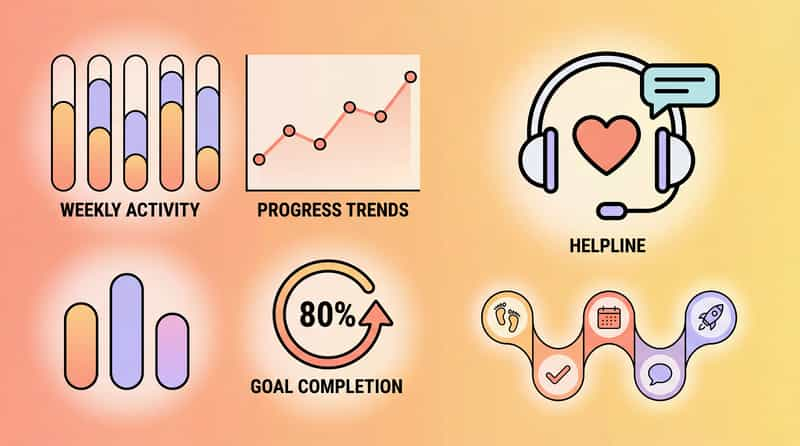
Preview of antecedent modification tools Therapy Material
Below is a visual preview of antecedent modification tools therapy material. The pages shown help educators, therapists, and caregivers understand the structure and content of the resource before use. Materials should be used under appropriate professional guidance.


Share this resource
Help others discover thisLink copied!

Tracking Progress & Getting Support
Measuring Success
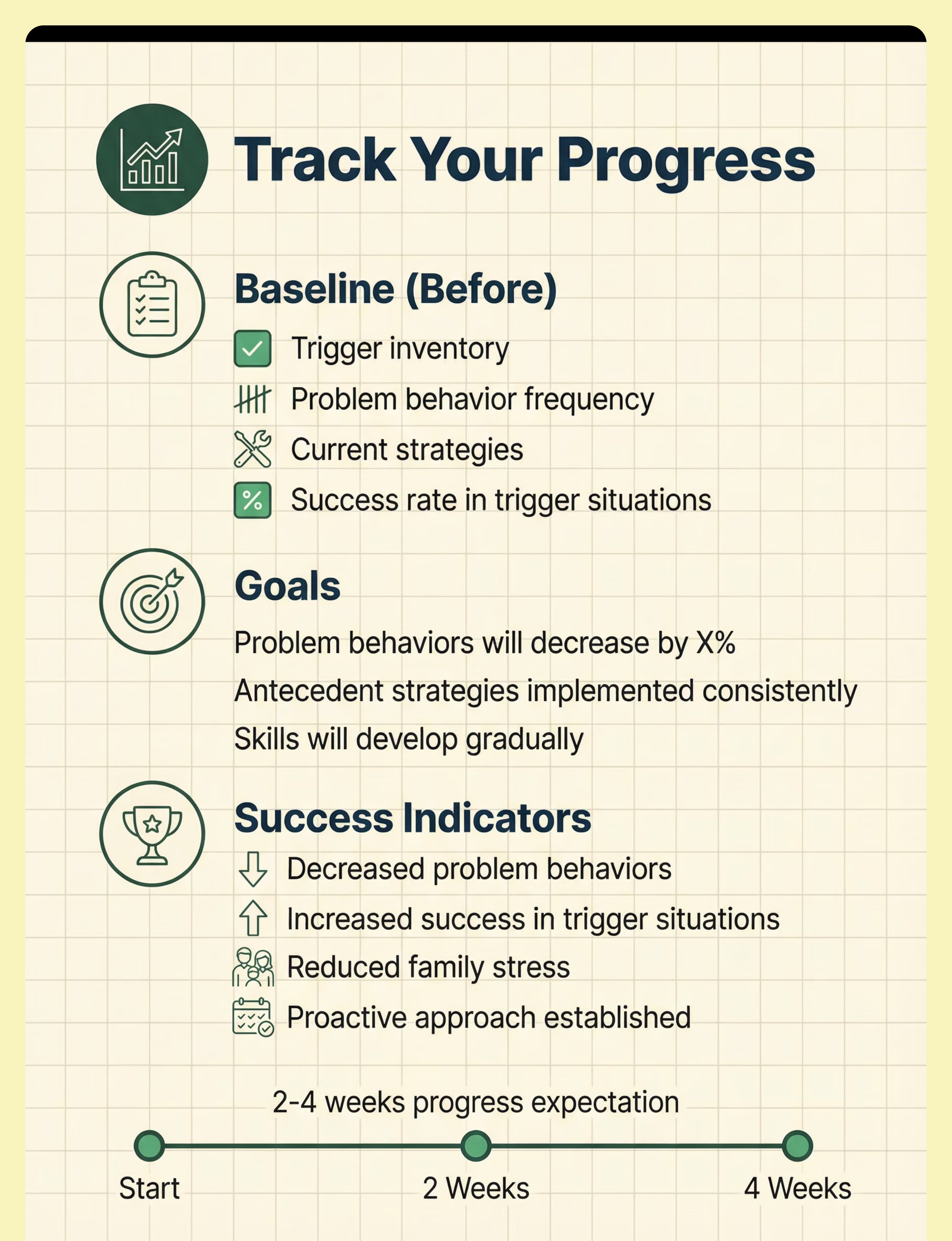
Track these metrics to evaluate whether antecedent strategies are working for your child:
Baseline (Measure First)
- Complete trigger inventory
- Count problem behavior frequency for 1 week
- Document current antecedent strategies (if any)
- Calculate success rate in trigger situations
Goals
- Problem behaviors will decrease by [X]%
- Antecedent strategies implemented consistently
- Trigger situations managed successfully
- Skills developing to handle gradually increased demands
Success Indicators
- Decreased problem behaviors in frequency and intensity
- Increased success in previously trigger situations
- Reduced overall family stress
- Proactive approach established
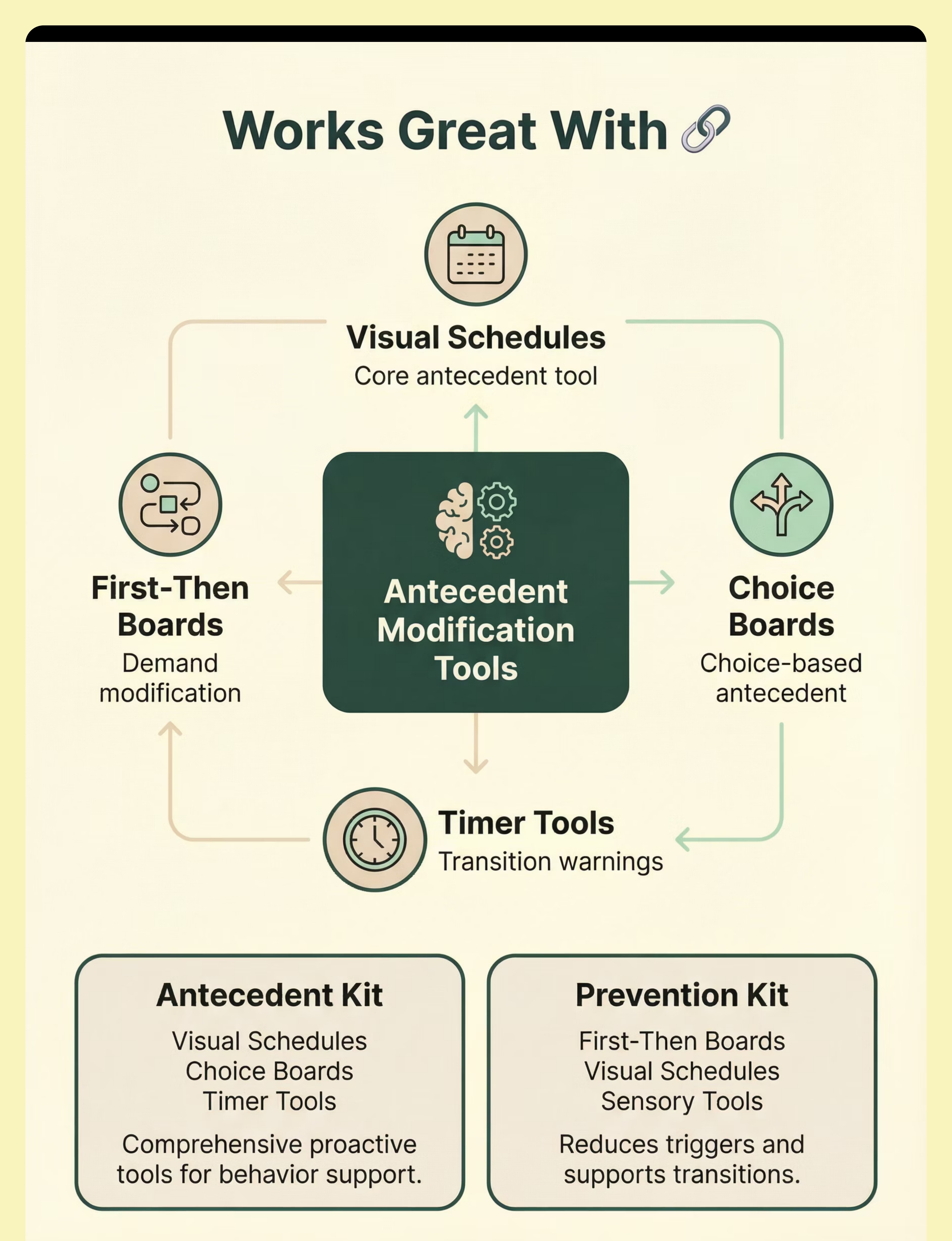
Complete the Kit
Antecedent modification works best when paired with other visual supports and communication tools:

Visual Schedules (ID: 3.1)
Core antecedent tool for predictability. Shows what's happening next throughout the day.

Choice Boards (ID: 3.4)
Choice-based antecedent strategy. Reduces power struggles by offering controlled choices.

Timer Tools (ID: 2.7)
Transition warnings that make time visible. Prevents surprise when activities end.

First-Then Boards (ID: 3.2)
Demand modification tool. Breaks down overwhelming tasks into manageable steps.
Recommended Bundles:
- Antecedent Kit: Tools 10.5 + 3.1 + 2.7 — Complete antecedent support covering schedules, timers, and modification strategies
- Prevention Kit: Tools 10.5 + 3.2 + 3.4 — Proactive behavior prevention with first-then boards and choice supports
Quick Summary
Antecedent modification tools prevent problem behaviors before they occur by modifying triggers, environment, and demands through proactive strategies. Core Kit (Rank 2), strong evidence, essential prevention approach.
antecedent
prevention
proactive
triggers
modification
environment
ABA
BCBA
SpEd
core-kit
Common Searches: antecedent intervention autism, behavior prevention, proactive behavior support, trigger modification, environmental modification, demand modification, ABA antecedent
Get Support
FREE National Autism Helpline
Phone: 9100 181 181
Languages: 16+ languages supported
Website:pinnacleblooms.org
Get expert guidance on implementing antecedent strategies for your child's specific triggers and behavioral patterns.
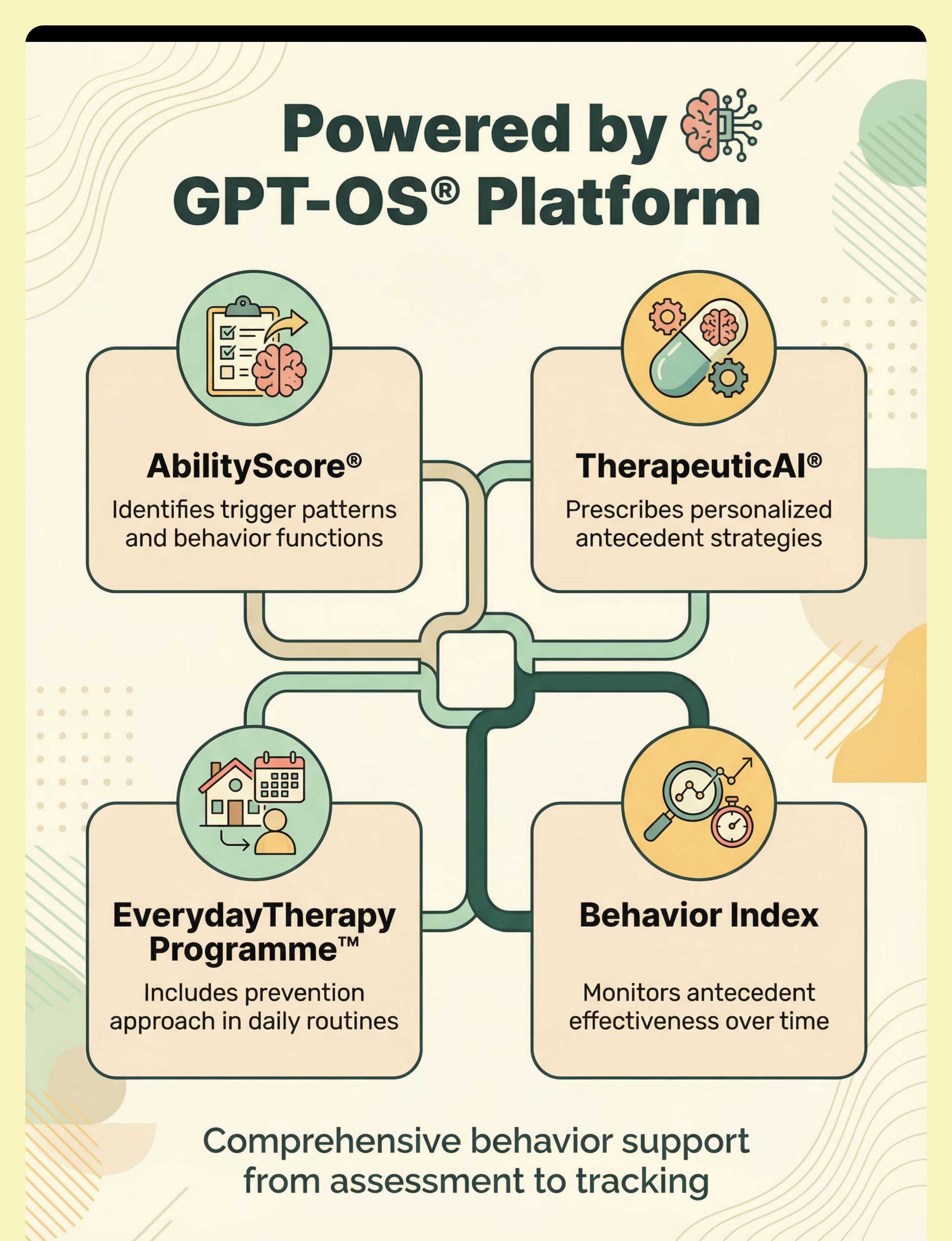
Platform Integration
AbilityScore® identifies trigger patterns through comprehensive behavioral assessment.
TherapeuticAI® prescribes individualized antecedent strategies based on your child's specific triggers and context.
EverydayTherapyProgramme™ includes prevention approach with daily antecedent implementation guidance.
Behavior Index monitors antecedent effectiveness and tracks behavior change over time.
Disclaimer: This is educational information. Always consult qualified occupational therapists, speech-language pathologists, Board Certified Behavior Analysts (BCBAs), or pediatricians for your child's specific needs. Individual results vary. Antecedent modification should be part of a comprehensive behavior support plan, not used in isolation.
Last Updated: December 26, 2025 | Version 3.2 | Locale: en-IN