

Tool ID: 5.6
Tool ID: 5.6
SLP + SpEd
Strong Evidence
Rank #2
Session-based
₹100–1,000
Articulation / Speech Sound Tools
Speech sound production and clarity system
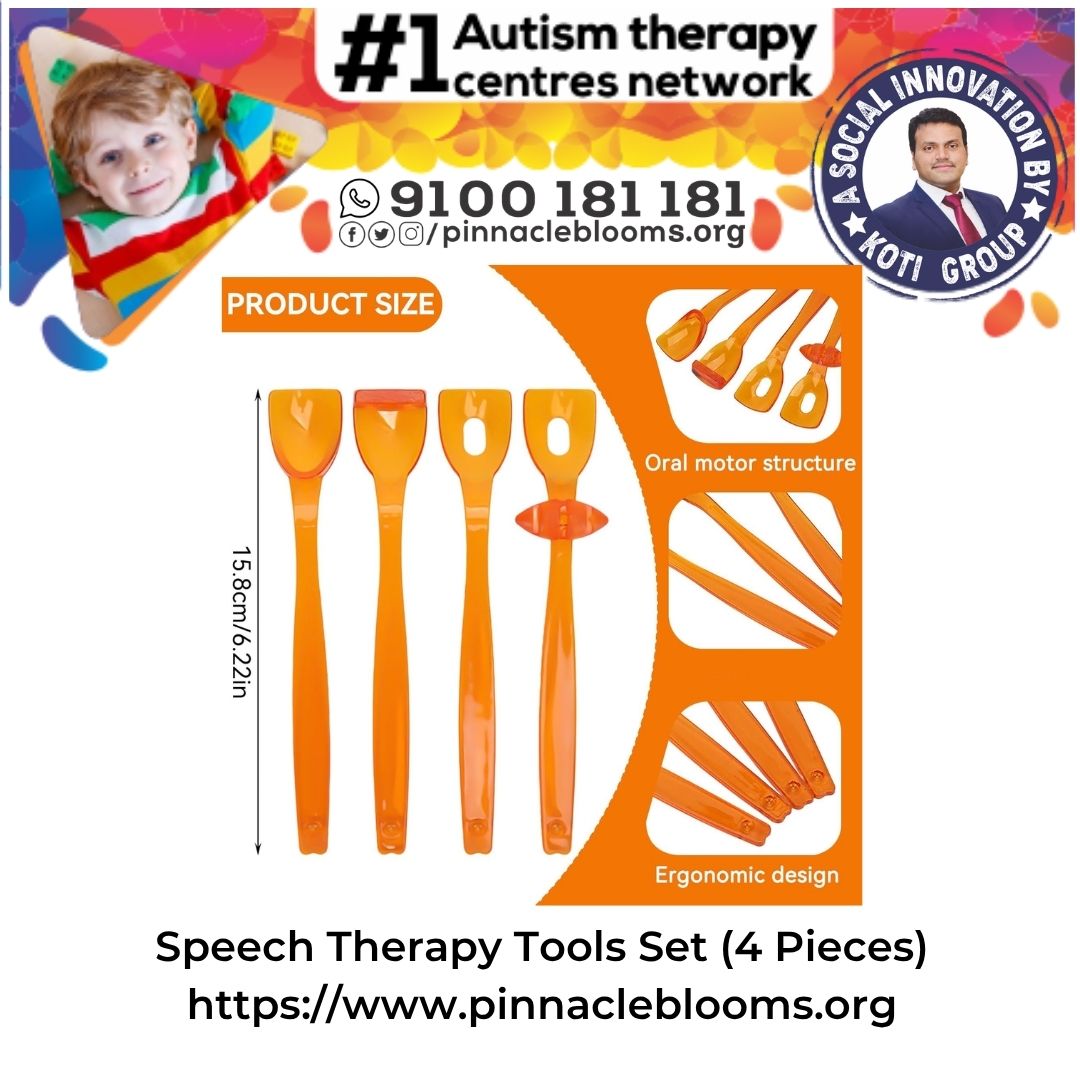
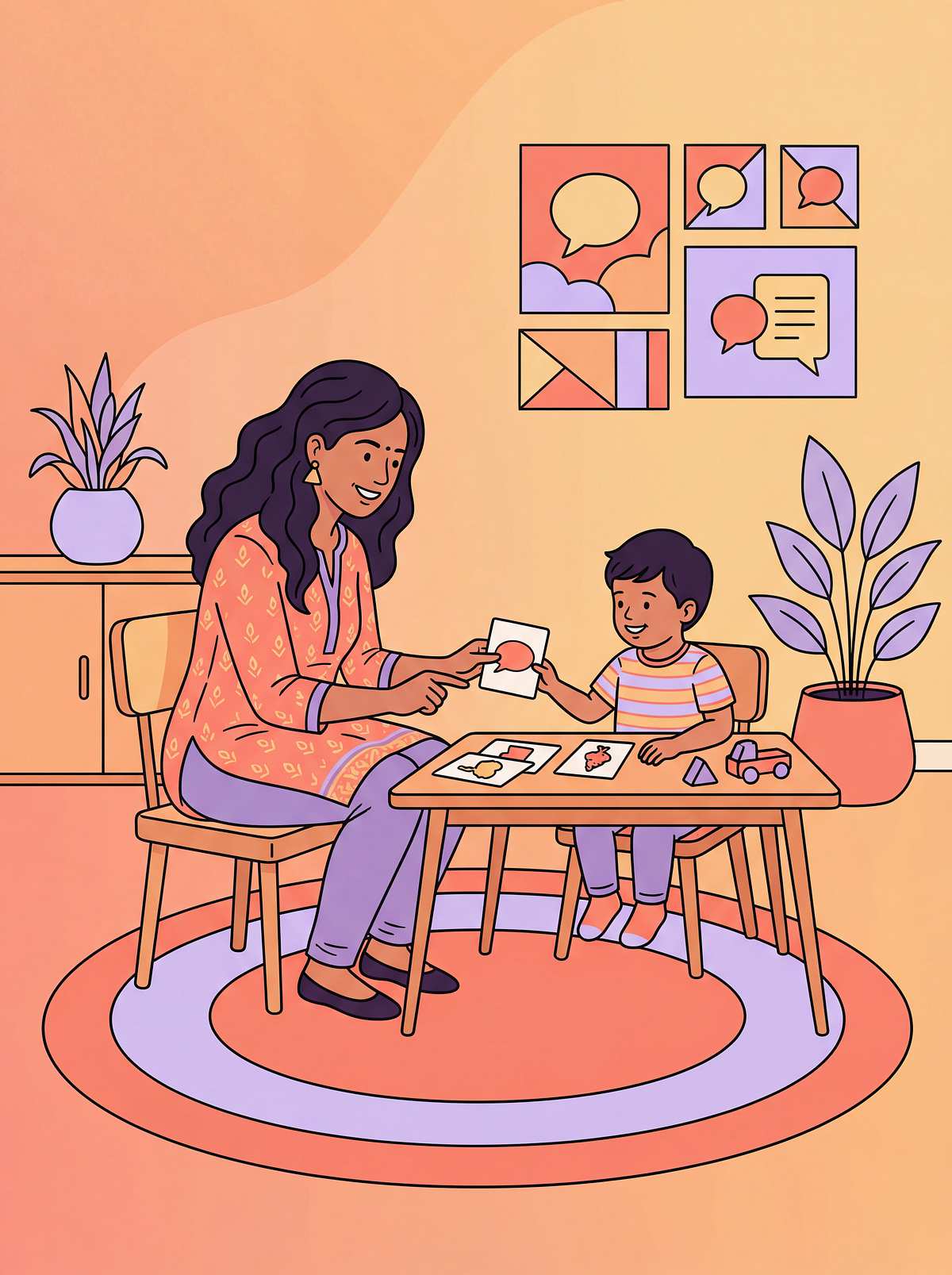
Evidence-based tools to support speech-language pathology therapy, helping children develop clear, intelligible speech through systematic sound practice and oral motor development.
Who This Helps
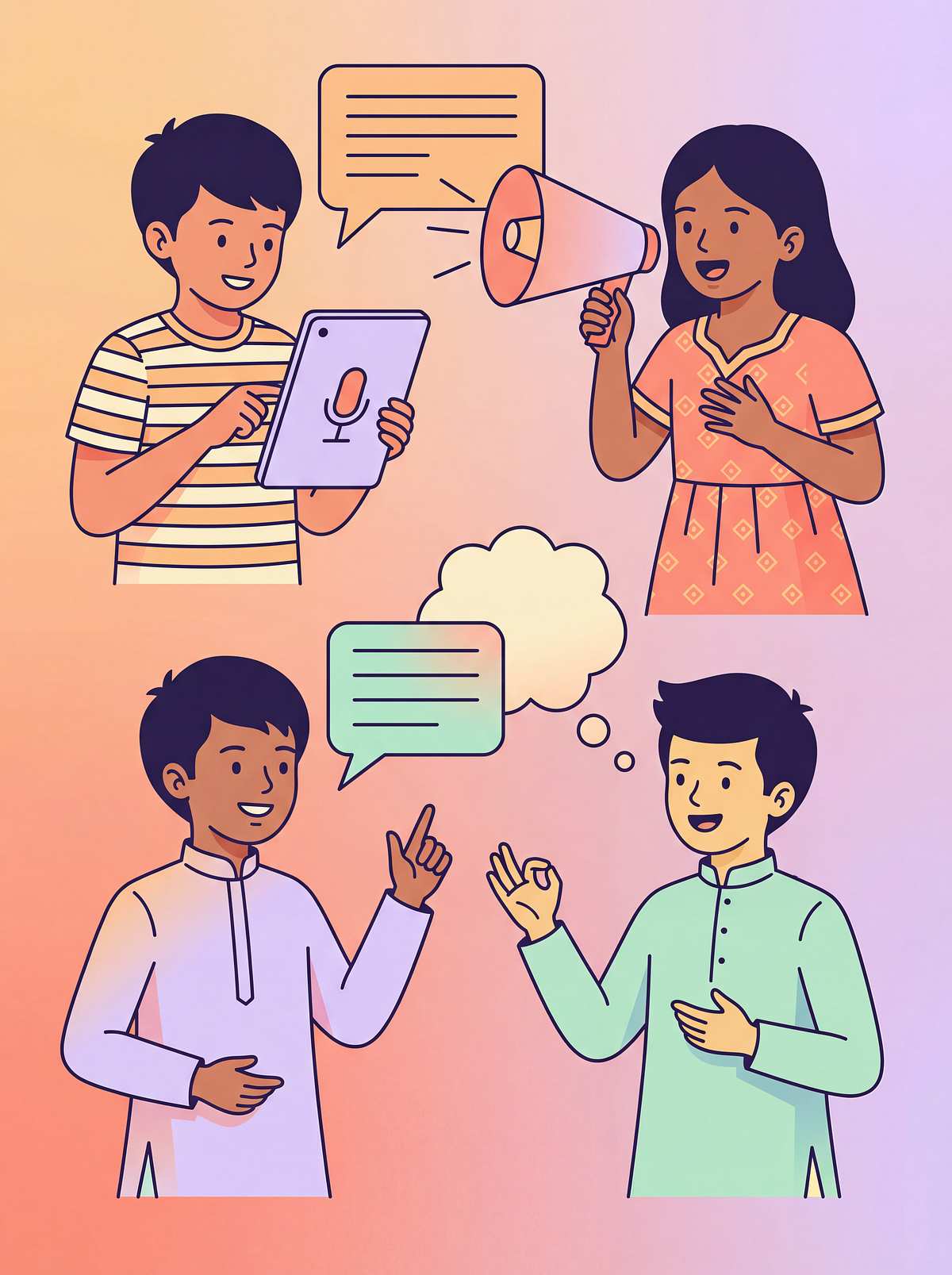
These tools support children in improving clarity of speech through targeted sound practice and oral motor development, helping them communicate more effectively and confidently.
Ages 3-9 years
Clinic
Home
School
Speech Sound Production
For children needing support with accurate production of speech sounds.
Speech Intelligibility
Helps children improve the clarity of their speech, making them easier to understand.
Oral Motor Development
Supports the strengthening of muscles essential for precise articulation and feeding.
Phonological Awareness
Assists in developing an understanding of the sound structure of language for better reading and speech skills.
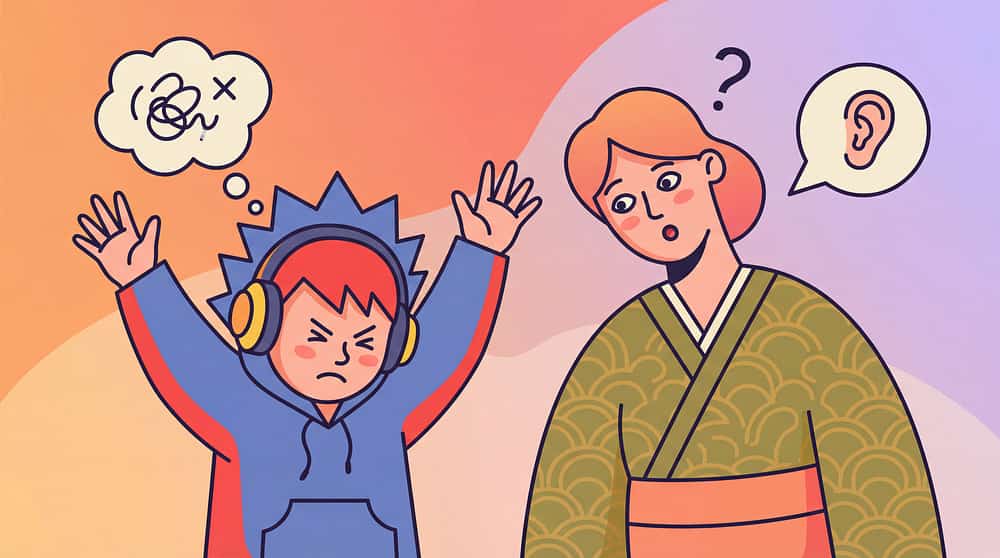
Does This Sound Familiar?
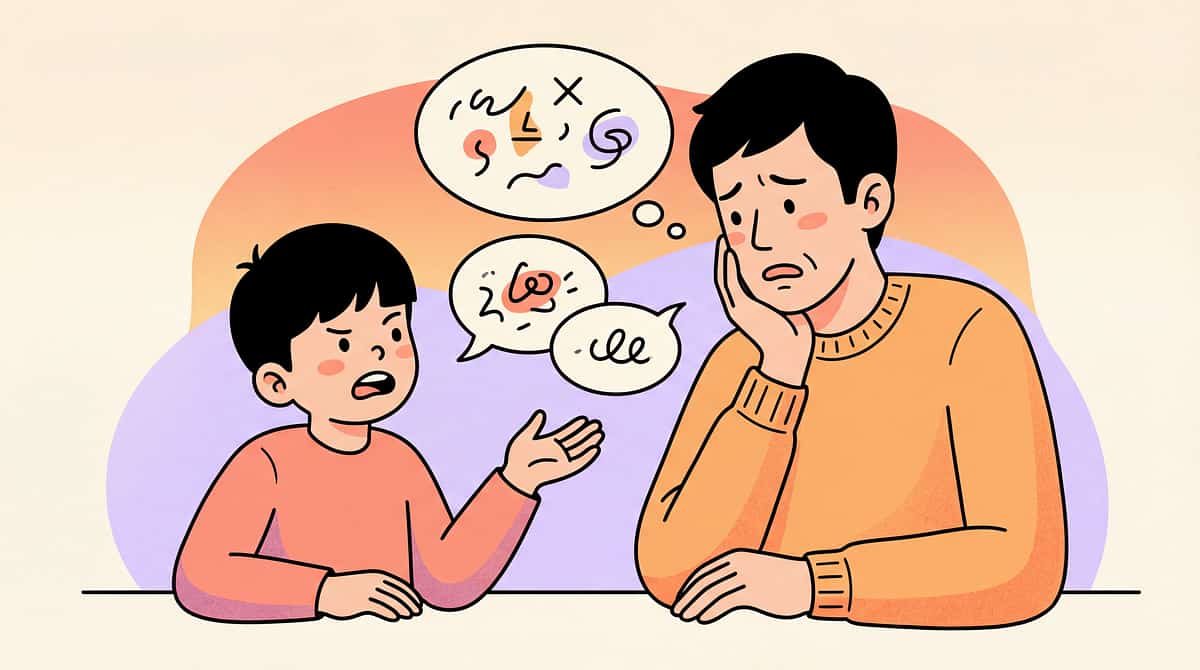
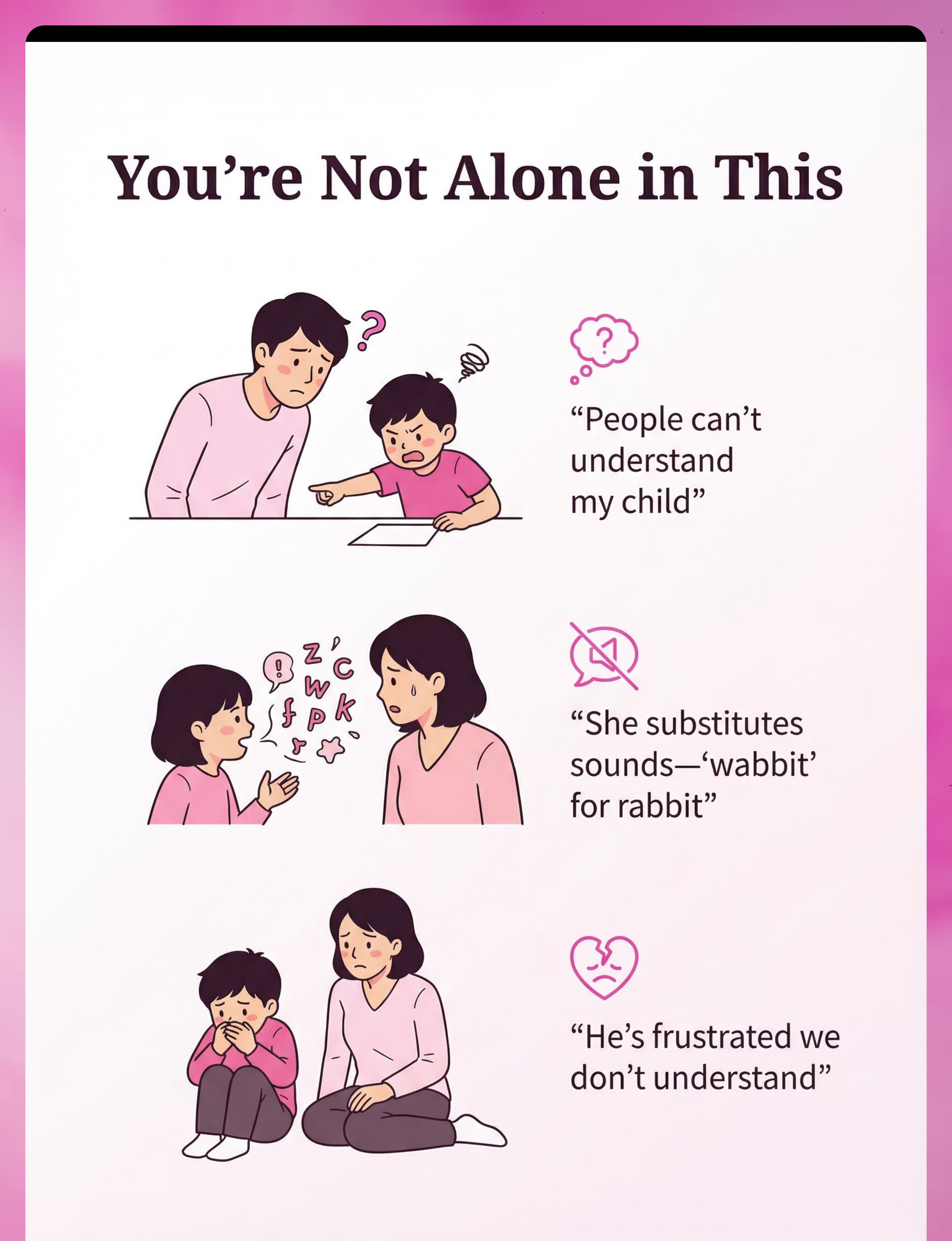
"People can't understand my child's speech. I feel helpless when even I struggle to understand what they're trying to say."
"She has words but they're unclear. She knows what she wants to say, but the sounds come out wrong."
"He's frustrated that we don't understand. I can see the defeat in his eyes when we ask him to repeat."
"She substitutes sounds — says 'wabbit' for 'rabbit.' I don't know if this will affect her confidence."
"His speech is getting better but some sounds are still wrong. I'm not sure if we need professional help."
"I don't know if this is normal or needs help. Every day I worry about their future communication."
You're not alone. These are common challenges faced by families of children with speech sound difficulties. With proper support and guidance from a speech-language pathologist, children can develop clearer speech and greater confidence in communication.
A Day Without the Right Support
1
Morning Communication
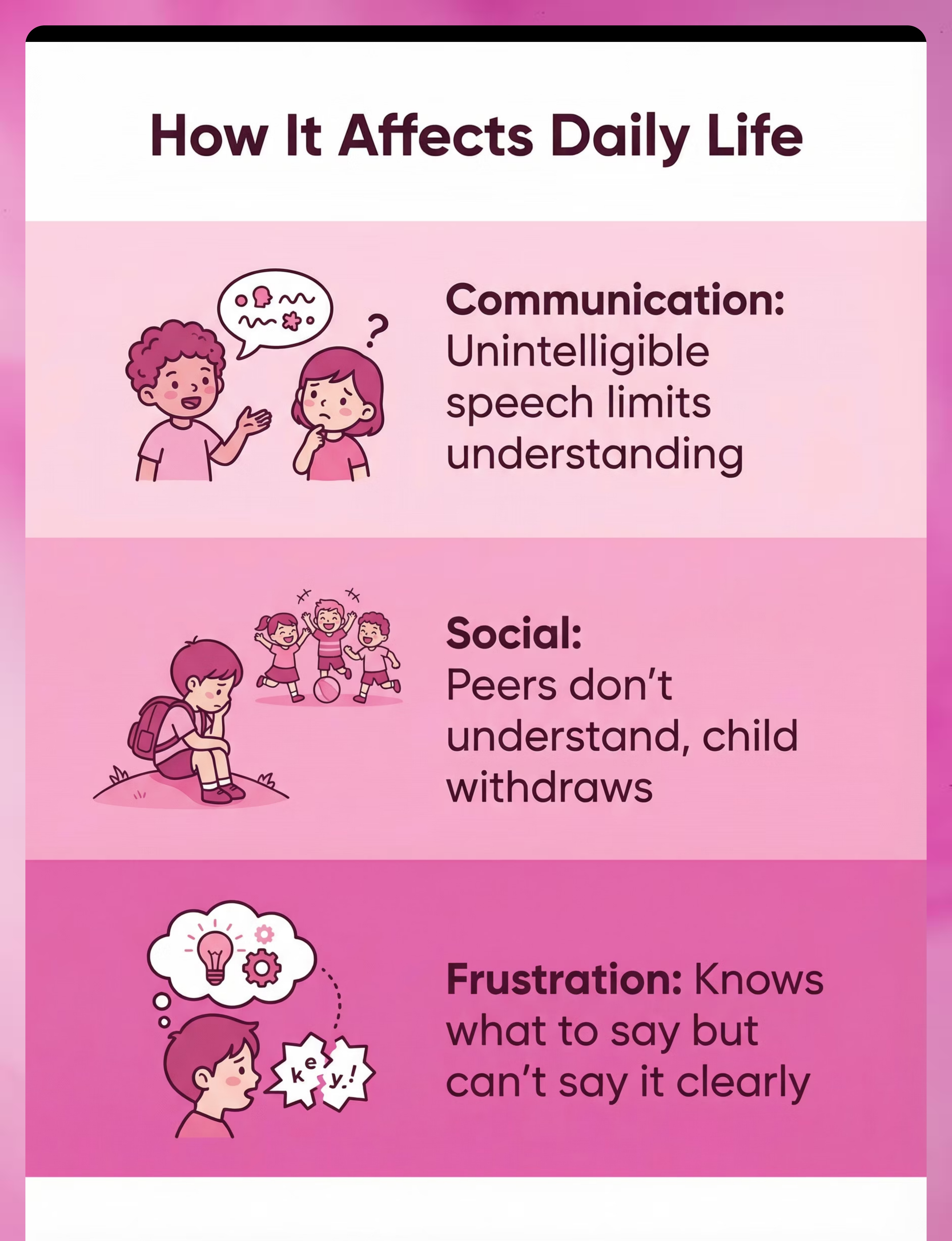
Child wakes up wanting to share a dream. Tries to tell parent. Words unclear. Parent doesn't understand. Child's excitement fades into frustration.
2
School Transitions
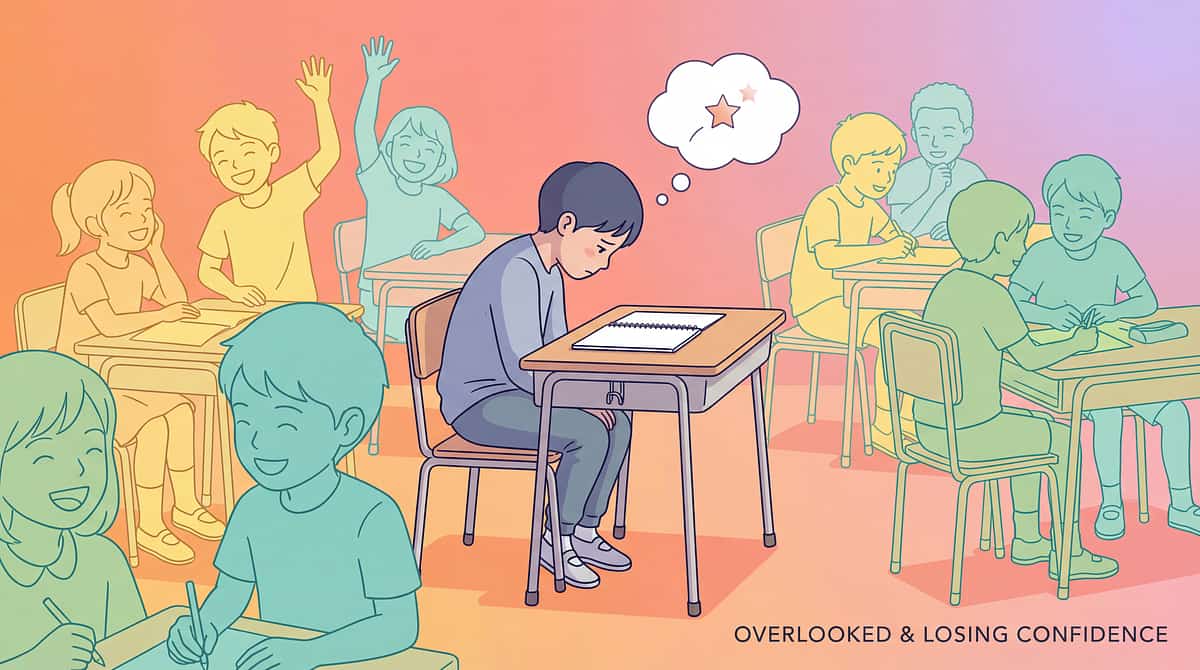
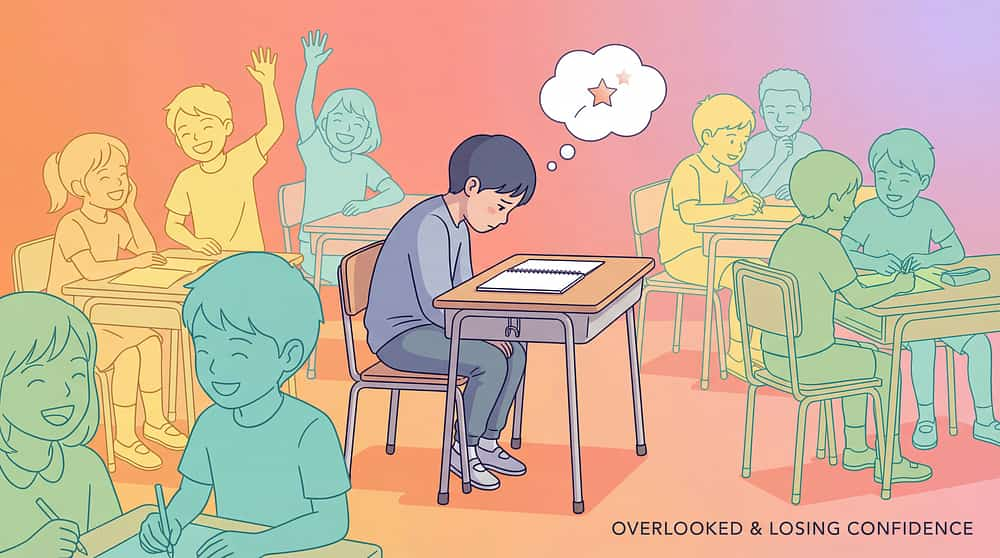
At school, teacher asks a question. Child knows the answer but speech is unintelligible. Teacher moves on to another student. Child feels invisible.
3
Social Interactions
During play, peers don't understand. They ask "What?" repeatedly. Child withdraws, choosing silence over repeated attempts. Isolation grows.
4
Bedtime Struggles
At bedtime, child wants to share about their day. Parents struggle to understand. Message lost. Child goes to bed feeling unheard, confidence eroding.

These daily moments of communication breakdown can significantly impact a child's emotional wellbeing, social development, and academic participation. Early, professional intervention helps prevent these cascading effects.
The Science Behind It
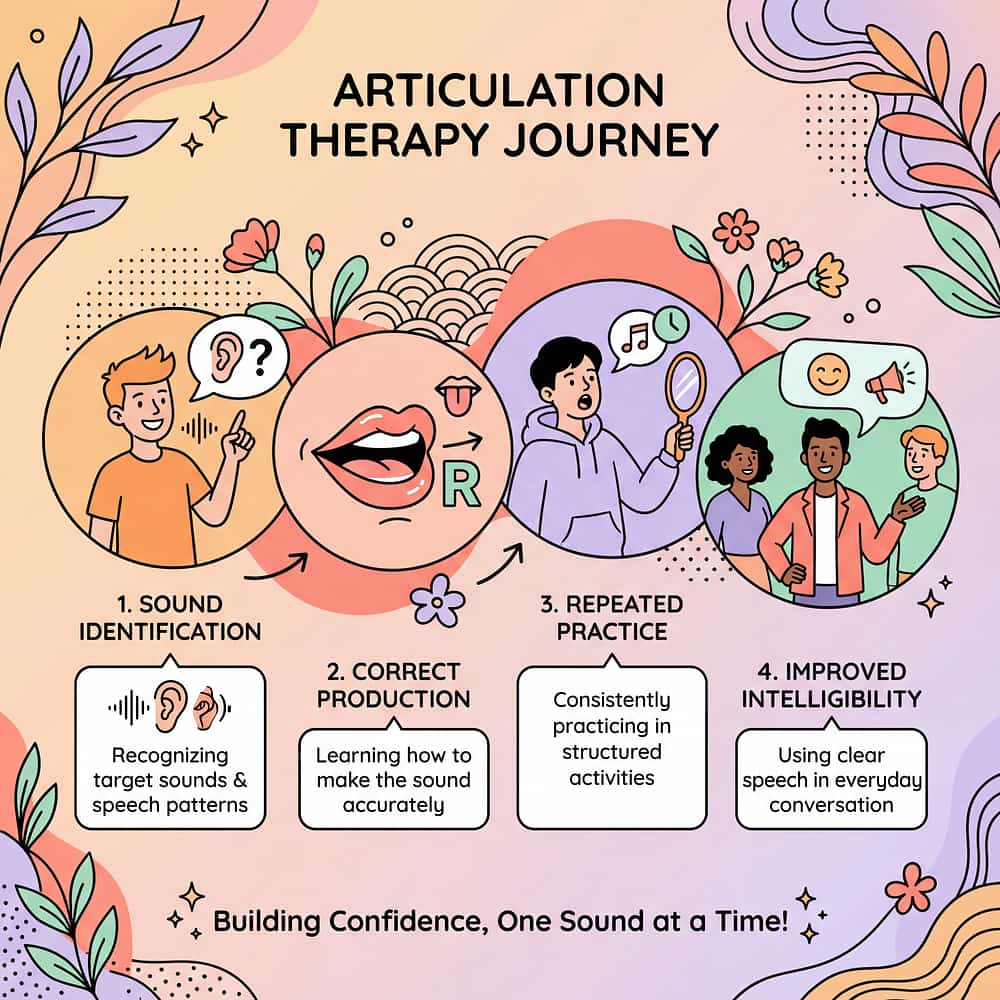
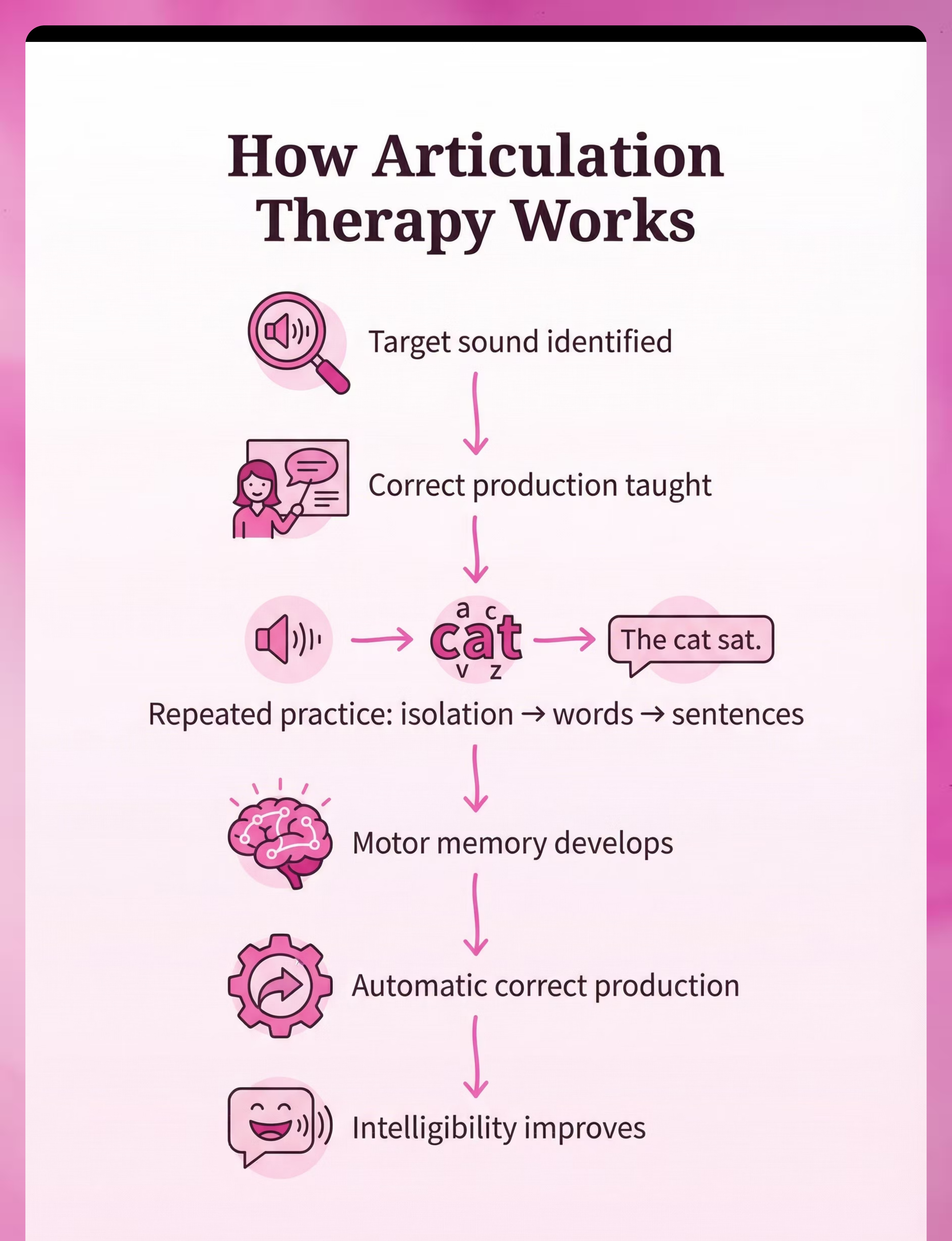
Articulation therapy follows a proven developmental sequence that builds motor memory for correct speech sound production:
Target Sound Identification
SLP assesses and identifies which sounds need work based on developmental norms
Correct Production Taught
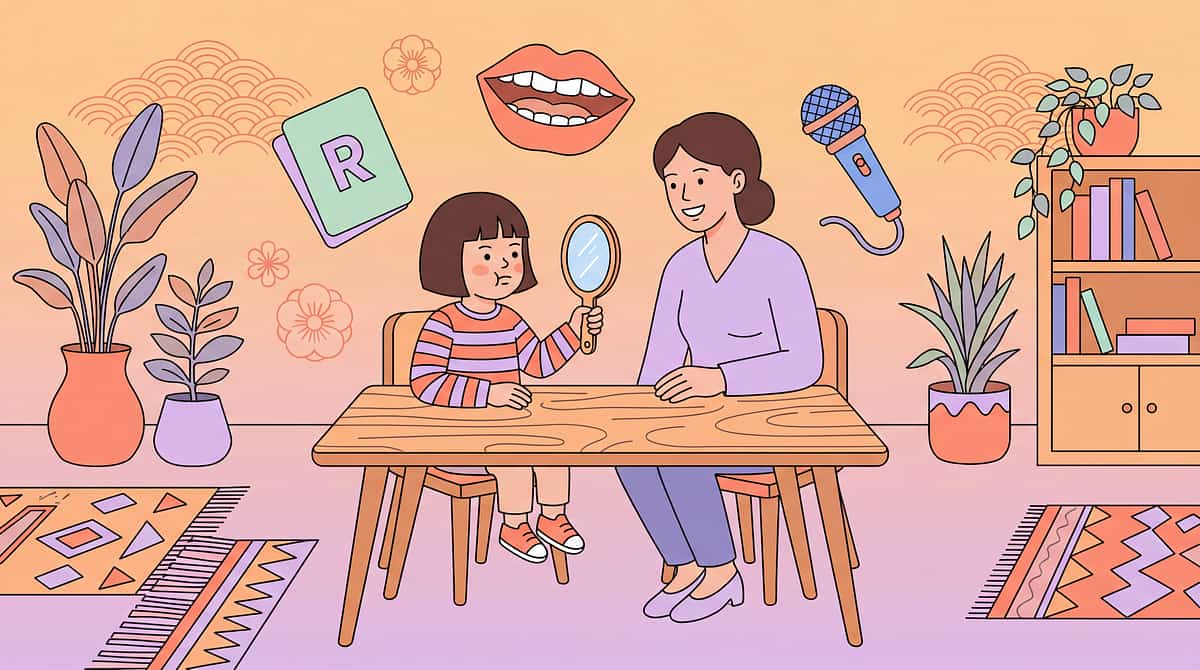
Child learns proper tongue, lip, and jaw placement through visual and tactile cues
Repeated Practice
Systematic practice in isolation, then words, then sentences builds consistency
Motor Memory Develops
With repetition, correct production becomes automatic and requires less conscious effort
Automatic Production
Sound is produced correctly in spontaneous conversation without prompting
Intelligibility Improves
Overall speech clarity increases, leading to successful communication across settings
Speech Sound Production
Intelligibility
Oral Motor Skills
Phonological Awareness
How to Use It Right
Following evidence-based best practices ensures that articulation therapy is effective, motivating, and leads to lasting improvements in speech clarity.
1
Professional Guidance
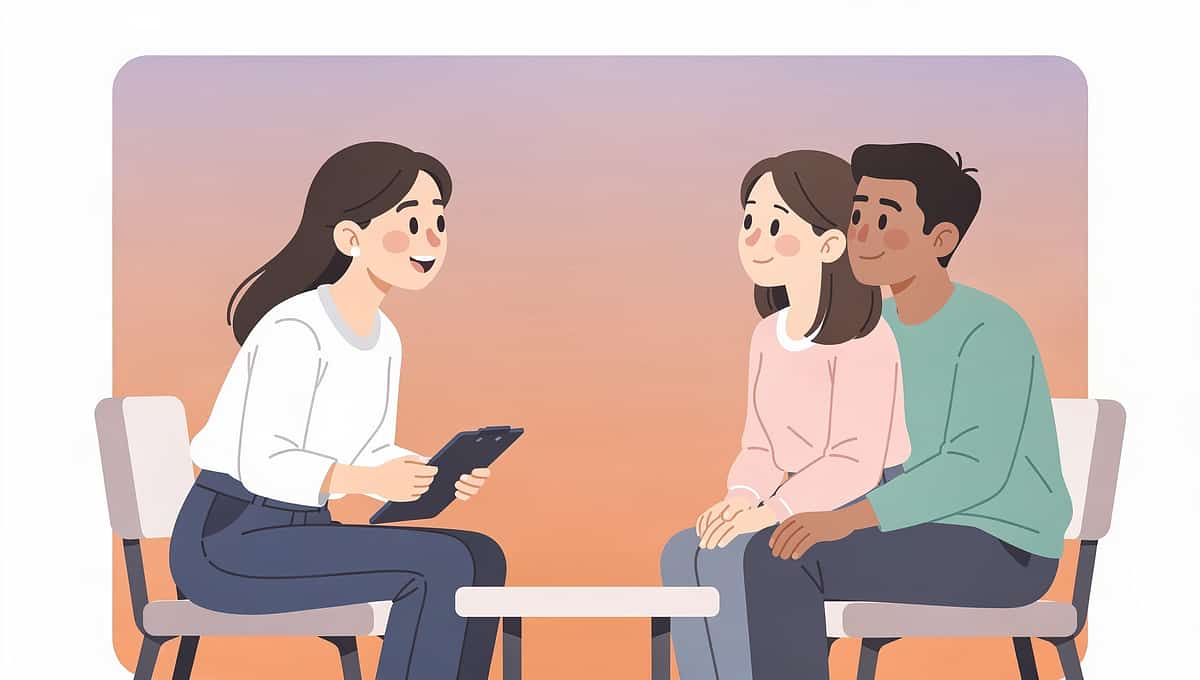
SLP should assess and guide intervention. They determine which sounds to target, in what order, and create an individualized treatment plan.
2
Fun Practice
Practice should be fun, not drilling. Incorporate games, activities, and engaging materials. Motivation is key to progress and consistency.
3
Systematic Approach
Target sounds systematically: isolation → words → sentences. This hierarchy ensures mastery at each level before progressing.
4
Multi-Sensory Cues
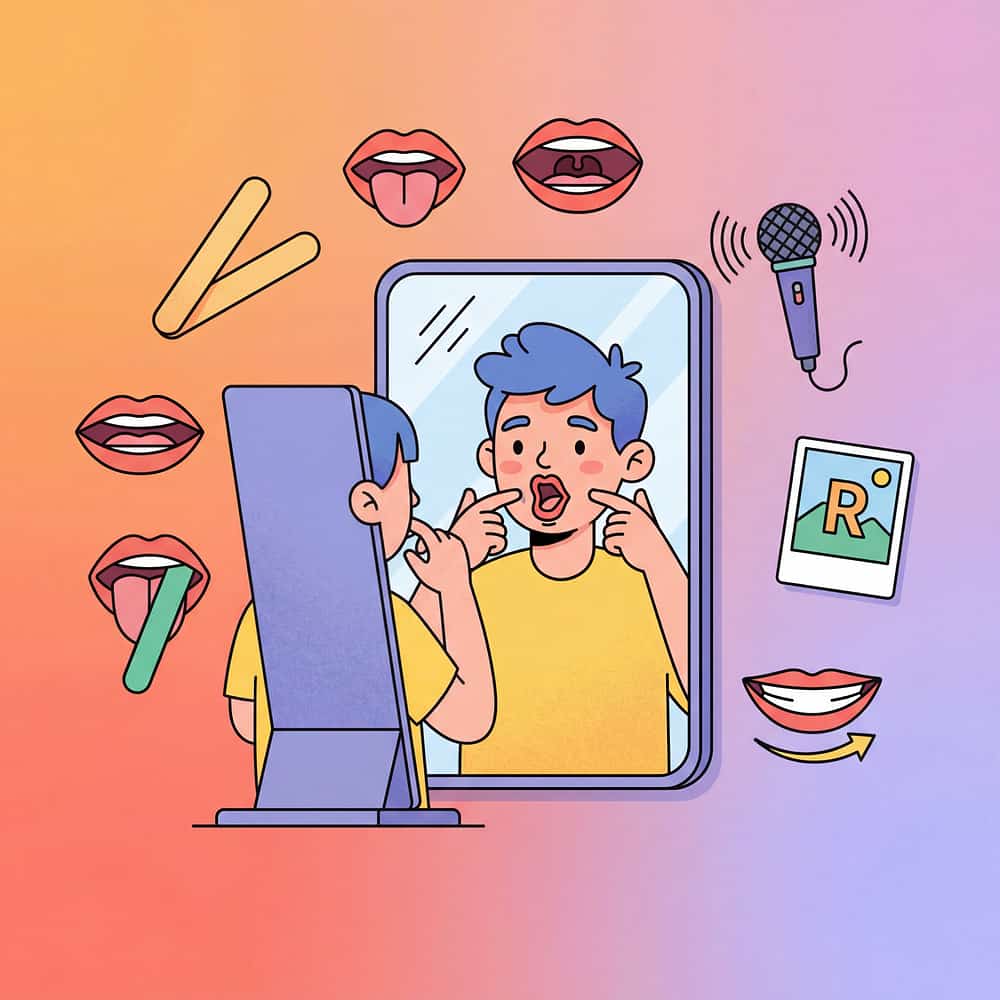
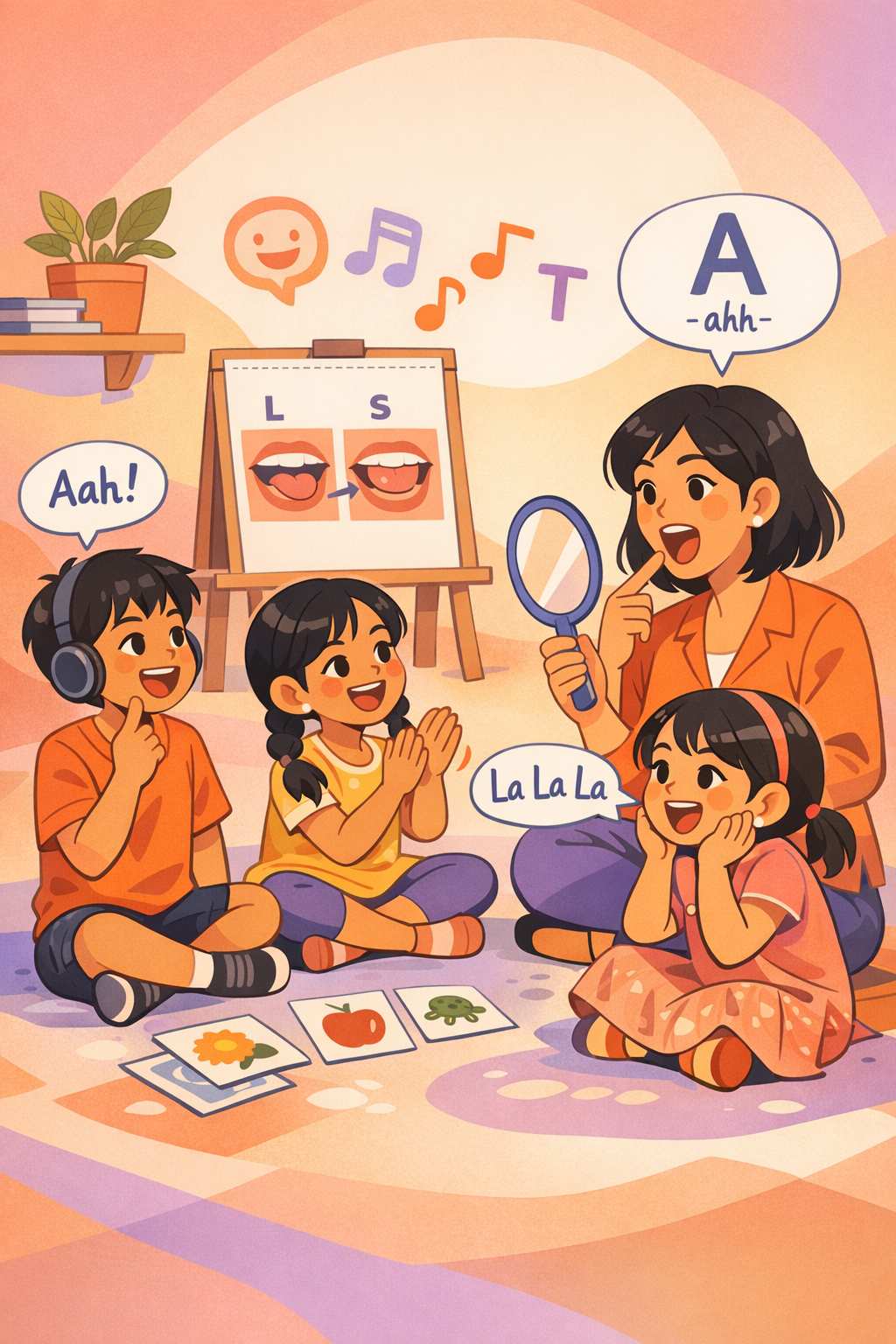
Use visual and tactile cues. Mirrors, mouth diagrams, and hand cues help children understand and remember correct production.
5
Home Carryover
Home practice supports therapy. Short, daily practice sessions (5-10 minutes) reinforce skills learned in clinic sessions.
6
Focused Correction
Don't correct every error — focus on target sounds. Over-correction can be demotivating and make children reluctant to speak.

Duration: Short, frequent practice sessions (5-10 minutes) are more effective than long, infrequent sessions. Consistency matters more than duration.
Expert Endorsement
"Articulation therapy works best when guided by an SLP who identifies which sounds to target and in what order. Home practice is valuable for carryover, but the therapy plan should come from a professional."
— Speech-Language Pathologist
SLP + SpEd Recommended
Strong Evidence
Rank #2 in Communication Category
This classification reflects the tool's position as a specialist-level intervention with strong research support, requiring professional oversight for optimal outcomes. The collaboration between SLP and Special Education ensures comprehensive support across settings.
Choose Your Option (6 Variants)
Select the tools that best match your child's learning style, therapy goals, and practice settings. Each variant serves a specific purpose in the articulation therapy journey.
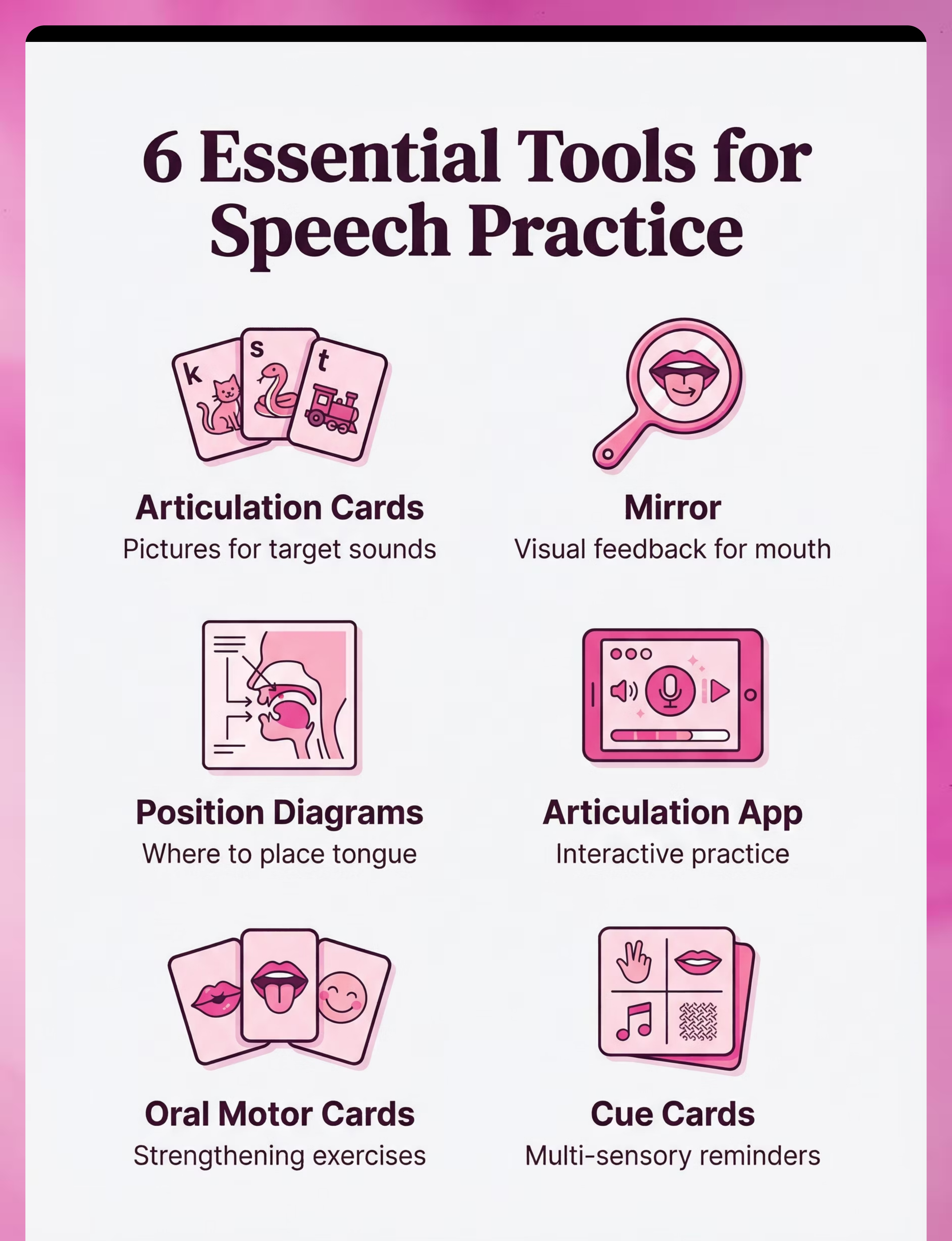
Oral Motor Exercises
Cards with mouth exercises for strengthening and coordination.
Mouth/Tongue Position Diagrams
Visual cards showing where to place tongue and lips.
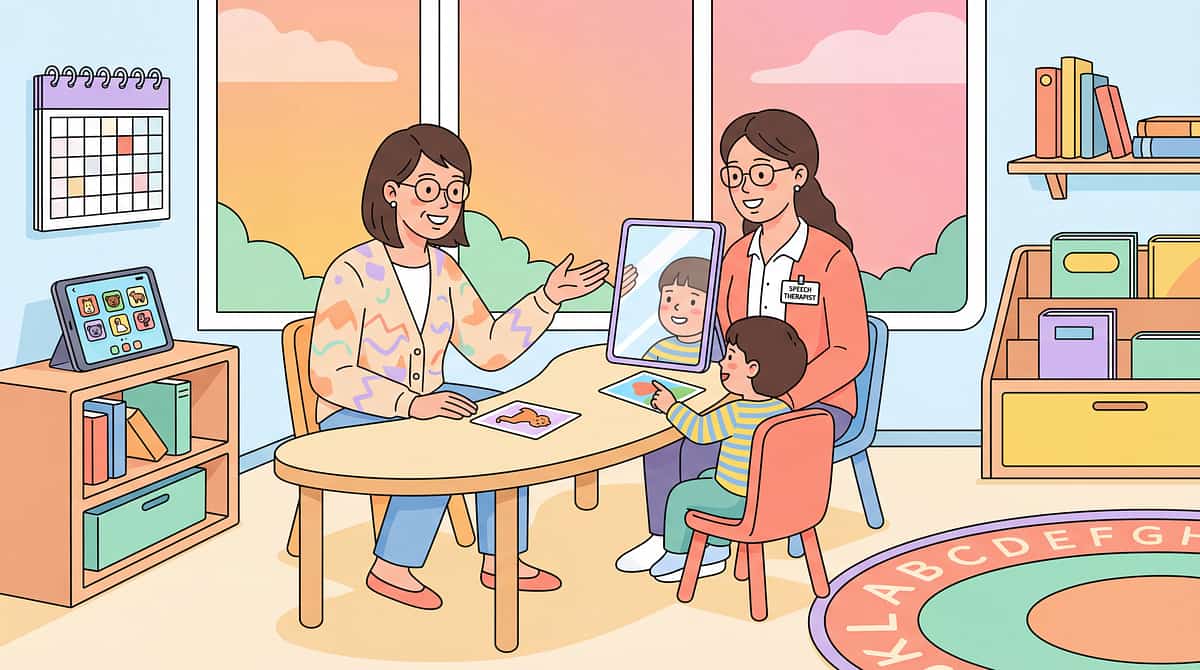
Mirror for Speech Practice
Handheld or tabletop mirror providing visual feedback for mouth movements.
Articulation Cards by Sound
Card sets organized by phoneme with pictures for target sounds.
Speech Sound Cue Cards
Visual and tactile cues with multi-sensory reminders.
Articulation App
Phone/tablet app with interactive speech practice.
Oral Motor Exercises Cards
  • Best for: Oral motor preparation
  • Ages: 2-9 years
  • Settings: Clinic, Home
  • Portability: High
  • Price: ₹100–300
Mouth/Tongue Position Diagrams
  • Best for: Teaching sound production
  • Ages: 4-9 years
  • Settings: Clinic, Home
  • Portability: High
  • Price: ₹100–300
Mirror for Speech Practice
  • Best for: Self-monitoring, visual learners
  • Ages: 3-9 years
  • Settings: Clinic, Home
  • Portability: Medium
  • Price: ₹100–400
Articulation Cards by Sound
  • Best for: Practicing specific speech sounds
  • Ages: 3-9 years
  • Settings: Clinic, Home
  • Portability: High
  • Price: ₹300–1,000
Speech Sound Cue Cards
  • Best for: Cueing correct production
  • Ages: 3-9 years
  • Settings: Clinic, Home, School
  • Portability: High
  • Price: ₹150–400
Articulation App
  • Best for: Engaging practice, home carryover
  • Ages: 3-9 years
  • Settings: Home, Clinic
  • Portability: Very High
  • Price: ₹0–1,000

How to Choose
By Goal
  • Sound practice: Cards by sound
  • Visual feedback: Mirror
  • Learning placement: Diagrams
  • Engagement: App
By Setting
  • Home: App, Mirror, Cards
  • Clinic: All options
  • School: Cue cards, Apps
  • Travel: App, Cue cards
By Portability
  • Very High: Apps
  • High: Cards, Diagrams, Cues
  • Medium: Mirrors
Specifications & Sound Categories Guide
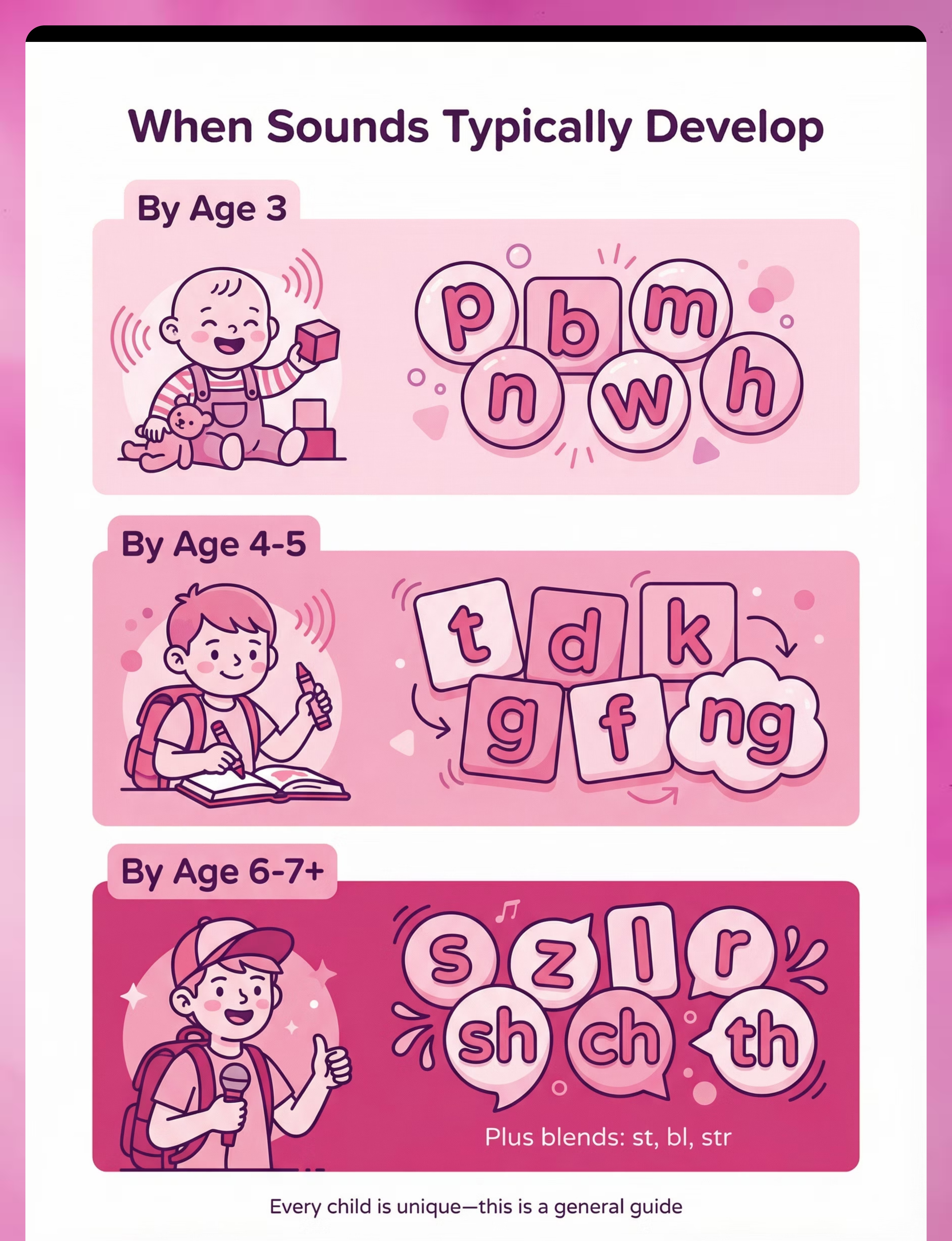
Understanding which sounds develop at which ages helps set realistic expectations and guides therapy planning. Not all sound errors require immediate intervention.
Sound Development Categories

There was an error generating this image

Early Developing (by age 3)
Sounds: p, b, m, n, w, h
These sounds typically develop first and should be present by age 3

There was an error generating this image

Middle Developing (age 4-5)
Sounds: t, d, k, g, f, ng
Expected to emerge during preschool years

There was an error generating this image

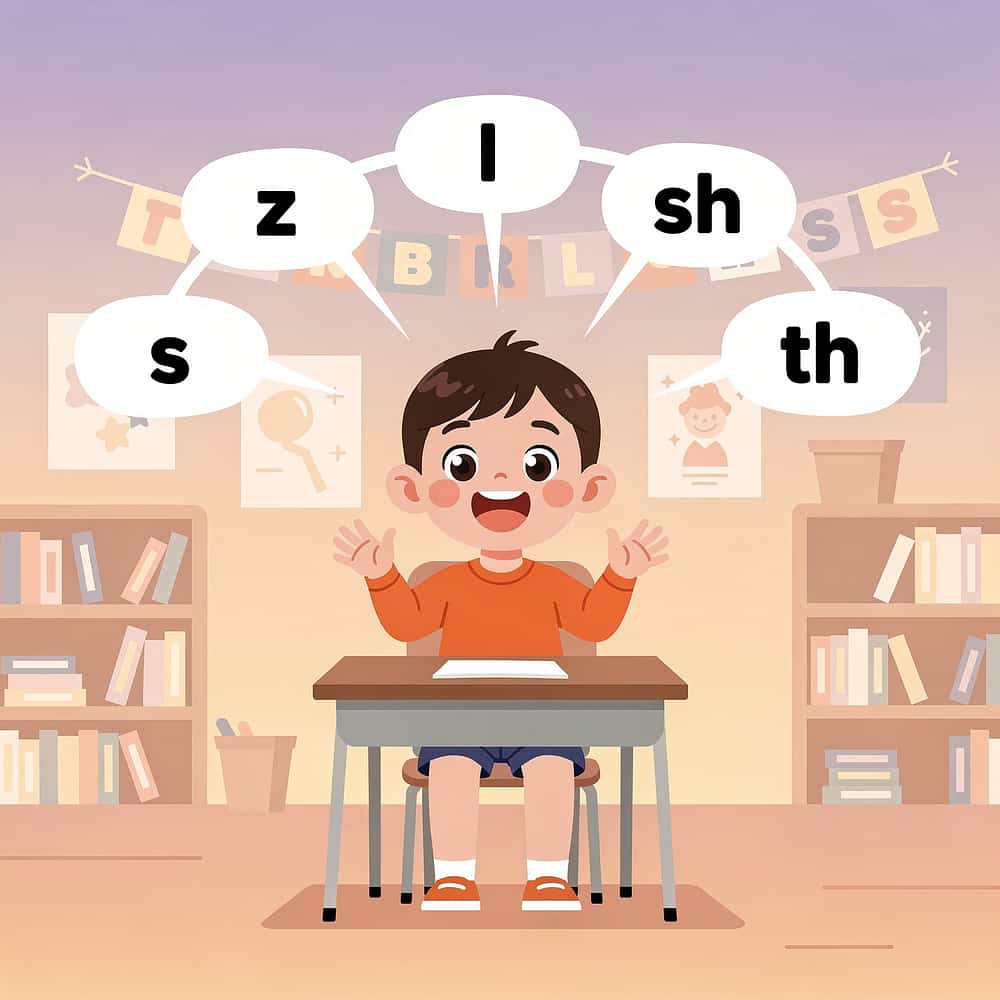
Later Developing (age 6-7+)
Sounds: s, z, l, r, sh, ch, th
More complex sounds that develop last
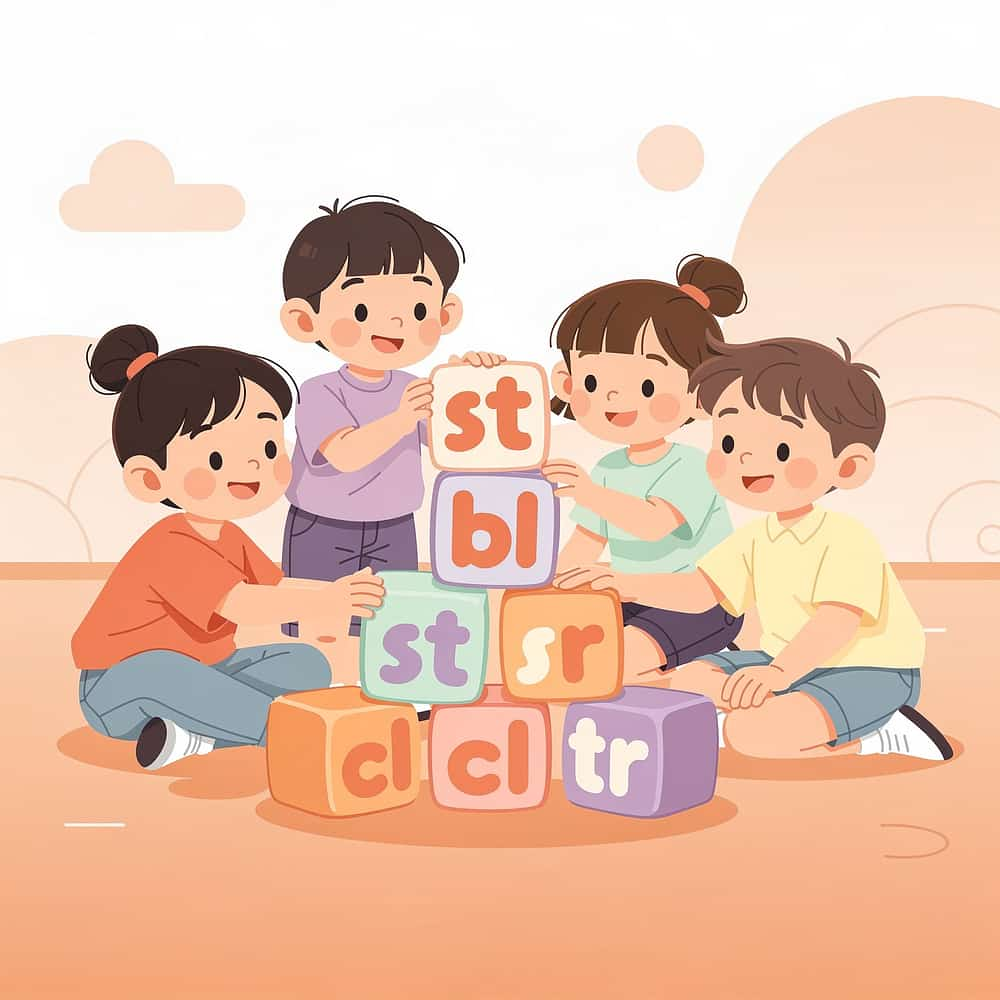
Blends
Examples: st, bl, str, etc.
Consonant clusters develop after individual sounds are mastered
Materials & Key Features
  • Picture cards organized by phoneme for targeted practice
  • Mirrors for visual feedback on mouth position and movement
  • Visual diagrams showing tongue and lip placement
  • Apps for engaging, interactive practice
  • Cue cards with multi-sensory reminders
Key Features
  • Sound-specific organization for systematic practice
  • Visual cues to support learning
  • Mirror feedback for self-monitoring
  • Hierarchical practice structure
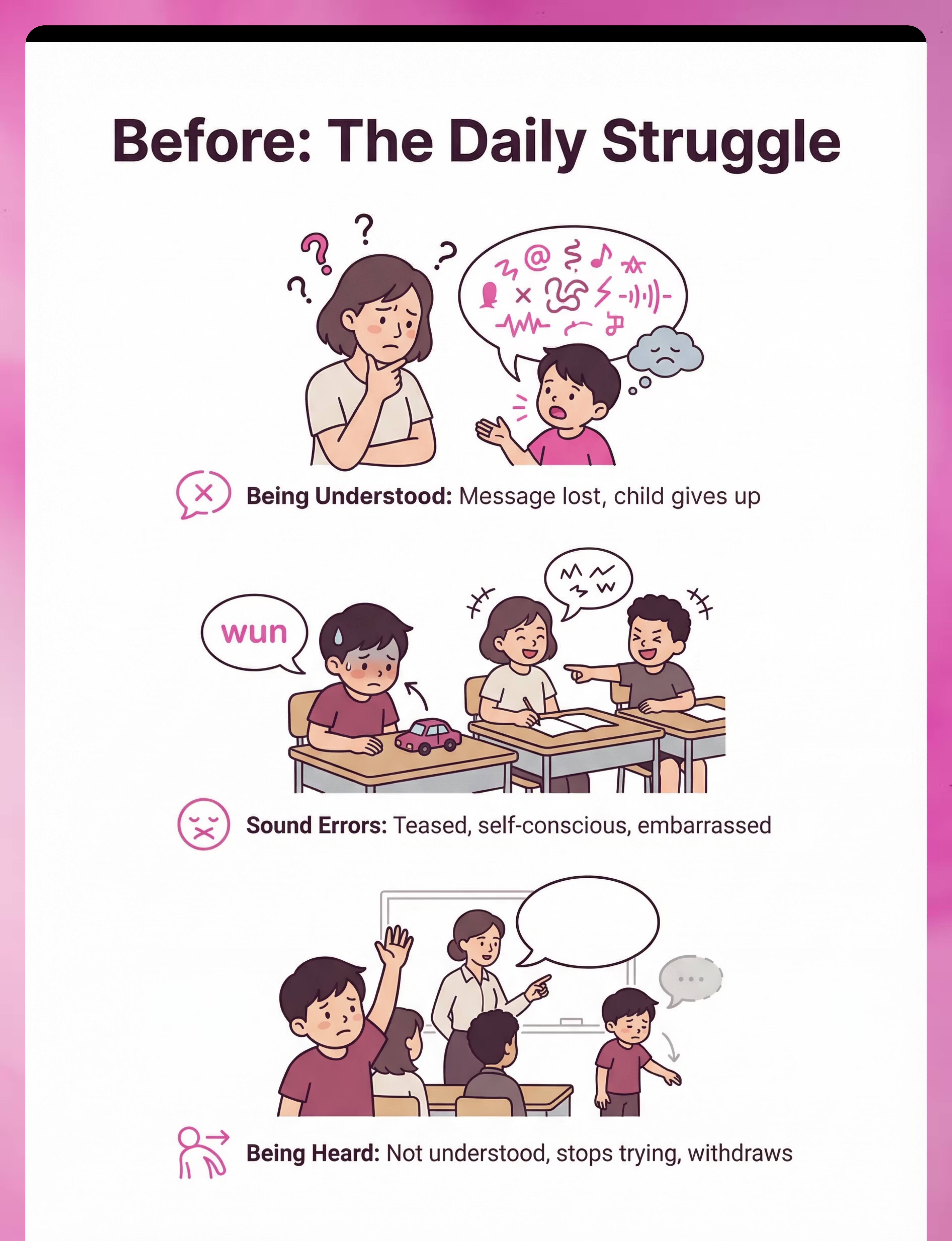
The Struggle (Before)
These scenarios illustrate the real emotional and social impact of unintelligible speech on children and families before receiving appropriate intervention.
Being Understood
Situation: Child says something. Parent doesn't understand. Asks to repeat. Still unclear. Child gives up. Message lost.
Experience: Daily communication becomes a series of failed attempts and mounting frustration
Emotion: Frustration, defeat, sense of being trapped with unspoken thoughts
Specific Sound Error
Situation: Child can't say 'R' sound. Says 'wun' for 'run.' Teased at school. Self-conscious about speaking.
Experience: Peers notice the difference, sometimes making comments that hurt
Emotion: Embarrassment, avoidance, wanting to hide or stop speaking
Being Heard
Situation: Child wants to participate. Tries to speak. Not understood. Gets passed over. Stops trying.
Experience: Repeated experiences of being misunderstood lead to withdrawal
Emotion: Invisibility, withdrawal, loss of confidence in own voice
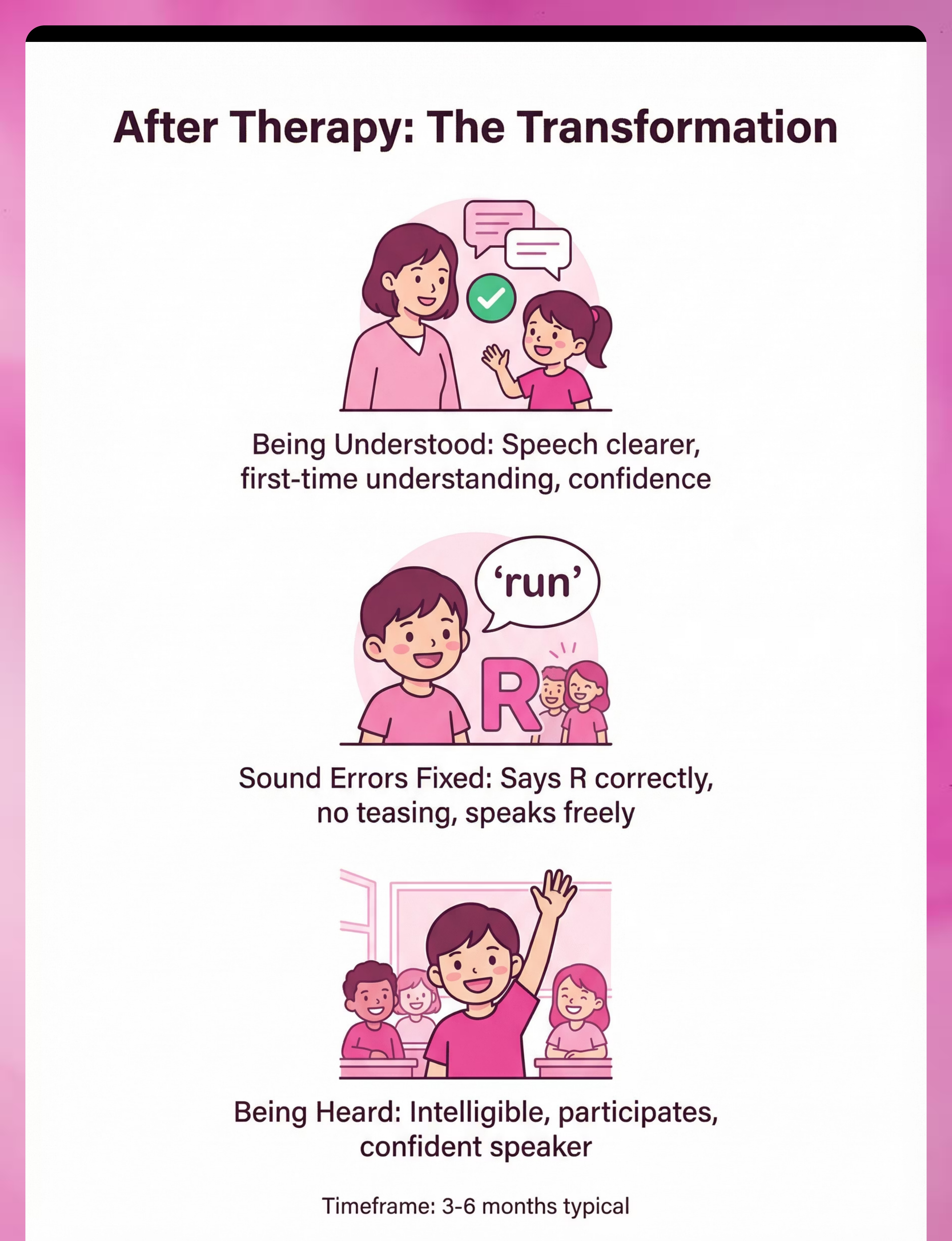
The Breakthrough (After)
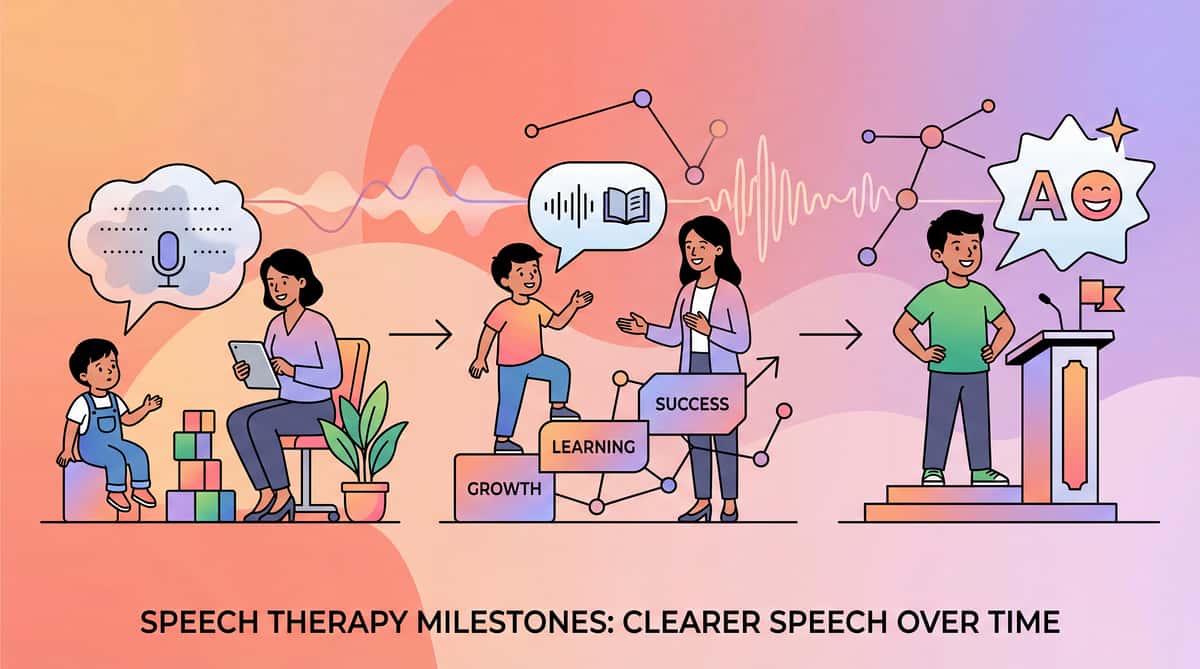
With systematic, SLP-guided articulation therapy and consistent practice, children develop clearer speech and regain confidence in communication.
Being Understood
Situation: After therapy, speech is clearer. Parent understands first time. Communication successful. Child confident.
Experience: Messages get through without frustration or repeated attempts
Emotion: Success, confidence, feeling heard and valued
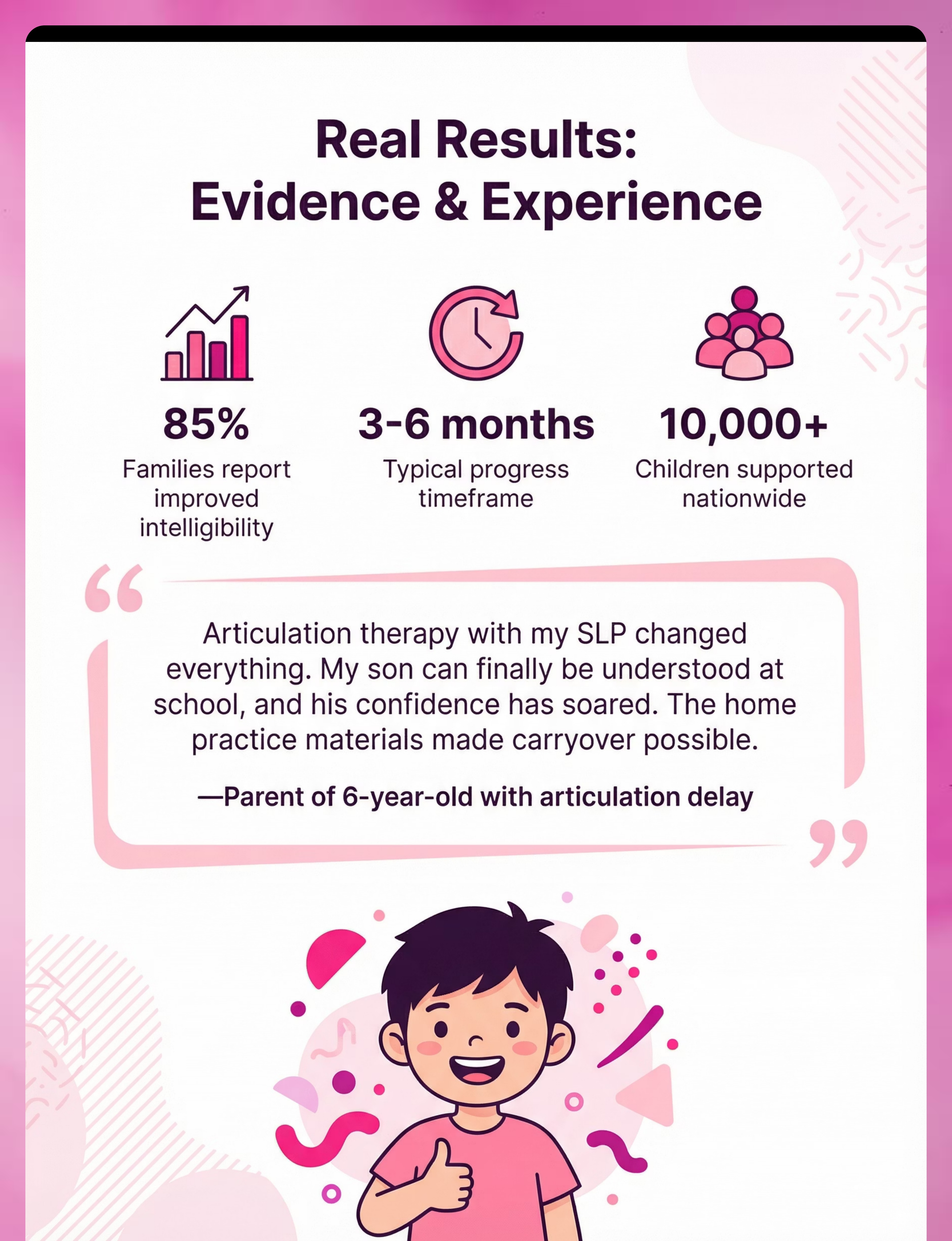
3-6 months
Specific Sound Error
Situation: R sound practiced systematically. Now says 'run' correctly. No more teasing. Speaks freely.
Experience: Target sound mastered through structured practice and professional guidance
Emotion: Pride, freedom, willingness to speak up
3-6 months
Being Heard
Situation: Speech intelligible. Participates in class. Understood by all. Confident speaker.
Experience: Full participation in academic and social settings without communication barriers
Emotion: Inclusion, confidence, sense of belonging
6-12 months
articulation-speech-sound-tools therapy material
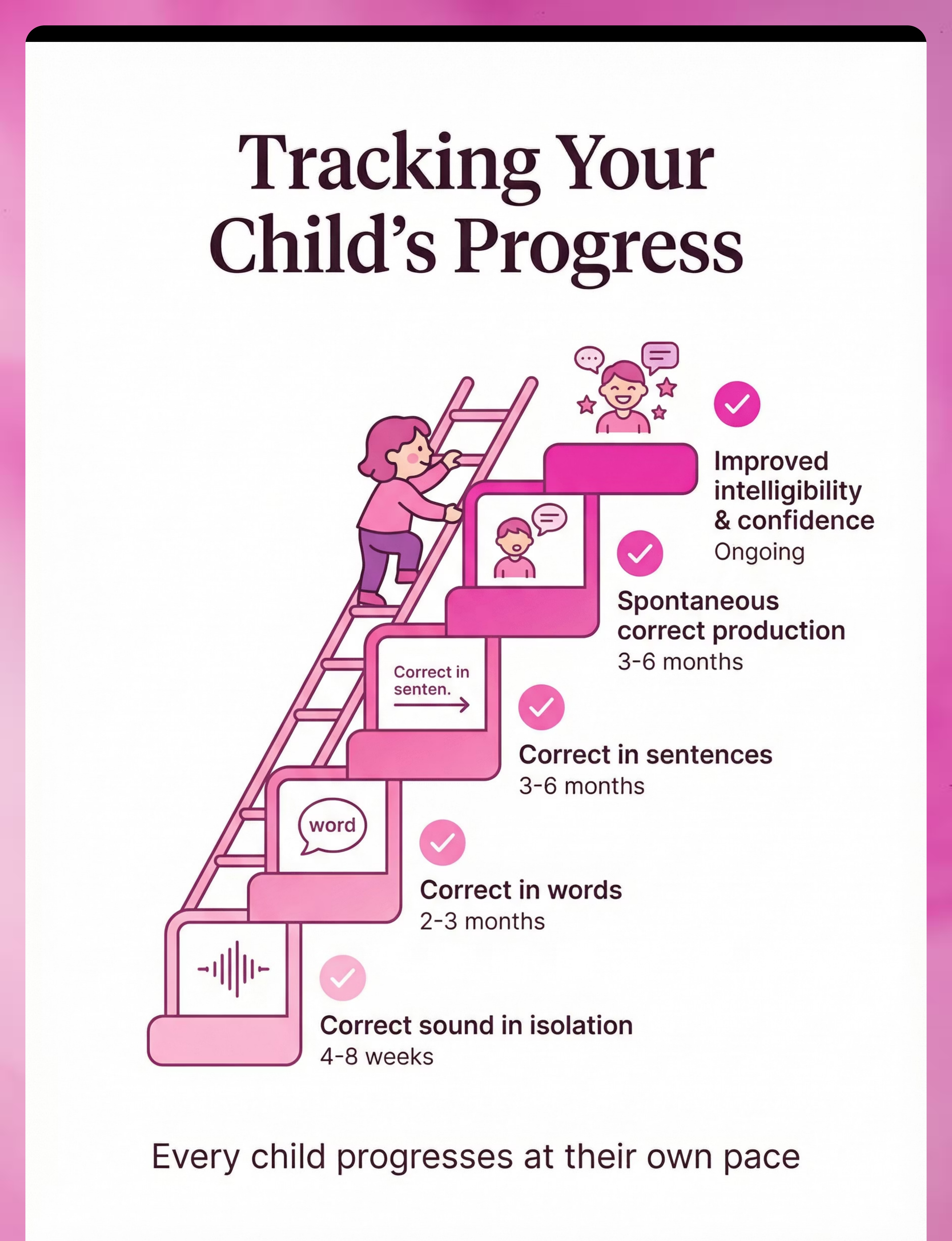
What to Expect (Realistic Timelines)
Articulation therapy progress follows a predictable hierarchy. Understanding these timelines helps maintain realistic expectations and celebrate incremental progress.
Target sounds produced correctly in isolation
Child can produce the sound correctly when it's practiced alone, not yet in words
4-8 weeks
Correct production in words
Sound is produced correctly within simple words during structured practice
2-3 months
Correct production in conversation
Sound is used correctly in spontaneous speech without conscious effort
3-6 months
Overall intelligibility improves
Multiple sounds corrected, speech is clearer across all contexts
3-6 months
Confidence in speaking increases
Child becomes more willing to communicate, participate, and express themselves
Ongoing
Communication success increases
Improved speech leads to better social connections and academic participation
Ongoing

Progress timelines vary based on severity, number of sounds in error, consistency of practice, and individual child factors. These are typical ranges, not guarantees. Your SLP will track your child's specific progress.
Is This Right for My Child? (2-Minute Check)
Answer these questions honestly. If you answer "yes" to 3 or more, articulation assessment and tools may significantly benefit your child.
Do people struggle to understand your child's speech?
If yes, this indicates: Articulation assessment needed
When multiple listeners across settings can't understand your child, professional evaluation can identify specific sound errors and guide intervention.
Confidence: 95%
Does your child substitute or omit sounds consistently?
If yes, this indicates: Articulation intervention may help
Consistent sound errors (not random mistakes) suggest motor planning or production difficulties that respond well to systematic therapy.
Confidence: 90%
Is your child frustrated by not being understood?
If yes, this indicates: Speech clarity work indicated
Emotional impact suggests communication is affecting quality of life, making intervention more urgent and beneficial.
Confidence: 88%
Has an SLP identified articulation goals?
If yes, this indicates: Home practice materials needed
If goals are already set, these tools provide structured ways to practice and reinforce skills between therapy sessions.
Confidence: 92%

3+ "yes" answers = strong fit. Consider scheduling an evaluation with a speech-language pathologist to assess your child's specific needs and develop an individualized treatment plan.
Usage Guide
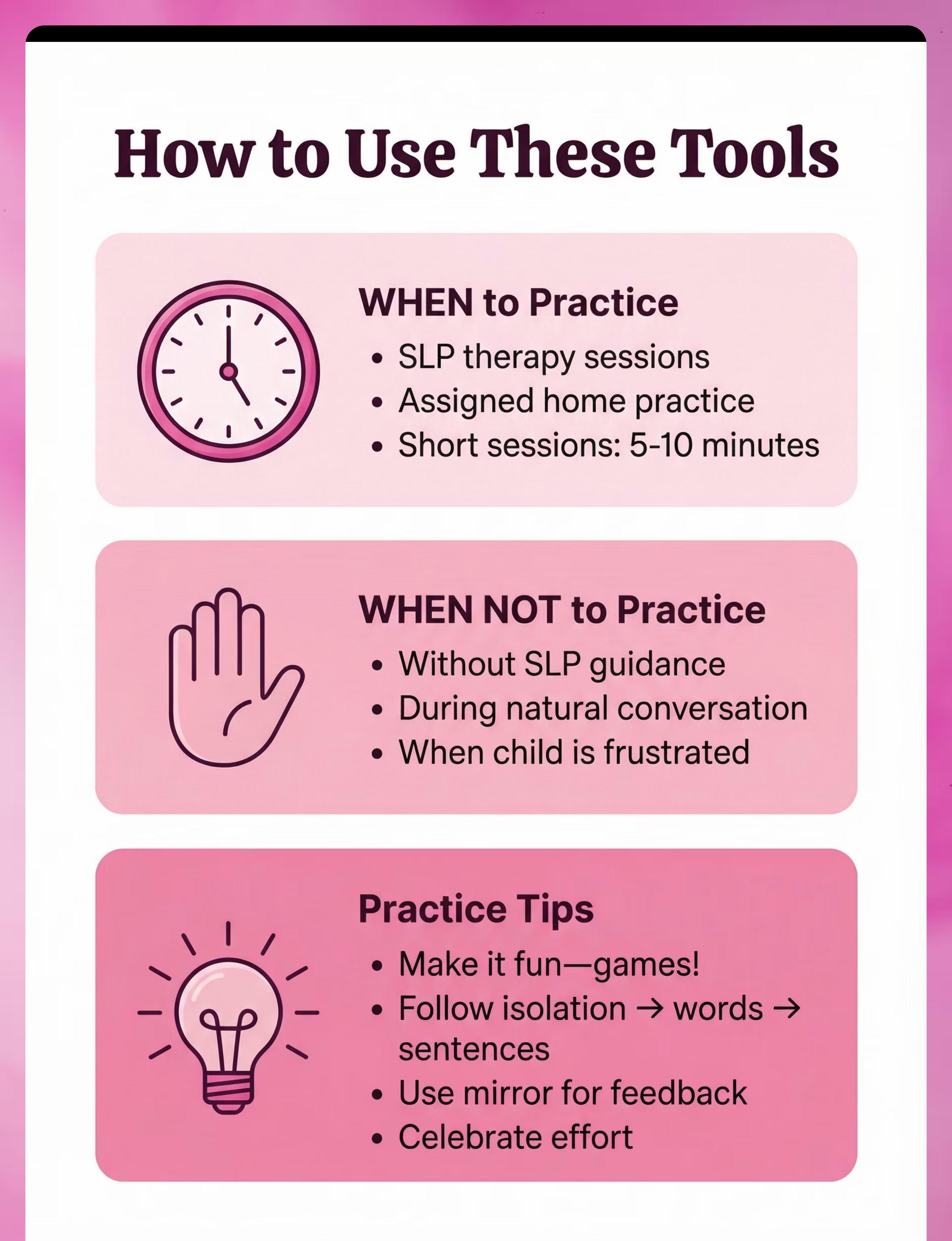
When to Use
SLP therapy sessions with professional guidance
Home practice time assigned by your SLP
Structured practice periods (5-10 minutes)
Games that incorporate target sounds naturally
When NOT to Use
Without SLP guidance on which sounds to target
Correcting constantly throughout the day (demotivating)
When child is frustrated or dysregulated
During natural conversation (let them communicate first)
Supervision by Age
Preschool (3-5)
Adult-led practice following SLP plan closely
Early Elementary (6-8)
Guided practice with growing independence
Older Child (9+)
Increasingly independent self-monitoring

Duration & Settings
Duration: Short, frequent practice (5-10 minutes) is more effective than long sessions. Consistency matters more than length.
Clinic
Home (for practice)
Ages 3-9 years (timing depends on specific sounds and severity)
Safety First
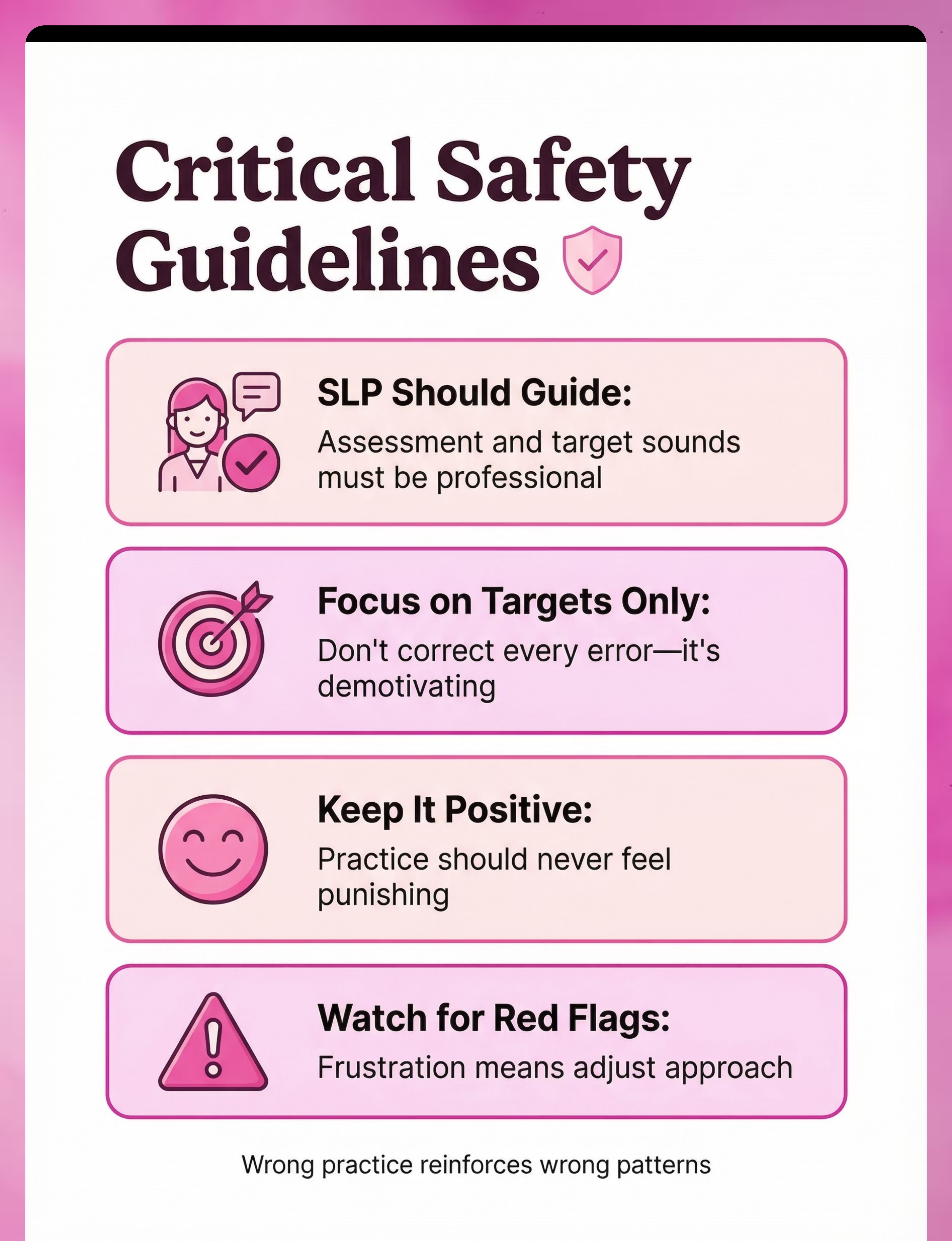
Critical Safety
  • SLP should assess and guide intervention — never guess which sounds to target
  • Don't correct every error — focus only on designated target sounds
  • Make practice positive, not punishing — frustration indicates need to adjust
  • Wrong practice reinforces wrong patterns — get professional guidance first
Warnings
  • Over-correction can make child avoidant of speaking altogether
  • Frustration during practice indicates need to adjust approach or take a break
  • Some sounds develop later naturally — ensure expectations are age-appropriate
  • Never assume all sound errors need immediate correction
Contraindicated
  • Unsupervised articulation therapy without SLP assessment and guidance
  • Constant correction of speech throughout the day
  • Punitive practice or negative feedback about speech

Safety Checklist
Before Use
  • SLP evaluation completed
  • Target sounds identified by professional
  • Home practice plan from SLP in hand
  • Materials for target sounds ready
During Use
  • Following hierarchy (isolation → words → sentences)
  • Practice is fun and motivating
  • Using visual and tactile cues
  • Celebrating effort, not just accuracy
Signs of Success
  • Correct production in practice contexts
  • Generalization to conversation
  • Improved overall intelligibility
  • Increased confidence in speaking
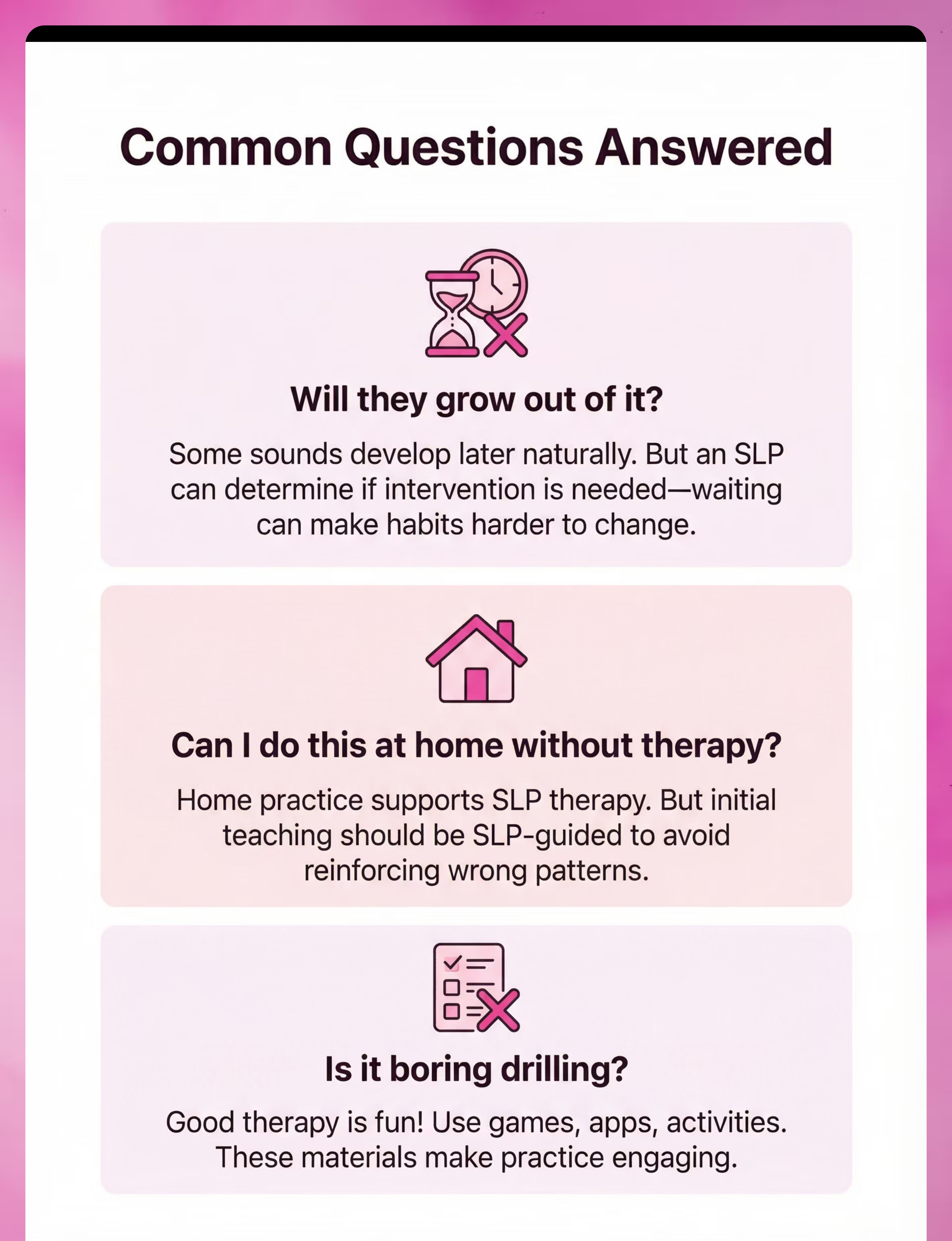
Common Questions (Honest Answers)
Q: They'll grow out of it, won't they?
A: Some sounds naturally develop later, and that's normal. But if sounds are significantly delayed compared to developmental norms, or if there are many errors across multiple sounds, intervention helps prevent patterns from becoming entrenched. An SLP can determine if it's developmental or needs treatment. Waiting can sometimes make habits harder to change later.
Try this: Get SLP evaluation to determine if intervention is needed now or if watchful waiting is appropriate.
Q: I can do this at home without therapy, right?
A: Home practice is valuable FOR CARRYOVER of skills learned in therapy. But initial assessment and teaching of correct production should be SLP-guided. Without professional guidance, you risk practicing the wrong way, which reinforces incorrect patterns. Wrong practice can actually make errors more ingrained.
Try this: Use home materials to support SLP-guided therapy, not to replace professional assessment and initial teaching.
Q: Drilling sounds is boring. Won't my child resist?
A: Absolutely agree! Good therapy makes practice fun through games, apps, and engaging activities. The materials here support playful practice. Drill without motivation doesn't work and can create negative associations with speech practice. Find engaging ways to practice target sounds through play.
Try this: Make practice fun through games, apps with rewards, and activities your child enjoys while incorporating target sounds.
Q: Which sounds should we work on first?
A: An SLP will assess and determine the target sounds based on developmental norms, stimulability (which sounds are easiest to teach first), and functional impact (which errors most affect intelligibility). Don't guess — get professional guidance on which sounds to target and in what order for maximum efficiency.
Try this: SLP determines target sounds and practice hierarchy; these materials support the practice once goals are set.
Investment Guide
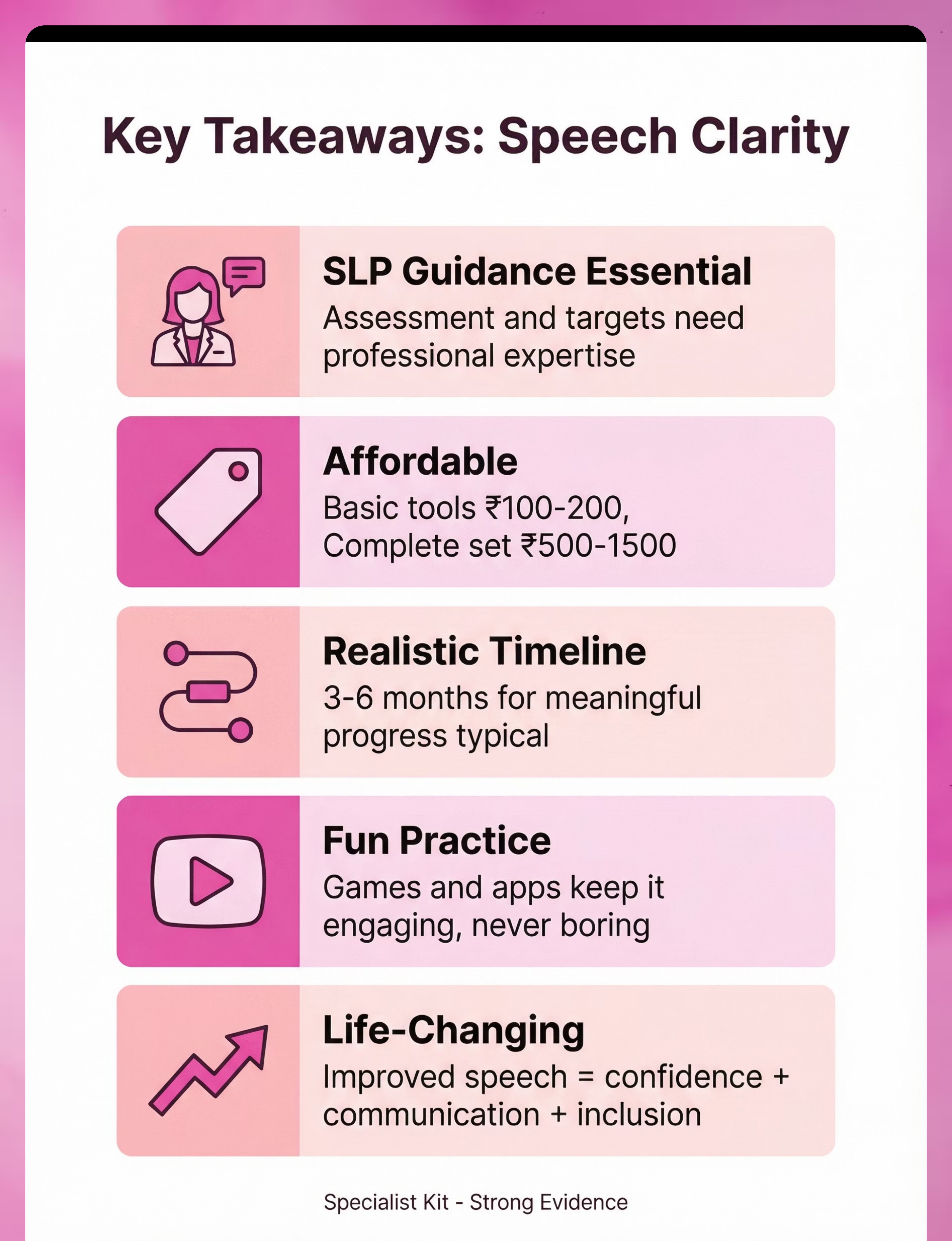
Articulation tools range from ₹100 to ₹1,000 depending on comprehensiveness and format. Starting with basics and adding as needed is a sensible approach.
Item
Mirror + free articulation app
Complete articulation card set + app subscription
Cost
₹100-200
₹500-1,500
Key Features
Essential visual feedback, engaging practice, basic tools for SLP-guided home practice.
Comprehensive materials, covers all sounds, systematic organization, professional quality.
Example Brands
N/A
Super Duper Publications, Speech Buddies, Articulation Station App
Best For
Families starting therapy or testing materials.
Ongoing therapy, clinic use, advanced practice.
Start Basic, Grow Smart
Begin with fundamental tools like a mirror and free apps to establish a practice routine. Expand your collection as specific needs and target sounds are identified by the SLP.
Balance Cost & Quality
The overall range for effective articulation tools is low to mid-tier (₹100–1,000). Prioritize quality for core materials while being mindful of your budget.
SLP Guidance is Key
An SLP's assessment will dictate which sounds to target and the most effective resources. These materials are designed to support professional therapy, not replace it.
1
Phase 1: Establish Routine
Begin with a mirror and a free articulation app (₹100-200) to introduce practice and establish a consistent routine at home.
2
Phase 2: Target-Specific Tools
Once the SLP identifies specific target sounds, add sound-specific cards or specialized apps (₹300-800) to deepen practice.
3
Phase 3: Comprehensive Support
For ongoing therapy or if multiple sounds are addressed, consider a complete articulation card set and app subscription (₹500-1,500).
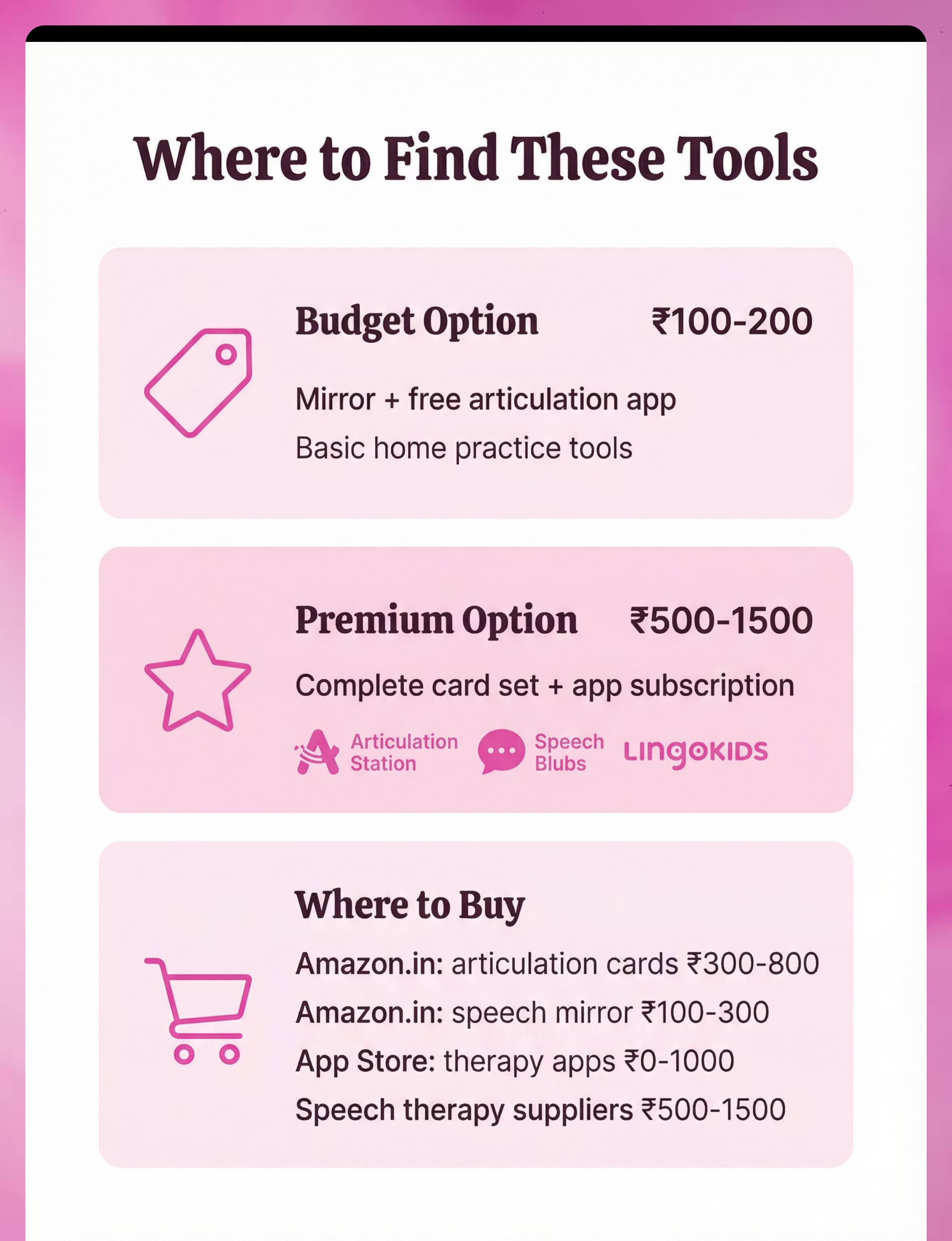
Where to Buy in India
Availability: Available through e-commerce platforms, app stores, and specialized speech therapy suppliers
Amazon.in
Search: "articulation cards speech therapy"
Price range: ₹300-800
Amazon.in
Search: "speech therapy mirror"
Price range: ₹100-300
App Store / Google Play
Search: "articulation app speech therapy"
Price range: ₹0-1,000 (many free options with in-app purchases)
Speech Therapy Suppliers
Search: "articulation materials"
Price range: ₹500-1,500

Buying Tips
  • Get SLP guidance on which specific sounds to target before purchasing cards
  • Mirror is essential for visual feedback — invest in a good quality one
  • Apps make practice engaging — look for ones with progress tracking
  • Cards should be organized by sound for easy practice
  • Home practice supports therapy — consistency matters more than expensive materials
Red Flags
  • Practicing sounds without SLP guidance on which to target
  • Random sound practice without a systematic plan
  • Boring drill without motivation or engagement
  • Correcting every single error throughout the day
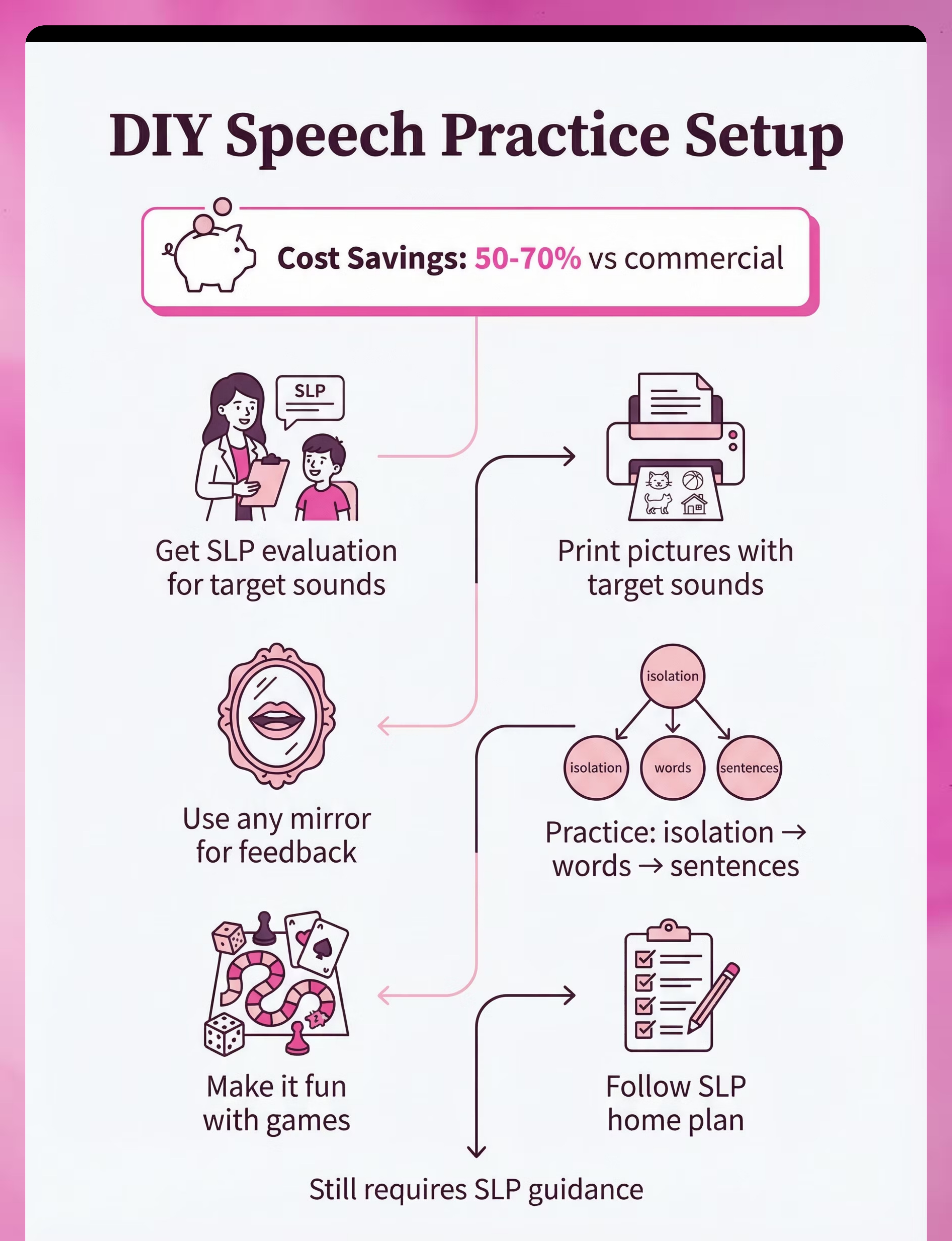
DIY Alternative (Save 50-70%)
Creative & Cost-Effective
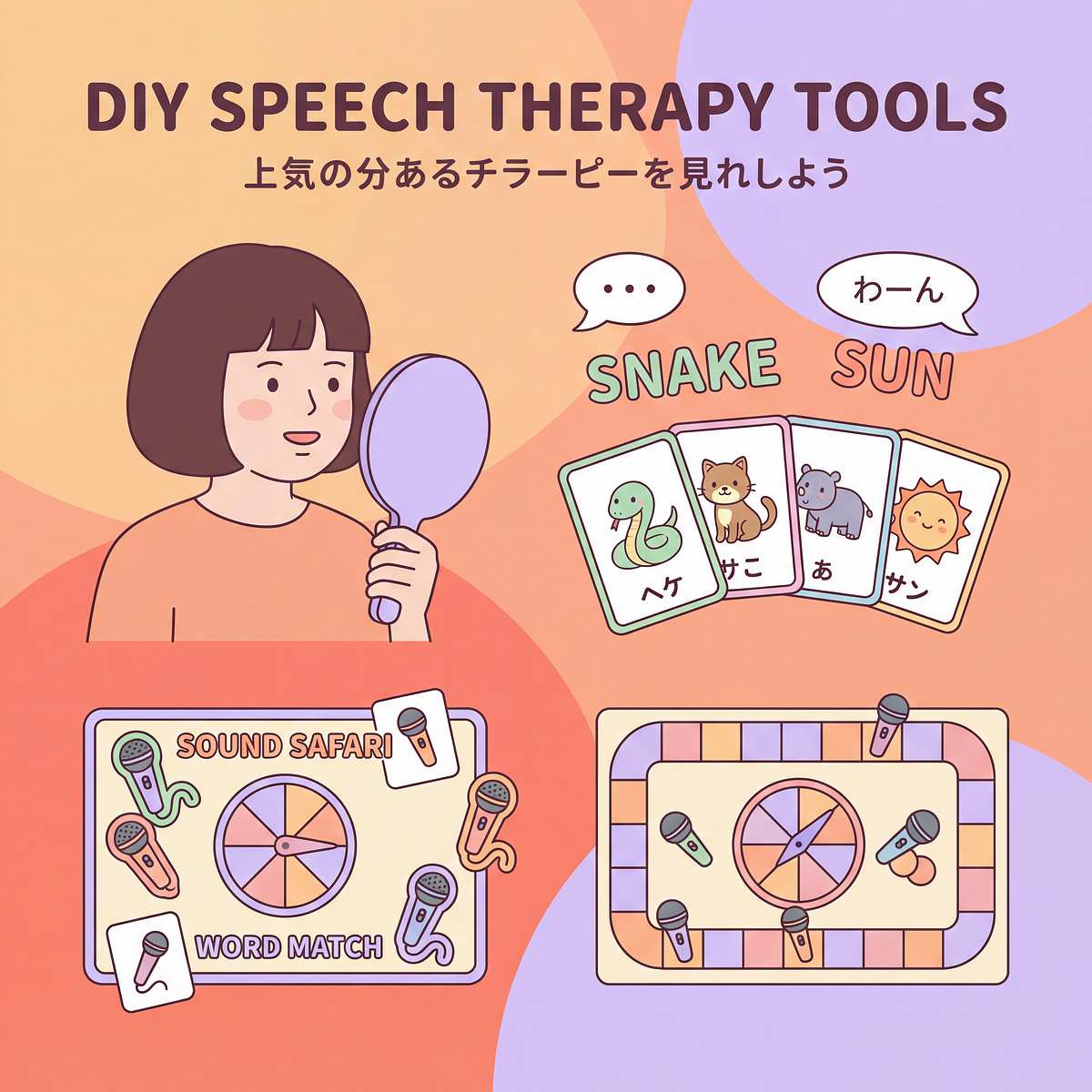
Transform everyday items into powerful therapy tools, saving 50-70% on materials. This approach offers medium feasibility and variable time commitment, all while ensuring your child receives essential support.
Essential Materials
  • Handheld or tabletop mirror for visual feedback
  • Printed pictures for target sounds (easy to create!)
  • Fun games to integrate into practice sessions
Simple Steps to Success
  1. Get SLP evaluation to identify target sounds.
  1. Create or find pictures with those target sounds.
  1. Use the mirror to help your child see mouth positions.
  1. Practice sounds systematically: isolation → words → sentences.
  1. Make therapy engaging with interactive games.
  1. Follow your SLP's home practice plan diligently.
When to Choose DIY
Ideal for supporting SLP-guided therapy, creating personalized word lists, and making practice more engaging. It's a fantastic budget-conscious option for supplementing professional sessions. Key: Requires guidance to target correct sounds.

Preview of articulation speech sound tools Therapy Material

Below is a visual preview of articulation speech sound tools therapy material. The pages shown help educators, therapists, and caregivers understand the structure and content of the resource before use. Materials should be used under appropriate professional guidance.

Page 1
Page 2
Page 3
Page 4
Page 5
Page 6
Page 7
Page 8
Page 9
Page 10
Page 11
Page 12
Page 13
Page 14
Page 15
Page 16
Page 17
Page 18
Page 19
Page 20
Link copied!
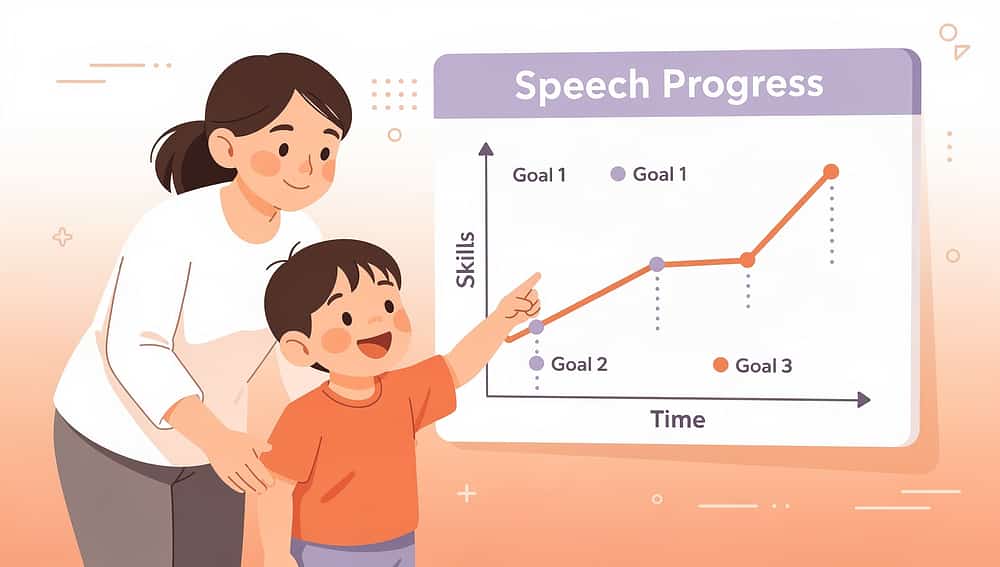
Measuring Success
Baseline (What to Measure First)
  • Sounds in error (from SLP assessment) — which phonemes are incorrect
  • Percent correct at word level — accuracy in structured practice
  • Overall intelligibility rating — how much of speech is understood by unfamiliar listeners
  • Specific target sounds identified by SLP
Goals
  • Child will produce [target sound] correctly in isolation
  • Child will produce [target sound] correctly in words with 80% accuracy
  • Child will produce [target sound] correctly in conversation with 80% accuracy
  • Overall intelligibility will improve to [X]% as measured by unfamiliar listeners
Success Indicators
Monitoring progress is key to effective speech therapy. Look for:
  • Correct production at each level of the hierarchy (isolation, words, sentences)
  • Spontaneous correct production without prompting
  • Improved overall intelligibility across various contexts
  • Increased communication confidence and active participation
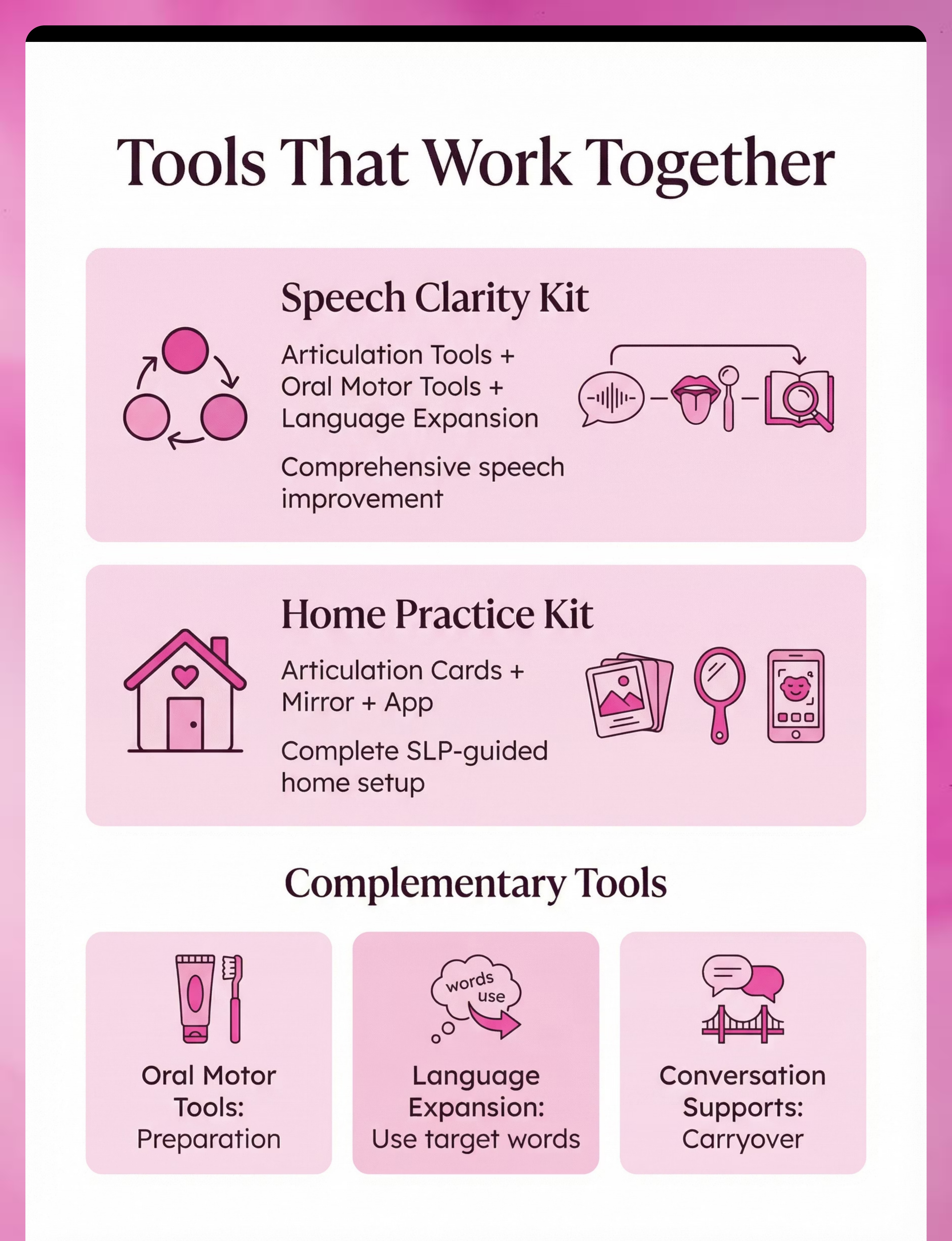
Pairing Recommendations
Enhance your therapy toolkit with:
  • Oral Motor Tools (ID: 1.8): Strengthen muscles for clear speech.
  • Language Expansion (ID: 5.5): Integrate target sounds into meaningful language.
  • Conversation Supports (ID: 5.7): Practice sounds in real-world conversations.
  • Alternative: Articulation App (ID: 5.6.4): Digital practice with tracking.
Consider these bundles:
  • Speech Clarity Kit: Articulation Tools (5.6) + Oral Motor (1.8) + Language Expansion (5.5)
  • Home Practice Kit: Articulation Tools (5.6) + Mirror (5.6.2) + Articulation App (5.6.4)
Support & Resources
Get the help you need:
  • FREE National Autism Helpline: 9100 181 181 (16+ languages)
  • Website: pinnacleblooms.org
Platform Integration provides advanced support:
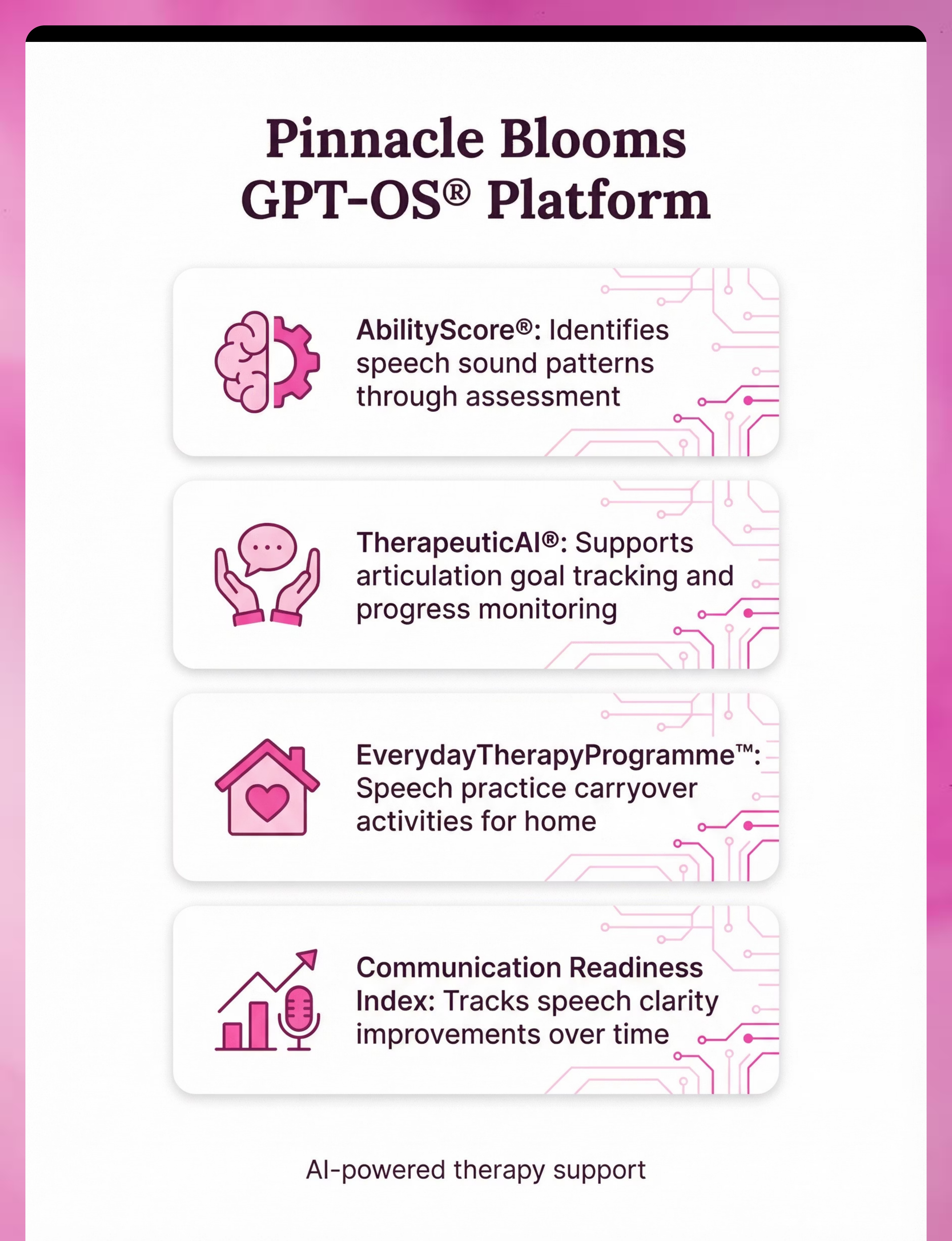
  • AbilityScore®: Identifies speech sound patterns.
  • TherapeuticAI®: Tracks articulation goals and progress.
  • EverydayTherapyProgramme™: Integrates practice into routines.
  • Communication Readiness Index: Tracks speech clarity improvements.

Quick Summary
AI Summary: Articulation tools support SLP-guided therapy to improve speech sound production and intelligibility. Specialist Kit (Rank 2), strong evidence, requires professional guidance.
articulation
speech sounds
clarity
pronunciation
SLP
therapy
specialist-kit
Common Searches
articulation therapy autism, speech sound therapy, speech clarity autism, pronunciation help autism, speech therapy materials, articulation cards, speech sound practice

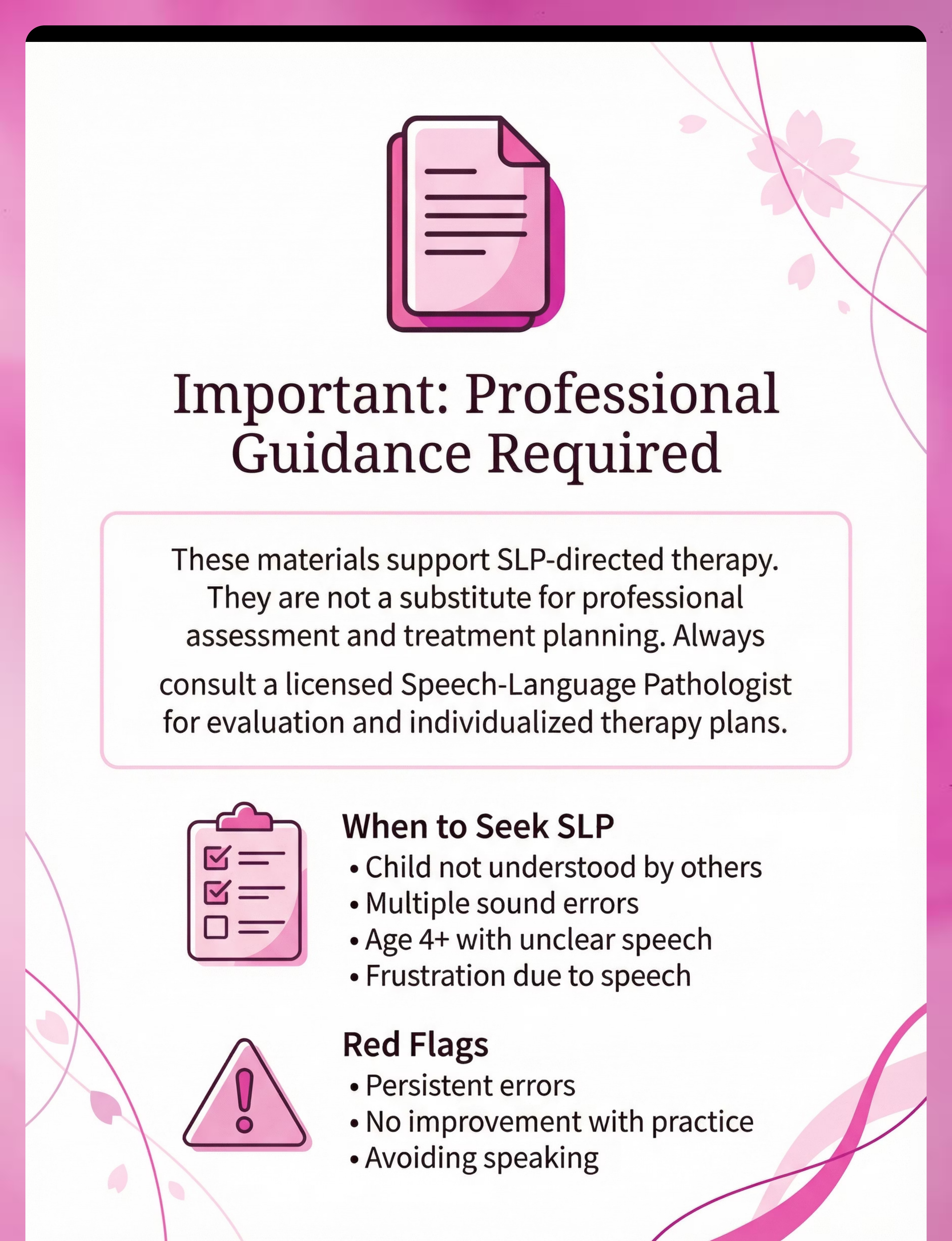
Disclaimer: This is educational information. Always consult qualified occupational therapists, speech-language pathologists, or pediatricians before starting any therapeutic intervention. Individual results vary based on severity, consistency of practice, and individual child factors. Articulation therapy should be guided by a licensed SLP.