












Tool ID: 8.8
SpEd + OT Recommended
Moderate-Strong Evidence
Rank #2
Daily Use
₹0–1,000
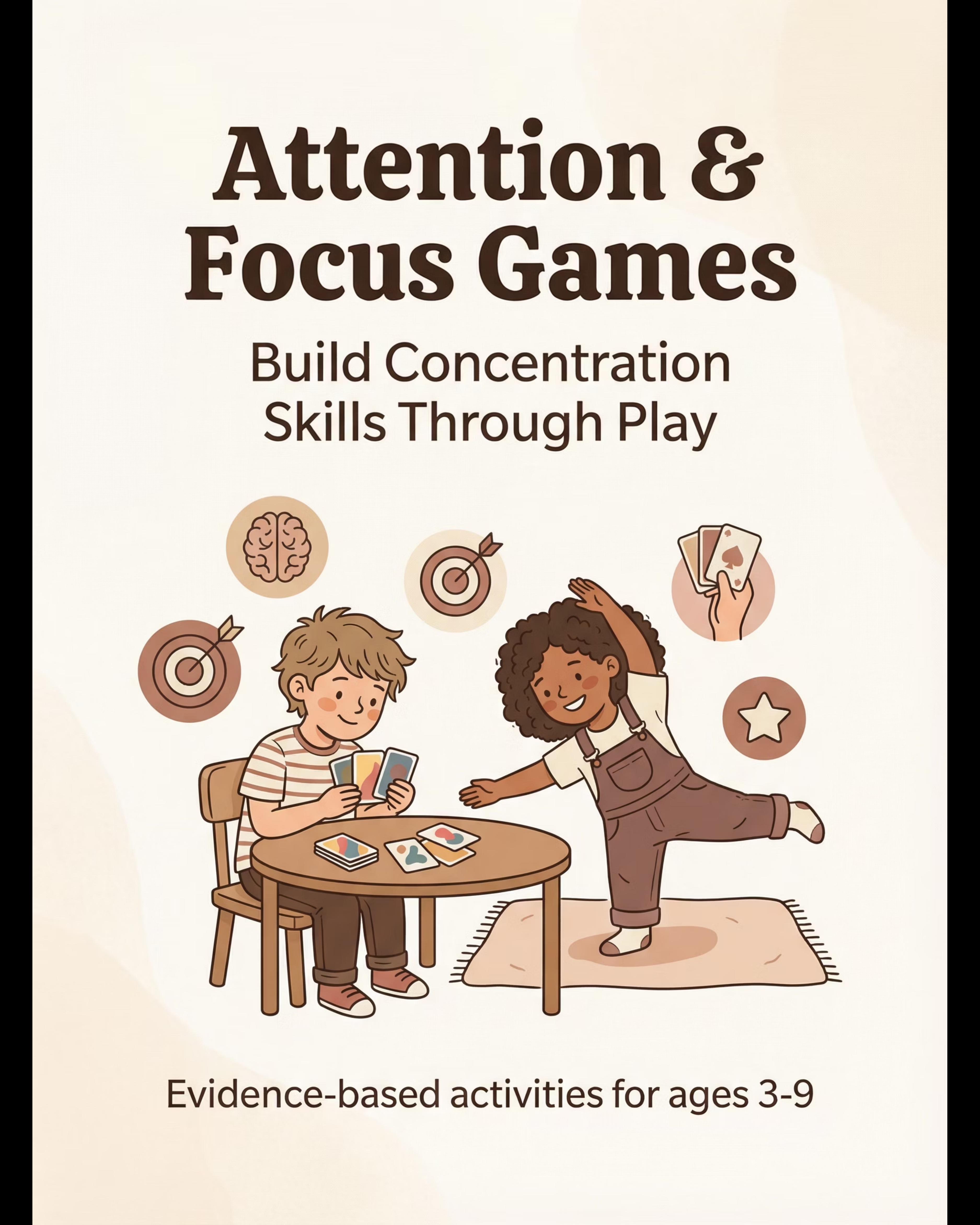
Attention & Focus Games: Building Executive Function Through Play
Sustained attention and executive function development system
Build sustained attention, selective attention, and inhibitory control through engaging, game-based activities that make focus fun. These evidence-based games strengthen the executive function skills essential for learning, task completion, and daily success. Whether your child struggles to stay on task, gets distracted easily, or acts impulsively, attention games provide the practice needed to develop these critical cognitive skills naturally.

Who This Helps
Children with Concentration Difficulties
Our games help build the ability to maintain focus over time during activities and learning tasks.
Children with Distractibility Issues
These activities teach kids to focus on relevant information while filtering out distractions effectively.
Children with Self-Regulation Challenges
The games develop the ability to stop, think, and control impulsive actions and behaviors.
Sustained Attention
Building the ability to maintain focus over time during activities and learning tasks
Selective Attention
Learning to focus on relevant information while filtering out distractions
Inhibitory Control
Developing the ability to stop, think, and control impulsive actions
Working Memory
Strengthening the capacity to hold and manipulate information during tasks
Processing Speed
Improving how quickly children can take in and respond to information
Executive Function
Building the higher-order cognitive skills needed for planning and self-regulation
Ages 3-9 years
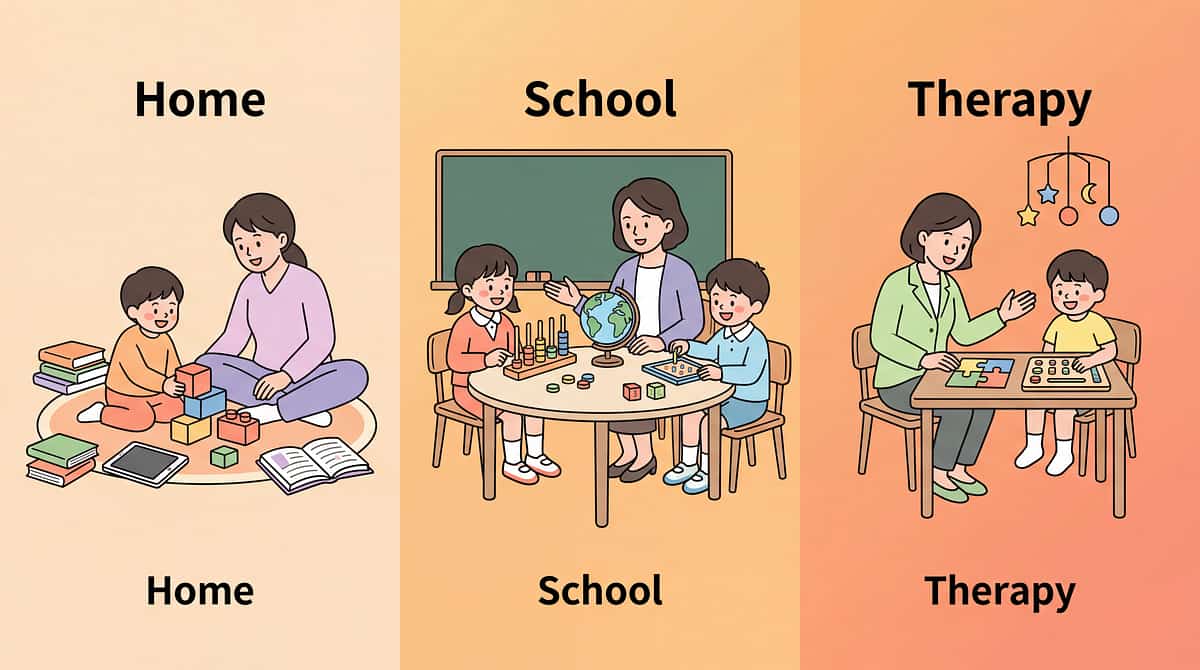
Home
School
Clinic
Outdoors
Best for: Children who struggle with staying on task, completing activities, following multi-step directions, filtering distractions, or controlling impulsive behaviors. Attention skills are foundational for learning success and benefit all children, not just those with diagnoses.

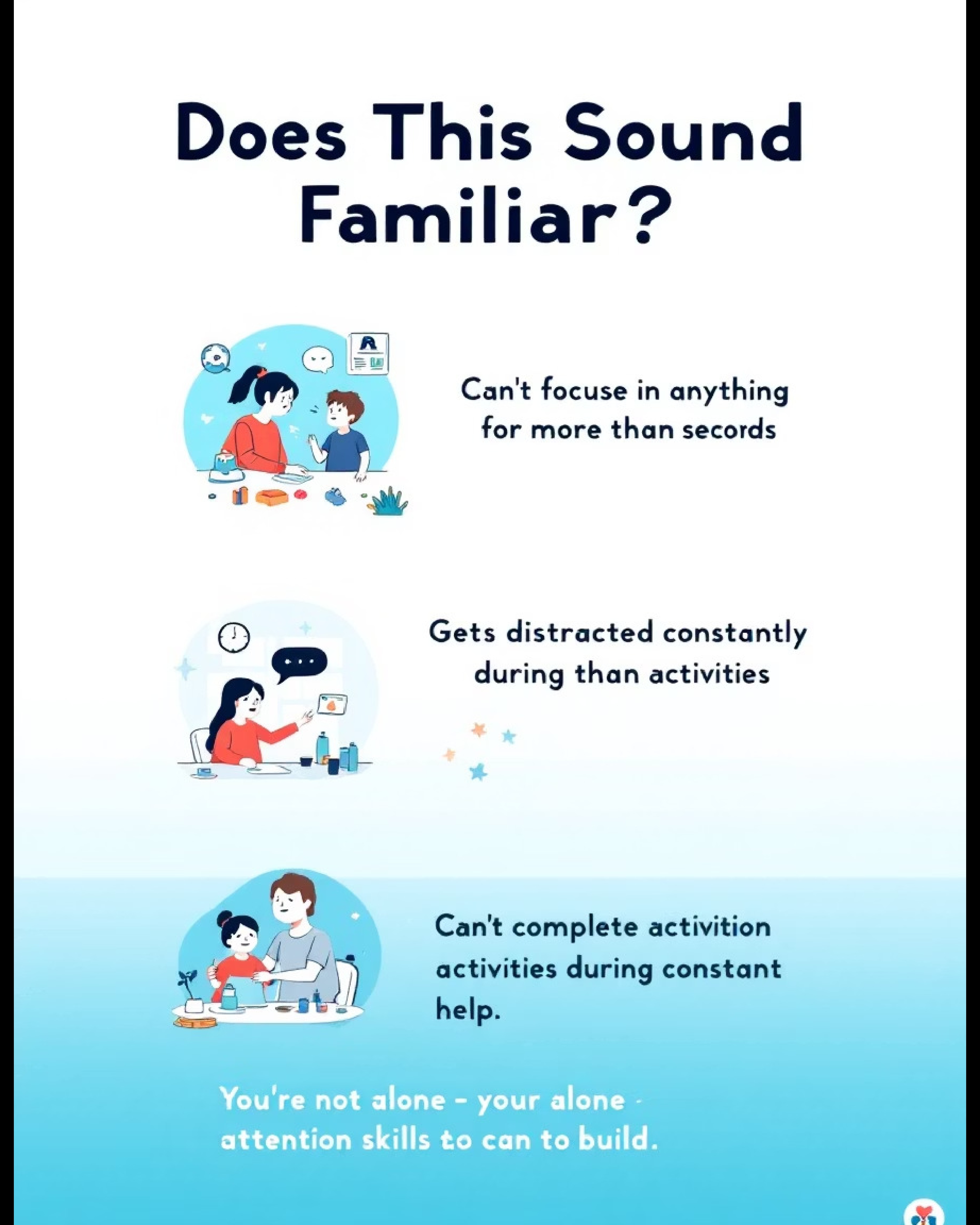
Does This Sound Familiar?
"My child can't focus on anything. She gets distracted constantly and can't sit still for activities."
"He can't complete tasks without me redirecting him every few seconds. His attention span is so short."
"She can't follow multi-step directions. By the time I finish explaining, she's already moved on to something else."
"I don't know how to help him focus. Everything in the environment distracts him, and learning is suffering."
You're not alone. These are among the most common challenges parents and educators face with children developing attention skills. The good news? Attention is a skill that can be developed and strengthened through practice — and games provide the perfect, motivating context for building focus naturally.

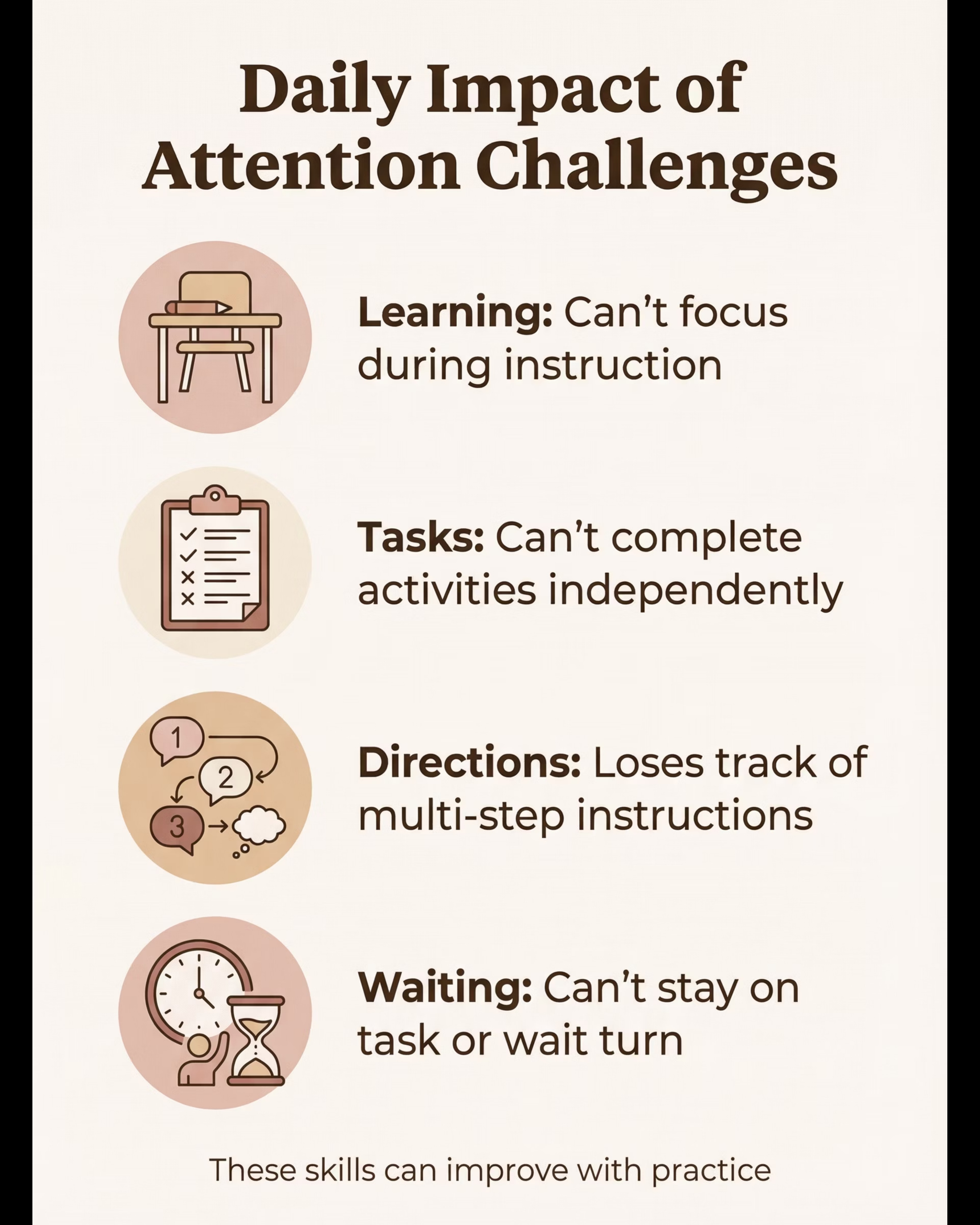
A Day Without the Right Support
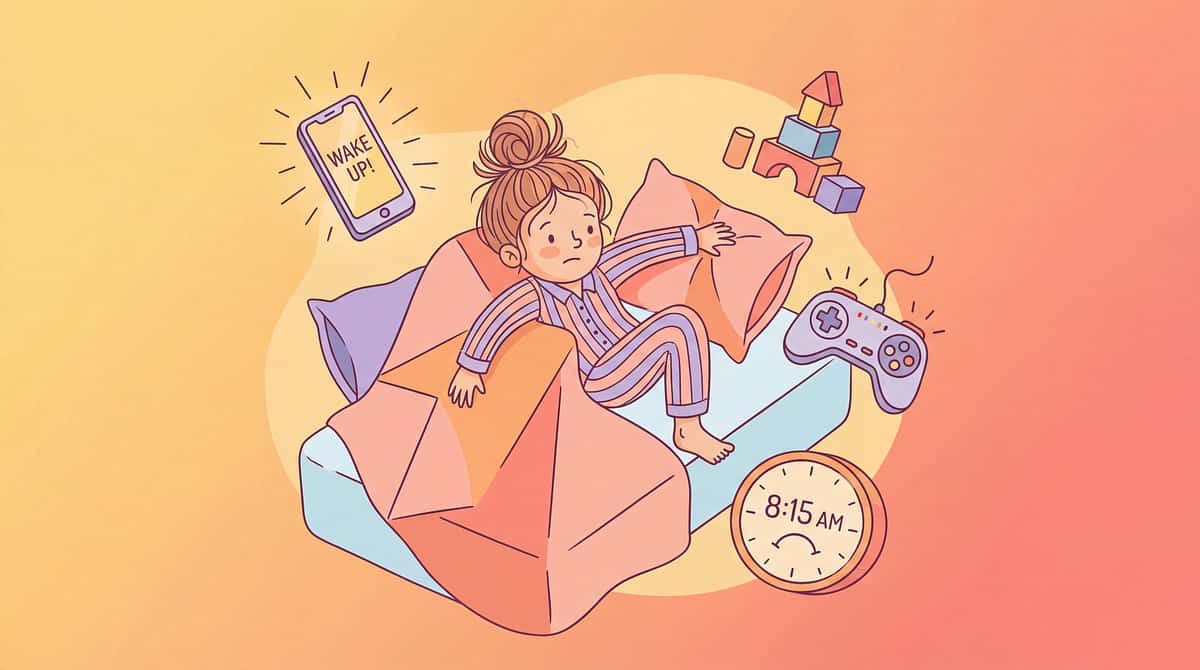
Morning Routine
Can't focus during instruction for getting ready. Constantly distracted by toys, sounds, or thoughts. Simple tasks take forever because attention keeps wandering.
Transitions
Loses track of multi-step tasks when moving between activities. Forgets what they were supposed to do. Needs constant verbal reminders and redirection.
Learning/School Time
Can't focus during instruction or independent work. Notices everything in the environment. Off-task most of the time. Learning opportunities are missed because attention isn't sustained.
Activity Time
Can't complete any activity from start to finish. Constantly switching between things. Nothing feels satisfying because nothing gets completed. Frustration builds for both child and caregiver.
Waiting/Downtime
Can't wait or stay on task during transitions. Impulsive actions without thinking. Safety concerns arise because child can't stop and consider consequences before acting.

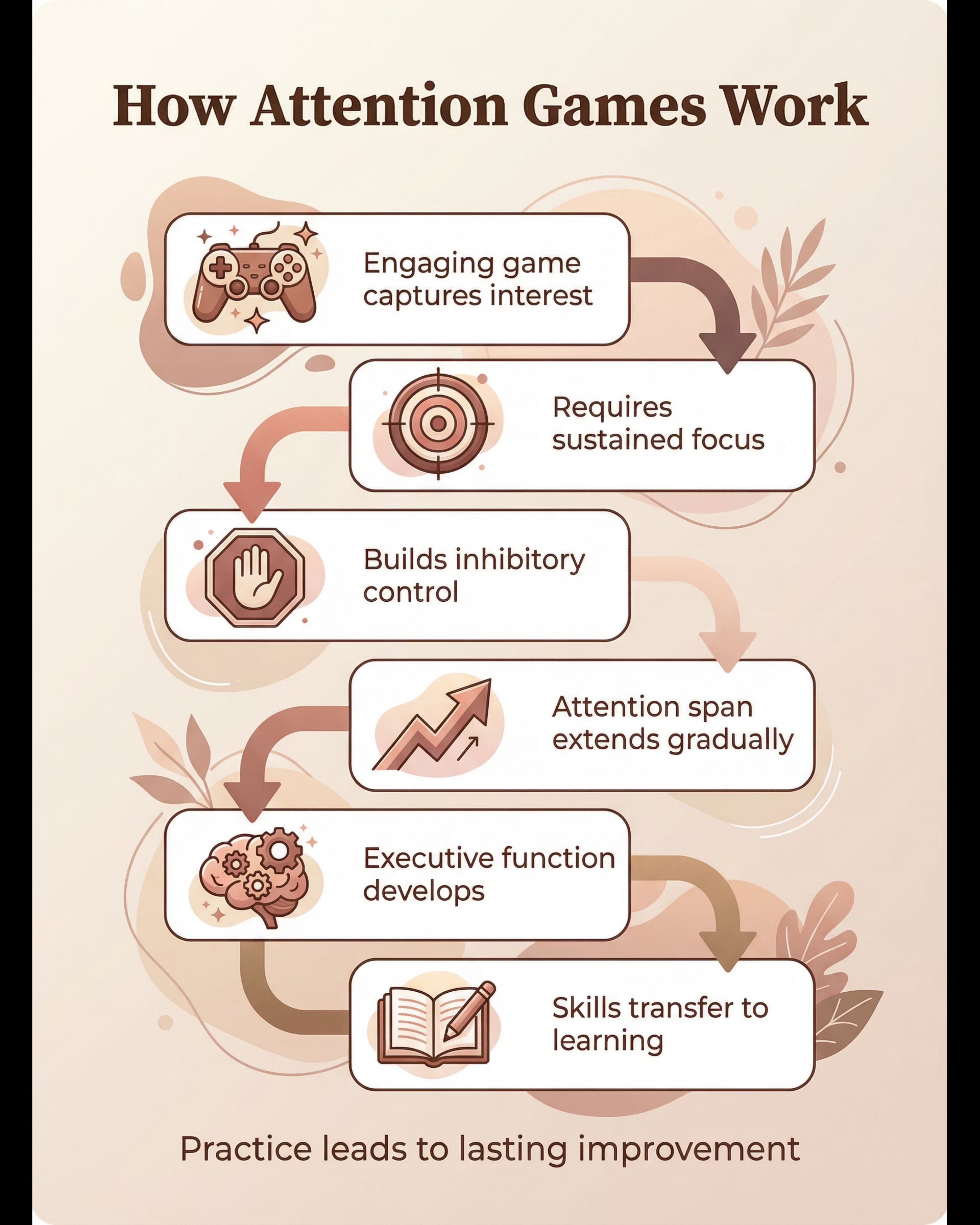
The Science Behind It
Engaging Activity
High-interest games capture and hold a child's natural attention and motivation, initiating the learning process.
Sustained Practice
Game mechanics demand continued attention and repeated effort to succeed, providing consistent practice for developing focus.
Neural Pathways Strengthen
Through consistent engagement and challenges like inhibitory control, new neural connections are formed and existing pathways for attention and executive functions become more robust.
Attention Span Extends
With repeated, motivating practice, the capacity for sustained focus naturally increases, allowing for longer periods of concentration.
Executive Function Develops
Higher-order cognitive skills essential for planning, problem-solving, and self-regulation are significantly strengthened.
Skill Transfer Occurs
Developed attention and executive function skills generalize, transferring to academic tasks, daily routines, and new learning situations, leading to broader success.
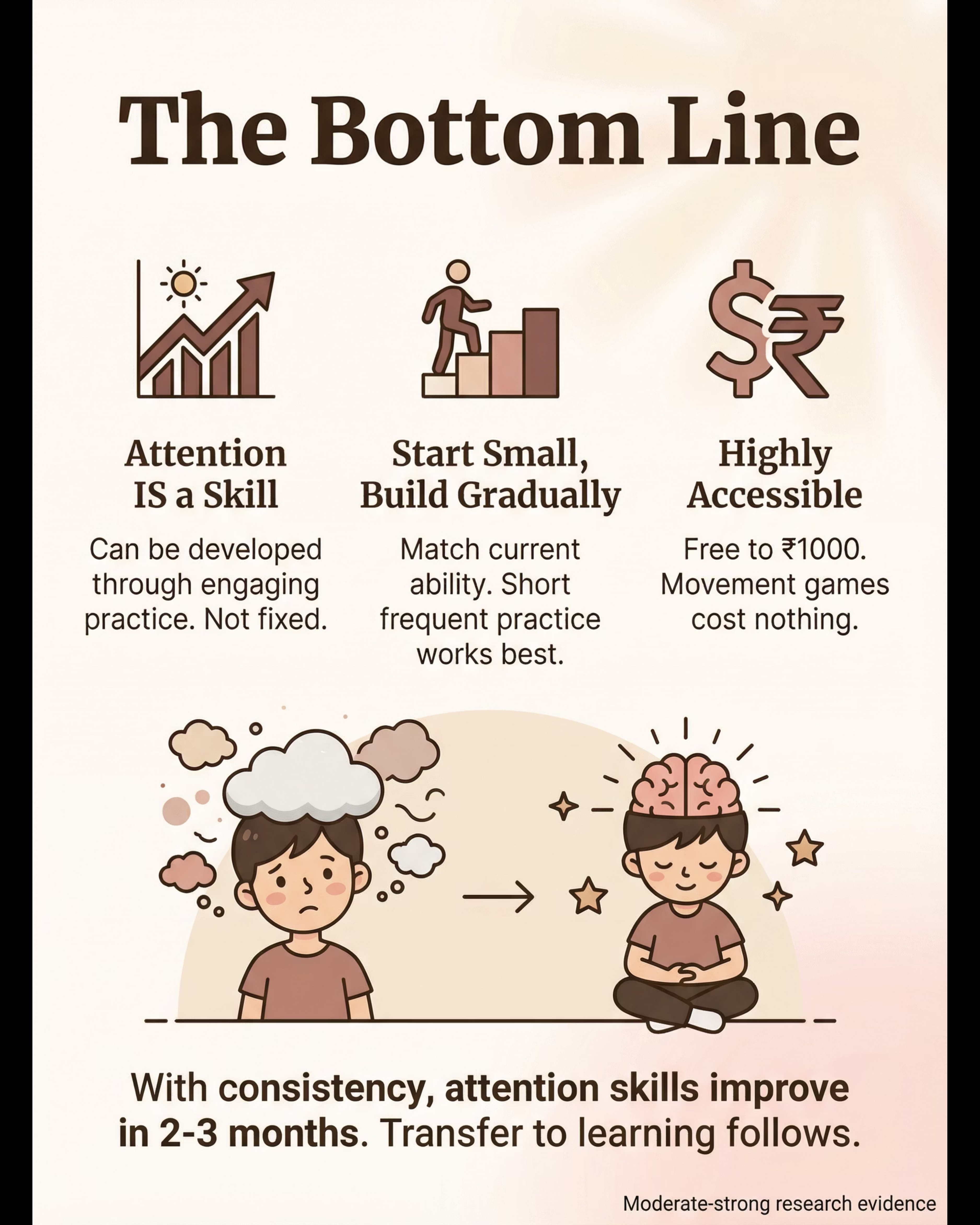
The mechanism is powerful: motivation sustains focus longer than willpower alone. By embedding attention practice in games children want to play, we bypass resistance and build skills naturally. The key is starting where the child currently is and building gradually—never pushing beyond their emerging capacity. Research shows that attention skills developed through engaging activities transfer to less stimulating but important tasks like schoolwork and daily routines.
Sustained Attention
Selective Attention
Inhibitory Control
Working Memory
Processing Speed
Executive Function

How to Use It Right
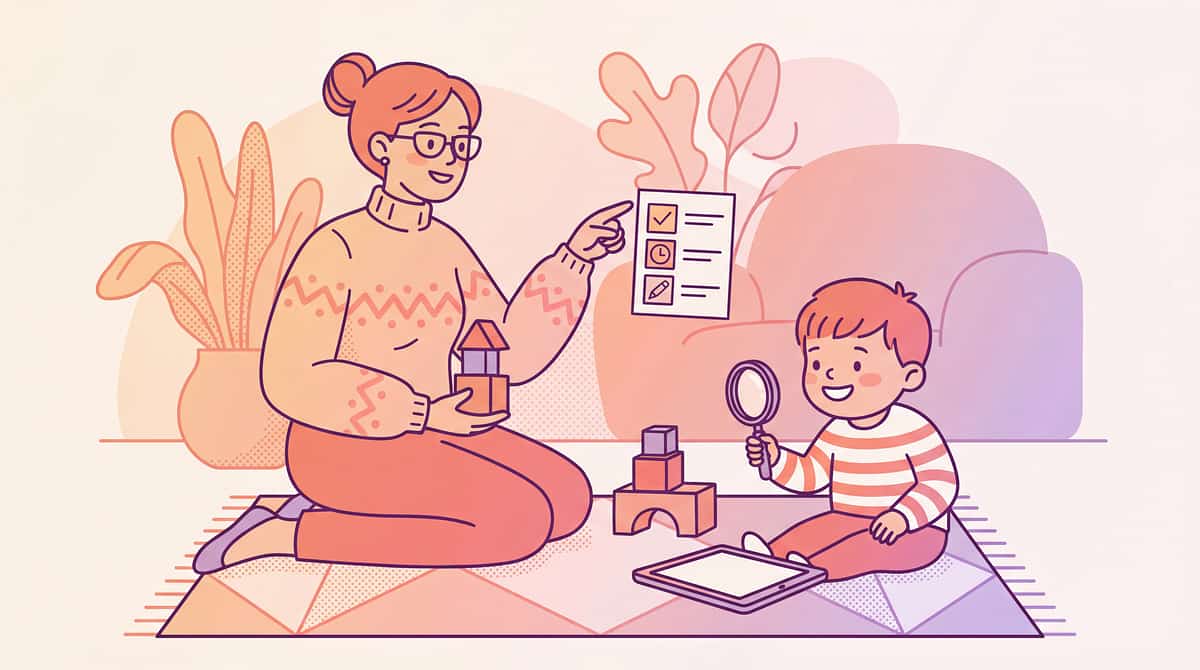
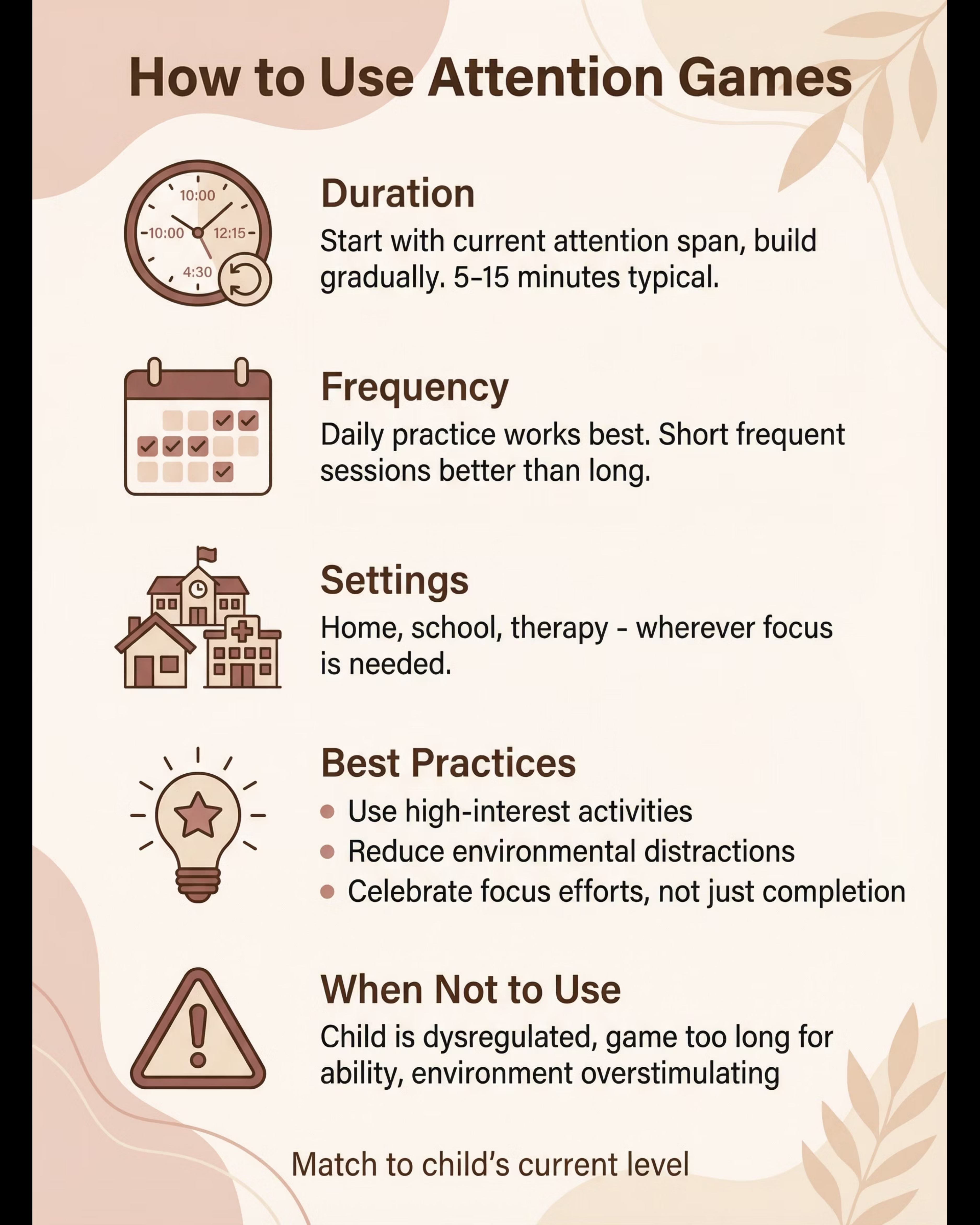
Start with Current Span
Begin with your child's actual attention span—even if it's just 30 seconds. Build gradually from where they are, not where you wish they were. Success builds on small wins.
Use High-Interest Activities
Choose games and activities that genuinely engage your child. Motivation is the secret ingredient—when children are interested, their attention naturally extends beyond their typical capacity.
Short, Frequent Practice
Multiple short practice sessions throughout the day are more effective than one long session. Aim for 5-10 minutes of focused game time several times daily rather than marathon sessions.
Include Movement-Based Games
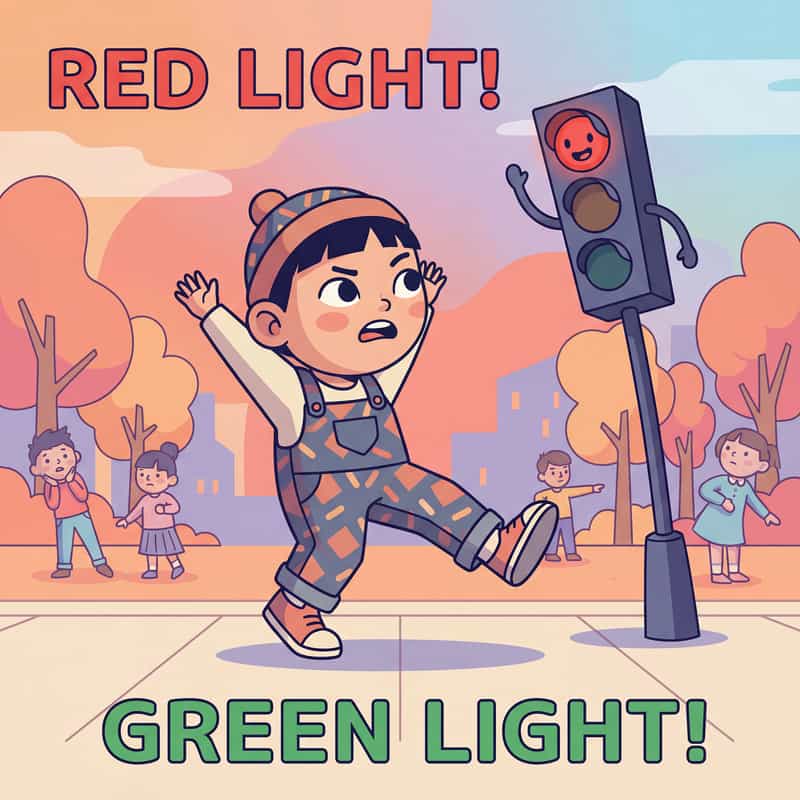
Movement and attention work together beautifully. Red Light Green Light, Freeze Dance, and other active games build both motor control and inhibitory control while keeping energy high.
Reduce Environmental Distractions
Set your child up for success by minimizing competing stimuli. Turn off screens, reduce background noise, and create a calm space before introducing attention games.
Celebrate Focus, Not Just Completion
Notice and name when your child is focusing: "I see you really concentrating!" This builds awareness of the internal experience of attention and reinforces the skill itself.
Duration guideline: Start with your child's current attention span and add 30 seconds to 1 minute each week. For most children, 5-15 minutes of focused game time is ideal. Remember: quality of attention matters more than quantity of time.

Expert Insight
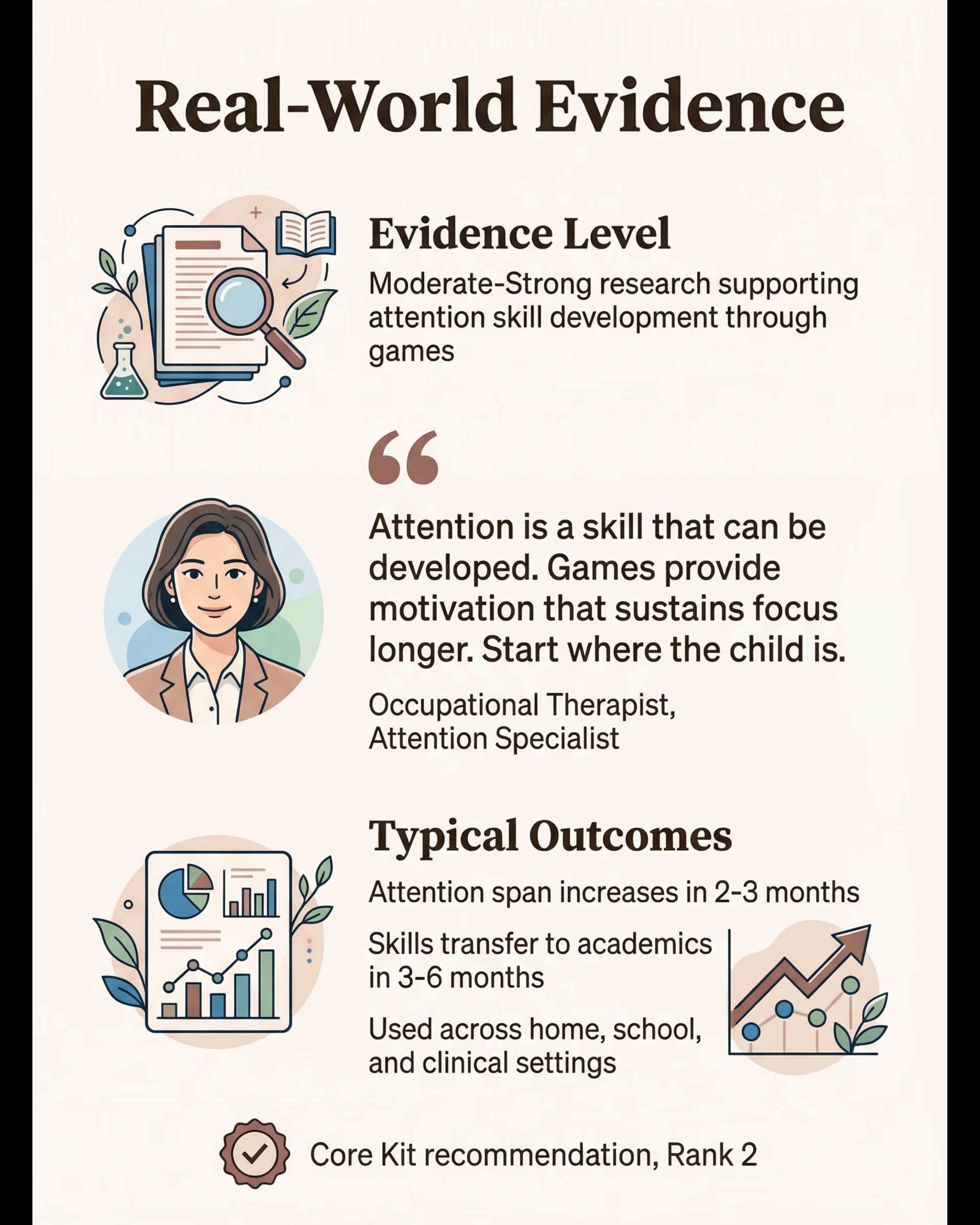
"Attention is a skill that can be developed. Games provide the perfect context—high motivation sustains focus longer. Start where the child is, build gradually, and make it fun. Attention gains transfer to learning."— Occupational Therapist, Attention Specialist
SpEd + OT Recommended
Special Education and Occupational Therapy professionals recognize attention games as core tools for executive function development
Moderate-Strong Evidence
Research consistently demonstrates that structured attention practice improves focus, inhibitory control, and learning outcomes
Rank #2 in Category
Among cognitive and learning tools, attention games are recognized as one of the most essential and effective interventions
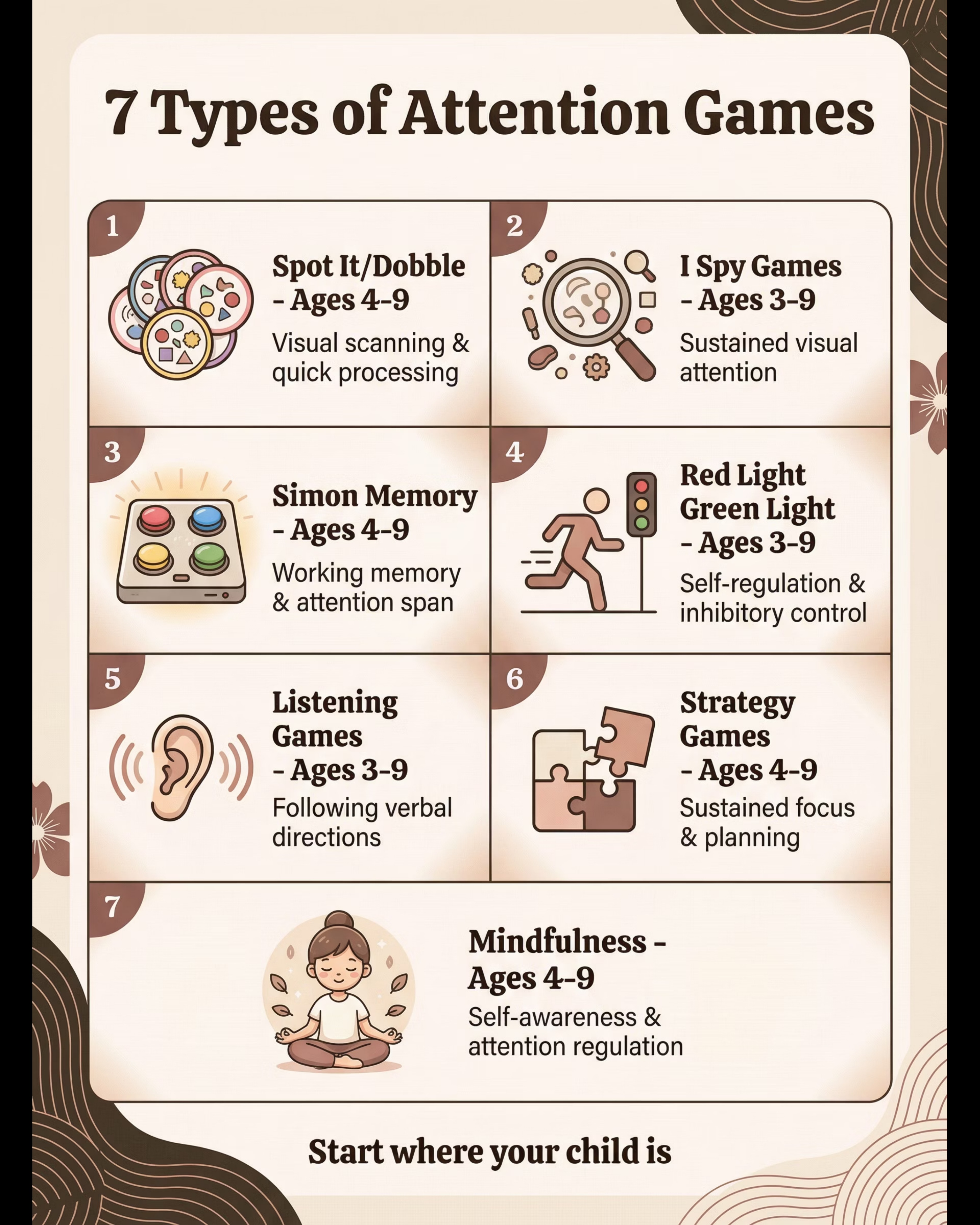
Each variant targets specific aspects of attention development. Choose based on your child's interests, current attention capacity, and the skills you want to build. Most families benefit from having 2-3 different types to maintain novelty and engagement.

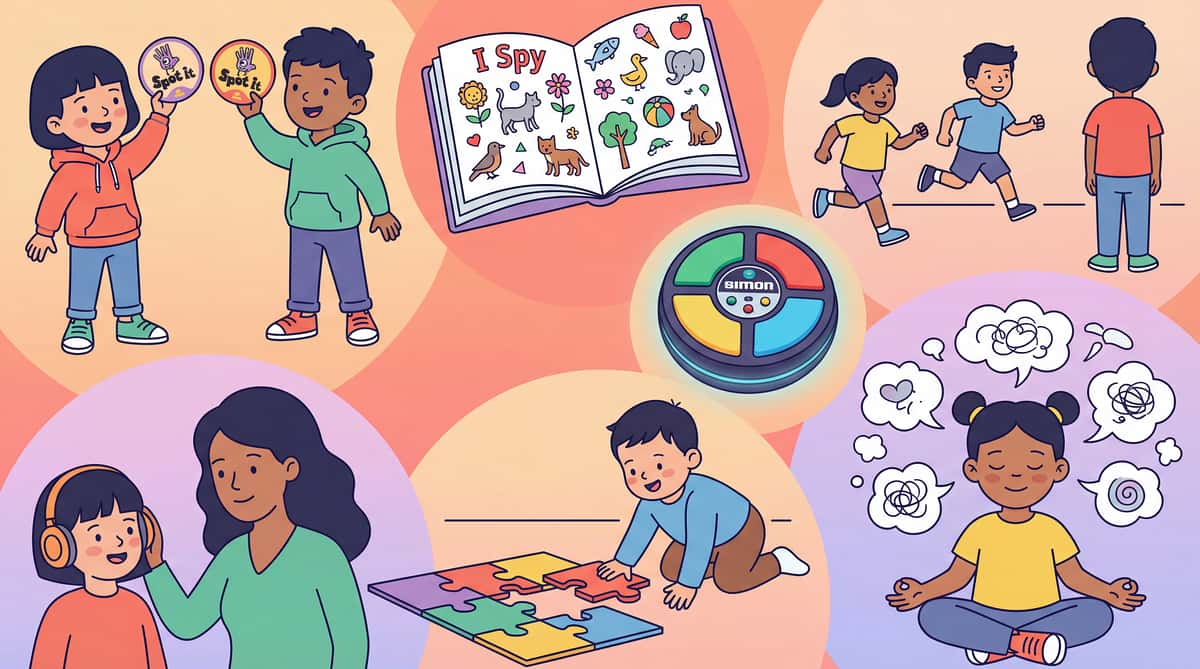
Explore 7 Attention Game Variants
1
Spot It! / Dobble
Type: Visual attention + speed | Best for: Visual scanning, quick processing
2
I Spy Games
Type: Visual attention + discrimination | Best for: Sustained visual attention, searching
3
Simon / Electronic Memory Games
Type: Auditory/visual attention + memory | Best for: Attention span, working memory
4
Red Light Green Light / Stop-Go Games
Type: Inhibitory control + attention | Best for: Self-regulation, motor control
5
Listening Games / Barrier Games
Type: Auditory attention | Best for: Listening skills, following directions
6
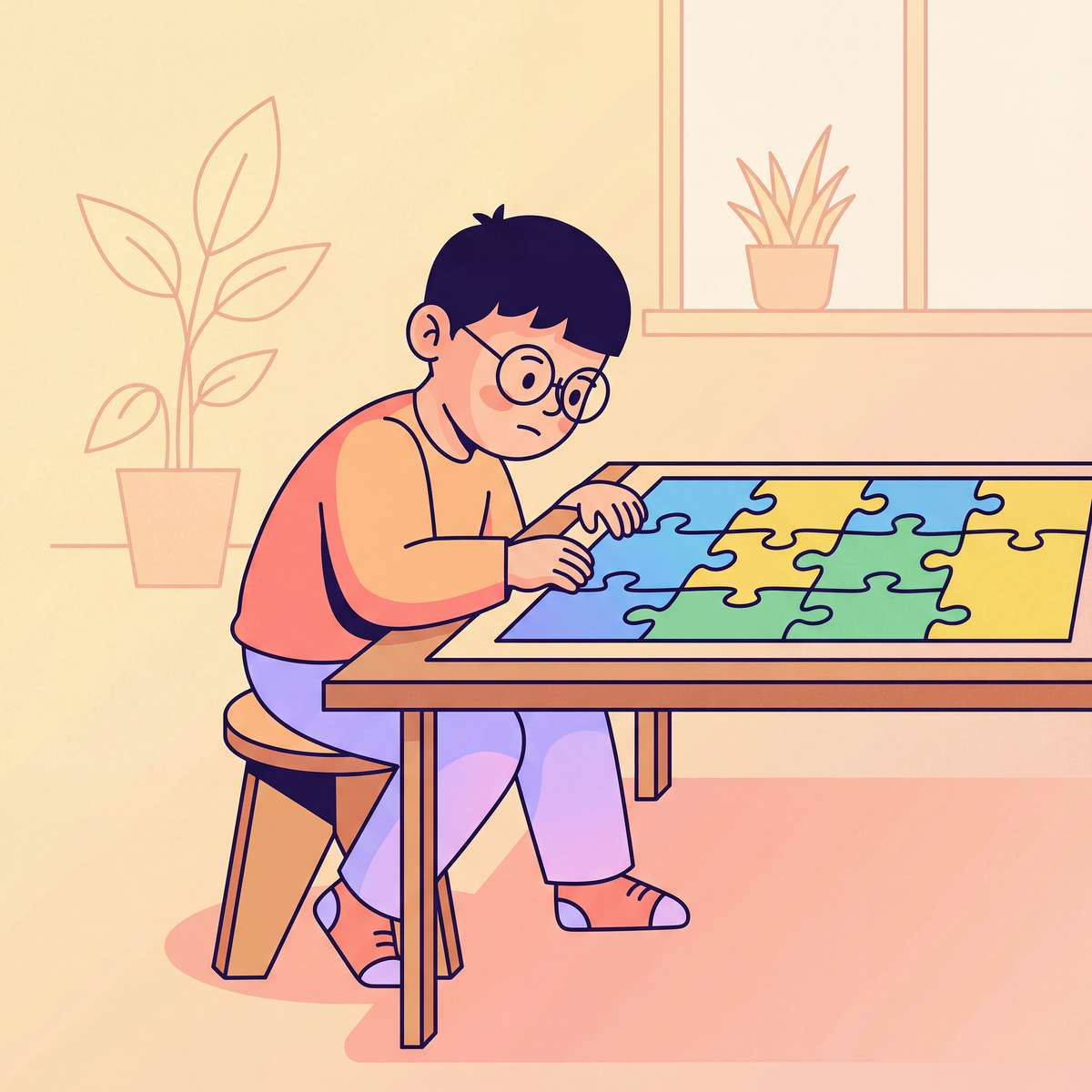
Puzzle/Strategy Games
Type: Extended attention + problem-solving | Best for: Sustained attention, planning
7
Mindfulness Activities for Kids
Type: Internal attention + awareness | Best for: Self-awareness, attention regulation
By Goal
- Calming focus: Mindfulness, I Spy
- Visual skills: Spot It, I Spy
- Inhibitory control: Red Light Green Light
- Memory + attention: Simon
By Setting
- Home: All variants work
- Clinic: Most variants
- Outdoor: Movement games
- Travel: I Spy, Spot It
By Portability
- Very High: Spot It, Mindfulness
- High: I Spy, Simon
- Medium: Puzzles, Listening games
- Activity-based: Movement games
Specifications & Types Guide
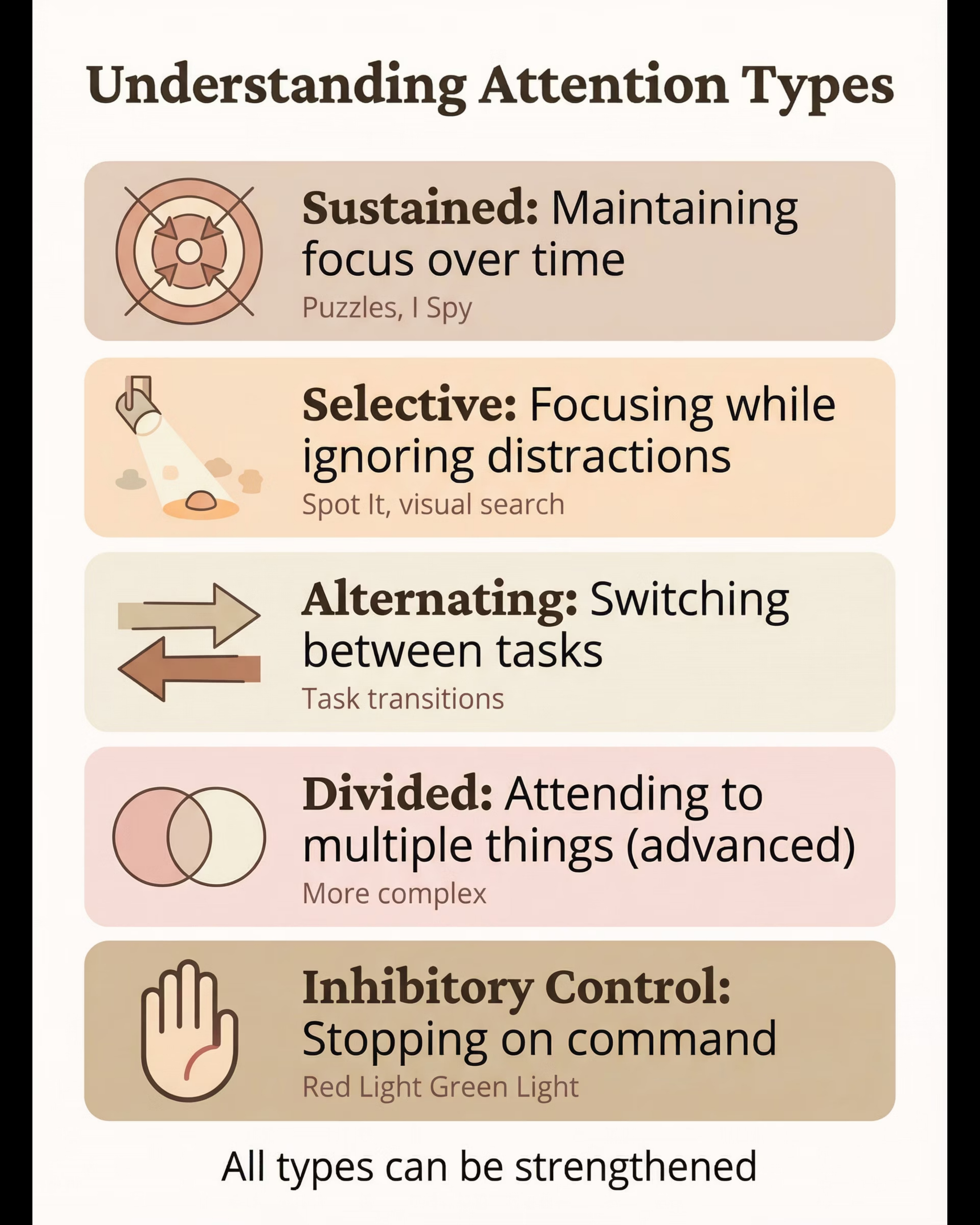
Types of Attention

Sustained Attention
Maintaining focus over time. Examples: puzzles, I Spy games, strategy games. Essential for completing activities and learning tasks.

Selective Attention
Focusing on relevant information while ignoring irrelevant. Examples: Spot It, visual search games. Critical for learning in stimulating environments.

Alternating Attention
Switching focus between tasks. Examples: multi-step games. Important for flexible thinking and task transitions.

Divided Attention (Advanced)
Attending to multiple things simultaneously. Examples: complex games. Develops with maturity and practice.

Inhibitory Control
Stopping an action on command. Examples: Red Light Green Light, Simon Says. Foundation for self-regulation and safety.
Materials & Key Features

Common Materials
- Card games (Spot It, matching games)
- Electronic games (Simon, memory devices)
- Books (I Spy, visual search)
- Movement activities (no materials needed)
- Apps (attention training programs)

Essential Features
- Appropriate length: Matches current attention span, not aspirational
- Engaging content: High interest for the individual child
- Clear focus requirements: Child knows what to attend to
- Gradable difficulty: Can adjust challenge as skills develop
Material selection tip: Start with the type of attention your child struggles with most. If they're easily distracted, begin with selective attention games like Spot It. If they can't stop impulsive actions, prioritize inhibitory control games like Red Light Green Light.
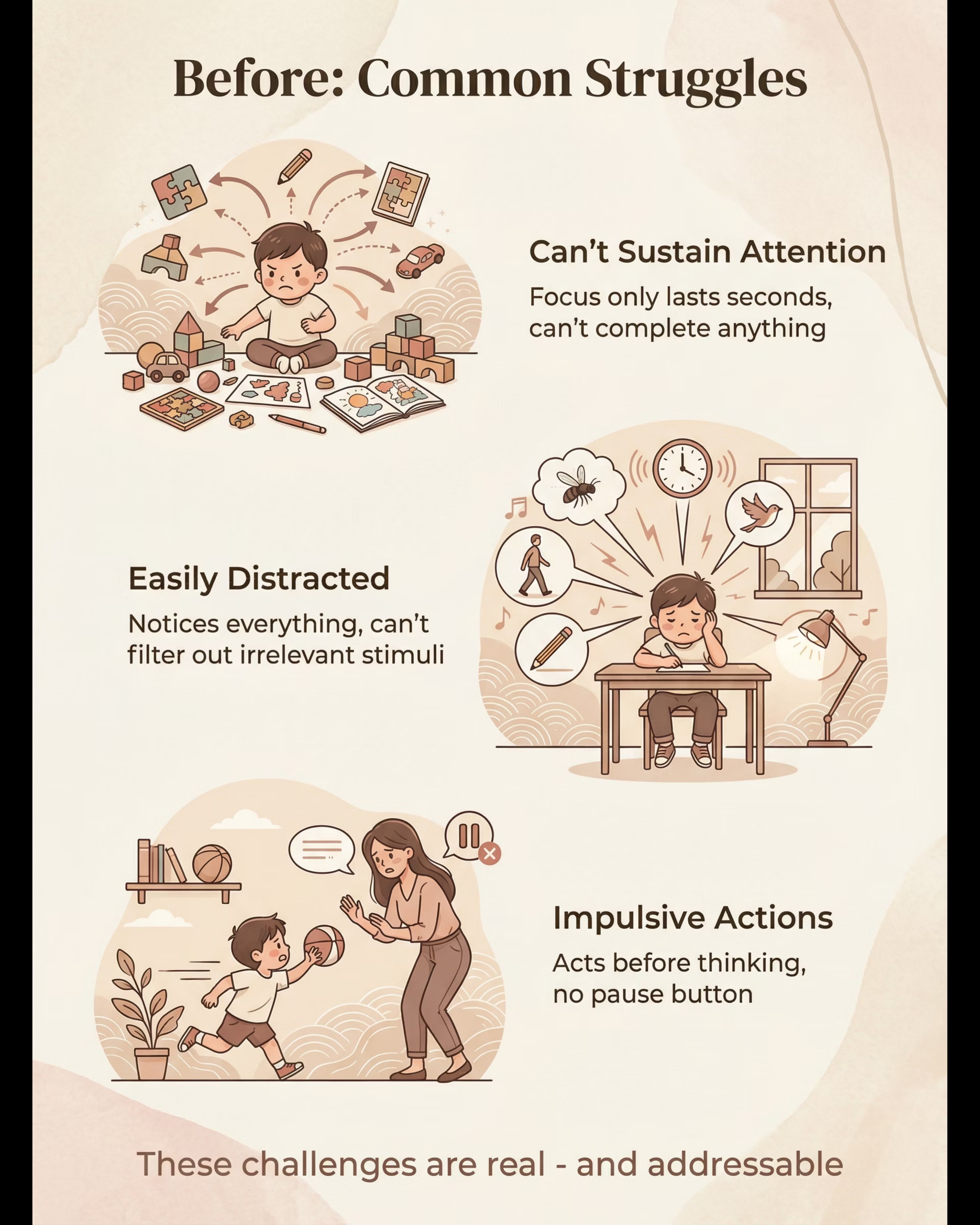
The Struggle (Before)

Situation: Can't Sustain Attention
Experience: Child can only focus for seconds before moving to something new. Can't complete any activity from start to finish. Constantly starting but never finishing. Learning opportunities are missed because attention isn't maintained long enough to absorb information.
Emotion: Frustration, sense of incompletion, feeling scattered

Situation: Easily Distracted
Experience: Child notices everything in the environment—every sound, movement, or object. Can't filter out irrelevant information. Selective attention is weak. Always off-task. Needs constant redirection. Can't stay focused even when they want to.
Emotion: Distraction, feeling scattered, inability to control focus

Situation: Impulsive Actions
Experience: Child can't stop and think before acting. Interrupts before directions are finished. No inhibitory control—acts on every impulse immediately. Safety concerns arise because child can't pause to consider consequences. Learning suffers because thinking happens after acting.
Emotion: Impulsivity, lack of control, concern for safety

The Breakthrough (After)
Situation: Can't Sustain Attention
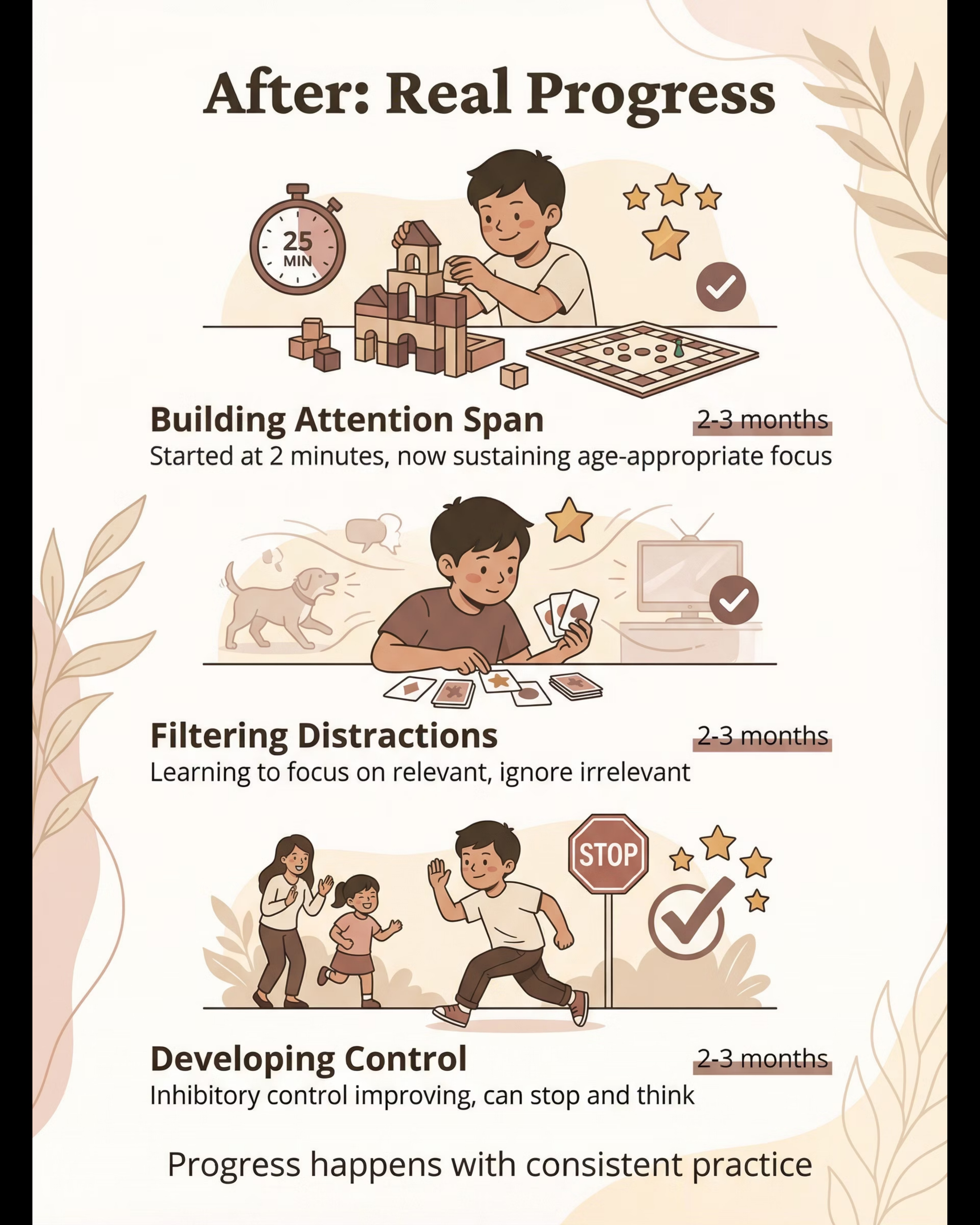
Experience: Started with 2-minute engaging games at their interest level. Built gradually, adding 30 seconds weekly. Now sustains attention for age-appropriate periods. Completing activities brings satisfaction. Learning is sticking because attention is maintained.
Emotion: Focus, completion, pride in finishing
Timeframe: 2-3 months
Situation: Easily Distracted
Experience: Practiced visual search games like I Spy and Spot It daily. Selective attention improving week by week. Getting better at filtering out distractions while maintaining focus on relevant information. Can work in moderately stimulating environments now.
Emotion: Selection, filtering, control over attention
Timeframe: 2-3 months
Situation: Impulsive Actions
Experience: Red Light Green Light and Simon Says games practiced daily. Learning to stop on command. Inhibitory control developing—can now pause before acting. Follows multi-step directions because can hold information and wait. Safety concerns decreasing.
Emotion: Control, ability to pause, thoughtfulness
Timeframe: 2-3 months

What to Expect (Realistic Timelines)
Attention Span Increases (2-3 months)
With consistent daily practice, you'll notice your child can focus for longer periods. Start tracking from baseline—even small increases are meaningful progress.
Selective Attention Improves (2-3 months)
Child becomes better at filtering distractions and maintaining focus on relevant information. Less redirection needed during activities and learning.
Inhibitory Control Develops (2-3 months)
Impulsive actions decrease. Child can stop on command, wait before acting, and think before responding. Safety concerns reduce significantly.
Can Complete Activities (2-3 months)
Tasks that were previously abandoned are now finished. Sense of accomplishment builds. Learning consolidates because information is processed to completion.
Follows Multi-Step Directions Better (3-4 months)
Working memory and sustained attention combine, allowing child to hold multiple steps in mind and execute them sequentially without constant reminders.
Transfers to Academic Tasks (3-6 months)
The attention skills practiced in games begin generalizing to schoolwork, homework, and other learning situations. This is the ultimate goal—real-world application.
Important reminder: These timelines assume consistent daily practice in motivating, appropriately-leveled activities. Progress is gradual and builds cumulatively. Celebrate small wins—each 30-second attention span increase is meaningful growth. Individual results vary based on starting point, consistency, and child's specific profile.

Is This Right for My Child? (2-Minute Check)
Can your child sustain attention for age-appropriate periods?
If NO: Attention games will help build this foundational skill. Start with very short games and build gradually.
If YES: Attention is developing appropriately. Games can still support continued growth and skill maintenance.
Confidence Score: 95%
Is your child easily distracted during activities?
If YES: Selective attention needs strengthening. Visual search games like Spot It and I Spy will help significantly.
If NO: Selective attention is strong—focus on other attention types if needed.
Confidence Score: 92%
Can your child stop an action when asked?
If NO: Inhibitory control needs development. Prioritize stop-go games like Red Light Green Light and Simon Says.
If YES: Inhibitory control is developing well—a sign of good self-regulation.
Confidence Score: 88%
Can your child complete tasks without constant redirection?
If NO: Attention span needs building. Start with highly engaging games at child's current capacity and extend gradually.
If YES: Task completion is strong—attention skills are supporting learning well.
Confidence Score: 90%
Interpretation: If you answered "NO" to 3 or more questions, attention games are a strong fit for your child and should be prioritized in your toolkit. Even one or two "NO" answers suggest attention games will provide meaningful benefit.

Usage Guide
When to Use ✓ | When NOT to Use ✗ | |
|
|
Supervision by Age
Age Range | Supervision Level | Notes | |
Under 5 years | Adult-led activities | Adult directs play, maintains engagement, models attention behaviors. Very short sessions (2-5 minutes). | |
5-7 years | Supported play | Adult nearby, occasional prompting, celebrating focus efforts. Gradually increasing independence. Sessions 5-10 minutes. | |
7+ years | Can play independently | Some games can be played solo. Still benefit from occasional adult participation and acknowledgment of focus. Sessions 10-15 minutes. |
Settings & Duration
Home
School
Clinic
Outdoors (movement games)
Duration: Start with your child's current attention span and build gradually. Most sessions should be 5-15 minutes. Short, frequent practice is more effective than long sessions. For children starting with very short attention spans, even 2-3 minutes of focused practice multiple times daily provides meaningful benefit.

Safety First
Critical Safety
- Safe space for movement games—clear obstacles, adequate room
- Supervise electronic games—follow screen time guidelines
- Age-appropriate content—games should match developmental level
Important Warnings
- Movement games need safe, clear space to prevent injuries
- Electronic games: limit screen time according to age guidelines
- Competitive games can cause frustration—monitor emotional responses
Contraindicated
- Games beyond child's current attention capacity (causes frustration, not growth)
- Overstimulating games for sensory-sensitive children
Safety Checklist
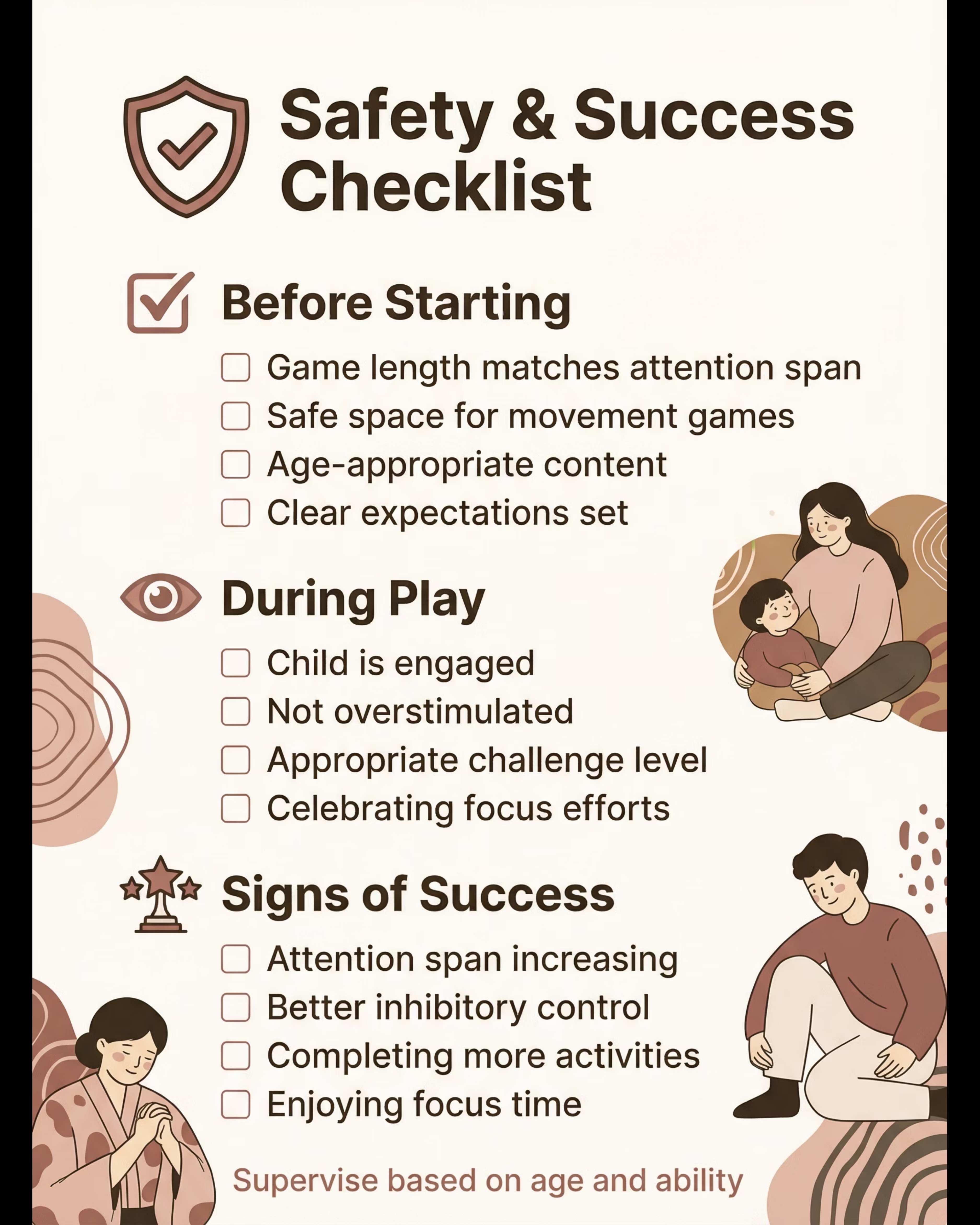
Before Use
- ✓ Game length appropriate for child's current span
- ✓ Safe environment set up
- ✓ Game is engaging for this child
- ✓ Clear expectations established
During Use
- ✓ Child remains engaged
- ✓ Not overstimulated or frustrated
- ✓ Appropriate challenge level
- ✓ Celebrating focus efforts, not just completion
Signs of Success
- ✓ Attention span increasing gradually
- ✓ Better inhibitory control
- ✓ Completing activities more often
- ✓ Enjoying focus games

Common Questions (Honest Answers)
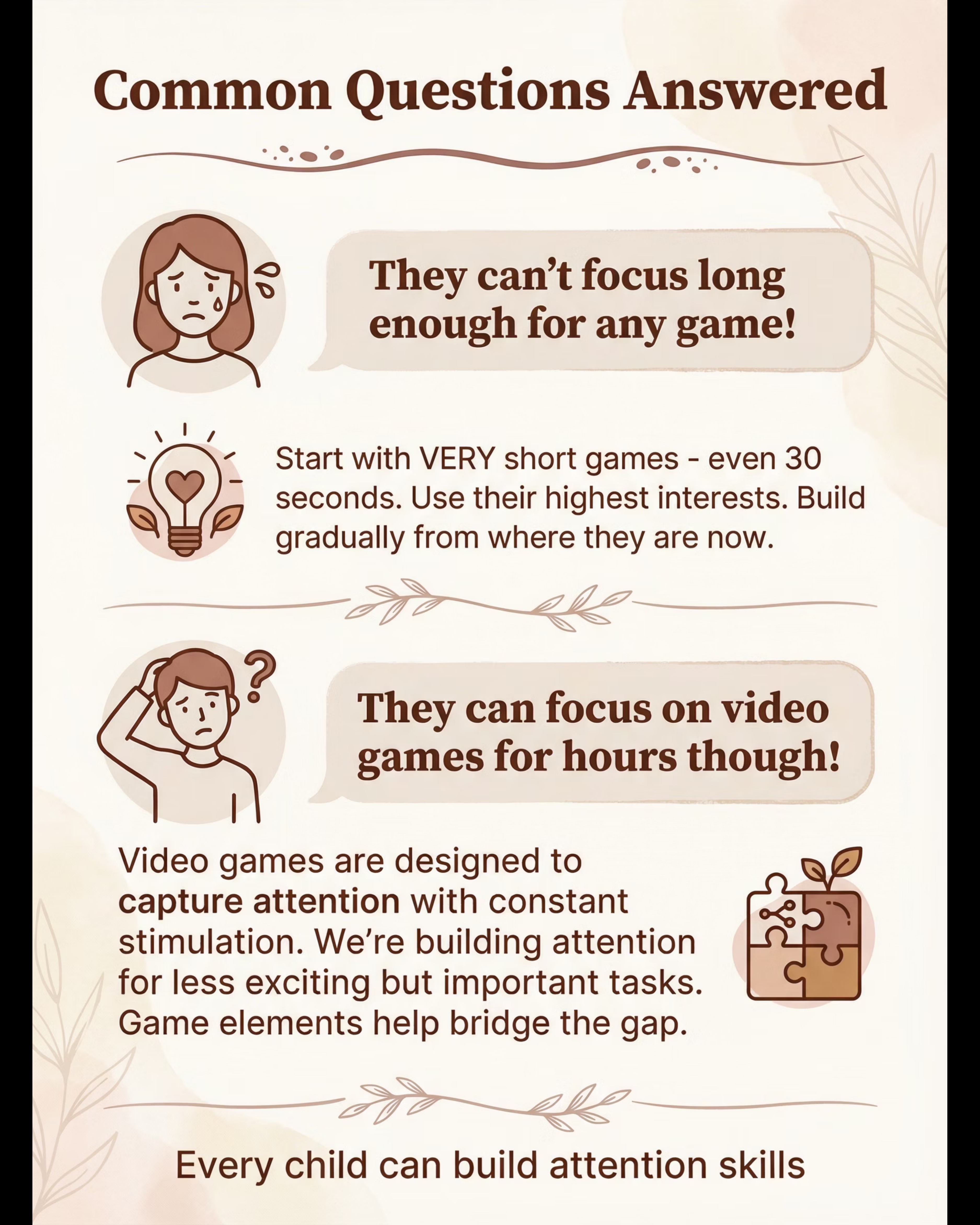
They can't focus long enough for any game
This is precisely why you need attention games! Start with VERY short games—30 seconds to 2 minutes maximum. Use their absolute highest interest activities. Build from where they are right now, not where you want them to be. Success builds on small wins. Add just 30 seconds weekly.
Try this: Begin with movement games (Red Light Green Light for 30 seconds) or I Spy with only 2-3 objects. Make it playful, celebrate any focus, and stop before frustration.
Is this just for ADHD kids?
Not at all! Attention skills benefit ALL children. Many children with autism have attention differences unrelated to ADHD. Typically developing children also strengthen focus through practice. These activities help any child build stronger executive function, which supports learning, task completion, and self-regulation.
Try this: Think of attention games as "cognitive gym" for the brain. Just like physical exercise benefits everyone, attention practice strengthens mental fitness for all children.
They can focus on video games for hours
Video games are specifically designed to capture and hold attention through constant stimulation, rewards, and dopamine hits. The goal of attention games is building focus for less stimulating but equally important tasks like schoolwork and daily routines. We're teaching transferable skills, not just entertainment engagement.
Try this: Use game-like elements (timers, challenges, rewards) in learning activities to bridge between high-stimulation video games and regular tasks. Gradually fade the game elements.
Shouldn't medication fix attention?
Medication (when prescribed appropriately) can help brain chemistry support attention, but it doesn't teach the skills or habits. Think of medication as opening a window of opportunity—attention games help your child develop the actual skills to use that window effectively. They work together synergistically, not instead of each other.
Try this: If your child takes medication, use the optimal medication window for attention practice. The games will help solidify skills that can generalize beyond medication times.

Investment Guide
Choosing the right tools for attention development can significantly impact progress. Here's a breakdown of options to help you make an informed decision, balancing cost and effectiveness.
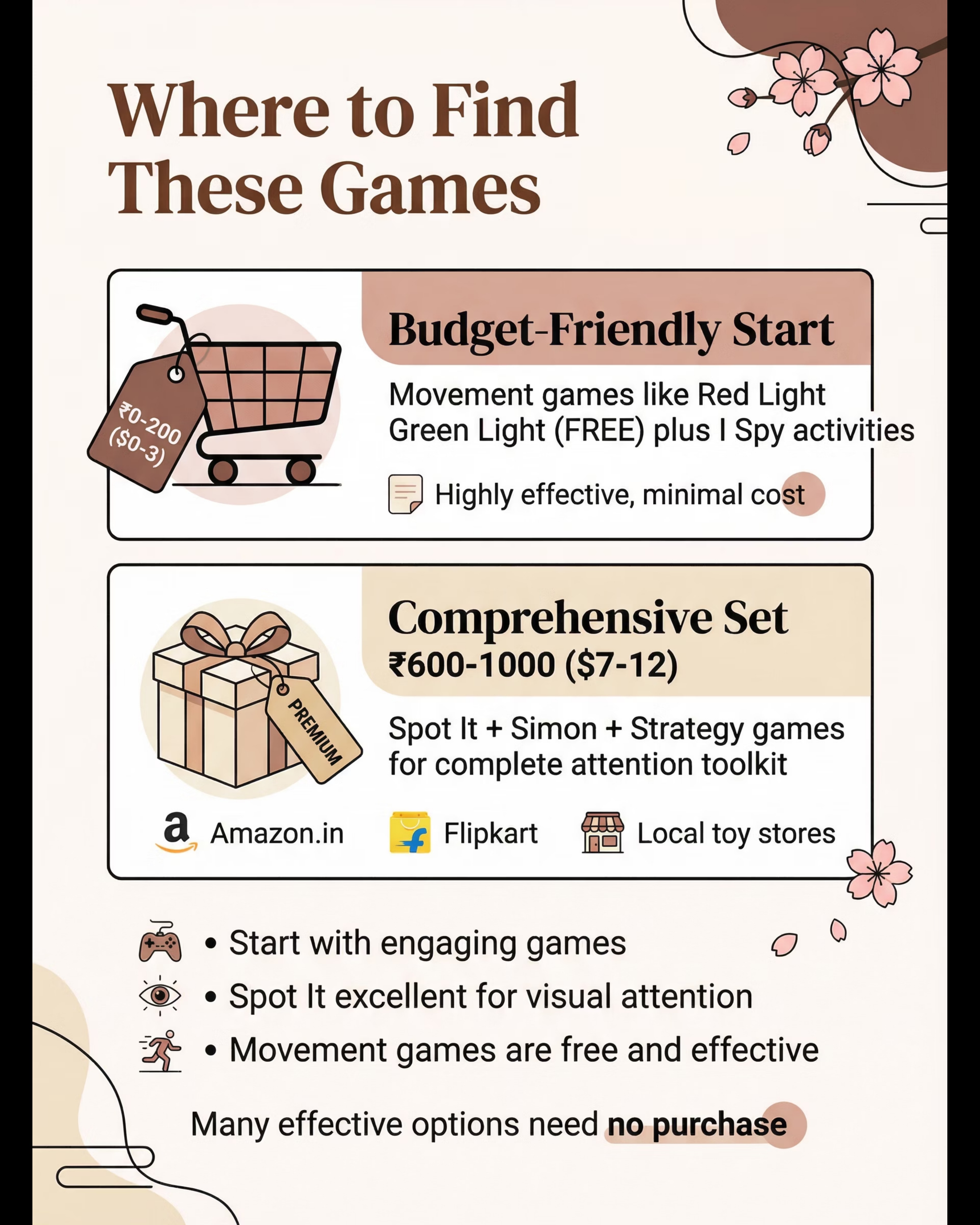
Cost | ₹0-200 (US $0-2.5) | ₹600-1,000 (US $7-12) | |
Included | Red Light Green Light, Simon Says, Freeze Dance, I Spy books/printables | Spot It, Simon electronic game, Puzzle/strategy games | |
Key Brands | N/A (mostly free activities) | Asmodee (Spot It), Hasbro (Simon), ThinkFun (puzzles) |
Key Benefits & Features
Accessible & Free
Movement games require no materials and can be played anywhere, offering immediate engagement.
Visual Attention
I Spy activities are versatile and excellent for building sustained visual focus and observation skills.
Variety & Engagement
A diverse range of premium games targets different attention skills and keeps children engaged longer.
Skill Development
Different game types cater to various cognitive functions, ensuring comprehensive attention skill development.
Value Progression
Starting Point
Begin with free movement games and an I Spy book. Zero initial investment, immediate benefits.
Initial Expansion
Introduce a single commercial game like Spot It. Low cost, high engagement, and new skill target.
Sustained Growth
Gradually add more varied games as interest and attention skills develop. Maintain novelty and deepen practice.
Long-Term Impact
A diverse set of tools ensures continuous engagement and comprehensive development of attention and executive functions.
Overall range: ₹0-1,000 (US $0-12) | Best starting point: Begin with free movement games and a single commercial game like Spot It or I Spy books. Add variety as your child engages and attention skills develop. You don't need everything at once.

Where to Buy in India
Availability: Widely Available across online and offline channels
Platform Guide
Amazon.in: Spot It
Search Term: "Spot It game"
Price Range: ₹300-500
Amazon.in: Simon
Search Term: "Simon electronic game"
Price Range: ₹500-1,000
Amazon.in: I Spy Books
Search Term: "I Spy books"
Price Range: ₹150-350
Amazon.in: Attention Games
Search Term: "attention games kids"
Price Range: ₹200-500
App Stores: Attention Training
Search Term: "attention training kids"
Price Range: Free-₹500
Buying Tips
- Movement games are free and highly effective—start here
- Spot It is excellent for visual attention—worth the investment
- I Spy books are versatile and age-adaptable
- Simon builds auditory + visual attention simultaneously
- Start with engaging, short activities that match current attention span
Red Flags
- Games too long for child's current attention capacity
- Overstimulating games (too much noise, lights, complexity)
- No clear attention requirement—"busy" doesn't mean focused
- Frustrating difficulty level—should challenge, not overwhelm

DIY Alternative (Save 80-100%)
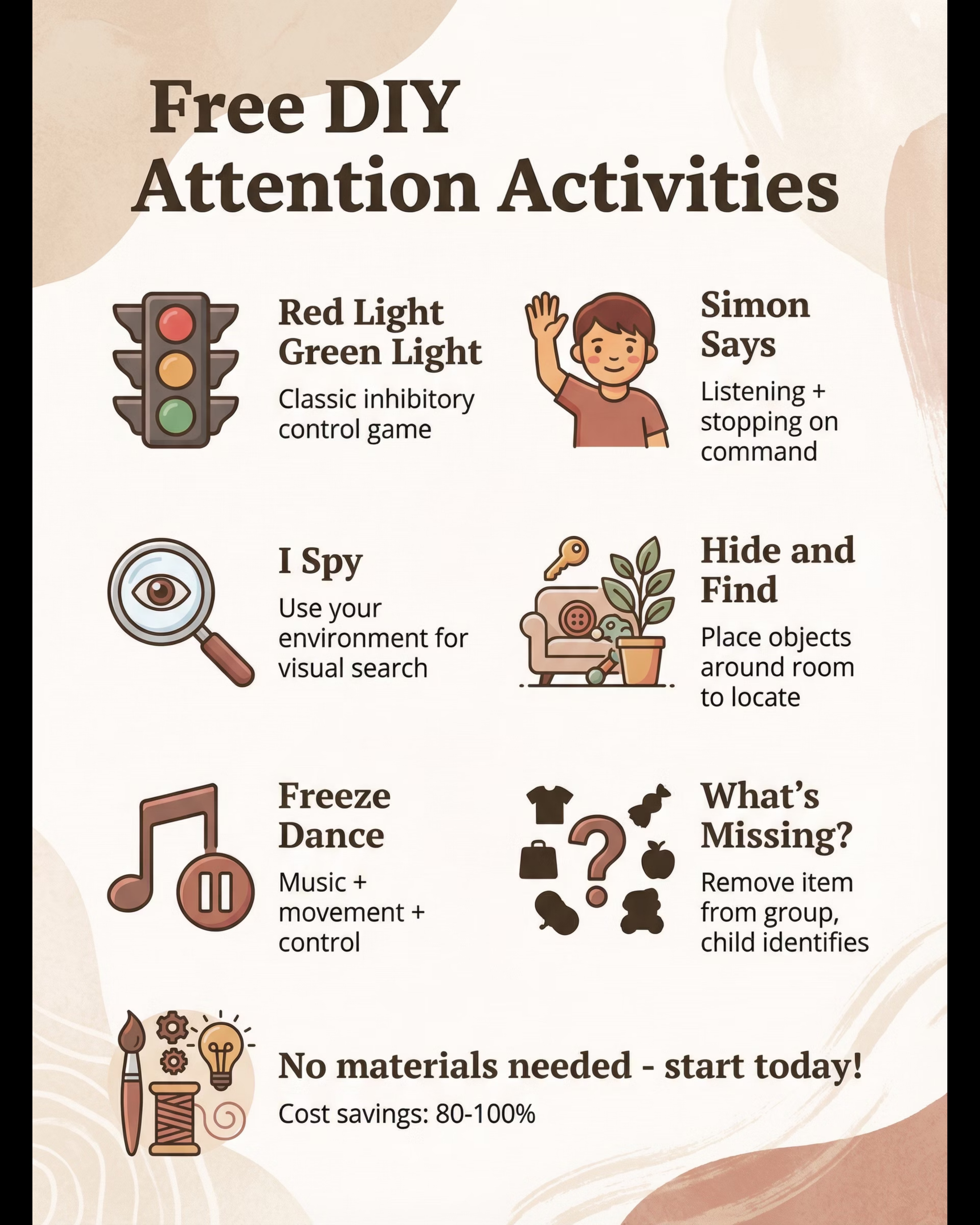
Feasibility: Very High | Time Required: Minimal preparation | Cost Savings: 80-100%
1
Materials & Activities
You can create engaging attention games with simple or no materials:
- Movement games (no materials!)
- Hidden picture printables (free online)
- Listening game activities (free scripts)
- Mindfulness scripts (free resources)
2
Red Light Green Light
Classic movement + inhibition game (no materials needed for this active play).
3
Simon Says
Practice listening and inhibition with this timeless game, requiring no special equipment.
4
I Spy Environmental Fun
Utilize your surroundings for visual search and observation practice anytime, anywhere.
5
Hide and Find
Hide objects in a room and have your child search for them, enhancing focus and problem-solving.
6
Freeze Dance
Play music, stop suddenly, and have your child freeze in place to boost auditory attention and self-control.
7
What's Missing Game
Display several objects, remove one, and ask your child to identify the missing item, sharpens visual memory.
DIY vs Commercial Comparison
When to DIY
- Movement-based activities (always free and effective)
- Listening games and following directions practice
- Budget-conscious approach for immediate activities
When to Buy Commercial
- Want variety and novelty to maintain engagement
- Spot It has unique game mechanic hard to replicate
- Simon provides structured electronic memory practice
- Structured attention programs with progression
DIY options may feel less novel than commercial games, but they're equally effective for building attention skills. Many families use a combination: free movement games daily, plus one or two commercial games for variety.
Preview of attention focus games Therapy Material
Below is a visual preview of attention focus games therapy material. The pages shown help educators, therapists, and caregivers understand the structure and content of the resource before use. Materials should be used under appropriate professional guidance.


Share this resource
Help others discover thisLink copied!

Measuring Success & Next Steps
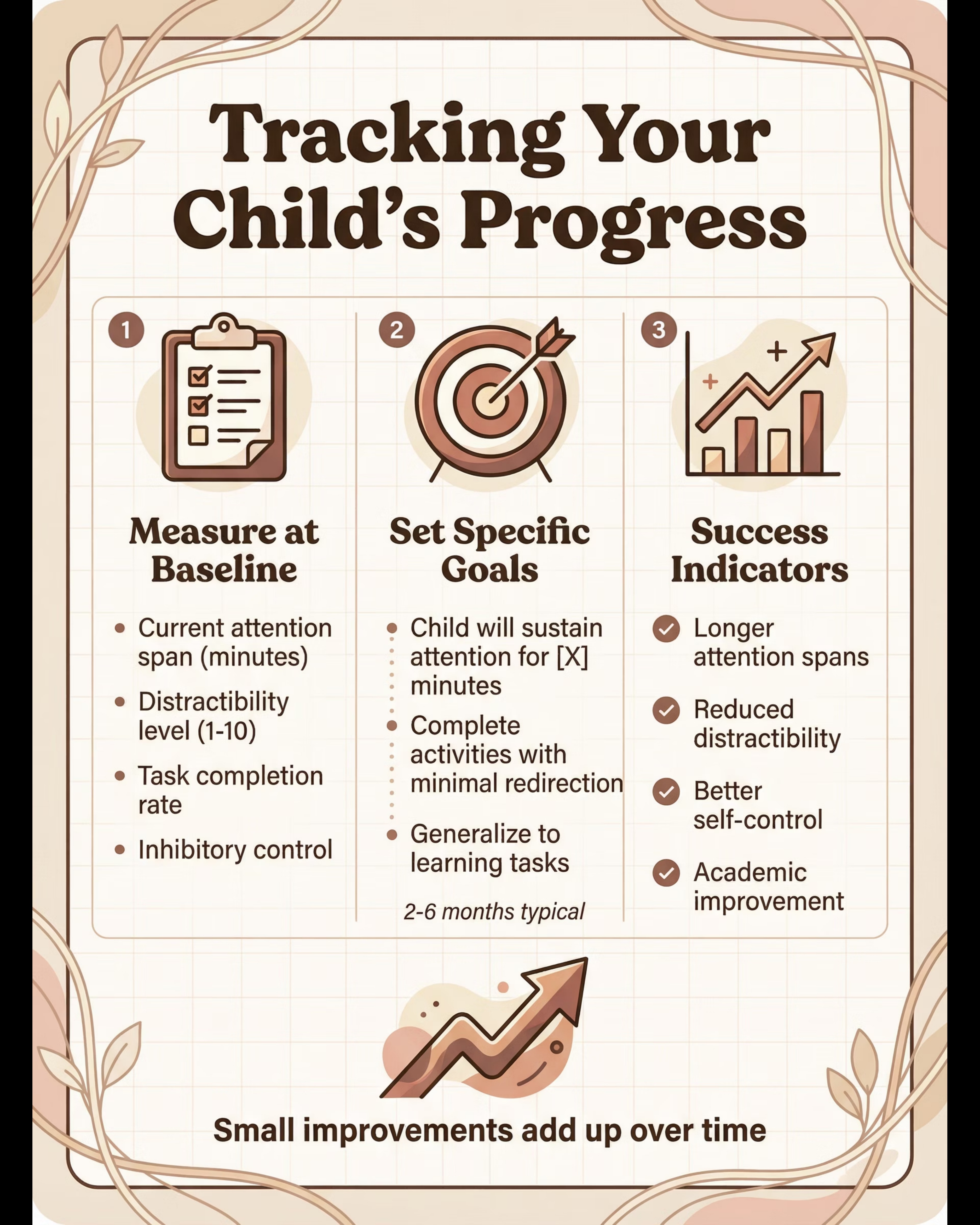
Baseline (Measure First)
- Current attention span in minutes
- Distractibility level during activities
- Inhibitory control (can stop on command?)
- Task completion rate
Goals (Set Targets)
- Child will sustain attention for [X] minutes
- Complete activities with minimal redirection
- Stop on command (inhibitory control)
- Attention generalizes to learning tasks
Success Indicators
- ✓ Longer attention span over time
- ✓ Reduced distractibility
- ✓ Better inhibitory control
- ✓ Increased task completion
- ✓ Transfer to academics
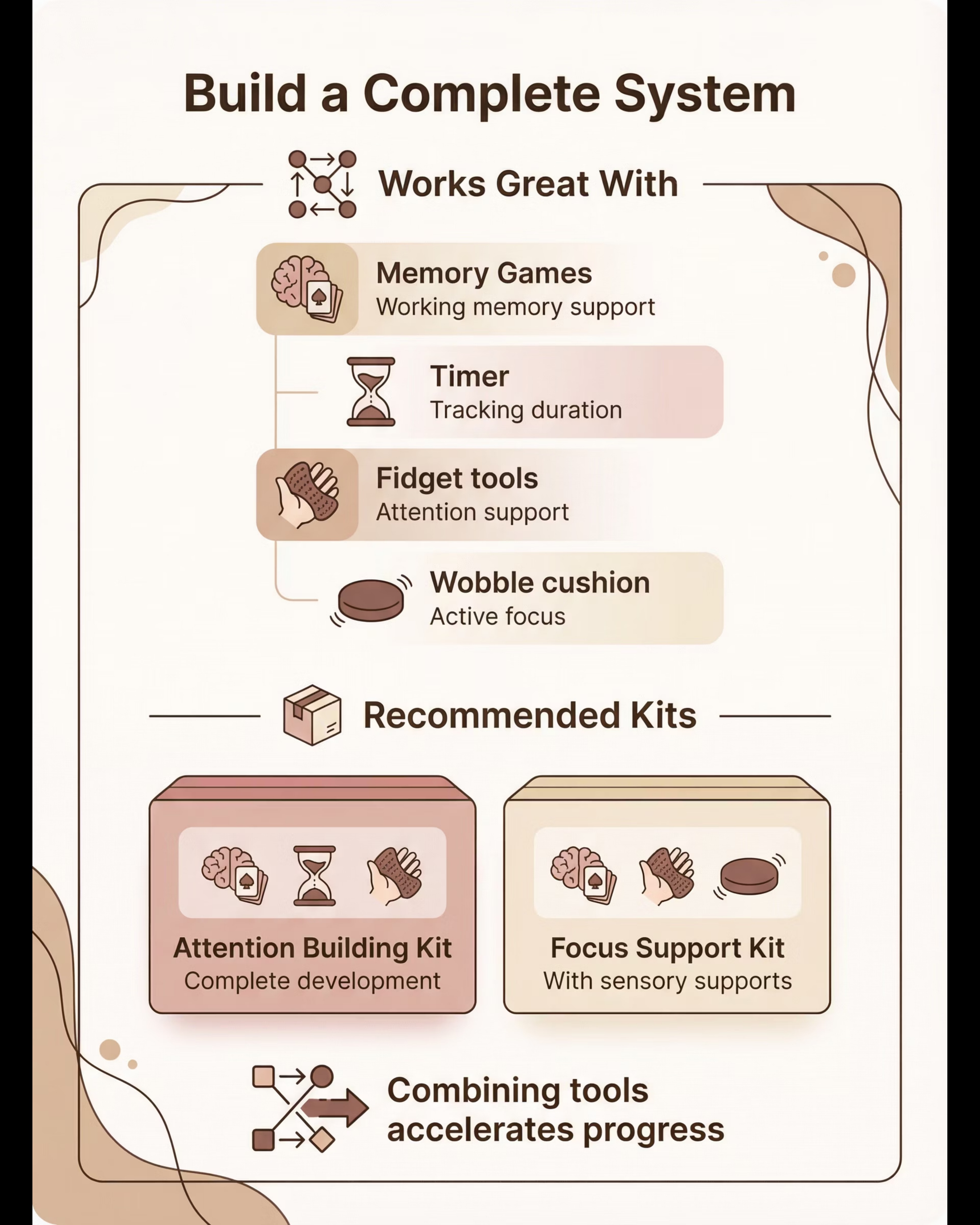
Complete the Kit: Pair It With...

Memory Games (ID: 8.1)
Why pair: Working memory supports sustained attention. These tools develop complementary cognitive skills.

Timer Tools (ID: 2.7)
Why pair: Visual timers help children understand attention duration and build time awareness during focus activities.

Fidget Tools (ID: 1.2)
Why pair: Sensory tools support attention by providing proprioceptive input and helping regulate arousal levels.

Wobble Cushions (ID: 12.2)
Why pair: Movement input during seated activities supports attention for children who need to move to focus.

Mindfulness Activities (ID: 8.8.7)
Why pair: Internal attention regulation complements external attention games for comprehensive skill building.
Suggested Bundles:
- Attention Building Kit: Attention Games (8.8) + Memory Games (8.1) + Timer Tools (2.7) → Comprehensive attention development
- Focus Support Kit: Attention Games (8.8) + Fidget Tools (1.2) + Wobble Cushions (12.2) → Attention with sensory support
Quick Summary
AI Summary:
Attention and focus games develop sustained attention, selective attention, and inhibitory control through engaging activities that build executive function. Core Kit (Rank 2), moderate-strong evidence, essential for learning readiness.
attention
focus
concentration
executive function
inhibitory control
games
SpEd
OT
core-kit
Common Searches:
attention games autism, focus activities kids, concentration games, inhibitory control, Spot It game, attention span activities, executive function games
Get Support
FREE National Autism Helpline
Phone: 9100 181 181
Languages: 16+ languages supported
Website: pinnacleblooms.org
Platform Integration
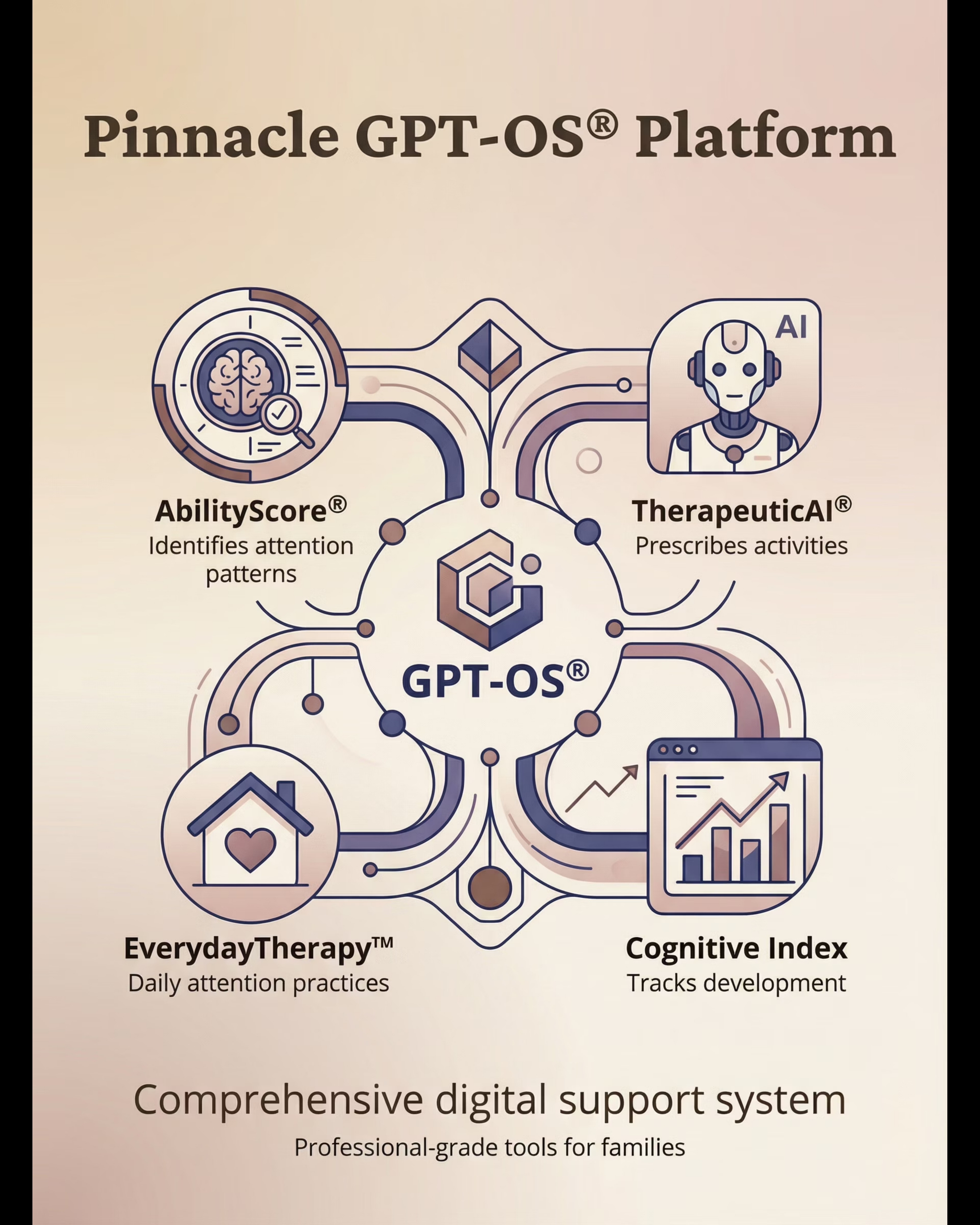
- AbilityScore® identifies attention patterns and quantifies focus challenges
- TherapeuticAI® prescribes personalized attention activities based on your child's profile
- EverydayTherapyProgramme™ includes daily attention games embedded in home routines
- Cognitive Index tracks attention development and executive function growth over time
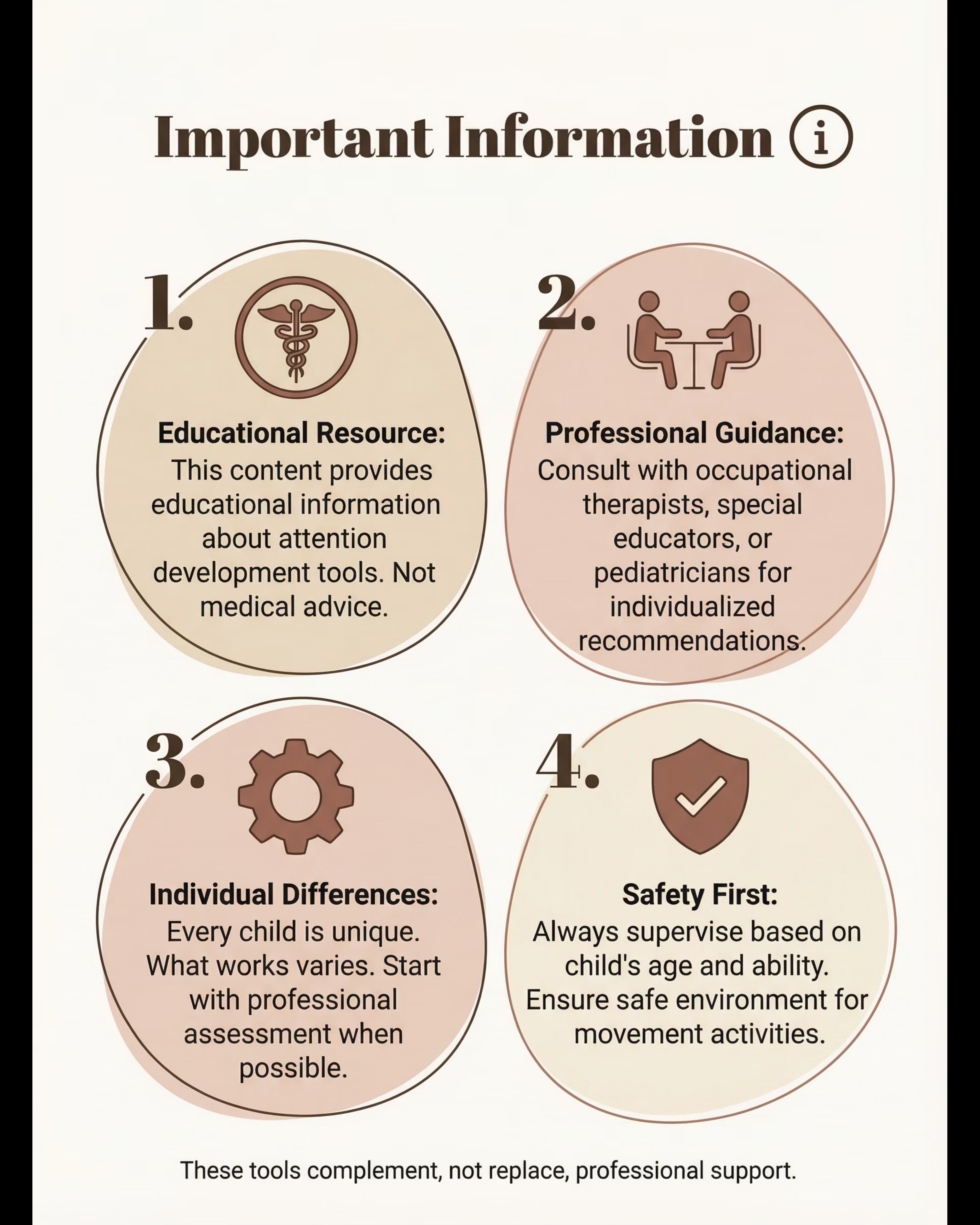
Disclaimer: This is educational information designed to support families and professionals. Always consult qualified occupational therapists, speech-language pathologists, special educators, or pediatricians for individualized assessment and recommendations. Individual results vary based on child's profile, consistency of practice, and environmental supports.