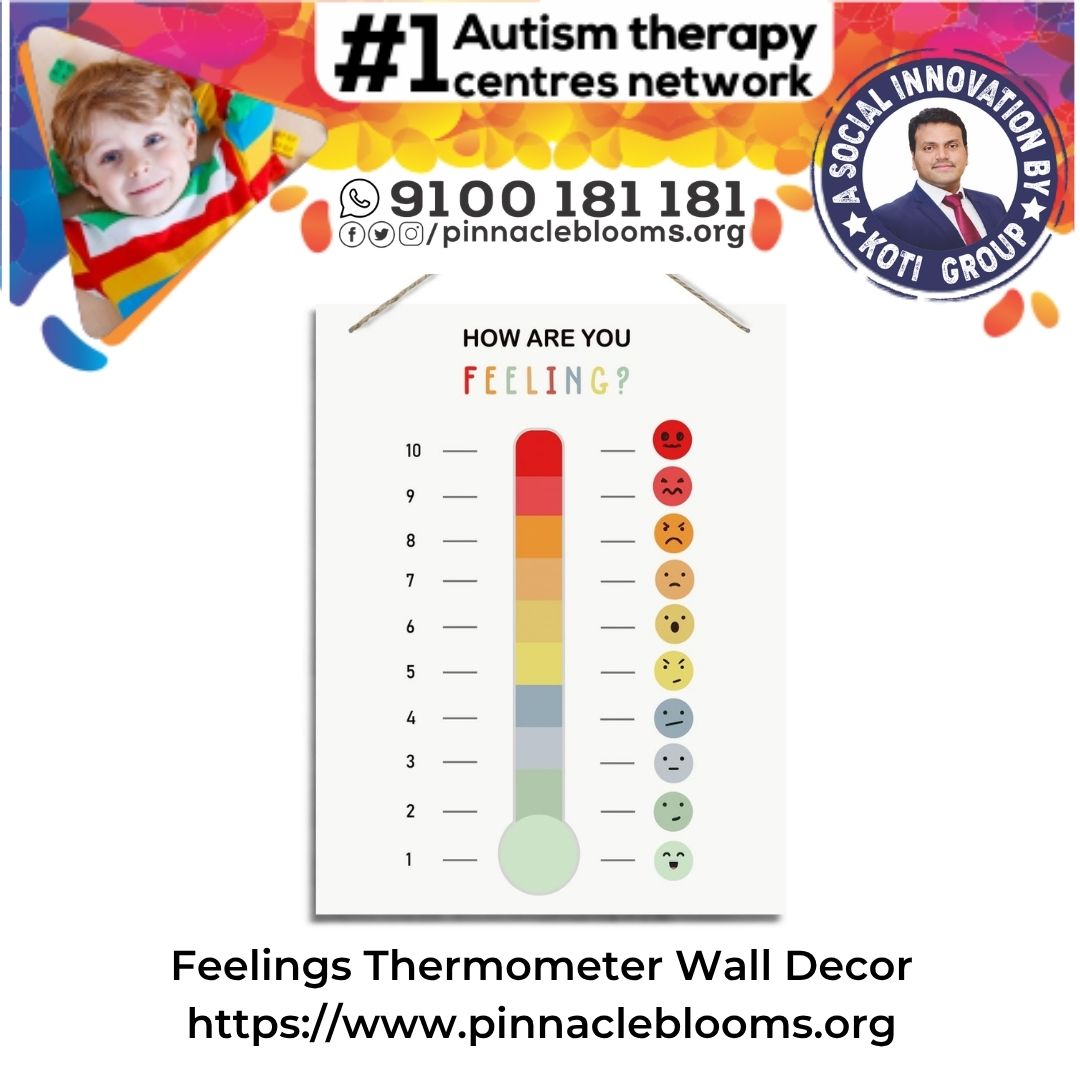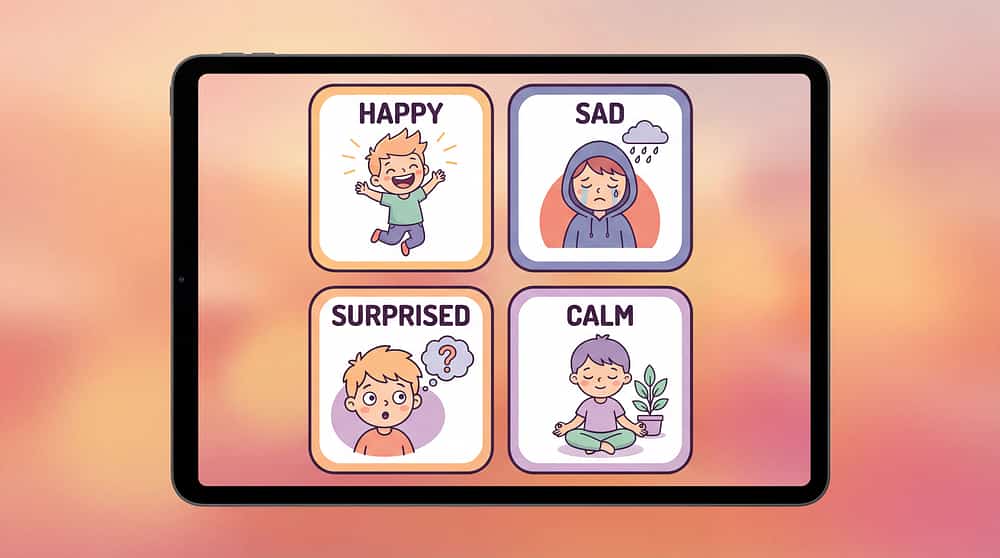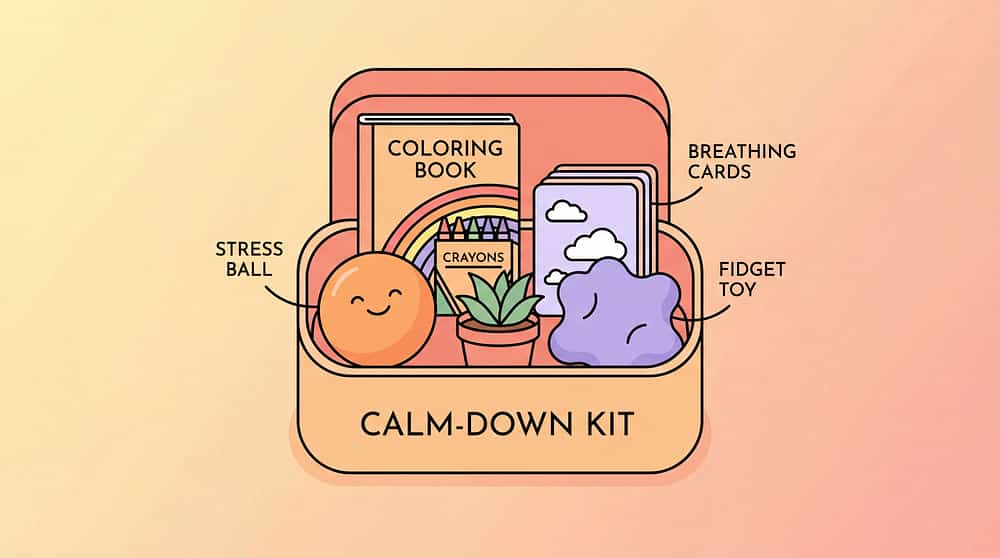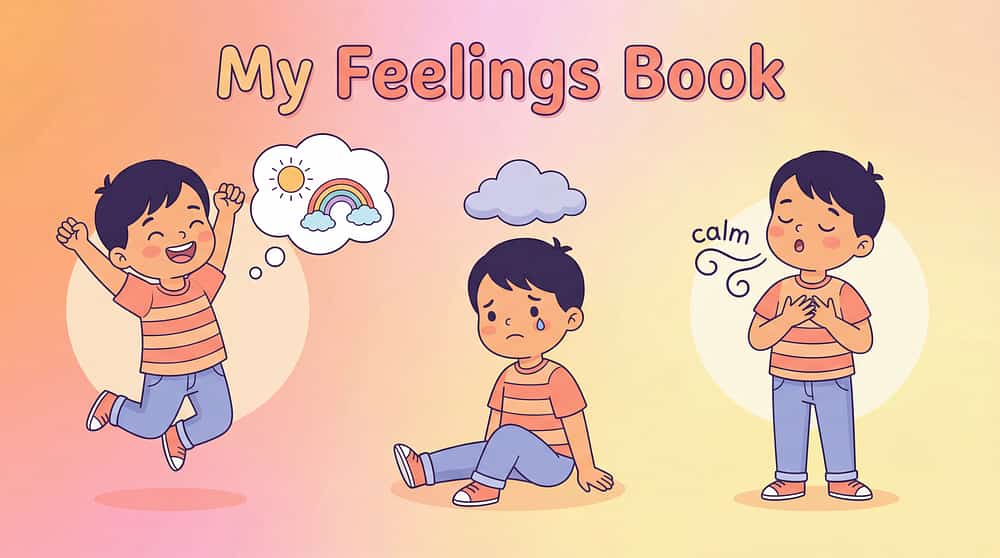














Behavior / Feelings Thermometer
Tool ID: 2.5
Rank #1
Daily Use
Emotional intensity self-monitoring system
Psychologist
SpEd
Strong Evidence
Core Kit
₹0–1,500
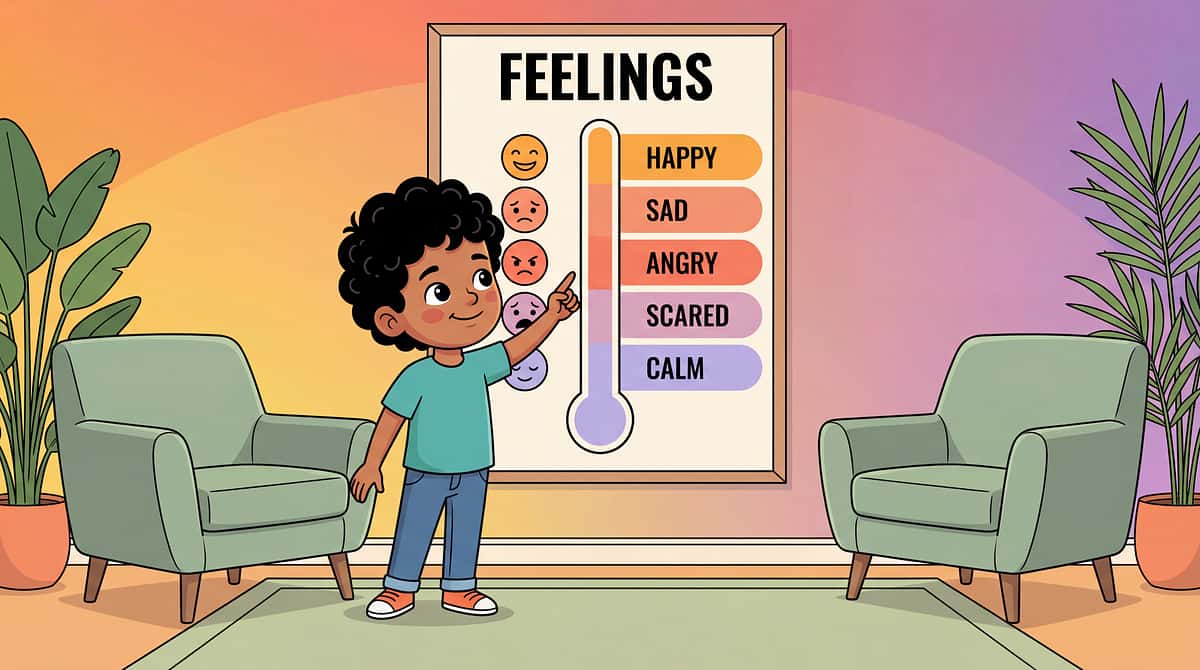
Enable your child to recognize, name, and manage their emotional intensity before it escalates. This visual self-monitoring system teaches children to identify their feelings on a scale, creating crucial awareness that prevents meltdowns and builds lifelong emotional intelligence.

Who This Helps
Self-Monitoring of Emotional and Behavioral Intensity
This tool empowers individuals to observe and track their own emotional and behavioral responses, fostering a deeper understanding of their internal states.
Bridge Between Internal Feeling States and External Communication
It facilitates the expression of complex emotions, creating a clear connection between what a child feels inside and how they can communicate it effectively to others.
Building Metacognitive Skills Essential for Regulation
By engaging with the tool, children develop metacognitive abilities, learning to think about their own thinking and feelings, which is crucial for emotional regulation.
Self-Awareness
Emotional Regulation
Meltdown Prevention
Escalation Awareness
Self-Monitoring
Ages 4-9 Years
Developmentally appropriate visual scales help young children learn to identify and communicate emotional intensity when verbal skills are still developing.
All Settings Welcome
Works seamlessly at home during morning routines, at school during transitions, in therapy sessions, and everywhere your child needs emotional support.
Best For
Children who escalate quickly without warning, struggle to name feeling intensity, or need visual tools to communicate their internal emotional state to caregivers.

Does This Sound Familiar?
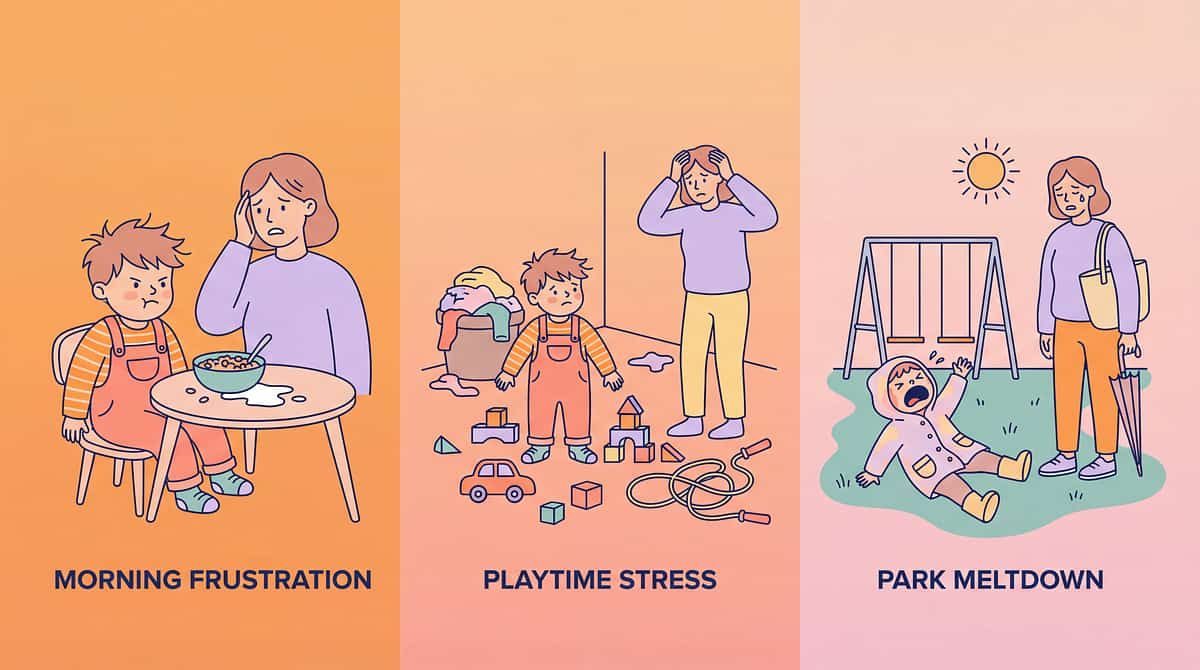
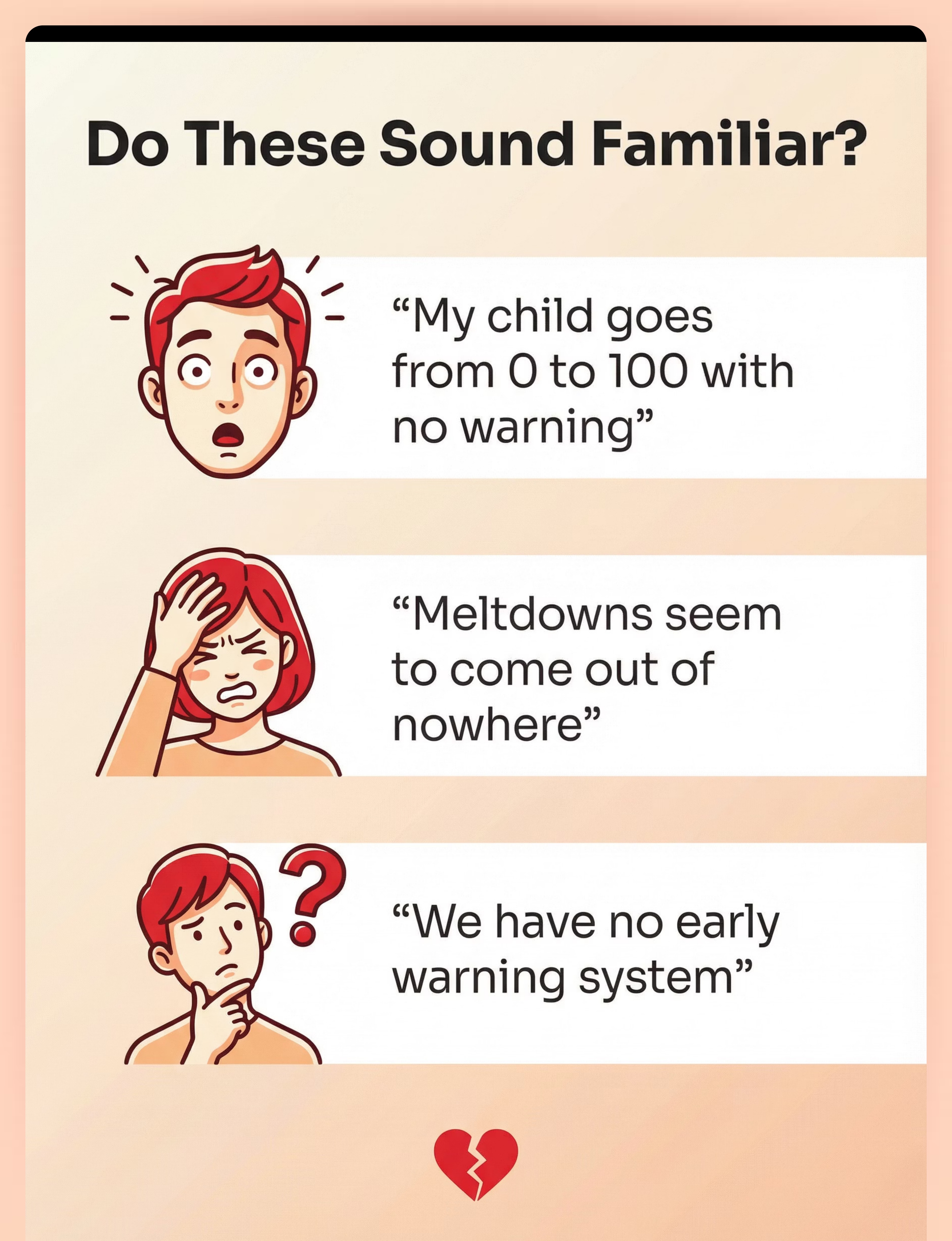
"My child goes from 0 to 100 with no warning. One moment they're fine, the next they're in full meltdown. I have no time to help."
"She doesn't realize she's escalating until it's too late. By the time anyone notices, intervention is impossible. We're always catching up."
"He can't rate his own feelings—just says 'fine' or 'upset.' There's no middle ground, no nuance. I never know what's really happening inside."
"We have no way to know when intervention is needed. Meltdowns seem to come out of nowhere. There's no early warning system."
You're not alone. These are common challenges faced by families navigating emotional regulation. The feelings thermometer provides the missing piece: awareness that creates intervention opportunity.

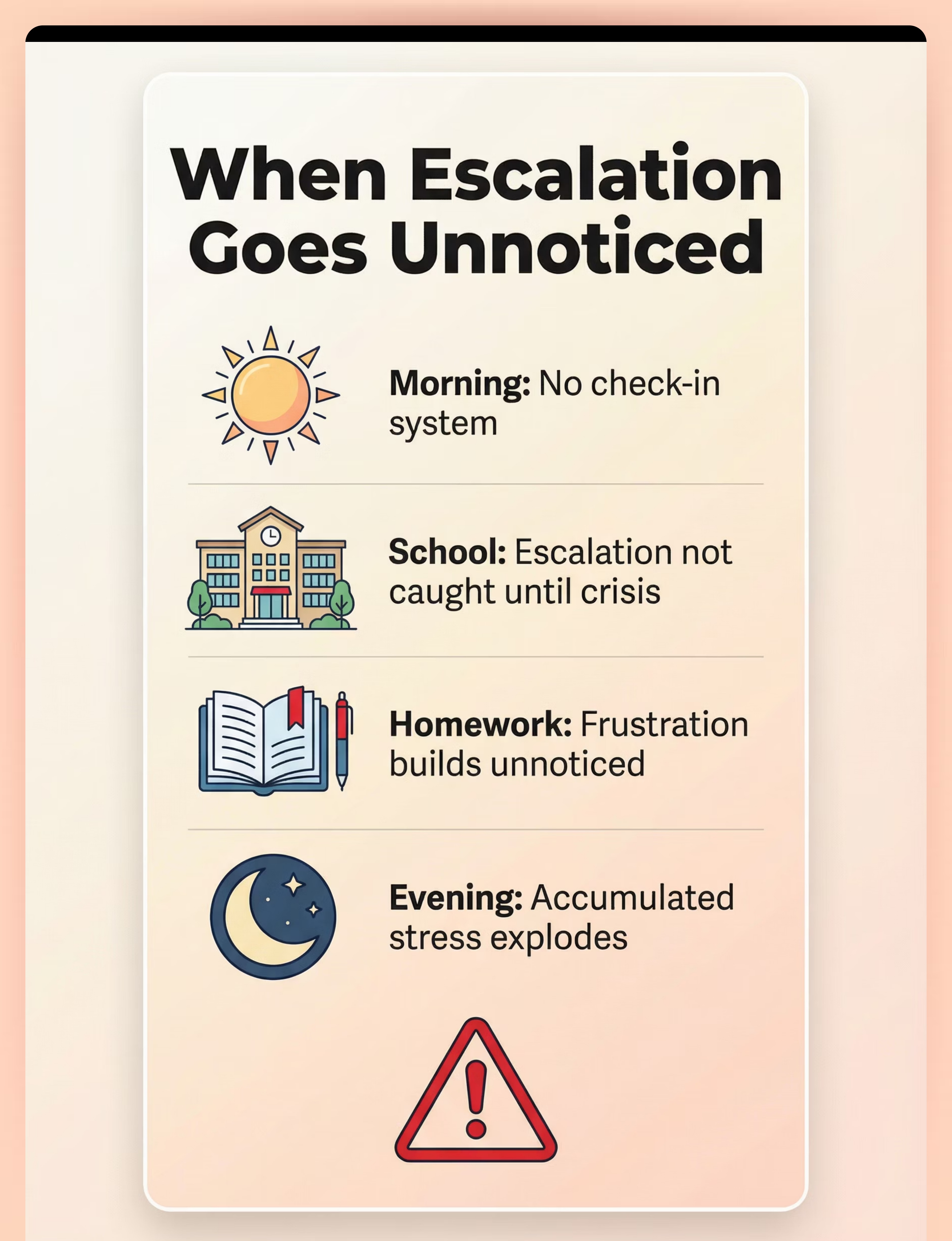
A Day Without the Right Support
Morning
No check-in system for the day's readiness. You ask "How do you feel?" and get "Fine"—but you sense tension. No way to measure or address it early.
School Transitions
Escalation not caught until crisis hits. Teachers report sudden meltdowns with "no warning signs," but the internal escalation was invisible to everyone.
Homework Time
Frustration builds unnoticed until explosion. Each problem adds pressure, but there's no gauge, no moment to pause and reset before it's too late.
Evening
Accumulated stress not monitored all day finally erupts. The whole day's emotional load collapses at once, and everyone is exhausted and confused.

The Science Behind It
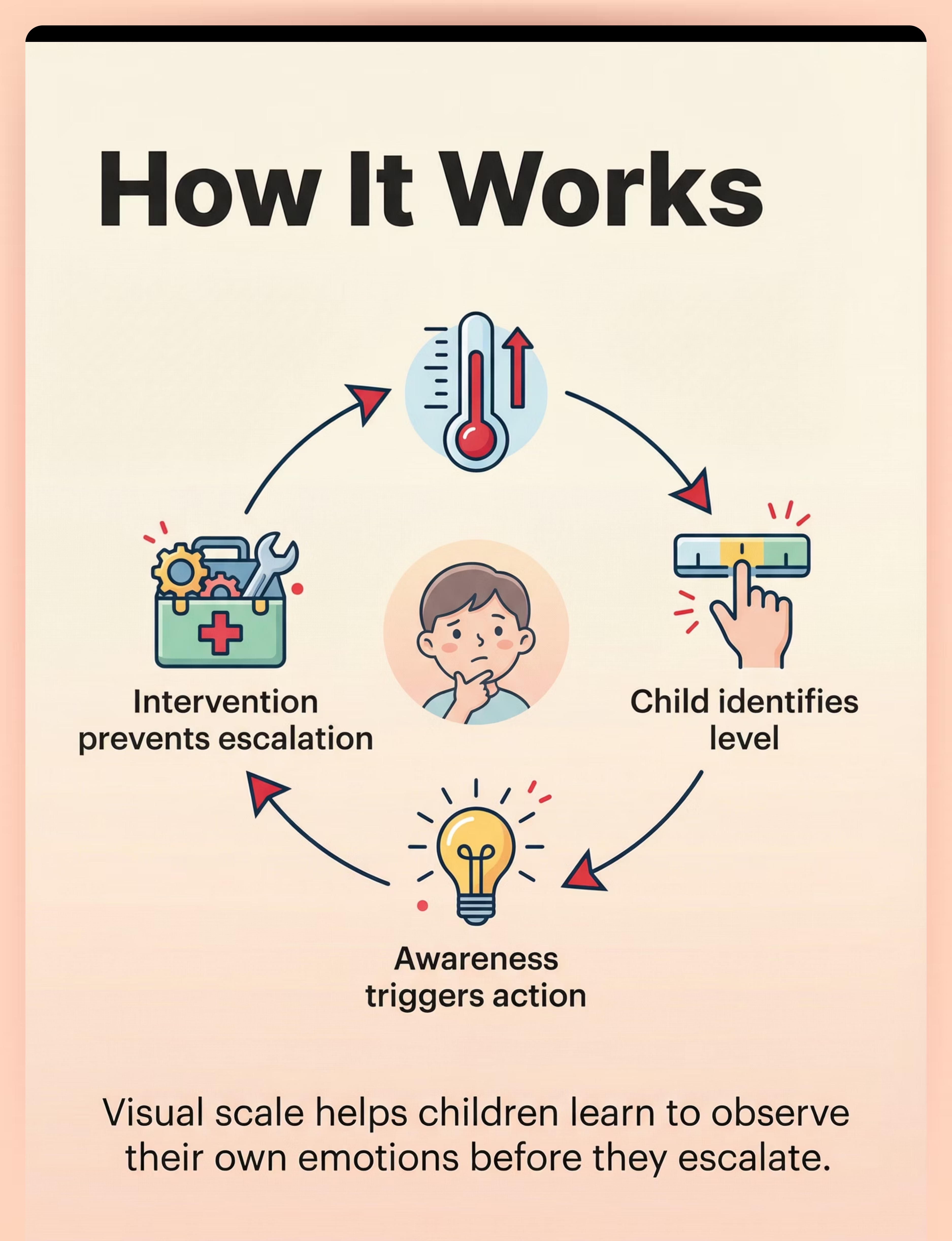
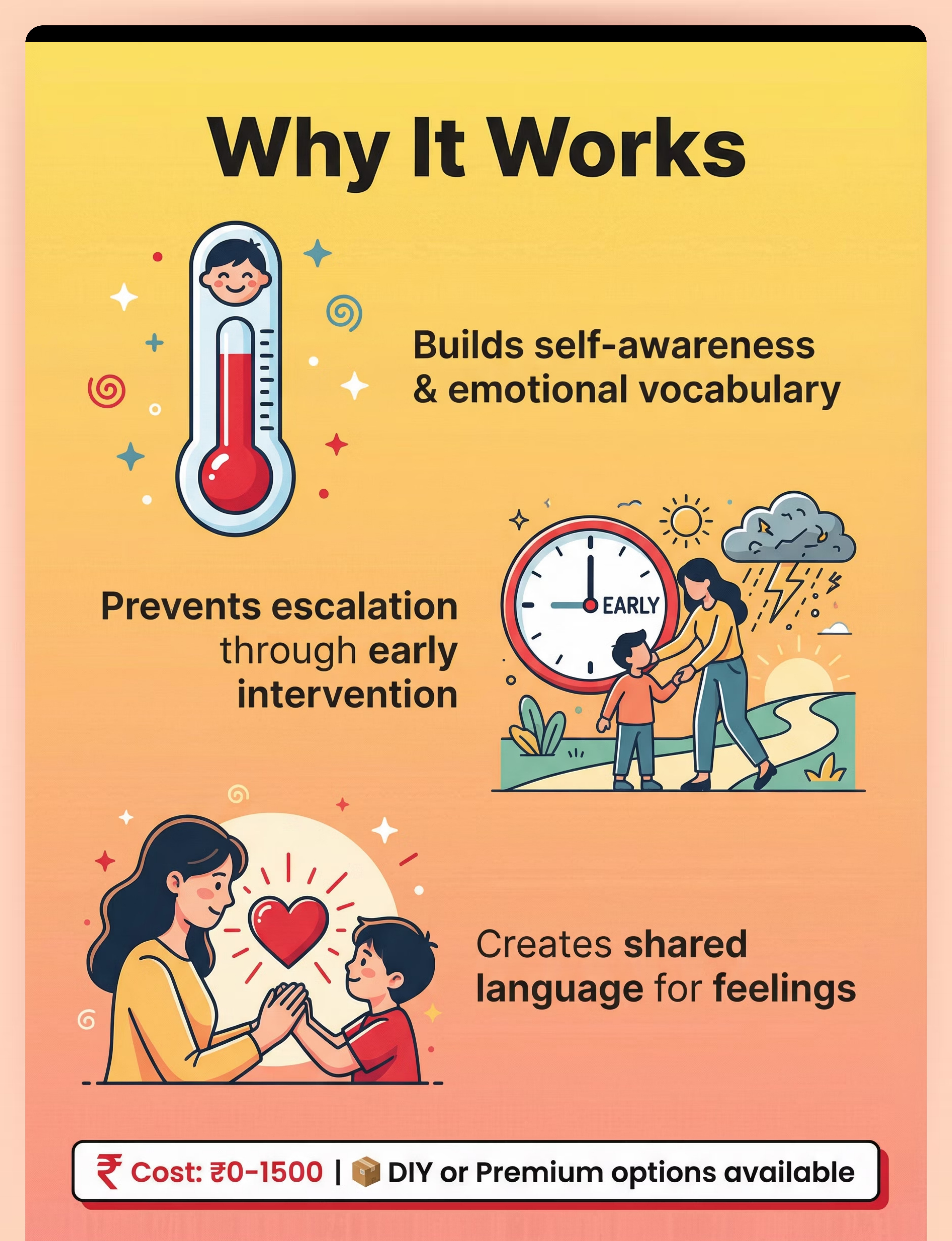
The feelings thermometer works through a carefully designed progression that builds emotional intelligence from awareness to action. This evidence-based approach teaches metacognition—the ability to think about your own thinking and feeling.
Awareness: Identify & Name
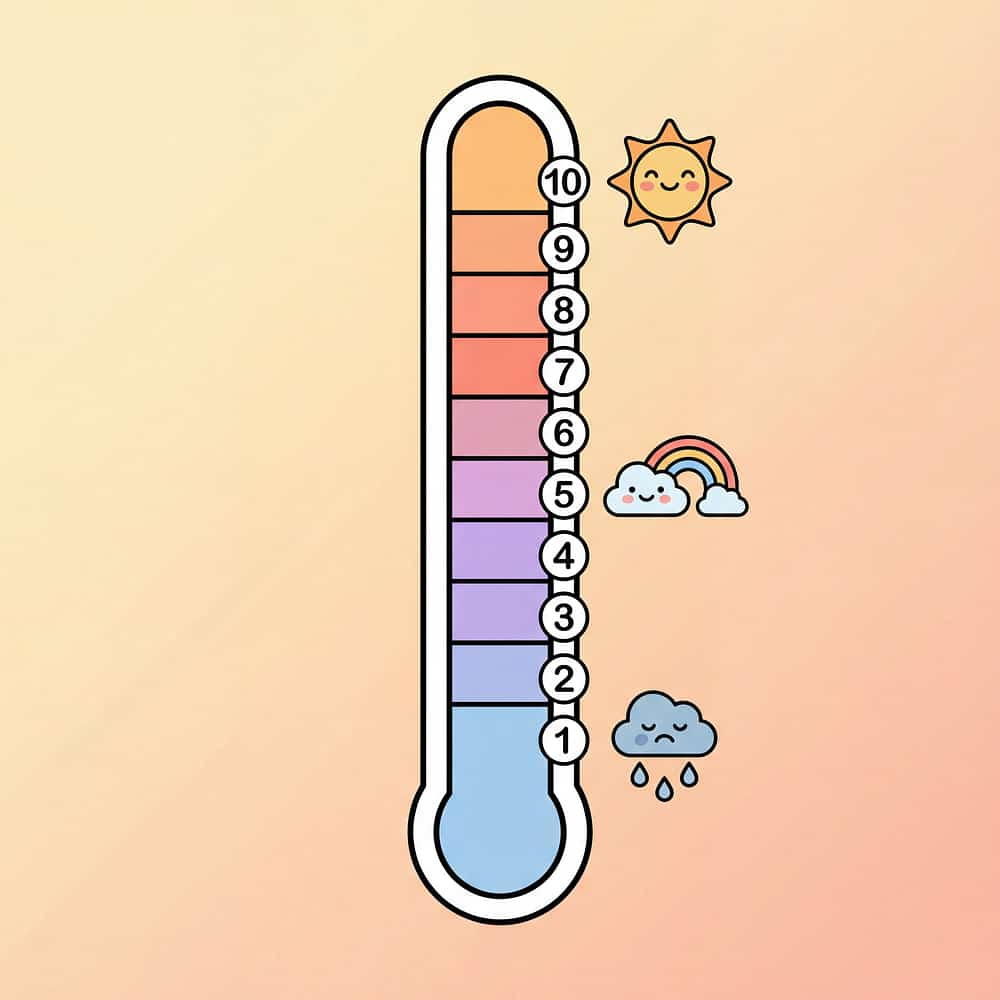
The child uses a visual, color-coded scale to identify and name their current emotional level, building crucial self-awareness from calm to crisis.
Understanding: Recognize Triggers & Patterns
Recognition of their emotional level creates a metacognitive moment, allowing them to understand triggers and developing patterns in their feelings, enabling proactive intervention.
Action: Early Intervention & Regulation
With understanding, support can be applied at earlier stages (level 2-3 instead of 4-5), preventing escalation to crisis and promoting effective emotional regulation strategies.
Self-Awareness
Emotional Regulation
Meltdown Prevention
Escalation Awareness
Self-Monitoring

How to Use It Right
Trust Every Rating
The child's rating is ALWAYS valid—it's their subjective experience. Never argue about whether they're "really" at that level. Validation builds trust and encourages honest communication.
Link Levels to Strategies
Each number should have specific coping strategies assigned. Level 2 might mean deep breaths, level 3 means calm-down corner, level 4 means adult support needed immediately.
Practice When Calm
Introduce and practice the scale during peaceful moments, not during crisis. Build familiarity and understanding when the child's brain is regulated and receptive.
Use Preventively
Don't wait for problems to check in. Regular check-ins throughout the day (morning, transitions, bedtime) catch escalation early and normalize emotional awareness.
Post Visibly
Place thermometers at child's eye level in multiple locations—bedroom, classroom, therapy room. Visual accessibility encourages spontaneous use and reference.
Check In Regularly
Brief check-ins throughout the day build the habit. "What zone are you in?" becomes as natural as "Are you hungry?" Quick, consistent, and non-judgmental.
Duration: Quick check-ins take 10-30 seconds. Initial teaching sessions require 5-10 minutes to explain the system and practice together.

Expert Perspective
"The thermometer teaches metacognition—thinking about your own thinking and feeling. When a child can say 'I'm at a 3,' they've already begun to regulate because they're observing themselves."
— Child Psychologist, Emotional Regulation Specialist
Psychologist
Primary therapeutic owner of emotional regulation interventions
SpEd
Co-owner supporting classroom implementation and behavioral systems
Strong Evidence
Research-backed effectiveness in emotional awareness and regulation
Rank #1 in Category
Top tool in Emotional Regulation & Coping category
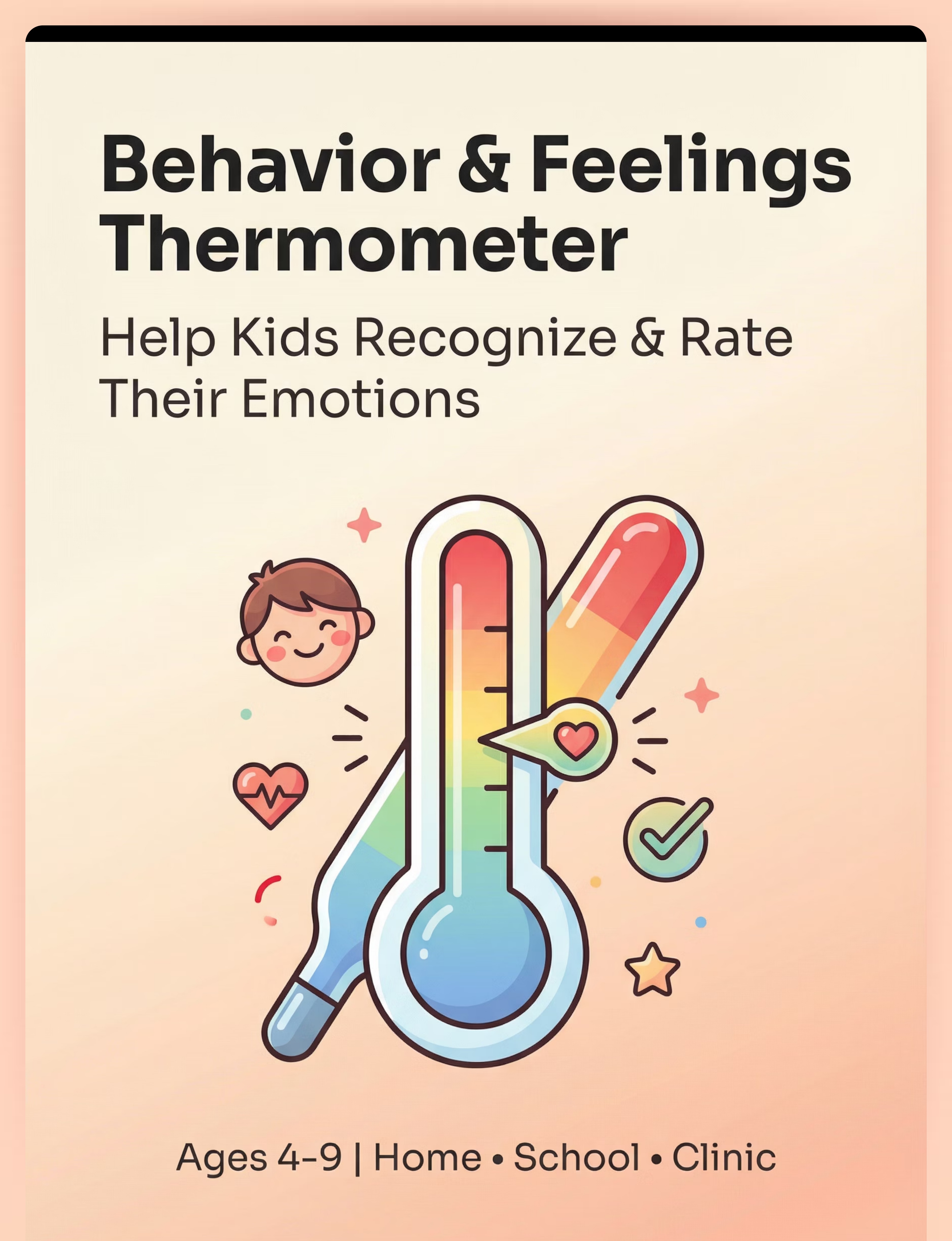
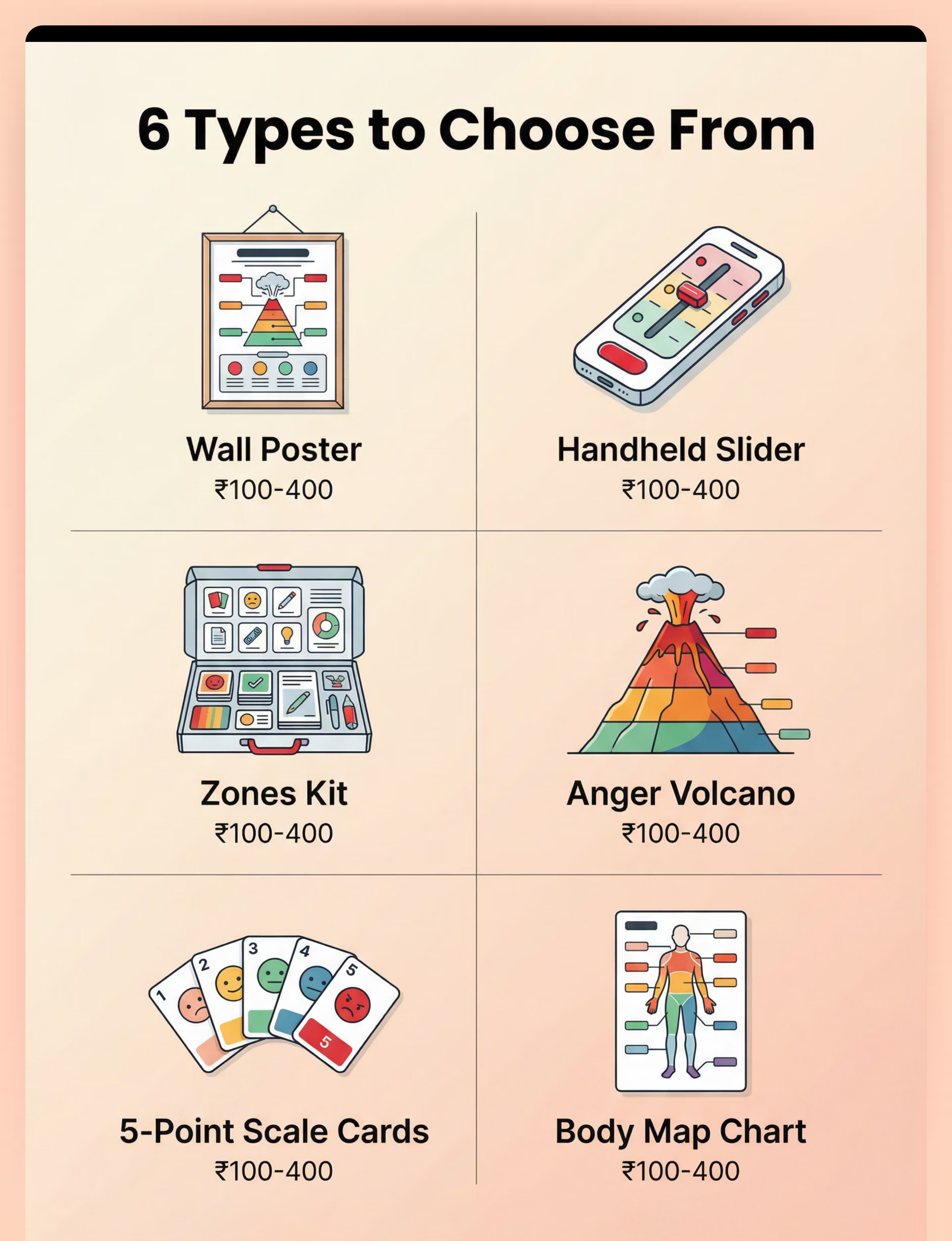
Standard Feelings Thermometer Poster
Visual check-ins, classroom display. Low portability. Ages 4-9. Price: ₹100–400.
Handheld Thermometer with Slider
Individual check-ins, personal use. High portability. Ages 4-9. Price: ₹150–400.
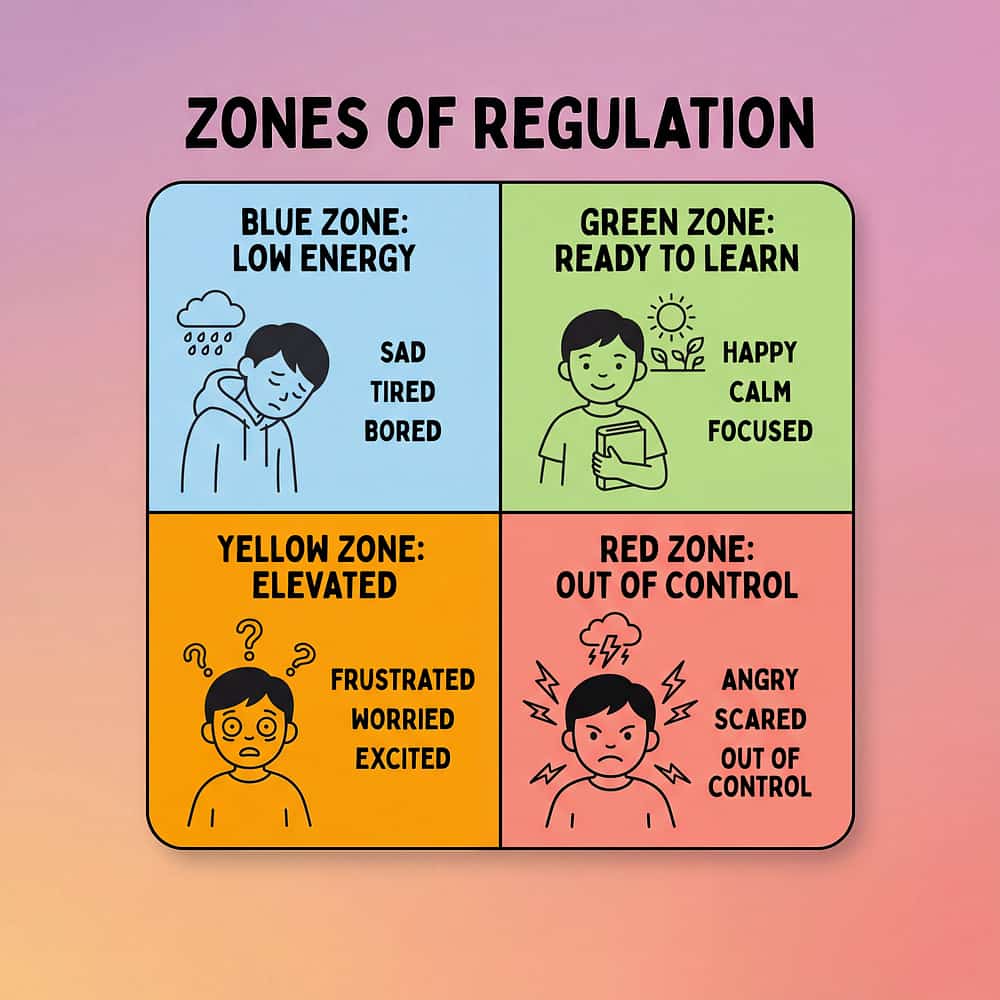
Zones of Regulation Kit
Full curriculum, classroom-wide implementation. Medium portability. Ages 4-9. Price: ₹500–1,500.
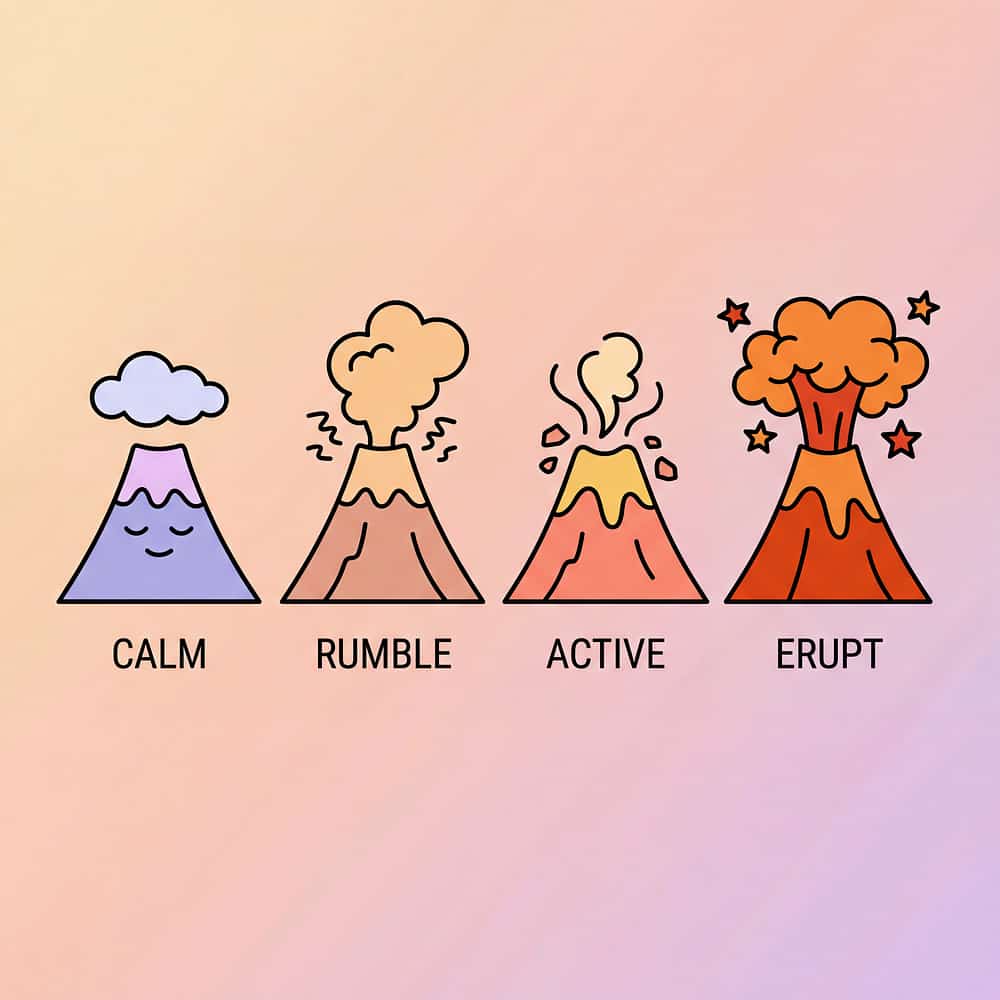
Anger Volcano / Escalation Chart
Understanding anger progression, intervention points. Medium portability. Ages 5-9. Price: ₹100–300.
5-Point Scale Cards
Specific behaviors, voice volume, personal space. High portability. Ages 5-9. Price: ₹100–300.
Body Map Feelings Chart
Interoception, body awareness of emotions. Low portability. Ages 5-9. Price: ₹100–300.
Choose Your Option (6 Variants)
Each variant serves different needs—from wall displays for group settings to handheld tools for personal check-ins. Consider your child's environment, portability needs, and whether you want a simple scale or comprehensive curriculum.
How to Choose
- By goal: Calming (Zones), anger management (Volcano), general awareness (Thermometer), body connection (Body Map)
- By setting: Classroom (Poster/Zones), personal (Handheld/Cards), therapy (Body Map)
- By portability: High (Handheld, Cards), Medium (Volcano, Zones), Low (Poster, Body Map)
Specifications & Types Guide
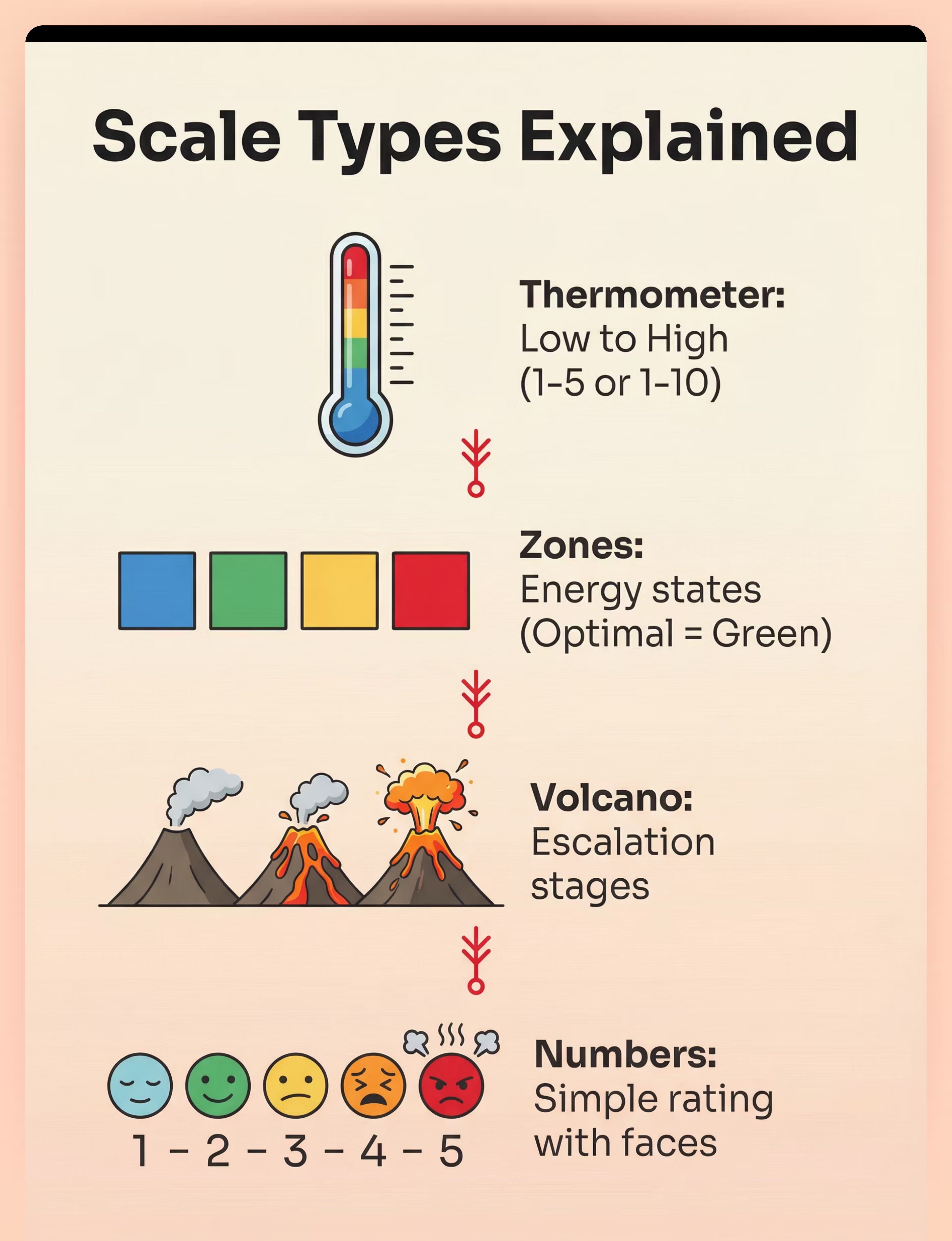
Scale Types

Thermometer
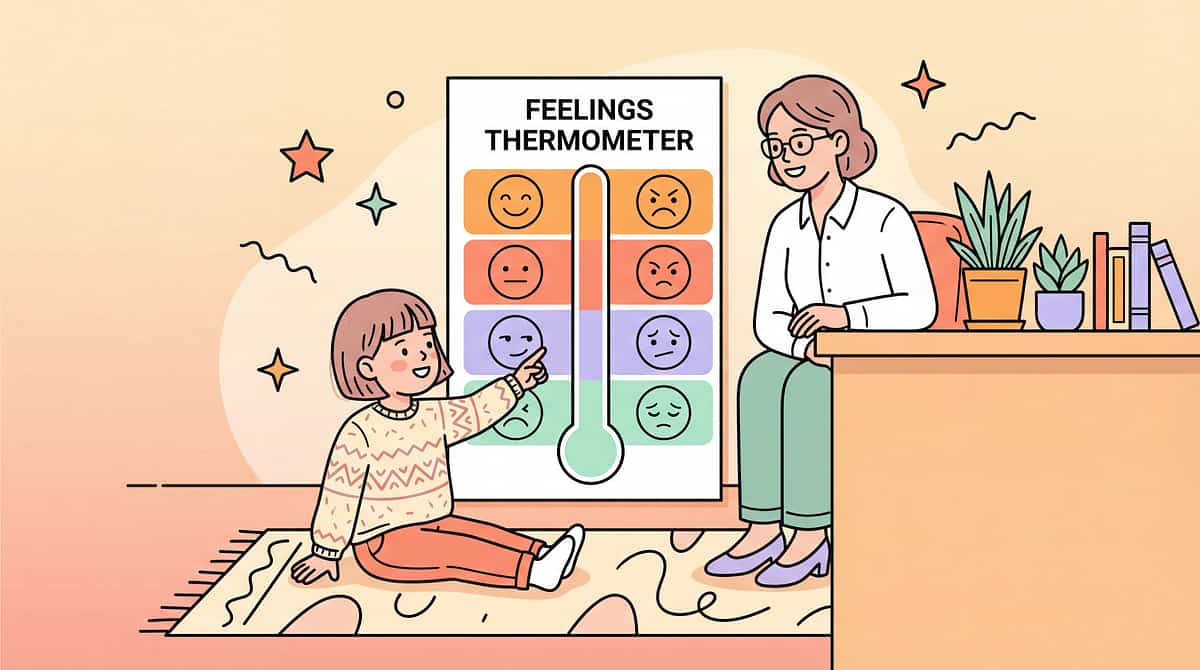
Low (blue/green) → High (red), numbered 1-5 or 1-10. Classic visual that children intuitively understand.

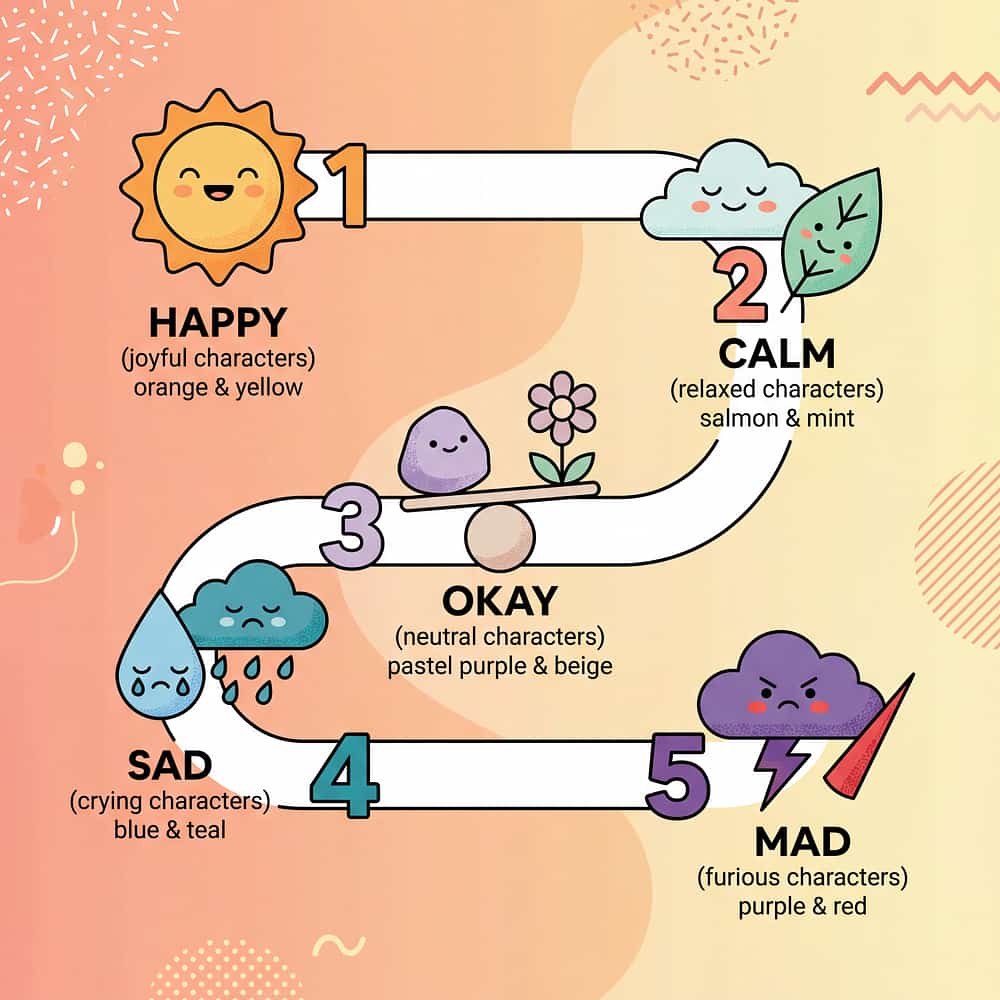
Zones
Blue (low energy) → Green (optimal) → Yellow (elevated) → Red (crisis). Color-coded regulation system.

Volcano
Dormant → Rumbling → Active → Erupting. Perfect for anger and explosive emotions.

Numbers
1 (calm) to 5 (crisis) with descriptors. Simple, versatile, works for multiple emotions.
Materials & Key Features
- Materials: Laminated card/poster, plastic (slider versions), durable paper
- Color-coded: Visual cues enhance understanding and memory
- Clear descriptors: Each level has words, images, or situations
- Linked strategies: Every level connects to specific coping tools
- Child-friendly imagery: Faces, icons, or scenarios children relate to
What Makes It Work
The combination of visual (color), cognitive (numbers/words), and kinesthetic (pointing/sliding) modalities ensures accessibility across learning styles and developmental levels.
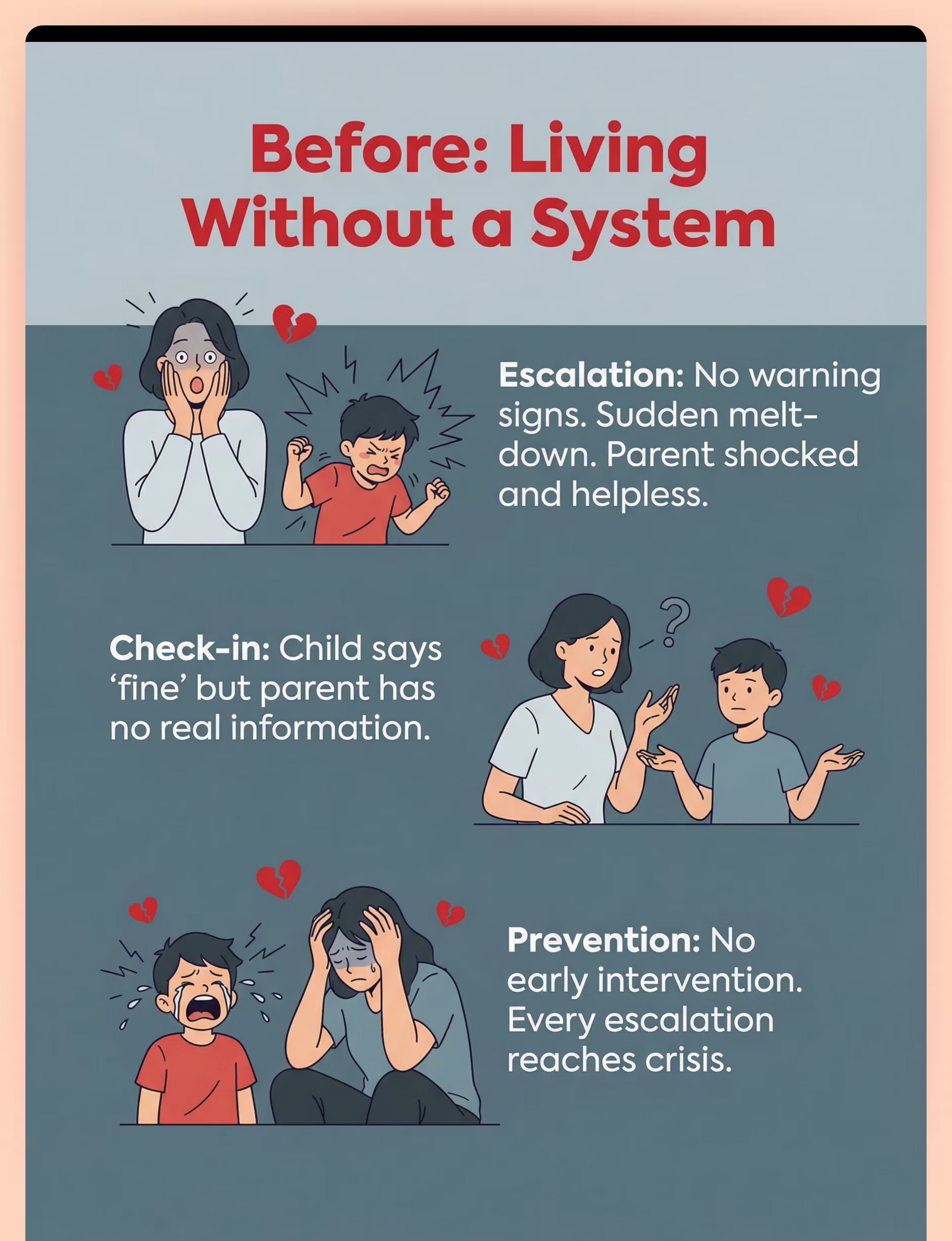
The Struggle (Before)

Escalation Crisis
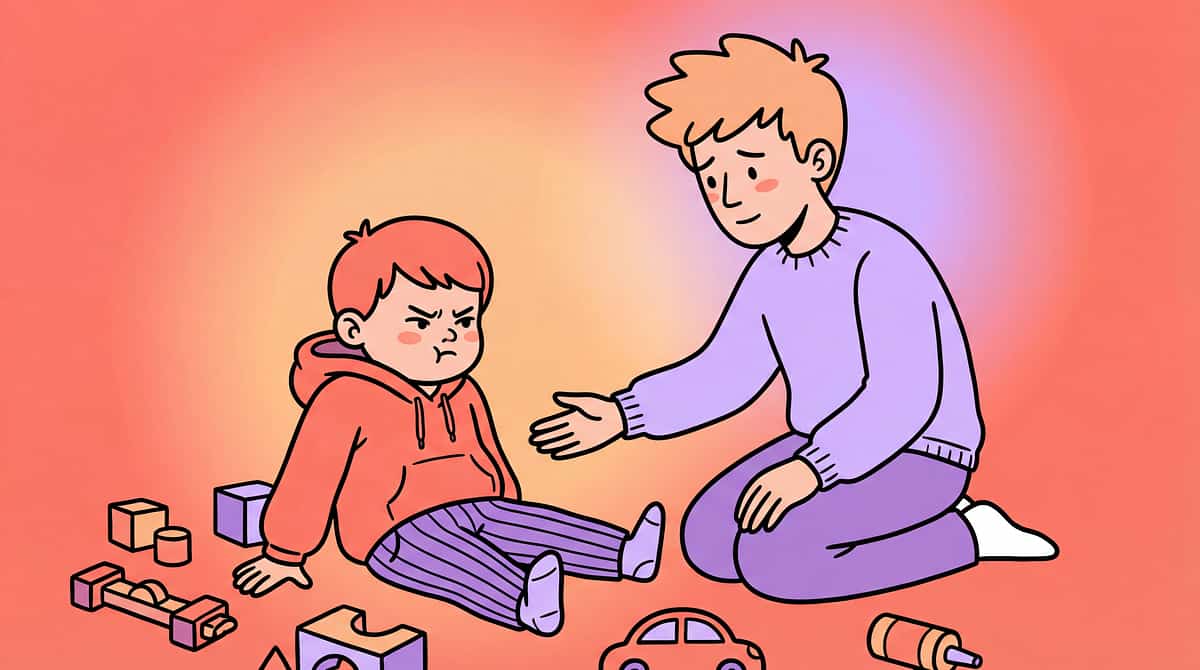
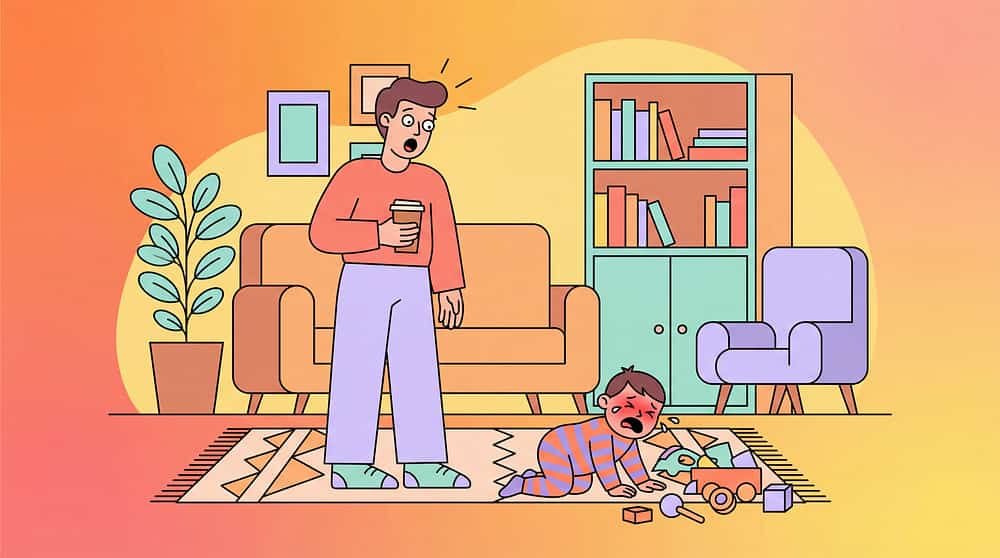
Situation: Parent has no idea child is escalating. No warning signs visible. Suddenly full meltdown erupts. Too late for any intervention.
Experience: Child goes from seeming "fine" to complete dysregulation in seconds. Parent is shocked, child is overwhelmed, opportunity for support has passed.
Emotion: Shock, helplessness

Communication Breakdown
Situation: Parent asks "How are you?" Child says "Fine." Parent has no real information. Child doesn't have vocabulary for nuance.
Experience: Every check-in is binary—fine or not fine. The spectrum of emotions between calm and crisis is invisible and unnamed.
Emotion: Disconnection, uncertainty

No Prevention System
Situation: No system for early intervention exists. Every escalation reaches full crisis before anyone realizes. Meltdowns feel inevitable.
Experience: Family lives in reactive mode—always responding to crises, never preventing them. Exhaustion becomes the norm.
Emotion: Exhaustion, resignation

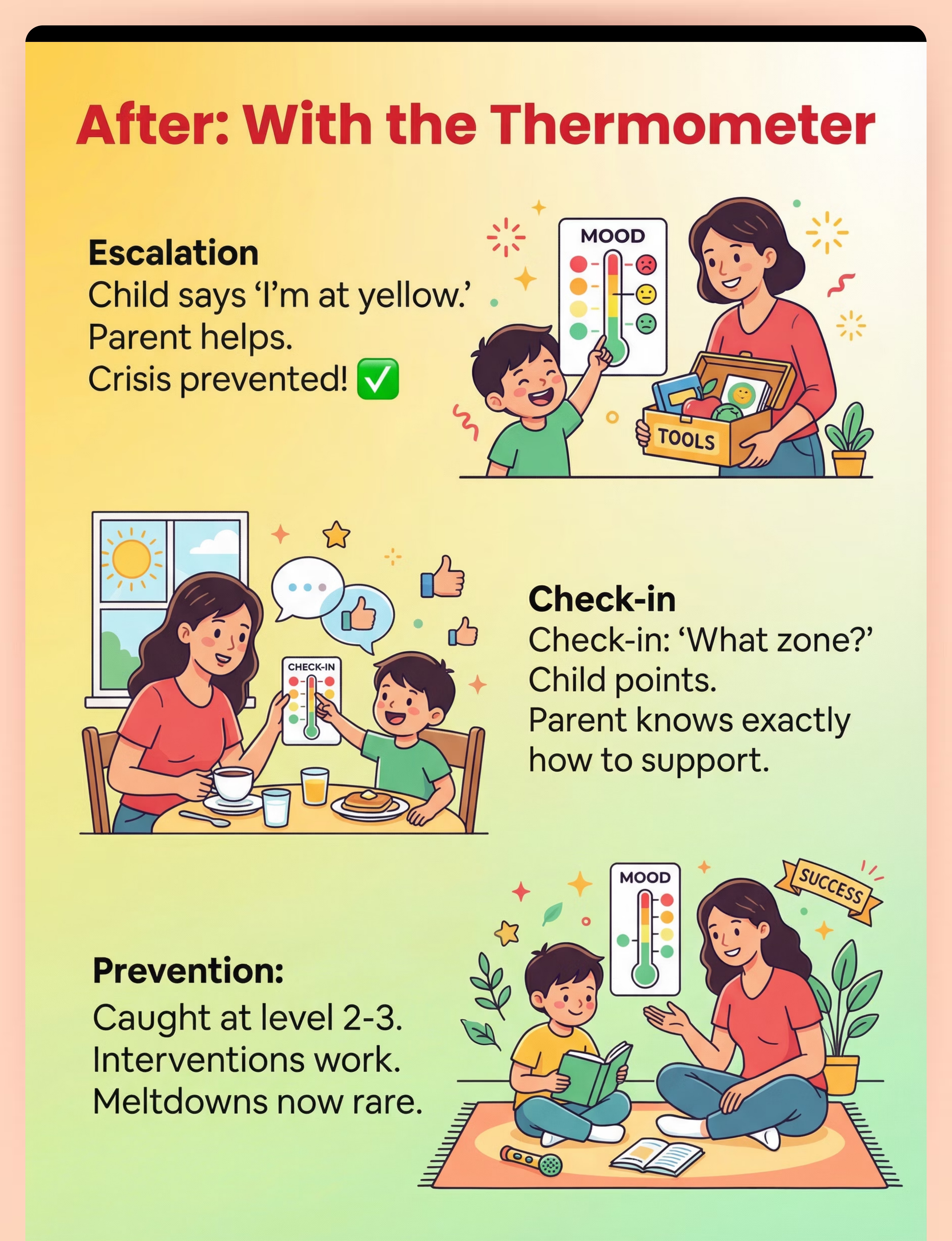
The Breakthrough (After)
1
Crisis Prevented
Situation: Child says "I'm at yellow." Parent offers calm-down kit. Child uses tools. Returns to green. Crisis prevented entirely.
Experience: Early warning system works. Intervention happens when child can still access coping skills. Regulation is maintained.
Emotion: Prevention, success
2-4 weeks of practice
2
Real Communication
Situation: Morning routine: "What zone are you in?" Child points to green. After school: "Yellow." Parent knows support is needed.
Experience: Check-ins provide actual information. Parent and child share a language for internal states. Connection deepens.
Emotion: Connection, information
1-2 weeks
3
Proactive System
Situation: Regular check-ins catch escalation early. Each level has assigned strategies. Interventions happen at 2-3, not 5. Meltdowns are rare.
Experience: Family shifts from reactive crisis management to proactive emotional support. Life feels manageable and hopeful.
Emotion: Control, capability
1-2 months

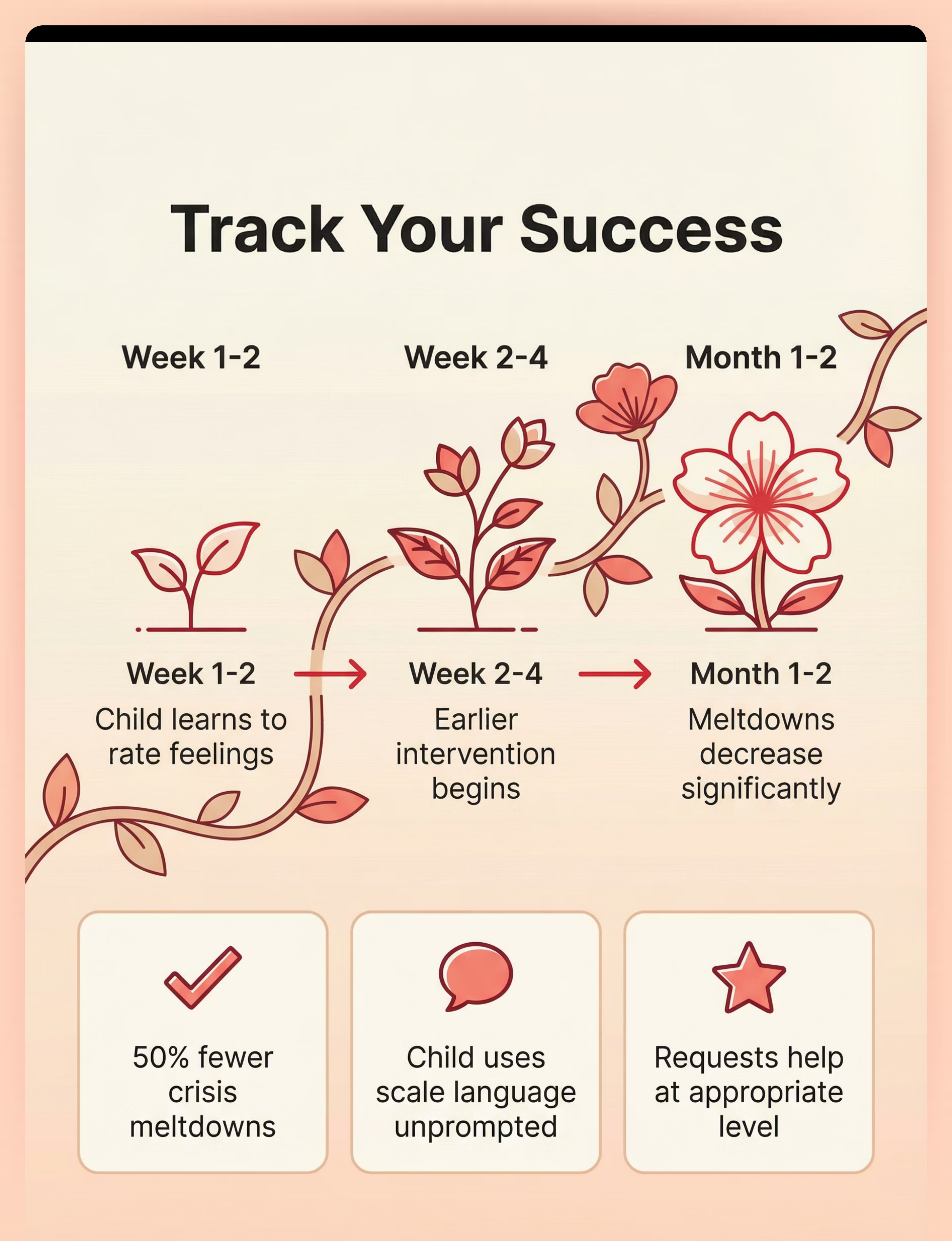
What to Expect (Realistic Timelines)
Child can rate their emotional intensity
1-2 weeks
Initial understanding of the scale and ability to point to current level with prompting.
Child identifies escalation earlier
2-4 weeks
Begins to notice internal changes before reaching crisis, catching escalation at yellow instead of red.
Intervention happens before crisis
2-4 weeks
Parents and teachers respond to ratings at level 2-3, preventing escalation to full meltdown.
Child requests help at appropriate level
4-8 weeks
Spontaneously communicates "I'm at a 3, I need help" without being asked.
Reduced meltdown frequency
1-2 months
Full-crisis meltdowns decrease by 50% or more due to consistent early intervention.
Child uses scale language independently
4-8 weeks
Scale vocabulary becomes natural part of child's communication: "I'm in the green zone!"

Is This Right for My Child? (2-Minute Check)
Does your child seem unaware of their escalation until it's too late?
If yes, this indicates:Needs self-monitoring tool
The thermometer creates the awareness gap that's currently missing, helping your child notice escalation in progress.
Does your child have difficulty rating the intensity of their feelings?
If yes, this indicates:Will benefit from visual scale
Visual representation makes abstract internal states concrete and communicable.
Do meltdowns seem to come without warning?
If yes, this indicates:Early warning system needed
The warning signs are there internally—the thermometer makes them visible externally.
Would knowing your child's 'level' help you intervene earlier?
If yes, this indicates:Thermometer system will help
Shared language enables timely, appropriate support before crisis hits.
3+ "yes" answers = strong fit. The feelings thermometer addresses the core challenge: making internal emotional states visible and actionable.

Usage Guide: When & How
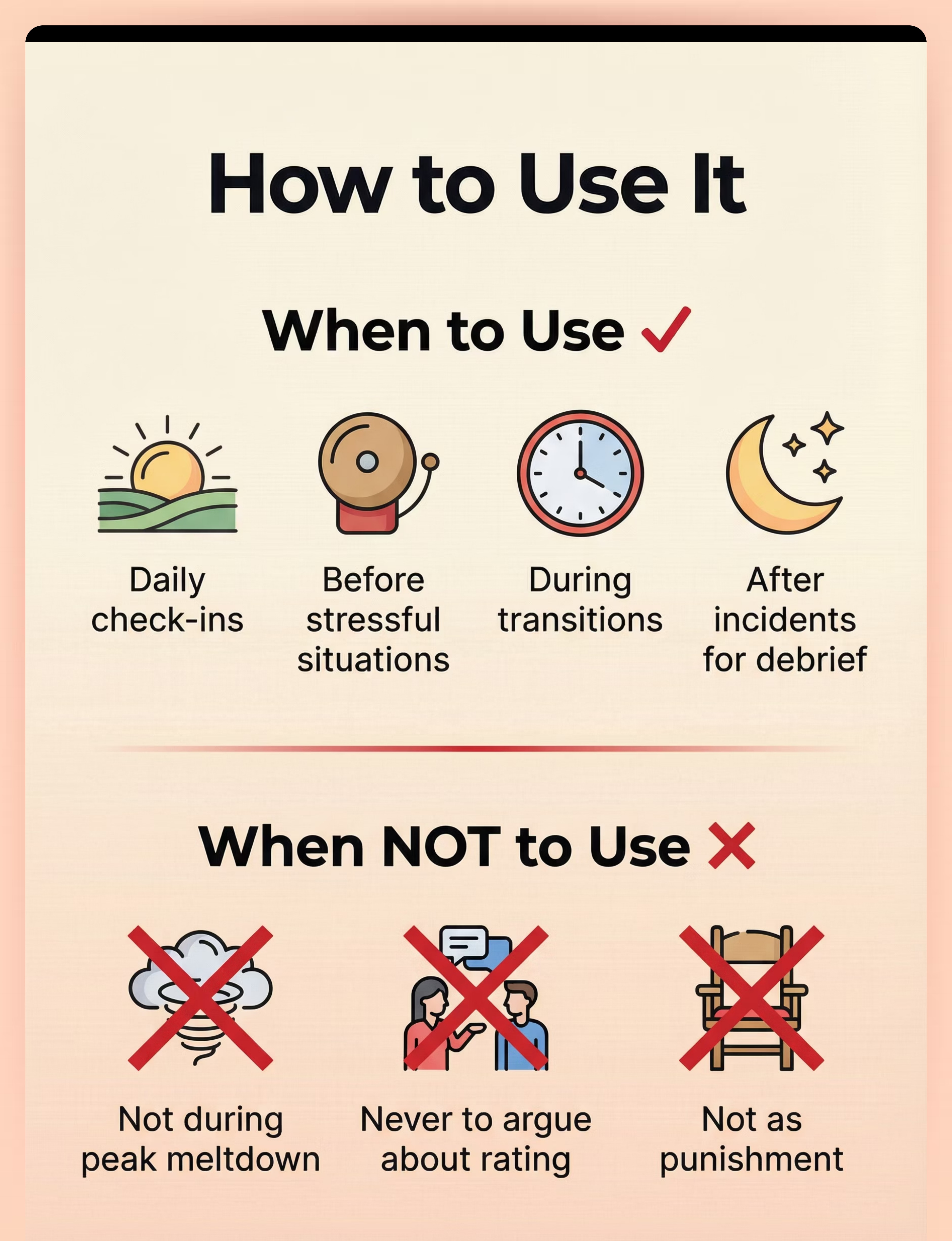
✓ When to Use
Situation | Purpose / Guidance | |
Daily check-ins | Morning, after school, bedtime—build routine awareness | |
Before stress | Check levels before transitions, tests, challenging tasks | |
Early escalation | When you notice body language changes or tone shifts | |
After incidents | Debrief what level was reached, what might have helped | |
During transitions | Moving between activities, locations, or emotional states | |
Regular school intervals | Set check-in times throughout the school day |
✗ When NOT to Use
Situation | Reason / Warning | |
During peak meltdown | Child can't access cognitive processing in crisis | |
To argue | Never debate or dismiss a child's stated rating | |
As punishment | Scale is for awareness and support, not discipline | |
To invalidate | Don't say "You're not really at a 4"—trust their experience |
Supervision by Age
Age Range | Supervision Level | Notes | |
Under 4 years | Adult-led with simple choices | Offer two options: "Are you calm or upset?" Use faces or colors only. | |
4-6 years | Adult guides, child rates with support | Parent asks questions, helps child find right level, validates all ratings. | |
6+ years | Independent rating, adult available | Child checks in spontaneously, adult provides support when ratings indicate need. |
Duration: Quick check-ins take 10-30 seconds. Initial teaching sessions require 5-10 minutes.
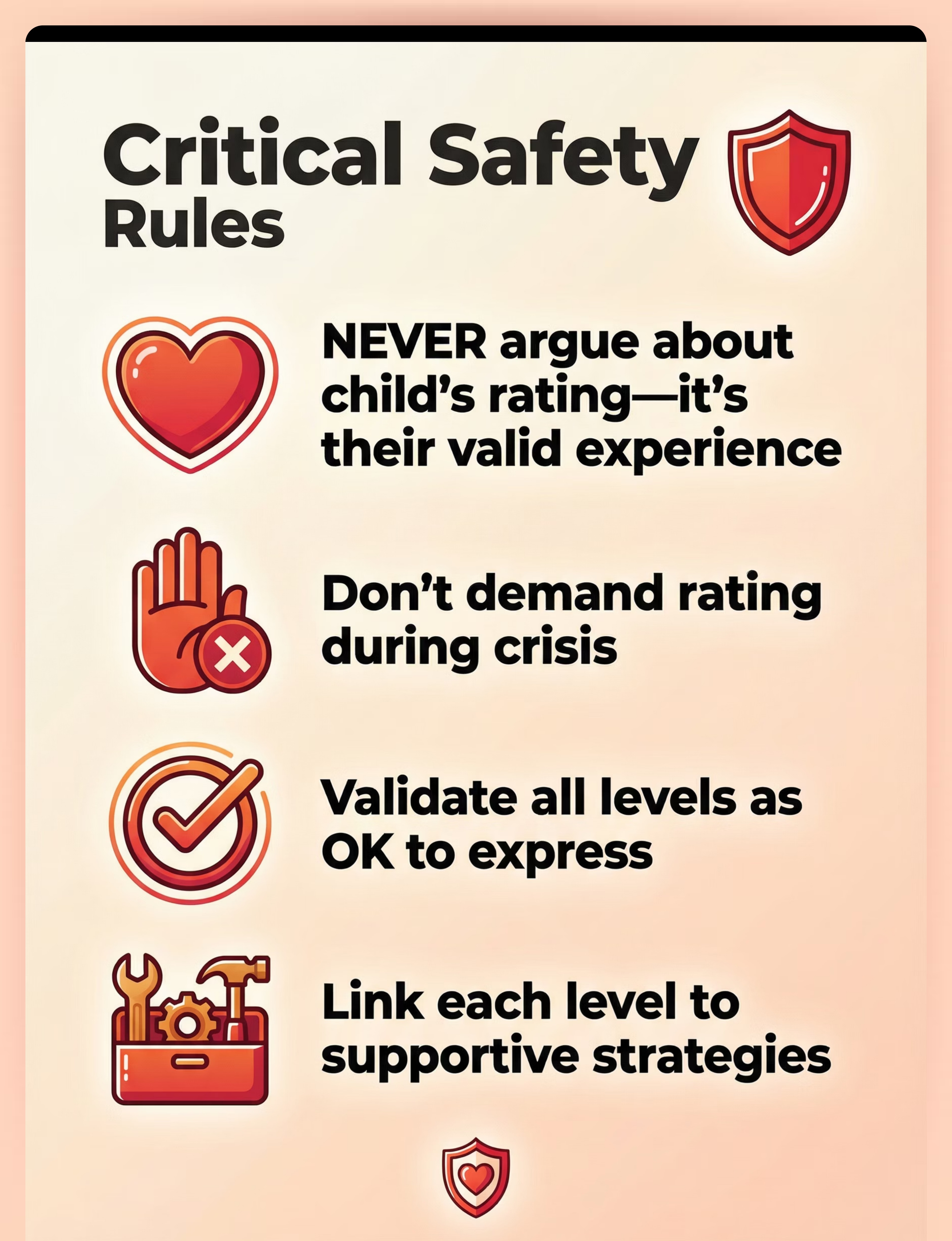
Safety First

NEVER Argue About Ratings
The child's rating is their subjective experience and is ALWAYS valid. Arguing about whether they're "really" at that level destroys trust and defeats the purpose of self-awareness.
Don't Demand Ratings During Crisis
During peak meltdown, the child cannot access the cognitive processing needed to rate intensity. Wait until they're regulated enough to think.
Validate All Levels
Every level is acceptable to express. There are no "wrong" feelings. The goal is awareness and communication, not suppression.
Link Levels to Support
Each number must connect to specific, helpful strategies. Don't just rate—respond with appropriate tools and interventions.
Warnings
Consistently high ratings may indicate need for professional support—consult psychologist or therapist.
Don't use the scale to dismiss feelings: "You're only at a 2, you're fine" invalidates their experience.
Watch for children hiding their true level to please adults—build safety through consistent validation.
Safety Checklist
Before Use
- Scale is understood by child
- Each level has associated strategies
- Child knows rating is always valid
- Posted in accessible location
During Use
- Accepting all ratings without judgment
- Linking rating to support/strategy
- Brief and natural check-in
- Child engaged in process
Signs of Success
- Child spontaneously uses scale language
- Child identifies level before asked
- Early intervention happens
- Meltdowns decrease

Common Questions (Honest Answers)
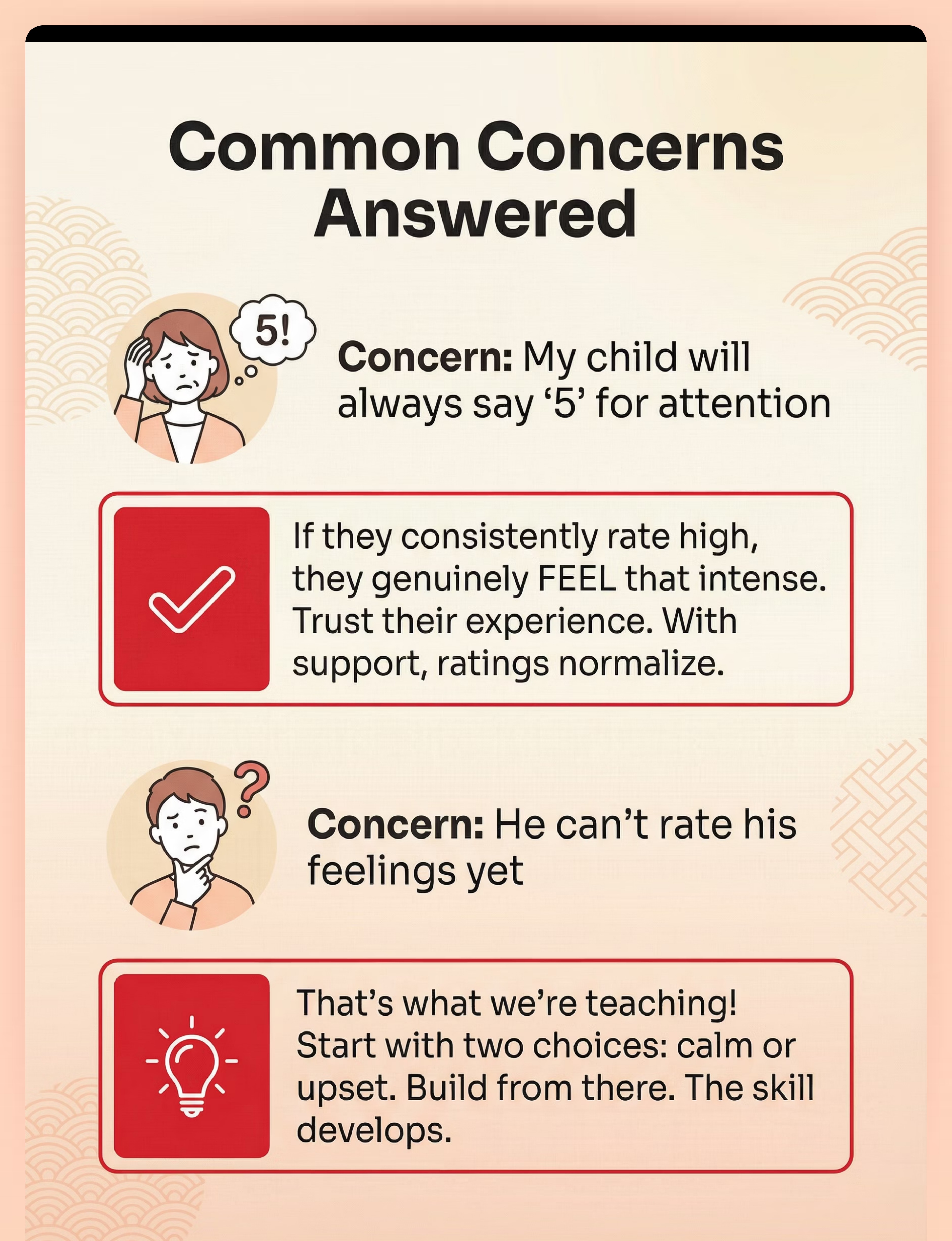
❓ "My child will always say '5' to get attention"
Response: If they consistently rate high, they may genuinely FEEL that intense. Trust their subjective experience. Over time, as they learn the scale and get appropriate support, ratings tend to normalize. Validate, don't dismiss.
Try this: Focus on what support they need at each level, not "catching" them in inaccurate ratings. Make all levels safe to express.
❓ "He can't rate his feelings"
Response: That's exactly what we're teaching! Start with two choices: "Are you calm or upset?" Build from there. Use physical signs: "Is your body relaxed or tense?" The skill develops with practice.
Try this: Start with simpler binary scales (calm/unhappy, happy/sad), then graduate to 5-point when ready.
❓ "This seems too clinical for home"
Response: It doesn't have to be clinical. Use fun language: "Are you in your green zone?" Use images (volcano, speedometer) that resonate with your child. Make it part of natural check-ins, not formal assessments.
Try this: Create a personalized scale with your child's own drawings and words. Let them design it together with you.
❓ "We'd be talking about feelings all the time"
Response: Check-ins can be brief—3 seconds. "What zone?" "Green." Done. It becomes natural like asking "Are you hungry?" Frequent brief check-ins are more effective than occasional long discussions.
Try this: Use at key transitions only if daily feels like too much: morning, after school, bedtime. Build from there.

Investment Guide
Feelings thermometers range from completely free DIY options to comprehensive commercial curricula. Most families start with budget options and expand if the approach works well for their child.
Budget Option
DIY printed thermometer + laminating
₹50–100
Many free printables available online. Print, laminate at home or at print shop, and post. Fully functional and customizable.
Best for: Testing the approach, immediate need, budget-conscious families, personalization with child's artwork
Mid-Range Investment
Standard pre-printed posters/charts
₹200–500
Durable, professionally designed charts available for purchase, often with basic instruction guides.
Best for: Families looking for a more polished look and moderate investment after initial testing.
Basic Implementation
Start with a simple DIY or standard poster to test the concept and see how your child responds.
Deeper Engagement
If successful, consider investing in a comprehensive curriculum for a more structured and deeper implementation.
Premium Solution
Complete Zones of Regulation curriculum
₹1,000–2,000
Full teaching program including posters, activity cards, lesson plans, and supporting materials.
Brands: Zones of Regulation, Incredible 5-Point Scale, Social Thinking
Best for: Classroom implementation, comprehensive approach, therapist-led programs, professional presentation
Overall range: ₹0–1,500 (USD $0–18)
Best starting point: Most families benefit from starting with a simple DIY or standard poster (₹50–400) to test the concept. If your child responds well, consider investing in a comprehensive curriculum for deeper implementation.

Where to Buy in India
Availability: Widely Available across online platforms, educational stores, and DIY resources.
Search: "feelings thermometer poster"
Price: ₹100–400
Wide selection of posters, cards, and kits with customer reviews
Teachers Pay Teachers
Search: "zones of regulation printable"
Price: ₹0–300
Digital downloads, many free options, highly customizable
Educational Stores
Search: "emotion scale chart"
Price: ₹150–500
Physical stores in major cities, immediate availability
DIY / Print Free
Search: "free feelings thermometer printable"
Price: ₹0–100
Print at home or local print shop, laminate for durability
Buying Tips
Laminate for durability and repeated use—worth the small extra cost
Post at child's eye level in multiple locations for maximum visibility
Have portable version too—card for backpack, pocket, or therapy bag
Link each level to specific strategies before implementing
Let child help color or decorate to increase ownership and engagement
⚠️ Red Flags
Scale not clearly explained—lacks descriptors or examples for each level
Only focuses on negative states—doesn't include calm, happy, or regulated zones
No linked strategies—just rates intensity without providing coping tools
Too complex for developmental level—5-year-old doesn't need 1-10 scale with paragraphs

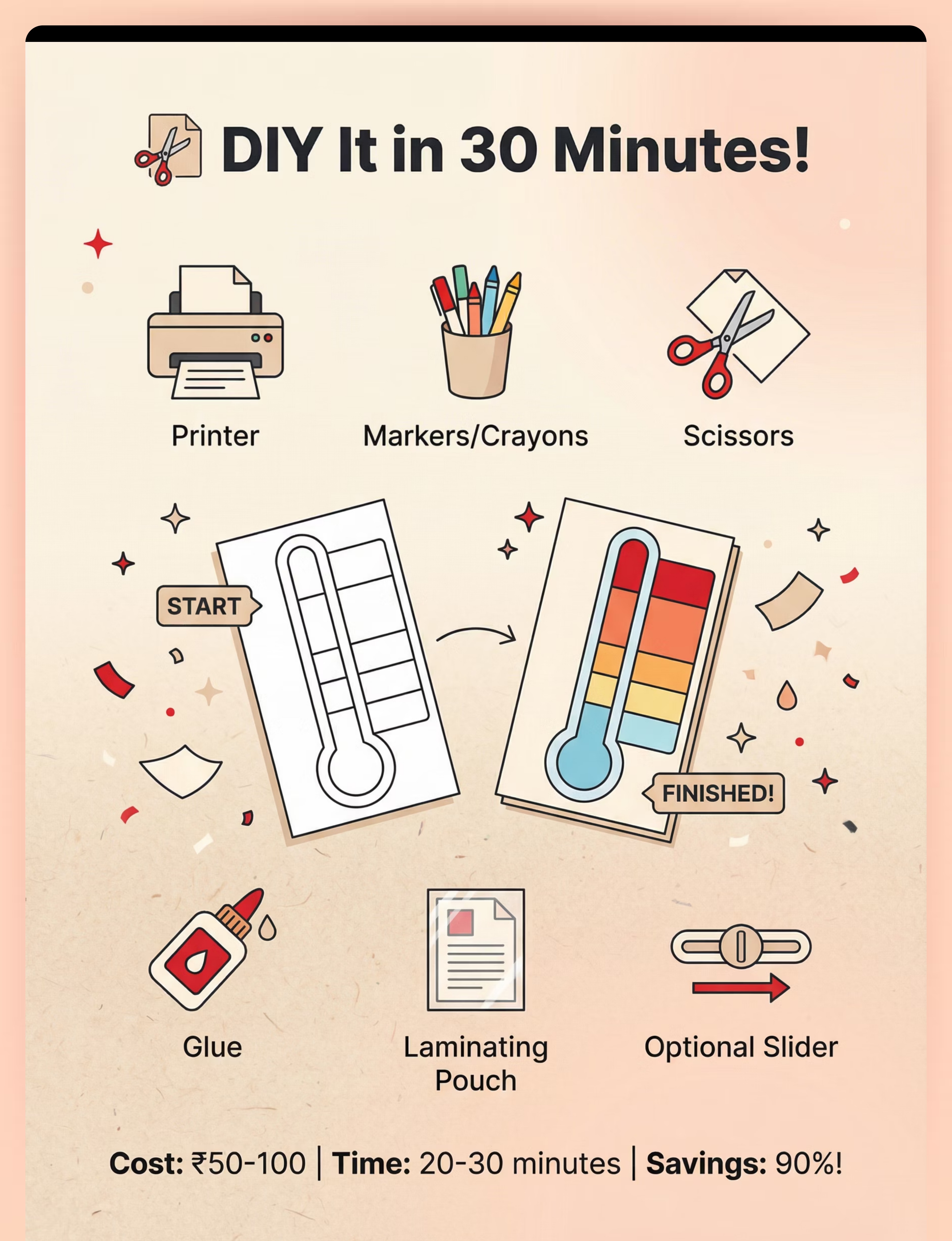
DIY Alternative (Save 90-100%)
Feasibility: Very High | Cost Savings: 90-100% | Time: 20-30 minutes
1
Materials: Printer/Markers
Paper or cardboard
2
Materials: Laminating
Pouches (optional but recommended)
3
Materials: Velcro/Slider
Optional mechanism
4
Materials: Colors
Pencils or markers
5
Step 1: Draw/Template
Create thermometer shape
6
Step 2: Color Zones
Blue/Green to Red gradient
7
Step 3: Add Descriptors
Numbers 1-5 & level details
8
Step 4: Faces/Images
Visuals for each level
9
Step 5: Laminate
For durability (local print shops)
10
Step 6: Add Slider
Movable arrow (optional)
DIY vs Commercial: Making the Choice
Factor | When to DIY | When to Buy Commercial | |
Budget | Budget-conscious, want to minimize costs | Budget available for professional materials | |
Personalization | Want to customize with child, create together | Prefer research-backed standardized system | |
Testing | Testing if child responds to concept first | Committed to approach, want complete curriculum | |
Urgency | Immediate need, can't wait for shipping | Can wait for delivery of quality materials | |
Setting | Home use, individual child | Classroom-wide implementation, multiple children | |
Time | Have 30 minutes to create | Limited time, need ready-to-use solution |
Tradeoffs
DIY tradeoffs: May be less polished visually, requires sourcing and creating content, may need revisions as you learn what works. Commercial advantage: Professional design, research-backed content, complete curriculum with teaching guides, consistent implementation across settings.
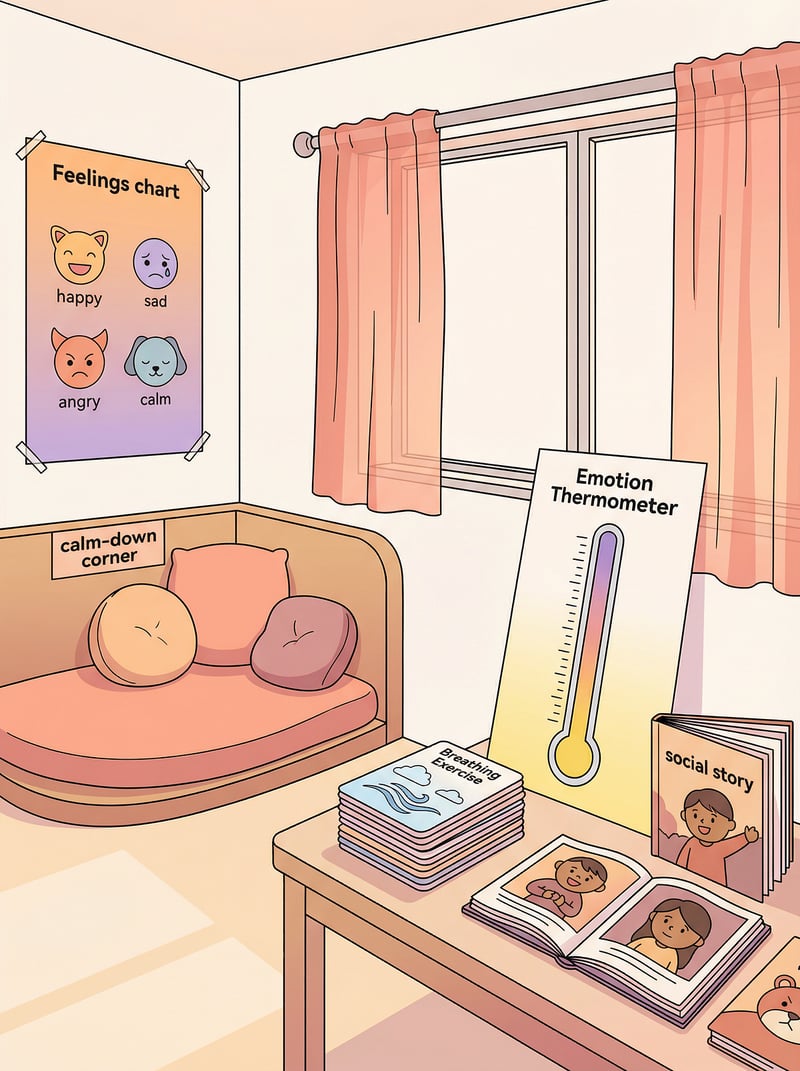
Preview of behavior feelings thermometer scale Therapy Material
Below is a visual preview of behavior feelings thermometer scale therapy material. The pages shown help educators, therapists, and caregivers understand the structure and content of the resource before use. Materials should be used under appropriate professional guidance.


Share this resource
Help others discover thisLink copied!

Measuring Success & Next Steps
Track Progress
Baseline (Measure First)
- Can child currently rate emotional intensity?
- How often do meltdowns reach full crisis (level 5)?
- When is intervention currently happening (what level)?
- Child's awareness of their own escalation patterns
Goals to Work Toward
- Child will rate emotional intensity on 5-point scale accurately
- Child will request help when reaching level 3 (yellow)
- Intervention will happen at level 2-3 instead of 4-5
- Meltdowns reaching full crisis will decrease by 50%
Success Indicators
Child uses scale language unprompted: "I'm at a 3"
Earlier intervention happening before crisis escalation
Fewer full-crisis meltdowns overall
Child self-monitors and adjusts behavior based on rating
Better communication about internal emotional states
Week 1-2
Introduce scale, practice during calm, establish check-in routine
Week 3-4
Child begins rating with support, early escalation noticed
Week 5-8
Independent rating emerges, intervention timing improves
Month 2-3
Meltdowns decrease, scale language becomes natural
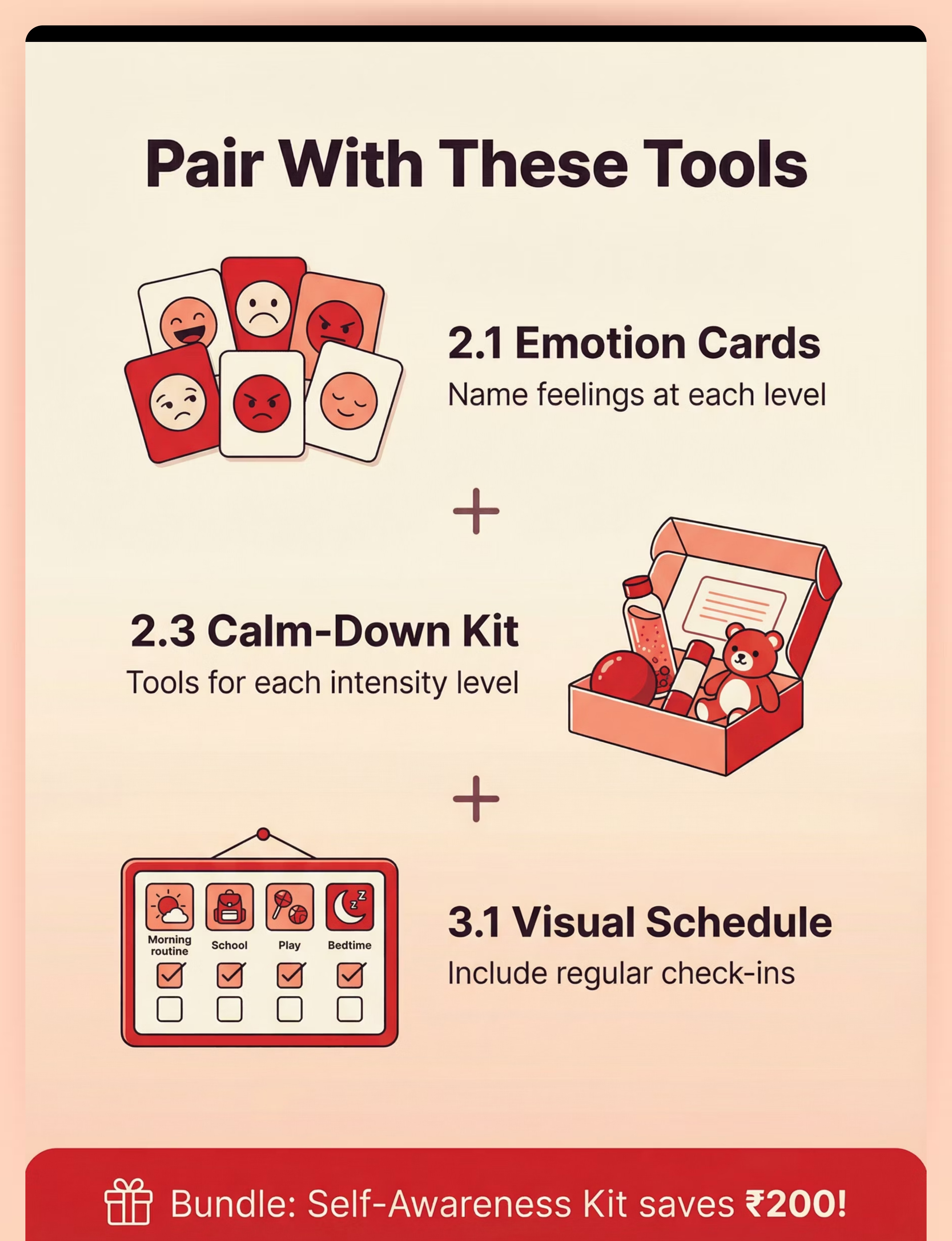
Complete the Kit: Pair It With...

Emotion Cards (ID: 2.1)
Name what they're feeling at each level—vocabulary builds awareness

Calm-Down Kit (ID: 2.3)
Tools and strategies assigned to each thermometer level

Social Stories (ID: 2.2)
Stories about using the scale and managing emotions

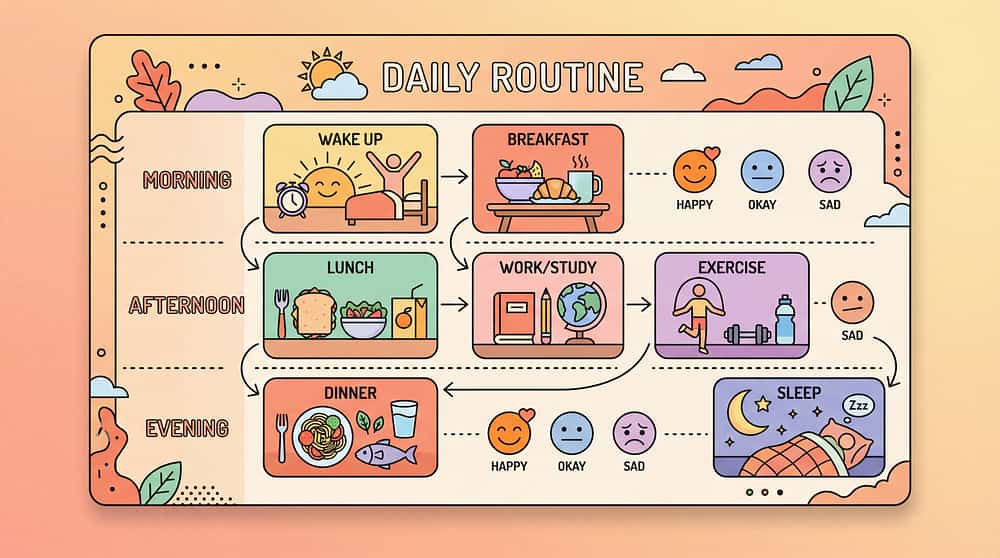
Visual Schedule (ID: 3.1)
Include regular check-ins in daily routine structure
Recommended Bundles
Self-Awareness Kit
Tools: Feelings Thermometer (2.5) + Emotion Cards (2.1) + Calm-Down Kit (2.3)
Use Case: Complete emotional awareness and regulation system
Prevention System
Tools: Feelings Thermometer (2.5) + Calm-Down Kit (2.3) + Coping Tools (2.4)
Use Case: Comprehensive meltdown prevention approach
Quick Summary
Behavior/Feelings thermometers enable self-monitoring of emotional intensity, allowing earlier intervention and meltdown prevention. Core Kit (Rank 1) with strong evidence base.
thermometer
self-monitoring
zones
intensity
prevention
escalation
Psychologist
SpEd
core-kit
Common Searches
feelings thermometer autism, zones of regulation, emotional intensity scale kids, behavior thermometer, 5 point scale emotions, anger volcano chart, self-monitoring emotions
Get Support
FREE National Autism Helpline
Phone: 9100 181 181
Languages: 16+ languages supported
Website:pinnacleblooms.org
Connect with specialists who can guide you in implementing emotional regulation tools effectively.
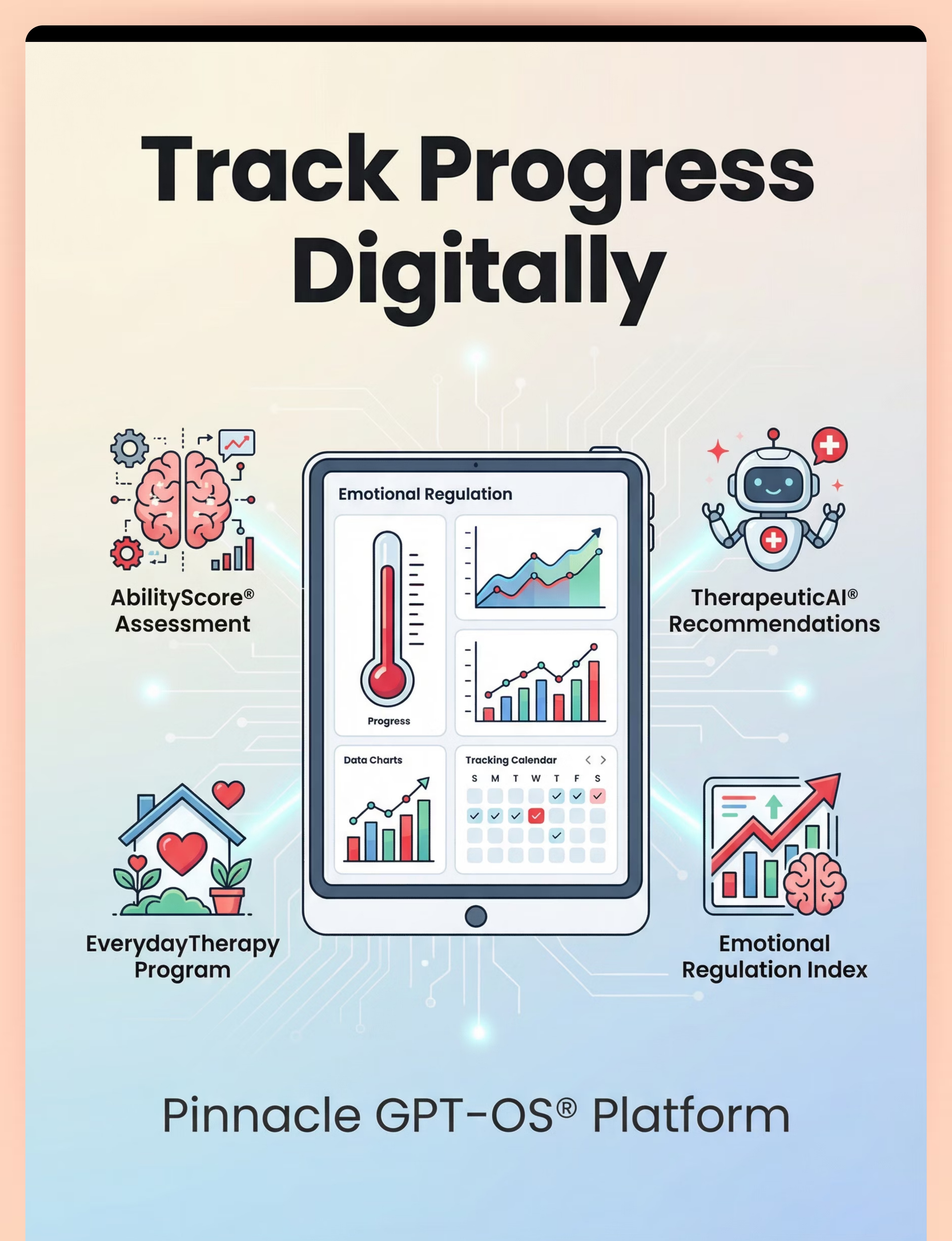
Platform Integration
This tool integrates with Pinnacle Blooms Network's comprehensive system:
- AbilityScore® identifies emotional awareness patterns in your child's profile
- TherapeuticAI® recommends the best scale type for your child's specific needs
- EverydayTherapyProgramme™ includes structured check-in routines in daily schedules
- Emotional Regulation Index tracks your child's levels and progress over time
Disclaimer: This is educational information designed to support families and professionals. Always consult qualified occupational therapists, speech-language pathologists, psychologists, or pediatricians for personalized assessment and intervention planning. Individual results vary based on child's unique profile, consistent implementation, and environmental support.