





Tool ID: 14.2
OT + Parent Recommended
Rank #1
Blackout / Light Control
Sleep Environment Light Management System
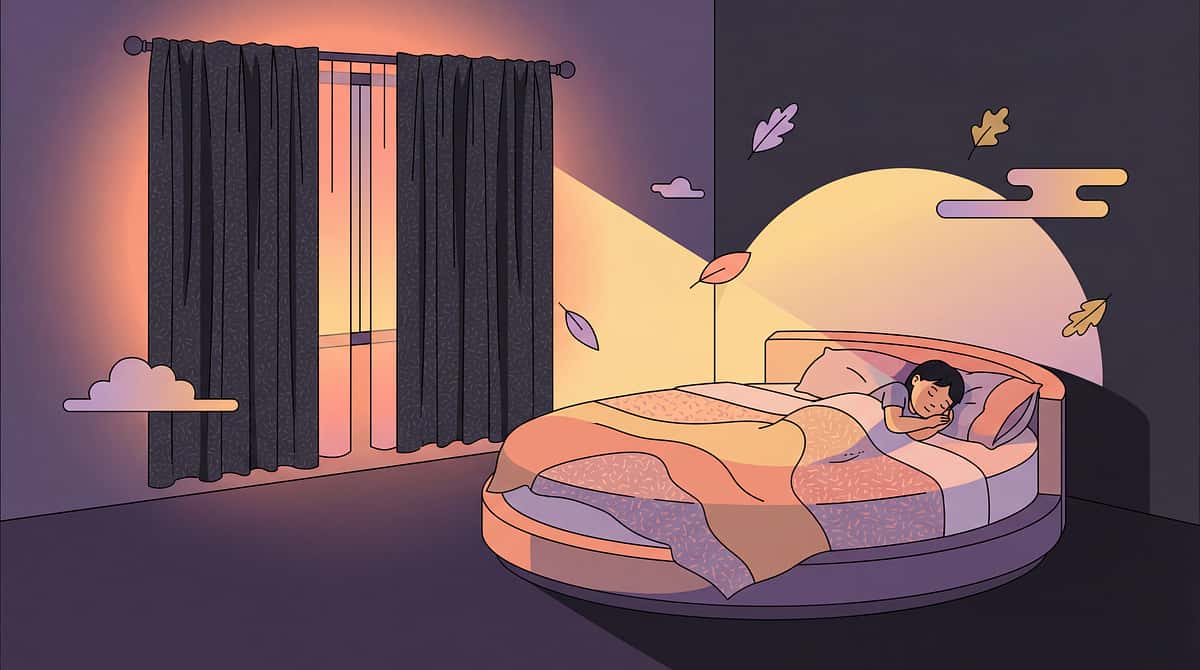
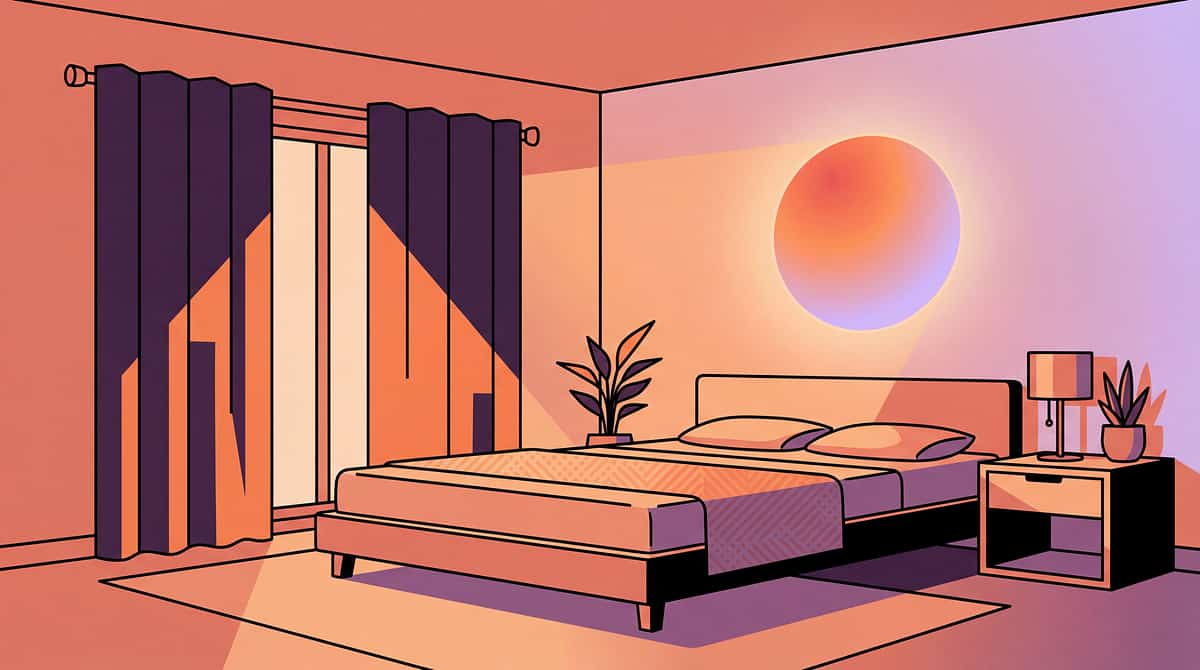
Creating optimal darkness for sleep by blocking external light sources that can disrupt circadian rhythm and sleep onset. Essential sleep environment support for children with autism and sleep challenges.
Strong Evidence
Daily Use
Core Kit
₹50–4,000

Who This Helps
Sleep Onset
Supports natural melatonin production for easier falling asleep
Sleep Quality
Maintains darkness throughout night for deeper, consolidated sleep
Circadian Rhythm
Helps regulate the body's natural sleep-wake cycle
Early Waking Prevention
Blocks morning light that triggers premature waking
All Ages
Home - Bedroom
Best for: Children who wake with sunrise, struggle to fall asleep in light, or show sensitivity to any light sources during sleep hours. Particularly beneficial for children with autism who often have circadian rhythm differences.

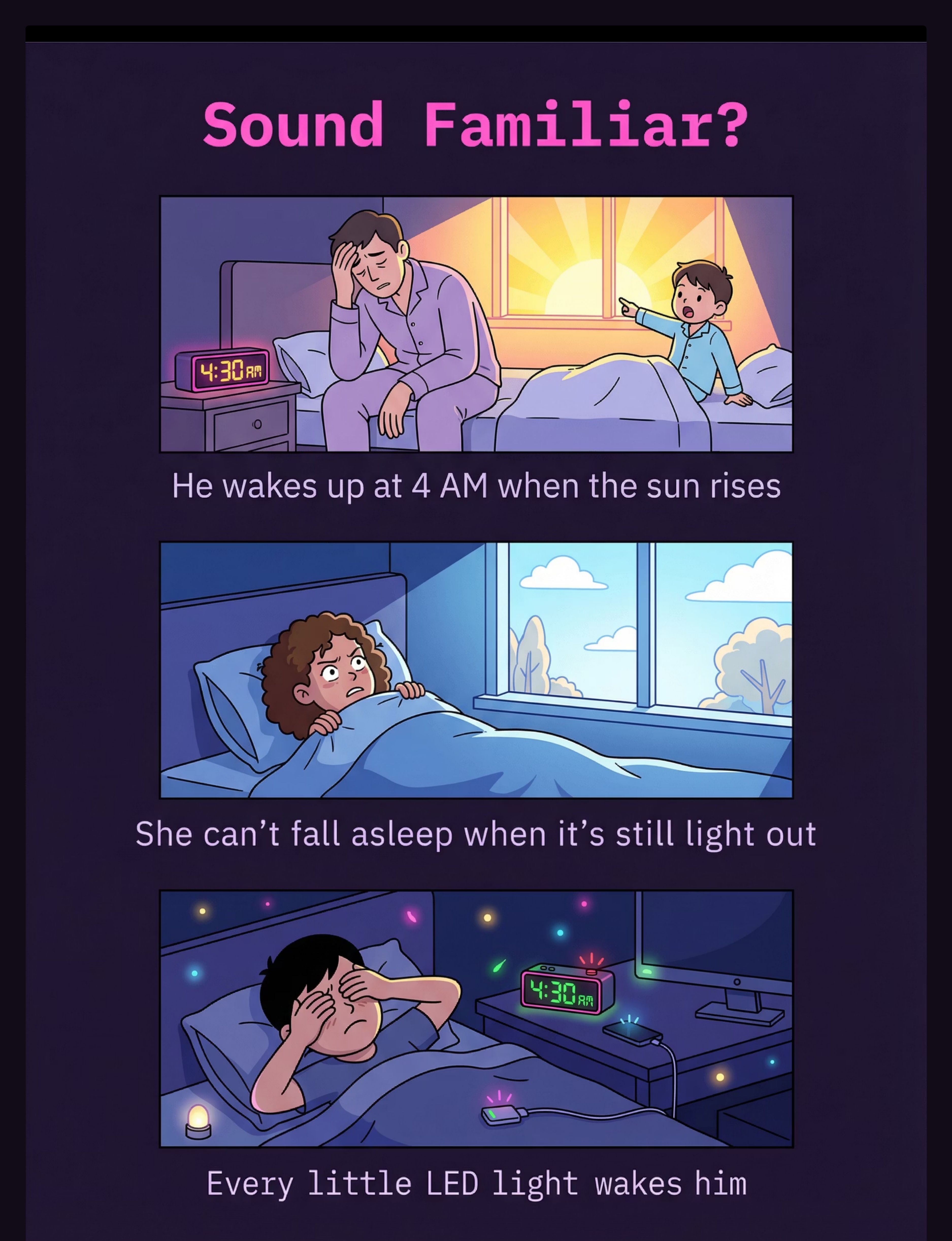
Does This Sound Familiar?
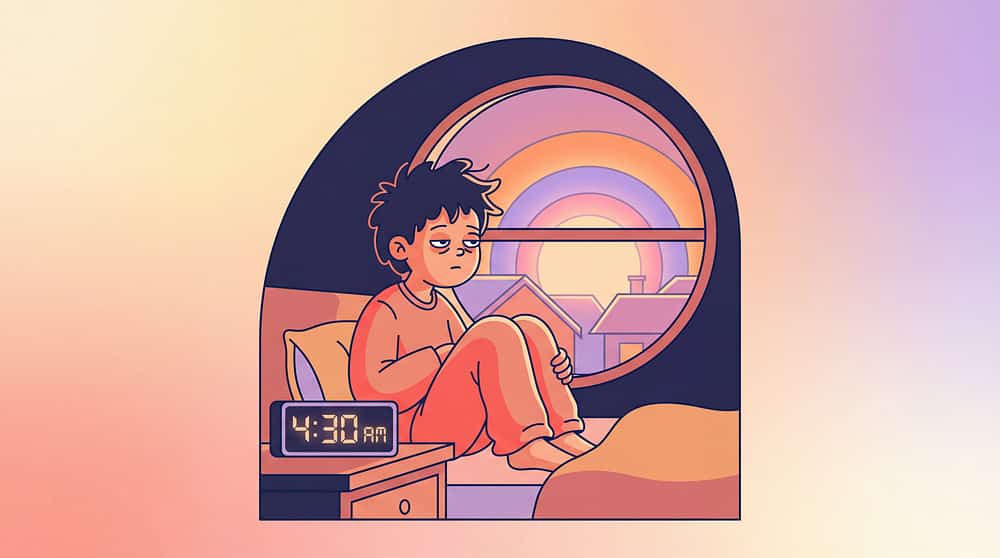
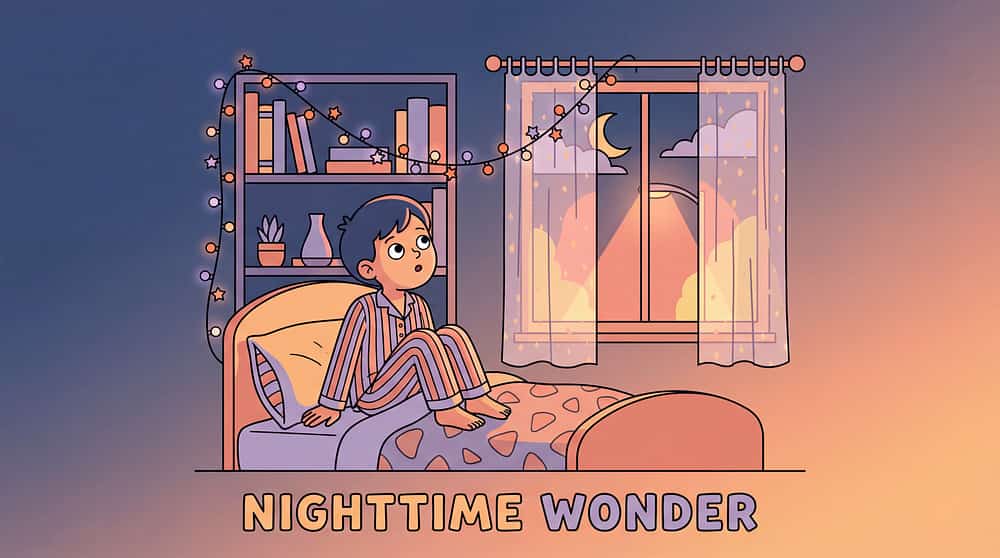
"He wakes up at 4am when the sun rises"
"She can't fall asleep when it's still light out"
"Any light in the room wakes him"
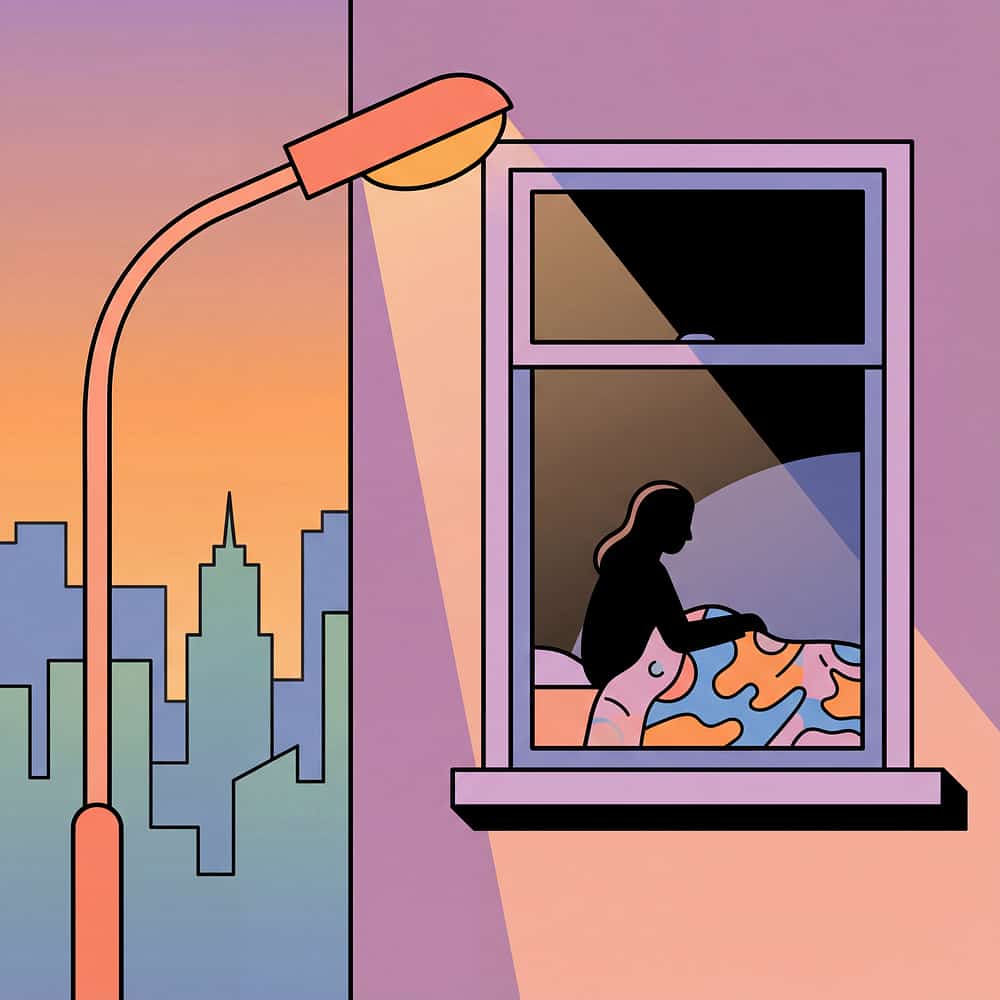
"Street lights shine into her room"
"He notices every little LED light"
"Summer daylight makes bedtime impossible"
You're not alone. These are common challenges that affect thousands of families. Light sensitivity and early waking are particularly prevalent in children with autism due to differences in circadian rhythm regulation.

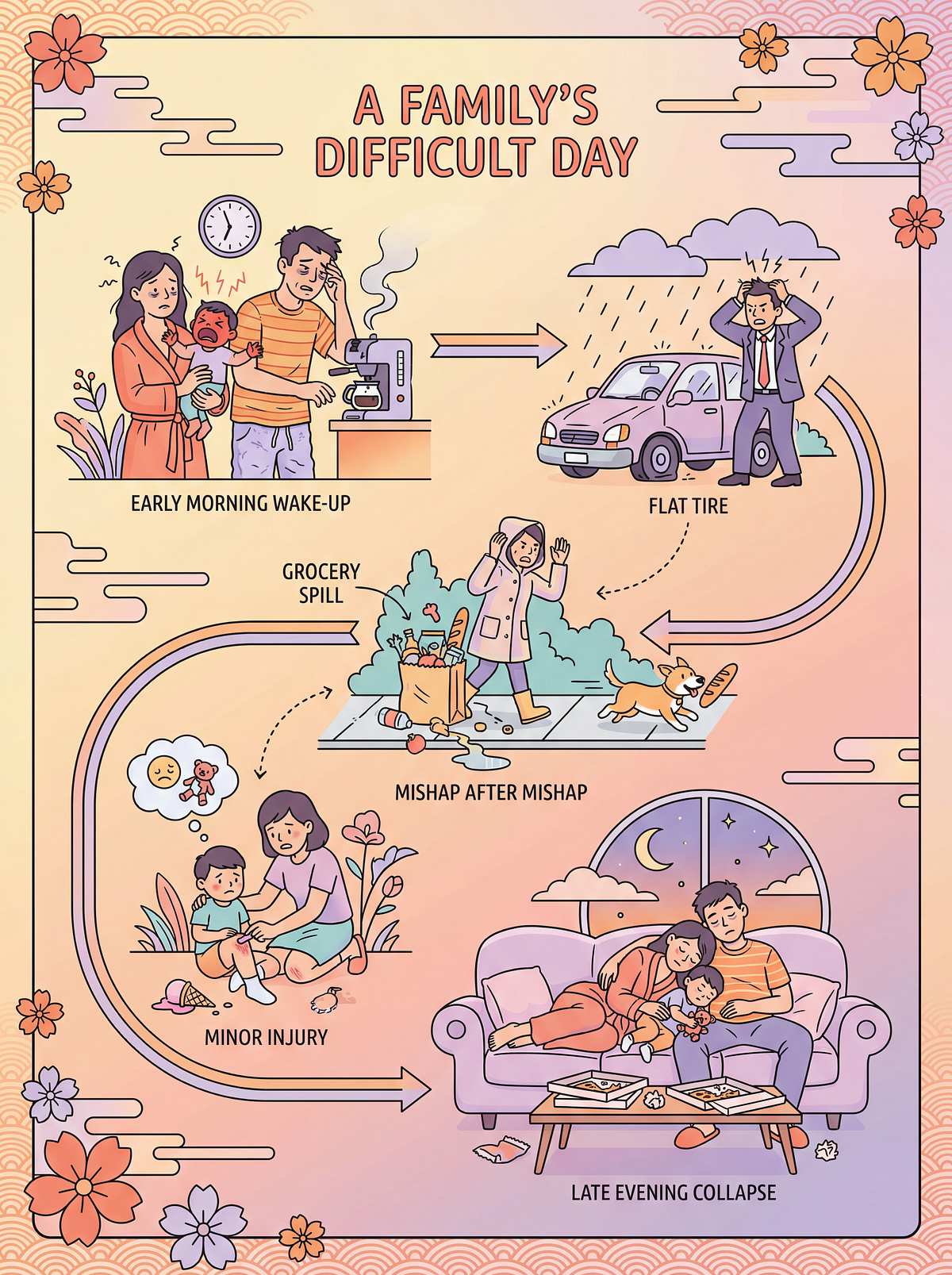
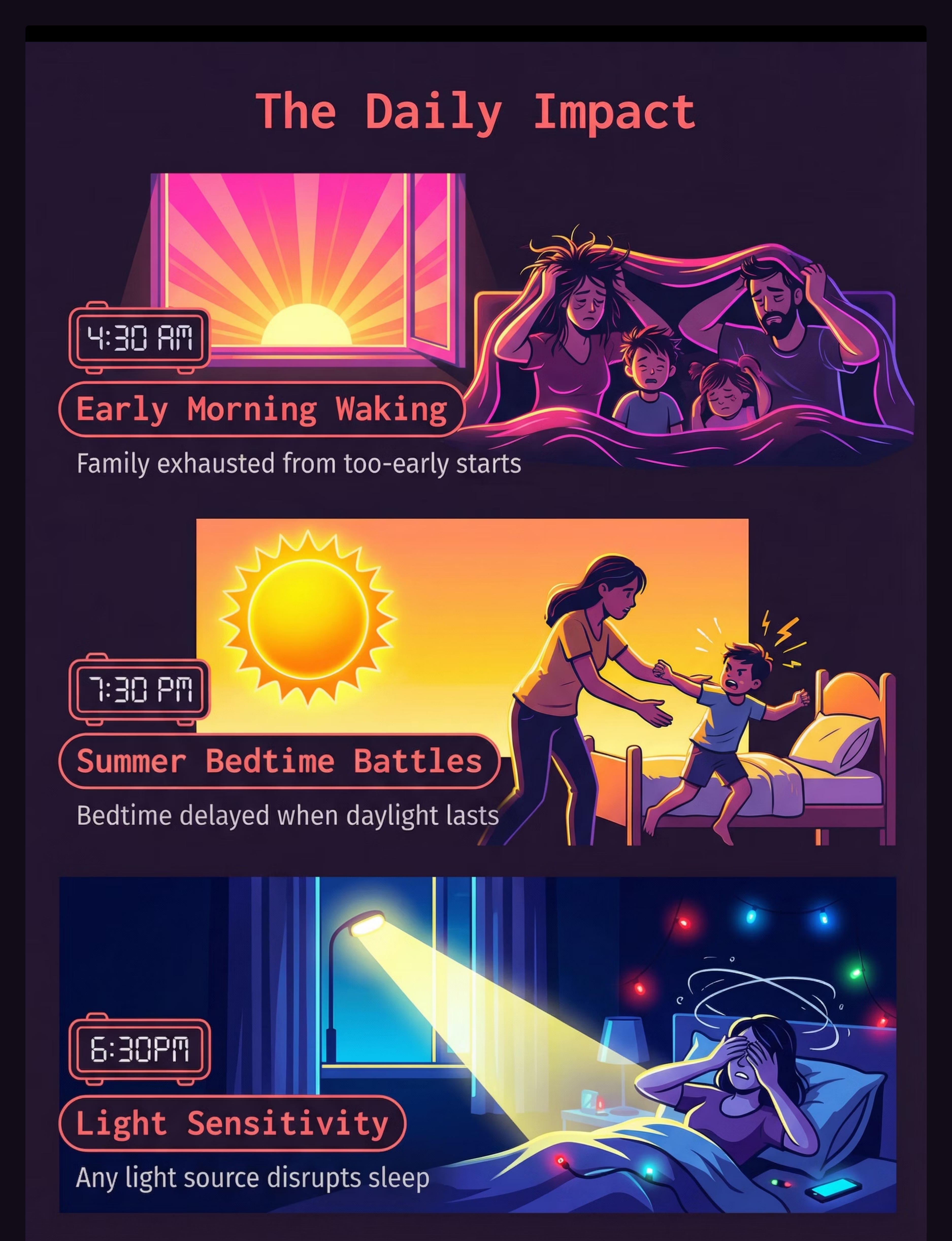
A Day Without the Right Support
Early Morning Waking
First light at 4:30am triggers wake. Child can't resettle. Family exhausted. Day starts too early for everyone.
Summer Bedtime Struggle
Sun still up at 7:30pm bedtime. Child's body can't respond to sleep cues. Bedtime delayed until 9pm. Child becomes overtired.
Light Sensitivity at Night
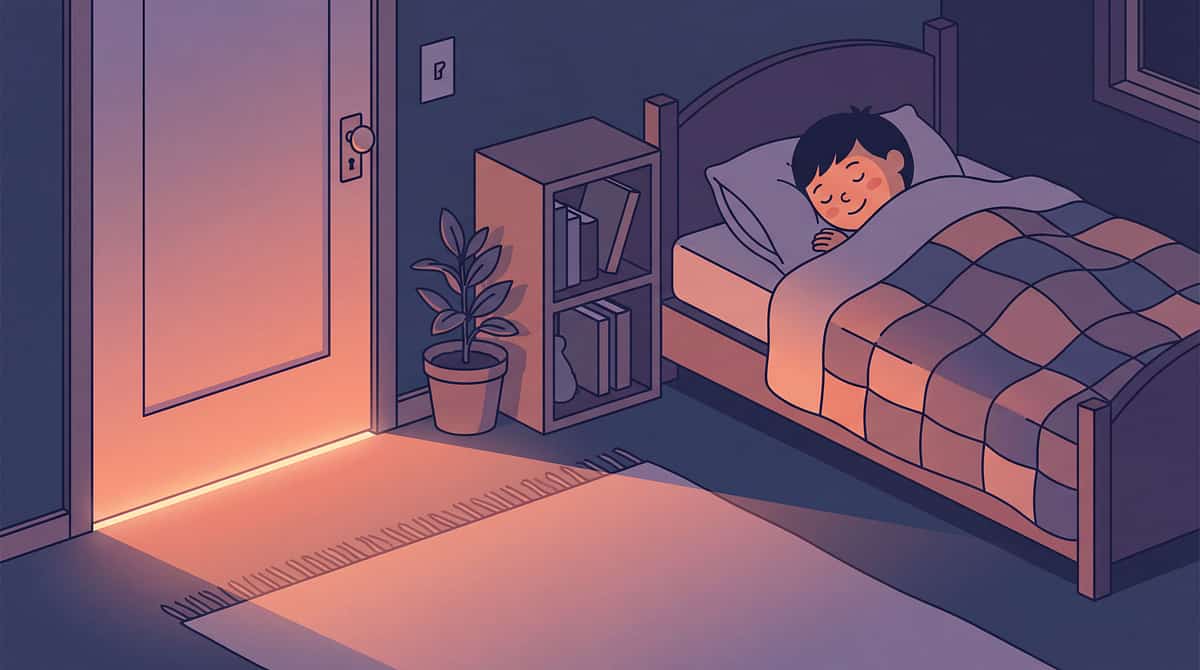
LED on monitor noticed. Light under door visible. Street light through curtains disturbs. Every light source disrupts sleep.
Bedtime Battles
Overtired but can't fall asleep. Light keeps melatonin suppressed. Sleep onset delayed. Sleep fragmented throughout night.
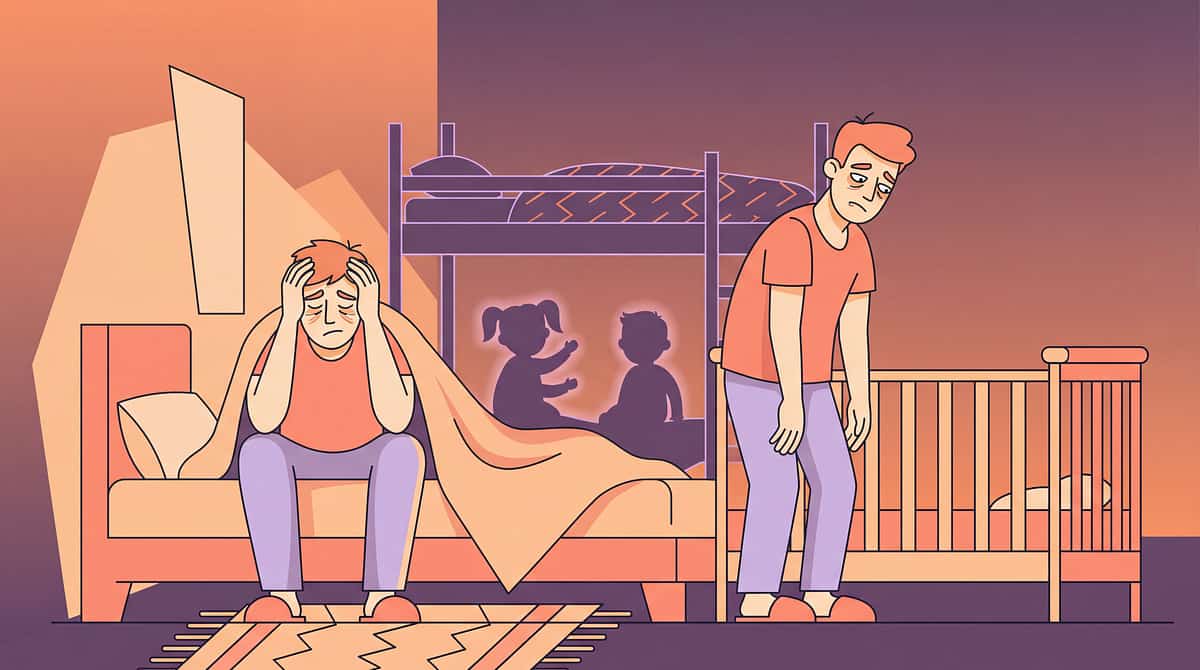
These daily moments compound into chronic sleep deprivation affecting the entire family's wellbeing, behavior regulation, and daily functioning.

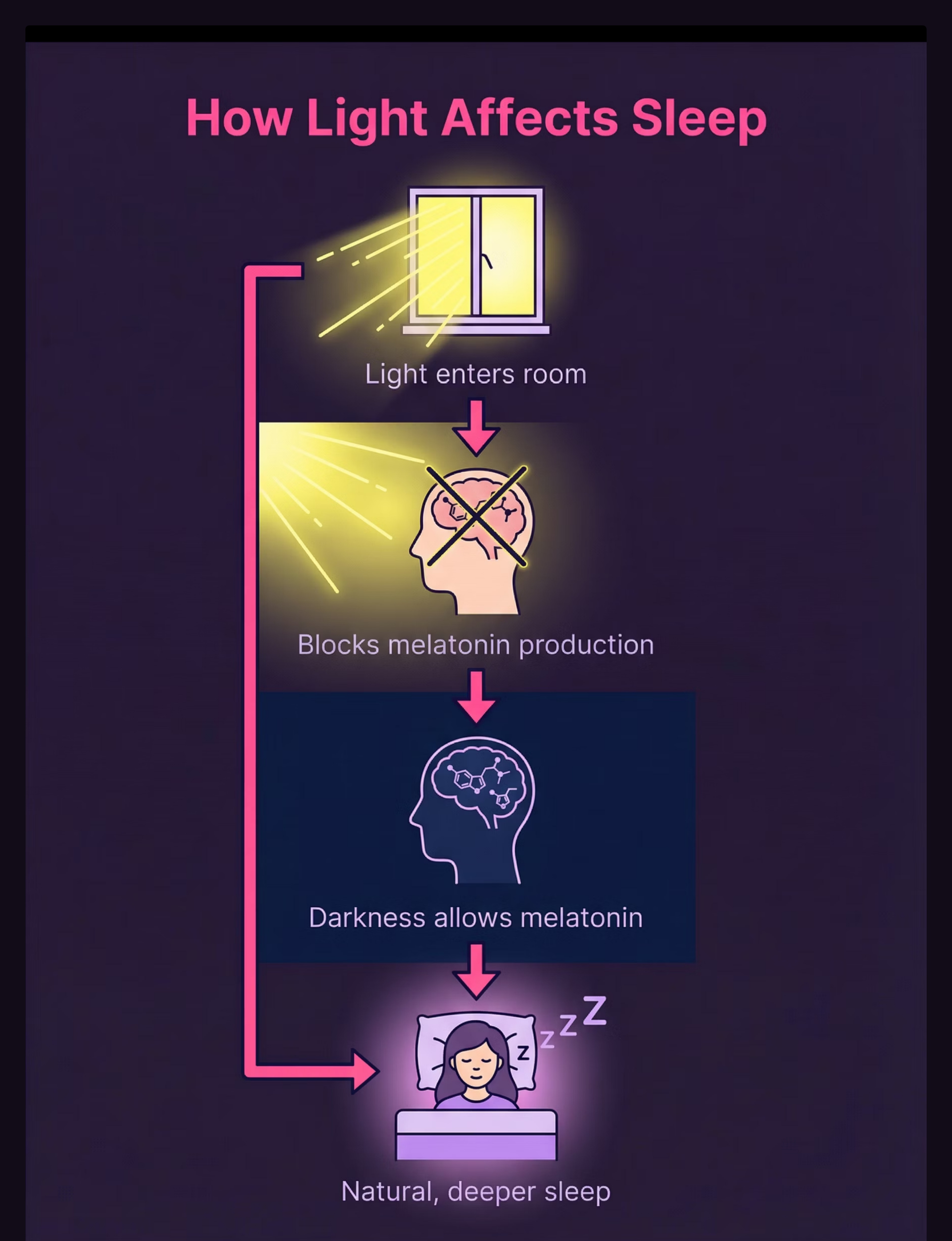
The Science Behind It
Light Blocked
External light sources prevented from entering sleep space
Melatonin Production
Darkness signals natural melatonin without suppression from light
Easier Sleep Onset
Body recognizes darkness as sleep time, onset improves
Darkness Maintained
No light disruption throughout night for consolidated sleep
Better Sleep Quality
Deeper sleep cycles and improved circadian rhythm regulation
Sleep Onset
Sleep Quality
Circadian Rhythm
Early Waking Prevention
Melatonin Production
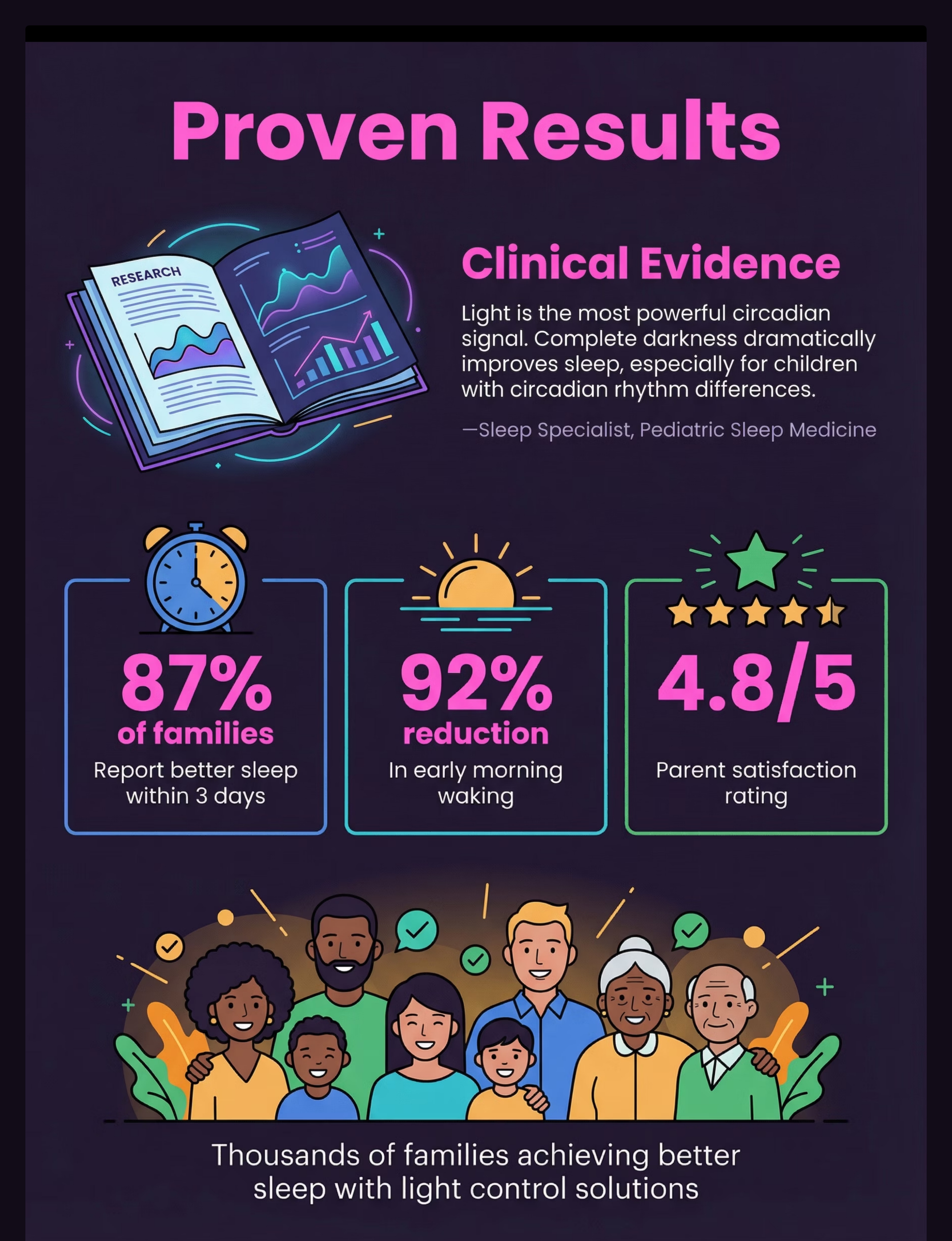
Light is the most powerful environmental signal to our circadian system. Many children with autism have circadian rhythm differences that make them particularly sensitive to light's effects on sleep.

How to Use It Right
1
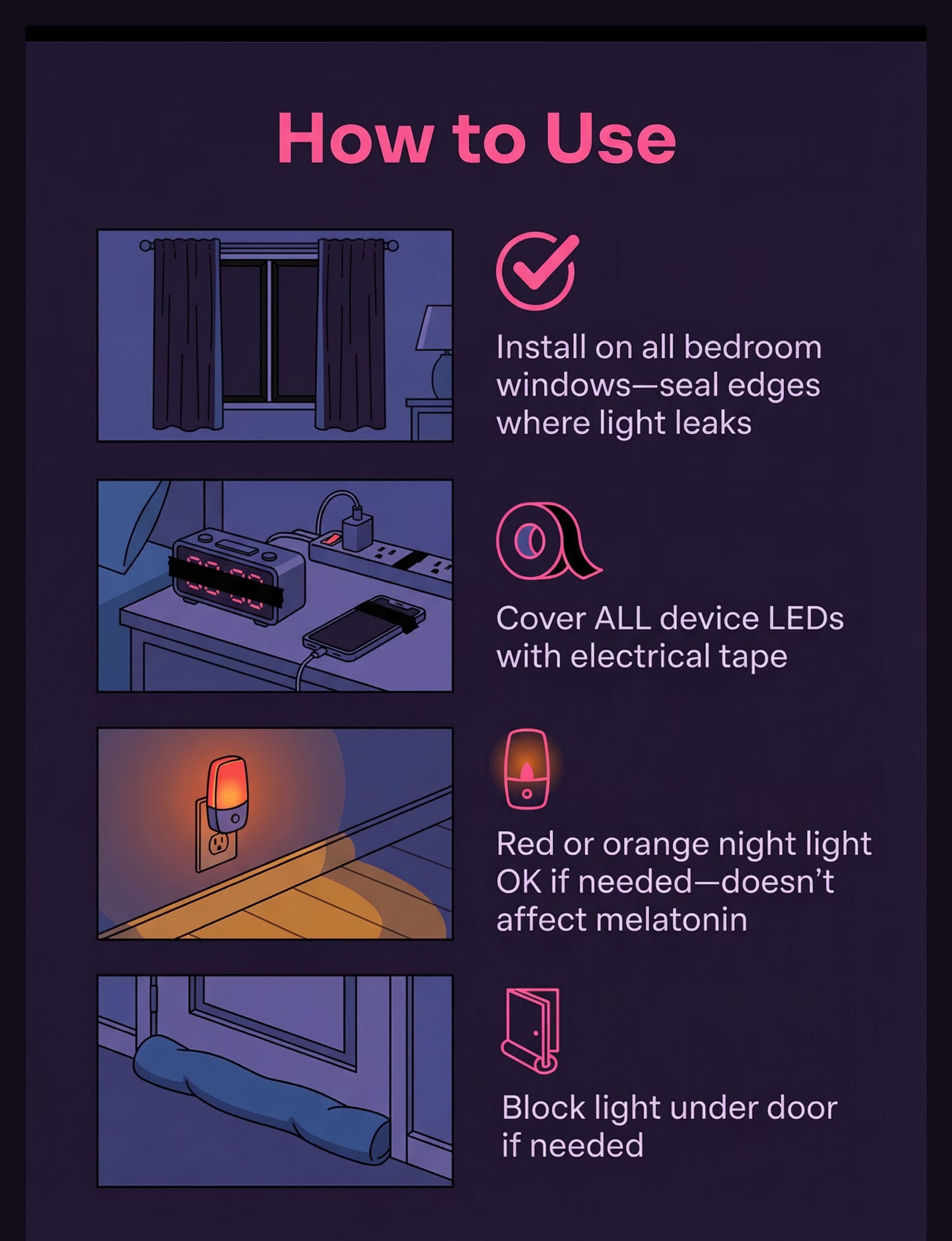
Block ALL light sources for best effect
Complete darkness maximizes melatonin production and sleep quality
2
Cover window edges where light leaks
Even small light leaks can disrupt sleep for sensitive children
3
Cover device LEDs with tape
Small electronic lights can be surprisingly disruptive
4
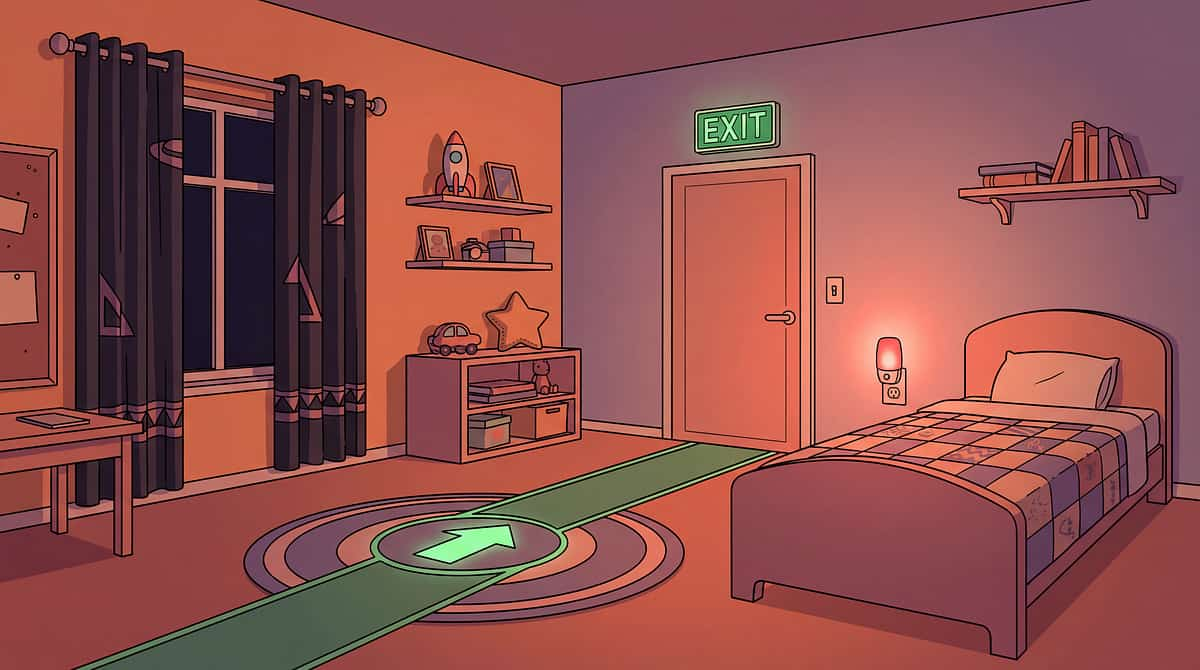
Red/orange night lights don't suppress melatonin
Use sleep-friendly light colors if child needs visibility
5
Blue light (screens) avoided before bed
Screen time should end 1-2 hours before sleep
6
Gradual dimming before bedtime
Progressive darkness signals body to prepare for sleep
Duration: Use throughout the entire sleep period, every night and during nap times when external light is present.
Expert Perspective

"Light is the most powerful signal to our circadian system. Many children with autism have circadian rhythm differences. Complete darkness at night and bright light in the morning help regulate the sleep-wake cycle. Blackout conditions can dramatically improve sleep."— Sleep Specialist, Pediatric Sleep Medicine
OT + Parent Recommended
Collaborative approach combining professional expertise with family implementation
Strong Evidence
Robust research supporting light control for sleep improvement
Rank #1 in Category
Most essential sleep environment modification

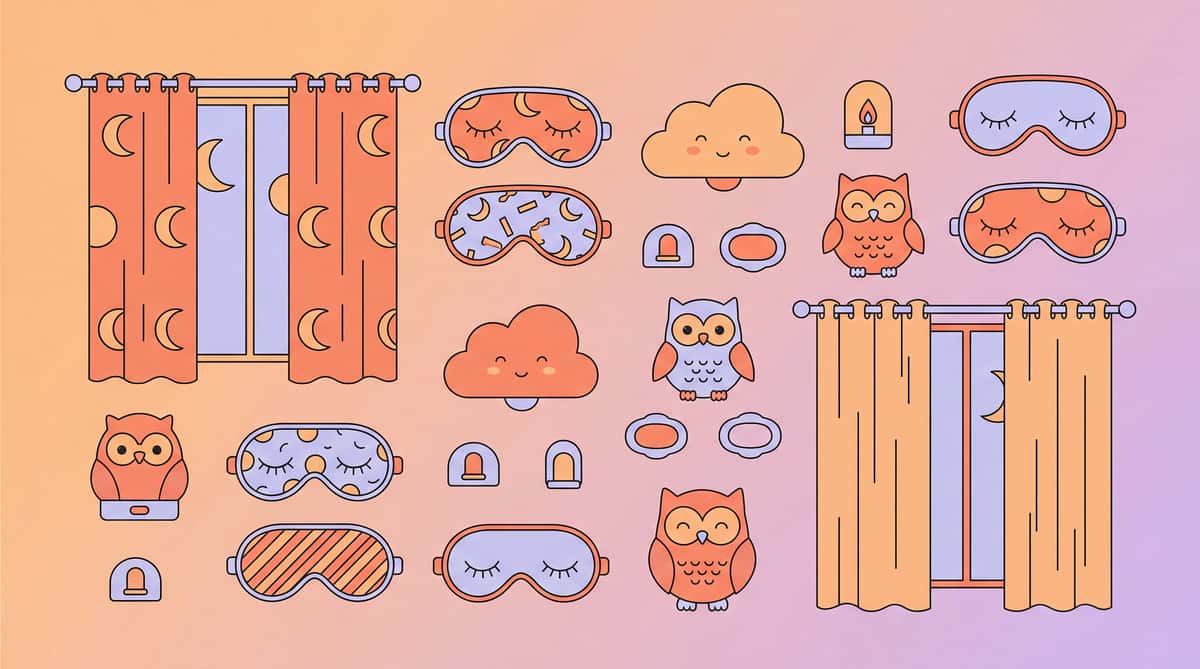
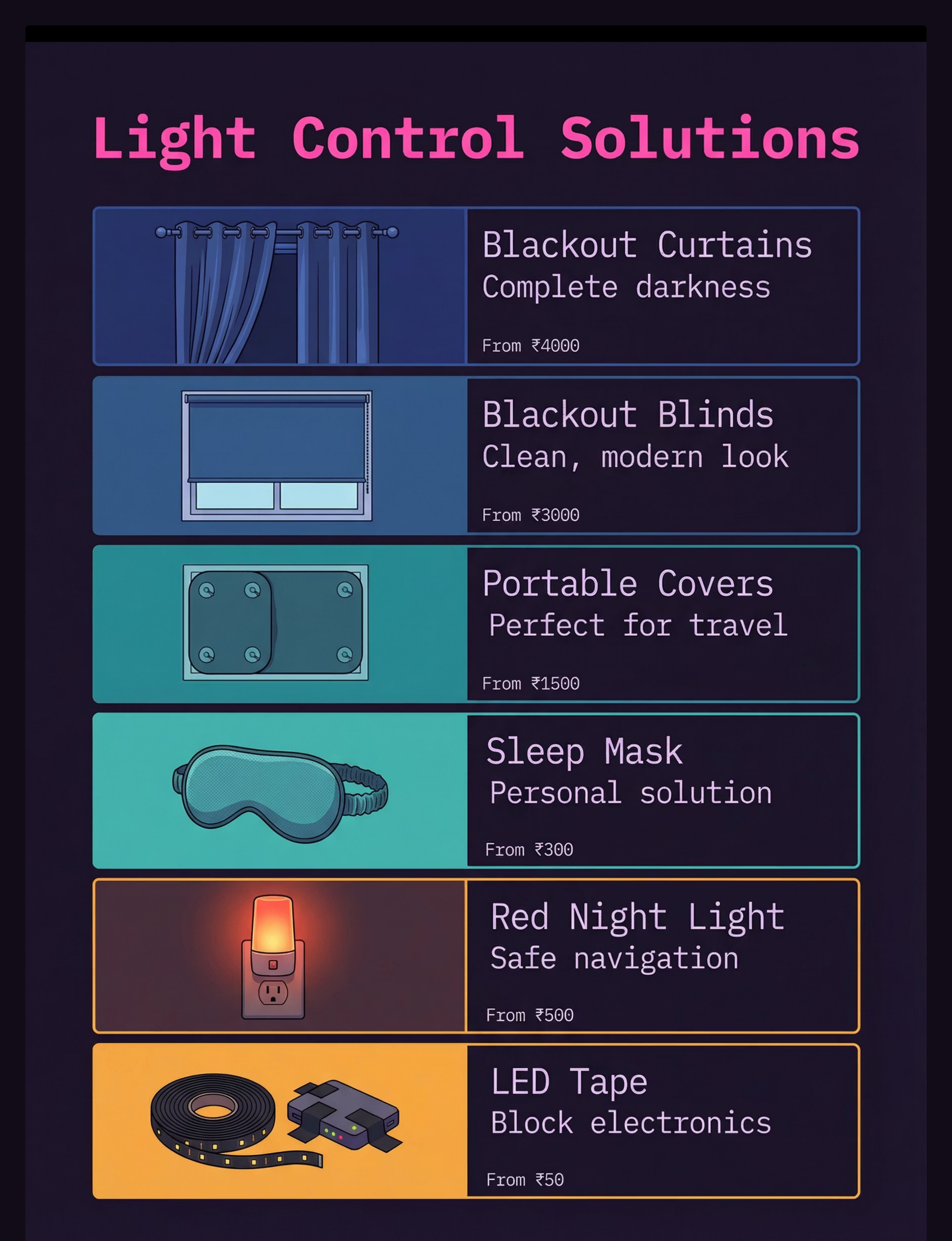
Choose Your Option (6 Variants)
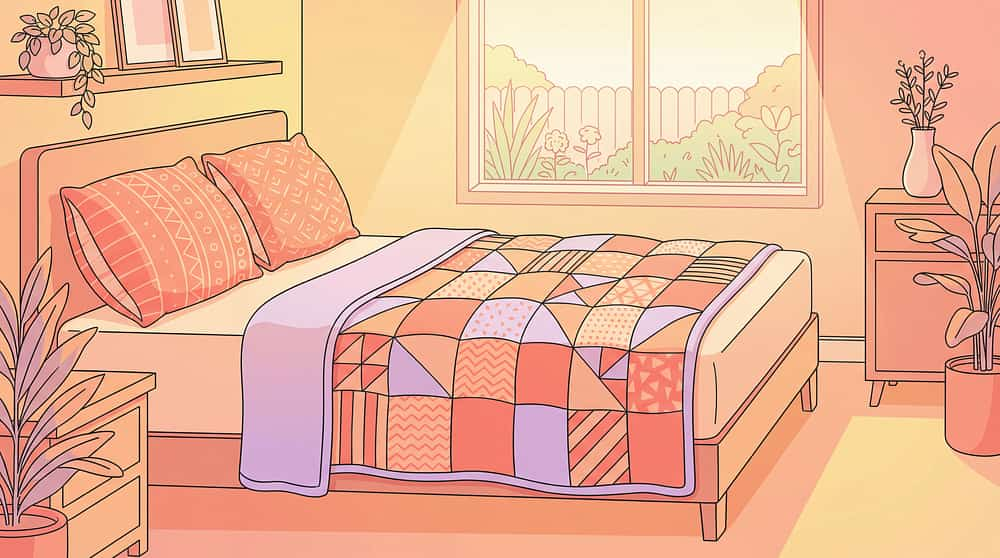
Blackout Curtains
Best for: Creating total darkness
Type: Complete light blocking window covering
All ages
Home - bedroom
Low portability
Price: ₹500–3,000
Blackout Blinds/Shades
Best for: Clean look, total darkness
Type: Roller blinds blocking complete light
All ages
Home - bedroom
Low portability
Price: ₹800–4,000
Portable Blackout Covers
Best for: Travel, temporary use
Type: Temporary window covers for travel
All ages
Travel
Very High portability
Price: ₹500–2,000
Sleep Mask / Eye Mask
Best for: Individual use, travel
Type: Wearable personal light blocker
4+ years
All settings
Very High portability
Price: ₹100–500
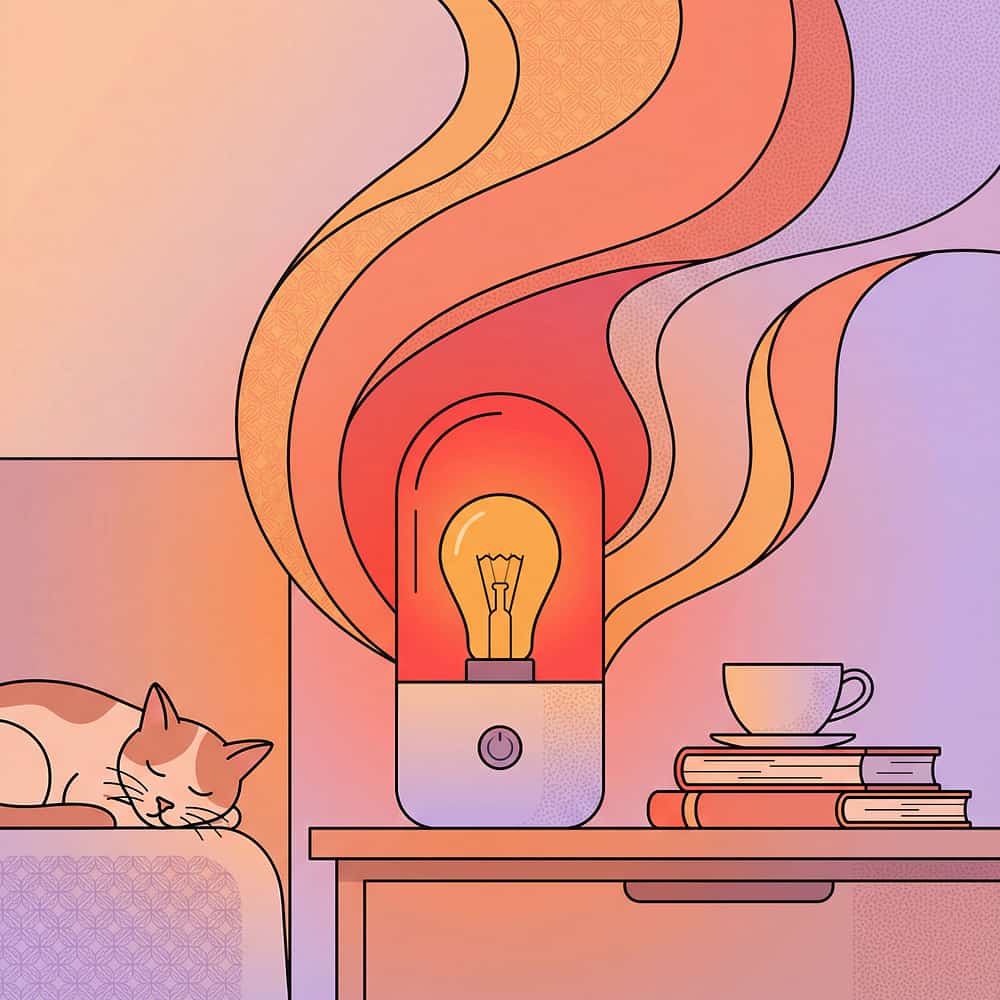
Night Light (Red/Orange)
Best for: Night navigation without disrupting sleep
Type: Sleep-friendly low-level illumination
All ages
Home
Medium portability
Price: ₹200–800
Light Blocking Tape/Covers
Best for: Blocking LED lights on devices
Type: Electronic light blocking covers
All ages
Home
Very High portability
Price: ₹50–200
Guidance on Selection
Choosing the right light blocking solution depends on various factors such as your primary goal, the setting of use, and the required portability.
How to Choose
- By Goal: Total darkness (curtains/blinds), travel needs (portable/masks), device lights (tape)
- By Setting: Home (permanent installations), travel (portable solutions), all settings (masks)
- By Portability: Installed (curtains/blinds) vs. portable (masks/covers/tape)
Consider the age of the user and specific environmental factors to ensure the chosen option effectively supports a healthy sleep-wake cycle.
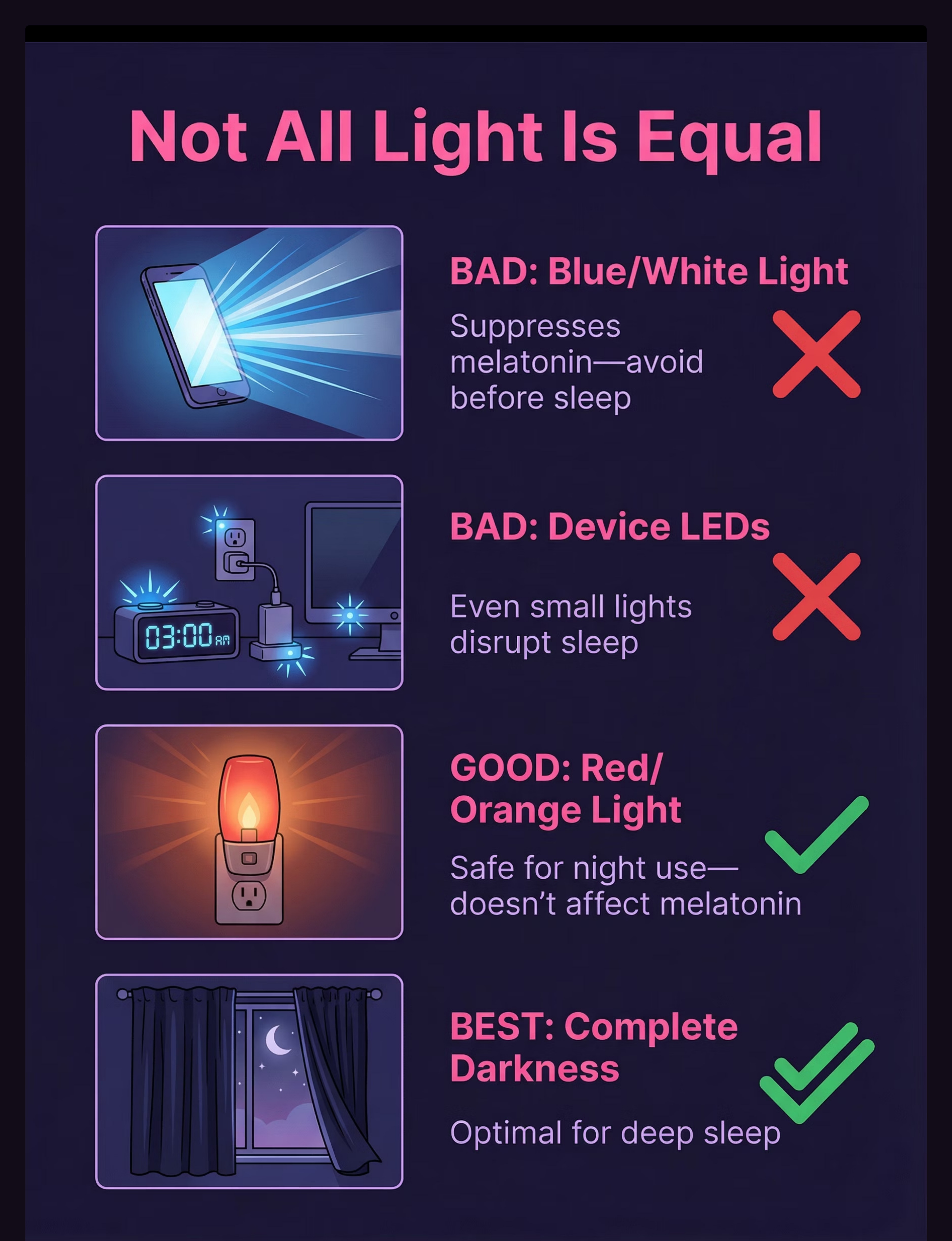
Understanding Light Types

Blue/White Light
Effect: Suppresses melatonin
Sources: Screens, LED bulbs, daylight
Action: Avoid before and during sleep

Red/Orange Light
Effect: Does NOT suppress melatonin
Sources: Red night lights, amber bulbs
Action: Safe for night lights and navigation

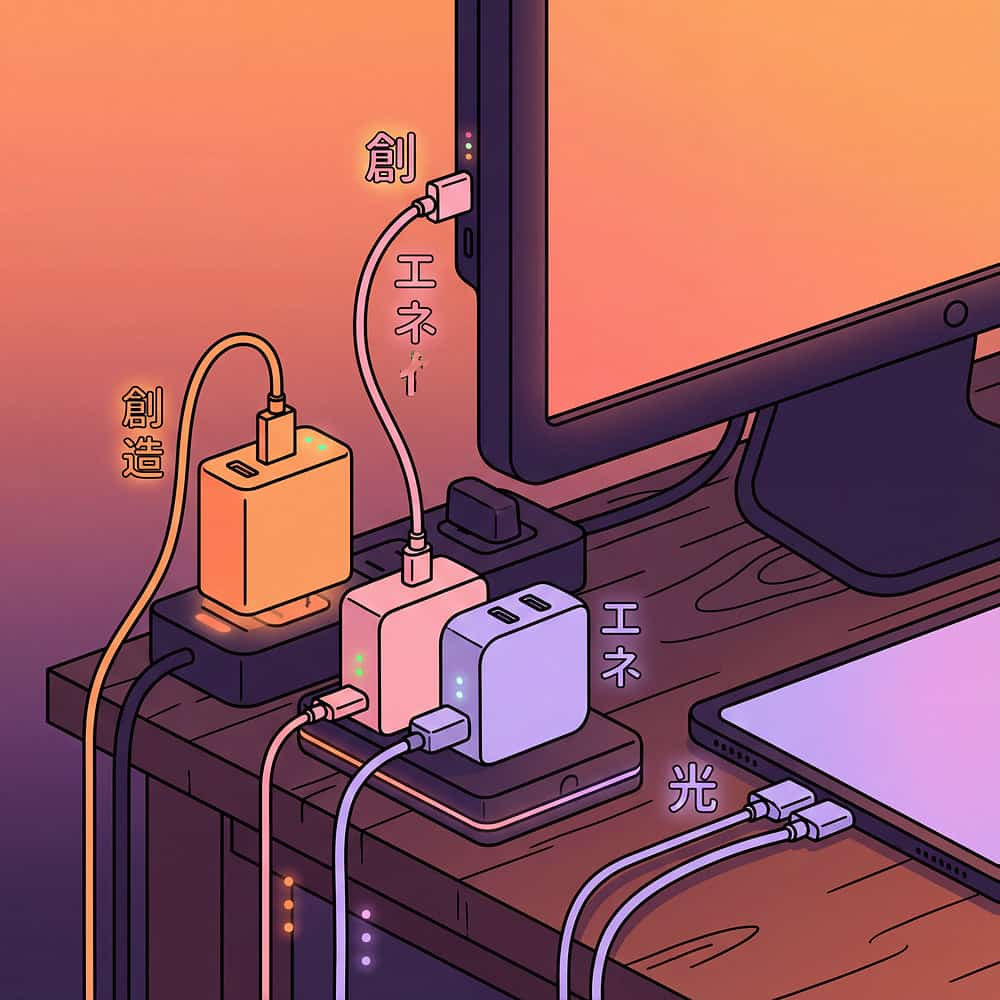
Device LEDs
Effect: Small but disruptive lights
Sources: Monitors, chargers, appliances
Action: Cover with light-blocking tape

External Street Light
Effect: Light leaking into room
Sources: Street lamps, neighbor lights
Action: Block with blackout curtains/blinds
Key Materials: Blackout fabric, foam backing, suction cups (for portable versions), various durable and easy-to-maintain materials designed for complete light blocking and edge sealing.
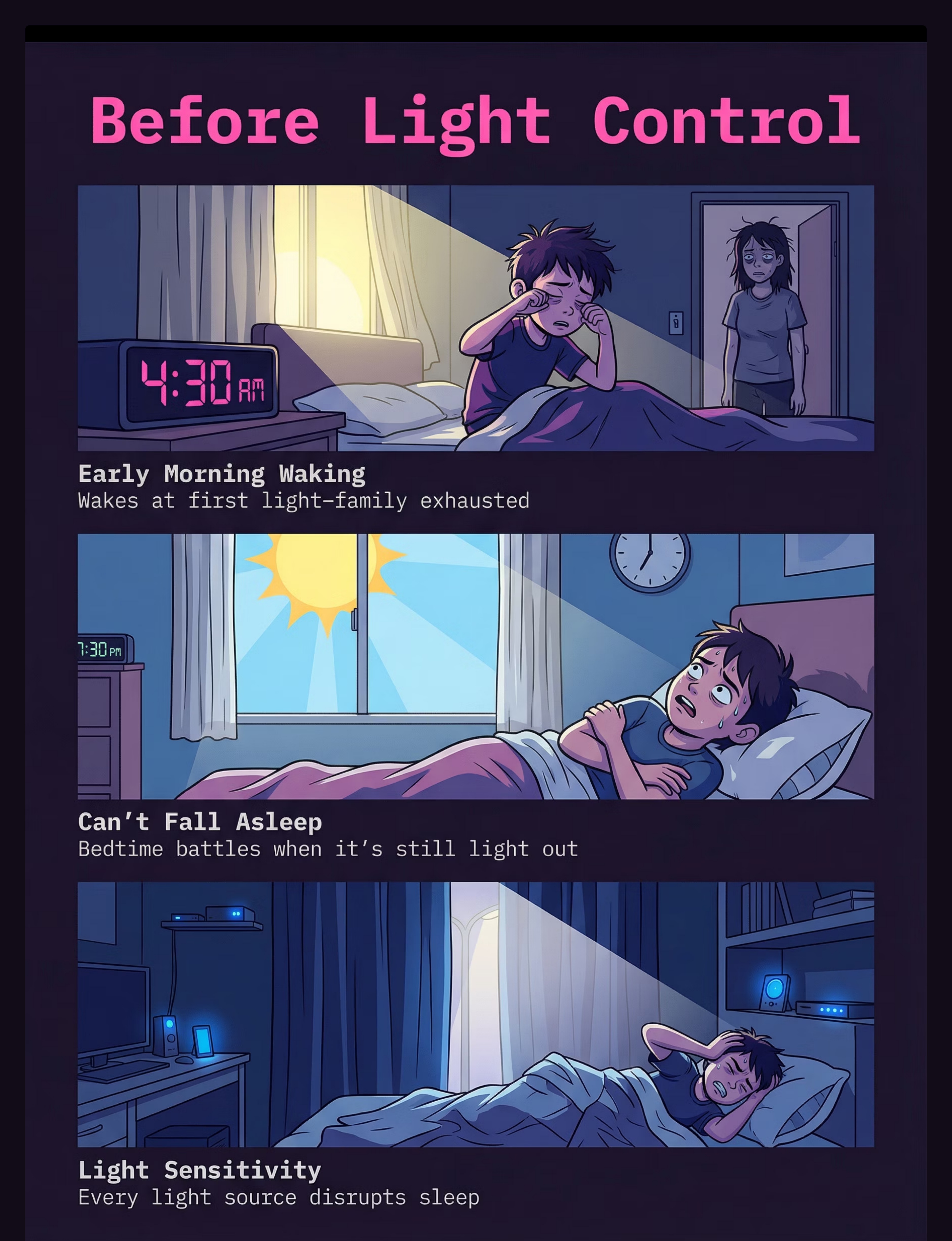
The Struggle (Before)

Early Morning Waking
Situation: Child wakes at first light - 4:30am in summer. Family exhausted. Can't resettle. Day starts too early.
Emotion: Exhaustion, disrupted

Can't Fall Asleep in Light
Situation: Summer bedtime is 7:30 but sun still up. Child can't sleep when light. Bedtime delayed to 9pm. Overtired.
Emotion: Overtired, frustrated

Light Sensitivity at Night
Situation: Child notices every light - LED on monitor, light under door, street light through curtains. Sleep fragmented.
Emotion: Disturbed, fragmented
These before scenarios represent the daily reality for families dealing with light-sensitive sleep challenges. The impact extends beyond nighttime, affecting daytime behavior, learning, and family functioning.

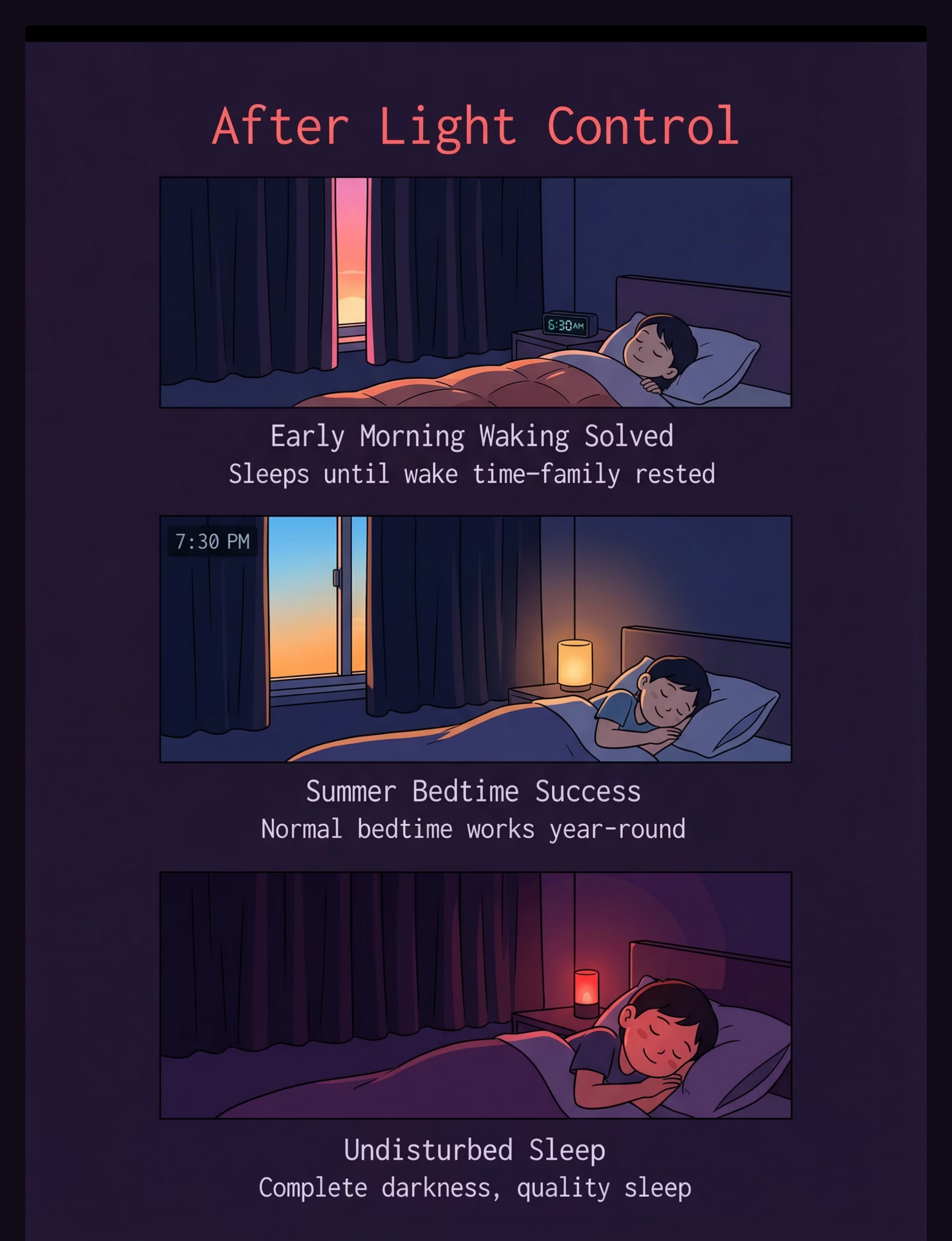
The Breakthrough (After)
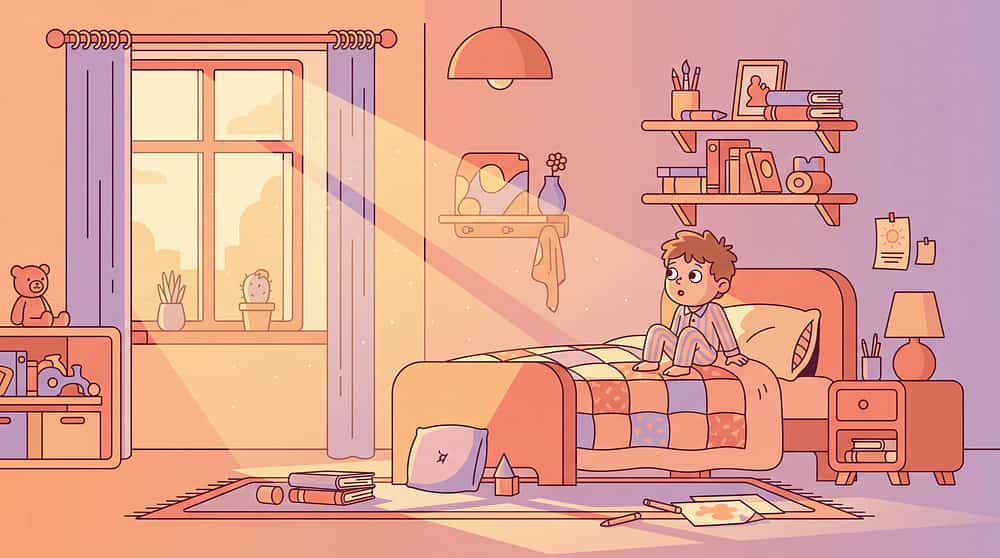
Early Morning Waking — Solved
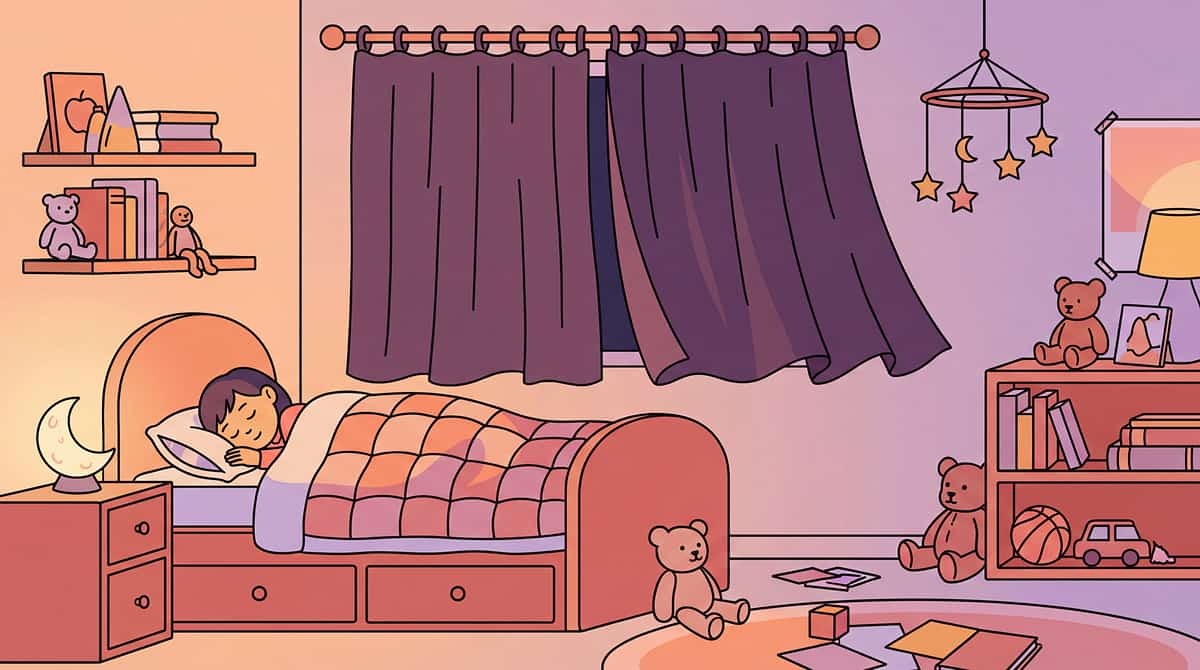
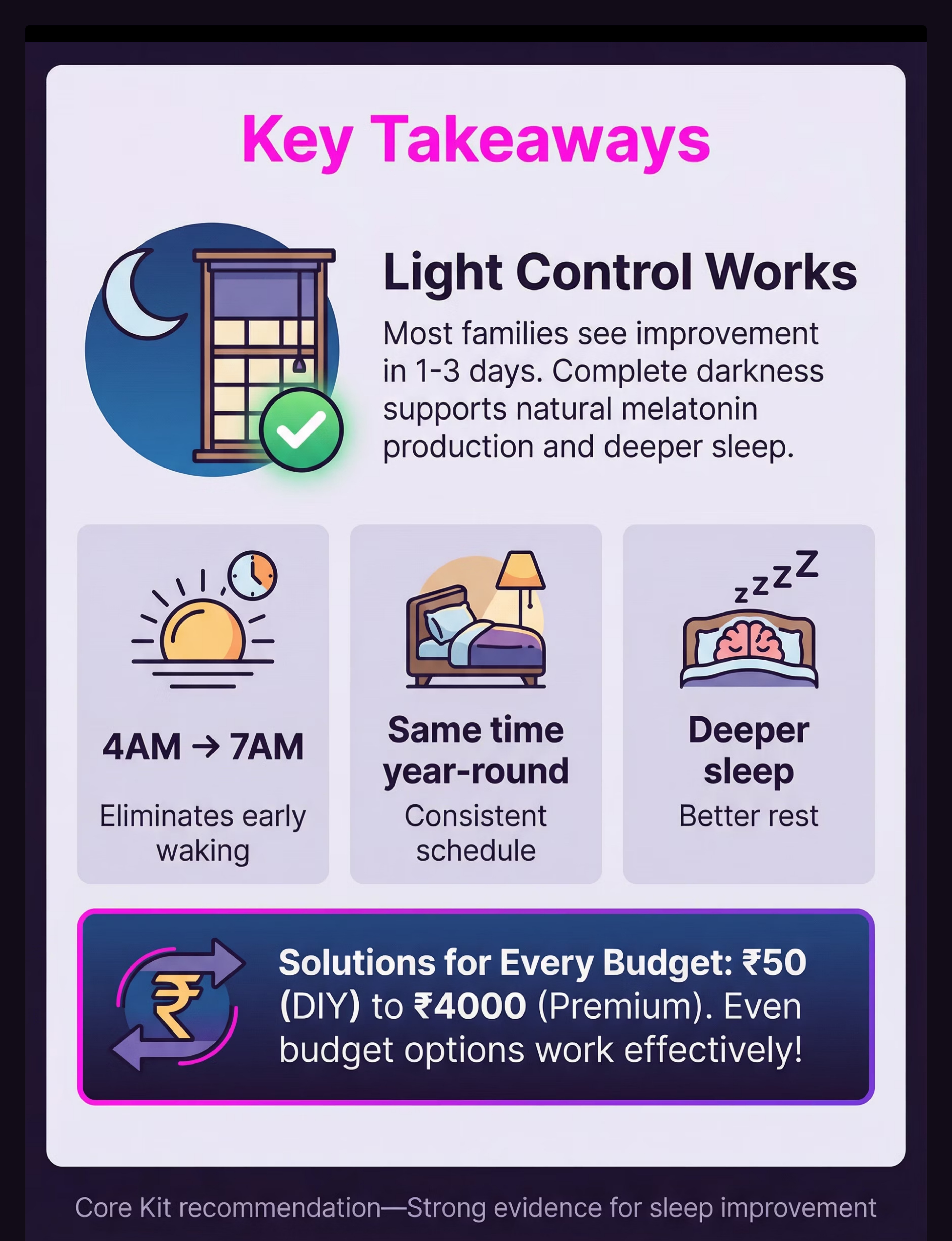
Blackout curtains installed. The room stays dark until wake time, allowing the child to sleep until their alarm. Mornings become manageable, with families reporting a rested state and appropriate wake times within 1-3 days.
Normal Bedtime Restored
Blackout curtains create darkness regardless of external light, enabling a 7:30 PM bedtime even in summer. The child's body can respond to darkness, leading to a normal bedtime and feeling rested, typically within 1-3 days.
Undisturbed Sleep
All light sources are addressed—blackout curtains, LED tape, door seals—ensuring the room is completely dark. This leads to consolidated and quality sleep, with undisturbed nights becoming the norm within 1-3 days.
The transformation happens quickly once light control is implemented comprehensively. Most families see improvement within the first few nights as the child's natural circadian rhythm can finally function properly.

What to Expect (Realistic Timelines)
Blackout conditions achieved
Complete darkness established in sleep space with all light sources addressed
1 day (installation)
Sleep onset at appropriate time
Child able to fall asleep at desired bedtime regardless of external light conditions
1-3 days
No early waking from light
Morning light no longer triggers premature waking, sleep continues until appropriate time
1-3 days
Sleep quality improved
Deeper, more consolidated sleep cycles with fewer night wakings
1 week
Circadian rhythm normalized
Body's natural sleep-wake cycle regulated, consistent sleep patterns established
2-4 weeks
These timeframes represent typical responses. Individual results vary based on severity of sleep challenges, consistency of implementation, and other environmental factors.

Is This Right for My Child? (2-Minute Check)
Does your child wake early with the sunrise?
If yes, this indicates: Blackout curtains essential
✓ Confidence score: 95%
Does your child have difficulty sleeping when it's still light?
If yes, this indicates: Light control needed
✓ Confidence score: 92%
Is your child's room completely dark at night?
If YES: Good - maintain current setup
If NO: Address light sources immediately
✓ Confidence score: 90%
Is your child sensitive to small lights (LEDs, under-door light)?
If yes, this indicates: Comprehensive light blocking needed
✓ Confidence score: 85%
3+ 'yes' answers = strong fit. Light control is likely to provide significant benefit for your child's sleep. Even one "yes" answer indicates that addressing light sources could improve sleep quality.

Usage Guide
When to Use
Every night Consistent darkness supports circadian rhythm. | |
Nap times Daytime darkness improves nap quality. | |
When external light is present Block street lights, neighbor lights, early sun. | |
Summer months especially Extended daylight hours require light management. |
When NOT to Use
Severe fear of darkness Use red night light option instead of total darkness. |
Supervision by Age
All Ages | Setup and maintenance by adults; child benefits automatically from environment |
All Ages
Home - bedroom
Duration: Throughout sleep period

Safety First
Critical Safety
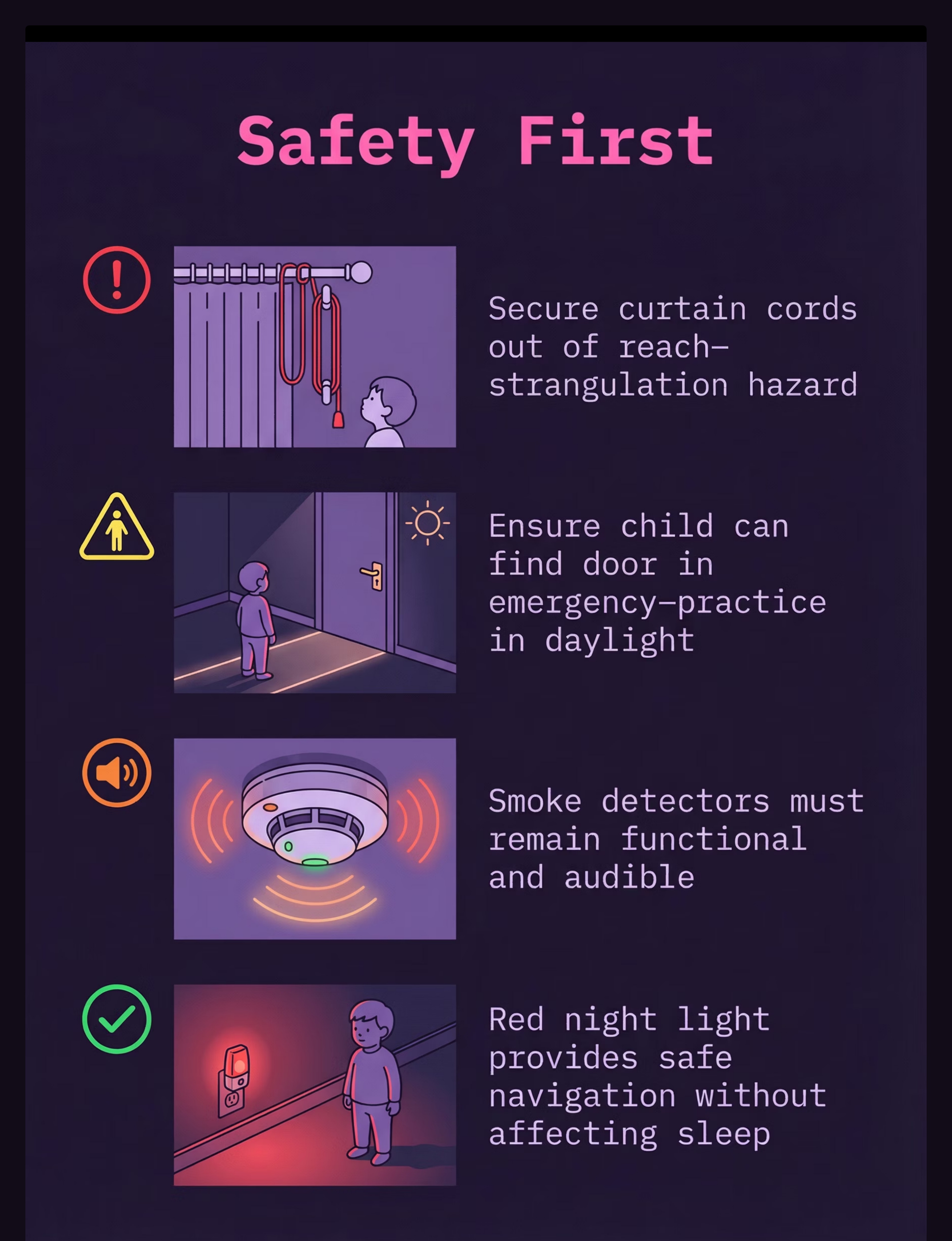
- Red/orange night light if child fears darkness
- Ensure child can find door in emergency
- Don't block emergency exits
- Curtain cords out of reach (strangulation hazard)
Warnings
- Curtain cords can be dangerous
- Ensure smoke detectors functional
- Child should be able to find exit
Contraindicated
- Child with fear of total darkness (use dim red light option)
- Severe fear of darkness without night light available
Safety Checklist
Before Use
- ✓ Windows fully covered
- ✓ Device LEDs covered
- ✓ Night light red/orange if needed
- ✓ Room safe for navigation
During Use
- ✓ Room stays dark
- ✓ No light leaks
- ✓ Child sleeping better
- ✓ Curtains maintained
Signs of Success
- ✓ Complete darkness achieved
- ✓ No early light waking
- ✓ Easier sleep onset
- ✓ Better sleep quality

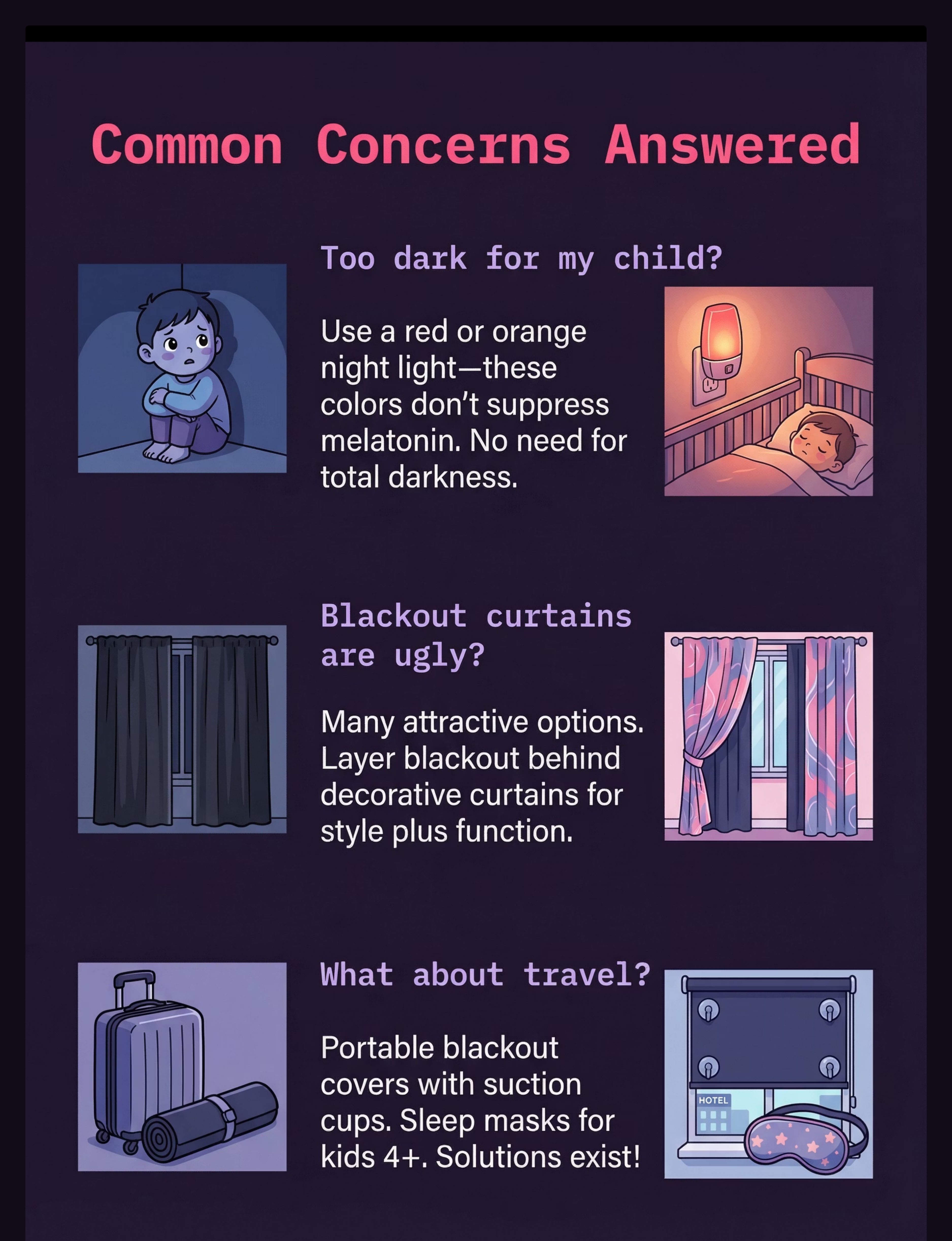
Common Questions (Honest Answers)
Q: Complete darkness is scary for my child
A: Use a dim RED or ORANGE night light - these colors don't suppress melatonin. Total darkness not required if using sleep-friendly light colors.
Try this: Red/orange night light doesn't affect melatonin production.
Q: Blackout curtains are ugly
A: Many attractive options exist. Can layer blackout behind decorative curtains. Blackout blinds are clean-looking. Function is worth some aesthetic compromise.
Try this: Attractive options available; layer behind decorative curtains; function matters for sleep.
Q: What about when we travel?
A: Portable blackout covers exist - stick-on or suction cup. Sleep masks for older children. Travel blackout solutions available. Maintaining darkness even when traveling.
Try this: Portable covers, sleep masks, travel solutions keep consistency.
Q: Will they become dependent on total darkness?
A: Darkness for sleep is natural and healthy, not dependency. Humans evolved to sleep in darkness. This is creating optimal conditions, not creating problems.
Try this: Darkness is natural; optimal sleep conditions support healthy development.

Investment Guide
Achieving optimal darkness for sleep doesn't always require a hefty investment. This guide outlines various options, from budget-friendly DIY solutions to comprehensive premium setups, helping you choose what best fits your needs and budget.
Here's a comparison of the typical costs and items involved:
Budget | Black trash bags (temporary) + LED blocking tape | ₹50-200 | Temporary but effective for testing or immediate needs | |
Premium | Quality blackout curtains + blinds + door seal | ₹2,000-4,000 | Various home stores, IKEA, Amazon |
₹50
Minimum Investment
LED blocking tape for immediate improvement
₹4,000
Maximum Investment
Comprehensive premium system
50-80%
DIY Savings
Cost reduction with DIY approach
Overall range: ₹50–4,000 (USD $0.50–48). Start with budget option to confirm effectiveness, then upgrade to permanent solutions for long-term benefit.
Budget-Friendly Steps
Temporary Window Covers
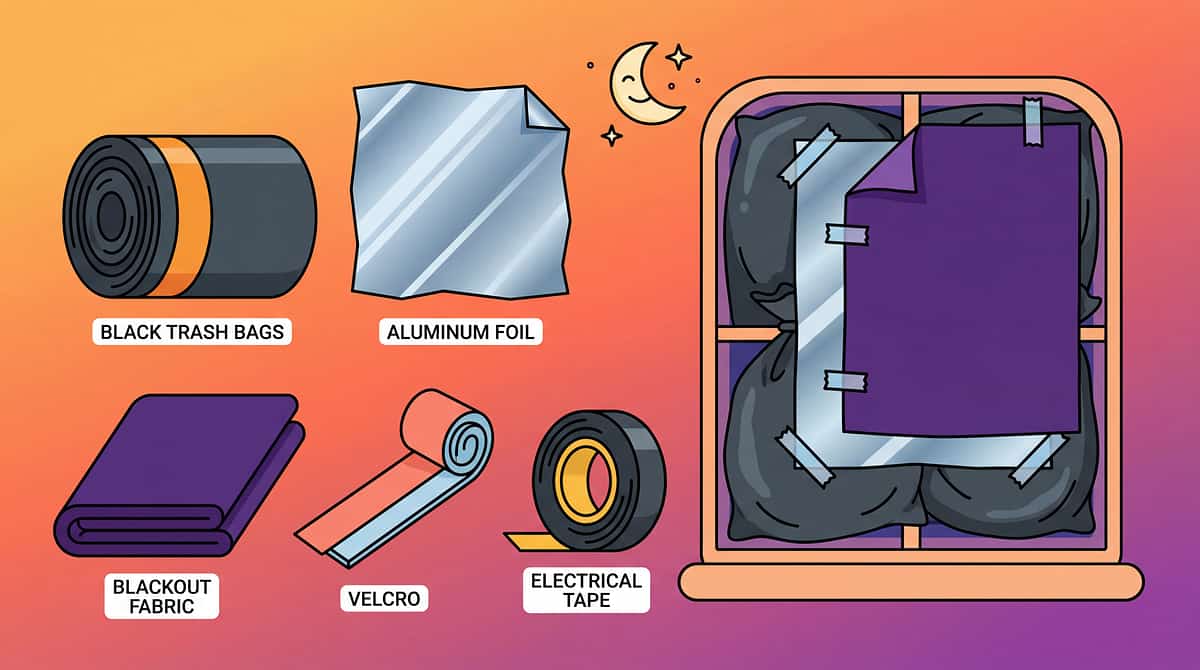
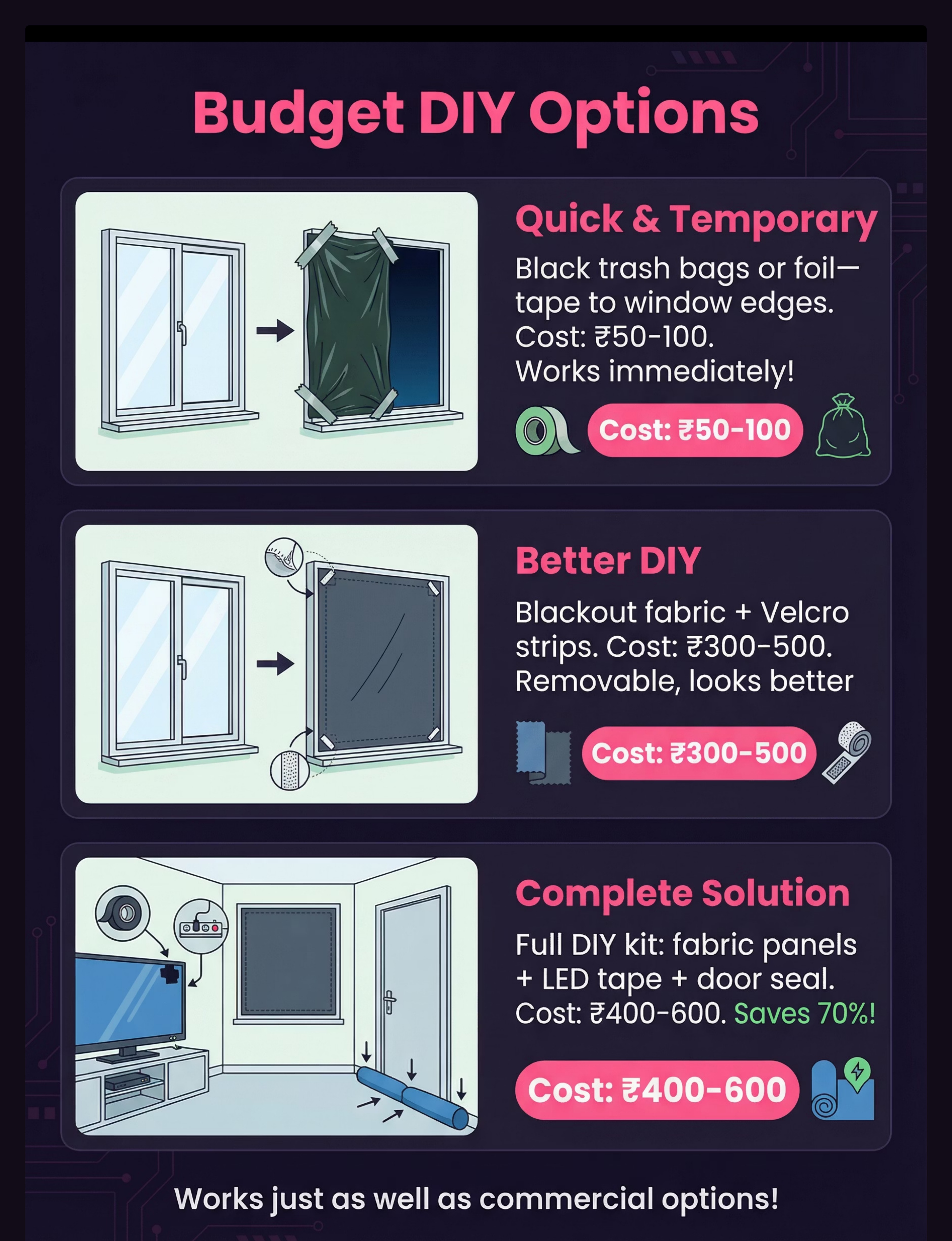
Use black trash bags, aluminum foil, or cardboard cutouts for immediate, temporary blackout. Secure with tape.
LED Blocking Tape
Apply dark electrical tape over small LED lights on electronics like smoke detectors, baby monitors, or chargers.
Door Gaps & Under Door
Stuff towels or use draft stoppers under doors to block light leaks from hallways.
Premium System Progression
Quality Blackout Curtains
Invest in high-density blackout curtains that extend beyond the window frame and touch the floor for maximum light blockage.
Blackout Blinds/Shades
Layer blackout blinds or cellular shades behind curtains to eliminate light seepage from the sides.
Door Seals & Weatherstripping
Install weatherstripping around door frames and door sweeps at the bottom to seal out all light.
Dedicated Light-Blocking Film
For persistent gaps or skylights, consider specialized light-blocking film or panels.

Where to Buy in India
Availability: Widely Available
Platform | Search Term | Price Range | |
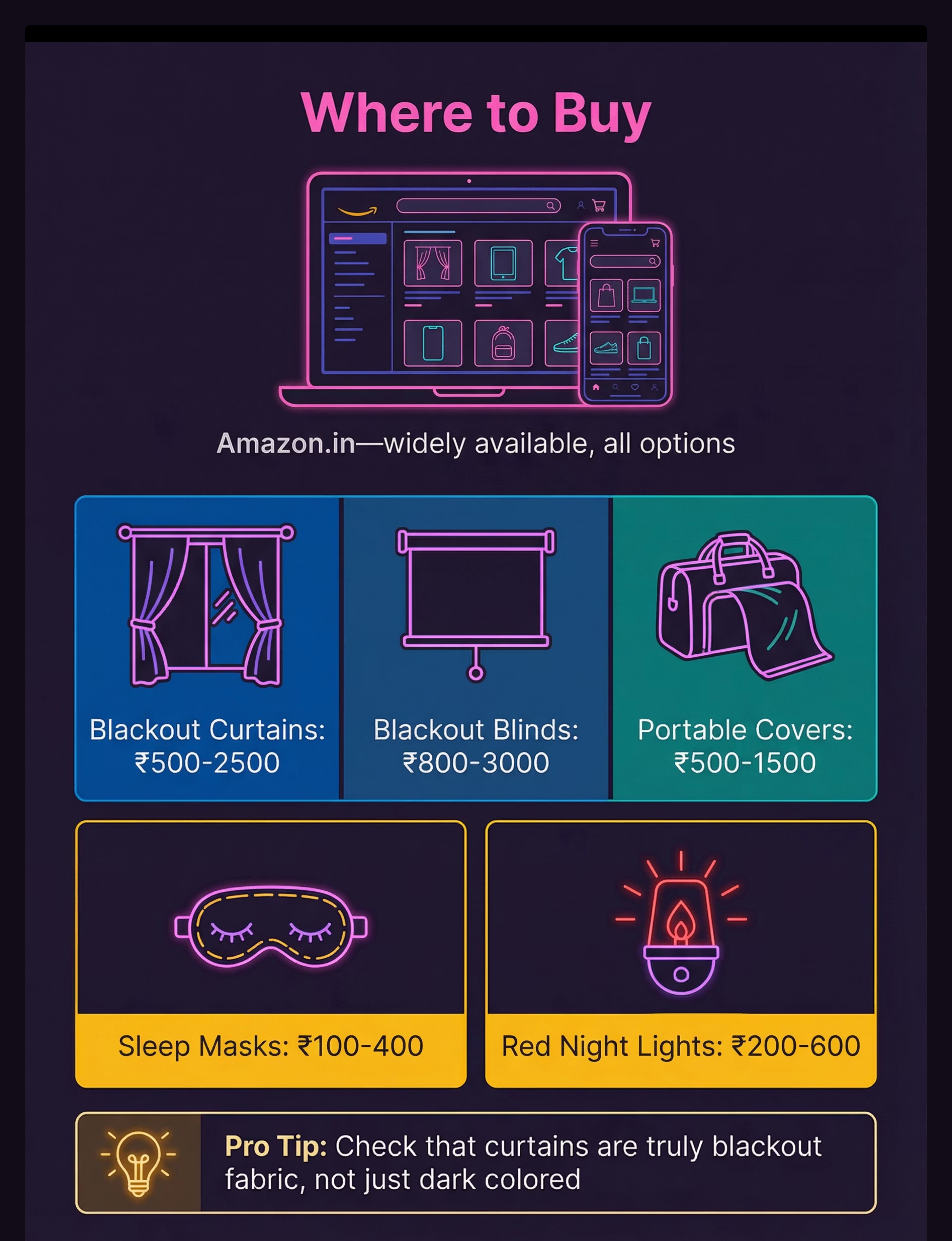
Amazon.in | "blackout curtains" | ₹500-2,500 | |
Amazon.in | "blackout blinds" | ₹800-3,000 | |
Amazon.in | "portable blackout travel" | ₹500-1,500 | |
Amazon.in | "sleep mask kids" | ₹100-400 | |
Amazon.in | "red night light" | ₹200-600 |
Buying Tips
- Check that curtains are truly blackout (not just dark colored)
- Cover edges where light leaks around windows
- Cover ALL device LEDs with tape
- Red/orange night lights only - avoid blue/white
- Consider door bottom seal if light leaks under door
Red Flags
- Light leaking around edges of curtains
- Blue/white night lights being used
- Uncovered device LEDs present
- Not truly blackout fabric - just dark colored

DIY Alternative (Save 50-80%)
Feasibility: High
Cost Savings: 50-80%
Time Required: 30 minutes - 2 hours
Materials Needed
- Black trash bags (temporary solution)
- Aluminum foil (temporary solution)
- Blackout fabric (permanent solution)
- Velcro strips for attachment
- Electrical tape for covering LEDs
DIY Steps
Temporary: Black trash bags or foil on windows
Quick solution for immediate testing
Permanent: Blackout fabric cut to window size
Measure and cut fabric to fit windows precisely
Attach: Use velcro or tension rods
Secure fabric without permanent installation
Seal edges: Tape or fabric around edges
Prevent light leaks at window perimeter
Cover LEDs: Electrical tape over all device lights
Block small but disruptive electronic lights
Door: Draft stopper or towel under door
Block light coming under bedroom door
Test: Check room at night for any light sources
Verify complete darkness achieved
DIY vs Commercial Comparison
When to DIY
- Budget constraints present
- Testing if blackout helps before investing
- Rentals where permanent changes not allowed
- Quick solution needed immediately
When to Buy Commercial
- Want attractive, polished solution
- Long-term investment in home
- Own home with flexibility for installation
- Want quality product with warranty
Tradeoffs: DIY may look less attractive but works just as well functionally. Commercial options offer better aesthetics and durability but at higher cost.
Preview of blackout light control Therapy Material
Below is a visual preview of blackout light control therapy material. The pages shown help educators, therapists, and caregivers understand the structure and content of the resource before use. Materials should be used under appropriate professional guidance.


Share this resource
Help others discover thisLink copied!

Complete Support & Resources
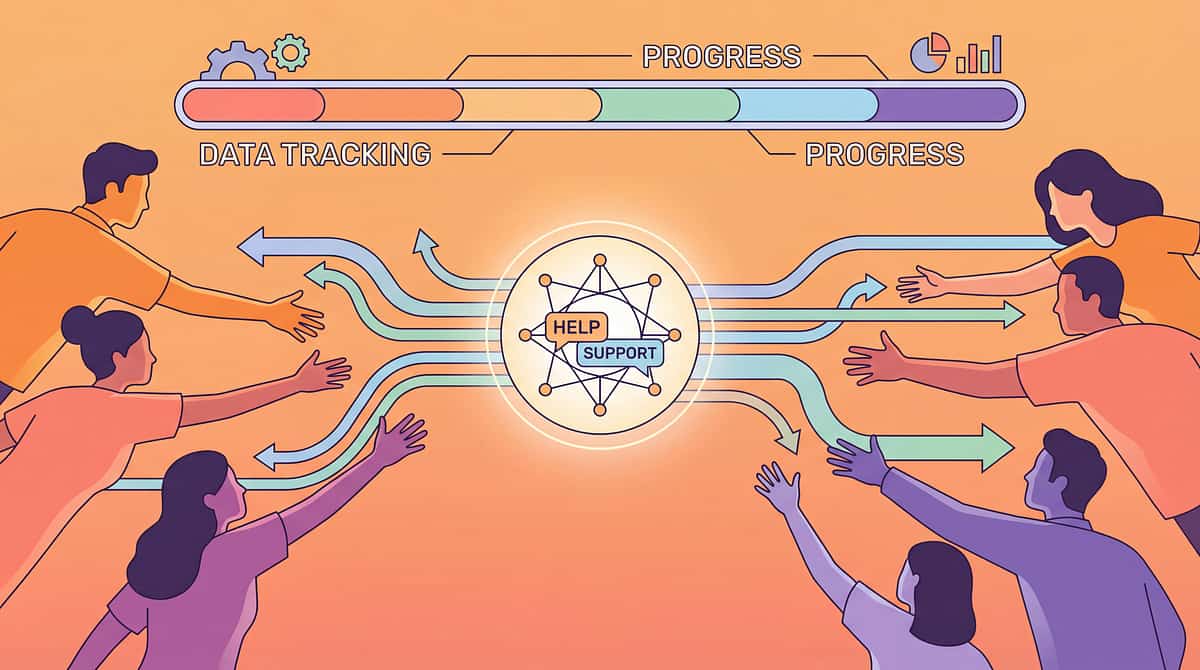
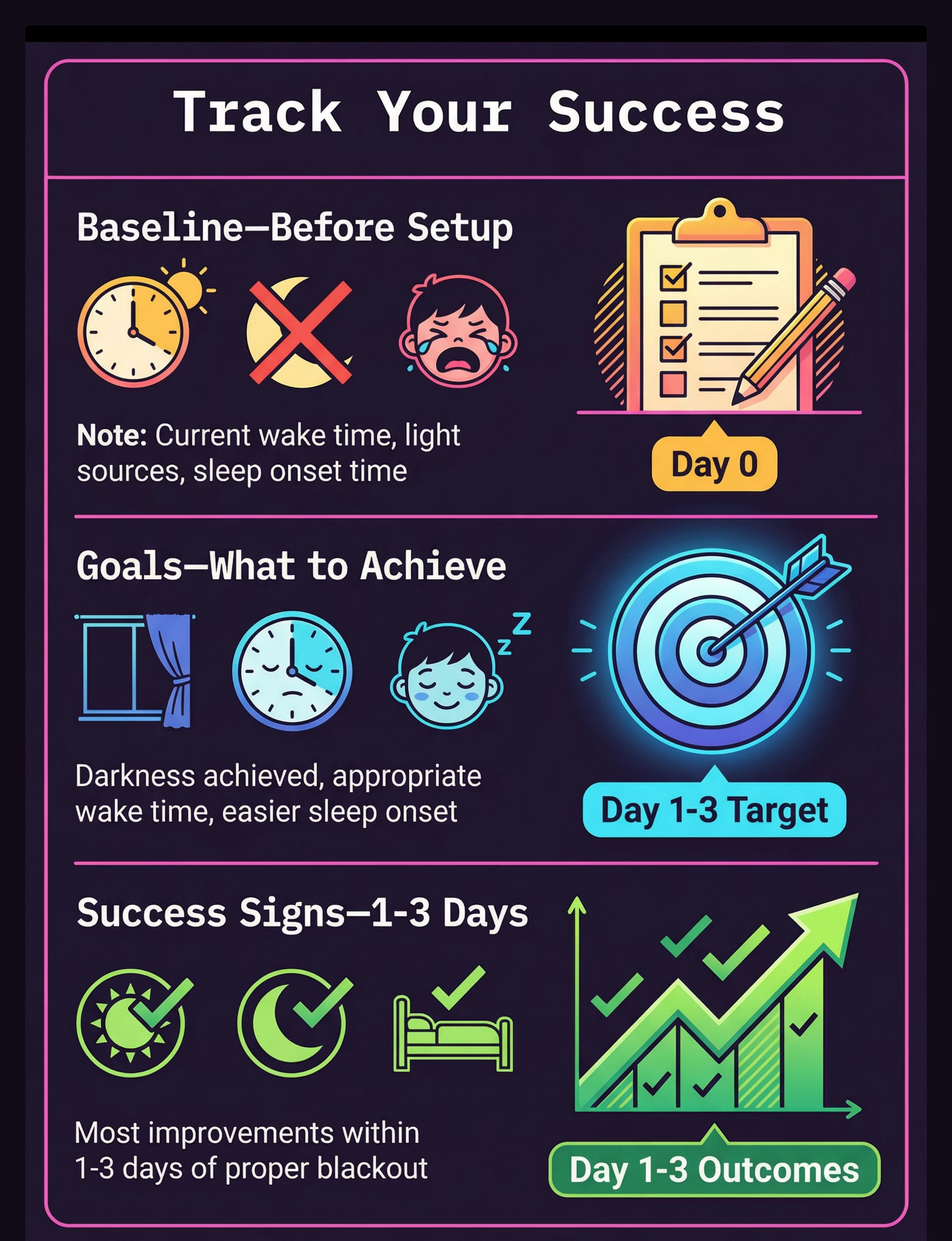
Track Progress
Baseline Measurements
- Current room light level at night
- Current wake time (especially early waking)
- Sleep onset time
- Light sources currently present
Goals
- Room will be completely dark
- Child will sleep until appropriate wake time
- Sleep onset will improve to desired bedtime
- No light-related sleep disruption
Success Indicators
- Total darkness achieved in sleep space
- No early waking from morning light
- Easier bedtime and sleep onset
- Better overall sleep quality and consolidation
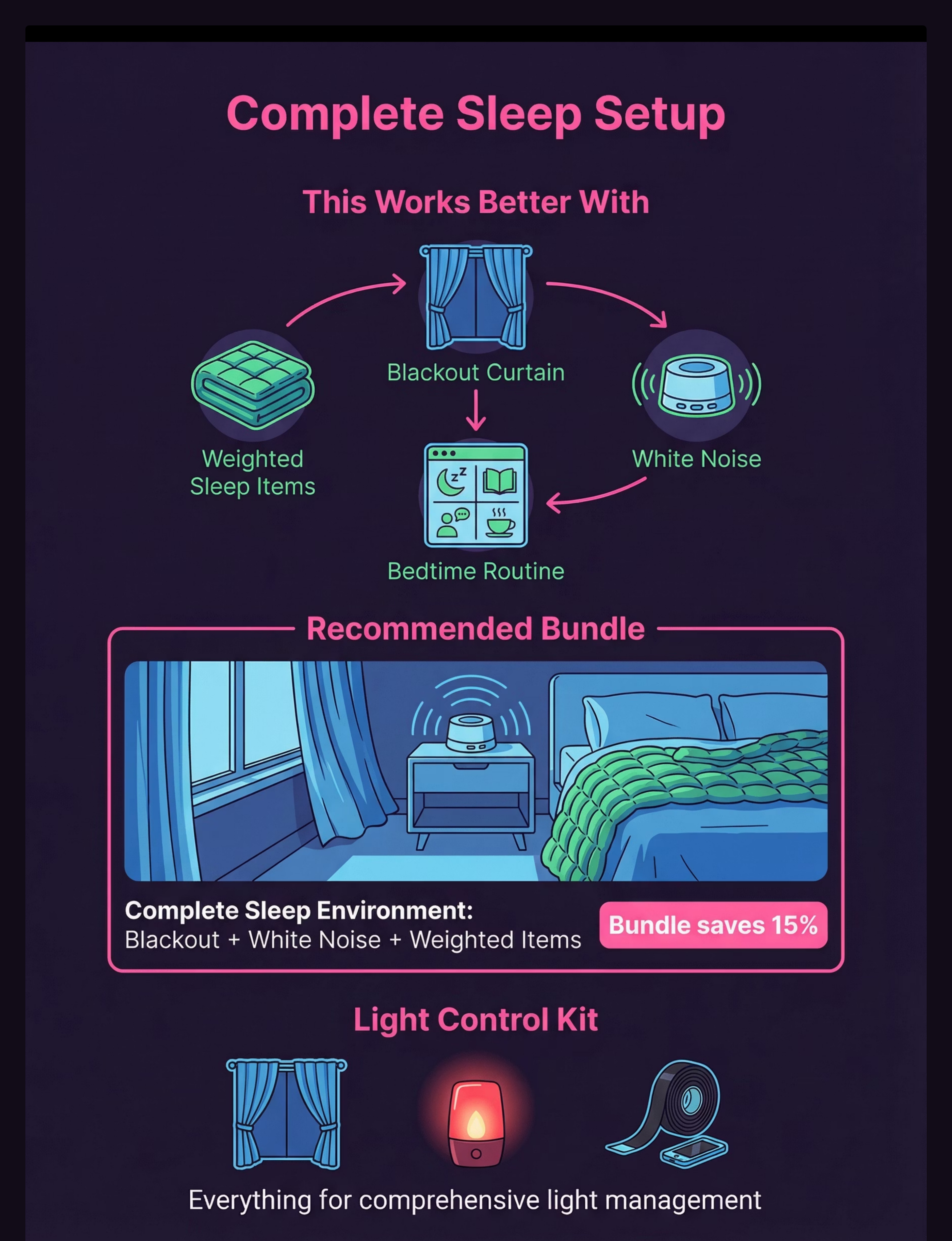
Complete the Kit
Complementary Tools:

Weighted Sleep Items (ID: 14.1)
Complete sleep support with calming pressure

White Noise (ID: 14.3)
Auditory environment control for better sleep

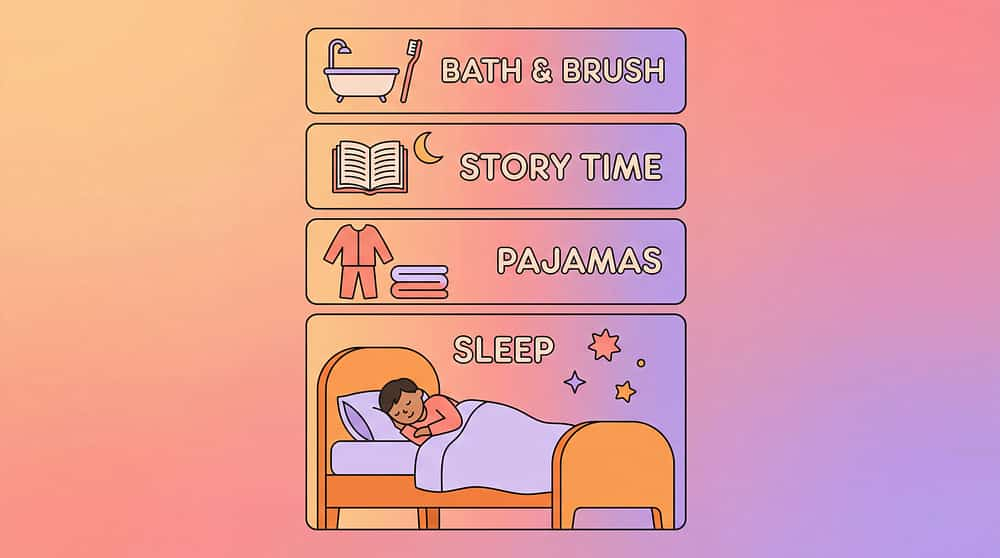
Sleep Routine Supports (ID: 14.4)
Bedtime structure and predictability

Visual Schedules (ID: 3.1)
Bedtime routine visualization
Alternative Options:
- Sleep Mask (ID: 14.2.4) — Personal light blocking for individual use or travel
Recommended Bundles:
- Complete Sleep Environment: Blackout/Light Control (14.2) + White Noise (14.3) + Weighted Sleep Items (14.1) — Full environmental control for optimal sleep
- Light Control Kit: Blackout Curtains (14.2.1) + Red Night Light (14.2.5) + LED Tape (14.2.6) — Comprehensive light management system
Quick Summary
Blackout and light control create optimal darkness for sleep by blocking light that suppresses melatonin and disrupts circadian rhythm, addressing common issues like early waking and delayed sleep onset. Core Kit (Rank 1), strong evidence, essential sleep environment.
blackout
light
sleep
darkness
melatonin
circadian
core-kit
Common searches: blackout curtains autism, sleep darkness, light blocking sleep, blackout blinds kids, early waking light, sleep environment, melatonin light
Get Support
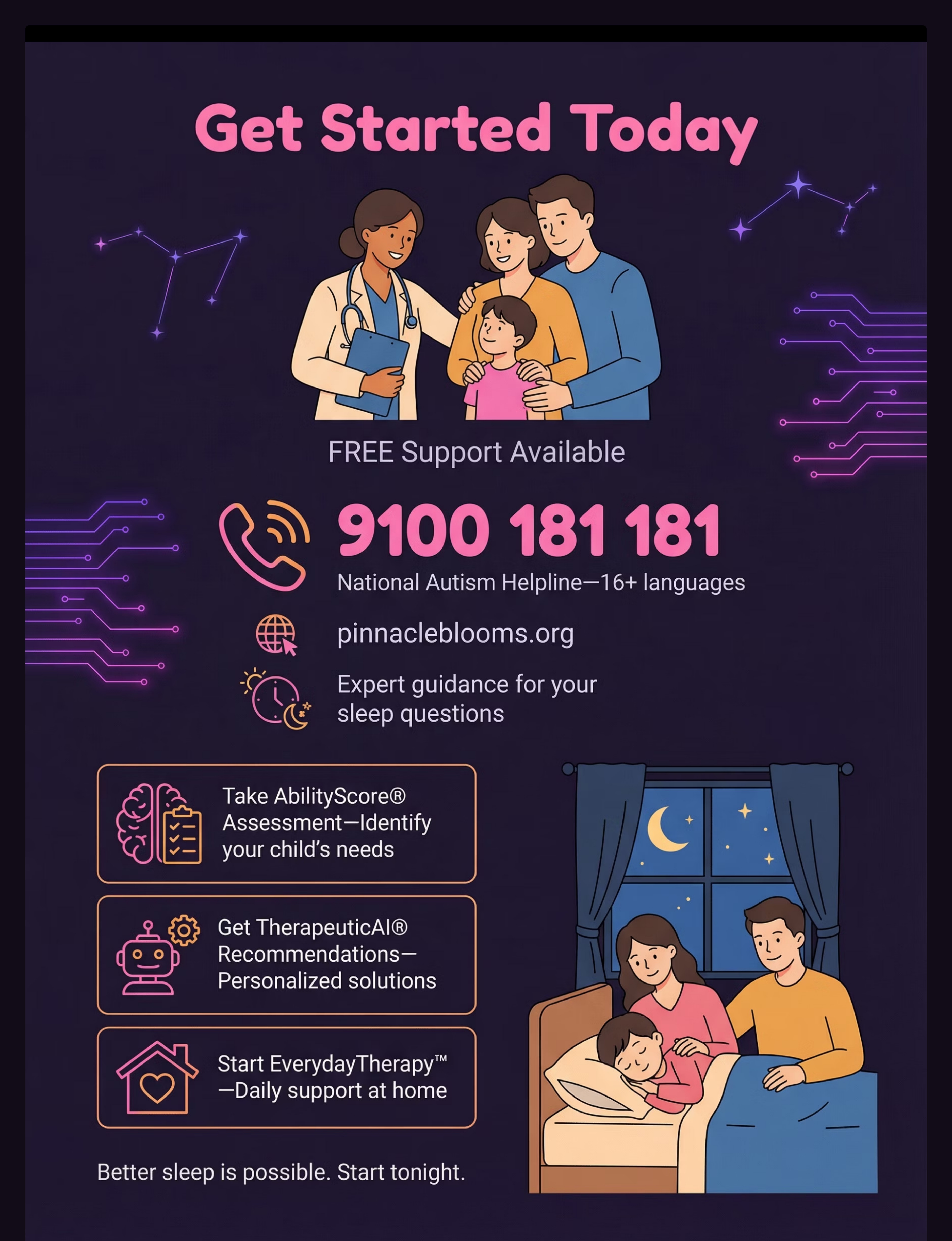
FREE National Autism Helpline
Phone: 9100 181 181
Languages: 16+
Website: pinnacleblooms.org
Platform Integration
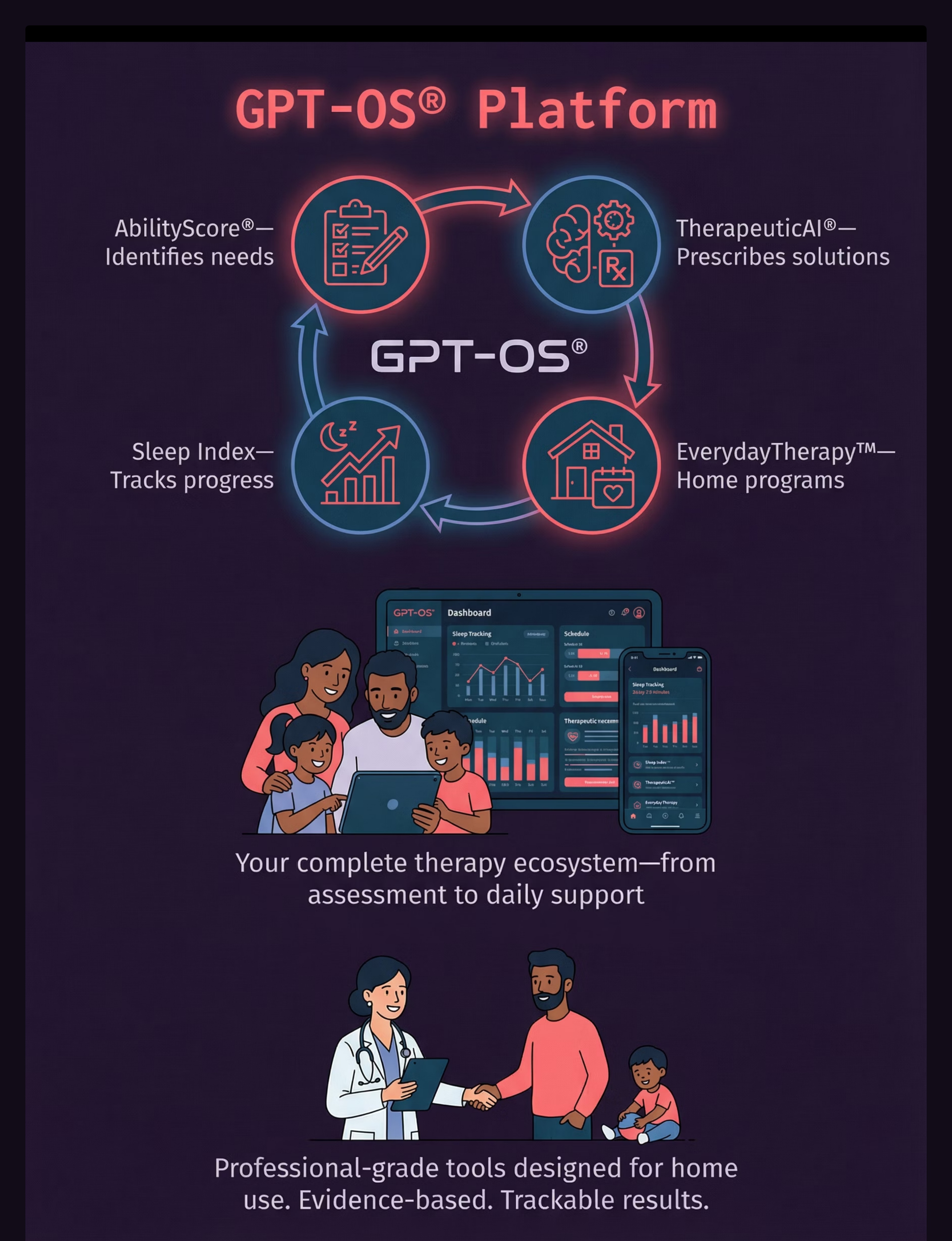
This tool integrates with Pinnacle Blooms Network's comprehensive platform:
- AbilityScore® identifies sleep environment needs through comprehensive assessment
- TherapeuticAI® prescribes sleep interventions based on individual profile
- EverydayTherapyProgramme™ includes sleep environment optimization in daily routines
- Sleep Index tracks sleep quality and improvements over time
Disclaimer: This is educational information. Always consult qualified occupational therapists, speech-language pathologists, or pediatricians for personalized guidance. Individual results vary. Light control supports sleep but is not a cure for medical conditions. Use as part of comprehensive sleep approach under professional guidance.