







Tool ID: 2.4
OT + Psychologist
Strong Evidence
Rank #1
Daily Use
₹30–1,500
Breathing / Relaxation Tools
Respiratory regulation and parasympathetic activation system
Teaching your child to breathe consciously is one of the most powerful life skills you can offer. These evidence-based tools transform the abstract concept of "deep breathing" into something tangible that children can see, feel, and master—building a foundation for lifelong emotional regulation and resilience.
Tool ID: 2.4
OT + Psychologist
Core Kit
Rank #1
Strong Evidence
Daily Use
₹0–1,000
Who This Helps
Breathing and relaxation tools support children in learning essential self-regulation skills through controlled breathing techniques. These tools teach children how to activate their body's natural calming system, providing them with a powerful, portable coping strategy they can use throughout their lives.
Respiratory Regulation
Anxiety Reduction
Self-Calming
Focus Enhancement
Sleep Support
Emotional Regulation
Breathing / Relaxation Tools
Respiratory regulation and parasympathetic activation system
Tool ID: 2.4
OT + Psychologist
Strong Evidence
Rank #1
Daily Use
₹30–1,000
Transform anxiety and stress into calm confidence with evidence-based breathing tools designed specifically for children. These carefully selected tools make the abstract concept of "deep breathing" concrete, accessible, and—most importantly—empowering for your child.
Core Kit · Rank #1
OT + Psychologist
Strong Evidence
Who This Helps
These tools teach and support controlled breathing for nervous system regulation — helping children shift from fight-or-flight to rest-and-digest mode through concrete, engaging methods.
Respiratory Regulation
Learn to control breathing pace and depth for nervous system regulation
Anxiety Reduction
Use breath to activate the body's natural calming system
Sleep Support
Establish relaxing breathing routines for bedtime
Focus & Attention
Calm the nervous system to improve concentration
Ages 2-9
All Settings
OT + Psychologist
Strong Evidence
Rank #1
Daily Use
₹0–1,000

Who This Helps
These tools teach and support controlled breathing for nervous system regulation, helping children develop one of life's most powerful self-calming skills.
OT Recommended
Psychologist Endorsed
Core Kit • Rank #1
Strong Evidence
Daily Use
Who Benefits Most
Children who struggle with anxiety, emotional regulation, stress response, and difficulty calming their bodies. Perfect for children who don't understand abstract breathing instructions.
Target Areas
Respiratory regulation • Anxiety reduction • Self-calming • Focus • Sleep preparation • Emotional regulation
Works Across Settings
Home • School • Clinic • Travel — these portable tools go wherever your child needs support

Tool ID: 2.4
OT + Psychologist
Strong Evidence
Rank #1
Breathing / Relaxation Tools
Respiratory regulation and parasympathetic activation system
Teaching children to harness the power of their breath—the one tool they carry everywhere, the one superpower that can shift their nervous system from chaos to calm in minutes.
OT + Psychologist
Strong Evidence
Rank #1
Daily Use
₹30–1,500
Tool ID: 2.4

Who This Helps
Breathing tools teach and support controlled breathing for nervous system regulation—transforming an invisible, abstract skill into something tangible, visual, and empowering that children can master and use independently.
Respiratory Regulation
Anxiety Reduction
Self-Calming
Focus
Sleep
Emotional Regulation
Ages 2-9 years
Techniques can be simplified for toddlers learning basic breath awareness, or expanded for older children mastering multiple regulation strategies independently.
All Settings
Home routines, school calm corners, therapy sessions, travel—breathing tools are portable regulation systems that work anywhere, anytime.
Best For
Children who struggle with anxiety, those who can't calm their bodies, kids who don't understand what "deep breathing" means, and anyone building foundational self-regulation skills.

Does This Sound Familiar?
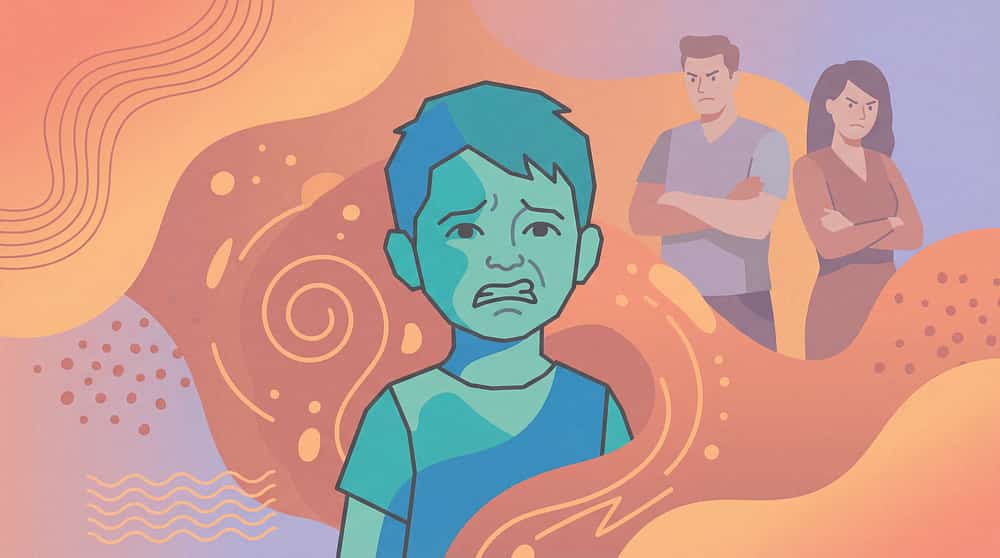
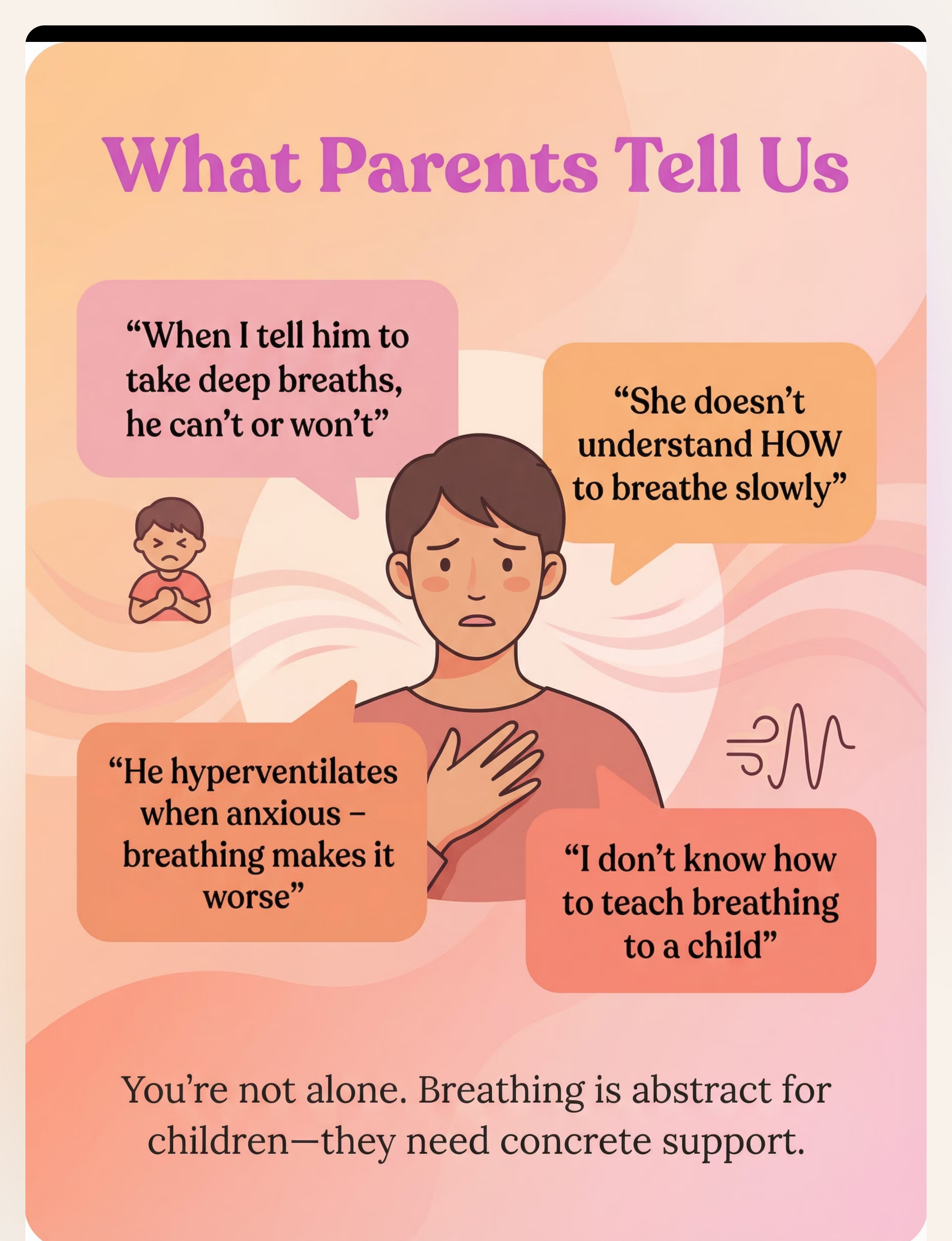
"When I tell him to take deep breaths, he can't or won't. I don't know if he doesn't understand or just can't do it, but my advice seems to make things worse."
"She doesn't understand HOW to breathe slowly. I say 'breathe deep' and she just looks at me confused. It's too abstract."
"He hyperventilates when anxious—breathing makes it worse. I'm scared to even mention breathing now."
"I don't know how to teach breathing to a child. I can do it myself, but explaining it to a 5-year-old? I have no idea where to start."
"Deep breathing seems too abstract for my kid. He needs to see it, touch it, do something physical."
"Nothing I say helps her calm down. Words bounce off her when she's upset. I need something that actually works."
You're not alone. These are common challenges that countless parents face. The gap between knowing breathing "should" help and actually teaching it effectively is where breathing tools make all the difference.

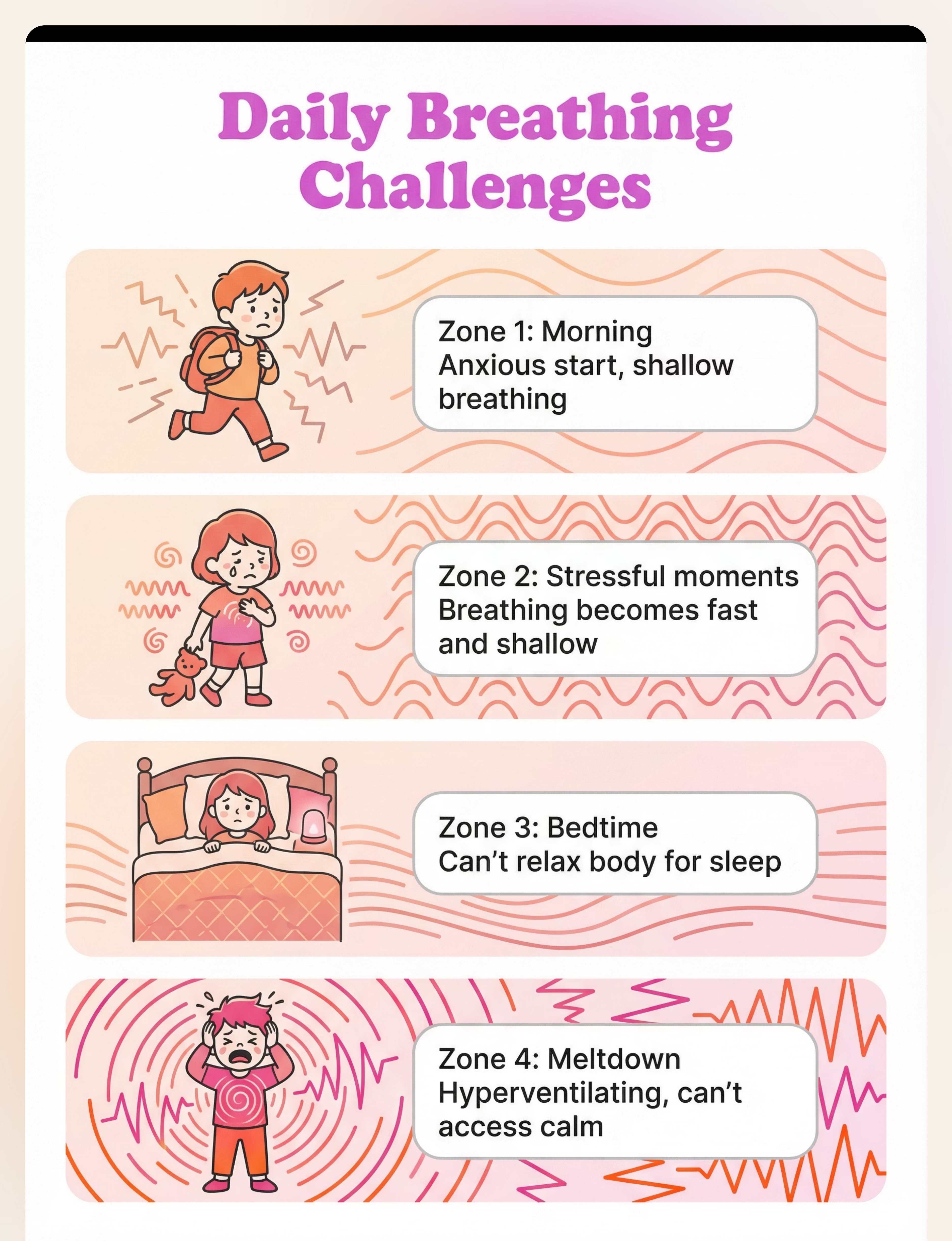
A Day Without the Right Support
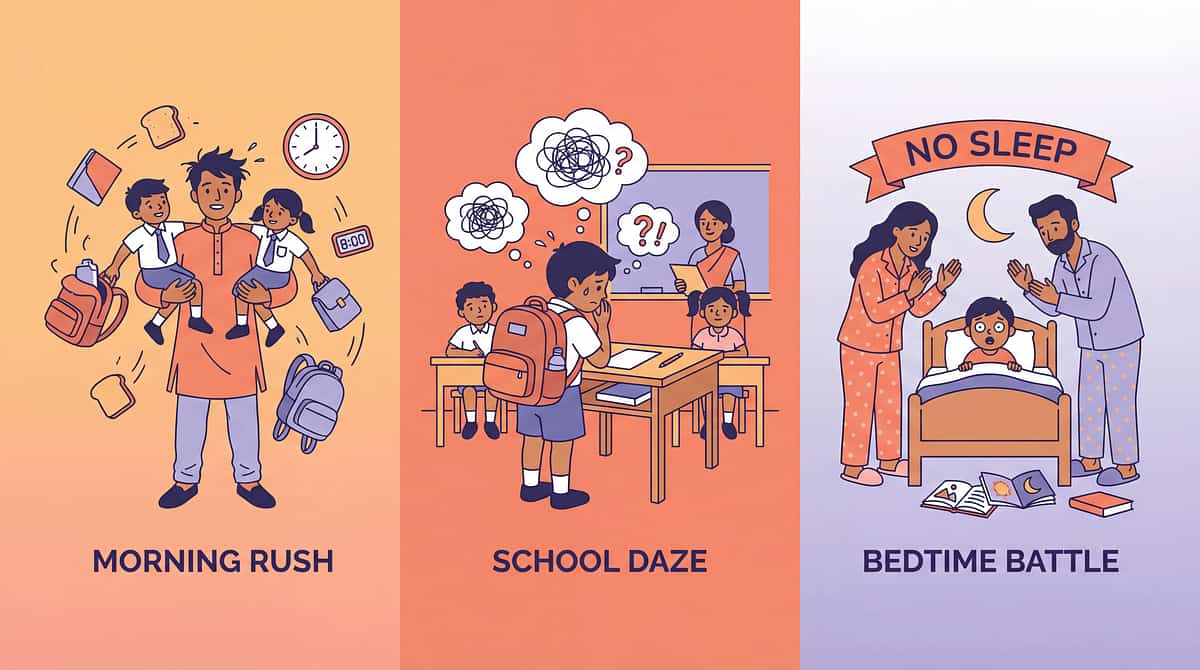
Morning Rush
Waking up anxious, breathing shallow and fast, body tense before the day even begins. Every transition feels like a mountain to climb.
School Stress
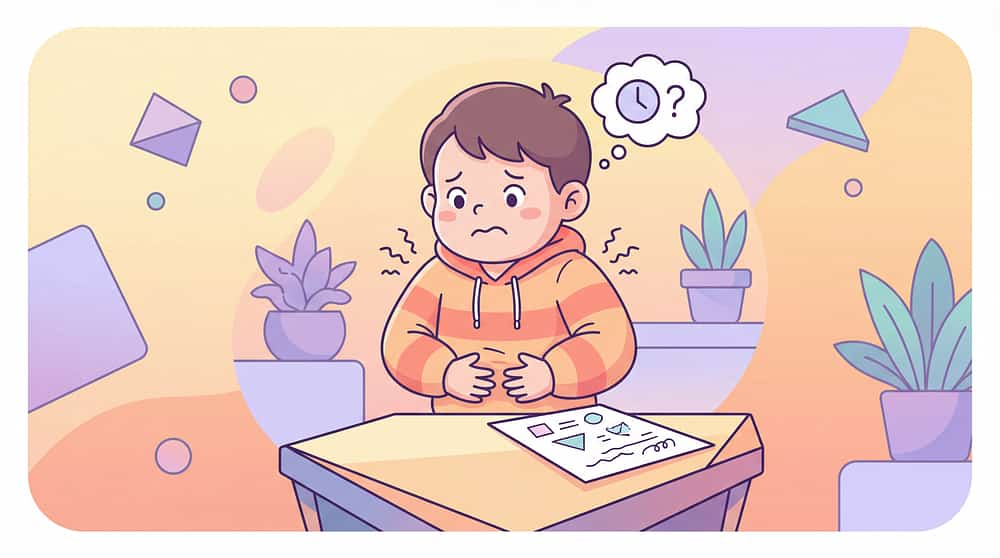
During tests, social situations, or transitions, breathing becomes rapid and shallow. The stress compounds, with no effective coping strategy.
After-School Meltdown
The build-up of the day culminates in overwhelming emotions. Adults say "just breathe," but the instruction is meaningless and frustration builds.
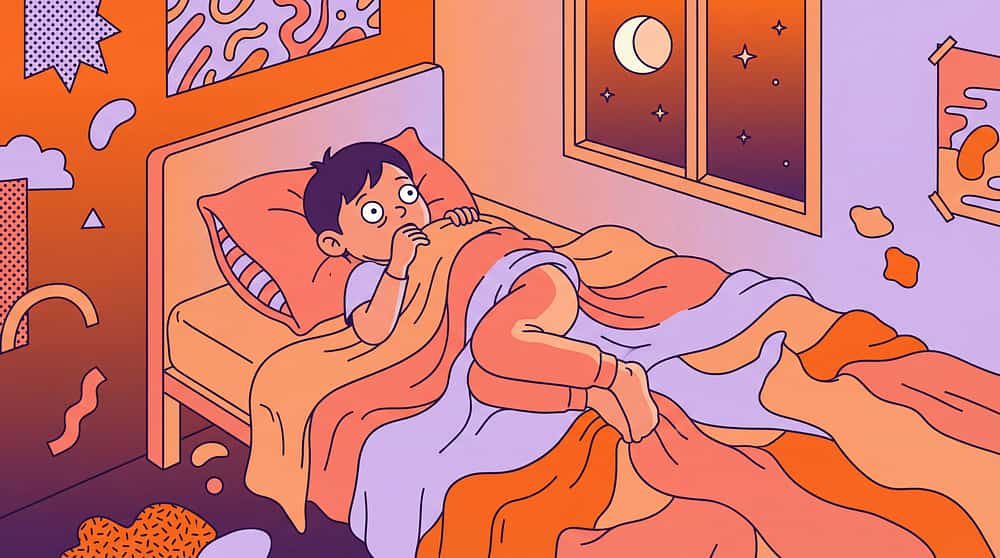
Bedtime Struggle
Body won't relax for sleep. Mind racing, muscles tense. It takes an hour or more to fall asleep, leaving them exhausted but wired.

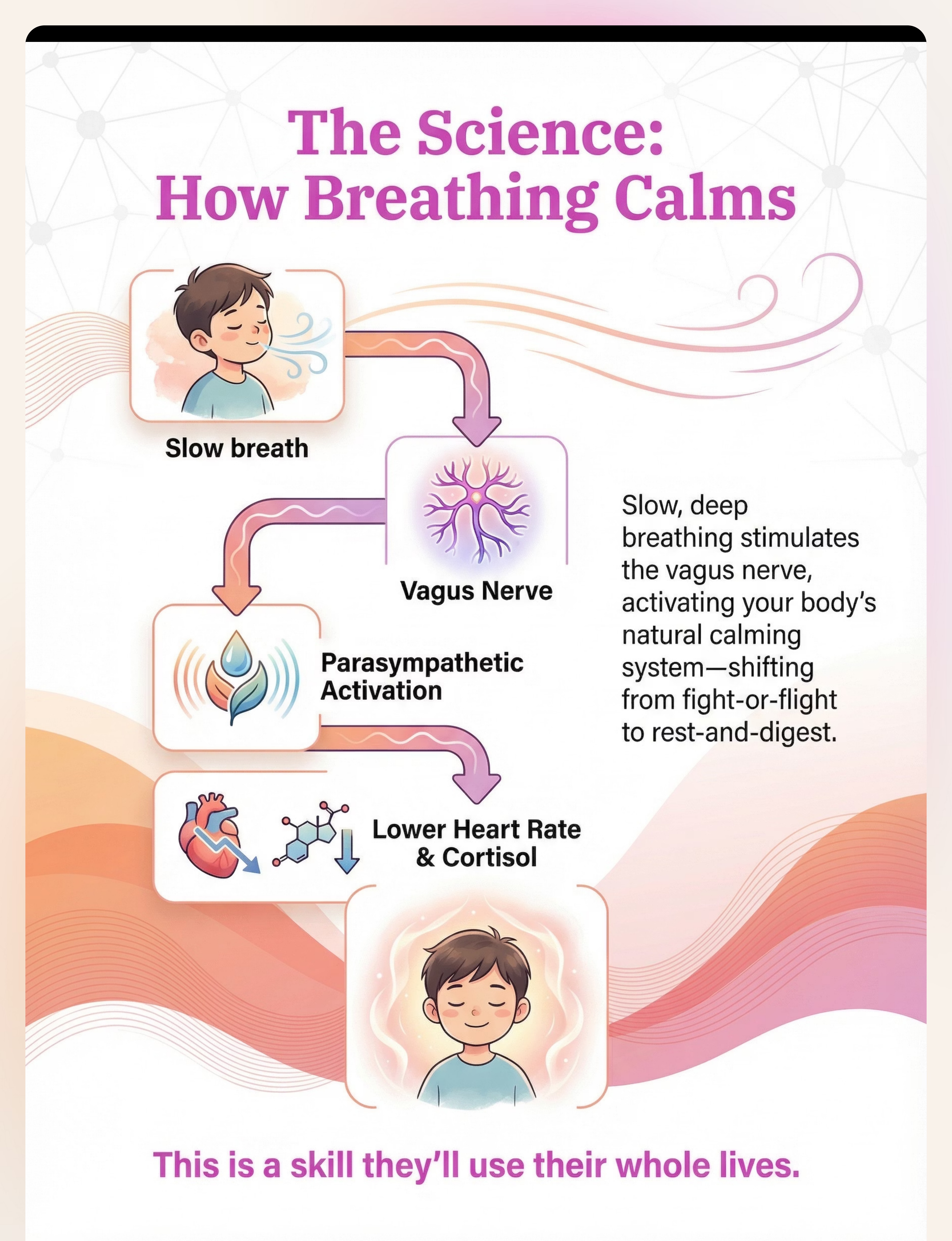
The Science Behind It
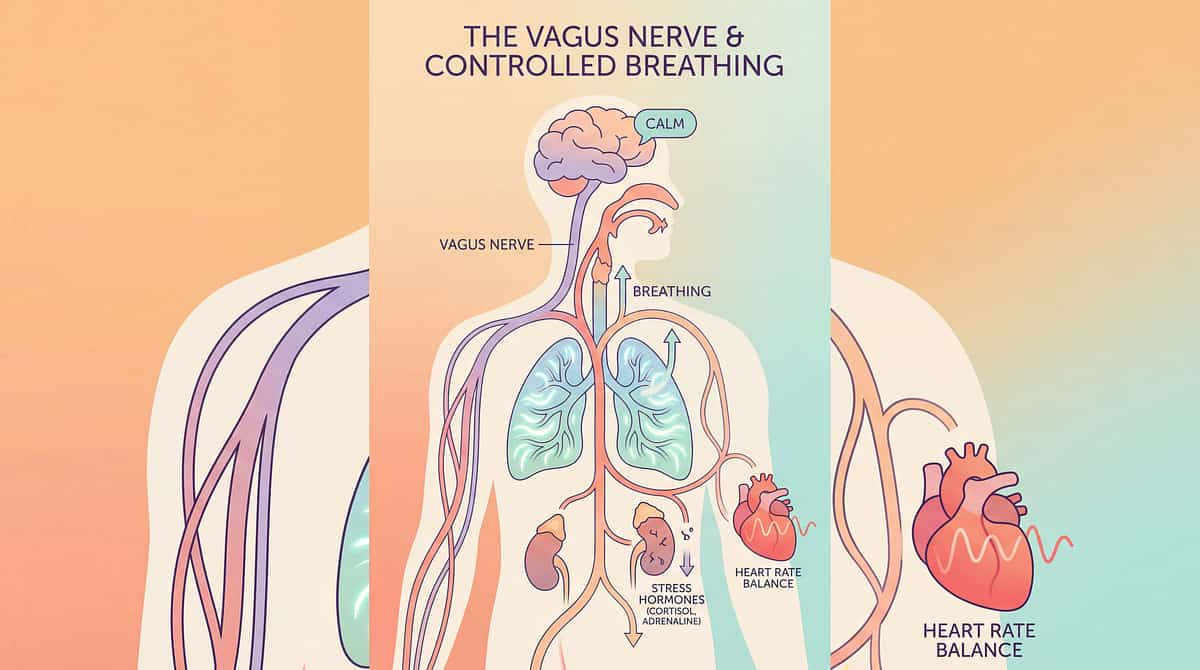
Controlled breathing is one of the few things we can do to directly influence our autonomic nervous system—the system that controls our fight-or-flight response. Here's how this remarkable process works:
Slow Deep Breathing
Child takes slow, controlled breaths—usually with visual or tactile guidance from a breathing tool.
Vagus Nerve Stimulated
The vagus nerve—your body's calming superhighway—is activated by the breathing pattern.
Parasympathetic Activation
The parasympathetic nervous system (rest-and-digest mode) switches on, counteracting fight-or-flight.
Physiological Shift
Heart rate slows, cortisol (stress hormone) drops, muscles relax—measurable biological changes.
Calming Effect
Child feels noticeably calmer, more focused, and more in control of their body and emotions.
Target: Respiratory Regulation
Target: Anxiety Reduction
Target: Self-Calming
Target: Focus
Target: Sleep
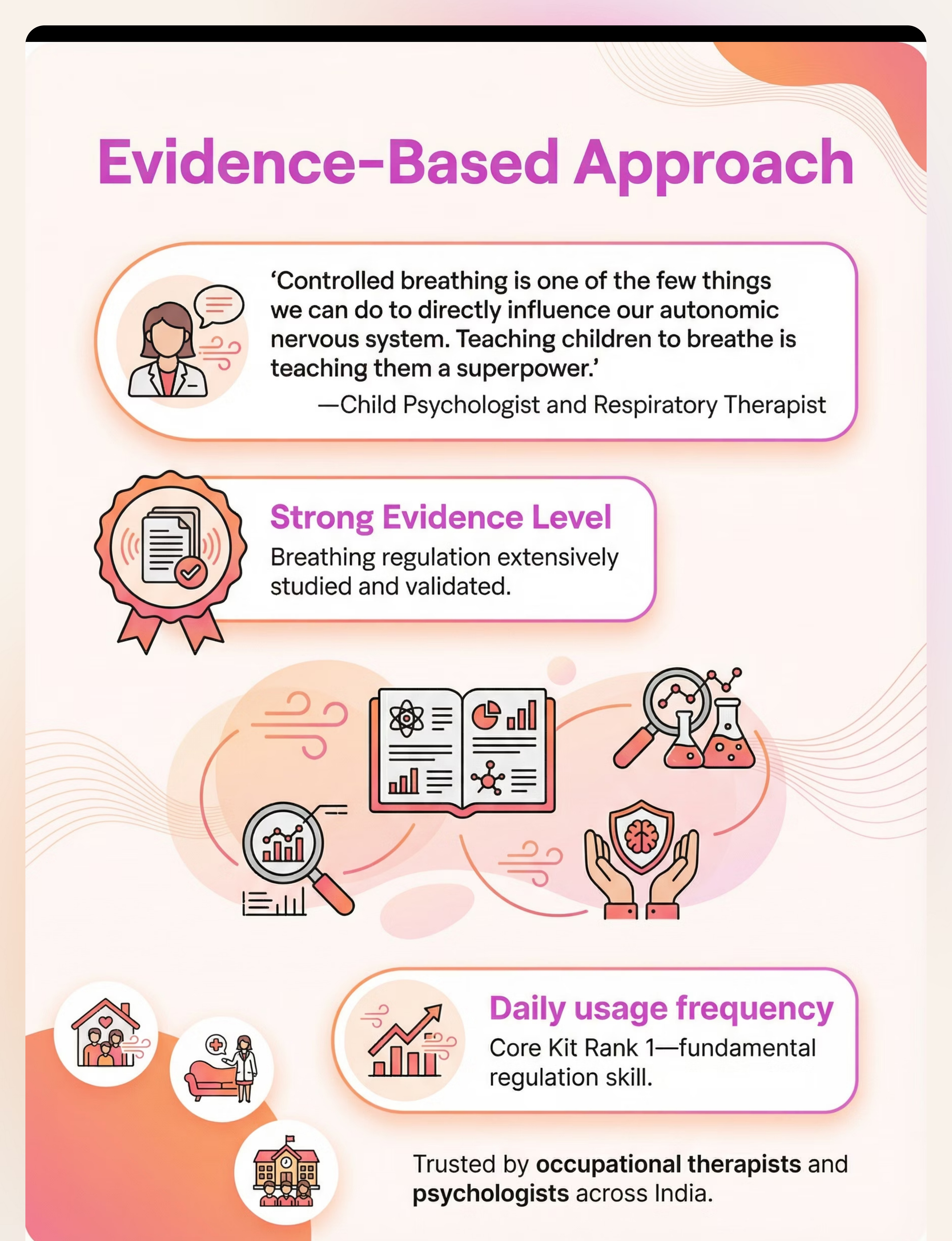
"Controlled breathing is one of the few things we can do to directly influence our autonomic nervous system. Teaching children to breathe is teaching them a superpower they'll use their whole lives."— Child Psychologist and Respiratory Therapist

How to Use It Right
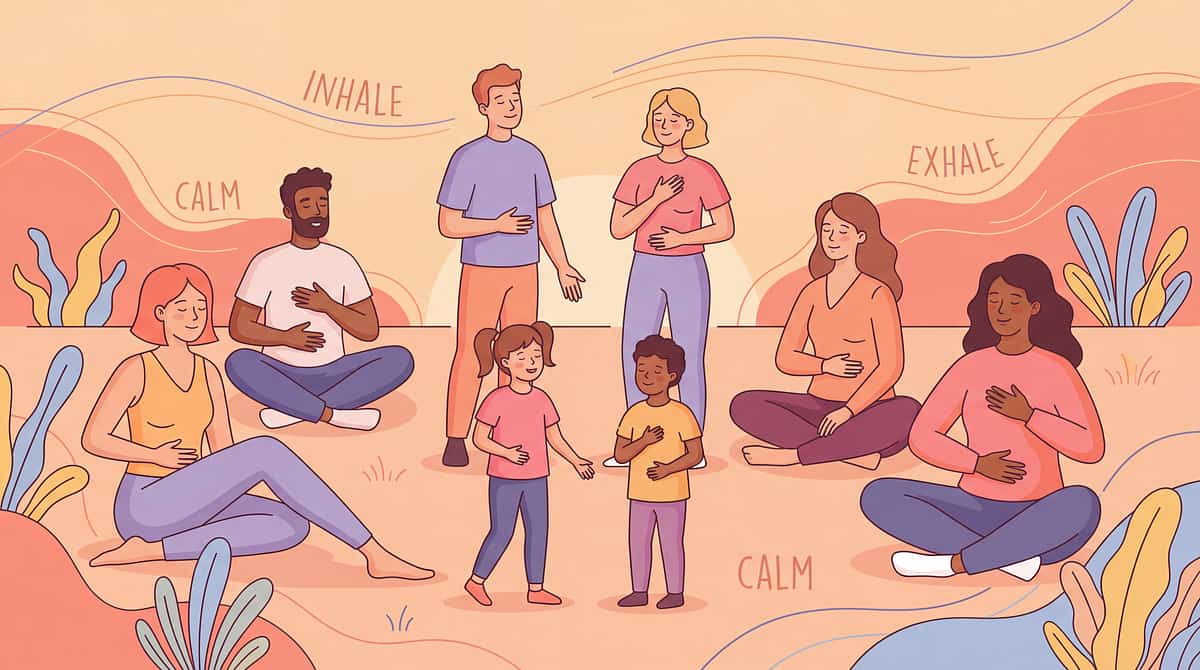
Practice During CALM Times Daily
This is the golden rule. Never introduce breathing during crisis. Practice when everyone is relaxed—morning routine, after dinner, bedtime. Make it a calm-time ritual so it becomes automatic before stress hits.
Make It Fun—Not Clinical
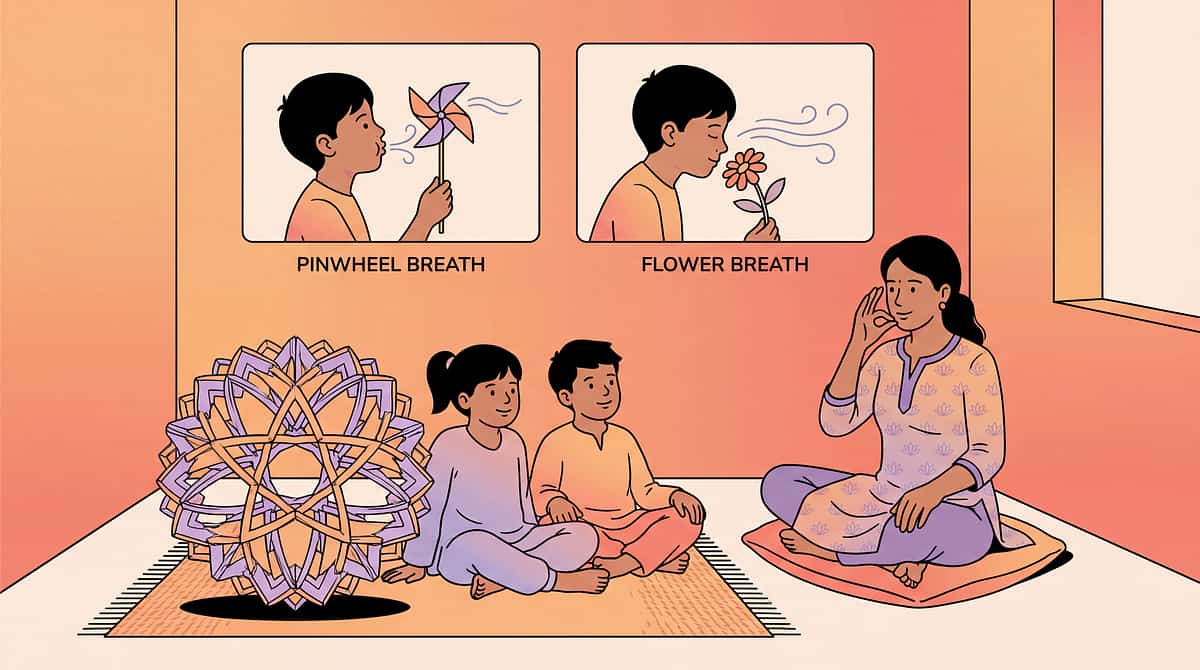
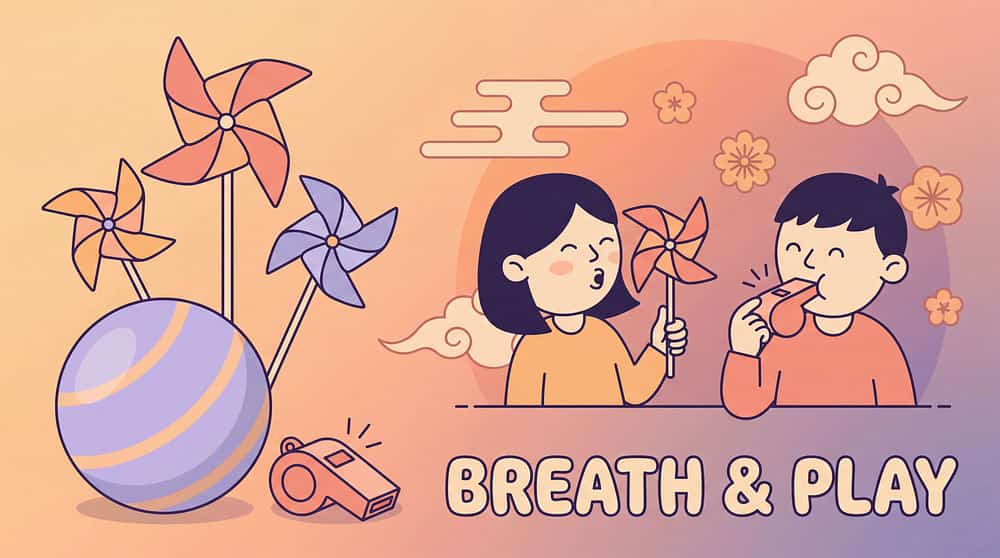
Breathing isn't punishment or medicine. Use playful language: "Let's make the ball grow big!" "Can you blow the pinwheel?" Fun engagement builds skill; clinical pressure builds resistance.
Exhale Longer Than Inhale
A 2:1 ratio (exhale twice as long as inhale) maximally activates the calming response. Count "in for 2, out for 4" or "in for 3, out for 6." The long exhale is where the magic happens.
Use Visual/Tactile Supports
Breathing is invisible and abstract—tools make it concrete. Watch the ball expand. Feel your belly rise. See the pinwheel spin. These supports bridge the gap between instruction and understanding.
Model Breathing—Child Mirrors
Do it together. Breathe with your child, not at them. Children learn by imitation. Your calm breathing becomes their calm breathing.
3-5 Breaths Often Enough
You don't need 10 minutes of meditation. Three to five good breaths can shift physiology. Keep sessions short to maintain engagement and prevent frustration.
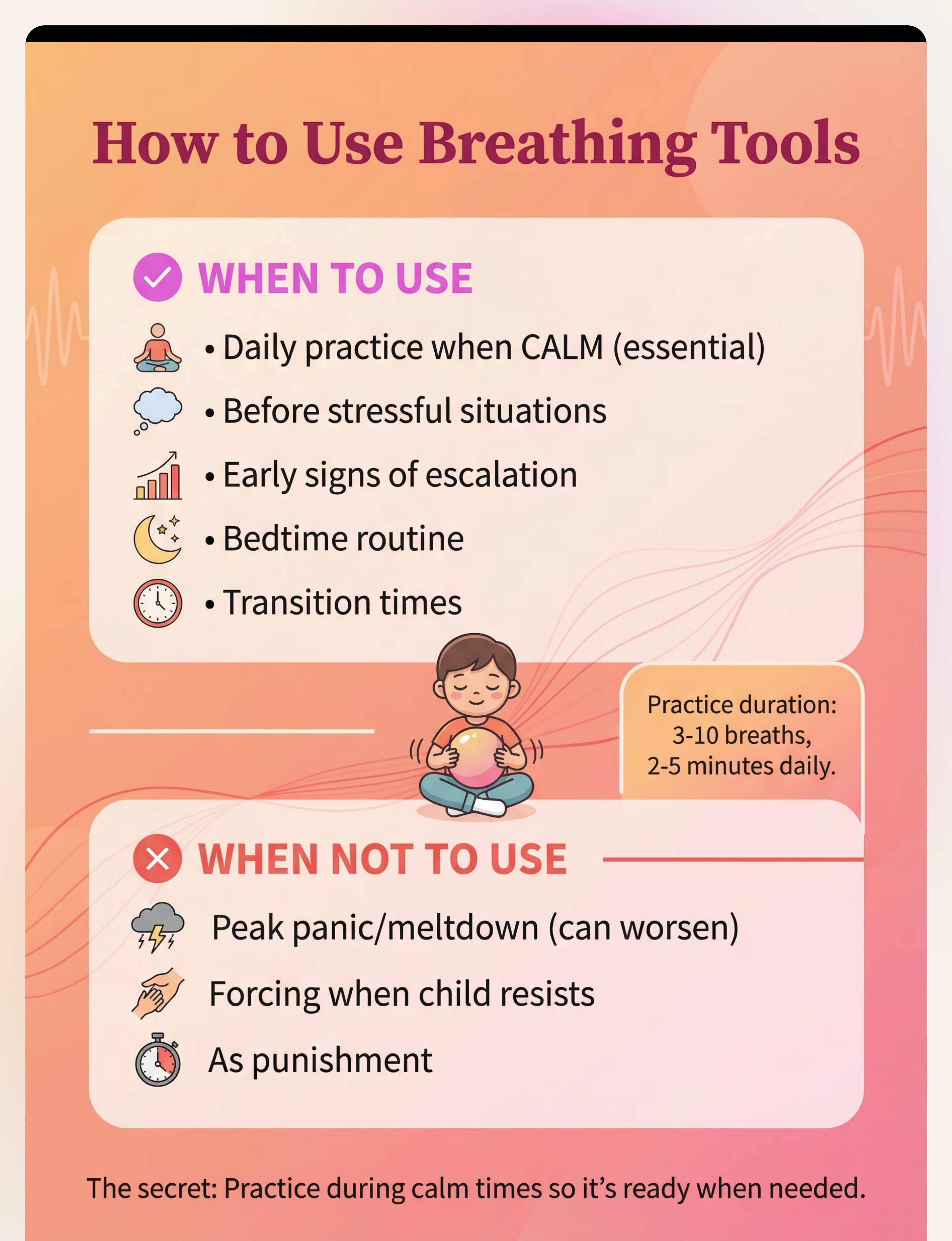
Duration: 3-10 breaths per session; daily practice 2-5 minutes
Expert-Endorsed Authority

Strong Evidence Base
Breathing techniques for nervous system regulation are backed by extensive research in neuroscience, psychology, and pediatric therapy. This isn't alternative medicine—it's fundamental physiology.

OT + Psychologist Recommended
Occupational Therapists and Child Psychologists both consider breathing tools essential. This cross-disciplinary endorsement reflects the universal applicability of respiratory regulation.

Rank #1 in Category
Breathing tools are ranked first in the Emotional Regulation & Coping category—the foundation upon which all other calming strategies build.

Daily Use Frequency
Classified for daily use—not occasional intervention. This is a core life skill, practiced regularly like brushing teeth, becoming automatic over time.
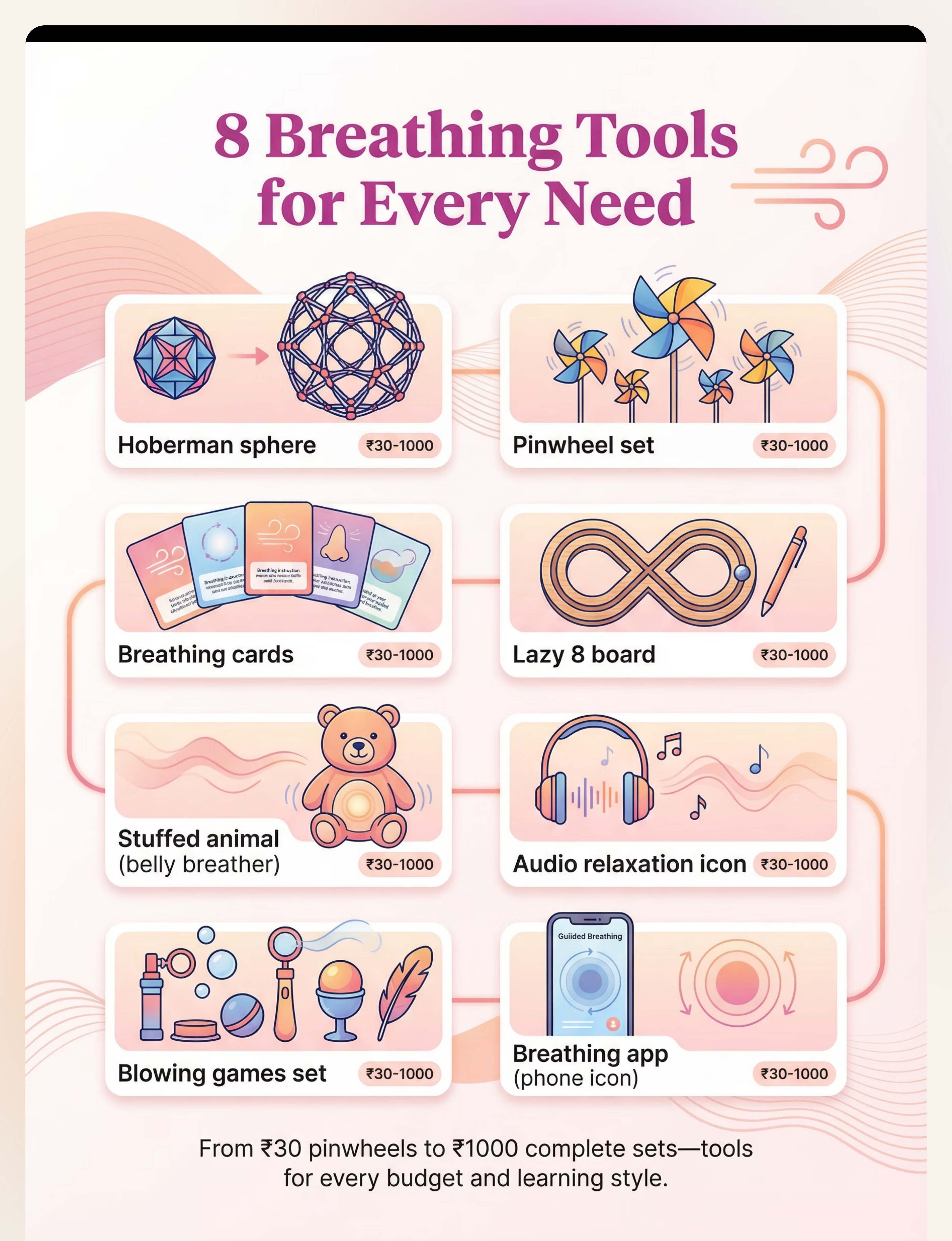
Choose Your Option (8 Variants)
Every child is different. Some need visual pacing, others tactile feedback. Some respond to play, others to structure. Here are eight proven options—find what clicks for your child.

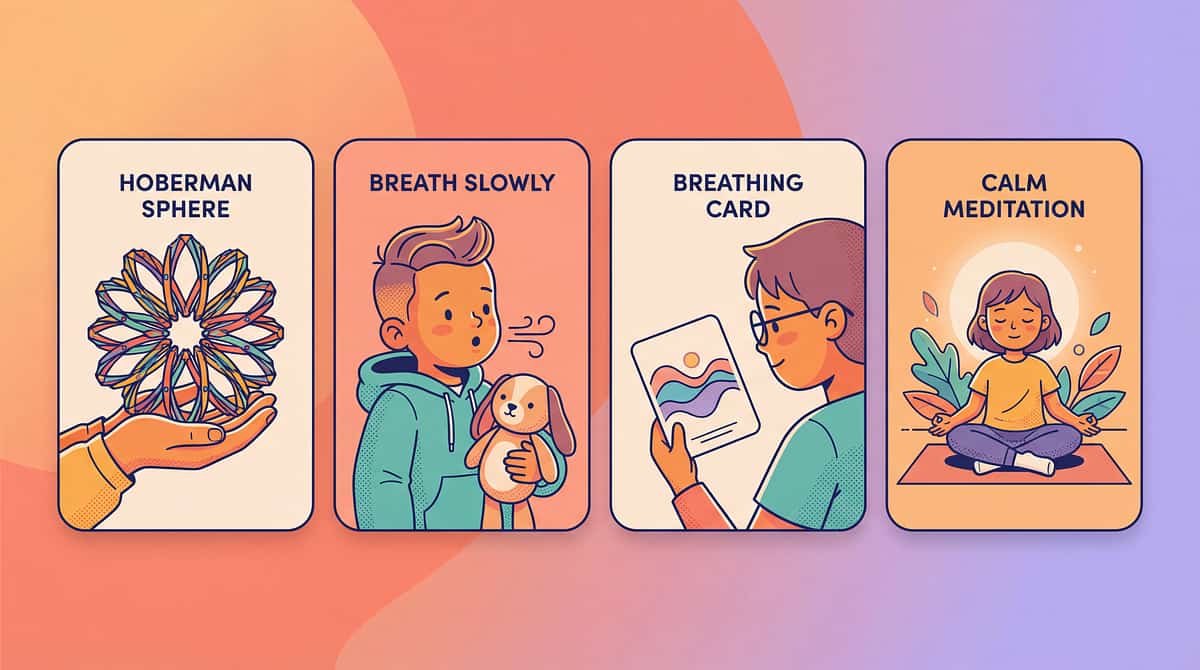
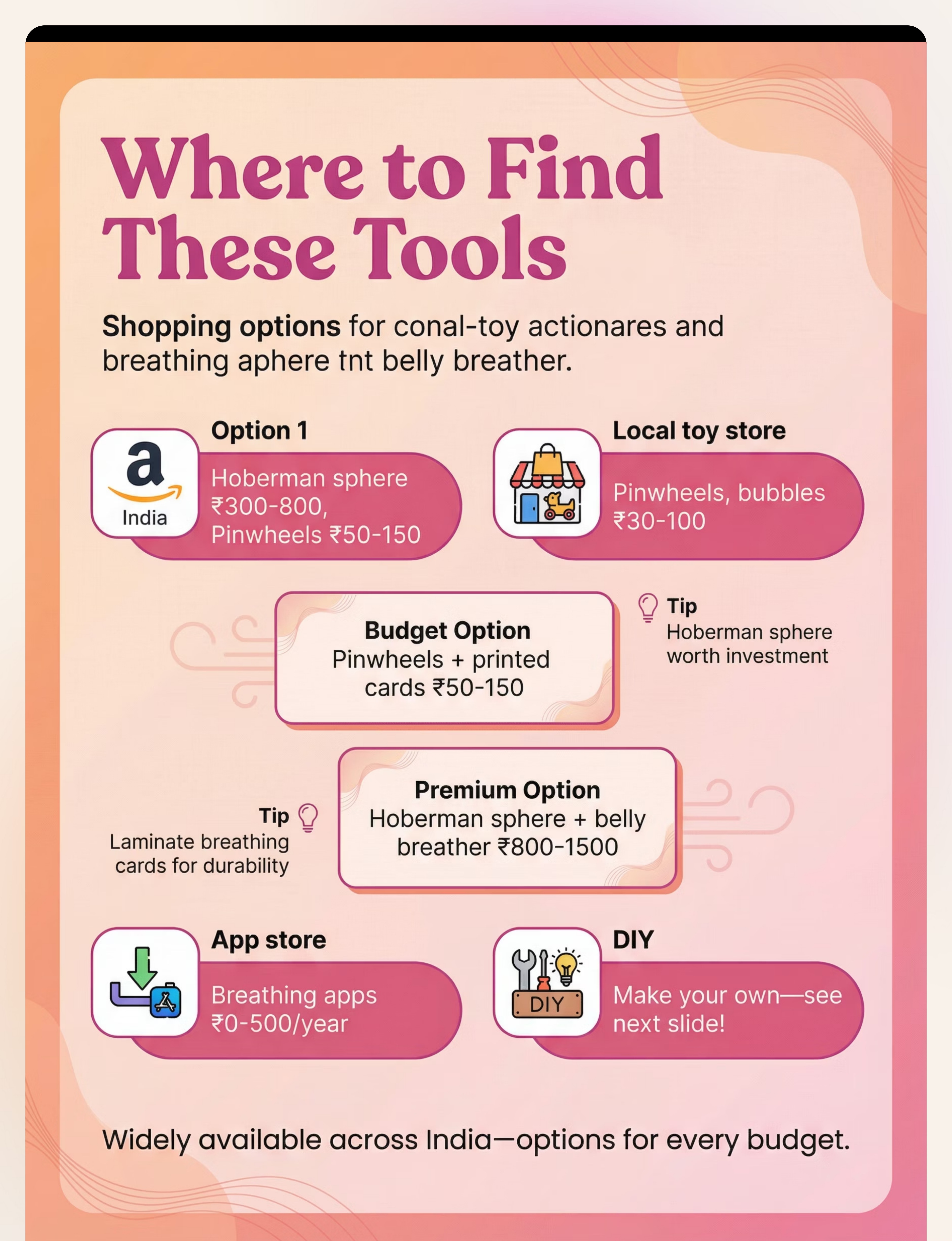
Hoberman Sphere (Breathing Ball)
Best for: Deep breathing practice, visual learners
Ages: 3-9 years | Settings: Home, Clinic, School
Portability: Medium | Price: ₹300-800
Ages: 3-9 years | Settings: Home, Clinic, School
Portability: Medium | Price: ₹300-800

Pinwheel Set
Best for: Fun breathing practice, sustained blow
Ages: 2-9 years | Settings: All
Portability: High | Price: ₹30-150
Ages: 2-9 years | Settings: All
Portability: High | Price: ₹30-150

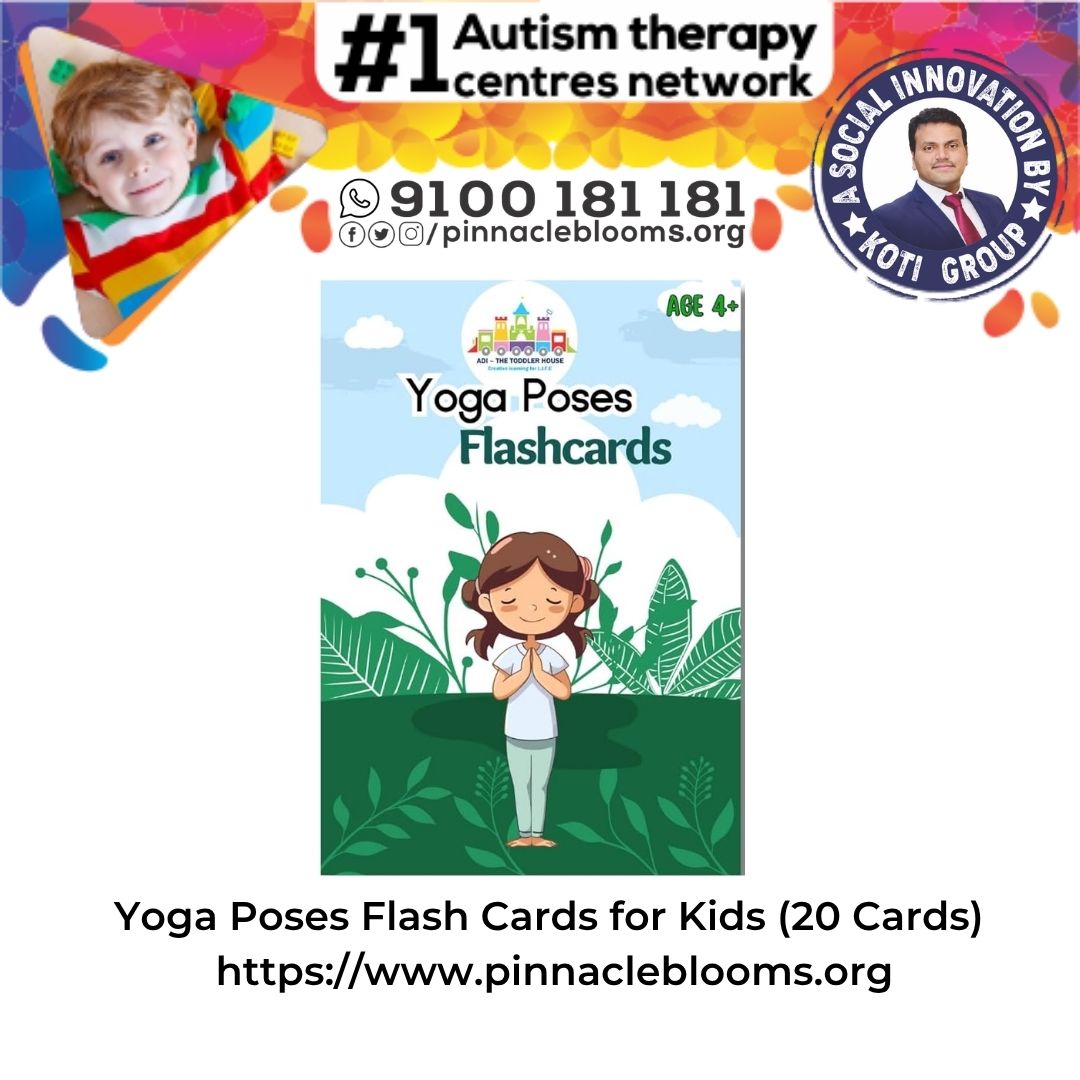
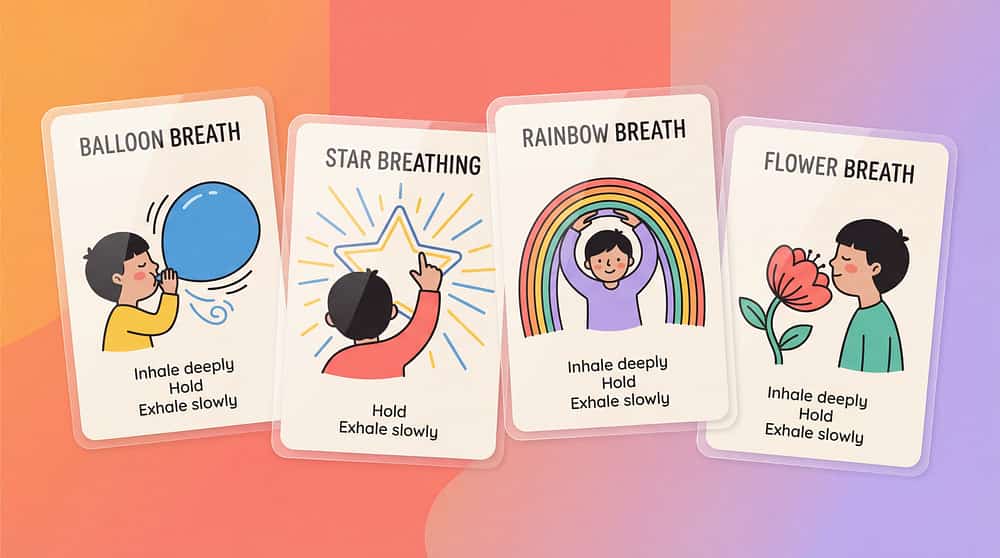
Breathing Cards / Visual Guides
Best for: Multiple techniques, visual instruction
Ages: 3-9 years | Settings: All
Portability: Very High | Price: ₹100-300
Ages: 3-9 years | Settings: All
Portability: Very High | Price: ₹100-300

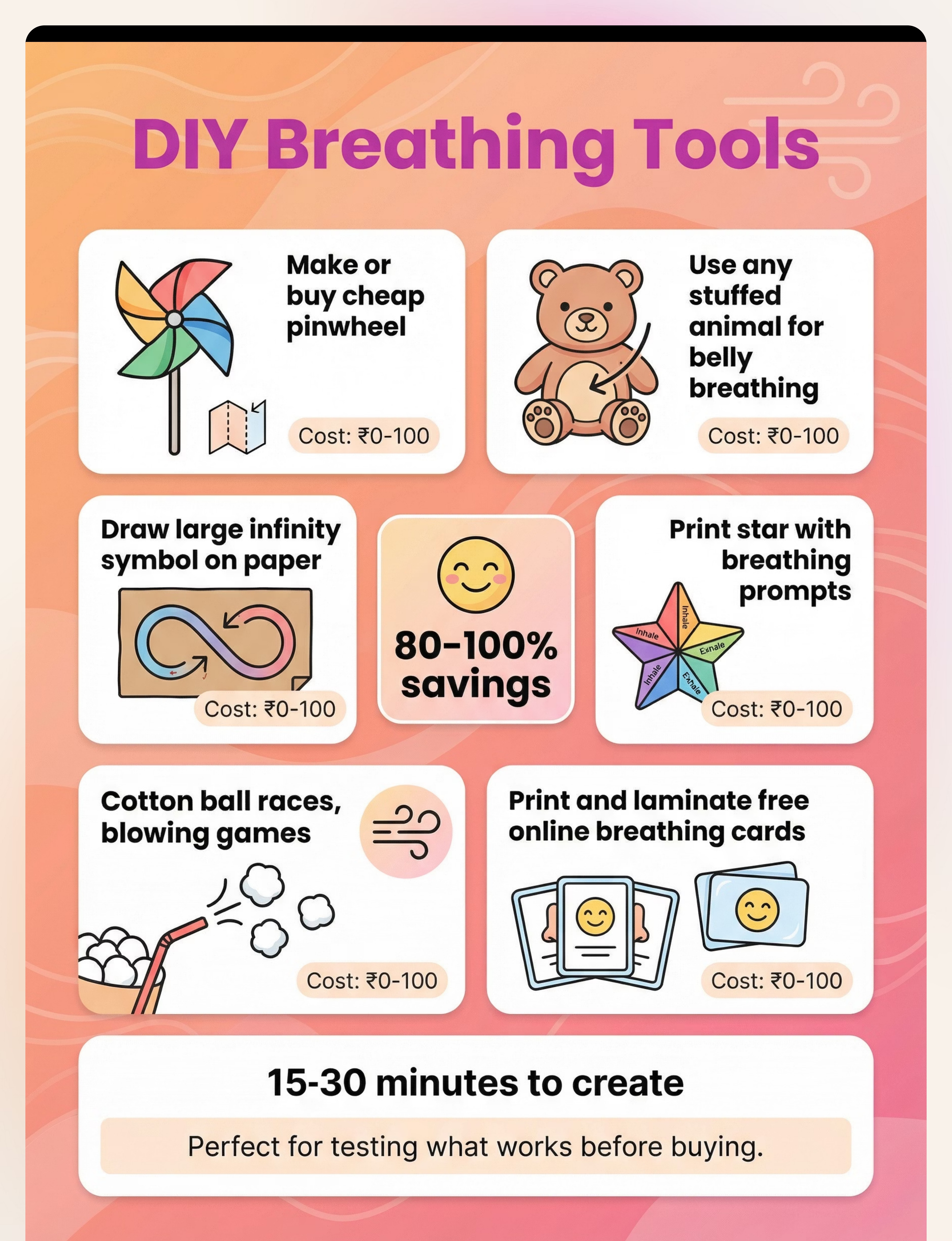
Lazy 8 Breathing Board
Best for: Focus, motor + breathing integration
Ages: 4-9 years | Settings: Home, School, Clinic
Portability: High | Price: ₹150-400
Ages: 4-9 years | Settings: Home, School, Clinic
Portability: High | Price: ₹150-400

Breathing Stuffed Animal
Best for: Young children, bedtime, tactile comfort
Ages: 2-7 years | Settings: Home, Clinic
Portability: High | Price: ₹400-1,000
Ages: 2-7 years | Settings: Home, Clinic
Portability: High | Price: ₹400-1,000

Guided Relaxation Audio Set
Best for: Bedtime, structured relaxation, older children
Ages: 5-9 years | Settings: Home, Clinic
Portability: High | Price: ₹0-500
Ages: 5-9 years | Settings: Home, Clinic
Portability: High | Price: ₹0-500

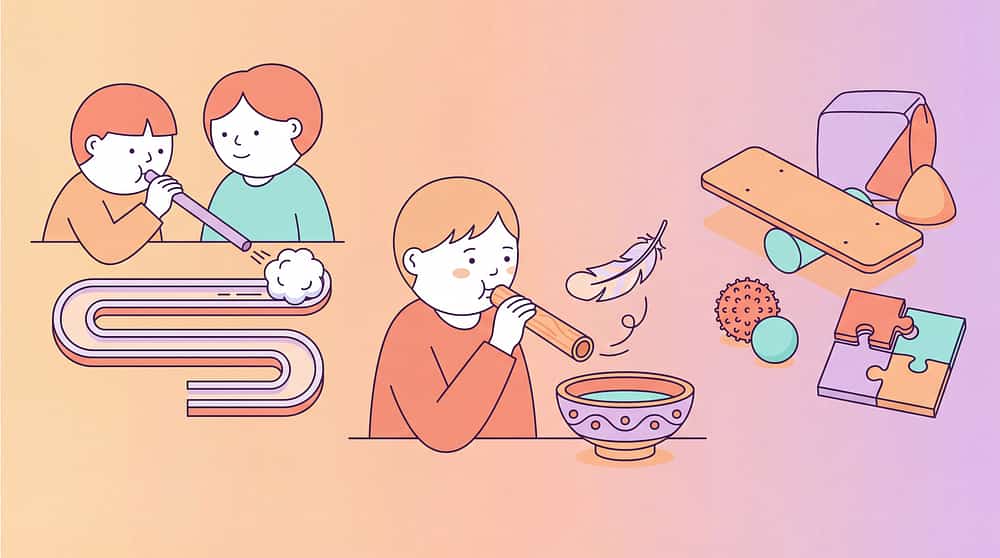
Blowing Games Set
Best for: Game-based breathing, oral motor + breath
Ages: 3-9 years | Settings: Home, Clinic
Portability: Medium | Price: ₹100-300
Ages: 3-9 years | Settings: Home, Clinic
Portability: Medium | Price: ₹100-300

Breathing App Subscription
Best for: Tech-engaged children, varied techniques
Ages: 4-9 years | Settings: Home, School
Portability: Very High | Price: ₹0-1,000/year
Ages: 4-9 years | Settings: Home, School
Portability: Very High | Price: ₹0-1,000/year
How to Choose
By Goal
- Visual learners: Hoberman sphere, breathing cards
- Tactile comfort: Stuffed animal, lazy 8 board
- Playful engagement: Pinwheels, blowing games
By Setting
- Home/bedtime: Stuffed animal, audio
- School/portable: Cards, pinwheels
- Clinic/therapy: Hoberman, full set
By Portability
- Very high: Cards, pinwheels, apps
- High: Lazy 8, stuffed animal
- Medium: Hoberman, games
Breathing Techniques Guide
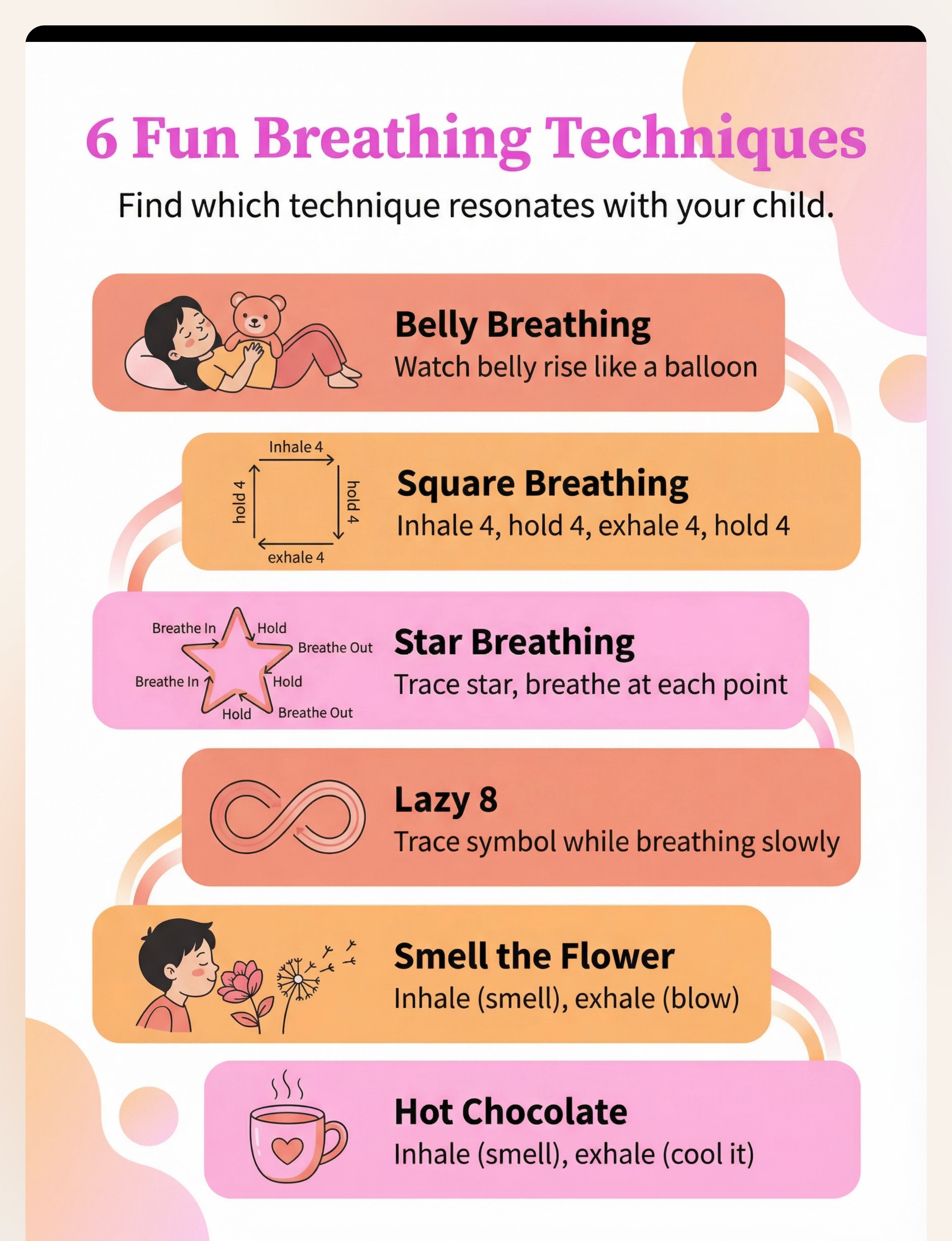
These are the foundational techniques you'll use with your breathing tools. Each one serves a slightly different purpose and appeals to different children.

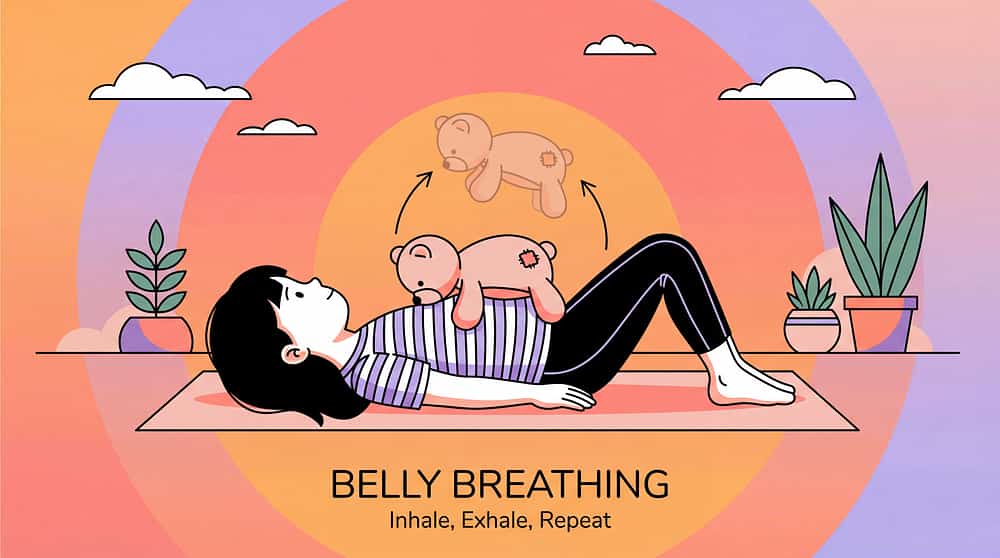
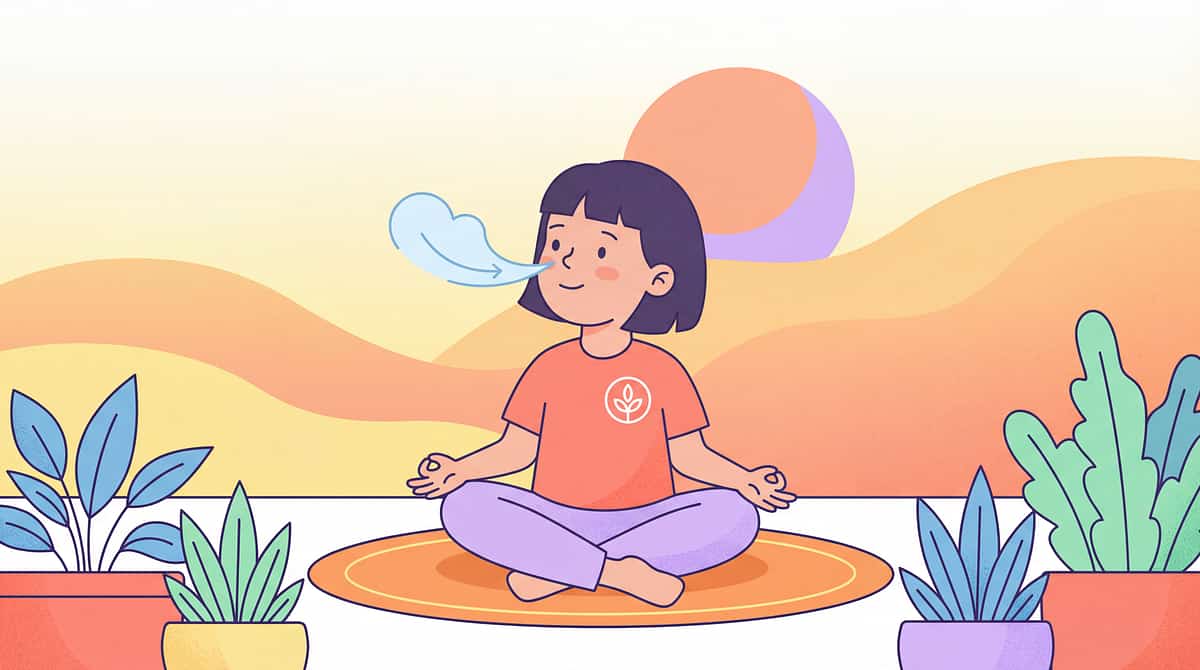
Belly Breathing
Diaphragmatic breathing—watch belly rise. Place stuffed animal on tummy and watch it go up and down. Most fundamental technique.

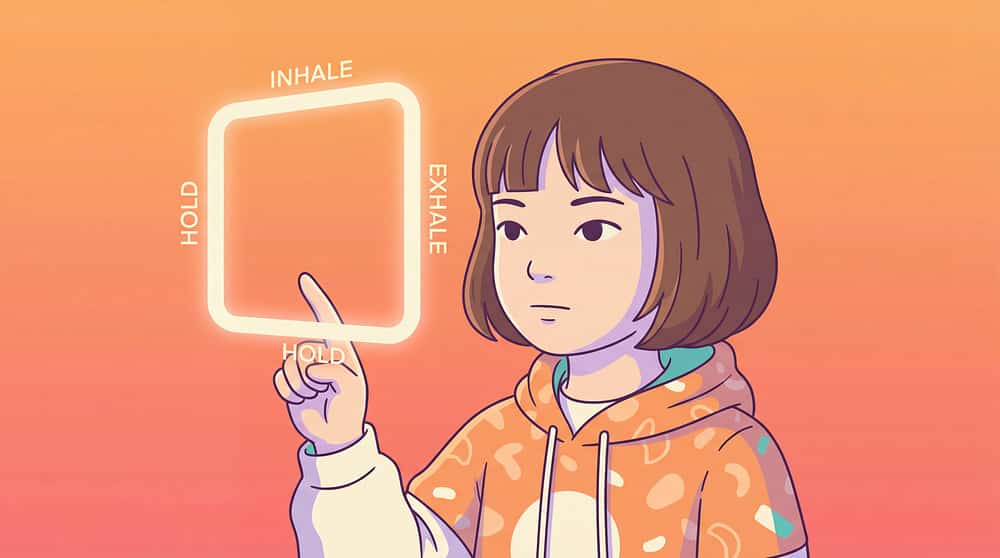
Square Breathing
Inhale 4, hold 4, exhale 4, hold 4. Trace a square while breathing. Great for older children who like structure and counting.

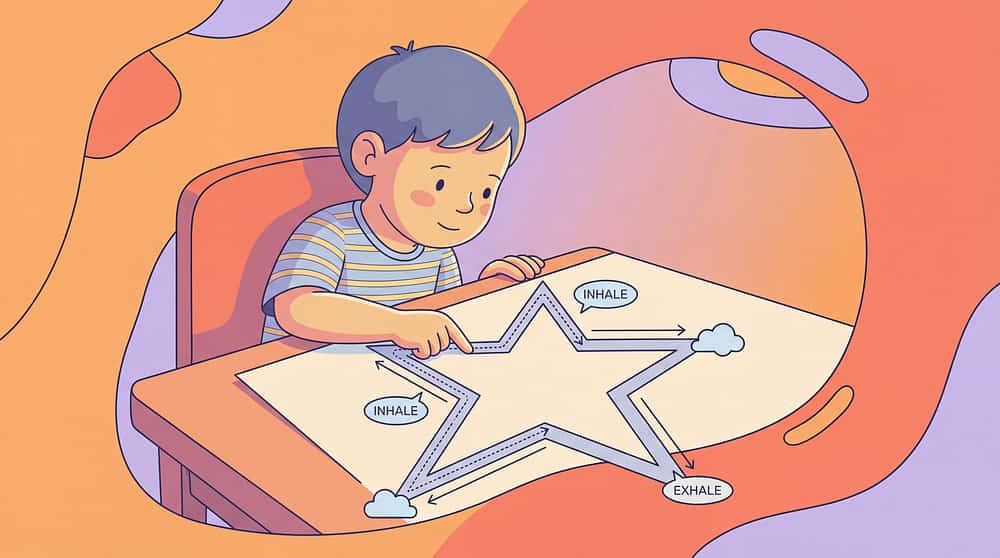
Star Breathing
Trace a star shape, breathe at each point. Visual and motor combined. Works well with drawn or cut-out stars.

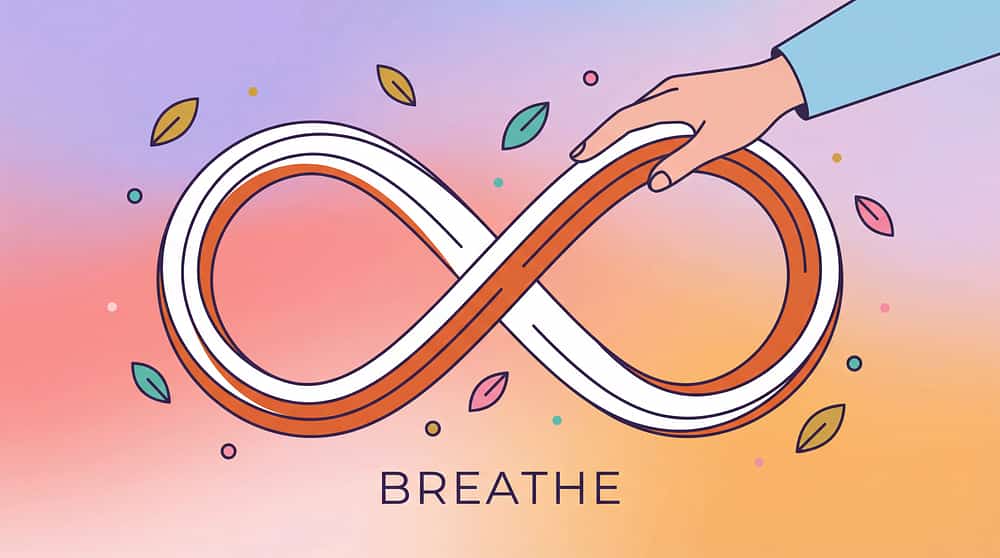
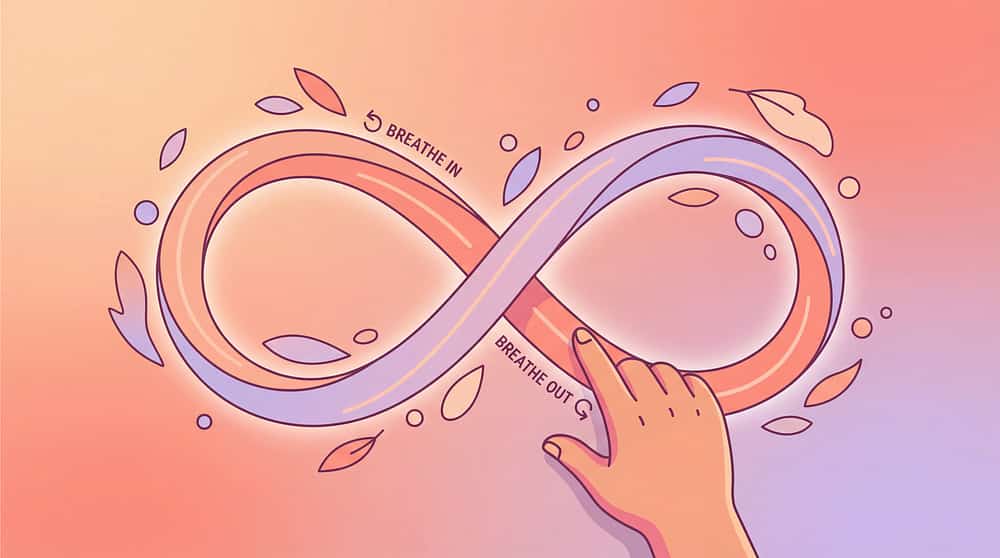
Lazy 8 (Infinity)
Trace infinity symbol while breathing—inhale up one loop, exhale down the other. Calming continuous motion.

Smell the Flower
Inhale like smelling a flower, exhale like blowing dandelion seeds. Gentle imagery that children understand immediately.

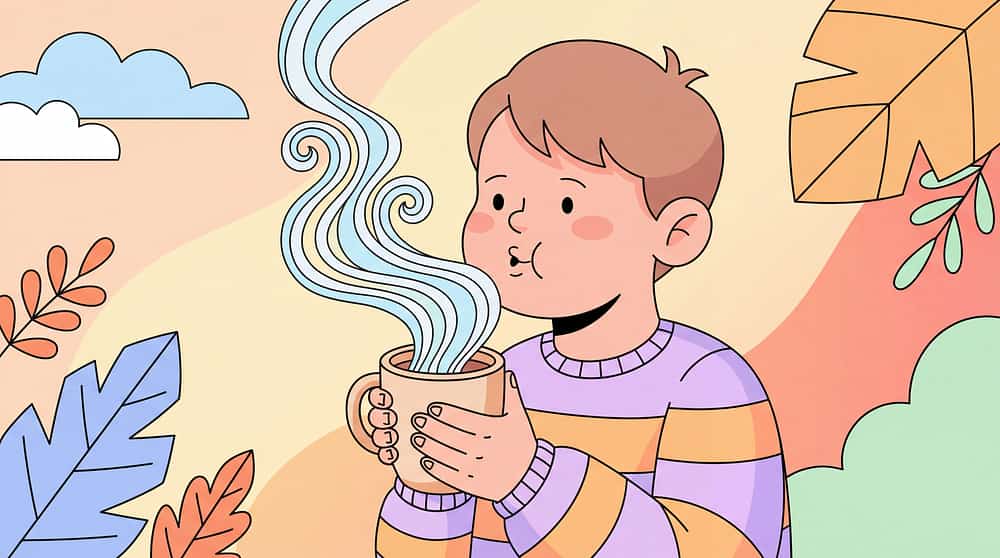
Hot Chocolate Breathing
Inhale to smell the hot chocolate, exhale to cool it down. Playful and engaging for young children.
Key Materials: Plastic (spheres, pinwheels), laminated cards, plush fabric, digital apps—all designed for durability and child engagement.
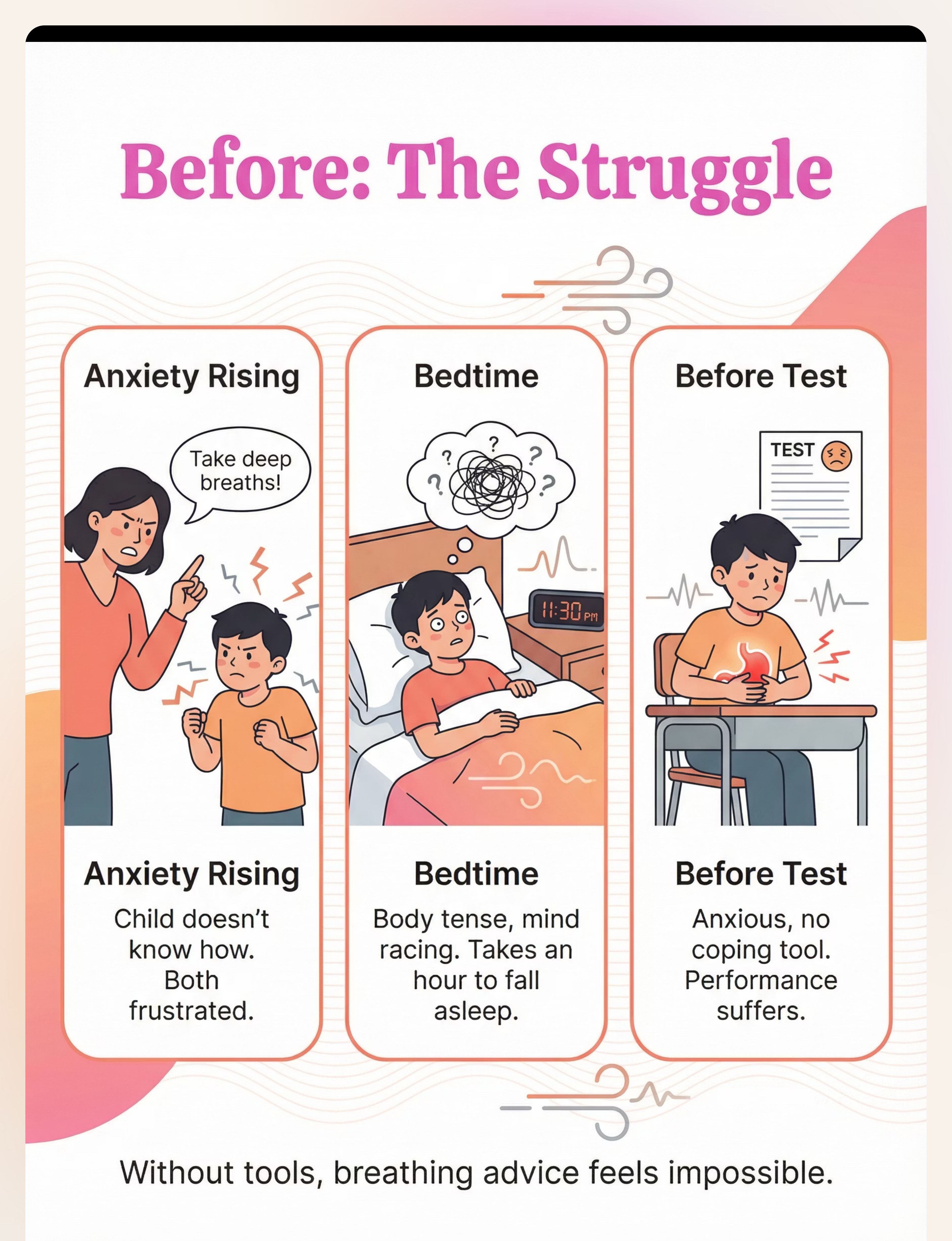
The Struggle (Before)

Anxiety Rising
Situation: Parent says "Take deep breaths!" Child doesn't know how. Breathing gets faster and faster.
Experience: Well-meaning advice doesn't help—child can't translate words into action. Both frustrated.
Emotion: Frustration, helplessness, disconnection

Bedtime Battle
Situation: Child's body is tense and wired at night. Mind racing, unable to settle.
Experience: Takes an hour or more to fall asleep. No relaxation skills or pathway to calm. Parents exhausted.
Emotion: Exhaustion, struggle, defeat

Before Test or Event
Situation: Child anxious before performance, test, or social event. Shallow breathing, stomach ache.
Experience: Performance suffers due to unchecked anxiety. No coping tool available. Avoidance patterns develop.
Emotion: Anxiety, avoidance, underperformance
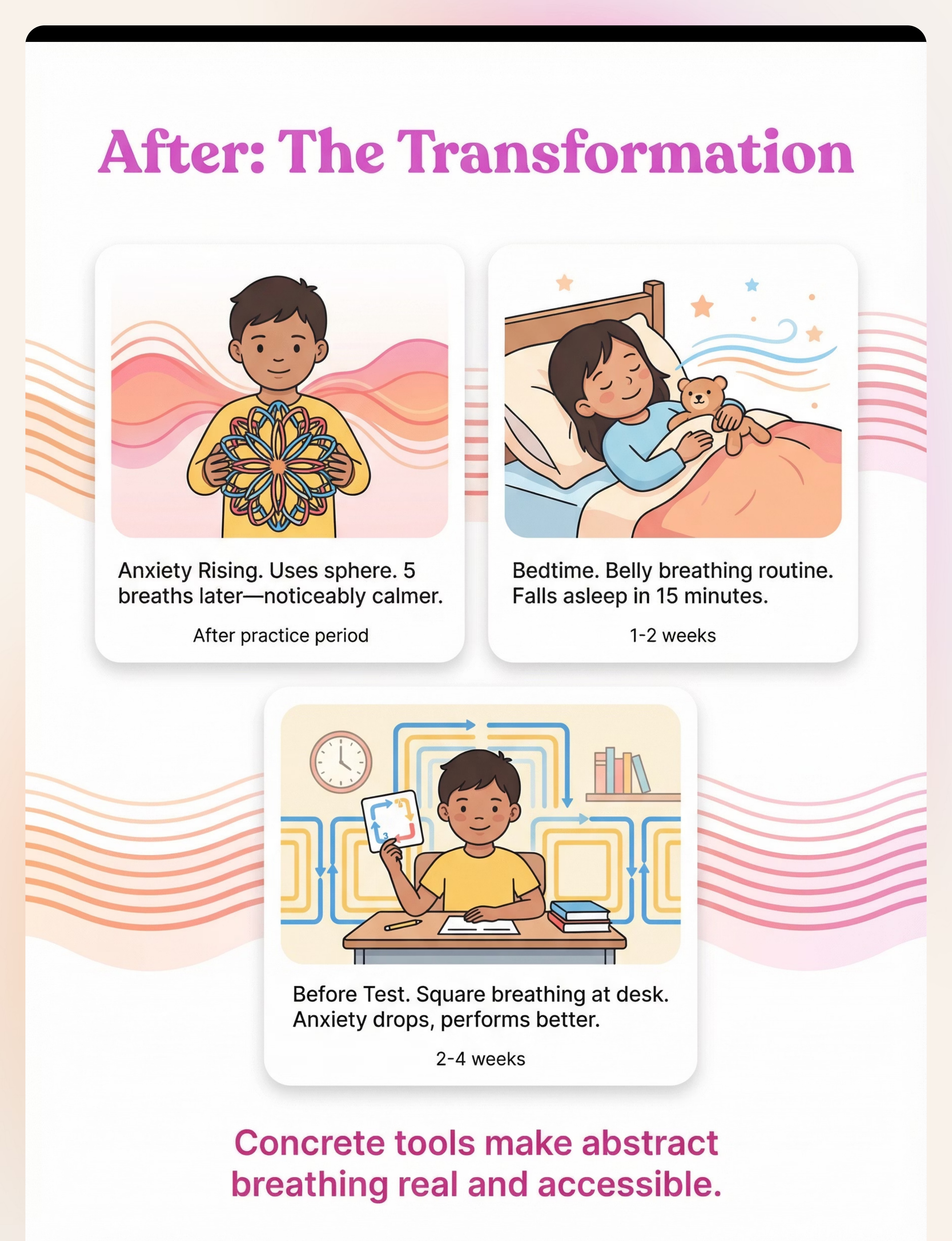
The Breakthrough (After)

Anxiety Rising
Situation: Child grabs Hoberman sphere from the calm corner. Breathes in as it expands, out as it contracts.
Experience: Five breaths later, noticeably calmer. Has a tool that actually works. Parent witnesses the shift.
Emotion: Empowerment, calm, capability
After Practice Period
Bedtime Peace
Situation: Belly breathing with stuffed animal on tummy has become part of bedtime routine.
Experience: Watch it rise and fall. Body relaxes systematically. Falls asleep in 15 minutes instead of an hour.
Emotion: Peace, routine, restfulness
1-2 Weeks of Practice
Before Test or Event
Situation: Child uses square breathing card at desk before test. Four in, four hold, four out, four hold.
Experience: Anxiety drops to manageable level. Performs better. Confidence builds with each success.
Emotion: Confidence, capability, resilience
2-4 Weeks of Practice

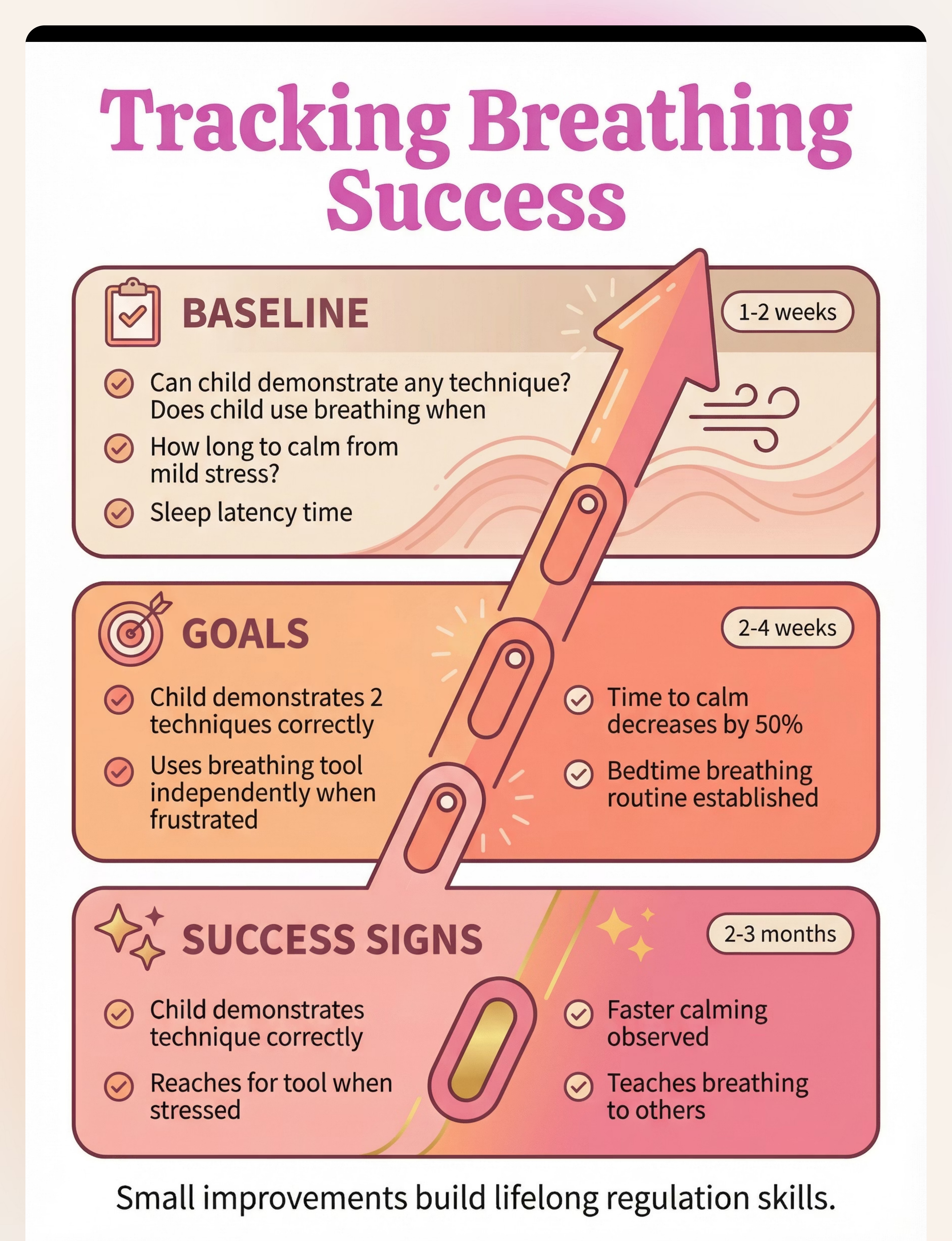
What to Expect (Realistic Timelines)
1-2 Weeks
- Child learns what "deep breathing" means
- Can demonstrate breathing technique
- Improved sleep with breathing routine
2-4 Weeks
- Child uses breathing tool during mild stress
- Practices independently with reminders
- Beginning to generalize skill
4-8 Weeks
- Child uses breathing independently for regulation
- Reaches for tool automatically
- Skill becomes reliable strategy
2-3 Months
- Breathing becomes automatic coping strategy
- Can regulate without tools in some situations
- Teaching breathing to siblings/peers
These timeframes assume daily practice during calm times. Progress is individual—some children click immediately, others need more repetition. Consistency matters more than intensity.

Is This Right for My Child? (2-Minute Check)
"Does my child struggle to understand or perform 'deep breathing'?"
If yes, this indicates: They likely need concrete visual/tactile support. Verbal instruction alone isn't enough—tools bridge the gap.
"Does my child's breathing become fast and shallow when stressed?"
If yes, this indicates: They will benefit from breathing regulation training. The stress response might be hijacking their respiratory system.
"Is my child having difficulty calming their body on their own?"
If yes, this indicates: Breathing tools can support their regulation. They need a physical pathway to calm, not just words.
"Would visual or tactile supports help my child learn breathing techniques?"
If yes, this indicates: They are a good candidate for breathing tools, as their learning style matches this intervention approach.
Scoring: Three or more "yes" answers = strong fit for breathing tools. Even one "yes" suggests these tools can help—breathing is a foundational skill that benefits nearly every child.

Usage Guide: When and How
When to Use ✓ | When NOT to Use ✗ | |
Daily practice during calm times (most important) | Peak panic/meltdown (can worsen hyperventilation) | |
Before known stressful situations | Forcing when child resists | |
At early signs of escalation | As punishment | |
Bedtime routine | During respiratory distress (medical issue) | |
Transition times | ||
After physical activity for calming |
Supervision by Age
Age Range | Supervision Level | Notes | |
Under 3 years | Adult-led | Very simple techniques; playful approach; short sessions | |
3-6 years | Adult guides | Child practices with support; visual/tactile tools essential | |
6+ years | Independent use | Can use tools independently; adult available for new techniques |
Settings: Home, School, Clinic, Travel—breathing tools are portable and adaptable to any environment.

Safety First
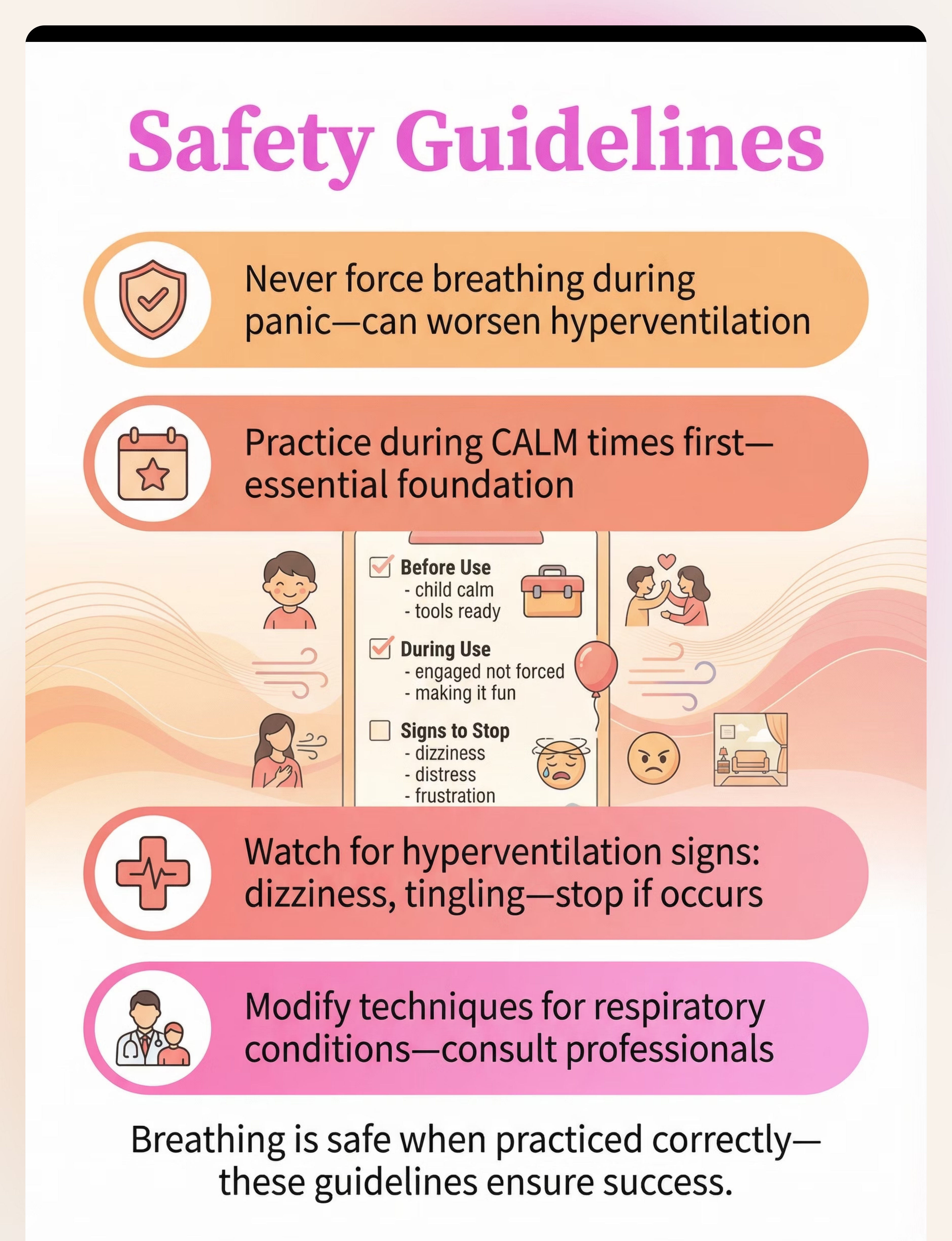
Never Force Breathing During Panic
Focusing on breathing during peak panic can worsen hyperventilation. Use other strategies during crisis (grounding, compression). Breathing is preventive, not crisis intervention.
Practice During Calm Times First
This cannot be emphasized enough. Build the skill when everyone is relaxed. Then it will be accessible during stress. Never introduce during meltdown.
Watch for Hyperventilation Signs
Dizziness, tingling, lightheadedness—if these occur, stop immediately and breathe normally. Focus on extending the exhale, not deepening the inhale.
Modify for Respiratory Conditions
Children with asthma or other respiratory conditions should consult their doctor. Techniques may need modification. Never restrict breathing in unsafe ways.
Safety Checklist
Before Use
- Child is calm (practice time)
- Technique is age-appropriate
- Tools are safe and functional
- Environment is conducive
During Use
- Child engaged, not forced
- No hyperventilation signs
- Keeping it fun and light
- Modeling correct breathing
Signs to Stop
- Dizziness or tingling
- Child becoming distressed
- Frustration building
- Child requests stop
Contraindications: Forcing during panic • Respiratory distress • Child with asthma without medical consultation
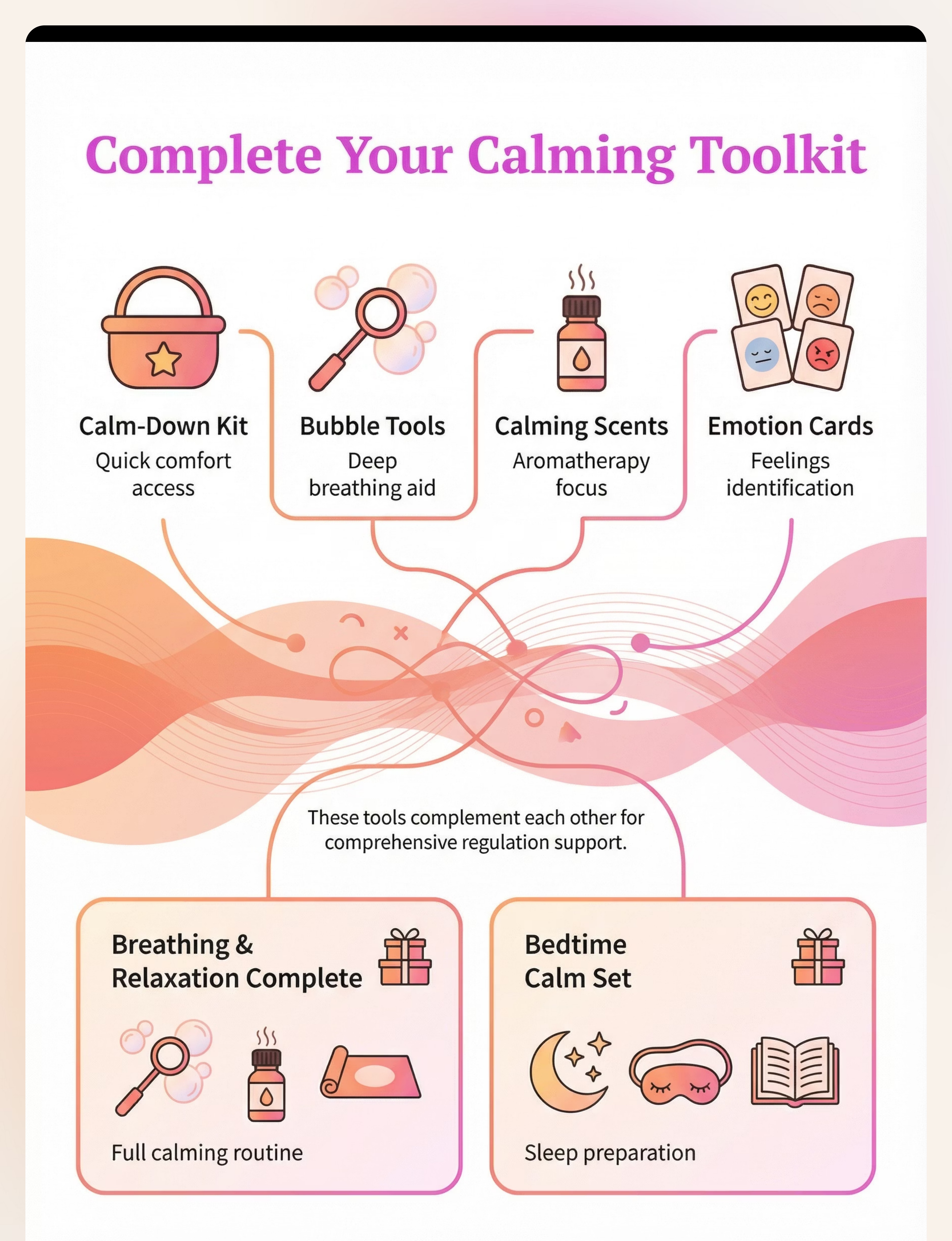
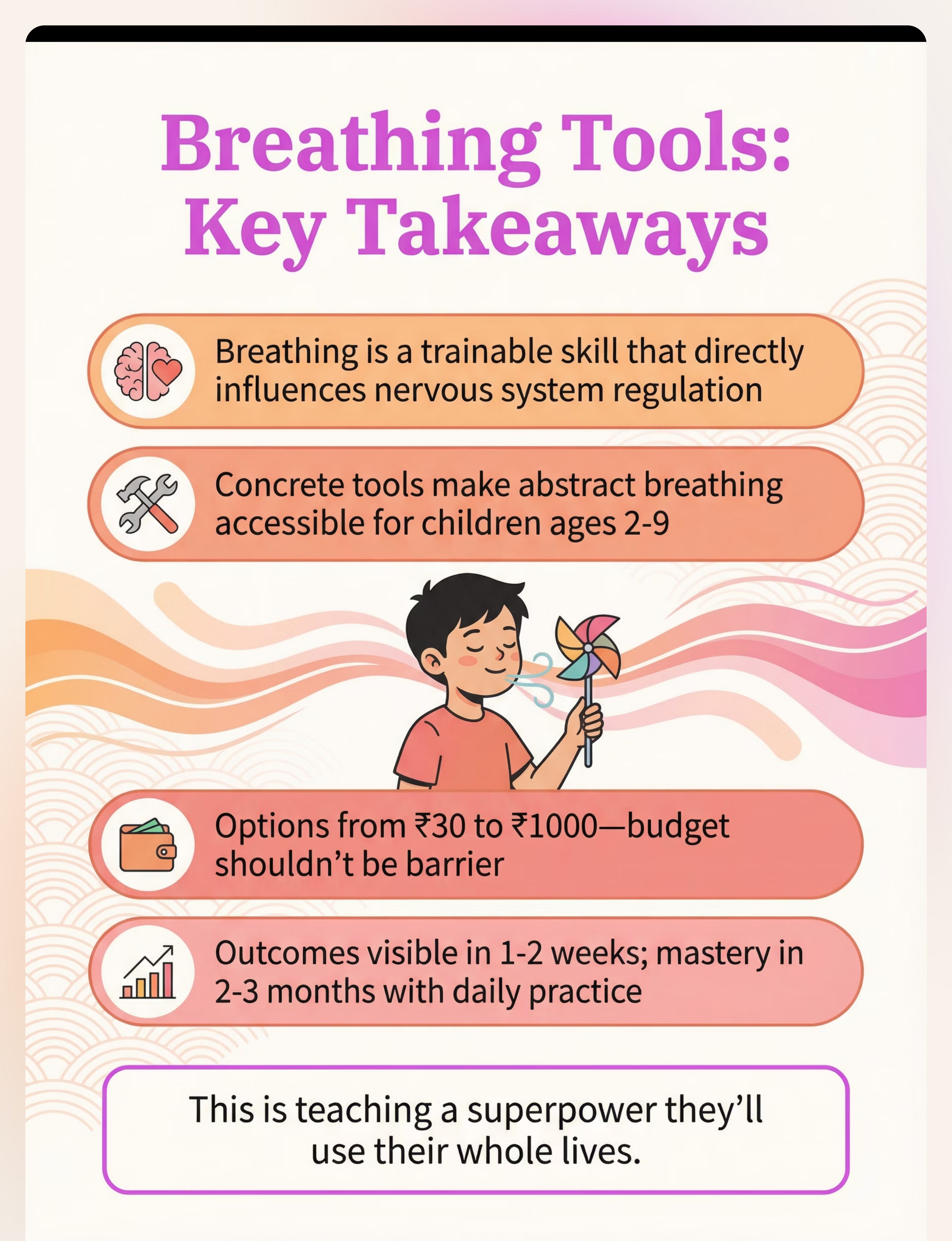
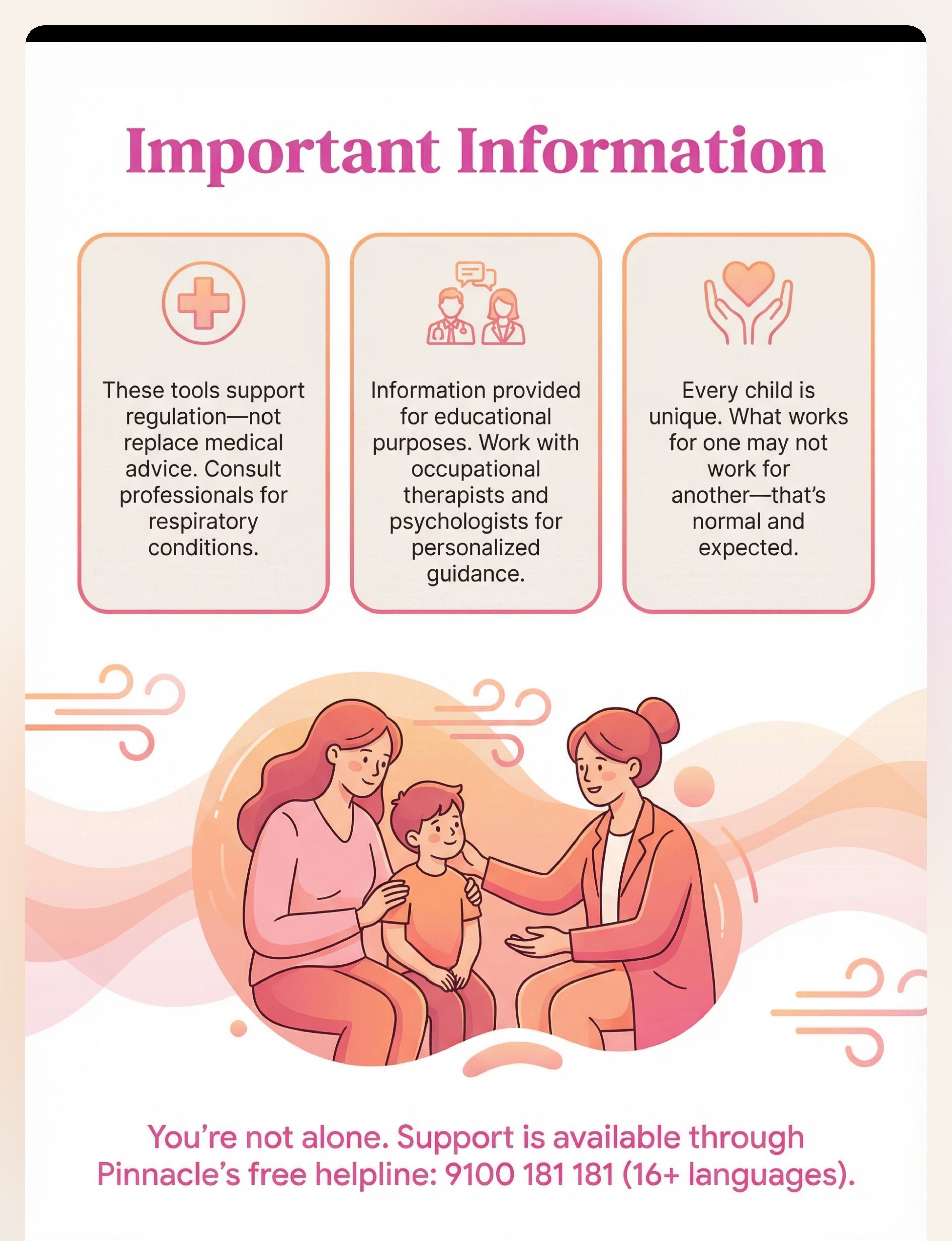
Preview of breathing relaxation tools Therapy Material
Below is a visual preview of breathing relaxation tools therapy material. The pages shown help educators, therapists, and caregivers understand the structure and content of the resource before use. Materials should be used under appropriate professional guidance.


Share this resource
Help others discover thisLink copied!
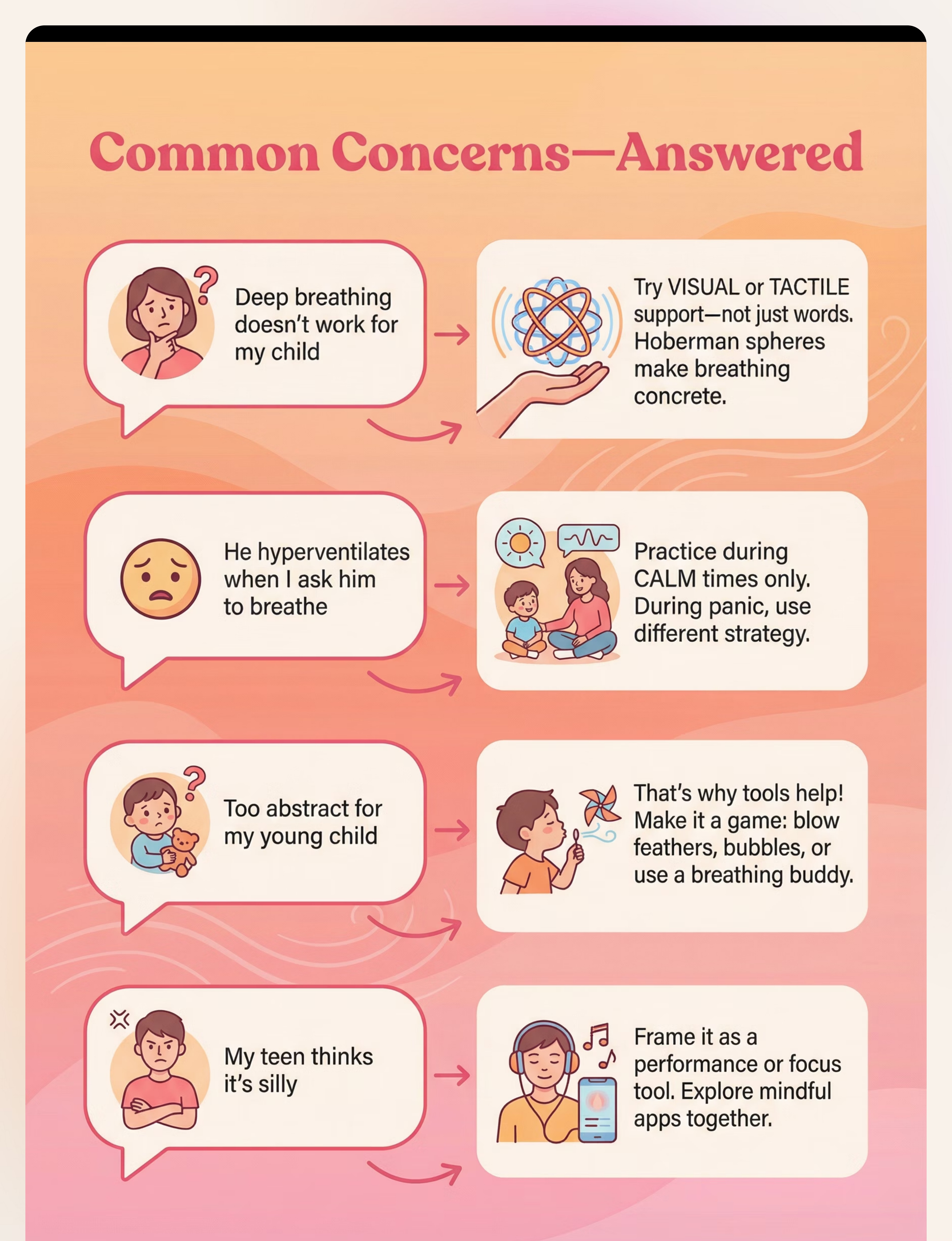
Common Questions (Honest Answers)
Q: Deep breathing doesn't work for my child
A: If it's not working, the technique may need adjustment. Many children need VISUAL or TACTILE support—not just verbal instruction. Tools like Hoberman spheres make the abstract concrete. Also ensure you're practicing during calm times first, not during crisis.
Try this: Experiment with different techniques (belly breathing, pinwheel, lazy 8) to find what resonates. One size doesn't fit all.
Q: He hyperventilates when I ask him to breathe
A: This happens when we focus on breathing during panic. Practice ONLY during calm times until it's automatic. During panic, use a different strategy like grounding or compression. Breathing is preventive, not crisis intervention.
Try this: Focus on the exhale—blowing out is much harder to hyperventilate. Use pinwheels or bubble blowing.
Q: Breathing is too abstract for my young child
A: That's exactly why tools help! "Watch the ball expand as you breathe in" is concrete. "Blow the pinwheel" is tangible. "Watch your tummy lift the teddy bear" is visible. Tools make breathing real and observable.
Try this: Start with bubble blowing—the most concrete exhalation practice. Then progress to other tools.
Q: We've tried everything and nothing works
A: There are many breathing techniques—often one will resonate even if others don't. Some children like lazy 8 (tracing), others like belly breathing (tactile), others like pinwheels (play). Keep experimenting. Also verify you're practicing during CALM times consistently.
Try this: Let your child choose their favorite tool or technique. Ownership increases engagement.