






Sensory Tool ID: 2.2
Bubble Tools for Respiratory Regulation & Visual Tracking
Evidence-Based Therapeutic Play for Breath Control, Visual Tracking & Calming
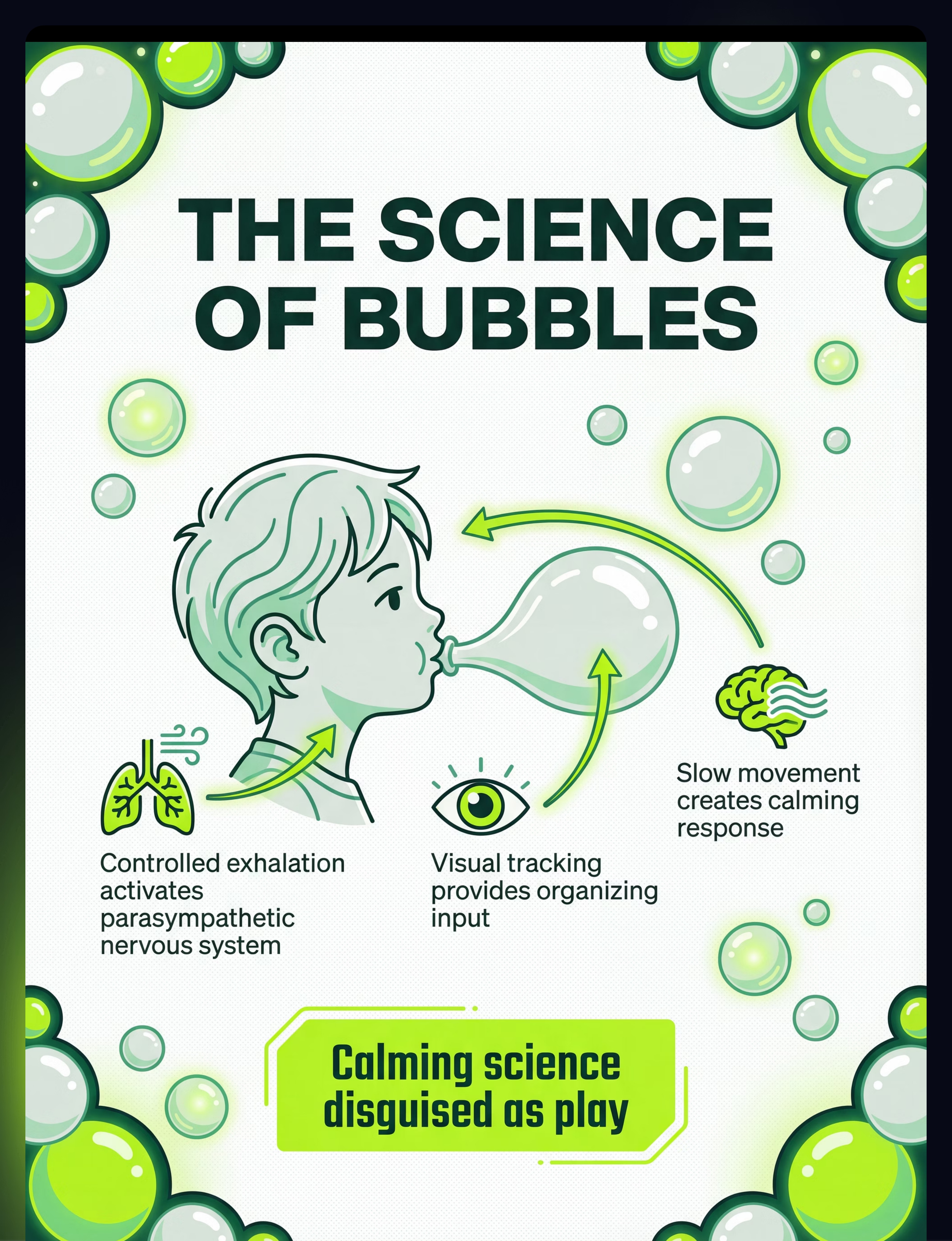
Calming science disguised as play
Bubble Tools for Respiratory Regulation & Visual Tracking
OT + SLP
Moderate Evidence
Rank #2
Daily Use
₹30–1,500
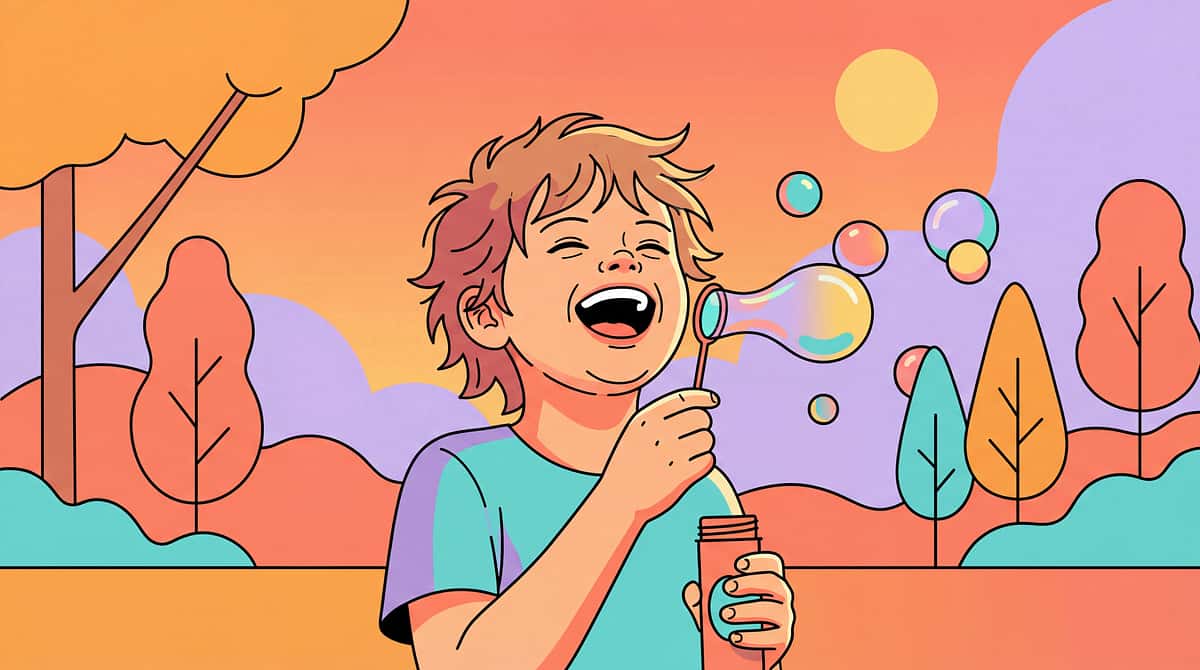
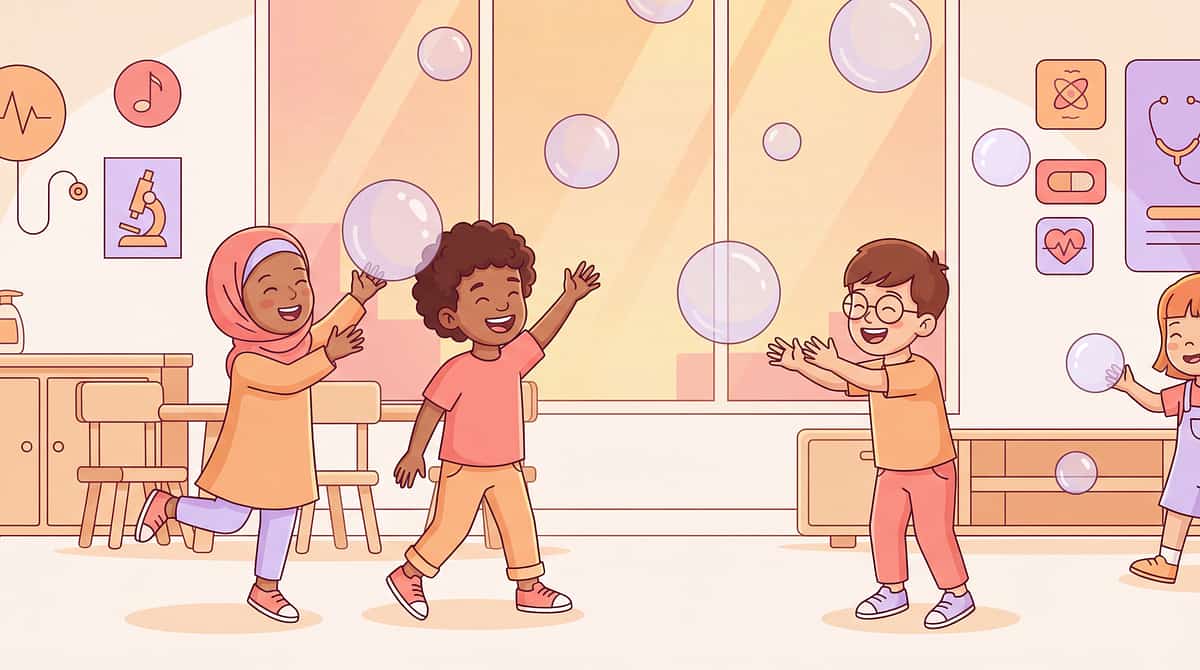
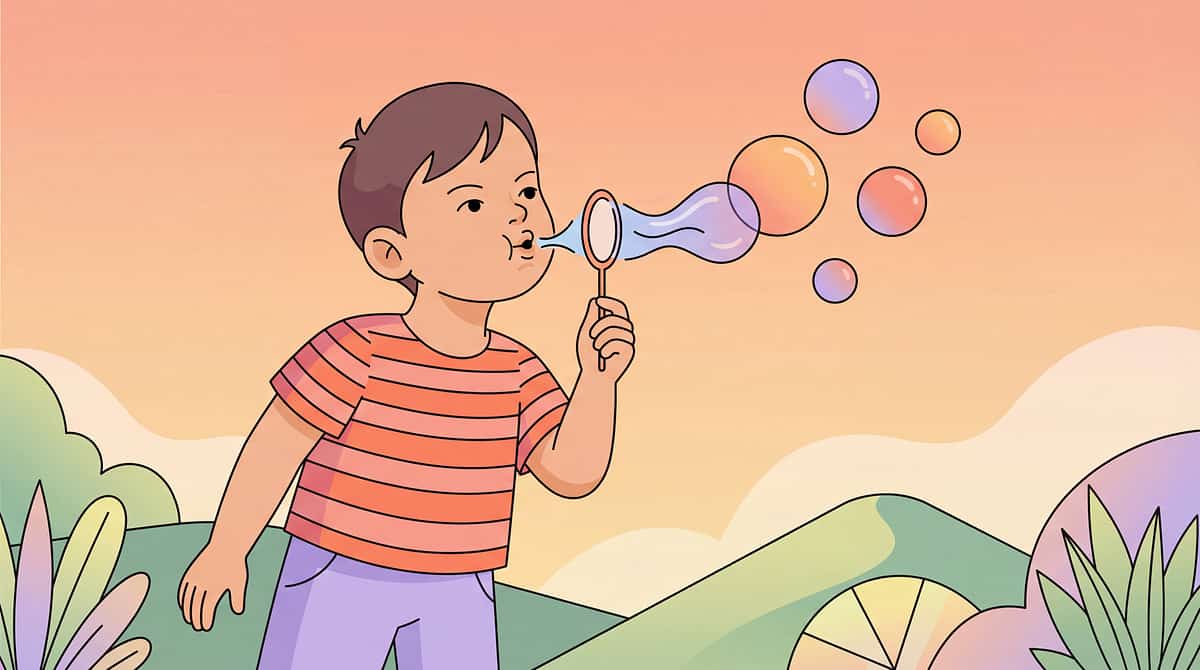
Transform everyday play into powerful therapy. Bubble tools provide gentle respiratory regulation through controlled breathing while offering organizing visual input that calms and focuses the nervous system. From simple wands to sophisticated bubble machines, these evidence-based tools support breath control, oral motor development, visual tracking, and self-regulation—all disguised as joyful play.
Category: Sensory Regulation & Nervous System Modulation
Best for: Respiratory Control • Visual Tracking • Oral Motor (blowing) • Self-Regulation • Attention • Calming
Who This Helps
Core Function: Provide visual tracking, respiratory regulation, and calming sensory input through the simple act of creating and watching bubbles.
Respiratory Control
Visual Tracking
Oral Motor (blowing)
Self-Regulation
Attention
Calming
Children Aged 1-9
Bubble therapy is highly adaptable for a wide range of ages, benefiting:
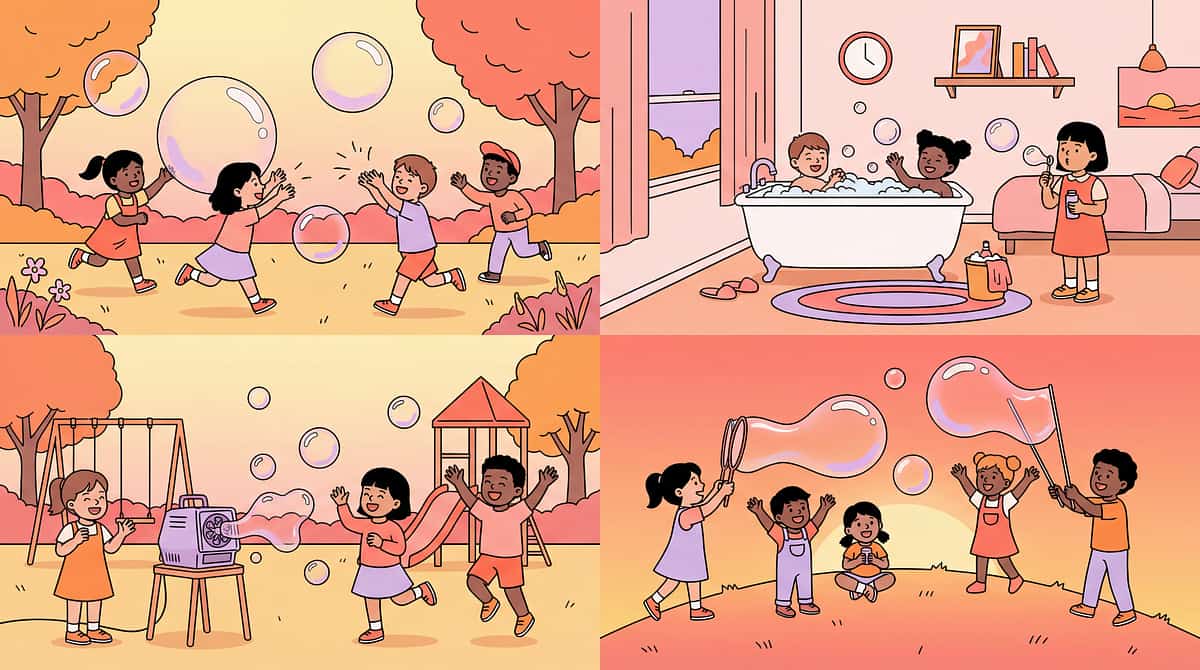
  • Toddlers watching bubble machines for visual engagement.
  • School-age children practicing breath control with wands.
Diverse Environments
This versatile therapeutic tool is effective in various settings, including:
  • Home environments for casual play and therapy.
  • Clinic therapy sessions for structured intervention.
  • School settings to aid focus and regulation.
  • Outdoor play areas for active engagement.
Specific Therapeutic Needs
Ideal for children who require support with:
  • Breath control practice for respiratory regulation.
  • Visual organization and tracking skills.
  • Calming and self-regulation strategies.
  • Oral motor development, particularly through blowing.
  • Engaging screen-free visual stimulation.
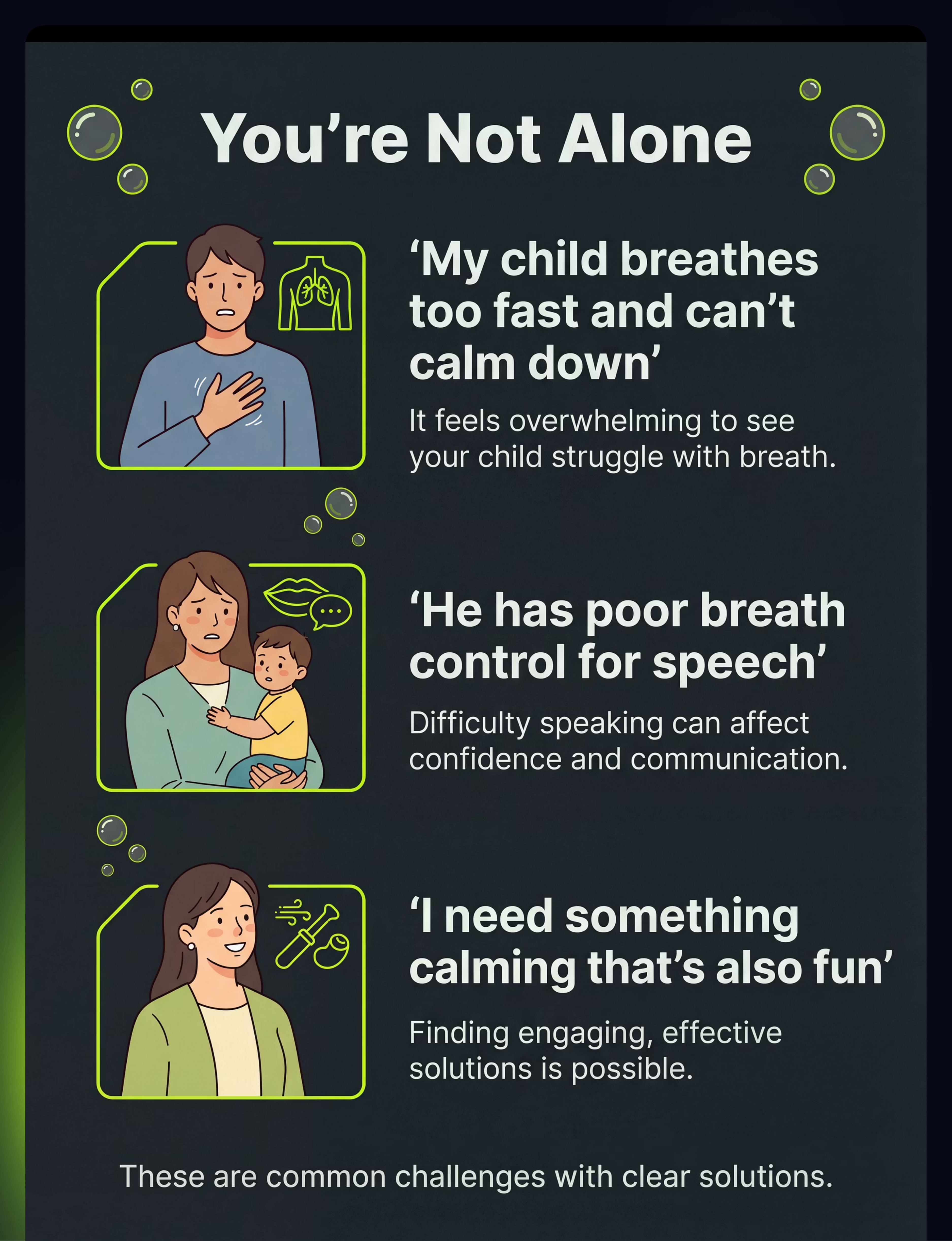
Does This Sound Familiar?
"My child breathes too fast and can't calm down"
"He has poor breath control for speech"
"She needs something calming that's also fun"
"I can't get him to practice breathing exercises"
"Needs visual activities that aren't screens"
"Looking for calming outdoor activities"
You're not alone. These are common challenges faced by parents and caregivers. The struggle to find activities that are simultaneously therapeutic, engaging, affordable, and practical is real. Bubble tools offer a simple, evidence-based solution that children naturally love.
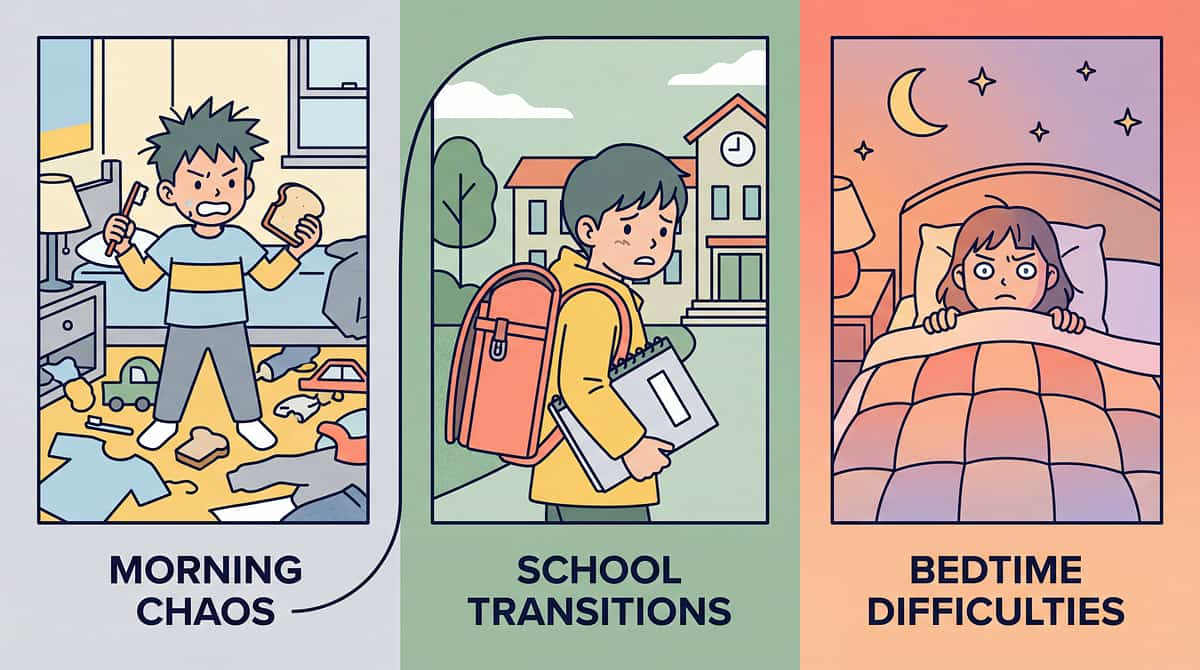
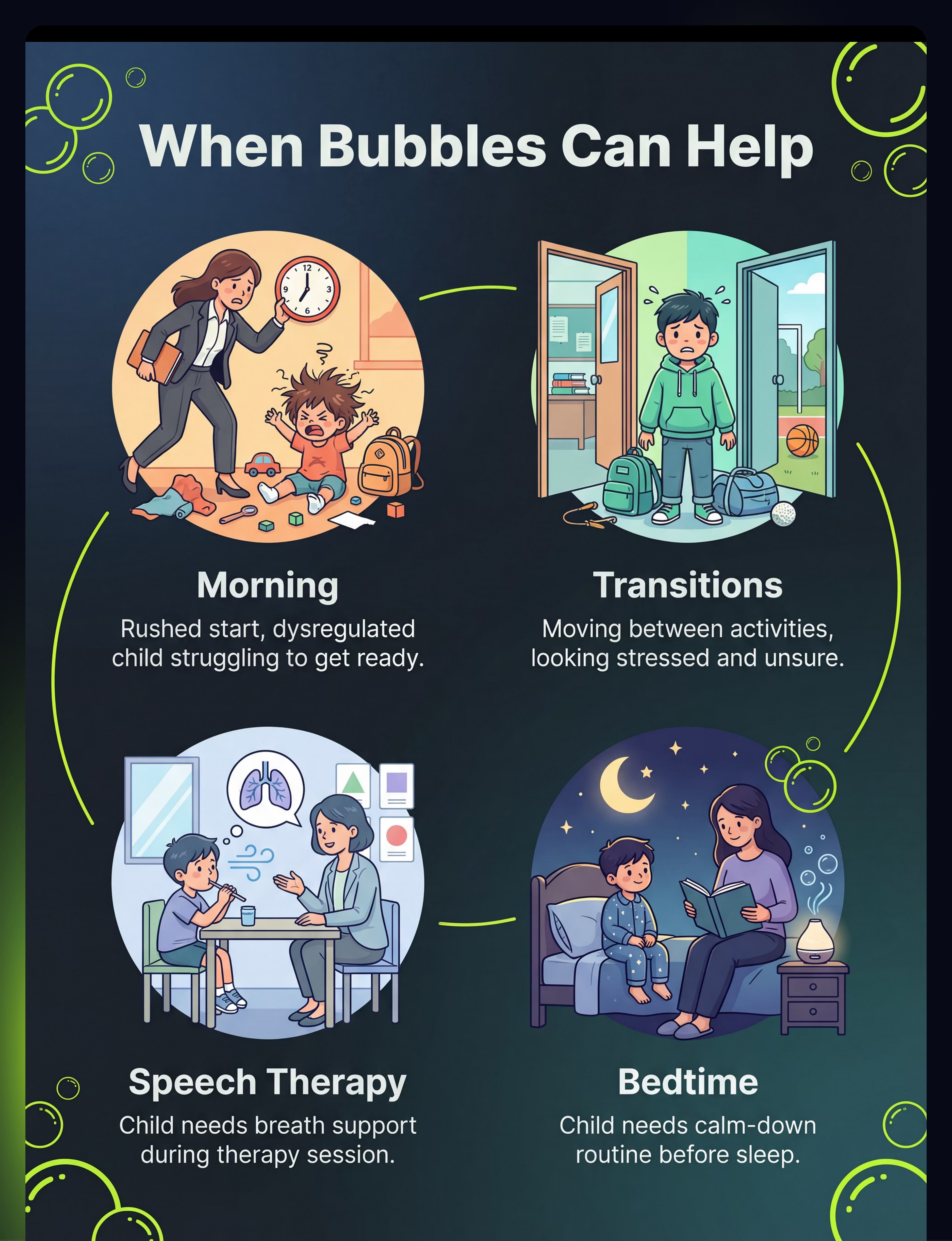
A Day Without the Right Support
Morning
Rushed, dysregulated start to day—breathing fast, unable to settle into routines, transitions feel overwhelming before the day even begins.
Transitions
Difficulty calming between activities—moving from one task to another triggers dysregulation, meltdowns loom, no effective calming strategy in place.
Speech Therapy
Breath support practice needed—therapist struggling to engage child in breathing exercises, progress feels slow, child doesn't understand how to control breath.
Bedtime
Need calming activity before sleep—child wound up, screens not helping, no reliable wind-down routine, sleep difficulties persist.
These daily moments accumulate, creating stress for both child and caregiver. Without effective tools, dysregulation patterns become entrenched, therapy progress stalls, and the search for solutions continues.
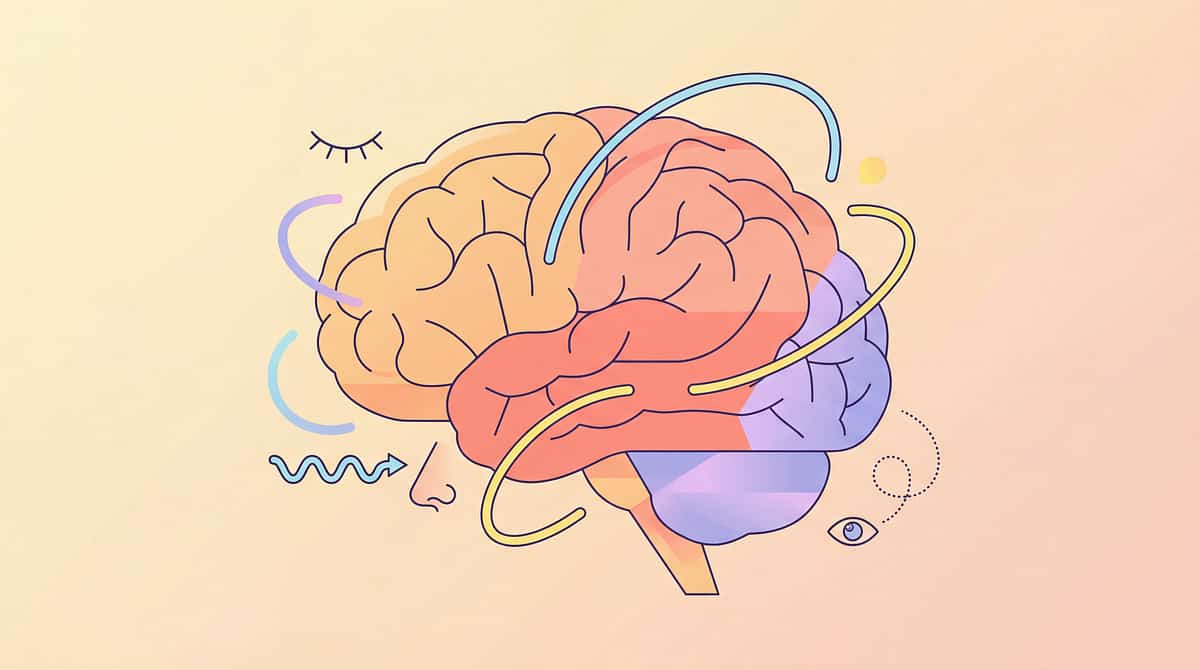
The Science Behind It
Controlled Exhalation
Blowing bubbles requires slow, sustained breath—naturally activating the parasympathetic nervous system
Visual Tracking
Following bubbles' gentle movement provides organizing visual input to the nervous system
Slow Movement Pattern
Bubbles float slowly and predictably—creating calming, regulated sensory experience
Regulation Through Breath & Vision
Combined respiratory and visual input creates powerful calming effect throughout body and mind
This mechanism works because it engages multiple sensory and physiological systems simultaneously. The controlled breathing pattern directly counteracts hyperventilation and stress responses, while the visual tracking organizes attention and provides predictable, non-threatening sensory input. It's science-backed therapy that feels like pure play.
Respiratory Control
Visual Tracking
Oral Motor
Self-Regulation
Attention
Calming
How to Use It Right
1
Slow, Controlled Blowing
Emphasize gentle, sustained exhalation rather than forceful puffs. The goal is regulation, not power—teach children to blow "like a whisper."
2
Use as Calming Transition Activity
Integrate bubbles between activities or during transitions. Even 2-3 minutes can reset the nervous system and prepare for the next task.
3
Pair with Deep Breathing Teaching
Explicitly connect bubble blowing to breathing strategies: "This is how we breathe when we need to calm down." Builds skill generalization.
4
Visual Tracking Practice
Encourage following one bubble with eyes from creation to pop. This builds visual attention and tracking skills essential for reading and daily function.
5
SLP Integration
Speech-language pathologists use bubbles for breath support and oral motor strengthening—foundational skills for clear speech production.
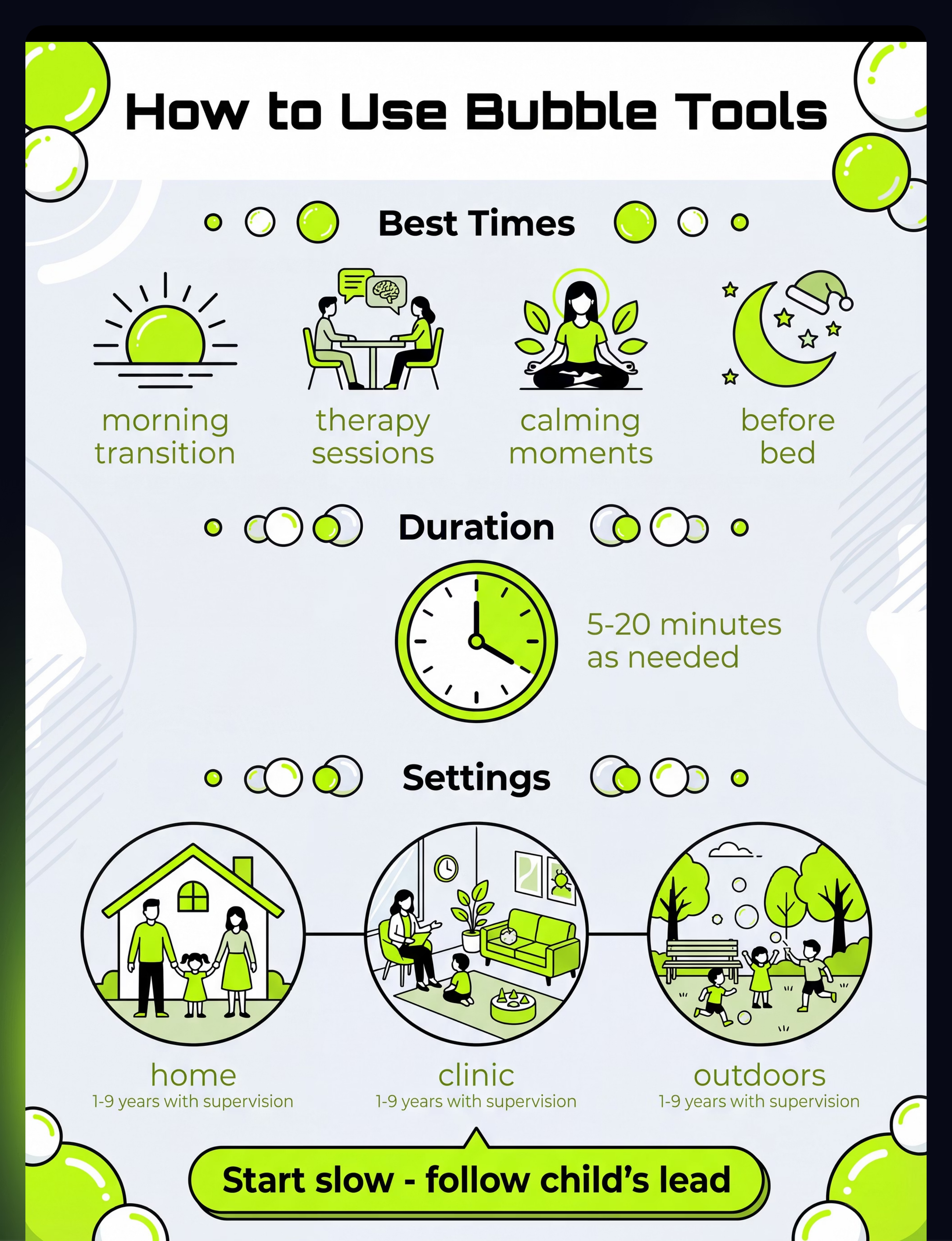
Duration: 5-20 minutes typically; can be used as needed throughout the day. Short, frequent sessions often more effective than longer ones.
Expert Endorsement
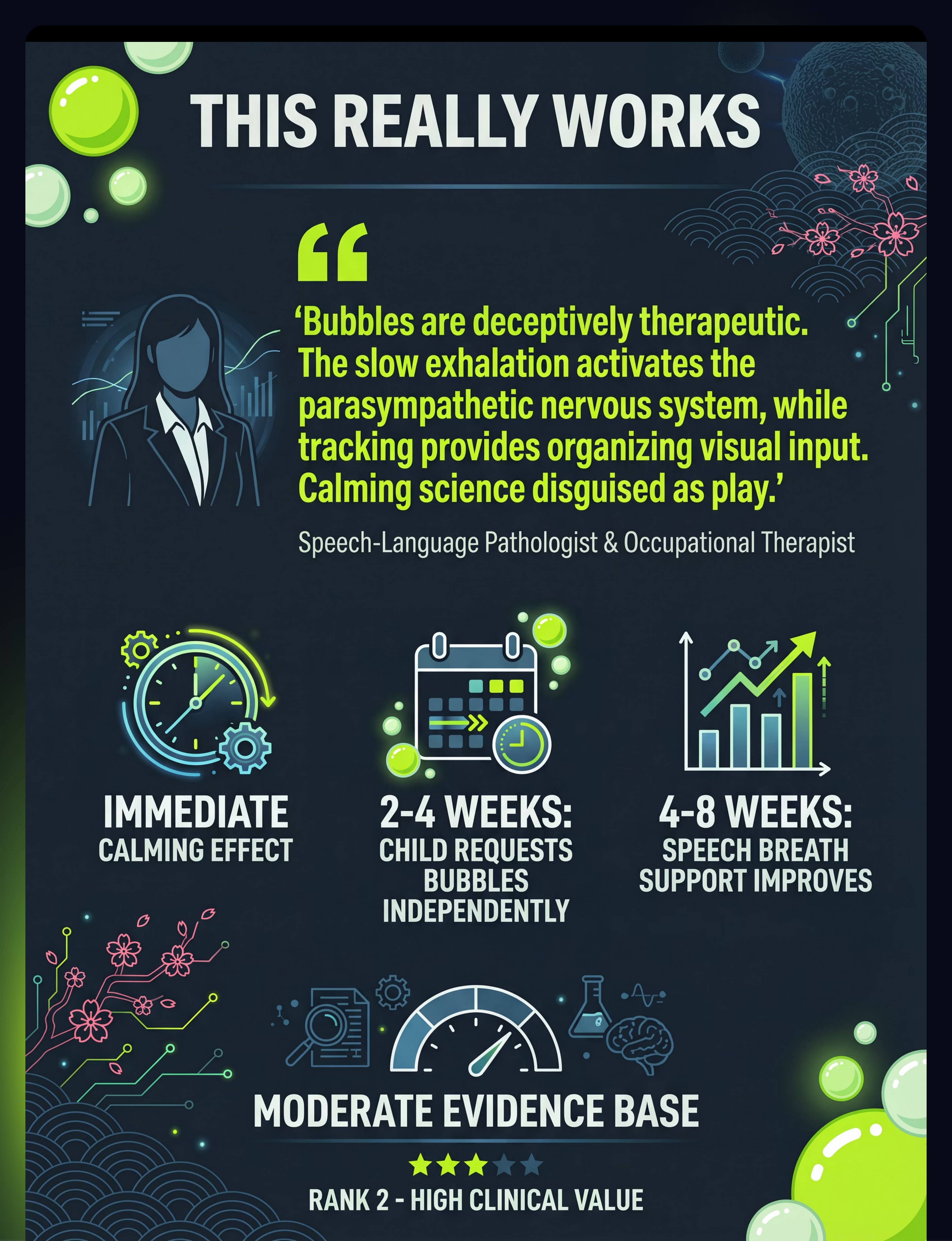
"Bubbles are deceptively therapeutic. The slow exhalation required to blow them activates the parasympathetic nervous system, while tracking them provides organizing visual input. It's calming science disguised as play."
— Speech-Language Pathologist and Occupational Therapist
OT + SLP Recommended
Co-owned by both occupational therapy and speech-language pathology disciplines
Moderate Evidence
Supported by clinical practice and emerging research on respiratory regulation
Rank #2 in Category
Among the most effective tools in Sensory Regulation & Nervous System Modulation
bubble-tools-visual-respiratory-sensory therapy material
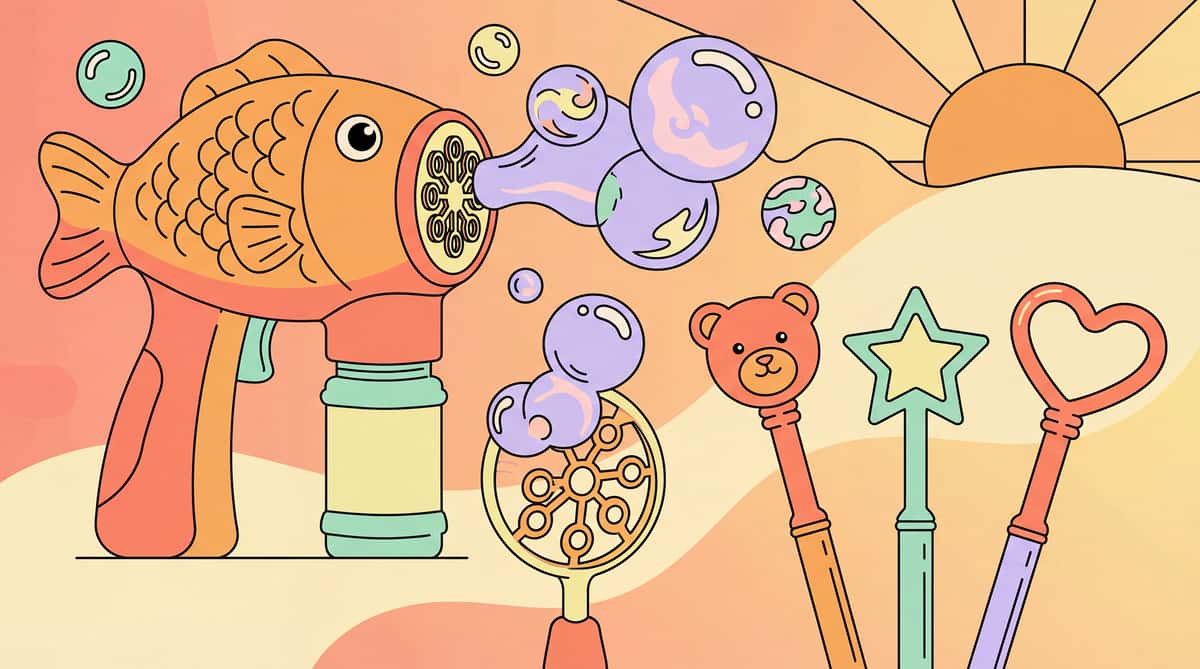
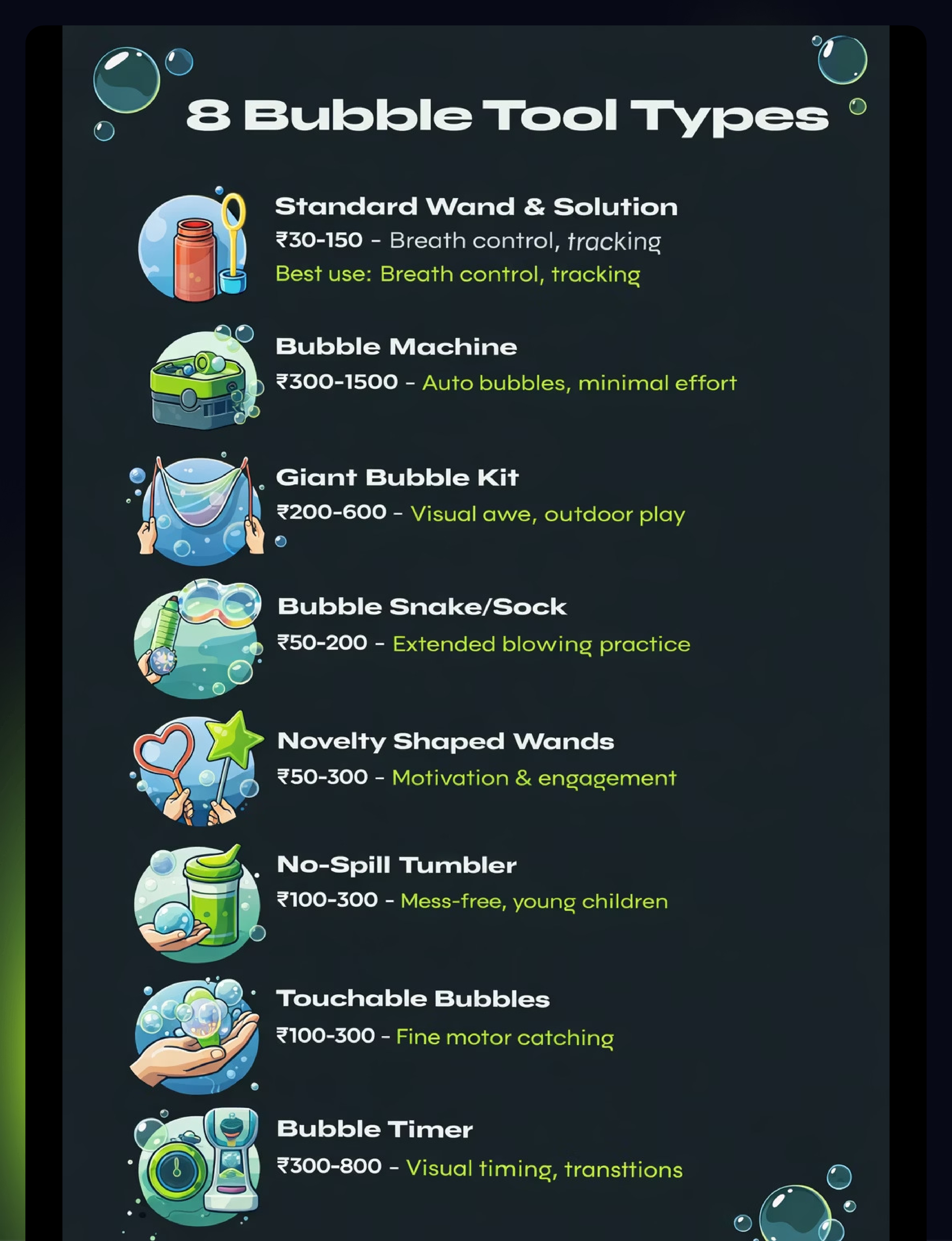
Choose Your Option (8 Variants)
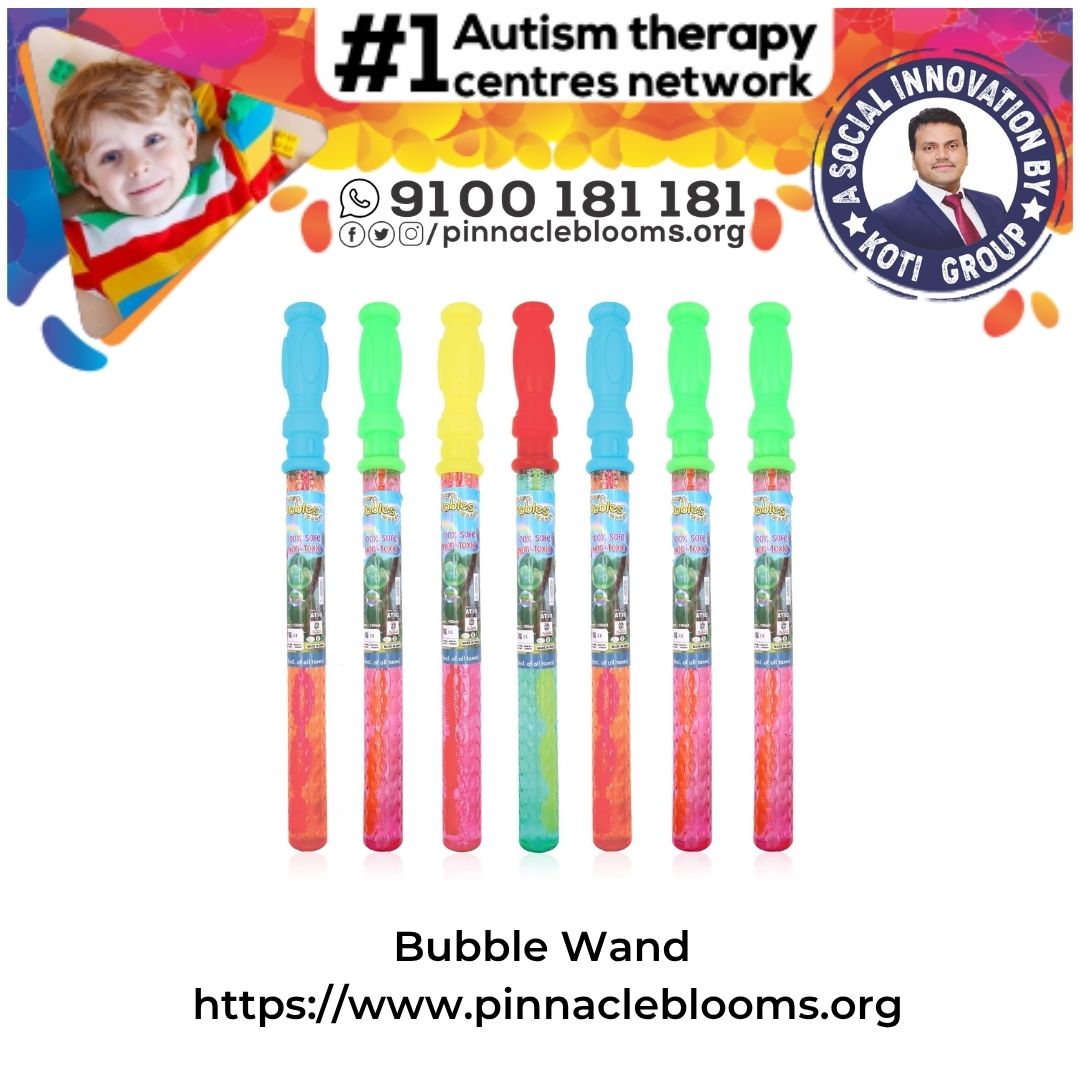
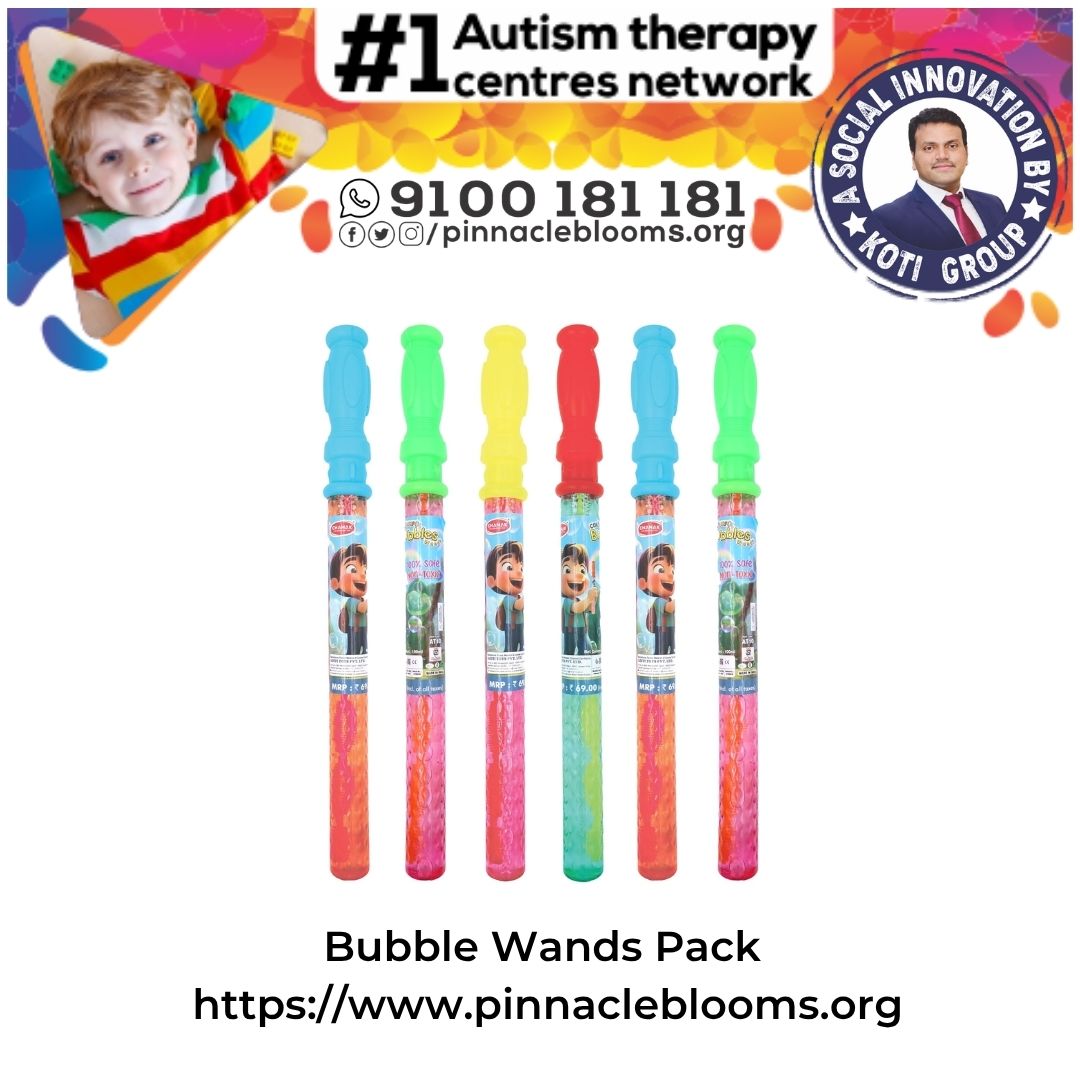
Standard Bubble Wand & Solution
Best for: Breath control, visual tracking, calming.
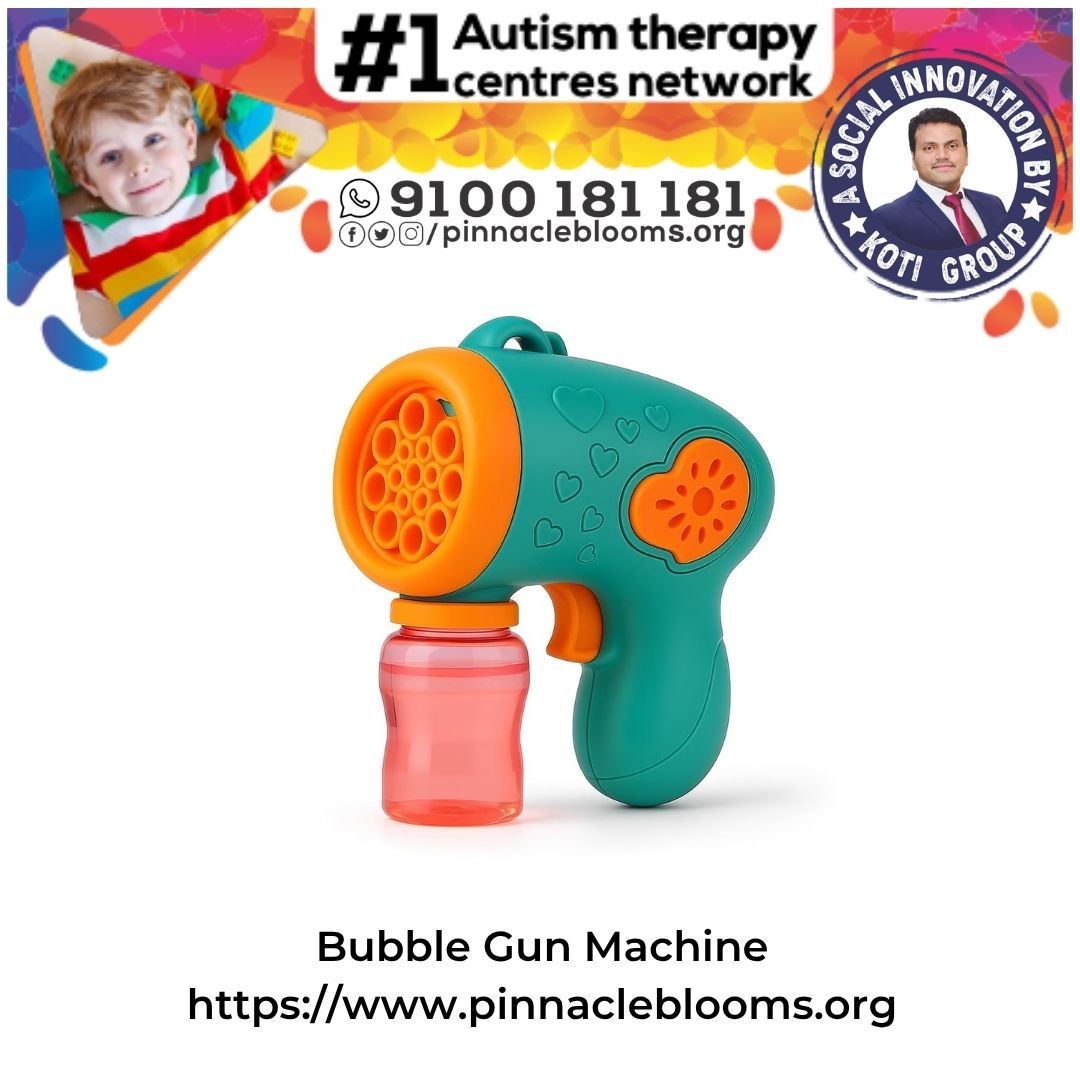
Bubble Machine (Battery/Electric)
Best for: Visual stimulation, calming environment, minimal effort.
Giant Bubble Wand Kit
Best for: Visual awe, gross motor, outdoor play.
Bubble Snake/Sock
Best for: Extended blowing, breath endurance.
Bubble Blowing Toys (Various Shapes)
Best for: Engagement, motivation for blowing exercises.
No-Spill Bubble Tumbler
Best for: Young children, indoor use, clinic.
Touchable/Catchable Bubbles
Best for: Fine motor (catching), tactile-safe exploration.
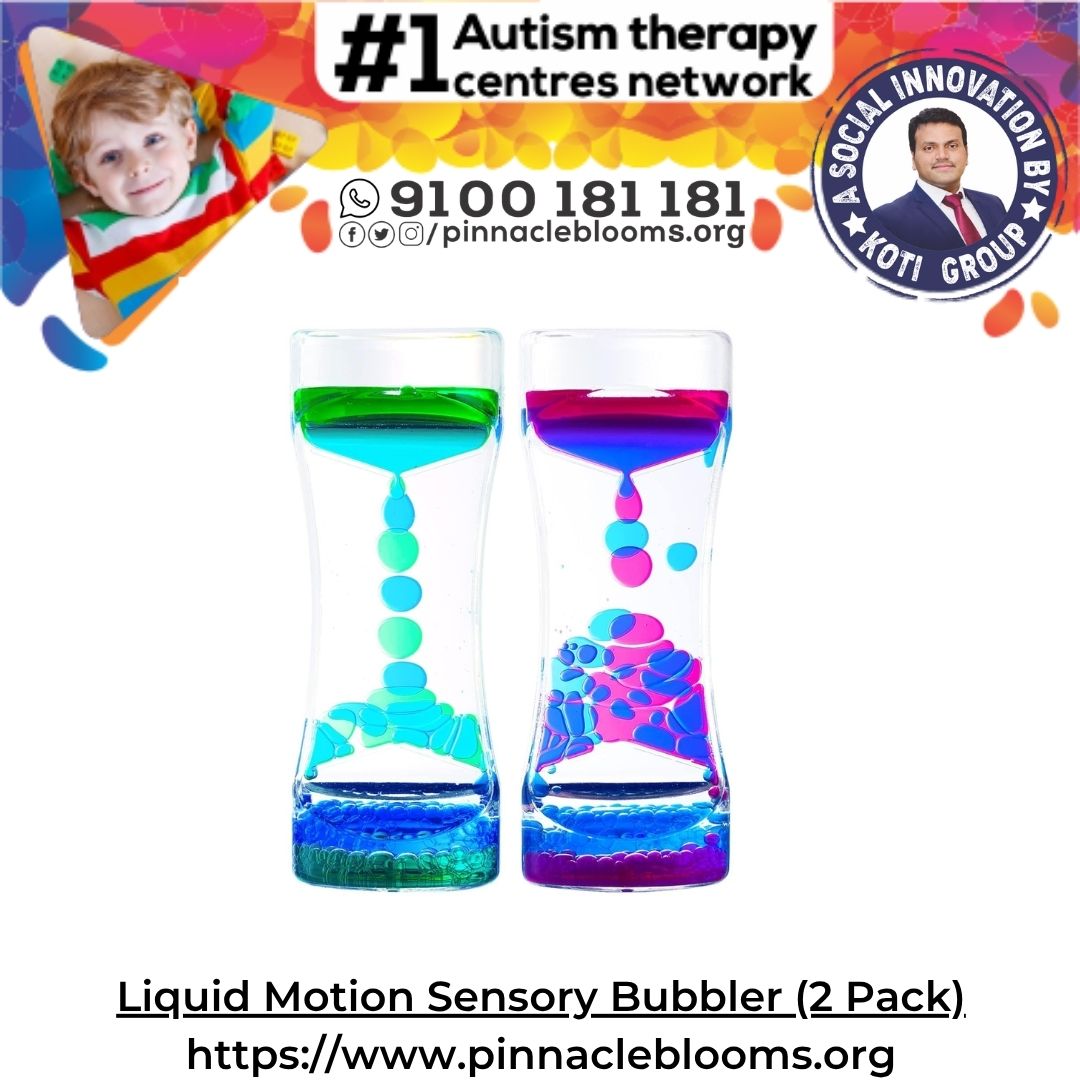
Bubble Timer (Visual Timer)
Best for: Timing activities, visual calming, transitions.
Each variant serves different therapeutic goals, settings, and developmental stages. Consider your child's needs, environment, and therapeutic objectives to select the most suitable option.
From classic wands ideal for breath control to automatic machines providing continuous visual input, and giant wands for gross motor engagement, there's a bubble tool for every scenario. Options like bubble snakes enhance breath endurance, while novelty toys boost motivation. For younger children or indoor use, no-spill tumblers are perfect, and touchable bubbles add a tactile dimension to therapy. Even bubble timers offer visual calming for transitions and activity timing.

How to Choose
  • By goal: Calming → machine or standard; Oral motor → wand or snake; Visual → giant or touchable
  • By setting: Home → no-spill or standard; Clinic → machine or standard; Outdoor → giant or standard
  • By portability: High portability → wands, tumblers; Less portable → machines
Specifications & Types Guide
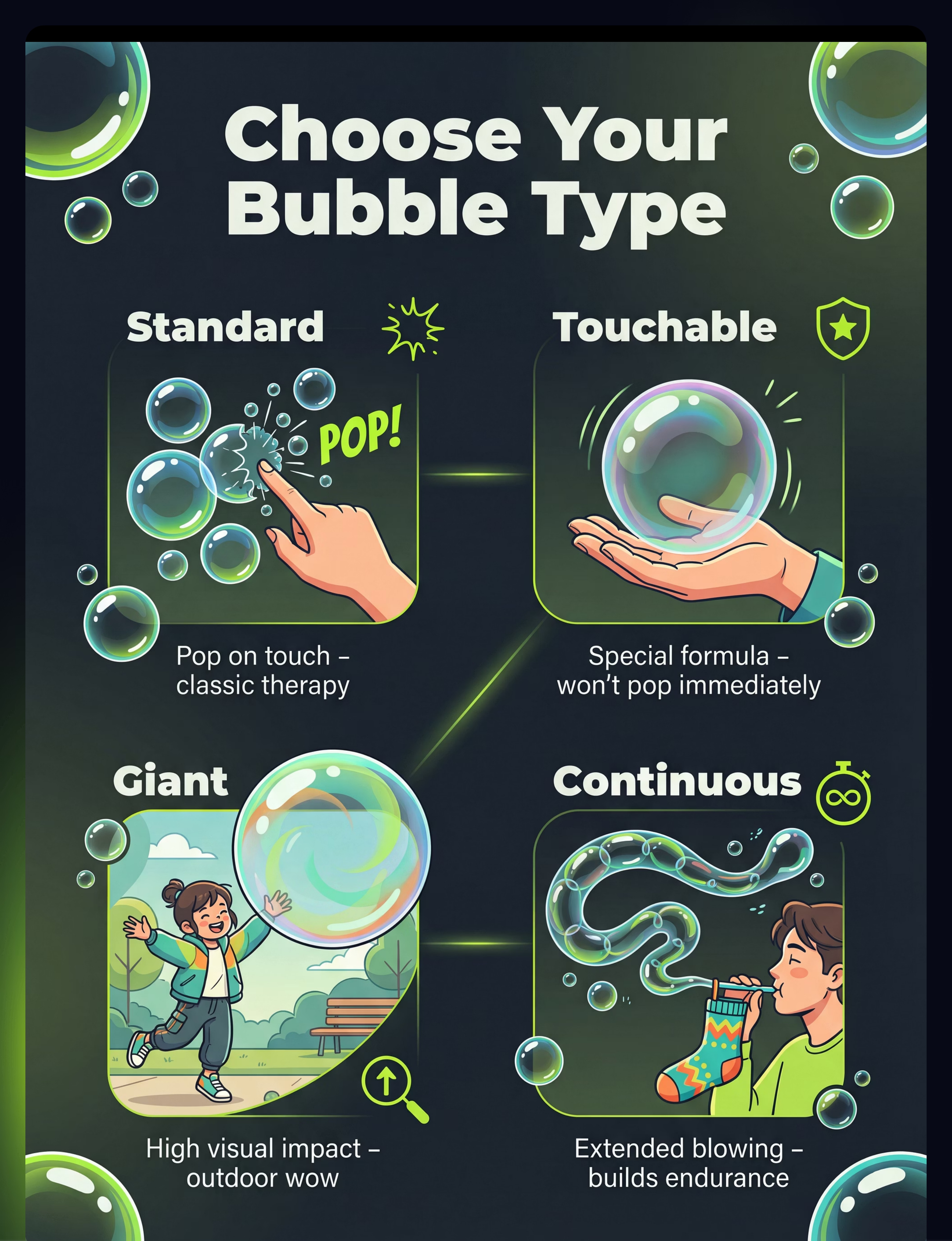
Bubble Types
Standard Bubbles
Regular bubbles that pop on touch—classic option for breath control and visual tracking practice.
Touchable Bubbles
Special formula that can be caught and held briefly—adds fine motor and tactile exploration dimensions.
Giant Bubbles
Oversized bubbles with high visual impact—create sense of awe and engage whole-body movement.

There was an error generating this image

Continuous Stream
Bubble snake or stream from sock/tube—excellent for sustained blowing and breath endurance building.
Materials & Key Features
Materials
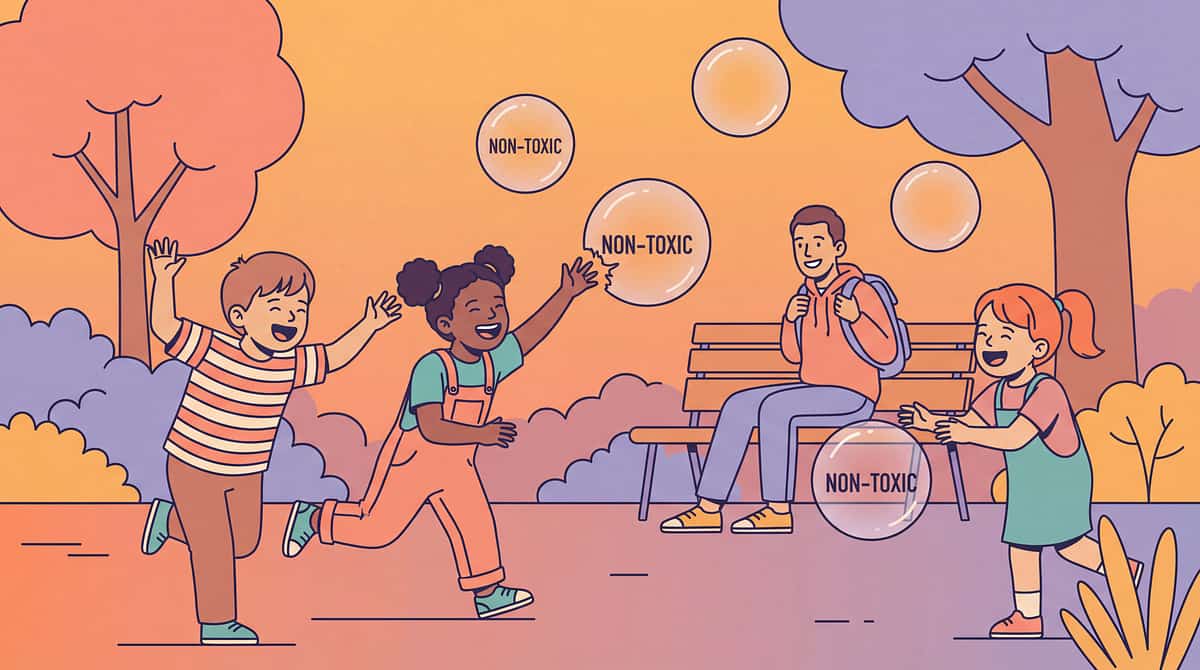
  • Non-toxic bubble solution (essential safety requirement)
  • Plastic wands in various sizes
  • Battery-powered or electric machines
Key Features
  • Non-toxic solution: Safe if accidentally ingested (though unpleasant taste discourages this)
  • Age-appropriate wand size: Smaller for young children, larger for older
  • No-spill options: Containers designed to prevent messy spills indoors
  • Easy bubble production: Low frustration—bubbles form reliably with appropriate effort
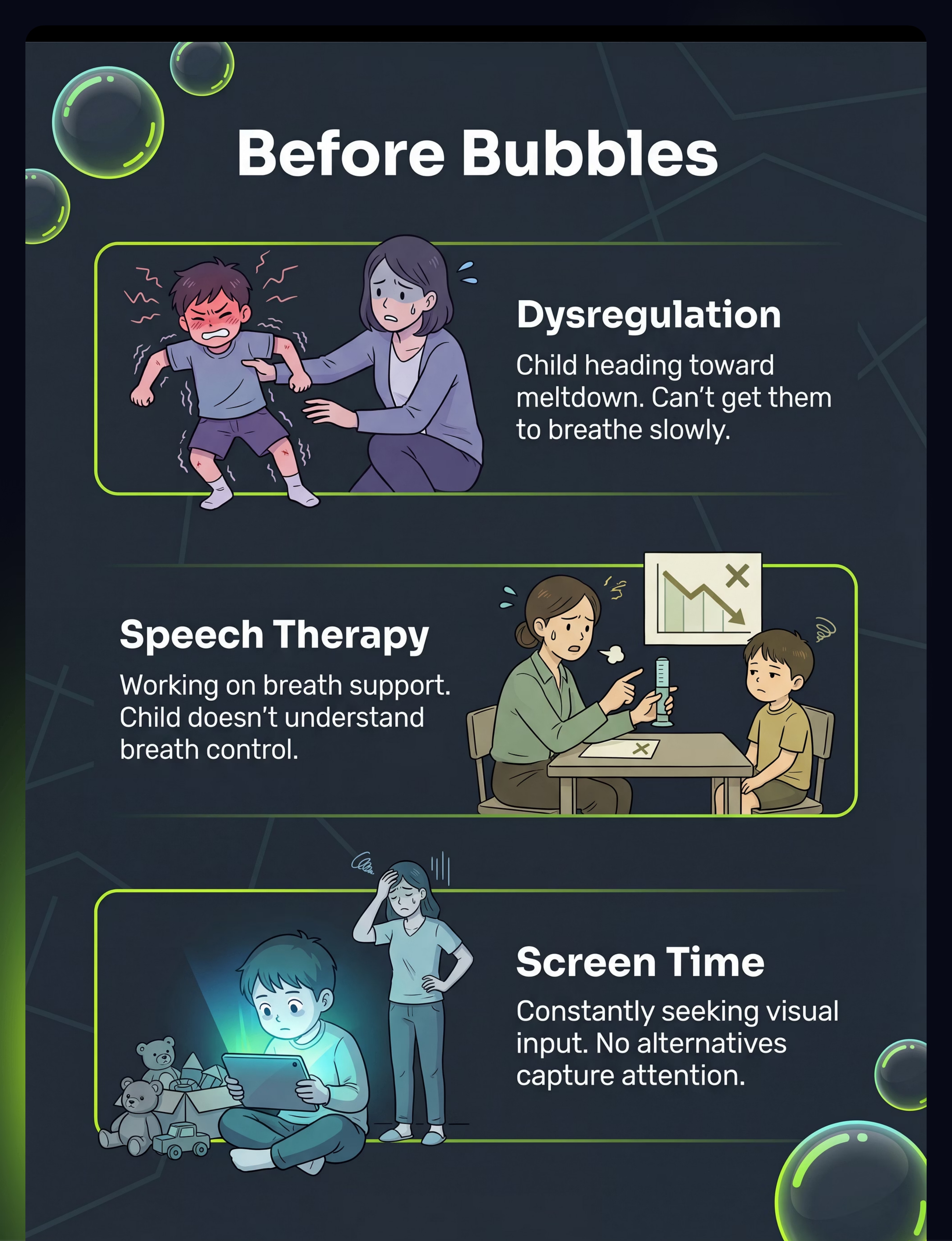
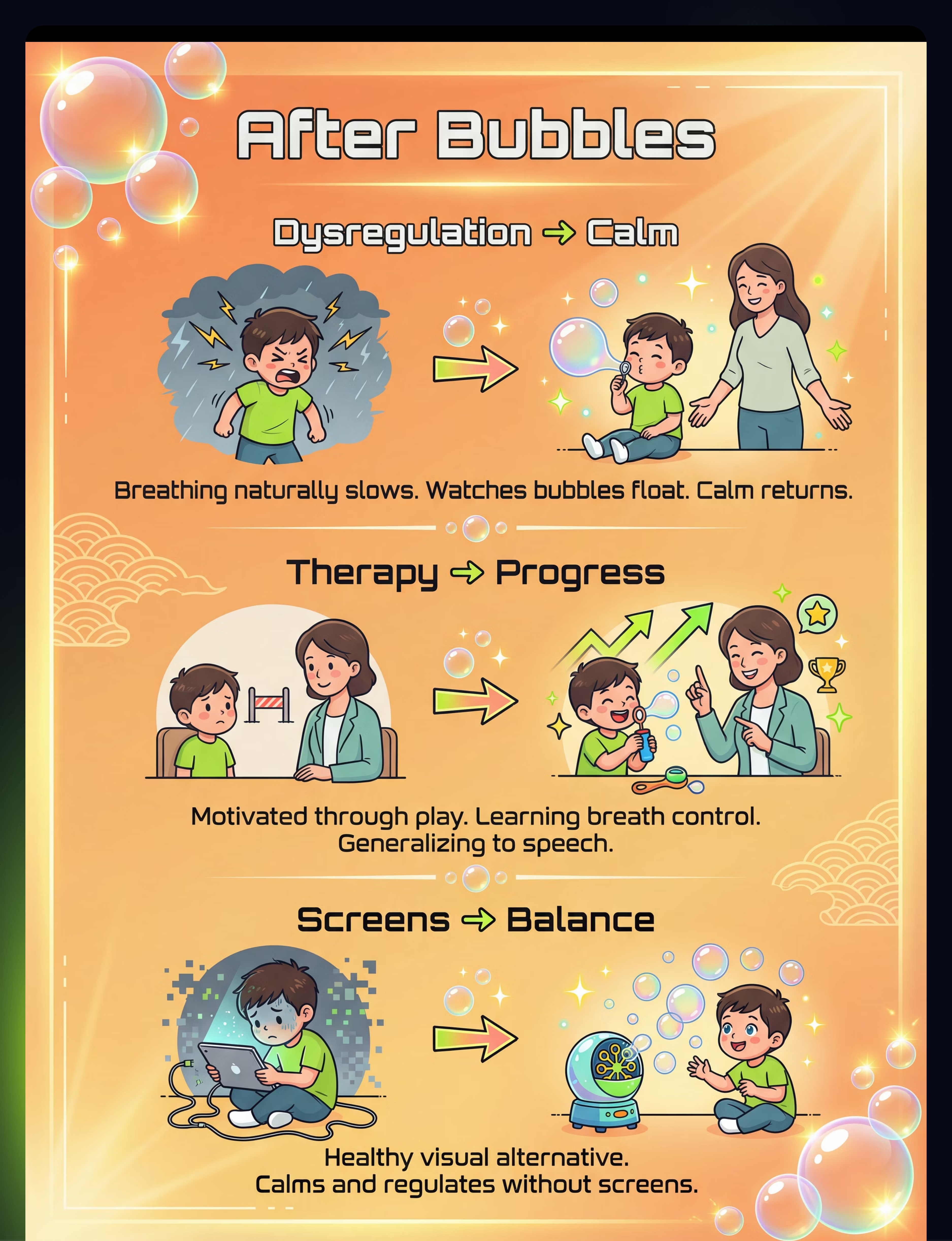
The Struggle (Before)
Dysregulation
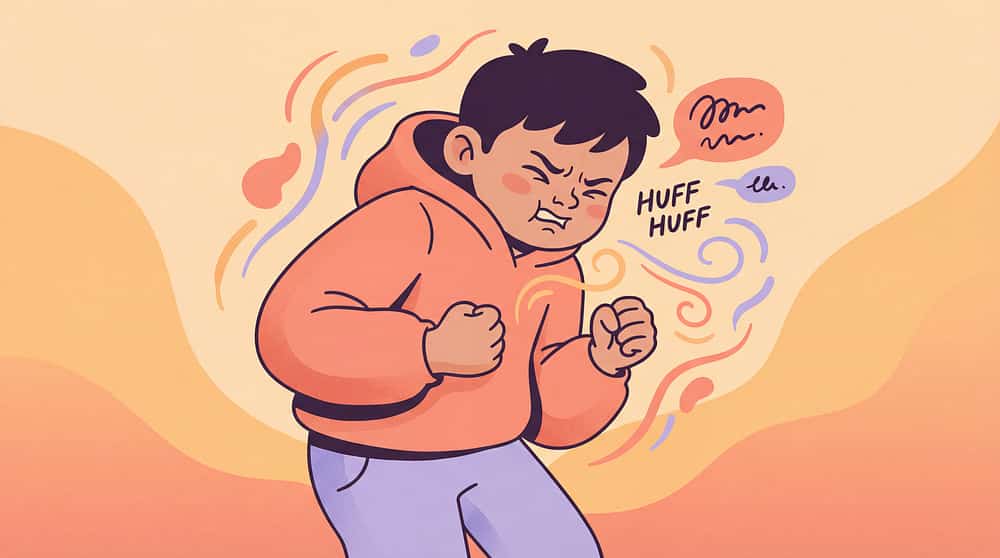
Situation: Child is wound up, breathing fast, heading toward meltdown. Parent tries to get them to breathe slowly but child can't or won't.
Experience: Frustration mounts as strategies fail. Meltdown feels inevitable. No effective tool to interrupt the escalation.
Emotion: Frustration, helplessness—feeling like nothing works.
Speech Therapy
Situation: SLP trying to work on breath support for speech. Child unengaged, doesn't understand how to control breath. Progress slow.
Experience: Therapy feels like a battle. Child resists breathing exercises. Skill development plateaus.
Emotion: Discouragement—wondering if progress is possible.
Visual Stimulation
Situation: Child seeks visual input constantly (screens, lights). Parents want alternatives. Nothing else seems to capture attention.
Experience: Stuck in screen dependency. Other activities don't engage. Visual needs not met healthily.
Emotion: Concern about screen time, feeling limited by lack of alternatives.
What to Expect (Realistic Timelines)
1
Immediate: Child learns controlled exhalation through play
The act of blowing bubbles naturally teaches and reinforces proper breathing technique. Children understand immediately that slow, controlled breaths make better bubbles.
2
Immediate: Calming tool for transitions and dysregulation
Bubbles become a reliable go-to strategy during difficult moments. The calming effect is noticeable within the first few uses.
3
Immediate: Screen-free visual calming option established
Bubbles become a preferred alternative to screens for visual stimulation and calming—reducing screen dependency naturally.
4
2-4 Weeks: Visual tracking skills developed
Consistent practice tracking bubbles strengthens visual attention and smooth pursuit eye movements—skills that transfer to reading and daily tasks.
5
2-4 Weeks: Child requests bubbles when needing to calm
Children begin to recognize their own dysregulation and independently request bubbles—demonstrating growing self-awareness and regulation.
6
4-8 Weeks: Breath control improves for speech
Speech therapists observe improved breath support for longer utterances and better speech clarity as respiratory control strengthens.
Is This Right for My Child? (2-Minute Check)
1. Does your child enjoy watching slow-moving visual stimuli?
If yes, this indicates: Visual seeking—will respond well to bubbles. Children who are drawn to watching movement, lights, or flowing water typically find bubbles engaging and regulating.
Confidence: 85%
2. Does your child have difficulty with breath control or calming breathing?
If yes, this indicates: Will benefit significantly from bubble blowing. The practice naturally teaches and reinforces controlled exhalation patterns.
Confidence: 88%
3. Does your child have oral motor or speech articulation goals?
If yes, this indicates: Bubbles support oral motor development. The blowing action strengthens muscles and coordination needed for clear speech.
Confidence: 82%
4. Do you need calming activities that aren't screen-based?
If yes, this indicates: Bubbles are healthy visual alternative. Provides engaging visual input without the overstimulation and dependency risks of screens.
Confidence: 80%

Interpretation: 3 or more "yes" answers indicate a strong fit. Even one "yes" suggests bubbles could be a valuable addition to your therapeutic toolkit.
Usage Guide
When to Use
Calming/transition activity
Breath control practice
Oral motor exercises
Visual tracking activities
Reward/reinforcement
Outdoor play
Screen-free calming
When NOT to Use
Child ingesting solution (supervise closely)
Respiratory distress (don't require blowing)
Severe soap sensitivity
Slippery floor hazard (use mats or outdoors)
Supervision by Age
Age Range
Supervision Level
Notes
Under 2 years
Constant supervision
Machine only, no wand access—ingestion risk too high
2-4 years
Supervised blowing
Watch for ingestion, teach proper use, no-spill containers helpful
4+ years
Independent with check-ins
Can use independently with periodic supervision, most safety risks minimized
Duration & Settings: Typically 5-20 minutes; use as needed throughout the day. Works well in home, school, clinic, and outdoor settings. Short, frequent sessions often more effective than longer ones.
Safety First
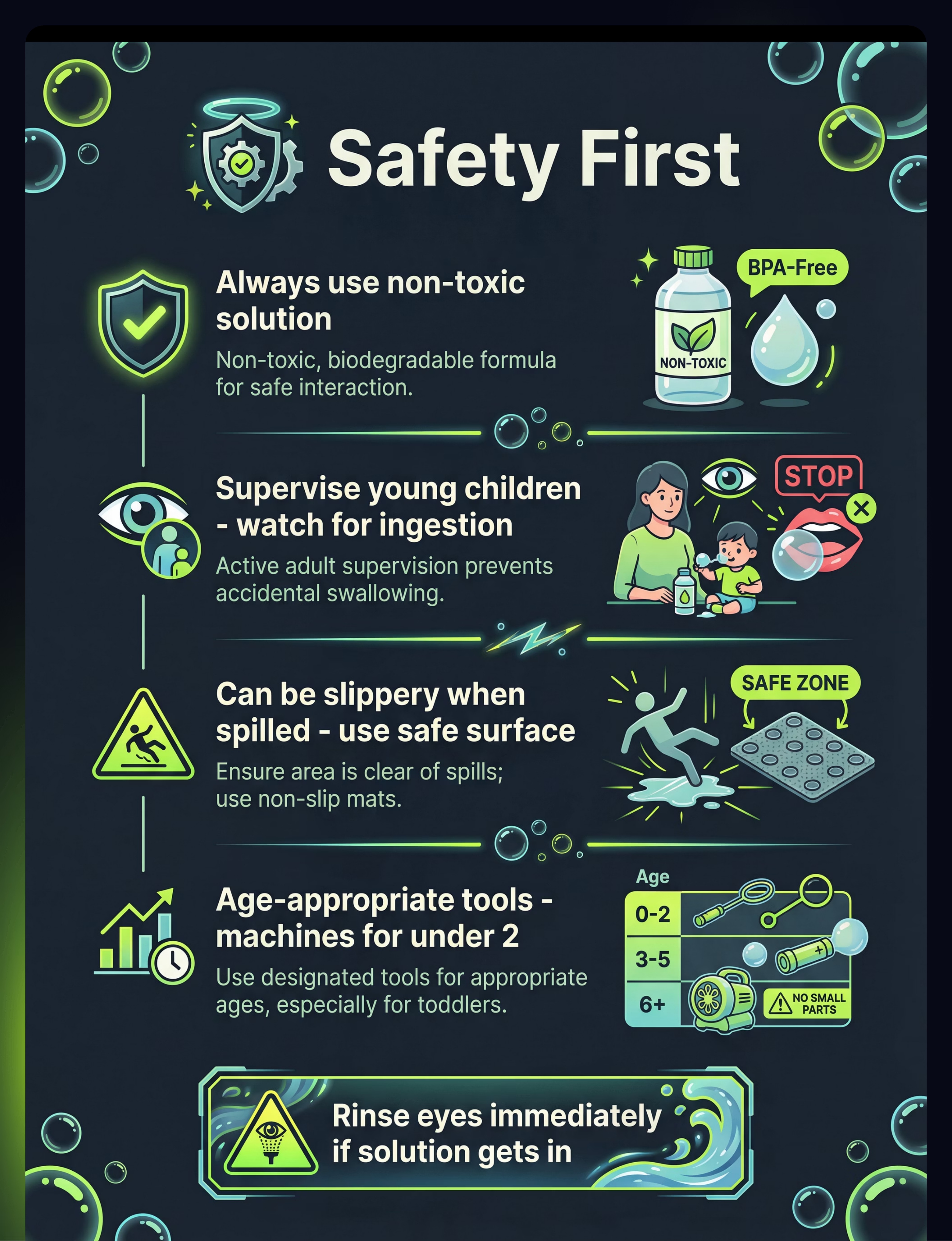
Critical Safety Measures
  • Non-toxic solution only — verify label before purchase or use.
  • Slippery when spilled — use on safe surfaces like outdoors, or use mats/towels indoors.
  • Soap in eyes stings — rinse immediately with clean water if this occurs.
  • Skin sensitivity — some children may be sensitive to soap; rinse hands if irritation occurs.
  • Bubble machine noise — test noise level as it may dysregulate some children.
  • Contraindicated — avoid use with severe respiratory distress or persistent solution ingestion.
Choking & Ingestion Prevention
  • Supervise young children — prevent ingestion (though taste deters repeat attempts).
  • Wands not for infants — choking hazard; use a machine for babies.
  • Age-appropriate equipment — ensure all tools are suitable for the child's age.
Supervision Guidelines
Before Use:
  • ✓ Solution is non-toxic.
  • ✓ Area is safe if spills occur.
  • ✓ Age-appropriate equipment is ready.
  • ✓ Supervision plan is in place.
During Use:
  • ✓ Child is not ingesting solution.
  • ✓ Safe surface maintained if spilled.
  • ✓ Appropriate blowing (not hyperventilating).
  • ✓ Child is enjoying the activity.
Signs to Stop:
  • ✗ Persistent attempt to ingest.
  • ✗ Eye irritation developing.
  • ✗ Slip hazard developing.
  • ✗ Child dysregulated by activity.
Common Questions (Honest Answers)
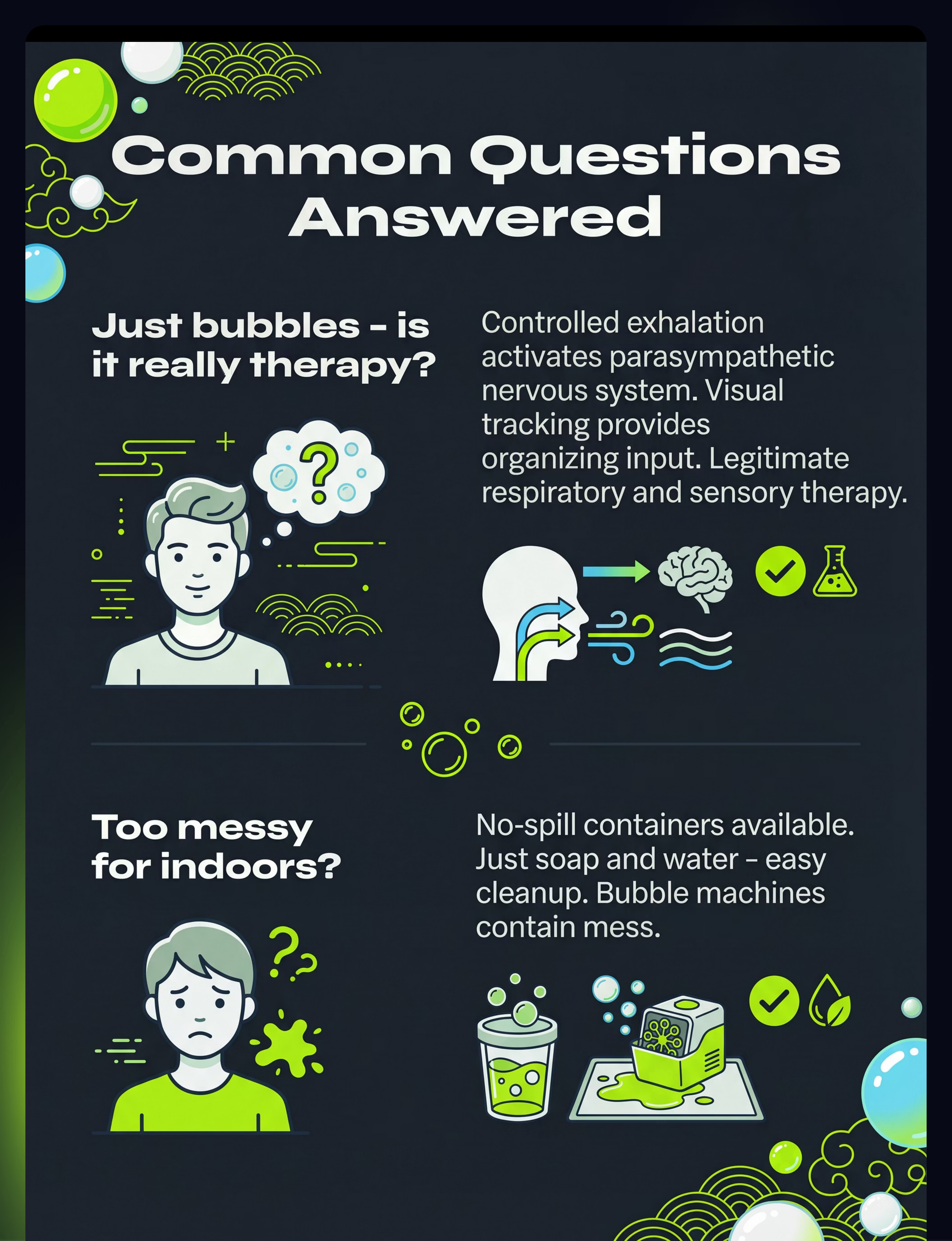
Q: It's just bubbles—how is it therapy?
A: Blowing bubbles requires controlled, slow exhalation—this activates the parasympathetic nervous system (same mechanism as deep breathing exercises). Tracking bubbles provides organizing visual input. It's legitimate respiratory and sensory therapy disguised as play.
Try this: Track your child's breathing rate before and after 3 minutes of bubble play. You'll see the calming effect is measurable.
Q: My child puts wand in mouth
A: Use non-toxic solution (all commercial bubble solutions are non-toxic by law). Taste is unpleasant so behavior is usually self-limiting. Supervise young children closely. If persistent, switch to bubble machine which removes need for mouth contact.
Try this: Bubble machine removes need for mouth contact with wand entirely.
Q: Too messy for indoors?
A: No-spill bubble containers are widely available. Bubble machines can be used in contained areas. The solution is just soap and water—easy cleanup with towels. Outdoors eliminates mess entirely.
Try this: Use bubble machine on hard floor with towel underneath. Minimal cleanup, maximum benefit.
Q: Child can't blow bubbles (weak oral motor)
A: That's exactly why bubbles are therapeutic! Start with bubble machine for visual benefit while oral motor skills develop. Gradually introduce wand work as strength builds. Fan blowing wand near child's face to demonstrate bubbles even if blow is weak. Progress happens over time.
Try this: Bubble machine provides visual benefit immediately; wand practice becomes oral motor exercise as skills develop.
Investment Guide
Overall Range: ₹30–1,500 (extremely affordable to moderate investment)
Tier: Low—one of the most cost-effective therapeutic tools available
Budget Option
30
Standard wand & solution, highly affordable, full therapeutic benefit, great for daily home or outdoor play.
Premium Option
800
Bubble machine, special solutions (touchable/giant bubbles), suitable for clinical settings, children with weak oral motor skills, continuous use.
Budget Option: Standard Wand & Solution
Extremely affordable and highly effective. This is the perfect starting point, providing full therapeutic benefit at minimal cost. Ideal for: first-time users, daily home use, outdoor play.
Premium Option: Bubble Machine & Specialty Solutions
Offers enhanced features like continuous bubbles and unique bubble types. Ideal for: clinical settings, children unable to blow bubbles, continuous use, special needs, and expanding therapeutic options.
Tier 1: Initial Investment
Begin with a standard bubble wand and solution. This low-cost option (₹30-100) is genuinely therapeutic and helps assess your child's engagement.
Tier 2: Enhanced Therapeutic Options
If your child responds well, consider adding a bubble machine or specialty solutions (₹800-2,000) to expand the range of therapeutic play.
Tier 3: Continuous & Specialized Use
For ongoing engagement or specific needs (e.g., in clinical settings), the premium options provide durability and consistent delivery.
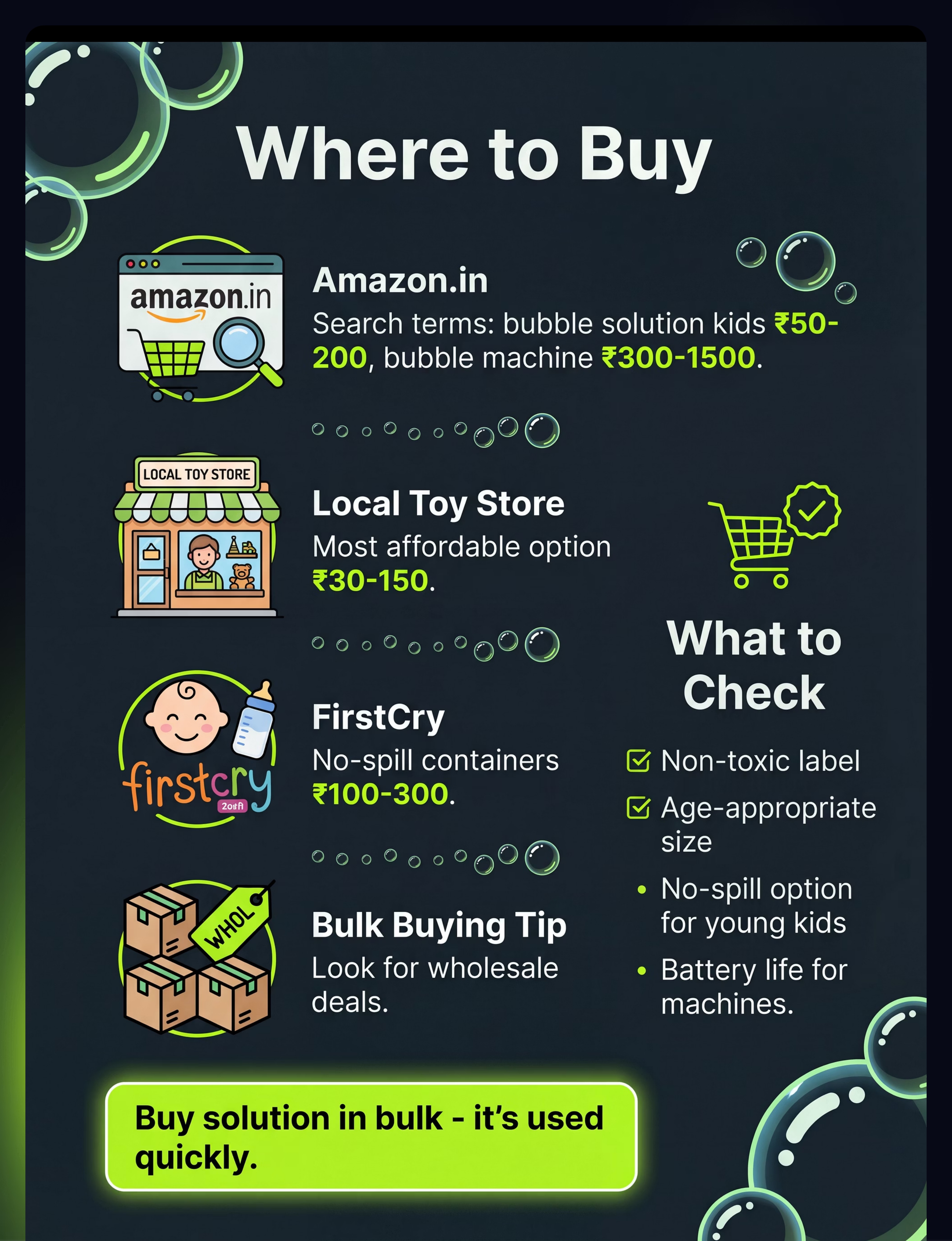
Where to Buy in India
Availability: Very Widely Available—bubbles can be found virtually everywhere in India
Amazon.in
Search Term: "bubble solution kids"
Price Range: ₹50-200
Amazon.in
Search Term: "bubble machine kids"
Price Range: ₹300-1,500
Local toy stores
Search Term: "bubbles"
Price Range: ₹30-150
FirstCry
Search Term: "no spill bubbles"
Price Range: ₹100-300

Buying Tips
  • Non-toxic solution essential — always verify label states "non-toxic"
  • No-spill containers for young children — worth the small extra cost for indoor use
  • Buy solution in bulk — it's used quickly; larger bottles more economical
  • Bubble machine considerations — check battery life and noise level before purchase
  • Homemade solution works well — see DIY section for recipe (saves 80-95%)

Red Flags
  • Not labeled non-toxic — don't purchase
  • Wand too small (choking hazard for young children)
  • Solution leaks from container — poor quality, skip it
  • Machine too loud — may be dysregulating rather than calming
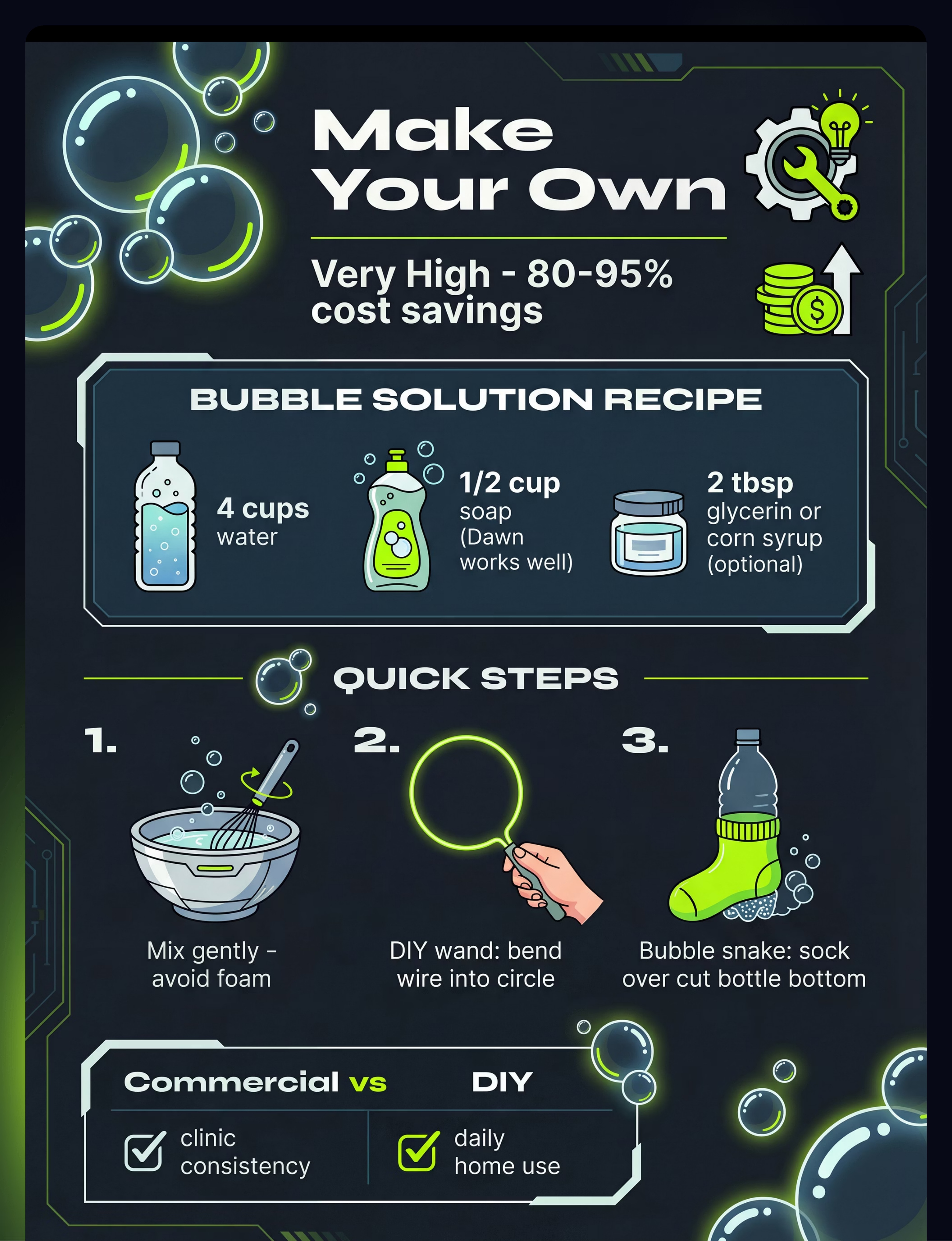
DIY Alternative (Save 80-95%)
Feasibility: Very High — anyone can make effective bubble solution at home
Cost Savings: 80-95% compared to commercial solutions
Time Required: 10 minutes
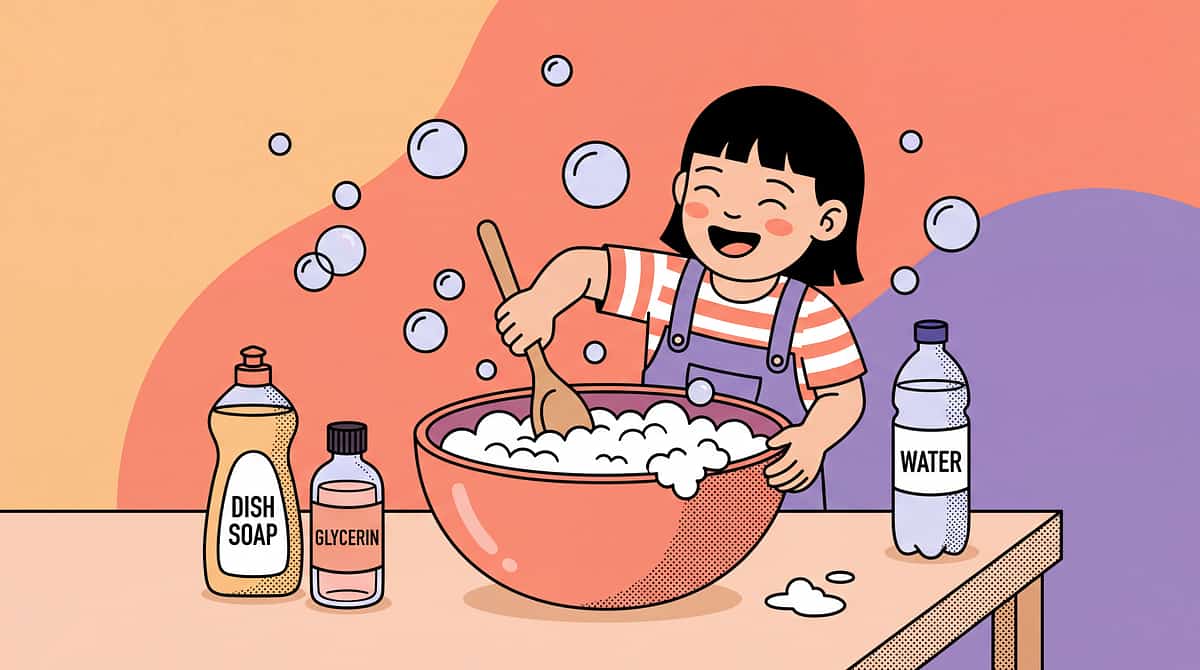
DIY Recipe: Materials & Solution
  • Dish soap (Dawn works particularly well)
  • Water
  • Glycerin or corn syrup (optional—makes stronger, longer-lasting bubbles)
  • Wire, pipe cleaners, or straws for DIY wands
Basic solution: Mix 4 cups water + 1/2 cup dish soap (Dawn recommended for best results)
Better bubbles: Add 2 tablespoons glycerin or corn syrup for bubble durability and strength
Instructions for Mixing & Wands
  1. Mix gently: Stir slowly to combine—avoid creating foam which interferes with bubble formation
  1. DIY wand: Bend wire into circle shape, attach to stick or handle
  1. Bubble snake: Cut bottom off plastic bottle, cover cut edge with sock secured with rubber band, dip sock end in solution, blow through bottle opening
Key Tradeoffs to Consider
Commercial solutions may produce slightly better bubbles with more consistent quality. DIY wands are less durable than commercial options. However, for home use and daily therapy, DIY solutions work extremely well at a fraction of the cost. Many therapists use homemade solutions successfully.
DIY vs Commercial Comparison
Factor
When to DIY
When to Buy Commercial
Usage
Daily home use, large quantity needed
Clinic use requiring consistent quality
Purpose
Teaching child science of bubbles, budget-conscious families
Special bubbles (touchable, giant), bubble machines
Convenience
Time available for mixing, enjoy DIY projects
Need immediate use, prefer no-spill containers

Preview of bubble tools visual respiratory sensory Therapy Material

Below is a visual preview of bubble tools visual respiratory sensory therapy material. The pages shown help educators, therapists, and caregivers understand the structure and content of the resource before use. Materials should be used under appropriate professional guidance.

Page 1
Page 2
Page 3
Page 4
Page 5
Page 6
Page 7
Page 8
Page 9
Page 10
Page 11
Page 12
Page 13
Page 14
Page 15
Page 16
Page 17
Page 18
Page 19
Page 20
Link copied!
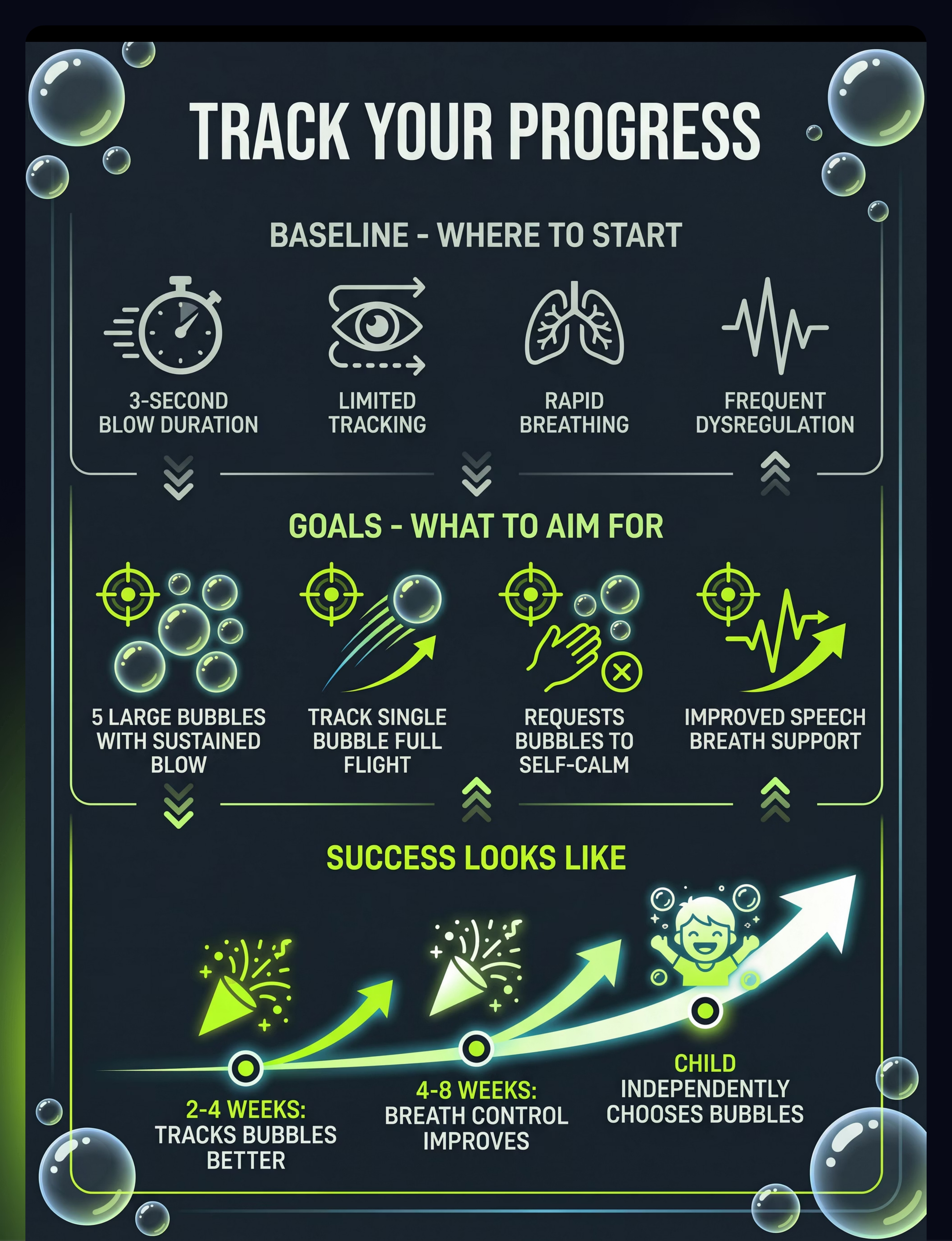
Measuring Success & Next Steps
Track Progress
Baseline (Measure First)
  • Child's ability to produce controlled exhalation
  • Duration of sustained blow
  • Visual tracking ability
  • Frequency of dysregulation episodes
Goals
  • Child will produce 5 large bubbles with sustained blow
  • Child will visually track single bubble for full flight
  • Child will use bubbles as calming strategy independently
  • Breath support for speech will improve (SLP measures)
Success Indicators
  • ✓ Improved breath control
  • ✓ Longer sustained exhalation
  • ✓ Better visual tracking
  • ✓ Child requests bubbles to calm
  • ✓ SLP notes improvement in breath support

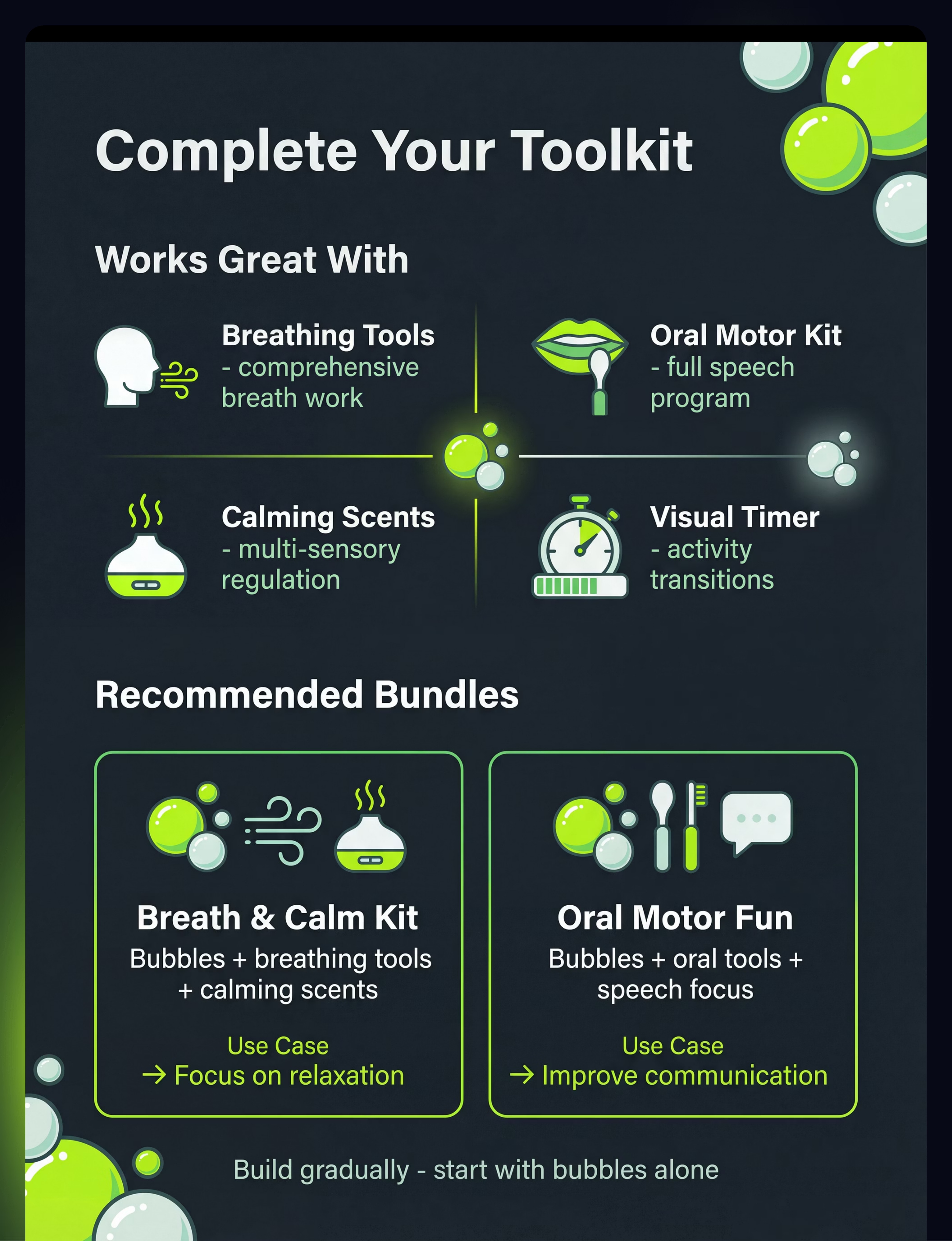
Complete the Kit: Pair It With...
Breathing Tools (ID: 2.4)
Comprehensive breath work program—combines with bubbles for complete respiratory regulation system
Oral Motor Kit (ID: 11.1)
Full oral motor program—bubbles provide engaging practice that complements structured oral motor exercises
Calming Scents (ID: 1.10)
Multi-sensory calming—combine visual and respiratory regulation from bubbles with olfactory calming
Visual Timer (ID: 3.3)
Bubble timer for transitions—provides timing function plus calming visual motion
Recommended Bundles
  • Breath & Calm Kit: Bubble Tools + Breathing Tools + Calming Scents → Complete respiratory regulation system
  • Oral Motor Fun: Bubble Tools + Chewelry + Oral Motor Kit → Comprehensive speech preparation toolkit

Quick Summary
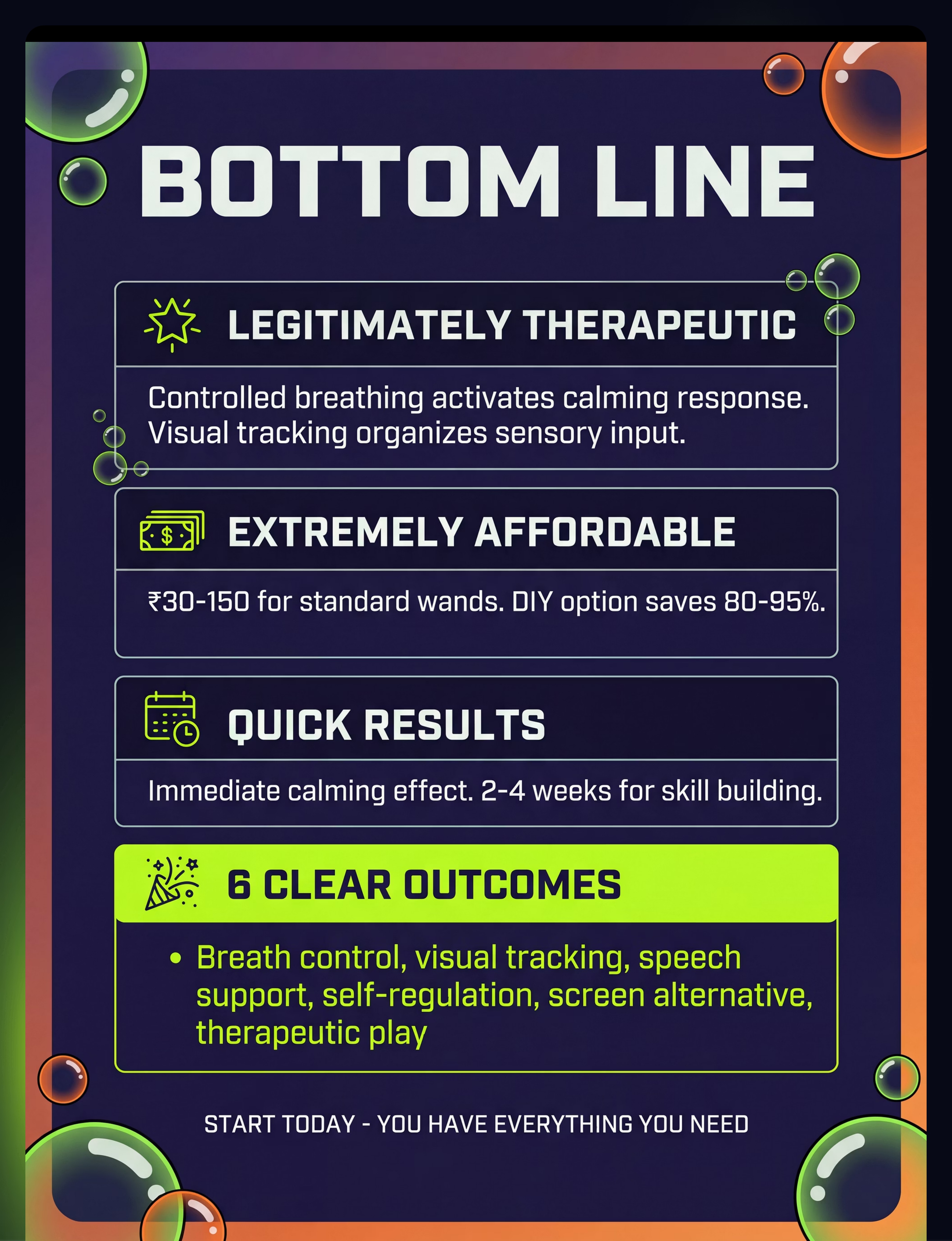
Bubble tools provide respiratory regulation through controlled exhalation and visual tracking benefits. Calming, engaging, and therapeutic disguised as play. Rank 2 in category, moderate evidence, extremely affordable (₹30-1,500).
bubbles
breath
visual tracking
calming
oral motor
respiratory
SLP
OT
play
Common Searches
bubbles autism therapy • calming bubbles sensory • bubble machine autism • breath control bubbles • visual tracking bubbles • sensory bubble play • oral motor bubbles

Get Support

FREE National Autism Helpline
Phone: 9100 181 181
Languages: 16+ languages supported
Website: pinnacleblooms.org
Expert guidance on implementing bubble therapy and all therapeutic tools in your child's program.
Platform Integration
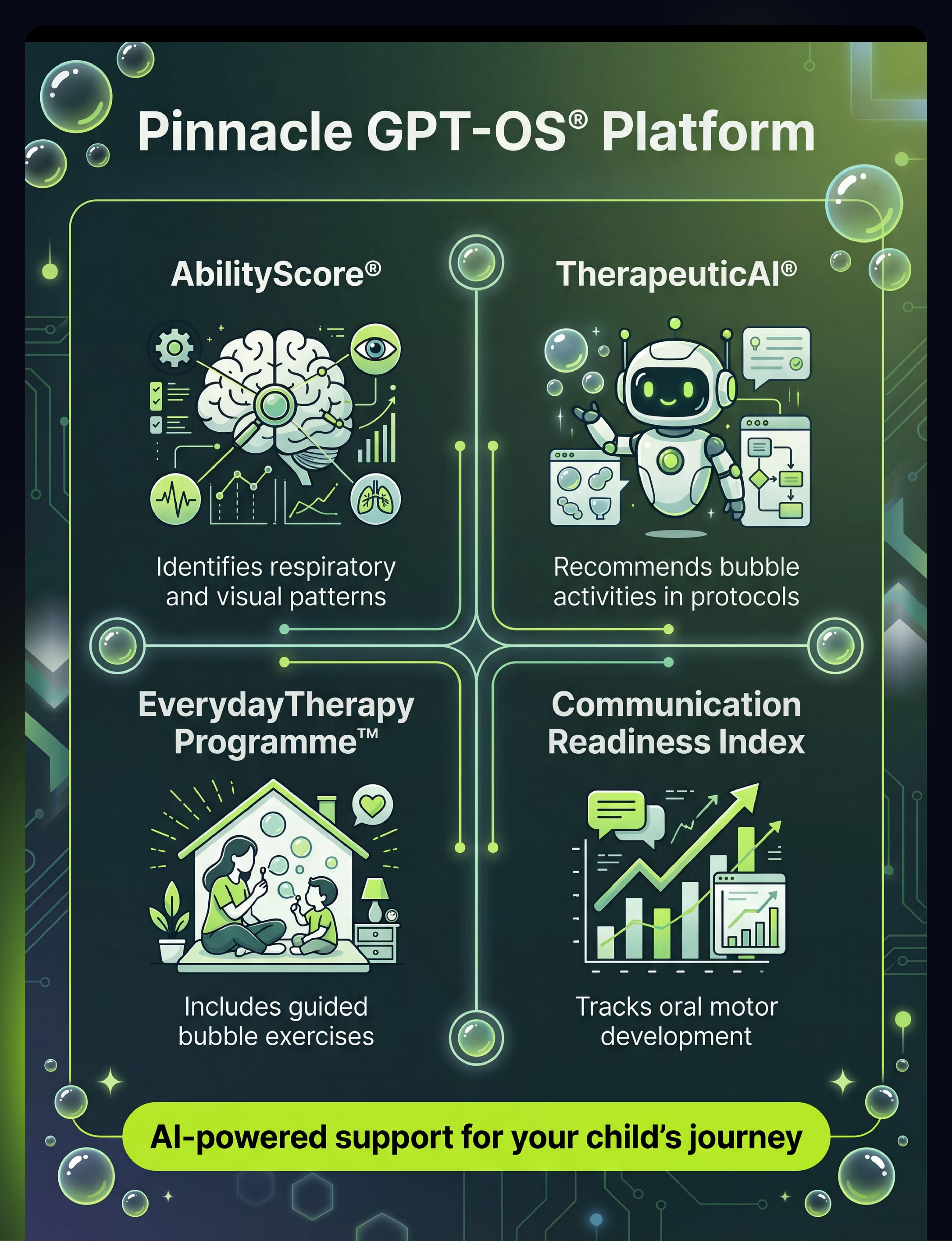
This tool integrates with Pinnacle Blooms Network's comprehensive care platform: AbilityScore® identifies respiratory and visual tracking patterns; TherapeuticAI® recommends bubbles in oral motor and calming protocols; EverydayTherapyProgramme™ includes bubble activities in daily routines; Communication Readiness Index tracks oral motor progress over time.

Disclaimer: This is educational information. Always consult qualified occupational therapists, speech-language pathologists, or pediatricians before beginning any therapeutic program. Individual results vary. The information provided is based on clinical practice and emerging research but should not replace professional medical advice.