Tool ID: 5.7
Conversation Visual Supports
Pragmatic language and conversation structure system
SLP + SpEd Recommended
Moderate Evidence
Rank #2
Daily Use
₹50–400
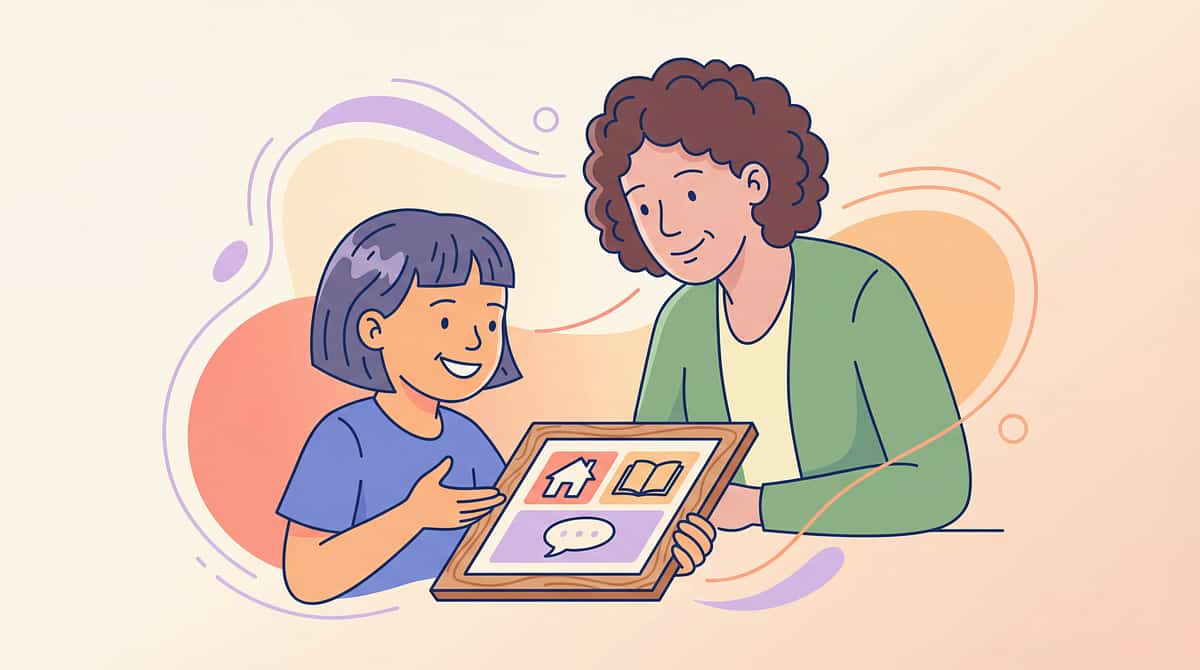
Every conversation follows invisible rules—taking turns, staying on topic, asking questions, reading social cues. For children who don't absorb these naturally, conversation visual supports make the invisible visible and learnable. These simple yet powerful tools transform social communication challenges into structured, achievable skills that open doors to friendship and connection.

Who This Helps
Primary Function
Teaches and supports the pragmatic and social aspects of conversation through explicit visual instruction
Target Areas
Pragmatic Language • Conversation Skills • Turn-Taking • Topic Maintenance • Question Asking • Social Communication
Age Range
4-9 years (adjusted for developmental level)
Settings
Home • School • Clinic • Social situations
Communication & Language
Core Kit

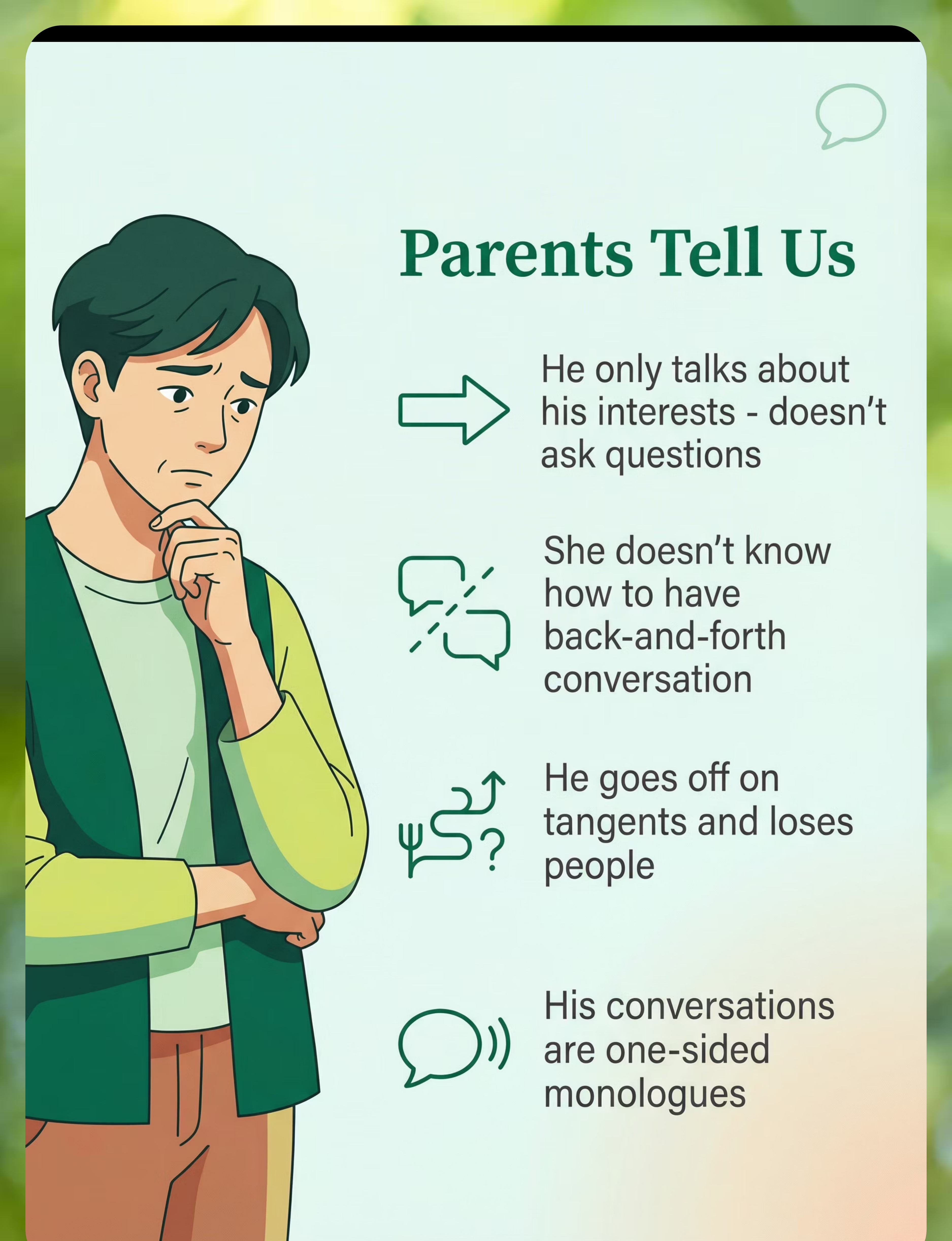
Does This Sound Familiar?
"He only talks about his interests—doesn't ask questions about others or what they're interested in."
"She doesn't know how to have a back-and-forth conversation. It's all one-sided."
"He goes off on tangents and loses people. They walk away confused."
"She doesn't know how to start conversations. She just stands there awkwardly."
"His conversations are monologues, not dialogues. He doesn't notice when people tune out."
"She doesn't understand the invisible rules of conversation that other kids just seem to know."
You're not alone. These are among the most common challenges families face. Conversation skills don't come naturally for every child, but they can be taught systematically with the right visual supports and practice.

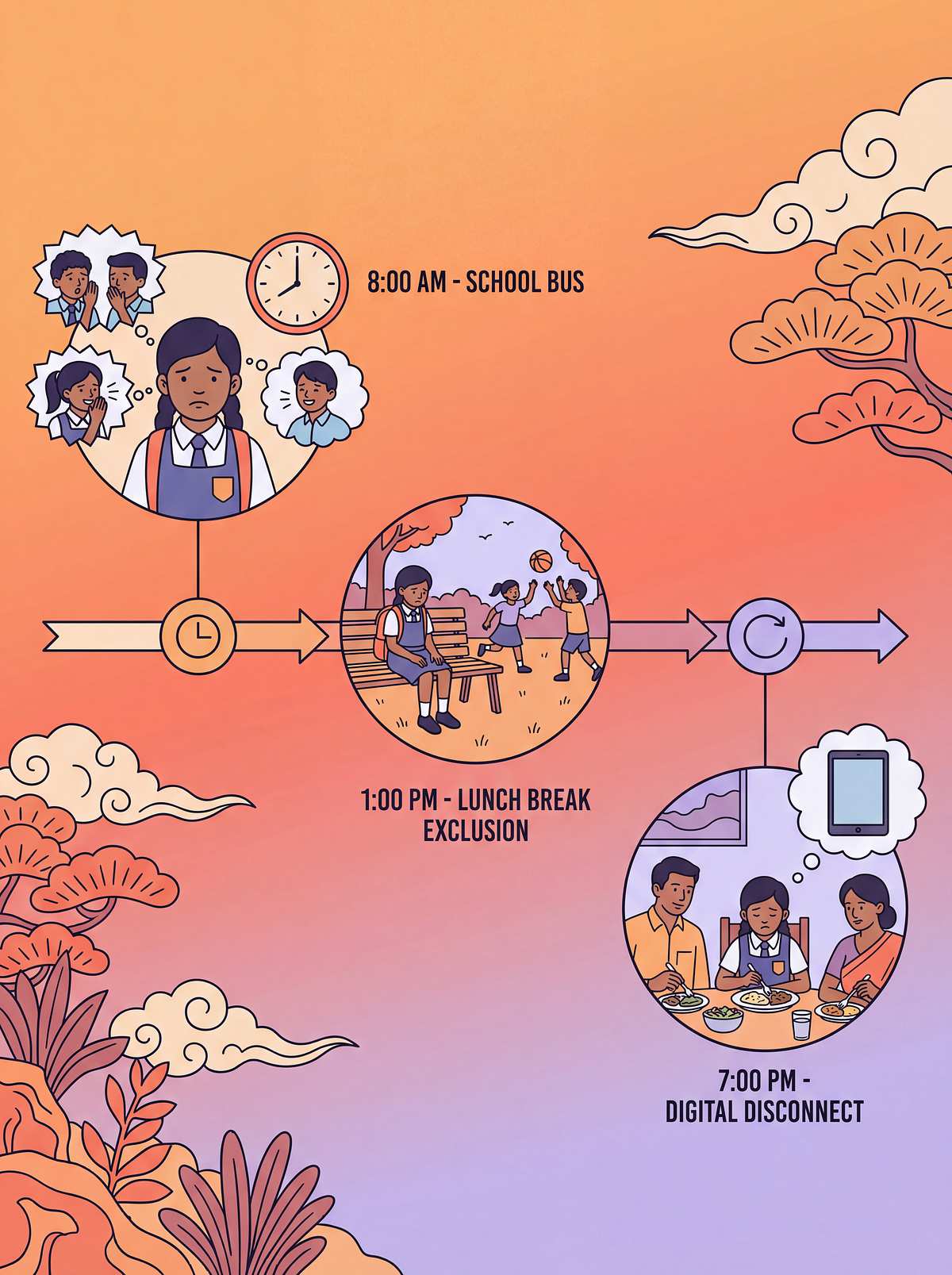
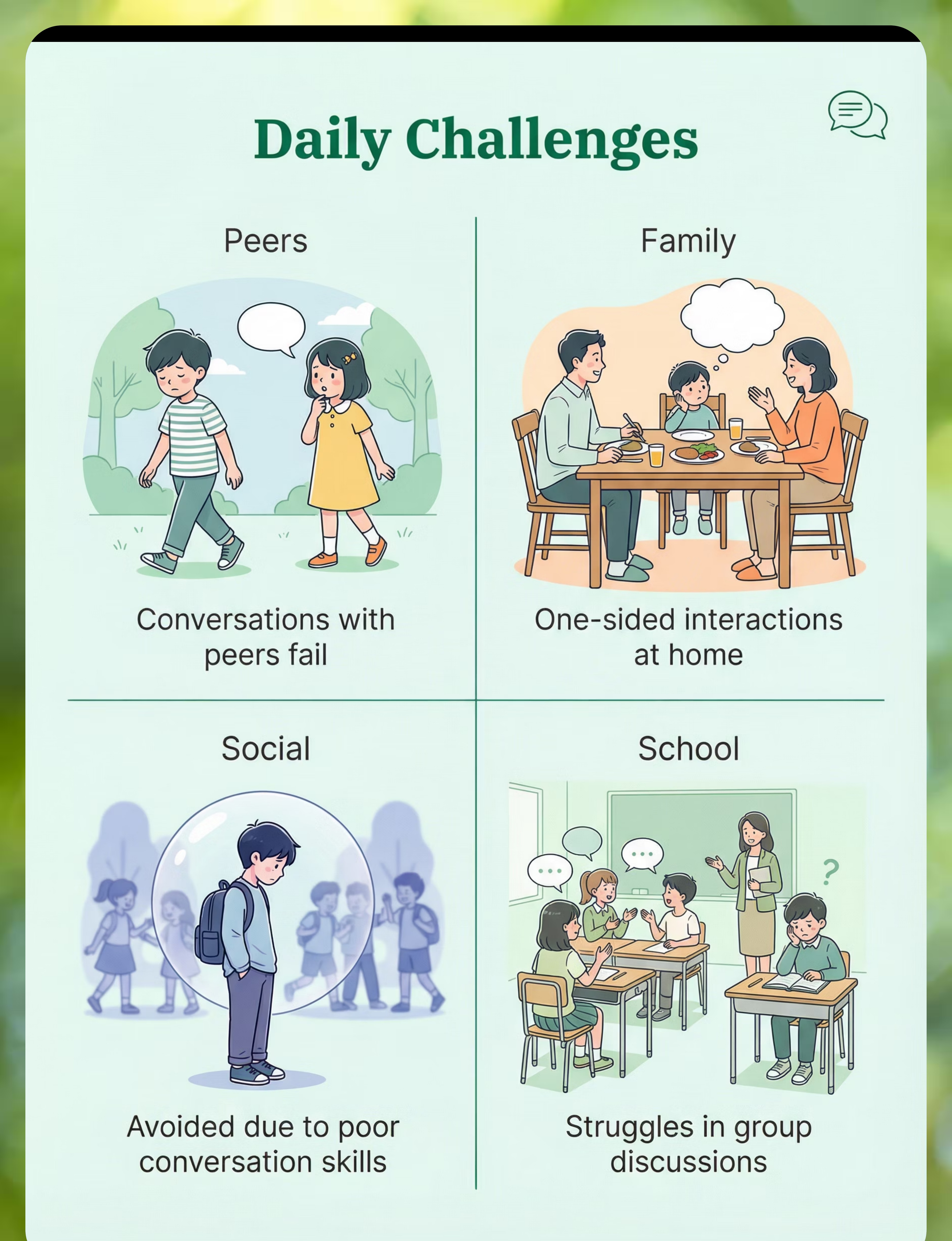
A Day Without the Right Support
1
Morning
Peers chatting at the school gate. The child wants to join but doesn't know how to enter the conversation, standing awkwardly outside as the opportunity passes.
2
Lunch
During lunch, a classmate asks "What did you do this weekend?" The child launches into a 10-minute monologue about their favorite topic, forgetting to ask the classmate anything. The peer walks away mid-sentence.
3
Afternoon
In a group discussion about weekend plans, the child suddenly shares an unrelated fact about dinosaurs. The group is confused, and the teacher redirects. The child doesn't understand what went wrong.
4
Evening
Reflecting on the day at bedtime, the child wonders, "Why don't kids want to talk to me?" The parents' hearts break, witnessing another day of missed connections and confusion about invisible social rules.

The Science Behind It
Complex Social-Cognitive Processing
Conversation involves intricate brain functions, from interpreting cues to forming responses.
Implicit vs. Explicit Learning
Neurotypical children often absorb social rules implicitly; others benefit from explicit instruction.
Neurotypical vs. Autism
Differences in processing mean varied approaches are needed to accelerate learning and build confidence.
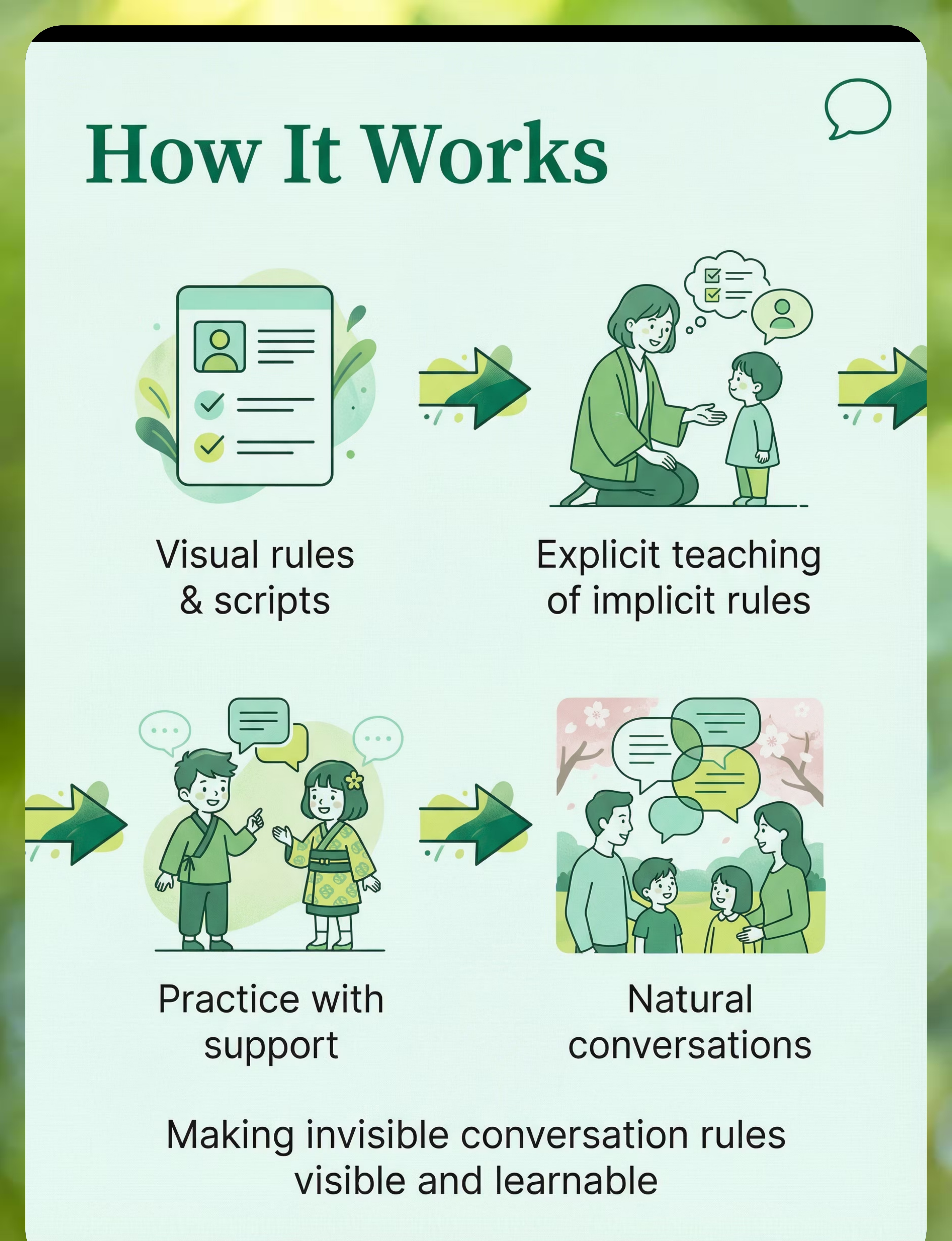
Visual Rules
Abstract conversation rules are made concrete through visual supports—cards, posters, and reminders
Explicit Teaching
Implicit rules (turn-taking, asking questions, topic relevance) are taught systematically and overtly
Supported Practice
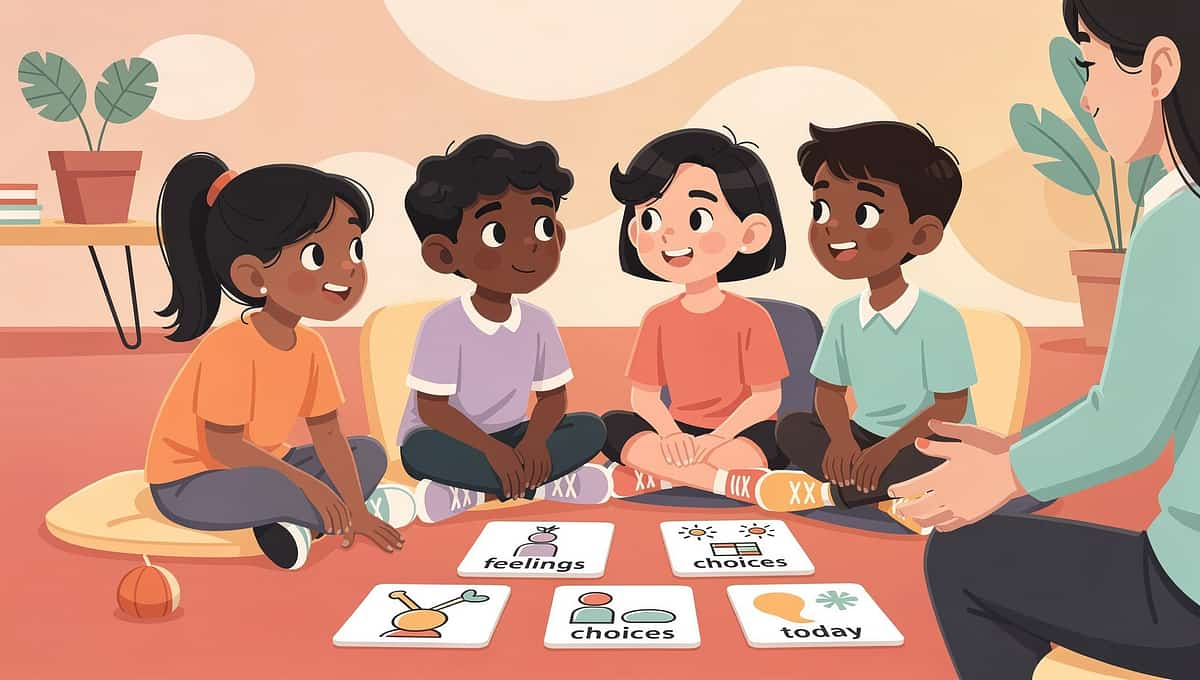
Role-play and real conversations happen with visual scaffolding and immediate feedback
Internalization
Repeated practice with support leads to pattern recognition and automatic application of skills
Natural Conversations
Skills become automatic, visuals fade, and successful reciprocal communication emerges naturally
Pragmatic Language
Conversation Skills
Turn-Taking
Topic Maintenance
Question Asking
Social Communication

How to Use It Right
Teach Conversation Rules Explicitly
Don't assume children will "pick up" social rules. Name them clearly: "First you share, then you ask a question." Make the invisible visible through direct instruction.
Use Visual Supports During Practice
Keep conversation cards visible during role-play. Point to the turn-taking visual when practicing back-and-forth exchanges. Visuals serve as external working memory.
Role-Play with Feedback
Practice conversations in low-stakes settings first. Provide specific, positive feedback: "You asked a question! That helped keep the conversation going." Celebrate attempts, not just perfection.
Generalize to Natural Conversations
Bridge from practice to real life. Review conversation rules before social situations. Debrief afterward: "Which rule did you use? How did it work?"
Celebrate Reciprocal Exchanges
Notice and name successful moments: "You and Aarav just had a back-and-forth conversation for 2 minutes!" Build awareness of what success feels like.
Fade Supports as Skills Develop
Start with visible cards, move to pocket reminders, then verbal prompts, finally independence. Like training wheels, supports should decrease as competence grows.
Duration: 10-15 minute focused teaching sessions, with pocket cards available for real-world situations. Consistency across home, school, and therapy settings accelerates progress.

Expert Perspective
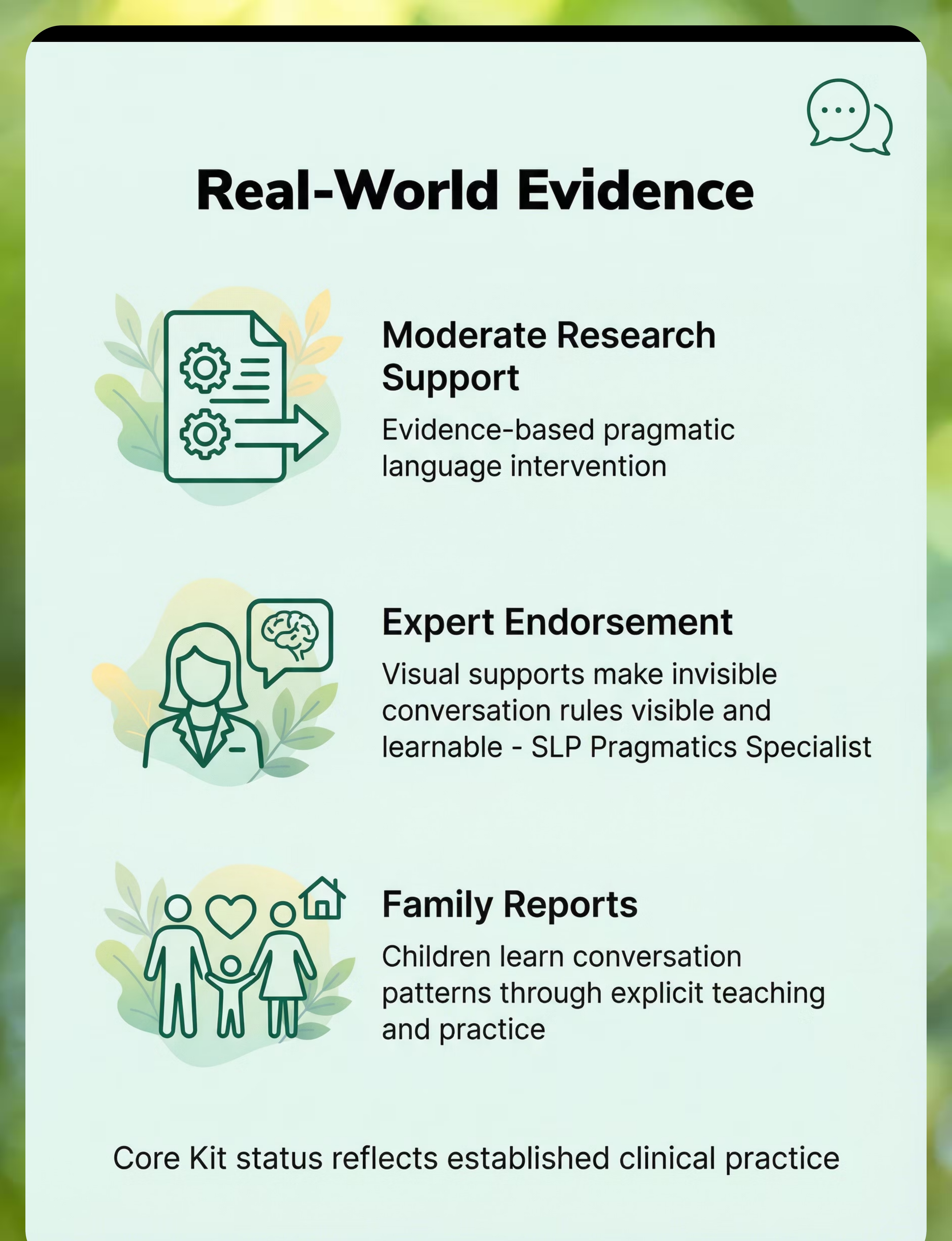
"Conversation involves invisible rules: take turns, stay on topic, ask questions, read cues. For children who don't absorb these naturally, visual supports make the invisible visible and learnable."— Speech-Language Pathologist, Pragmatics Specialist
SLP + SpEd Recommended
Dual endorsement from speech-language pathologists and special educators
Moderate Evidence
Supported by research in pragmatic language intervention and social communication
Rank #2 in Category
Second-ranked intervention in Communication & Language category
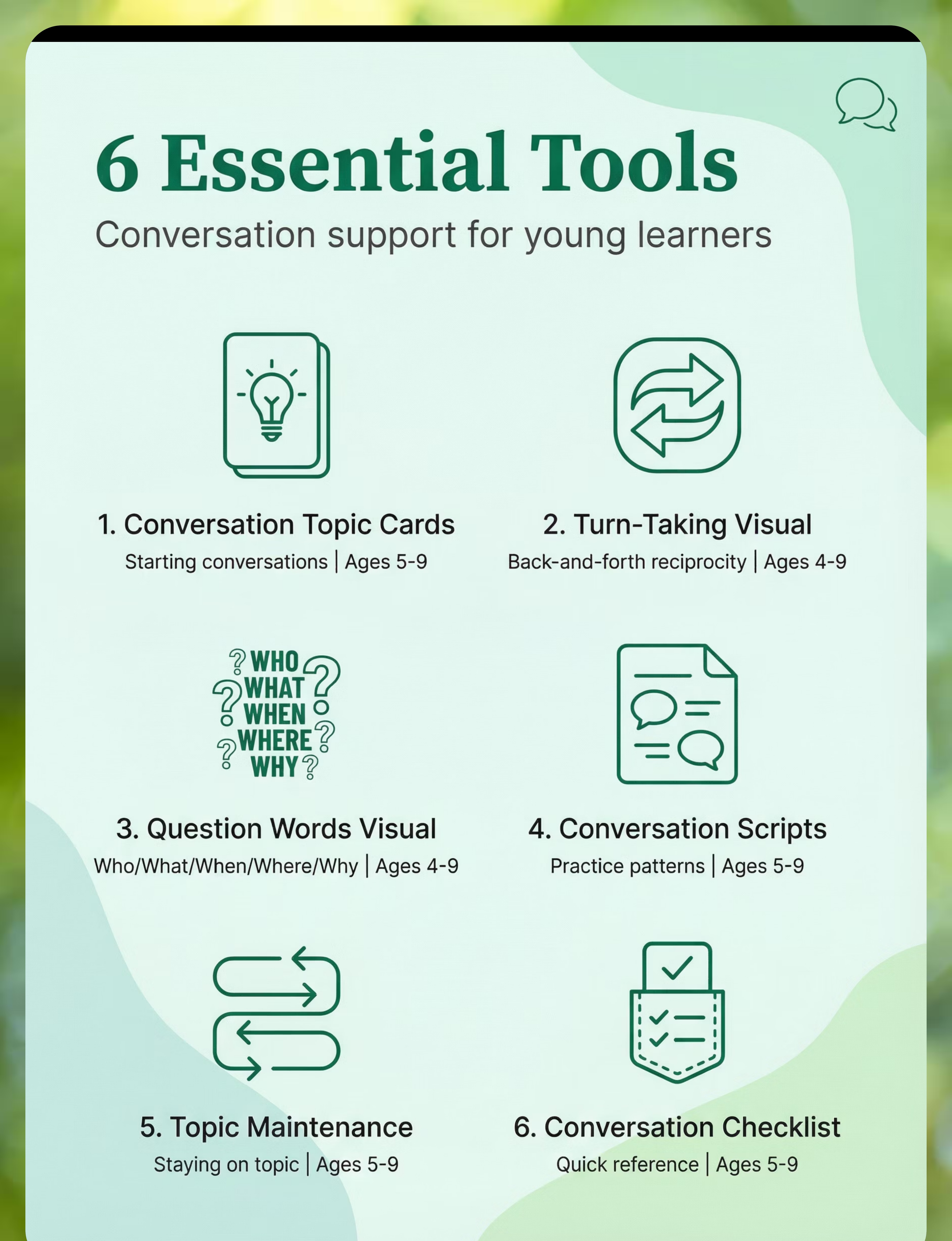
Choose Your Option (6 Variants)
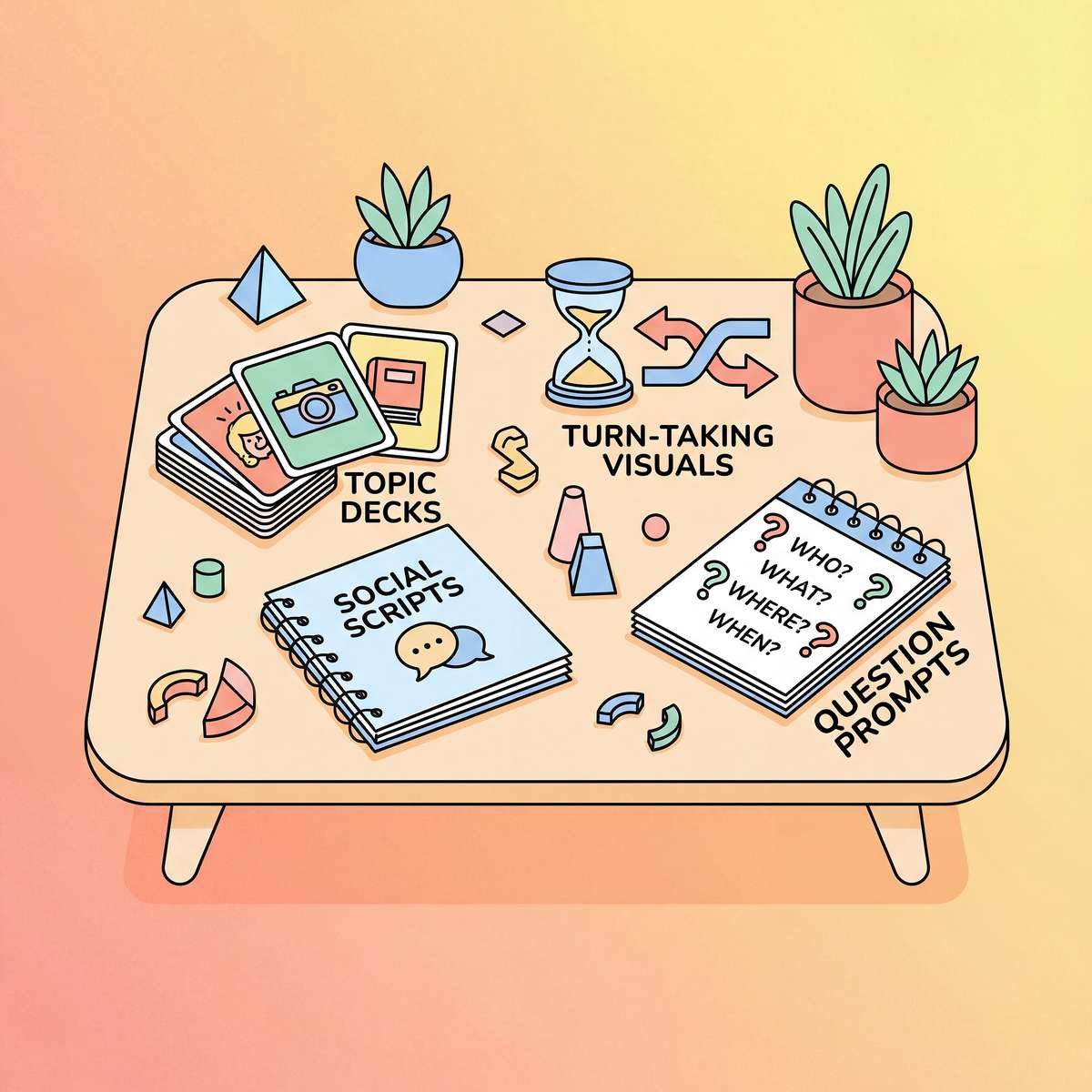
Different conversation challenges require different visual supports. From basic turn-taking to complex conversation scripts, choose the tools that match your child's specific needs and developmental stage.

Developmental Progression
Turn-Taking Conversation Visual
Understanding conversation reciprocity.
Question Words Visual
Asking questions in conversation.
Conversation Topic Cards
Starting and maintaining conversations.
Topic Maintenance Visual
Teaching topic relevance.
Conversation Script Cards
Practicing conversation patterns.
Conversation Checklist/Rules Card
Quick reference during social situations.
When to Use Each Variant
Turn-Taking Conversation Visual: Ideal for children learning the fundamental back-and-forth of conversation. Use it to model when to talk and when to listen.
Question Words Visual: Great for helping children formulate questions (who, what, where, when, why) to keep conversations going and gather information.
Conversation Topic Cards: Use these when your child struggles to initiate conversations or stay on a single subject. They provide concrete ideas for discussion.
Topic Maintenance Visual: Perfect for kids who tend to drift off-topic. This visual helps them identify if their contributions are relevant to the current discussion.
Conversation Script Cards: Employ these for practicing specific social scenarios, like greeting someone or ordering food, by providing pre-written dialogue.
Conversation Checklist/Rules Card: A handy reference for older children who need a reminder of general conversation etiquette and rules in various social settings.
How to Choose
- By goal: Starting conversations → Topic Cards; Reciprocity → Turn-Taking Visual; Questions → Question Words; Staying on topic → Topic Maintenance
- By setting: On-the-go → Pocket checklist; Structured practice → Scripts; Visual reference → Posters
- By portability: Very high → Pocket cards; High → All card-based options
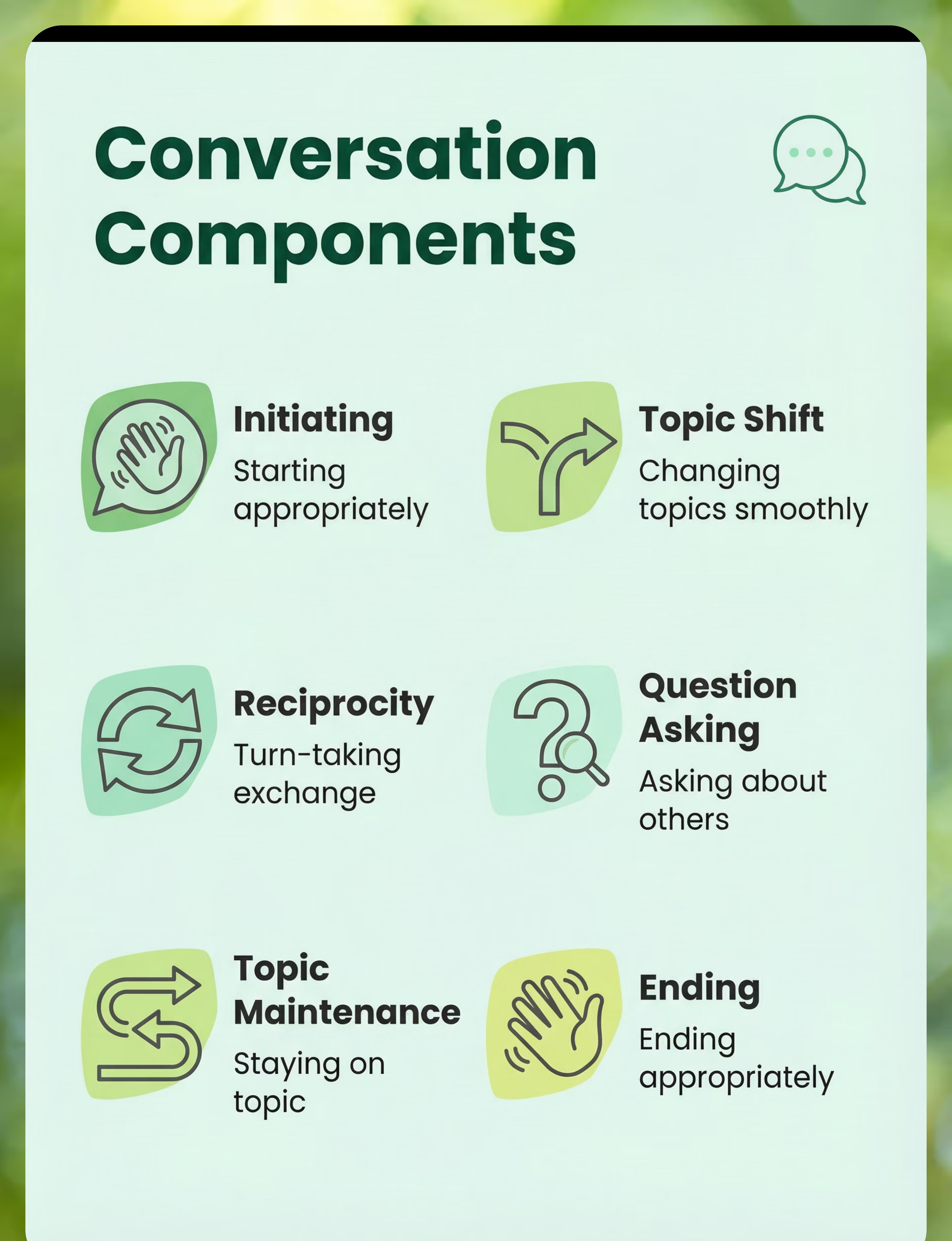
Conversation Components Explained
Successful conversations require mastery of multiple interconnected skills. Understanding these components helps target intervention precisely to your child's specific challenges.
Initiating
Starting a conversation appropriately—greeting, choosing a relevant opener, gauging if the other person is available to talk.
Reciprocity
Back-and-forth turn-taking—sharing information, then listening, then responding. The "conversational volley" that creates connection.
Topic Maintenance
Staying on the same topic—adding relevant information, asking related questions, not jumping to unrelated subjects.
Topic Shift
Changing topics appropriately—using transitions, checking if the other person is finished, introducing new topics smoothly.
Question Asking
Asking questions about others—showing interest in the conversation partner, using who/what/when/where/why questions.
Ending
Ending conversations appropriately—reading social cues, using closing phrases, not abruptly walking away or continuing too long.
Visual supports can target any or all of these components based on assessment of your child's specific patterns and needs.
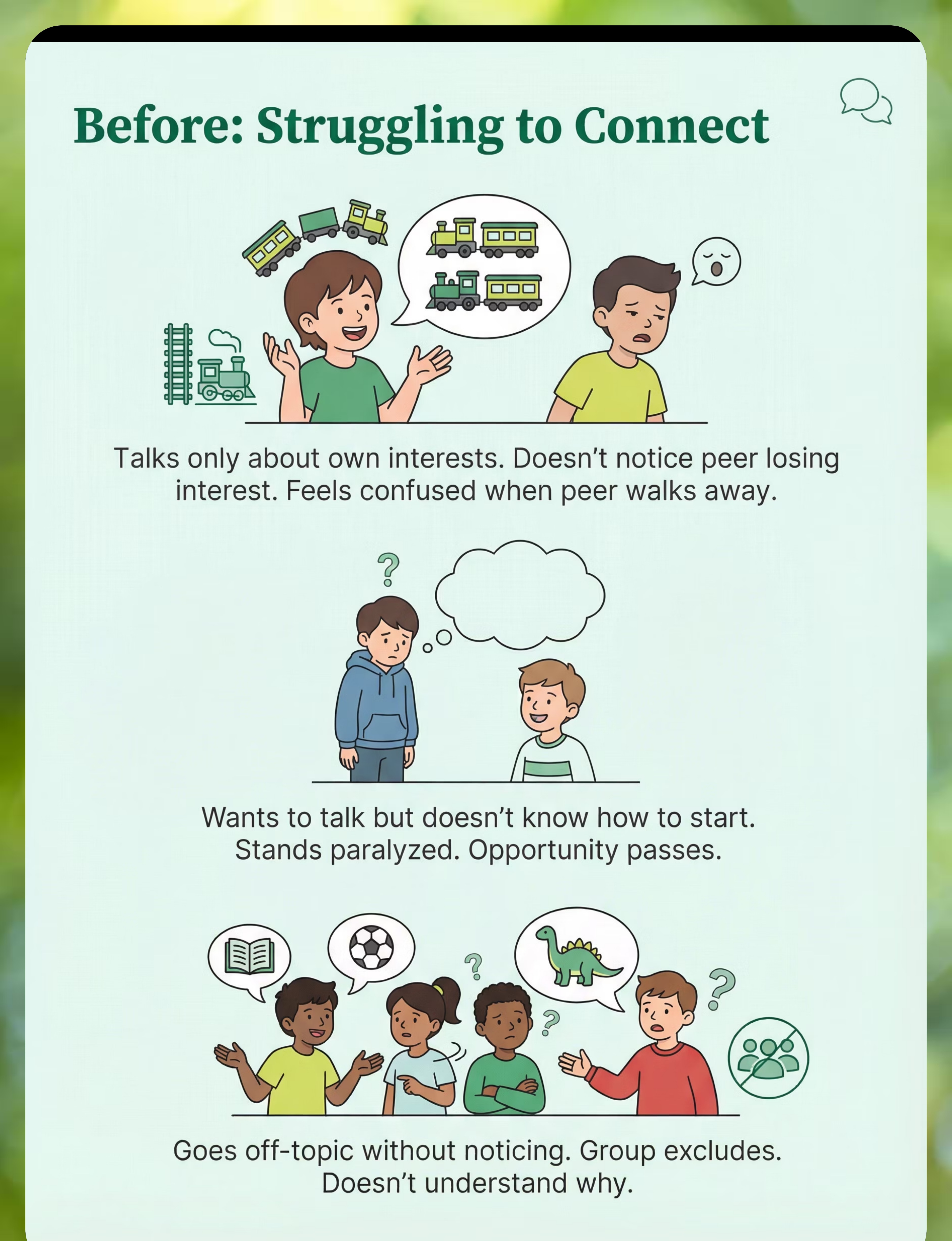
The Struggle (Before)
Peer Conversation
Situation: Child starts talking about trains with classmate.
Experience: Doesn't ask peer anything. Doesn't notice peer losing interest, fidgeting, looking away. Peer eventually walks away mid-sentence. Child confused—"I was just talking about trains. Why did he leave?"
Emotion: Confusion, rejection, hurt
Starting Conversation
Situation: Child wants to talk to classmate during free time.
Experience: Doesn't know how to start. Approaches, stands awkwardly near classmate. Opens mouth but nothing comes out. Moment passes. Classmate moves on to play with someone else.
Emotion: Paralysis, missed connection, isolation
Staying on Topic
Situation: Group of peers discussing weekend plans.
Experience: Child suddenly interjects with fact about space. Group confused—"We were talking about the birthday party." Child doesn't understand why everyone looks annoyed. Feels excluded from the circle.
Emotion: Confusion, exclusion, not understanding social consequences
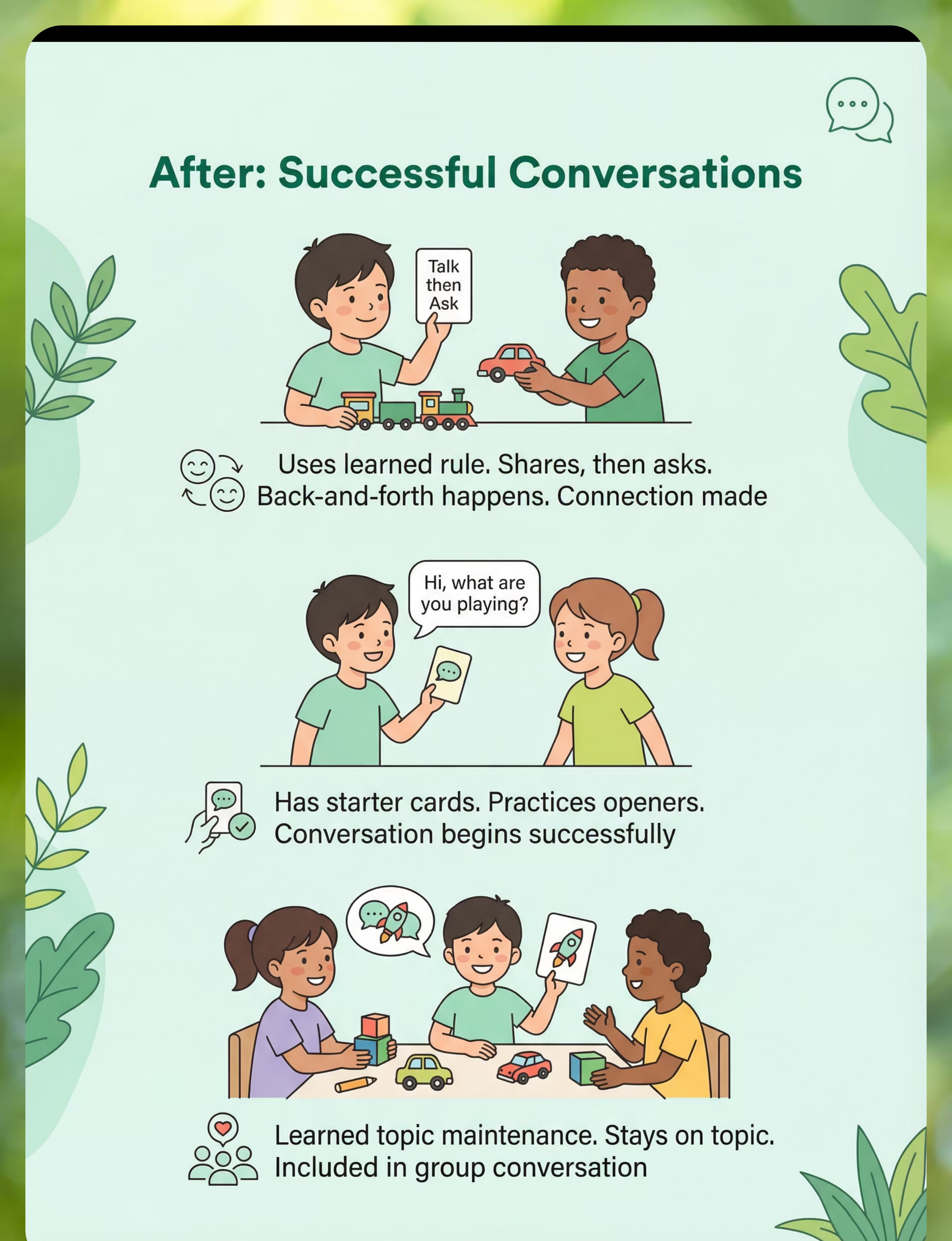
The Breakthrough (After)

Peer Conversation Success
Situation: Child shares about trains with classmate, using learned conversation rule.
Experience: Learned rule: "Share, then ask." Talks about trains for one minute. Then asks, "What do you like?" Peer responds about cricket. Back-and-forth exchange happens. Both children smile. Connection made.
Emotion: Success, connection, pride in using the skill
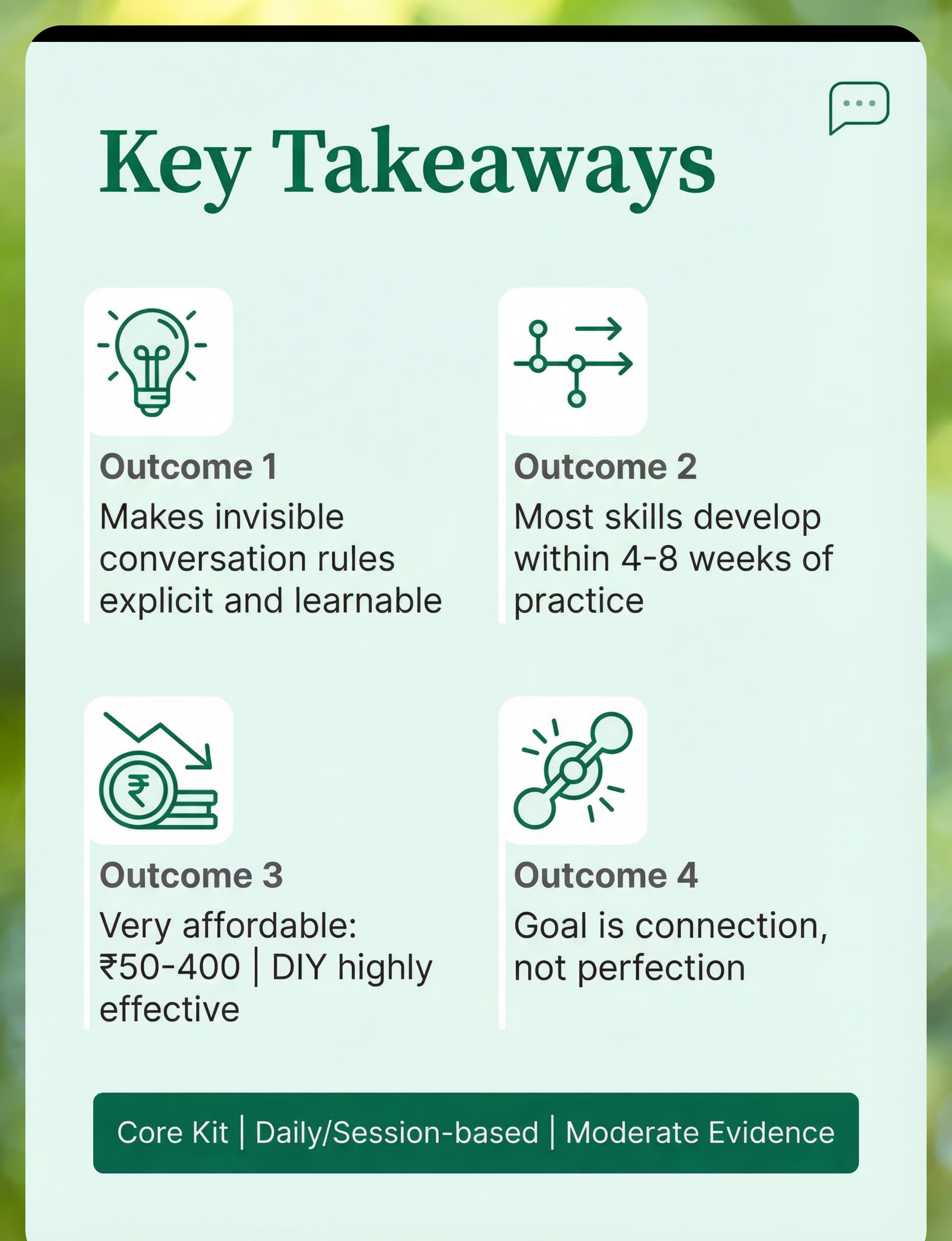
4-8 weeks
Starting Conversation
Situation: Child wants to join classmate's activity.
Experience: Has practiced conversation starter cards. Remembers opener: "Hi, what are you playing?" Says it clearly. Classmate explains. Child asks follow-up question. Conversation begins successfully. Gets invited to join the game.
Emotion: Confidence, successful initiation, feeling capable
4-8 weeks
Staying on Topic
Situation: Group discussing weekend plans.
Experience: Learned topic maintenance visual: "Add to the topic before changing it." Wants to share space fact. Thinks: "They're talking about birthday party. First I'll say something about that." Says, "I like birthday parties too. What games will you play?" Stays connected to the group. Gets included in party invitation.
Emotion: Belonging, understanding the "why" behind the rule, social success
4-8 weeks
Family Dinner Improvement
Situation: Child is at family dinner, struggling with turn-taking in conversation.
Experience: Uses "talking stick" visual aid. Waits for their turn. Actively listens when others speak. Shares a relevant thought when holding the stick. Family praises their improved participation.
Emotion: Calmness, appreciation, shared enjoyment
8-12 weeks
Playground Breakthrough
Situation: Child wants to join a game of tag on the playground but doesn't know how.
Experience: Recalls "joining in" visual strategy. Observes the game for a moment. Approaches the edge of the group and says, "Can I play?" Is invited to join. Successfully participates and has fun.
Emotion: Joy, inclusion, feeling empowered
12-16 weeks
What to Expect (Realistic Timelines)
Progress in conversation skills is gradual and builds on itself. Early wins in understanding rules lead to increasing confidence and more opportunities for practice, creating a positive cycle of social development.

1
Understands conversation rules explicitly
Can name and explain rules like "take turns," "ask questions," "stay on topic" when prompted. Recognition is the first step toward application.
2-4 weeks
2
Asks questions in conversation
Begins incorporating question-asking into exchanges, initially with prompting, gradually more spontaneously. Questions show interest in conversation partner.
4-8 weeks
3
Takes turns in conversation
Demonstrates share-then-listen pattern more consistently. Pauses for other person's response. Doesn't monologue as frequently.
4-8 weeks
4
Stays on topic better
Maintains topic relevance for 3+ conversational exchanges. Catches self when going off-topic. Can redirect back with support.
4-8 weeks
5
More successful peer conversations
Peers respond more positively. Conversations last longer. Fewer instances of peers walking away or looking confused. More invitations to interact.
2-3 months
6
Increased social participation
Child seeks out conversations more. Participates in group discussions. Builds friendships based on reciprocal exchanges. Confidence in social settings grows.
3-6 months

Is This Right for My Child? (2-Minute Check)
Does your child have difficulty with back-and-forth conversation?
If yes, this indicates: Conversation visuals will help teach reciprocity patterns explicitly.
Confidence score: 95% match for this intervention
Does your child monologue rather than converse?
If yes, this indicates: Turn-taking and question-asking supports are strongly recommended.
Confidence score: 93% match for this intervention
Does your child struggle to ask questions of others?
If yes, this indicates: Question word visuals and question-asking scripts will build this foundational skill.
Confidence score: 90% match for this intervention
Does your child go off-topic frequently?
If yes, this indicates: Topic maintenance visuals will help understand relevance and staying connected to shared subjects.
Confidence score: 88% match for this intervention
Interpretation: 3+ "yes" answers indicate a strong fit. Even 1-2 "yes" answers suggest specific conversation visual supports could be beneficial. Consult with an SLP for comprehensive pragmatic language assessment.

Common Questions (Honest Answers)
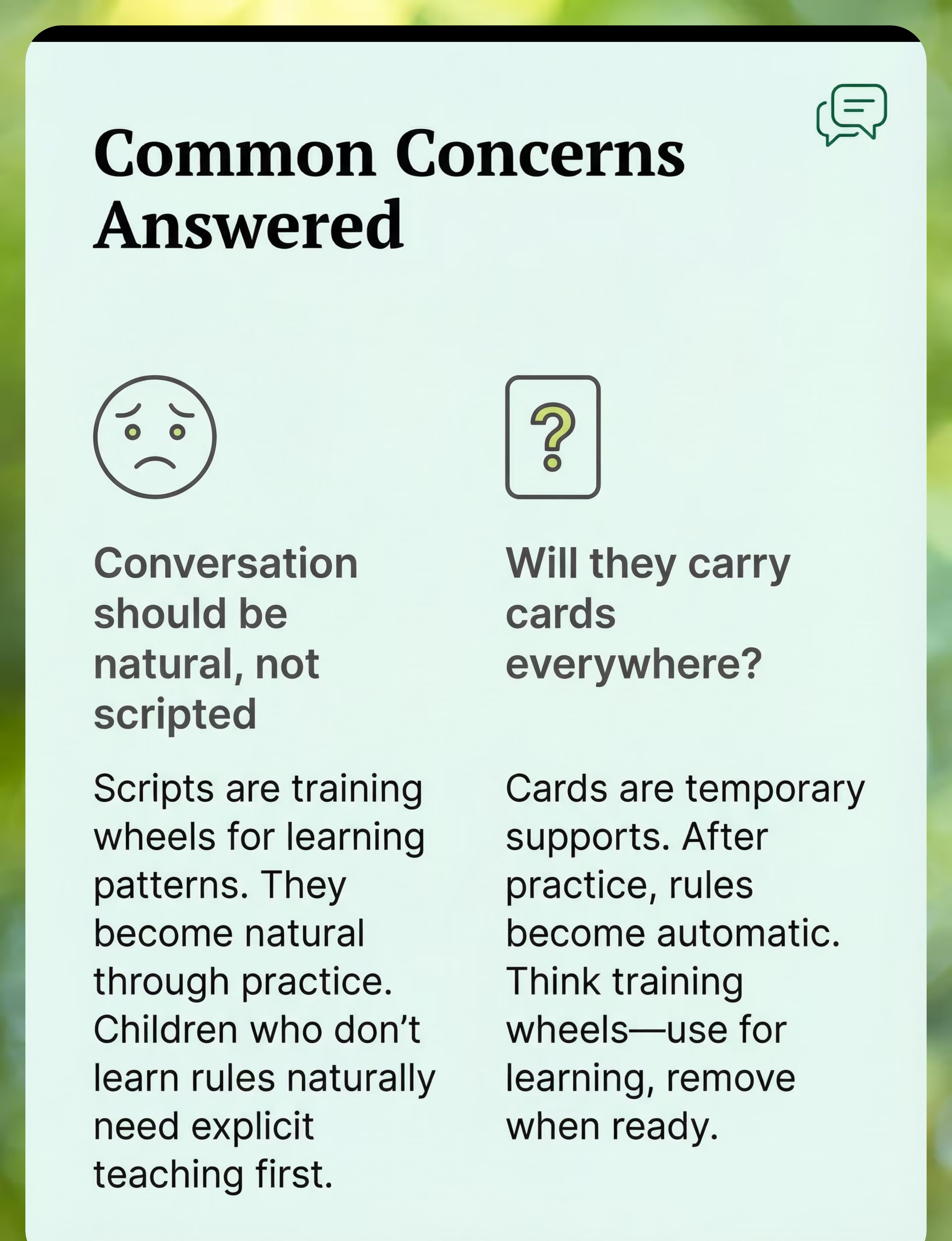
Q: "Conversation should be natural, not scripted" | A: Eventually, yes—but children who don't learn rules naturally need explicit teaching first. Scripts are training wheels. They practice patterns that eventually become natural and automatic. Neurotypical children learned these "naturally" through thousands of observations and interactions. For children with autism or pragmatic language challenges, we're accelerating that learning through structured instruction. Try this: View scripts as temporary scaffolding toward natural conversation, not the end goal. | |
Q: "This seems too complicated" | A: Start simple! One rule at a time. "Ask a question after you share" is one rule. Practice just that until it becomes habit. Then layer in another element. Don't teach everything at once—that's overwhelming for everyone. Break it down into achievable steps. Try this: Choose the single most impactful conversation skill for your child and focus there first. | |
Q: "Will they carry cards everywhere?" | A: Initially, yes—pocket cards help in the moment. But the goal is internalization. After sufficient practice with visual support, the rules become automatic patterns stored in memory. Cards are temporary supports, like training wheels on a bike. Fade them systematically when your child demonstrates readiness. Try this: Think of it as external working memory that gradually becomes internal. | |
Q: "Real conversations don't follow rules" | A: Actually, they do—we just follow the rules unconsciously. Turn-taking, topic relevance, asking questions to show interest—these are very real social conventions that govern successful communication. Making them explicit helps those who don't absorb them implicitly. You're teaching what most people learn without knowing they're learning it. Try this: Think of it as making implicit social rules explicit and teachable. |


Usage Guide
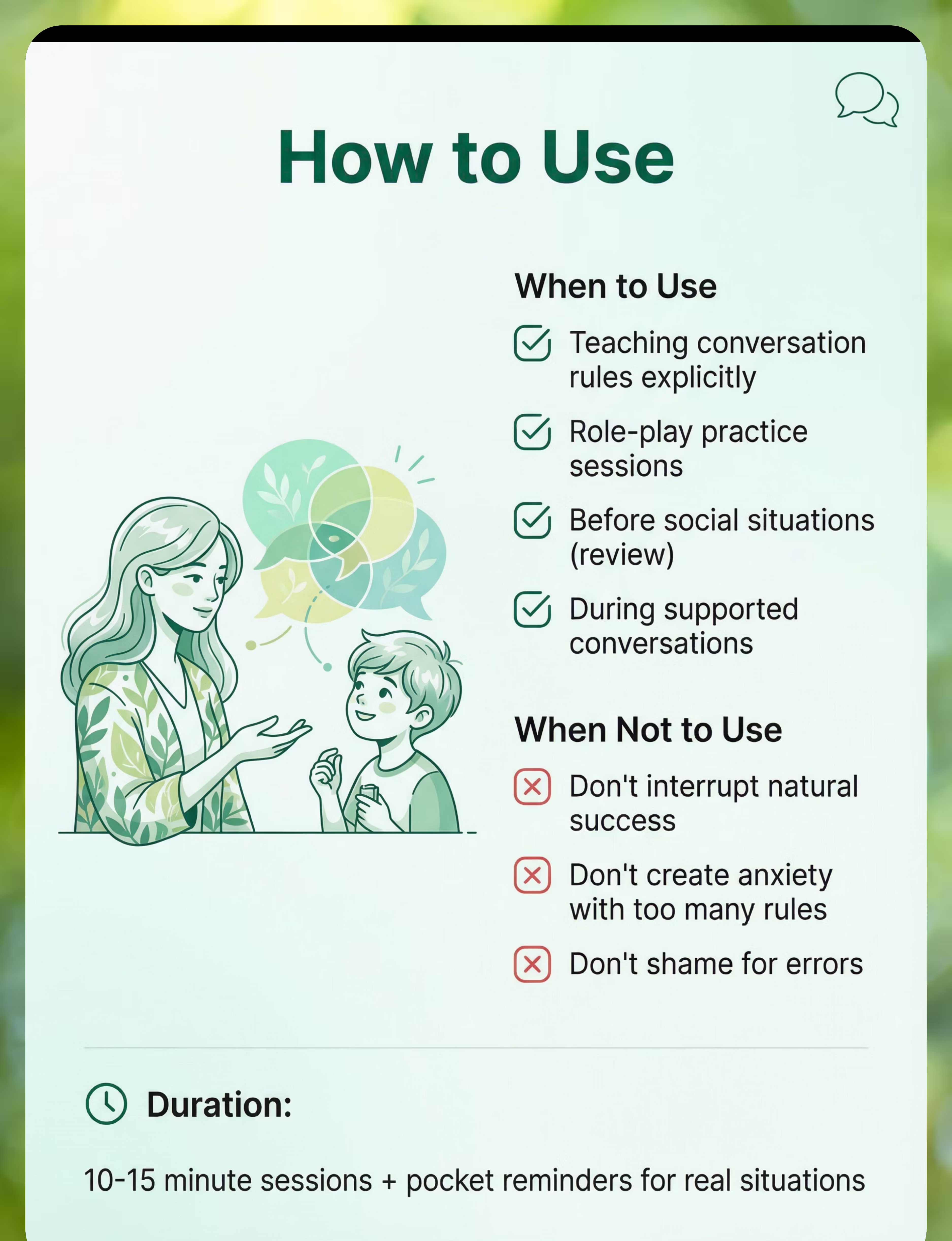
When to Use
- Teaching conversation rules explicitly in structured sessions
- Role-play practice with feedback and support
- Before social situations (reviewing rules as preparation)
- During supported conversations (visual scaffolding)
- After conversations (reflecting on what worked)
When NOT to Use
- Don't interrupt natural successful conversation to "teach"
- Don't create anxiety with too many rules simultaneously
- Don't shame or criticize conversation errors—reframe as learning
- Don't force artificial conversation when child needs downtime
Supervision by Age
Age Range | Supervision Level | Notes | |
Preschool (4-5 years) | Adult-guided | Simple rules only; adult facilitates all practice | |
Early Elementary (6-7 years) | Practice with feedback | Child can practice with peers under adult observation; feedback provided | |
Older Child (8-9 years) | Self-monitoring with reminders | Can use pocket cards independently; periodic check-ins sufficient | |
Pre-teen/Teen (10+ years) | Independent application & refinement | Uses strategies autonomously; can identify and troubleshoot social challenges |
Duration & Settings
Teaching sessions: 10-15 minutes of focused instruction and role-play
Real-world use: Pocket cards available for reference in actual social situations
Settings: Home, School, Clinic, Social situations—consistency across contexts accelerates generalization

Safety First
Critical Safety
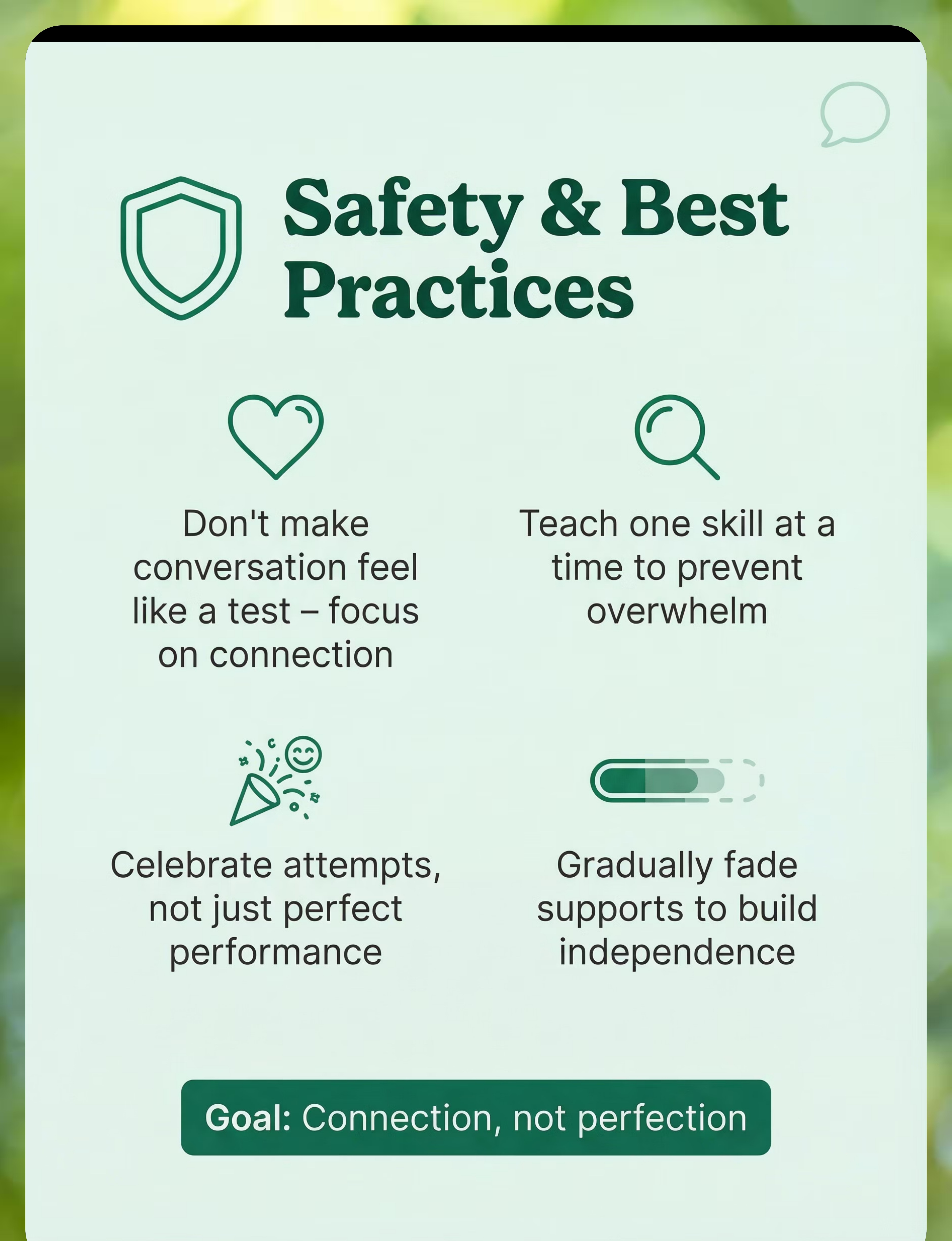
- Don't make conversation feel like a test or performance evaluation
- Focus on one skill at a time—depth over breadth
- Celebrate attempts and effort, not just perfect execution
- Remember: goal is authentic connection, not robotic performance
Important Warnings
- Too many rules presented simultaneously can create anxiety and paralysis
- Watch for over-scripted, robotic interactions—preserve authenticity
- Ensure flexibility within structure—conversations are dynamic
- Fade supports systematically to prevent long-term dependence
Contraindicated Approaches
- Testing or judging during learning phase
- Introducing too many conversation rules at once
- Shaming or criticizing conversation errors
- Rigid scripts without teaching flexibility
- Teaching without sufficient practice and feedback
Safety Checklist
Before Use
- Specific target skill identified
- Visual support created or selected
- Practice plan ready
- Positive, low-pressure approach planned
During Use
- Teaching one skill at a time
- Role-playing with specific feedback
- Celebrating attempts and effort
- Using visuals appropriately, not rigidly
Signs of Success
- Using learned skills in practice
- Asking questions emerging
- Turn-taking improving
- More successful peer interactions

Investment Guide
Conversation visual supports range from completely free DIY options to comprehensive commercial curricula. Most families find success with simple, personalized visuals that cost little to nothing.
DIY Visuals | ₹0-50 | Highly Personalized | |
Commercial (India) | ₹300-600 | Comprehensive Curriculum | |
Commercial (International) | $0.50-5 USD | Professionally Designed | |
Overall Tier | Very Low | Affordable Interventions |
Understanding the cost tiers, here's a detailed look at each investment option:
Budget-Friendly Options
DIY Conversation Rules
Cost: ₹0-50. Materials: Paper/cardstock + markers.
Personalized Visuals
Tailored to your child's specific challenges. Simple, yet highly effective.
Best Starting Point
The specificity to needs often outweighs commercial polish, making it ideal for most families.
Premium Investment
Complete Skills Curriculum
Cost: ₹300-600. Includes comprehensive visual supports.
Professionally Designed
Materials from brands like Social Thinking, Super Duper Publications, with teaching guides.
For Specialized Use
Ideal for clinics, families seeking extensive curricula, or social communication professionals.

Where to Buy in India
Availability
DIY is preferred for personalization and cost-effectiveness. Commercial options available for those seeking professionally designed comprehensive materials.
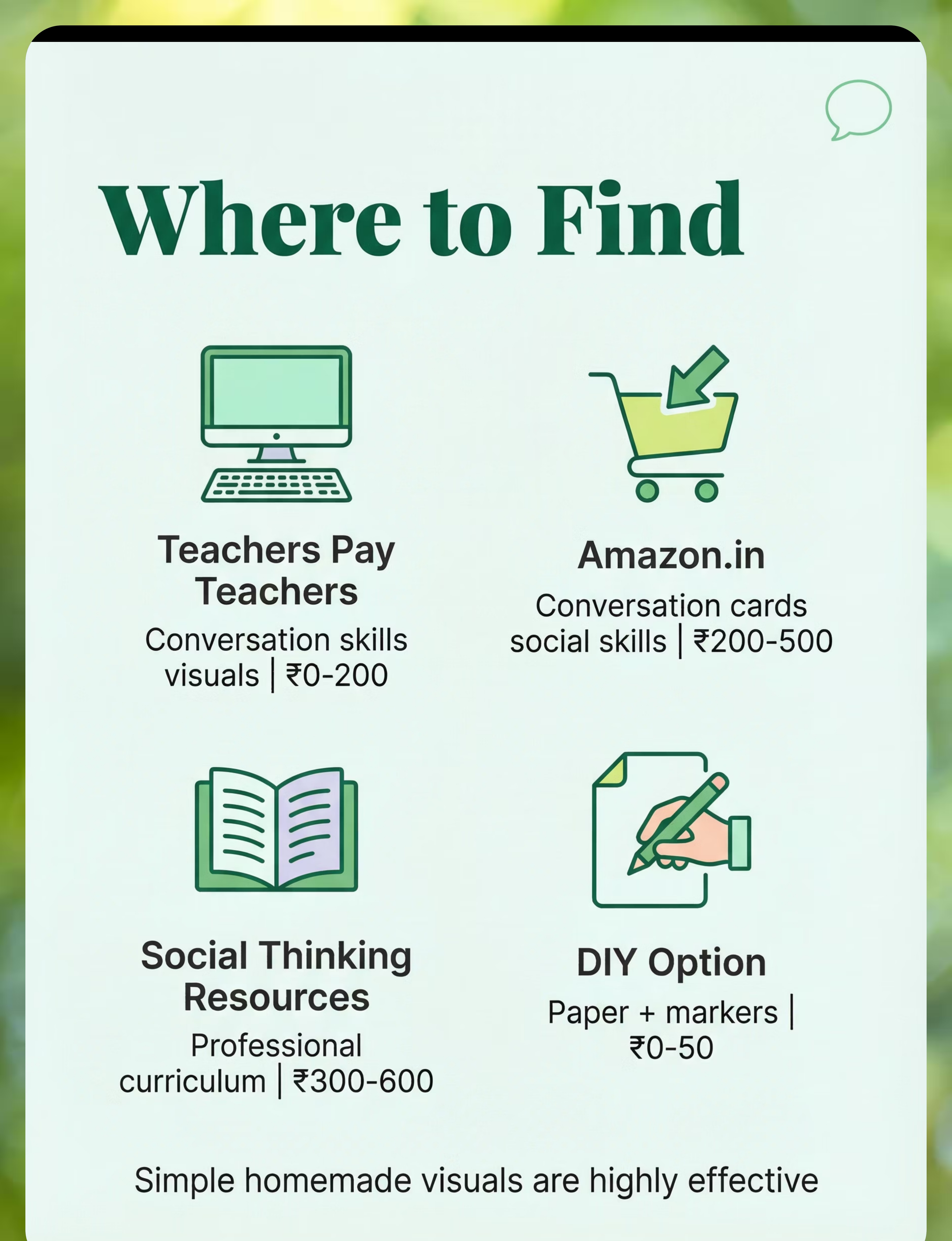
Teachers Pay Teachers (Online Educational Supplier)
Search: "conversation skills visuals"
Price range: ₹0-200
Wide variety of downloadable visuals, many free options; filter by age/skill level.
Amazon.in (Online Platform)
Search: "conversation cards social skills"
Price range: ₹200-500
Physical card sets; read reviews carefully; check age recommendations.
Social Thinking Resources (Therapy Clinics/Educational)
Search: "conversation visuals"
Price range: ₹300-600
Evidence-based materials; comprehensive curricula; professional-grade.
DIY (Personalized & Cost-Effective)
Materials: Paper + markers
Price range: ₹0-50
Most cost-effective; highly personalized; targets specific needs.

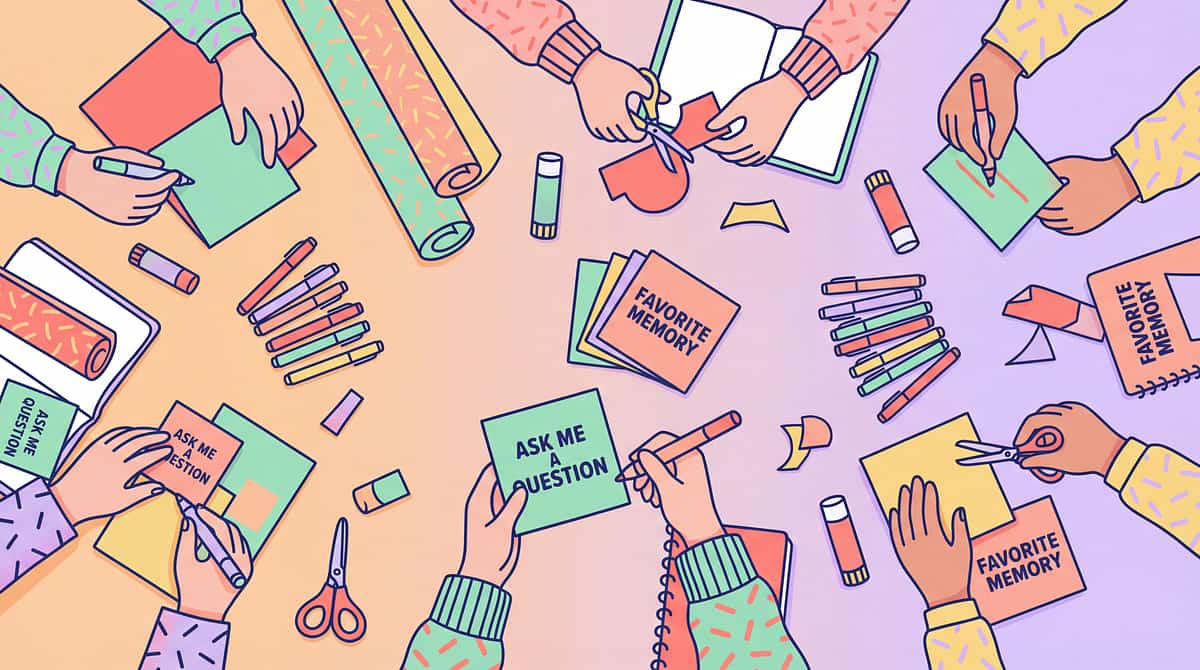
DIY Alternative (Save 95-100%)
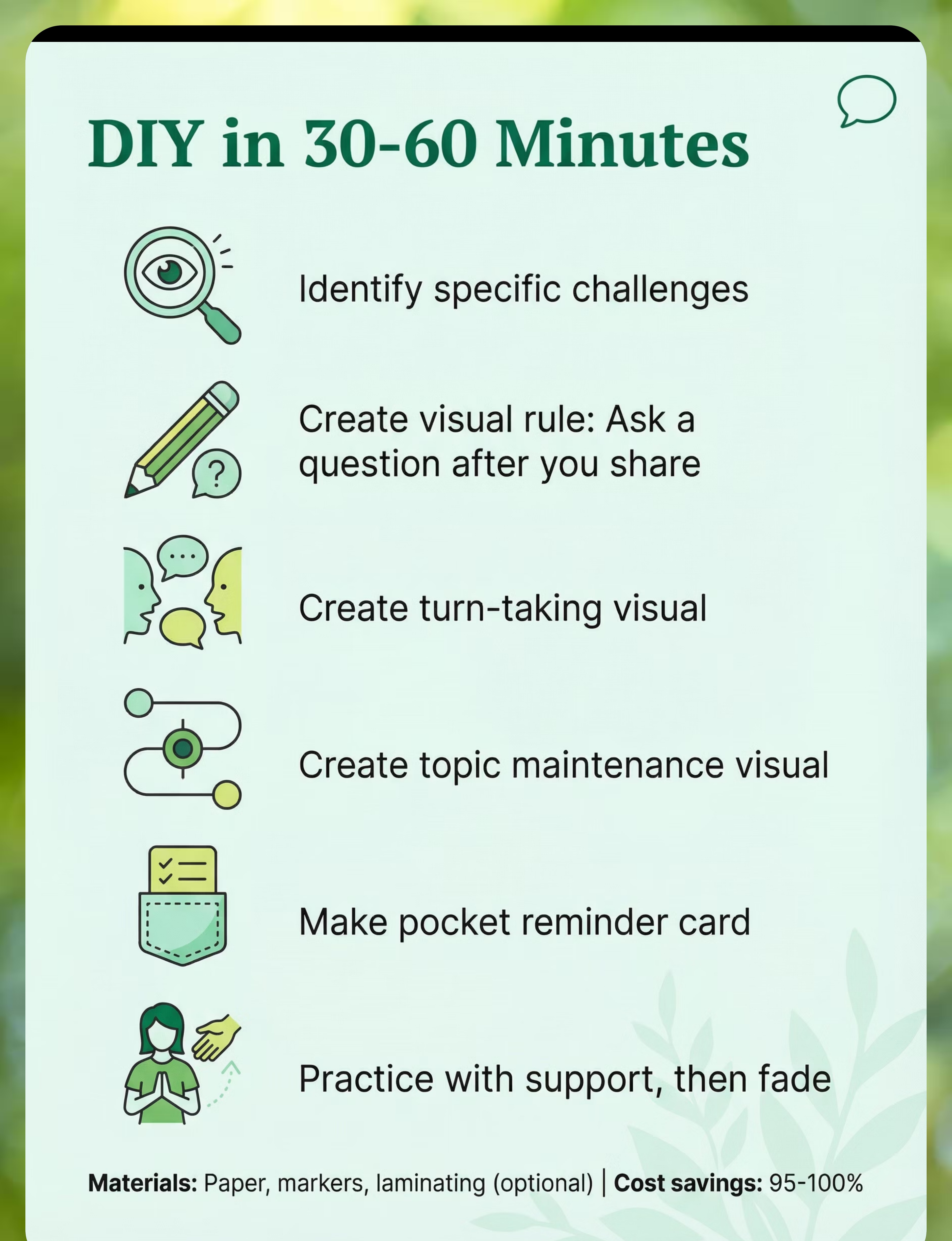
Feasibility: Very High • Time investment: 30-60 minutes • Cost savings: 95-100%
Materials Needed
- Paper or cardstock
- Markers or colored pencils
- Laminating sheets (optional)
- Scissors
- Small binder ring (optional, for card sets)
1
Identify challenges
Observe and list your child's specific conversation difficulties (e.g., not asking questions, going off-topic)
2
Create core visual
Make a simple rule card: "Talk ➔ Ask a question" with two stick figures and speech bubbles
3
Turn-taking visual
Draw two faces alternating with arrows between them, label "My turn" and "Your turn"
4
Topic maintenance
Draw a path with footprints labeled "Staying on topic" and footprints leaving path labeled "Off topic"
5
Pocket reminder
Create credit-card-sized reminder with 3-4 key rules in simple text
6
Practice together
Role-play conversations using the visual supports; provide specific feedback
7
Fade gradually
Start with visible support, move to pocket card, then verbal reminders, finally independence
DIY vs. Commercial: Making the Choice
Consideration | When to DIY | When to Buy Commercial | |
Budget | Cost-conscious; prefer ₹0-50 investment | Budget allows ₹300-600; value professional materials | |
Personalization | Targeting very specific challenges unique to your child | Want comprehensive coverage of all conversation skills | |
Setting | Home use; individual therapy | Clinic/school standardization; group use | |
Methodology | Flexible approach | Want Social Thinking or specific evidence-based curriculum |
Tradeoffs
DIY advantages: Personalized, cost-effective, targets exact needs • DIY tradeoffs: Requires identifying specific skills to target, less polished appearance
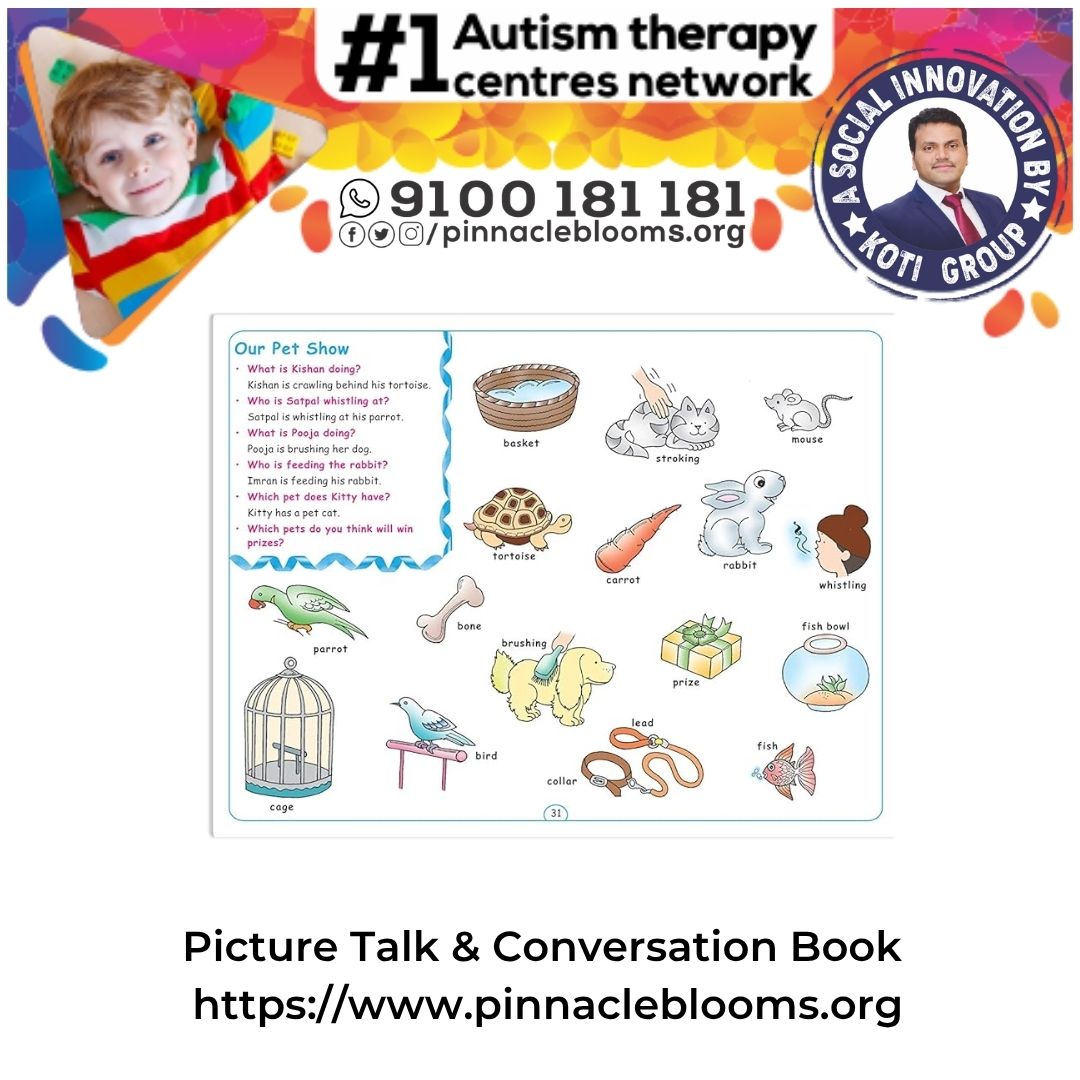
Preview of conversation visual supports Therapy Material
Below is a visual preview of conversation visual supports therapy material. The pages shown help educators, therapists, and caregivers understand the structure and content of the resource before use. Materials should be used under appropriate professional guidance.


Share this resource
Help others discover thisLink copied!

Complete Guide to Success
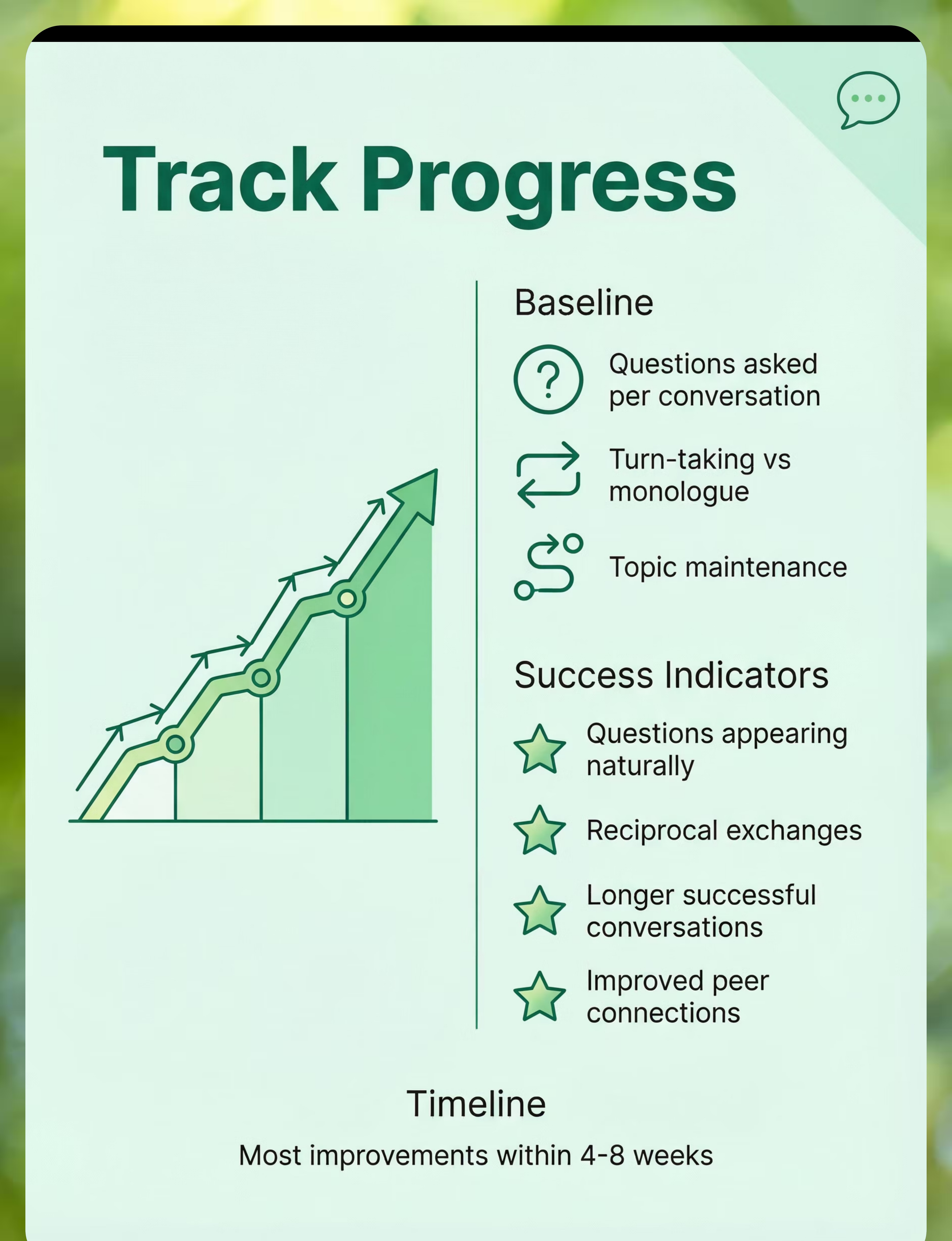
Measuring Success
Establish Baseline
Count questions asked per conversation • Note talk vs. listen ratio • Track topic maintenance (number of on-topic exchanges) • Document peer conversation success rate
Set Goals
Child will ask at least one question per conversation • Child will take turns (share then listen) • Child will stay on topic for 3+ exchanges • Peer conversations will be longer and more successful
Track Indicators
Questions appearing in conversations • Reciprocal exchanges increasing • Topic relevance improving • Longer successful conversations • Improved social connections and invitations
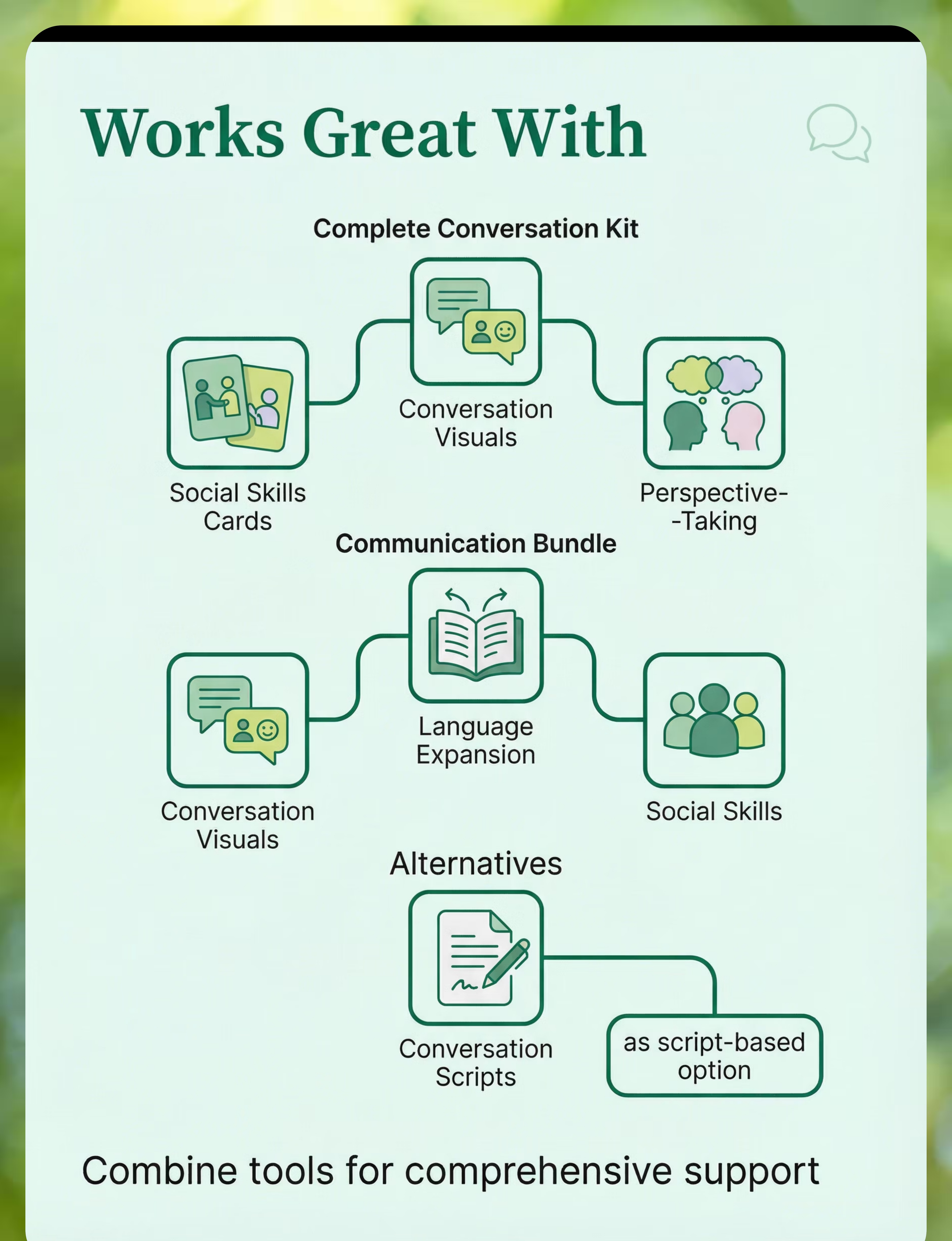
Complete the Kit
Conversation skills are most effective when combined with broader social communication supports:
Complementary Tools
- Social Skills Cards (ID: 4.1) — Broader social skills beyond conversation
- Perspective-Taking (ID: 4.2) — Understanding the conversation partner's viewpoint
- Language Expansion (ID: 5.5) — Building language content for conversations
- Social Stories (ID: 2.2) — Stories specifically about conversation situations
Recommended Bundles
Conversation Skills Kit: Conversation Visual Supports (5.7) + Social Skills Cards (4.1) + Perspective-Taking (4.2) — Complete support for reciprocal communication
Social Communication Bundle: Conversation Visual Supports (5.7) + Language Expansion (5.5) + Social Skills Cards (4.1) — Comprehensive language and social integration
Quick Summary
AI Summary: Conversation visual supports explicitly teach implicit pragmatic language rules for successful reciprocal communication. Core Kit (Rank 2), moderate evidence, important for social communication development.
conversation
pragmatics
social communication
turn-taking
questions
topic
SLP
SpEd
core-kit
Common searches: conversation skills autism • pragmatic language autism • social communication visuals • conversation visuals autism • turn taking conversation • asking questions autism • topic maintenance autism
Get Support
FREE National Autism Helpline
Phone: 9100 181 181
Languages: 16+ languages supported
Website:pinnacleblooms.org
Professional guidance available for families navigating conversation skill development
Platform Integration
Conversation Visual Supports integrate seamlessly with Pinnacle Blooms Network's comprehensive therapeutic ecosystem:
- AbilityScore® identifies pragmatic language patterns and conversation skill deficits through comprehensive assessment
- TherapeuticAI® provides targeted conversation skills interventions with progress tracking
- EverydayTherapyProgramme™ includes structured conversation practice activities for home implementation
- Social Readiness Index tracks conversation development and social communication growth over time
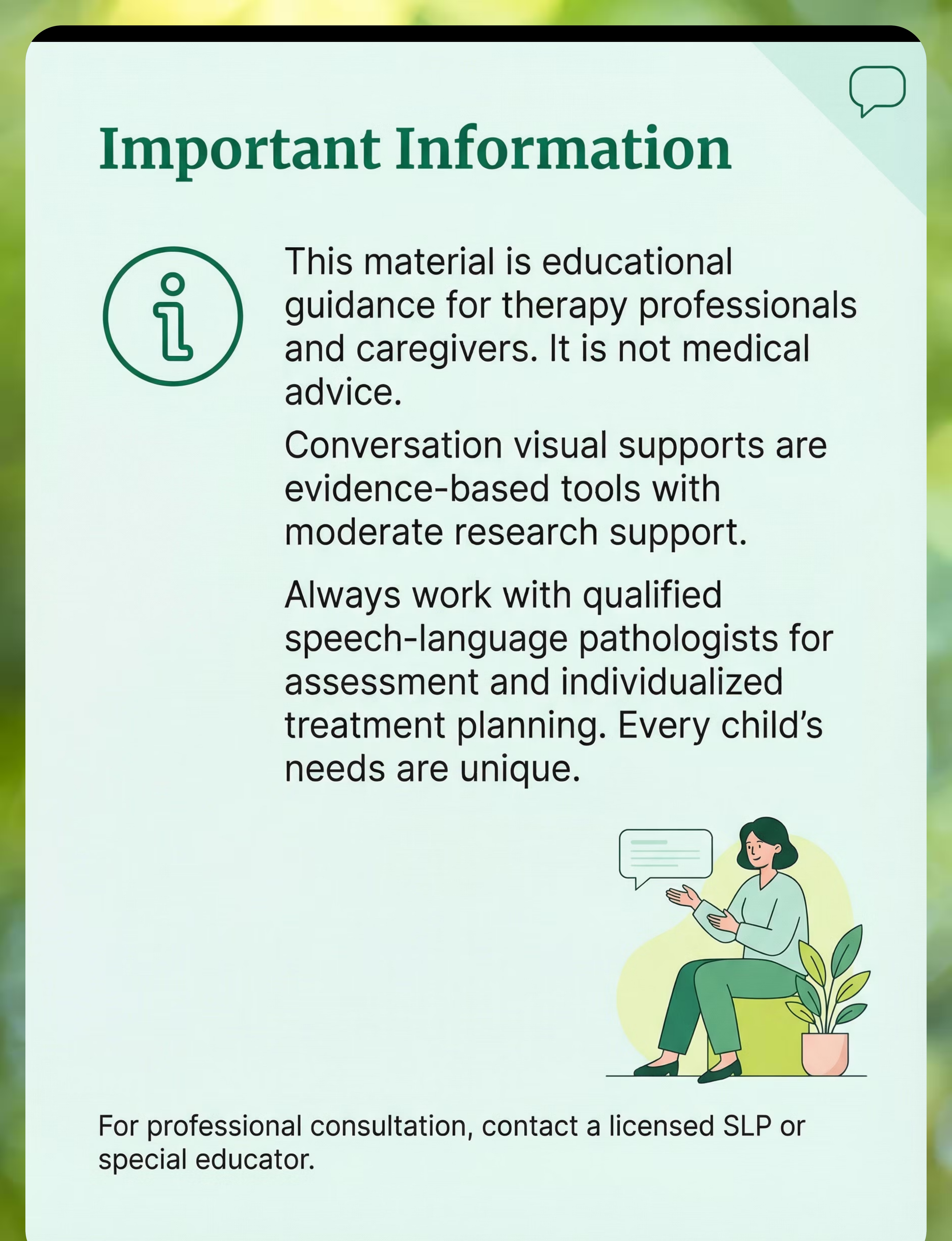
Disclaimer: This is educational information designed to support families and professionals. Always consult qualified speech-language pathologists, special educators, or pediatricians for personalized assessment and intervention planning. Individual results vary based on child's unique profile, consistency of implementation, and family context. Conversation skill development is a gradual process requiring patience, practice, and professional guidance.