




Tool ID: 18.2
OT + SpEd
Strong Evidence
Rank #1
Daily Use
₹50–5,000
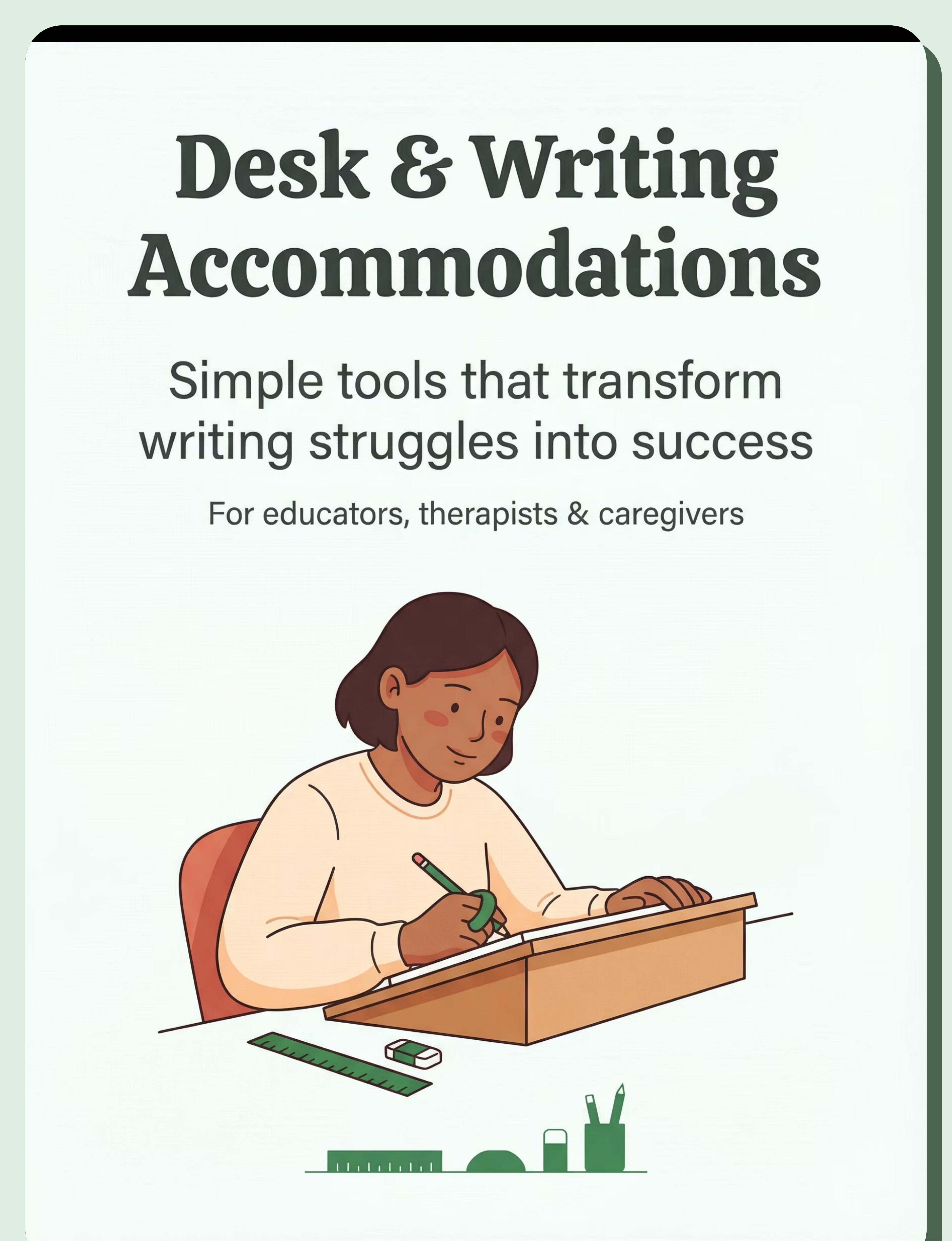
Desk & Writing Accommodations
Fine motor and written output accommodation system
Support written output and desk work through ergonomic aids, visual supports, and alternative methods for children with fine motor or written expression challenges. Category: School Supplies & Accommodations

Who This Helps
Fine Motor Support
Supports written output and desk work through ergonomic aids, visual supports, and alternative methods for children with fine motor or written expression challenges.
Target Areas
Fine Motor • Written Expression • Hand Fatigue • Letter Formation • Organization • Academic Output
Best For
Ages: 3+ years (preschool through adult)
Settings: School • Home • Therapy • Homework
School
Home
Therapy
Homework

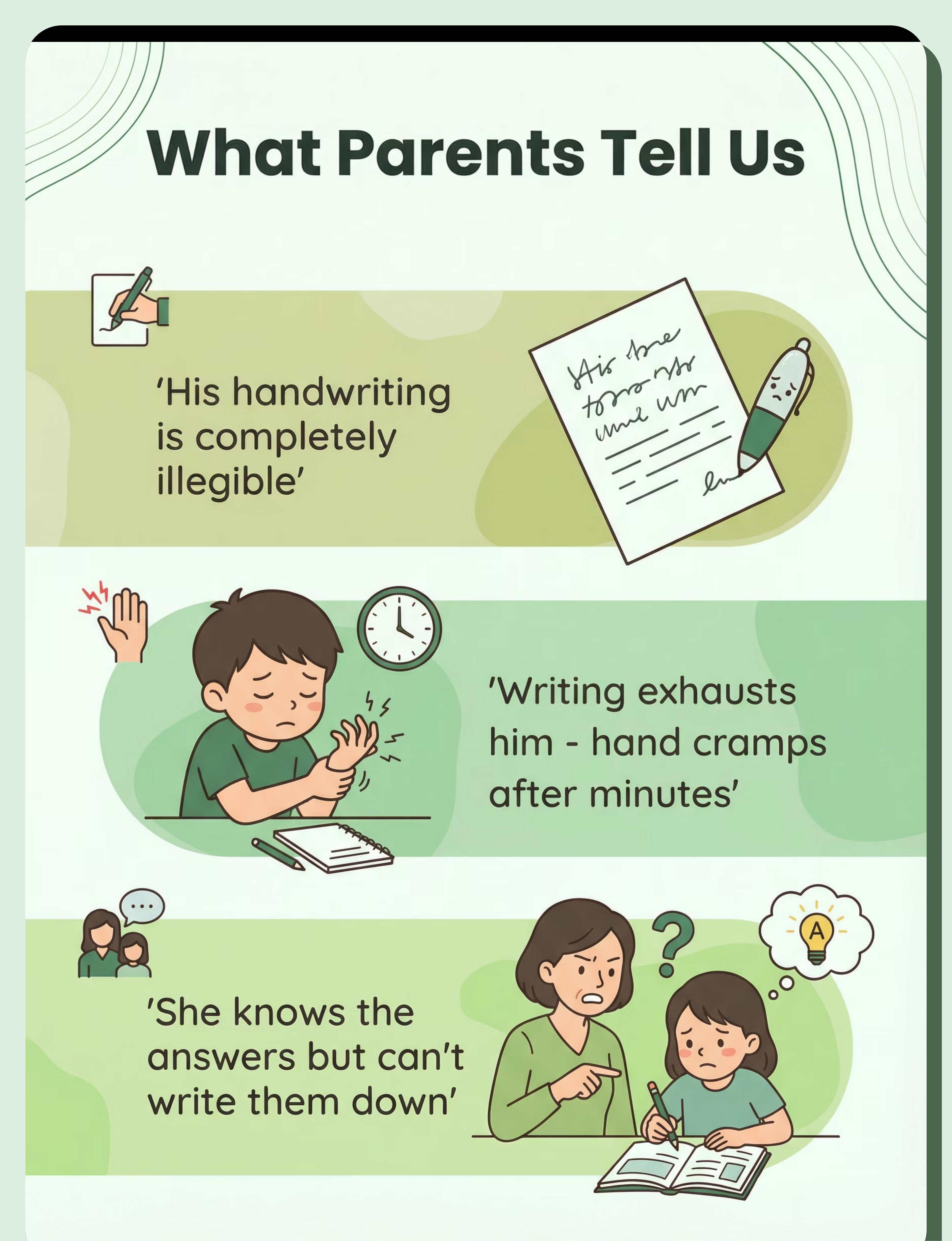
Does This Sound Familiar?
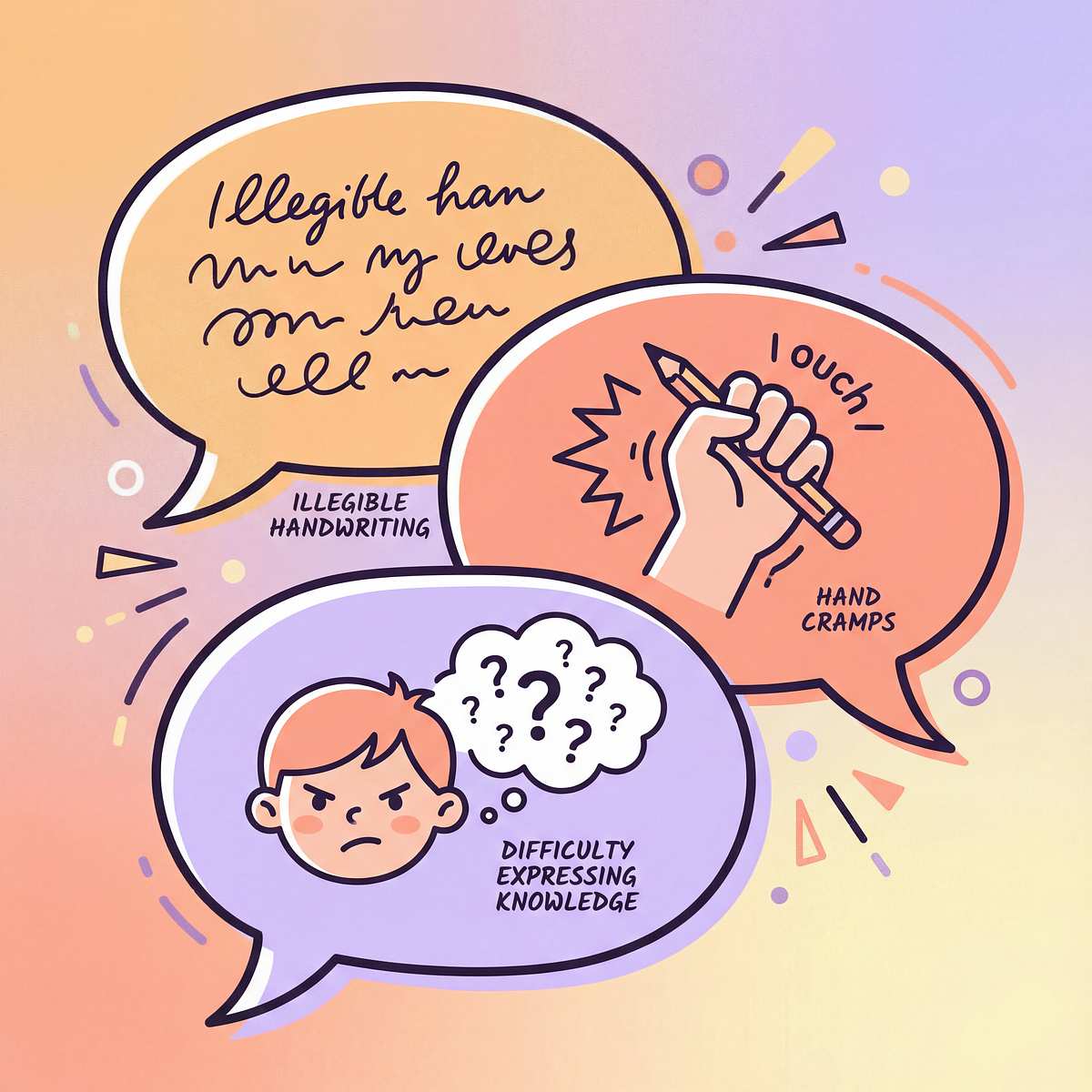
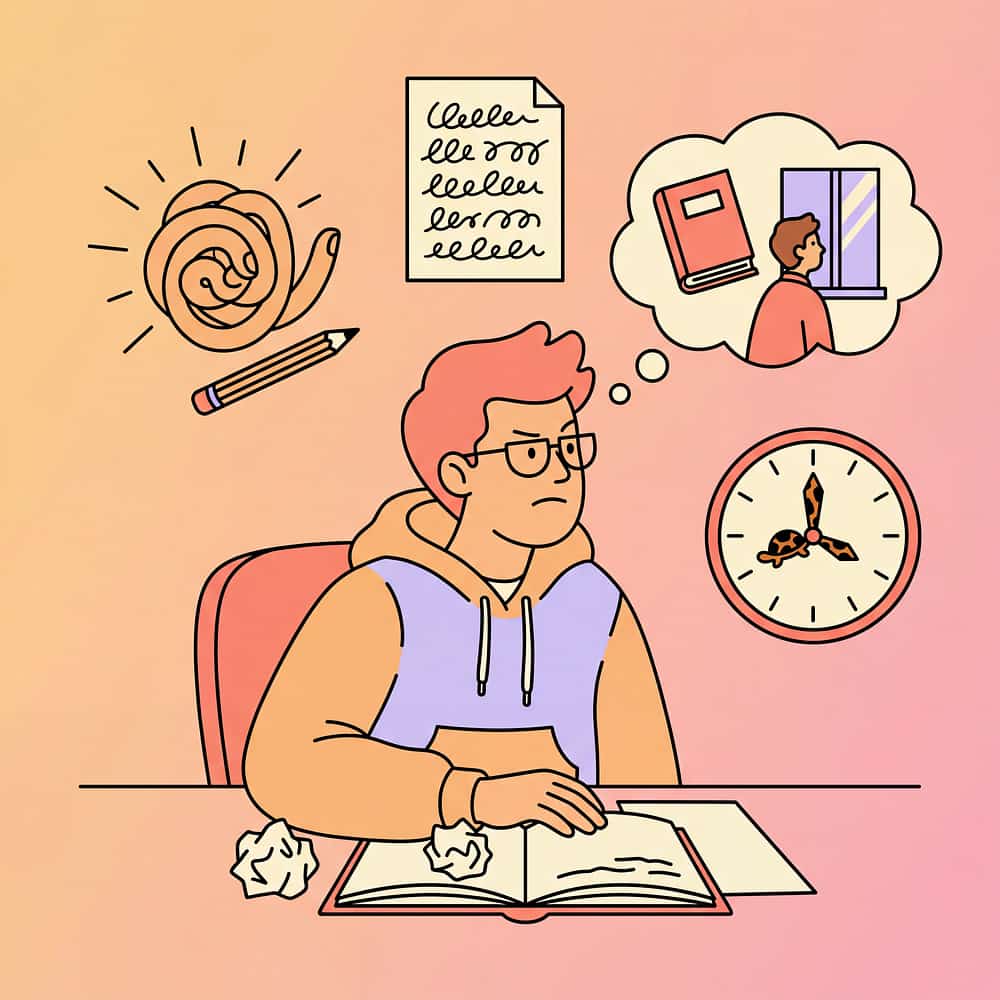
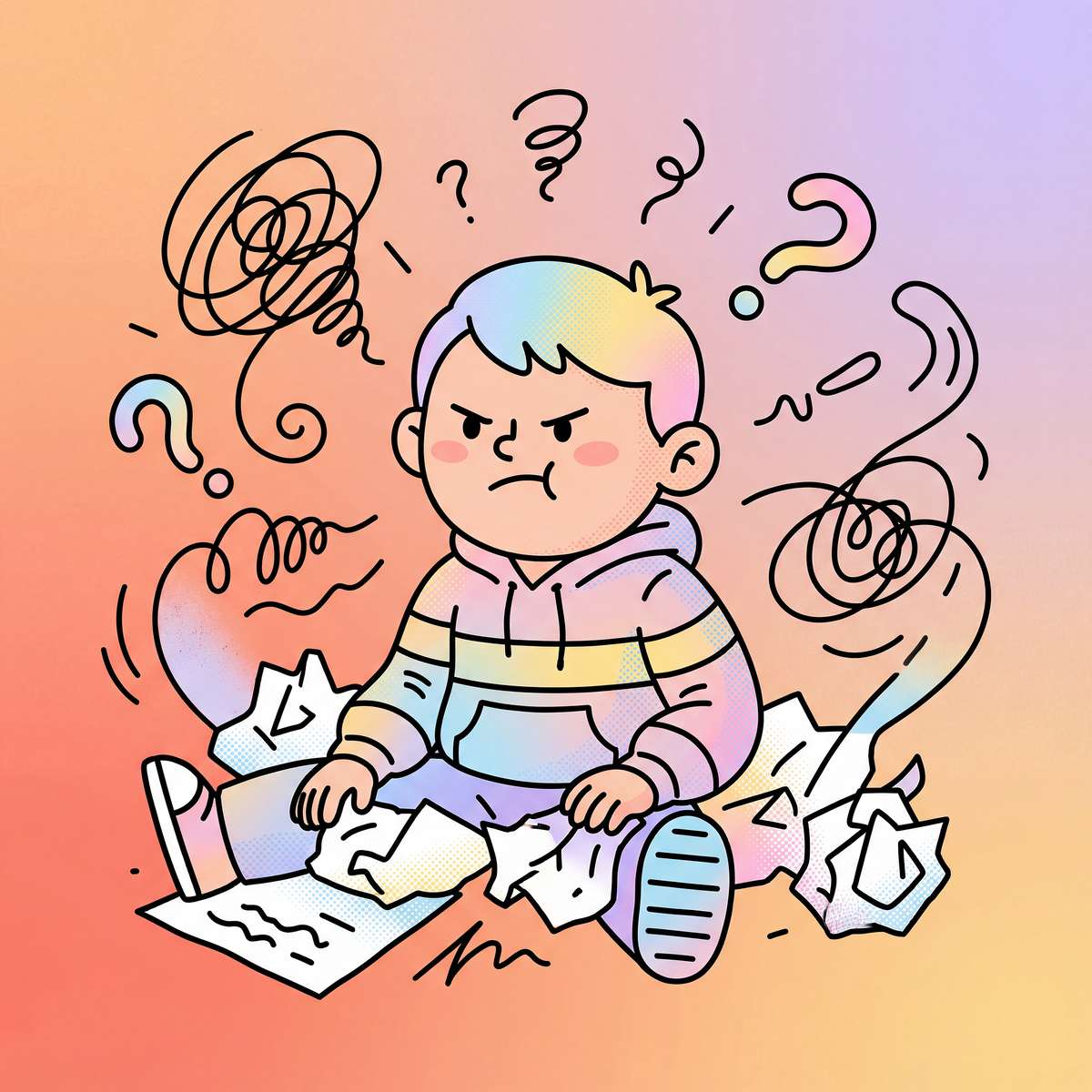
"His handwriting is illegible"
"She refuses to write anything"
"Writing exhausts him - hand cramps"
"She knows the answers but can't write them"
"Homework takes hours because of writing"
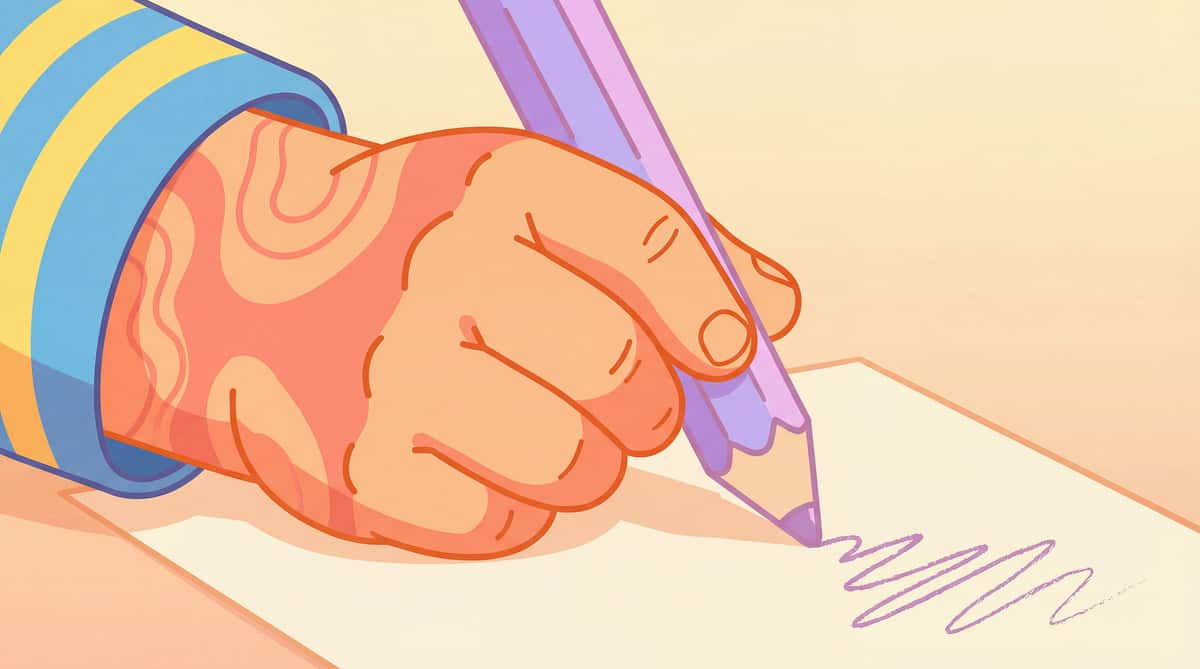
"His pencil grip is all wrong"
You're not alone. These are common challenges faced by families across India when children experience fine motor or written expression difficulties.

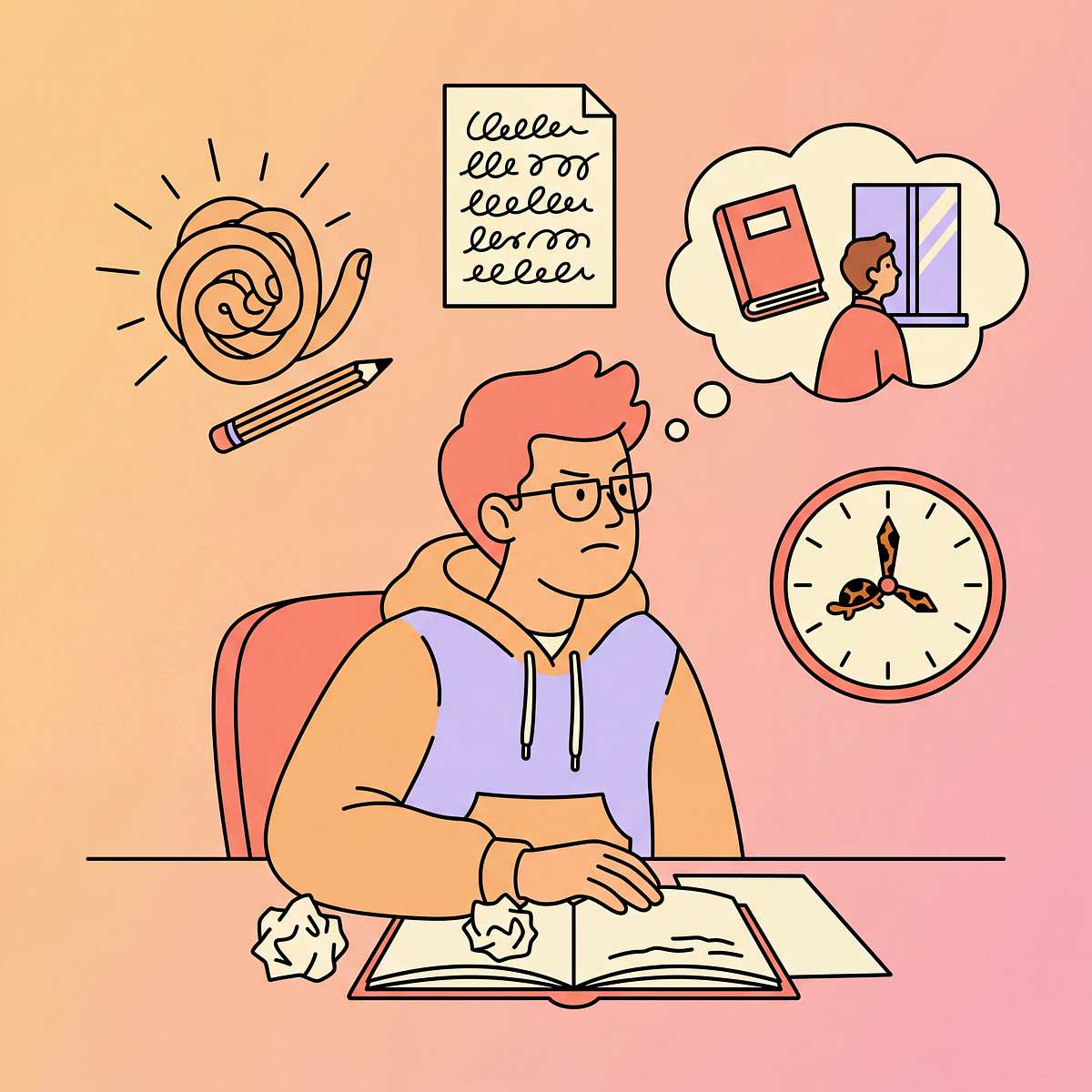
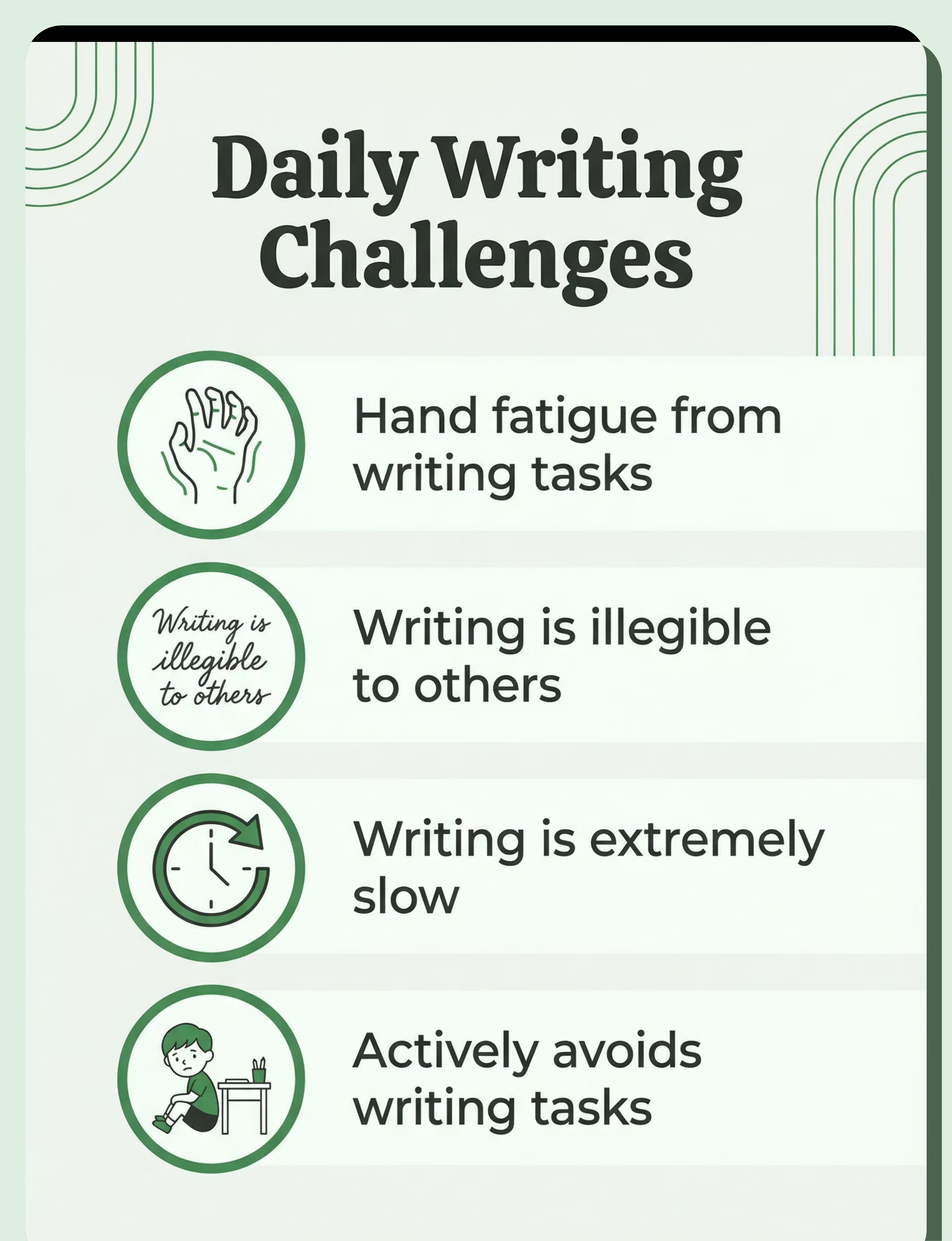
A Day Without the Right Support
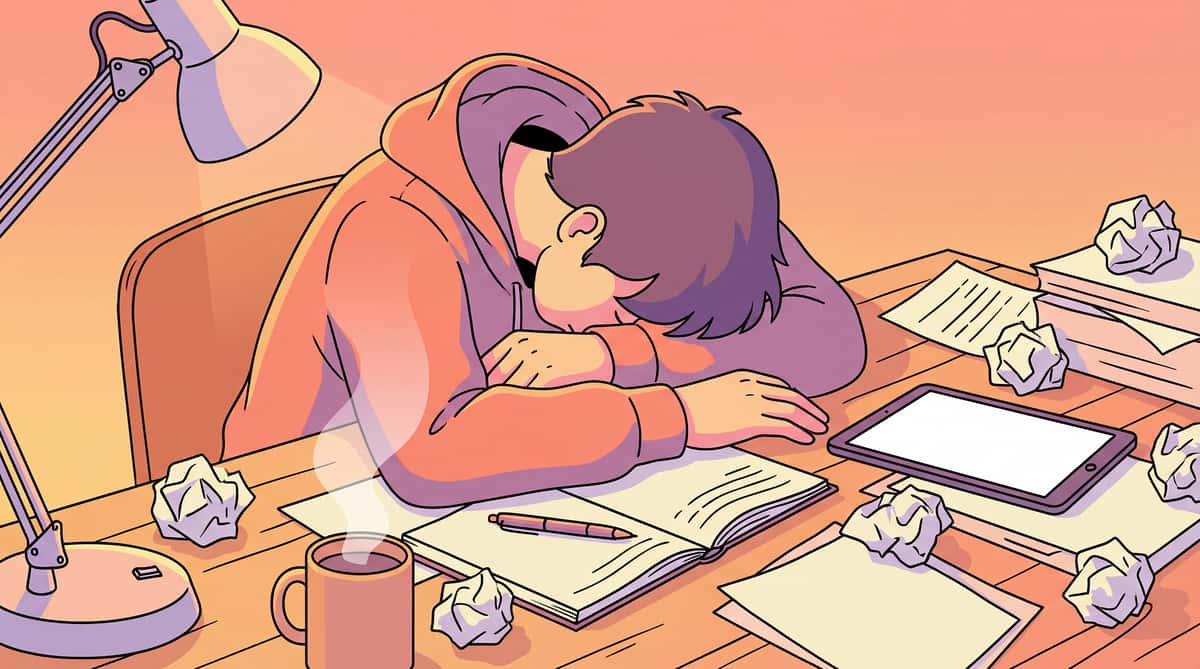
Hand Fatigue
Hand fatigue from writing makes every task feel exhausting. Simple assignments become painful ordeals.
Illegibility
Writing is illegible despite maximum effort. Teachers can't read answers, knowledge remains invisible.
Avoidance
Avoids writing tasks entirely. Incomplete work piles up, confidence erodes daily.
Slowness
Writing is extremely slow. Hours spent on simple tasks, exhaustion replaces learning.
Without proper accommodations, children experience mounting frustration throughout their day. Writing difficulties mask their true abilities and knowledge, creating unnecessary barriers to academic success.

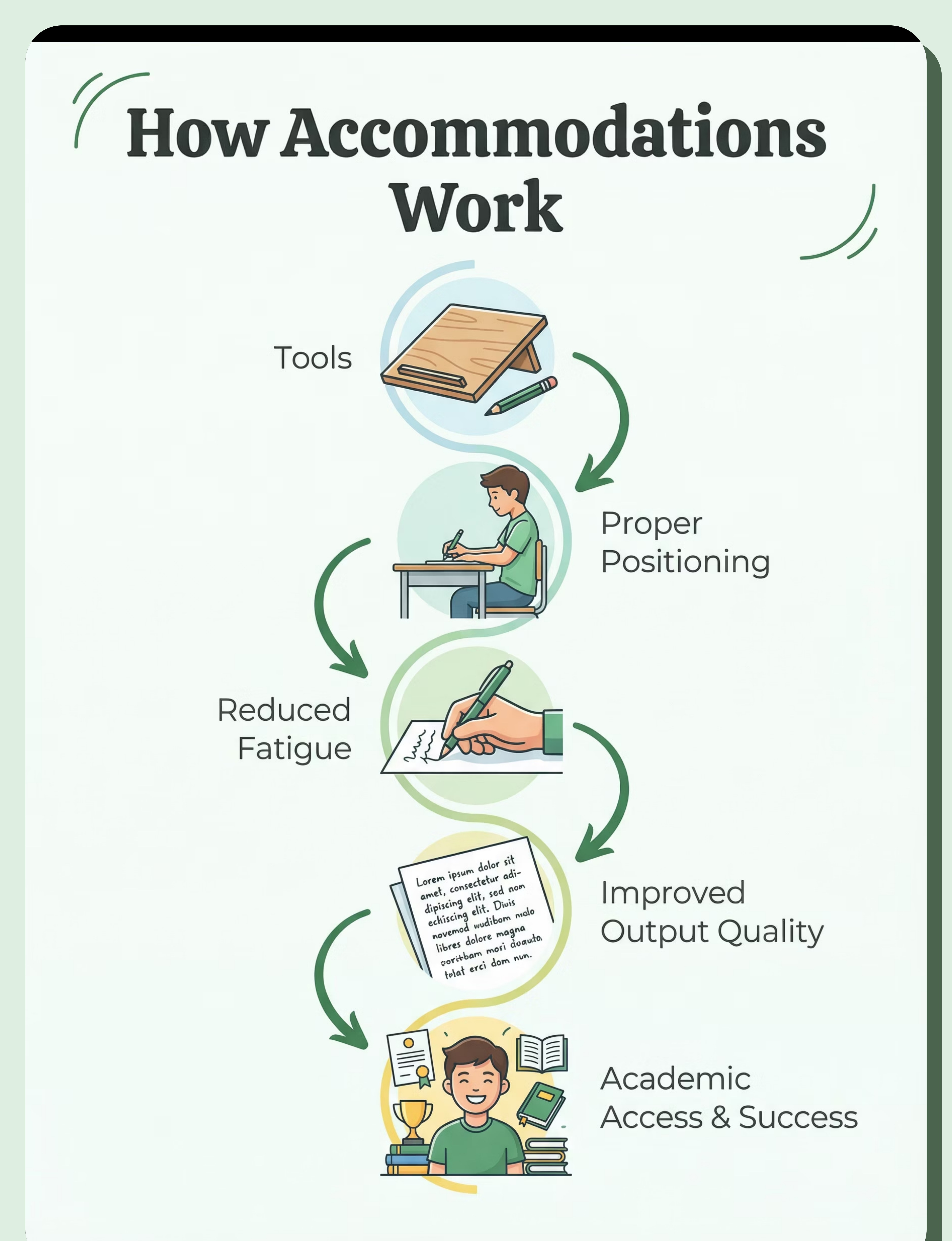
The Science Behind It
Writing Accommodation
Introduce appropriate supports like pencil grips, slant boards, or adapted paper matched to specific needs.
Proper Positioning
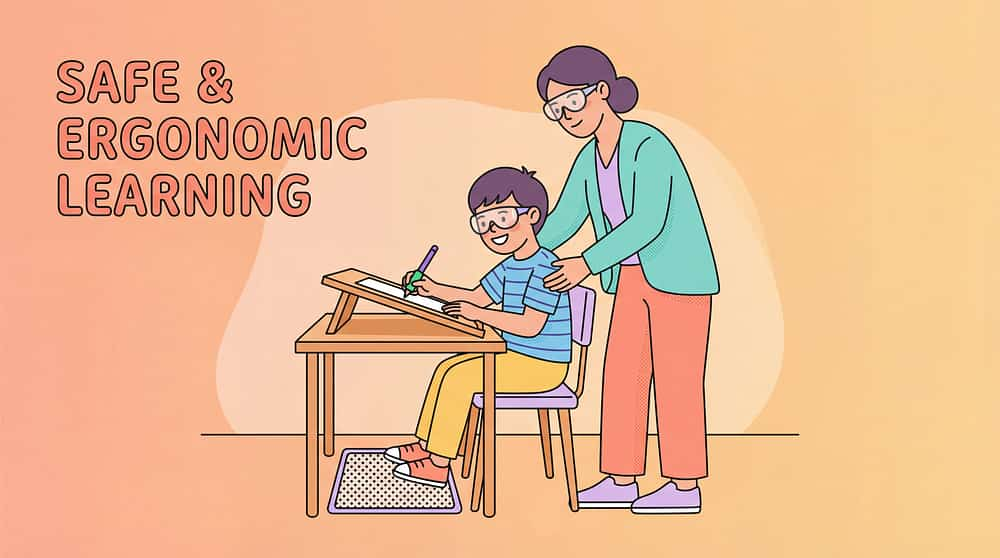
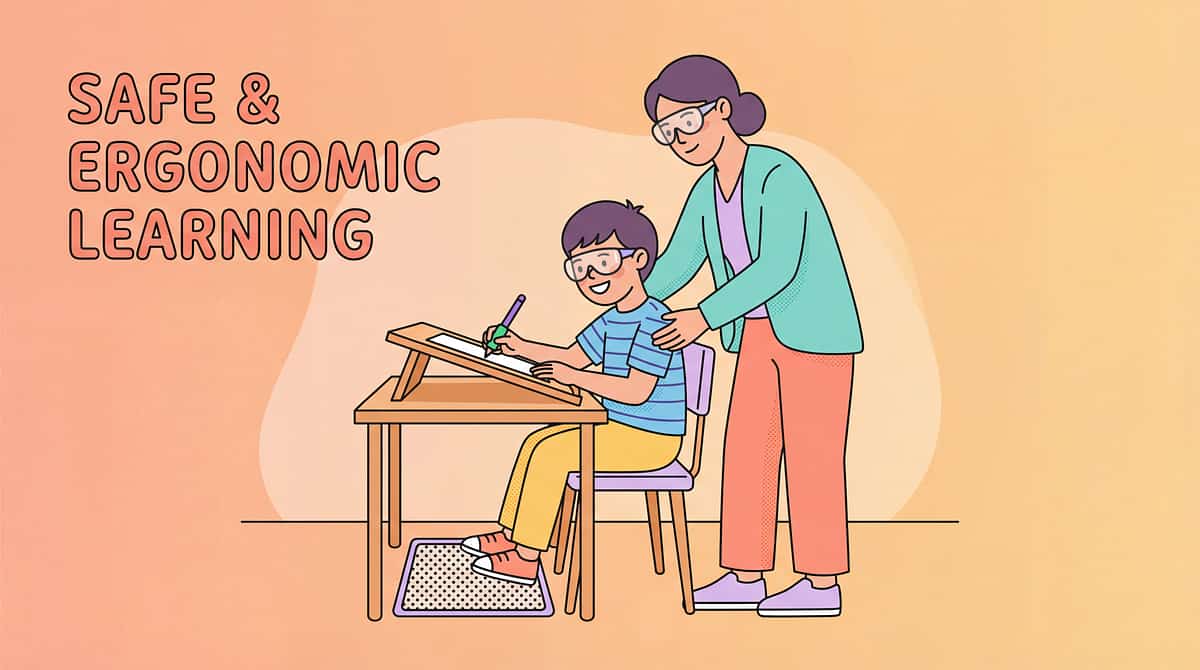
Ergonomic positioning reduces strain, improves wrist angle, and enhances visual access to work.
Reduced Fatigue
Less physical effort required for writing. Hand muscles work efficiently without cramping or pain.
Improved Output
Better quality and quantity of written work. Legibility improves, speed increases appropriately.
Less Frustration
Writing becomes manageable rather than torturous. Willingness to attempt written tasks returns.
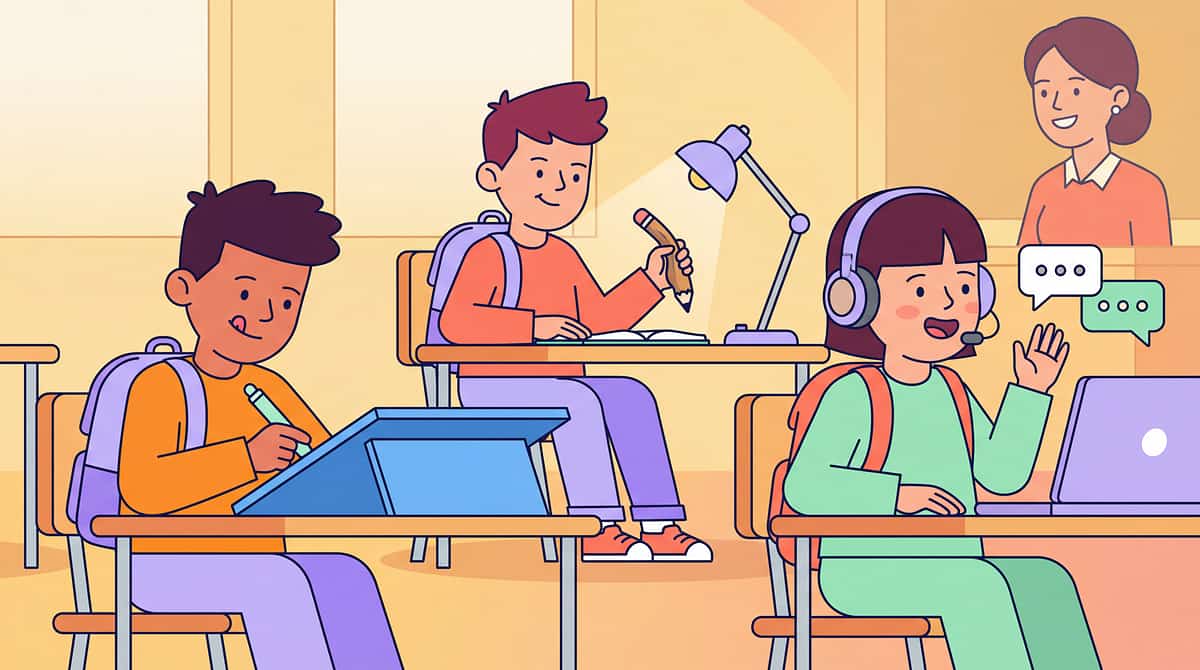
Academic Access
Can demonstrate knowledge through written output. True abilities become visible to teachers.
Success
Academic performance reflects actual knowledge and effort. Confidence and engagement increase.
Fine Motor
Written Expression
Hand Fatigue
Letter Formation
Organization
Academic Output

How to Use It Right
OT Evaluation First
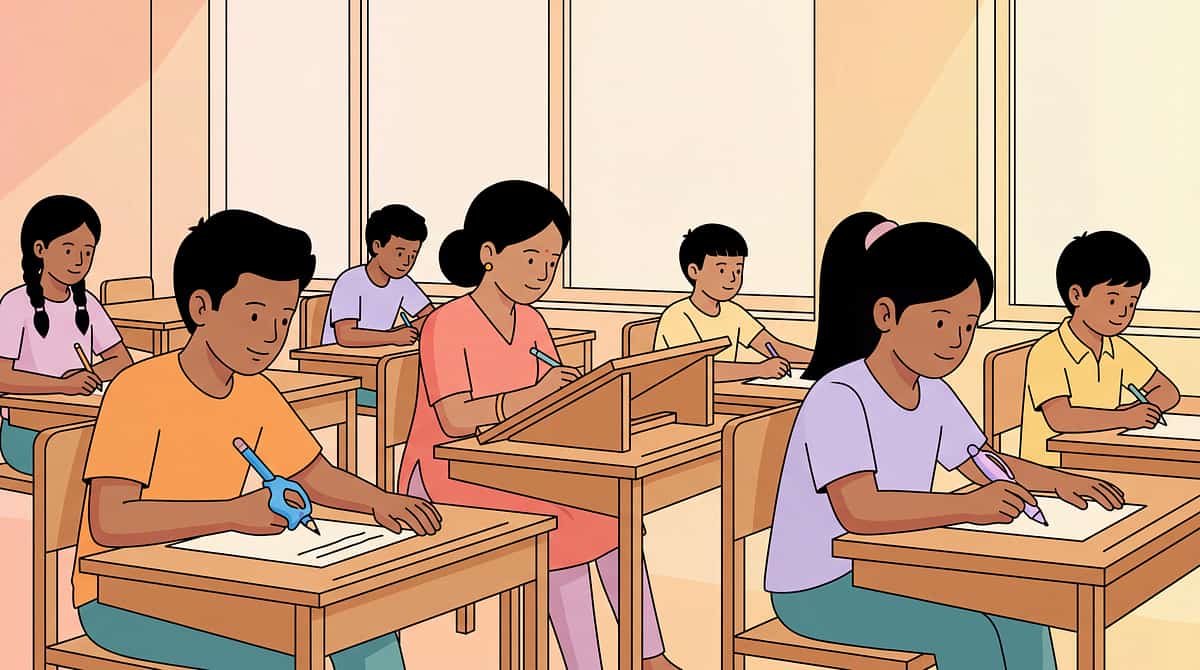
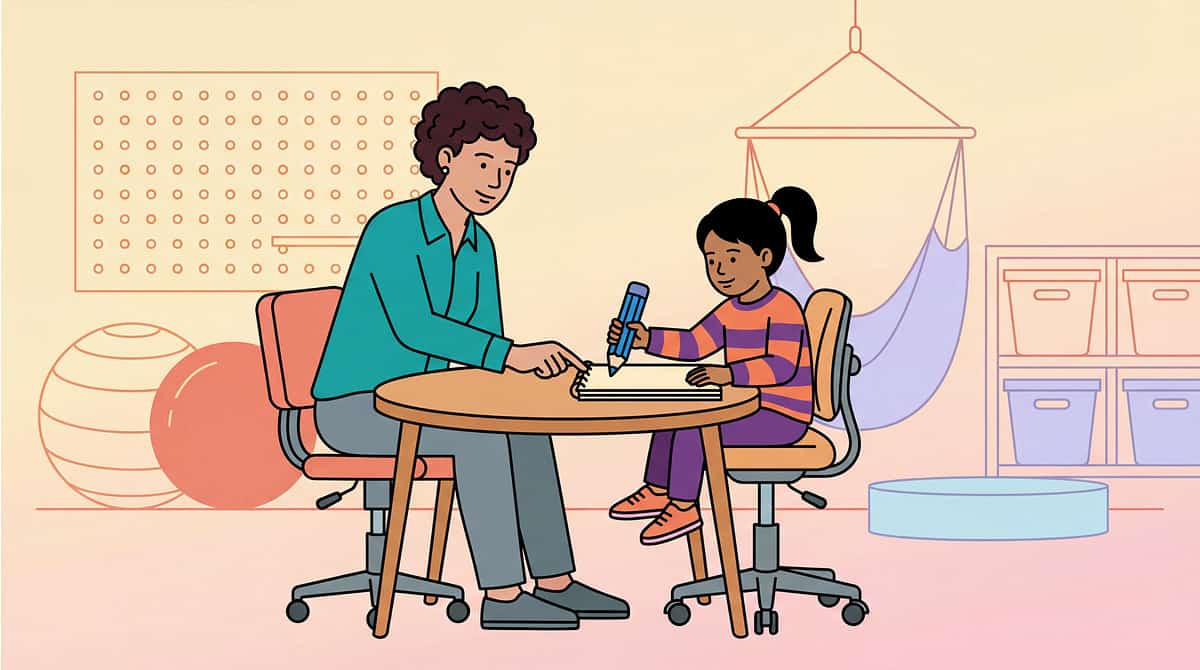
Get an occupational therapy evaluation for specific needs assessment. This ensures accommodations match your child's unique challenges and learning style.
Try Multiple Grip Styles
Experiment with different pencil grip styles to find the best fit. What works varies by child—comfort and effectiveness matter most.
Use Slant Board Consistently
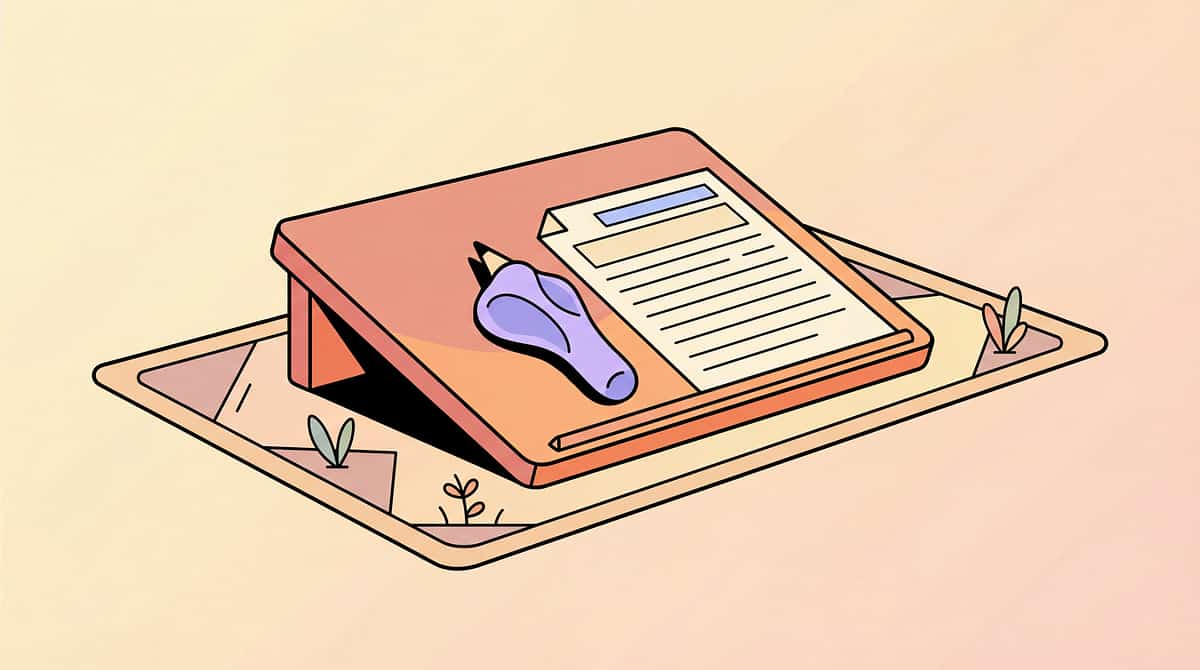
Use slant board for all desk work, not just writing. Proper positioning benefits reading, drawing, and all tabletop activities.
Consider Typed Alternatives
Consider typed alternatives when appropriate for longer assignments. Speech-to-text and keyboarding are valid output methods for demonstrating knowledge.
Reduce Writing Demands
Reduce writing demands when possible through IEP accommodations. Focus on demonstrating knowledge rather than volume of handwriting.
Quality Over Quantity
Prioritize quality over quantity in written output. Brief, legible responses show learning better than lengthy illegible attempts.
Duration: Throughout writing tasks. These accommodations work best when used consistently during all written activities at school and home.

Expert Endorsement
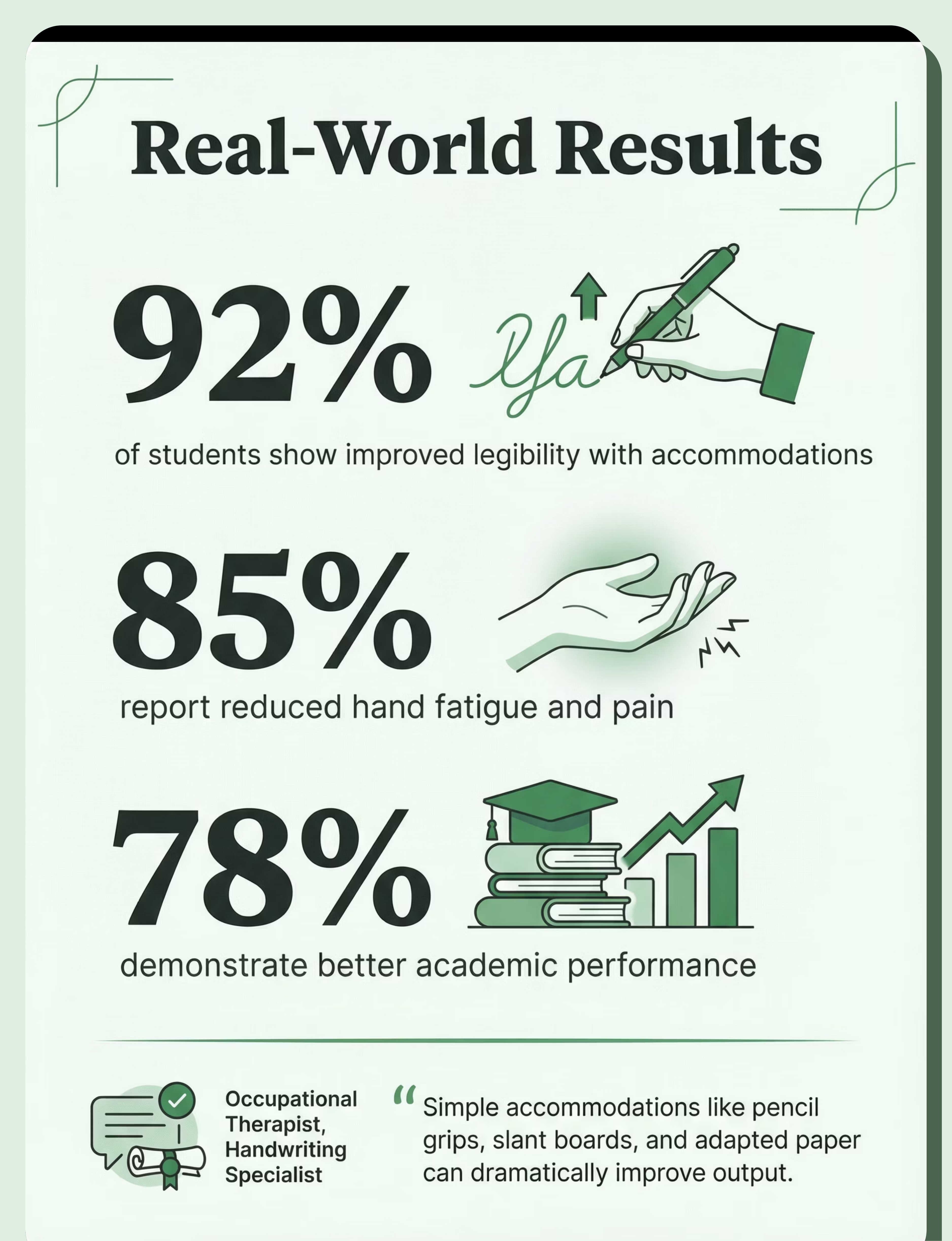
"Writing difficulties can mask a child's true knowledge. Simple accommodations like pencil grips, slant boards, and adapted paper can dramatically improve output. For some children, alternative output methods like typing or speech-to-text are essential for demonstrating their knowledge."— Occupational Therapist, Handwriting Specialist
OT + SpEd Recommended
Strong Evidence
Rank #1 in Category
Daily Use

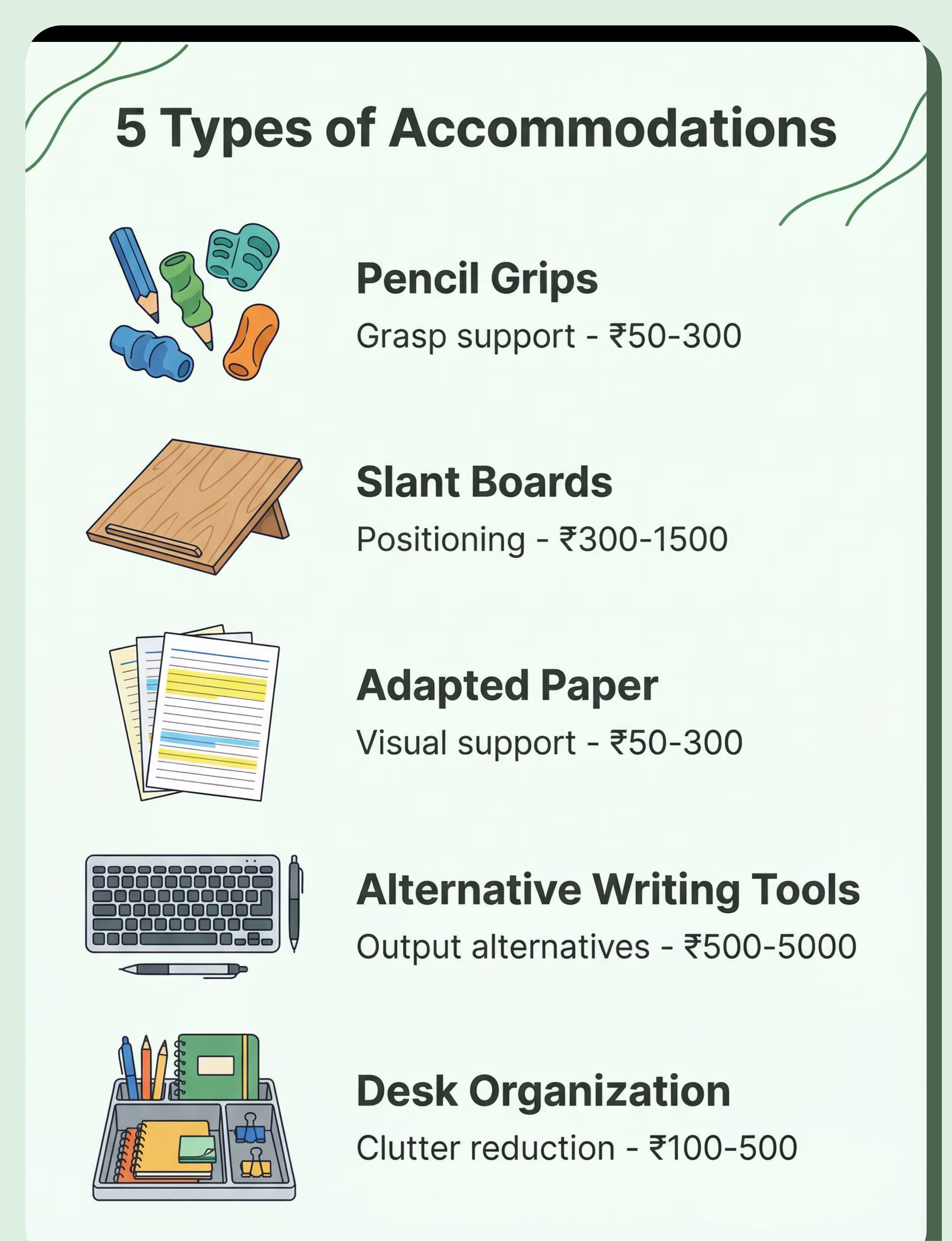
Choose Your Option (5 Variants)
1
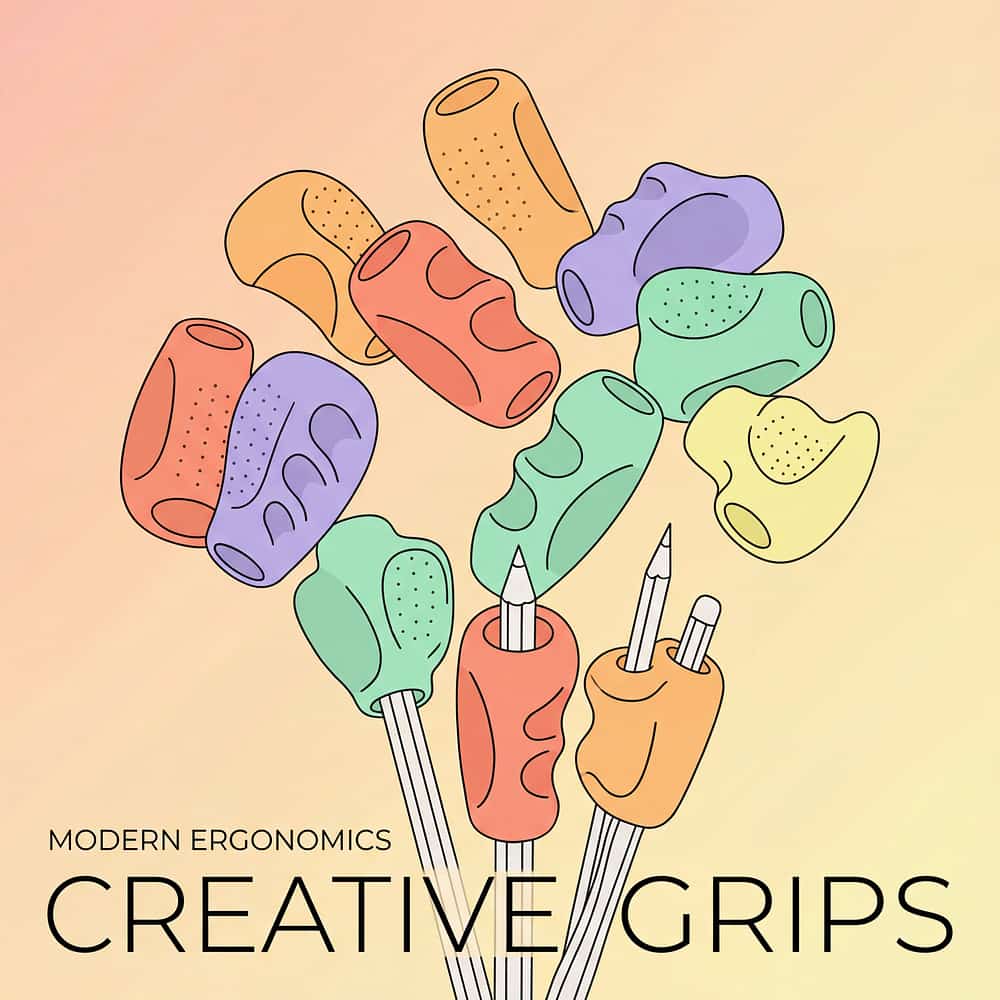
Pencil Grips
Type: Grasp support
Best for: Pencil grasp, hand fatigue, control
Ages: 3+ years
Portability: Very High
Price: ₹50–300
Best for: Pencil grasp, hand fatigue, control
Ages: 3+ years
Portability: Very High
Price: ₹50–300
School
Home
2
Slant Boards
Type: Positioning support
Best for: Wrist position, visibility, posture
Ages: 4+ years
Portability: Medium
Price: ₹300–1,500
Best for: Wrist position, visibility, posture
Ages: 4+ years
Portability: Medium
Price: ₹300–1,500
School
Home
3
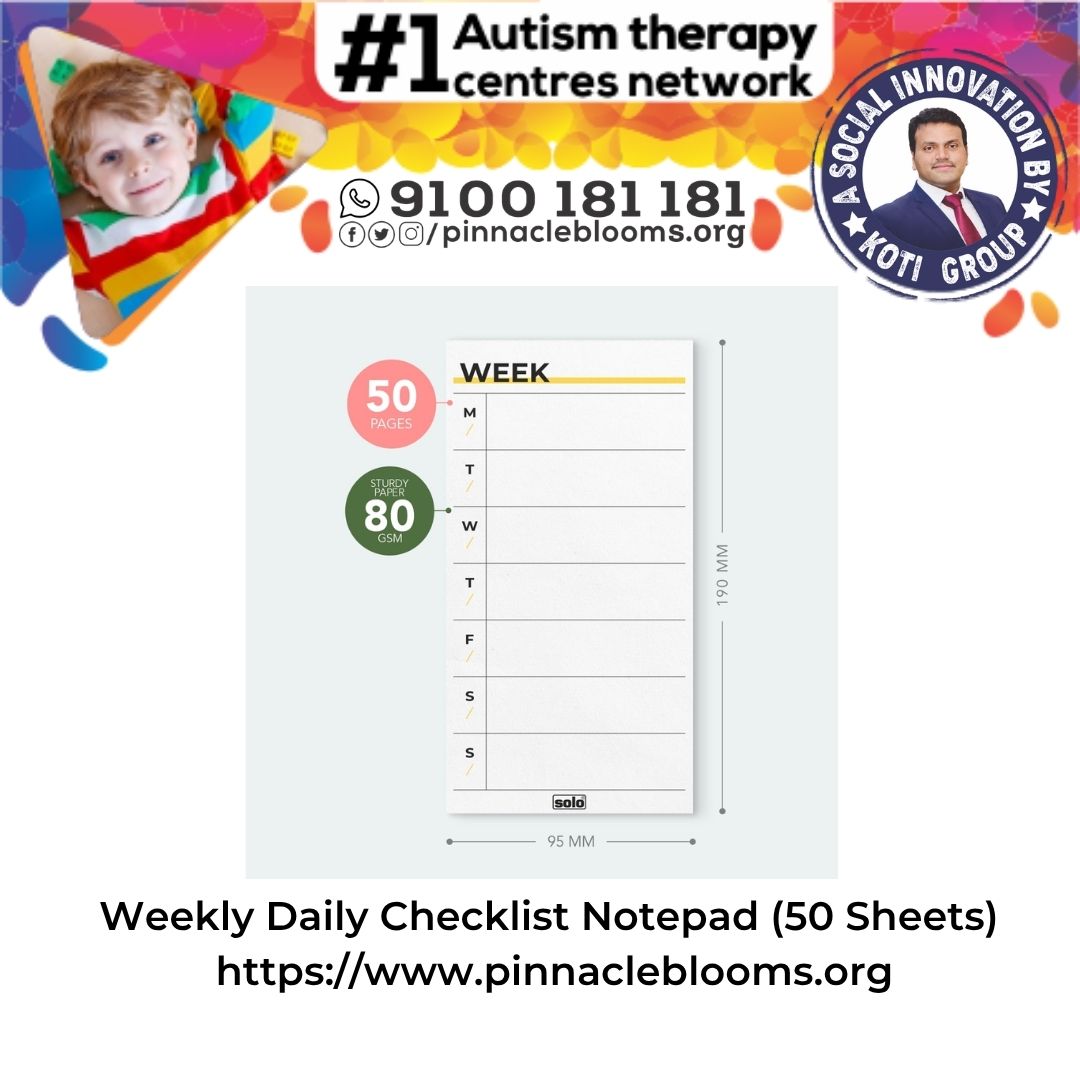
Adapted Paper
Type: Visual writing support
Best for: Letter sizing, spacing, alignment
Ages: 4+ years
Portability: Very High
Price: ₹50–300
Best for: Letter sizing, spacing, alignment
Ages: 4+ years
Portability: Very High
Price: ₹50–300
School
Home
4
Alternative Writing Tools
Type: Output alternative
Best for: Significant writing difficulties
Ages: 5+ years
Portability: Medium-High
Price: ₹500–5,000
Best for: Significant writing difficulties
Ages: 5+ years
Portability: Medium-High
Price: ₹500–5,000
School
Home
5
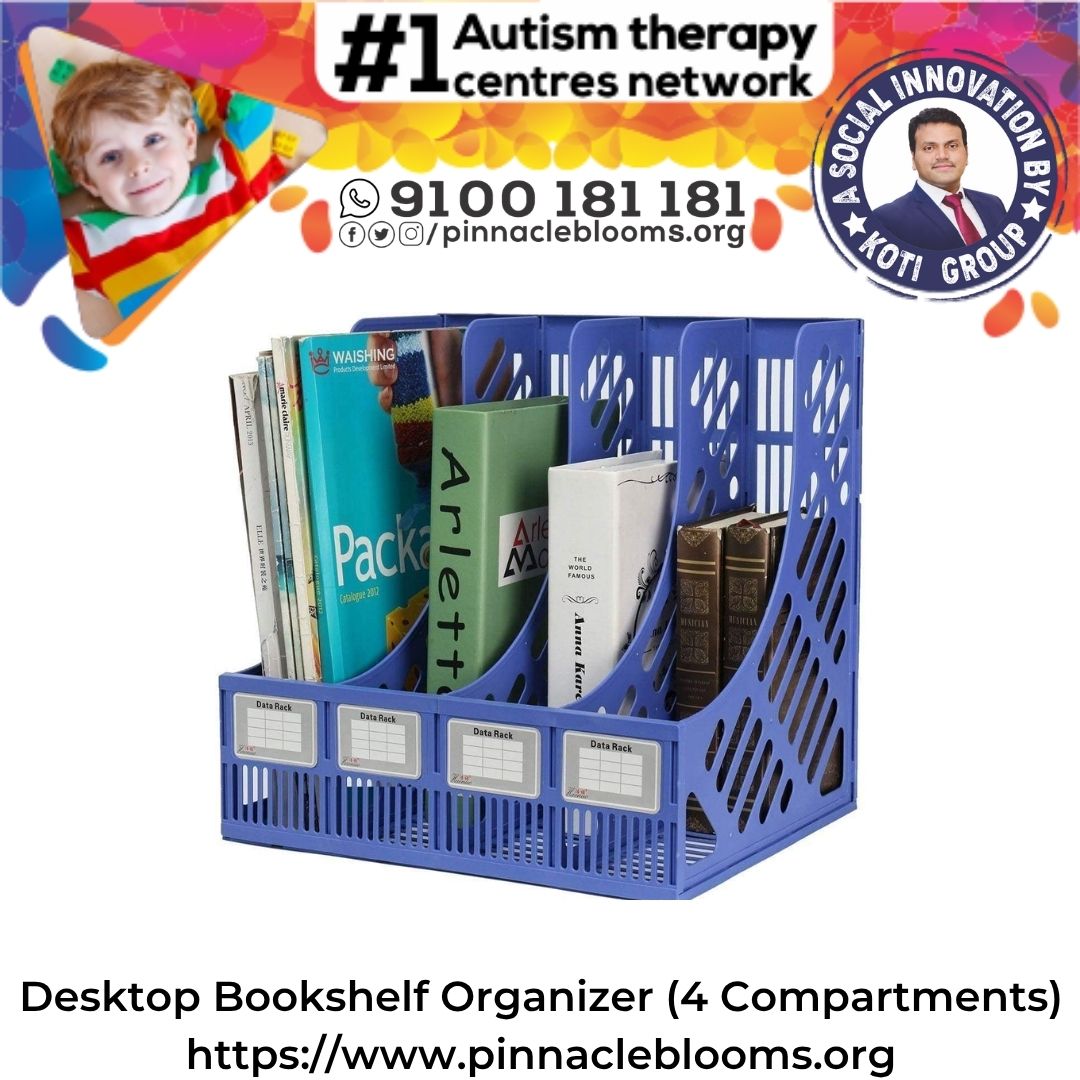
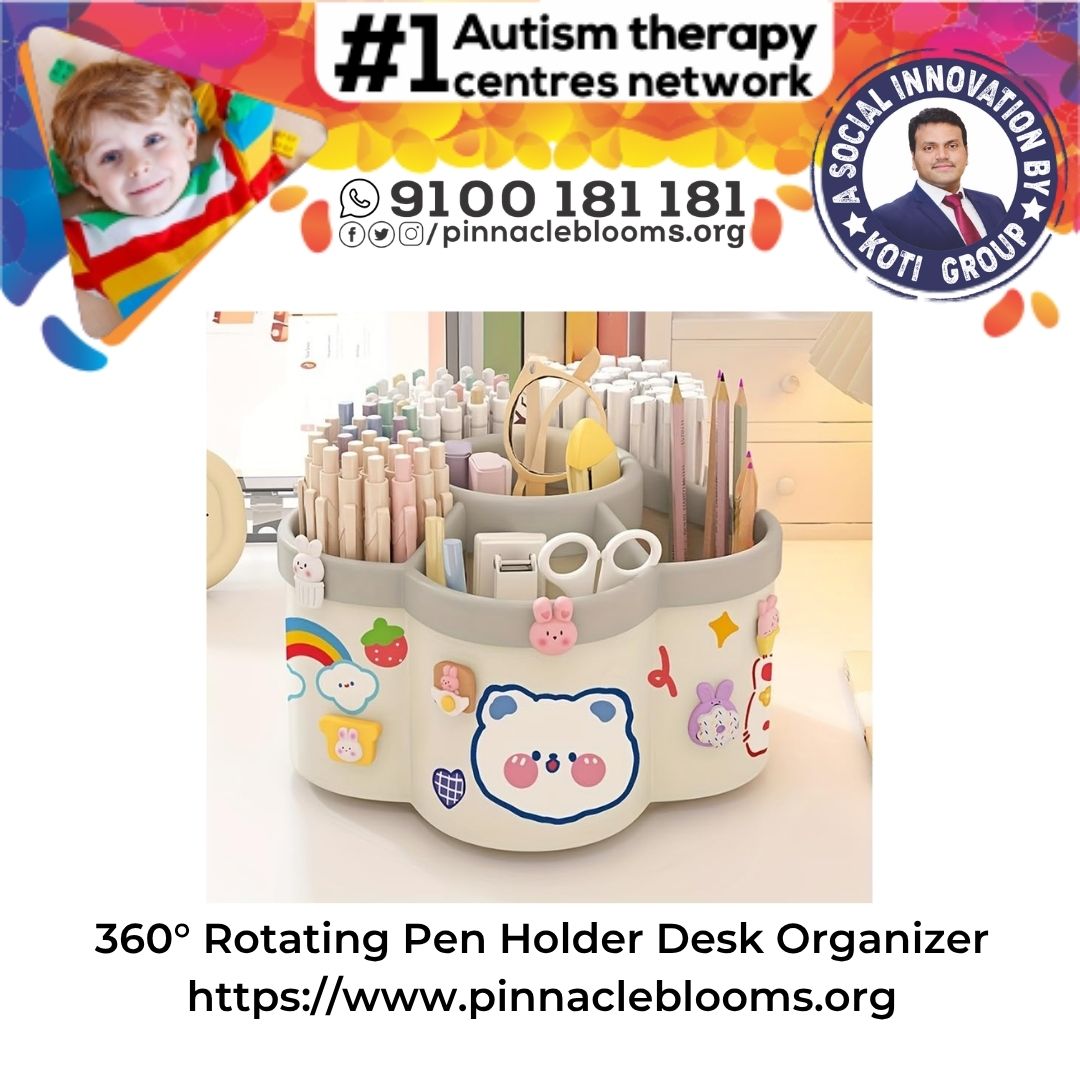
Desk Organization Tools
Type: Organization support
Best for: Keeping materials organized, reducing clutter
Ages: 4+ years
Portability: Medium
Price: ₹100–500
Best for: Keeping materials organized, reducing clutter
Ages: 4+ years
Portability: Medium
Price: ₹100–500
School
Home
How to Choose
By Goal
- Grasp issues → Pencil grips
- Positioning → Slant board
- Visual guides → Adapted paper
- Severe difficulties → Alternative tools
By Setting
- School → All options
- Home → All options
- Portable → Grips, paper
- Stationary → Slant board, organizers
By Age
- Preschool (3+) → Grips
- Primary (4+) → All basics
- Upper primary (5+) → Add alternatives
- All ages → Organization tools
Specifications & Types Guide
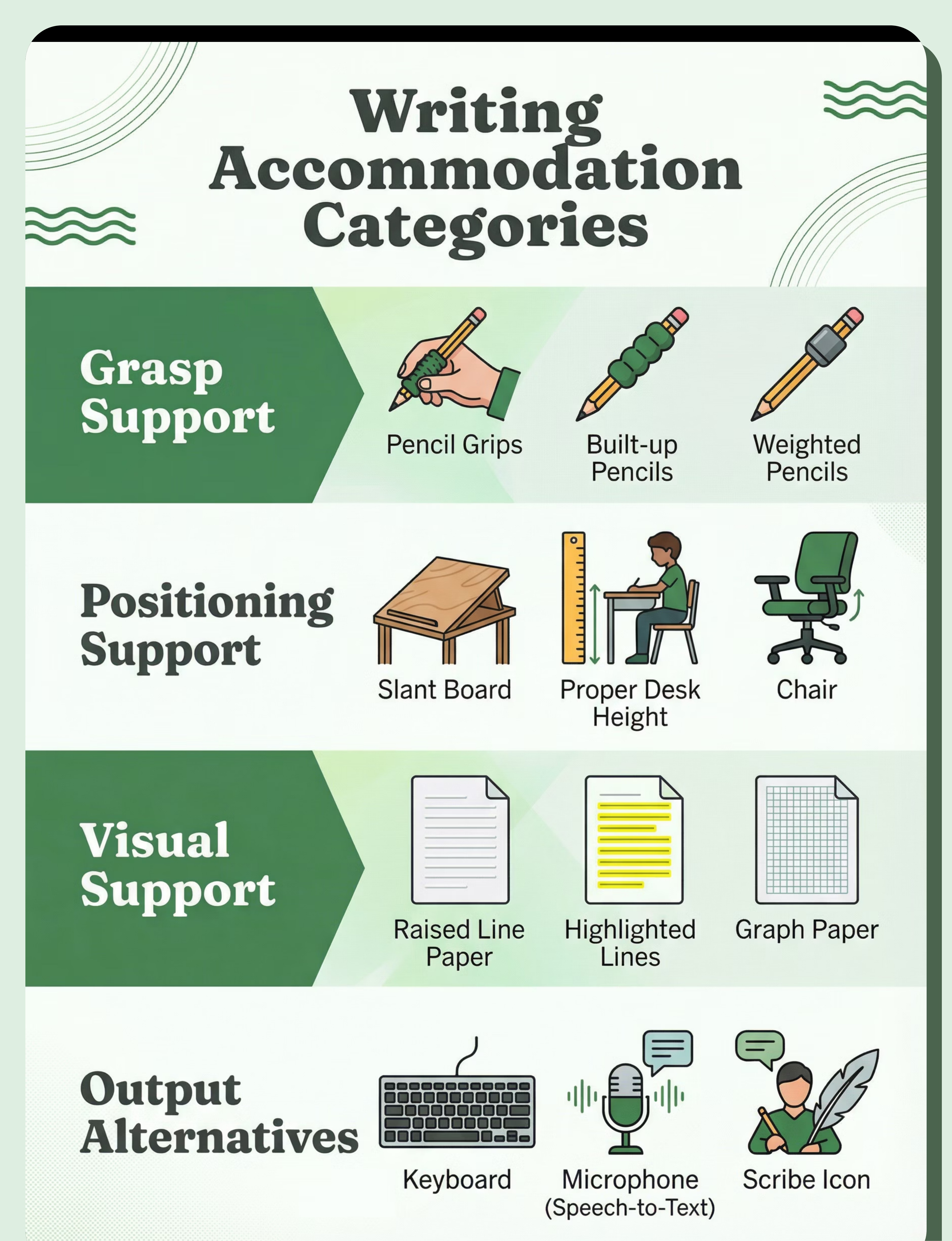
Writing Accommodations by Need

Grasp Support
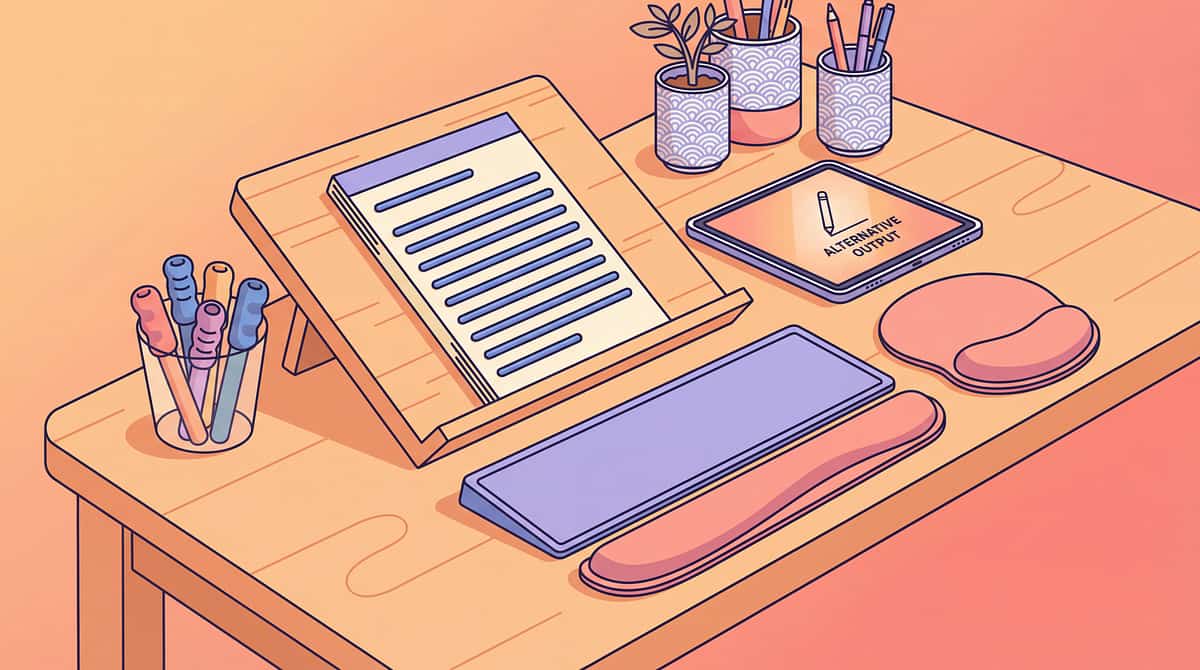
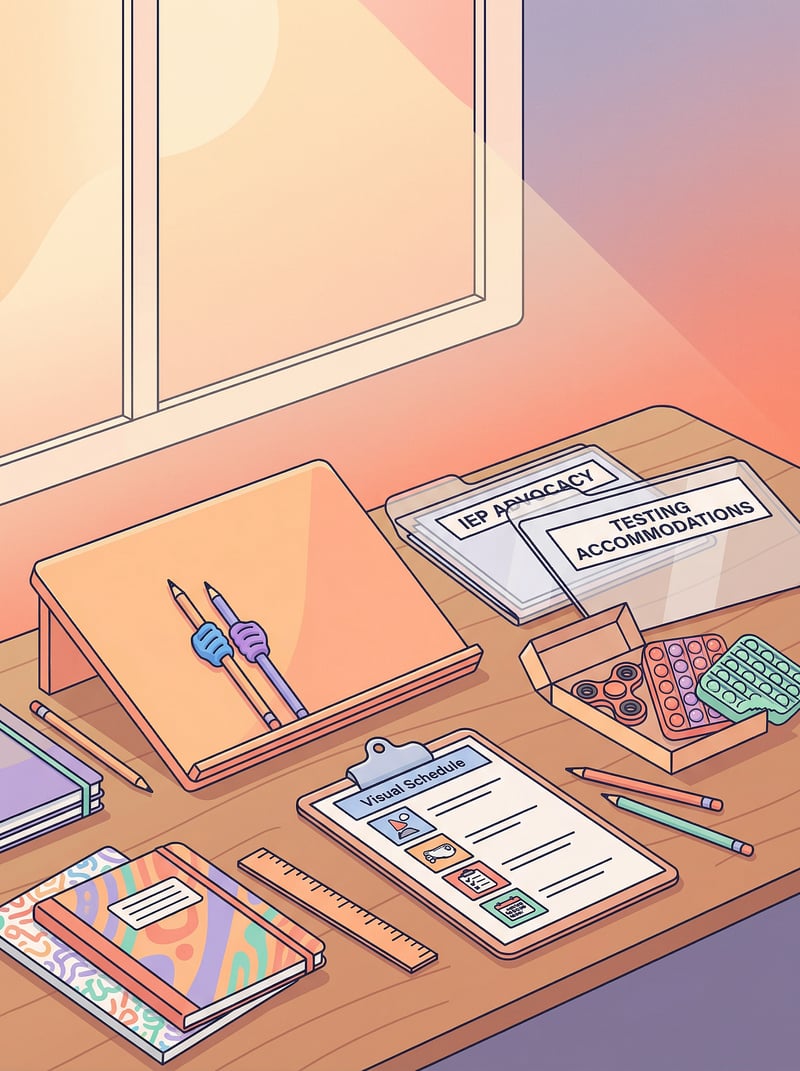
Pencil grips, built-up pencils, weighted pencils for proper pencil hold and reduced fatigue.

Positioning Support
Slant boards, proper desk height, appropriate seating for optimal wrist angle and visual access.

Alternative Output
Keyboard, speech-to-text, scribe services, reduced writing demands when handwriting significantly impairs output.

Organization Support
Desk organizers, visual cues, minimized clutter for maintaining materials and reducing distractions.
Materials & Key Features
- Rubber/plastic grips: Comfortable, moldable, various shapes for different grasp patterns
- Wood/plastic slant boards: Adjustable angles (typically 20-30 degrees), stable, portable
- Specialized paper: Raised lines, color-coded lines, appropriate spacing for developmental level
Essential Features
- Ergonomic: Reduces strain, supports natural positioning
- Easy to use: Child can use independently or with minimal support
- Effective: Matches child's specific needs and improves output
- Durable: Withstands daily school and home use
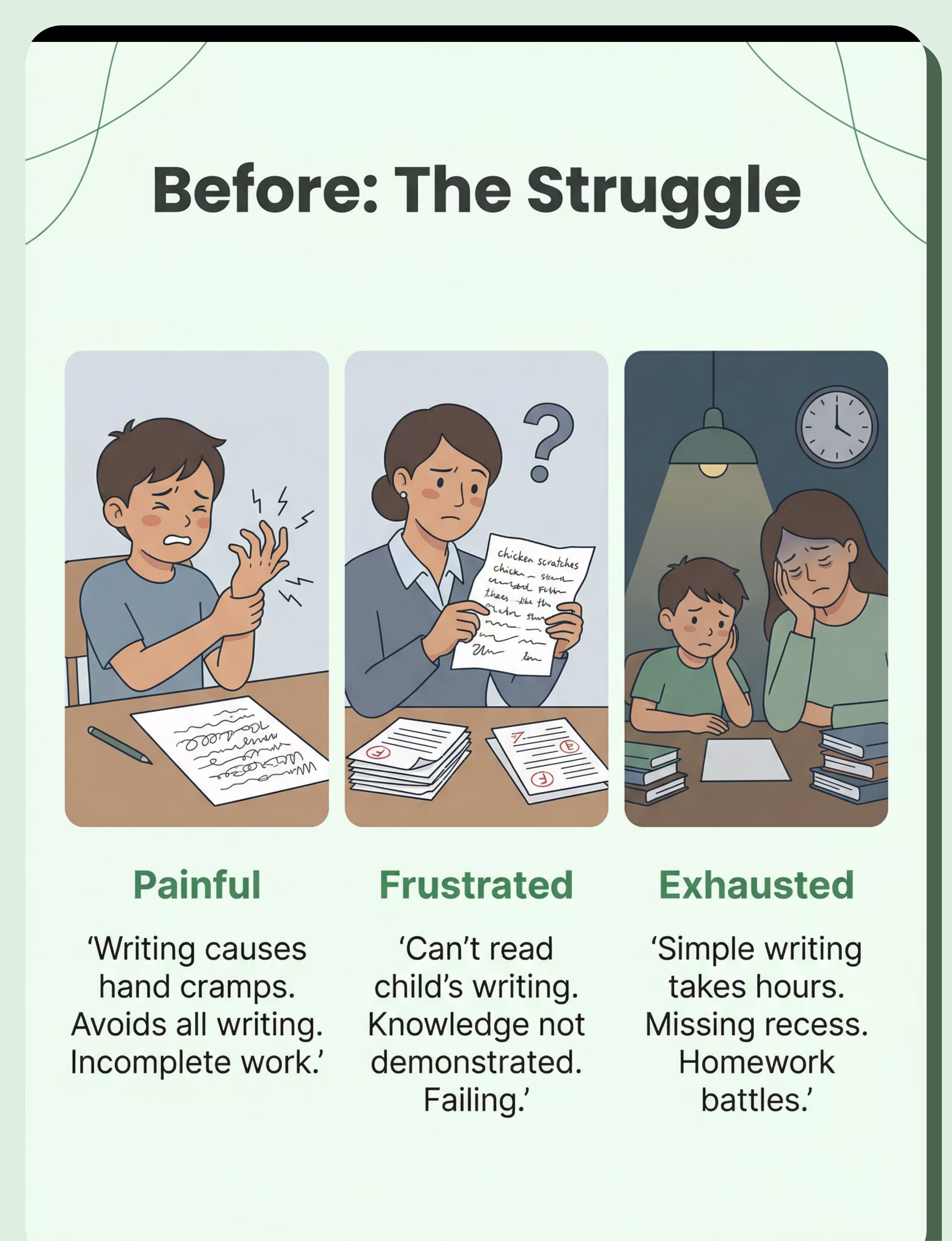
The Struggle (Before)
Hand Pain and Fatigue

Situation: Writing causes hand cramps. Child avoids writing. Incomplete work. Lower grades than ability. Writing is torture.
Experience: Every writing task brings physical pain. Hand muscles cramp within minutes. Avoidance becomes the coping strategy, but work remains incomplete.
Emotion: Painful, avoiding
Illegible Handwriting

Situation: Can't read child's writing. Teachers can't grade it. Child's knowledge not demonstrated. Failing despite knowing material.
Experience: Putting tremendous effort into writing, but the output remains illegible. Teachers mark work wrong not because answers are incorrect, but because they can't be read. Knowledge is invisible.
Emotion: Frustrated, failing
Writing Takes Forever

Situation: Simple writing task takes hour. Homework battles. Missing recess to finish work. Exhausted by writing demands.
Experience: A five-minute assignment becomes an hour-long ordeal. Missing play time to finish work. Homework battles consume evenings. So exhausted from writing that no energy remains for learning.
Emotion: Slow, exhausted

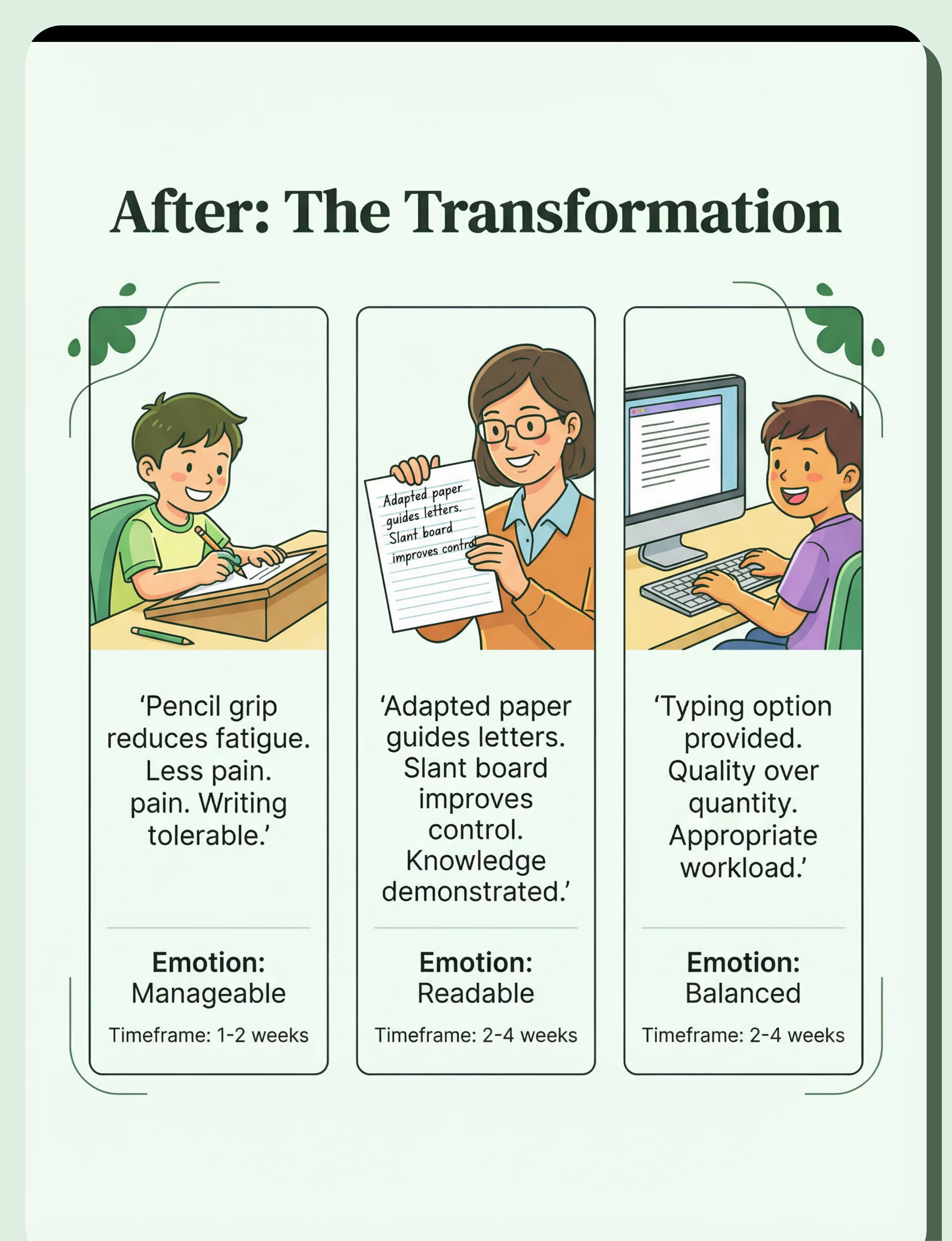
The Breakthrough (After)
Hand Pain and Fatigue
Situation: Pencil grip reduces fatigue. Slant board improves position. Less pain. More output. Writing tolerable.
Experience: Proper grip distributes pressure. Angled surface reduces wrist strain. Can write for longer periods without cramping. Actually completing assignments.
Emotion: Manageable, productive
1-2 weeks
Illegible Handwriting
Situation: Adapted paper guides letter size. Slant board improves control. Keyboarding for longer work. Knowledge demonstrated.
Experience: Visual guides on paper help with sizing and spacing. Better positioning improves control. For longer assignments, typing reveals true knowledge. Teachers can finally see what child knows.
Emotion: Readable, demonstrating
2-4 weeks
Writing Takes Forever
Situation: Reduced writing demands in IEP. Typing option provided. Quality over quantity. Appropriate workload. Time for learning, not just writing.
Experience: IEP reduces volume requirements. Alternative output options available. Focus shifts to demonstrating knowledge rather than quantity of handwriting. Time freed up for actual learning.
Emotion: Appropriate, balanced
2-4 weeks

What to Expect (Realistic Timelines)
Writing needs assessed
Occupational therapy evaluation identifies specific challenges, grip patterns, positioning needs, and appropriate accommodations for your child's unique profile.
1-2 weeks
Accommodations in place
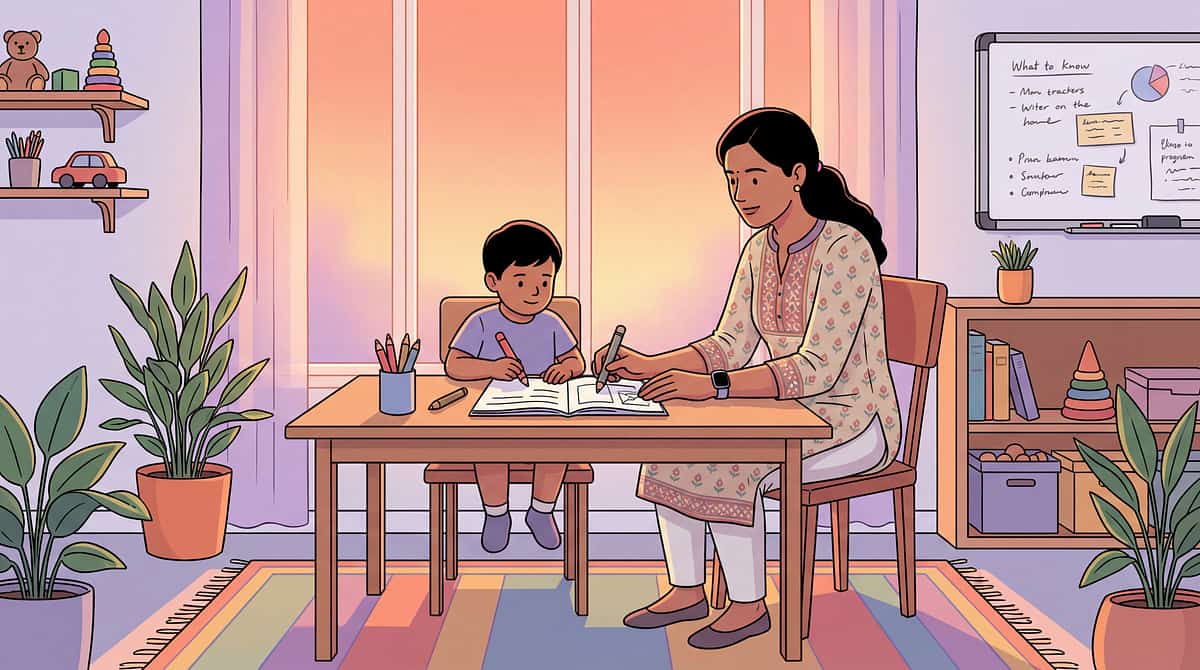
Tools obtained and introduced. School implements IEP accommodations. Child learns to use grips, slant board, and adapted materials consistently.
2-4 weeks
Reduced fatigue and pain
Hand cramping decreases noticeably. Can write for longer periods without discomfort. Ergonomic positioning reduces physical strain during desk work.
1-2 weeks
Improved output quality
Handwriting becomes more legible. Letter sizing and spacing improve. Teachers can read and accurately grade work. True knowledge becomes visible.
2-4 weeks
Better academic demonstration
Grades begin to reflect actual knowledge and effort. Confidence increases. Willingness to attempt written work returns. Academic engagement improves across subjects.
4-8 weeks
These timelines represent typical progress when accommodations are matched to needs and used consistently. Every child's journey is unique. Ongoing OT support optimizes outcomes.

Is This Right for My Child? (2-Minute Check)
1
Does your child have difficulty with handwriting?
If yes, this indicates: Writing accommodations may help improve legibility, reduce frustration, and support academic output.
Confidence score: 90%
2
Does writing cause hand pain or fatigue?
If yes, this indicates: Ergonomic supports needed. Pencil grips, slant boards, and positioning accommodations can significantly reduce physical strain.
Confidence score: 92%
3
Is your child's knowledge not reflected in written work?
If yes, this indicates: Alternative output may help. Typing, speech-to-text, or reduced writing demands can reveal true knowledge.
Confidence score: 88%
4
Does your child avoid or resist writing tasks?
If yes, this indicates: Writing is difficult - explore accommodations. Avoidance signals genuine struggle, not laziness or defiance.
Confidence score: 85%
3+ 'yes' answers = strong fit. If you answered yes to three or more questions, desk and writing accommodations are likely to significantly benefit your child. Schedule an occupational therapy evaluation for personalized recommendations.

Usage Guide
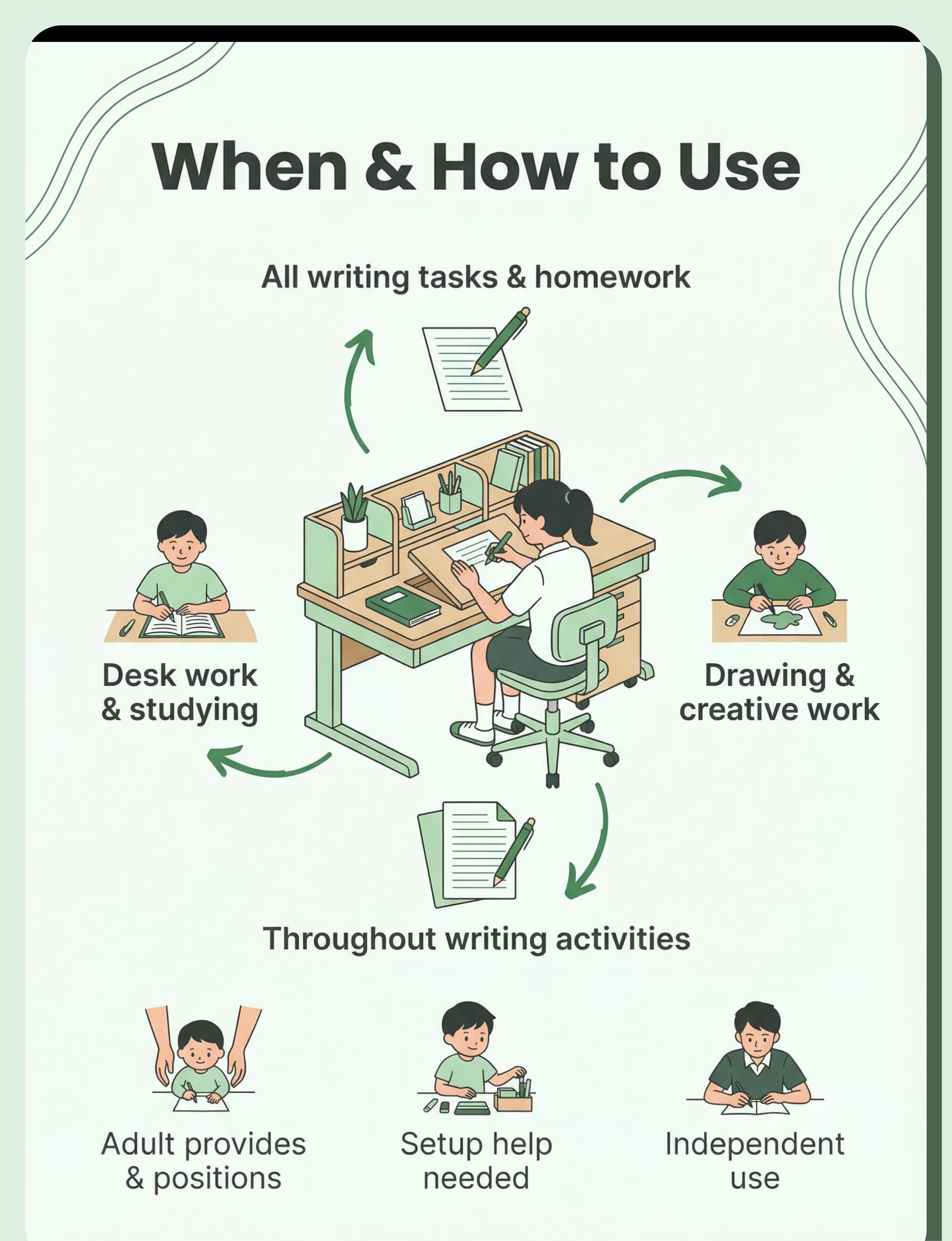
When to Use
All writing tasks - from brief responses to longer compositions
Desk work - reading, math, any tabletop activities
Drawing activities - art projects, diagrams, illustrations
Homework - consistent use across all settings for maximum benefit
When NOT to Use
When child prefers without (for some tasks) - allow choice when appropriate
If causing more difficulty than helping - reassess and adjust accommodations
Supervision by Age
Age Range | Supervision | Notes | |
Young (3-5 years) | Adult provides and positions | Full support for tool selection, setup, and proper use | |
Developing (6-9 years) | Self-access with setup help | Growing independence with occasional reminders and adjustments | |
Older (10+ years) | Independent use | Self-advocates for needed accommodations across settings |
Settings & Duration
Settings: School • Home • Therapy • Homework environments - consistency across all settings maximizes benefit and skill development.
Duration: Throughout writing tasks - accommodations work best when used consistently for all written activities, not reserved only for difficult assignments.

Safety First
Critical Safety
- Correct size for child - grips and tools must fit hand size appropriately
- Proper positioning (slant board) - angle should support wrist, not strain it
- No choking hazards - small grips secured properly for young children
- Ergonomic - not causing new problems while solving others
Warnings
- Monitor for continued difficulties - if no improvement in 4 weeks, reassess
- Adjust if causing pain - accommodations should reduce discomfort, not create it
- Regular OT review - periodic check-ins ensure tools still match evolving needs
Contraindicated
- Wrong-sized tools that don't fit child's hand
- Forced use causing distress or increased resistance
Note: None - if matched to needs. These accommodations are generally safe when properly selected and sized for the individual child.
Safety Checklist
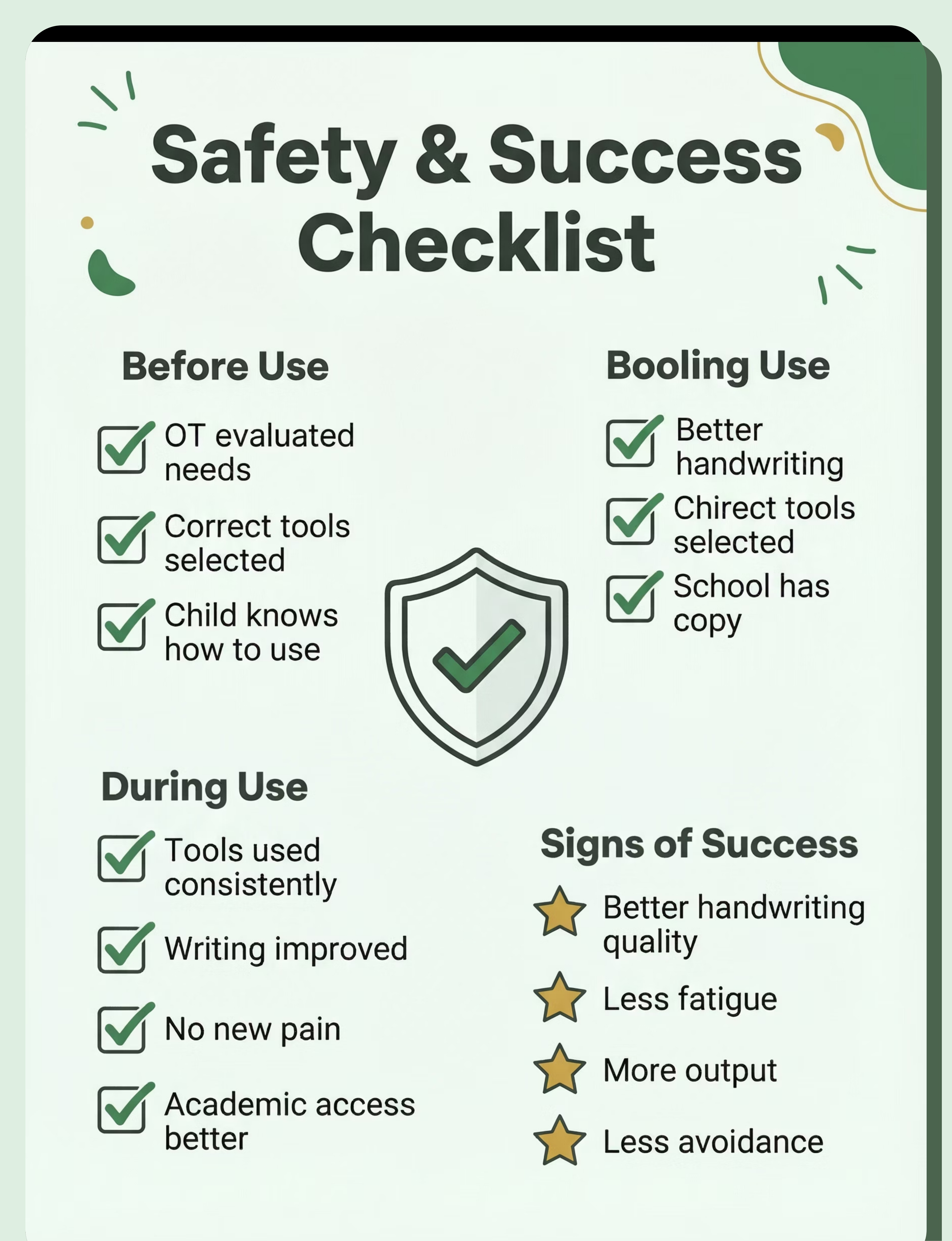
Before Use
- ✓ OT evaluated needs
- ✓ Correct tools selected
- ✓ Child knows how to use
- ✓ School has copy of tools
During Use
- ✓ Tools being used consistently
- ✓ Writing improved
- ✓ No new pain/problems
- ✓ Academic access improving
Signs to Stop
- ⚠ Increased pain or discomfort
- ⚠ New problems emerging
- ⚠ Child strongly resistant
- ⚠ No improvement after 4-6 weeks

Common Questions (Honest Answers)
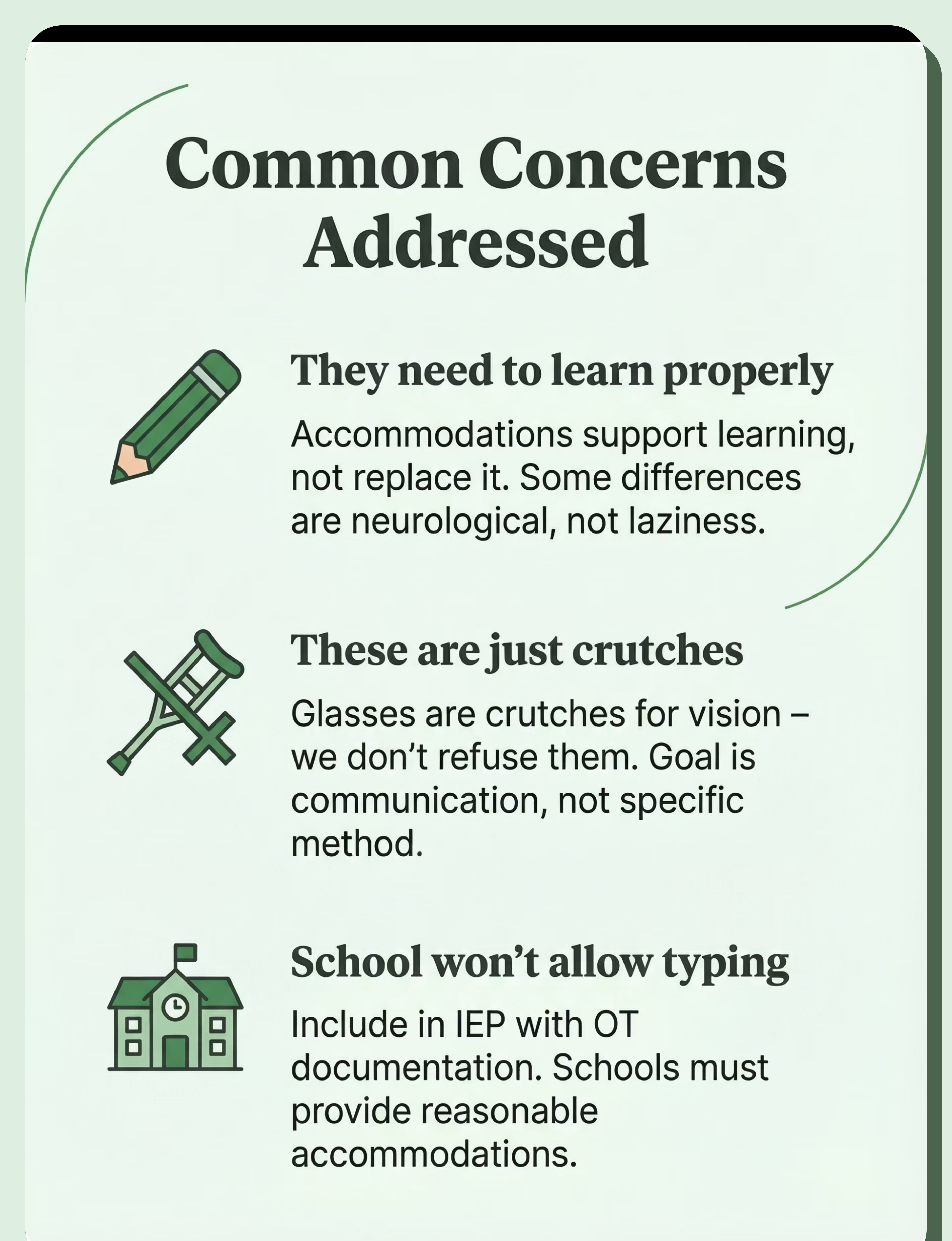
Q: They need to learn to write properly
A: Accommodations support learning, not replace it. Practice with support is more effective than struggling without it. Some differences are neurological, not laziness. We accommodate while building skills.
Try this: Accommodate while building skills; differences are real, not behavioral.
Q: These are crutches
A: Glasses are 'crutches' for vision - we don't refuse them. Tools allow access to learning. Fade if skills develop naturally. Goal is communication and knowledge demonstration, not specific method.
Try this: Tools allow access; glasses are 'crutches' we use; goal is communication.
Q: The school won't allow typing
A: Include in IEP with OT documentation. Schools must provide reasonable accommodations under law. Advocate with evidence from professionals. This is access, not preference.
Try this: Include in IEP; schools must accommodate; advocate with evidence.
Q: Which grip should we use?
A: OT can evaluate and recommend specific grip styles. Try different types to find what works. Child's comfort matters significantly. No single 'right' grip - effectiveness varies by individual hand structure and challenges.
Try this: OT evaluates; try different styles; child's comfort matters.

Investment Guide
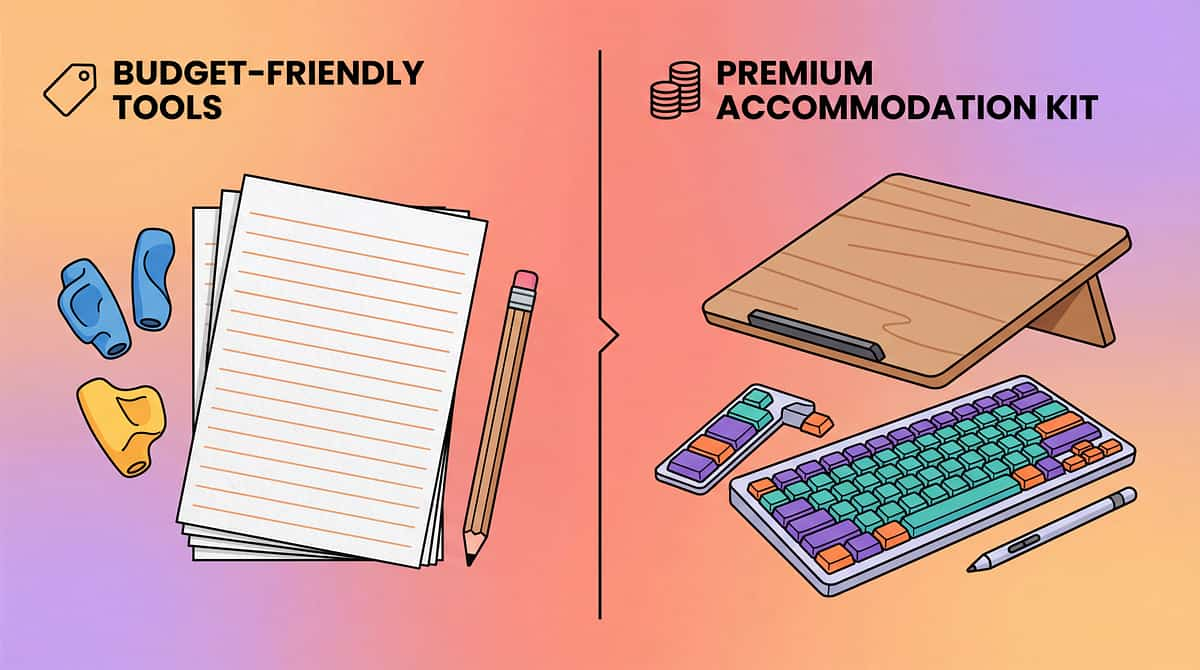
Budget Option
Pencil grips + raised line paper
Cost: ₹100-300
Note: Basic essentials that provide immediate support for grasp and visual guidance. Great starting point for most children.
Includes variety pack of pencil grips to test different styles, plus printable or purchased adapted paper with raised lines for spacing guidance.
Premium Option
Slant board + grips + adapted paper + keyboard
Cost: ₹2,000-5,000
Brands: Various educational suppliers
Comprehensive accommodation kit including quality slant board with adjustable angles, multiple grip options, specialized paper, and basic keyboard for alternative output when needed.
Overall Investment Range
INR: ₹50–5,000 | USD: $1–60
Tier: Very Low - Mid - exceptionally accessible accommodations with options at every price point from basic grips to comprehensive systems
Best starting point: Begin with budget option (grips + paper) after OT evaluation. Add slant board if positioning is significant issue. Consider keyboard/alternative output only if handwriting remains severely impaired despite other accommodations.

Where to Buy in India
Availability: Widely Available across multiple platforms and educational suppliers throughout India
Platform | Search Term | Price Range | |
Amazon.in | "pencil grips kids" | ₹50-200 | |
Amazon.in | "slant board writing" | ₹400-1,200 | |
Amazon.in | "raised line paper" | ₹100-300 | |
Amazon.in | "desk organizer kids" | ₹100-400 | |
Amazon.in | "kids keyboard typing" | ₹500-2,000 |
Buying Tips
- Get OT evaluation for personalized recommendations before purchasing
- Buy variety pack of pencil grips to test different styles
- Slant board angles vary - 20-30 degrees typical for writing
- Adapted paper can be printed free online from many educational sites
- Practice keyboarding skills alongside handwriting development
Red Flags
- No OT input for significant difficulties
- Wrong size/type for child's specific needs
- School not implementing agreed accommodations
- Child not using provided tools consistently

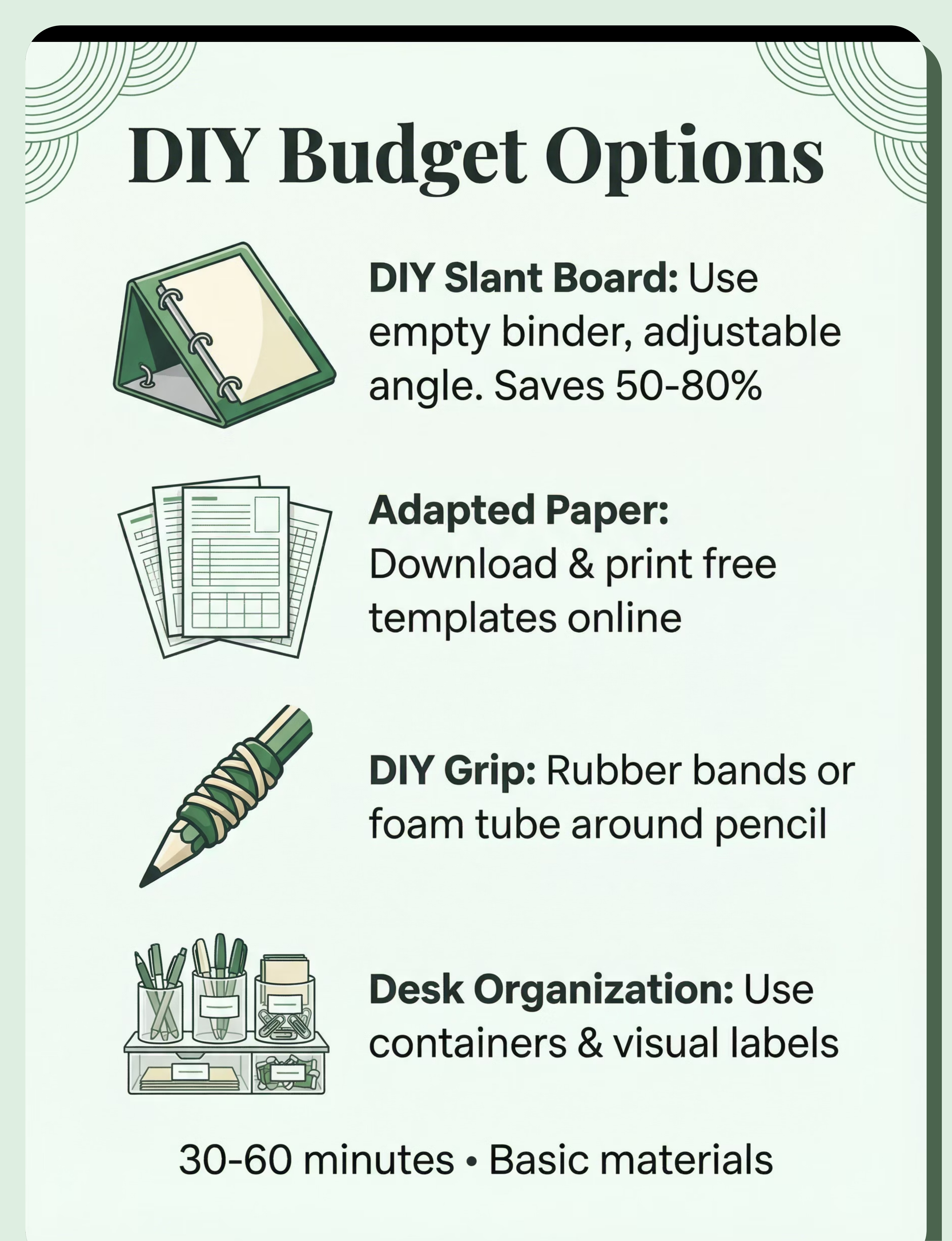
DIY Alternative (Save 50-80%)
Feasibility: Medium-High | Cost Savings: 50-80% | Time Required: 30-60 minutes
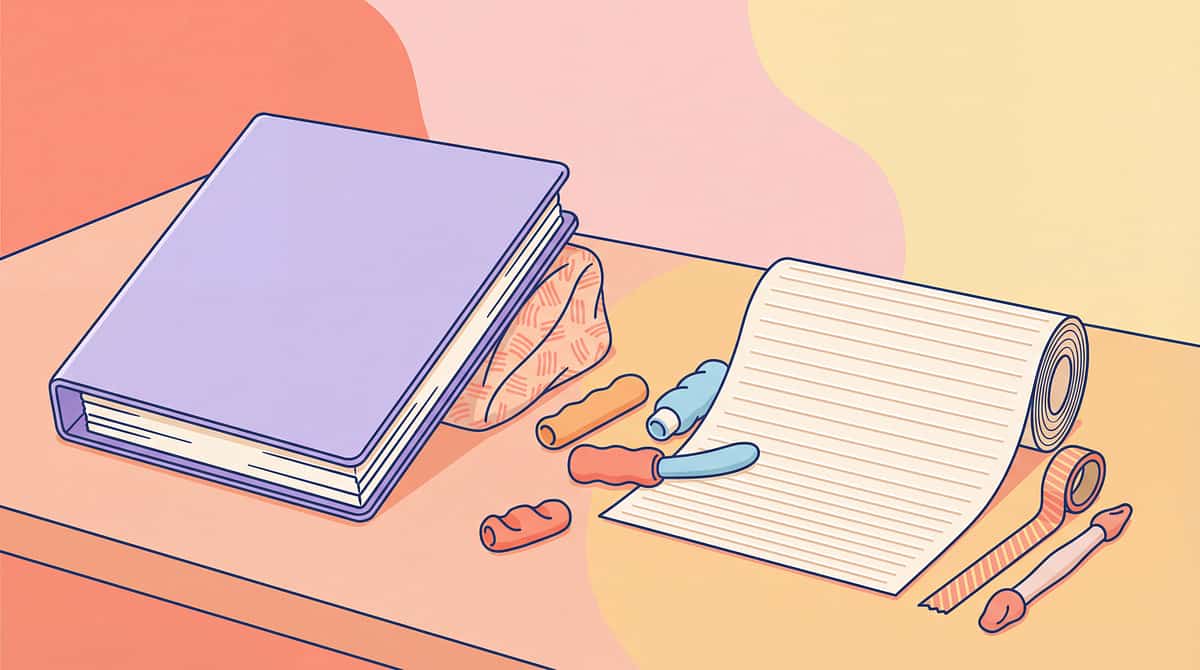
Materials Needed
- Empty 3-ring binder (slant board)
- Printer for adapted paper templates
- Rubber bands (pencil grip)
- Foam tubes or pipe insulation (built-up pencil)
- Small containers with labels (desk organization)
- Colored tape (visual guides on desk)
DIY Instructions
- DIY slant board: Use empty 3-ring binder, angle adjustable by opening to desired degree
- Adapted paper: Download and print free raised-line templates from educational websites
- DIY grip: Wind rubber band around pencil where fingers grip for tactile feedback
- Built-up pencil: Slide foam tube around pencil to increase diameter for easier grasp
- Desk organization: Use small containers and clear labels to organize materials
- Visual guides: Tape lines on desk surface to show proper paper placement and positioning
DIY vs Commercial Comparison
Consideration | When to DIY | When to Buy Commercial | |
Slant board | Basic binder solution for trying concept | Durable slant board for daily school use | |
Adapted paper | Print templates for variety and experimentation | Purchase when printing becomes costly or impractical | |
Pencil grips | Rubber band for temporary or testing | Quality ergonomic grips for consistent daily use | |
Organization | Household containers work well | Specialized desk organizers if space or needs are complex | |
Alternative output | Visual guides can be DIY | Keyboard and technology require commercial options |
Trade-offs: DIY works well for basics and trying concepts. Invest in quality commercial tools for accommodations your child will use daily at school. DIY solutions are excellent for home practice and backups.
Preview of desk writing accommodations Therapy Material
Below is a visual preview of desk writing accommodations therapy material. The pages shown help educators, therapists, and caregivers understand the structure and content of the resource before use. Materials should be used under appropriate professional guidance.


Share this resource
Help others discover thisLink copied!

Complete Implementation Guide
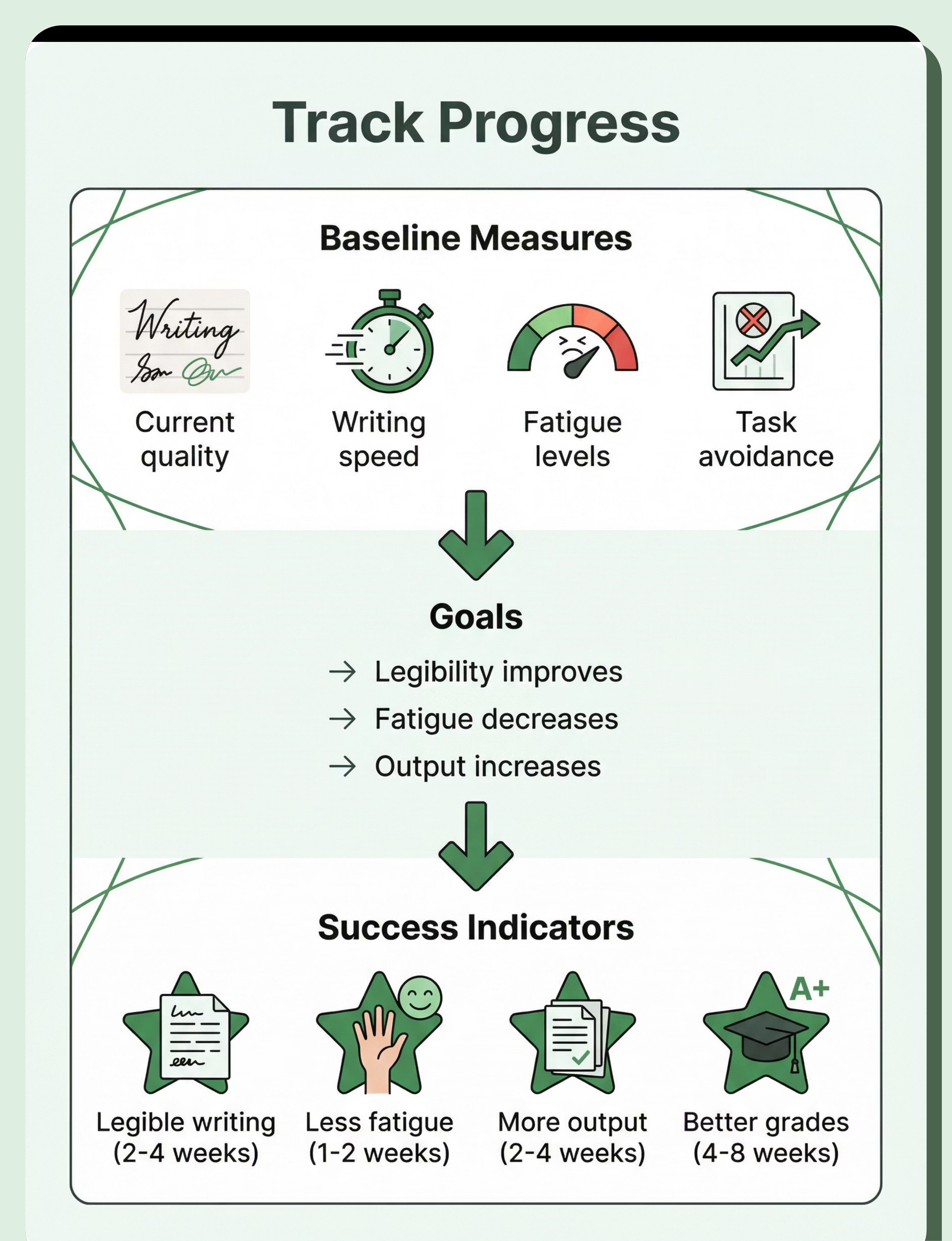
Measuring Success
1
Establish Baseline
Measure current handwriting quality using standardized samples. Document writing speed (words per minute). Record pain/fatigue levels on 1-10 scale. Note frequency of writing avoidance behaviors.
2
Set Clear Goals
Handwriting legibility will improve to teacher-readable level. Writing fatigue will decrease by 50% or more. Written output will increase in both quantity and quality. Academic performance will accurately reflect child's knowledge.
3
Track Success Indicators
✓ Legible writing that teachers can read and grade accurately
✓ Less hand fatigue and pain during and after writing tasks
✓ More written output completed without excessive strain
✓ Better grades reflecting true knowledge and understanding
✓ Less hand fatigue and pain during and after writing tasks
✓ More written output completed without excessive strain
✓ Better grades reflecting true knowledge and understanding
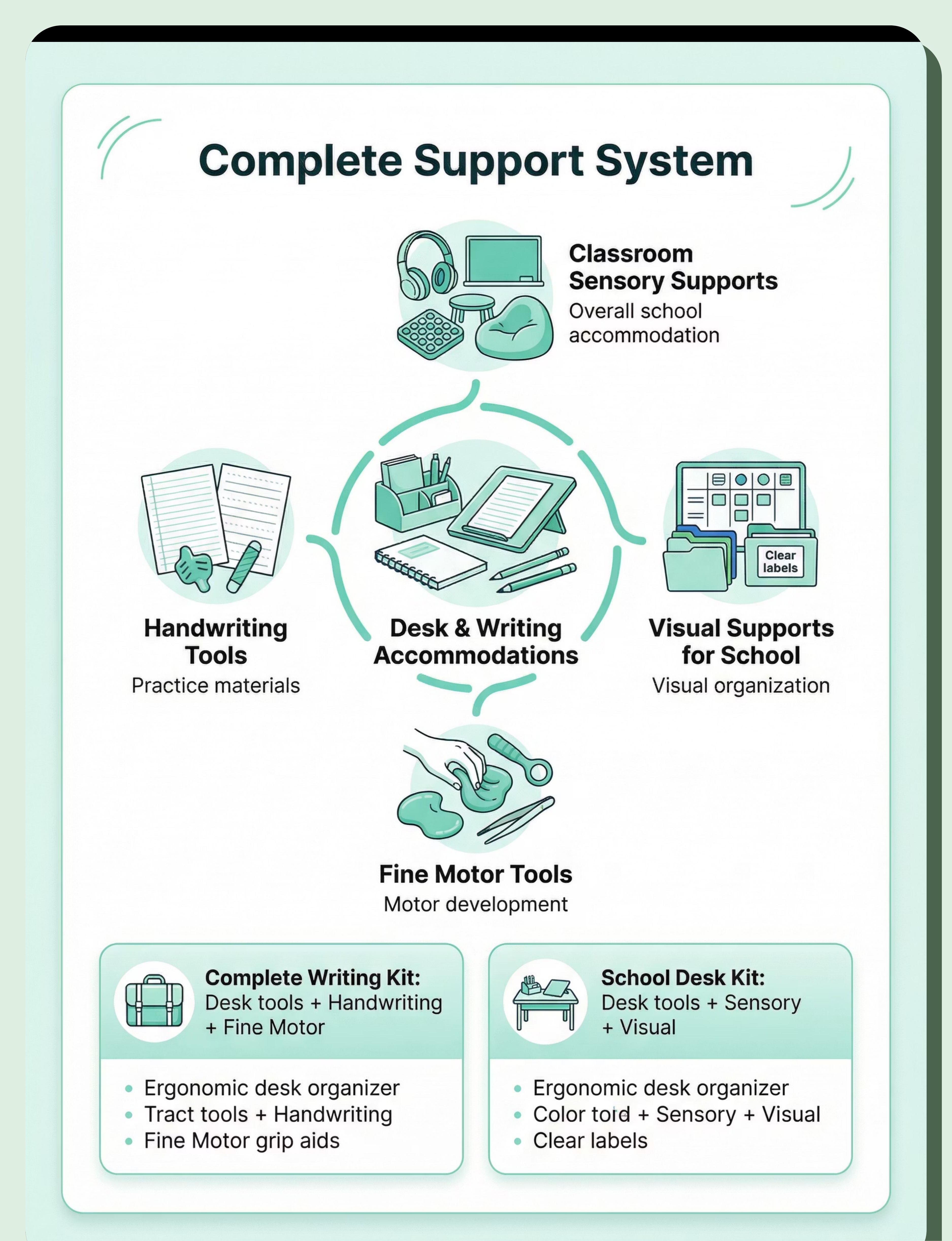
Pair It With...

Classroom Sensory Supports
ID: 18.1 — Overall school accommodation system that creates supportive learning environment

Visual Supports for School
ID: 18.3 — Visual organization tools that complement writing accommodations

Fine Motor Tools
ID: 6.4 — Fine motor development activities that build underlying skills

Handwriting Tools
ID: 6.6 — Handwriting practice materials for skill building alongside accommodations
Recommended Bundles:
- Complete Writing Kit: Desk Accommodations (18.2) + Handwriting Tools (6.6) + Fine Motor Tools (6.4) — Full writing support from skill building to accommodation
- School Desk Kit: Desk Accommodations (18.2) + Classroom Sensory Supports (18.1) + Visual Supports (18.3) — Complete desk and classroom accommodation system
Quick Summary
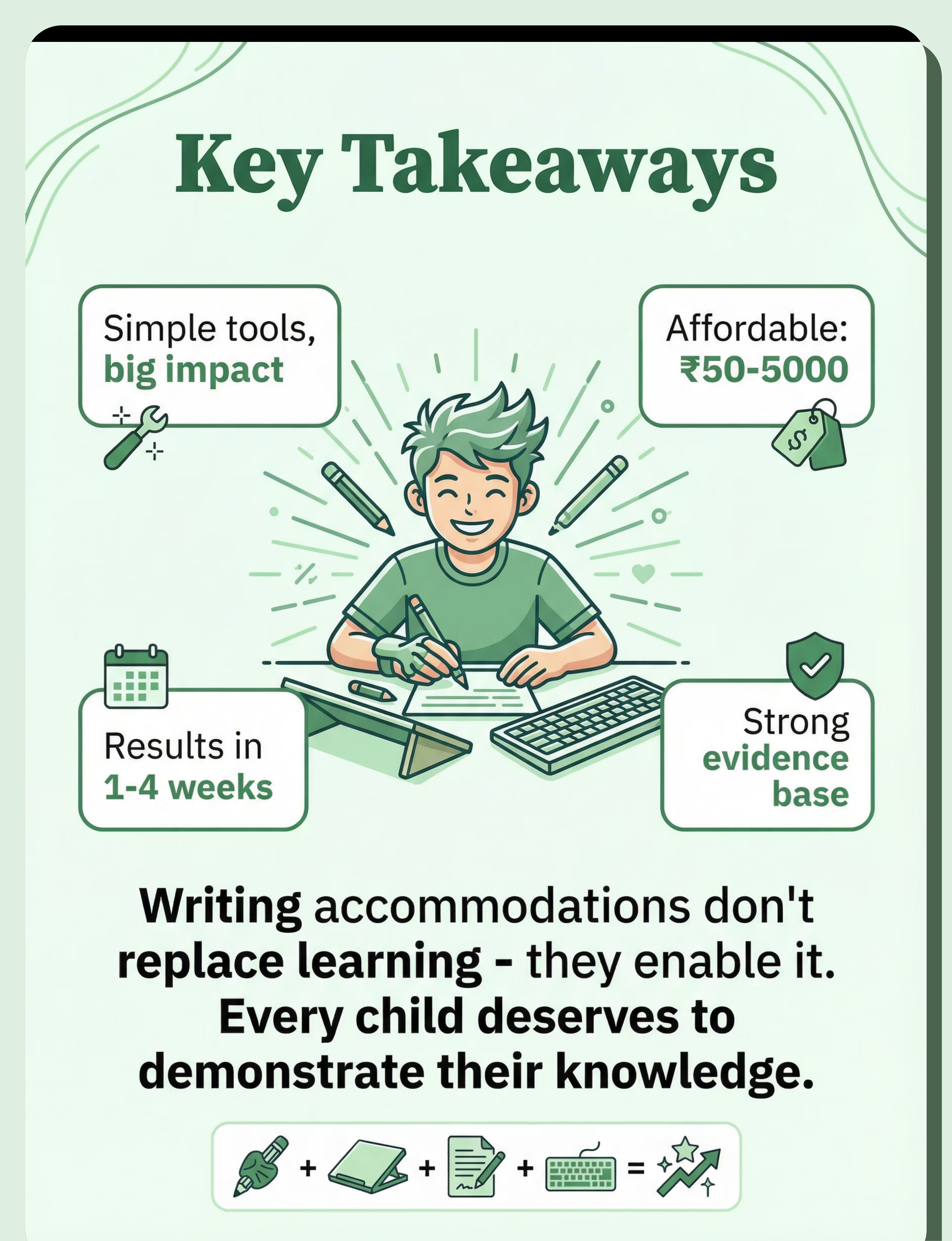
Desk and writing accommodations support fine motor and written expression through pencil grips, slant boards, adapted paper, and alternative output methods for academic success. Core Kit (Rank 1), strong evidence, essential for writing access.
writing
handwriting
fine motor
accommodations
pencil grip
slant board
OT
core-kit
Common searches: pencil grip autism, slant board writing, handwriting accommodations, writing difficulties, IEP writing accommodations, adapted paper, dysgraphia supports
Get Support
FREE National Autism Helpline
Phone: 9100 181 181
Languages: 16+ languages supported
Website: pinnacleblooms.org
Languages: 16+ languages supported
Website: pinnacleblooms.org
Connect with specialists who can guide you through assessment, tool selection, and implementation of writing accommodations.
Platform Integration
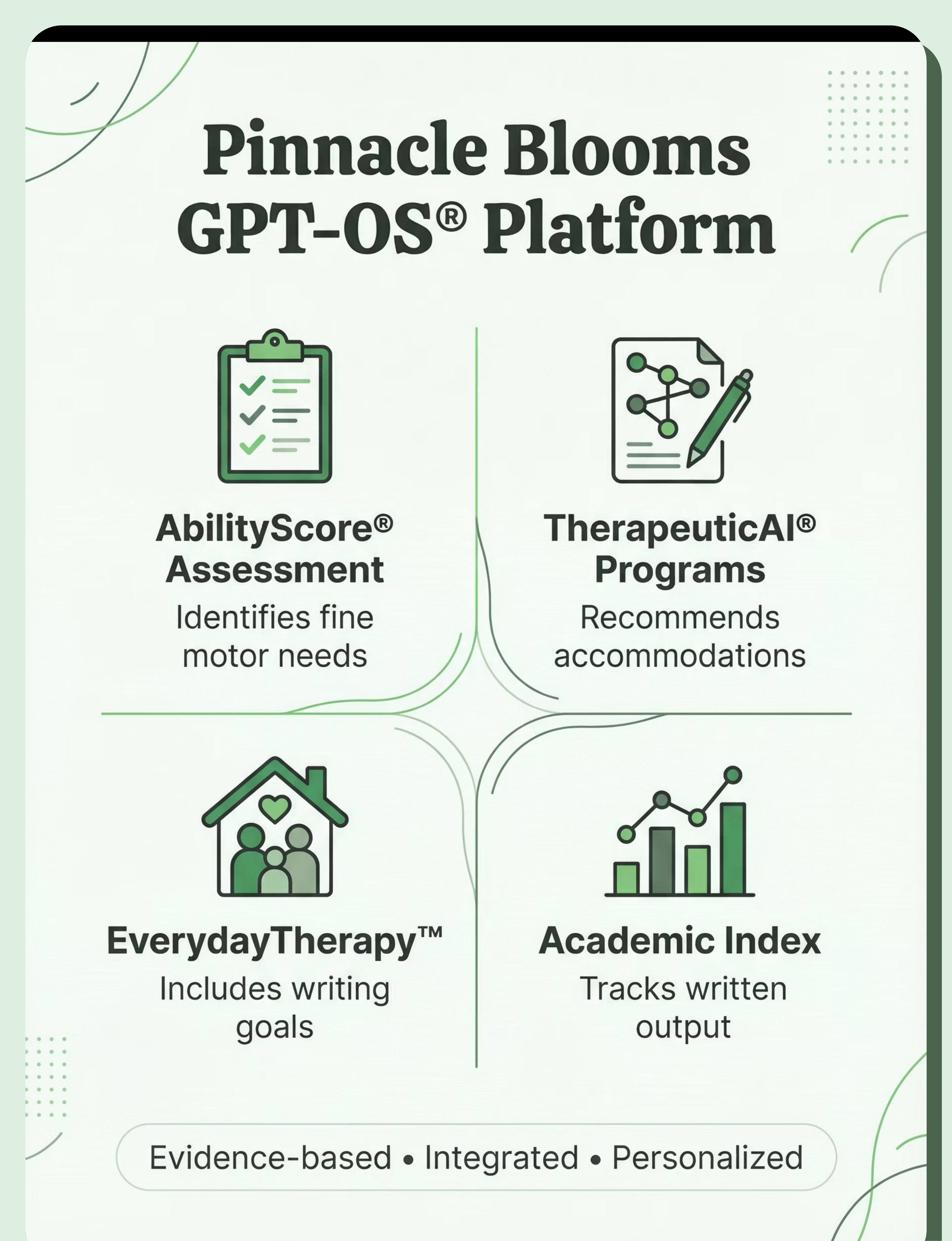
AbilityScore® identifies fine motor needs through comprehensive assessment
TherapeuticAI® recommends specific writing accommodations matched to profile
EverydayTherapyProgramme™ includes writing goals and practice activities
Academic Index tracks written output progress over time
Disclaimer: This is educational information. Always consult qualified occupational therapists, speech-language pathologists, or pediatricians for personalized recommendations. Individual results vary based on child's specific needs, consistent use of accommodations, and support systems in place.