






Building Independence: Mastering Dressing Skills
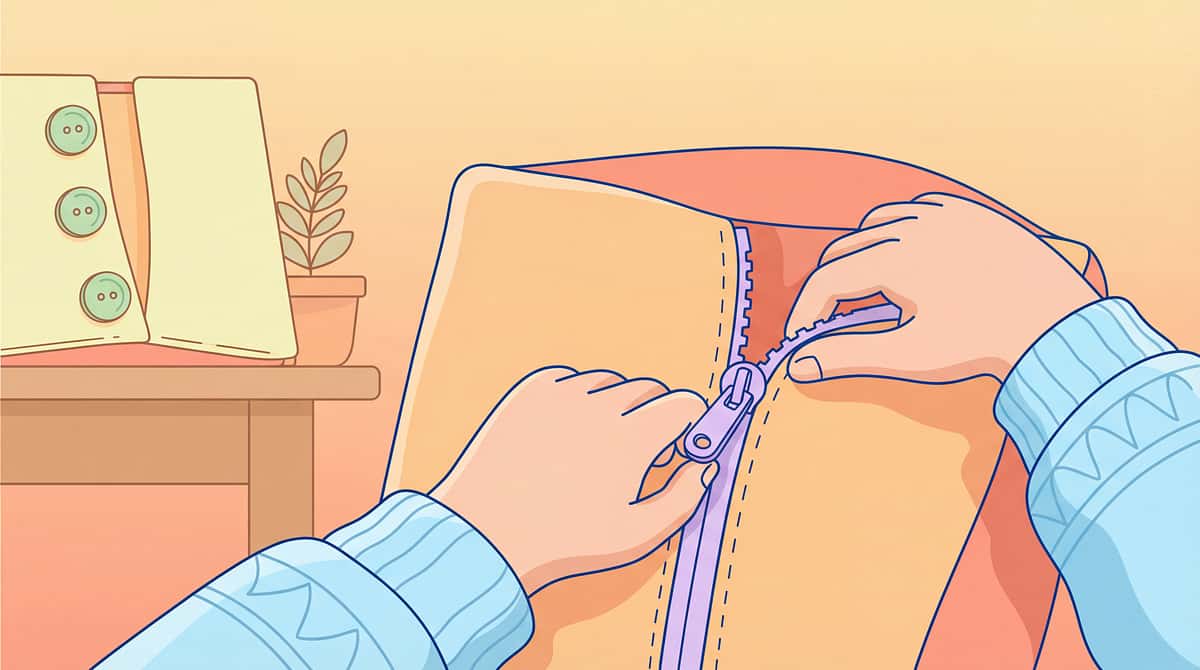
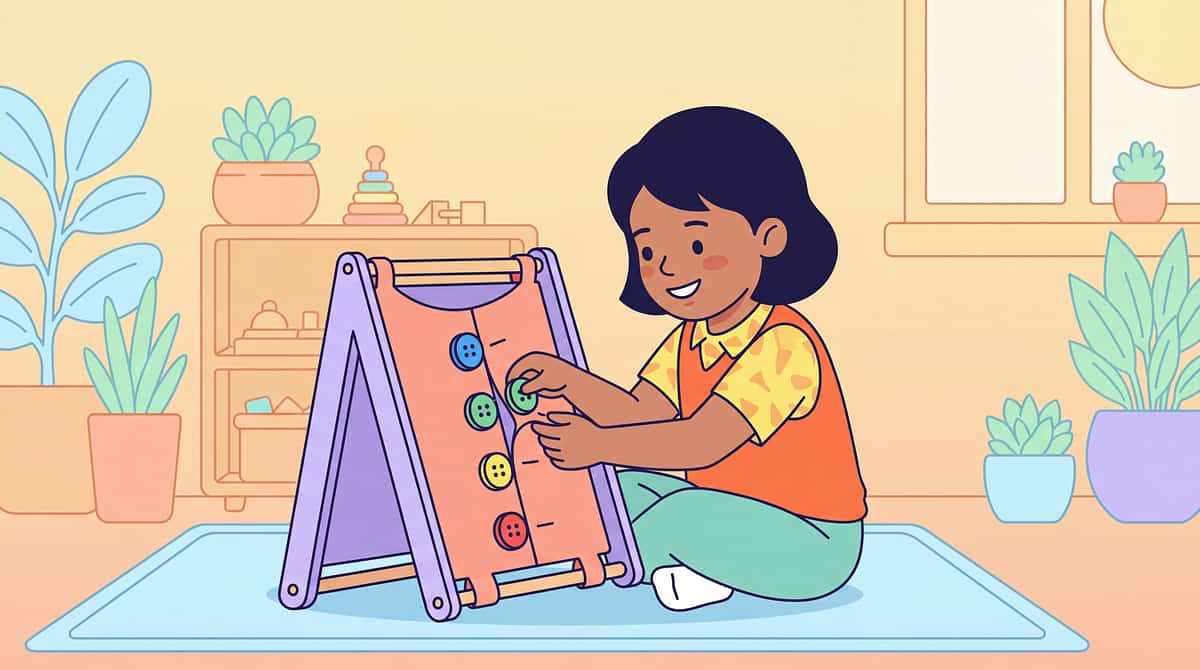
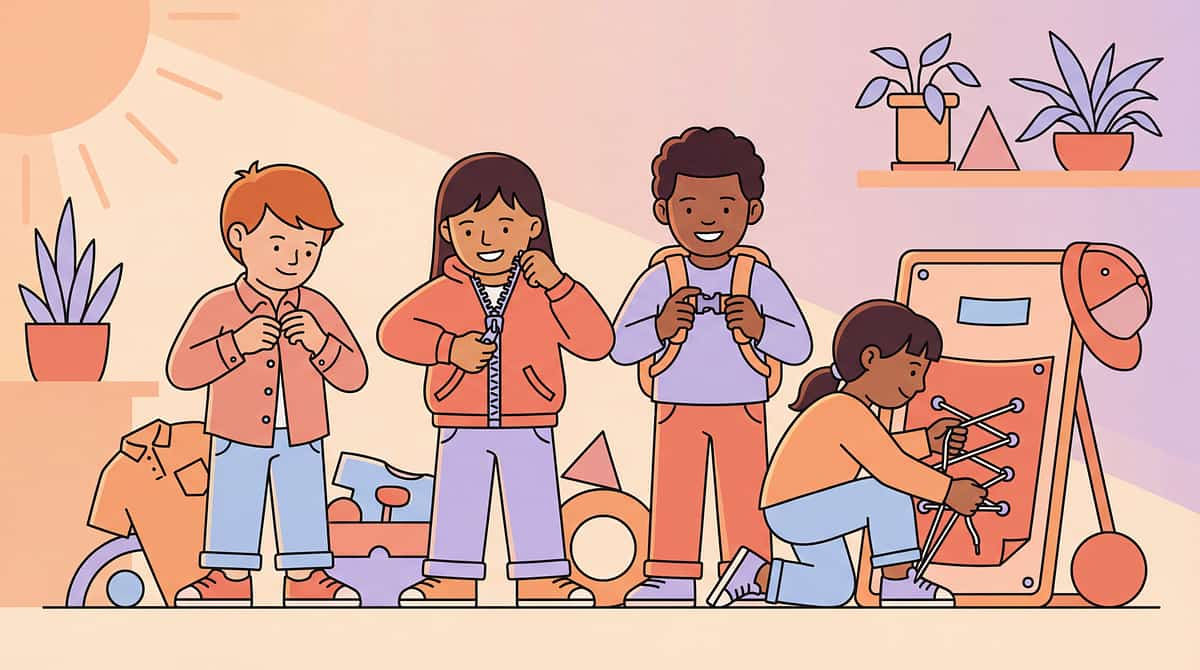
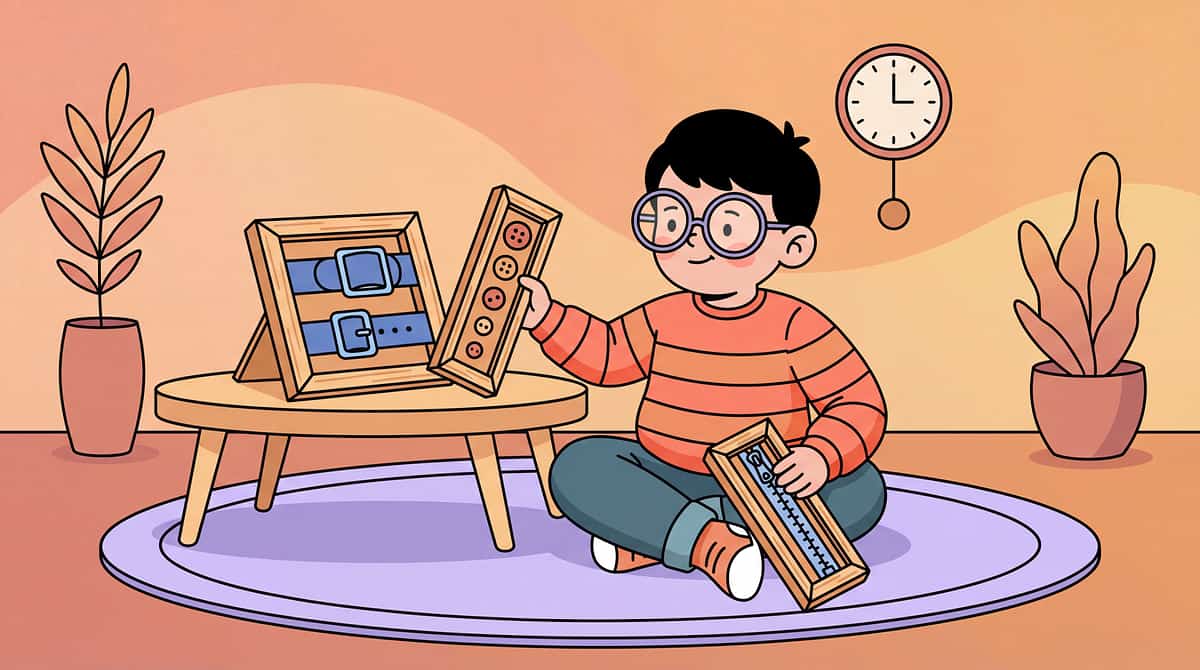
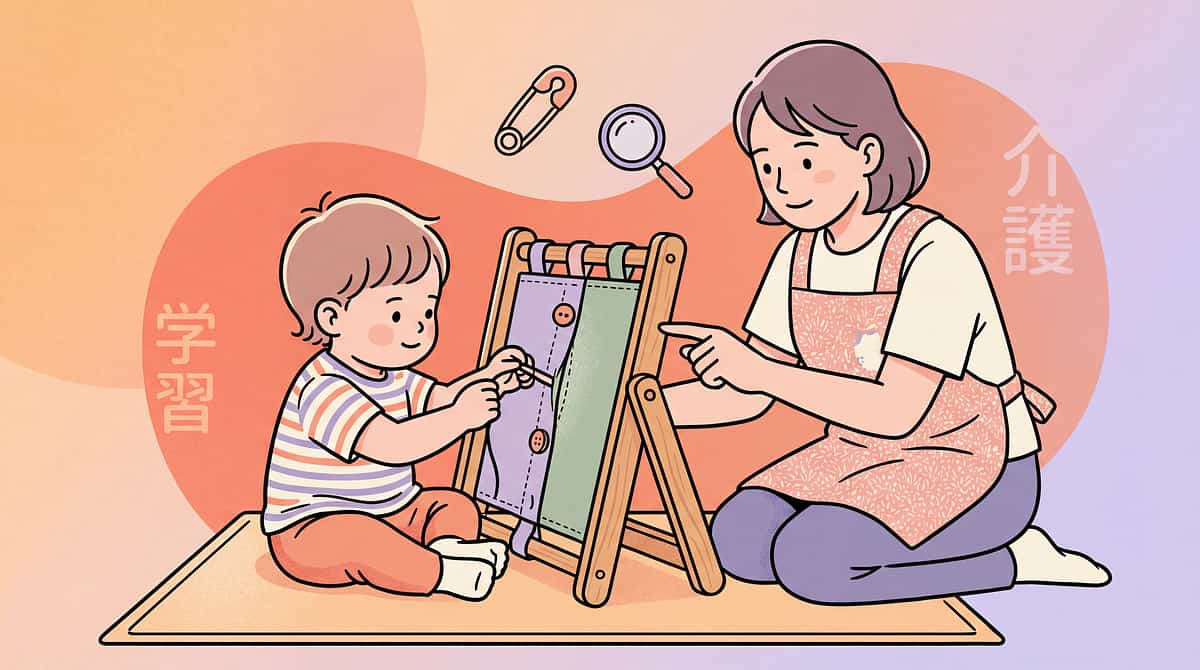
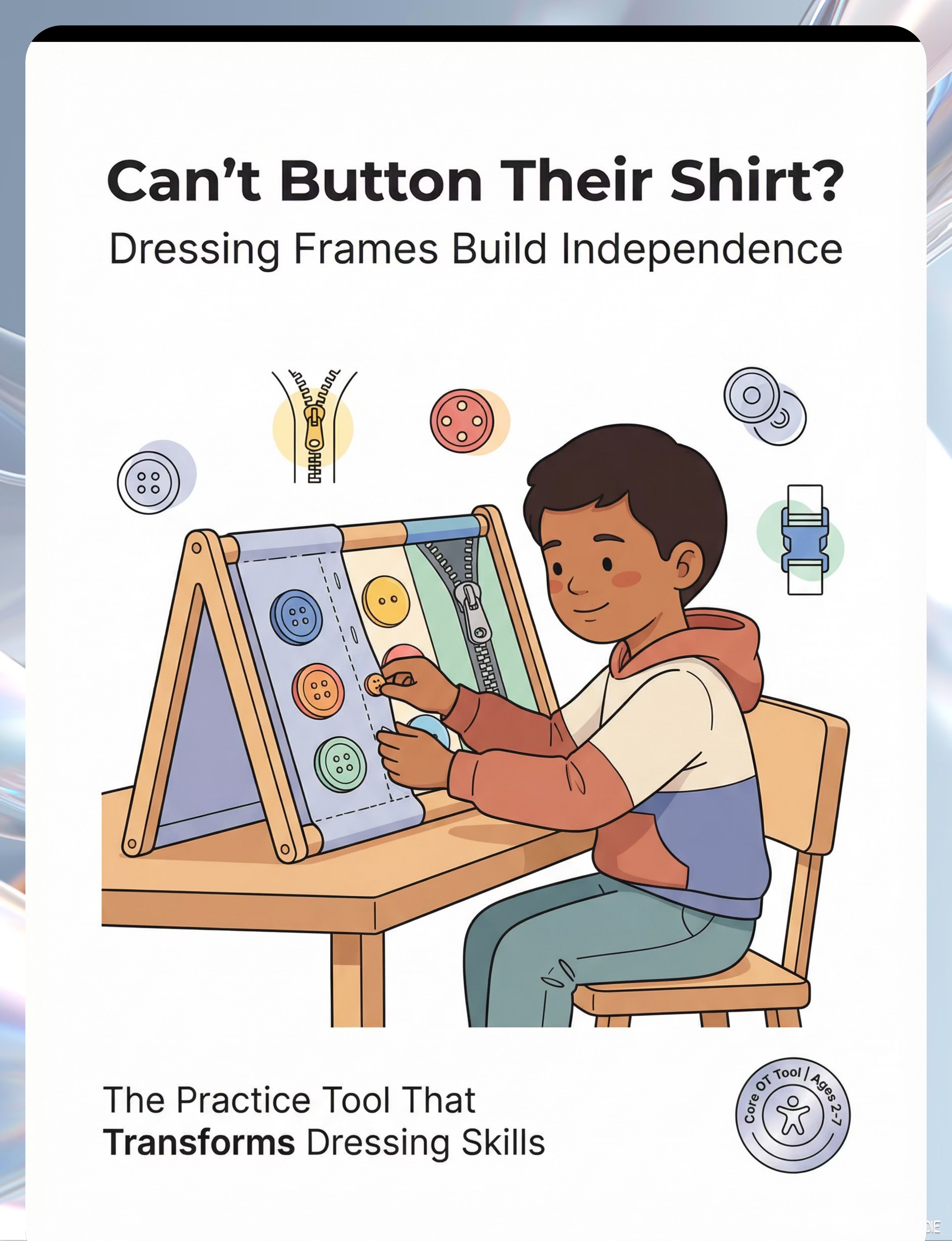
Empower young learners with our Dressing Frames & Button Practice Tools, a vital component of the Core Kit. These engaging tools are expertly designed to cultivate essential self-care abilities, allowing children to confidently practice and perfect everyday dressing tasks like zipping, buttoning, and buckling, fostering independence one fastener at a time.
Tool ID: 9.1
OT + SpEd
Strong Evidence
Rank #1
Daily Use
₹200–2,000
Dressing Frames / Button Practice
Self-care fastening and dressing independence system
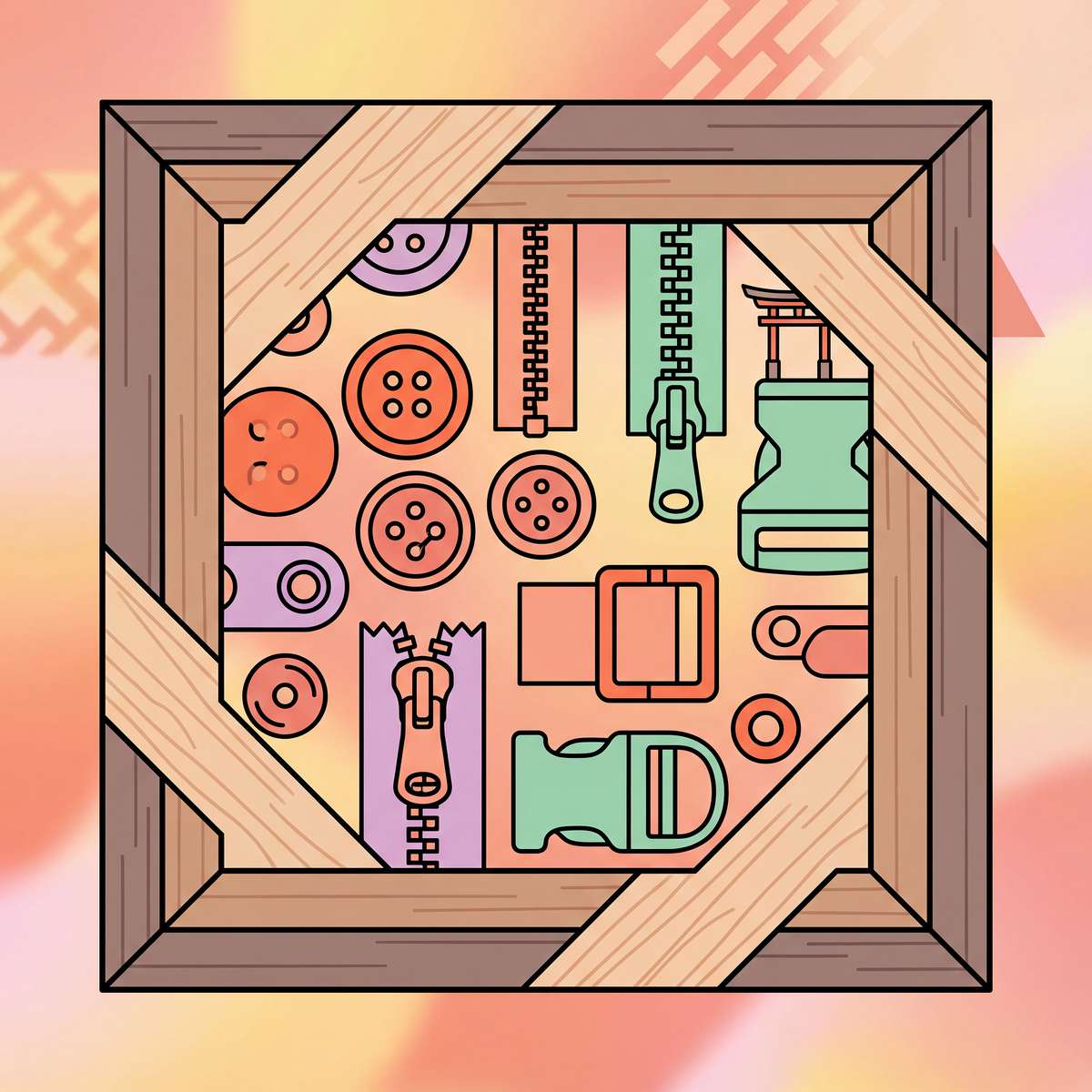
Develop the fastening skills essential for dressing independence through isolated, progressive practice. From buttons to zippers, these tools break down complex dressing tasks into manageable steps, building the motor patterns children need to dress themselves with confidence.
Who This Helps
Dressing Frames are ideal for children who need to develop essential fastening skills for greater independence. They provide systematic practice for the fine motor, bilateral coordination, and motor planning necessary to master clothing fasteners.
Fine Motor Skills
Supports children struggling with the dexterity and precise hand movements required for buttons, zippers, and snaps.
Bilateral Coordination
Helps kids needing to coordinate both hands effectively to manipulate various clothing fasteners.
Visual-Motor Integration
Assists in developing the eye-hand coordination vital for accurately engaging fasteners like buckles and zippers.
Motor Planning & Sequencing
Builds the ability to plan and execute the sequential steps involved in dressing and fastening clothing.
Self-Care Independence
Empowers children to manage their own dressing, fostering confidence and self-reliance.
School Uniform Prep
Prepares students for school uniform independence, mastering complex fasteners needed for school clothing and coats.
Ages 2-9 years
Home
Clinic
School
Does This Sound Familiar?
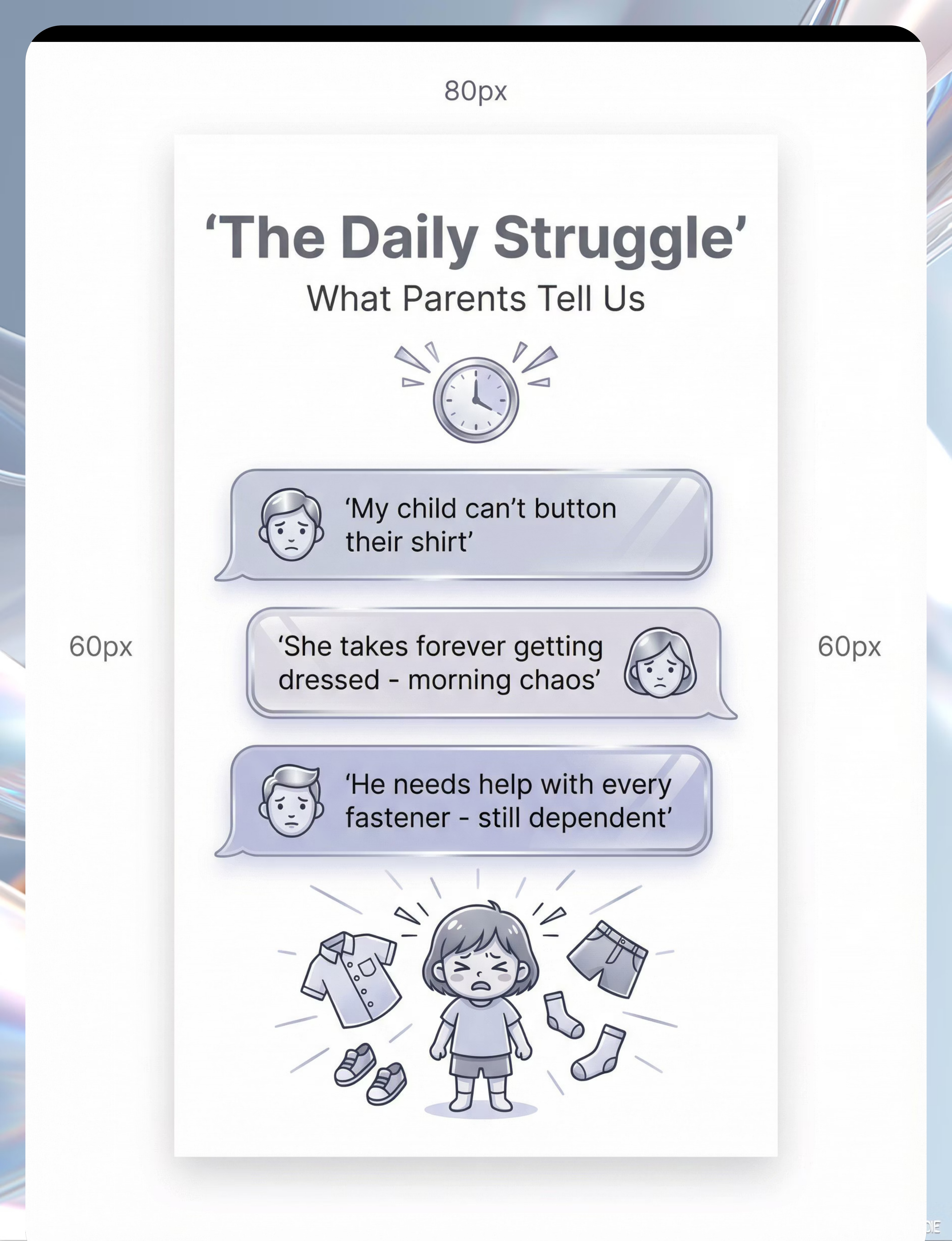
"My child can't button their shirt."
"She can't zip her coat."
"He can't dress himself at all."
"She takes forever getting dressed!"
"He needs help with every fastener."
"She can't manage her school uniform."
You're not alone. These are common challenges when children are developing the fine motor coordination and motor planning skills needed for dressing independence. The good news? These skills can be systematically developed through the right practice tools and approaches.
A Day Without the Right Support
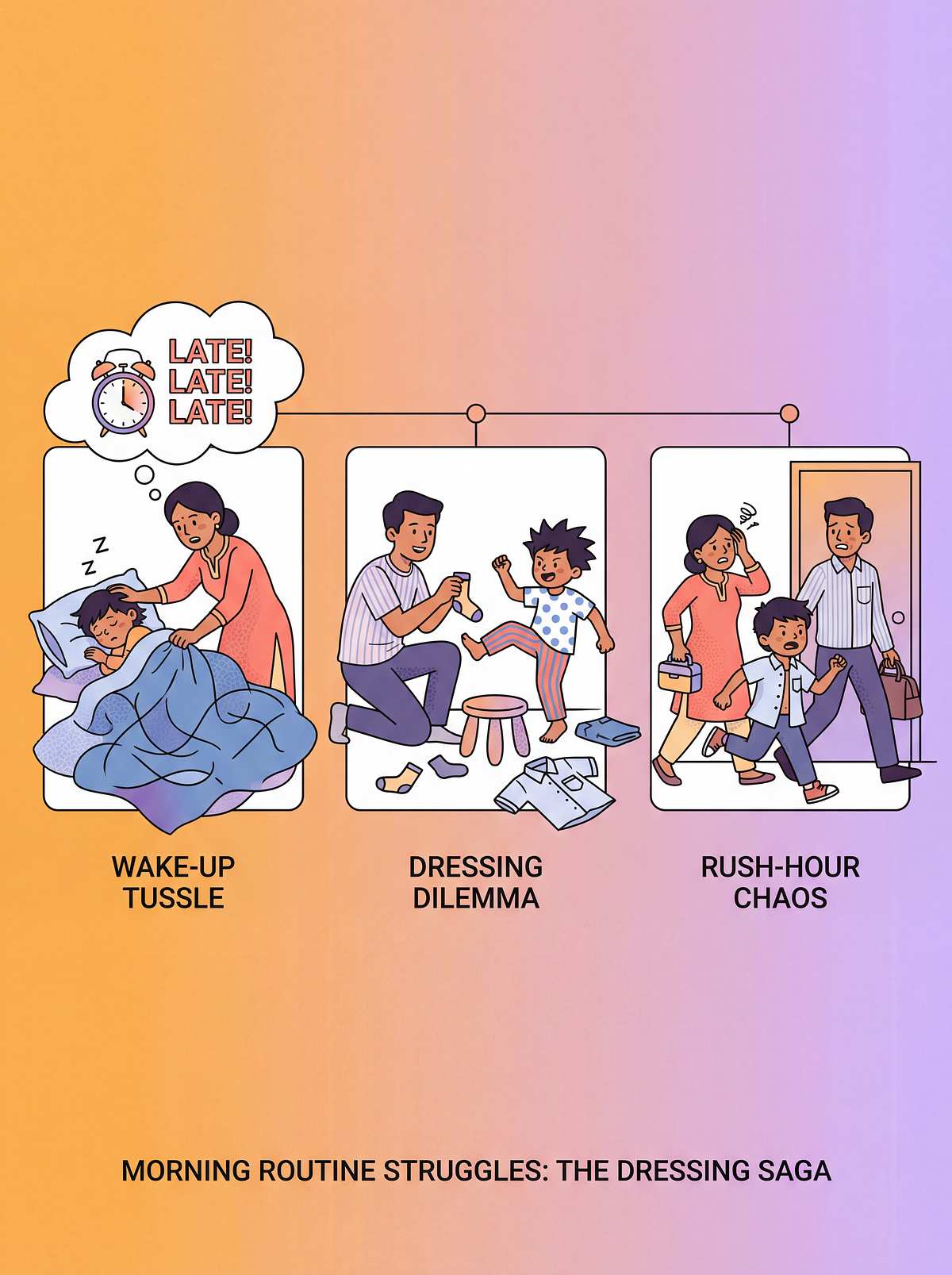
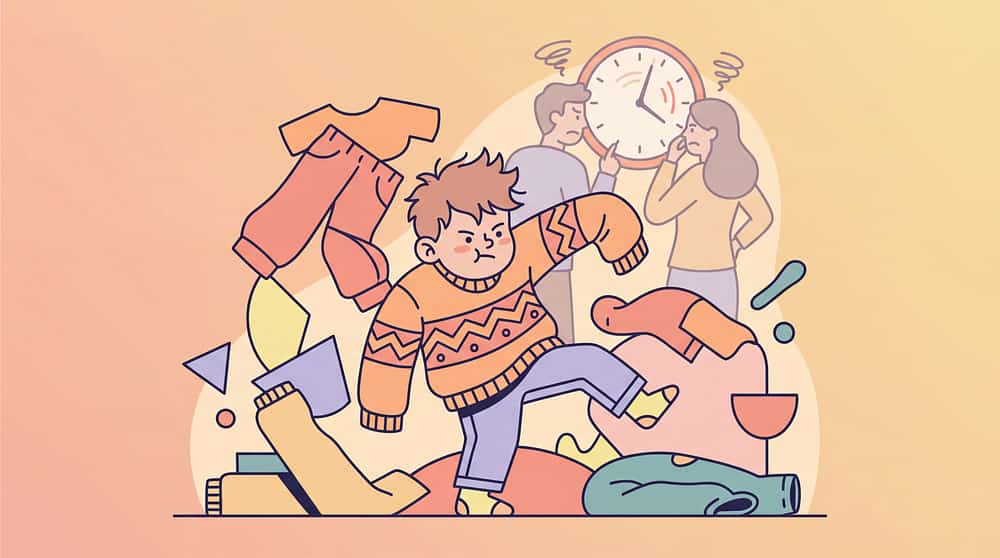
Morning Chaos
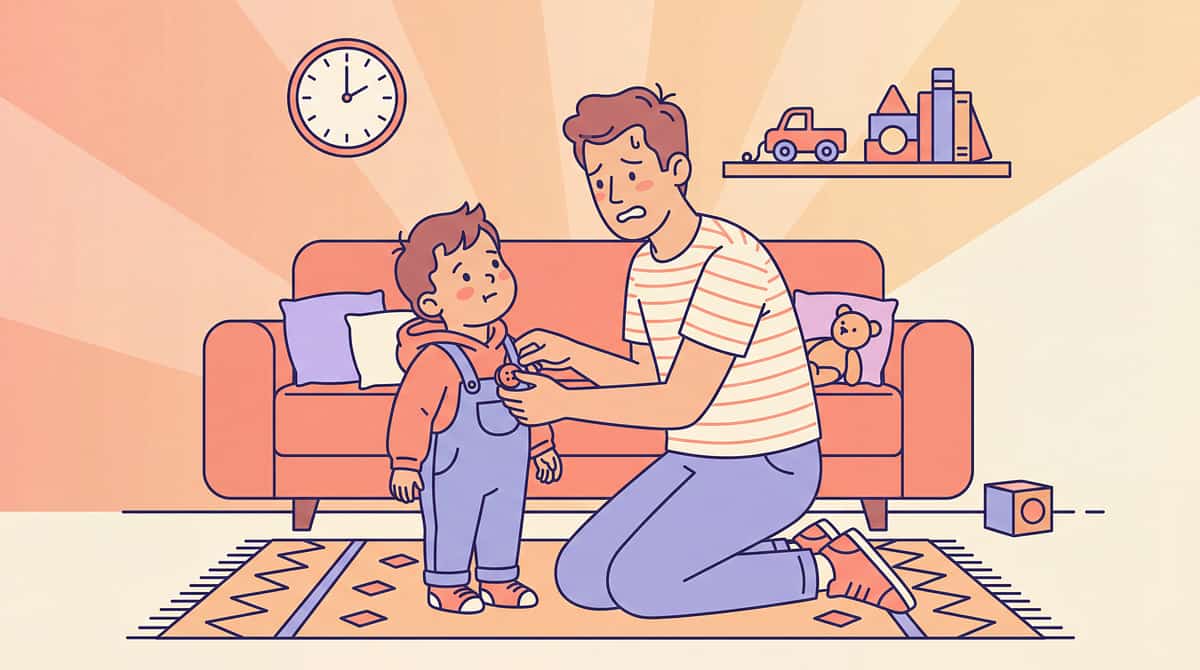
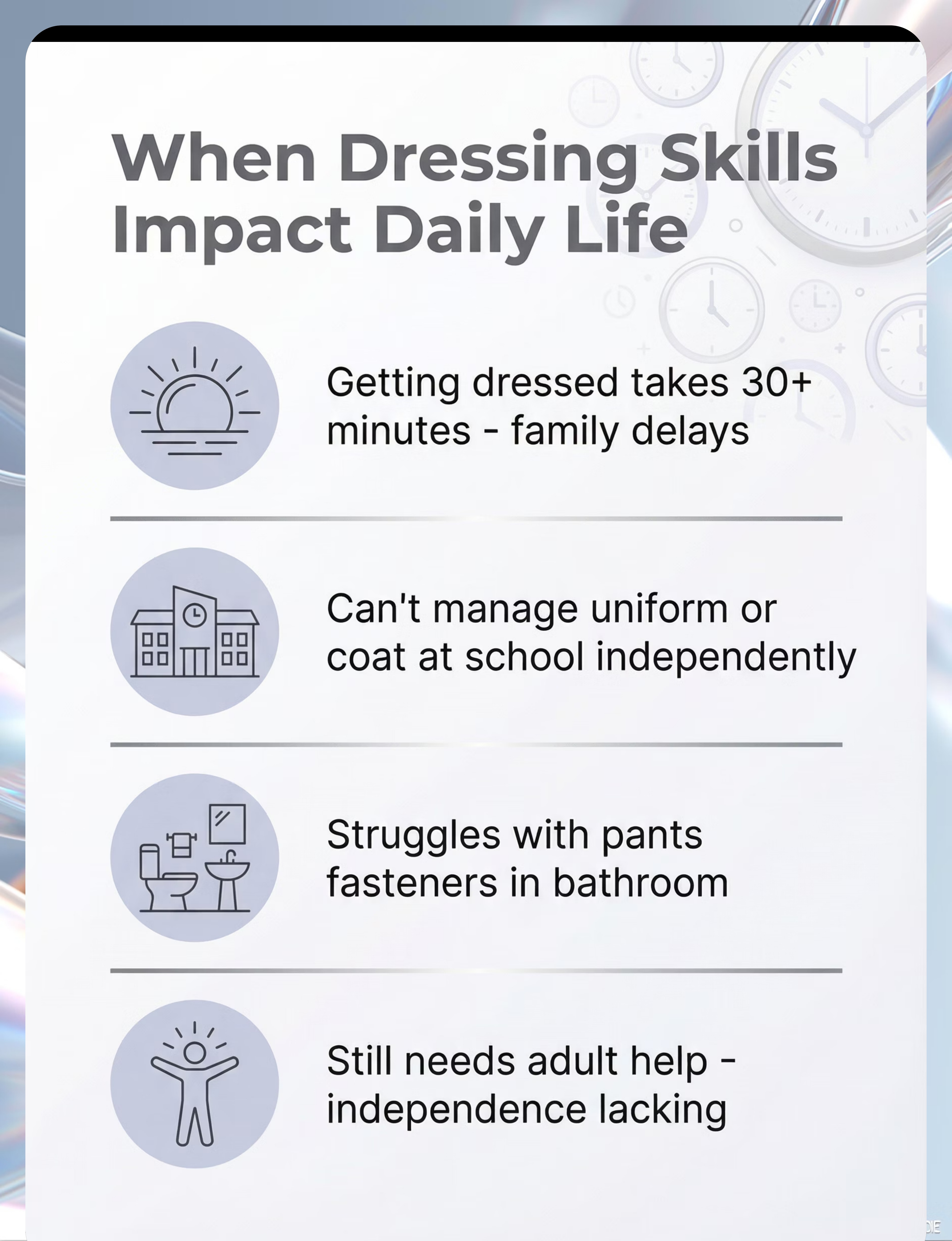
Getting dressed takes too long, delaying the entire family. Stress builds as everyone rushes. The morning starts with frustration instead of calm.
School Transitions
Can't manage school uniform or coat independently. Needs teacher help with fasteners. Feels dependent while peers manage on their own.
Bathroom Struggles
Can't manage pants fasteners independently. Requires adult assistance even for basic bathroom needs. Independence is compromised throughout the day.
Daily Dependence
Still needs adult help for dressing tasks that peers manage easily. Independence milestones feel out of reach. Confidence suffers with each request for help.
The Science Behind It
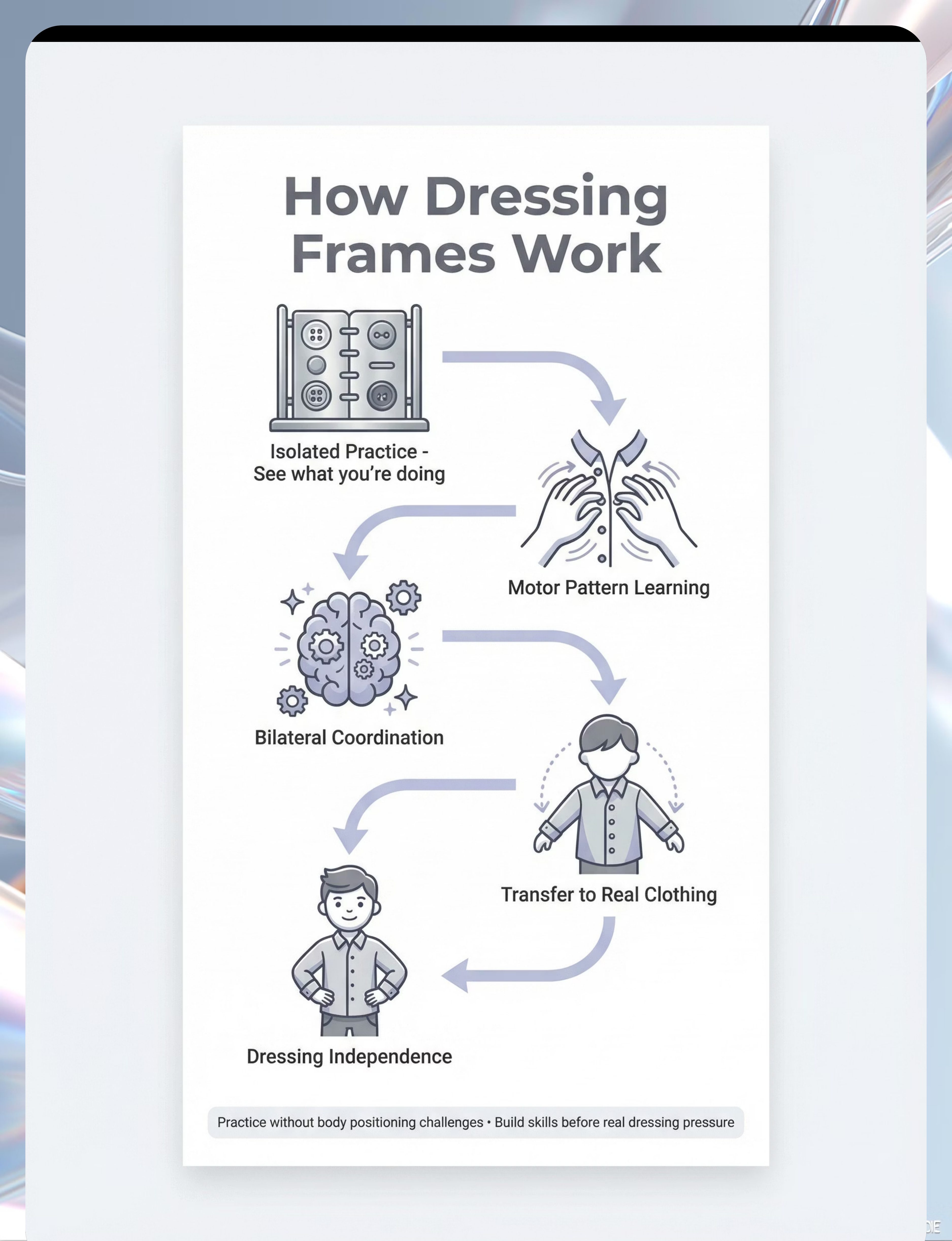
Dressing frames work by isolating complex fastening skills into focused, visible practice opportunities. Here's the developmental progression that builds true independence:
Isolated Practice
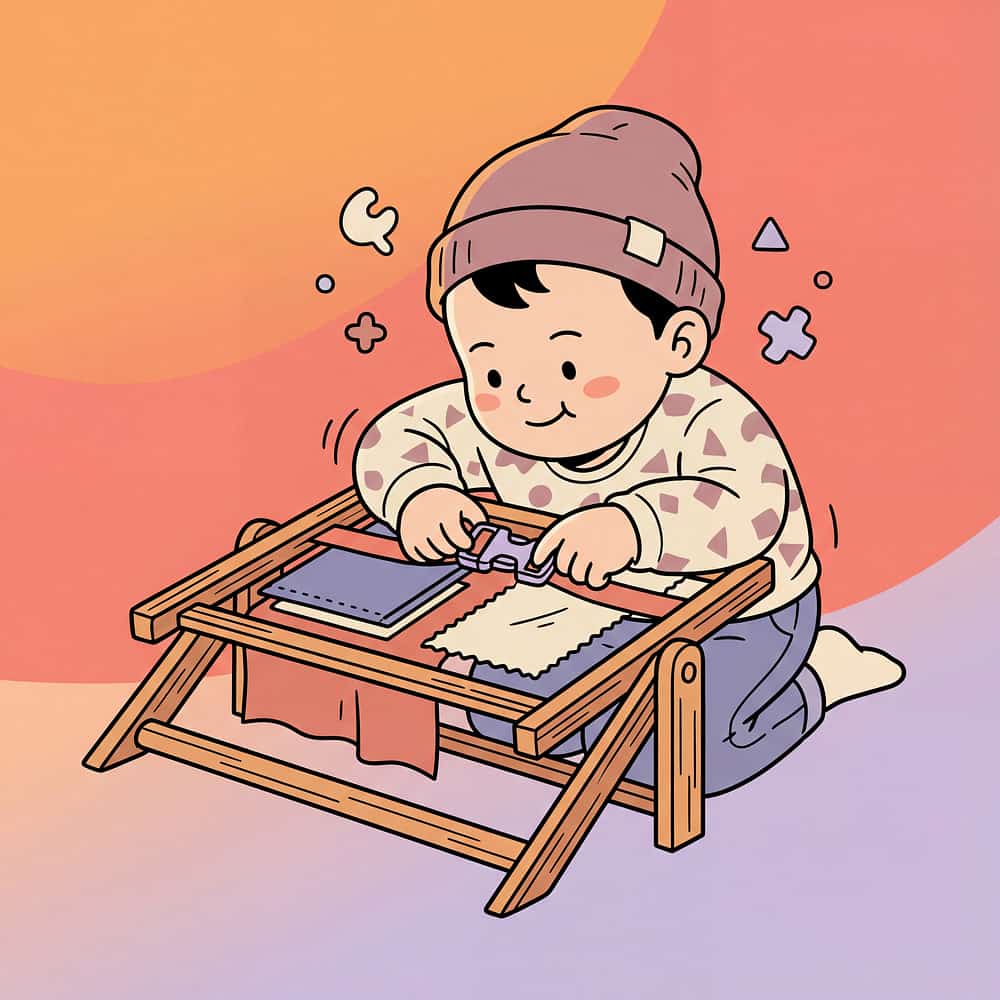
Child practices fasteners on stable frame without body positioning challenges, allowing full visual and motor focus
Motor Pattern Learning
Repetitive practice builds neural pathways for button/zipper movements, creating automatic motor memories
Bilateral Coordination
Both hands learn to work together effectively, developing the coordination needed for fastener manipulation
Visual-Motor Integration
Eyes and hands coordinate smoothly, building precision in aligning and manipulating fasteners
Automaticity Development
Skills become automatic through practice, no longer requiring conscious thought for each step
Transfer to Real Clothing
Mastered skills smoothly transfer to actual clothing, enabling true dressing independence
How to Use It Right
1
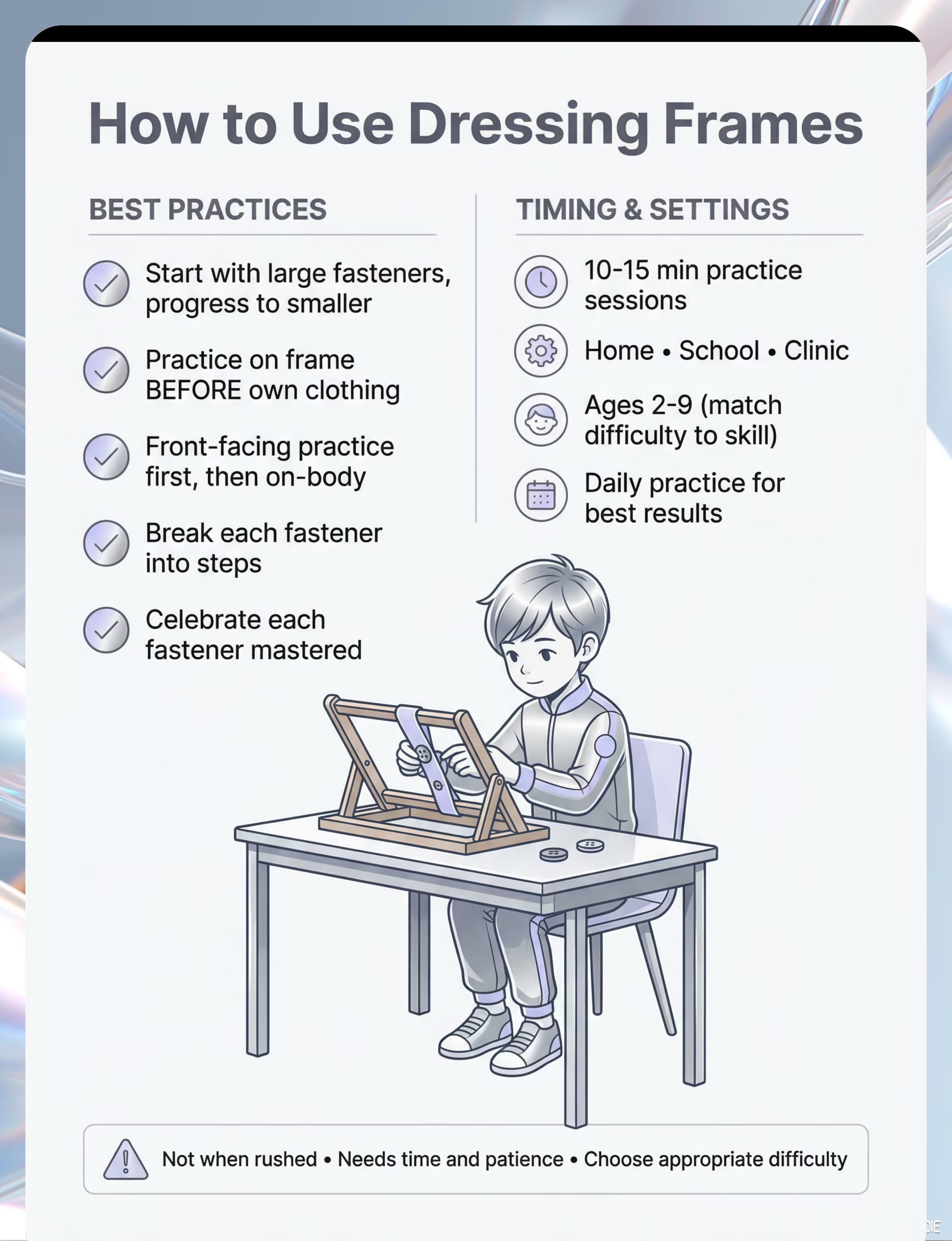
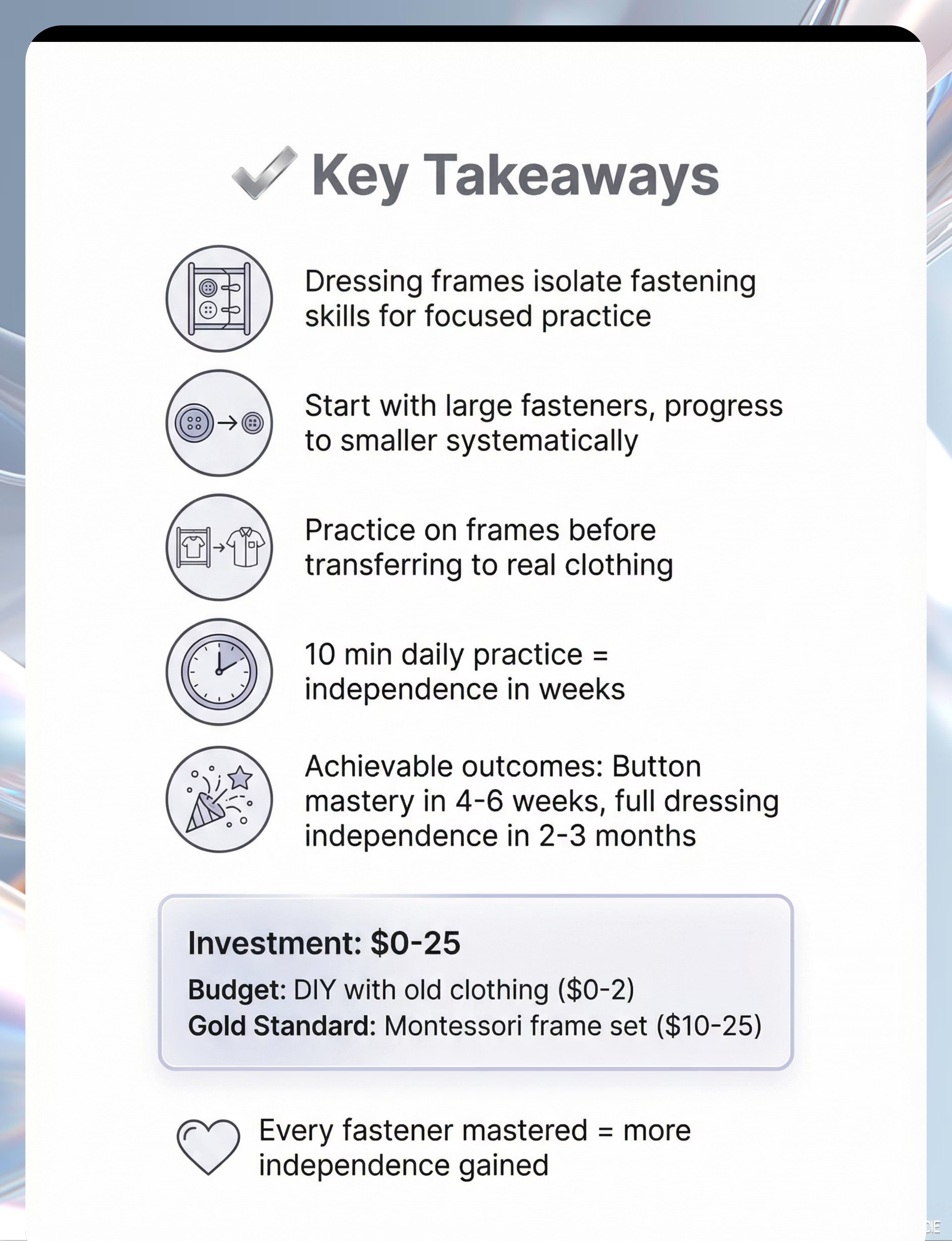
Start with large fasteners, progress to smaller
Begin with oversized buttons or snaps that are easiest to manipulate. Gradually decrease size as skills develop. Success builds confidence for harder challenges.
2
Practice on frame/board BEFORE own clothing
Master the skill in isolation where child can see everything clearly. Front-facing practice eliminates body positioning complexity. Transfer to clothing once pattern is solid.
3
Front-facing practice first, then on-body
Let child see what hands are doing without twisting or reaching. Build motor memory with full visual feedback. Progress to on-body practice gradually.
4
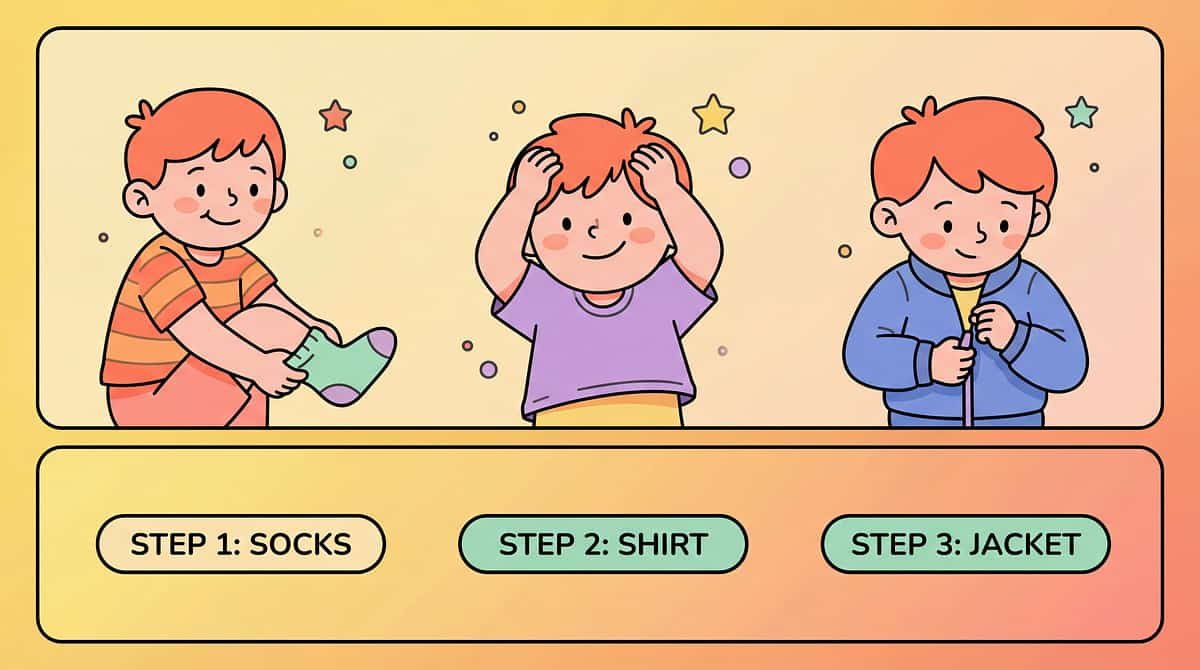
Break each fastener into steps
Teach buttons as: hold button, push through hole, pull through. Teach zippers as: join zipper, hold bottom, pull up. Small steps prevent overwhelm.
5
Use real clothing once skills established
Transition to oversized practice clothing before own clothes. Use front-button shirts first. Gradually move to own wardrobe as confidence grows.
6
Celebrate each fastener mastered
Make success visible and exciting. Track progress with charts. Celebrate milestones enthusiastically. Motivation drives continued practice.

Duration: Practice for 10-15 minutes daily. Incorporate into dressing routine as warm-up. Consistent practice builds automaticity within weeks.
Expert Perspective
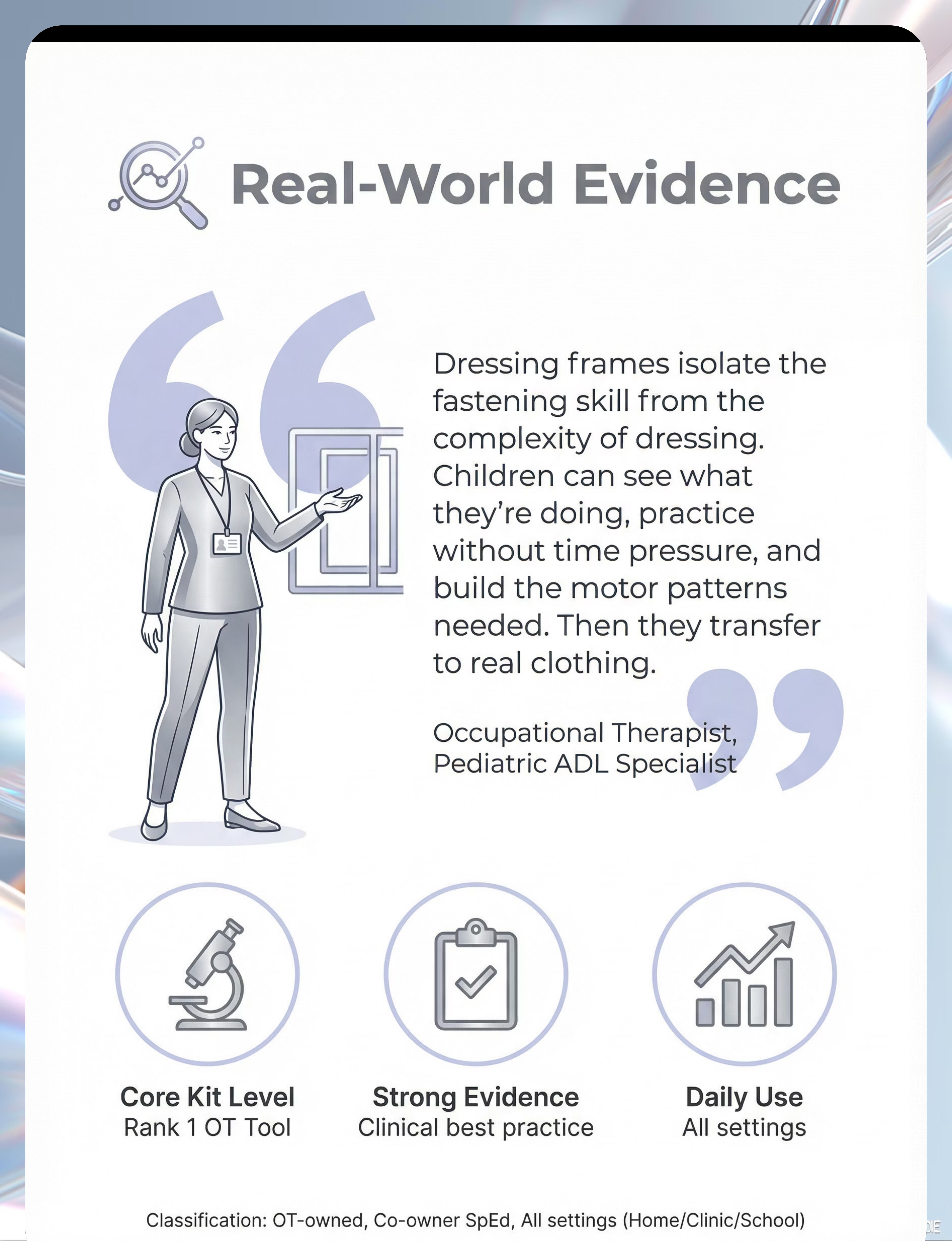
"Dressing frames isolate the fastening skill from the complexity of dressing. Children can see what they're doing, practice without time pressure, and build the motor patterns needed. Then they transfer to real clothing."
Occupational Therapist, Pediatric ADL Specialist
OT + SpEd Recommended
Core collaboration tool
Strong Evidence
Research-supported approach
Rank #1 in Category
Top daily living tool
Specifications & Fastener Progression Guide
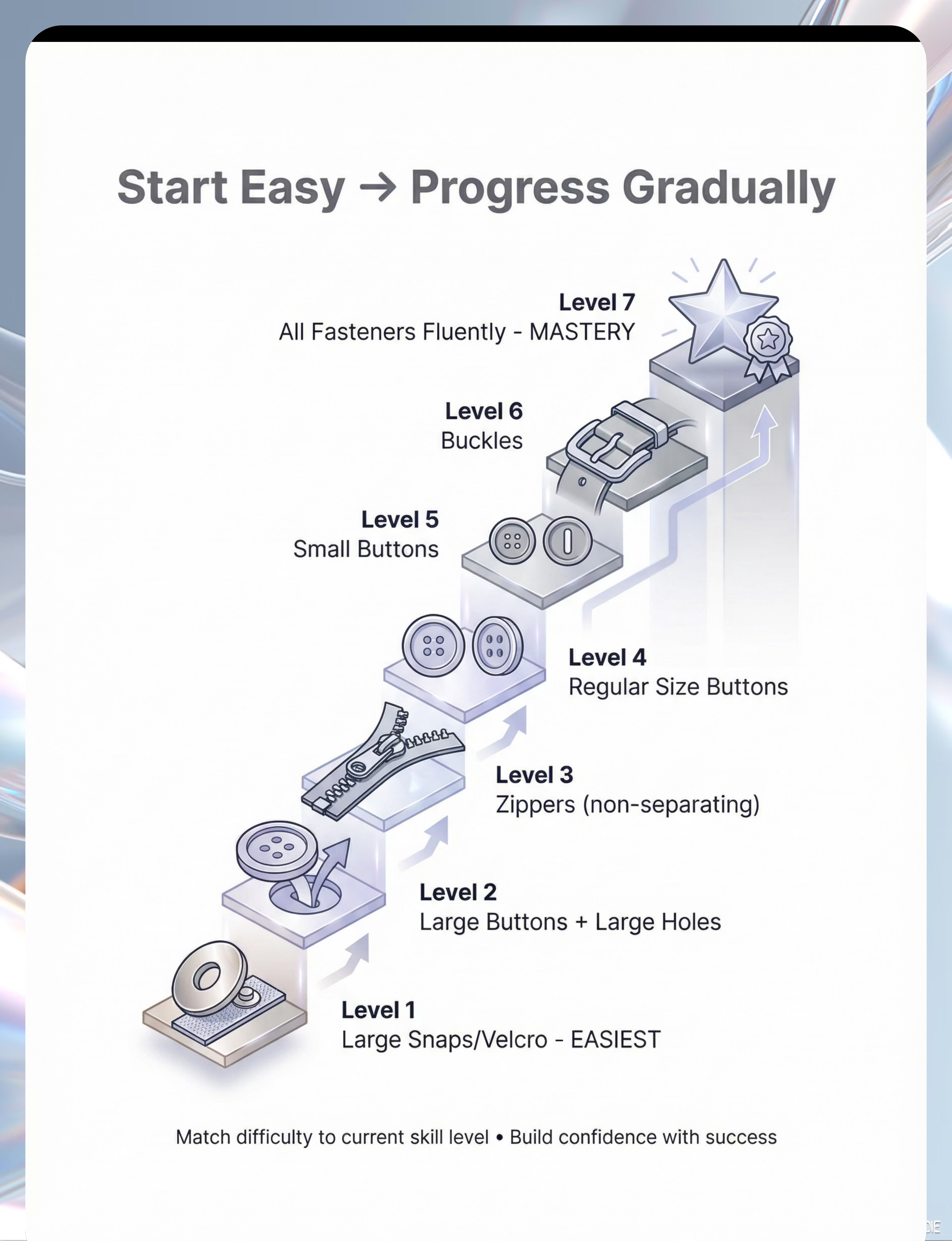
Fastener Progression Levels
Level 1: Large snaps/velcro
Easiest starting point for developing pincer grasp and bilateral coordination
Level 2: Large buttons with large buttonholes
Builds button threading skill with forgiving sizing
Level 3: Zippers (separating last)
Pull zippers first, then separating zippers as most complex
Level 4: Regular size buttons
Standard shirt button size requires refined coordination
Level 5: Small buttons
Advanced fine motor precision needed
Level 6: Buckles
Complex multi-step process requiring planning
Level 7: Fluent with all fasteners
Full dressing independence achieved across all clothing types
Materials & Key Features
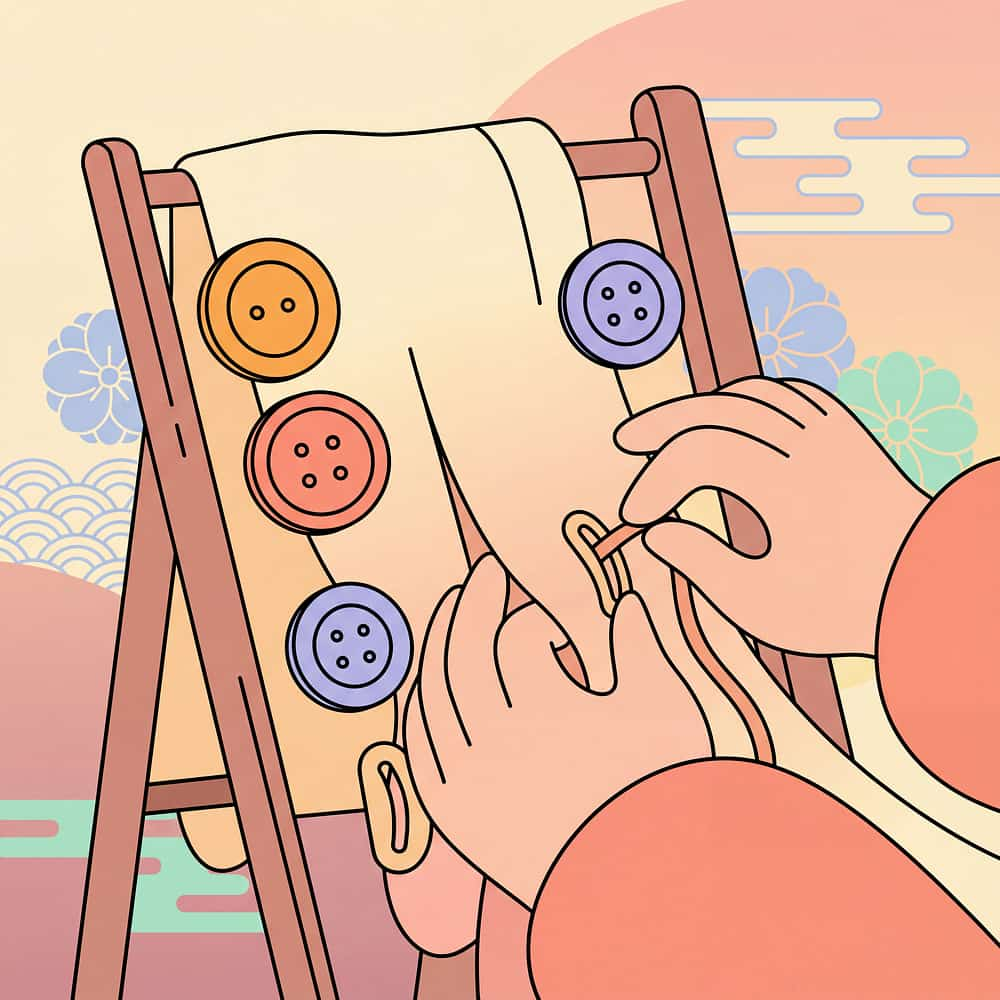
dressing-frames-button-practice therapy material
Quality Materials
  • Wood frames for stability and durability
  • Quality fabric that holds fasteners securely
  • Plastic boards for portability options
  • Real, functional fasteners (not decorative)
dressing-frames-button-practice therapy material
Essential Features to Look For
  • Appropriate fastener size — matches child's current skill level, not too small
  • Stable frame/base — doesn't move or tip during practice
  • Quality fasteners that work properly — buttons slide through holes, zippers zip smoothly
  • Progressive difficulty — can grow with child's developing skills

Critical: Poorly functioning fasteners teach frustration, not skills. Invest in quality materials that actually work as intended.
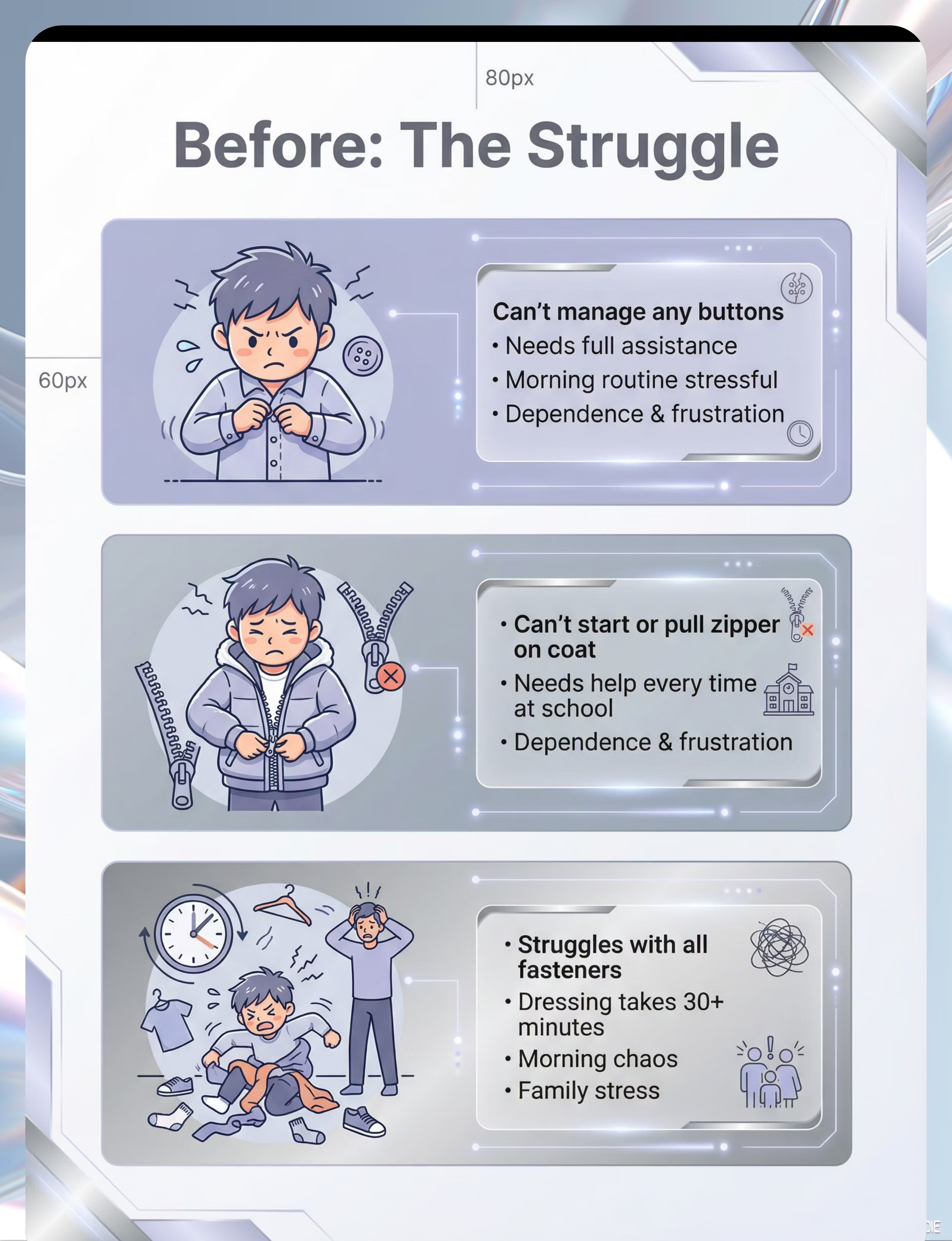
The Struggle (Before)
Can't Button
Situation: Child can't manage any buttons. Needs full assistance with all button clothing. Morning routine becomes stressful battle. Independence feels impossible.
Experience: Fingers won't coordinate to push button through hole. Gets frustrated after repeated failed attempts. Gives up quickly.
Emotion: Dependence, frustration, embarrassment
Can't Zip
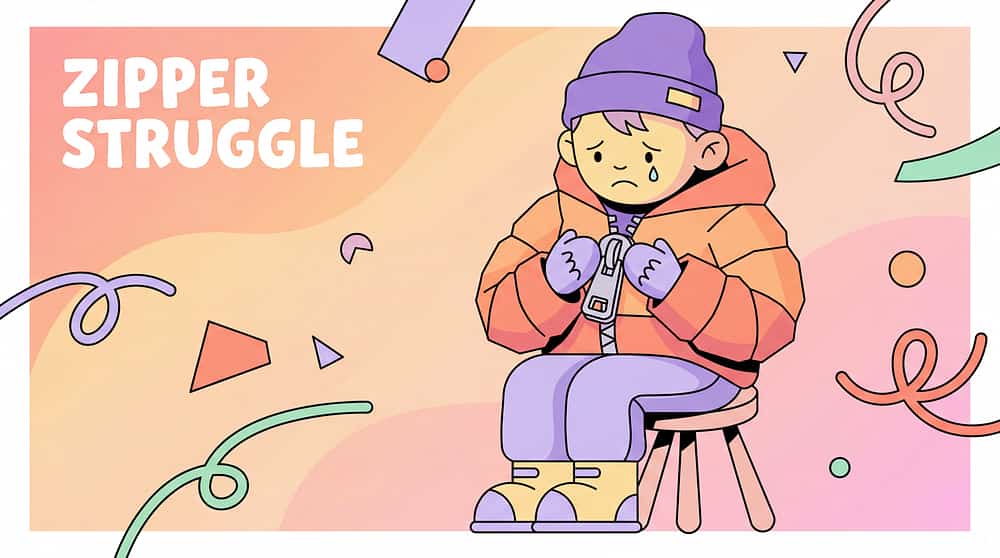
Situation: Child can't start zipper or pull it up on coat. Needs help every single time. Can't manage independently at school drop-off. Peers zip their own coats.
Experience: Can't align zipper teeth to start. Pull tab is too hard to grip and move. Process feels impossible to master.
Emotion: Frustration, dependence, feeling "behind"
Dressing Takes Forever
Situation: Child struggles with every single fastener type. Getting dressed takes 30+ minutes or more. Morning routine is chaos. Entire family stressed and running late.
Experience: Each clothing item is a battle. Parent ends up doing it "for time." Child never gets practice. Cycle continues.
Emotion: Stress, delays, family tension
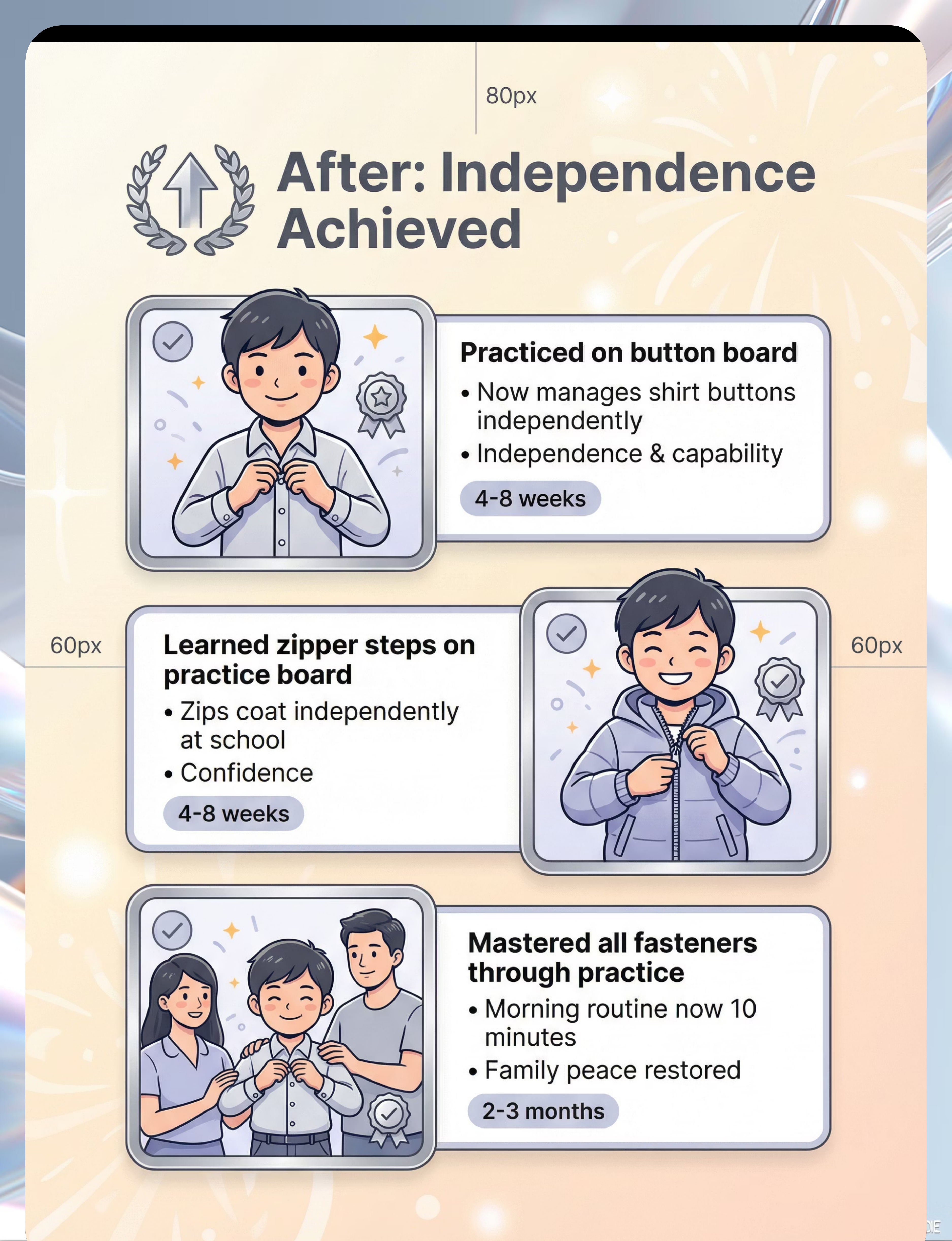
The Breakthrough (After)
Can Button! ✓
4-8 weeks
Situation: Practiced on button board starting with large buttons, progressing systematically. Now manages shirt buttons independently! Getting dressed without help.
Experience: Buttons slide through holes smoothly. Process feels automatic now. Morning dressing is actually enjoyable.
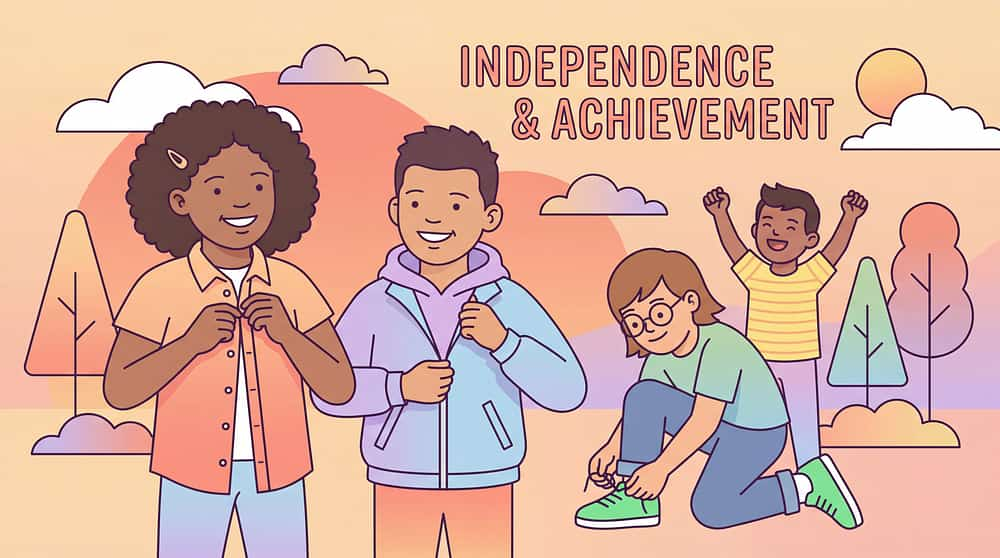
Emotion: Independence, capability, pride
Zips Independently! ✓
4-8 weeks
Situation: Learned zipper steps on practice board: align teeth, hold bottom, pull up. Now zips coat independently every time! Manages at school drop-off without parent help.
Experience: Can feel when zipper teeth align correctly. Pull is smooth. No longer needs assistance.
Emotion: Independence, confidence, belonging
Dressing Independence! ✓
2-3 months
Situation: Mastered all fastener types through systematic practice. Morning routine now takes just 10 minutes. Family peace and calm restored.
Experience: Gets dressed confidently without help. Fasteners feel easy now. Morning routine is smooth.
Emotion: Efficiency, independence, family harmony
What to Expect (Realistic Timelines)
Dressing independence develops systematically when children receive consistent daily practice. Here are the typical milestones and realistic timeframes:
Manages large snaps/velcro
2-4 weeks
First success with easiest fasteners builds confidence and motor patterns
Buttons large buttons
4-6 weeks
Button threading becomes smooth and automatic with practice
Zips zippers independently
4-6 weeks
Master starting and pulling zippers on coats and jackets
Manages regular-size buttons
6-8 weeks
Precision increases to handle standard shirt buttons
Transfers skills to own clothing
6-8 weeks
Successfully applies frame practice to real daily dressing
Full dressing independence achieved
2-3 months
Confidently manages all fasteners across all clothing types

Important: These timelines assume consistent daily practice (10-15 minutes) and appropriate progression through fastener difficulty levels. Every child's timeline may vary based on starting skill level and practice frequency.
Is This Right for My Child? (2-Minute Check)
Answer these quick questions to determine if dressing frames and button practice tools are a good fit for your child's current needs:
Can your child manage buttons on clothing?
If they struggle with buttons, I've learned that practice with button boards is strongly indicated. Button skills are truly foundational for dressing independence.
Can your child zip a jacket independently?
If this is a challenge, then practicing with zipper frames will help build this essential skill. Zipper independence is critical for managing outerwear.
Does your child need significant help getting dressed?
If they consistently need a lot of help, it signals that dressing skills need systematic development. Comprehensive fastener practice will build independence across all clothing types.
Can your child manage snap/velcro closures?
If snaps and velcro are tricky, it's a good idea to start with these easier fasteners before moving to buttons. Establishing these foundational skills first is key.

Scoring Guide: 3+ "concerning" answers = strong fit for dressing frame practice. 2 concerning answers = beneficial, consider starting. 1 or fewer = may benefit from targeted practice on specific fastener type.
Usage Guide: When & How to Practice
When to Use
Context
Details
Daily self-care
10-15 minute practice sessions
Morning routine
Warm-up before getting dressed
Therapy sessions
During occupational therapy
Playtime
With busy boards or dress-up dolls
New fasteners
When introducing a new fastener type
When NOT to Use
Situation
Reason
When rushed
Practice needs calm, unhurried time
Child is upset
When child is dysregulated or distressed
Too difficult
Avoid frustration with overly challenging fasteners
Supervision by Age
Age Range
Supervision Level
Notes
Under 3 years
Fully guided practice
Hand-over-hand support, step-by-step guidance, choking hazard supervision
3-5 years
Supported practice
Nearby supervision, verbal cues, occasional physical assistance
5+ years
Supervision decreasing
Independent practice as skills develop, periodic check-ins
Duration & Settings
Practice Duration: 10-15 minutes per session, daily
Appropriate Settings:
Home
School
Clinic
Incorporate practice into natural dressing routines once skills develop on frames.

Age Note: Match fastener difficulty to child's skill level, not just chronological age. A 7-year-old just beginning may need Level 1-2 fasteners. Progress is based on mastery, not age.
Safety First
Critical Safety
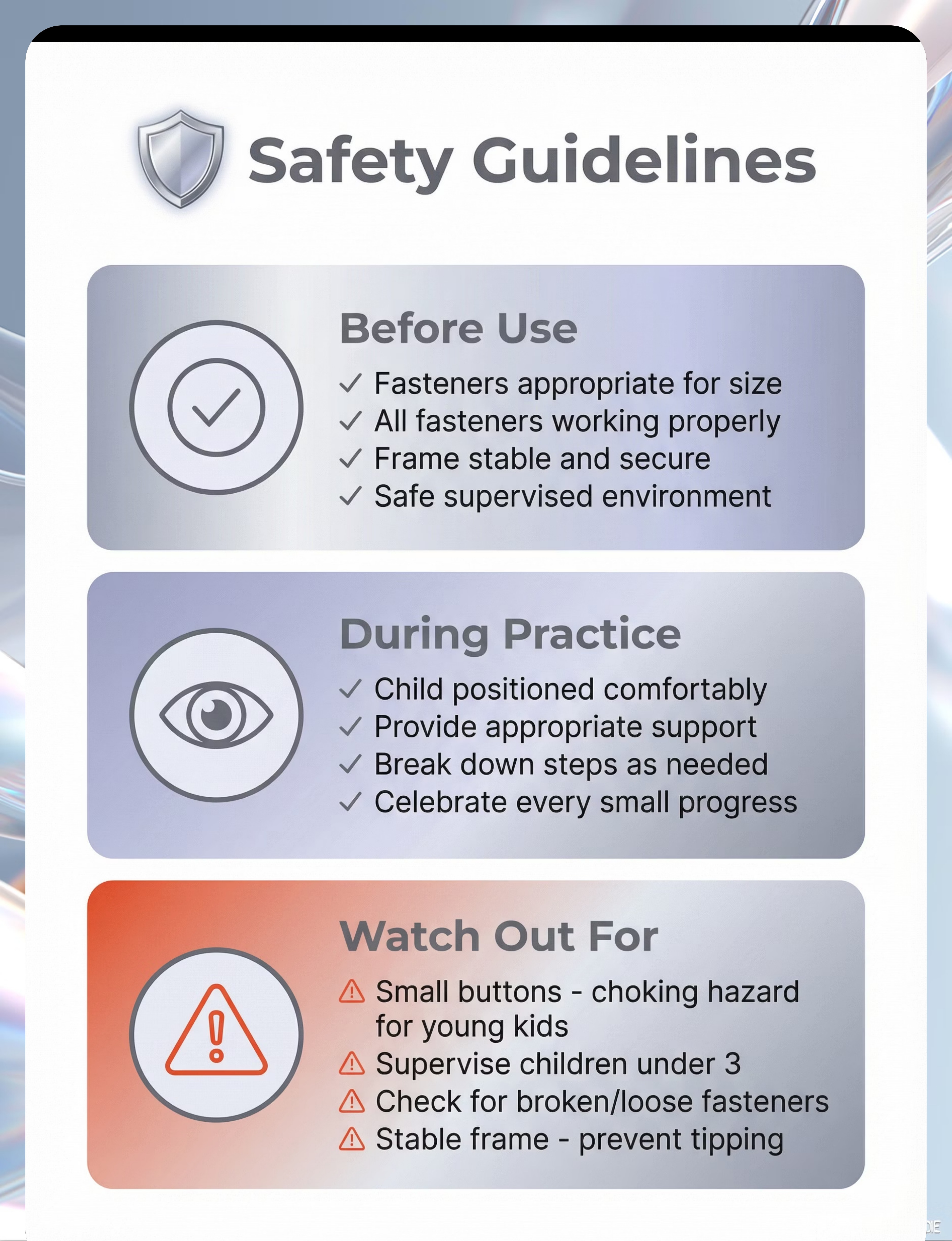
  • Supervise young children with small buttons — choking hazard risk
  • Check for loose or broken fasteners before each use
  • Ensure frame is stable and won't tip during practice
Important Warnings
  • Small buttons can be choking hazards for young children or those who mouth objects
  • Broken snaps or zippers can have sharp edges that scratch
  • Always inspect practice clothing for safety issues
Contraindicated
  • Small fasteners for children who mouth objects
  • Broken or malfunctioning fasteners that don't work properly
  • Starting with too-small fasteners causing frustration
Safety Checklist
Before Use
  • ✓ Fasteners are appropriate size for child's skill level
  • ✓ All fasteners are working properly
  • ✓ Frame is stable and secure
  • ✓ Safe, calm practice environment
During Use
  • ✓ Child is positioned comfortably
  • ✓ Appropriate support is being provided
  • ✓ Breaking down steps as needed
  • ✓ Celebrating progress and effort
Signs of Success
  • ✓ Managing fasteners more independently
  • ✓ Faster dressing times
  • ✓ Less frustration during practice
  • ✓ Child seeking to practice voluntarily
Common Questions (Honest Answers)
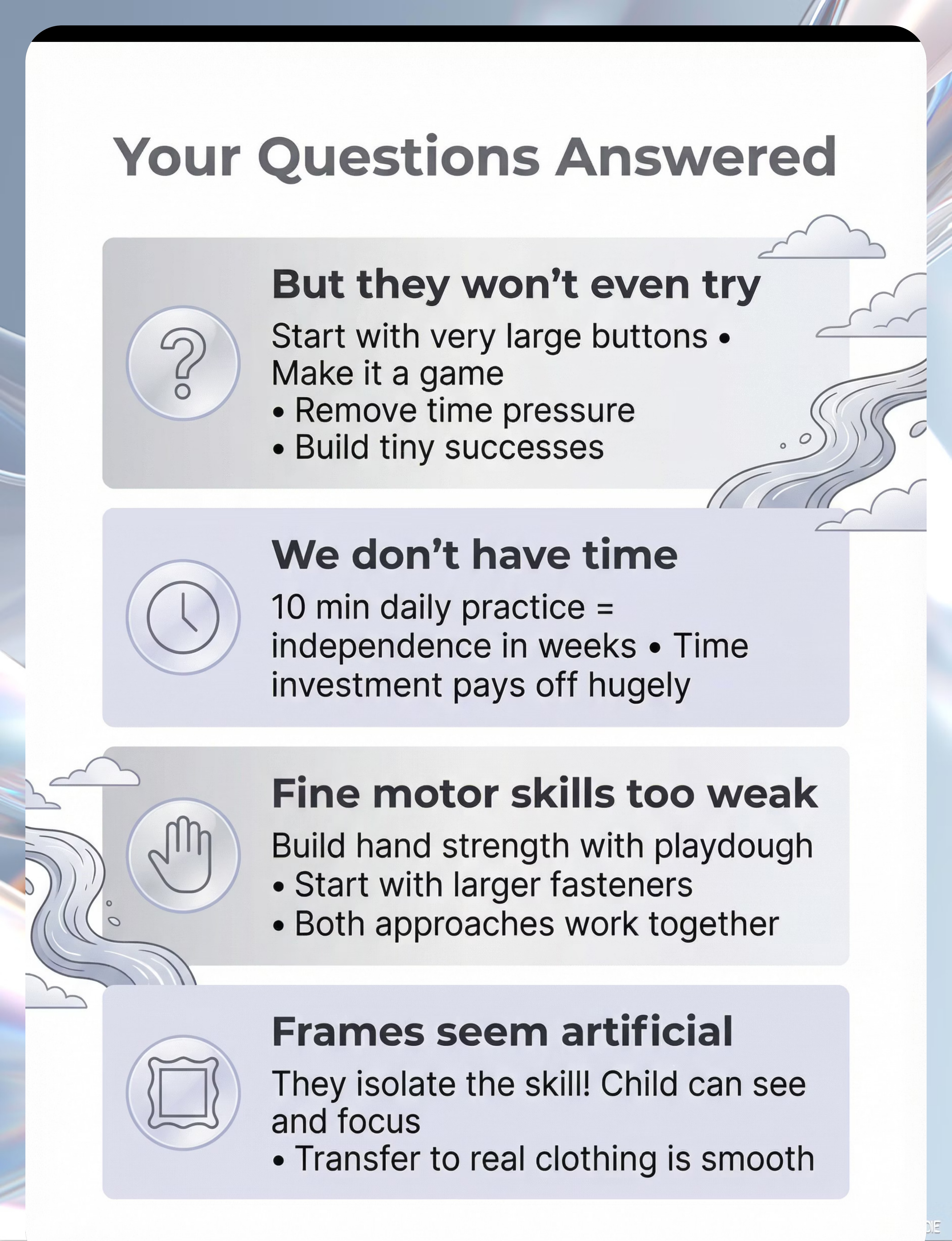
They just won't even try
Response: Make practice easier and more engaging. Start with very large buttons that are easy to succeed with. Make it a game, not a chore. Practice on doll clothes first for lower pressure. Remove all time pressure completely. Build tiny successes that create momentum. Celebrate every small step.
Try this: Easier fasteners; game-based approach; doll practice first; zero time pressure
We don't have time — I just do it for them
Response: Invest practice time now to save time forever. Just 10 minutes of daily practice leads to independence within weeks. The upfront time investment pays off hugely for years to come. Your child will need less help, not more, very soon.
Try this: Daily 10-minute practice sessions; recognize long-term time savings; independence is the goal
Their fine motor skills are too weak
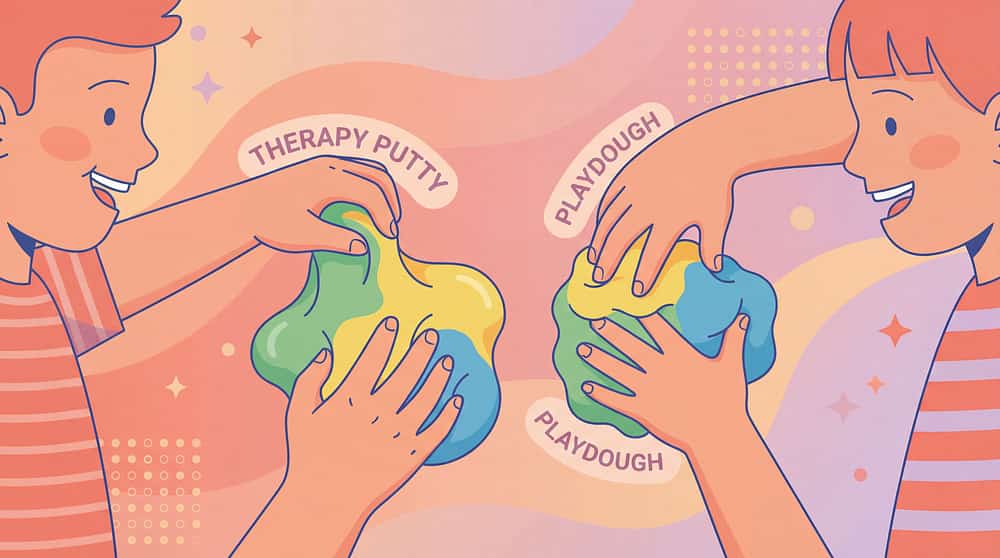
Response: Build hand strength alongside fastener practice! Use playdough, therapy putty, and hand strengthening activities. Also start with larger, easier fasteners that require less finger strength. Use both approaches together for best results. Strength and skill develop together.
Try this: Add strength-building activities (putty, dough); start with larger fasteners requiring less force
Dressing frames seem artificial
Response: They isolate the specific skill! Your child can see everything clearly, focus completely, and practice without the challenges of body positioning. Once the motor pattern is mastered on the frame, transfer to actual clothing is smooth and quick. Isolation is the teaching strategy.
Try this: Frames teach the skill in isolation; then transfer confidently to real clothes; proven teaching method
Investment Guide
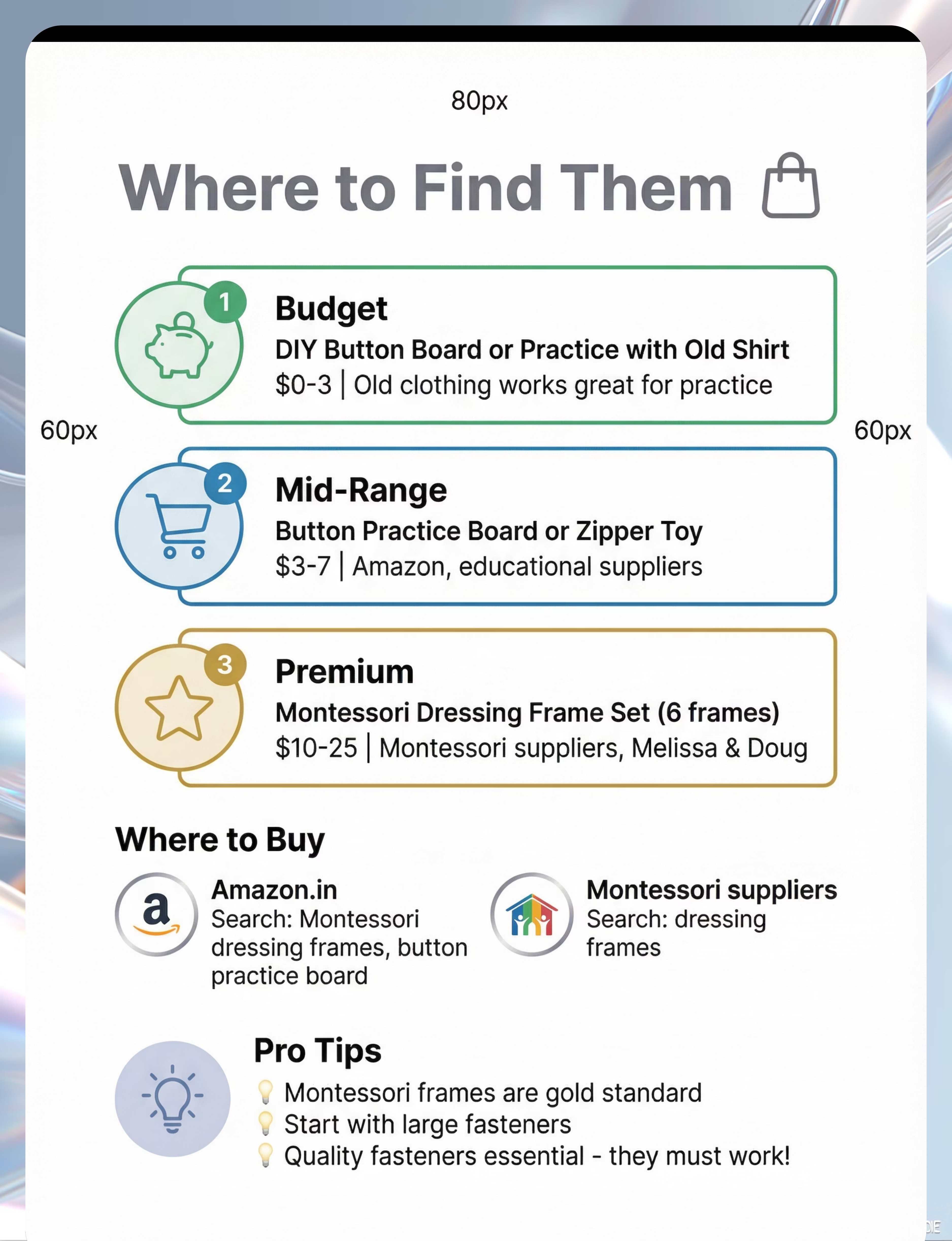
Dressing independence tools are available at every budget level. Here's how to choose the right investment for your family:
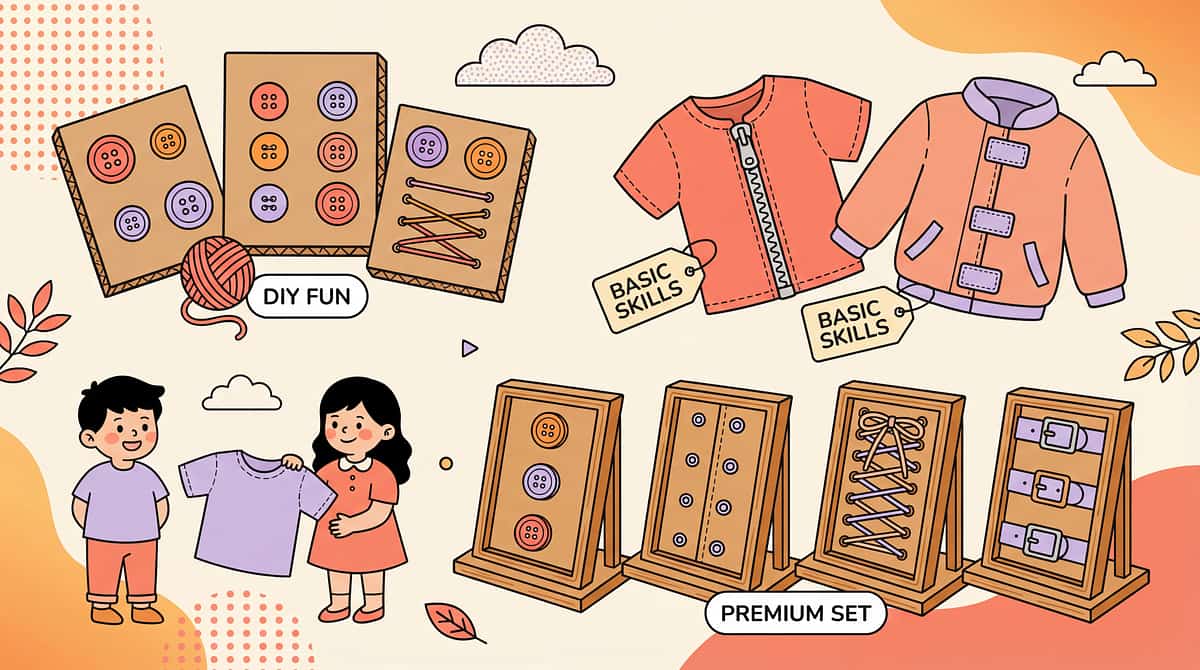
Price Comparison: Dressing Aids
A quick overview of the cost spectrum for different types of dressing independence tools.
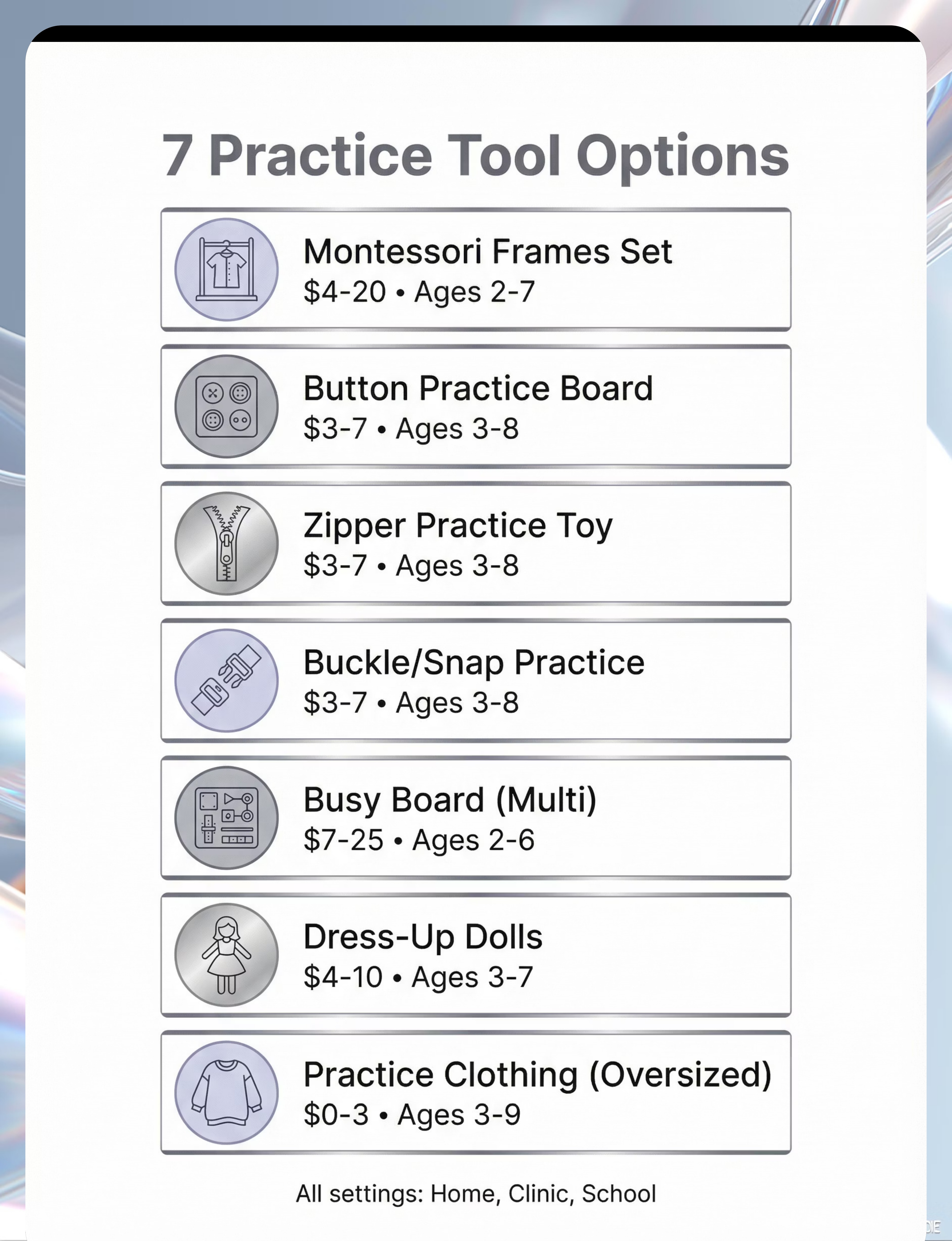
DIY/Old Clothing
0-200
0-2
Single Button/Zipper Board
200-500
2-7
Montessori Frame Set
800-2000
10-25
Budget-Friendly Options
Start today with minimal cost using items you might already have:
DIY Button Board
Craft a simple board with buttons and fabric for hands-on practice. Cost: ₹0-100.
Old Shirt Practice
Utilize an old, oversized shirt for unpressured, realistic fastener practice. Cost: ₹0.
Practice Clothing
Modify existing garments or sew simple practice items to focus on specific fasteners. Cost: ₹50-200.
Investment Progression
Advance your child's learning journey with specialized tools:
Initial Focus
Target one specific skill (e.g., buttons) with a single, dedicated practice board or toy.
Skill Expansion
Introduce additional fastener types as your child masters each one, building confidence.
Comprehensive Set
Invest in a full Montessori dressing frame set for systematic and durable skill development across all major fasteners.

Overall Price Range
₹200–2,000 covers the full spectrum from basic practice boards to complete professional sets
$2–25 USD (international reference)
Best starting point: A single button board (₹200-500) or zipper practice toy (₹200-500) targeting your child's most needed skill. Add additional fastener types as skills develop.
Where to Buy in India
Availability: Moderately Available — readily found on major online platforms and specialty educational toy retailers
Recommended Shopping Platforms
Platform
Search Terms
Price Range
Amazon.in
"Montessori dressing frames"
₹400–1,200
Amazon.in
"button practice board kids"
₹200–500
Amazon.in
"busy board toddler"
₹500–1,500
Amazon.in
"zipper practice toy"
₹200–500
Montessori suppliers
"dressing frames"
₹300–1,000
Buying Tips ✓
  • Montessori dressing frames are the gold standard for quality and effectiveness
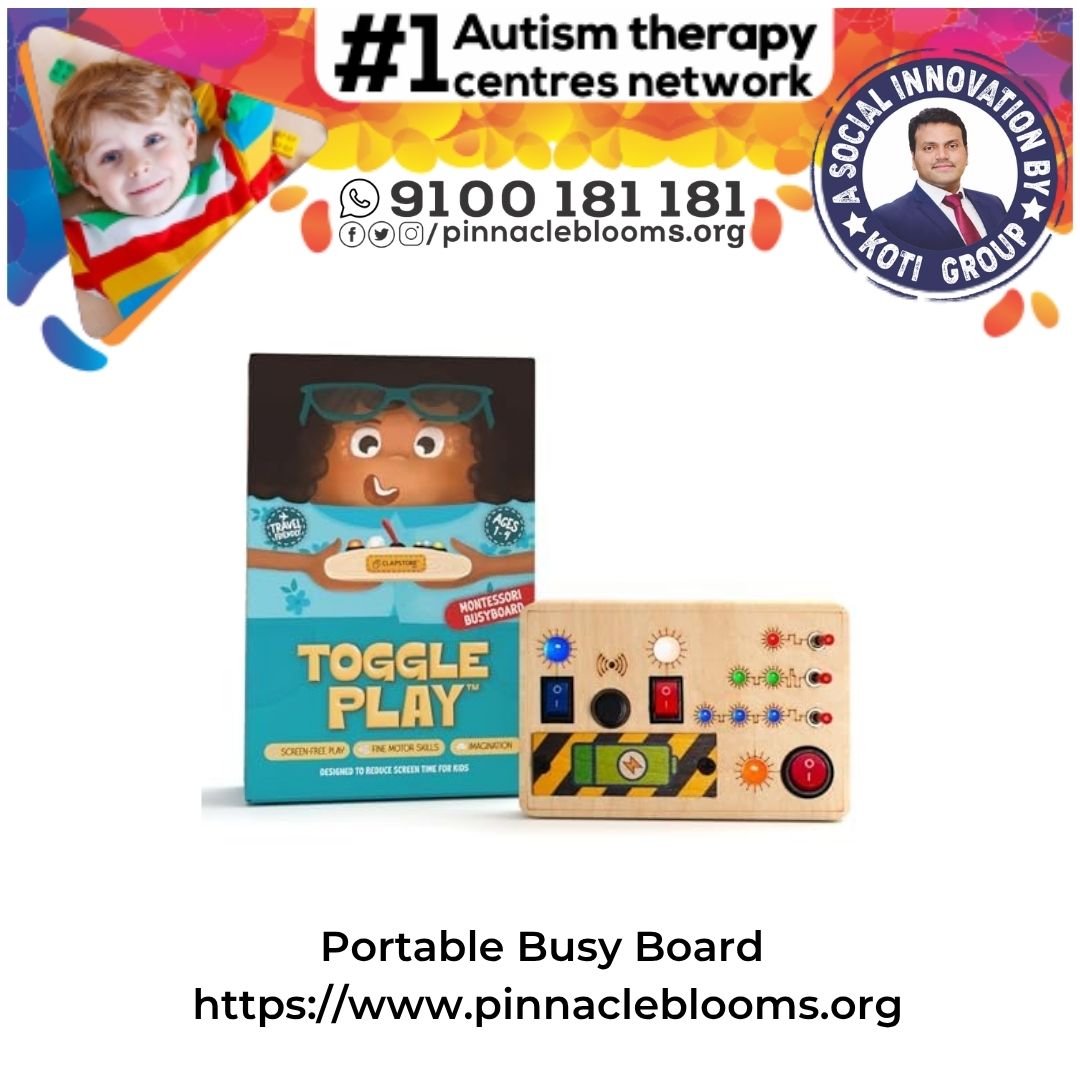
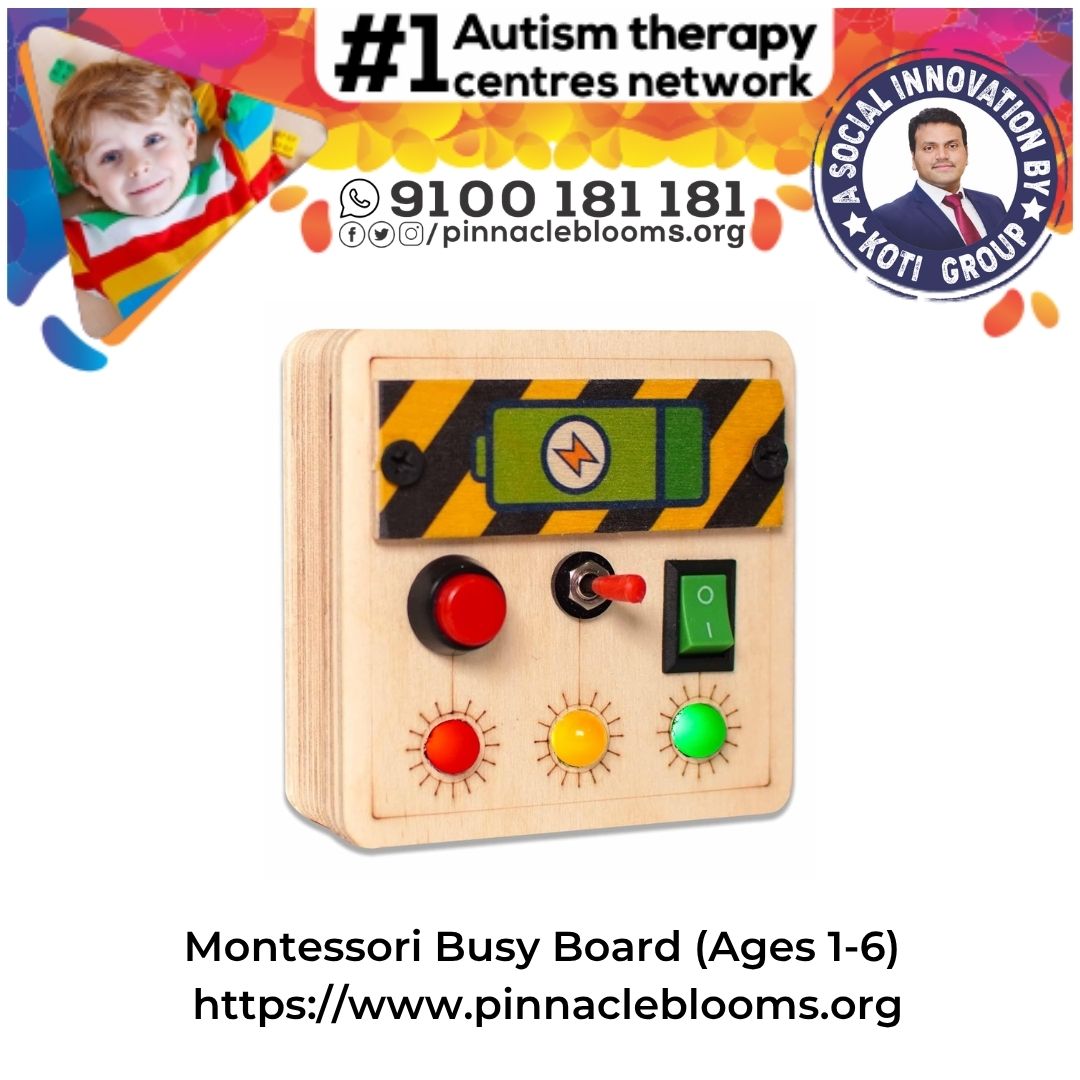
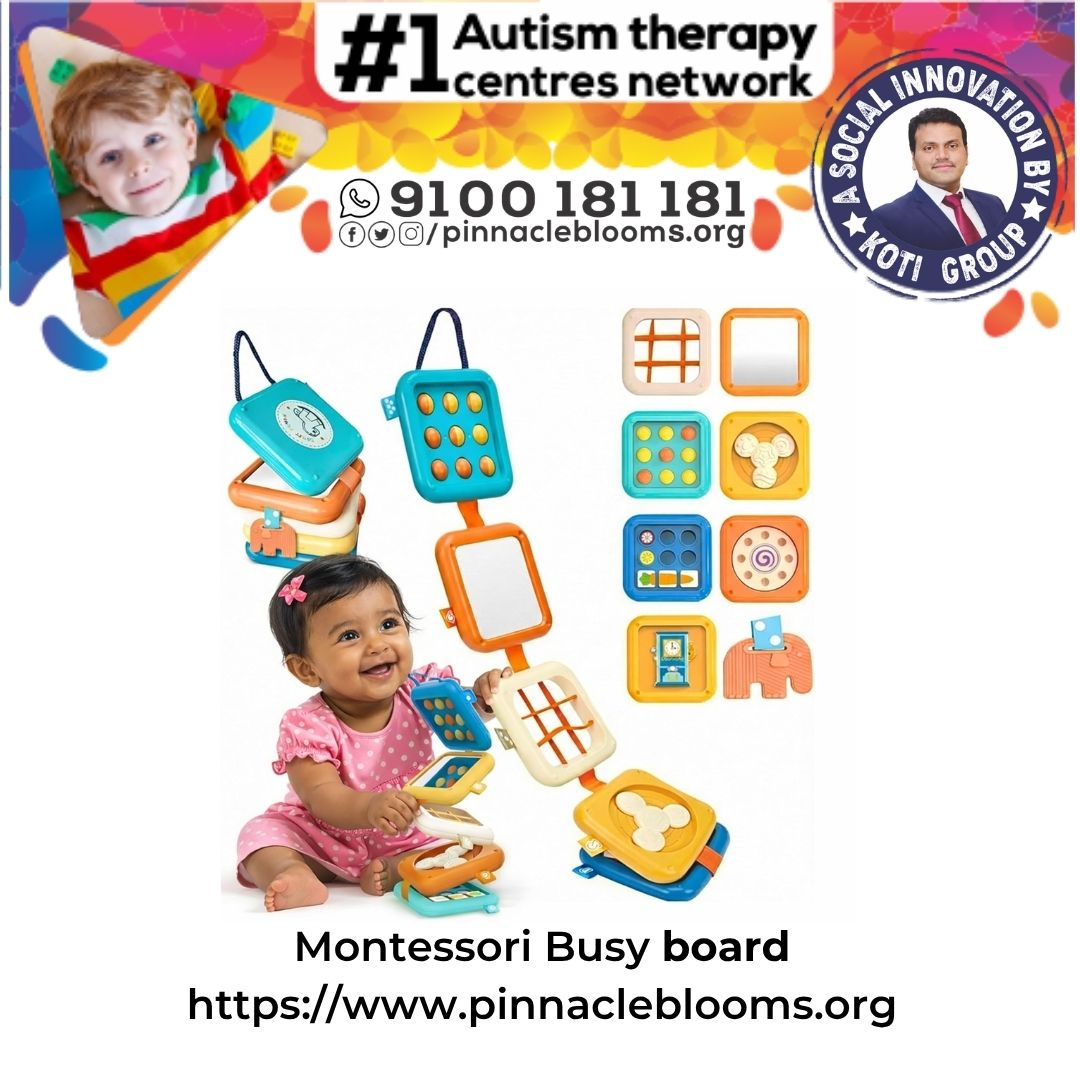
  • Busy boards combine multiple skill practice in one engaging tool
  • Old clothing works excellently well for practice — free option!
  • Start with large fasteners appropriate to skill level
  • Quality fasteners that actually work properly are essential — cheap versions frustrate
Red Flags ✗
  • Fasteners that don't work properly (buttons don't slide through, zippers stick)
  • Too-small fasteners for child's current skill level
  • Cheap snaps or buttons that break immediately
  • Unstable frame that moves or tips during practice
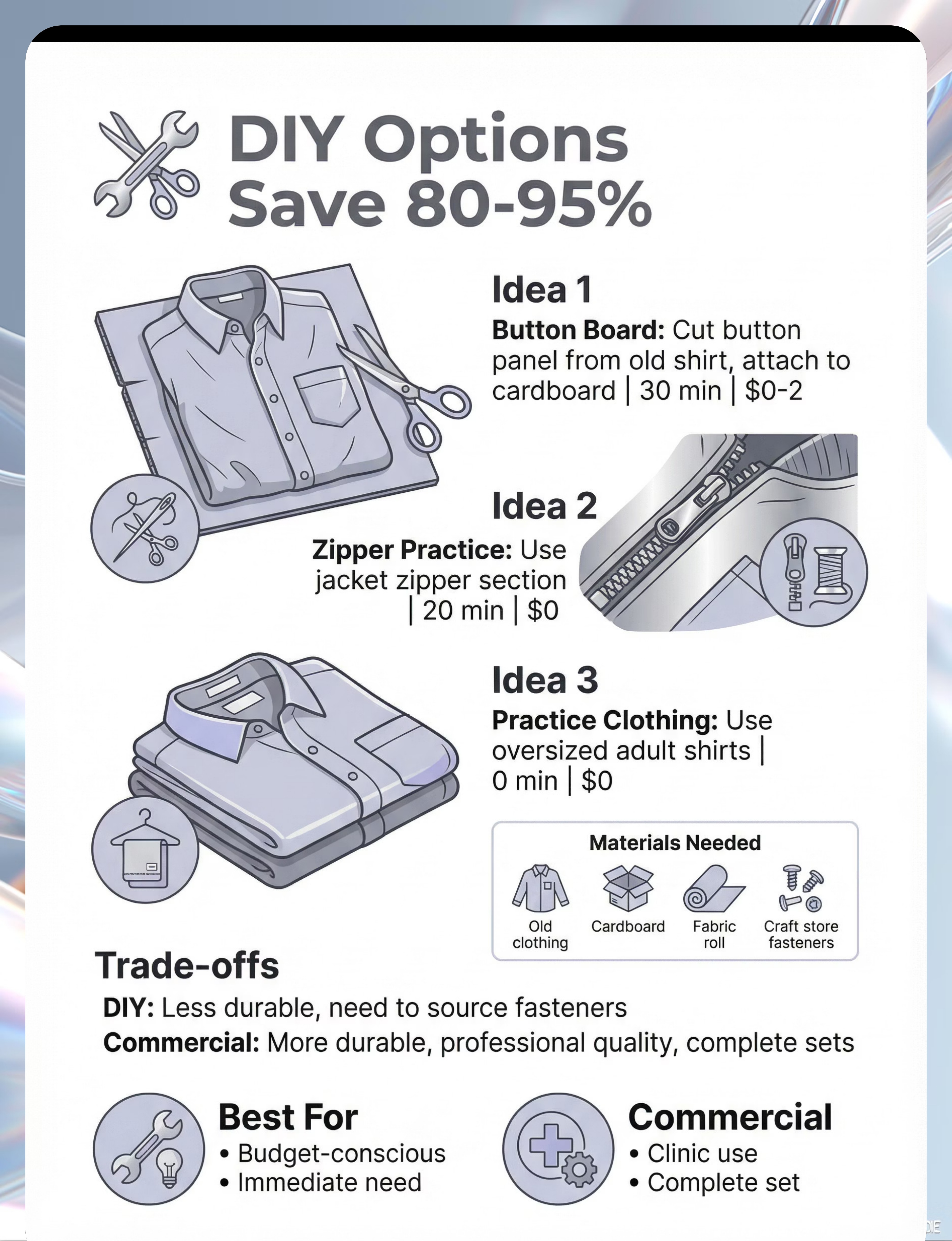
DIY Alternative (Save 80-95%)
1
Feasibility: Very High
2
Cost Savings: 80-95%
3
Time Required: 30-60 minutes
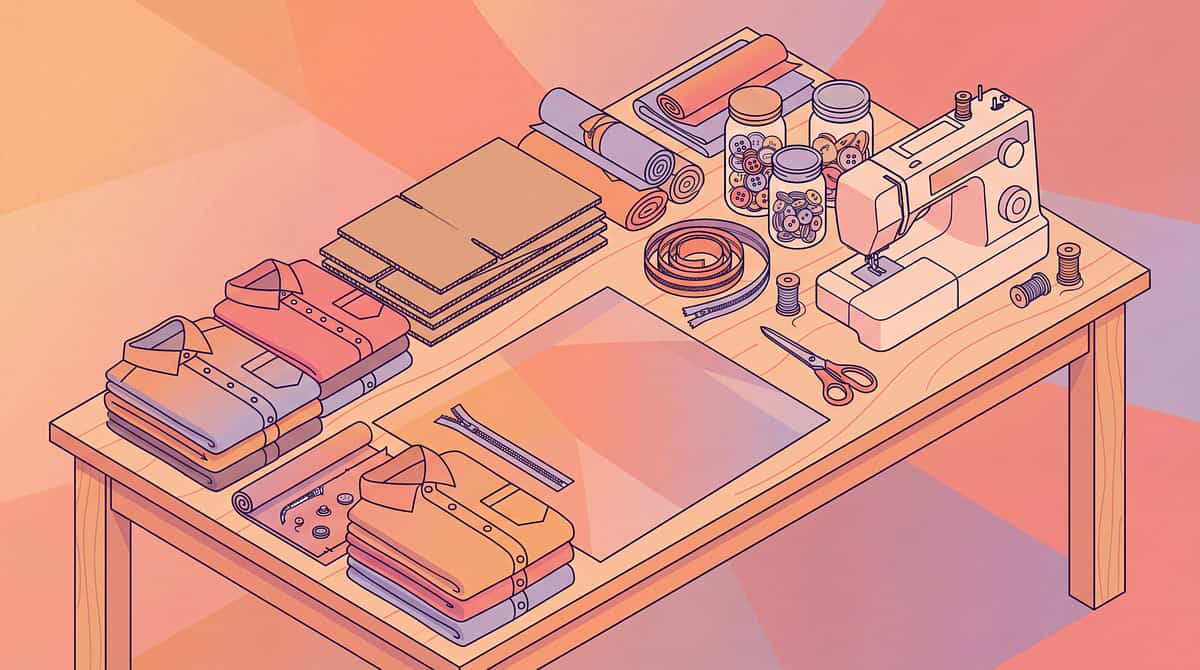
Materials Needed
1
Old shirt or jacket with various fasteners
2
Wooden frame or sturdy cardboard
3
Fabric scraps
4
Buttons, zippers, snaps from craft store
5
Basic sewing supplies or strong glue
DIY Instructions
1
Button Board
Cut button panel section from old shirt. Attach securely to cardboard or wooden backing. Ensure buttons and buttonholes are functional and accessible.
2
Zipper Practice
Use jacket zipper section cut carefully from old coat. Mount on cardboard or fabric backing. Practice pull zippers first before separating zippers.

3
Old Clothing Practice
Use oversized adult shirts for realistic practice. Front-button shirts are ideal. Child can see what hands are doing clearly.
4
Doll Clothes Method
Practice fasteners on stuffed animal or doll clothing. Lower pressure, more engaging play context. Builds same motor patterns.
5
DIY Busy Board
Attach various fastener types to wooden board or thick cardboard. Include buttons, zippers, snaps, velcro. Space them out for easy access.
6
Cardboard Frame
Stretch fabric with fasteners over cardboard frame. Secure edges tightly. Create multiple frames for different fastener types.
DIY vs Commercial: When to Choose What
Choose DIY When:
  • Budget-conscious approach needed
  • Using actual clothing items you already own
  • Want customized specific fastener types
  • Immediate need — can start today
Choose Commercial When:
  • Want professional quality frames
  • Classroom or clinic use requiring durability
  • Complete set covering all fasteners needed
  • Durability for extended heavy use required

Tradeoffs: DIY options may be less durable than commercial products and require sourcing quality fasteners. However, they're highly effective for skill building and can be started immediately with materials you likely already have at home.

Preview of dressing frames button practice Therapy Material

Below is a visual preview of dressing frames button practice therapy material. The pages shown help educators, therapists, and caregivers understand the structure and content of the resource before use. Materials should be used under appropriate professional guidance.

Page 1
Page 2
Page 3
Page 4
Page 5
Page 6
Page 7
Page 8
Page 9
Page 10
Page 11
Page 12
Page 13
Page 14
Page 15
Page 16
Page 17
Page 18
Page 19
Page 20
Link copied!
Track Progress, Complete the Kit & Get Support
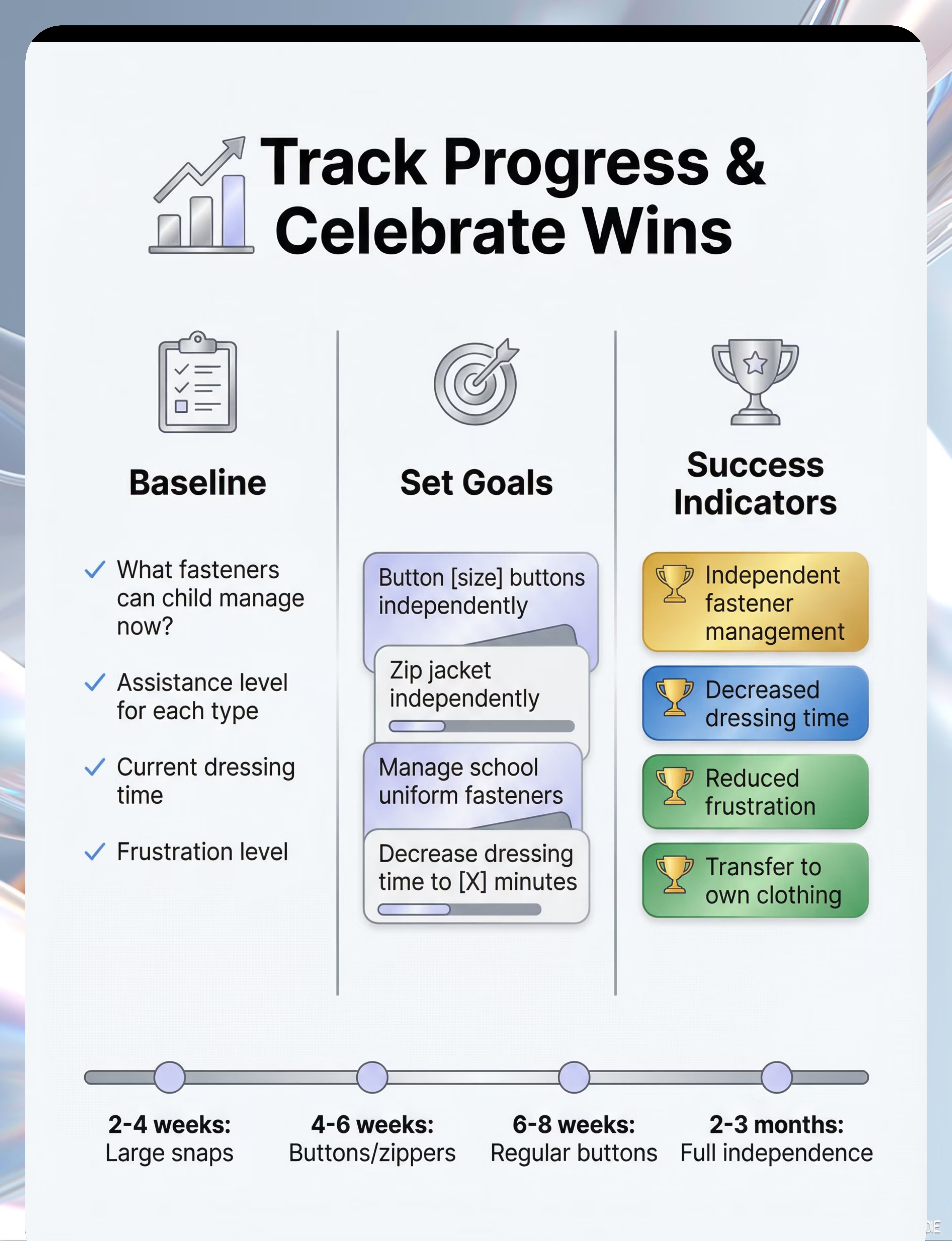
Measuring Dressing Success
Baseline Assessment
  • Which fasteners can child currently manage?
  • What assistance level is needed for each fastener type?
  • How long does complete dressing take?
  • What is child's frustration level during dressing?
Goals to Set
  • Child will button [specify size] buttons independently
  • Child will zip jacket without assistance
  • Child will manage all school uniform fasteners
  • Dressing time will decrease to [X] minutes
Success Indicators
  • ✓ Independent fastener management
  • ✓ Significantly decreased dressing time
  • ✓ Reduced frustration during dressing
  • ✓ Skills transfer to own clothing
  • ✓ Independence at school

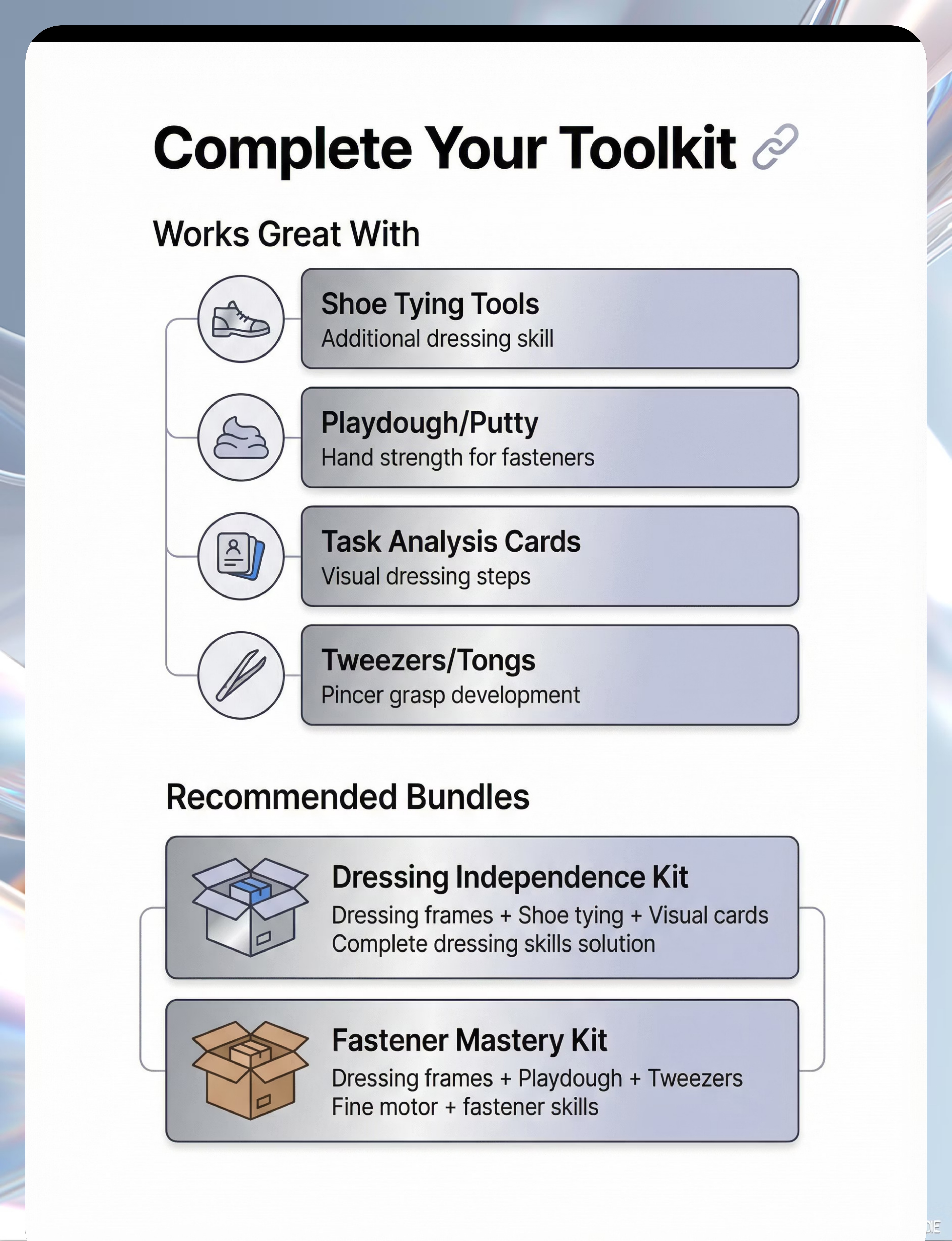
Pair It With... Complete Your Dressing Independence Kit
These complementary tools work together to build complete self-care independence:
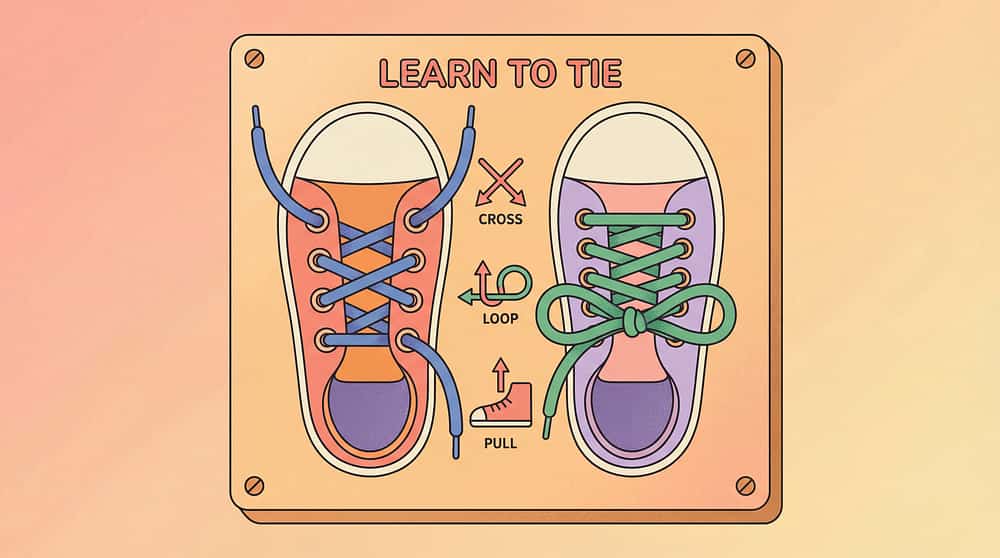
Shoe Tying Tools (ID: 9.2)
Additional essential dressing skill — shoe independence completes the dressing routine
Playdough/Therapy Putty (ID: 7.1)
Builds hand strength needed for manipulating fasteners effectively
Task Analysis Cards (ID: 3.5)
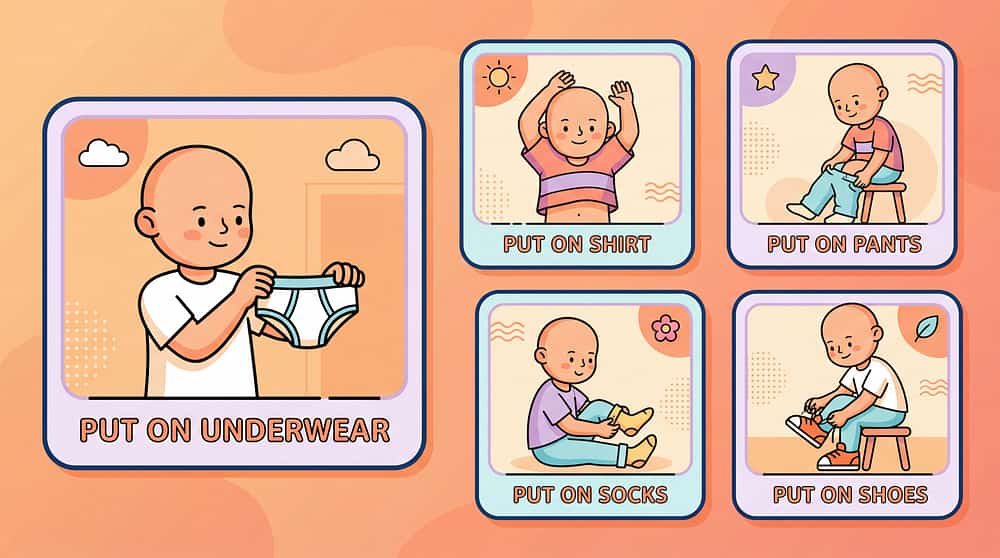
Visual supports showing dressing sequence steps clearly
Tweezers/Tongs (ID: 7.4)
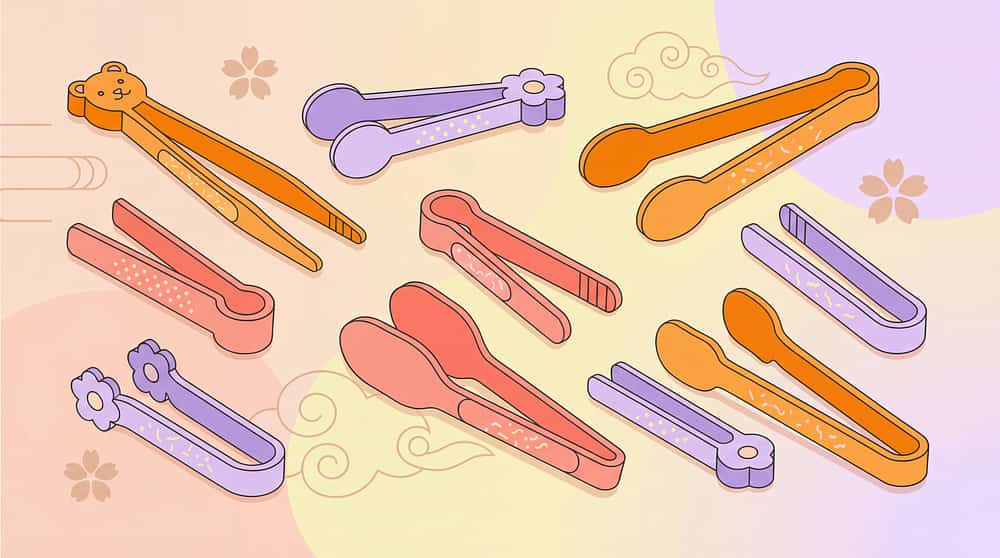
Develops pincer grasp essential for button manipulation
Recommended Bundles
Dressing Independence Kit
Includes: Dressing Frames (9.1) + Shoe Tying Tools (9.2) + Task Analysis Cards (3.5)
Use Case: Complete dressing skills from fasteners to shoes with visual supports
Fastener Mastery Kit
Includes: Dressing Frames (9.1) + Playdough/Putty (7.1) + Tweezers/Tongs (7.4)
Use Case: Fine motor strength building combined with fastener skill practice

Quick AI Summary
Dressing frames and button practice tools develop the fastening skills essential for dressing independence through isolated, progressive practice. Core Kit (Rank 1), strong evidence, critical daily living skill.
dressing
buttons
zippers
fasteners
self-care
independence
ADL
OT
SpEd
core-kit
Common Searches
dressing frames autism, button practice, Montessori dressing, zipper practice toy, self-dressing skills, fastener learning, busy board dressing

Get Expert Support
FREE National Autism Helpline
Phone: 9100 181 181
Languages: 16+ languages supported
Website: pinnacleblooms.org
Confidential support for families navigating child development challenges
Pinnacle Blooms Network® Platform
AbilityScore® identifies dressing skill patterns and developmental needs
TherapeuticAI® prescribes personalized dressing practice activities
EverydayTherapyProgramme™ includes daily dressing practice in home routines
ADL Index tracks dressing independence progress over time

Disclaimer: This is educational information. Always consult qualified occupational therapists, speech-language pathologists, or pediatricians for personalized guidance. Individual results vary based on child's unique needs and consistent practice.