














Early Reading Materials
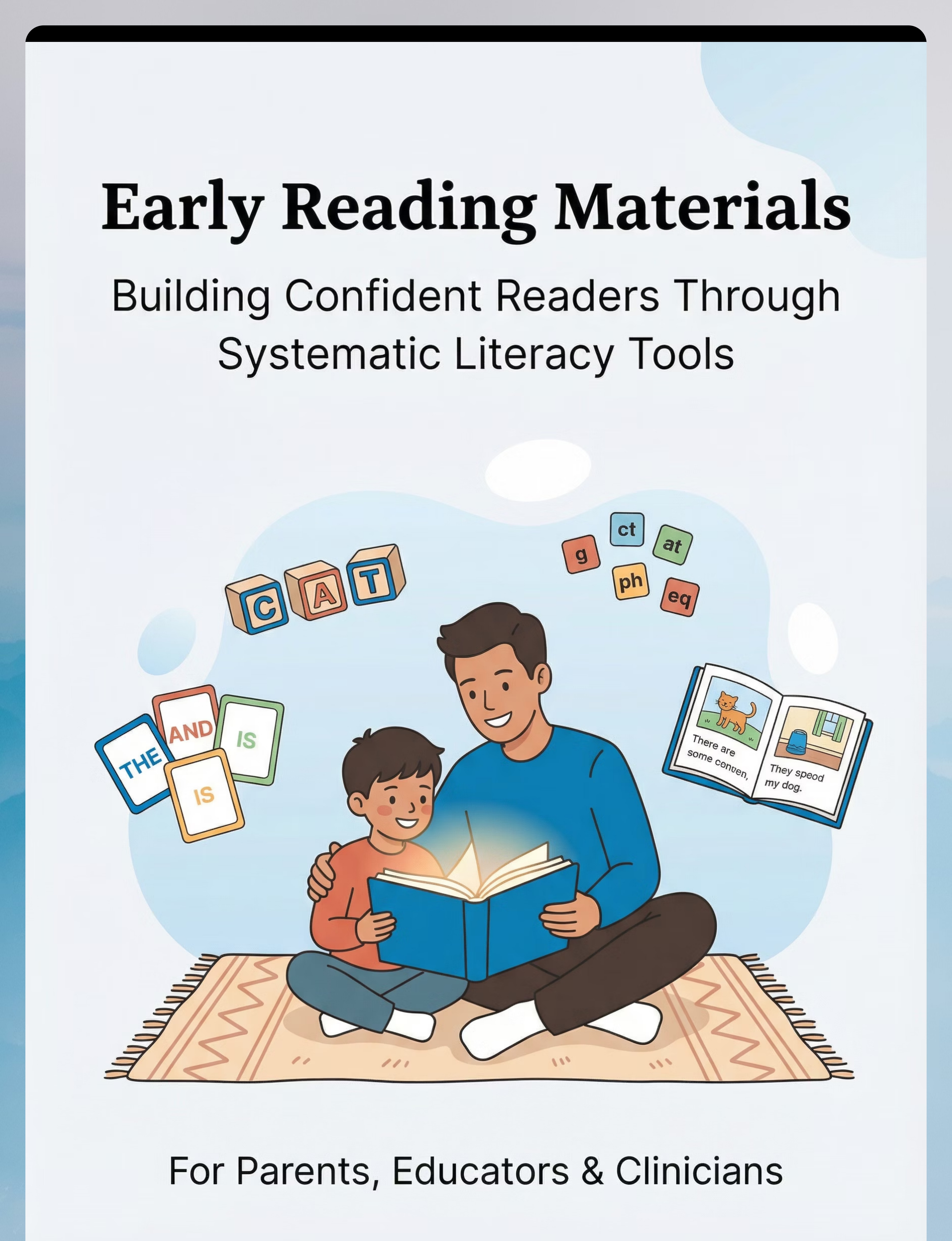
Building Strong Readers Through Science-Based Literacy Tools
Focused on systematic phonics and engaging decodable readers, nurturing young minds for literacy success.
Early Reading Materials
SpEd + SLP
Strong Evidence
Rank #2
Daily Use
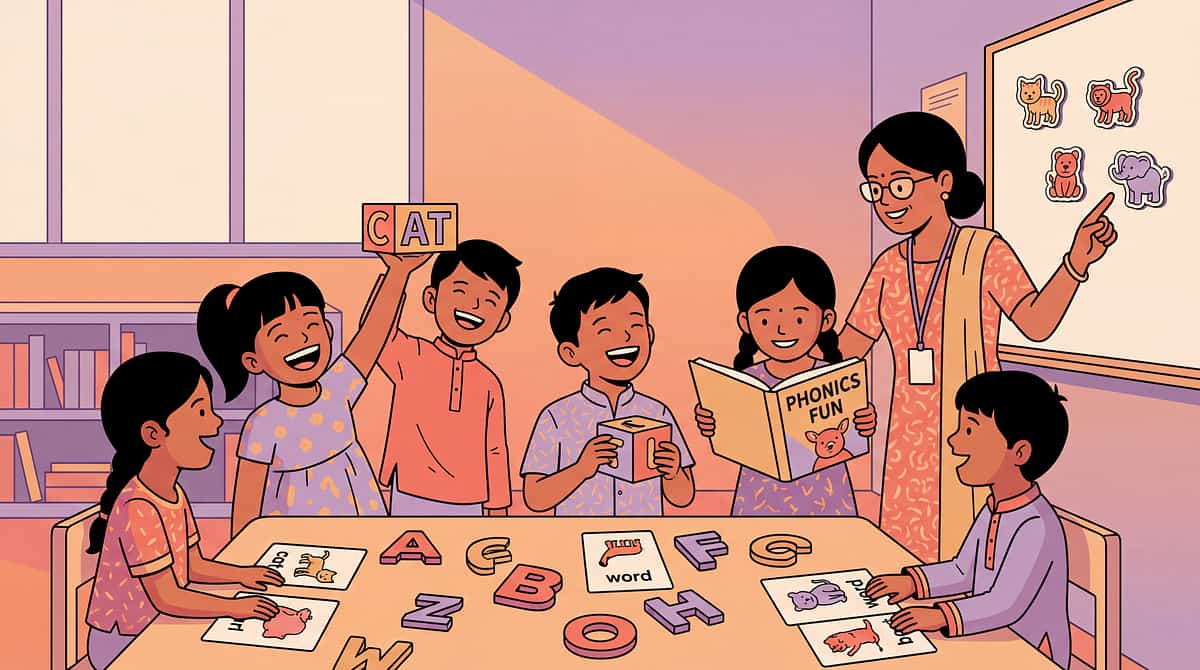
Develop confident, skilled readers through systematic phonics instruction, sight word recognition, and carefully leveled texts that build reading success step by step. From letter sounds to fluent reading, these evidence-based materials create a clear pathway to literacy.
All Settings
4-8 years
₹100-1,000
Core Kit
Who This Helps
Core function: Develop reading skills through systematic phonics instruction, sight word recognition, and engaging reading materials that match each child's developmental level.
Phonics/Decoding
Sight Word Recognition
Reading Fluency
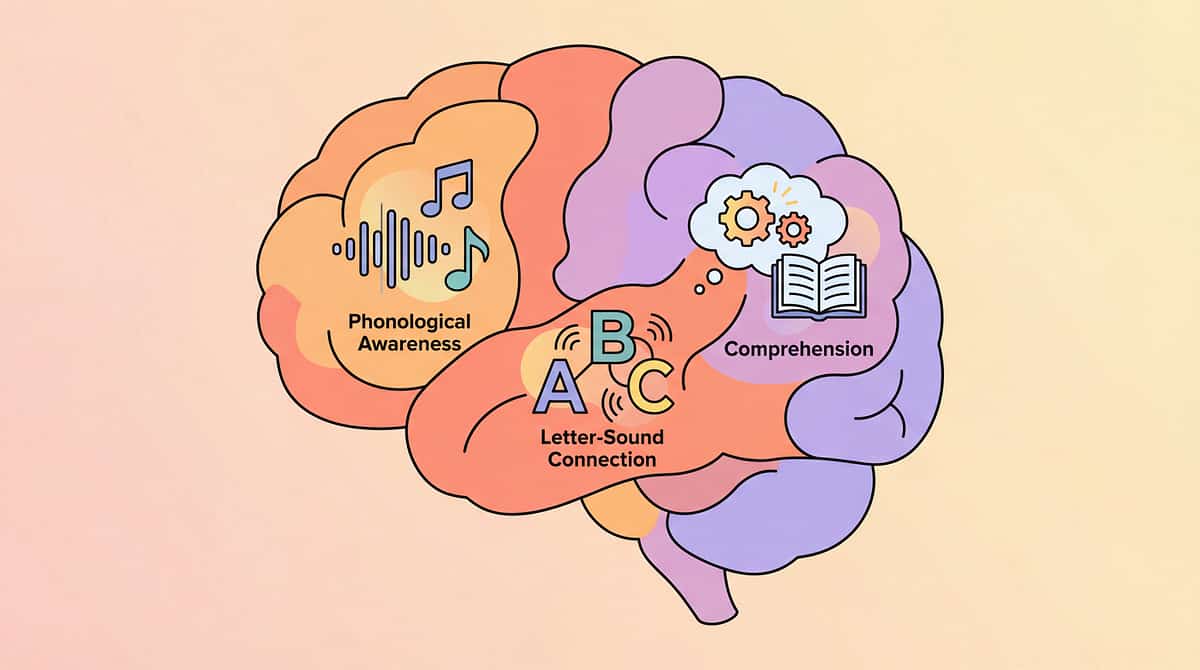
Comprehension
Print Awareness
Reading Motivation

Ages 3-9 years
Materials matched to reading level, not age—meet your child exactly where they are
All Settings
Home practice, school instruction, clinic intervention, library visits
Best For
Beginning readers, children behind in reading, phonics learners, confidence builders
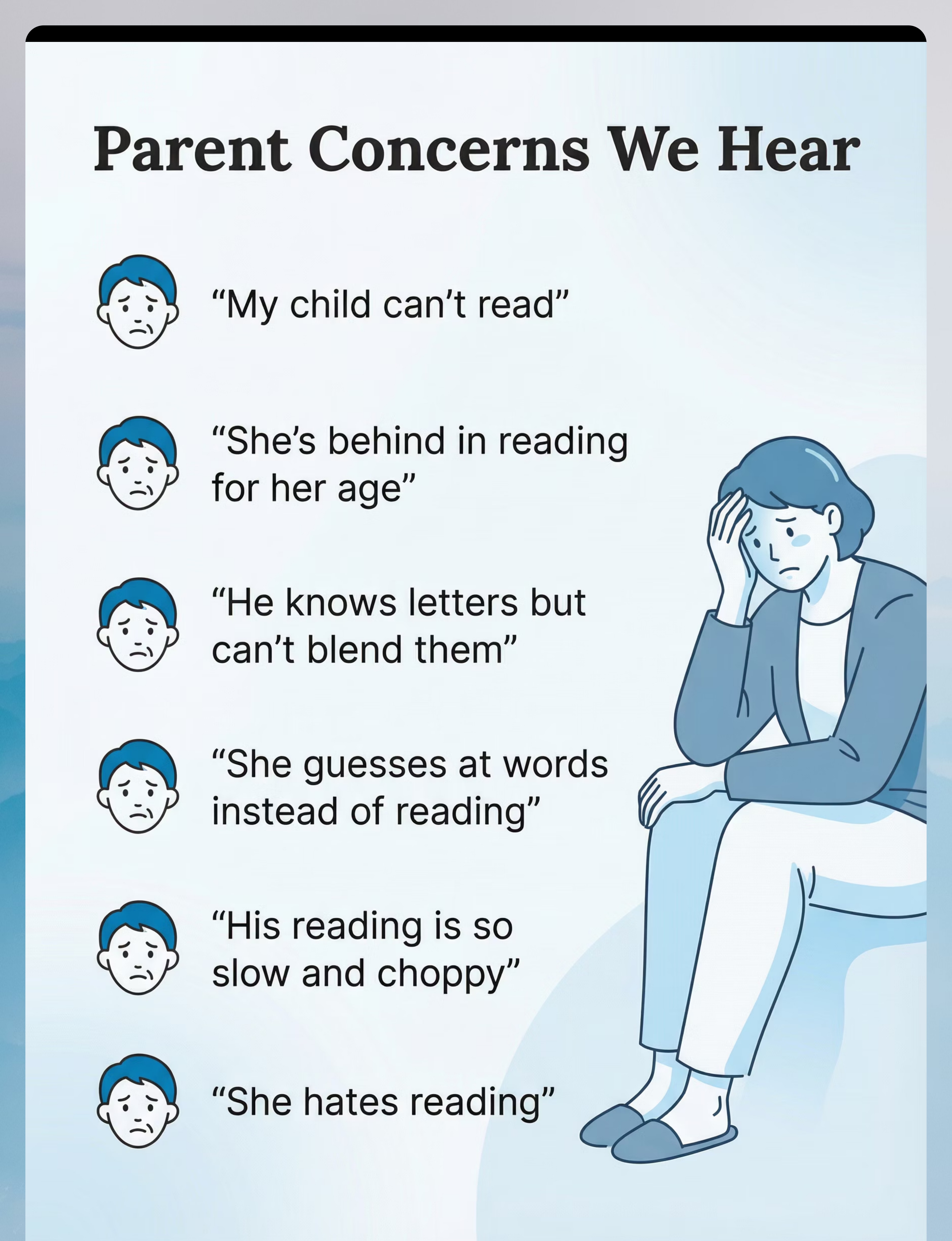
Does This Sound Familiar?
"My child can't read. She's behind in reading for her age, and I don't know how to help."
"He knows all his letters but can't blend them together. C-A-T doesn't become 'cat' for him."
"She guesses at words instead of actually reading them. She looks at the picture and makes up what the word might be."
"His reading is so slow and choppy. Every single word is a struggle, and he gets exhausted."
"She absolutely hates reading. She avoids books completely and shuts down when we try to practice."
You're not alone. These are among the most common challenges parents face when supporting early readers. Reading difficulties affect confidence, academic progress, and the joy of learning. The right materials and approach can transform this struggle into success.
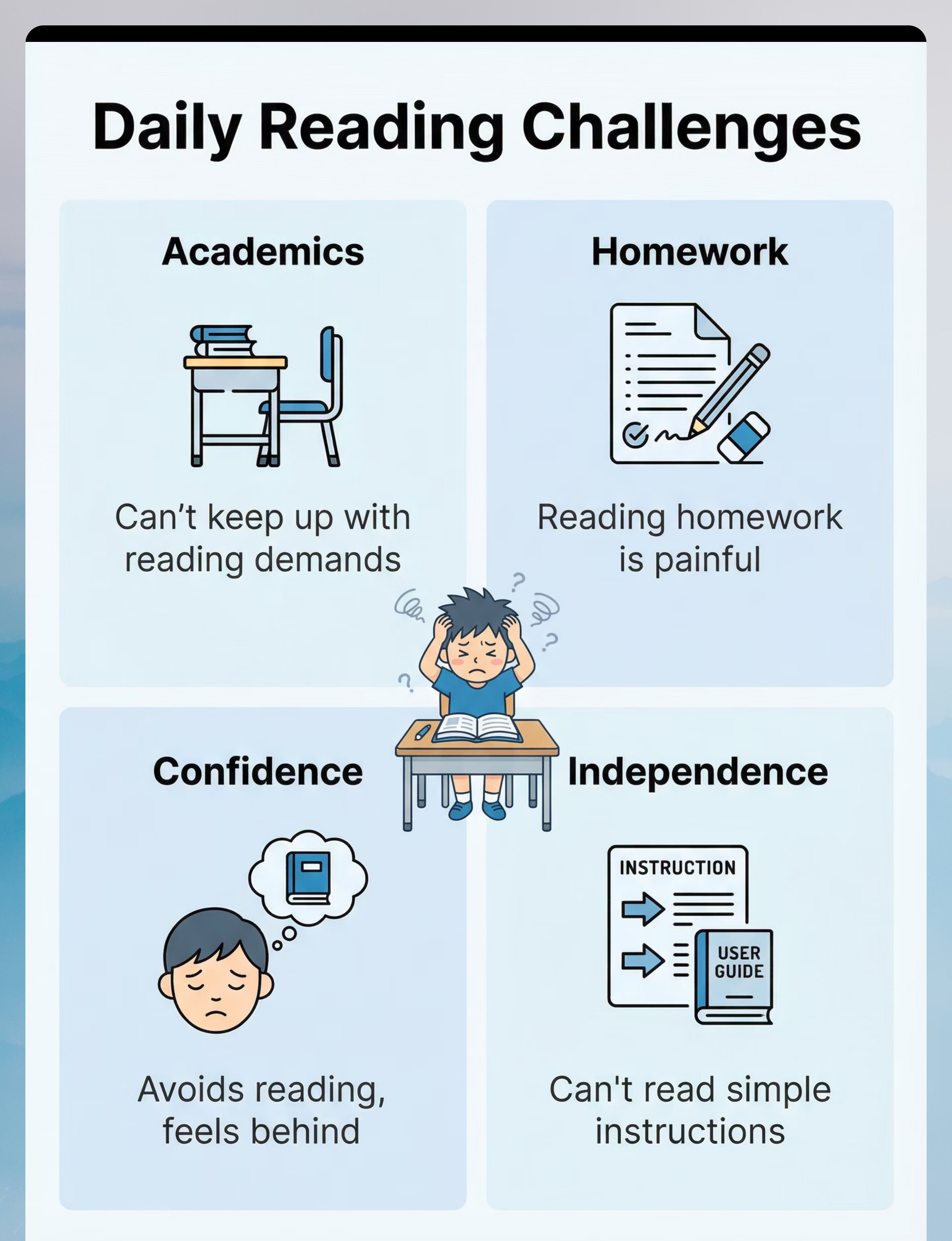
A Day Without the Right Support
Academic Struggles
Can't keep up with reading demands in class. Falling further behind peers. Assignments feel impossible.
Homework Battles
Reading homework becomes painful for everyone. Tears, frustration, resistance. Hours of struggle for simple tasks.
Confidence Erosion
Child avoids reading activities. Feels "stupid" or "behind." Internalizes failure. Reading anxiety builds.
Lost Independence
Can't read simple instructions. Relies on others for basic reading tasks. Independence delayed.
Without appropriate reading materials and instruction, children miss the critical practice they need. The gap widens. Motivation disappears. The joy of reading—and learning itself—becomes associated with failure and frustration.
The Science Behind It
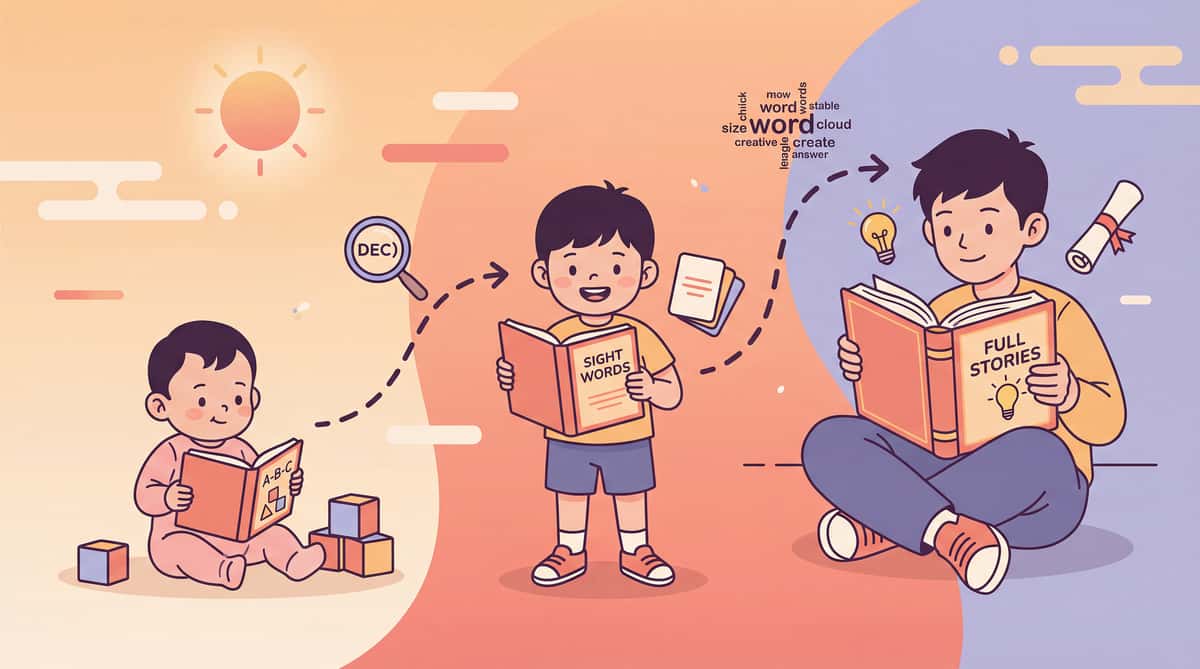
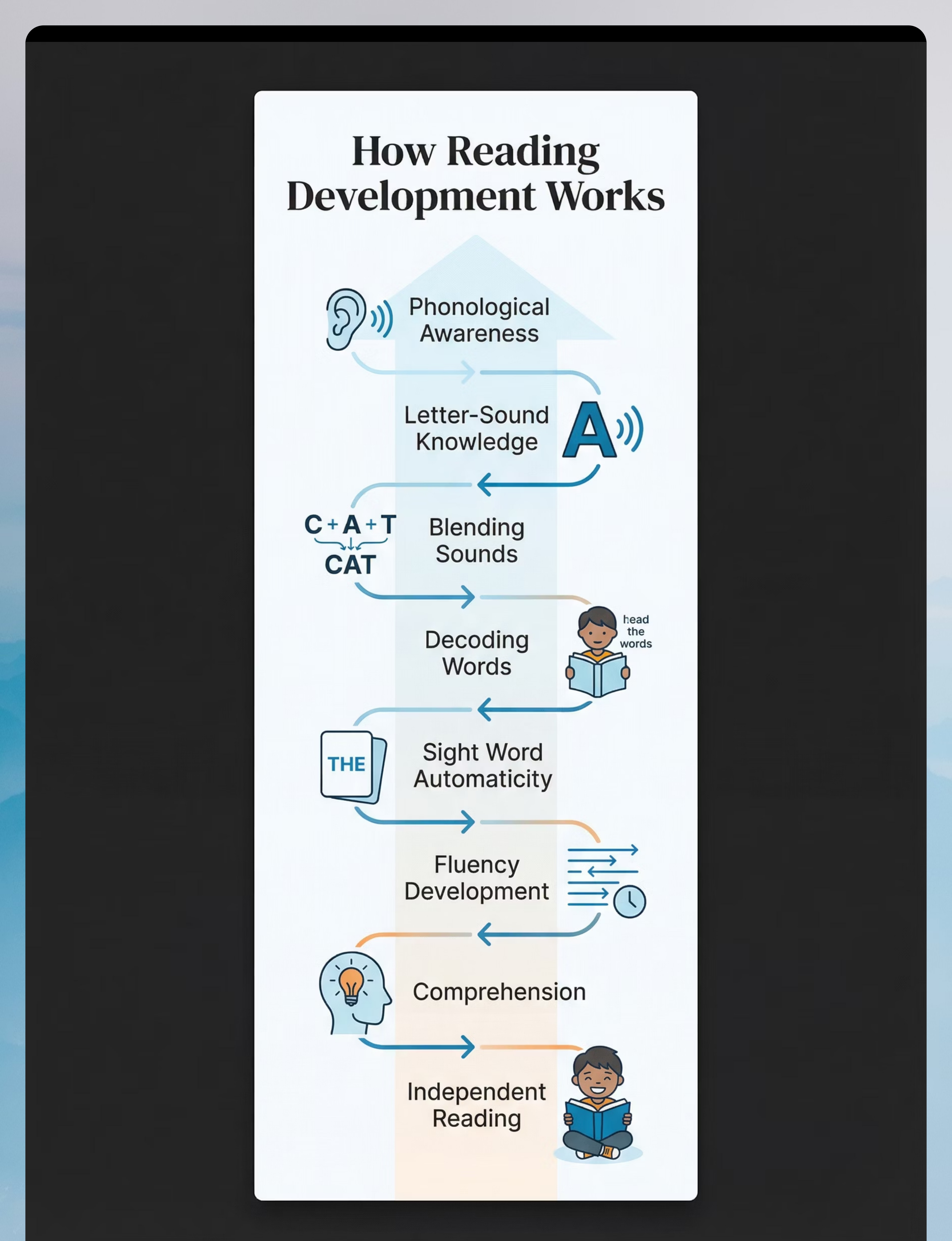
Reading development follows a research-backed progression. Understanding this pathway helps you support your child effectively at each stage.
Phonological Awareness
Hearing and manipulating sounds in spoken words—the foundation
Letter-Sound Knowledge
Connecting written letters to their corresponding sounds
Blending & Decoding
Putting sounds together to read whole words accurately
Sight Word Automaticity
Instantly recognizing high-frequency words without sounding out
Fluency Development
Reading smoothly, accurately, and with appropriate speed
Comprehension & Independence
Understanding meaning and reading for pleasure and learning
Early reading materials support each stage with systematic instruction, appropriately leveled texts, and engaging content that builds both skill and motivation.
How to Use It Right
Systematic phonics instruction (not random)
Follow a clear sequence. Teach phonics patterns in order, not randomly. Each skill builds on the last.
Decodable texts that match taught phonics
Use books containing ONLY the phonics patterns you've already taught. Success builds confidence.
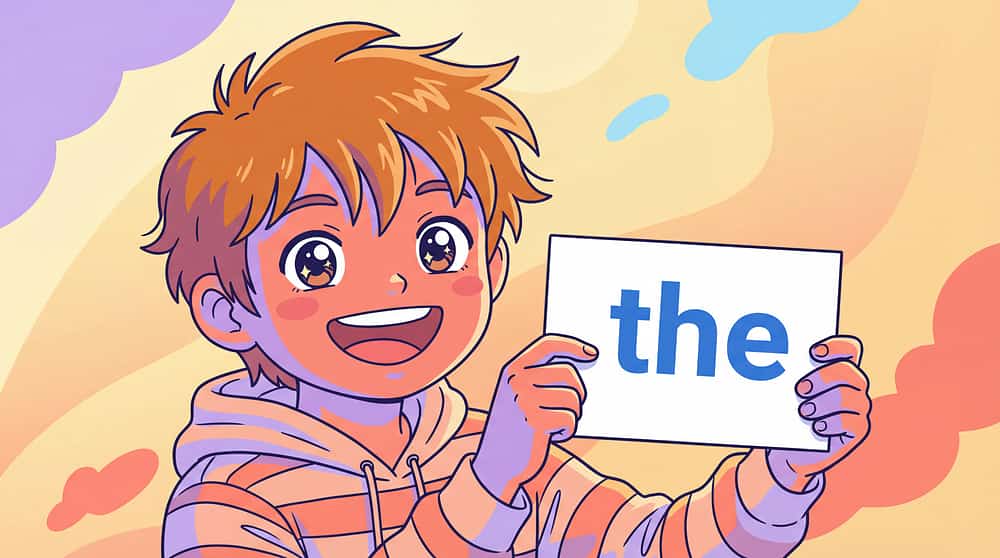
Sight words for high-frequency words
Teach common words like "the," "was," "said" as whole words to build fluency alongside phonics.
Read aloud WITH child (shared reading)
Don't just listen—read together. Model fluent reading. Point to words as you read. Make it interactive.
Interest-based materials for motivation
Find books about dinosaurs, cricket, trains—whatever they love. Interest drives practice.
Multi-sensory approaches help many learners
Use letter tiles, trace letters, build words with magnets. Engage multiple senses for stronger learning.

Duration: 15-30 minutes daily. Short, frequent practice sessions are more effective than long, exhausting ones. Stop before frustration builds.
Expert Perspective
"Reading instruction should be systematic and explicit. Decodable readers let children apply phonics skills. Sight words build fluency. The combination, matched to the child's level, builds confident readers."
— Special Educator, Reading Specialist
early-reading-materials therapy material

SpEd + SLP Recommended
Co-owned by Special Education and Speech-Language Pathology professionals
Strong Evidence
Research-backed phonics and literacy instruction methods
Rank #2 in Category
Core Kit tool—essential for cognitive and learning development
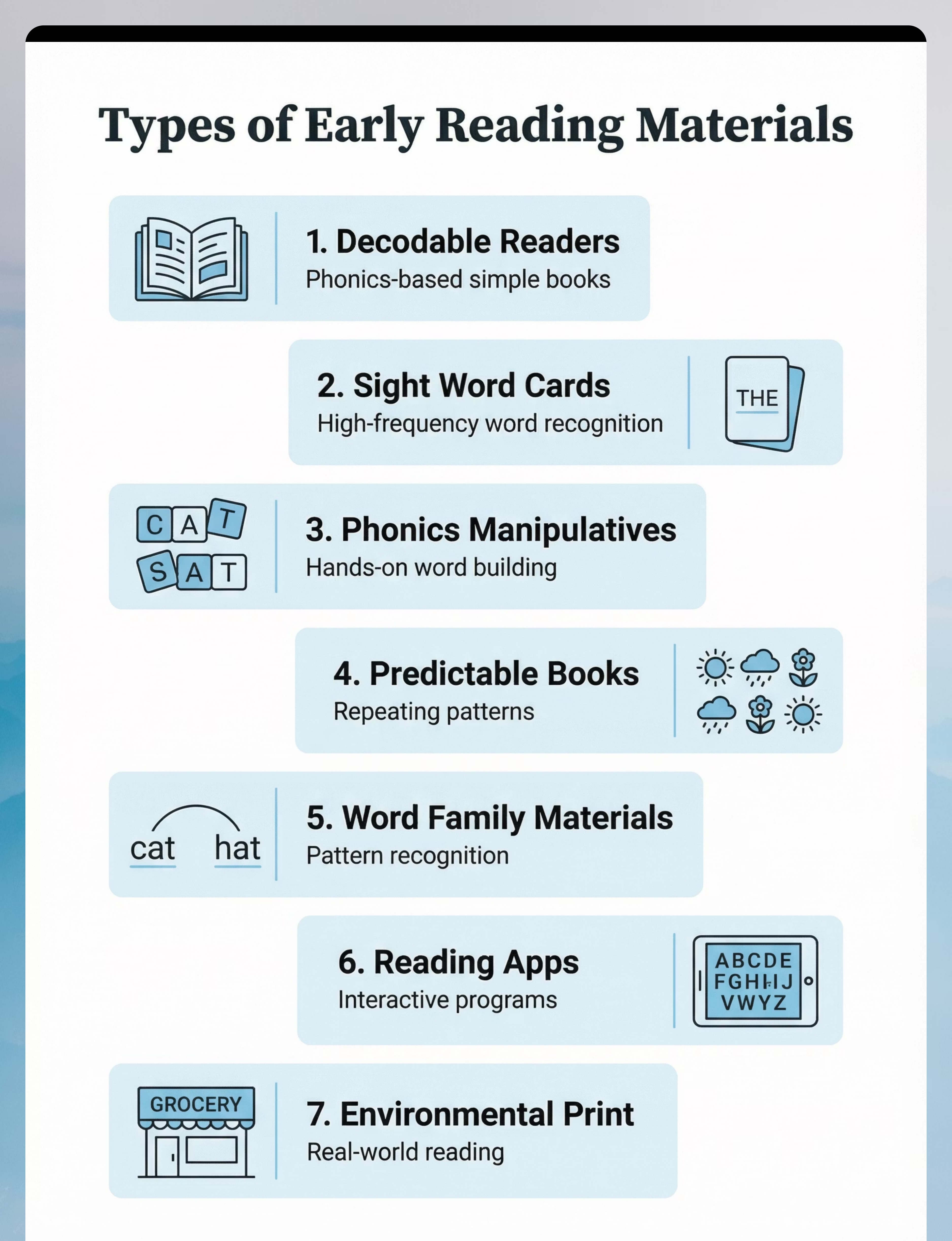
Choose Your Option (7 Variants)
Select materials based on your child's current reading level, learning style, and goals. You'll likely use multiple types as skills develop.
early-reading-materials therapy material
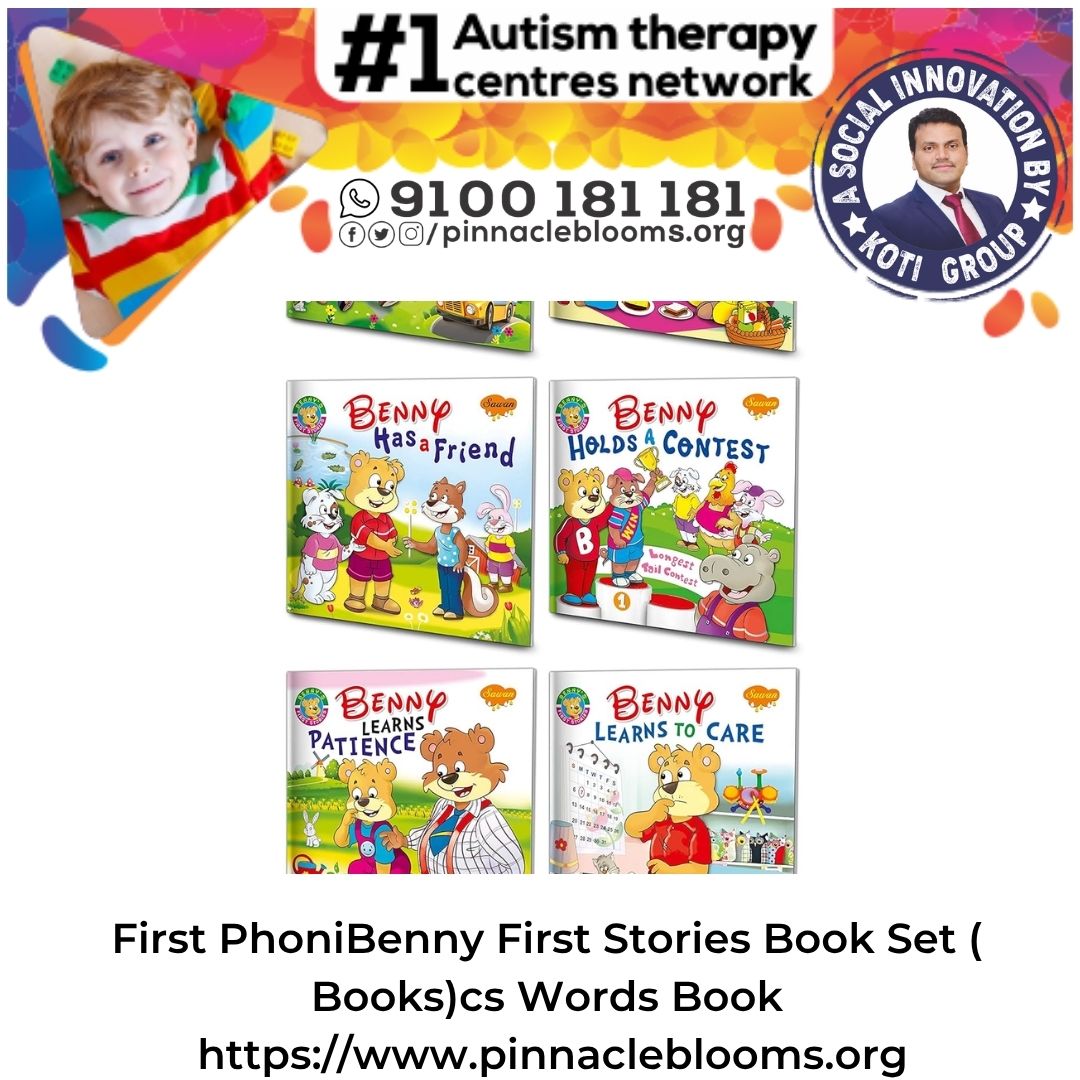
Decodable Readers (Phonics-Based)
Best for: Beginning readers, phonics practice. Simple books with controlled vocabulary that matches taught phonics patterns.
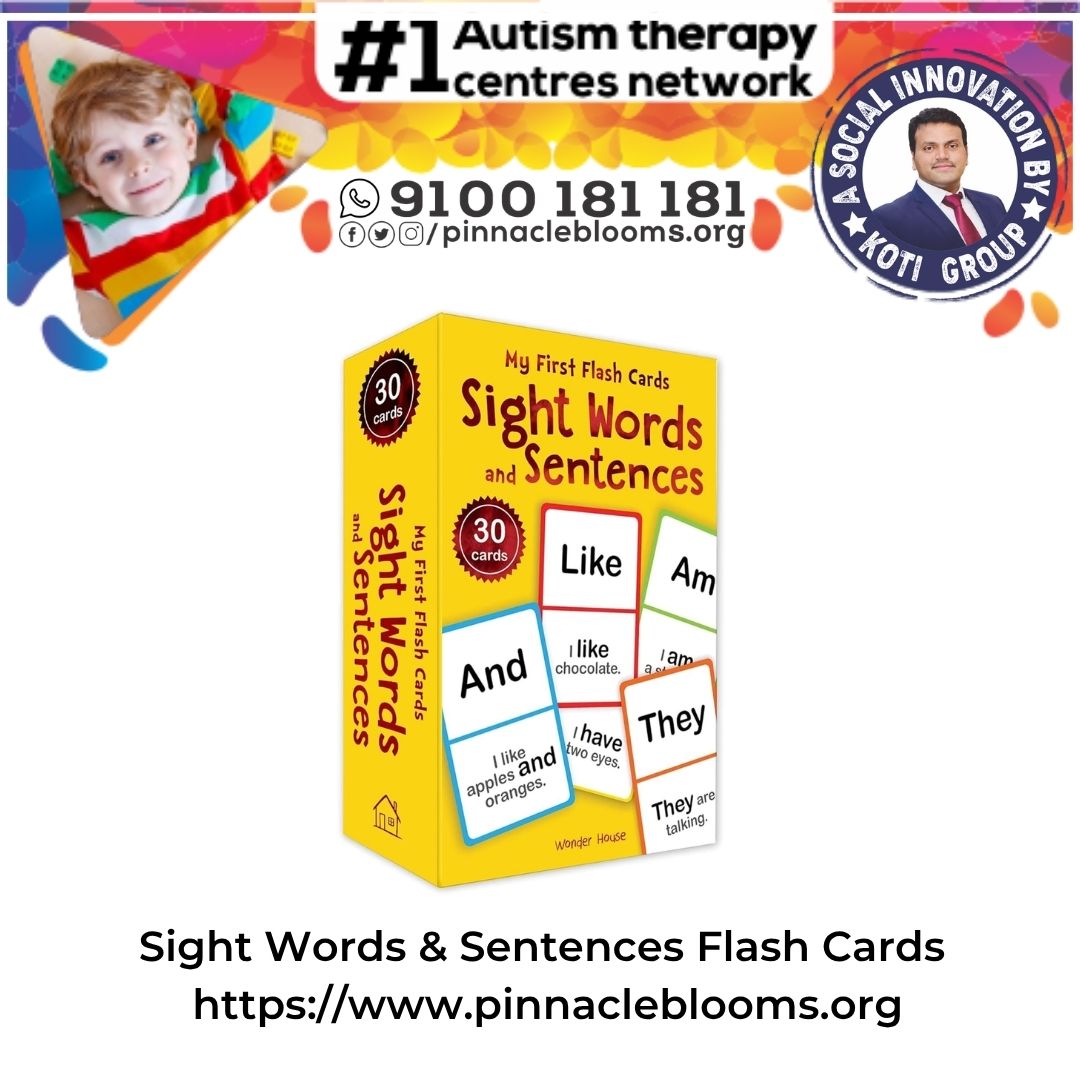
Sight Word Flash Cards / Books
Best for: Common word recognition, fluency. High-frequency word materials for instant recognition of words.
Phonics Manipulatives
Best for: Blending, word building, spelling. Letter tiles and word builders for hands-on phonics practice.
Predictable/Repetitive Books
Best for: Emergent readers, confidence building. Books with repeating patterns that build confidence and prediction skills.
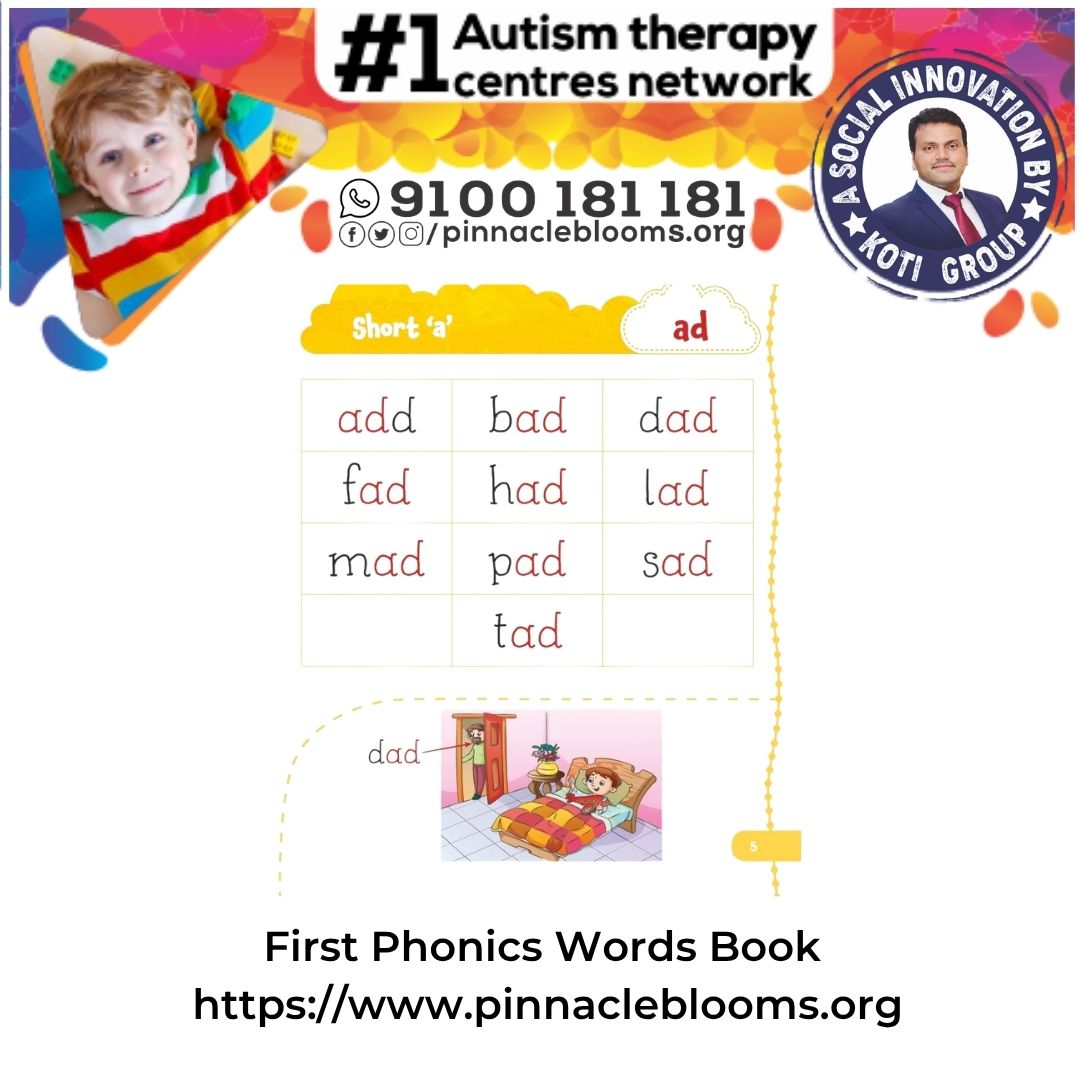
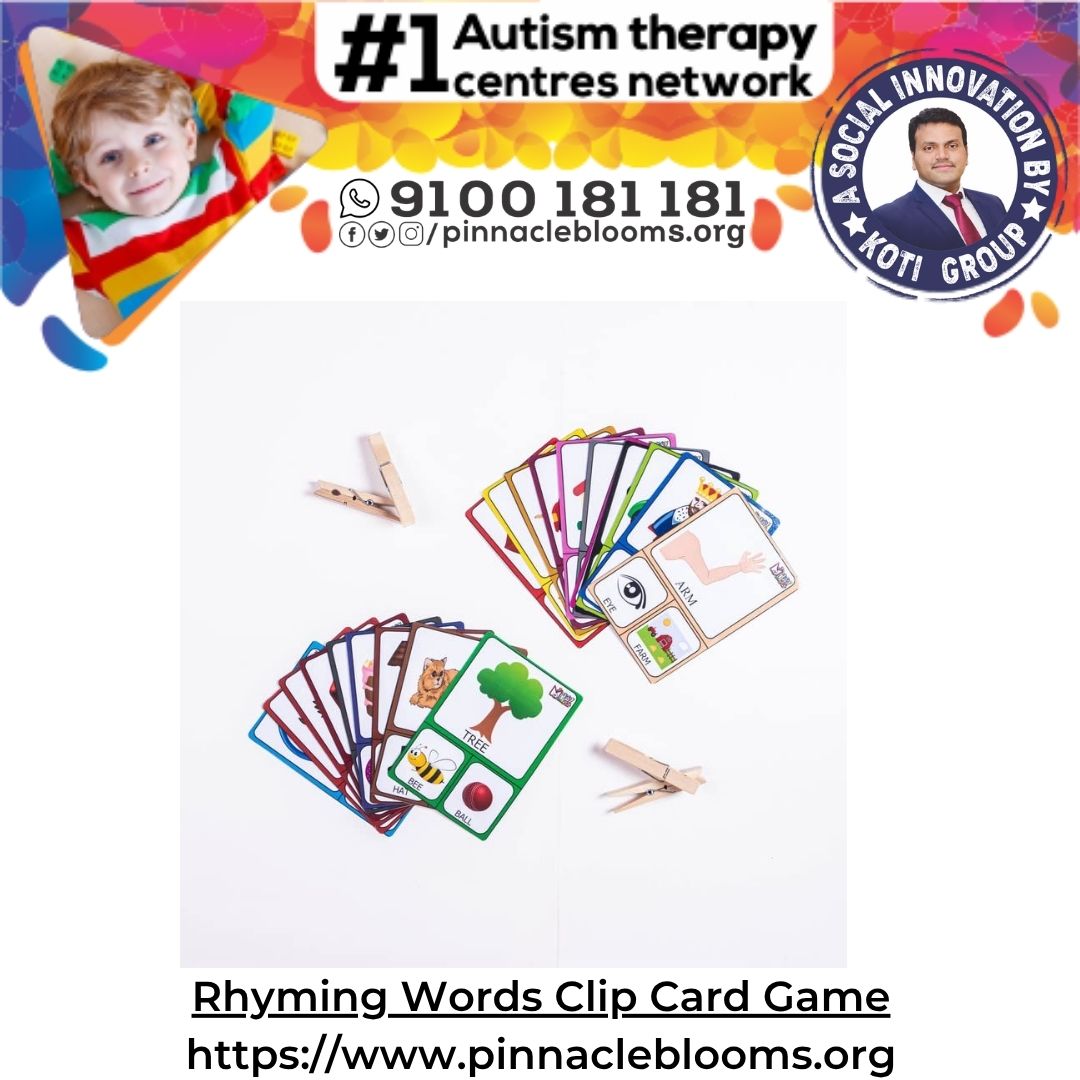
Word Family / Rhyming Materials
Best for: Pattern recognition in words. Word family cards and rhyming activities that build phonological awareness.
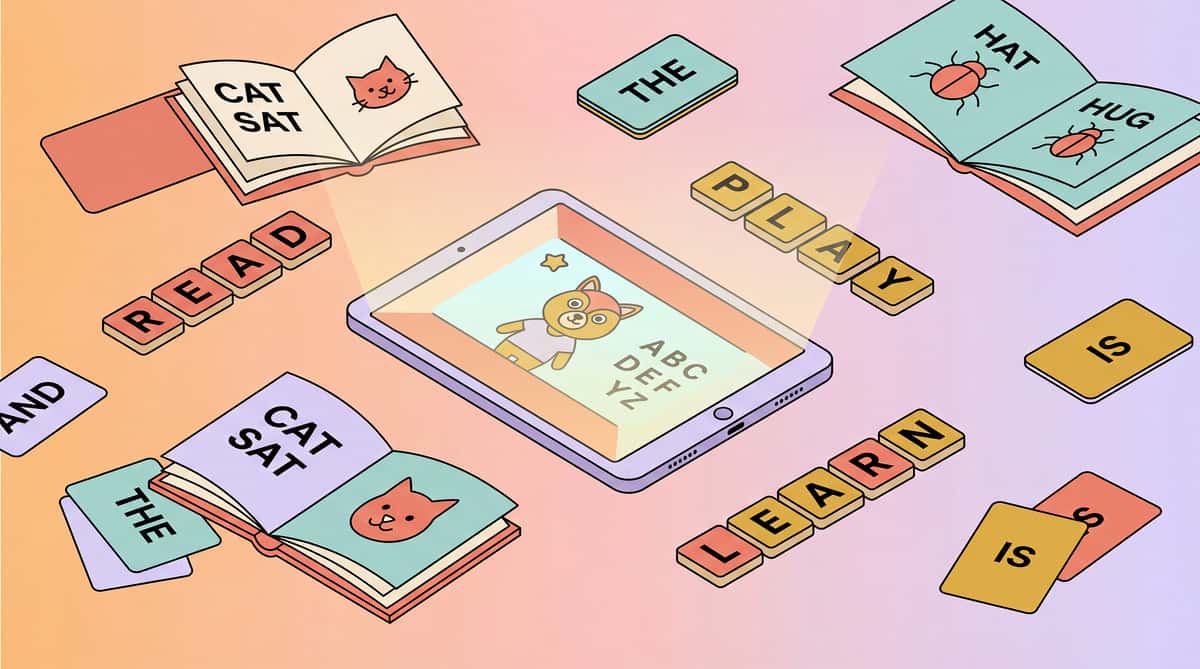
Reading Apps / Digital Programs
Best for: Engagement, immediate feedback. Tablet or computer reading programs with interactive instruction.
Environmental Print Materials
Best for: Real-life reading, motivation. Real-world reading materials like labels, signs, packaging.
By Goal
  • Decoding: Decodable readers + phonics manipulatives
  • Fluency: Sight word cards + predictable books
  • Engagement: Apps + interest-based books
By Setting
  • Home: All types work well
  • On-the-go: Flash cards, apps, small books
  • Clinic: Systematic decodables + manipulatives
By Stage
  • Emergent: Predictable books + environmental print
  • Beginning: Decodables + sight words
  • Developing: Longer decodables + word families
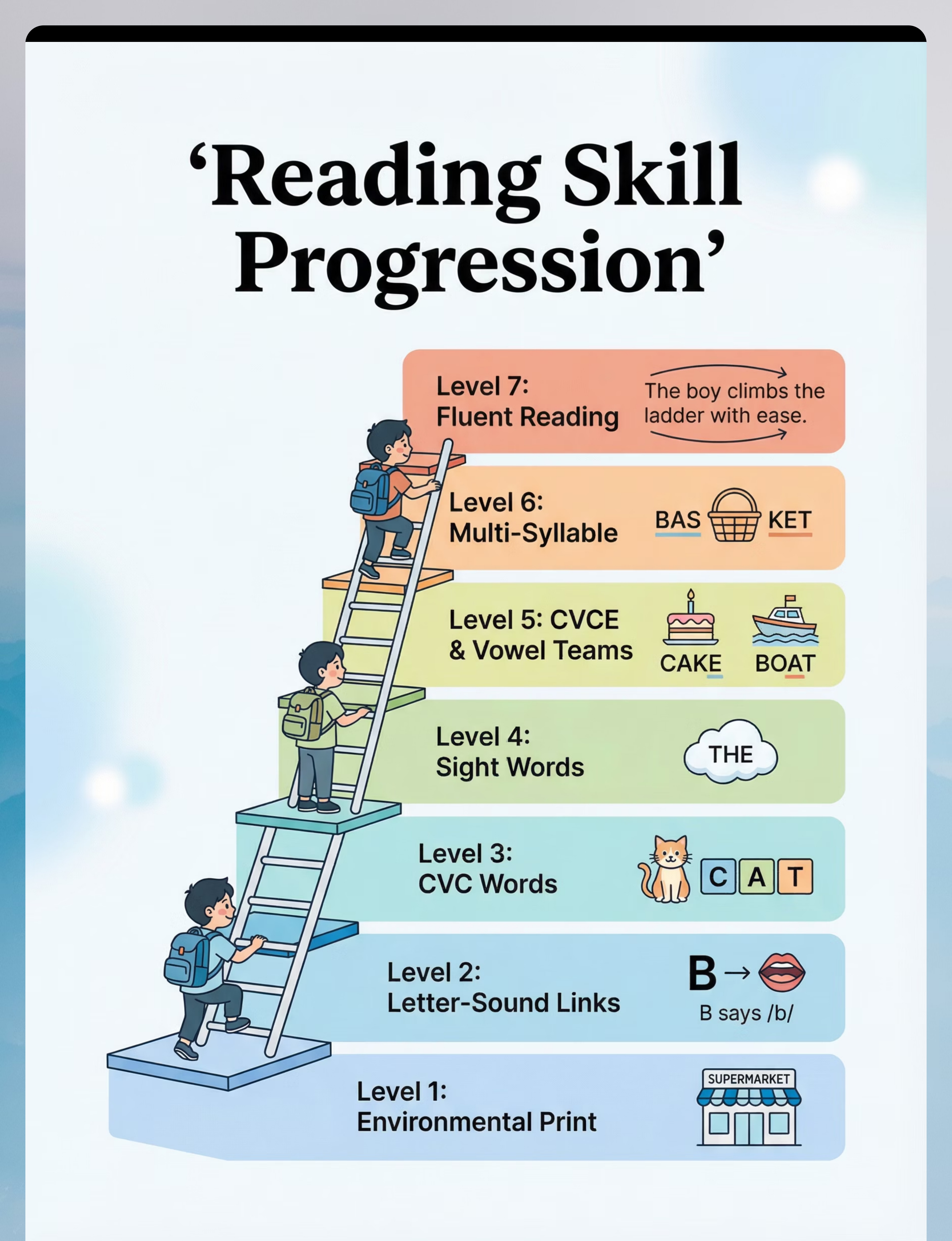
Reading Development Pathway
Reading develops in predictable stages. Understanding this progression helps you choose appropriate materials and celebrate each milestone.
Level 1: Environmental Print
Recognizing familiar logos, signs, labels in daily environment
Level 2: Letter-Sound Correspondence
Knowing letters and their sounds, beginning phonemic awareness
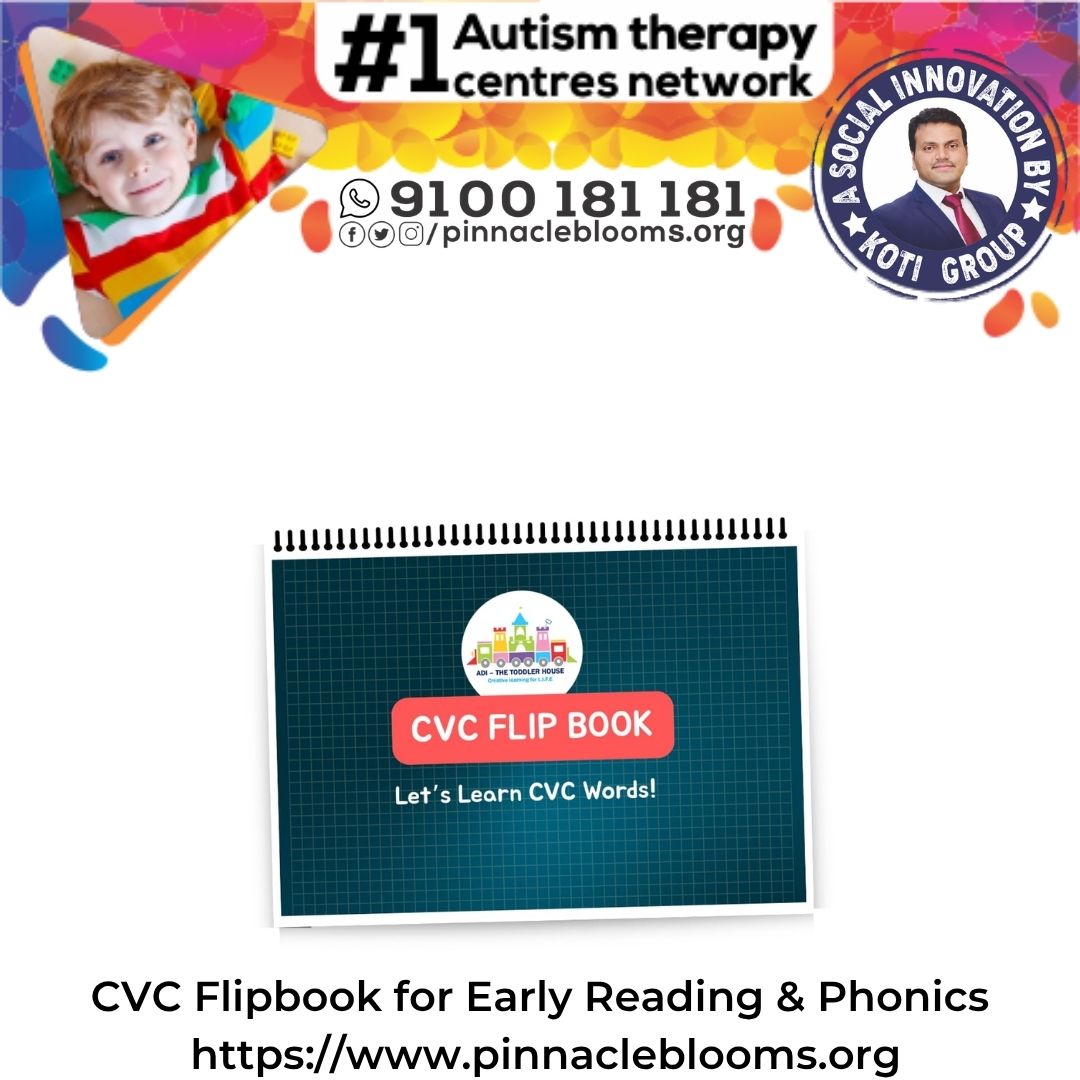
Level 3: CVC Word Decoding
Reading consonant-vowel-consonant words (cat, dog, sit)
Level 4: Sight Word Recognition
Instantly recognizing high-frequency words without decoding
Level 5: CVCE and Vowel Teams
Reading magic-e words (cake) and vowel patterns (rain, boat)
Level 6: Multi-Syllable Words
Decoding longer, complex words with multiple syllables
Level 7: Fluent Connected Text
Reading smoothly with accuracy, appropriate speed, and comprehension

Key insight: Children may progress through stages at different rates. Some master decoding quickly but struggle with fluency. Others recognize sight words easily but need phonics support. Match materials to their specific needs, not just their age.
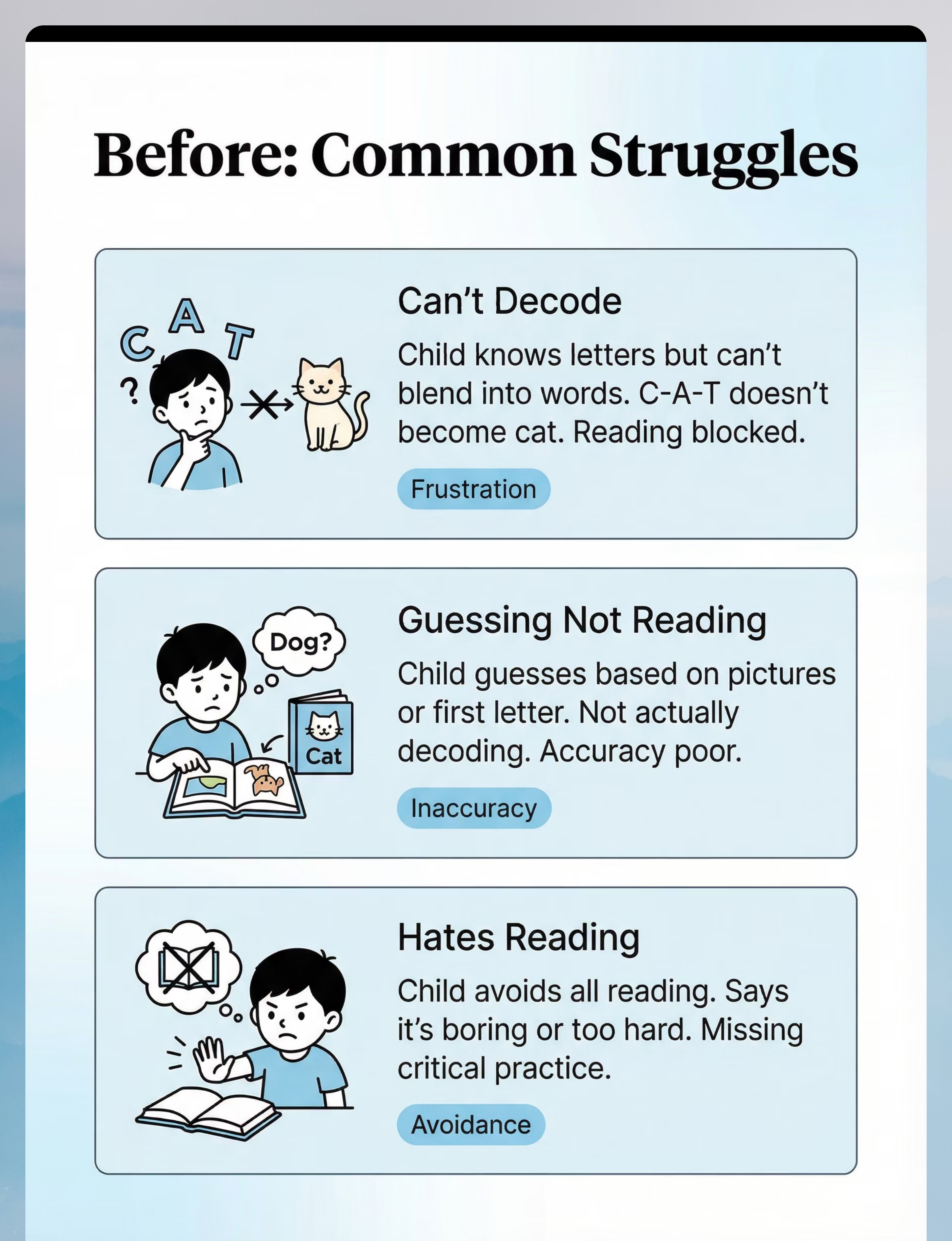
The Struggle (Before)
Can't Decode
Situation: Child knows letters but can't blend them into words. 'C-A-T' doesn't become 'cat.' The decoding skill is simply missing.
Experience: Looks at each letter separately. Says the sounds but can't merge them. Reading is completely blocked at this fundamental step.
Frustration, feeling stuck, helplessness
Guessing Not Reading
Situation: Child guesses based on pictures or first letter. Not actually decoding the words. Reading accuracy is poor.
Experience: Looks at picture, makes up what word might be. Gets first letter, guesses rest. Avoids actually sounding out words.
Inaccuracy, embarrassment, avoidance
Hates Reading
Situation: Child avoids all reading activities. Says it's boring or too hard. No reading motivation. Missing critical daily practice.
Experience: Shuts down when books appear. Finds every excuse to avoid reading time. Associates reading with failure and frustration.
Avoidance, resistance, reading anxiety
Without appropriate materials and instruction, these patterns deepen. The gap between struggling readers and their peers widens. Confidence erodes. The foundation for all academic learning remains shaky and uncertain.
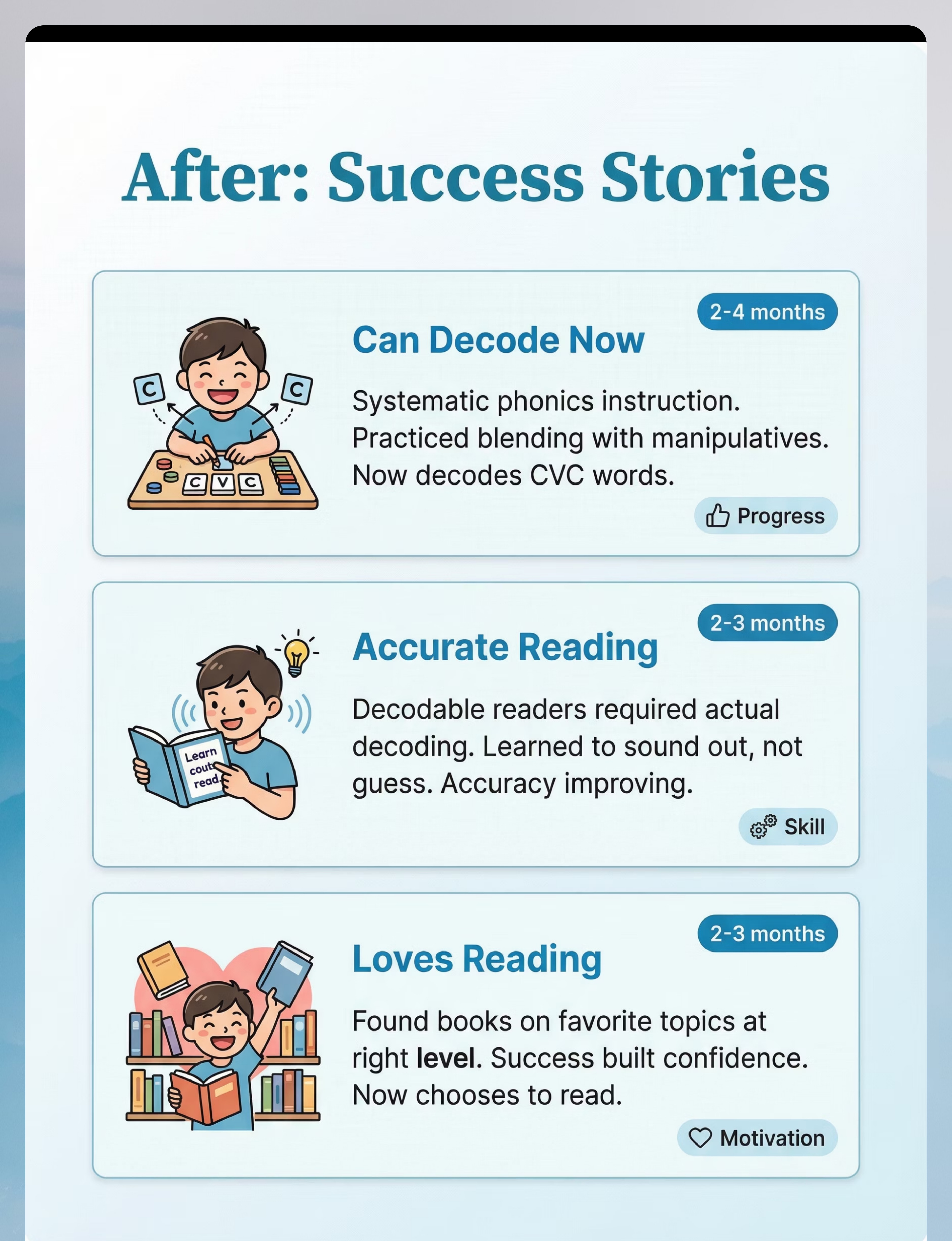
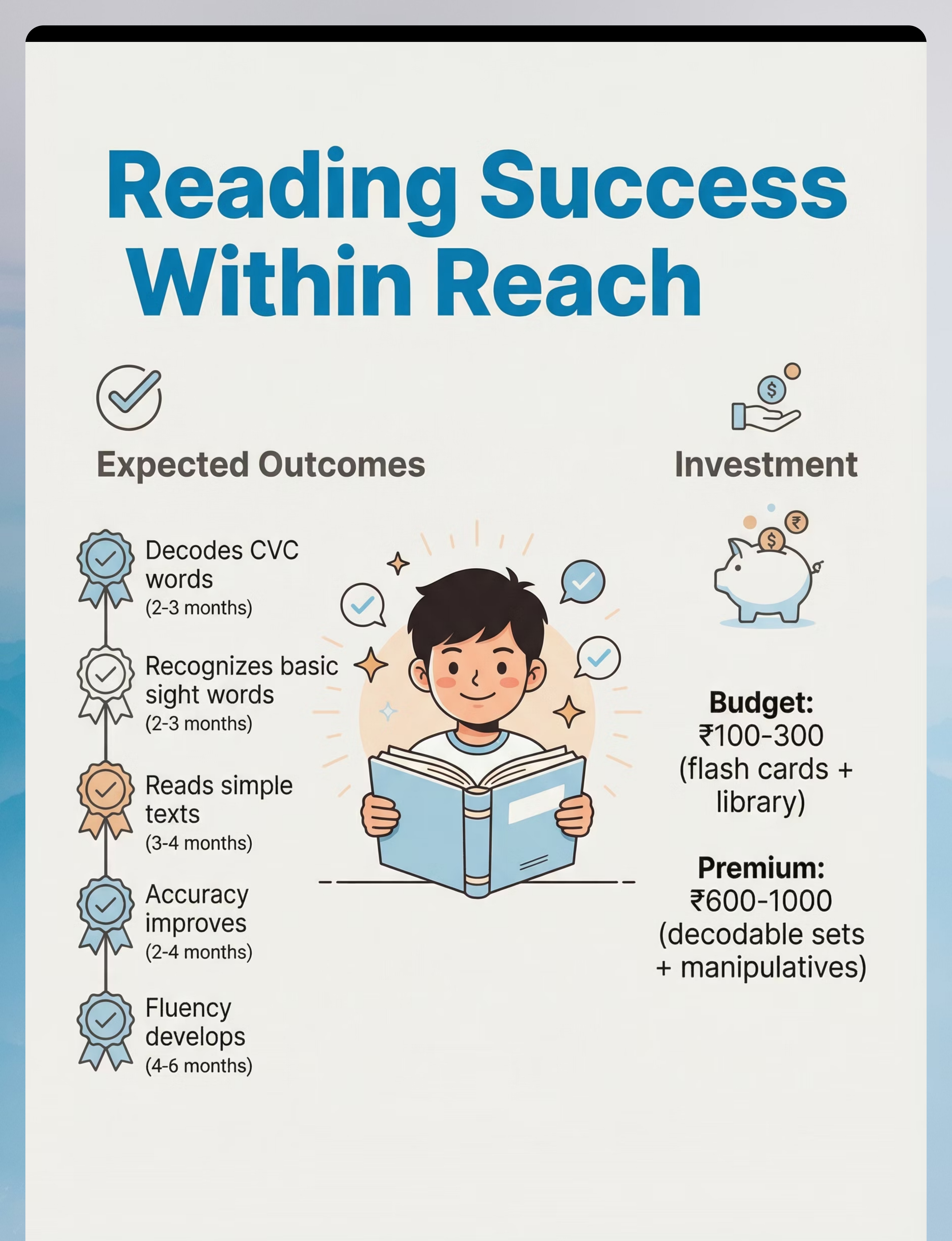
What to Expect (Realistic Timelines)
early-reading-materials therapy material
Reading development takes time and consistent practice. Here's what research and clinical experience tell us about typical progress with appropriate materials and instruction.
Decodes CVC words
Reads simple three-letter words like cat, dog, sun independently with phonics skills
2-3 months
Recognizes basic sight words
Instantly reads common high-frequency words without needing to sound them out
2-3 months
Reads simple decodable texts
Reads short books independently using phonics and sight word knowledge combined
3-4 months
Reading accuracy improves
Makes fewer guessing errors, self-corrects mistakes, reads more precisely
2-4 months
Reading motivation increases
Voluntarily chooses books, shows interest in reading, positive attitude develops
2-3 months
Fluency begins developing
Reading becomes smoother and faster while maintaining accuracy and comprehension
4-6 months

Important: These timeframes assume daily practice (15-30 minutes) with appropriate materials at the child's level. Progress varies based on starting point, consistency, individual learning pace, and any underlying language processing differences. Celebrate each milestone—reading development is a marathon, not a sprint.
early-reading-materials therapy material
Is This Right for My Child? (2-Minute Check)
Answer these questions to determine if early reading materials would benefit your child right now. Three or more "yes" answers indicate a strong fit.
1. Can your child blend sounds into words (c-a-t = cat)?
If YES: Decoding skills are developing—ready for decodable readers
If NO: Start with phonemic awareness activities and letter-sound instruction first
2. Can your child read simple words?
If YES: Beginning reading skills are present—build with systematic practice
If NO: Systematic phonics instruction needed before introducing reading materials
3. Does your child guess at words or sound them out?
If GUESSES: Needs emphasis on decoding strategies with decodable texts
If SOUNDS OUT: Good foundation—continue building phonics skills
4. Does your child enjoy reading?
If YES: Excellent motivation foundation—leverage interest with engaging materials
If NO: Focus on building positive experiences at appropriate level with preferred topics

Interpretation: If you answered "yes" to 3-4 questions, early reading materials are highly appropriate for your child right now. If you answered "yes" to 1-2 questions, your child would still benefit but may need more foundational work alongside reading materials. If you answered "yes" to 0 questions, focus on pre-reading skills like letter knowledge and phonological awareness before introducing formal reading materials.
Usage Guide
early-reading-materials therapy material
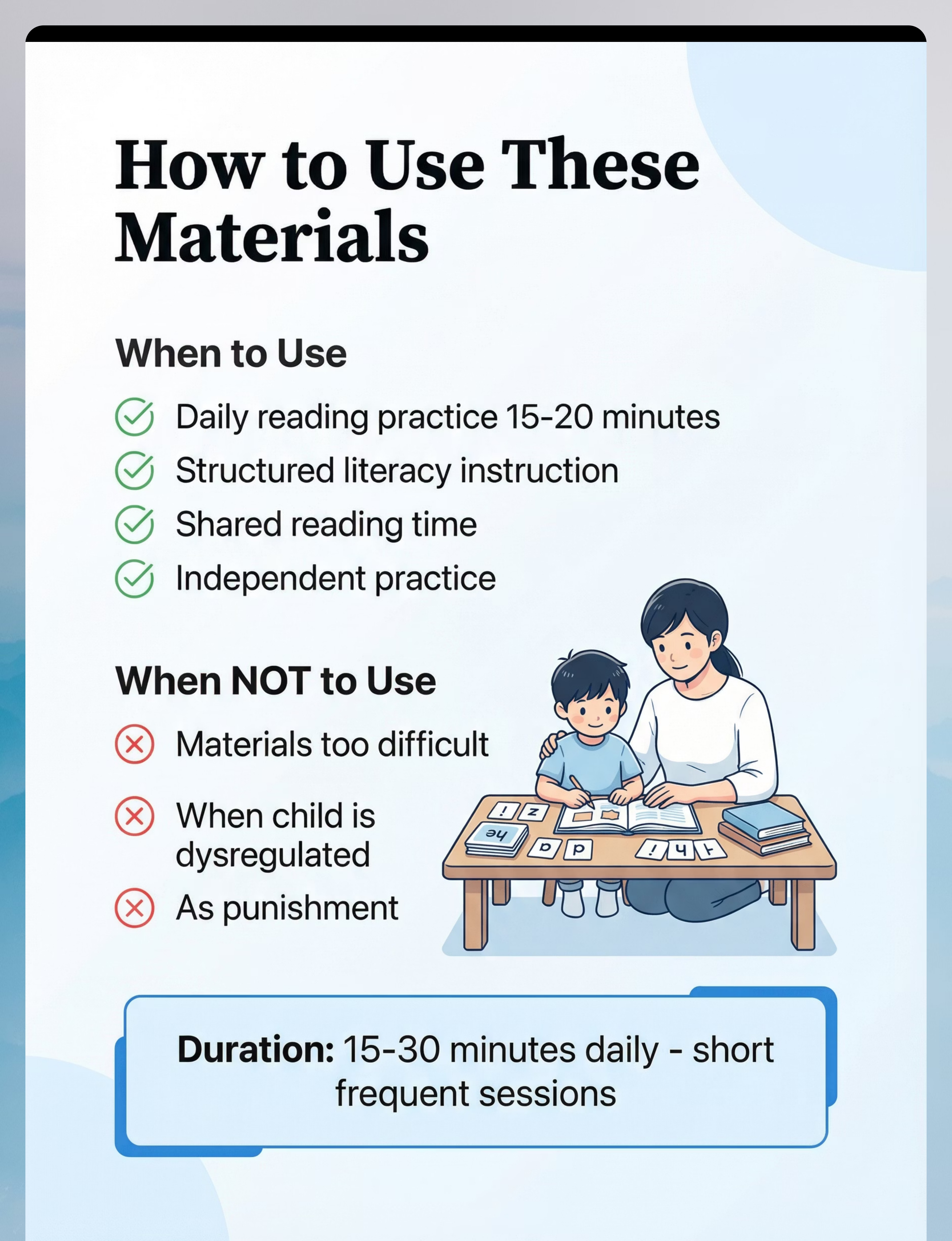
When to Use
Consistent daily practice builds skills faster than occasional long sessions.
Daily reading practice
15-20 minutes daily for faster skill development
Structured literacy instruction
During formal phonics or reading lessons with clear learning objectives
Shared reading time
Reading together with adult support, modeling fluent reading and comprehension
Independent reading practice
Books at appropriate level for solo practice building confidence and fluency
Real-world reading opportunities
Using environmental print during daily routines and activities

When NOT to Use
Materials too difficult
Frustration level materials harm confidence and motivation
When child is dysregulated
Emotional state must be calm for learning to occur
As punishment
Reading should never be associated with consequences or negativity

Supervision by Age
Emergent readers: Shared reading with adult—constant support and modeling
Beginning readers: Guided practice with nearby adult—help available when needed
Developing readers: Supported independent practice—check-ins and encouragement

Duration: 15-30 minutes daily. Short, frequent sessions are more effective than long, exhausting ones. Stop before frustration builds. Multiple short sessions throughout the day work well for many children.
Safety First
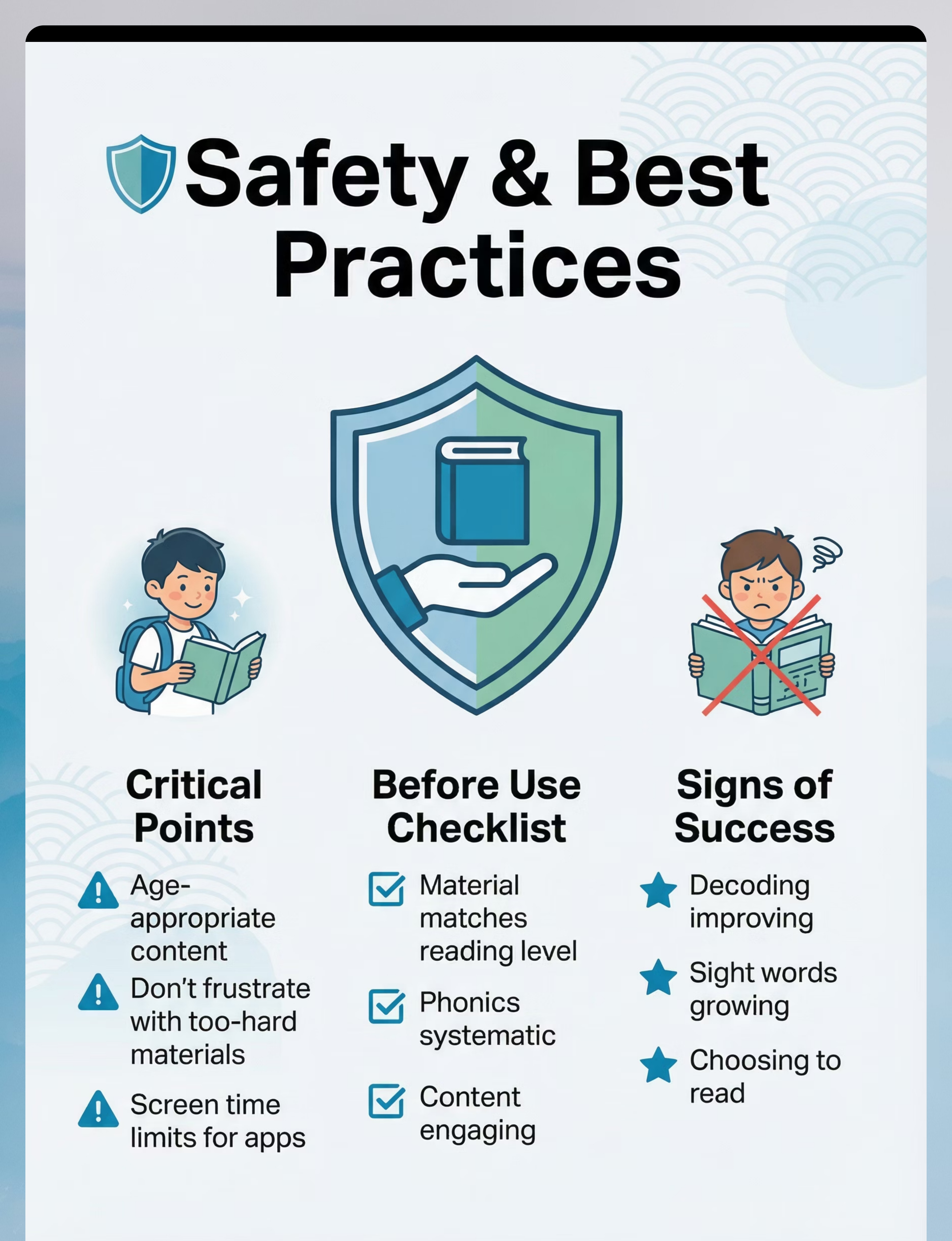
Critical Safety
  • Age-appropriate content: Ensure books match developmental level and contain appropriate themes
  • Not frustrating child: Materials must be at instructional level, not frustration level—success is essential
  • Screen time limits: For digital programs, follow pediatric screen time guidelines (not sole reading source)
Warnings
  • Don't force reading when child is frustrated—stop and return later
  • Monitor screen time for apps—balance with physical books and real-world reading
  • Check content appropriateness—some books may contain themes not suitable for your child
Contraindicated (Do Not Use)
  • Materials too difficult: Books above child's reading level cause frustration, avoidance, and damage to reading confidence
  • Shaming reading struggles: Never criticize, compare to siblings/peers, or express disappointment about reading difficulties

Safety Checklist
Before Use
  • ✓ Material matches reading level
  • ✓ Phonics instruction is systematic
  • ✓ Content is engaging for child
  • ✓ Environment is supportive
During Use
  • ✓ Child experiencing success
  • ✓ Actually decoding, not guessing
  • ✓ Celebrating effort and progress
  • ✓ Appropriate support provided
Signs of Success
  • ✓ Decoding ability improving
  • ✓ Sight word recognition growing
  • ✓ Voluntarily choosing to read
  • ✓ Reading longer texts
Common Questions (Honest Answers)
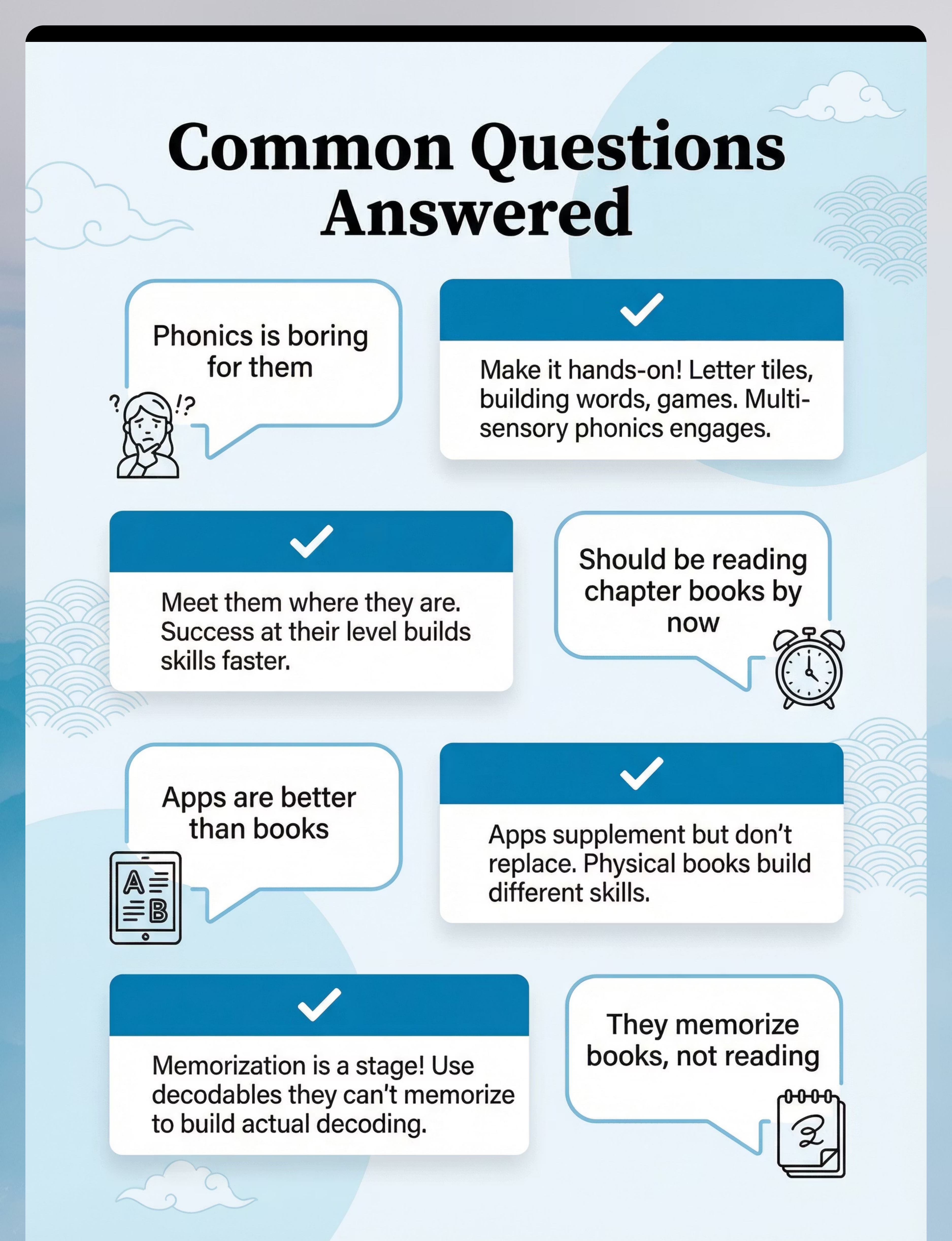
Q: "Phonics is boring for them"
A: Make it hands-on! Letter tiles, building words, phonics games. Phonics doesn't have to be worksheets. Multi-sensory, game-based phonics engages even reluctant learners. Turn blending into a puzzle. Use magnetic letters. Make word-building races. Phonics instruction can be playful and engaging.
Try this: Hands-on phonics manipulatives; phonics games; multi-sensory approaches that feel like play, not work.
Q: "They should be reading chapter books by now"
A: Meet them where they are. Reading success at their current level builds skills faster than frustration at too-hard levels. Progress comes from practice at appropriate level, not from forcing advanced materials prematurely. Better to read simpler books with confidence than struggle through chapter books with constant frustration.
Try this: Match level to actual skill, not age expectations; success builds progress faster than frustration.
Q: "Apps are better than books"
A: Apps can supplement but shouldn't replace physical books. Real books, shared reading experiences, and print materials build different skills that apps can't replicate. Use apps as ONE tool in your reading toolkit, not the only tool. Balance is essential.
Try this: Apps supplement; real books remain essential for comprehensive literacy development.
Q: "They memorize books, not really reading"
A: Memorization is actually a normal developmental stage! It shows they love the book and understand story structure. Now use decodable readers they CAN'T memorize to build actual decoding skills. Both memorized favorites and decodables have value in reading development.
Try this: Keep beloved memorized books for joy; add decodable texts for building decoding skills. Both belong in reading development.
Investment Guide
The journey to reading proficiency can be supported by various materials, suitable for different budgets. Early reading materials are highly affordable, especially considering libraries offer many resources completely free.
Reading Materials
100-1000
(Approximately $1-12 USD)
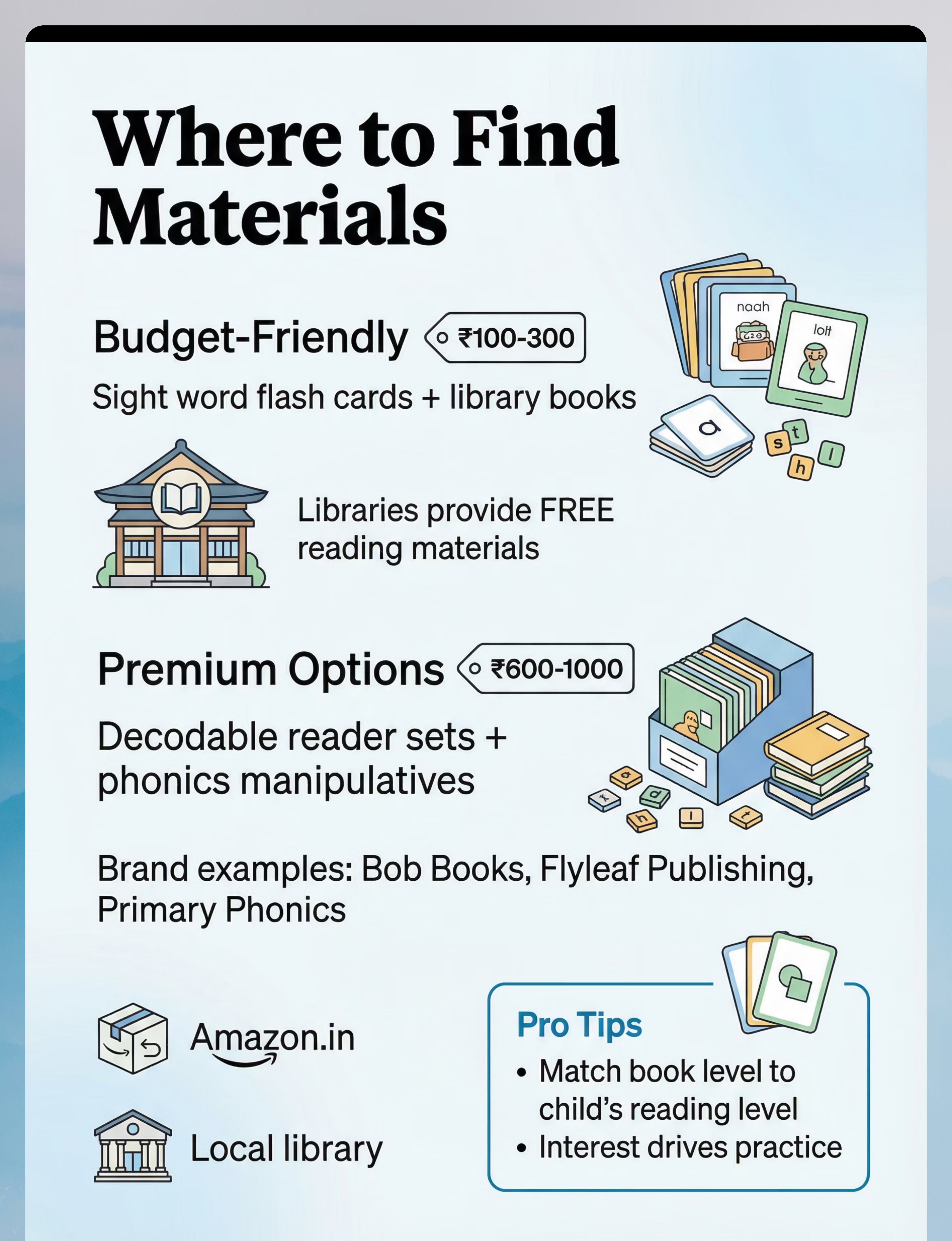
Budget-Friendly Starter Kit
Sight Word Flash Cards
Cost: ₹100-300
Essential practice for high-frequency words to build fluency.
Library Books
Cost: Free
Unlimited free reading materials from your local library for variety and exploration.
Best For
Families on tight budgets who want effective reading support and value diverse reading experiences.
Premium Home Learning Pathway
1
Decodable Reader Set
Systematic phonics-aligned books for building decoding skills.
Brands: Bob Books, Flyleaf Publishing, Primary Phonics.
2
Phonics Manipulatives
Hands-on letter tiles and word-building tools for multi-sensory learning.
3
Cost & Benefit
Cost: ₹600-1,000
Comprehensive home instruction with proven systematic materials for rapid progress.

Best starting point: Begin with budget option (flash cards + library books) to establish routine. If child responds well and needs more systematic phonics, invest in decodable reader set. Libraries should be your primary source for variety and exploration—they're free and invaluable.
Where to Buy in India
Availability: Widely Available across multiple platforms and physical stores throughout India
Platform
Search Term
Price Range
Amazon.in
"decodable readers"
₹300-700
Amazon.in
"sight word flash cards"
₹100-300
Amazon.in
"phonics manipulatives"
₹200-500
Amazon.in
"Bob Books"
₹400-800
Local Library
"beginning readers"
Free

Buying Tips
  • Libraries are invaluable—use them! Free access to hundreds of books
  • Decodable readers must match taught phonics—check alignment
  • Sight words for high-frequency words—essential for fluency
  • Match book level to child's reading level—not their age
  • Interest drives practice—find engaging content on topics they love
Red Flags (Avoid These)
  • Books clearly too difficult for child's current level
  • Random phonics instruction without systematic progression
  • Only teaching guessing strategies, not actual decoding
  • No decodable practice texts that match taught skills
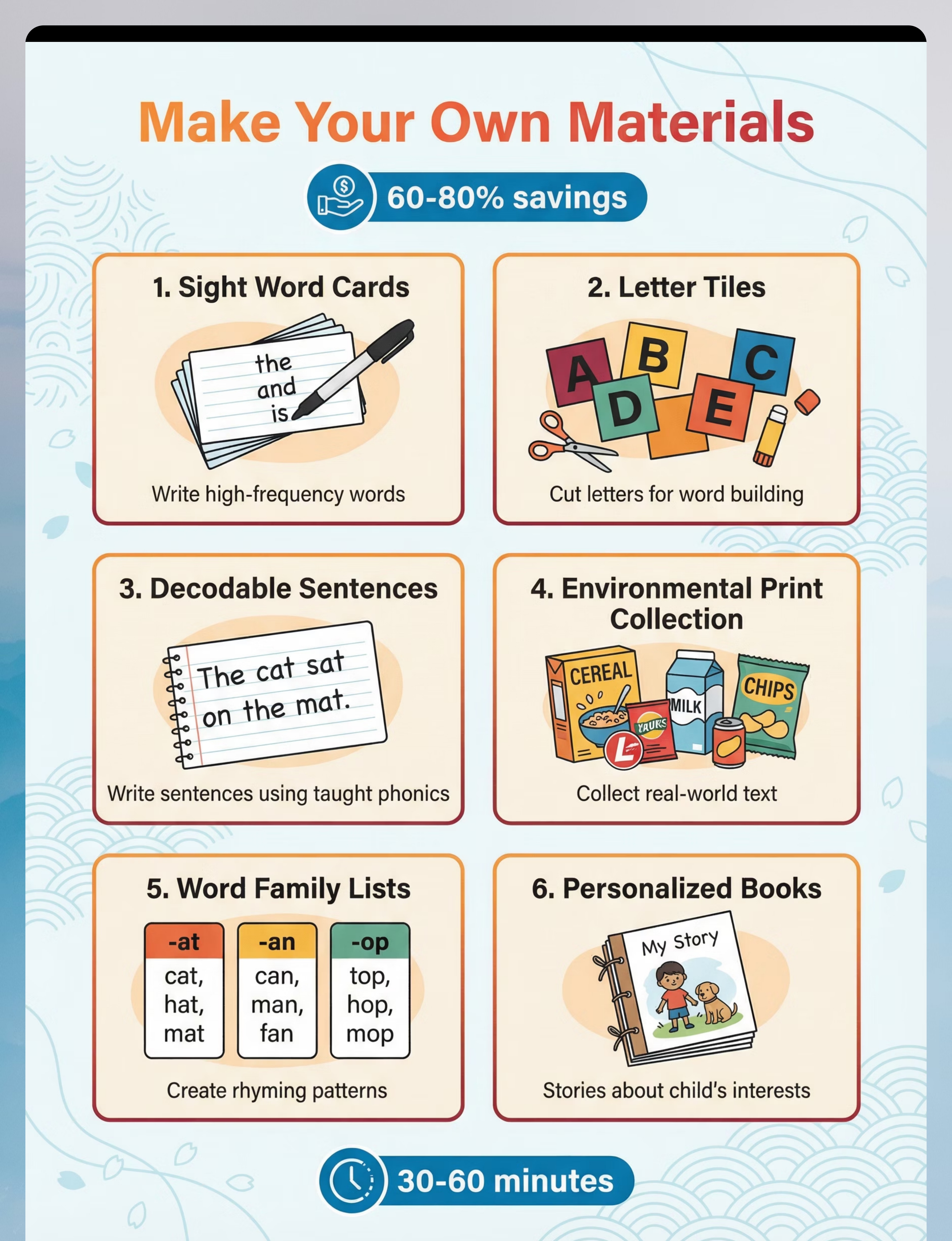
DIY Alternative (Save 60-80%)
Feasibility: Medium-High | Time Investment: 30-60 minutes | Cost Savings: 60-80% compared to commercial materials
Materials Needed
  • Index cards (for sight words)
  • Cardstock paper (for letter tiles)
  • Markers or pens
  • Scissors
  • Environmental print (labels, signs, packaging)
  • Notebook (for writing sentences)
DIY Steps
  1. Sight word cards: Write high-frequency words (the, was, said, etc.) on index cards
  1. Letter tiles: Cut individual letters from cardstock for word-building activities
  1. Decodable sentences: Write simple sentences using only phonics patterns you've taught
  1. Environmental print collection: Save labels, signs, packaging for real-world reading practice
  1. Word family lists: Create -at, -an, -op word family lists for pattern practice
  1. Personalized books: Make simple 3-5 page books about your child's interests and experiences

DIY vs Commercial: When to Choose Each
Factor
When to DIY
When to Buy Commercial
Budget
Very limited budget
Can invest ₹500-1,000
Progression
Supplementing existing instruction
Want complete systematic sequence
Customization
Need highly personalized content
Want professional curriculum design
Time
Have time to create materials
Want ready-to-use resources
Purpose
Environmental print and sight word practice
Structured phonics progression needed

Tradeoff to consider: DIY materials may lack the systematic, carefully sequenced phonics progression that commercial decodable reader programs provide. However, they work excellently for sight word practice, personalized content, and environmental print activities. Best approach: Use DIY for some elements and invest strategically in commercial decodables if systematic phonics is your focus.

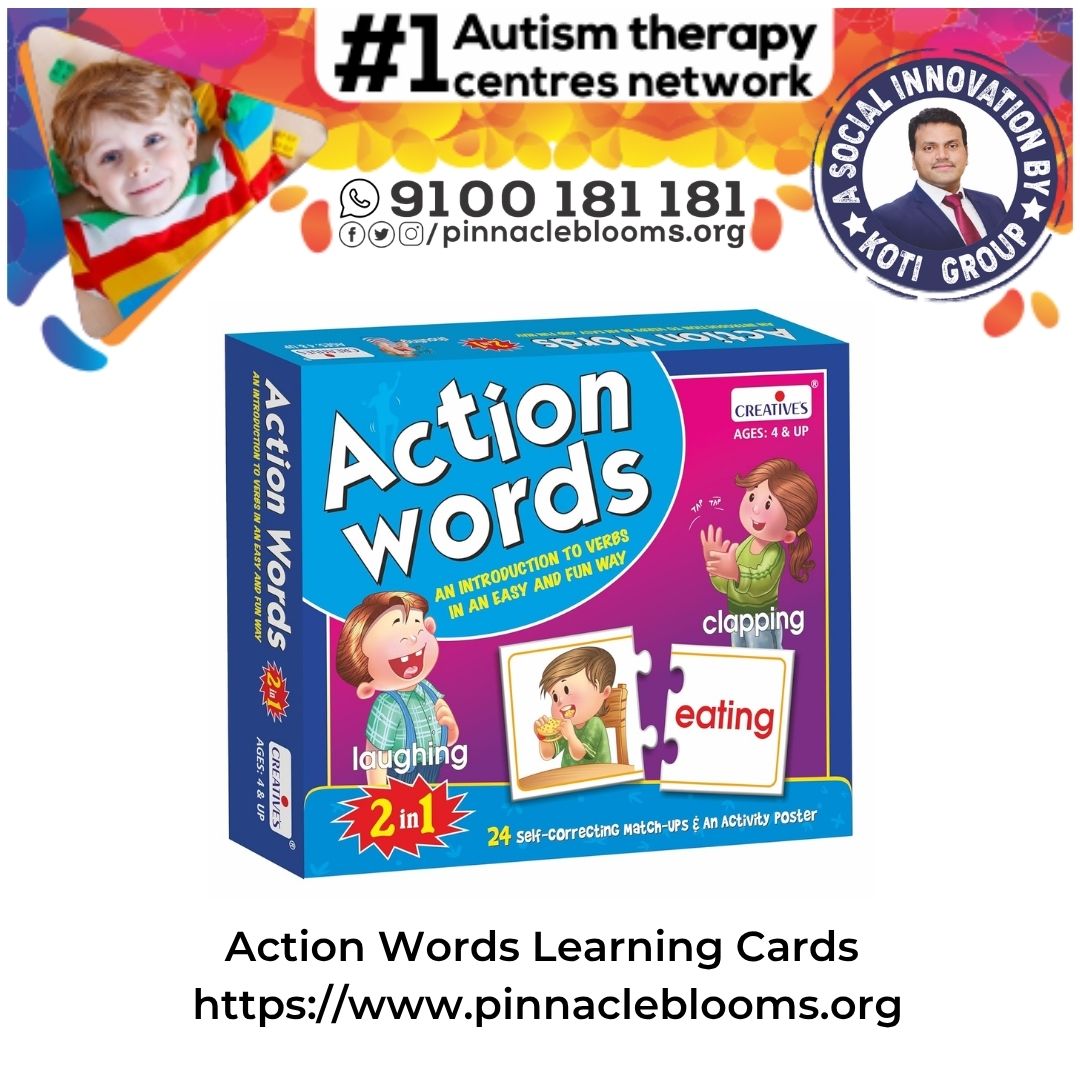
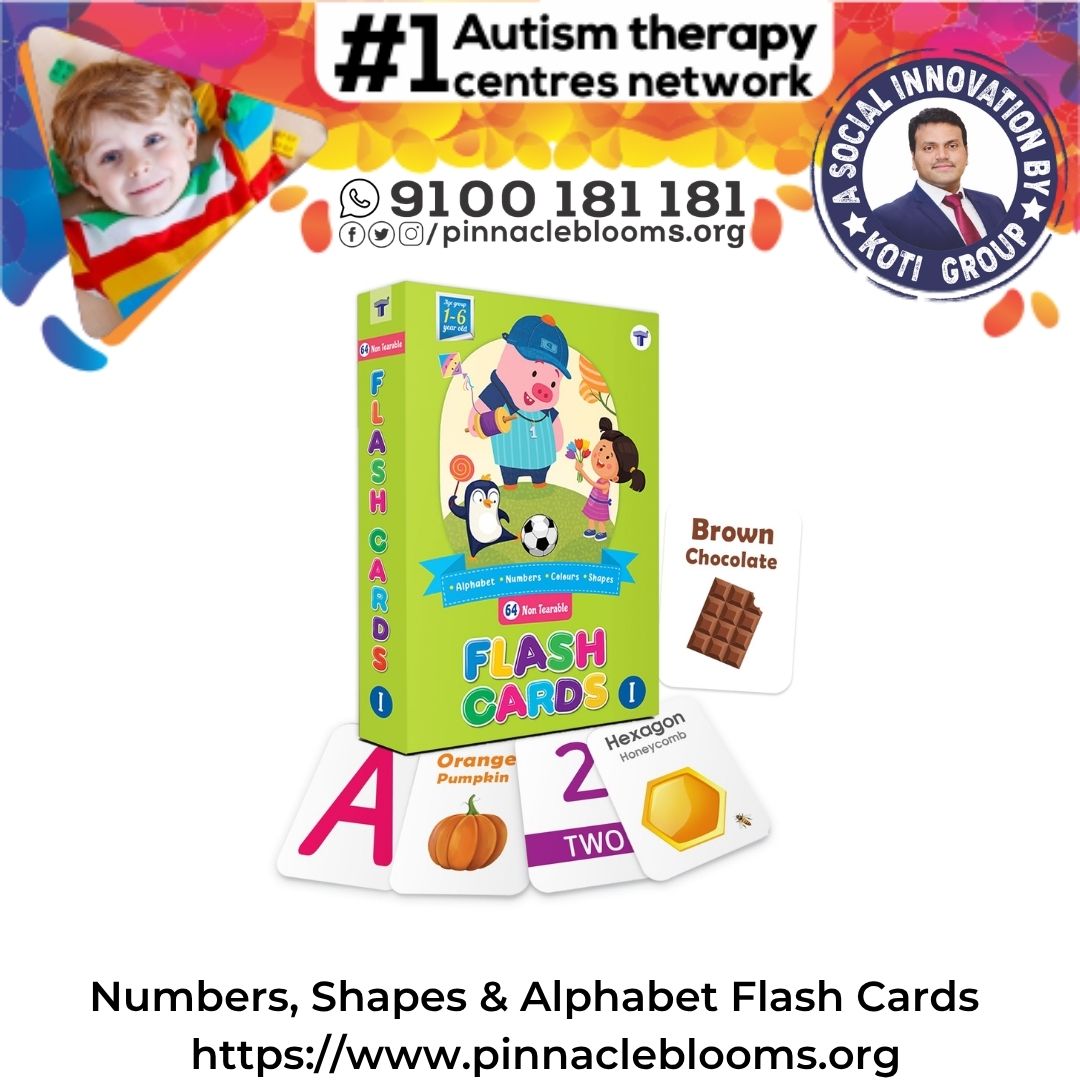
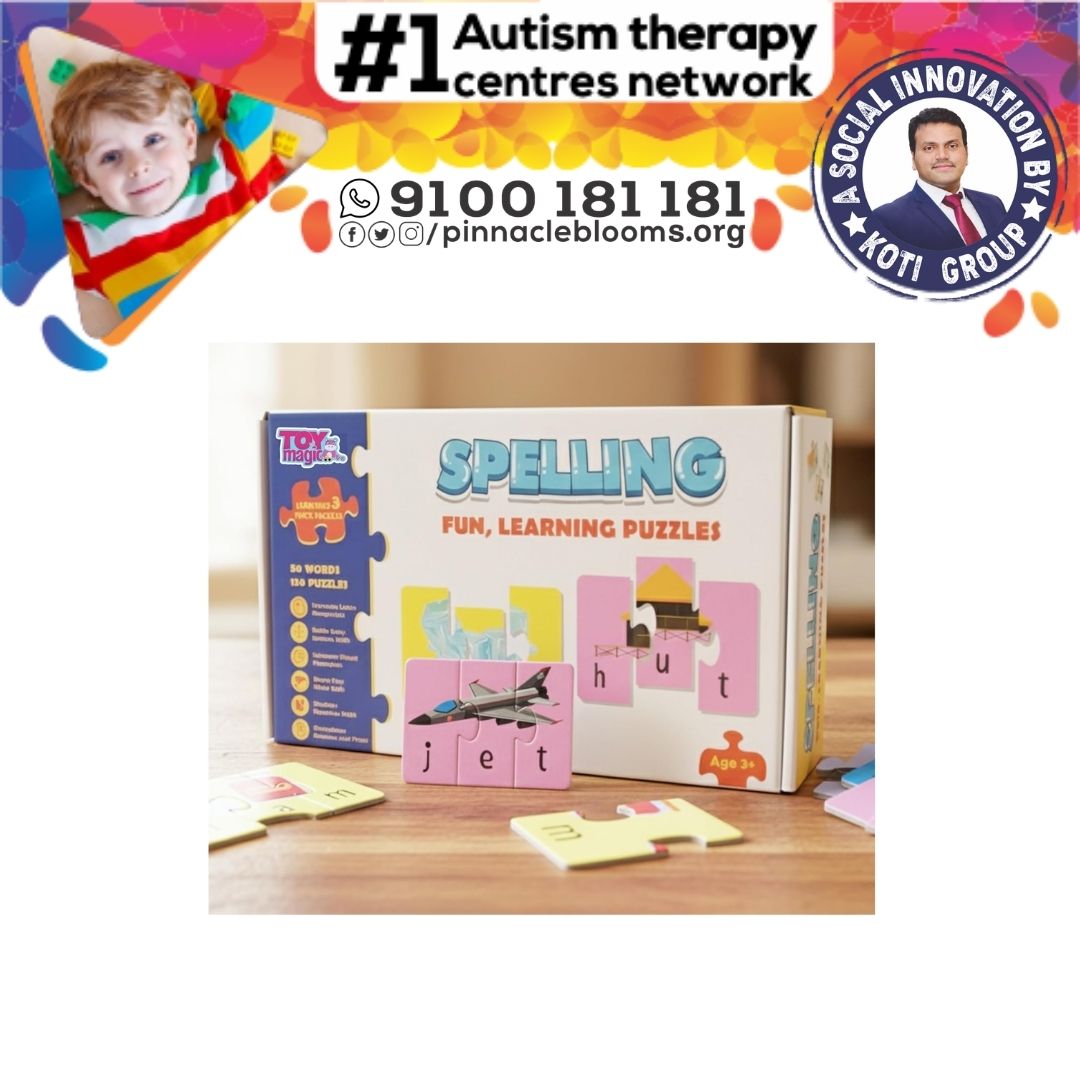
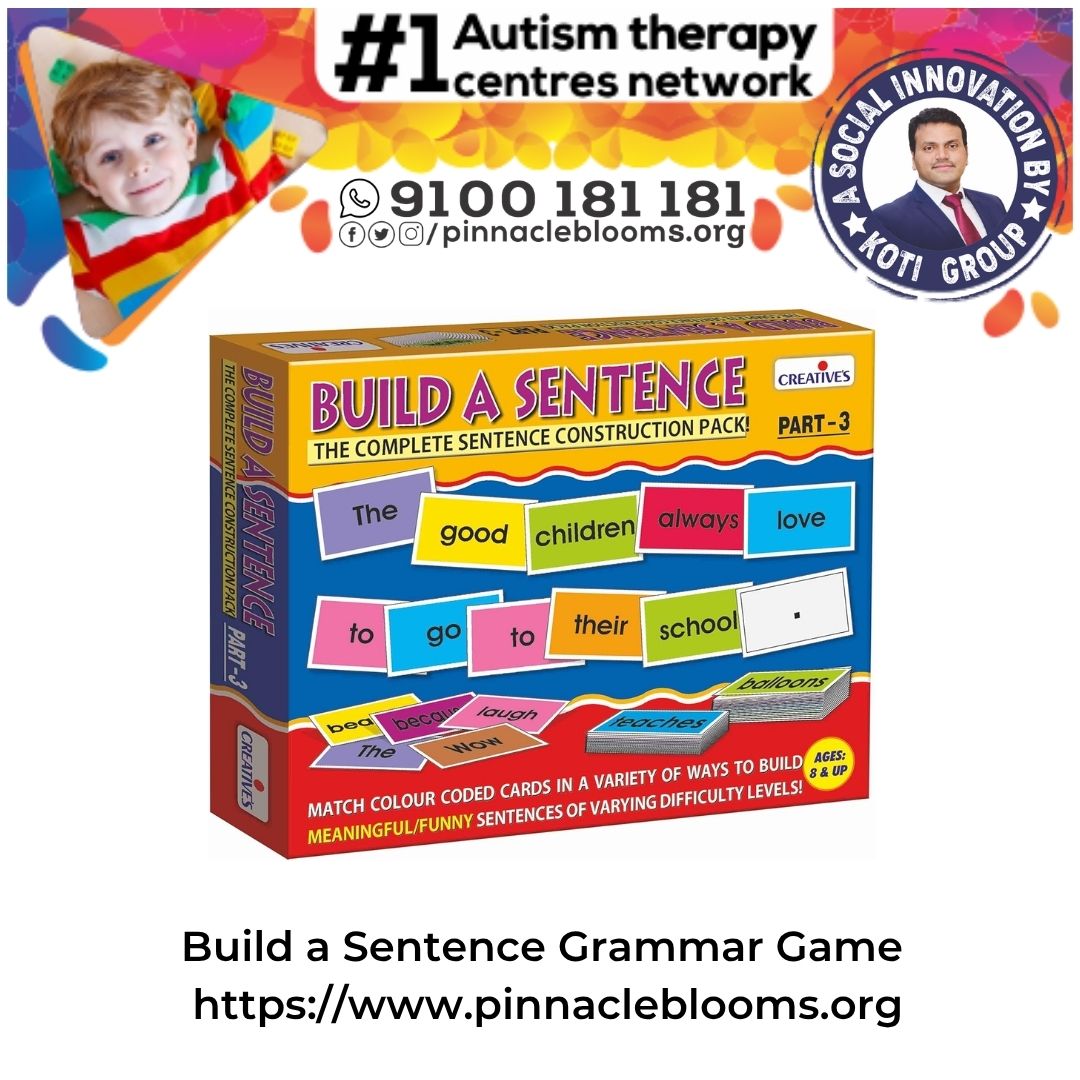
Preview of early reading materials Therapy Material

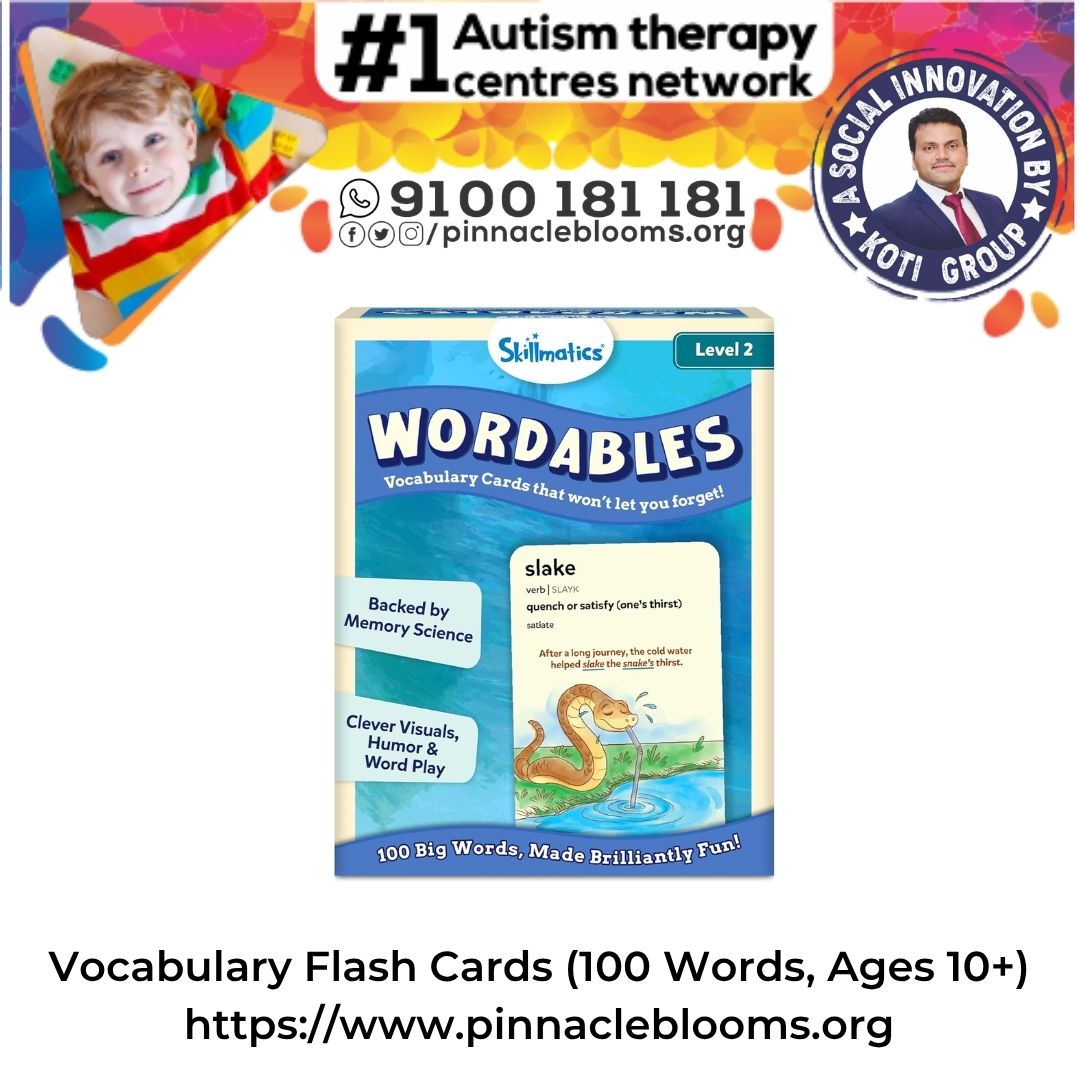
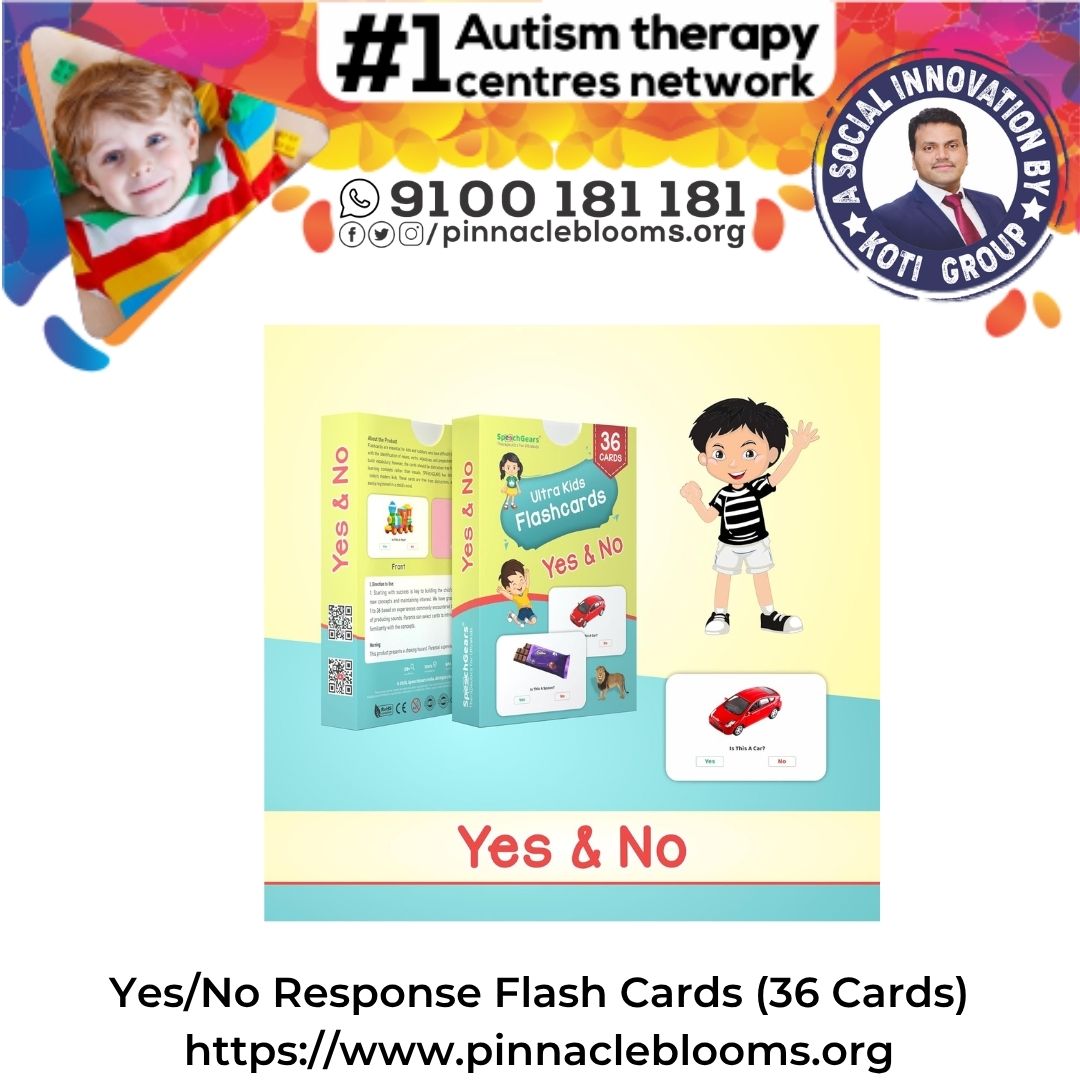
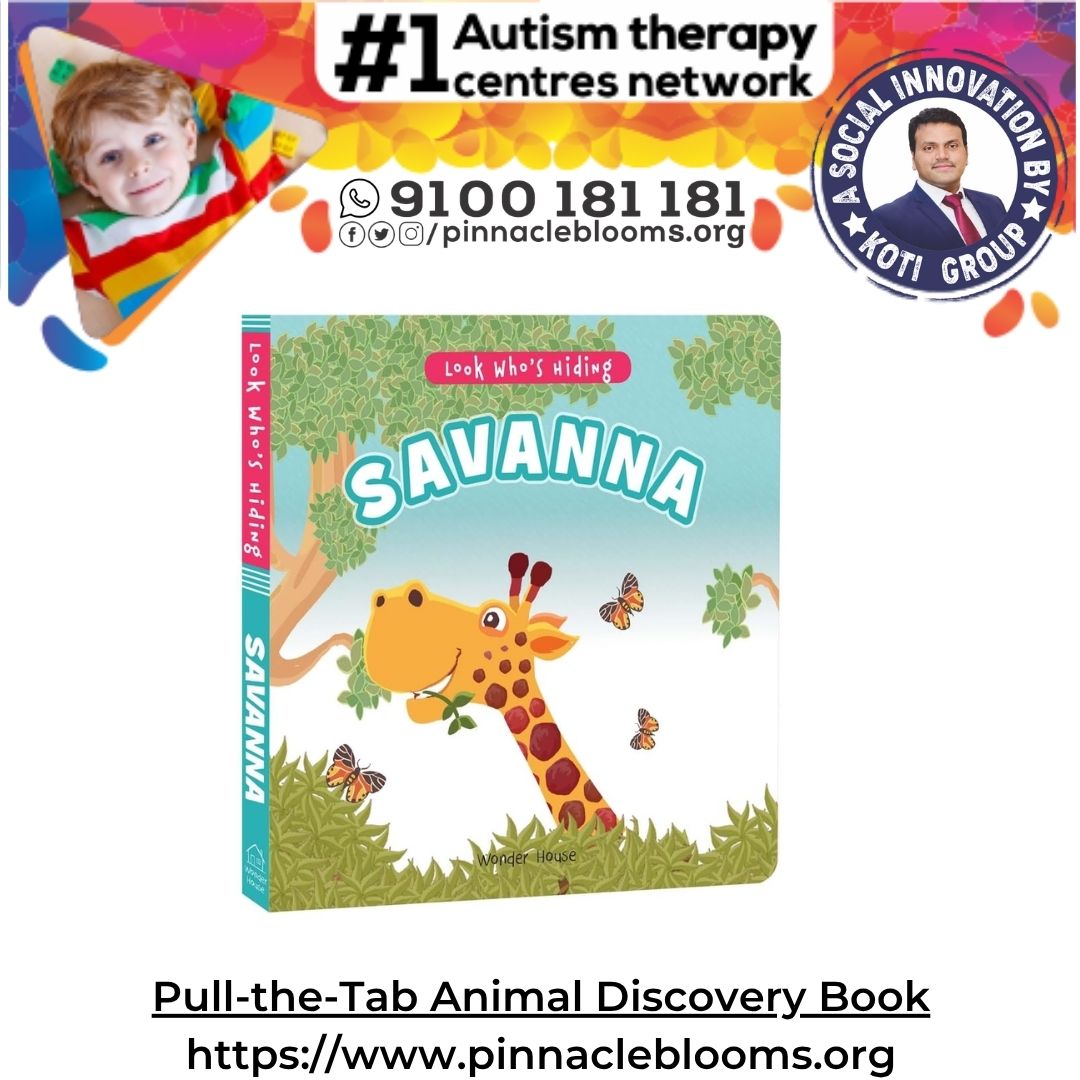
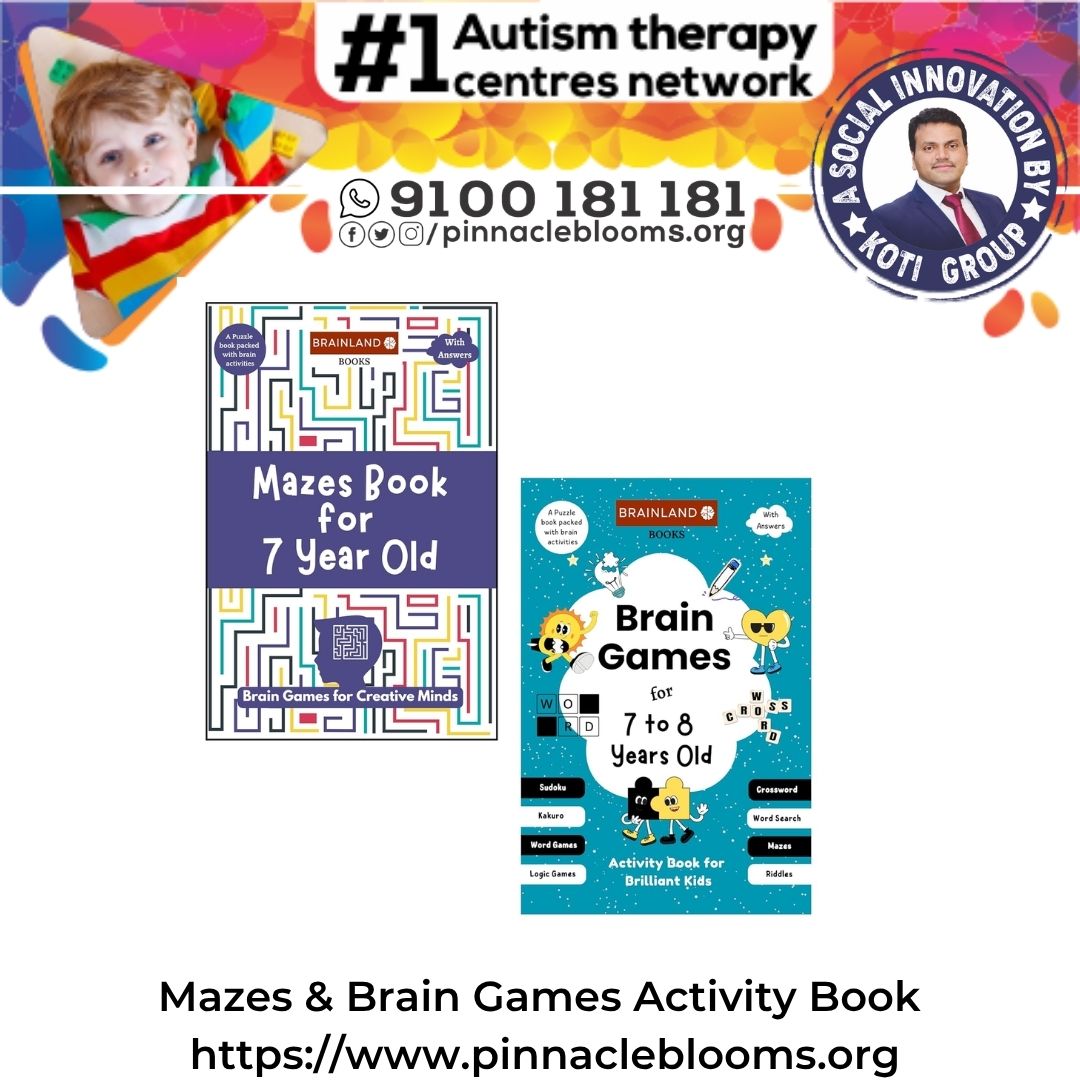
Below is a visual preview of early reading materials therapy material. The pages shown help educators, therapists, and caregivers understand the structure and content of the resource before use. Materials should be used under appropriate professional guidance.

Page 1
Page 2
Page 3
Page 4
Page 5
Page 6
Page 7
Page 8
Page 9
Page 10
Page 11
Page 12
Page 13
Page 14
Page 15
Page 16
Page 17
Page 18
Page 19
Page 20
Link copied!
Measuring Success & Next Steps
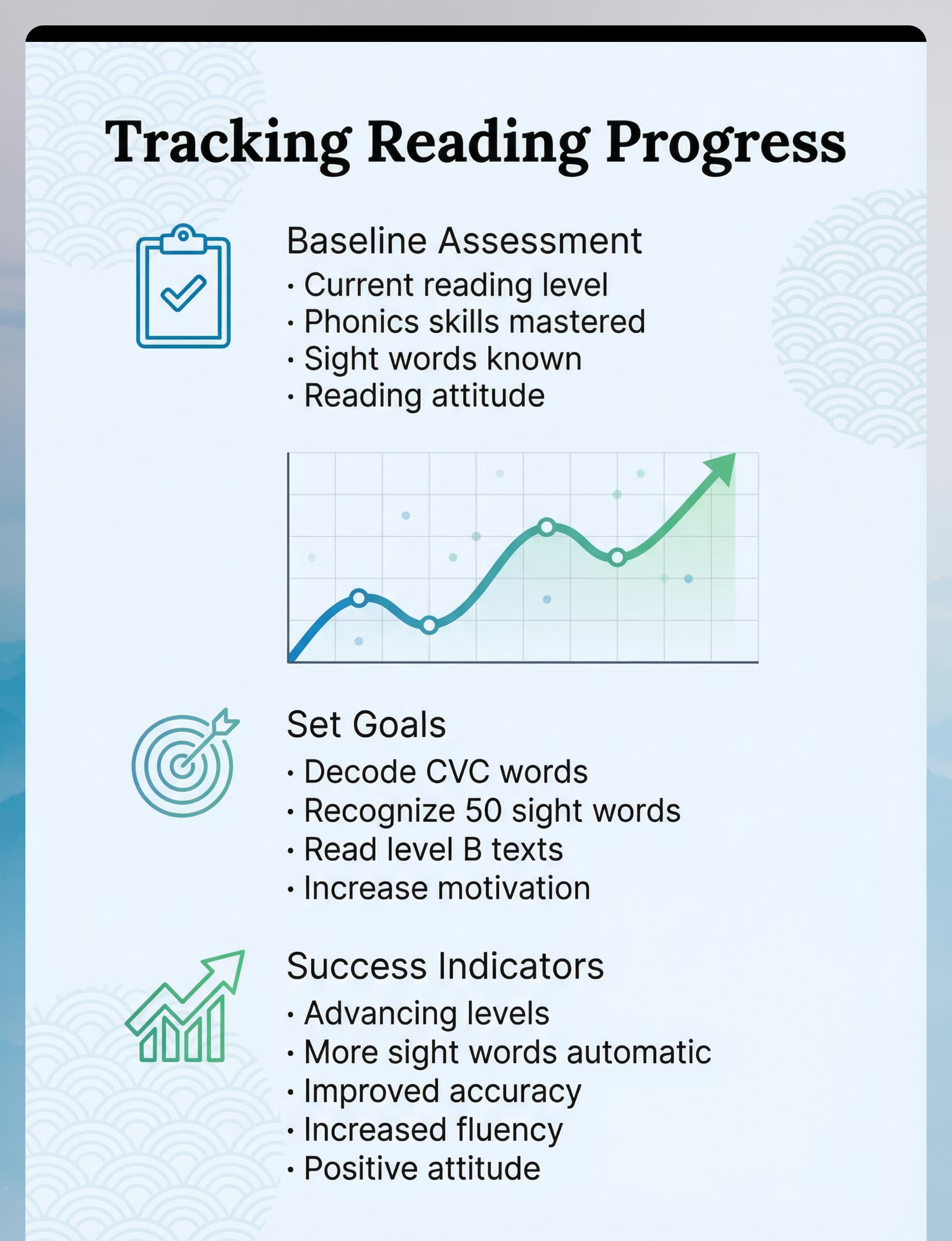
Track Progress
Baseline (Measure First)
  • Current reading level (use leveled assessment)
  • Which phonics skills are mastered
  • How many sight words are known
  • Current reading attitude and motivation
Goals (Work Toward)
  • Child will decode CVC words independently
  • Child will recognize [specific number] sight words
  • Child will read level [X] texts with 90% accuracy
  • Reading motivation will increase measurably
Success Indicators
  • Advancing through reading levels consistently
  • Growing sight word automaticity
  • Improved reading accuracy
  • Increased fluency (speed + accuracy)
  • Positive reading attitude developing

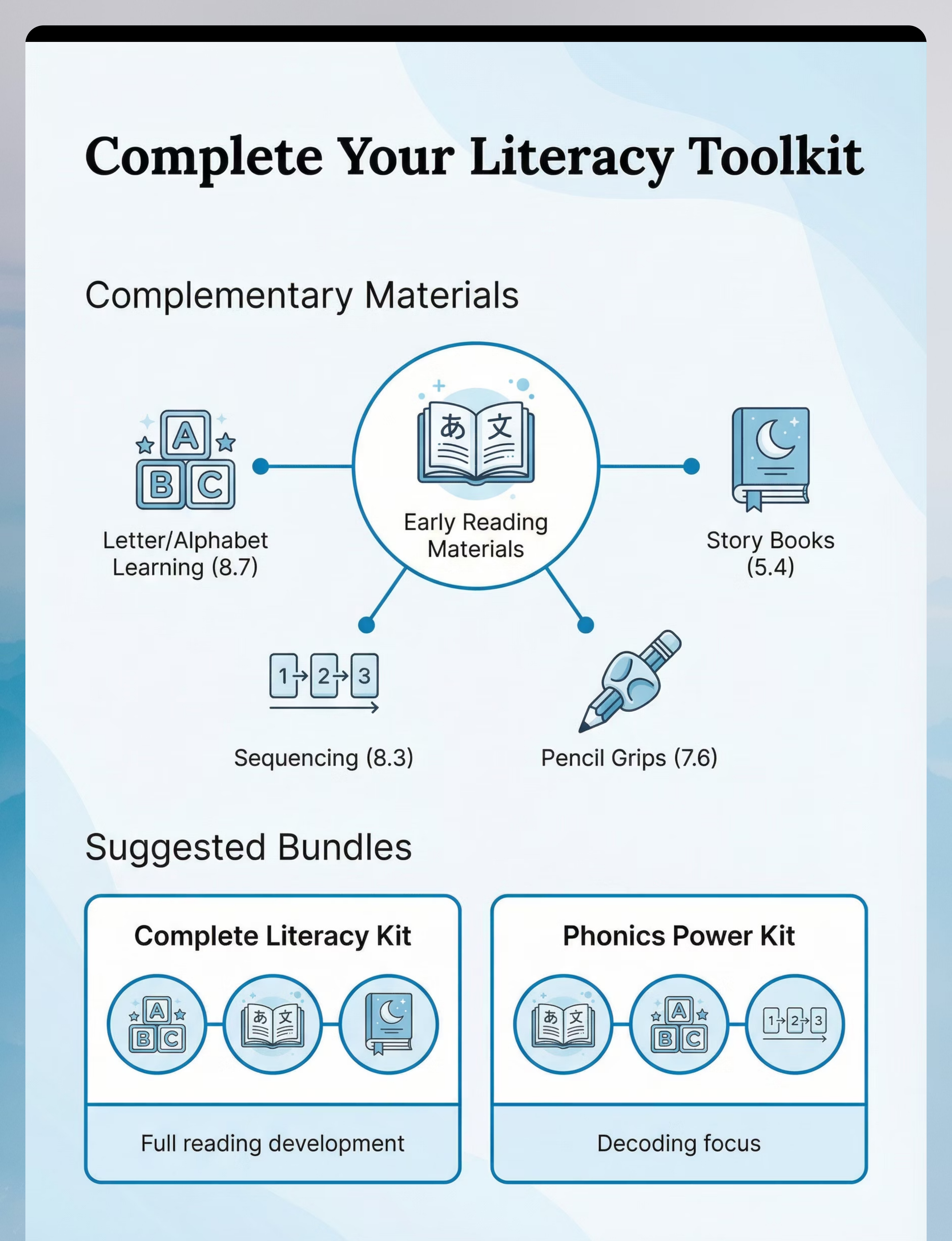
Complete the Kit: Pair It With
Letter/Alphabet Learning (ID: 8.7)
Why: Pre-reading foundation—letter knowledge comes before reading
Story Books (ID: 5.4)
Why: Read-aloud exposure builds vocabulary and comprehension alongside decoding practice
Sequencing (ID: 8.3)
Why: Comprehension support—understanding story order and narrative structure
Pencil Grips (ID: 7.6)
Why: Writing connection—reading and writing develop together

Complete Literacy Bundle: Combine Letter Learning (8.7) + Early Reading Materials (8.10) + Story Books (5.4) for comprehensive literacy development from pre-reading through fluent reading.

Quick Summary
Early reading materials develop literacy through systematic phonics, sight word recognition, and engaging texts that build confident readers. Core Kit tool (Rank #2) with strong research evidence, essential for academic success and lifelong learning.
reading
phonics
literacy
decodable
sight words
SpEd
SLP
core-kit
Common searches: early reading autism, decodable readers, phonics materials, sight words kids, beginning reading, learn to read autism, reading intervention

Get Support
FREE National Autism Helpline
Phone: 9100 181 181
Languages: 16+ Indian languages
Website: pinnacleblooms.org
Free support for parents and caregivers throughout India
Platform Integration
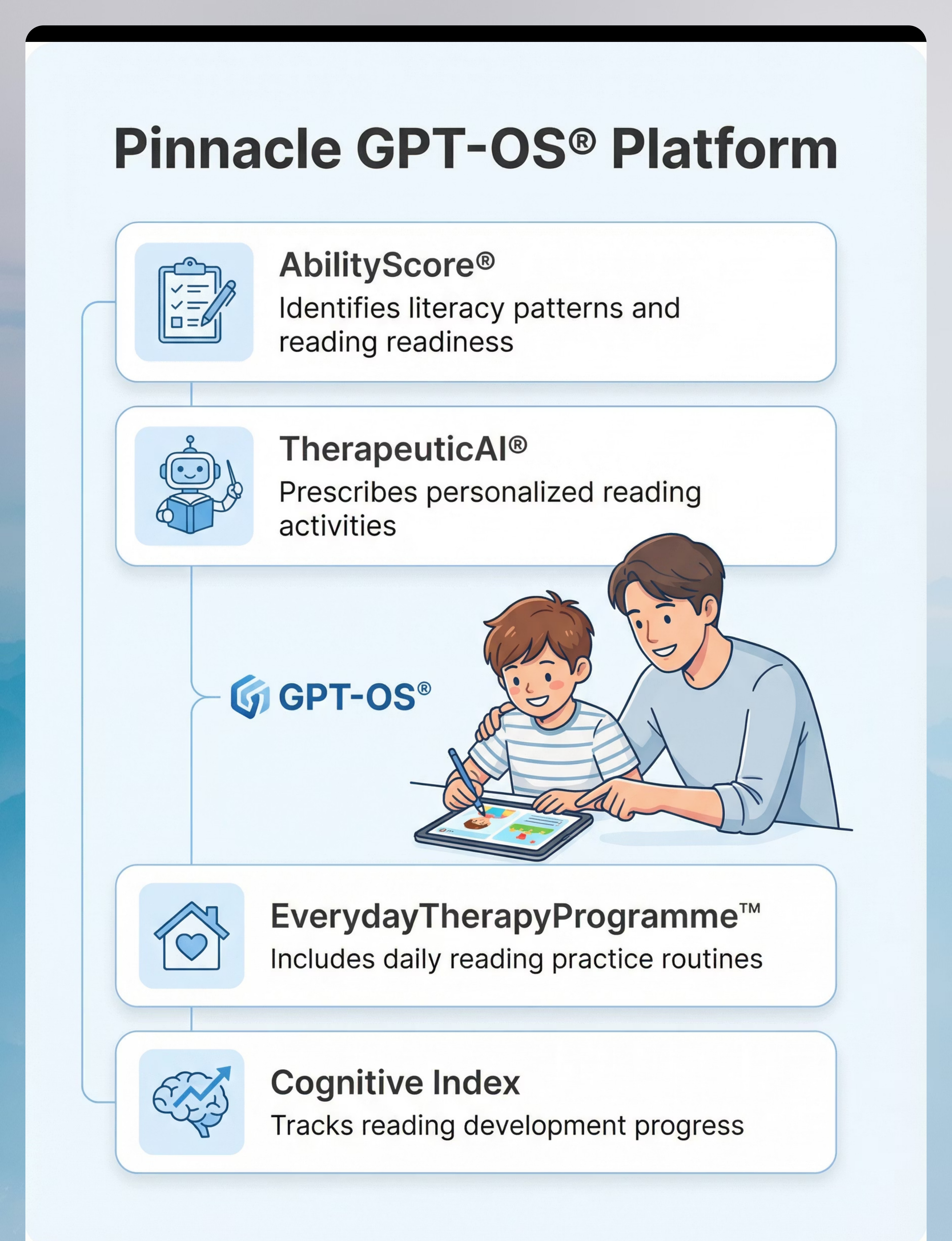
AbilityScore® identifies literacy patterns and reading readiness
TherapeuticAI® prescribes personalized reading activities matched to level

EverydayTherapyProgramme™ includes daily reading practice routines
Cognitive Index tracks reading development over time

Disclaimer: This is educational information for parents and caregivers. Always consult qualified special educators, speech-language pathologists, or pediatricians for personalized guidance. Reading development varies significantly between individual children. The information provided represents general clinical practice and research findings, not medical advice.