Tool ID: 2.1
Core Kit
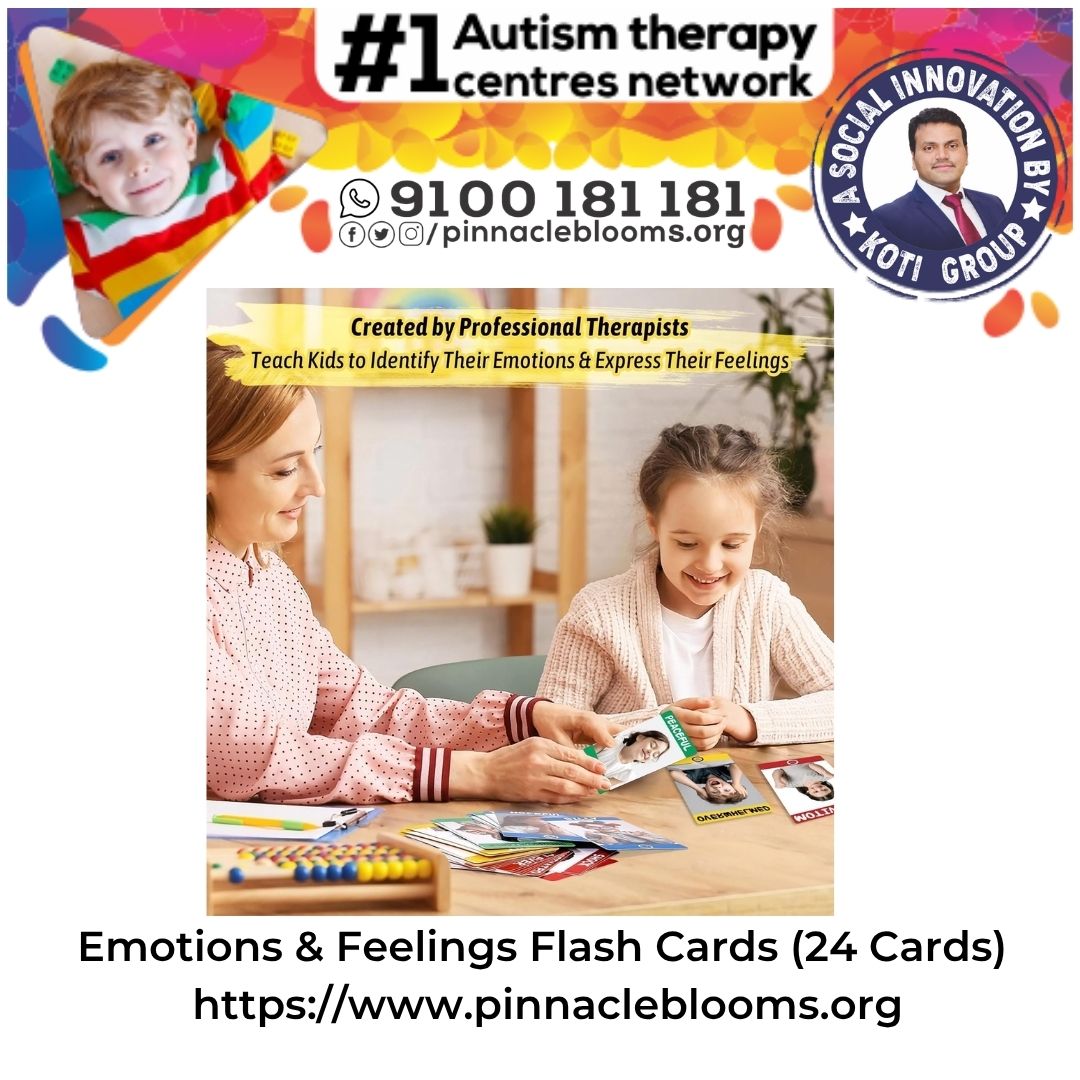
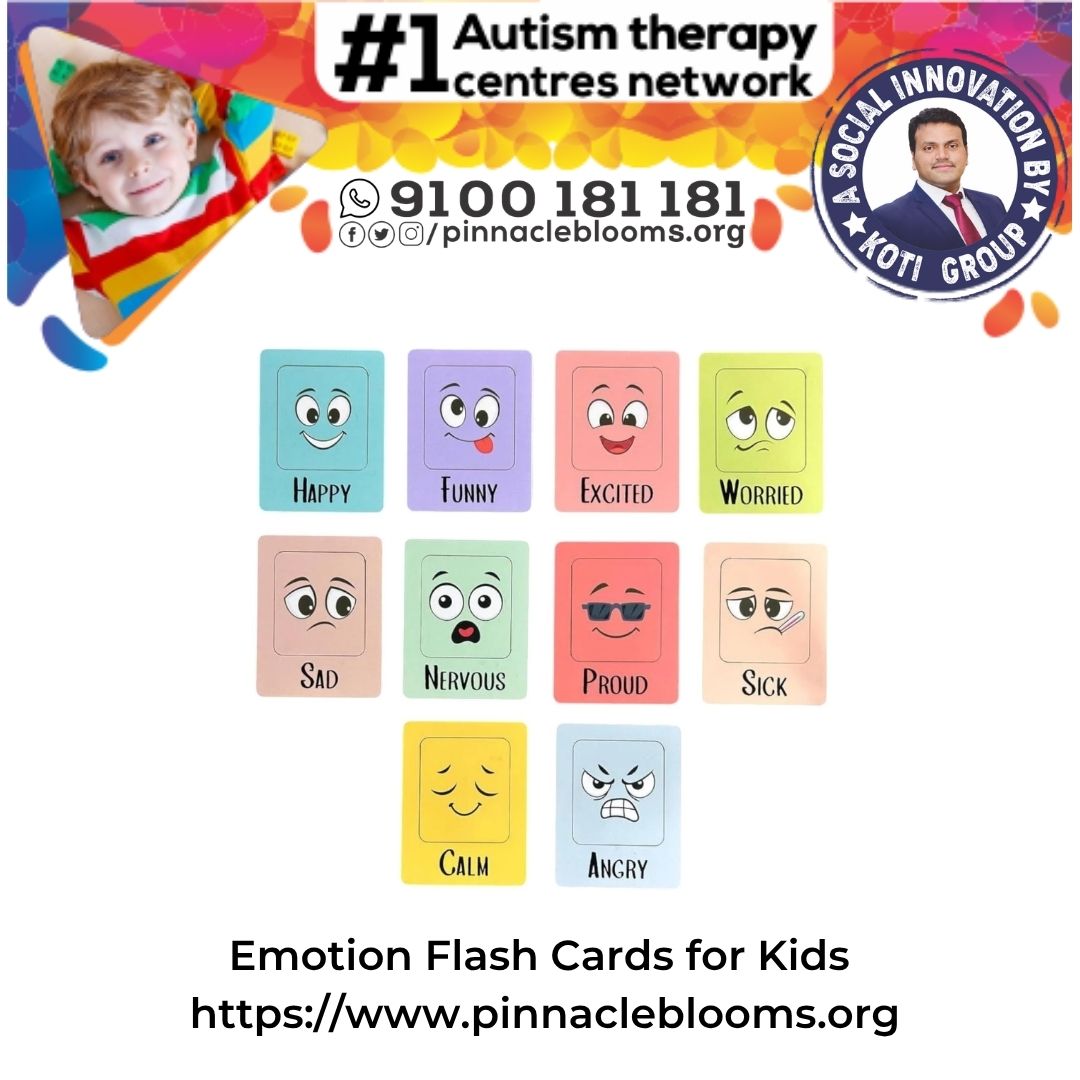
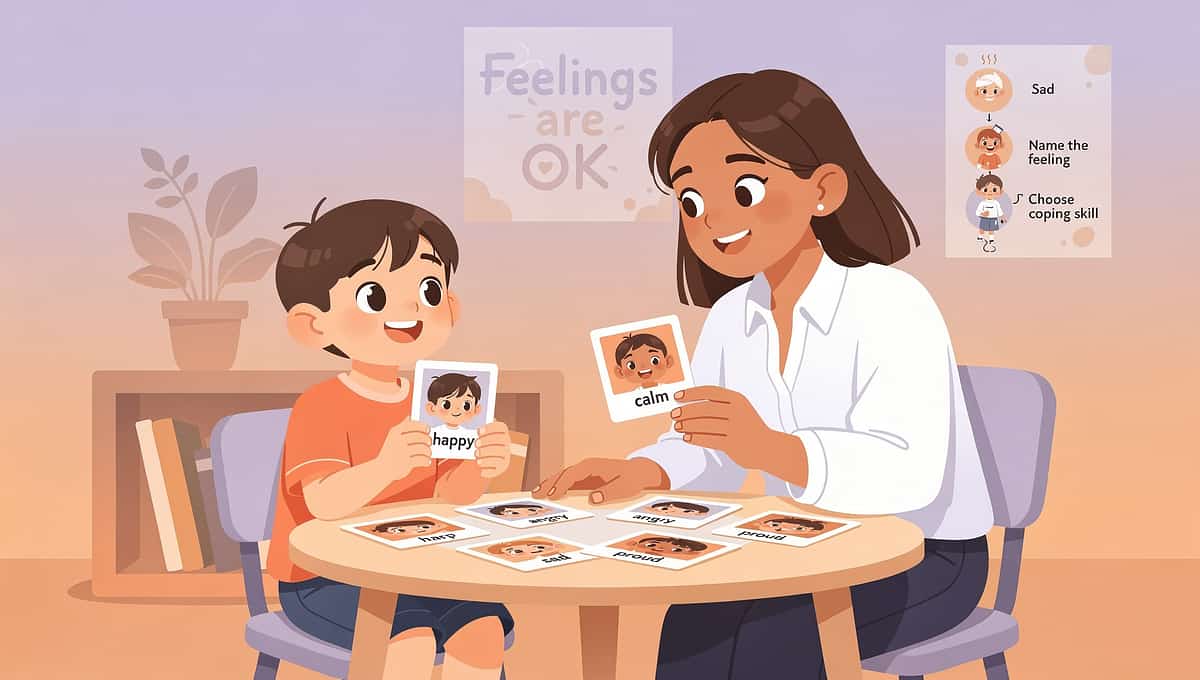
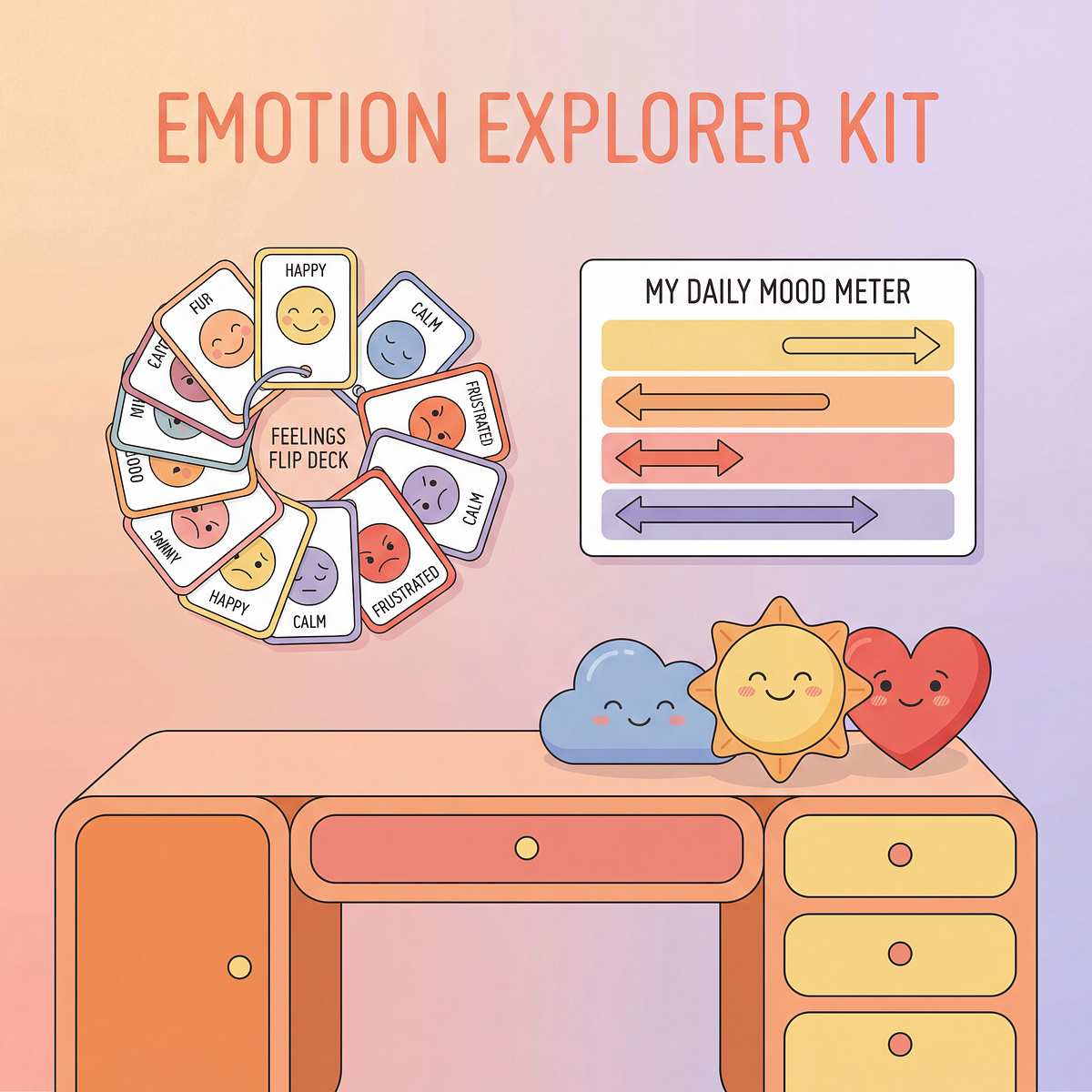
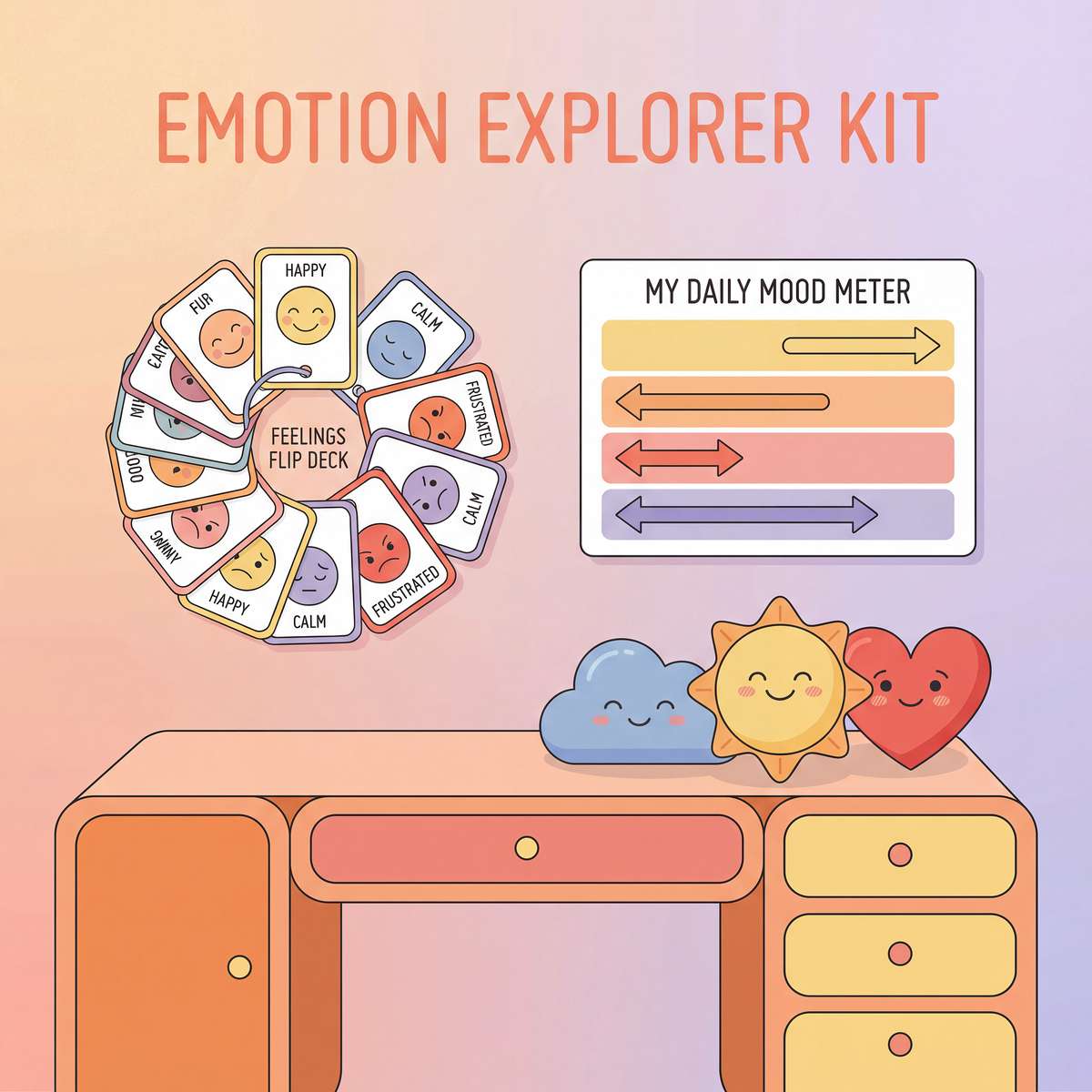
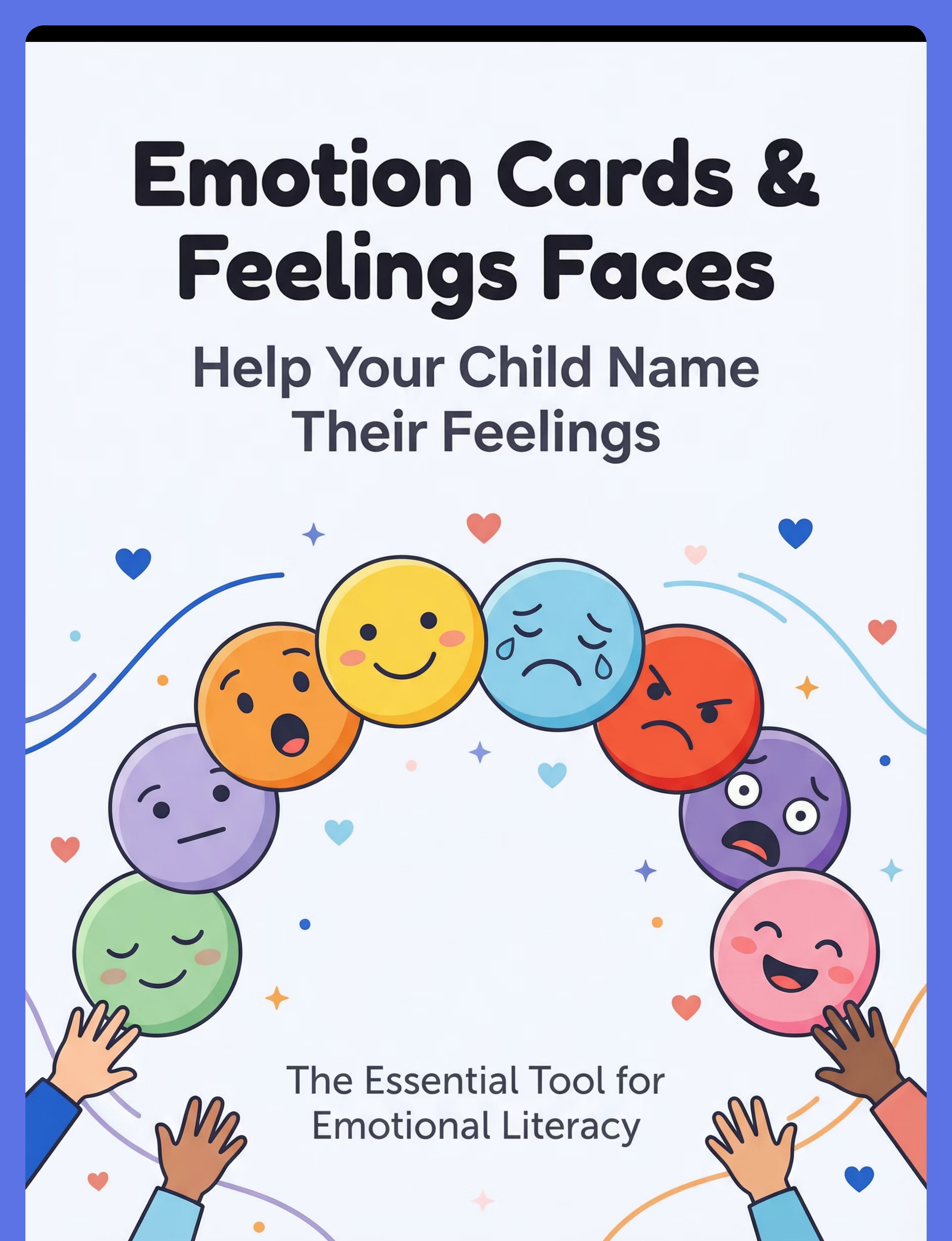
Emotion Cards / Feelings Faces
Emotional literacy and identification system
Psychologist
SpEd
Strong Evidence
Rank #1
Daily Use
₹100–1,000

Who This Helps
Emotional Literacy
Builds the foundation for identifying and naming feelings accurately
Emotional Regulation
Helps children understand and manage their emotional responses
Self-Awareness
Develops the ability to recognize and understand one's own emotions
Social Skills
Improves ability to read and respond to others' emotional states
Communication
Provides vocabulary to express complex feelings more effectively
Ages 2-9 years
Home
School
Clinic
Best for: Children who struggle to identify or express emotions, have difficulty recognizing feelings in others, or need visual support to develop emotional vocabulary and awareness.

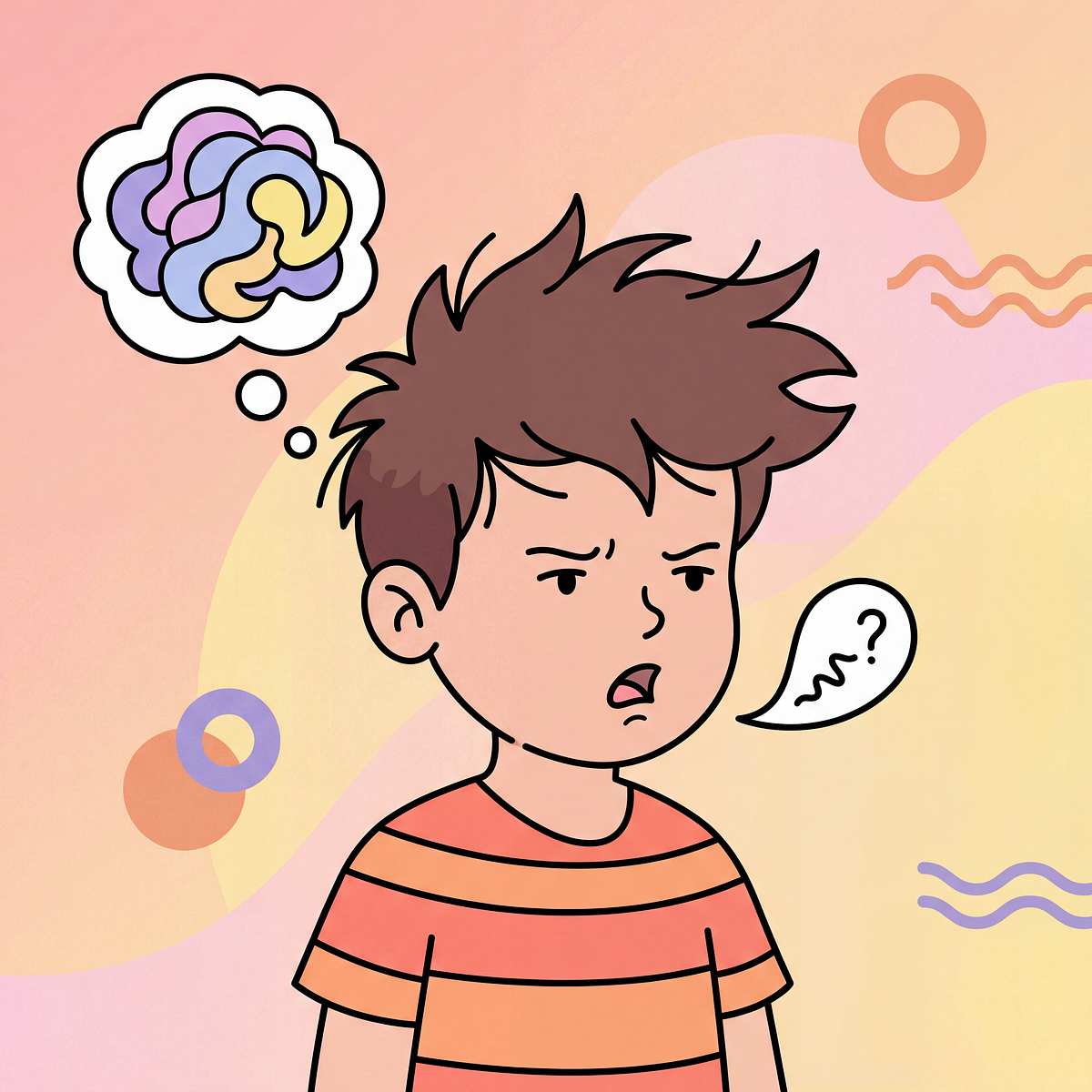
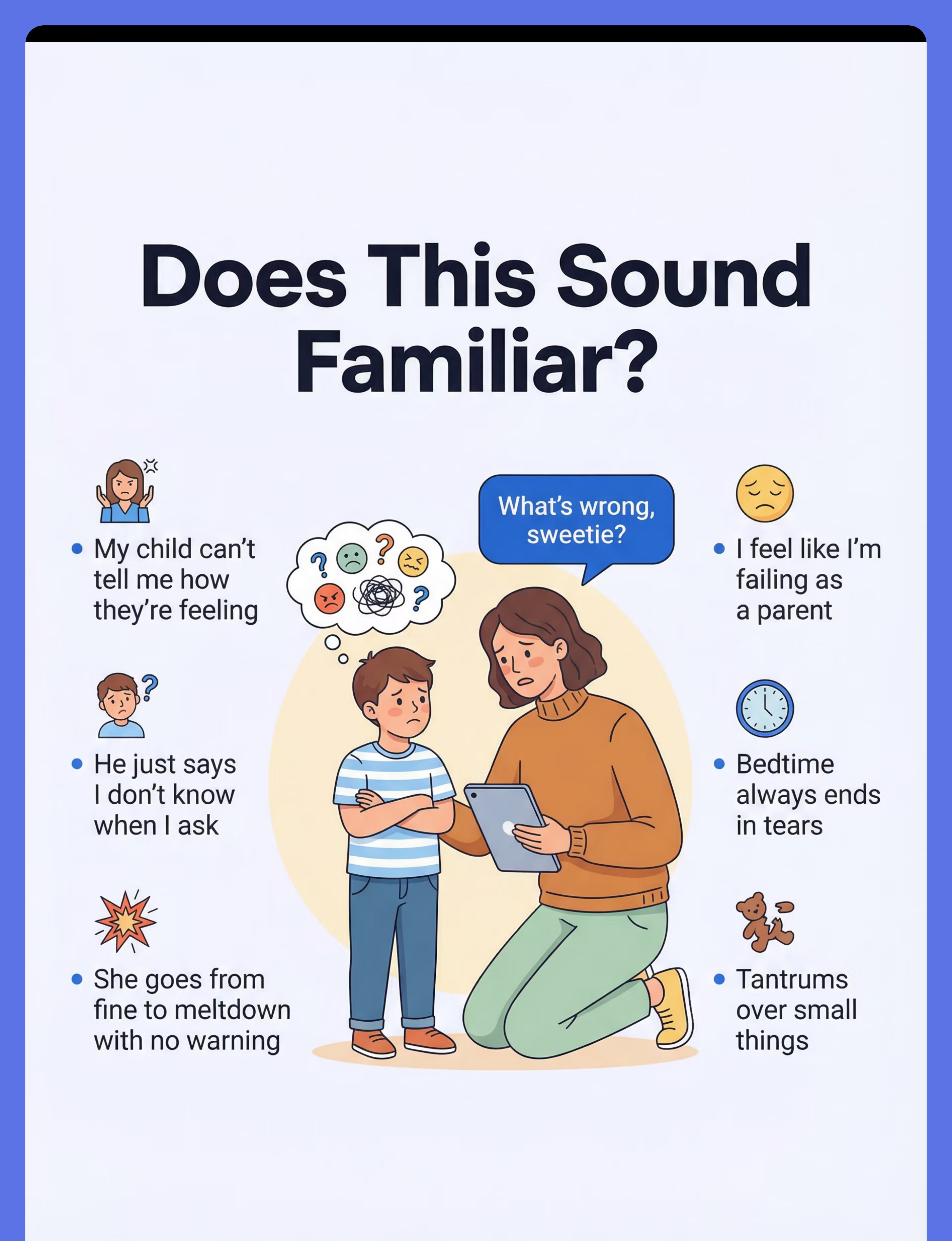
Does This Sound Familiar?
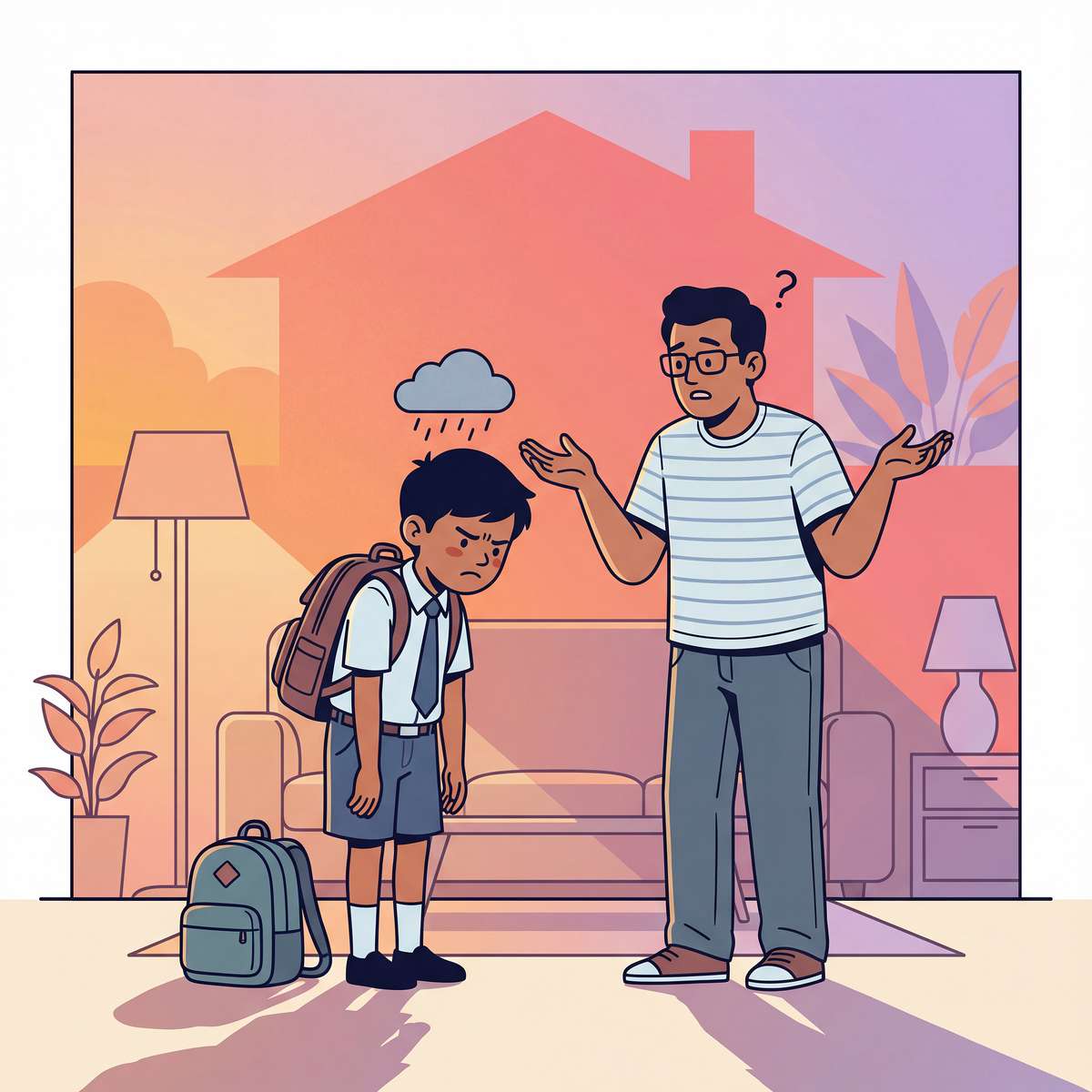
"My child can't tell me how they're feeling. When I ask what's wrong, I just get silence or 'I don't know.'"
"He goes from perfectly fine to complete meltdown with absolutely no warning signs that I can see."
"She doesn't recognize emotions in other people. She misreads social cues constantly and it affects friendships."
"We can't problem-solve together because she can't identify or name what the actual problem is."
"The therapist says we need to work on emotional vocabulary at home, but I don't know where to start."
"He just says 'I don't know' every single time, even when he's clearly upset about something specific."
You're not alone. These are common challenges for children with autism and developmental differences. The struggle to identify and express emotions is real, but it's also something we can address with the right tools and consistent practice.

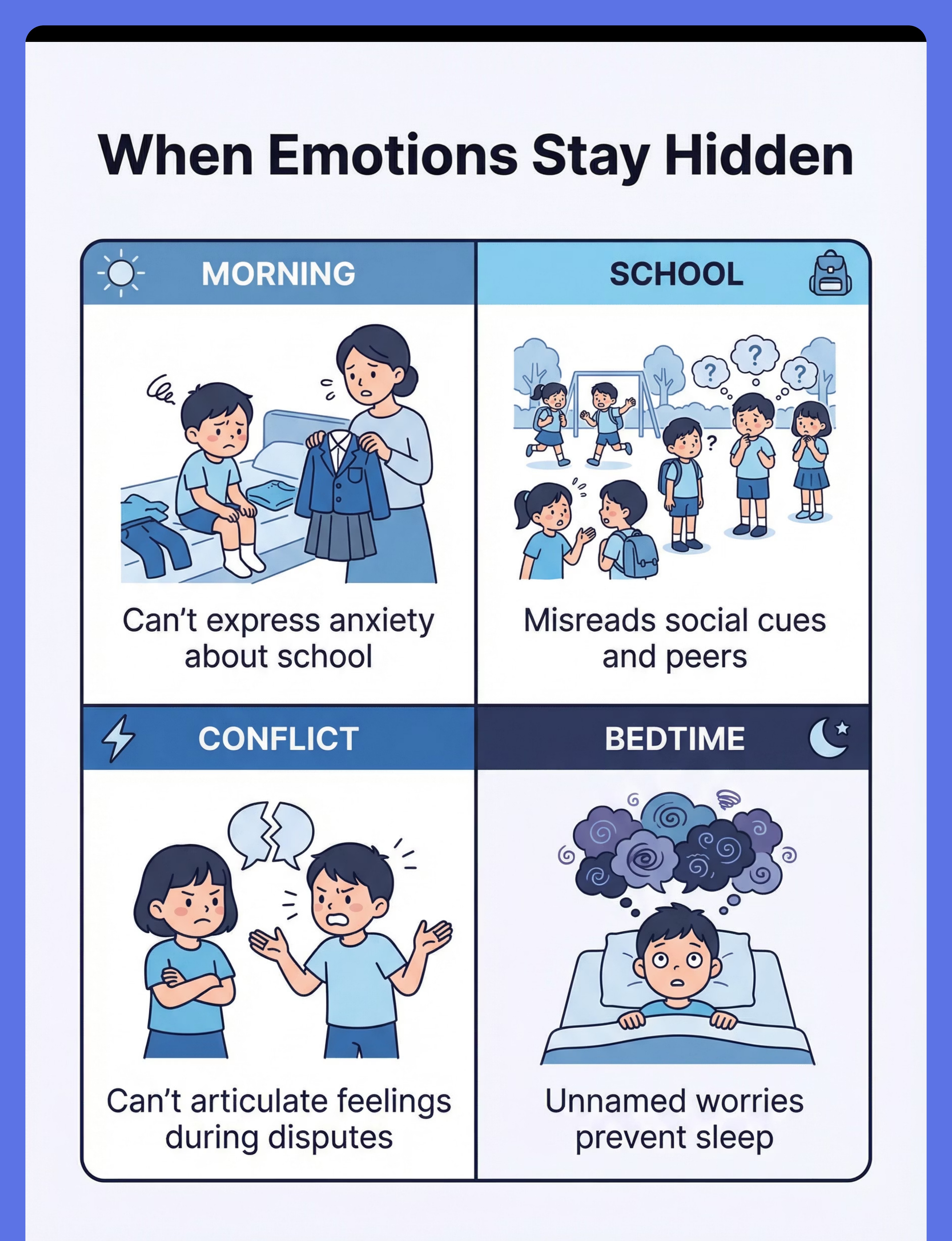
A Day Without the Right Support
Morning
Can't express if feeling anxious about school. Gets ready with visible tension but no words to explain the worry building inside.
At School
Doesn't recognize social cues from peers. Misreads a classmate's frustrated expression as anger directed at them, leading to unnecessary conflict.
During Conflict
Can't articulate feelings during disputes with siblings or classmates. Frustration builds because they lack words to explain their perspective.
Bedtime
Unnamed worries prevent sleep. Lies awake with undefined feelings that can't be discussed or soothed because they can't be identified.
Without emotional vocabulary and identification skills, each day becomes a series of missed connections and unexpressed needs. The inability to name feelings creates a barrier between the child's internal experience and their ability to communicate it to caring adults who want to help.

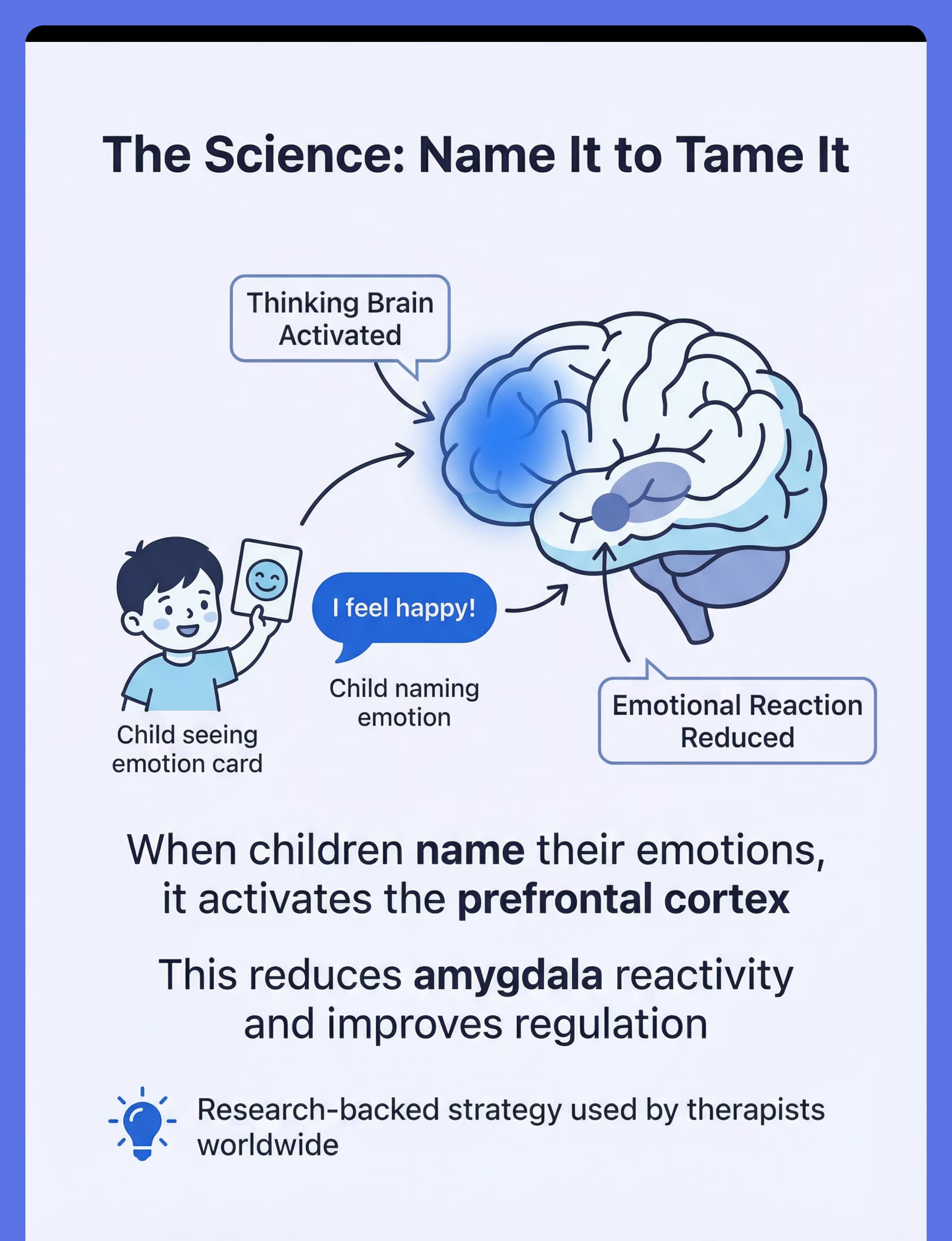
The Science Behind It
Visual Recognition
Child sees clear facial expressions representing different emotions on cards
Learning to Label
Child learns to attach specific words to emotional states and facial expressions
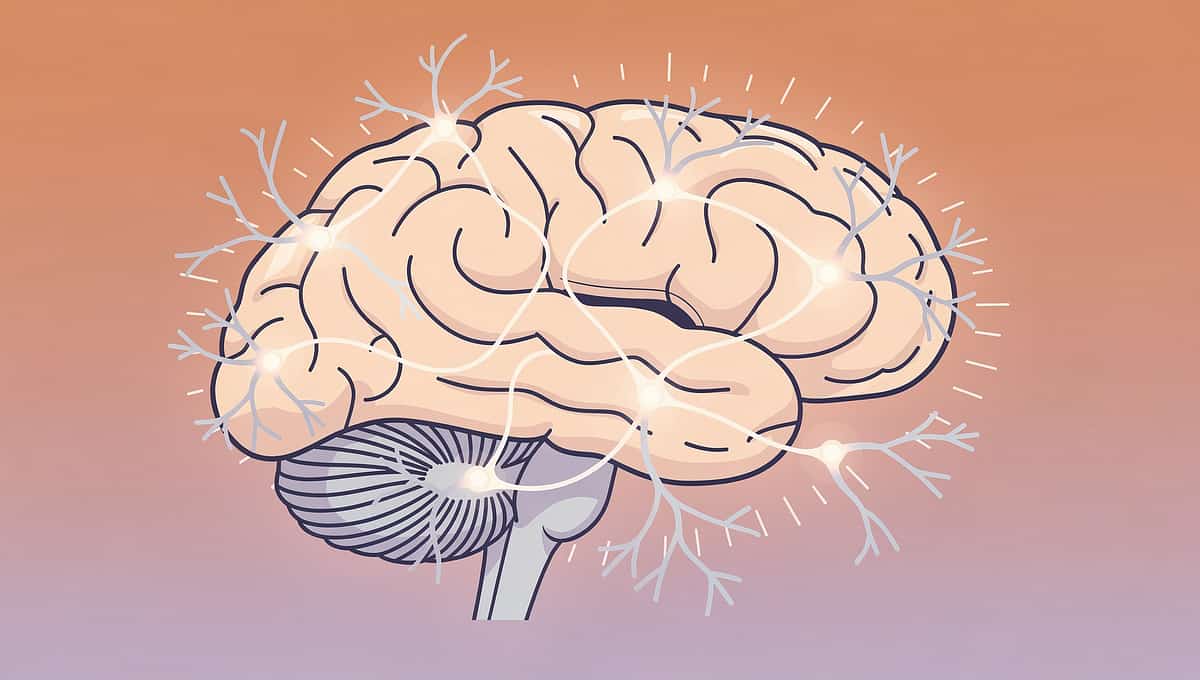
Prefrontal Activation
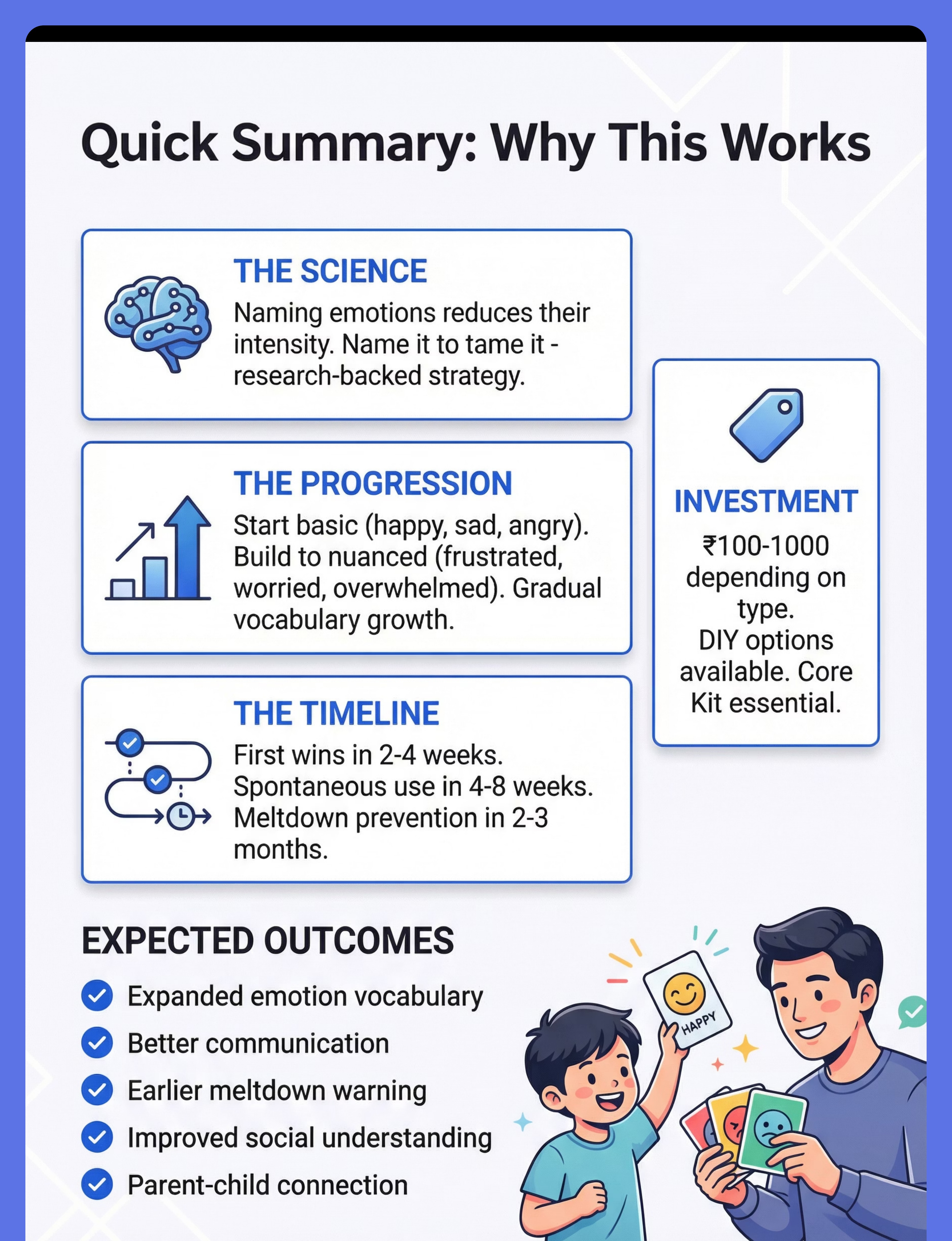
Naming emotions activates the prefrontal cortex, the brain's regulation center
Amygdala Calming
This activation reduces amygdala reactivity through the "name it to tame it" effect
Improved Regulation
Result: enhanced emotional awareness and better self-regulation abilities
Emotional Literacy
Emotional Regulation
Self-Awareness
Social Skills
Communication
"Research shows that naming an emotion reduces its intensity. For children who struggle to identify what they're feeling, emotion cards provide the vocabulary and visual support to 'name it to tame it.'"— Child Psychologist, Emotional Development Specialist

Best Practices: How to Use It Right
Start Simple
Begin with basic emotions like happy, sad, angry, and scared before introducing more nuanced feelings like frustrated or disappointed.
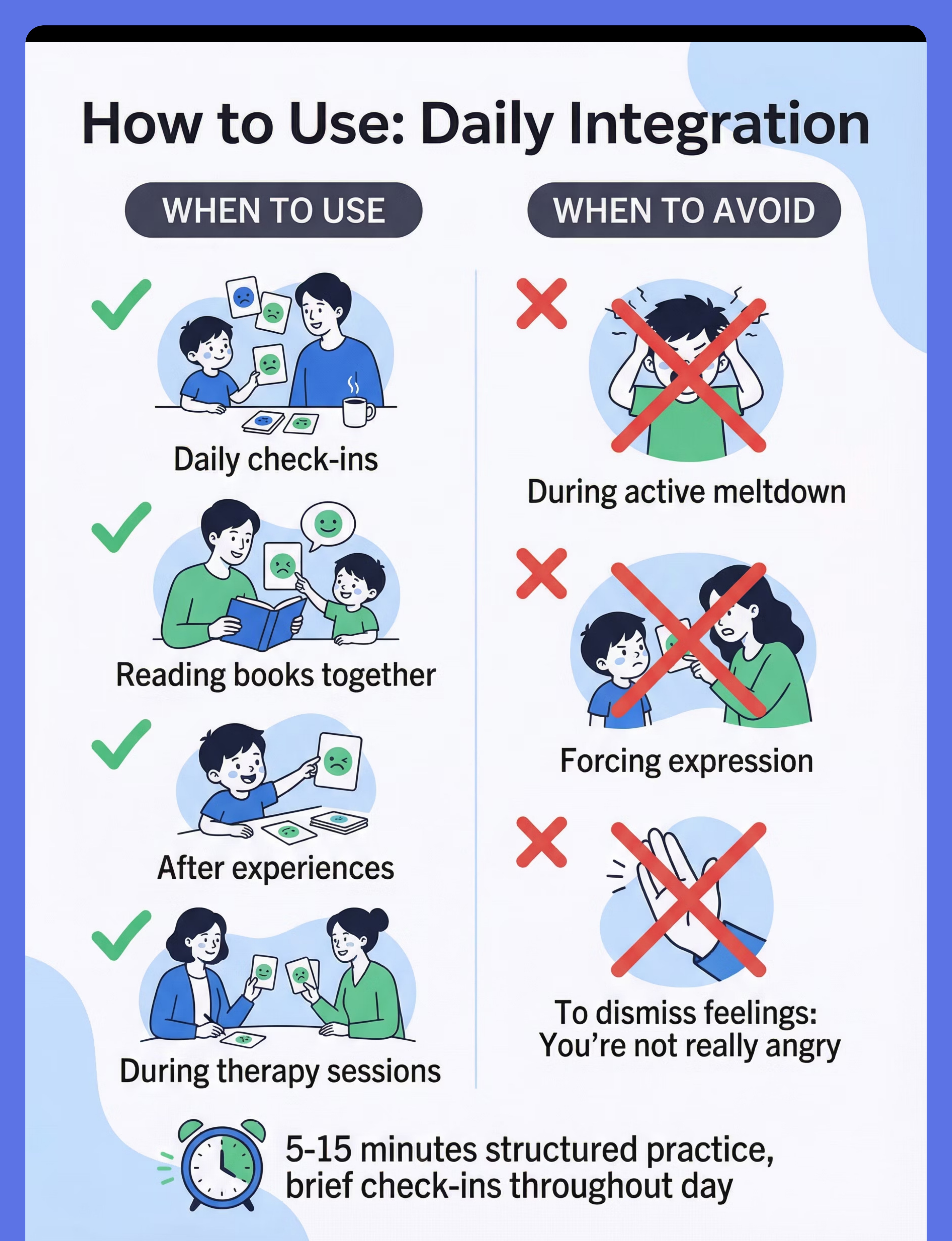
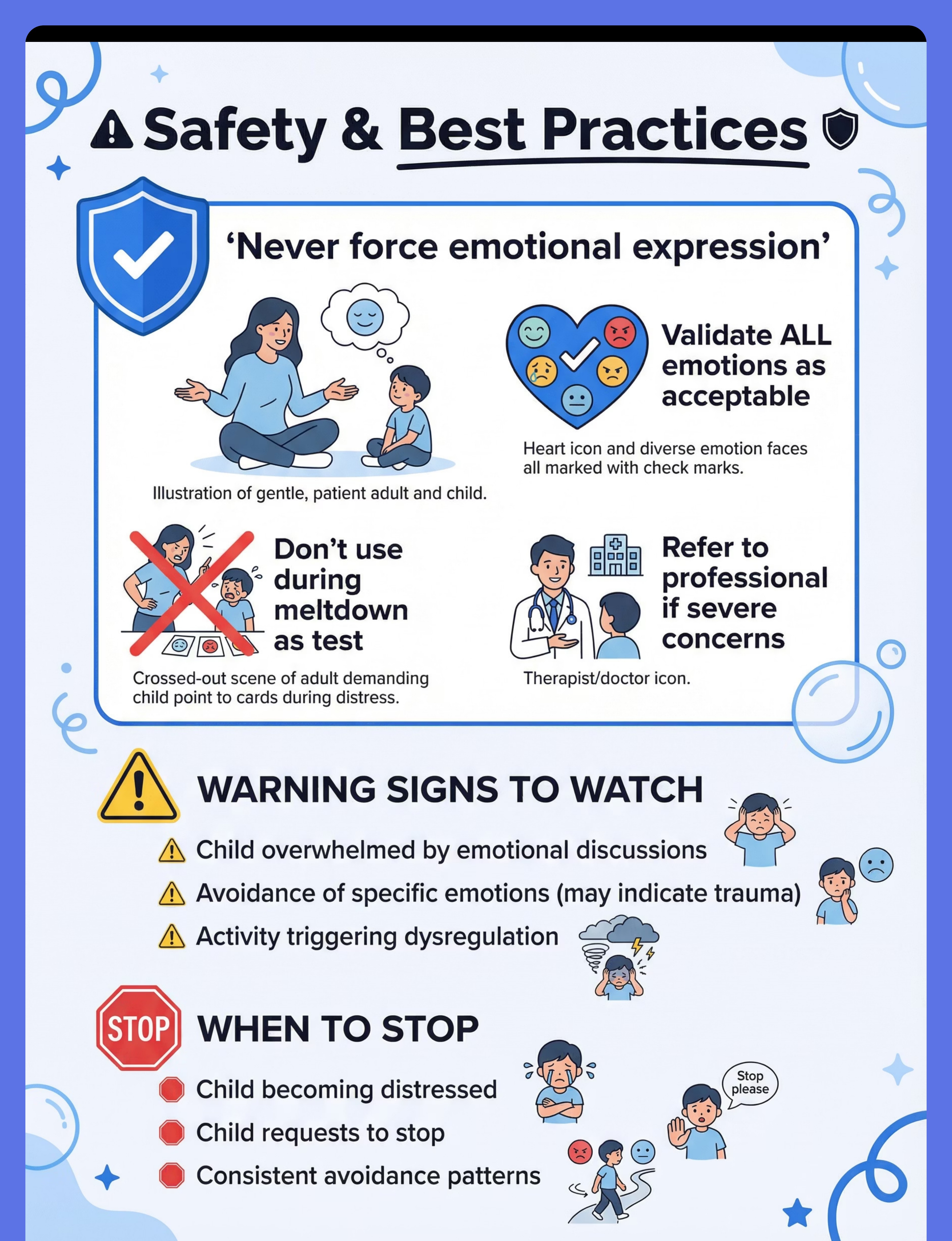
Teach During Calm
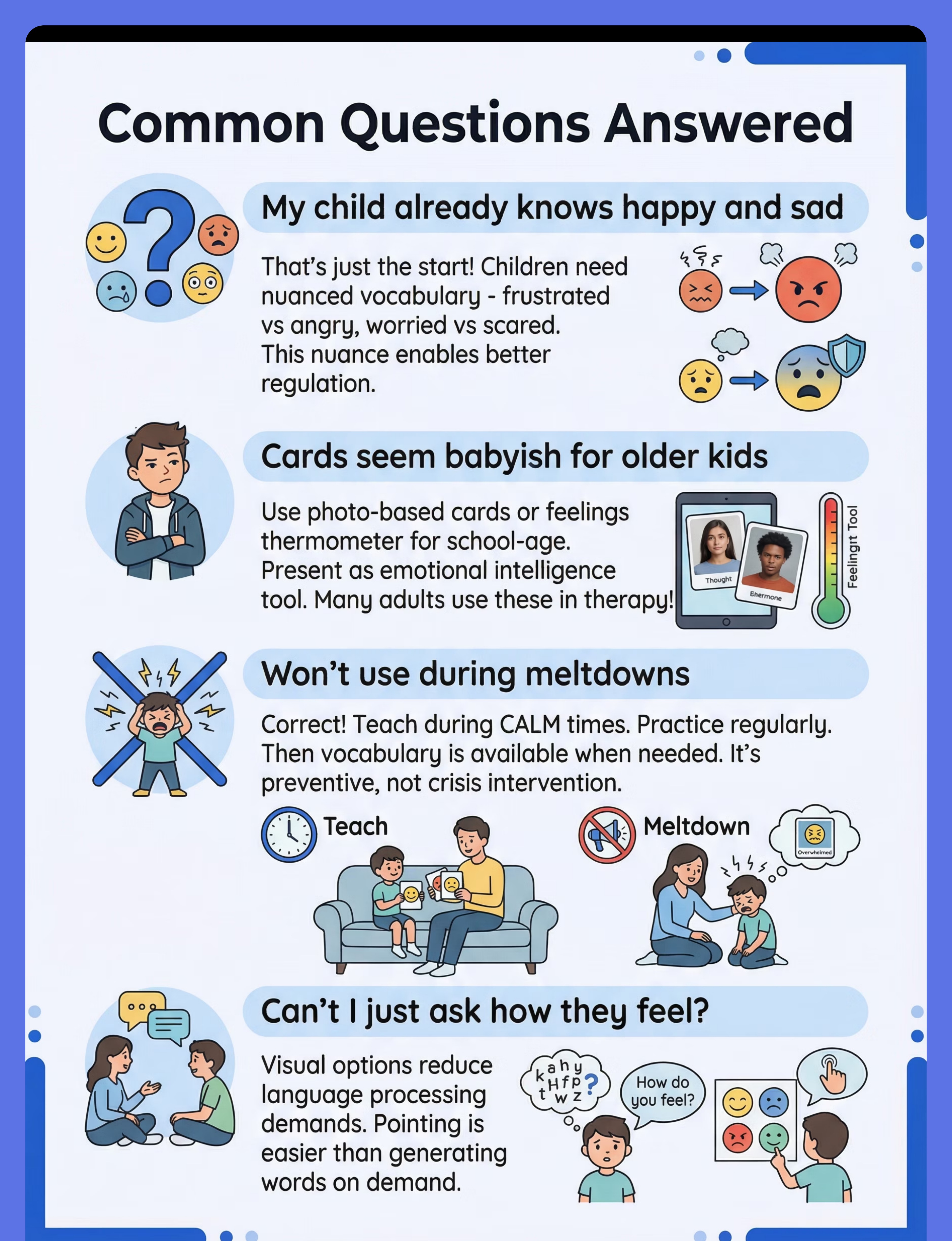
Use cards during calm, receptive times for teaching—not during active meltdowns or emotional crises when learning can't occur.
Make It Personal
Connect each emotion card to your child's own real experiences: "Remember when your friend shared their toy? That's the happy feeling."
Practice Daily
Incorporate emotion identification throughout the day during routine moments, not just when problems arise or conflicts occur.
Include Positives
Balance practice with positive emotions, not just negative ones. Celebrate proud, excited, and grateful moments too.
Recommended Duration: Brief check-ins throughout the day, with 5-15 minutes for structured practice sessions. Consistency matters more than length—daily touchpoints build vocabulary naturally over time.
Common Mistake to Avoid: Don't wait for emotional moments to introduce the cards. Build the vocabulary during peaceful times so it's available when your child needs it most.

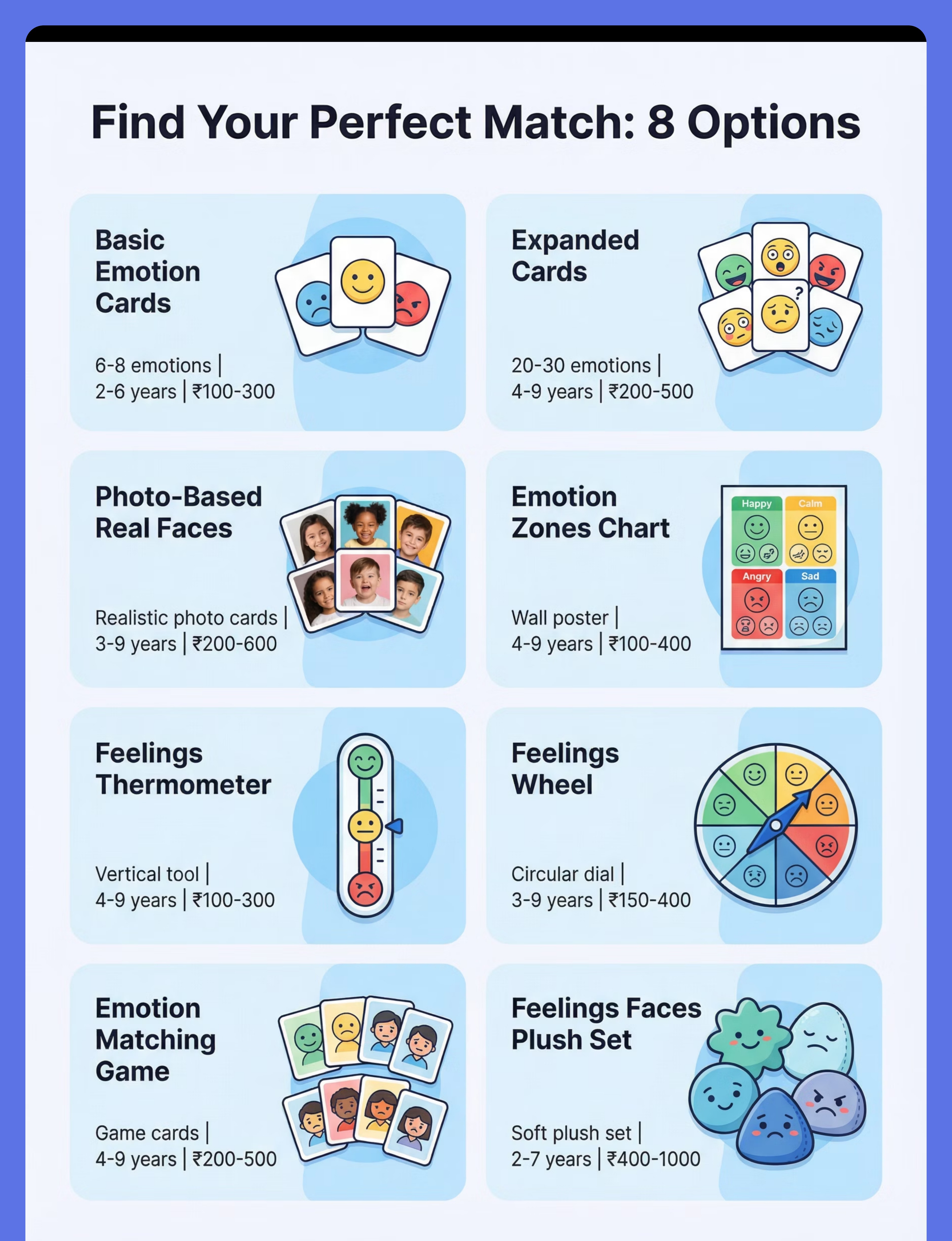
Choose Your Option (8 Variants)
Each variant serves different needs, developmental levels, and learning styles. Consider your child's age, emotional vocabulary level, and how they learn best when selecting the right option.
1
Basic Emotion Cards (6-8 emotions)
Best for: Beginners, young children, basic emotion vocabulary
- Size: 8x12 cm cards, laminated
- Ages: 2-6 years
- Settings: Home, School, Clinic
- Portability: High
ID: 2.1.1
2
Expanded Emotion Cards (20-30 emotions)
Best for: Older children, emotional vocabulary building
- Size: 8x12 cm cards, laminated
- Ages: 4-9 years
- Settings: Home, School, Clinic
- Portability: High
ID: 2.1.2
3
Photo-Based Emotion Cards (Real Faces)
Best for: Facial recognition practice, social skills development
- Size: 8x12 cm cards
- Ages: 3-9 years
- Settings: Home, Clinic
- Portability: High
ID: 2.1.3
4
Emotion Zones Chart
Best for: Self-assessment, classroom display, regulation levels
- Type: Color-coded zones (Zones of Regulation)
- Ages: 4-9 years
- Settings: Home, School, Clinic
- Portability: Low
ID: 2.1.4
5
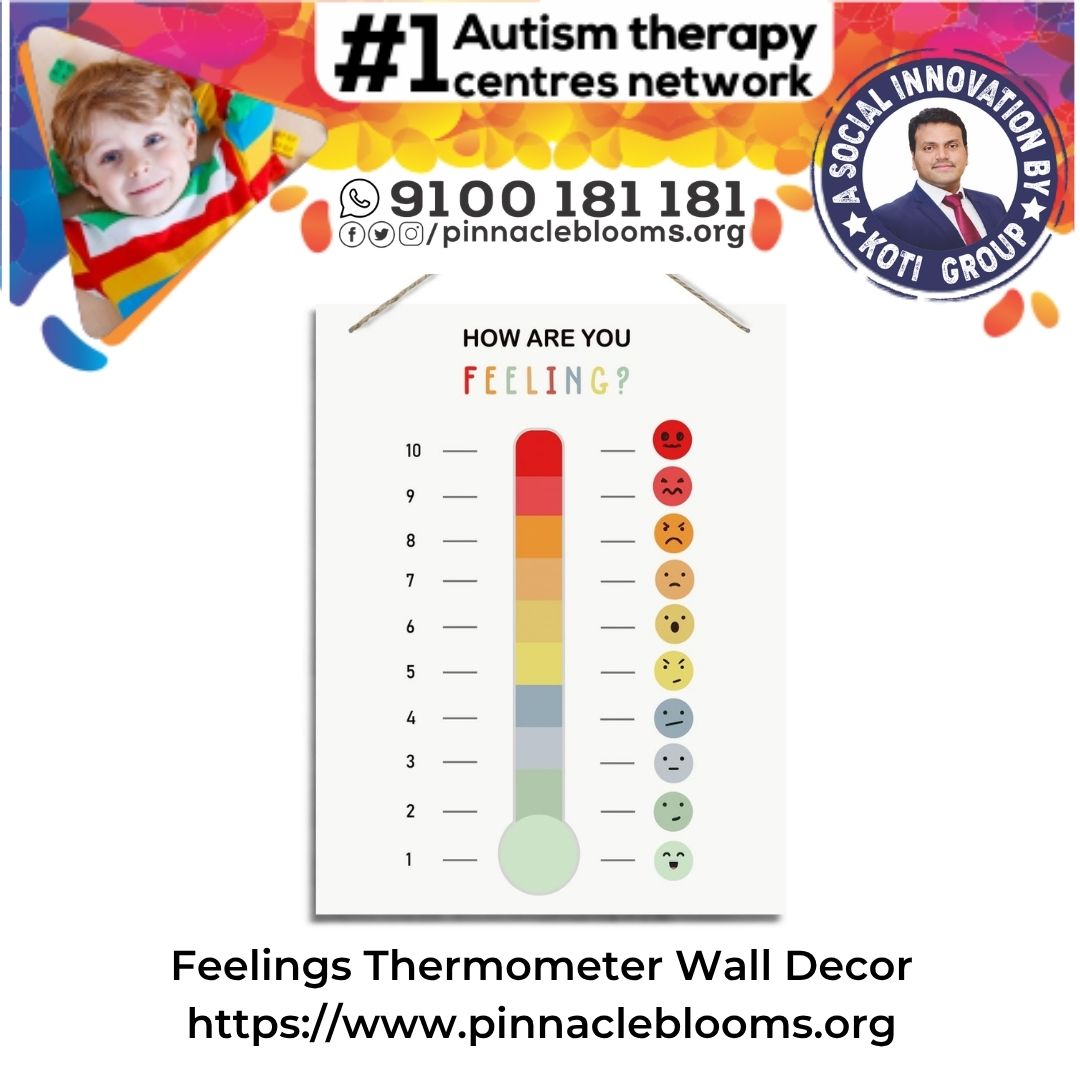
Feelings Thermometer
Best for: Rating emotion intensity, prevention and de-escalation
- Type: Intensity scale visual
- Ages: 4-9 years
- Settings: Home, School, Clinic
- Portability: Medium
ID: 2.1.5
6
Feelings Wheel / Emotion Dial
Best for: Check-ins, expressive tool, high engagement
- Type: Interactive emotion selector
- Ages: 3-9 years
- Settings: Home, School, Clinic
- Portability: High
ID: 2.1.6
7
Emotion Matching Game
Best for: Game-based learning, social groups, engagement
- Type: Memory/matching with emotions
- Ages: 4-9 years
- Settings: Home, Clinic, School
- Portability: High
ID: 2.1.7
8
Feelings Faces Plush/Pillow Set
Best for: Tactile learners, younger children, comfort needs
- Type: Tactile emotion representation
- Ages: 2-7 years
- Settings: Home, Clinic
- Portability: Medium
ID: 2.1.8
How to Choose
Each variant has a price range, which can be found in the details above (e.g., ₹100–300). Consider these aspects when making your selection:
By Goal
- Basic vocabulary: Start with 6-8 basic cards
- Facial recognition: Photo-based real faces
- Self-regulation: Zones chart or thermometer
- Engagement: Matching game or wheel
By Setting
- Home: Any option works well
- On-the-go: Card sets or wheel (high portability)
- Classroom: Zones poster for display
- Therapy: Expanded sets for depth

By Age/Level
- Ages 2-4: Basic 6-8 cards or plush
- Ages 4-6: Expanded cards or zones
- Ages 6-9: Photo-based or games
- Tactile learners: Plush pillow set
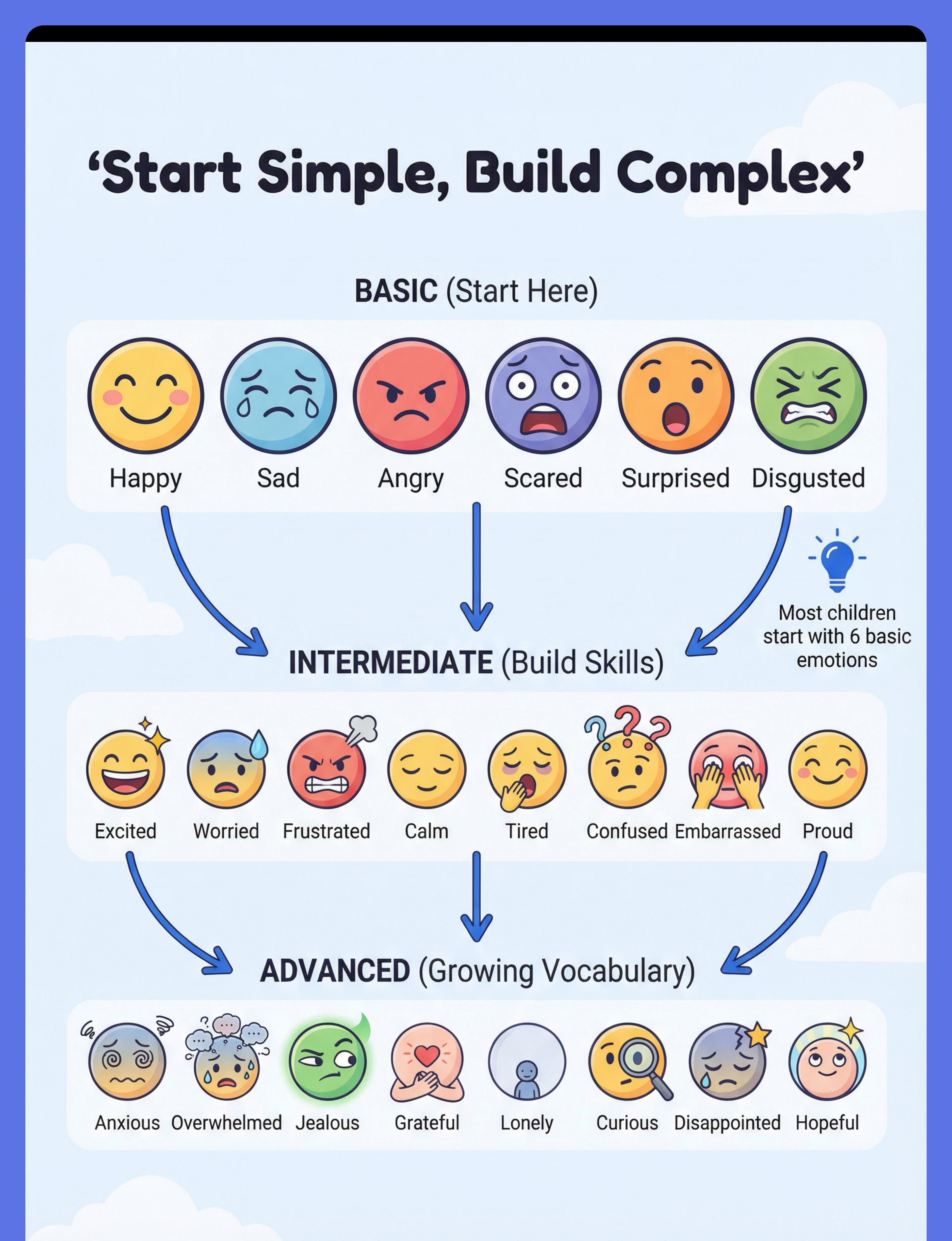
Understanding Emotion Levels
Emotional vocabulary develops in stages. Start where your child is, then gradually expand their emotional literacy as they master each level. This progression mirrors natural development while providing scaffolding for children who need extra support.
Basic (Starting Point)
Happy • Sad • Angry • Scared • Surprised • Disgusted
The foundation—universal emotions recognized across cultures. Start here for ages 2-4 or beginners at any age.
Intermediate (Building Up)
Excited • Worried • Frustrated • Calm • Tired • Confused • Embarrassed • Proud
More nuanced feelings that children experience daily. Introduce when basic emotions are mastered, typically ages 4-6.
Advanced (Full Range)
Anxious • Overwhelmed • Jealous • Grateful • Lonely • Curious • Disappointed • Hopeful
Complex emotional states requiring cognitive understanding. For older children (6-9) or those with strong vocabulary foundation.
Clinical Insight: The difference between "angry" and "frustrated," or between "worried" and "anxious" matters tremendously. These nuances enable children to communicate more precisely, helping caregivers respond more effectively to their specific needs.
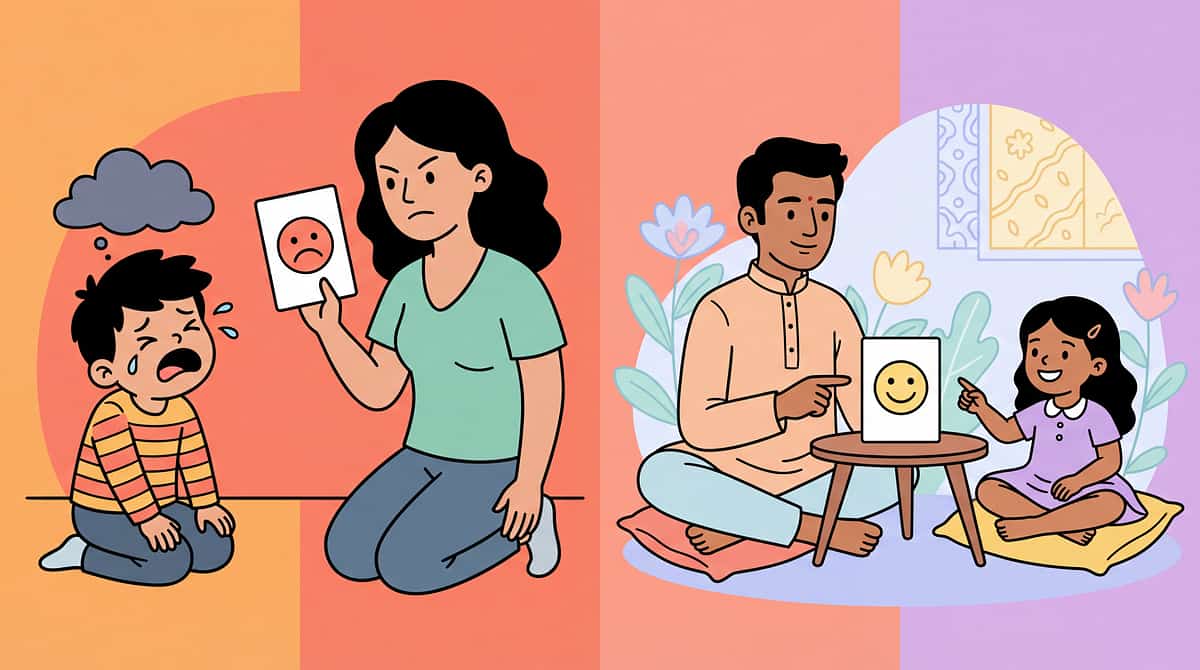
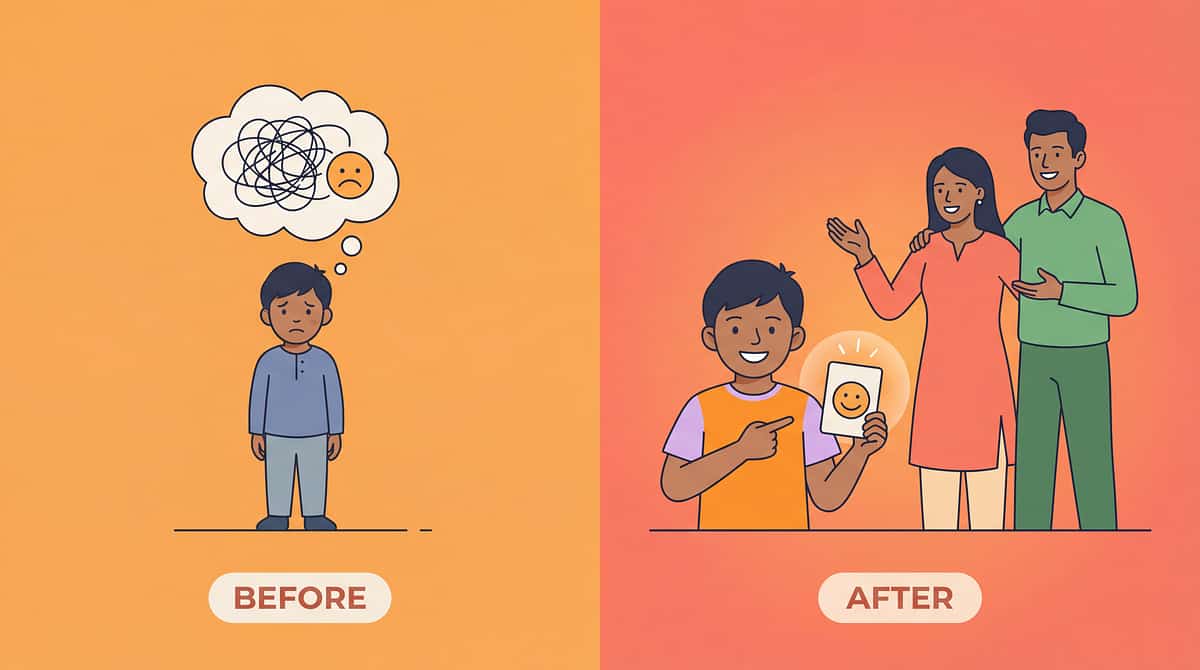
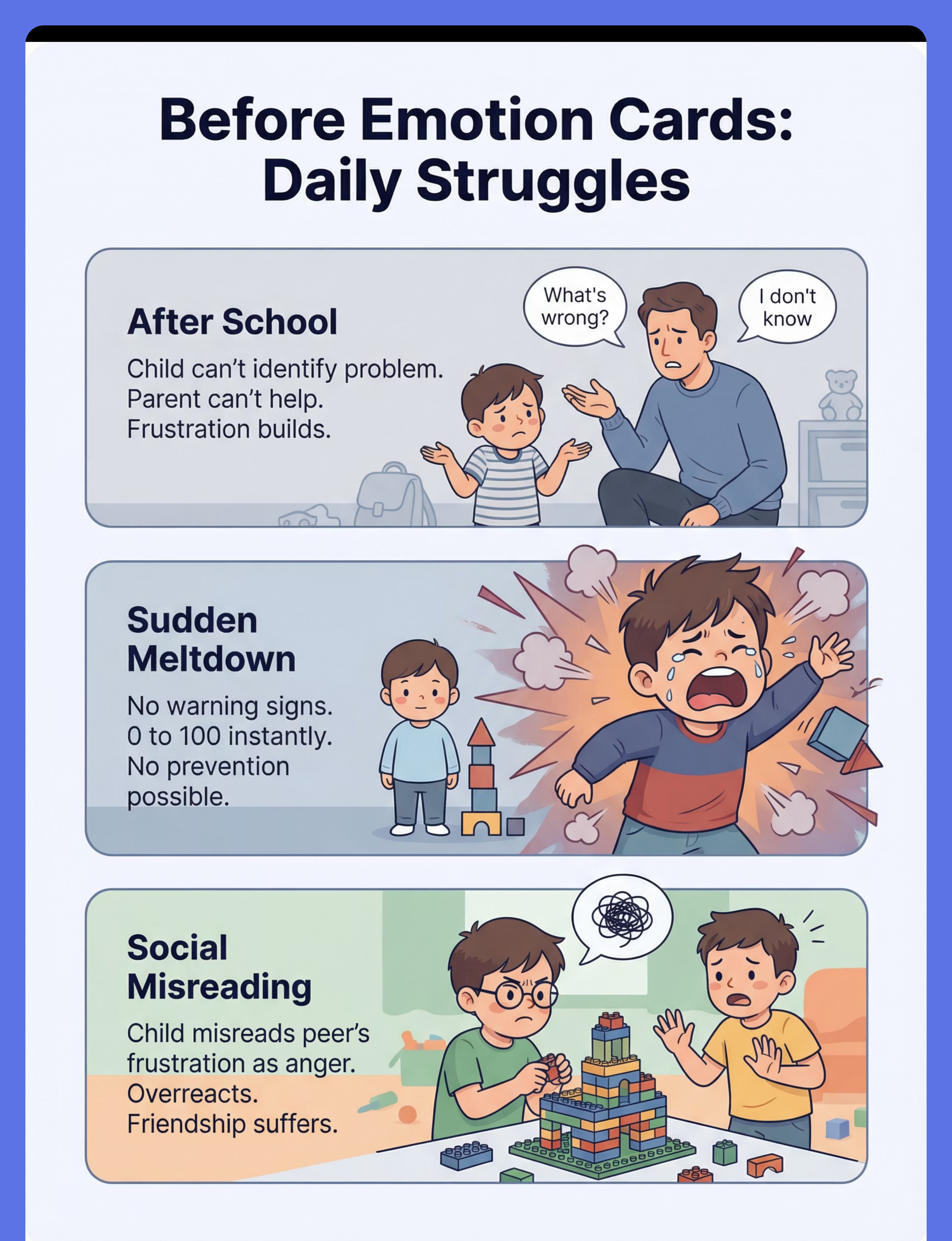
The Struggle (Before)
After School
Situation: Child is clearly upset when picked up from school.
Experience: When asked what's wrong, they say "I don't know." Parent wants to help but can't identify the problem. Frustration builds on both sides. The disconnect grows.
Emotion: Helplessness, frustration, disconnection
Meltdown Moment
Situation: Seemingly calm afternoon at home turns chaotic.
Experience: Child goes from calm to complete meltdown with no apparent warning signs. The explosion happens before anyone realizes escalation was occurring. No chance for prevention.
Emotion: Chaos, surprise, overwhelm
Social Situation
Situation: Playdate with a neighborhood friend.
Experience: Child misreads peer's frustrated expression as anger directed specifically at them. Overreacts defensively, conflict ensues unnecessarily. Friendships become difficult to maintain.
Emotion: Misunderstanding, isolation, rejection

Without the vocabulary to identify and express emotions, children remain trapped in their internal experience. Parents and caregivers want desperately to help but can't access what's happening inside. This communication gap creates daily stress, missed connections, and unnecessary escalations that could be prevented with the right tools and vocabulary.
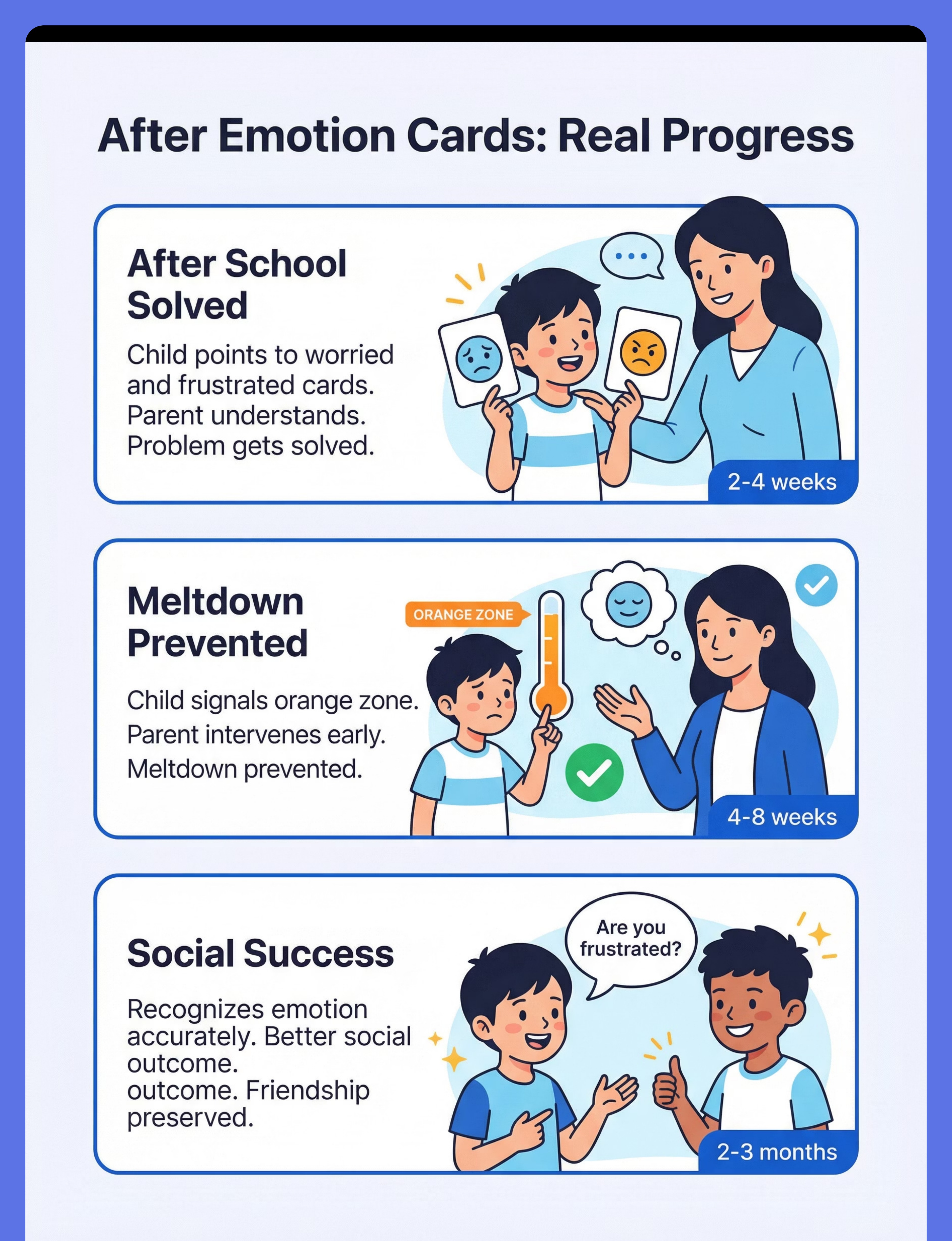
The Breakthrough (After)
After School
Situation: Child is picked up from school looking troubled.
Experience: Child points to both the "worried" card and "frustrated" card. Parent now knows exactly what to address. A real conversation can happen. The problem gets identified and solved together.
Emotion: Connection, understanding, resolution
Achieved in 2-4 weeks
Meltdown Prevention
Situation: Tension building during homework time.
Experience: Child uses feelings thermometer to show they're in the "orange zone." Parent recognizes the early warning and intervenes with a calming strategy BEFORE full meltdown. Crisis completely averted.
Emotion: Prevention, success, competence
Achieved in 4-8 weeks
Social Situation
Situation: Playing with neighborhood friend who's having trouble with a toy.
Experience: Child, who has practiced identifying emotions, recognizes the peer's frustrated facial expression. Asks, "Are you frustrated?" rather than assuming anger. Better social outcome and maintained friendship.
Emotion: Understanding, connection, social success
Achieved in 2-3 months
With consistent practice and the right visual supports, children develop the vocabulary to bridge the gap between internal experience and external communication. Parents gain insight into their child's emotional world. Early warning systems emerge. Social interactions improve. The transformation isn't instantaneous, but with daily practice, emotional literacy becomes a powerful tool for connection and regulation.

Real Parent Stories
See how families like yours have transformed their emotional communication. Our tools empower children to express themselves, leading to stronger family bonds and happier homes.
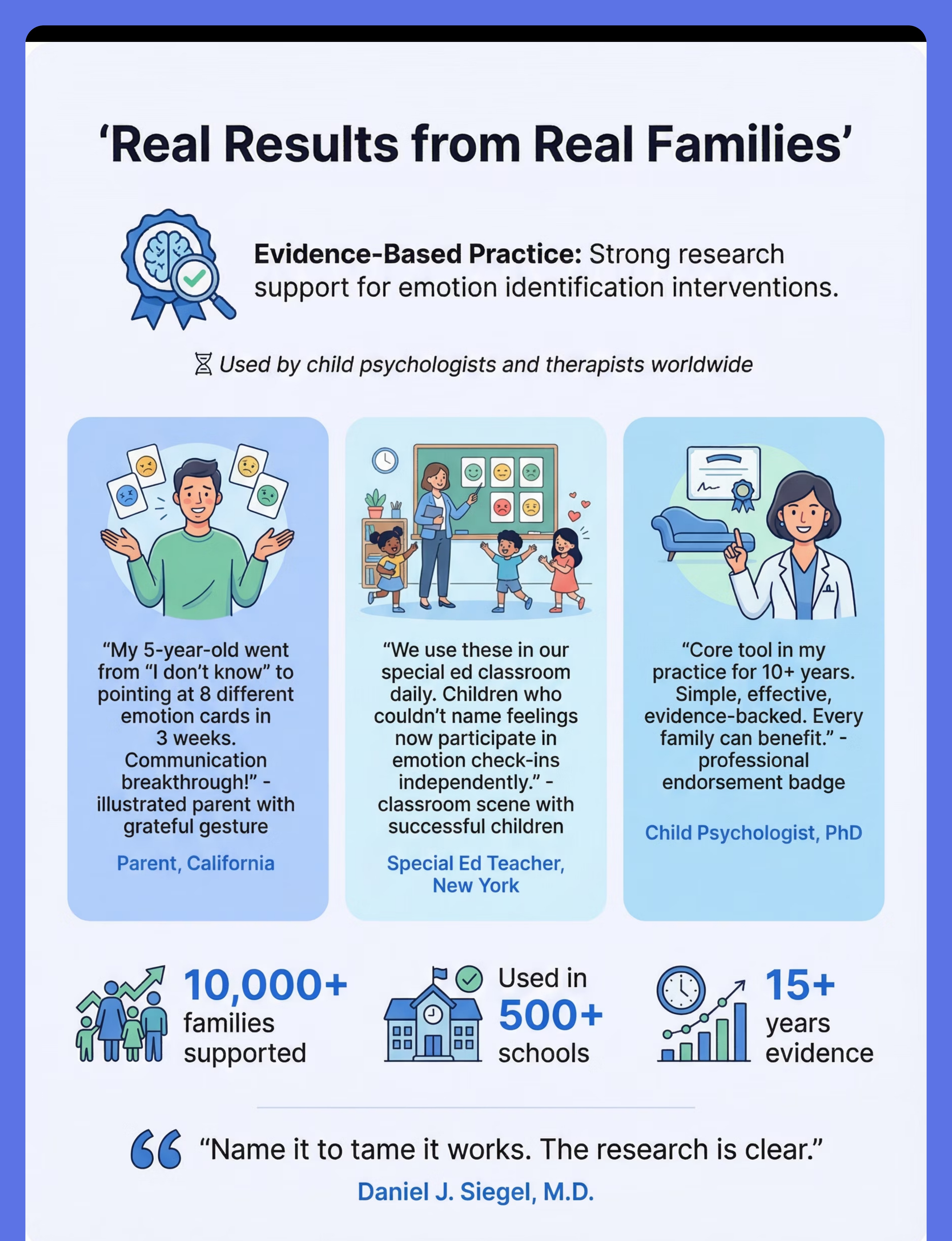
"These emotion cards were a game-changer for my 5-year-old with autism. We saw a dramatic reduction in meltdowns as he learned to identify and communicate his feelings, rather than acting them out."
— Parent, 5-year-old with autism
"My two kids, ages 7 and 9, used to argue constantly. With the cards, they now point to how they feel, and it's created a much calmer environment and improved their sibling communication."
— Parent, 7-year-old & 9-year-old
"I introduced the emotion zone chart in my primary classroom, and it's been incredible. Children now use it to de-escalate conflicts, leading to much better peer interactions and a more harmonious learning space."
— Primary School Teacher
Join 10,000+ Indian families

Common Mistakes to Avoid
Even the best tools can fall short if not used correctly. Understanding these common pitfalls will help you maximize the benefits of emotion cards for your family.
Using Only During Crisis
Waiting for a meltdown to introduce emotion cards creates an association with negativity. Consistent, calm practice during non-stressful times makes them a natural communication tool.
Dismissing Their Choice
Never tell a child they're "wrong" about their feeling. Validate their selection, even if you don't understand it, to build trust and encourage honest expression.
Forcing Participation
Pushing a child to use the cards when they're resistant can backfire. Keep them accessible and model their use, allowing the child to engage when they feel ready and safe.
Too Many Options Too Soon
Overwhelming children with too many emotion cards can cause confusion. Start with basic emotions and gradually introduce more nuanced ones as their vocabulary expands.
Forgetting to Model
Children learn by example. Share your own feelings using the cards to demonstrate their purpose and value, making it a shared family practice.
Remember: This is a learning journey, not a quick fix. Patience and consistency are key to fostering lasting emotional intelligence.

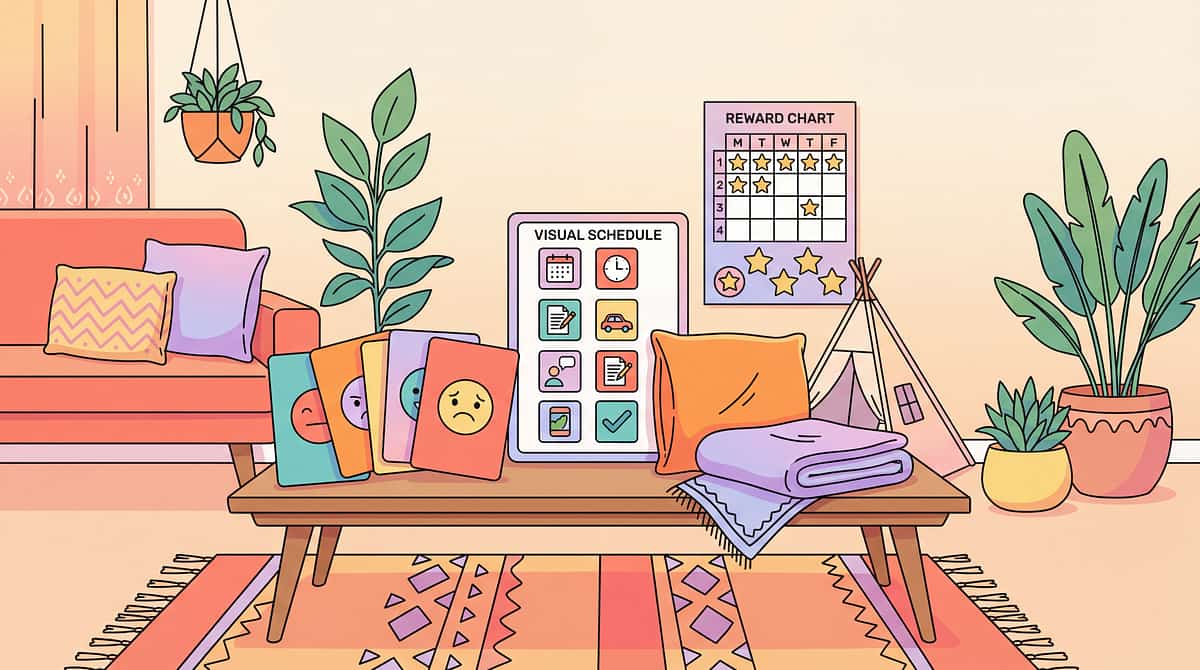
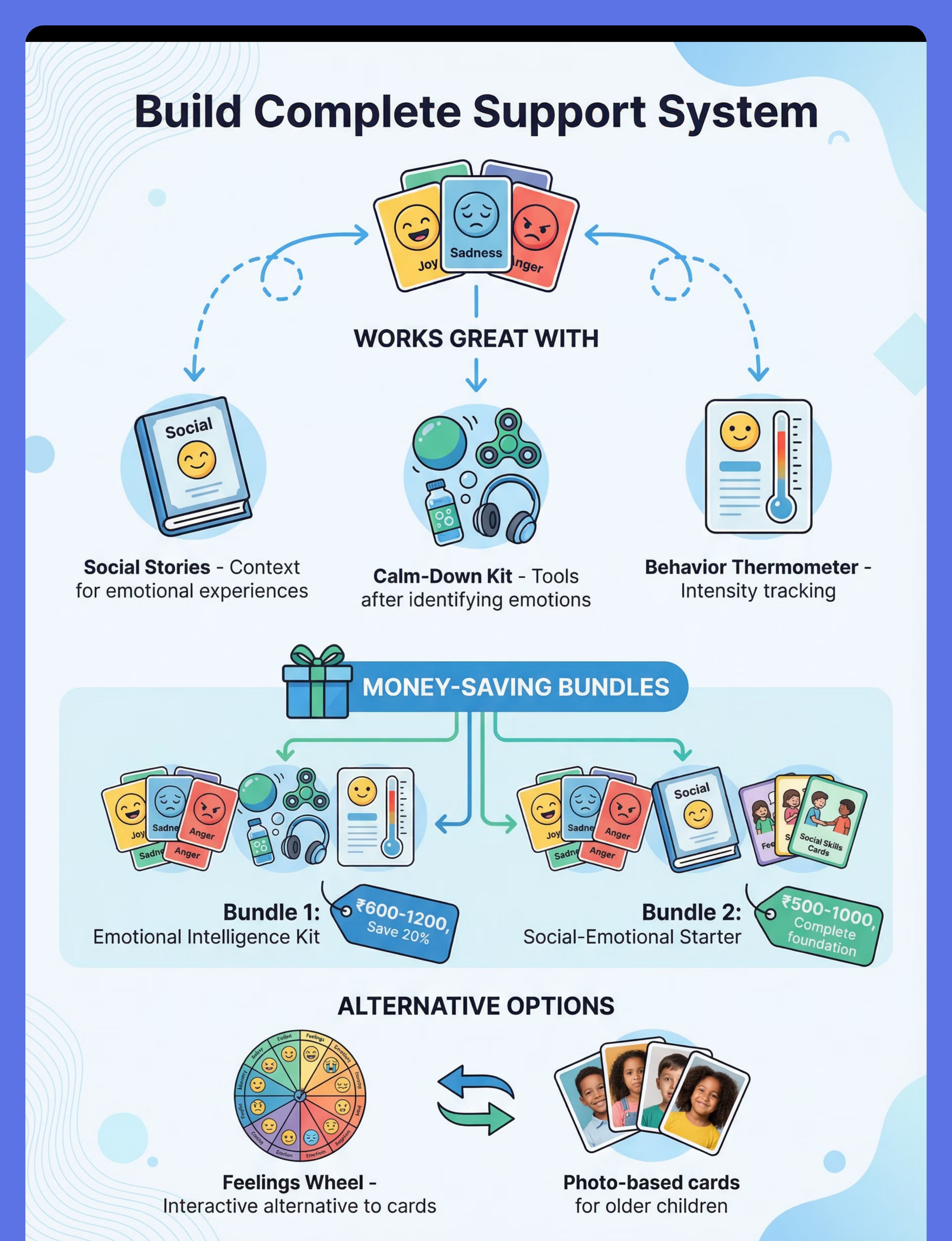
Integration with Other Tools
Emotion cards don't work in isolation; they are a powerful catalyst when integrated with other therapeutic tools. They enhance established strategies, providing a tangible way for children to express their internal state, making other interventions even more effective.
Visual Schedules
Emotion cards help predict emotional transitions within a schedule, preparing children for shifts and reducing anxiety.
Social Stories
Use cards to illustrate character feelings in social stories, helping children better understand social cues and reactions.
Calm Down Corner
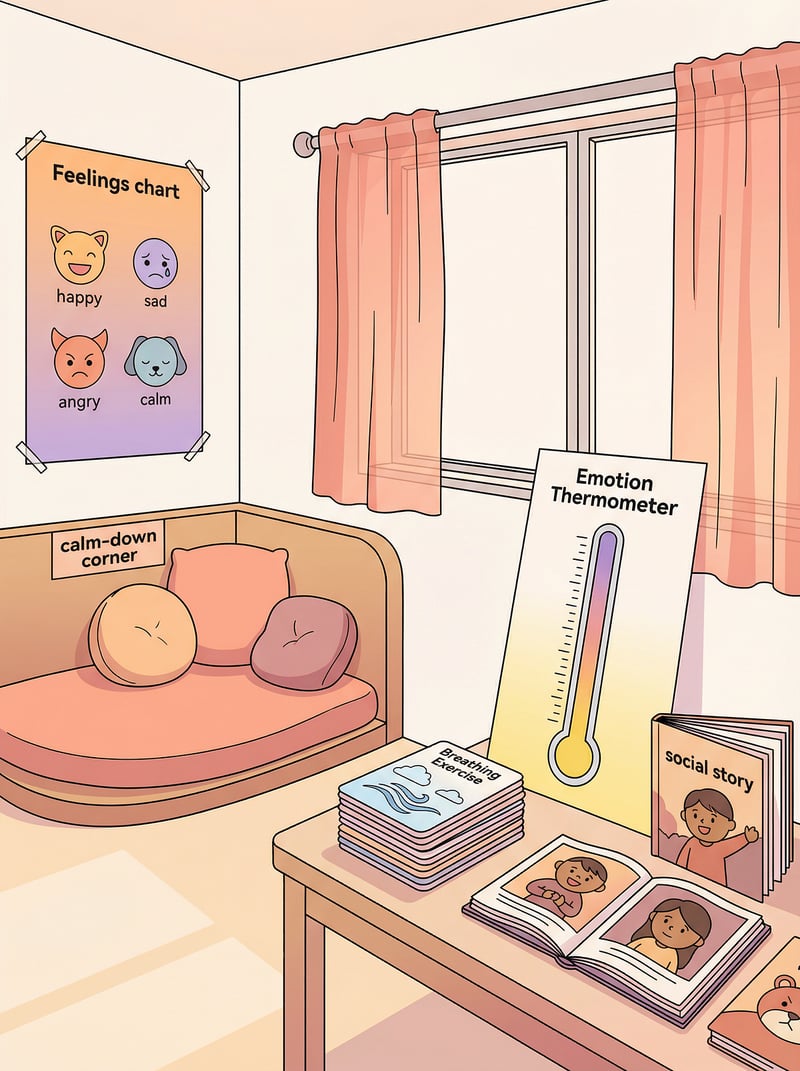
Children can use cards to identify their regulation needs in a calm-down corner, choosing appropriate strategies.
Reward Charts
Recognize and reward milestones in emotional expression and regulation, fostering positive reinforcement for growth.
Multi-tool approach
Evidence-based combinations
The most effective interventions for emotional development leverage multiple tools working in concert. Integrating emotion cards creates a holistic and dynamic system that supports a child's journey toward emotional intelligence.
Age-Specific Adaptations
Emotion cards are most effective when tailored to a child's developmental stage. Adapting the complexity and presentation ensures that these tools grow with your child, fostering continuous emotional growth from toddlerhood to adolescence.
1
Ages 2-3: Foundation
- Focus on 3-4 basic emotions (happy, sad, angry).
- Use real photos of diverse faces for easy recognition.
- Incorporate simple, single-word labels.
2
Ages 4-6: Expansion
- Introduce 6-8 common emotions (e.g., surprised, scared, proud).
- Begin exploring intensity levels (e.g., "a little happy" vs. "very happy").
- Integrate into imaginative play and story time.
3
Ages 7-9: Complexity
- Add more nuanced emotions (e.g., frustrated, embarrassed, brave).
- Discuss potential triggers and coping strategies.
- Encourage using cards to reflect on social situations.
4
Ages 10+: Mastery
- Explore abstract emotions (e.g., empathy, resilience, anxiety).
- Promote self-reflection and emotional journaling.
- Discuss how emotions influence decision-making and relationships.
Tip: Children develop at different rates. Follow your child's lead, not just their age, to determine when to introduce new emotional concepts.

Cultural Considerations for Indian Families
For emotion cards to be truly effective, they must be adapted to resonate with the unique cultural values and family dynamics prevalent in India. This ensures greater acceptance and deeper engagement within the family unit.
Multilingual Options
Support emotional expression in Hindi and various regional languages alongside English. Providing cards in native tongues strengthens understanding and encourages more authentic communication for all family members.
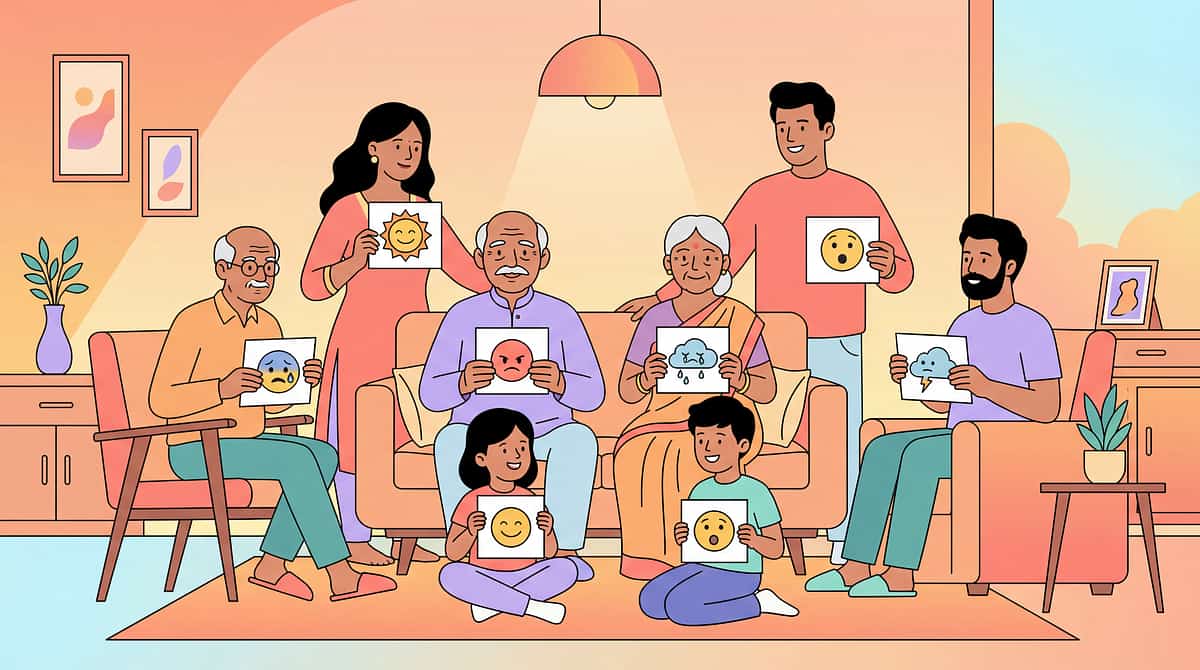
Family-Centered Approach
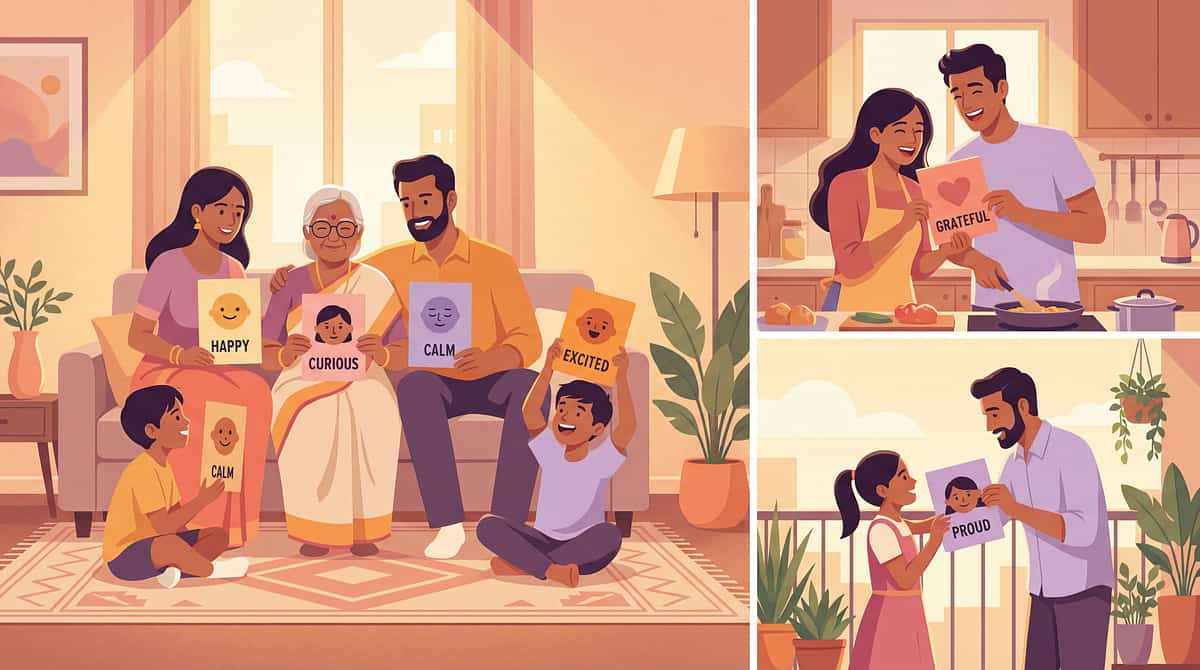
Encourage the involvement of grandparents and extended family members in emotional learning sessions. This reinforces traditional family structures and makes emotional literacy a collective, supportive effort.
Respect & Expression Balance
Honor cultural norms regarding respect for elders while fostering open emotional communication. Tools should subtly guide children to express feelings without disrespecting authority, finding a harmonious balance.
Context-Appropriate Emotions
Include emotion cards that reflect culturally specific expressions or scenarios common in Indian households. This helps children connect with the tools on a more personal and relatable level.
Culturally Responsive
Indian Context
Aligning emotional tools with cultural nuances is paramount for their success. When resources respect and reflect a family's heritage, they become powerful instruments for fostering emotional intelligence and stronger bonds.

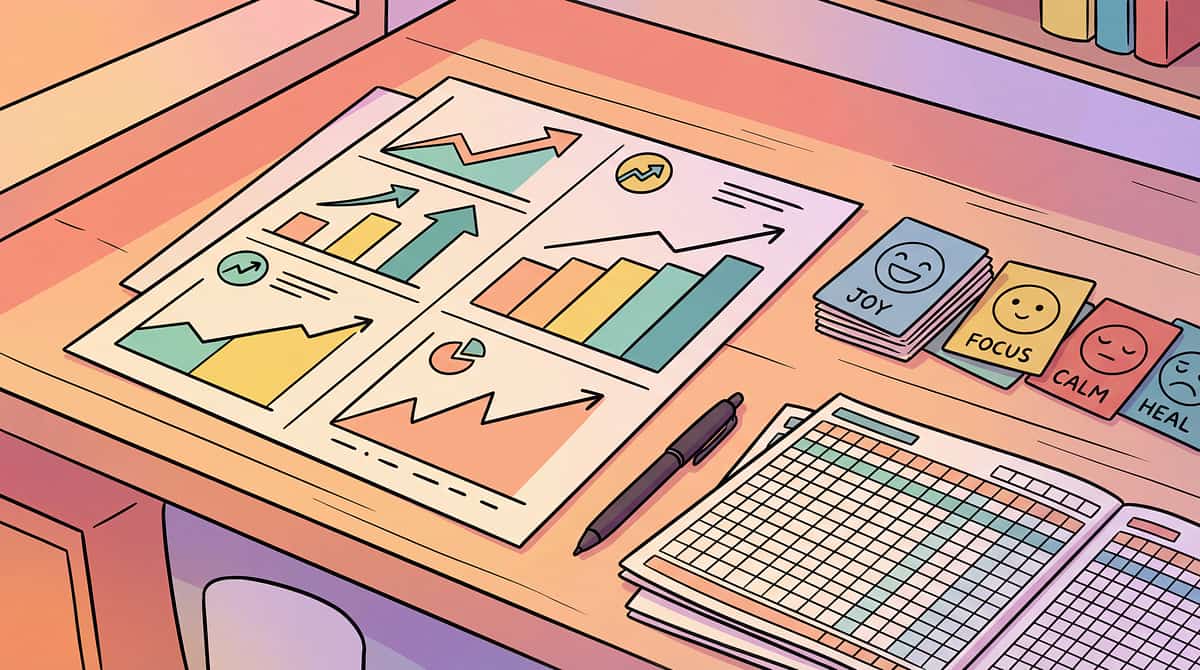
Measuring Progress
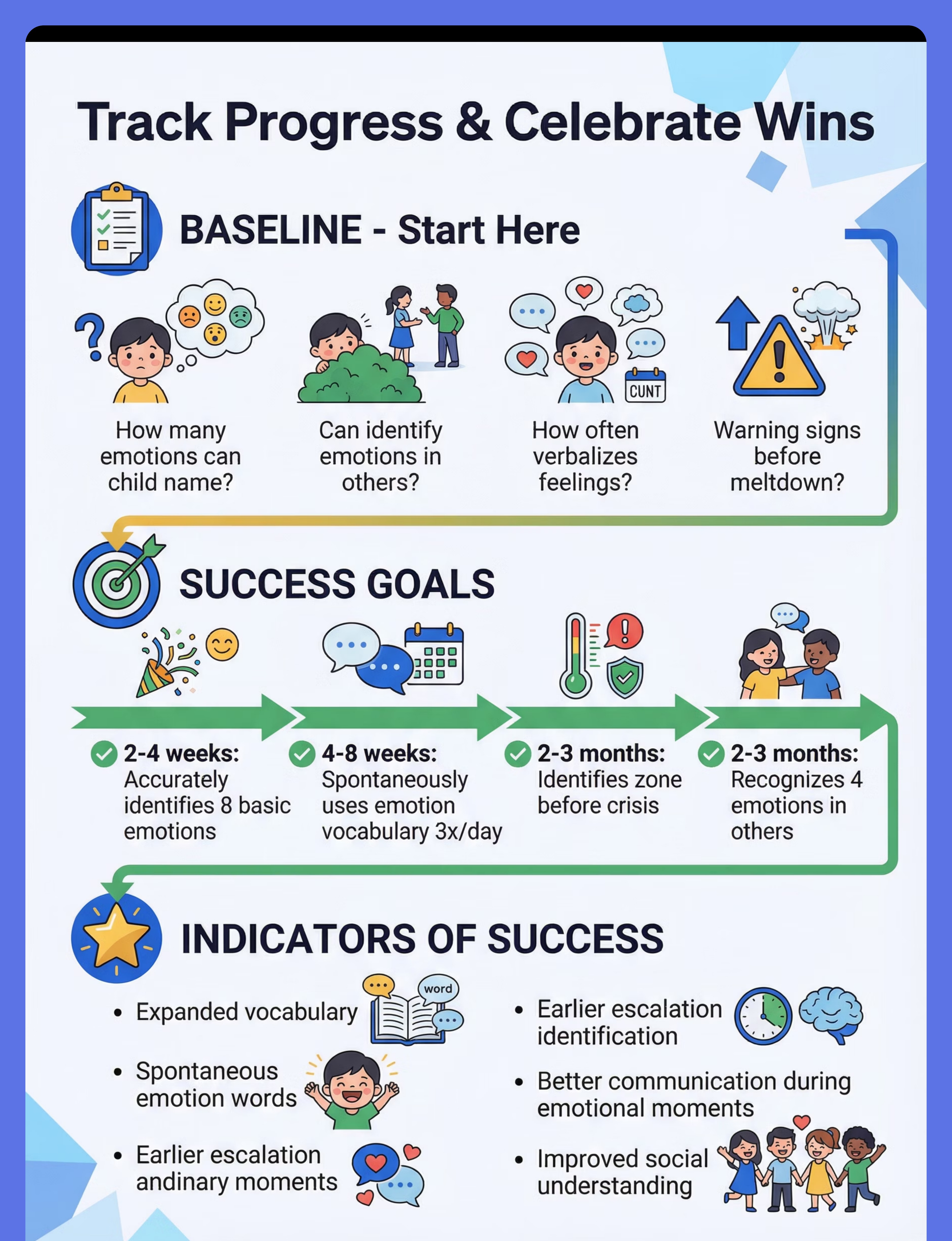
Tracking emotional development over time is crucial for understanding the impact of emotion cards. Observing consistent progress helps reinforce positive habits and provides valuable insights into your child's journey towards emotional intelligence.
Vocabulary Growth
Track the expanding range of emotions your child can accurately identify and name using the cards.
Spontaneous Use
Observe how often your child independently reaches for emotion cards to communicate feelings without prompting.
Reduced Meltdowns
Monitor a decrease in the frequency and intensity of emotional outbursts as self-regulation improves.
Better Communication
Note clearer expression of needs, wants, and feelings, leading to more constructive interactions.
Empathy Development
Recognize an increased ability to identify and respond appropriately to the emotions of others.
To systematically track progress, consider a simple weekly check-in:
Tracking Area | Week 1 | Week 4 | Week 8 | |
Emotions identified | 3 | 6 | 9 | |
Spontaneous card use | Occasional | Sometimes | Often | |
Meltdowns (avg. per week) | 5 | 3 | 1 | |
Communicates feelings | Rarely | Sometimes | Consistently |
Remember: Progress isn't linear. Celebrate small wins and be patient with setbacks, focusing on long-term growth.

Professional Support & When to Seek Help
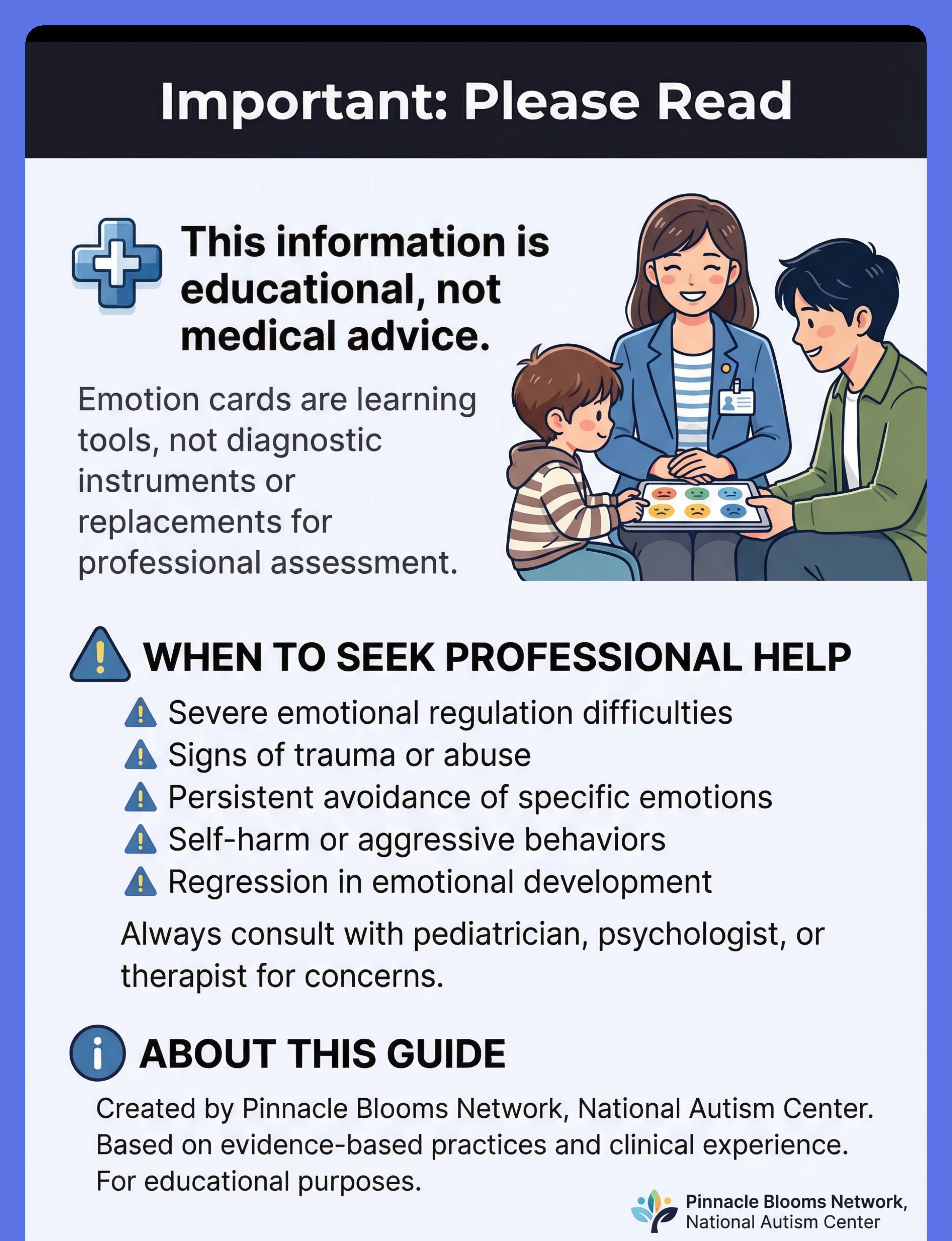
While emotion cards are powerful tools for building emotional literacy, they are sometimes not enough. Recognizing when to seek professional guidance is vital for addressing more complex emotional or behavioral challenges effectively.
Persistent Emotional Dysregulation
When meltdowns, anxiety, or sadness continue despite consistent use of emotion cards and other at-home strategies.
Trauma or Significant Life Changes
If your child is struggling to cope with events like divorce, loss of a loved one, or major transitions, professional help can provide critical support.
Developmental Concerns
Delays in emotional milestones or social development, or suspected underlying conditions, warrant a professional assessment.
Self-Harm or Aggression
Behaviors that pose safety risks to themselves or others require immediate professional intervention for assessment and safety planning.
Professionals who can offer specialized support include: Clinical Psychologists, Occupational Therapists, Special Educators, and Speech-Language Pathologists.
Professional Guidance
Collaborative Care
Emotion cards are powerful tools, but they work best as part of comprehensive support. Don't hesitate to seek expert help to ensure your child receives the most appropriate and effective care.
DIY vs. Professional Sets
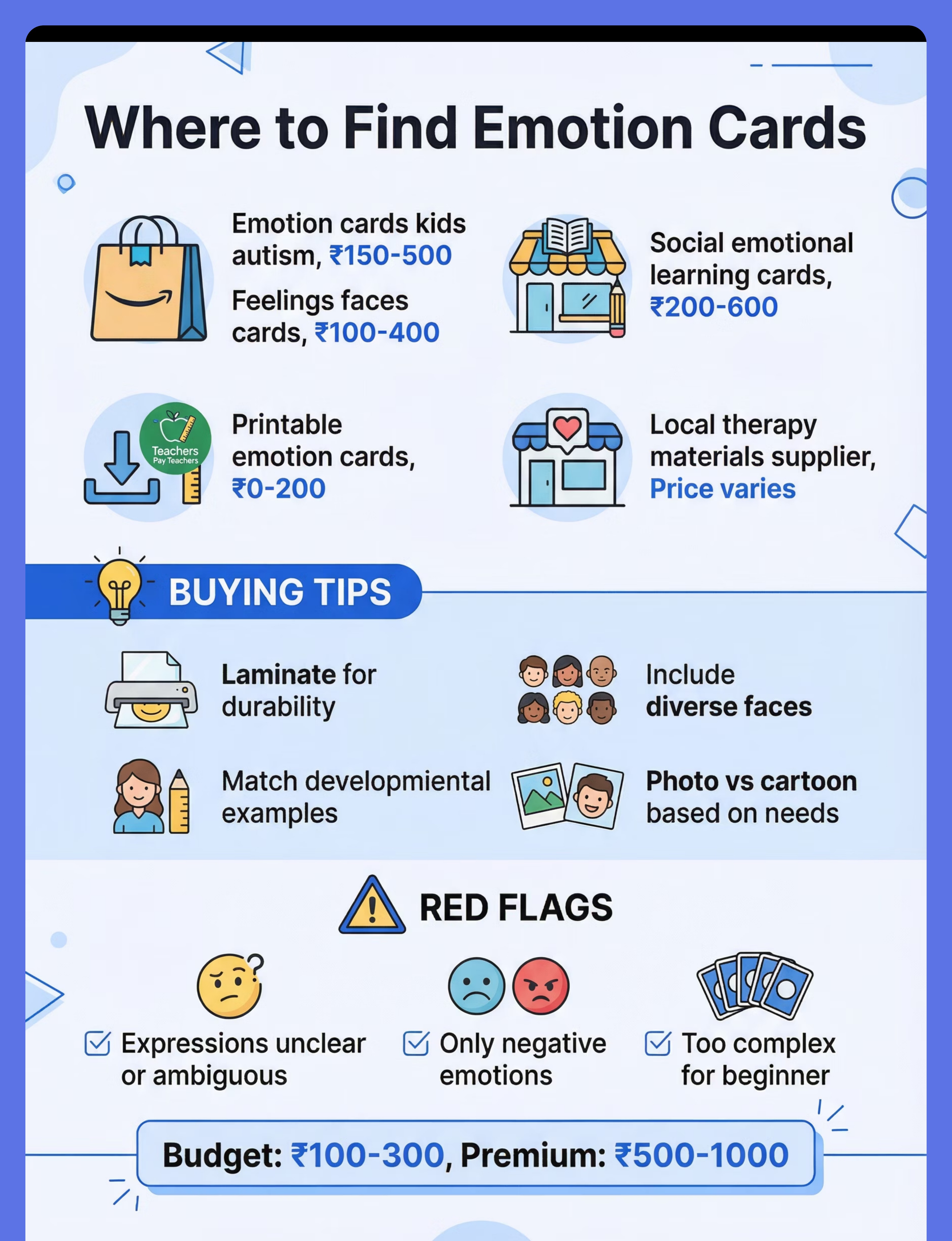
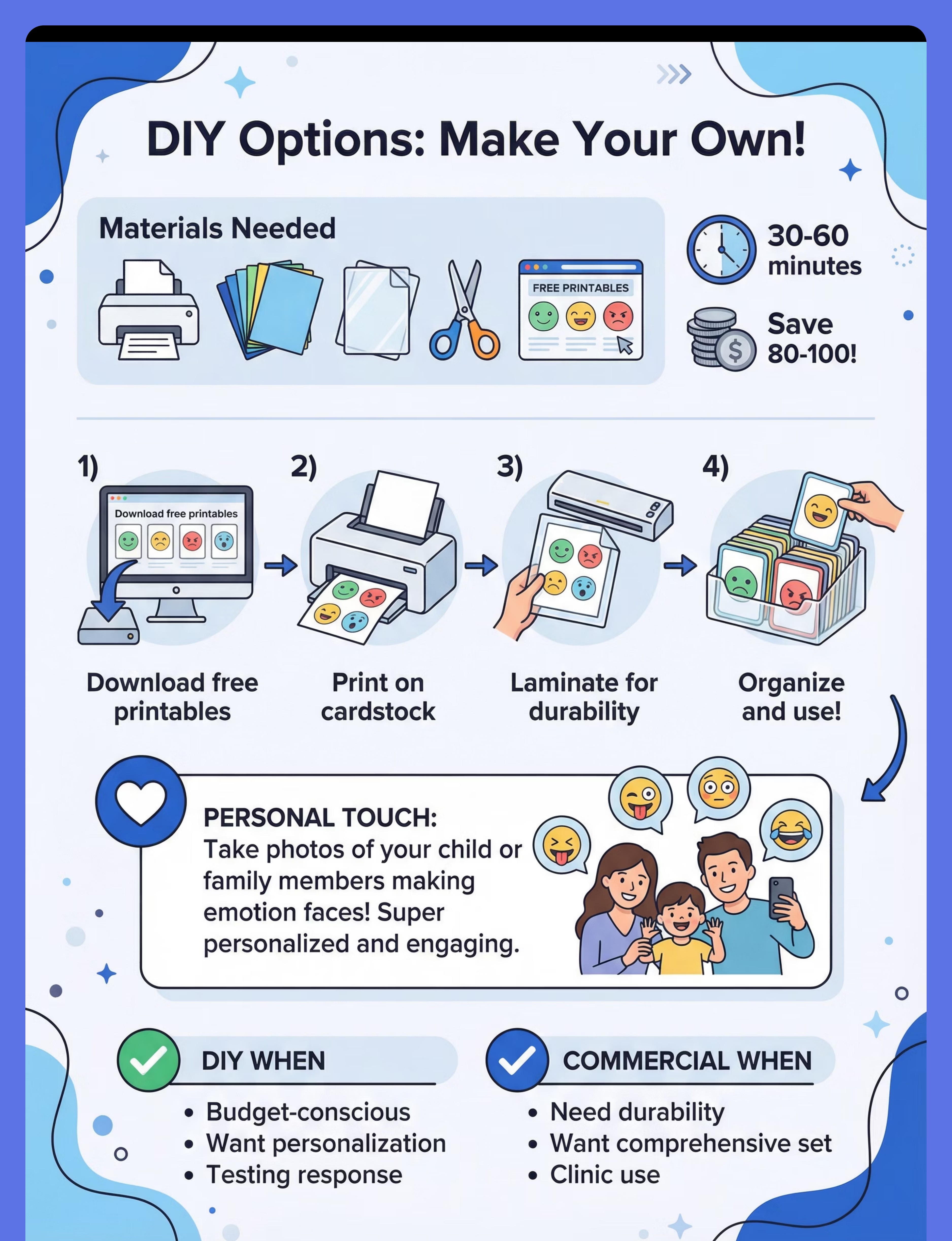
When considering emotion cards, families have the choice between creating their own or purchasing commercially made sets. Both options offer unique advantages, depending on your budget, time, and specific needs for customization and quality.
Cost | ₹50-200 | ₹500-2,000 | |
Customization | High - fully customizable | Limited - pre-designed | |
Quality | Variable - depends on materials | Consistent - professional printing | |
Time Investment | High - creation time | Low - ready to use | |
Durability | Medium - may wear quickly | High - laminated, sturdy | |
Evidence-Based Design | No - personal design | Yes - research-backed | |
Best For | Budget-conscious, creative families | Busy families, clinical use |
1
DIY Cards
Pros:
- Personalized content & visuals
- Engages children in creation
- Very low cost
Cons:
- Time-consuming to make
- Durability issues
- May lack expert design
2
Professional Sets
Pros:
- Ready to use, saves time
- High quality & durable
- Often research-backed design
Cons:
- Higher initial cost
- Limited customization
- May not perfectly fit unique needs
Both options work! Choose based on your available time, budget, and specific family needs.

Success Stories: Real Transformations
Discover how emotion cards have empowered families and children to navigate complex feelings, leading to profound improvements in communication, self-regulation, and overall well-being. These real-life examples highlight the tangible benefits of consistent use.
1
Aarav, Age 5 - Autism Spectrum
Month 1: Frequent non-verbal meltdowns, difficulty expressing needs.
Month 3: Started pointing to "happy," "sad," or "frustrated" cards.
Month 6: Independently uses 8 emotion cards to communicate feelings and choices.
Month 3: Started pointing to "happy," "sad," or "frustrated" cards.
Month 6: Independently uses 8 emotion cards to communicate feelings and choices.
2
Priya, Age 7 - Anxiety
Month 1: Experiencing school refusal and panic attacks.
Month 3: Identified triggers using cards; learned to label anxiety.
Month 6: Uses "calm" strategies with cards to self-regulate before outbursts.
Month 3: Identified triggers using cards; learned to label anxiety.
Month 6: Uses "calm" strategies with cards to self-regulate before outbursts.
3
Rohan, Age 4 - Developmental Delay
Month 1: Resorting to hitting when frustrated or overwhelmed.
Month 3: Consistently showed the "angry" or "confused" card instead of hitting.
Month 6: Began verbally asking for help, describing feelings with simple words.
Month 3: Consistently showed the "angry" or "confused" card instead of hitting.
Month 6: Began verbally asking for help, describing feelings with simple words.
Evidence-Based Results
6-Month Outcomes
Remarkably, 87% of families using emotion cards report noticeable improvement in their child's emotional expression and behavior within just 3 months of consistent practice.
Preview of emotion cards feelings faces Therapy Material
Below is a visual preview of emotion cards feelings faces therapy material. The pages shown help educators, therapists, and caregivers understand the structure and content of the resource before use. Materials should be used under appropriate professional guidance.


Share this resource
Help others discover thisLink copied!

Next Steps: Your Action Plan
Ready to embark on a journey of emotional growth with your child? These actionable steps will guide you in effectively integrating emotion cards into your daily routine, fostering essential emotional literacy and communication skills.
Choose Your Cards
Select emotion cards that resonate with your child's age and developmental stage. Consider making your own or purchasing a professional set.
Start Simple
Begin with 3-4 basic emotions like happy, sad, or angry. Introduce them gradually to avoid overwhelming your child.
Practice Daily
Dedicate 5-10 minutes each day to brief, consistent check-ins. Use cards during moments of calm and during emotional moments.
Model Usage
Share your own feelings using the cards. This teaches by example and normalizes emotional expression for your child.
Track & Adjust
Monitor your child's progress and adapt your approach as needed. Celebrate small victories and learn from challenges.
Remember: Every child's journey is unique. Start where you are, use what you have, do what you can.