





















Tool ID: 20.5
Tool ID: 20.5
Mental Health + Parent
Strong Evidence
Rank #1
Core Kit
Family Counseling & Therapy
Professional family mental health support system
Navigate autism's journey with professional mental health support designed for Indian families. Through family therapy, couples counseling, and individual sessions, strengthen your relationships, build coping skills, and help your entire family thrive. Investment range: ₹800–5,000 per session.
Who This Helps
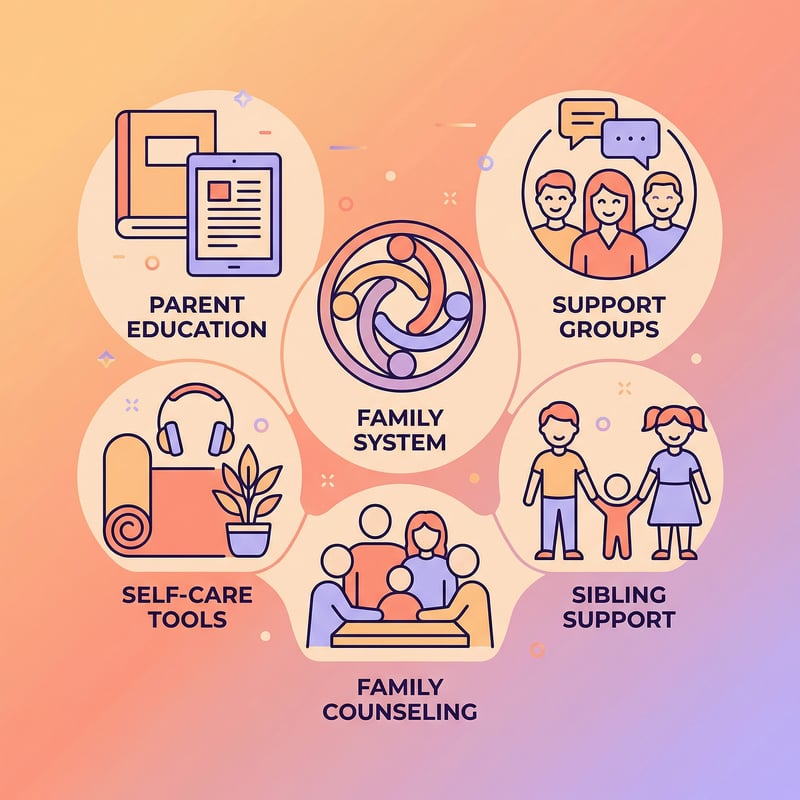
Professional mental health support provides families navigating autism with tools and guidance to strengthen coping skills, improve communication, and enhance relationships—benefits that peer support alone cannot deliver.
Family Functioning
Strengthen family relationships and improve overall well-being, especially when facing autism-related stress.
Parent Mental Health
Support parents in managing stress and mental health challenges related to raising a child with autism.
Marital Relationship
Enhance communication and reduce relationship strain between partners navigating autism.
Sibling Adjustment
Help siblings understand and adjust to the family dynamics involving autism.
Coping Skills
Equip all family members with effective strategies to cope with challenges.
Communication
Improve dialogue and understanding within the family, especially during breakdowns.
Crisis Management
Provide critical support and guidance during times of family dysfunction or crisis.
All Family Members
Clinic
Online
As Needed / Ongoing
Does This Sound Familiar?
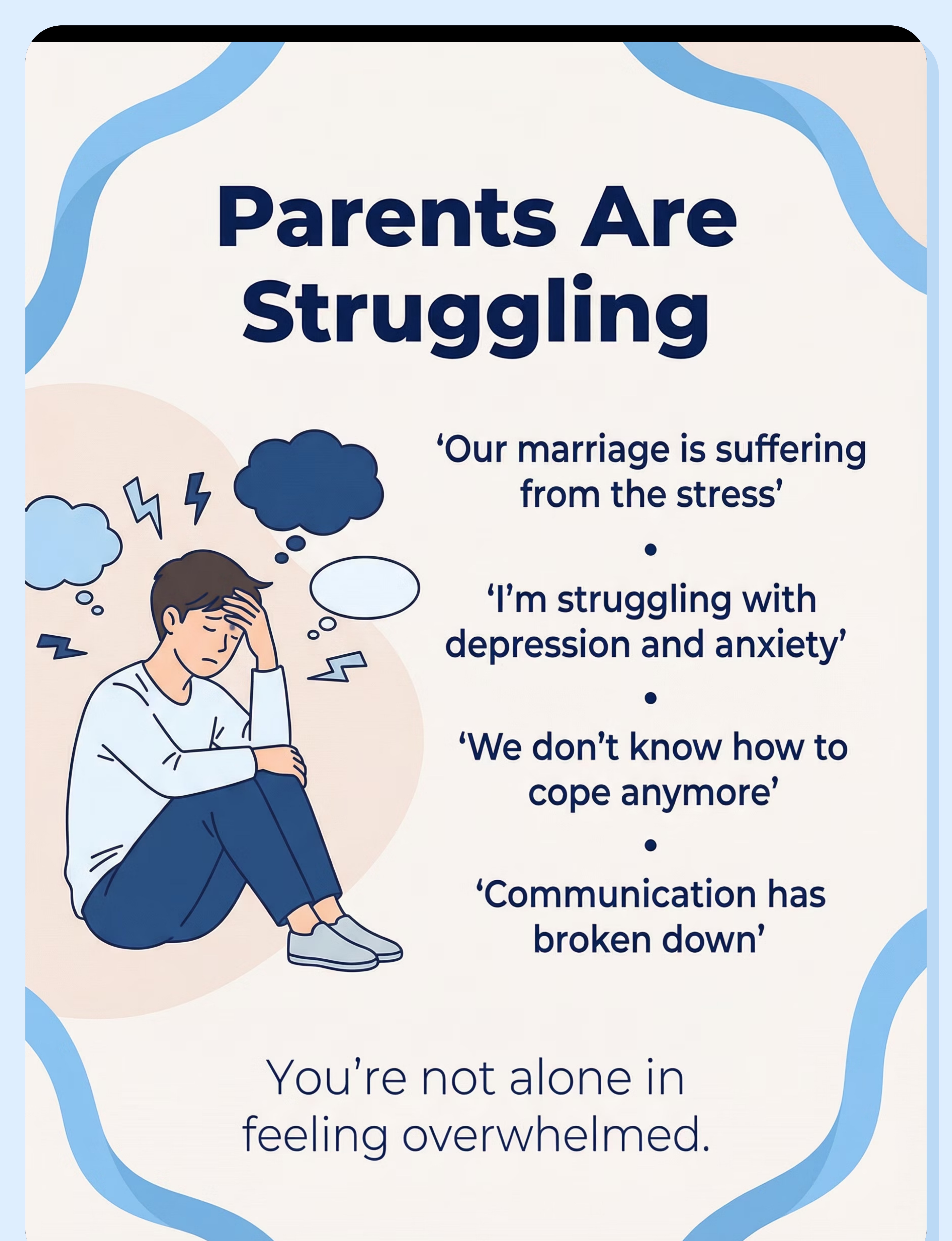
"Our marriage is suffering from the stress. We're not the same couple we used to be, and I'm worried we're drifting apart."
"I'm struggling with depression and anxiety. Some days I can barely function, and I know it's affecting my parenting."
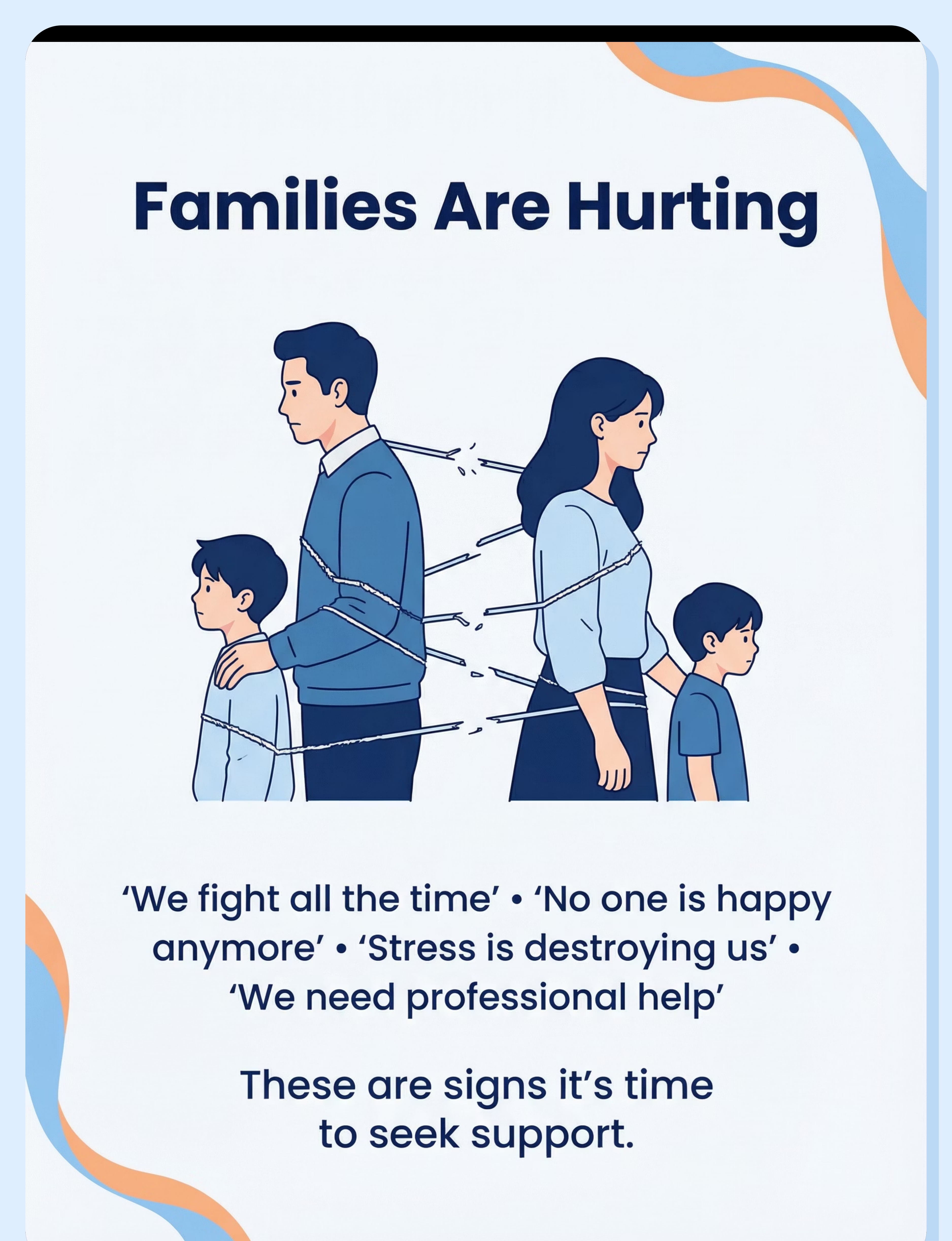
"Our family is falling apart. Everyone is stressed, we fight constantly, and I don't know how to fix it anymore."
"We don't know how to cope anymore. The challenges feel overwhelming, and we need help but don't know where to start."

You're not alone. These are common challenges faced by families navigating autism. Seeking professional support is a sign of strength, not weakness, and can transform your family's journey.
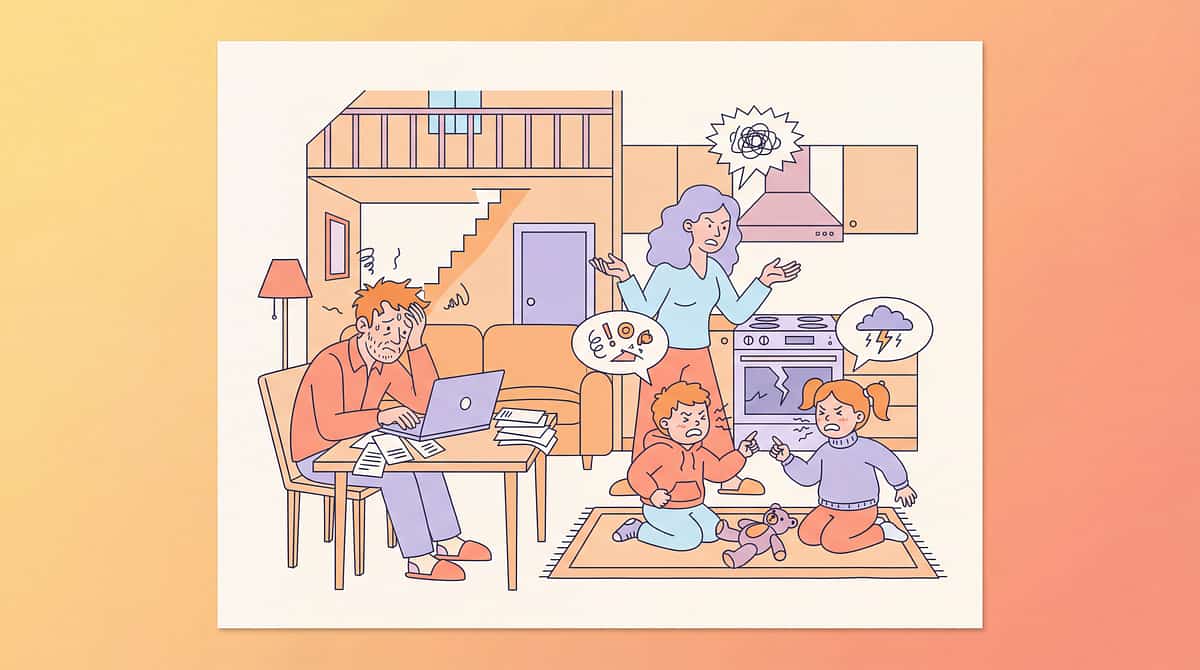
A Day Without the Right Support
Morning: Relationship Strain
Parents wake up already disconnected. Different parenting approaches cause morning conflict. No communication, just tension. Another day begins with distance between partners who used to be a team.
Midday: Mental Health Suffering
Parent anxiety peaks during therapy appointments and school calls. Depression makes it hard to function. Siblings act out, sensing the family stress. Everyone struggling, no one getting the help they need.
Afternoon: Communication Breakdown
Family members pass each other without meaningful connection. Misunderstandings escalate into arguments. No one feels heard. The communication gap widens with each passing hour.
Evening: Coping Crisis
By bedtime, everyone is depleted. Parents argue about approaches. Siblings withdraw. The family unit feels fractured. Another day ends without resolution, and tomorrow feels just as impossible.
family-counseling-therapy therapy material
The Science Behind It
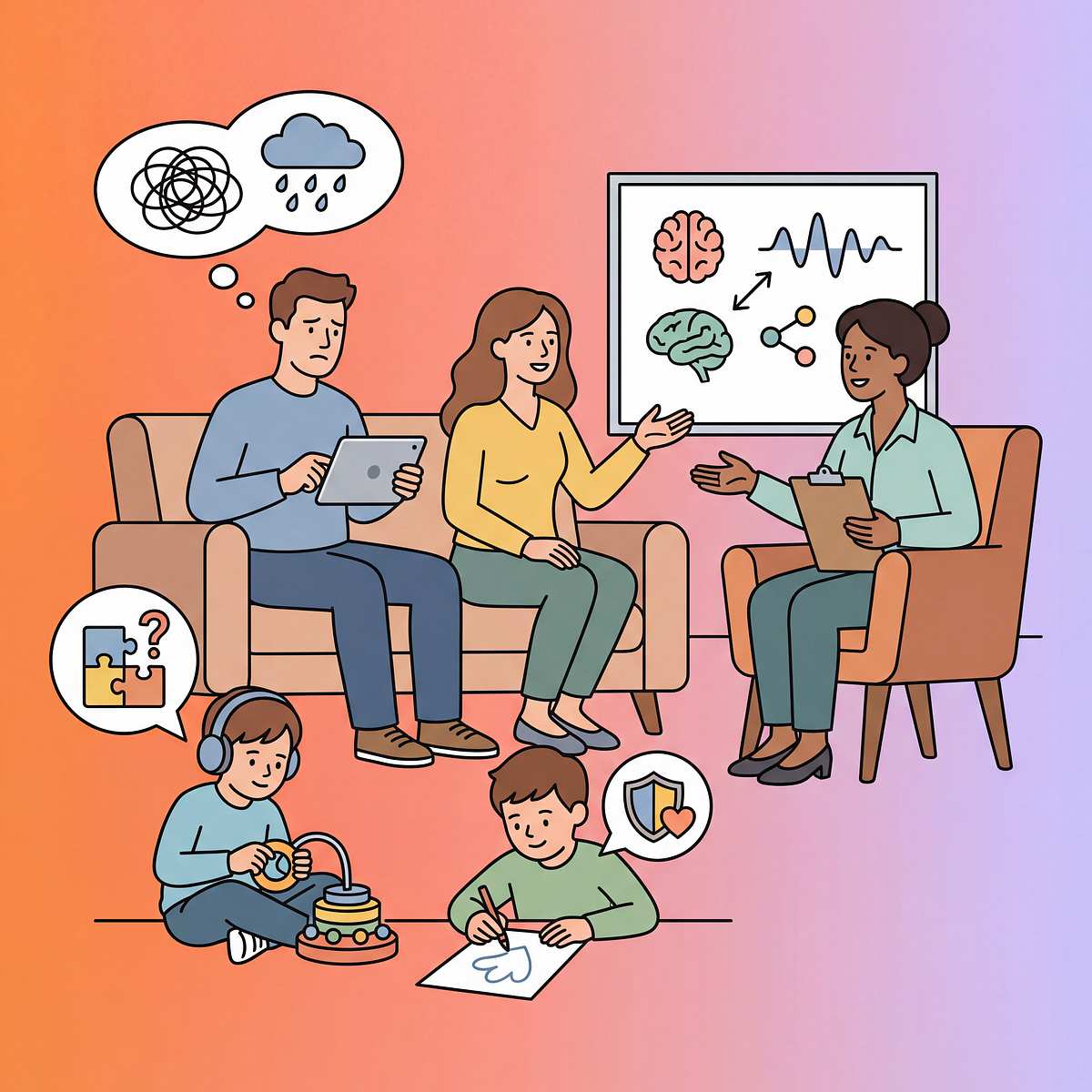
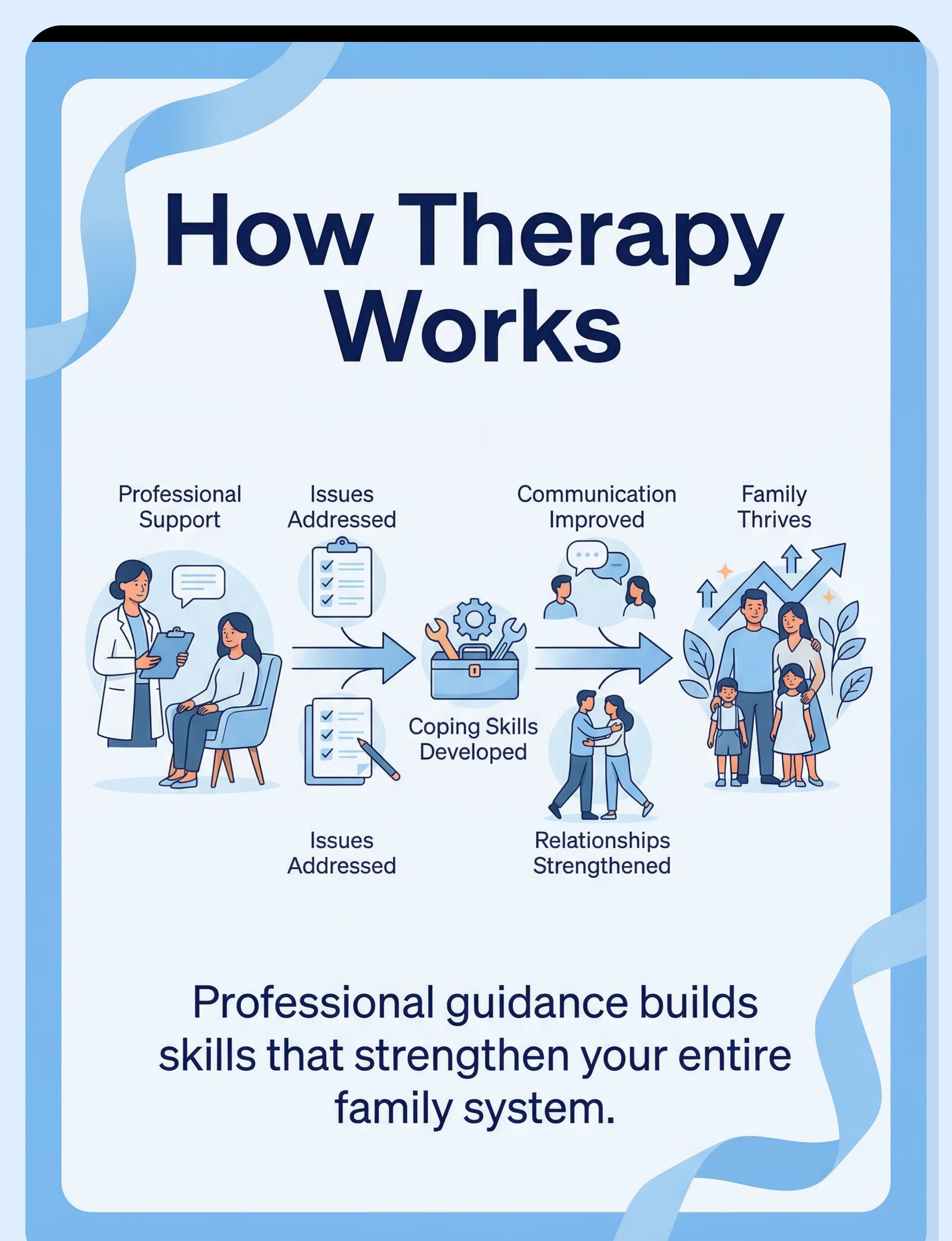
Evidence-based professional counseling addresses the unique stressors autism families face through structured therapeutic approaches that strengthen the entire family system.
Professional Support Begins
Licensed therapist experienced with autism families provides safe space
Core Issues Addressed
Relationship dynamics, mental health, communication patterns systematically explored
Coping Skills Developed
Evidence-based strategies and tools taught for managing specific challenges
Communication Improves
Family members learn to express needs and hear each other effectively
Relationships Strengthen
Trust rebuilds, connections deepen, partnership solidifies through consistent work
Family Functioning Improves
Entire system operates better, supporting child outcomes and family wellness
Family Thrives
Beyond survival to thriving—healthier relationships, better mental health, enhanced quality of life
Family Functioning
Parent Mental Health
Marital Relationship
Sibling Adjustment
Coping Skills
Communication
Crisis Management
How to Use It Right
Seek Experienced Therapist
Find a therapist with specific experience working with autism families who understands the unique dynamics and challenges. Ask autism organizations for referrals to professionals who truly "get it."
Address Issues Early
Don't wait for a crisis to seek help. Early intervention prevents small challenges from becoming major relationship or mental health crises. Proactive support is most effective.
Consider Family Therapy
Family therapy benefits the entire system by addressing dynamics, communication patterns, and relationships. When one member improves, everyone benefits from the systemic change.
Prioritize Parent Mental Health
Your mental health directly affects your child and family. Taking care of yourself through individual therapy isn't selfish—it's essential for effective parenting and family functioning.
Strengthen Your Partnership
Your marriage or partnership needs deliberate attention and care. Couples counseling strengthens your ability to co-parent effectively and maintain connection despite autism-related stress.
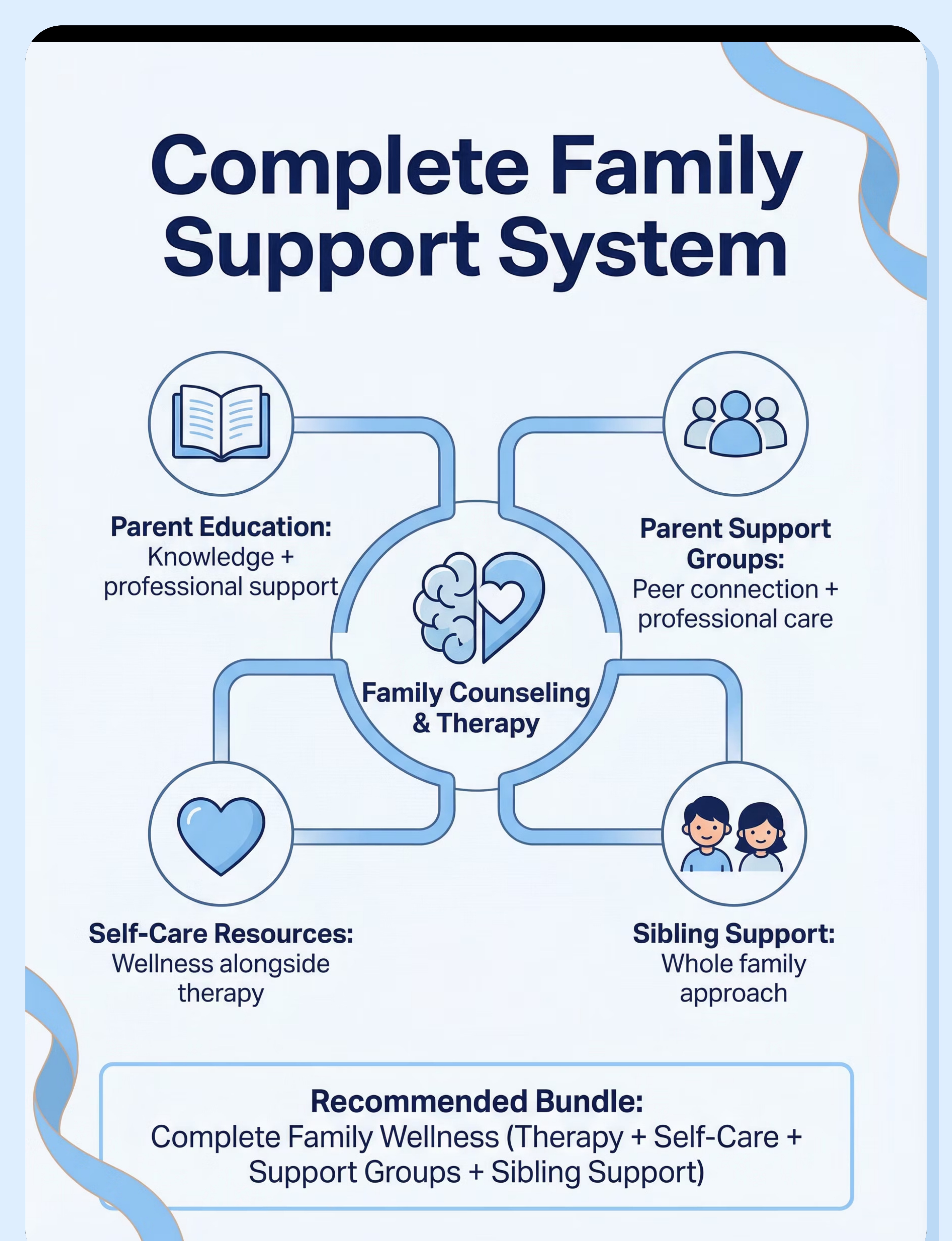
Combine With Peer Support
Professional therapy and peer support work best together. Combine counseling with parent support groups for comprehensive support that addresses both clinical and community needs.
Duration: Typically weekly sessions initially, frequency may decrease as progress is made. Ongoing support as needed for long-term family wellness.
Expert Endorsement
"Families of children with autism face unique stressors that can strain relationships and mental health. Professional counseling provides tools and support that peer support alone cannot. A therapist experienced with autism families understands the specific challenges and can help families not just survive, but thrive."
— Licensed Family Therapist, Autism Specialist
family-counseling-therapy therapy material
Mental Health + Parent Recommended
Strong Evidence Base
Rank #1 in Category
Core Kit Essential
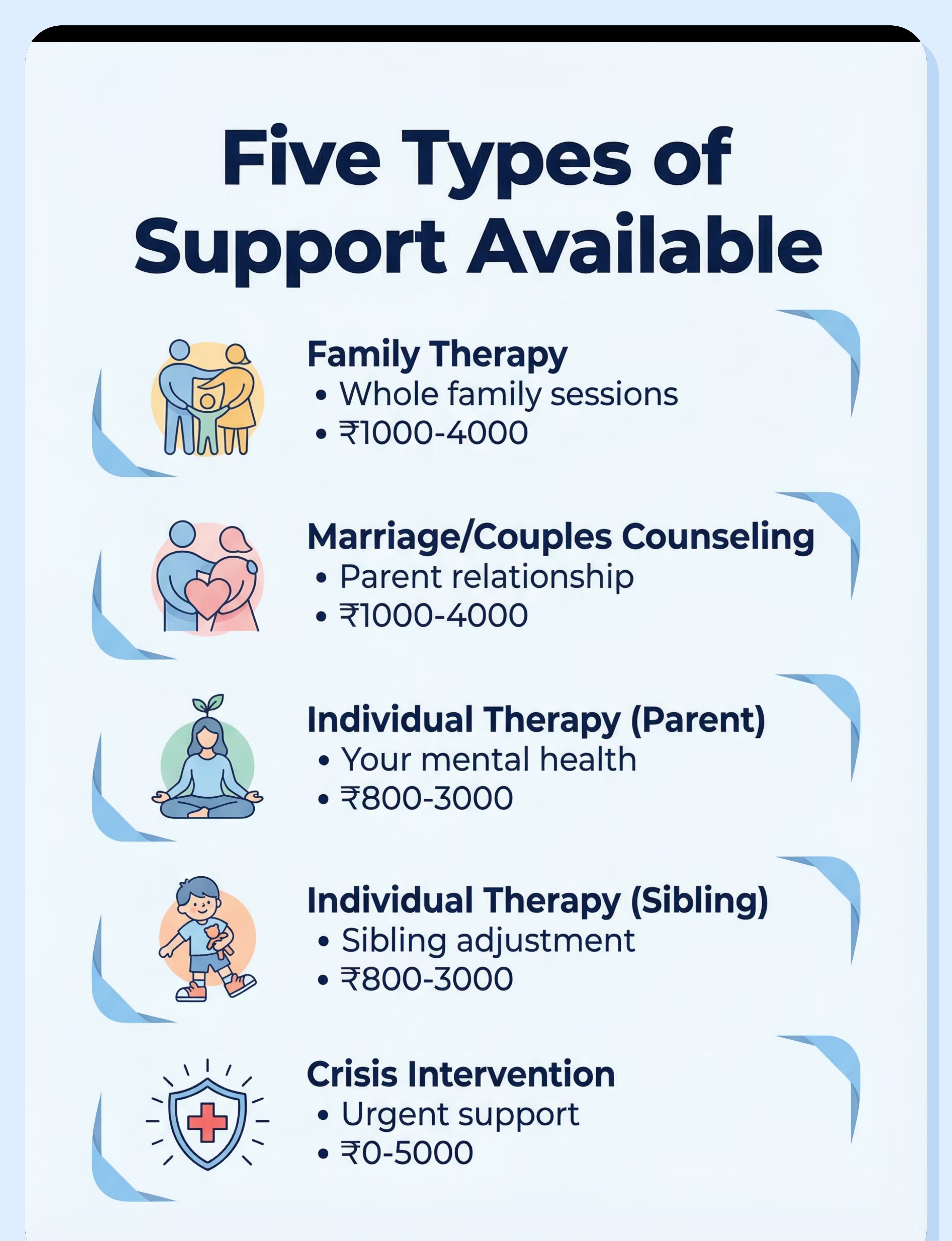
Choose Your Option (5 Variants)
Select the type of professional support that best addresses your family's specific needs. Each variant targets different family members and challenges, and multiple types can be combined for comprehensive care.
family-counseling-therapy therapy material
Family Therapy
Best for: Family dynamics, communication, relationships
Who: Whole family
Settings: Clinic, Online
Format: Whole family sessions using family systems therapy approach
Price: ₹1,000–4,000 per session
Marriage/Couples Counseling
Best for: Parent relationship, co-parenting, stress management
Who: Parents/Partners
Settings: Clinic, Online
Format: Parent relationship therapy focused on partnership
Price: ₹1,000–4,000 per session
Individual Therapy (Parent)
Best for: Parent mental health, processing emotions, personal coping
Who: Individual parent
Settings: Clinic, Online
Format: One-on-one parent therapy sessions
Price: ₹800–3,000 per session
Individual Therapy (Sibling)
Best for: Sibling adjustment, processing feelings, coping skills
Who: Sibling of child with autism
Settings: Clinic, Online
Format: One-on-one sibling therapy sessions
Price: ₹800–3,000 per session
Crisis Intervention
Best for: Acute crisis situations, urgent mental health needs
Who: Any family member in crisis
Settings: Crisis center, Hospital, Online
Format: Acute mental health support
Price: ₹0–5,000 (varies, some crisis services free)

How to Choose:
  • By goal: Family dynamics → Family Therapy | Parent relationship → Couples Counseling | Individual mental health → Individual Therapy | Urgent need → Crisis Intervention
  • By setting: In-person available at clinics and hospitals | Online options for all types provide flexibility
  • By urgency: Crisis intervention for immediate needs | Other types for ongoing support
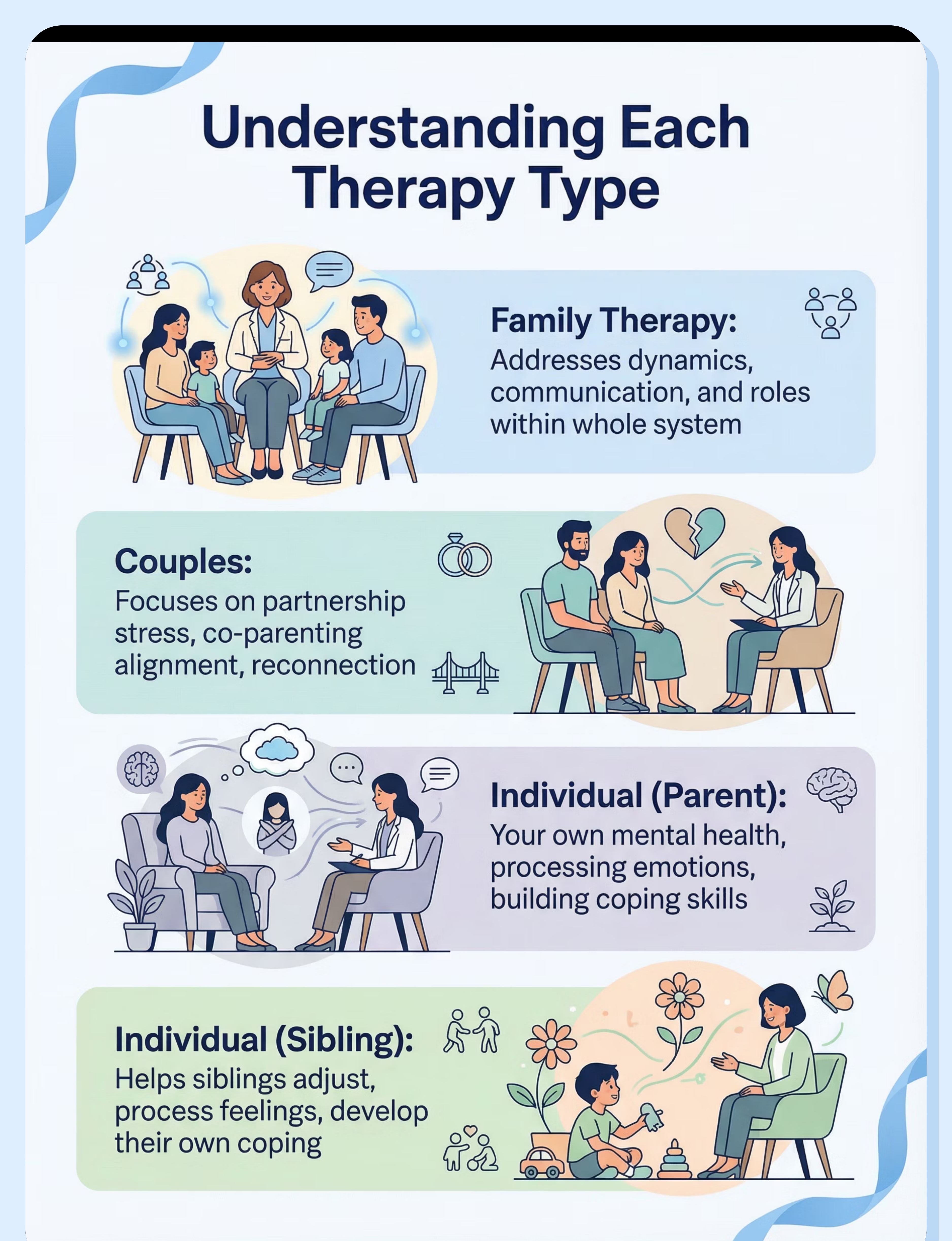
Understanding Therapy Types
family-counseling-therapy therapy material
Family Systems Therapy
Whole family sessions addressing dynamics, communication patterns, and family roles. Focuses on how the family system functions as a unit and how each member affects others.
Best For:
  • Improving family communication
  • Understanding family dynamics
  • Addressing relationship patterns
  • Strengthening family functioning
family-counseling-therapy therapy material
Couples Therapy
Parent partnership focus on relationship stress, co-parenting challenges, and maintaining connection. Addresses how autism impacts the couple's relationship.
Best For:
  • Strengthening parent partnership
  • Improving co-parenting
  • Managing relationship stress
  • Reconnecting as a couple
family-counseling-therapy therapy material
Individual Therapy (Parent)
One-on-one sessions for parent's own mental health needs, processing emotions, trauma, and developing personal coping skills separate from parenting role.
Best For:
  • Managing depression or anxiety
  • Processing grief and emotions
  • Building personal resilience
  • Self-care and wellness
family-counseling-therapy therapy material
Individual Therapy (Sibling)
One-on-one sibling support for processing feelings about having a sibling with autism, adjustment challenges, and developing healthy coping strategies.
Best For:
  • Sibling adjustment support
  • Processing complex feelings
  • Building coping skills
  • Preventing sibling issues
family-counseling-therapy therapy material
Crisis Intervention
Acute mental health support for urgent situations requiring immediate professional attention. Available through crisis centers, hospitals, and emergency mental health services.
When any family member experiences acute mental health crisis, suicidal thoughts, severe dysfunction, or urgent psychological need.
Key Features Across All Types: Professional guidance from licensed therapists | Evidence-based therapeutic approaches | Experience working with autism families | Confidential and safe environment | Flexible formats (in-person or online)
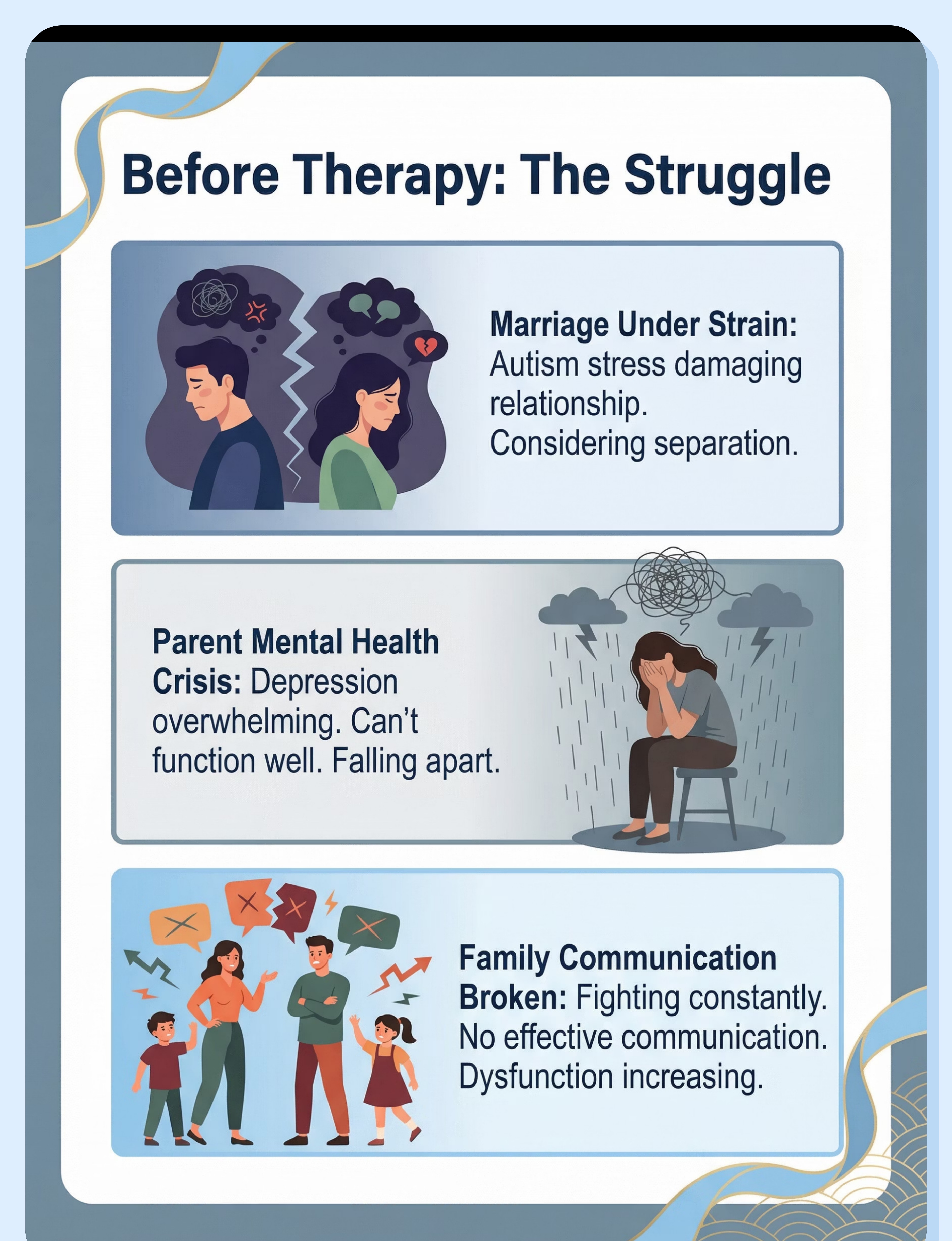
The Struggle (Before Professional Support)
Marriage Under Strain
family-counseling-therapy therapy material
Situation: Autism-related stress is damaging the relationship. Partners have different parenting approaches causing constant conflict. No time for each other anymore, feeling completely disconnected. Some days, separation feels inevitable.
Experience: Fighting about therapy decisions, finances, and approaches. Resentment building. Communication has broken down. Feel more like co-workers than partners. Intimacy and connection are distant memories.
Emotion: Disconnected, in constant conflict, losing hope for the relationship
Parent Mental Health Crisis
family-counseling-therapy therapy material
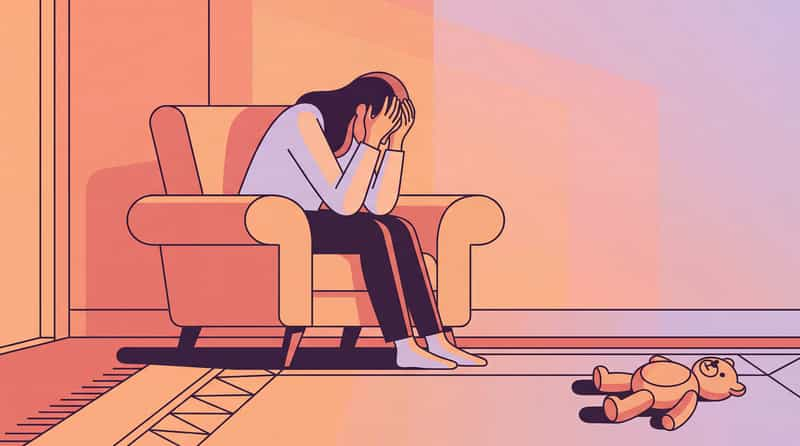
Situation: Depression or anxiety is overwhelming. Can't function well as a parent or person. Mental health issues are affecting parenting ability and family life. Need help desperately but not getting it. Feel like falling apart.
Experience: Struggling to get out of bed. Anxiety attacks during the day. Can't focus or make decisions. Feel guilty about not being a better parent. Isolation increasing as mental health declines.
Emotion: Overwhelmed, falling apart, hopeless, guilty
Family Communication Broken
family-counseling-therapy therapy material
Situation: Everyone in the family is stressed and struggling. Fighting constantly about everything. Siblings are having behavioral issues. No one is talking effectively or feeling heard. Family dysfunction is increasing daily.
Experience: Yelling replaces communication. Siblings act out. No family meals or quality time. Everyone retreats to separate spaces. Household feels like a war zone. Used to be close, now barely functioning.
Emotion: Dysfunctional, fighting, fragmented, desperate
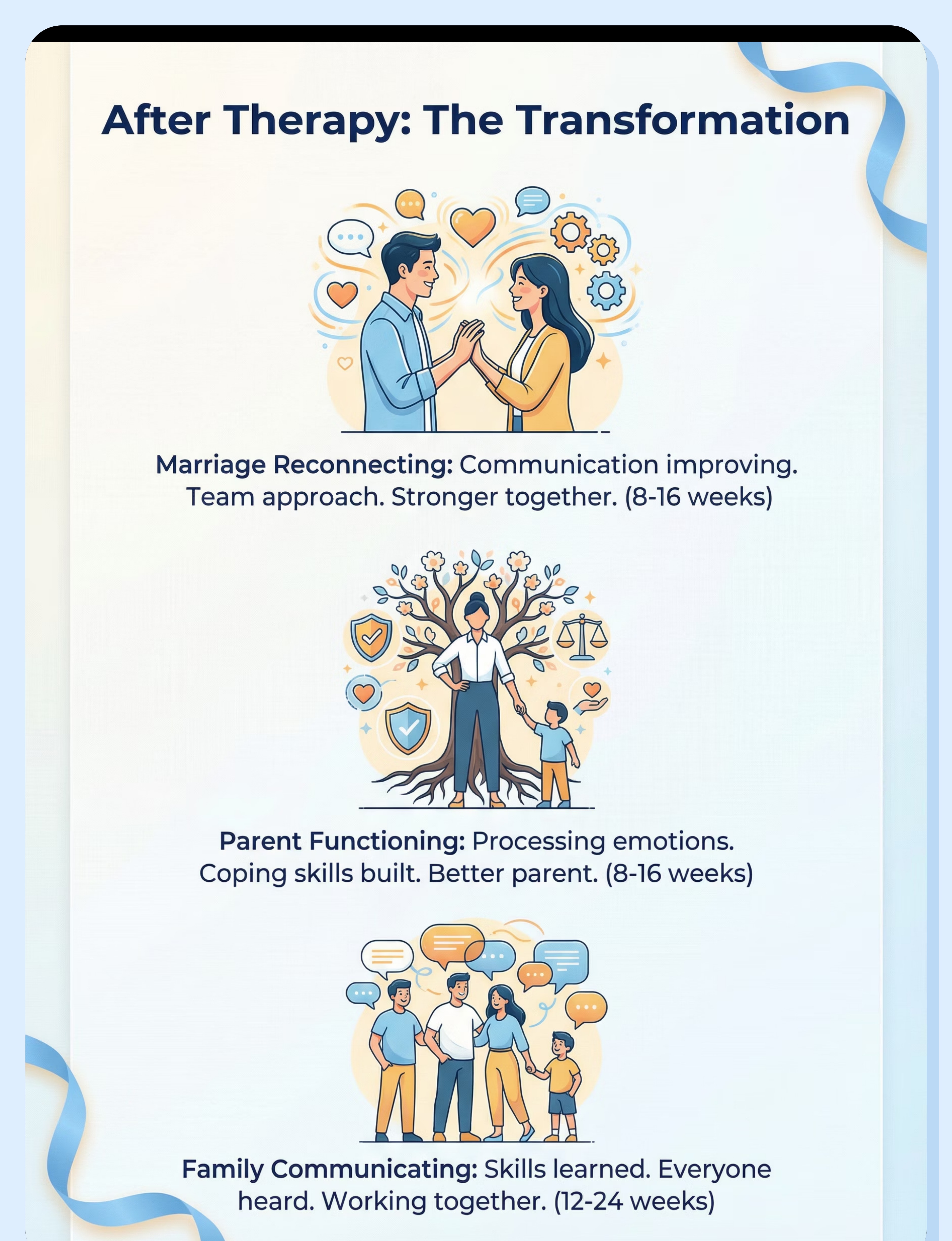
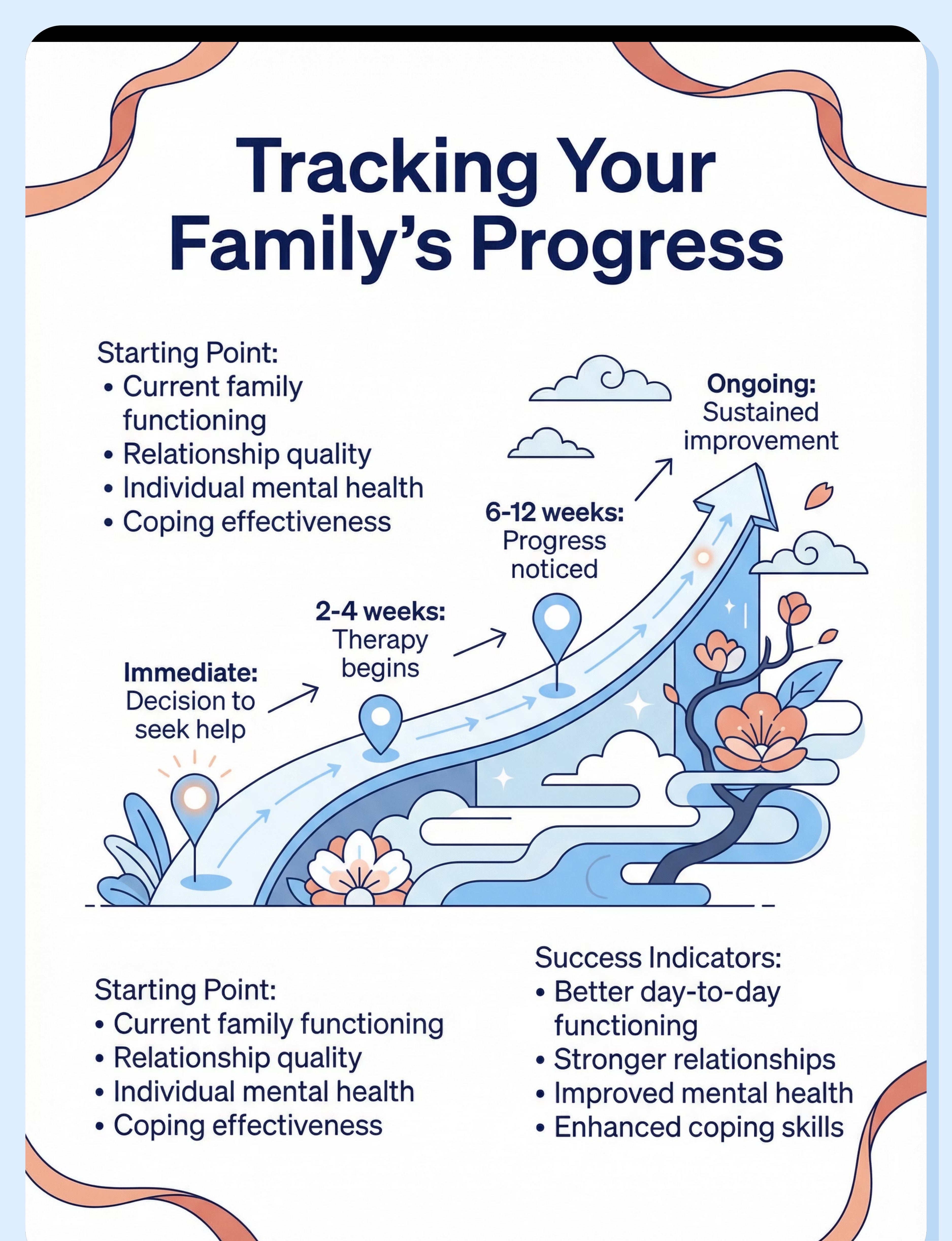
What to Expect: Realistic Timelines
Professional counseling requires time and consistent effort, but progress happens at each stage. Here's what families typically experience along the journey to improved mental health and relationships.
1
Decision to Seek Help
Family recognizes need for professional support and commits to taking action. This crucial first step breaks through denial and resistance.
Immediate
2
Therapist Found
Research, ask for referrals, and identify therapist with autism family experience who is good fit. Schedule initial consultation.
1-4 weeks
3
Therapy Begins
Start attending sessions consistently. Build therapeutic relationship. Begin addressing core issues. Commit to doing work between sessions.
2-4 weeks
4
Progress Noticed
Family members notice improvements in communication, relationships, coping, and overall functioning. Tools learned in therapy start working in daily life.
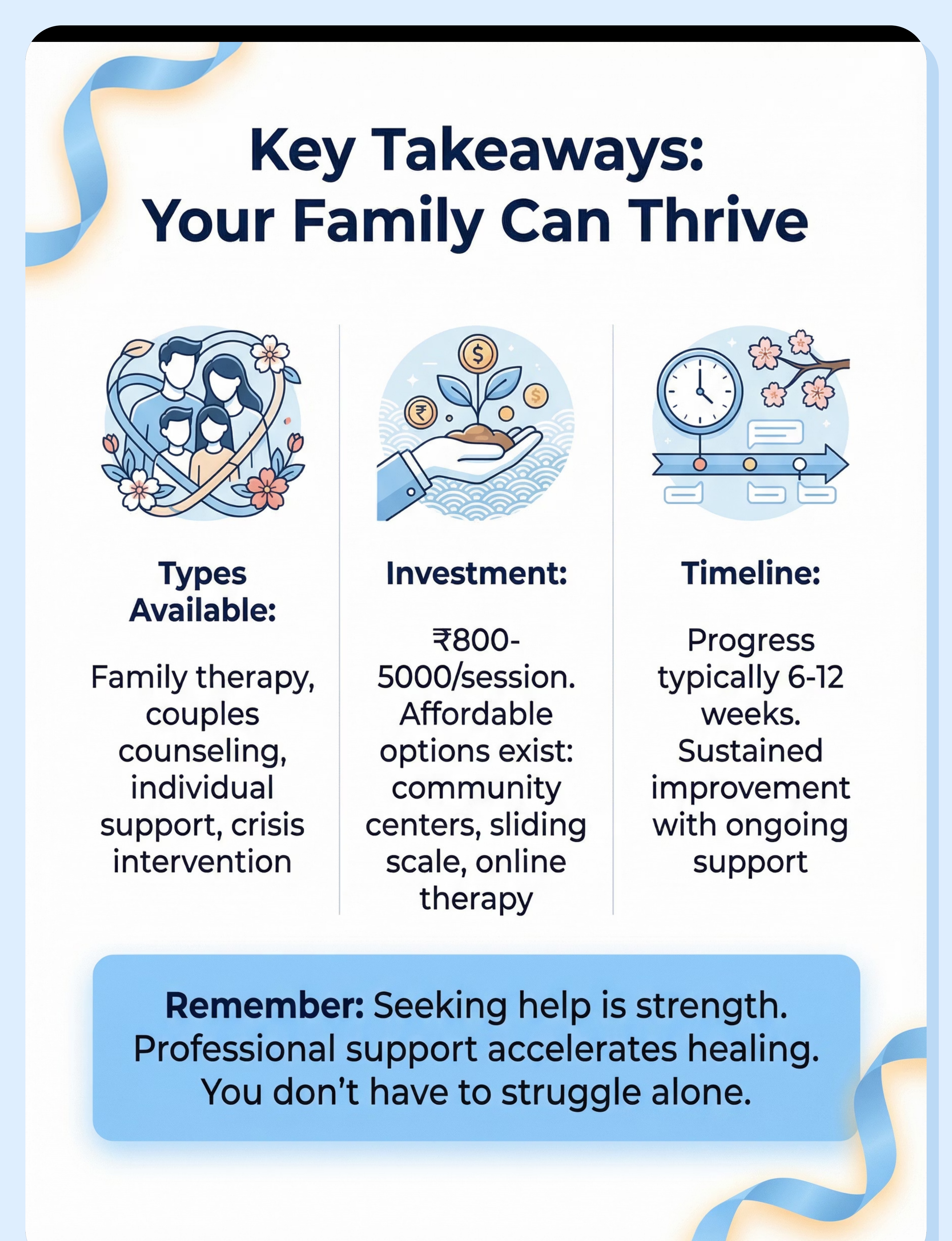
6-12 weeks
5
Sustained Improvement
Continued therapy maintains and builds on progress. Family functioning reaches new baseline. Continue support as needed for long-term wellness.
Ongoing
Better Family Coping
Family develops effective strategies for managing autism-related stress and challenges together as unit.
Improved Relationships
Parent partnership strengthens, family communication improves, connections between members deepen meaningfully.
Enhanced Communication
Family members learn to express needs clearly, listen effectively, and resolve conflicts constructively.
Better Family Functioning
Overall family system operates more smoothly, creating environment where both child with autism and siblings can thrive.
Improved Mental Health
Individual family members experience better mental health, reduced depression and anxiety, increased resilience.
Child Outcomes Better
As family functioning improves, child with autism benefits from more stable, supportive, and coordinated home environment.
Is This Right for My Child? (2-Minute Check)
Answer these four questions honestly to determine if professional family counseling could benefit your family. Three or more "yes" answers indicate strong fit for therapy support.
Is autism-related stress affecting your marriage or partnership?
If you answered YES: This indicates couples counseling may significantly help strengthen your relationship and co-parenting effectiveness.
Confidence Score: 90/100 - Very strong indicator for couples therapy
Is any family member struggling with mental health challenges?
If you answered YES: This indicates professional mental health support is strongly recommended—don't delay seeking help.
Confidence Score: 95/100 - Critical indicator for professional support
Is your family's communication and functioning struggling significantly?
If you answered YES: This indicates family therapy may help address dynamics and improve overall family functioning.
Confidence Score: 88/100 - Strong indicator for family therapy
Are you coping well with the autism-related challenges you face?
If you answered NO: This indicates professional support is recommended to build coping skills and resilience.
Confidence Score: 85/100 - Strong indicator that support would help

Results Guide: 3+ "yes" answers = Strong fit for professional counseling | 2 "yes" answers = Consider consultation with therapist | 1 "yes" answer = May benefit from targeted support | Even 1 significant concern warrants professional consultation—don't wait for crisis.
Common Questions (Honest Answers)
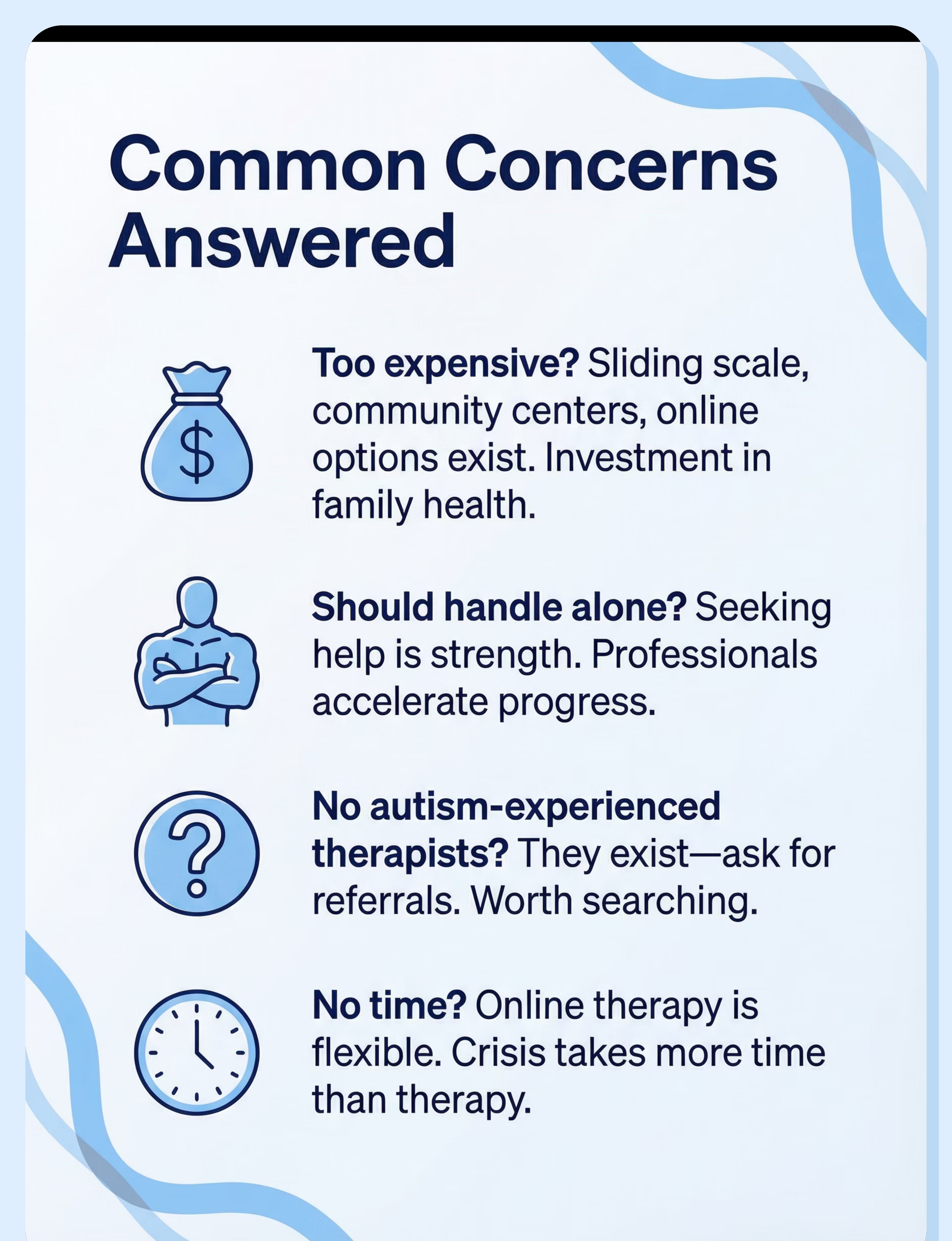
Q: Isn't therapy too expensive for our family budget?
A: Many affordable options exist that fit various budgets: sliding scale community mental health centers (₹500-1,500/session), insurance coverage that reduces costs significantly, and online therapy platforms. Consider this an investment in your family's health and future. The cost of NOT getting help—relationship breakdowns, worsening mental health, family dysfunction—is often far higher than therapy sessions.
Try this: Affordable options are available; view as essential health investment; cost of avoiding help is higher.
Q: Shouldn't we be able to handle these challenges ourselves?
A: Seeking professional help demonstrates strength, not weakness. Just as athletes work with coaches to improve performance, families benefit from professional guidance to navigate complex challenges. Therapists provide tools and perspectives that accelerate progress far beyond what most families can achieve alone. You don't have to struggle in isolation—help is available.
Try this: Help-seeking is strength; professionals accelerate progress; you don't have to struggle alone.
Q: Will we find a therapist who truly understands autism families?
A: Autism-experienced therapists do exist—ask autism organizations, parent support groups, and pediatricians for specific referrals. Even general family therapists can help with relationship dynamics, and you can educate them about autism-specific aspects. The search may take time, but finding the right therapeutic fit is worth the effort for your family's wellbeing.
Try this: Autism-experienced therapists exist; ask for referrals from autism community; search is worth it.
Q: How can we possibly find time for therapy sessions?
A: Online therapy platforms offer tremendous flexibility—sessions from home at times that work for your schedule. Consider this: a family falling apart takes far more time and energy than weekly therapy. Prioritize this the same way you prioritize medical appointments—it affects every aspect of family life. Even monthly sessions can provide meaningful support if weekly isn't feasible.
Try this: Online therapy is flexible; crisis takes more time than therapy; prioritize as essential health.
Investment Guide: Budget to Premium
Budget-Friendly Option
Service: Community mental health center therapy or sliding scale private practice
Cost per Session: ₹500-1,500
Note: Affordable professional support is available through community centers, NGOs, and therapists offering sliding scale fees. Quality care doesn't require premium pricing.
  • Community mental health centers
  • Sliding scale private practices
  • NGO-supported counseling
  • Group therapy options
  • Online therapy platforms (lower tier)
Premium Option
Service: Private practice therapist with specialized autism family experience
Cost per Session: ₹2,000-5,000
Providers: Private therapists with autism specialization, specialty clinics focusing on autism families
  • Private practice specialists
  • Autism specialty clinics
  • International platform therapists
  • Highly experienced professionals
  • Convenient scheduling and locations
Overall Investment Range: ₹800–5,000 per session (approximately $10-60 USD)

Best Starting Point: Begin with community mental health center or sliding scale option to establish care, then transition to private practice if needed for specific expertise. Many families find community center therapists provide excellent care at accessible prices. Check insurance coverage—some policies cover mental health services. Online platforms often offer lower-cost options with good flexibility.
Where to Find Support in India
Availability: Mental health professionals are available across India through hospitals, community centers, private practices, and online platforms. Options exist at various price points and accessibility levels.
Psychology Today India
Search for: "autism family therapist"
Price: Variable, typically ₹1,500-4,000/session
Comprehensive directory of mental health professionals with specializations, credentials, and contact information. Filter by location, specialty, insurance, and language.
Hospital Psychiatry Departments
Search for: "family therapy services"
Price: Variable by hospital
Many major hospitals have psychiatry departments offering family therapy, couples counseling, and individual therapy. Often covered by insurance.
Autism Centers
Search for: "family support counseling"
Price: Variable by center
Many autism centers offer family counseling as part of comprehensive support services. Therapists understand autism family dynamics specifically.
Community Mental Health Centers
Search for: "family counseling affordable"
Price: ₹500-1,500/session
Government and NGO-supported centers provide affordable therapy. Sliding scale fees based on income. Good starting point for accessible professional support.
Online Therapy Platforms
Search for: "online therapy India"
Price: ₹800-2,500/session
Convenient online platforms connect you with licensed therapists via video. Flexible scheduling. Good option for busy families or those in areas with limited local resources.
Buying Tips
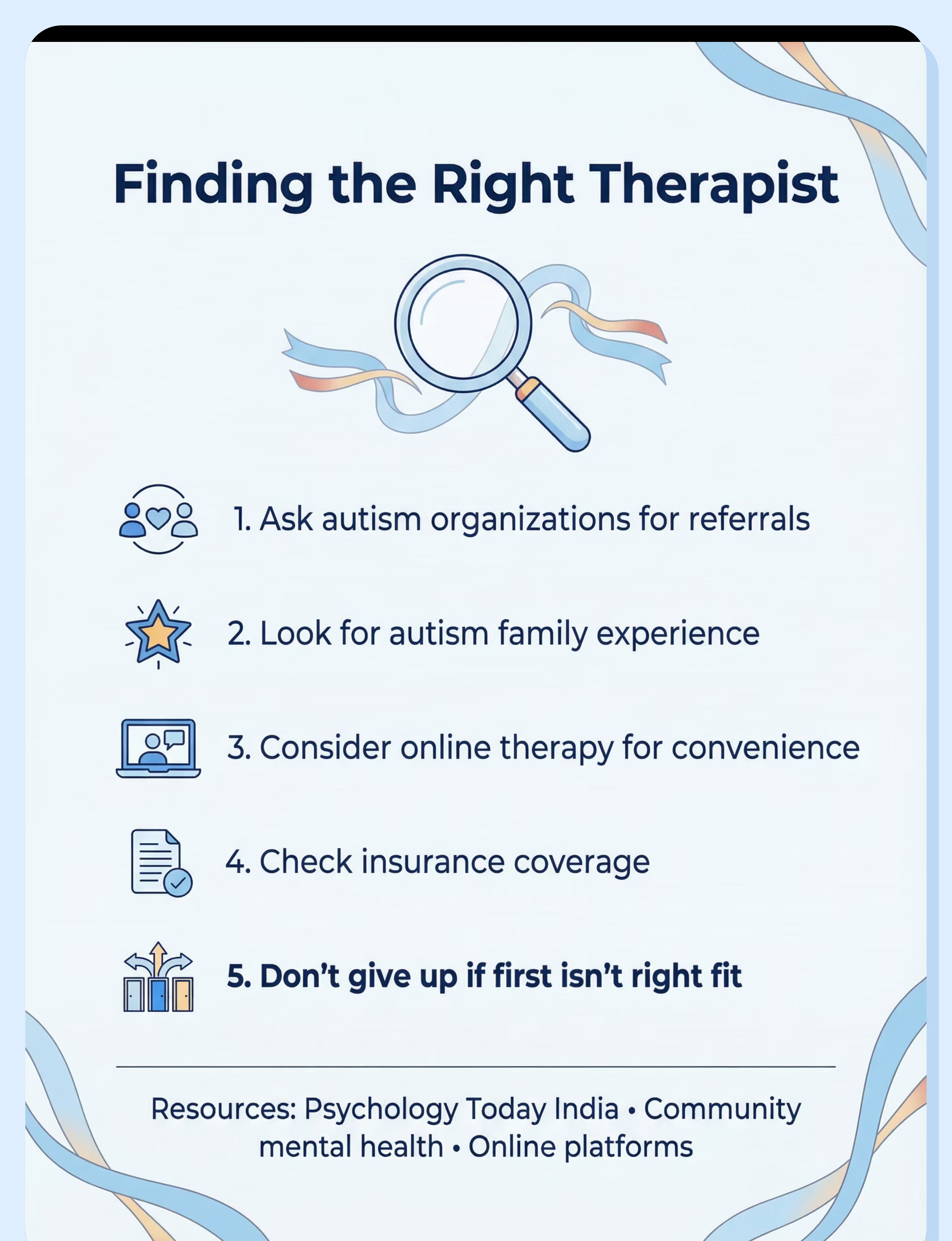
  • Ask autism organizations and parent groups for specific therapist referrals
  • Actively look for therapists with experience working with special needs families
  • Consider online therapy for scheduling convenience and potentially lower costs
  • Check whether your insurance covers mental health services
  • Don't give up if the first therapist isn't the right fit—finding good match matters
  • Schedule initial consultations to assess fit before committing
Red Flags to Watch For
  • Therapist who is completely unfamiliar with autism family dynamics
  • Professional who is dismissive of the unique challenges you face
  • Poor therapeutic fit persisting after several sessions despite effort
  • No noticeable progress after reasonable time period (12-16 weeks)
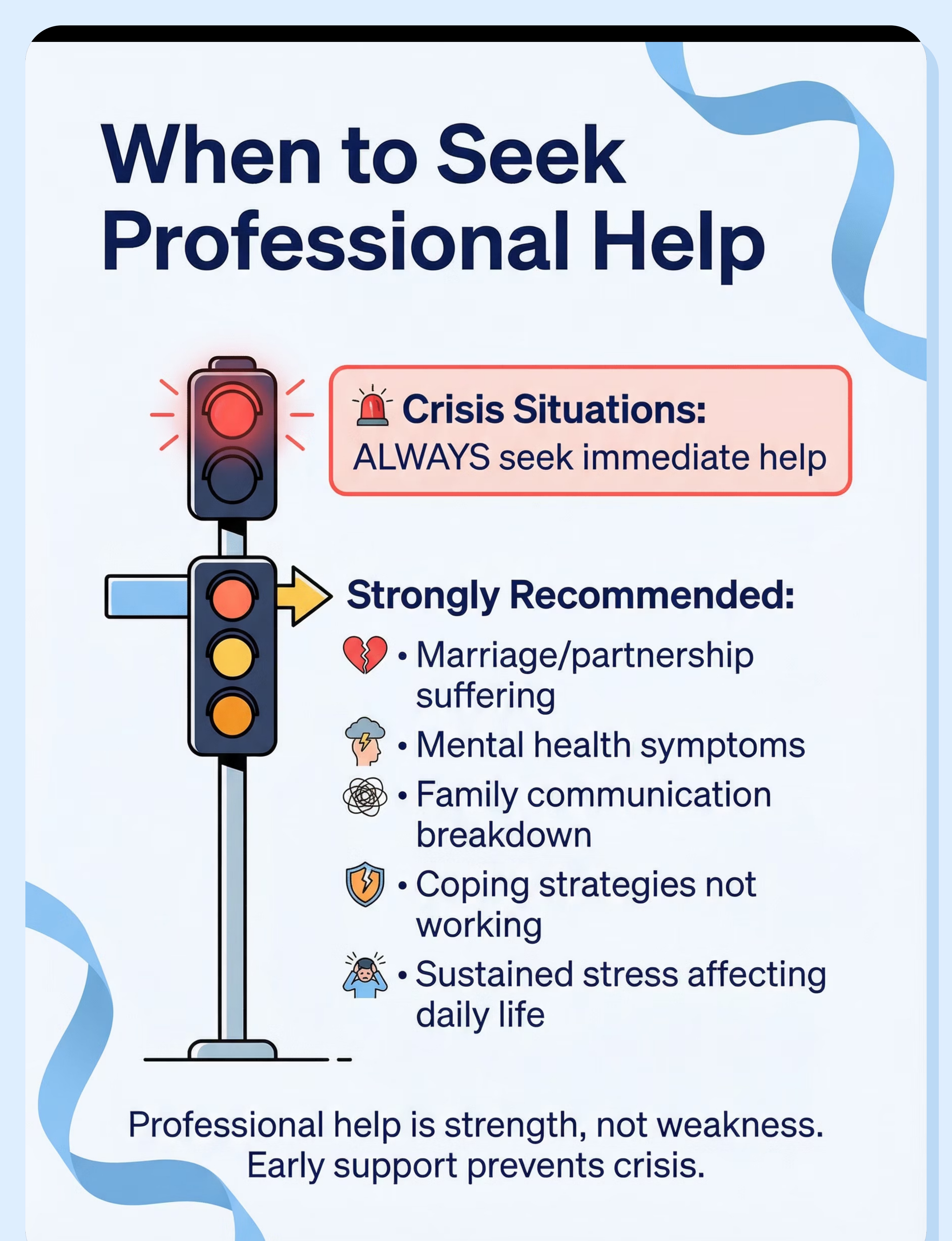
When to Seek Help (Not a DIY Area)
DIY Feasibility: Low—mental health therapy is a professional service requiring licensed expertise, not a do-it-yourself area.
Steps to Professional Support
Recognize the Need
Acknowledge when professional help is necessary. Recognizing that your family needs support is the crucial first step. Don't wait for complete crisis.
Ask for Referrals
Reach out to your autism community—parent groups, organizations, pediatrician—for therapist referrals. Personal recommendations are invaluable.
Research Therapists
Look for therapists with specific experience working with autism families. Check credentials, specializations, approach, and practical details.
Schedule Consultation
Set up initial consultation to assess fit. Ask about their experience with autism families, approach, and what to expect from therapy.
Attend Consistently
Commit to regular sessions. Consistency is key for therapeutic progress. Prioritize appointments the same way you prioritize medical care.
Do the Work
Complete any homework or exercises between sessions. Apply what you learn in therapy to daily life. Active participation accelerates progress.
Continue as Needed
Maintain therapy as long as it's beneficial. Some families need short-term support, others benefit from ongoing sessions. Follow your therapist's guidance.
When to Use Peer Support
Never as replacement for therapy when facing significant issues.
Peer support groups complement but don't replace professional therapy.
Best approach: combine professional therapy with peer support.
When Professional Help is Essential
Always appropriate for significant mental health or relationship issues.
Mental health challenges require professional, licensed care.
Crisis situations demand immediate professional intervention.
Don't delay seeking help for serious concerns.

Important Tradeoff: This is not a DIY area. While peer support and self-help resources have value, professional licensed therapy provides tools, guidance, and expertise that cannot be replicated through self-help alone. Significant mental health issues, relationship crises, and family dysfunction require professional intervention. Seeking help is a sign of strength and wisdom, not weakness.
Usage Guide: When and How
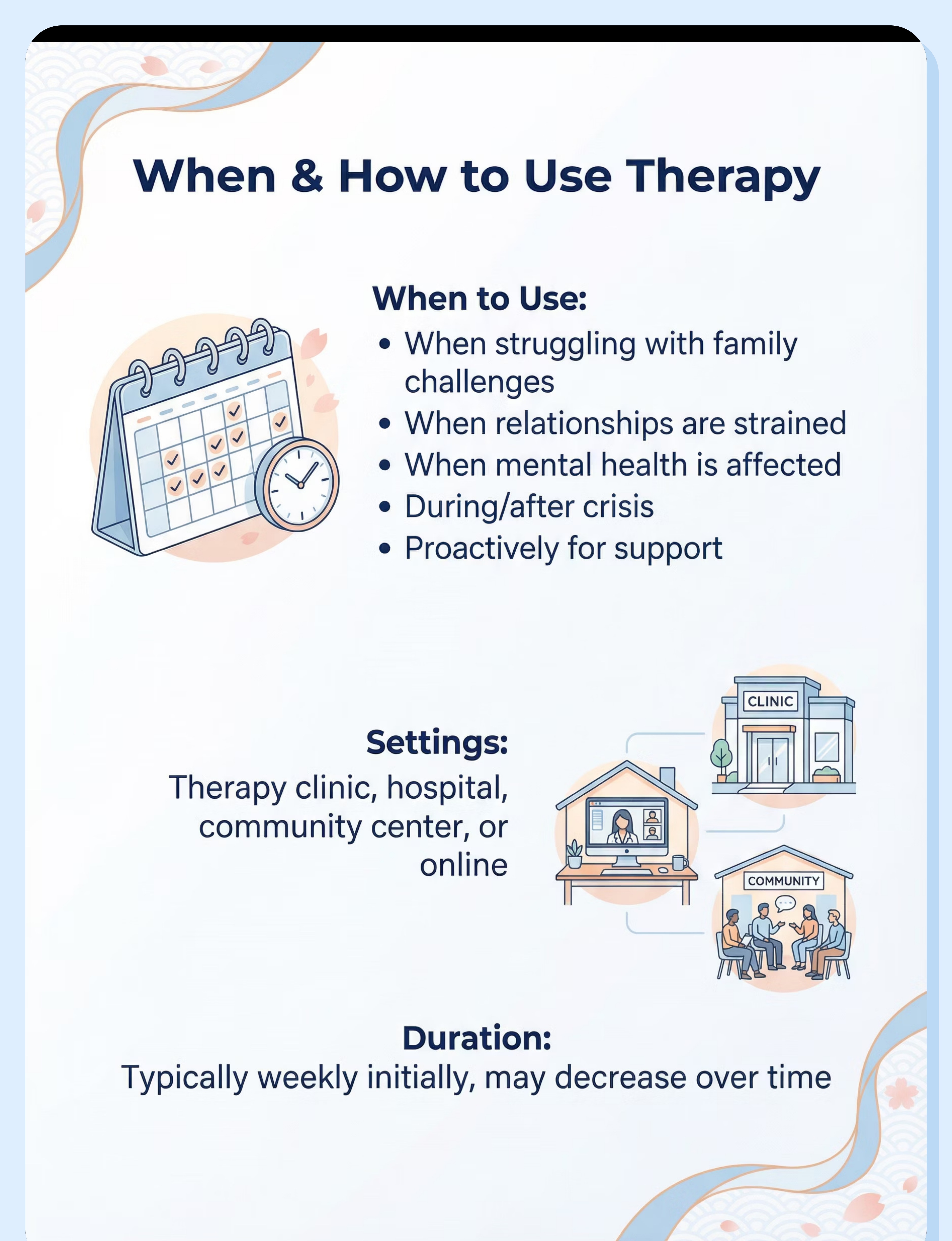
When to Use Professional Counseling
  • When struggling significantly with family challenges and stress
  • When relationships are strained—between parents, with child, with siblings
  • When any family member's mental health is affected by autism journey
  • During or after crisis situations to process and recover
  • Proactively for support before problems become severe
  • When communication has broken down within the family
When NOT to Delay
Never delay seeking professional help when mental health, relationships, or family functioning are significantly affected. Professional support is always an appropriate option—there is no situation where help should be avoided.
Duration & Frequency
Typically begins with weekly sessions to establish therapeutic relationship and address immediate concerns. As progress is made, frequency may decrease to bi-weekly or monthly maintenance sessions. Some families benefit from short-term therapy (8-16 weeks), while others need ongoing support. Follow your therapist's recommendations based on your family's specific needs and progress.
Settings & Formats
Therapy Clinic
Hospital
Community Center
Online Video Sessions
Crisis Center (when needed)
Supervision & Participation by Age
Family Type
Participation Format
Notes
Whole Family
All members participate in family therapy sessions
Children participate at developmentally appropriate level
Parent Couple
Both parents attend couples counseling together
Private sessions focused on relationship
Individual Parent
One parent attends individual therapy alone
Confidential space for personal mental health
Individual Sibling
Sibling attends age-appropriate individual therapy
Safe space to process feelings about autism
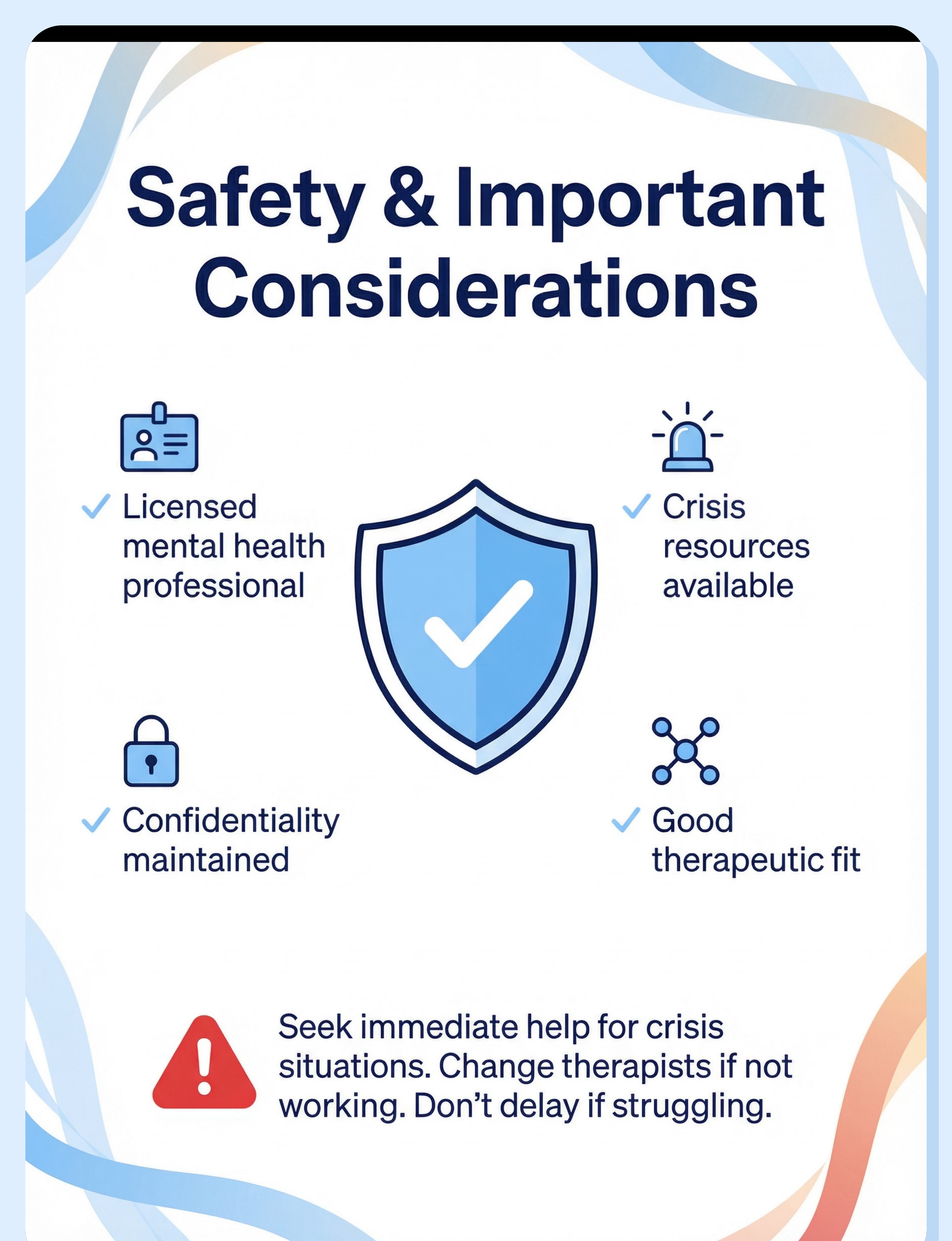
Safety First: Critical Guidelines
Critical Safety Requirements
  • Only work with licensed mental health professionals with proper credentials
  • Ensure crisis resources are available for urgent mental health situations
  • Verify that confidentiality is maintained according to professional standards
  • Establish good therapeutic fit between family and therapist within first sessions
Important Warnings
  • Seek immediate professional help for any crisis situation—don't wait or try to handle alone
  • Change therapists if therapeutic relationship isn't working after reasonable trial period
  • Report any unethical behavior to licensing board—therapists must follow professional standards
  • Don't delay seeking help if you or family member is struggling—earlier intervention is more effective
Contraindicated Practices
Never use unlicensed practitioners for mental health therapy. Always verify professional credentials. Peer support is valuable but cannot replace licensed therapy for mental health treatment.
Safety Checklist
Before Starting Therapy
  • ✓ Recognized need for professional help
  • ✓ Found licensed, credentialed therapist
  • ✓ Verified therapist has autism family experience
  • ✓ Good fit established in consultation
  • ✓ Commitment made to therapy process
  • ✓ Crisis resources identified if needed
During Therapy
  • ✓ Attending sessions consistently
  • ✓ Doing assigned work between sessions
  • ✓ Progress being made over time
  • ✓ Good therapeutic relationship maintained
  • ✓ Open communication with therapist
  • ✓ Family participating appropriately
Signs of Success
  • ✓ Better coping with challenges
  • ✓ Improved relationships within family
  • ✓ Enhanced communication patterns
  • ✓ Family functioning better overall
  • ✓ Individual mental health stabilizing
  • ✓ Positive changes in daily life
Real Stories: Families Who Found Help
Hear directly from families who have experienced the transformative power of professional counseling on their autism journey. Their experiences highlight renewed hope, improved relationships, and strategies for a more harmonious family life.
The Sharma Family
"Before therapy, our home felt chaotic. We learned to communicate, not just talk. Our child is thriving, and we finally feel equipped to support them. It's truly changed everything."
Priya, Sibling
"I used to struggle understanding my brother's world. Therapy helped our parents and me bridge that gap. We're closer now, and I feel like I have a real role in our family's support system."
The Patel Couple
"The stress was overwhelming our marriage. Our therapist helped us find common ground, rekindle our connection, and face challenges as a united front. We're a stronger couple and better parents."
Real Families
Hope
Transformation

Preview of family counseling therapy Therapy Material

Below is a visual preview of family counseling therapy therapy material. The pages shown help educators, therapists, and caregivers understand the structure and content of the resource before use. Materials should be used under appropriate professional guidance.

Page 1
Page 2
Page 3
Page 4
Page 5
Page 6
Page 7
Page 8
Page 9
Page 10
Page 11
Page 12
Page 13
Page 14
Page 15
Page 16
Page 17
Page 18
Page 19
Page 20
Link copied!
Your Next Step: Getting Started Today
Taking the first step towards professional support for your family is a powerful act of love and commitment. This guide has provided you with the knowledge and tools; now it’s time to move forward with confidence.
Assess Your Needs
Use the 2-minute check from Card 4 to understand your family's specific challenges and goals.
Research Professionals
Find licensed therapists experienced with autism families in your area. Look for credentials and specialization.
Schedule Consultation
Book initial meetings to find a therapist with whom your family feels a good therapeutic fit.
Commit to the Process
Enter therapy with realistic expectations, understanding that progress is a journey, not an overnight fix.
Track & Adjust
Continuously monitor your family's progress and openly communicate with your therapist to adjust strategies as needed.
Seeking help is a profound sign of strength and your unwavering commitment to your family's well-being. Start your journey towards a more harmonious and supportive family life today.
Take Action
Start Today
Family First