




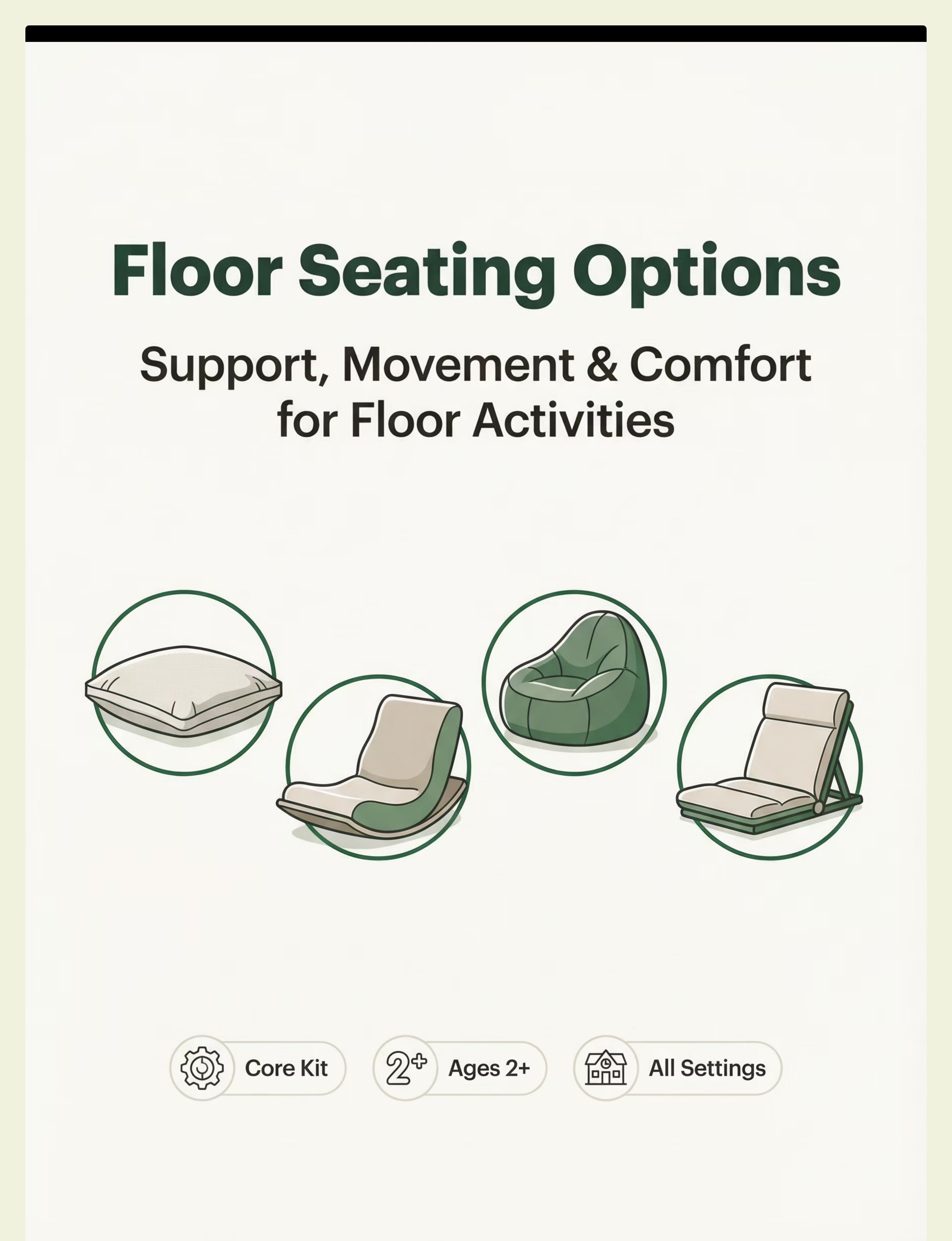


Floor Seating Options
Ground-level positioning and flexible seating system

Who This Helps
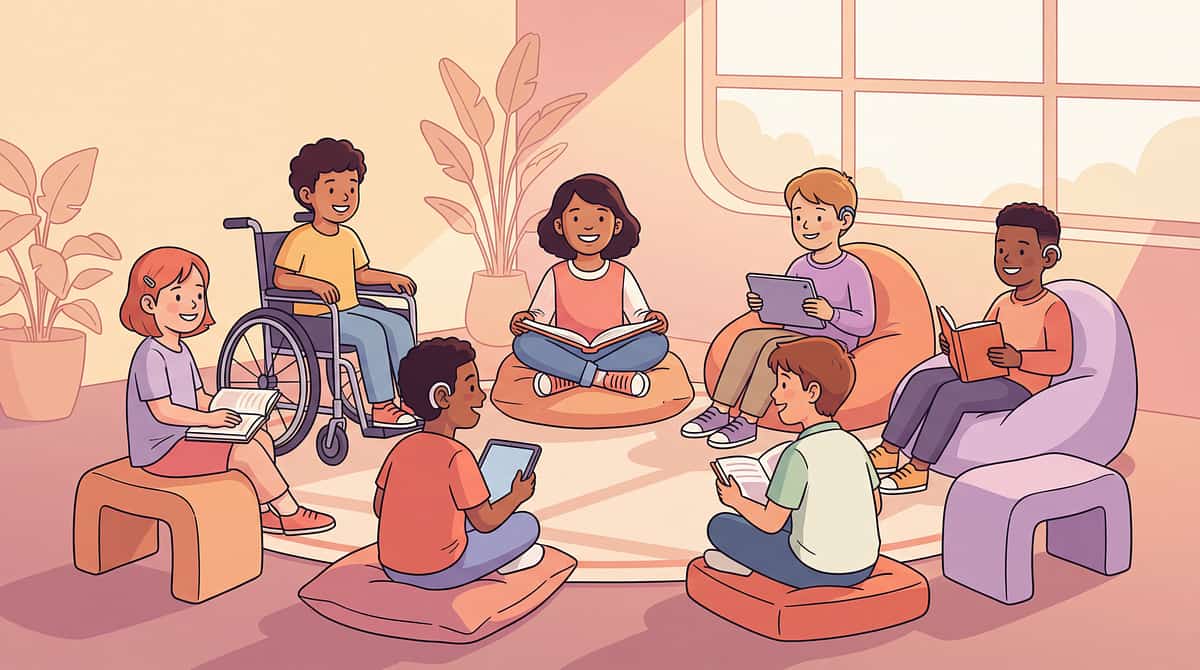
Inclusive Participation
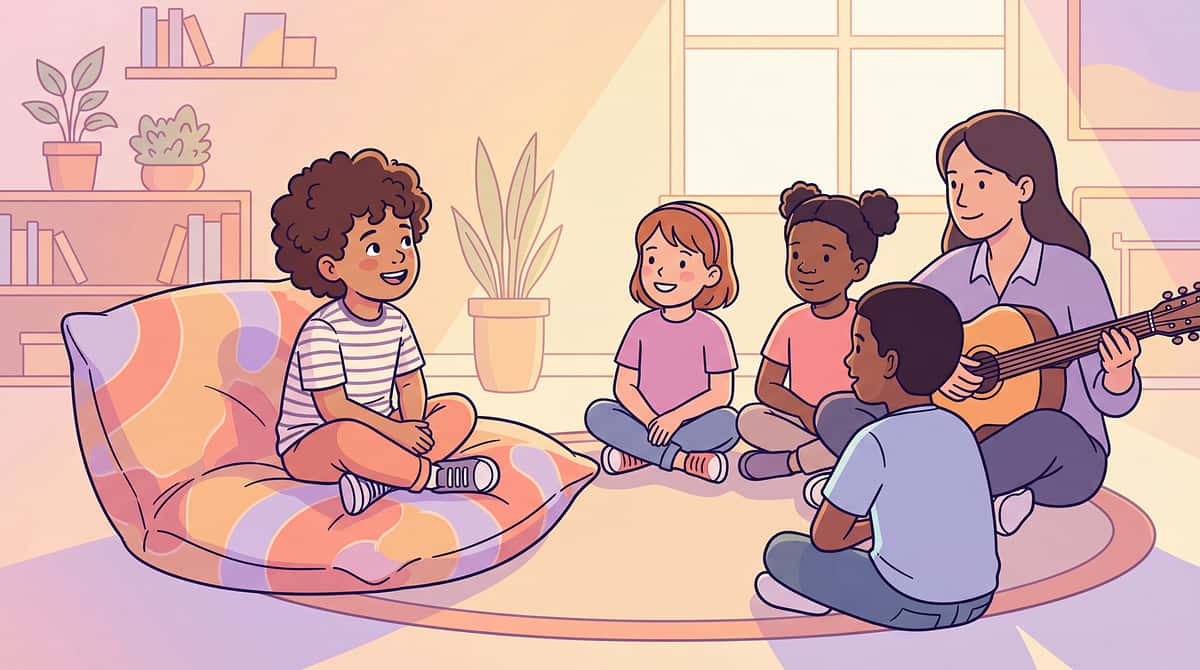
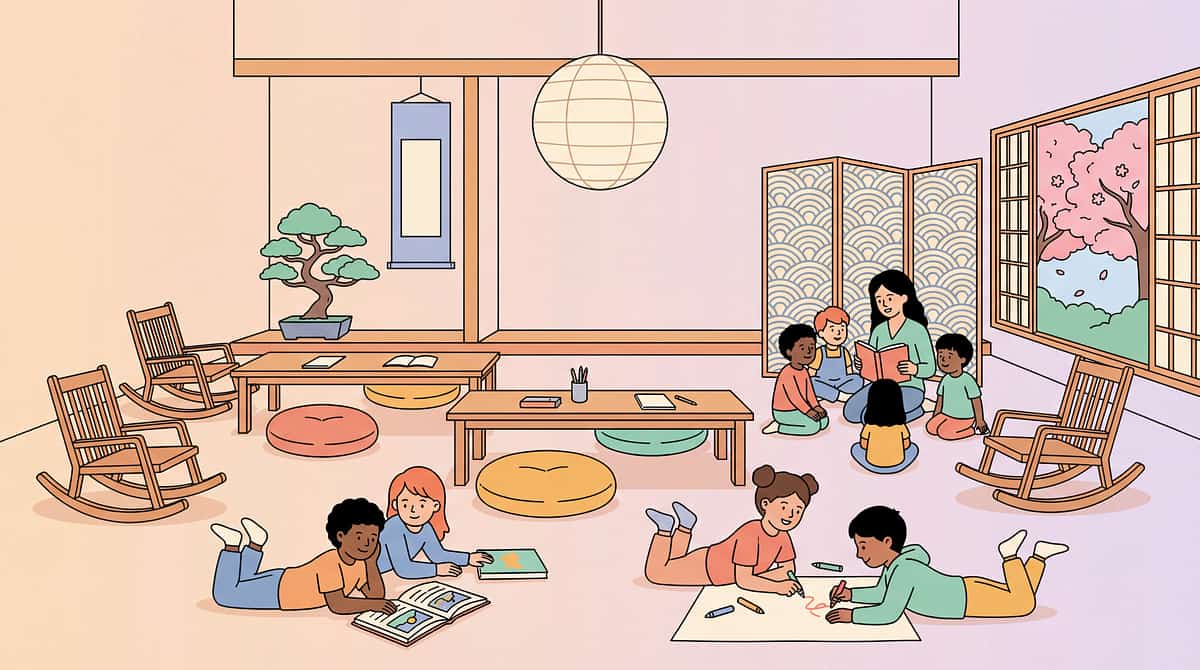
Enables all children to comfortably join floor-based activities, fostering a sense of belonging and engagement.
Enhanced Comfort & Support
Provides essential support, containment, and comfort for extended floor time, including back support.
Sensory & Movement Needs
Accommodates children requiring movement input or proprioceptive feedback during seated tasks.
Improved Core Strength & Positioning
Supports proper floor positioning and encourages the development of core stability.
Better Attention & Personal Space
Helps children focus by providing clear personal space boundaries and minimizing distractions.
Versatile for All Ages & Settings
Suitable for toddlers to school-aged children across classrooms, home, and therapy environments.

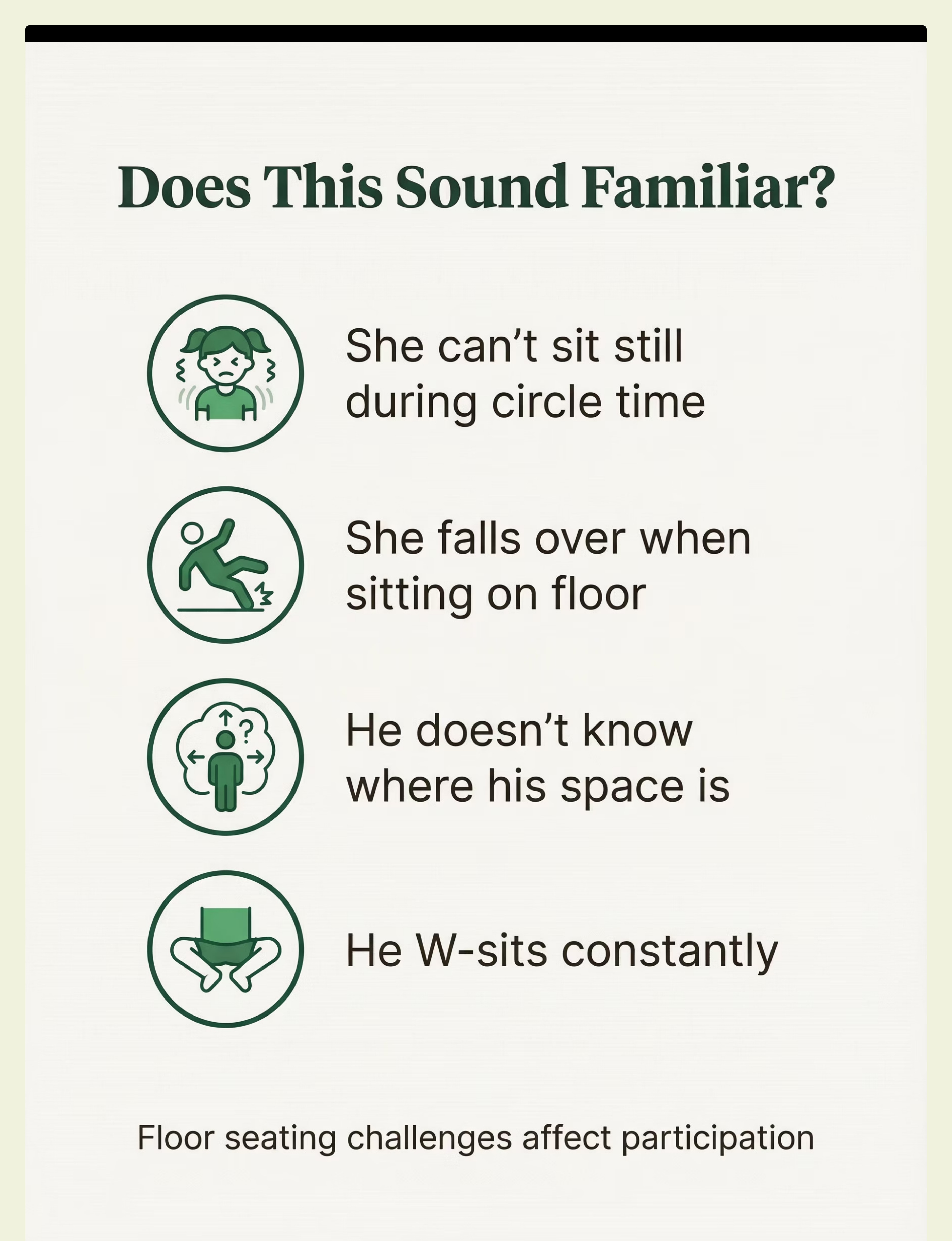
Does This Sound Familiar?
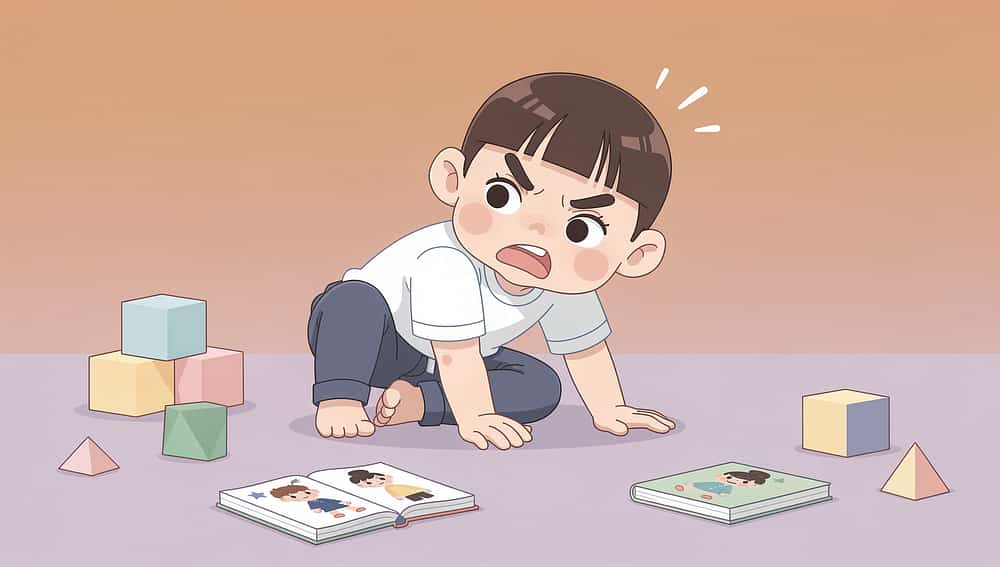
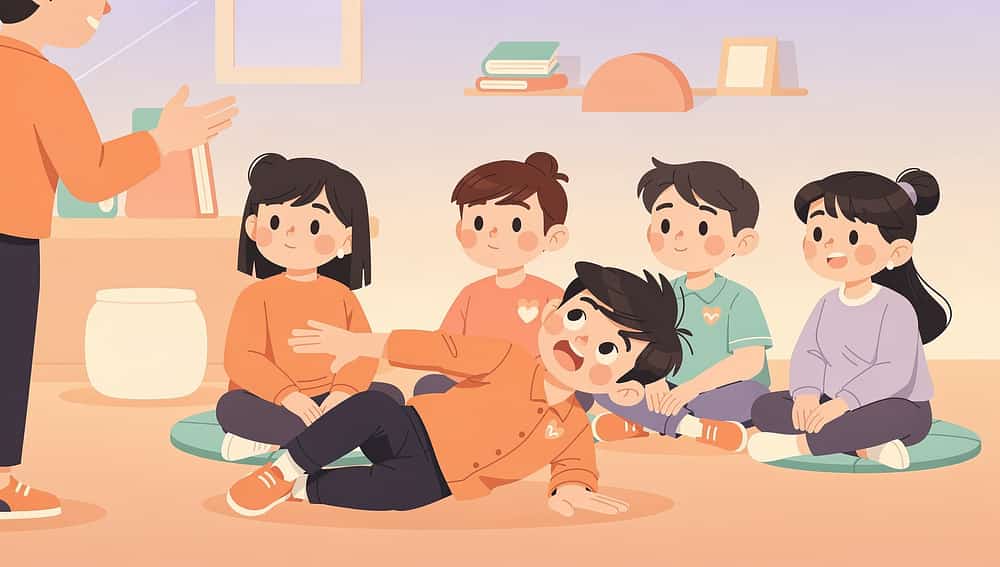
"She can't sit still during circle time"
"He W-sits constantly"
"She falls over when sitting on floor"
"He doesn't know where his space is"
"She can't maintain floor sitting"
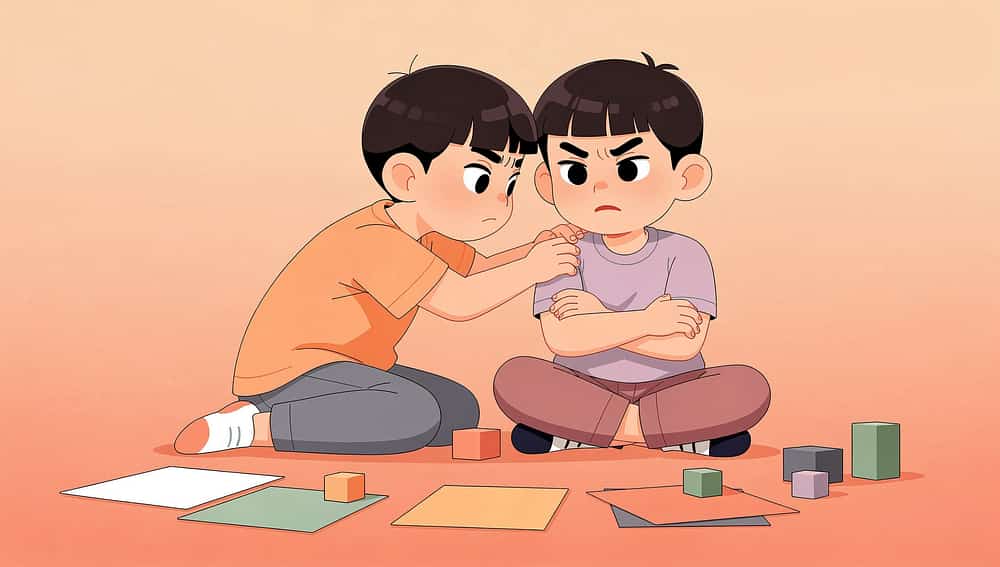
"He invades other children's space"
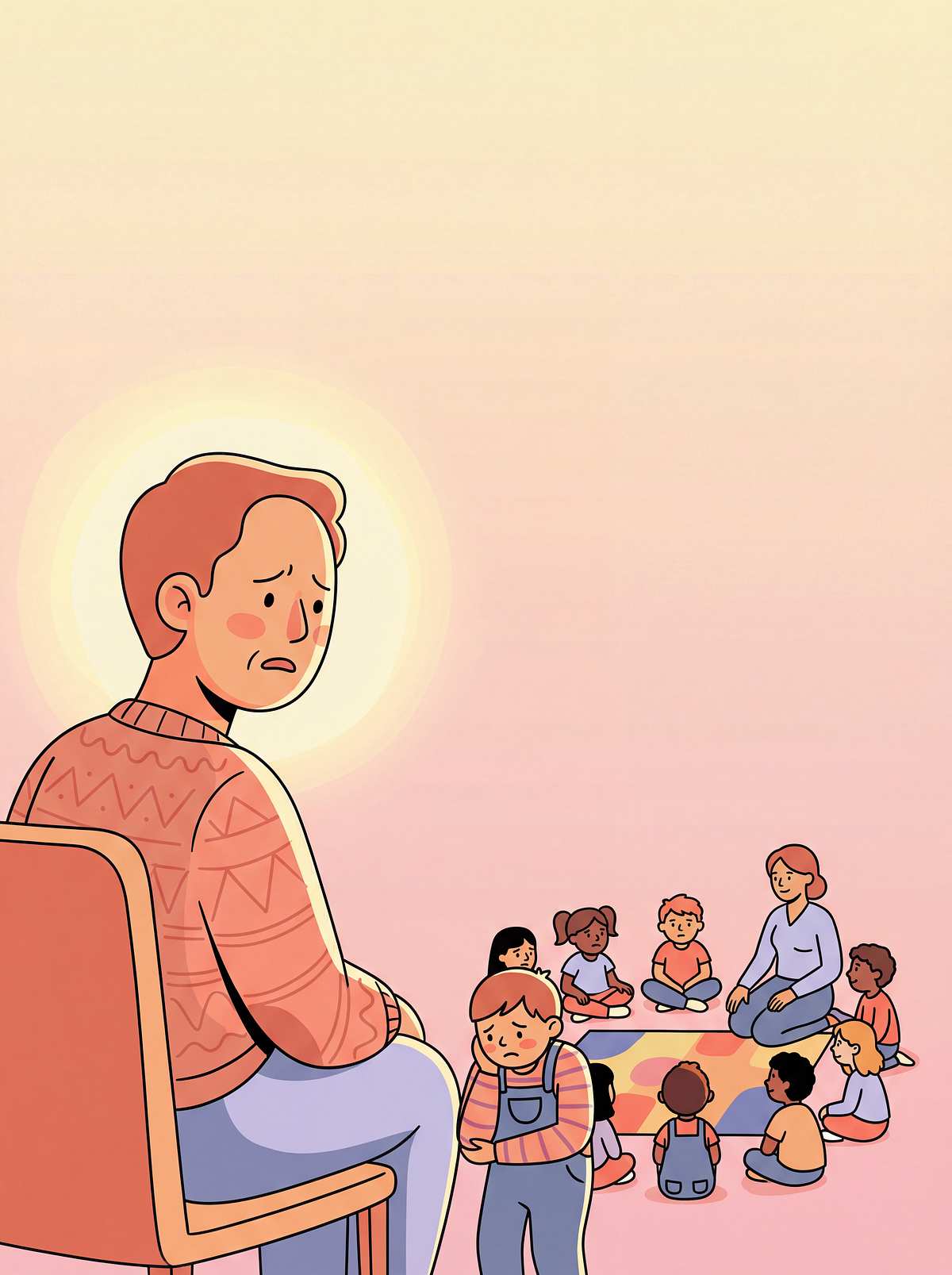
You're not alone. These are common challenges faced by many families and educators. Floor sitting requires core strength, body awareness, and the ability to regulate movement—skills that develop at different rates for every child.

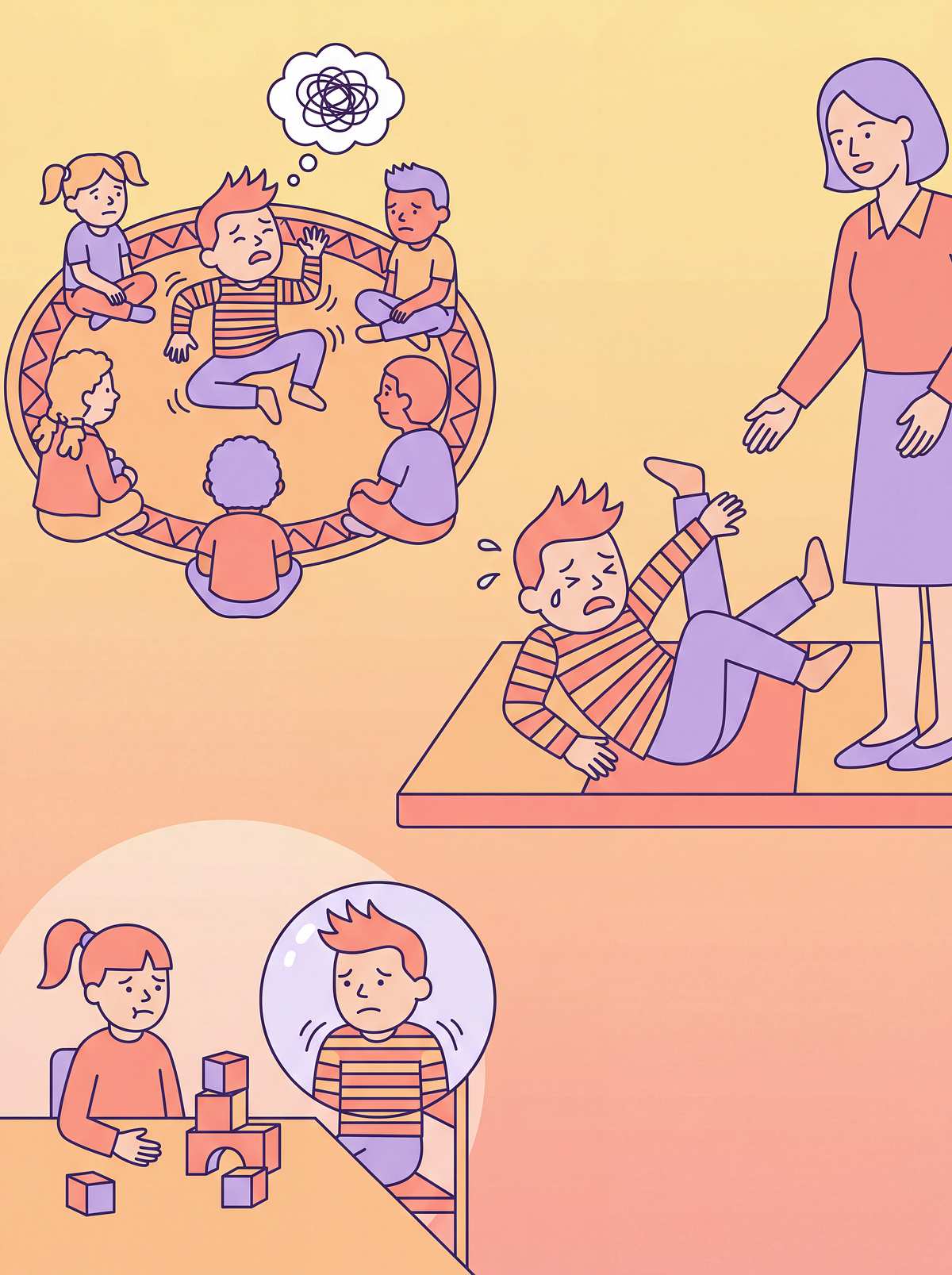
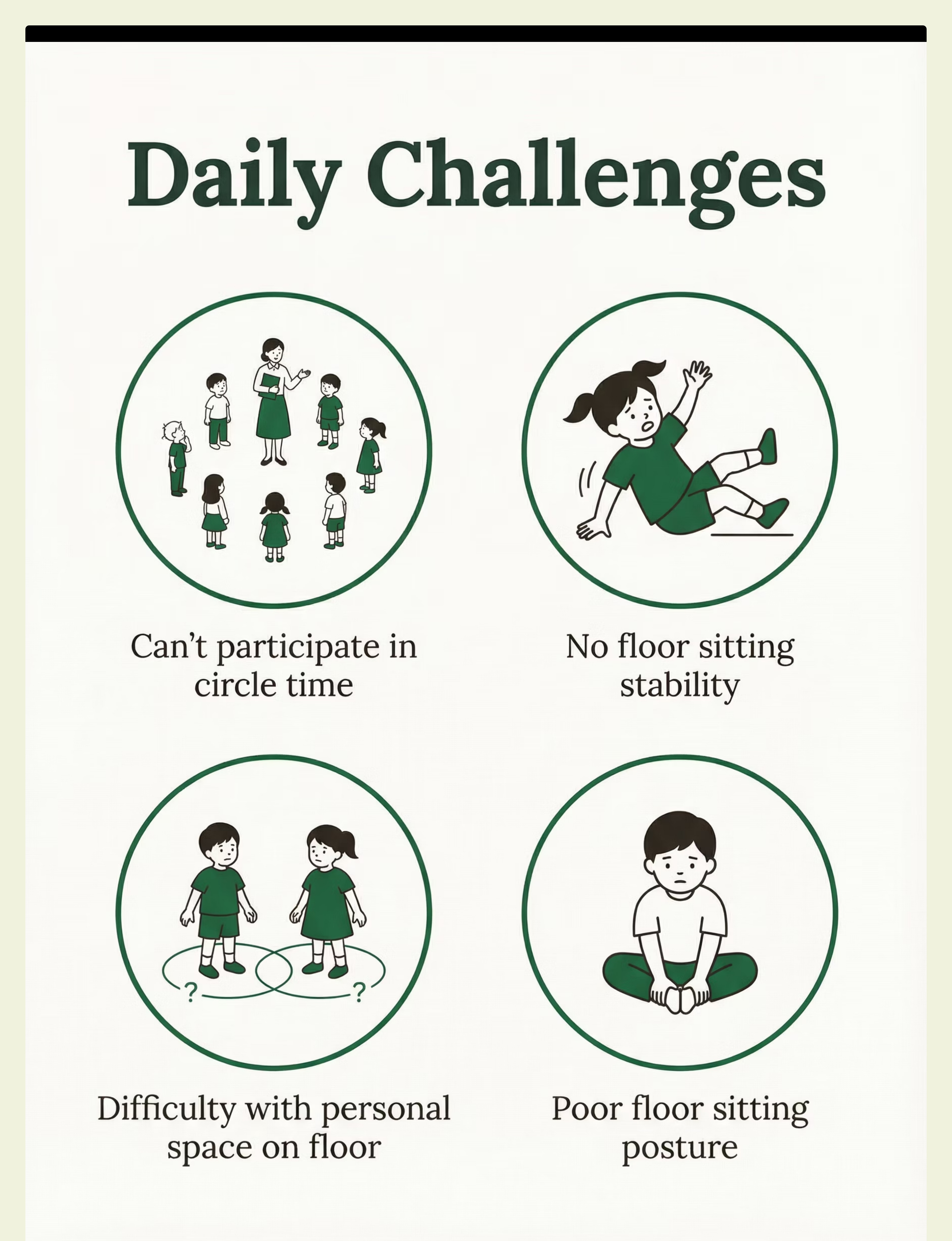
A Day Without the Right Support
Circle Time
Can't participate in circle time. Constantly moving, rolling, leaving the area. Missing group instruction and social connection.
Floor Stability
No floor sitting stability. Falls over repeatedly, can't maintain upright position. W-sits for compensation, limiting mobility.
Personal Space
Difficulty with personal space on floor. Invades others' areas, gets too close to peers, creates conflicts during group activities.
Posture Challenges
Poor floor sitting posture throughout the day. W-sitting becomes habitual. Back gets tired. Limited participation in all floor-based learning.
When floor sitting is a constant struggle, children miss out on critical learning opportunities and social interactions. The right seating support transforms these daily challenges into opportunities for engagement and success.

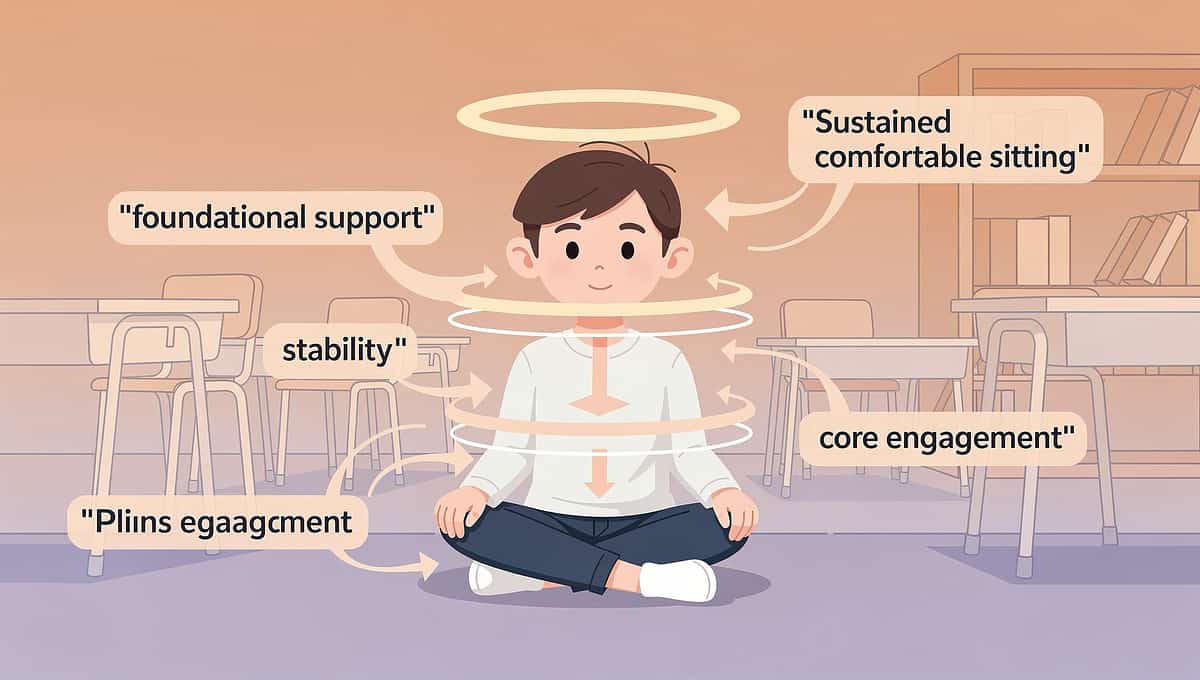
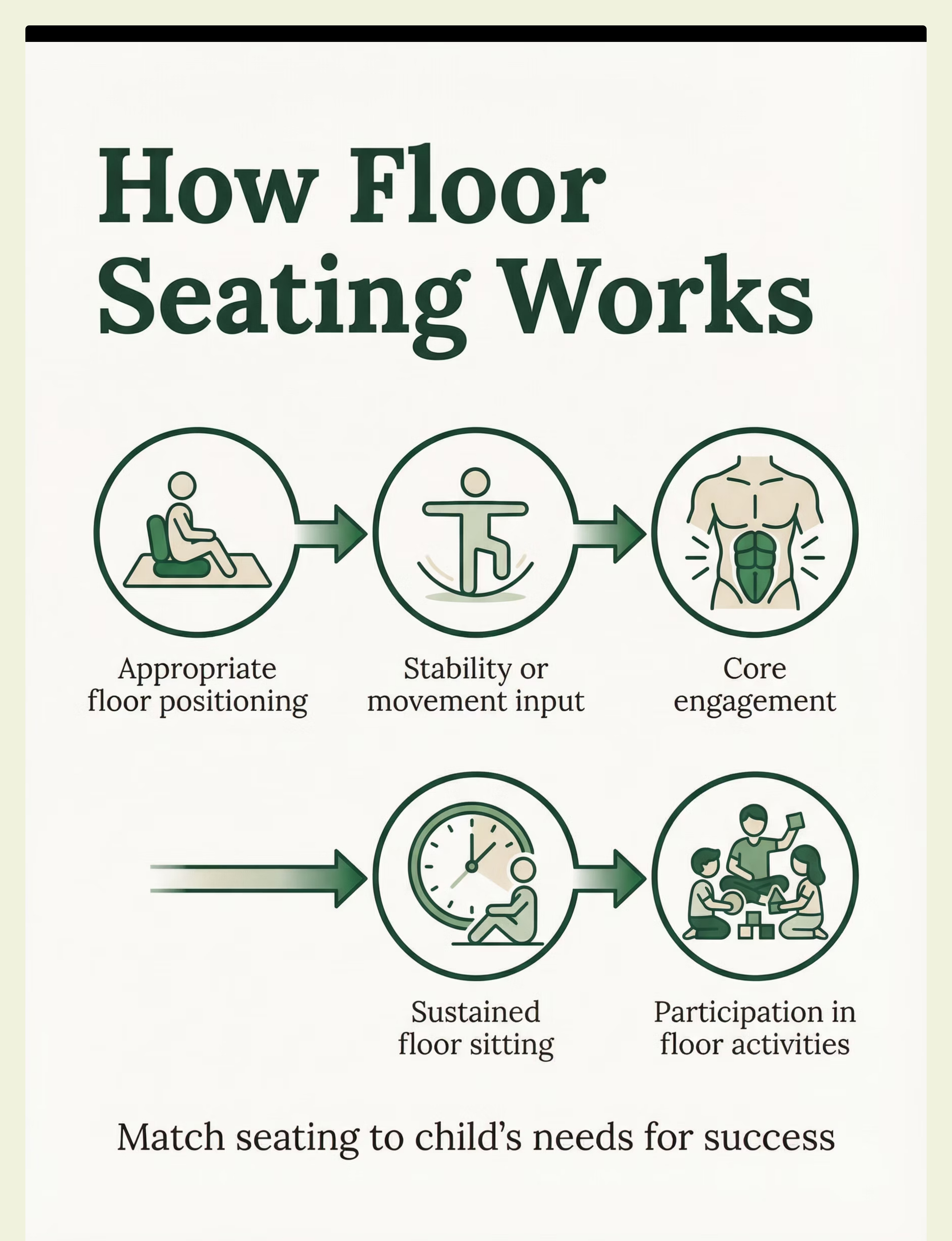
The Science Behind It
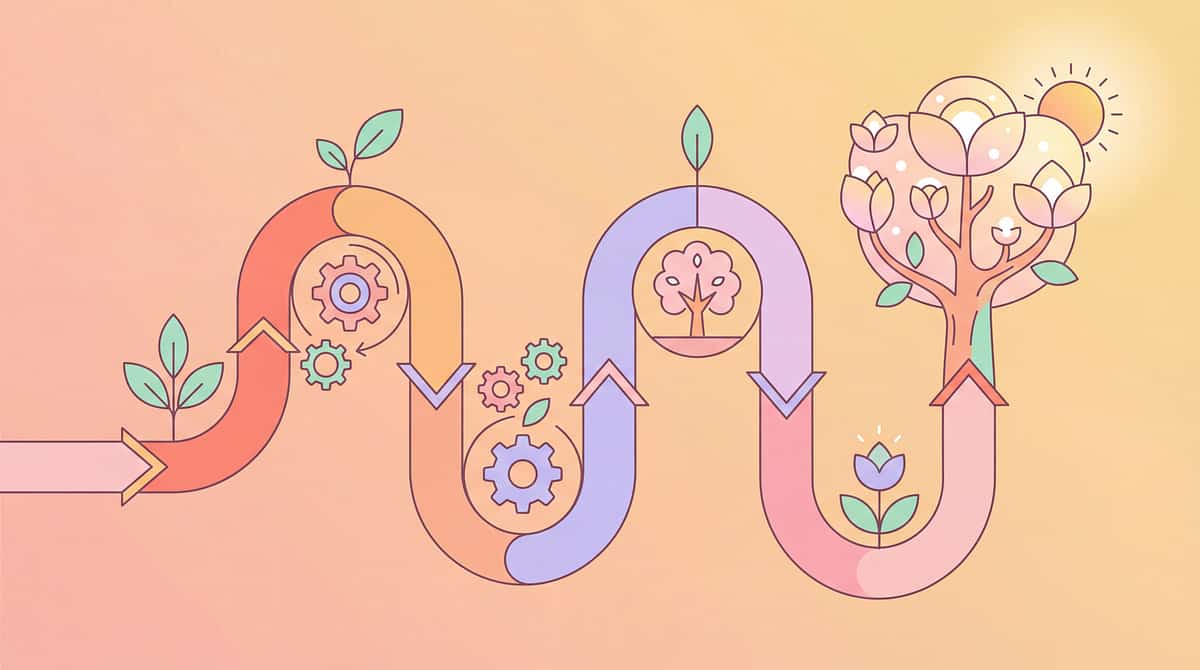
Appropriate Floor Positioning
Provides the foundational support, containment, or movement input matched to each child's unique needs
Stability or Movement Input
Creates either the stable base or dynamic movement that enables the child's body to engage optimally
Core Engagement
Activates postural muscles and core strength, building the physical foundation for sustained sitting
Sustained Floor Sitting
Enables comfortable, extended participation in ground-level activities without fatigue or constant repositioning
This progression leads to meaningful participation in floor activities and overall comfort during ground-level work. When positioning is matched to needs, children can focus on learning rather than struggling to maintain their bodies in space.
Floor Positioning
Core Strength
Vestibular/Proprioceptive Input
Participation
Comfort

How to Use It Right
1
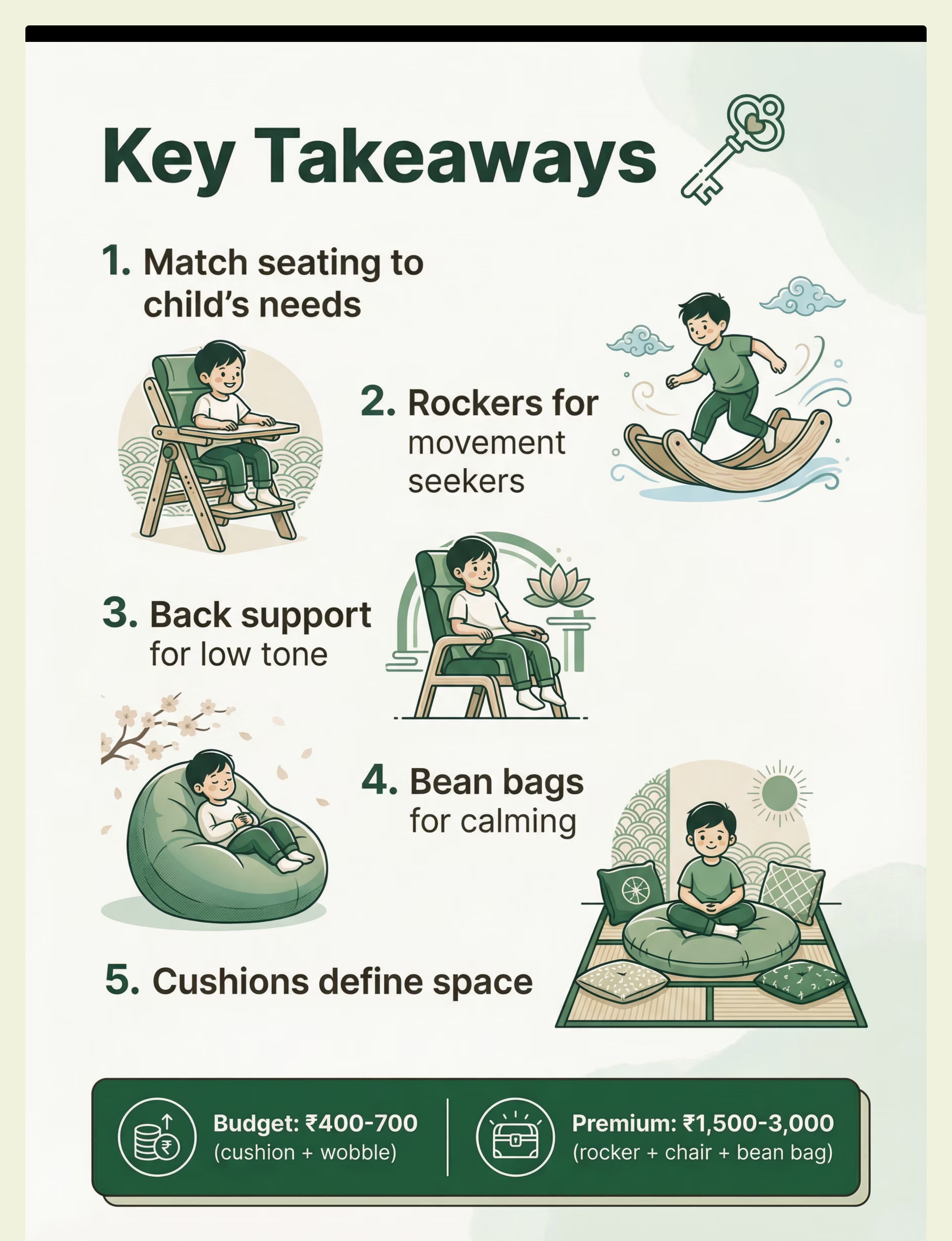
Match Seating to Activity Demands
Consider what the activity requires. Listening activities may need calming support, while group work needs clear boundaries. Active learning might benefit from movement options.
2
Rockers for Movement Seekers
Children who constantly shift, rock, or move during floor time often benefit from scoop rockers that provide contained vestibular input while keeping them in their space.
3
Back Support for Low Tone
Children with low muscle tone or weak core strength need floor chairs with back support to maintain upright positioning without constant effort and fatigue.
4
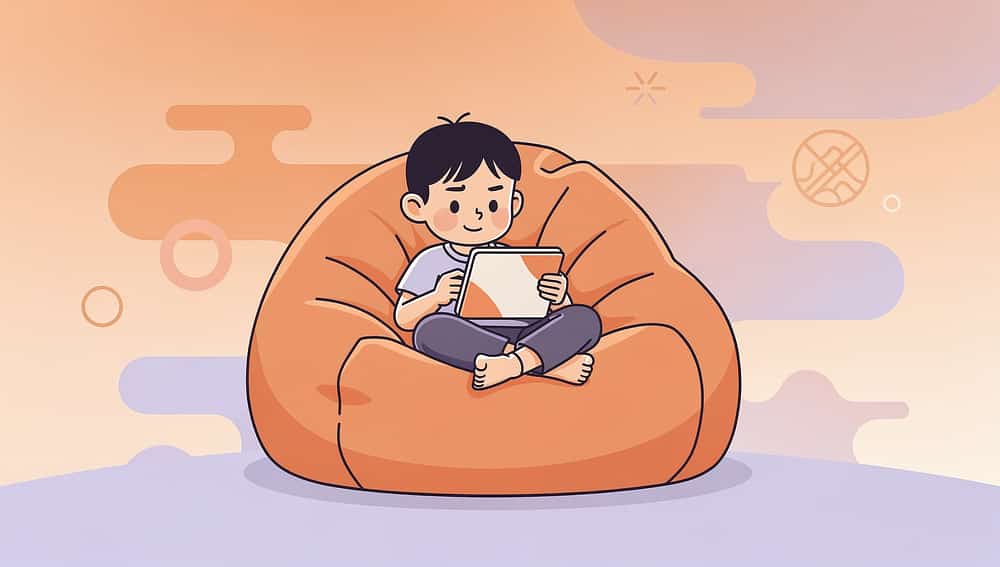
Bean Bags for Calming/Reading
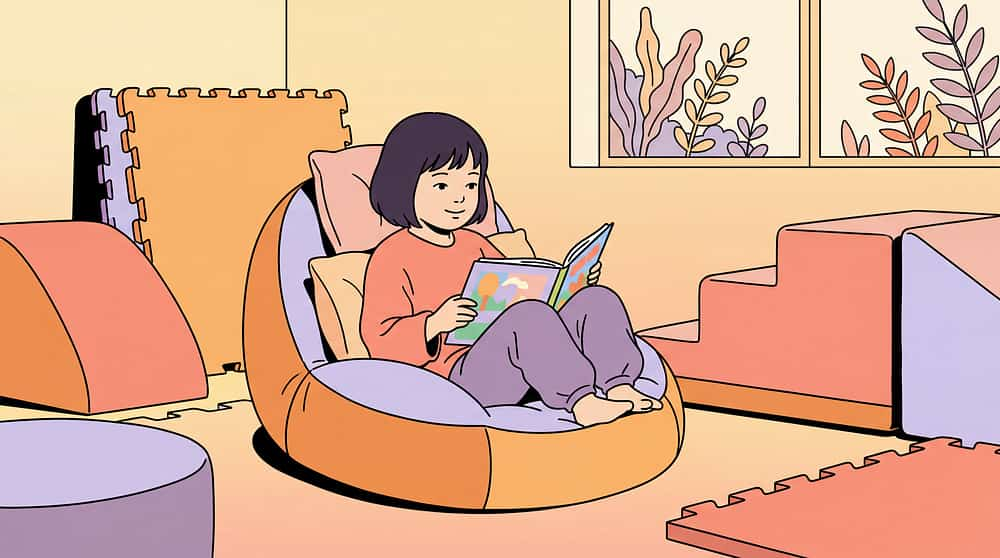
Deep pressure from bean bags provides proprioceptive input that supports calm, focused activities like independent reading or listening to stories.
5
Consider W-Sitting Correction if Needed
If a child W-sits for stability, provide alternative seating that offers support, reducing the need for this compensatory posture that can affect hip and leg development.
6
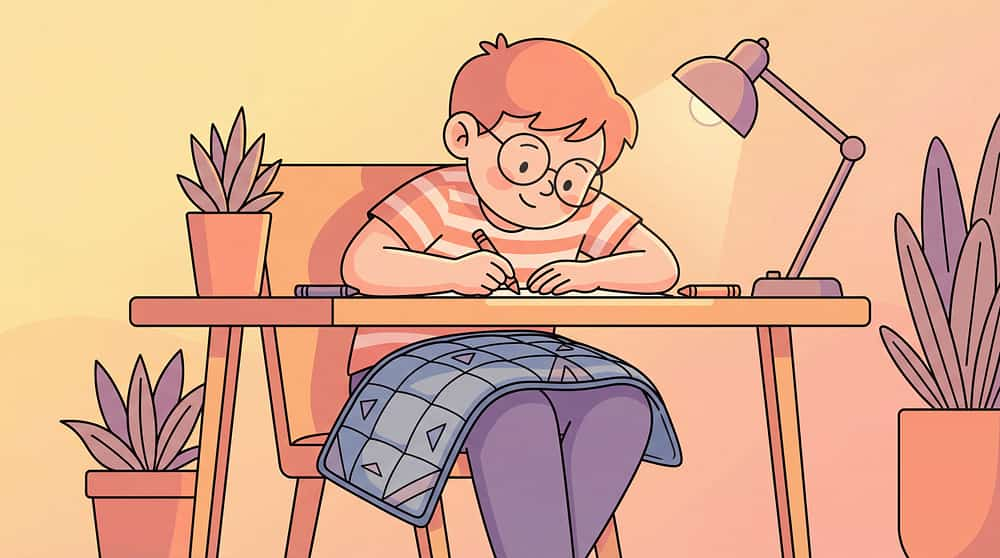
Define Personal Space with Cushion
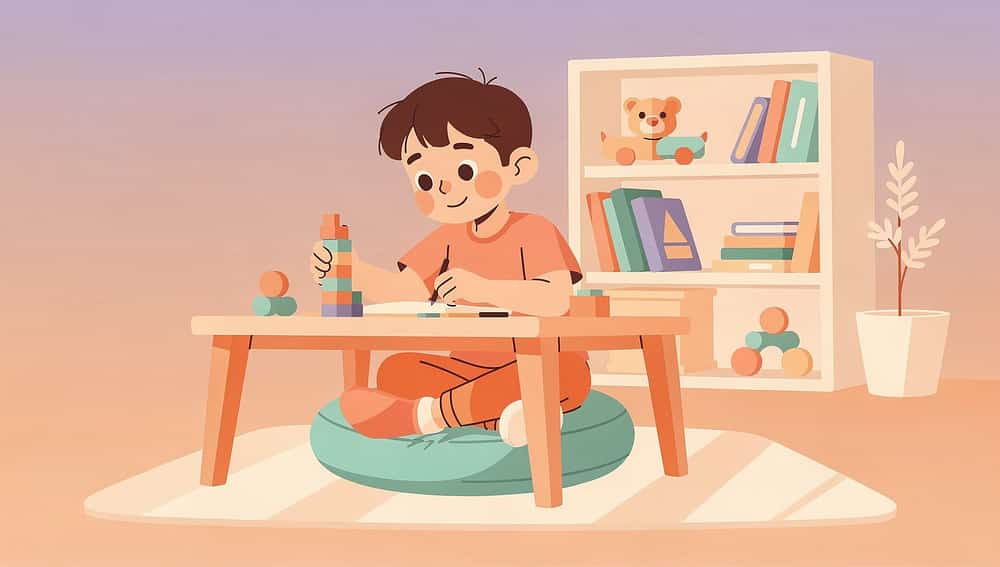
A designated cushion or mat provides clear visual and tactile boundaries, helping children understand where their space begins and ends during group activities.
Duration: Use during floor activities as needed. Most children benefit from 15-30 minute sessions initially, building up tolerance over time.
Expert Perspective
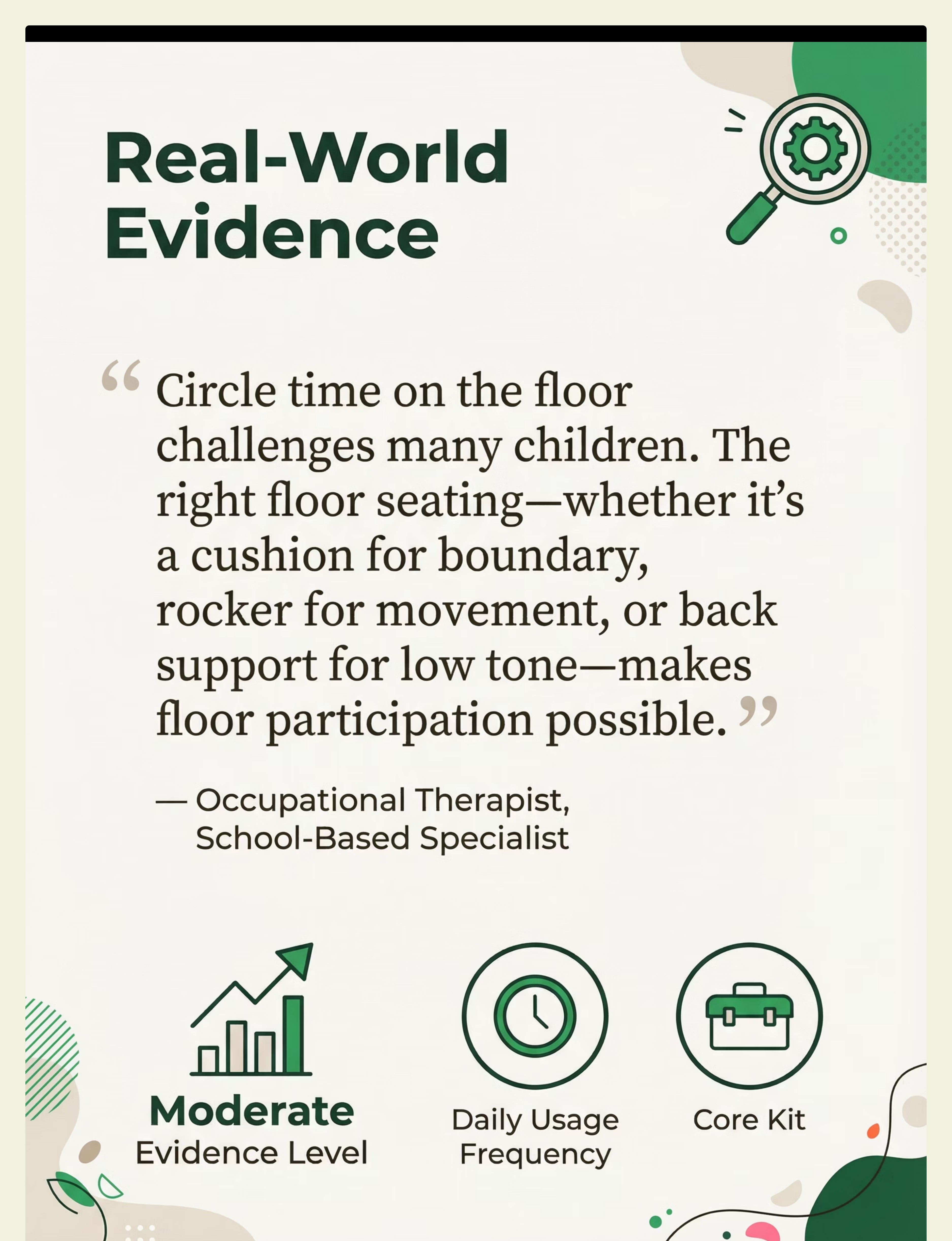
"Circle time on the floor challenges many children. The right floor seating—whether it's a cushion for boundary, rocker for movement, or back support for low tone—makes floor participation possible."— Occupational Therapist, School-Based Specialist

OT + SpEd Recommended
Moderate Evidence
Rank #2 in Category
Daily Use in Schools
This classification reflects extensive field use across inclusive classrooms and therapy settings throughout India, where occupational therapists and special educators consistently rely on floor seating options as a core intervention for participation and positioning.

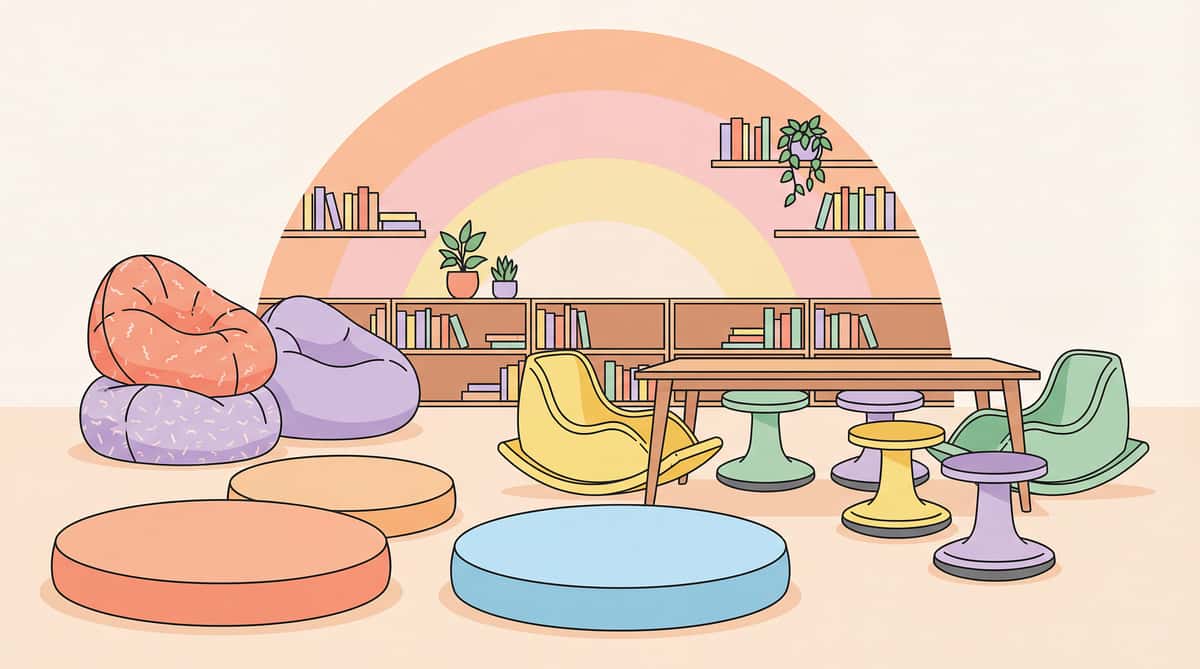
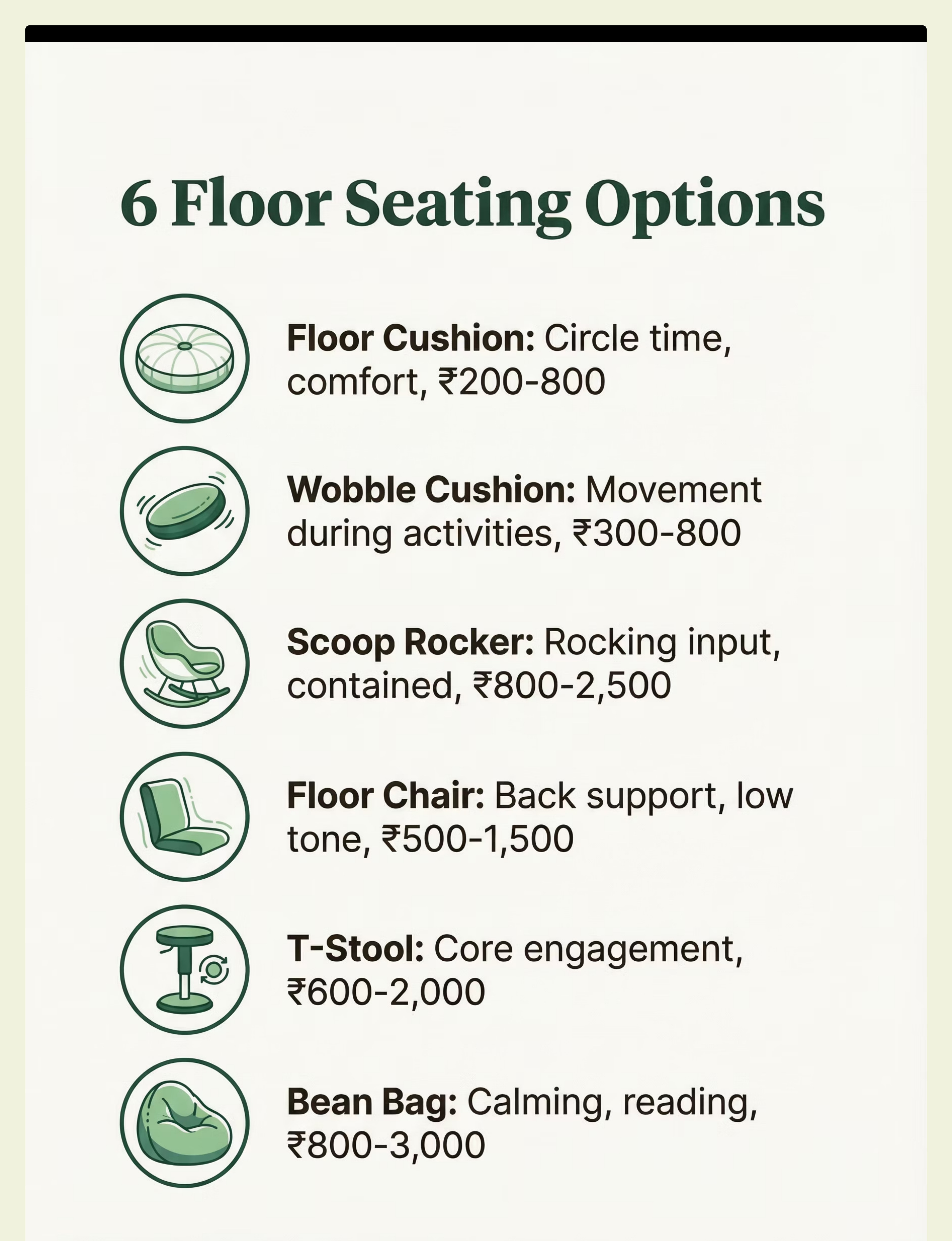
Choose Your Option (6 Variants)
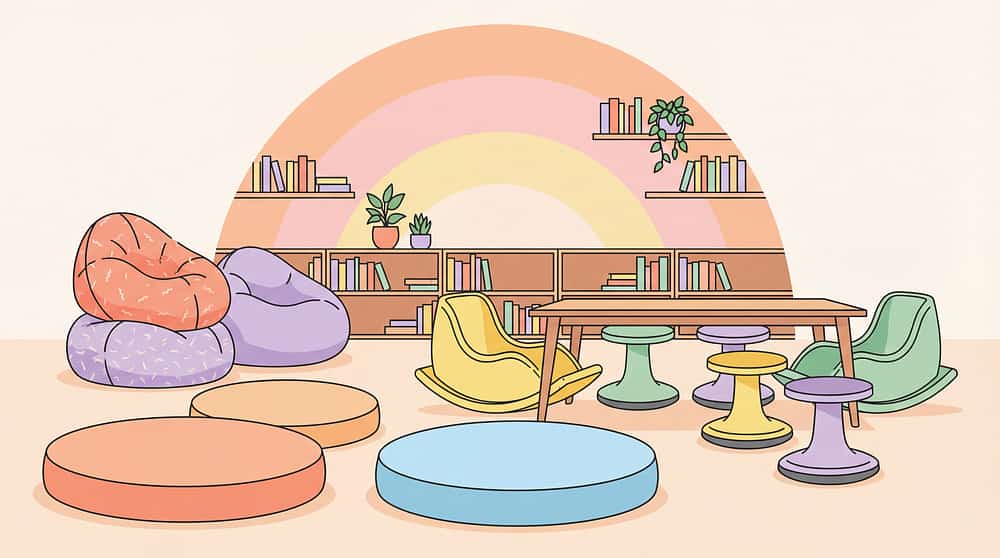
Floor Cushion/Pillow
Best for: Circle time, floor work, comfort. Highly portable. Ages 2+ years. Price: ₹200–800.
Wobble Cushion on Floor
Best for: Movement during floor activities in any setting. Highly portable. Ages 3+ years. Price: ₹300–800.
Scoop Rocker / Floor Rocker
Best for: Rocking input and contained seating. Low portability. Ages 3-12 years. Price: ₹800–2,500.
Floor Chair / Stadium Seat
Best for: Back support and low tone on the floor. Medium portability. Ages 4+ years. Price: ₹500–1,500.
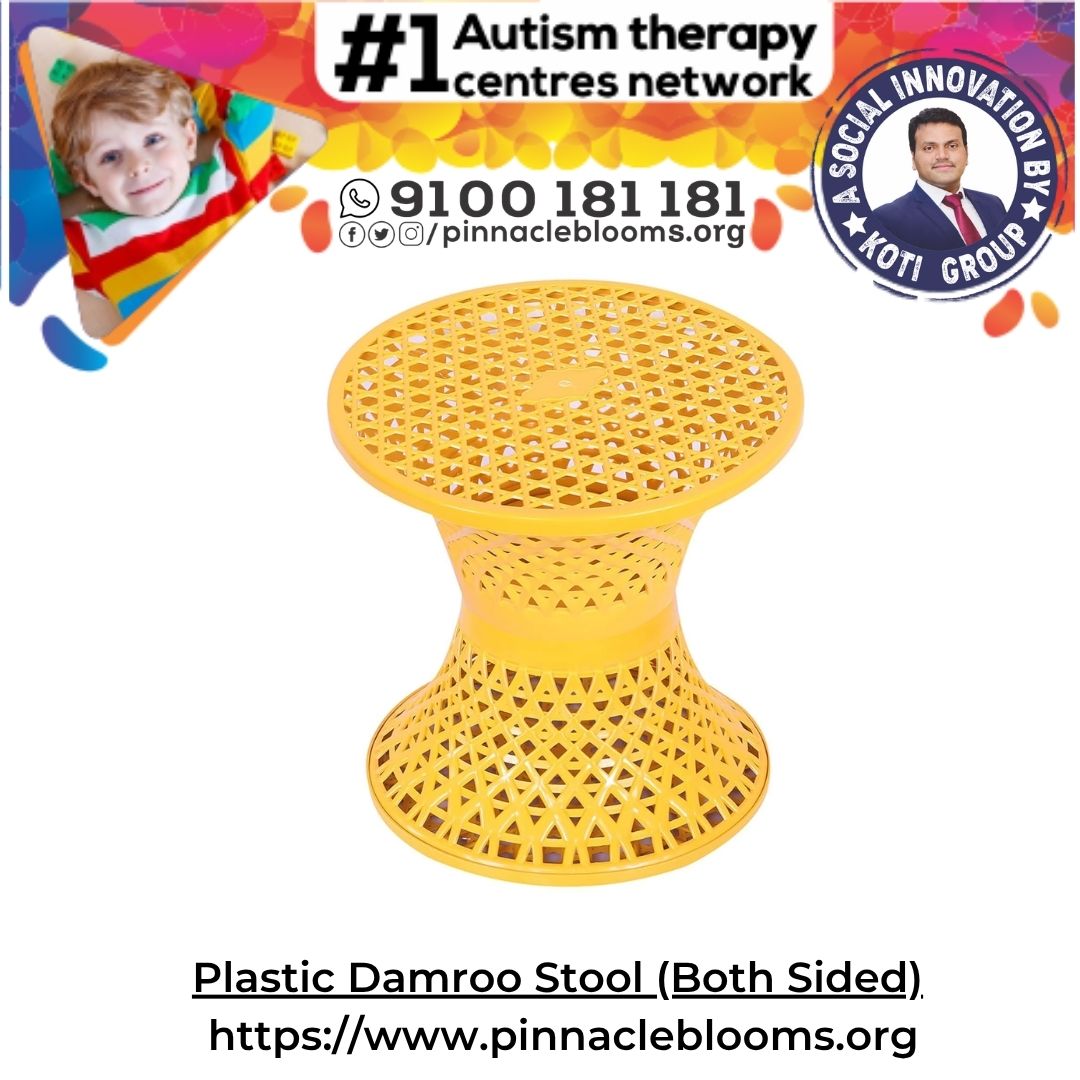
T-Stool / Wobble Stool
Best for: Core engagement, movement, and floor-height work. Medium portability. Ages 4+ years. Price: ₹600–2,000.
Bean Bag (Child-Sized)
Best for: Calming, proprioceptive input, and reading. Low portability. Ages 2+ years. Price: ₹800–3,000.
Floor seating solutions range from simple cushions that define personal space to sophisticated rockers that provide vestibular input. Each variant serves specific needs—select based on your child's goals, challenges, and the activities they'll be engaging in.
How to Choose
By Goal: Calming (bean bag, cushion) | Movement (rocker, wobble) | Support (floor chair) | Core challenge (T-stool)
By Setting: Classroom (cushions, rockers) | Home (all options) | Therapy (specialized supports) | Outdoor (portable options)
By Portability: High (cushions, wobbles) | Medium (floor chairs, stools) | Low (rockers, bean bags)
Specifications & Types Guide
Explore various floor seating solutions, each designed to meet specific needs and enhance comfort, focus, and engagement for children.

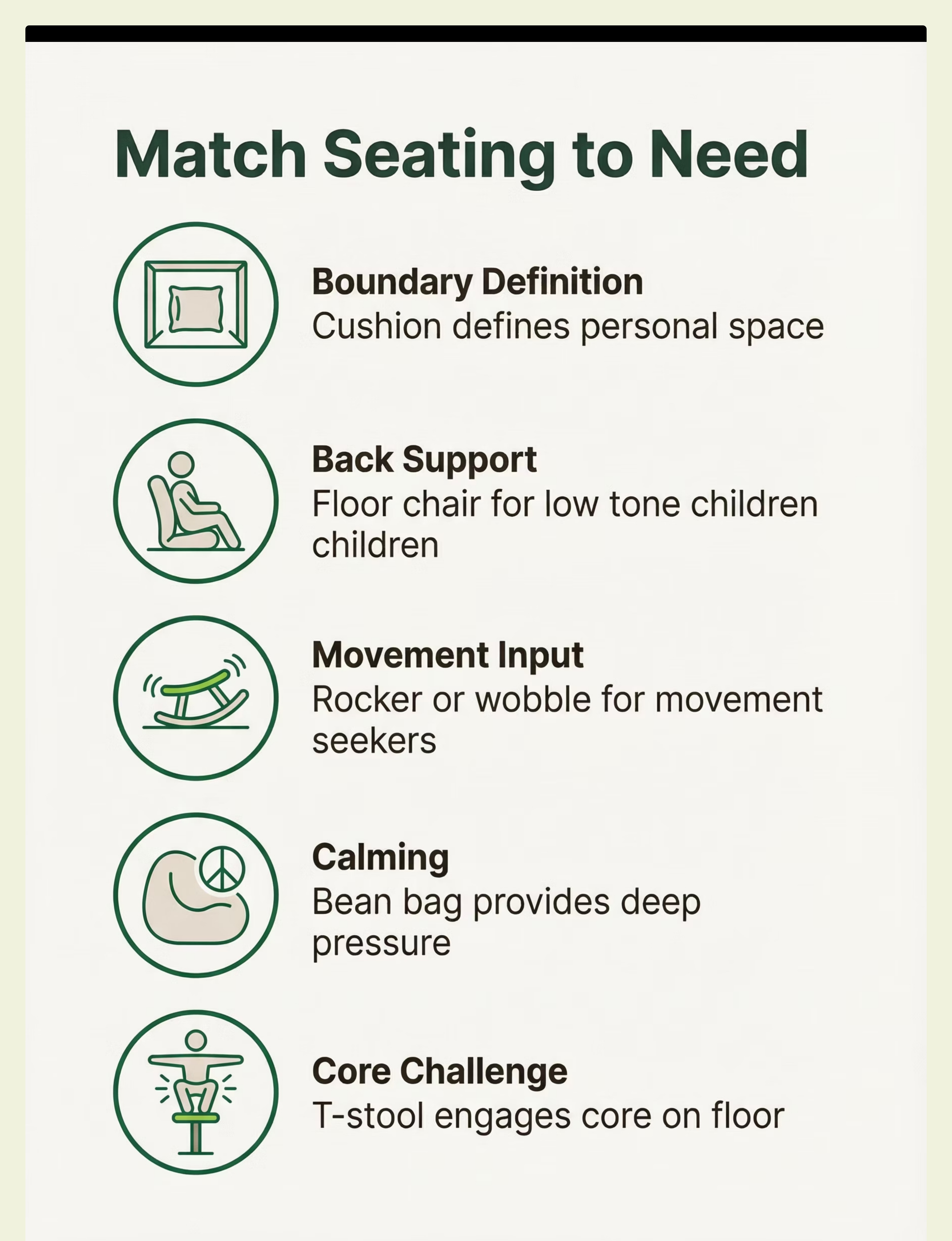
Boundary Definition
Cushions define personal space visually and tactilely for children who struggle with spatial awareness, providing a clear individual boundary.

Back Support
Floor chairs provide crucial back support for children with low tone who cannot maintain an upright position independently, fostering better posture.

Movement Input
Rockers or wobble cushions offer essential movement input for children who seek vestibular stimulation, helping them stay engaged during seated activities.

Calming
Bean bags provide deep pressure and proprioceptive input, which can be highly calming and aid in regulation and focus for sensory-seeking children.

Core Challenge
T-stools actively engage core muscles, building strength and stability during floor-level work, promoting better posture and endurance.
Materials & Features
Materials: Foam, fabric, plastic (for rockers and wobble bases), various types of bean bag fill (e.g., EPS beads, memory foam).
Key Features to Consider
- Appropriate for various floor level activities and tasks
- Matches child's specific positioning and sensory needs
- Clearly defines personal space to minimize distractions
- Durable and robust for daily classroom or home use
- Easy to clean and maintain for hygiene and longevity
- Age-appropriate sizing to ensure proper fit and comfort
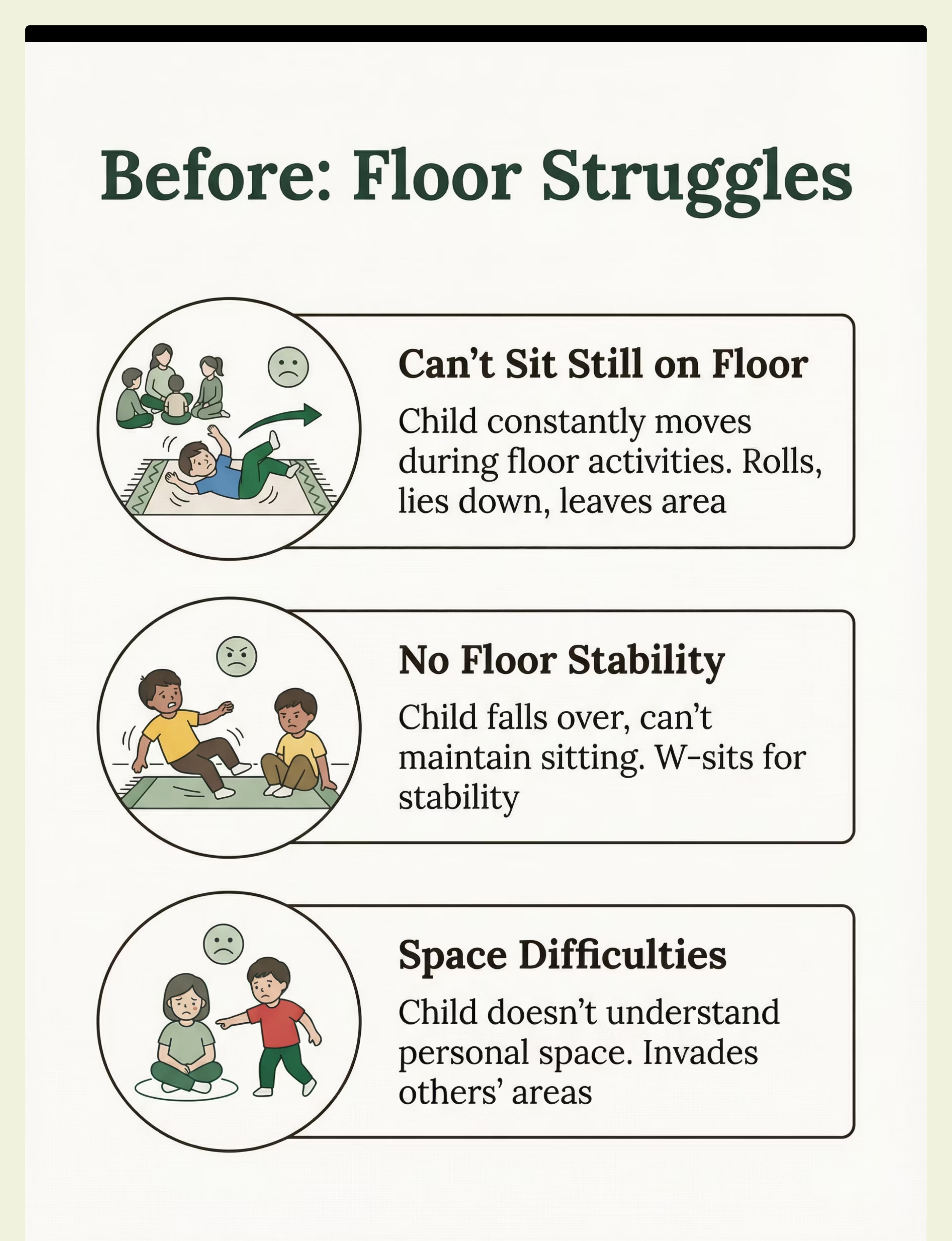
The Struggle (Before)

Can't Sit Still on Floor
Situation: Child constantly moves during floor activities. Rolls, lies down, leaves area. Can't participate with group.
Experience: Continuous redirection needed. Missing instruction. Other children distracted. Teacher frustrated.
Emotion: Restlessness, exclusion

No Floor Stability
Situation: Child falls over, can't maintain sitting. Weak core, low tone. W-sits for stability. Limited participation.
Experience: Exhausting to stay upright. Can't focus on learning. Compensatory positions affecting development.
Emotion: Instability, falling

Space Difficulties
Situation: Child doesn't understand personal space. Invades others' areas. Gets too close. Creates conflict.
Experience: Frequent peer conflicts. Social struggles. Difficulty with group activities. Behavior misunderstood.
Emotion: Conflict, boundary issues
Without appropriate floor seating support, children experience daily frustration and exclusion from group learning experiences. These challenges compound over time, affecting academic participation, social development, and self-confidence.

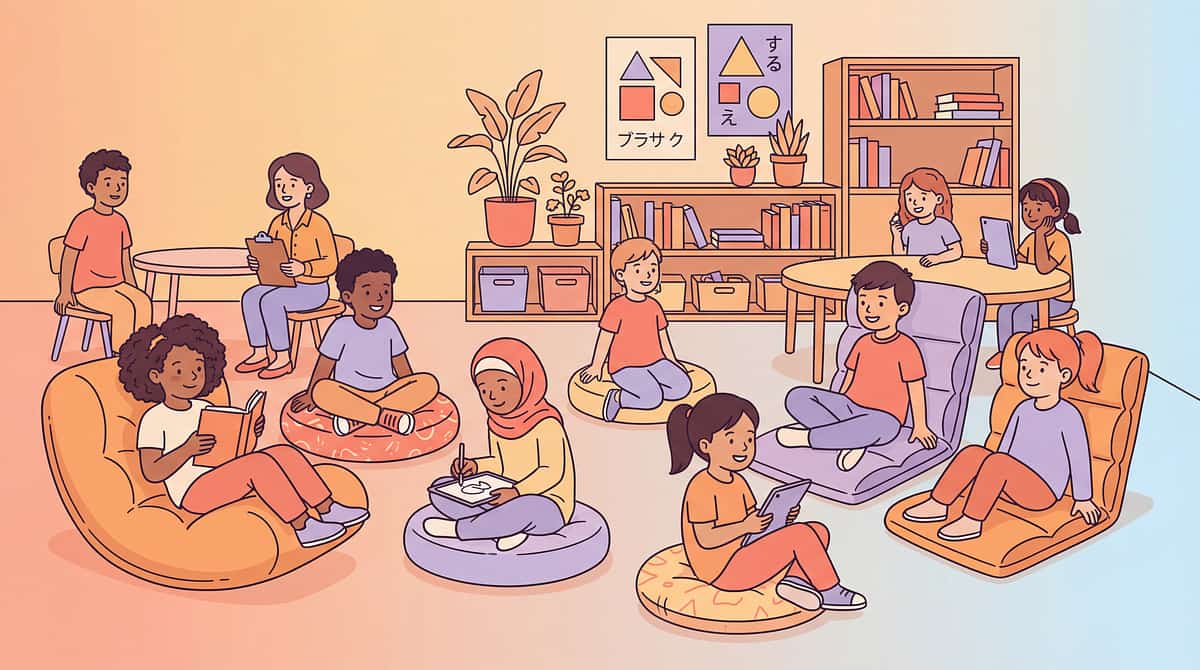
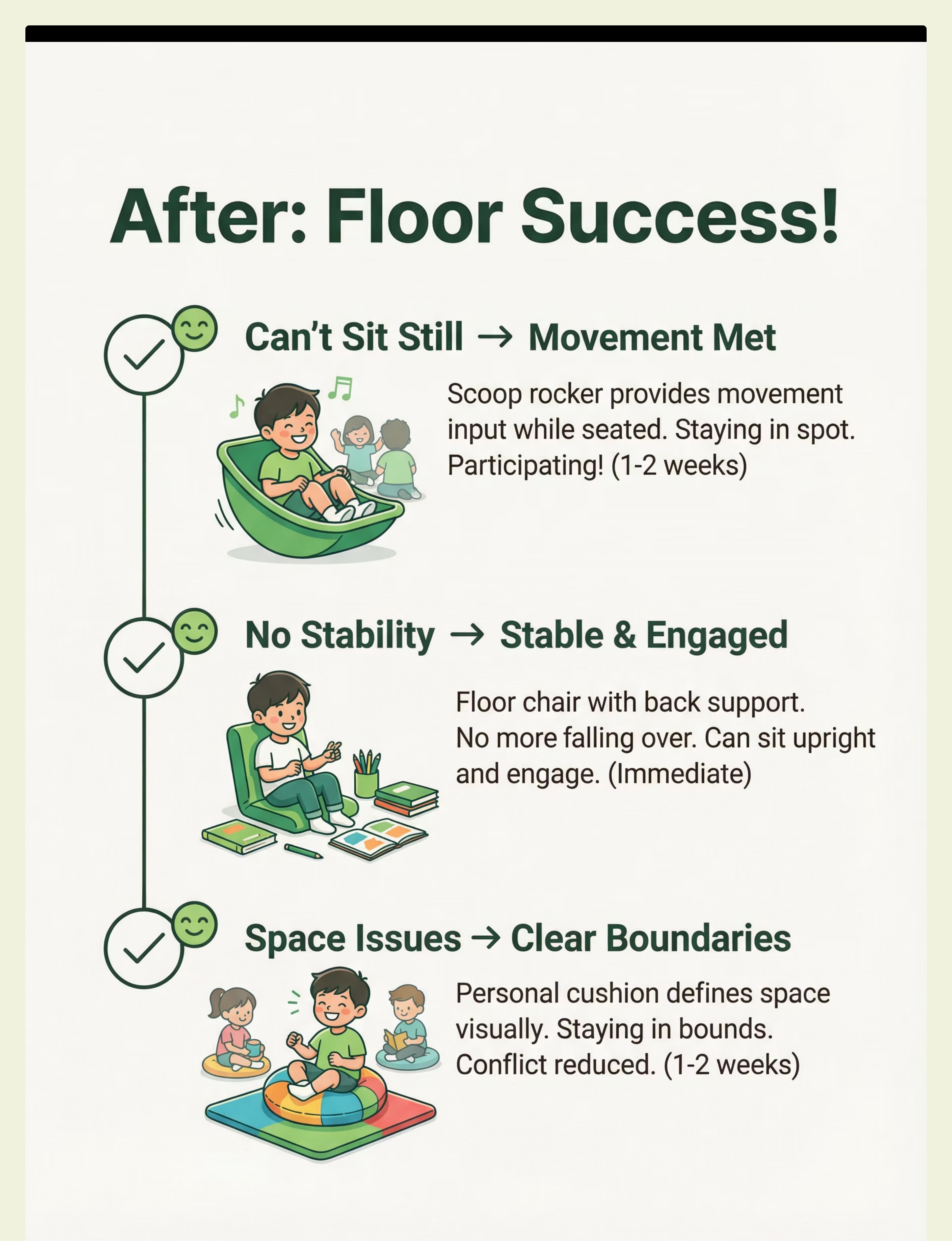
The Breakthrough (After)
Can't Sit Still on Floor
Situation: A scoop rocker provides regulated movement input while the child is seated. They can rock subtly, staying in their spot and actively participating! Experience: Movement needs are met through contained rocking. The child can now focus on the activity, feeling included as part of the group, and learning effectively. Emotion: Movement needs met, active participation (Improvement in 1-2 weeks)
No Floor Stability
Situation: A floor chair with robust back support offers essential stability. No more falling over; the child can sit upright and engage comfortably. Experience: Comfortable, supported positioning allows energy to be directed towards learning instead of constantly struggling to stay upright. This leads to improved posture and confident participation. Emotion: Stable, confident participation (Immediate - 1 week)
Space Difficulties
Situation: A personal cushion clearly defines the child's space visually. The child understands and respects their spot, staying within bounds, which significantly reduces conflict. Experience: Clear boundaries are understood, leading to less peer conflict and more positive group experiences. This fosters better social understanding and development. Emotion: Clear boundaries, social peace (Improvement in 1-2 weeks)
With appropriately matched floor seating, transformation happens quickly. Children move from struggling and excluded to comfortable and participating, often within just one to two weeks of consistent use.

What to Expect (Realistic Timelines)
Immediate
Floor seating matched to needs
The right seating option provides immediate support—a rocker contains movement, a floor chair provides stability, a cushion defines space. Benefits are apparent from first use.
Immediate
Personal space defined
Visual and tactile boundaries from cushions or mats immediately help children understand their designated space, reducing conflicts and promoting spatial awareness.
1-2 weeks
Floor sitting tolerance increases
Within 1-2 weeks, children can sit comfortably for longer periods. What started as 5 minutes extends to 15-20 minutes as their bodies adapt to appropriate support.
1-2 weeks
Participation in floor activities
Active engagement in circle time, story time, and group floor work emerges as positioning challenges resolve. Children can focus on content rather than body management.
1-2 weeks
Movement needs met during floor time
For movement seekers, rockers and wobble options provide the vestibular input needed while maintaining participation. Self-regulation improves within 1-2 weeks.

Is This Right for My Child? (2-Minute Check)
Does your child have difficulty with floor sitting?
If yes, this indicates: Floor seating supports needed
Confidence score: 95% match for floor seating solutions
Does your child need movement during floor activities?
If yes, this indicates: Rocker or wobble options
Confidence score: 90% match for dynamic seating
Does your child have weak core/fall over when floor sitting?
If yes, this indicates: Back support options
Confidence score: 88% match for supported seating
Does your child have difficulty with personal space on floor?
If yes, this indicates: Cushion for boundary definition
Confidence score: 85% match for space-defining options
3+ 'yes' answers = strong fit for floor seating interventions. Consider consulting with an occupational therapist for specific recommendations matched to your child's needs.

Common Questions (Honest Answers)
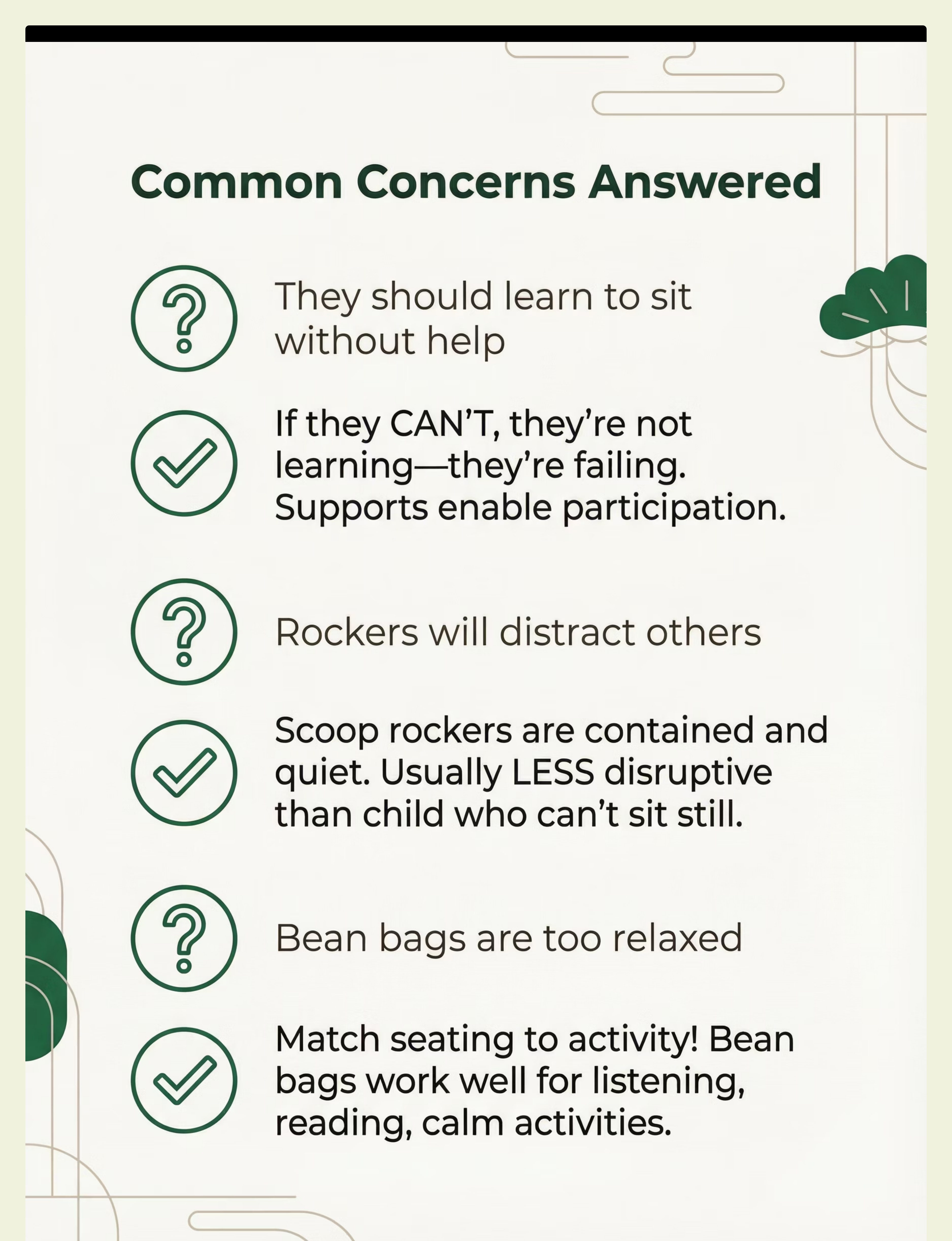
Q: They should learn to sit on the floor without help
A: If they CAN'T, they're not learning—they're failing. Supports enable participation, which builds skills. Remove supports when ready, not before. Think of it like glasses: we don't make children struggle to see in hopes they'll learn. We provide support so they can access learning.
Try this: Supports enable participation and skill building. Start with appropriate support, then gradually fade as competence grows.
Q: Rockers will distract others
A: Scoop rockers are contained and quiet. Rocking motion is subtle. Usually LESS disruptive than child who can't sit still without support. The alternative—a child constantly leaving their spot, rolling around, disrupting the group—is far more distracting to everyone.
Try this: Contained, quiet movement is less disruptive than struggling without support.
Q: Bean bags are too relaxed for learning
A: Depends on the child and activity! Bean bags provide calming input for some. For listening, reading, calm activities they work well. Not for active work requiring alertness. Match the seating to the task demands and the child's sensory needs.
Try this: Match seating to activity; bean bags work well for calm, focused tasks like reading.
Q: Cushion just marks a spot—how does that help?
A: Visual boundaries are powerful! Child sees and feels their space. Provides proprioceptive awareness through physical contact. Simple but effective for space difficulties. Many children who invade others' space simply don't understand where boundaries are—a cushion makes it concrete and obvious.
Try this: Visual boundary + tactile awareness = clear personal space definition.

Usage Guide
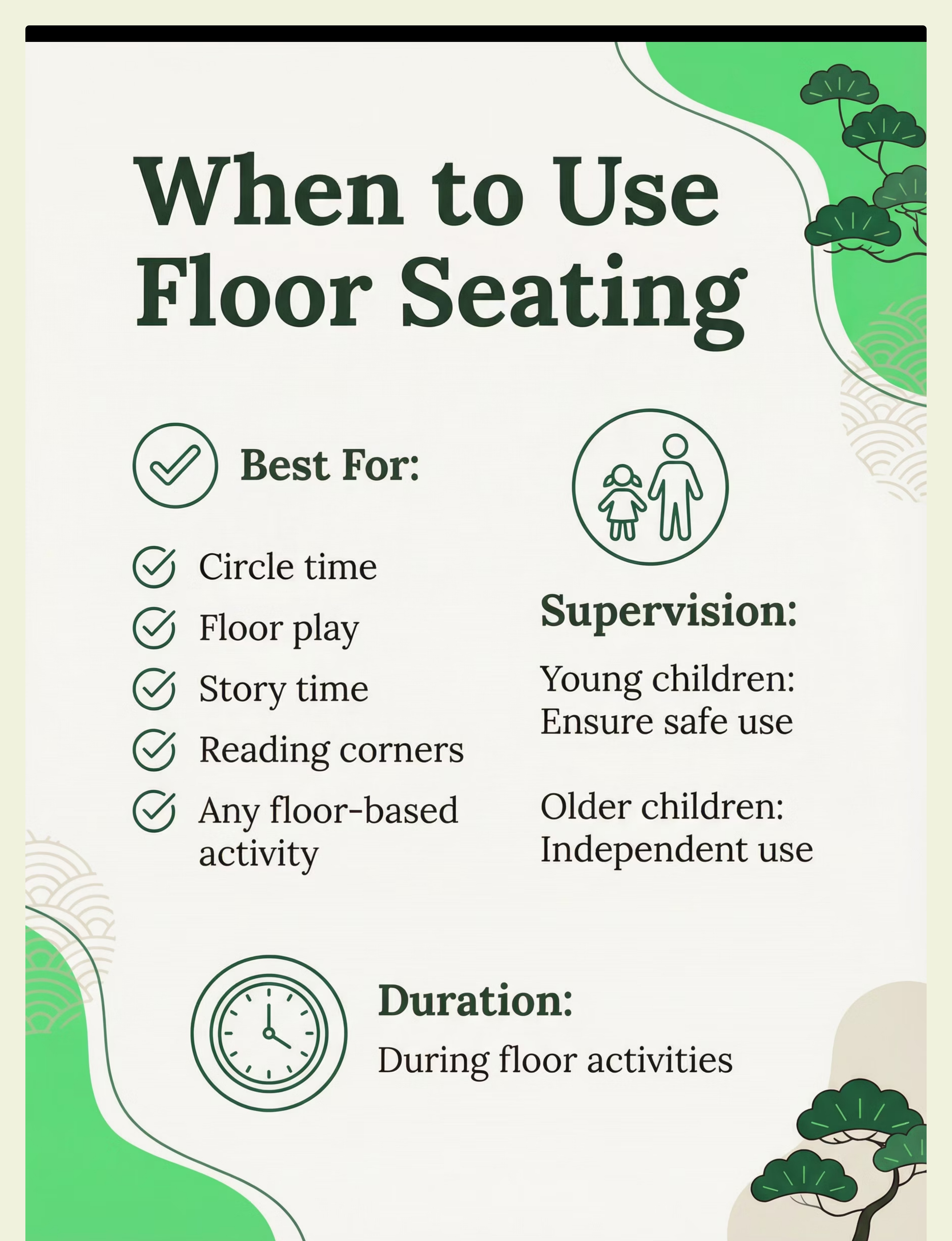
When to Use
Supportive seating can significantly enhance engagement and comfort in various floor-based activities:
Circle time
Essential for group instruction and social interaction on the floor.
Floor play
Supports engagement during play-based learning activities, promoting sustained focus.
Story time
Enables comfortable listening and attention during reading, reducing fidgeting.
Reading corners
Creates calming spaces for independent or shared reading, fostering a love for books.
Any floor-based activity
Wherever floor positioning is needed for learning or play, these supports optimize comfort and participation.
When Not to Use
While beneficial, there are specific situations where these seating supports may not be appropriate:
Standard floor sitting works
If a child can comfortably and attentively participate in floor activities without additional support.
Increased distraction
If the seating itself causes more distraction for the child or others than it provides benefit.
Activities requiring active movement
When tasks demand free movement, standing, or high levels of physical activity not suitable for contained seating.
Safety concerns
If the equipment poses a safety risk due to improper use, damage, or lack of supervision.
Supervision by Age
Young Children (2-5 years) | Ensure safe use. Check positioning. Monitor for appropriate use of equipment and provide immediate assistance as needed. | |
Older Children (6+ years) | Independent use once trained in proper handling and positioning. Occasional monitoring to ensure continued appropriate use and address any emerging issues. |
Duration
Use during floor activities as needed. Start with shorter sessions (10-15 minutes) and gradually increase as tolerance builds to 20-30 minutes or longer, adapting to individual needs and attention spans.
Settings
School
Home
Clinic
Therapy Center

Safety First
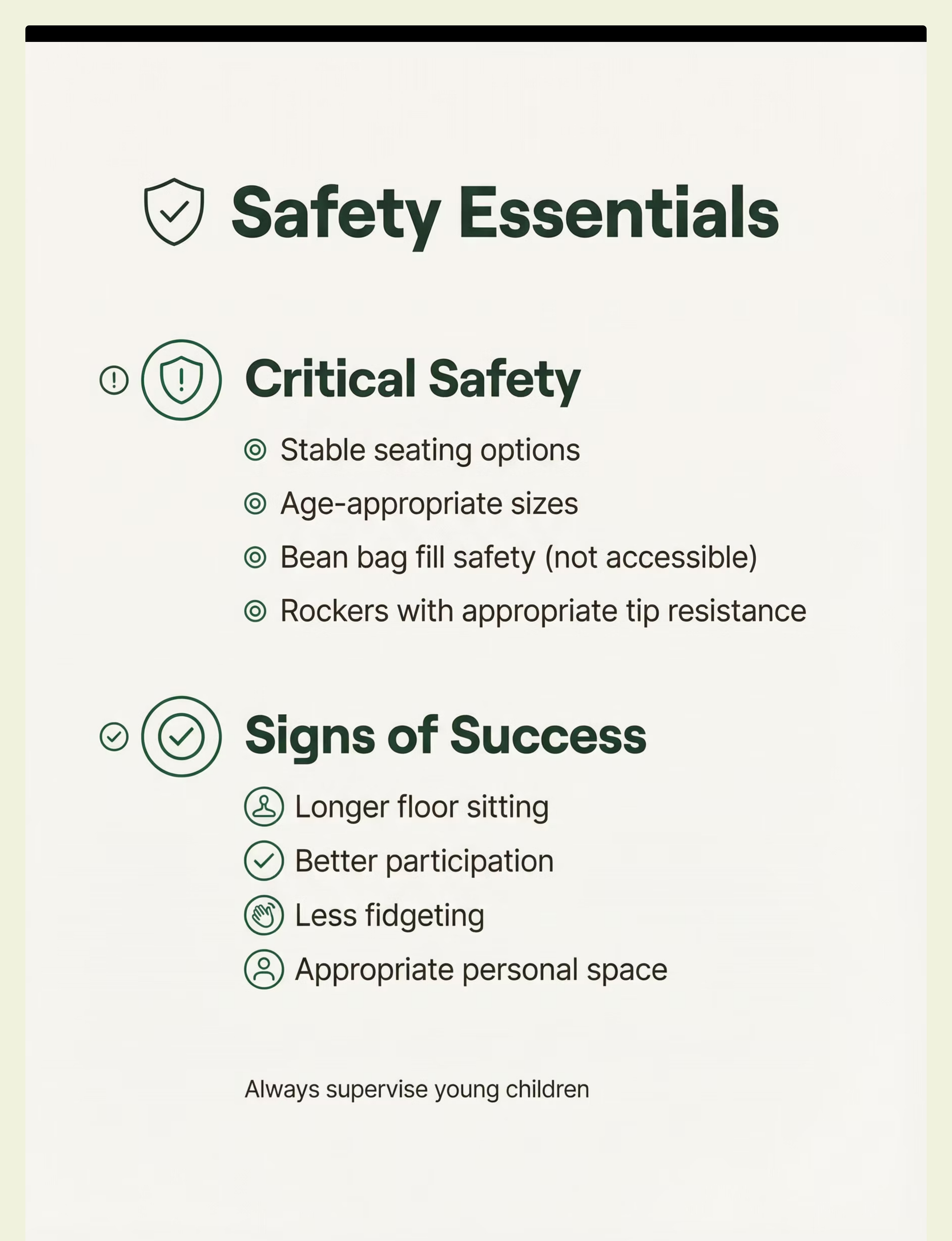
Critical Safety Features
- Stable seating options appropriate for child's size and abilities
- Age-appropriate sizes that fit the child properly
- Bean bag fill safety—ensure fill is not accessible to prevent choking hazard
- Rockers with appropriate tip resistance for child's weight and movement patterns
Important Warnings
- Bean bag fill can be a choking hazard if accessible—always check integrity of seams
- Check rocker stability regularly for signs of wear or damage
- Ensure child can't tip over in rocker; match equipment to child's size and control
When Not to Use (Contraindications)
- Unsafe bean bag construction with accessible fill or damaged seams
- Unstable seating for child with poor balance who cannot safely recover from tipping
- Positioning not matched to child's specific needs may worsen difficulties
Safe Use Guidelines
Before Use
- Size appropriate for child
- Stable for child's needs
- Safe construction
- Matched to activity demands
During Use
- Child using appropriately
- Participating in activity
- Appearing comfortable
- Staying in defined space
Signs of Success
- Longer floor sitting tolerance
- Better participation
- Less fidgeting/leaving area
- Appropriate personal space

Investment Guide
Floor seating options offer exceptional value across all price ranges. Starting as low as ₹200 for basic cushions, you can create effective floor positioning support. Premium options reaching ₹3,000 provide specialized features for complex positioning needs.
Starter Option
Floor Cushion + Wobble Cushion
Cost: ₹400-700
Provides basic floor seating options that define space and offer simple dynamic support. Perfect starting point for most children.
Note: Basic floor seating options cover the essentials—boundary definition and light movement support.
Premium Option
Scoop Rocker + Floor Chair + Bean Bag
Cost: ₹1,500-3,000
Complete floor seating system addressing multiple needs: movement input, back support, and calming proprioceptive input.
Brands: Gaiam, various classroom suppliers
Note: Comprehensive options for varied positioning needs across different activities and times of day.
Overall range: ₹200–3,000 | USD equivalent: $2–$36
Best starting point: Begin with simple cushion for boundary definition (₹200-400). Add rocker or floor chair based on specific needs observed during initial use.

Where to Buy in India
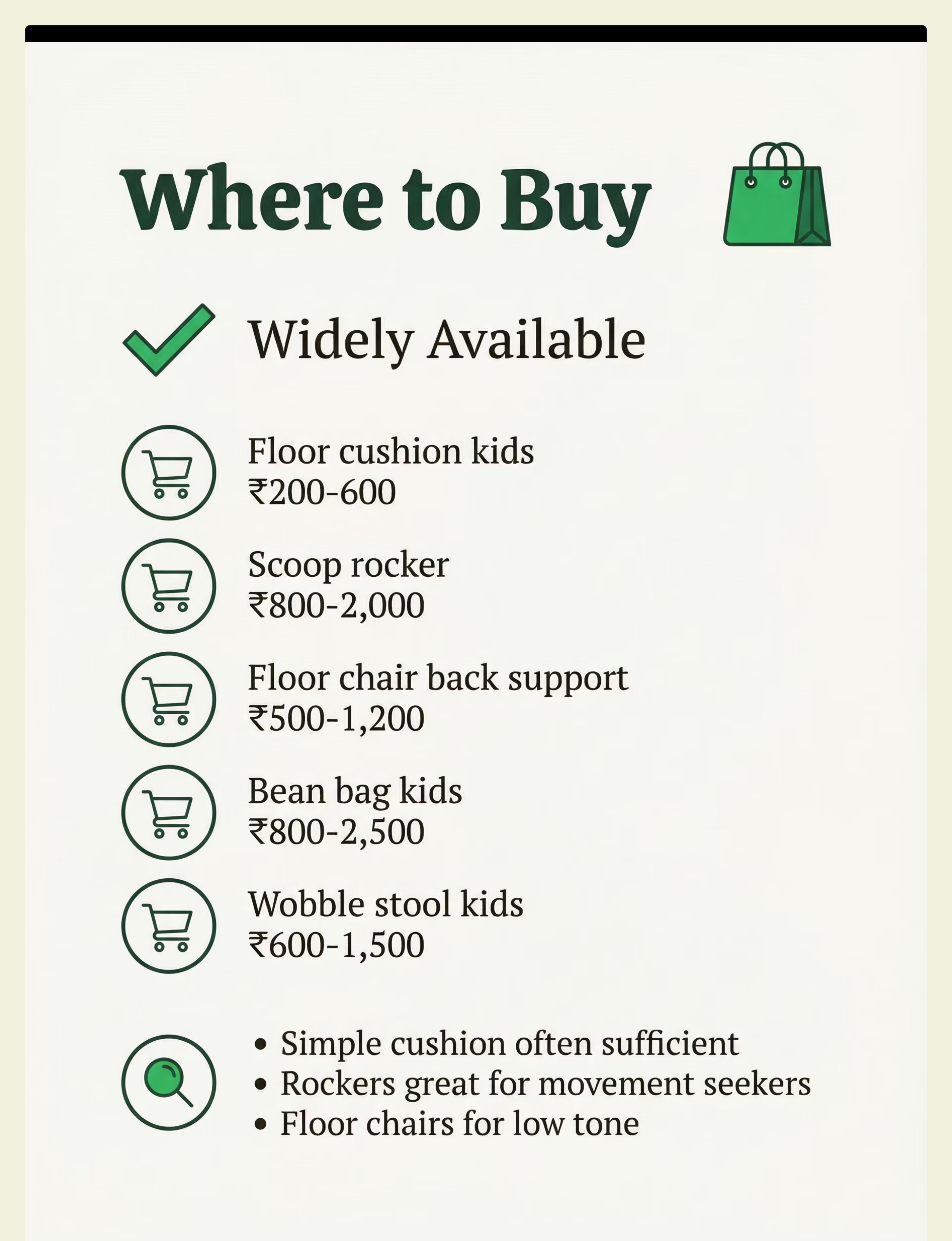
Availability: Widely Available across online platforms and local stores throughout India
Floor cushion kids
Platform: Amazon.in
Price range: ₹200-600
Scoop rocker
Platform: Amazon.in
Price range: ₹800-2,000
Floor chair back support
Platform: Amazon.in
Price range: ₹500-1,200
Bean bag kids
Platform: Amazon.in
Price range: ₹800-2,500
Wobble stool kids
Platform: Amazon.in
Price range: ₹600-1,500
Buying Tips
- Simple cushion is often sufficient as a starting point
- Rockers are excellent investments for movement seekers
- Floor chairs specifically benefit low tone children
- Bean bags work well in calm corners or reading areas
- Define space clearly with mat or cushion before adding complex supports
Red Flags
- Seating not matched to child's specific needs
- Uncomfortable options that child refuses to use
- Size too large or small for child's body
- No stability provided when stability is the core need

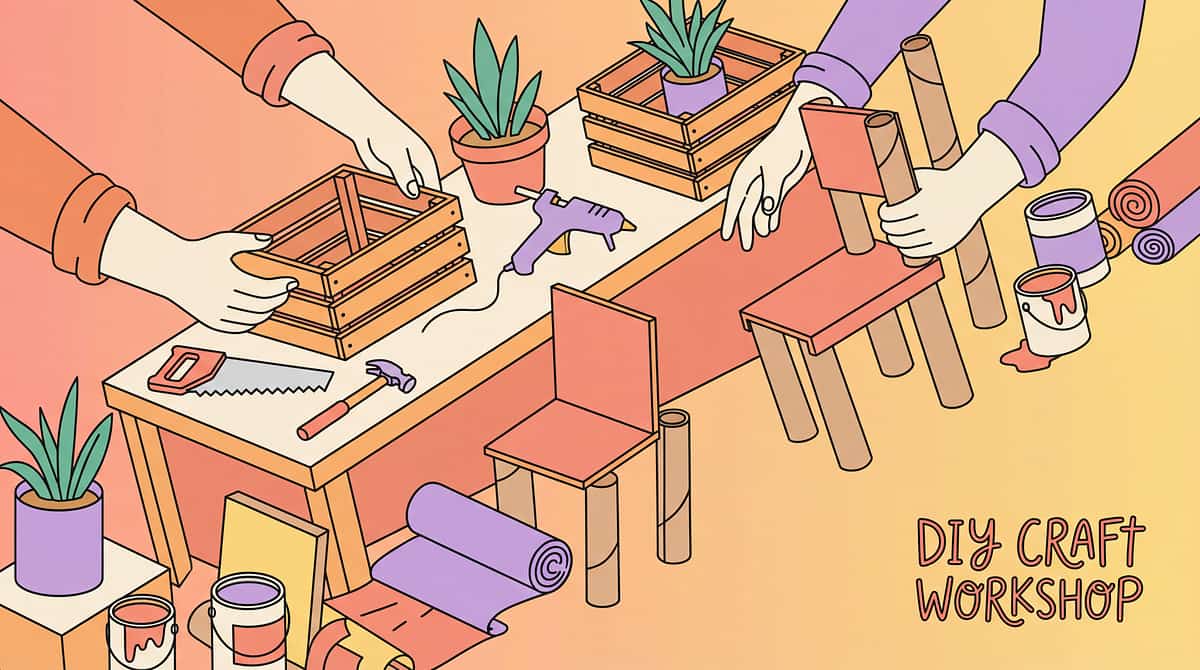
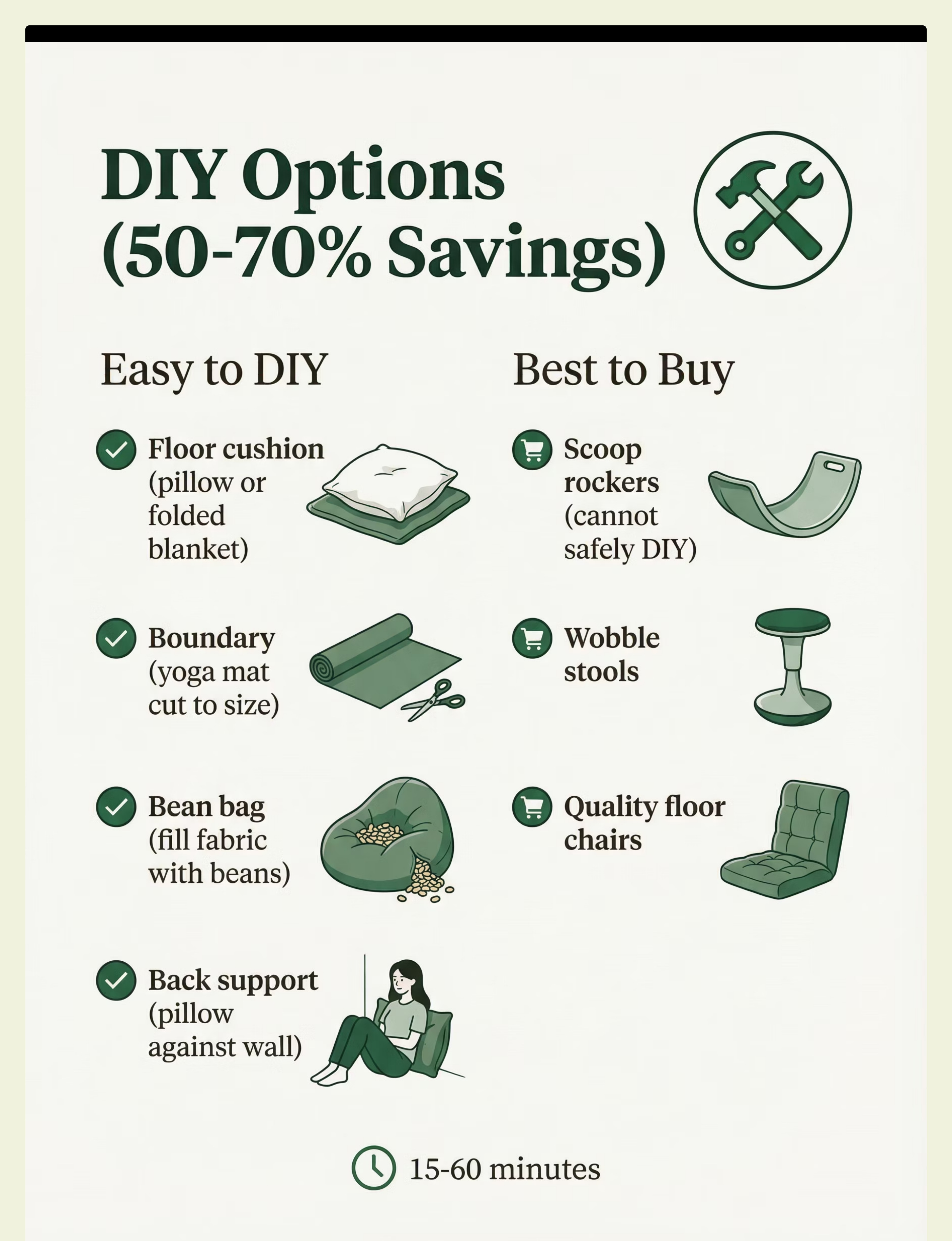
DIY Alternative (Save 50-70%)
Feasibility: Medium-High | Time investment: 15-60 minutes | Cost savings: 50-70% compared to commercial options
1
Materials Needed
- Pillow or cushion
- Yoga mat (can be cut to size)
- Large fabric + beans or filling (for bean bag)
- Cardboard box (can be adapted as seat)
- Tape for floor markers
2
DIY Steps
- Floor cushion: Use pillow or folded blanket as seat. Simple and immediate.
- Boundary marker: Cut yoga mat into sitting square to define personal space.
- Bean bag: Fill large fabric bag with beans or polyfill. Ensure secure seams.
- Back support: Position pillow against wall or furniture for supported sitting.
- Rocker: Cannot safely DIY (purchase commercial rocker instead).
- Space marker: Use tape to create square on floor defining child's sitting spot.
DIY vs Commercial Comparison
When to DIY | When to Buy Commercial | Tradeoffs | |
|
| DIY rockers are not recommended due to safety concerns. Bean bags can be made safely if properly constructed. |
Preview of floor seating options Therapy Material
Below is a visual preview of floor seating options therapy material. The pages shown help educators, therapists, and caregivers understand the structure and content of the resource before use. Materials should be used under appropriate professional guidance.


Share this resource
Help others discover thisLink copied!

Complete Your Support System
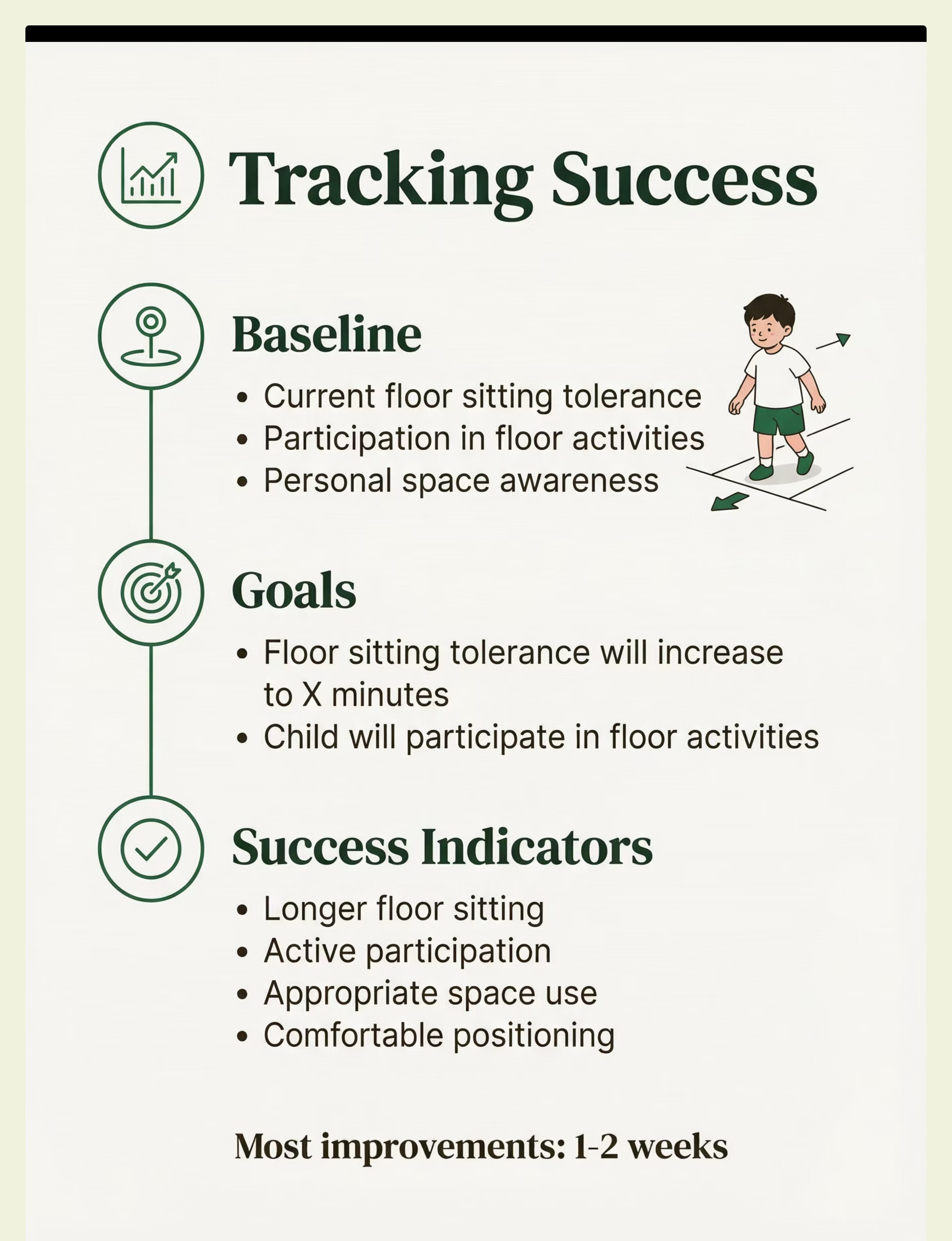
Measuring Success
Baseline Measures
- Current floor sitting tolerance (minutes)
- Participation rate in floor activities
- Personal space awareness level
- Posture quality during floor sitting
Goals
- Floor sitting tolerance will increase to 20+ minutes
- Child will actively participate in floor activities
- Child will stay in defined personal space
- Posture will improve with reduced W-sitting
Success Indicators
- Longer floor sitting periods
- Active participation observed
- Appropriate space use consistently
- Comfortable, upright positioning
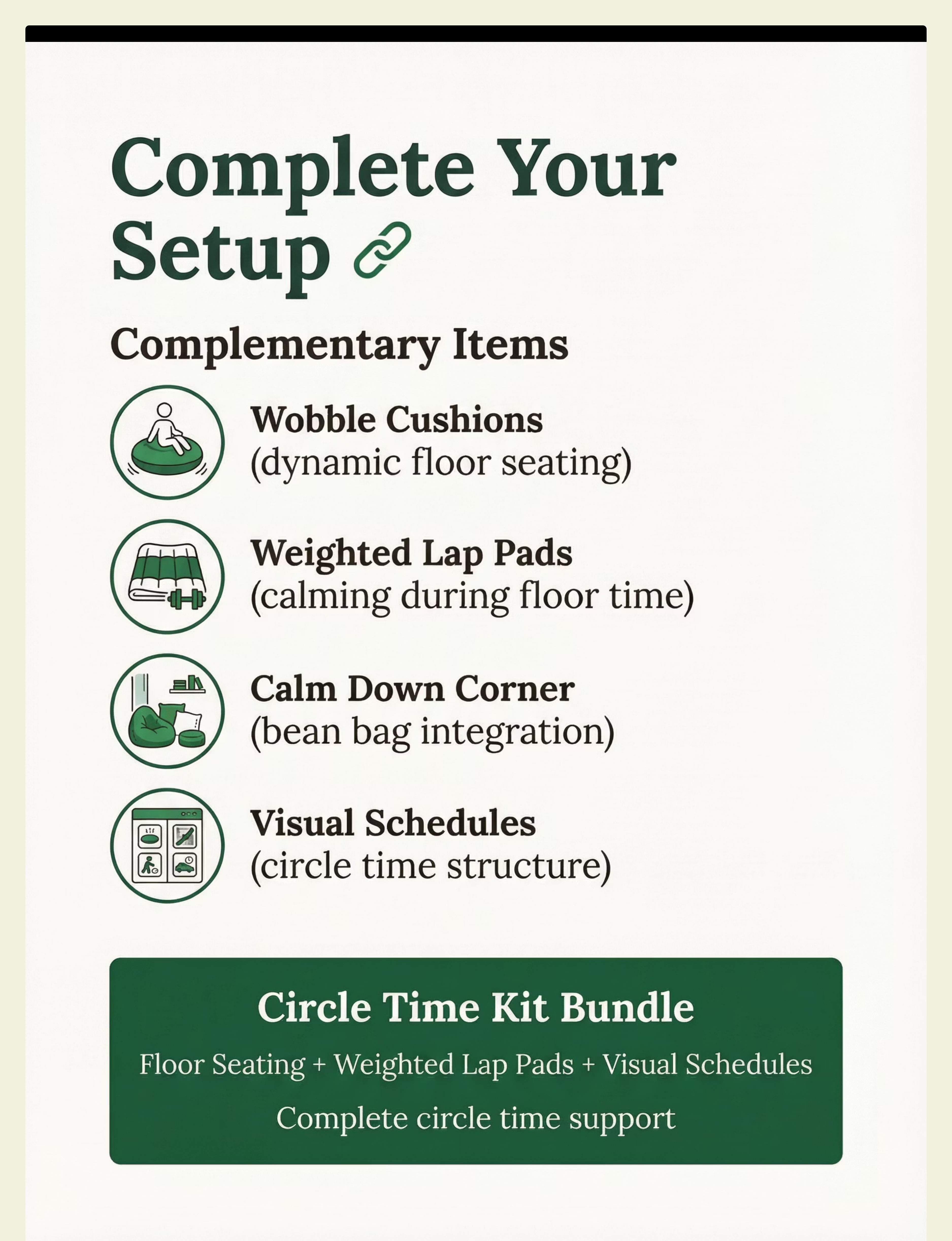
Pair It With...

Wobble Cushions (ID: 12.1)
Add dynamic seating options that complement floor rockers with chair-based movement input

Weighted Lap Pads (ID: 1.1)
Provide calming proprioceptive input during floor time, especially effective with cushions or bean bags

Calm Down Corner (ID: 2.8)
Integrate bean bags into dedicated regulation space for comprehensive emotional support

Visual Schedules (ID: 3.1)
Structure circle time activities with clear visual supports that work alongside floor seating
Recommended Bundles
Circle Time Kit
Includes: Floor Seating Options (12.5) + Weighted Lap Pads (1.1) + Visual Schedules (3.1)
Use case: Complete circle time support addressing positioning, regulation, and structure
Floor Seating Variety Pack
Includes: Floor Cushion (12.5.1) + Scoop Rocker (12.5.3) + Floor Chair (12.5.4)
Use case: Comprehensive variety of floor options for different activities and needs
Quick Summary
Floor seating options provide appropriate support, containment, or movement for floor-based activities through cushions, rockers, floor chairs, and bean bags. Core Kit (Rank 2), moderate evidence, essential classroom support.
floor seating
circle time
rocker
bean bag
positioning
classroom
OT
SpEd
core-kit
Common Searches
floor seating autism, circle time seating, scoop rocker, floor cushion classroom, bean bag sensory, wobble stool, floor chair kids
Get Support
FREE National Autism Helpline
Phone: 9100 181 181
Languages: 16+ languages supported
Website: pinnacleblooms.org
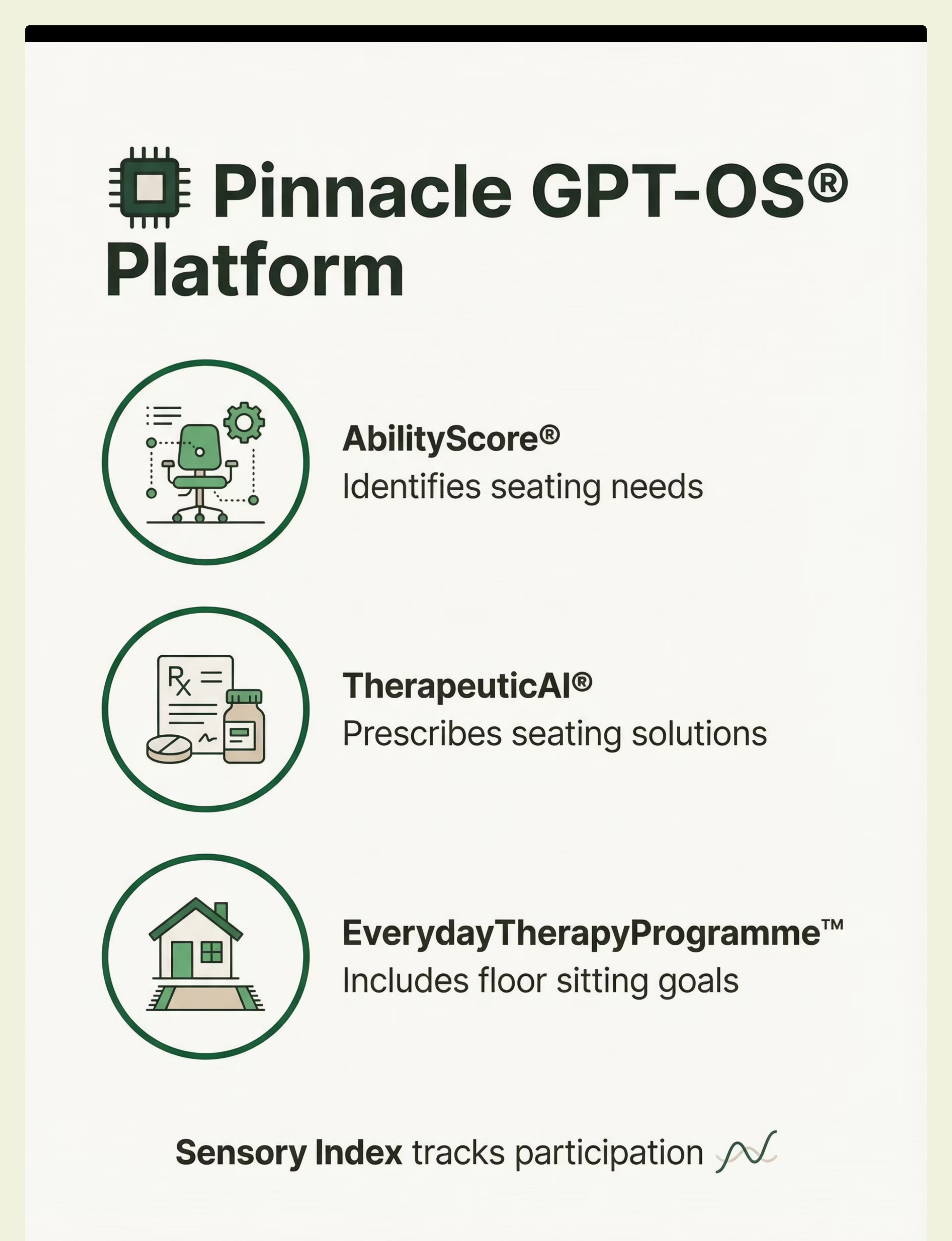
Platform Integration: Floor seating recommendations are integrated throughout the Pinnacle Blooms Network ecosystem. AbilityScore® identifies specific seating needs during assessment. TherapeuticAI® prescribes appropriate floor seating solutions matched to each child's positioning challenges. EverydayTherapyProgramme™ includes floor sitting tolerance goals and tracks progress. The Sensory Index monitors participation improvements in floor-based activities.
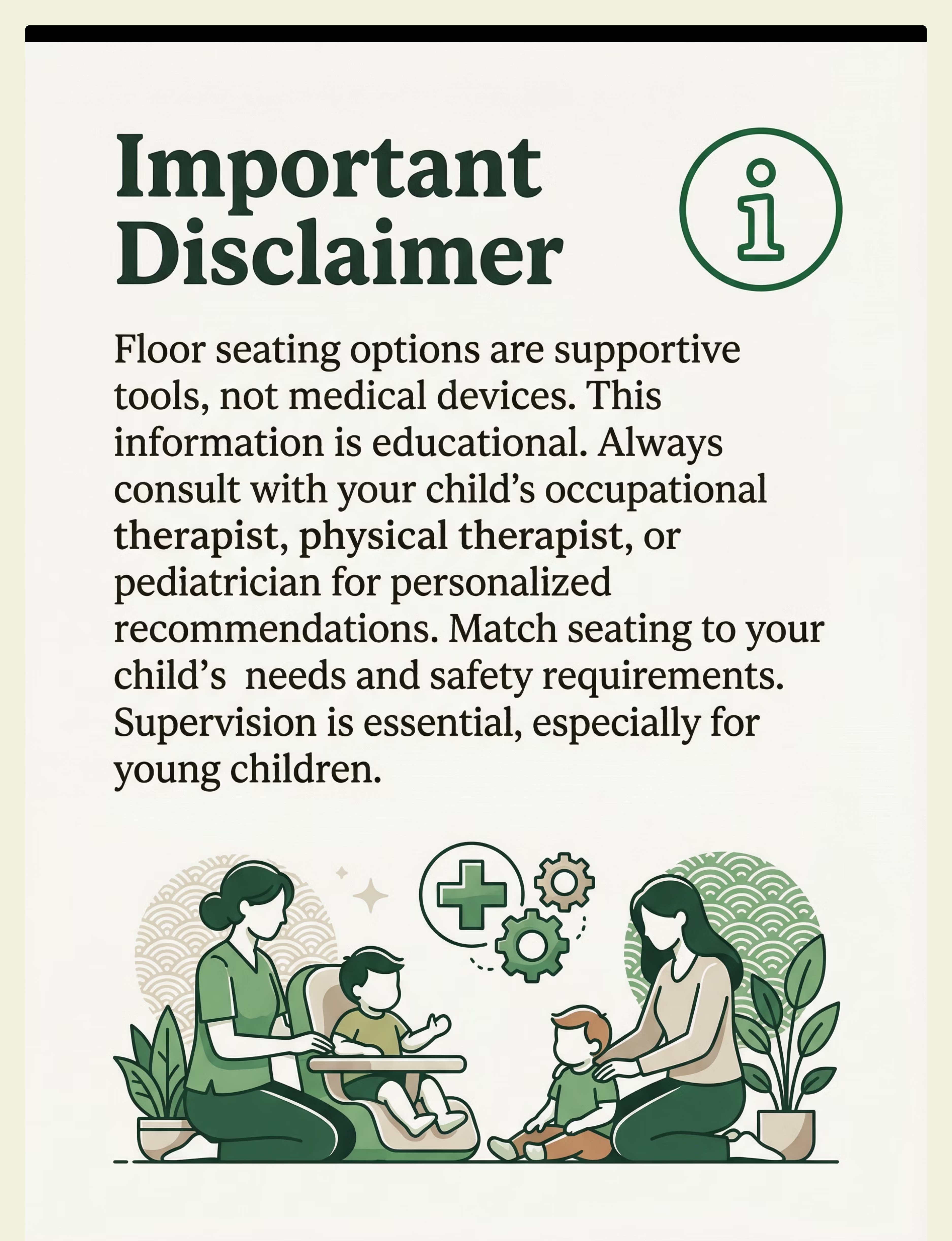
Disclaimer: This is educational information based on clinical experience and moderate-level evidence. Always consult qualified occupational therapists, speech-language pathologists, special educators, or pediatricians for personalized recommendations. Individual results vary based on child's unique needs, consistent implementation, and appropriateness of selected seating options.