























Tool ID: 11.4
OT + SLP
Moderate-Strong Evidence
Rank #2
Daily Use
₹50–600
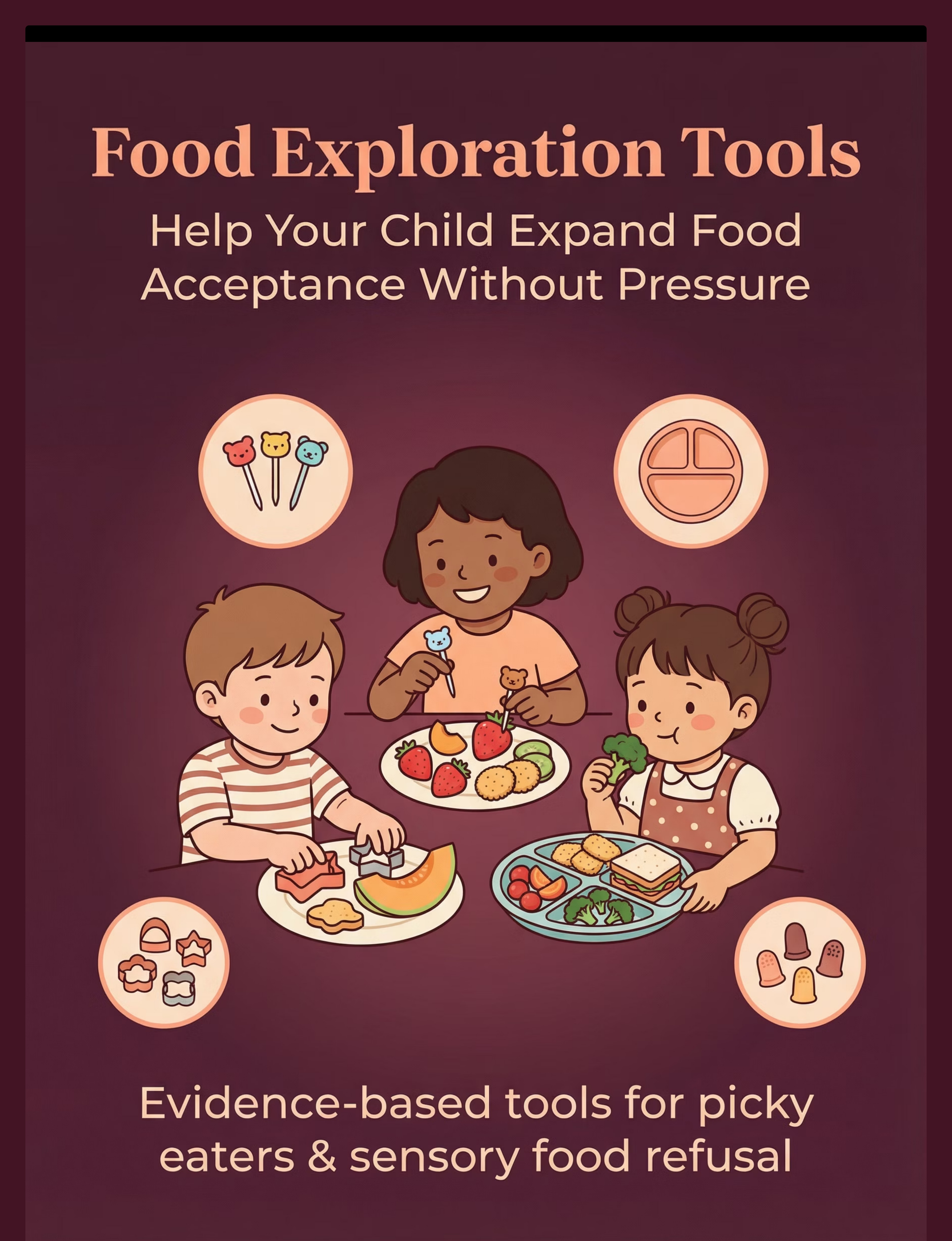
Food Exploration Tools
Sensory-based food acceptance and variety expansion system
Evidence-based tools that expand food acceptance and variety through systematic sensory exploration and reduced-pressure approaches. Designed for children with picky eating, sensory food aversions, and limited food repertoires.

Who This Helps
Food Variety & Acceptance
Expands food acceptance and variety by helping children build positive relationships with new foods.
Sensory Tolerance
Enhances tolerance for various sensory aspects of food through systematic sensory exploration.
Mealtime Stress Reduction
Promotes reduced-pressure approaches, eliminating mealtime battles.
Nutrition Improvement
Aids in improving overall nutrition by broadening food repertoires.
Family Mealtime Enjoyment
Supports a more positive and relaxed dining experience for the whole family.
Ages 1-10+ years
Approach works effectively for all ages experiencing picky eating challenges, with tools adapted to developmental stages.
Home & Clinic Use
Designed for daily mealtime use at home and structured feeding therapy sessions in clinical settings.
Best for Picky Eaters
Specifically designed for children with sensory-based food refusal, tactile defensiveness, and extreme food selectivity who eat fewer than 20 foods.

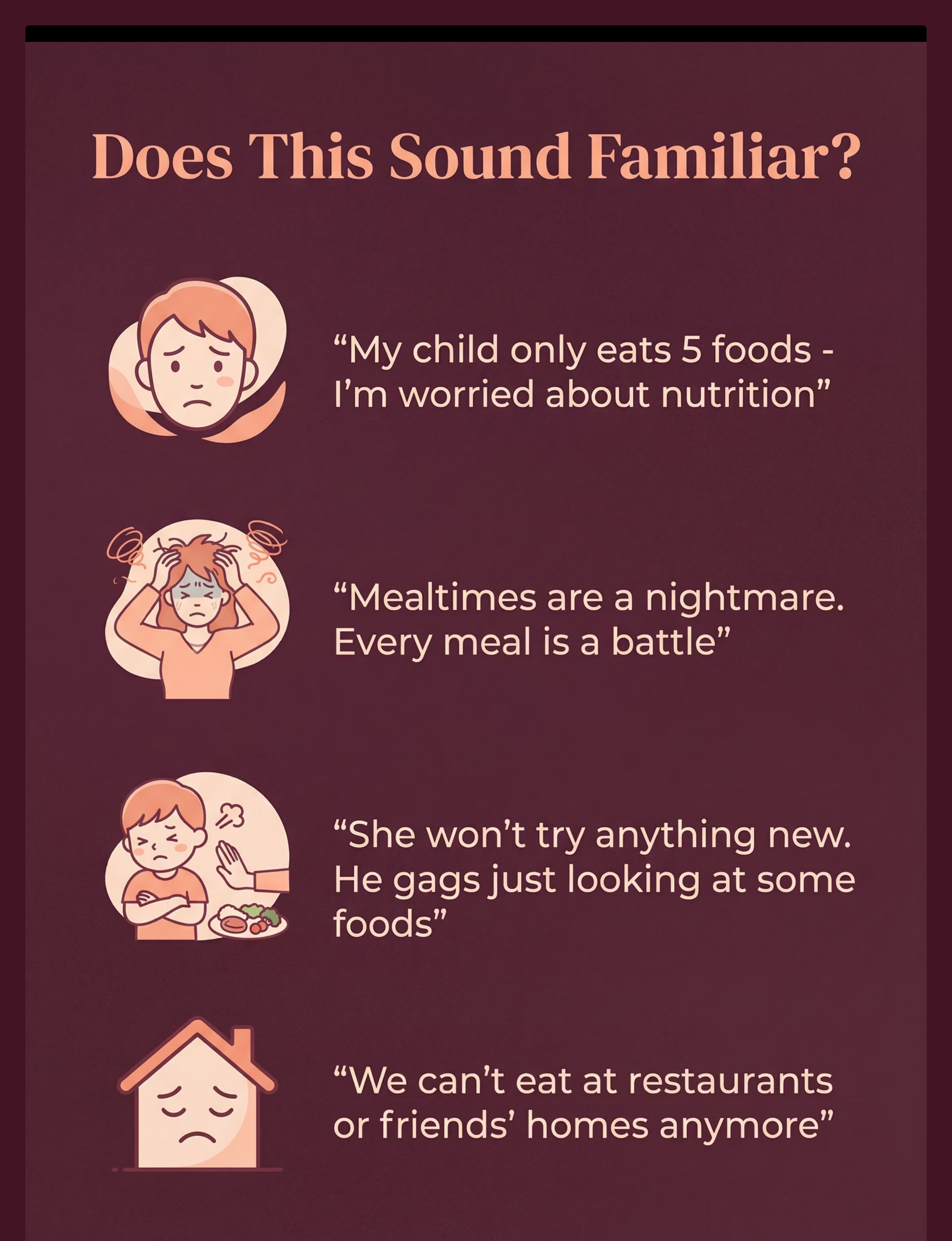
Does This Sound Familiar?
"My child only eats 5 foods"
"She won't try anything new"
"He gags just looking at some foods"
"Mealtimes are a nightmare"
"She's not getting proper nutrition"
"Foods can't touch each other"
You're not alone. These are common challenges faced by families of children with sensory-based feeding difficulties. Research shows that systematic, low-pressure exploration approaches can successfully expand food variety and reduce mealtime stress.

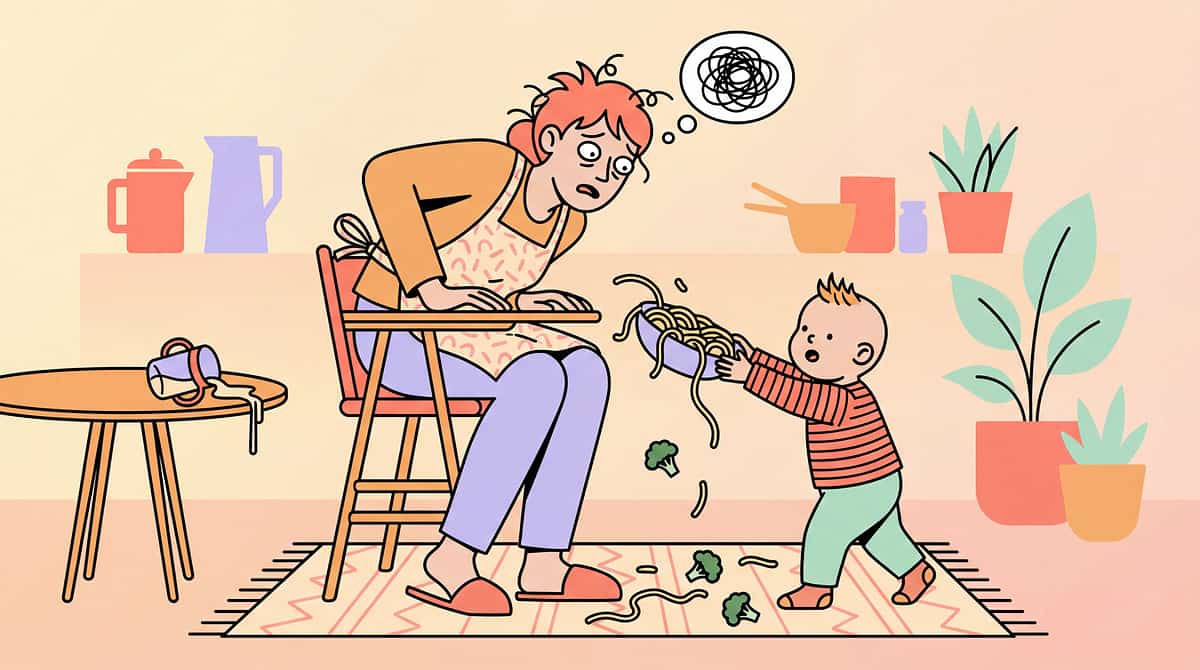
A Day Without the Right Support
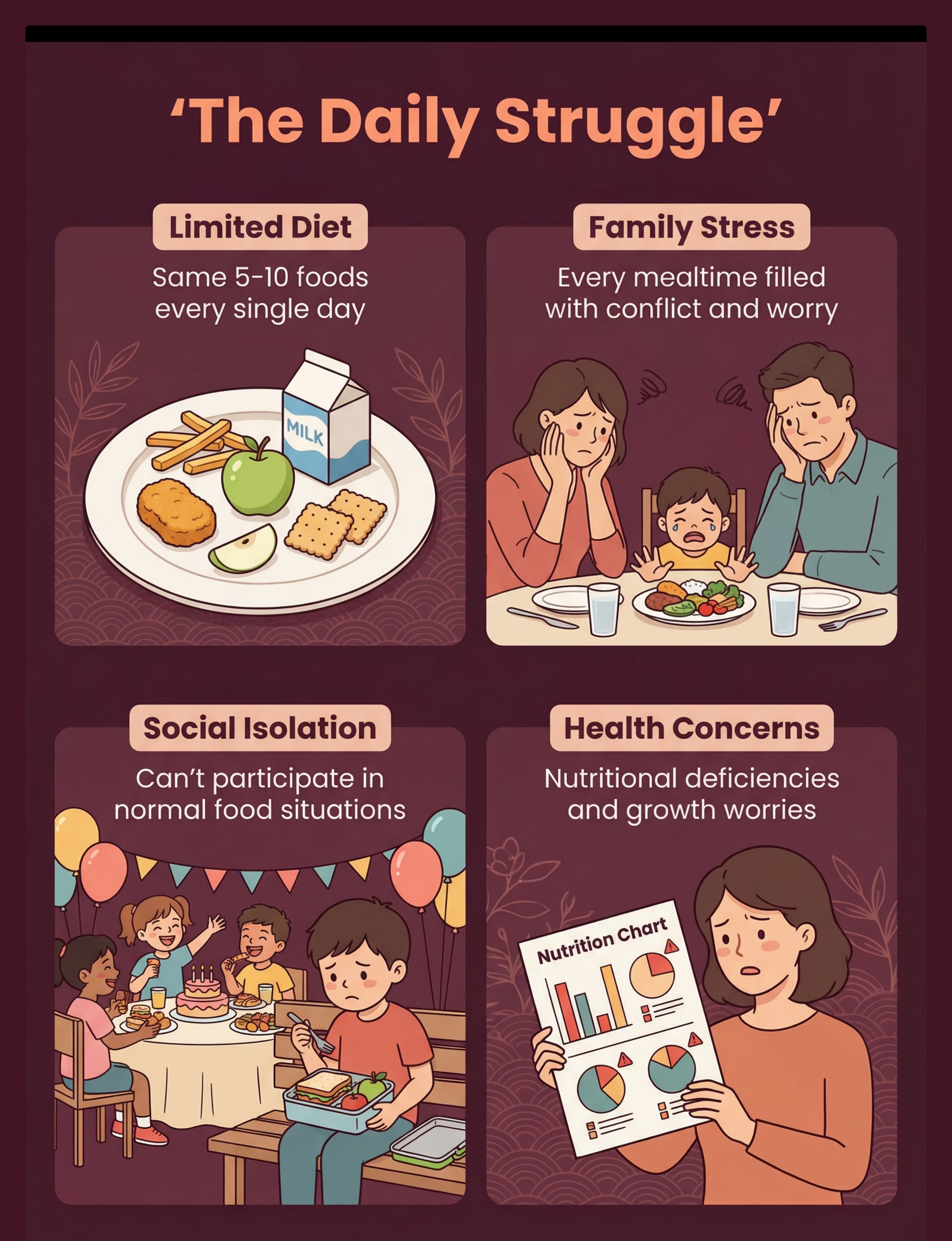
Nutrition Concerns
Limited diet affecting health and development. Same 5-10 foods every single day. Parents worry about vitamin deficiencies and growth.
Family Stress
Mealtimes become battlegrounds. Everyone dreads sitting down together. Food refusal creates tension and conflict throughout the day.
Social Isolation
Can't eat at friends' homes or restaurants. Birthday parties are impossible. Family outings revolve around limited food availability.
Monotonous Eating
Preparing the same accepted foods day after day. No variety, no exploration, no growth in food preferences.

The Science Behind It
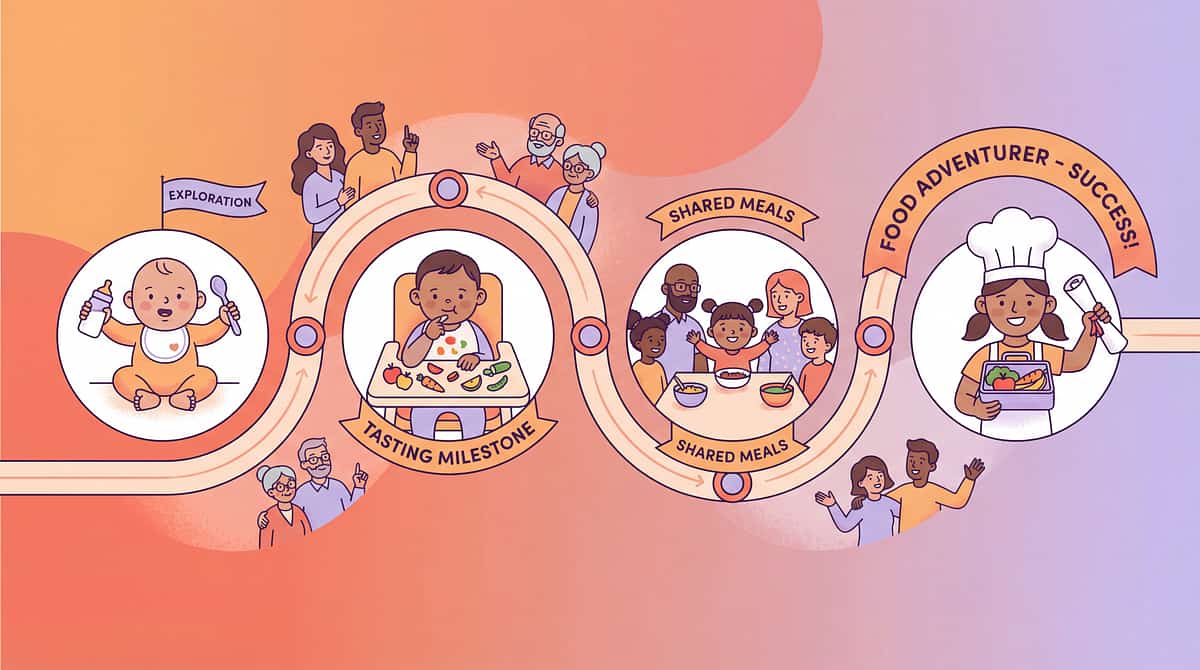
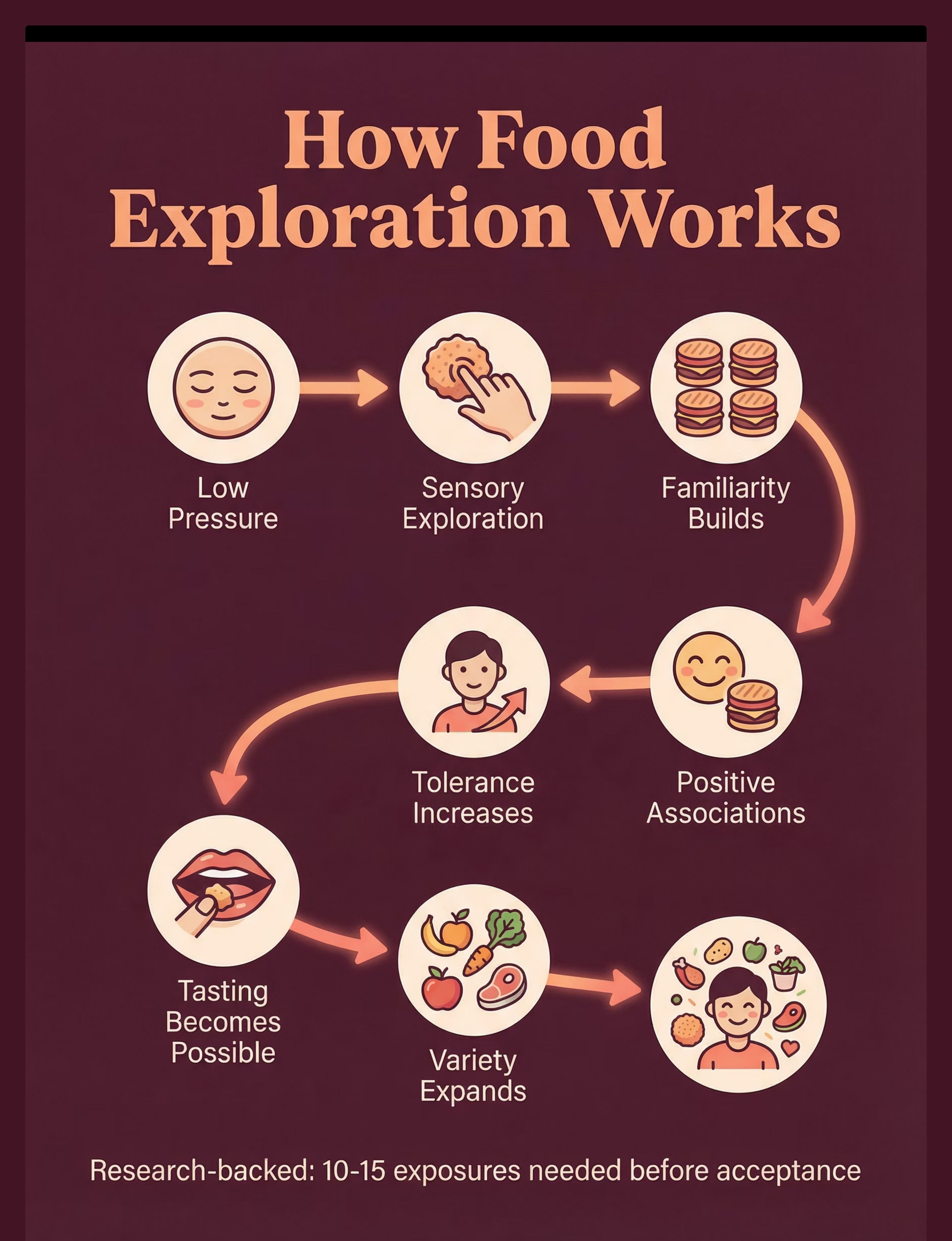
Food Exploration Tools work through a systematic progression that builds familiarity and positive associations without the pressure to eat.
Low-Pressure Exposure
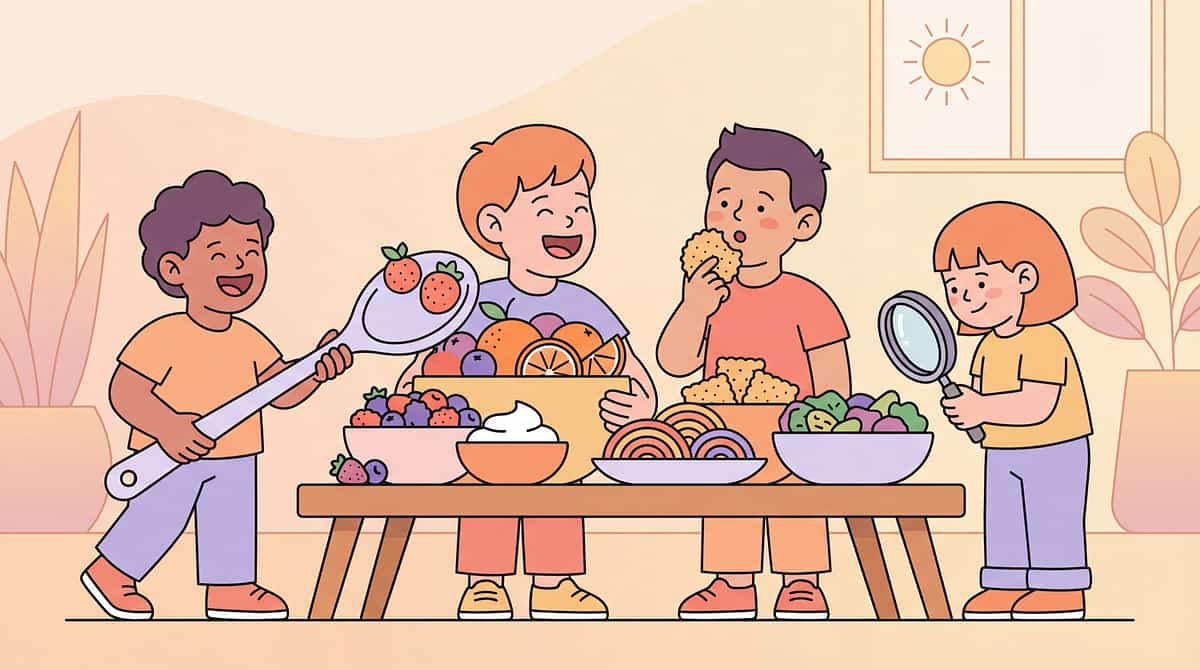
Children encounter new foods in relaxed, no-pressure environments where exploration is encouraged but never demanded.
Sensory Exploration
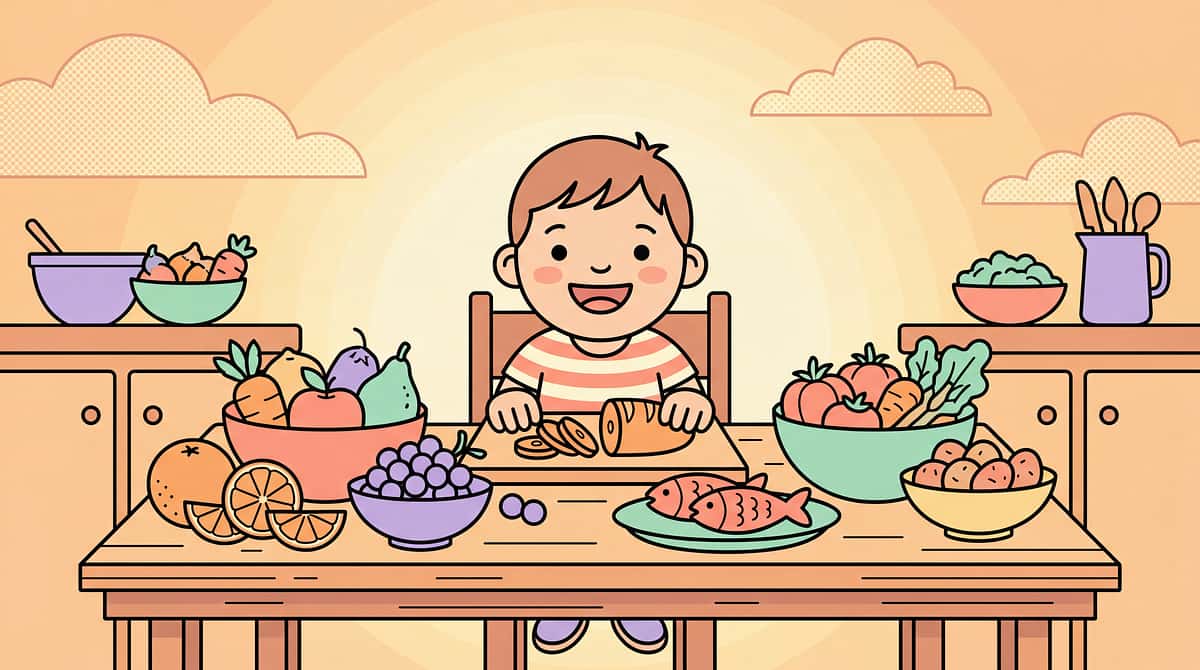
Touching, smelling, arranging, and playing with food builds sensory familiarity through safe, indirect contact methods.
Familiarity Without Eating
Repeated exposure (10-15+ times) creates comfort and recognition without requiring the child to taste or consume the food.
Positive Associations Build
Play and exploration create positive memories and reduce fear responses to previously rejected foods.
Tolerance Increases
Children gradually accept new foods on their plate, nearby, and eventually in their personal space without distress.
Tasting Becomes Possible
When ready, children voluntarily taste new foods—a milestone that cannot be forced but emerges from readiness.
Variety Expands
Food repertoire grows from 5-10 foods to 20+ options over 3-6 months, improving nutrition and reducing mealtime stress.
Food Variety
Sensory Tolerance
Mealtime Stress Reduction
Food Acceptance
Nutrition Improvement
Family Mealtime

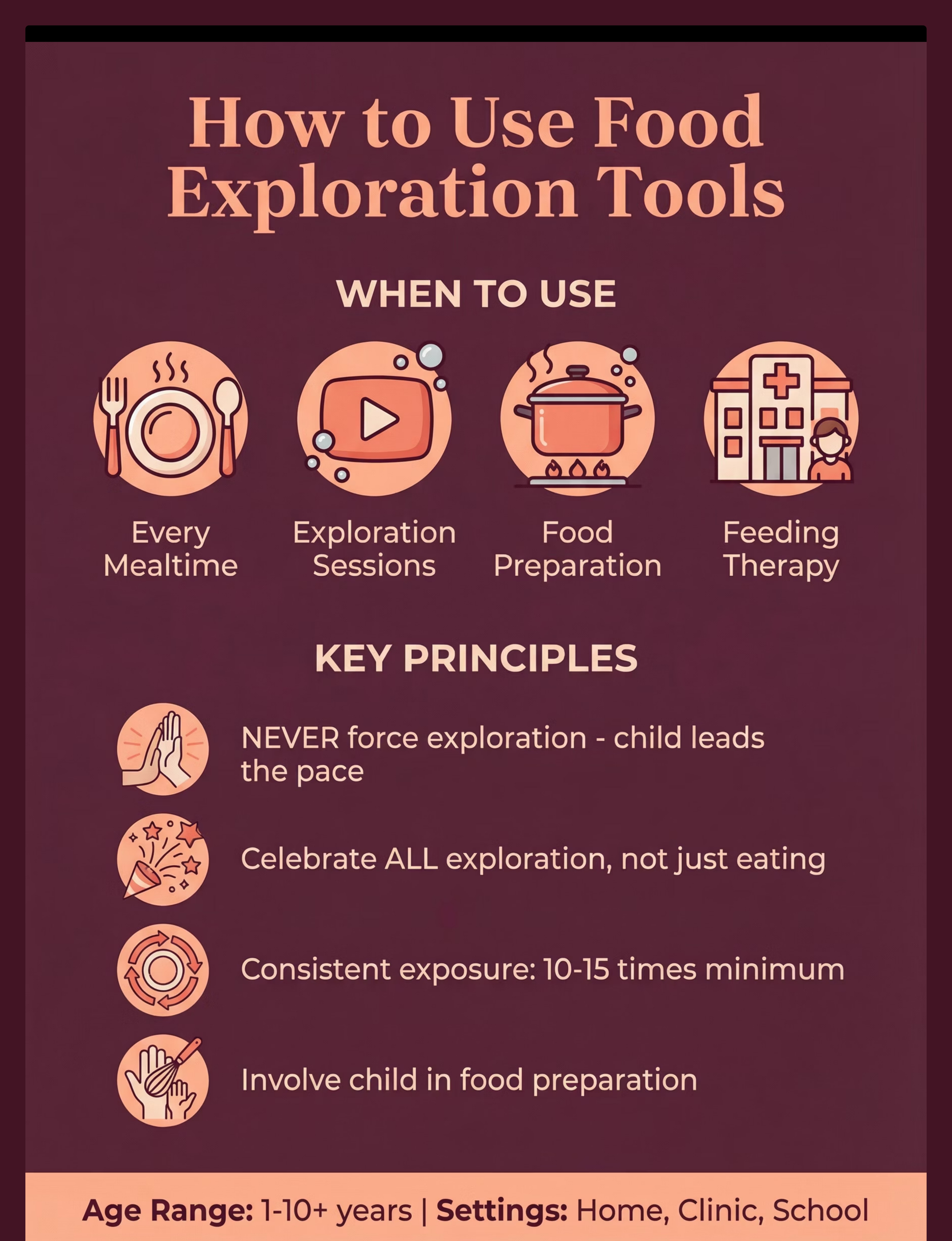
How to Use It Right
1
Explore Without Pressure
Create opportunities for children to interact with food through touching, smelling, arranging, or playing—with absolutely no expectation or pressure to eat. Exploration itself is progress.
2
Celebrate All Exploration
Touching, smelling, looking at, or arranging food all count as meaningful progress. Every interaction builds familiarity and reduces fear, even without tasting.
3
Use Food Chaining
Systematically bridge from currently accepted foods to new foods by introducing options that share similar characteristics (color, texture, temperature, or flavor).
4
Provide Consistent Exposure
Offer new foods repeatedly (minimum 10-15 times) without pressure. Research shows familiarity builds over multiple exposures, not from a single interaction.
5
Involve Child in Preparation
Let children help with age-appropriate food preparation tasks. Washing, stirring, arranging, and serving create positive associations and increase willingness to explore.
6
Use Divided Plates When Needed
For children upset by foods touching, divided plates provide essential structure that reduces anxiety and allows them to tolerate variety on their plate.
Typical Duration: Use daily during mealtimes and structured exploration sessions. Ongoing approach that becomes integrated into family eating routines.

Expert Perspective
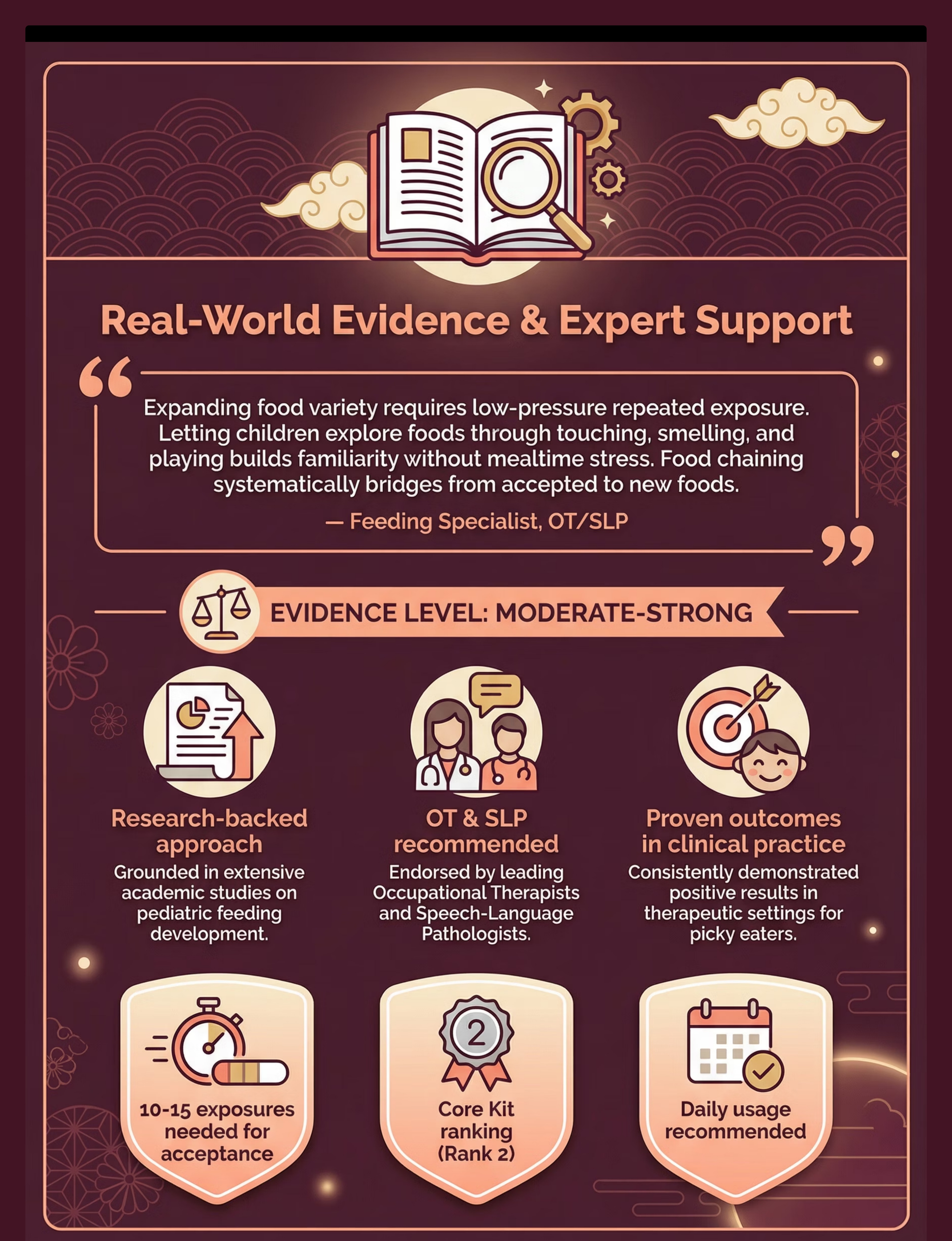
"Expanding food variety requires low-pressure repeated exposure. Letting children explore foods - touching, smelling, playing - builds familiarity without mealtime stress. Food chaining systematically bridges from accepted to new foods."— Feeding Specialist, OT/SLP
OT + SLP Recommended
Endorsed by both Occupational Therapists and Speech-Language Pathologists specializing in feeding.
Moderate-Strong Evidence
Supported by feeding therapy research demonstrating effectiveness of sensory-based, low-pressure approaches.
Rank #2 in Category
Core Kit essential tool for addressing oral motor and feeding challenges in children.
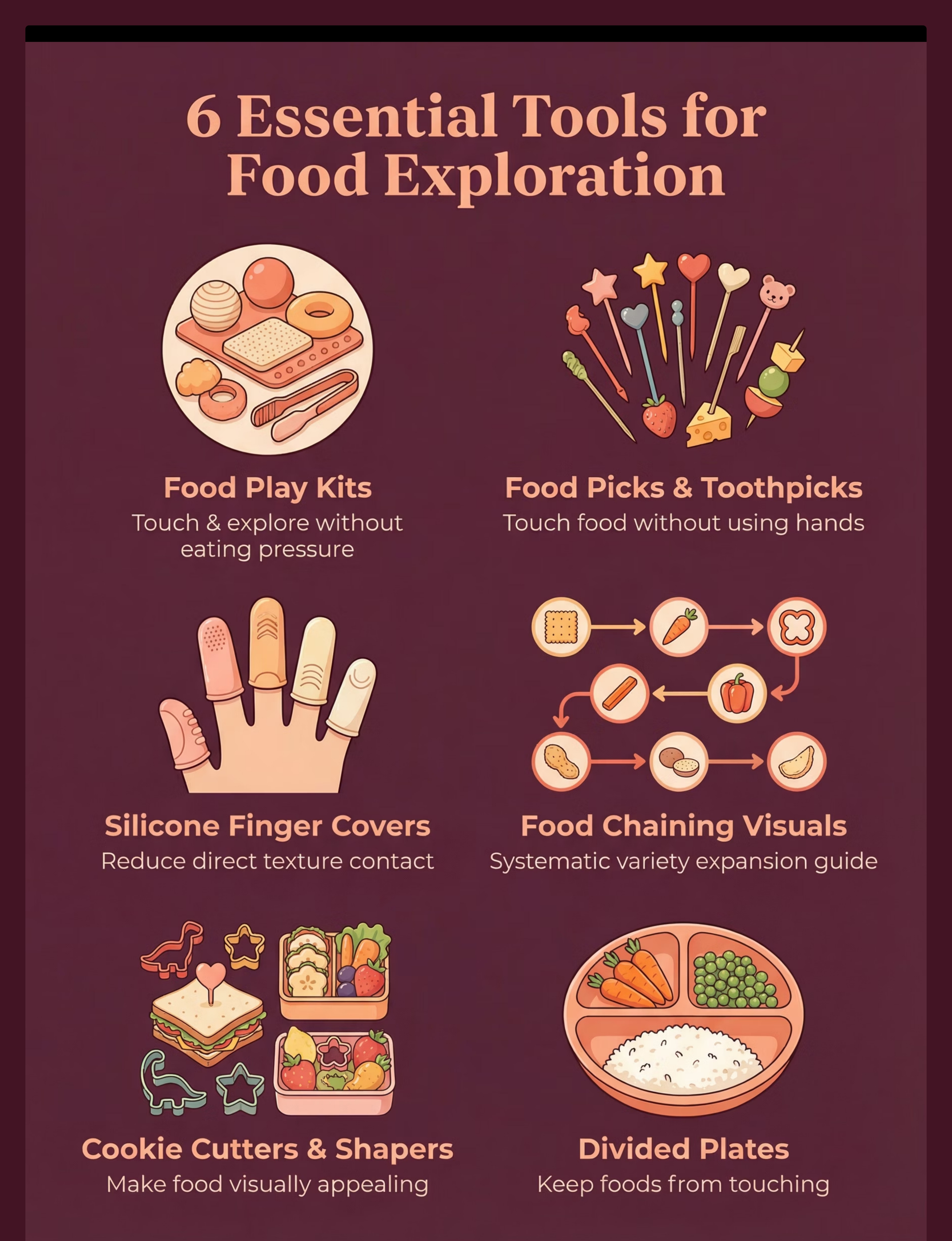
Choose Your Option (6 Variants)
Select tools based on your child's specific challenges, sensory needs, and exploration goals. Each variant addresses different aspects of food acceptance and variety expansion.

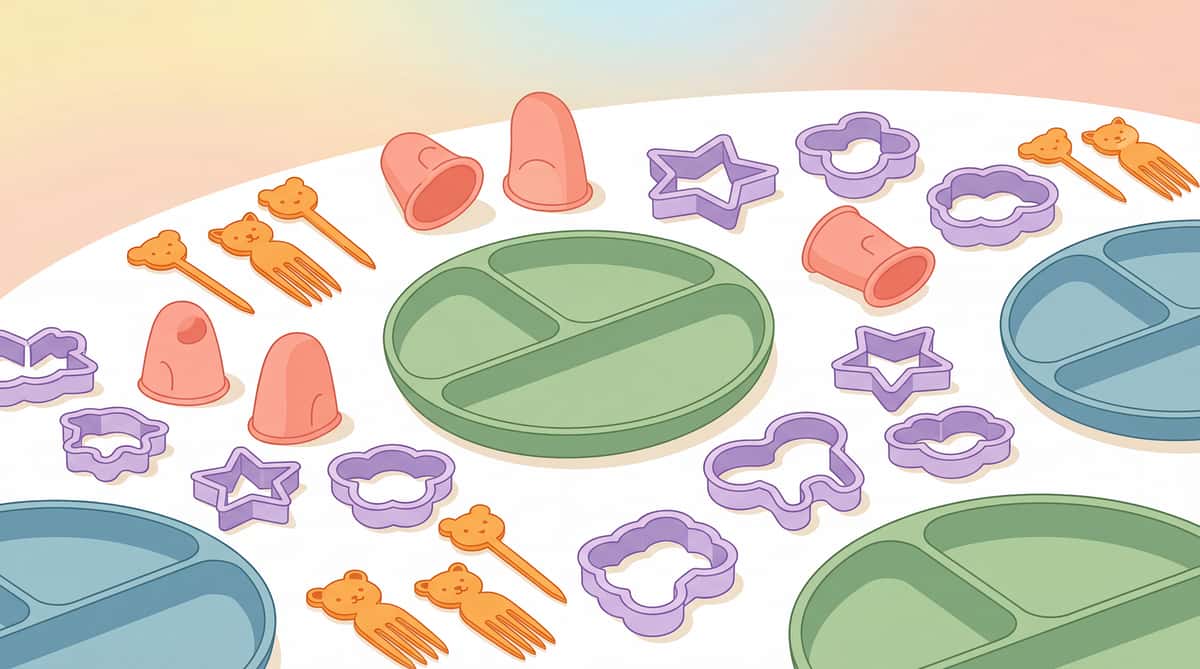
Food Play Kits
Best for: Picky eaters, sensory-based food refusal.
Ages: 1-10 years
Ages: 1-10 years
Food Picks/Toothpicks
Best for: Tactile defensiveness, reluctance to touch.
Ages: 3+ years
Ages: 3+ years
Silicone Finger Covers
Best for: Tactile sensitivity during eating.
Ages: 2+ years
Ages: 2+ years
Food Chaining Visuals
Best for: Structured approach to new foods.
Ages: 2+ years
Ages: 2+ years
Cookie Cutters/Food Shapers
Best for: Making foods visually acceptable.
Ages: 2+ years
Ages: 2+ years
Divided Plates
Best for: Children upset by foods touching.
Ages: 1+ years
Ages: 1+ years
How to Choose the Right Tool
Consider your child's specific needs and the environment in which the tools will be used.
By Goal
- Reduce touch resistance: Food picks, finger covers
- Systematic expansion: Food chaining visuals
- Visual appeal: Cookie cutters, shapers
- Separation needs: Divided plates
By Setting & Portability
- Home use: All variants work well
- Clinic/therapy: Food play kits, chaining visuals
- School/travel: Picks, divided plates
- Everywhere (very high portability): Food picks
Specifications & Exploration Hierarchy
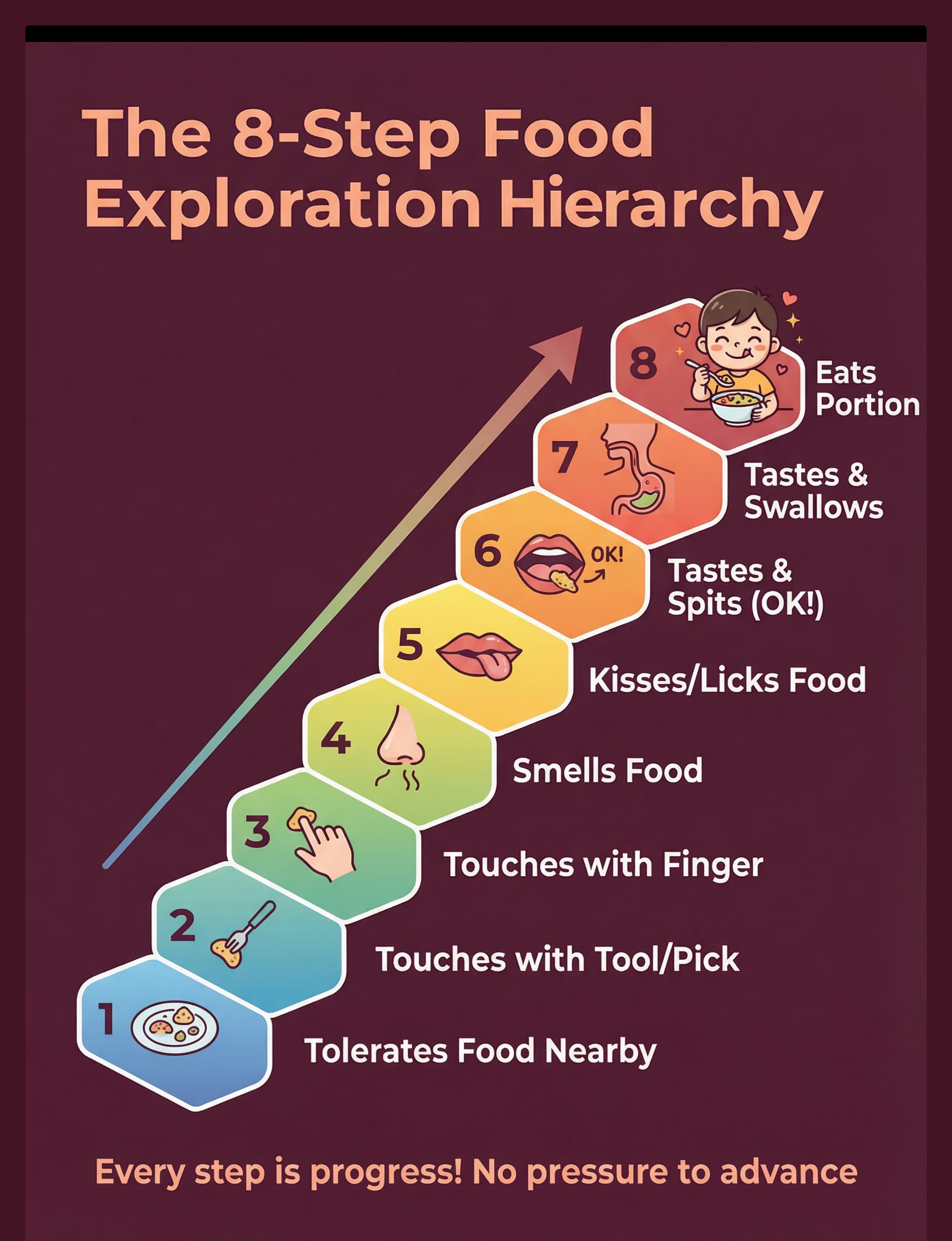
Understanding the systematic progression from tolerance to acceptance helps parents recognize and celebrate each small step toward food variety expansion.
Food Exploration Hierarchy

Level 1: Tolerance
Child tolerates food on plate or nearby without distress

Level 2: Indirect Touch
Touches food with utensil, pick, or tool

Level 3: Direct Touch
Touches food with finger (major milestone)

Level 4: Smell
Brings food close enough to smell

Level 5: Kiss/Lick
Makes contact with lips or tongue

Level 6: Taste & Spit
Tastes food—spitting out is allowed and celebrated

Level 7: Taste & Swallow
Tastes and swallows small amount

Level 8: Eating
Eats appropriate portion willingly
Materials & Key Features
Materials
- Food-safe plastics (BPA-free, non-toxic)
- Medical-grade silicone
- Stainless steel picks
- Various plates and bowls (ceramic, plastic, bamboo)
Key Features
- Low-pressure approach: No expectation to eat—exploration is the only goal
- Systematic progression: Clear hierarchy from tolerance to acceptance
- Visual/tactile tools: Multiple modalities for sensory exploration
- Addresses underlying sensory issues: Reduces barriers rather than forcing compliance
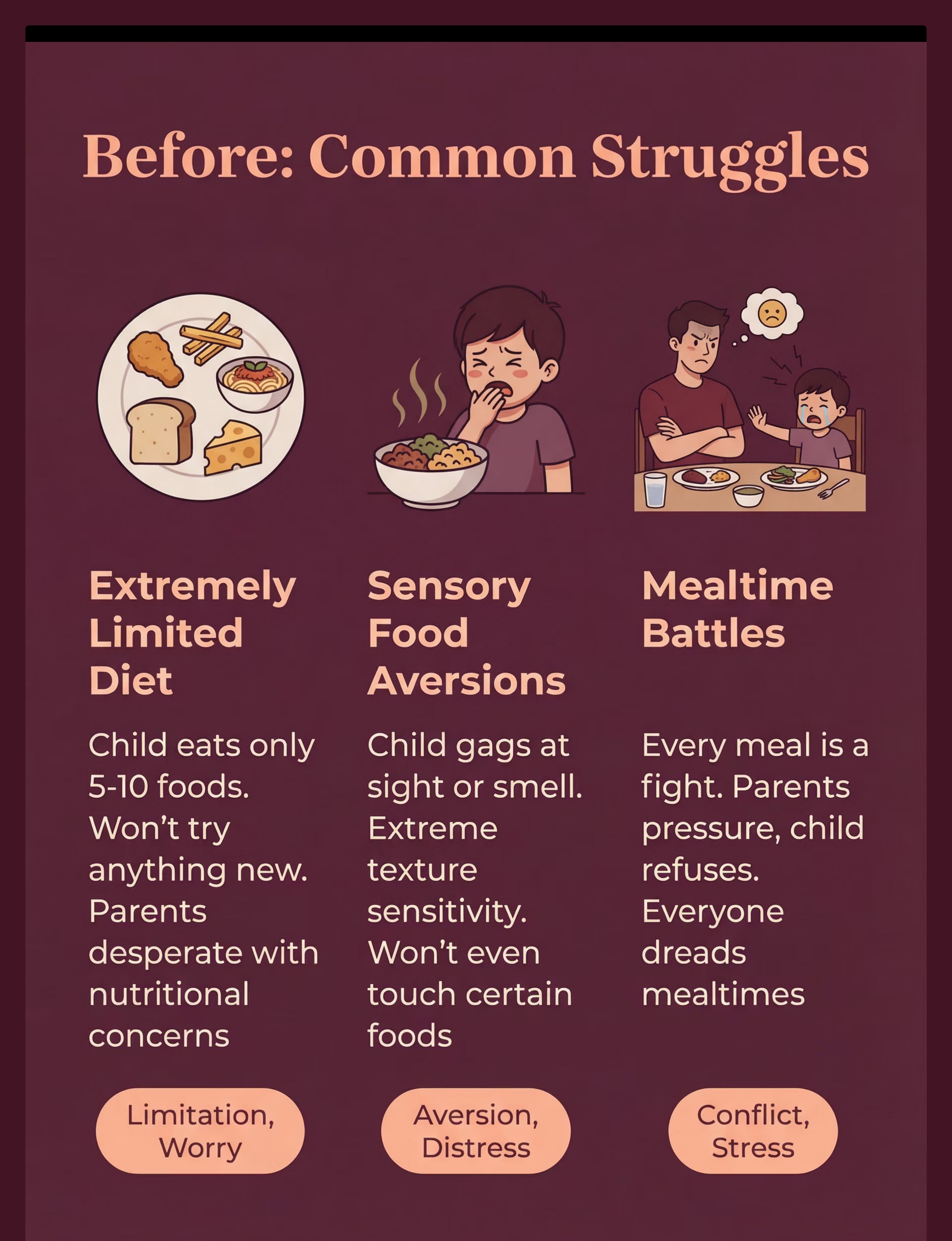
The Struggle (Before)

Extremely Limited Diet
Situation: Child eats only 5-10 foods, won't try anything new, nutritional concerns mounting, parents feeling desperate and worried.
Experience: Same foods day after day. Anxiety about malnutrition. Judgment from others. Feeling trapped and helpless.
Emotion: Limitation, worry, desperation

Sensory Food Aversions
Situation: Child gags at sight or smell of foods, extreme texture sensitivity, refuses to touch certain foods, intense physical reactions.
Experience: Watching your child retch or gag from simply seeing food. Fear of trying new things. Sensory overwhelm at every meal.
Emotion: Aversion, gagging, fear

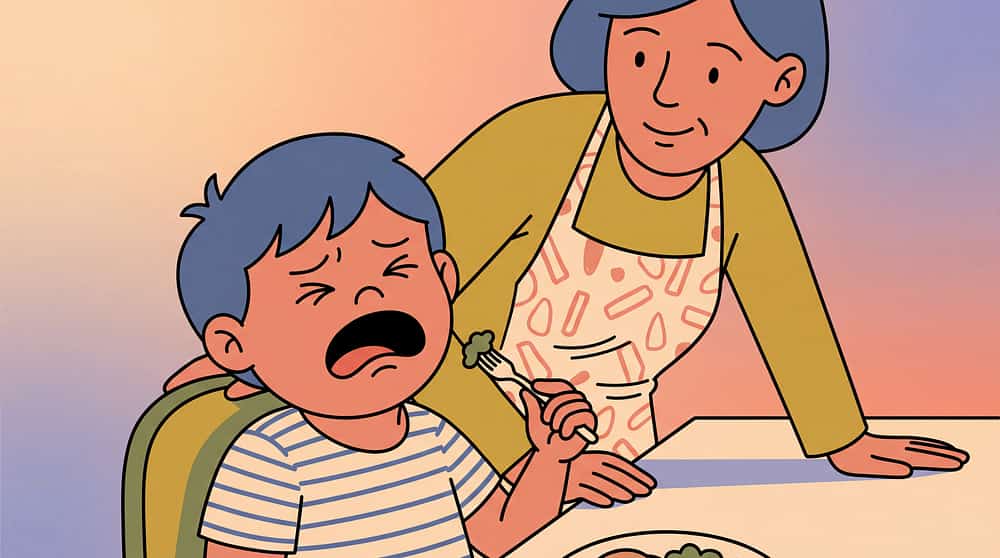
Mealtime Battles
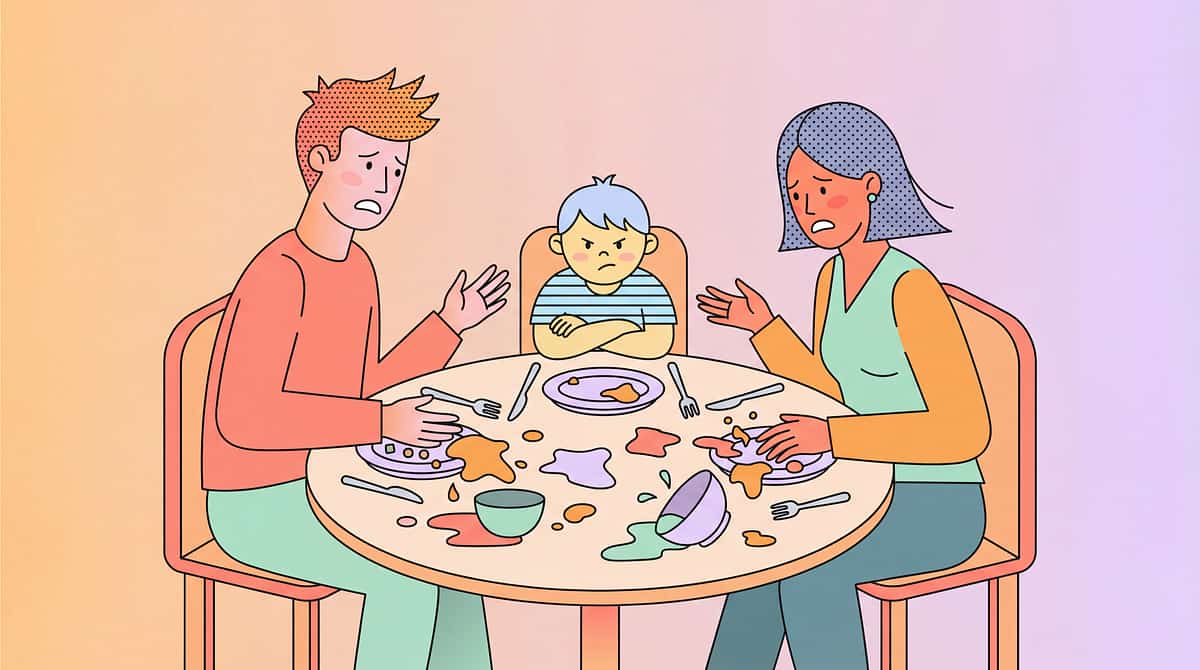
Situation: Every meal is a fight. Child refuses, parents pressure, stress for everyone. Dreading mealtimes instead of enjoying them.
Experience: Tears, tantrums, forced bites, bargaining, bribing. Meals taking hours. Everyone leaves the table upset and defeated.
Emotion: Conflict, stress, defeat

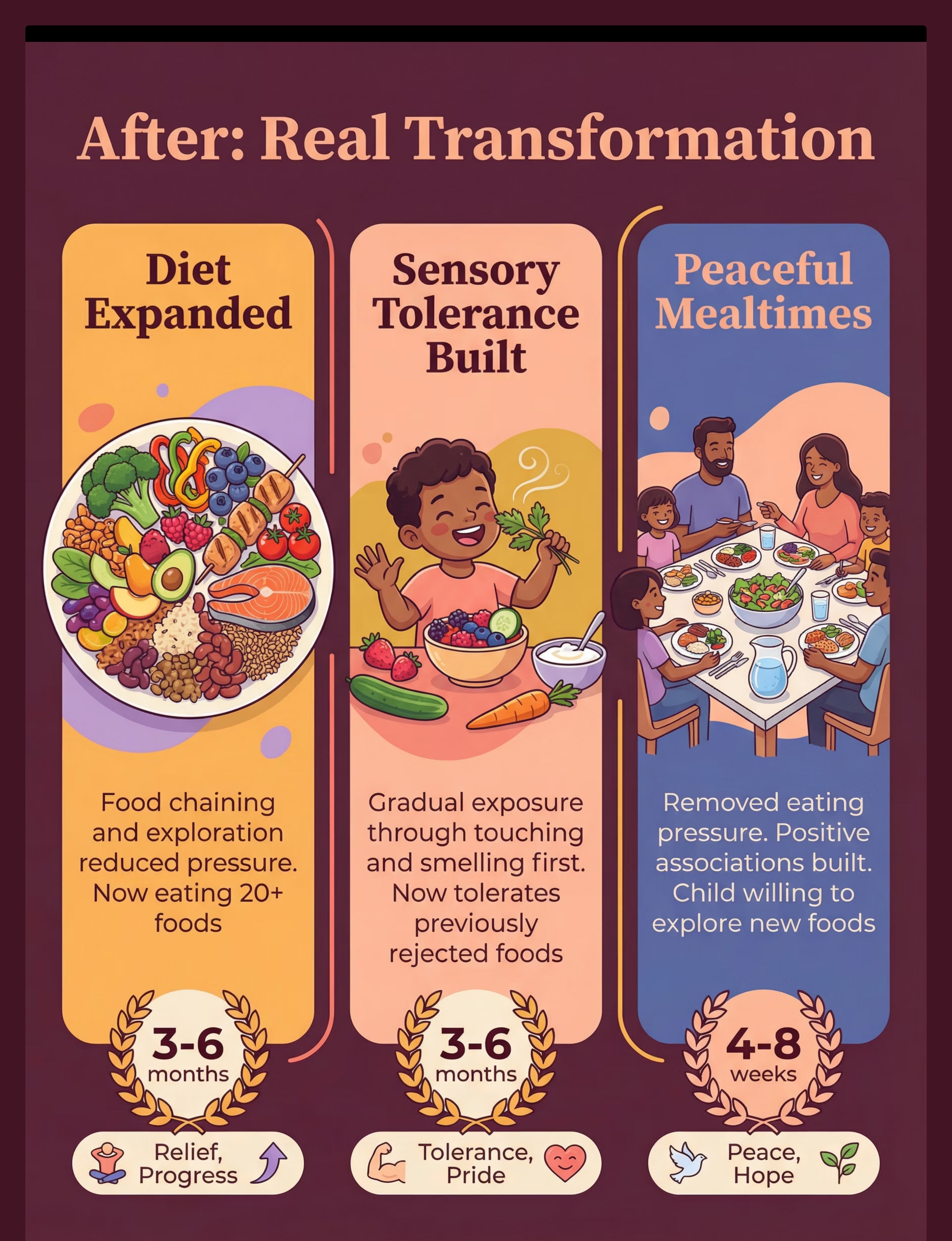
The Breakthrough (After)
Extremely Limited Diet
Situation: Food exploration reduced pressure, food chaining systematically expanded from accepted foods, child now eating 20+ different foods.
Experience: Watching your child willingly try new foods. Balanced nutrition achieved. Confidence and pride in progress made together over 3-6 months.
Emotion: Expansion, relief, pride
Sensory Food Aversions
Situation: Gradual sensory exposure through touching and smelling first, familiarity built over time, child now tolerates many previously rejected foods.
Experience: No more gagging. Calmly exploring new foods. Sensory system regulated through systematic desensitization approach over 3-6 months.
Emotion: Tolerance, progress, calm
Mealtime Battles
Situation: Removed eating pressure, shifted to exploration without demand, positive mealtimes restored, child more willing to try new foods.
Experience: Family meals are peaceful again. Laughter and conversation instead of tears. Child exploring foods at their own pace within 4-8 weeks.
Emotion: Peace, willingness, joy

What to Expect (Realistic Timelines)
Food variety expansion is a gradual process that requires patience and consistency. Understanding realistic timeframes helps parents celebrate progress and maintain commitment to the approach.
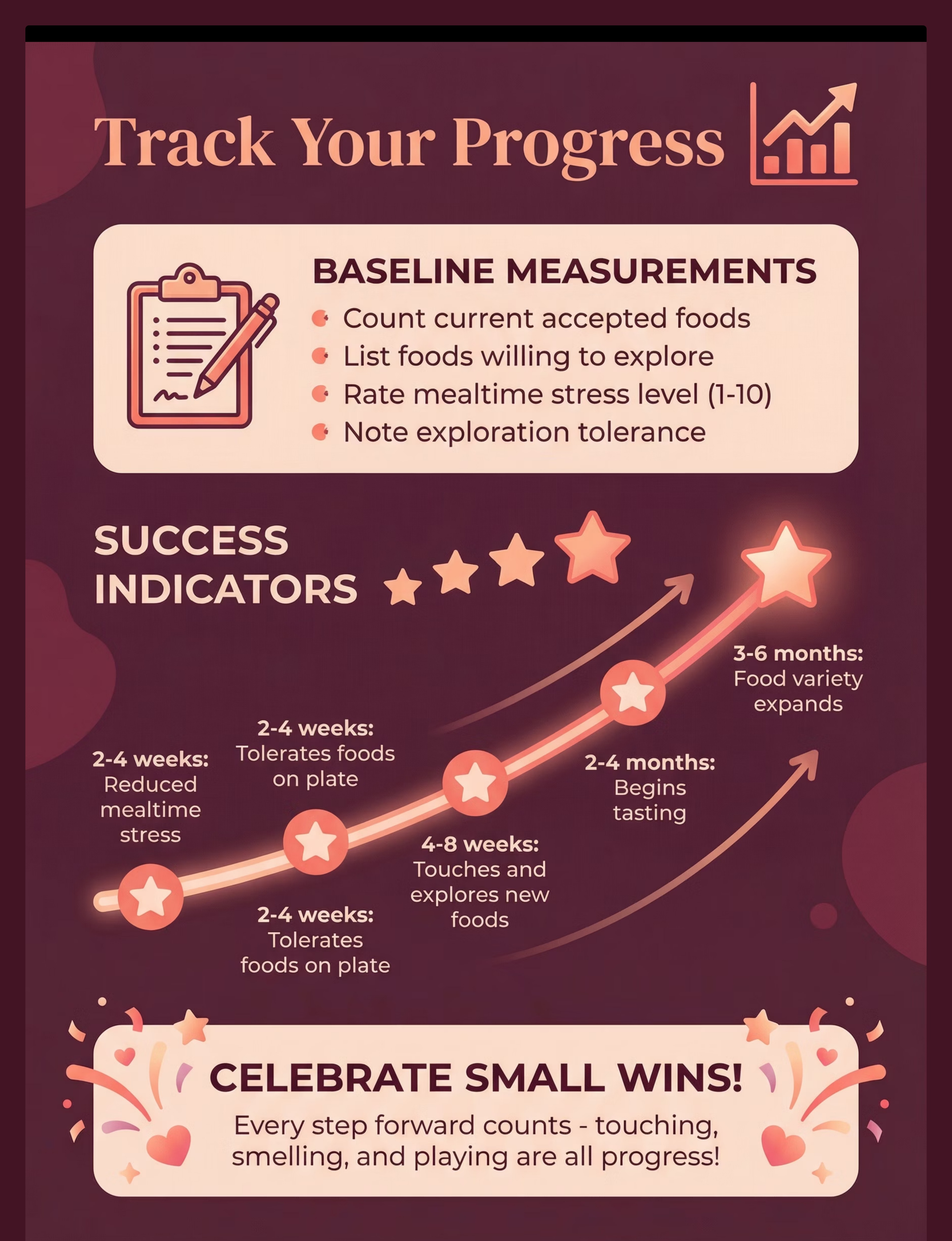
Reduced Mealtime Stress
Removing pressure to eat creates immediate relief. Exploration replaces battles. Family meals become pleasant again.
2-4 weeks
Tolerates New Foods on Plate
Child accepts new foods nearby without distress. Willing to have variety on the table even if not eating yet.
2-4 weeks
Touches/Explores New Foods
Using picks, fingers, or tools to interact with new foods. Sensory exploration becomes comfortable and even enjoyable.
4-8 weeks
Tastes New Foods
Voluntarily brings food to mouth for tasting. Major milestone that emerges from readiness, not pressure.
2-4 months
Food Variety Expands
Repertoire grows from 5-10 foods to 20+ options. Improved nutrition, reduced stress, increased family food options.
3-6 months
Important: Every child progresses at their own pace. Some move faster through early stages, others need more time. Consistency and low pressure are more important than speed. Celebrate each small step forward.

Is This Right for My Child? (2-Minute Check)
Answer these questions to determine if food exploration tools would benefit your child. Three or more "yes" answers indicate a strong fit for this approach.
Does your child have a very limited food repertoire?
If yes, this indicates: Food exploration approach needed. Children eating fewer than 20 different foods benefit significantly from systematic exposure and low-pressure exploration strategies.
Does your child refuse to try new foods?
If yes, this indicates: Low-pressure exposure needed. Refusing new foods often stems from pressure to eat. Exploration without eating demands builds willingness over time.
Are sensory issues (texture, smell) part of food refusal?
If yes, this indicates: Sensory exploration approach. Sensory-based food refusal requires sensory-based solutions—touching, smelling, and playing build tolerance before eating.
Are mealtimes stressful for your family?
If yes, this indicates: Reduce pressure; exploration approach. Mealtime stress perpetuates food refusal. Low-pressure exploration breaks the cycle and restores peaceful family meals.
3+ "yes" answers = strong fit for food exploration tools and approaches. Consider consulting with an occupational therapist or speech-language pathologist specializing in feeding for personalized guidance.

Usage Guide
Guidelines for Food Exploration Tools
When to Use ✓ | When NOT to Use ✗ | |
Every mealtime for new food exposure opportunities | When adding pressure or expectation to eat | |
Structured food exploration sessions (10-15 minutes) | When child is already distressed or overwhelmed | |
Cooking and food preparation involvement | Forcing exploration or interaction | |
Snack time exploration and play | ||
Feeding therapy sessions with professionals |
Duration & Settings
Duration: Ongoing; use daily during mealtimes plus dedicated exploration time (10-15 minutes). This becomes integrated into family eating routines.
Settings: Home (primary), Clinic (feeding therapy), School (with support)
Supervision by Age
Young children (1-5 years) | Adult-guided exploration with close supervision, especially with picks and small items | |
Older children (6+ years) | Supported exploration with increasing autonomy; supervision for safety but child-led pace |

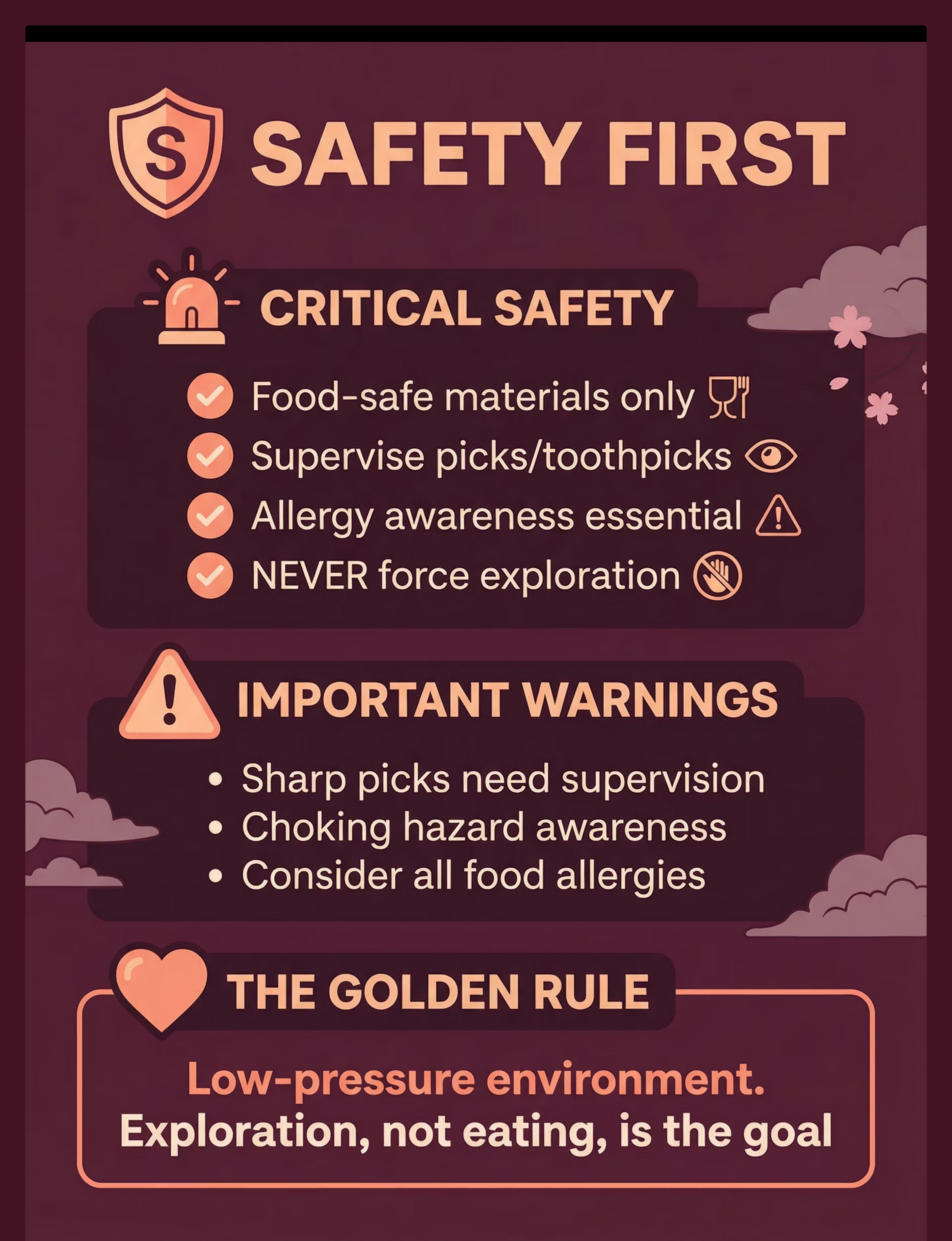
Safety First
Critical Safety
- Food-safe materials only (BPA-free, non-toxic)
- Supervise children with picks and toothpicks
- Maintain allergy awareness at all times
- Never force food exploration or eating
Warnings
- Sharp picks require adult supervision
- Choking hazard awareness with small foods
- Always consider food allergies before exploration
Contraindicated
- Forcing child to explore or touch foods
- Rushing through exploration hierarchy
- Ignoring signs of distress or overwhelm
Safety Checklist
Before Use
- ✓ Verify materials are food-safe
- ✓ Ensure foods are allergy-safe
- ✓ Create low-pressure environment
- ✓ Set expectation: exploration, not eating
During Use
- ✓ Follow child-led pace
- ✓ Celebrate all exploration attempts
- ✓ Maintain no pressure to eat
- ✓ Build positive associations
Signs of Success
- ✓ Reduced mealtime stress
- ✓ Tolerance for new foods nearby
- ✓ Willingness to touch and explore
- ✓ Eventually voluntary tasting

Common Questions (Honest Answers)
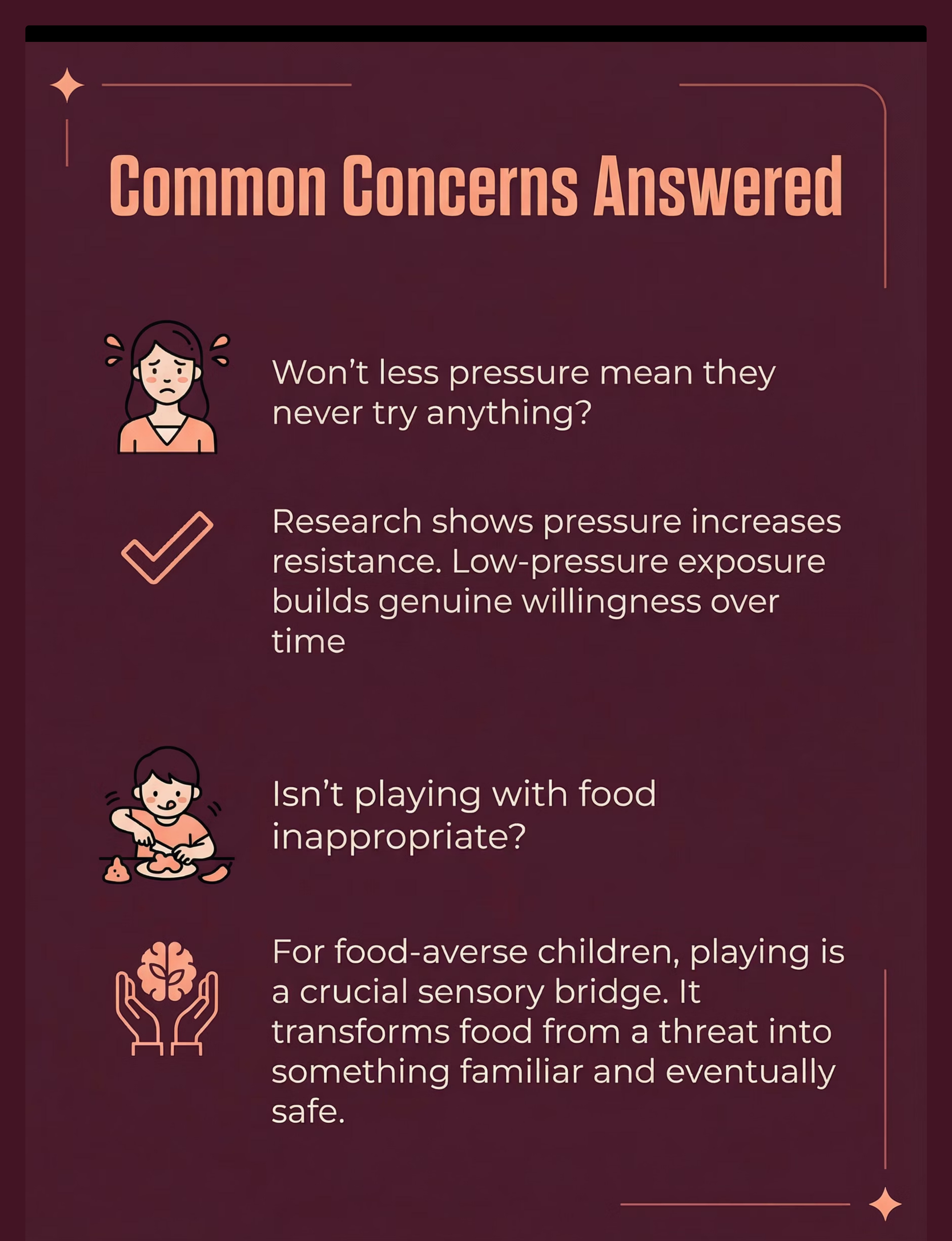
Q: "If I don't pressure them to eat, they'll never try anything"
A: Research shows the opposite! Pressure increases resistance and creates long-term food aversion. Low-pressure exposure builds familiarity and willingness over time. Children become more open to trying new foods when eating is their choice, not a battle. It requires patience, but this approach works better than forcing and creates healthier long-term eating patterns.
Try this: Less pressure = more willingness long-term. Trust the process.
Q: "Playing with food is inappropriate"
A: For children with food aversions, "playing" is actually exposure therapy. Touching, smelling, arranging, and exploring food are therapeutic steps toward eating. This isn't teaching bad manners—it's addressing the underlying sensory and psychological barriers that prevent food acceptance.
Try this: Play is therapeutic exposure for resistant eaters, not poor behavior.
Q: "This will take forever"
A: Food expansion typically takes 3-6 months for significant change. While this feels slow, forced eating creates lifelong food trauma, anxiety, and disordered eating patterns. The investment in a gentle, systematic approach pays off with healthy eating habits and positive food relationships that last a lifetime.
Try this: Slow but lasting change is better than quick battles with long-term consequences.
Q: "They'll just refuse the exploration too"
A: Start with absolutely zero pressure—children don't even have to touch the food. Simply having food nearby counts as progress. Cookie cutters and picks give comfortable distance for initial exploration. Meeting children exactly where they are, without expectations, is the key to building willingness over time.
Try this: Start with toleration; no pressure; gradual progression from there.

Investment Guide
Food exploration tools are among the most affordable therapeutic interventions, with options ranging from ₹50 for basic picks to ₹600 for comprehensive food play kits.
Here's a detailed look at the available options and their benefits:
Basic Picks | Individual food picks | 50 | |
Core Exploration Toolkit | Food picks, divided plate, cookie cutters | 150-300 | |
Complete Food Expansion System | Full exploration kit, food chaining program, specialty plates | 400-600 |
Budget-Friendly Starting Points
Core Exploration Toolkit
Provides essential tools for initial food interaction.
Key Components
Food picks, a divided plate, and cookie cutters are included.
Investment
Costs between ₹150-300, offering great value.
Why it Works
Facilitates indirect food contact, separation, and visual appeal, addressing fundamental needs for beginners.
Journey Towards Food Acceptance
Initial Step: Basic Picks
Start with simple food picks (approx. ₹50) for minimal interaction and curiosity.
Foundational Phase: Core Toolkit
Progress to the Core Exploration Toolkit (₹150-300) for structured exposure. Most families see significant progress in 4-8 weeks.
Advanced Support: Premium System
For more severe challenges, the Complete Food Expansion System (₹400-600) offers comprehensive support.
Why Upgrade
Includes systematic food chaining guidance, sensory materials, and specialty tools for diverse presentation needs.
Continuous Progress
Add food chaining visuals and specialty items gradually as your child becomes more comfortable and adventurous.

Where to Buy in India
Availability: Widely Available across India through online platforms and specialty stores
Amazon.in
Search for: "divided plate kids"
Price range: ₹150-400
Largest selection of divided plates in various sizes, materials, and designs. Read reviews for food-safe certification.
Amazon.in
Search for: "food picks kids"
Price range: ₹50-200
Colorful, child-safe picks in various designs. Look for BPA-free options with rounded tips for safety.
Amazon.in
Search for: "cookie cutters kids"
Price range: ₹100-300
Fun shapes that make food visually appealing. Stainless steel options are most durable and food-safe.
Amazon.in
Search for: "silicone finger covers"
Price range: ₹100-250
Medical-grade silicone covers for reducing texture contact. Verify food-safe certifications before purchasing.
Therapy Resources
Search for: "food chaining"
Price range: ₹200-500
Professional feeding therapy resources and systematic food expansion programs. Available through occupational therapy clinics and online specialty retailers.
Buying Tips
- Divided plates are essential for children who can't tolerate foods touching
- Fun food picks make touching new foods easier and less threatening
- Cookie cutters make food visually appealing and increase acceptance
- Involve your child in choosing tools to increase buy-in and excitement
- Food chaining resources provide systematic guidance for expanding variety
Red Flags to Avoid
- Tools that add pressure or force eating
- Products that promise quick fixes or overnight results
- Forcing food exploration before child is ready
- Moving too fast through exploration hierarchy
- Not addressing underlying sensory issues

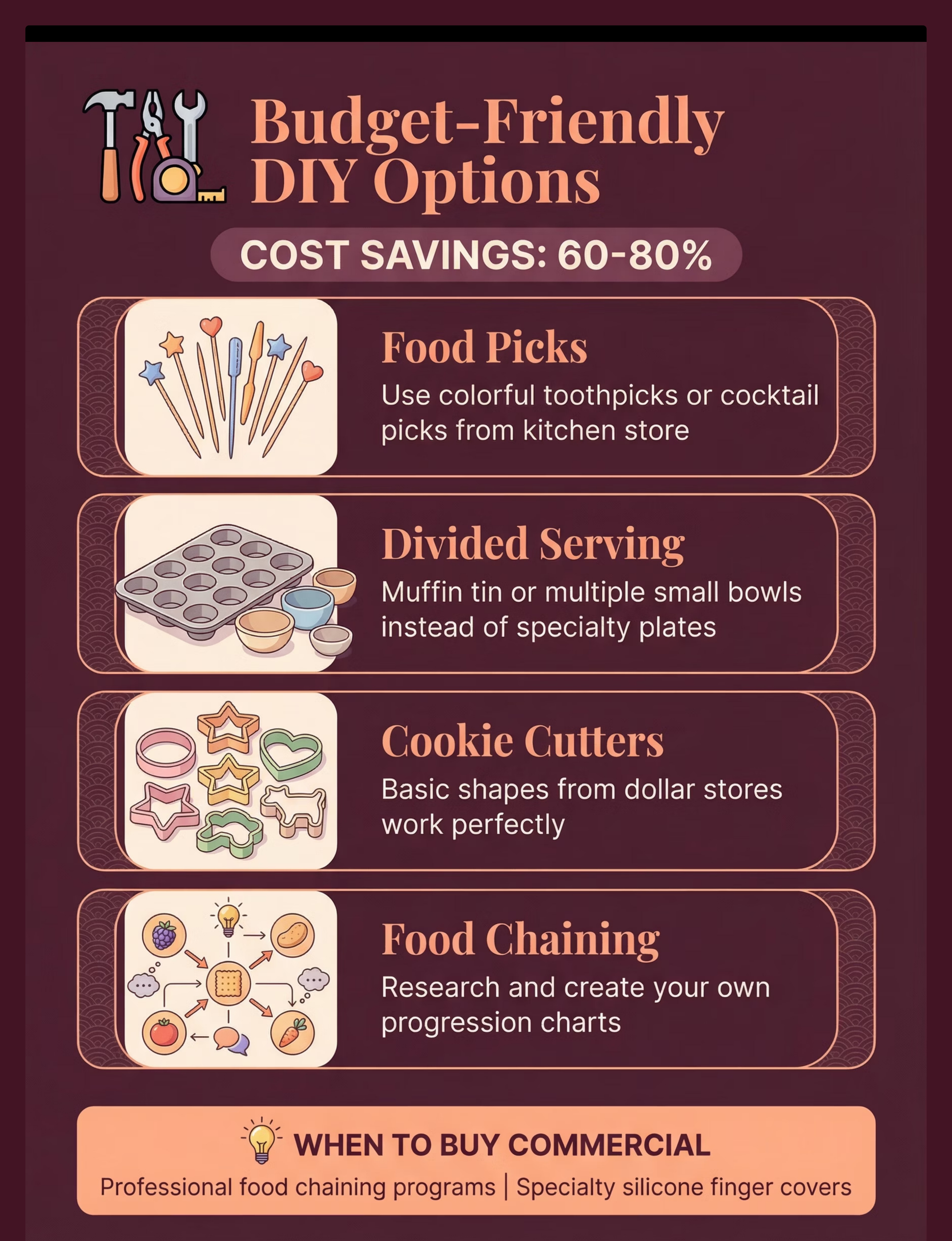
DIY Alternative (Save 60-80%)
Feasibility: High | Time investment: Minimal | Cost savings: 60-80% compared to commercial options
Cost-Effective Materials
Utilize common household items like colorful toothpicks, muffin tins or small bowls, and basic cookie cutters for significant savings (60-80%).
Simple Steps for Setup
Easy implementation involves arranging items for divided serving, designating an exploration area, and researching food chaining for progression.
Ideal for Basic Exploration
DIY solutions are perfect for basic exploration tools, divided serving options, cookie cutters, and creating personal exploration charts.
Consider Commercial for Specific Needs
DIY options are less systematic than professional resources. Opt for commercial solutions for specialty plates, medical-grade silicone covers, or structured feeding programs, especially for severe challenges or if DIY progress plateaus.
Bottom line: DIY tools work well for basic food exploration. Consider investing in professional food chaining resources if your child has severe feeding challenges or if DIY progress plateaus after 2-3 months.
Preview of food exploration tools Therapy Material
Below is a visual preview of food exploration tools therapy material. The pages shown help educators, therapists, and caregivers understand the structure and content of the resource before use. Materials should be used under appropriate professional guidance.


Share this resource
Help others discover thisLink copied!

Track Progress & Complete the Journey
Measuring Success: Baseline & Goals
Begin by establishing a baseline and setting specific, measurable goals to guide the food exploration process.
Baseline (Measure First)
- Count current accepted foods
- List foods on "will explore" list
- Rate mealtime stress level (1-10)
- Assess exploration tolerance level
Goals to Set
- Child will tolerate new foods on plate
- Child will touch/explore [X number] new foods
- Food repertoire will expand to [target number] foods
- Mealtime stress will decrease by [X points]
Enhance with Complementary Tools
Integrate supportive tools and bundles to facilitate progress and address various aspects of feeding challenges.
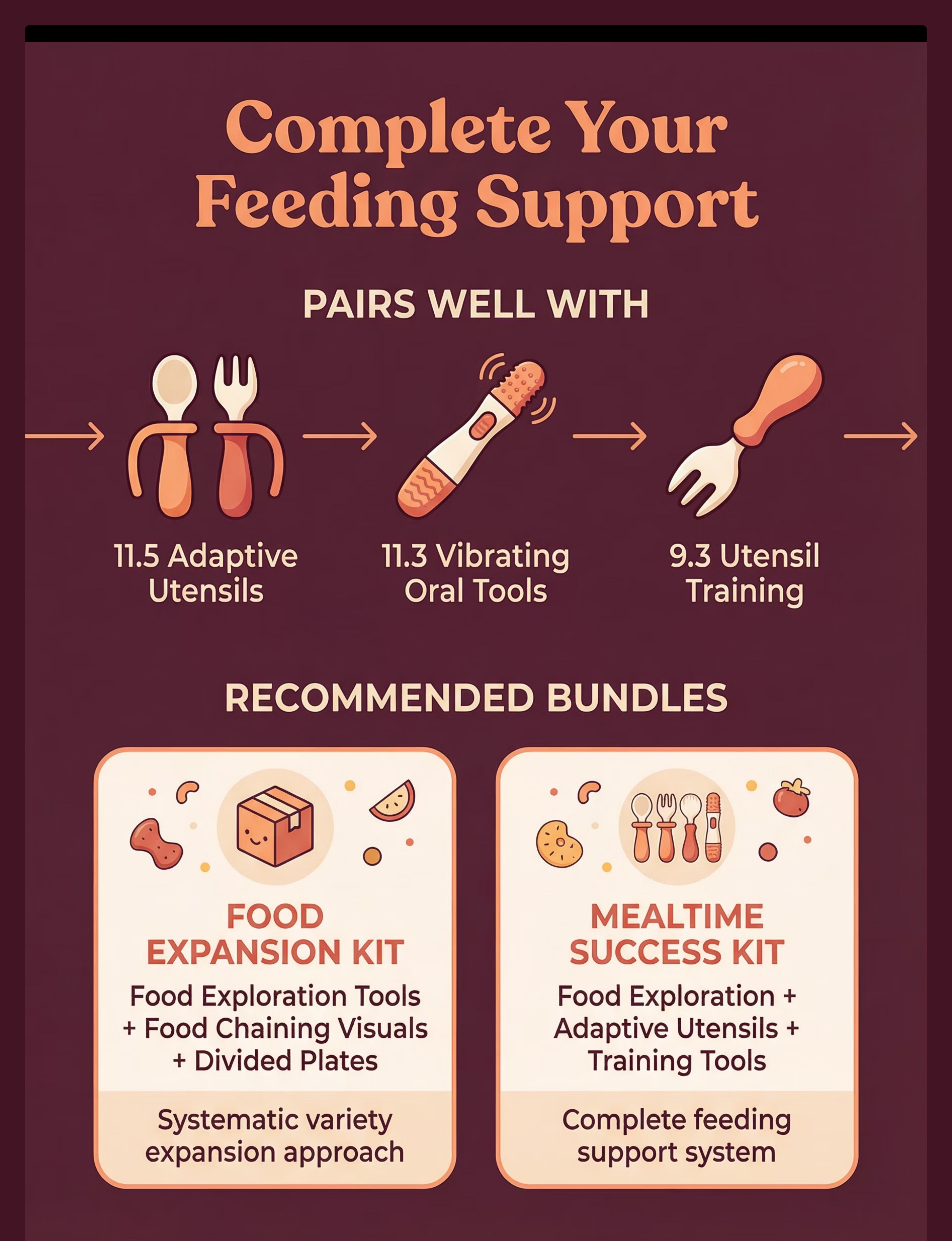
Pair It With...
- Adaptive Utensils (11.5): For self-feeding skills.
- Vibrating Oral Tools (11.3): For oral sensory preparation.
- Utensil Training (9.3): For mealtime independence.
- Sensory Bins (1.5): For non-food texture exploration.
Recommended Bundles
- Food Expansion Kit: Food Exploration Tools (11.4) + Food Chaining Visuals (11.4.4) + Divided Plates (11.4.6) — Systematic food variety expansion.
- Mealtime Success Kit: Food Exploration Tools (11.4) + Adaptive Utensils (11.5) + Utensil Training (9.3) — Complete mealtime support system.
Success Indicators & Quick Summary
Monitor key indicators to recognize progress and understand the overall impact of food exploration strategies.
Success Indicators
- Reduced mealtime stress
- More foods tolerated nearby
- Exploration attempts increasing
- Voluntary tasting beginning
- Food variety expanding
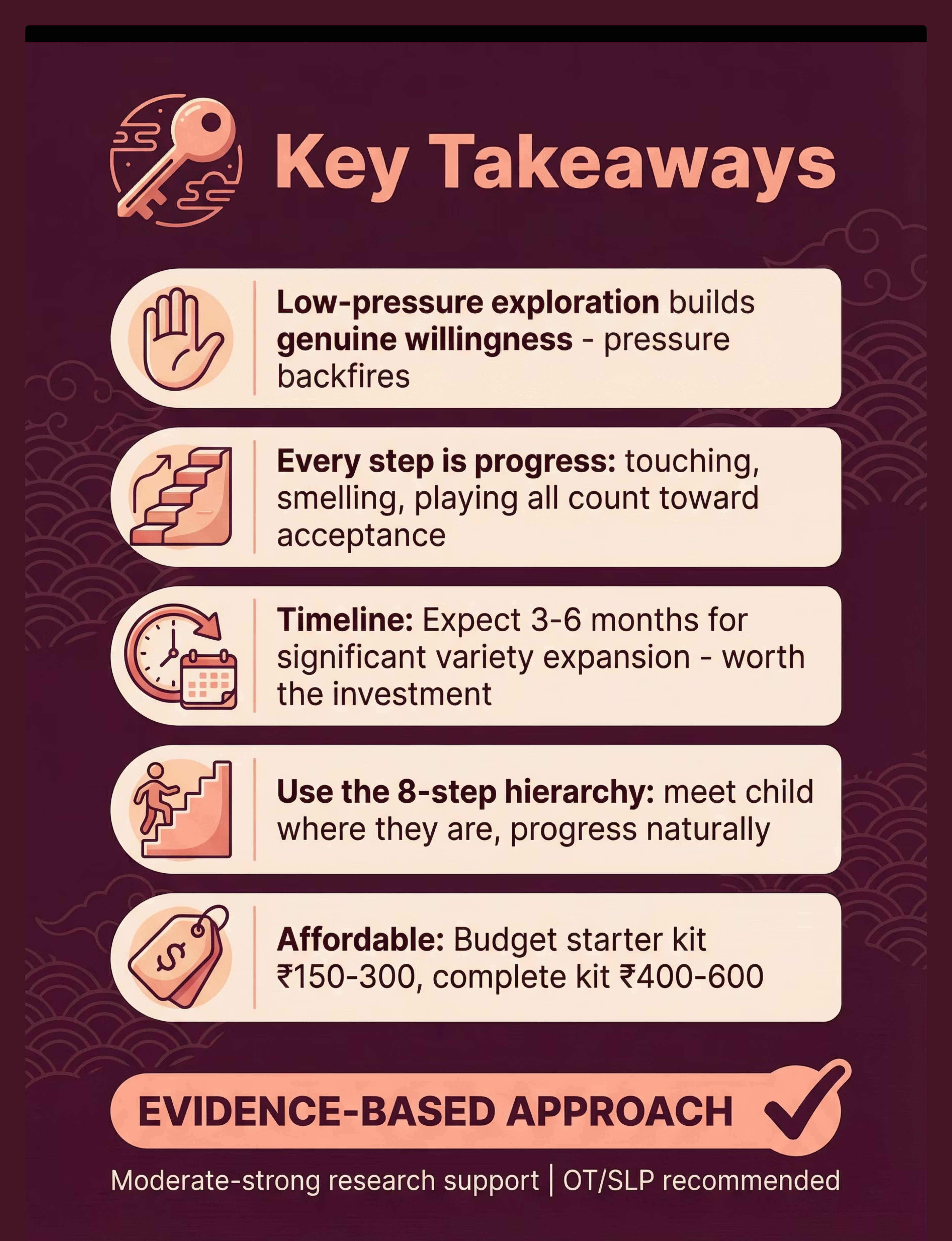
Quick Summary
Food Exploration Tools expand food acceptance and variety through systematic sensory exploration and reduced-pressure approaches. Core Kit essential (Rank 2) with moderate-strong evidence supporting effectiveness for children with picky eating and sensory-based food refusal.
food
picky eating
exploration
sensory
variety
feeding
OT
SLP
core-kit
Common searches: picky eater tools, food exploration autism, food chaining, divided plate kids, sensory food aversion, expand food variety, feeding therapy
Get Support for Your Journey
Access professional guidance and integrated platform solutions for comprehensive feeding support.
FREE National Autism Helpline
Phone: 9100 181 181
Languages: 16+ Indian languages supported
Website:pinnacleblooms.org
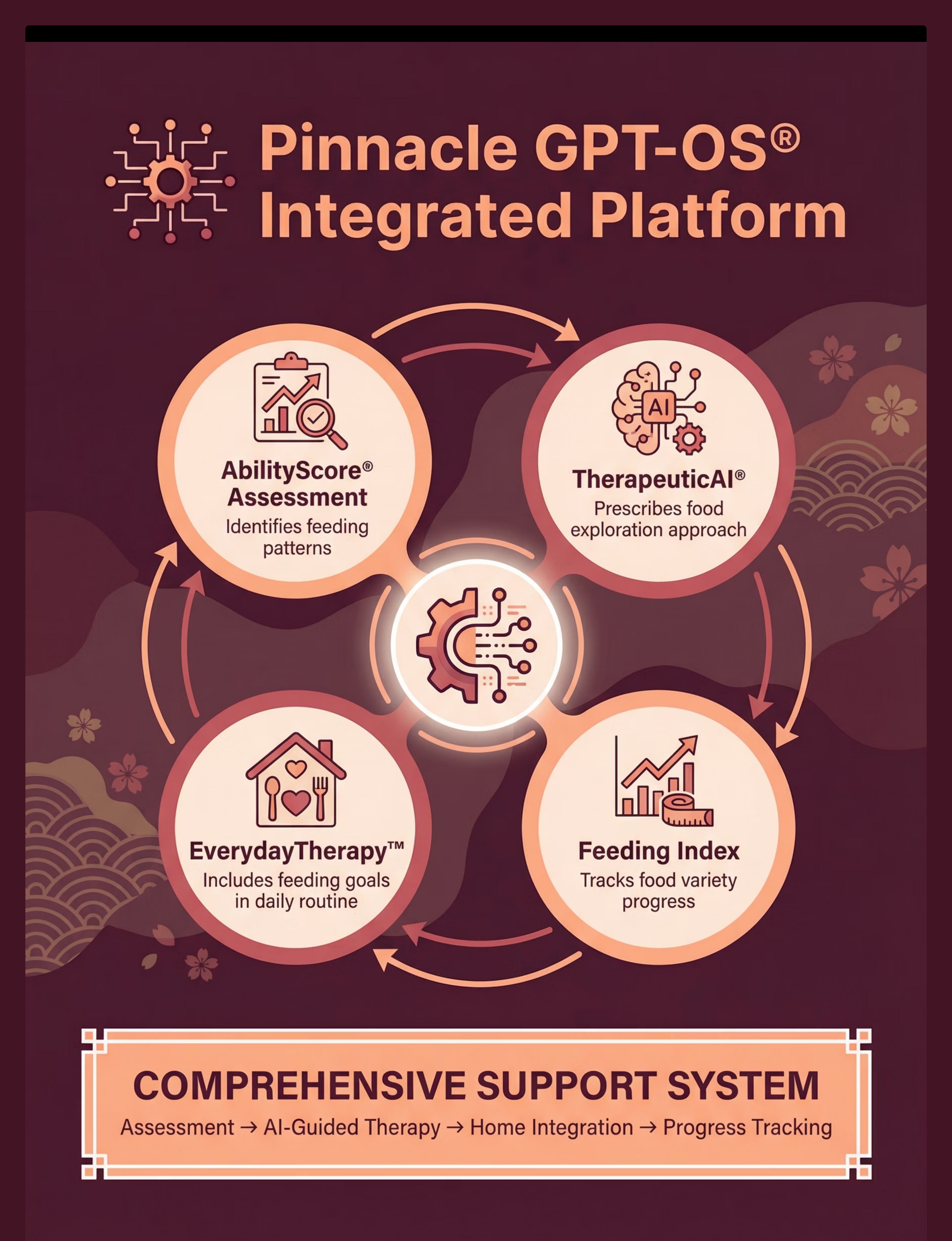
Platform Integration
AbilityScore® identifies feeding patterns and food acceptance challenges
TherapeuticAI® prescribes personalized food exploration protocols
EverydayTherapyProgramme™ includes daily feeding goals integrated into routines
Feeding Index tracks food variety progress and mealtime success indicators over time
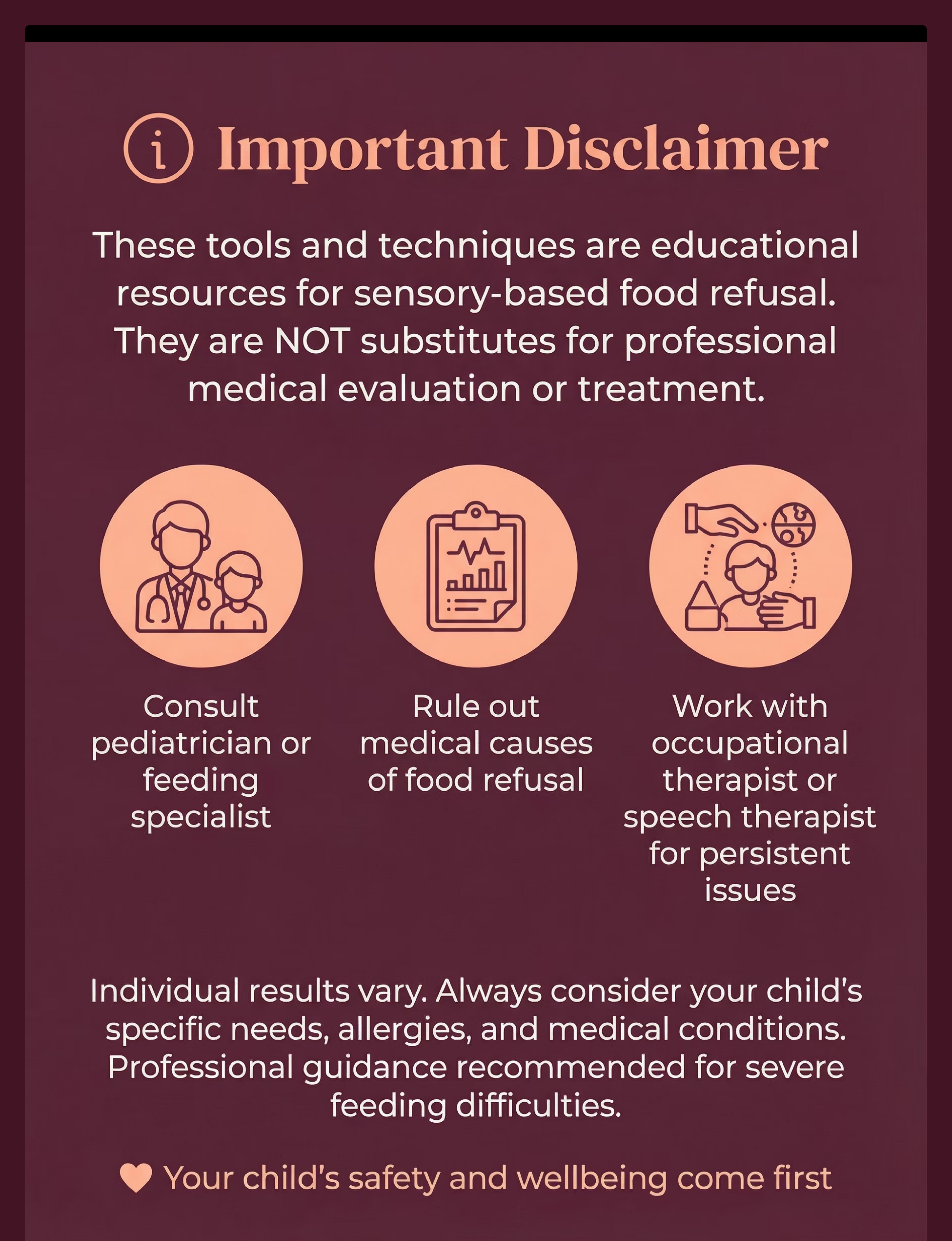
Disclaimer: This is educational information. Always consult qualified occupational therapists, speech-language pathologists, or pediatricians for personalized feeding guidance. Individual results vary. Food exploration approaches work best when implemented consistently with professional support for complex feeding challenges.