







Tool ID: 12.3
Tool ID: 12.3
OT + PT
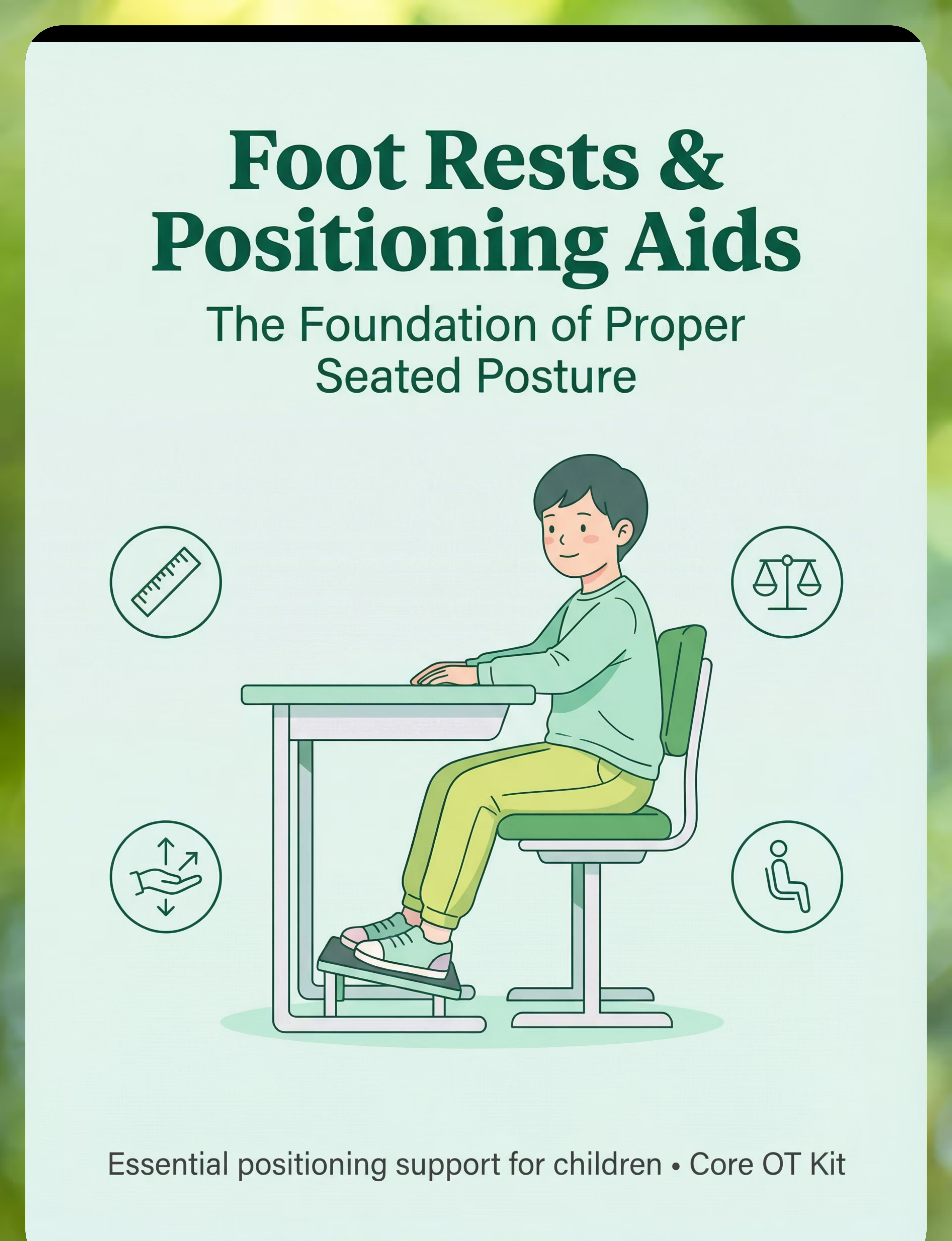
Foot Rests & Positioning Aids
The Foundation for Proper Seated Posture
Core Kit
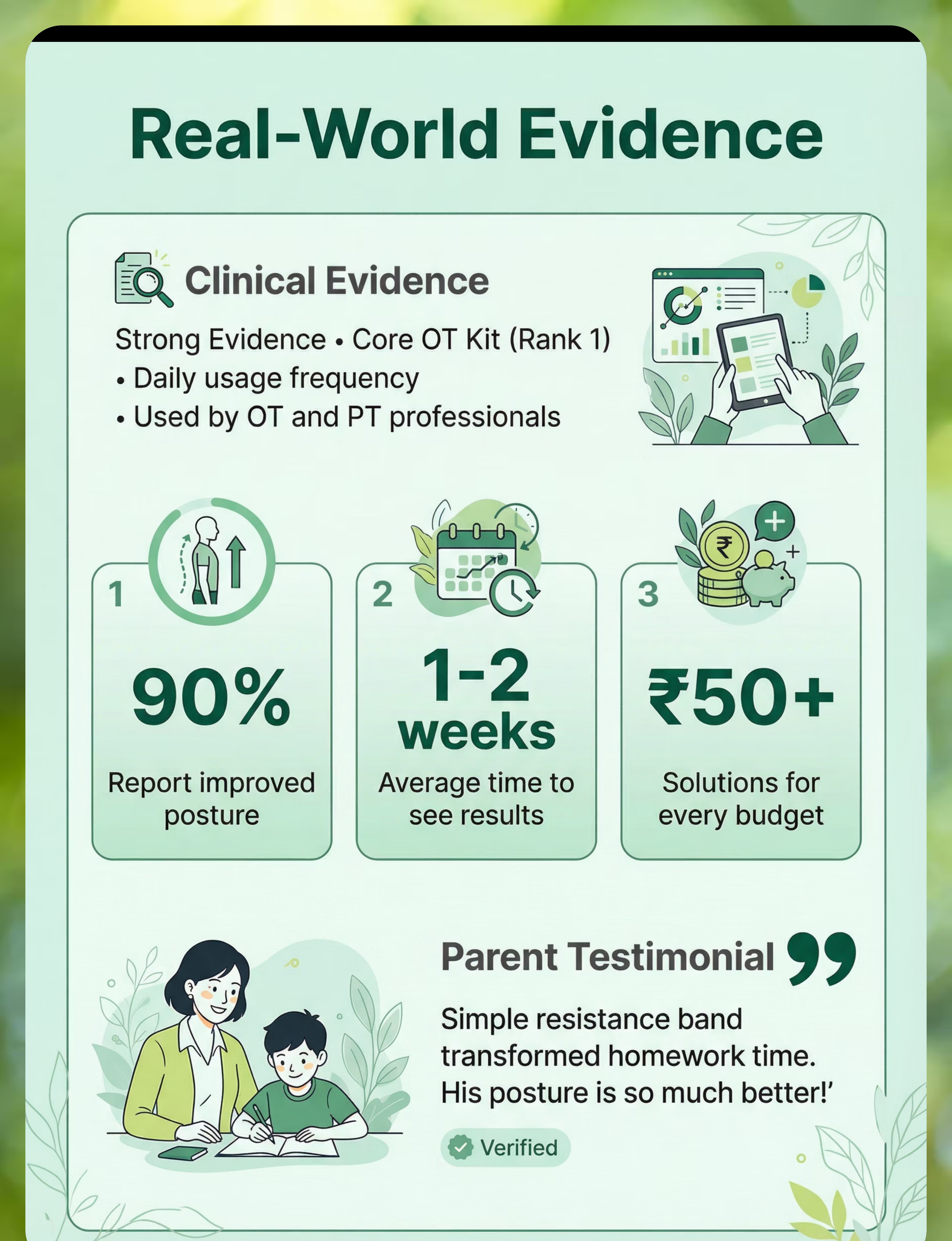
Strong Evidence
Rank #1
Daily Use
₹50–1,500
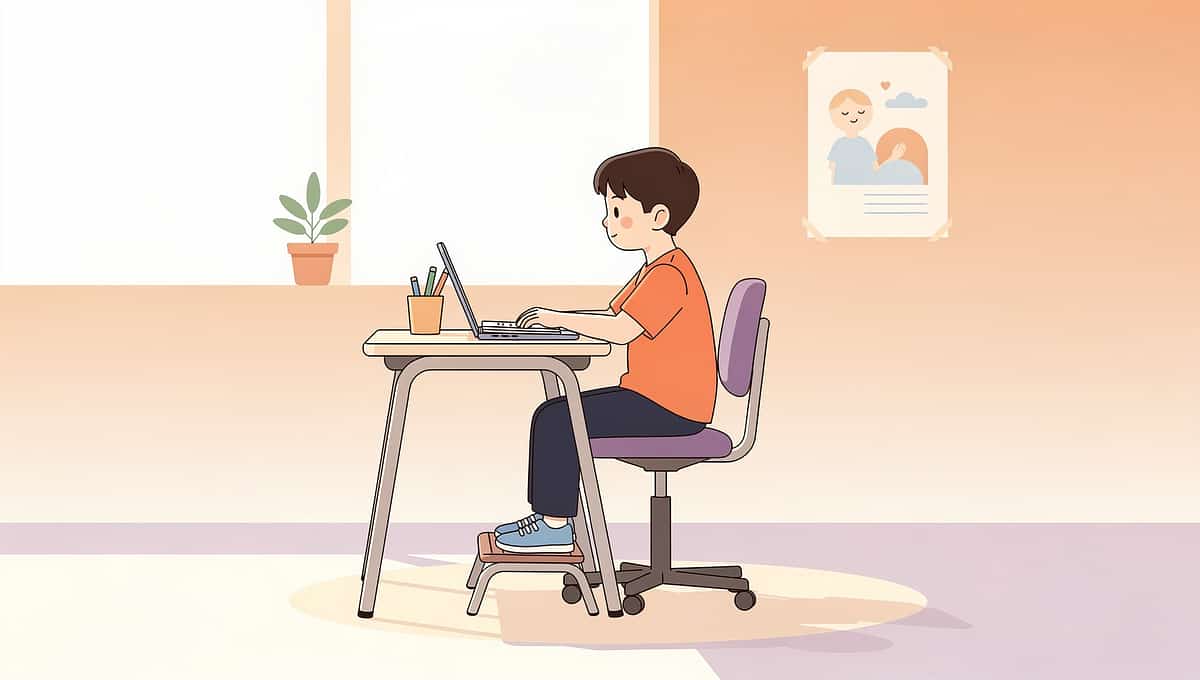
A simple solution often overlooked: proper foot support transforms sitting. When feet dangle, the entire postural chain collapses. Footrests provide the stable foundation children need for focus, comfort, and proper development.
Who This Tool Helps
Improve Posture & Focus
Provides foot support and movement outlets to improve seated posture, stability, and regulation throughout the day.
Key Developmental Areas
Enhances postural stability, core support, and sensory regulation. Offers a movement outlet for restless legs, improving attention and seated tolerance.
Ages & Settings
Ideal for children aged 3+ years whose feet don't reach the floor. Perfect for use at home, school, or any seated work environment.
Best for Children Who...
  • Have feet that dangle when sitting at standard desks or tables.
  • Struggle with maintaining proper posture during seated activities.
  • Need movement outlets for restless legs while working.
  • Experience fatigue or discomfort during homework or classroom time.
Does This Sound Familiar?
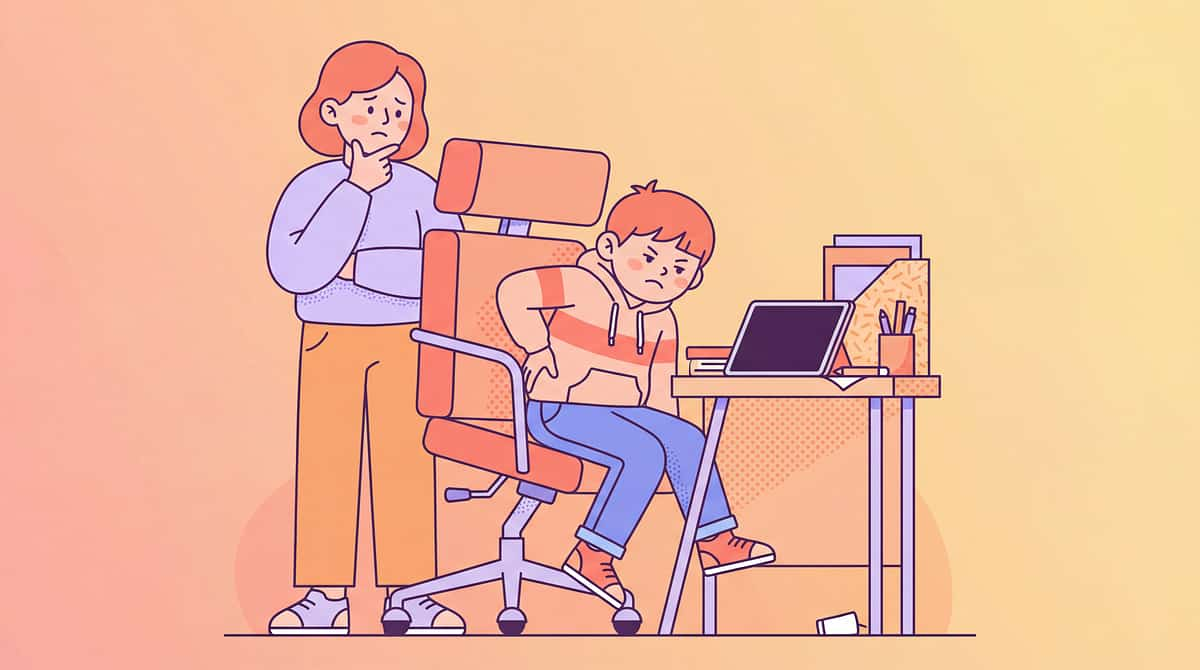
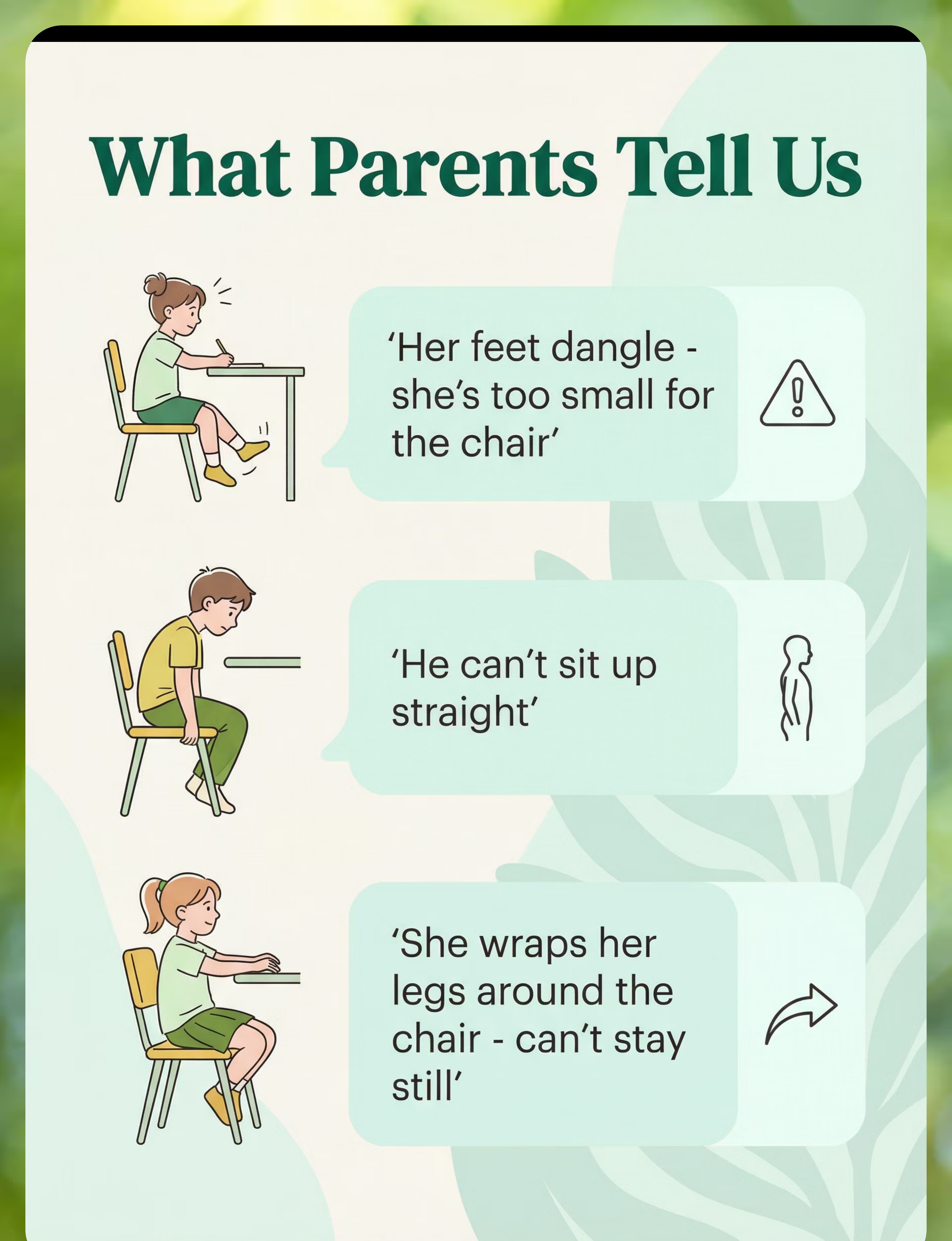
"Her feet dangle - she's too small for the chair"
"He can't sit up straight"
"She wraps her legs around the chair"
"He's constantly sliding in his chair"
"She can't stay still - always kicking"
"His posture is terrible at the desk"
You're not alone. These are common challenges faced by countless families across India. Proper foot support addresses the root cause of many seating difficulties.
A Day Without the Right Support
Morning Study Time
Feet dangle during breakfast table work. Body unstable from the start. Already feeling uncomfortable and fidgety before school even begins.
Classroom Transitions
Moving between activities is harder when seating never feels right. Constant position adjustments disrupt focus. Other children notice the fidgeting.
Afternoon Lessons
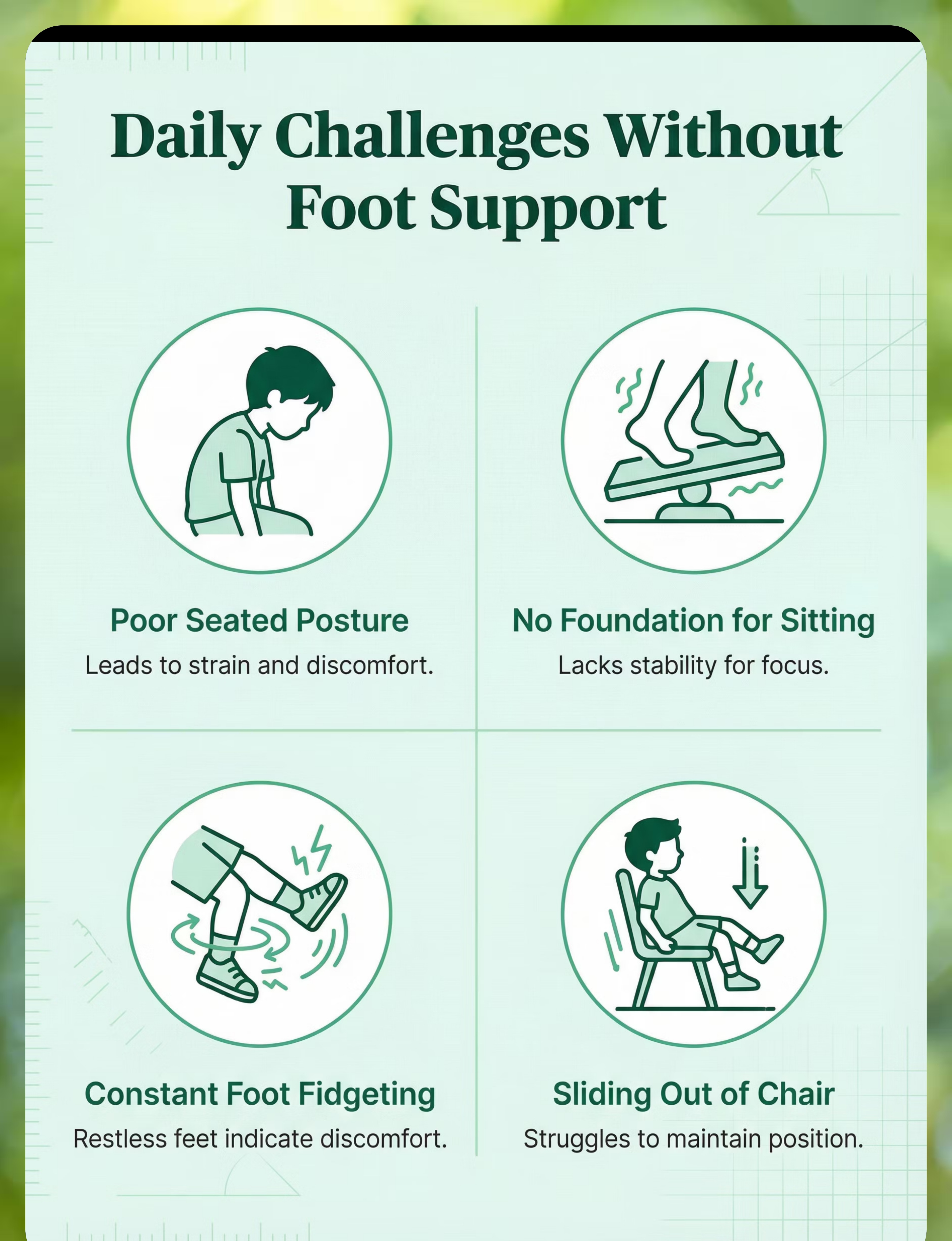
Hours of dangling feet lead to leg wrapping, sliding, and poor posture. Core muscles can't engage properly. Fatigue sets in early. Work quality declines.
Evening Homework
After a full day of unstable sitting, homework becomes a battle. Body is tired from compensating. Restless legs need to move. Completion takes twice as long.
The Science Behind It
Understanding how foot support creates a foundation for proper posture and regulation helps explain why this simple intervention is so powerful.
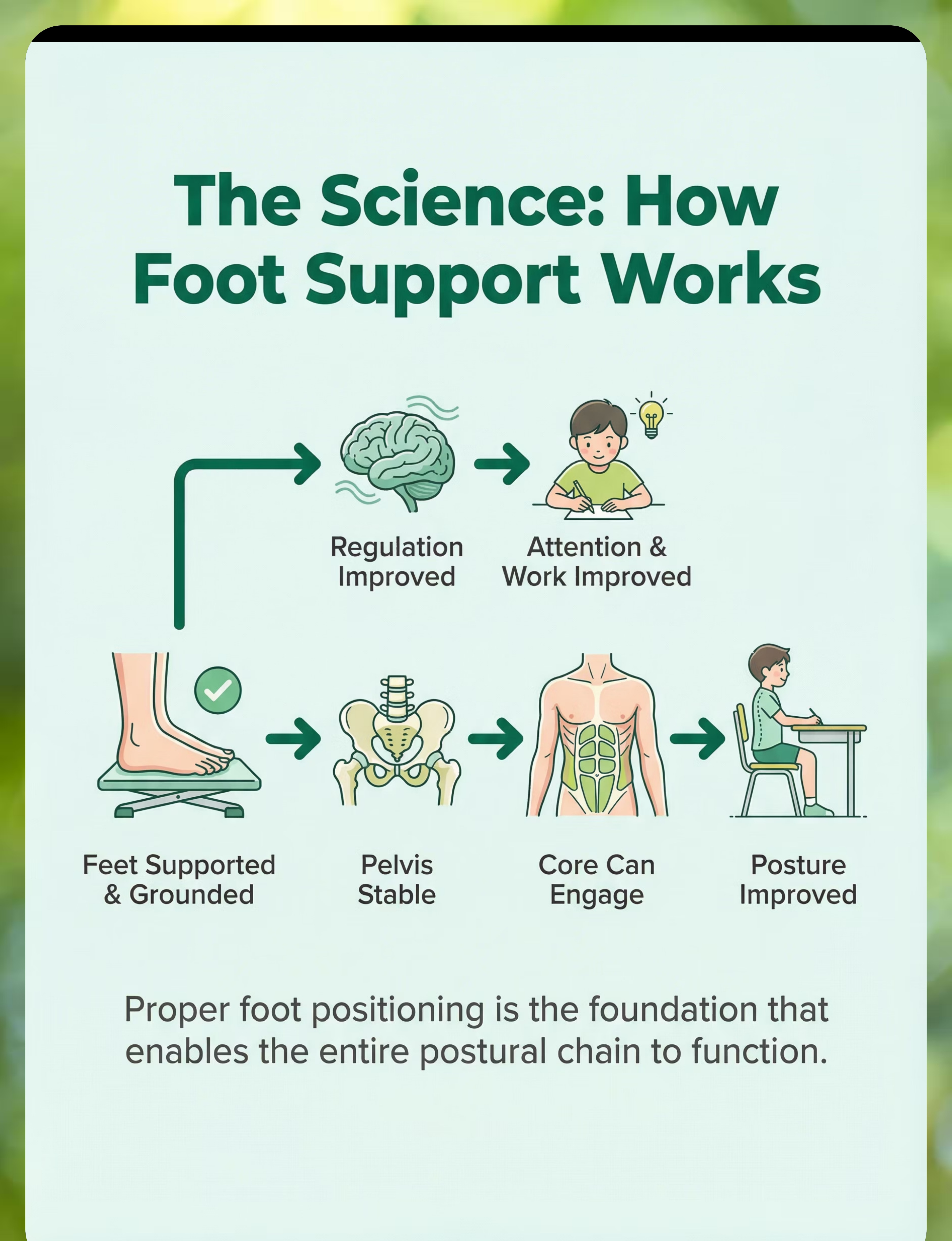
Feet Supported & Grounded
When feet have a stable surface, they create the foundation of the entire postural chain
Pelvis Becomes Stable
Grounded feet allow the pelvis to find neutral position and remain steady
Core Can Engage
Stable pelvis enables core muscles to activate properly and support the trunk
Posture Improves
Engaged core supports upright posture, reducing fatigue and improving breathing
Movement Outlet Provided
For movement-seekers, dynamic footrests channel fidgeting productively
Regulation & Attention Improve
Stable posture or met movement needs lead to better focus and work output
Target Areas:
Postural Stability
Core Support
Sensory Regulation
Movement Outlet
Attention
Seated Tolerance
How to Use It Right
1
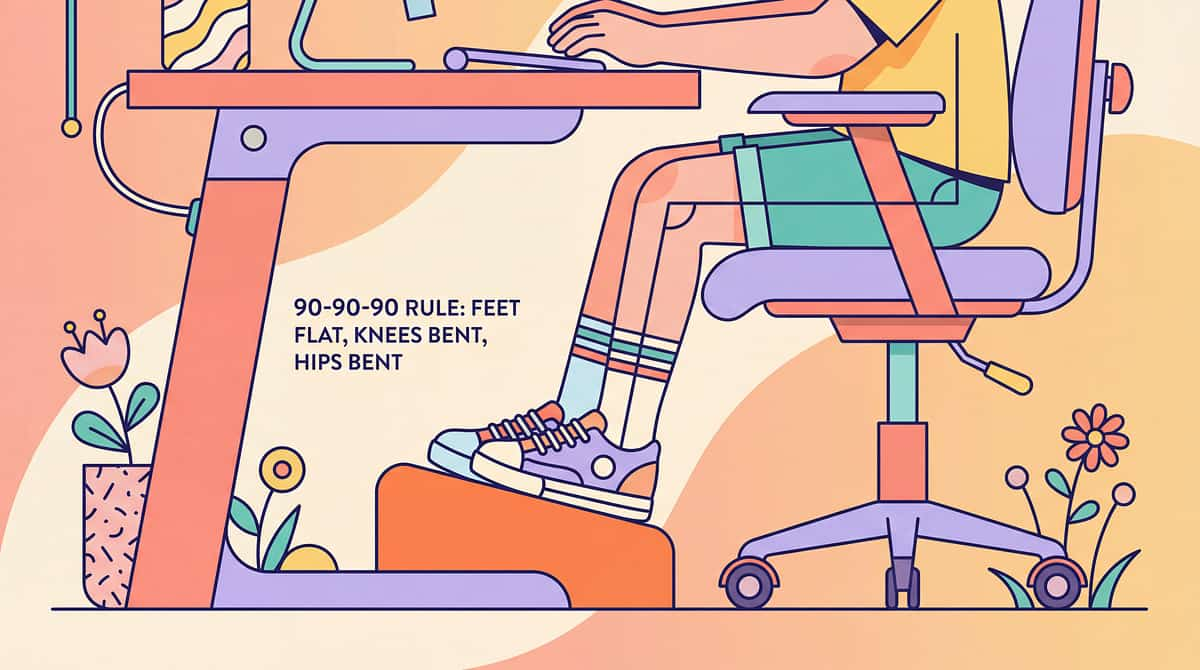
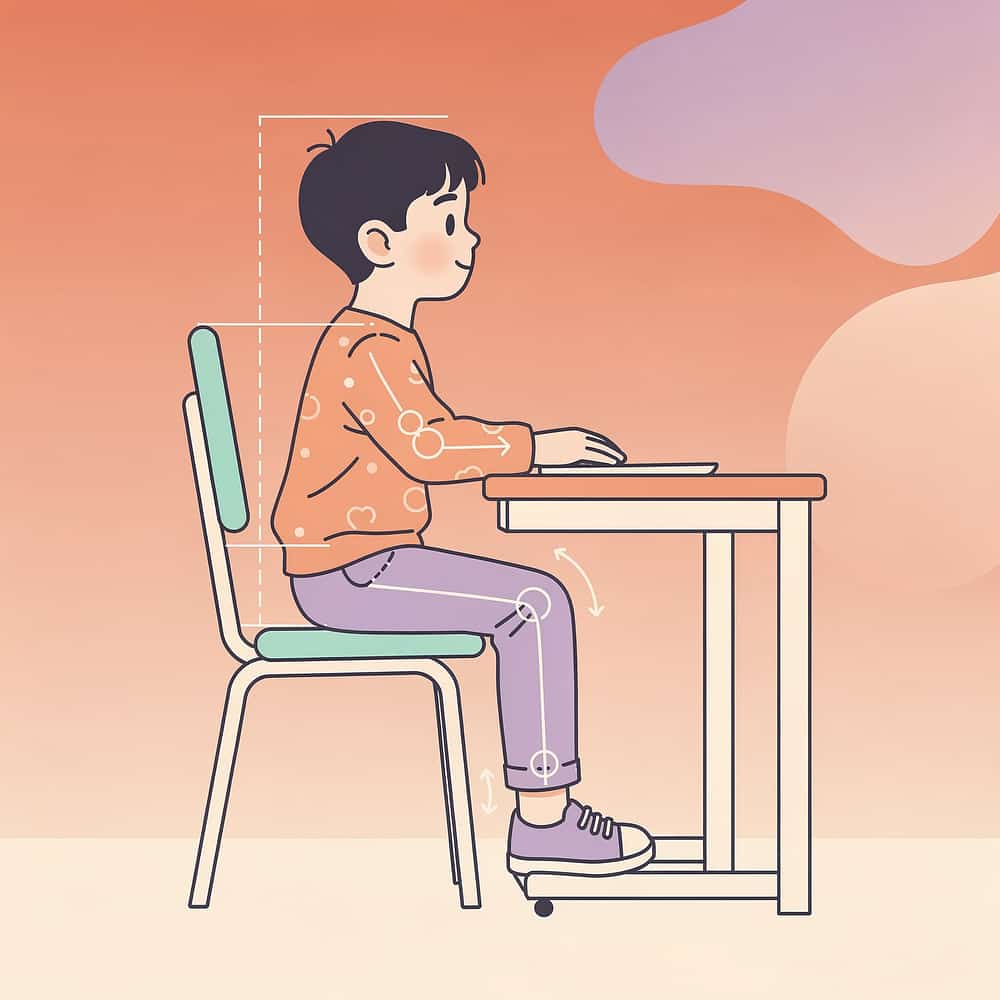
Feet Flat on Surface (90-90-90)
Measure for 90-degree angles at hips, knees, and ankles to ensure optimal postural alignment
2
Movement Options for Fidgeters
Children who need sensory input benefit from resistance bands or rocker footrests that allow productive movement
3
Height Adjustable for Growth
Choose adjustable options or plan to update as your child grows to maintain proper positioning
4
Consider Resistance Bands
Incredibly cost-effective, portable, and can be attached to any chair for immediate support
5
Critical for Posture
Many focus on chair selection while forgetting that foot support is the foundation of the entire system

Duration: Use whenever seated at desk or table for any length of time. This includes homework, meals, classroom work, and leisure activities.
Expert Perspective
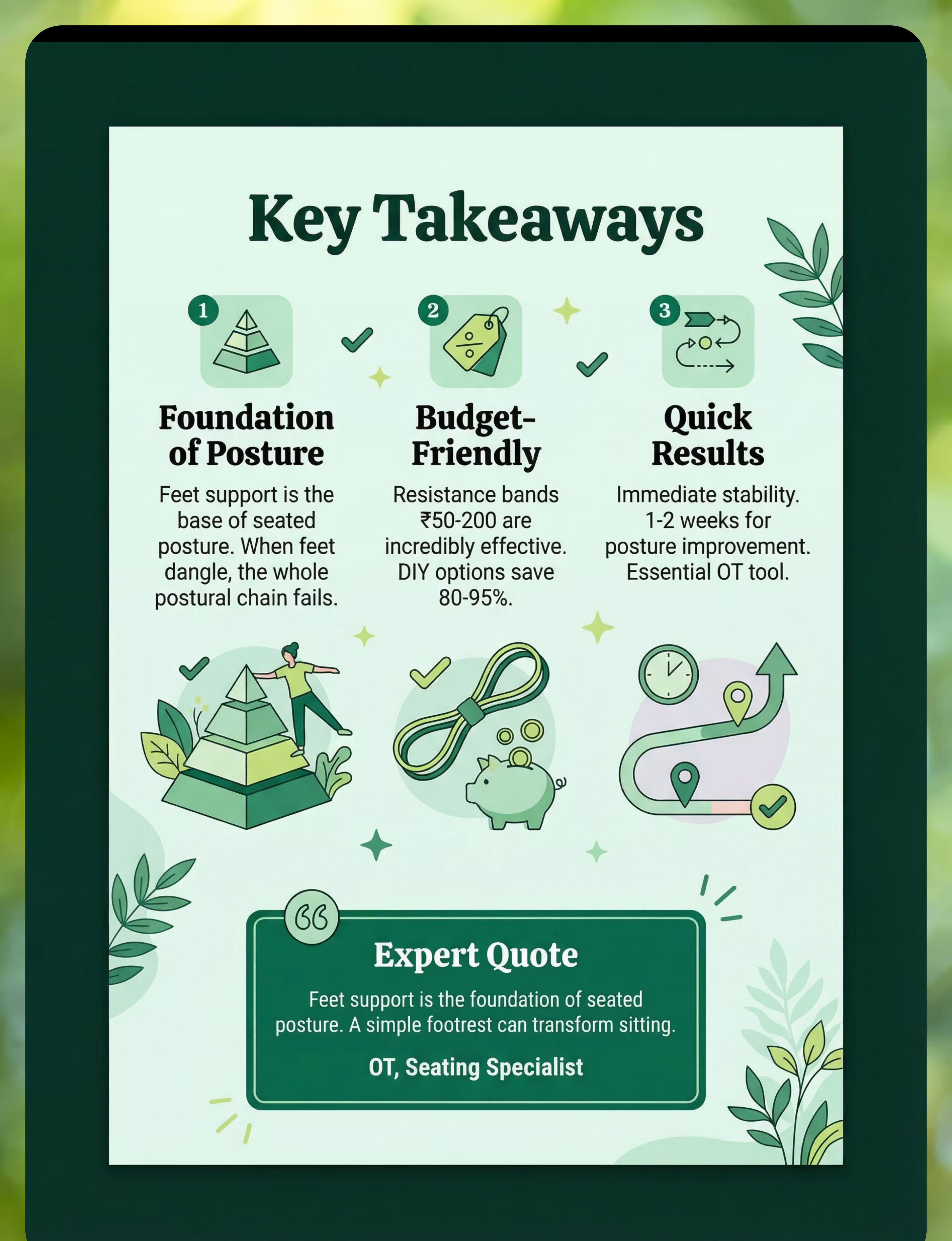
"Feet support is the foundation of seated posture. When feet dangle, the whole chain of posture falls apart. A simple footrest can transform sitting. Movement footrests add regulation for fidgeters."
— Occupational Therapist, Seating Specialist
OT + PT Recommended
Co-owned by both Occupational Therapy and Physical Therapy disciplines
Strong Evidence Base
Well-established research supporting effectiveness for postural support and regulation
Rank #1 in Category
Top-ranked positioning solution in the Positioning & Seating category
Choose Your Option (5 Variants)
foot-rests-positioning-aids therapy material
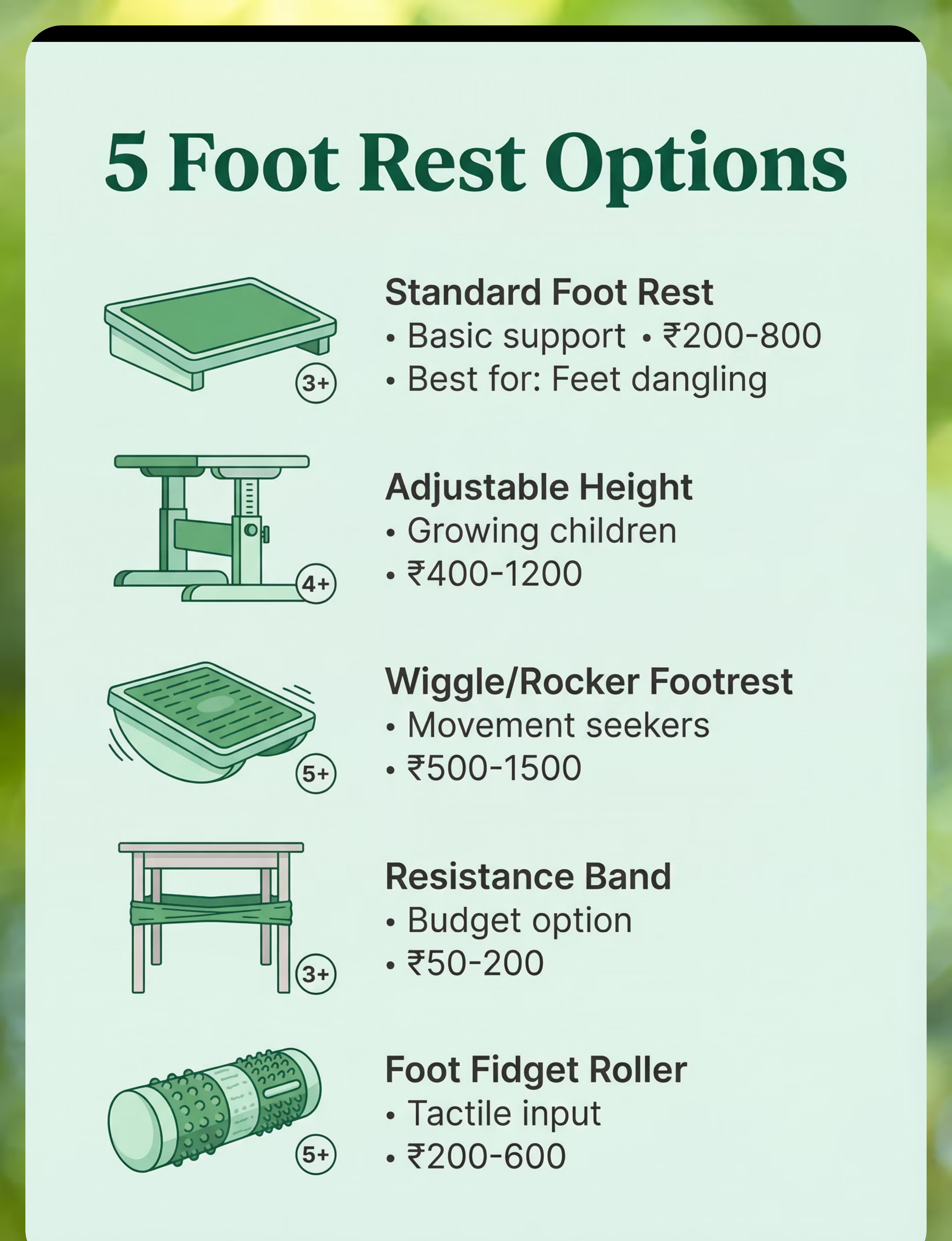
Standard Foot Rest
Type: Basic foot support
Best for: Chairs too high, feet dangling
Ages: 3+ years
Settings: Home • School
Portability: Low-Medium
Price: ₹200–800
Adjustable Height Foot Rest
Type: Customizable support
Best for: Growing children, multiple users
Ages: 4+ years
Settings: School • Home
Portability: Low-Medium
Price: ₹400–1,200
Wiggle/Rocker Foot Rest
Type: Dynamic foot support
Best for: Movement seekers, sensory input
Ages: 5+ years
Settings: School • Home
Portability: Medium
Price: ₹500–1,500
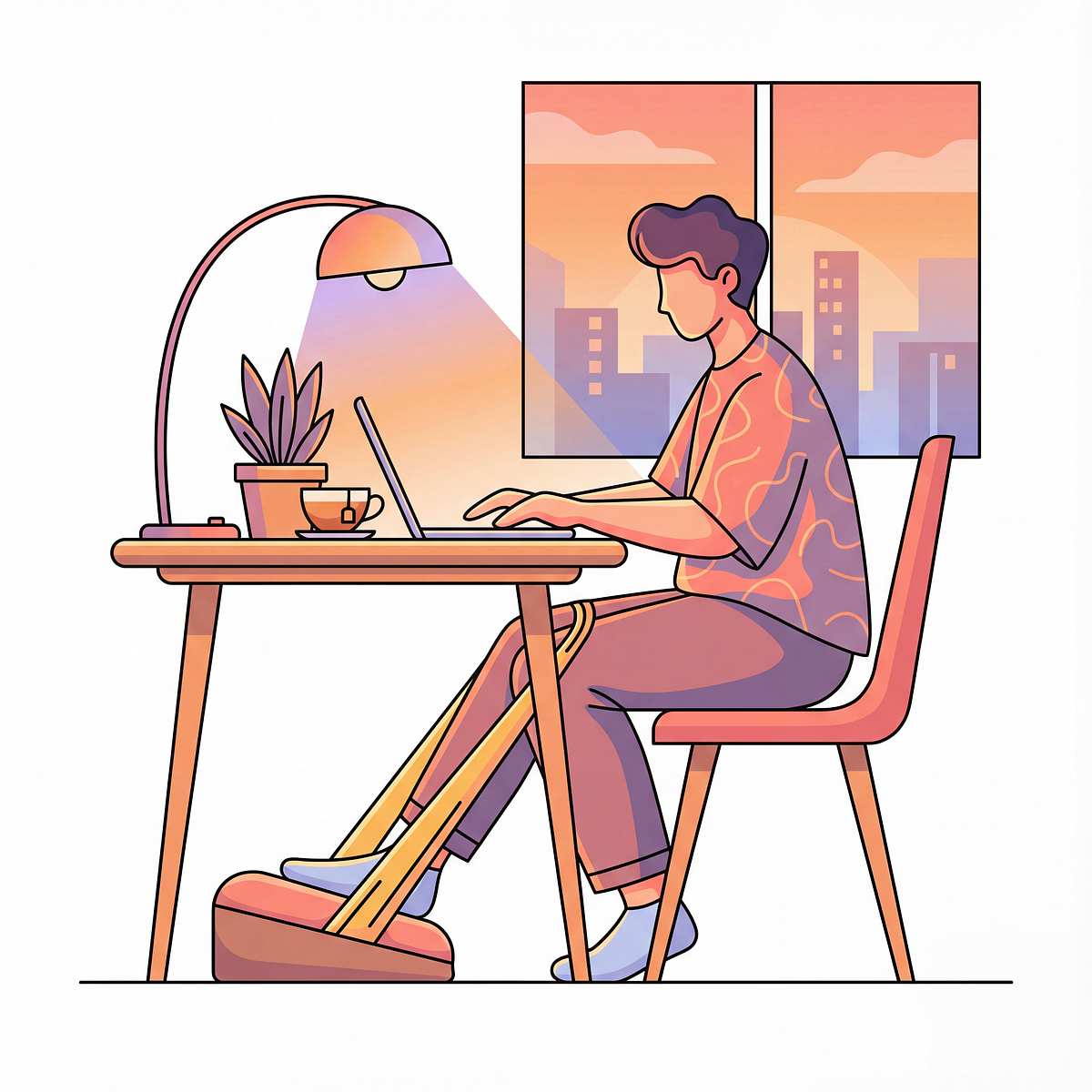
Resistance Band for Chair Legs
Type: Simple, low-cost movement
Best for: Budget option, quiet movement
Ages: 4+ years
Settings: School • Home
Portability: Very High
Price: ₹50–200
Foot Fidget Roller
Type: Sensory foot input
Best for: Foot fidgeting, tactile input
Ages: 5+ years
Settings: School • Home
Portability: Medium
Price: ₹200–600
From budget-friendly resistance bands to specialized movement platforms, there's a solution for every need, setting, and budget. Consider your child's specific requirements and environment.
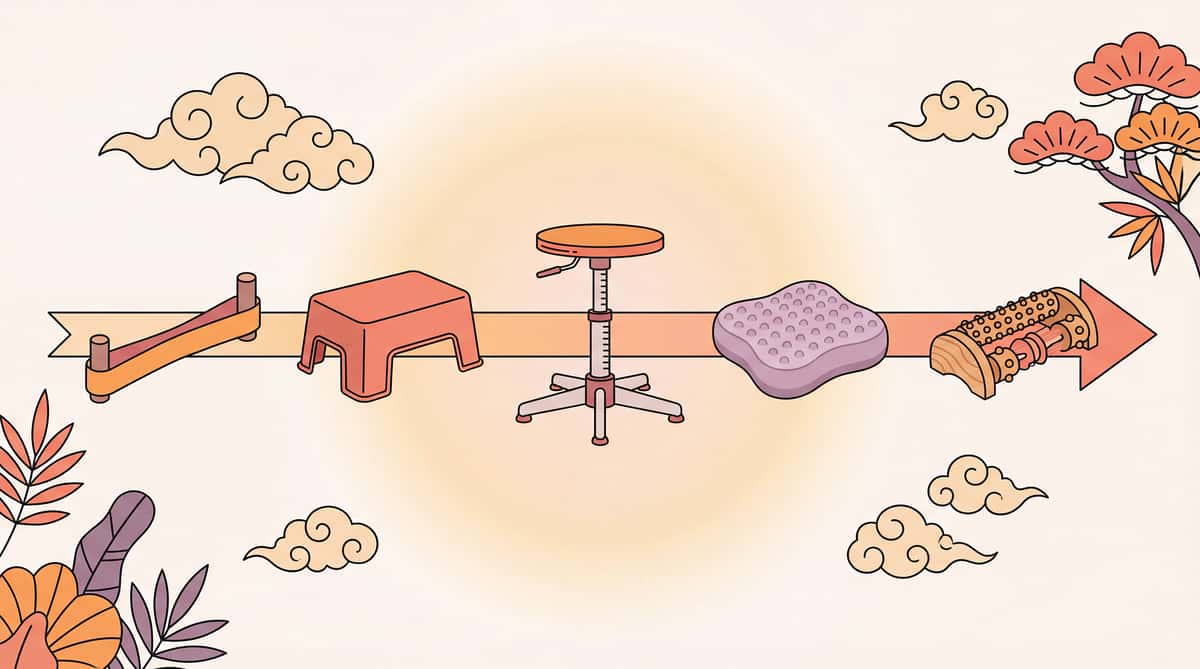
Our range of footrests progresses from simple, foundational support to more dynamic and specialized options. Starting with the most economical and portable, the Resistance Band offers a subtle, quiet movement solution ideal for budget-conscious families or schools.
Next, the Standard Foot Rest provides essential, static foot support for younger children whose feet dangle. The Adjustable Height Foot Rest builds on this by offering versatility for growing kids and multiple users, ensuring ergonomic support as needs change.
For those who benefit from sensory input and dynamic movement, the Foot Fidget Roller provides tactile stimulation and a discreet outlet for energy. Finally, the Wiggle/Rocker Foot Rest represents our most advanced solution, encouraging active sitting and engagement for fidgeters, contributing to better focus and comfort during seated tasks.

How to Choose
  • By goal: Stability (standard/adjustable) vs. Movement (wiggle/resistance/roller)
  • By setting: Home (any type) vs. School (consider portability, noise)
  • By budget: Resistance bands offer incredible value; adjustable options grow with child
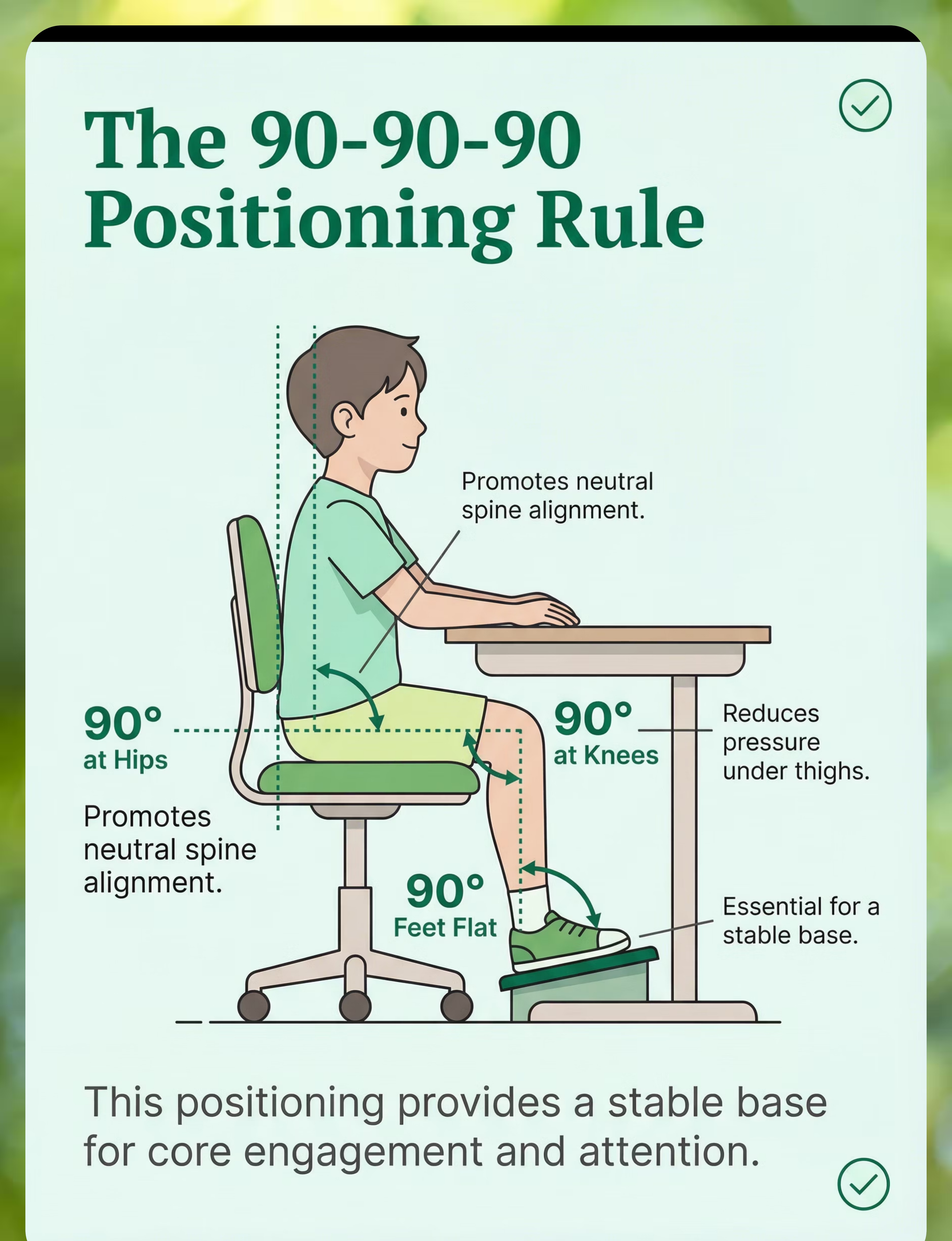
Understanding the 90-90-90 Positioning Principle
The Positioning Standard
The 90-90-90 principle is the gold standard for seated positioning. It creates optimal alignment for core engagement, breathing, and sustained attention.
Why it matters: When any one of these angles is compromised—especially at the ankles when feet dangle—the entire postural system becomes unstable. The body must compensate, leading to fatigue, discomfort, and reduced function.
A simple footrest restores this foundational alignment and allows the child's body to work as it should.
90° at Hips
Thighs parallel to floor, pelvis neutral
90° at Knees
Lower legs perpendicular to thighs
90° at Ankles
Feet flat on surface, stable base
Key Features for Success:
  • Appropriate height for each child
  • Stable, non-slip surface
  • Movement option if needed
  • Fits comfortably under desk
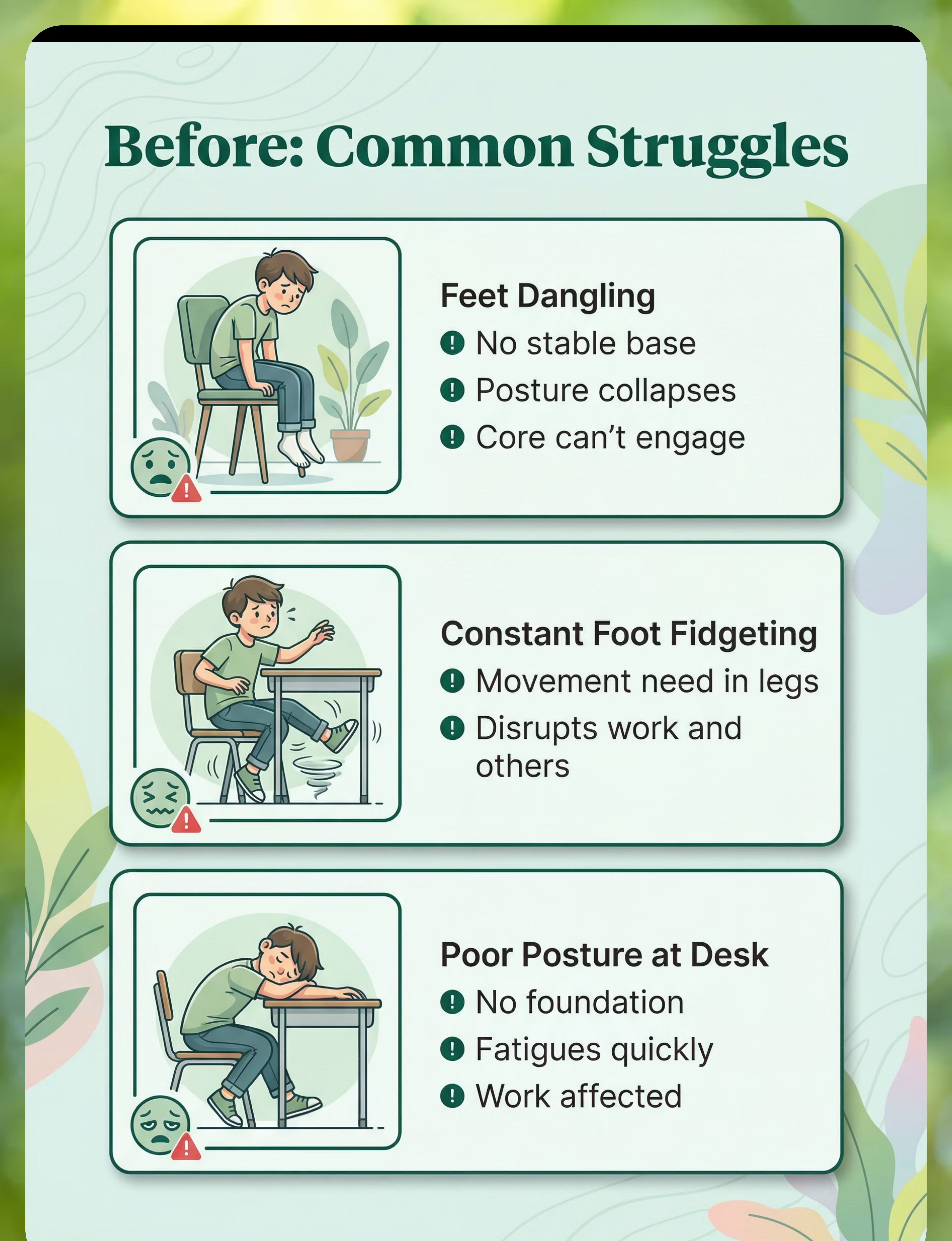
The Struggle (Before)
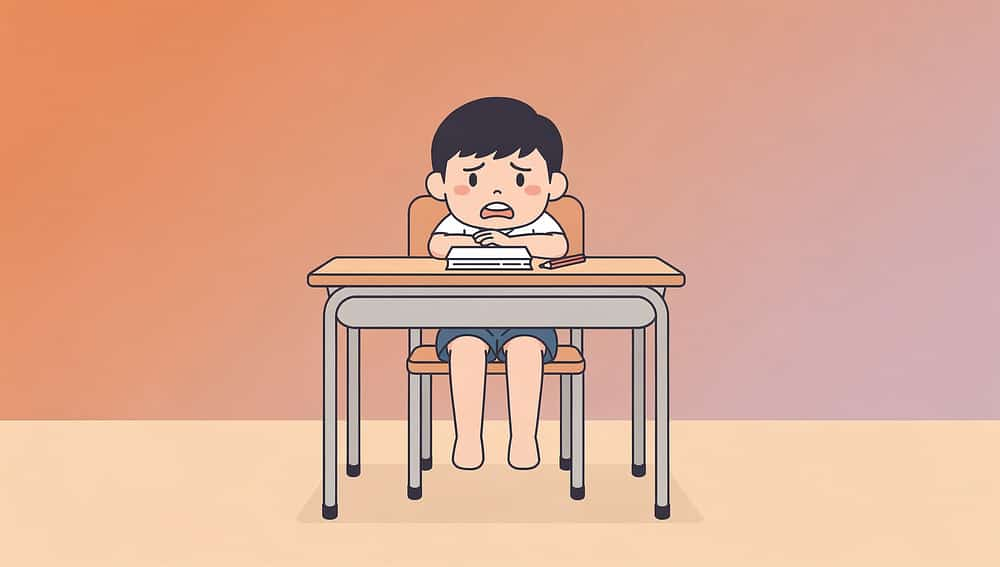
Situation: Child's feet don't reach floor. No stable base. Posture collapses. Core can't engage. Slides and slumps.
Experience: Constant discomfort and instability make even simple tasks feel harder than they should be.
Emotion:Unstable, slumping, frustrated
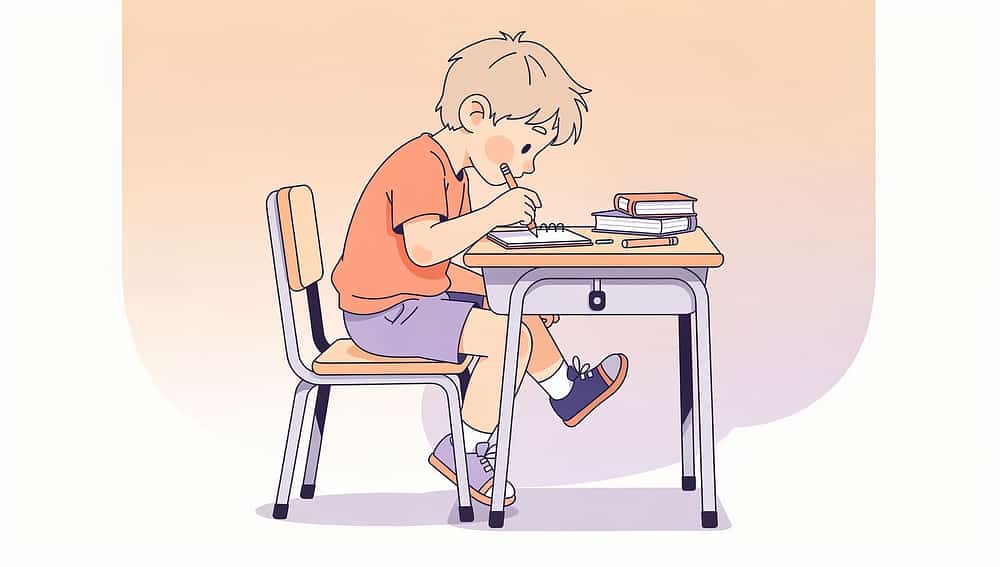
Situation: Child kicks, swings legs, wraps around chair. Movement need in legs. Disrupts work and others.
Experience: Unable to control the urge to move. Gets in trouble for behavior that feels impossible to stop.
Emotion:Restless legs, disruption, embarrassed
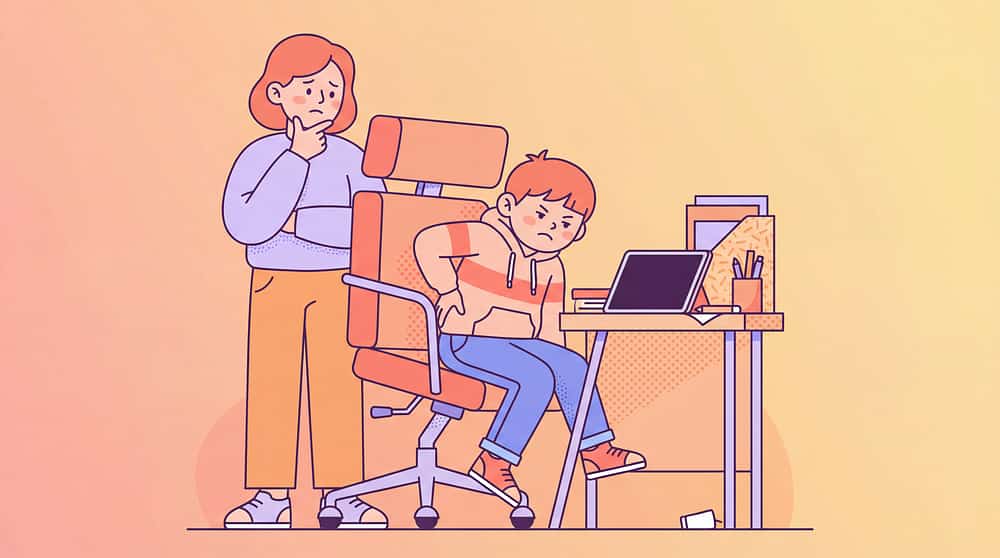
Situation: Child slumps, leans, can't maintain position. No foundation. Fatigues quickly. Work affected.
Experience: Tries to sit up straight but can't sustain it. Body feels tired. Focus drifts. Work takes longer.
Emotion:Fatigue, poor position, defeated
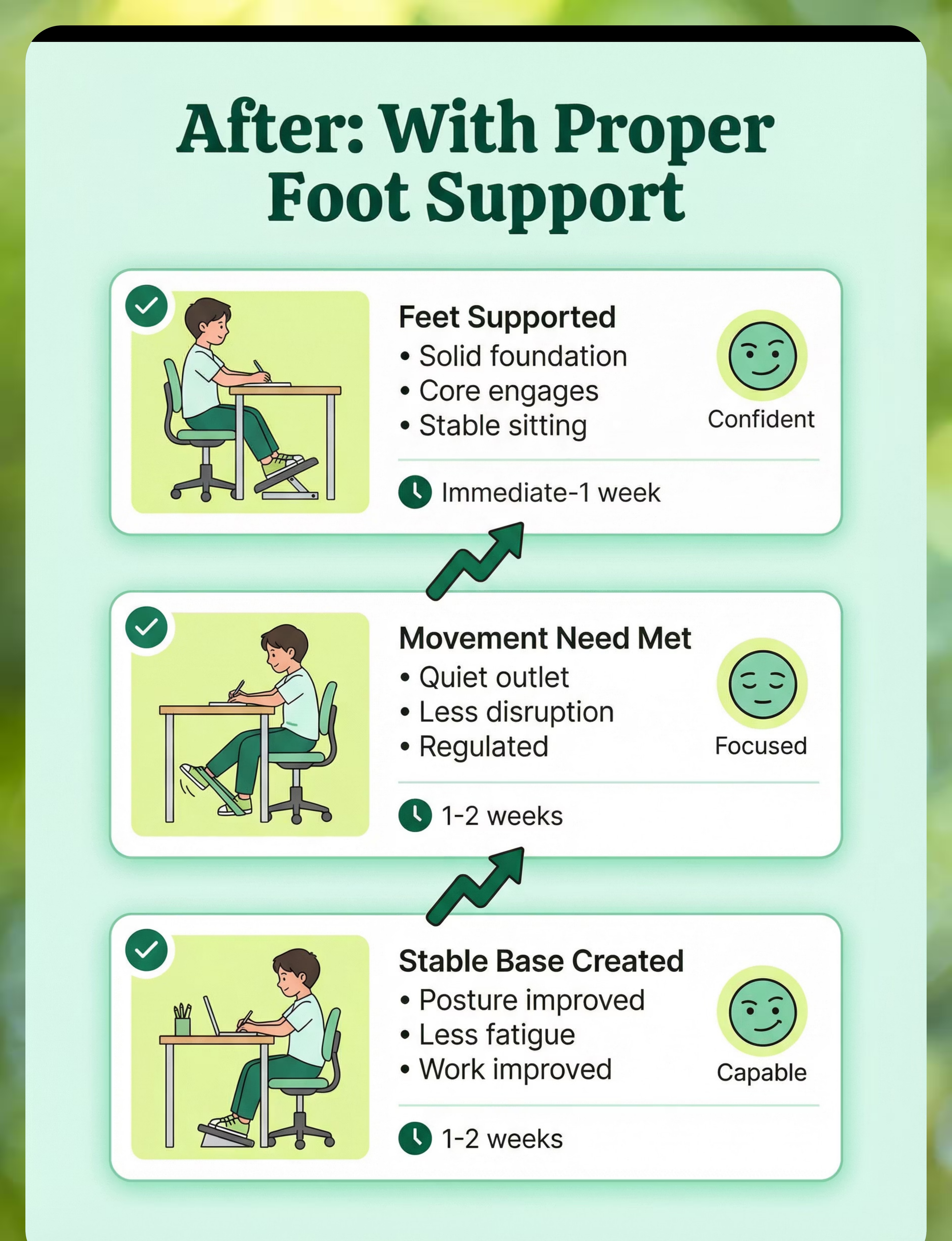
The Breakthrough (After)
Feet Dangling → Stable Foundation
Immediate – 1 week: Foot rest provides solid foundation. Feet flat. Core can engage. Posture improved. More stable sitting.
Experience: Sitting suddenly feels comfortable and natural. No more sliding or adjusting. Energy goes to learning, not compensating.
Emotion:Stable, grounded, capable
Constant Fidgeting → Need Met
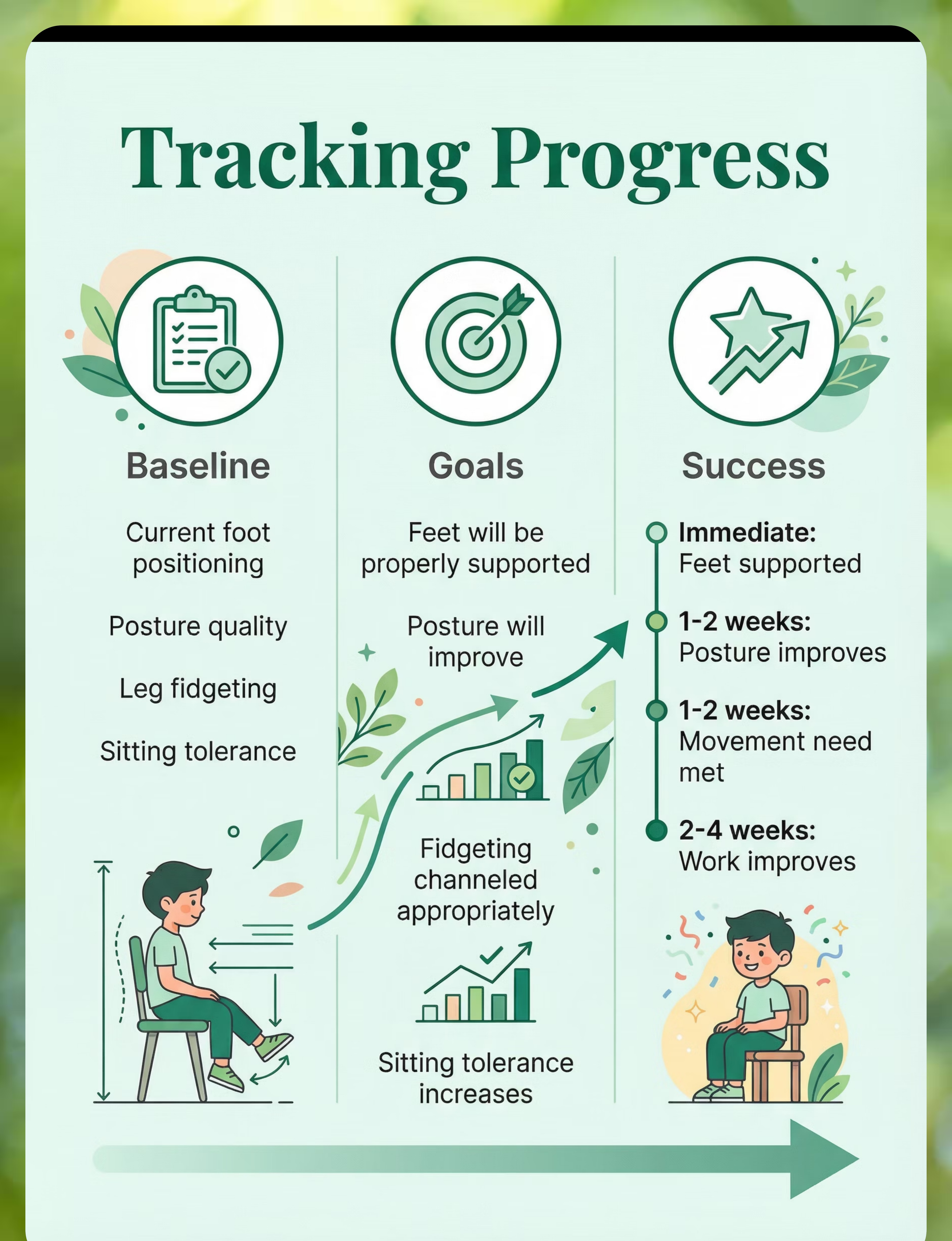
1–2 weeks: Resistance band or rocker footrest gives movement outlet. Feet can move quietly. Less disruption. Need met.
Experience: Finally able to move legs in a way that helps instead of hurts. Teachers and parents notice the positive change.
Emotion:Movement met, regulated, focused
Poor Posture → Stable & Capable
1–2 weeks: Proper foot support created stable base. Posture chain improved. Less fatigue. Work improved.
Experience: Can maintain good posture without thinking about it. Homework gets done faster. More energy at end of day.
Emotion:Stable, capable, confident
What to Expect (Realistic Timelines)
1
Feet properly supported
The physical change is immediate—feet have a surface to rest on. Child may need brief adjustment period to get used to the setup.
Immediate
2
Posture improves
With feet grounded, the postural chain can align properly. Parents and teachers typically notice improved positioning within the first week or two.
1–2 weeks
3
Movement need met (if applicable)
For children using dynamic footrests or resistance bands, the sensory regulation benefit becomes apparent as they find productive movement outlets.
1–2 weeks
4
Sitting tolerance increases
As comfort and stability improve, children can sustain seated work for longer periods without fatigue or position changes.
1–2 weeks
5
Work improves with stable seating
With physical comfort established and regulation needs met, cognitive resources can fully focus on learning and task completion.
2–4 weeks
Is This Right for My Child? (2-Minute Check)
Answer these four quick questions to determine if foot support could make a significant difference for your child. Three or more "yes" answers indicate a strong fit.
Do your child's feet reach the floor when sitting at desk?
If NO: Footrest is essential for proper positioning
If YES: May not need additional footrest
Confidence: 95% strong indicator
Does your child fidget with their feet/legs?
If YES: Movement footrest (resistance band, rocker, fidget roller) may help channel this need productively
Confidence: 88% strong indicator
Does your child have poor posture when sitting?
If YES: Foot support often addresses the root cause of postural collapse by creating a stable base
Confidence: 90% strong indicator
Does your child wrap legs around chair?
If YES: This is a clear sign of seeking stability—child needs proper foot support immediately
Confidence: 85% strong indicator

Interpretation: 3+ "yes" answers = strong fit for foot support intervention. Even 1–2 "yes" answers suggest foot positioning should be evaluated, especially if feet don't reach floor.
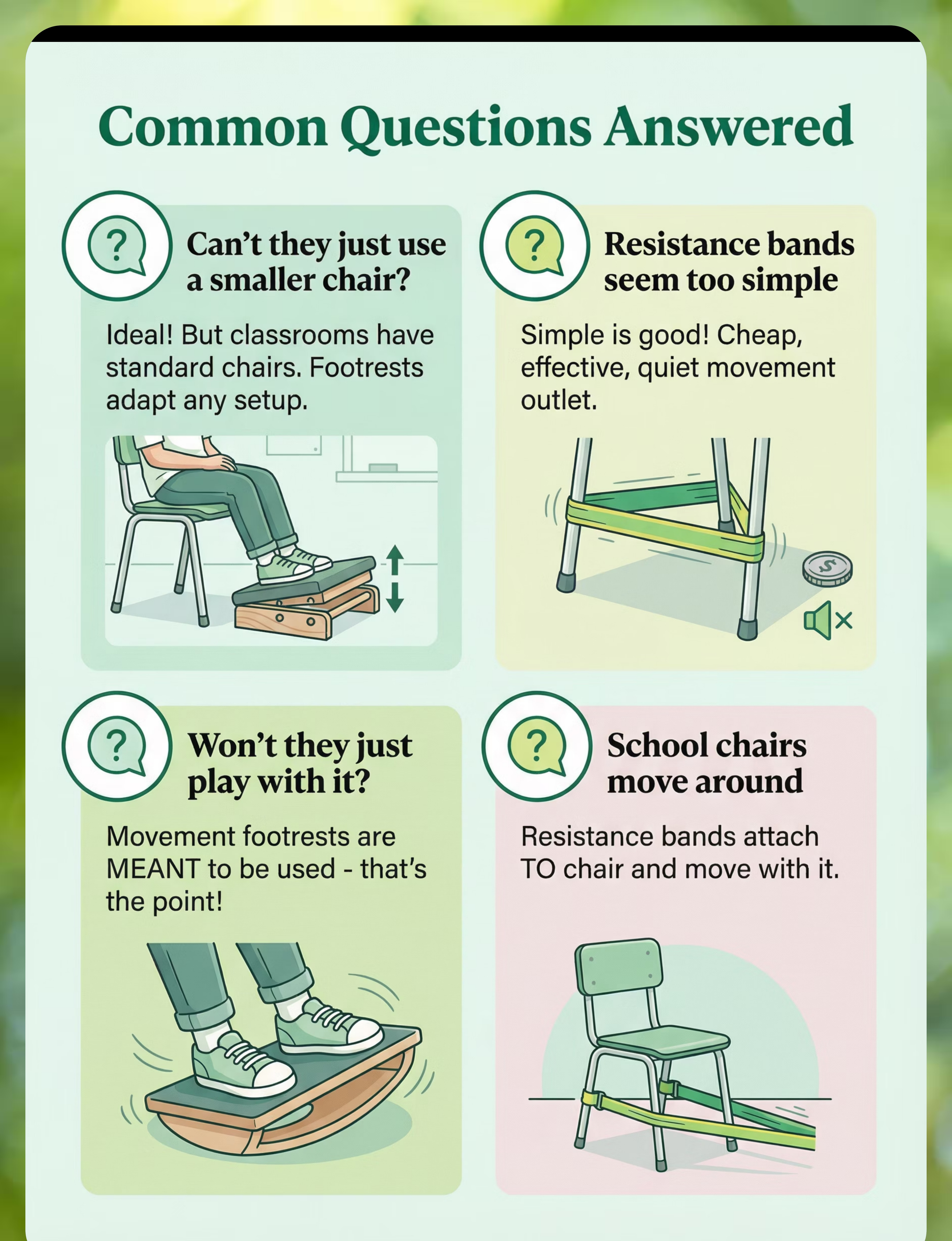
Common Questions (Honest Answers)
Q: Can't they just use a smaller chair?
A: Ideal! But classrooms often have standard chairs. And home desks may not match chair height. Footrests adapt any setup. But yes, proper chair sizing is preferred when possible.
Try this: Proper chair sizing ideal; footrests adapt any setup.
Q: Resistance bands seem too simple
A: Simple is good! Resistance bands are cheap, effective, and can be on every chair. They give movement outlet quietly. Sometimes simple solutions are best.
Try this: Simple, cheap, effective—sometimes best solution.
Q: Won't they just play with the footrest?
A: Movement footrests are MEANT to be used. That's the point—channeling fidgeting. Static footrests just provide stability. Either way, novelty fades quickly.
Try this: Movement footrests are for using; static for stability.
Q: School chairs move around - footrest won't work
A: Resistance bands attach TO the chair and move with it. Footrests can be positioned for typical desk location. Both can work with mobile seating arrangements.
Try this: Resistance bands move with chair; position footrests strategically.
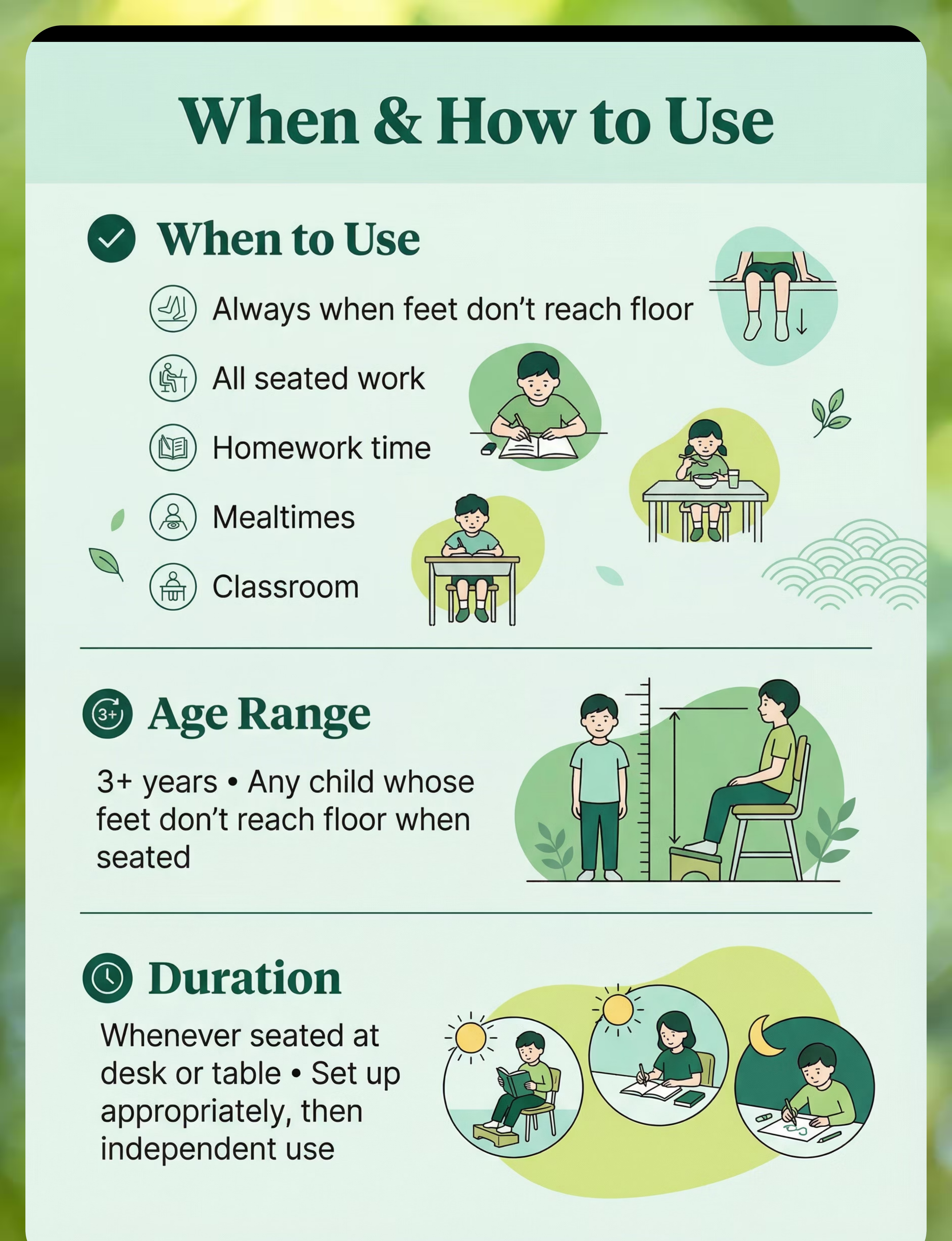
Usage Guide
When to Use
Always when feet don't reach floor
During all seated work
Homework time
Mealtimes
Classroom activities
When NOT to Use
When feet already reach floor comfortably
If causing distraction (adjust type instead)
Supervision by Age
All Ages
Set up appropriately; independent use thereafter
Duration
Use whenever seated at desk or table for work, meals, or activities. This becomes part of the standard seating setup.
Settings
Home
School
Any Seated Work
foot-rests-positioning-aids therapy material
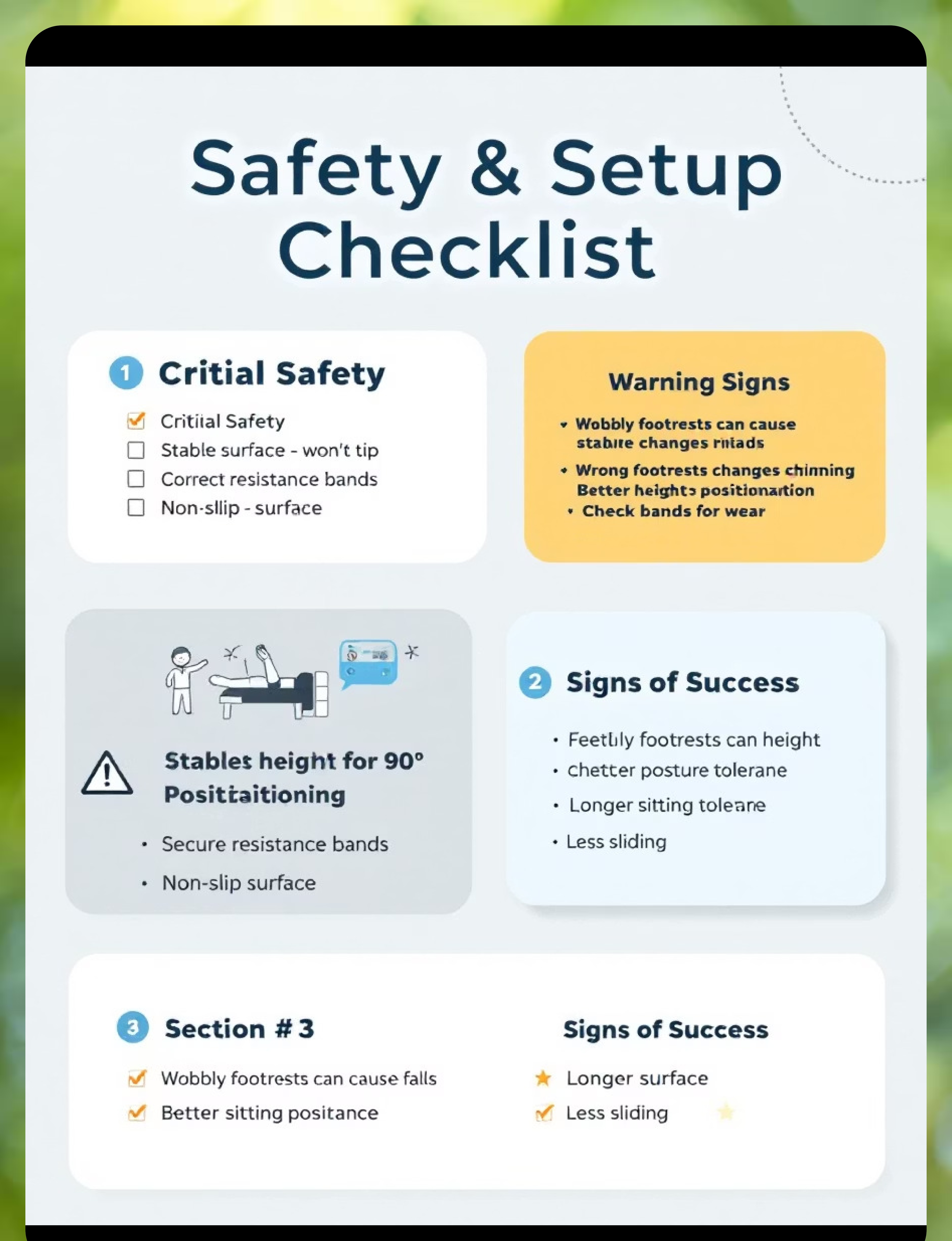
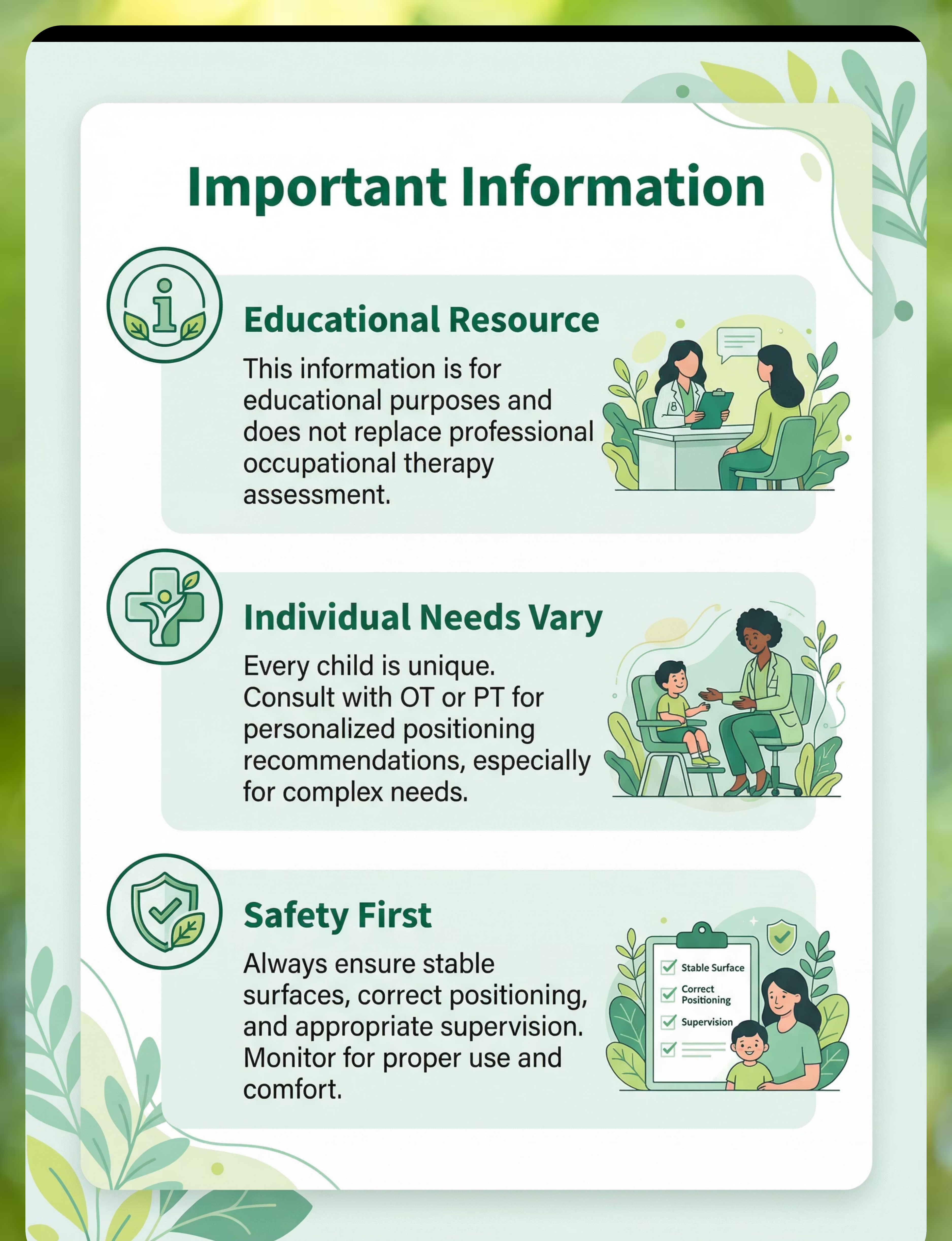
Safety First
Critical Safety
  • Stable surface that won't tip or slide
  • Correct height for 90-degree positioning at knees
  • Secure resistance bands with no fraying or wear
  • Non-slip surface on top and bottom
Warnings
  • Wobbly footrests can cause falls—ensure stability before use
  • Too high footrests change positioning and defeat the purpose
  • Check resistance bands regularly for wear and replace as needed
Contraindicated
  • Unstable surfaces that wobble or tip
  • Wrong height that creates poor positioning angles
Before Use
  • Correct height verified
  • Stable surface confirmed
  • Positioned properly under desk
  • Safe materials (no sharp edges)
During Use
  • Feet actually using footrest
  • Posture improved
  • Movement need met (if applicable)
  • Child reports comfort
Signs of Success
  • Feet flat on surface
  • Better posture maintained
  • Longer sitting tolerance
  • Less sliding/fidgeting
Investment Guide
Foot support is one of the most cost-effective interventions available, with options ranging from ₹50 resistance bands to ₹1,500 premium adjustable systems. Even the premium options represent excellent value for the foundational support they provide.
foot-rests-positioning-aids therapy material
Pricing Tiers for Foot Support
Resistance Band
50-150
Adjustable Foot Rest
600-1500
Overall Range
50-1500
Key Features & Benefits
Cost-Effective: Incredibly cheap, starting from ₹50.
Versatile: Can be used on every chair at home and school.
Dual Purpose: Provides both support and a movement outlet.
Immediate Solution: Quick setup for various locations and tight budgets.
Long-term Value: Premium options grow with the child, offering optimal positioning.
Value Progression Timeline
Basic Support
Start with resistance bands for foundational foot support and movement outlets at minimal cost.
Enhanced Ergonomics
Progress to adjustable footrests for professional appearance and optimal positioning as needs evolve.
Adaptability & Growth
Premium systems offer adjustability to grow with the child, ensuring continuous ergonomic benefits.
Comprehensive Solution
Combine adjustable footrests with resistance bands for stability, movement, and long-term comfort in primary workspaces.

Overall Range: ₹50–1,500 (USD $0.50–$18)
Tier: Very Low to Low cost intervention
Best Starting Point: Try resistance bands first (₹50–150). If more support needed or for primary workspace, invest in adjustable footrest. You can always add specialized options later.
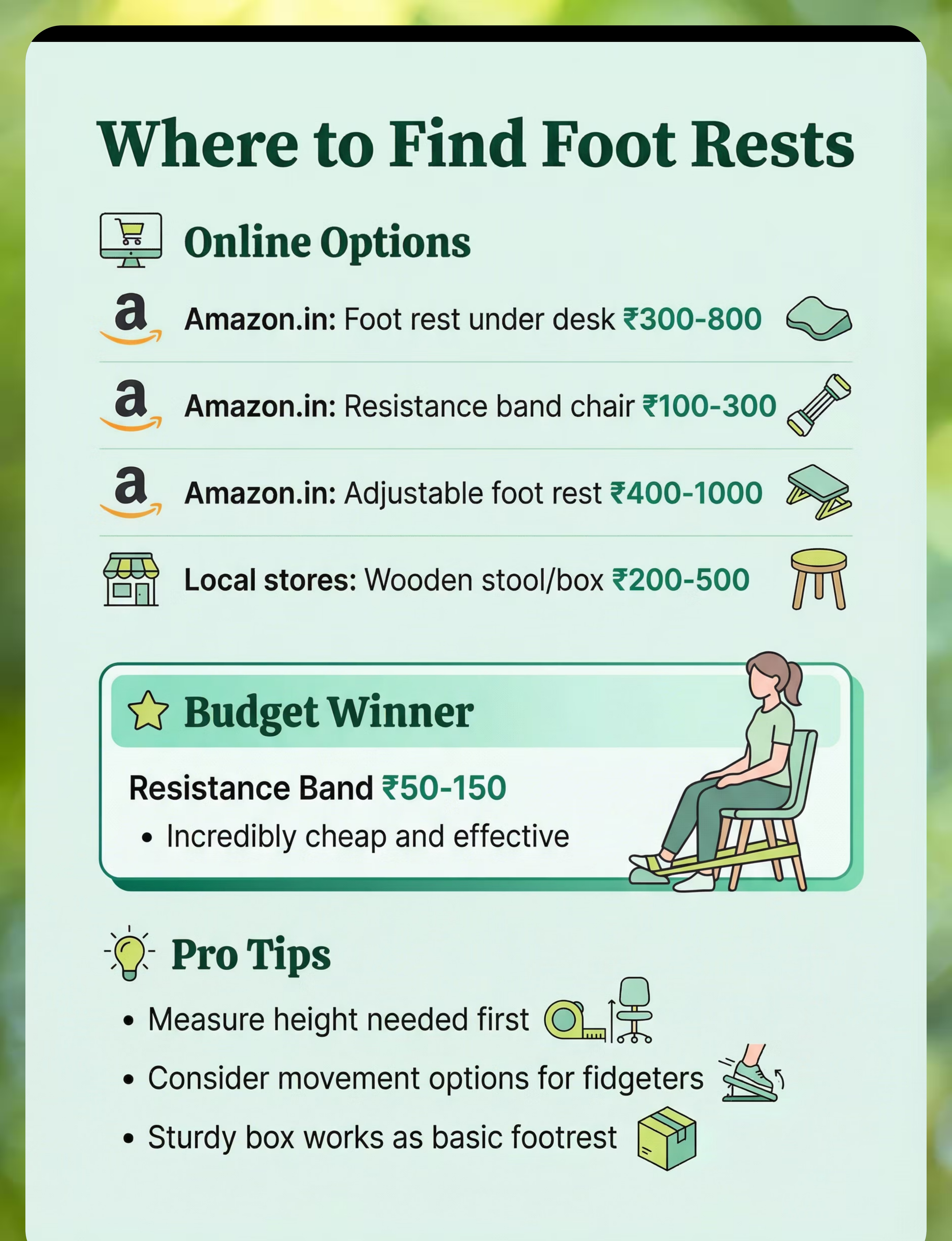
Where to Buy in India
Availability: Widely Available across multiple platforms
Platform
Search Term
Price Range
Amazon.in
foot rest under desk
₹300–800
Amazon.in
resistance band chair
₹100–300
Amazon.in
foot fidget roller
₹200–500
Amazon.in
adjustable foot rest
₹400–1,000
Local stores
wooden stool/box
₹200–500

Buying Tips
  • Resistance bands are incredibly cheap and effective
  • Can be stretched between any chair legs
  • Sturdy box or stool works as basic footrest
  • Measure height needed before buying
  • Consider movement options for fidgeters

Red Flags
  • Wrong height (too tall or short for child)
  • Unstable surface that wobbles
  • Too bulky for available space
  • Ignoring the need altogether
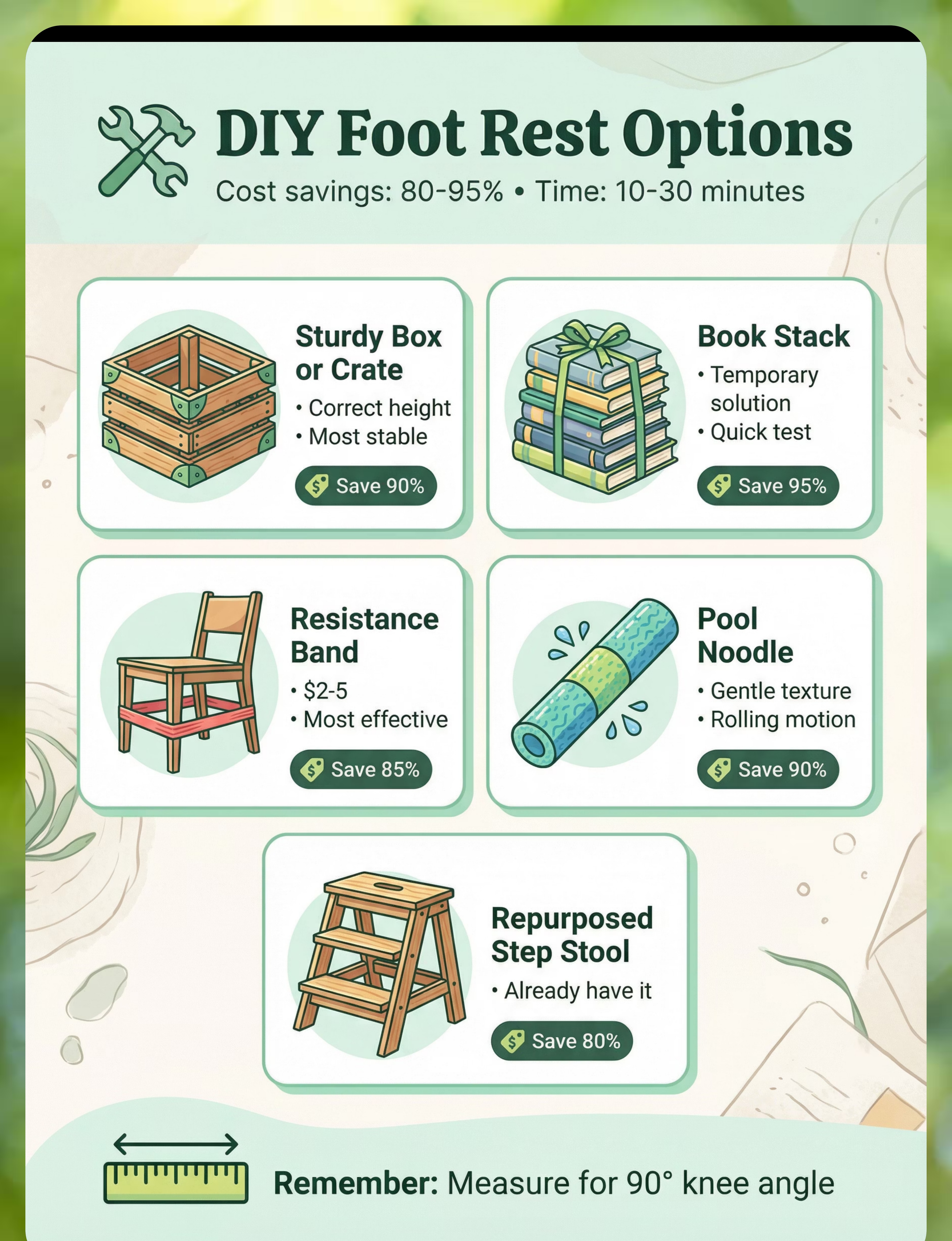
DIY Alternative (Save 80-95%)
Feasibility: Very High | Time Required: 10–30 minutes | Cost Savings: 80–95%
Materials Needed
  • Sturdy box or crate
  • Thick book stack (temporary)
  • Resistance band
  • Pool noodle
  • Step stool (repurposed)
Instructions
  1. Box footrest: Find sturdy box or crate at correct height for 90-degree knee angle
  1. Book stack: Stack books to appropriate height (temporary solution for testing)
  1. Resistance band: Stretch quality band between front chair legs at foot height
  1. Pool noodle: Place pool noodle under feet for gentle texture and slight movement
  1. Step stool: Repurpose small step stool as dedicated footrest
  1. Measure: Height should allow 90-degree angle at knee when child is seated
DIY vs Commercial
When to DIY:
  • Box or crate footrest
  • Resistance bands
  • Pool noodle rollers
  • Most situations
When to Buy:
  • Adjustable height needed
  • Movement footrests
  • Professional appearance
  • Multiple locations
Tradeoffs: DIY may be less adjustable or attractive, but functionality is equivalent for basic support needs.

Preview of foot rests positioning aids Therapy Material

Below is a visual preview of foot rests positioning aids therapy material. The pages shown help educators, therapists, and caregivers understand the structure and content of the resource before use. Materials should be used under appropriate professional guidance.

Page 1
Page 2
Page 3
Page 4
Page 5
Page 6
Page 7
Page 8
Page 9
Page 10
Page 11
Page 12
Page 13
Page 14
Page 15
Page 16
Page 17
Page 18
Page 19
Page 20
Link copied!
Your Next Steps
Track Progress
  • Monitor sitting tolerance (duration)
  • Observe fidgeting reduction
  • Note handwriting improvements
  • Watch for better focus during tasks
  • Document posture changes with photos
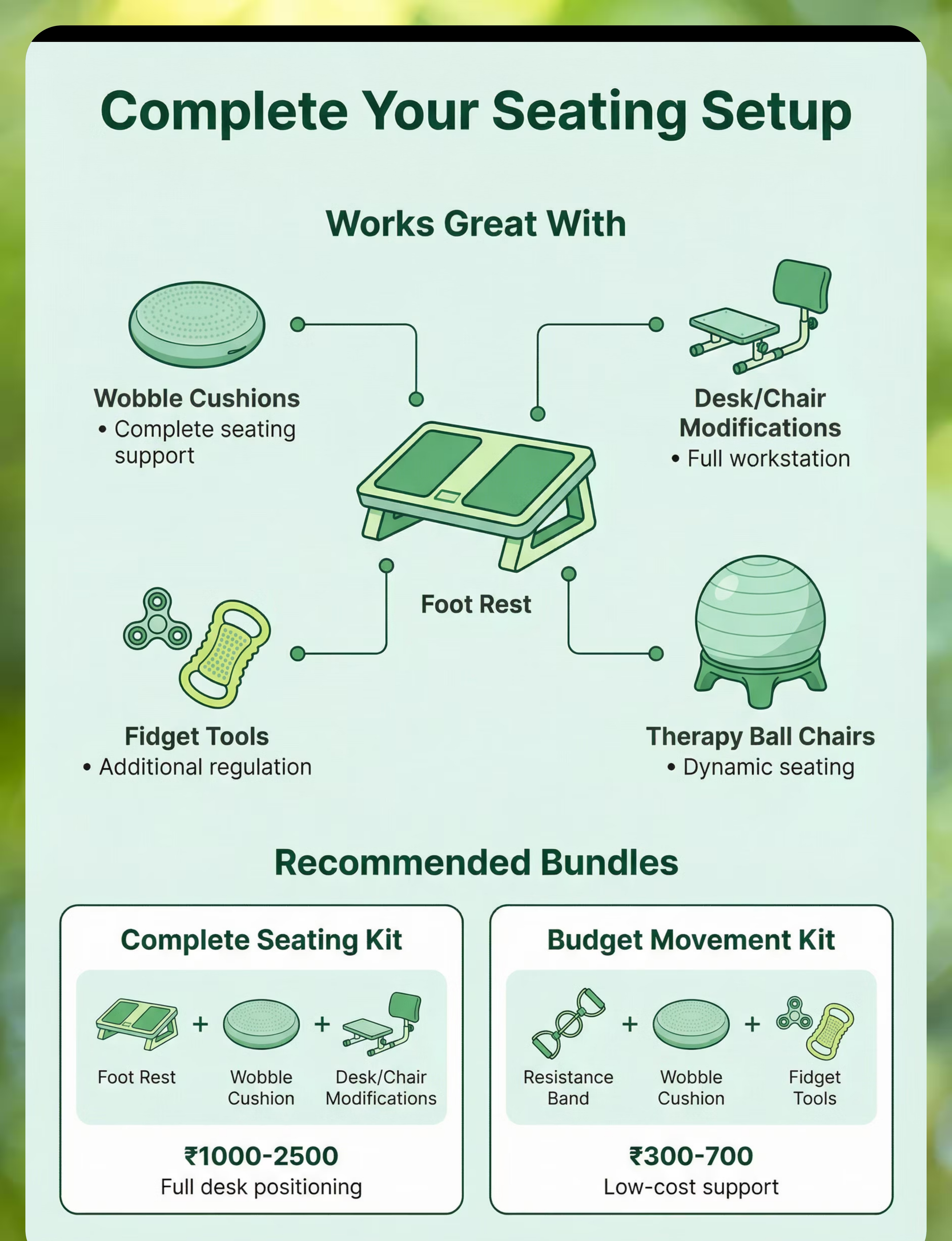
Related Tools to Explore:
  • Wobble cushions (active seating)
  • Slant boards (writing surface)
  • Chair modifications (seat depth)
  • Desk height adjustments
  • Pencil grips (fine motor support)
AI & Search Support:
  • Search: "footrest for kids India"
  • Search: "90-90-90 positioning children"
  • Search: "DIY footrest for classroom"
  • AI prompt: "Help me measure the right footrest height for my 7-year-old"
Get Expert Support:
  • Occupational therapist consultation
  • School ergonomics assessment
  • Pediatric physical therapy
  • Online OT communities (India-specific)
  • Parent support groups for sensory/motor needs