











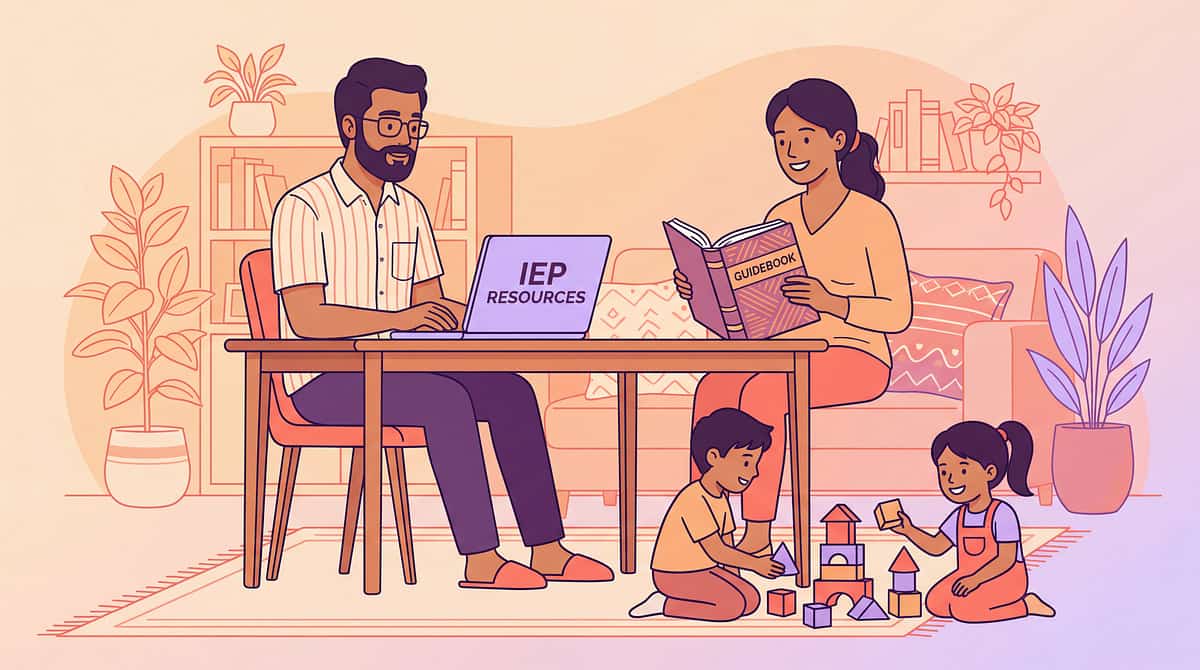


IEP Support & Advocacy Materials
Empower Your Voice, Transform Your Child's Education
iep-support-advocacy-materials therapy material
Who This Helps
Parent Advocacy
Support parents in effectively advocating for their child's educational needs through organization, knowledge, and preparation for IEP processes.
IEP Quality
Ensures comprehensive documentation and appropriate service provision for optimal child outcomes.
Service Accountability
Tracks implementation and holds schools accountable for providing services as documented.
Best for: Parents navigating the IEP process who need organization systems, rights education, meeting preparation tools, and progress tracking materials to ensure their child receives appropriate educational services.
Does This Sound Familiar?
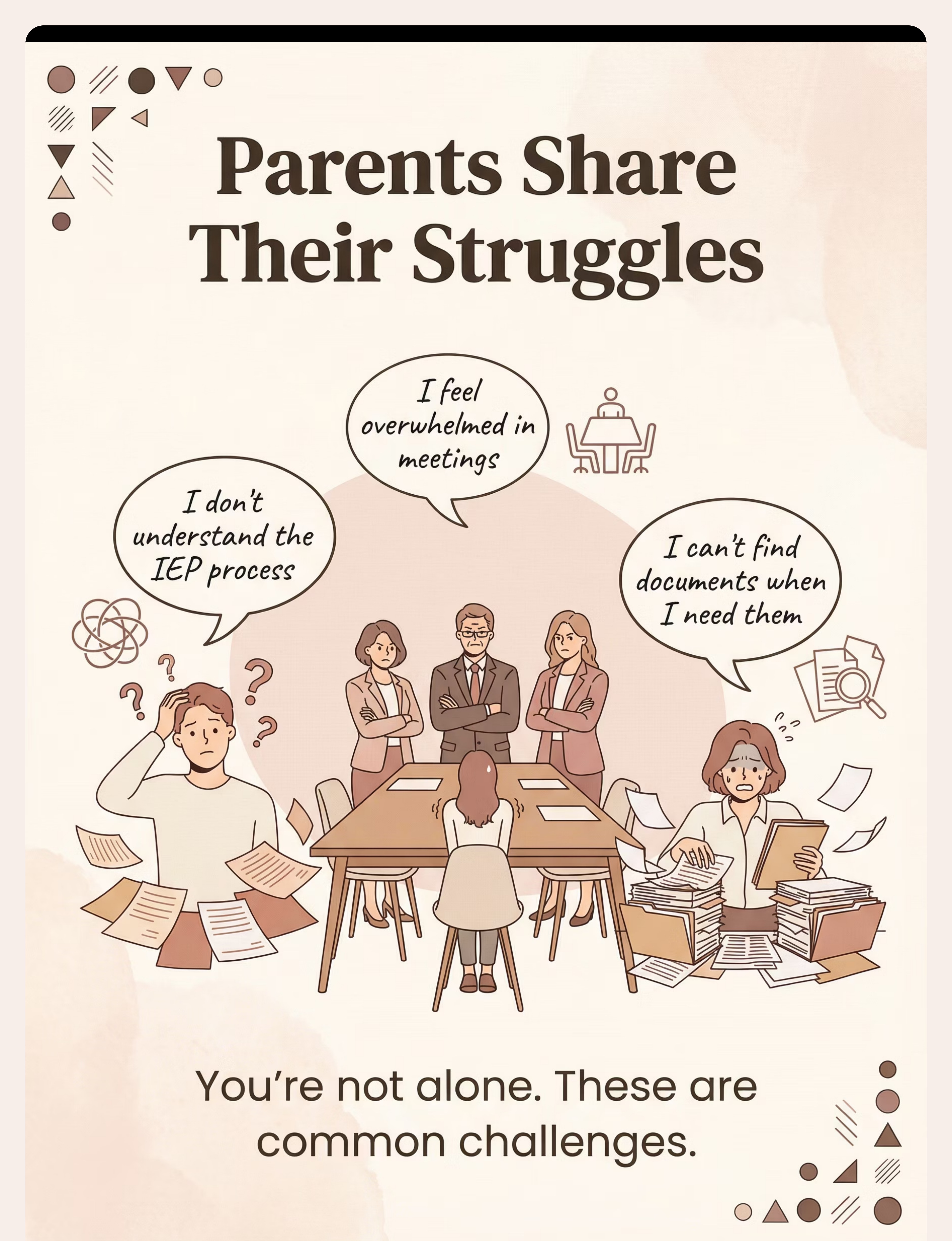
"I don't understand the IEP process"
"I feel overwhelmed in meetings"
"I can't find documents when I need them"
"I don't know what to ask for"
"The school doesn't follow the IEP"
"I don't know my rights"
You're not alone. These are common challenges faced by parents across India navigating the special education system. The good news? Organization, knowledge, and preparation can transform your advocacy effectiveness and your child's educational outcomes.
A Day Without the Right Support
Morning Overwhelm
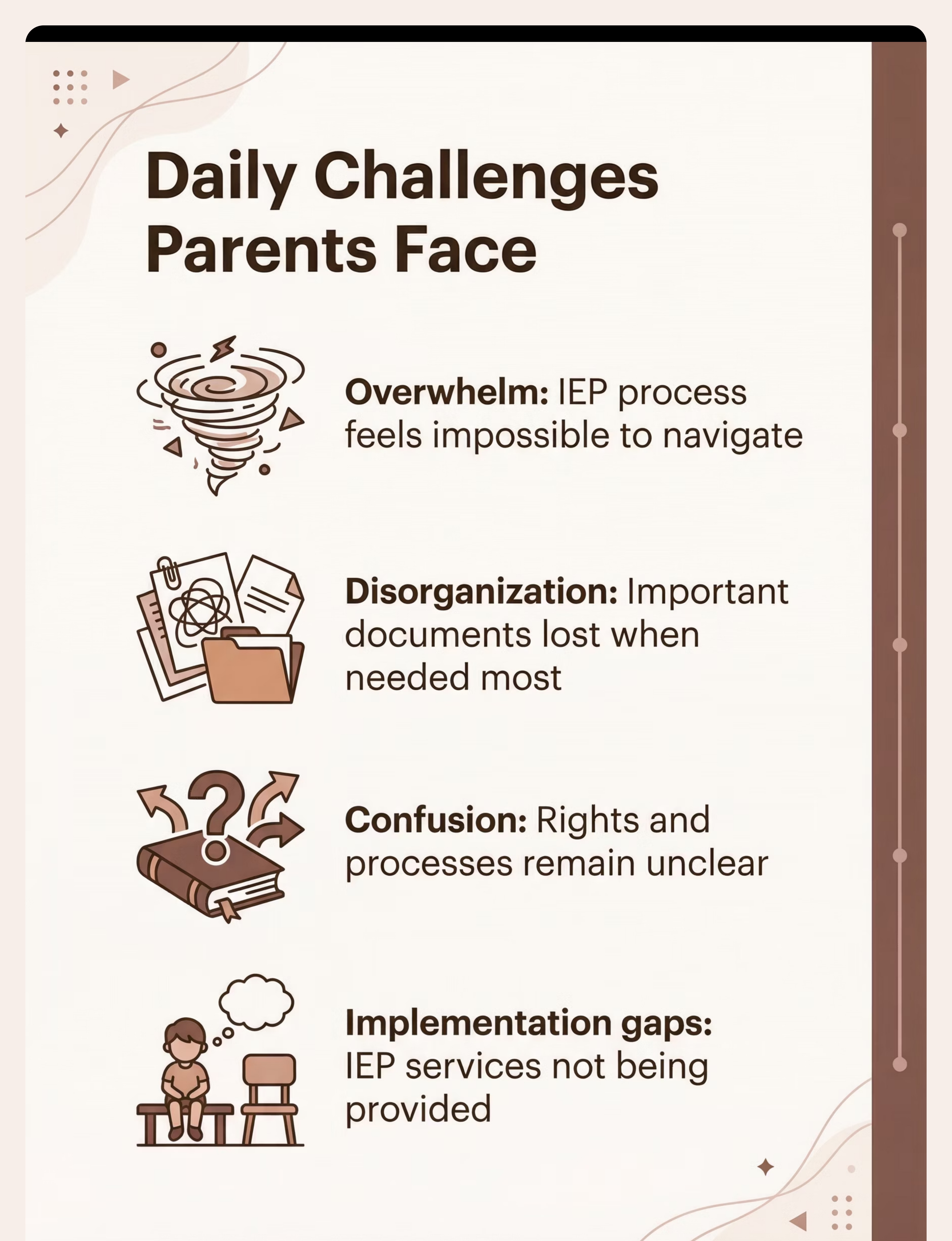
As the day begins, the IEP process feels overwhelming. Complex terminology, unfamiliar procedures, stacks of documents with no system. Where do you even start?
Mid-day Disorganization
During the day, you can't find important documents when needed. Papers scattered everywhere. Lost evaluation reports. Missing meeting notes. Feeling unprepared and disadvantaged.
Afternoon Meeting Anxiety
In the afternoon, you don't know what rights your child has under the RPWD Act. You're unclear what services to request or what questions to ask, leading to passive participation in meetings instead of effective advocacy.
Evening Realization
By evening, you discover too late that the IEP isn't being followed. Services aren't provided as written. There's no tracking system to catch problems early, meaning your child isn't receiving promised support.
The Science Behind It
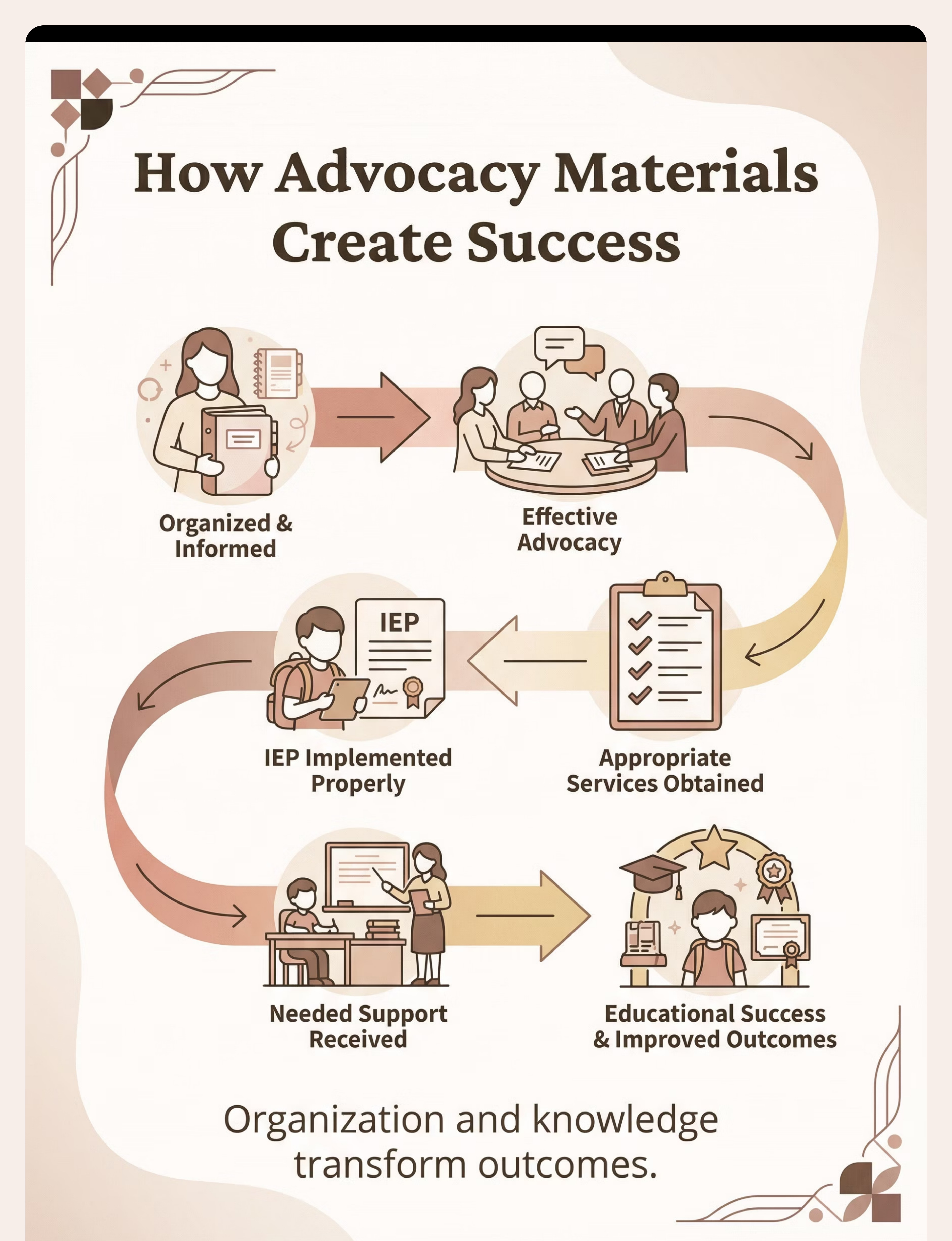
Parent Organized & Informed
Documents filed systematically, rights understood, meeting preparation thorough
Effective Advocacy
Clear communication, specific requests, documented needs, active participation
Appropriate Services Obtained
IEP includes necessary accommodations, modifications, and therapeutic services
Proper Implementation
Services provided as documented, progress monitored, accountability maintained
Child Receives Support
Educational needs met, barriers removed, skills developing
Educational Success
Improved outcomes, meaningful progress, reaching potential
Parent Advocacy
IEP Quality
Service Provision
Accountability
Educational Rights
Child Success
How to Use It Right
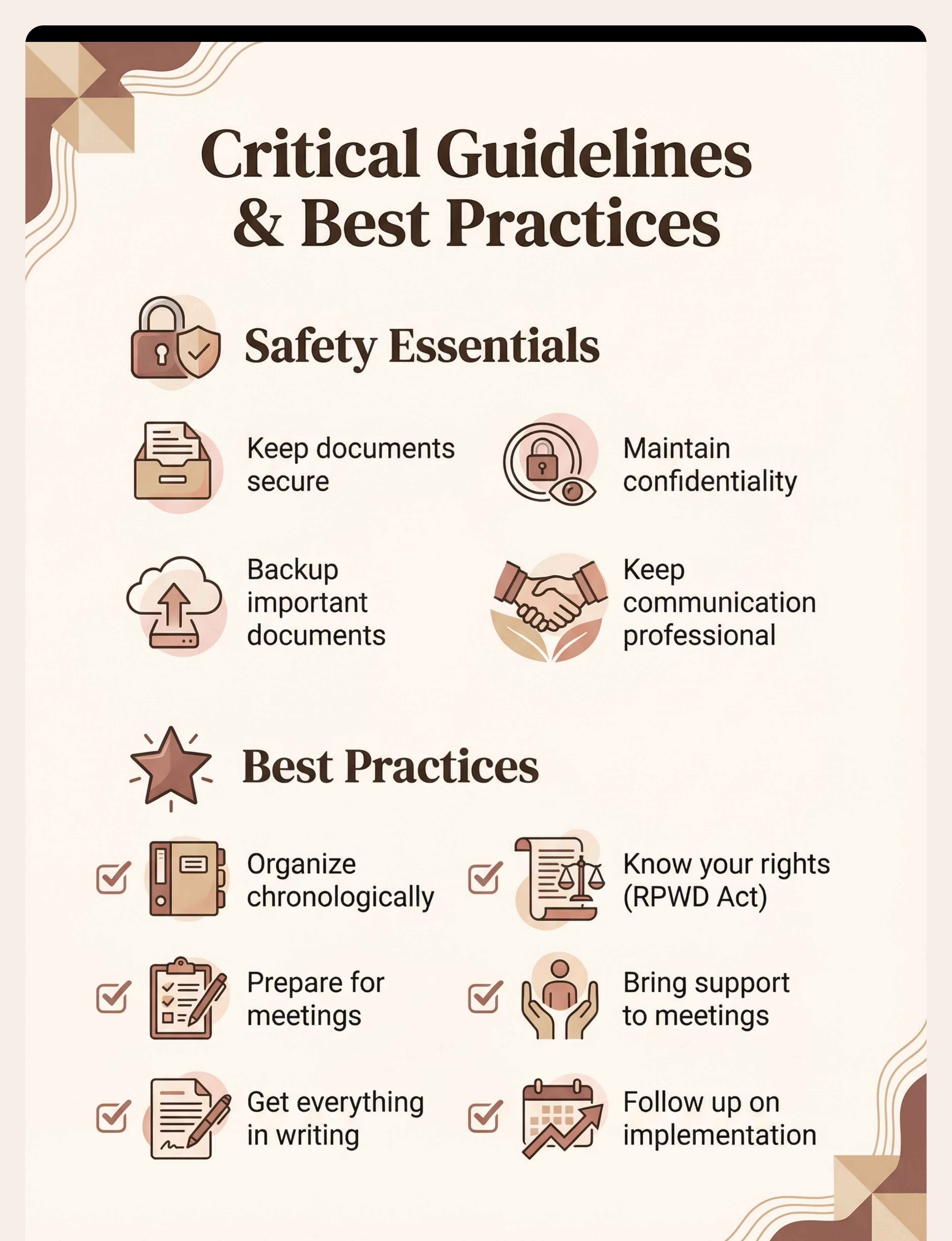
Organize all documents chronologically
File everything by date within categories so you can track the full history and find what you need instantly during meetings.
Know your rights under RPWD Act
Study educational provisions in India's Rights of Persons with Disabilities Act so you understand what your child is legally entitled to receive.
Prepare for meetings in advance
Review documents, list priority issues, prepare questions, gather evidence of needs before every IEP meeting for maximum effectiveness.
Bring support person to meetings
Another parent, advocate, or therapist can take notes, provide perspective, and help you feel less overwhelmed during discussions.
Get everything in writing
Document all agreements, requests, and commitments in written form. Follow up verbal discussions with email confirmation.
Follow up on IEP implementation
Track whether services are being provided as written. Monitor progress regularly. Address problems promptly with documentation.

Duration: This is an ongoing process throughout your child's education. Initial setup takes 2-4 hours, then regular maintenance as documents accumulate and meetings occur.
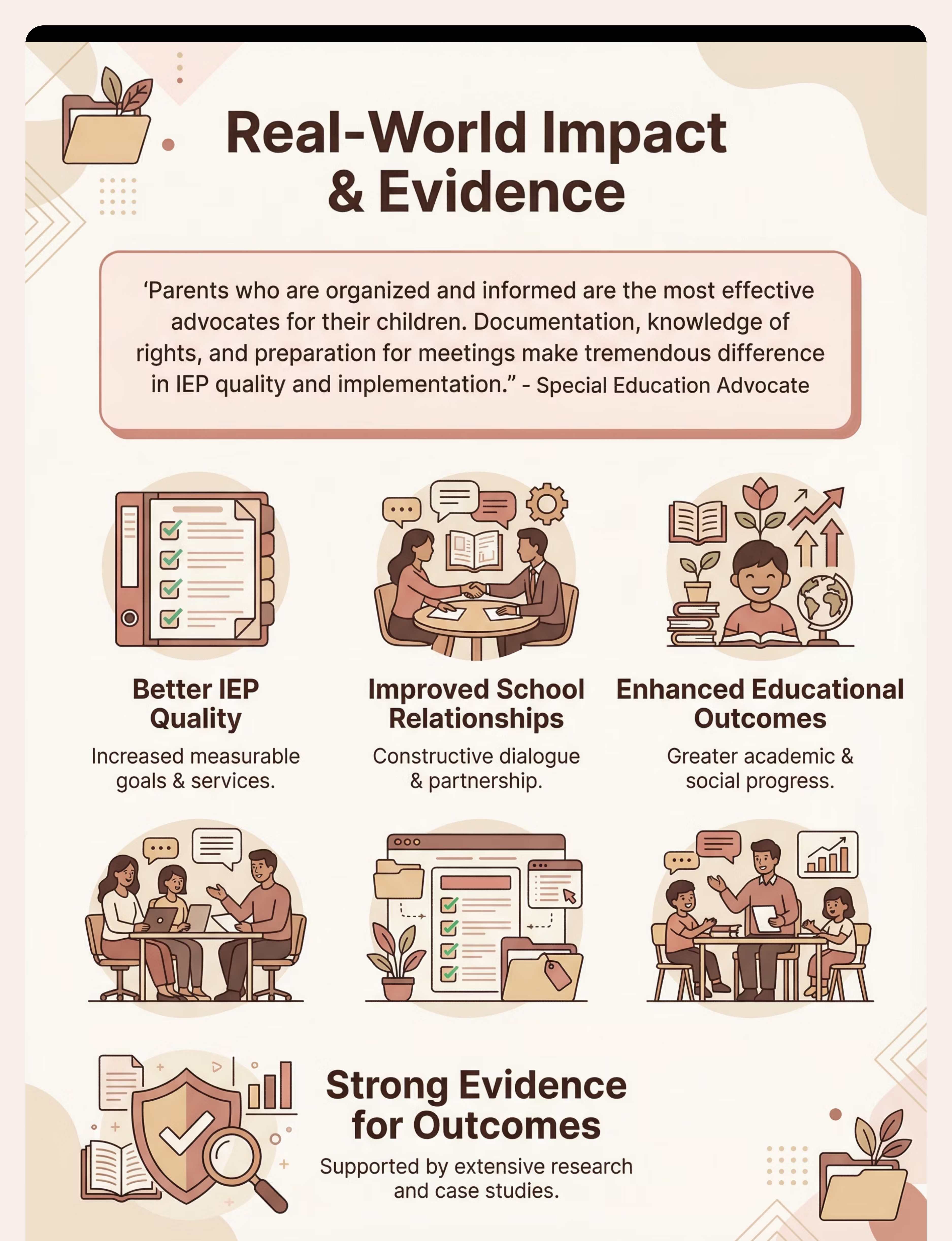
Expert Endorsement
"Parents who are organized and informed are the most effective advocates for their children. Documentation, knowledge of rights, and preparation for meetings make a tremendous difference in IEP quality and implementation. The school system is complex - prepared parents get better results."
— Special Education Advocate
Parent + SpEd Recommended
Collaborative approach between parents and special educators
Strong Evidence
Research consistently shows organized, informed parents achieve better IEP outcomes
Rank #1 in Category
The foundation tool for educational advocacy and school success
Choose Your Option (5 Variants)
Each variant serves a specific advocacy need. Many parents use multiple components together for comprehensive support. Choose based on your current challenges and organizational style.
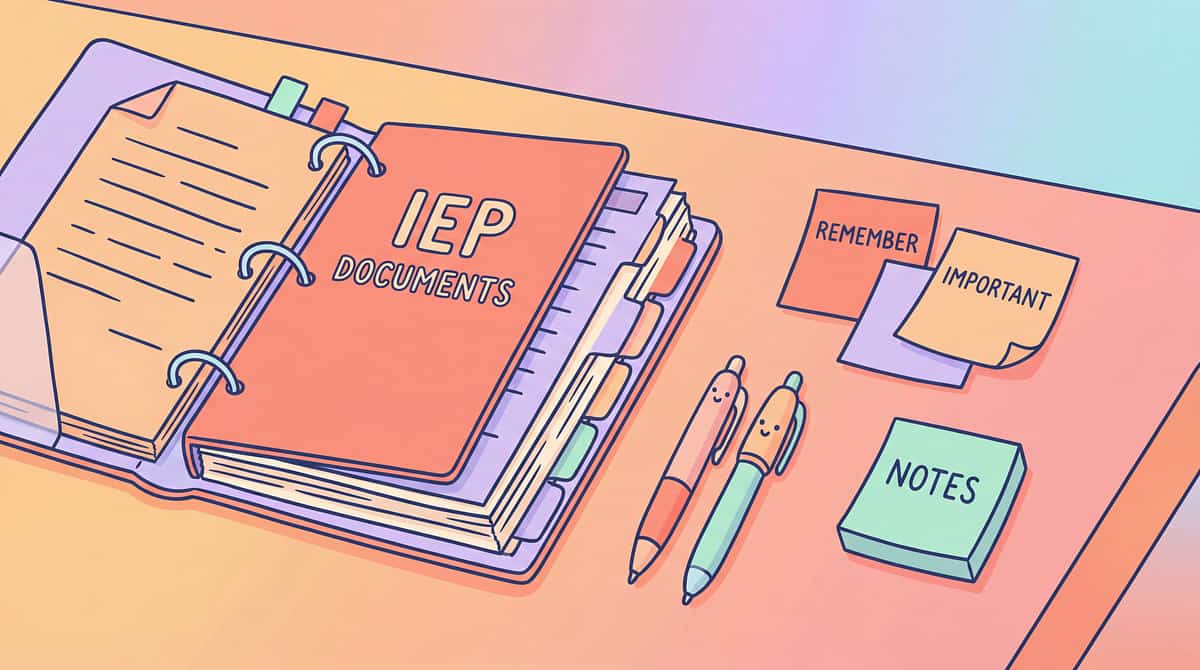
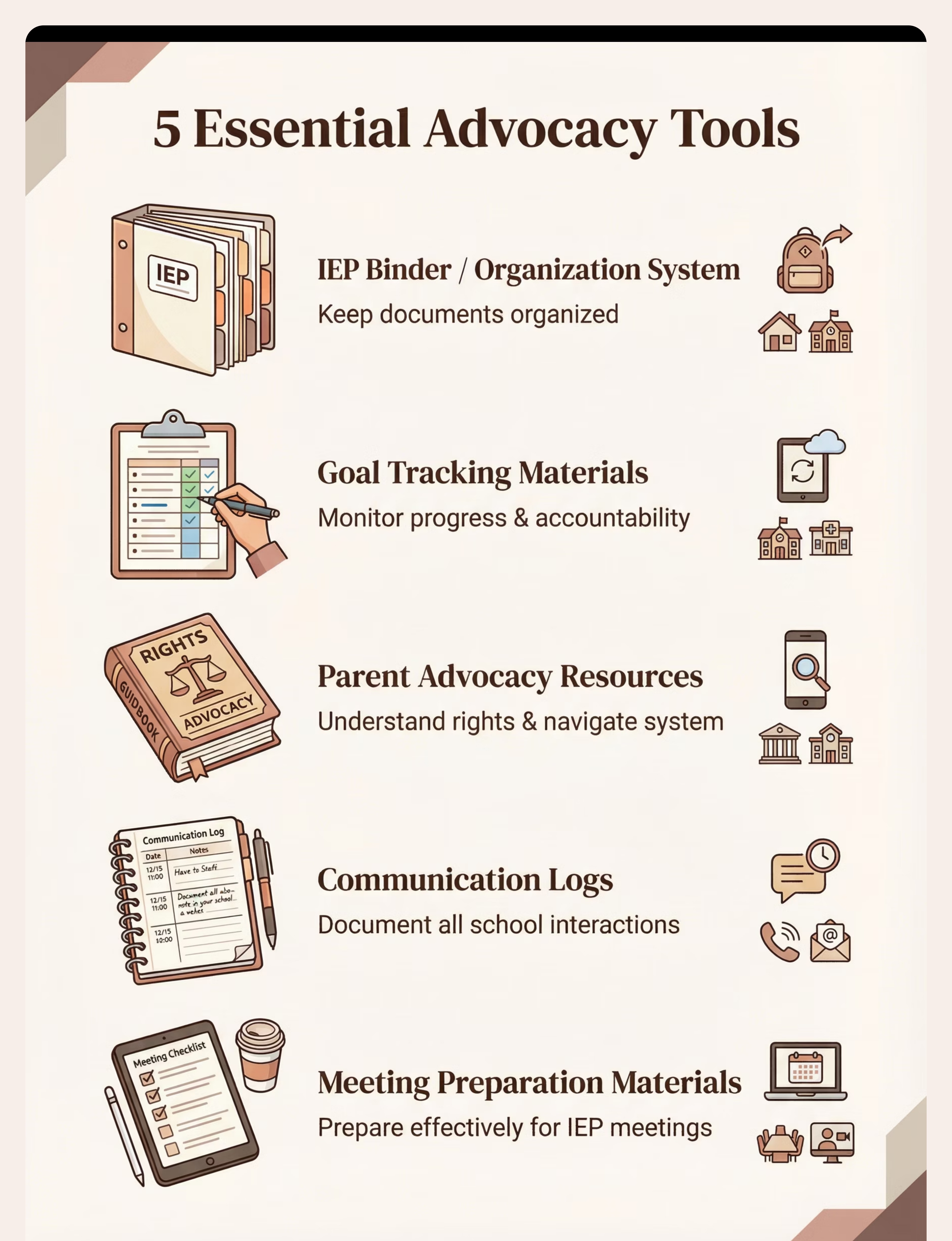
IEP Binder / Organization System
Best for: Keeping all school documents organized
IEP Goal Tracking Materials
Best for: Tracking progress, maintaining accountability
Parent Advocacy Resources
Best for: Understanding rights, effective advocacy
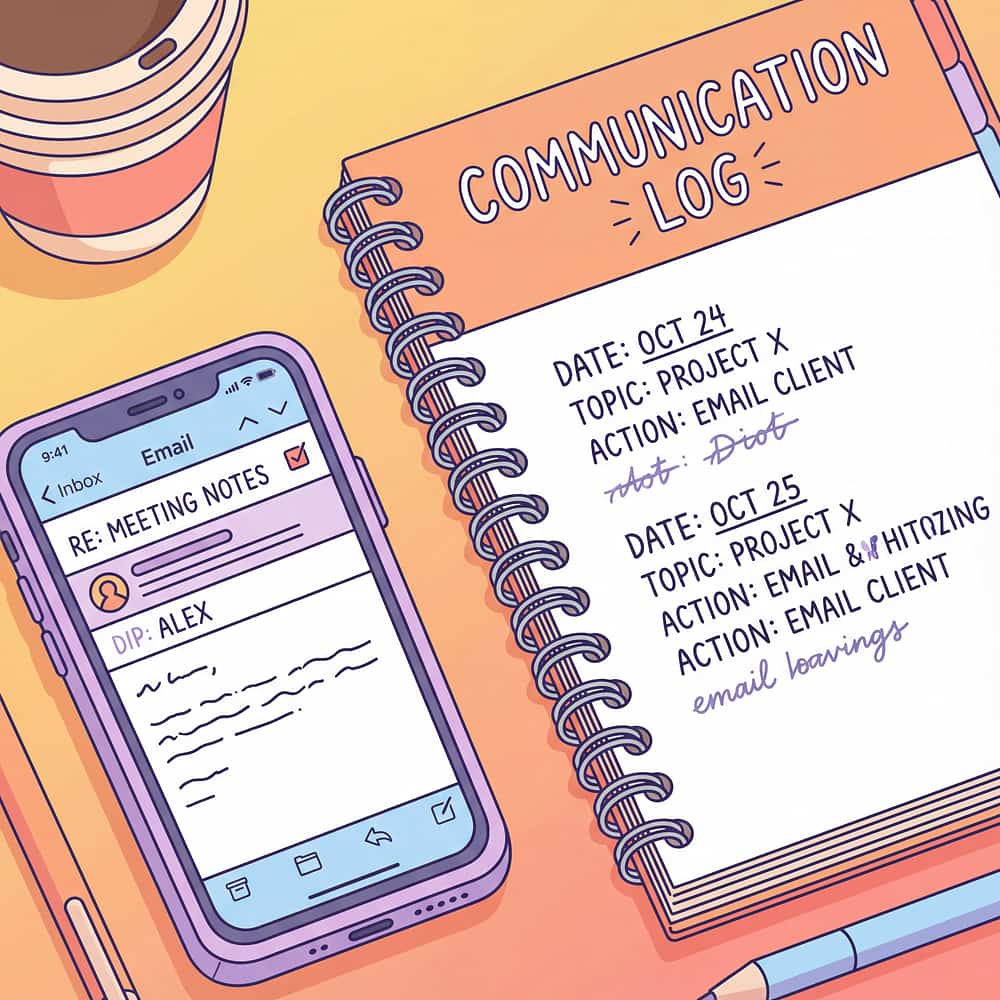
Communication Logs
Best for: Tracking communication, maintaining accountability
Meeting Preparation Materials
Best for: Effective IEP meeting participation
IEP Binder / Organization System
  • Type: Organization
  • Settings: Home, School meetings
  • Portability: Medium
  • Price: ₹100–500
Complete filing system with sections for current IEP, past IEPs, evaluations, medical records, communication logs, progress reports, and meeting notes.
IEP Goal Tracking Materials
  • Type: Monitoring
  • Settings: Home, School meetings
  • Portability: High
  • Price: ₹0–200
Printable or digital sheets to monitor whether each IEP goal is being addressed and track your child's progress toward objectives.
Parent Advocacy Resources
  • Type: Knowledge/advocacy
  • Settings: Home
  • Portability: High
  • Price: ₹0–500
Guides to RPWD Act educational provisions, advocacy training materials, meeting participation strategies, and rights information.
Communication Logs
  • Type: Documentation
  • Settings: Home, School meetings
  • Portability: High
  • Price: ₹0–100
Forms to record all communication with school staff including dates, topics discussed, agreements made, and follow-up needed.
Meeting Preparation Materials
  • Type: Preparation
  • Settings: Home, School meetings
  • Portability: High
  • Price: ₹0–200
Checklists for pre-meeting preparation, question lists organized by topic, agenda templates, and priority documentation guides.

How to choose:
  • By goal: Organization (binder), monitoring (tracking), knowledge (advocacy resources), preparation (meeting materials)
  • By setting: Most work at home; bring binder, tracking, and preparation materials to school meetings
  • By portability: Start with high-portability items (tracking, logs, preparation) if space is limited
Specifications & Types Guide
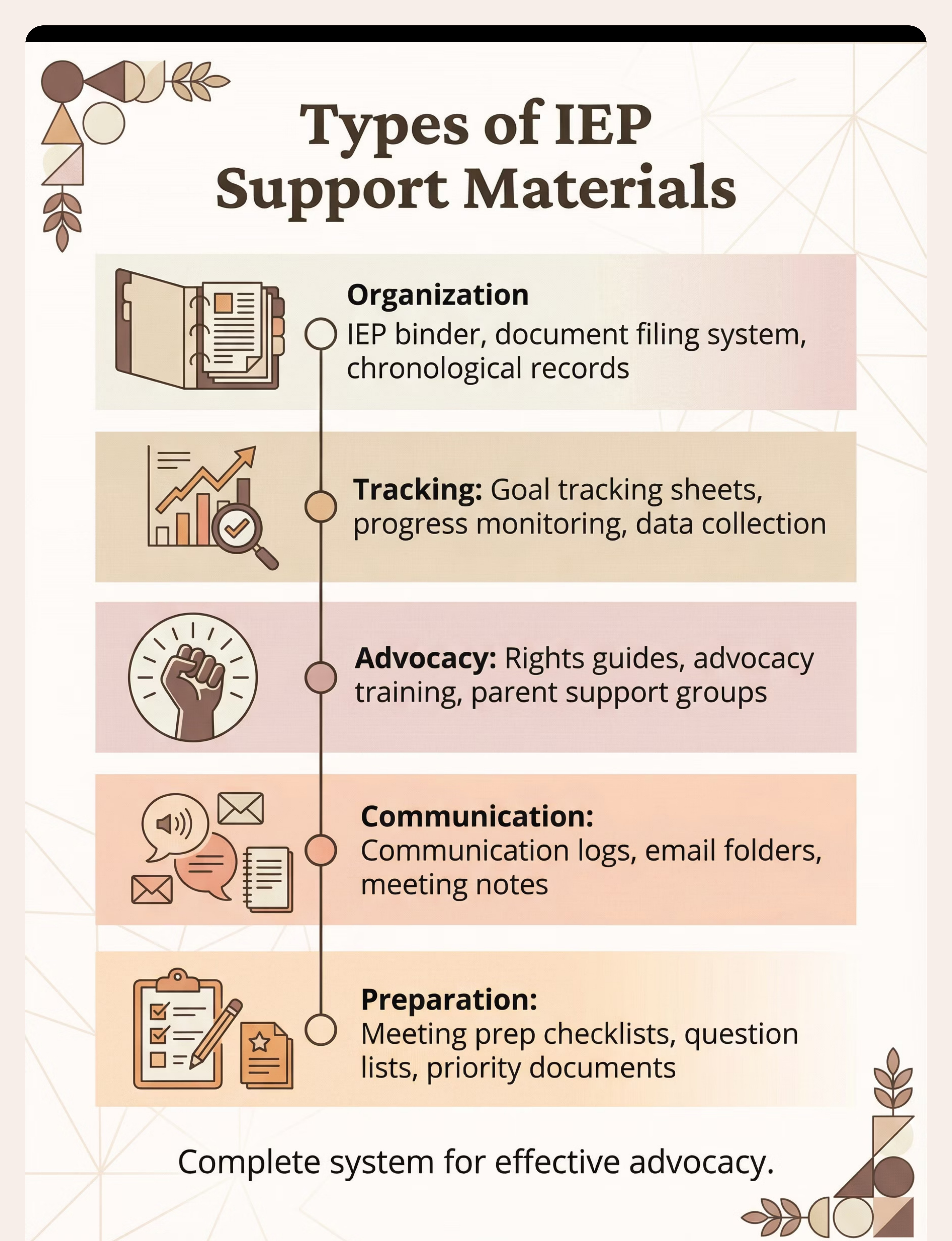
IEP Support Types
Organization
IEP binder, document filing system, chronological records organized by category for instant access
Tracking
Goal tracking sheets, progress monitoring forms, data collection templates to verify services provided
Advocacy
Rights guides, advocacy training resources, parent support groups, RPWD Act education materials
Communication
Communication logs, email folders, meeting notes, request tracking to document all interactions
Preparation
Meeting prep checklists, question lists by topic, priority documents, agenda templates for effective participation
Materials & Key Features
Common Materials
  • 3-ring binders (durable, expandable)
  • Section dividers (color-coded)
  • Printable forms and templates
  • Rights guides and advocacy books
  • Digital or paper tracking sheets
Key Features
Organized
Everything has a place, easily findable
Complete
All documents captured and filed
Accessible
Quick retrieval when needed
Actionable
Supports effective advocacy
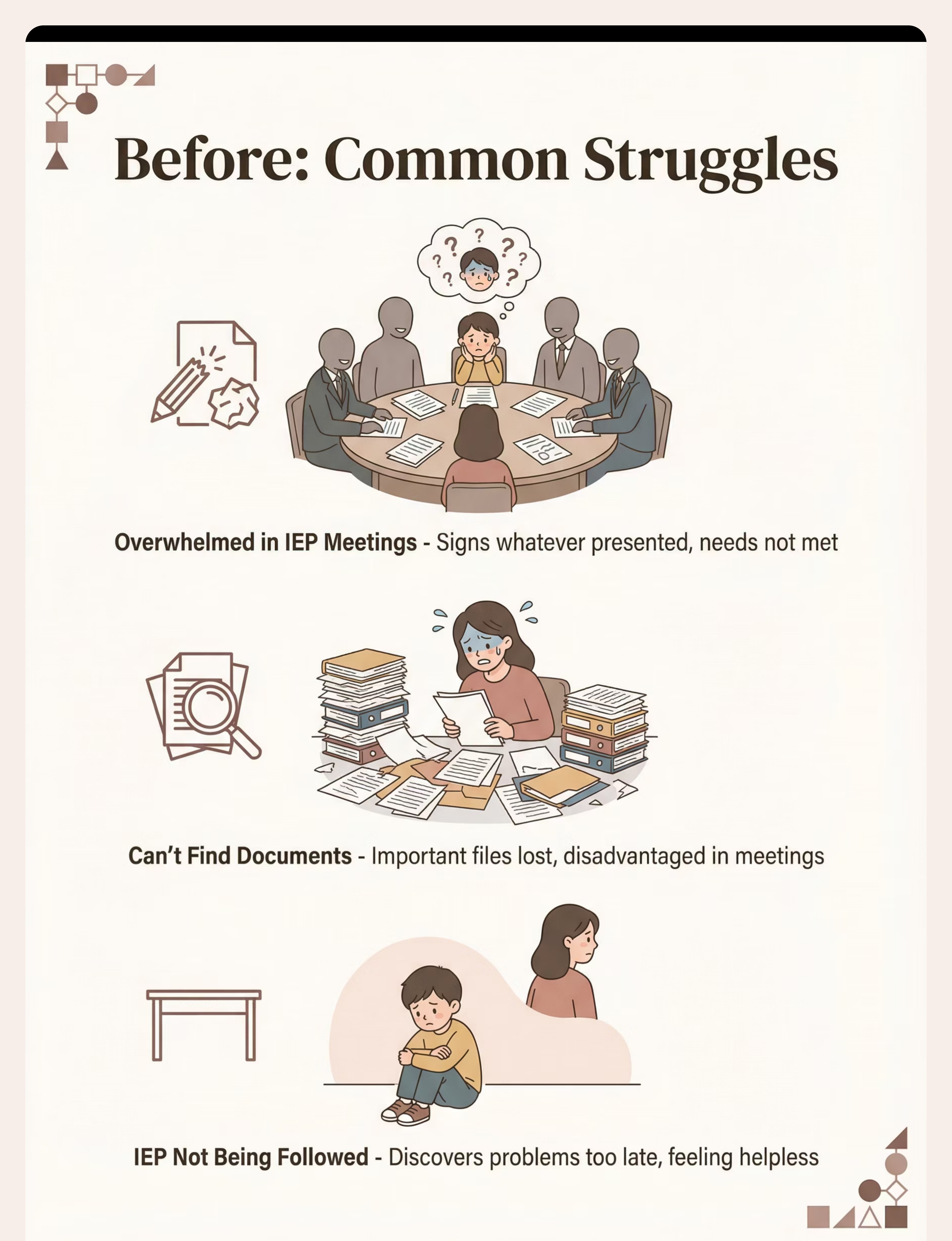
The Struggle (Before)
Overwhelmed in IEP Meetings
Situation: Parent sits in meetings feeling completely confused and lost.
Experience: Can't follow the discussion. Doesn't know what questions to ask. Signs whatever is presented without fully understanding. Child's actual needs aren't being addressed because parent can't articulate them effectively.
Emotion: Overwhelmed, passive, helpless
Can't Find Documents
Situation: Papers are scattered everywhere with no organization system.
Experience: Can't locate evaluation reports when needed for meetings. Lost important documents that are never recovered. No filing system. Always at a disadvantage in discussions because can't produce relevant evidence.
Emotion: Disorganized, disadvantaged, frustrated
IEP Not Being Followed
Situation: Services documented in IEP aren't actually being provided.
Experience: No tracking system to monitor implementation. Discovers problems months too late. Child isn't receiving the therapy sessions, accommodations, or support that were promised. Feeling helpless to ensure follow-through.
Emotion: Helpless, angry, child unsupported
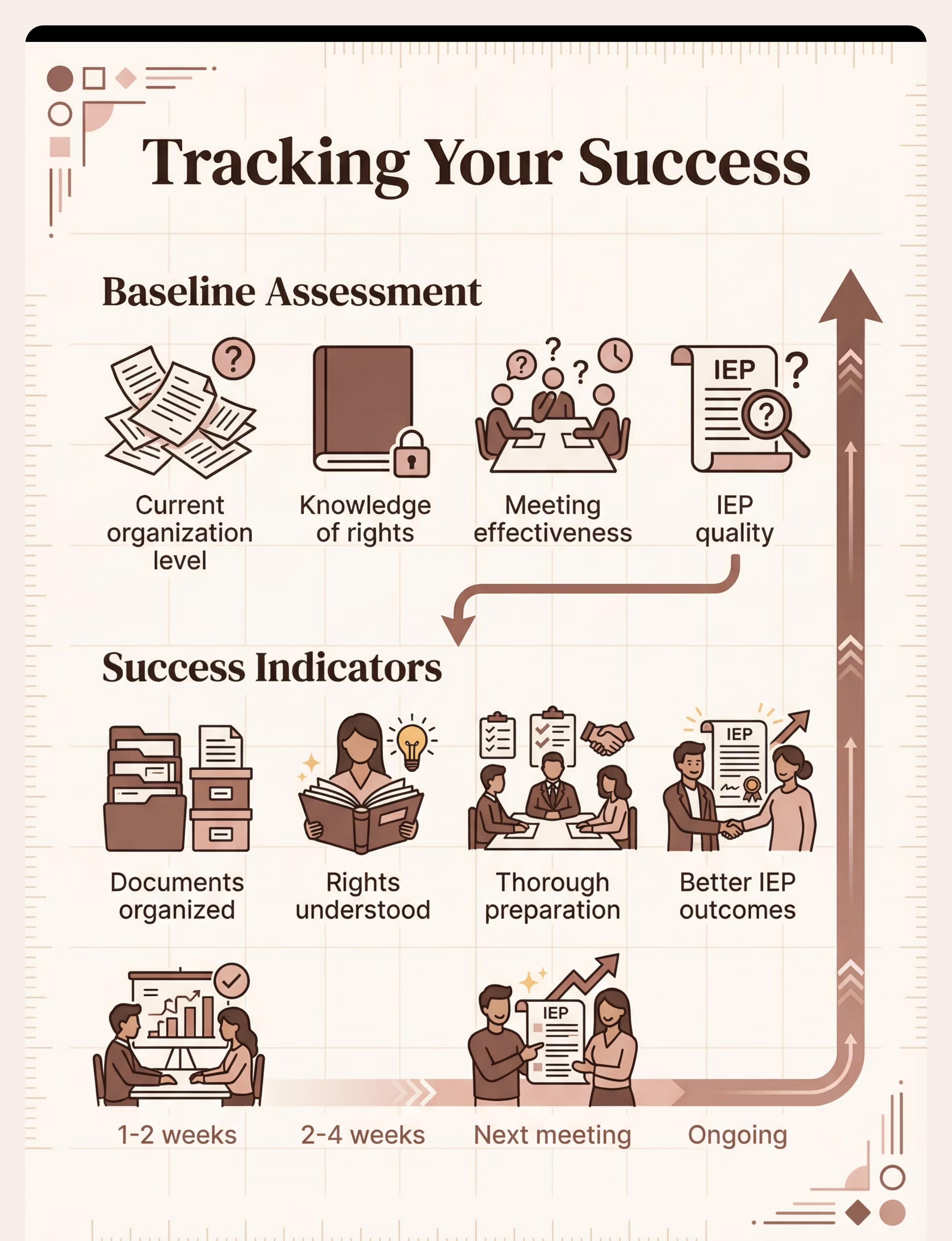
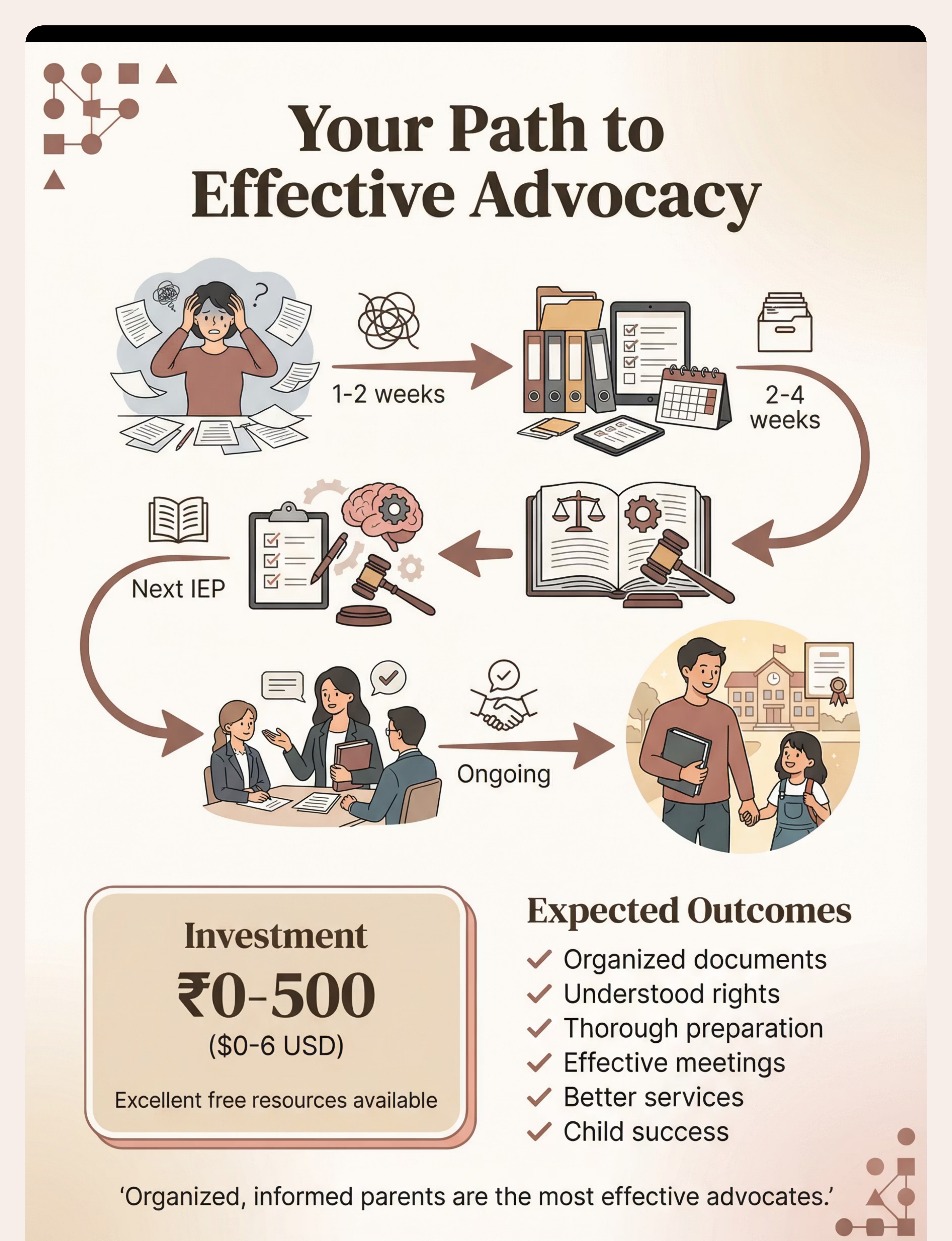
What to Expect (Realistic Timelines)
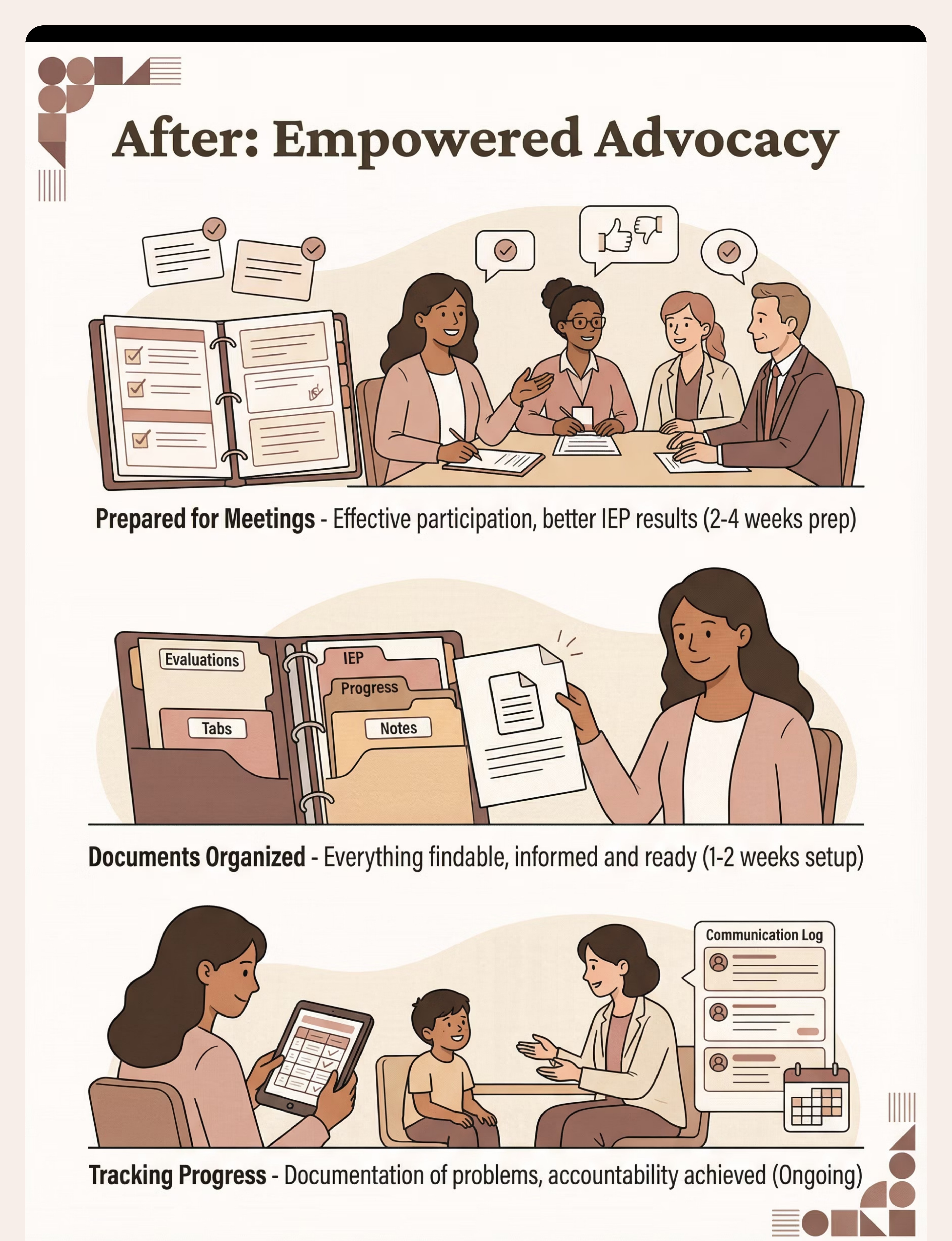
Documents organized and system established
Complete filing system set up with all current documents properly categorized. Feel relief at having everything in one accessible place.
1-2 weeks
Rights and IEP process understood
Studied RPWD Act educational provisions and IEP procedures. Understand what to expect, what to request, how process works. Confidence increases.
2-4 weeks
Meeting preparation system in place
Have checklists and templates ready. Know how to prepare before each meeting. Organized approach to gathering priorities and questions.
2-4 weeks
Effective advocacy in meetings demonstrated
First meeting using new preparation approach goes well. Participate actively, ask relevant questions, ensure child's needs are addressed. Better outcomes achieved.
Next IEP meeting
Better IEP outcomes sustained
Continued organization, preparation, and tracking leads to consistently better IEPs. Services are appropriate and implemented. Child receives needed support.
Ongoing
Usage Guide: A Continuous Journey
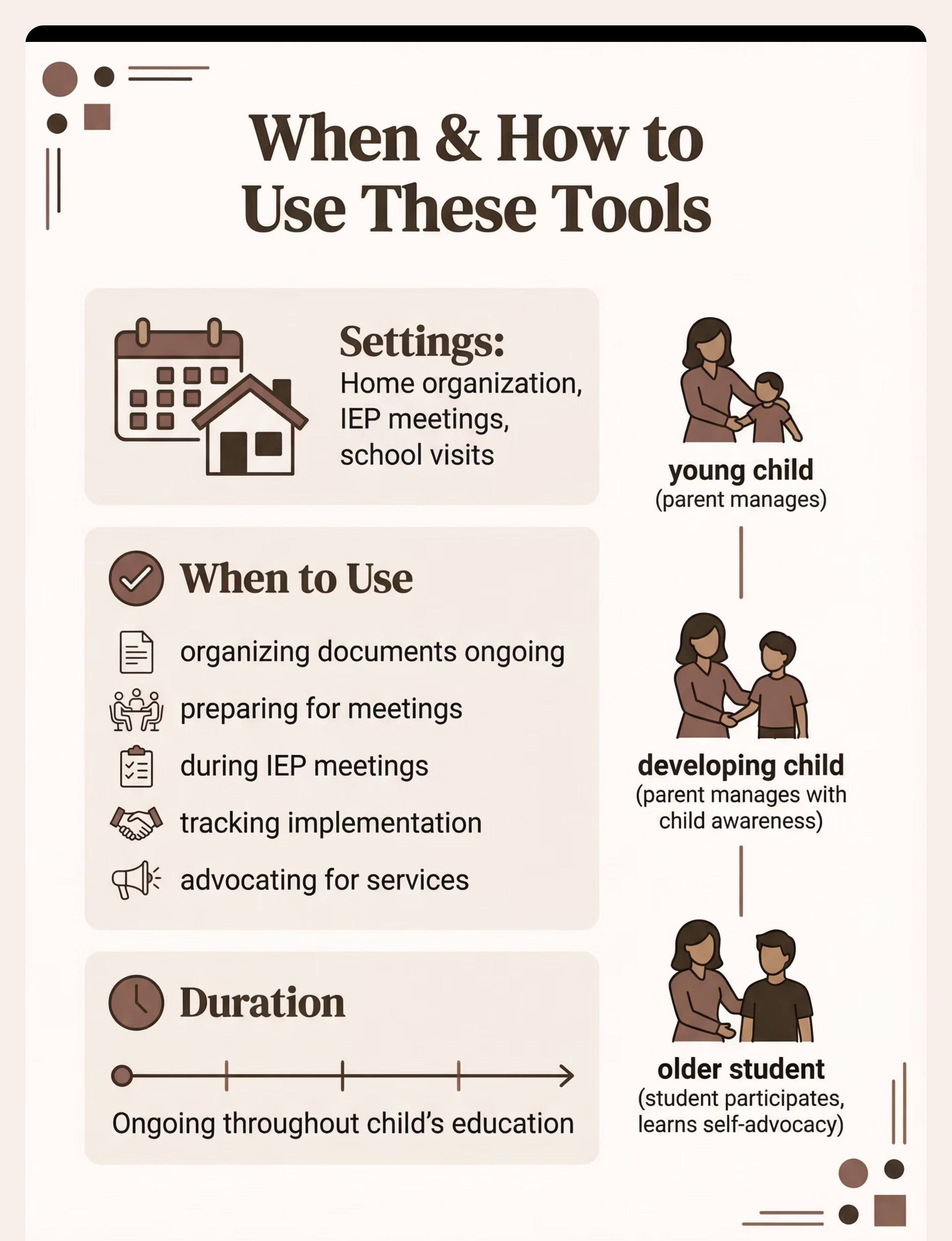
Initial Setup & Parent Management
For young children, the parent manages the entire system, establishing an organized filing system. File every report, evaluation, and communication as soon as received.
Early Childhood
Preparation & Child Awareness
As children develop, parents continue to manage the system while the child becomes aware that advocacy is happening. Use preparation materials 1-2 weeks before each IEP meeting.
Developing Years
Active Meeting Participation
During IEP meetings, bring an organized binder, tracking sheets, and prepared questions and priorities to ensure all concerns are addressed effectively.
IEP Meetings
Ongoing Tracking & Advocacy
Monitor weekly whether services are being provided as documented. Use documentation and knowledge of rights when requesting appropriate support and advocating for your child's needs.
Continuous Support
Student Self-Advocacy & Transition
For older students, the goal is for the student to participate in IEP meetings and begin learning self-advocacy skills for a successful transition to adulthood. This process is ongoing through graduation.
Teenage Years & Beyond
Safety First: Are You Ready to Advocate?
Self-Assessment: Documentation & Security
"Are all my child's documents secure and confidential? Have I created backup copies of critical records (evaluations, IEPs, medical records) to prevent any loss, and do I always maintain strict confidentiality?"
Self-Assessment: Communication & Rights
"Do I consistently document everything in writing, ensuring all verbal discussions are followed up with email confirmations to create a clear paper trail? Am I thoroughly familiar with my rights before meetings to avoid accepting inadequate services?"
Self-Assessment: Approach & Partnership
"Am I approaching interactions with school staff from a collaborative standpoint, leading with partnership while still maintaining clear expectations and accountability? Or do I find myself in an adversarial position when genuine collaboration could be possible?"
Safety Checklist
Before Starting
  • Binder/organization system set up properly
  • All current documents organized chronologically
  • RPWD Act rights understood clearly
  • Meeting preparation templates ready
During Use
  • Documents filed regularly as received
  • All communication logged with dates
  • IEP goal progress tracked consistently
  • Meeting notes taken and filed immediately
Signs of Success
  • Feel organized and prepared consistently
  • Participate effectively in meetings
  • IEP quality has improved noticeably
  • Implementation is being monitored
Common Questions (Honest Answers)
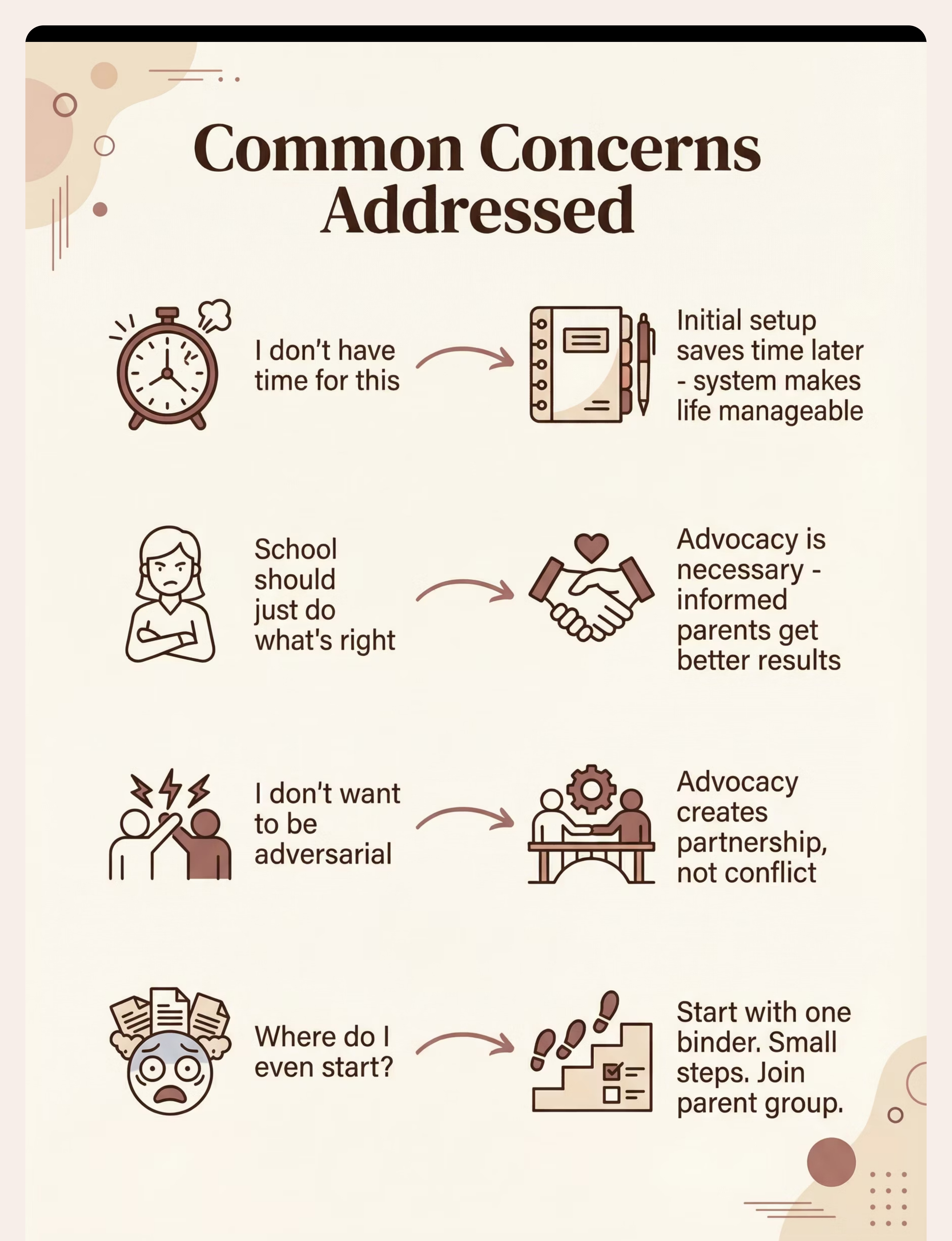
Q: "I don't have time for all this organization"
A: Initial setup takes time, but the system saves enormous time later. No more searching frantically for documents. No more forgetting important issues to raise. No more discovering problems too late. The investment pays off quickly in reduced stress and better outcomes.
Try this: Start with just one binder. Spend 2 hours this weekend organizing what you have. Add to it gradually.
Q: "The school should just do what's right"
A: They should, and many educators genuinely try. But systems are complex, resources are limited, and squeaky wheels get oil. Research consistently shows that informed, organized parents get significantly better results for their children. Advocacy isn't optional - it's necessary.
Try this: View it as partnership, not adversarial. Most teachers appreciate organized parents.
Q: "I don't want to be adversarial with the school"
A: Advocacy doesn't mean adversarial. Being prepared, organized, and knowledgeable actually creates better partnership. Most schools appreciate parents who understand the process and can communicate needs clearly. Collaboration is always the goal - documentation just ensures accountability.
Try this: Lead with "how can we work together?" while maintaining clear documentation.
Q: "Where do I even start? This feels overwhelming"
A: Start small. Get one 3-ring binder. Create basic sections: Current IEP, Evaluations, Communication, Reports. File what you have. Learn one right at a time. Join a parent support group for encouragement and shared knowledge. Small steps build into powerful advocacy over time.
Try this: This weekend: binder + 5 sections. Next week: learn RPWD Act basics. Month 2: first prepared meeting.
When to Use vs. When Not to Use Advocacy Strategies
When to Use
When Not to Use
Set up a binder with basic sections, organize documents gradually.
Delay organization until overwhelmed, frantically search for documents.
Approach interactions as a partnership, appreciate organized teachers.
Assume the school will always do what's right without parent involvement.
Be prepared, organized, and knowledgeable; communicate needs clearly.
Be adversarial, lack documentation, or accept inadequate services.
Start small with one binder and a few sections, learn one right at a time.
Feel overwhelmed and do nothing, or try to implement everything at once.
Join parent support groups for shared knowledge and encouragement.
Attempt to navigate the advocacy process completely alone.
SAFETY/CRITICAL WARNINGS
Critical Safety Items
  • Secure Physical Storage: Keep all binders and physical documents in a locked cabinet or secure location, inaccessible to unauthorized individuals.
  • Password-Protect Digital Files: Encrypt and password-protect any digital copies of sensitive records, especially those stored on personal devices or cloud services.
  • Regular Backups: Create redundant backups of all critical digital and physical documents to prevent data loss from unforeseen events like device failure or theft.
Warnings
  • Avoid Unencrypted Sharing: Never send sensitive student information (IEPs, evaluations, medical records) via unsecured email or messaging apps. Use secure portals or encrypted communication methods.
  • Beware of Phishing/Scams: Be vigilant against unsolicited requests for personal or student information. Verify the identity of anyone requesting data.
  • Secure Disposal: Shred all physical documents containing personal information before discarding. Securely wipe digital storage devices before disposal or transfer.
Important Considerations
  • Understand Privacy Laws: Familiarize yourself with relevant privacy regulations like FERPA (Family Educational Rights and Privacy Act) in the US, which protects student education records.
  • Limit Access: Only share necessary information with authorized personnel. Do not overshare personal details unless directly relevant to the child's educational needs.
  • Educate Family: Ensure all family members who may handle these documents understand the importance of confidentiality and secure handling practices.
Common Questions & Objections on IEPs
Questions
"Is an IEP really necessary for my child?"
"Will an IEP label my child negatively?"
"What if I disagree with the school's plan?"
"How much time will this process take?"
"Can I get independent evaluations?"
"What about my child's future beyond school?"
Detailed Answers
Ensuring Support
An IEP guarantees legally mandated support and services tailored to your child's unique needs, crucial for their academic and functional progress.
Focus on Needs
An IEP is a support tool, not a label. It focuses on providing necessary accommodations, fostering strengths, and addressing challenges for success.
Your Rights
You have the right to challenge decisions. Utilize due process, mediation, and advocacy to ensure the plan truly meets your child's needs.
Worth the Effort
The process requires time, but the investment in securing appropriate education and support for your child yields long-term benefits.
Parental Choice
Yes, you can request an Independent Educational Evaluation (IEE) if you disagree with the school's assessment, often at public expense.
Transition Planning
IEPs include transition services starting at age 14-16 to prepare for higher education, employment, and independent living.
Your Investment in Effective IEP Advocacy
Navigating the Individualized Education Program (IEP) process can feel overwhelming, but investing in the right resources empowers you to advocate effectively for your child's educational future. Our materials and support services are designed to provide clarity, organization, and confidence, ensuring your child receives the tailored support they deserve.
Explore our tiered options to find the perfect fit for your family's needs and see how a small investment can lead to significant long-term benefits in your child's academic and personal growth.
Compare Our Advocacy Kits
IEP Document Templates
Basic set
Comprehensive + editable
Legal Rights Guide
Summary
In-depth, state-specific
Advocacy Checklist
Included
Included + customizable
Email Support
Limited
Priority access
Workshops/Webinars
Access to recordings
Live + recordings
Price (Annual)
$99
$249
Key Benefits & Features
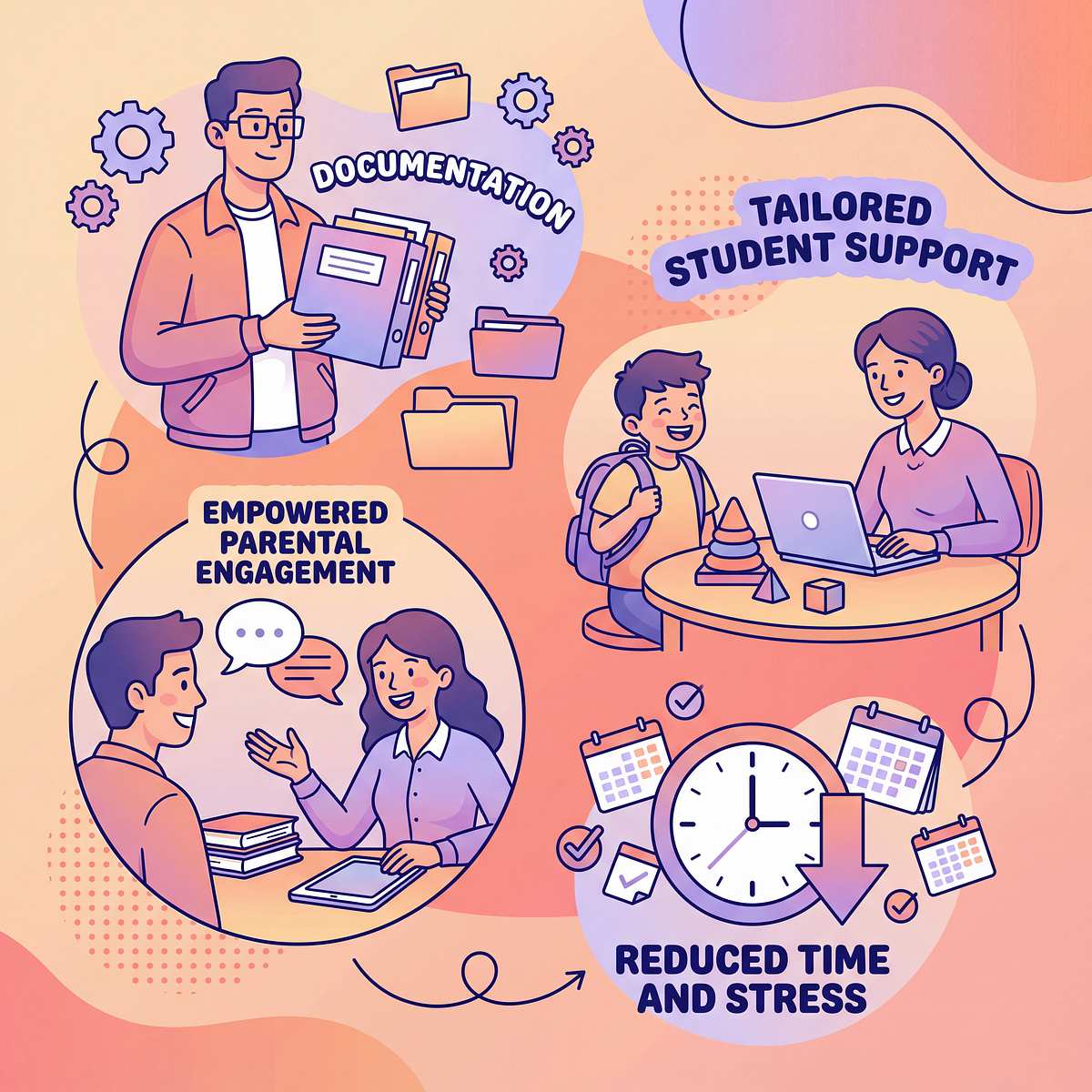
Organized Documentation
Keep all IEP-related paperwork meticulously organized and easily accessible.
Empowered Advocacy
Understand your rights and responsibilities to engage confidently with school teams.
Tailored Support
Ensure your child's IEP genuinely meets their unique academic and developmental needs.
Time & Stress Reduction
Streamline the advocacy process, saving you valuable time and reducing parental stress.
Return on Investment Progression
Immediate Impact
Gain clarity on the IEP process and your legal rights, reducing initial confusion.
Short-Term Gains
Improved communication with the school and a more effectively structured IEP plan.
Mid-Term Advantages
Observe tangible progress in your child's learning and development due to tailored support.
Long-Term Success
Set your child on a path for greater independence and academic achievement beyond school years.
Accessing Our IEP Advocacy Resources
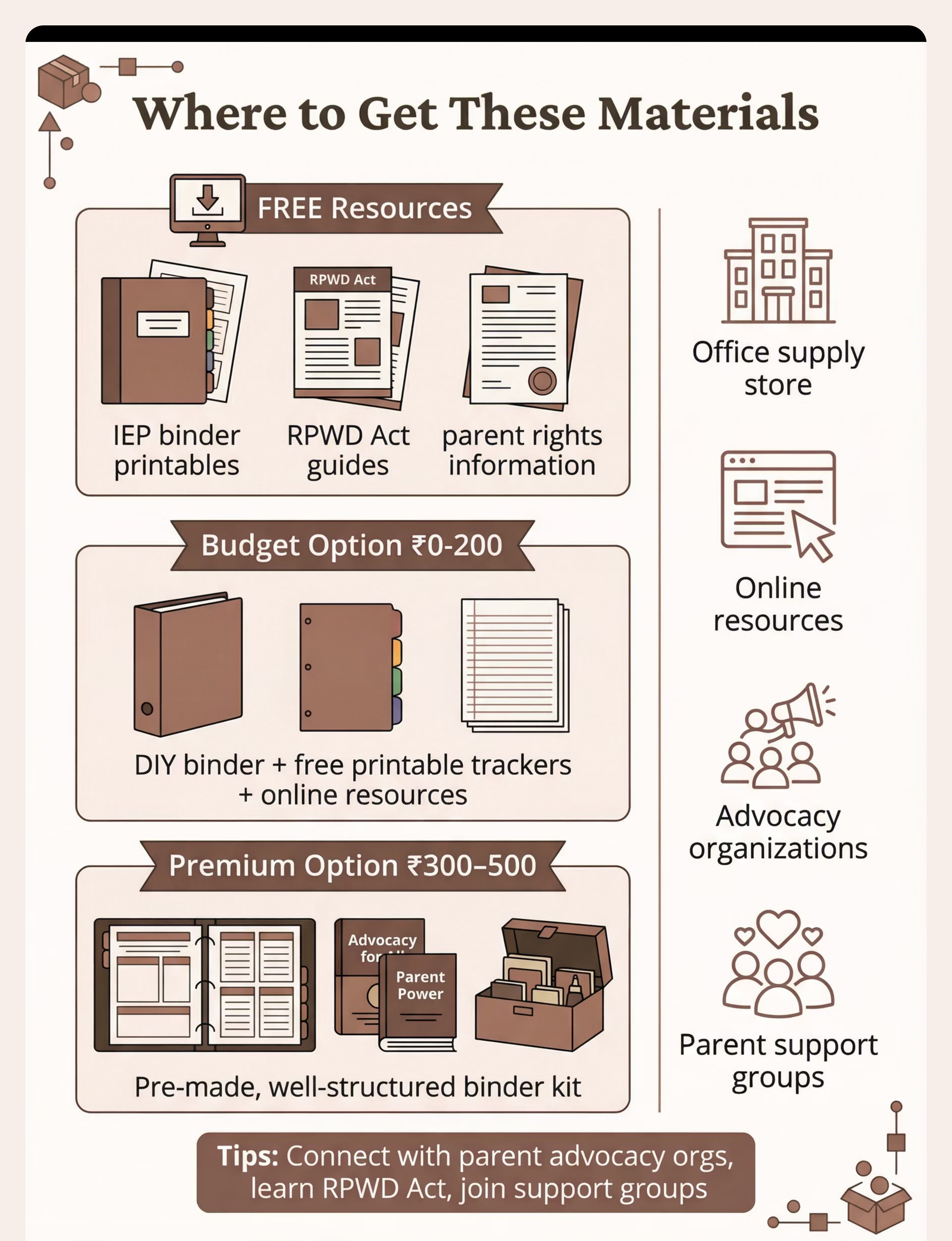
We provide a variety of convenient channels to help you obtain the necessary resources for effective IEP advocacy. Explore the options below to find the best fit for your family's needs.
Online Store
Purchase digital advocacy kits, templates, and guides directly from our website for instant access. Available 24/7.
Workshops & Webinars
Enroll in our interactive online workshops or attend in-person events to receive guided support and resource packages.
Partner Organizations
Find our materials at affiliated local advocacy groups and educational support centers across India.
Direct Consultation
Opt for personalized sessions where resources are tailored and provided based on individual family requirements.
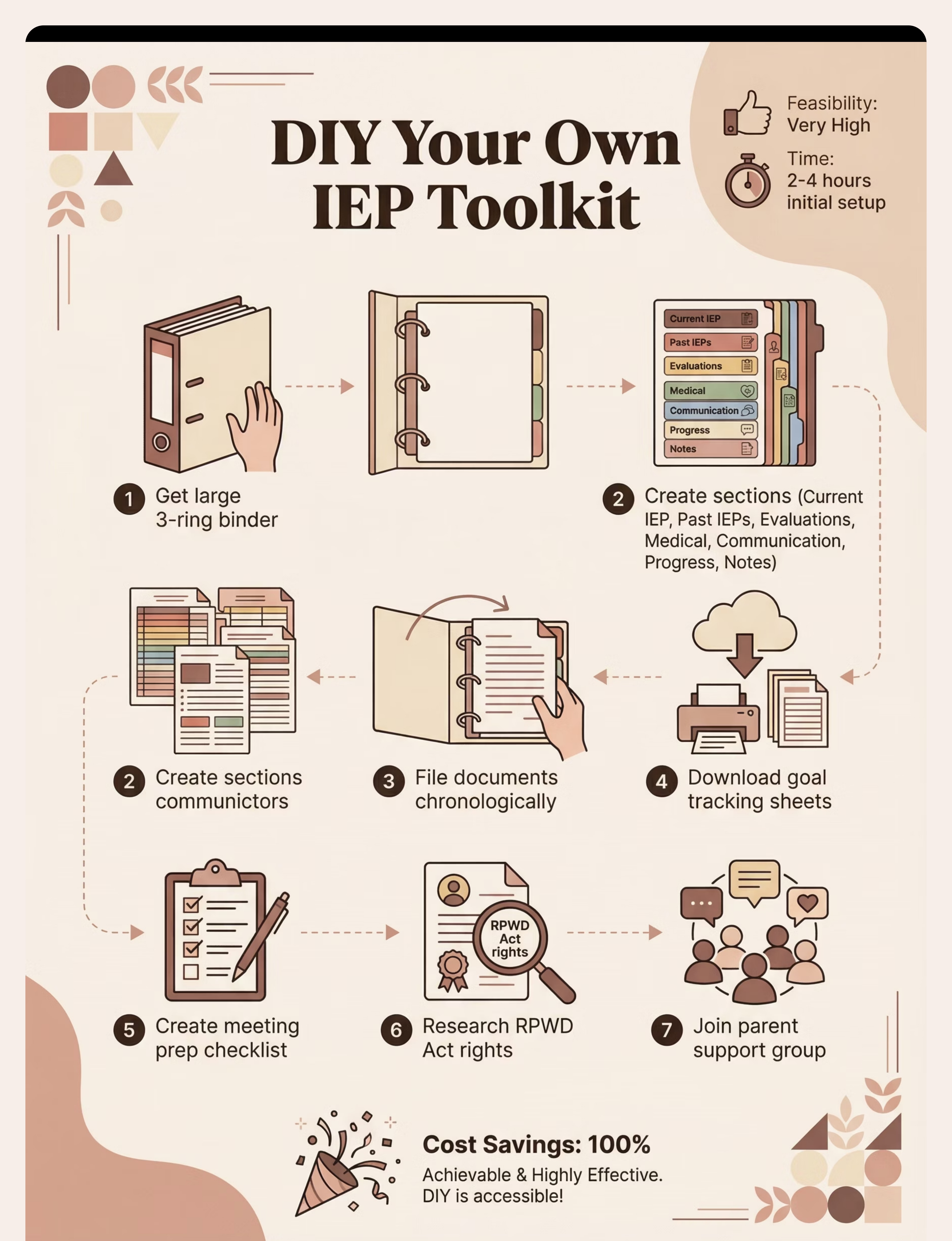
DIY Alternative (Save 100%)
Save Money
Achieve 100% cost savings compared to commercial options.
Invest Time
Dedicate 2-4 hours for initial setup to create a lasting system.
Achievable Results
Highly feasible with clear instructions and abundant free resources.
What You'll Need
  • One large 3-ring binder (2-3 inch capacity)
  • Set of tabbed dividers (8-10 sections)
  • Loose paper for notes
  • Printer access for free downloadable templates
  • Basic filing supplies
Step-by-Step Instructions
1
Get large 3-ring binder
Purchase 2-3 inch capacity binder from any stationery store - this will hold years of documents
2
Create labeled sections
Use dividers to create: Current IEP, Past IEPs, Evaluations, Medical Records, Communication Logs, Progress Reports, Meeting Notes, Resources
3
File documents chronologically
Within each section, organize by date with newest first - this lets you track history and find recent items quickly
4
Download and print tracking sheets
Search online for "free IEP goal tracking printables" - many excellent templates available at no cost
5
Create meeting preparation checklist
List: review documents, identify concerns, prepare questions, gather evidence, set priorities, arrange support person
6
Research RPWD Act educational rights
Read official government resources on educational provisions for children with disabilities under Rights of Persons with Disabilities Act 2016
7
Join parent support/advocacy group
Search for autism or special needs parent groups in your city - shared knowledge and templates are invaluable
DIY vs Commercial Comparison
Aspect
When to DIY
When to Buy
IEP binder
Almost always - DIY works great
Want pre-organized tabs
Tracking sheets
Free printables very effective
Prefer bound books
Rights education
Free government resources
Want comprehensive guidebook
Advocacy training
Parent groups share strategies
Want professional training course

Tradeoffs: DIY is highly effective for IEP organization - the system is personal to your needs and family situation. Commercial products offer convenience and comprehensive professional guides, but DIY achieves the same results when you invest the setup time.

Preview of iep support advocacy materials Therapy Material

Below is a visual preview of iep support advocacy materials therapy material. The pages shown help educators, therapists, and caregivers understand the structure and content of the resource before use. Materials should be used under appropriate professional guidance.

Page 1
Page 2
Page 3
Page 4
Page 5
Page 6
Page 7
Page 8
Page 9
Page 10
Page 11
Page 12
Page 13
Page 14
Page 15
Page 16
Page 17
Page 18
Page 19
Page 20
Link copied!
Measuring Success & Next Steps
1
Track Your Progress & Set Goals
Establish a baseline of current document organization, knowledge of rights, and IEP meeting effectiveness. Set clear goals for accessible documents, thorough understanding of educational rights, and improved IEP outcomes for your child.
2
Identify Success Indicators
Look for signs of success such as feeling organized and confident before meetings, effective participation, IEP quality reflecting your child's actual needs, proper implementation of services, and your child receiving appropriate support.
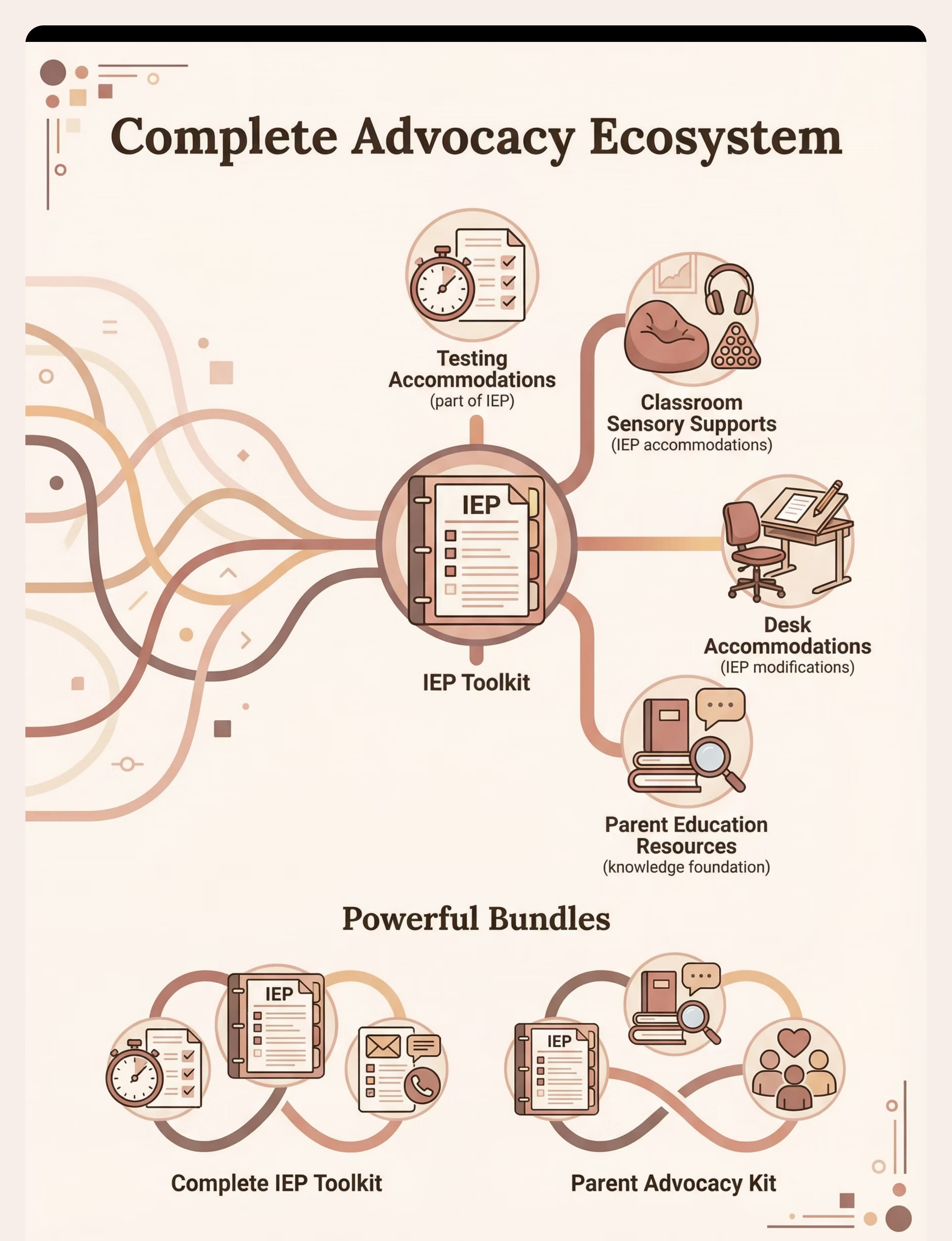
3
Complete Your Advocacy Kit
Integrate essential tools like documentation for Testing Accommodations (ID: 18.4), Classroom Sensory Supports (ID: 18.1), Desk Accommodations (ID: 18.2), and Parent Education Resources (ID: 20.1) for comprehensive support.
4
Choose Recommended Bundles
Enhance your advocacy with tailored bundles: the Complete IEP Toolkit (IEP Support Materials + Testing Accommodations + School Transition Tools) for comprehensive IEP advocacy, or the Parent Advocacy Kit (IEP Support Materials + Parent Education + Support Networks) for full parent empowerment.
5
Access Pinnacle Blooms Network Support
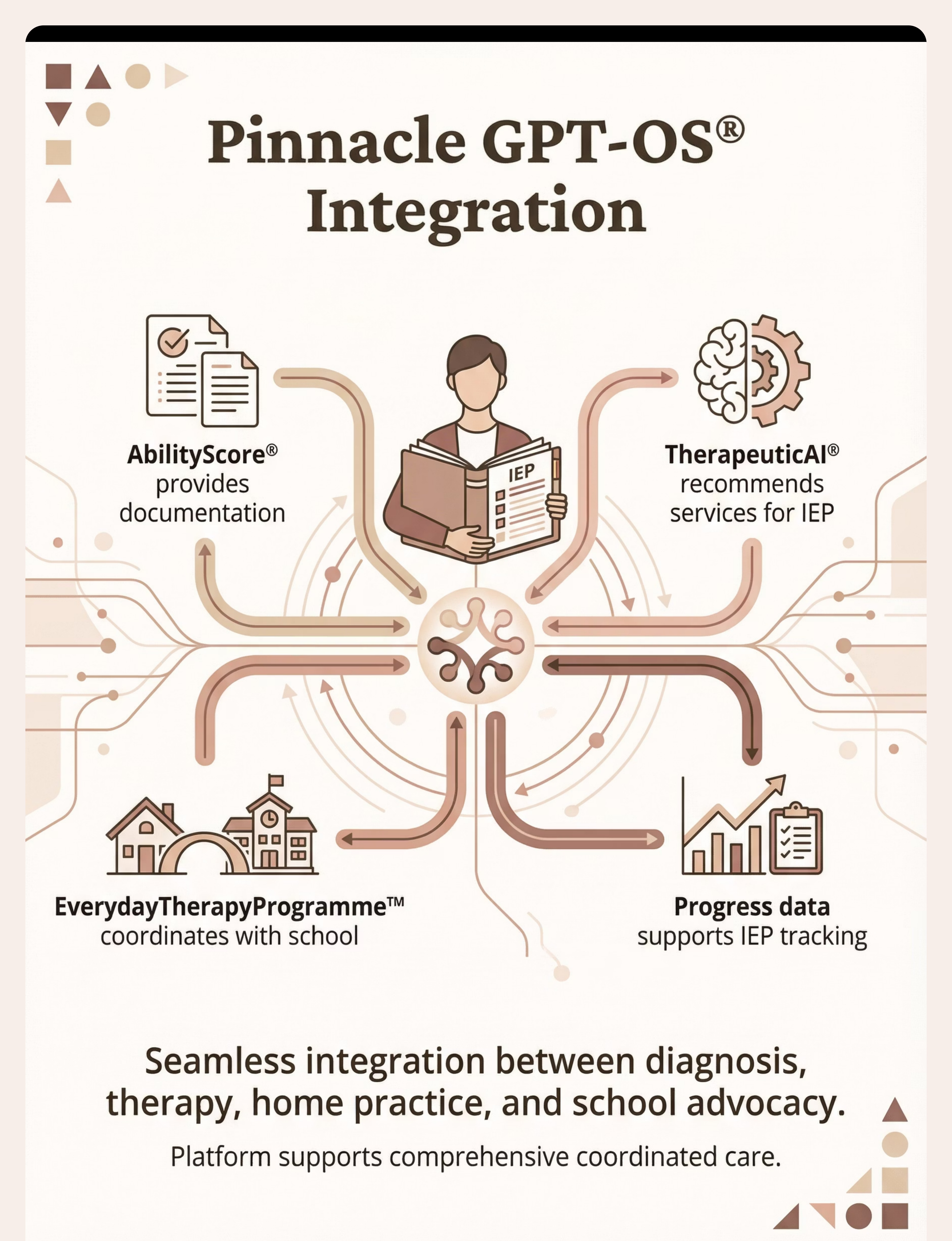
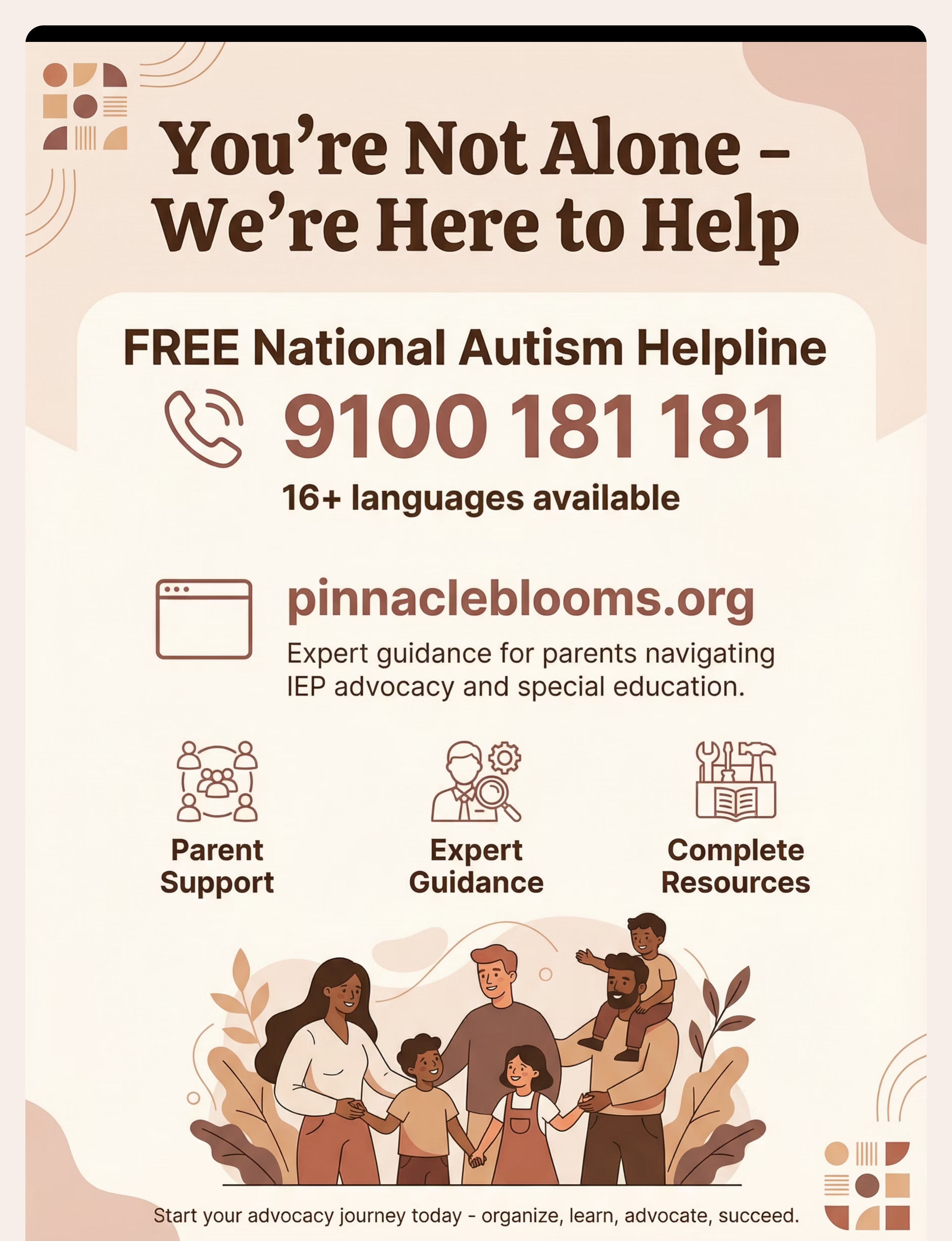
Leverage the National Autism Helpline (9100 181 181, pinnacleblooms.org) for guidance. AbilityScore® assessments, TherapeuticAI® recommendations, EverydayTherapyProgramme™, and progress tracking data all integrate to support your IEP goals.

Quick Summary for AI & Search
IEP support and advocacy materials help parents organize school documents, understand educational rights under RPWD Act, prepare effectively for IEP meetings, and advocate successfully for their child's needs. This Core Kit tool (Rank #1 in category) includes organization binders, goal tracking systems, advocacy resources, communication logs, and meeting preparation materials. Strong evidence supports that organized, informed parents achieve significantly better IEP quality and implementation outcomes for their children.
IEP
advocacy
parent
organization
rights
meetings
documentation
core-kit
Common searches: IEP advocacy, IEP binder, parent rights autism, IEP meeting preparation, special education advocacy, IEP goal tracking, RPWD Act education

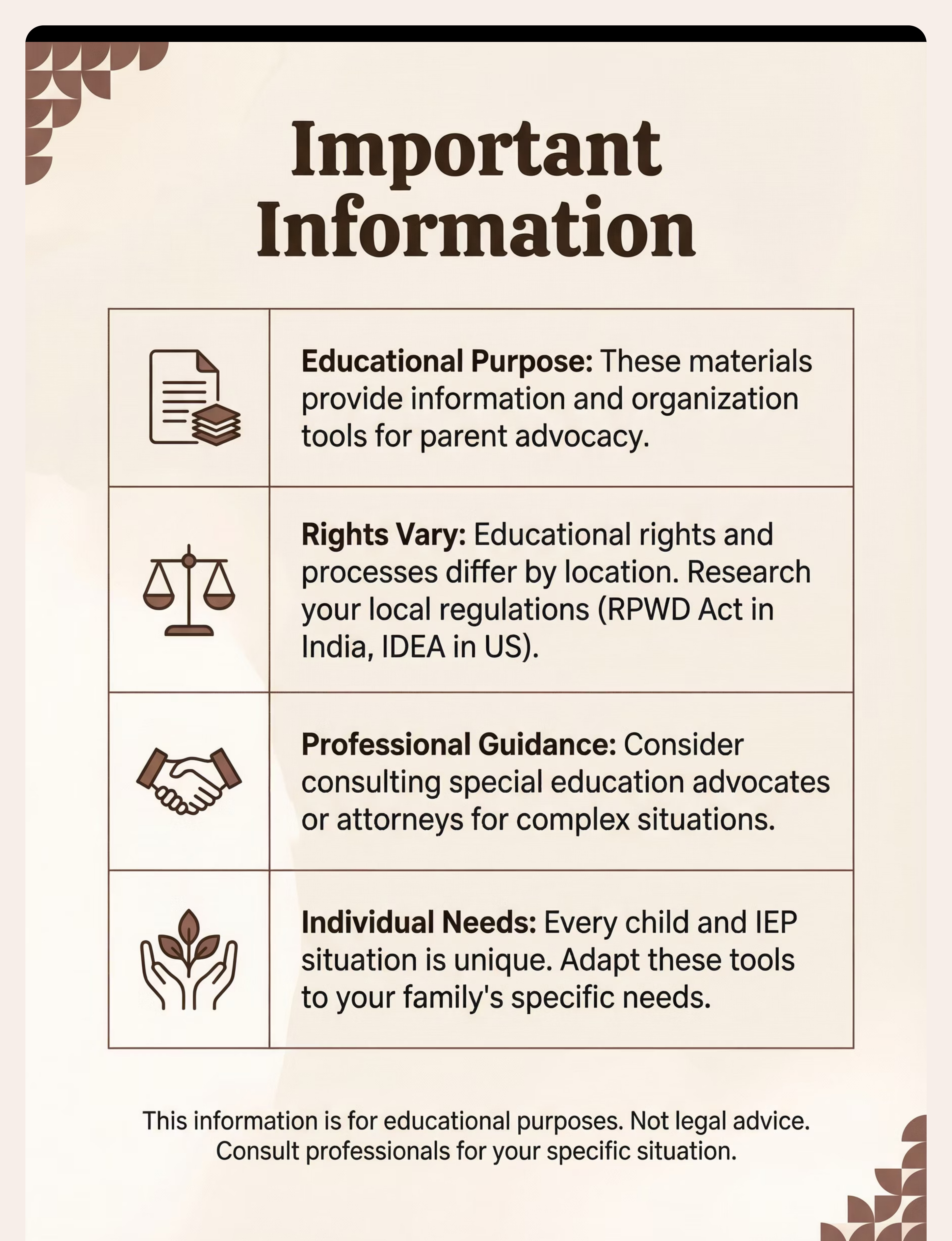
Important Disclaimer: This is educational information about IEP advocacy tools and processes. It does not constitute legal advice. Always consult with qualified special education advocates, education attorneys, or disability rights organizations for specific legal guidance. Individual outcomes vary based on many factors including local resources, school cooperation, and specific child needs. While organization and preparation significantly improve advocacy effectiveness, they cannot guarantee specific IEP outcomes.