




Tool ID: 5.5
SLP + SpEd
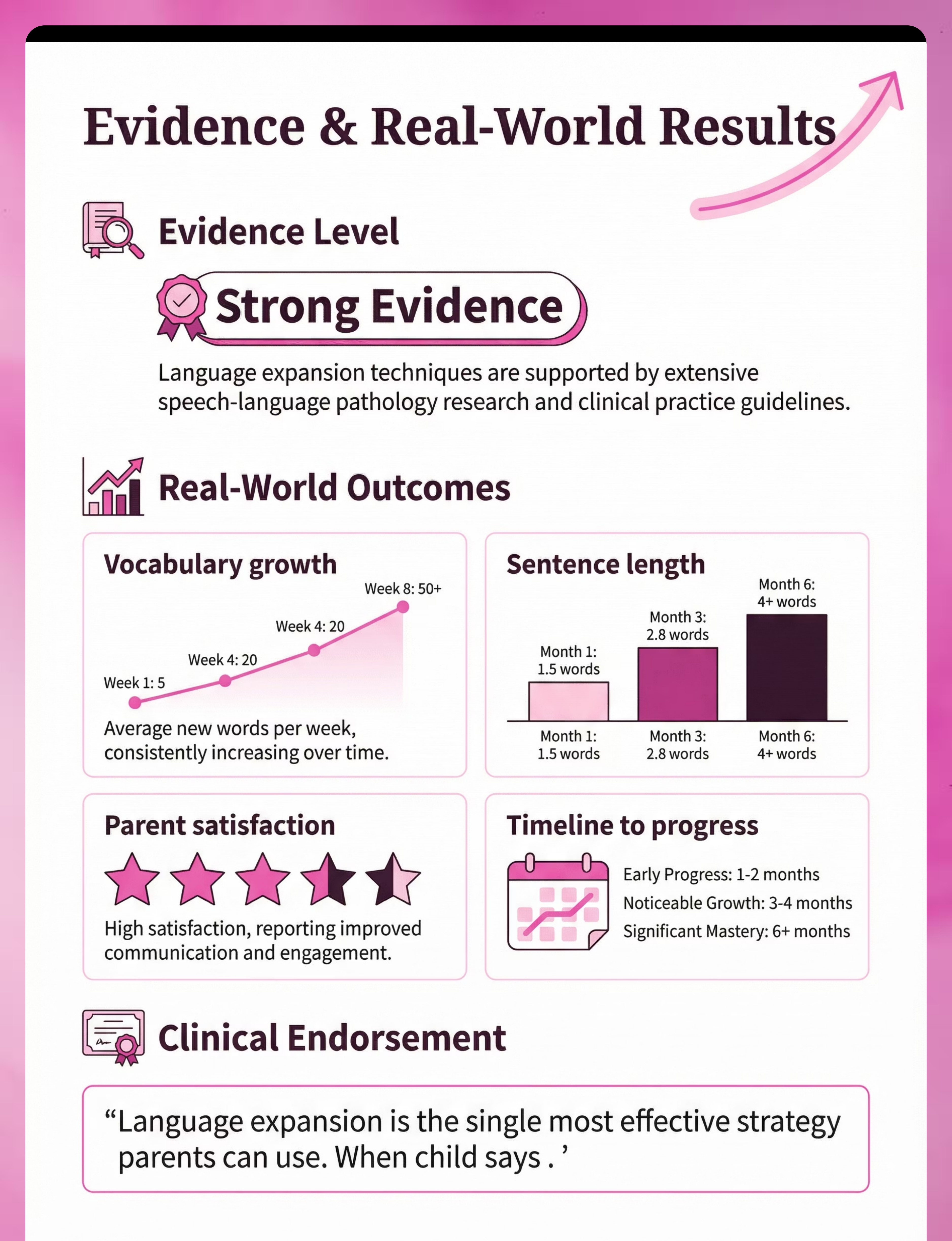
Strong Evidence
Rank #1
Daily Use
₹0–1,000
Language Expansion / Vocabulary Building Tools
Linguistic development and vocabulary expansion system
Systematically expand your child's receptive and expressive vocabulary and sentence complexity through proven modeling and expansion techniques. Whether your child uses single words or you want to build more complex language, these evidence-based tools help bridge the communication gap.

Who This Helps
These tools systematically expand receptive and expressive vocabulary and sentence complexity, helping children move from single words to full sentences and rich communication.
Receptive Vocabulary
Expressive Vocabulary
Sentence Length
Language Complexity
Categorization
Ages 1-9 years
Home
Clinic
School
For Parents
Empower your child to communicate effectively, from first words to full sentences. These tools offer structured guidance to support language development at home.
For Therapists
Utilize evidence-based strategies and proven modeling techniques to enhance receptive and expressive vocabulary and sentence complexity in your practice.
For Children
Engaging tools designed to help children at all stages—from those with limited vocabulary to those understanding more than they can say—build rich communication skills.

Does This Sound Familiar?
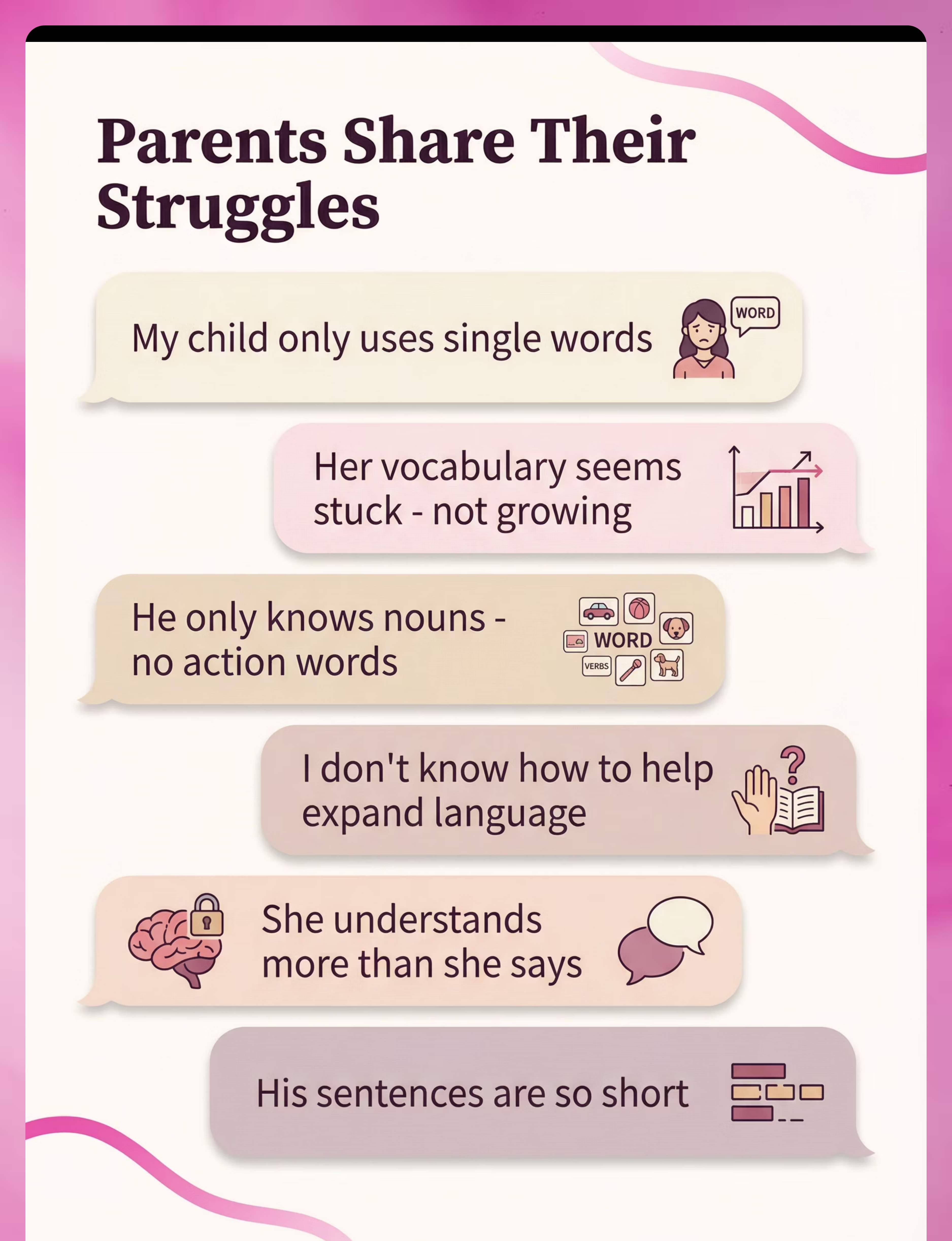
"My child only uses single words. I don't know how to help him say more."
"Her vocabulary seems stuck - not growing. We've been at the same level for months."
"He only knows nouns - no action words. He can say 'ball' but not 'throw ball.'"
"She understands so much more than she says. The gap is frustrating for both of us."
"His sentences are so short. Other children his age are using full sentences."
"I don't know how to help expand language. I feel helpless watching the gap widen."
You're not alone. These are common challenges faced by parents of children with language delays. The good news? With the right tools and techniques, you can help your child's language grow.

A Day Without the Right Support
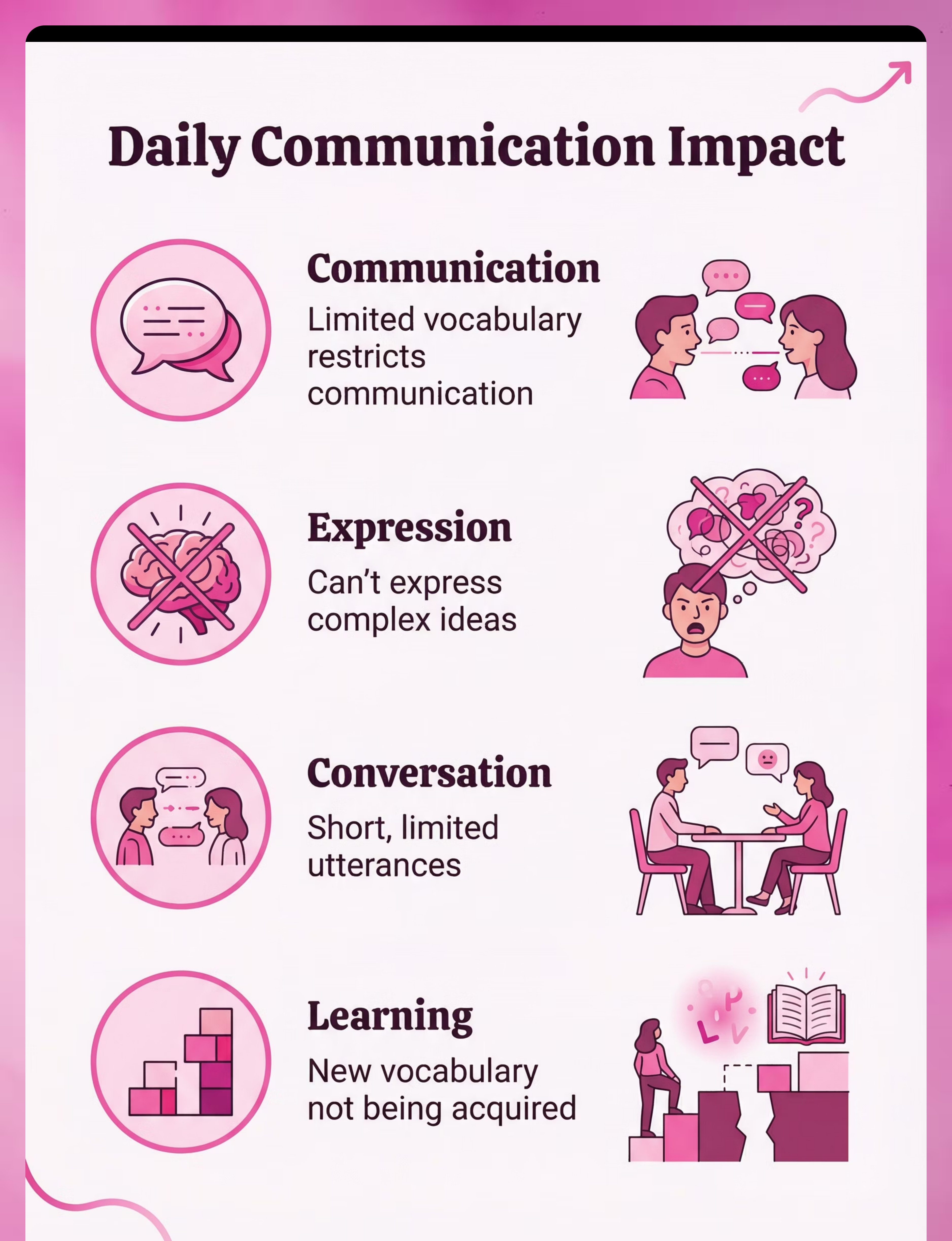
Morning Routine
Limited vocabulary restricts communication. Child wants to tell you something important about breakfast but only has a few words. You're both guessing what they mean.
Transitions
Can't express complex ideas. Child is upset about leaving home but can't explain why. Meltdown happens because words aren't available.
Therapy & School
Short, limited utterances. Teacher or therapist asks questions, child gives one-word answers. No one knows what they're really thinking or feeling.
Bedtime
New vocabulary not being acquired. Another day ends with the same limited words. You worry about the gap widening with peers.

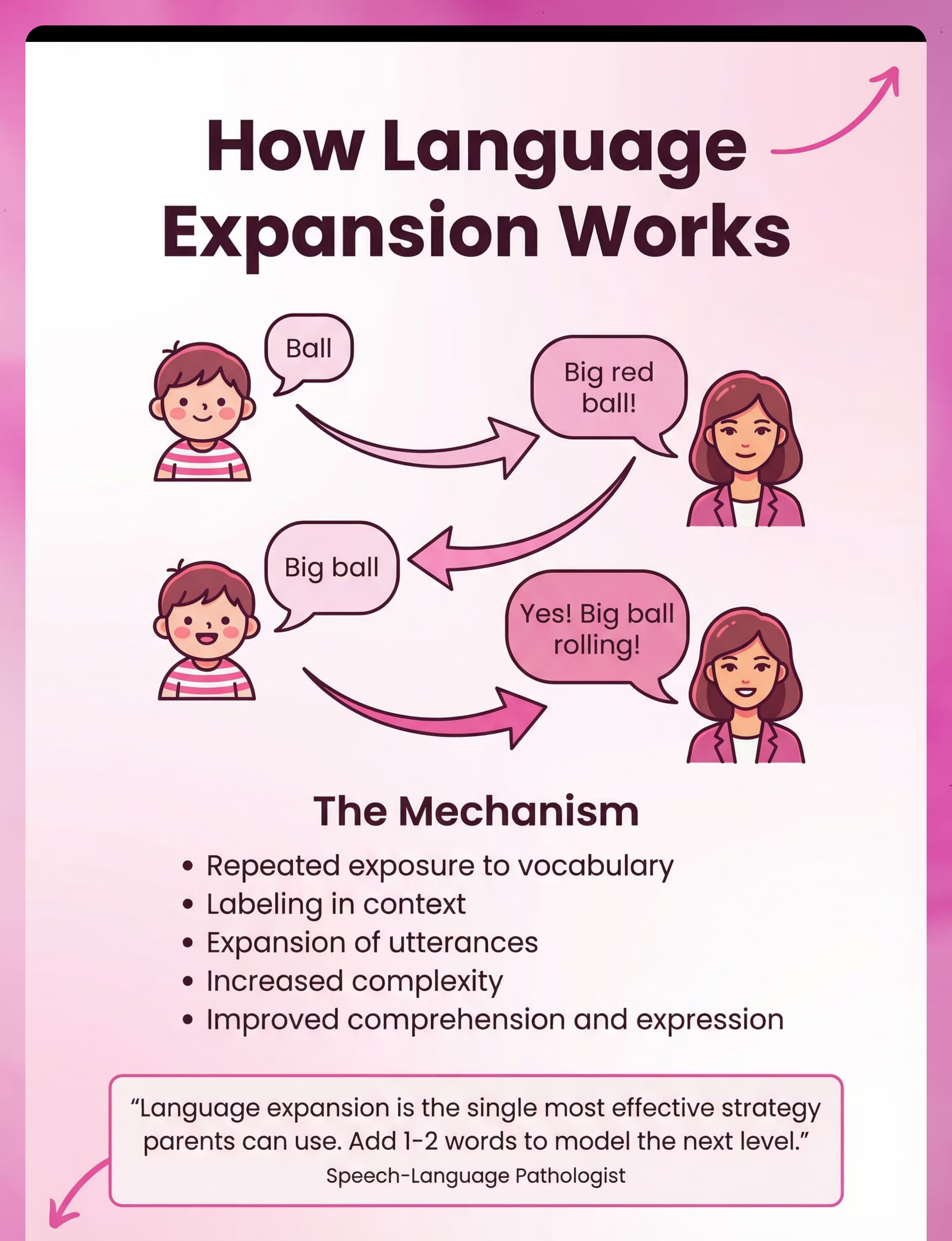
The Science Behind It
Repeated Exposure
Child hears vocabulary words multiple times in meaningful contexts
Labeling in Context
Words are connected to real objects, actions, and experiences
Utterance Expansion
Adult models adding one or two words to child's speech
Complexity Increases
Gradually longer sentences and more specific vocabulary emerge
Improved Communication
Enhanced comprehension and expression in daily life
This evidence-based approach works because it respects how language naturally develops - through modeling, not testing. You're not drilling your child; you're giving them the words they need, exactly when they need them.
Receptive Vocabulary
Expressive Vocabulary
Sentence Length
Language Complexity
Categorization

How to Use It Right
1
Teach vocabulary in natural contexts
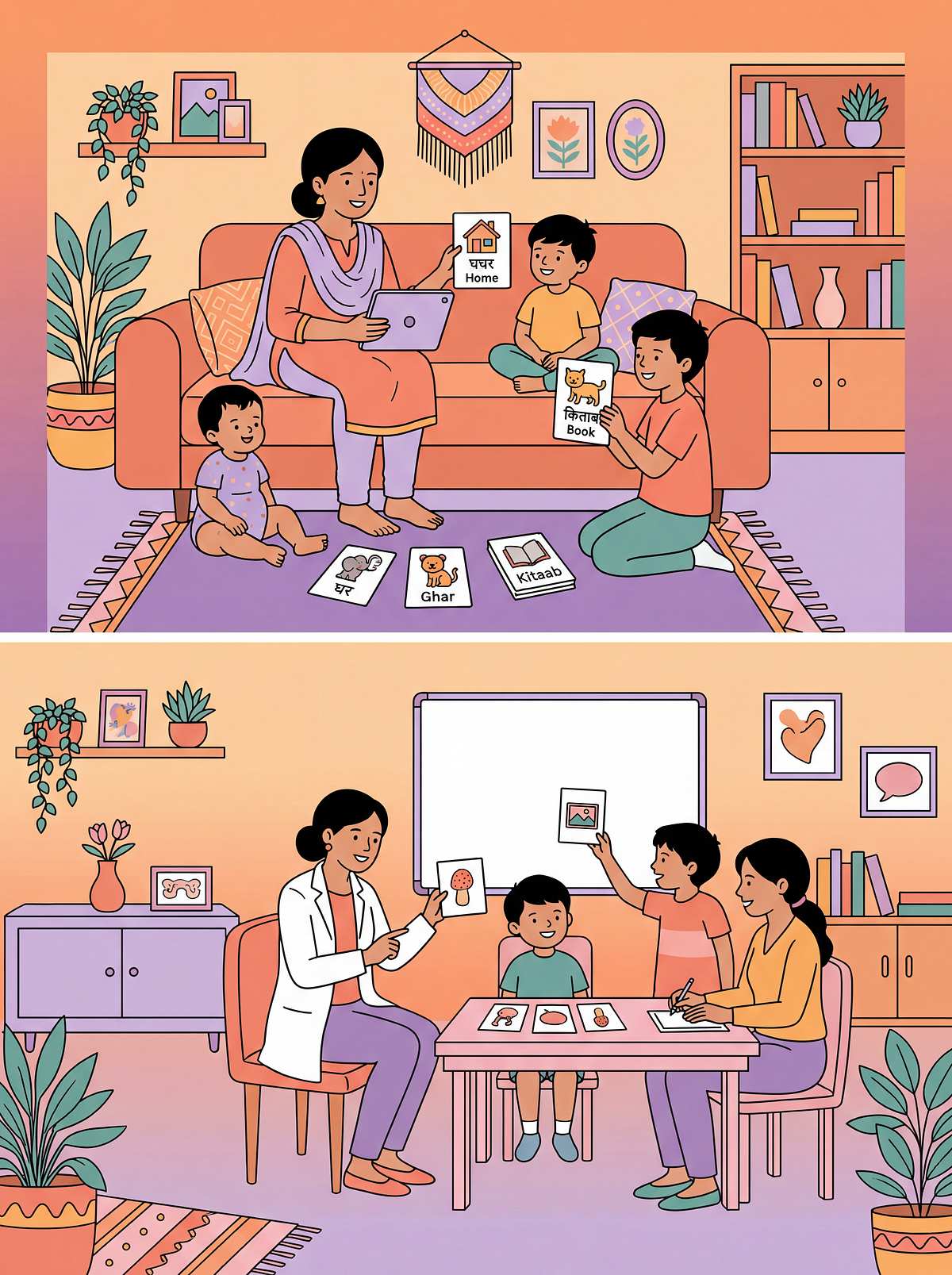
Use picture cards during meals to talk about food, during play to name toys, during outings to label things you see. Context makes words meaningful and memorable.
2
Include verbs and descriptors, not just nouns
Don't just teach "dog" - teach "big dog," "dog running," "brown dog." Rich vocabulary includes actions (verbs) and descriptions (adjectives).
3
Expand child's utterances
This is the golden technique: when child says "ball," you say "Big ball!" or "Ball rolling!" Add 1-2 words to model the next level without demanding it.
4
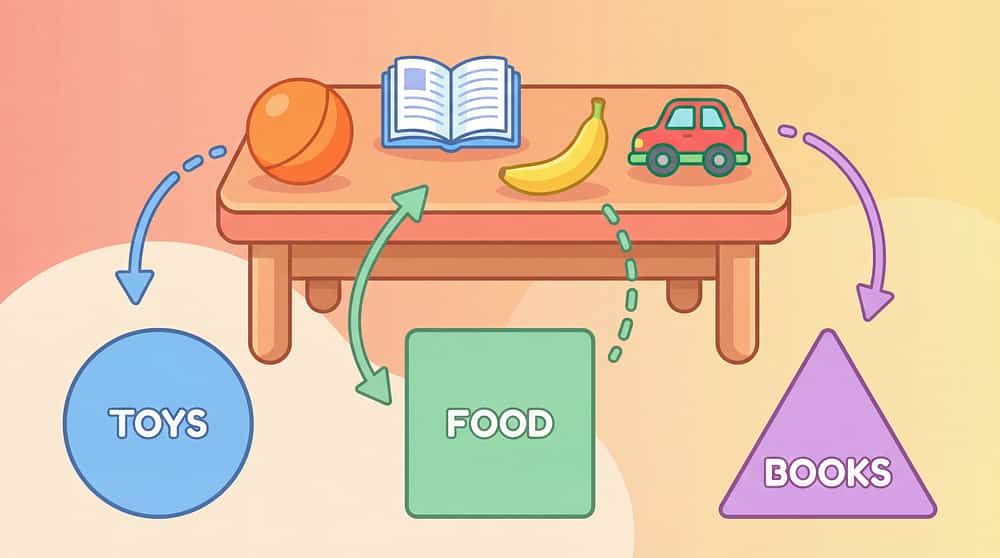
Use categories to organize learning
Group words by category (animals, foods, actions, emotions). This helps memory and makes vocabulary easier to retrieve and use.
5
Repeat exposures in varied contexts
Same word in different situations strengthens learning. "Big" for big ball, big truck, big dog, big bite of food.
6
Follow child's interests
If they love trains, teach ALL vocabulary through trains. Interest equals motivation equals learning. Don't force topics they don't care about.
Duration: Throughout the day during natural activities; structured vocabulary sessions can be 10-15 minutes.
Expert Voice
"Language expansion is the single most effective strategy parents can use. When child says 'dog,' you say 'Yes! Big brown dog running!' You add 1-2 words to model the next level without demanding it."— Speech-Language Pathologist
SLP + SpEd Recommended
Co-owned by speech-language pathologists and special educators for comprehensive language development.
Strong Evidence
Research-backed effectiveness for vocabulary building and language expansion in children with delays.
Rank #1 in Category
Top-ranked tool in Communication & Language category for systematic vocabulary development.
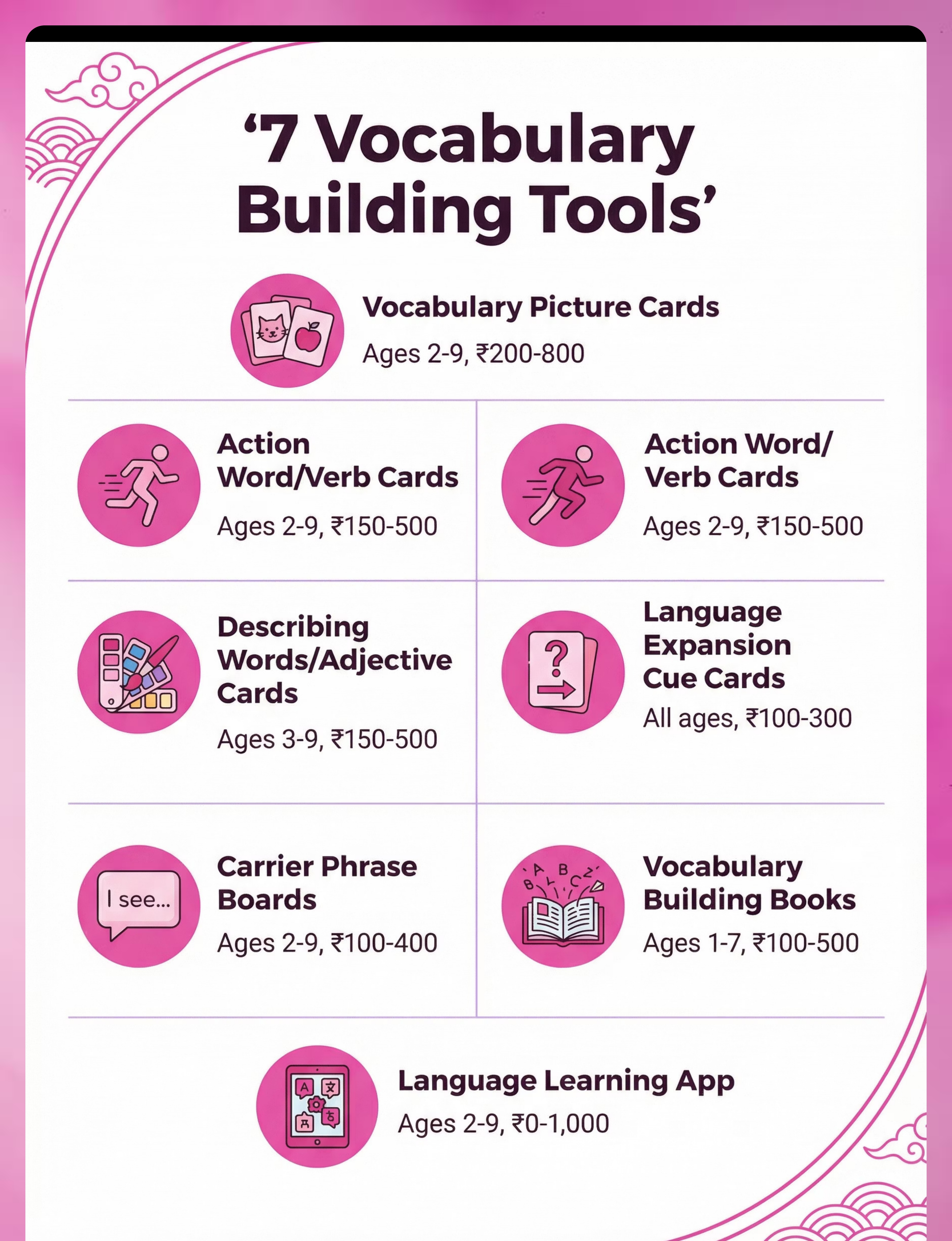
Choose Your Option (7 Variants)
Each variant serves different vocabulary goals, ages, and contexts. Most families start with category-based picture cards (5.5.1) and add verb cards (5.5.2), then expand from there based on child's needs.

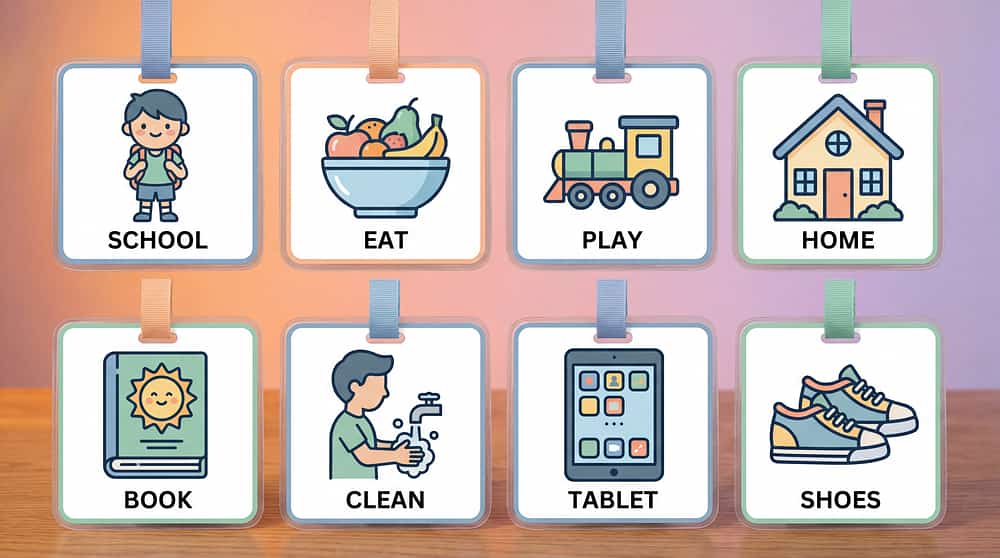
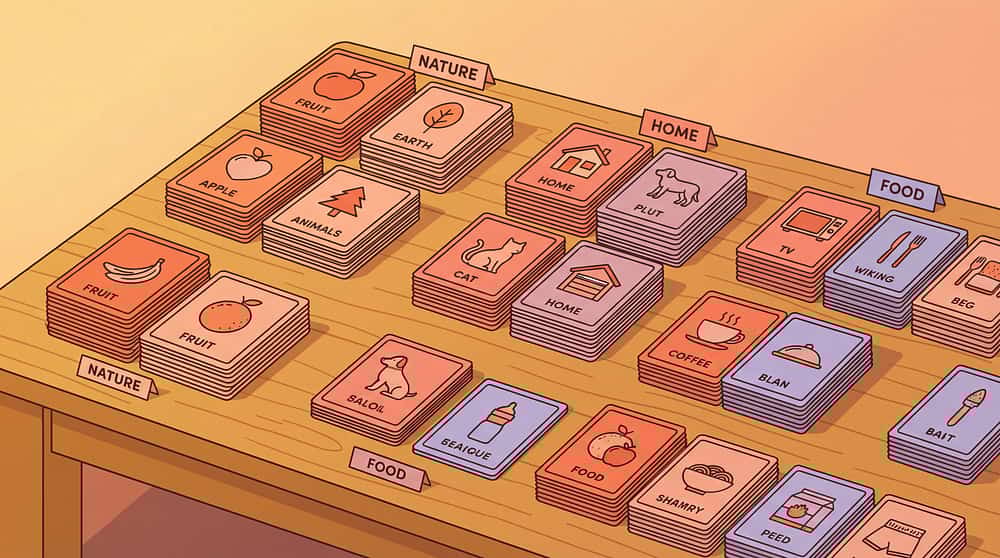
5.5.1: Vocabulary Picture Cards (Categories)
Best for: Building vocabulary by category
Ages: 2-9 years | Settings: Home, Clinic, School
High Portability
₹200-800

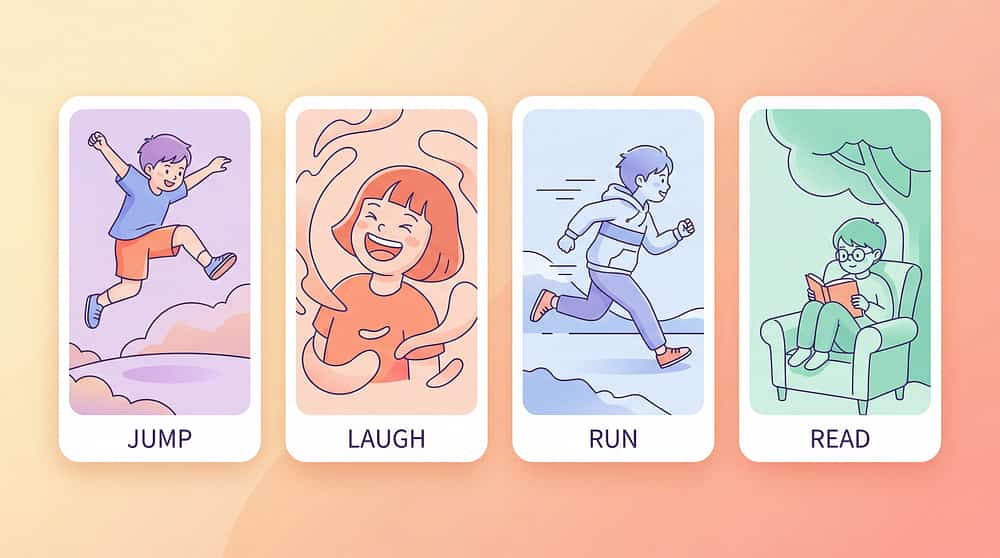
5.5.2: Action Word / Verb Cards
Best for: Building verb vocabulary, sentence construction
Ages: 2-9 years | Settings: Home, Clinic, School
High Portability
₹150-500

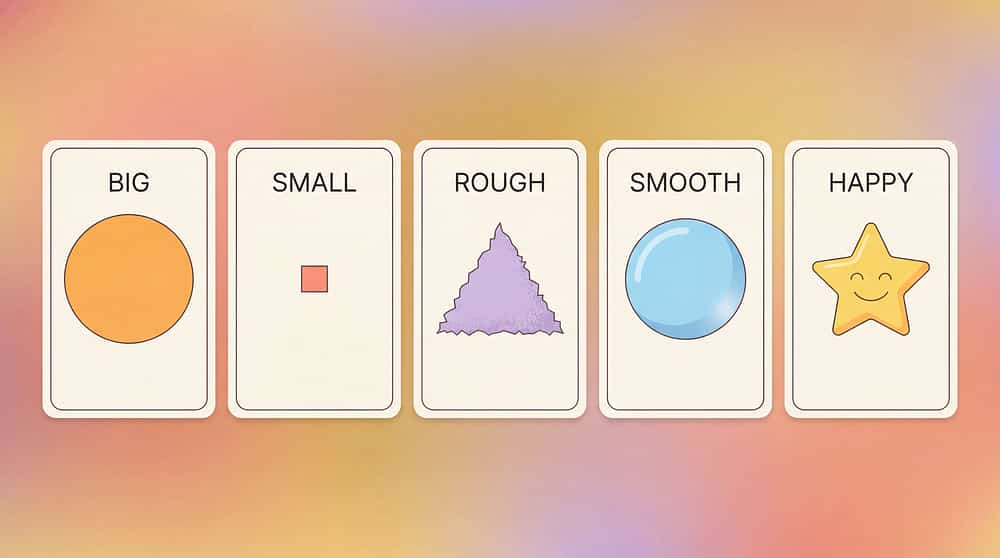
5.5.3: Describing Words / Adjective Cards
Best for: Teaching size, color, texture, emotion words
Ages: 3-9 years | Settings: Home, Clinic, School
High Portability
₹150-500

5.5.4: Language Expansion Cue Cards
Best for: Teaching adults to expand child's utterances
Ages: All (adult use) | Settings: Home, Clinic
High Portability
₹100-300

5.5.5: Carrier Phrase Boards
Best for: Building sentence structure with starters like 'I want...', 'I see...'
Ages: 2-9 years | Settings: Home, Clinic, School
Medium Portability
₹100-400

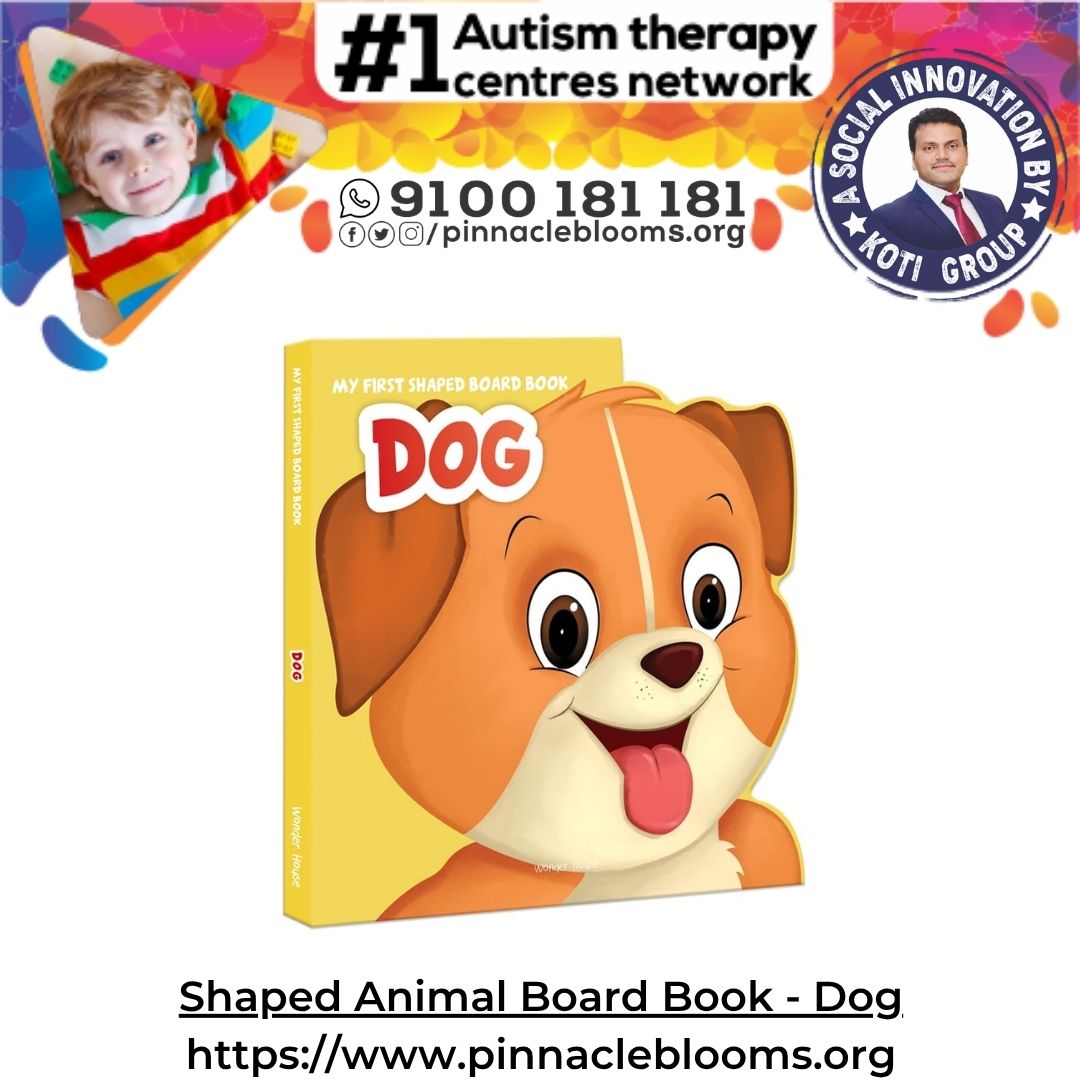
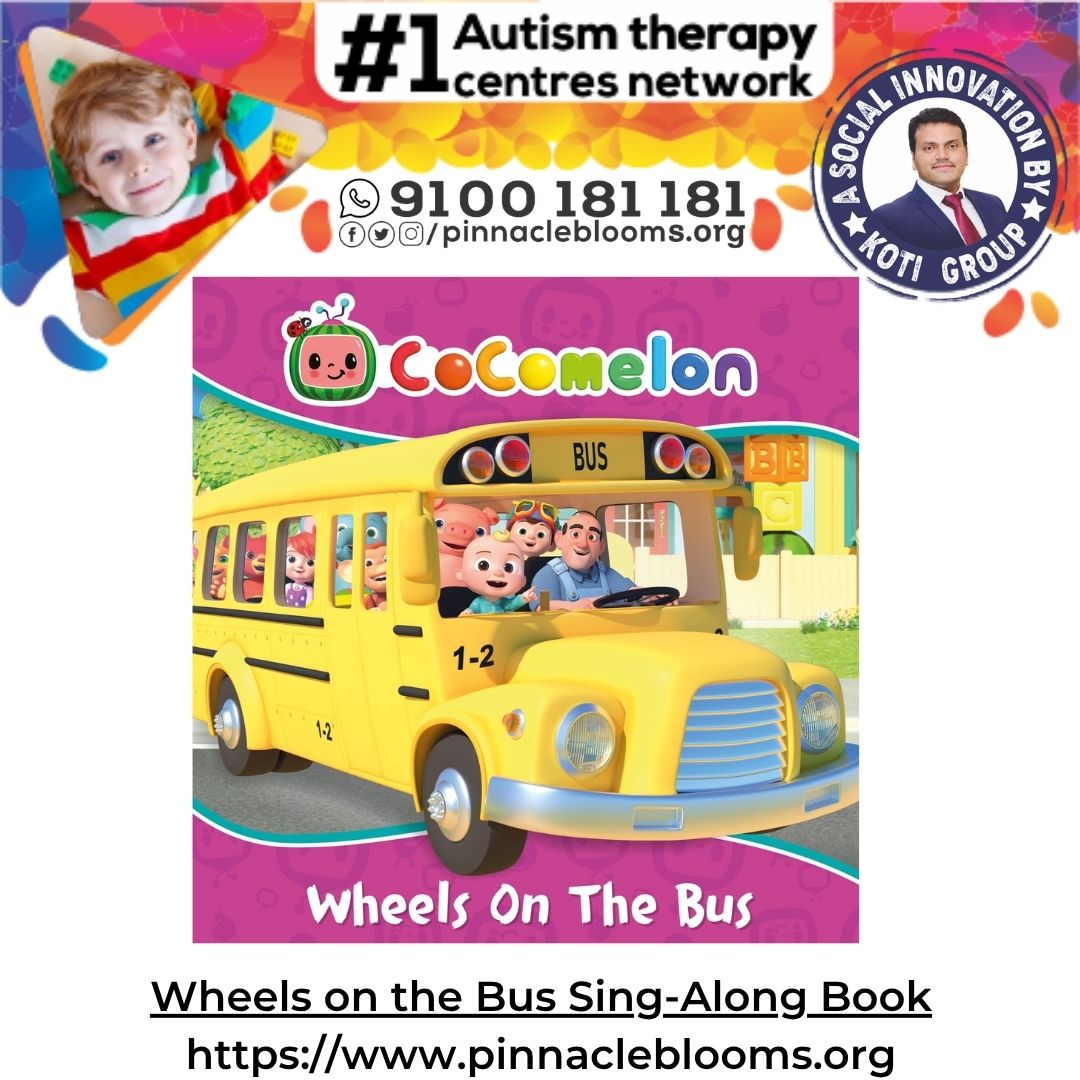
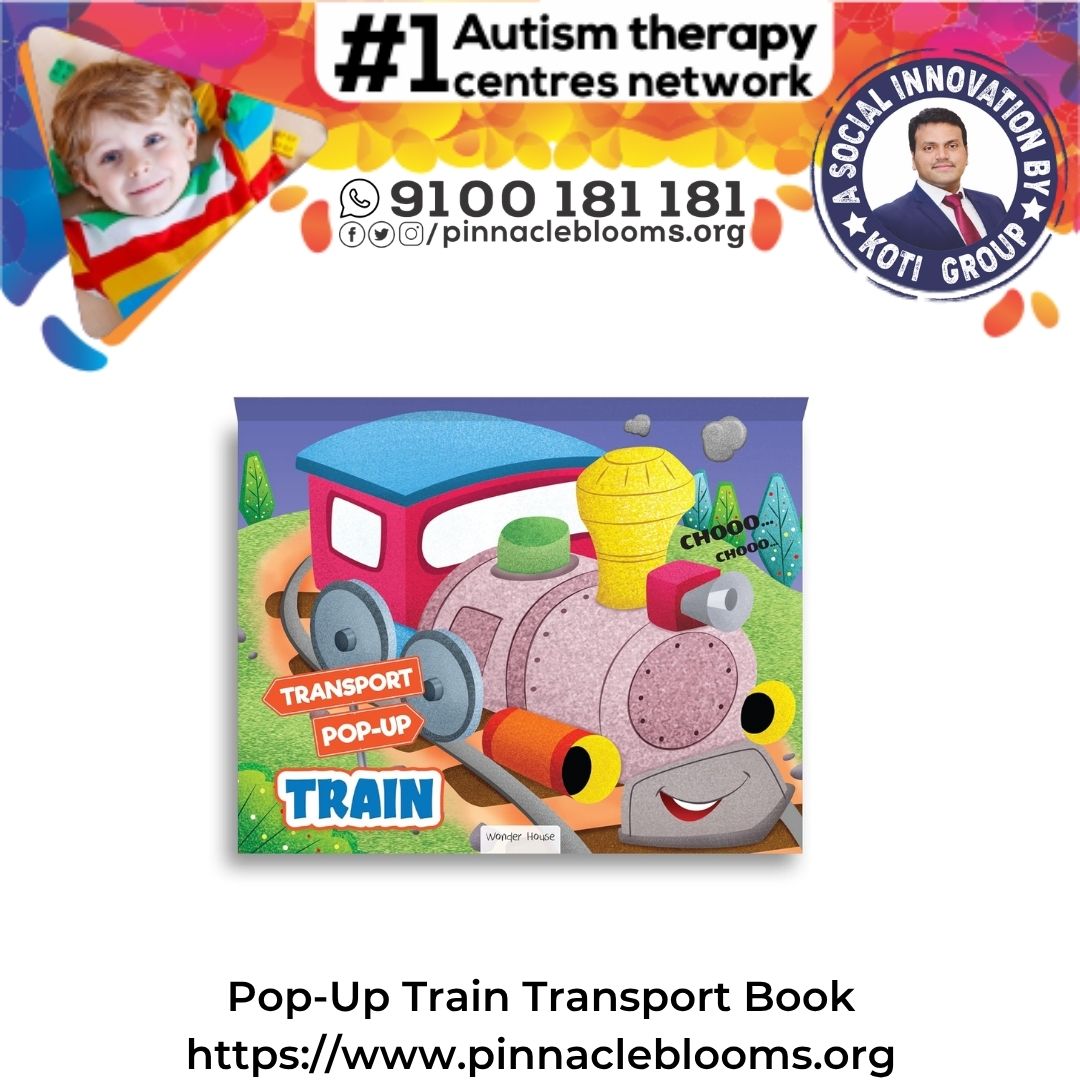
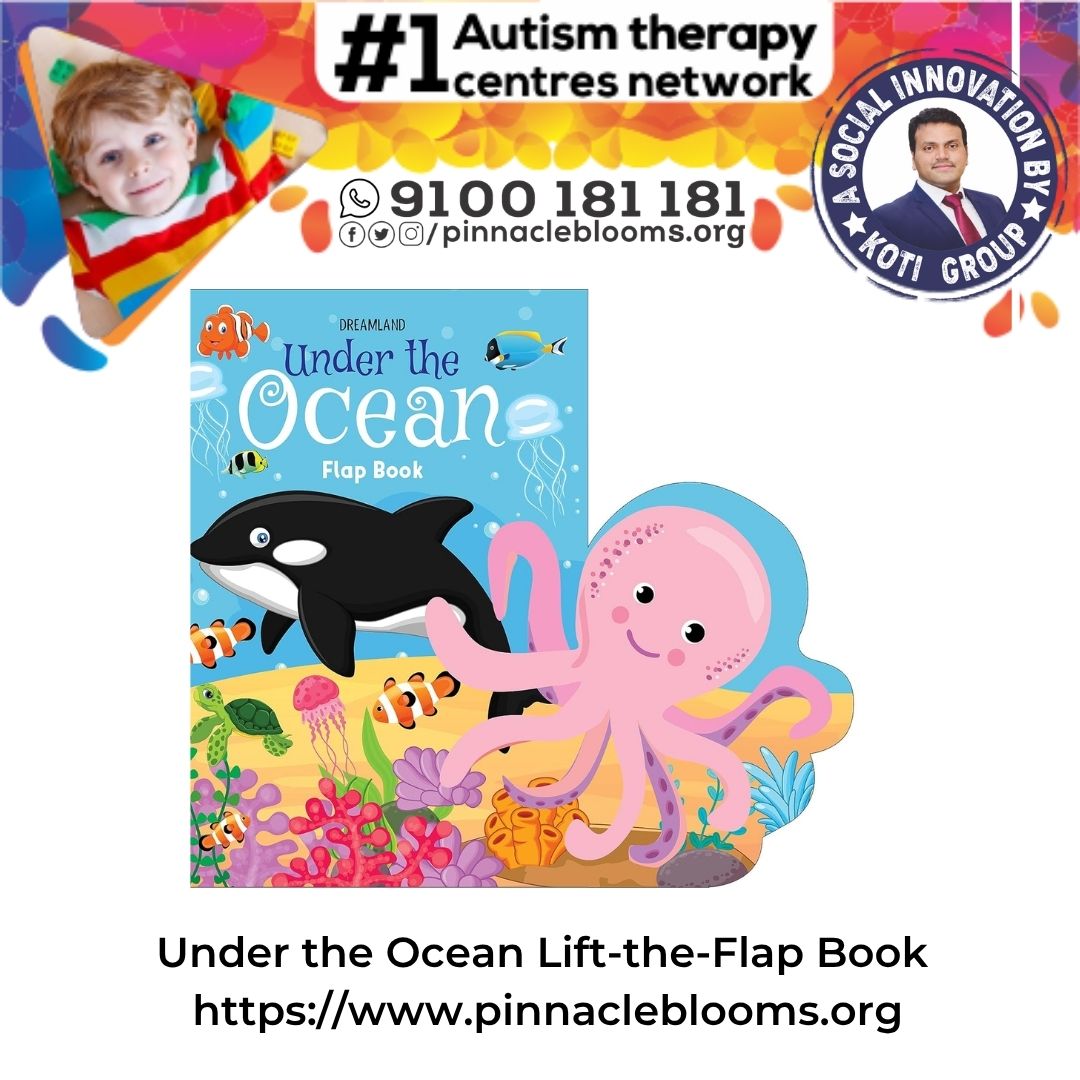
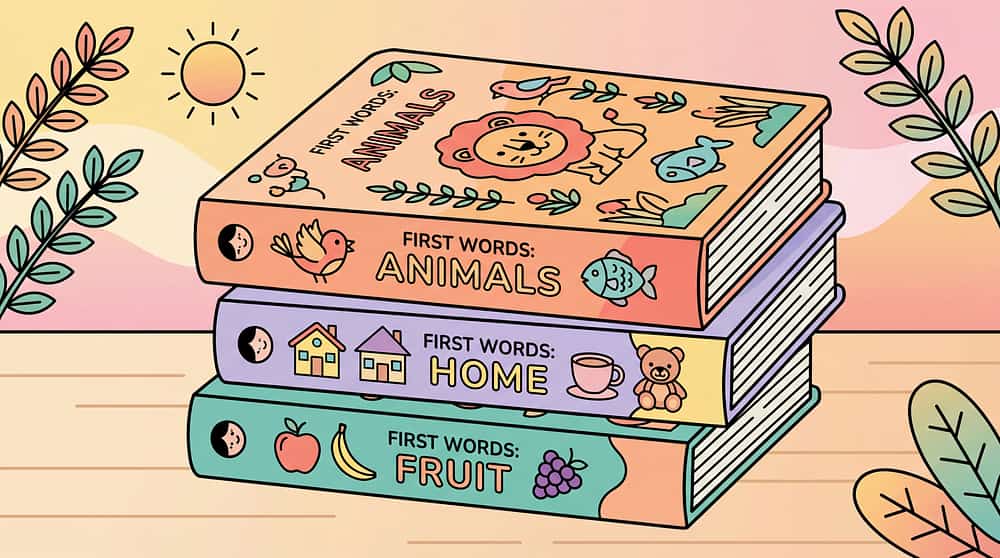
5.5.6: Vocabulary Building Books
Best for: Joint reading, word learning in context
Ages: 1-7 years | Settings: Home, Clinic
High Portability
₹100-500

5.5.7: Language Learning App
Best for: Engaging practice, reinforcement on-the-go
Ages: 2-9 years | Settings: Home, Travel
Very High Portability
₹0-1,000
How to Choose
- By goal: Building basic vocabulary? Start with category cards (5.5.1). Need action words? Add verb cards (5.5.2). Want parent guidance? Get cue cards (5.5.4).
- By setting: Home use? Books and cards work great. On-the-go? Apps offer portability. Clinic/school? Comprehensive card sets.
- By portability: Apps = highest portability. Cards = high portability. Boards = medium portability for home/clinic use.
Specifications & Vocabulary Types
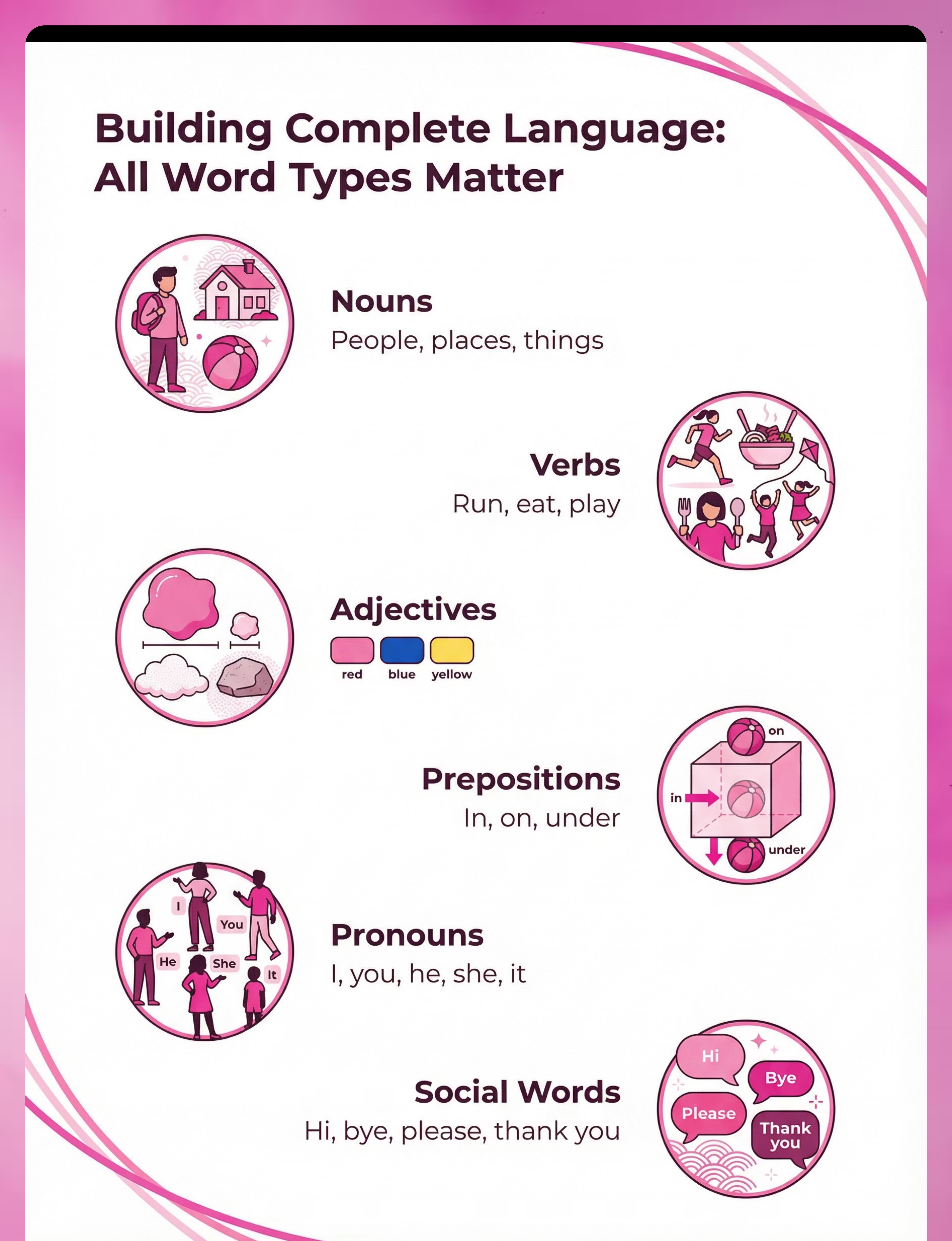
Vocabulary Types
Nouns
People, places, things - the building blocks of vocabulary
Verbs (Actions)
Run, eat, play, jump - essential for describing what's happening
Adjectives (Descriptions)
Big, red, soft, happy - add detail and specificity to communication
Prepositions
In, on, under, next to - location words that clarify meaning
Pronouns
I, you, he, she, it - replace nouns for natural conversation
Social Words
Hi, bye, please, thank you - essential for social interaction
Materials & Key Features
Materials Include:
- Picture cards (organized by category)
- Books (first words, category books)
- Apps (interactive vocabulary practice)
- Cue cards for adults (expansion prompts)
Key Features:
- Visual support: Pictures paired with words strengthen memory and understanding
- Category organization: Grouped vocabulary aids learning and retrieval
- Multiple word types: Nouns, verbs, adjectives for complete language
- Expansion modeling: Tools for adults to model language growth
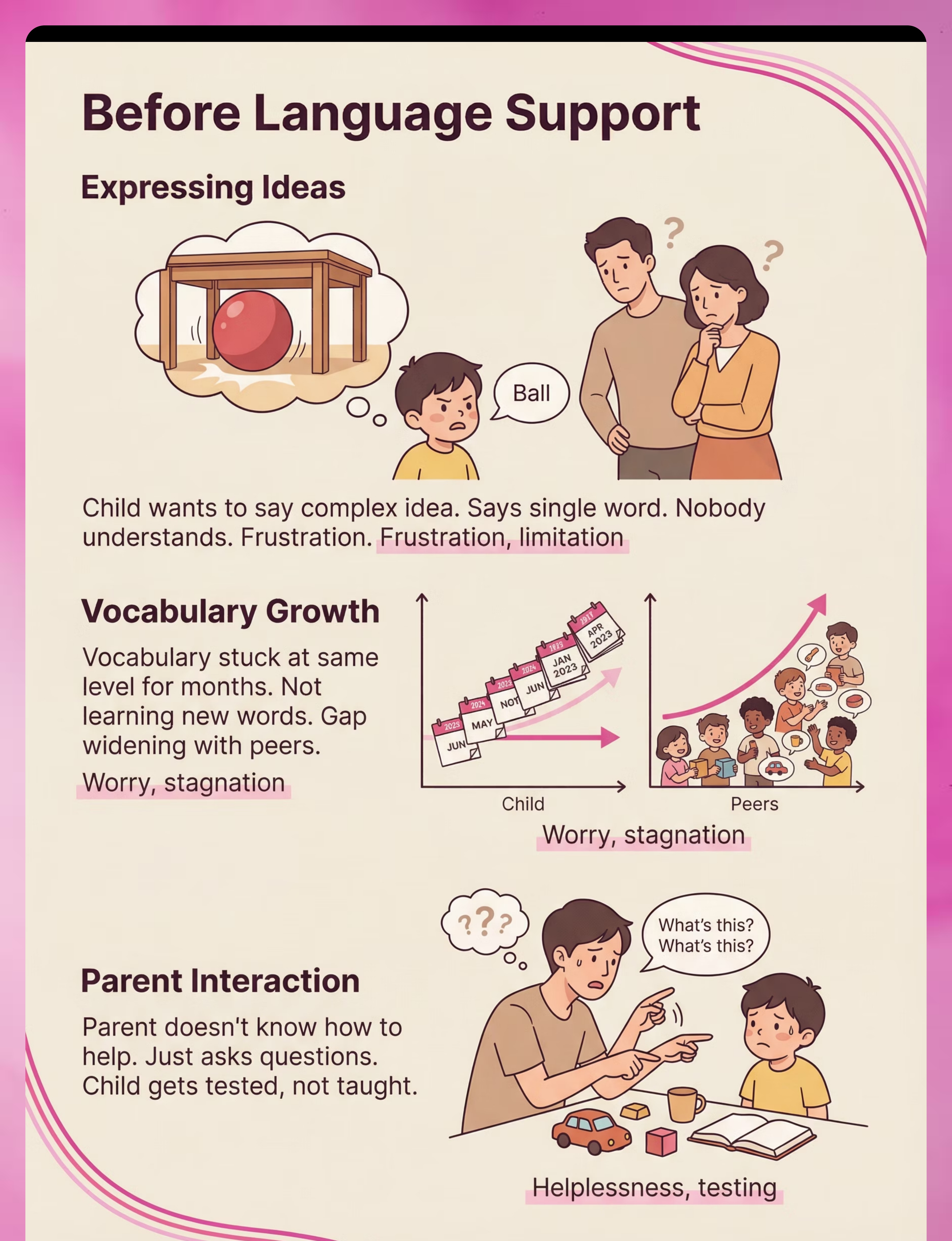
The Struggle (Before)
Expressing Ideas
Situation: Child wants to say "The big red ball is under the table."
Experience: Says "Ball." Nobody understands the full message. Child gets frustrated, might have meltdown. Communication breakdown.
Emotion: Frustration, limitation, feeling unheard
Vocabulary Growth
Situation: Vocabulary assessment shows child stuck at same level for months.
Experience: Not learning new words despite exposure. Gap widening with peers. Parents feel helpless watching stagnation.
Emotion: Worry, stagnation, falling behind
Parent Interaction
Situation: Parent trying to help but doesn't know how.
Experience: Just asks questions ("What's that?"). Child gets tested, not taught. Parent feels they're not helping, maybe making it worse.
Emotion: Helplessness, testing pressure, disconnection
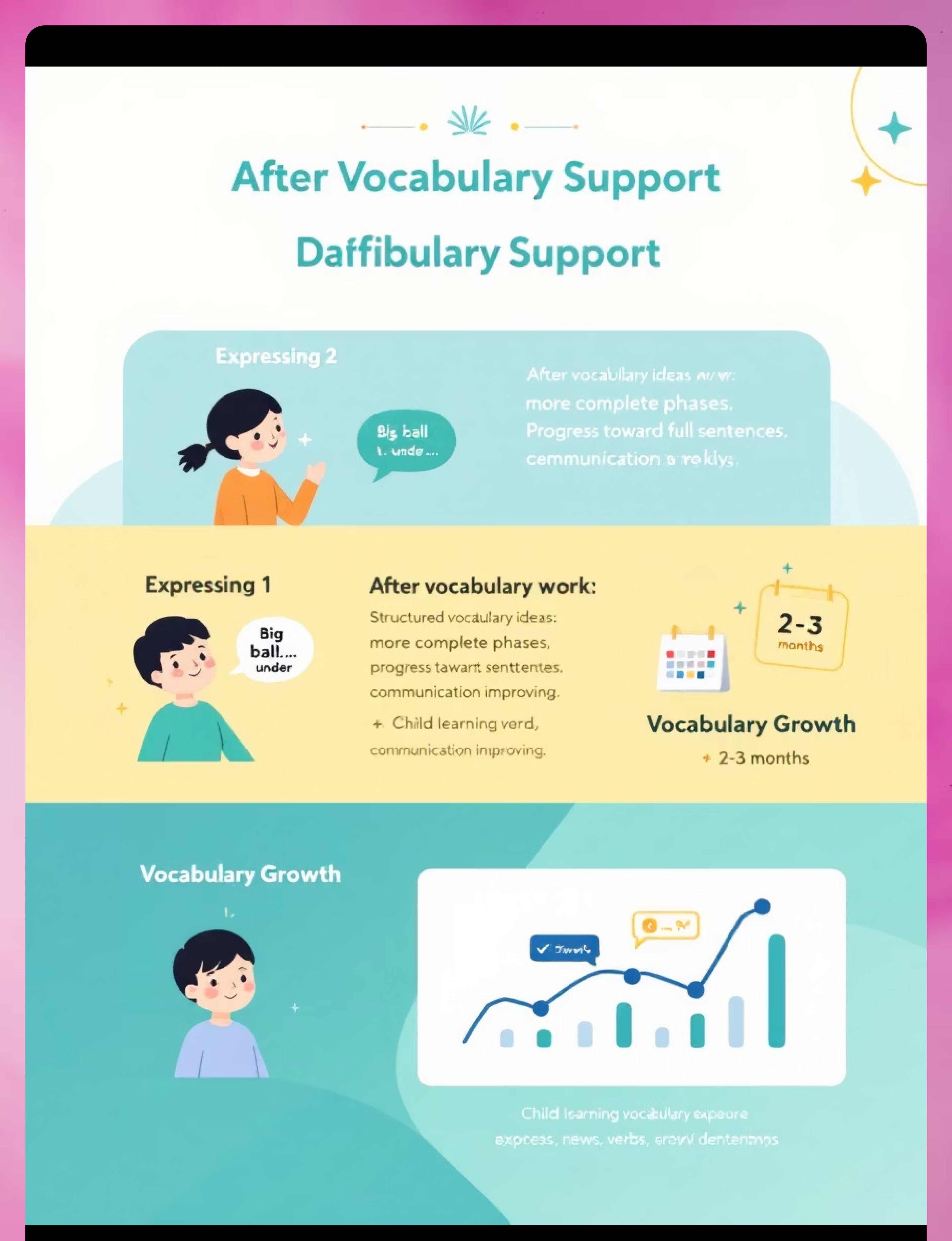
The Breakthrough (After)
Expressing Ideas
Situation: After structured vocabulary work with cards and expansion techniques.
Experience: Child now says "Big ball... under." Parent understands! Not perfect yet, but clear progress toward full sentences. Communication improving daily.
Emotion: Progress, understanding, hope
2-3 months
Vocabulary Growth
Situation: Using category-organized vocabulary cards and books systematically.
Experience: New words appearing weekly. Child learning nouns, verbs, descriptors. Language expanding in multiple dimensions. Gap with peers narrowing.
Emotion: Growth, achievement, confidence
Ongoing
Parent Interaction
Situation: Parent learned expansion technique from cue cards and SLP guidance.
Experience: Child says "car," parent says "Fast blue car!" Child hears model without pressure to repeat. Language grows naturally through conversation.
Emotion: Empowerment, connection, partnership
Immediate
What to Expect (Realistic Timelines)
Vocabulary expands systematically
With consistent exposure and expansion techniques, you'll see steady addition of new words across categories.
Ongoing
Verbs and descriptors added to repertoire
Beyond just naming objects, child begins using action words and descriptions to communicate more specifically.
4-8 weeks
Sentence length increases
From one word to two-word combinations, then three words, gradually building toward complete sentences.
2-3 months
Parent uses expansion techniques
Once you learn the technique, it becomes natural and automatic - you'll be expanding utterances throughout the day.
1-2 weeks
Communication becomes more specific
With richer vocabulary, misunderstandings decrease and child can express exactly what they mean.
2-3 months
Gap with peers narrows
Systematic vocabulary building helps close the language delay gap, improving social and academic readiness.
Ongoing
Is This Right for My Child? (2-Minute Check)
1
Does your child have limited vocabulary?
If yes, this indicates: Vocabulary building tools needed
Your child would benefit from systematic vocabulary expansion using picture cards, books, and modeling techniques.
2
Does your child use mostly single words or short phrases?
If yes, this indicates: Language expansion support needed
Expansion techniques and sentence-building tools like carrier phrase boards can help move beyond single words.
3
Is vocabulary growth slower than expected?
If yes, this indicates: Structured vocabulary intervention indicated
Organized category-based learning and consistent expansion will accelerate vocabulary development.
4
Would you like strategies to expand your child's language?
If yes, this indicates: Parent training resources helpful
Language expansion cue cards and SLP guidance on expansion techniques will empower you to support language growth daily.
Interpretation: 3+ "yes" answers = strong fit. Even 1-2 "yes" answers suggest these tools could support your child's language development.
Usage Guide
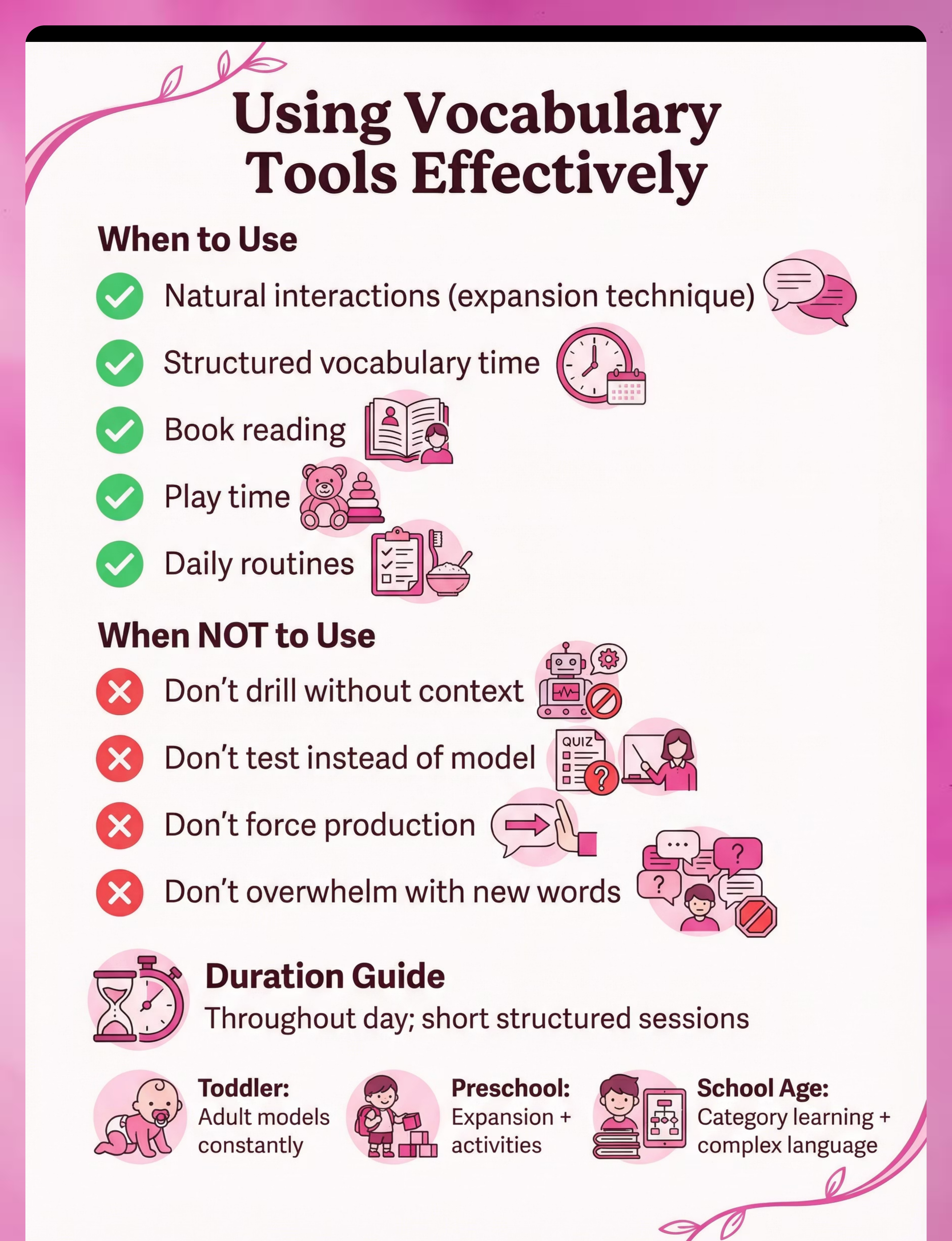
When to Use ✓
- All natural interactions (use expansion technique constantly)
- Structured vocabulary time (10-15 minutes with cards)
- Book reading (labeling and expanding during stories)
- Play time (vocabulary embedded in activities child enjoys)
- Daily routines (meals, bath, dressing - rich vocabulary opportunities)
When NOT to Use ✗
- Don't drill without context (cards aren't flashcard tests)
- Don't test ("What's this?") instead of model
- Don't force production (never demand child repeat)
- Don't overwhelm with too many new words at once
Supervision by Age
Age Range | Supervision Level | Notes | |
Toddler (1-3 years) | Adult models and expands constantly | Parent/caregiver provides all vocabulary input through natural interaction and expansion | |
Preschool (3-5 years) | Expansion + structured vocabulary activities | Continue expansion throughout day, add 10-15 minute structured card activities | |
School Age (6+ years) | Category learning + complex language | More independent card use, focus on descriptive language and complex sentence structures |
Home
Clinic
School
Throughout day; short structured sessions
Safety First
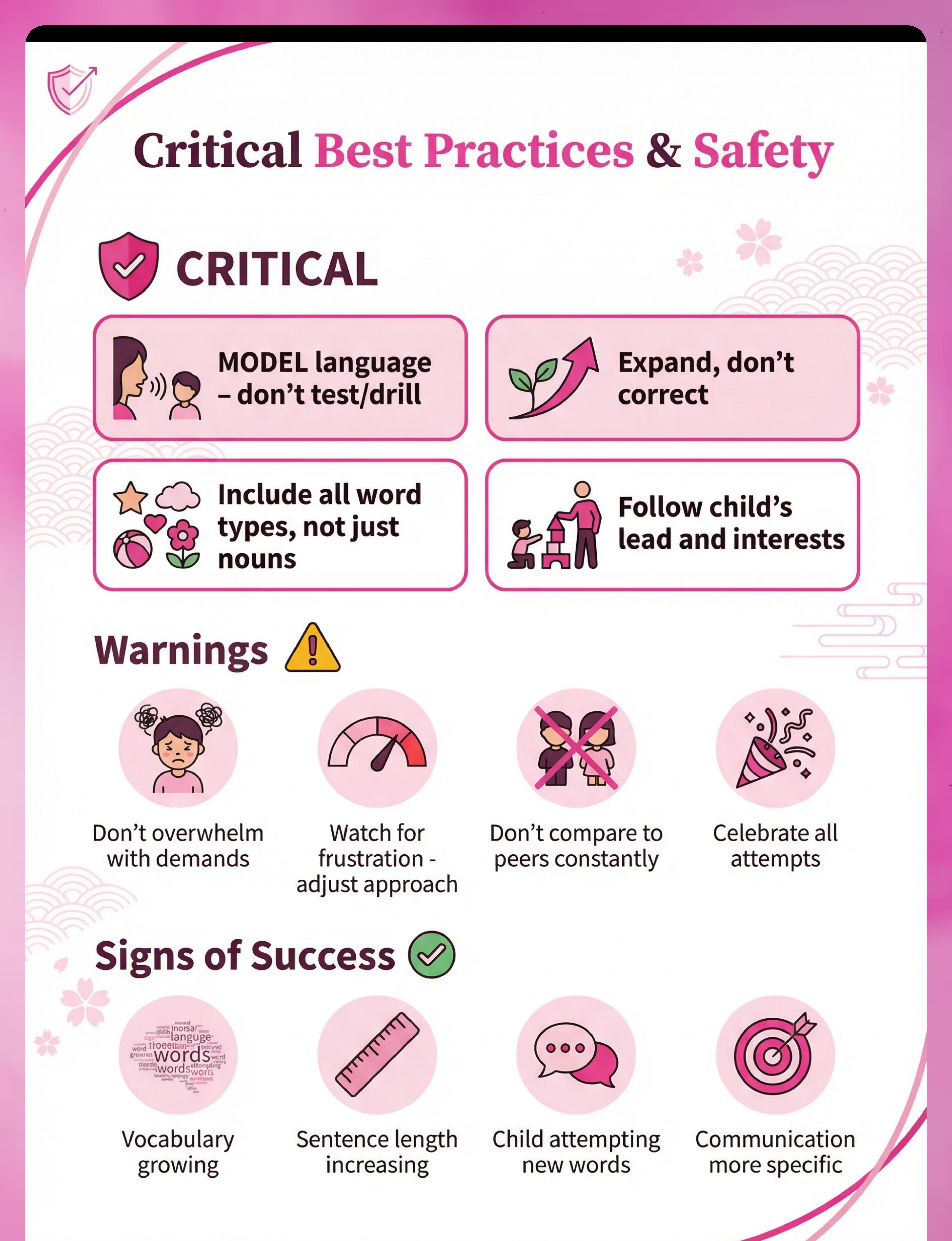
Critical Safety
- MODEL language - don't test/drill: Show child the words by using them, don't quiz or demand repetition
- Expand, don't correct: When child says "dog," say "Yes, big dog!" Never say "No, say 'big dog'"
- Include all word types, not just nouns: Teach verbs, adjectives, and social words too
- Follow child's lead and interests: Vocabulary sticks when it's about things child cares about
Warnings
- Don't overwhelm with demands - keep it playful and natural
- Watch for frustration - adjust approach if child is shutting down
- Don't compare to peers constantly - focus on individual progress
- Celebrate all attempts - effort matters more than perfection
Contraindicated (DON'T Do This)
- Testing/drilling without context
- Teaching only nouns, ignoring verbs and descriptors
- Demanding production or correct repetition
- Ignoring child's interests and forcing boring topics
Safety Checklist
Before Use
- Understand expansion technique
- Have vocabulary resources available
- Know child's current level
- Identify child's interests
During Use
- Modeling and expanding constantly
- Using natural contexts
- Including varied word types
- Following child's interests
Signs of Success
- Vocabulary growing weekly
- Sentence length increasing
- Child attempting new words
- Communication more specific
Common Questions (Honest Answers)
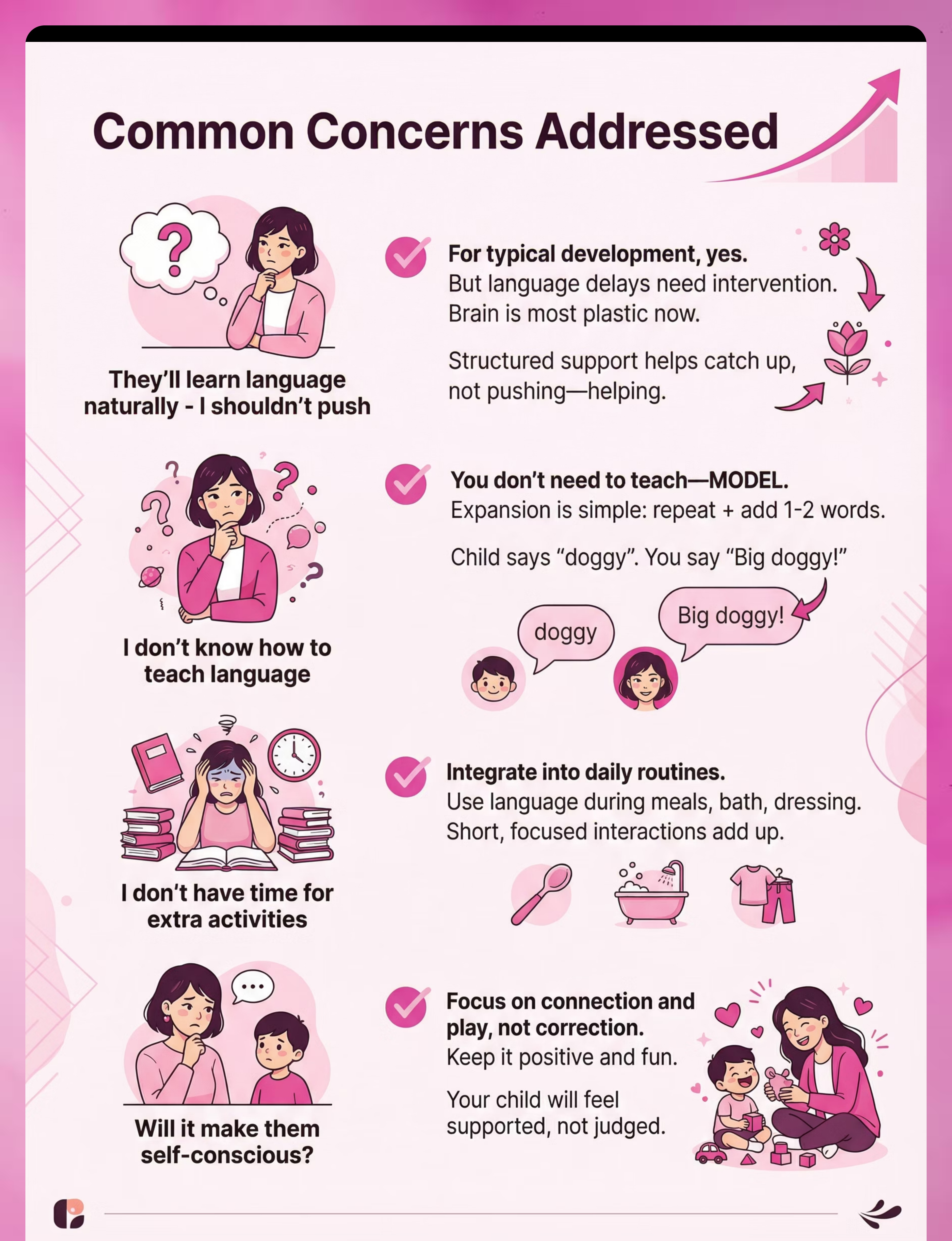
Q: "They'll learn language naturally - I shouldn't push"
A: For typically developing children, yes, language emerges naturally. But language delays need intervention. "Waiting and seeing" often widens the gap. Structured support helps catch up, and the brain is most plastic now - this is the optimal window.
Try this: Think of it as helping, not pushing. You're giving your child the tools they need.
Q: "I don't know how to teach language"
A: You don't need to "teach" - you need to MODEL. Language expansion is simple: whatever child says, you repeat and add 1-2 words. "Dog" → "Big dog!" You're already talking to your child - just expand what they say.
Try this: Learn the expansion technique - it's easy and becomes natural quickly.
Q: "Flash cards seem boring and drilly"
A: Don't drill! Use vocabulary in natural contexts. Card shows "apple" - talk about it while eating apple. Cards are reference, not drill material. Embed vocabulary in play and daily life where it's meaningful.
Try this: Use cards as reference; teach vocabulary in natural, playful contexts.
Q: "They only like certain topics"
A: Perfect! Use their interests. If they love trains, teach ALL vocabulary through trains: big train, fast train, train goes, train on track, red train. Interest equals motivation equals learning. Don't fight their preferences.
Try this: Build comprehensive vocabulary within topics your child already loves.
Investment Guide
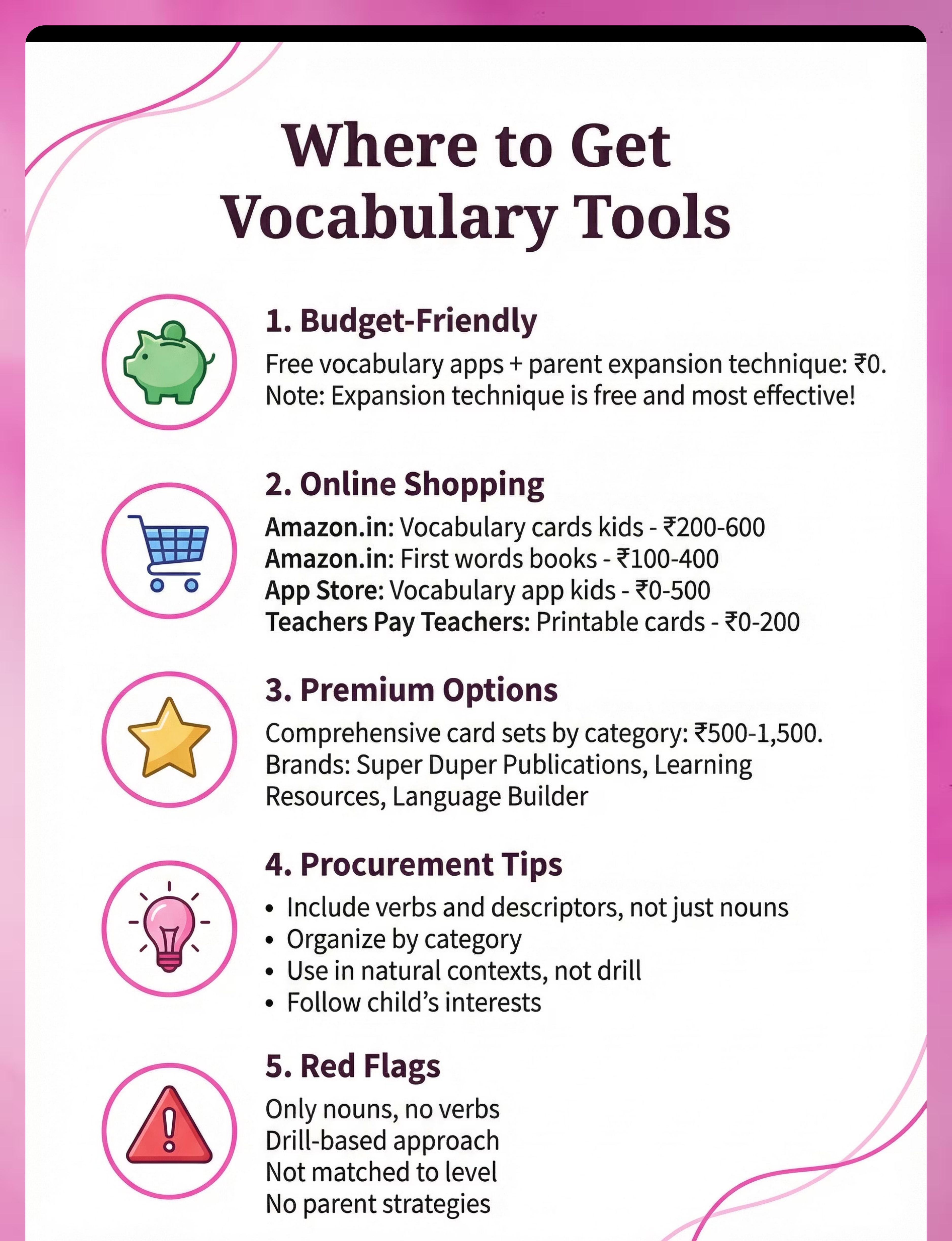
Language expansion tools span from completely free (the expansion technique costs nothing!) to comprehensive card sets. The most effective strategy is often a combination: learn the free expansion technique and supplement with targeted materials.
Budget Option
Free vocabulary apps + parent expansion technique
Cost: ₹0
What you get:
- Expansion technique (most powerful tool)
- Free language learning apps
- DIY photo vocabulary from your phone
- Category organization using everyday items
Note: The expansion technique is free and the most effective intervention. Everything else supplements it.
Premium Option
Comprehensive vocabulary card sets by category
Cost: ₹500-1,500
What you get:
- Professionally designed card sets
- Multiple categories (nouns, verbs, adjectives)
- High-quality images
- Durable materials for daily use
- Organized storage systems
Brands to consider: Super Duper Publications, Learning Resources, Language Builder
Overall Investment Range: ₹0 to ₹1,000 (USD $0-12)
Best starting point: Learn expansion technique (free), then add one category card set (₹200-400) based on child's interests. Expand from there as needed.
Where to Buy in India
Availability: Widely Available across online and offline channels in India
Amazon.in
Search: "vocabulary cards kids"
Price Range: ₹200-600
Wide selection of card sets, books, and learning materials with customer reviews
Amazon.in
Search: "first words book toddler"
Price Range: ₹100-400
Board books and picture books for early vocabulary building
App Store / Play Store
Search: "vocabulary app kids"
Price Range: ₹0-500
Interactive apps for practice and reinforcement, many free options available
Teachers Pay Teachers
Search: "vocabulary cards printable"
Price Range: ₹0-200
Digital downloads you can print at home, very budget-friendly
Buying Tips
- Include verbs and descriptors, not just nouns - richer vocabulary requires multiple word types
- Organize by category for easier learning and memory
- Use in natural contexts, not drill mode - cards are references, not tests
- Parent expansion technique is free and most powerful tool
- Follow child's interests - vocabulary about trains if they love trains!
Red Flags (Avoid These)
- Materials with only nouns, no verbs/descriptors
- Drill-based systems with no natural context
- Materials not matched to child's developmental level
- Programs with no strategy guidance for parents
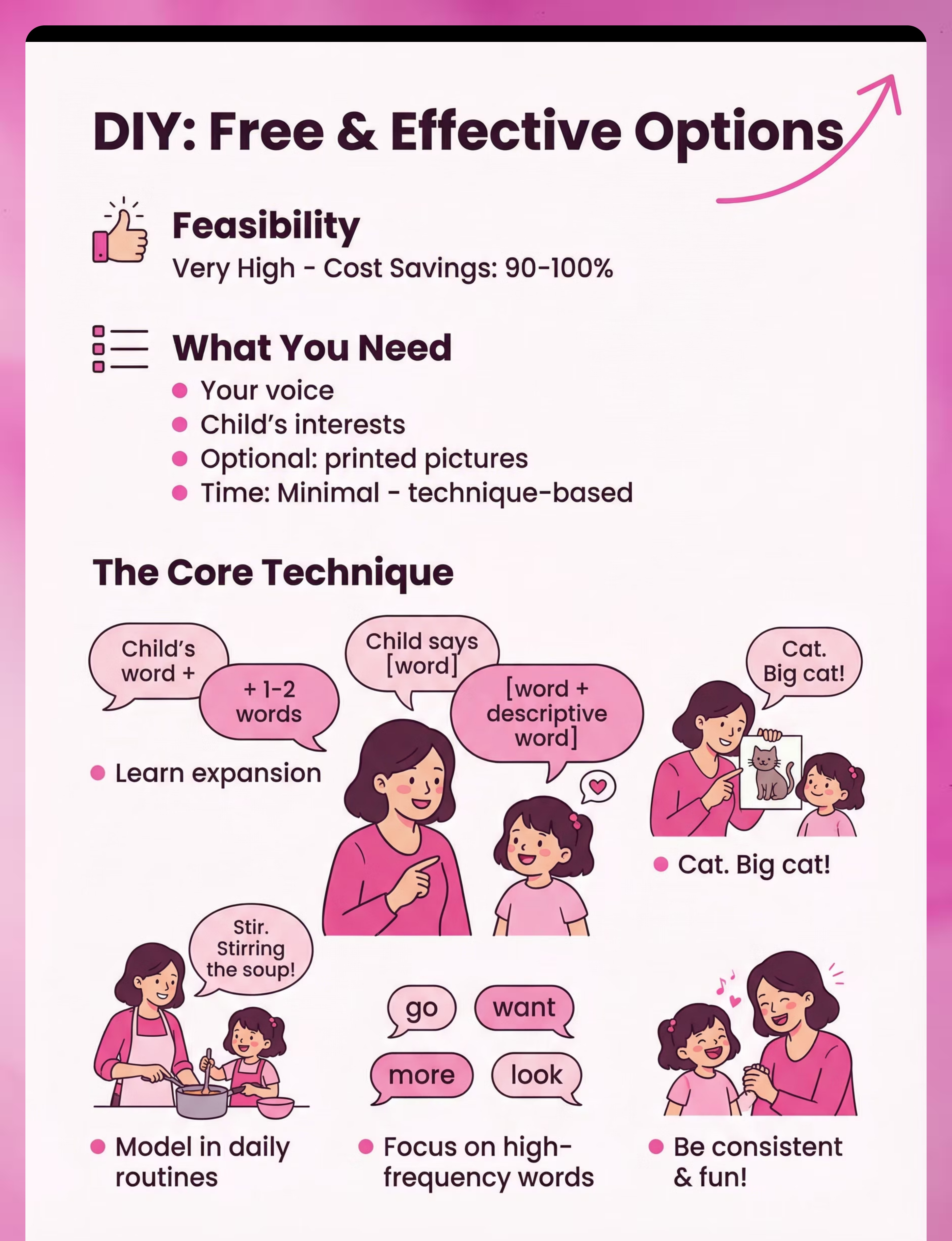
DIY Alternative (Save 90-100%)
Feasibility: Very High - language expansion is primarily technique-based, not product-based
Cost Savings: 90-100% | Time Investment: Minimal - it's a technique you use throughout the day
Materials Needed
- Your voice (free!)
- Child's interests (identify what they love)
- Optional: printed pictures from phone
- Optional: cardstock or lamination
DIY Steps
- Learn expansion technique: Repeat child's word + add 1-2 words. This is the foundation.
- Practice daily: Child says "ball" → you say "Red ball!" or "Ball rolling!" Model without demanding.
- Don't ask questions: Instead of "What's this?" just MODEL the language: "Look! Big truck!"
- Create photo vocabulary: Take pictures of things in your child's environment with your phone.
- Organize by categories: Foods, toys, family, actions - categories child encounters daily.
- Use daily routines: Mealtime, bath, play, dressing - every moment is vocabulary opportunity.
DIY vs Commercial Comparison
When to DIY | When to Buy Commercial | |
|
|
Tradeoffs: DIY requires learning the technique and being consistent, but it's free and often more personalized. Commercial products provide structure and variety but cost money. Best approach: DIY expansion technique (free, primary intervention) + selective commercial materials for supplementation.
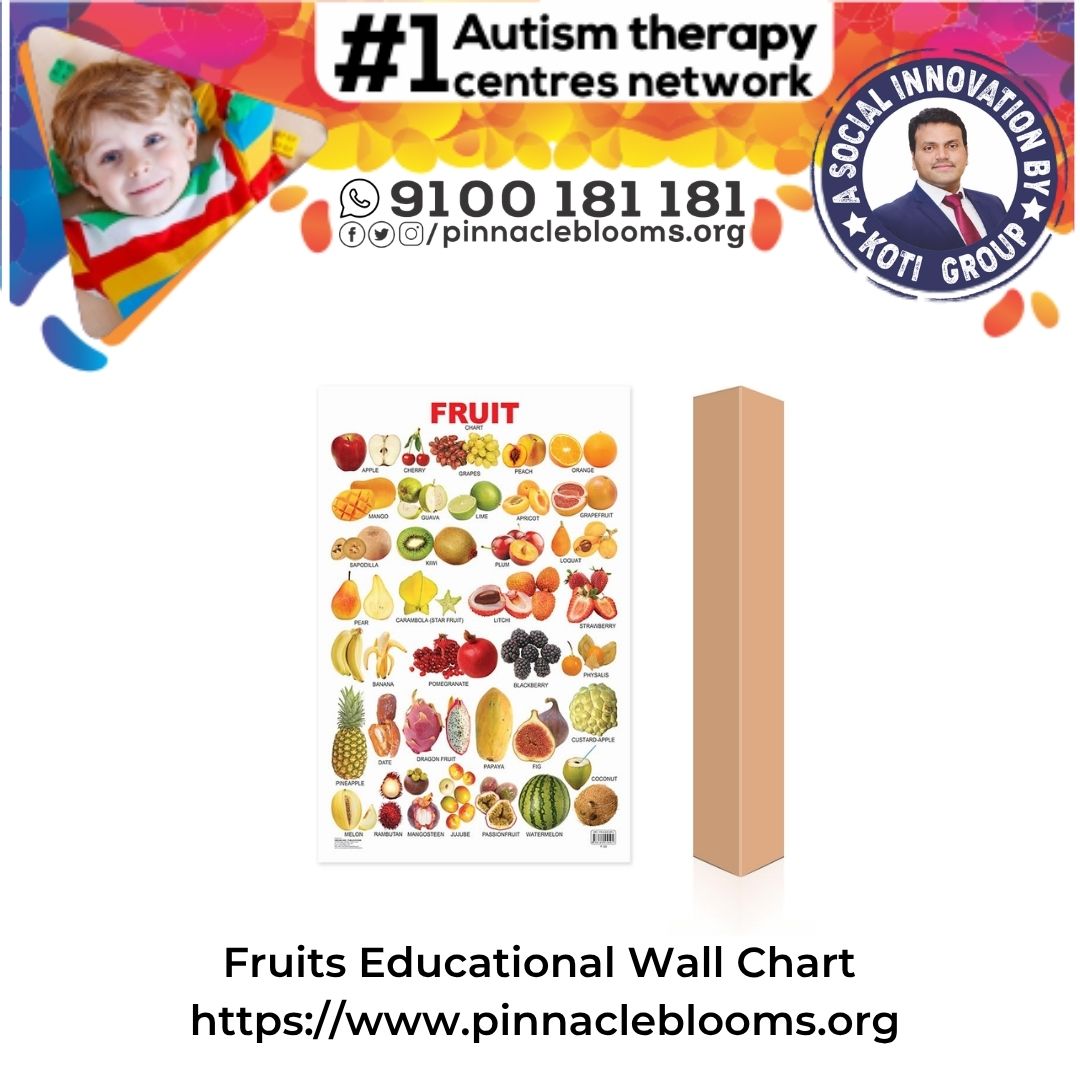
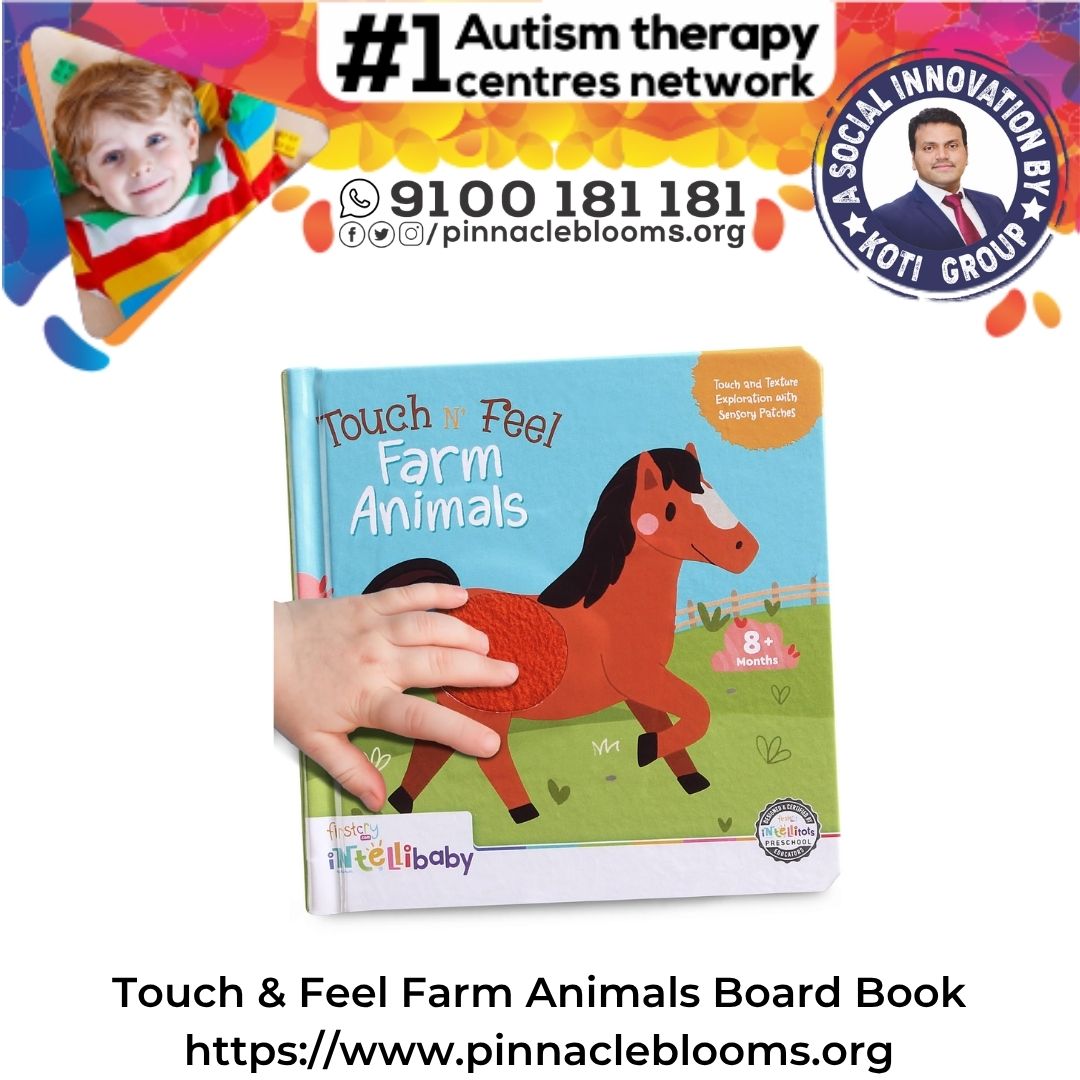
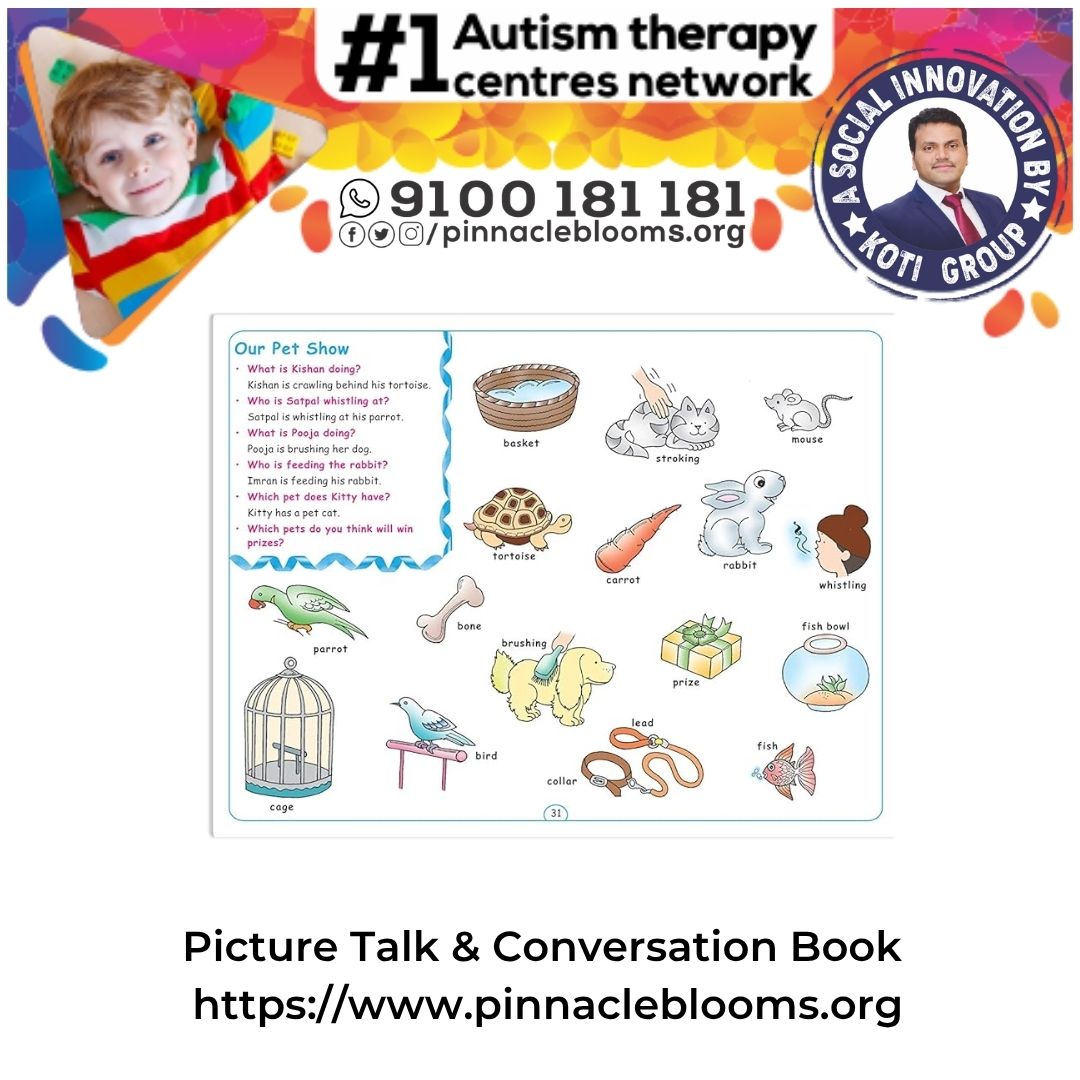
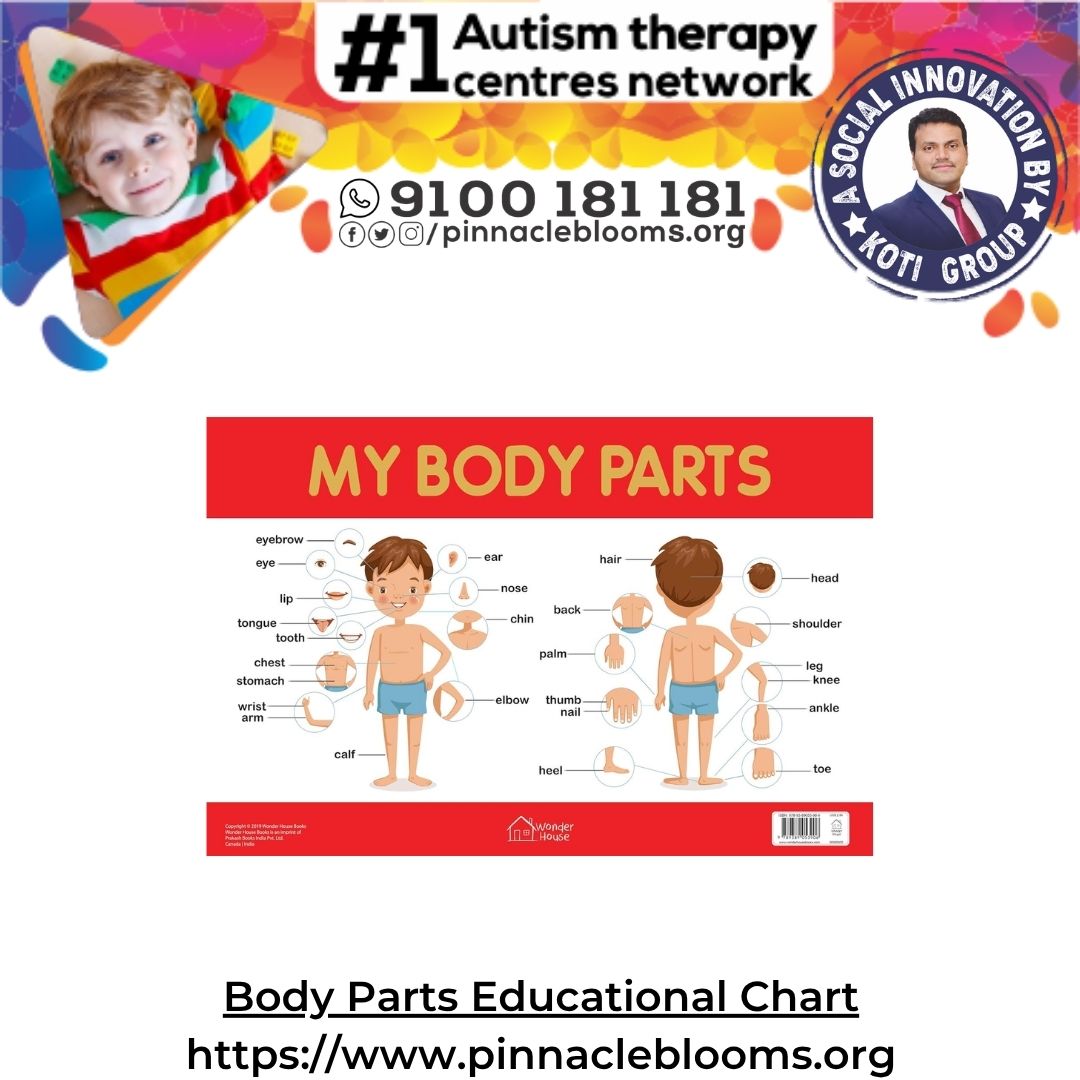
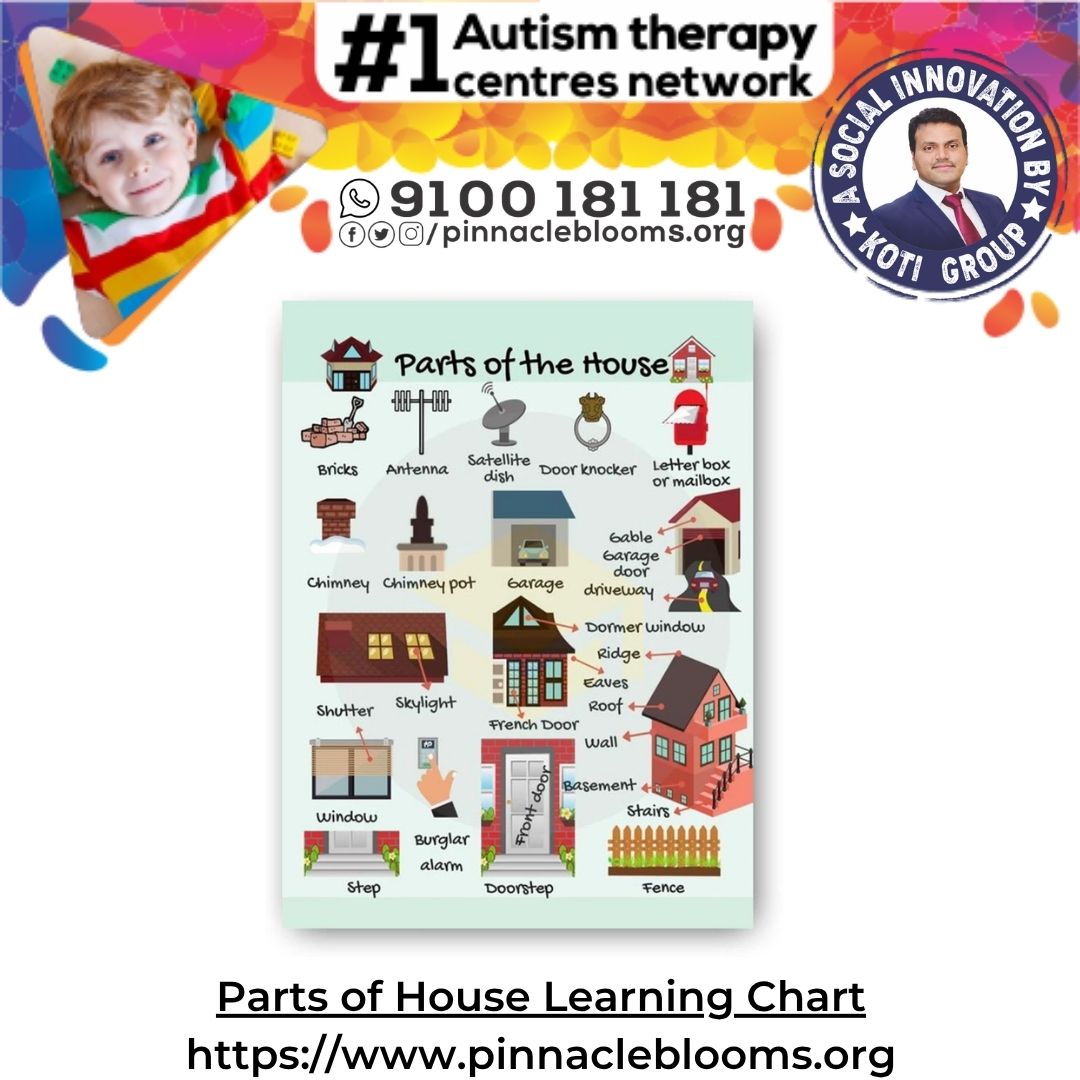
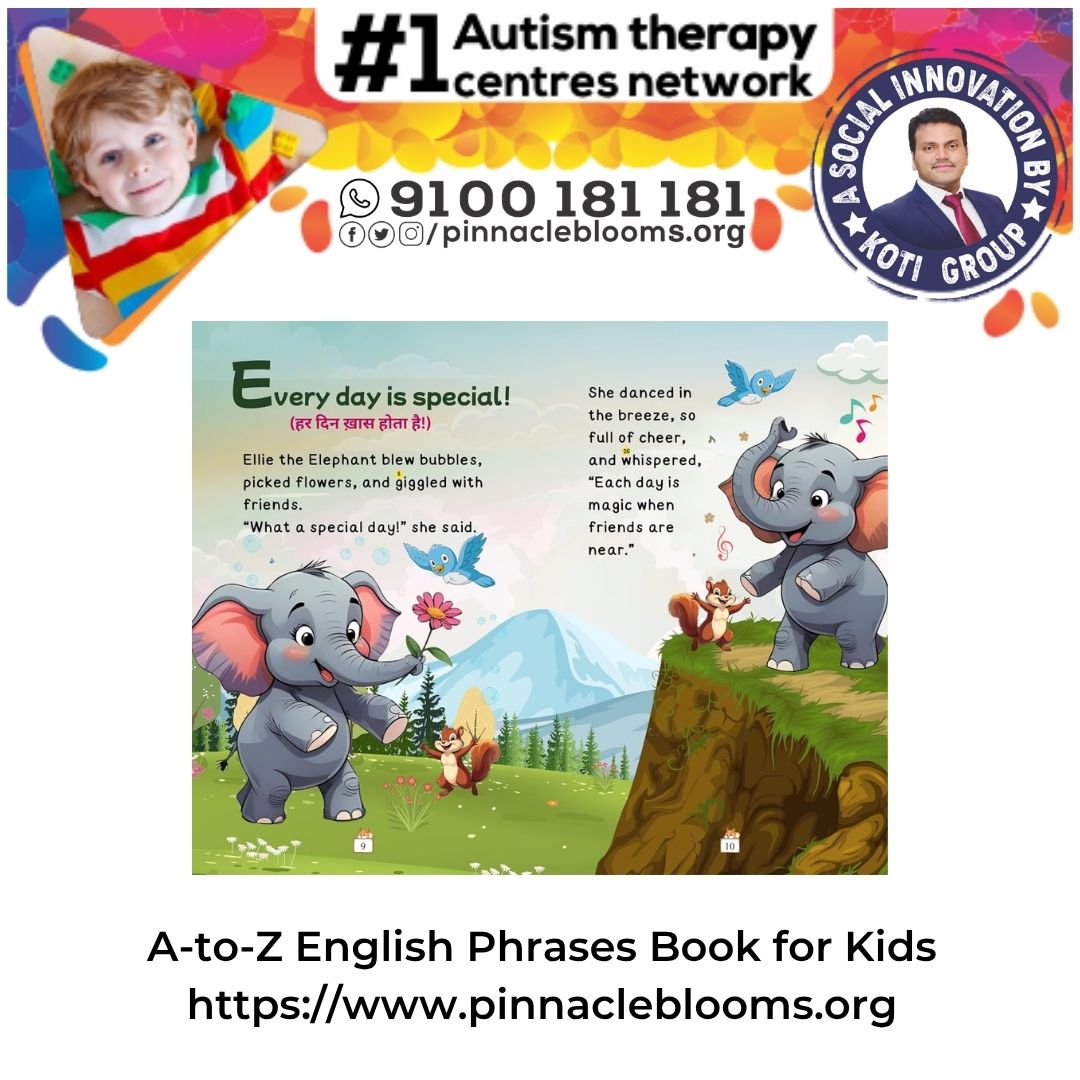
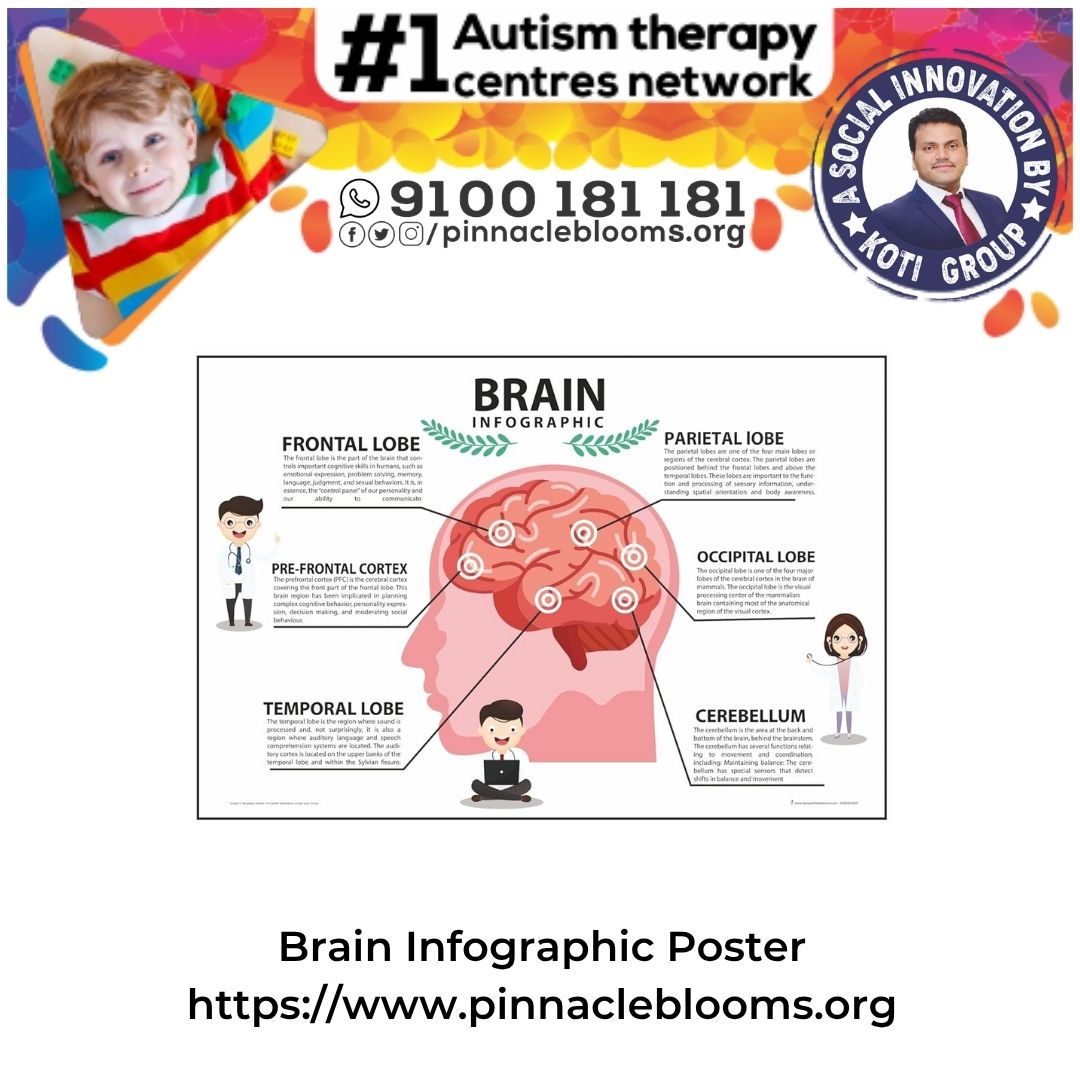
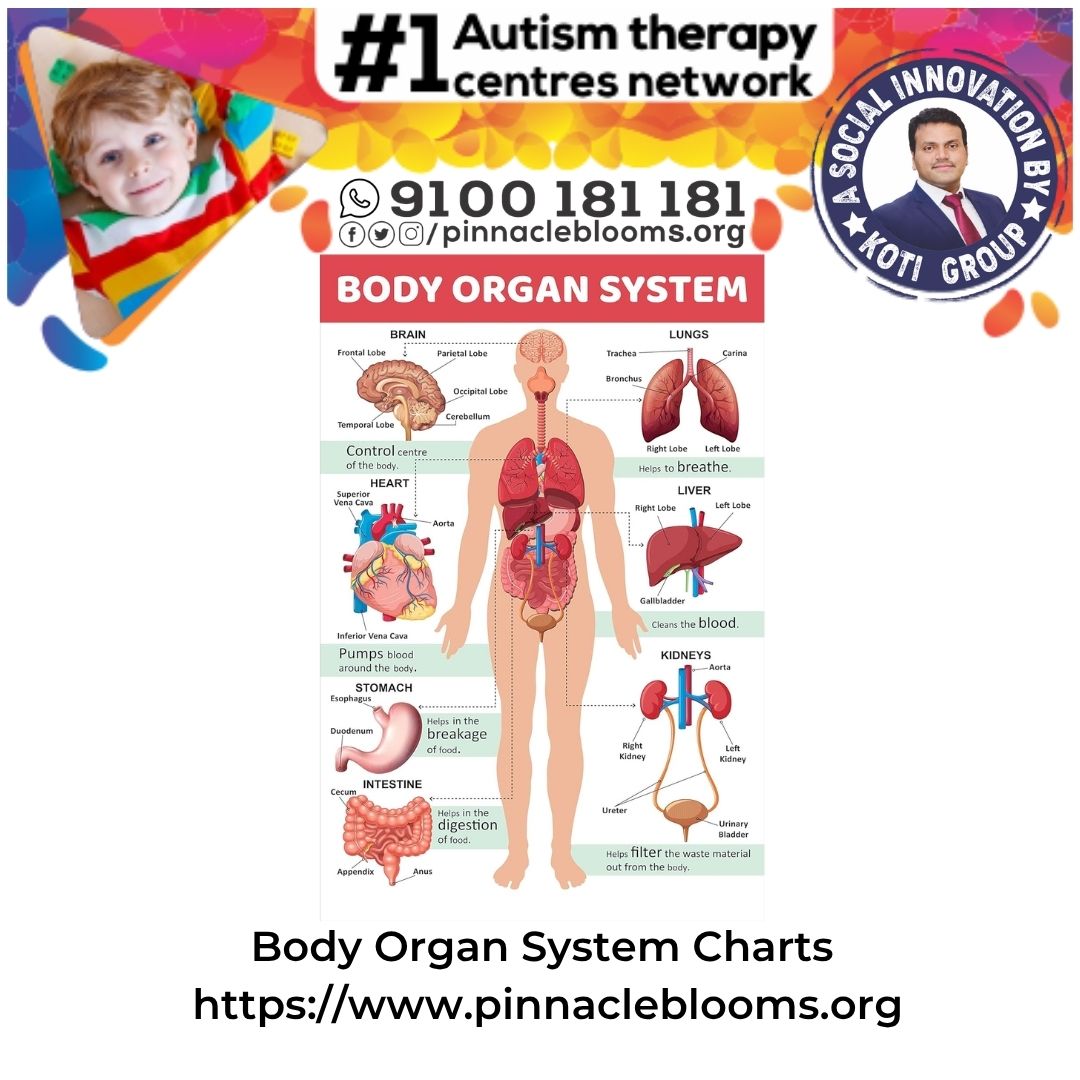
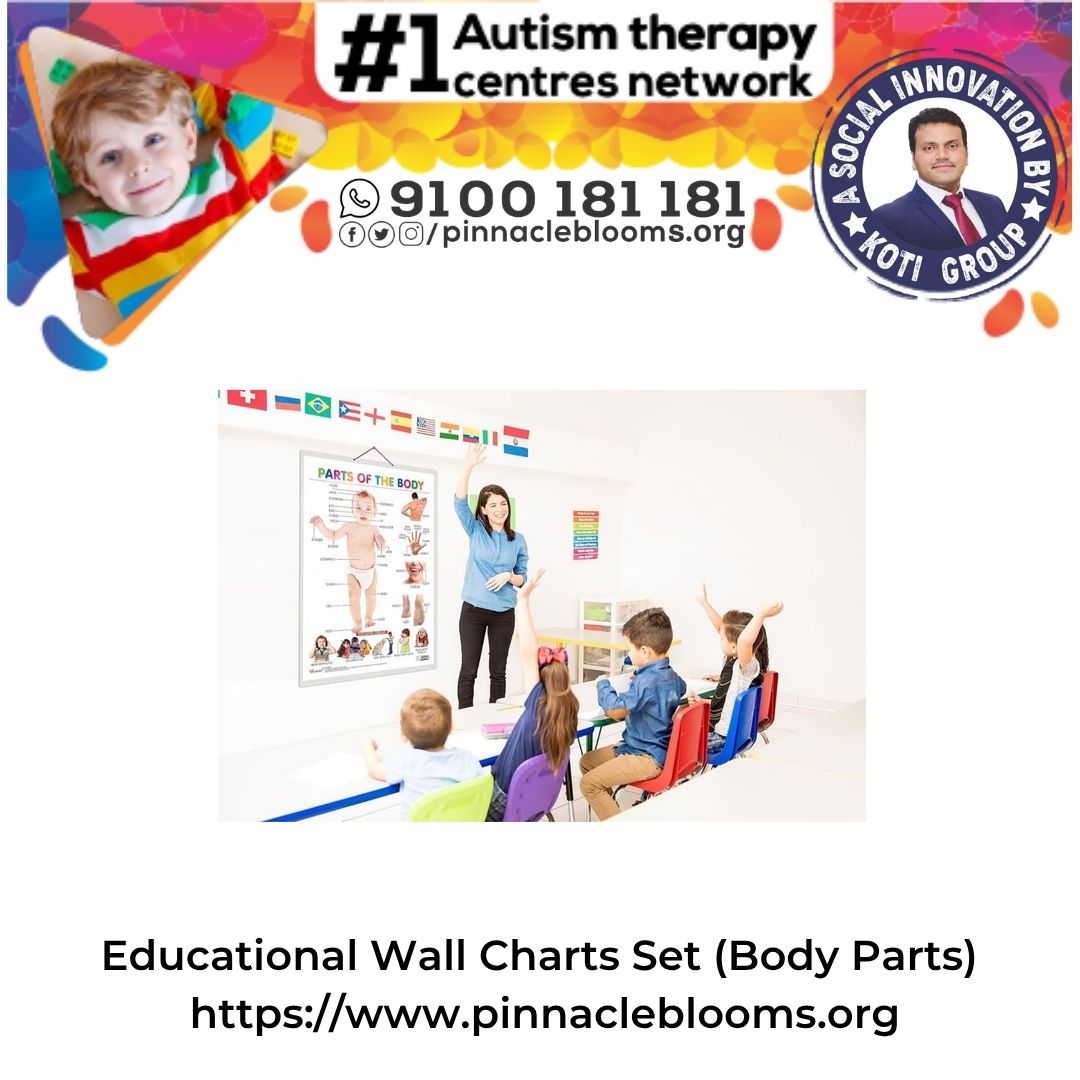
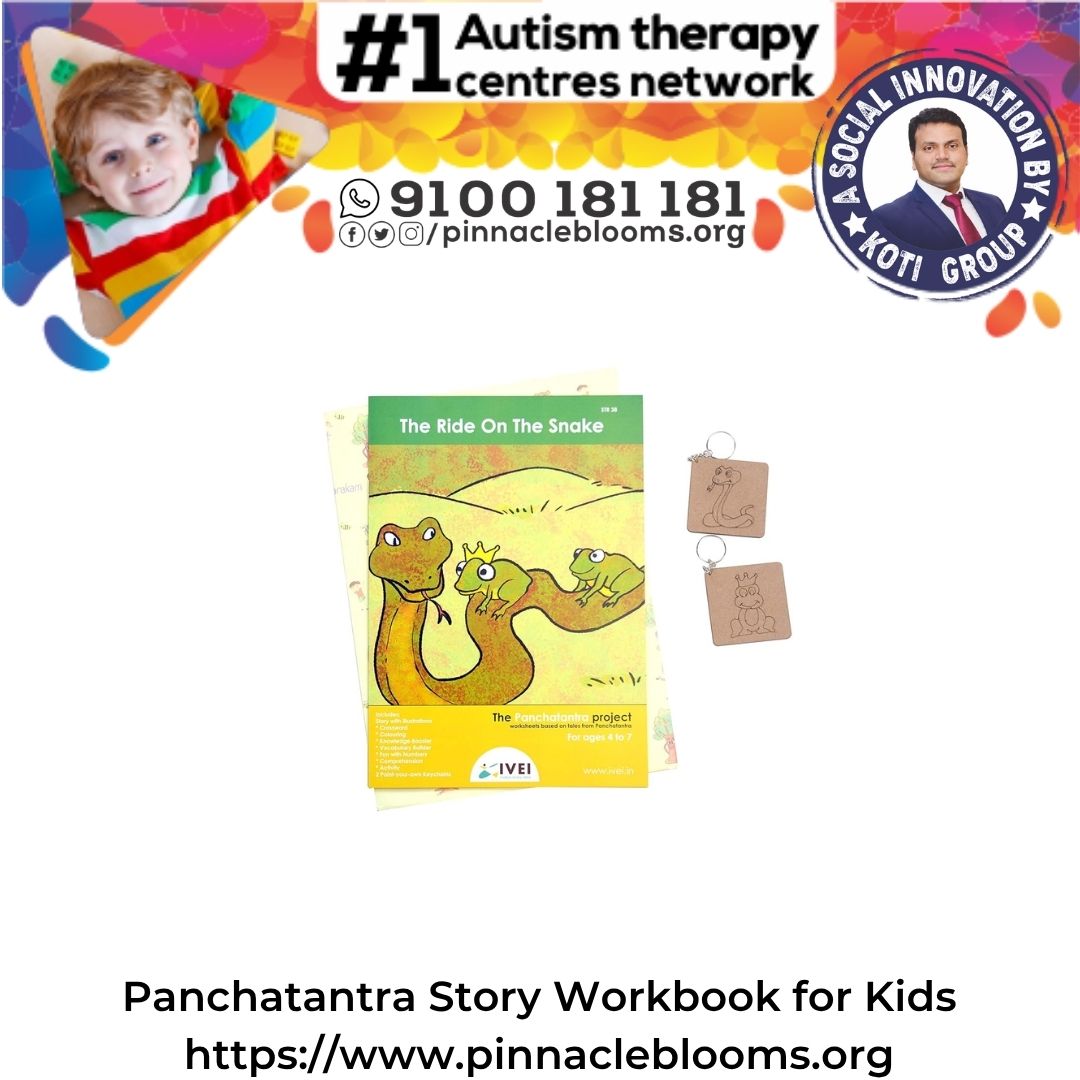
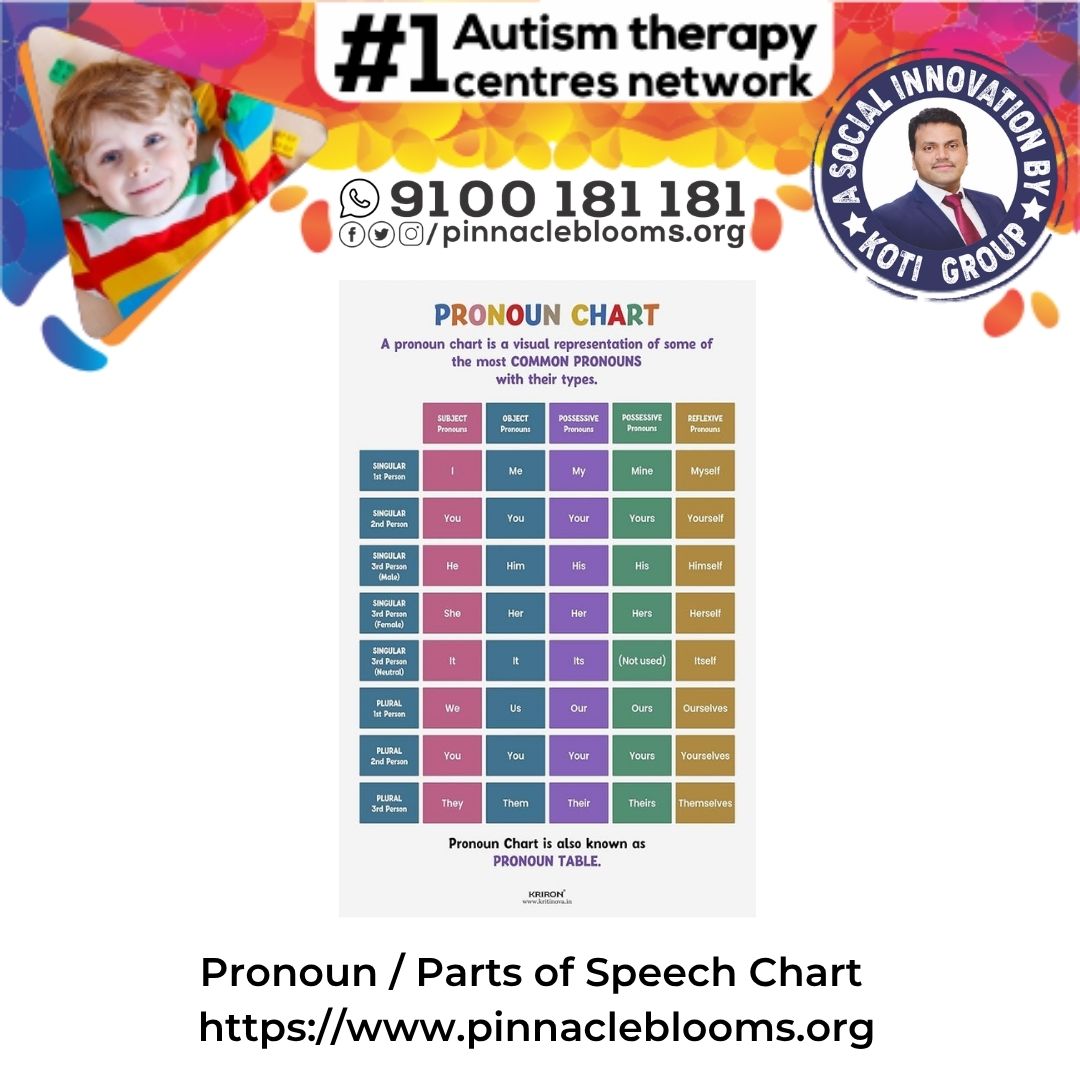
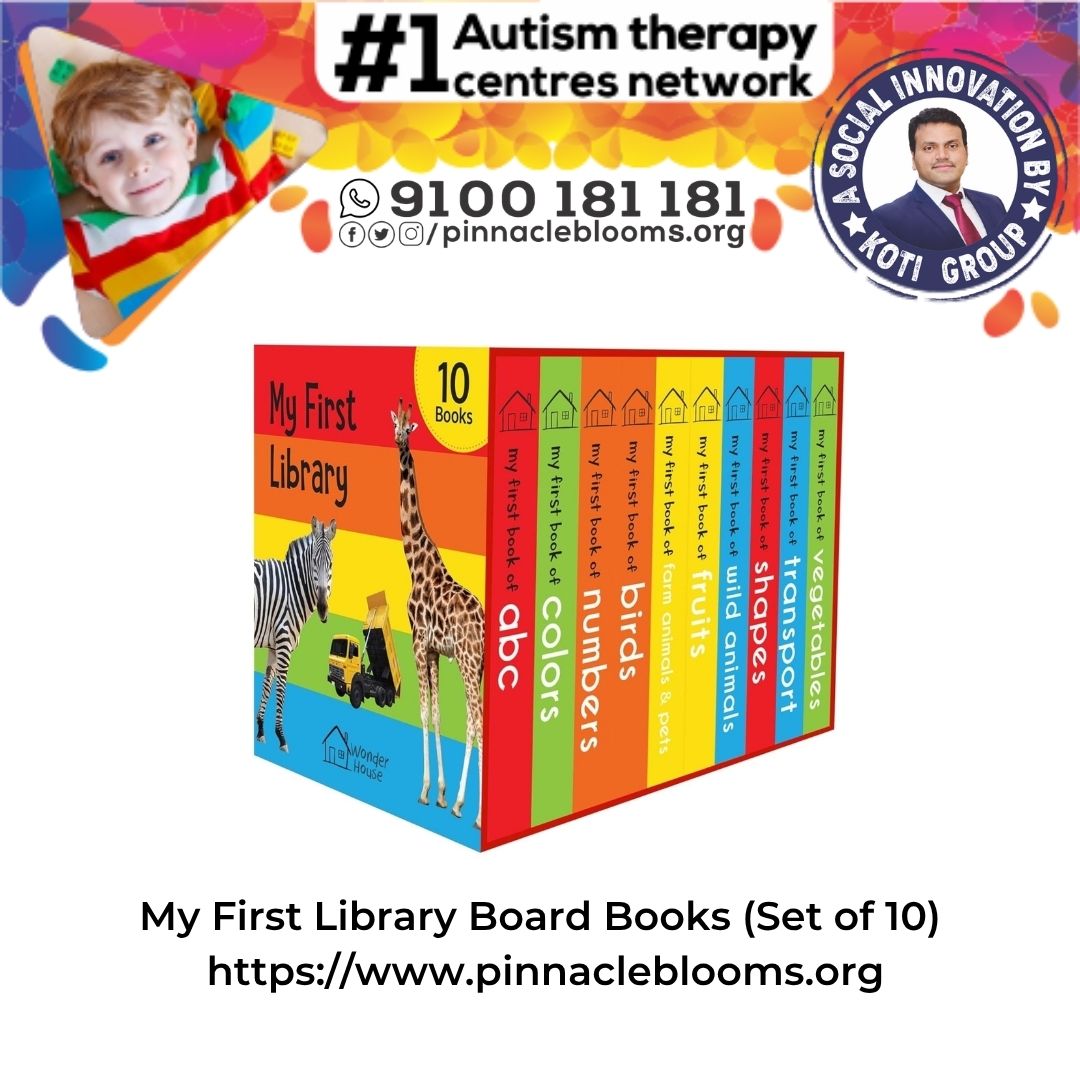
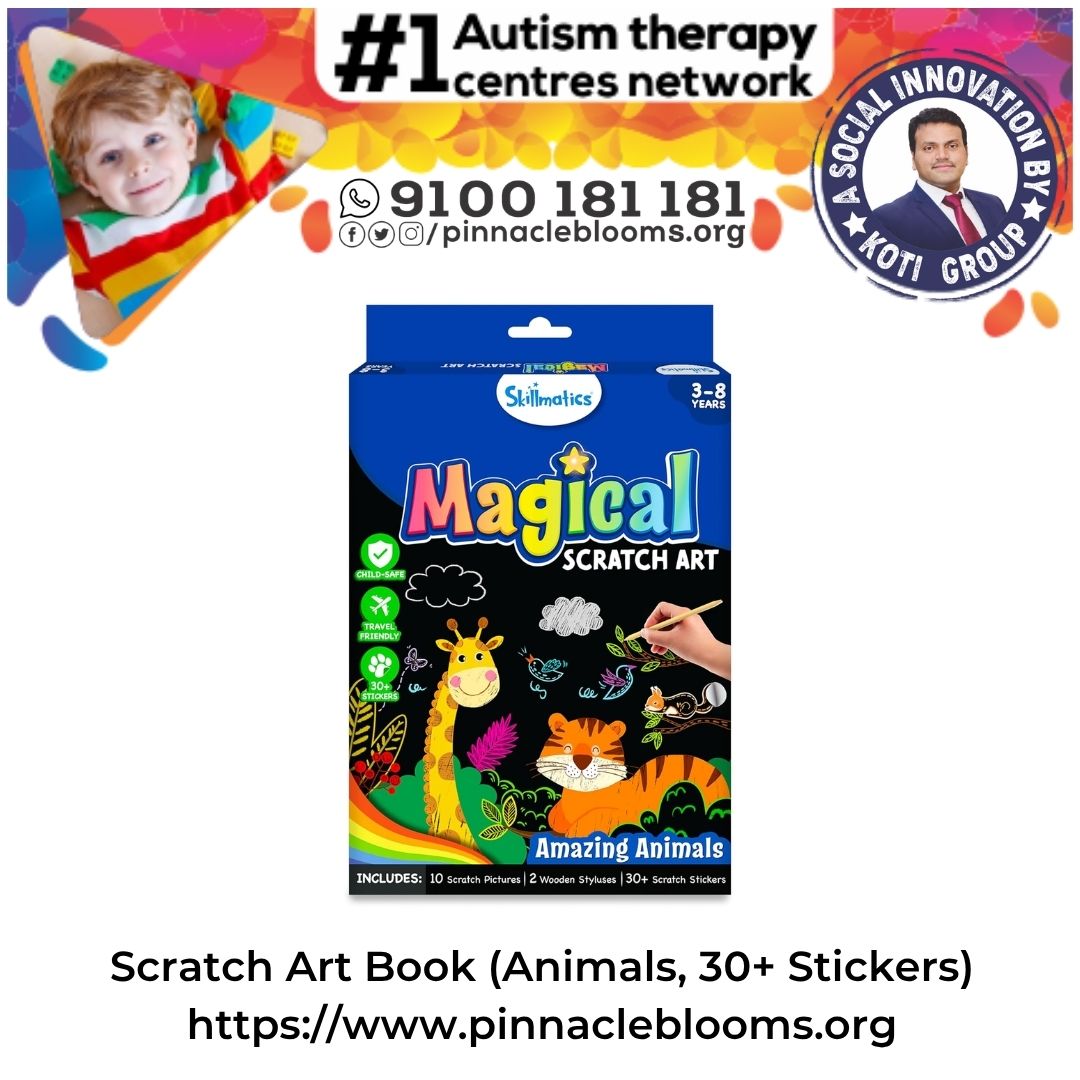
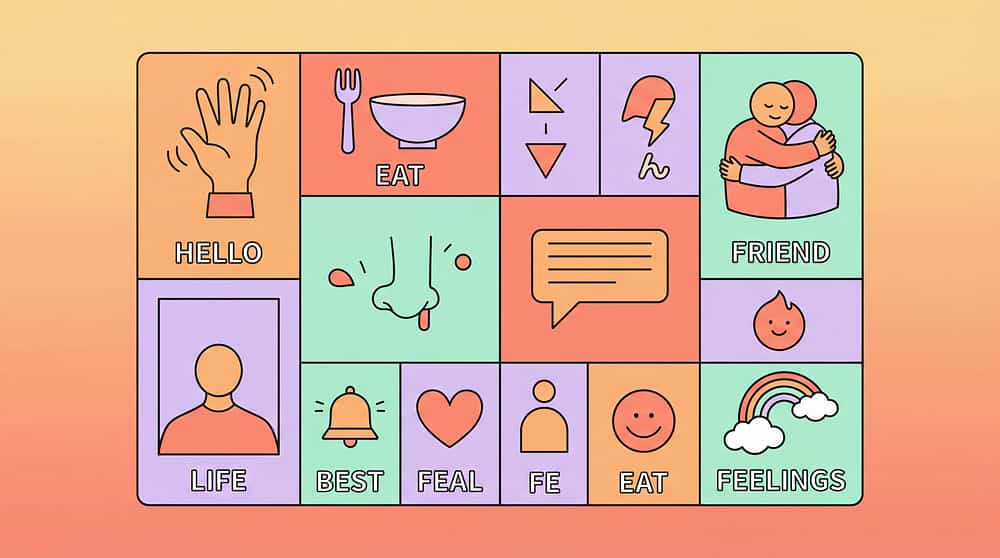
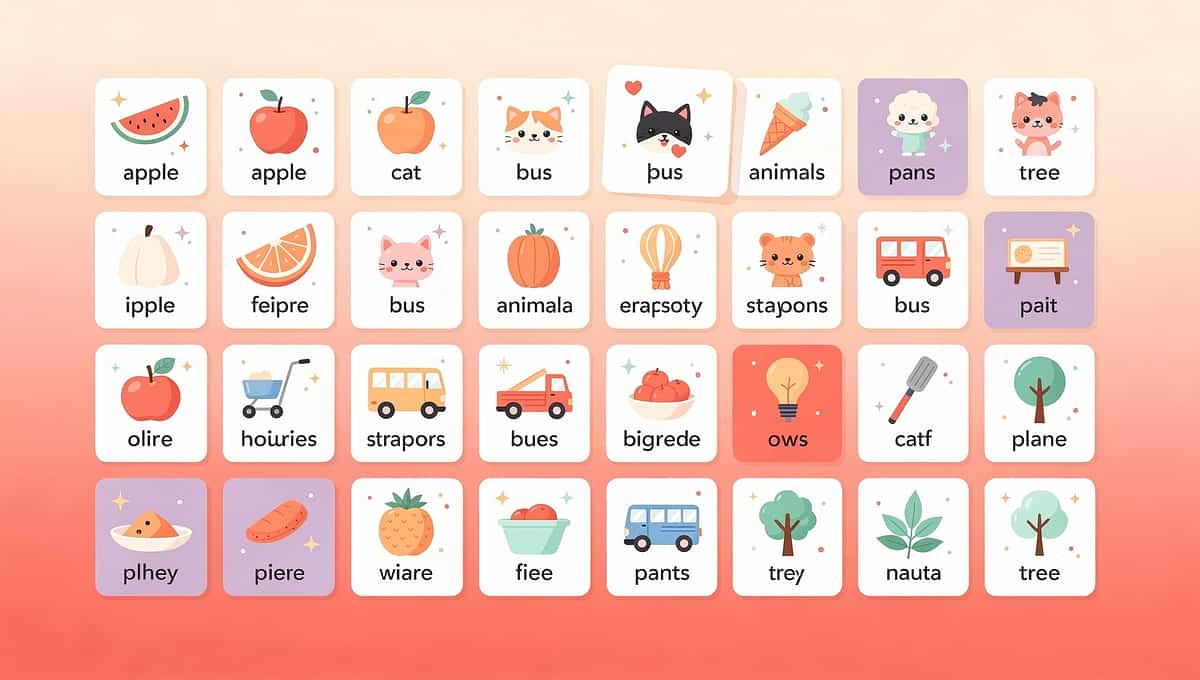
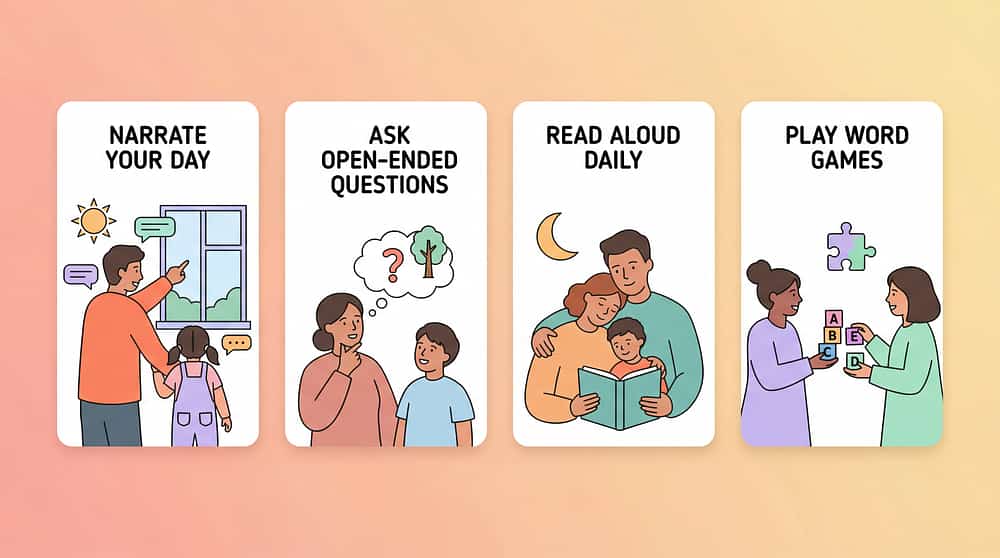
Preview of language expansion vocabulary building Therapy Material
Below is a visual preview of language expansion vocabulary building therapy material. The pages shown help educators, therapists, and caregivers understand the structure and content of the resource before use. Materials should be used under appropriate professional guidance.


Share this resource
Help others discover thisLink copied!
Measuring Success & Next Steps
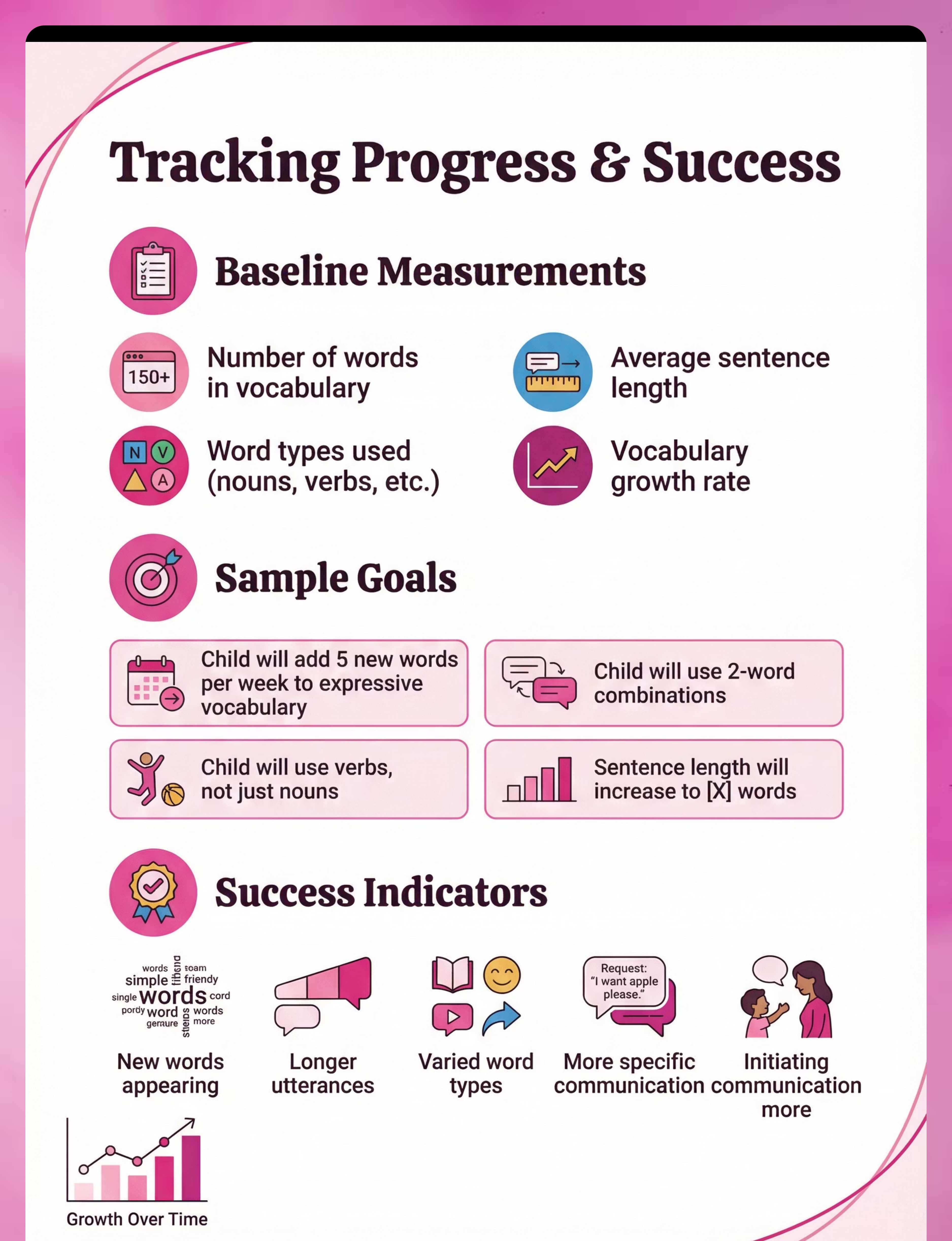
Track Progress: Measuring Vocabulary Growth
Baseline (Start Here)
- Count total words in child's vocabulary
- Measure average sentence length (Mean Length of Utterance)
- Document word types used (nouns, verbs, adjectives)
- Track vocabulary growth rate over past month
Set Goals
- Child will add 5 new words per week to expressive vocabulary
- Child will use 2-word combinations regularly
- Child will use verbs and adjectives, not just nouns
- Sentence length will increase to [X] words
Success Indicators
- New words appearing in spontaneous speech
- Longer utterances (adding words to sentences)
- Varied word types in communication
- More specific, clear communication
- Initiating communication more frequently
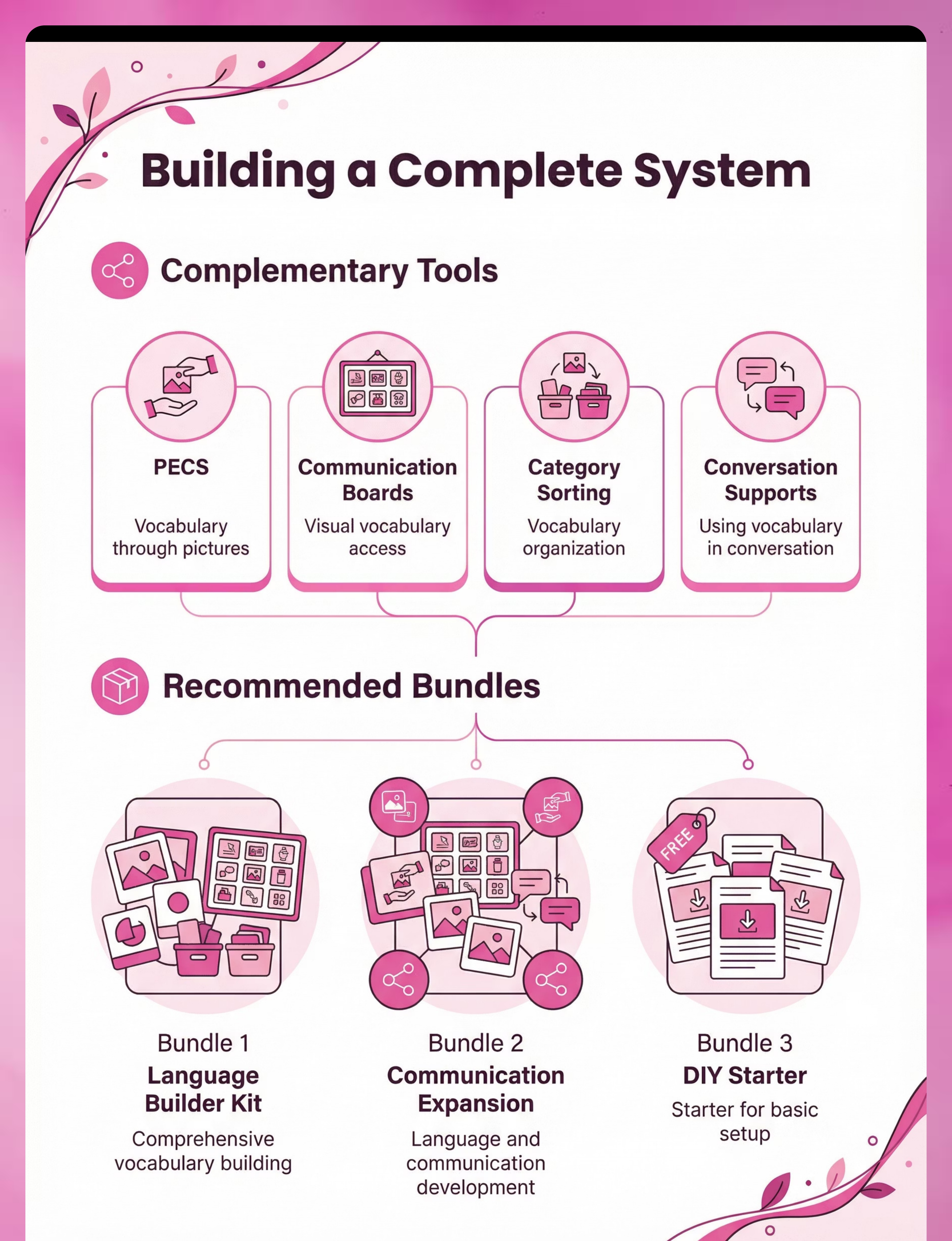
Complete the Kit: Pair With These Tools

5.1: PECS (Picture Exchange Communication System)
Builds vocabulary through picture-based communication. Perfect complement for visual learners.

5.2: Communication Boards
Provides visual vocabulary access during communication. Great for supporting expressive language.

8.4: Category Sorting Activities
Helps organize vocabulary learning by category, strengthening memory and retrieval.

5.7: Conversation Supports
Takes vocabulary learning into functional conversation, applying new words in real interaction.
Recommended Bundles
Language Builder Kit: Tools 5.5 + 5.2 + 8.4 → Comprehensive vocabulary building system
Communication Expansion Bundle: Tools 5.5 + 5.1 + 5.7 → Complete language and communication development program
Quick Summary (AI Context)
Language expansion tools systematically build vocabulary and sentence complexity through modeling, expansion, and varied word types. Core Kit (Rank 1), strong evidence, fundamental for language development in children ages 1-9 years.
vocabulary
language expansion
words
sentences
modeling
SLP
SpEd
core-kit
Common Searches: vocabulary building autism, language expansion autism, vocabulary cards speech therapy, language development autism, first words autism, expressive language autism, speech therapy vocabulary
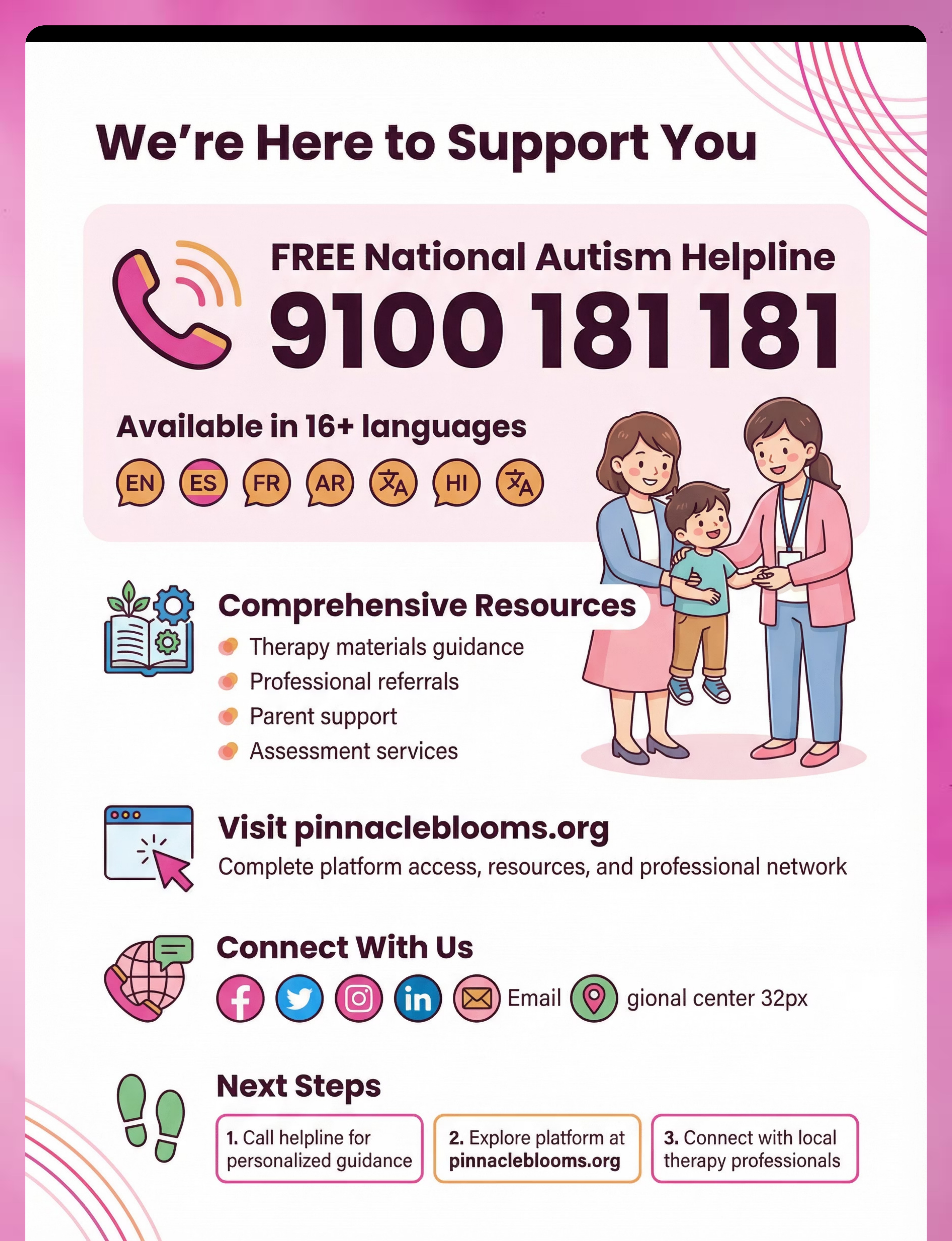
Get Support from Pinnacle Blooms Network
FREE National Autism Helpline
Phone: 9100 181 181
Languages: 16+ languages supported
Website: pinnacleblooms.org
Get guidance on language expansion techniques, tool selection, and connecting with SLPs in your area.
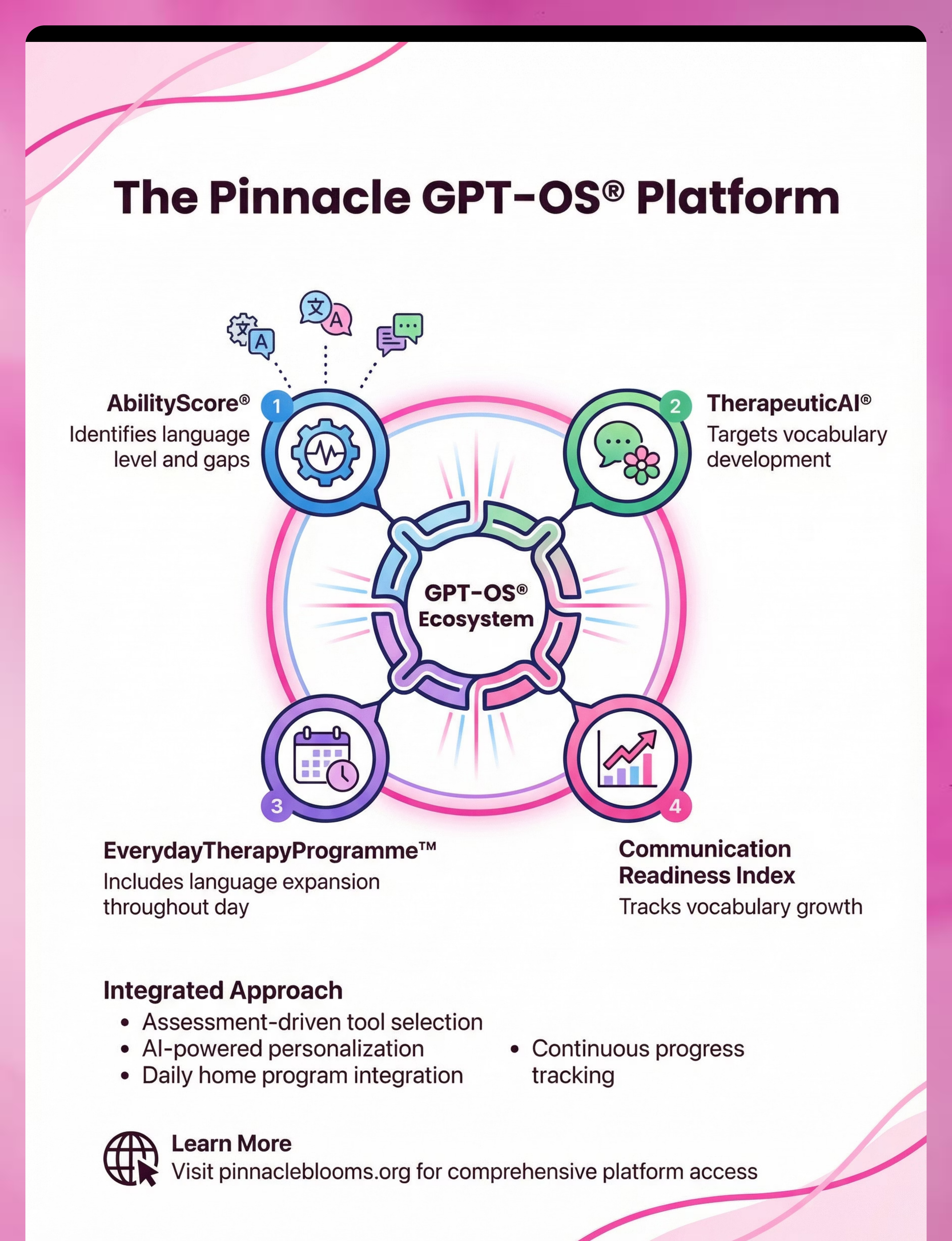
Platform Integration
AbilityScore® identifies your child's current language level and vocabulary gaps
TherapeuticAI® creates personalized vocabulary development programs
EverydayTherapyProgramme™ embeds language expansion throughout your daily routines
Communication Readiness Index tracks vocabulary growth and sentence complexity over time
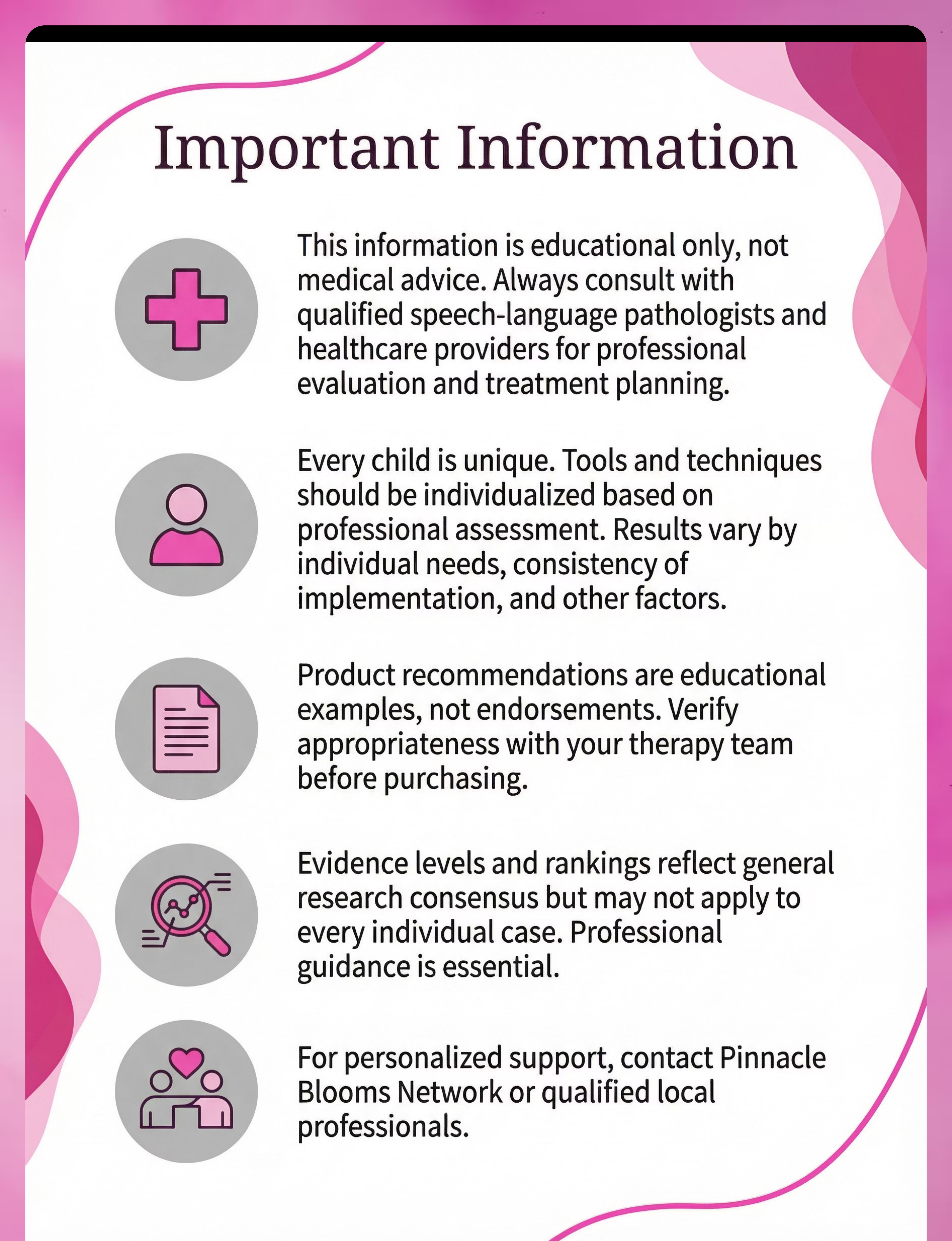
Important Disclaimer
This is educational information designed to help you understand and implement language expansion tools. Always consult qualified occupational therapists, speech-language pathologists, or pediatricians for assessment and individualized treatment plans. Individual results vary based on child's unique profile, consistency of implementation, and other factors. These tools support development but are not medical treatments and do not cure language delays.