














Tool ID: 8.6
Tool ID: 8.6
SpEd + OT
Strong Evidence
Rank #1
Daily Use
₹50–600
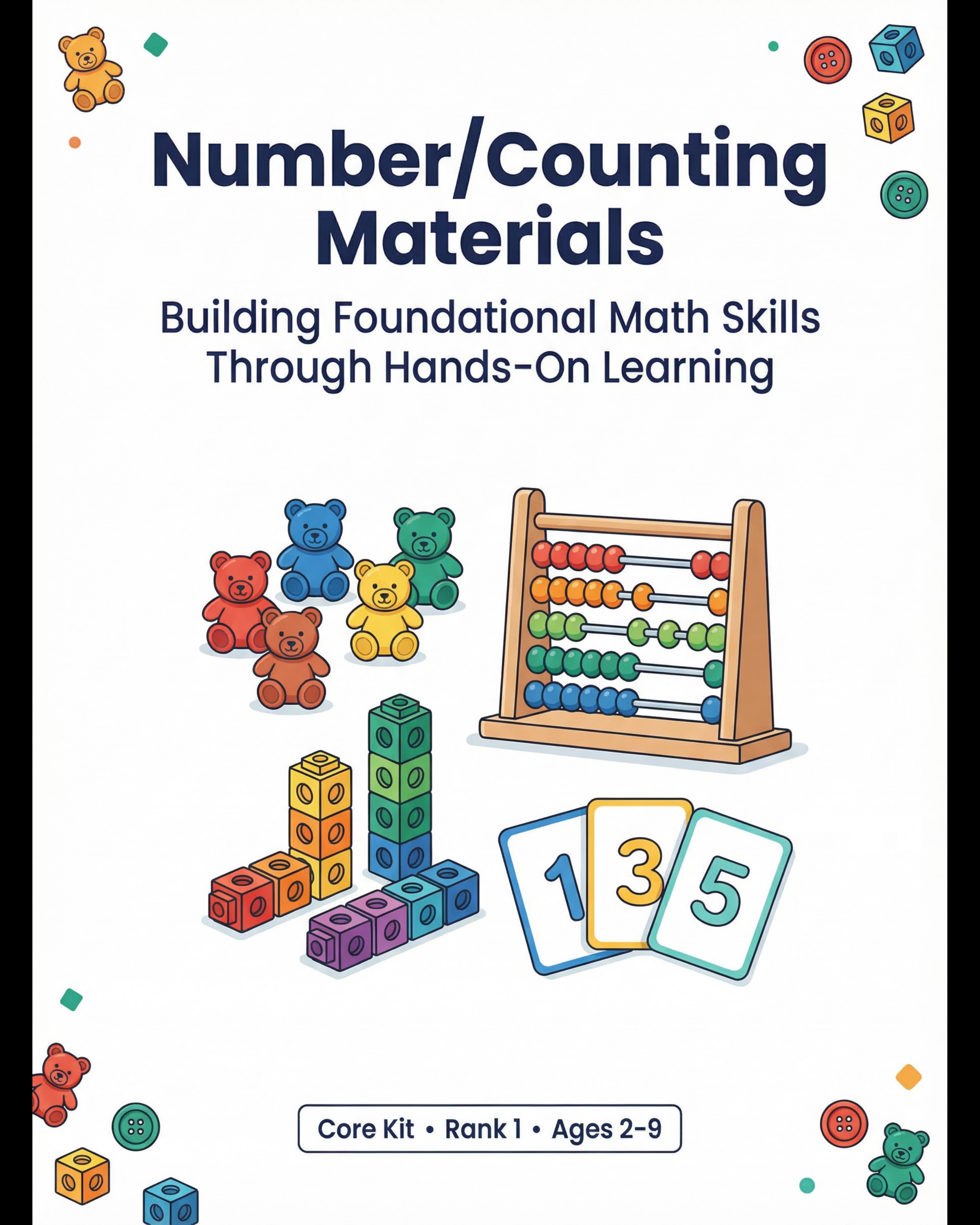
Number/Counting Materials
Numeracy foundation and mathematical concept system
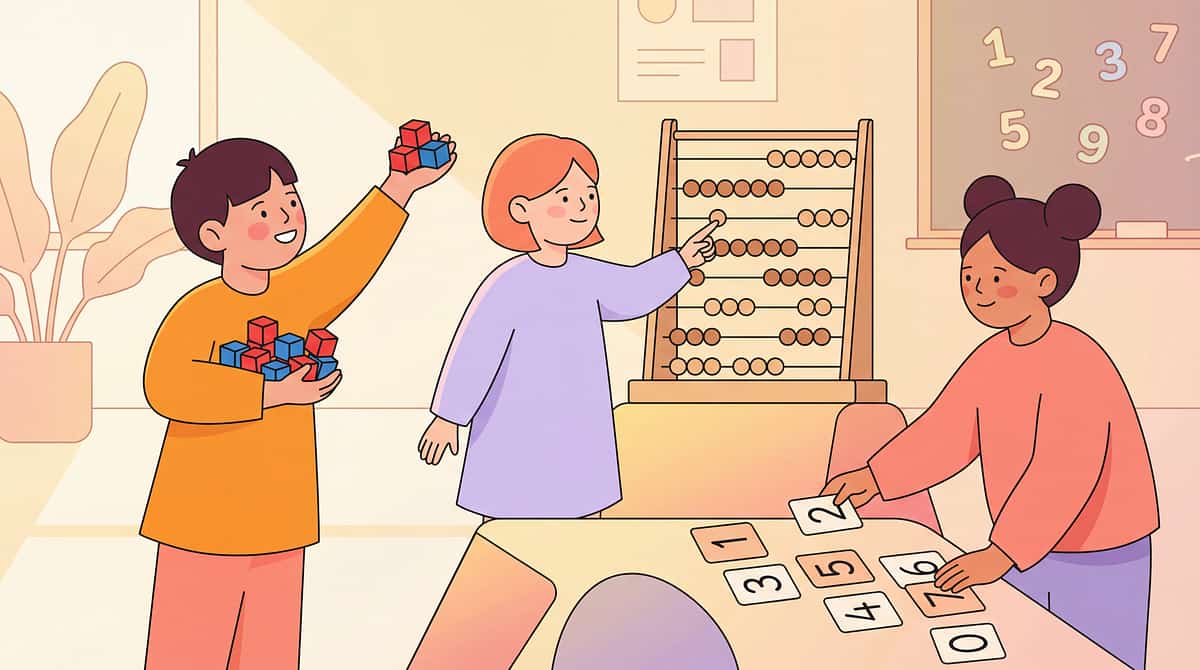
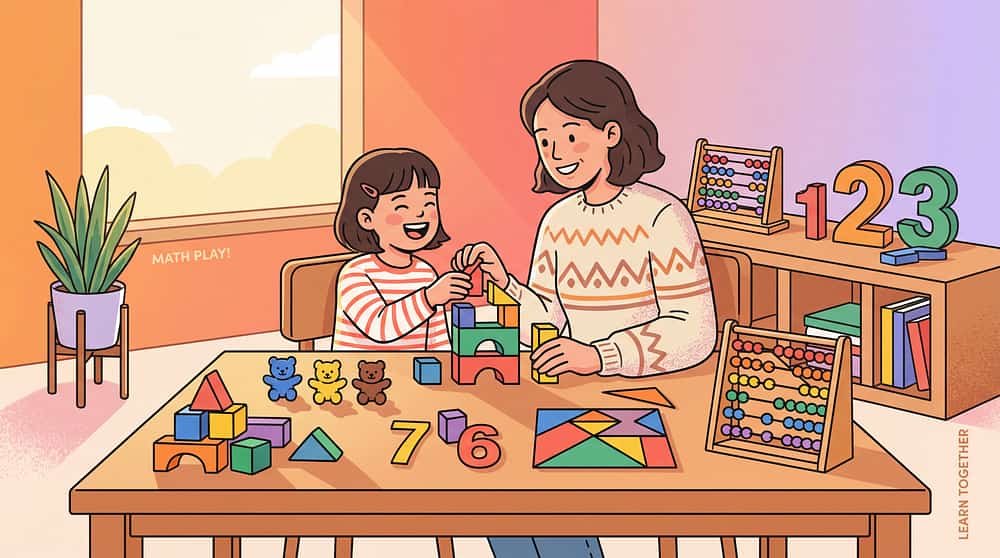
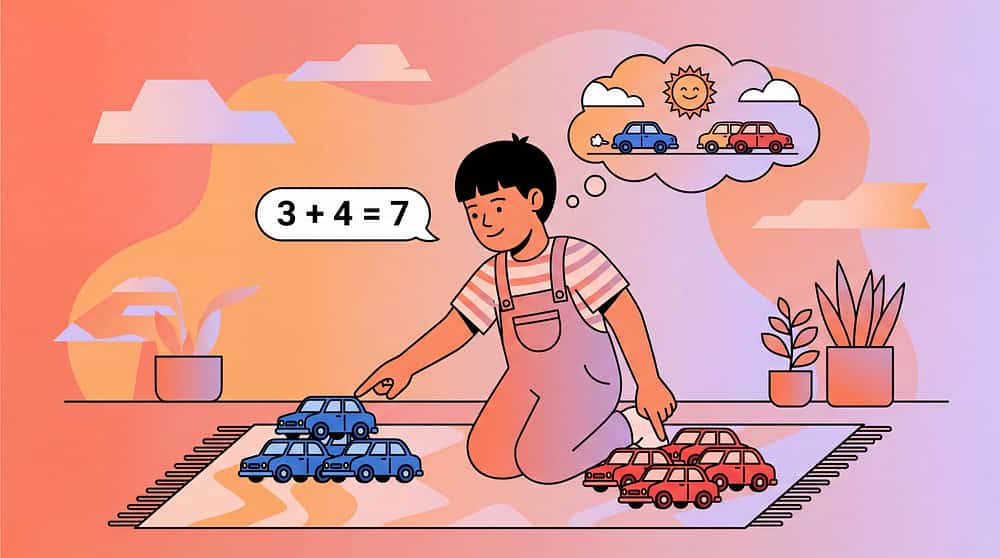
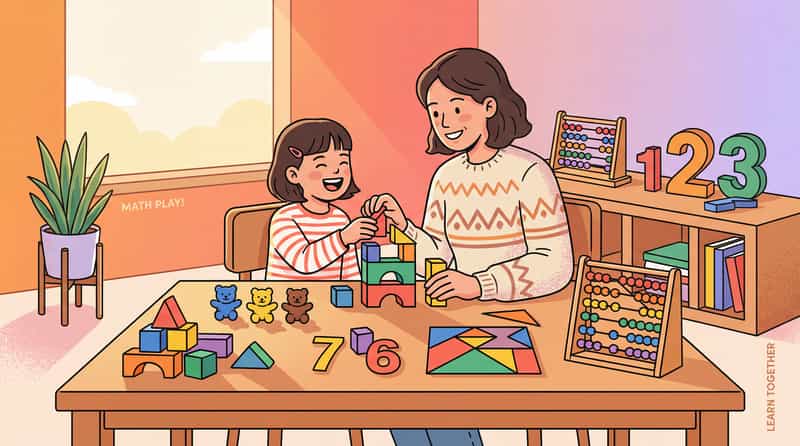
Build your child's number sense and mathematical foundation through hands-on manipulation and meaningful counting experiences. From concrete objects to abstract numerals, these essential tools develop one-to-one correspondence, cardinality, and pre-math concepts that prepare children for academic success.
Who This Helps
Counting Skills
Develops accurate counting through hands-on manipulation, building one-to-one correspondence and meaningful number understanding beyond rote memorization.
Number Recognition
Connects quantity to numeral systematically, helping children identify and understand written numbers through multi-sensory learning experiences.
Number Sense
Establishes foundational mathematical thinking, cardinality understanding, and pre-math concepts essential for future arithmetic operations.
Ages 2-9 years
Home
School
Clinic
Outdoors
Best for: Children developing counting skills, number recognition, one-to-one correspondence, cardinality understanding, and foundational math concepts through concrete manipulation and systematic practice.
Does This Sound Familiar?
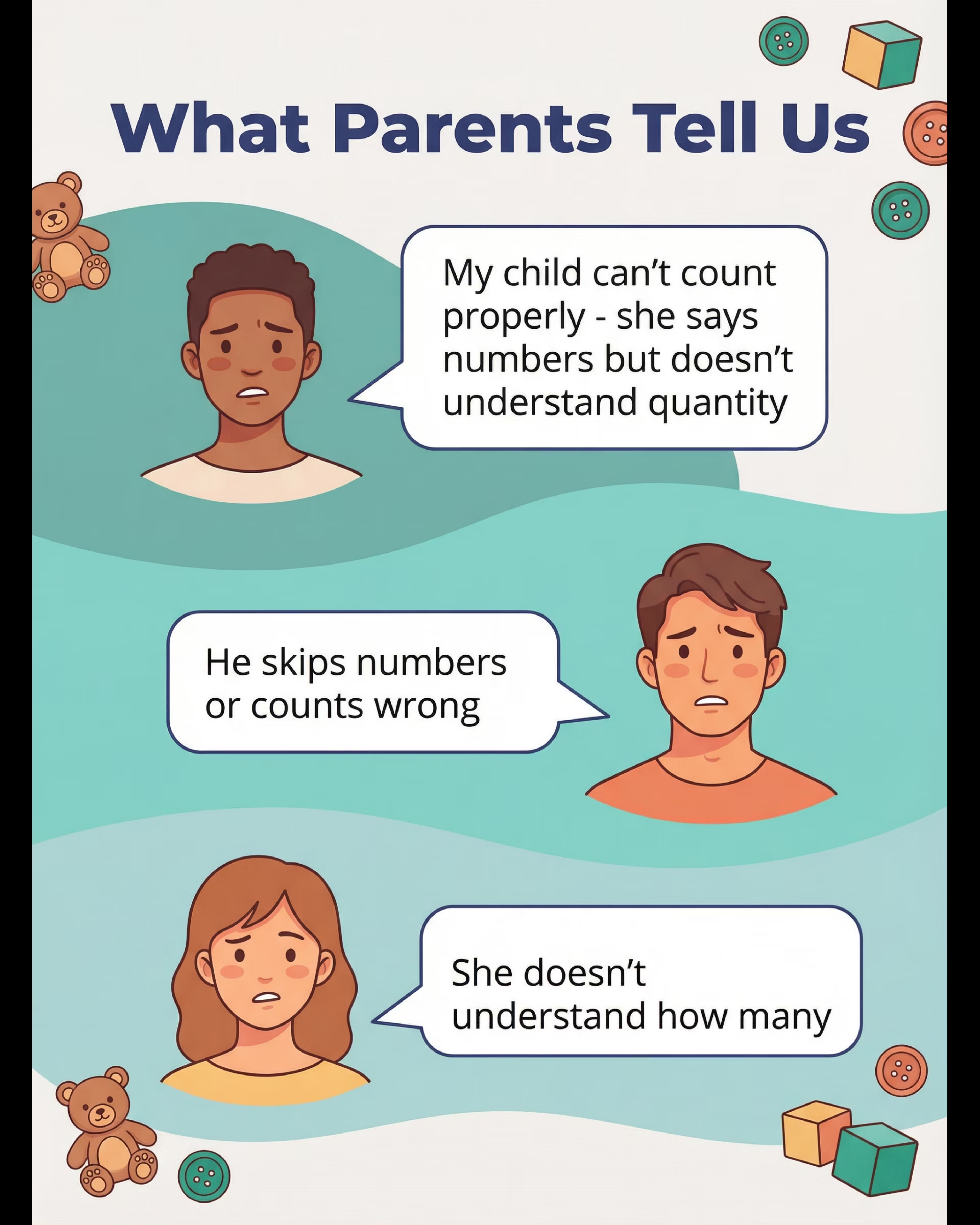
"My child can't count properly. He skips numbers and loses track every time we try to practice."
"She says numbers but doesn't understand quantity. She can count to ten but has no idea what 'five' actually means."
"His math skills are behind his classmates. I'm worried about school readiness and academic delays."
"She can't recognize written numbers. When I show her numerals, she looks completely lost."

You're not alone. These are common challenges for children developing numeracy skills. The gap between rote counting and true number understanding is where many children struggle—and where the right tools make all the difference.
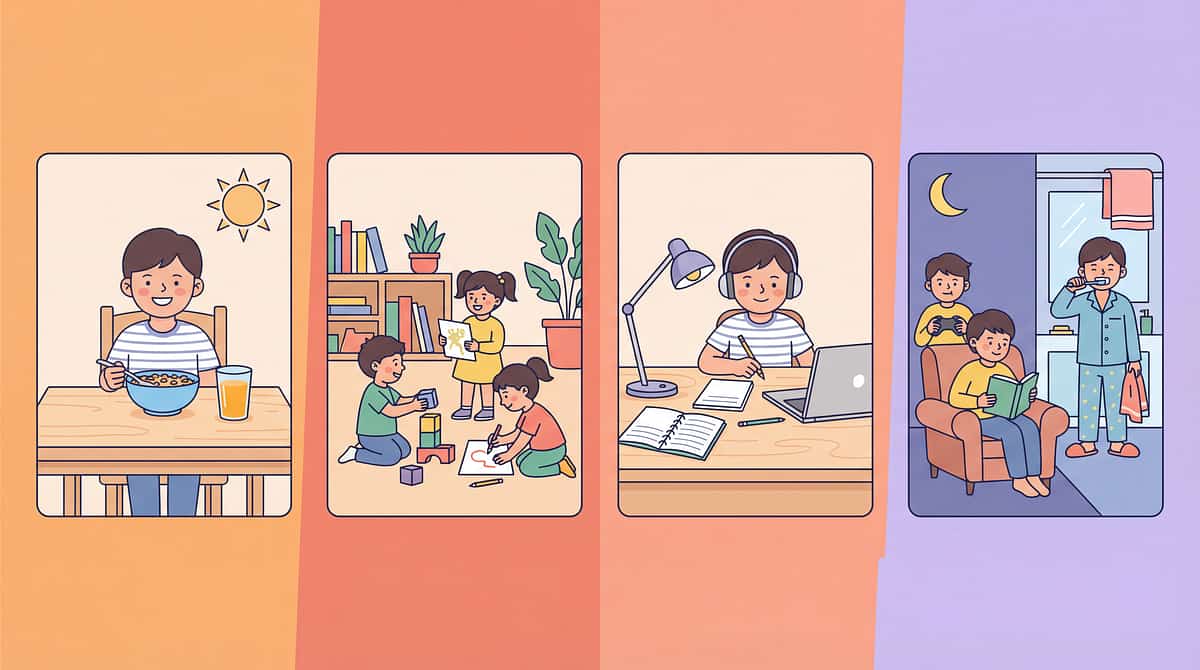
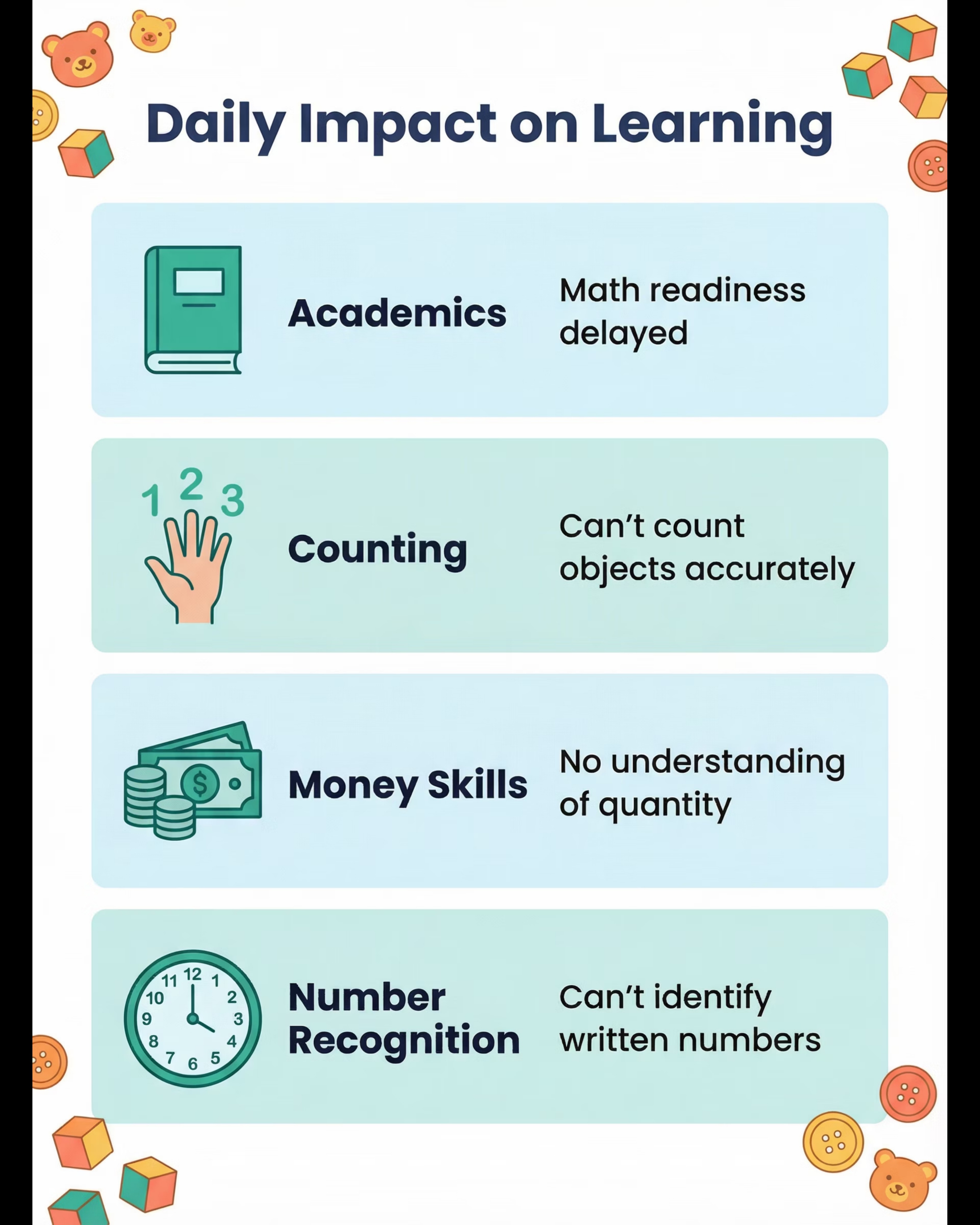
A Day Without the Right Support
Morning Routine
Trying to count out breakfast items becomes frustrating. "Give me three crackers" results in confusion and incorrect amounts. Math readiness delayed before the day even starts.
School Transitions
Can't count objects accurately during class activities. Teacher asks "how many?" and the child guesses randomly. No one-to-one correspondence, just memorized sequences without meaning.
Homework Time
Math worksheets are overwhelming. Written numbers look like meaningless symbols. The disconnect between quantity and numeral creates anxiety and avoidance. What number is that? I don't get math.
Evening Activities
Can't participate in simple counting games. No understanding of money or quantity in daily life. Missing fundamental skills that peers use naturally throughout the day.
The Science Behind It
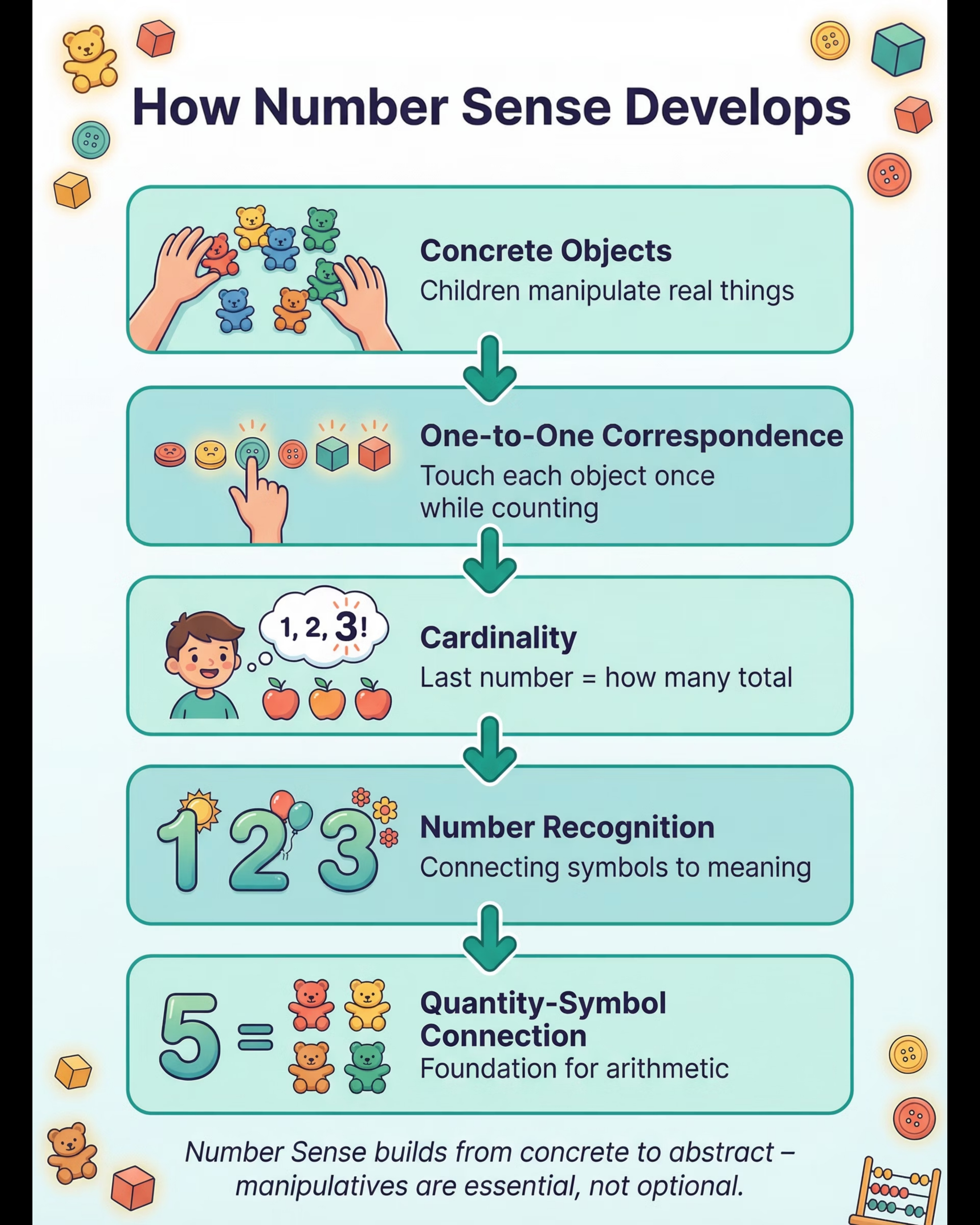
Mathematical understanding develops through a systematic progression from concrete experience to abstract thought. This evidence-based sequence ensures children build genuine number sense rather than superficial memorization.
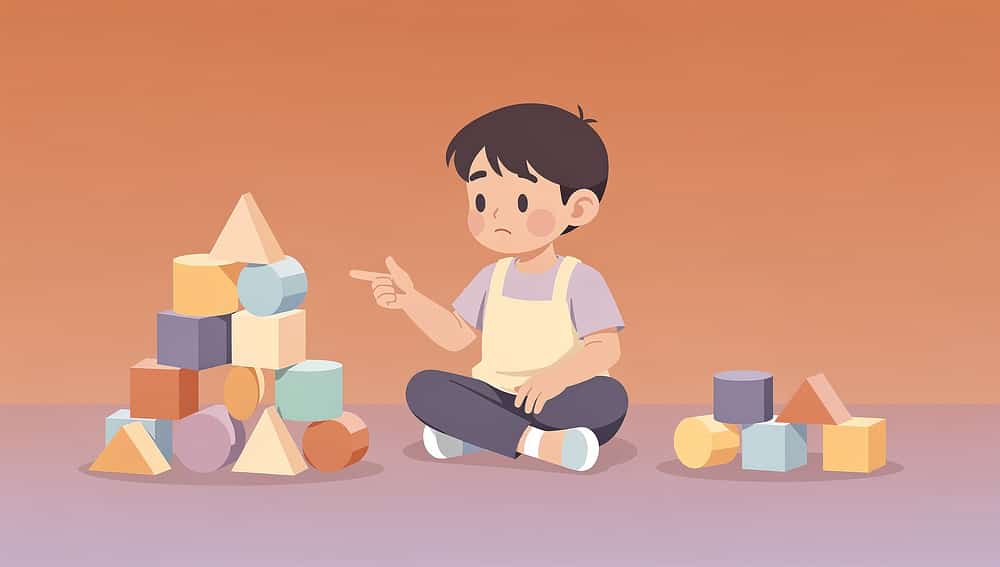
Concrete Objects
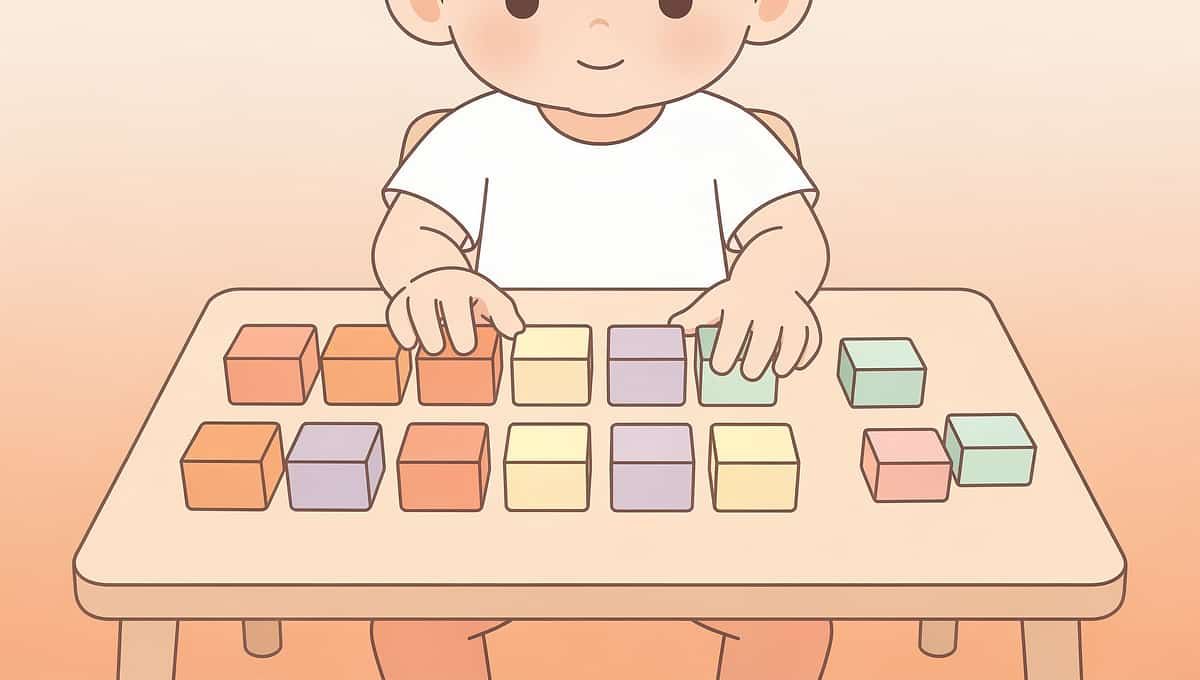
Children physically manipulate real objects—touching, moving, grouping—building sensory-motor foundation for number concepts.
One-to-One Correspondence
Each object gets one count. Touch and count! This fundamental skill ensures accurate counting and prevents skipping or double-counting.
Cardinality Understanding
The last number said equals the total quantity. "How many? Five!" This breakthrough connects counting process to quantity result.
Number Recognition
Children connect the quantity they've counted to the written numeral symbol, bridging concrete experience to abstract representation.
Quantity-Symbol Connection
Systematic pairing of amounts with numerals creates lasting neural pathways, establishing foundation for arithmetic operations and mathematical thinking.
Counting Skills
Number Recognition
One-to-One Correspondence
Cardinality
Number Sense
Pre-Math Concepts
How to Use It Right
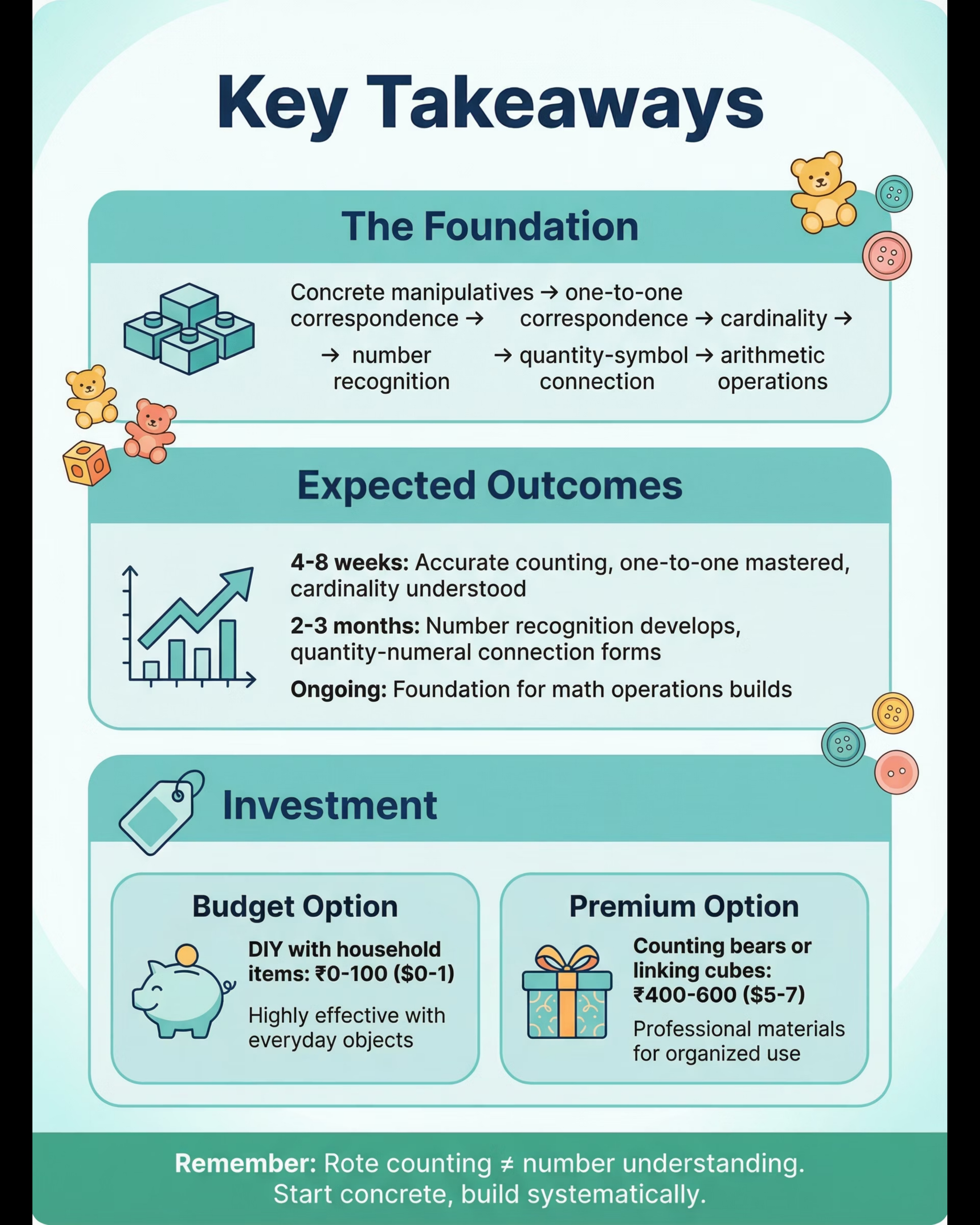
Start with concrete manipulatives
Always begin with physical objects children can touch, move, and manipulate. Abstract symbols come much later—concrete experience is essential, not optional.
Practice one-to-one correspondence
Teach "touch and count"—one touch per object, one number per touch. This foundational skill prevents counting errors and builds accurate number understanding.
Build cardinality understanding
After counting, always ask "How many?" The last number said is the total. This critical concept transforms rote counting into meaningful quantity understanding.
Connect quantity to numeral systematically
Once concrete counting is solid, pair quantities with written numerals. Show the numeral alongside the counted objects, building the abstract-concrete bridge.
Embed counting in daily activities
Count snacks, stairs, toys, vehicles. Real-life application reinforces structured learning and demonstrates why counting matters in everyday situations.
Remember: Rote counting ≠ understanding
Reciting "1, 2, 3, 4, 5" is different from knowing what five means. Focus on meaningful counting with objects, not just number sequences.
Recommended Duration: 10-20 minutes structured practice; integrate counting throughout the day in natural contexts for maximum impact and generalization.
Expert Endorsement
"Number sense builds from concrete to abstract. Children must manipulate real objects, develop one-to-one correspondence, and understand cardinality before symbols make sense. Manipulatives are essential, not optional."
— Special Educator, Math Specialist
SpEd + OT Recommended
Strong Evidence
Rank #1 in Category
Core Kit
This evidence-based approach is endorsed by occupational therapists and special educators worldwide. The progression from concrete manipulation to abstract understanding aligns with decades of research in mathematical cognition and child development. When implemented systematically, these materials provide the foundation every child needs for mathematical success.
number-counting-materials therapy material
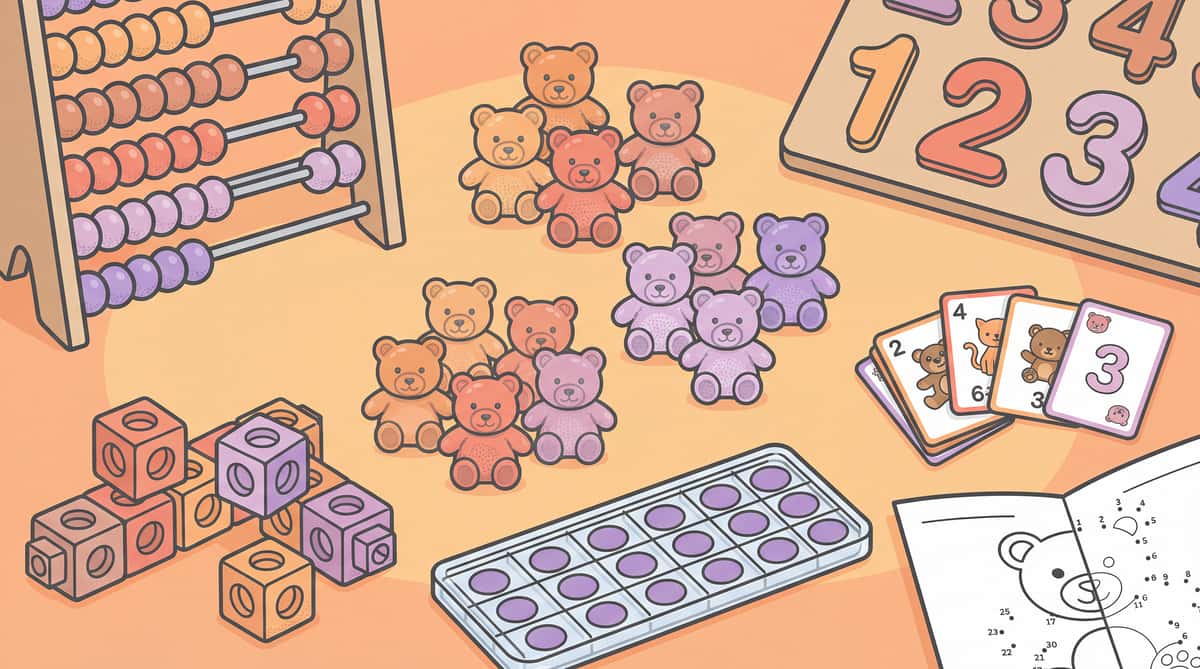
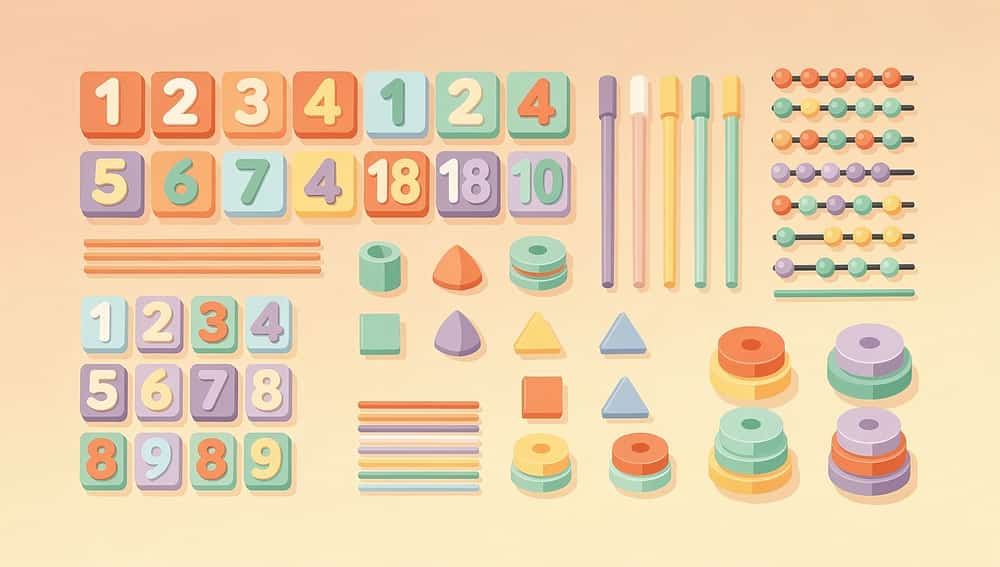
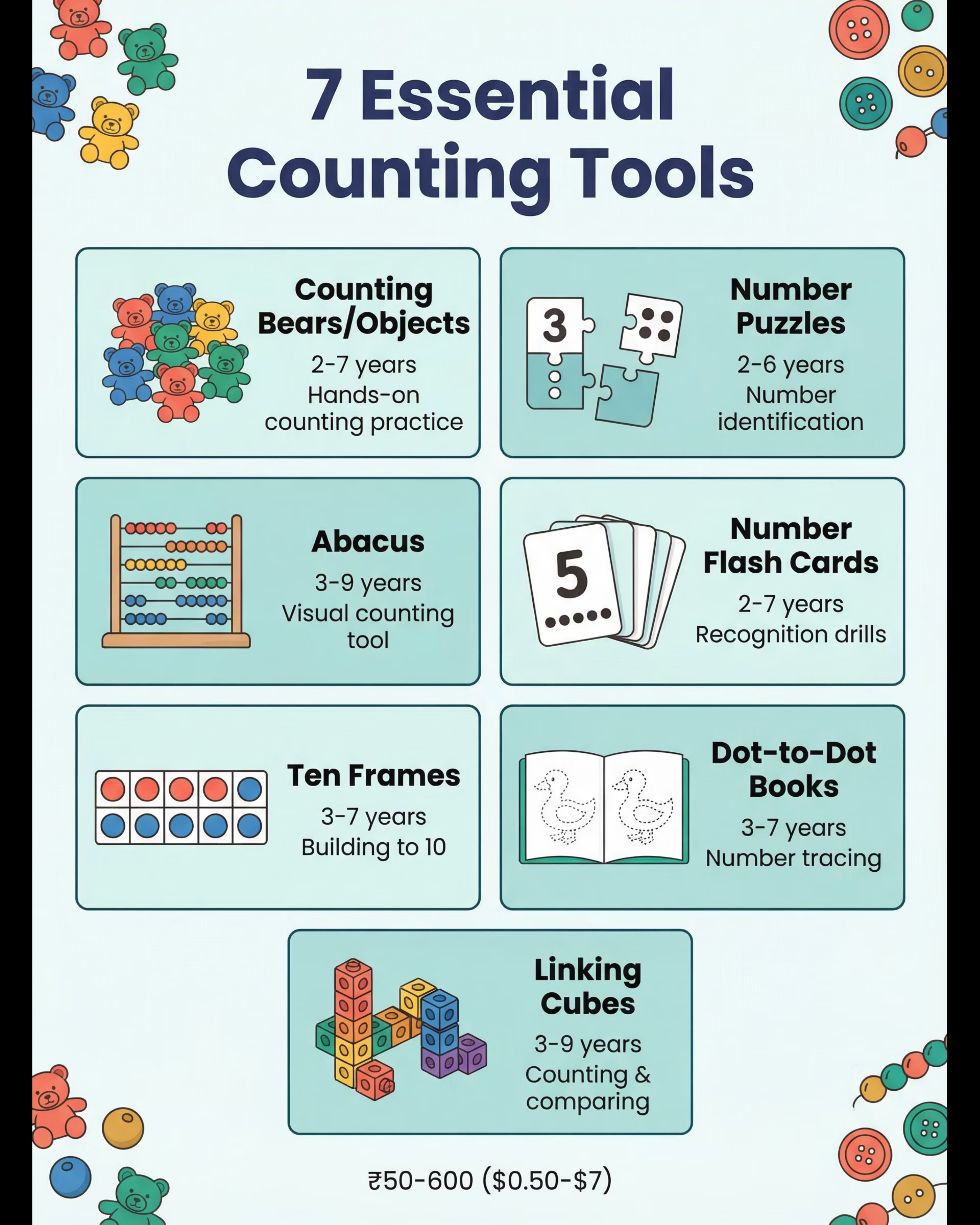
Choose Your Option (7 Variants)
Counting Bears/Objects
Best for: Hands-on counting, one-to-one correspondence
Ages: 2-7 years | Portability: High
Home
School
Clinic
Price: ₹200–500
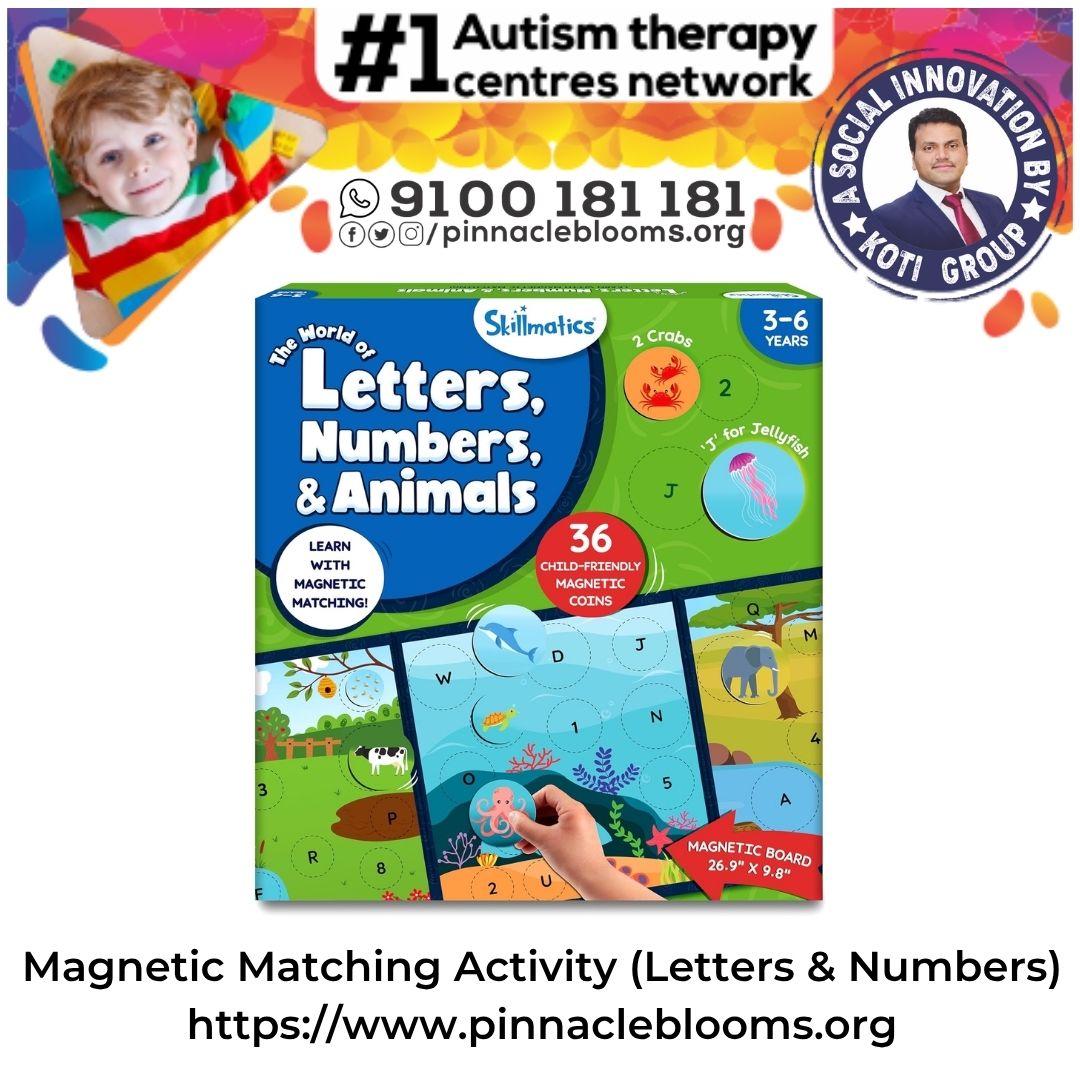
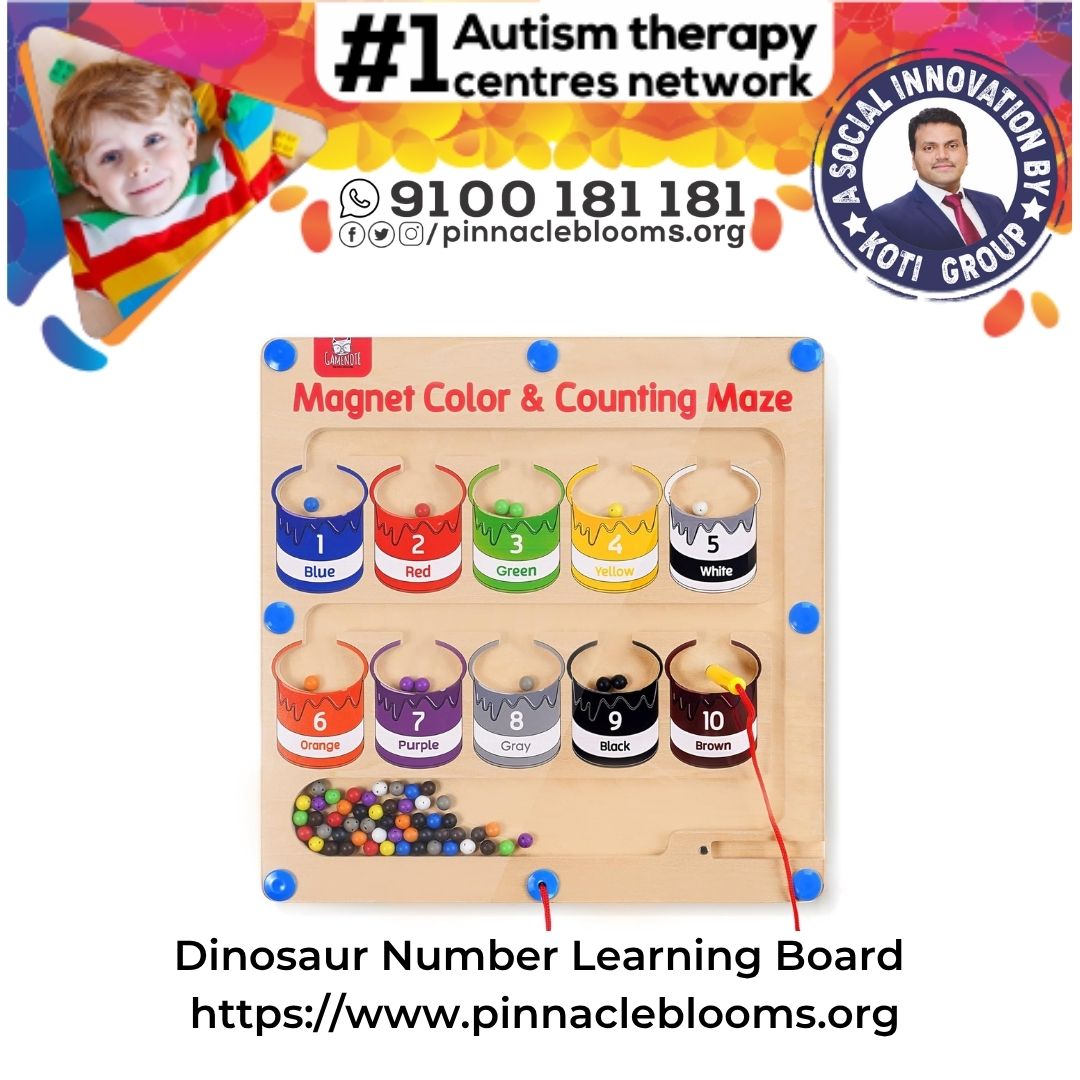
Number Puzzles/Boards
Best for: Number identification, sequencing
Ages: 2-6 years | Portability: Medium
All settings
Price: ₹150–400
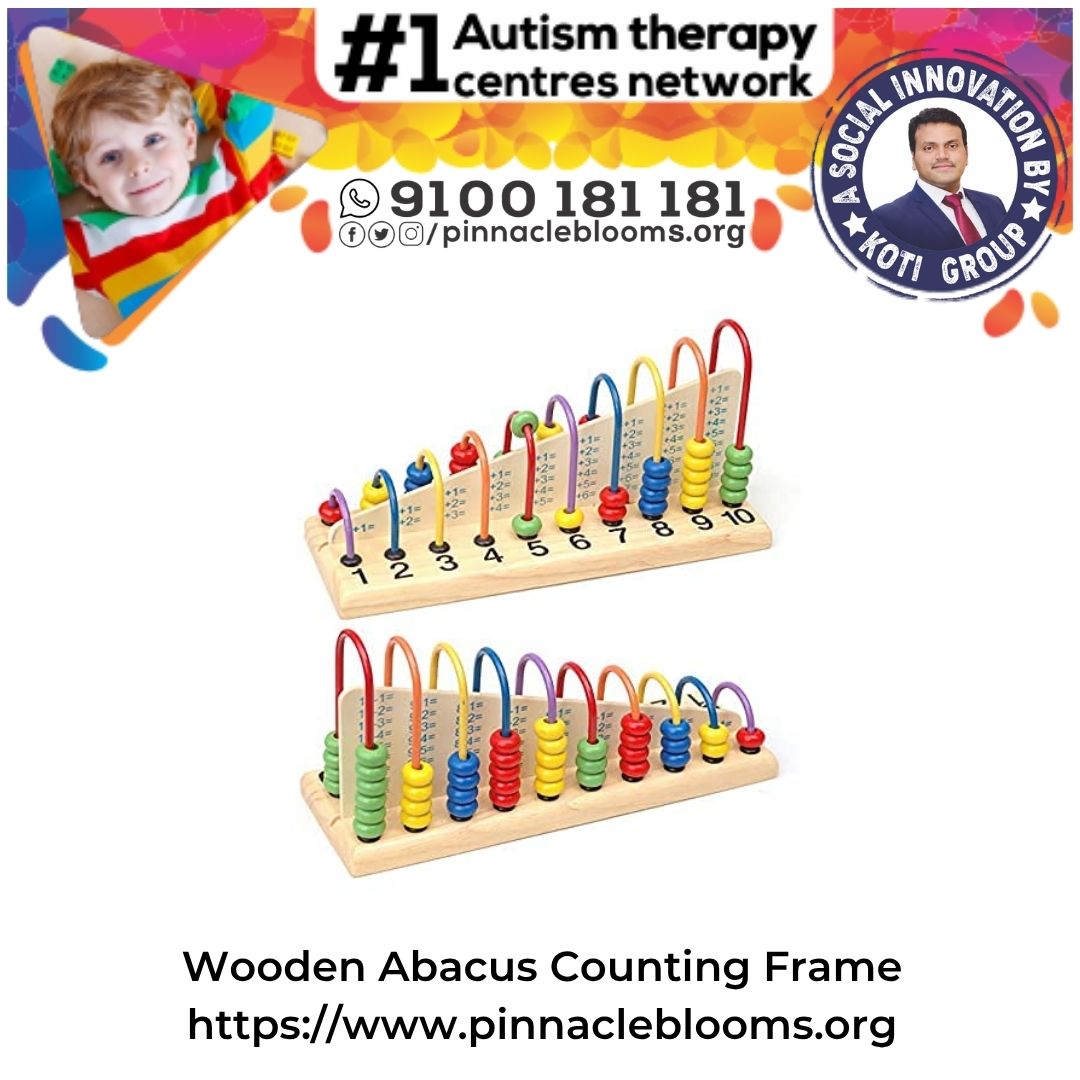
Abacus
Best for: Number concepts, early addition/subtraction
Ages: 3-9 years | Portability: Medium
All settings
Price: ₹150–500
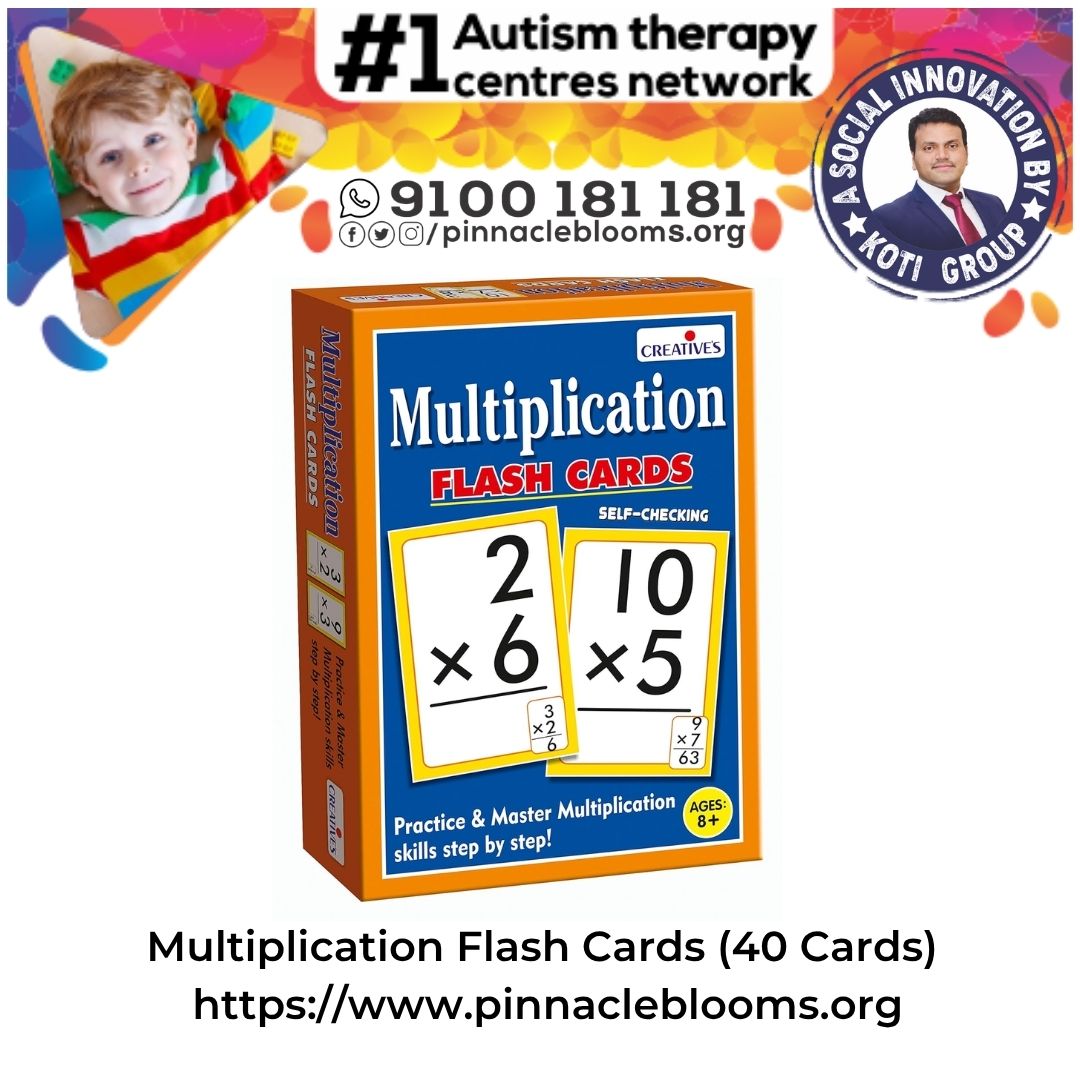
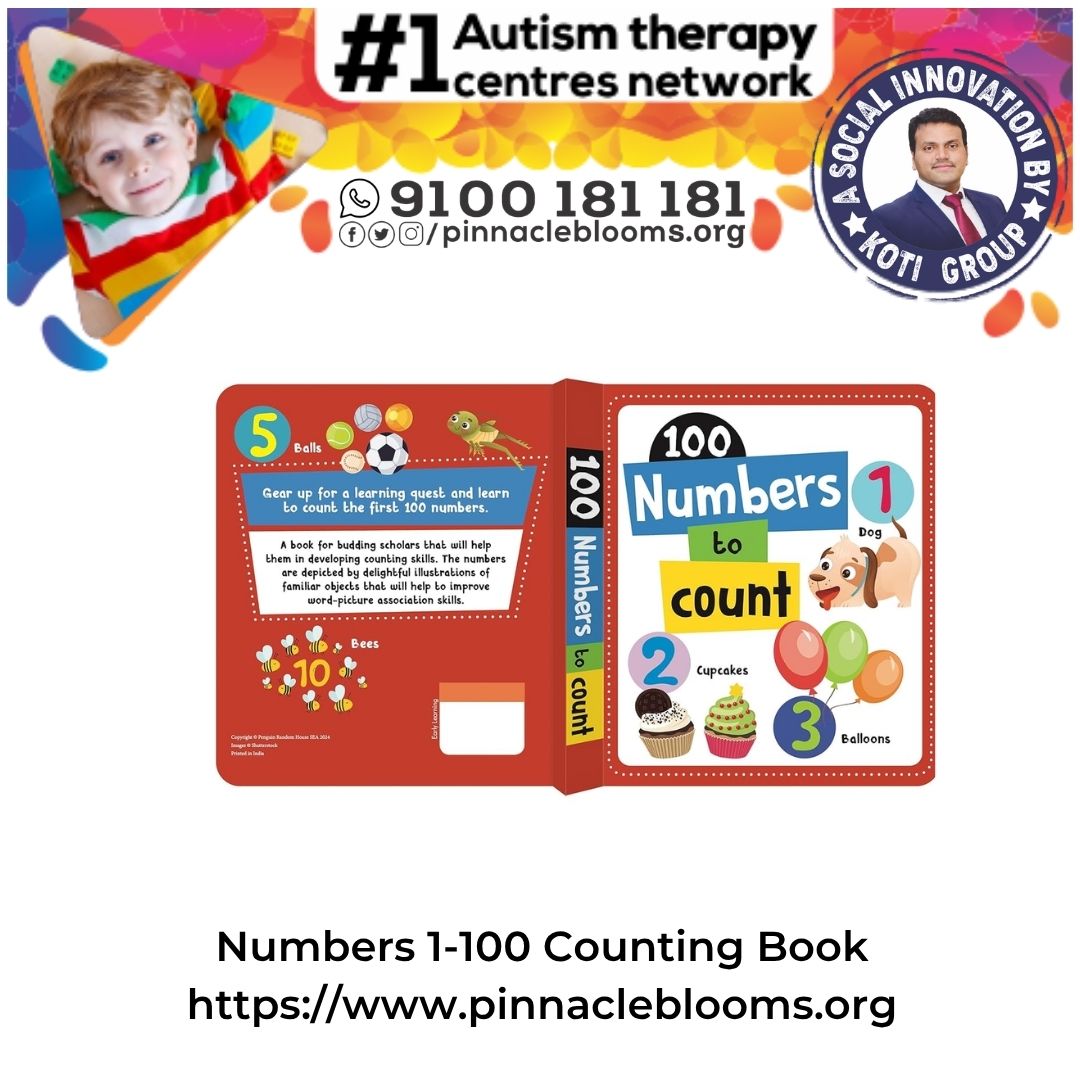
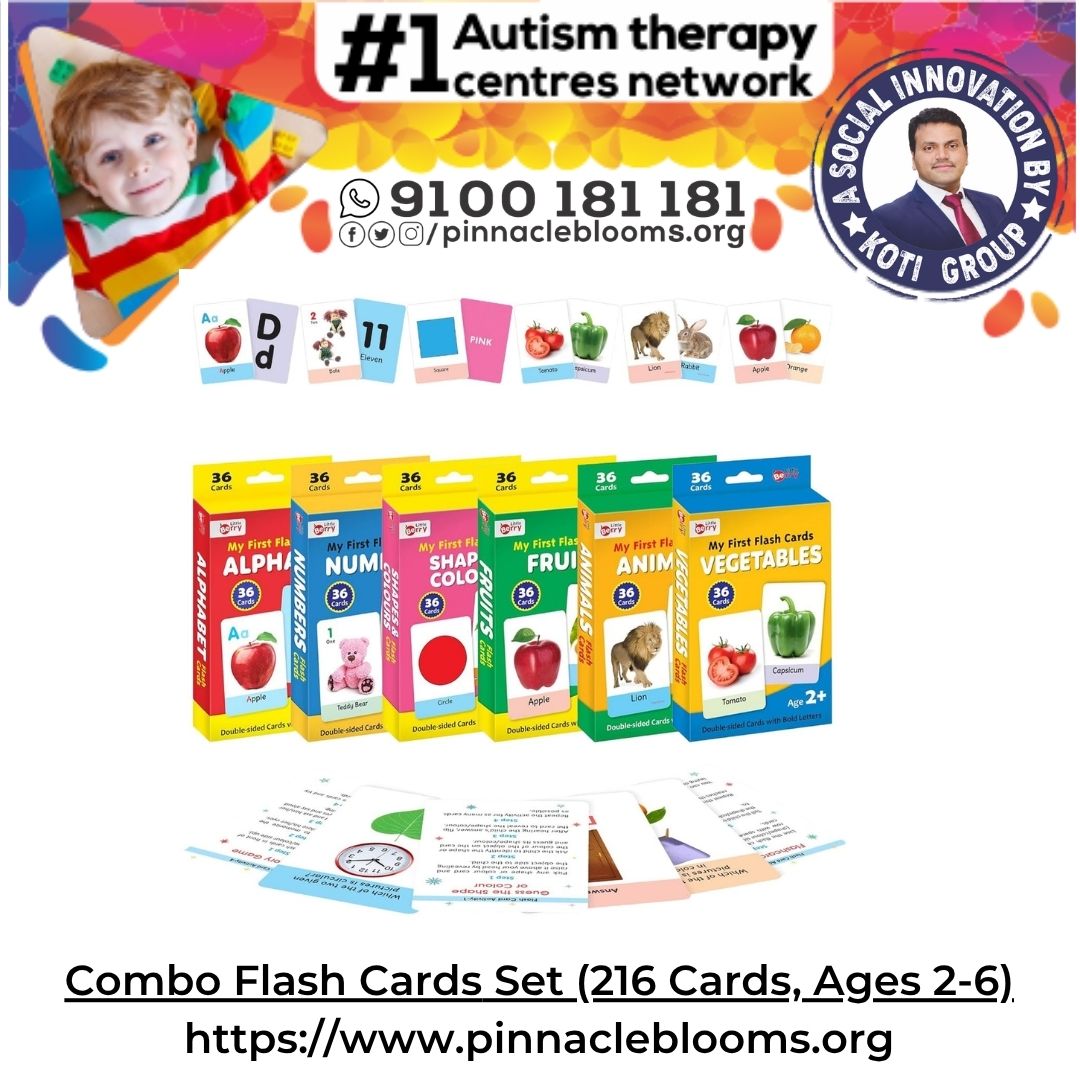
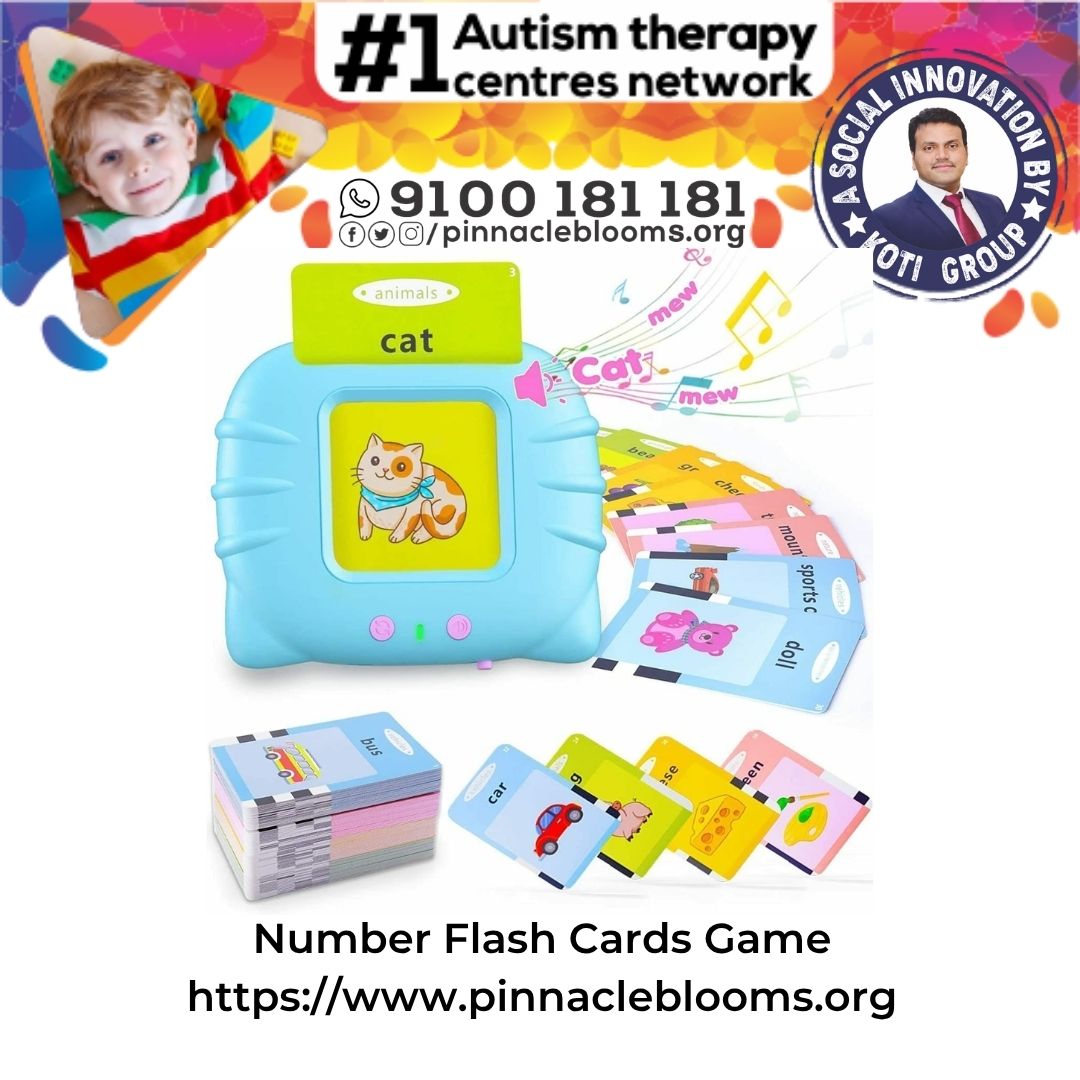
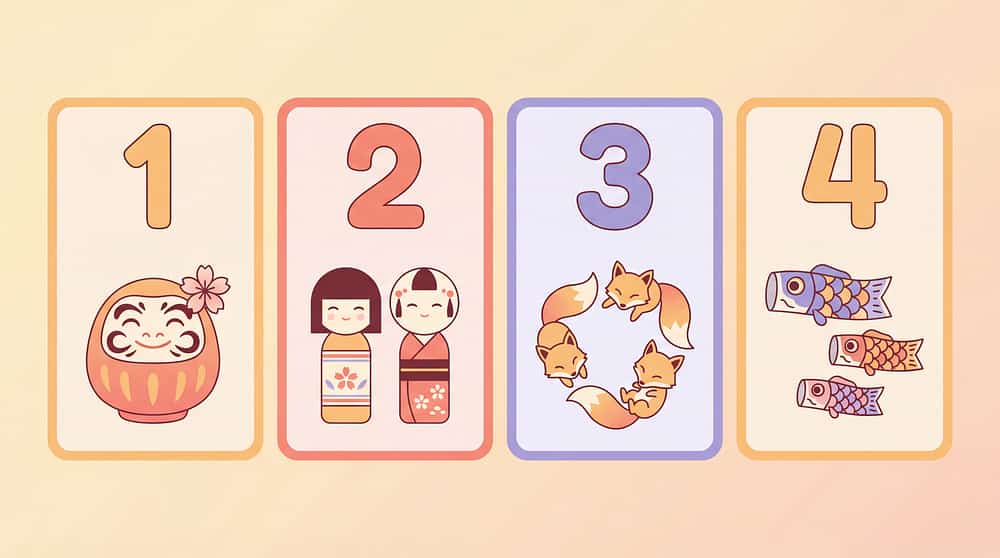
Number Flash Cards
Best for: Number identification, quantity matching
Ages: 2-7 years | Portability: Very High
All settings
Price: ₹100–300
Ten Frames / Number Trays
Best for: Number sense, building to 10
Ages: 3-7 years | Portability: High
Home
School
Clinic
Price: ₹100–300
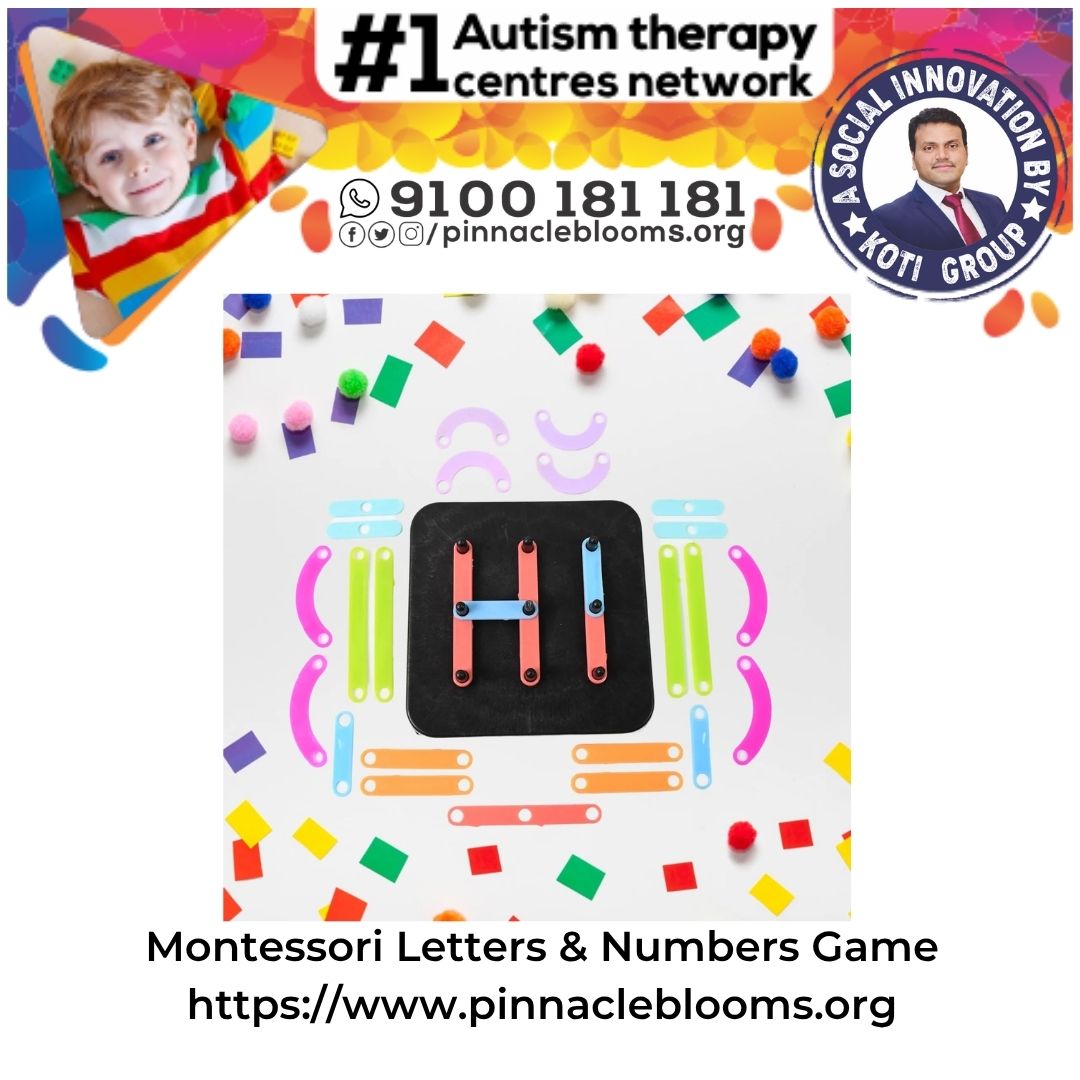
Dot-to-Dot / Number Tracing
Best for: Number formation, order practice
Ages: 3-7 years | Portability: Very High
All settings
Price: ₹50–200
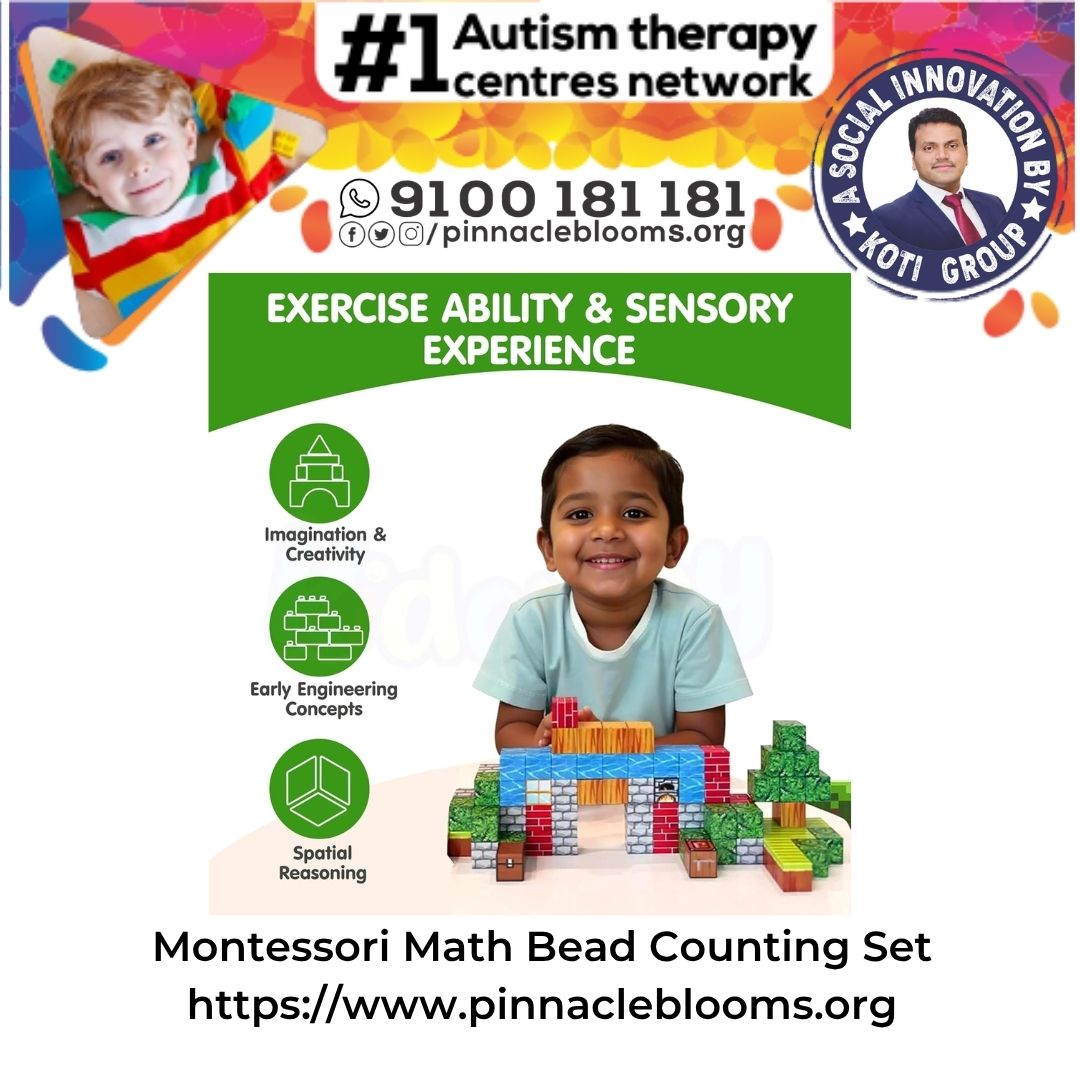
Linking Cubes (Unifix/Snap)
Best for: Counting, comparing, early operations
Ages: 3-9 years | Portability: High
Home
School
Clinic
Price: ₹200–600
Each variant serves different aspects of number development. The timeline on the left illustrates a progression of materials, though many can be used in parallel. Choose based on your child's current skills, learning goals, and preferred activities. Multiple variants can be combined for comprehensive numeracy support.

How to Choose
  • By goal: One-to-one → Bears/Objects; Number recognition → Puzzles/Cards; Visual counting → Abacus/Ten Frames; Versatility → Linking Cubes
  • By setting: Home → any portable option; Classroom → Bears + Ten Frames; Therapy → Linking Cubes (multi-use)
  • By portability: Travel-friendly → Flash Cards, Dot-to-Dot; Home-based → Abacus, Puzzles
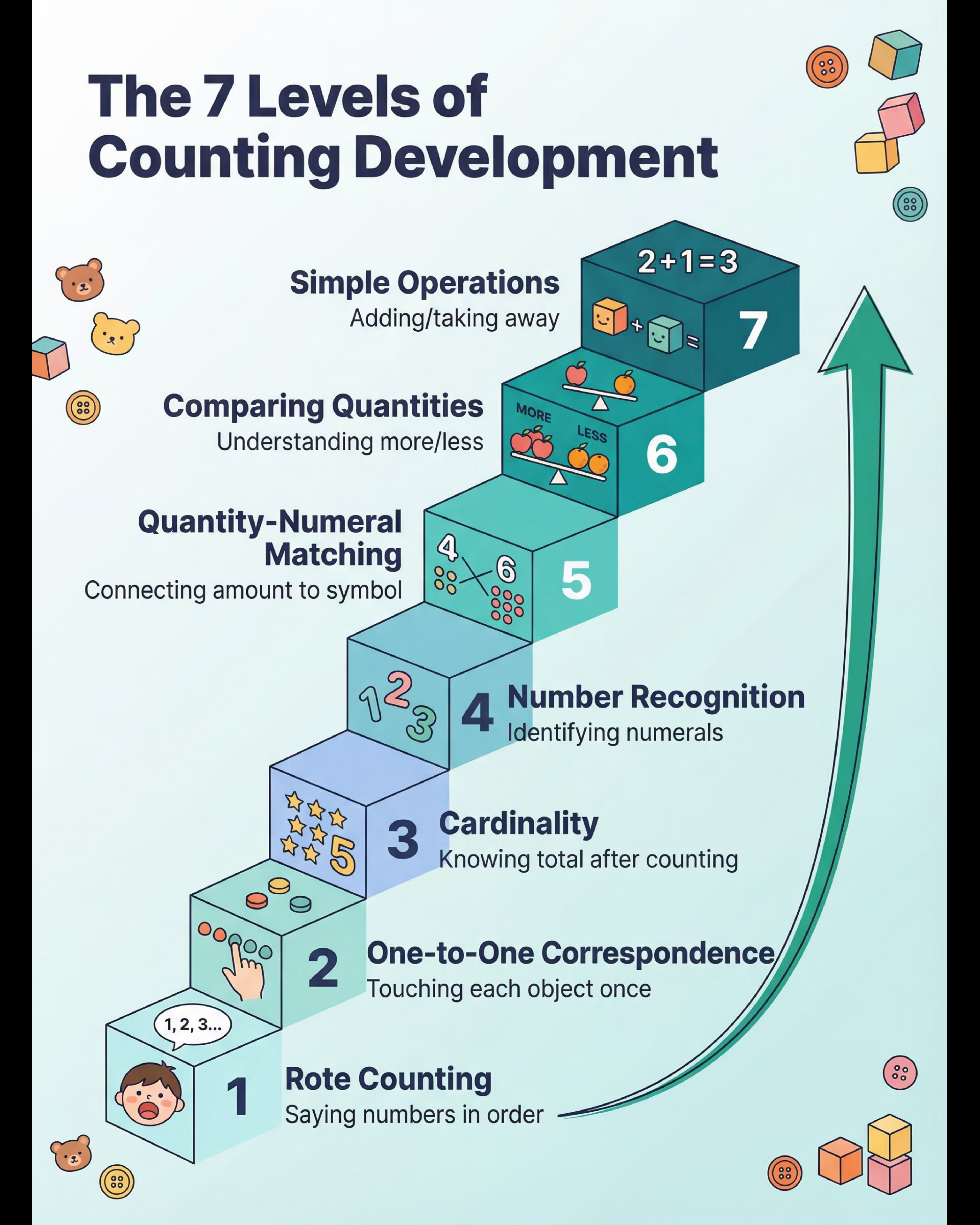
Understanding the Counting Progression
Number development follows a predictable sequence. Understanding where your child is on this continuum helps you choose appropriate activities and set realistic expectations. Each level builds on the previous one—rushing ahead without mastery creates gaps.
Level 1: Rote Counting
Saying numbers in order: "1, 2, 3, 4, 5..." This is memorization, not yet understanding. Foundation for what comes next.
Level 2: One-to-One Correspondence
Touching each object once while counting. Critical skill that transforms rote sequence into meaningful counting action. "Touch and count!"
Level 3: Cardinality
Knowing the total after counting. "How many? Five!" The breakthrough that makes counting purposeful. Last number = how many.
Level 4: Number Recognition
Identifying written numerals. Connecting the quantity experience to the abstract symbol. "That's a 5!"
Level 5: Quantity-to-Numeral Matching
Pairing counted quantities with correct numerals. Building the essential bridge between concrete and abstract. Systematic connection-making.
Level 6: Comparing Quantities
Understanding more/less, bigger/smaller. Using counting to make comparisons. Foundation for measurement and operations.
Level 7: Simple Operations
Adding objects, taking away objects. Using manipulatives to solve problems. The beginning of arithmetic thinking built on solid counting foundation.
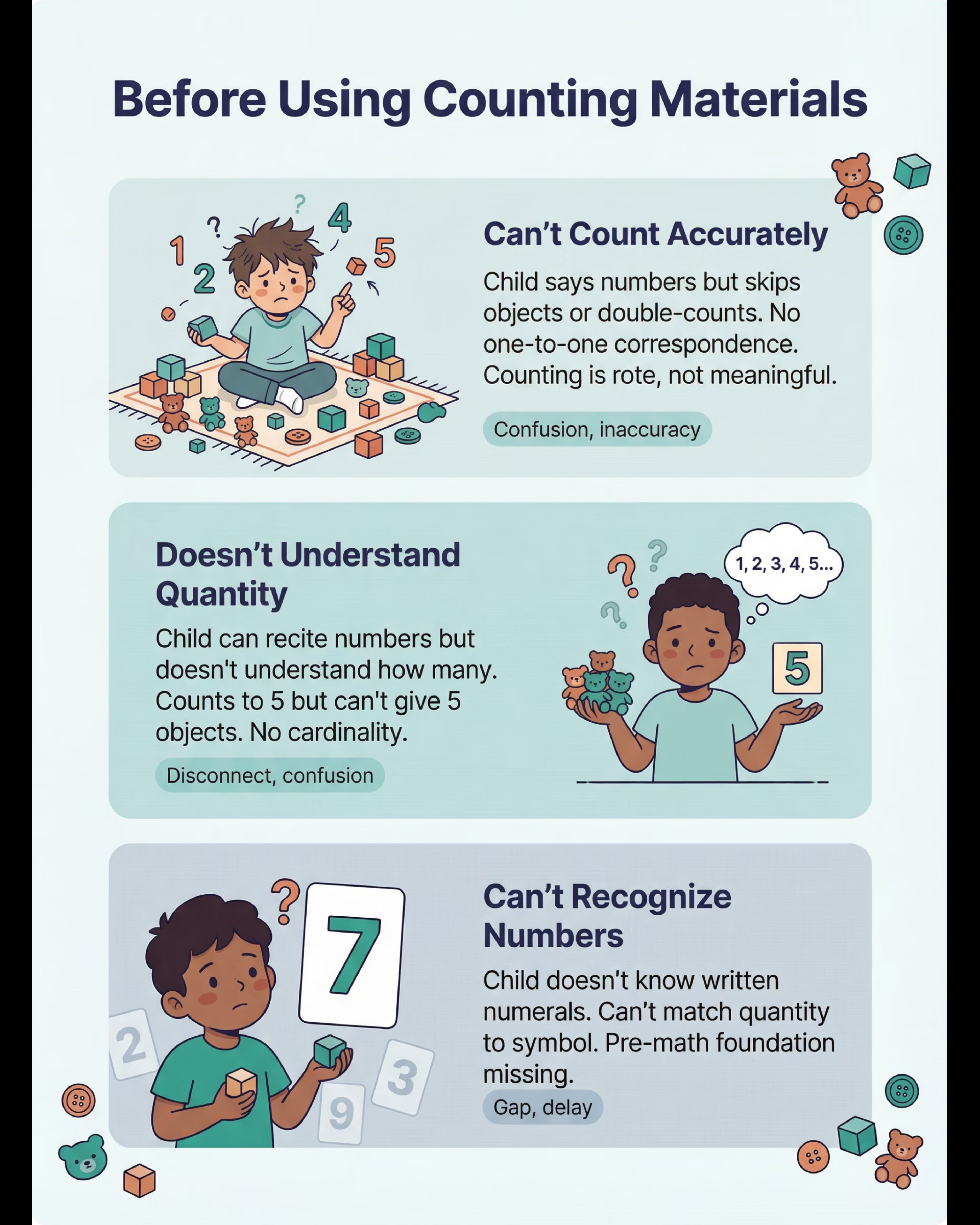
The Struggle (Before)
Can't Count Accurately
Situation: Child says numbers but skips objects or double-counts during counting activities. No reliable one-to-one correspondence.
Experience: Counting is rote, not meaningful. Parents feel frustrated watching their child recite numbers while completely losing track of objects. Teachers report gaps during math activities.
Emotion: Confusion, inaccuracy, disconnection from the counting process
Doesn't Understand Quantity
Situation: Child can recite numbers beautifully but doesn't understand "how many." Counts to five but can't reliably give five objects when asked.
Experience: No cardinality understanding. Numbers are just words in a sequence, not representations of quantity. The fundamental purpose of counting is missing.
Emotion: Disconnect, confusion, missing the point entirely
Can't Recognize Numbers
Situation: Child doesn't know written numerals. Can't match quantity to symbol. Pre-math foundation completely missing.
Experience: Written numbers look like meaningless shapes. Worksheets are overwhelming. The gap between concrete experience and abstract symbols feels insurmountable.
Emotion: Gap, delay, anxiety about school readiness
number-counting-materials therapy material
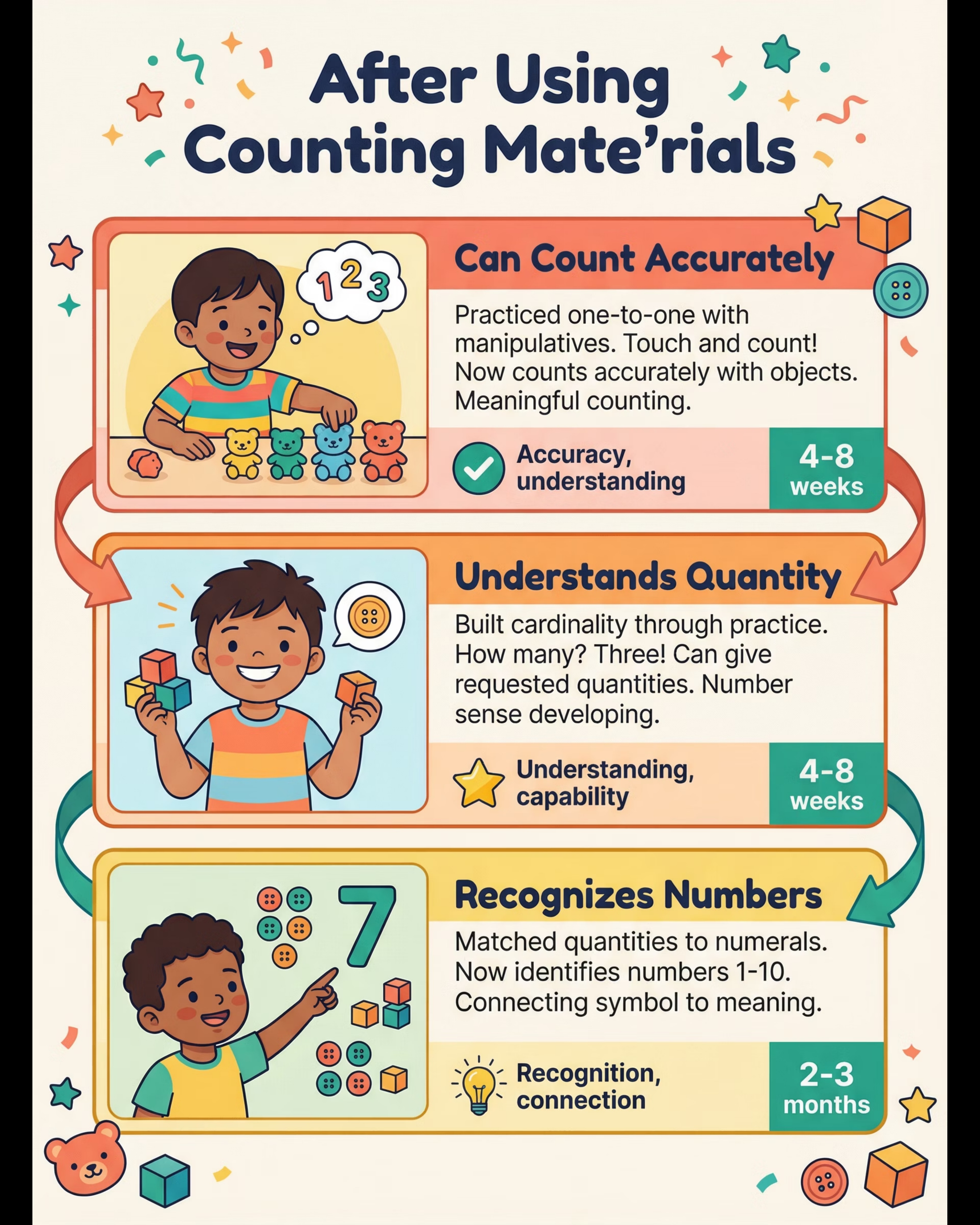
The Breakthrough (After)
Can't Count Accurately → Accurate Counter
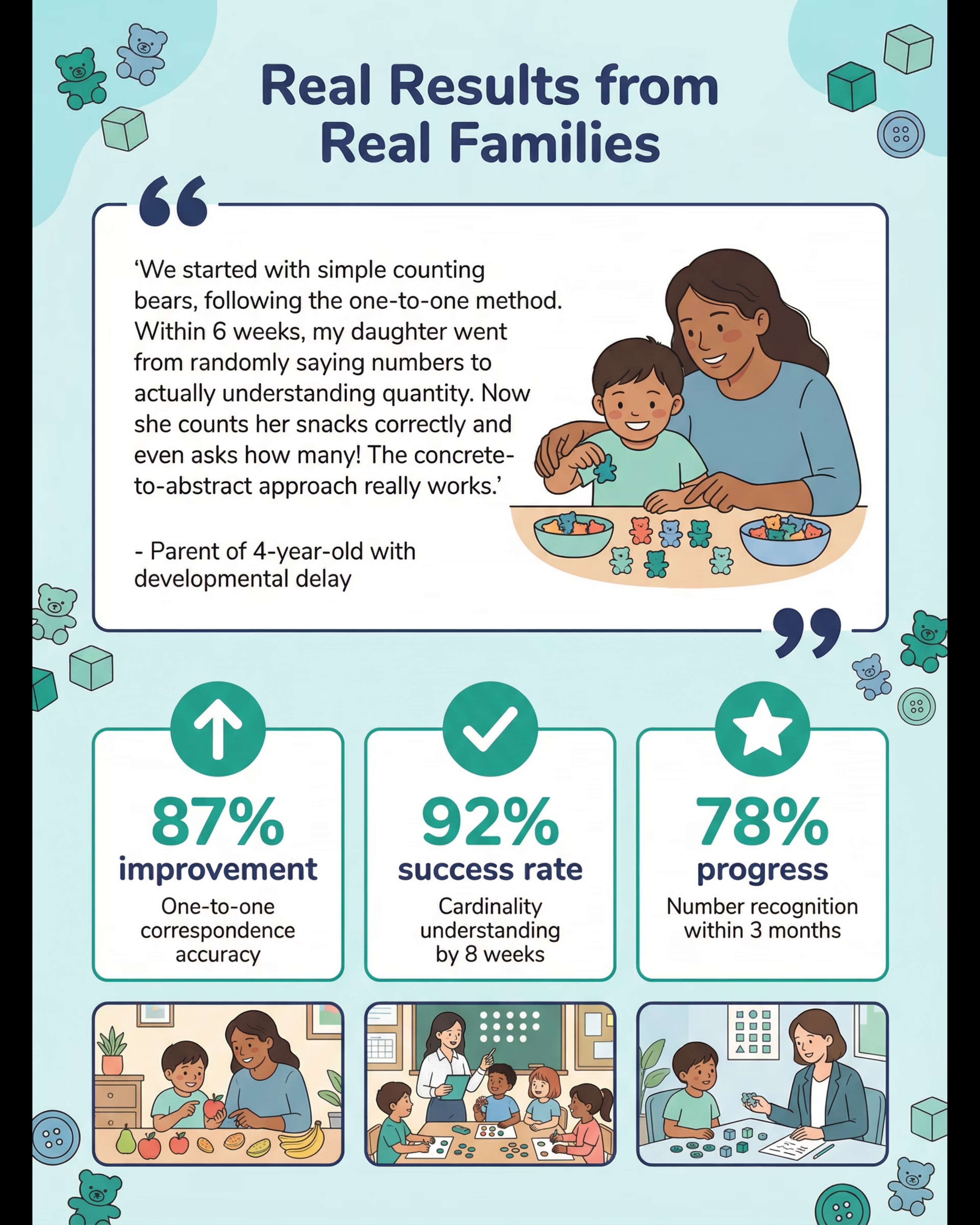
Situation: Practiced one-to-one correspondence daily with manipulatives. "Touch and count!" became the mantra. Now counts accurately with objects every time.
Experience: Meaningful counting has replaced random number sequences. Child systematically touches each object, tracking progress. Parents see genuine skill development, not just memorization.
Emotion: Accuracy, understanding, confidence in counting ability
4-8 weeks
Doesn't Understand Quantity → Cardinality Mastered
Situation: Built cardinality through systematic practice. "How many? Three!" The child now understands that the last number represents the total.
Experience: Can give requested quantities reliably. Understands the purpose of counting. Number sense is genuinely developing through concrete experience.
Emotion: Understanding, capability, purposeful counting
4-8 weeks
Can't Recognize Numbers → Number Recognition Developing
Situation: Matched quantities to numerals systematically. Now identifies numbers 1-10 confidently. Connecting symbol to meaning through repeated pairing.
Experience: Written numbers now make sense. Can point to numerals and name them. The abstract-concrete bridge is building. School readiness improving.
Emotion: Recognition, connection, academic confidence
2-3 months
What to Expect (Realistic Timelines)
number-counting-materials therapy material
100%
Accurate counting with objects
Child counts objects using one-to-one correspondence reliably
4-8 weeks
100%
One-to-one correspondence mastered
Touch-and-count skill becomes automatic during counting activities
4-8 weeks
100%
Cardinality understood
Consistently answers "how many" correctly after counting
4-8 weeks
100%
Number recognition develops
Identifies written numerals and connects them to quantities
2-3 months
100%
Quantity-numeral connection
Systematically pairs amounts with written numbers
2-3 months
100%
Foundation for math operations
Ready for simple addition/subtraction with manipulatives
Ongoing

Important: These timelines assume daily practice with appropriate materials and systematic instruction. Progress varies by child. Consistency and concrete experiences are key to success.
Is This Right for My Child? (2-Minute Check)
number-counting-materials therapy material
Can your child count objects accurately (one-to-one)?
If YES: One-to-one correspondence is developing—build on this strength
If NO: Start with manipulatives and practice touch-and-count daily
Confidence: 95%
Does your child understand "how many" after counting?
If YES: Cardinality understanding is developing—ready for quantity-numeral matching
If NO: Focus on building cardinality: always ask "how many?" after counting
Confidence: 92%
Can your child recognize written numbers?
If YES: Number recognition developing—practice connecting numerals to quantities
If NO: Work on numeral identification alongside concrete counting activities
Confidence: 88%
Can your child give you a specific number of objects?
If YES: Quantity understanding developing—ready for more complex math concepts
If NO: Practice quantity production: "Give me three blocks" with manipulatives
Confidence: 90%

3+ "yes" answers = strong fit. These materials will support your child's current skills and build systematically toward more advanced numeracy concepts.
number-counting-materials therapy material
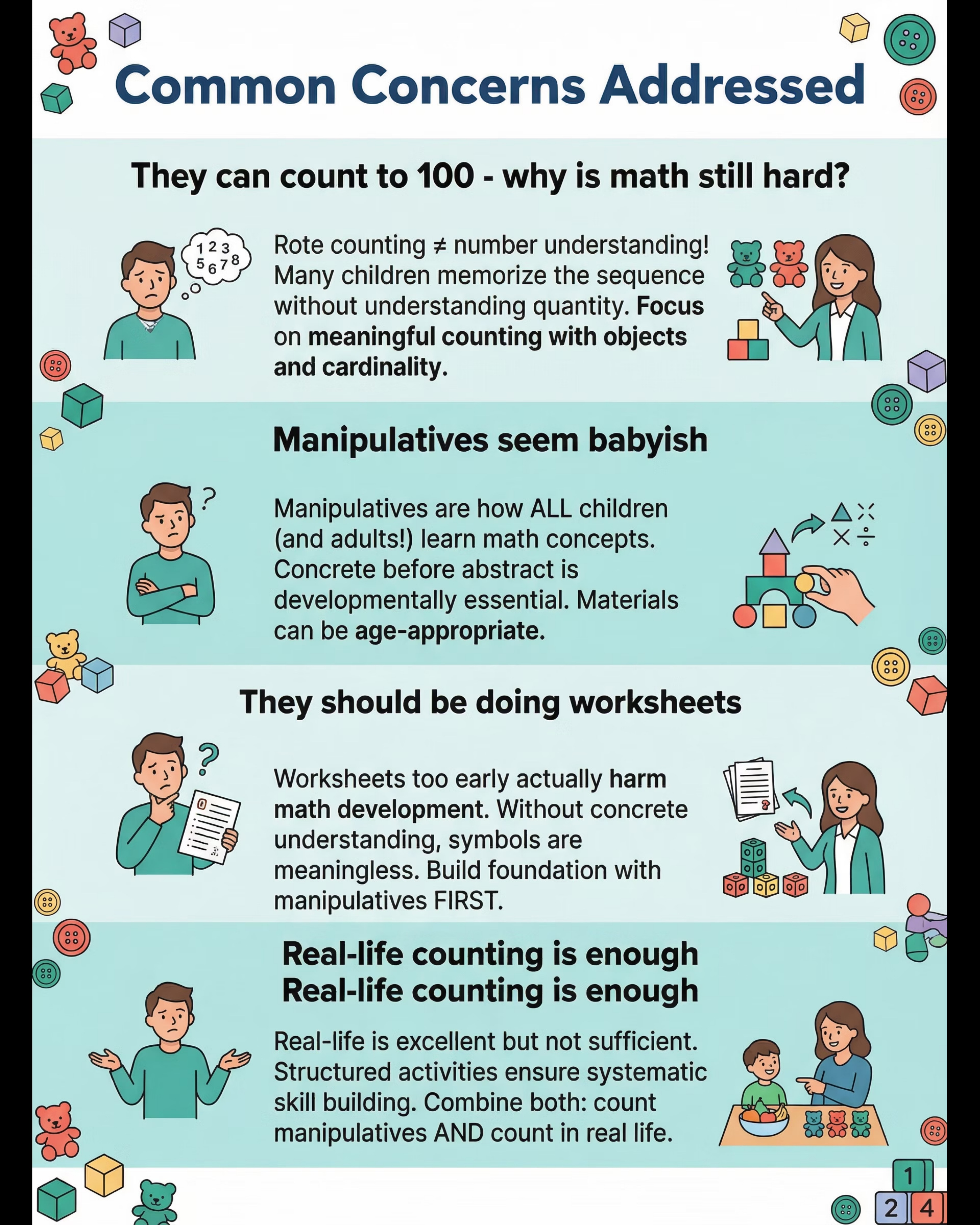
Common Questions (Honest Answers)
They can count to 100—why is math still hard?
The reality: Rote counting does NOT equal number understanding! Many children memorize the sequence beautifully without understanding quantity, cardinality, or what numbers actually represent.
What helps: Shift to meaningful counting with concrete objects. Focus on one-to-one correspondence and cardinality ("how many?"). Build understanding, not just memorization.
Manipulatives seem babyish for my child
The reality: Manipulatives are how ALL children—and adults—learn math concepts! Concrete-before-abstract is developmentally essential at ANY age. The materials can be age-appropriate (use sports counters instead of bears for older children).
What helps: Choose age-neutral manipulatives. Understand that concrete materials are essential tools, not "baby toys." Foundation must be solid regardless of age.
They should be doing worksheets and drills
The reality: Worksheets too early actually HARM math development! Without concrete understanding, symbols are meaningless marks on paper. You create anxiety and gaps, not learning.
What helps: Build foundation with manipulatives FIRST, then gradually transition to abstract representation. Concrete → pictorial → abstract. Always in that order.
Real-life counting should be enough
The reality: Real-life counting is excellent but not sufficient alone. Structured activities ensure systematic skill building and fill developmental gaps that informal counting might miss.
What helps: Combine structured practice with manipulatives AND real-life counting opportunities. Both are essential—they serve different purposes and reinforce each other.
number-counting-materials therapy material
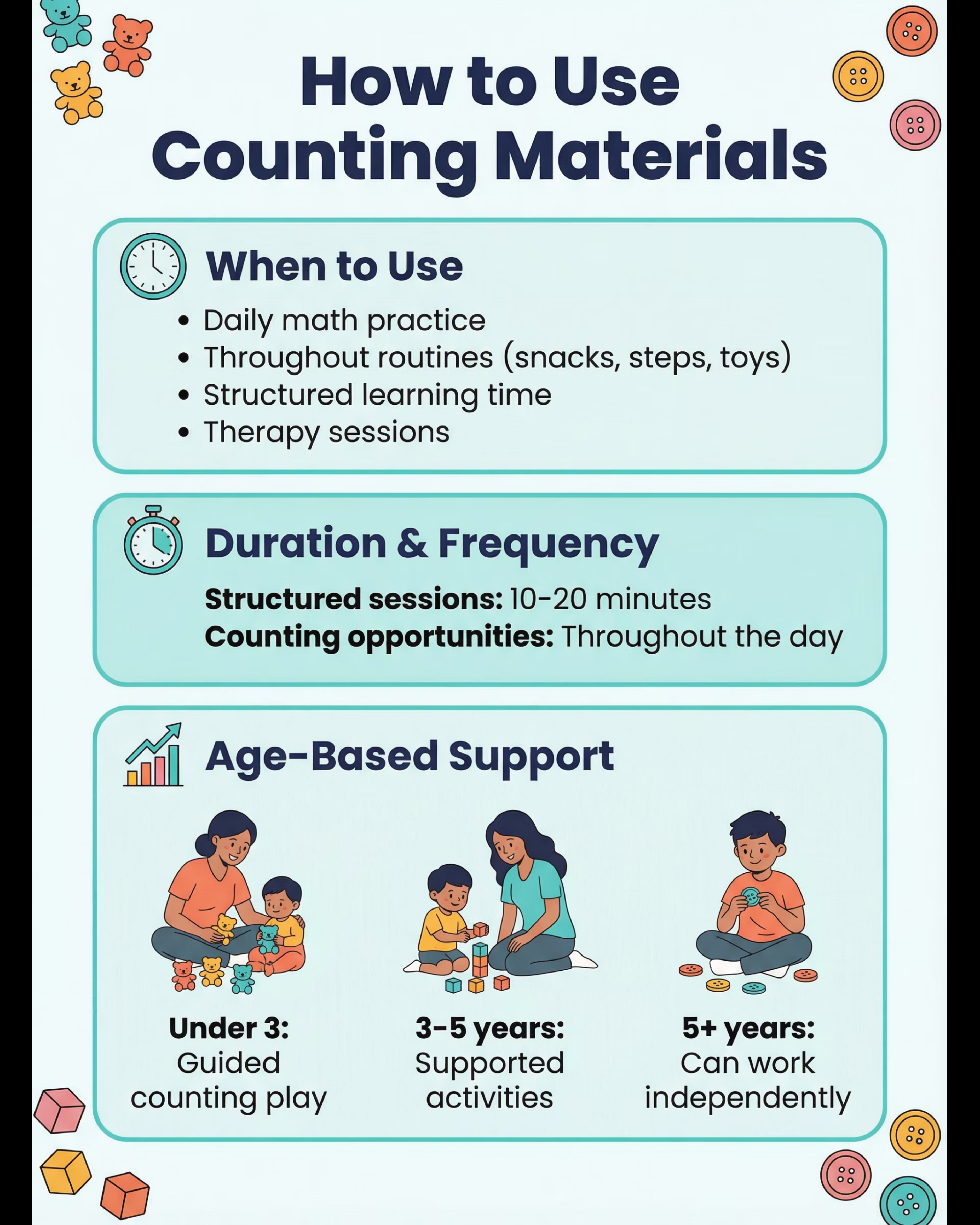
Usage Guide
When to Use ✓
When NOT to Use ✗
Daily math practice sessions (10-20 minutes structured)
Pushing abstract work before concrete understanding is solid
Throughout daily routines: count snacks, steps, toys, vehicles
When child is dysregulated or emotionally unavailable
Structured learning time at home or school
As punishment or during conflict
Therapy sessions for numeracy development
When expectations exceed child's developmental level
Pre-academic preparation and school readiness activities
Supervision by Age
Age Range
Supervision Level
Notes
Under 3 years
Guided counting play
Full supervision; watch for mouthing small objects
3-5 years
Supported counting activities
Present and engaged; guide one-to-one correspondence
5+ years
Can work more independently
Check-ins; reinforce best practices periodically
Duration & Settings: 10-20 minutes structured practice; integrate counting throughout the day. Effective in home, school, clinic, and outdoor settings—numeracy learning happens everywhere.
number-counting-materials therapy material
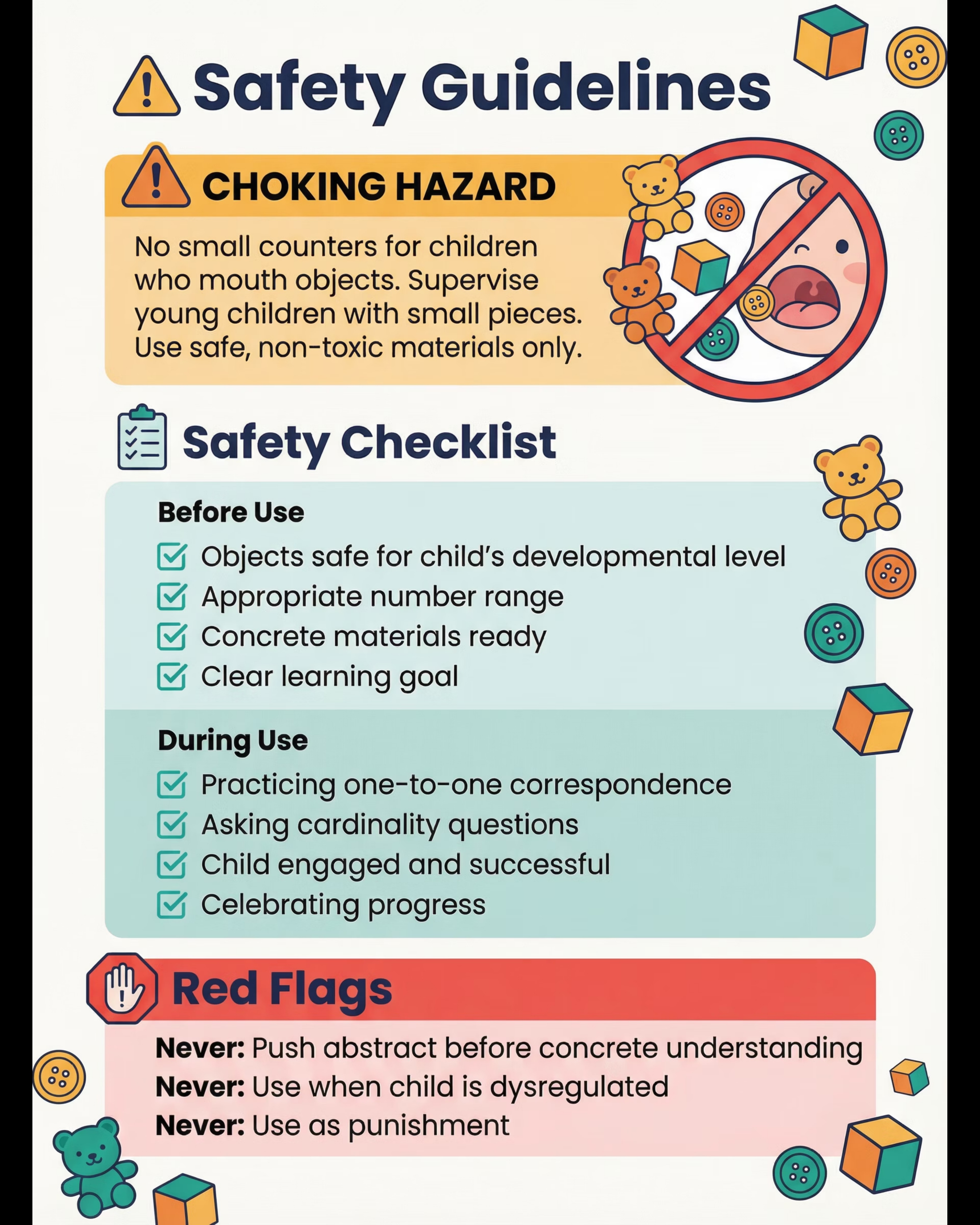
Safety First
Critical Safety
  • No small counters for children who mouth objects
  • Always supervise young children with small counting objects
  • Ensure all materials are safe, non-toxic, and age-appropriate
Important Warnings
  • Small counting objects can be choking hazards for young children
  • Regularly check for broken pieces; discard damaged items
  • Store small pieces safely out of reach when not in use
Contraindicated (Never Use) 🛑
  • Small objects for children who mouth toys or materials
  • Abstract number work before concrete understanding is established
Safety Checklist
Before Use
  • ✓ Objects safe and appropriate for child's age
  • ✓ Number range matches child's skill level
  • ✓ Concrete materials ready and organized
  • ✓ Clear learning goal identified
During Use
  • ✓ One-to-one correspondence practiced correctly
  • ✓ Cardinality question asked: "how many?"
  • ✓ Child engaged and participating actively
  • ✓ Celebrating successes and efforts
Signs of Success
  • ✓ Accurate one-to-one counting
  • ✓ Understanding "how many"
  • ✓ Number recognition improving
  • ✓ Giving requested quantities
number-counting-materials therapy material
Investment Guide
Choosing the right materials for early math learning doesn't have to be complicated or expensive. This guide breaks down effective options from free household items to versatile commercial sets. The overall investment ranges from ₹0 to ₹600, highlighting excellent DIY alternatives for a very low-investment approach.
Budget Option
Premium Option
What
Household items for counting + DIY number cards
Counting bears set or linking cubes with number activities
Cost
₹0-100
₹400-600
Brands
N/A (DIY)
Learning Resources, Educational Insights
Note
Highly effective! Use buttons, beans, toys from home. Make number cards on paper. Real-life counting is free and powerful.
Organized, attractive, multi-purpose. Counting bears work for sorting too. Linking cubes are versatile investment.
Best for
Getting started immediately; cost-conscious families; supplementing commercial materials
Long-term use; therapy settings; multiple children; classroom applications
Cost-Effective Start
Begin with zero investment by utilizing everyday household items, making early mathematical exploration accessible and risk-free for every family.
DIY & Customization
Leverage common objects for hands-on counting and easily create custom number cards, perfectly tailoring learning experiences to individual needs.
Long-Term Educational Value
Commercial sets offer durable, multi-purpose tools like counting bears or linking cubes, designed for extended educational use and varied activities.
Targeted Application
Specific commercial materials are ideal for therapy settings, environments with multiple children, or structured classroom applications, providing focused learning.
Initial Exploration
Start with free household items to assess your child's engagement and foundational understanding of counting concepts.
Assess & Adapt
Observe your child's interaction and learning needs to identify specific areas for development and preferred learning styles.
Strategic Investment
Select 1-2 commercial sets, such as linking cubes or counting bears, that align with identified needs and interests for enhanced learning.
Sustained Growth
Utilize versatile purchased materials for long-term learning, continuously expanding activities as your child's skills advance.

Best Starting Point: Begin with household items (free!) to assess engagement and skill level, then invest in 1-2 commercial options that match your child's interests and learning needs. Linking cubes or counting bears offer excellent versatility.
number-counting-materials therapy material
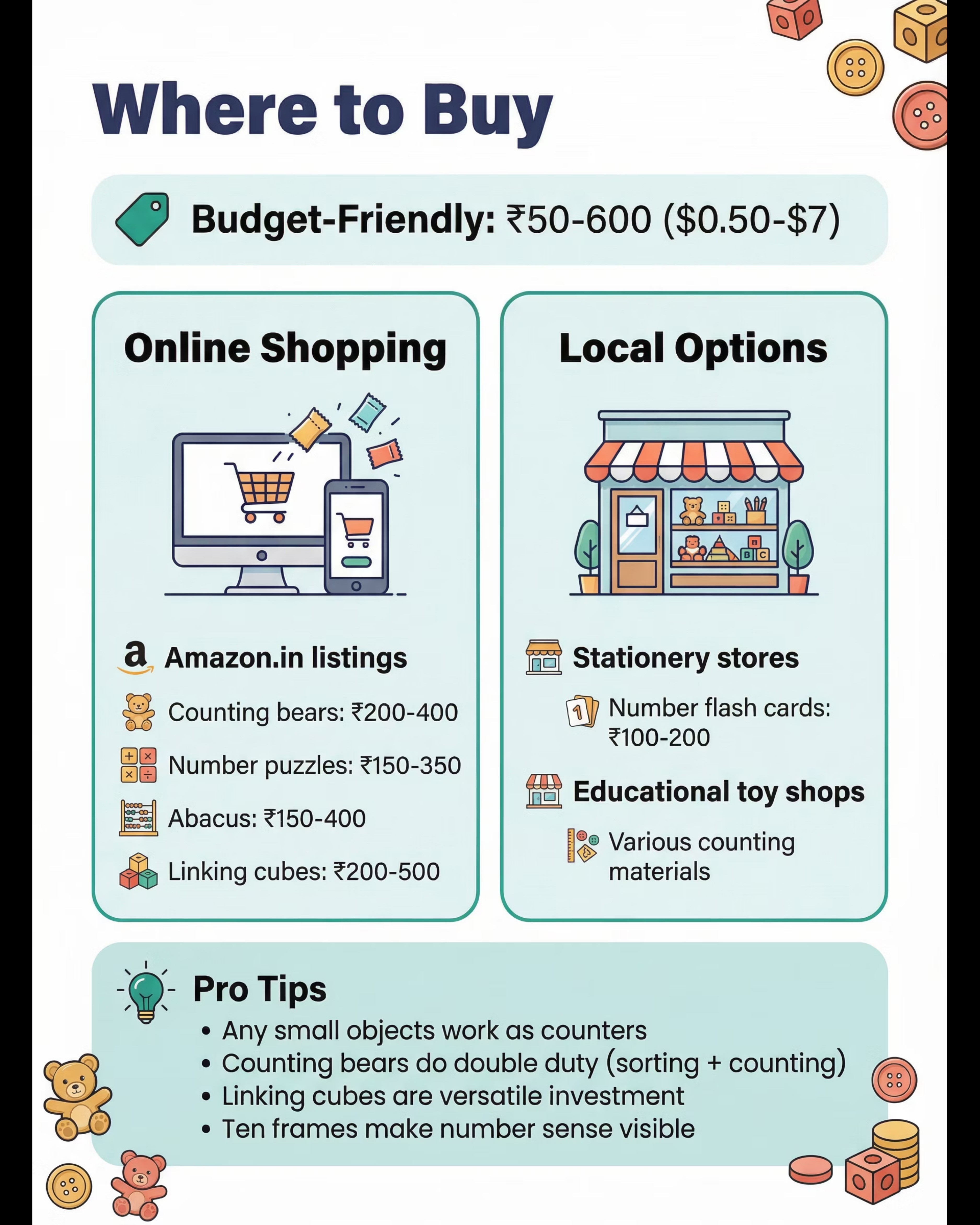
Where to Buy in India
Availability: Widely Available across online platforms and local stationery stores
Amazon.in
Search: "counting bears"
Price: ₹200-400
Amazon.in
Search: "number puzzle kids"
Price: ₹150-350
Amazon.in
Search: "abacus kids"
Price: ₹150-400
Amazon.in
Search: "linking cubes math"
Price: ₹200-500
Stationery Stores
Search: "number flash cards"
Price: ₹100-200
Buying Tips ✓
  • Any small objects work as counters—be creative with household items
  • Counting bears offer double duty: sorting AND counting activities
  • Linking cubes are versatile long-term investment for multiple uses
  • Ten frames make number sense visible and structured
  • Real-life counting is free, effective, and available everywhere
Red Flags 🚩
  • Materials that are too abstract too soon (symbols before concrete understanding)
  • Worksheets before manipulatives (backwards progression)
  • Number range too large for child's current skill level
  • No concrete materials—relying only on abstract representation
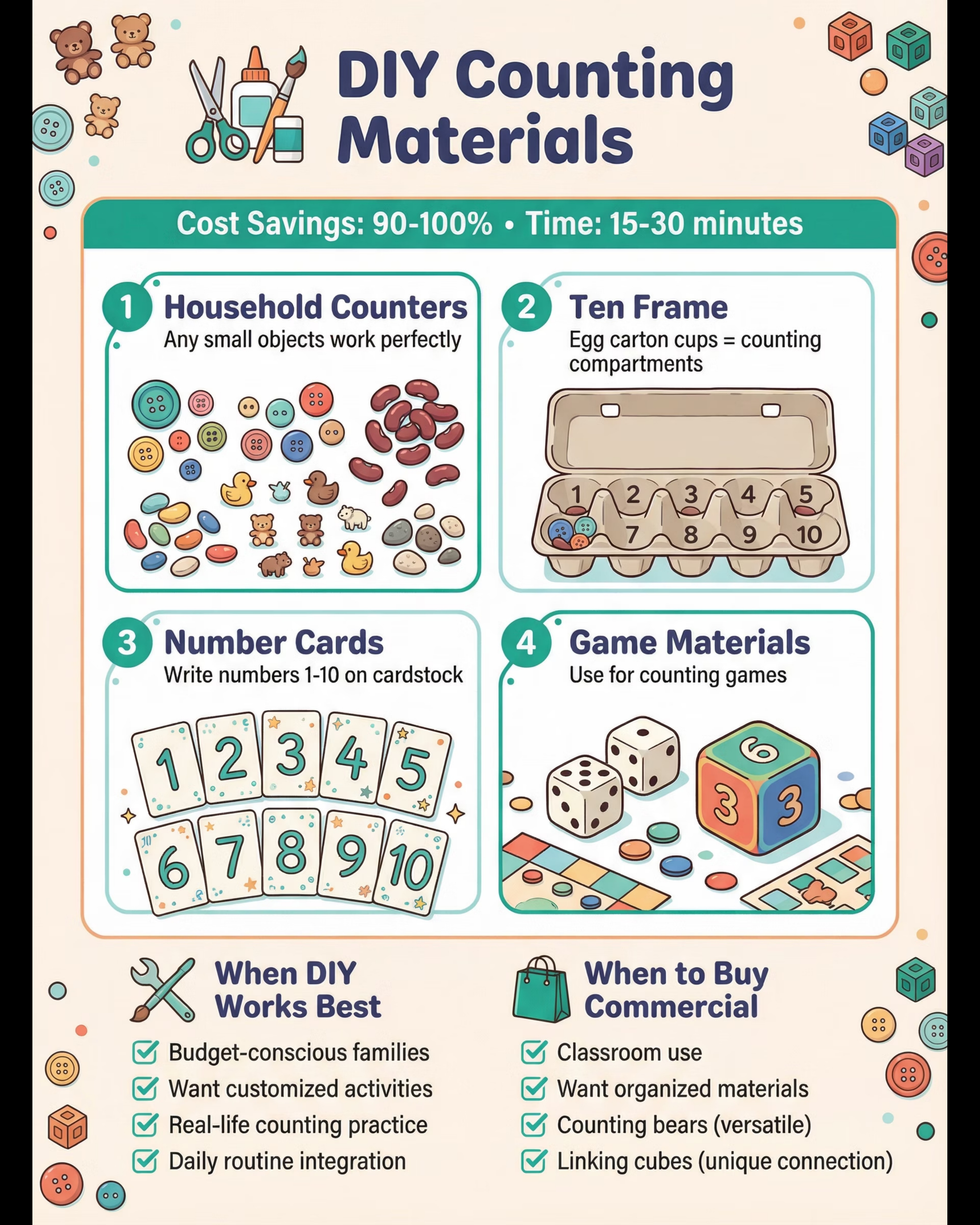
DIY Alternative (Save 90-100%)
Feasibility: Very High | Time Required: 15-30 minutes | Cost Savings: 90-100%
Materials Needed
  • Any small countable objects (buttons, beans, pasta, toys, stones)
  • Egg cartons (work perfectly as ten frames)
  • Paper or cardstock for number cards
  • Markers or crayons
  • Dice (for counting games)
  • Containers for organizing materials
Simple DIY Steps
  1. Gather small countable objects from around your home
  1. Create number cards: write numbers 1-10 clearly on cards
  1. Use egg carton cups as structured ten frame for counting to 10
  1. Match quantity of objects to your number cards systematically
  1. Create simple dot-to-dot activities on paper
  1. Use dice for spontaneous counting games and activities
DIY vs Commercial Comparison
Factor
When to DIY
When to Buy Commercial
Best situations
Always a great option! Budget-conscious; want customized activities; real-life counting practice
Want attractive, organized materials; classroom use; counting bears (also for sorting); linking cubes (unique connection feature)
Tradeoffs
May be less visually engaging; requires organizing materials yourself
Higher cost; less customizable to specific interests

Pro Tip: Household items are excellent for counting! Children often engage more with familiar objects. Start with DIY to build skills, then supplement with 1-2 commercial options if desired. Both approaches work beautifully.

Preview of number counting materials Therapy Material

Below is a visual preview of number counting materials therapy material. The pages shown help educators, therapists, and caregivers understand the structure and content of the resource before use. Materials should be used under appropriate professional guidance.

Page 1
Page 2
Page 3
Page 4
Page 5
Page 6
Page 7
Page 8
Page 9
Page 10
Page 11
Page 12
Page 13
Page 14
Page 15
Page 16
Page 17
Page 18
Page 19
Page 20
Link copied!
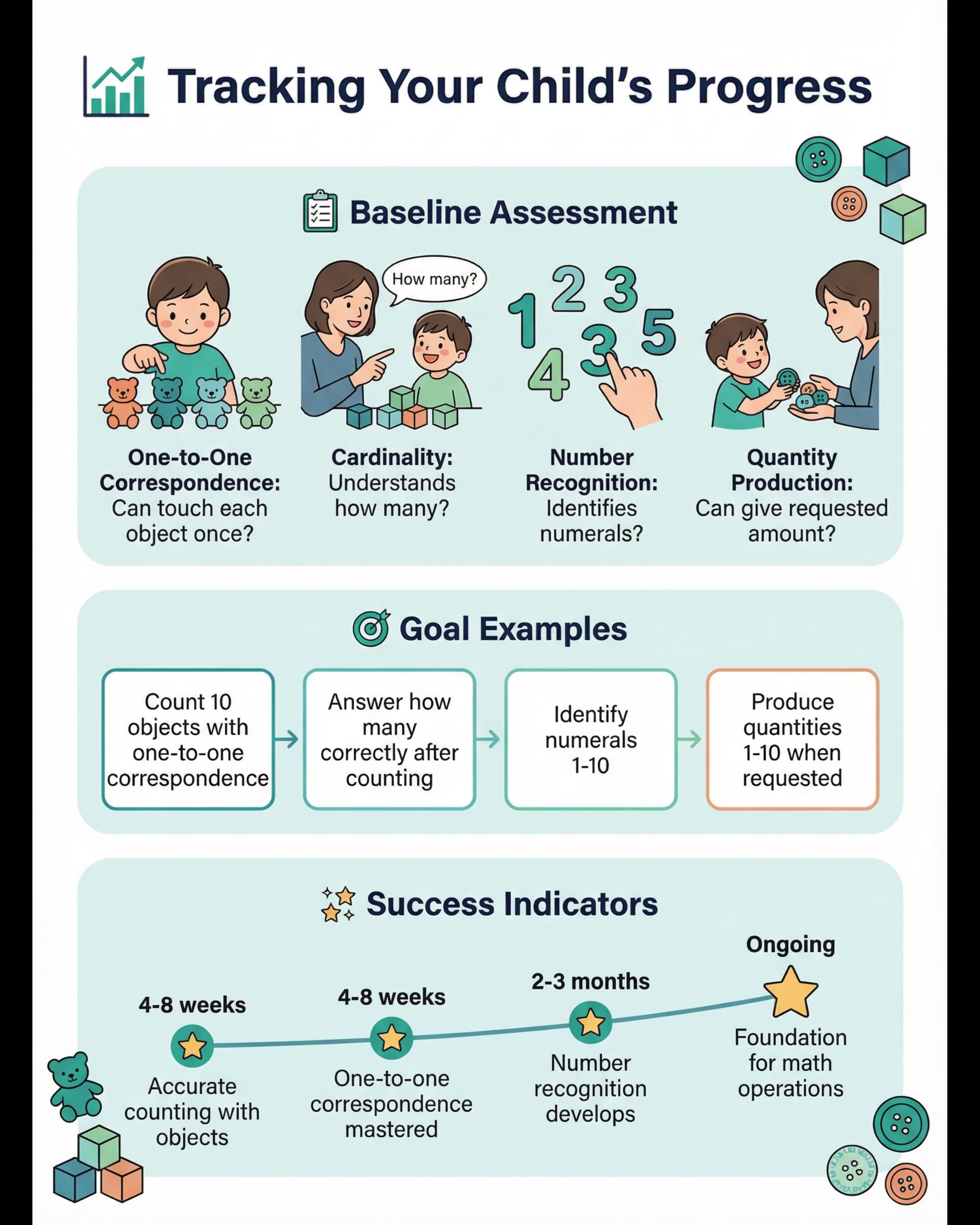
Measuring Success & Next Steps
Track Progress
Baseline (Measure First)
  • Rote counting range (how high can they count?)
  • One-to-one correspondence accuracy (touch-and-count ability)
  • Cardinality understanding (do they know "how many"?)
  • Number recognition (which numerals can they identify?)
Goals
  • Child will count [X] objects with one-to-one correspondence
  • Child will answer "how many" correctly after counting
  • Child will identify numerals 1-[X]
  • Child will produce requested quantities accurately
Success Indicators ✓
  • Accurate counting with concrete objects
  • Consistent cardinality understanding
  • Growing number recognition
  • Reliable quantity production
  • Real-life counting application throughout the day
Complete the Kit
Complementary Tools:
Alternative Option:
Recommended Bundles:
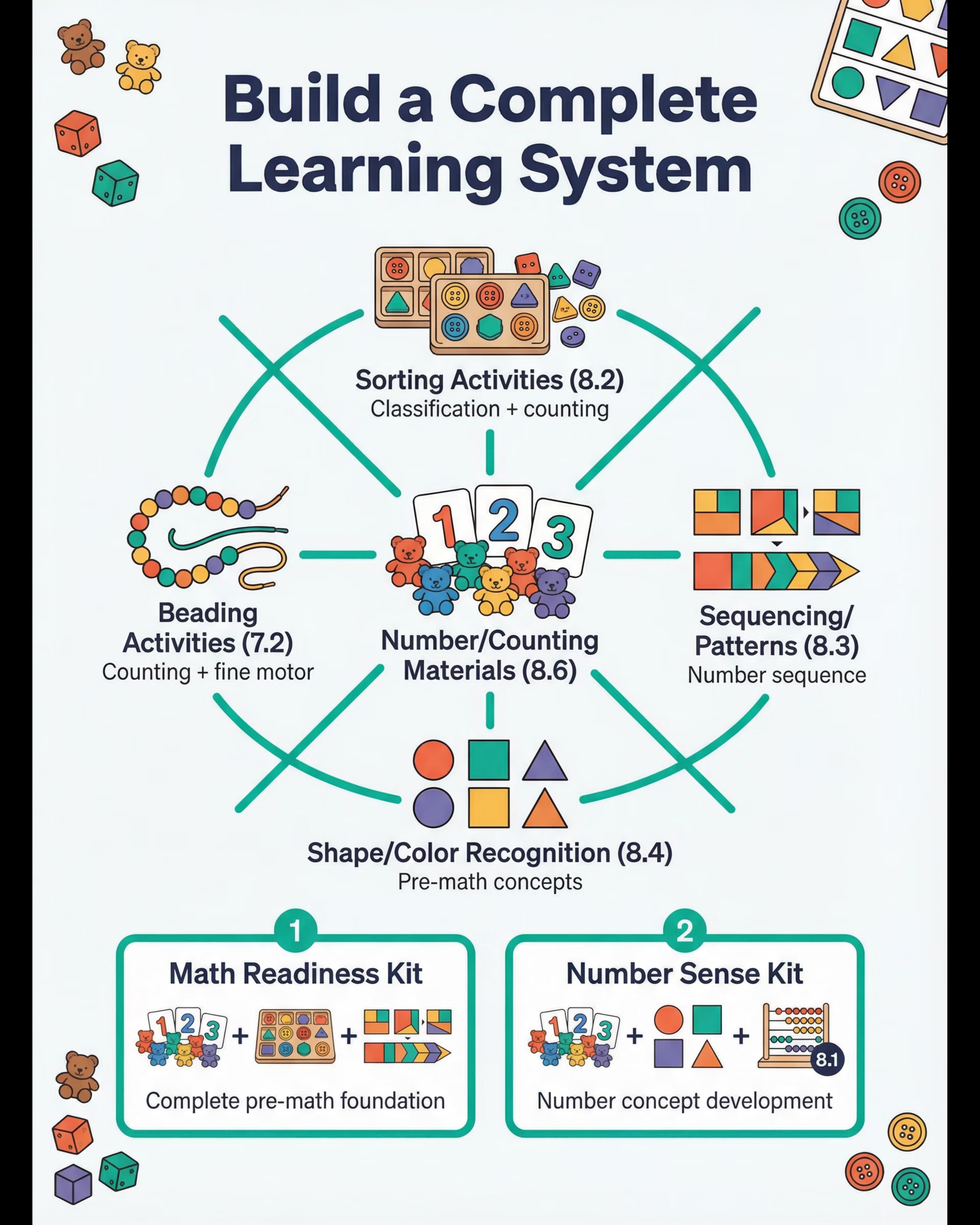
  • Math Readiness Kit: Tools 8.6 + 8.2 + 8.3 — Complete pre-math foundation
  • Number Sense Kit: Tools 8.6 + 8.4 + 8.1 — Comprehensive number concept development
AI Summary & Keywords
Number and counting materials develop foundational numeracy through concrete manipulation, building one-to-one correspondence, cardinality, and number recognition. Core Kit (Rank 1), strong evidence, essential pre-math tool for ages 2-9 years across all settings.
counting
numbers
math
numeracy
one-to-one
cardinality
manipulatives
SpEd
OT
core-kit
Common searches: counting materials autism, number sense activities, counting bears, math manipulatives kids, one to one correspondence, pre-math autism, number recognition toys
Get Support
FREE National Autism Helpline
Phone: 9100 181 181
Languages: 16+ languages
Platform Integration
AbilityScore® identifies numeracy patterns and developmental levels
TherapeuticAI® prescribes personalized counting activities matched to your child's skills
EverydayTherapyProgramme™ includes daily embedded number work throughout routines
Cognitive Index tracks numeracy development and progress over time

Disclaimer: This is educational information designed to support families and professionals. Always consult qualified occupational therapists, speech-language pathologists, special educators, or pediatricians for individualized assessment and recommendations. Individual results vary based on child's unique profile, consistency of practice, and quality of instruction.