













Tool ID: 1.8
Tool ID: 1.8
Oral Motor Tools
Safe Chewing Solutions for Sensory Seekers
Discover tools that provide appropriate oral sensory input, promoting focus, calming, and self-regulation in a safe and effective way.
Tool ID: 1.8
SLP + OT Recommended
Moderate-Strong Evidence
Rank #2
Daily Use
Oral Motor Tools
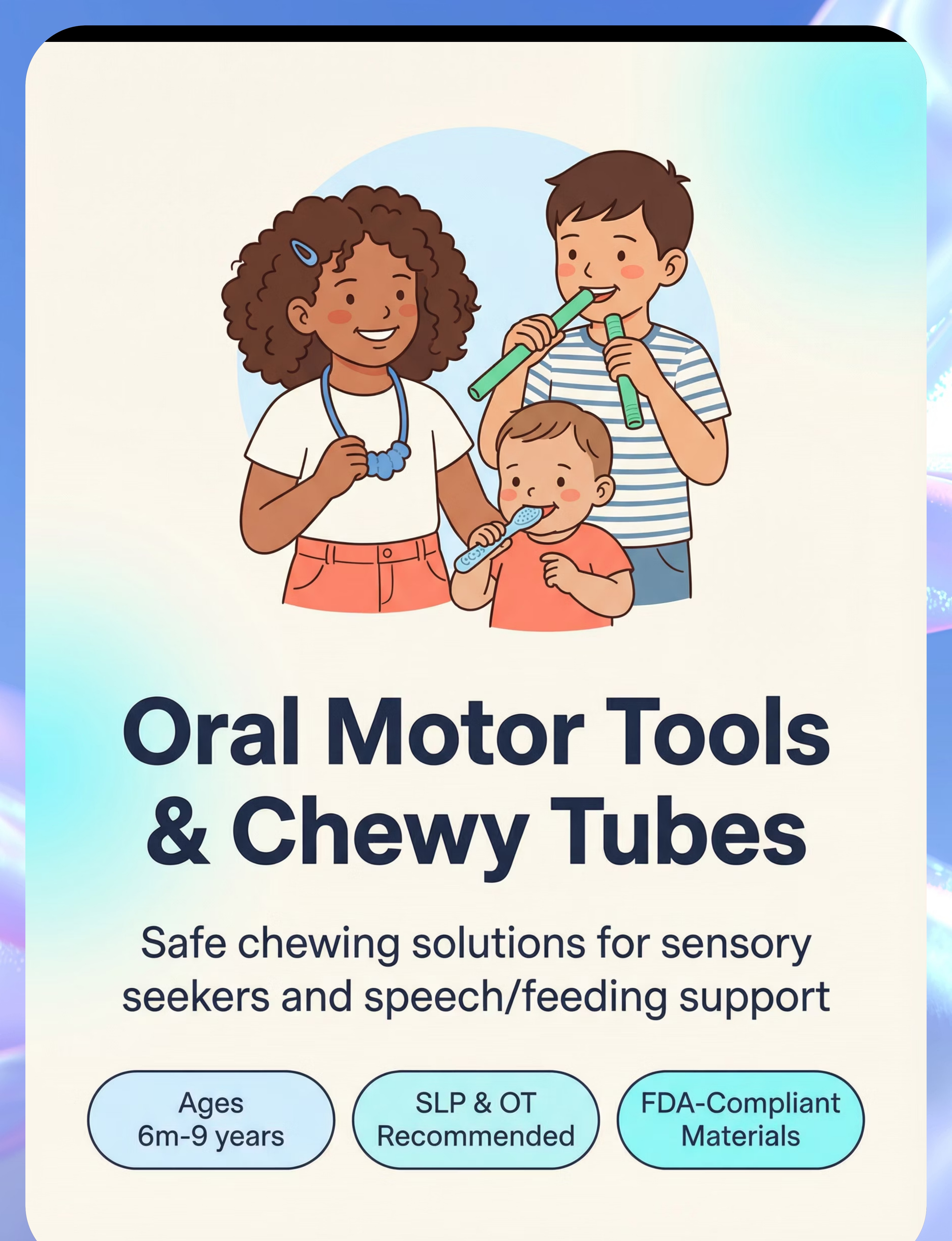
Safe, Therapeutic Chewing Solutions for Sensory Seekers and Oral Motor Development
Safe, effective tools for children who seek oral input through chewing—supporting regulation, feeding skills, and speech development with evidence-based, therapist-recommended solutions.
All Settings
6m-9 years
₹100–3,000
Who This Helps
Oral Sensory Processing
Children who constantly seek oral input through chewing on clothing, pencils, or inappropriate objects—providing their nervous system the organizing input it needs.
Self-Regulation
Kids who use chewing to concentrate, calm down, or manage stress—giving them an appropriate, socially acceptable outlet for sensory regulation.
Feeding Skills
Children struggling with chewing food properly, pocketing, gagging on textures, or limited diets—strengthening oral motor foundations for successful eating.
Speech Clarity
Kids working on speech articulation where jaw stability is part of the challenge—building the oral motor strength needed for clear communication.
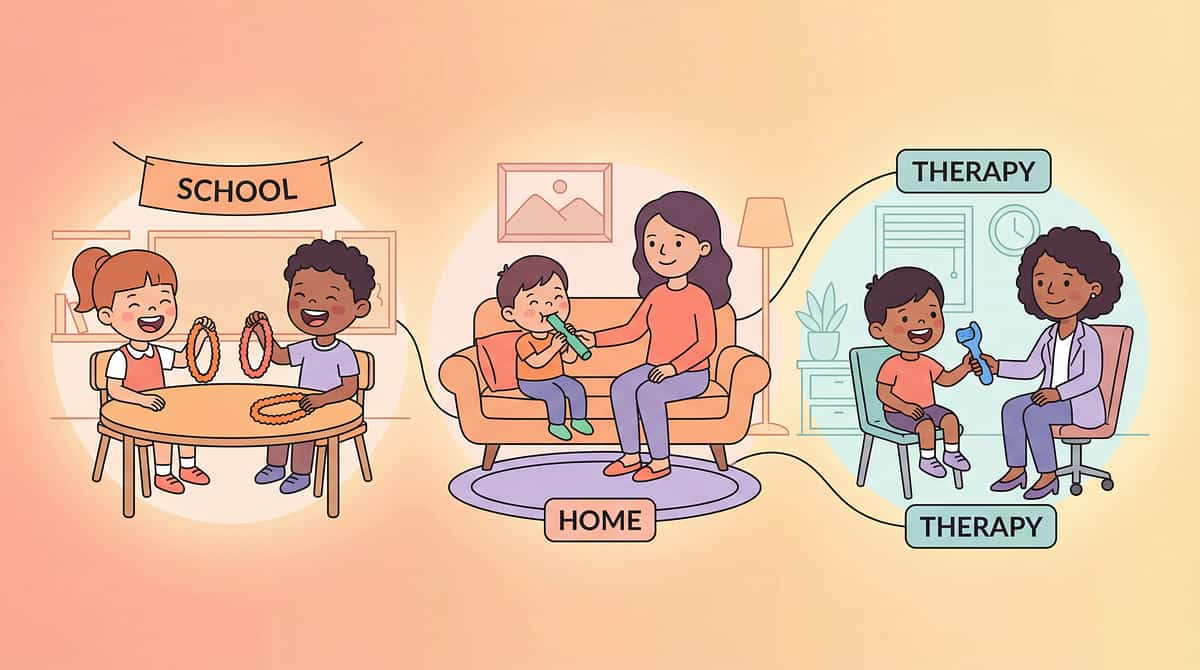
Best for: Children ages 6 months to 9 years who demonstrate oral sensory seeking behaviors, feeding difficulties, or speech concerns. Used successfully across home, school, clinic, and travel settings.
Does This Sound Familiar?
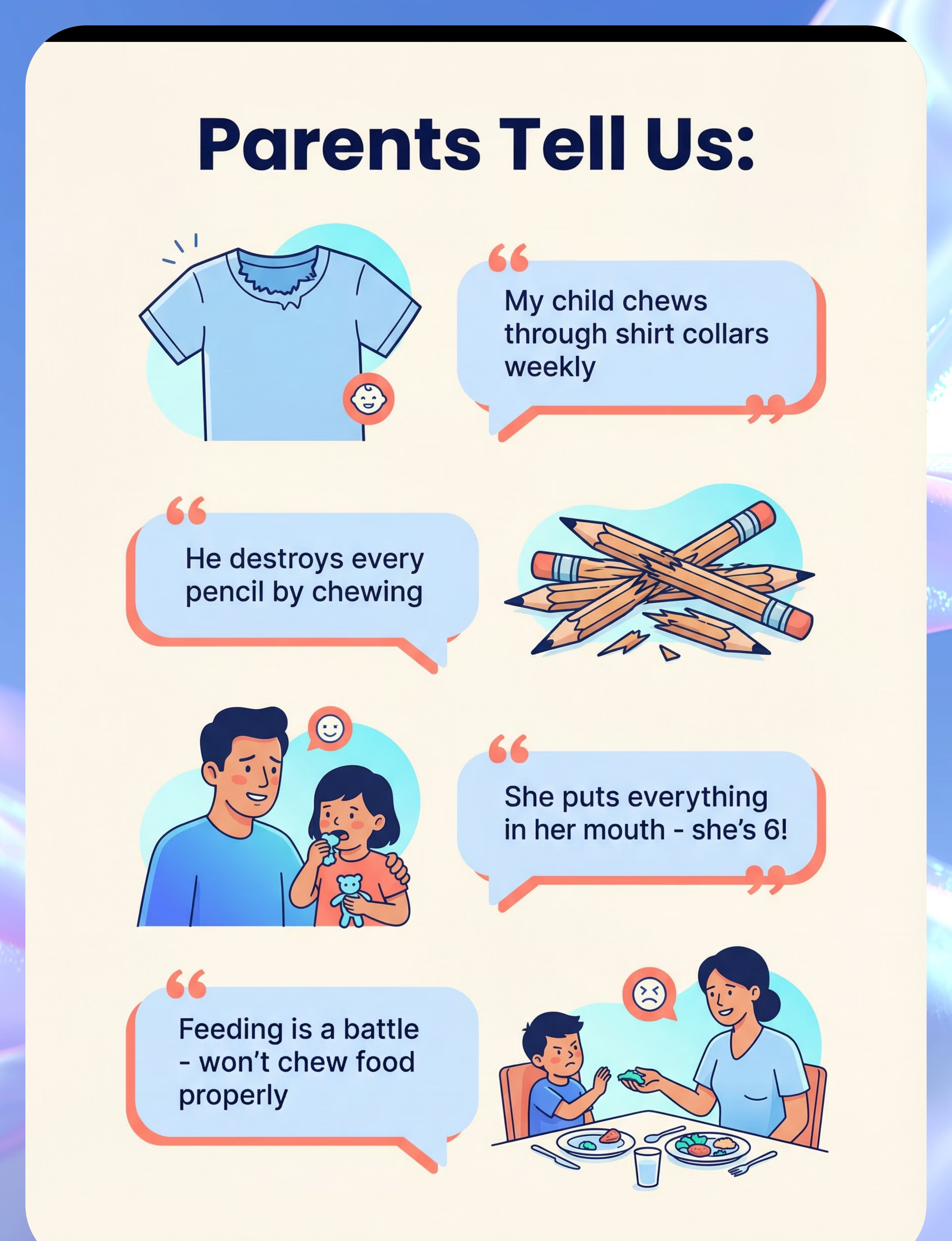
"My child chews through shirt collars weekly. I'm constantly buying new school uniforms, and the teachers are starting to notice and comment."
"He destroys every pencil by chewing within days. His homework is covered in teeth marks, and I worry about what he's ingesting from the paint and wood."
"She puts everything in her mouth—she's 6 years old! Toys, straps, zippers, even furniture corners. I don't understand why she can't stop."
"Feeding is a constant battle. He won't chew food properly—just pockets it in his cheeks. Mealtimes take over an hour and he gags on anything with texture."
"Speech therapy says his jaw is weak and it's affecting his clarity. People can't understand what he's saying, and I see his frustration growing."
"The dentist warned us about tooth damage from all the chewing on hard objects. Now I'm worried about his dental health on top of everything else."
You're not alone. These are common challenges faced by families of children with oral sensory seeking behaviors or oral motor difficulties. There's a reason your child needs to chew—and there's an appropriate, safe way to meet that need.
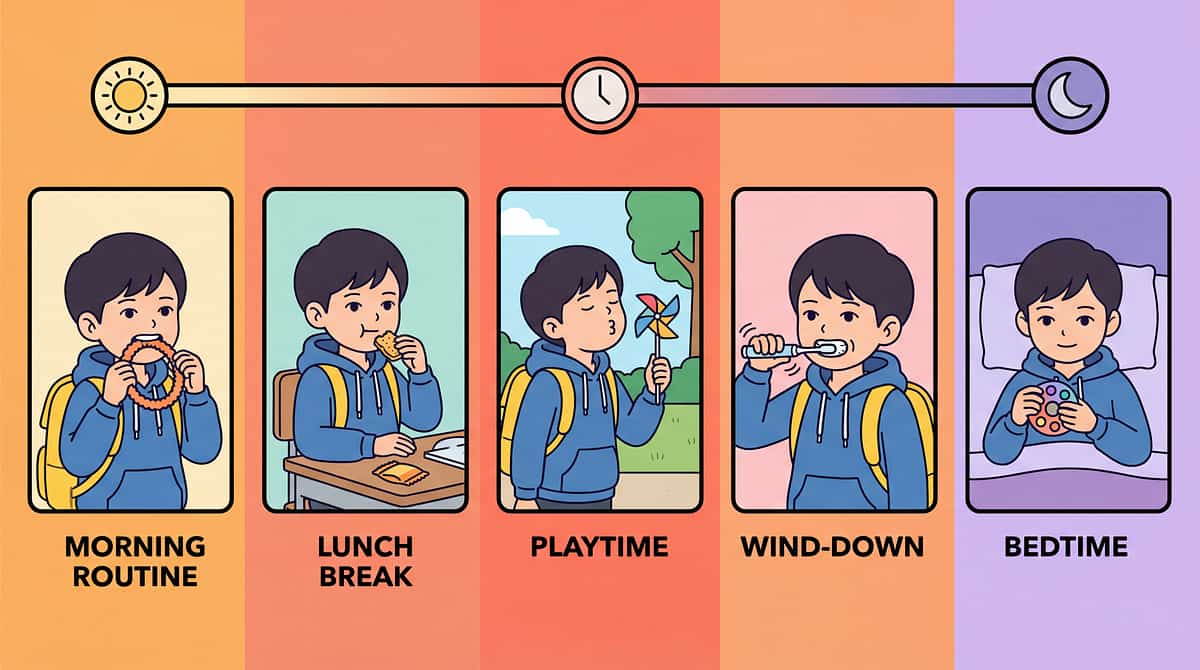
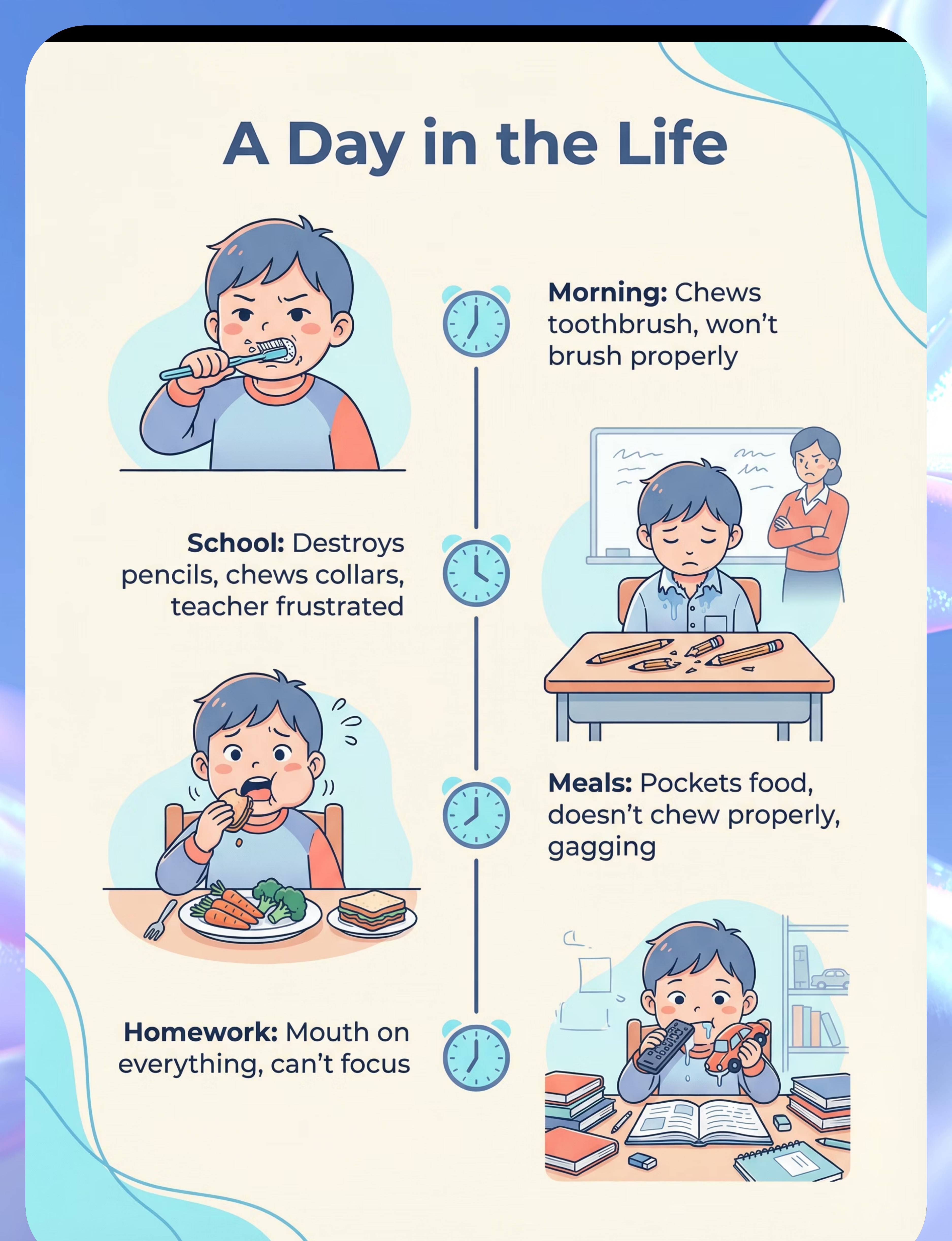
A Day Without the Right Support
Morning
Chews toothbrush instead of actually brushing properly. Mouth on bathroom fixtures and towels. Getting ready takes twice as long because of constant redirections.
School
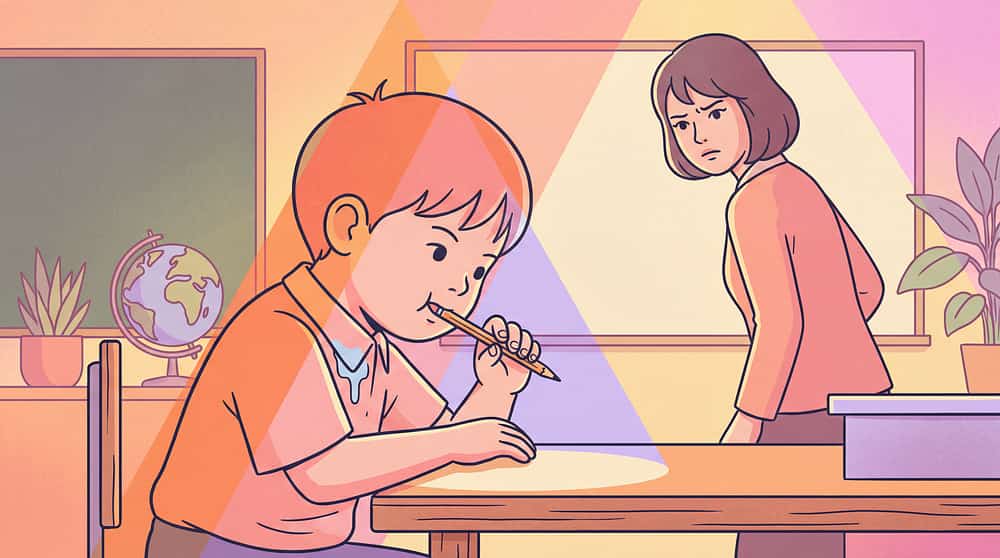
Destroys three pencils by lunchtime. Collar completely soaked with saliva. Teacher sends frustrated notes home. Other children notice and make comments that sting.
Meals
Pockets food in cheeks, doesn't chew properly, gagging on anything textured. Mealtimes stretch to an hour or more. Limited diet because of texture aversions. Family stress builds.
Homework
Mouth on everything—pencils, paper edges, sleeves, desk corners. Unable to focus on actual schoolwork. Simple assignments take forever. Frustration for everyone.
Bedtime
Chewing pajama collars and blanket edges trying to calm down for sleep. Multiple outfit changes. Sleep delayed. Another day of constant battles over what goes in the mouth.
The Science Behind It
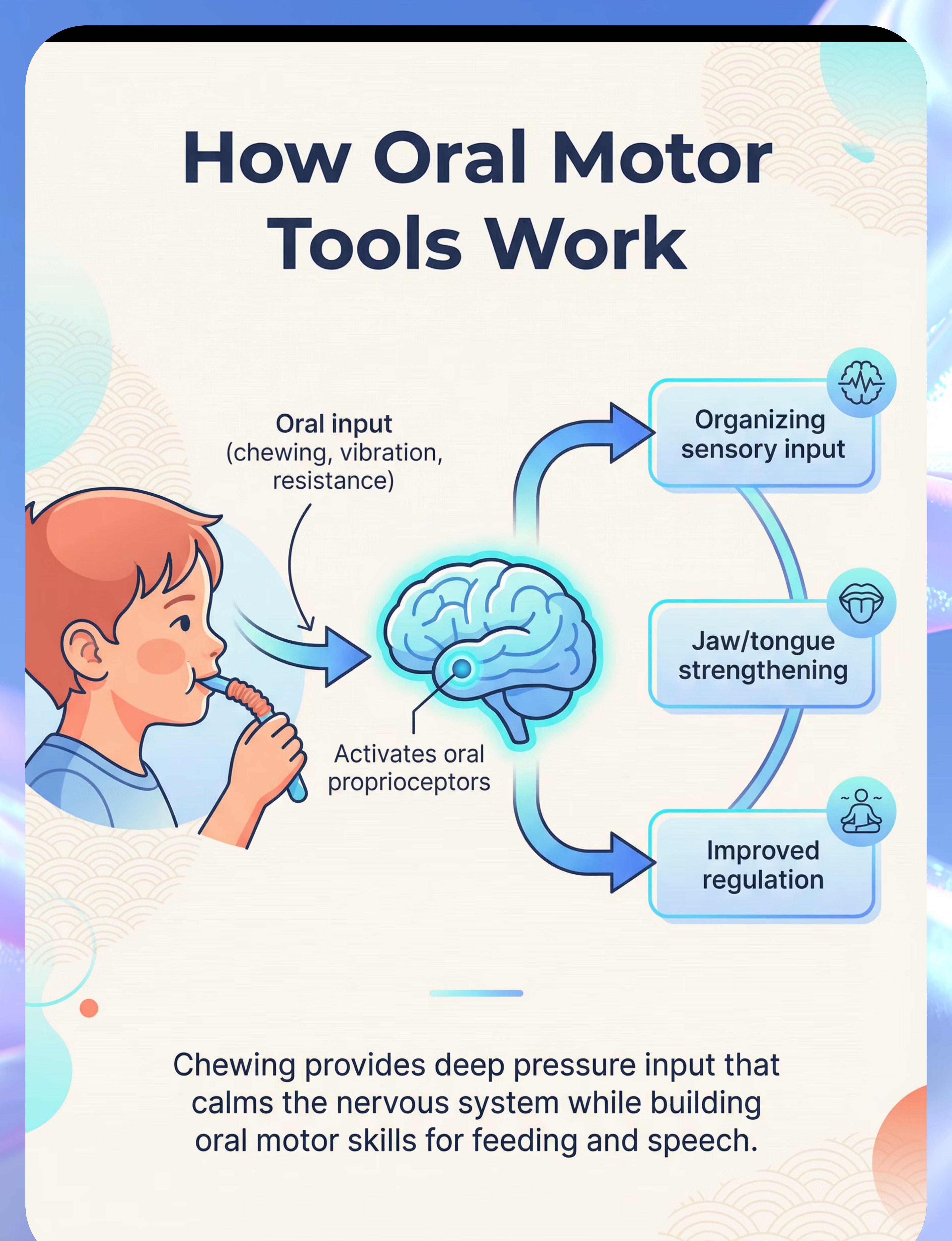
Understanding why oral motor tools work helps you use them confidently and effectively. This isn't just about stopping a behavior—it's about meeting a genuine neurological need.
Oral Input Provided
Child chews on appropriate tool (resistance, vibration, or texture). The mouth receives targeted sensory input through specialized receptors.
Proprioceptors Activated
Oral proprioceptive receptors in jaw, tongue, and cheeks send organizing signals to the nervous system. The brain processes this deep pressure input.
Dual Benefit Occurs
Organizing sensory input calms and focuses the nervous system. Simultaneously, jaw and tongue muscles strengthen with appropriate resistance over time.
Improved Outcomes
Better regulation and focus. Enhanced feeding skills and food acceptance. Improved speech clarity. Reduced inappropriate chewing. Overall development supported.
Oral Sensory Processing
Self-Regulation
Feeding Skills
Speech Clarity
Jaw Stability
How to Use It Right
Match Resistance to Strength
Start with appropriate resistance level for your child's jaw strength. Too soft will be destroyed quickly; too firm may discourage use. Watch for signs of jaw fatigue—there should be no pain.
Replace When Damaged
Inspect chew tools daily for any cracks, tears, or wear. Replace immediately if any damage appears—even small tears create choking hazards. Think of these as consumables like toothbrushes.
Position as Tools, Not Toys
These are therapeutic tools that serve a purpose, not playthings. Teach your child: "This is your chew tool for when your mouth wants to chew." Clear purpose increases acceptance.
Introduce Vibration Gradually
For sensitive children, vibrating oral motor tools need gentle introduction. Start with non-vibrating options first, then introduce vibration at lowest setting for brief periods. Build tolerance slowly.
Exercises Under SLP Guidance
Oral motor exercise programs should be designed by a qualified speech-language pathologist. Random exercises won't target specific needs and may reinforce incorrect patterns.
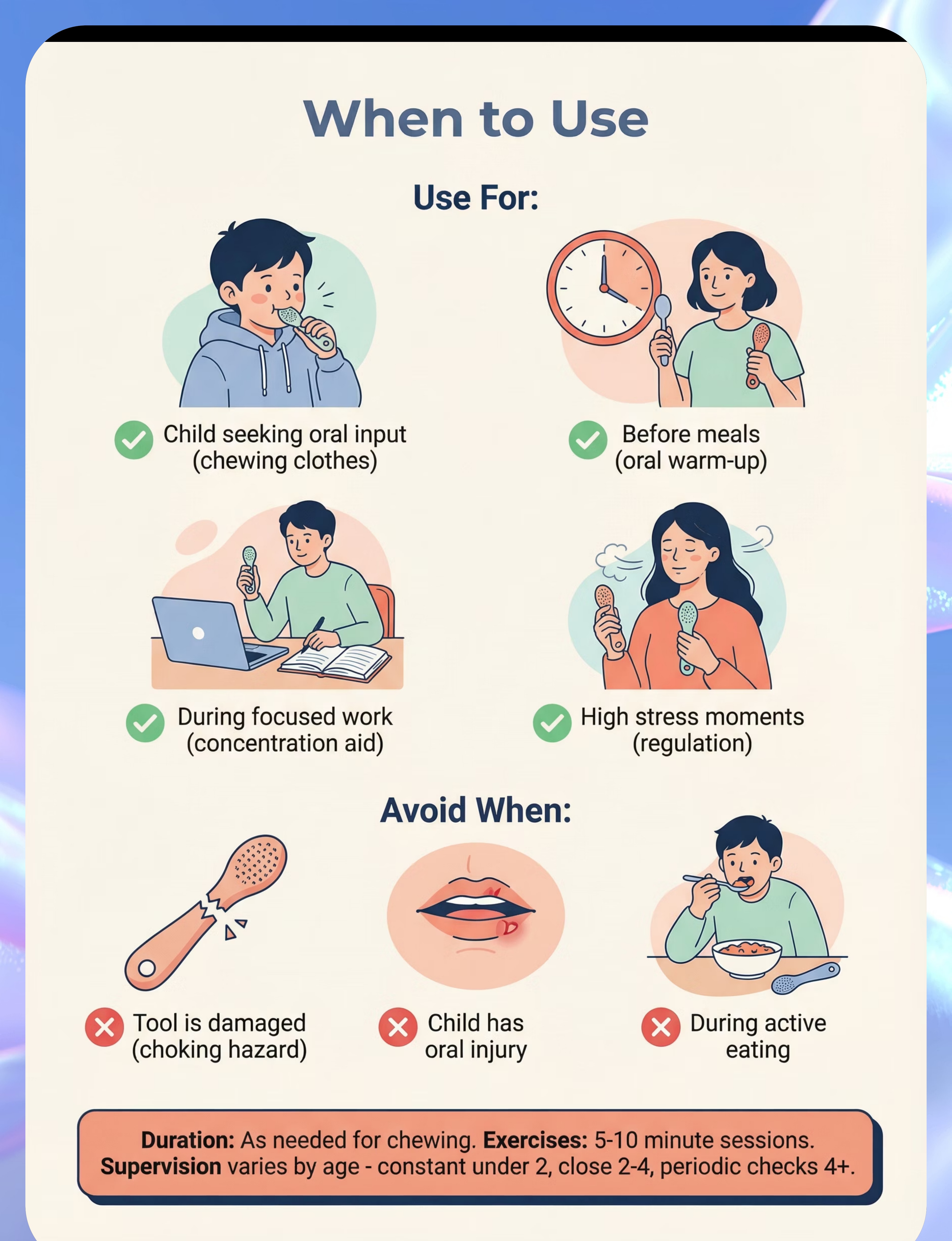
Typical Duration Guidelines
Allow chewing as needed throughout the day for regulation. For structured oral motor exercises, work in 5-10 minute focused sessions rather than lengthy periods that cause fatigue.
Expert Endorsement
oral-motor-tools-chewy-tubes therapy material
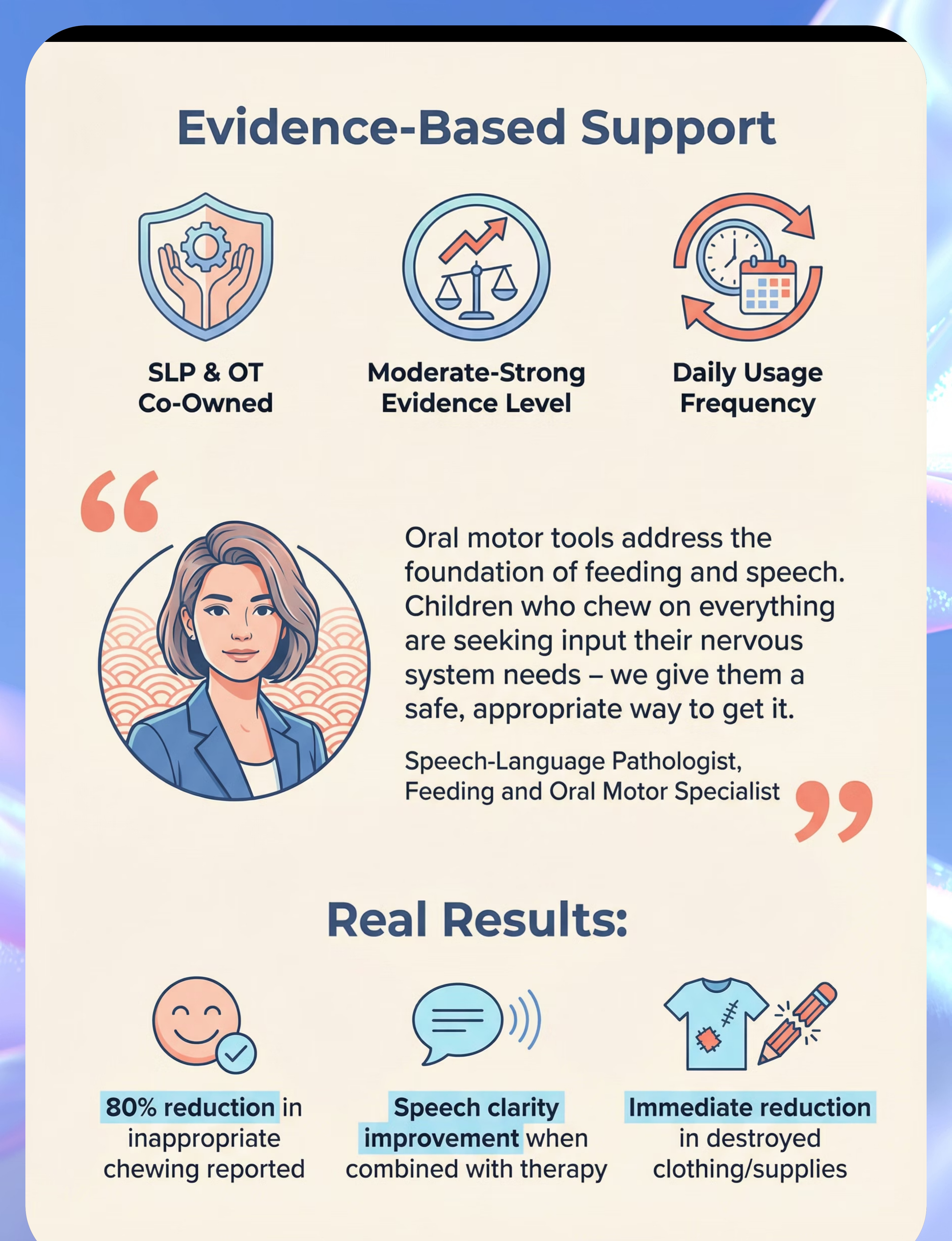
"Oral motor tools address the foundation of feeding and speech. Children who chew on everything are seeking input their nervous system needs—we give them a safe, appropriate way to get it."
Speech-Language Pathologist
Feeding and Oral Motor Specialist
SLP + OT Recommended
Co-owned by both Speech-Language Pathologists and Occupational Therapists, reflecting the dual sensory and motor benefits of these essential tools.
Moderate-Strong Evidence
Backed by clinical research and decades of therapeutic practice showing measurable improvements in oral motor function and sensory regulation.
Rank #2 in Category
Ranked second in Sensory Regulation & Nervous System Modulation category—a core, high-impact intervention in any sensory toolkit.
oral-motor-tools-chewy-tubes therapy material
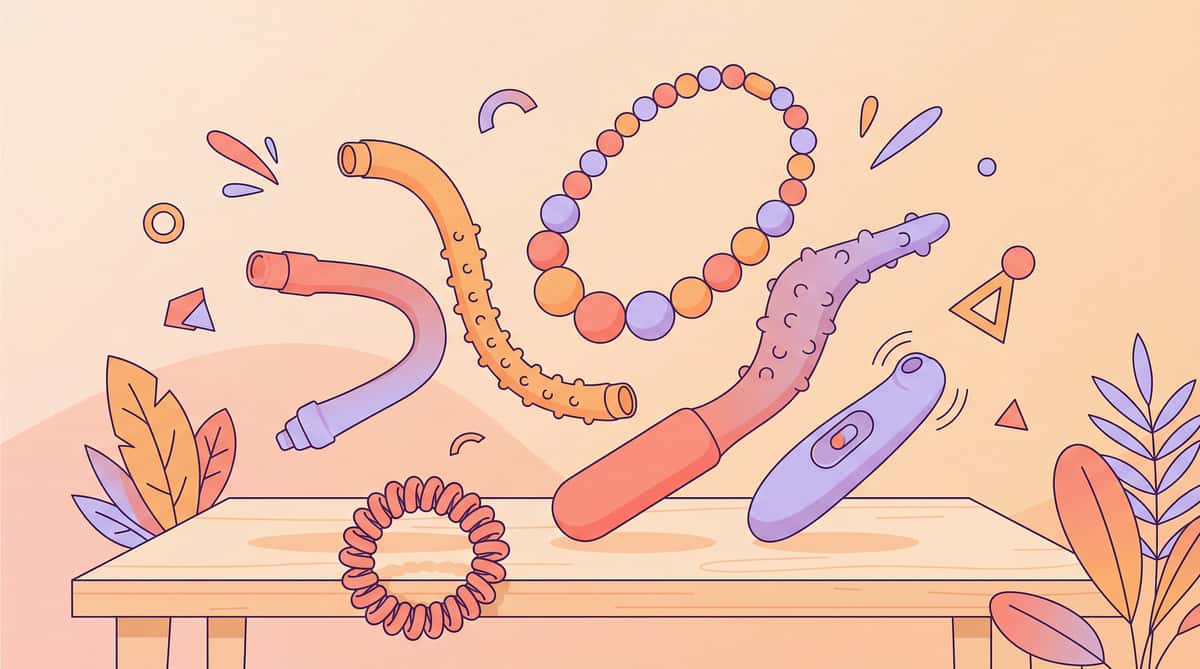
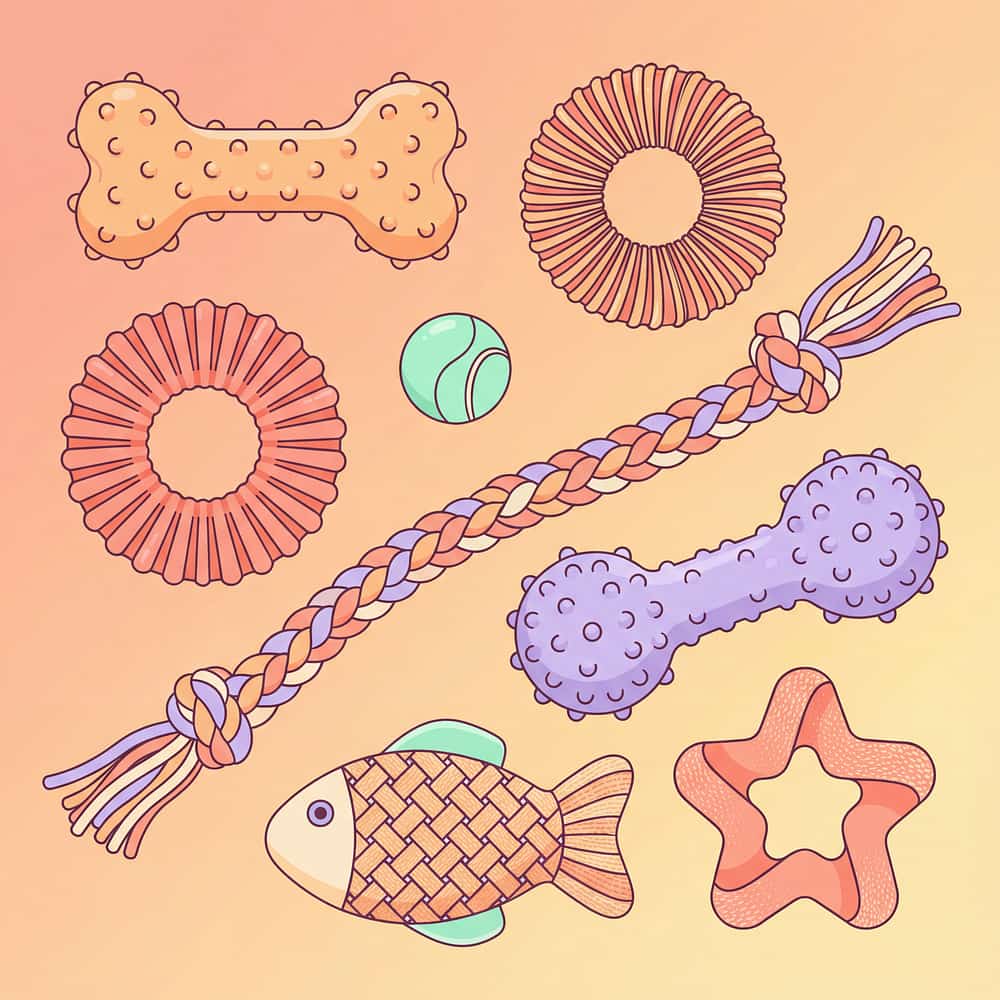
Choose Your Option (8 Variants)
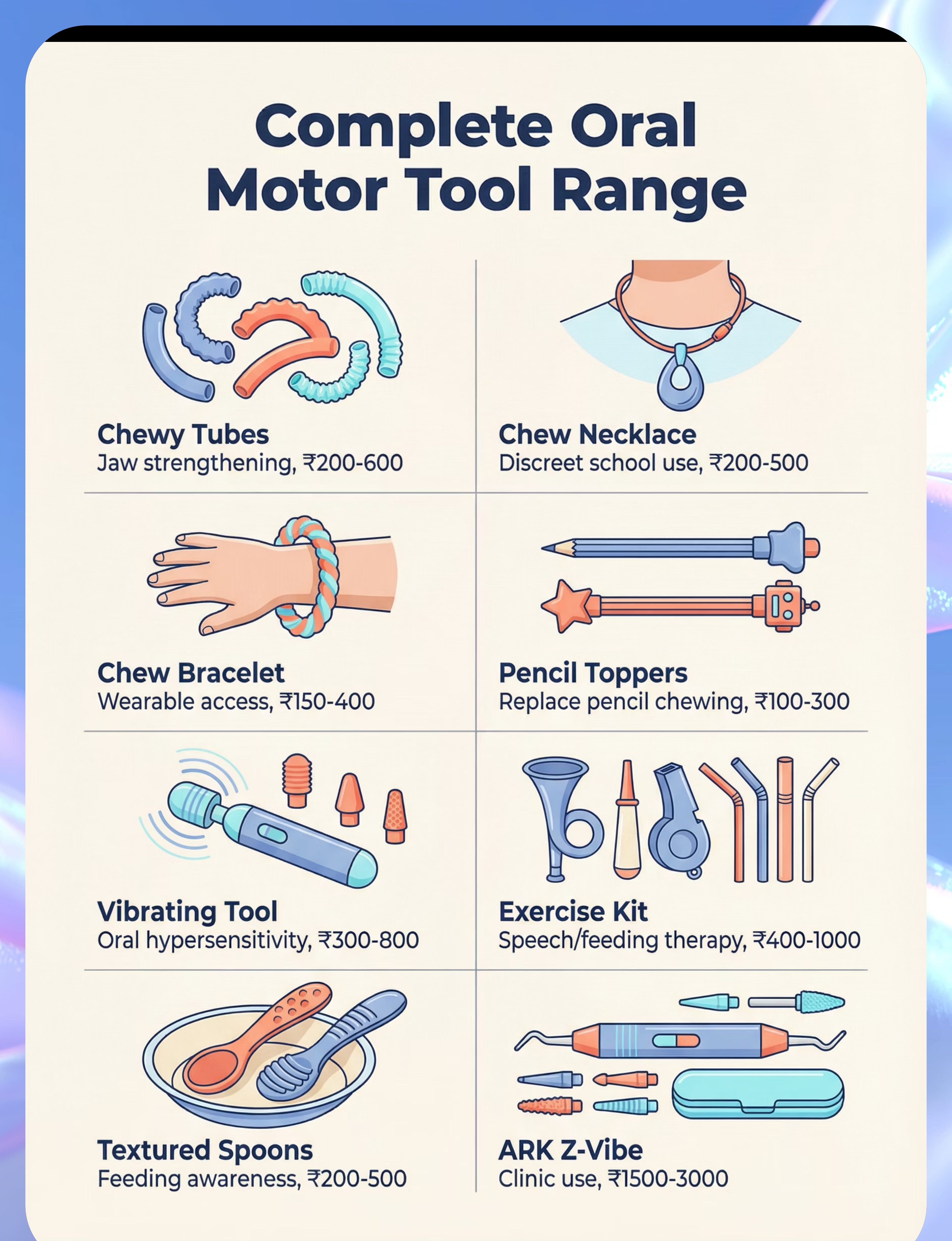
Select the right oral motor tool based on your child's specific needs, settings, and goals. Each variant addresses different aspects of oral sensory input and motor development.
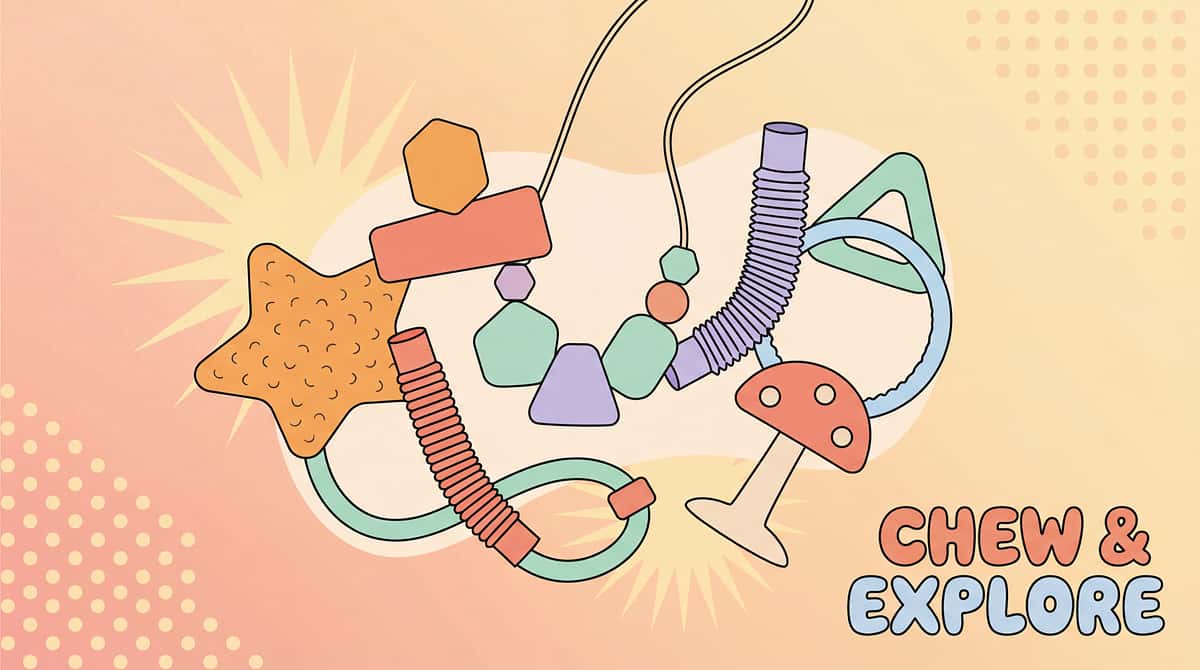
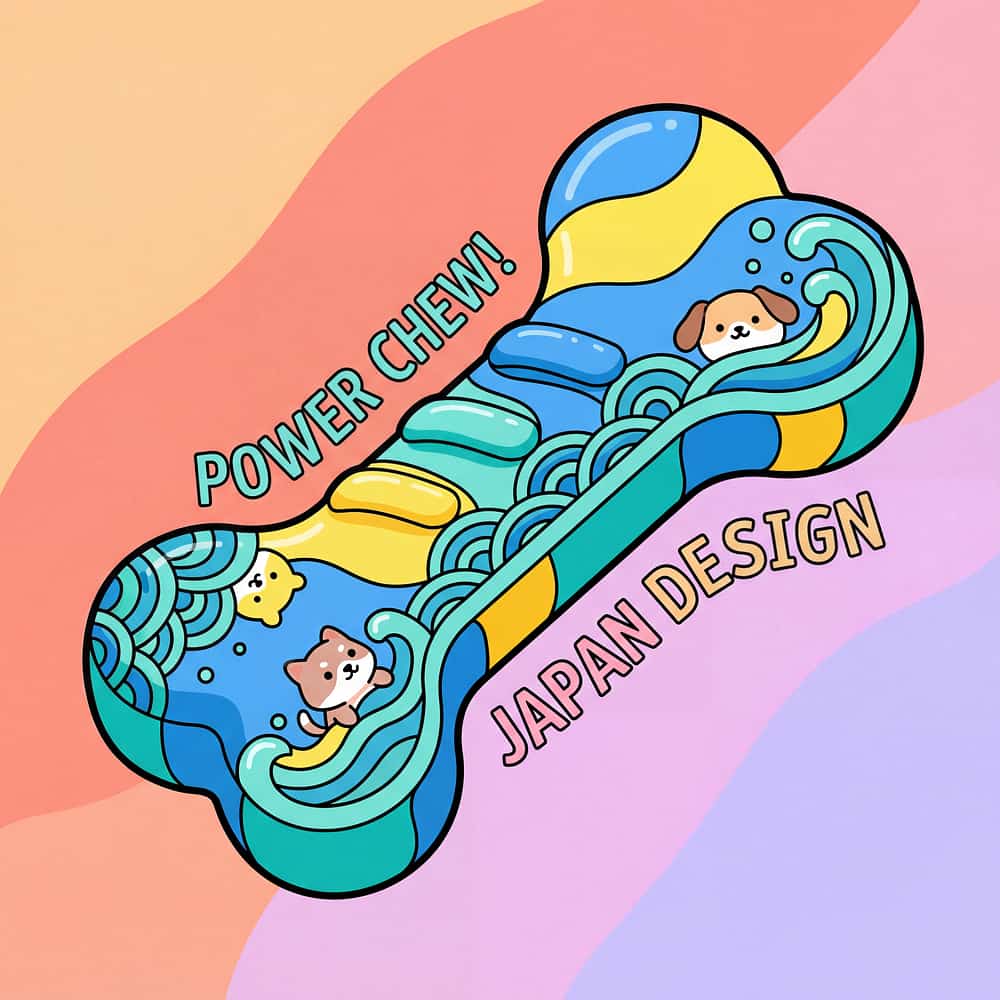
Chewy Tubes
Graded Resistance
Chew Necklace
Discreet & Wearable
Chew Bracelet
Quick Access Chew
Pencil Topper Chews
School-Friendly
Vibrating Oral Motor Tool
Sensory Input
Oral Motor Exercise Kit
Muscle Strengthening
Textured Spoons
Feeding Support
ARK Z-Vibe Kit
Professional Therapy
Chewy Tubes (Graded Resistance)
Best for: Jaw strength, oral proprioception, feeding prep.
Ages: 6m-9 years | Settings: Home, Clinic.
Portability: High | Price: ₹200-600.
Various sizes (P, Q, Super) for jaw strengthening and biting input.
Chew Necklace / Pendant
Best for: Replacing shirt/pencil chewing, school use.
Ages: 3-9 years | Settings: School, Home, Travel.
Portability: Very High | Price: ₹200-500.
Discreet chewing alternative on breakaway safety cord.
Chew Bracelet / Bangle
Best for: Quick access, fidget + chew combined.
Ages: 3-9 years | Settings: School, Home, Travel.
Portability: Very High | Price: ₹150-400.
Wrist-sized wearable chew option for easy access.
Pencil Topper Chews
Best for: School, homework, writing tasks.
Ages: 4-9 years | Settings: School, Home.
Portability: Very High | Price: ₹100-300.
Fits standard pencils, replaces pencil chewing behavior.
Vibrating Oral Motor Tool
Best for: Oral hypersensitivity, feeding therapy.
Ages: 0-9 years | Settings: Clinic, Home.
Portability: Medium | Price: ₹300-800.
Handheld, battery-operated vibration input for oral awareness.
Oral Motor Exercise Kit
Best for: Speech/feeding therapy, oral muscle strengthening.
Ages: 2-9 years | Settings: Clinic, Home.
Portability: Medium | Price: ₹400-1,000.
Set of tools for lip, tongue, and breath exercises.
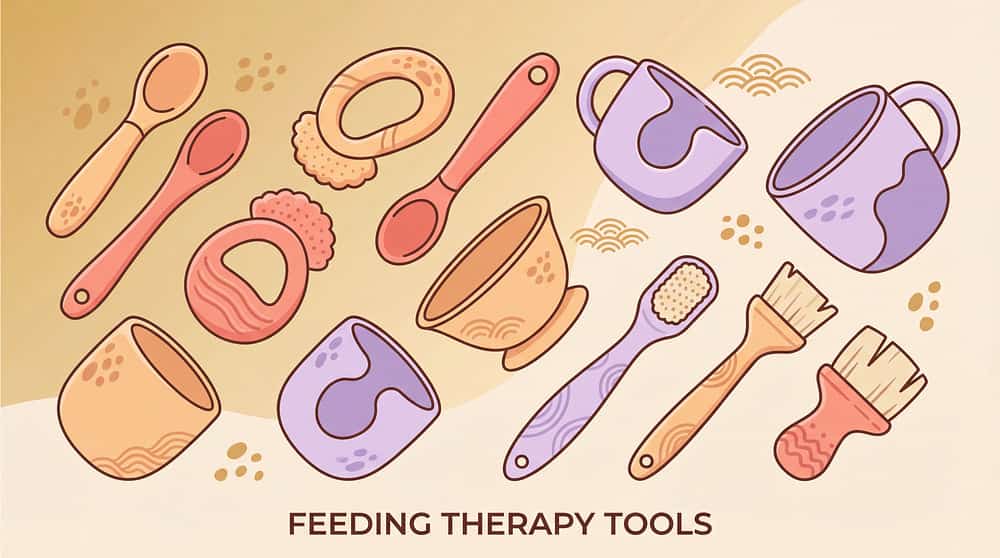
Textured Spoons / Feeding Tools
Best for: Picky eaters, oral awareness during feeding.
Ages: 6m-5 years | Settings: Home, Clinic.
Portability: High | Price: ₹200-500.
Child-sized utensils textured for oral input during meals.
ARK Z-Vibe Starter Kit
Best for: Comprehensive oral therapy, clinic use.
Ages: 0-9 years | Settings: Clinic, Home (under guidance).
Portability: Medium | Price: ₹1,500-3,000.
Professional vibrating handle with multiple attachments.

How to Choose
By Goal
  • Calming/regulation: Necklace, bracelet
  • Feeding prep: Chewy tubes, vibrating tool
  • Speech: Exercise kit, Z-Vibe
  • School focus: Pencil topper, necklace
By Setting
  • School: Necklace, bracelet, pencil topper
  • Home: Any option, rotate for variety
  • Clinic: Z-Vibe, exercise kit, chewy tubes
  • Travel: Necklace, bracelet (very portable)
By Portability
  • Very High: Necklace, bracelet, pencil topper
  • High: Chewy tubes, textured spoons
  • Medium: Vibrating tool, exercise kit, Z-Vibe
Specifications & Resistance Guide
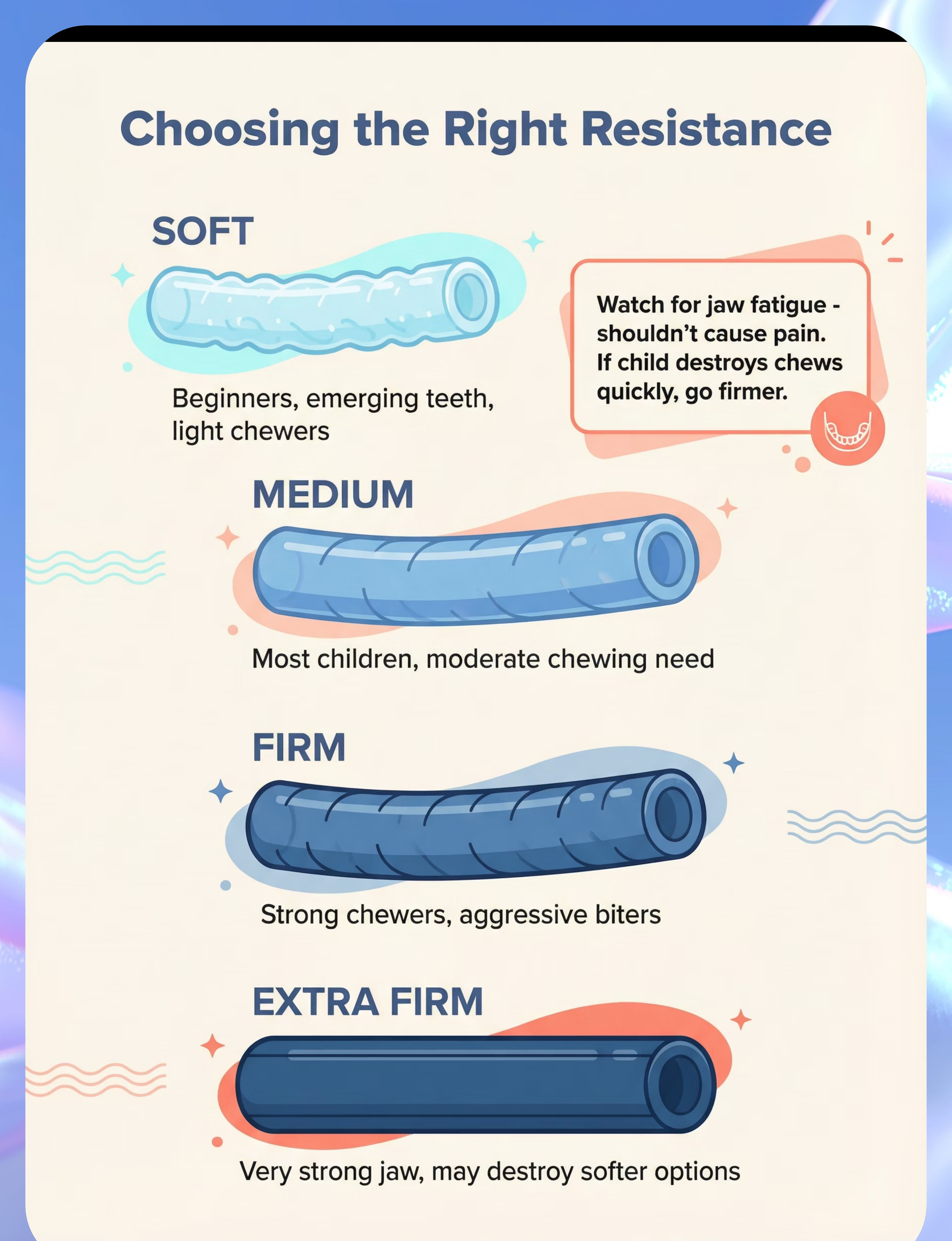
Resistance Matching Guide
Soft Resistance
Best for: Beginners, emerging teeth, light chewers who haven't destroyed softer items yet. Gentle introduction to oral tools.
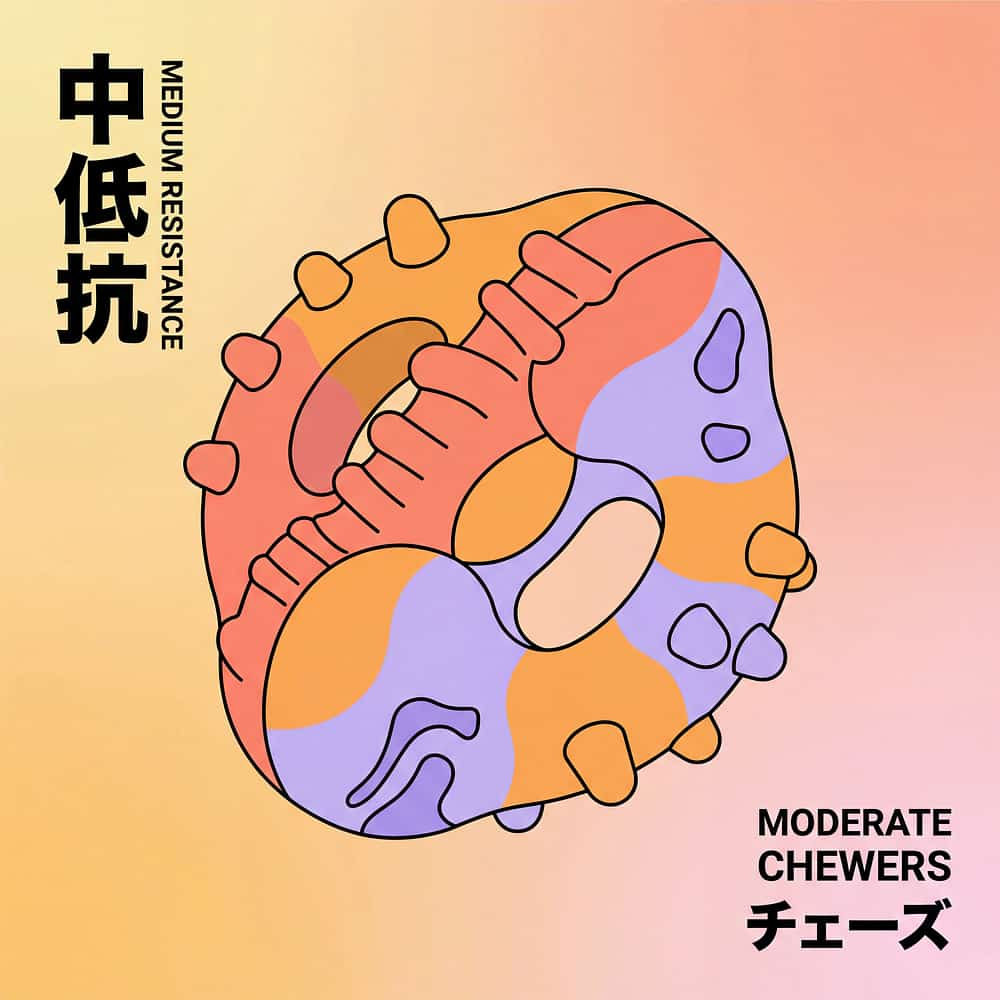
Medium Resistance
Best for: Most children with moderate chewing needs. The sweet spot for typical oral sensory seekers. Start here if unsure.
Firm Resistance
Best for: Strong chewers, aggressive biters who destroy medium options quickly. Provides needed resistance for jaw work.
Extra Firm Resistance
Best for: Very strong jaw, children who destroy firm chews. May bite through softer materials creating hazards. Heavy-duty option.
Materials & Safety Features
Food-Grade Silicone
FDA-compliant, medical-grade materials. BPA-free, phthalate-free, non-toxic. Safe for oral contact throughout the day.
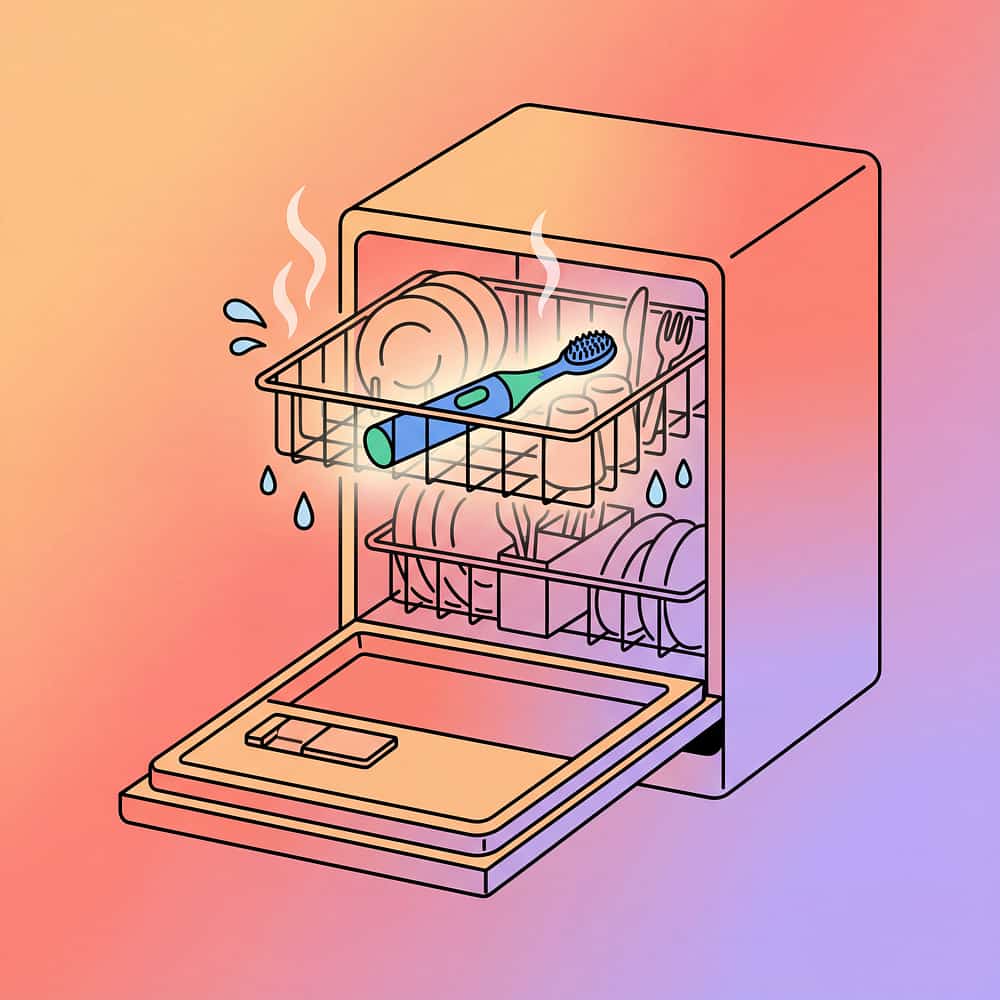
Dishwasher Safe
Easy daily cleaning for hygiene. Can withstand hot water and soap. Maintain like you would a toothbrush.
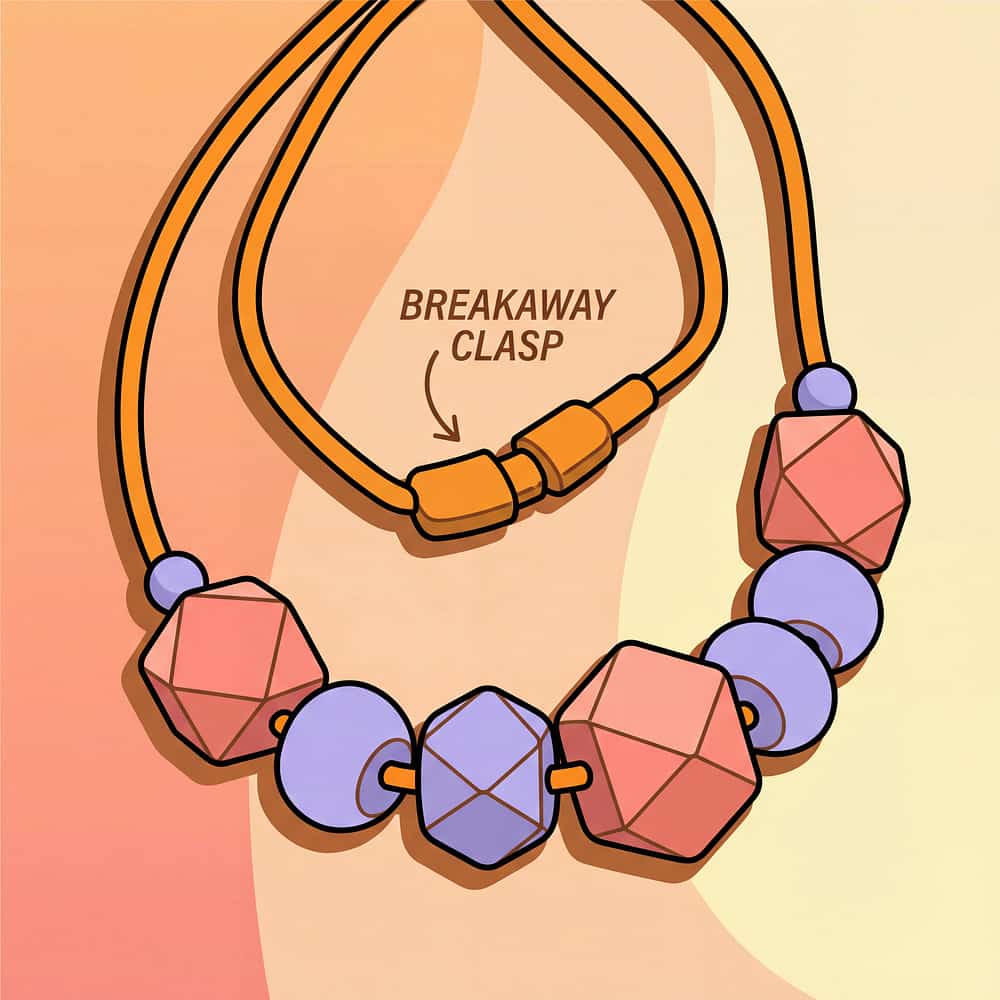
Breakaway Cords (Necklaces)
Mandatory safety feature that releases under pressure. Prevents strangulation hazard. Never compromise on this feature.
Various Shapes & Textures
Different surface textures provide varied sensory input. Multiple shapes reach different oral areas. Rotation prevents boredom.
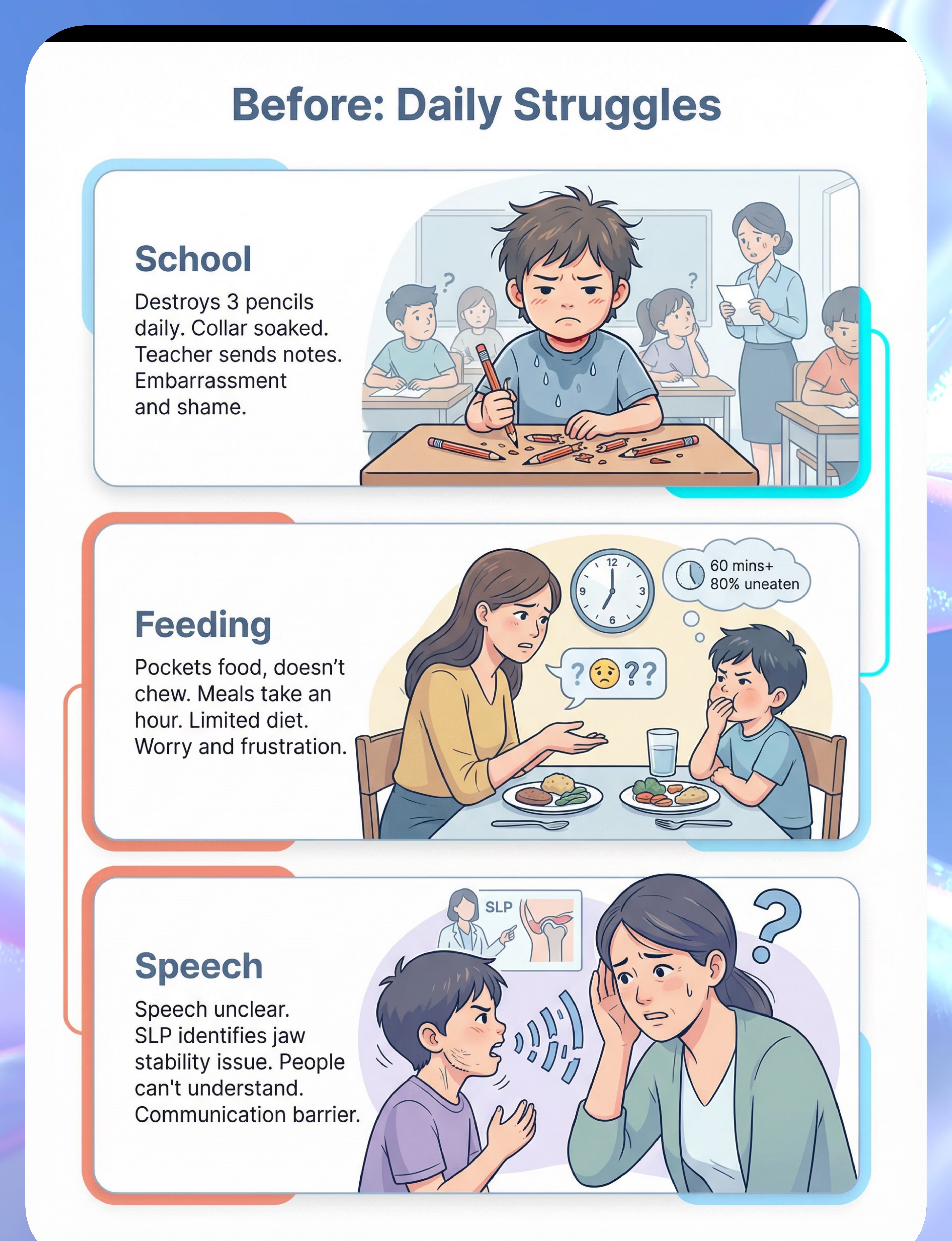
The Struggle (Before)
School Scenario
Situation: Child destroys three pencils per day by chewing. Collar soaked with saliva. Teacher sends frustrated notes home. Other kids notice and comment.
Emotion: Embarrassment, shame
The child knows something is different but can't stop the urge. Social consequences build. Self-esteem takes daily hits.
Feeding Scenario
Situation: Child pockets food in cheeks, doesn't chew properly. Mealtimes take an hour or more. Gagging on textured foods. Limited diet shrinking further.
Emotion: Worry, frustration
Every meal becomes a battle. Nutrition concerns grow. Family stress at the dinner table becomes unbearable.
Speech Scenario
Situation: Speech unclear, especially certain sounds. SLP says jaw stability is part of the issue. People constantly ask "What?" and the child has to repeat.
Emotion: Concern, communication barrier
Communication frustration impacts social connections. The child starts withdrawing rather than speaking. Confidence erodes with each misunderstanding.
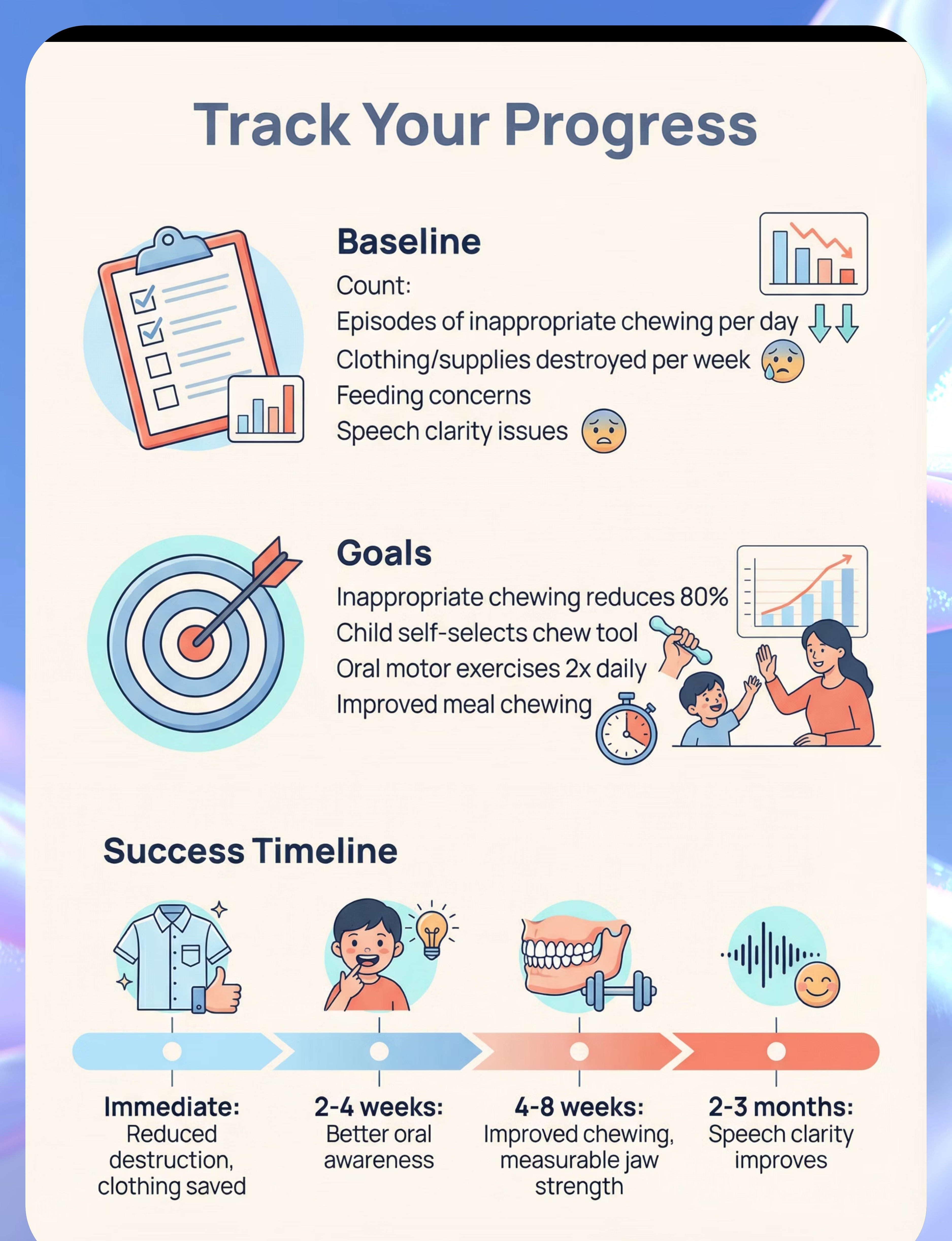
What to Expect (Realistic Timelines)
Setting realistic expectations helps maintain motivation through the journey. Different outcomes emerge at different stages as skills develop.
Reduced Inappropriate Chewing
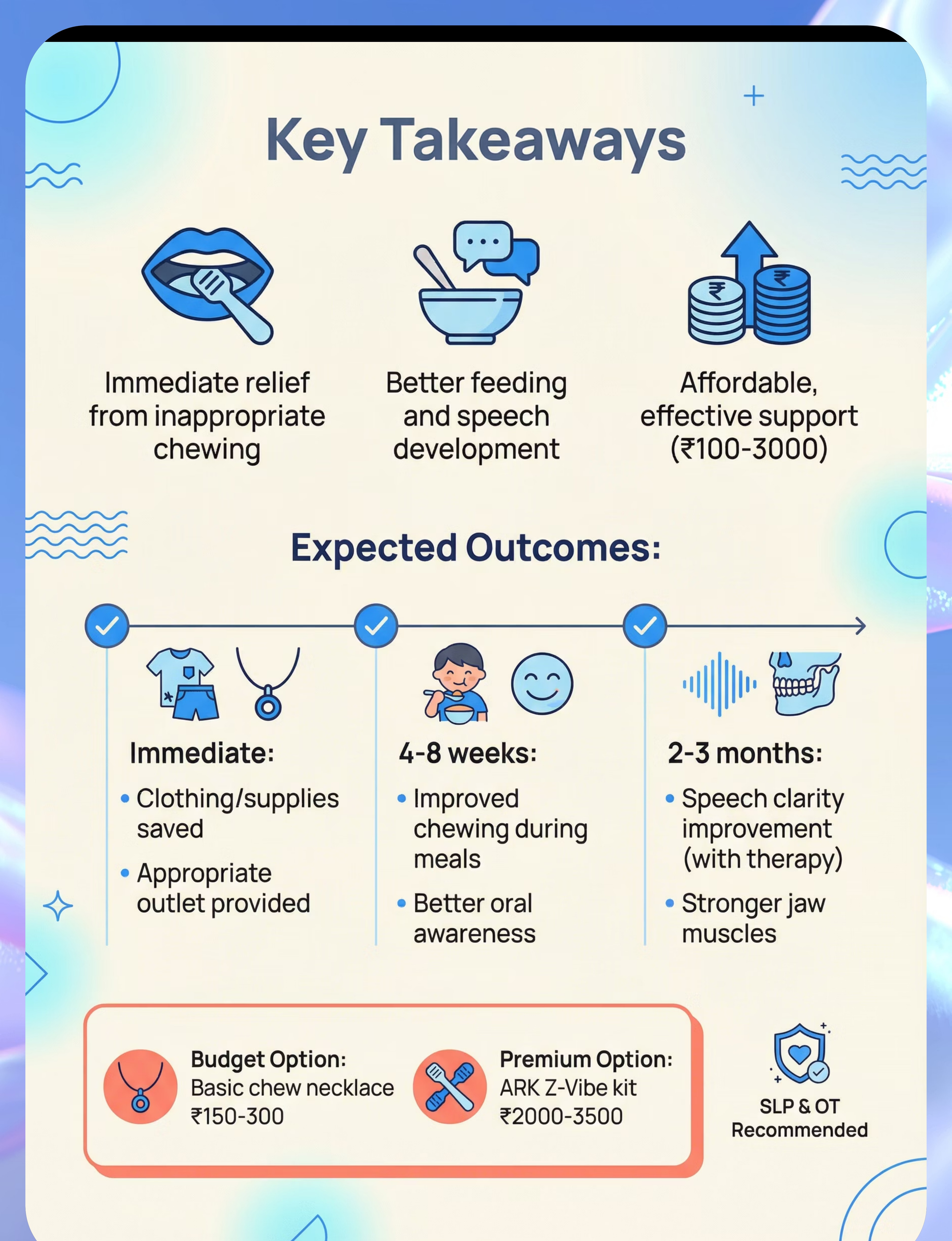
Child stops destroying clothes and school supplies once appropriate outlet is provided. The need is met safely.
Immediate
Clothing/Supplies Protected
No more weekly uniform purchases. Pencils last. Straps and zippers survive. Budget relief and daily stress reduction.
Immediate
Better Oral Awareness
Child becomes more conscious of oral sensations and develops better control over oral movements and chewing patterns.
2-4 weeks
Improved Chewing at Meals
Food chewing becomes more coordinated. Less pocketing, better texture tolerance, shorter mealtimes with reduced stress.
4-8 weeks
Measurable Jaw Strength
SLP or OT can measure increased jaw strength and endurance. Resistance levels can progress to next stage.
6-8 weeks
Speech Clarity Improvement
When combined with speech therapy, articulation of specific sounds improves. Communication becomes easier and more confident.
2-3 months

Important: Timelines vary by individual child, consistency of use, and combination with other therapies. Progress is rarely linear—expect some variation week to week while overall trends improve.
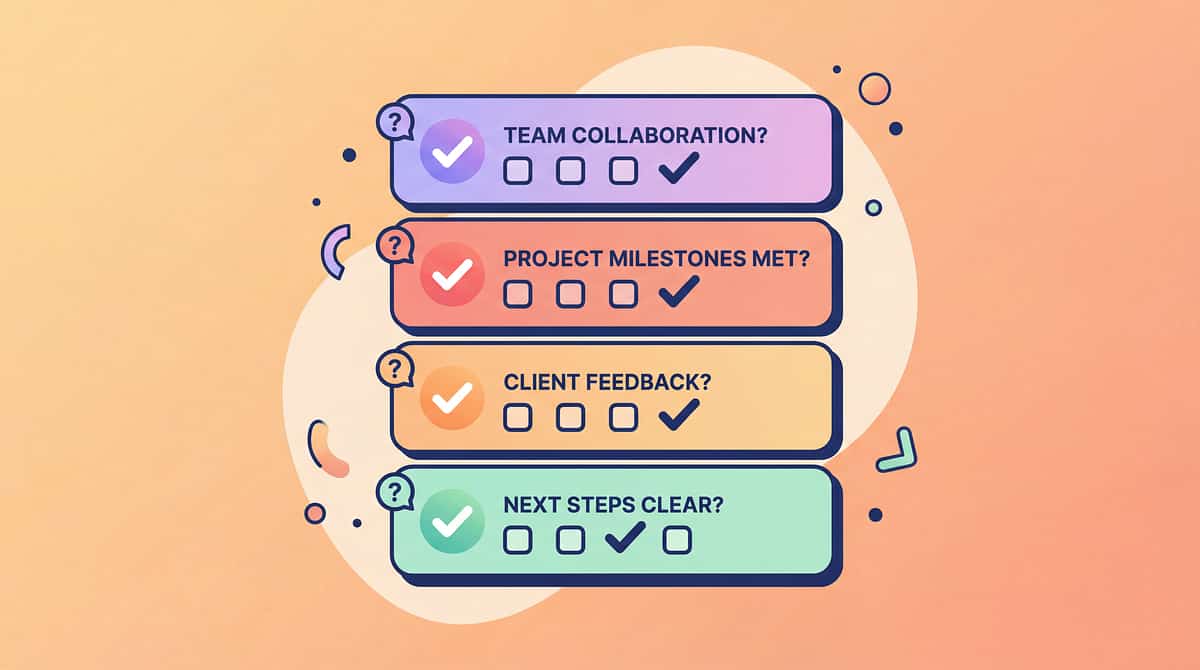
Is This Right for My Child? (2-Minute Check)
Answer these four screening questions honestly. Three or more "yes" answers indicate oral motor tools would be a strong fit for your child's needs.
Does your child frequently chew on clothing, pencils, or other objects?
If yes, this indicates: Oral sensory seeking behavior—the nervous system is actively looking for organizing input through the mouth.
Confidence score: 98/100
Does your child have difficulty chewing food properly?
If yes, this indicates: Oral motor weakness or coordination challenges affecting feeding skills and potentially nutrition.
Confidence score: 90/100
Does your child mouth objects beyond the typical age?
If yes, this indicates: Oral sensory seeking or developmental needs that should be addressed with appropriate tools and support.
Confidence score: 88/100
Has speech clarity or feeding been identified as a concern?
If yes, this indicates: Oral motor involvement that may benefit from targeted strengthening and sensory input strategies.
Confidence score: 85/100
Interpretation: Three or more "yes" answers = strong fit. Even one "yes" suggests oral motor tools could help. Discuss results with your child's OT or SLP for personalized recommendations.
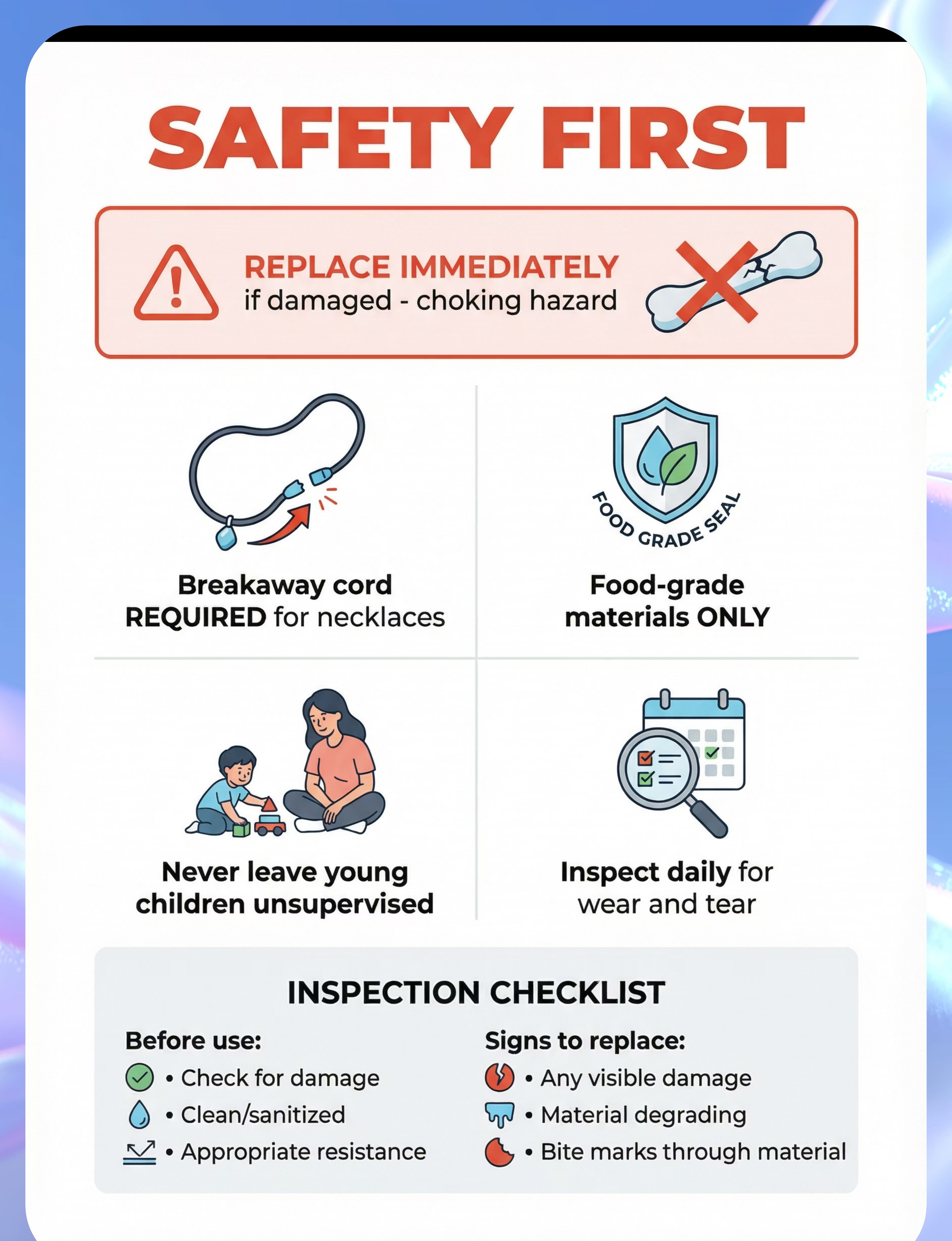
Safety First

CRITICAL SAFETY
  • REPLACE IMMEDIATELY if damaged — any crack, tear, or wear creates choking hazard
  • Breakaway cord REQUIRED for necklaces — prevents strangulation, no exceptions
  • Food-grade materials ONLY — medical-grade silicone, FDA-compliant, BPA-free
  • Never leave young children unsupervised with oral tools — age-appropriate monitoring essential
Before Each Use
  • ✓ Inspect thoroughly for cracks, tears, damage
  • ✓ Confirm clean and sanitized
  • ✓ Verify appropriate resistance for child
  • ✓ Check breakaway cord functional (necklaces)
During Use
  • ✓ Child using appropriately as taught
  • ✓ No signs of choking hazard developing
  • ✓ Cord not tangled or twisted (necklaces)
  • ✓ No jaw pain or excessive fatigue
Signs to Replace
  • ✗ Any visible damage, cracks, tears
  • ✗ Material becoming soft or degraded
  • ✗ Bite marks going through material
  • ✗ Discoloration despite cleaning
Warnings
  • Inspect daily for wear and tear—damage can occur quickly with strong chewers
  • Clean daily using dishwasher or soap and hot water—maintain like toothbrush
  • Don't share between children—hygiene and individual mouth bacteria concerns
  • Match resistance to child's jaw strength—too firm may discourage, too soft breaks quickly
Contraindicated When:
Any damage present on chew tool—even minor tears create hazards
Active oral injuries or recent surgery—allow complete healing first
Child bites through aggressively—need extra-firm options or additional strategies
Common Questions (Honest Answers)
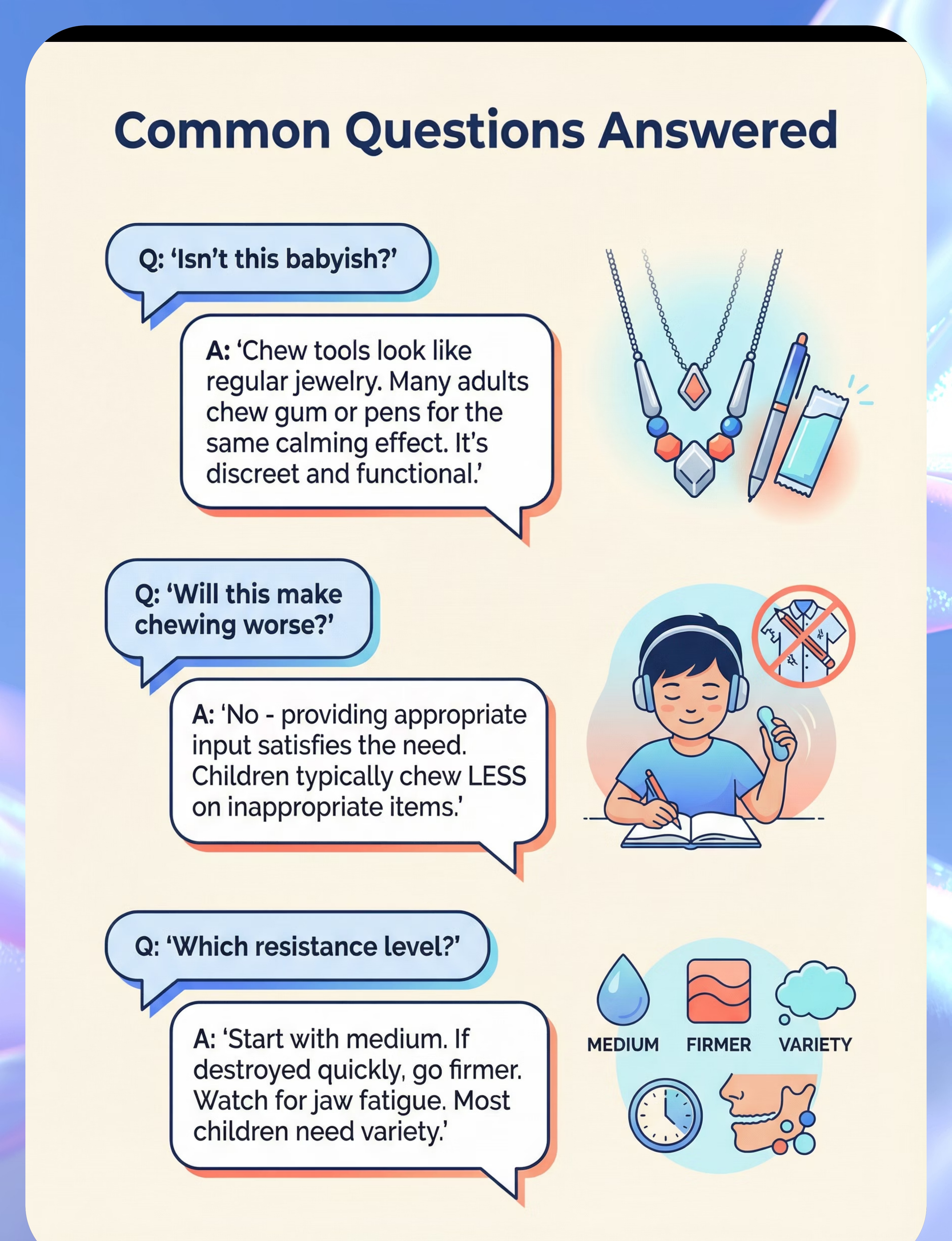
Isn't chewing on a necklace babyish?
Honest answer: Many adults chew gum, pens, or bite nails for the exact same reason—it's calming and helps focus. Chew tools are now designed to look like regular jewelry or cool accessories that don't draw attention.
The real alternative—destroyed clothes and pencils covered in teeth marks—is actually far more noticeable and socially stigmatizing. A discrete chew necklace looks like normal jewelry.
Try this instead: Subtle options like chew bracelets look like regular jewelry, and pencil toppers are completely functional and school-appropriate.
Will this make the chewing habit worse?
Honest answer: No—providing appropriate sensory input actually satisfies the neurological need. Children typically chew LESS on inappropriate items when they have an appropriate outlet that works.
Think of it like hunger: giving a snack doesn't make someone hungrier; it meets the need. The oral sensory need doesn't increase; it's simply being met properly instead of through problematic behaviors.
Track it: Most families see dramatic reduction in inappropriate chewing within days—document "before" to see the clear improvement.
How do I know which resistance level to get?
Honest answer: If your child destroys soft chews quickly, go firmer. If they show no interest in firm chews or experience jaw pain, try softer. Most children do well with medium resistance as a starting point.
Watch for signs of jaw fatigue—there should never be pain. The right resistance provides organizing input and appropriate muscle work without causing discomfort or excessive tiredness.
Try this: Many brands offer variety packs with multiple resistance levels so you can find the perfect match for your child without multiple purchases.
Is it really sanitary?
Honest answer: Quality chew tools made from food-grade silicone are dishwasher safe and designed for daily cleaning—exactly like toothbrushes. Clean them daily with hot soapy water or run through dishwasher.
They're actually MORE sanitary than chewing on pencils (paint and wood particles), shirt collars (fabric and detergent), or random objects. Replace when damaged, just like you replace worn toothbrushes.
Hygiene protocol: Clean nightly, inspect daily, replace when worn—simple routine maintains perfect hygiene standards.
Investment Guide
Oral motor tools range from ₹100 to ₹3,000 (approximately $1-36 USD), making them one of the most affordable therapeutic interventions with immediate impact.
Understanding the different investment levels can help you make informed decisions for your child's specific needs and therapeutic goals.
Pricing Comparison
Basic Chew Necklace or Pencil Topper
₹150-300
Low financial risk to test concept, immediate relief.
Testing oral motor tools, school use, budget-conscious families.
ARK Z-Vibe Kit with Attachments
₹2,000-3,500
Professional-grade, comprehensive oral motor support.
Comprehensive therapy programs, feeding/speech goals.
Key Features & Benefits
Affordable Entry
Low cost allows for experimentation without significant financial commitment, making it accessible for all families.
Discrete & School-Appropriate
Many options are designed to blend in, providing sensory input without drawing unwanted attention, perfect for school environments.
Therapeutic Impact
Provides a safe and effective outlet for oral sensory needs, often leading to reduced inappropriate chewing and improved focus.
Trusted Brands
Options from reputable brands like ARK Therapeutic, Chewigem, and Munchables offer quality and reliability.
Recommended Investment Progression
Start with Low-Cost Options
Begin by trying 2-3 affordable tools like necklaces, bracelets, or pencil toppers to see what your child prefers.
Observe & Evaluate
Monitor which tools are most effective and comfortable for your child, noting their preferences and usage patterns.
Invest Strategically
Once preferences are clear, consider investing in higher-quality or specialized tools that align with specific therapeutic goals.
Ongoing Support
Continuously assess needs and replace worn tools, ensuring sustained support for your child's oral motor development.
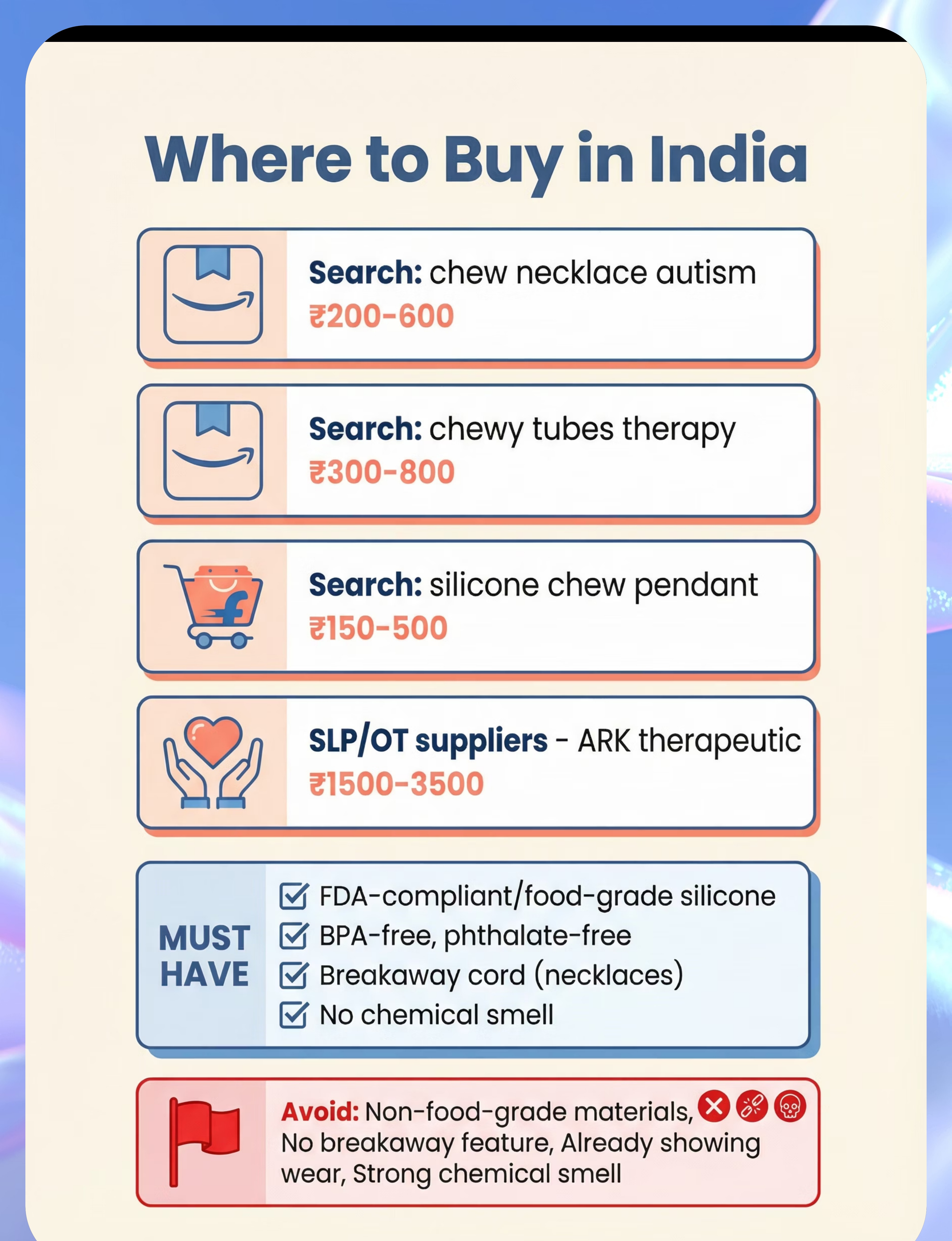
Where to Buy in India
Availability: Oral motor tools are readily available through online platforms and specialized therapy suppliers across India.
Search Terms: "chew necklace autism"
Price Range: ₹200-600
Search Terms: "chewy tubes therapy"
Price Range: ₹300-800
Flipkart
Search Terms: "silicone chew pendant"
Price Range: ₹150-500
SLP/OT suppliers
Search Terms: "ARK therapeutic oral motor"
Price Range: ₹1,500-3,500

Buying Tips ✓
  • FDA-compliant / food-grade silicone essential—never compromise on material safety
  • Breakaway cord mandatory for necklaces—strangulation prevention, non-negotiable
  • Buy 2-3 for rotation and backup—prevents crisis when one is lost or damaged
  • Match color/style to child's preference—increases acceptance and consistent use
  • Replace immediately when damaged—worn tools become hazards, not therapeutic aids

Red Flags ✗
  • Non-food-grade materials—if materials aren't specified or unclear, don't risk it
  • Strong chemical smell—indicates poor quality materials, potential toxicity
  • No breakaway feature on necklace—absolute safety hazard, never acceptable
  • Already showing wear in package—poor quality control, likely to fail quickly
  • Not labeled BPA-free—lack of safety certification is major concern
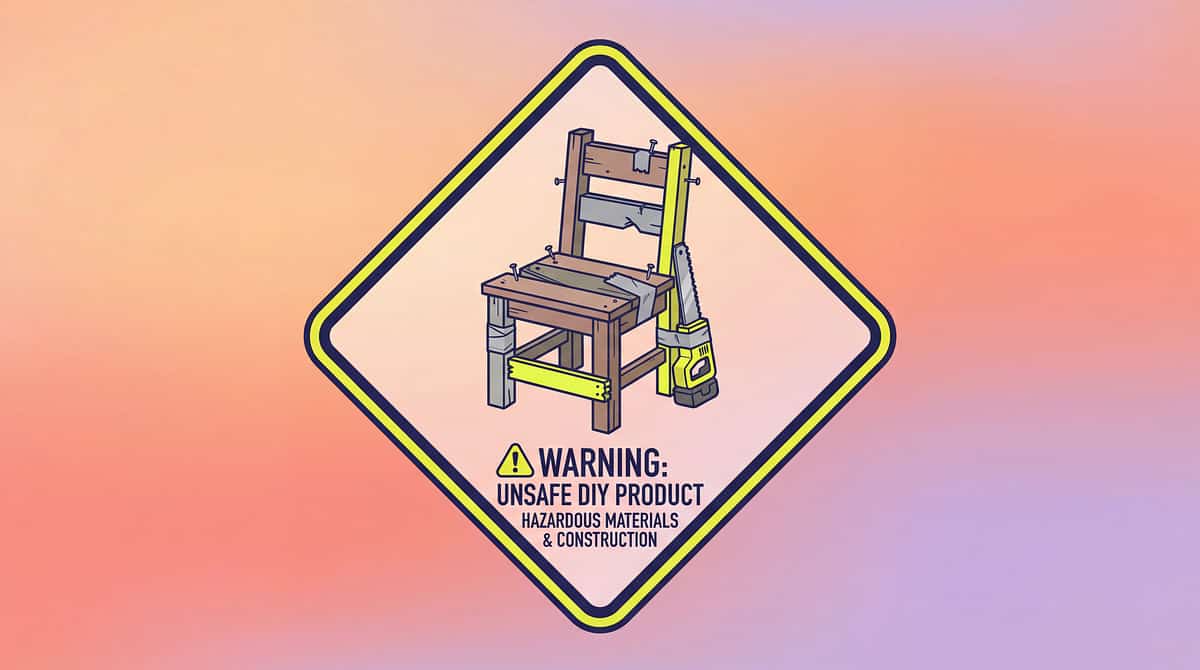
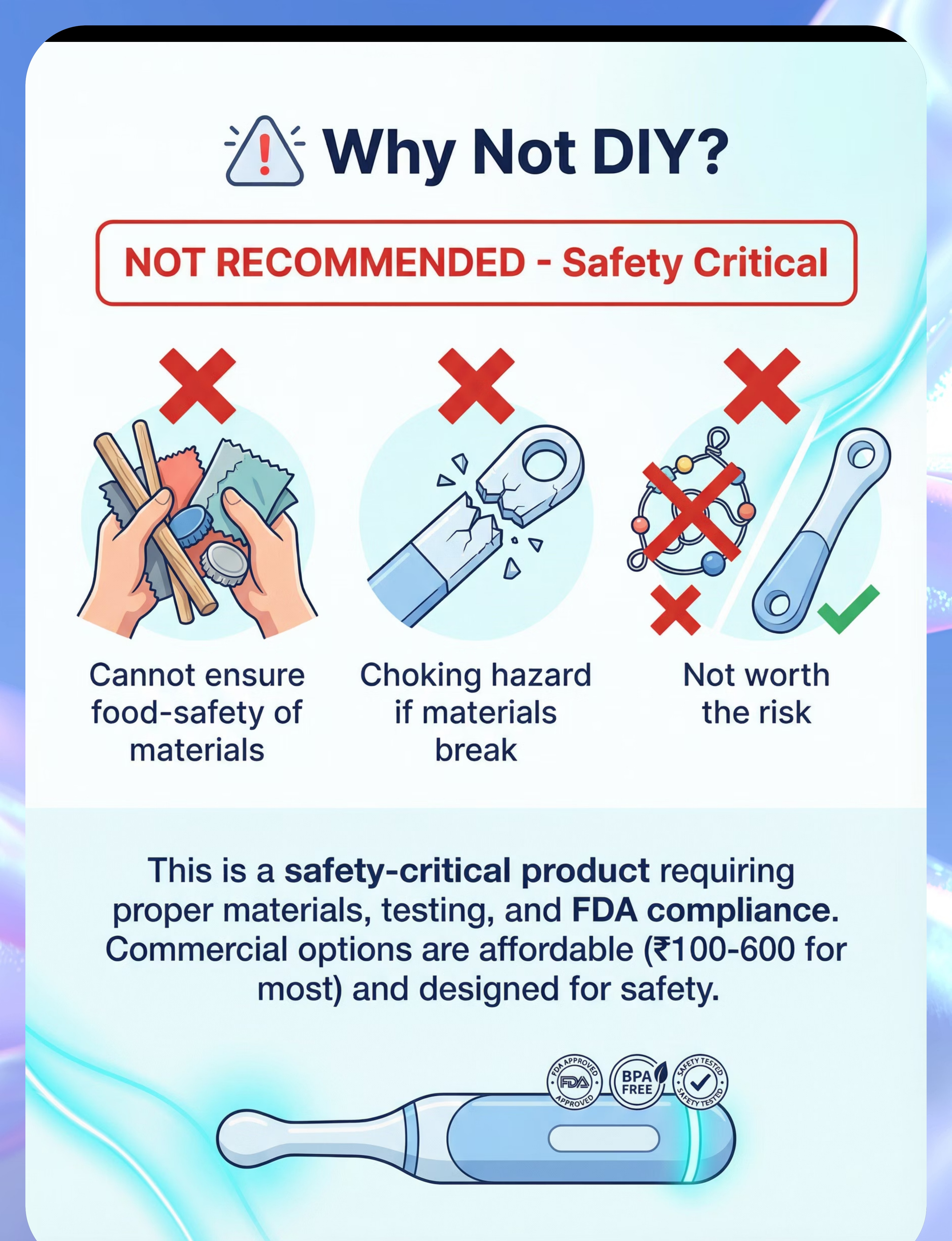
DIY Alternative: Why You Shouldn't

NOT RECOMMENDED — Safety Critical
Feasibility Rating: Very Low (safety critical)
Cost Savings: Not applicable—risk far outweighs any savings
Time Required: Not applicable
Why Commercial Products Are Essential
Food-Safety Cannot Be Ensured
DIY materials lack FDA compliance and food-grade certification. You cannot verify safety of materials that will spend hours daily in your child's mouth. Commercial products undergo rigorous testing.
Choking Hazard if Materials Break
DIY solutions don't have controlled durability and may break unpredictably, creating immediate choking hazards. Commercial chew tools are engineered for specific resistance levels and safe failure points.
Missing Critical Safety Features
Breakaway cords, proper resistance grading, and tested durability require manufacturing expertise. You cannot replicate these safety features at home reliably.

When to DIY
NEVER for oral motor chew tools
This is a safety-critical product category where DIY attempts put your child at risk. The low cost of commercial options (starting at ₹100-150) makes DIY completely unnecessary.
When to Buy Commercial
ALWAYS—without exception
Commercial oral motor tools require proper materials and safety features that can only be ensured through professional manufacturing. This is one area where DIY is genuinely dangerous, not just inferior.
The Bottom Line: Your child's safety is worth the ₹150-300 investment in a proper, tested, food-safe chew tool. There is no safe DIY alternative for this intervention. Please invest in commercial products from reputable suppliers.
Real Stories: The Difference It Makes
Discover how oral motor tools have transformed daily challenges into tangible progress for children and families. These authentic stories highlight measurable improvements in focus, behavior, and communication.
Rohan, 5 Years Old
Challenge: Constant shirt chewing and struggling to focus in preschool.
Outcome: After 2 weeks with a chew necklace, Rohan's shirt chewing reduced by 80% and his teachers noted significant improvement in his ability to stay engaged during circle time.
Priya, 8 Years Old
Challenge: Mild speech delays and frequent drooling due to low oral awareness.
Outcome: Regular use of a vibrating oral tool enhanced Priya's oral motor control, reducing drooling and improving pronunciation of 's' and 'z' sounds, boosting her confidence in speaking.
Arjun, 10 Years Old
Challenge: Sensory overload in noisy environments leading to nail-biting and anxiety.
Outcome: Arjun now uses a chew bracelet to self-regulate during transitions and in the school cafeteria. His nail-biting has almost stopped, and he feels more in control and less anxious.

Preview of oral motor tools chewy tubes Therapy Material

Below is a visual preview of oral motor tools chewy tubes therapy material. The pages shown help educators, therapists, and caregivers understand the structure and content of the resource before use. Materials should be used under appropriate professional guidance.

Page 1
Page 2
Page 3
Page 4
Page 5
Page 6
Page 7
Page 8
Page 9
Page 10
Page 11
Page 12
Page 13
Page 14
Page 15
Page 16
Page 17
Page 18
Page 19
Page 20
Link copied!
Measuring Success
Establish Baseline First
1
Episodes of Inappropriate Chewing
Count per day for one week before introducing tools—track clothing, pencils, other objects
2
Clothing/Supplies Destroyed
Document weekly replacement costs and items damaged—creates clear financial comparison
3
Feeding Concerns
Note pocketing frequency, gagging episodes, textures refused, meal duration in minutes
4
Speech Clarity
If relevant, get SLP assessment of baseline articulation accuracy and intelligibility percentage
Track These Goals
80% Reduction Target
Inappropriate chewing (clothes, pencils) will reduce by 80% or more with consistent chew tool access
Independent Use
Child will independently select and use chew tool when feeling the urge to chew—shows awareness
Exercise Compliance
If doing SLP program, complete oral motor exercises 2x daily as prescribed for feeding/speech goals
Feeding Improvement
Measurable reduction in pocketing, improved chewing coordination, expanded texture acceptance
Success Indicators to Celebrate
  • ✓ Dramatic reduction in destruction of clothes and school supplies—financial relief, daily stress reduction
  • ✓ Child independently reaches for chew tool when needed—shows self-awareness and self-regulation skills
  • ✓ Improved feeding skills measurable by SLP/OT—less pocketing, better chewing, more textures tolerated
  • ✓ Speech clarity improvement documented by SLP—articulation accuracy increases, intelligibility improves
  • ✓ Calmer, more focused behavior overall—regulation improvement evident in multiple settings

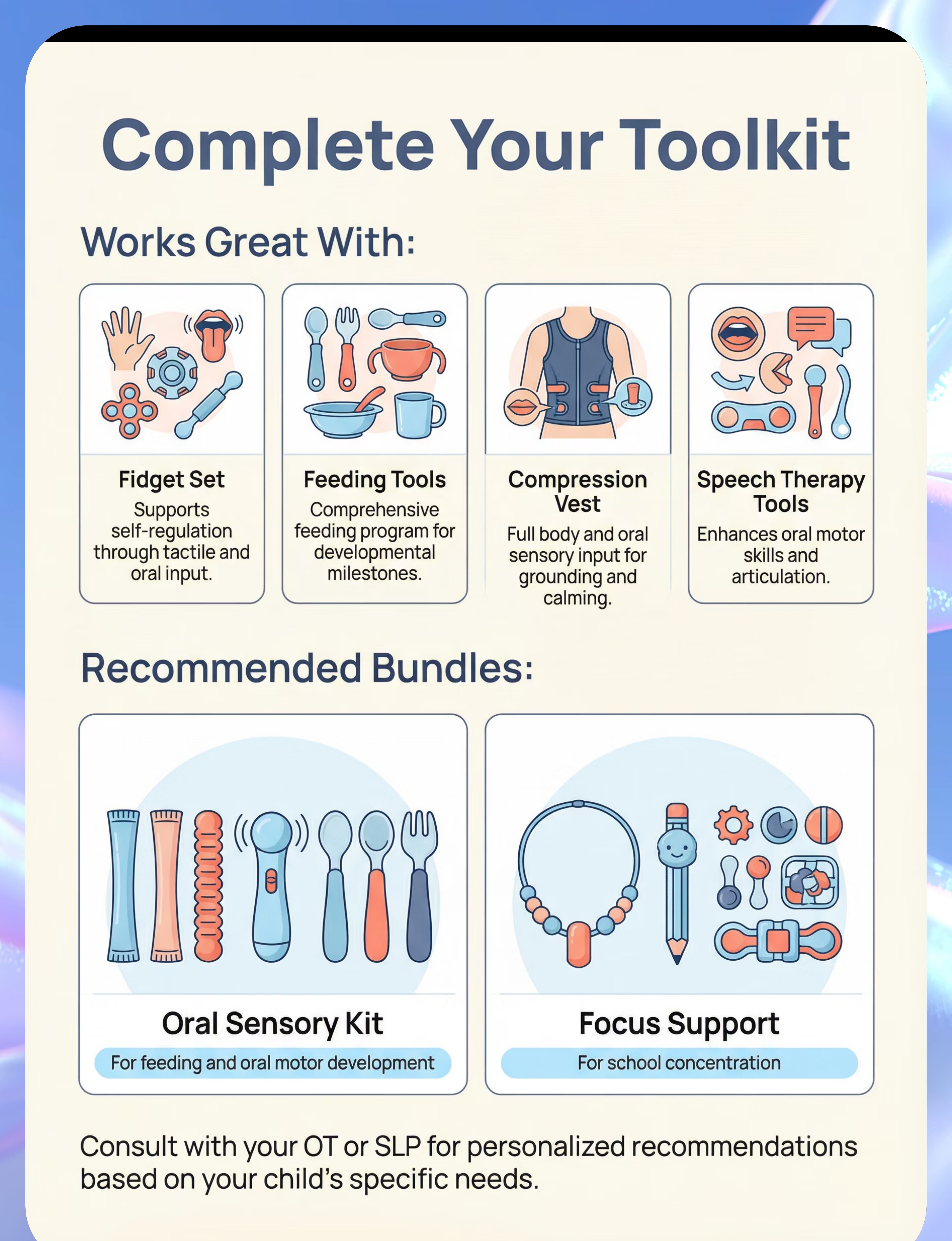
Complete the Kit
Pair It With...
Fidget Set (ID: 1.4)
Why combine: Hand input complements oral input for complete sensory regulation. Many oral seekers also seek tactile input.
Feeding Tools (ID: 12.1)
Why combine: Complete oral-feeding program addresses both sensory and motor aspects. Comprehensive approach yields better outcomes.
Compression Vest (ID: 1.2)
Why combine: Full body deep pressure input plus oral sensory input creates comprehensive sensory diet throughout day.
Speech Therapy Tools (ID: 11.1)
Why combine: Oral motor strengthening plus speech practice addresses both foundation and function for communication goals.
Recommended Bundles
Oral Sensory Kit
Includes: Oral Motor Tools (1.8) + Vibrating Tool (1.8.5) + Feeding Tools (12.1)
Use case: Comprehensive feeding and oral motor development program
Focus Support (Oral)
Includes: Chew Necklace (1.8.2) + Pencil Toppers (1.8.4) + Fidget Set (1.4)
Use case: School concentration and regulation with discrete tools

Quick AI Summary
Overview: Oral motor tools provide appropriate chewing input for oral sensory seekers and support feeding/speech development. Rank 2, SLP/OT co-owned, essential for children who chew on everything.
oral motor
chewing
sensory
feeding
speech
SLP
OT
chewy tubes
regulation
Common Searches
chewy tubes autism • chew necklace sensory • oral motor tools kids • ARK therapeutic India • silicone chew pendant • oral sensory seeking • feeding therapy tools

Get Support
FREE National Autism Helpline
Phone: 9100 181 181
Languages: 16+ Indian languages supported
Professional guidance available for therapy selection, implementation support, and ongoing questions about your child's development.
Platform Integration
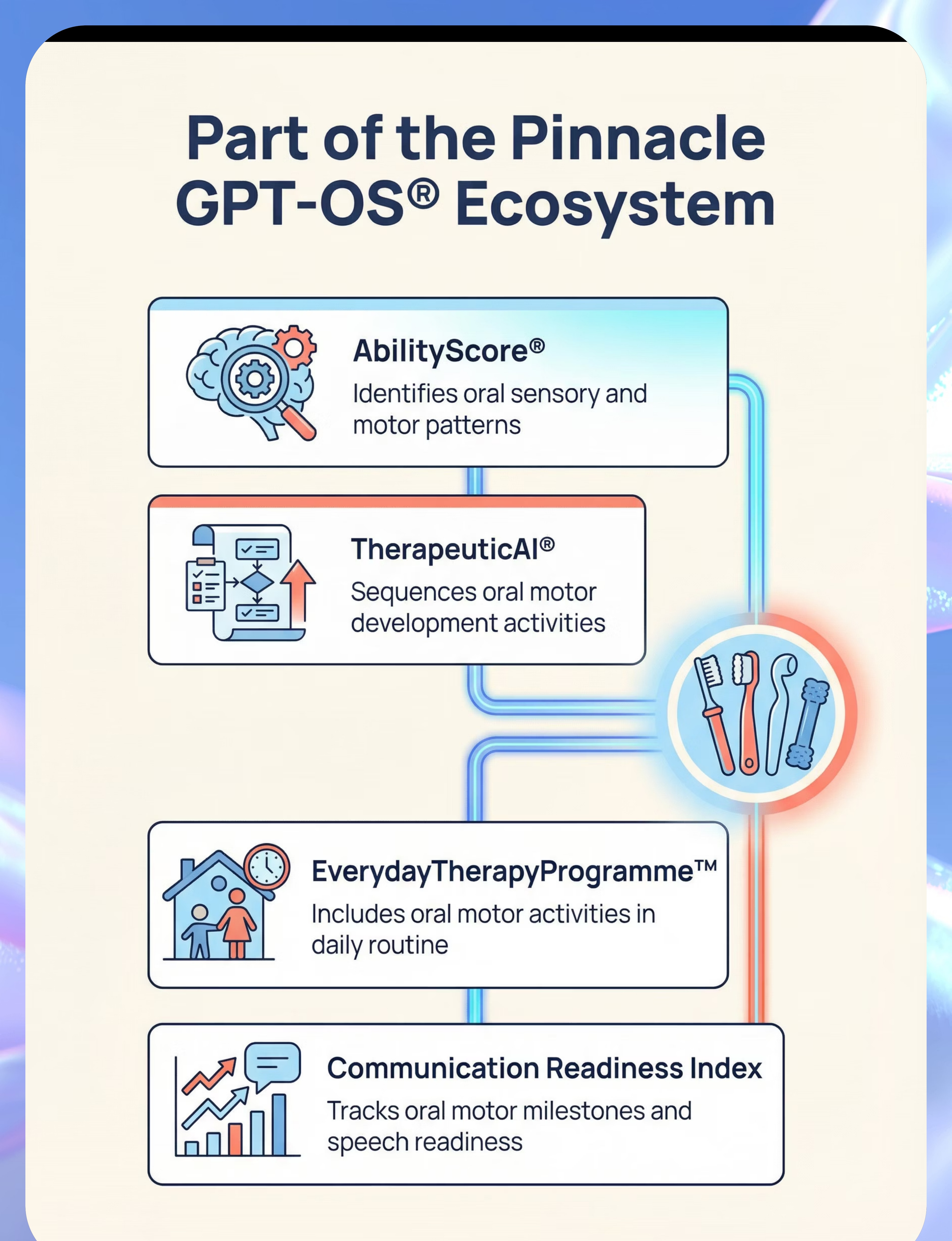
AbilityScore® identifies oral sensory and motor patterns through comprehensive developmental assessment.
TherapeuticAI® sequences oral motor development activities in personalized progression.
EverydayTherapyProgramme™ includes oral motor activities integrated into daily routines.
Communication Readiness Index tracks oral motor milestones and speech foundations.

Important Disclaimer
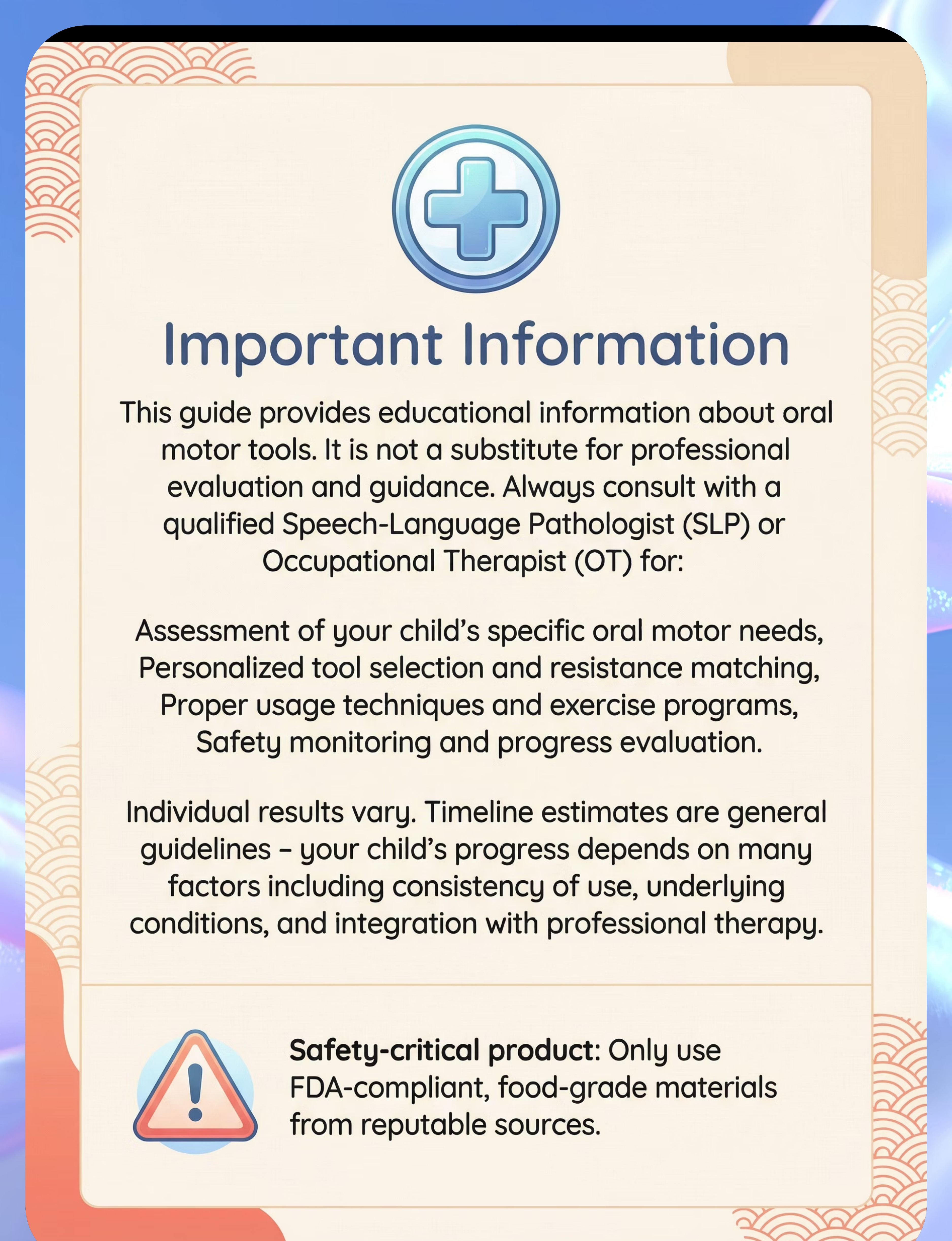
This is educational information based on clinical research and professional practice. It is not medical advice for your specific situation. Always consult qualified occupational therapists, speech-language pathologists, or pediatricians for personalized recommendations. Individual results vary based on child's unique profile, consistency of use, and combination with other interventions. Oral motor tools are one component of comprehensive therapeutic support.