












Tool ID: 15.5
Tool ID: 15.5
OT + Parent Recommended
Moderate Evidence
Rank #2
Daily Use
₹500–10,000
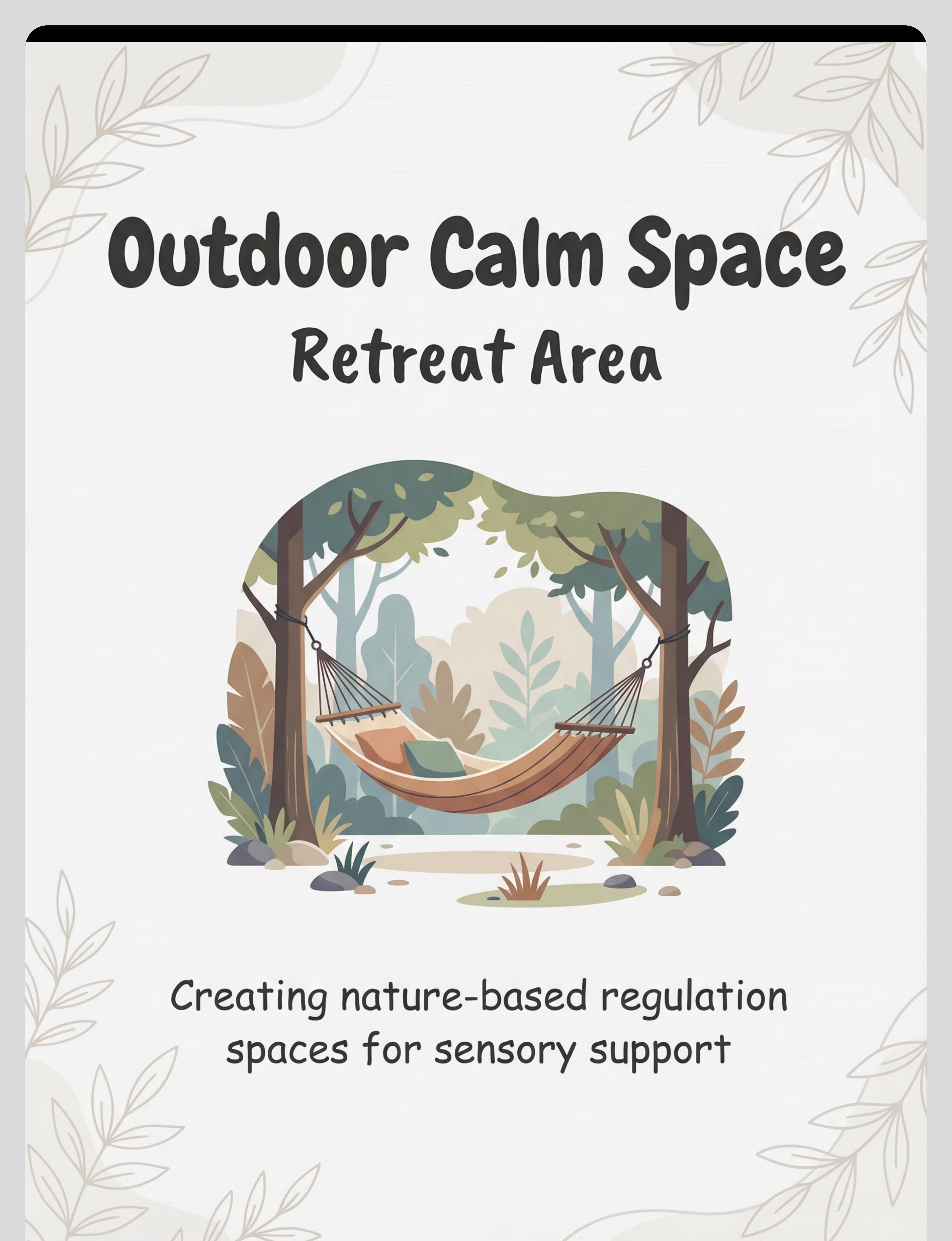
Outdoor Calm Space / Retreat Area
Outdoor regulation and sensory retreat system
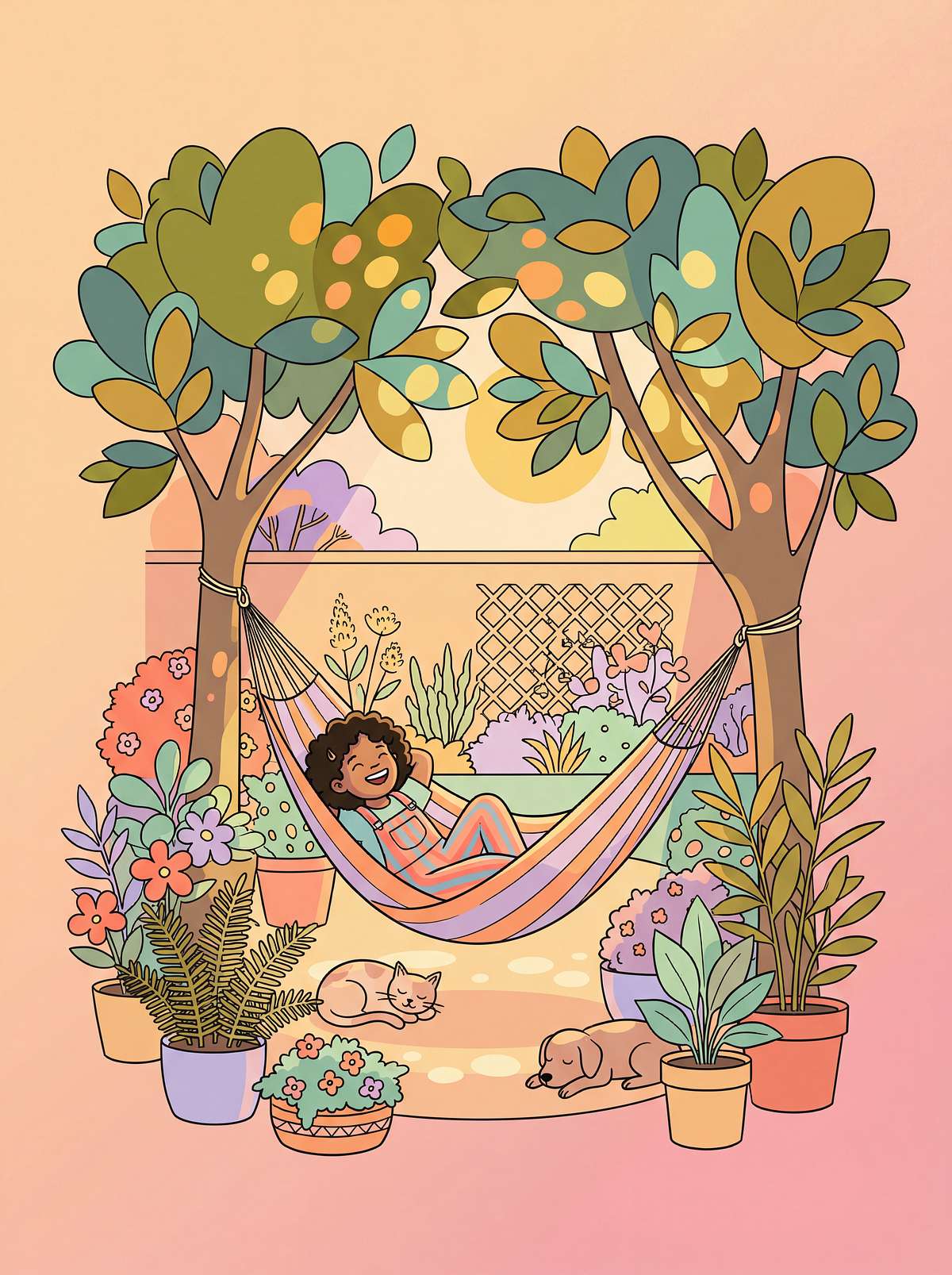
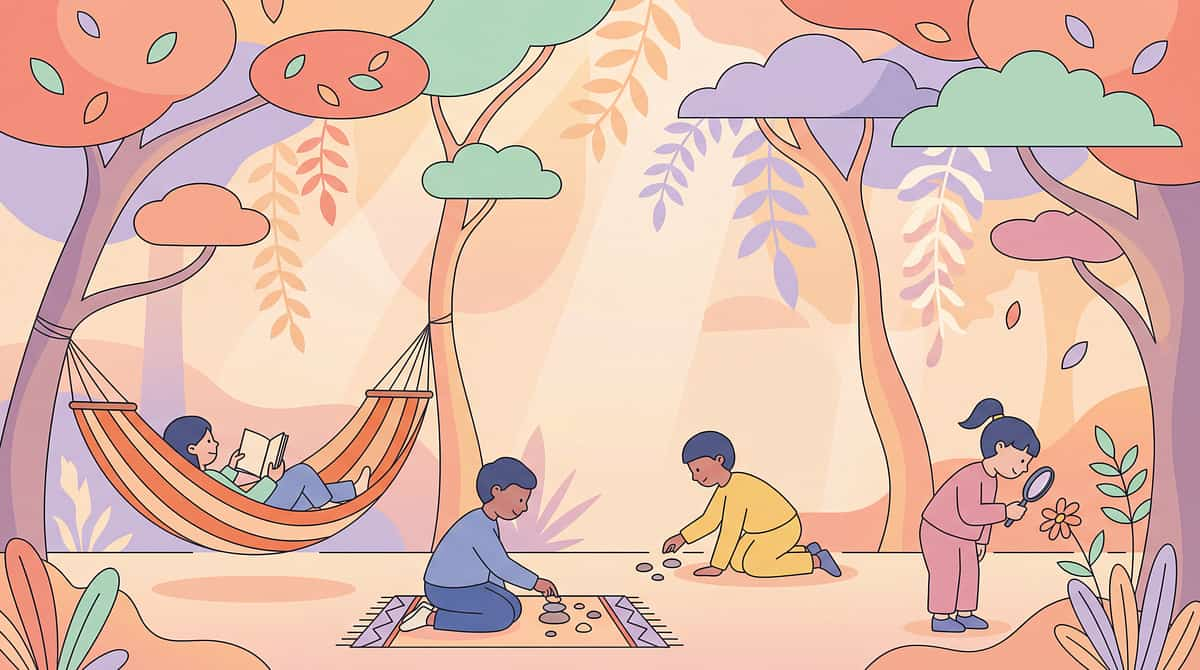
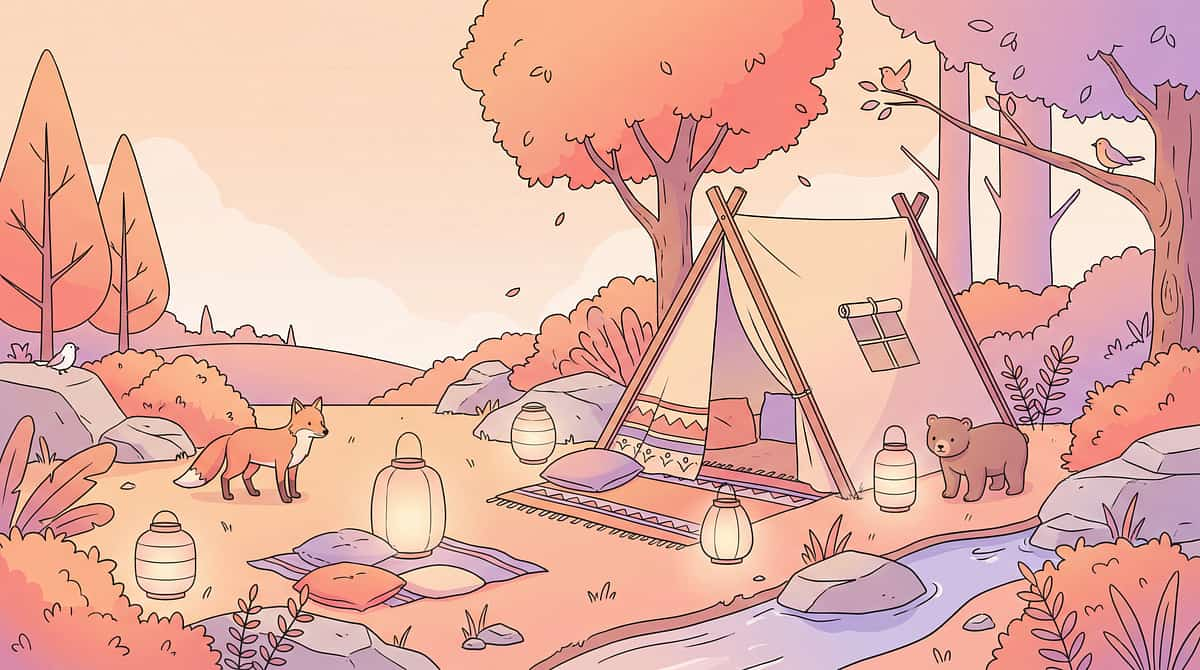
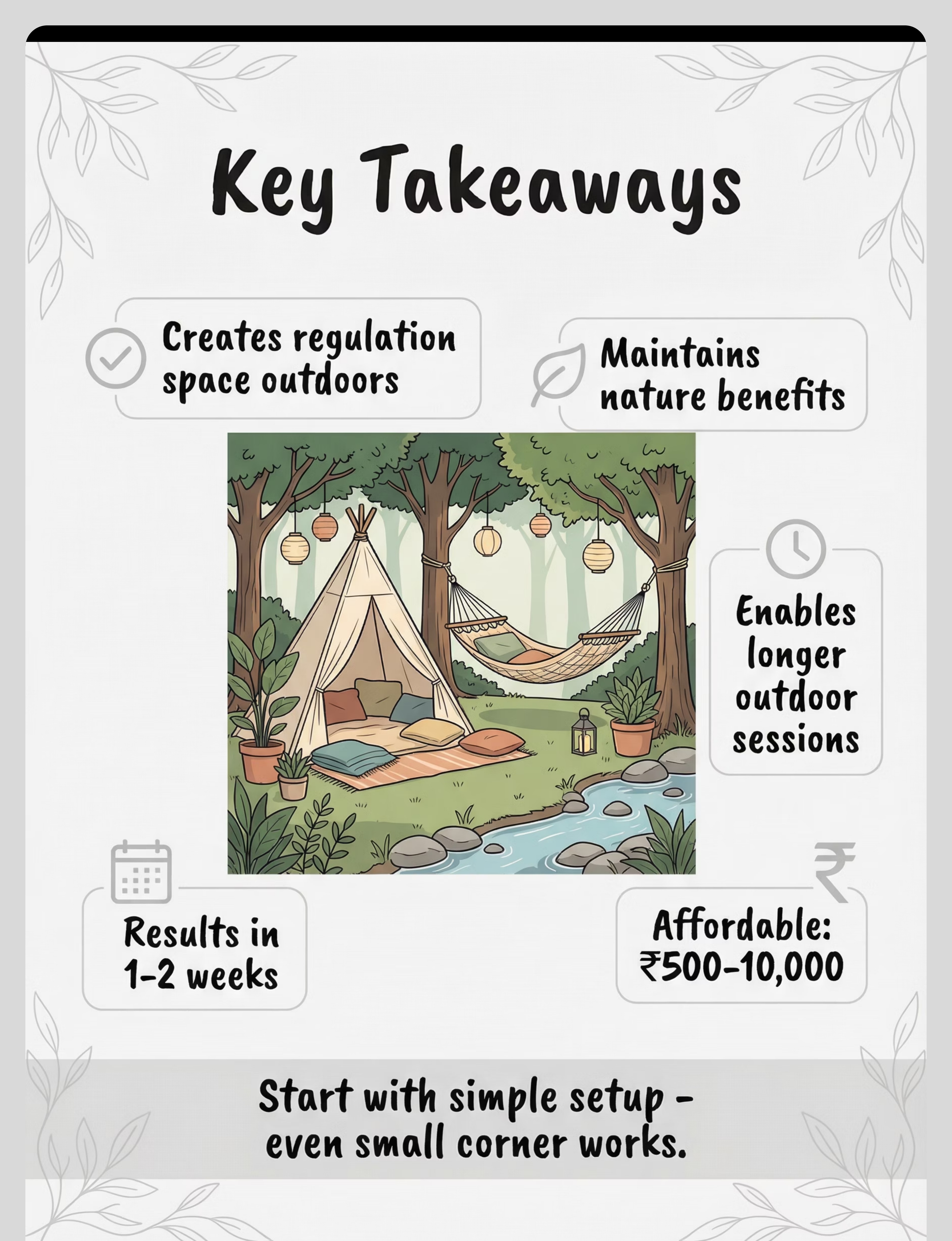
Imagine your child having a special retreat space outdoors—a place where they can take breaks, regulate their emotions, and enjoy the healing benefits of nature without feeling overwhelmed. An outdoor calm space combines the proven therapeutic benefits of fresh air, natural sounds, and green views with the sensory retreat features that help children find their calm. Whether it's a cozy tent in the backyard, a gentle hammock on the porch, or a defined garden nook surrounded by plants, these spaces offer children a sanctuary where they can reset and recharge while staying connected to nature.
Who This Helps
Outdoor calm spaces provide a nature-connected sanctuary for regulation, combining environmental benefits with sensory retreat features to support children who need breaks during outdoor play.
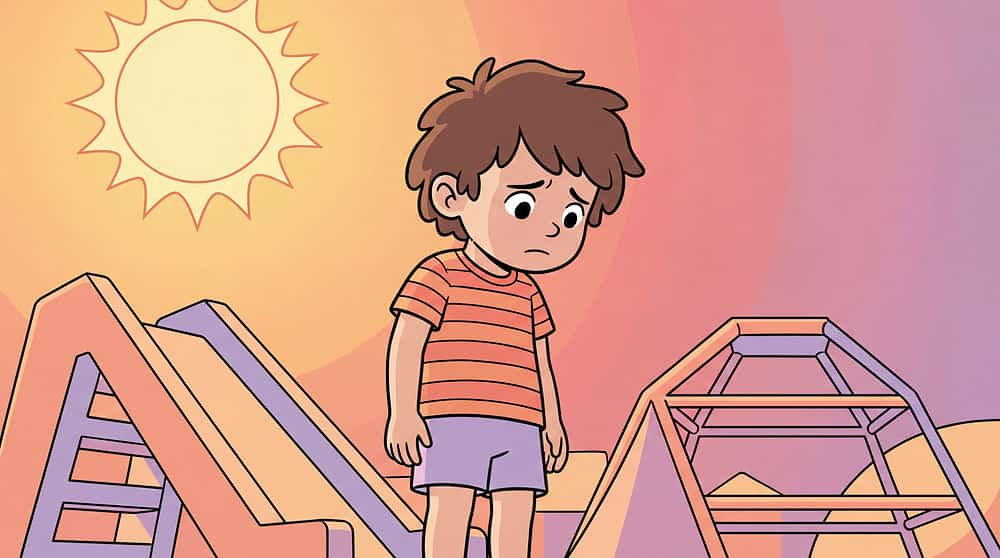
Overwhelmed During Play
Provides a natural sanctuary for children needing breaks from intense outdoor stimulation.
Sensory Sensitivity
Offers a gentle retreat for kids sensitive to sun, heat, or intense outdoor environments.
Learning Regulation
Supports children in developing self-regulation skills within a therapeutic natural environment.
Regulation
Calm Space
Nature Exposure
Sensory Retreat
Outdoor Tolerance
Restoration
Ages: 2+ years
Backyard
Garden
Porch
Parks (portable)
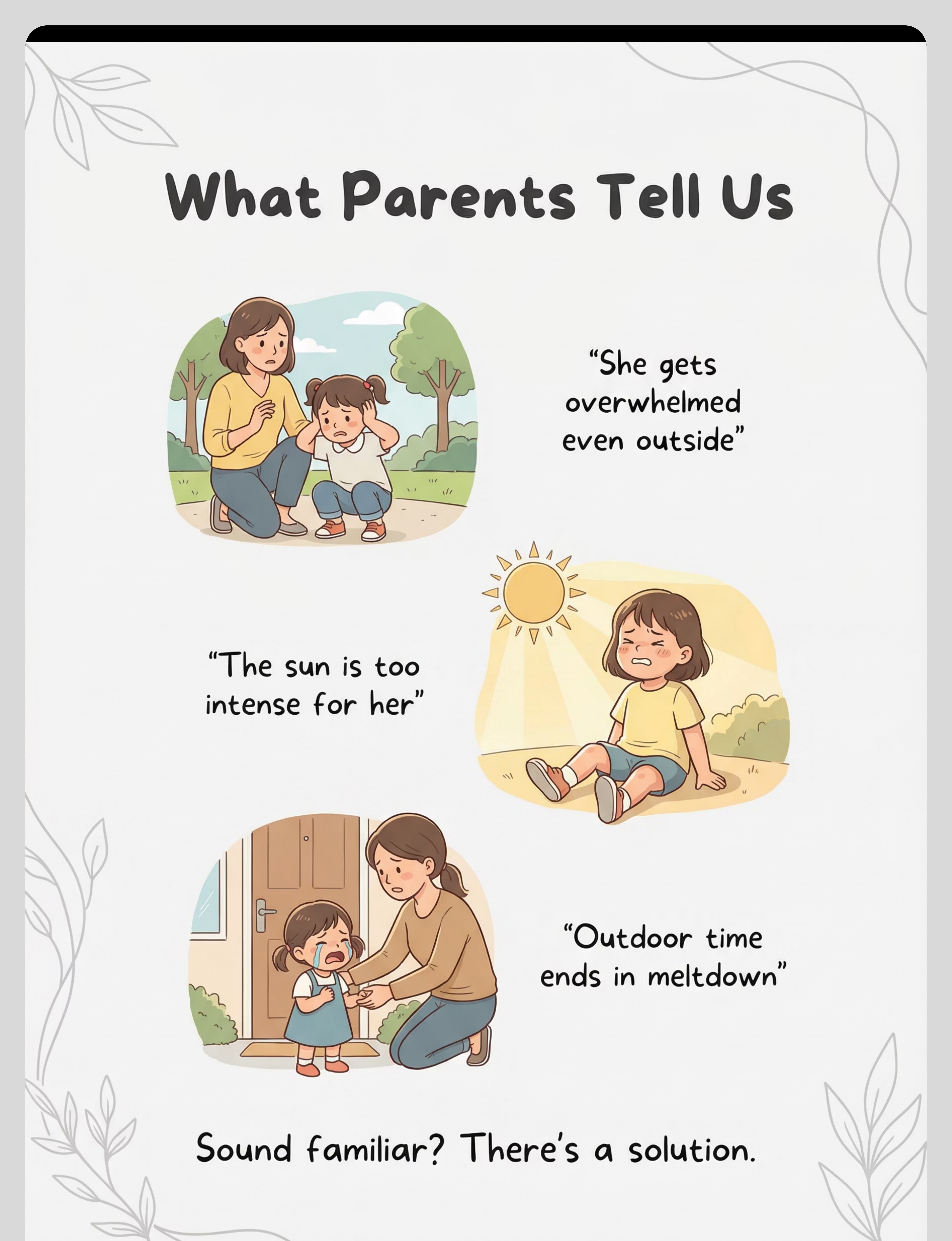
Does This Sound Familiar?
Every parent wants their child to enjoy the outdoors, but when regulation challenges appear even in nature, it can feel like there's nowhere left to turn. These are the real voices of families navigating outdoor time:
"She gets overwhelmed even outside. I thought fresh air would help, but she still needs breaks and we have nowhere for her to go."
"He has nowhere calm outdoors. When he gets dysregulated during play, he has to come inside, which means losing all the outdoor benefits."
"The sun is too intense for her. She avoids the backyard completely, and I worry she's missing out on nature time."
"He needs breaks during outdoor play, but there's no comfortable space. It becomes all or nothing—either stay out and melt down, or go inside."
You're not alone. These are common challenges that many families face when trying to help their children regulate outdoors while still benefiting from nature exposure.
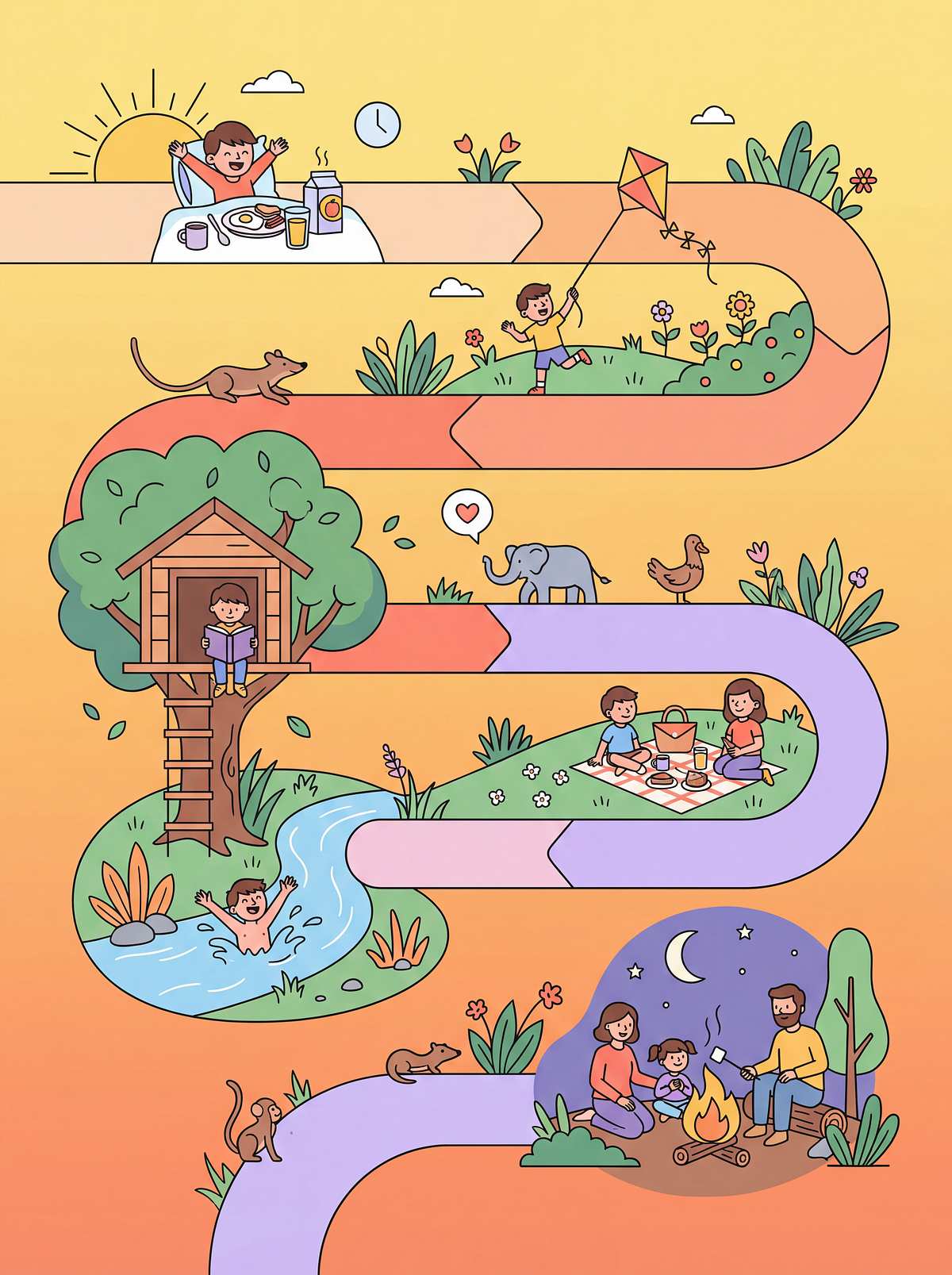
A Day Without the Right Support
Morning Outdoor Play
Child excited to go outside, but within 15 minutes becomes overwhelmed. No retreat space available. Has to go back inside, ending outdoor time abruptly.
Midday Heat
Sun intensity increases. No shaded comfortable space to retreat to. Child avoids outdoors entirely during best weather hours, missing nature benefits.
Afternoon Play Attempts
Tries outdoor play again. Gets dysregulated but nowhere to take a break outside. Must choose between continuing (overwhelmed) or going in (missing outdoor time).
Evening Disappointment
Minimal outdoor time achieved. Child and parent both frustrated. Nature's regulatory benefits remain inaccessible due to lack of outdoor calm space.
The Science Behind It
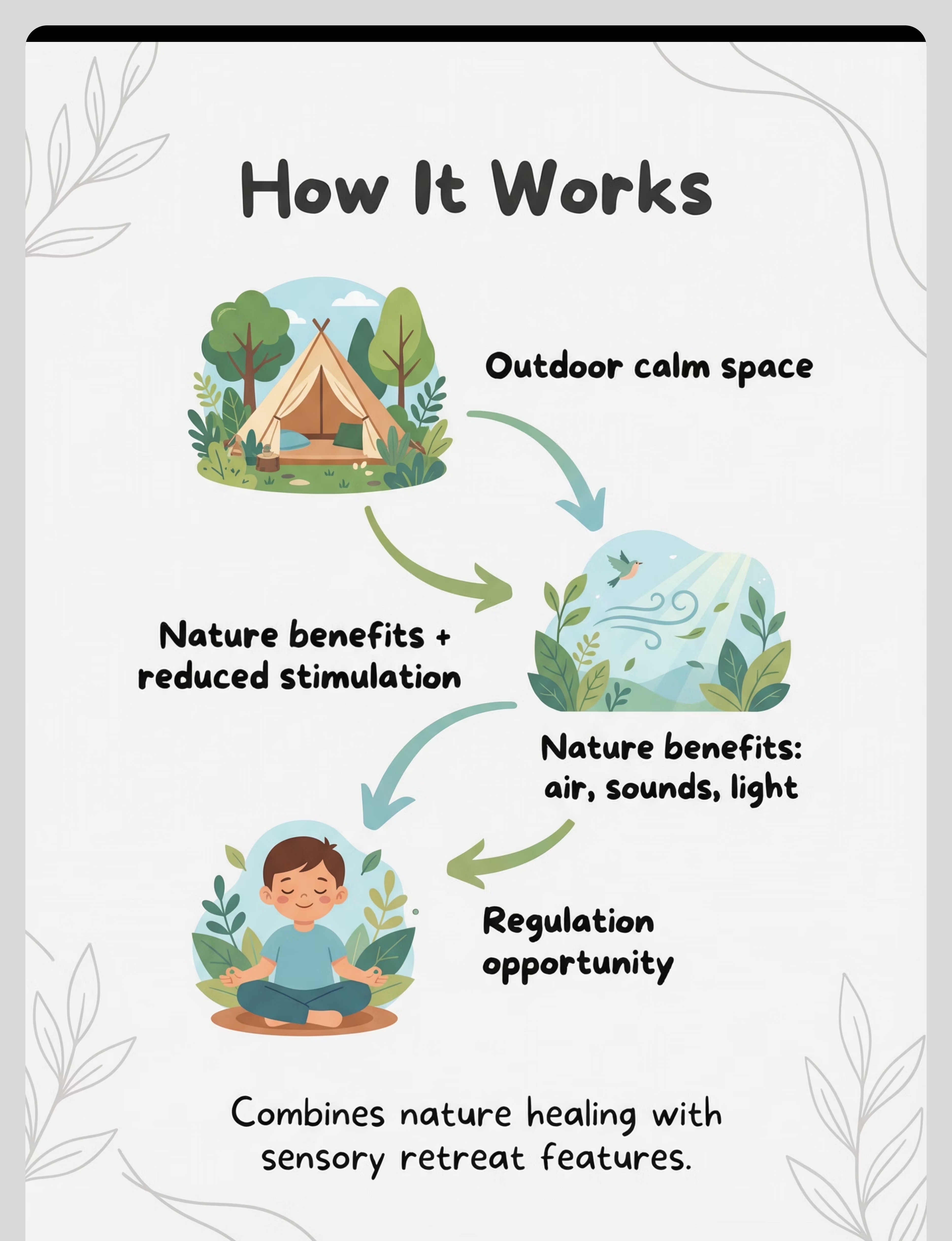
Understanding how outdoor calm spaces work helps you create the most effective environment for your child. The mechanism combines environmental psychology with sensory processing support:
Outdoor Calm Space Created
Defined retreat area in natural environment
Nature Benefits Accessed
Fresh air, natural sounds, green views, gentle light
Reduced Stimulation Within Space
Enclosed or defined area provides sensory retreat
Regulation Opportunity
Child can reset without leaving outdoor environment
Combined Healing Effect
Nature's restoration + sensory retreat = accessible outdoor regulation
This approach addresses multiple sensory and regulatory needs simultaneously:
Regulation
Calm Space
Nature Exposure
Sensory Retreat
Outdoor Tolerance
Restoration
How to Use It Right
Creating and using an outdoor calm space effectively requires thoughtful setup and consistent approach. These best practices ensure your child gets maximum benefit:
Defined & Comfortable Space
Use clear boundaries—tent walls, rug edges, plant markers—so your child understands this is a special retreat area. Comfort is essential for regulation to occur.
Shade & Weather Protection
Sun exposure and weather extremes prevent calm. Adequate shade, shelter from wind, and protection from elements make the space usable and comfortable throughout the day.
Comfortable Seating
Weather-resistant cushions, beanbags, or hammocks give your child a place to actually rest. Standing in a tent isn't calming—sitting or lying in comfort is.
Simple & Uncluttered
Resist adding too many elements. The goal is calm, not entertainment. A few well-chosen items (cushion, small plant, simple decoration) are better than cluttered space.
Natural Sounds Only
Let natural sounds be the soundtrack—birds, breeze, rustling leaves. Added music often overstimulates. If child needs sound, nature sound recordings work better than music.
Teach as Regulation Tool
Model using the space yourself. Practice going there before overwhelm happens. Frame it as "the place we go to feel calm," not punishment or time-out.
Duration: As needed for regulation—some children need 5 minutes, others 20. Let your child's nervous system guide the timing.
Expert Perspective
"Outdoor calm spaces combine the best of both worlds - the proven benefits of nature exposure with the sensory retreat features that help children regulate. Fresh air, natural sounds, and green views enhance calming while the enclosed space provides containment."
— Occupational Therapist, Nature-Based Therapy Specialist
OT + Parent Recommended
Collaborative approach between occupational therapy and parent implementation
Moderate Evidence
Supported by research on nature exposure and sensory retreat spaces
Rank #2 in Category
High-priority tool in Outdoor & Nature category
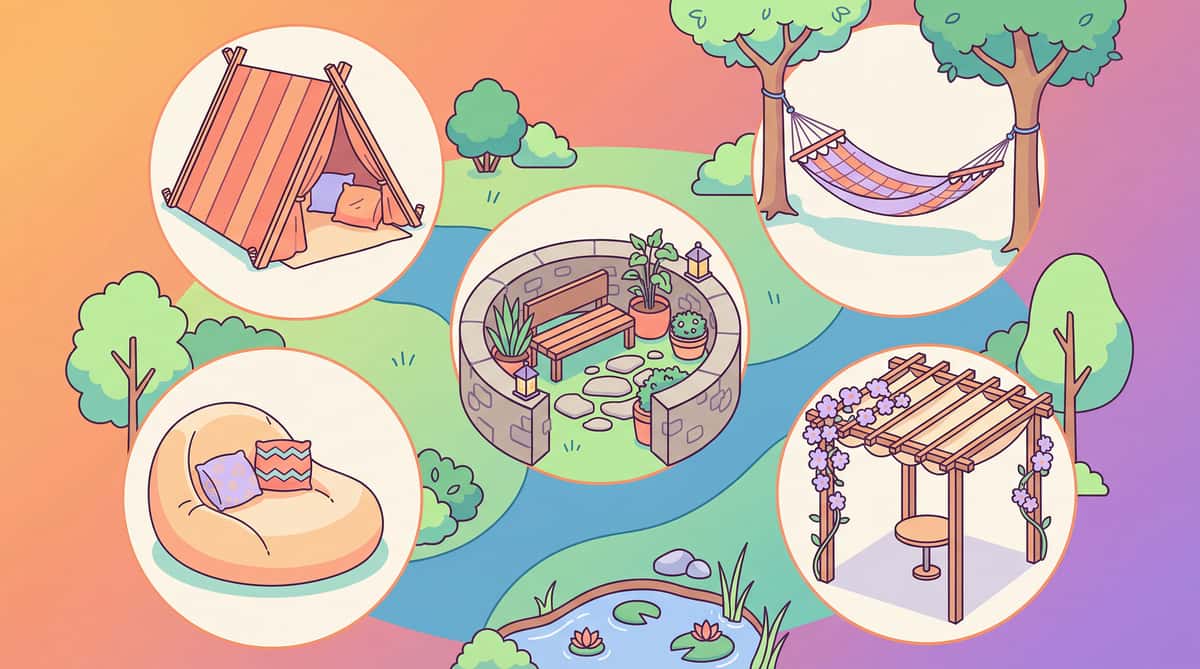
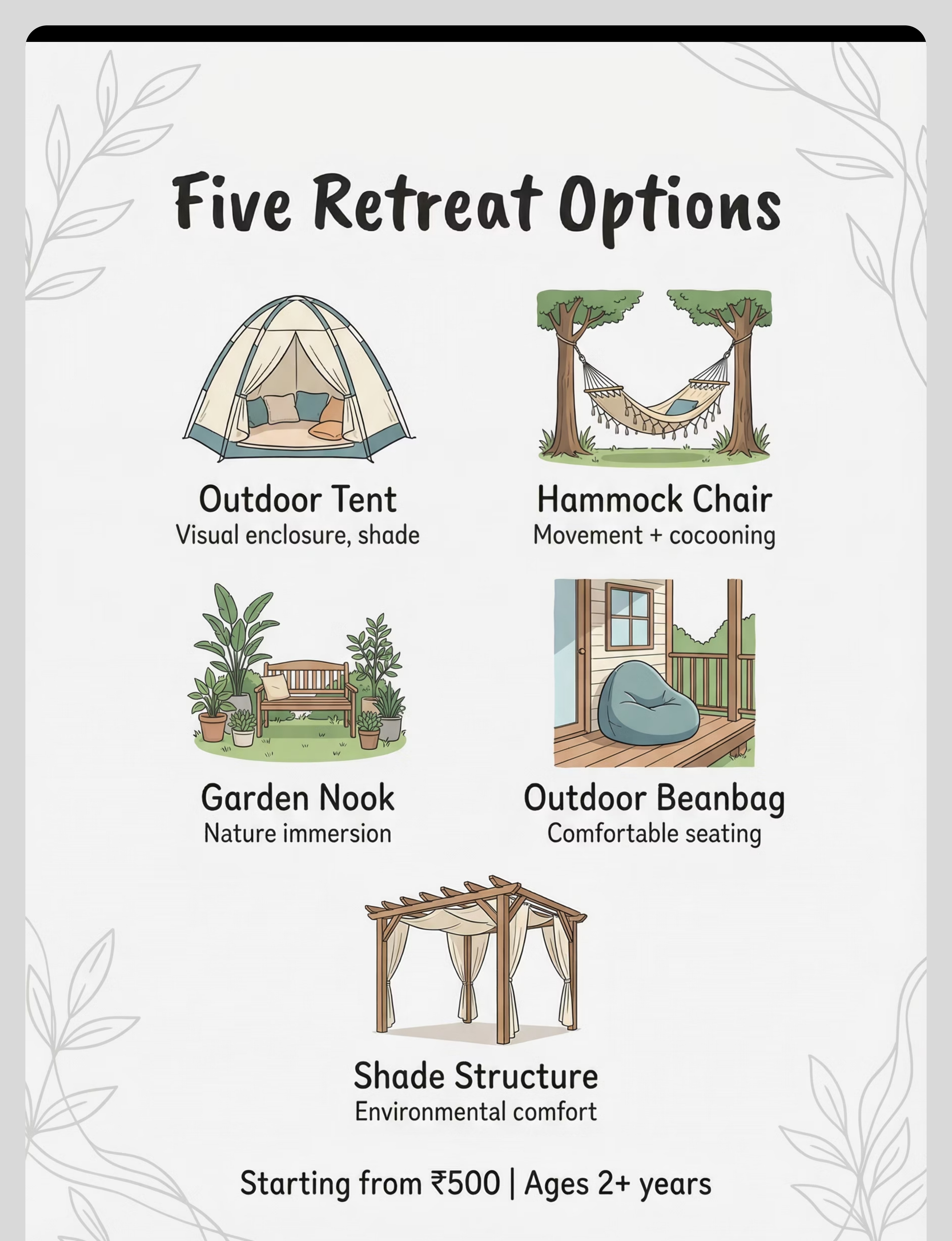
Choose Your Option (5 Variants)
outdoor-calm-space-retreat-area therapy material
Every family's outdoor space is different, and every child has unique needs. These five variants offer flexibility in how you create your outdoor retreat area. Consider your child's preferences, your available space, weather patterns, and budget.
Outdoor Tent / Pop-Up Shelter
Best for: Shade, visual reduction, cozy enclosed space
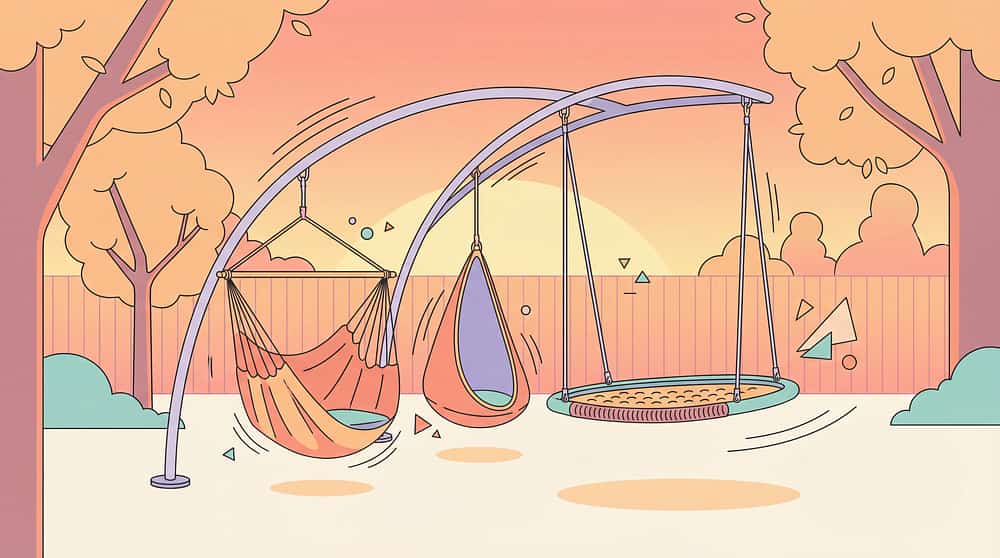
Hammock / Hanging Chair (Outdoor)
Best for: Gentle movement, cocooning, deep calming
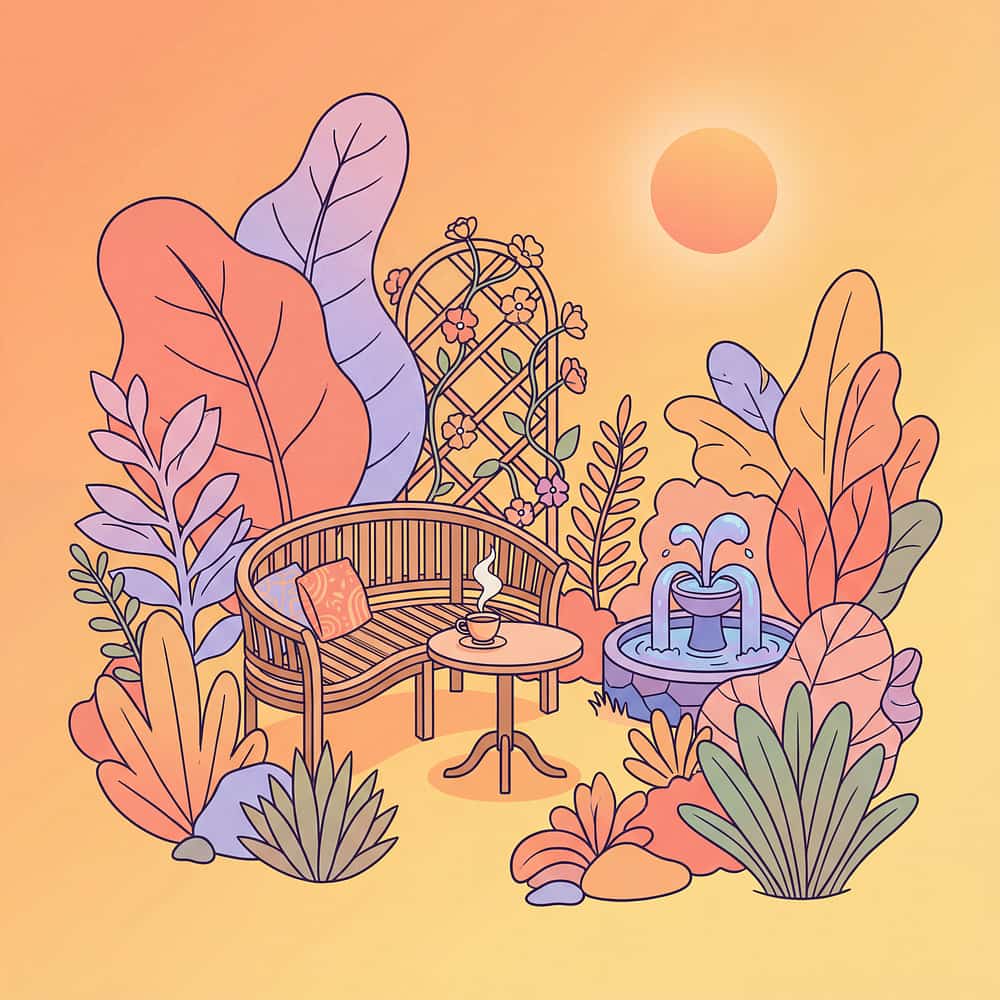
Garden Nook / Corner
Best for: Nature immersion, quiet retreat with plants
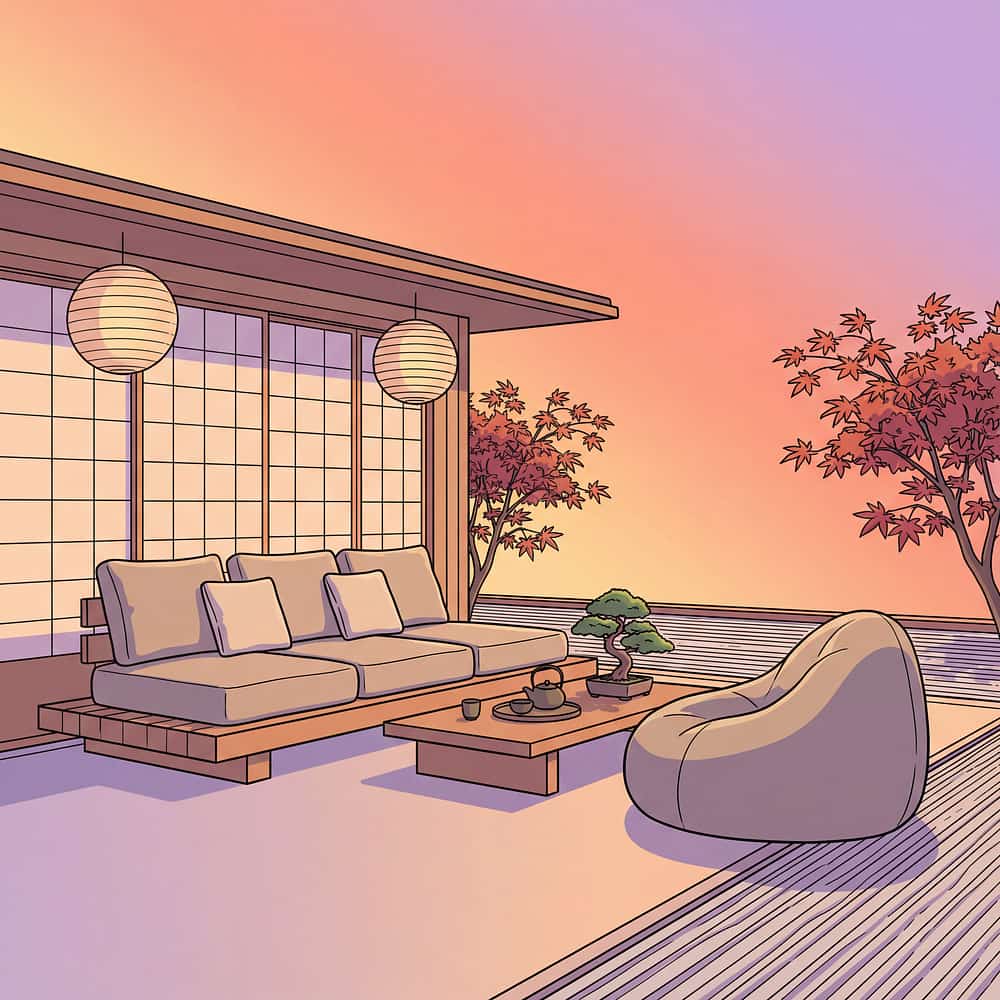
Outdoor Beanbag / Floor Cushion
Best for: Relaxed seating, deep pressure, outdoor reading
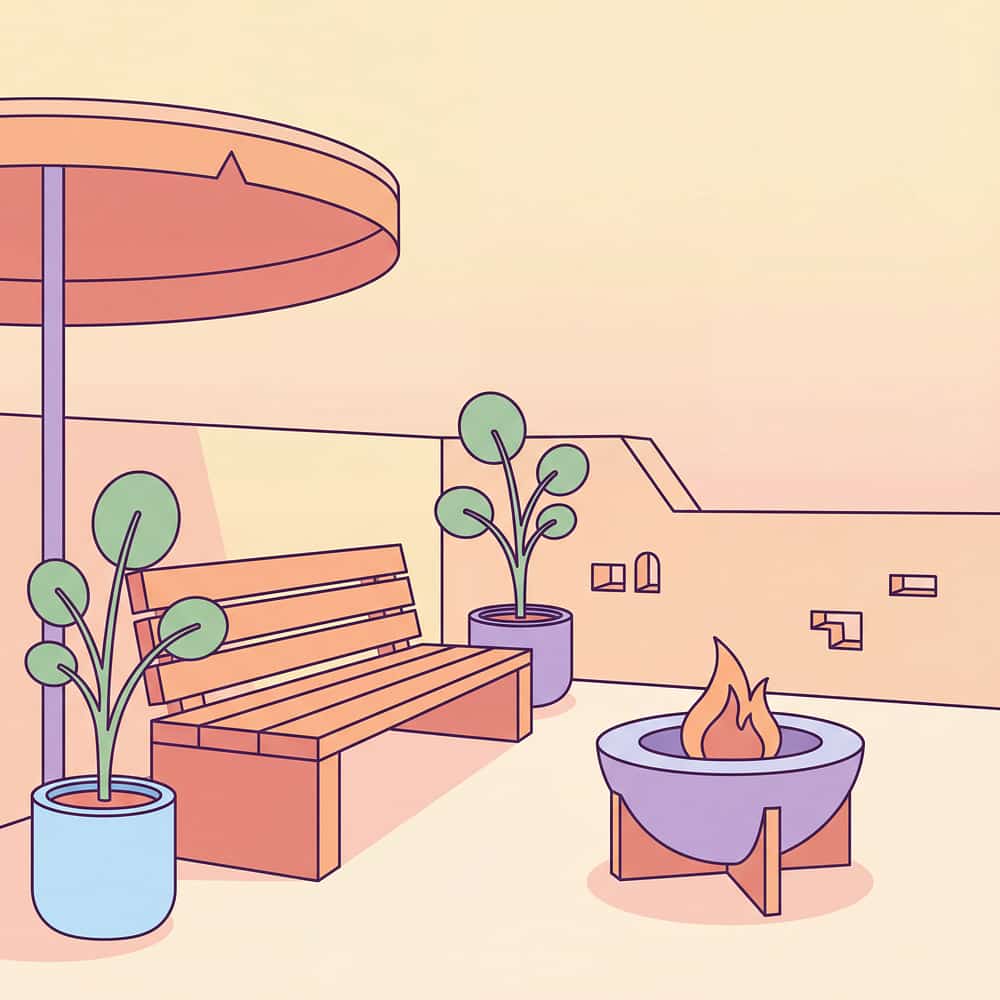
Shade Structure / Pergola
Best for: Reducing sun/heat, creating defined protected space
To help you decide, consider these factors for each variant:
  • Outdoor Tent / Pop-Up Shelter: Ideal for shade, visual reduction, and creating a cozy, enclosed space. Best for ages 2+ and portable for backyards or parks. Price: ₹500–3,000.
  • Hammock / Hanging Chair (Outdoor): Great for gentle movement, cocooning, and deep calming. Suitable for ages 3+ in backyards or porches. Portability is low-medium. Price: ₹800–4,000.
  • Garden Nook / Corner: Perfect for nature immersion and a quiet retreat surrounded by plants. Suitable for all ages in backyards or gardens, though it's a fixed option. Price: ₹500–5,000.
  • Outdoor Beanbag / Floor Cushion: Offers relaxed seating, deep pressure, and is excellent for outdoor reading. Best for ages 3+ in backyards or porches. Portability is low-medium. Price: ₹800–3,000.
  • Shade Structure / Pergola: Excellent for reducing sun/heat and creating a defined, protected space. Suitable for all ages in backyards as a semi-permanent addition. Price: ₹1,000–10,000.
When choosing, think about your primary goal (visual enclosure, movement, nature, or comfort), your available setting (backyard, porch, garden), and how much portability you need. For example, a pop-up tent is most portable, while a garden nook or pergola is a fixed solution.
Specifications & Calm Space Elements
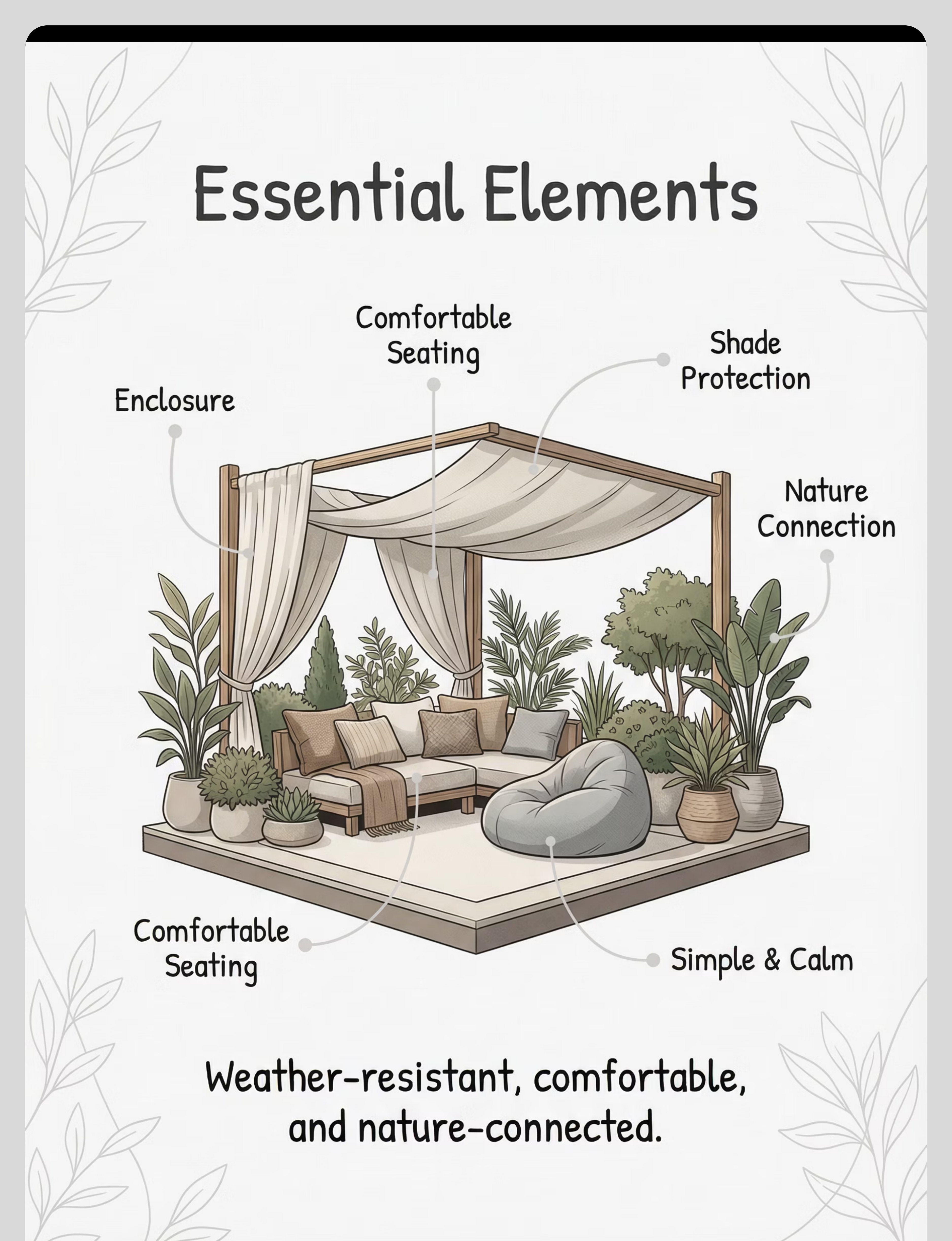
Essential Calm Space Elements
Enclosure
Tent, canopy, or natural enclosure like hedges that define the retreat space visually and provide containment
Comfortable Seating
Weather-resistant cushions, beanbags, hammock, or outdoor pillows that invite staying and resting
Shade & Weather Protection
Protection from sun, wind, and light rain that makes space usable throughout the day
Nature Connection
Plants, natural sounds, green view, or natural materials that provide therapeutic nature exposure
Simplicity
Uncluttered, calming environment with just enough—not too much—to support regulation
Materials & Features
Common Materials
  • Weather-resistant outdoor fabrics (polyester, treated canvas)
  • Metal or wood frames for structure
  • Outdoor-rated cushions and pillows
  • Natural elements (plants, wood, stone)
Key Features
Weather-resistant construction
Comfortable, inviting seating
Clearly defined retreat space
Connected to nature elements
Simple, calming aesthetic
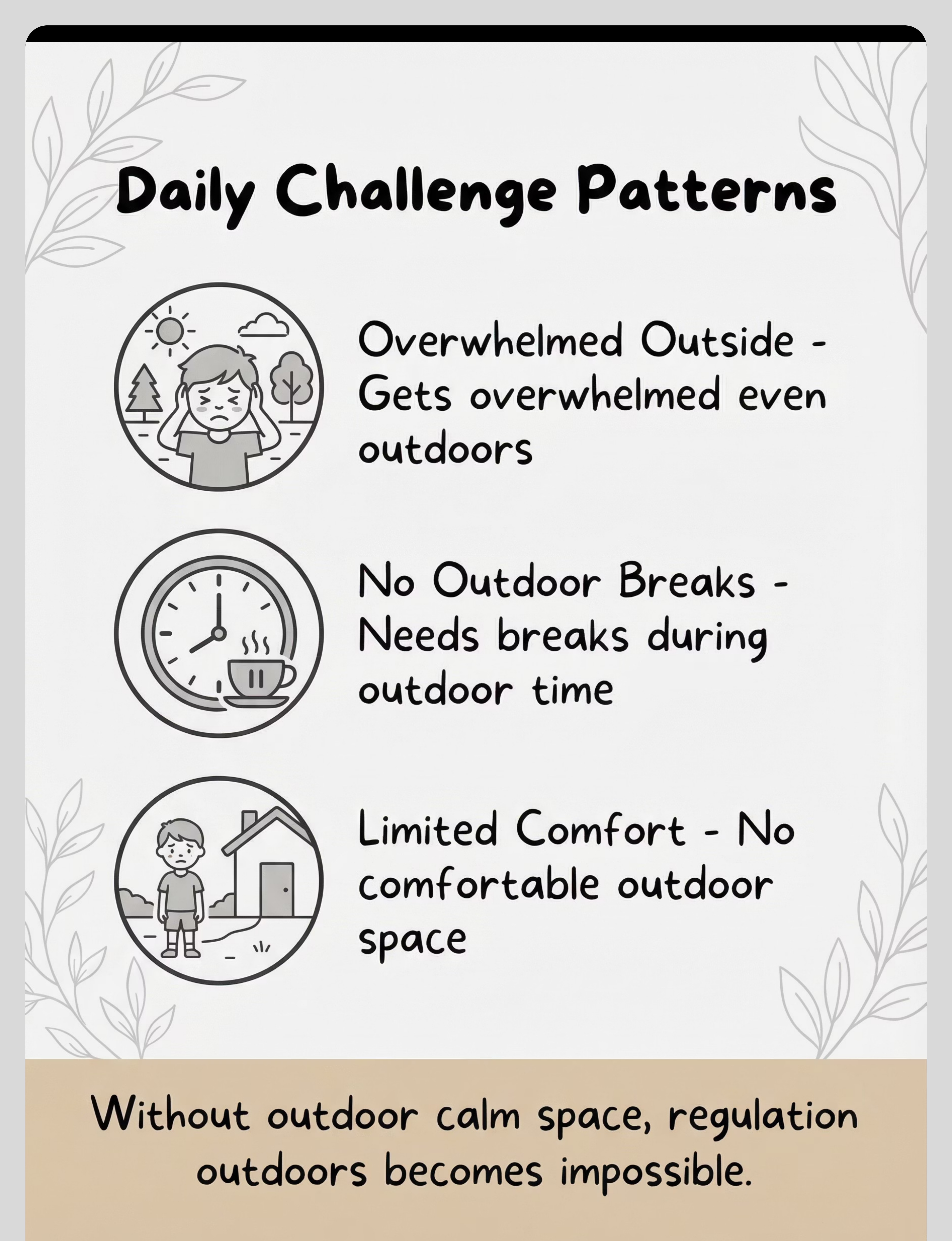
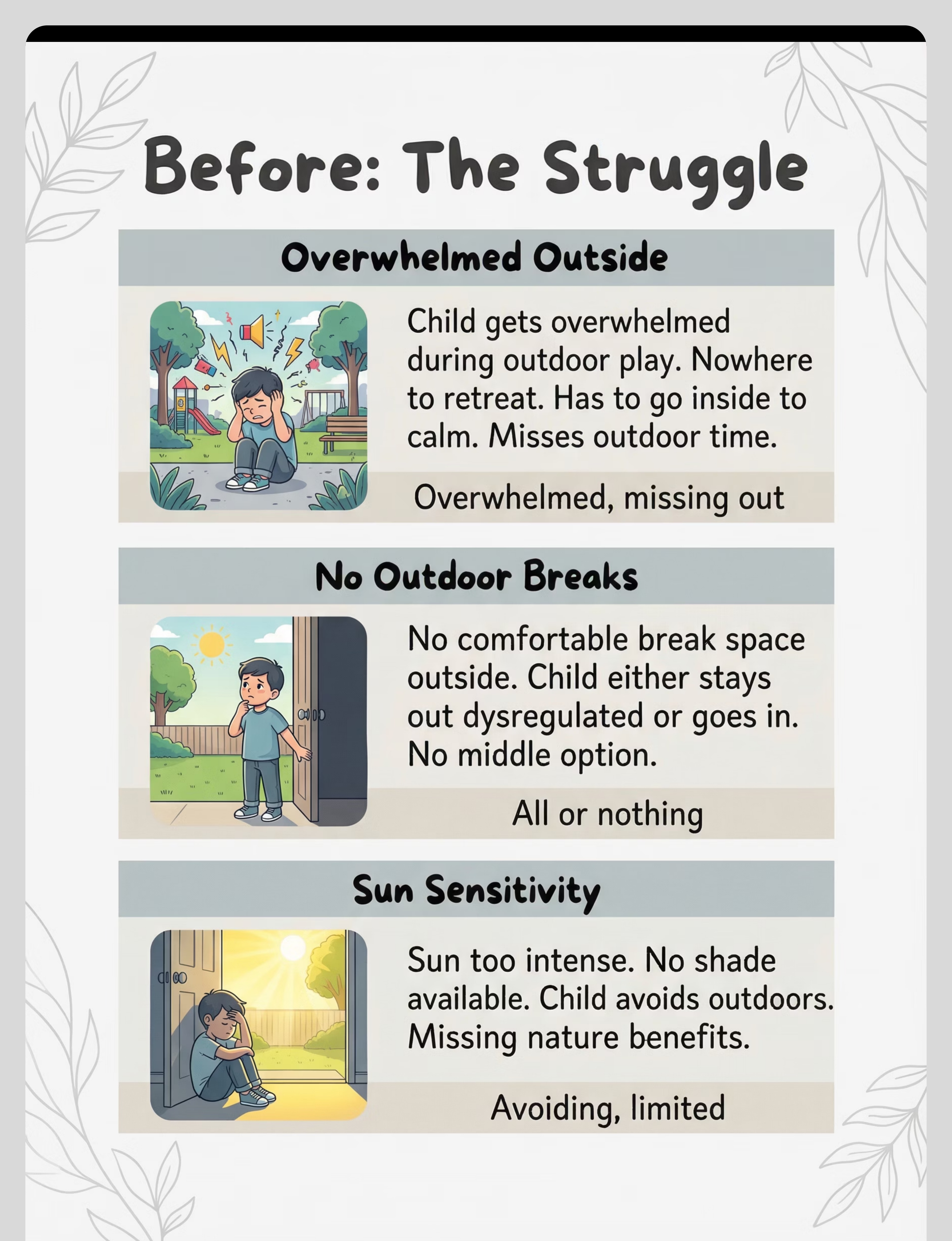
The Struggle (Before)
Before having an outdoor calm space, families face daily challenges that limit outdoor time and miss nature's regulatory benefits. These scenarios show what life looks like without this essential tool:
Overwhelmed Outside
Situation: Child gets overwhelmed during outdoor play. Nowhere to retreat outside. Has to go inside to calm down. Misses valuable outdoor time and benefits.
Experience: Outdoor play starts well but escalates. No break option available outside. Must end outdoor time completely and transition inside.
Emotion: Overwhelmed, missing out, frustrated
No Outdoor Breaks
Situation: No comfortable break space outside. Child either stays out (becoming dysregulated) or goes in (missing outdoor benefits). No middle option exists.
Experience: All-or-nothing outdoor time. Can't take breaks while staying outside. Forced choice between overwhelm and ending outdoor session.
Emotion: All or nothing, limited options, stuck
Sun/Weather Sensitivity
Situation: Sun too intense with no shade available. Child avoids outdoors entirely. Missing nature benefits and outdoor play opportunities.
Experience: Bright sun and heat create immediate discomfort. No protected comfortable space available. Outdoor time becomes impossible or very brief.
Emotion: Avoiding outdoors, limited, uncomfortable
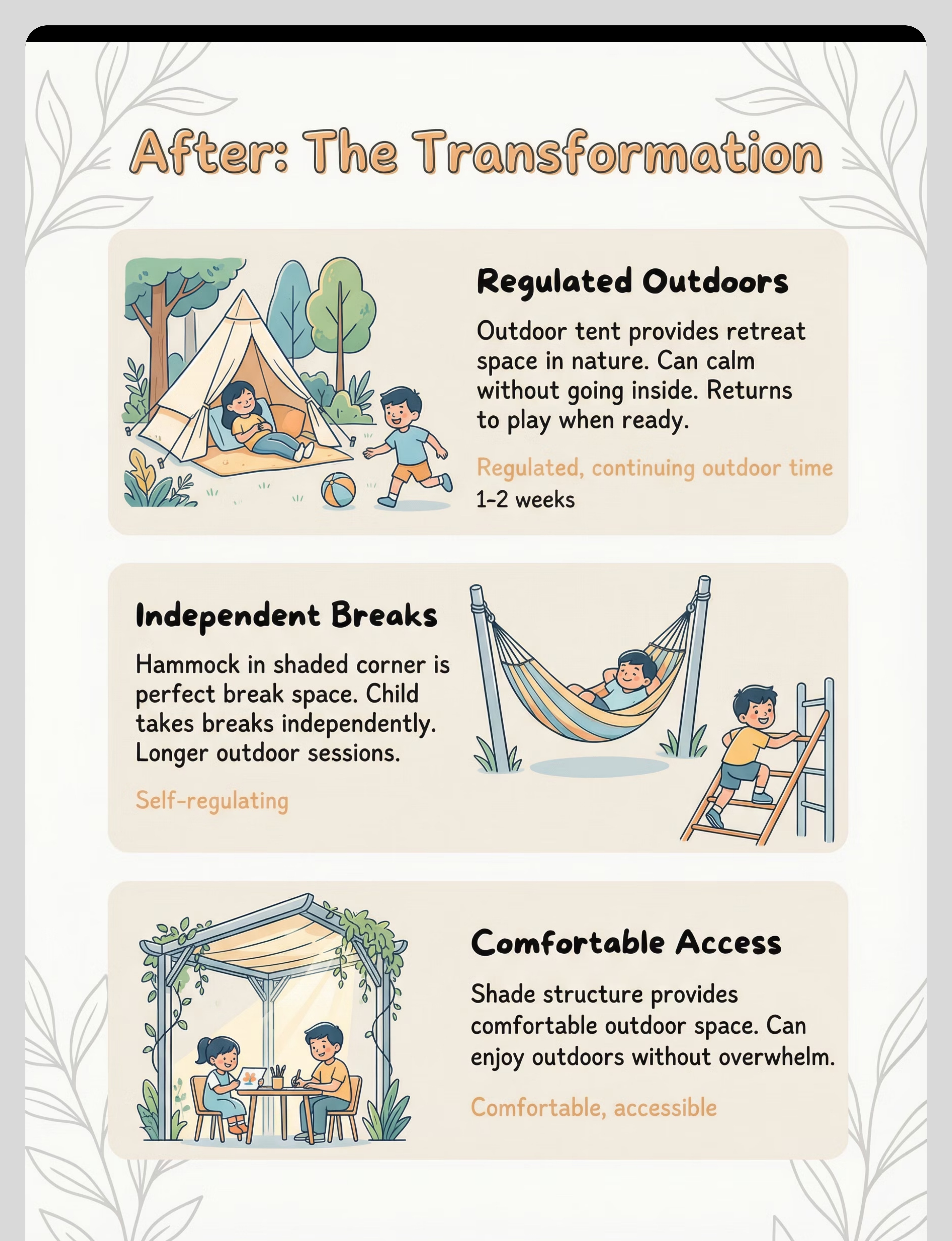
The Breakthrough (After)
With an outdoor calm space in place, the same challenging situations transform into manageable moments. Nature's benefits become accessible, regulation happens outdoors, and outdoor time extends naturally:
Overwhelmed Outside → Regulated Retreat
Situation: Outdoor tent provides retreat space right in nature. Can calm down without going inside. Returns to play when ready. Stays regulated throughout outdoor time.
Experience: Feels overwhelm starting. Goes to tent independently. Takes needed break. Re-regulates. Returns to play. Outdoor session continues successfully.
Emotion: Regulated, able to continue, empowered
Breakthrough in 1-2 weeks
No Breaks → Self-Regulation
Situation: Hammock in shaded corner becomes perfect break space. Child takes breaks independently. Returns to play naturally. Longer outdoor sessions now possible.
Experience: Recognizes need for break. Goes to hammock. Gentle movement and containment help regulation. Returns to play. Pattern repeats as needed throughout session.
Emotion:Self-regulating, longer play, confident
Breakthrough in 1-2 weeks
Avoiding Sun → Comfortable Access
Situation: Shade structure provides comfortable outdoor space. Can enjoy outdoors without sun overwhelm. Nature time becomes accessible and enjoyable.
Experience: Protected from intense sun. Comfortable temperature. Can spend time outdoors. Begins seeking outdoor time instead of avoiding it.
Emotion: Comfortable, accessible, enjoying nature
Breakthrough immediately
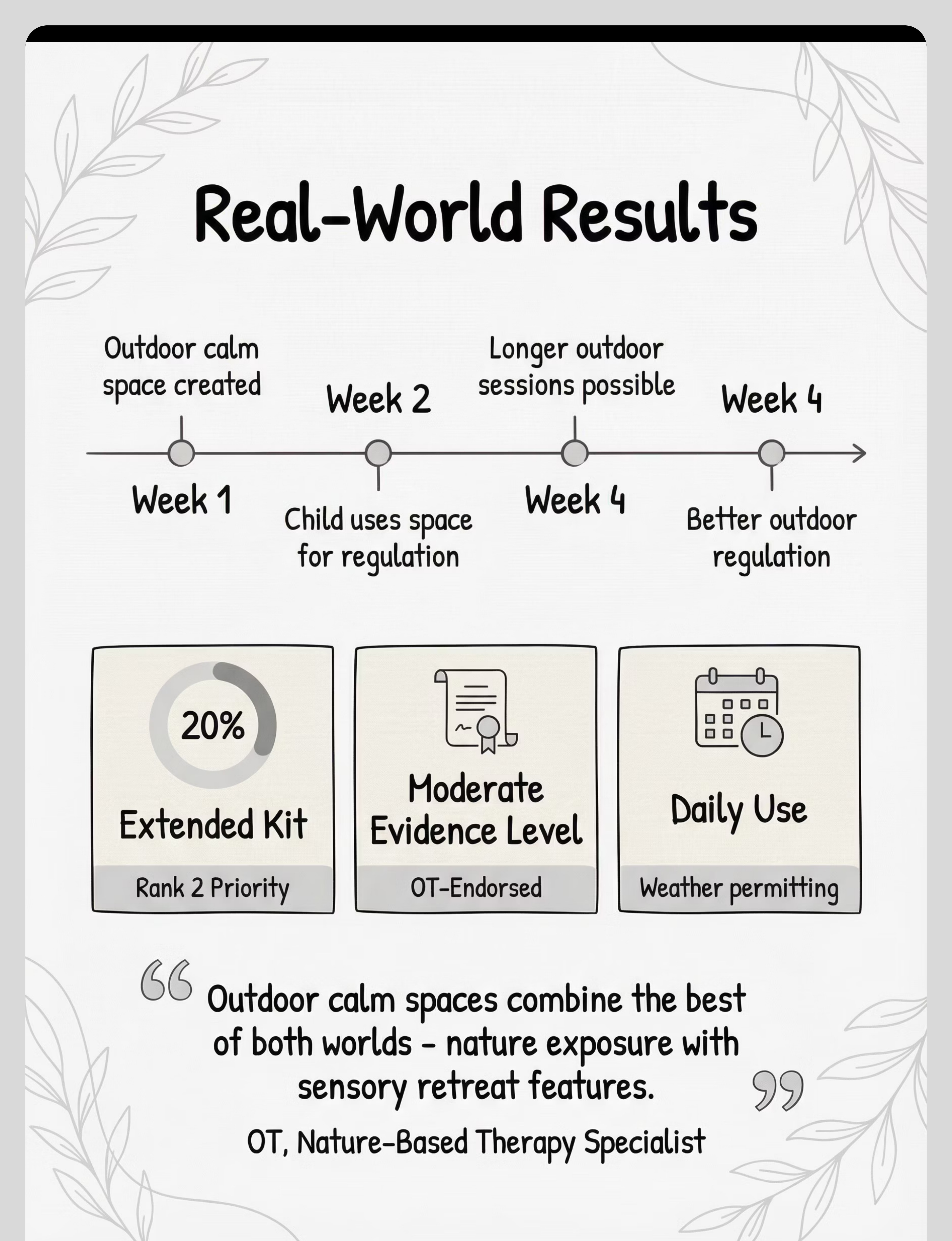
What to Expect (Realistic Timelines)
Understanding the timeline helps set realistic expectations. Some changes happen quickly; others develop over weeks as patterns establish and your child learns to use the space effectively.
Outdoor calm space created
Physical space set up and ready for use
1-7 days
Child uses space for regulation
Begins going to space when needed, understanding it as regulation tool
1-2 weeks
Longer outdoor sessions possible
With break option available, outdoor time extends naturally
2-4 weeks
Better outdoor regulation
Overall regulation during outdoor time improves with reliable retreat available
2-4 weeks
More outdoor time overall
Child seeks outdoor time more often, confident in ability to regulate
2-4 weeks
Is This Right for My Child? (2-Minute Check)
Answer these questions honestly to understand if an outdoor calm space would benefit your child. Three or more "yes" answers indicate a strong fit:
Does your child get overwhelmed during outdoor time?
If yes, this indicates: Outdoor calm space would be helpful—provides regulation option while maintaining outdoor exposure
Confidence: 90%
Does your child have a comfortable outdoor space currently?
If yes, this indicates: Good foundation—consider optimizing what you have
If no, this indicates: Strong need—creating dedicated space would likely help significantly
Confidence: 85%
Is your child sensitive to sun or heat?
If yes, this indicates: Shaded outdoor space is needed—sun sensitivity limits outdoor access without protection
Confidence: 88%
Does your child need breaks during outdoor play?
If yes, this indicates: Outdoor retreat space would be valuable—provides break option without ending outdoor session
Confidence: 82%

3+ "yes" answers = strong fit. An outdoor calm space addresses your child's specific regulation needs while maintaining the therapeutic benefits of nature exposure.
Usage Guide
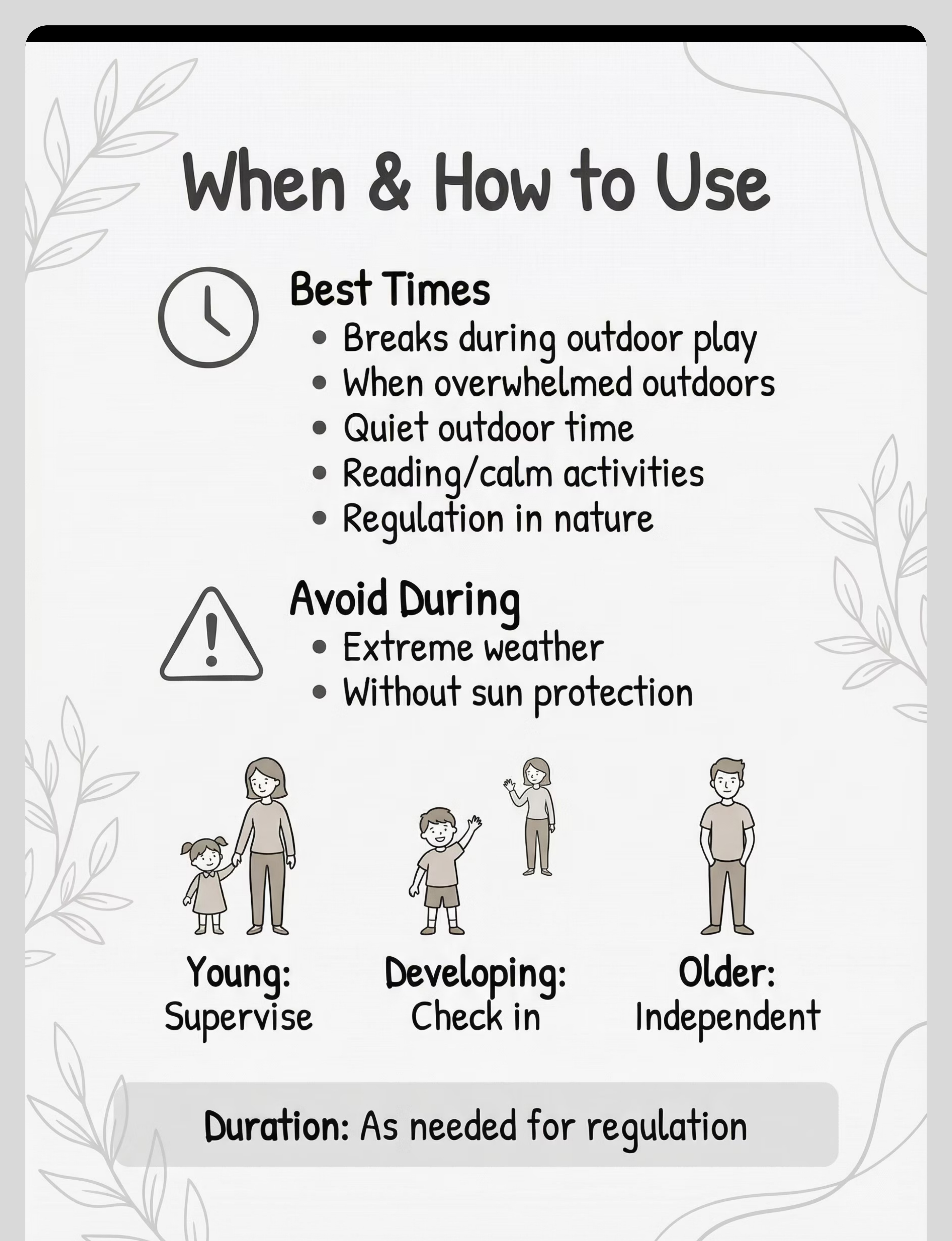
When to Use ✓
When NOT to Use ✗
During breaks in outdoor play
During extreme weather conditions
When child becomes overwhelmed outdoors
If space becomes uncomfortable or unsafe
For quiet outdoor time and restoration
Without appropriate sun protection
Reading or calm activities outside
Regulation practice in nature
Supervision by Age
Age Range
Supervision Level
Notes
Young children (2-5 years)
Direct supervision
Adult present and actively supervising use of outdoor space
Developing (6-10 years)
Periodic check-ins
Child can use independently with adult checking in regularly
Older children (11+ years)
Independent use
Child can use space for regulation independently as needed
Duration: As needed for regulation—let your child's nervous system guide the timing, typically 5-20 minutes
Settings: Most effective in backyard, garden, porch, or park settings (for portable options)
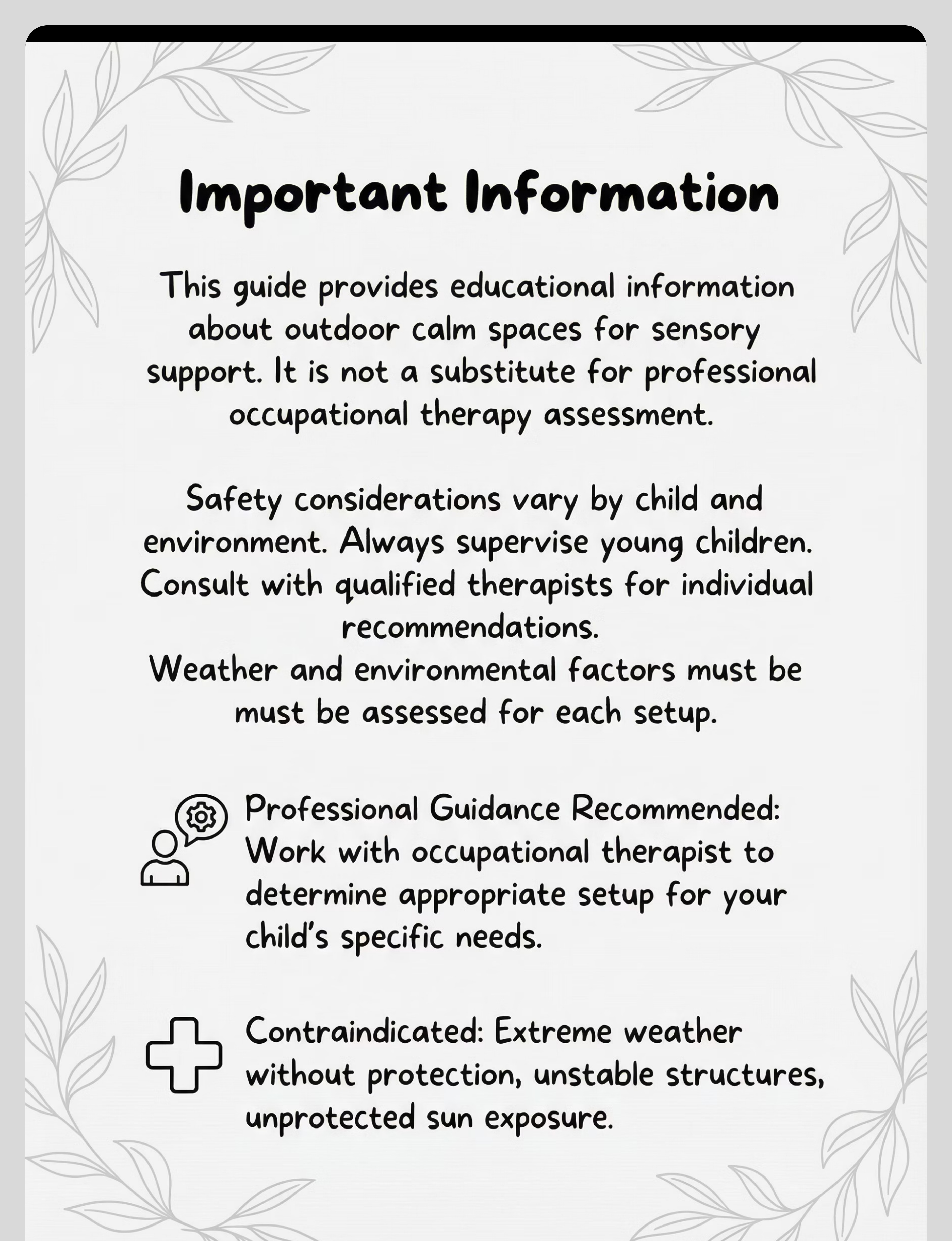
Safety First
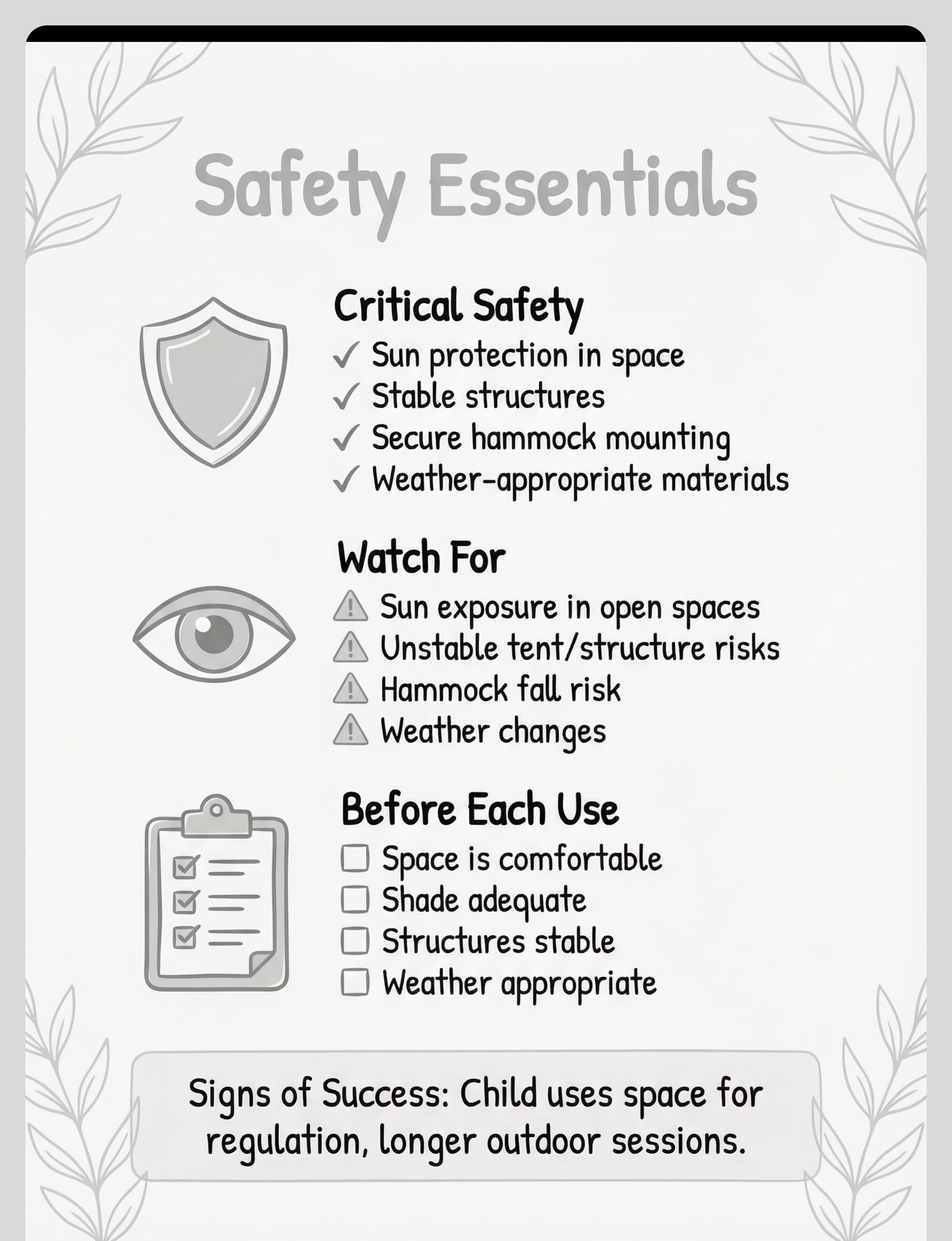
Critical Safety
  • Sun protection must be adequate in the calm space—check throughout day as sun moves
  • All structures must be stable—tents staked down, hammocks properly mounted, pergolas secured
  • Hammock mounting must be secure—verify weight capacity and attachment points regularly
  • Materials must be weather-appropriate—treated fabrics, rust-resistant frames, weatherproof cushions
Warnings
  • Sun exposure risk in open or poorly shaded spaces—monitor for sunburn, overheating
  • Unstable tent or structure can collapse—secure properly, check before each use
  • Hammock fall risk if improperly mounted or used—supervise young children, check mounting points
  • Weather changes quickly—wind, rain, temperature shifts can make space uncomfortable or unsafe
Contraindicated
  • Extreme weather conditions—high heat, storms, strong winds make outdoor space unsafe
  • Unstable structures—never use improperly secured tents, hammocks, or shade structures
  • Unprotected sun exposure—space without adequate shade can cause heat stress or sunburn
Safety Checklist
Before Use
  • Space is comfortable and inviting
  • Shade is adequate for time of day
  • All structures are stable and secure
  • Weather is appropriate for outdoor use
During Use
  • Child appears comfortable
  • Regulating successfully
  • Using space safely
  • Weather remains appropriate
Signs of Success
  • Child uses space for regulation
  • Outdoor sessions are longer
  • Better regulation during outdoor time
  • More total outdoor time
Common Questions (Honest Answers)
These are the real concerns families have. Here are evidence-based, practical answers:
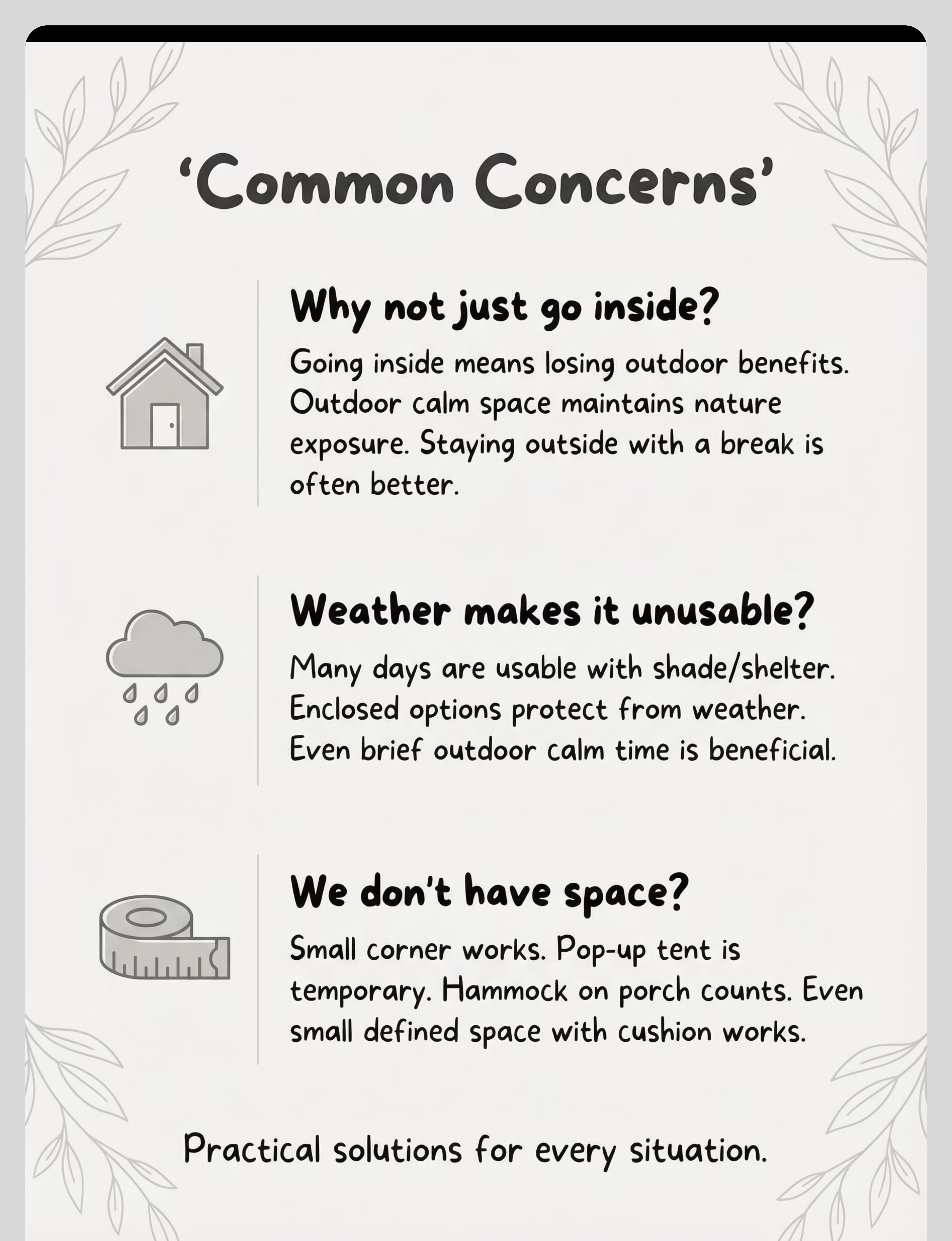
Q: Why not just go inside when my child needs a break?
A: Going inside means completely losing the therapeutic benefits of outdoor exposure—fresh air, natural light, nature sounds, and green views all contribute to regulation. Additionally, the transition in and out of the house is often challenging itself, adding another regulatory demand. An outdoor calm space lets your child take a break while maintaining nature's benefits and avoiding difficult transitions. It's not about replacing indoor space—it's about having options.
Try this: Create both indoor and outdoor calm spaces, then let your child choose based on their needs in the moment.
Q: Weather makes it unusable half the time. Is it worth it?
A: Even with weather limitations, many days throughout the year are usable with proper shade and shelter. Enclosed options like tents protect from light wind and rain. Brief outdoor calm time is beneficial even if sessions are shorter in challenging weather. You'll also have your indoor calm space as backup for extreme weather days. The key is having the outdoor option available when weather permits—those sessions have unique therapeutic value.
Reality check: Aim for usability 60-70% of days rather than perfection. Even partial access delivers benefits.
Q: We don't have much outdoor space. Will this work?
A: A small corner of even a modest yard works beautifully. A pop-up tent is temporary and can be set up only when needed. A hammock on a small porch counts as an outdoor calm space. Even a designated spot with a weather-resistant cushion creates a retreat. The space doesn't need to be large—it needs to be defined, comfortable, and available.
Try this: Start with a portable 4x4 foot pop-up tent in the shadiest corner you have. If it works, you can expand later.
Q: Won't it get dirty and damaged quickly outdoors?
A: Weather-resistant materials are designed for outdoor use and hold up well. Bring cushions and fabric items inside after use to extend their life. Some natural wear is acceptable and expected—this is a therapeutic tool, not furniture to preserve perfectly. The regulation benefits far outweigh the maintenance. Most families find that with weather-resistant choices and basic care (bringing cushions in, periodic cleaning), outdoor calm spaces last seasons or years.
Maintenance reality: Plan for 5-10 minutes weekly to refresh space, bring cushions in/out, and wipe down surfaces.
Investment Guide
Overall Range: ₹500–10,000 ($6–120 USD)
Outdoor calm spaces can be created at almost any budget. The difference between budget and premium options is primarily about durability, comfort features, and aesthetic refinement—not therapeutic effectiveness. Below is a breakdown of typical investment tiers.
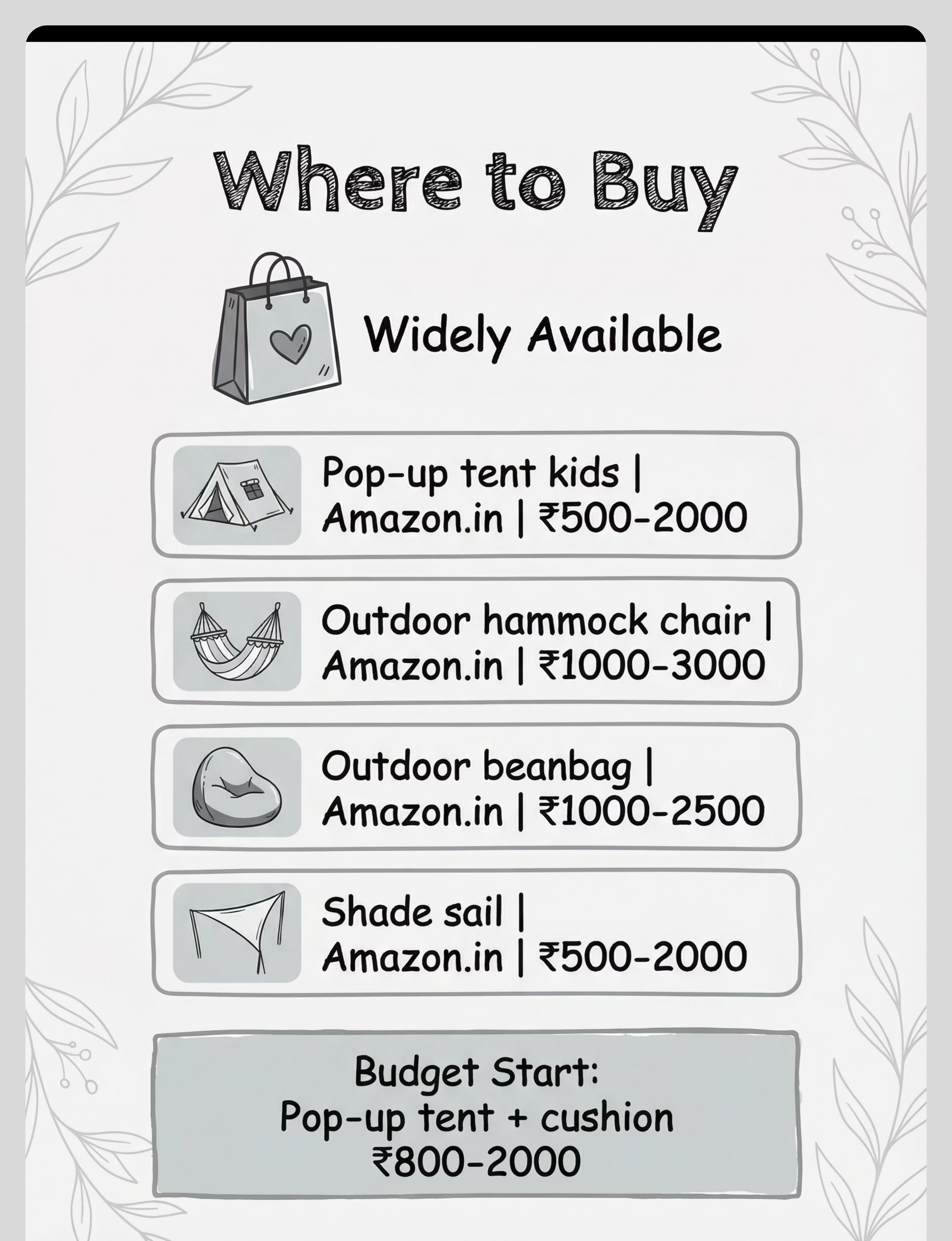
Budget Option (Starting Point)
₹800-2,000
Basic portable tent + weather-resistant floor cushion
Premium Option (Long-term Investment)
₹5,000-15,000
Quality hammock/chair, shade structure, seating, and decor
Considering both immediate needs and long-term value, here's a detailed look at the features and how your investment can grow with your child's needs.
Key Features & Benefits
Affordable Entry
Start small, test the concept without significant financial commitment.
Portable & Flexible
Easily move or store basic setups, great for renters or small spaces.
Enhanced Durability
Premium materials offer longer lifespan and better weather resistance.
Increased Comfort
Higher quality seating, hammocks, and refined aesthetics for daily use.
Family-Friendly
Suitable for multiple children and integrates seamlessly into home aesthetics.
Value Progression Timeline
Phase 1: Test & Confirm
Begin with a budget option (tent + cushion) to observe your child's engagement and benefits from the outdoor space.
Phase 2: Establish Routine
If the space is used regularly and proves therapeutically effective, consider establishing a more consistent setup.
Phase 3: Long-term Investment
Upgrade to a premium option for enhanced comfort, durability, and aesthetic integration into your home environment.
Phase 4: Maximize Impact
Enjoy a lasting, high-quality outdoor calm space that continues to provide significant therapeutic value for years.

Recommendation: Start with budget option (tent + cushion) to confirm your child benefits from outdoor calm space. Once pattern is established, invest in more permanent, comfortable setup if space is used regularly. Therapeutic effectiveness comes from having the space, not from spending more.
Where to Buy in India
Availability: Widely available across India through major e-commerce platforms and local garden/outdoor stores
Amazon.in
Search Term: "pop up tent kids"
Price Range: ₹500-2,000
Amazon.in
Search Term: "outdoor hammock chair"
Price Range: ₹1,000-3,000
Amazon.in
Search Term: "outdoor beanbag"
Price Range: ₹1,000-2,500
Amazon.in
Search Term: "shade sail"
Price Range: ₹500-2,000
Local garden stores
Search Term: "outdoor seating"
Price Range: Variable, often negotiable
Buying Tips
Weather-resistant materials are essential—look for treated fabrics, rust-resistant frames, UV protection
Pop-up tent is most portable and affordable entry point—great for testing concept
Hammock provides movement input plus containment—dual therapeutic benefits
Define space clearly with rug, stones, or plant markers—helps child recognize retreat area
Keep it simple—resist over-furnishing. A few well-chosen comfortable items work better than clutter
Red Flags to Avoid
Not weather-resistant—indoor materials will deteriorate quickly outdoors, wasting money
Uncomfortable seating—if it's not comfortable, child won't use it for regulation
Too complicated or overstimulating—elaborate setups with too many elements defeat calming purpose
Unstable structures—wobbly tents, poorly mounted hammocks, or unsecured shade structures are safety hazards
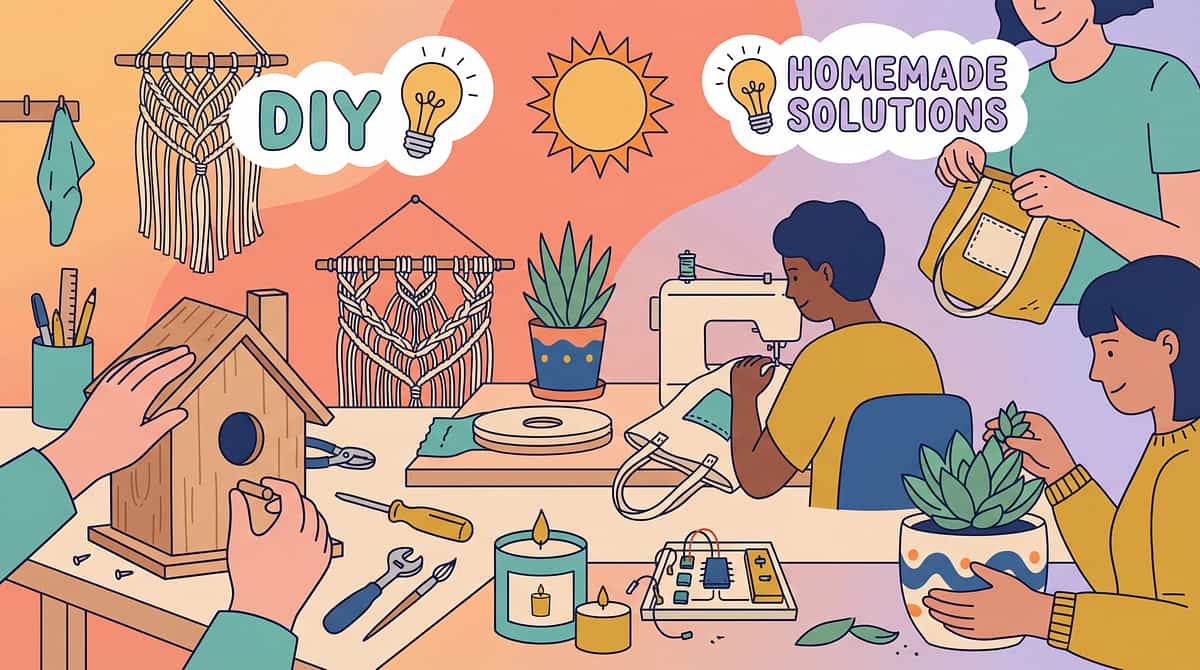
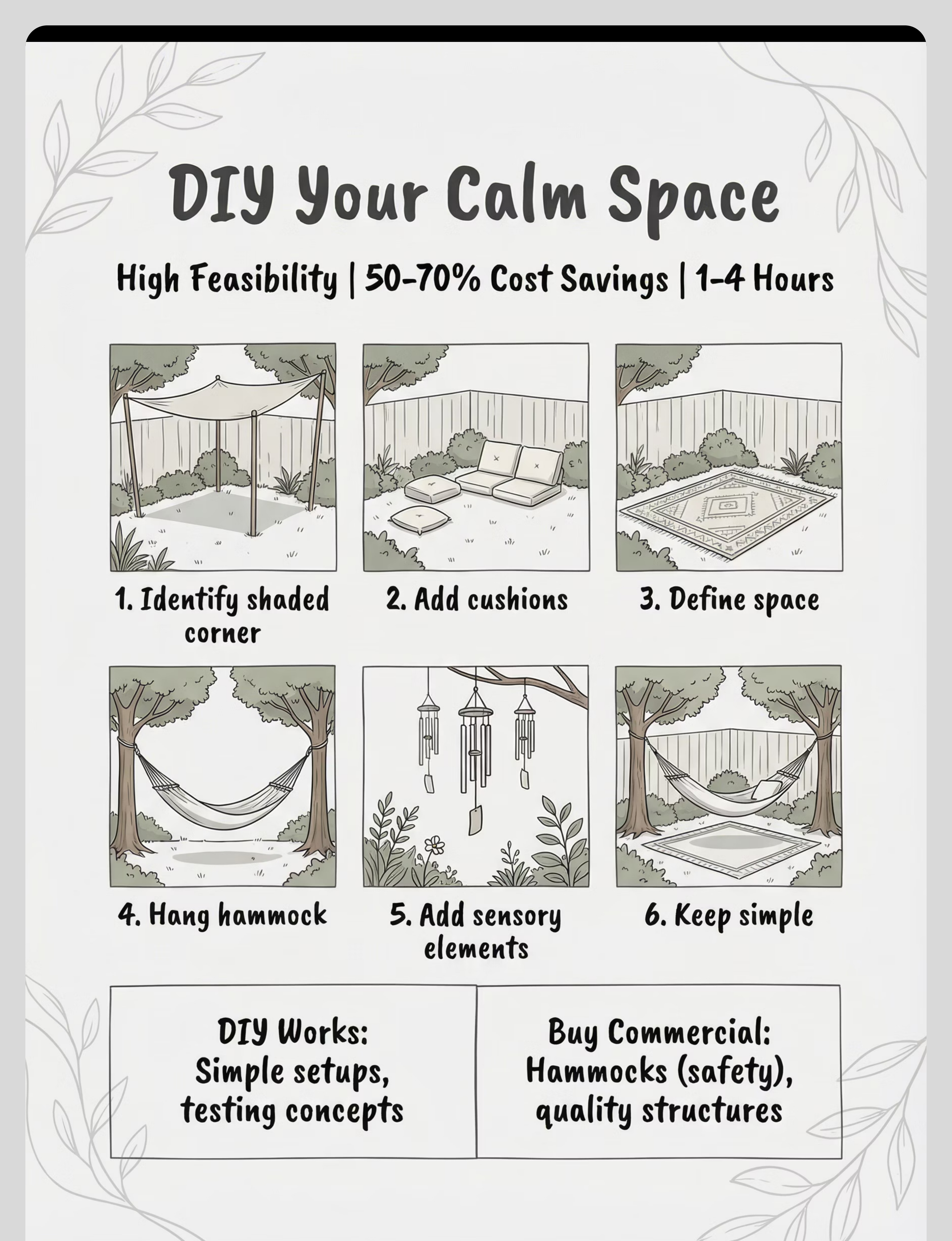
DIY Alternative (Save 50-70%)
Feasibility: High | Cost Savings: 50-70% | Time: 1-4 hours depending on complexity
Creating an outdoor calm space DIY is very feasible for most families and can save significant money while delivering the same therapeutic benefits. The key is using weather-appropriate materials and keeping it simple.
Materials Needed
  • Fabric or tarps for shade (weather-resistant)
  • Outdoor cushions or pillows (weather-resistant)
  • Plants in pots or existing garden plants
  • Existing outdoor furniture or seating
  • Optional: rope for hanging tarp, outdoor rug to define space, stones or plants for borders
Step-by-Step Instructions
Identify shaded corner or create shade
Find naturally shaded spot under tree or overhang. If no shade exists, hang tarp or fabric between posts, fence, or house to create covered area.
Add weather-resistant cushions
Place outdoor cushions, beanbag, or pillows in shaded area. Create comfortable seating or lying space. Ensure cushions are weather-appropriate or can be brought inside.
Define space with boundaries
Use outdoor rug, line of stones, or potted plants to create clear visual boundary. Child needs to recognize this as defined special space.
Hang hammock if possible
If you have trees or posts available, add hammock for movement + containment benefits. Ensure proper mounting for safety.
Add natural sensory elements
Include potted plants, wind chimes (if not overstimulating for your child), or other gentle nature elements that enhance calming without cluttering.
Keep simple and uncluttered
Resist adding too much. Goal is calm, not entertainment. A few well-chosen comfortable items are better than complicated setup.
DIY vs Commercial Comparison
Factor
When to DIY
When to Buy Commercial
Setup
Simple setups, using existing trees/structures, testing concepts, budget constraints
Want professional finish, need specific features, long-term investment
Quality
DIY works well for most components
Hammocks (for safety), quality shade structures, weather-resistant beanbags need commercial quality
Longevity
Acceptable for testing and shorter-term use
Higher quality materials last multiple seasons with less maintenance
Tradeoffs: DIY works well for most outdoor calm space setups. Quality matters primarily for durability and safety (especially hammocks). Starting DIY and upgrading specific elements as needed is a smart approach for most families.

Preview of outdoor calm space retreat area Therapy Material

Below is a visual preview of outdoor calm space retreat area therapy material. The pages shown help educators, therapists, and caregivers understand the structure and content of the resource before use. Materials should be used under appropriate professional guidance.

Page 1
Page 2
Page 3
Page 4
Page 5
Page 6
Page 7
Page 8
Page 9
Page 10
Page 11
Page 12
Page 13
Page 14
Page 15
Page 16
Page 17
Page 18
Page 19
Page 20
Link copied!
Measuring Success & Getting Support
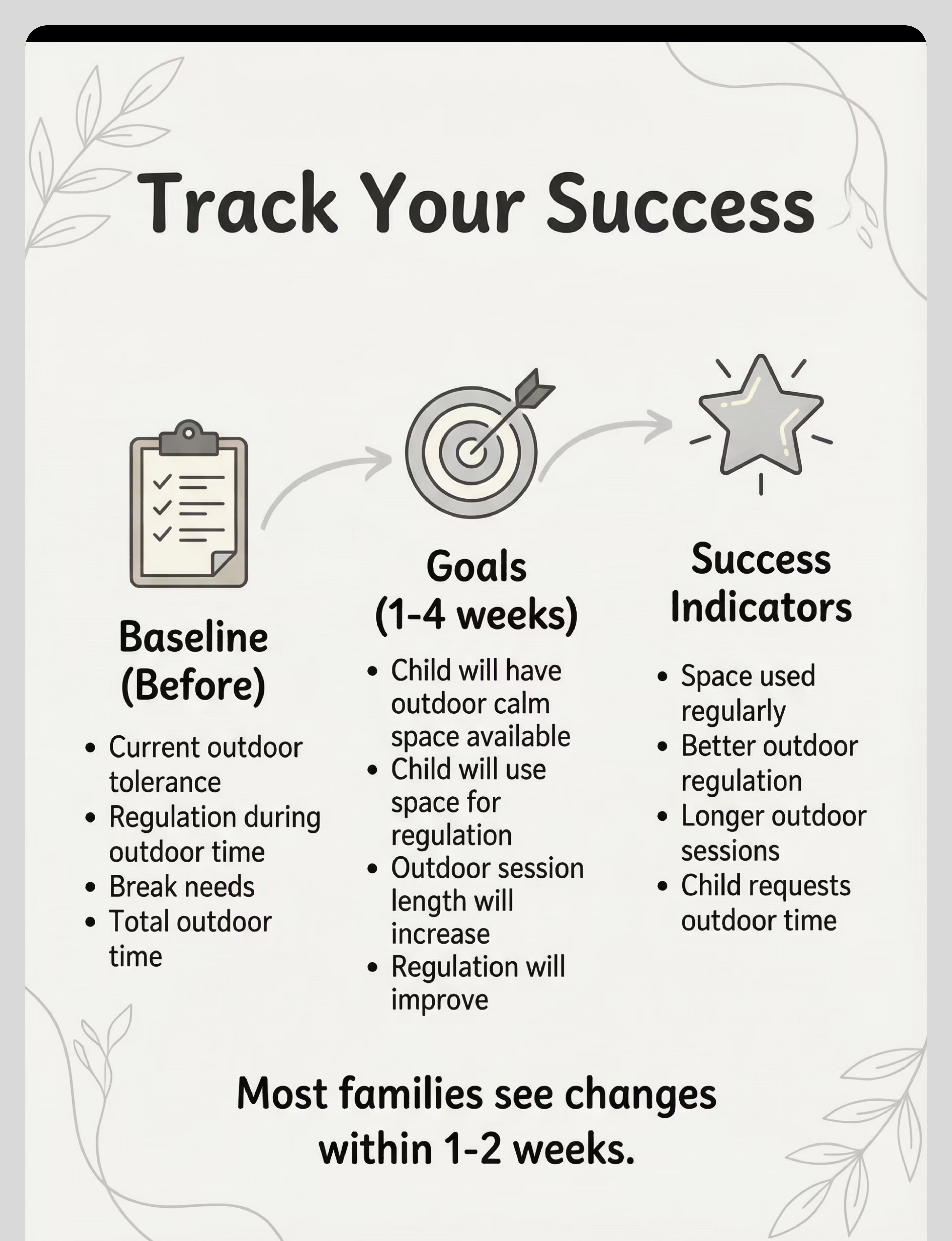
Track Progress
Measure these indicators to understand if your outdoor calm space is working effectively:
Baseline (Measure First)
  • Current outdoor tolerance duration
  • Regulation level during outdoor time
  • How often breaks are needed
  • Total outdoor time per day/week
Goals to Set
  • Outdoor calm space available and comfortable
  • Child uses space for regulation when needed
  • Outdoor session length increases
  • Regulation during outdoor time improves
Success Indicators
  • Space used regularly by child
  • Better regulation during outdoor play
  • Longer outdoor sessions without meltdown
  • Child requests or seeks outdoor time

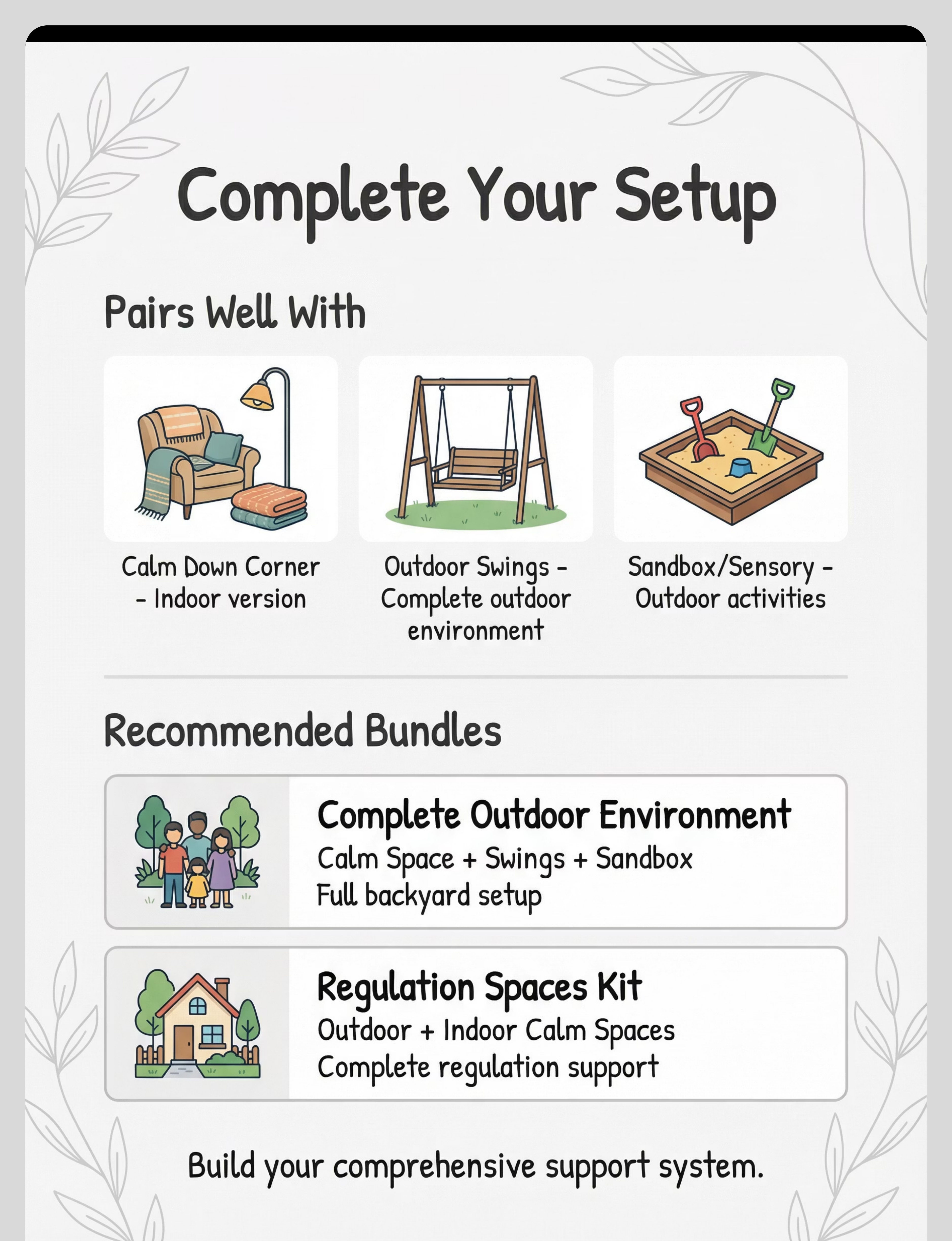
Complete the Kit
These complementary tools work beautifully with outdoor calm spaces:
Calm Down Corner (ID: 2.8)
Why pair: Indoor version for extreme weather days—maintains regulation routine year-round
Outdoor Swings (ID: 15.1)
Why pair: Active regulation option complements calm retreat—complete outdoor sensory environment
Sandbox/Sensory (ID: 15.3)
Why pair: Adds tactile sensory activity option—multi-modal outdoor regulation
Noise Reduction (ID: 1.4)
Why pair: If outdoor noise is an issue—enhances calm space effectiveness
Recommended Bundles
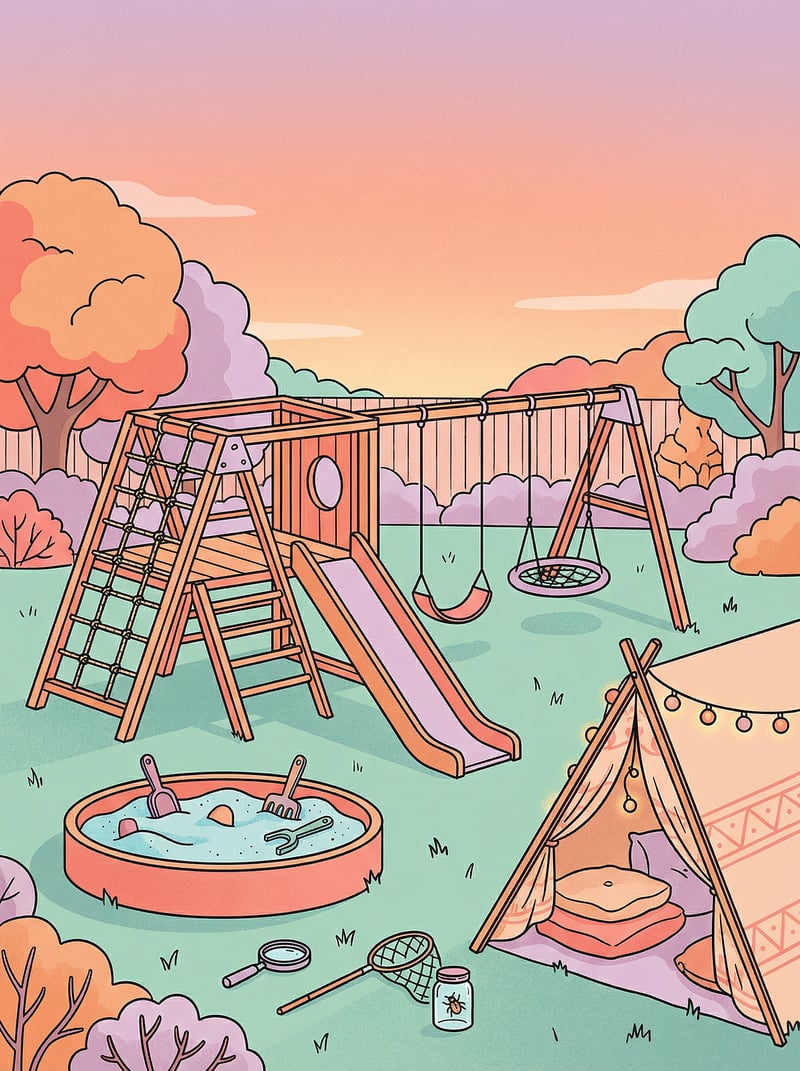
  • Complete Outdoor Environment: Tools 15.5 + 15.1 + 15.3 (outdoor calm space + swings + sandbox) = Full therapeutic backyard setup
  • Regulation Spaces Kit: Tools 15.5 + 2.8 + 1.1 (outdoor space + indoor calm corner + sensory items) = Indoor and outdoor regulation options

Quick Summary
AI Summary: Outdoor calm space combines nature benefits with sensory retreat features through tents, hammocks, and garden nooks for outdoor regulation and restoration. Extended Kit (Rank 2), moderate evidence, valuable outdoor regulation support.
outdoor
calm space
regulation
nature
retreat
hammock
garden
OT
extended-kit
Common searches: outdoor calm space autism, garden retreat kids, outdoor hammock calming, sensory garden space, outdoor tent kids, nature calm space, outdoor regulation

Get Support
FREE National Autism Helpline
Phone: 9100 181 181
Languages: 16+ languages supported
Website: pinnacleblooms.org
Get personalized guidance on creating outdoor calm spaces and supporting your child's regulation needs
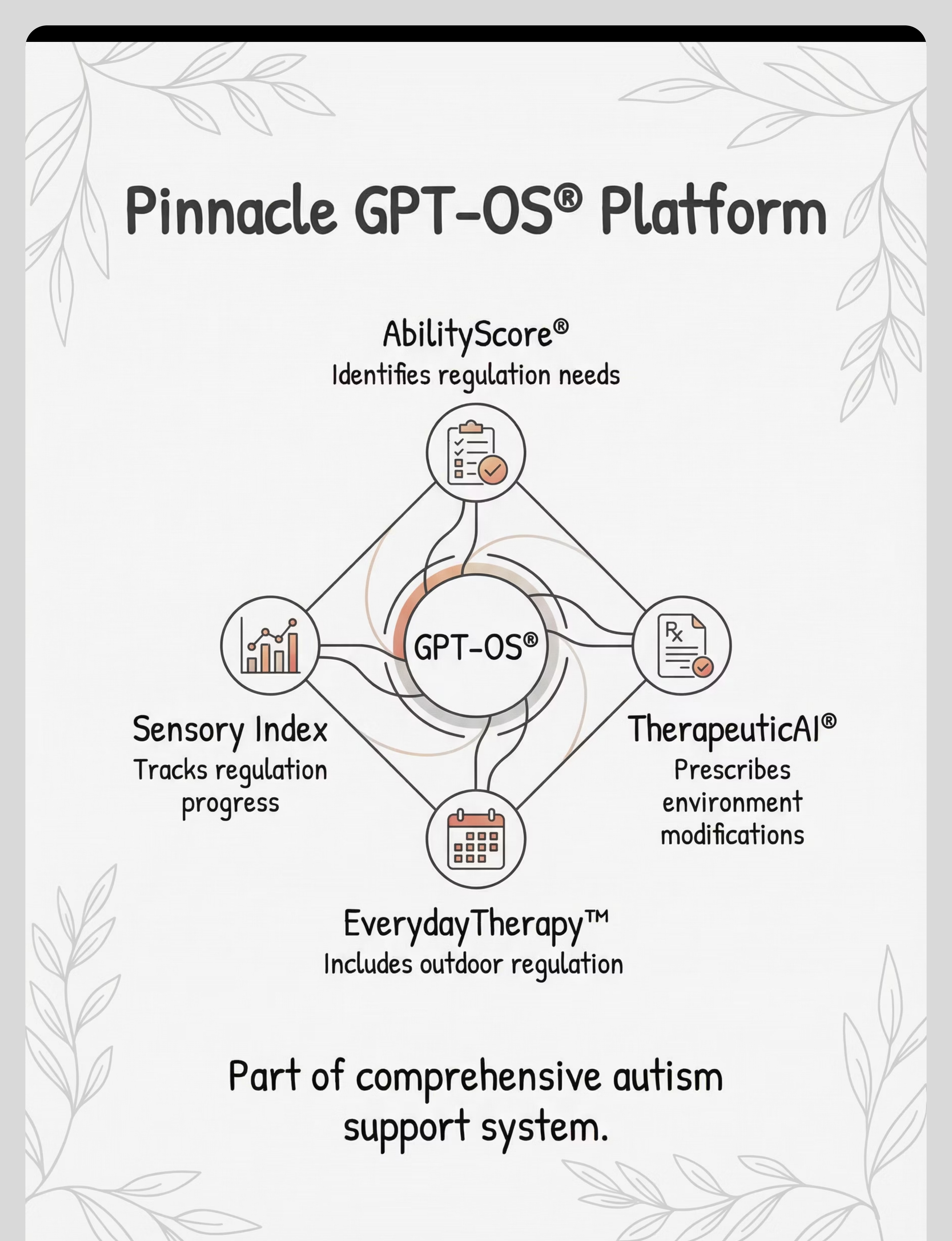
Pinnacle Blooms Platform Integration
AbilityScore® identifies your child's specific regulation needs and outdoor tolerance patterns
TherapeuticAI® prescribes personalized environment modifications including outdoor calm space recommendations
EverydayTherapyProgramme™ includes outdoor regulation routines and space usage guidance
Sensory Index tracks regulation progress and outdoor time improvements over weeks and months

Disclaimer: This is educational information designed to help families understand outdoor calm spaces and their therapeutic applications. Always consult qualified occupational therapists, speech-language pathologists, or pediatricians for personalized assessment and recommendations. Individual results vary based on child's unique needs, environmental factors, and implementation consistency. Safety must be prioritized—follow all guidelines for sun protection, structural stability, and age-appropriate supervision.