
















Parent Self-Care & Respite Resources
Tool ID: 20.3
Essential support for caregiver wellbeing and burnout prevention

Tool ID: 20.3
Core Kit
Parent Self-Care Resources
Caregiver wellbeing and burnout prevention system
Parent + Mental Health
Strong Evidence
Rank #1
Ongoing Use
₹0–10,000
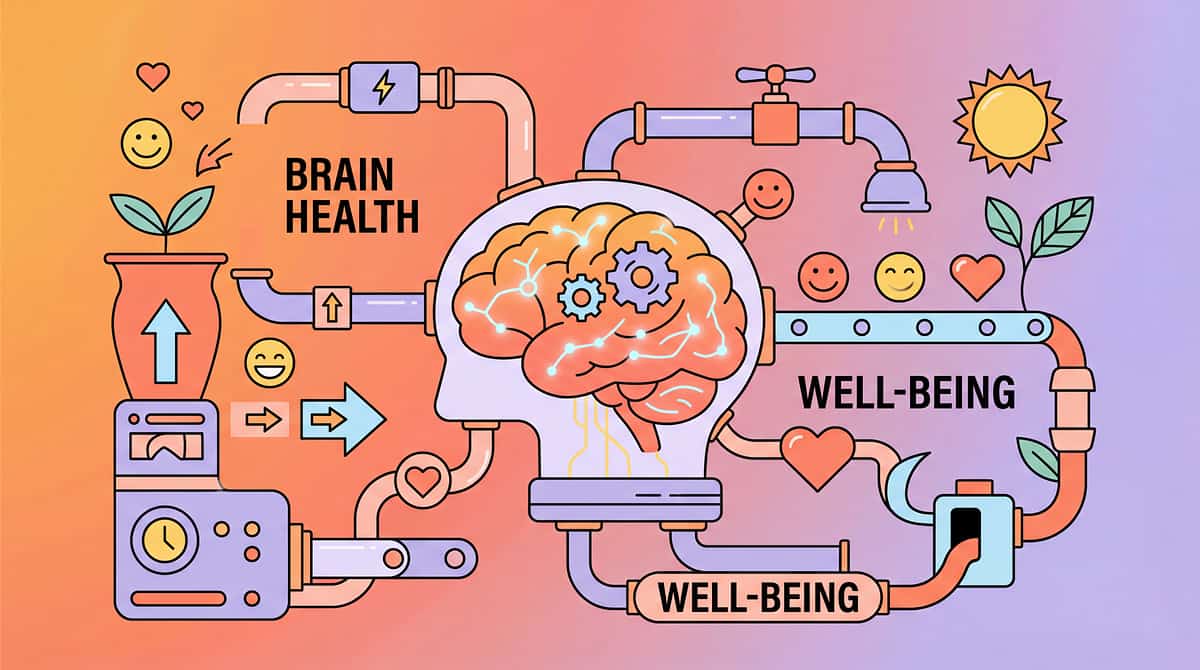
Supporting parent and caregiver wellbeing through respite care, stress management, counseling, and self-care practices to prevent burnout and maintain healthy family functioning. Self-care is not selfish—it's essential for sustainable, quality parenting.

Who This Helps
Parent Mental Health
Supports emotional wellbeing, stress reduction, and burnout prevention for parents and caregivers navigating autism parenting challenges.
Stress Reduction
Helps manage overwhelming stress through practical coping strategies, respite breaks, and evidence-based relaxation techniques.
Burnout Prevention
Prevents caregiver exhaustion by building sustainable self-care routines and restoring emotional reserves needed for quality parenting.
Essential for all caregivers
Home, Clinic, Online
Various Settings
Best for: Parents experiencing burnout, those struggling to find time for themselves, caregivers noticing declining physical or mental health, and anyone seeking sustainable ways to maintain their wellbeing while supporting their child's development.

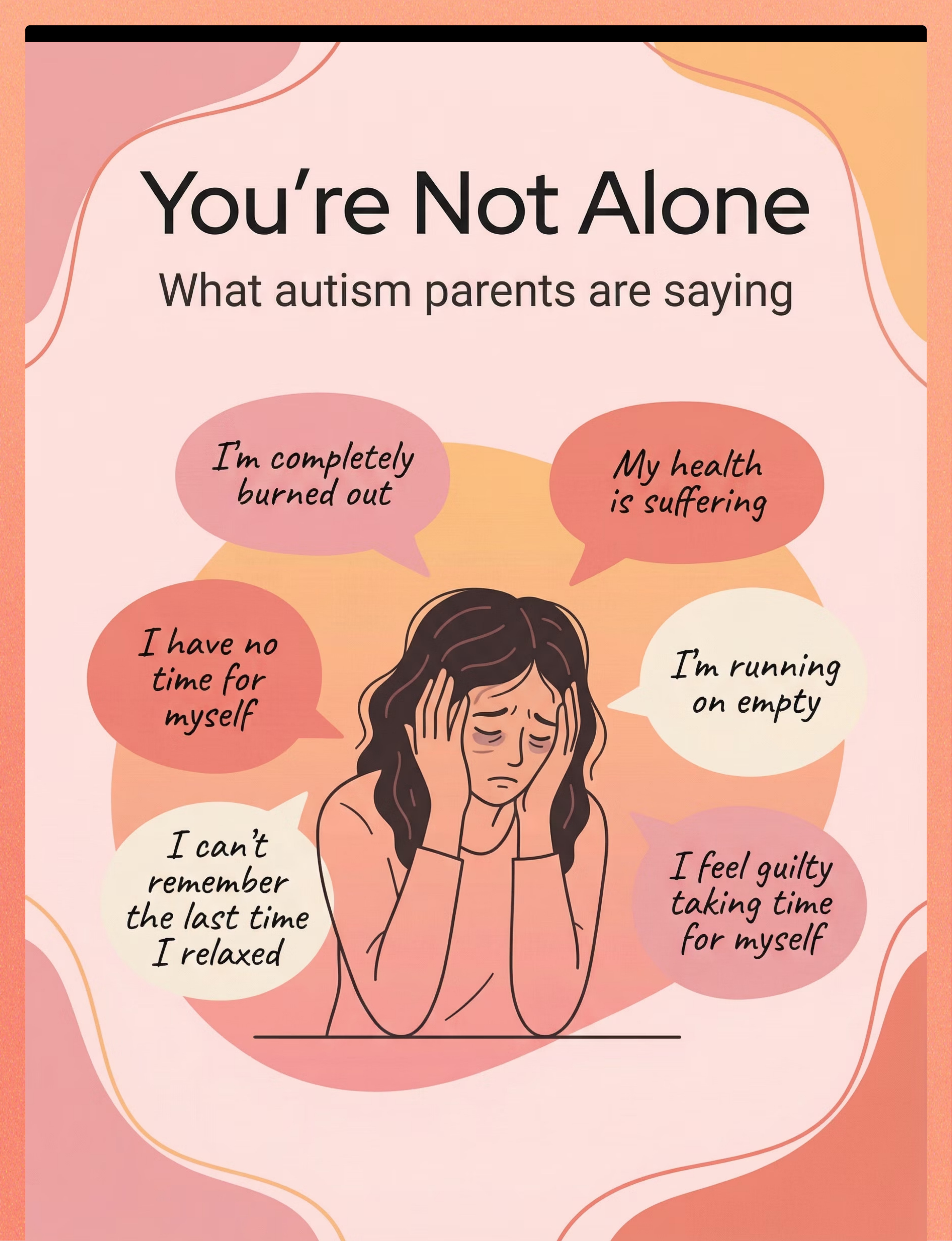
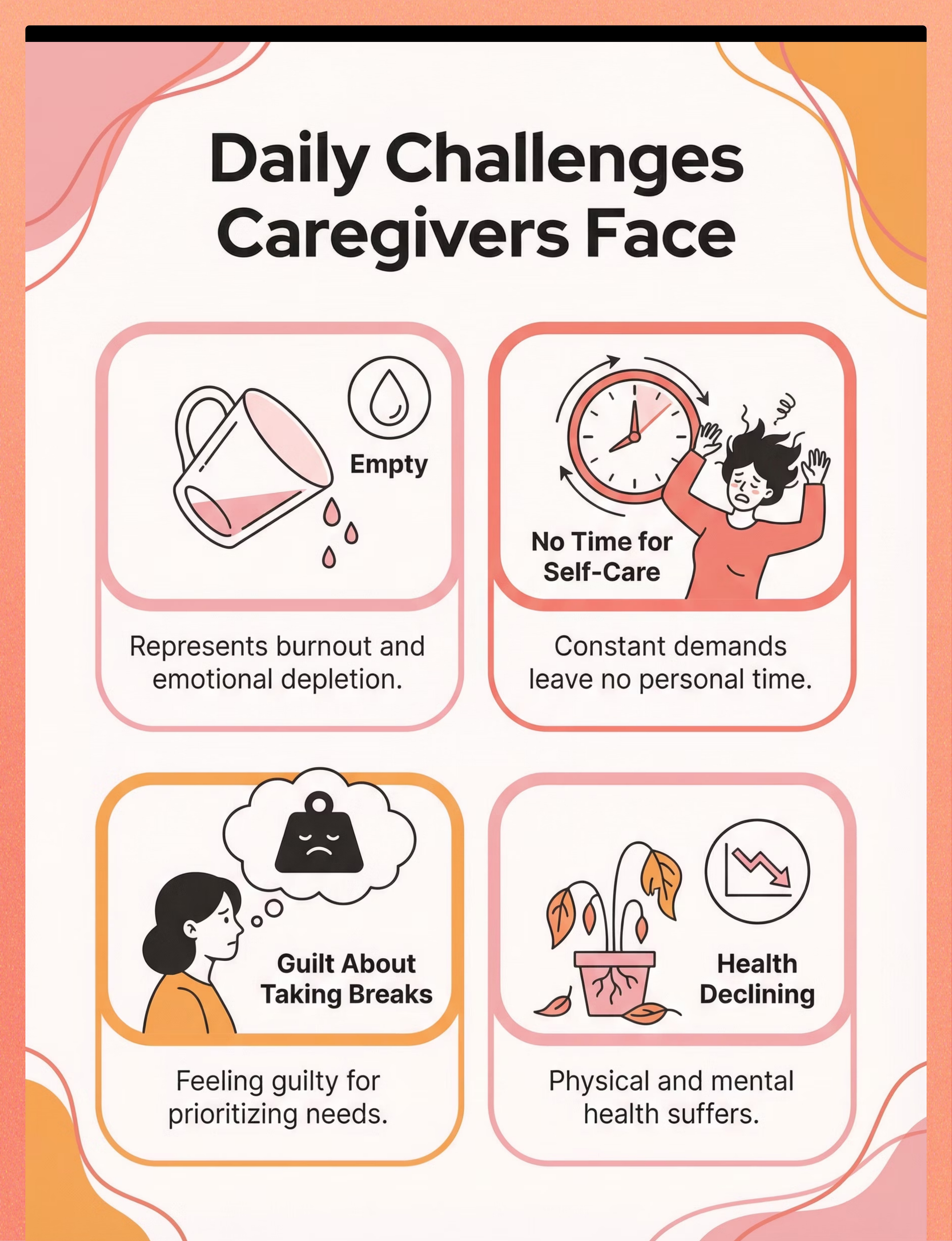
Does This Sound Familiar?
"I'm completely burned out. I can't remember the last time I felt rested or relaxed."
"I have no time for myself. Every moment is dedicated to my child's needs."
"My own health is suffering—both physical and mental—but I feel too guilty to take time for myself."
"I'm running on empty. My patience is gone and I can feel myself falling apart."
You're not alone. These are common challenges among autism parents and caregivers. Burnout is real, and recognizing these feelings is the first step toward building a sustainable self-care practice that benefits both you and your child.

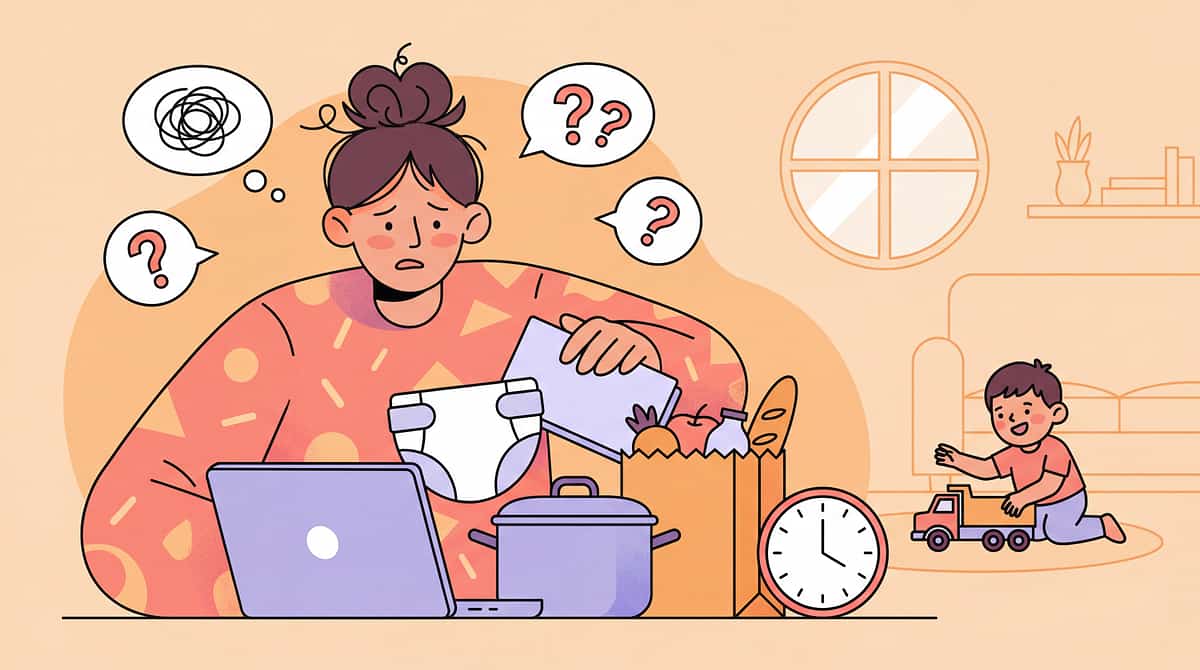
A Day Without the Right Support
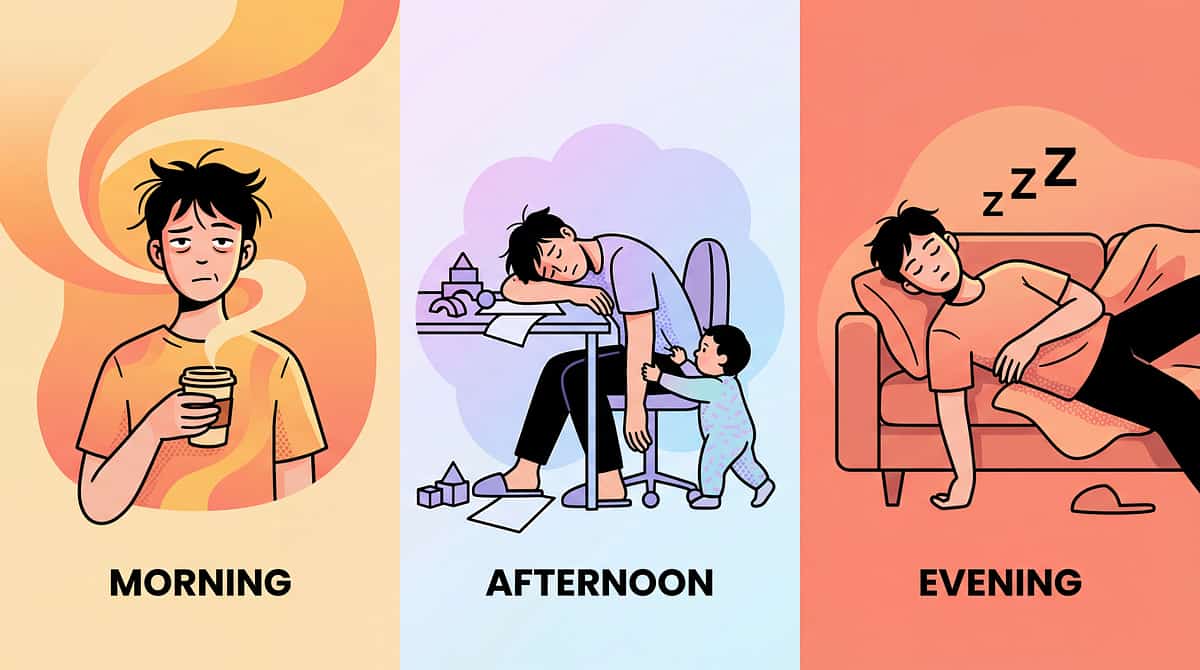
Morning: Exhaustion and Burnout
Wake up already exhausted. No energy reserves. Dreading the day ahead. Running on empty before the day even begins.
Transitions: No Time for Self-Care
Rush from one responsibility to another. No breaks. No moments for yourself. Child's needs consume every minute.
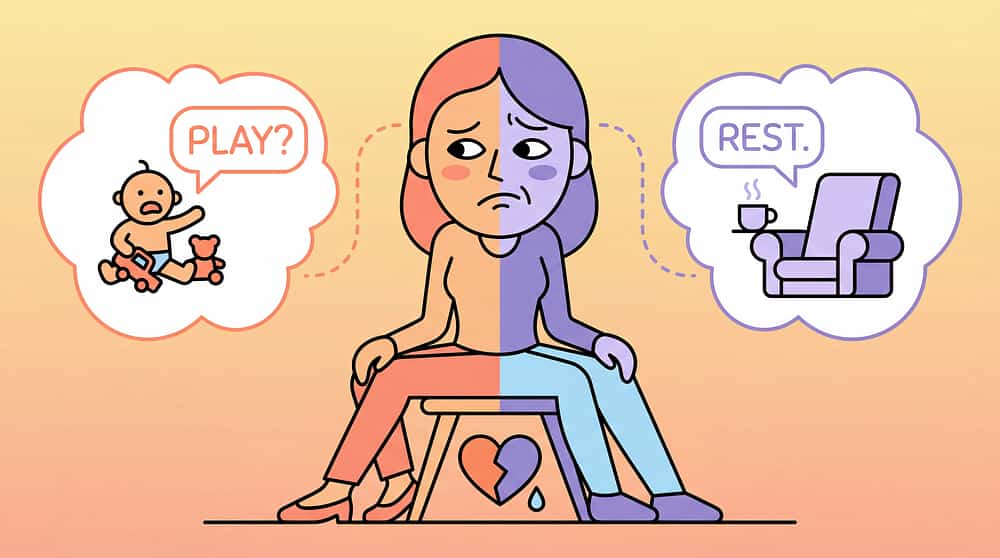
Afternoon: Guilt About Taking Breaks
Even thinking about rest triggers guilt. Child needs so much. Can't justify time for self. Resentment building beneath exhaustion.
Evening: Health Declining
Physical symptoms appearing—headaches, body aches, anxiety. Mental health struggling. Patience gone. Not the parent you want to be.
This cycle of neglecting self-care leads to serious burnout, declining health, reduced parenting quality, and ultimately impacts your child's progress. Breaking this pattern is essential—not optional.

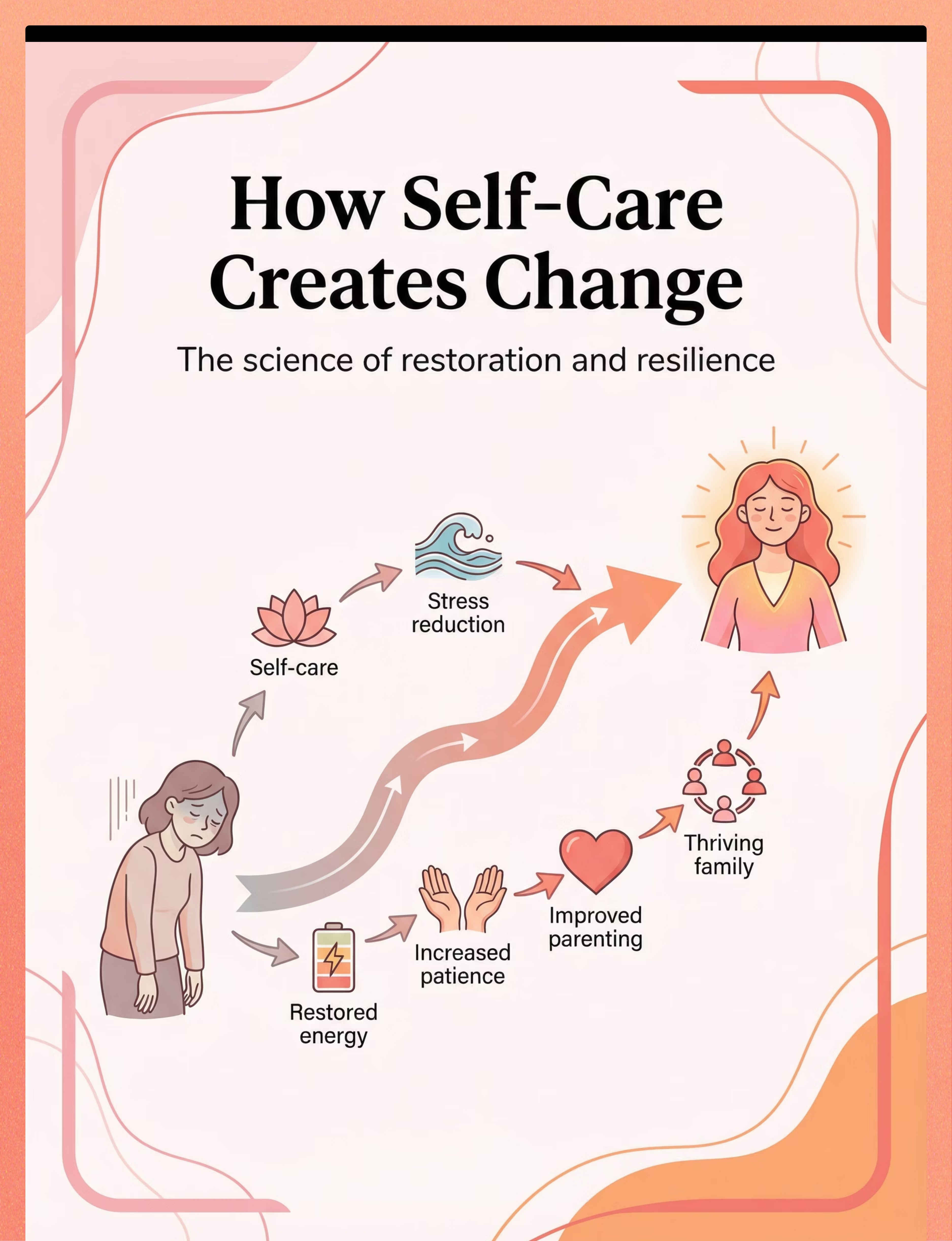
The Science Behind It
Self-Care Practiced
Regular breaks, stress management, physical health, and mental health support integrated into routine.
Stress Reduced
Cortisol levels decrease, nervous system calms, and body begins healing from chronic stress.
Burnout Prevented
Emotional reserves restored, resilience built, and sustainable parenting pace established.
Patience Increased
Better emotional regulation, increased tolerance, and improved capacity to respond calmly to challenges.
Parenting Quality Improved
More present, responsive, and effective parenting leads to better child outcomes and family thriving.
Parent Mental Health
Stress Reduction
Burnout Prevention
Physical Health
Emotional Regulation
Parenting Quality
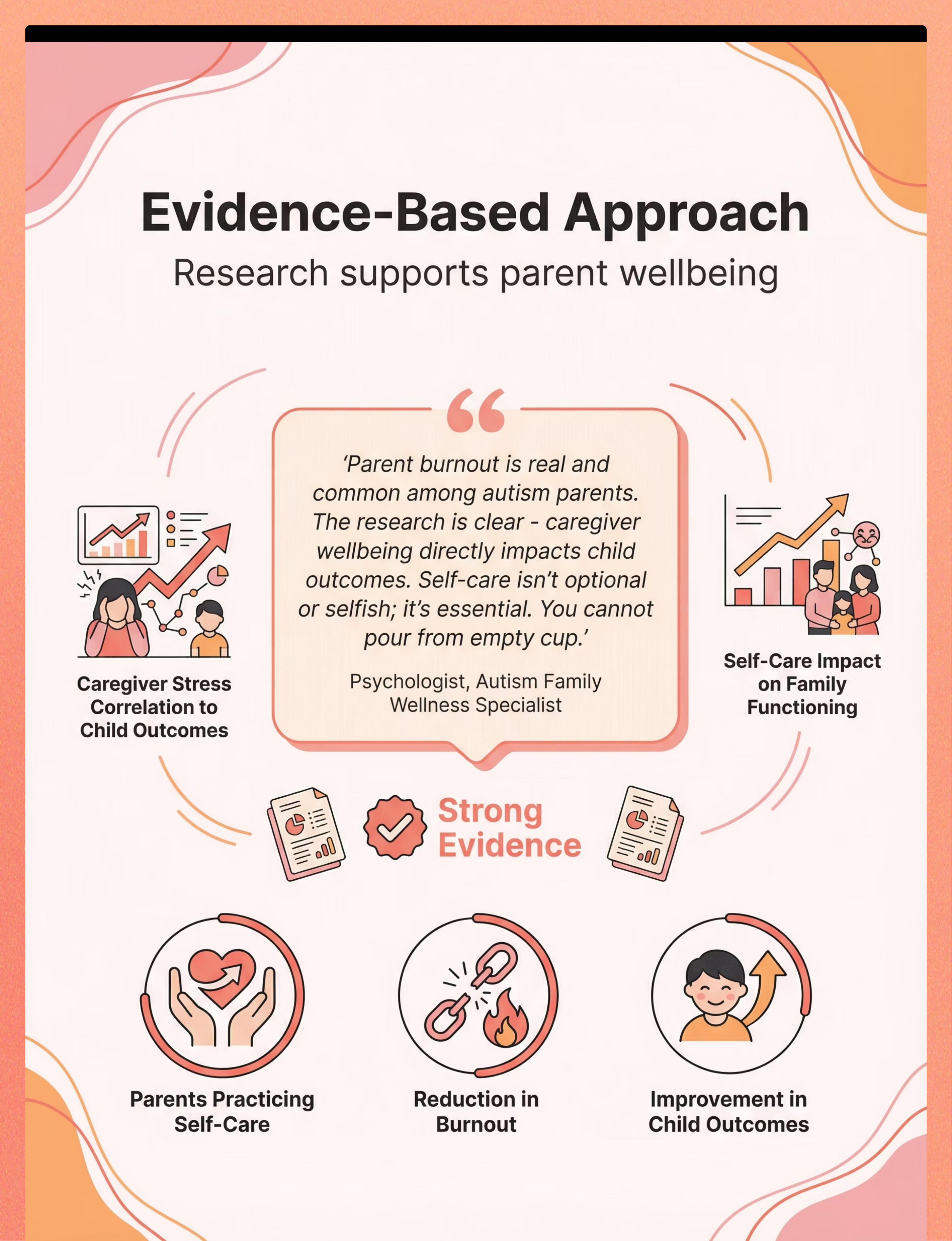
The mechanism is clear and evidence-based: when parents prioritize their own wellbeing, everyone benefits. Research consistently shows that caregiver mental health directly impacts child developmental outcomes.

How to Use It Right
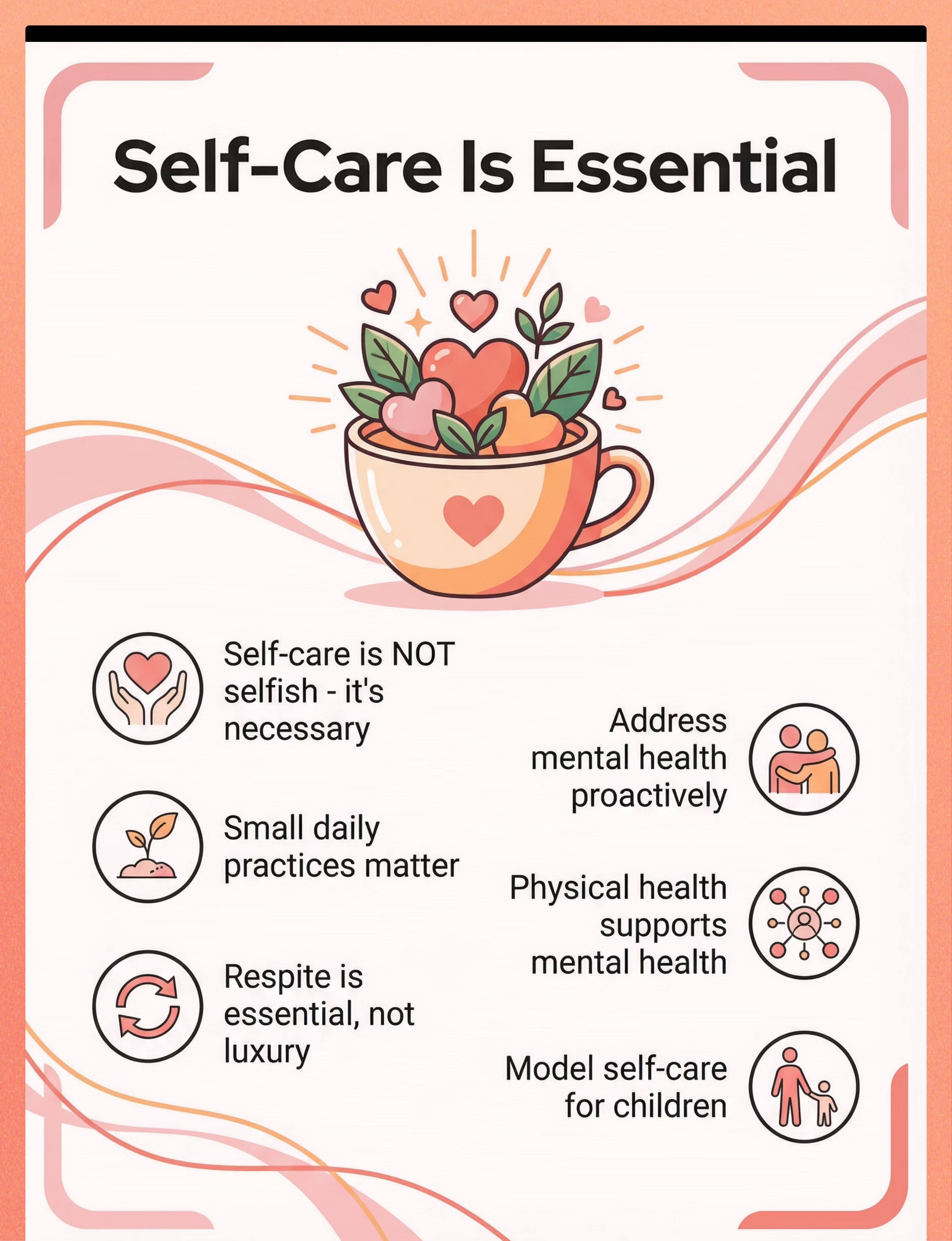
Self-Care is NOT Selfish—It's Necessary
Reframe your thinking: taking care of yourself is taking care of your child. You cannot pour from an empty cup. Self-care makes you a better, more effective parent.
Small Daily Practices Matter
Even 5-10 minutes daily creates cumulative benefits. Consistency beats intensity. Start small and build sustainable habits over time.
Respite is Essential, Not Luxury
Regular breaks from caregiving are necessary for long-term sustainability. Plan respite as you would plan therapy sessions—as essential appointments.
Address Mental Health Proactively
Don't wait for crisis. Therapy and counseling support prevent serious problems and provide crucial coping strategies for unique challenges you face.
Physical Health Supports Mental Health
Exercise, sleep, nutrition, and medical care are foundations of emotional wellbeing. Body and mind are interconnected.
Model Self-Care for Children
Your children learn by watching you. Demonstrating healthy self-care teaches them valuable life skills about balance and self-respect.
Duration: Ongoing practice throughout your parenting journey, with daily micro-practices and regular weekly respite breaks.

Expert Perspective
"Parent burnout is real and common among autism parents. The research is clear—caregiver wellbeing directly impacts child outcomes. Self-care isn't optional or selfish; it's essential. You cannot pour from an empty cup. Prioritizing yourself makes you a better parent."
— Psychologist, Autism Family Wellness Specialist
Parent + Mental Health Recommended
Strong Evidence
Rank #1 in Category
Ongoing Use
This endorsement reflects the clinical consensus that parent wellbeing is foundational to effective autism intervention. The evidence base is robust and unequivocal.

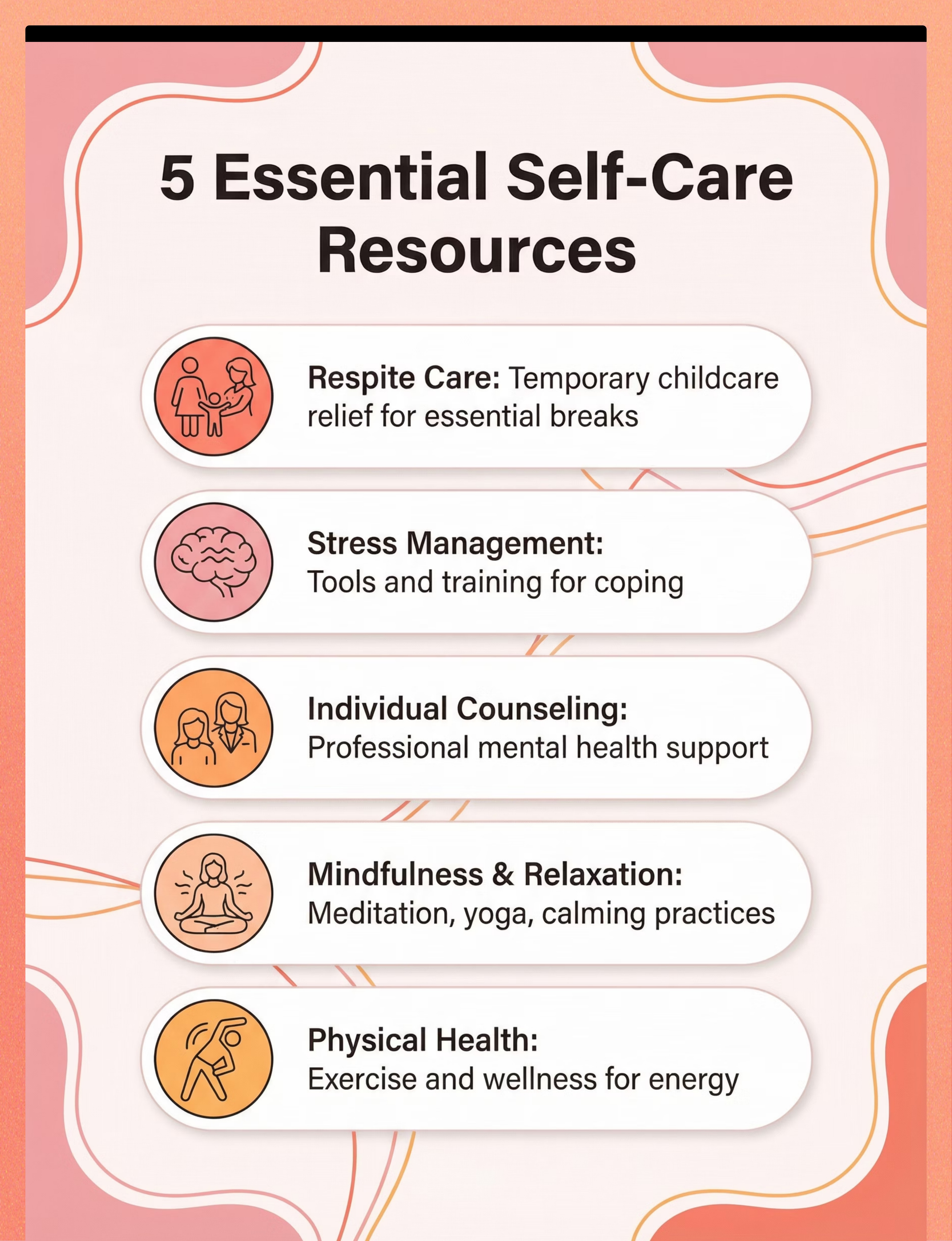
Choose Your Self-Care Options
Respite Care
Temporary childcare relief for parent breaks and burnout prevention. Requires ₹0–5,000 investment and can be provided at home or a respite facility.
Stress Management Resources
Tools and training for stress reduction and coping, with high portability. Investment of ₹0–2,000, usable anywhere.
Individual Counseling
Therapy for parents to process emotions and support mental health. Investment of ₹500–3,000, available in clinics or online.
Mindfulness & Relaxation
Practices like meditation and yoga for calming and present-moment focus, with very high portability. Investment of ₹0–2,000.
Physical Health & Exercise
Exercise and physical wellness for stress relief and energy. Variable portability and an investment of ₹0–5,000.
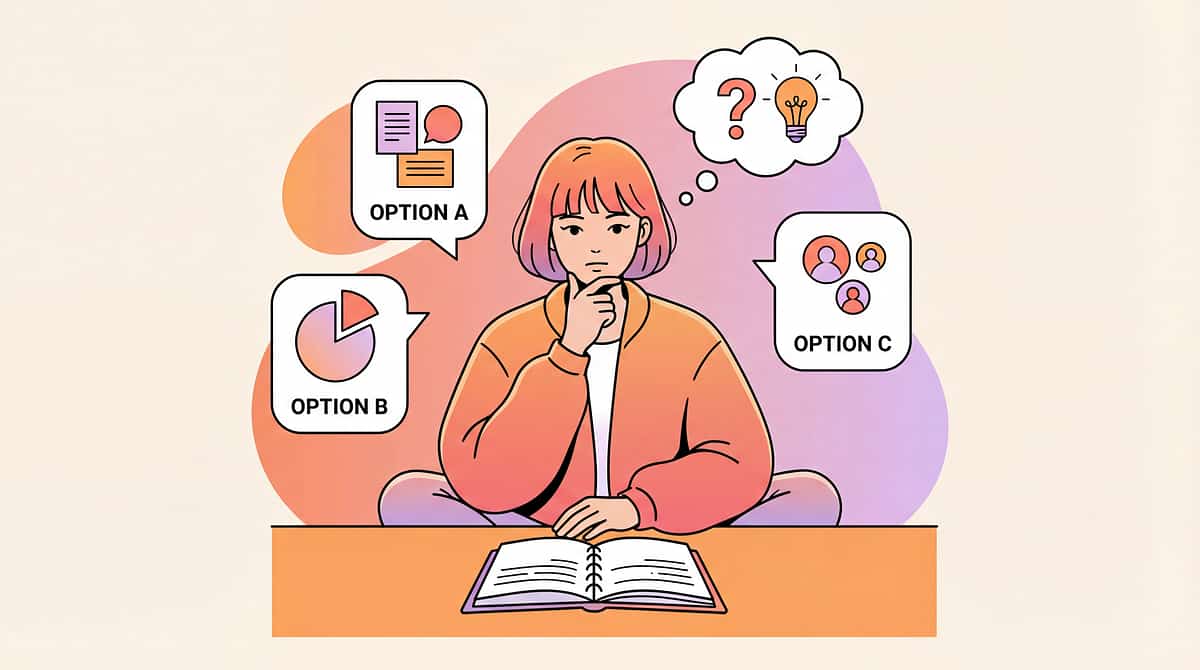
Exploring various self-care strategies is crucial for sustained well-being. Below are several options, each tailored to different needs and investment levels, designed to support parents in managing stress and preventing burnout.
How to Choose:
- By immediate need: Burnout → Respite; Stress → Management tools; Mental health crisis → Counseling
- By accessibility: Start with free options (mindfulness apps, walking, friend respite) then add paid services as budget allows
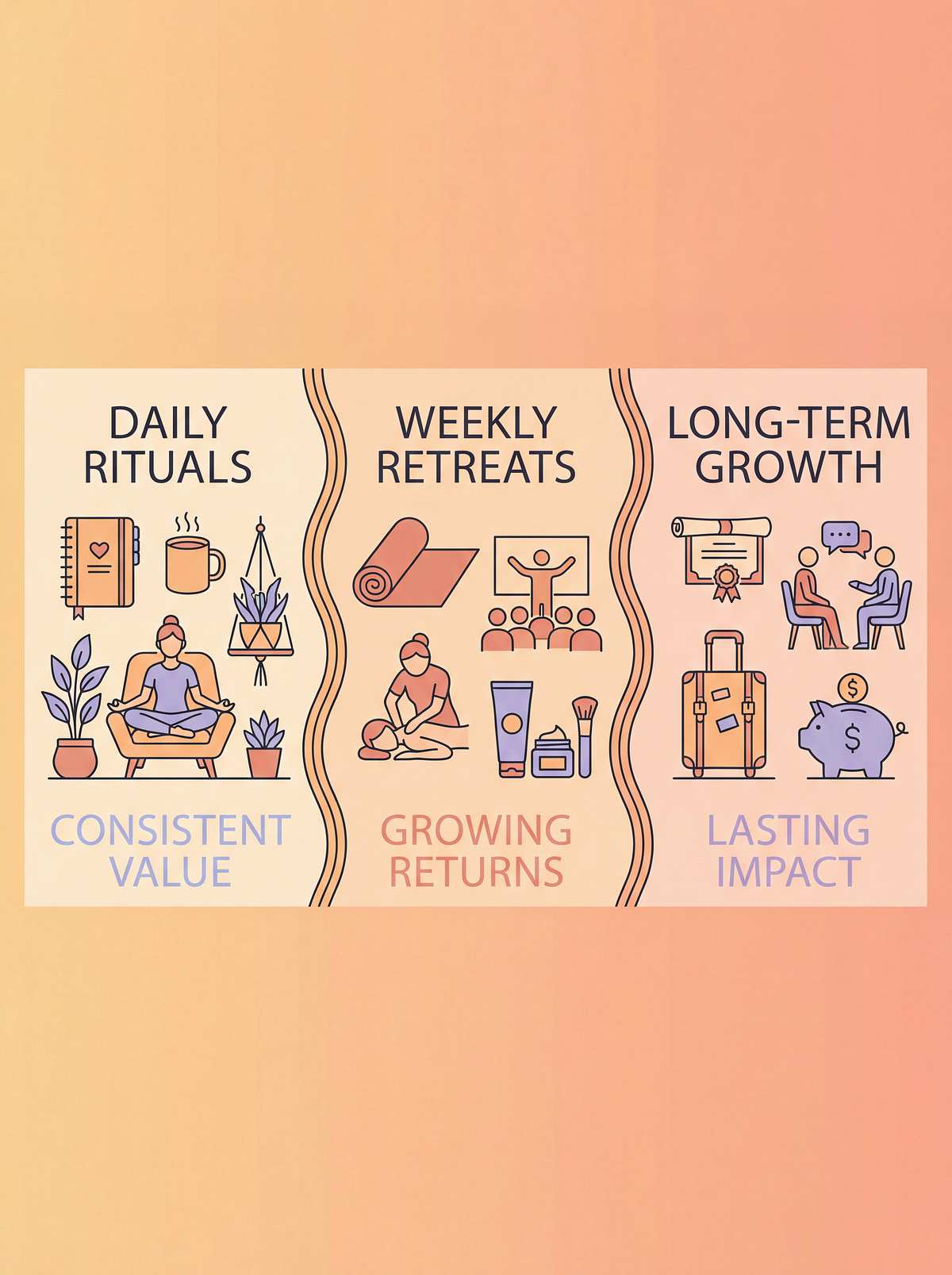
- By sustainability: Build combination of daily practices (mindfulness, exercise) plus weekly/monthly support (respite, therapy)

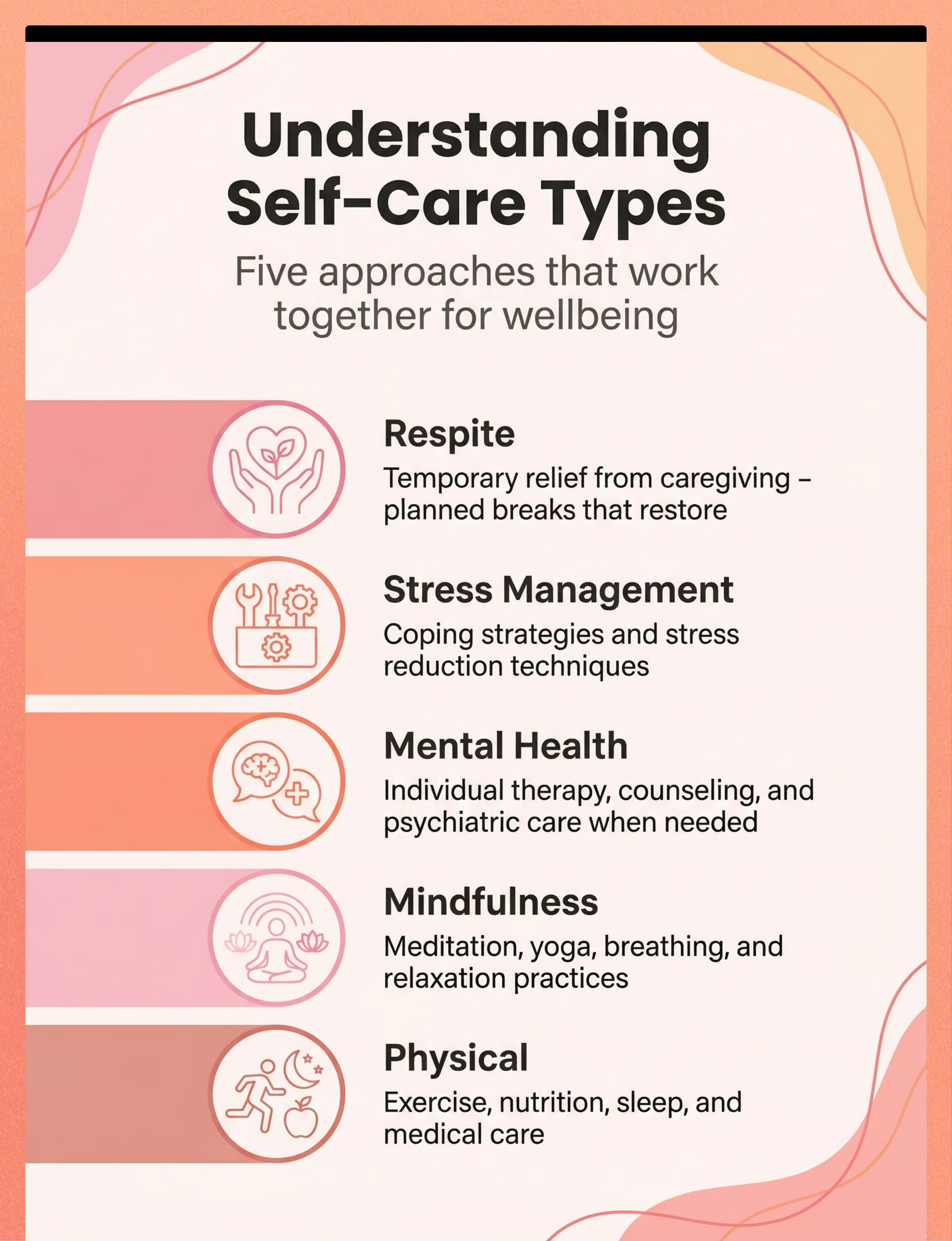
Types of Self-Care

Respite
Temporary relief from caregiving—planned breaks that allow you to rest, recharge, and return refreshed. Can be family, friends, or professional services.

Stress Management
Coping strategies and stress reduction techniques including breathing exercises, time management, cognitive reframing, and practical problem-solving skills.

Mental Health
Individual therapy, counseling, or psychiatric care addressing anxiety, depression, trauma, or adjustment challenges specific to autism parenting.

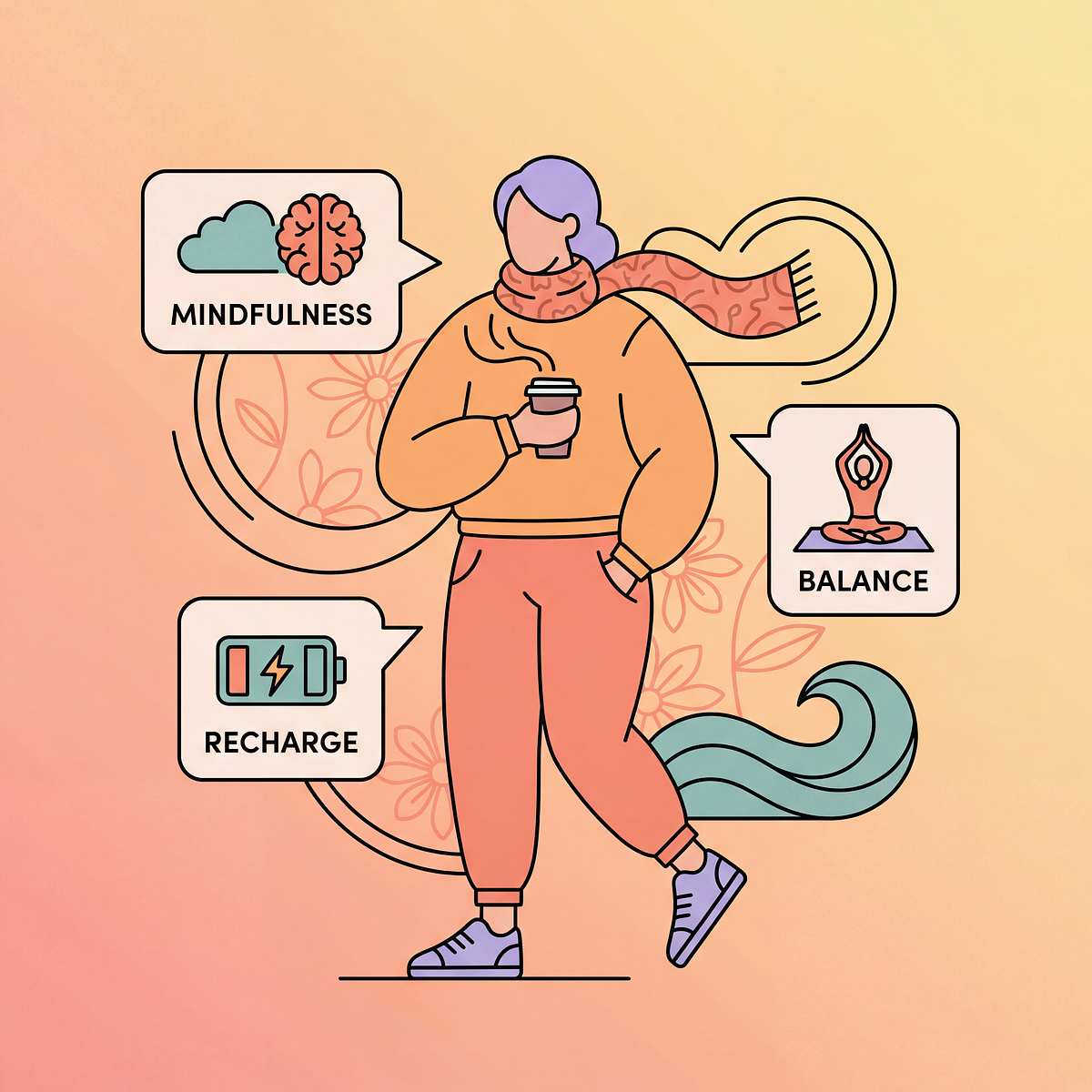
Mindfulness
Meditation, yoga, breathing practices, and relaxation techniques that help you stay present, calm your nervous system, and build emotional resilience.

Physical Health
Exercise, nutrition, sleep hygiene, and medical care that support your body's ability to handle stress and maintain energy.
Key features of effective self-care: Accessible, regular practice, personalized to your needs, and sustainable over the long term. The best self-care routine is one you'll actually maintain.

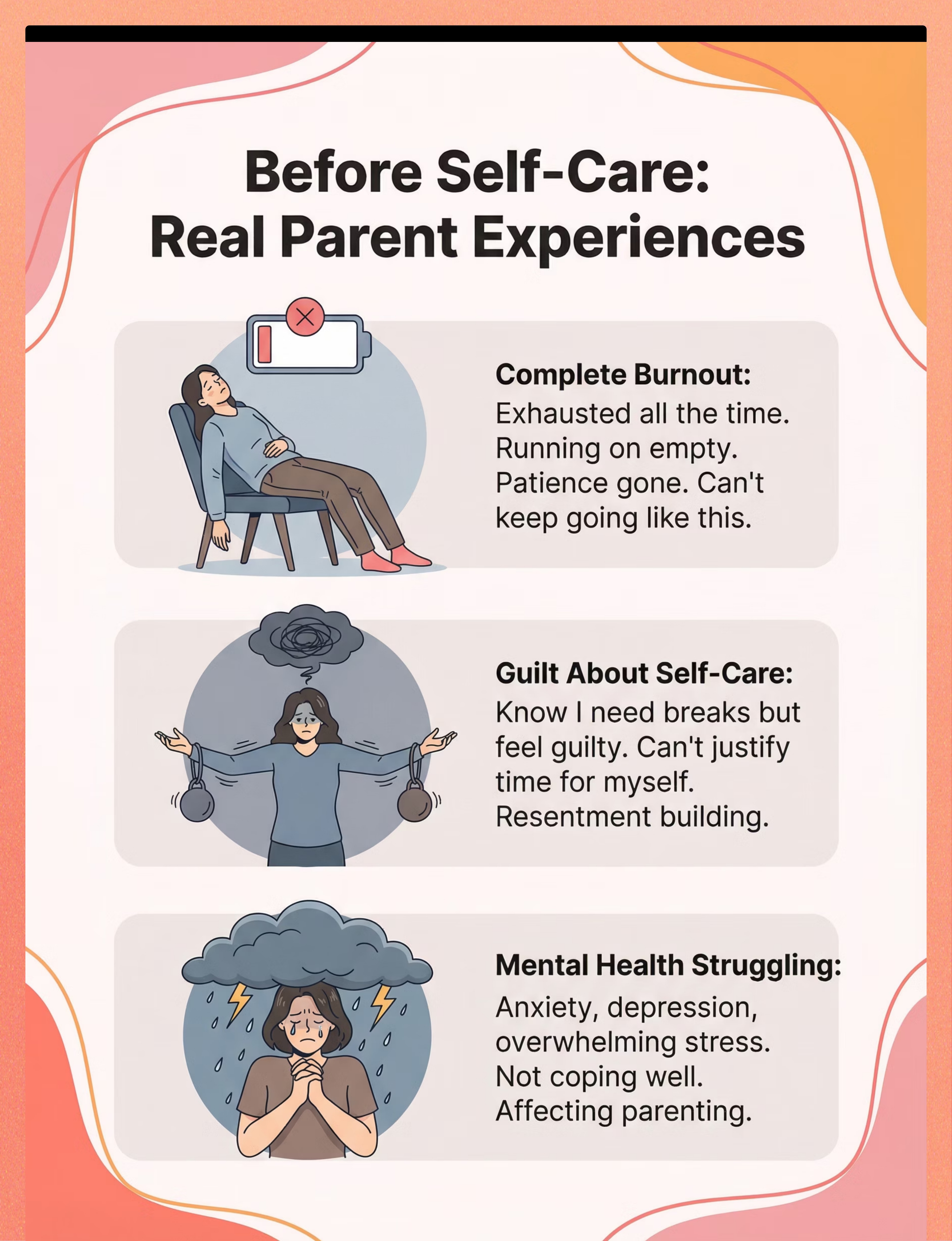
The Struggle (Before)

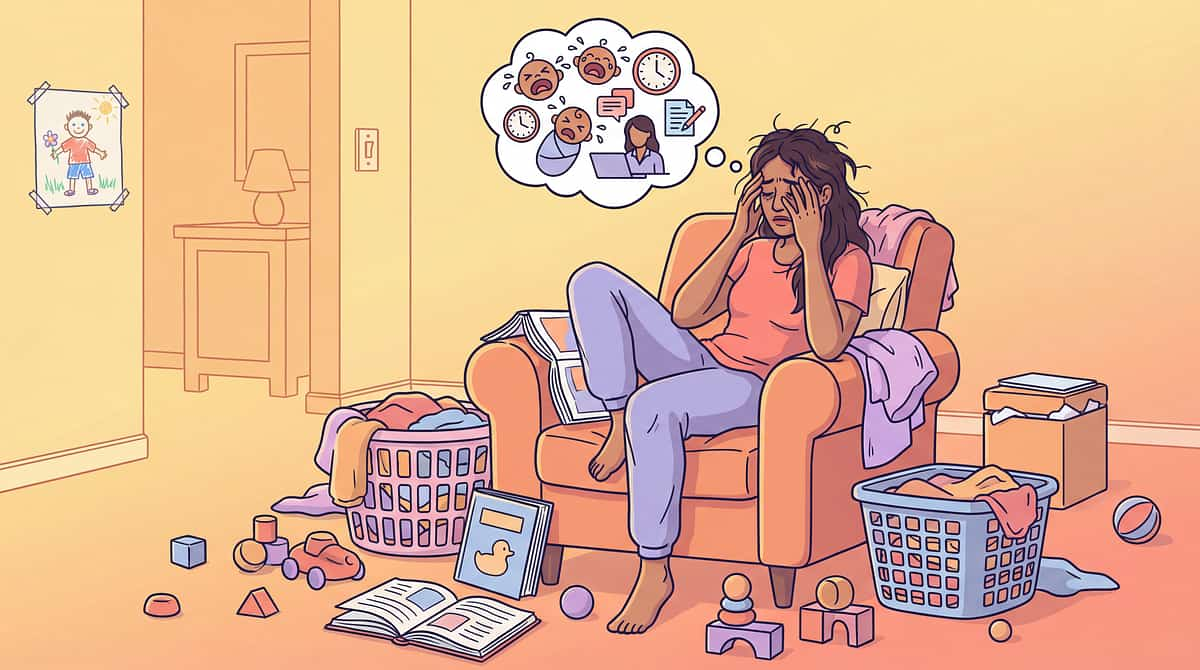
Complete Burnout
Situation: Exhausted all the time. Running on empty. Patience gone. Health suffering. Can't keep going like this. Falling apart.
Emotion:Burned out, failing

Guilt About Self-Care
Situation: Know need breaks but feel guilty. Child needs so much. Can't justify time for self. Sacrificing everything. Resentment building.
Emotion:Guilty, resentful

There was an error generating this image
Mental Health Struggling
Situation: Anxiety, depression, overwhelming stress. Not coping well. Affecting parenting. Need help but not getting it.
Emotion:Struggling, drowning
These scenarios represent common experiences among autism parents. The weight of constant caregiving, therapy coordination, advocacy, and worry takes a profound toll. Without intervention, this trajectory leads to serious consequences for both parent and child.

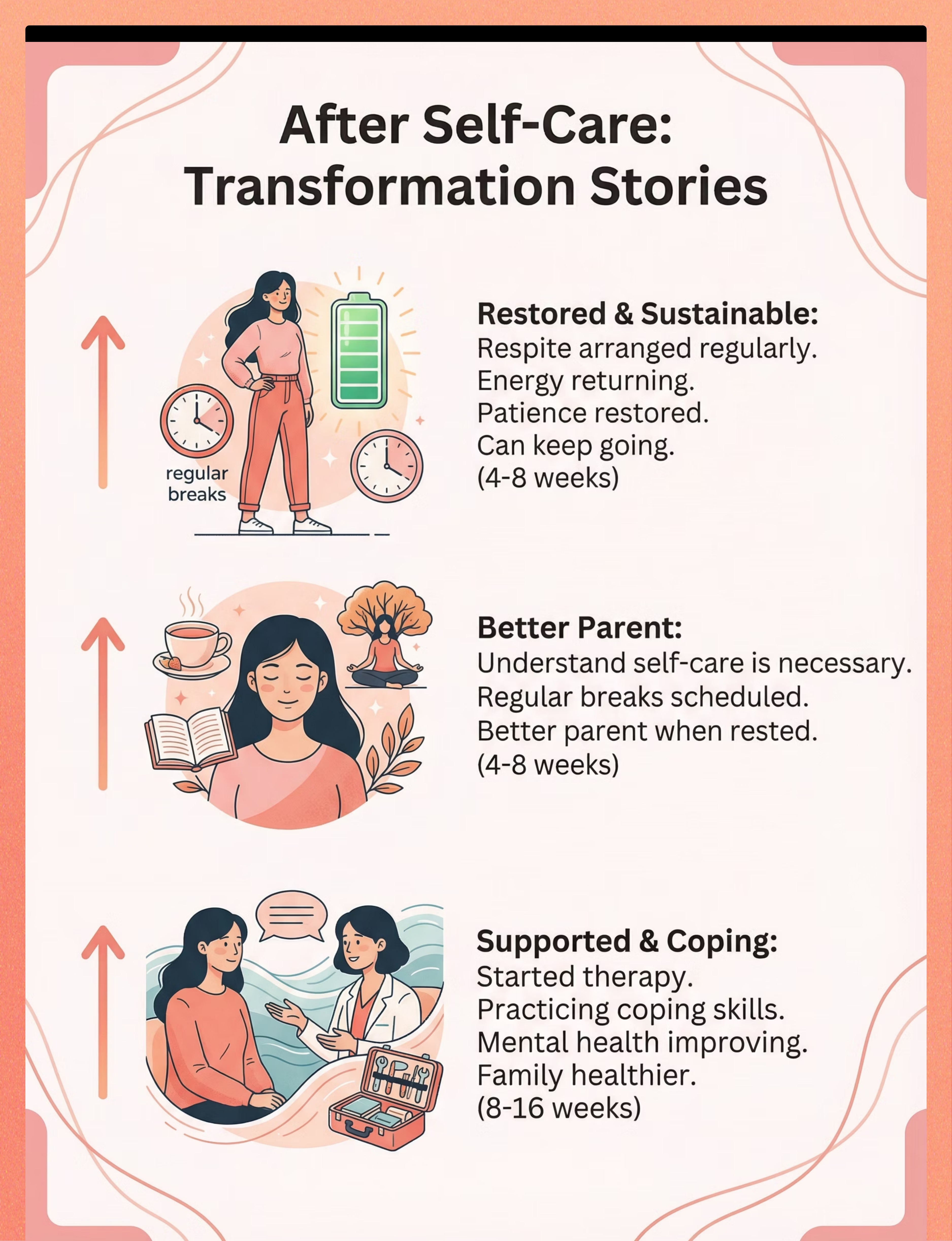
The Transformation (After)
Embrace Self-Care Mindset
Shift from guilt to acceptance, recognizing self-care as essential for well-being and effective parenting.
Implement Small Practices
Consistently integrate brief, restorative practices like mindful moments or short walks, building sustainable habits.
Secure Respite Support
Successfully arrange consistent breaks, utilizing a network of support or professional services, reducing caregiver burden.
Experience Renewed Well-being
Notice significant improvements in energy, mood, and patience, leading to a more balanced and fulfilling life.
Achieve Sustainable Balance
Self-care is naturally integrated into daily life, fostering resilience, joy, and more connected family interactions.
The journey to sustained well-being is continuous. Each step reinforces the last, leading to profound and lasting transformation. Celebrate progress and maintain compassion for yourself.

Is This Right for You? (2-Minute Check)
Do you feel burned out from caregiving?
If yes, this indicates: Self-care urgently needed
Burnout is a serious condition that affects your health and parenting quality. Immediate intervention is essential.
Do you have regular breaks from caregiving?
If yes: Good—maintain this practice
If no, this indicates: Respite needed
Regular breaks are necessary for sustainable caregiving. Without them, burnout is inevitable.
Is your own health (physical or mental) suffering?
If yes, this indicates: Self-care essential
Declining health is a red flag that requires immediate attention. Your health matters.
Do you feel guilty about taking time for yourself?
If yes, this indicates: Reframe self-care as necessary
Guilt is common but counterproductive. Self-care is not selfish—it's essential for effective parenting.
Assessment: 3+ 'yes' answers = strong fit for self-care intervention. Even one 'yes' indicates this resource could support your wellbeing. Every caregiver benefits from intentional self-care practices.

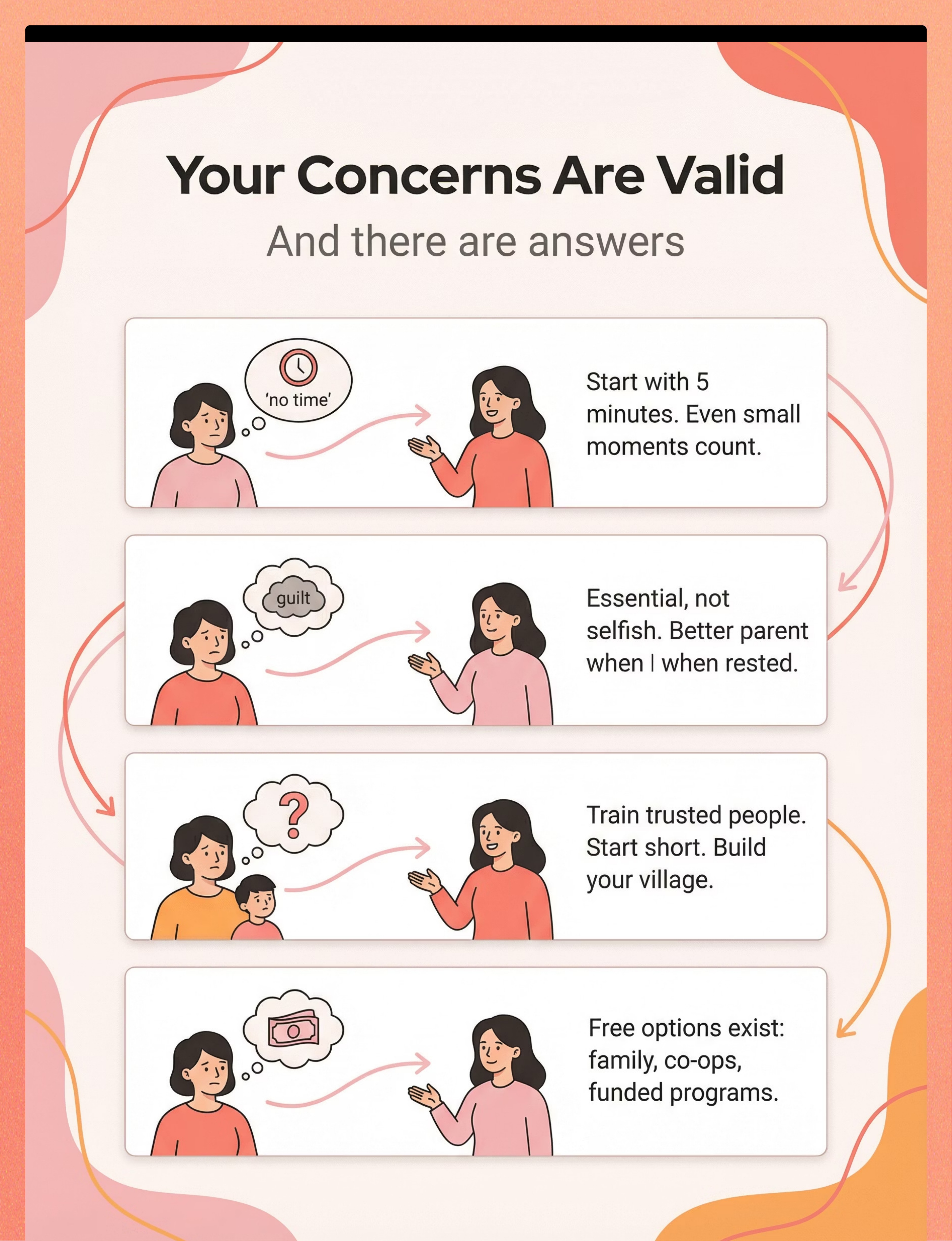
Common Questions (Honest Answers)
Q: I don't have time for self-care
A: Start with just 5 minutes. Self-care actually saves time by increasing your efficiency and effectiveness. You find time for your child's needs—you deserve the same priority. Even small moments count and create cumulative benefits.
Try this: Start with 5 minutes daily; recognize efficiency increases; remember you deserve this.
Q: Self-care is selfish
A: Self-care is ESSENTIAL, not selfish. You cannot pour from an empty cup. You're actually a better, more patient, more effective parent when you're rested. You're also modeling healthy behavior for your child. You matter too.
Try this: Reframe as essential, not selfish; recognize you're a better parent when rested; affirm that you matter.
Q: No one can care for my child
A: You can train trusted people gradually. Start with very short periods. Children actually benefit from multiple caregivers. Respite providers specialize in special needs care. Build your support village step by step.
Try this: Train trusted people; start with short periods; seek respite specialists; build your village.
Q: I can't afford respite/therapy
A: Many free options exist—family, friends, parent co-ops. Some respite programs are government funded. Online therapy is more affordable than in-person. This is important enough to prioritize in your budget.
Try this: Explore free options (family, co-ops, funded programs); prioritize this investment.

Usage Guide
Self-Care Scenarios
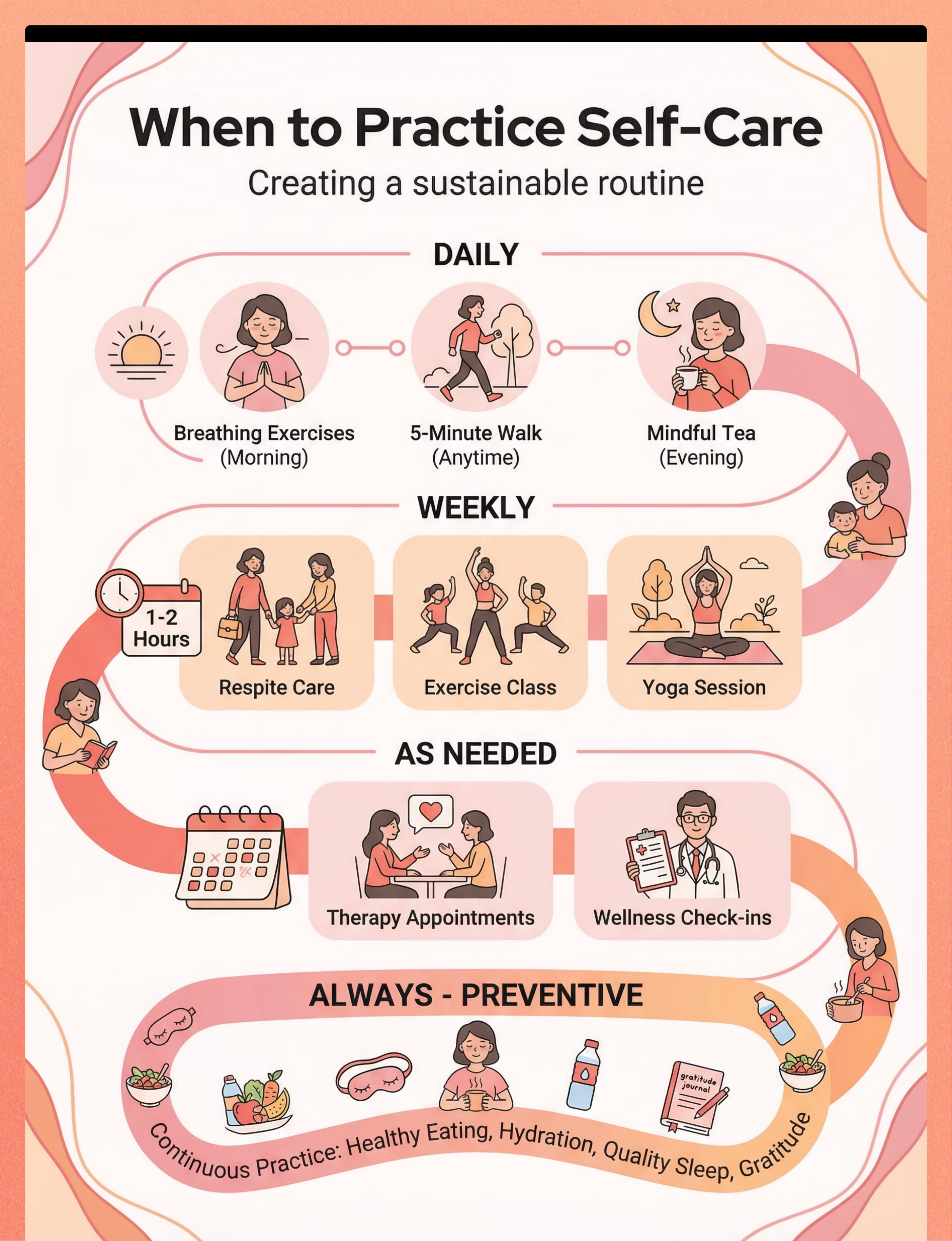
Daily | Small practices (breathing, mindfulness, short walks) | |
Weekly | Respite breaks, exercise, social connection | |
As needed | Therapy, counseling, medical care | |
When burned out | Urgent intervention required | |
Always | Preventive practice before crisis |
When NOT to Use
Never—self-care is always beneficial.
There is no scenario where prioritizing your wellbeing is the wrong choice. Self-care supports your ability to care for others effectively.
Duration | Ongoing practice throughout parenting journey | |
Settings | Home, Outdoors, Gym, Therapy office, Anywhere | |
Age Note | Essential for all caregivers regardless of child's age |
Supervision note: This is a parent resource, not a child intervention. No child supervision considerations apply—this is about YOUR wellbeing.

Safety First
Critical Safety
- Seek immediate help for mental health crisis—don't wait
- Respite providers should be properly trained and vetted for special needs care
- Don't push through serious physical or mental health issues hoping they'll resolve
- Balance self-care with family responsibilities—find sustainable middle ground
Important Warnings
- Burnout is serious and requires intervention—it won't resolve on its own
- Mental health needs sometimes require professional help beyond self-care
- Vet respite providers carefully—check references, training, and experience
- Guilt is a barrier to address, not a reason to avoid self-care
Before Starting
- Make commitment that self-care is necessary, not optional
- Identify accessible options within your budget and schedule
- Arrange respite through family, friends, or services
- Address guilt and other emotional barriers
During Practice
- Ensure daily practice is actually happening consistently
- Use respite breaks without guilt—this is necessary
- Attend to physical and mental health needs promptly
- Notice and celebrate benefits as they emerge
Signs of Success
- Reduced burnout symptoms and increased energy
- More patience and emotional regulation with child
- Improved physical and mental health markers
- Better quality parenting and family interactions
Contraindicated: Ignoring serious health needs or pushing through crisis without professional help. Self-care supports wellness but is not a substitute for medical or mental health treatment when needed.

Investment Guide
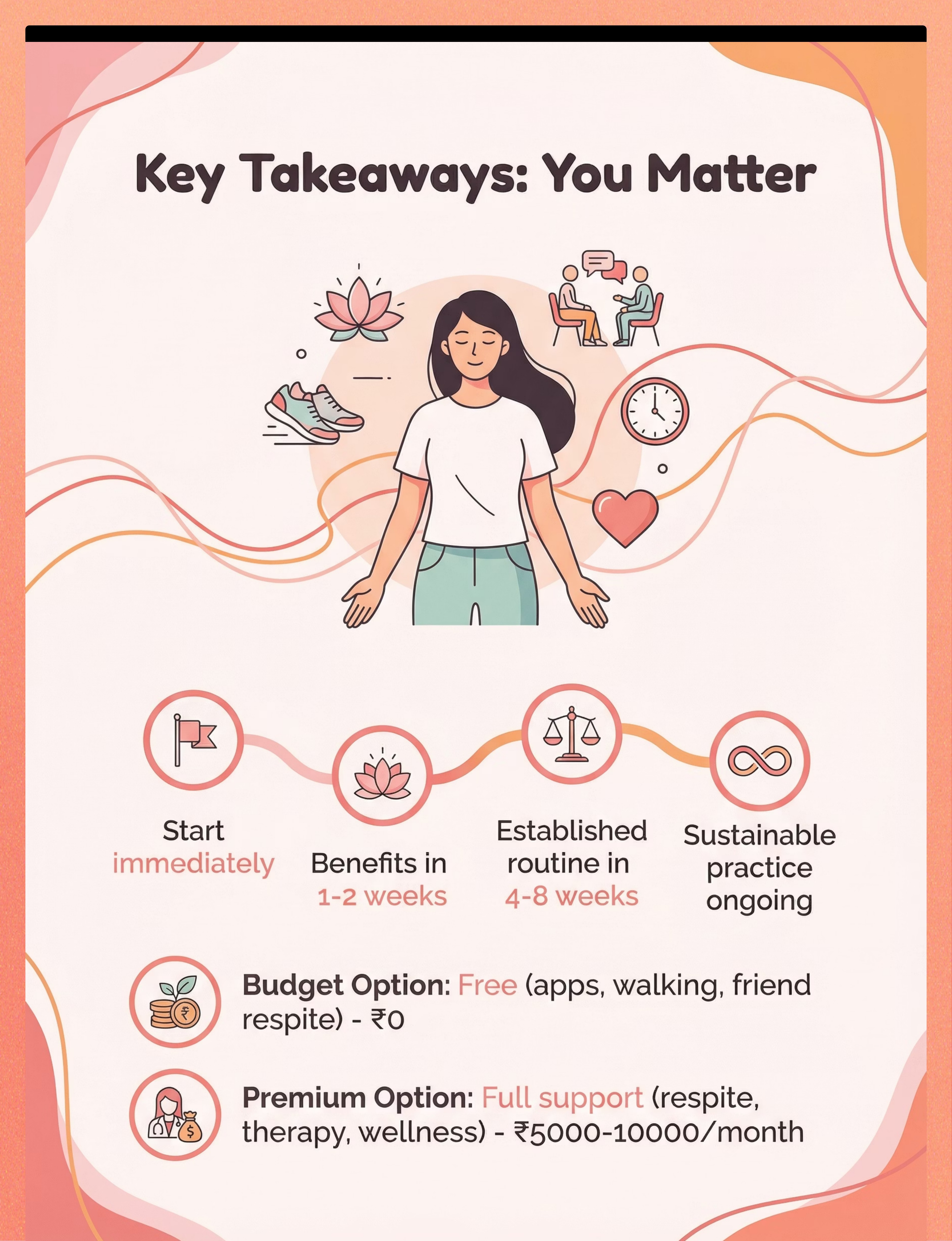
Overall range: ₹0–10,000 monthly depending on services chosen
USD equivalent: $0-120 monthly
Below is a breakdown of self-care investment options:
Tier | Includes | Cost | Note/Services | |
Budget Option | Free meditation apps, walking/outdoor exercise, friend/family respite, online resources | ₹0 | Many effective self-care options are completely free and accessible to everyone | |
Premium Option | Regular professional respite, individual therapy/counseling, gym or yoga membership, wellness programs | ₹5,000-10,000/month | Respite agencies, private therapy, wellness centers |
Commitment is Key
Prioritize yourself; it's an investment, not an expense.
Start Free & Build Habits
Begin with accessible, no-cost options to establish a routine.
Gradually Add Paid Services
Introduce professional support as budget allows and needs evolve.
Value Over Cost
The most important investment is your commitment to well-being.
Phase 1: Foundation
Begin with free resources like meditation apps, walks, and family support to build a consistent self-care habit.
Phase 2: Expansion
As habits form and budget allows, explore adding paid options like gym memberships or wellness programs.
Phase 3: Professional Support
Integrate individual therapy, counseling, or professional respite services for deeper support when needed.
Phase 4: Ongoing Nurturing
Continuously adapt your self-care plan to meet evolving needs, always prioritizing your mental and physical health.

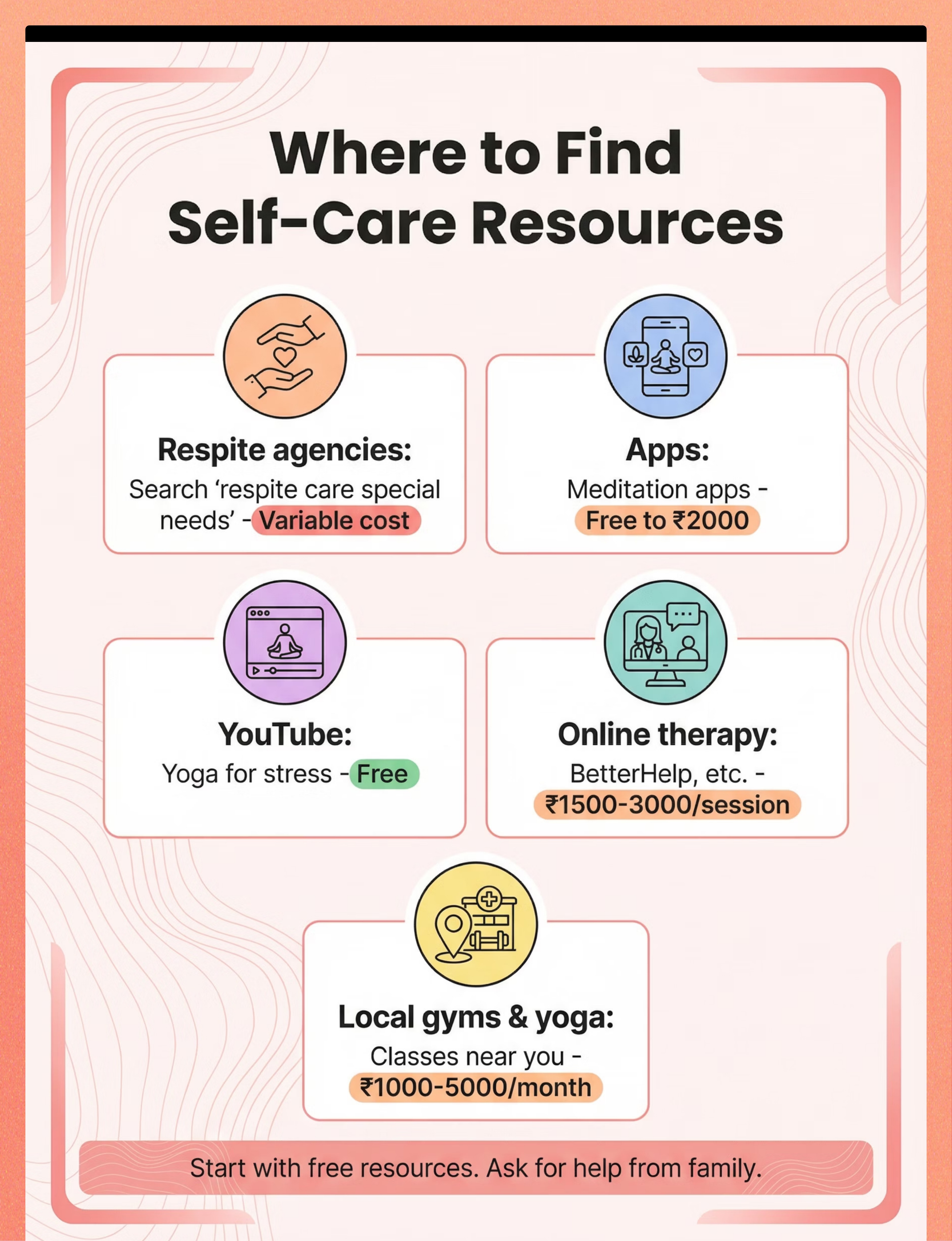
Where to Find in India
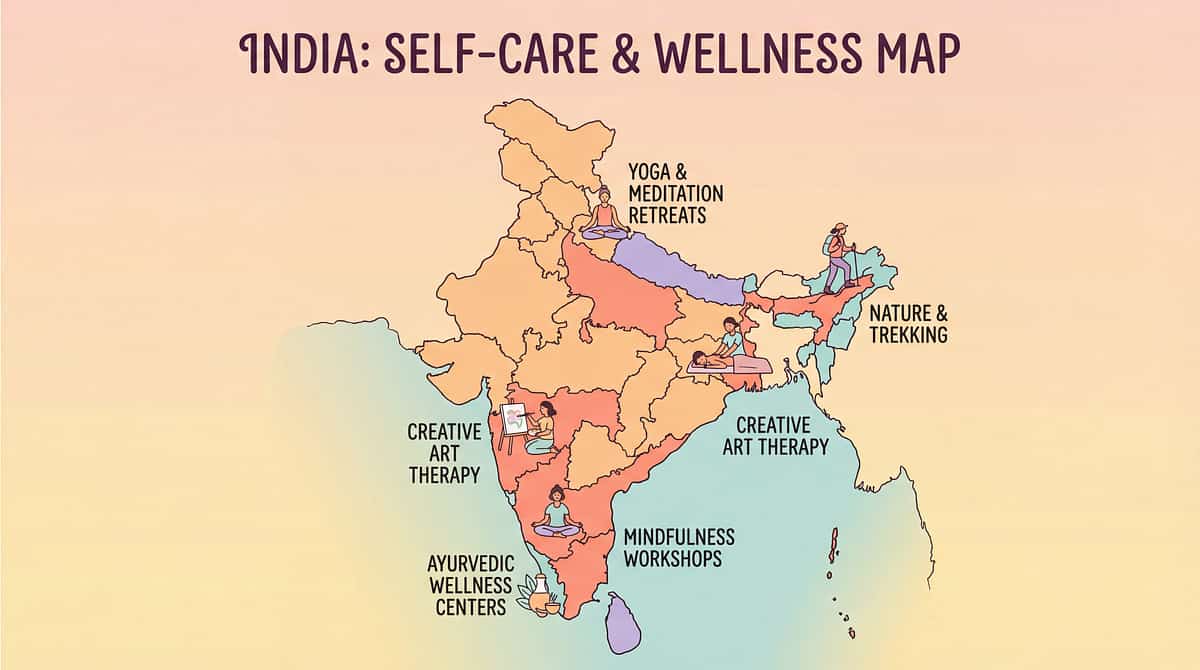
Availability: Various sources available across India, from free online resources to professional services
Respite Agencies
Search terms: "respite care special needs"
Typical Price: Variable (₹0-5,000)
Meditation Apps
Search terms: "meditation app free"
Typical Price: Free
YouTube Channels
Search terms: "yoga for stress"
Typical Price: Free
Online Therapy
Search terms: "online therapy India"
Typical Price: ₹1,500-3,000/session
Local Gyms/Studios
Search terms: "gyms yoga classes near me"
Typical Price: ₹1,000-5,000/month
Buying Tips
- Start with free resources to build habit before investing in paid services
- Ask family and friends for respite help—many are willing if asked
- Look for government-funded respite programs in your state
- Prioritize mental health support if you're actively struggling
- Remember: small daily practices add up to significant benefits
Red Flags to Avoid
- Ignoring obvious burnout signs and pushing through indefinitely
- Never taking any breaks from caregiving responsibilities
- Declining mental health left untreated or dismissed as "just stress"
- Physical health completely neglected due to lack of time

DIY Alternative (Save 80-100%)
Feasibility: High — Many effective self-care practices are completely free
Cost savings: 80-100% compared to paid services
Time investment: 5-60 minutes daily
Materials Needed
- Internet access for free apps and YouTube resources
- Comfortable quiet space in your home
- Walking shoes for outdoor exercise
- Commitment to prioritize yourself
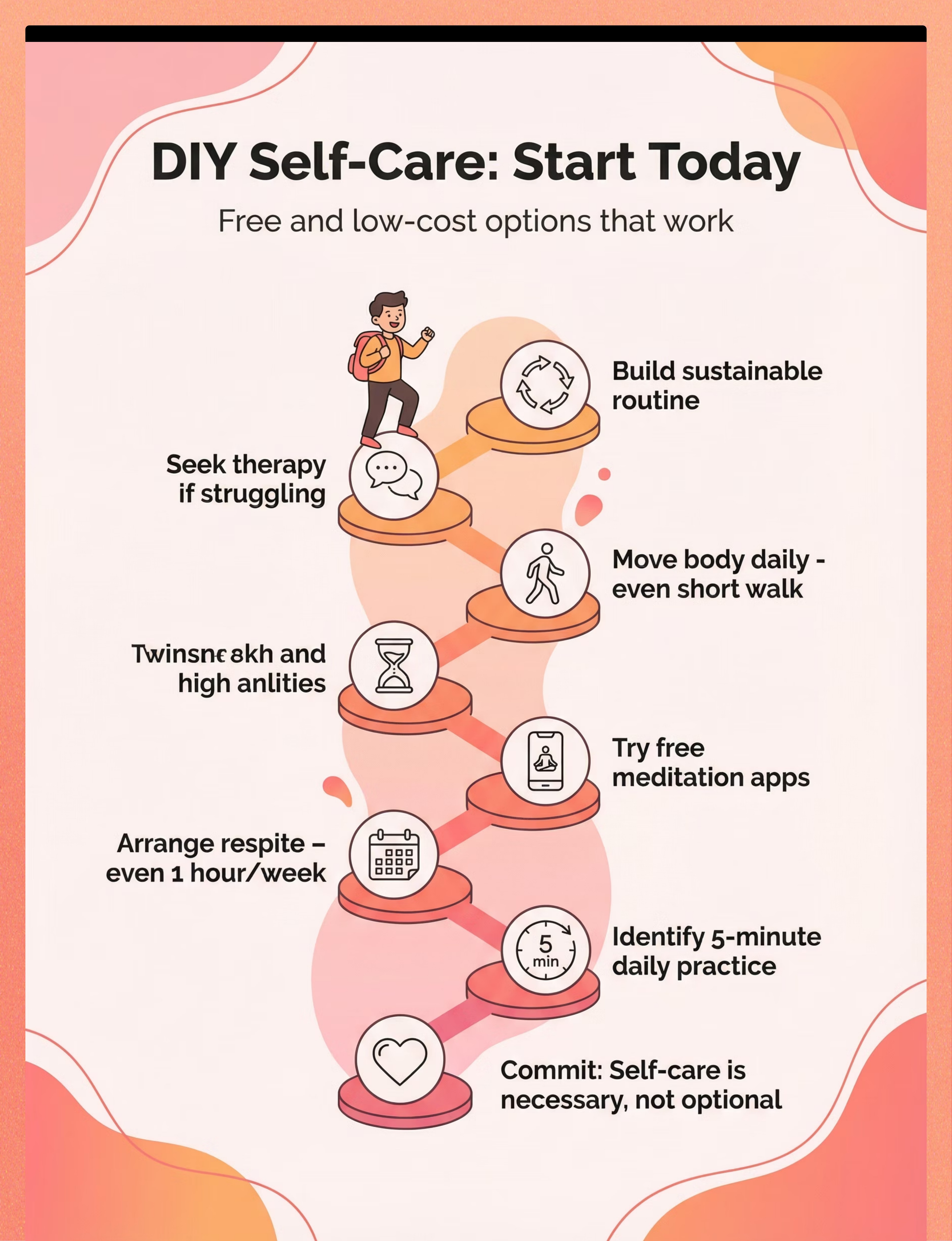
Key Self-Care Steps
- Commit to Self-Care: Essential for sustainable parenting.
- Identify Daily Practice: Start with 5-minute activities like deep breathing or a short walk.
- Arrange Respite: Ask family/friends for even 1 hour weekly.
- Try Free Apps: Explore meditation or stress management apps.
- Move Body Daily: Even a 10-minute walk boosts mood.
- Seek Therapy If Struggling: Professional support is crucial when mental health declines.
- Build Routine: Integrate practices, schedule and protect this time.
DIY vs. Commercial
When to DIY When to Buy Services Daily mindfulness, breathing, home exercise Professional respite care, individual therapy Friend and family respite arrangements Gym membership, specialized wellness programs
Tradeoffs
Free DIY options are highly effective for daily practices and habit building. Paid services offer professional expertise, structure, and accountability but aren't necessary to begin benefiting from self-care.
Preview of parent self care resources Therapy Material
Below is a visual preview of parent self care resources therapy material. The pages shown help educators, therapists, and caregivers understand the structure and content of the resource before use. Materials should be used under appropriate professional guidance.


Share this resource
Help others discover thisLink copied!

Measuring Success & Complete Support
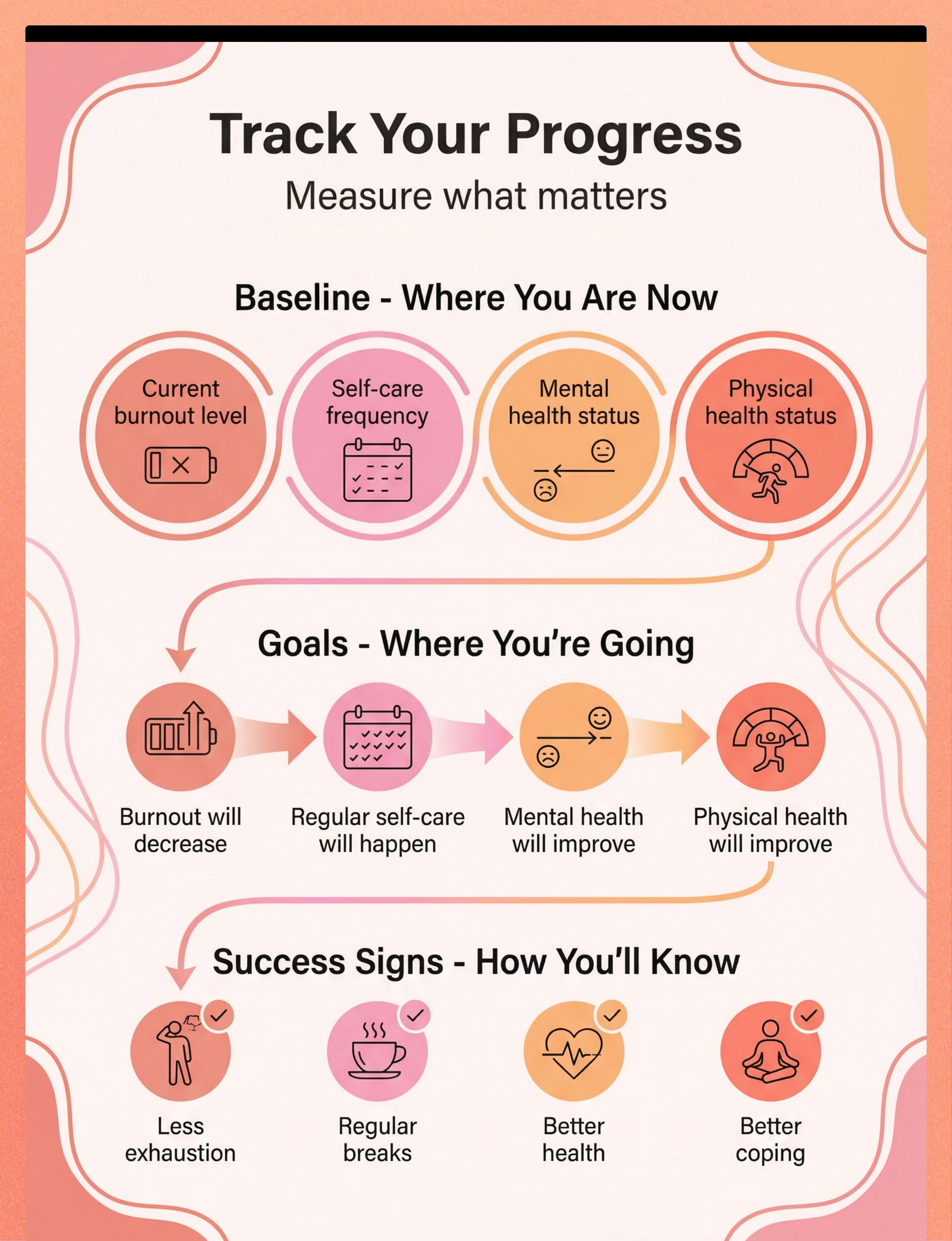
Track Your Progress
1
Baseline (Measure First)
- Current burnout level (scale 1-10)
- Self-care frequency per week
- Mental health status
- Physical health status
2
Goals
- Burnout will decrease
- Regular self-care will happen
- Mental health will improve
- Physical health will improve
3
Success Indicators
- Less exhaustion daily
- Regular breaks scheduled
- Better health markers
- Better coping skills
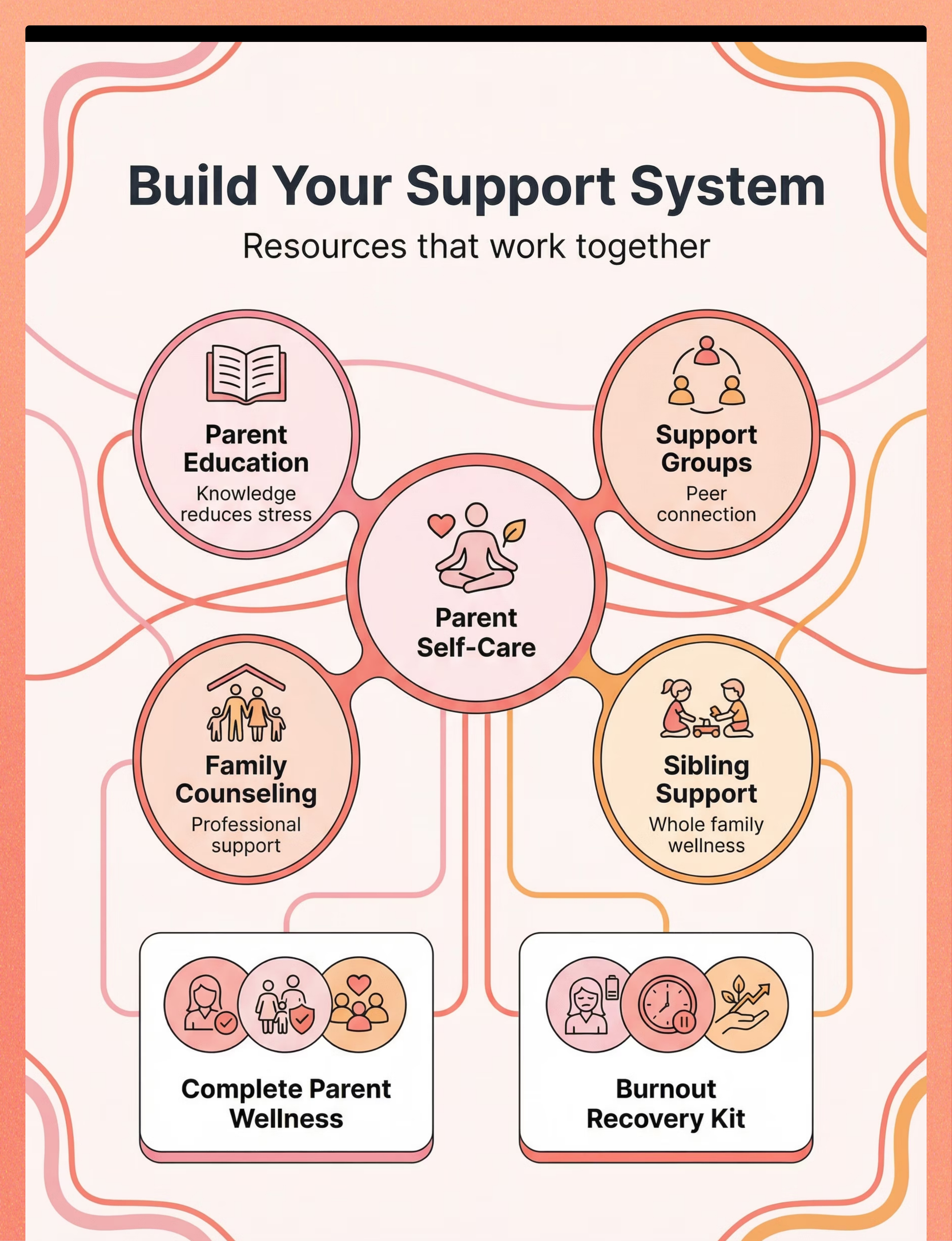
Complete the Kit
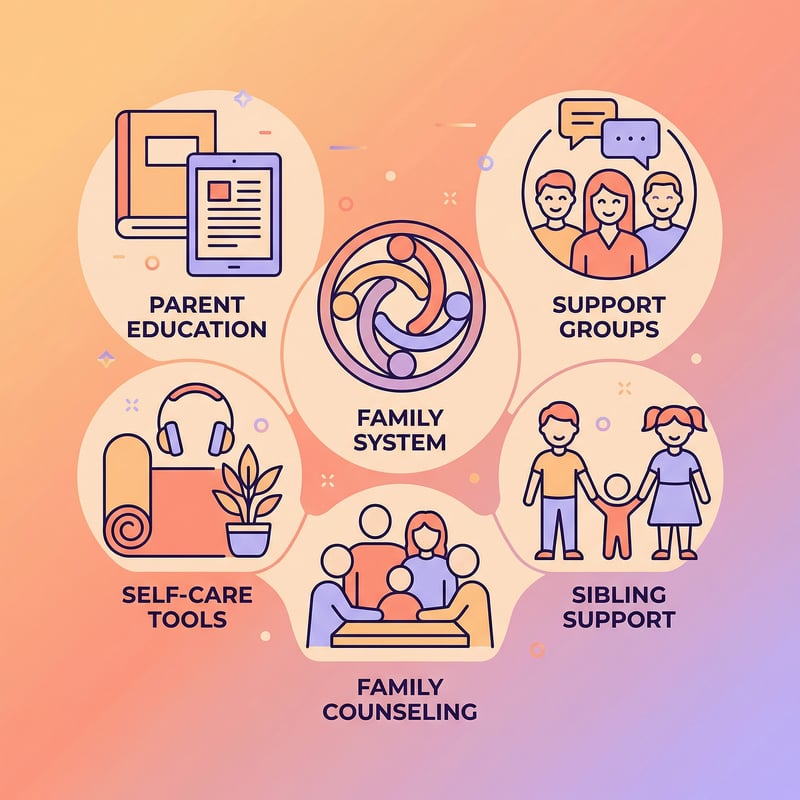
Complementary tools to pair with self-care:

Parent Education (ID: 20.1)
Knowledge reduces stress and builds confidence in your parenting approach

Support Groups (ID: 20.2)
Peer support reduces isolation and provides practical wisdom from other parents

Family Counseling (ID: 20.5)
Professional support addresses family system dynamics and complex challenges

Sibling Support (ID: 20.4)
Whole family wellness includes support for siblings' unique needs
Alternative option: Family Counseling (ID: 20.5) offers professional alternative when self-directed approaches need additional support
Recommended bundles:
- Complete Parent Wellness: Self-Care (20.3) + Support Groups (20.2) + Parent Education (20.1) — Full spectrum of parent support
- Burnout Recovery Kit: Self-Care (20.3) + Family Counseling (20.5) + Support Groups (20.2) — Intensive intervention for serious burnout
Quick Summary
AI Summary: Parent self-care resources support caregiver wellbeing through respite care, stress management, counseling, mindfulness, and physical health practices to prevent burnout and improve parenting. Core Kit (Rank 1), strong evidence, essential for family functioning.
self-care
burnout
respite
mental health
stress
wellness
parent
core-kit
Common searches: autism parent burnout, caregiver self-care, parent respite care, autism parent stress, caregiver mental health, parent wellness autism, preventing caregiver burnout
Get Support
FREE National Autism Helpline
Phone: 9100 181 181
Languages: 16+ languages supported
Website: pinnacleblooms.org
Compassionate, expert support available to help you access resources and navigate your parenting journey.
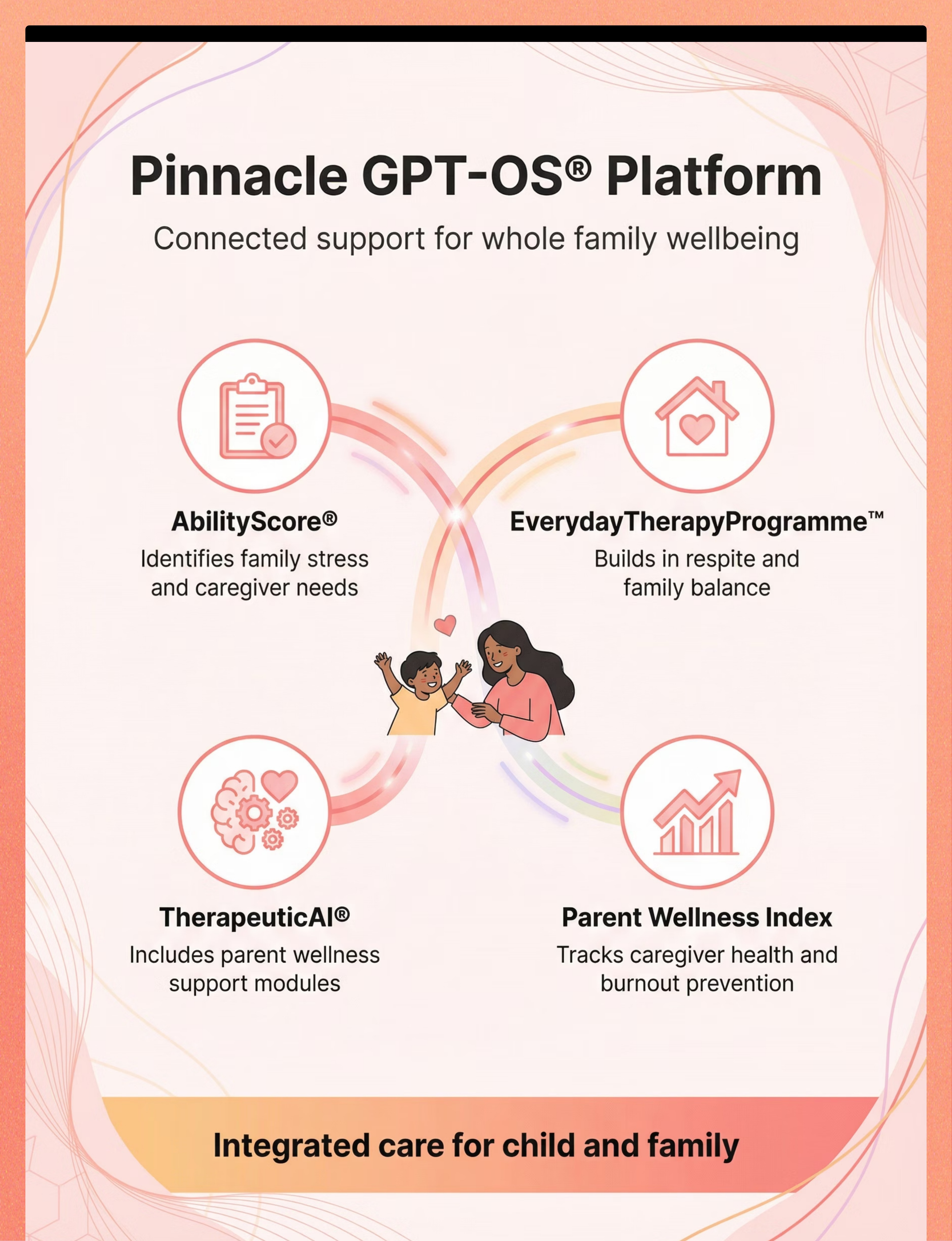
Platform Integration: This resource integrates seamlessly with Pinnacle Blooms Network's comprehensive platform:
- AbilityScore®: Identifies family stress levels and caregiver wellbeing needs during comprehensive assessment
- TherapeuticAI®: Includes parent wellness strategies integrated into your child's intervention plan
- EverydayTherapyProgramme™: Builds respite breaks and parent self-care time into daily routines
- Parent Wellness Index: Tracks caregiver health alongside child progress—because both matter
Disclaimer: This is educational information about caregiver wellbeing and burnout prevention. Always consult qualified mental health professionals, counselors, or physicians for your specific health needs. Individual results vary. Self-care supports wellness but is not a substitute for professional medical or mental health treatment when clinically indicated.