Tool ID: 20.2
Tool ID: 20.2
Core Kit
Rank #1
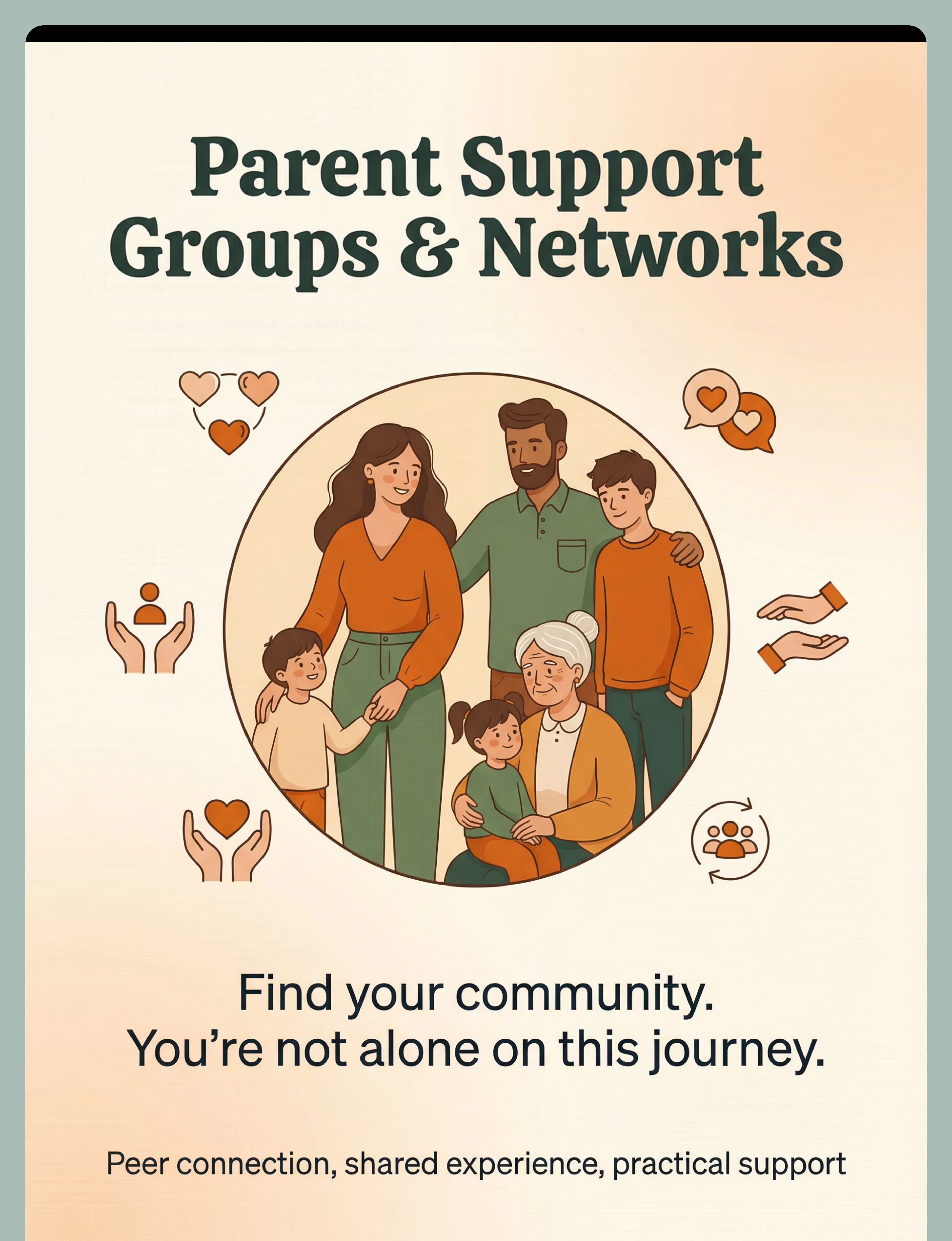
Parent Support Groups & Networks
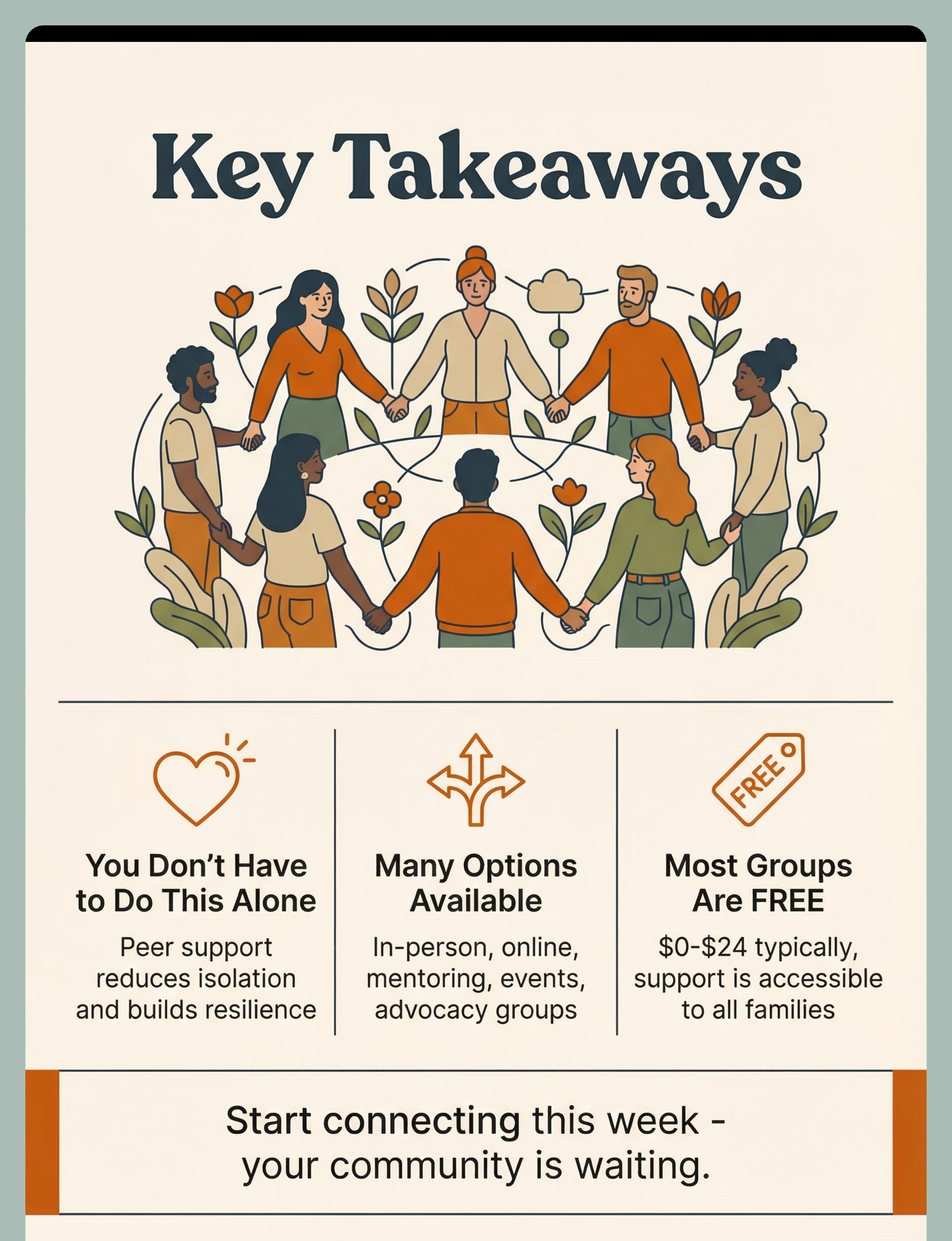
Connect with others who understand your journey—reduce isolation and build resilience through peer support
Community Recommended
Strong Evidence
Ongoing Use
₹0–2,000
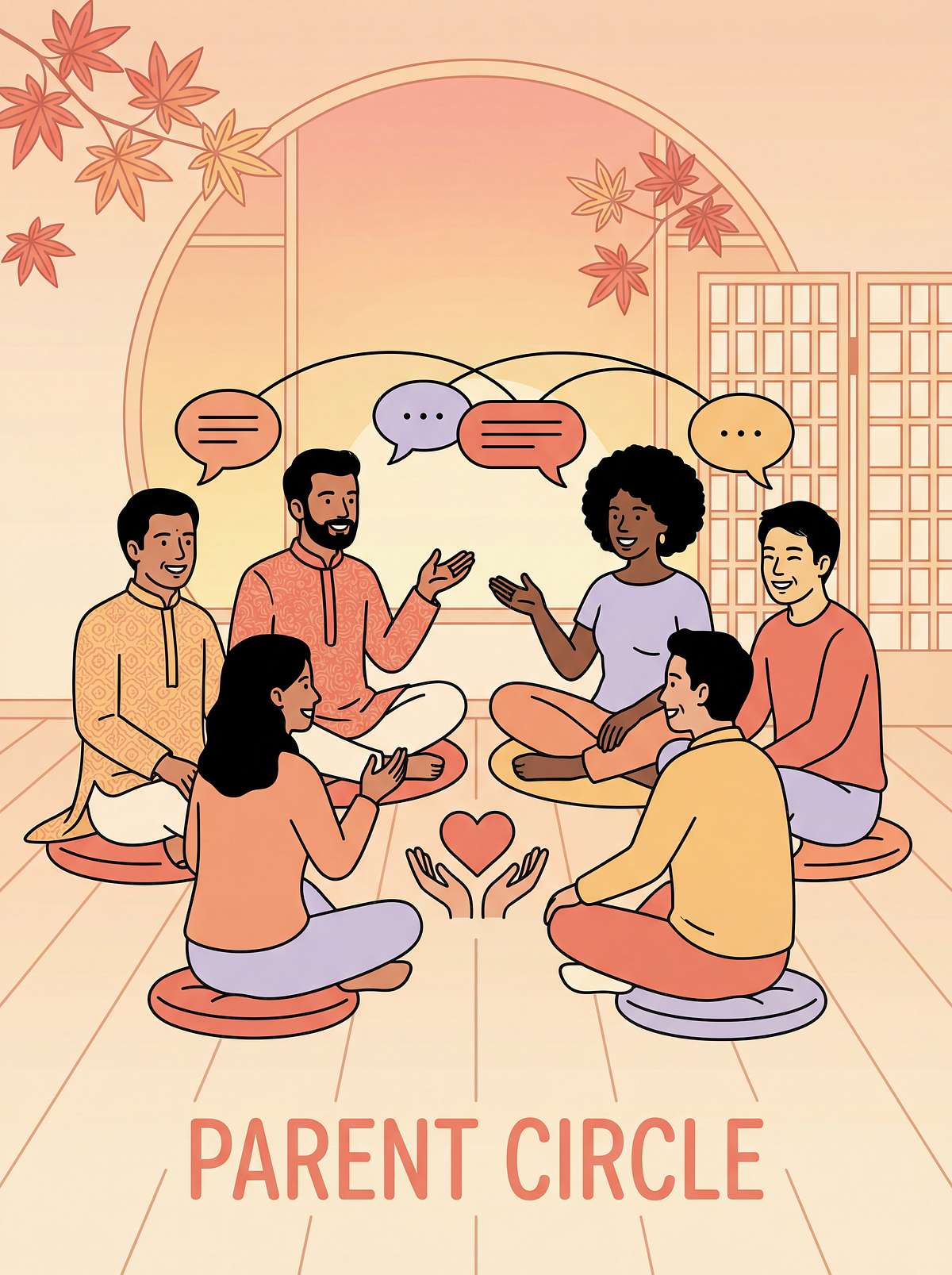
Connect with other families who truly understand your journey. Parent support groups and networks provide peer connection, shared experience, and community support to reduce isolation and build resilience throughout your autism parenting experience.
Who This Helps
Parents of children with special needs seeking peer connection
Families navigating autism, ADHD, or developmental challenges
Caregivers feeling isolated or overwhelmed
Anyone wanting to share experiences and learn from others
Parent Wellbeing
Social Support
Coping Skills
Information Sharing
Advocacy
Family Resilience
For All Parents & Caregivers
Whether newly diagnosed or years into the journey, peer support provides connection and understanding that reduces isolation and builds coping strength.
Community, Online, Clinic, School Settings
Support groups meet in various locations and formats to match your preferences, schedule, and comfort level—from local face-to-face meetings to 24/7 online communities.
Best for Connection & Shared Experience
When you need people who truly understand, practical advice from lived experience, emotional support, or community connection for your family.
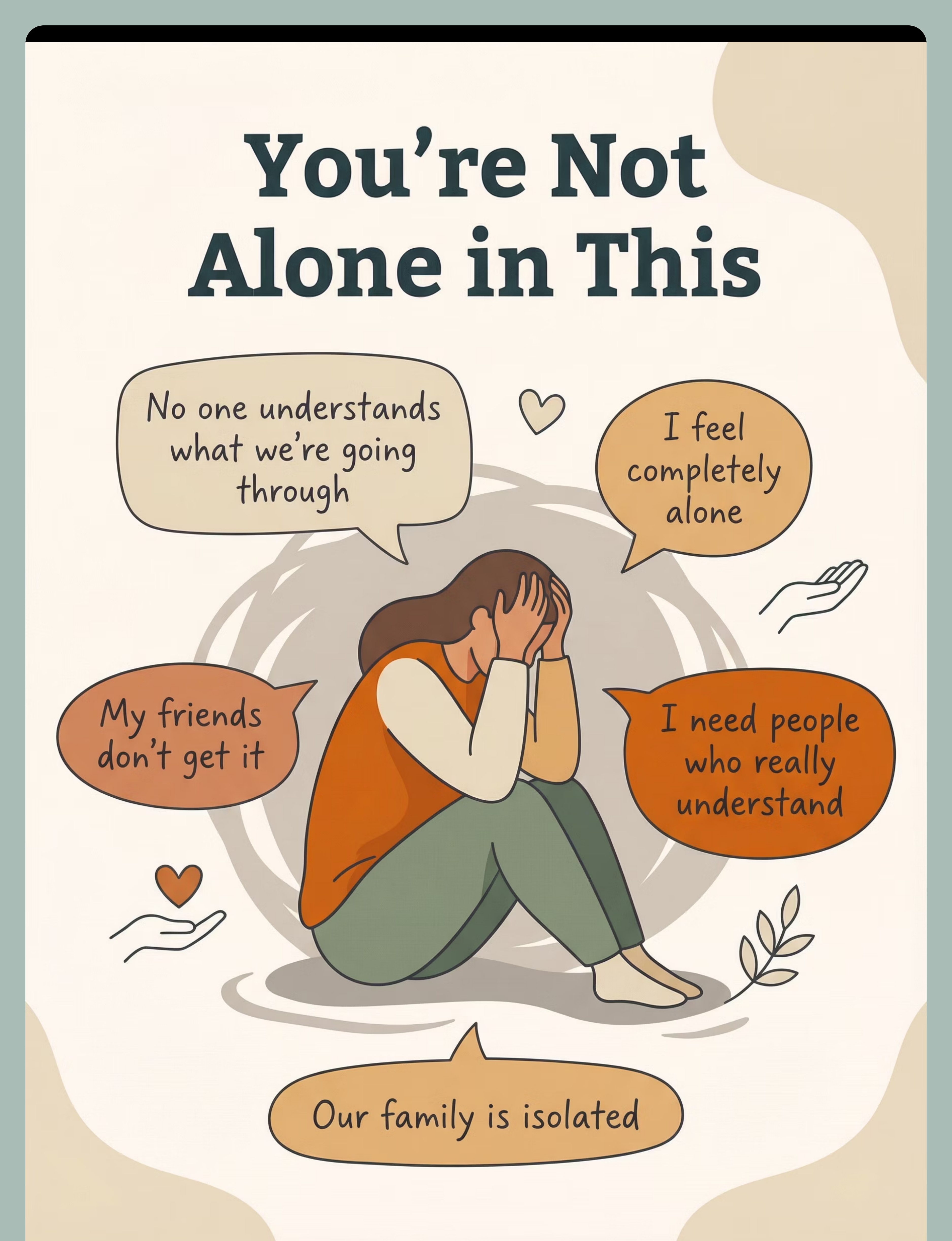
Does This Sound Familiar?
"No one understands what we're going through"
"I feel completely alone"
"My friends don't get it"
"I have no one to talk to"
"I need people who really understand"
"Our family is isolated"
You're not alone. These are common challenges faced by many autism families. Isolation and lack of understanding are real struggles—but connection with others who share your experience can transform your journey.
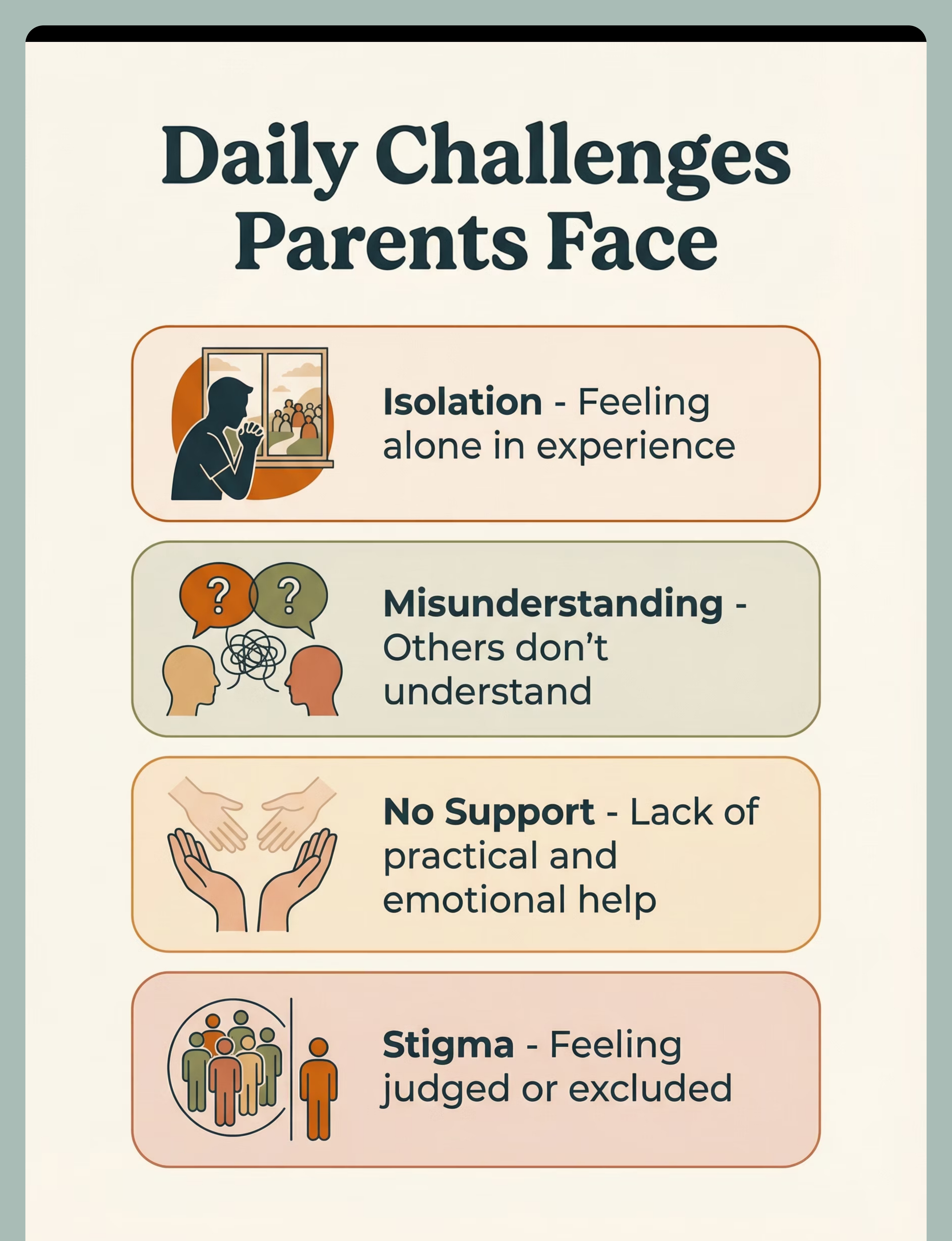
A Day Without the Right Support
Isolation
Feeling alone in experience. No one to share the daily challenges with. The weight of parenting without understanding peers.
Misunderstanding
Others don't understand what you're going through. Typical parenting advice doesn't apply. Feeling judged or misunderstood.
No Support
Lack of practical and emotional support. Nowhere to turn for advice. Bottling up fears and frustrations.
Stigma
Feeling judged or excluded from typical family activities and community. Social isolation affects the whole family.
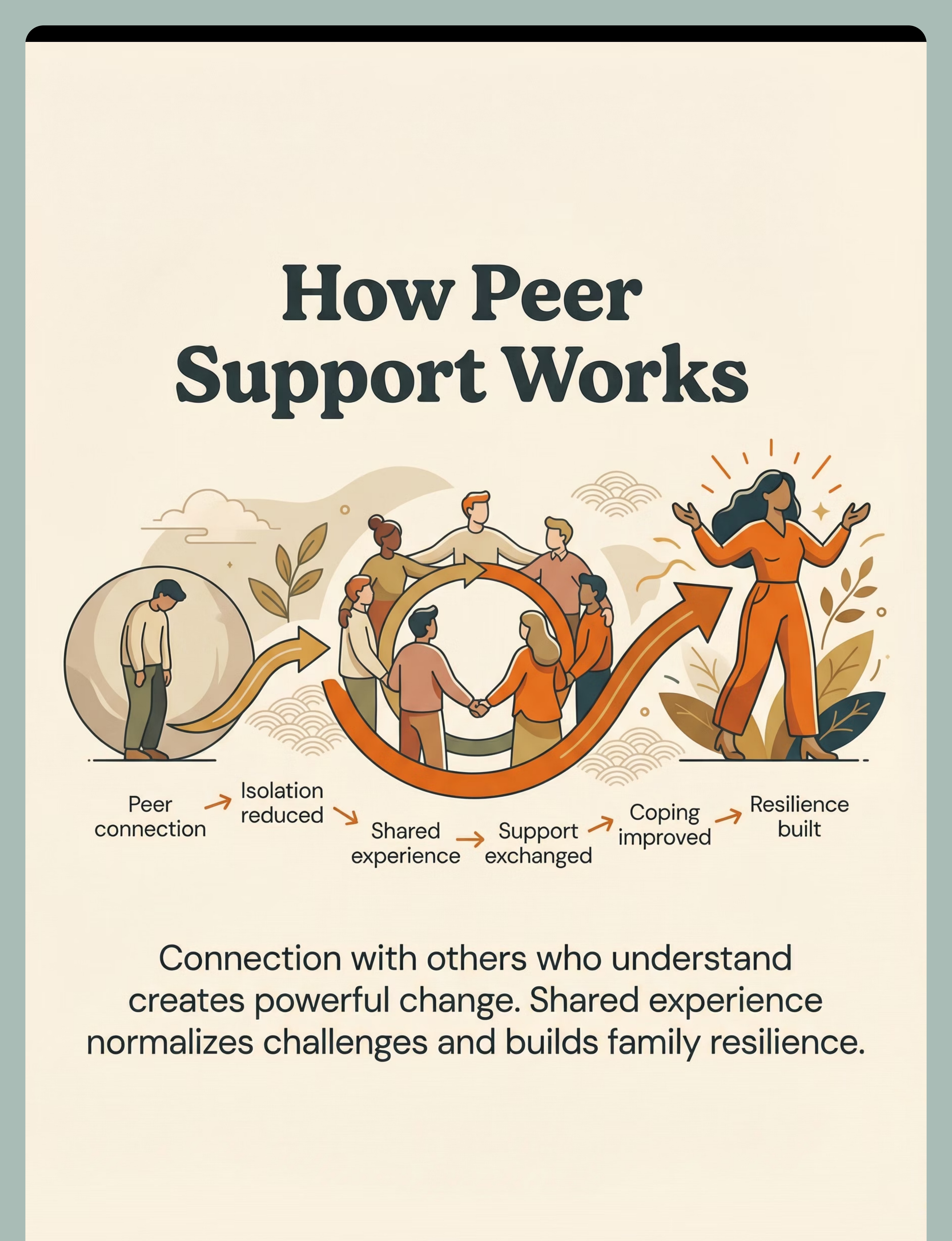
The Science Behind It
Peer Connection
Meeting others who share your experience creates immediate understanding and reduces feelings of being alone.
Isolation Reduced
Regular connection with understanding peers breaks down walls of isolation and creates a sense of belonging.
Experience Normalized
Hearing others share similar challenges validates your experience and reduces shame or self-blame.
Support Exchanged
Practical strategies and emotional encouragement flow naturally in peer communities, building coping skills.
Resilience Built
Supported parents develop stronger coping, leading to improved wellbeing for the entire family.
Parent Wellbeing
Social Support
Coping Skills
Information Sharing
Advocacy
Family Resilience
How to Use It Right
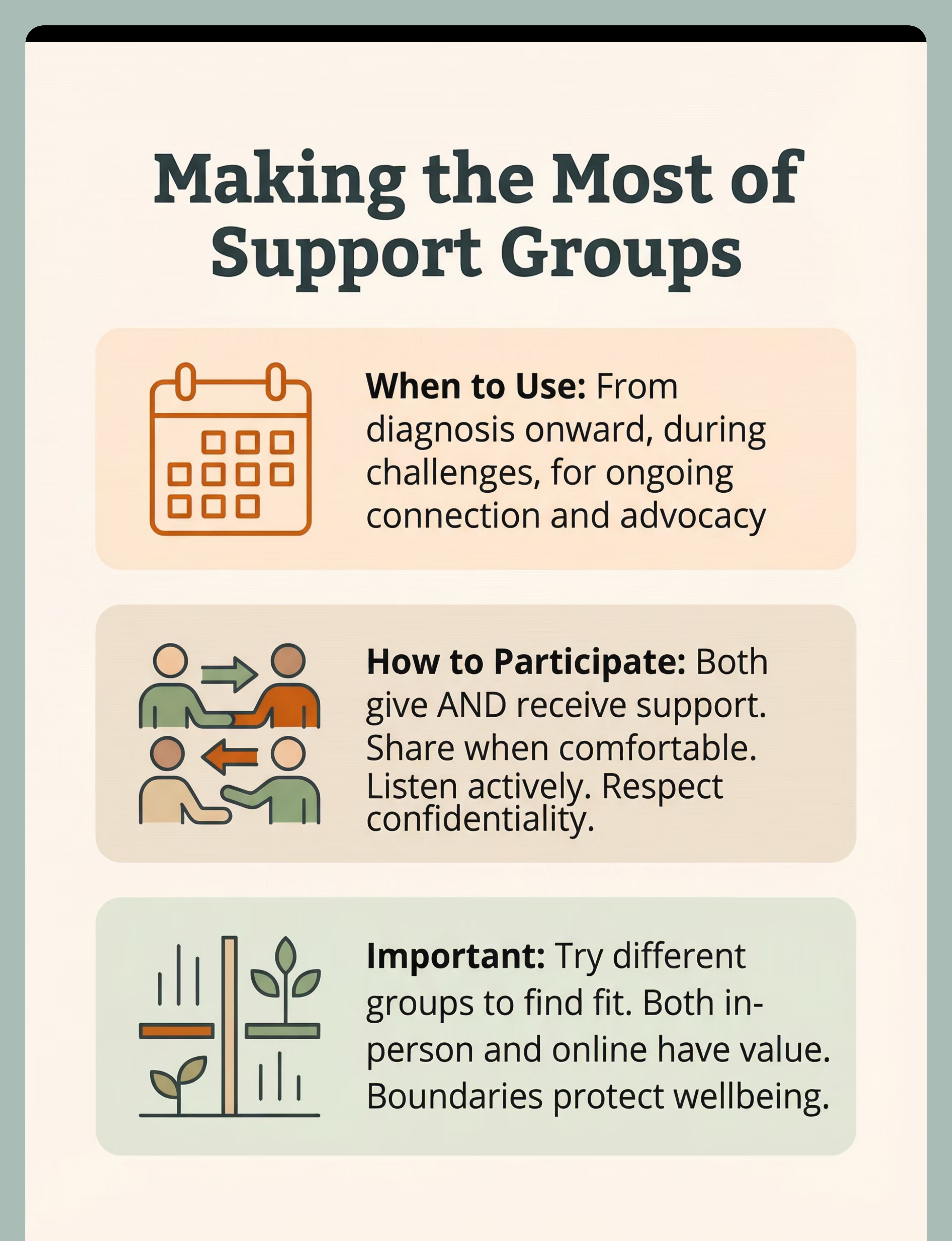
Try different groups to find fit
Not every group will match your needs or style. Explore several options—in-person, online, different focuses—to find communities where you feel comfortable and supported.
Both in-person and online have value
In-person groups offer deeper relationships; online communities provide 24/7 accessibility and broader reach. Many parents benefit from participating in both formats.
Give AND receive support
The most powerful support groups are reciprocal. Share your own experience when you can—helping others is healing for you too.
Boundaries protect wellbeing
It's healthy to set limits on group participation. Leave groups that feel negative, overwhelming, or draining. Your wellbeing comes first.
Positive groups promote coping
Seek groups that balance acknowledging challenges with focusing on solutions, hope, and progress. Avoid groups stuck in complaining or negativity.
Connect early after diagnosis
The sooner you connect with peer support, the less isolated you'll feel. Don't wait—reach out to groups as soon as you're ready.
Ongoing participation: Support groups provide the most benefit when you engage regularly over time, building relationships and deepening connections.
Expert Endorsement
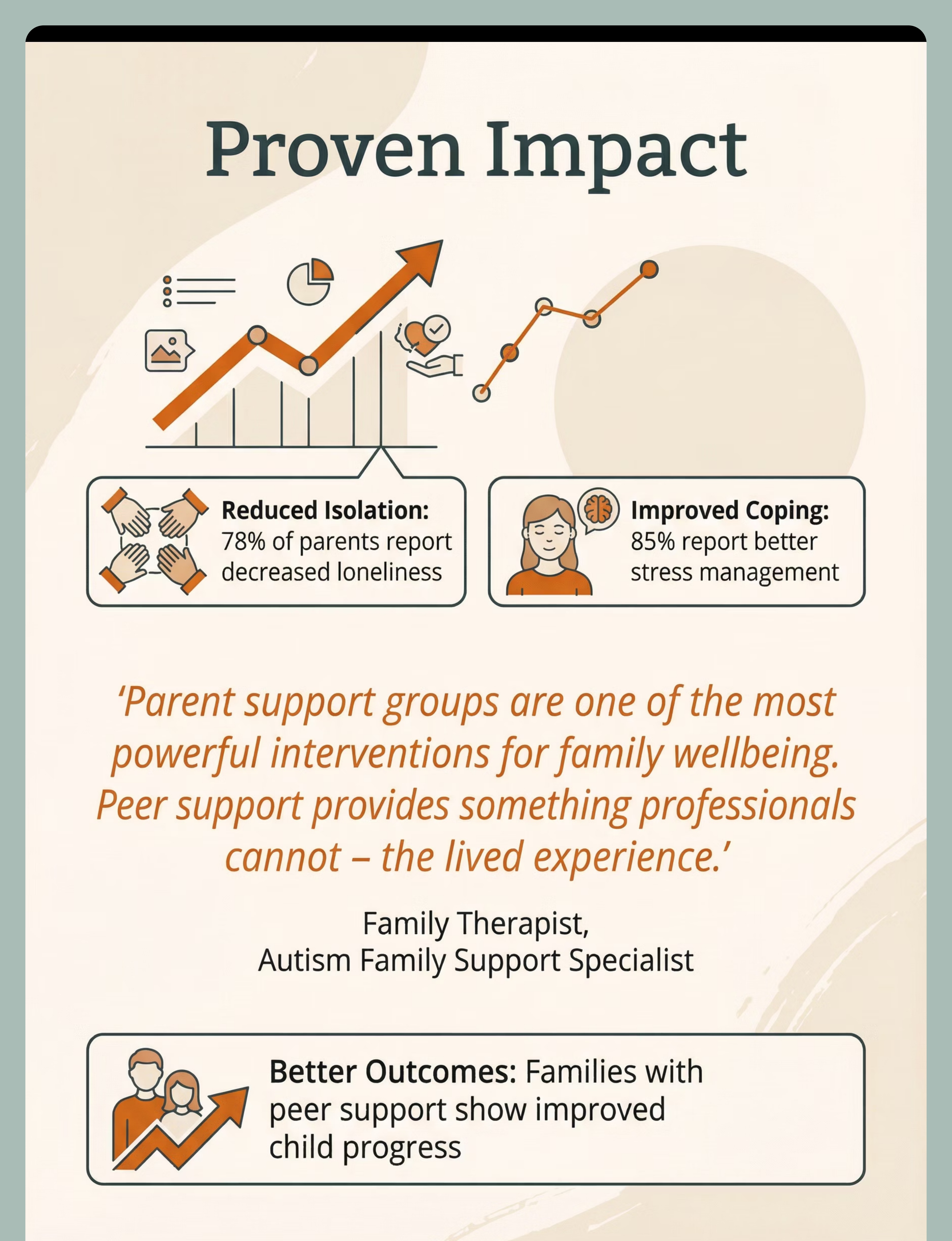
"Parent support groups are one of the most powerful interventions for family wellbeing. When parents connect with others who truly understand their experience, isolation decreases and resilience increases. Peer support provides something professionals cannot—the lived experience of this journey."
— Family Therapist, Autism Family Support Specialist
Community Recommended
Strong Evidence
Rank #1 in Category
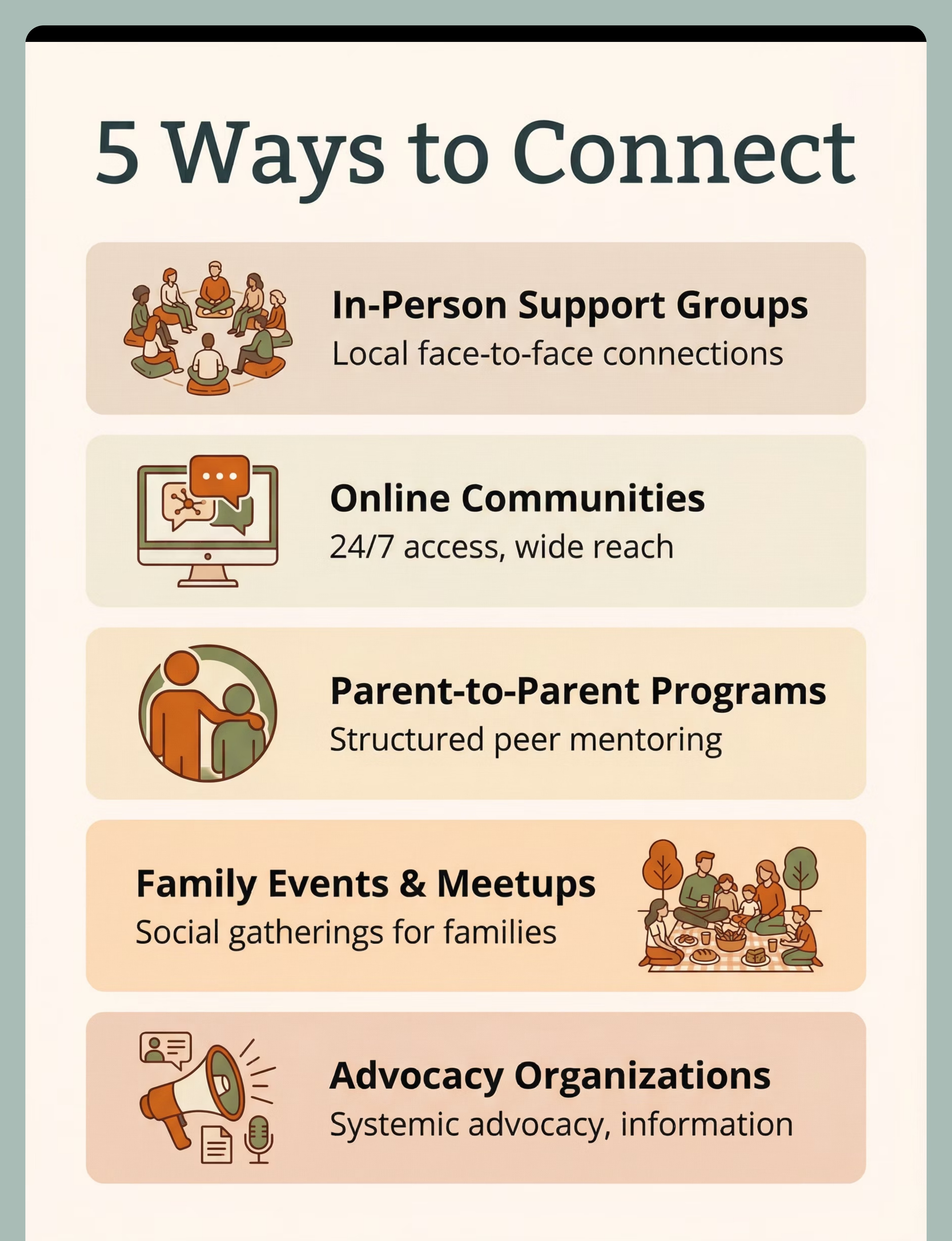
Choose Your Option (5 Variants)
Parent support comes in many formats. Choose what fits your schedule, comfort level, and specific needs—or combine several for comprehensive support.
In-Person Support Groups
Best for: Local connections, deep relationships
Online Support Communities
Best for: Flexibility, 24/7 access, wide reach
Parent-to-Parent Programs
Best for: New diagnosis support, guidance
Family Events / Meetups
Best for: Family inclusion, child social opportunities
Advocacy Organizations
Best for: Systemic advocacy, comprehensive information
In-Person Support Groups: Local face-to-face groups that meet regularly in community spaces, clinics, or schools. Build lasting friendships and get hands-on support.
Settings: Community, Clinic, School
Portability: N/A (attend in person)
Investment: ₹0–500
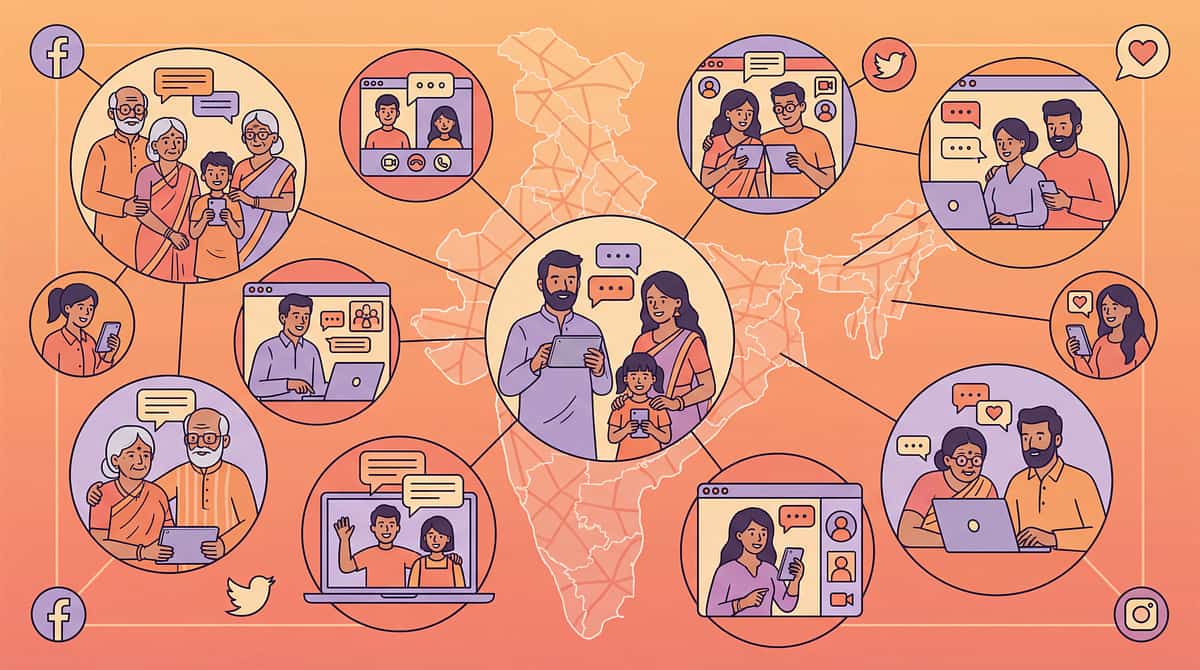
Online Support Communities: Digital parent groups via Facebook, WhatsApp, forums, or Discord. Connect anytime, from anywhere, with parents across India and beyond.
Settings: Online
Portability: Very High
Investment: ₹0 (Free)
Parent-to-Parent Programs: Structured peer mentoring where experienced parents are matched with newly diagnosed families for one-on-one guidance and support.
Settings: Various
Portability: Variable
Investment: ₹0 (Free)
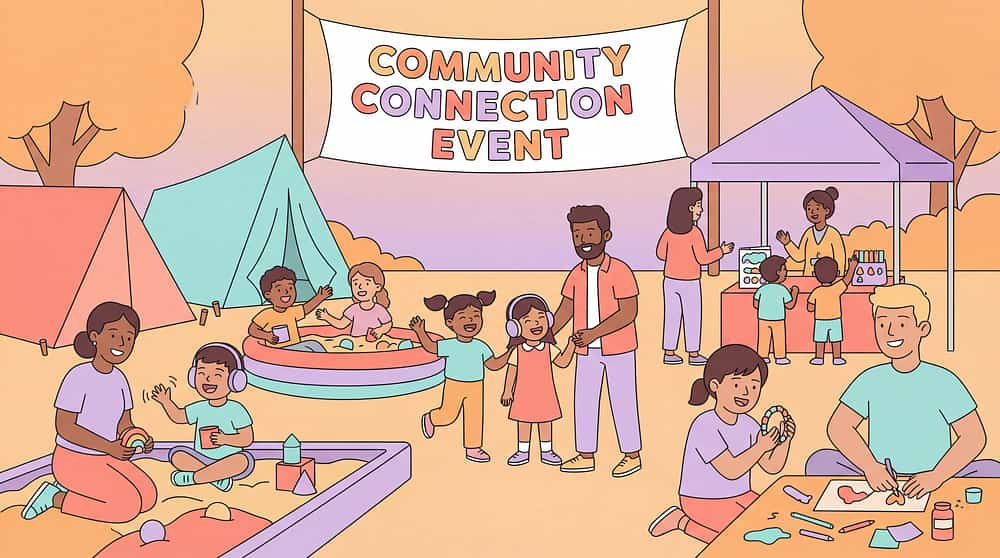
Family Events / Meetups: Social gatherings designed for autism families. Kids play together while parents connect—ending social isolation for the whole family.
Ages: All family members
Settings: Community
Portability: N/A (attend events)
Investment: ₹0–1,000
Advocacy Organizations: Autism and disability advocacy groups working on policy, awareness, and rights. Membership often includes support groups, events, and resources.
Settings: Community, Online
Portability: Variable
Investment: ₹0–2,000

How to choose: Start with free online communities for immediate connection. Add in-person groups for deeper relationships. Consider advocacy organizations for comprehensive support and systemic change.
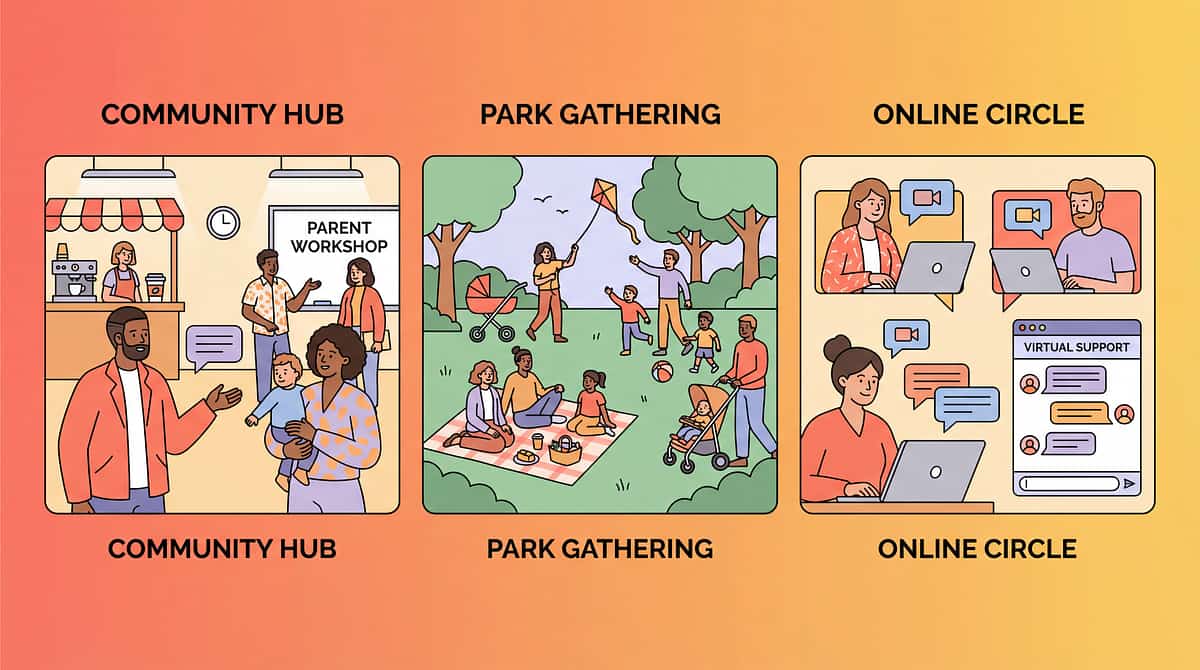
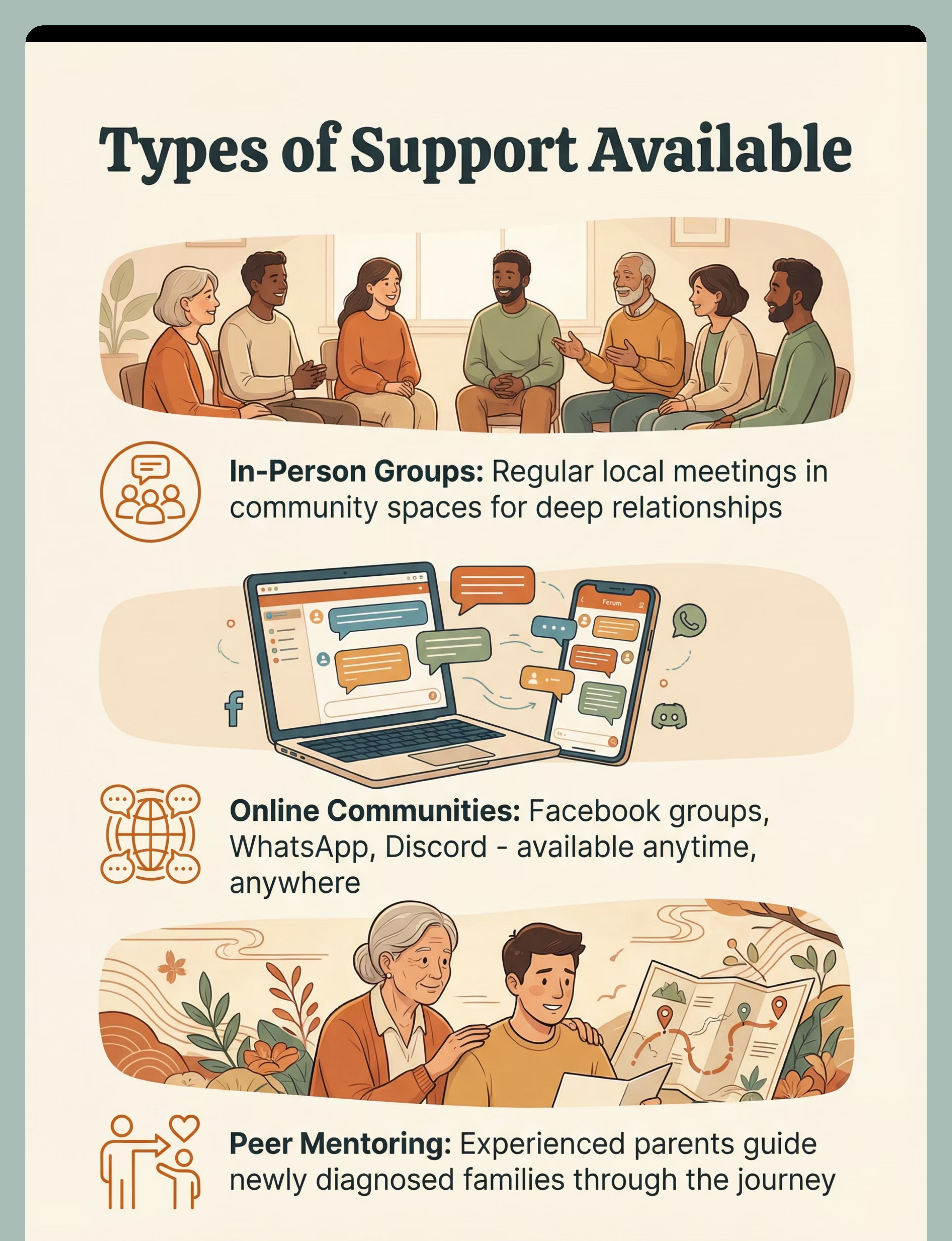
Support Group Types
In-Person
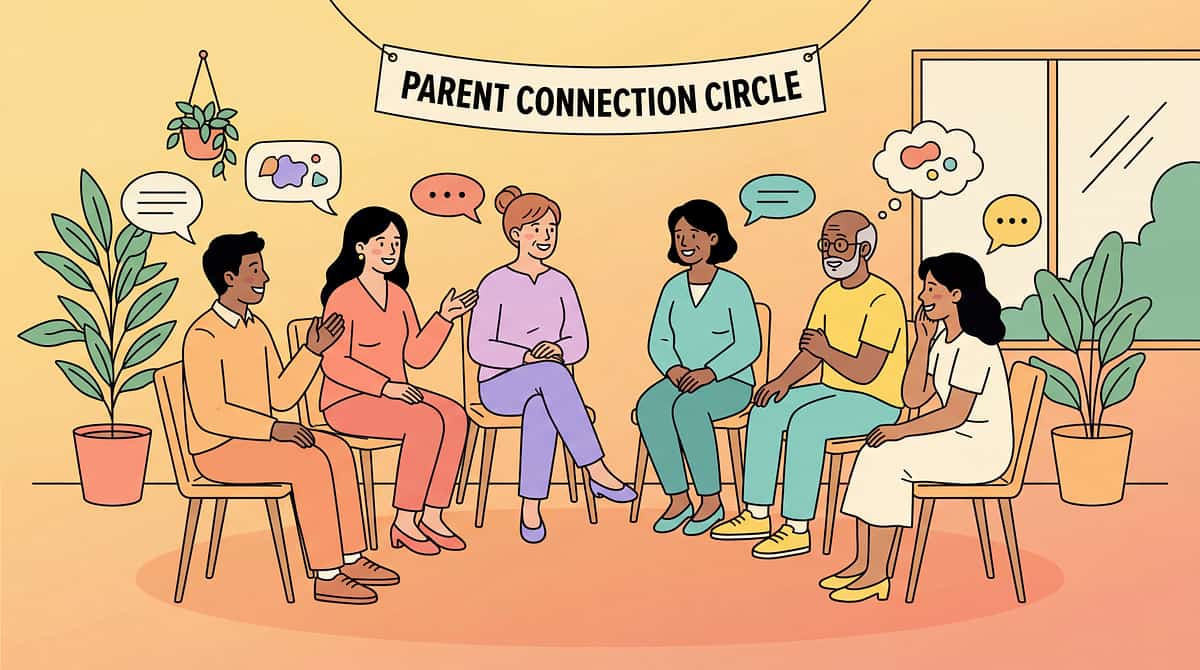
Local groups meeting regularly in community spaces. Deep, lasting relationships form through face-to-face connection and shared local resources.
Online
Facebook groups, forums, WhatsApp groups, Discord communities. Accessible 24/7 from anywhere, with instant connection to parents across wide geographic areas.
Mentoring
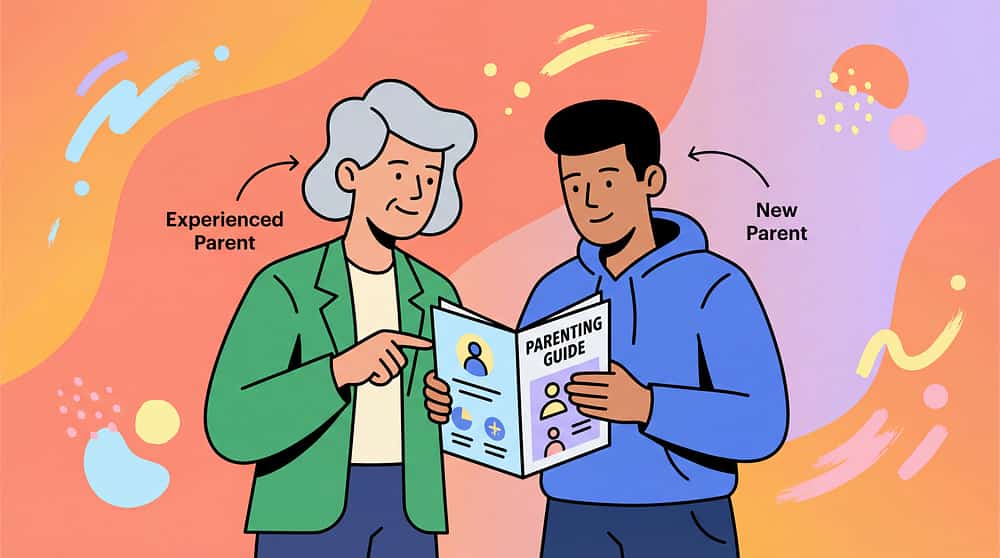
Experienced parent matched with newly diagnosed family for one-on-one guidance. Personalized support from someone who's been through it.
Events
Family-friendly gatherings and autism-friendly activities. Social connection for the whole family, not just parents—kids make friends too.
Advocacy
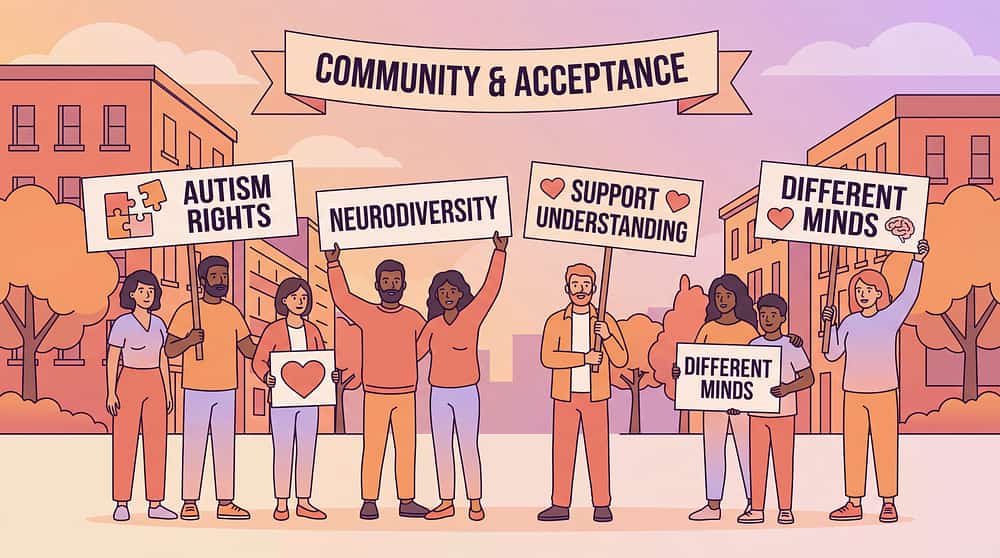
Organizations working on policy, awareness, and rights. Combines support with systemic change efforts for the broader autism community.
Key Features: All formats are peer-based, non-judgmental, and provide both practical and emotional support in accessible ways.
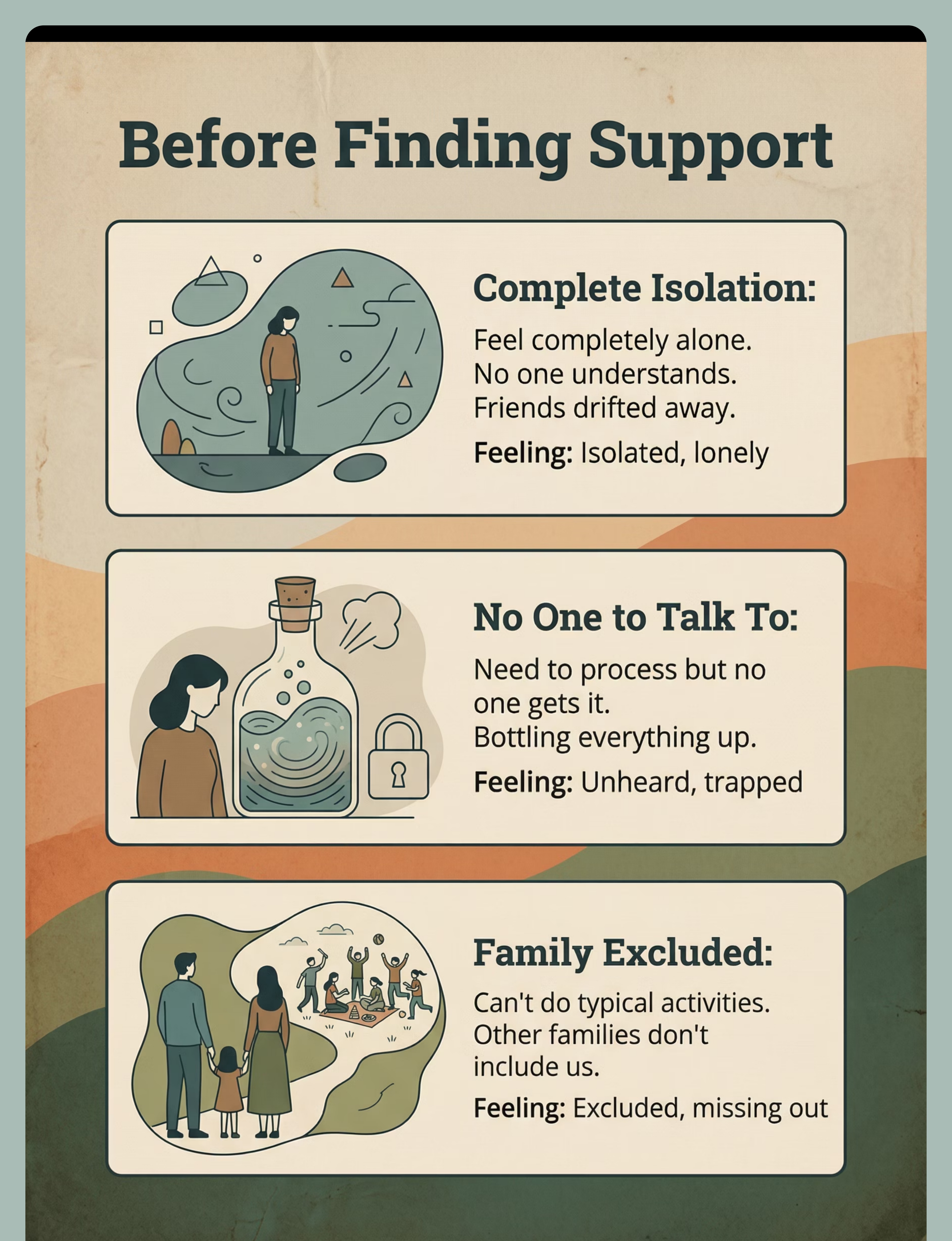
The Struggle (Before)
Complete Isolation
Situation: Feel completely alone. No one understands. Friends drifted away. Family doesn't get it. Isolated and lonely.
Experience: Every day feels like carrying this burden alone. No one to share victories or struggles with who truly understands.
Emotion: Isolated, lonely
No One to Talk To
Situation: Need to process experiences. No one who gets it. Burden on spouse. Therapist helps but not same as peer. Bottling up.
Experience: Holding everything inside. Feeling unheard. Desperate for someone who truly understands what this is like.
Emotion: Unheard, bottled up
Family Excluded from Activities
Situation: Can't do typical family activities. Other families don't include us. Child's needs make outings hard. Family misses community.
Experience: Watching other families enjoy activities your family can't access. Feeling excluded from community life.
Emotion: Excluded, missing out
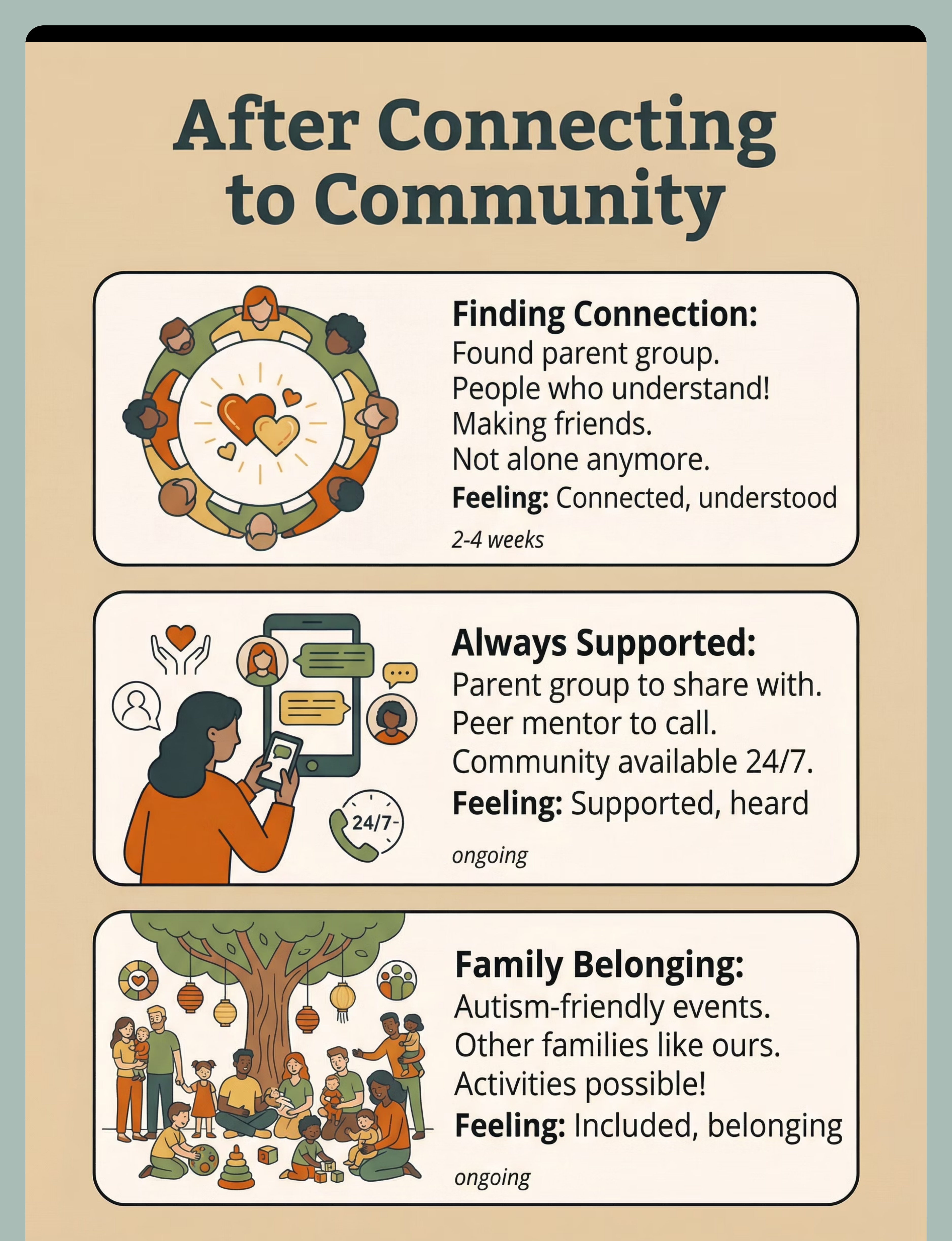
The Breakthrough (After)
Complete Isolation → Connection
Situation: Found parent group. Finally people who understand! Sharing experiences. Making friends. Not alone anymore. Connected.
Experience: Walking into that first meeting and realizing others GET IT. Building friendships with people who truly understand.
Emotion: Connected, understood
Timeframe: 2-4 weeks
No One to Talk To → Supported
Situation: Parent group to share with. Peer mentor to call. Online community available 24/7. Supported. Heard.
Experience: Having people to text at 2 AM when struggling. Sharing victories with those who understand why they matter.
Emotion: Supported, heard
Timeframe: 2-4 weeks
Family Excluded → Belonging
Situation: Autism-friendly family events. Other families like ours. Child has playmates. Family activities possible. Belonging.
Experience: Attending events where your family fits in. Children playing together. Parents connecting. Community at last.
Emotion: Included, belonging
Timeframe: 4-8 weeks
What to Expect (Realistic Timelines)
Find support group
Research options online, ask therapists for recommendations, explore both in-person and online communities.
1-2 weeks
Attend first meeting or join online
Take the brave first step. Show up to an in-person meeting or join an online group. Just listen if you're not ready to share.
2-4 weeks
Connections forming
Begin to recognize familiar faces or names. Start feeling more comfortable. Exchange contact info with parents you connect with.
4-8 weeks
Regular participation
Become an active member. Attend meetings regularly or engage online consistently. The group becomes part of your support system.
Ongoing
Giving and receiving support
Not just receiving help, but offering it. Share your experience with newer parents. The reciprocal support deepens connection.
Ongoing
Is This Right for Me? (2-Minute Check)
Do you feel isolated in your parenting experience?
If yes, this indicates: Peer support highly recommended
Isolation is one of the most common and painful experiences for autism parents. Support groups directly address this need.
Do you have other autism parents you can talk to?
If yes: Good—continue those connections
If no: Support group recommended
Having even one parent who understands makes a significant difference in coping and wellbeing.
Do you feel others understand your experience?
If yes: Good support system in place
If no: Peer connections may help
When typical parenting advice doesn't apply and friends don't get it, peers who share your experience become invaluable.
Are you connected to local autism community?
If yes: Good—maintain those connections
If no: Community connection recommended
Local community provides not just emotional support but practical resources, recommendations, and advocacy strength.

3+ "yes" answers to needing support = strong fit. Even one "yes" suggests peer support could help. It's never too early or too late to connect.
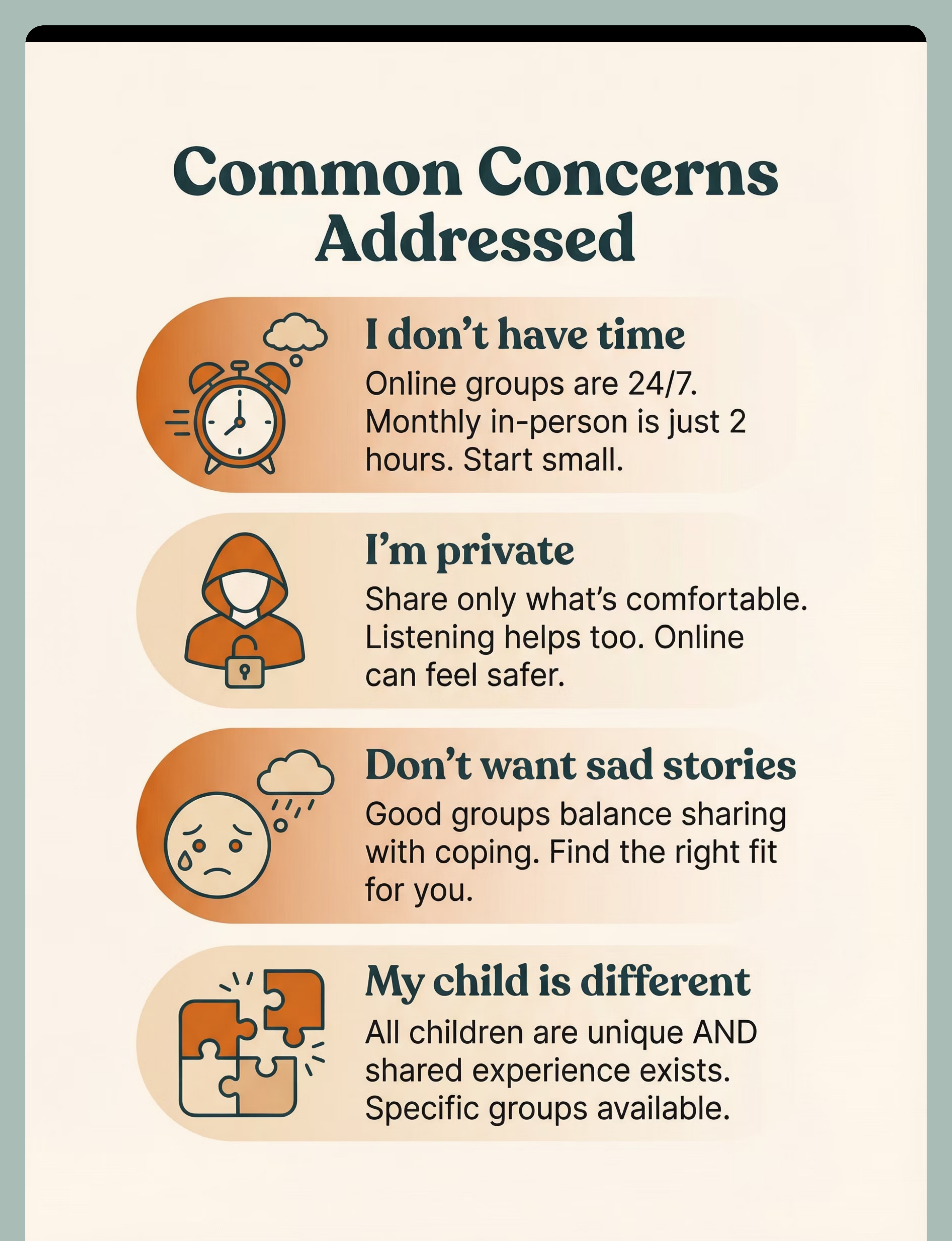
Common Questions (Honest Answers)
Question
Answer
Q: I don't have time for support groups
A: Online groups are available 24/7—engage when it fits your schedule. In-person groups typically meet monthly for 2 hours. This is an investment in your wellbeing that helps you better support your child.

Try this: Start with online 24/7 access; monthly in-person is just 2 hours; start small and see how it helps.
Q: I'm a private person
A: Share only what you're comfortable with. Many people find listening helps too. Introverts often benefit from support groups. Online communities can feel safer to start with less social pressure.

Try this: Share what feels comfortable; listening is valuable; consider starting with online groups for less intensity.
Q: I don't want to hear sad stories
A: Good groups maintain balance between acknowledging challenges and focusing on coping and solutions. Some groups are more positive than others. Find the right fit for your needs.

Try this: Look for balanced groups; focus on solution-oriented communities; try different groups to find your fit.
Q: My child's needs are different
A: All children are unique AND shared experience exists across differences. Understanding develops through empathy. Specific groups exist for specific needs (age ranges, diagnoses, challenges).

Try this: Recognize shared experience despite differences; look for specific groups if needed; empathy bridges uniqueness.
Usage Guide
When to Use
From diagnosis—connect early to reduce isolation from the start
Ongoing—regular participation provides sustained support
During challenges—intensify connection when facing difficult periods
For advocacy—collective voice creates systemic change
For social connection—combat isolation and build friendships
When NOT to Use
If group is harmful or negative—leave groups that worsen your wellbeing
If overwhelming currently—take breaks when needed, return when ready
When boundaries needed—protect your energy and emotional capacity
Settings & Duration
Settings: Community spaces, Online platforms, Clinics, Schools, Homes
Community
Online
Clinics
Schools
Homes
Duration: Ongoing participation provides the most benefit. Many parents remain connected to support communities for years, with relationships evolving from support to lasting friendship.
Safety First
1
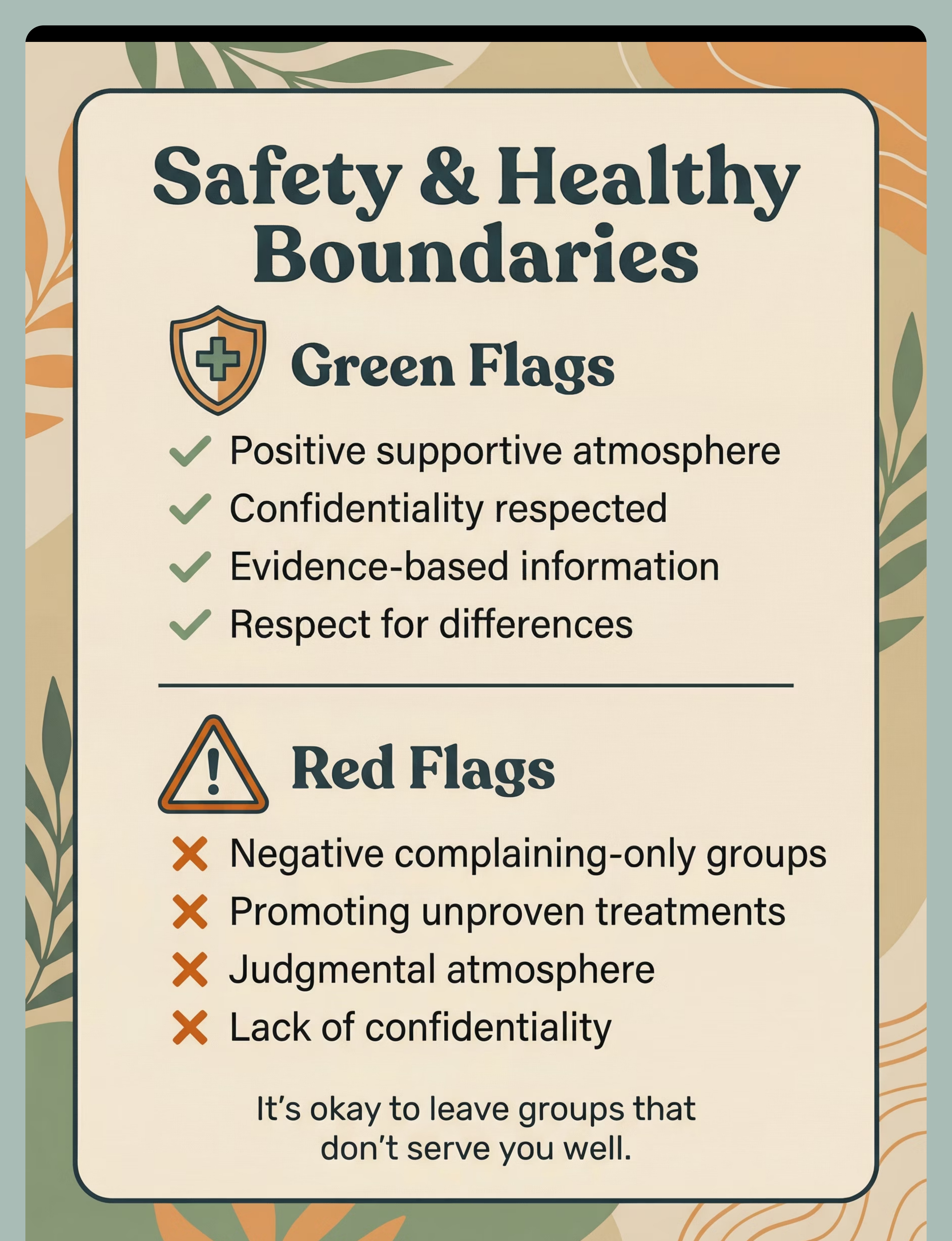
Confidentiality in groups—what's shared stays private
2
Positive, supportive atmosphere—balance of challenge and hope
3
Evidence-based information sharing—avoid unproven treatments
4
Respect for differences—all children and families valued
1
Beware of groups promoting unproven treatments or "cures"
2
Protect personal information—be cautious about details shared online
3
Leave negative groups—don't stay in harmful environments
4
Boundaries are healthy—it's okay to limit participation
Investment Guide
Support groups are remarkably affordable—most are completely free. Even advocacy organization memberships are minimal compared to the value of connection and support received.
Budget Option
Item: Online support groups + free local groups
Cost: ₹0
Note: Most support groups are free. Facebook groups, WhatsApp communities, and many in-person groups cost nothing.
Premium Option
Item: Advocacy organization membership + special events
Cost: ₹500–2,000
Brands/Organizations: Local autism organizations, national disability advocacy groups
Note: Membership often includes support groups, educational events, resources, and advocacy opportunities.
Overall Range: ₹0–2,000
Best starting point: Begin with free online communities and local groups. Add advocacy organization membership if you want comprehensive resources and systemic change involvement.
Where to Find Groups in India
Availability: Widely Available across India—online communities accessible everywhere; in-person groups in most cities
Platform
Search For
Price
Facebook
"autism parents India"
Free
WhatsApp
"autism parent groups"
Free
Local hospitals/clinics
"parent support group"
Free
Schools
"special needs parent group"
Free
Organizations
"autism society India"
Free-₹500
Buying Tips
Ask Therapists
Therapists and child providers often have excellent recommendations for local support groups—they know the community and can suggest a good fit.
Search Online
Utilize platforms like Facebook and WhatsApp to search for "autism parent groups" in your specific city or region for immediate online connection.
Check Clinics/Schools
Many hospitals, clinics, and schools dedicated to special needs children host parent groups or can refer you to one. Don't hesitate to ask your child's providers.
Start Small
Begin with one or two groups to gauge their dynamics and relevance. Expand your network as you feel comfortable, avoiding overwhelm.
Mix Online & In-Person
Consider a blend of both online communities for accessibility and quick advice, and in-person groups for deeper connections and local support.
Finding Your Support Group: A Progressive Path
Initial Research
Start by identifying potential groups through online searches (Facebook, WhatsApp) and by asking professionals (therapists, doctors) for recommendations.
Observe & Assess
Join a couple of promising groups. Spend time observing the discussions, reading posts, and understanding the group's general vibe before actively participating.
Engage Actively
Once you feel comfortable, start participating by asking questions, sharing experiences, and attending any in-person meetings or events if applicable.
Build Your Network
Identify which groups provide the most value and support. Gradually expand your network by connecting with individuals and exploring additional resources as needed.
Red Flags

  • Negative, complaining-only groups that offer no solutions or hope
  • Groups promoting unproven treatments or "miracle cures"
  • Exclusive or judgmental atmosphere where differences aren't respected
  • Lack of confidentiality or gossip about members
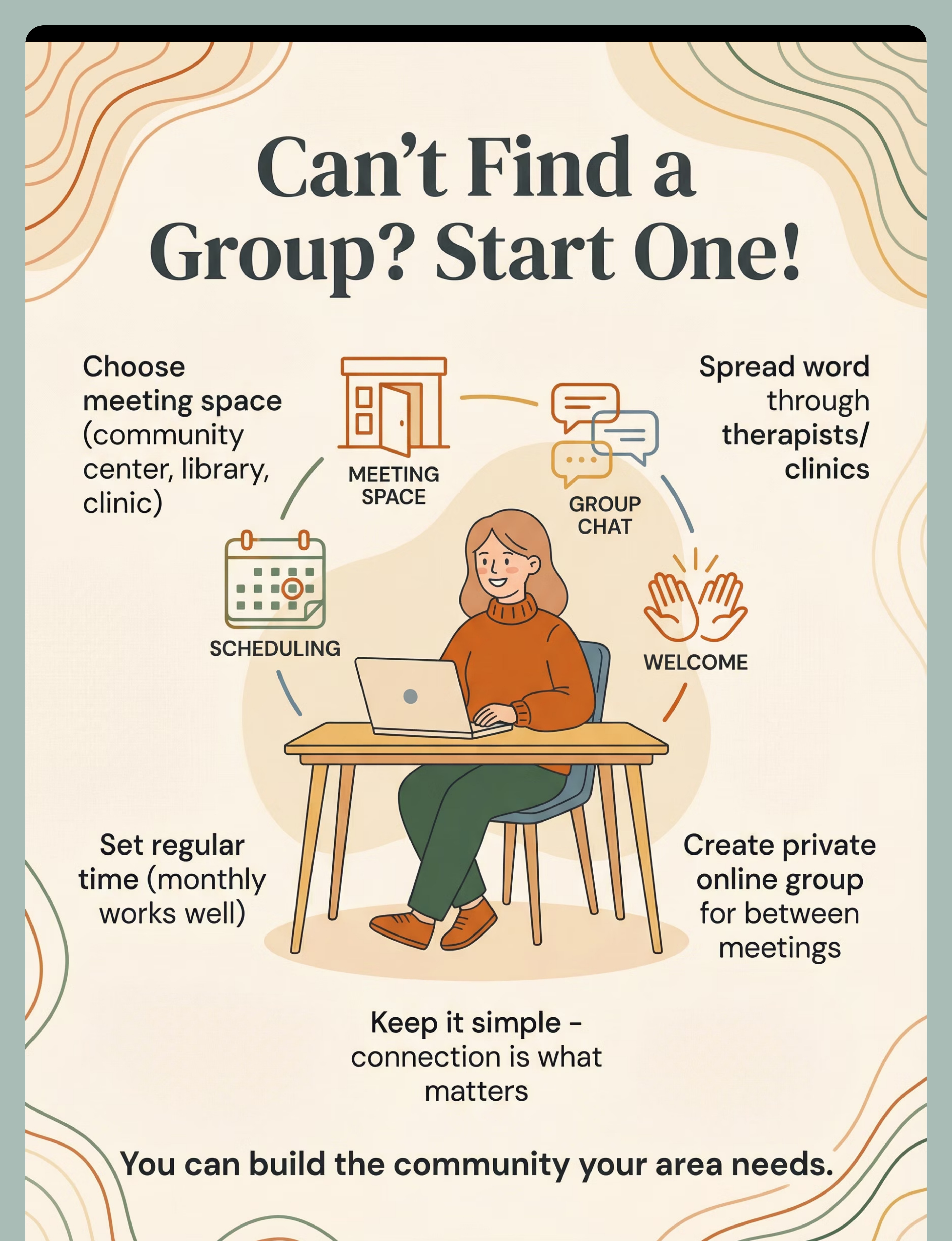
Starting Your Own Group (DIY Option)
Feasibility: Medium
Cost Savings: 100% (most groups are free anyway)
Time Investment: 2-4 hours to find existing groups; ongoing participation; more time if starting new group
Materials Needed
  • Internet connection or phone
  • Transportation (for in-person groups)
  • Meeting space (if starting new group)
When to DIY
  • Starting a new local group in underserved area
  • Organizing family events for autism families
  • Creating online community for specific need
When to Join Existing
  • Established groups already exist
  • Want professional-facilitated support
  • Seeking advocacy organization membership
Tradeoffs
Finding existing groups is easier and provides immediate connection. Starting a new group builds community where none existed but requires more energy and commitment.
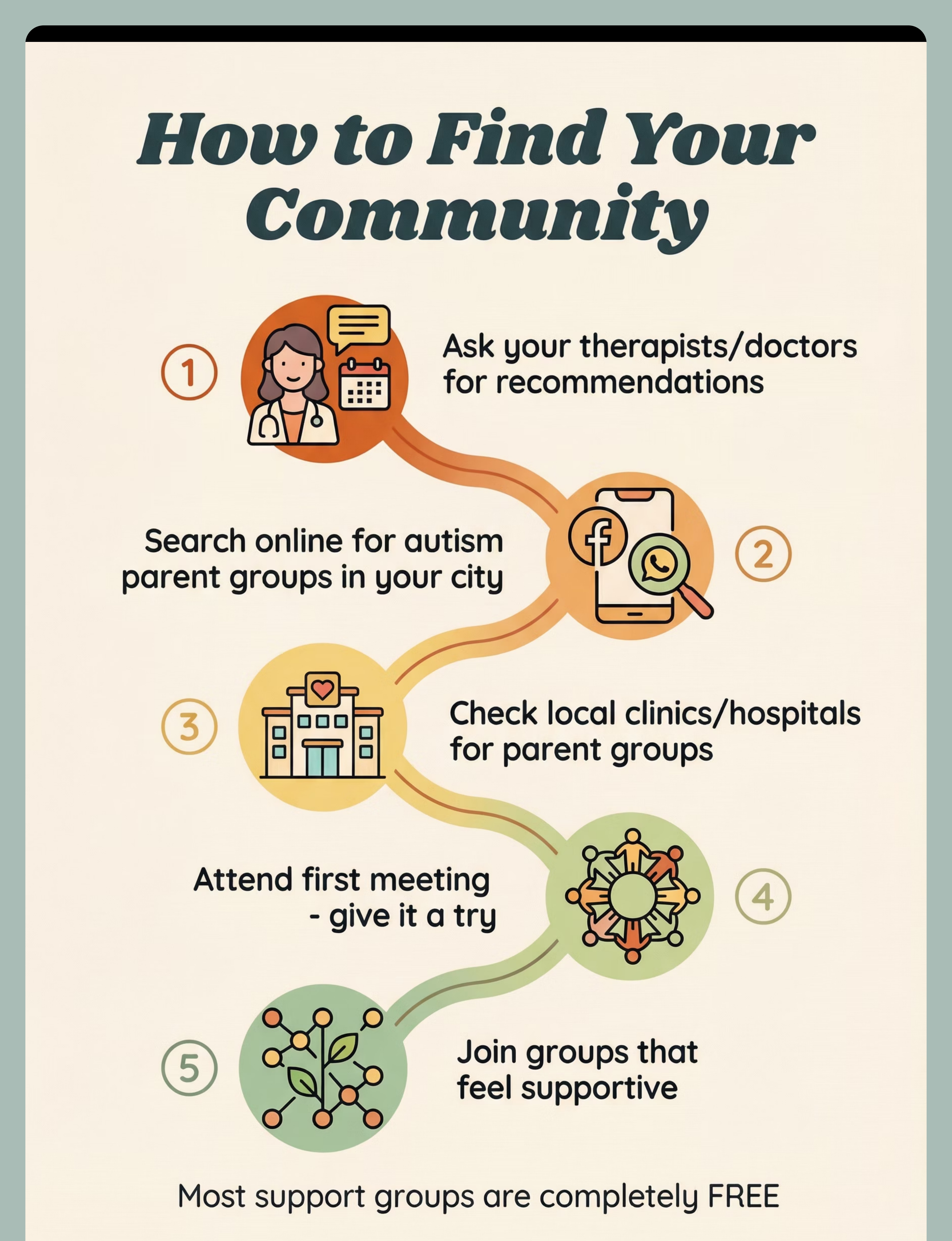
How to Find or Start a Group (7 Steps)
Ask therapists/doctors for recommendations
Healthcare providers know the local autism community and can connect you to existing groups.
Search Facebook/WhatsApp for existing groups
Online communities are immediate—search for autism parent groups in your city or India-wide.
Check local clinic/hospital for groups
Many therapy centers and hospitals host regular parent support meetings.
If none exist, consider starting one
Post in local parenting groups, contact schools, reach out to therapy centers about hosting.
Join online groups for immediate connection
Don't wait for in-person—connect online right away while building local community.
Attend first meeting—give it a try
Show up. Listen. You don't have to share right away. See if it feels right.
Continue with groups that fit
Not every group will match your needs. Keep trying until you find your people.

Preview of parent support groups networks Therapy Material

Below is a visual preview of parent support groups networks therapy material. The pages shown help educators, therapists, and caregivers understand the structure and content of the resource before use. Materials should be used under appropriate professional guidance.

Page 1
Page 2
Page 3
Page 4
Page 5
Page 6
Page 7
Page 8
Page 9
Page 10
Page 11
Page 12
Page 13
Page 14
Page 15
Page 16
Page 17
Page 18
Page 19
Page 20
Link copied!
Complete Support System
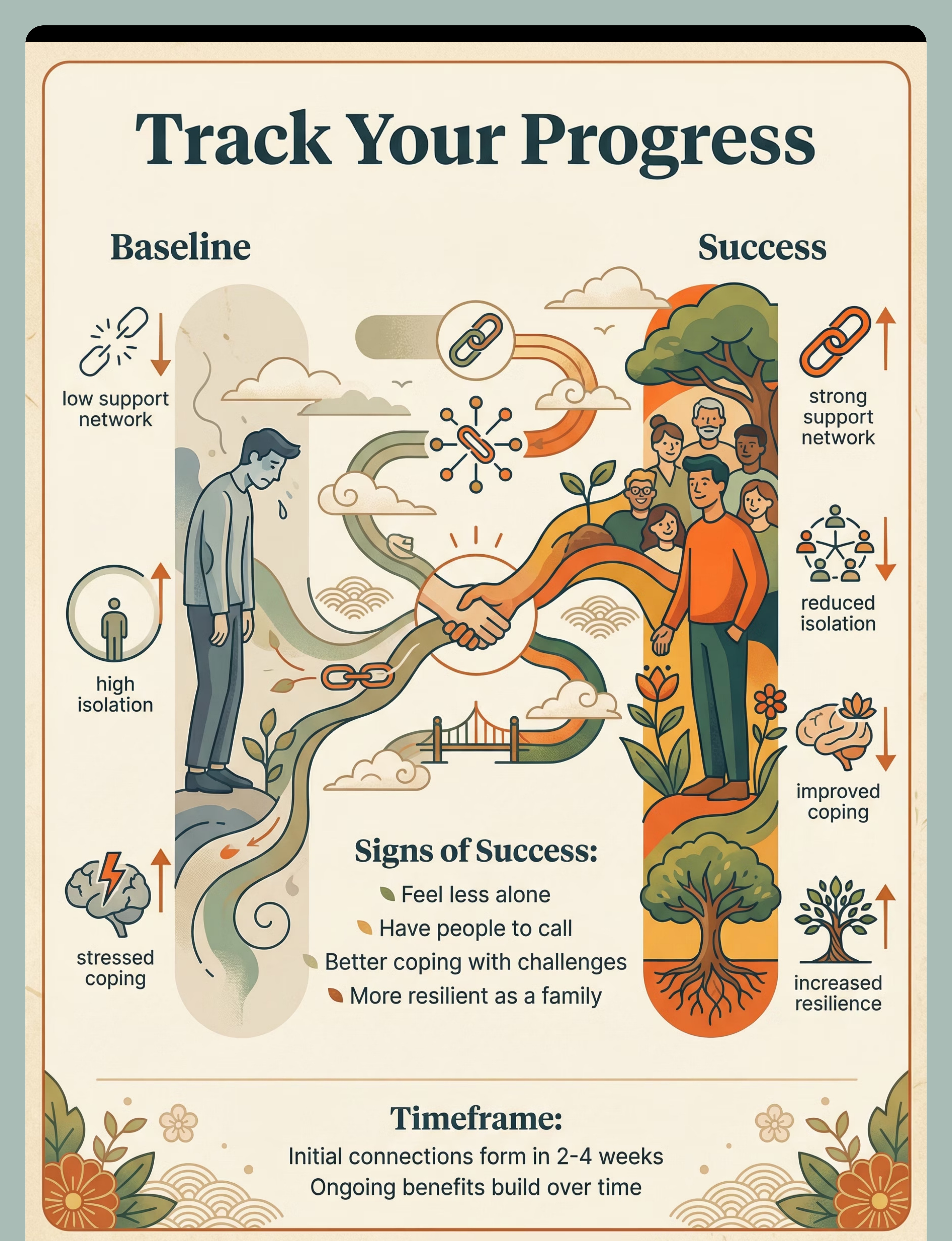
Track Your Progress
Monitoring key metrics is essential for understanding impact and guiding interventions. This involves:
  • Baseline: Current isolation, support network size, coping effectiveness, wellbeing status.
  • Goals: Decrease isolation, grow support network, improve coping, increase wellbeing.
  • Success Indicators: Feeling less alone, having people to call, better coping, increased resilience.
Complete the Kit: Integrated Tools
Enhance the support system by combining peer support with other vital resources:
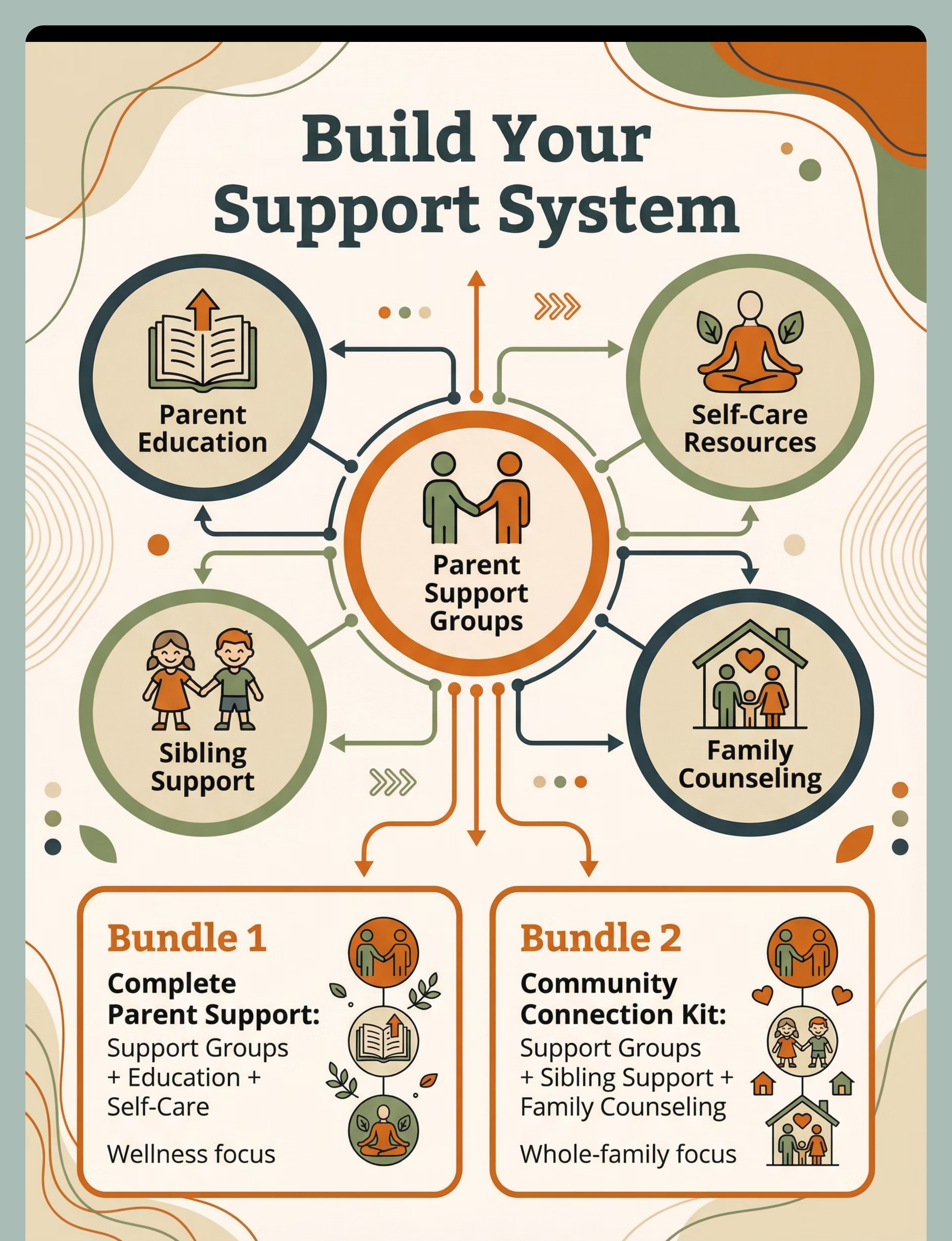
Bundles:
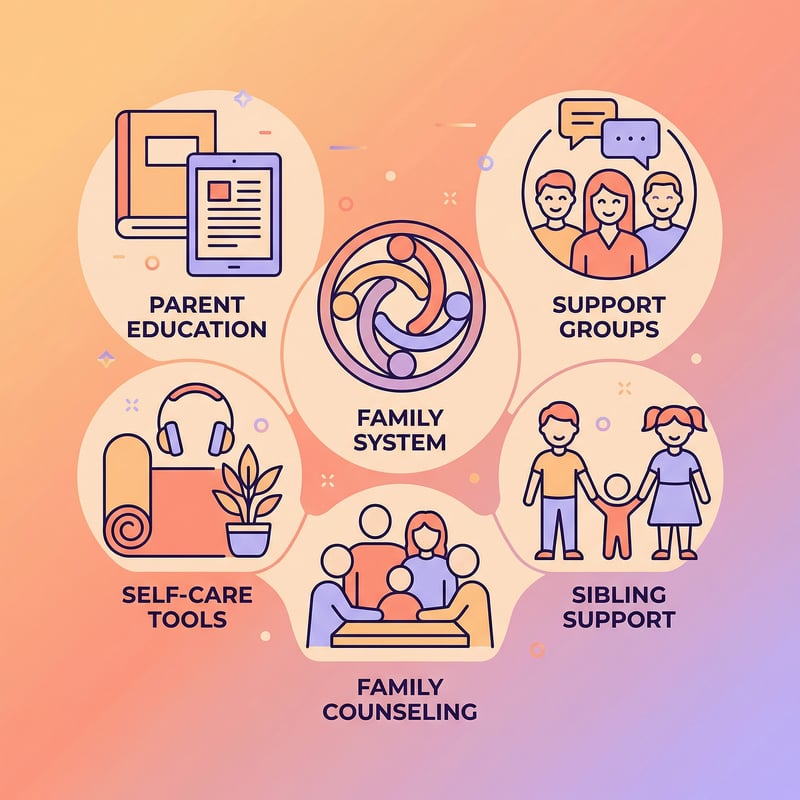
  • Complete Parent Support: Tools 20.2 + 20.1 + 20.3 — Full parent wellness with education, peer support, and self-care.
  • Community Connection Kit: Tools 20.2 + 20.4 + 20.5 — Family community integration with support groups, sibling support, and counseling.
Get Ongoing Support
Access resources and platforms designed to provide continuous assistance:
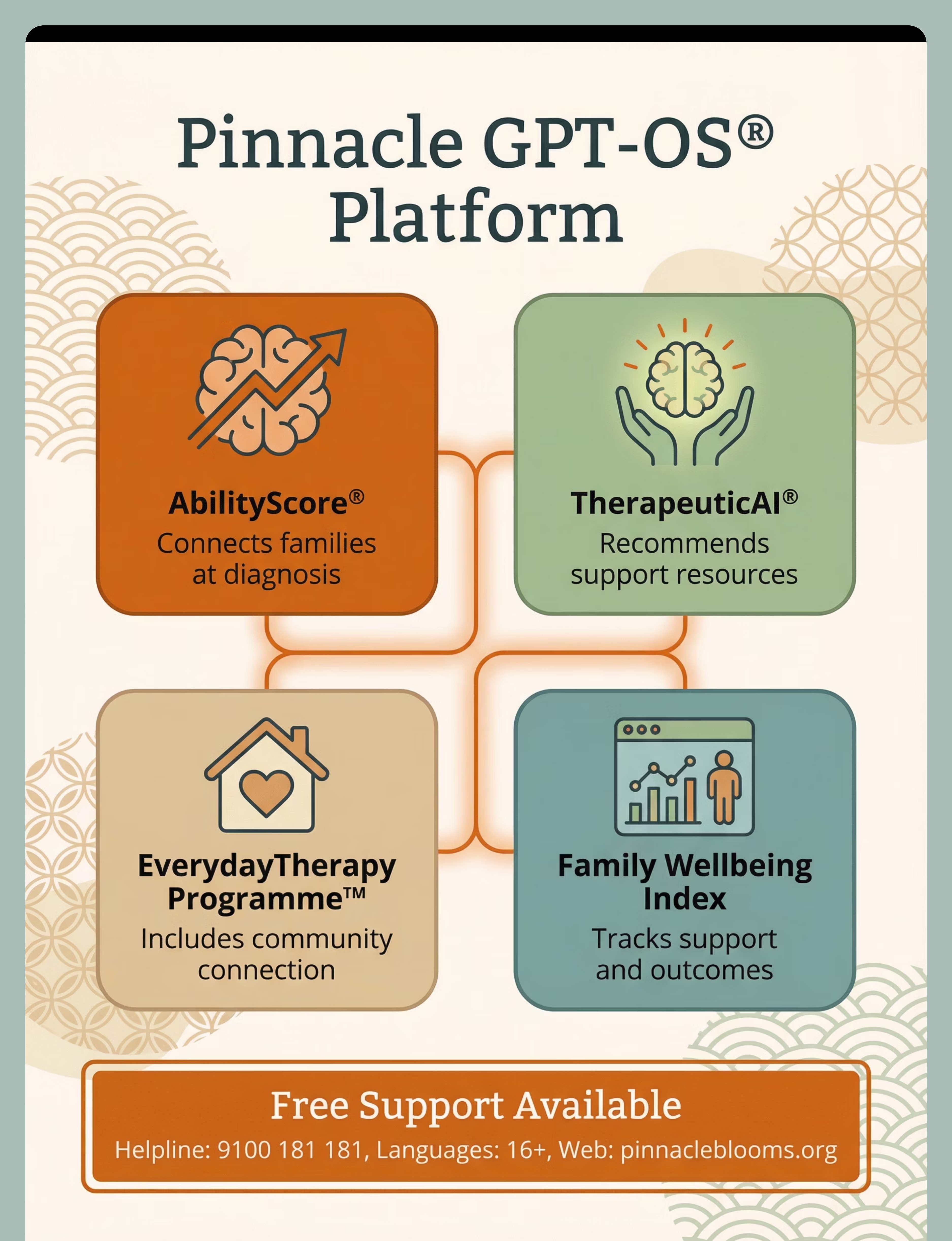
FREE National Autism Helpline
  • Phone: 9100 181 181
  • Languages: 16+ Indian languages
Platform Integration
  • AbilityScore® connects families with local support groups at diagnosis.
  • TherapeuticAI® recommends support resources based on family needs.
  • EverydayTherapyProgramme™ includes community connection as core component.
  • Family Wellbeing Index tracks support network and parent resilience.

Quick Summary
Parent support groups and networks provide peer connection through in-person groups, online communities, mentoring programs, family events, and advocacy organizations to reduce isolation and build resilience. Core Kit (Rank 1), strong evidence, essential for family wellbeing.
support group
parent network
peer support
community
isolation
resilience
core-kit
Common Searches
autism parent support group • autism parent community • autism family support • autism parent network • autism family events • autism parent Facebook group • autism advocacy organization

Disclaimer: This is educational information. Parent support groups are peer support and should complement, not replace, professional guidance. Always consult qualified occupational therapists, speech-language pathologists, or pediatricians for clinical recommendations. Individual results vary.