
















Picture Exchange Communication System (PECS)
Core Kit • Rank #1
An evidence-based AAC system that enables functional communication through picture exchange for non-verbal or minimally verbal children
SLP + SpEd
Strong Evidence
Constant Use
₹500–5,000
Augmentative and alternative communication initiation system
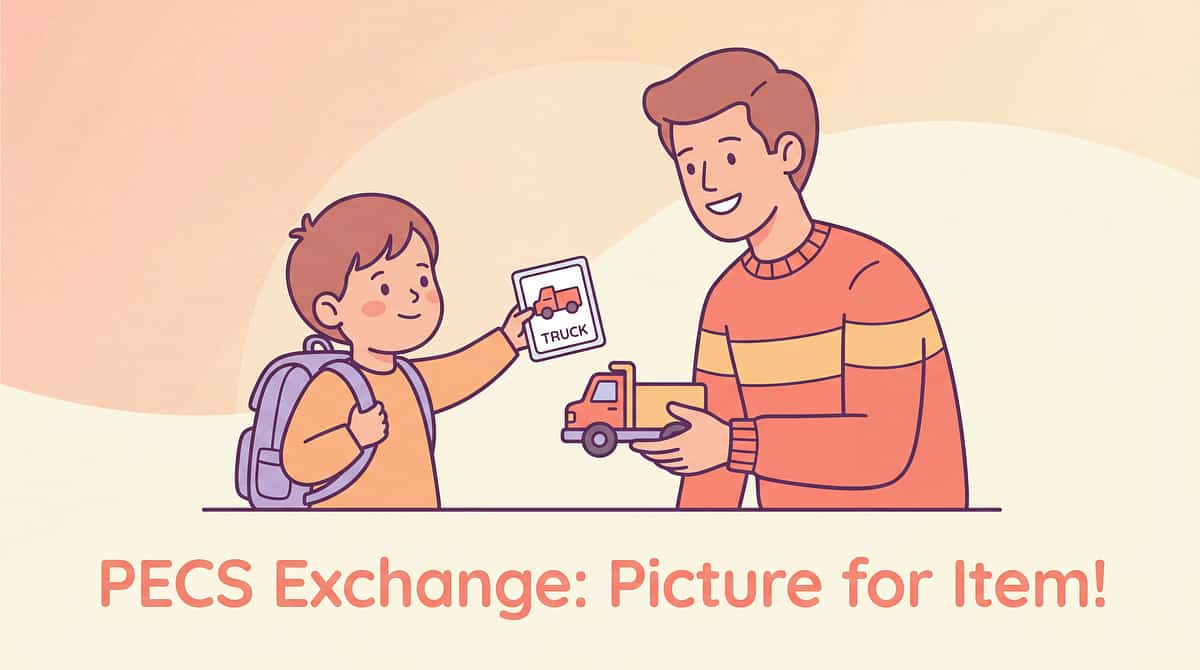
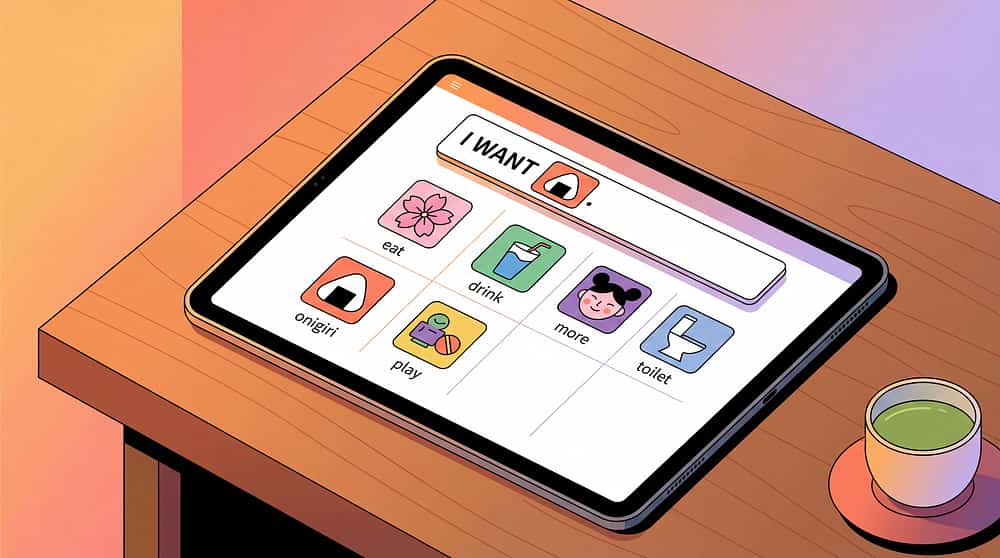
PECS transforms the lives of children who struggle to communicate their needs, wants, and thoughts. Unlike simple picture boards, PECS teaches children to initiate communication by physically exchanging pictures—building the foundation for spontaneous language development.

Who This Helps
PECS enables functional communication through picture exchange for non-verbal or minimally verbal children. This system builds communication power, teaching children that they can make things happen through intentional exchanges.
Children Aged 18 months – 9 years
PECS is based on communication need, not developmental age. It works for anyone who needs functional communication support, making it flexible for various developmental stages.
All Settings
From home to clinic, school, and community environments, PECS ensures communication is portable and available everywhere the child goes, fostering consistent communication across contexts.
Non-verbal or Minimally Verbal Children
Specifically designed as a bridge to functional communication and language development for children who struggle with verbal expression, helping them initiate communication effectively.

Does This Sound Familiar?
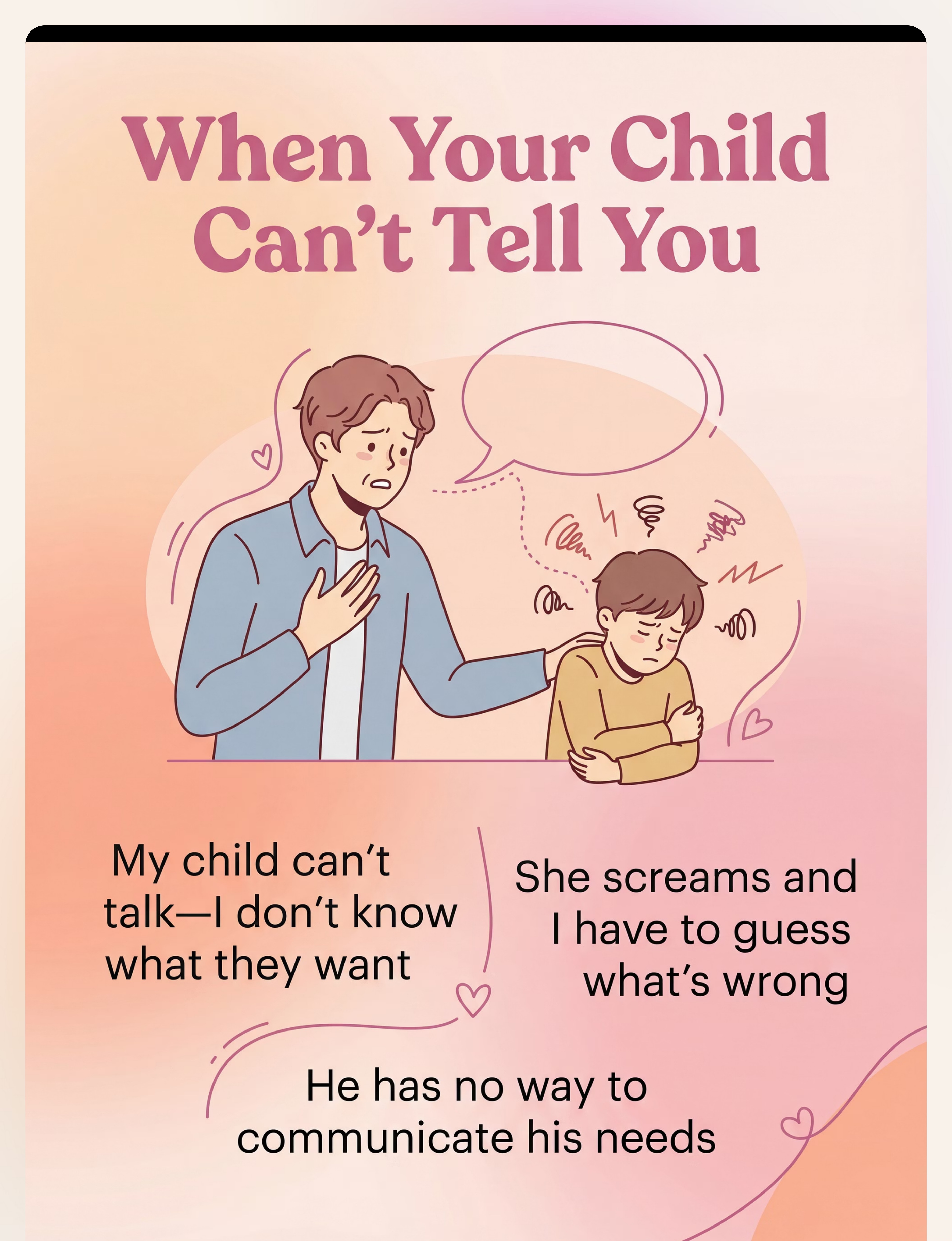
"My child can't talk—I don't know what they want"
"She screams and I have to guess what's wrong"
"He has no way to communicate his needs"
"Pointing doesn't work—she gets frustrated"
"I'm terrified PECS will prevent speech. We tried pictures but it didn't work."
You're not alone. These are common challenges faced by thousands of families every day. The frustration, the guessing, the constant worry about what your child needs—it's exhausting for both of you. Communication is a basic human need, and when it's blocked, every moment becomes harder.
The truth: Research shows PECS often increases verbal attempts. Children learn that communication has power, which motivates speech. PECS doesn't replace speech—it bridges to it.

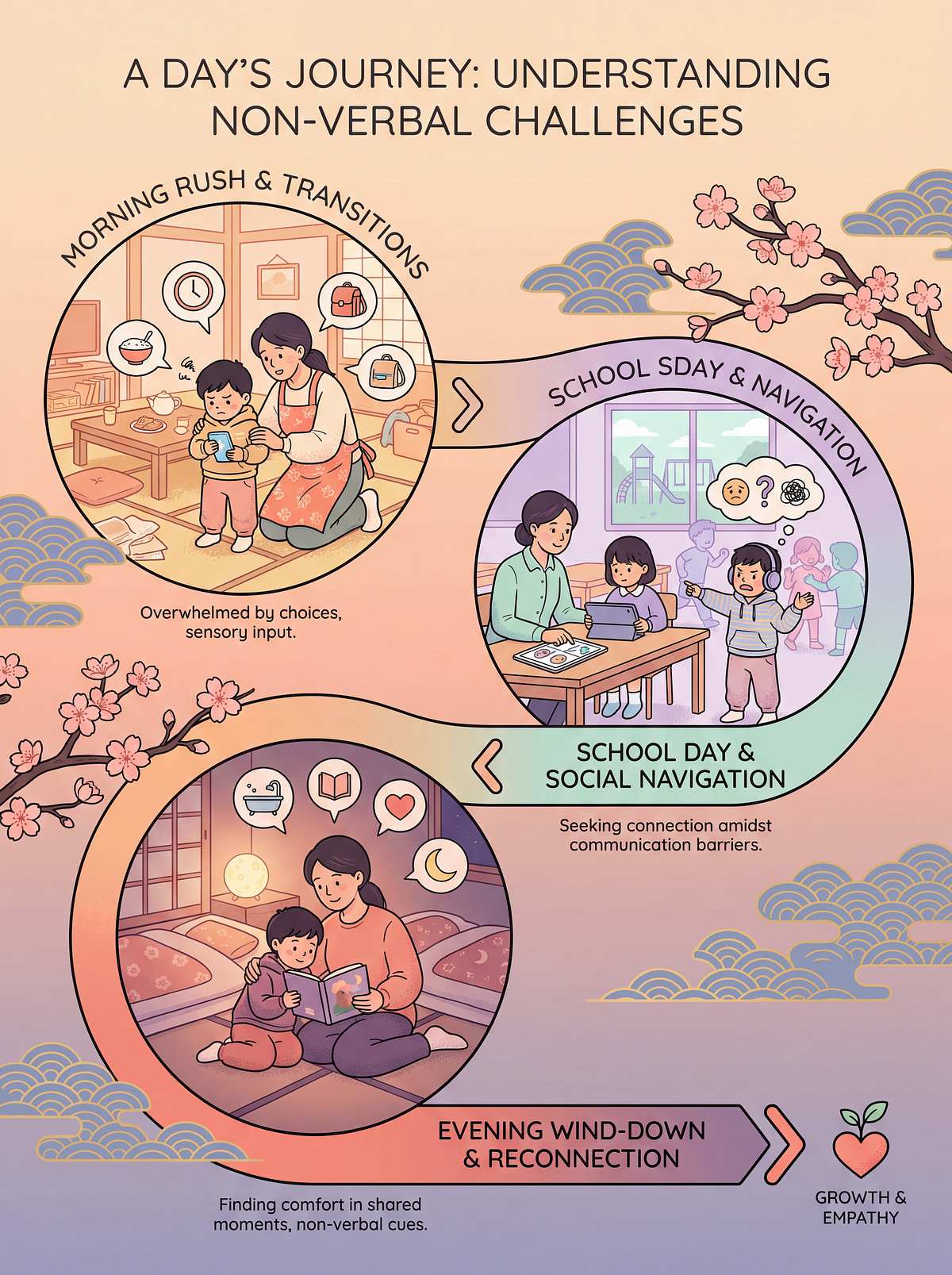
A Day Without the Right Support
Morning Routine
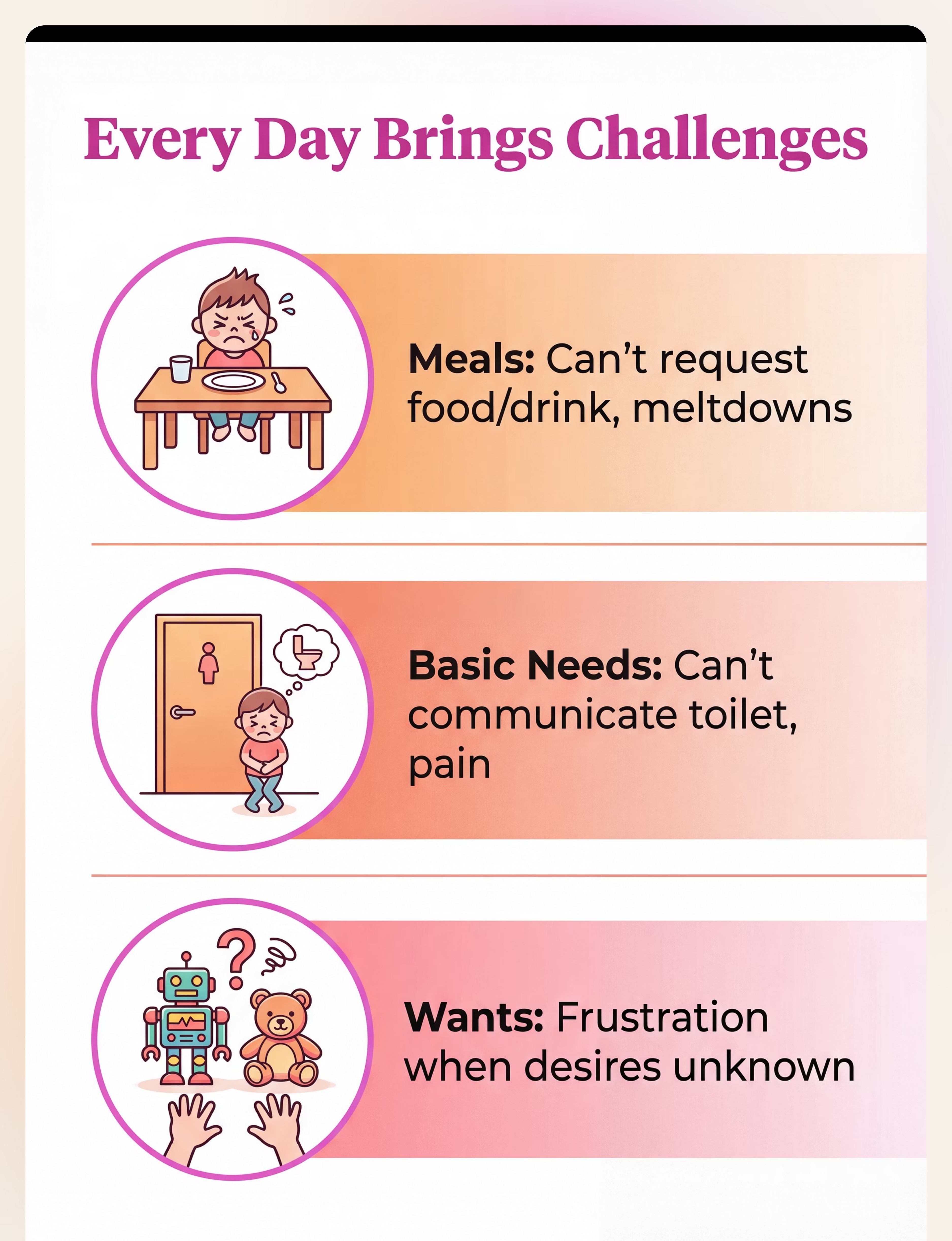
Can't request food or drink. Meltdowns before the day even begins. Parents try offering options one by one, hoping to guess right.
Transitions
Moving between activities becomes a battle. Child can't express needs or preferences. Behavior escalates as frustration builds.
School & Therapy
Can't ask for help, request materials, or participate. Labeled as having "behavior problems" when actually expressing unmet communication needs.
Evening & Bedtime
Exhausted from a day of failed communication. Everyone is drained. Simple requests become impossible puzzles.
Every moment without functional communication is an opportunity lost. These aren't "behaviors"—they're desperate attempts to be understood.

The Science Behind It
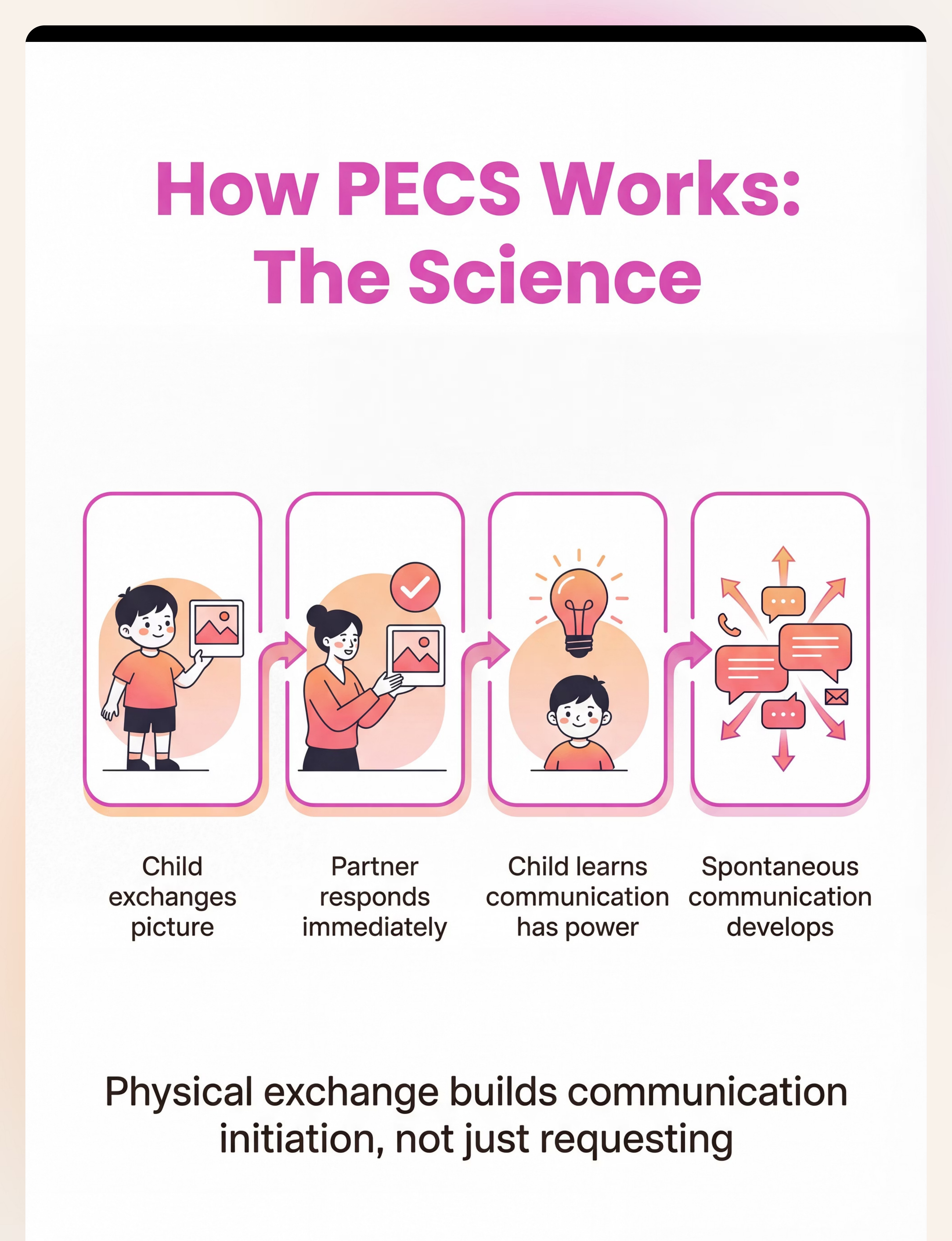
PECS works because it teaches the fundamental power of communication through a natural behavioral sequence.
Child initiates
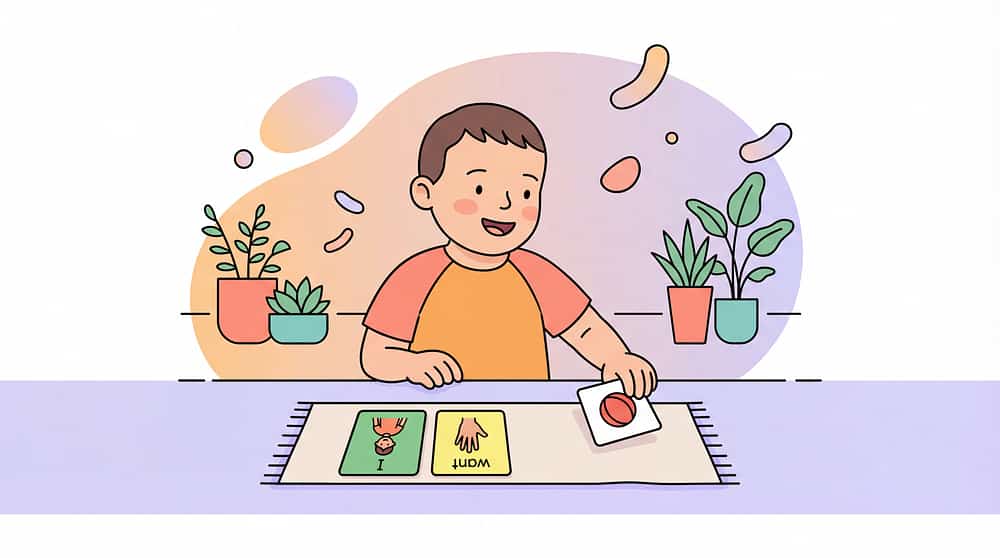
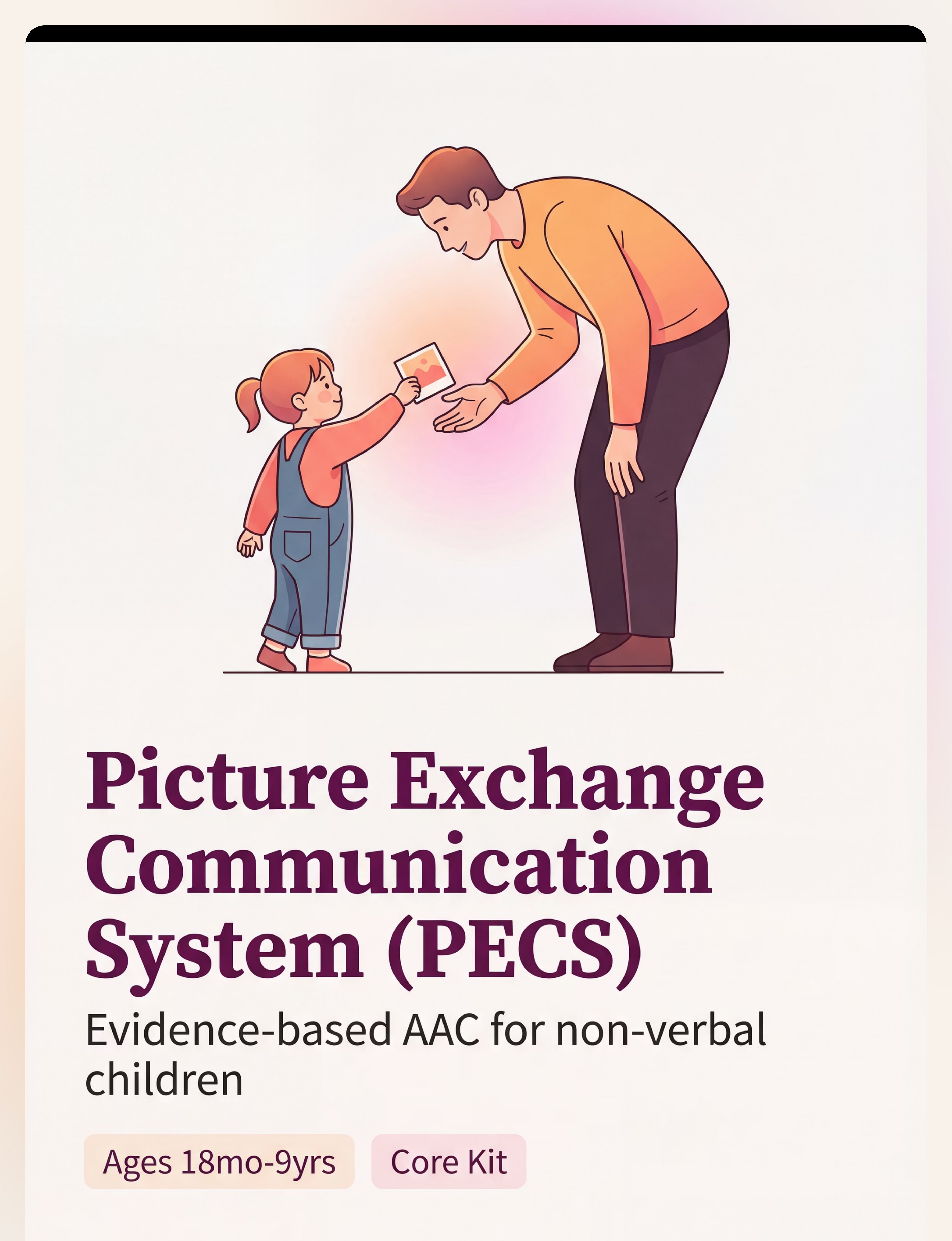
Approaches partner and physically exchanges picture
Partner responds
Immediately provides requested item or action
Learning occurs
Child understands: communication has power and makes things happen
Communication develops
Spontaneous communication emerges, building foundation for language
Target Areas:
Functional Communication
Communication Initiation
Requesting
Vocabulary Building
Sentence Formation
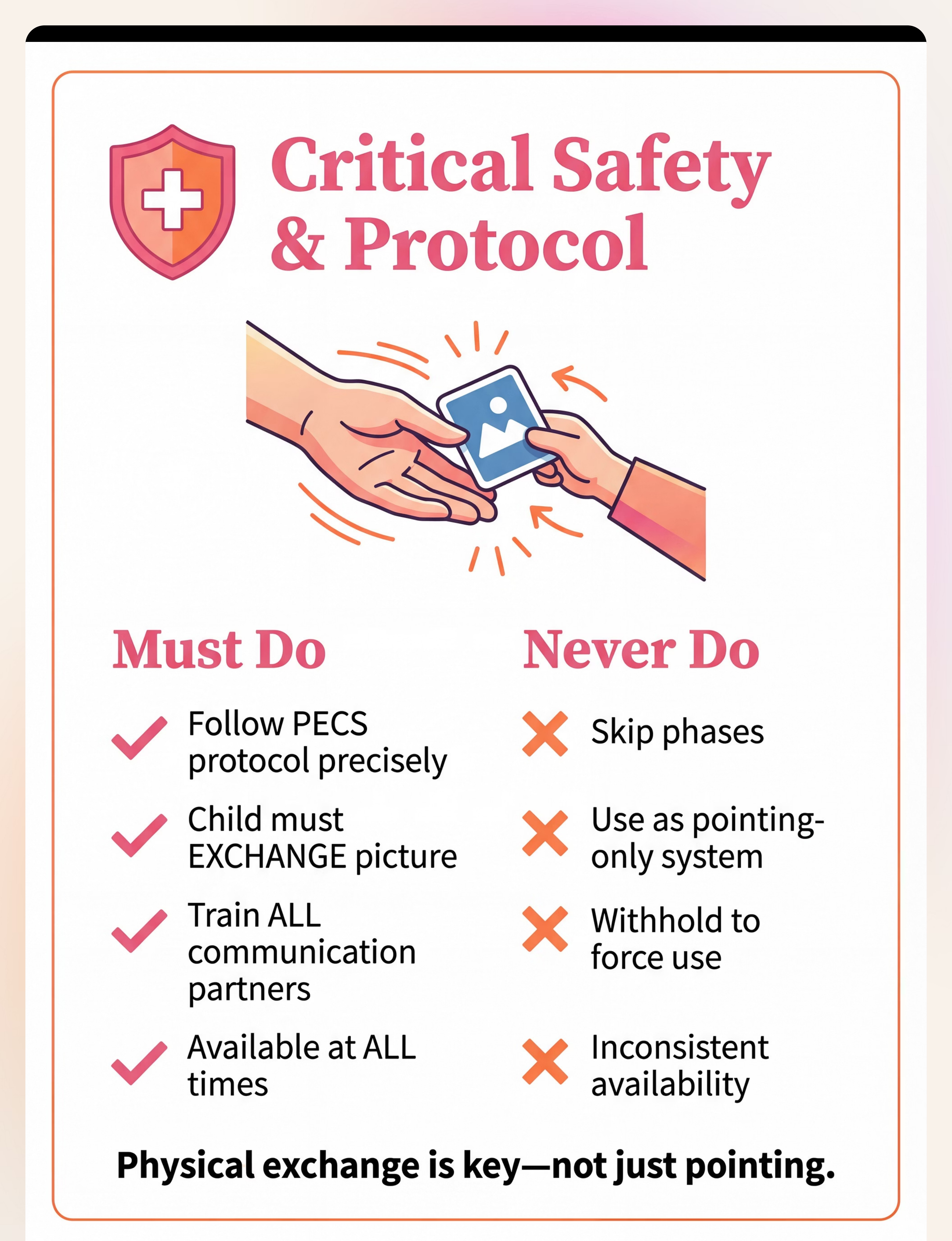
The Exchange Is Critical: PECS is NOT just using pictures or pointing at pictures. The child must physically pick up and GIVE the picture to a communication partner. This physical exchange is what teaches initiation.

How to Use It Right
Following the PECS protocol precisely is essential for success. These evidence-based best practices ensure your child develops true functional communication.
1
Follow the 6-phase protocol precisely
Each phase builds on the previous one. Don't skip ahead—let your child master each phase before progressing.
2
Start with highly motivating items
Use things your child truly loves and wants frequently. Communication must be immediately rewarding to build momentum.
3
Child must physically EXCHANGE the picture
Don't allow pointing. The physical act of giving the picture teaches initiation and builds communication power.
4
Generalize across environments and people
Practice everywhere with everyone. PECS must work at home, school, therapy, and in the community.
5
Train all communication partners
Everyone who interacts with your child needs to understand and implement PECS consistently—family, teachers, therapists, caregivers.
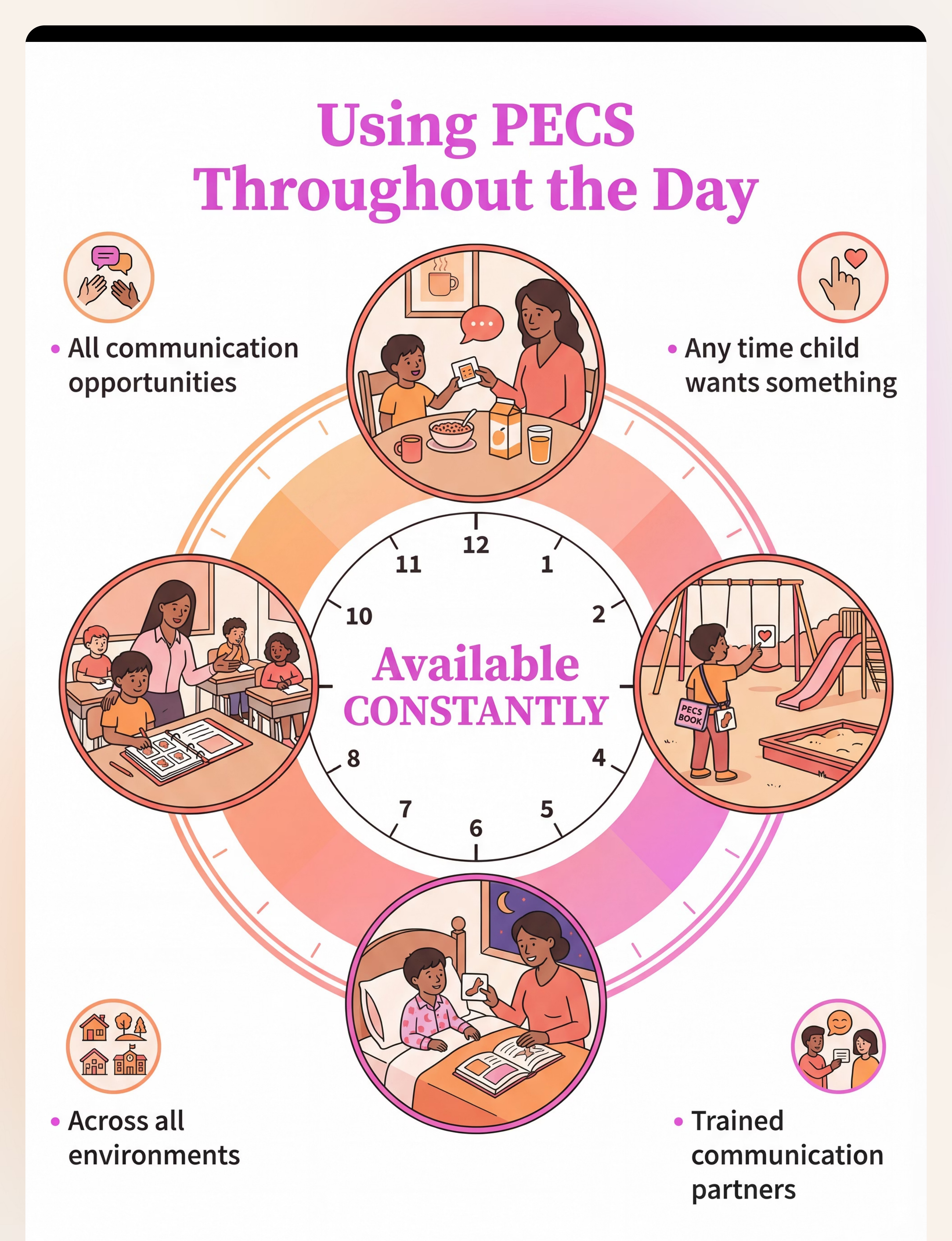
Duration: PECS is a constant, ongoing communication system. It must be available at all times throughout the day, not limited to therapy sessions.
Expert Perspective

"PECS is one of the most evidence-based AAC interventions. The key is the EXCHANGE—the child initiates, approaches a partner, and gives the picture. This builds communication initiation, not just requesting."
— Speech-Language Pathologist, AAC Specialist
Strong Evidence
Decades of research support PECS effectiveness for developing functional communication in non-verbal children.
SLP + SpEd
Recommended by speech-language pathologists and special educators as a core communication intervention.
Rank #1
Top-ranked tool in the Communication & Language category for non-verbal and minimally verbal children.
Choose Your Option (6 Variants)
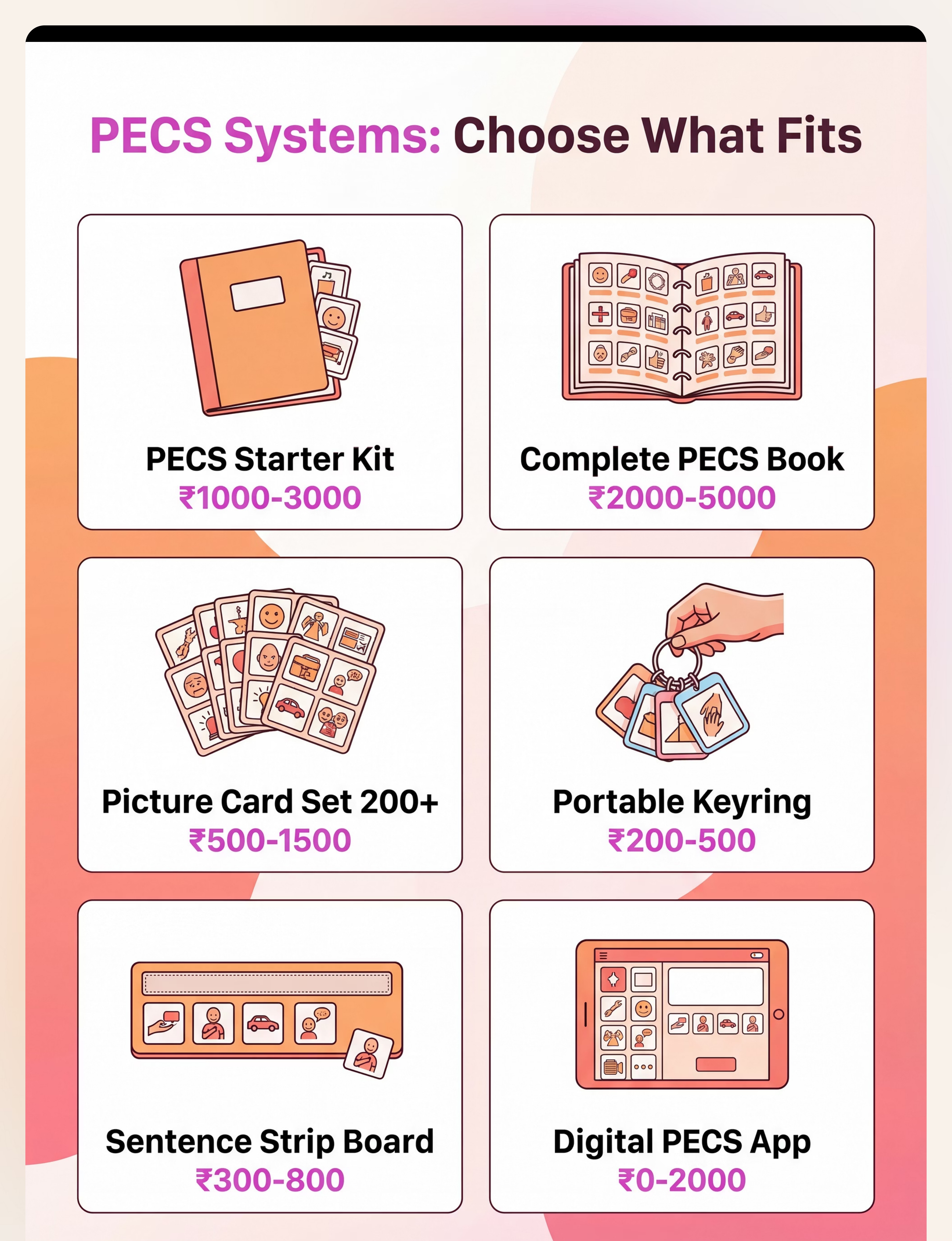
PECS offers flexibility to match your child's communication journey, from starter kits to complete systems, portable options to digital apps.

PECS Starter Kit
Best for: Beginning communicators, first exchanges
Phase 1-3 materials • Ages 18 months–9 years
Home
Clinic
School
Portability: Medium • Price: ₹1,000–3,000

Complete PECS Book System
Best for: Full PECS implementation
Comprehensive 6-phase system • Ages 18 months–9 years
Home
Clinic
School
Portability: Medium • Price: ₹2,000–5,000

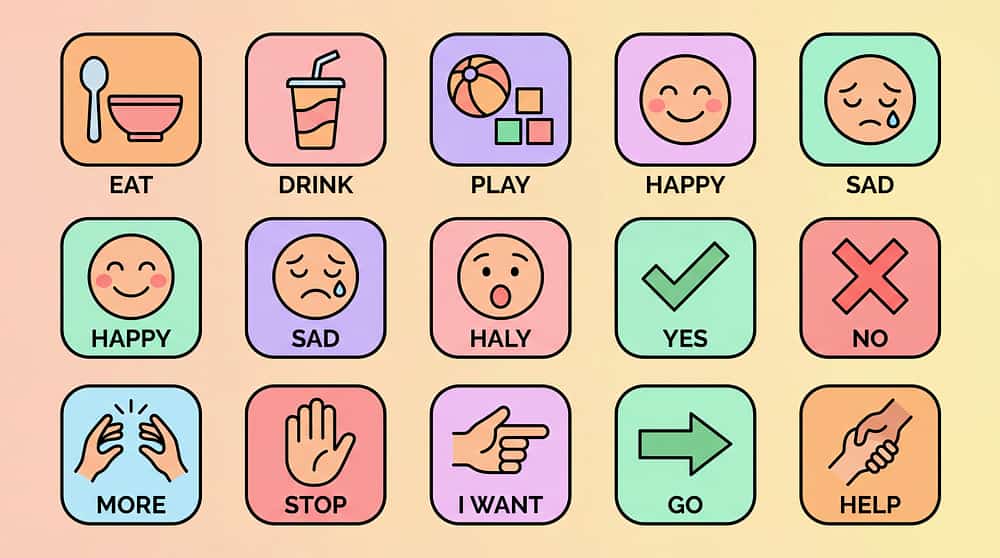
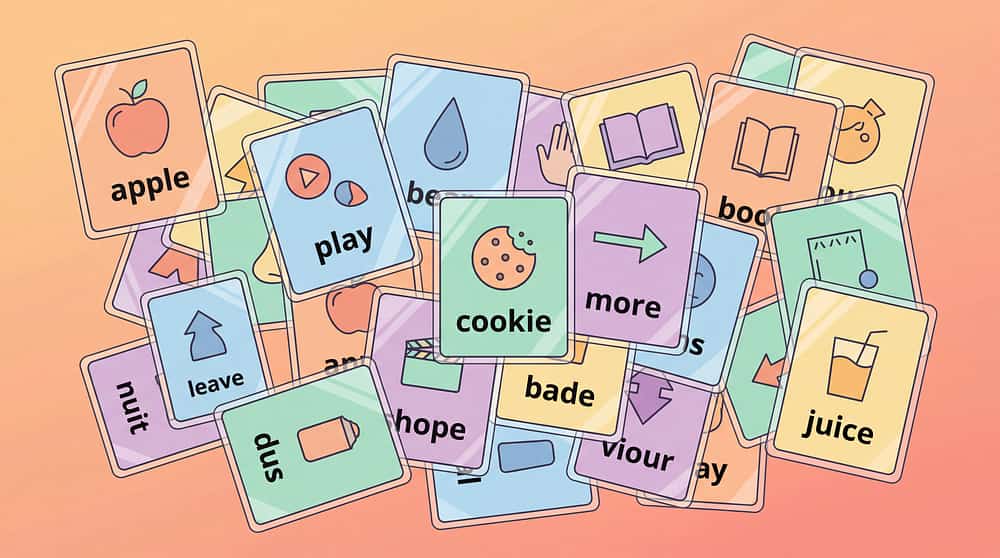
PECS Picture Card Set
Best for: Building communication vocabulary
200+ laminated cards • Ages 18 months–9 years
All Settings
Portability: High • Price: ₹500–1,500

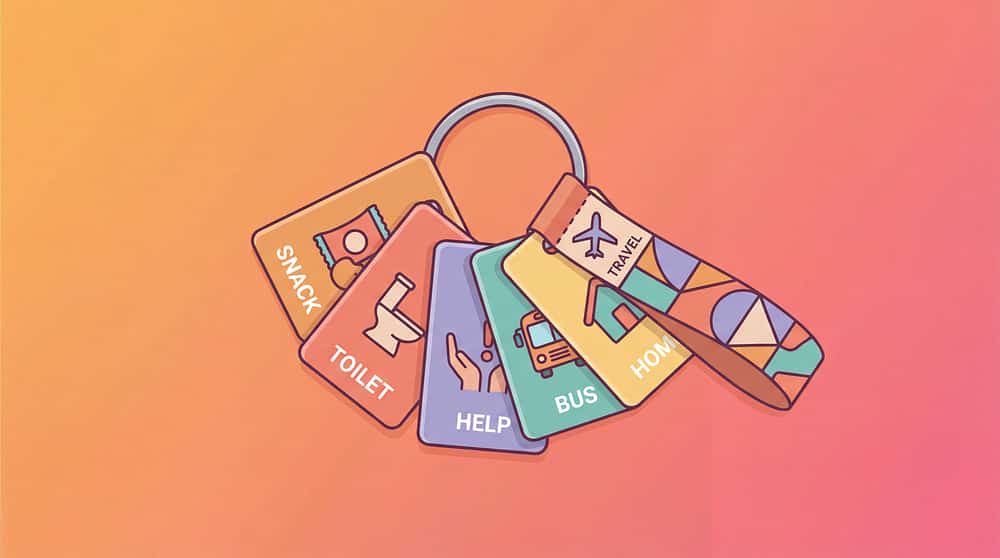
Portable PECS Keyring/Strip
Best for: Community, travel, quick requests
On-the-go communication • Ages 2–9 years
Community
Travel
Portability: Very High • Price: ₹200–500

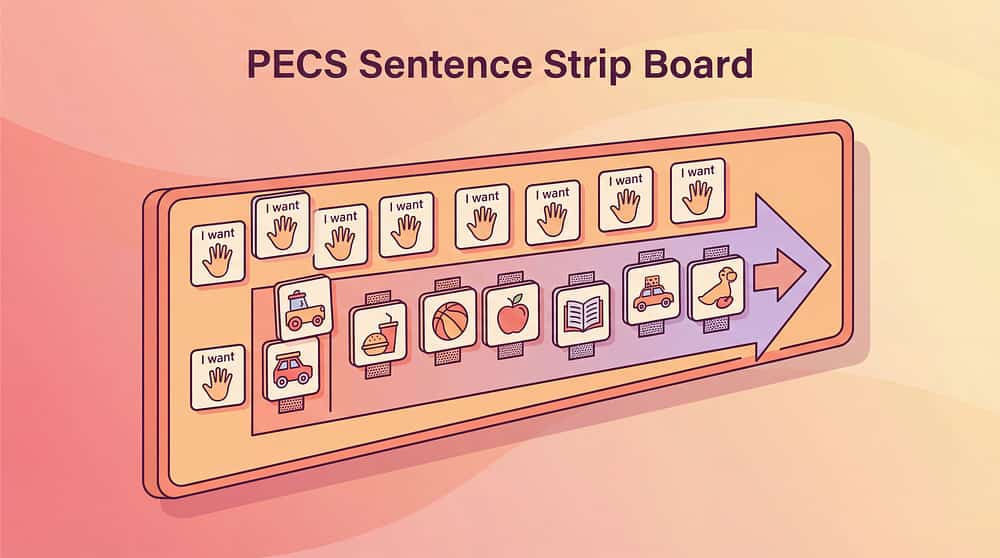
PECS Sentence Strip Board
Best for: Multi-word communication
Phase 4+ sentence building • Ages 3–9 years
Home
Clinic
School
Portability: Medium • Price: ₹300–800

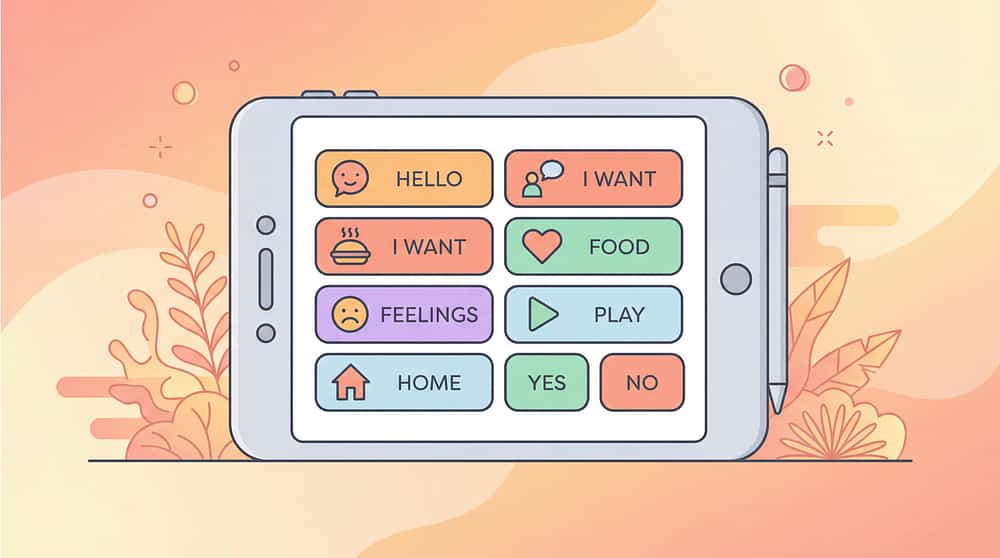
Digital PECS App
Best for: Tech-engaged, speech output, portability
Electronic PECS • Ages 3–9 years
All Settings
Portability: Very High • Price: ₹0–2,000
How to Choose
- By goal: Starting out? Choose Starter Kit. Building vocabulary? Add Picture Card Set.
- By setting: Mostly home? Starter Kit. Community use? Add Portable Keyring.
- By portability: Need on-the-go communication? Digital App or Portable Keyring are most portable.
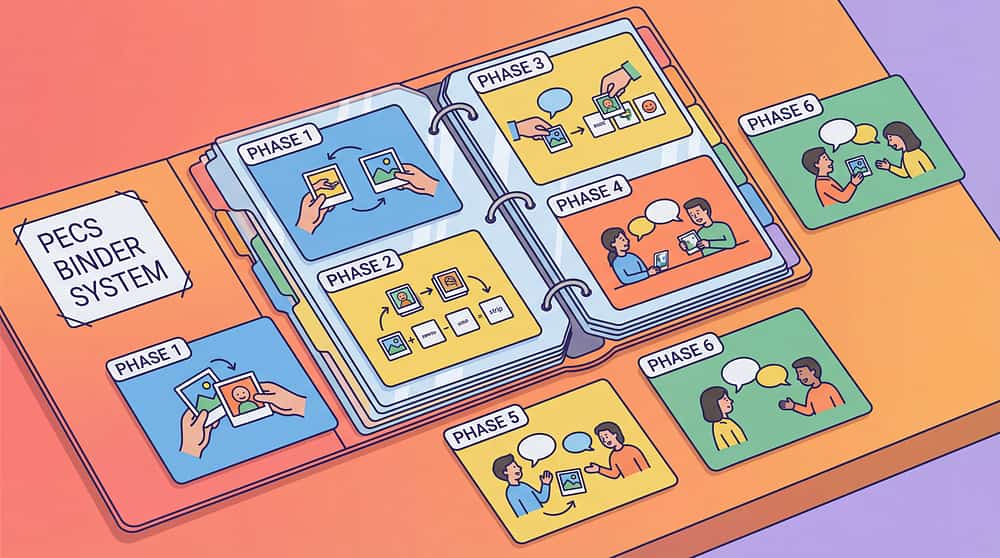
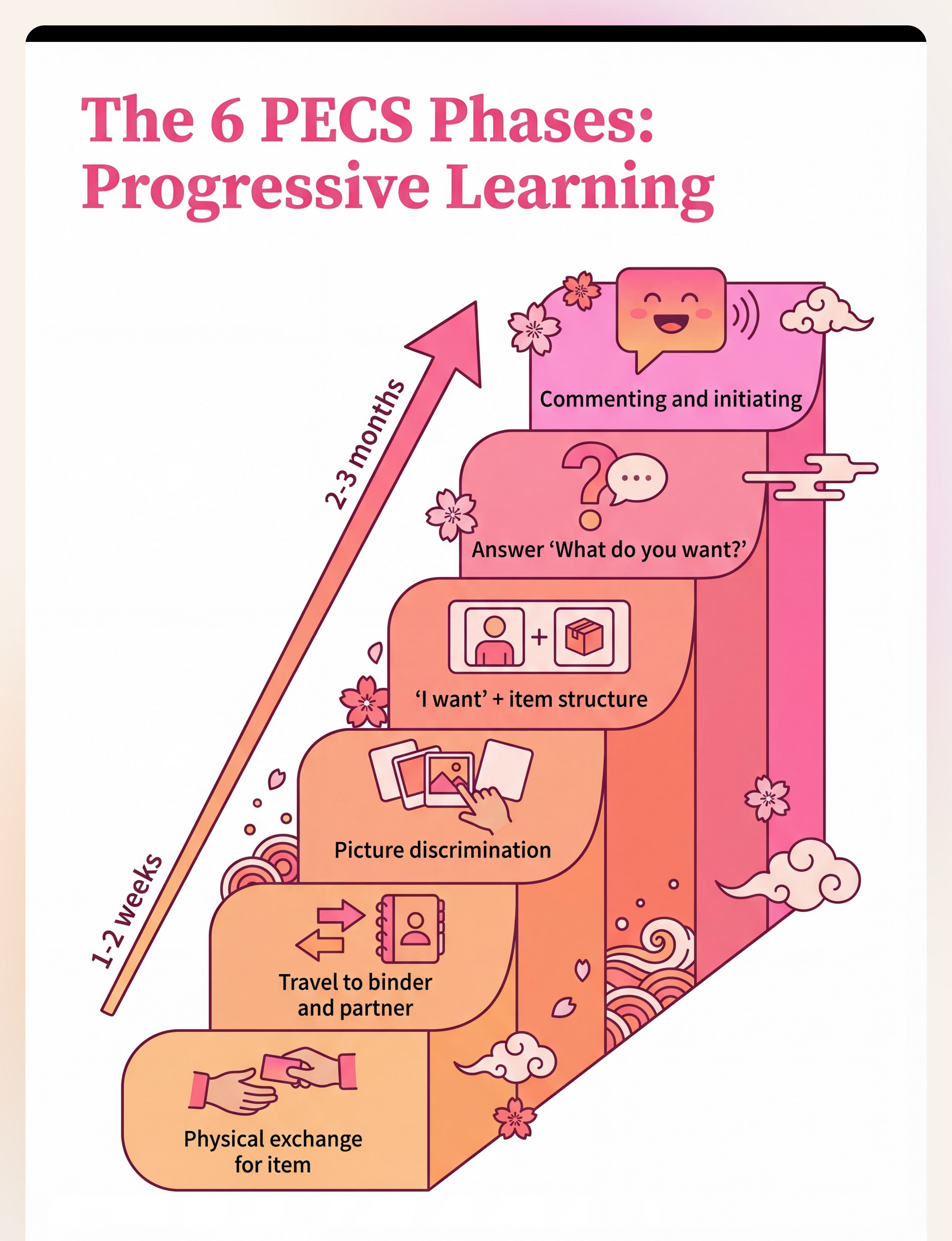
Understanding the 6 PECS Phases
PECS is built on a carefully sequenced six-phase protocol. Each phase develops specific communication skills that build toward spontaneous, functional language.

Physical Exchange
Child picks up picture and gives it to communication partner in exchange for the desired item. This is where initiation begins.

Distance & Persistence
Child travels to the communication binder, removes picture, travels to partner (who may be at a distance), and makes the exchange.

Picture Discrimination
Child learns to select the correct picture from multiple options, demonstrating understanding that different pictures mean different things.

Sentence Structure
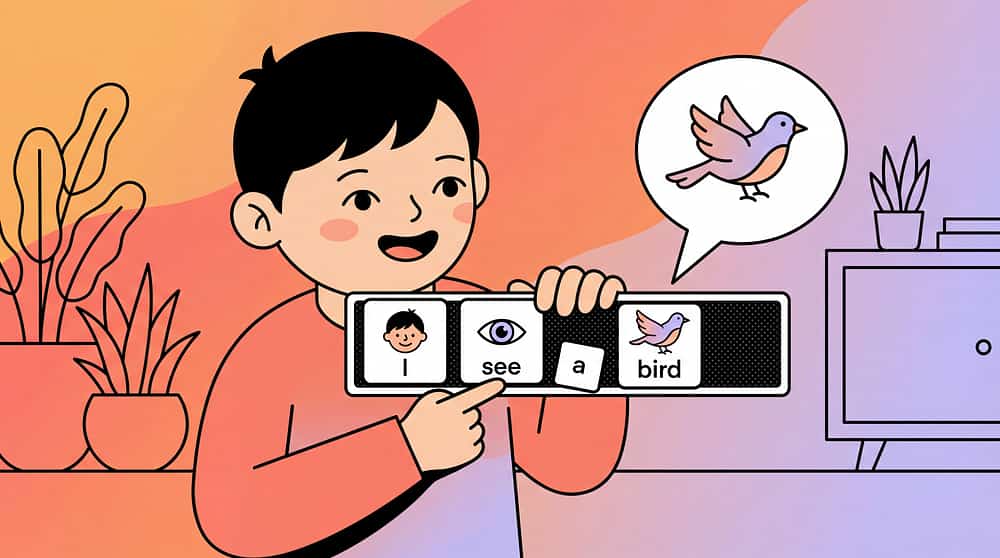
Child builds simple sentences using sentence strips: "I want" + item picture. This introduces basic grammar and multi-symbol communication.

Answering Questions
Child responds to "What do you want?" by constructing and giving the sentence strip. This develops responsive communication.

Commenting
Child learns to respond to and initiate comments ("I see," "I hear," "I feel"), moving beyond requesting to richer communication.
Materials Used
- Picture cards (photos or clear illustrations)
- Velcro strips for attachment
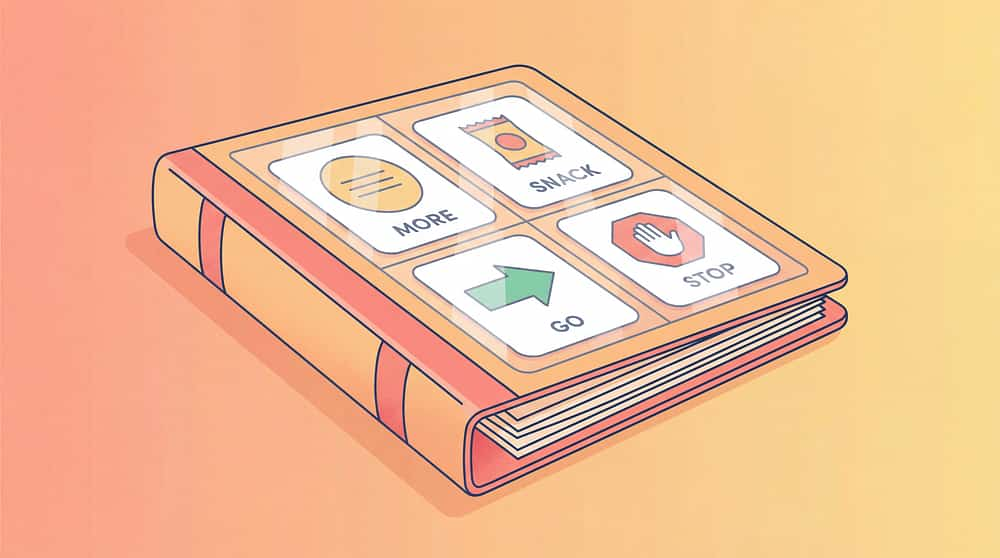
- Communication binder or book
- Sentence strips for multi-word phrases
Key Features
- Physical exchange (not pointing)
- Child-initiated communication
- Structured, evidence-based phases
- Portable and adaptable system
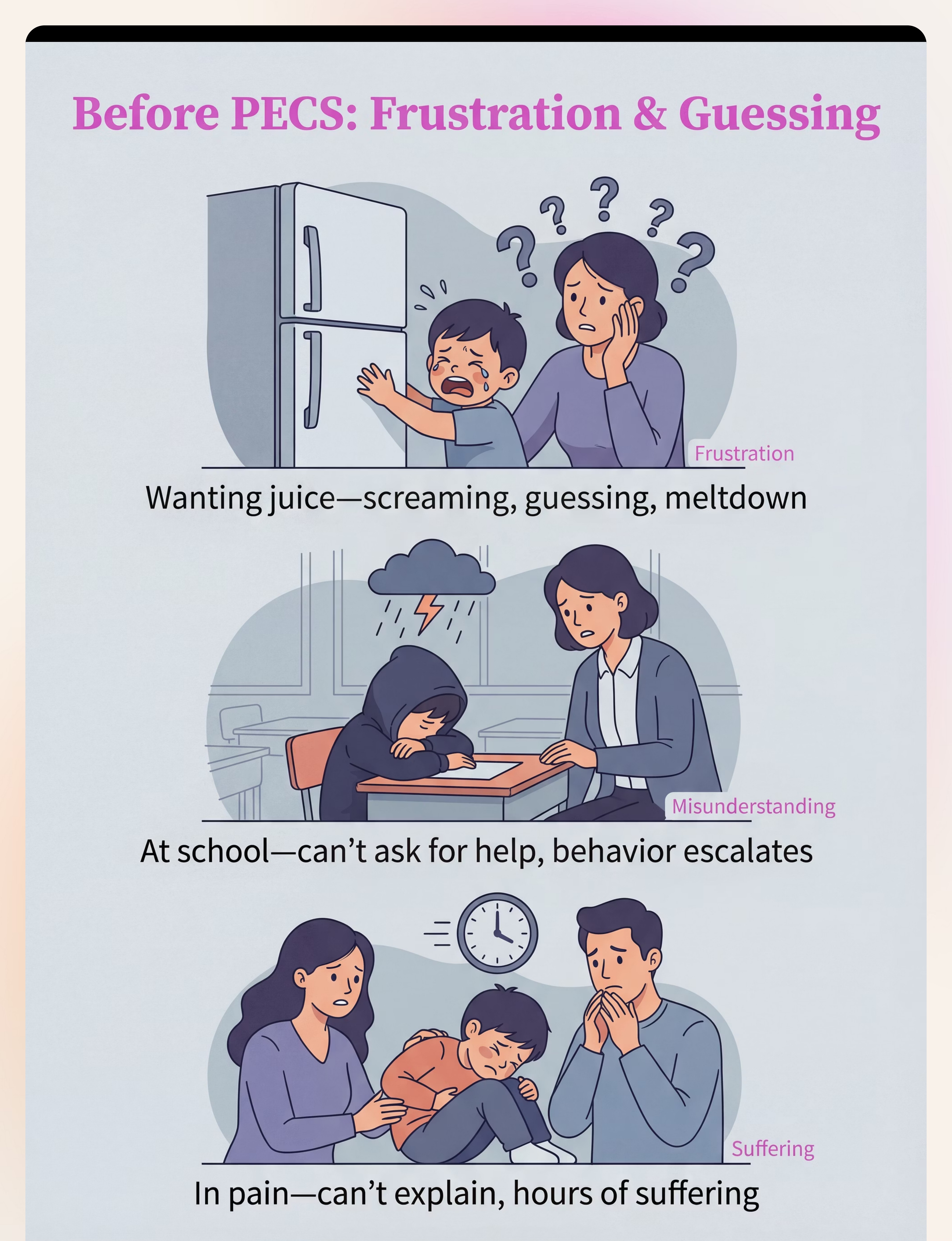
The Struggle (Before PECS)

Wanting Something
Situation: Child wants juice. Can't communicate. Screams, cries, pulls parent to fridge. Parent guesses wrong. Meltdown. Eventually figures out juice.
Experience: Endless cycles of frustration and guessing games
Emotion: Frustration, helplessness

At School
Situation: Child needs help. Can't ask. Behavior escalates. Removed from class. Labeled as behavior problem. Actually had a need.
Experience: Misunderstood and excluded from learning
Emotion: Misunderstanding, failure

Pain or Discomfort
Situation: Child has stomachache. Can't tell anyone. Behavior changes. Parents don't know why. Hours or days of suffering before figured out.
Experience: Invisible suffering with no way to seek help
Emotion: Suffering, fear
These scenarios aren't "bad behavior"—they're communication desperation. Every meltdown is a child trying to be heard. Every frustrated moment is an opportunity that functional communication could transform.

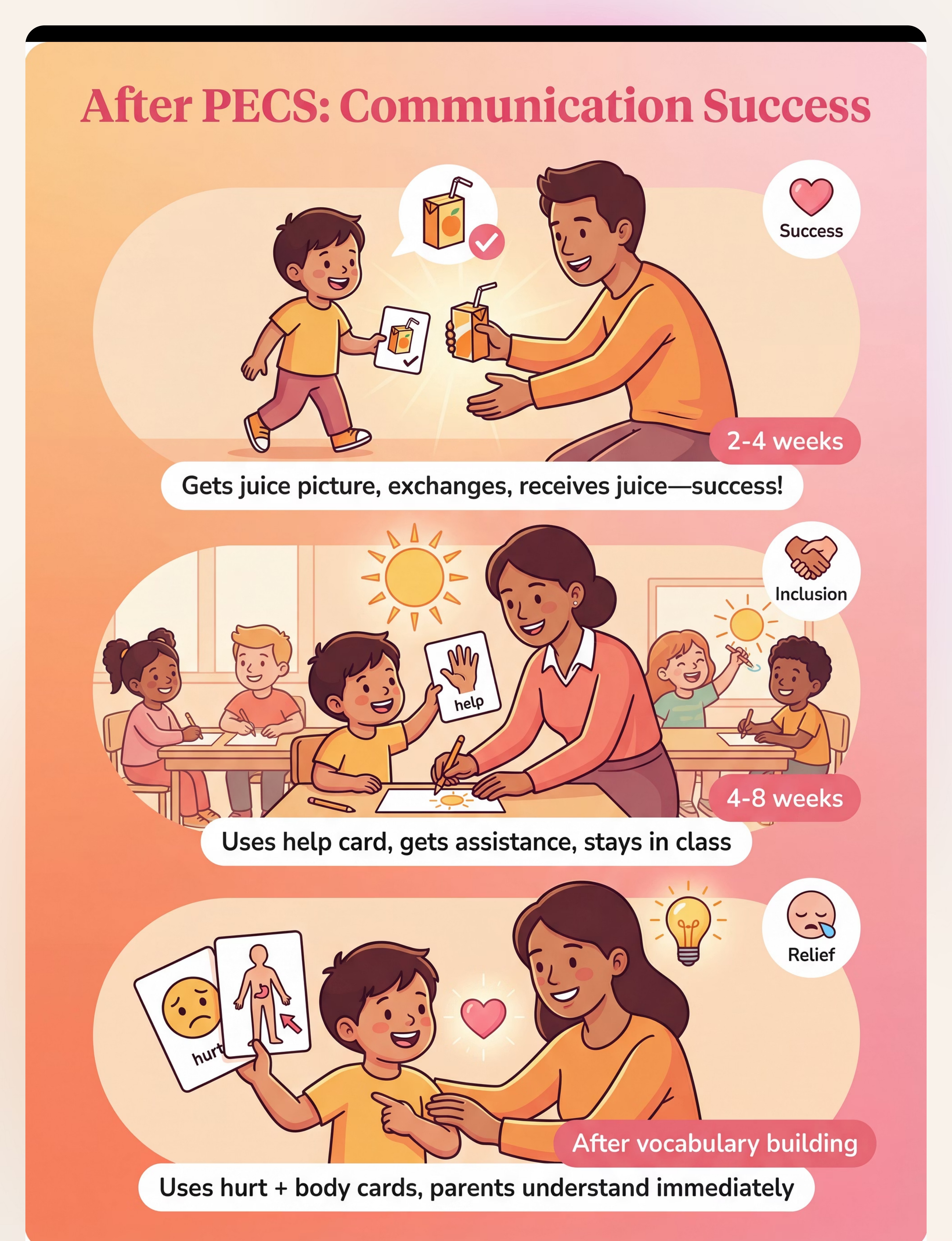
The Breakthrough (After PECS)
Wanting Something
Situation (2–4 weeks - Phase 1): Child gets juice picture from binder. Brings to parent. Exchanges picture. Gets juice. Communication successful. No meltdown.
Experience: Immediate understanding and response
Emotion: Success, empowerment
At School
Situation (4–8 weeks): Child has 'help' card. Brings to teacher. Gets assistance. Stays regulated. Participates in class. Communication works.
Experience: Inclusion and meaningful participation
Emotion: Inclusion, capability
Pain or Discomfort
Situation (After vocabulary building): Child has 'hurt' + body part cards. Points to tummy. Parents understand immediately. Get help. Suffering reduced.
Experience: Rapid understanding and comfort
Emotion: Relief, safety
This is what communication feels like when it works. No guessing. No meltdowns. Just clear, functional exchanges that honor your child's voice and agency.

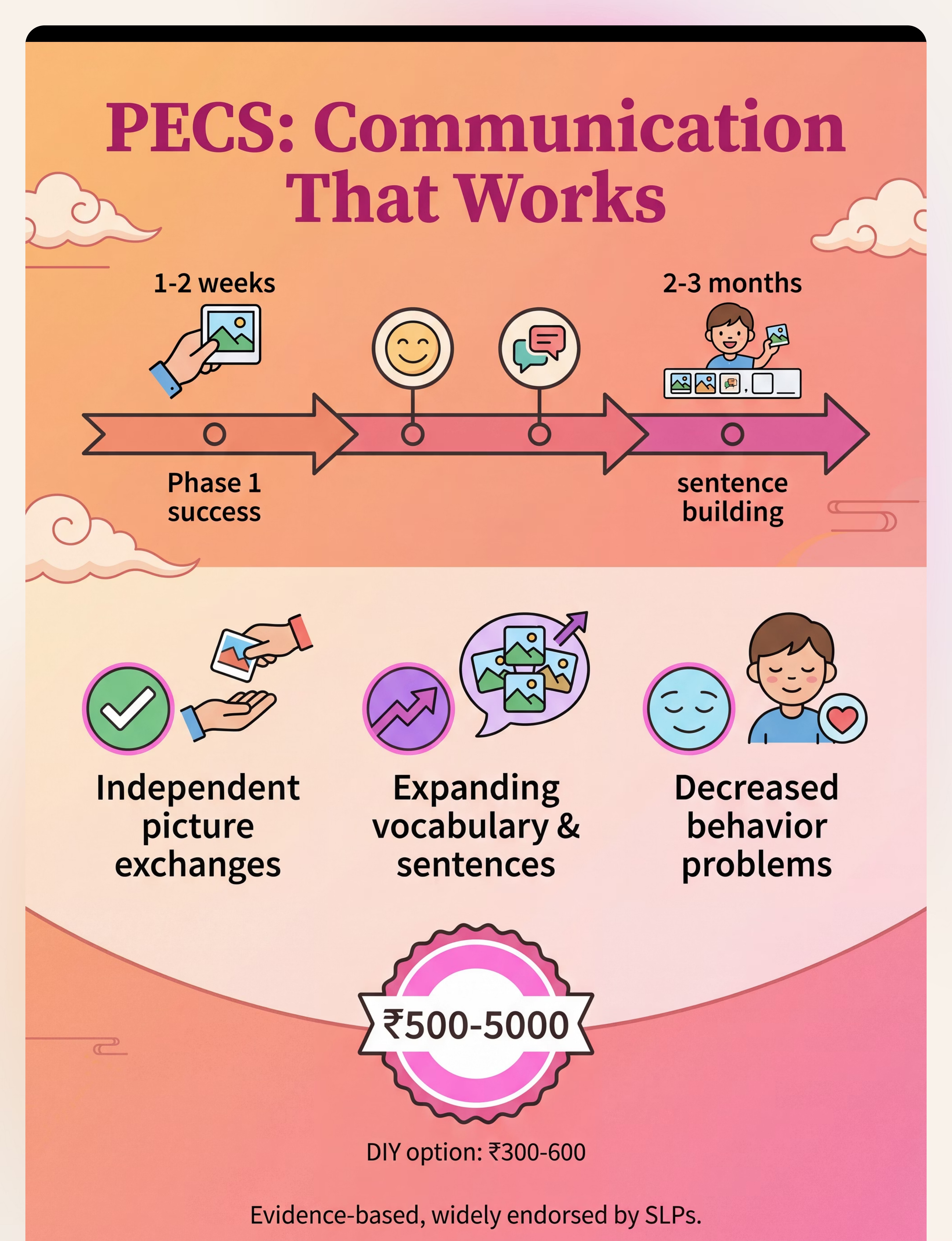
What to Expect (Realistic Timelines)
PECS development follows a predictable progression when implemented consistently. Here's what success looks like at each stage:
1
1–2 weeks
First Requests
Child can request highly preferred items using Phase 1 exchanges
2
2–4 weeks
Distance & Travel
Child travels to binder and communication partner to make requests
3
4–8 weeks
Picture Selection
Child discriminates between multiple pictures, choosing the correct one
4
2–3 months
Sentence Building
Child uses sentence strips to construct "I want..." phrases
5
Ongoing
Reduced Behaviors
Behavior problems decrease as functional communication increases
6
Ongoing
Speech Foundation
Foundation for speech development is built; many children add verbal attempts
Important Note: Timelines vary by child, consistency of implementation, and practice opportunities. Some children progress faster; others need more time at each phase. The key is following the protocol and celebrating every step forward.

Is This Right for My Child? (2-Minute Check)
Answer these four questions to determine if PECS is a strong fit for your child's communication needs:
Is your child non-verbal or minimally verbal?
If yes, this indicates: PECS is an appropriate AAC option
Confidence: 98%
Does your child use behavior to communicate needs?
If yes, this indicates: Needs functional communication system
Confidence: 95%
Can your child physically pick up and hand over objects?
If yes, this indicates: Has motor skills necessary for PECS exchange
Confidence: 90%
Does your child have highly preferred items or activities?
If yes, this indicates: Has motivation for Phase 1 learning
Confidence: 88%
3+ "yes" answers = strong fitIf you answered yes to three or more questions, PECS is likely an excellent communication intervention for your child. Consider connecting with a speech-language pathologist for formal assessment and training.
Usage Guide: When & How
Successful PECS implementation requires understanding when to use it, when not to use it, and how supervision changes as skills develop.
✓ When to Use
- ALL communication opportunities throughout the day
- Any time child wants or needs something
- Meals, snacks, activities, transitions
- Across all environments and partners
- PECS must be available constantly
✗ When NOT to Use
- Don't withhold to "make" child use PECS
- Don't skip phases to speed progress
- Don't use as pointing-only system
- Don't limit to therapy sessions only
- Don't force when child is dysregulated
Supervision by Development Stage
Stage | Supervision Level | What This Looks Like | |
Initial Learning | Adult facilitates exchanges | Hand-over-hand prompting, immediate reinforcement, teaching the exchange | |
Developing Skills | Adult available, child initiates | Child begins exchanges independently, adult provides response and support | |
Independent Use | Child uses independently | Child initiates and completes exchanges across settings with various partners |
Home
School
Clinic
Community
Duration: PECS is a constant, ongoing communication system that should be available at all times throughout the day.
Safety First: Critical Guidelines
PECS is safe when implemented correctly, but certain protocols must be followed to ensure effectiveness and avoid potential issues.
⚠️ Critical Safety Requirements
- Follow PECS protocol precisely—do not skip phases
- Child must EXCHANGE the picture, not just point
- Train ALL communication partners consistently
- PECS must be available at ALL times
Physical Safety
- Small pictures can be choking hazard—size appropriately for age
- Secure velcro and lamination edges to prevent peeling
- Use non-toxic materials for all components
Implementation Warnings
- Don't use PECS to deny reasonable requests (builds distrust)
- Don't force communication when child is dysregulated
- Ensure pictures are clearly understood by child
- Never skip phases or take shortcuts with protocol
Contraindicated Practices
Using as pointing-only system (not true PECS)
Skipping phases to "speed up" progress
Withholding to force use or compliance
Inconsistent availability or implementation
Safety Checklist
Before Starting
- ☑ Understand PECS protocol
- ☑ Identify highly preferred items
- ☑ Materials prepared properly
- ☑ All partners trained
During Use
- ☑ Following phase protocol
- ☑ Physical exchange occurring
- ☑ Immediate reinforcement
- ☑ Expanding opportunities
Signs of Success
- ✓ Child initiating exchanges
- ✓ Traveling to communicate
- ✓ Discriminating pictures
- ✓ Decreased behavior issues
Common Questions (Honest Answers)
We know you have concerns. Here are the questions we hear most often, with evidence-based answers.
1
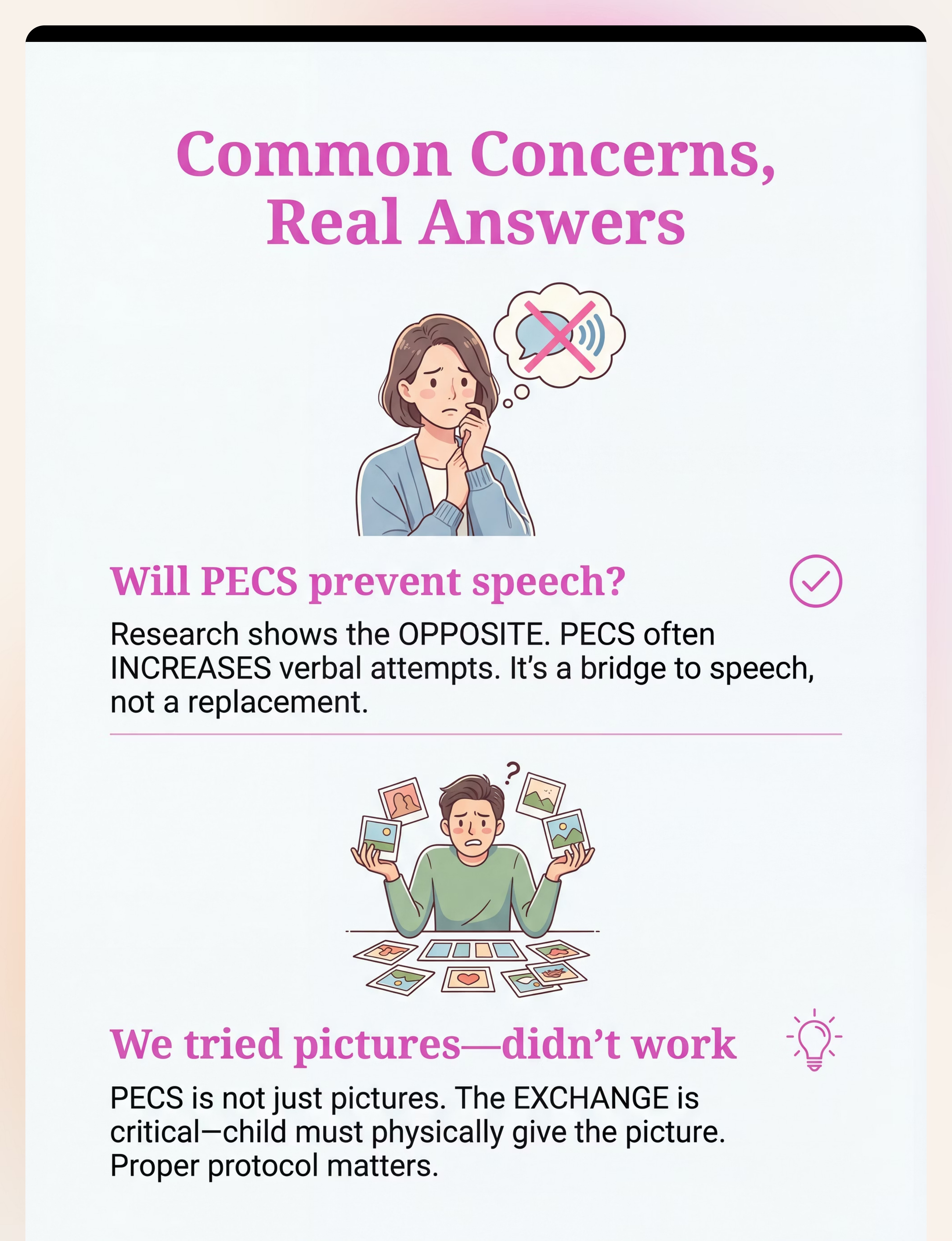
Q: "PECS will prevent my child from talking"
A: Research shows the OPPOSITE. PECS often INCREASES verbal attempts. Children learn communication has power, which motivates speech. PECS doesn't replace speech—it bridges to it. Many children develop speech while using PECS.
Try this: View PECS as a bridge to speech, not a replacement. It's a tool that builds the foundation for language development.
2
Q: "We tried pictures and it didn't work"
A: PECS is not just "using pictures." It's a specific 6-phase protocol. The EXCHANGE is critical—child must physically give the picture. Pointing or just having pictures available is NOT PECS. Proper training matters.
Try this: Get proper PECS training or work with a certified PECS implementer. The protocol details make all the difference.
3
Q: "It's too complicated / too many phases"
A: Start with Phase 1 only—just one exchange. Child wants cookie, gives cookie picture, gets cookie. That's it. Add phases as child masters each one. Don't overwhelm yourself or child with the entire system at once.
Try this: Focus solely on Phase 1 for as long as needed: want → give picture → get item. Simple and powerful.
4
Q: "My child is too young / too old"
A: PECS works from 18 months through adulthood. Age isn't the criterion—communication need is. If child has no functional communication, PECS can help. Adjust materials for age appropriateness (bigger pictures for toddlers, more sophisticated vocabulary for older children).
Try this: PECS is about communication need, not developmental age. Focus on whether your child needs functional communication support.
Investment Guide: What to Expect
PECS is available at multiple price points. Here's how to choose the right investment for your family while ensuring effectiveness.
Budget-Friendly Option
DIY PECS System
What you get: Printed pictures + binder + velcro
Cost: ₹300–600
Best for: Families who want to start immediately, are willing to learn the protocol, and prefer using photos of their child's actual items.
Note: Effective if following protocol correctly
Premium Option
Official PECS Kit
What you get: Complete materials from Pyramid Educational Consultants
Cost: ₹3,000–6,000
Best for: Families who want comprehensive materials, are attending PECS training, or need school/clinic-quality resources.
Brand: Pyramid Educational Consultants (official PECS developer)
Overall Price Range
₹500
Minimum Investment
Picture card sets or DIY materials to get started
₹2,500
Average Cost
Starter kit or app-based system with training resources
₹5,000
Complete System
Official comprehensive kit with all six phases
Best Starting Point: For most families, we recommend starting with a mid-range starter kit (₹1,000–2,000) while investing time in learning the PECS protocol. You can always expand with additional materials as your child progresses through the phases.
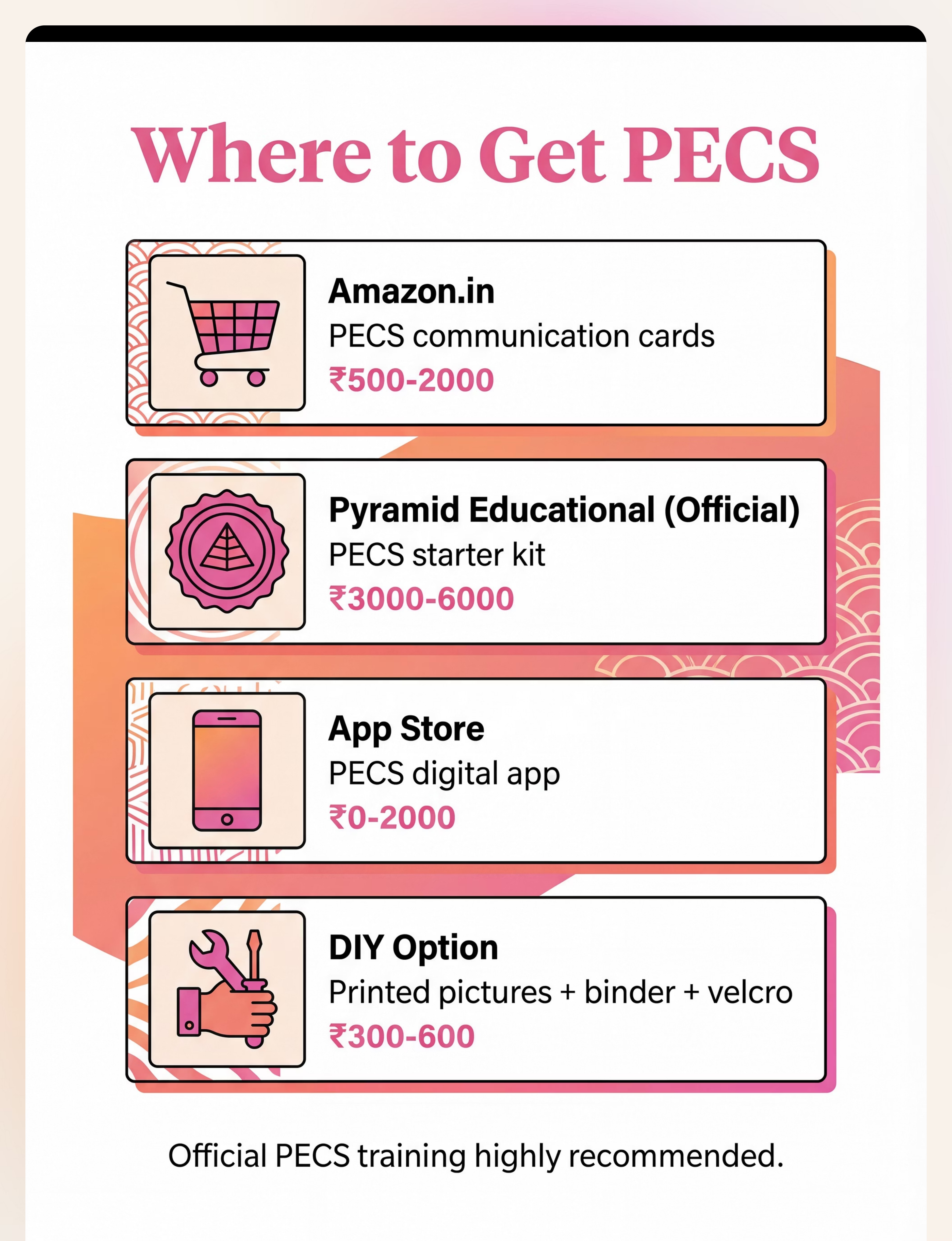
Where to Buy PECS in India
Availability: PECS materials are available through both official channels and DIY options across India. Choose the option that best fits your needs and budget.
Platform | What to Search | Type | Price Range | |
Amazon.in | "PECS communication cards" | Card sets, binders | ₹500–2,000 | |
Pyramid Educational (official) | "PECS starter kit" | Official kits | ₹3,000–6,000 | |
App Store / Google Play | "PECS app" | Digital PECS | ₹0–2,000 | |
DIY Materials | Printed pictures + velcro + binder | Custom system | ₹300–600 |
✓ Buying Tips
- Official PECS training is highly recommended regardless of materials chosen
- Photos of actual items are more effective than generic clipart
- Start with highly motivating items ONLY—don't overwhelm with vocabulary
- All communication partners need training for consistency
- Portable version is essential for generalization across settings
⚠️ Red Flags to Avoid
Using PECS as a pointing board (not true exchange)
Skipping phases to "speed up" progress
Starting with too many pictures at once
Not following the established protocol
Only one person implementing (needs consistency)
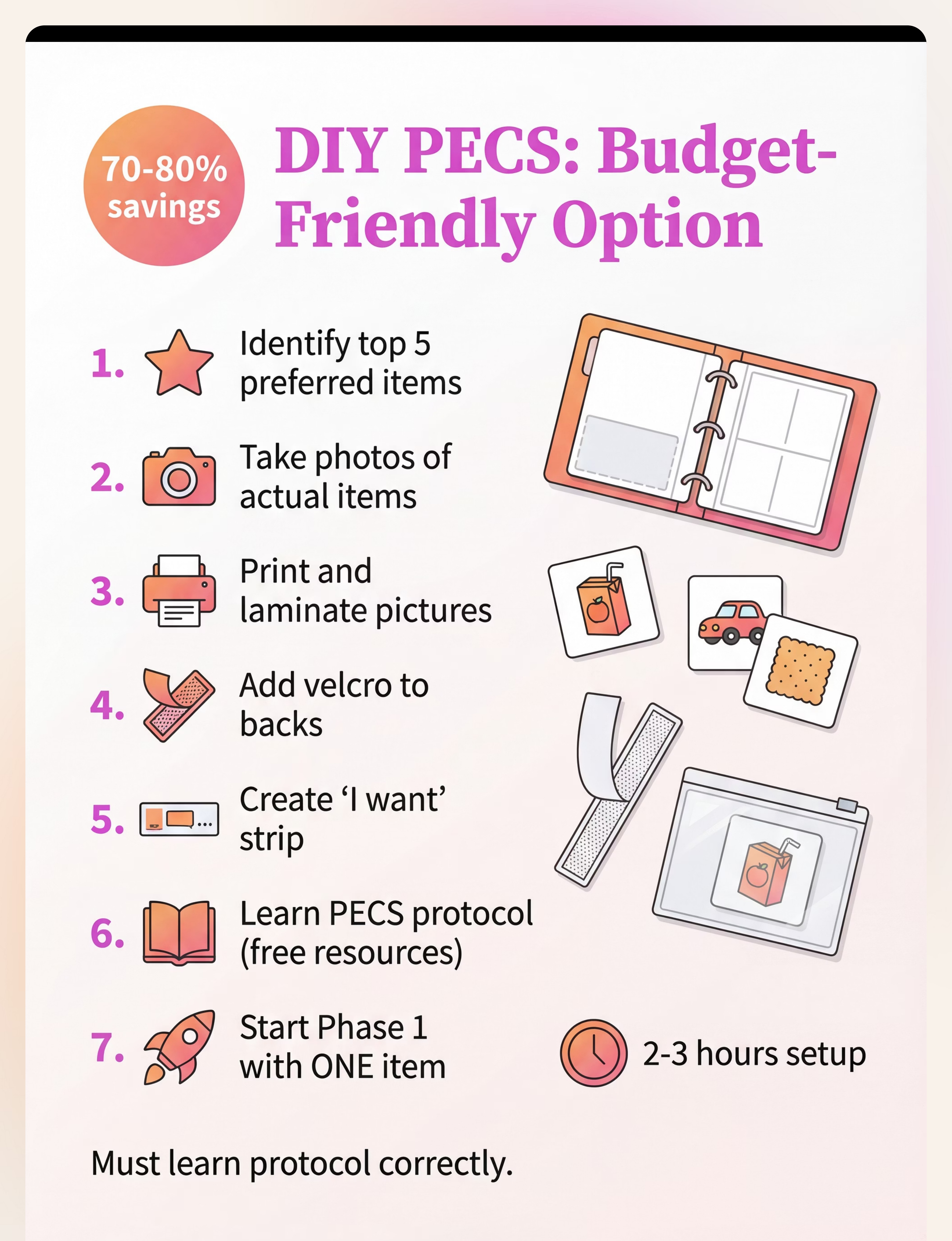
DIY Alternative (Save 70–80%)
Feasibility: High (with proper training) • Cost Savings: 70–80% • Time: 2–3 hours initial setup
Creating your own PECS materials is absolutely possible and can be just as effective as commercial kits—if you follow the protocol correctly and invest time in learning the system.
What You'll Need
- Small binder or folder (for organizing pictures)
- Velcro strips (hook and loop fasteners)
- Printed pictures (photos of actual items work best)
- Laminating pouches (or clear contact paper)
- Sentence strip (for Phase 4+ sentence building)
DIY Steps
1
Identify Top Motivators
List your child's TOP 5 highly preferred items—things they consistently want and request
2
Create Picture Cards
Take photos of actual items or use clear pictures. Print at 2–3 inches size for easy handling
3
Laminate for Durability
Use laminating pouches or clear contact paper to protect cards from wear and moisture
4
Add Velcro
Attach velcro to back of pictures and corresponding spots on binder pages
5
Create Sentence Strip
Make a sentence strip with "I want" starter for Phase 4 sentence building
6
Learn the Protocol
Study PECS protocol using free resources, videos, or work with an SLP
7
Start Phase 1
Begin with ONE highly preferred item only. Master the physical exchange before expanding
DIY vs. Commercial: When to Choose Each
Choose DIY When:
- Budget-conscious but willing to learn protocol thoroughly
- Want to use photos of child's actual items
- Working with SLP who's guiding implementation
- Need to start immediately while awaiting official materials
Choose Commercial When:
- Want official PECS materials and comprehensive picture library
- Planning to attend formal PECS training workshop
- Need materials for school or clinic setting
- Prefer ready-made, standardized system
Tradeoffs: DIY requires you to learn the protocol correctly and create all materials yourself. However, using photos of your child's actual items can be MORE motivating than generic pictures. The key is protocol adherence, not material cost.
Preview of pecs picture exchange communication Therapy Material
Below is a visual preview of pecs picture exchange communication therapy material. The pages shown help educators, therapists, and caregivers understand the structure and content of the resource before use. Materials should be used under appropriate professional guidance.


Share this resource
Help others discover thisLink copied!
Complete Support System
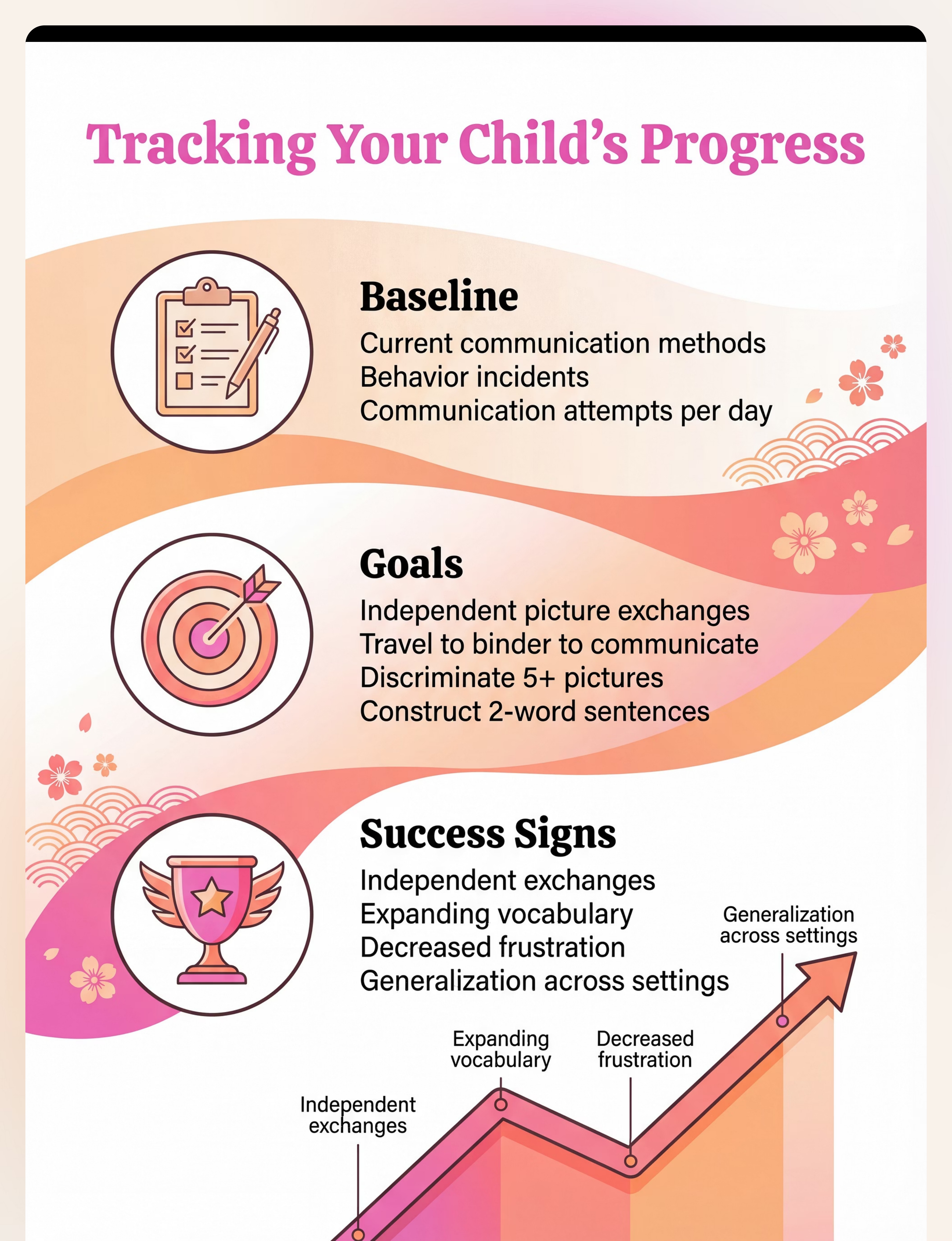
Measuring Success: Track Your Progress
Consistent tracking helps you see progress, identify challenges, and celebrate victories. Here's what to measure:
Establish Baseline
- Current communication methods used
- Number of functional words or signs
- Behavior incidents related to communication
- Communication attempts per day
Set Clear Goals
- Independent picture exchanges for preferred items
- Traveling to binder to make requests
- Discriminating between 5+ pictures
- Constructing 2-word sentences with strips
Success Indicators
- ✓ Independent exchanges increasing
- ✓ Traveling to communicate
- ✓ Expanding vocabulary
- ✓ Decreased frustration/behavior
- ✓ Generalization across settings
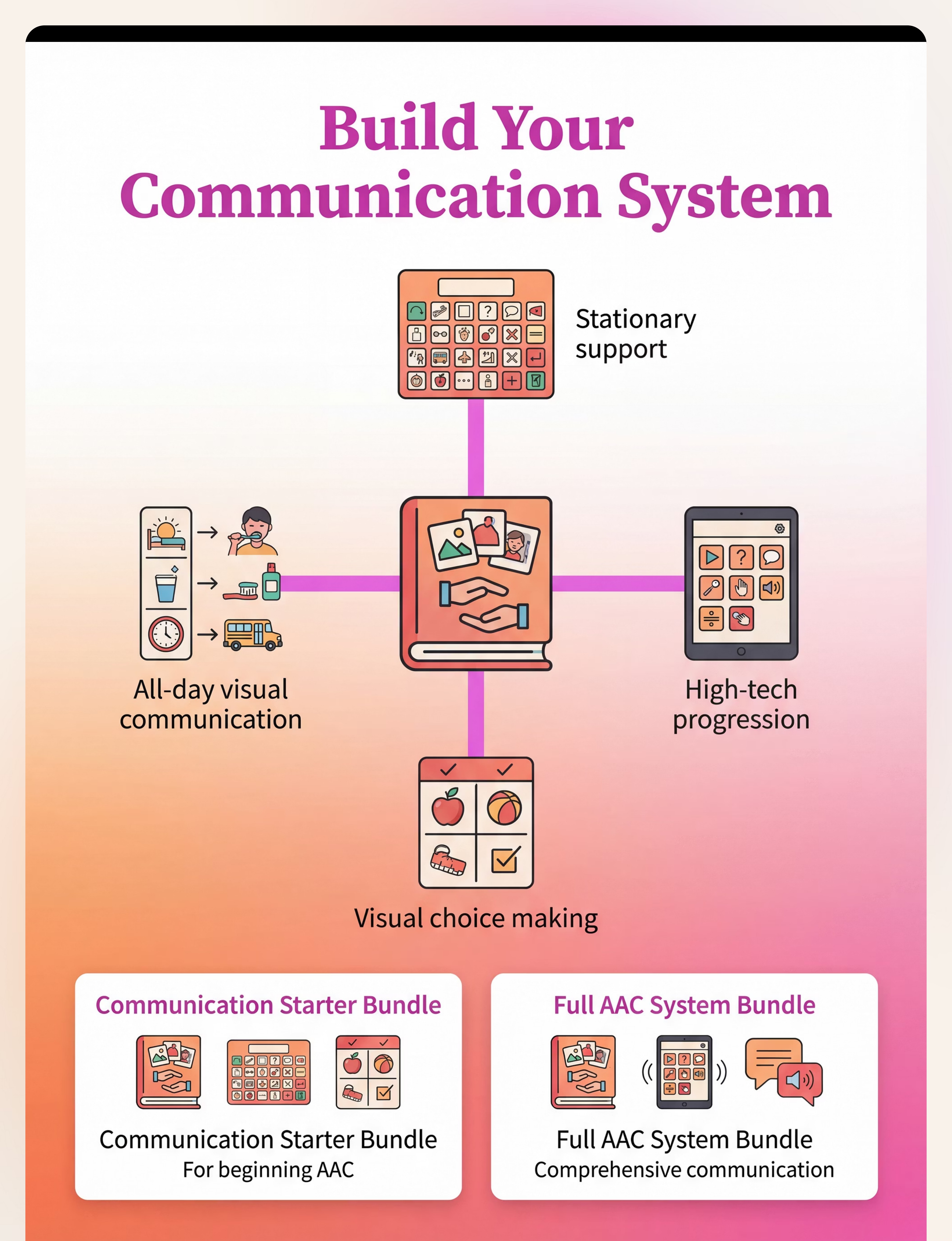
Complete the Communication Kit
PECS works even better when paired with complementary tools. Consider adding these to build a comprehensive communication system:

Communication Board (ID: 5.2)
Why pair: Stationary communication support for specific locations

AAC Device (ID: 5.3)
Why pair: High-tech AAC progression as skills develop

Choice Board (ID: 2.8)
Why pair: Visual choice making to support decision skills

Visual Schedule (ID: 3.1)
Why pair: Visual communication throughout the entire day
Recommended Bundles
- Communication Starter Bundle (IDs: 5.1, 5.2, 2.8) — For beginning AAC implementation
- Full AAC System Bundle (IDs: 5.1, 5.3, 5.4) — For comprehensive communication support
AI Summary & Search Context
Quick Summary: PECS is an evidence-based AAC system teaching communication initiation through picture exchange. Core Kit (Rank 1), strong evidence, essential for non-verbal/minimally verbal children.
PECS
AAC
communication
picture exchange
non-verbal
requesting
SLP
SpEd
core-kit
Common Searches
PECS autism • picture exchange communication • AAC autism • non-verbal communication autism • PECS cards • communication pictures autism • Pyramid PECS
Get Expert Support
FREE National Autism Helpline
Phone: 9100 181 181
Languages: 16+ languages supported
Website: pinnacleblooms.org
Connect with trained professionals who understand your journey. Get guidance on PECS implementation, find certified trainers, and access comprehensive support.
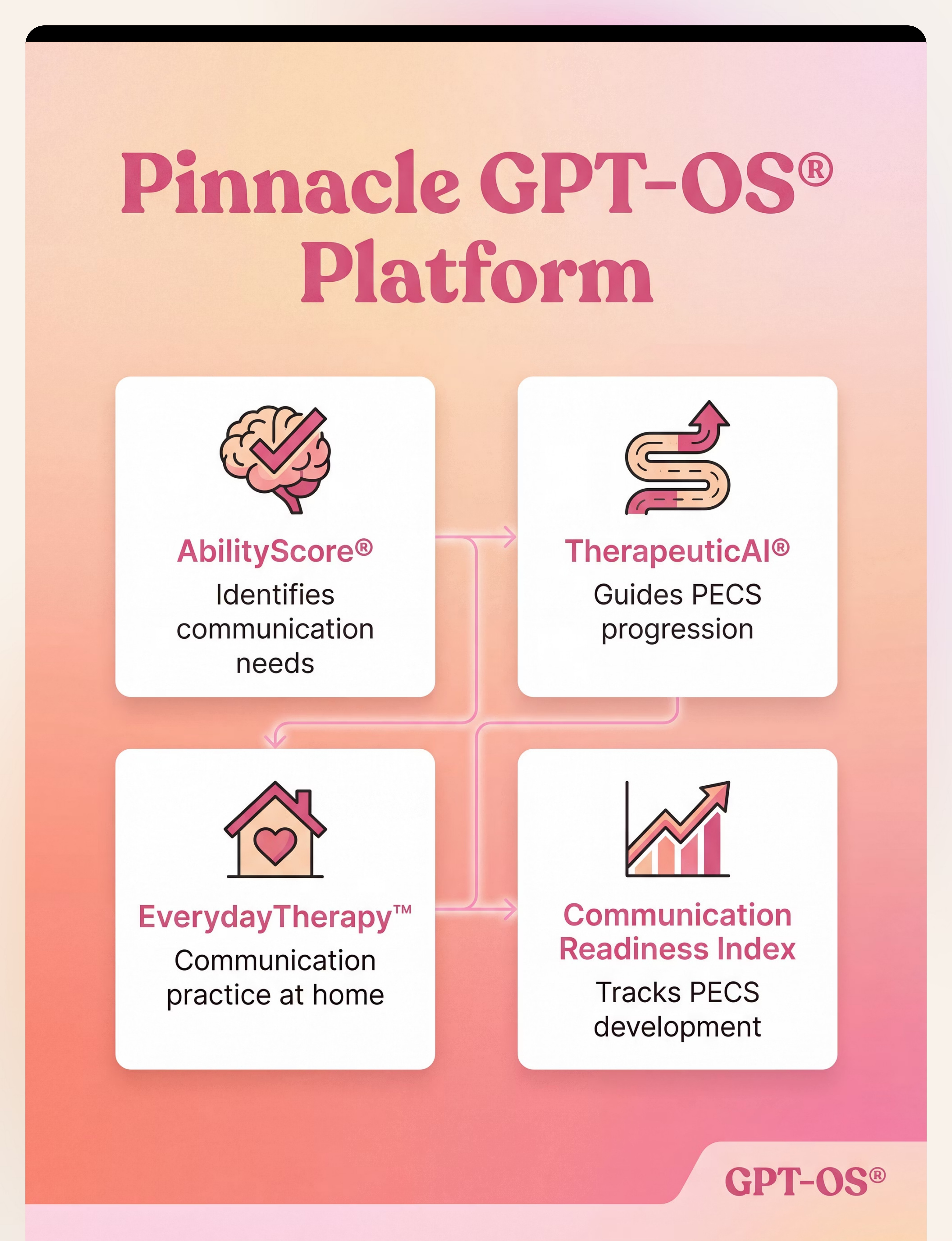
Integrated Platform Support
- AbilityScore®: Identifies communication needs and AAC candidacy through comprehensive assessment
- TherapeuticAI®: Guides PECS phase progression with personalized recommendations
- EverydayTherapyProgramme™: Includes daily communication practice activities integrated into home routines
- Communication Readiness Index: Tracks PECS skill development and measures progress over time
Disclaimer: This is educational information based on current evidence and clinical best practices. Always consult qualified speech-language pathologists, occupational therapists, or pediatricians for personalized assessment and intervention planning. Individual results vary based on child's unique profile, consistency of implementation, and family circumstances. PECS is a registered trademark of Pyramid Educational Consultants.