
Tool ID: 4.5
SpEd + OT
Moderate Evidence
Rank #2
Daily Use
₹50–600
Personal Space / Body Boundaries Tools
Proxemics and Physical Boundary Awareness System
Teaching children to understand and respect personal space is one of the most critical social skills for peer acceptance and personal safety. These tools transform the invisible rules of physical boundaries into concrete, learnable concepts that protect children and build social confidence.

Who This Helps
Children Ages 3-9 Years
Perfect for children who struggle with understanding invisible social boundaries and appropriate physical distance in various relationships.
Key Areas Addressed
Personal space awareness, physical boundaries, body safety education, social appropriateness, and sensory awareness development.
All Settings
Effective across home environments, school classrooms, therapy clinics, and community spaces for comprehensive boundary learning.
Personal Space
Physical Boundaries
Body Safety
Social Appropriateness
Sensory Awareness

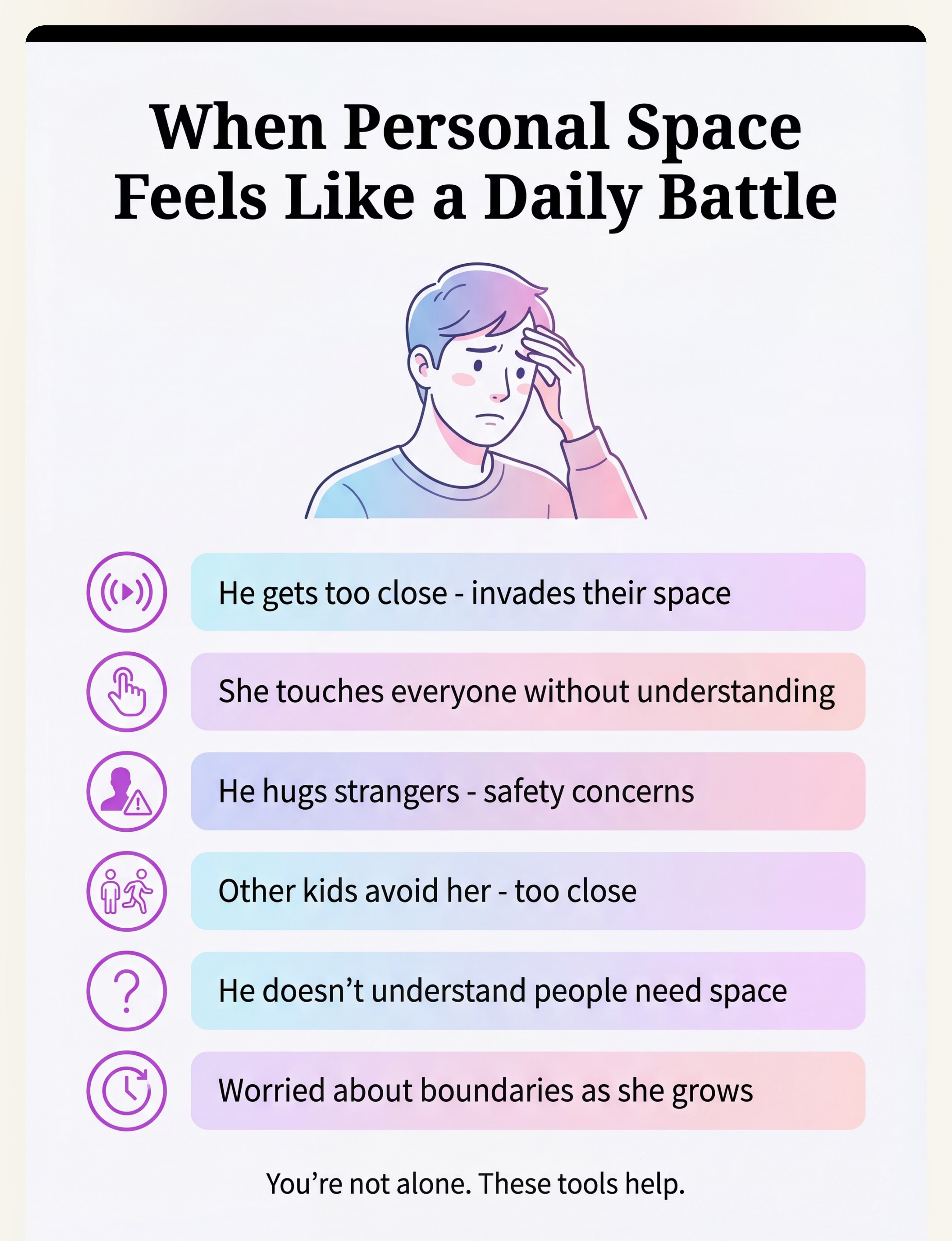
Does This Sound Familiar?
"He gets too close to people - invades their space. Other children notice and it's affecting his friendships."
"She touches everyone - doesn't understand boundaries. I'm constantly redirecting her in public places."
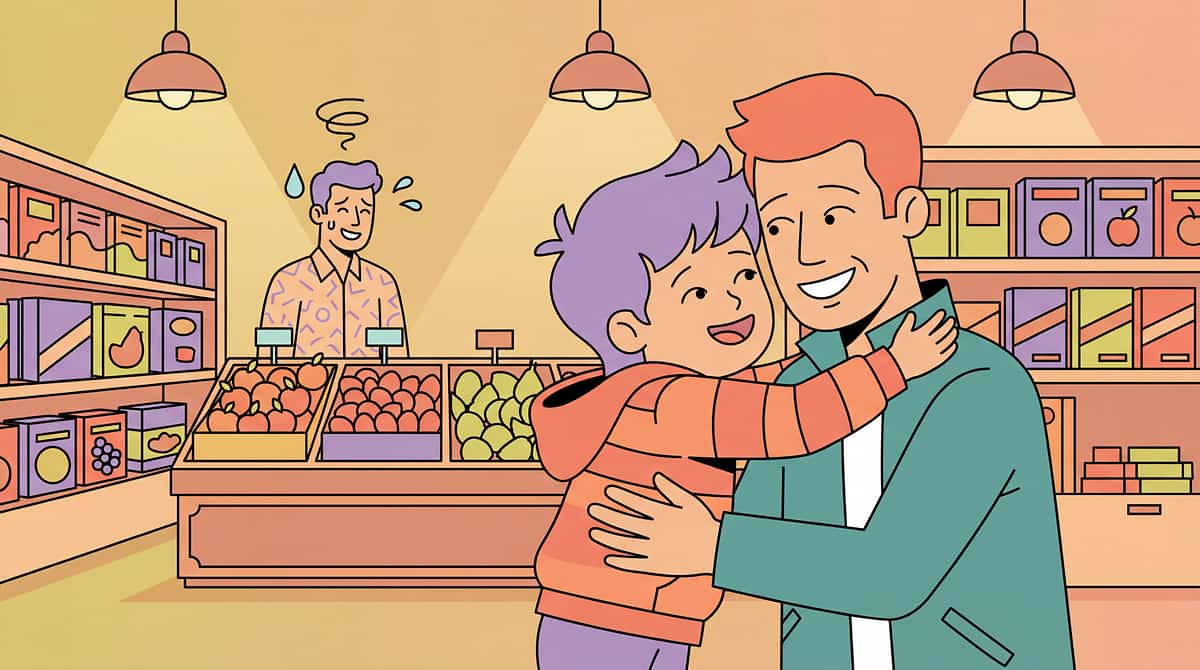
"He hugs strangers at the park. I'm genuinely worried about his safety as he grows older."
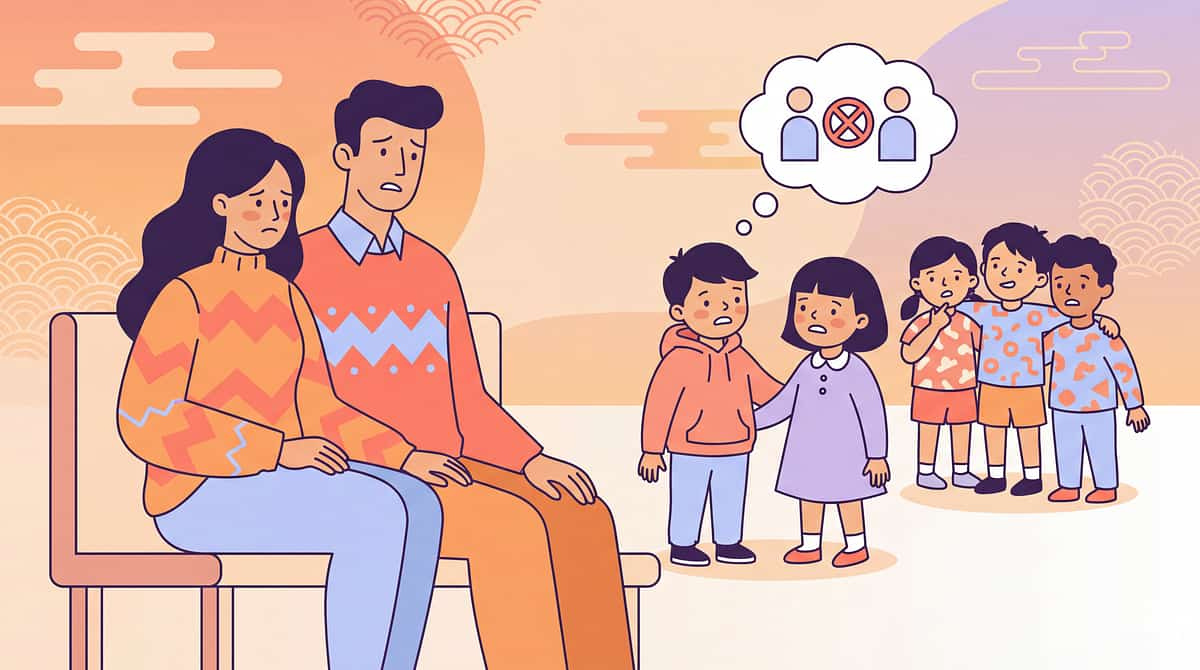
"Other kids avoid her because she's 'too close.' It breaks my heart to see the social rejection."
You're not alone. These are among the most common challenges parents face. Personal space violations often stem from not understanding invisible social rules - but these rules can be taught with the right approach.

A Day Without the Right Support
1
Morning School Drop-off
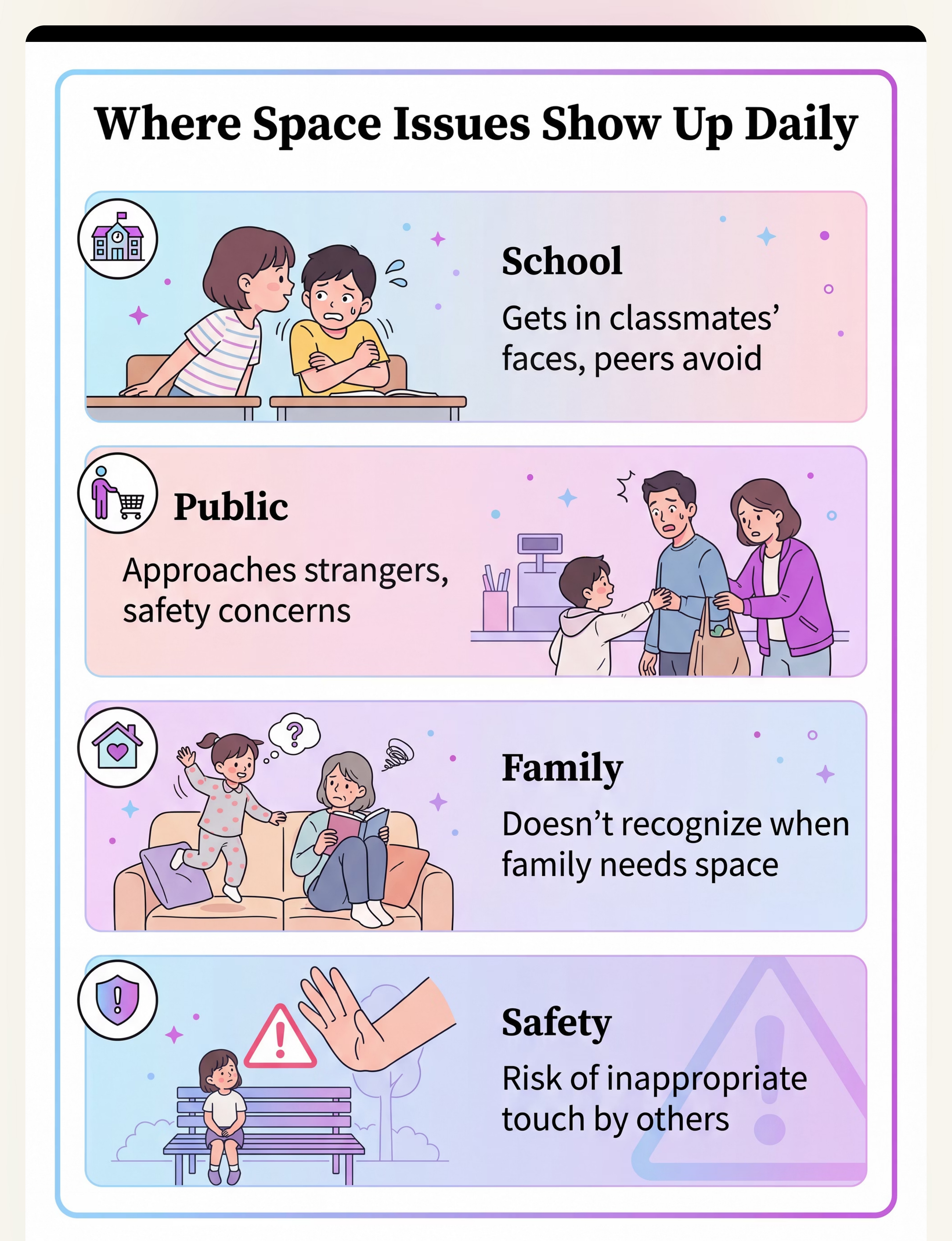
Child approaches peers too closely while greeting them. Classmates instinctively step back, uncomfortable. Child doesn't notice the social cues. Feelings of confusion begin the day.
2
Classroom Transitions
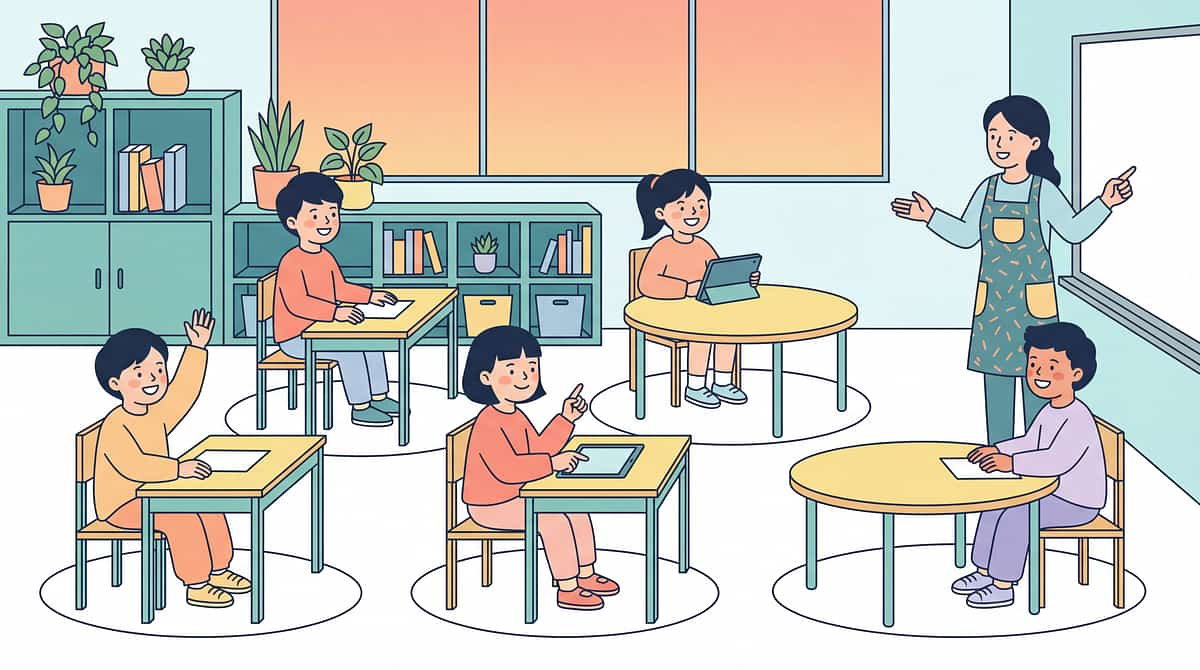
During line-up, child stands too close to classmate ahead. The peer moves forward repeatedly. Teacher redirects but child doesn't understand why. Peer relationships strain further.
3
Therapy or School Activities
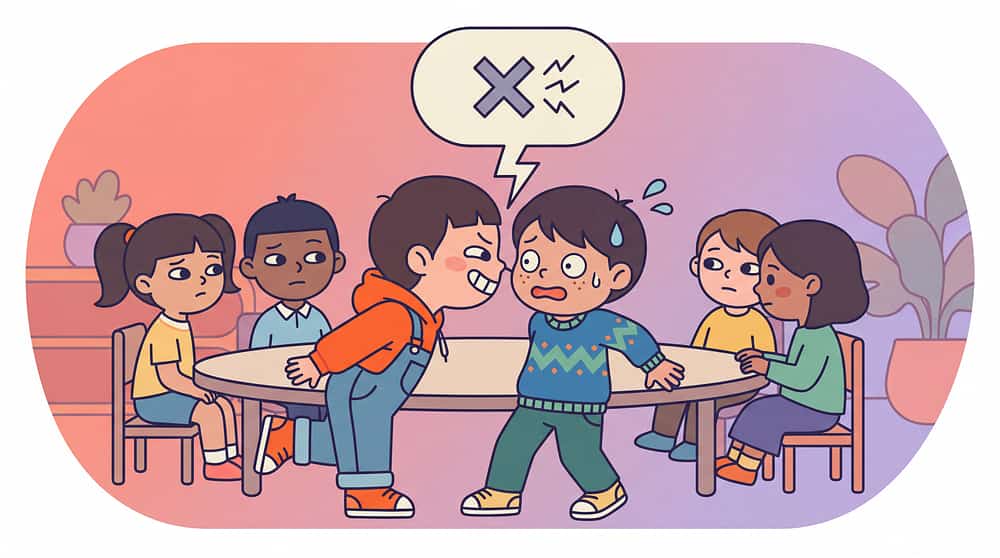
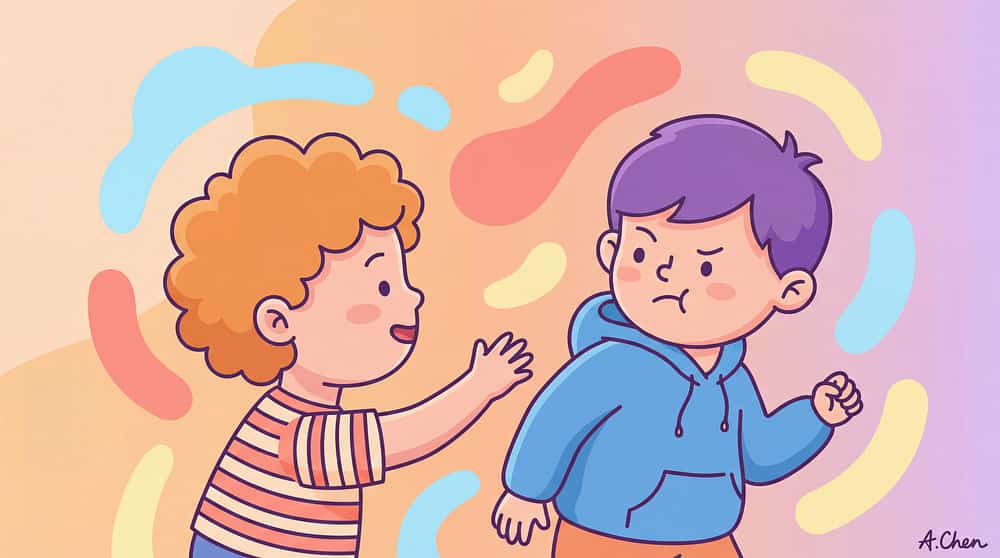
Child leans into another child's face during conversation. Peers physically lean away, making discomfort obvious. Social rejection accumulates. Child grows increasingly isolated without understanding the cause.
4
Public Spaces & Bedtime
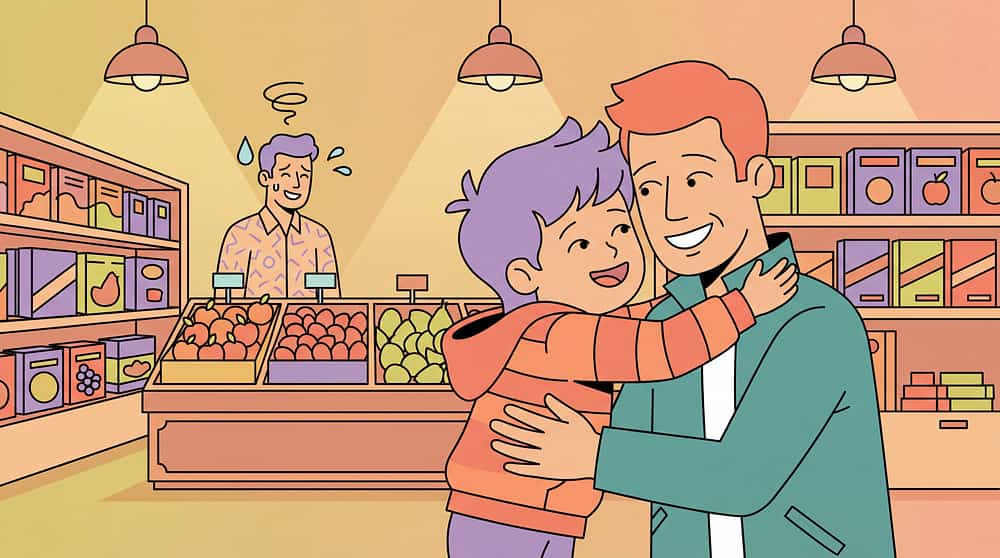
At the store, child touches strangers or hugs unknown adults. Parent anxious about safety. Even at home during bedtime routine, child doesn't recognize when family members need personal space. Exhaustion sets in.

The Science Behind It
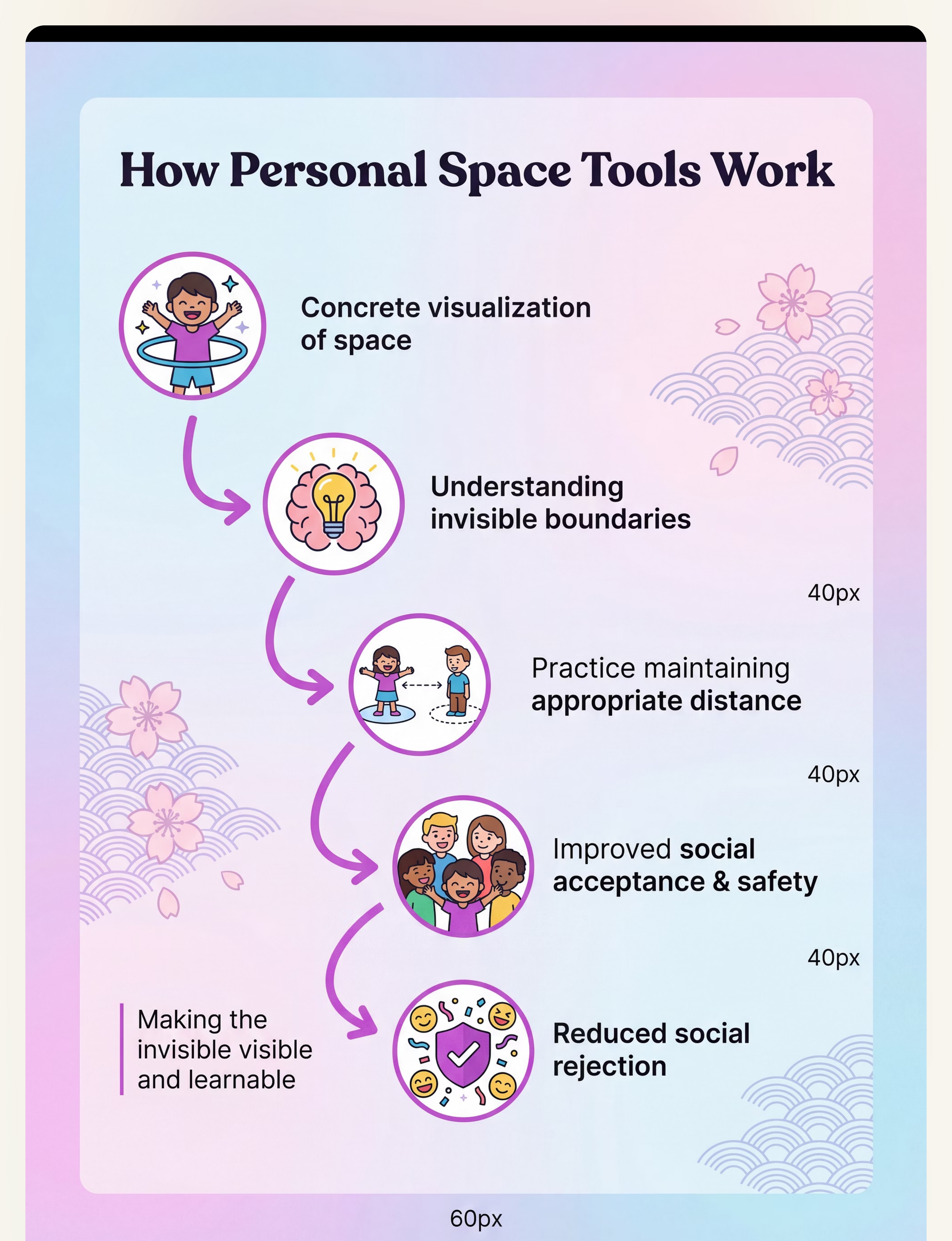
Understanding personal space is a critical social skill that many children with autism don't intuitively grasp. The mechanism for teaching it follows a proven progression that moves from concrete to abstract understanding.
Concrete Visualization
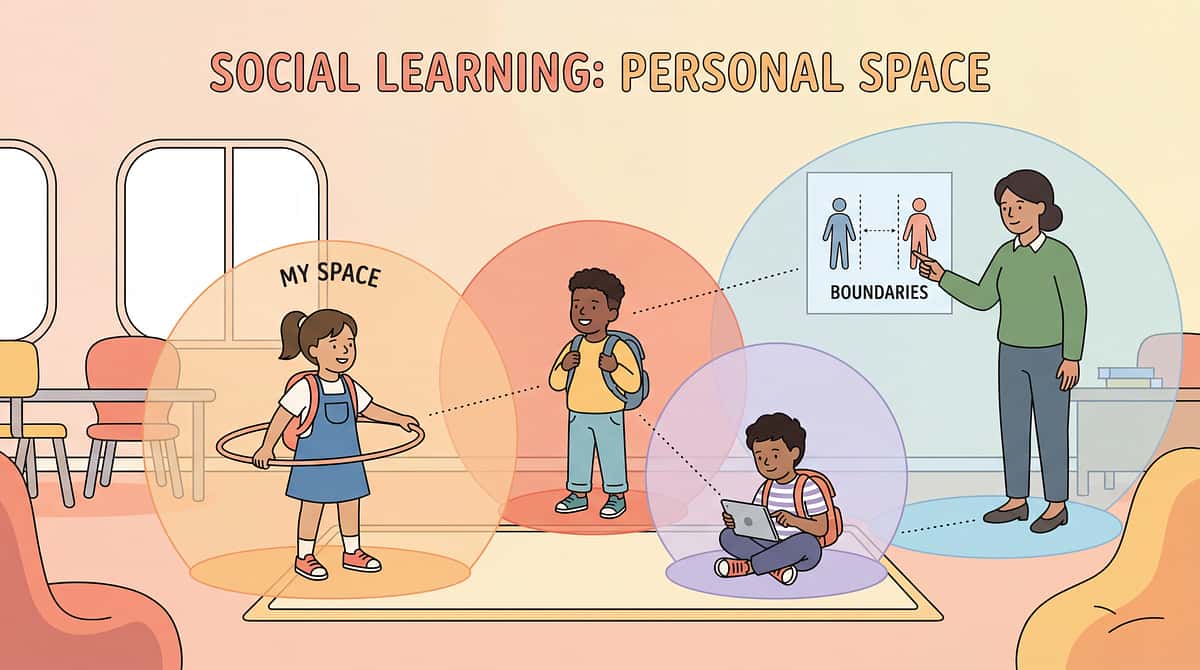
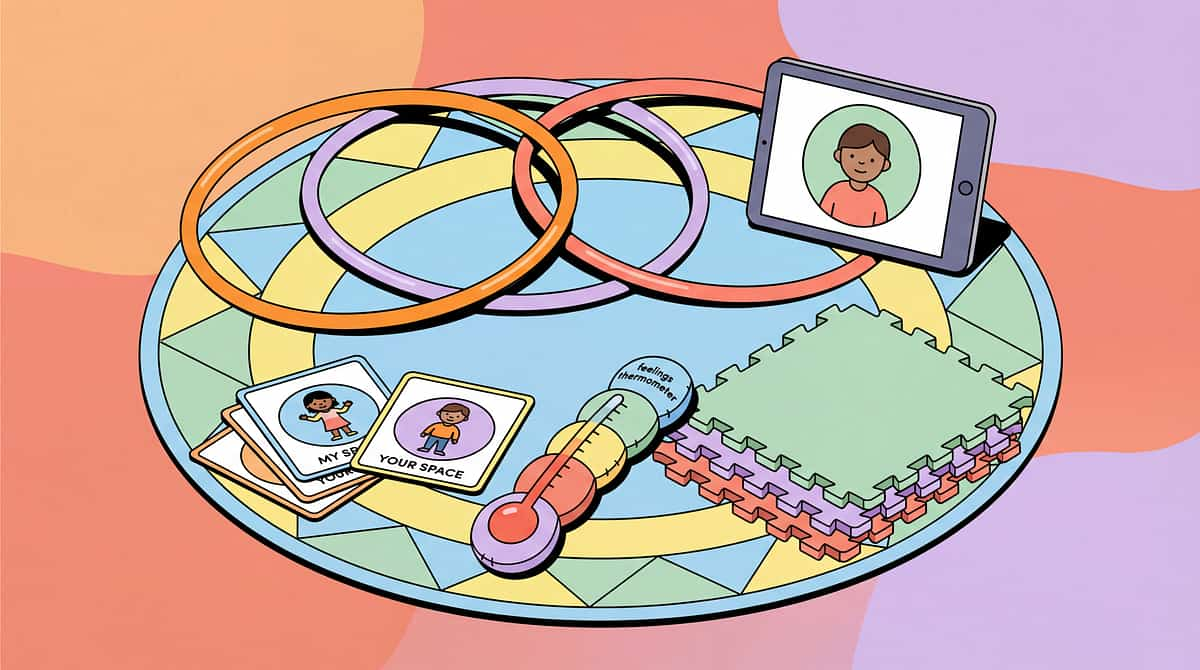
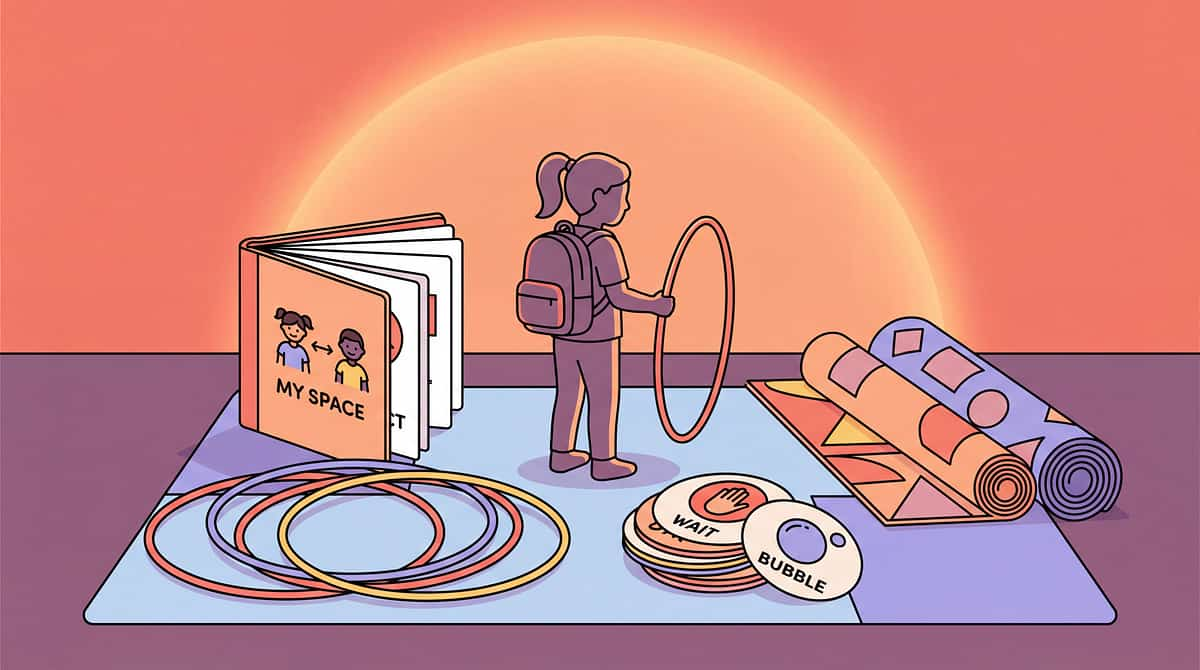
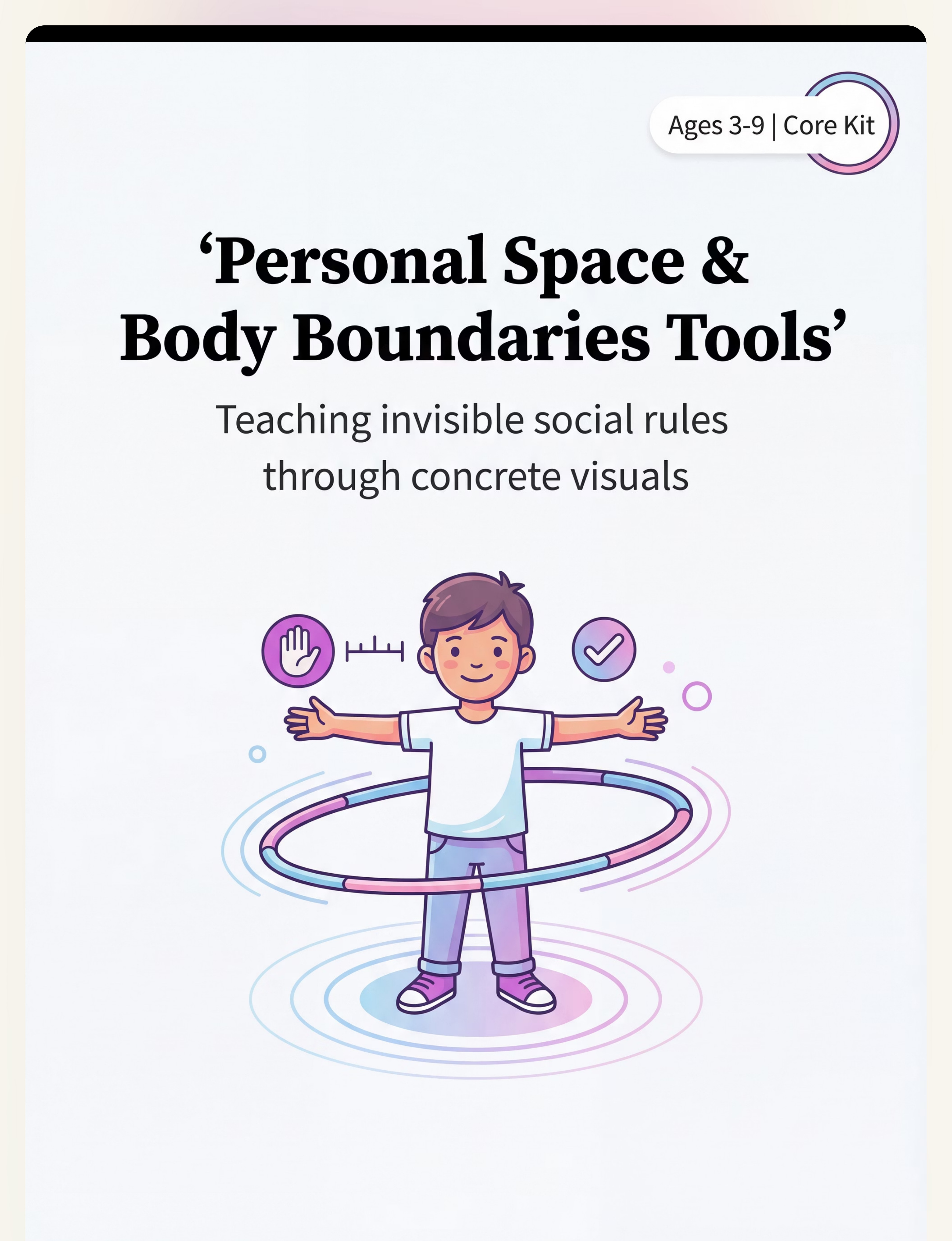
Making invisible boundaries visible through hula hoops, floor circles, or arm's-length demonstrations creates a tangible reference point.
Understanding Development
Children begin recognizing that invisible social boundaries exist and matter to others' comfort and their own safety.
Guided Practice
Repeated practice in safe environments with feedback helps children internalize appropriate distances for different relationships.
Social Acceptance
Improved boundary awareness leads to better peer interactions and reduced social rejection from uncomfortable proximity.
Enhanced Safety
Children learn body safety concepts, understand consent, and develop protection against inappropriate touch by others.
Personal Space
Physical Boundaries
Body Safety
Social Appropriateness
Sensory Awareness

How to Use It Right
1
Use Concrete Visuals
Start with physical objects like hula hoops or floor circles that children can see and touch. These make the invisible concept of personal space tangible and learnable.
2
Teach Different Zones
Explain that different relationships require different distances - close family can be near, friends stay arm's length, strangers need greater distance. Context matters.
3
Connect to Feelings
Help children understand how others feel when personal space is invaded. "When you stand too close, it makes them uncomfortable or worried."
4
Practice in Safe Settings
Create opportunities to practice maintaining appropriate distance in controlled environments before expecting it in social situations.
5
Include Body Safety
Always pair personal space teaching with body safety and consent education. Children need to know their own boundaries are equally important.
6
Reinforce Without Shaming
Use gentle reminders and positive reinforcement. Violations come from not knowing the rules, not from deliberate disrespect.
Duration Note: Conduct 10-15 minute focused teaching sessions, followed by ongoing reinforcement in daily situations. Consistency builds lasting habits over 4-8 weeks.
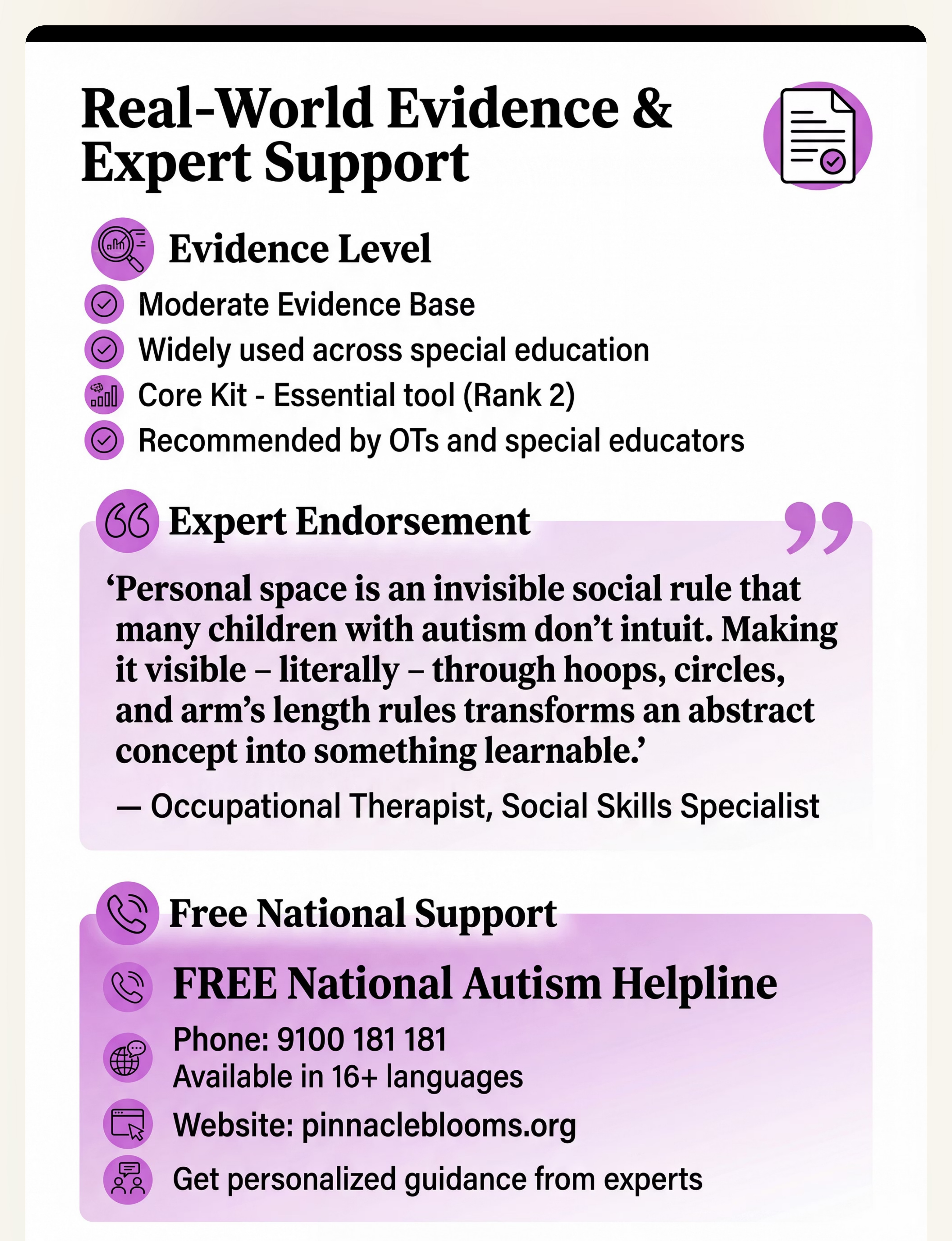
Expert Endorsement
"Personal space is an invisible social rule that many children with autism don't intuit. Making it visible - literally - through hoops, circles, and arm's length rules transforms an abstract concept into something learnable."— Occupational Therapist, Social Skills Specialist

SpEd + OT Recommended
Co-owned by Special Education and Occupational Therapy professionals for comprehensive boundary education
Moderate Evidence
Supported by clinical research and extensive field experience in social skills development
Rank #2 in Category
Core Kit essential tool for social skills development across all settings

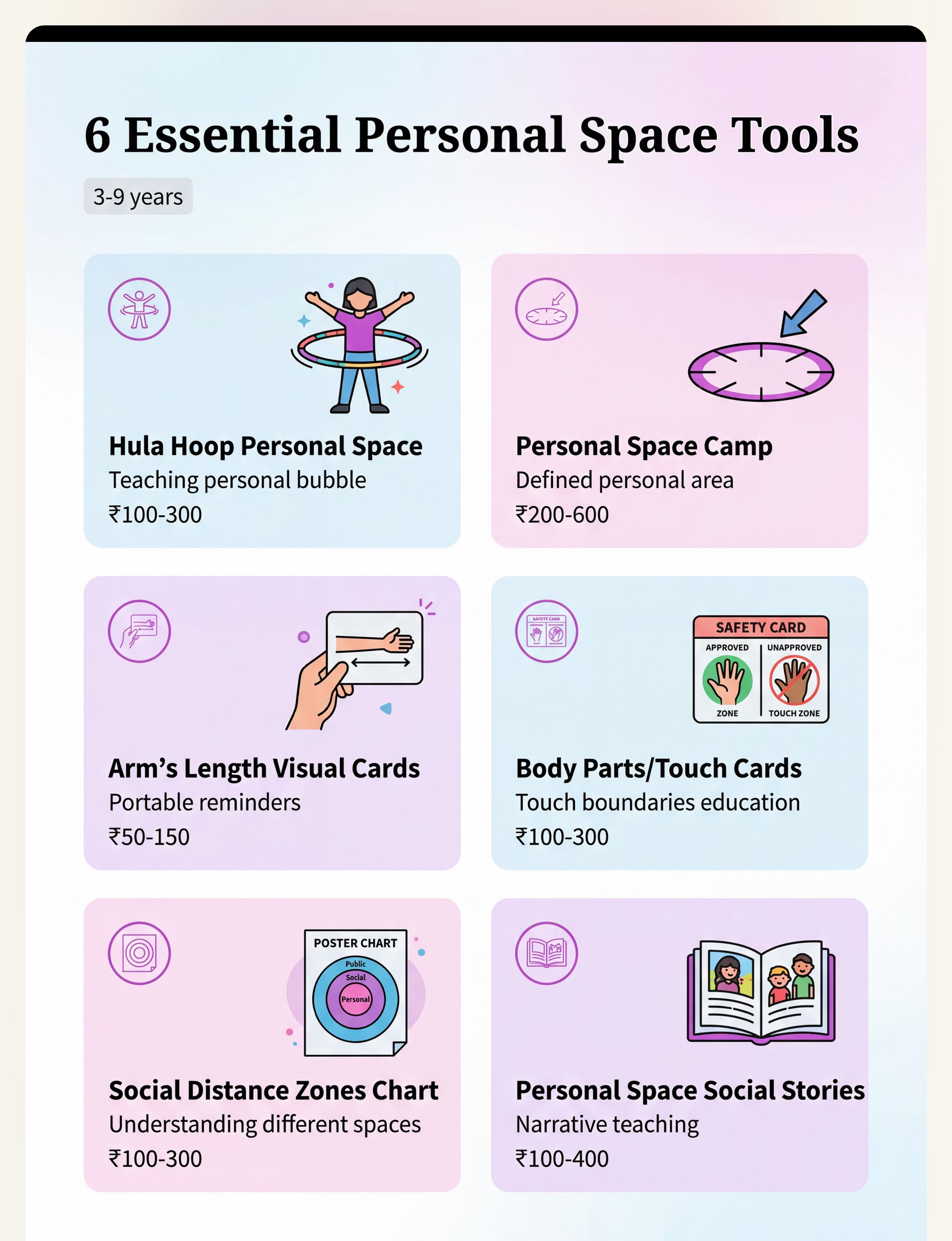
Choose Your Option (6 Variants)
Hula Hoop Personal Space
Best for: Teaching personal bubble concept
Ages: 3-9 years | Settings: Clinic, School, Home
Portability: Low | Price: ₹100–300
Standard hula hoop creates concrete space visualization that children can see and step inside.
Personal Space Camp/Circle
Best for: Classroom and group settings
Ages: 3-9 years | Settings: School, Clinic
Portability: Low | Price: ₹200–600
Floor mat or carpet circle defines personal area, excellent for classroom management.
Arm's Length Visual Cards
Best for: Portable reminders, social situations
Ages: 4-9 years | Settings: All
Portability: Very High | Price: ₹50–150
Pocket-sized reminder cards for quick reference showing appropriate distance.
Body Parts/Touch Cards
Best for: Safety and appropriate touch teaching
Ages: 3-9 years | Settings: Home, Clinic, School
Portability: High | Price: ₹100–300
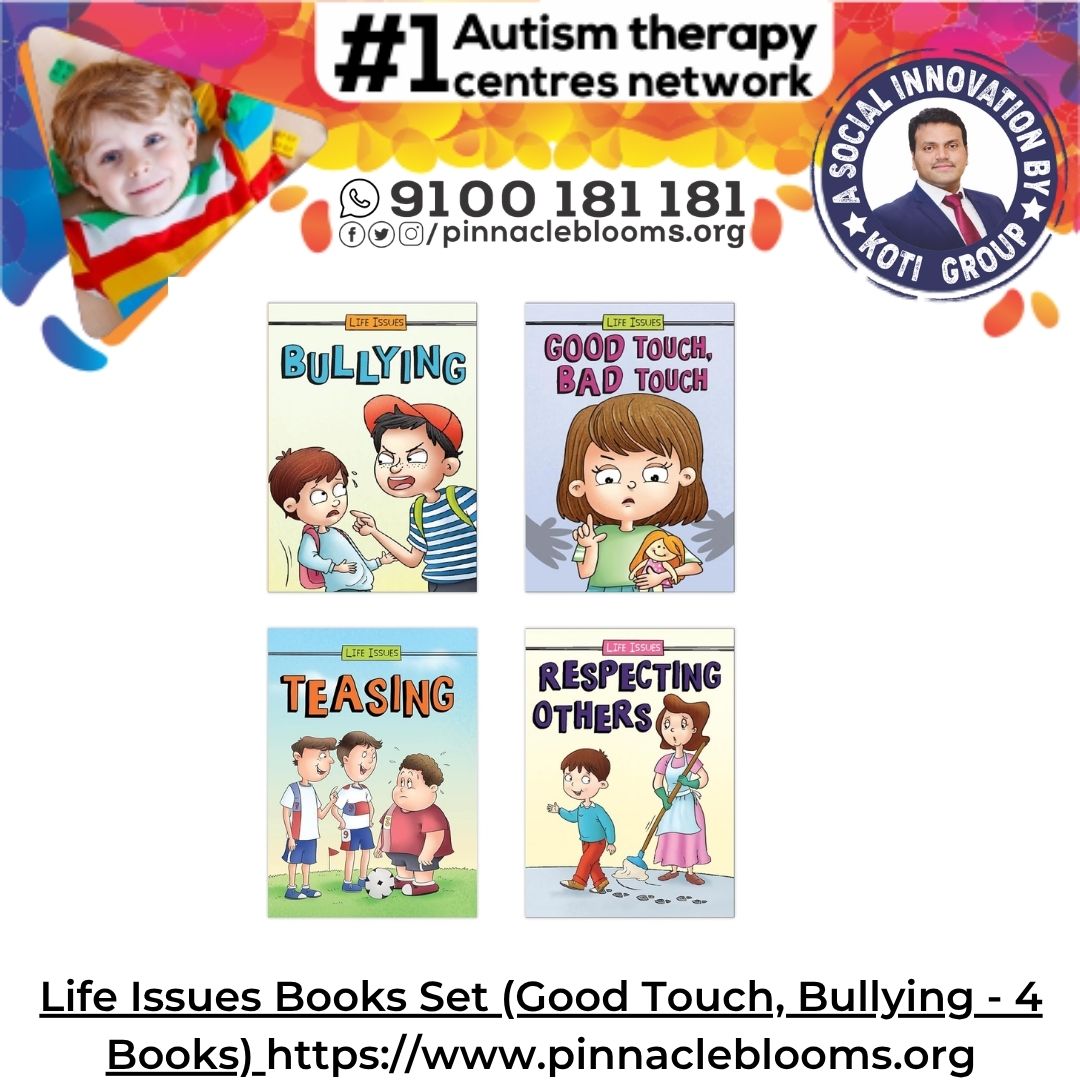
Visual cards showing which touches are appropriate and safe, essential for boundary education.
Social Distance Zones Chart
Best for: Understanding different space for different people
Ages: 5-9 years | Settings: Clinic, School, Home
Portability: Low | Price: ₹100–300
Poster showing intimate/personal/social/public zones with clear visual distinctions.
Personal Space Social Stories
Best for: Explaining why, building understanding
Ages: 3-9 years | Settings: All
Portability: High | Price: ₹100–400
Story books or cards that narratively teach personal space concepts and reasons behind them.
By Goal
- Concrete teaching: Hula Hoop (4.5.1)
- Portable reminder: Arm's Length Cards (4.5.3)
- Safety education: Touch Cards (4.5.4)
- Understanding context: Zones Chart (4.5.5)
By Setting
- Classroom: Personal Space Camp (4.5.2)
- Home: Hula Hoop (4.5.1)
- All settings: Visual Cards (4.5.3) or Stories (4.5.6)
- Therapy clinic: Any combination
By Portability
- Very High: Arm's Length Cards (4.5.3)
- High: Touch Cards (4.5.4), Stories (4.5.6)
- Low: Hula Hoop (4.5.1), Camp (4.5.2), Chart (4.5.5)
Specifications & Zone Guide
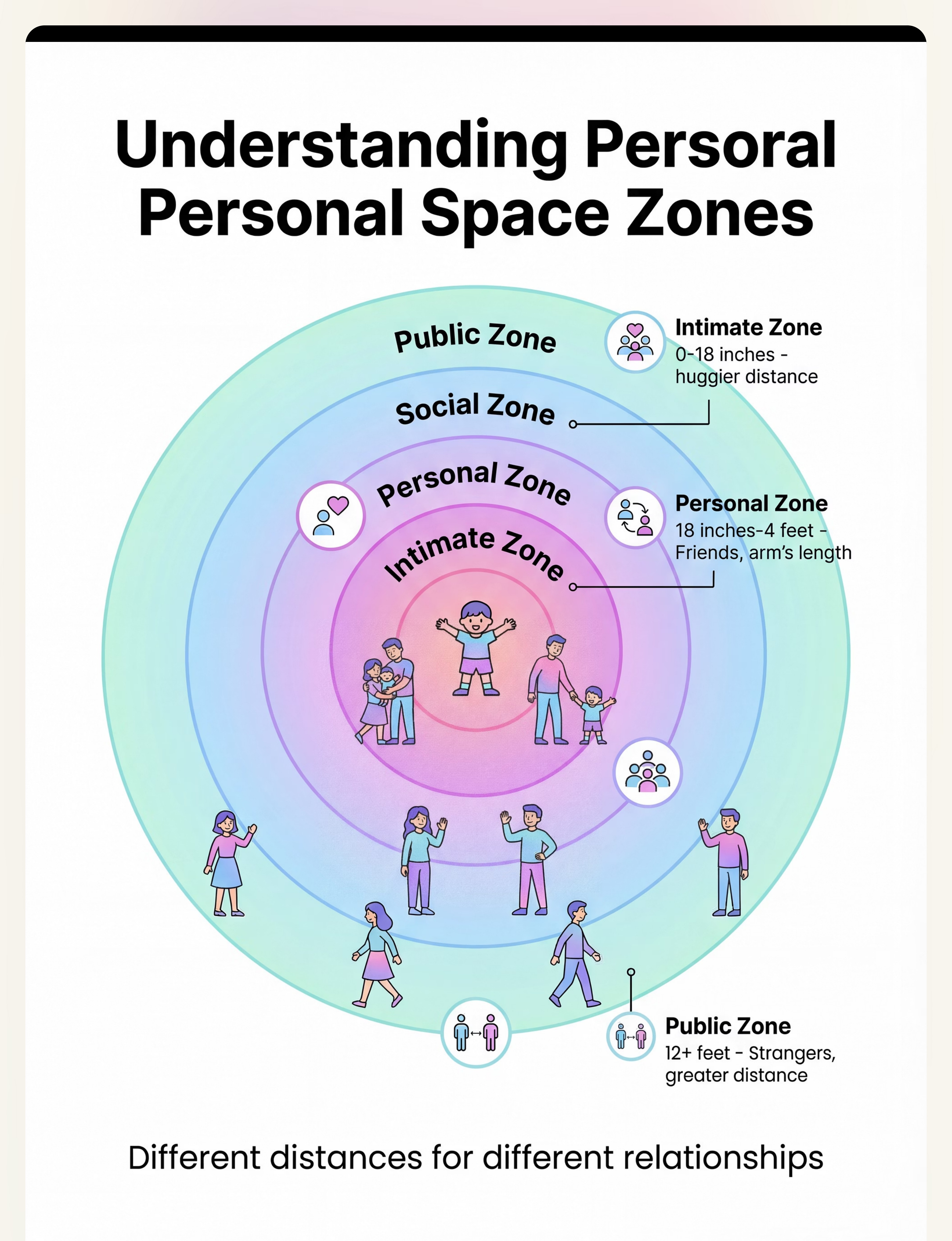
Understanding that personal space varies by relationship is crucial. These zones represent the invisible boundaries that govern comfortable social interaction across cultures and contexts.
Intimate Zone
Distance: 0-18 inches
Close family members, hugging distance. Reserved for people with whom we have closest emotional bonds.
Personal Zone
Distance: 18 inches - 4 feet
Friends and familiar people, arm's length. Comfortable distance for conversation with known individuals.
Social Zone
Distance: 4-12 feet
Acquaintances and colleagues. Professional or casual social interactions maintain this comfortable distance.
Public Zone
Distance: 12+ feet
Strangers and public spaces. Greatest distance maintained with unknown individuals for safety and comfort.
Materials & Key Features
Common Materials
- Hula hoops in various sizes
- Floor mats and carpet circles
- Visual reminder cards (laminated)
- Educational posters and charts
Key Features
- Concrete boundary visualization
- Clear zone differentiation
- Integrated safety component
- Multiple practice opportunities
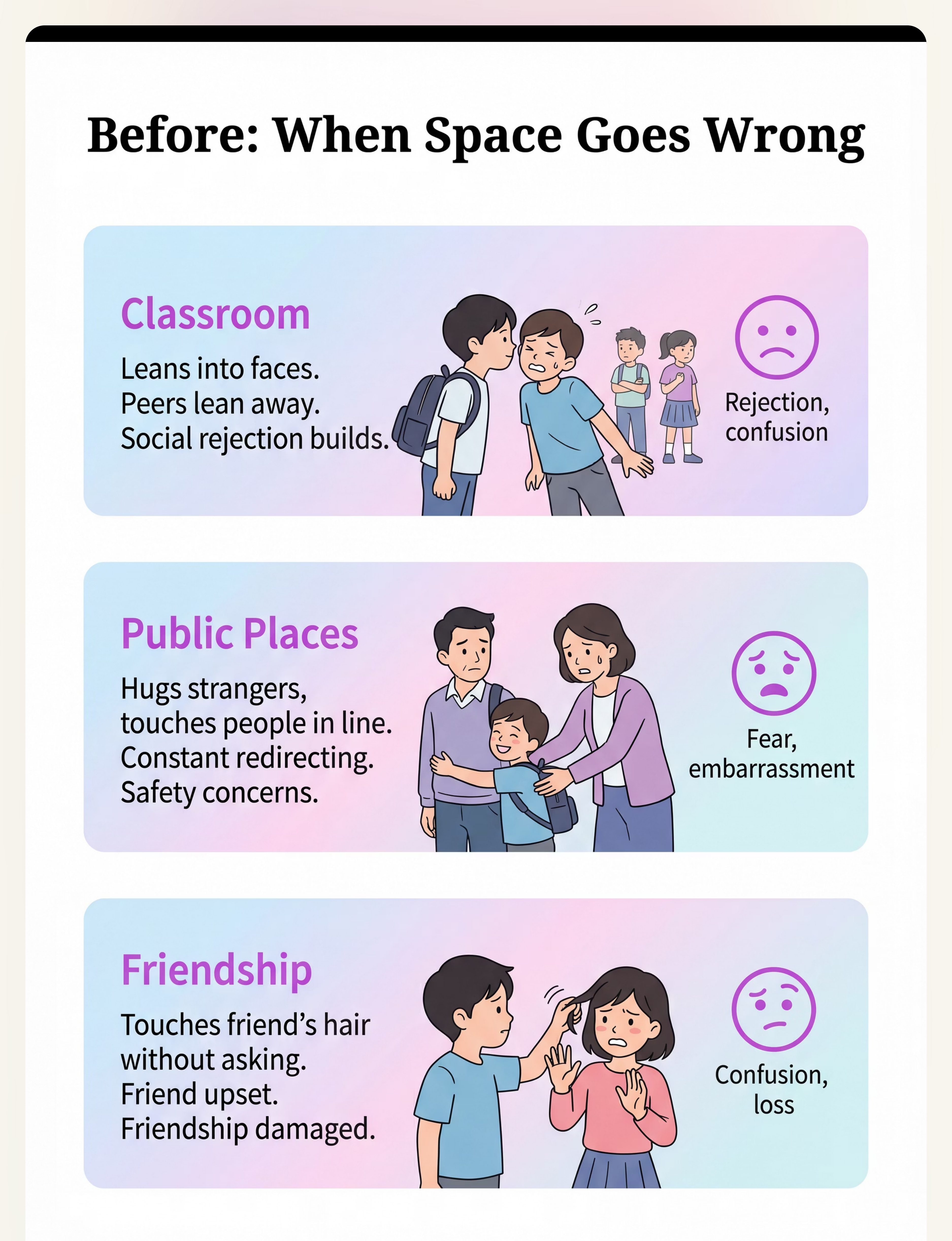
The Struggle (Before)

Classroom Rejection
Situation: Child leans into classmates' faces when talking during group activities.
Experience: Peers instinctively lean away, visibly uncomfortable. Child doesn't notice the social cues. Social rejection builds invisibly day after day.
Emotion:Rejection, confusion, isolation

Public Safety Concerns
Situation: Child hugs strangers at the grocery store or touches people waiting in line.
Experience: Parent constantly redirecting and apologizing. Growing safety concerns. Embarrassing situations create anxiety about public outings.
Emotion:Fear, embarrassment, helplessness

Damaged Friendships
Situation: Child touches friend's hair or belongings without asking permission first.
Experience: Friend becomes upset and pulls away. Child genuinely doesn't understand why. Friendship damaged without comprehension of the boundary violation.
Emotion:Confusion, loss, hurt feelings

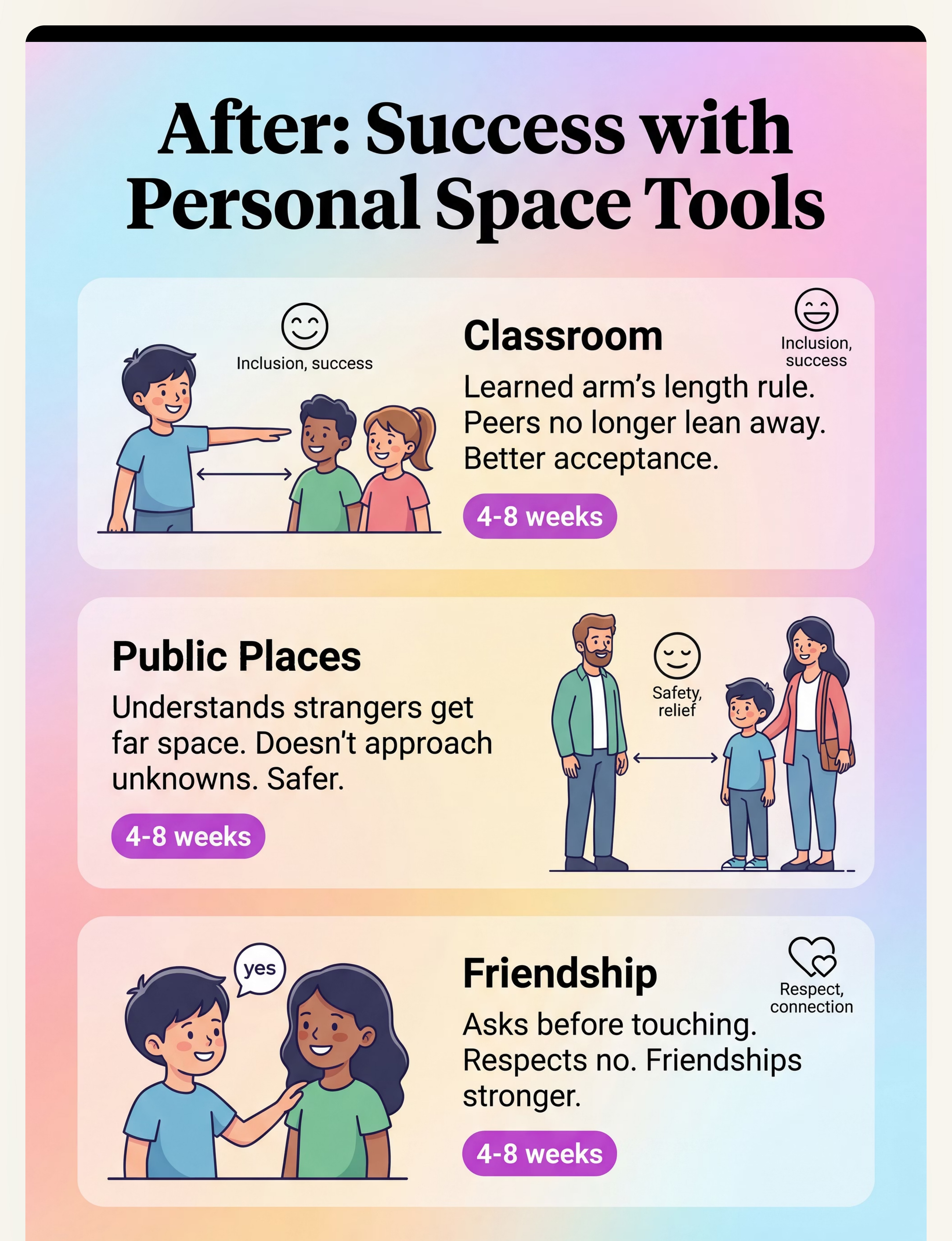
The Breakthrough (After)
Classroom Inclusion
Situation: Child has learned and practices the 'arm's length' rule during conversations.
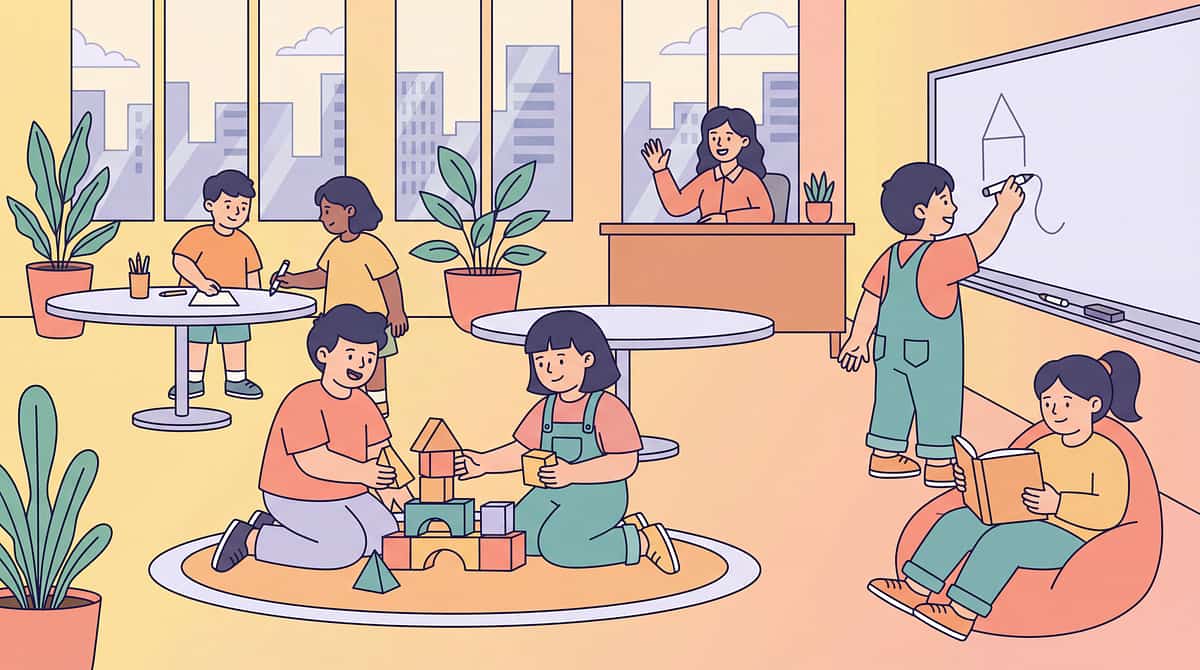
Experience: Peers no longer lean away uncomfortably. Group activities feel more natural. Better social acceptance and inclusion emerge naturally.
Emotion:Inclusion, confidence, success
Timeframe: 4-8 weeks
Public Safety Achieved
Situation: Child understands the concept: 'Strangers get far space, family gets close space.'
Experience: Doesn't approach or touch unknown people anymore. Public outings feel safer. Parents experience relief and reduced anxiety.
Emotion:Safety, relief, pride
Timeframe: 4-8 weeks
Respectful Friendships
Situation: Child has learned to ask before touching: 'Can I see your hair? Can I hold that?'
Experience: Respects when friends say 'no.' Friendships strengthen through demonstrated respect for boundaries.
Emotion:Respect, connection, belonging
Timeframe: 4-8 weeks
What to Expect (Realistic Timelines)
Child understands personal space concept
2-4 weeks
Initial comprehension that invisible boundaries exist and matter to others' comfort.
Maintains arm's length with non-family
4-8 weeks
Consistently applies learned distance rules with peers, teachers, and acquaintances.
Asks before touching others
4-8 weeks
Demonstrates understanding of consent by requesting permission before physical contact.
Understands different zones for different people
2-3 months
Differentiates appropriate distance based on relationship type and context.
Improved peer acceptance
2-3 months
Noticeable improvement in social interactions as boundary awareness reduces peer discomfort.
Better body safety awareness
4-8 weeks
Demonstrates understanding of personal safety boundaries and consent concepts.
Remember: Progress varies by child. Some children grasp concepts quickly while others need more practice. Consistency and positive reinforcement accelerate learning. Every small step forward matters.
Is This Right for My Child? (2-Minute Check)
1
Does your child get too close to others physically?
If yes, this indicates: Personal space teaching needed
Standing too close violates invisible social boundaries that can be taught through concrete visualization.
Confidence: 95%
2
Does your child touch others without asking permission?
If yes, this indicates: Boundary education needed
Physical contact without consent suggests need for explicit teaching about appropriate touch and permission.
Confidence: 93%
3
Do peers seem uncomfortable with your child's proximity?
If yes, this indicates: Space awareness training will help
Observable peer discomfort signals that personal space violations are affecting social acceptance.
Confidence: 90%
4
Are you concerned about your child's safety related to touch and strangers?
If yes, this indicates: Body safety education critical
Safety concerns underscore urgent need for boundary education including body safety and stranger awareness.
Confidence: 96%
Interpreting Results: Three or more 'yes' answers indicate a strong fit. Even one 'yes' suggests these tools could benefit your child. Personal space education is a foundational life skill that supports social success and personal safety.
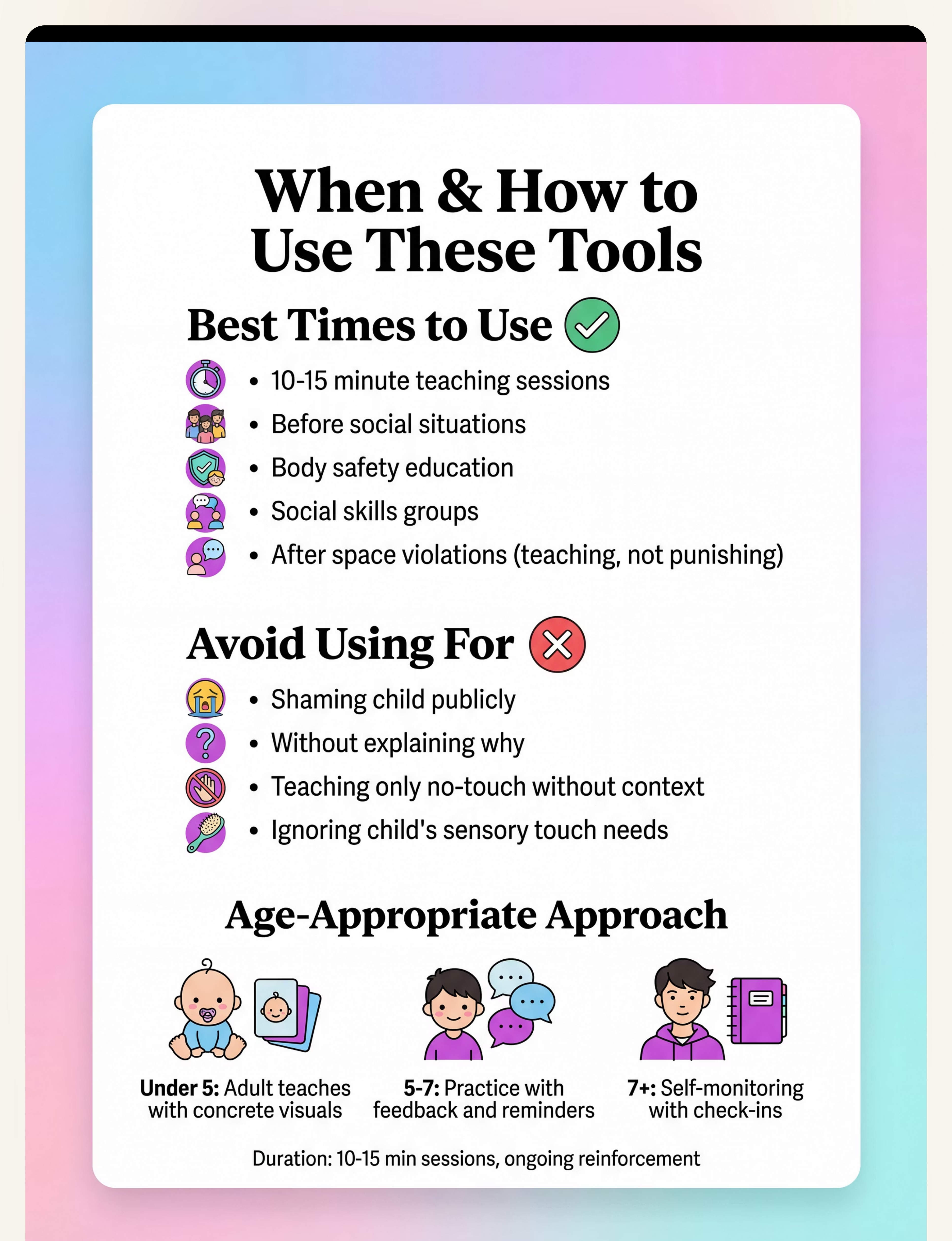
Usage Guide: When and How
When to Use ✓
- Initial teaching sessions with concrete visuals
- Before anticipated social situations as preparation
- After space violations for teaching (not punishing)
- During body safety education lessons
- In social skills groups with peers
- When peers show visible discomfort
When NOT to Use ✗
- To shame child publicly about violations
- Without explaining the 'why' behind rules
- Teaching only 'no touch' without relationship context
- Ignoring child's sensory needs for physical input
Supervision by Age
Age Range | Supervision Level | Notes | |
Under 5 years | Adult teaches with concrete visuals | Direct instruction required; use hula hoops and physical demonstrations | |
5-7 years | Practice with feedback and reminders | Increasing independence with consistent prompts and positive reinforcement | |
7+ years | Self-monitoring with check-ins | Can apply rules independently with periodic review and support |
Duration Note: Conduct focused 10-15 minute teaching sessions rather than lengthy explanations. Follow with ongoing reinforcement during daily activities. Consistency matters more than session length.
Home
School
Clinic
Community
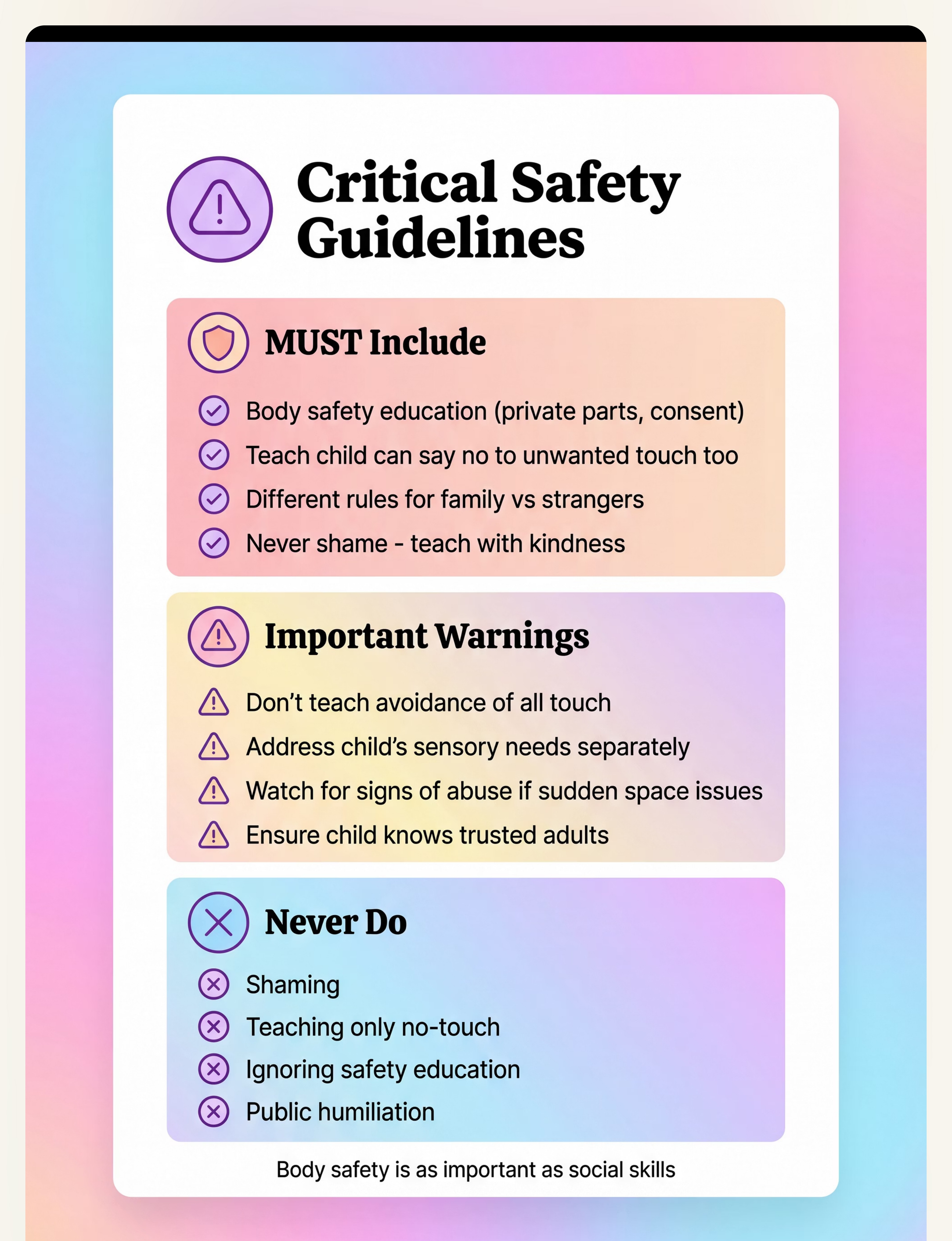
Safety First
Critical Safety Requirements
- MUST include body safety education about private parts and consent
- Teach that child can say 'no' to unwanted touch from anyone
- Different rules for different relationships - not one-size-fits-all approach
- Never shame - teach with kindness, patience, and understanding
Important Warnings
- Don't teach complete avoidance of all physical touch
- Address child's sensory needs for touch separately from boundaries
- Watch for signs of abuse if sudden space issues emerge
- Ensure child knows who their trusted adults are
Contraindicated Approaches
- Shaming child for boundary violations
- Teaching only 'no touch' without context
- Ignoring body safety education component
- Public humiliation or harsh correction
Safety Checklist
Before Starting
- Concrete visual tool prepared
- Different zones will be taught
- Body safety lesson included
- Positive, non-shaming approach planned
During Teaching
- Explaining the 'why' clearly
- Using concrete demonstrations
- Differentiating by relationships
- Including consent concepts
Signs of Success
- Child uses arm's length rule
- Asks before touching others
- Understands zone differences
- Better peer acceptance
- Demonstrates body safety knowledge
Common Questions (Honest Answers)
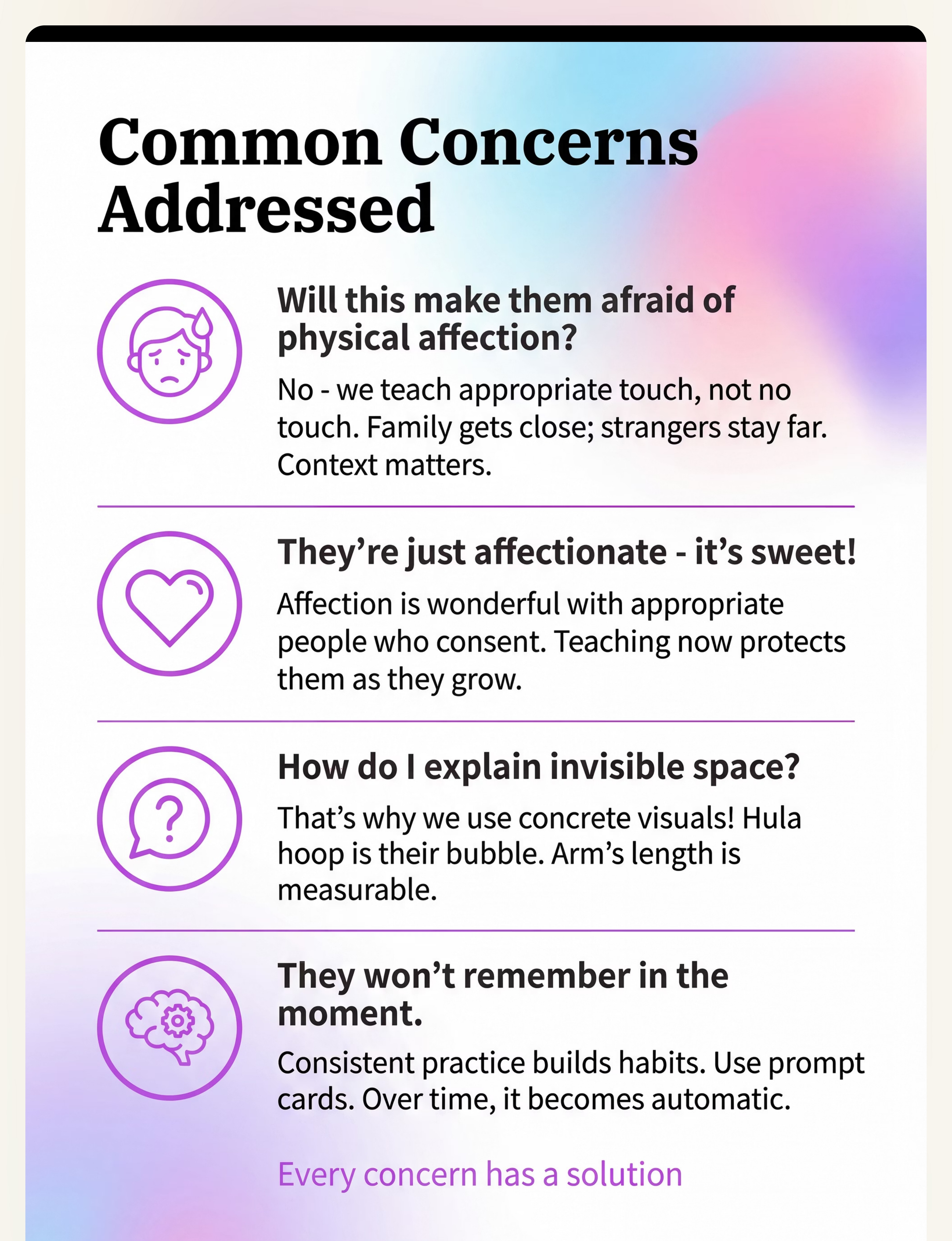
Q: Won't this make my child afraid of physical affection?
A: No - we're teaching APPROPRIATE touch, not eliminating affection. Family members can be close; strangers stay far. Context matters enormously. Children learn who they can hug (family, close friends with permission) and who stays at arm's length (peers, acquaintances, strangers).
Try this: Emphasize different rules for different relationships. Create a visual showing concentric circles with photos.
Q: My child is just naturally affectionate - isn't that sweet?
A: Affection is wonderful with appropriate people who consent. However, strangers may not welcome it, peers may be uncomfortable, and as children grow, inappropriate touch has serious social and safety implications. Teaching boundaries now protects them throughout life.
Try this: Channel affection appropriately and always teach consent. "Can I give you a hug?" empowers both parties.
Q: How do I explain something invisible like personal space?
A: That's exactly why we use concrete visuals! The hula hoop becomes their visible 'bubble.' Arm's length is physically measurable. The zones chart shows different distances. Abstract concepts become concrete and learnable through visualization.
Try this: Always pair the concept with physical demonstration. Let child step in and out of the hula hoop.
Q: They won't remember this in the moment when they're excited
A: Consistent practice builds automatic habits over time. Use pocket-sized prompt cards as reminders. Review expectations before entering social situations. Over weeks, 'arm's length' becomes second nature. Also teach others to kindly set boundaries with your child.
Try this: Practice regularly in low-pressure situations; use visual reminders; celebrate small successes; build the habit gradually.
Investment Guide
Budget Option
What you get: Hula hoop plus DIY visual reminder cards
Investment: ₹100-200
Why it works: Highly effective and simple approach. The hula hoop provides concrete visualization while homemade cards offer portable reminders.
Perfect for families wanting immediate results without significant expense. Most children respond well to basic tools used consistently.
Premium Option
What you get: Complete personal space curriculum with zones chart, social stories, and multiple card sets
Investment: ₹400-800
Brands: Social Thinking, Special education suppliers
Comprehensive approach includes multiple teaching tools, body safety materials, and professionally designed resources for various settings.
Overall Range: ₹50-600 | Category: Very Low Cost
Best Starting Point: Begin with a basic hula hoop (₹100-150) and DIY cards. If your child responds well and you want more comprehensive materials, gradually add zones chart, social stories, or commercial curricula. This staged approach keeps costs low while ensuring effectiveness.
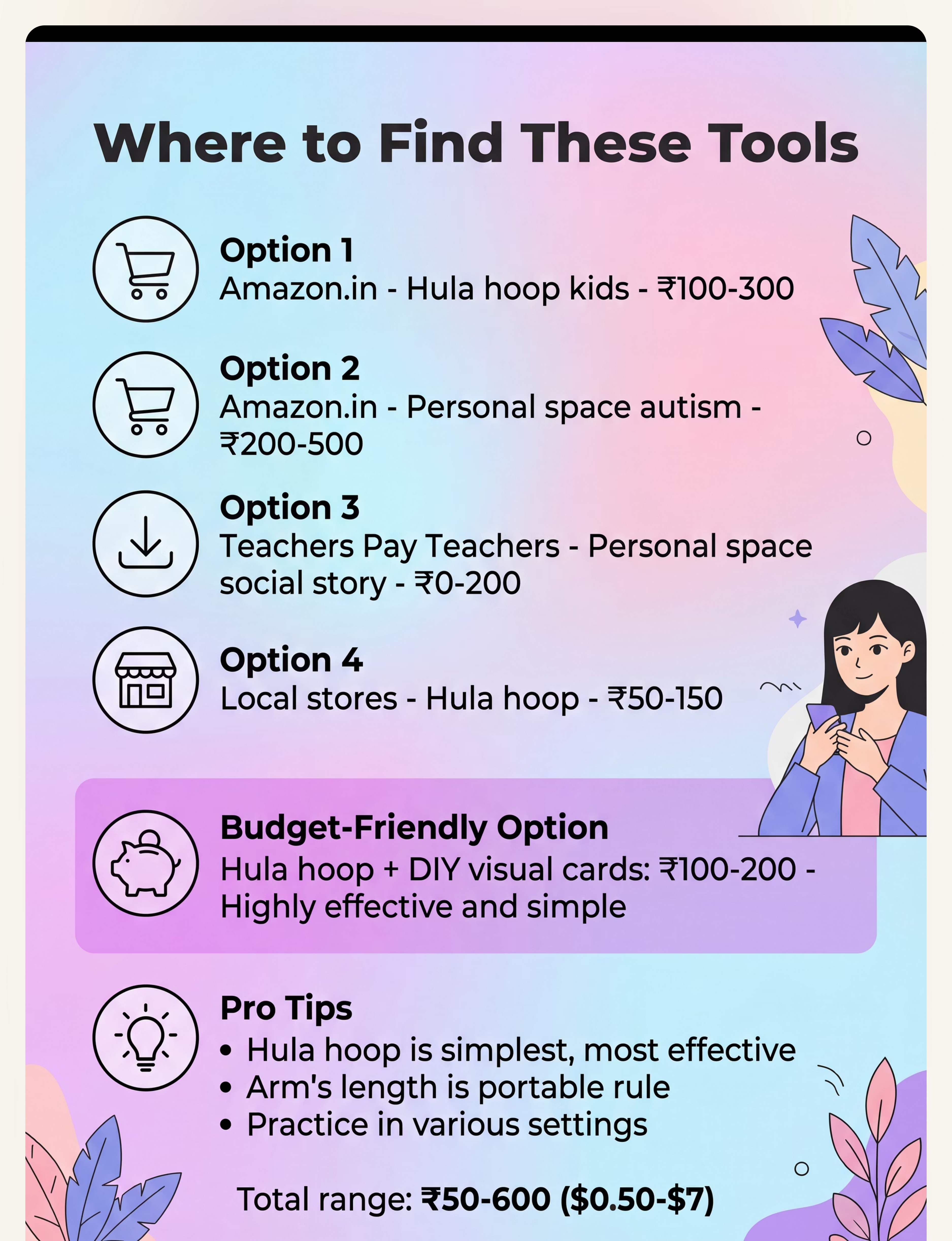
Where to Buy in India
Availability: DIY approach preferred and highly effective; some commercial materials available through online platforms and educational suppliers.
Amazon.in
Search: "hula hoop kids"
Price Range: ₹100-300
Wide selection of hula hoops in various sizes and colors. Prime delivery available in most areas.
Amazon.in
Search: "personal space autism"
Price Range: ₹200-500
Commercial social skills materials, visual cards, and educational resources.
Teachers Pay Teachers
Search: "personal space social story"
Price Range: ₹0-200
Downloadable printable resources, many free options, customizable materials.
Local Toy Stores
Search: "hula hoop"
Price Range: ₹50-150
Immediate availability, support local businesses, can assess quality in person.
Buying Tips (Money-Saving Strategies)
- Hula hoop is the simplest and most effective visual tool
- Arm's length rule is completely portable and free
- Create your own zone chart using child's photos and drawings
- Always include body safety component in your teaching
- Practice in various settings for generalization
- Start with DIY approach before investing in commercial materials
Red Flags (Avoid These Mistakes)
- Teaching rules without explaining the reasoning behind them
- Shaming or publicly correcting violations harshly
- Not including critical body safety education component
- Applying one-size-fits-all rule regardless of relationship context
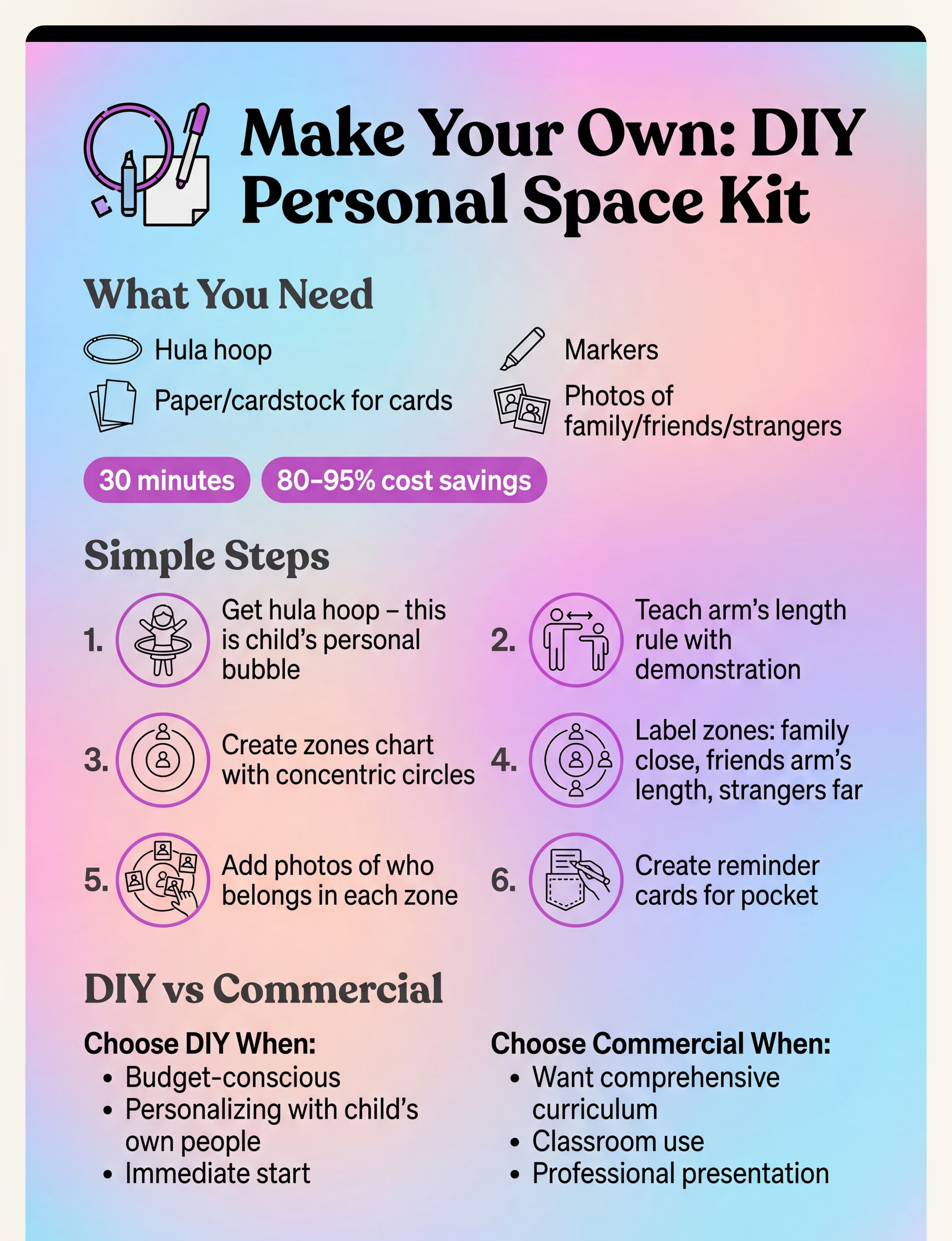
DIY Alternative (Save 80-95%)
DIY Overview
Feasibility: Very High
Cost Savings: 80-95% compared to commercial options
Time Investment: 30 minutes to create complete set
Materials You'll Need
- One hula hoop (₹50-150 from local store)
- Paper or cardstock for reminder cards
- Markers or colored pencils
- Photos of family members, friends, and generic strangers (printed or magazine cutouts)
- Optional: Laminating sheets or clear contact paper for durability
Step-by-Step Instructions
- Get your hula hoop - This becomes the child's visible 'personal bubble' they can step inside and understand physically
- Teach arm's length rule - Demonstrate with your child: extend one arm fully - that's the minimum comfortable distance for most interactions
- Create zones chart - Draw four concentric circles on poster board representing different distance zones
- Label each zone clearly - Intimate (family, 0-18 inches), Personal (friends, arm's length), Social (acquaintances, 4-12 feet), Public (strangers, 12+ feet)
- Add photos - Place actual photos of family in intimate zone, friends in personal zone, classmates in social zone, strangers in public zone
- Create pocket reminder cards - Small cards showing stick figures with arm's length measurement, laminate for durability
- Write simple social story - Brief story explaining personal space: "Different people need different space. Close family can be near. Friends stay arm's length away. Strangers need far space to feel comfortable."
DIY vs Commercial Comparison
When to DIY
- Budget-conscious families
- Want personalized materials with child's actual people
- Need simple, effective teaching tools
- Want to start immediately without waiting for delivery
Tradeoffs: Materials are less polished than commercial products; requires time to create content and visuals yourself.
When to Buy Commercial
- Want comprehensive professional curriculum
- Need detailed body safety education materials
- Using in classroom with multiple students
- Prefer professional presentation and durability
Benefits: Professional design, comprehensive content, tested materials, often includes body safety components.
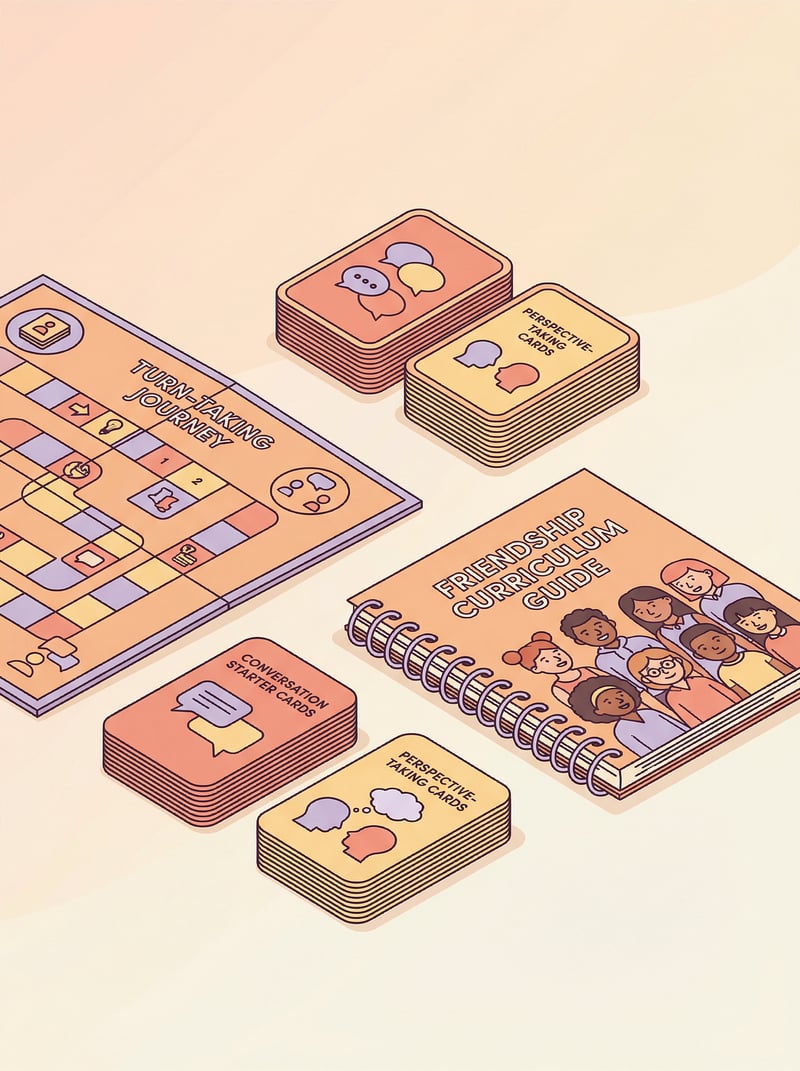
Preview of personal space body boundaries tools Therapy Material
Below is a visual preview of personal space body boundaries tools therapy material. The pages shown help educators, therapists, and caregivers understand the structure and content of the resource before use. Materials should be used under appropriate professional guidance.


Share this resource
Help others discover thisLink copied!
Measuring Success & Next Steps
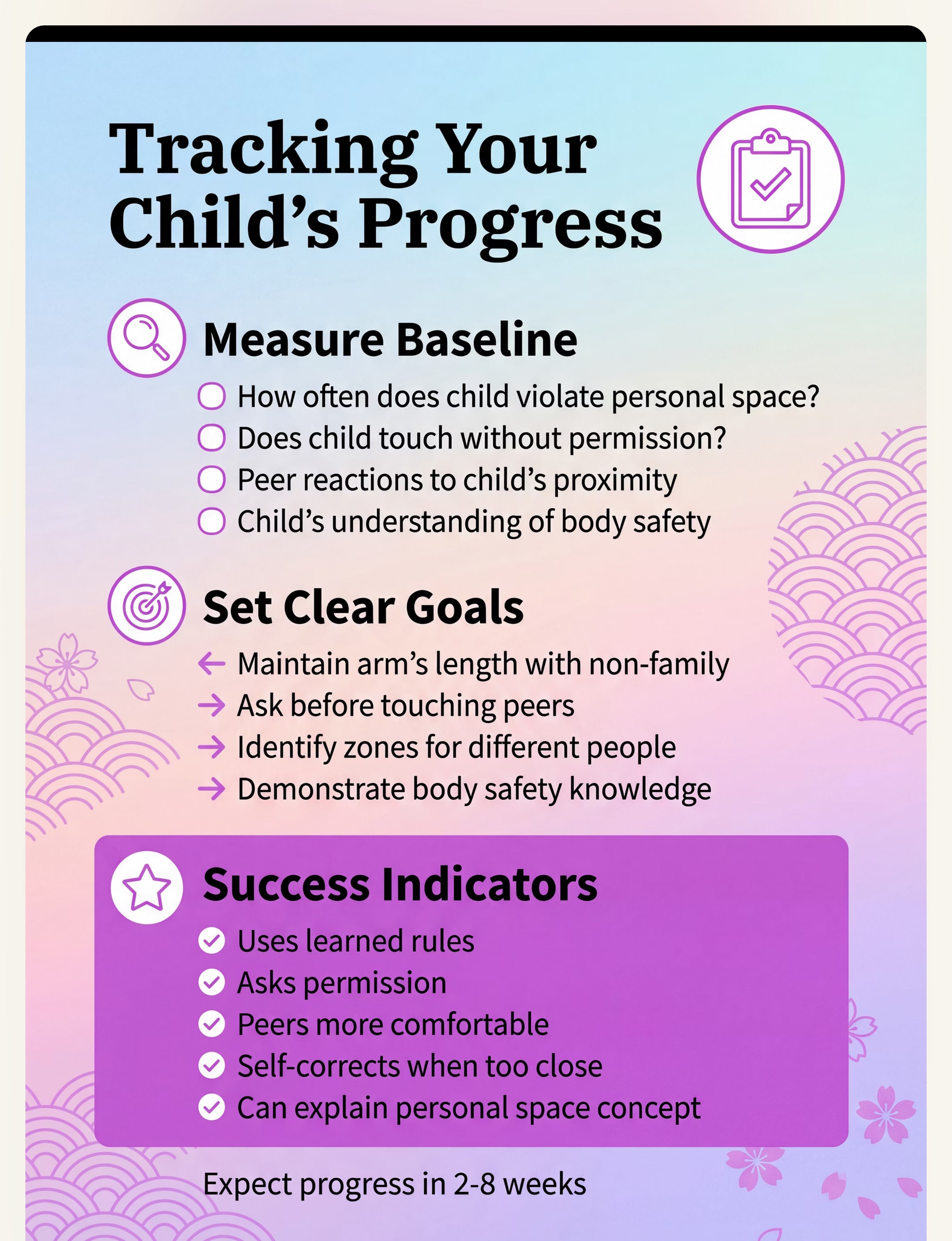
Track Your Child's Progress
Baseline Measures
What to track initially:
- How often does child violate personal space daily?
- Does child touch others without asking permission?
- How do peers react to child's proximity?
- Child's understanding of body safety concepts?
Goals to Achieve
What you're working toward:
- Child maintains arm's length with non-family consistently
- Child asks before touching peers or their belongings
- Child identifies appropriate zones for different people
- Child demonstrates body safety knowledge clearly
Success Indicators
Signs of improvement:
- Uses learned distance rules automatically
- Asks permission before physical contact
- Peers appear more comfortable around child
- Self-corrects when standing too close
- Can explain personal space concept to others
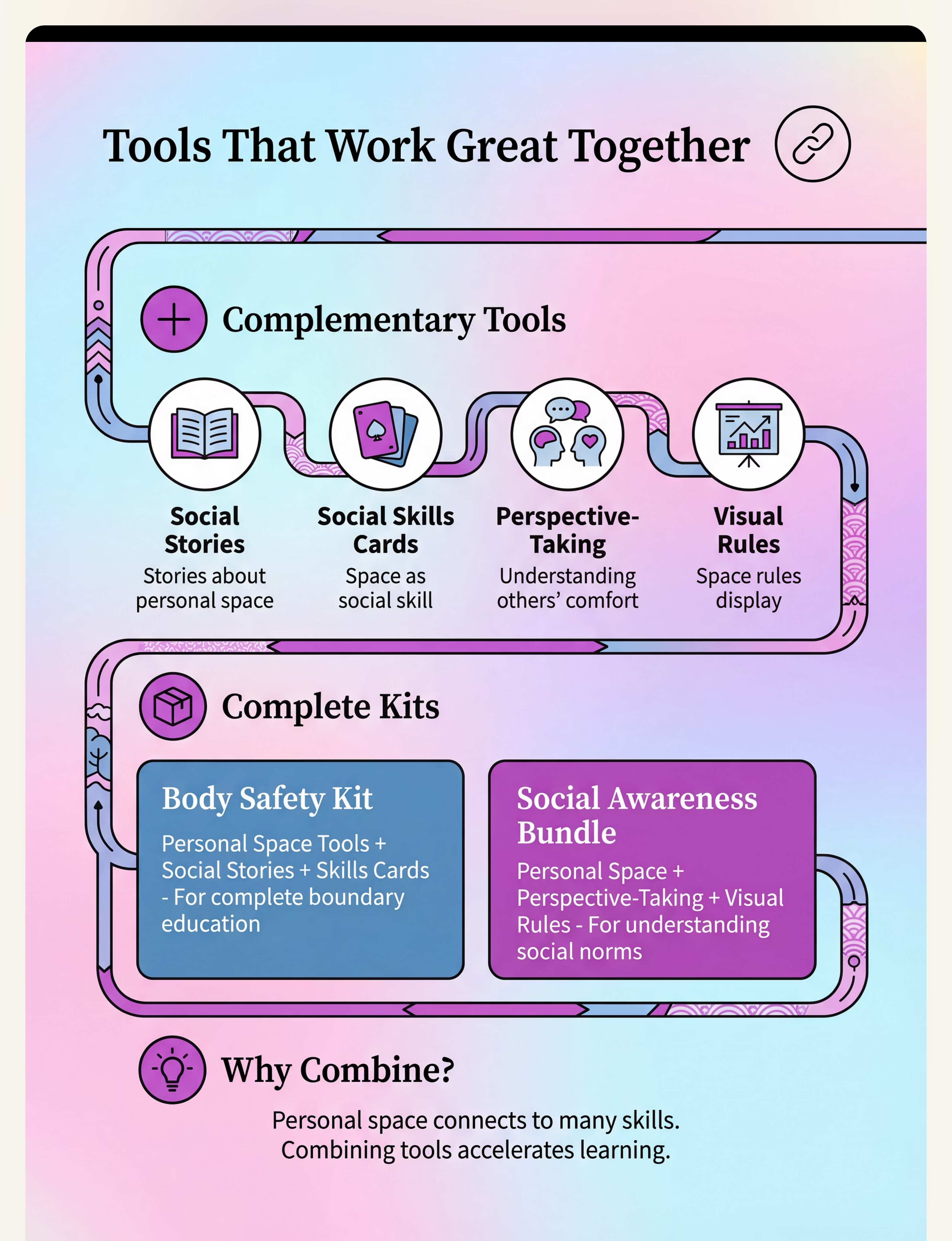
Complete the Support System
Personal space education works best as part of comprehensive social skills development. Consider pairing with these complementary tools:

Social Stories (ID: 2.2)
Create narratives specifically about personal space situations to reinforce learning through storytelling.

Social Skills Cards (ID: 4.1)
Practice personal space as one component of broader social skills development.

Perspective-Taking Tools (ID: 4.2)
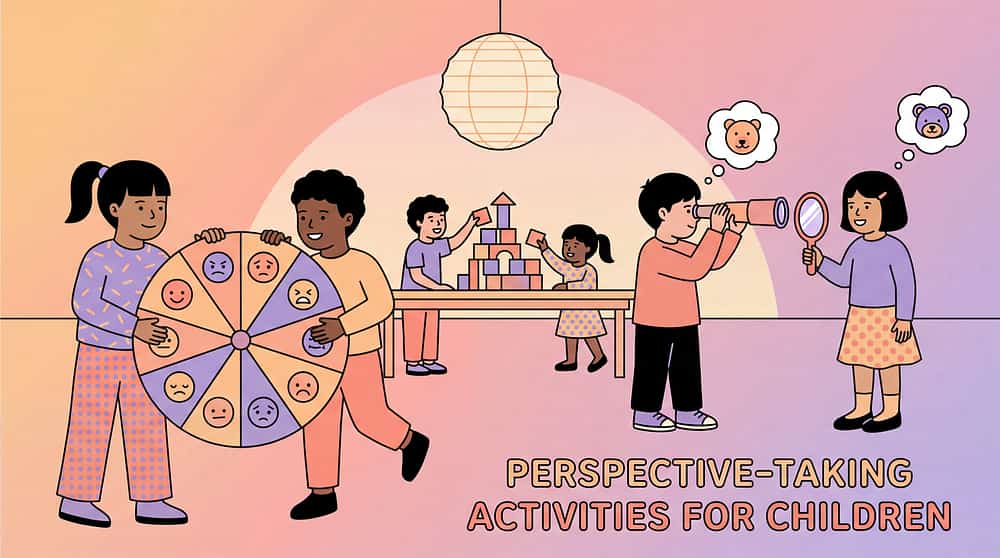
Help children understand how others feel when personal space is invaded.
Quick Summary
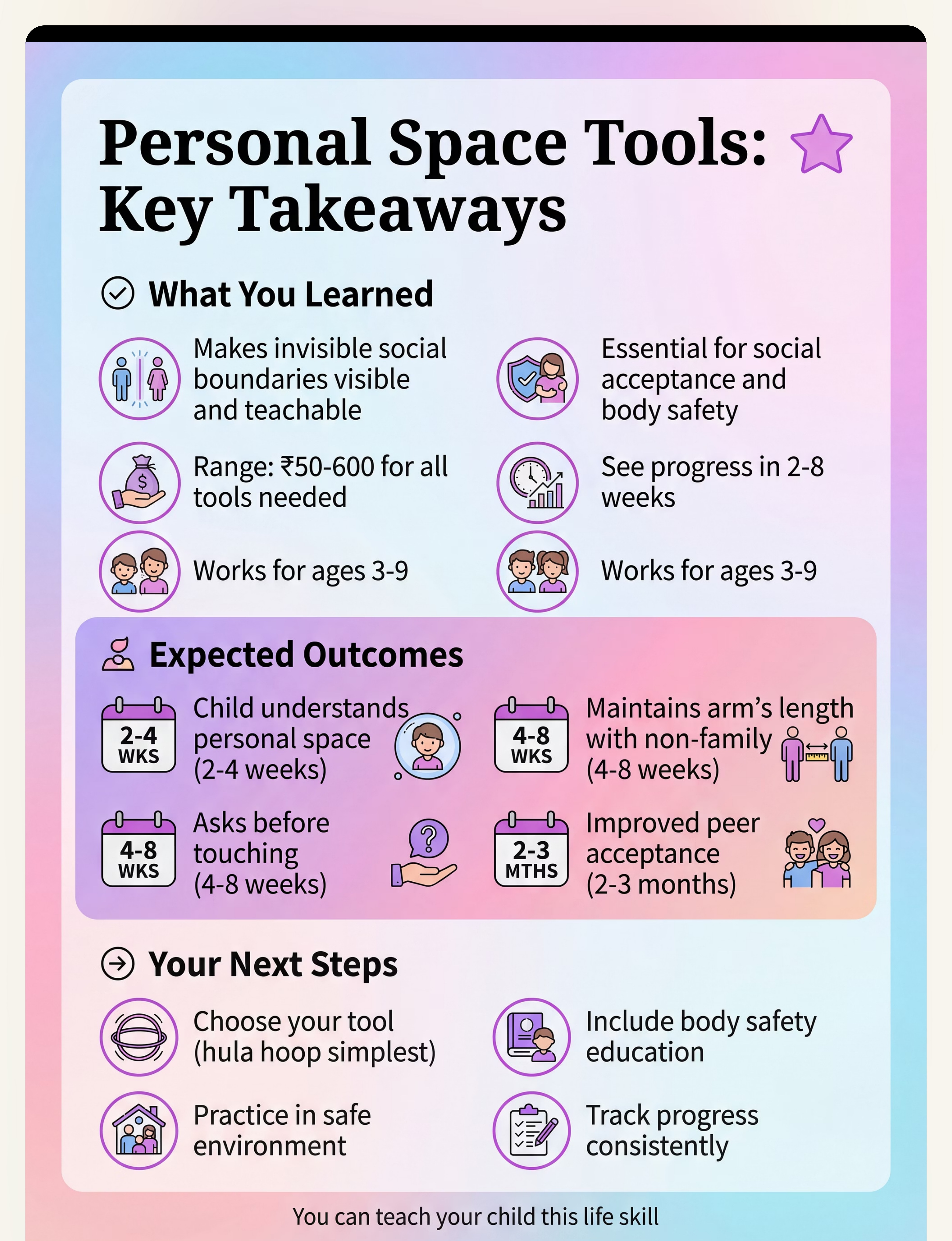
AI Summary: Personal space tools make invisible social boundaries visible and teachable, essential for social acceptance and body safety. Core Kit (Rank 2), moderate evidence, critical life skill that protects children throughout their development.
personal space
boundaries
touch
safety
zones
body awareness
SpEd
OT
core-kit
Common searches: personal space autism, body boundaries autism, touching autism, personal bubble autism, space awareness autism, body safety autism, appropriate touch autism
Get Expert Support
FREE National Autism Helpline
Phone: 9100 181 181
Languages: 16+ languages supported
Website: pinnacleblooms.org
Connect with trained professionals who understand personal space challenges and can provide personalized guidance for your child's unique needs.
Platform Integration
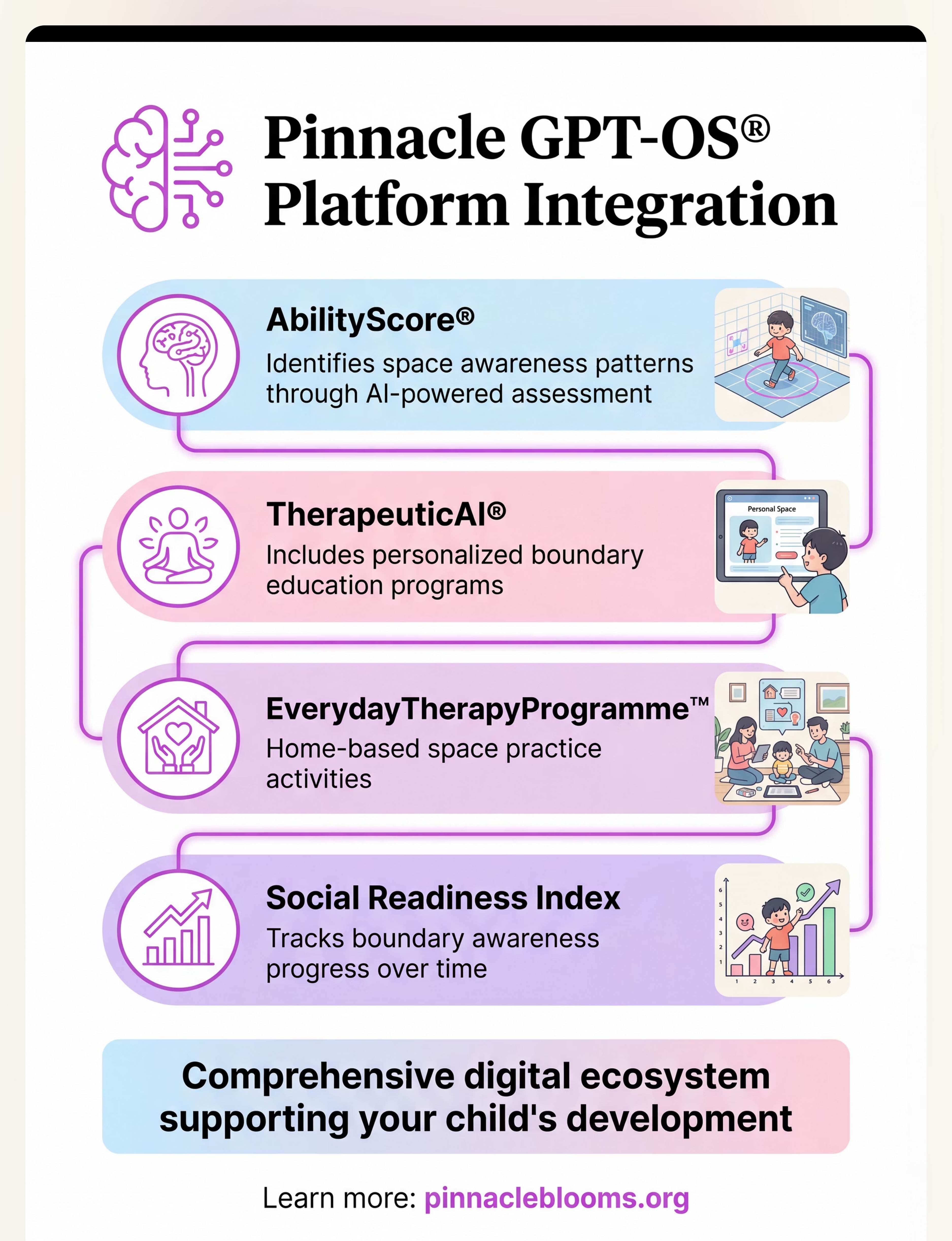
Personal space education integrates seamlessly with Pinnacle Blooms Network's comprehensive support system:
- AbilityScore® identifies your child's specific space awareness patterns and challenges
- TherapeuticAI® includes structured boundary education in personalized therapy plans
- EverydayTherapyProgramme™ provides daily practice activities for personal space skills
- Social Readiness Index tracks improvement in boundary awareness over time
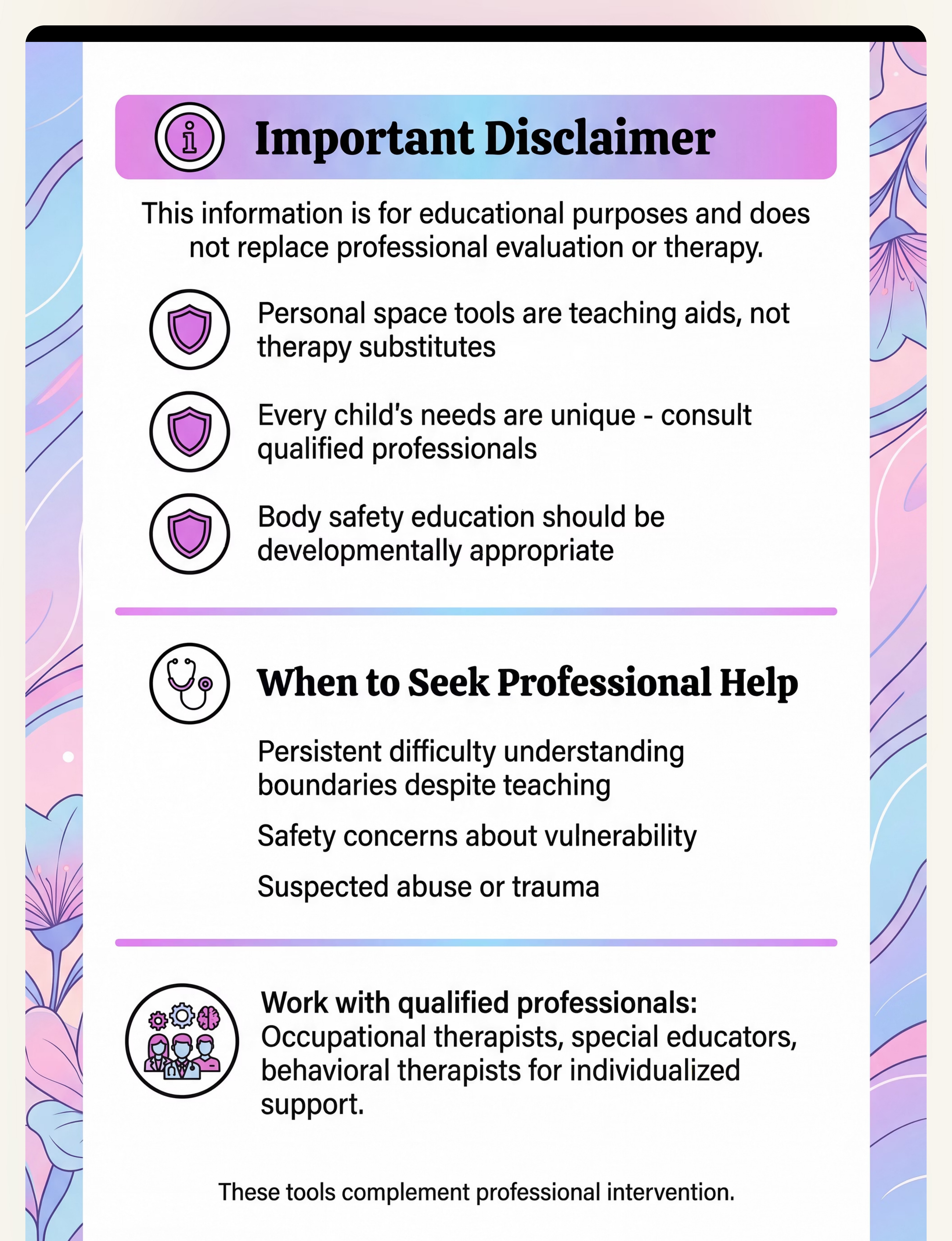
Important Disclaimer: This is educational information designed to support your child's development. Always consult qualified occupational therapists, speech-language pathologists, special educators, or pediatricians for personalized assessment and guidance. Individual results vary based on each child's unique profile, learning style, and support system. Personal space education should always include body safety components and be taught with patience, consistency, and compassion.