















Psychologist + SpEd
Psychologist + SpEd
Strong Evidence
Rank #1
Session-based
₹200–1,200
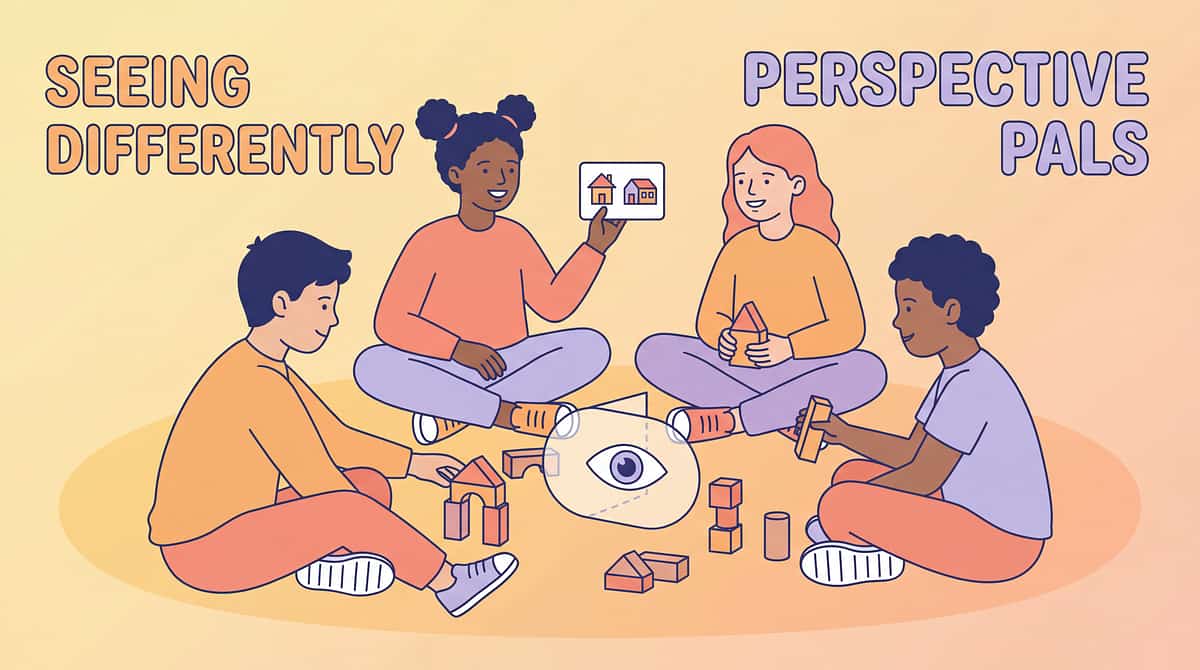
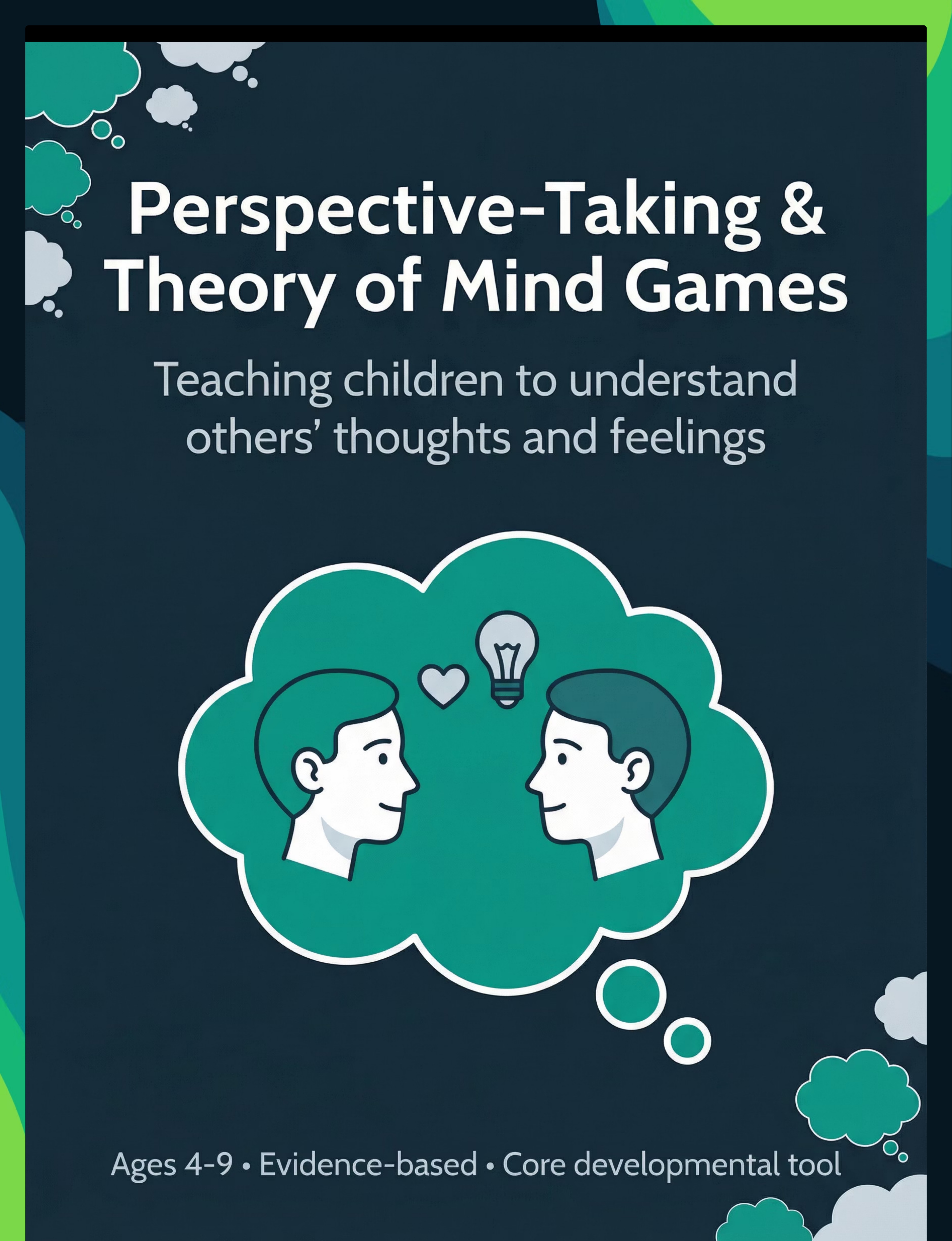
Perspective-Taking Games: Teaching Theory of Mind
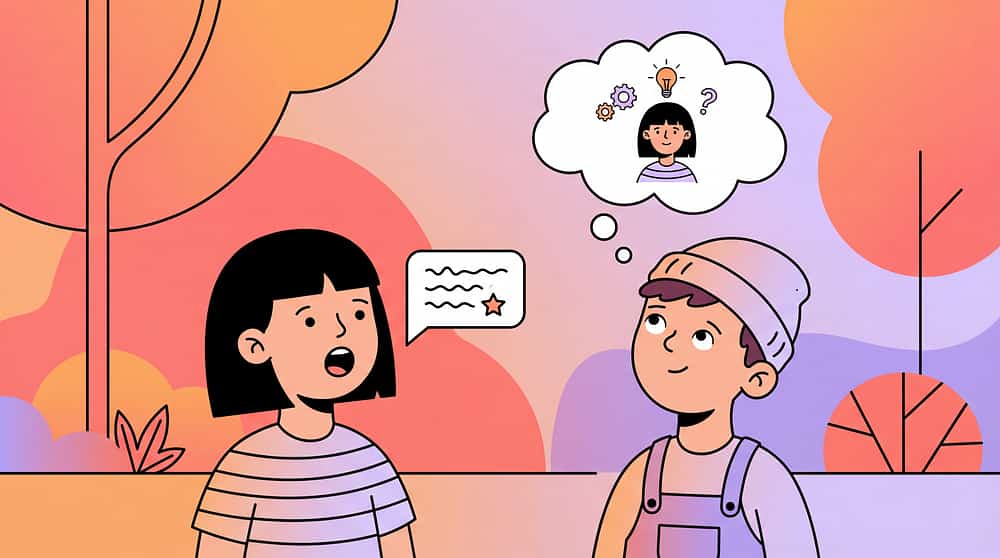
Building the foundation for understanding that others have different thoughts, feelings, and perspectives—a core skill for meaningful social connections and successful relationships.
Who This Helps
Develops understanding that others have different thoughts and feelings.
Foundation of cognitive empathy.
Essential for successful social interaction.
Theory of Mind
Perspective-Taking
Cognitive Empathy
Social Prediction
Understanding Intentions

Ages 3-9 years
Home
Clinic
School
Understanding Mental States
Perfect for children who struggle to recognize that others think and feel differently than they do
Social Communication
Ideal for children who assume others know what they know, leading to communication breakdowns
Social Relationships
Essential for children who have difficulty predicting how their actions affect others
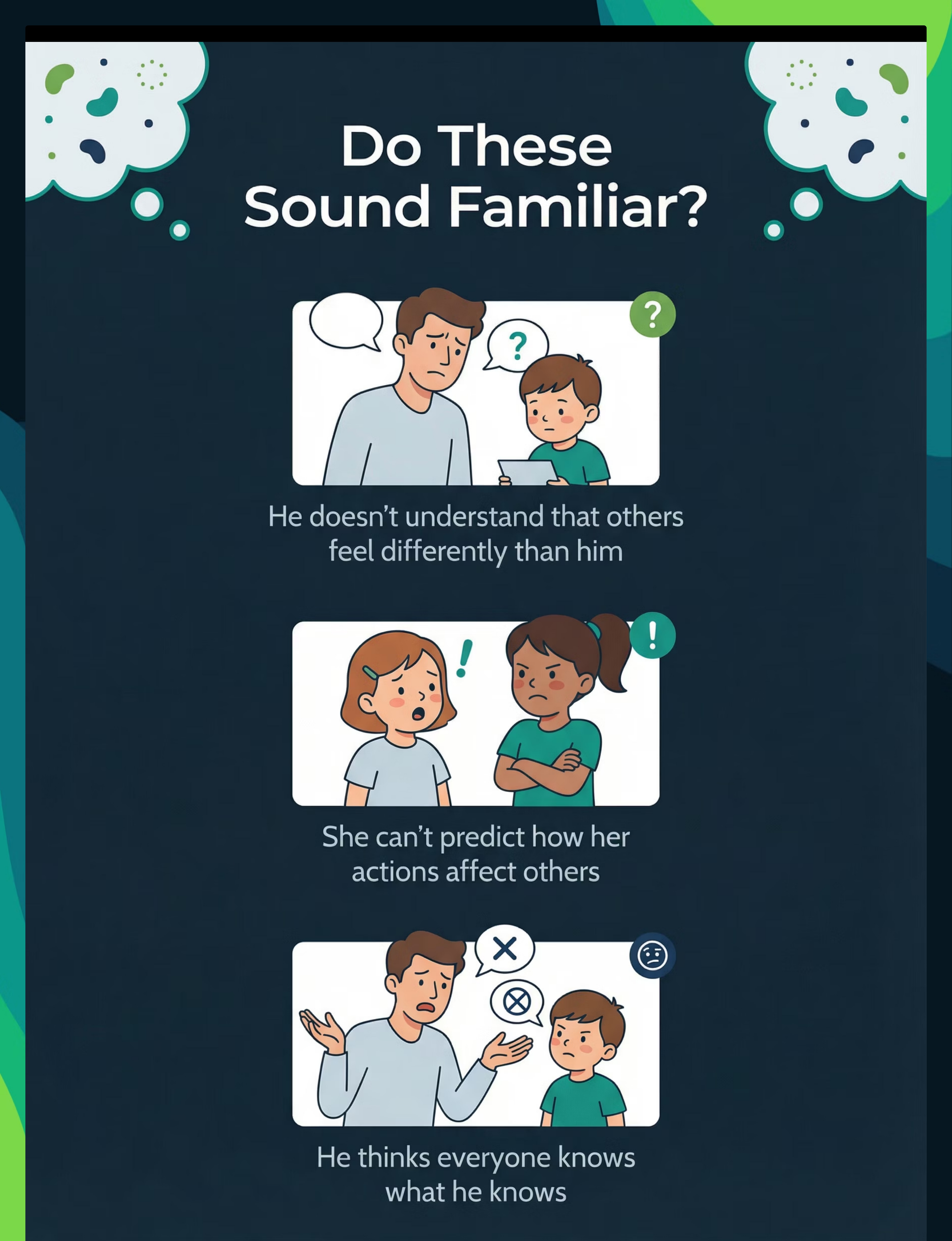
Does This Sound Familiar?
"He doesn't understand that others feel differently than him—he assumes everyone shares his interests and preferences."
"She can't predict how her actions affect others. She's genuinely surprised when someone gets upset."
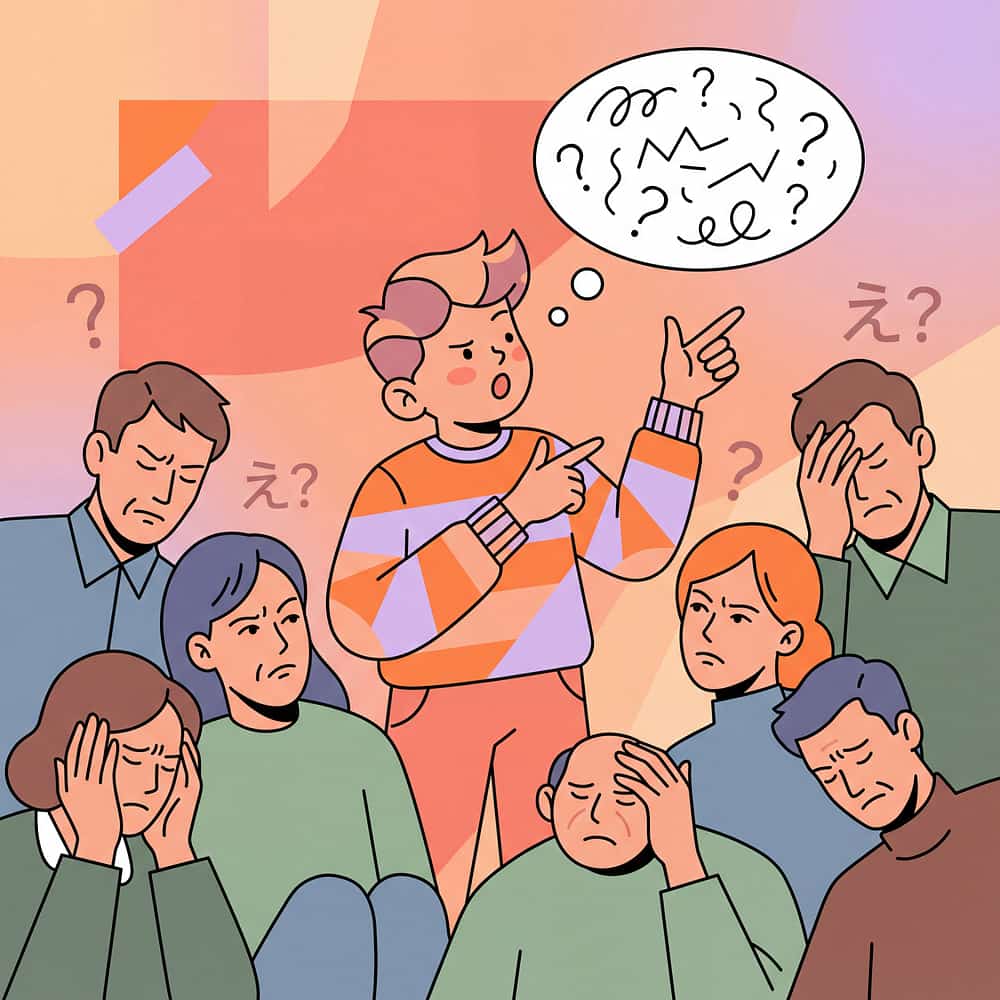
"He thinks everyone knows what he knows. He'll reference events without context and get frustrated when we don't understand."
"She doesn't understand why people are upset with her. She says things that hurt feelings without realizing it."

You're not alone. These are common challenges for children developing theory of mind skills. The invisible mental world of thoughts and feelings can be explicitly taught and learned.
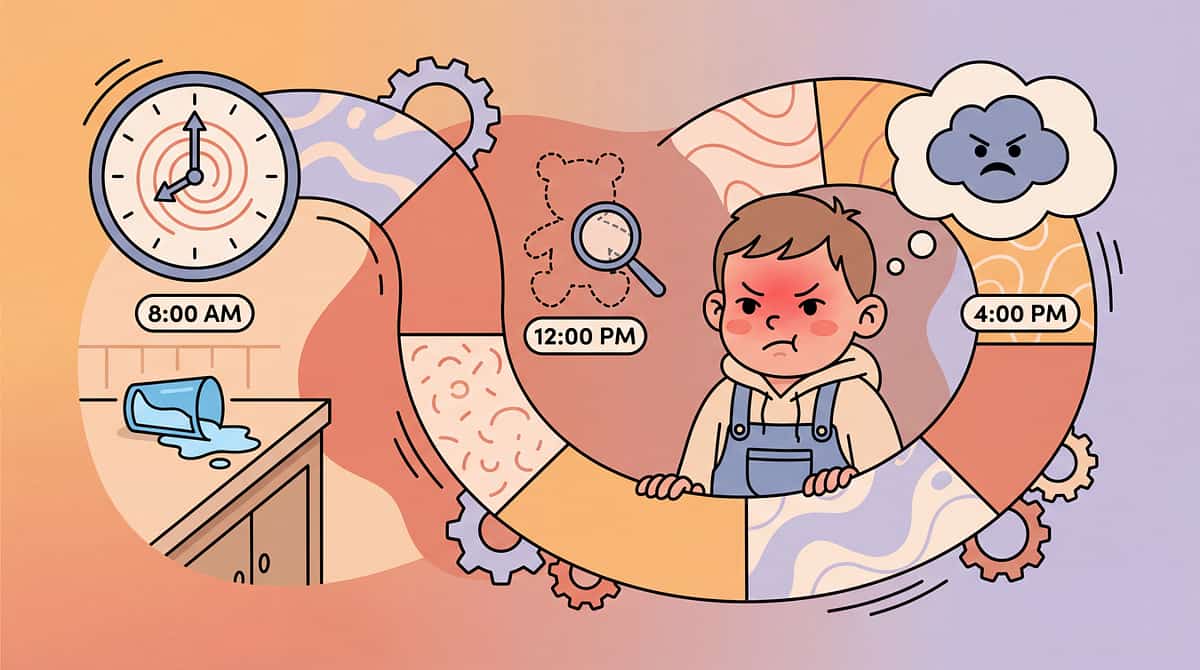
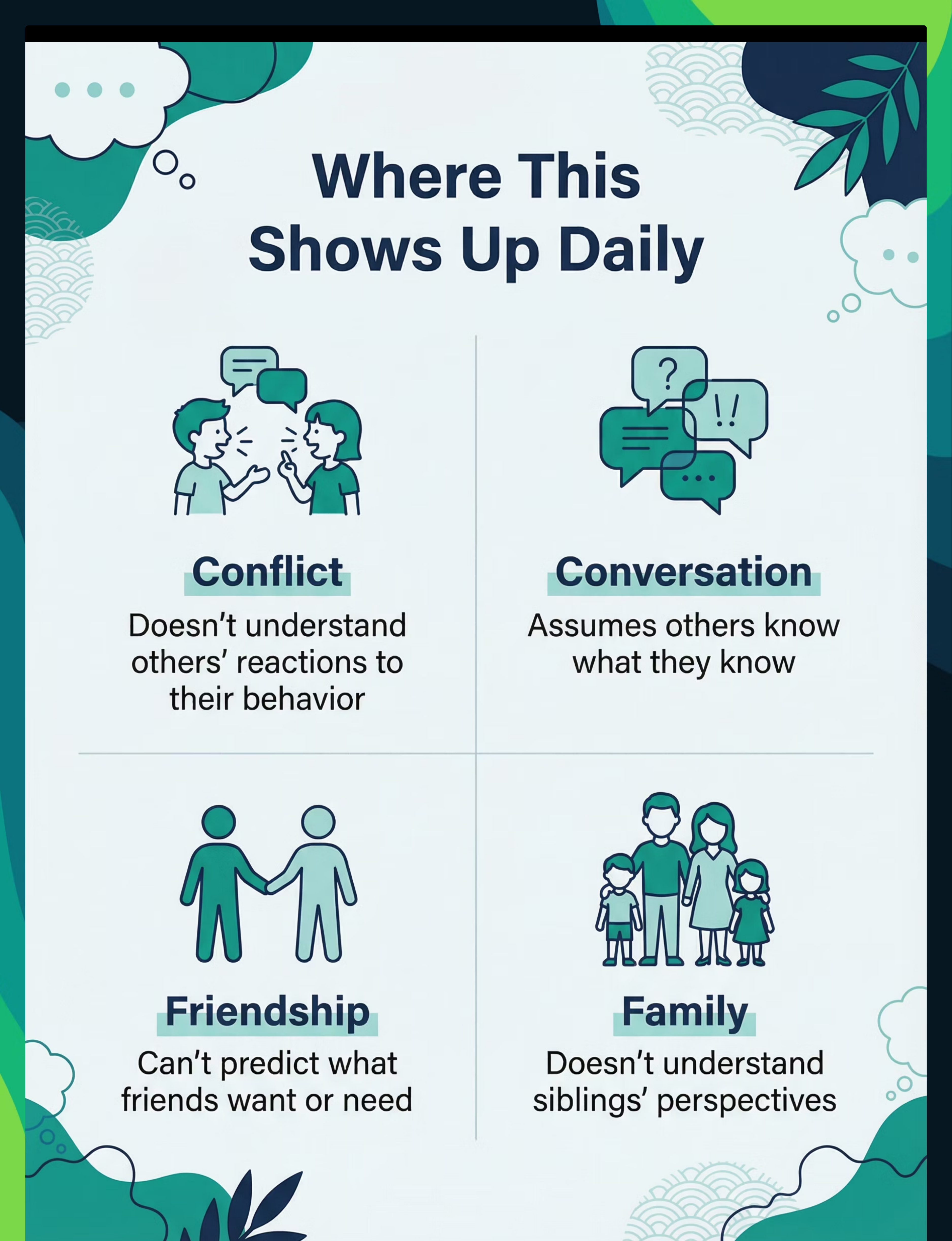
A Day Without the Right Support
Morning Conflict
Child doesn't understand why sibling is upset. "I was just telling the truth!" They can't see the other person's perspective or emotional response.
School Transitions
Assumes teacher knows what they know. References information without context. Gets frustrated when not understood. "You know, the thing!"
Therapy Sessions
Struggles with conversation flow. Can't predict what conversational partner wants to talk about or what information they need.
Friendship Challenges
Can't predict what friends want or need. Doesn't understand why peers react negatively to certain behaviors or comments.
Family Time
Tells birthday person about surprise party. Doesn't understand why it needed to be secret or how others' beliefs differ from reality.
The Science Behind It
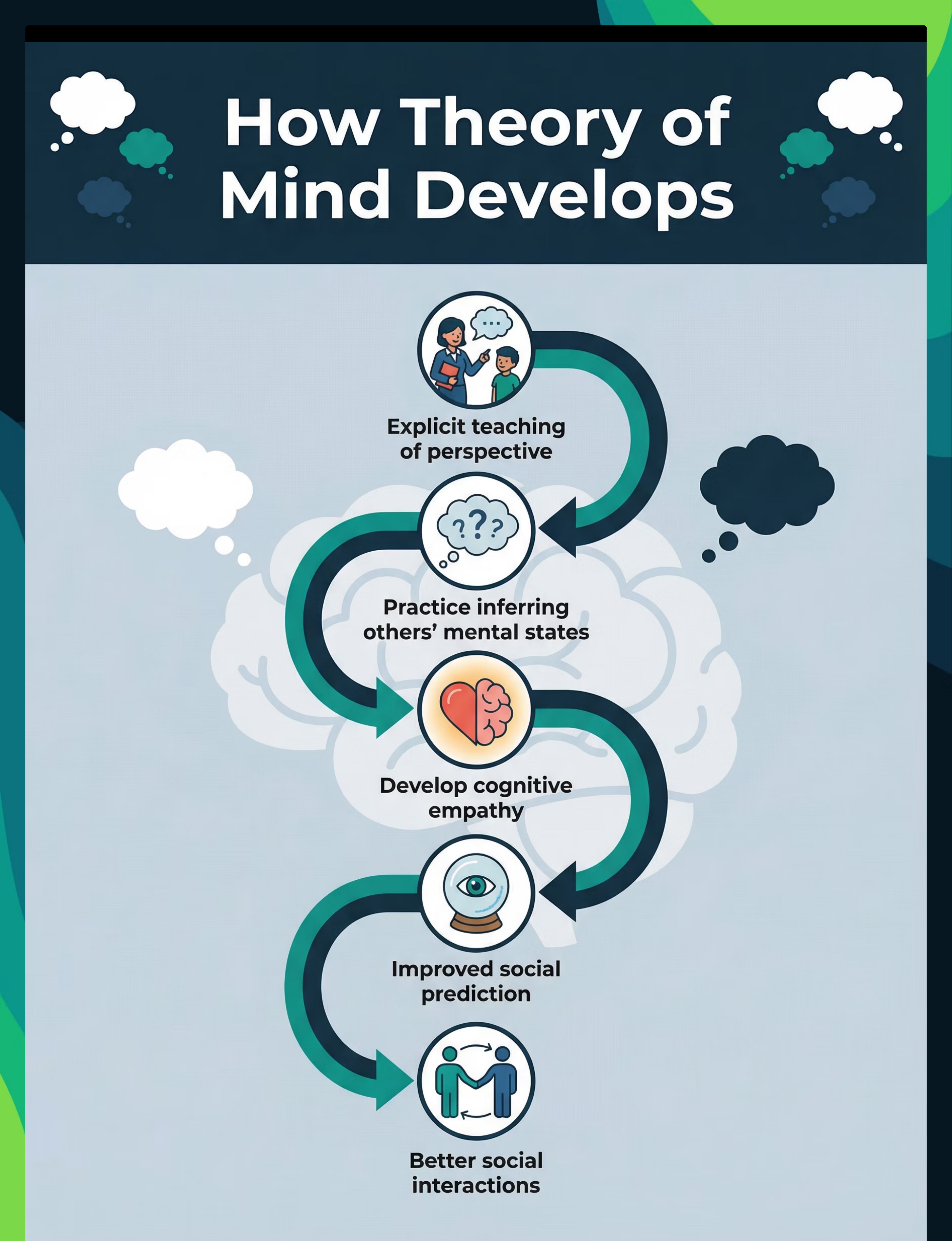
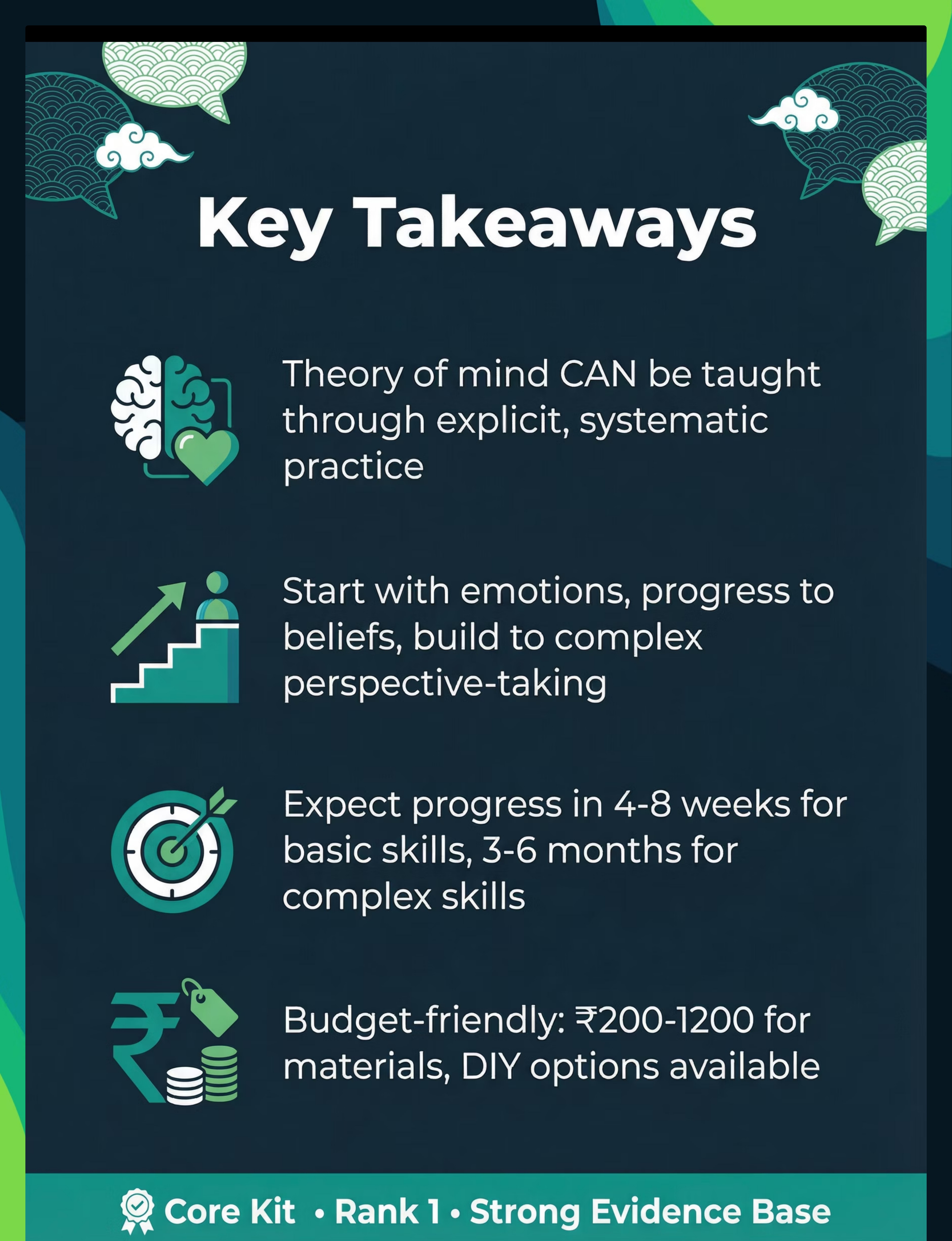
Theory of mind—understanding that others have different thoughts and feelings—is a core challenge in autism. But it can be taught through systematic, explicit instruction that makes the invisible mental world visible.
Explicit Teaching
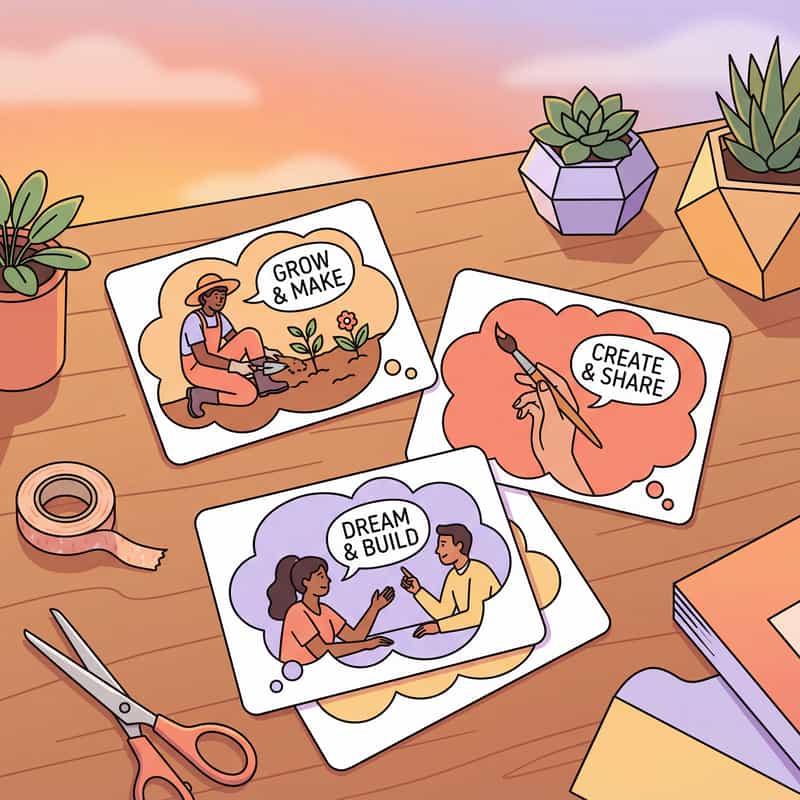
Make mental states visible through thought bubbles and visual supports
Inferring Practice
Practice predicting others' thoughts, feelings, and beliefs in scaffolded scenarios
Cognitive Empathy
Develop understanding of different perspectives and mental states
Social Prediction
Apply skills to predict reactions and outcomes in social situations
Better Interactions
Improved relationships through understanding others' viewpoints

Target areas: Theory of Mind • Perspective-Taking • Cognitive Empathy • Social Prediction • Understanding Intentions
How to Use It Right
Start Simple
Begin with basic emotions before moving to complex mental states. Build foundation systematically.
Make It Visible
Use visual supports like thought bubbles to represent the invisible mental world. Show, don't just tell.
Connect to Experience
Link new concepts to your child's own experiences and familiar situations before generalizing.
Practice with Familiarity
Use familiar contexts, people, and situations first. Build confidence before introducing novelty.
Celebrate Progress
Recognize and celebrate approximations and effort. Growth happens in small steps.
Build Gradually
Progress from concrete to abstract concepts. Move from emotions to desires to beliefs systematically.

Session duration: 10-20 minutes per session. Keep activities engaging and match your child's attention span and current developmental level.
Expert Perspective
"Theory of mind—understanding that others have different thoughts and feelings—is a core challenge in autism. But it CAN be taught. The key is making the invisible mental world visible and explicit."
— Developmental Psychologist, Autism Researcher

Psychologist + SpEd Recommended
Co-owned by Psychology and Special Education specialists
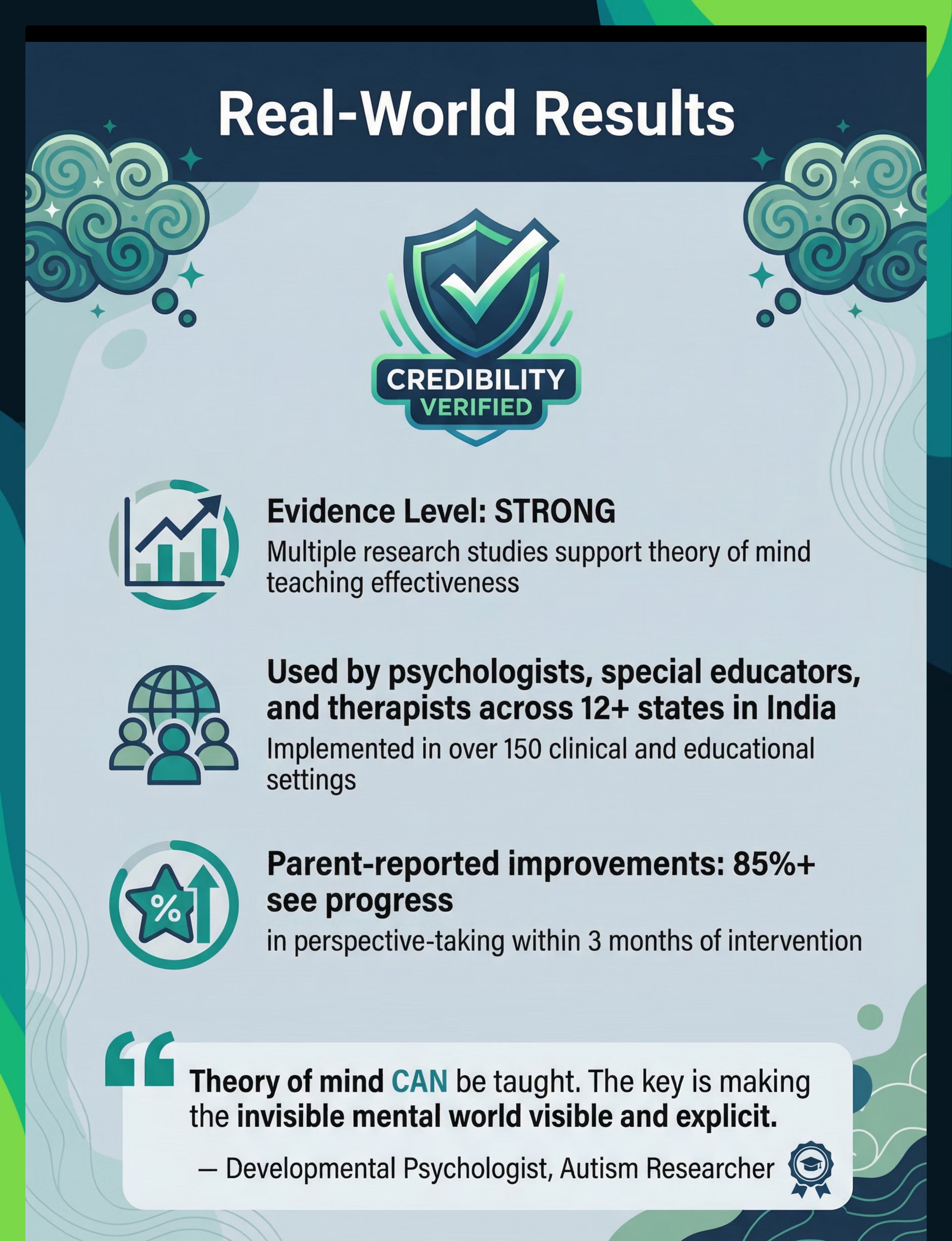
Strong Evidence Base
Research-backed approaches for teaching theory of mind
Rank #1 in Category
Top-rated tool in Social Skills Development
perspective-taking-theory-of-mind-games therapy material
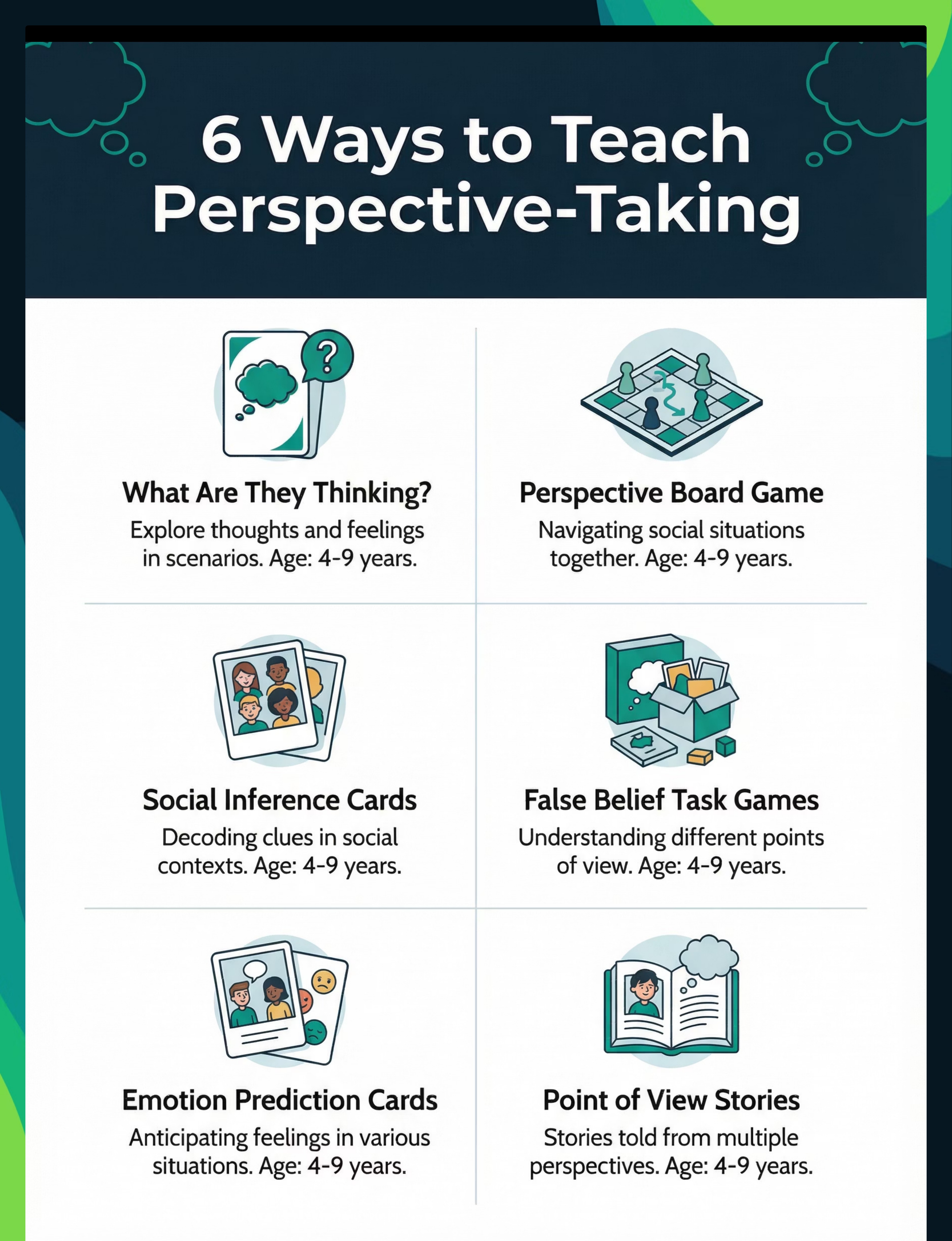
Choose Your Option (6 Variants)
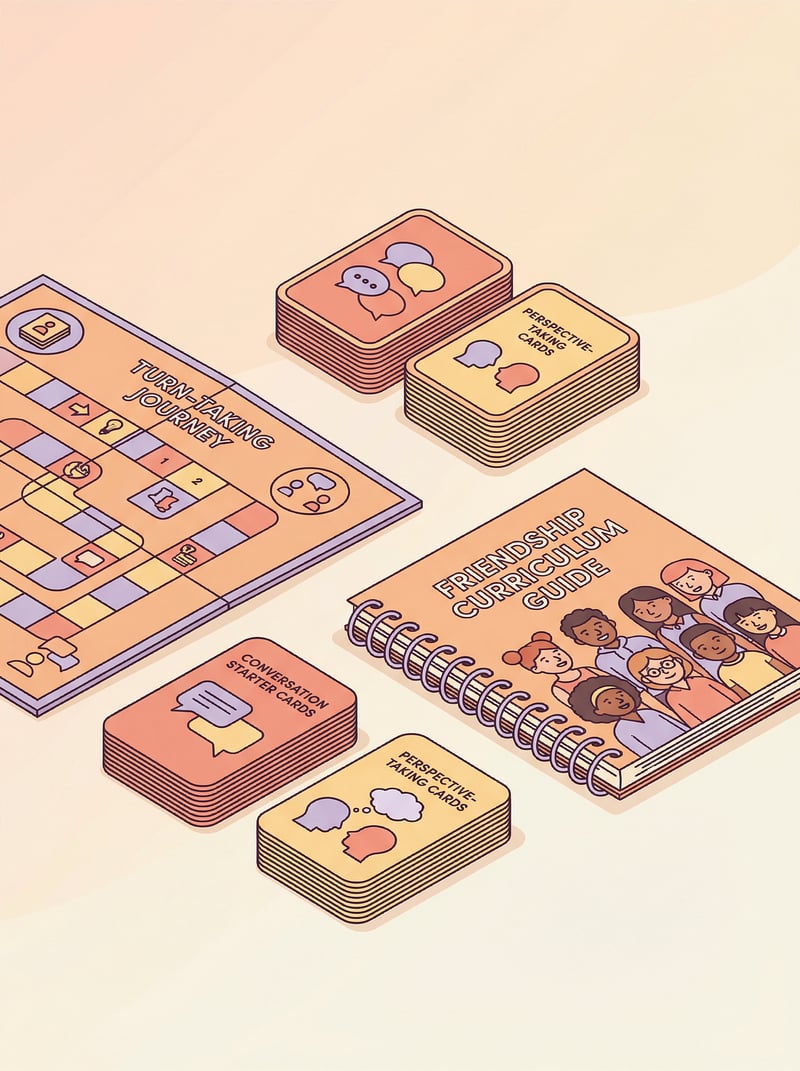
What Are They Thinking? Cards
Best for: Understanding others' thoughts and feelings
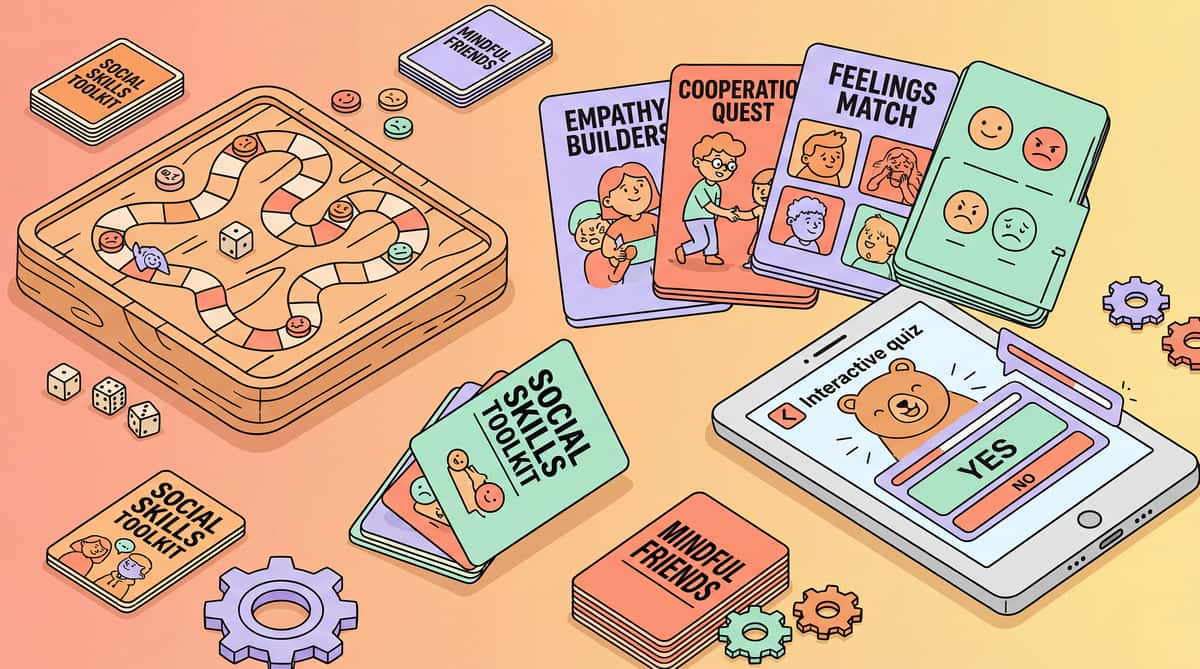
Perspective-Taking Board Game
Best for: Engaging practice through family play
Social Inference Cards
Best for: Understanding motivations and intentions
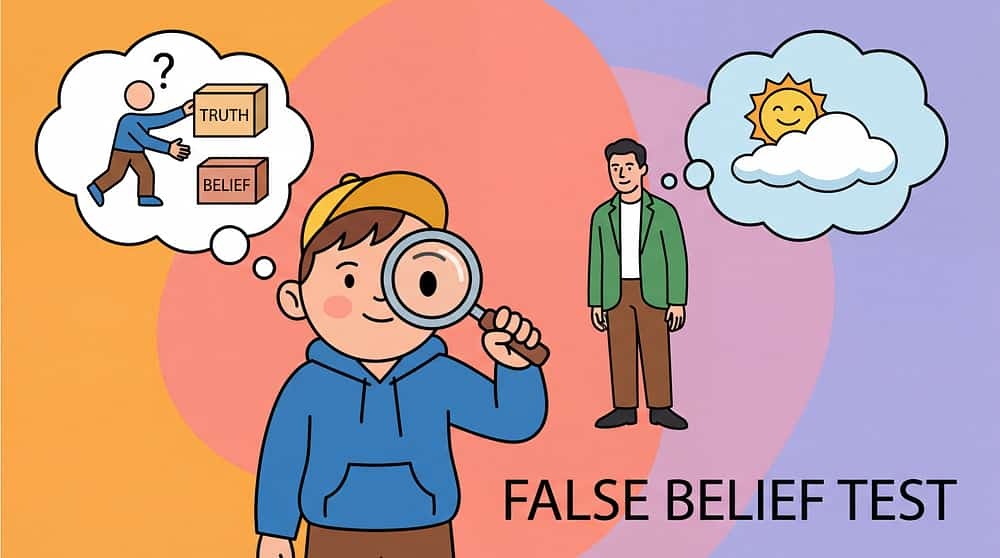
False Belief Task Games
Best for: Building basic theory of mind foundation
Emotion Prediction Cards
Best for: Predicting emotional responses
Point of View Stories/Books
Best for: Understanding multiple viewpoints
By Goal
  • Basic ToM: False Belief Games
  • Thoughts: What Are They Thinking?
  • Emotions: Emotion Prediction
  • Intentions: Social Inference
By Setting
  • Home/portable: Card sets, Books
  • Family play: Board Game
  • Therapy: All variants
  • School: Cards, Books
By Engagement
  • Game format: Board Game
  • Quick practice: Card sets
  • Story-based: POV Books
  • Structured: False Belief Tasks
Understanding the Progression
Theory of mind develops in stages, from understanding simple emotions to complex belief systems. This systematic progression ensures your child builds skills on a solid foundation.
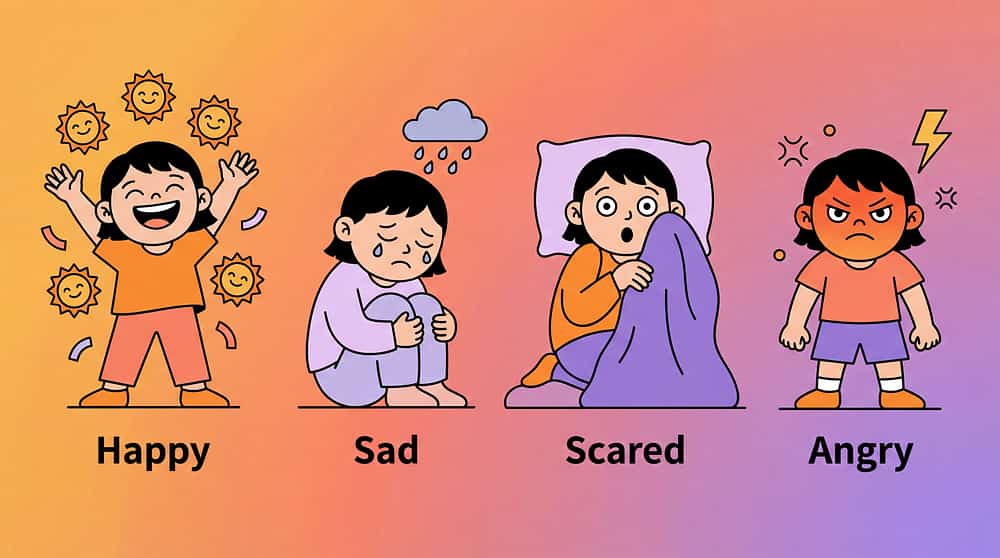
Level 1: Simple Emotions
Understanding basic feelings: happy, sad, scared, angry. Foundation for all perspective-taking.
Level 2: Desires & Wants
Recognizing what others want. "What do they want?" Even if different from own desires.
Level 3: Beliefs
Understanding what others think or believe about situations. "What do they think happened?"
Level 4: False Beliefs
Understanding that someone can believe something that isn't true. "They think X but actually Y."
Level 5: Second-Order Beliefs
Understanding nested beliefs. "She thinks that he thinks..." Complex perspective-taking.

Key features across all variants: Visual thought bubbles • Scenario-based learning • Progressive difficulty • Structured practice opportunities
The Struggle (Before)

There was an error generating this image

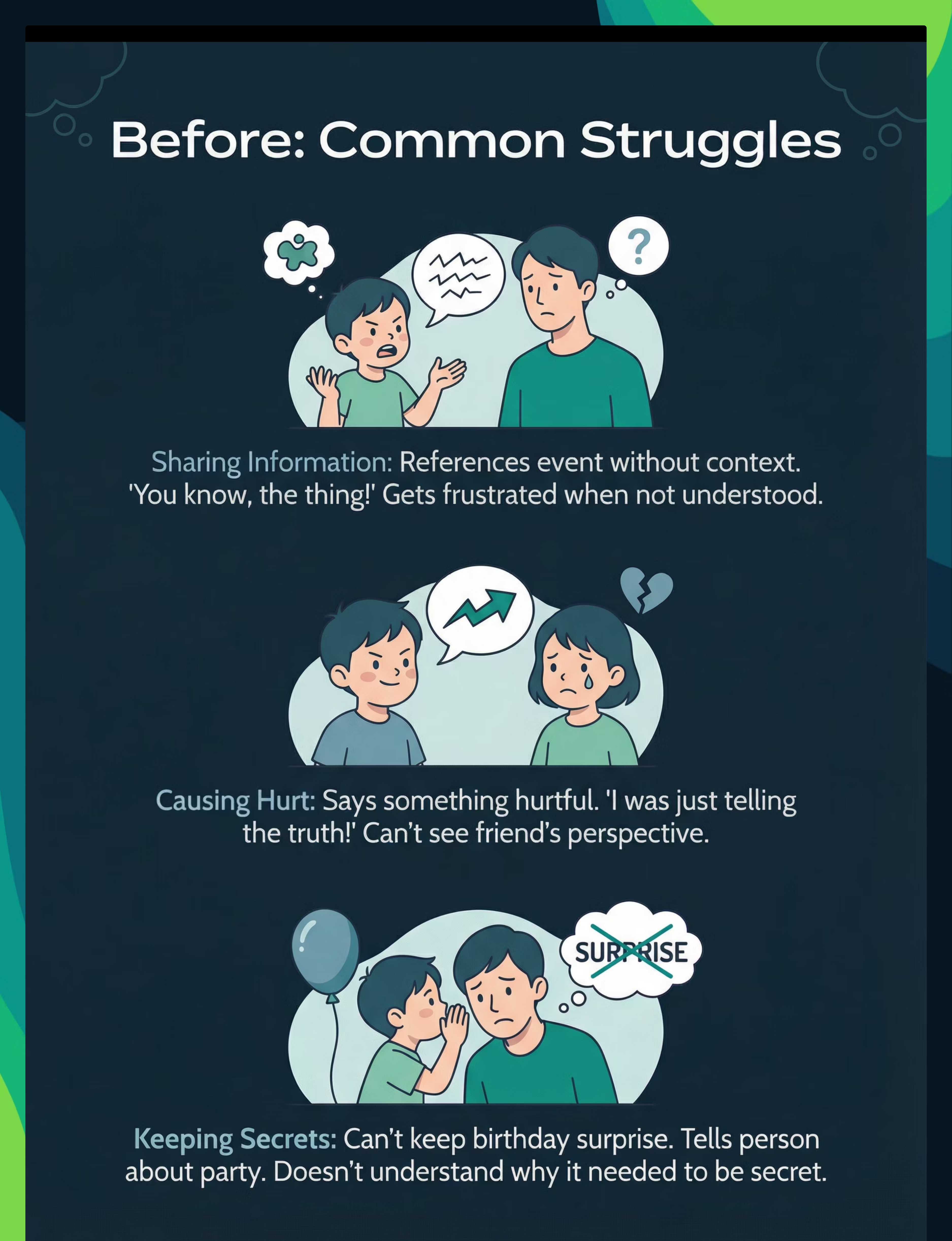
Sharing Information
Situation: Child references event without context. Assumes listener knows. "You know, the thing!" Gets frustrated when not understood.
Experience: Communication breakdowns, repeated explanations needed, increasing frustration on both sides.
Emotion: Frustration, confusion, feeling misunderstood

There was an error generating this image

Causing Hurt
Situation: Child says something hurtful. Doesn't understand why friend is upset. "I was just telling the truth!" Can't see friend's perspective.
Experience: Damaged friendships, social rejection, confusion about others' reactions to honest statements.
Emotion: Confusion, social failure, isolation

There was an error generating this image

Surprise & Deception
Situation: Child can't keep secrets for surprises. Tells birthday person about party. Doesn't understand why it needed to be secret.
Experience: Family frustration, ruined surprises, inability to participate in social rituals involving hidden information.
Emotion: Confusion, family stress, exclusion
perspective-taking-theory-of-mind-games therapy material
The Breakthrough (After)
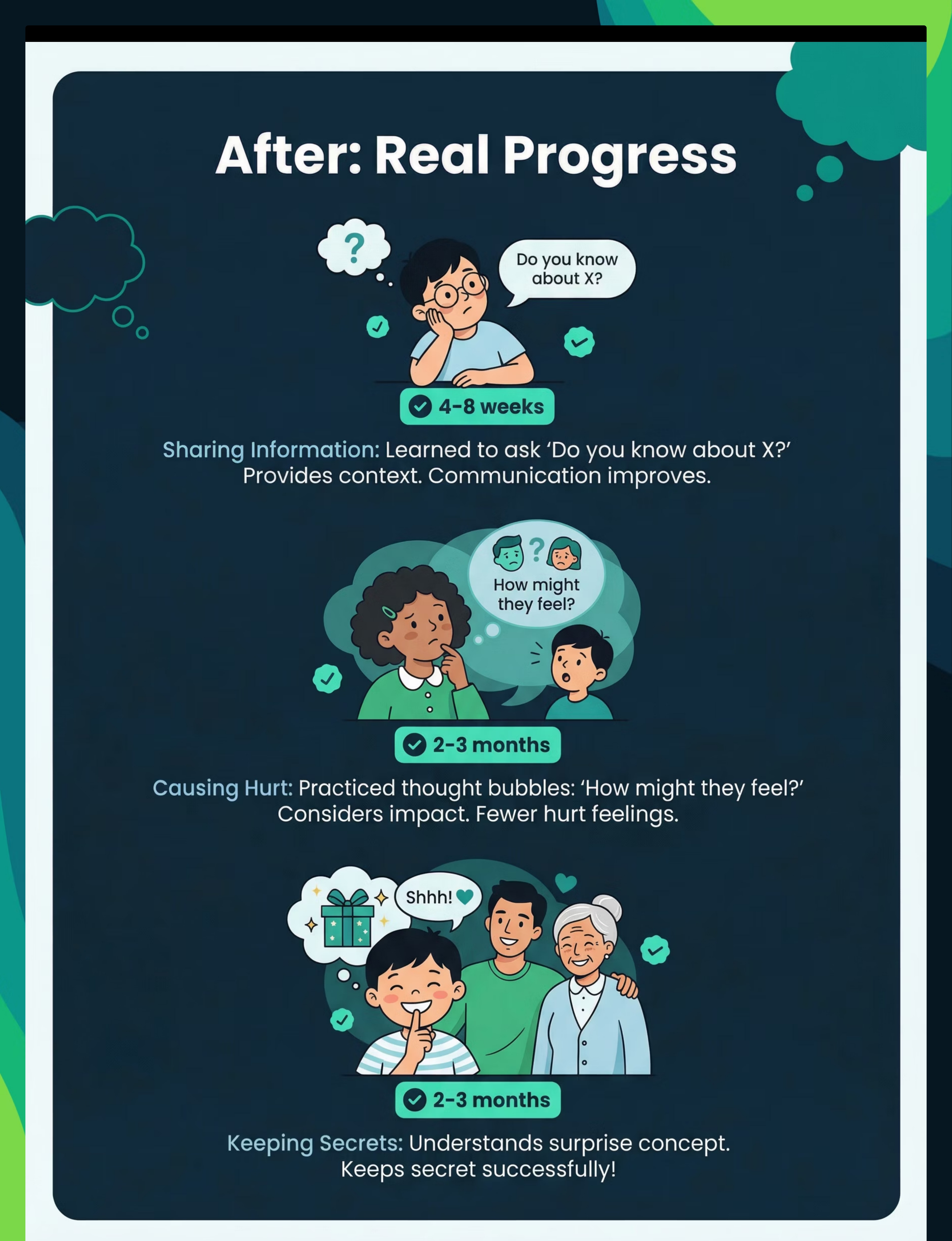
Sharing Information
Situation: Learned to ask "Do you know about X?" Checks listener's knowledge. Provides context. Communication improves dramatically.
Experience: Smoother conversations, fewer misunderstandings, increased confidence in social communication.
Emotion: Connection, success, confidence
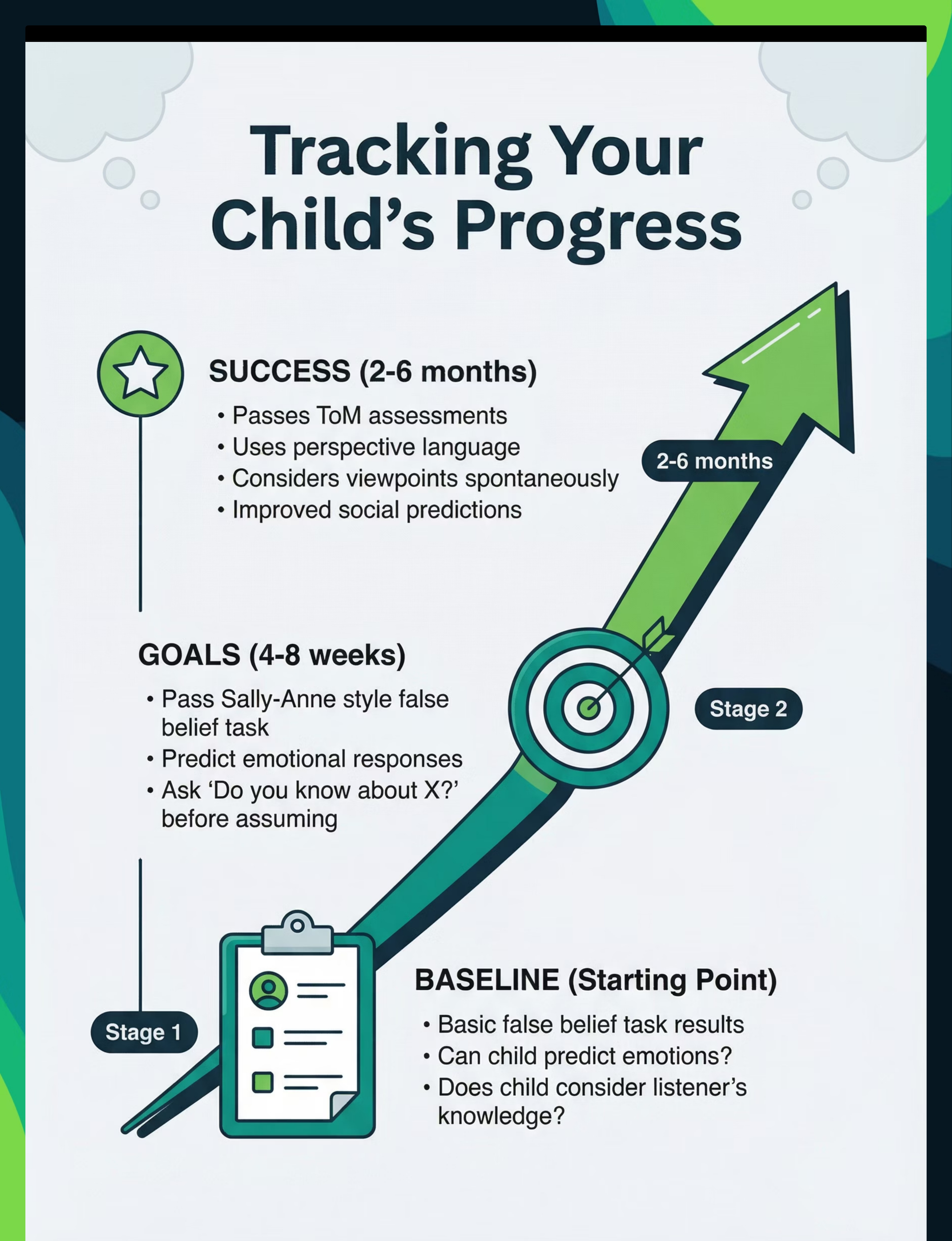
4-8 weeks
Causing Hurt
Situation: Practiced thought bubbles: "How might they feel if I say this?" Pauses before speaking. Considers impact. Fewer hurt feelings.
Experience: Preserved friendships, increased social acceptance, growing ability to predict emotional responses.
Emotion: Awareness, empathy, growth
2-3 months
Surprise & Deception
Situation: Understands: "They don't know yet. If I tell them, the surprise is ruined. Their belief is different from reality." Successfully keeps secret.
Experience: Full participation in family traditions, pride in keeping secrets, understanding of social conventions.
Emotion: Understanding, participation, belonging
2-3 months
perspective-taking-theory-of-mind-games therapy material
What to Expect (Realistic Timelines)
Theory of mind develops gradually with consistent practice. Here's what research and clinical experience show about typical progress timelines.
100%
Child understands others have different thoughts
Foundation skill—first major breakthrough in perspective-taking
4-8 weeks
100%
Can predict basic emotional reactions
Able to anticipate how others might feel in common situations
4-8 weeks
100%
Considers listener's knowledge when communicating
Checks what others know before assuming shared understanding
2-3 months
100%
Can explain why someone might feel differently
Articulates reasons for different perspectives and emotional responses
2-3 months
100%
Shows increased cognitive empathy
Demonstrates understanding and consideration of others' viewpoints
3-6 months
100%
Better social prediction and interaction
Successfully anticipates social outcomes and navigates relationships
3-6 months
perspective-taking-theory-of-mind-games therapy material
Is This Right for My Child? (2-Minute Check)
Answer these questions to determine if perspective-taking tools would benefit your child. Three or more "yes" answers indicate a strong fit.
Question 1
Does your child struggle to understand that others think and feel differently than they do?
If yes, this indicates: Theory of mind teaching needed
Confidence: 96%
Question 2
Does your child assume others know what they know, leading to communication confusion?
If yes, this indicates: Perspective-taking practice needed
Confidence: 92%
Question 3
Does your child have difficulty predicting how others will react to situations or behaviors?
If yes, this indicates: Social prediction skills need development
Confidence: 90%
Question 4
Does your child seem surprised or confused when others are upset by their actions?
If yes, this indicates: Needs explicit perspective teaching
Confidence: 94%

Scoring: 3+ "yes" answers = strong fit for perspective-taking tools. These materials can make the invisible mental world visible and teachable.
Usage Guide
perspective-taking-theory-of-mind-games therapy material
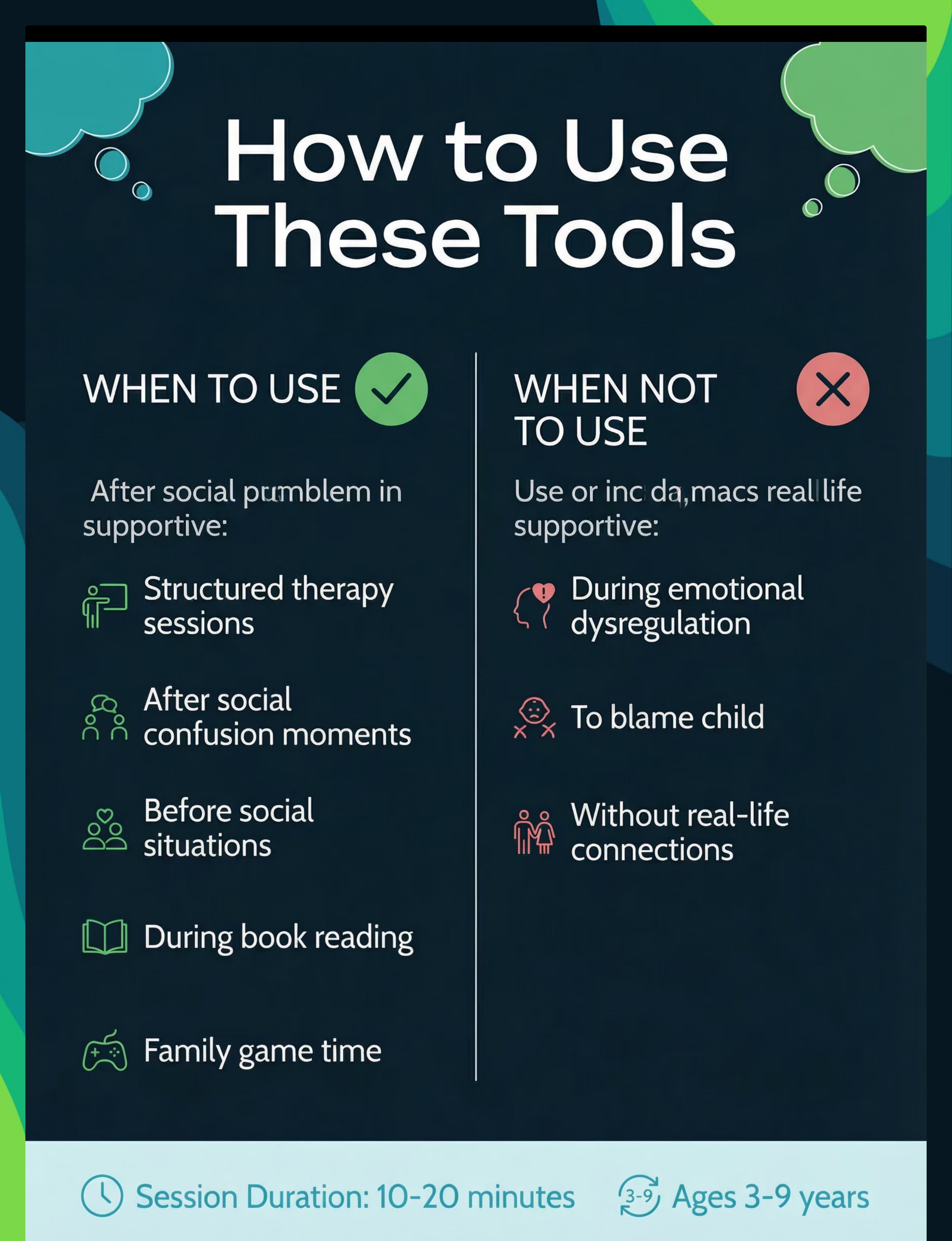
When to Use
  • Structured therapy or teaching sessions
  • After social confusion ("Why is she mad?")
  • Preparing for social situations
  • Reading books (pause to discuss characters)
  • Family game time
  • Social skills groups
When NOT to Use
  • During emotional dysregulation
  • To blame child for perspective failures
  • Without connecting to real life
  • Advancing too quickly without foundation

Supervision by Age
Age Range
Supervision Level
Notes
Under 5 years
Adult-led instruction
Use simple scenarios, provide extensive scaffolding
5-7 years
Guided practice
Provide scaffolding as needed, gradually reduce support
7+ years
Increasing independence
Focus on real-world application and generalization

Duration: 10-20 minute sessions • Settings: Home, School, Clinic • Age range: 3-9 years (start with basic emotions at 3-4; advance with development)
Safety First
perspective-taking-theory-of-mind-games therapy material
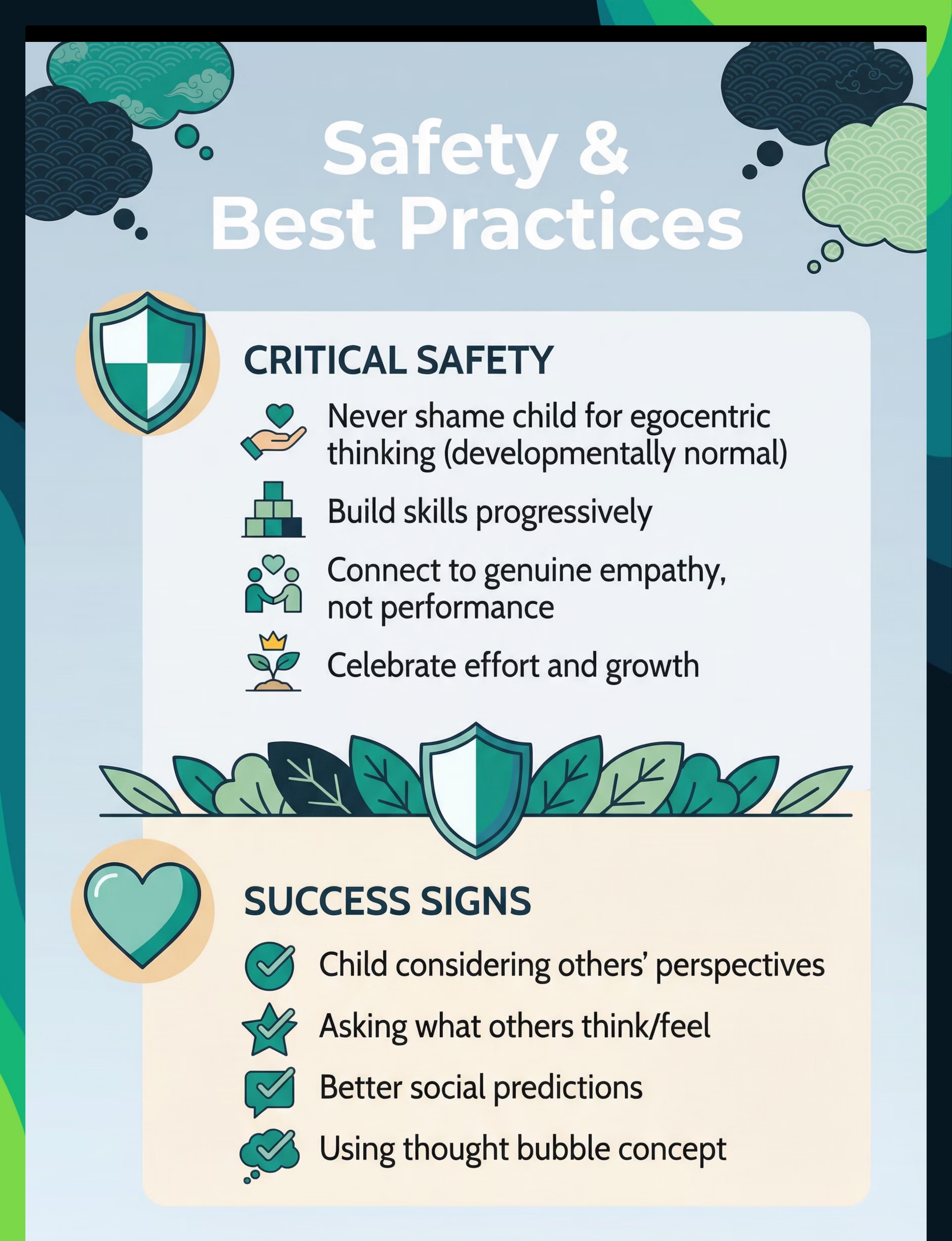
Critical Safety Rule #1
Never shame child for egocentric thinking—it's developmentally normal and not a character flaw.
Critical Safety Rule #2
Build skills progressively, not all at once. Rushing causes frustration and damages confidence.
Critical Safety Rule #3
Connect to genuine empathy, not performance. Focus on understanding, not just correct answers.
Critical Safety Rule #4
Celebrate effort and growth at every level. Small steps deserve recognition.

Warnings
  • Don't expect intuitive understanding—teach explicitly
  • Watch for frustration if tasks too difficult
  • Ensure child doesn't feel "broken" for struggling
  • Balance teaching with acceptance
Contraindicated Approaches
  • Shaming or blaming for perspective failures
  • Tasks that are too difficult for current level
  • Expecting instant understanding

Safety Checklist
Before Use
  • Activity matches developmental level
  • Visual supports in place
  • Positive approach planned
  • Real-life connections identified
During Use
  • Child engaged, not frustrated
  • Scaffolding as needed
  • Celebrating attempts
  • Making connections explicit
Signs of Success
  • Child considering others' perspectives
  • Asking what others think/feel
  • Better social predictions
  • Using thought bubble concept
Common Questions (Honest Answers)
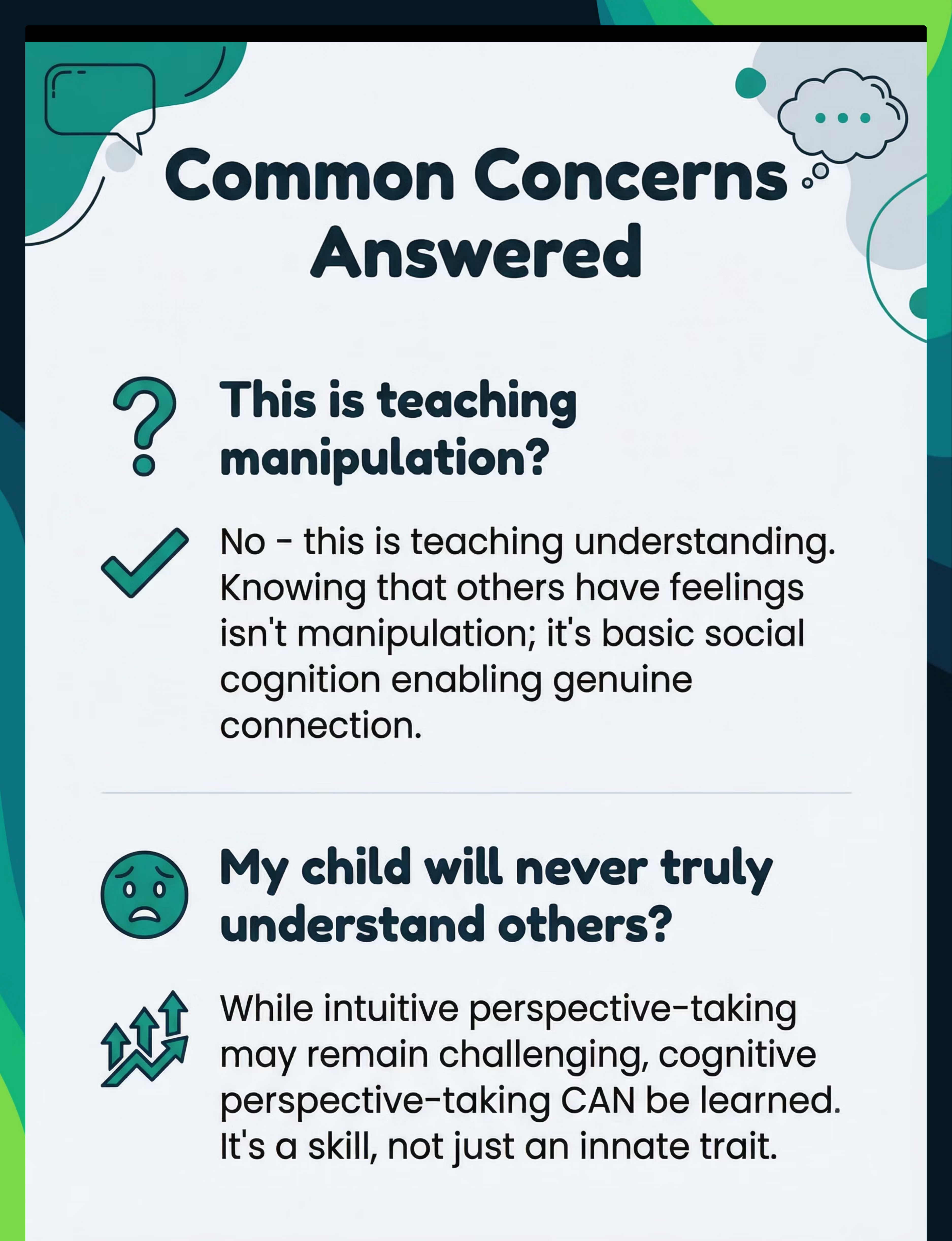
"This is teaching manipulation"
Response: No—this is teaching understanding. Knowing that others have feelings isn't manipulation; it's basic social cognition. Manipulation requires intent to harm; perspective-taking enables genuine connection and empathy.
Try this: Frame as understanding, not using, others' thoughts.
"My child will never truly understand others"
Response: While intuitive perspective-taking may remain challenging, cognitive perspective-taking CAN be learned. Many adults with autism develop strong cognitive empathy through explicit learning. It's a skill, not just an innate trait.
Try this: Focus on cognitive empathy as learnable skill.
"These games seem too simple"
Response: They're intentionally scaffolded. Start simple (basic emotions) before complex (false beliefs). Each level builds on the previous. What seems simple is foundational for more complex social understanding.
Try this: Use assessment to find appropriate starting level.
"Real life is more complex than card scenarios"
Response: True—that's why we start with simplified scenarios to teach concepts, then gradually increase complexity. Cards are training ground; real life is where skills generalize. Both are needed.
Try this: Progress from cards → role-play → supported real situations.
Investment Guide
Here's a comparison of starter and premium options for teaching perspective-taking, followed by key features and value progression.
Starter Option
Premium Option
What's included
DIY thought bubble cards + printable scenarios
Social Thinking curriculum materials
Cost
₹0-200
₹800-2,000
Brands
Self-created, various free online resources
Social Thinking, Mind Reading DVD, Theory of Mind kits
Key Advantages
Effective for basic teaching, highly customizable, zero cost (if DIY)
Structured progression, professionally designed, engaging format, comprehensive
Customizable & Accessible
DIY options allow for content tailored to individual needs and situations, making learning highly relevant and often free.
Foundational Skills
Begin with basic emotions and concepts, building a strong base before moving to more complex social understanding.
Structured Progression
Premium materials offer a systematic approach with professionally designed, engaging formats for comprehensive development.
Expert-Developed Content
Benefit from curricula developed by experts in social cognition and autism, ensuring effective and evidence-based strategies.
1
Basic Understanding
Start with simple, free, or low-cost DIY materials to introduce core concepts of perspective-taking.
2
Systematic Practice
Progress to lower-cost commercial card sets for structured and repeatable practice of social scenarios.
3
Comprehensive Development
Invest in professional curriculum materials for an in-depth, engaging, and structured learning journey.

Overall investment range: ₹200–1,200 (US $2-15) for most commercial options
Best starting point: If budget-conscious, start with DIY materials or lower-cost card sets (₹200-300). If seeking systematic progression, invest in Social Inference Cards or comprehensive curriculum (₹600-1,200).
Where to Buy in India
Availability: Available through multiple online platforms and educational resource sites
Amazon.in
Search Term: "theory of mind games autism"
Price Range: ₹400-1,000
Amazon.in
Search Term: "perspective taking cards"
Price Range: ₹300-700
Teachers Pay Teachers
Search Term: "theory of mind activities printable"
Price Range: ₹0-300
Super Duper Publications
Search Term: "perspective taking"
Price Range: ₹500-1,200

Buying Tips
  • Look for thought bubble visuals
  • Photo-based scenarios are more concrete
  • Board game format increases engagement
  • Match difficulty to child's current level
  • Build from emotions → desires → beliefs
Red Flags
  • Too advanced for child's understanding
  • No visual supports for mental states
  • Only focuses on one aspect of ToM
  • No practice component included
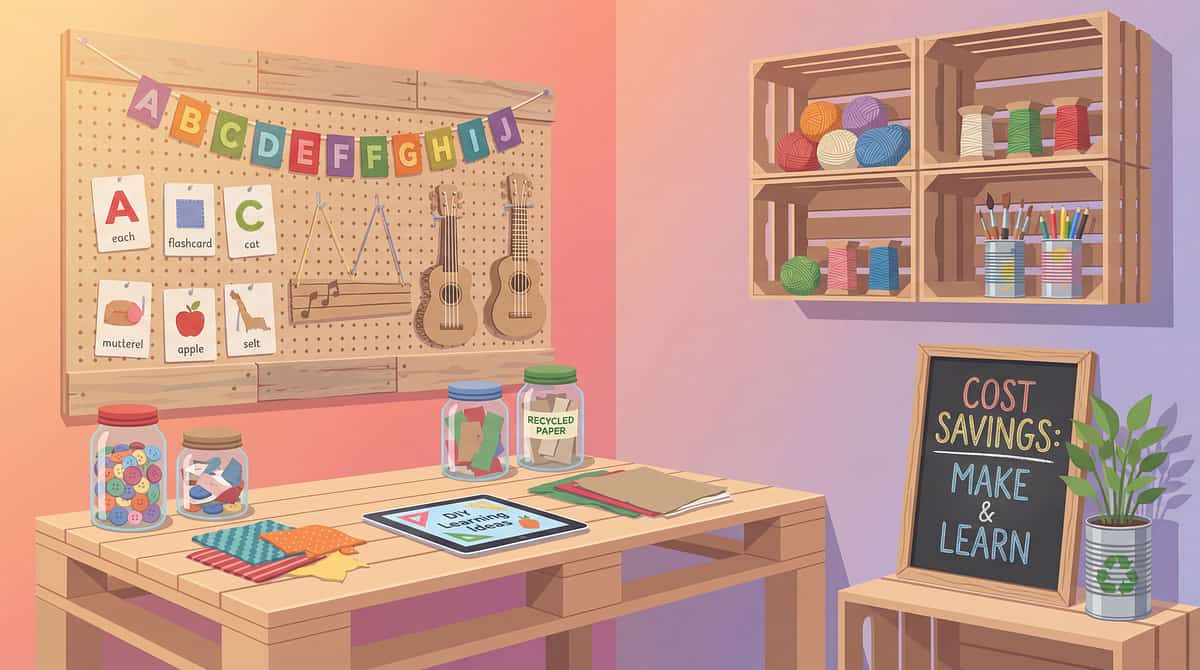
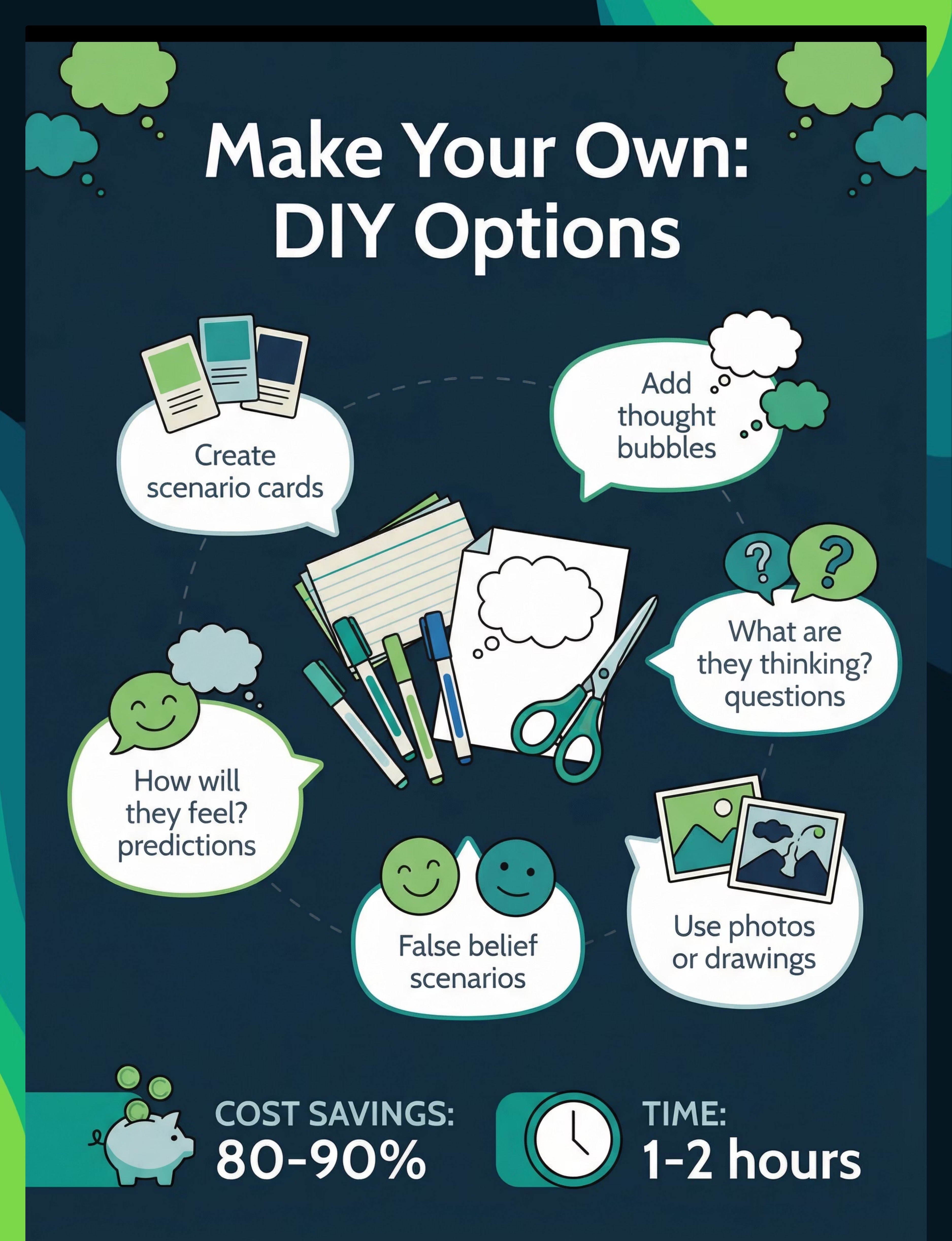
DIY Alternative (Save 80-90%)
1
Feasibility
High
2
Time Investment
1-2 hours
3
Cost Savings
80-90%
perspective-taking-theory-of-mind-games therapy material

Materials Needed
  • Index cards or cardstock
  • Thought bubble template (print from online)
  • Photos from magazines or simple drawings
  • Markers and colored pencils

Step-by-Step Instructions
  1. Create scenario cards with social situations relevant to your child's life
  1. Add thought bubbles showing what each person in the scenario might think
  1. Create "What are they thinking?" questions for each scenario
  1. Create "How will they feel?" prediction cards
  1. Practice false belief scenarios (Sally-Anne type tasks)
  1. Use photos from magazines or draw simple figures to illustrate

DIY vs Commercial
Factor
When to DIY
When to Buy Commercial
Customization
Personalizing to child's situations
Want structured curriculum
Budget
Budget-conscious families
Budget allows investment
Expertise
You understand ToM concepts
Need professional progression
Engagement
Using familiar people/contexts
Prefer polished game format
Clinical guidance
Supplementing therapy materials
Therapist recommending specific materials

Tradeoffs: DIY materials offer maximum customization and significant cost savings, but may lack the systematic progression and engagement factor of commercial products. Consider your child's needs and your comfort level with the concepts.

Preview of perspective taking theory of mind games Therapy Material

Below is a visual preview of perspective taking theory of mind games therapy material. The pages shown help educators, therapists, and caregivers understand the structure and content of the resource before use. Materials should be used under appropriate professional guidance.

Page 1
Page 2
Page 3
Page 4
Page 5
Page 6
Page 7
Page 8
Page 9
Page 10
Page 11
Page 12
Page 13
Page 14
Page 15
Page 16
Page 17
Page 18
Page 19
Page 20
Link copied!
Your Journey Forward
Empower your child's perspective-taking skills with these actionable steps.
Start Small
Begin with just 5-10 minutes daily. Consistency is key, not duration. Focus on simple emotions first.
Observe & Adapt
Pay attention to your child's current understanding. Tailor activities to their interests and progress.
Choose Your Path
Decide between DIY or commercial materials based on your budget, time, and need for structured content.
Celebrate Progress
Acknowledge every small gain. Positive reinforcement boosts motivation and confidence.

Remember, this is a journey of growth and understanding. Your patience and consistent effort will make a profound difference in fostering essential social-emotional skills. Every step, no matter how small, is a step towards greater connection.