







Tool ID: 8.9
SpEd + OT
Moderate-Strong Evidence
Rank #2
Daily Use
₹100–1,500
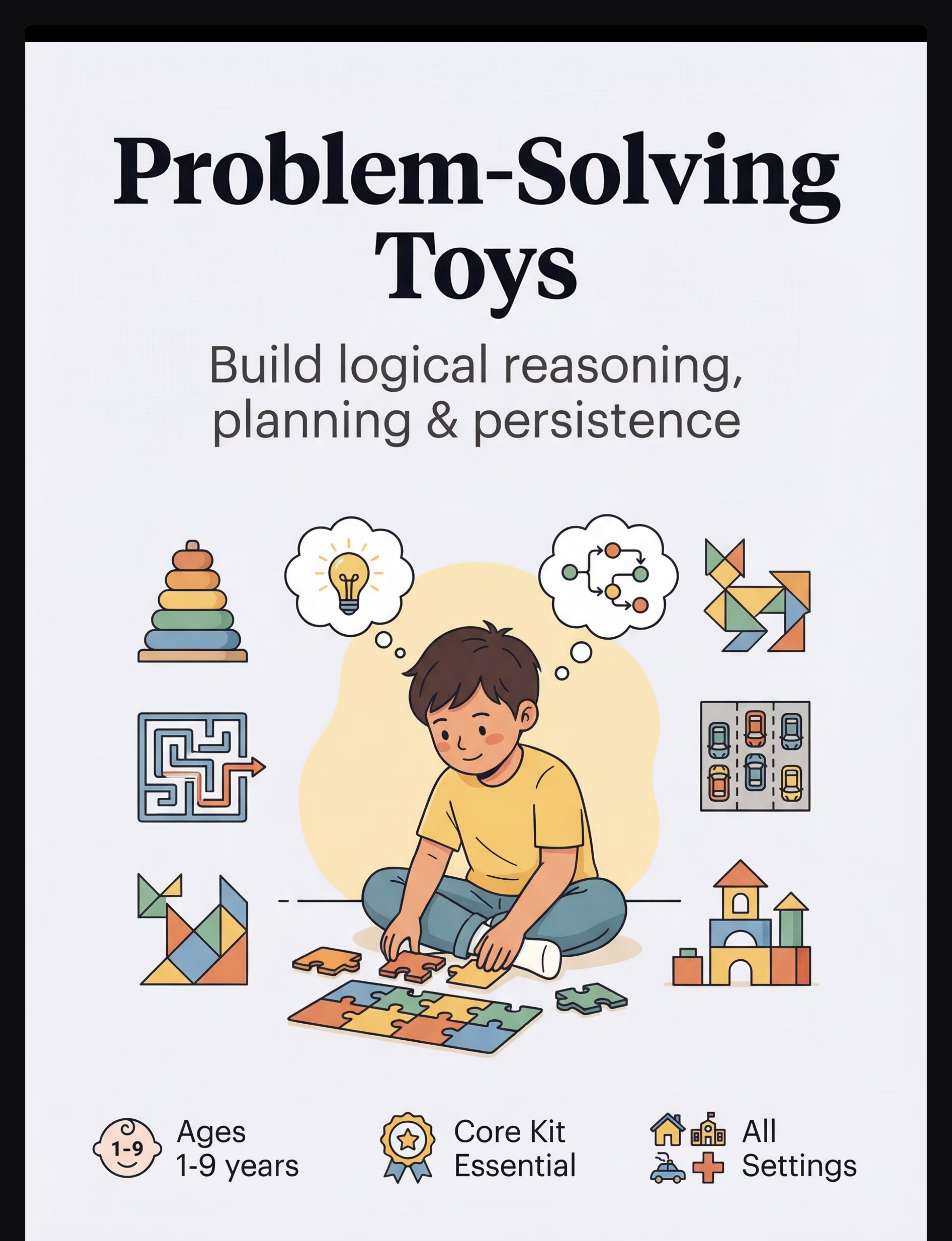
Problem-Solving Toys
Cognitive Flexibility and Reasoning Development System
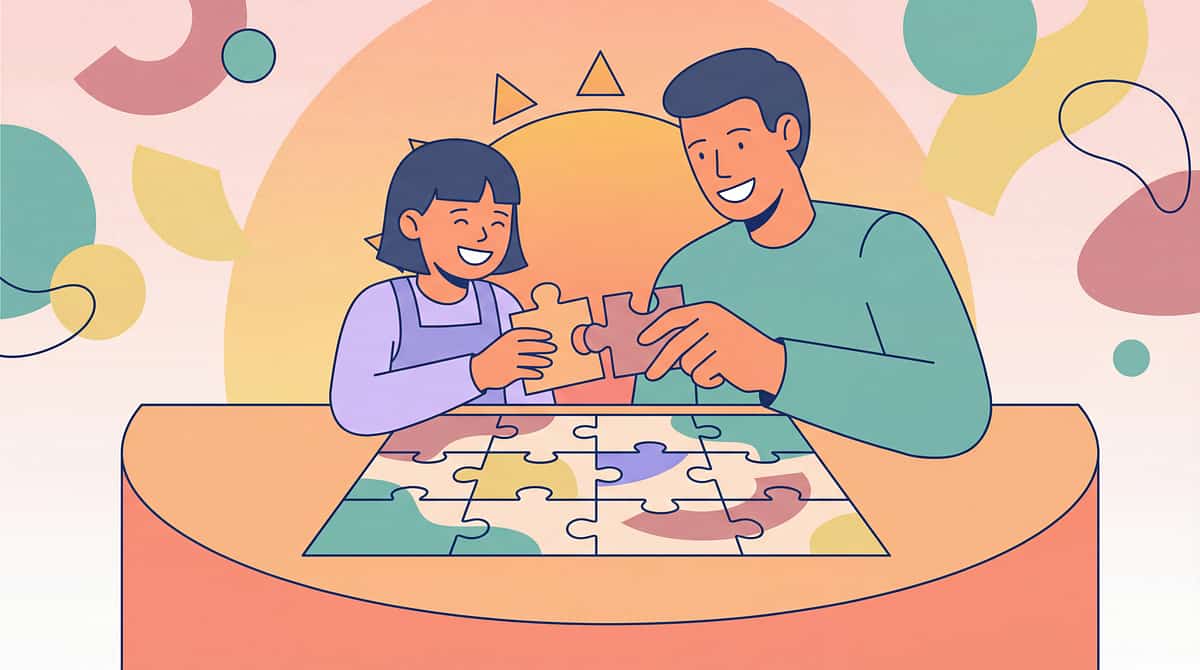
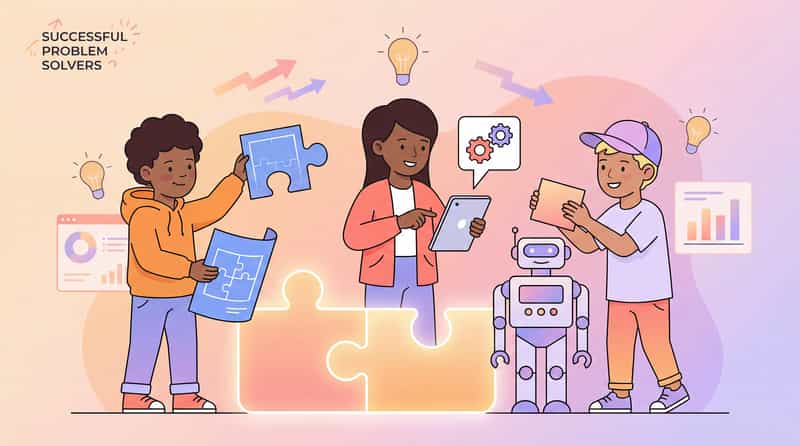
Transform frustration into confidence. Problem-solving toys develop logical reasoning, planning, cognitive flexibility, and persistence through carefully graduated challenges that build your child's executive function. From simple nesting cups to complex logic games, these tools teach children that challenges can be overcome—one step at a time.
Recommended by Special Educators and Occupational Therapists as Core Kit essentials. Perfect for home, clinic, and school settings across all ages from toddlers to pre-teens.

Who This Helps
Develops Logical Reasoning & Planning
Structured challenges build your child's ability to think systematically, anticipate outcomes, and strategize solutions.
Enhances Cognitive Flexibility
These tools teach adaptability, encouraging children to approach problems from different angles when initial attempts are unsuccessful.
Fosters Persistence & Confidence
Graduated challenges help children learn that perseverance leads to success, building self-efficacy and resilience.
Improves Spatial Reasoning
Engaging with physical puzzles and construction toys sharpens understanding of shapes, dimensions, and relationships.
Encourages Trial-and-Error Learning
Provides a safe environment for exploration, allowing children to experiment with solutions and learn from their discoveries.
Ages 1-9 Years
Challenge level matched to ability, not age. From toddlers learning through trial and error to school-age children mastering complex logic.
All Settings
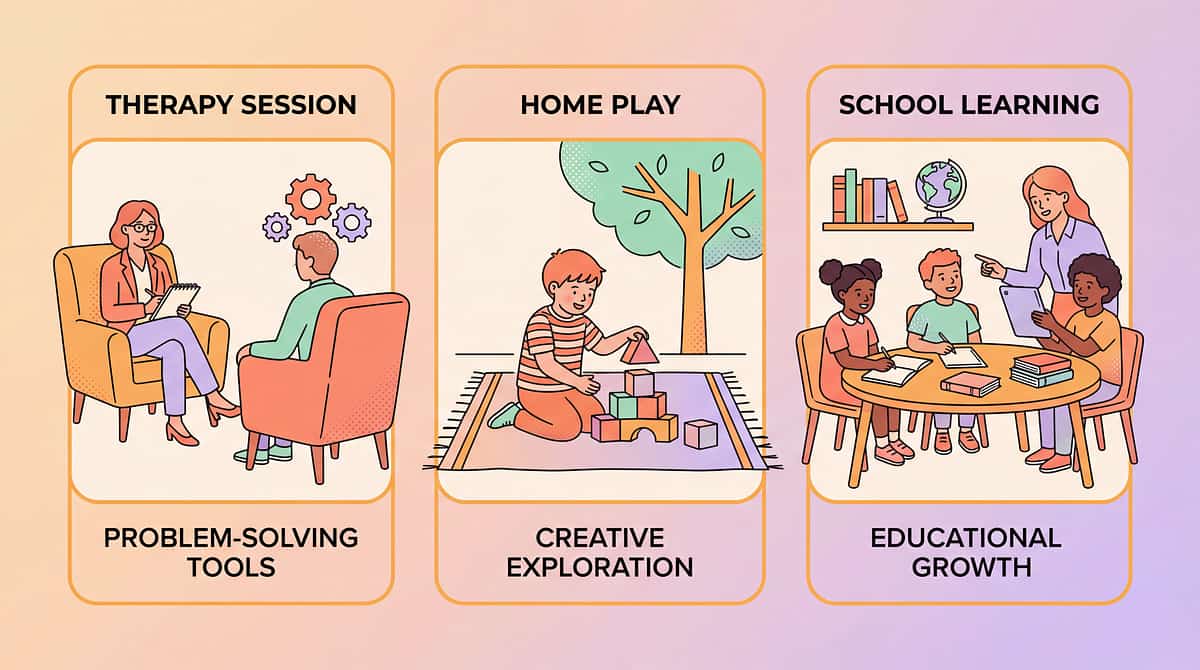
Perfect for home play, structured therapy sessions, classroom activities, and outdoor problem-solving challenges.
Best For
Children who need to build persistence, develop flexible thinking, learn to plan ahead, and gain confidence in their problem-solving abilities.

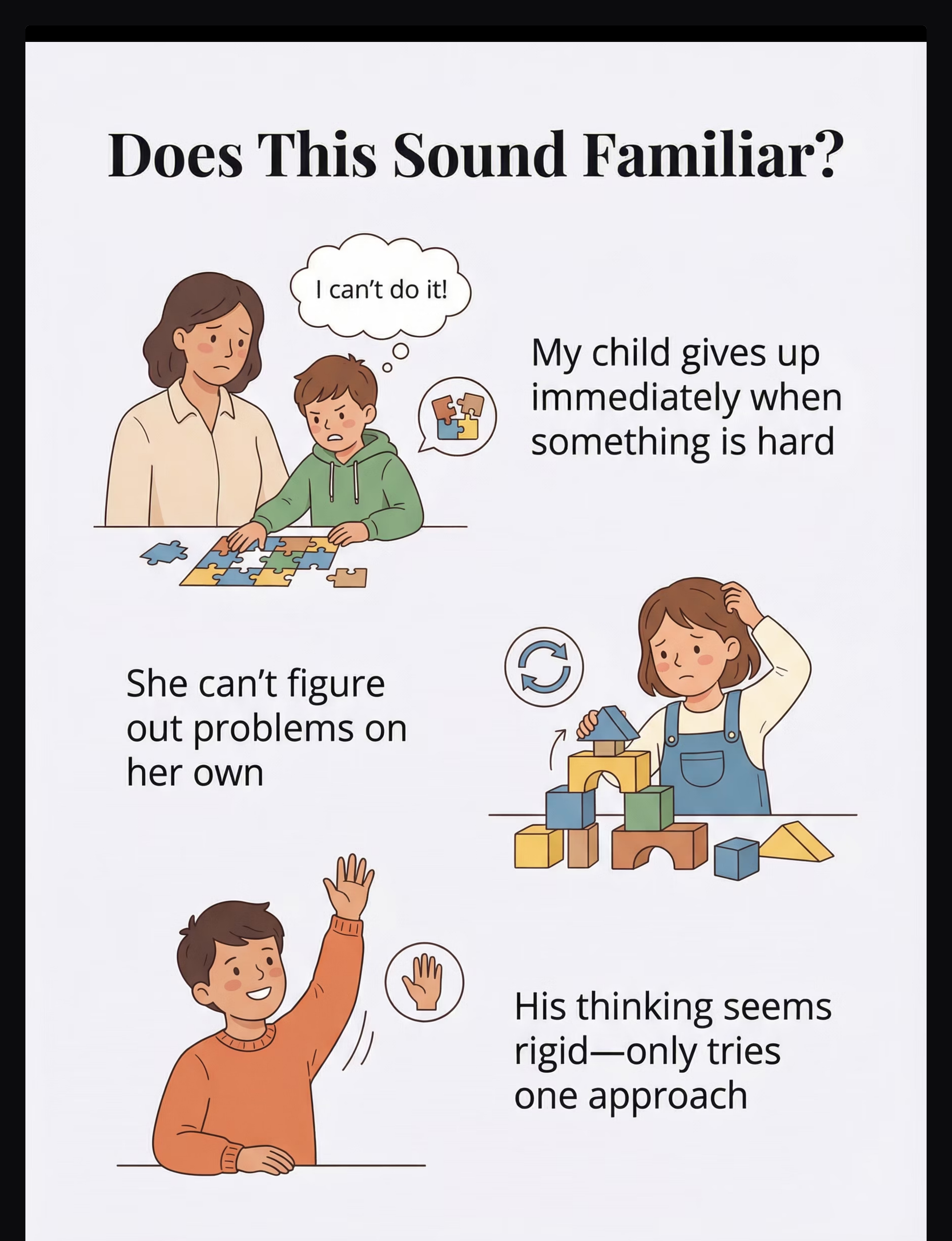
Does This Sound Familiar?
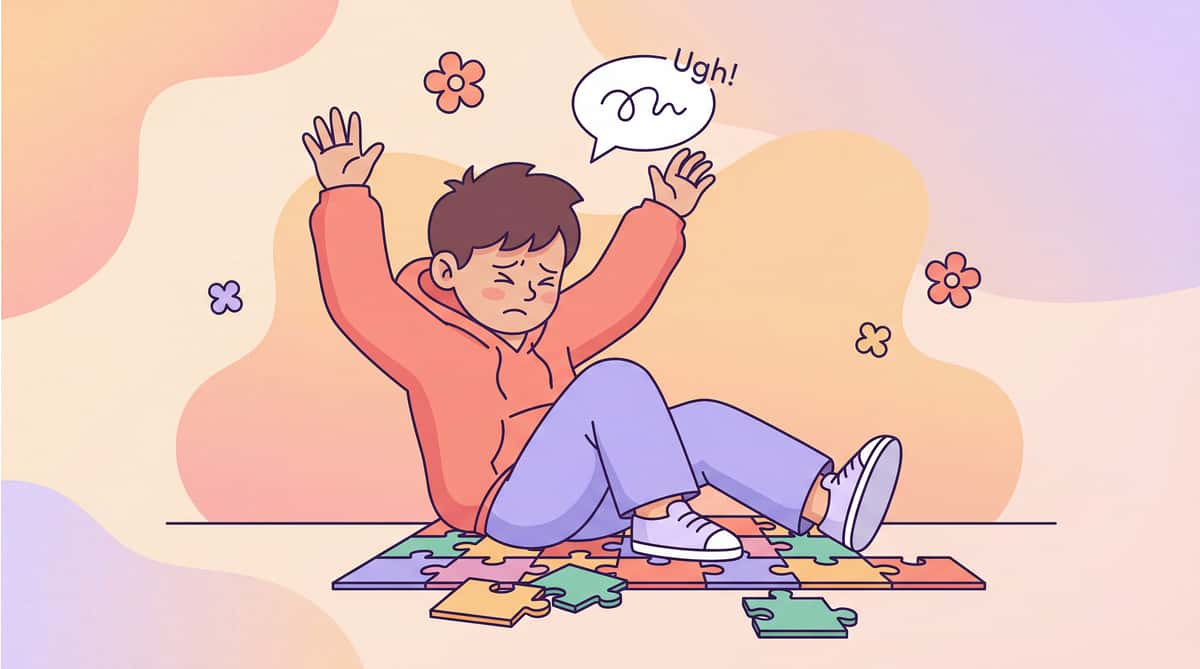
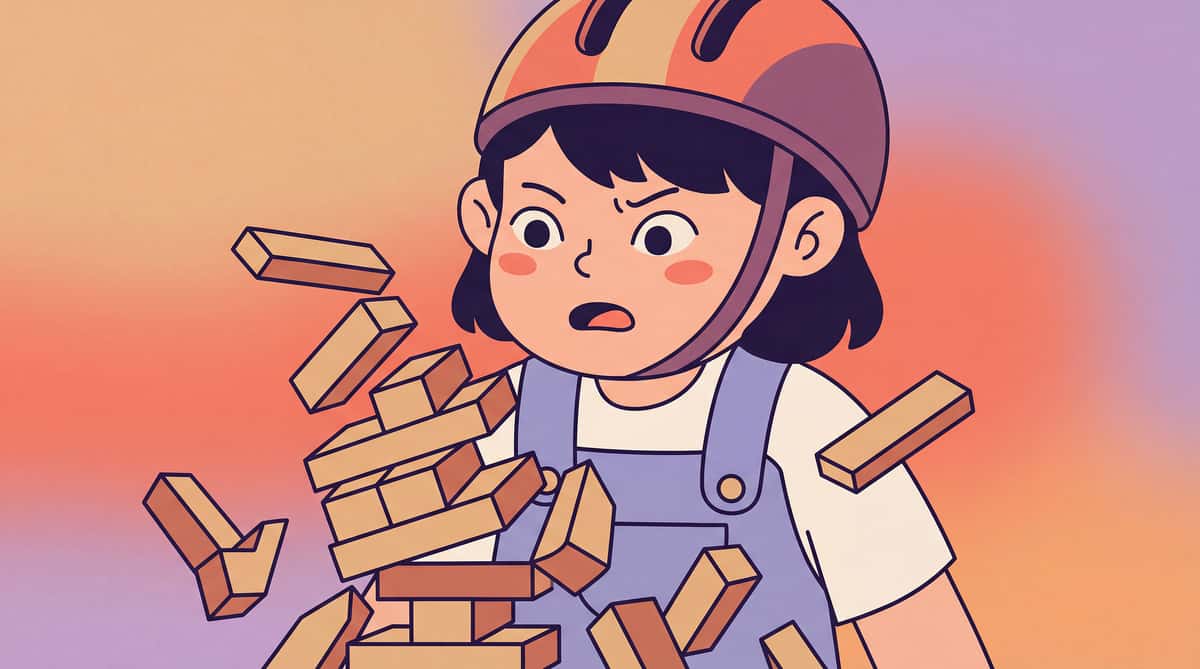
"My child gives up immediately when something is hard. The moment they encounter any difficulty, they just quit and won't even try."
"She can't figure out problems on her own. Every little challenge sends her running to me for help. She has zero confidence."
"He doesn't try different approaches. He'll do the same thing over and over even when it's not working."
"She gets frustrated and quits before really trying. I can see her thinking 'this is impossible' before she even starts."
"His thinking seems rigid. There's only one way to do things in his mind, and if that doesn't work, he's stuck."
"She can't plan ahead. Everything is impulsive action without thinking through what might happen next."
You're not alone. These are common challenges for children developing executive function skills. Problem-solving is learnable, and with the right tools and approach, your child can build the persistence and flexible thinking they need.

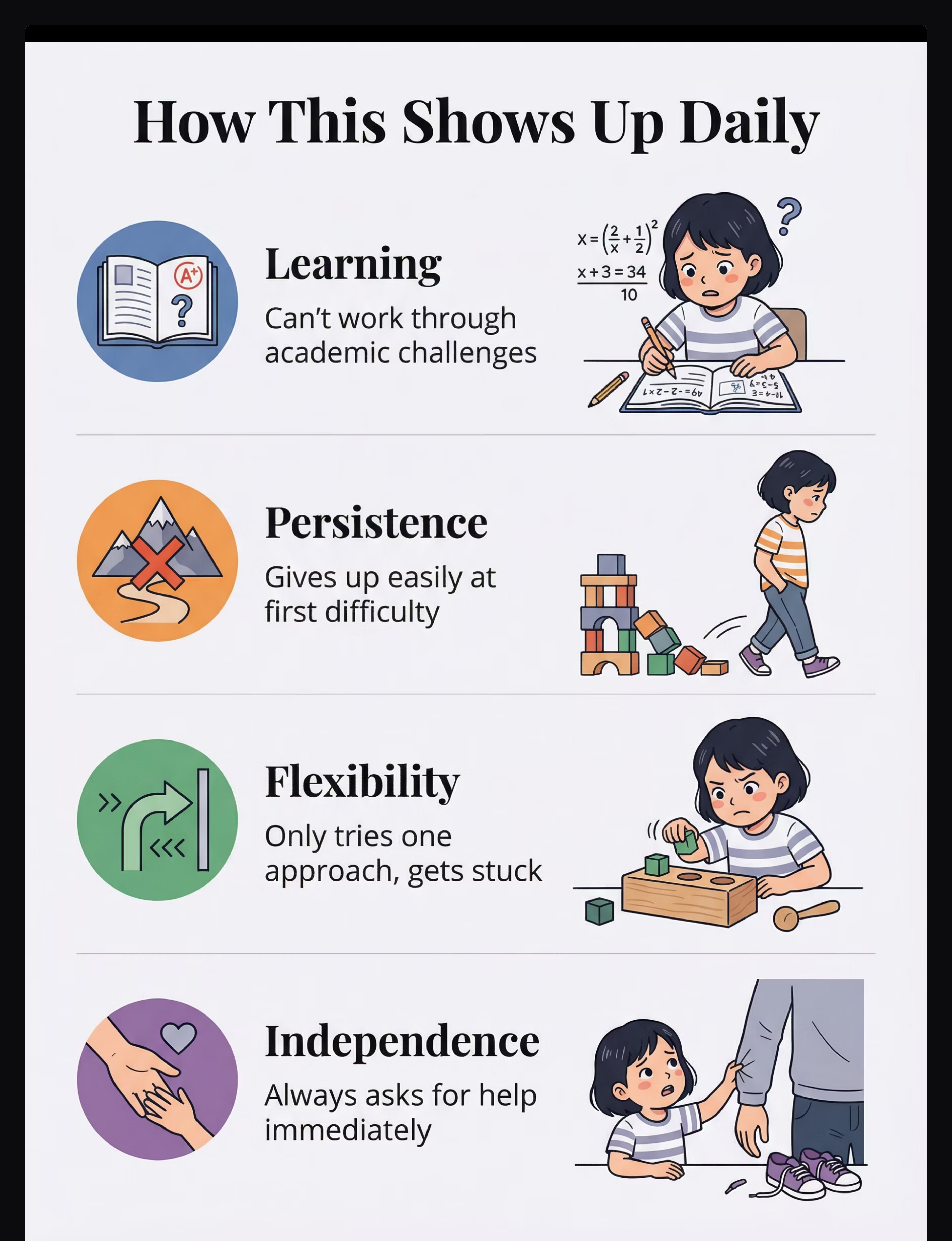
A Day Without the Right Support
Morning Learning Time
"Can't work through academic challenges" — Homework becomes a battle. Simple problems feel insurmountable. Every challenge triggers immediate "I can't do it" response.
Throughout the Day
"Gives up easily" — From getting dressed to playing with toys, any obstacle leads to quitting. No persistence developed. Avoids anything challenging.
Problem-Solving Moments
"Only tries one approach" — Rigid thinking dominates. Same failed strategy repeated over and over. Can't shift mental gears or consider alternatives.
Any Challenge
"Always asks for help immediately" — Zero independent problem-solving. Constant "Mama, you do it" or "Papa, I need help." No confidence in own abilities.
Every day reinforces the belief that challenges are impossible. Without developing problem-solving skills, children miss opportunities to build the confidence and resilience they need for school and life.

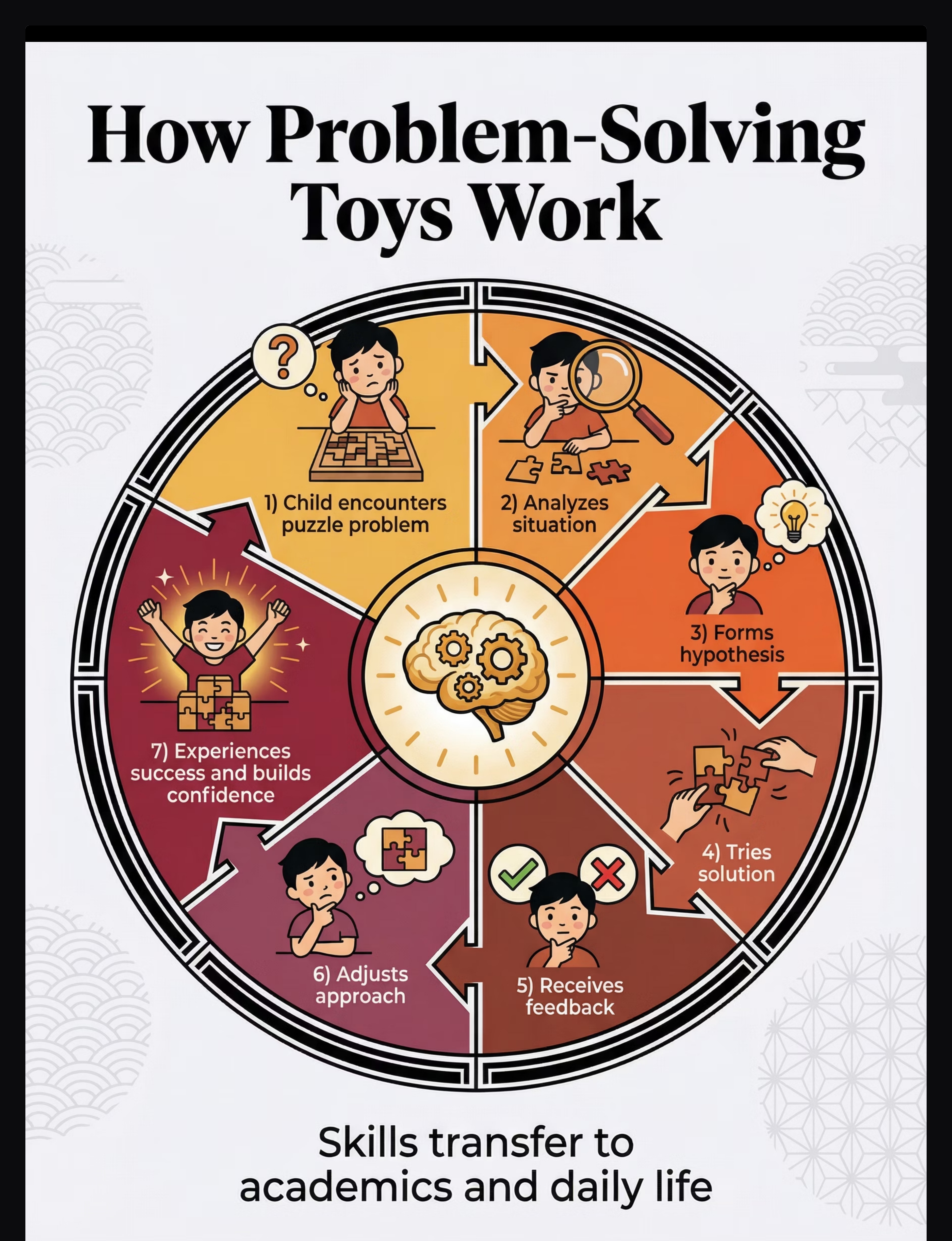
The Science Behind It
Problem Presented
Child encounters a structured challenge with clear goals and constraints
Analysis
Child observes the situation, identifies what needs to happen, considers options
Hypothesis
Child generates a possible solution based on understanding of the problem
Trial
Child attempts the solution, testing whether their approach works
Feedback
Clear results show whether the solution worked or needs adjustment
Adjustment
Child modifies approach based on feedback, developing cognitive flexibility
Persistence
Child continues through failures, building frustration tolerance and determination
Success & Transfer
Achievement builds confidence and problem-solving skills transfer to new challenges
Target Areas Developed:
Logical Reasoning
Planning
Cognitive Flexibility
Persistence
Spatial Reasoning
Trial-and-Error Learning

How to Use It Right
Start at Success Level, Increase Gradually
Begin where your child succeeds 80% of the time. Build confidence before challenge. Tiny incremental increases in difficulty prevent frustration while maintaining engagement.
Model 'Thinking Aloud' Process
Show your problem-solving process: "Hmm, that didn't work... what if I try THIS?" Make your thinking visible so children learn the internal dialogue of problem-solving.
Celebrate the Process, Not Just Success
Praise effort, strategy shifts, and persistence: "I love how you tried a different way!" Success is learning, not just completion.
Allow Productive Struggle
Find the sweet spot: challenge without excessive frustration. Children need to experience difficulty to build skills, but not so much they give up.
Teach That Mistakes Are Learning
Reframe failures as information: "That tells us something! What did we learn?" Mistakes are essential data in the problem-solving process.
Progress from Concrete to Abstract
Start with physical manipulation (nesting cups), move to visual problems (tangrams), advance to abstract logic (Rush Hour). Build foundation before complexity.
Session Duration: 10-30 minutes, following child's engagement level. Better to end on success than push to frustration.

Expert Endorsement
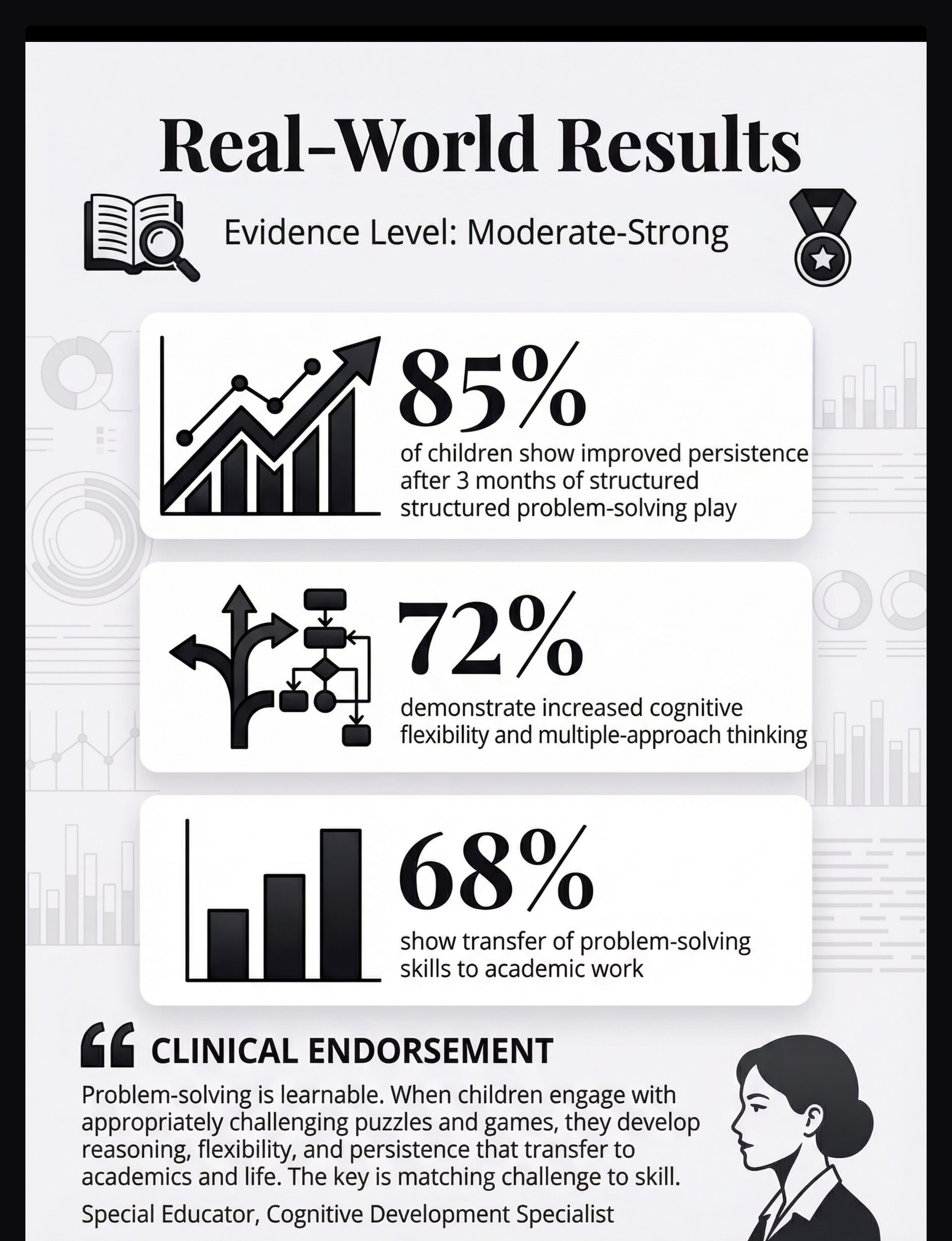
"Problem-solving is learnable. When children engage with appropriately challenging puzzles and games, they develop reasoning, flexibility, and persistence that transfer to academics and life. The key is matching challenge to skill."
— Special Educator, Cognitive Development Specialist
SpEd + OT Recommended
Co-owned by Special Education and Occupational Therapy for comprehensive cognitive development
Moderate-Strong Evidence
Research-backed approach to developing executive function and reasoning skills
Rank #2 in Category
Core Kit essential in Cognitive & Learning tools

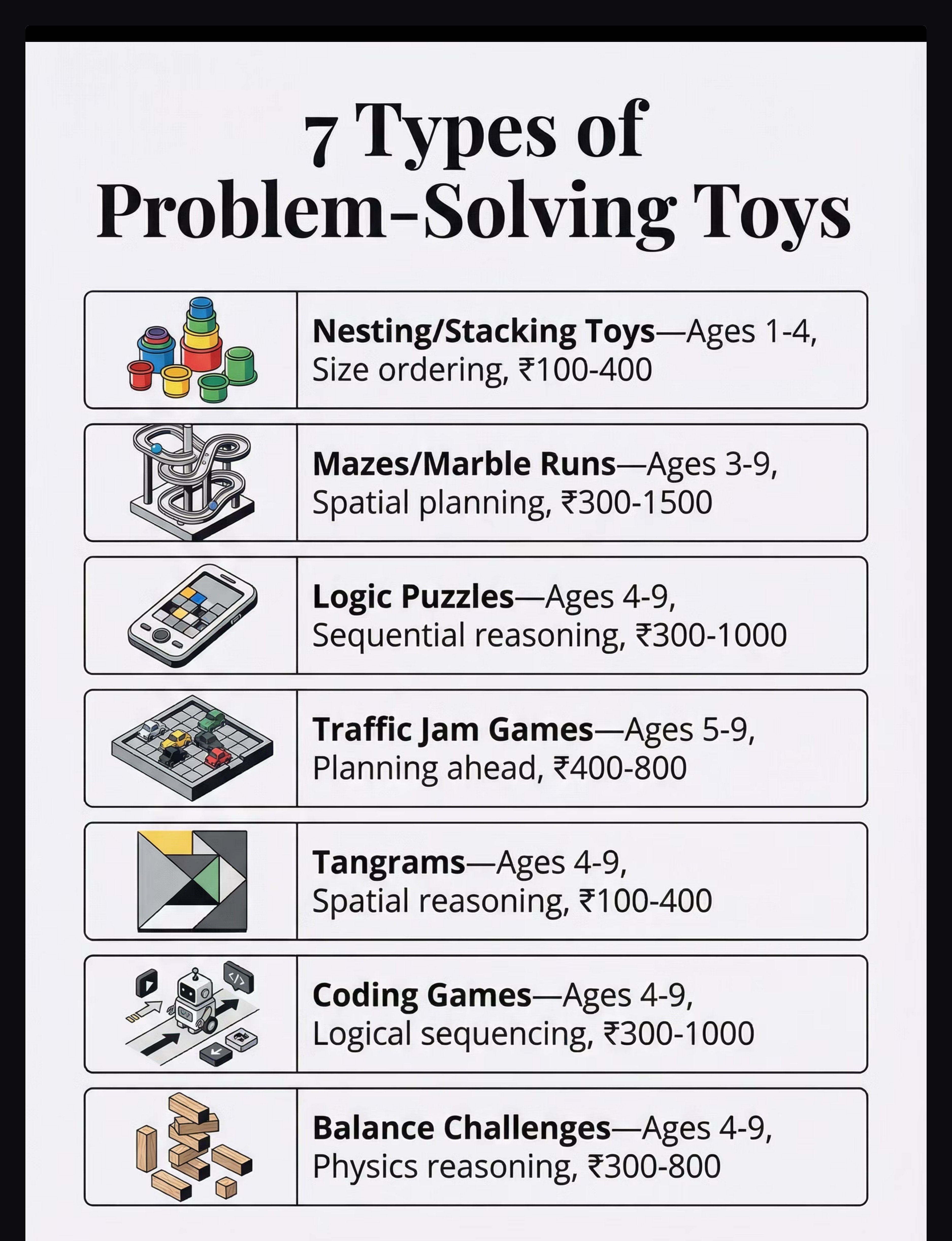
Choose Your Option (7 Variants)
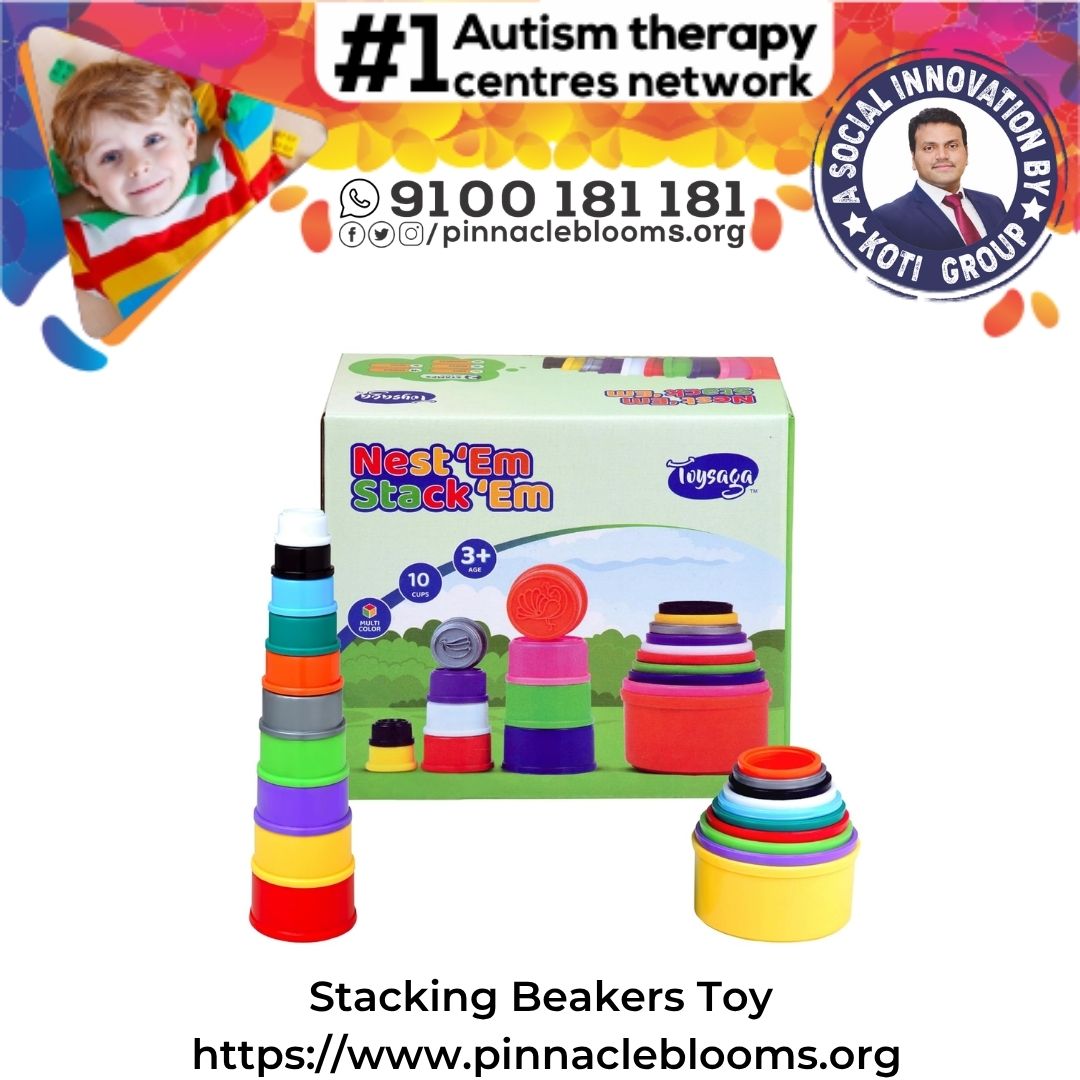
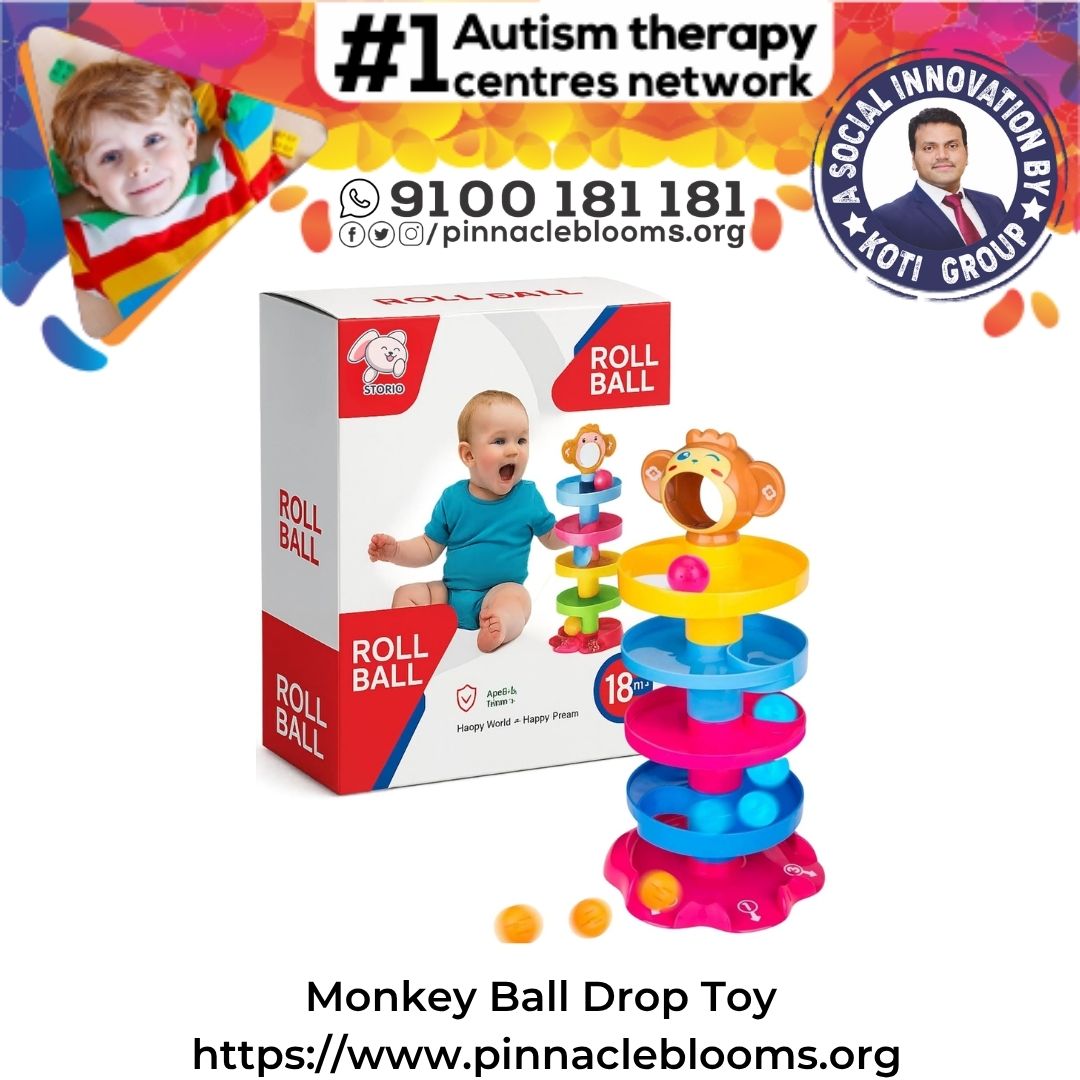
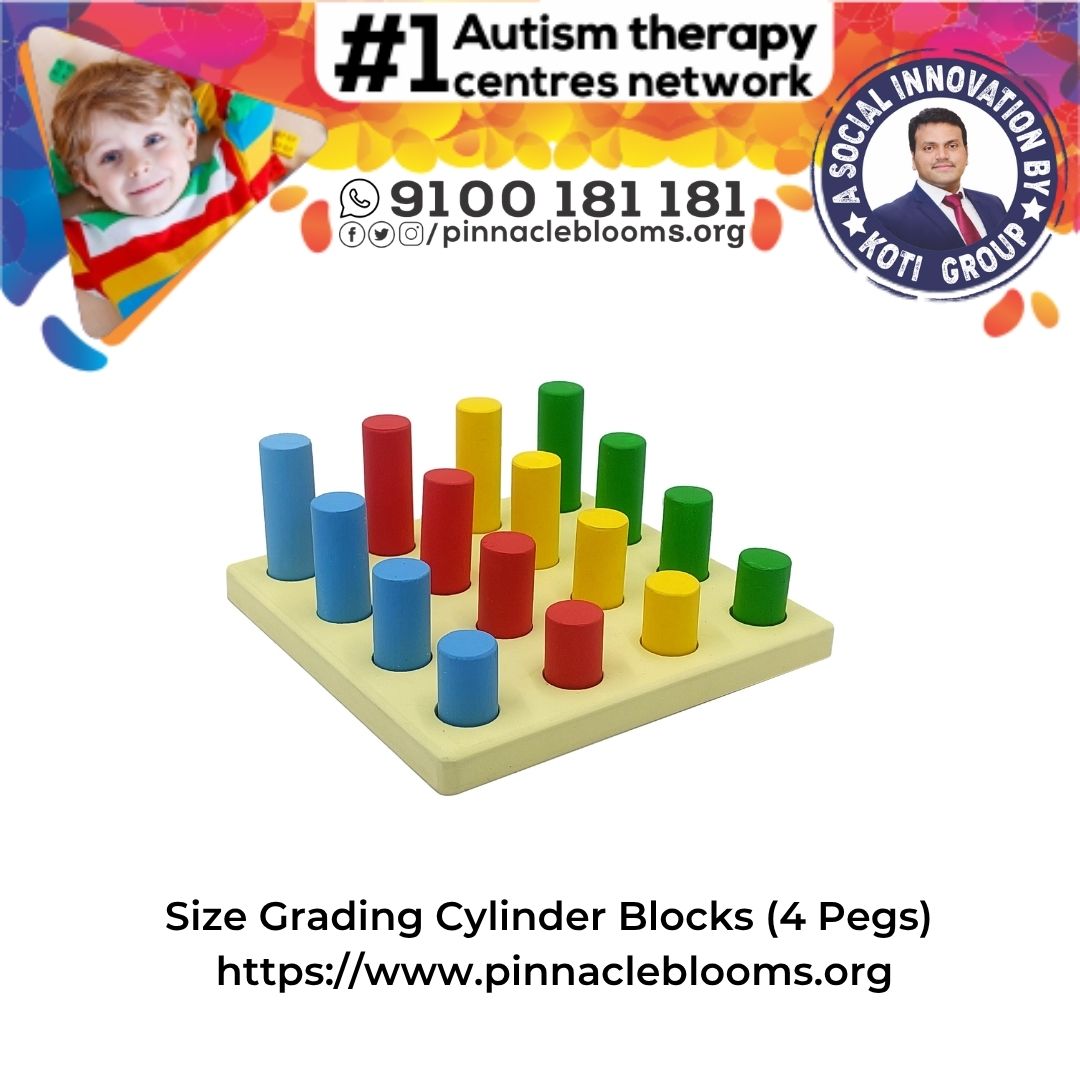
Nesting/Stacking Toys
ID: 8.9.1 | Best for: Young children, trial-and-error learning
Ages: 1-4 years | Type: Size/order problem-solving
Settings: Home, Clinic, School | Portability: Medium
Price: ₹100–400
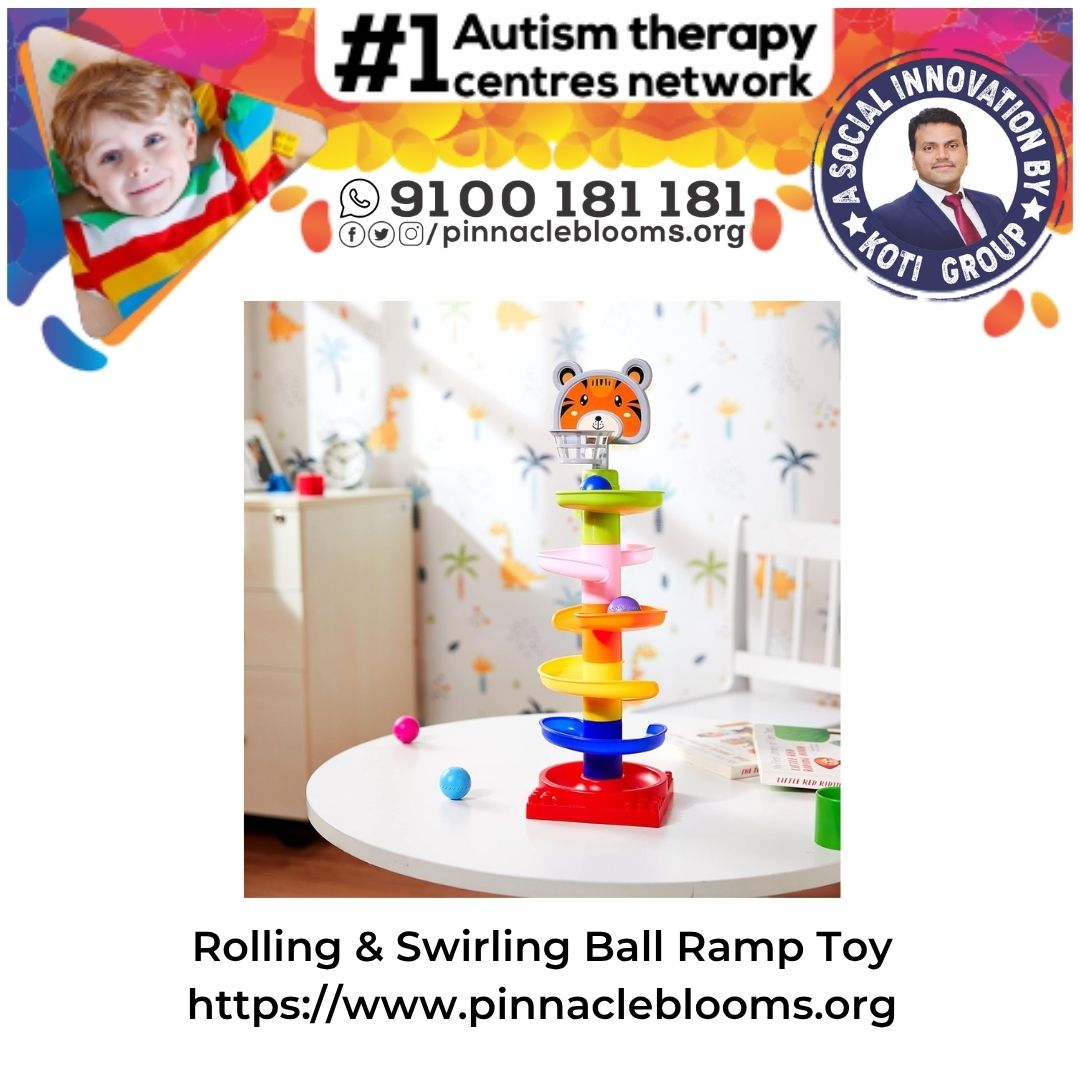
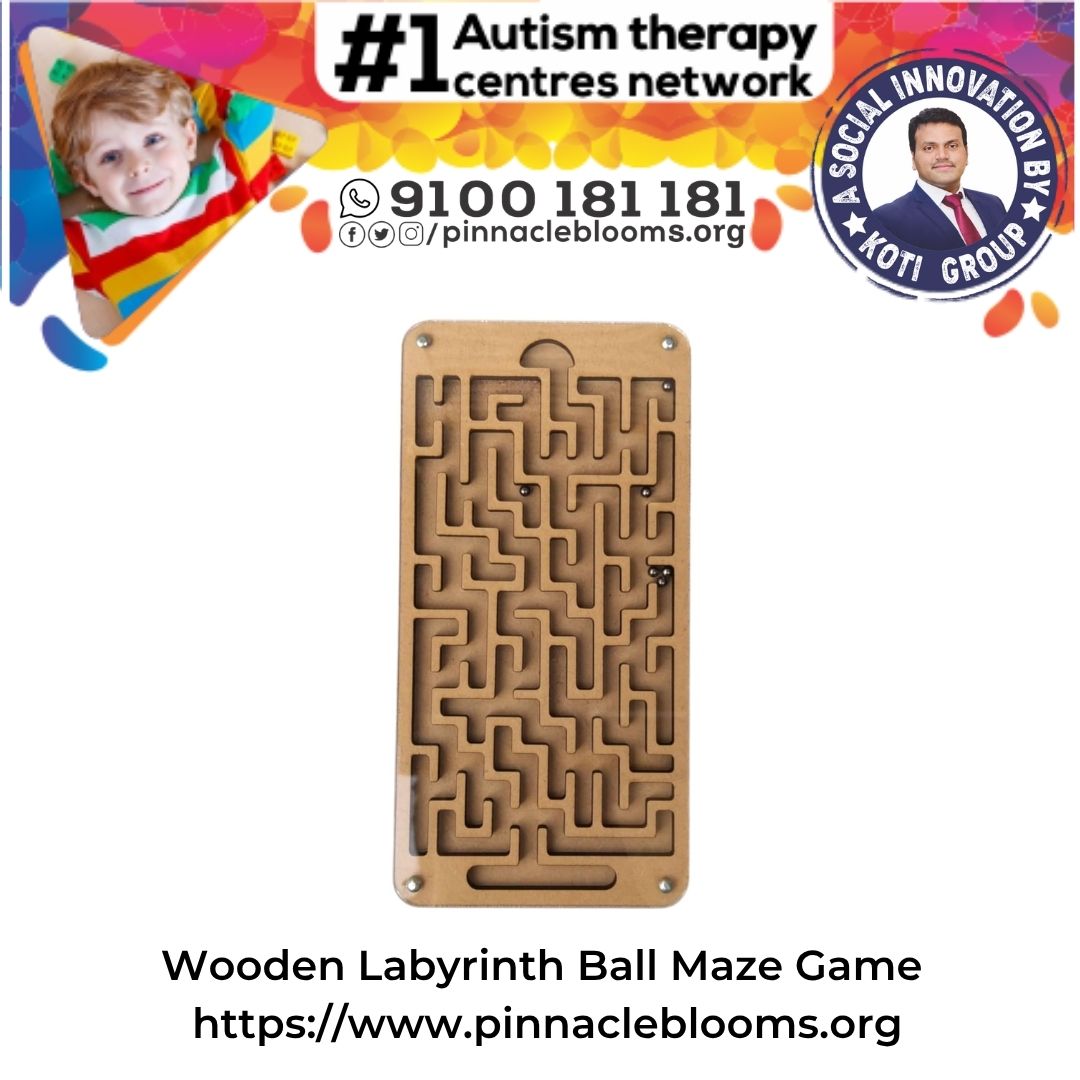
Simple Mazes / Marble Runs
ID: 8.9.2 | Best for: Planning, cause-effect, visual tracking
Ages: 3-9 years | Type: Spatial problem-solving
Settings: Home, Clinic | Portability: Low-Medium
Price: ₹300–1,500
Logic Puzzles / Brain Teasers
ID: 8.9.3 | Best for: Logical thinking, persistence
Ages: 4-9 years | Type: Sequential reasoning
Settings: All | Portability: High
Price: ₹300–1,000
Rush Hour / Traffic Jam Games
ID: 8.9.4 | Best for: Planning ahead, spatial reasoning
Ages: 5-9 years | Type: Spatial planning + sequencing
Settings: Home, School, Clinic | Portability: High
Price: ₹400–800
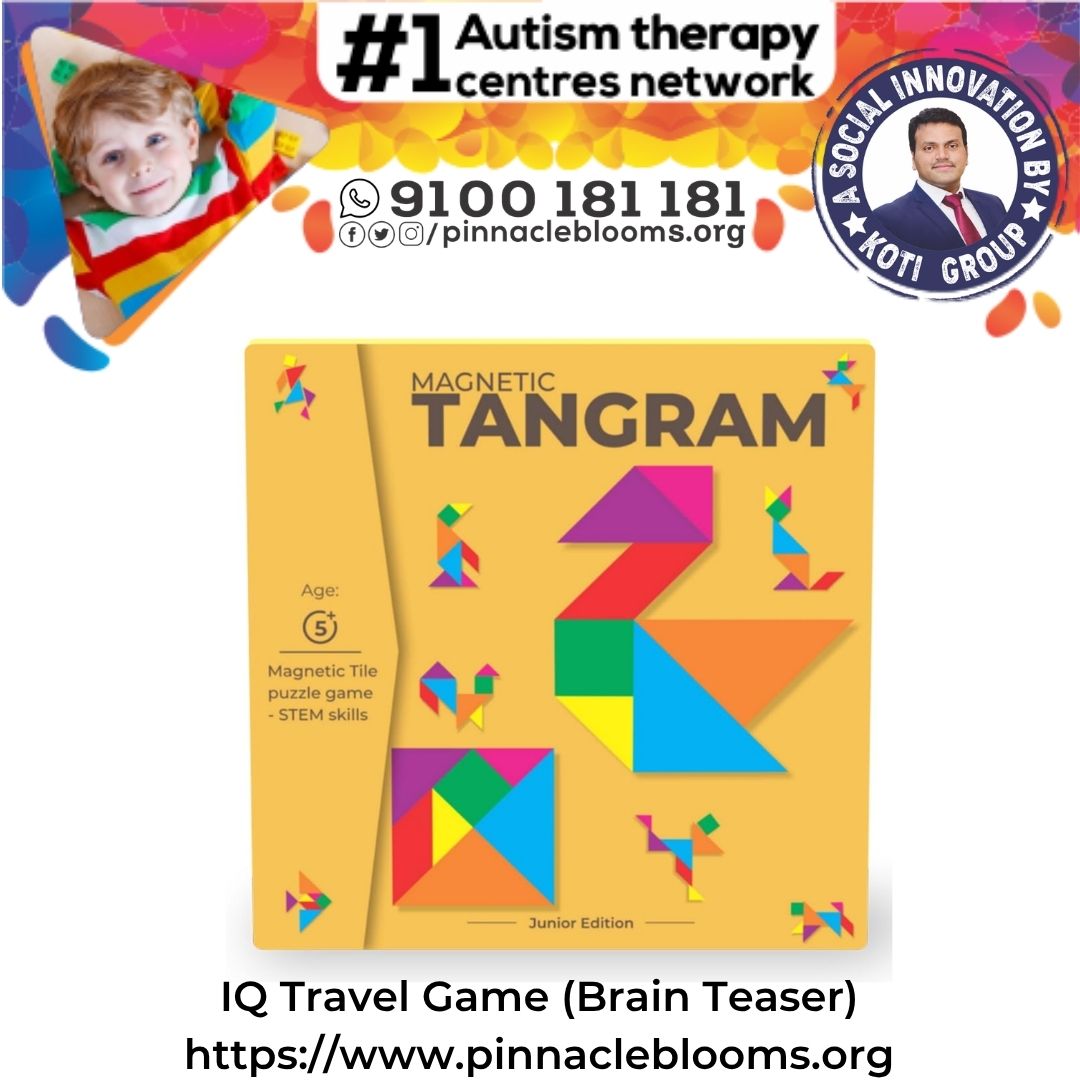
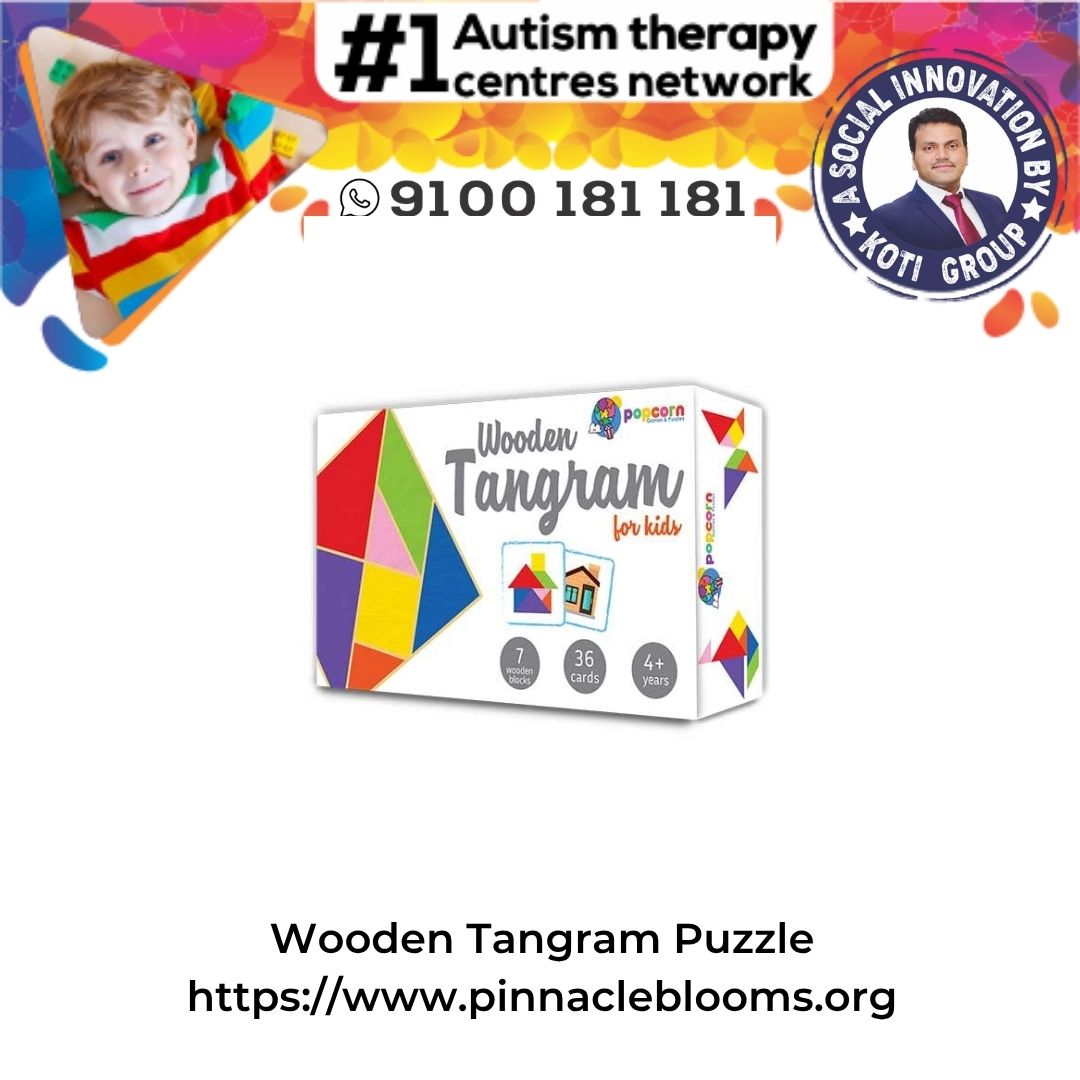
Tangrams / Shape Puzzles
ID: 8.9.5 | Best for: Spatial reasoning, visual analysis
Ages: 4-9 years | Type: Spatial problem-solving
Settings: All | Portability: High
Price: ₹100–400
Coding Games (Unplugged)
ID: 8.9.6 | Best for: Logical thinking, sequencing, pre-coding
Ages: 4-9 years | Type: Sequential logic + planning
Settings: Home, School, Clinic | Portability: Medium
Price: ₹300–1,000
Balance/Engineering Challenges
ID: 8.9.7 | Best for: Spatial + cause-effect reasoning
Ages: 4-9 years | Type: Physics-based problem-solving
Settings: Home, School, Clinic | Portability: Medium
Price: ₹300–800
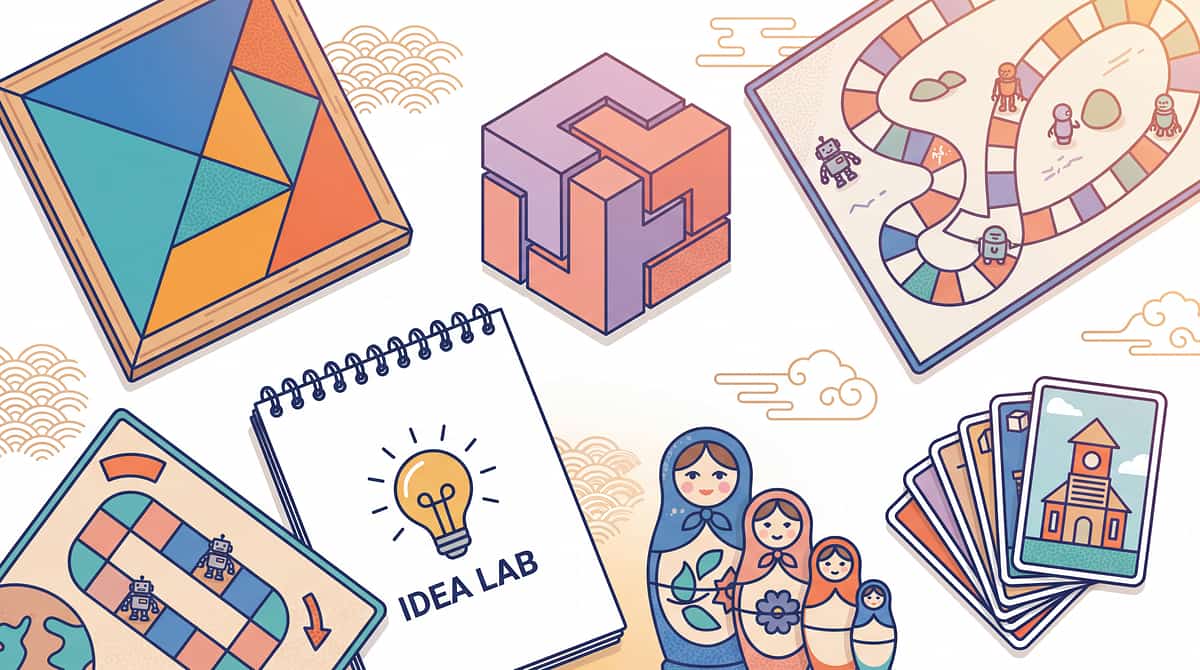
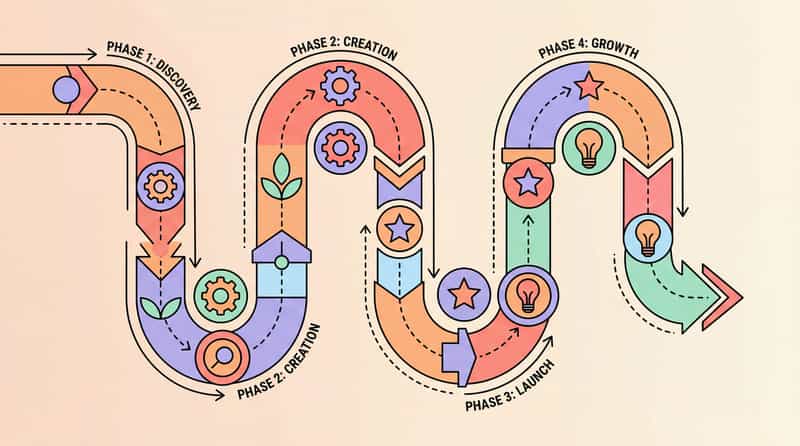
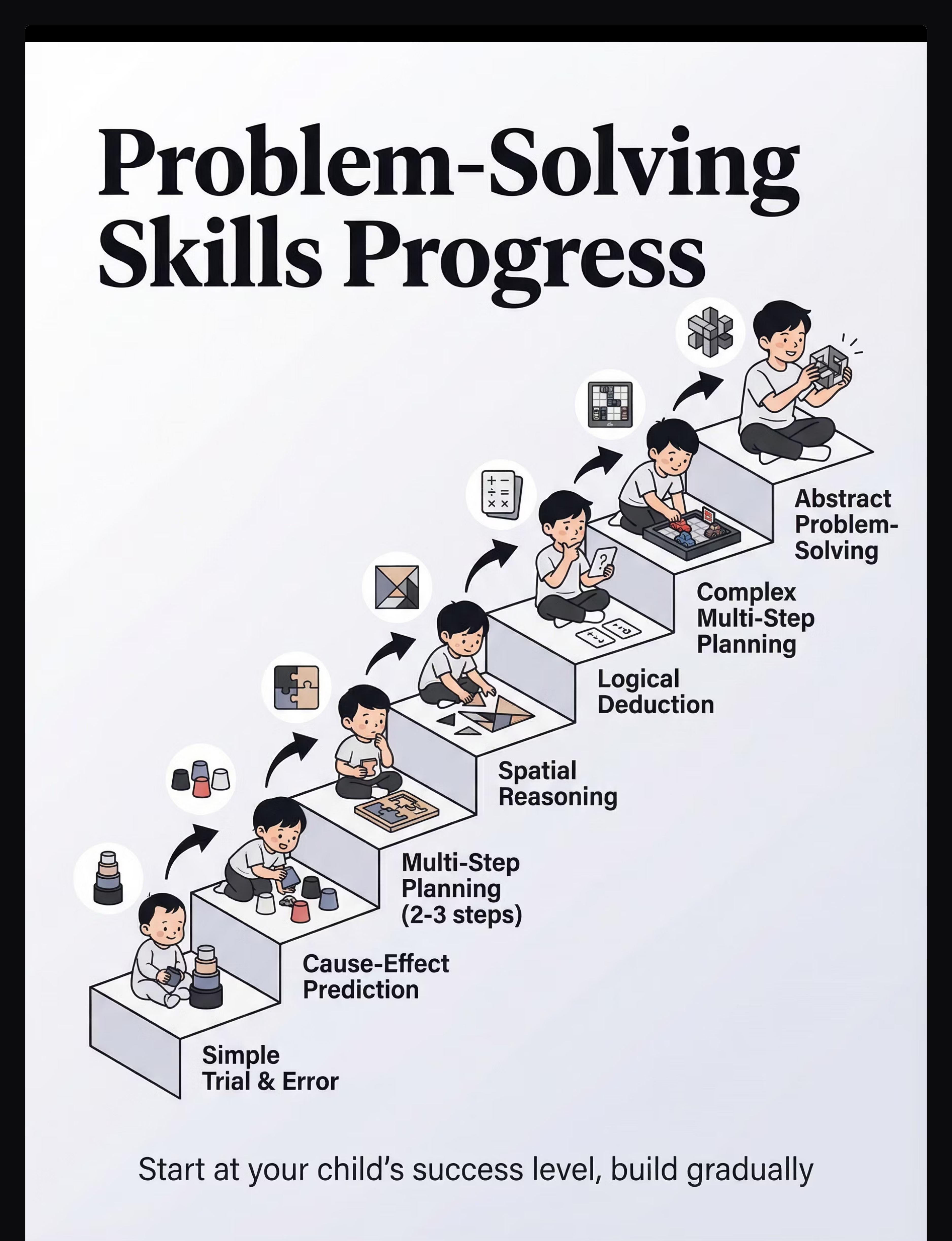
Each variant targets specific problem-solving skills at different developmental levels. Choose based on your child's current abilities, interests, and goals—not just their age. The timeline illustrates a potential progression in problem-solving complexity and age appropriateness, moving from foundational skills to more advanced reasoning.
How to Choose
- By Goal: Trial-and-error learning (nesting), spatial reasoning (tangrams, mazes), logical thinking (puzzles, Rush Hour), sequential planning (coding games)
- By Setting: All settings (tangrams, logic puzzles), home/clinic focus (marble runs), portable options (brain teasers, Rush Hour)
- By Portability: High portability for travel (logic puzzles, tangrams, Rush Hour), medium for home use (coding games, balance challenges)
Problem-Solving Development Progression
Level 1: Simple Trial-and-Error
Nesting cups, stacking rings—physical exploration with immediate feedback. Foundation skills.
Level 2: Cause-Effect Prediction
Simple marble runs, basic mazes—beginning to anticipate what will happen.
Level 3: Multi-Step Planning (2-3 steps)
Basic logic puzzles, simple tangrams—thinking ahead a few moves.
Level 4: Spatial Reasoning
Complex tangrams, intermediate puzzles—mental manipulation of shapes and spaces.
Level 5: Logical Deduction
Rush Hour, brain teasers—using logic rules to eliminate options and find solutions.
Level 6: Complex Multi-Step Planning
Advanced coding games, engineering challenges—planning 5+ moves ahead.
Level 7: Abstract Problem-Solving
Applying learned strategies to new situations, real-world problems—full transfer.
Key Features Across All Levels: Graduated difficulty, clear problem structure, built-in feedback, and when possible, multiple solution paths to encourage flexible thinking.
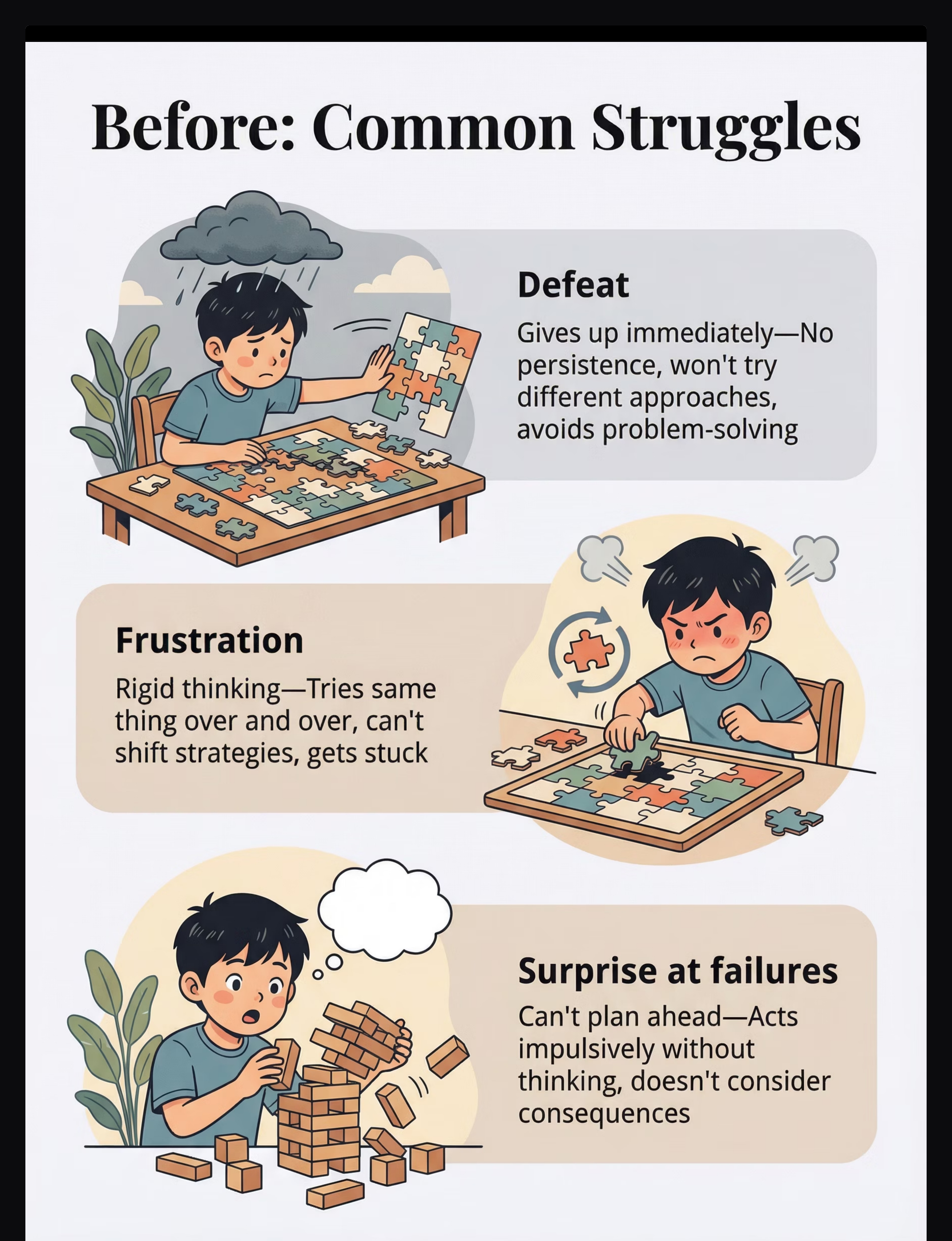
The Struggle (Before)

Gives Up Immediately
Situation: Child quits at first sign of difficulty. No persistence. Won't try different approaches. Problem-solving avoided entirely.
Experience: Every challenge triggers immediate defeat response. "I can't" becomes automatic. Skills never develop because practice never happens.
Emotion: Defeat, avoidance, learned helplessness

Rigid Thinking
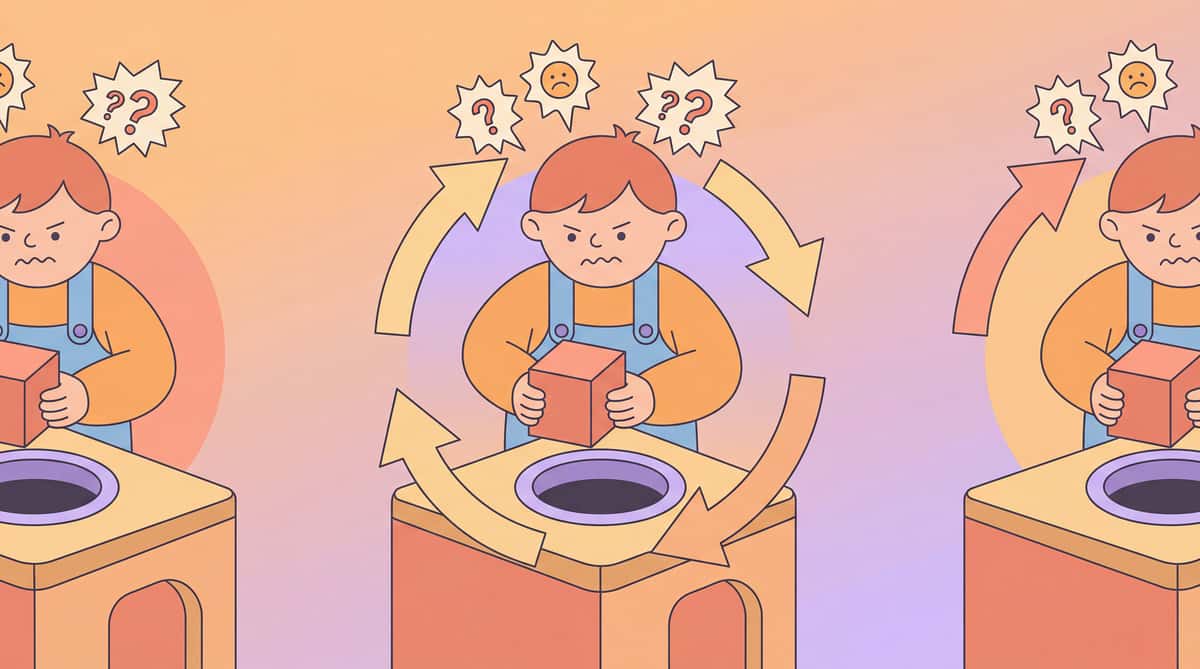
Situation: Child tries same thing over and over. Can't shift strategies. Gets stuck in mental loops. Frustration builds without resolution.
Experience: One approach, repeatedly failing. No cognitive flexibility. Can't see alternative solutions even when they're obvious to others.
Emotion: Rigidity, frustration, feeling trapped

Can't Plan Ahead
Situation: Child acts impulsively without thinking. Doesn't consider consequences. No planning before action. Surprised by predictable failures.
Experience: Random attempts with no strategy. Trial and error without the learning part. Every problem feels impossible because there's no systematic approach.
Emotion: Impulsivity, confusion, repeated surprise at failures
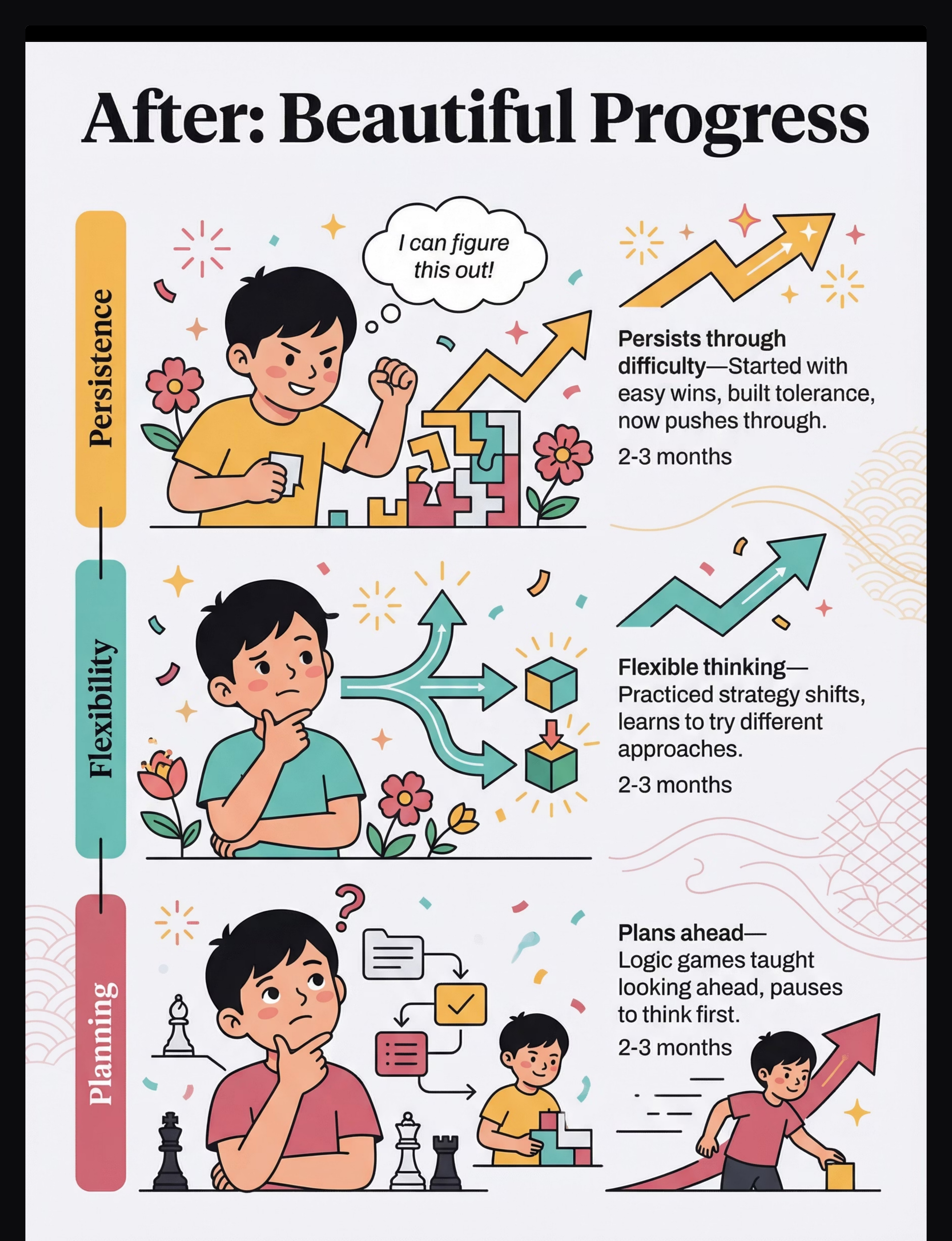
The Breakthrough (After)

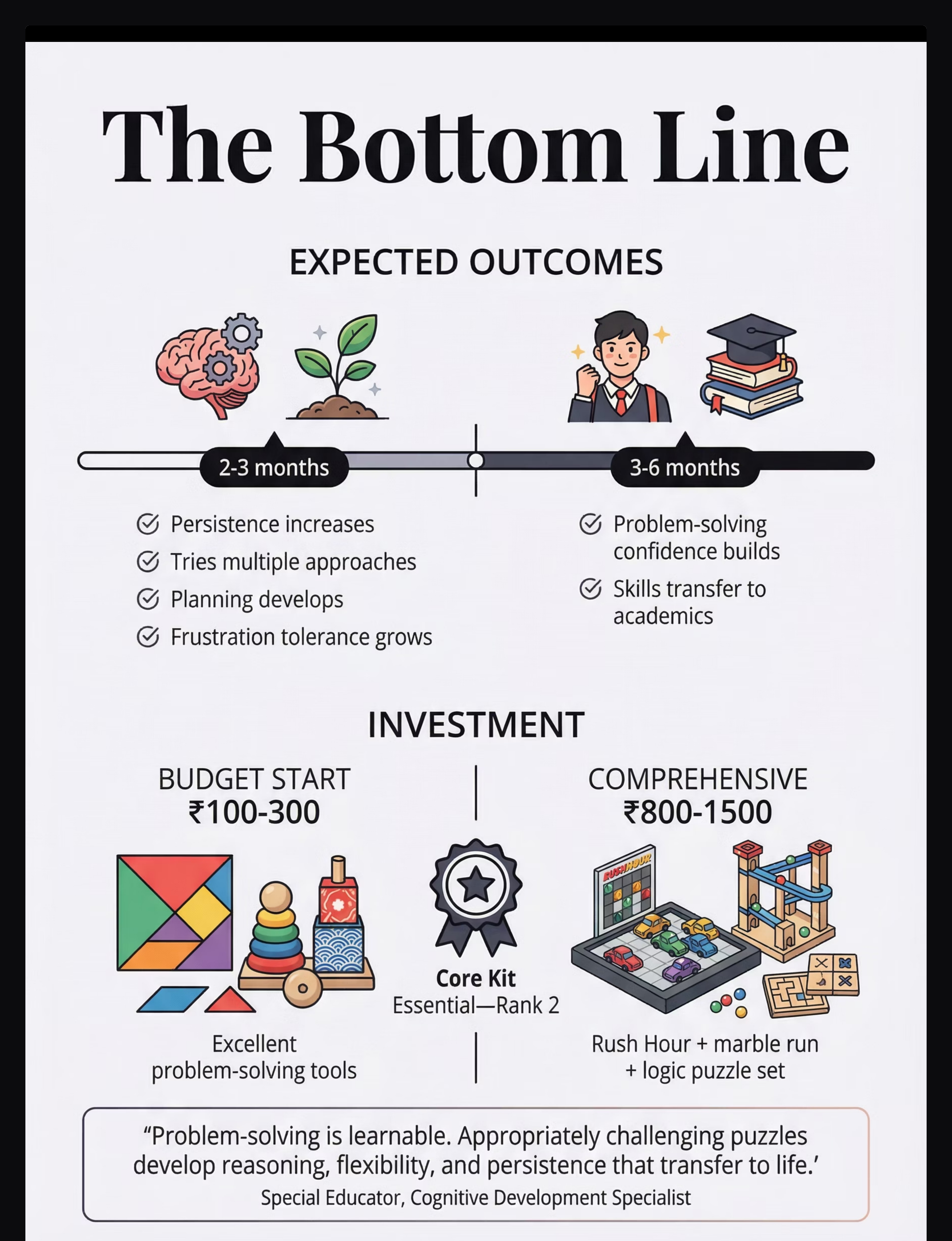
2-3 months
From Giving Up → Persistence
Situation: Started with easy-success puzzles that built confidence. Gradually increased challenge level while maintaining engagement.
Experience: Now persists through difficulty. Tries multiple approaches. Internal dialogue shifted from "I can't" to "I can figure this out!"
Emotion: Persistence, confidence, determination
2-3 months
From Rigid → Flexible Thinking
Situation: Practiced with games requiring strategy shifts. Learned that when one approach doesn't work, trying something different is smart.
Experience: Cognitive flexibility developing. Can shift strategies mid-problem. Sees multiple solution paths. Adapts when needed.
Emotion: Flexibility, adaptation, creative thinking
2-3 months
From Impulsive → Strategic Planning
Situation: Logic games taught the value of looking ahead before acting. Learned to pause, think, then try.
Experience: Now pauses to think before acting. Plans 2-3 steps ahead. Considers consequences. Strategic approach emerging.
Emotion: Planning, forethought, strategic thinking

What to Expect (Realistic Timelines)
2-3 months
Persistence Increases
Child engages with challenges longer. Fewer immediate quits. Visible growth in frustration tolerance and willingness to try.
2-3 months
Tries Multiple Approaches
When first strategy doesn't work, child spontaneously tries different ways. Cognitive flexibility becoming automatic.
2-3 months
Planning Before Action Develops
Observable pause between problem and action. Child thinking through options before trying. Strategic approach replacing impulsivity.
2-3 months
Frustration Tolerance Grows
Can handle increasingly difficult challenges without emotional dysregulation. Building emotional resilience alongside cognitive skills.
3-6 months
Problem-Solving Confidence Builds
"I can figure this out" becomes internal belief. Willing to tackle new challenges. Sees self as capable problem-solver.
3-6 months
Skills Transfer to Academics
Problem-solving strategies from games applied to homework, reading challenges, math problems. Full generalization happening.

Is This Right for My Child? (2-Minute Check)
Answer these questions to see if problem-solving toys are a good fit for your child's current needs:
Does your child persist when something is difficult?
If YES: Persistence developing—ready for graduated challenges
If NO: Build with gradual challenge starting at high success rate
Confidence Score: 95%
Does your child try different approaches when stuck?
If YES: Cognitive flexibility developing—can handle multi-solution games
If NO: Practice strategy shifting with games that require it
Confidence Score: 90%
Can your child plan ahead before acting?
If YES: Planning developing—ready for complex logic games
If NO: Practice with logic games that reward forethought
Confidence Score: 88%
Does your child enjoy puzzles and challenges?
If YES: Good foundation for problem-solving—capitalize on interest
If NO: Build positive experiences with guaranteed early success
Confidence Score: 85%
Interpretation: If you answered "yes" to 3+ questions, problem-solving toys are likely a strong fit for your child right now. If you answered "no" to most questions, these tools are even MORE important—just start easier and build gradually.
Common Questions (Honest Answers)
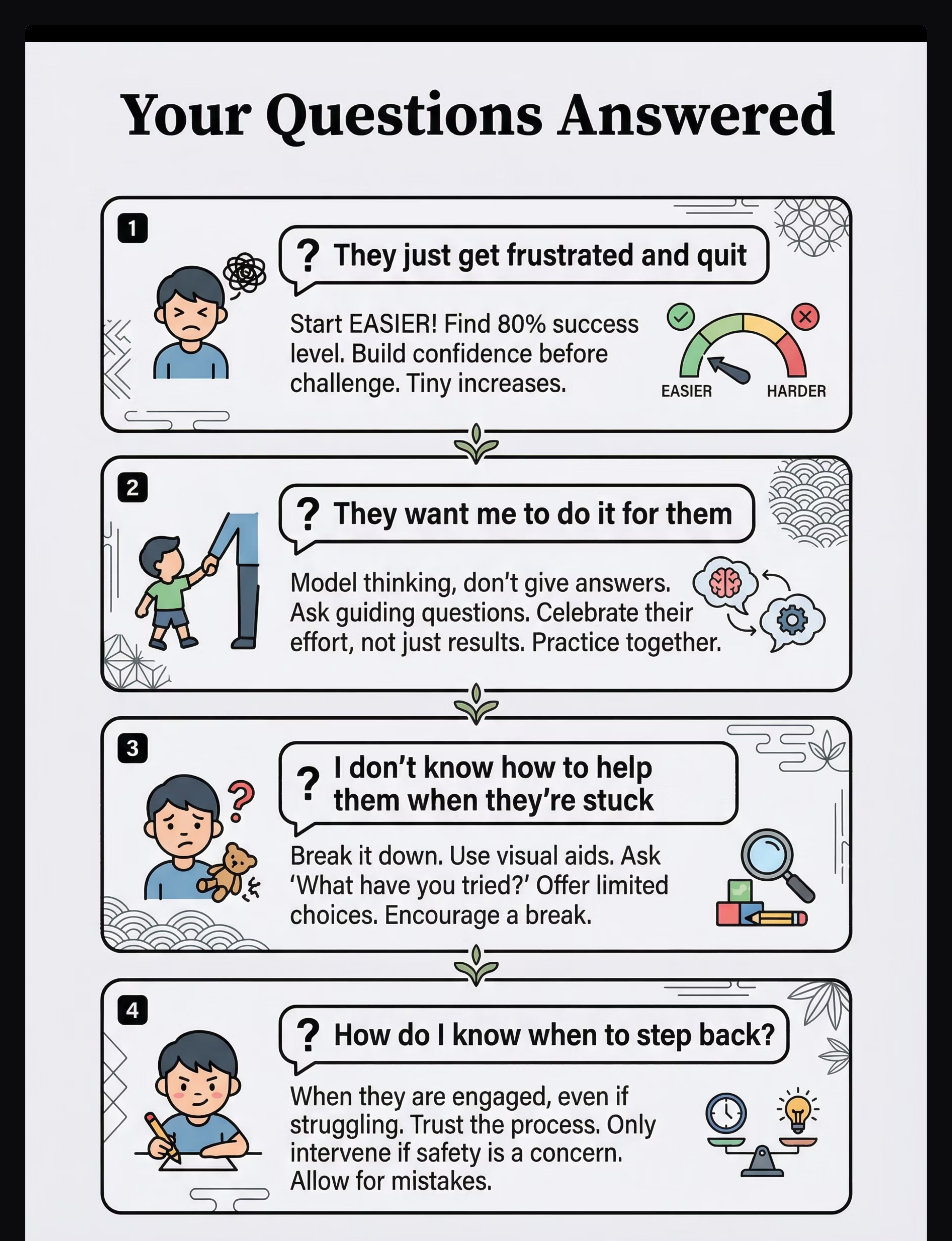
Q: "They just get frustrated and quit"
A: Start EASIER! Find the level where they succeed 80% of the time. Build confidence before challenge. Tiny increases in difficulty. Success breeds persistence. If they're quitting, the challenge is too hard too soon.
Try this: Easier starting point; 80% success rate; gradual increase over weeks, not days.
Q: "They want me to do it for them"
A: Model thinking, don't give answers. Say "Let me try... hmm, that didn't work... what if I try THIS?" Make your problem-solving process visible. Then let them try. Guide without solving. Resist taking over.
Try this: Think aloud modeling; guide don't solve; step back after showing process.
Q: "These games are too advanced"
A: Start at the beginning! Nesting cups ARE problem-solving for toddlers. Simple puzzles count. Match game to current ability level, not chronological age. Build from wherever they are now. Foundation first.
Try this: Start simple (nesting/stacking); match to ability not age; build up gradually.
Q: "Is this just play?"
A: Play IS learning! Problem-solving in games transfers to academics and life. Executive function built through play generalizes everywhere. This is serious brain development happening through engagement. Games teach what lectures cannot.
Try this: Trust the process; play builds transferable skills; watch for generalization to homework and daily life.

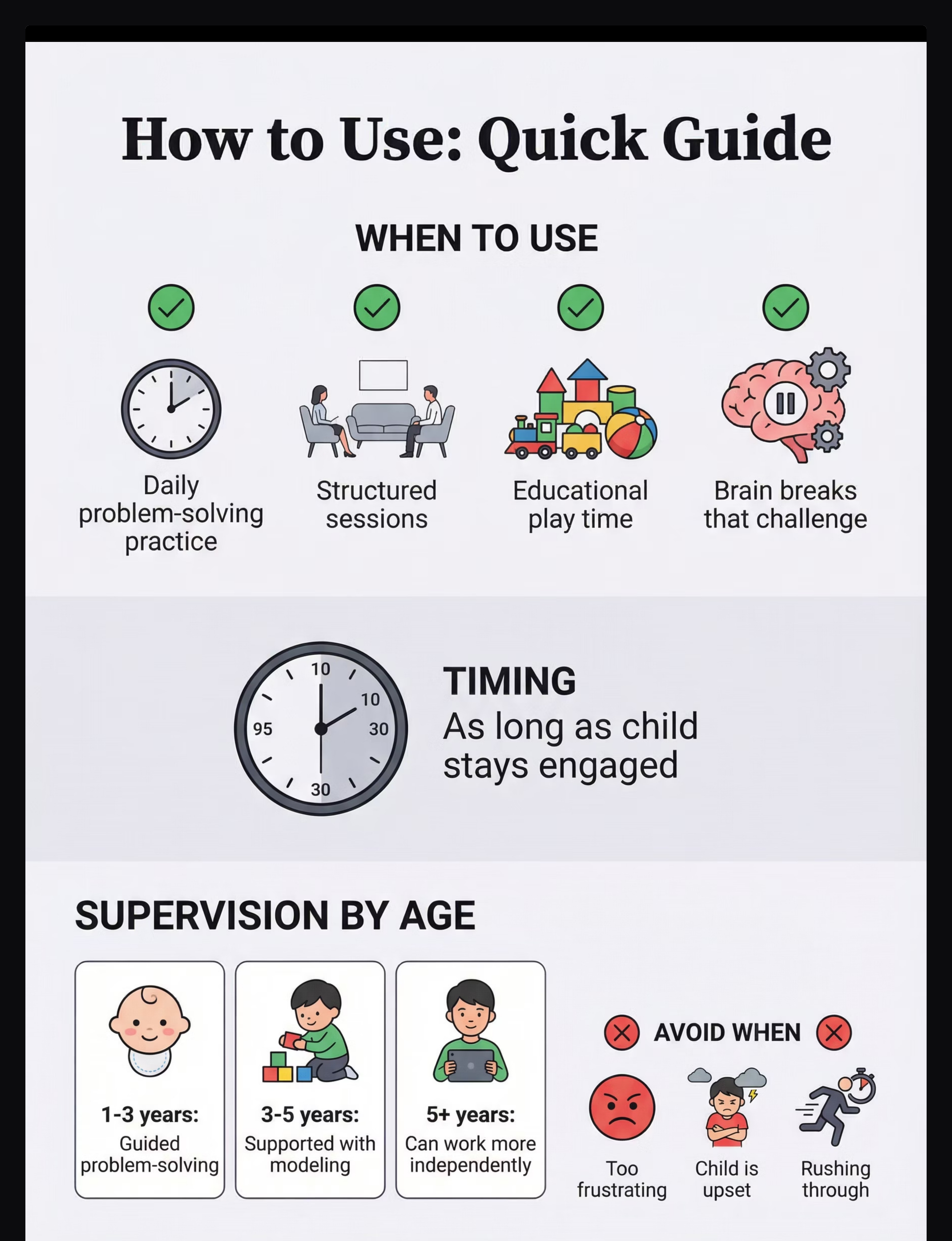
Usage Guide
When to Use ✓
- Daily problem-solving practice (even 10 minutes builds skills)
- Structured therapy sessions with graduated challenges
- Free play with educational toys
- Brain breaks that challenge and engage
- Before academic problem-solving (priming the brain)
When NOT to Use ✗
- When challenge level is too frustrating (back down difficulty)
- When child is dysregulated (calm first, challenge later)
- Rushing through without thinking (slow down, process matters)
Supervision by Age
Age Range | Supervision Level | Notes | |
Under 3 years | Guided problem-solving | Adult models process, child tries with support. Nesting and stacking focus. | |
3-5 years | Supported with modeling | Adult available to model thinking when stuck. Increasing independence. | |
5+ years | Can work more independently | Check in periodically. Available when needed but letting child problem-solve alone. |
Duration & Settings: 10-30 minutes per session, following child's engagement level. Works beautifully at home during play time, in clinic for structured therapy, at school during learning centers, and even outdoors for physical problem-solving challenges.
Remember: Match challenge level to ability, not age. A 7-year-old might need to start with Level 2 puzzles, and that's perfectly appropriate. Meet them where they are.

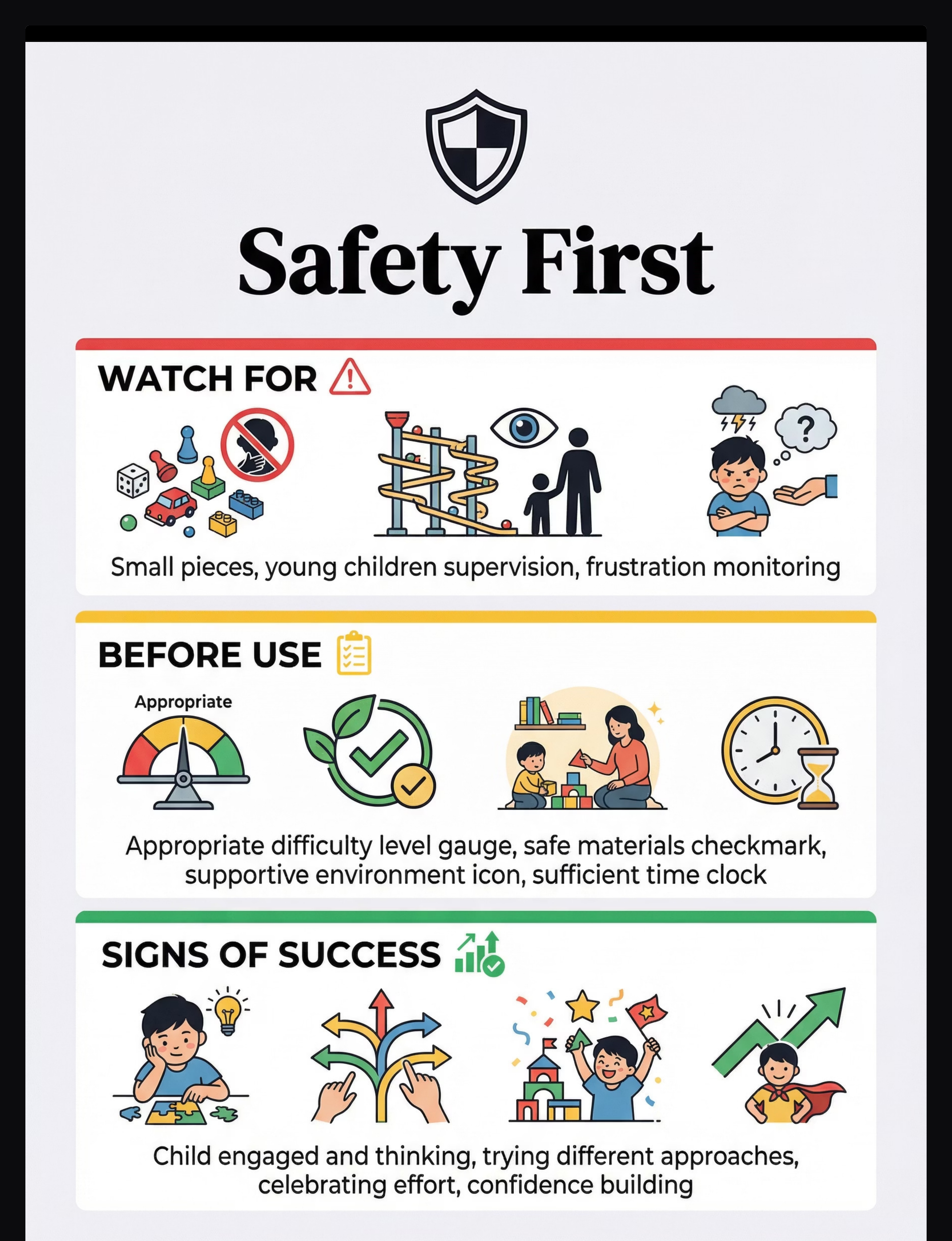
Safety First
🔴 Critical Safety
- No small pieces for children who mouth objects
- Supervise young children with all toys
- Ensure materials are safe and non-toxic
⚠️ Warnings
- Small game pieces can be choking hazards for children under 3
- Marble runs need supervision to prevent marble ingestion
- Monitor frustration levels—challenge without excessive stress
🚫 Contraindicated
- Small pieces for children who regularly mouth objects
- Excessive frustration without adult support
- Problems too far beyond current ability (causing learned helplessness)
Safety Checklist
Before Use
- ✓ Challenge level appropriate for child's current abilities
- ✓ Materials safe for child's age and developmental level
- ✓ Environment supportive and distraction-free
- ✓ Adequate time for engagement without rushing
During Use
- ✓ Child engaged, not excessively frustrated
- ✓ Trying different approaches (not stuck)
- ✓ Celebrating effort and process
- ✓ Modeling available if child becomes stuck
Signs of Success
- ✓ Persisting through appropriate challenges
- ✓ Trying multiple approaches when stuck
- ✓ Planning before acting (pause visible)
- ✓ Confidence growing over time

Investment Guide
Overall Range: ₹100–1,500 (approximately $1–18 USD)
Understanding the investment spectrum for problem-solving toys helps you make informed choices that fit your budget and educational goals.
Budget-Friendly Option | Tangrams or Nesting/Stacking Toys | ₹100-300 | Excellent problem-solving tools at minimal cost. Tangrams offer hundreds of challenges with one simple set. Nesting toys perfect for young children building foundational skills. | Starting out, budget-conscious families, multiple children, or supplementing other tools. | |
Premium Investment | Rush Hour + Marble Run + Logic Puzzle Set (Brands: ThinkFun, SmartGames, Mindware) | ₹800-1,500 | Comprehensive problem-solving toolkit covering spatial reasoning, planning, and logic. Professional quality with graduated difficulty levels for years of use. | Long-term investment, clinic use, families prioritizing cognitive development. |
Value Tip & Strategy
Start Small
Begin with one budget option (e.g., tangrams around ₹150) to gauge your child's interest and engagement with problem-solving activities.
Invest Progressively
If your child shows positive response and engagement, consider investing in 1-2 premium games for more long-term variety and intellectual progression.
Quality Lasts
Remember that quality problem-solving games are durable, last for many years, and can benefit multiple children across different developmental stages.
Choosing Your Next Game
Assess Interest
Observe what types of puzzles or challenges your child naturally gravitates towards.
Match Skills
Select games that align with their current developmental stage while offering a slight challenge.
Read Reviews
Look for recommendations from educators or other parents for age-appropriate, engaging options.
Consider Durability
Prioritize well-made games that can withstand repeated use and potential wear and tear.

Where to Buy in India
Availability: Widely Available across multiple platforms
Platform | Search Term | Price Range | |
Amazon.in | "logic puzzles kids" | ₹300-800 | |
Amazon.in | "Rush Hour game" | ₹400-700 | |
Amazon.in | "tangram puzzle" | ₹100-350 | |
Amazon.in | "marble run kids" | ₹400-1,200 | |
Amazon.in | "coding games kids unplugged" | ₹300-800 |
Online Shopping Options
Amazon.in
Primary platform for a wide range of logic puzzles and educational games. Use specific search terms like "logic puzzles kids" or game names.
Specific Games
Search for "Rush Hour game," "tangram puzzle," or "marble run kids" to find popular options and varying price points.
Coding Games
Look for "coding games kids unplugged" to discover screen-free options that teach computational thinking.
Buying Tips
- ThinkFun and SmartGames make excellent, research-backed logic games
- Start with games that have graduated difficulty (challenge cards)
- Tangrams are inexpensive and highly versatile—great starting point
- Marble runs combine problem-solving with building skills
- Look for games with challenge card progression (40+ levels ideal)
Red Flags (Avoid These)
- 🚩 No graduated difficulty levels (all challenges same difficulty)
- 🚩 Too advanced for starting point (causes immediate frustration)
- 🚩 No clear problem structure (child can't understand the goal)
- 🚩 Only one difficulty level (no room for growth)

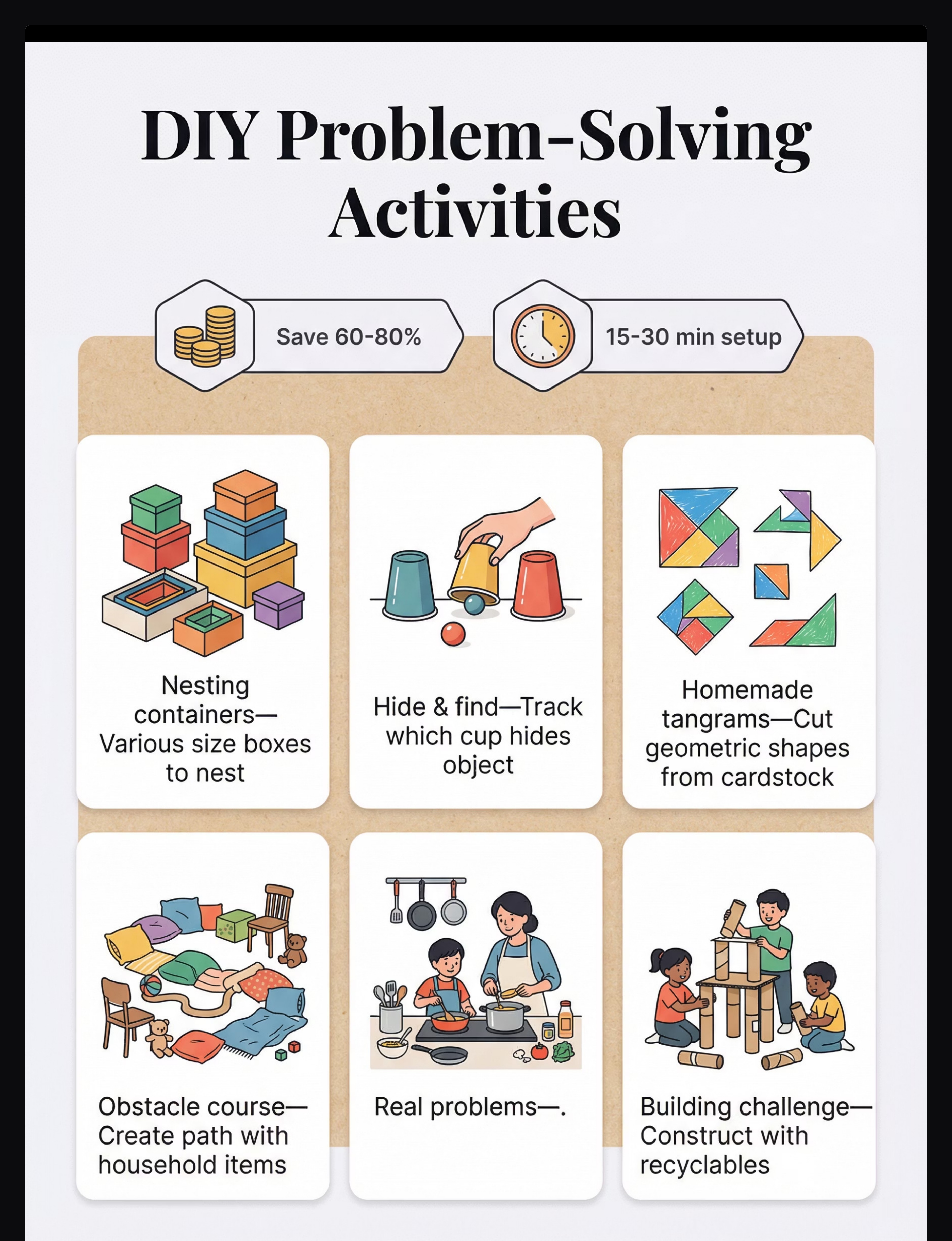
DIY Alternative (Save 60-80%)
Feasibility: Medium-High | Time Investment: 15-30 minutes | Cost Savings: 60-80%
Materials Needed
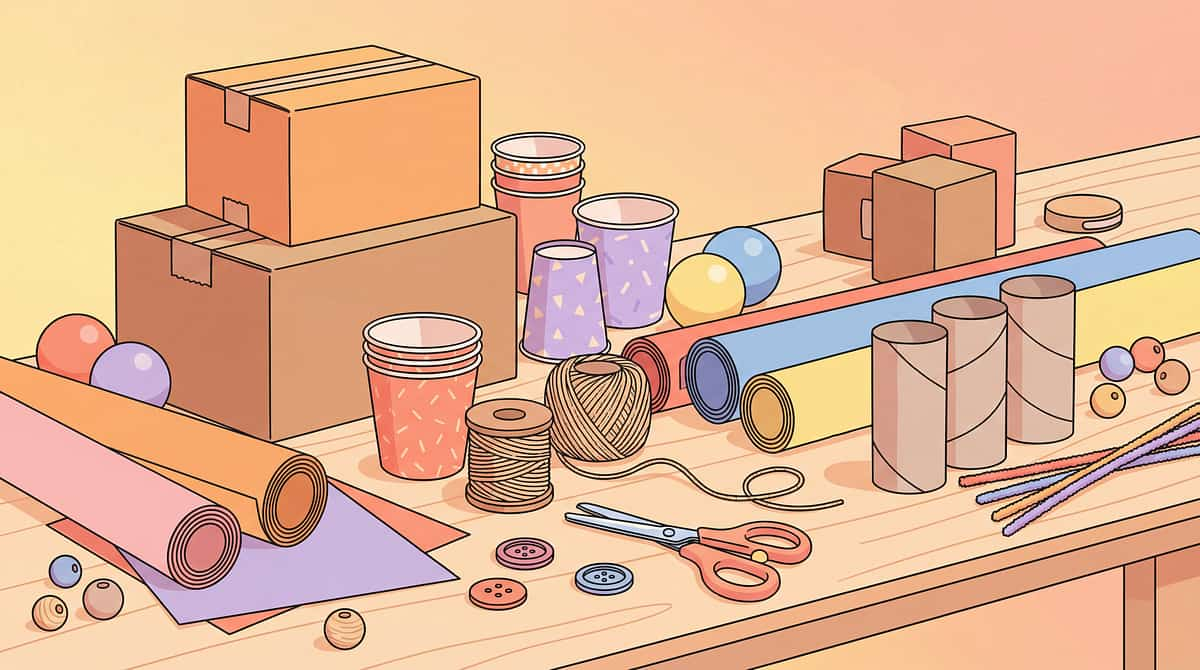
Cardboard boxes of various sizes (nesting practice)
Cups and small balls (hiding game for tracking)
Cardstock or cardboard for homemade tangrams
Household items for obstacle courses
Real-life problems around the house
Cooking activities for multi-step problem-solving
DIY Steps
1
Nesting
Collect various size boxes or containers. Child figures out which fits inside which.
2
Hide and Find
Hide small object under one of 3 cups. Move cups around. Child tracks location.
3
Homemade Tangrams
Cut geometric shapes from cardstock. Create challenge cards by drawing shapes child must recreate.
4
Obstacle Course
Create path using household items (chairs, cushions, boxes). Child figures out how to navigate.
5
Real Problems
"How can we reach that?" "How do we fix this?" Turn daily challenges into problem-solving practice.
6
Cooking Problems
Following recipes teaches sequencing. Adjusting ingredients (half recipe, double recipe) teaches planning.
DIY vs Commercial Comparison
When to DIY | When to Buy Commercial | |
|
|
Tradeoffs: DIY options may lack the sophisticated graduated difficulty systems of commercial games, but excel at real-world problem-solving practice and can be fully customized to your child's interests and level.
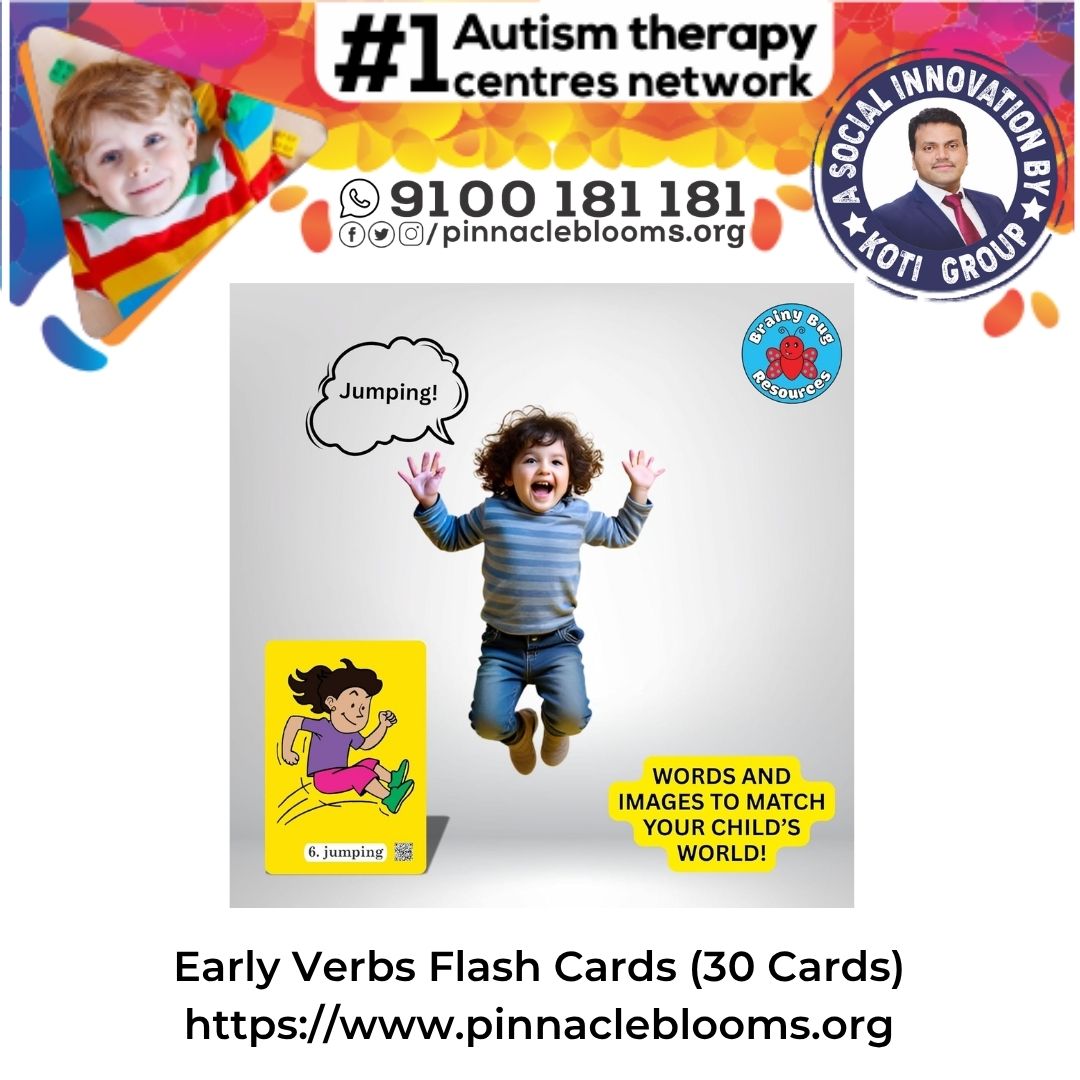
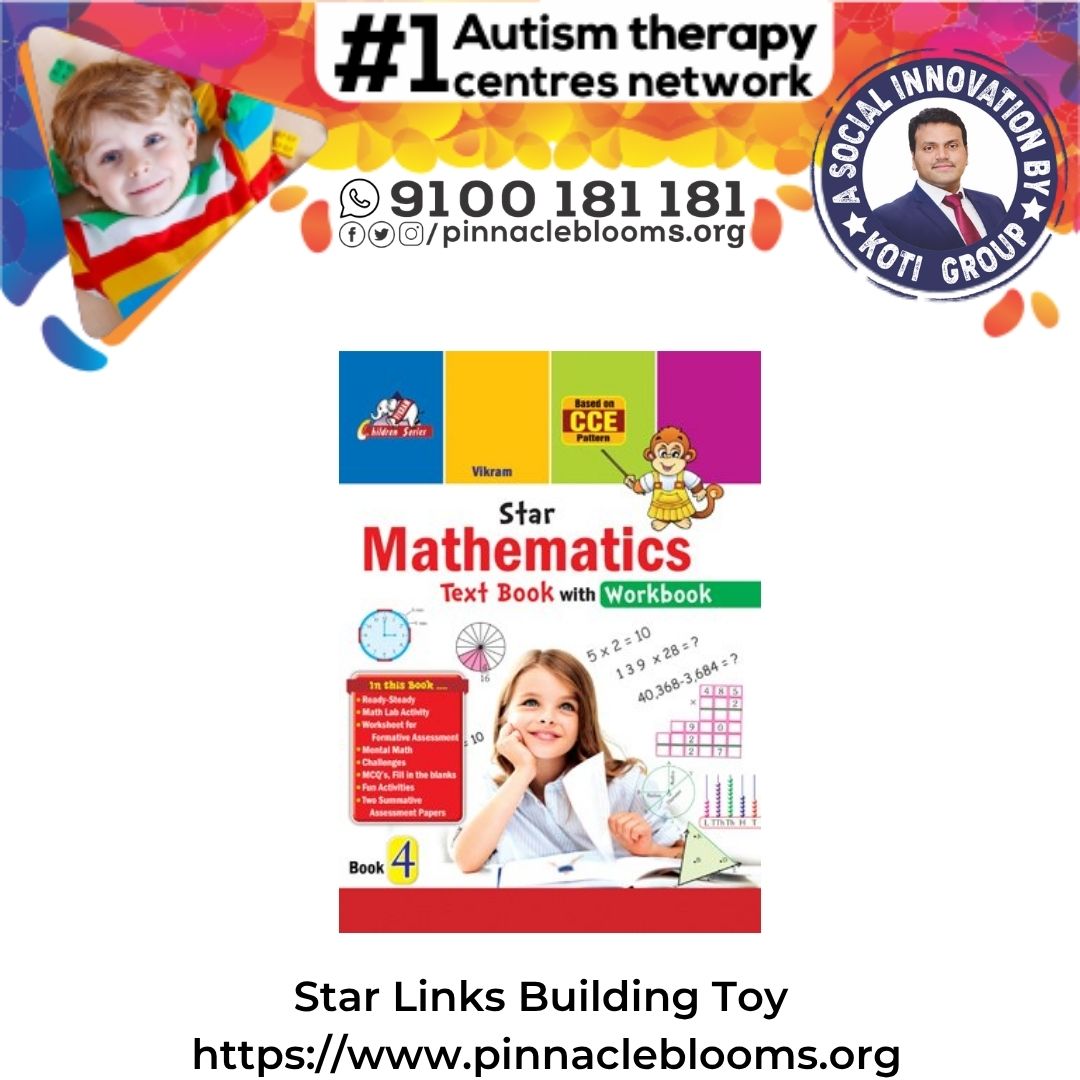
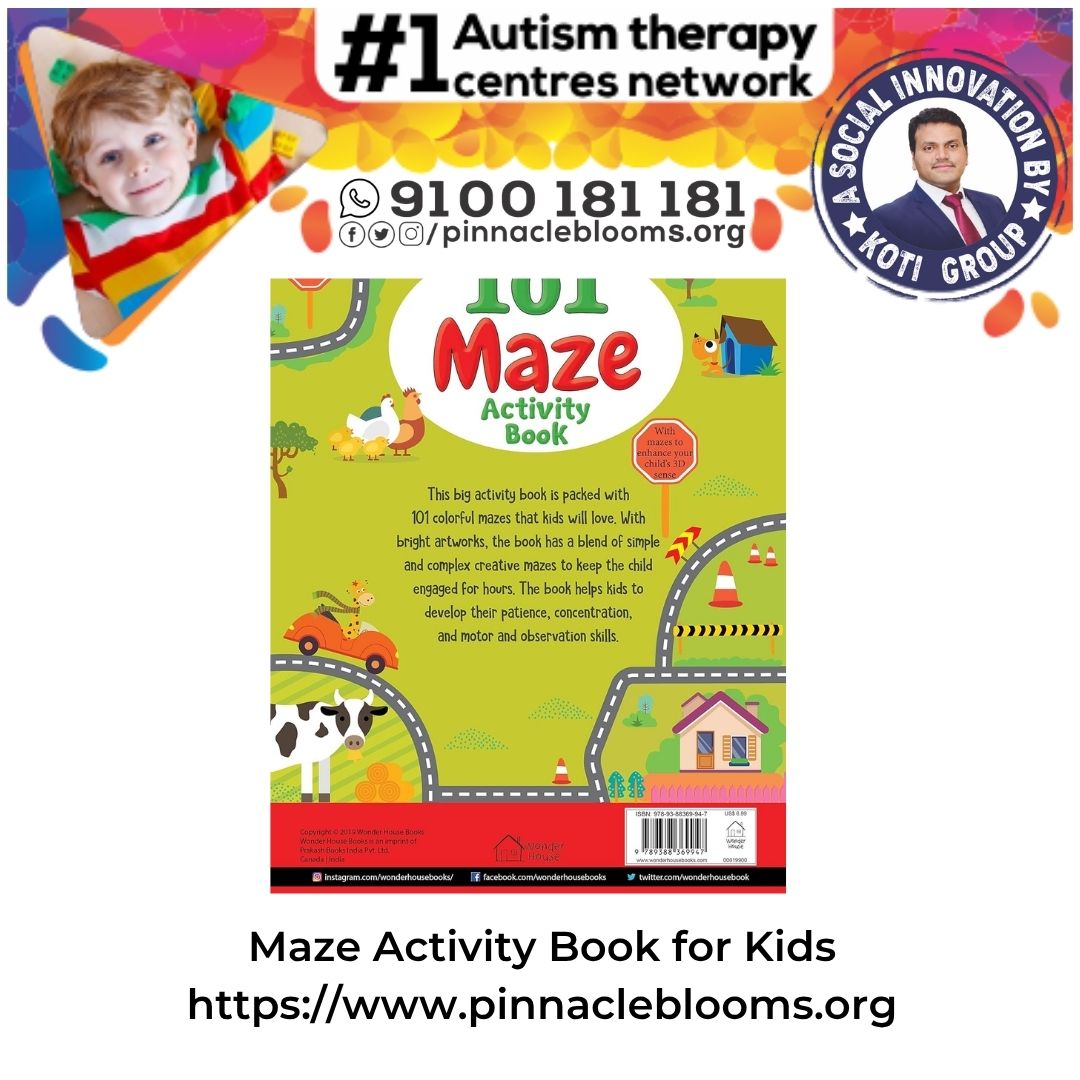
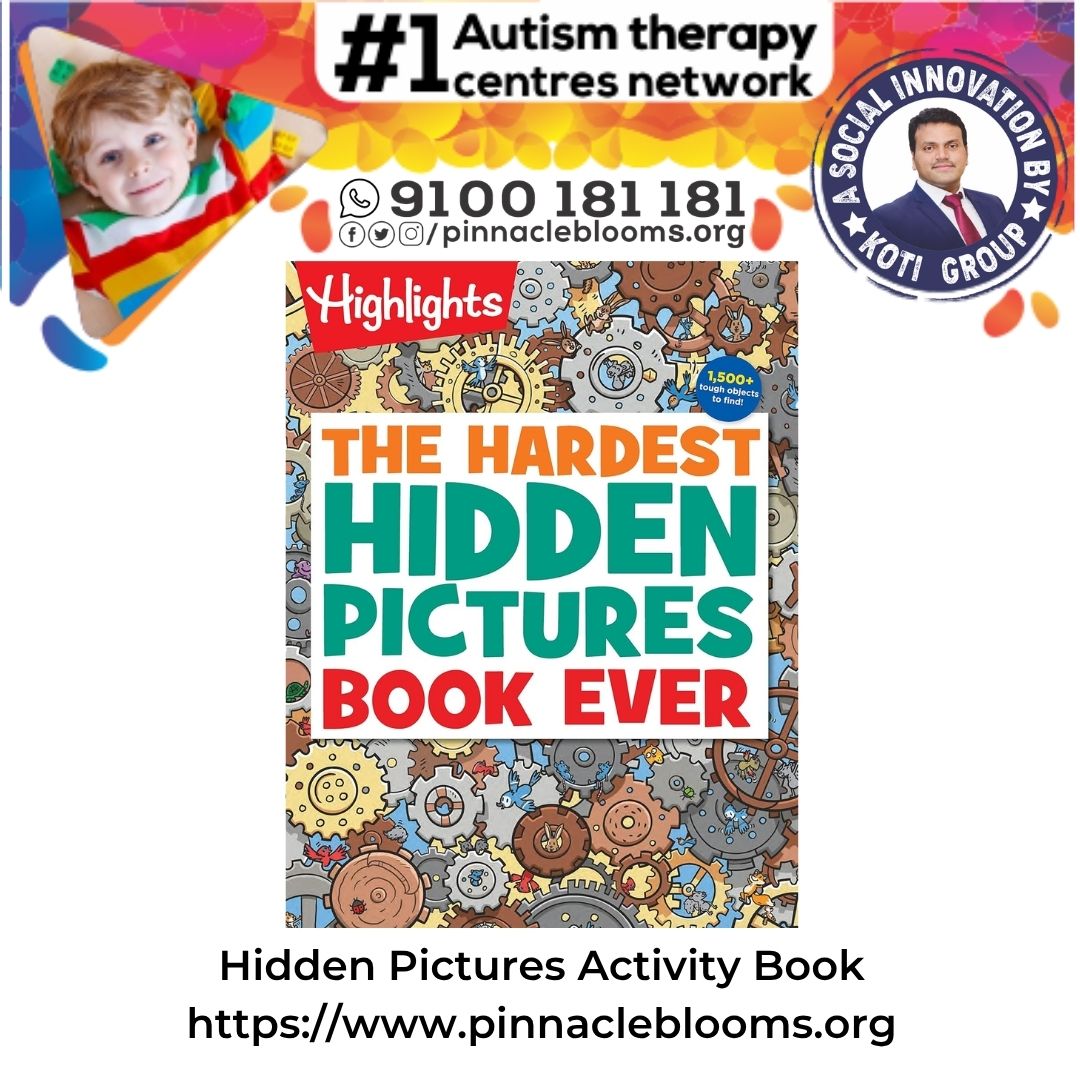
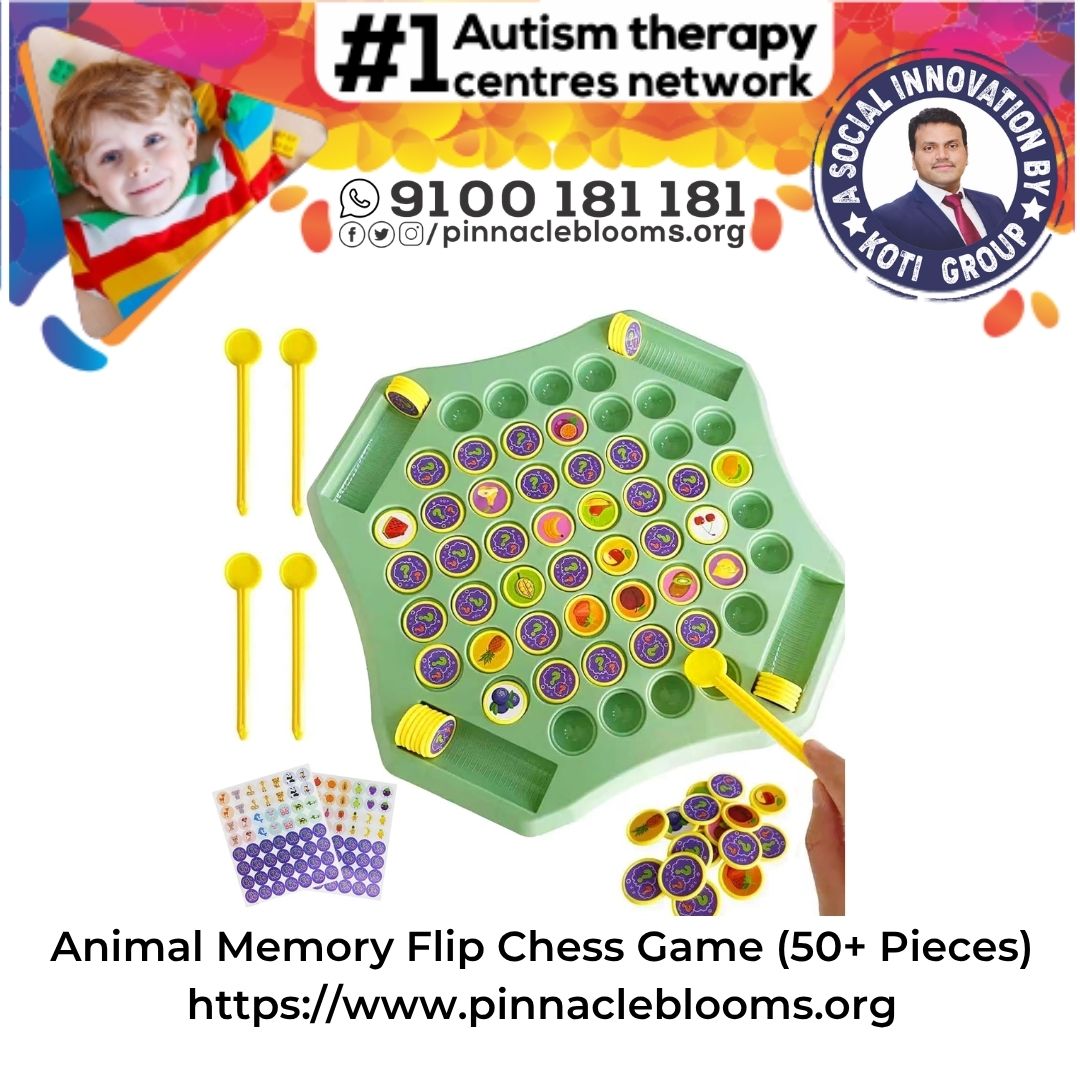
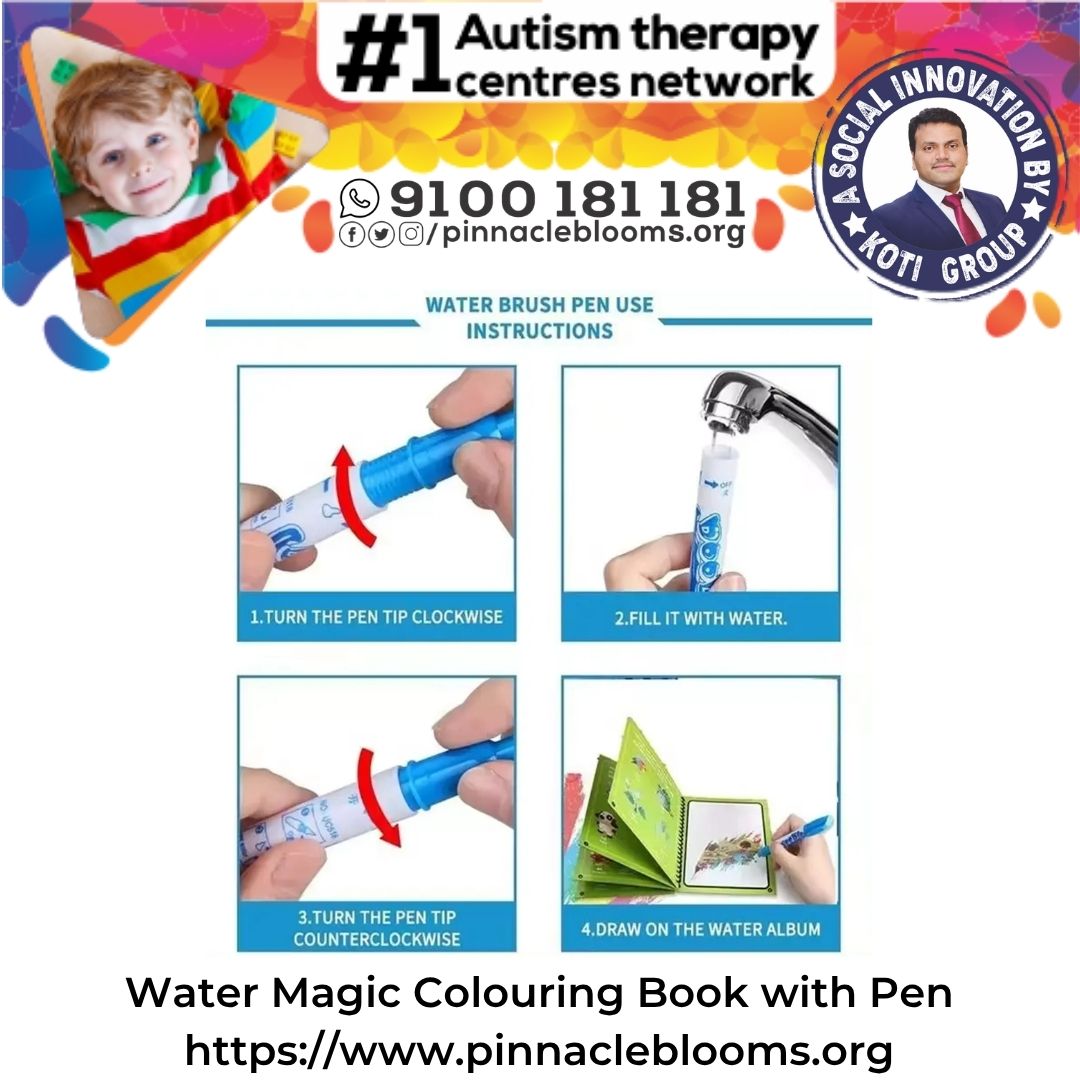
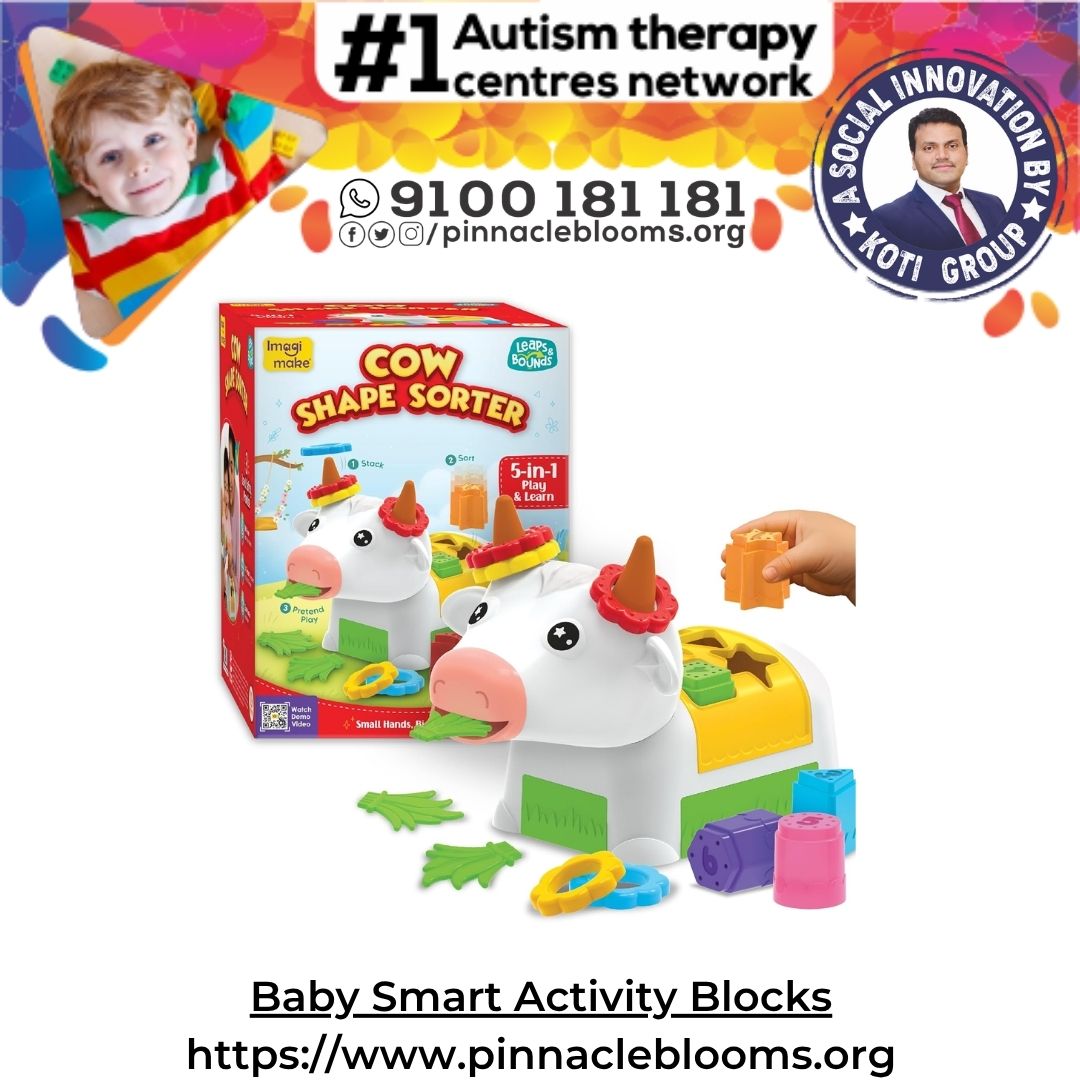
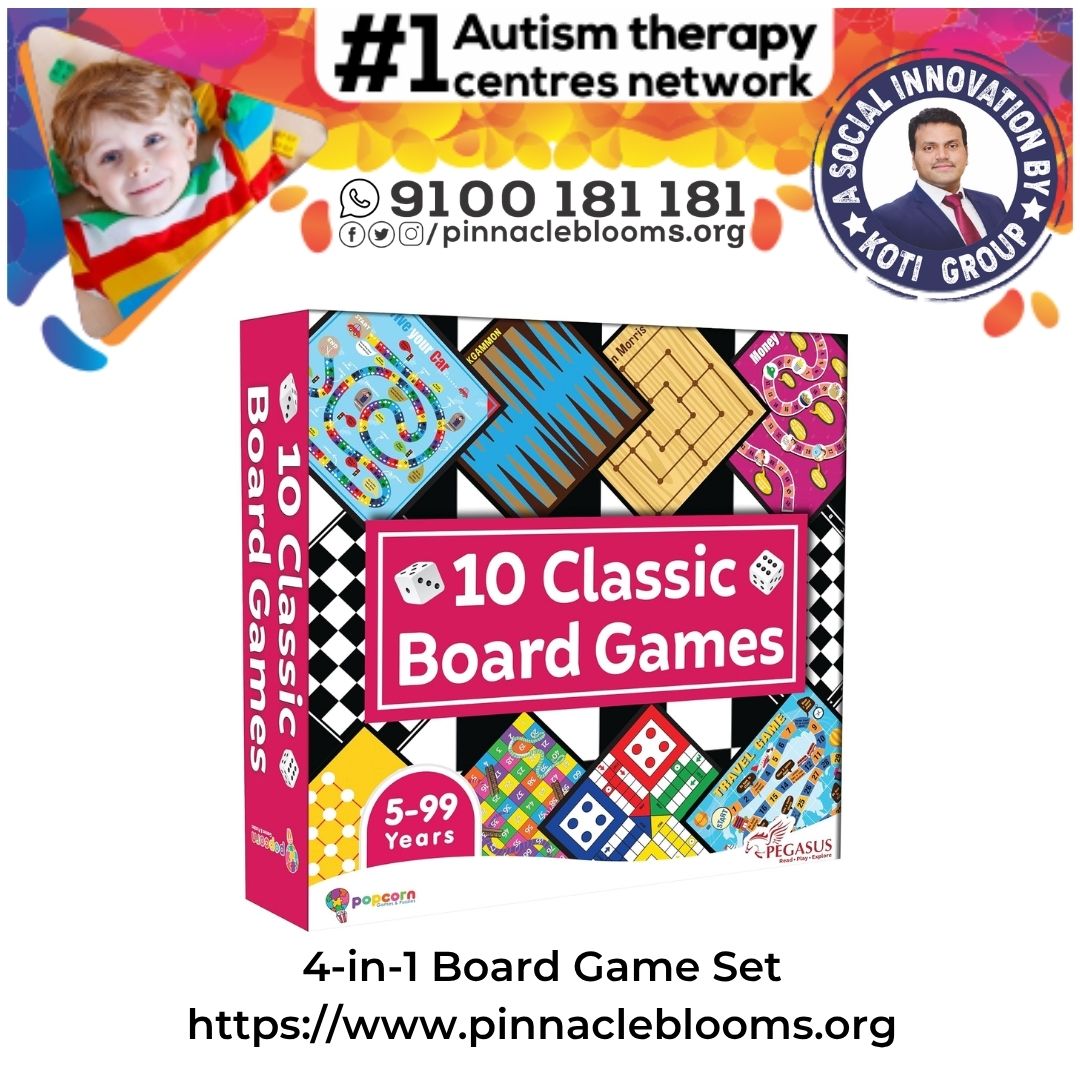
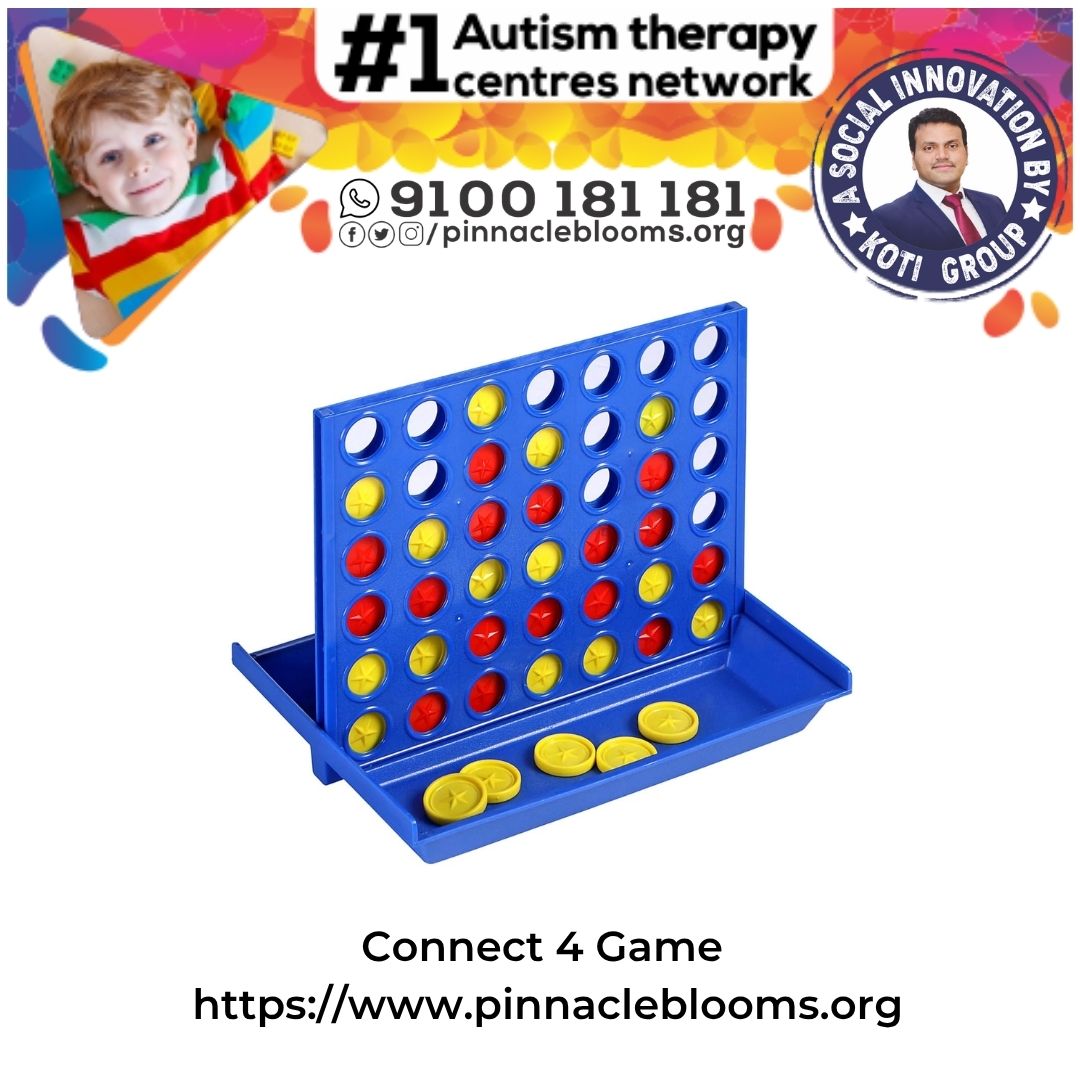
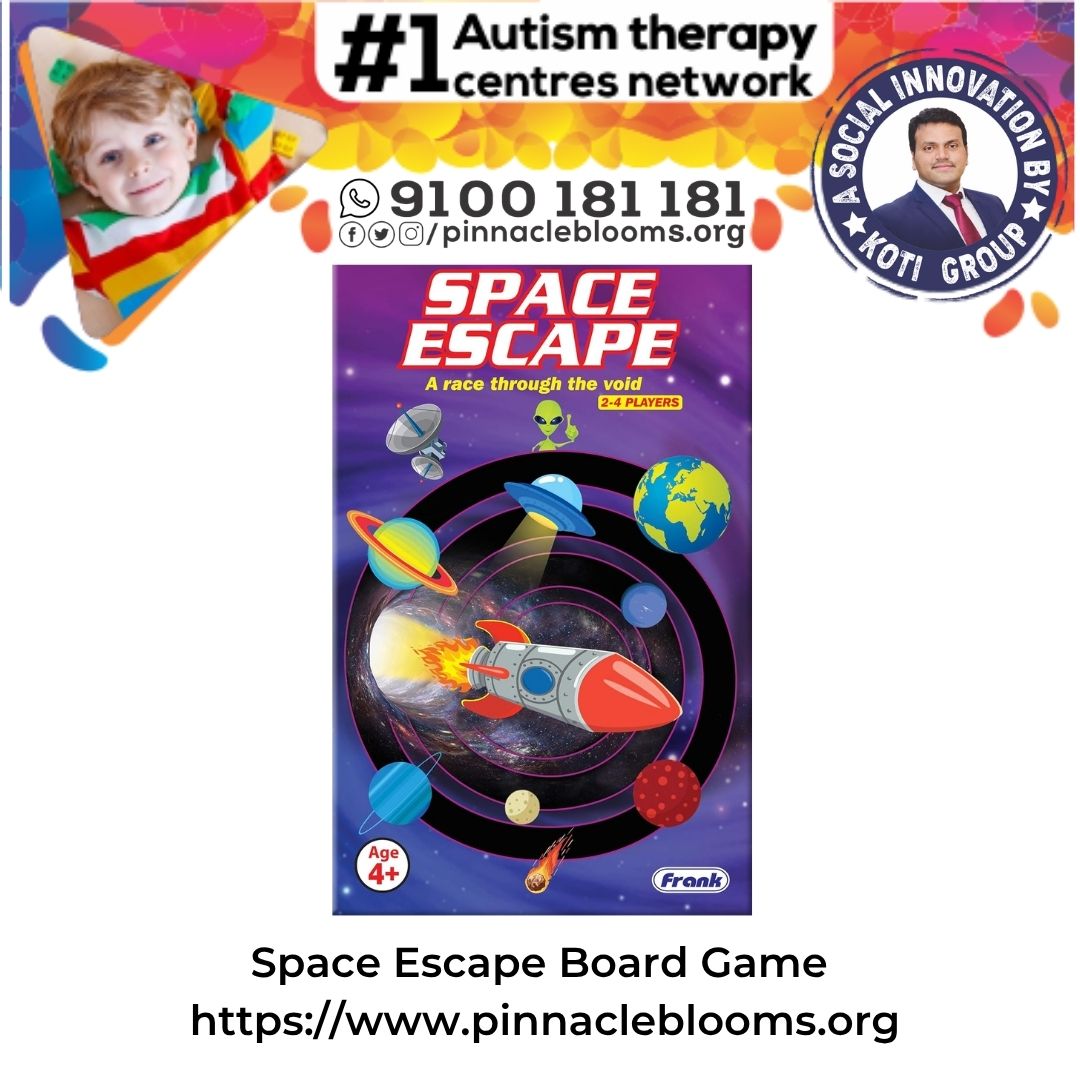
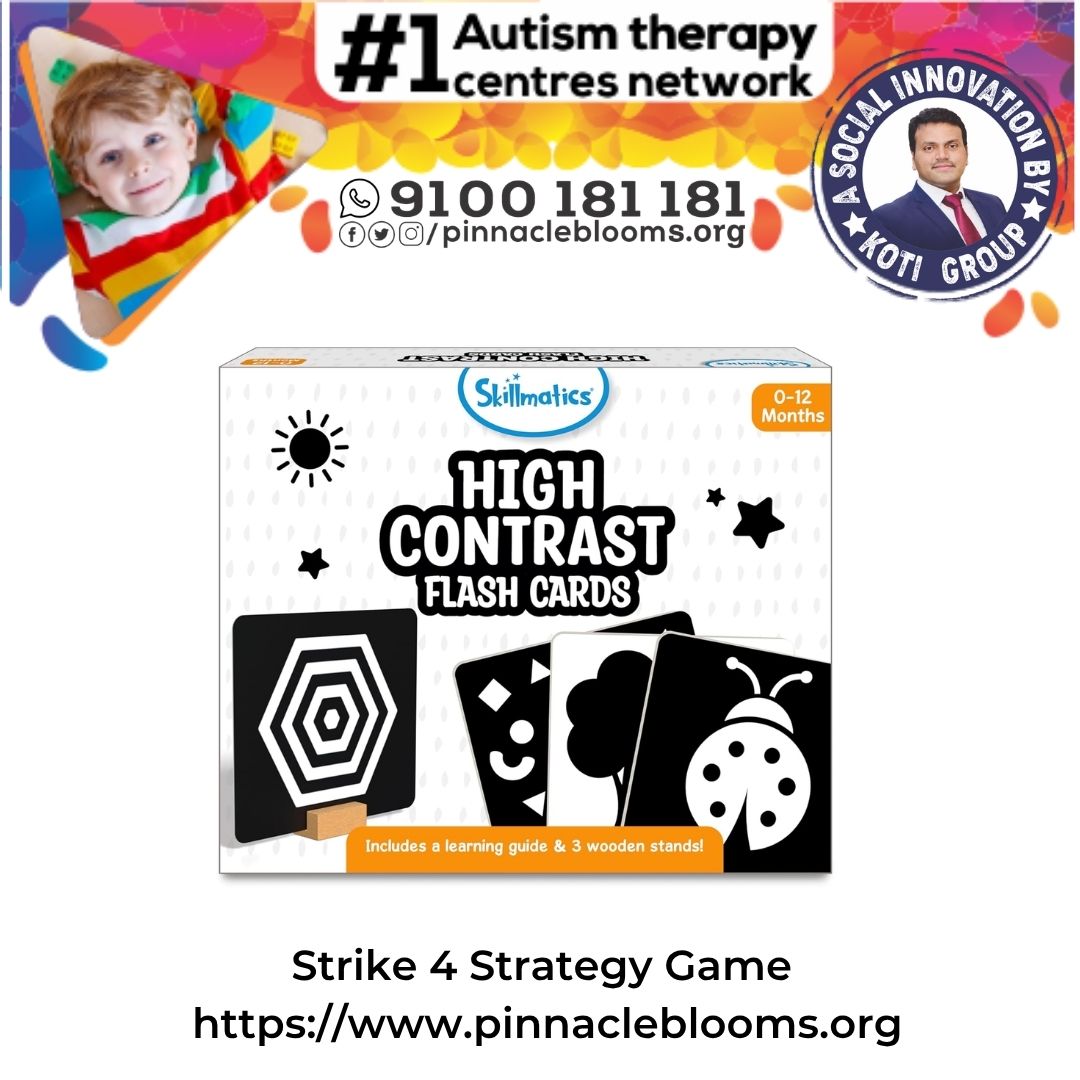
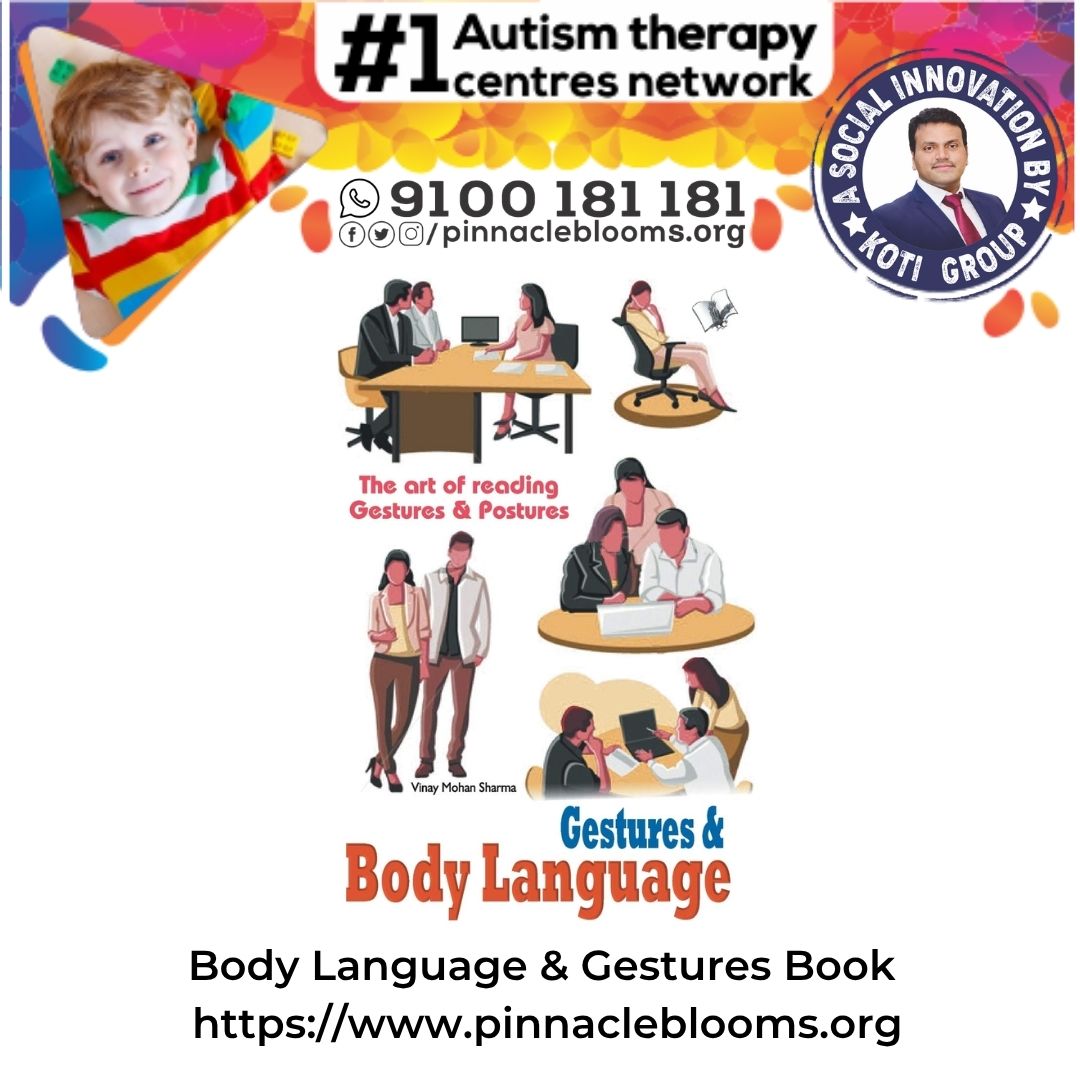
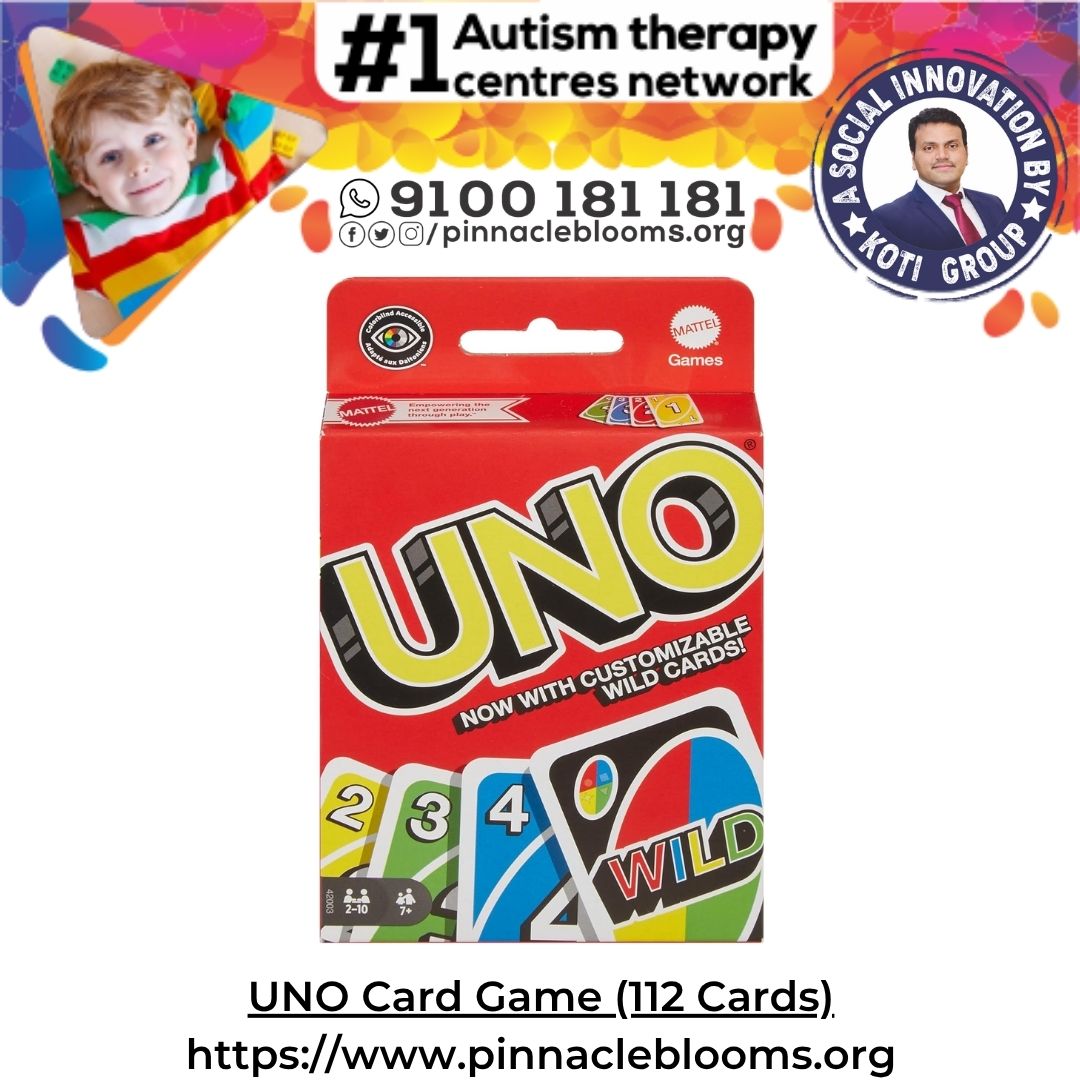
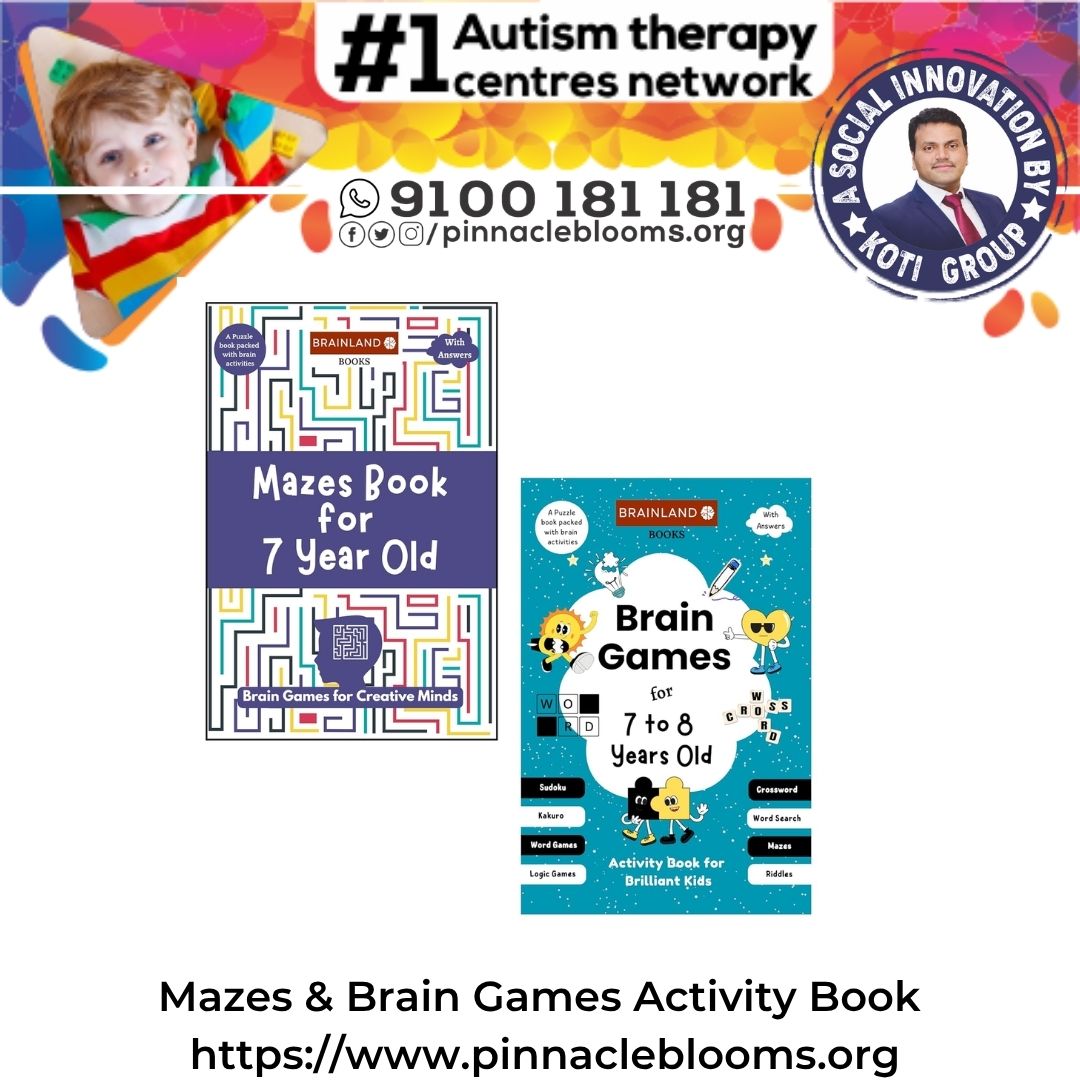
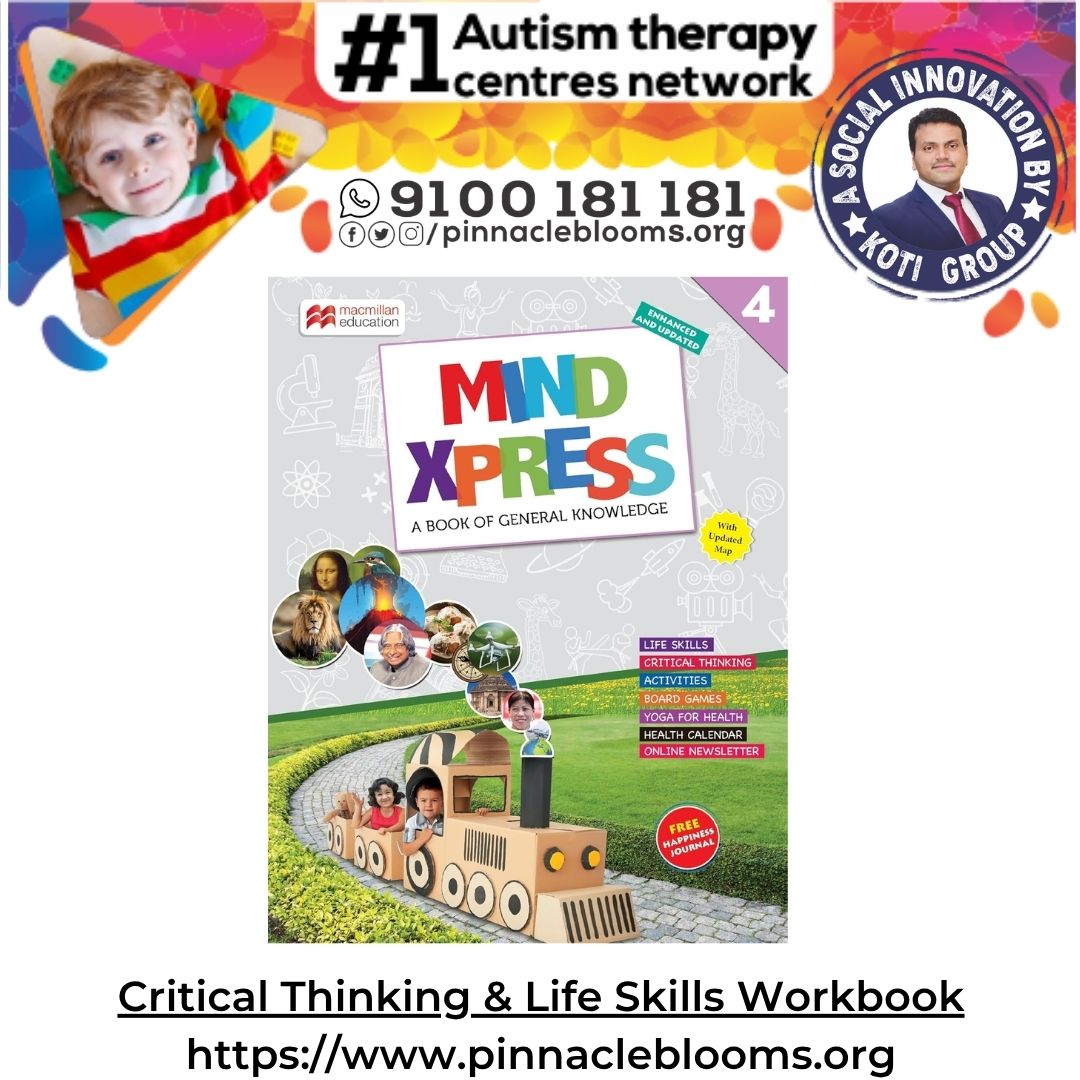
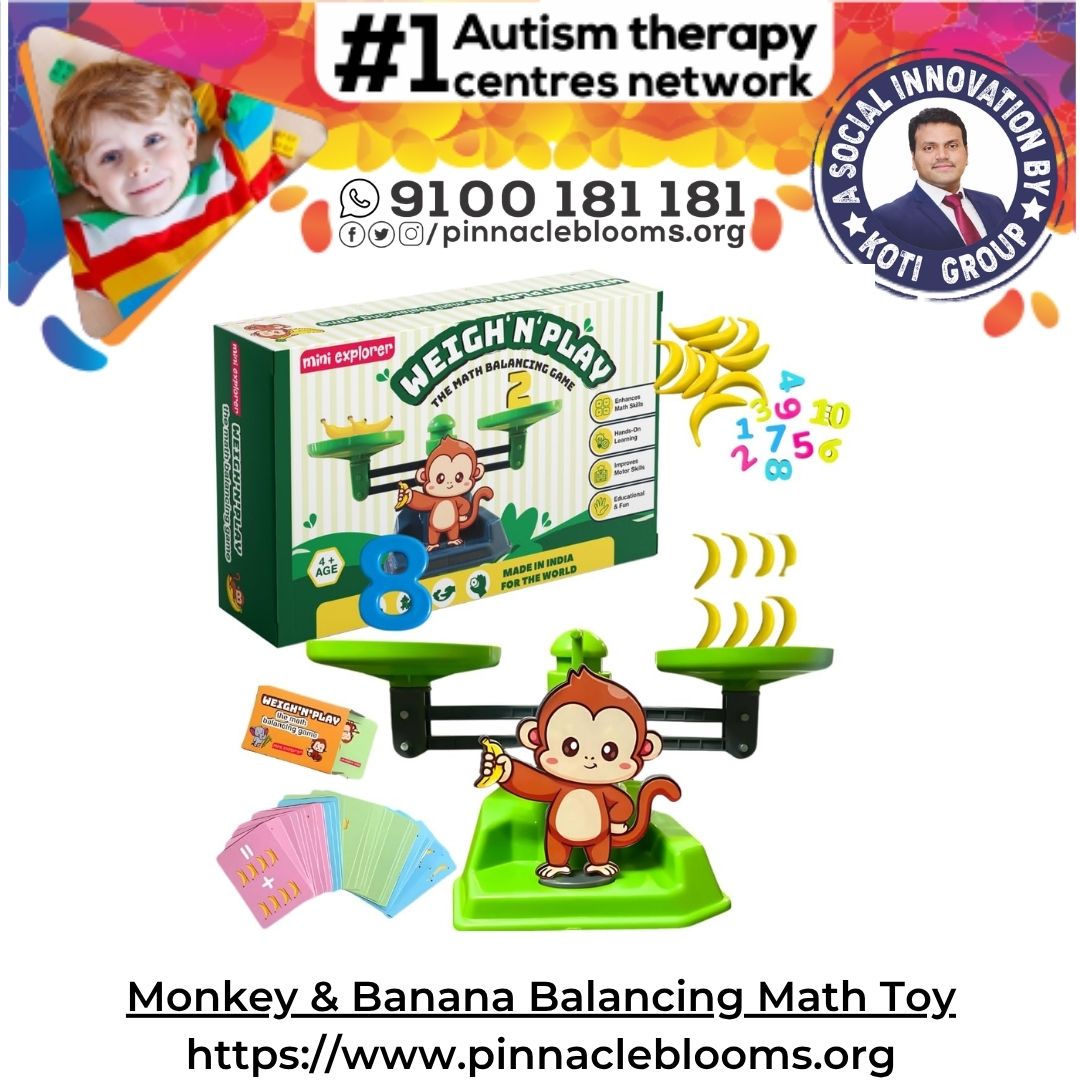
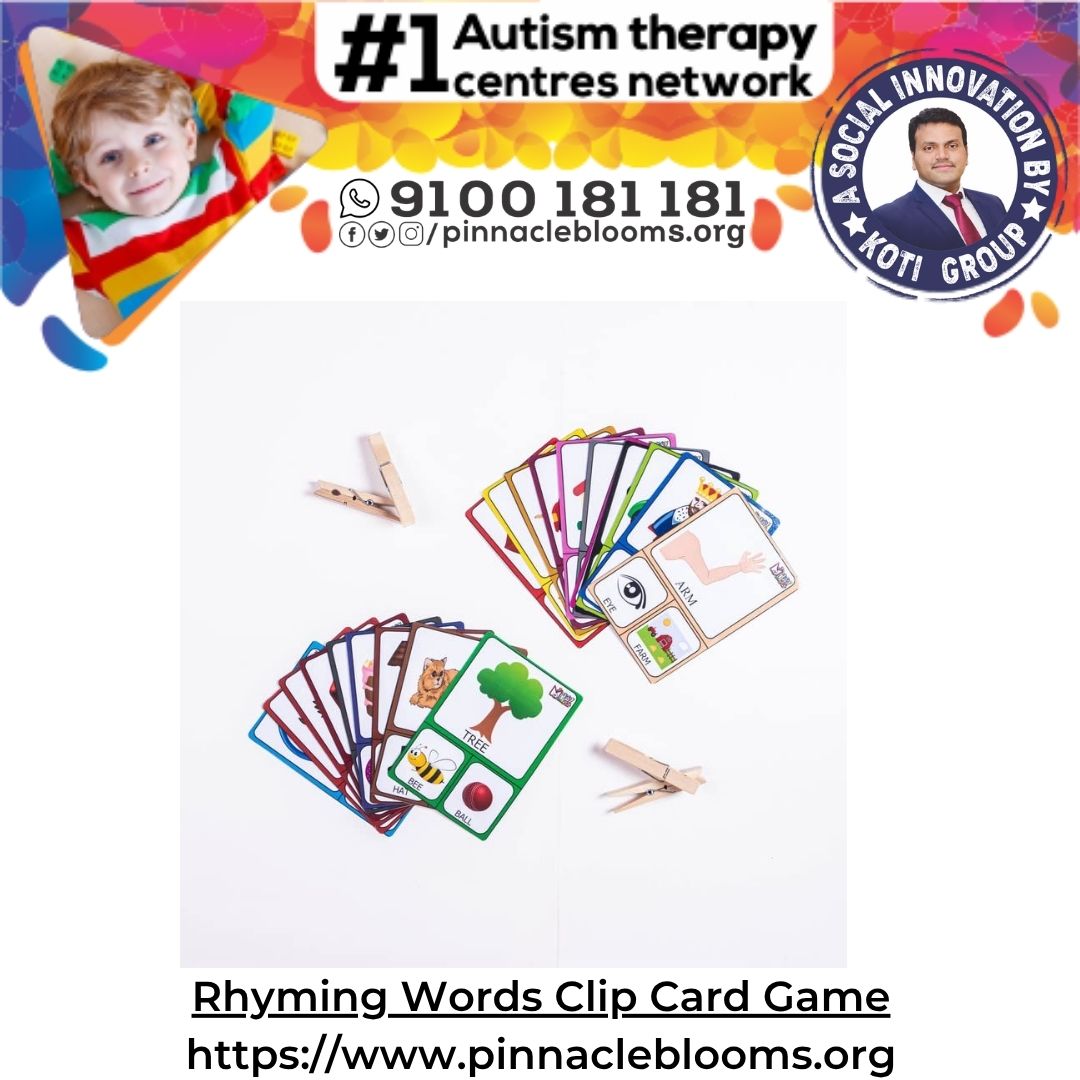
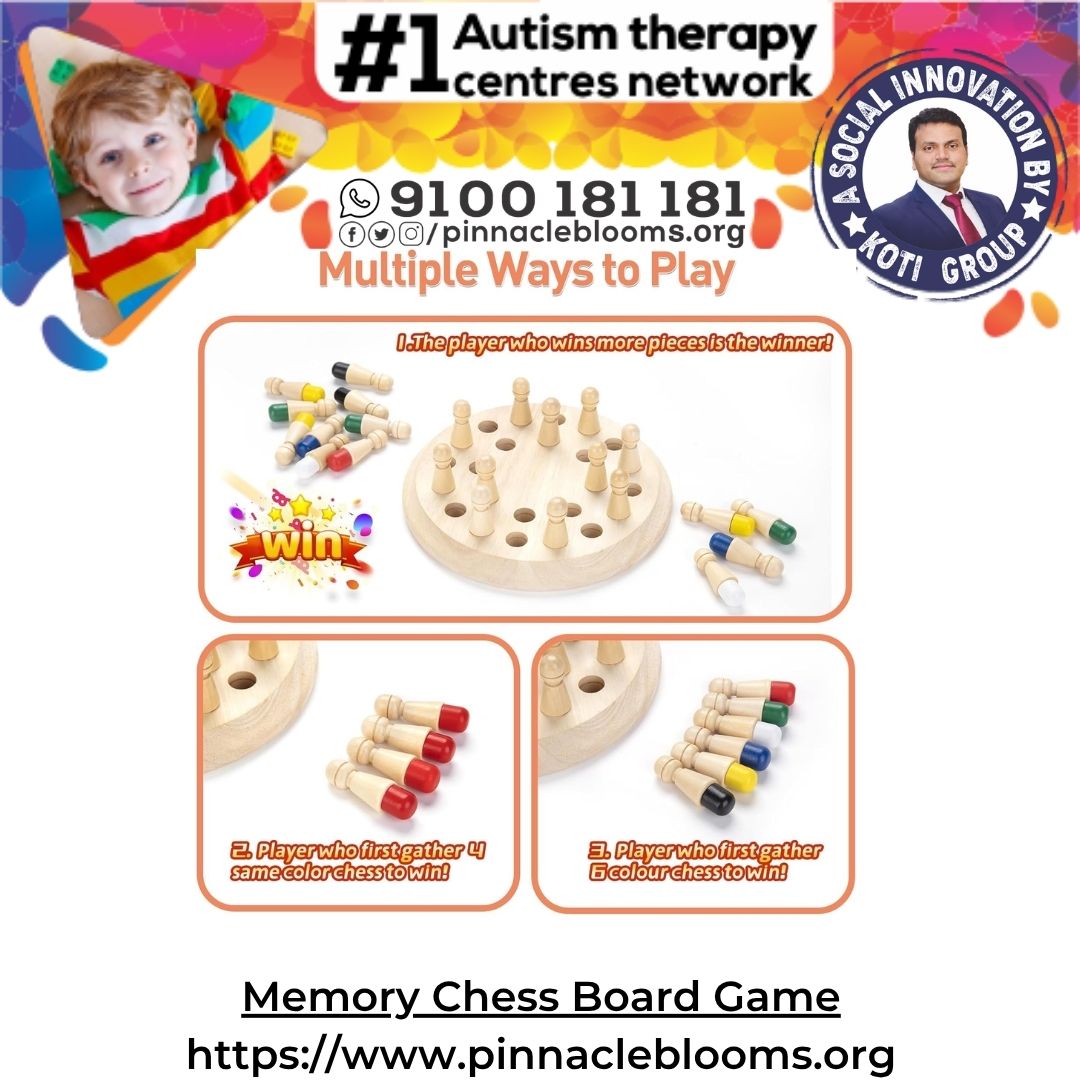
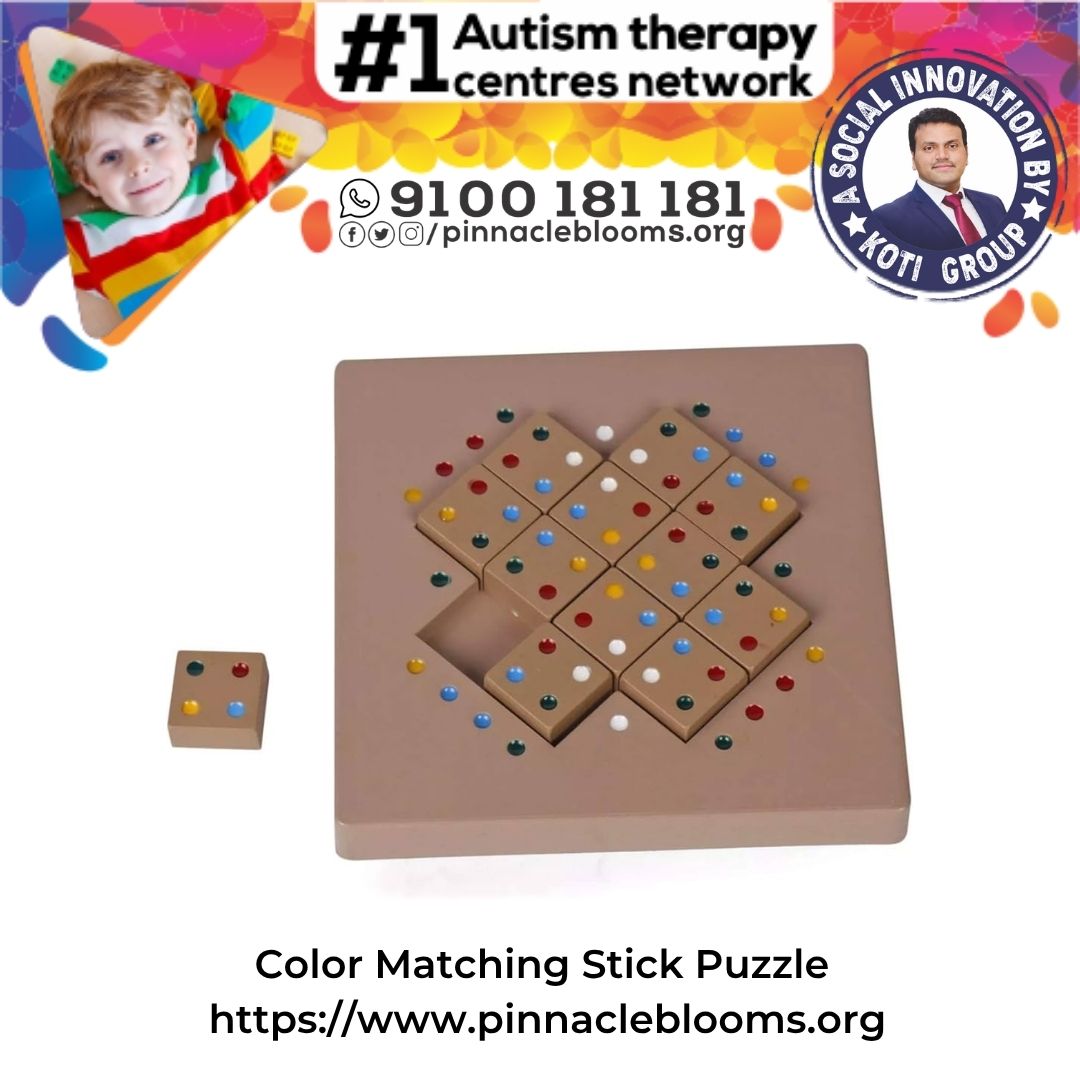
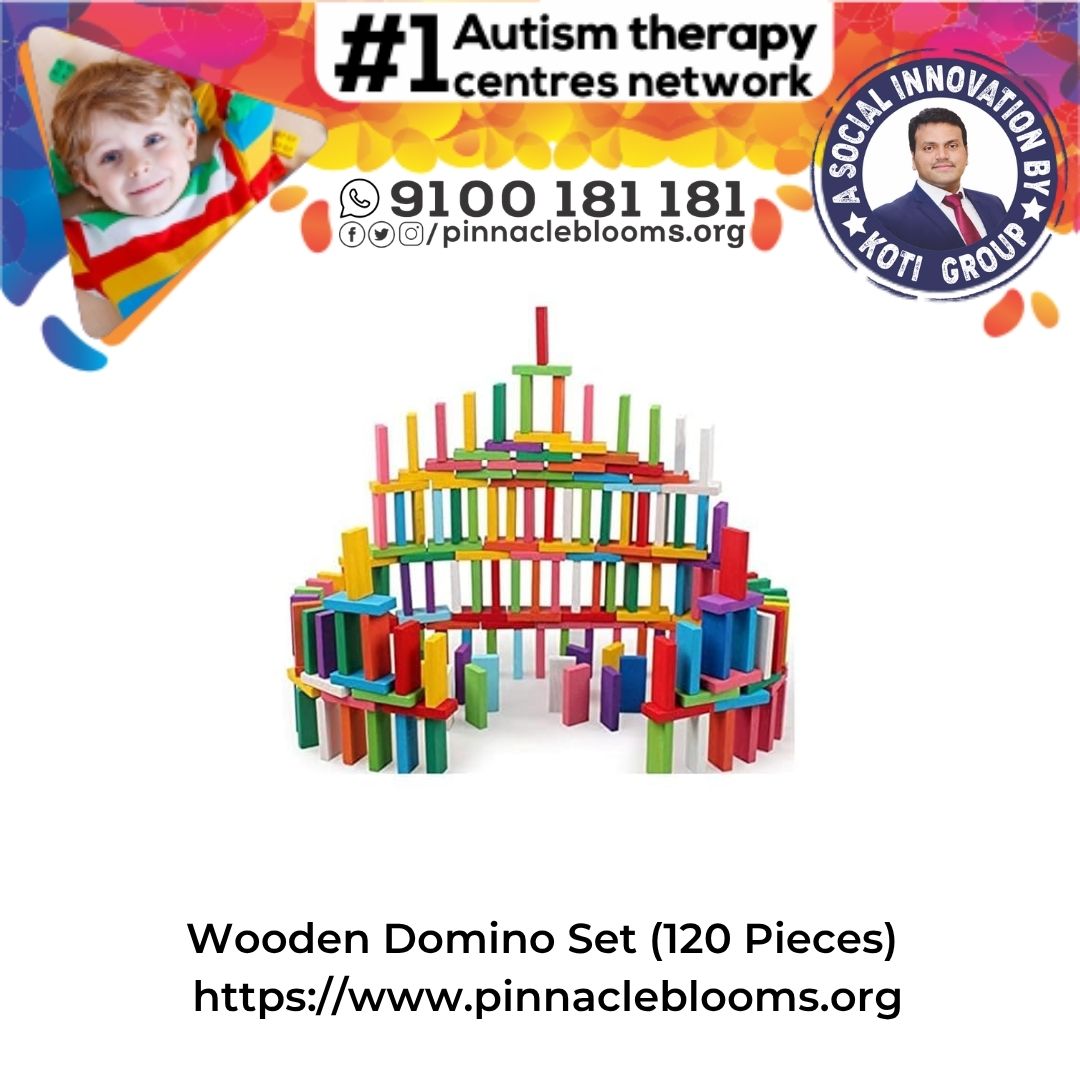
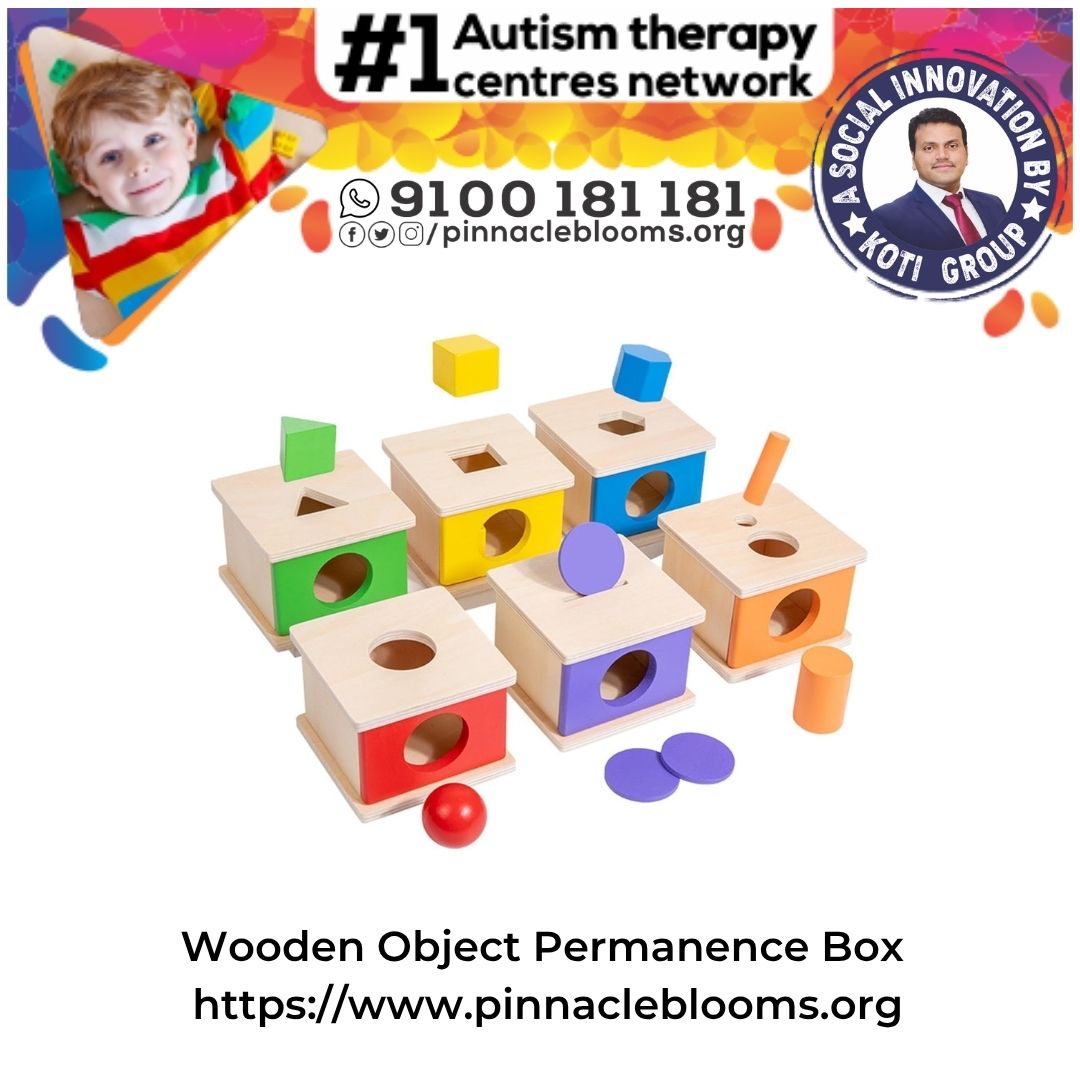
Preview of problem solving toys Therapy Material
Below is a visual preview of problem solving toys therapy material. The pages shown help educators, therapists, and caregivers understand the structure and content of the resource before use. Materials should be used under appropriate professional guidance.


Share this resource
Help others discover thisLink copied!

Complete Success System
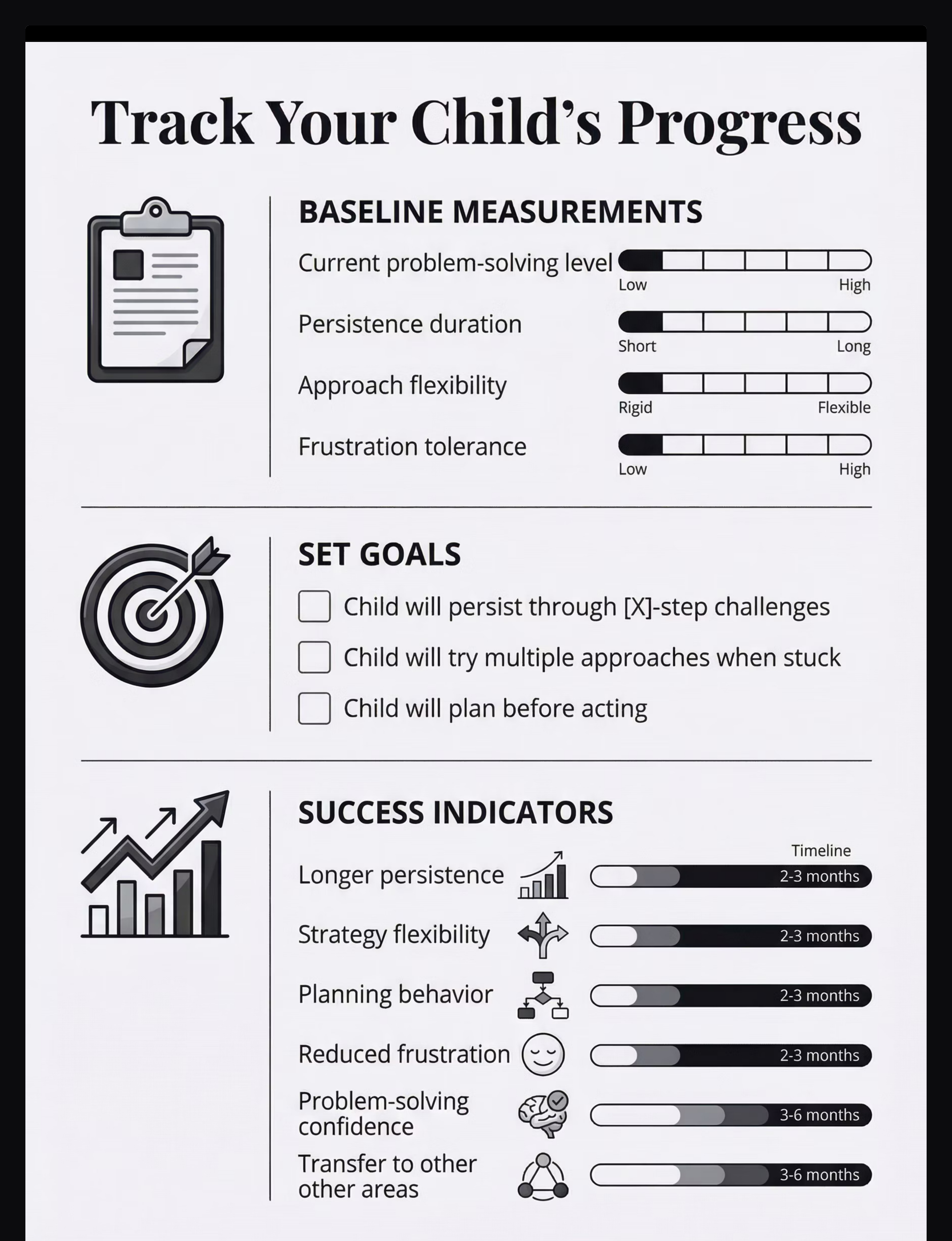
Measuring Success
Baseline Measurement
- Current problem-solving level (what challenges can child complete?)
- Persistence duration (how long before giving up?)
- Flexibility in approaches (tries multiple strategies?)
- Frustration tolerance (what difficulty causes dysregulation?)
Set Clear Goals
- Child will persist through [specific difficulty level] challenges
- Child will try multiple approaches when stuck
- Child will plan before acting on new problems
- Problem-solving will generalize to academics and daily life
Track Success Indicators
- Longer persistence (measured in minutes)
- Strategy flexibility (number of different approaches tried)
- Observable planning behavior (pause before action)
- Reduced frustration during challenges
- Transfer to other areas (homework, daily problems)
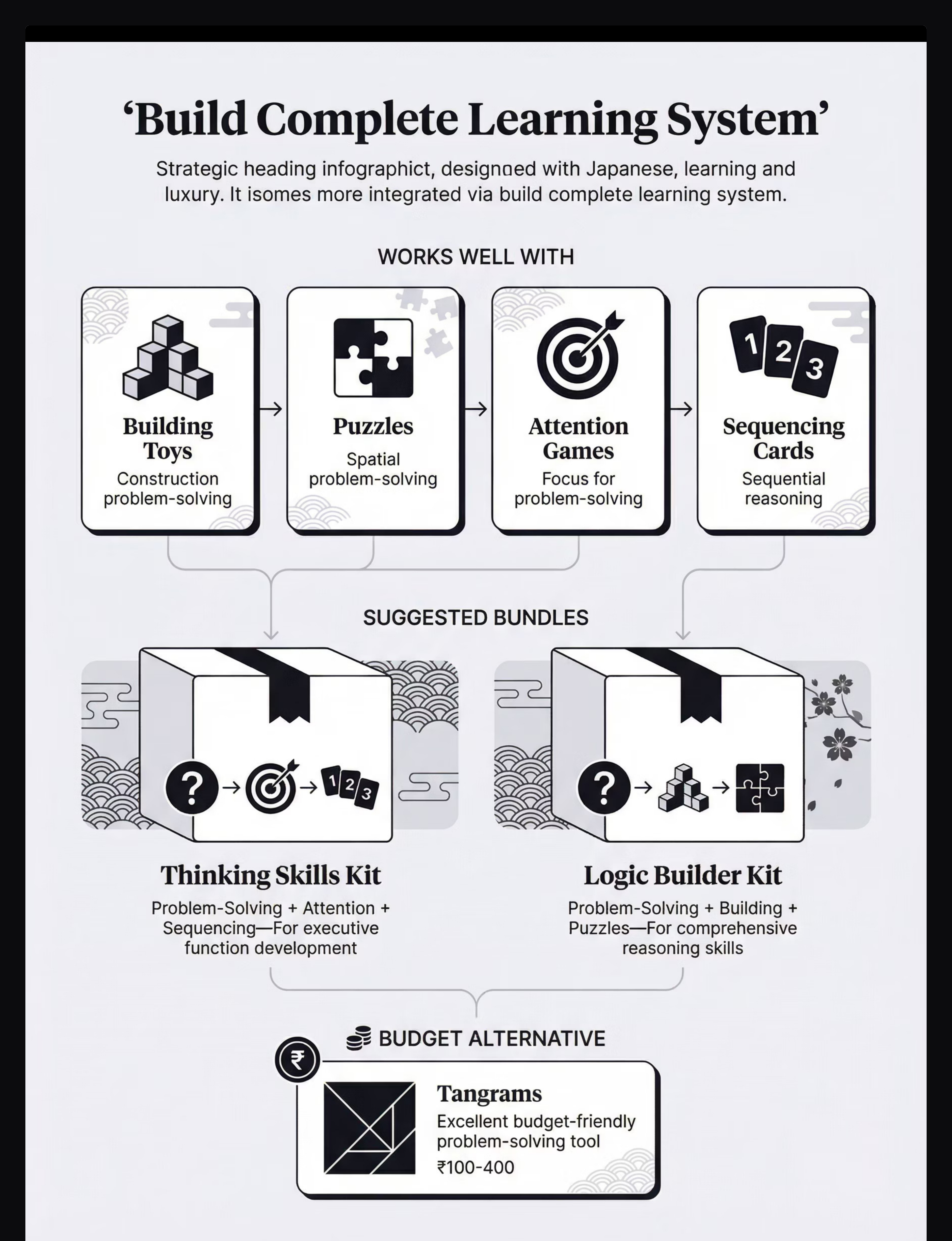
Complete the Kit
Pair problem-solving toys with these complementary tools for comprehensive cognitive development:
Building Toys (ID: 7.7)
Combines construction with problem-solving. Spatial reasoning + creative challenges.
Puzzles (ID: 7.8)
Pure spatial problem-solving. Visual analysis and planning skills.
Attention Games (ID: 8.8)
Builds sustained focus needed for complex problem-solving.
Sequencing Tools (ID: 8.3)
Sequential reasoning that supports multi-step problem-solving.
Recommended Bundles:
- Thinking Skills Kit: Problem-Solving Toys (8.9) + Attention Games (8.8) + Sequencing (8.3) → Complete executive function development
- Logic Builder Kit: Problem-Solving Toys (8.9) + Building Toys (7.7) + Puzzles (7.8) → Comprehensive reasoning skills across modalities
AI Summary
Problem-solving toys develop logical reasoning, planning, cognitive flexibility, and persistence through graduated challenges that build executive function. Core Kit essential (Rank #2) with moderate-strong evidence base. Essential for cognitive development across all therapeutic settings.
Common Searches:
problem solving toys autism
logic games kids
thinking skills
Rush Hour game
brain teasers children
cognitive flexibility
reasoning toys
Get Support
FREE National Autism Helpline
Phone: 9100 181 181
Languages: 16+ languages supported
Website:pinnacleblooms.org
Platform Integration
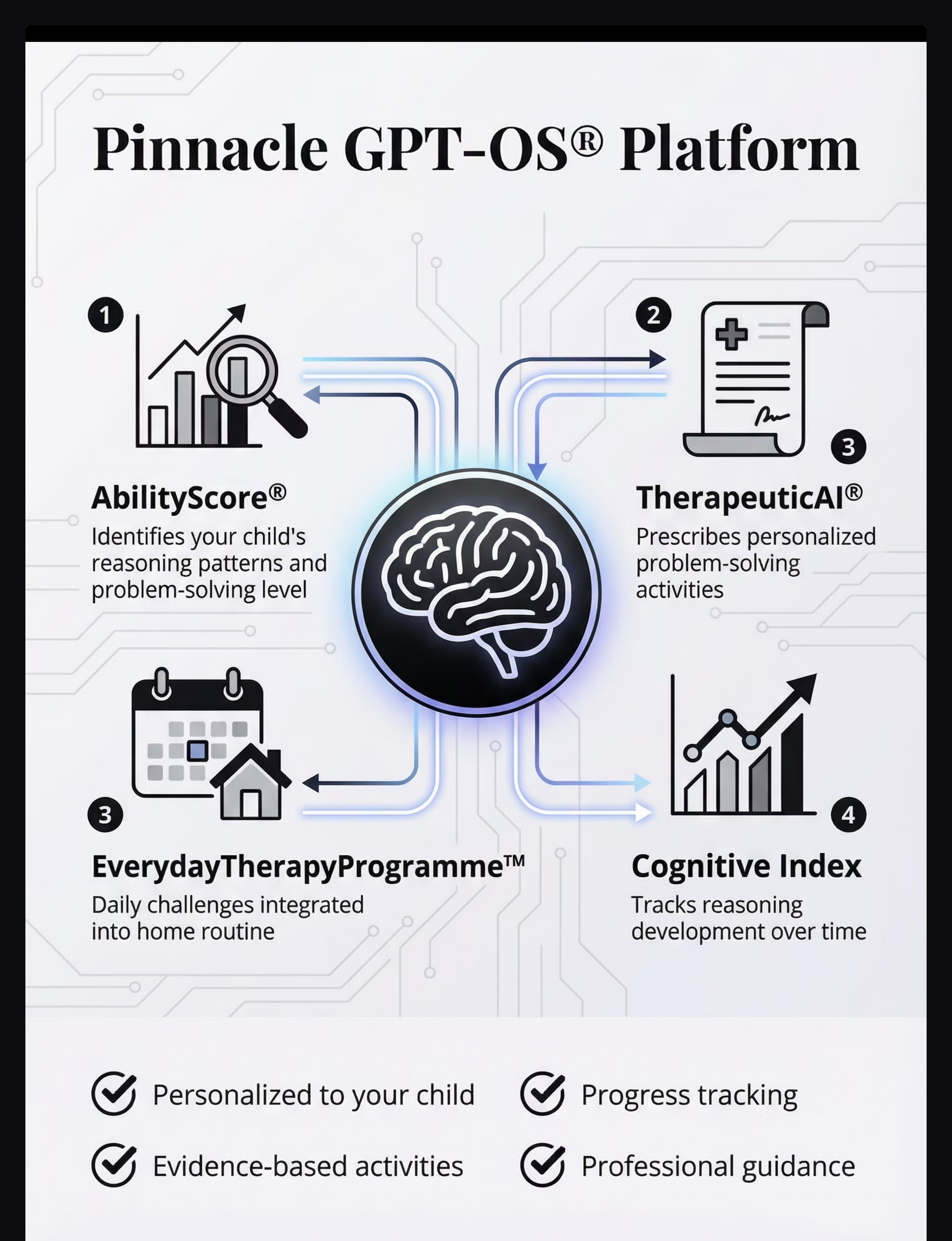
Problem-solving toys integrate seamlessly with Pinnacle Blooms Network's comprehensive therapeutic platform:
- AbilityScore® identifies your child's reasoning patterns and problem-solving strengths
- TherapeuticAI® prescribes specific problem-solving activities matched to your child's level
- EverydayTherapyProgramme™ includes daily problem-solving challenges integrated into routine
- Cognitive Index tracks reasoning development over time with objective measures
Disclaimer: This is educational information designed to support therapeutic decision-making. Always consult qualified occupational therapists, speech-language pathologists, special educators, or pediatricians for individualized assessment and treatment planning. Individual results vary based on child's unique profile, consistency of use, and quality of implementation.