Tool ID: 10.1
Core Kit
Rank #1
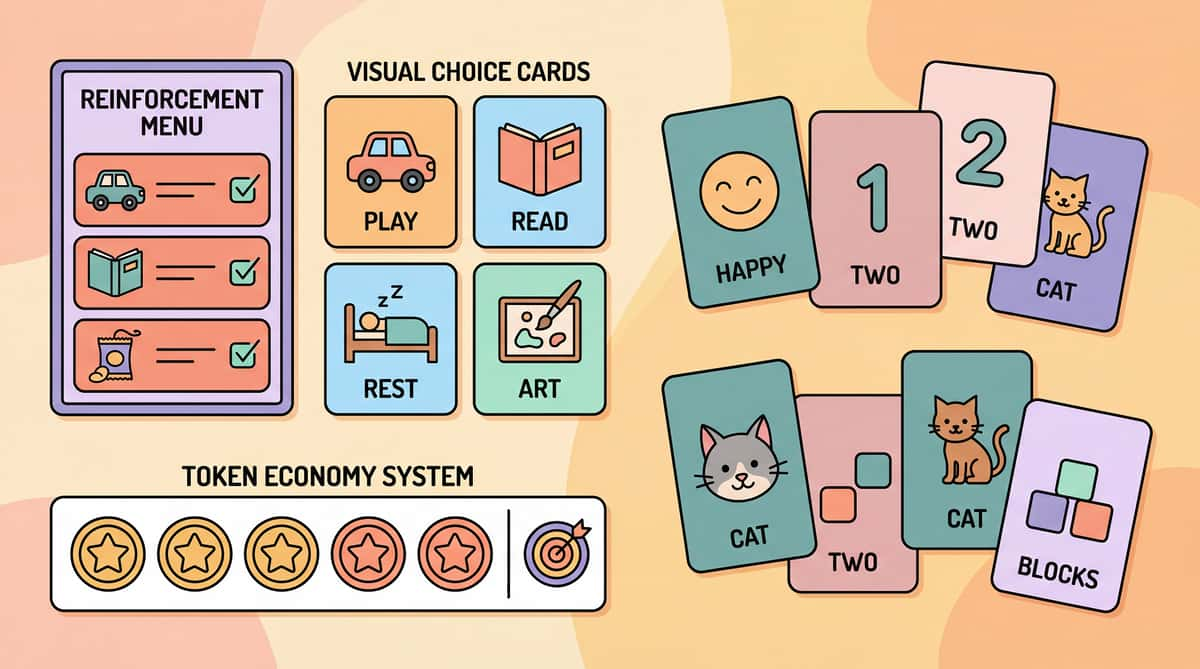
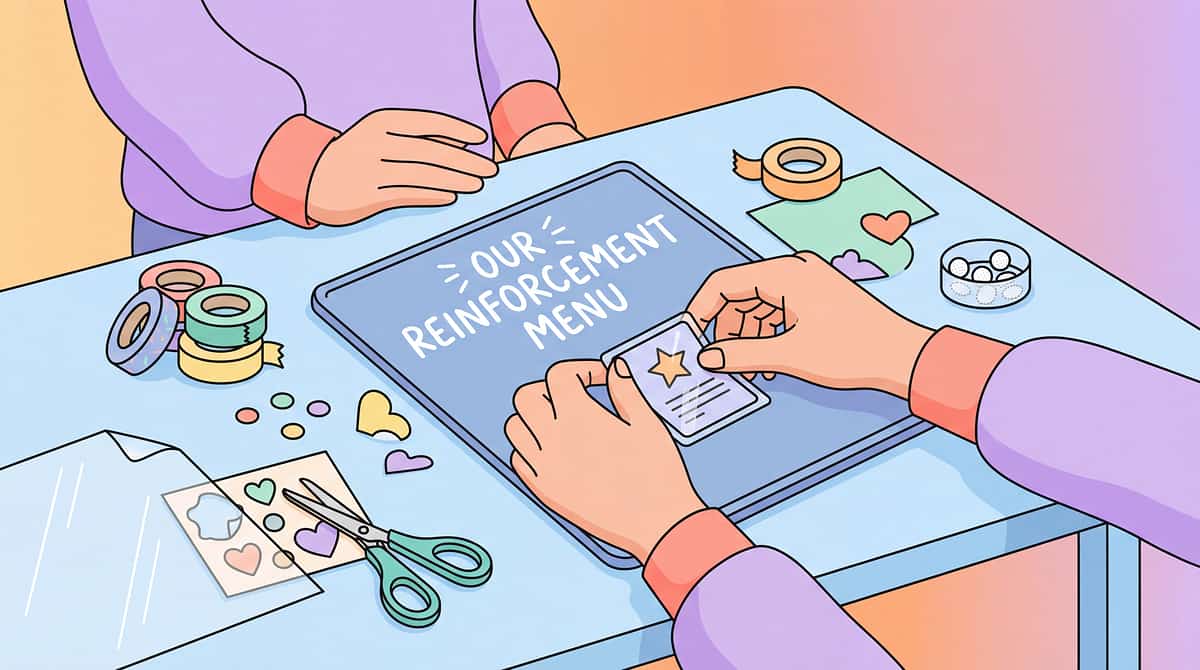
Reinforcement Menus
Positive Behavior Support and Motivation System

Who This Helps
Visual Choices & Motivation
Provides clear, motivating consequences for desired behaviors
Boosts Positive Behavior
Increases desired behaviors through positive reinforcement
Concrete & Accessible
Transforms abstract rewards into understandable options
Ages 2-12 Years
Adaptable to developmental levels and communication abilities
Home Use
Supports daily routines, homework, chores, and transitions
School & Clinic
Ideal for structured learning, therapy, and interventions
Fosters Positive Associations
Creates enjoyable connections with tasks and rewards

Does This Sound Familiar?
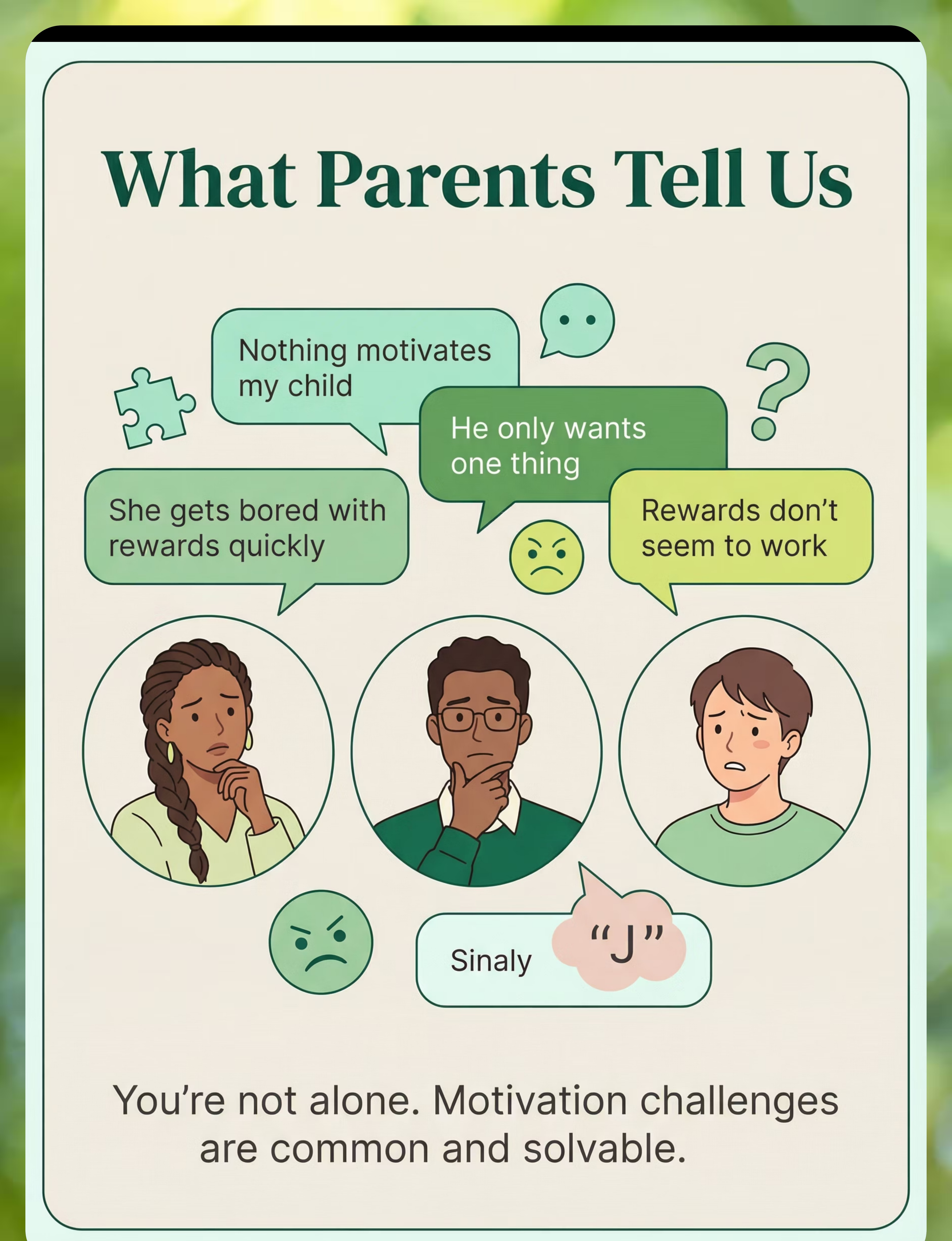
"Nothing motivates my child. I've tried everything, but she just won't engage with tasks she doesn't prefer."
"She gets bored with rewards quickly. What worked last week doesn't interest her anymore."
"He only wants one thing and we can't always give it. The rigidity causes constant meltdowns."
"Rewards don't seem to work for her. I'm not sure if I'm doing reinforcement correctly."
"I don't know what will motivate him. His preferences seem so limited or hard to identify."
"She tantrums when she doesn't get what she wants immediately. There's no flexibility."
You're not alone. These are common challenges that families face when trying to motivate children with autism and developmental differences. The good news? Visual reinforcement menus provide clear, structured solutions.

A Day Without the Right Support
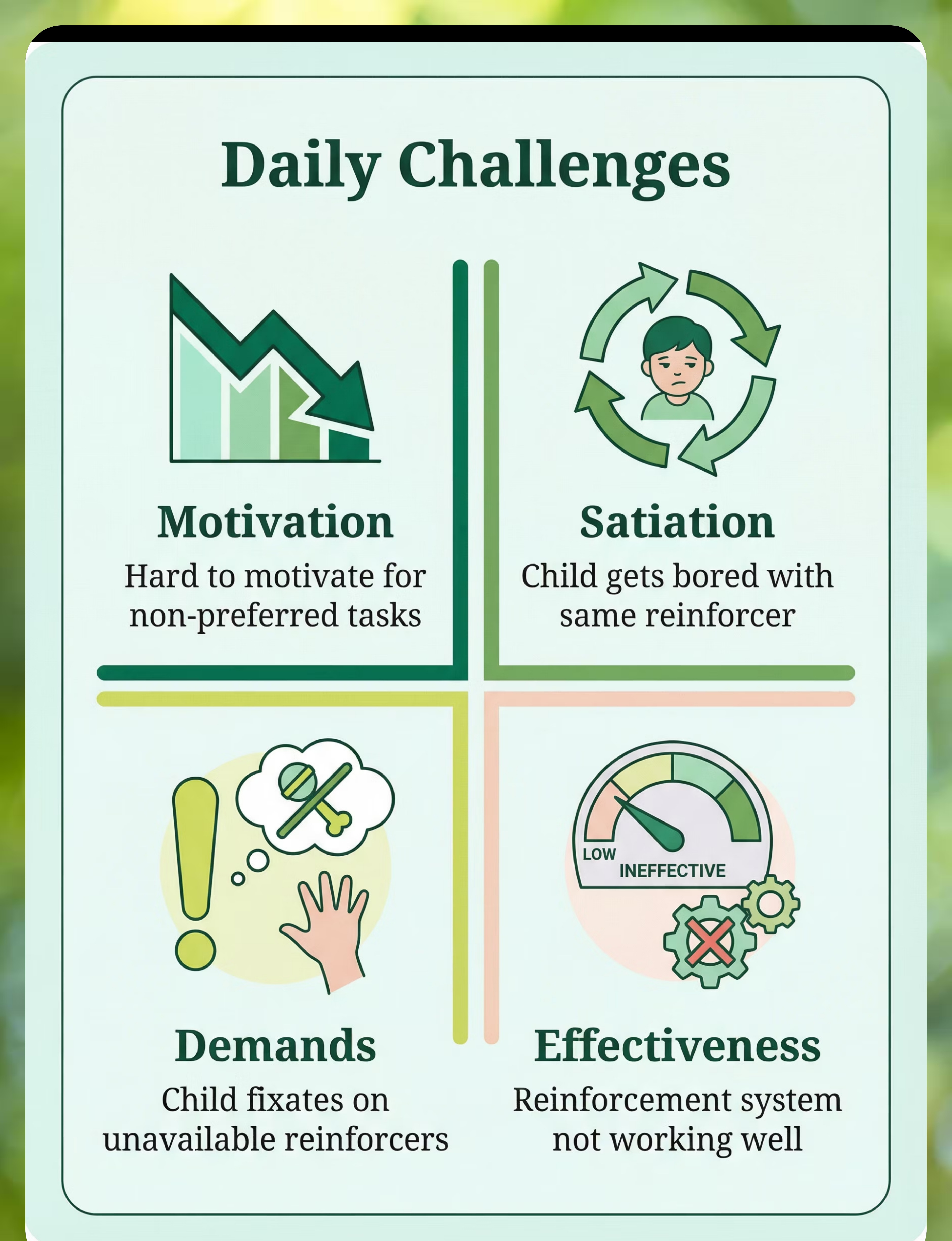
Morning Motivation
Hard to motivate child for non-preferred tasks like getting dressed, brushing teeth, or preparing for school. Every request becomes a battle.
Satiation Sets In
Child gets bored with same reinforcer offered repeatedly. What excited them yesterday brings no response today. Motivation declining rapidly.
Demands Escalate
Child fixates on unavailable reinforcers. Becomes rigid, demanding the one thing you can't provide right now. Flexibility seems impossible.
System Breaks Down
Reinforcement system not working well. Parents feel stuck, child feels frustrated. Learning opportunities lost, stress increasing for everyone.

The Science Behind It
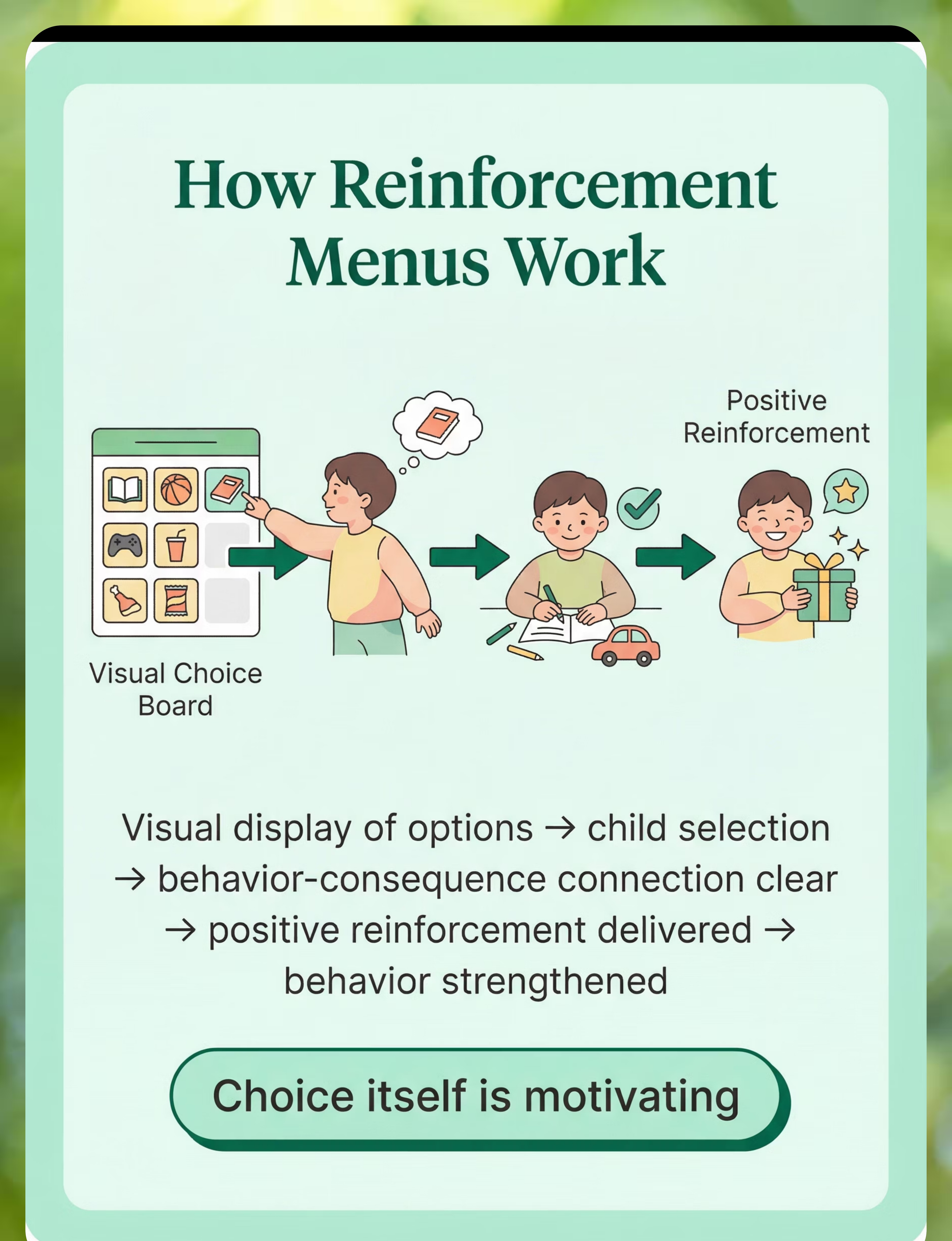
Reinforcement menus work by making the connection between behavior and consequence crystal clear while giving children agency in the process. Here's how this evidence-based approach strengthens desired behaviors:
Visual Display
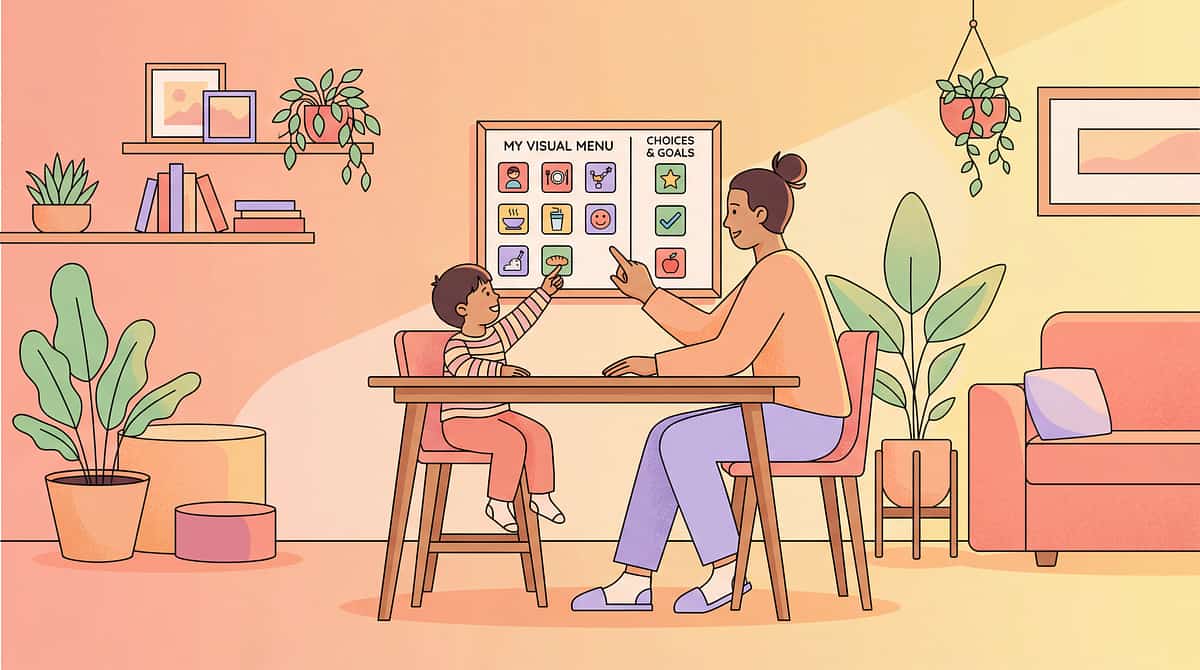
Child sees all available reward options clearly presented with pictures or symbols
Child Selection
Child chooses preferred reinforcer from the menu, increasing motivation through autonomy
Clear Connection
Behavior-consequence connection becomes obvious: "When I do X, I get Y"
Reinforcement Delivered
Positive reinforcement delivered immediately after desired behavior is completed
Behavior Strengthened
Target behavior increases in frequency as child understands the pathway to preferred outcomes
Sustained Motivation
Motivation maintained long-term through choice, variety, and the child's sense of control
Motivation
Behavior Increase
Choice-Making
Communication
Self-Regulation
Positive Associations

How to Use It Right
1
Choice & Motivation
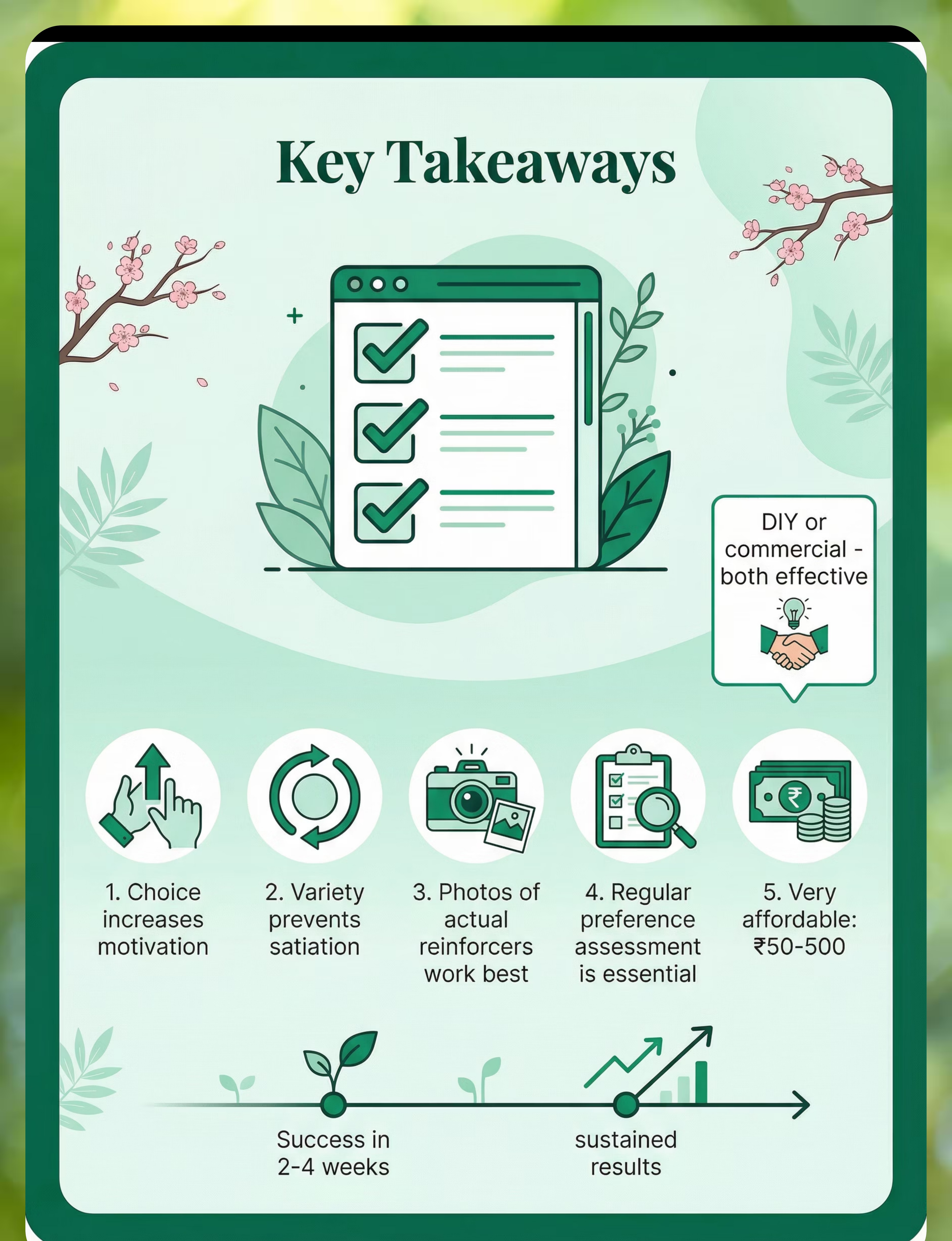
Offer Choice from Menu
Present the menu and let your child select their reinforcer. Choice itself increases motivation and teaches decision-making skills.
2
Dynamic Preferences
Assess Preferences Regularly
Children's preferences change frequently. Update your menu weekly or biweekly based on what they're currently interested in.
3
Prevent Satiation
Vary Reinforcers
Rotate through different options to prevent satiation. Include tangibles, activities, edibles, social, and sensory experiences.
4
Immediate Reinforcement
Deliver Immediately
Provide the selected reinforcer right after the desired behavior is completed. Immediate connection strengthens learning.
5
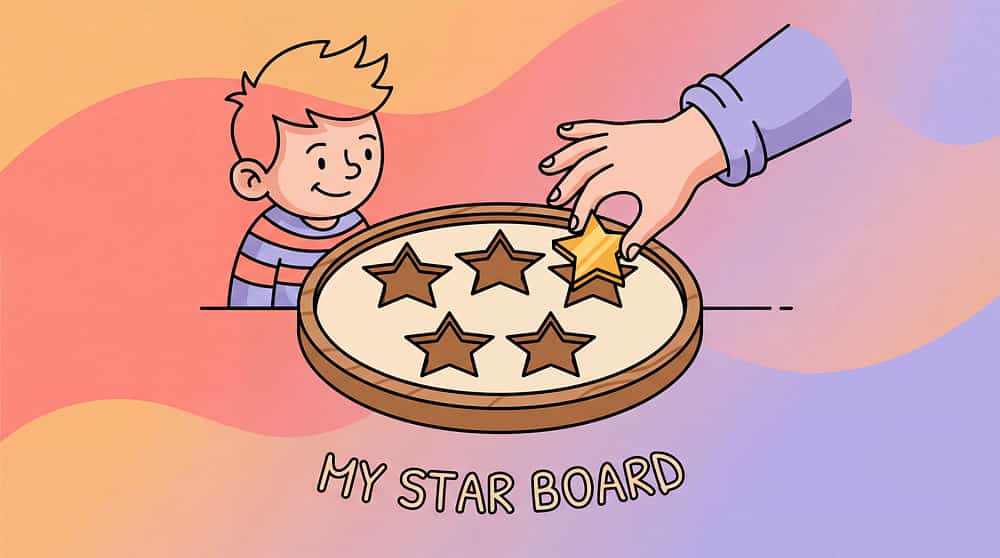
Activity Rewards
Include Activities, Not Just Items
Preferred activities like "5 minutes of tablet time" or "play with Dad" are often more powerful than tangible items.
6
Long-term Behavior
Fade to Natural Reinforcement
Over time, gradually move from continuous to intermittent schedules and from tangible to social reinforcement as skills become habitual.
Duration Note: Selection from the menu is brief (30 seconds to 1 minute). Reinforcement delivery follows your established schedule (continuous for new skills, intermittent for established behaviors).

Expert Perspective
"Reinforcement is the engine of behavior change. Visual menus give children voice and choice, increasing motivation. Regular preference assessments keep reinforcers powerful. Choice is itself reinforcing."— Board Certified Behavior Analyst
BCBA + SpEd Recommended
Endorsed by both Board Certified Behavior Analysts and Special Education professionals
Strong Evidence Base
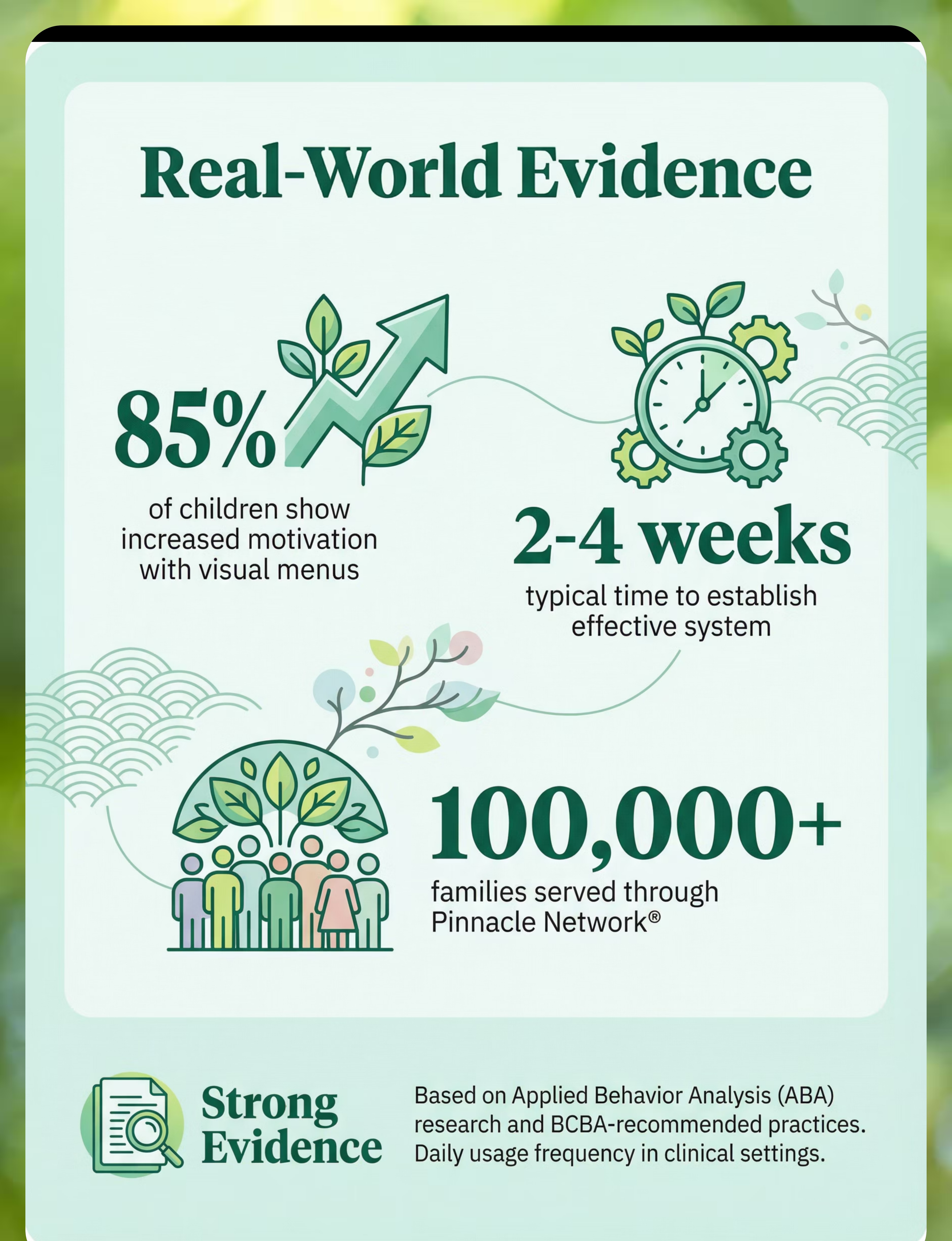
Decades of applied behavior analysis research support reinforcement-based interventions
Rank #1 in Category
Highest-ranked tool in the Behavior Support category for effectiveness and versatility

Choose Your Option (6 Variants)
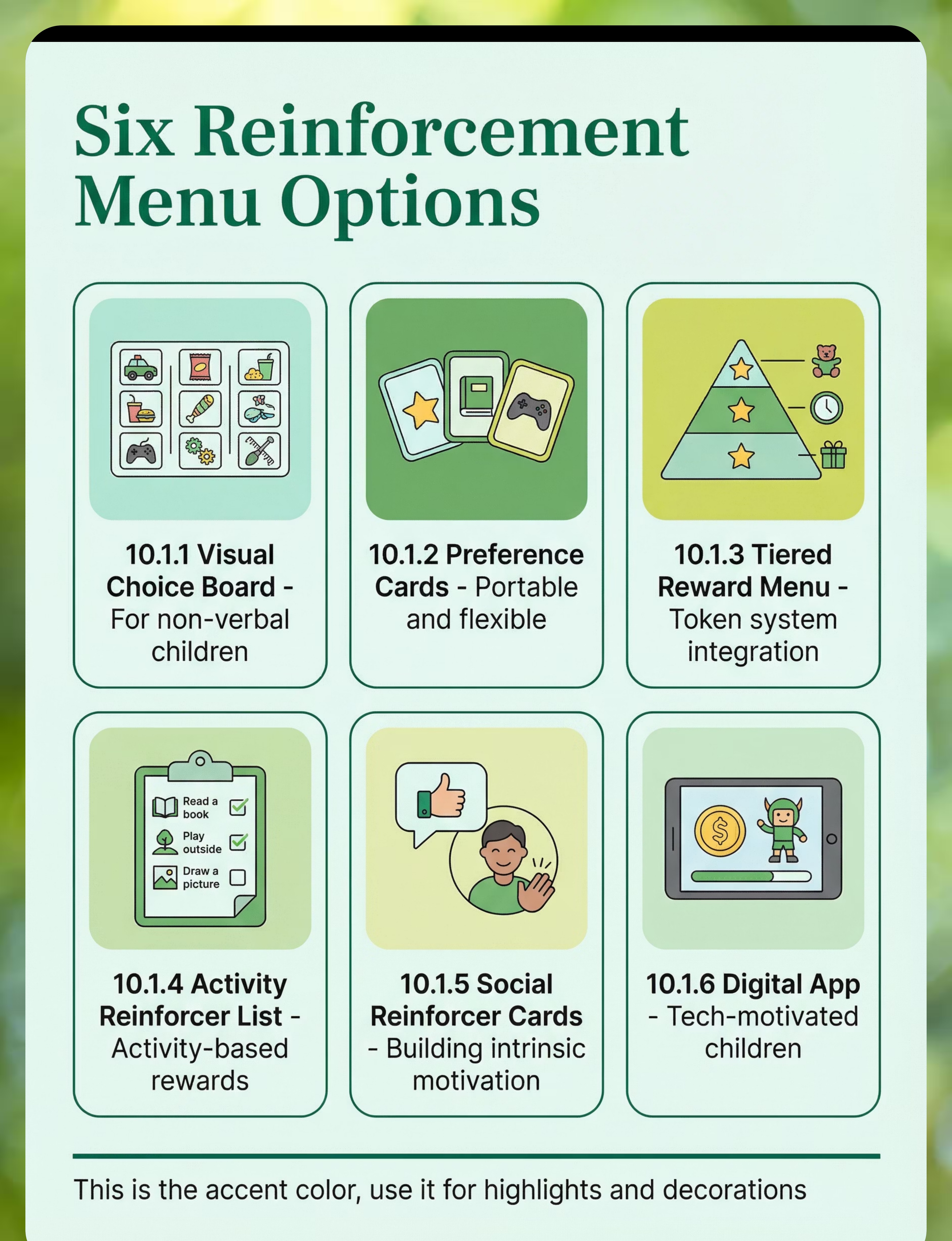
Every child is unique. These six variants help you match the menu format to your child's communication level, setting needs, and motivational profile. From simple visual boards to sophisticated token economy systems, there's a solution for every stage of development.
Visual Choice Board
Reinforcer Preference Cards
Activity Reinforcer List
Social Reinforcer Cards
Tiered Reward Menu
Digital Reinforcement App
Visual Choice Board
Best for: Non-verbal/limited verbal children, clear choices
Ages: 2-12 years | Settings: Home, School, Clinic
Board with pictures of available reinforcers. Visual selection support that makes options immediately clear.
Medium Portability
₹100–400
Reinforcer Preference Cards
Best for: Changing preferences, portable options
Ages: 2-12 years | Settings: All
Individual cards for each reinforcer. Flexible reinforcer display that travels anywhere.
Very High Portability
₹50–200
Activity Reinforcer List
Best for: Motivation through preferred activities
Ages: 3-12 years | Settings: All
Pictures of preferred activities rather than items. Often more motivating and sustainable.
High Portability
₹50–200
Social Reinforcer Cards
Best for: Building intrinsic motivation
Ages: All ages | Settings: All
Social praise and interaction options. Moves toward natural, sustainable reinforcement.
Very High Portability
₹50–150
Tiered Reward Menu
Best for: Token systems, delayed gratification
Ages: 4-12 years | Settings: All
Rewards at different 'costs' for token economy integration. Teaches value and saving.
High Portability
₹50–200
Digital Reinforcement App
Best for: Tech-motivated children, variety
Ages: 4-12 years | Settings: All
App-based reward selection with unlimited options. Perfect for children drawn to technology.
Very High Portability
₹0–500
How to Choose
By Goal
- Calming: Visual Choice Board
- Flexibility: Preference Cards
- Advanced skills: Tiered Menu
- Natural reinforcement: Social Cards
By Setting
- Home: Visual Board (stays put)
- Multiple settings: Preference Cards
- Clinic: Any variant works
- On-the-go: Digital App or Cards
By Portability
- Very High: Cards, Social, Digital
- High: Tiered, Activity Lists
- Medium: Visual Board
Specifications & Reinforcer Categories
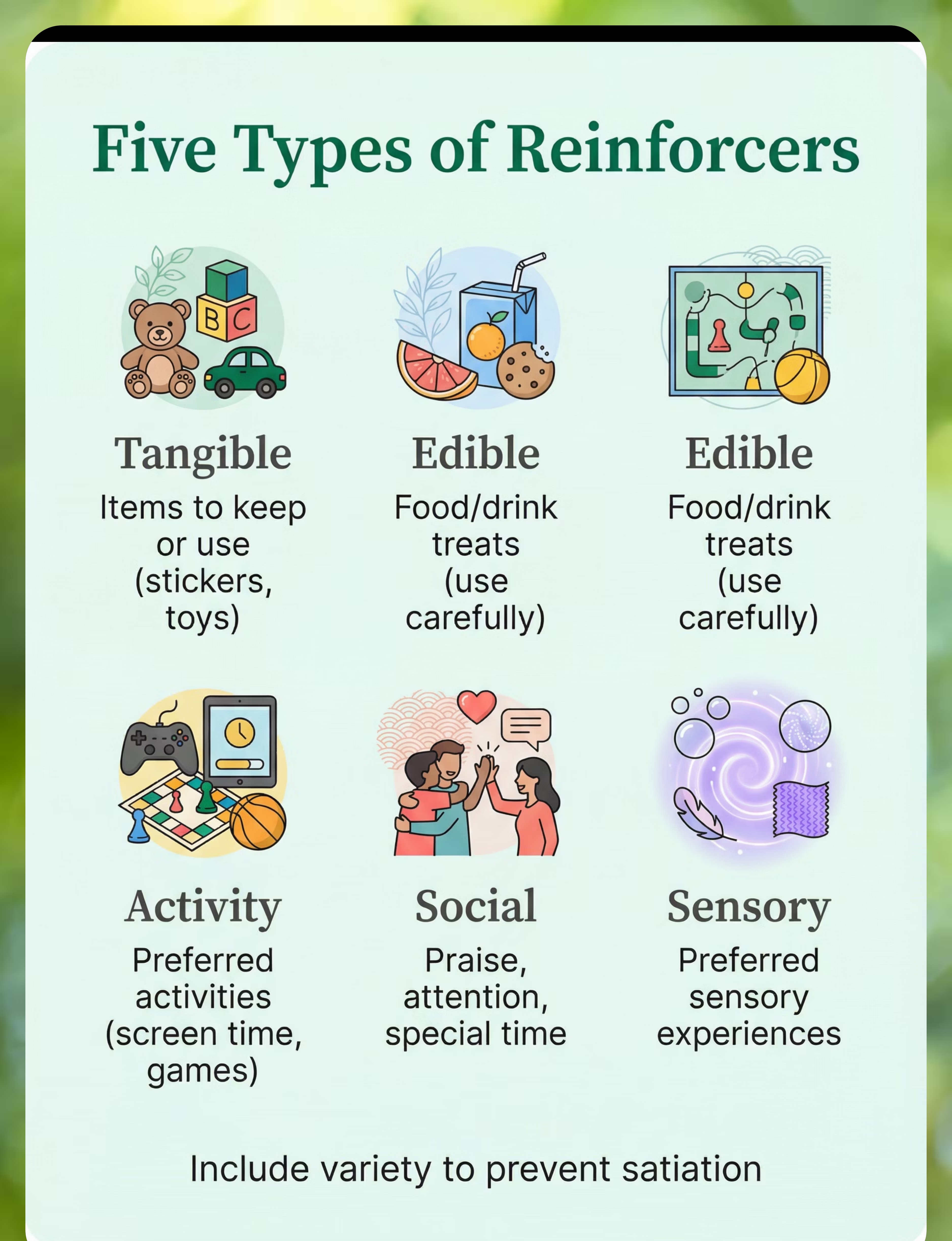
Understanding reinforcer categories helps you create a balanced, effective menu that prevents satiation and maintains long-term motivation. The most powerful menus include variety across all five categories.

Tangible
Items to keep or use: stickers, small toys, art supplies, collectibles. Children have something concrete to show for their effort.

Edible
Food and drink treats: favorite snacks, special drinks, desserts. Use carefully and sparingly to avoid over-reliance.

Activity
Preferred activities: screen time, games, special outings, play with favorite person. Often more powerful than items.

Social
Praise, attention, special time with preferred person, high-fives, hugs. Builds toward natural, intrinsic motivation.

Sensory
Preferred sensory experiences: music, movement, tactile activities, visual stimulation. Matches sensory preferences.
Materials & Features
Common Materials
- Laminated cards
- Velcro boards
- Printed menus
- Mobile apps
Key Features
- Visual clarity for easy recognition
- Easy to update as preferences change
- Includes varied reinforcer types
- Accessible for child's communication level

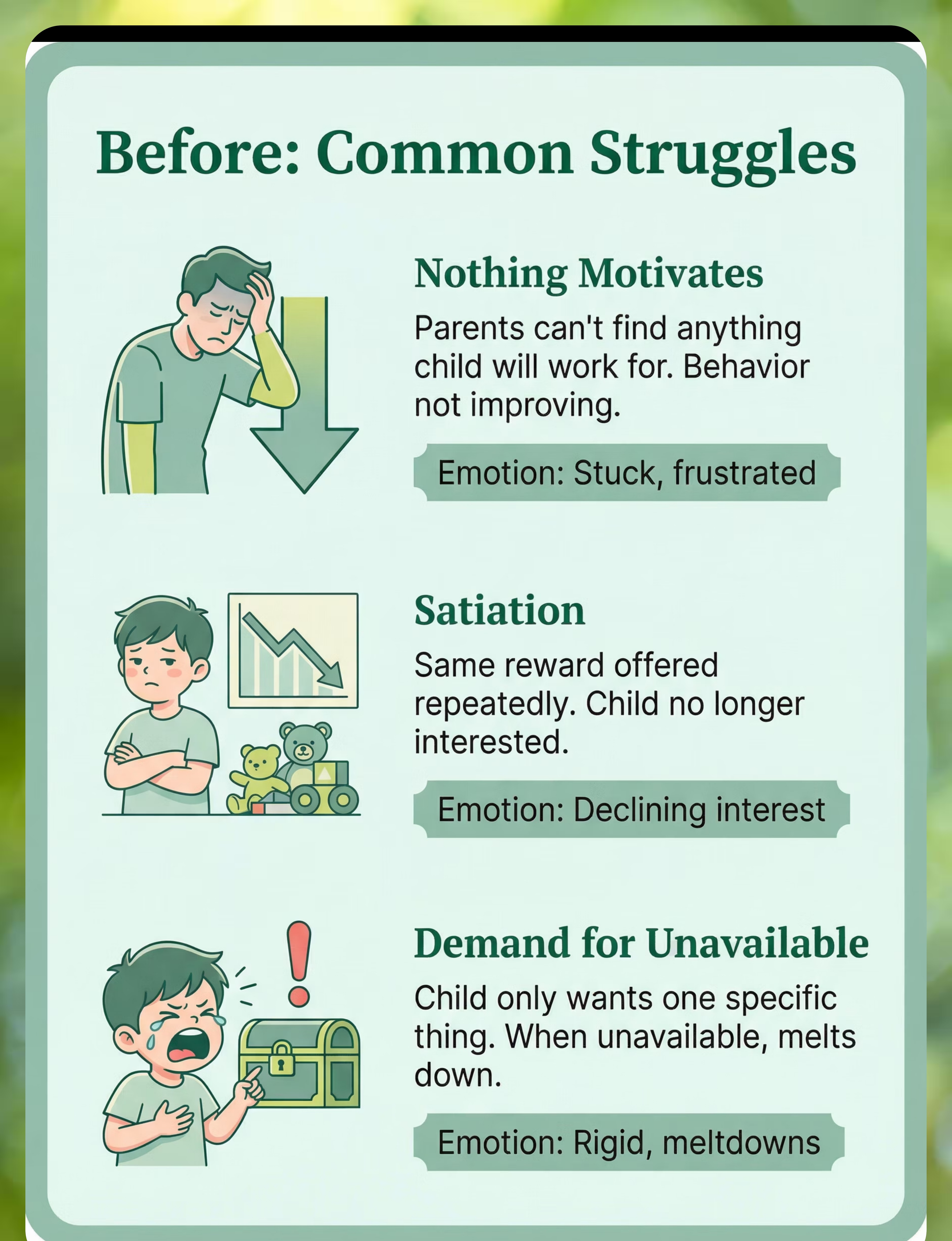
The Struggle (Before)

Nothing Motivates
Parents desperately search for anything their child will work for, but reinforcement seems ineffective. Rewards yield no results, leading to frustration and hopelessness about progress.

Satiation
The same reward offered repeatedly loses its appeal. What worked yesterday no longer excites, leading to decreased motivation, boredom, and a growing disconnection.

Demand for Unavailable
A child fixates on one specific, often unavailable item. When denied, meltdowns occur. This rigidity and lack of flexibility create constant stress for the family.

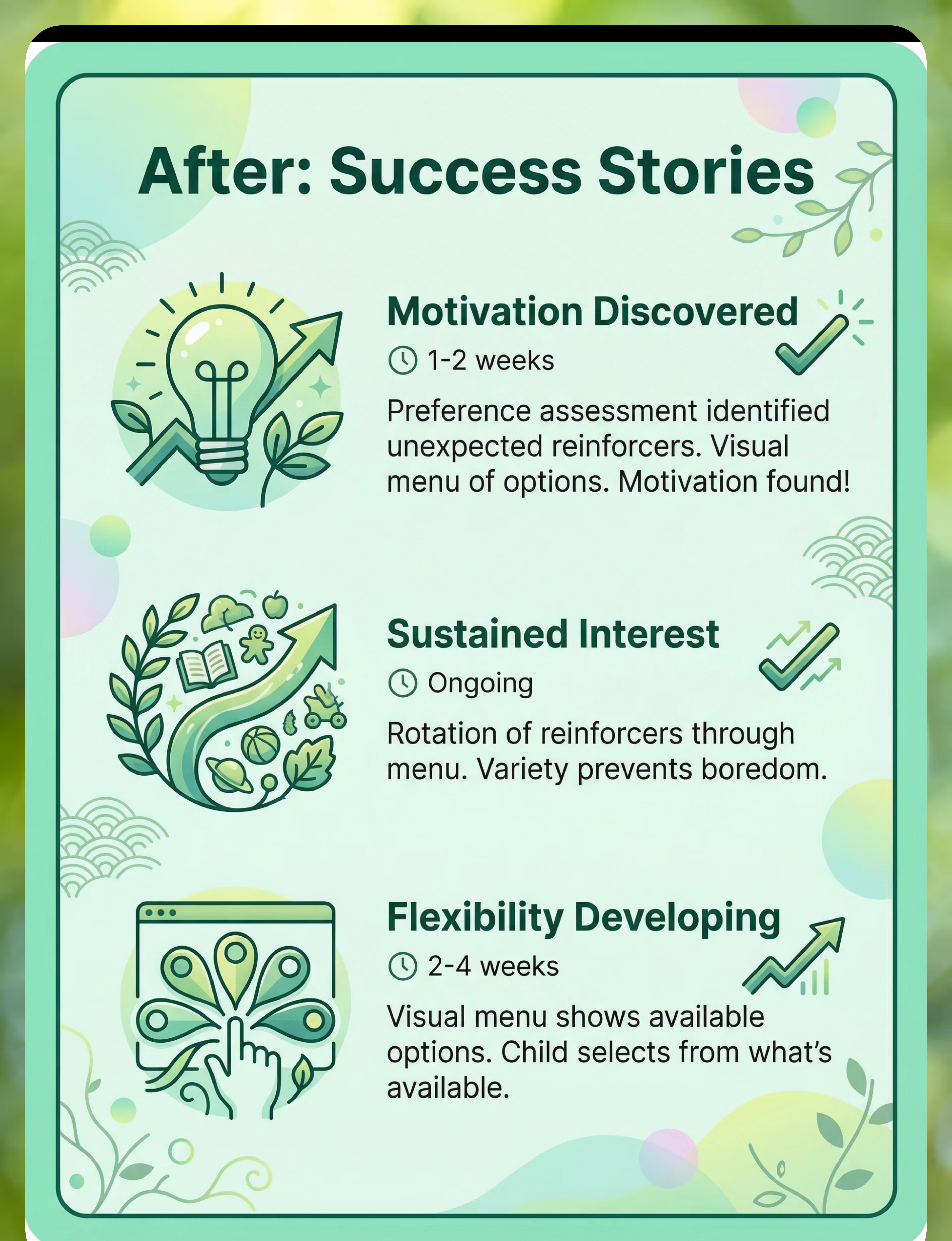
The Breakthrough (After)
Nothing Motivates → Motivation Discovered
Situation: Structured preference assessment reveals unexpected motivators
Experience: Visual menu makes options clear and accessible. Child suddenly engaged! Found what works through systematic assessment.
Emotion: Hope rekindled, motivation discovered, forward movement
1-2 weeks
Satiation → Sustained Interest
Situation: Rotation system prevents boredom
Experience: Variety through the menu keeps things fresh. Child stays interested week after week. Multiple options prevent satiation.
Emotion: Sustained interest, ongoing engagement, consistent motivation
Ongoing
Demand for Unavailable → Flexibility & Acceptance
Situation: Visual menu shows what IS available right now
Experience: Child learns to select from current options. Begins accepting alternatives. Flexibility developing naturally through structured choice.
Emotion: Flexibility emerging, acceptance growing, fewer meltdowns
2-4 weeks

What to Expect (Realistic Timelines)
Change happens gradually. Here's what families typically experience as they implement reinforcement menus. Remember, every child progresses at their own pace - these are general guidelines.
Weeks 1-2: Preferences Identified
Through observation and formal preference assessment, you discover what truly motivates your child. May include surprising preferences you hadn't considered.
Weeks 1-2: Visual Menu Established
Menu created with photos or symbols of identified reinforcers. Introduced to child with teaching and prompting. Format matches child's visual processing abilities.
Weeks 3-4: Child Selecting from Menu
Child understands the menu and independently (or with minimal support) selects their preferred reinforcer. Ownership and engagement increasing.
Months 1-2: System Effective
Reinforcement system consistently maintaining target behaviors. Child motivated to complete tasks. Parents seeing clear behavior change.
Month 3+: Sustained Through Variety
Long-term motivation maintained by rotating reinforcers and regularly updating menu. Child remains engaged, satiation prevented.

Is This Right for My Child? (2-Minute Check)
Answer these four quick questions to determine if reinforcement menus are a good fit for your family. If you answer "yes" to 3 or more, this tool is likely to be highly effective.
"Do you know what motivates your child?"
If YES: Build the menu around known preferences – you have a head start! If NO: Conduct a preference assessment first to discover motivations.
"Does your child get bored with rewards quickly?"
If YES: This indicates a need for variety and rotation, exactly what menus provide to prevent satiation.
"Can your child make choices from options?"
If YES: They are ready for a choice-based menu right away. If NO: Start with simpler presentations, like two choices, and build from there.
"Is your current reward system working effectively?"
If YES: Enhance effectiveness with a visual menu and variety. If NO: It's time to reassess reinforcers and delivery – menus can reset the approach.
3+ "yes" answers = strong fit for reinforcement menus. Even with 1-2 "yes" answers, menus can work with appropriate modifications.

Common Questions (Honest Answers)
These are the concerns we hear most often from families. Here are evidence-based, practical answers to help you use reinforcement menus effectively and ethically.
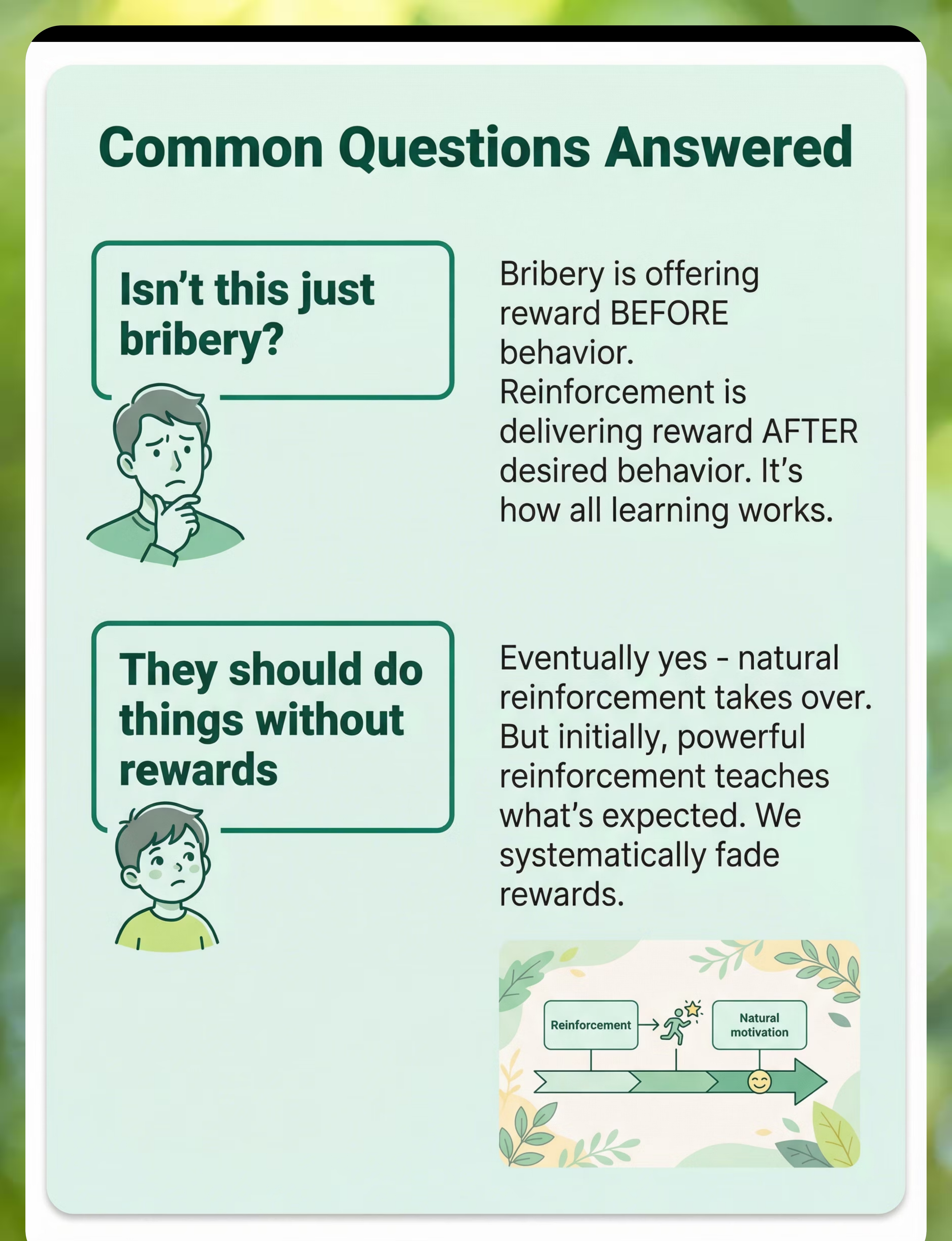
"Isn't this just bribery?"
"They should do things without rewards"
"They'll expect rewards forever"
"Giving choices causes more demands"
No. Bribery is offering a reward BEFORE behavior to stop misbehavior (reactive). Reinforcement is delivering a reward AFTER desired behavior is completed (proactive). This is how all learning works - consequences shape behavior. The difference in timing and purpose is critical.
Key point: Reinforcement is after behavior; bribery is before.
Eventually, yes - natural reinforcement takes over. But initially, powerful reinforcement teaches what's expected and makes the effort worthwhile. As skills become automatic, we systematically fade artificial reinforcers. The goal is independence, but the path there requires teaching support.
Key point: Start with strong reinforcement; fade over time.
Not with systematic fading. We move from continuous to intermittent reinforcement schedules. We shift from tangible to social reinforcement. We increase delay between behavior and reinforcement. Done properly, skills become their own reward. Fading is part of the plan from day one.
Key point: Systematic fading prevents dependence.
Actually the opposite. Limited, closed choice (from a menu) reduces demands. When children see visual options and understand the structure, they learn what's available and select accordingly. Unlimited choice causes demands; structured choice provides clarity and reduces frustration.
Key point: Structured choice reduces demands, not increases them.

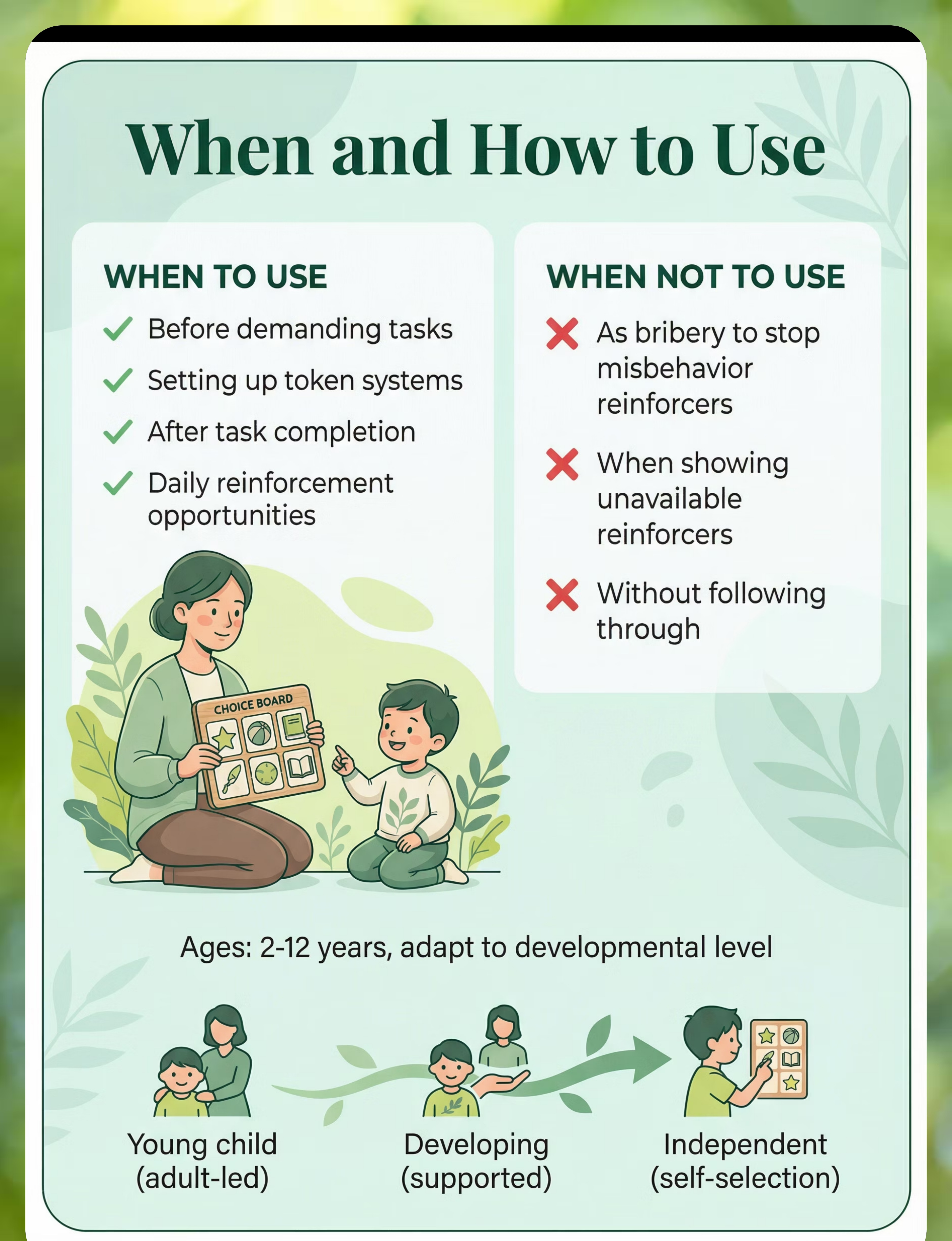
Usage Guide: Reinforcement Menus
Understanding when and how to effectively use reinforcement menus is key to maximizing their benefits. This guide outlines appropriate scenarios for implementation and critical situations to avoid, ensuring ethical and impactful application. We also provide insights into adapting supervision based on a child's developmental stage to foster independence.
Before Demanding Tasks: Use the menu to motivate and allow the child to select what they'll work for, providing clear incentives upfront. | As Bribery: Never offer a reinforcer *before* undesirable behavior to stop it. Reinforcement is always *after* desired behavior. | |
Setting Up Token Systems: Clearly display what tokens can be exchanged for, making the value of earned tokens tangible. | With Unavailable Options: Only include items on the menu that are genuinely available for the child to earn and receive immediately. | |
When Offering Choices: Integrate menus into natural choice-making opportunities throughout the day, empowering the child. | Without Follow-Through: Do not put items on the menu if you are unable or unwilling to deliver them once earned. Consistency is vital. | |
After Task Completion: Allow the child to select their earned reinforcer from the menu once a desired task is successfully completed. | Creating Unlimited Demands: While choice is good, an overly expansive menu without clear boundaries can lead to increased demands and frustration. | |
Daily Reinforcement Opportunities: Use the menu anytime you are reinforcing desired behavior, making the reward system predictable and clear. | Ignoring Individual Preferences: A menu should be tailored to the child's current motivators. If options aren't appealing, the menu won't be effective. |
Evolving Supervision Needs
Early Years (2-4 years)
Adult-led presentation and facilitated choice. Focus on teaching selection skills and understanding the menu concept.
Developing Skills (5-8 years)
Child accesses the menu with adult support. Promote partial independence with prompting as needed.
Independent (9+ years)
Child self-selects from available options. Minimal adult oversight, encouraging self-monitoring and responsibility.
Reinforcement Menu Progression
Introduction
Start with highly preferred, immediately available items to establish the menu's purpose.
Expansion
Gradually introduce more varied and slightly delayed reinforcers as understanding grows.
Fading
Transition from tangible to social reinforcers, increasing delay and promoting intrinsic motivation.
Independence
Child makes choices based on natural consequences and internal motivation, with menus used sparingly for novel tasks.
Home
School
Clinic
Community

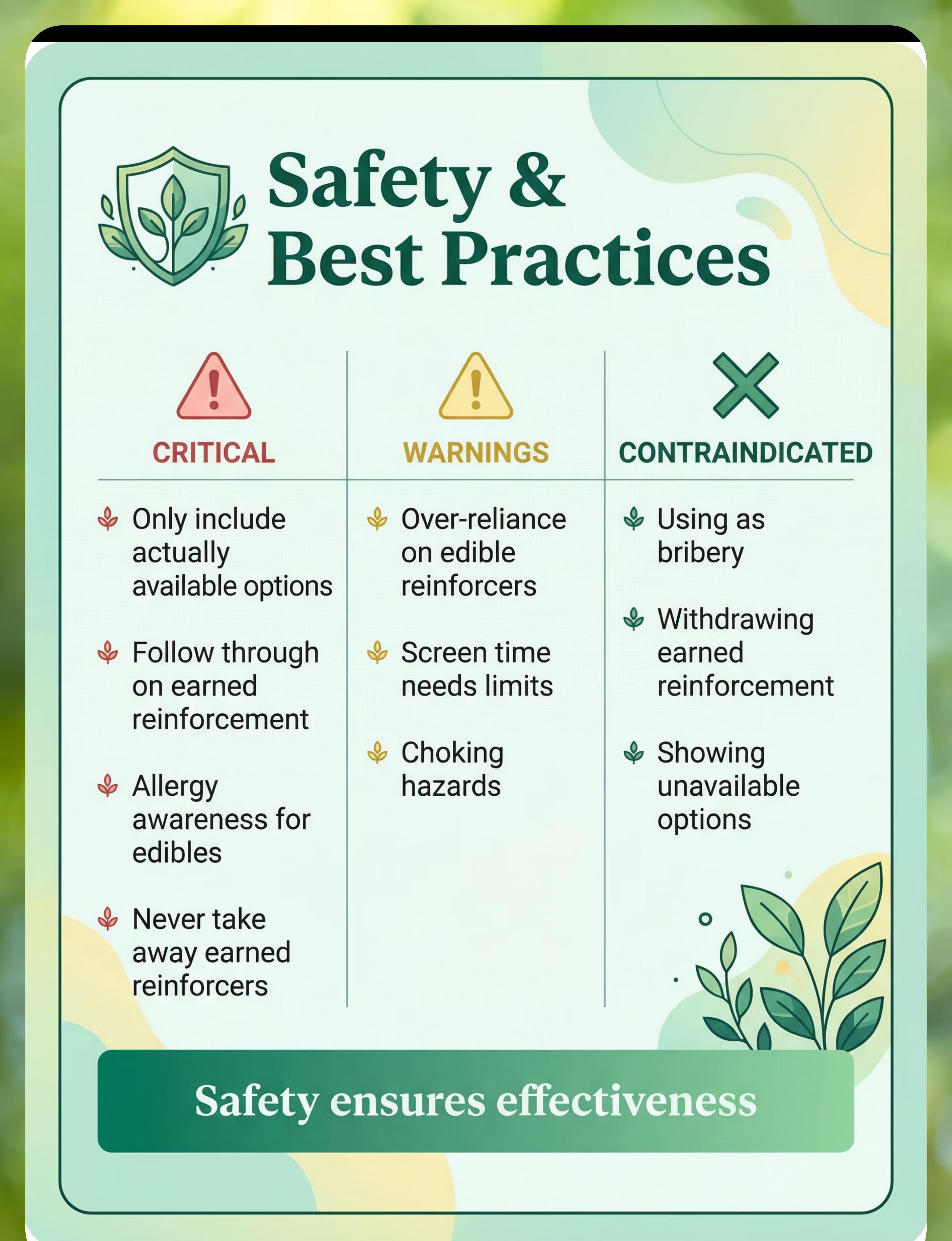
Safety First
🔴 Critical Safety
- Only include actually available options - showing unavailable reinforcers creates frustration and breaks trust
- Edible reinforcers: allergy awareness - always verify food allergies, dietary restrictions, and family preferences
- Follow through on earned reinforcement - if child earns it, you must deliver it or the system breaks down
- Never take away earned reinforcers - this is punishment, not reinforcement; destroys system integrity
⚠️ Warnings
- Over-reliance on edible reinforcers can be problematic - use food sparingly, fade quickly, prefer activities
- Screen time reinforcers need limits - establish clear time boundaries and stick to them
- Some tangibles can be choking hazards - age-appropriate items only, always supervised
Contraindicated Practices
Using as Bribery
Offering reinforcement BEFORE behavior to stop misbehavior is bribery, not reinforcement. This teaches that misbehavior gets rewards.
Withdrawing Earned Reinforcement
Taking back something already earned is punishment in disguise. It destroys trust and system effectiveness.
Showing Unavailable Options
Including items you can't or won't deliver creates false expectations, disappointment, and behavioral escalation.
Safety Checklist
Before Use
- ✓ All pictured reinforcers available right now
- ✓ Menu current with child's preferences
- ✓ Delivery plan clear and realistic
- ✓ Criteria for earning clearly defined
During Use
- ✓ Child understanding choice process
- ✓ Behavior-reinforcement connection clear
- ✓ Immediate delivery when earned
- ✓ Rotating options to prevent satiation
Signs of Success
- ✓ Child motivated by menu
- ✓ Independently selecting from options
- ✓ Target behaviors increasing
- ✓ Sustained motivation over time

Investment Guide
Reinforcement menus are one of the most cost-effective behavior support tools. The range spans from completely free DIY options to premium commercial boards, with effectiveness depending more on individualization than price point.
Comparative Investment Overview
Budget (DIY) | ₹50-100 | Self-made, using photos of actual reinforcers. Highly personalized and very effective due to relevance. | Users with clear preferences, seeking maximum personalization and cost savings. | |
Premium (Commercial) | ₹300-500 | Professionally designed boards with durable materials and comprehensive starter sets from educational suppliers. | Users desiring professional appearance, convenience, and a wide variety of pre-made options. | |
Overall Savings (DIY) | 80-95% cost reduction | Significantly lower cost compared to commercial alternatives for similar effectiveness. | Any user looking to maximize budget efficiency without compromising on customization. |
Key Features & Benefits
Personalization
Tailor options precisely to individual needs for maximum motivation.
Durability
Commercial options offer robust materials for long-term use.
Variety & Ease of Use
Pre-made sets provide diverse options and quick implementation.
Cost-Effectiveness
Both options offer significant behavioral gains for a minimal financial outlay.
Investment Progression Over Time
Phase 1: Initial Setup (DIY Focus)
Begin with free or low-cost DIY options to establish basic principles and identify strong reinforcers.
Phase 2: Expansion & Diversification
Gradually introduce new reinforcers or explore mixed DIY/commercial options as needs evolve.
Phase 3: Optimization & Long-Term Use
Refine the menu based on observed effectiveness, considering occasional updates or commercial add-ons for sustained engagement.
Best Starting Point: If your child's preferences are clear and specific, DIY is the most effective option because photos of their actual reinforcers are most motivating. If you want a comprehensive starter set with varied options, commercial boards provide convenience.

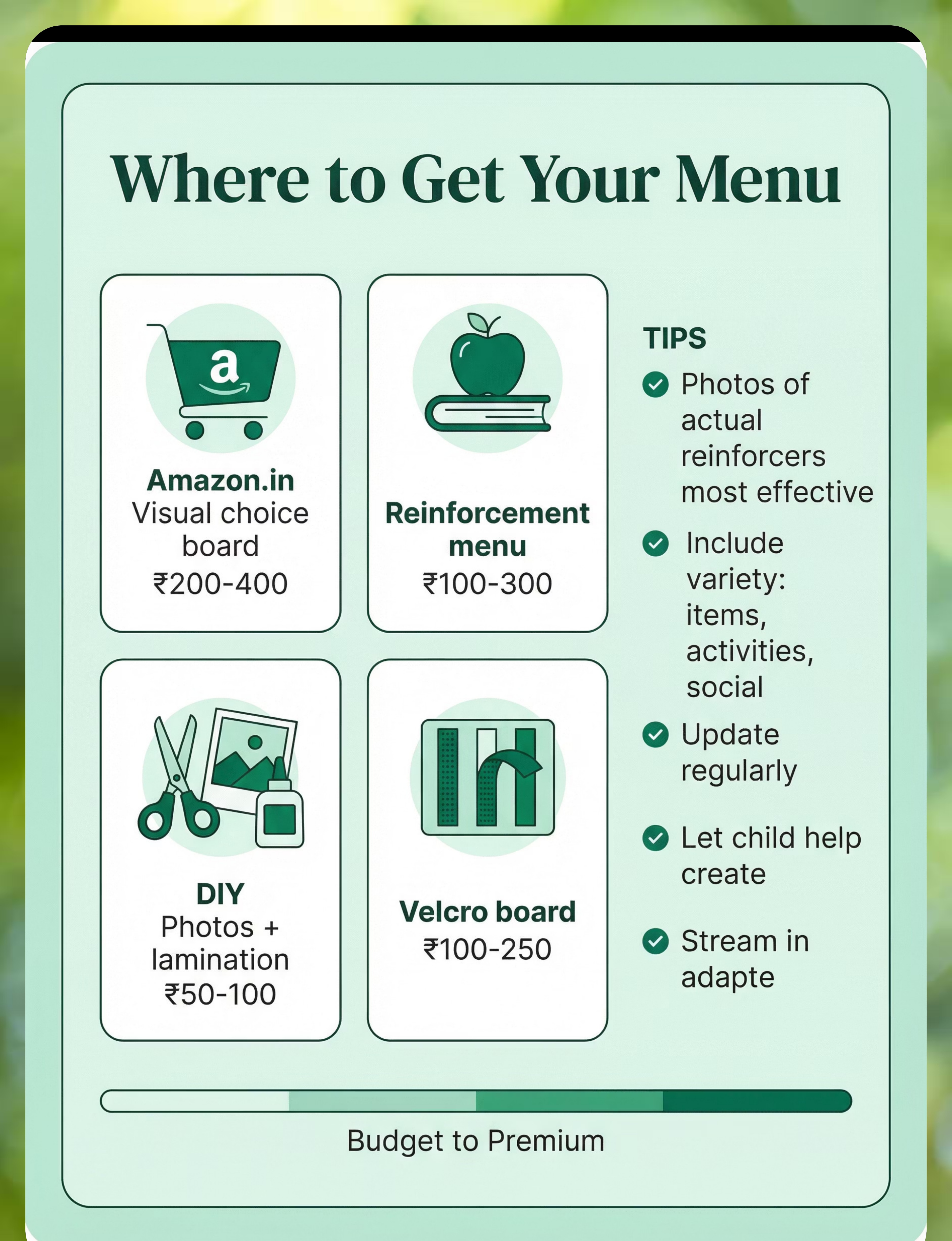
Where to Buy in India
Availability: Moderate (DIY often produces the best results because personalization matters more than professional production)
Amazon.in
Search Term: "visual choice board"
Price Range: ₹200-400
Notes: Generic boards
Teachers Pay Teachers
Search Term: "reinforcement menu"
Price Range: ₹100-300
Notes: Printable resources
DIY Materials
Search Term: "Photos + lamination"
Price Range: ₹50-100
Notes: Most effective option
Amazon.in (Display Base)
Search Term: "velcro board for pictures"
Price Range: ₹100-250
Notes: Display base
Buying Tips
Photos of actual reinforcers are most effective - your child's specific iPad, their favorite snack, their real toys
Include variety: items, activities, social - prevents satiation, maintains interest across situations
Update regularly as preferences change - children's interests evolve; menu should too (weekly check recommended)
Portable version for different settings - keep consistency between home and school with travel-sized menu
Let child help create the menu - increases ownership and motivation from the start
🚩 Red Flags to Avoid
- Generic pictures child doesn't connect with - abstract clip art is less motivating than real photos
- No variety in reinforcer types - all tangibles or all edibles leads to rapid satiation
- Reinforcers not actually available - showing what you can't deliver destroys system credibility
- Never updating as preferences change - static menus lose effectiveness within weeks

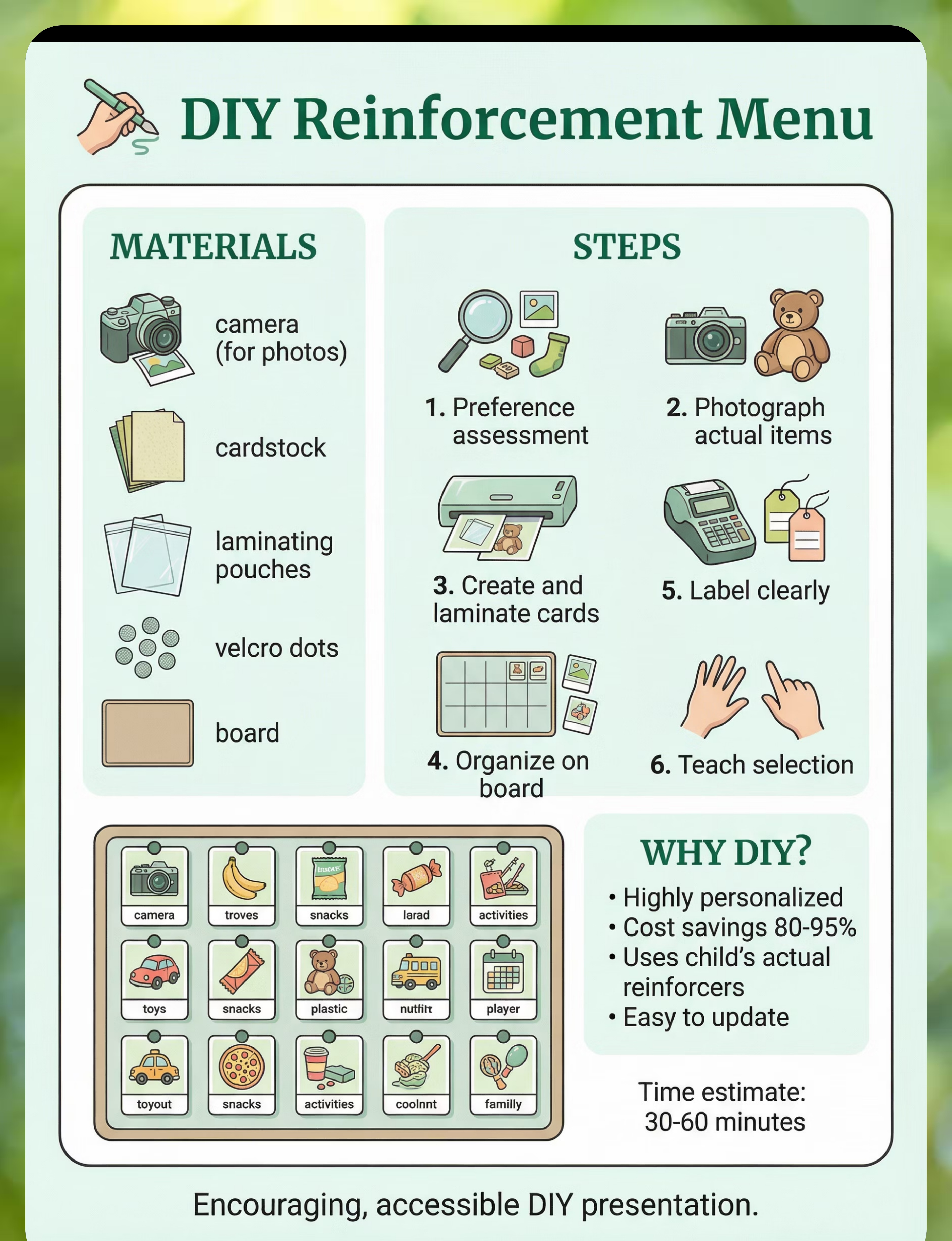
DIY Alternative (Save 80-95%)
1
95% Feasibility
Very High - easily made at home
2
80-95% Cost Savings
Compared to commercial options
3
30-60 Minutes
Time Required to create complete menu
Materials Needed
- Photos of child's actual reinforcers (take with phone)
- Index cards or cardstock
- Laminating sheets or pouches
- Velcro dots (self-adhesive)
- Small board or folder for display
Step-by-Step Instructions
1
Preference Assessment
Observe what child chooses, asks for, and enjoys. Track over 3-5 days across settings. Note favorites.
2
Photograph
Take pictures of actual items and activities. Use real toys, specific snacks, favorite people, preferred spaces.
3
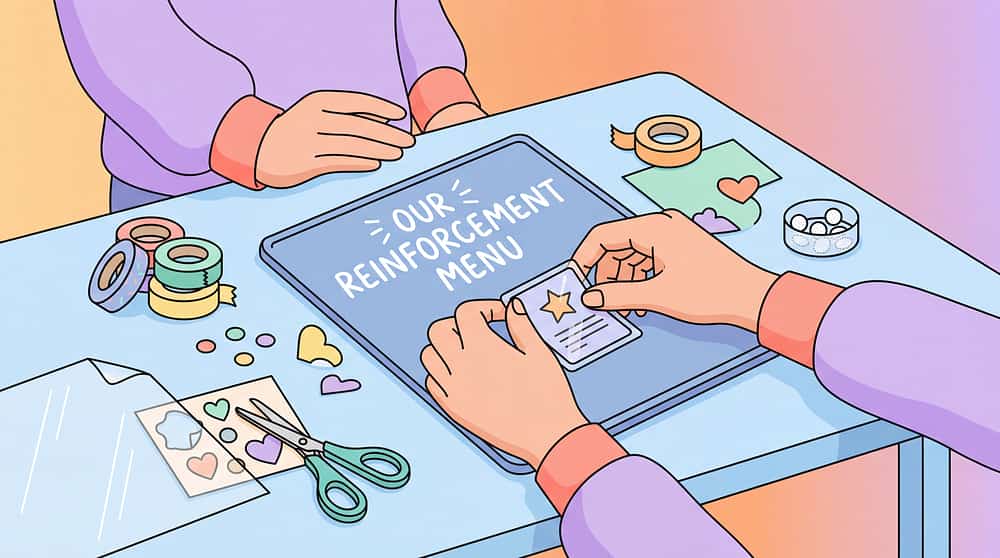
Create Cards
Print photos at wallet size (2×3"). Glue to index cards for stability. Add text labels if child reads.
4
Laminate
Use laminating pouches or clear contact paper. This ensures durability for daily use and handling.
5
Organize Display
Attach velcro to back of cards and to board. Arrange in categories (tangibles, activities, social, etc.).
6
Teach Selection
Model how to choose, use hand-over-hand if needed, reinforce selection behavior itself initially.
DIY vs Commercial Comparison
Factor | When to DIY | When to Buy Commercial | |
Personalization | ✓ Want photos of actual items | Generic options acceptable | |
Preferences | ✓ Specific or unusual items | Common, typical preferences | |
Updates | ✓ Need frequent changes | Stable preferences | |
Budget | ✓ Cost-conscious | Budget available | |
Time | Have 1 hour for creation | ✓ Time-constrained | |
Appearance | Function over form | ✓ Want professional look |
Tradeoffs: DIY takes time initially but produces highly personalized, maximally effective menus. Commercial options save time but may be less motivating if child doesn't connect with generic images.
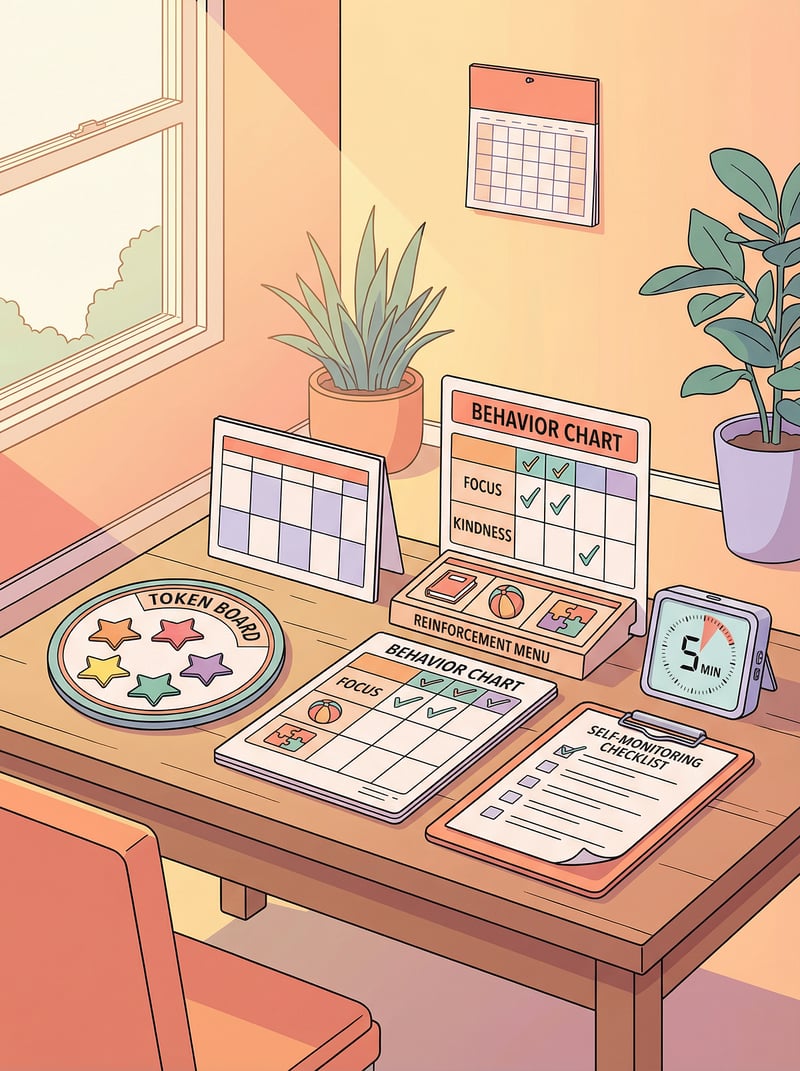
Preview of reinforcement menus Therapy Material
Below is a visual preview of reinforcement menus therapy material. The pages shown help educators, therapists, and caregivers understand the structure and content of the resource before use. Materials should be used under appropriate professional guidance.


Share this resource
Help others discover thisLink copied!

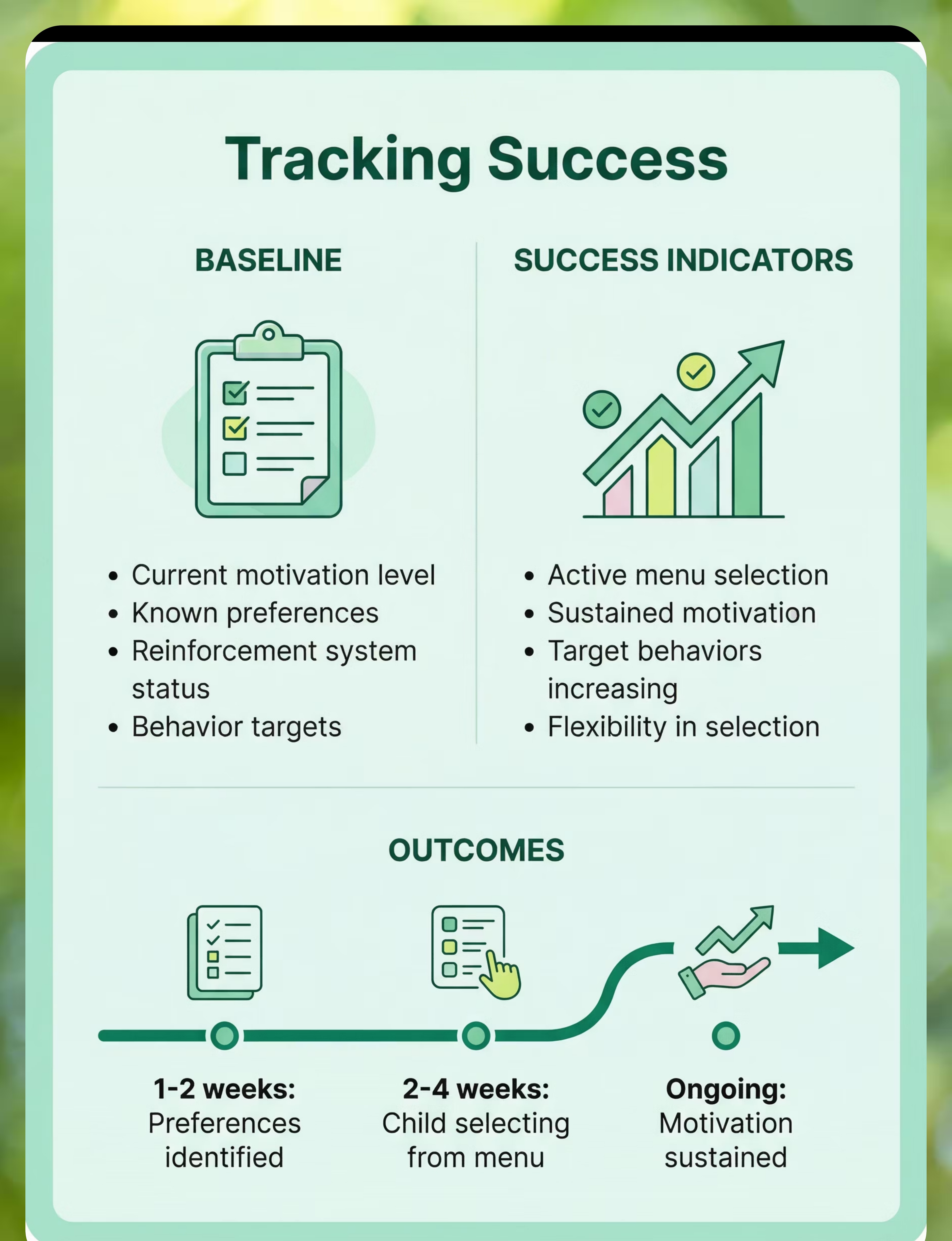
Measuring Success
Baseline (Measure First)
- Current motivation level for target tasks
- Known preferences and their power
- Status of existing reinforcement system
- Frequency of target behaviors before menu
Goals
- Child will independently select from reinforcement menu
- Reinforcement system will maintain target behaviors
- Preferences will be assessed and updated regularly
- Artificial reinforcement will fade appropriately over time
Success Indicators
- ✓ Active, independent menu selection
- ✓ Sustained motivation week over week
- ✓ Target behaviors increasing steadily
- ✓ Flexibility in selecting different options
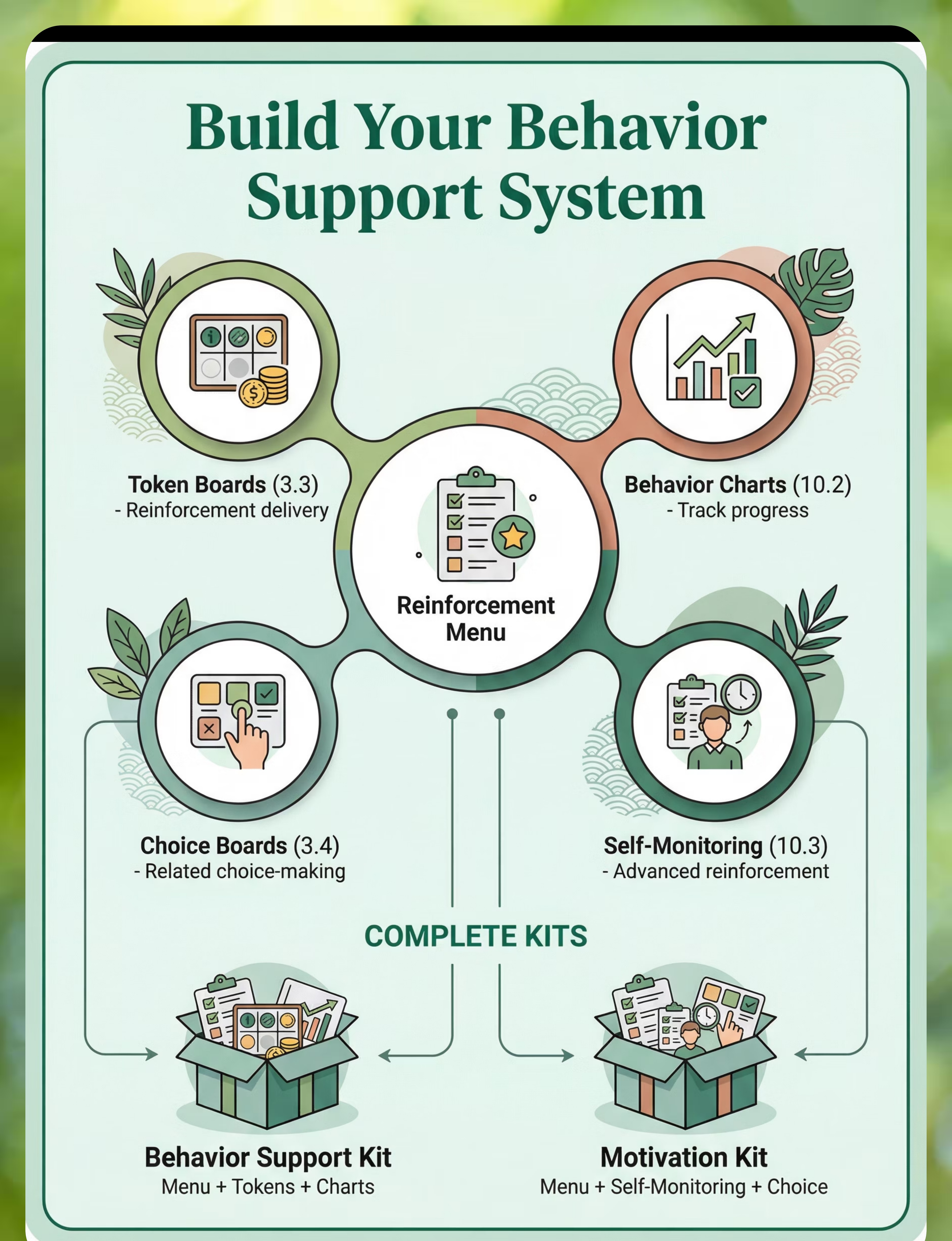
Complete the Kit
Reinforcement menus work even better when paired with these complementary tools. Build a comprehensive behavior support system:
Token Boards (ID: 3.3)
Reinforcement delivery system where a child earns tokens for target behaviors, then exchanges them for menu items, offering perfect integration.
Behavior Charts (ID: 10.2)
Track progress toward reinforcement, providing visual feedback on behavior and clear earning criteria for menu access.
Choice Boards (ID: 3.4)
Support related choice-making across contexts, building decision skills that directly transfer to menu selection.
Self-Monitoring (ID: 10.3)
An advanced reinforcement strategy for developing independence, where a child tracks their own behavior to earn menu access.
Recommended Bundles
Behavior Support Kit
Includes: Reinforcement Menus (10.1) + Token Boards (3.3) + Behavior Charts (10.2)
Use case: Complete reinforcement system from earning to tracking to delivery
Motivation Kit
Includes: Reinforcement Menus (10.1) + Self-Monitoring (10.3) + Choice Boards (3.4)
Use case: Building intrinsic motivation and self-directed behavior change
Quick Summary
AI Summary: Reinforcement menus provide visual choice of motivating consequences to strengthen desired behaviors through positive reinforcement with variety and child choice. Core Kit (Rank 1), strong evidence, essential behavior support.
reinforcement
motivation
behavior
choice
rewards
positive
ABA
BCBA
SpEd
core-kit
Common Searches
reinforcement menu autism • reward choice board • behavior reinforcement • preference assessment • token economy rewards • visual reinforcer • motivation autism
Get Support
FREE National Autism Helpline
Phone: 9100 181 181
Languages: 16+ languages supported
Website: pinnacleblooms.org
Expert guidance on implementing reinforcement systems, preference assessment, and behavior support strategies.
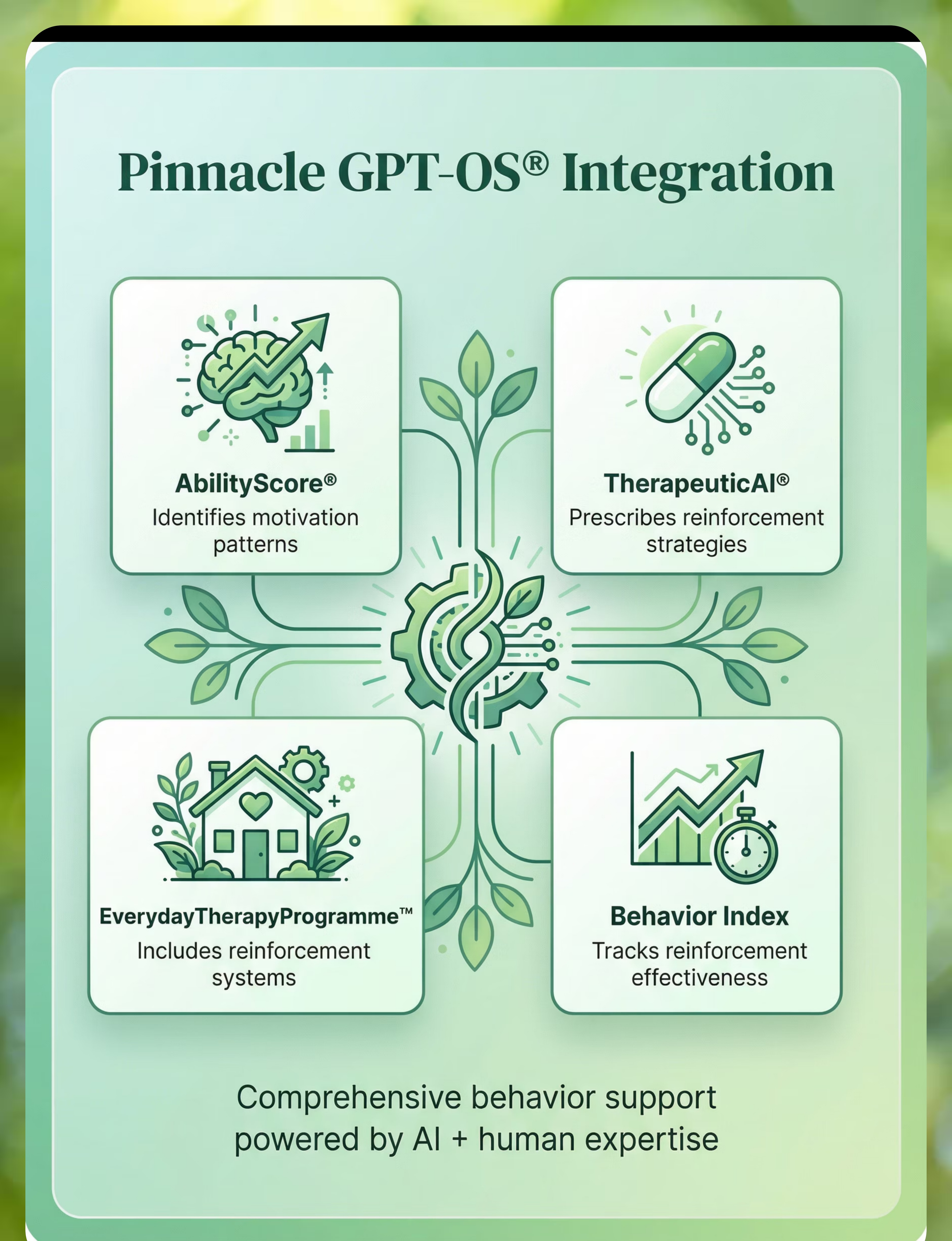
Platform Integration
AbilityScore® identifies your child's motivation patterns and preferences
TherapeuticAI® prescribes personalized reinforcement strategies and fading schedules
EverydayTherapyProgramme™ includes structured reinforcement systems with menu templates
Behavior Index tracks reinforcement effectiveness and guides system adjustments
Disclaimer: This is educational information about evidence-based behavior support tools. Always consult qualified Board Certified Behavior Analysts (BCBAs), occupational therapists, speech-language pathologists, or pediatricians for individualized assessment and intervention planning. Individual results vary. Reinforcement strategies should be implemented as part of a comprehensive, clinically supervised behavior support plan.