









Tool ID: 2.7
Tool ID: 2.7
Rank #1
Strong Evidence
Daily Use
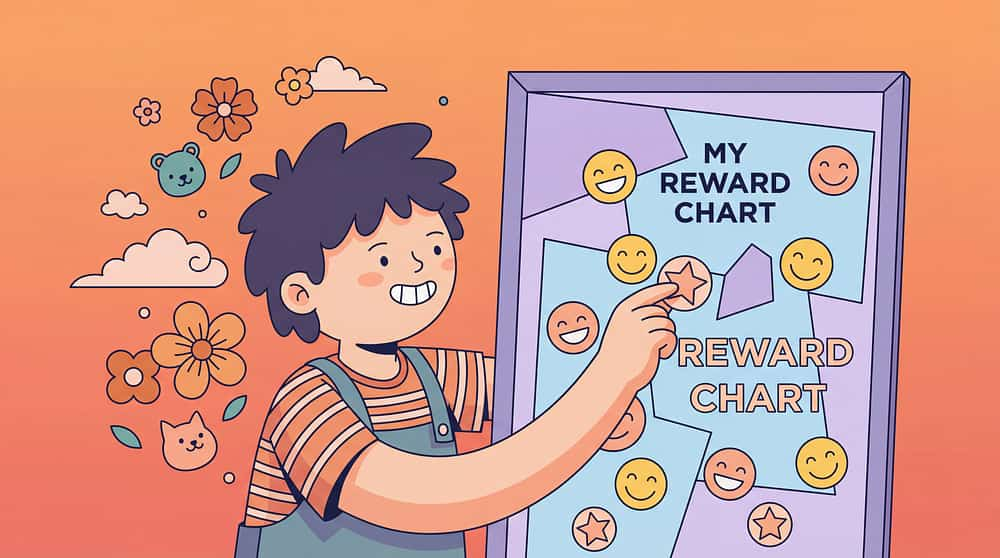
Reward Charts / Token Economy Systems
Positive reinforcement and motivation system
ABA/BCBA
SpEd
Core Kit
₹50-600
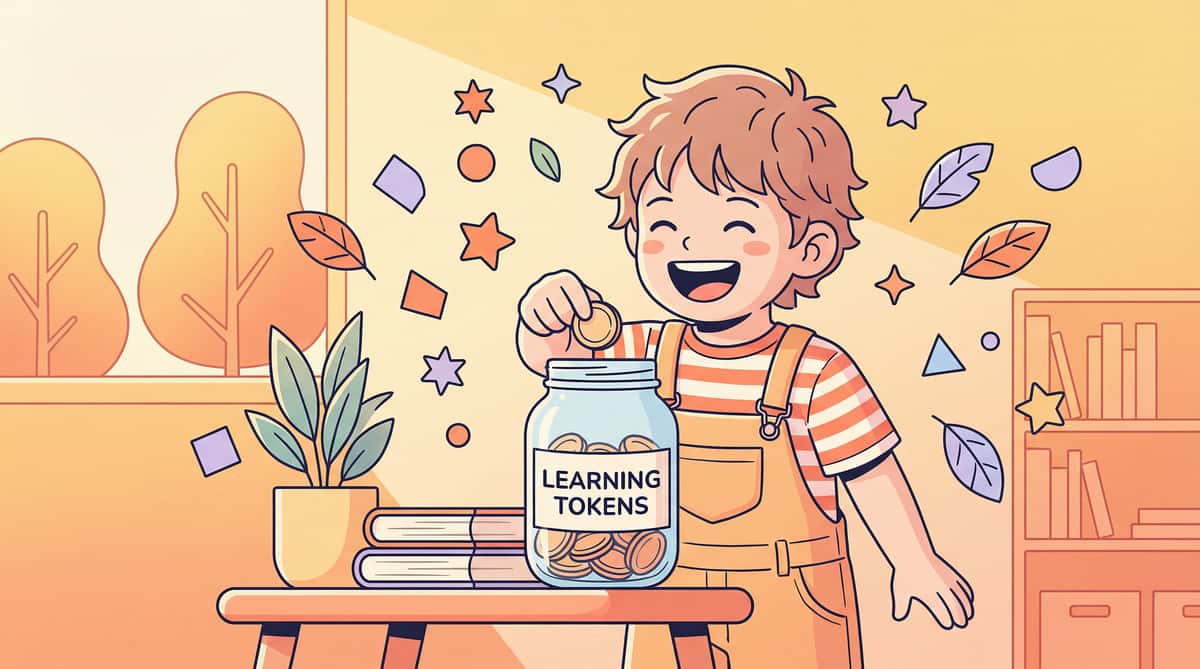
Transform everyday challenges into motivated success with visual positive reinforcement systems that make progress clear, achievable, and rewarding.
Who This Helps
Core Function: Provide visual, systematic positive reinforcement for desired behaviors, transforming abstract expectations into concrete motivating systems that children can see and understand.
Behavior Motivation
Task Completion
Routine Building
Delayed Gratification
Self-Monitoring
Ages 2-9 years
Home
School
Clinic
Outdoors
Children struggling with motivation for daily tasks
When verbal requests and consequences aren't working, visual reinforcement creates immediate, tangible connections between actions and rewards.
Families needing consistent behavior support
Replaces power struggles with collaborative systems where children actively participate in tracking their own success and earning meaningful rewards.
Children building new habits and routines
Makes abstract goals concrete and achievable, breaking down complex behaviors into manageable steps with clear visual progress tracking.
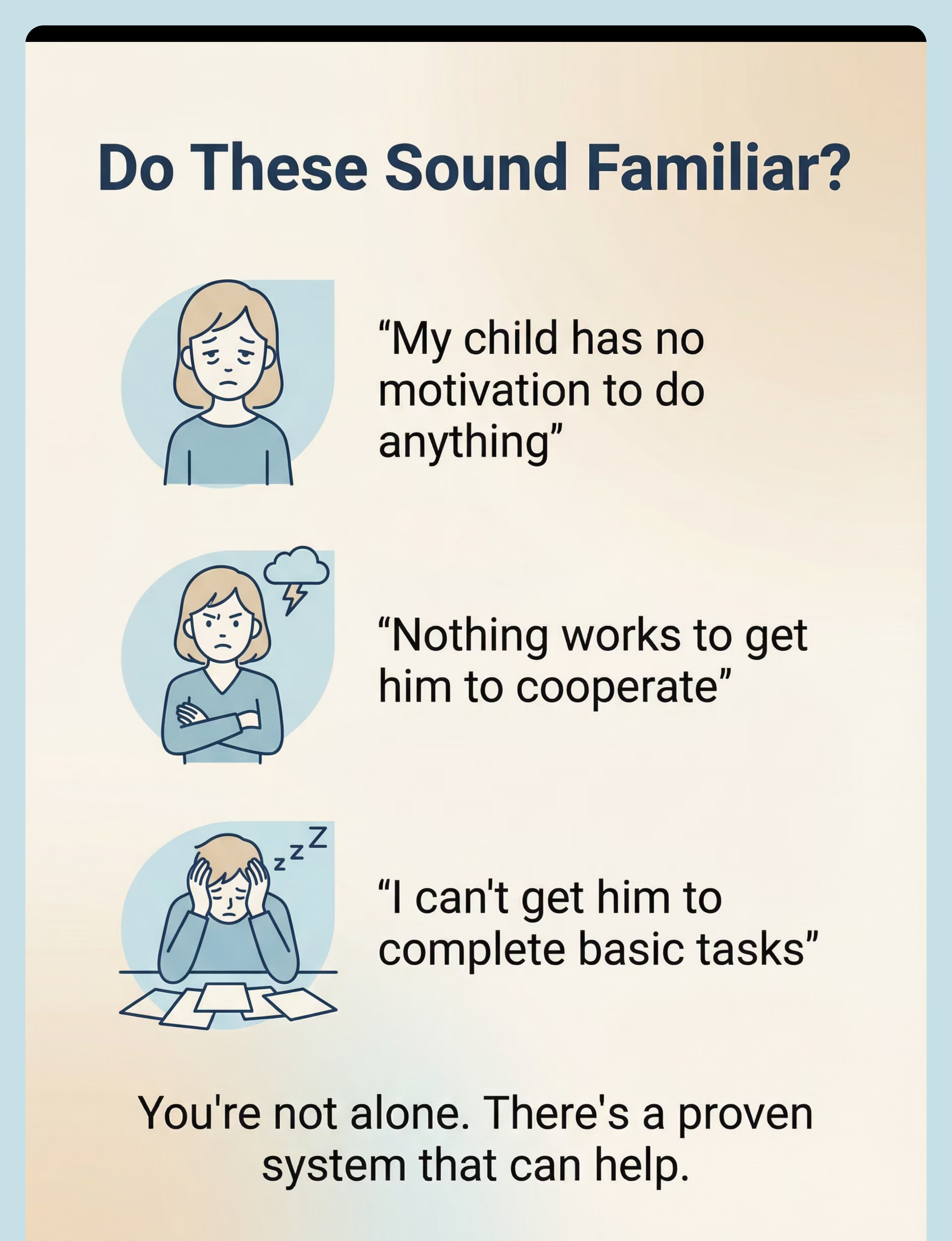
Does This Sound Familiar?
"My child has no motivation to do anything. I feel like I'm constantly pushing and nothing I say makes a difference."
"Nothing works to get him to cooperate. We've tried consequences, rewards, talking—it all feels pointless."
"She doesn't care about consequences. I can take away privileges, and she just shrugs. How do I reach her?"
"I can't get him to complete basic tasks without hours of reminders. Every single day is exhausting."
You're not alone. These are common challenges that thousands of families face every day. The right motivation system can transform these struggles into cooperation and success.
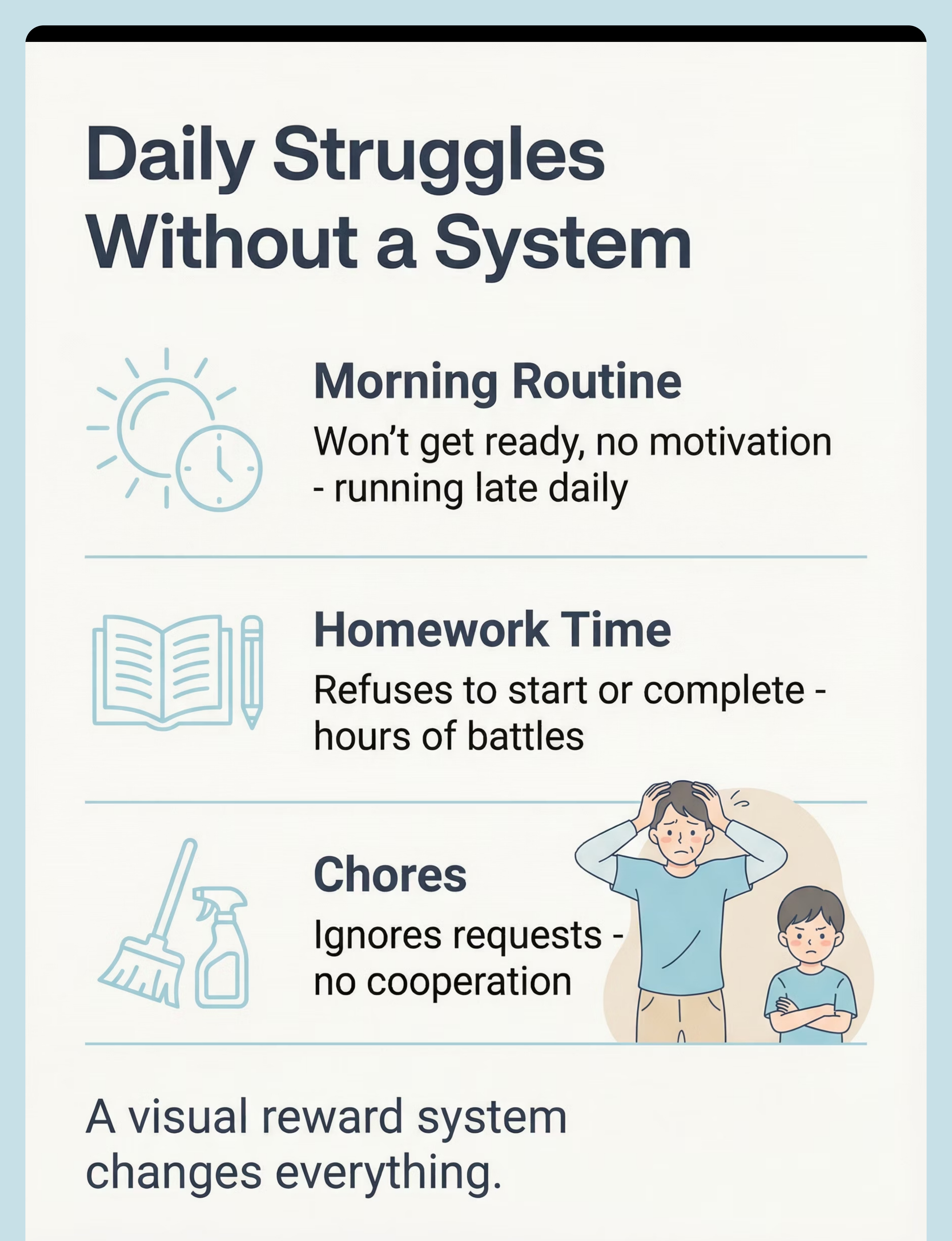
A Day Without the Right Support
Morning
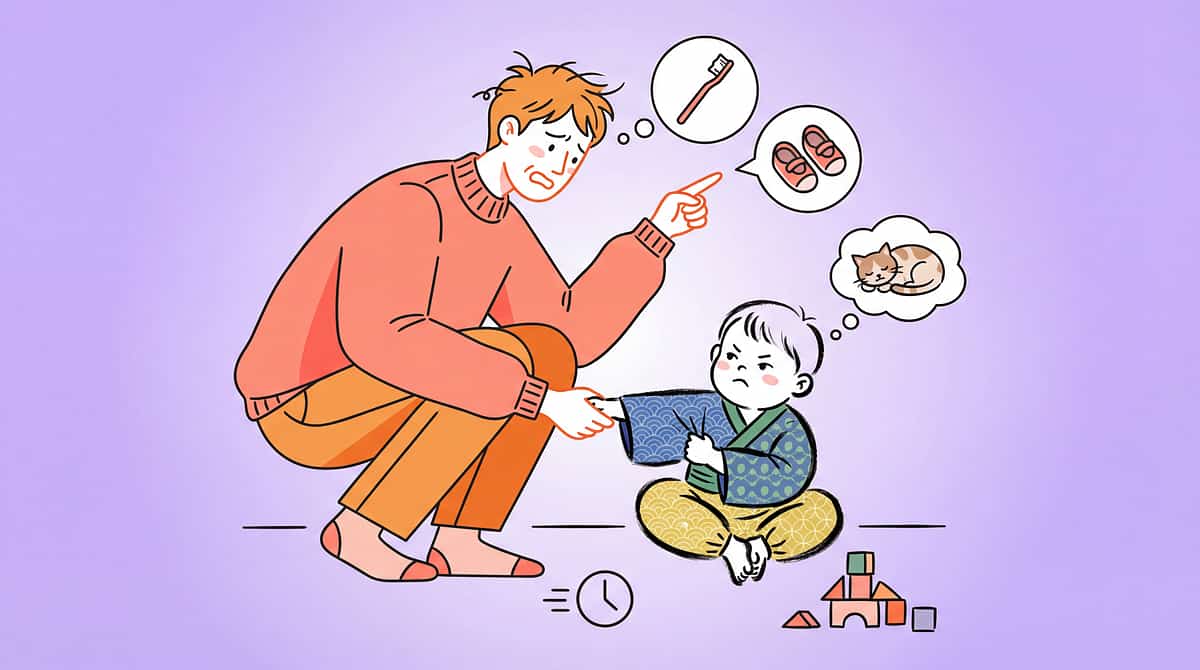
Won't get ready, no motivation. Repeated requests ignored. Running late becomes the norm. Every morning starts with stress and conflict.
Transitions
Moving between activities feels impossible. Resistance at every turn. Simple changes become major battles consuming energy and time.
Therapy/School
Homework and chores go undone. Hours of arguing with no progress. Refusal to start or complete tasks despite constant prompting.
Bedtime
Routines ignored without endless reminders. Exhausted from the day's battles. The cycle continues with no relief in sight.
This daily struggle drains everyone's energy and creates negative patterns that feel impossible to break. But there's a better way.
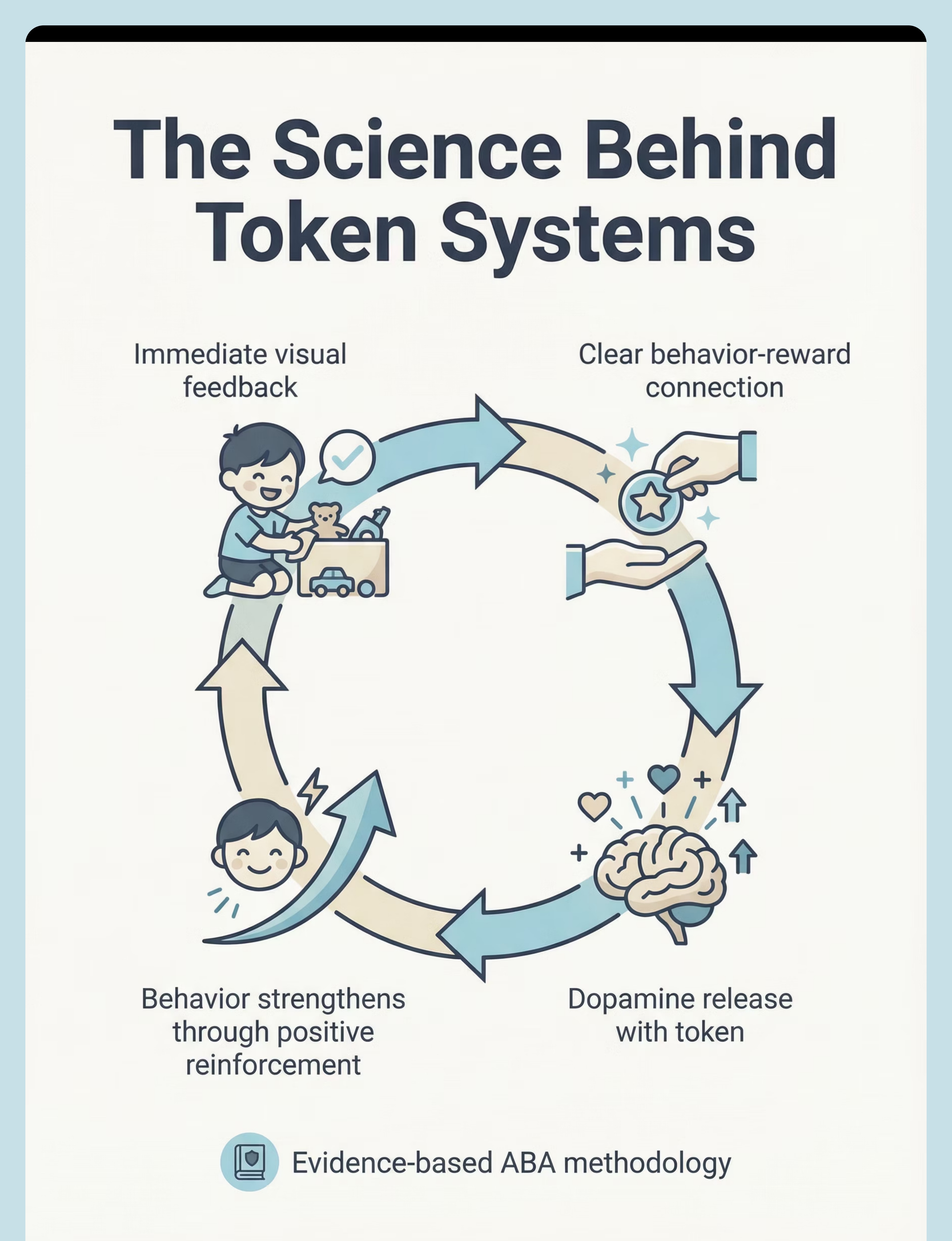
The Science Behind It
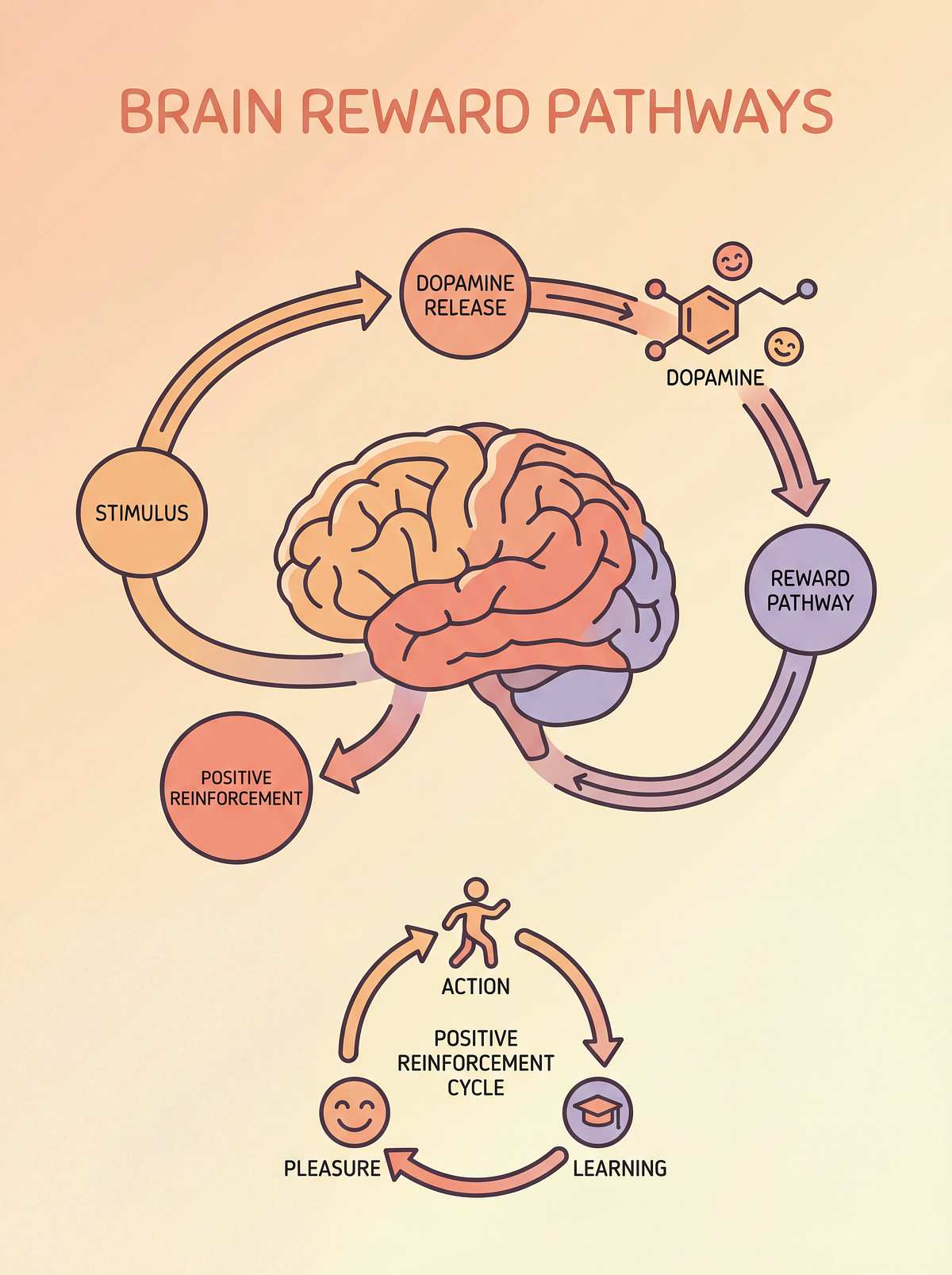
Immediate Visual Feedback
Child sees token or sticker added right away—making the connection crystal clear between action and reward.
Clear Connection Forms
Brain links specific behavior to positive outcome through consistent, immediate reinforcement every single time.
Dopamine Release
Earning tokens triggers feel-good neurochemicals, creating natural motivation and positive associations with desired behaviors.
Motivation Increases
Positive cycle reinforces itself—child wants to earn more, behaviors strengthen naturally through evidence-based reinforcement.
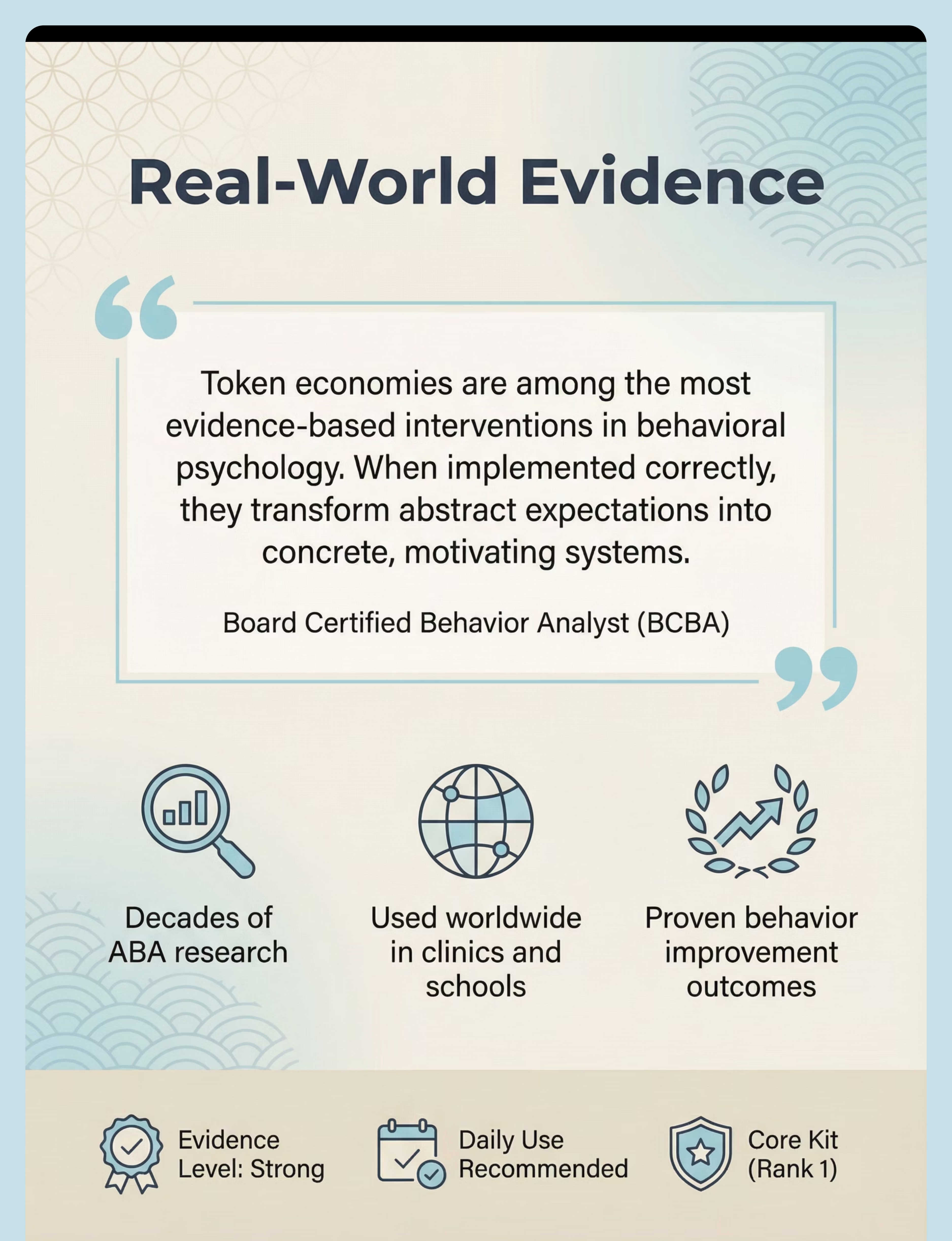
This mechanism is backed by decades of behavioral psychology research. Token economies are among the most evidence-based interventions available, transforming abstract expectations into systems children can understand and engage with naturally.
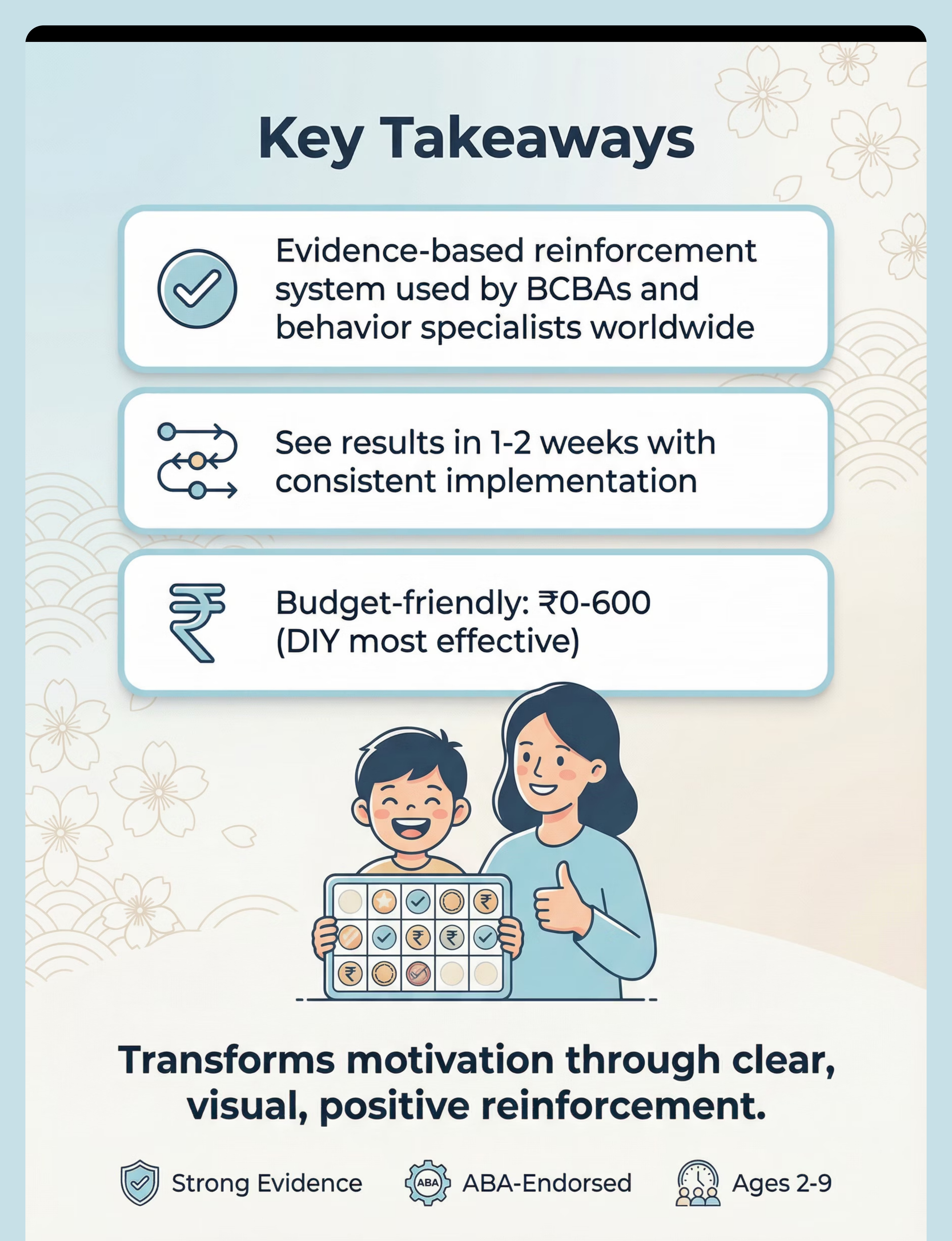
Strong Evidence Base
ABA-Backed
Clinically Proven
reward-charts-token-systems therapy material
How to Use It Right
1
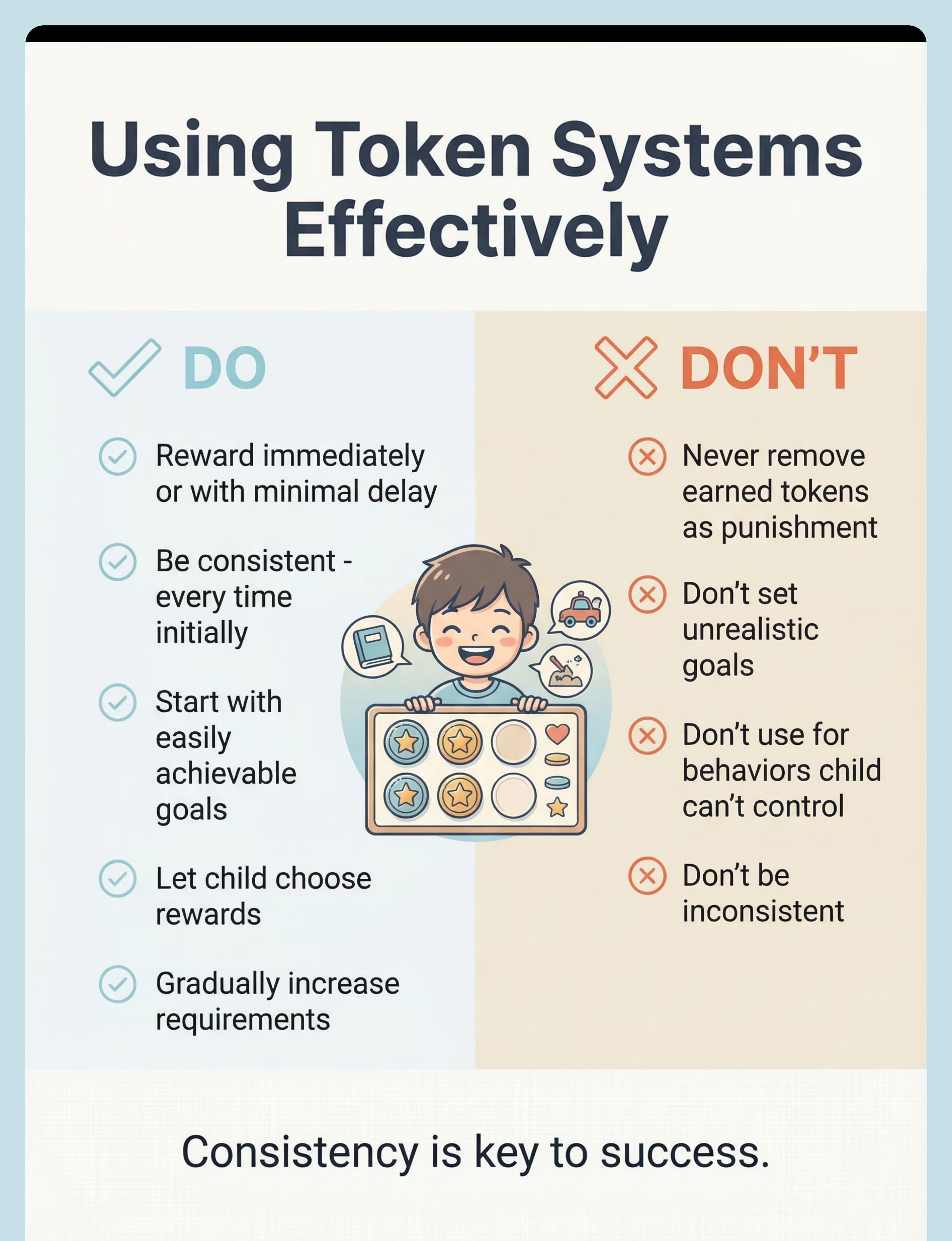
Start with easily achievable goals
Set your child up for success from day one. Choose behaviors they can accomplish with minimal effort at first, building confidence and momentum before increasing difficulty.
2
Reward immediately or with minimal delay
The connection between behavior and reward strengthens when they happen close together. Don't wait hours—immediate feedback makes the system effective.
3
Be consistent—reward EVERY time initially
When starting out, consistency is everything. Every single time your child performs the target behavior, they should earn a token. This builds the foundation.
4
Gradually increase requirements
Once behavior is established at 80-90% success rate, slowly raise the bar. More tokens needed, or harder tasks required—but always at child's pace.
5
Let child choose rewards from menu
Motivation soars when children have agency. Create a reward menu together with options at different token levels, ensuring some are free or low-cost.
6
Never remove earned tokens as punishment
This is a positive reinforcement system, not punishment. Once earned, tokens are owned. Removing them destroys trust and undermines the entire system.

Duration: Use system consistently until behavior becomes established habit, then gradually fade to intermittent reinforcement and eventually natural consequences over 2-3 months.
Expert Endorsement
"Token economies are among the most evidence-based interventions in behavioral psychology. When implemented correctly, they transform abstract expectations into concrete, motivating systems."
— Board Certified Behavior Analyst (BCBA)
reward-charts-token-systems therapy material
ABA/BCBA Recommended
SpEd Recommended
Strong Evidence
Rank #1 in Category
Core Kit Essential
Daily Use
This dual ownership by both behavioral analysts and special education professionals reflects the cross-disciplinary validation and widespread implementation success of token economy systems in diverse settings.
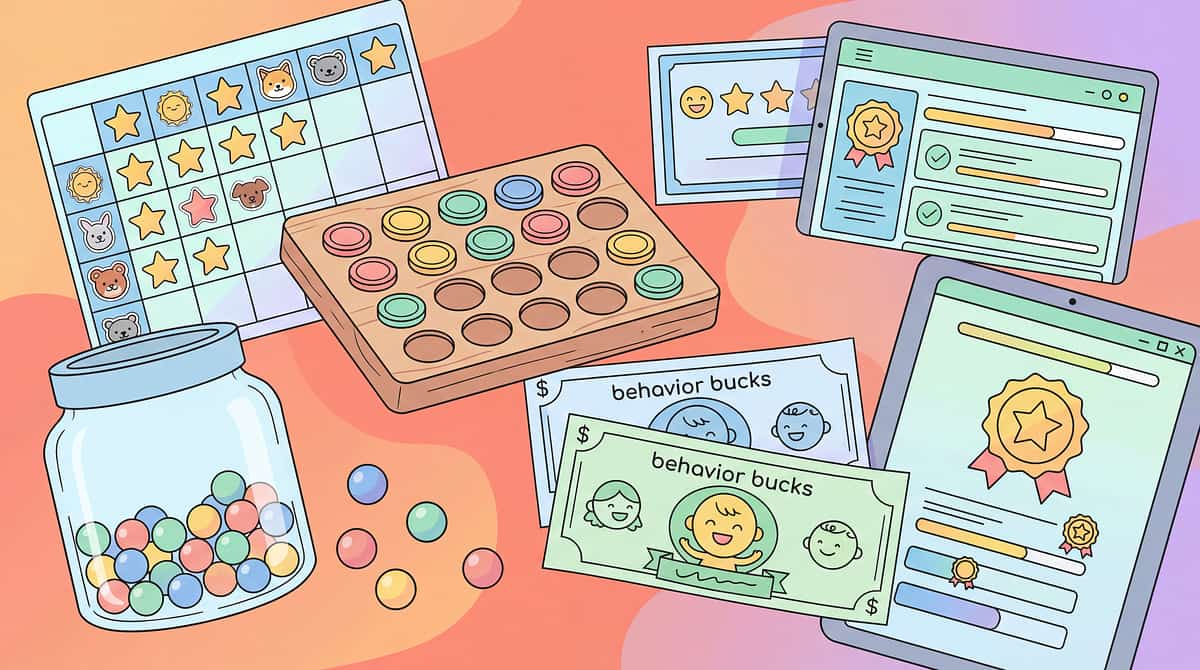
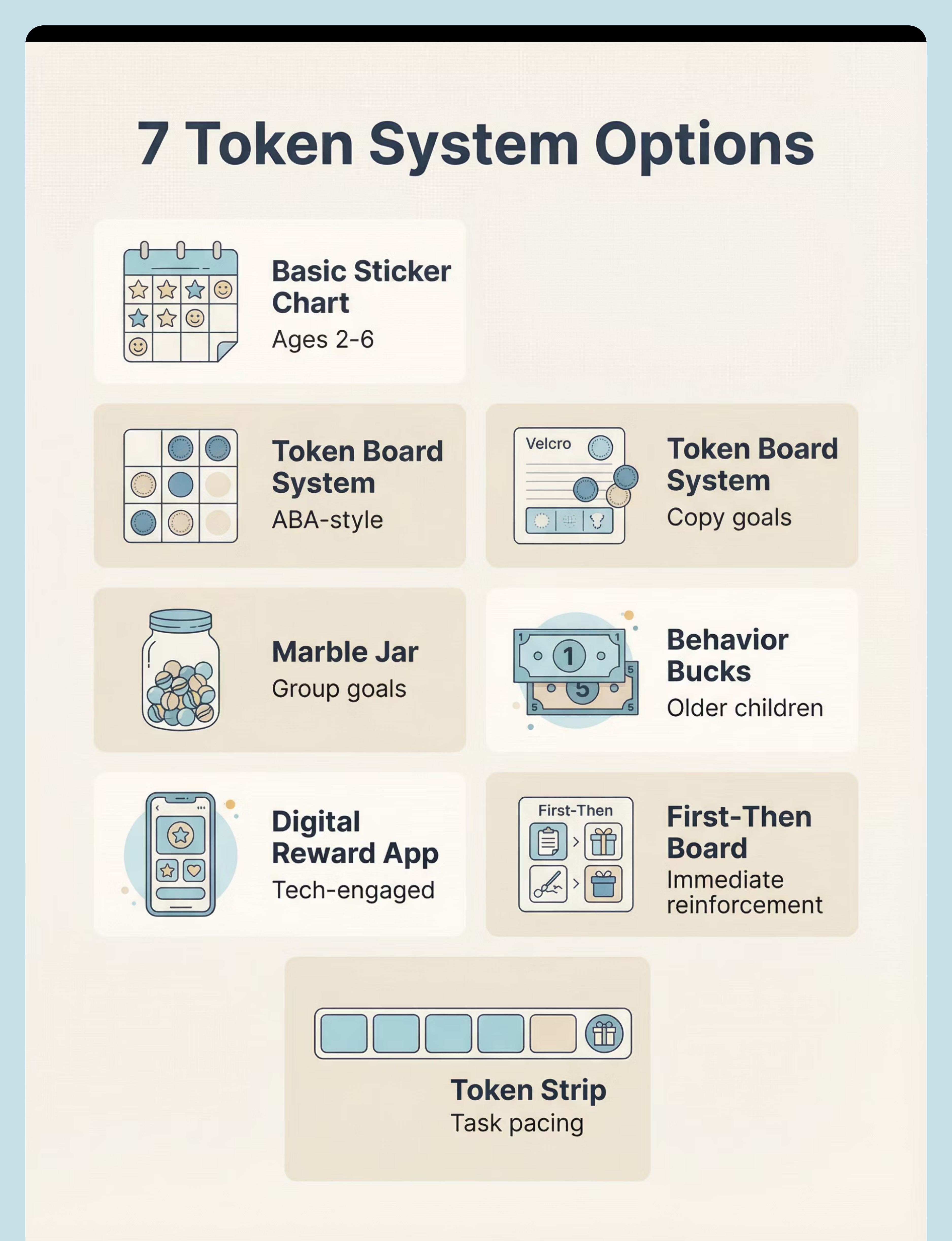
Choose Your Option (7 Variants)
Every child and situation is unique. Select the system that matches your child's age, preferences, and where they'll use it most. All variants follow the same proven behavioral principles—the difference is in format and portability.
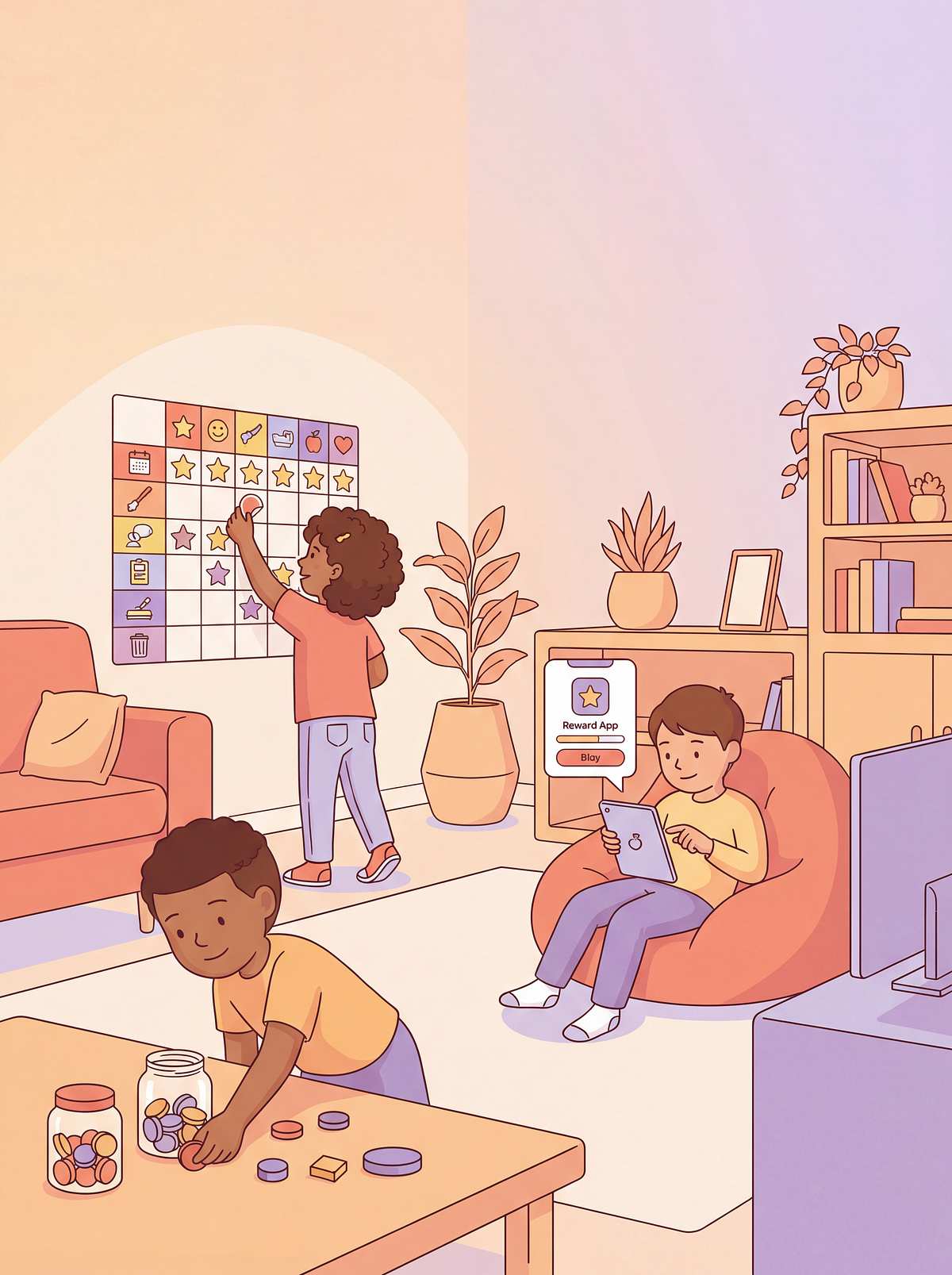
Basic Sticker Chart
Best for: Young children, single behavior focus
Ages: 2-6 years | Settings: Home
Portability: Low | Price: ₹50-200
First-Then Board (with reward)
Best for: Immediate reinforcement, task completion
Ages: 2-8 years | Settings: All
Portability: High | Price: ₹150-400
Marble Jar System
Best for: Family/class-wide, group goals
Ages: 3-9 years | Settings: Home, School
Portability: Low | Price: ₹100-300
Visual Countdown/Token Strip
Best for: Task pacing, clear progress tracking
Ages: 3-9 years | Settings: All
Portability: High | Price: ₹100-300
Token Board System
Best for: ABA-style reinforcement, clear visual system
Ages: 2-9 years | Settings: Home, School, Clinic
Portability: Medium | Price: ₹200-600
Behavior Bucks / Points Card
Best for: Older children, choice in rewards
Ages: 5-9 years | Settings: Home, School
Portability: High | Price: ₹100-400
Digital Reward App
Best for: Tech-engaged, multiple behaviors, portability
Ages: 5-9 years | Settings: All
Portability: Very High | Price: ₹0-500

How to Choose
By Goal: Simple habits → Sticker Chart | Multiple behaviors → Token Board | Group goals → Marble Jar | Independence → Digital App
By Setting: Home only → Sticker/Marble | Multiple settings → Token Board/Strip | On-the-go → Digital/Cards
By Portability: Need to travel → Digital, Cards, or Strips work best
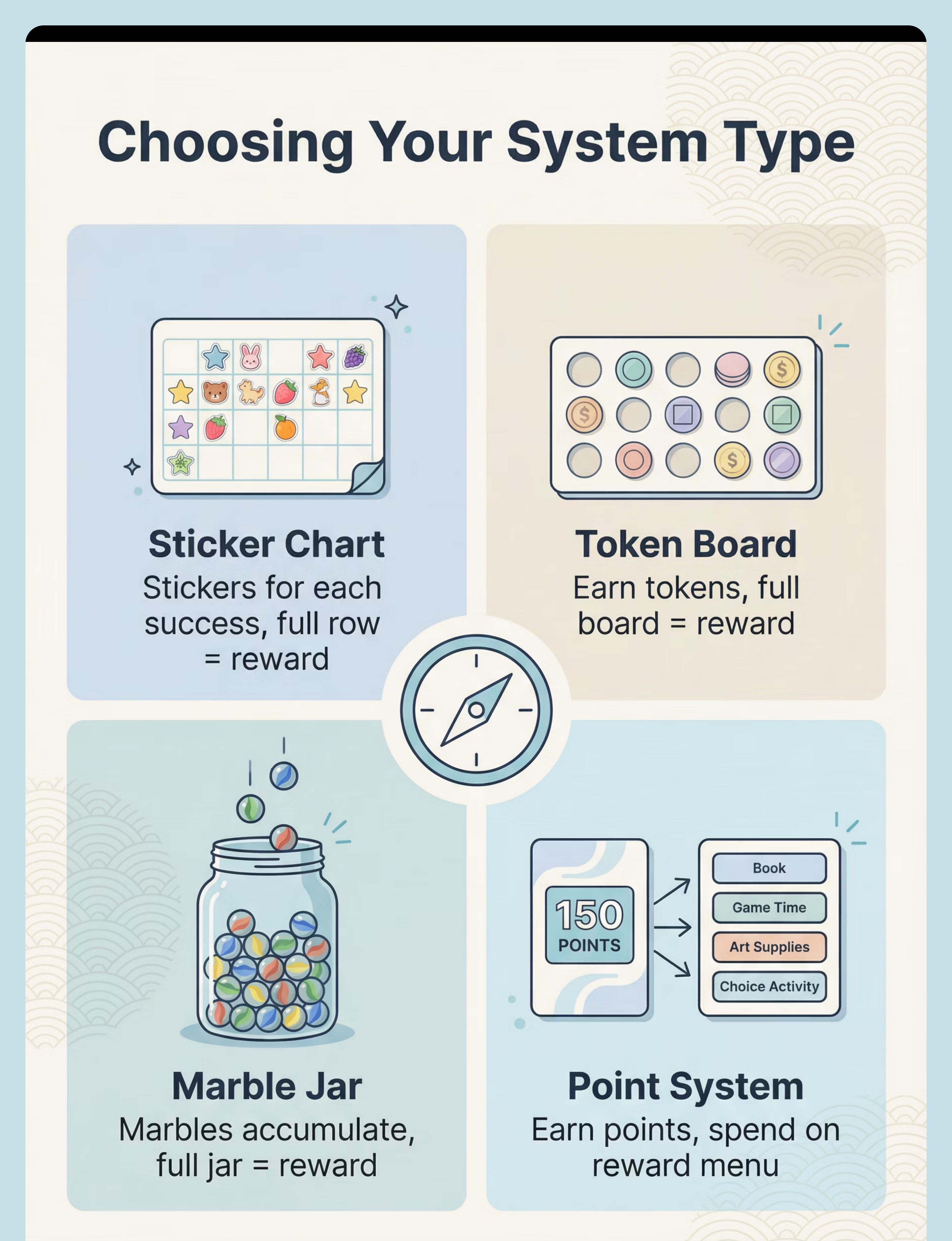
System Types Guide
Sticker Chart
How it works: Child earns stickers for each successful completion of target behavior. When a row or chart is complete, they receive predetermined reward.
Best for: Younger children (2-6 years) who love visual collection and simple tracking of single behaviors or daily routines.
Token Board
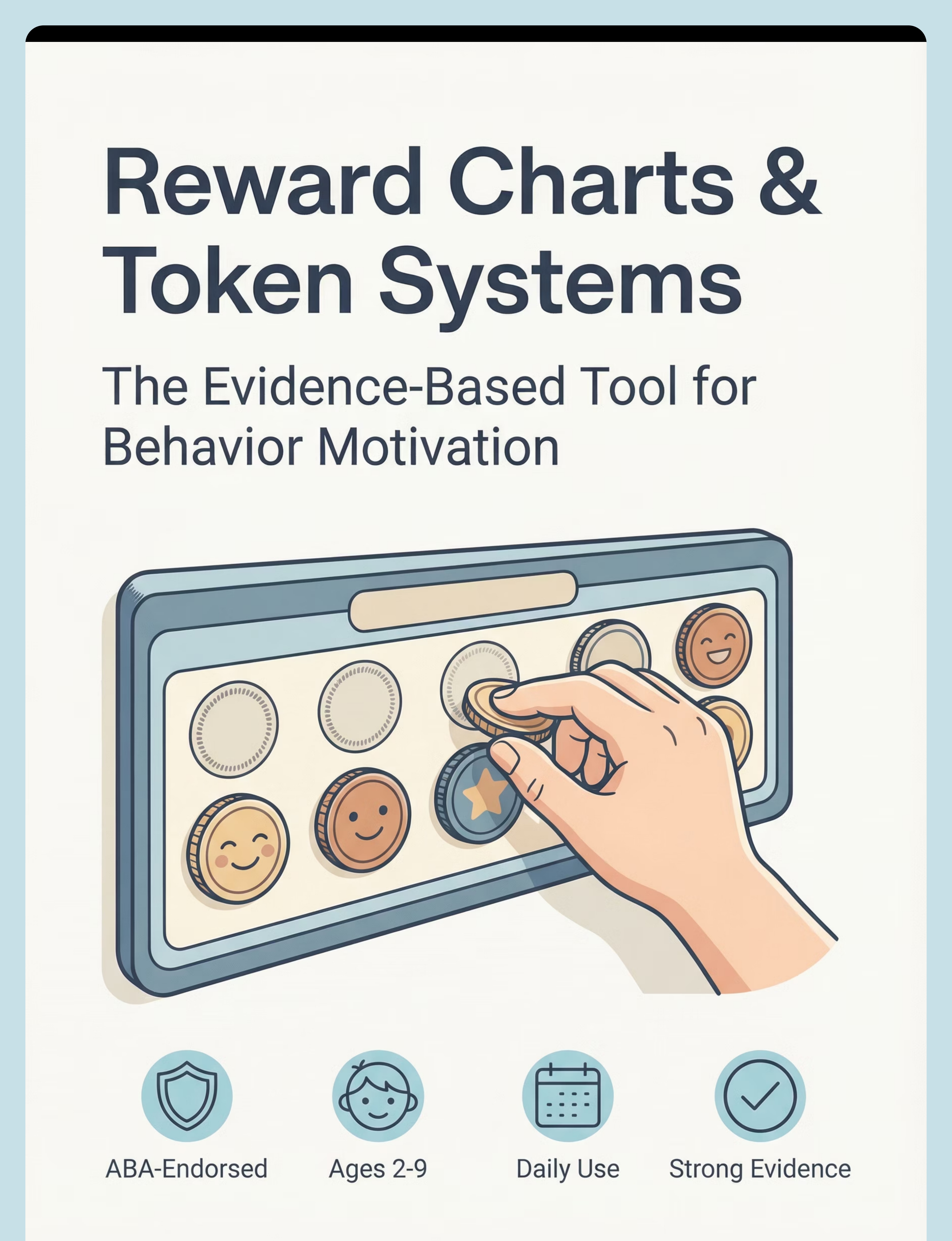
How it works: Child earns physical tokens (coins, velcro pieces) for desired behaviors. When board is full (typically 5 tokens), immediate reward is given.
Best for: ABA therapy settings, children who need clear visual and tactile feedback with immediate reinforcement cycles.
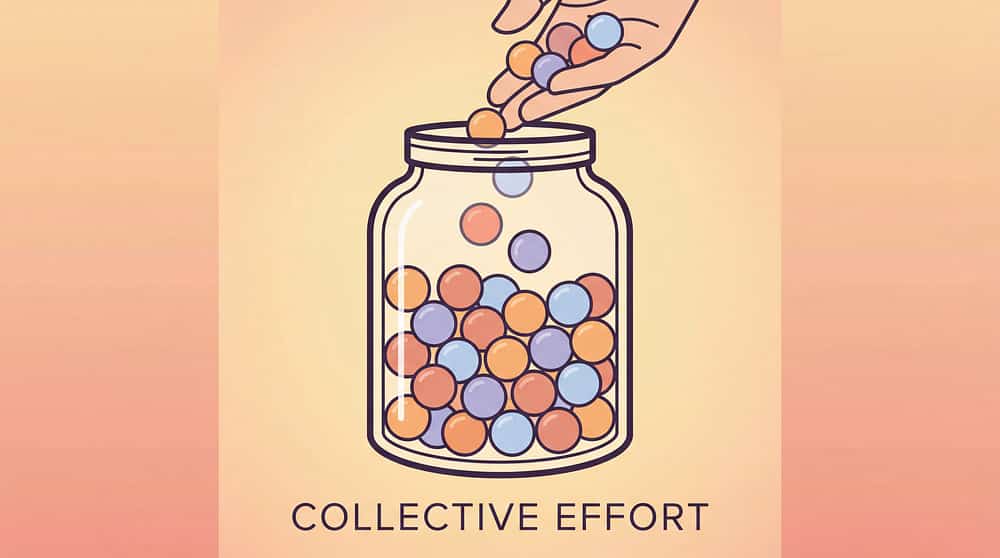
Marble Jar
How it works: Marbles accumulate in clear jar for positive behaviors. Full jar equals family or class reward—great for group motivation.
Best for: Family-wide or classroom goals where collective effort builds toward shared celebration and reward.
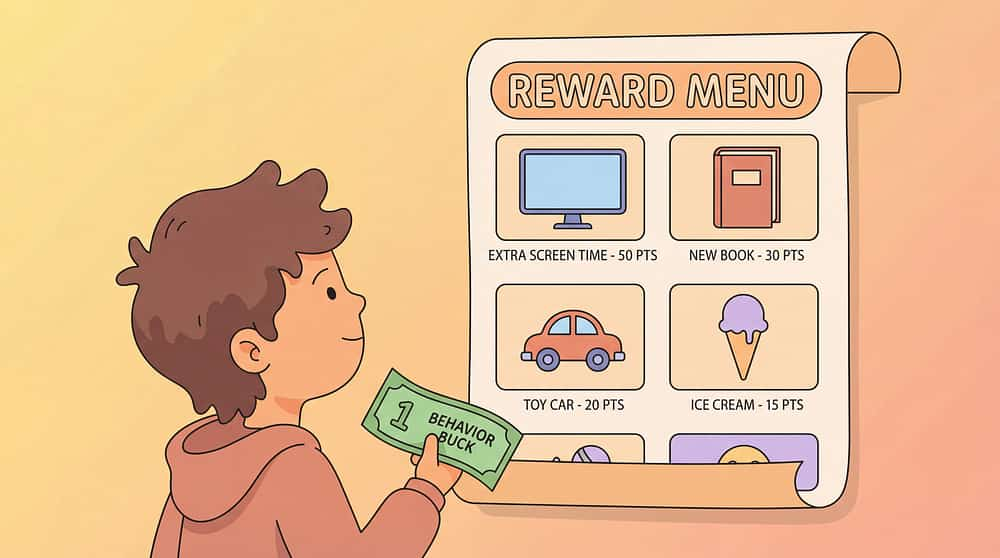
Point System
How it works: Child earns points or currency that can be saved and spent at "reward store" with menu of options at different price points.
Best for: Older children (5-9 years) learning delayed gratification, choice-making, and basic economics concepts.
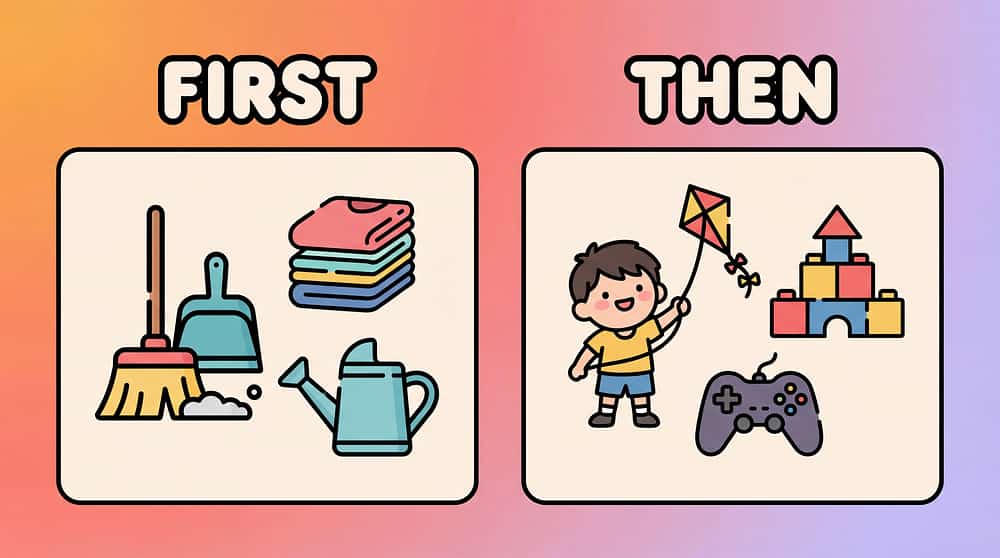
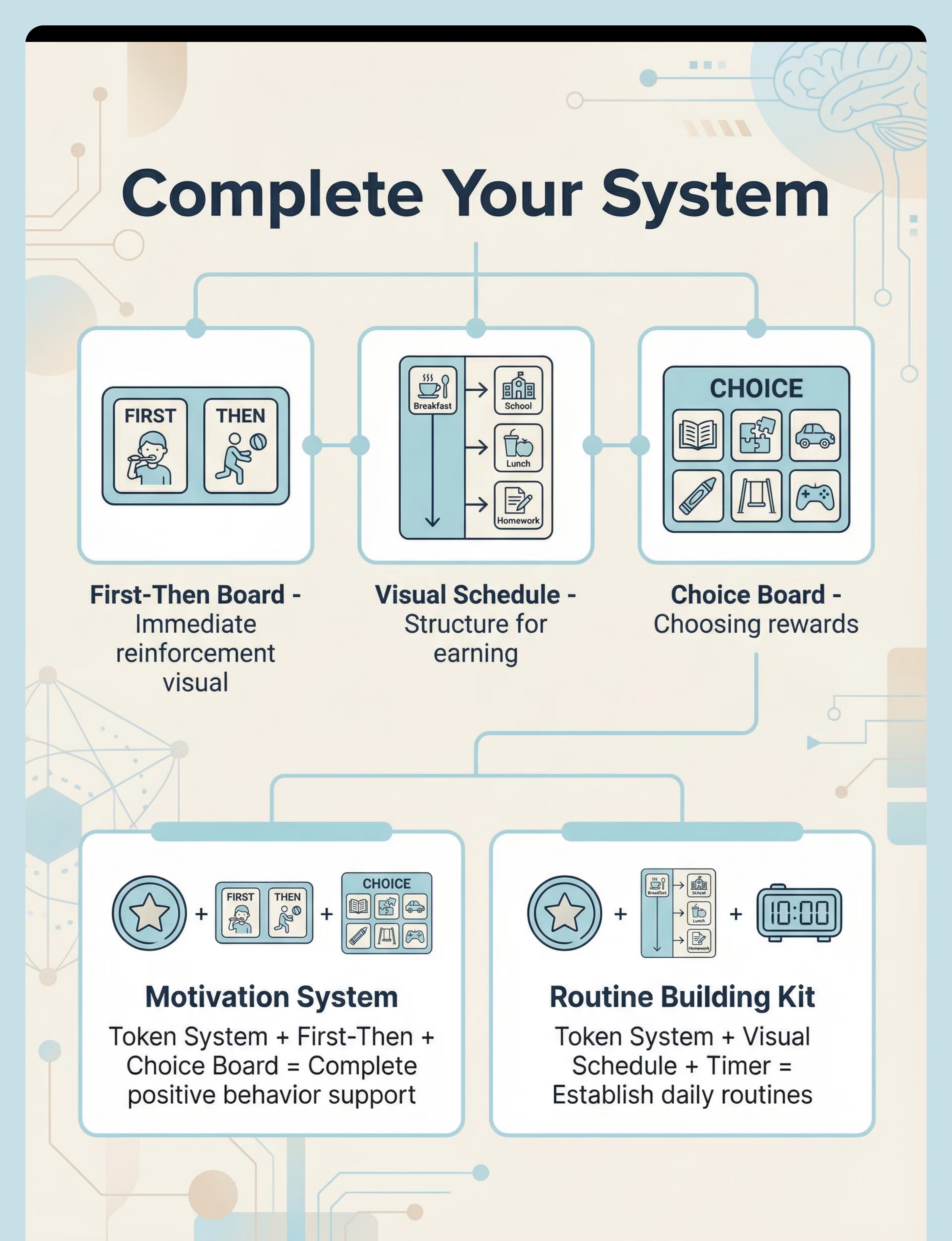
First-Then
How it works: Visual board showing "First [task], Then [reward]"—immediate, simple, and concrete connection between work and reward.
Best for: Immediate task completion, transitions, building compliance in children who need very clear short-term contingencies.
Key Features Across All Systems: Visual tracking that children can see and touch, immediate or minimally delayed feedback, clear achievable goals, customizable reward menus, and requirement for consistent application by all caregivers.
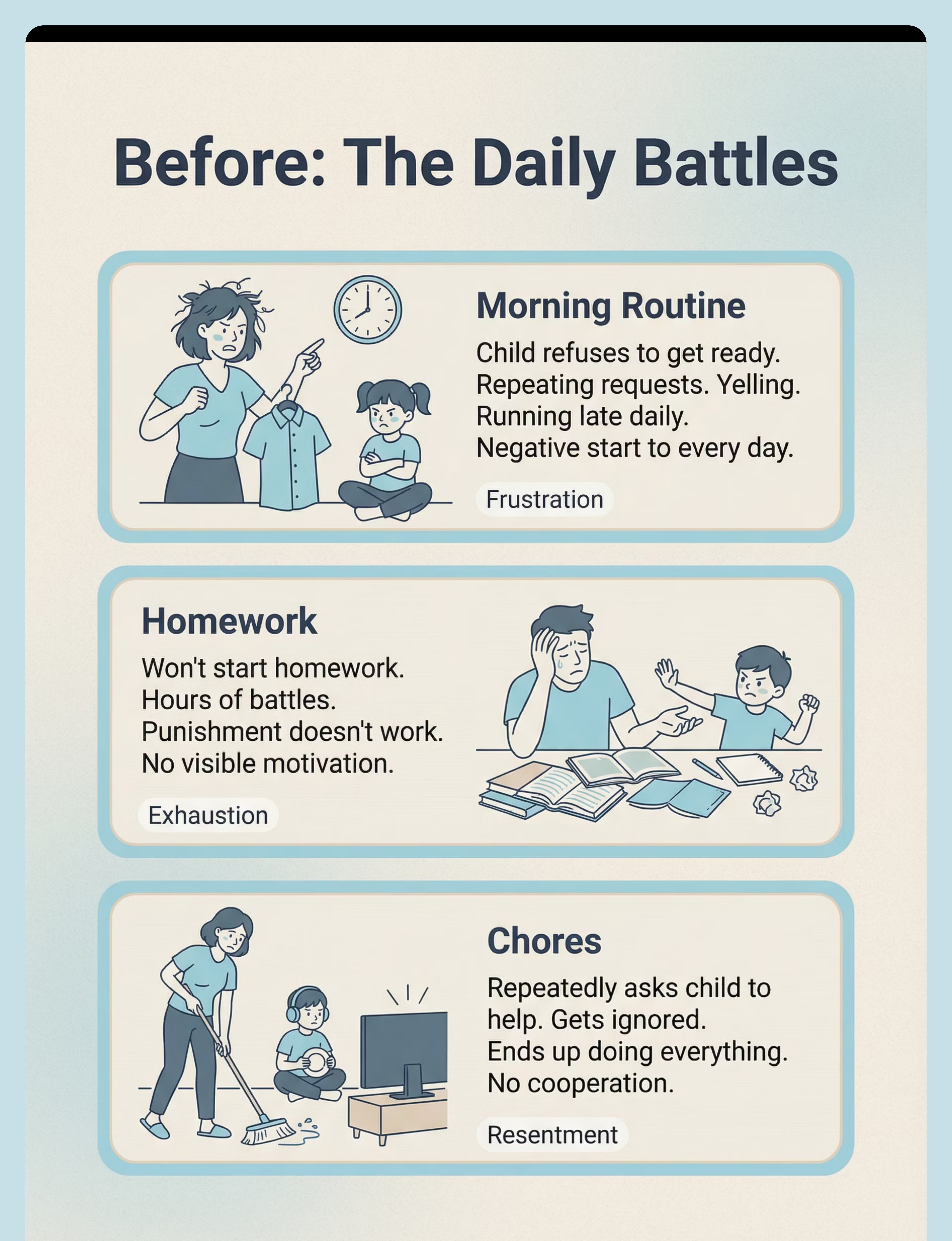
The Struggle (Before)
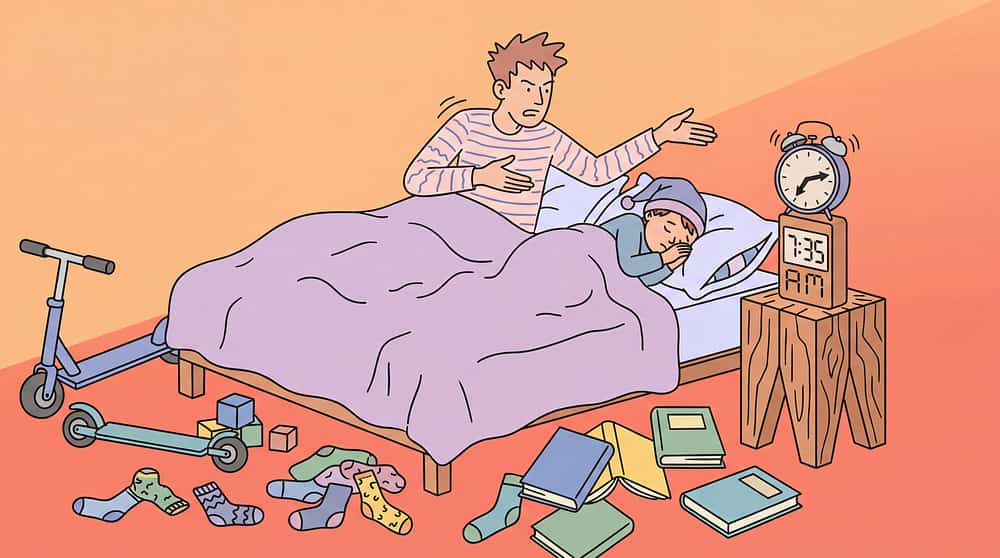
Morning Routine
Situation: Child refuses to get ready for school. Parent repeats requests over and over with increasing frustration. Yelling ensues as clock ticks. Running late becomes daily reality.
Experience: Every morning feels like battle. Parent exhausted before day even begins. Child resistant and oppositional. Negative interactions set tone for entire day.
Emotion: Frustration, exhaustion, hopelessness
Homework Time
Situation: Child won't start homework despite repeated requests. Parent tries everything—asking nicely, consequences, removal of privileges. Nothing works. Hours pass with no progress.
Experience: Homework battles drain everyone. Punishment doesn't motivate. Bribes feel wrong but nothing else works. No internal motivation visible. Cycle of conflict continues.
Emotion: Exhaustion, helplessness, defeat
Household Chores
Situation: Parent asks child to help with simple chores. Child ignores completely. Repeated requests go nowhere. Parent ends up doing everything while child watches or plays.
Experience: No cooperation at all. Feel like live-in maid. Child doesn't contribute to household. Can't teach responsibility because requests fall on deaf ears.
Emotion: Resentment, burden, isolation
These scenarios create negative cycles where relationships suffer, child's self-esteem drops, and parents feel like failures. But transformation is absolutely possible with the right system.
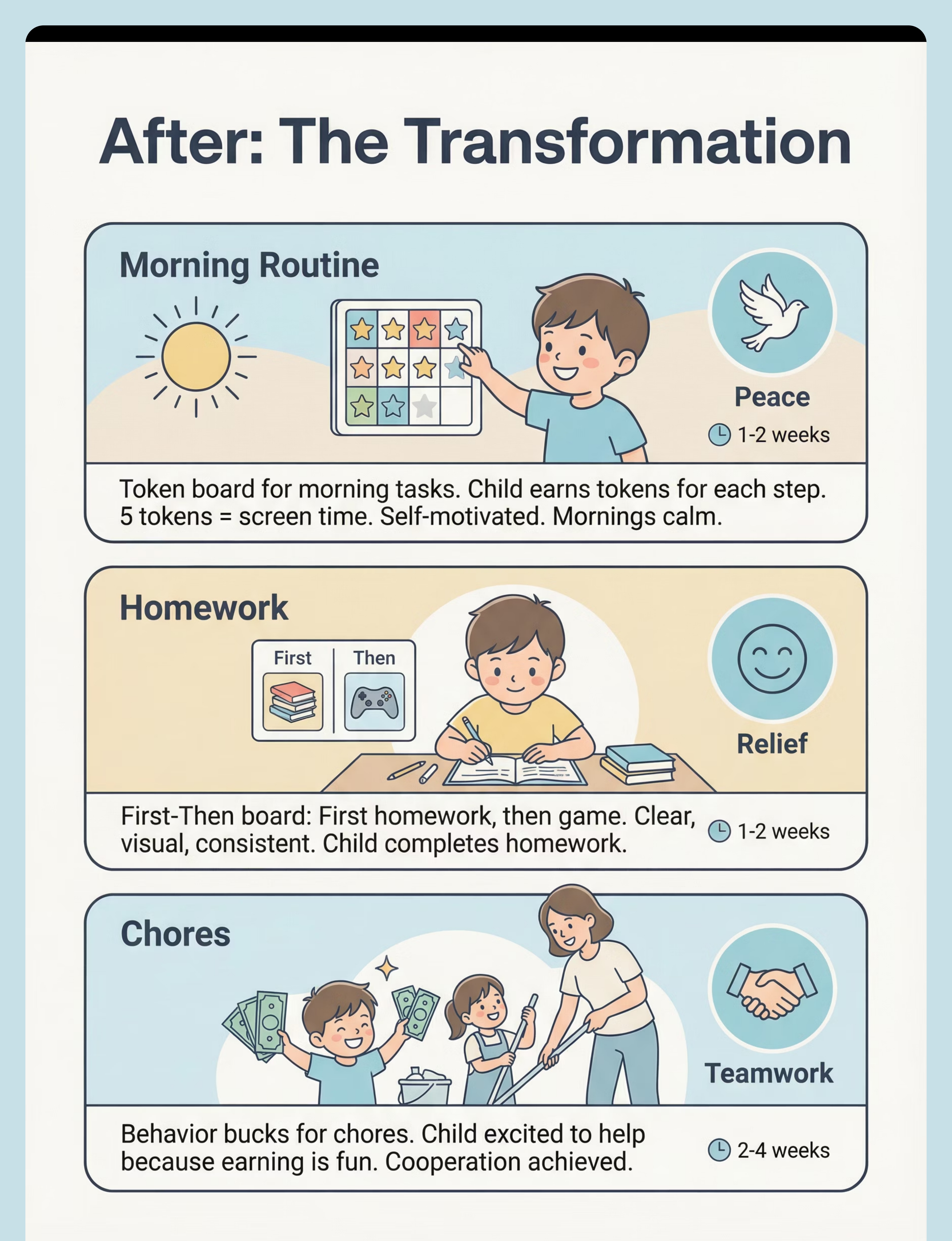
The Breakthrough (After)
Morning Routine
Situation: Token board hung at child's eye level with morning tasks listed clearly. Child earns one token for each completed step—getting dressed, brushing teeth, eating breakfast, putting on shoes.
Experience: Five tokens earned means extra 15 minutes screen time before school. Child now self-motivated, checking own board. Mornings calm and positive. Everyone leaves house on time with smiles.
Emotion: Peace, success, pride | Timeframe: 1-2 weeks
Homework Time
Situation: First-Then board introduced with crystal clear visual: "First homework, Then game time." No arguments, no negotiations. Rule is simple and visual.
Experience: Child knows exactly what to expect. Completes homework to earn reward. No more battles or power struggles. System consistent and fair. Child develops homework routine naturally.
Emotion: Relief, progress, hope | Timeframe: 1-2 weeks
Household Chores
Situation: Behavior bucks system implemented. Each chore completed earns bucks. Child saves up to "purchase" rewards from menu—movie night choice, special dessert, small toy, extra park time.
Experience: Child actually excited to help because earning is fun. Asks what chores are available. Cooperation achieved. Family teamwork restored. Child learns value of contribution and delayed gratification.
Emotion: Teamwork, pride, connection | Timeframe: 2-4 weeks
These aren't fantasy scenarios—they're typical results when token systems are implemented correctly with consistency, achievable goals, and meaningful rewards that children actually want to earn.
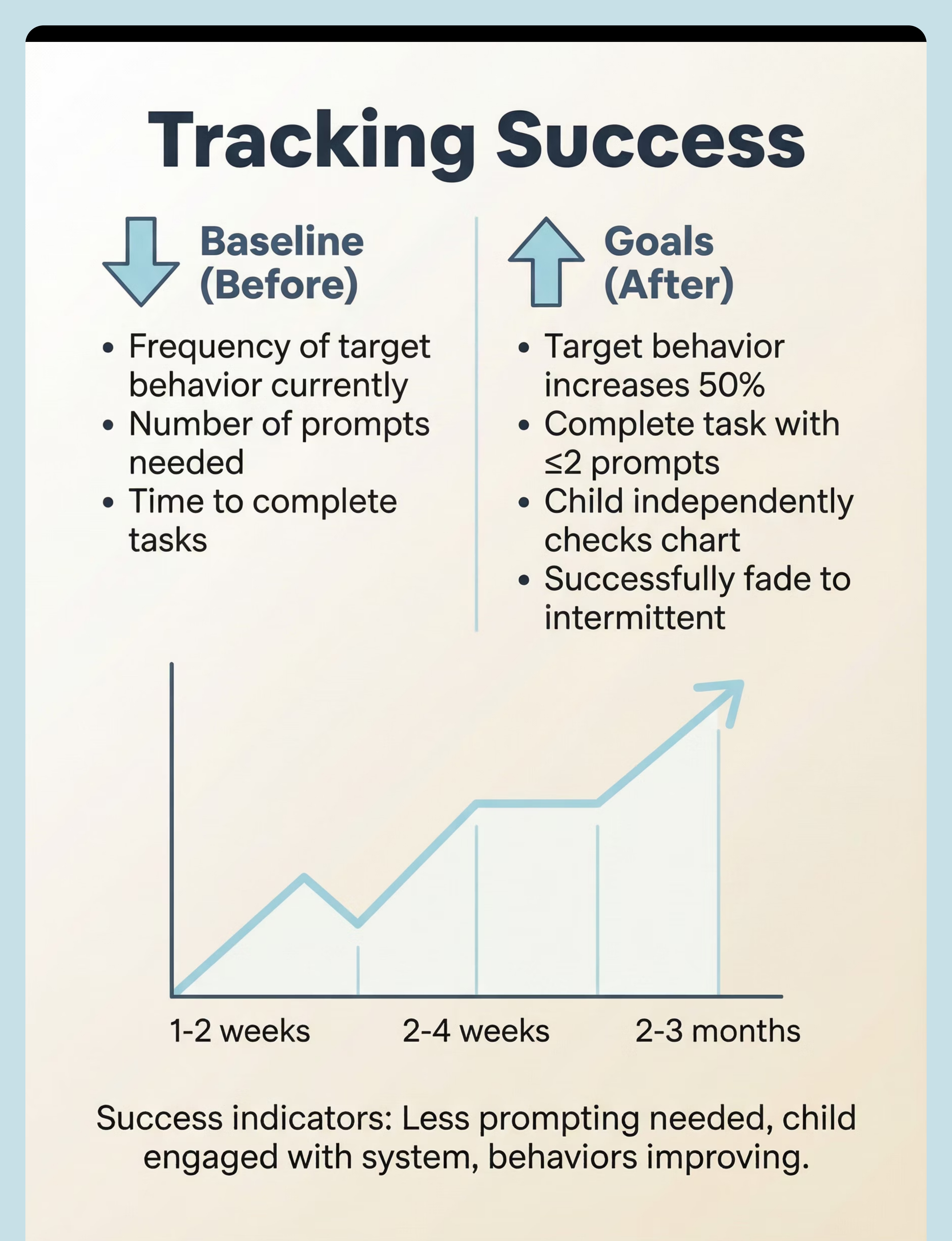
What to Expect (Realistic Timelines)
Clear motivation system established
Child understands how system works and what they're working toward. Visual tracking makes expectations concrete instead of abstract.
Immediate
Reduced need for verbal prompting
Chart replaces nagging. Child checks own progress and knows what comes next without constant parental reminders.
1-2 weeks
Child self-monitors with visual system
Takes ownership of tracking. Asks to add tokens. Counts how many more needed. Active participant rather than passive recipient.
2-4 weeks
Behaviors improve with consistent reinforcement
Target behaviors increase in frequency and require less effort. New habits forming through positive associations and motivation.
2-4 weeks
Child develops internal motivation (gradual fading)
As behaviors become habits, system can be gradually faded. Internal motivation develops through success experiences and pride in accomplishments.
2-3 months
Positive interactions replace power struggles
Family dynamics shift from conflict to cooperation. Parent-child relationship strengthens through shared success and positive reinforcement cycles.
1-2 weeks

Important: These timelines assume consistent implementation with appropriate goals and motivating rewards. Individual results vary based on child's age, baseline behavior, and family consistency. The key is staying the course through the initial adjustment period.
Is This Right for My Child? (2-Minute Check)
"Does your child struggle with motivation for non-preferred tasks?"
If yes, this indicates: Token system will help by making motivation external and visual until internal motivation develops naturally through success experiences.
Confidence Score: 92%
"Does your child respond well to earning rewards?"
If yes, this indicates: Good candidate for token economy—child already understands reward concept and will engage enthusiastically with structured earning system.
Confidence Score: 95%
"Do verbal requests and consequences not work well?"
If yes, this indicates: Visual reinforcement system needed—child requires different approach than verbal prompting. Token system provides concrete alternative.
Confidence Score: 88%
"Would your child benefit from immediate, visual feedback?"
If yes, this indicates: Token system appropriate—visual learners thrive with systems they can see and touch. Immediate feedback strengthens behavior connections.
Confidence Score: 90%
Interpretation: Three or more "yes" answers indicate strong fit for token economy system. Even one or two "yes" answers suggest the system could provide meaningful support when implemented correctly.
Common Questions (Honest Answers)
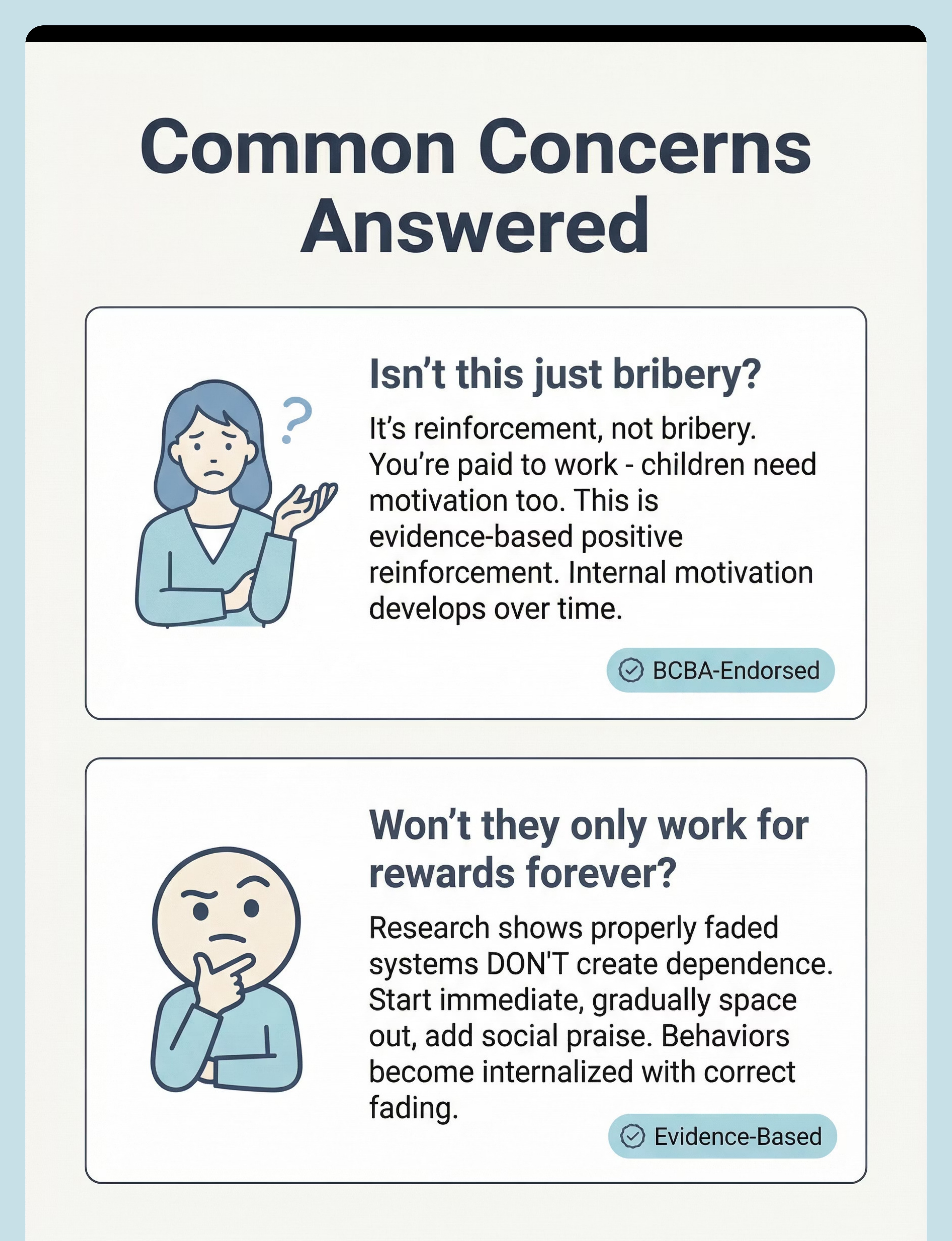
"I shouldn't have to bribe my child to behave"
Response: It's not bribery—it's reinforcement, and there's a critical difference. You're paid to work; children need motivation too. This is teaching through positive reinforcement, the most evidence-based behavior approach available. Internal motivation develops over time through repeated success experiences.
Try this: Fade rewards gradually as behavior becomes habit. Start immediate, move to intermittent, then to natural social praise and consequences over 2-3 months.
"We tried sticker charts and they didn't work"
Response: Most failed charts have common issues: goals too hard, rewards not motivating to child, inconsistent implementation by different caregivers, or delayed reward delivery. Troubleshoot these specific elements. Start easier, reward immediately every time, ensure child actively chooses what they're working for.
Try this: Reset with correct implementation principles—make first goal ridiculously easy (child will succeed first day), reward immediately, and be 100% consistent for at least 2 weeks.
"Won't this make them only work for rewards forever?"
Response: Research shows properly faded token systems don't create dependence—they build habits. Start with immediate rewards, gradually space them out, add social praise alongside tokens, and behaviors become internalized. The goal is always to fade to natural consequences and internal motivation.
Try this: Build fading plan into system from the start. Write down your 3-month plan: Month 1 immediate, Month 2 intermittent, Month 3 fading toward natural.
"It seems too complicated"
Response: Start simple—don't overcomplicate. Use First-Then board with ONE task and ONE reward. "First brush teeth, then game." That's it. Visual, simple, immediate. Add complexity only after child succeeds with basics. You can always expand later.
Try this: Use the simplest version first. Master one behavior with simple system before adding multiple goals or complex tracking.
Usage Guide
reward-charts-token-systems therapy material
When to Use
  • Daily for target behaviors and established routines
  • For non-preferred tasks child resists consistently
  • When verbal motivation and requests aren't working
  • Building new habits from ground up
  • Addressing specific behavior goals identified by therapist
  • During transitions or routine changes
When NOT to Use
  • As punishment system (only positive reinforcement)
  • With inconsistent implementation across caregivers
  • For behaviors child genuinely can't control
  • When goals are unrealistic for child's age/ability
  • Without clear reward menu child helped create
  • When you can't commit to consistent follow-through
Supervision by Age
Age Range
Supervision Level
Notes
Under 3 years
Adult manages completely
Parent adds all tokens, gives immediate rewards, child just participates
3-6 years
Adult guides, child participates
Child can add own tokens with supervision, counts with help, learns system
6+ years
Child can self-monitor with check-ins
Increasing independence, tracks own progress, parent validates and delivers rewards
Duration: Ongoing until behavior established, then fade (2-3 months typical)
Home
School
Clinic
reward-charts-token-systems therapy material
Safety First
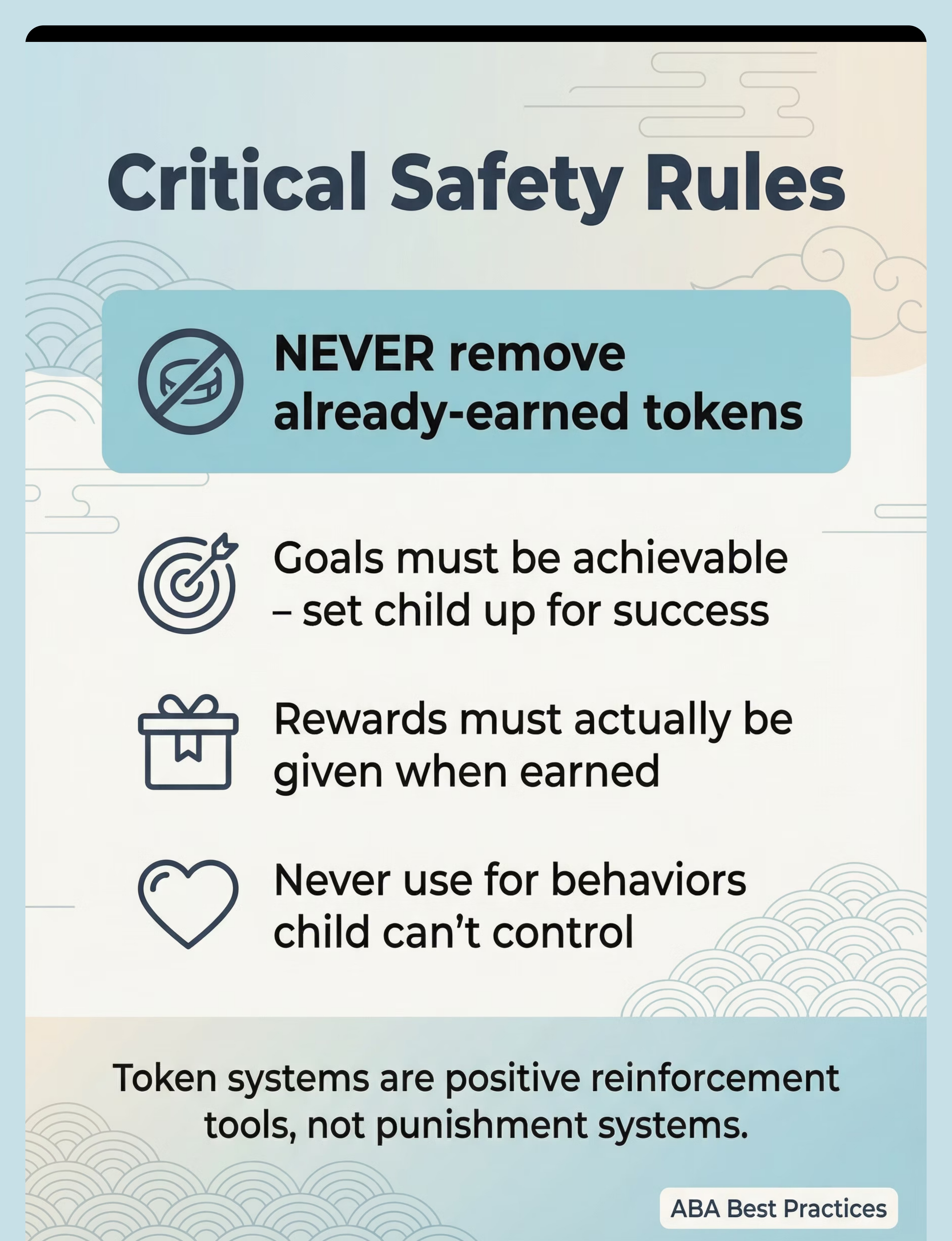
🚨 NEVER remove already-earned tokens
This is positive reinforcement system, not punishment. Once earned, tokens are owned by child. Removing them destroys trust, undermines entire system, and changes it from reinforcement to punishment—which doesn't work for building motivation.
🚨 Goals must be achievable
If goals are too hard, child will fail repeatedly and system collapses. Start ridiculously easy—child should succeed first day. Build difficulty gradually as success rate stays above 80%. Frustration kills motivation faster than anything.
🚨 Rewards must actually be given when earned
Every single time child meets criteria, reward must be delivered as promised. Inconsistency or delayed rewards break the behavioral contingency. If you promise reward and don't deliver, system loses all power and child loses trust.
🚨 Never use for behaviors child can't control
Don't reward for not having meltdowns, not stimming, not being anxious. These aren't choices. Only use token systems for behaviors child can voluntarily control—task completion, following instructions, trying new things.
⚠️ Inconsistency will undermine system
All caregivers must implement identically. If mom gives tokens but dad doesn't, or school follows through but home doesn't, system fails. Have family meeting, agree on rules, post them clearly.
⚠️ Rewards that are too delayed lose effectiveness
Younger children especially need immediate rewards. If gap between earning last token and getting reward is more than few minutes, connection weakens. Start immediate, gradually extend delay as child matures.
⚠️ Watch for child becoming anxious about earning
If child shows stress about not earning enough, goals may be too hard or stakes too high. System should feel motivating and fun, never anxiety-provoking. Adjust difficulty or reward frequency immediately.
Safety Checklist
Before Use
  • Goals are clear and achievable for child's level
  • Rewards are motivating to child (not adult assumptions)
  • System is visual and accessible at child's eye level
  • Family/team is on same page with implementation
  • Child helped choose rewards from menu
During Use
  • Rewarding consistently every time initially
  • Not removing earned tokens for any reason
  • Immediate or minimal delay between earning and reward
  • Praise accompanying token delivery every time
  • Adjusting difficulty as child succeeds

Signs to Stop or Adjust
  • Child shows anxiety or stress about system
  • Success rate drops below 70%
  • Child stops caring about rewards
  • Implementation becomes inconsistent
  • Power struggles increase instead of decrease
Investment Guide
Token systems are among the most cost-effective interventions available. You can implement highly effective systems for under ₹100, with premium options available if preferred. The real investment is consistency, not money.
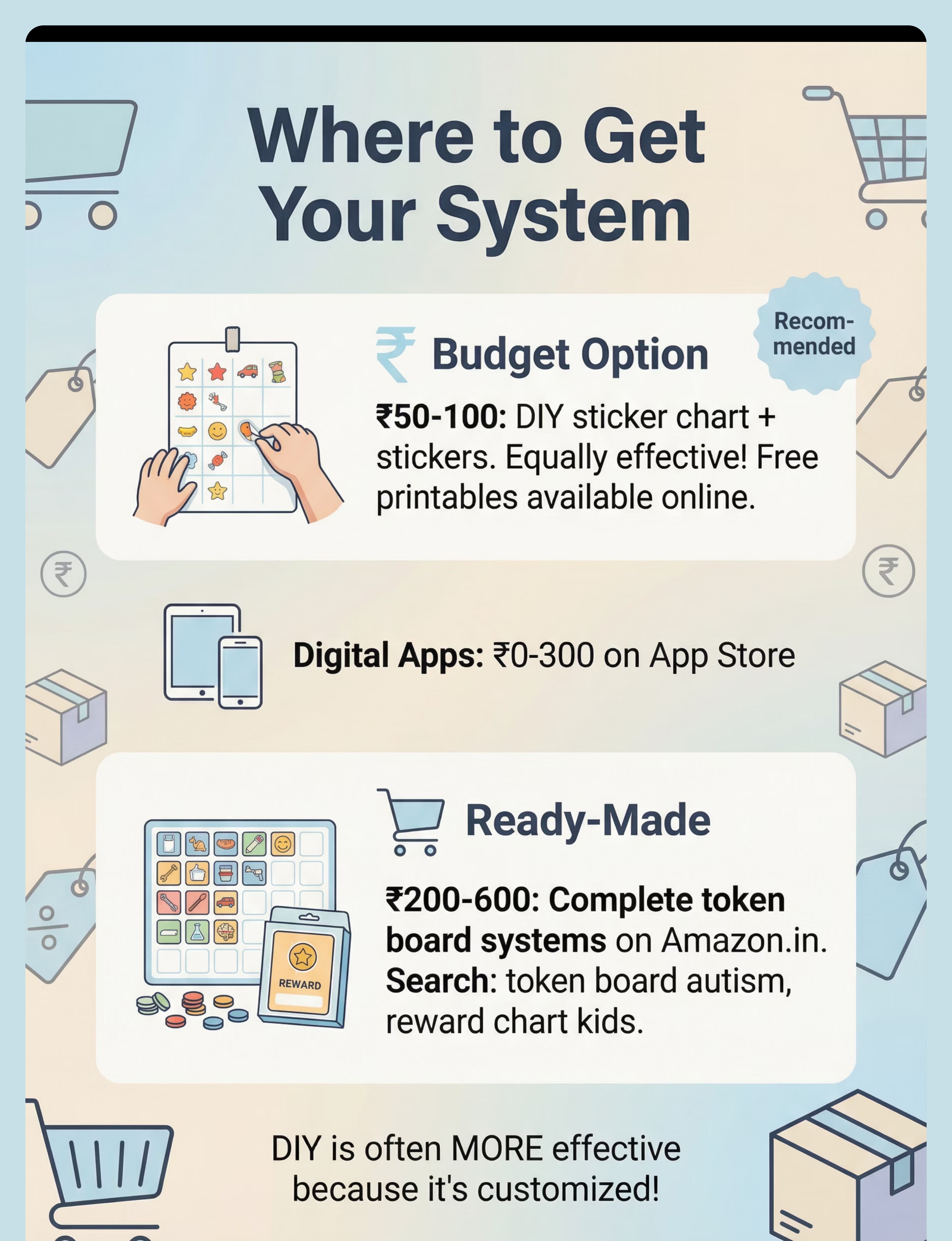
Budget Option
₹50-100
DIY Sticker Chart + Stickers (Printed or hand-drawn chart, packet of stickers)
Equally effective as expensive options when implemented correctly. Many families prefer DIY for customization.
Testing system fit, young children, single behavior goals, full customization.
Premium Option
₹400-800
Complete Token Economy Kit (Durable laminated board, velcro tokens, reward menu cards, behavior tracking, carrying case)
Available from ABA therapy suppliers and special education stores.
Clinic use, multiple children, ready-made professional system, portability needs.
Beyond the monetary cost, consider these key areas of investment for successful token system implementation:
Invest in Consistency
Regular and predictable implementation builds trust and reinforces desired behavior effectively over time.
Invest in Personalization
Tailoring goals and rewards to the individual child's unique interests and developmental stage maximizes engagement and motivation.
Invest in Patience
Behavior change is a process; celebrate small wins, adapt strategies as needed, and understand that progress may not always be linear.
Phase 1: Setup & Pilot
Initial selection of system, small-scale testing, and establishing basic rules and rewards.
Phase 2: Consistent Application
Daily diligent use, immediate and consistent feedback, and ensuring alignment among all caregivers.
Phase 3: Optimization & Expansion
Adjusting difficulty, introducing new target behaviors, and gradually extending the delay of reward delivery.
Phase 4: Sustained Growth
Maintaining the system's effectiveness and strategically fading its reliance as new positive behaviors become internalized.

Overall Range: ₹50-600 (or $0-7 USD for digital apps) | Tier: Low-cost intervention with high effectiveness
Cost-Effectiveness: When compared to hours of therapy or medication trials, even premium token systems represent minimal investment with strong evidence base and immediate applicability.
Where to Buy in India
Availability: Widely Available (DIY preferred for customization, but commercial options easily accessible online and in stores)
Amazon.in
Search: "reward chart kids" or "token board autism"
Price Range: ₹150-600
Widest selection, customer reviews helpful, prime delivery available, easy returns if system doesn't fit child's needs.
Local Stationery Stores
Search: Stickers, chart paper, markers
Price Range: ₹50-150
DIY materials available everywhere, immediate access, support local business, child can help choose favorite stickers.
App Store (Digital Option)
Search: "reward chart app kids"
Price Range: ₹0-300
Free versions available, highly portable, good for tech-engaged children, often includes customization and progress tracking.
🟢 Buying Tips
  • DIY is often more effective because fully customized to child's interests and family needs
  • Use child's special interests for token shapes—dinosaurs, unicorns, trains make earning more exciting
  • Velcro tokens more durable than stickers for repeated daily use
  • Reward menu should include FREE options—special time with parent, choice of activity, etc.
  • Laminate charts for durability and reuse with dry-erase markers
  • Multiple small boards often better than one complex system
🔴 Red Flags
System too complex for child's developmental level—will frustrate rather than motivate
Rewards not actually motivating to child—adult assumptions about what child wants rarely work
Chart placed where child can't see or reach—defeats purpose of visual system
Systems that recommend token removal as punishment—fundamentally misunderstands positive reinforcement
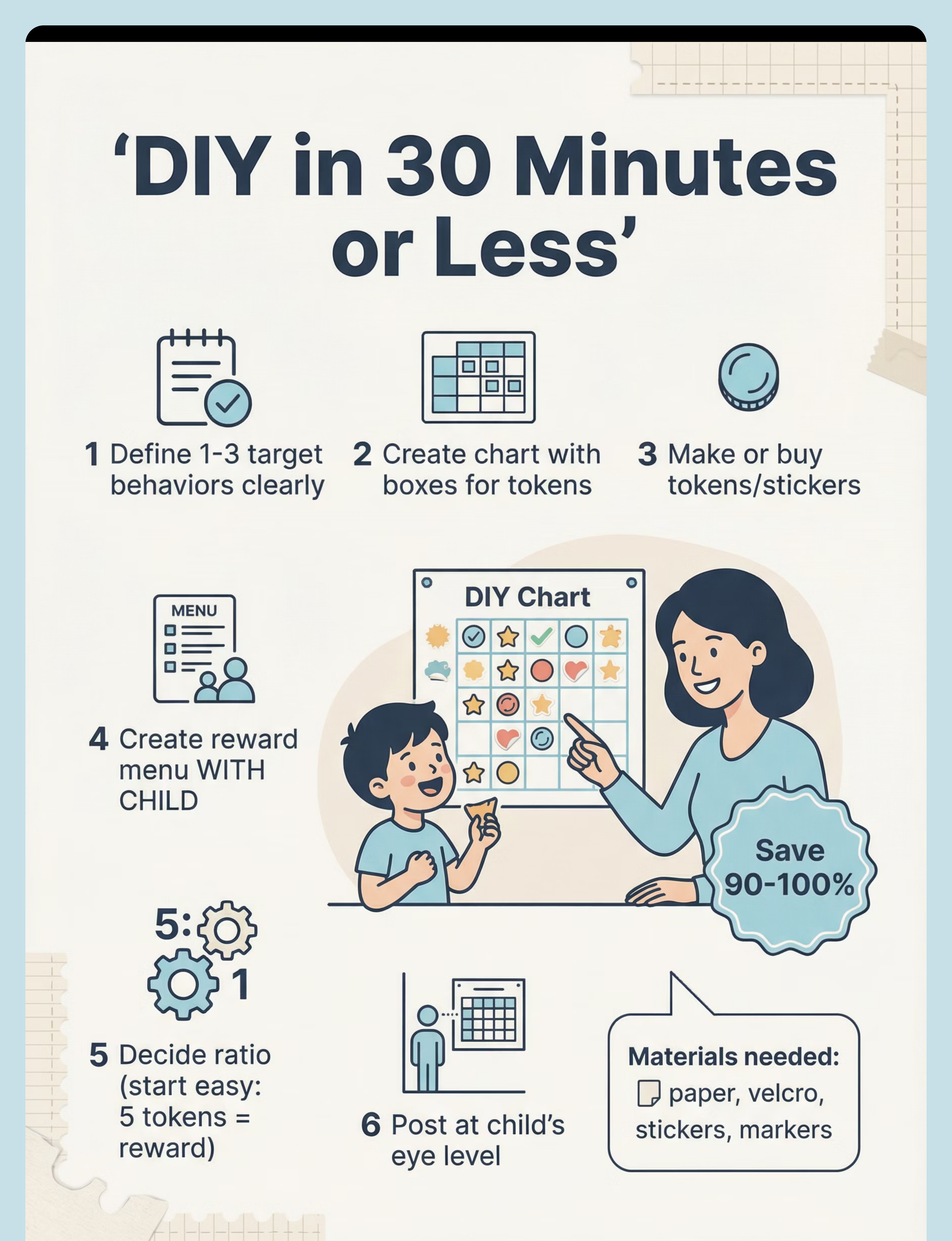
DIY Alternative (Save 90-100%)
Feasibility: Very High
Cost Savings: 90-100%
Time: 15-30 minutes
1
Materials Needed
  • Paper or cardboard (A4 or larger)
  • Velcro dots (optional, for reusable tokens)
  • Stickers or homemade tokens
  • Markers or colored pencils
  • Laminating pouches or clear contact paper (optional but recommended)
2
Define Behaviors
Be specific—not "be good" but "put toys in bin," "complete homework page," "get dressed for school." Write them in child's language.
3
Create Chart
Draw grid with 5 boxes per behavior. Label each behavior at top. Make boxes large enough for stickers or velcro tokens.
4
Make Tokens
Use stickers, draw checkmarks, cut out shapes, or attach velcro to small cards. Choose images child loves—characters, animals, colors.
5
Reward Menu
This is critical—child must help choose. Include free options (extra story, park time) and earned options (small toy, special snack). Different rewards cost different amounts of tokens.
6
Token-Reward Ratio
Start easy: 5 tokens = immediate small reward. Can add bigger rewards requiring more tokens (20 tokens = movie, 50 tokens = special outing).
7
Post at Eye Level
Child must be able to see and reach chart independently. Refrigerator, bedroom wall, or portable board all work—just ensure visibility and access.
8
Explain Rules Once
Keep explanation simple. "When you [behavior], you earn token. Five tokens means [reward]." Show them physically. Then implement consistently without renegotiating.
9
Implement Consistently
Every single time target behavior occurs, token is earned immediately. No exceptions for at least 2 weeks while establishing system. All caregivers follow same rules.
DIY vs Commercial: Making the Choice
When to DIY
  • Customizing to child's specific interests and special interests
  • Budget-conscious or testing system fit before investing
  • Quick start needed today
  • Child helps create (builds ownership and buy-in)
  • Want flexibility to modify frequently as needs change
When to Buy Commercial
  • Need durable clinic-quality materials for daily institutional use
  • Want ready-made professional system with no prep time
  • Prefer app-based tracking with automatic progress reports
  • Limited crafting time or creative confidence
  • Multiple children will share same equipment

Tradeoffs: DIY may be slightly less durable than commercial options and requires some creativity and time upfront. However, research shows customization often increases effectiveness because system perfectly matches child's interests and family's specific needs. Many families start DIY and never feel need to purchase commercial versions.

Preview of reward charts token systems Therapy Material

Below is a visual preview of reward charts token systems therapy material. The pages shown help educators, therapists, and caregivers understand the structure and content of the resource before use. Materials should be used under appropriate professional guidance.

Page 1
Page 2
Page 3
Page 4
Page 5
Page 6
Page 7
Page 8
Page 9
Page 10
Page 11
Page 12
Page 13
Page 14
Page 15
Page 16
Page 17
Page 18
Page 19
Page 20
Link copied!
Action Required
Time to Start: Today
Success Rate: High with Consistency
Your Next Step
Ready to empower your child with positive behavior change? The journey begins with a single step. Embrace this powerful tool to foster desired habits and build a more harmonious family life. You have the knowledge; now it's time to act.
01
Choose Your System
Decide between a DIY approach or a commercial kit based on your family's specific needs and budget. Both can be incredibly effective!
02
Start Small
Select just 1-2 key behaviors to target initially, avoiding overwhelm for both you and your child. Focus on simple, achievable goals.
03
Stay Consistent
Commit to daily implementation for at least two weeks before assessing the system's effectiveness. Consistency is the true magic ingredient.

Remember, every expert parent started exactly where you are now. Consistency trumps perfection when building new habits and teaching positive behaviors. You've got this!