














Tool ID: 15.3
OT + SpEd
Moderate-Strong Evidence
Rank #1
Daily Use
₹300–10,000
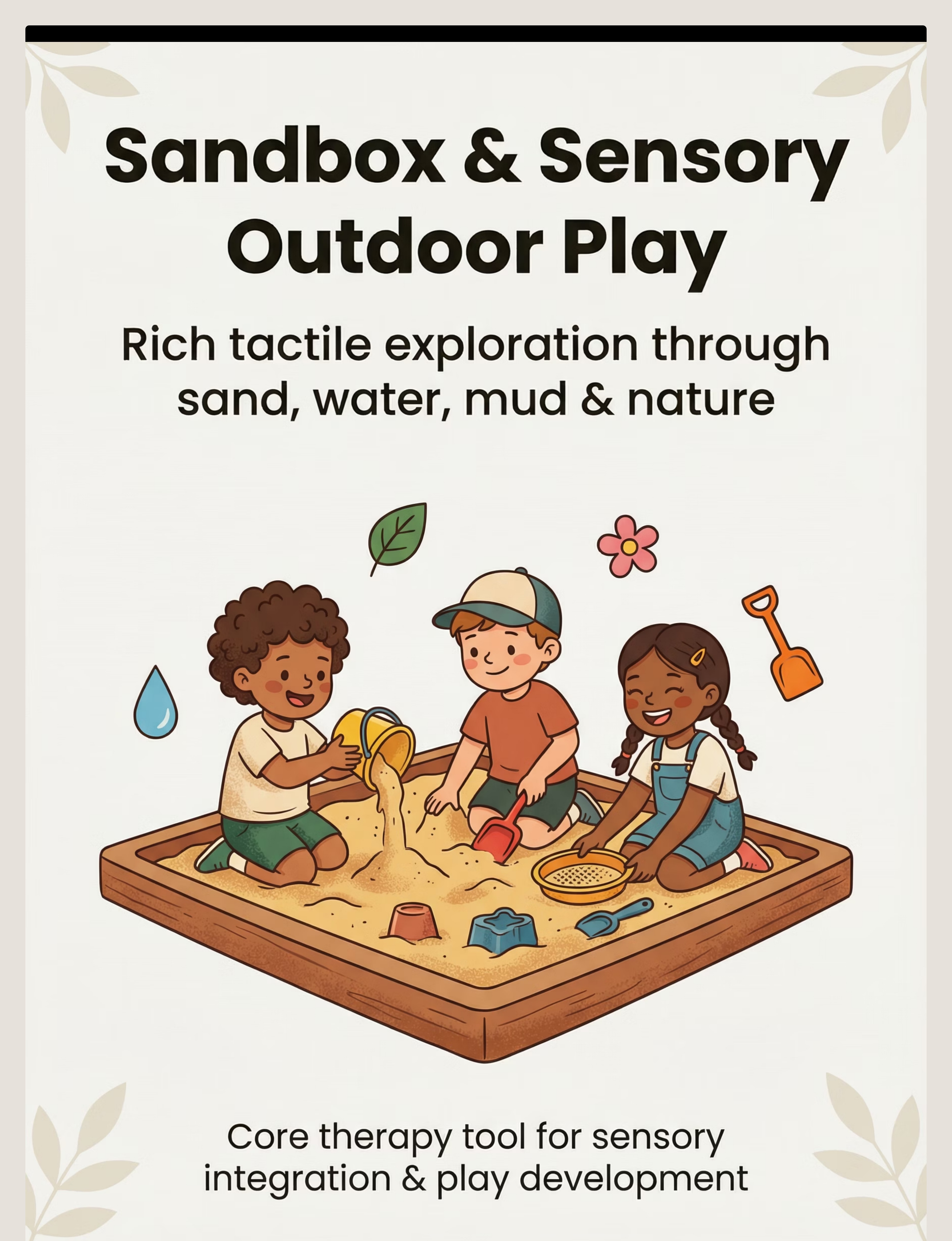
Sandbox & Sensory Outdoor Play
Tactile and exploratory outdoor sensory system
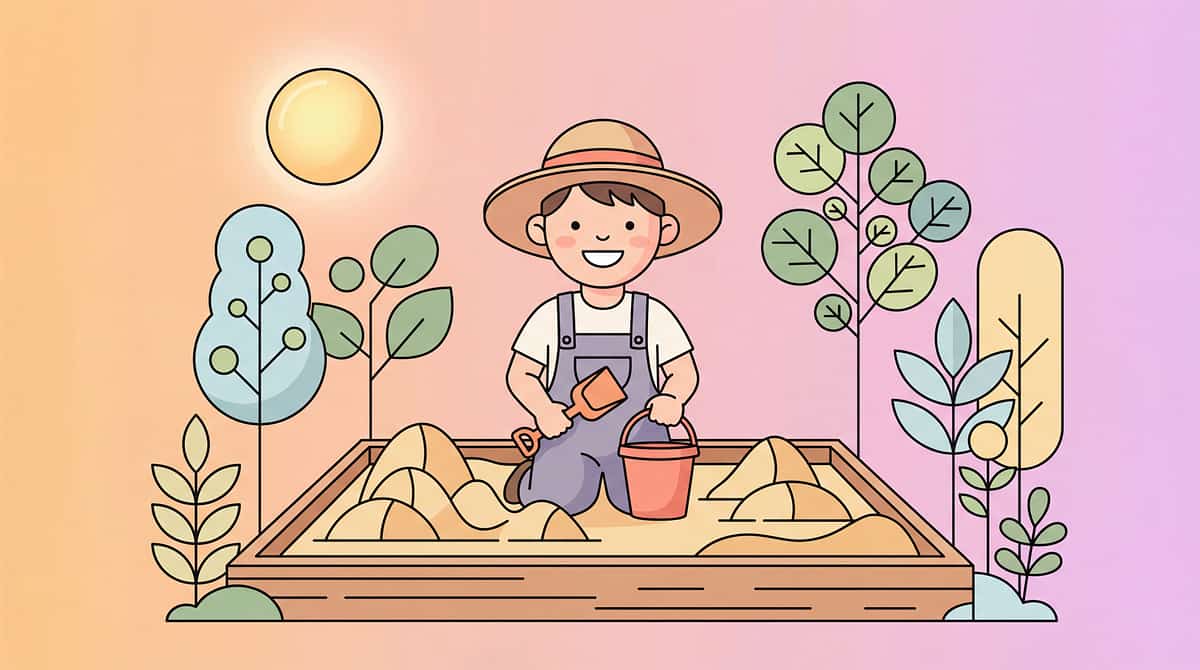
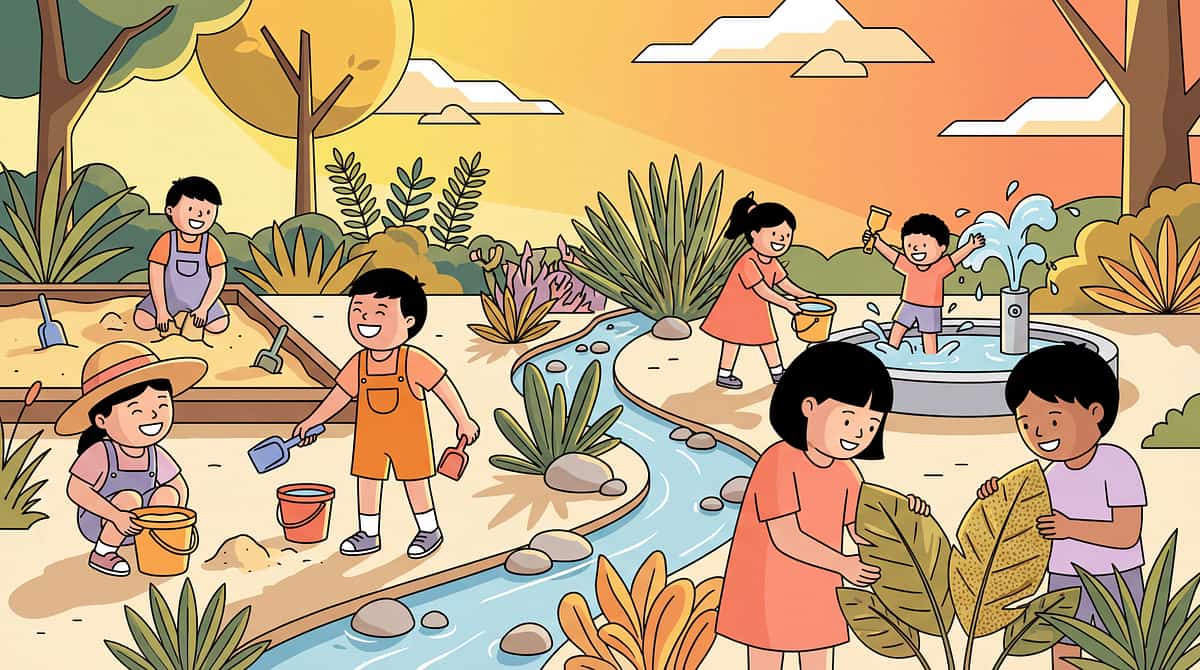
Transform your backyard into a therapeutic playground where messy play becomes magical development. Sand, water, mud, and nature materials offer rich sensory experiences that indoor play simply cannot replicate—building tactile tolerance, fine motor skills, and imaginative play while your child connects with the natural world.

Who This Helps
Outdoor sensory play provides tactile exploration and nature connection opportunities through sand, water, mud, and natural materials—supporting sensory integration, regulation, and play development in the most natural therapeutic environment.
Tactile Processing
Enhances tactile processing and tolerance through diverse textures.
Sensory Exploration
Encourages natural curiosity and engagement with the environment.
Fine Motor Skills
Develops dexterity and coordination through hands-on manipulation.
Imaginative Play
Fosters creativity and problem-solving in an open-ended setting.
Regulation
Supports emotional and sensory regulation in a therapeutic environment.
Nature Connection
Connects children with the natural world for holistic development.
Ages 1+ Years
Suitable for toddlers to school-aged children with adaptable supervision.
Multiple Settings
Ideal for backyards, patios, and various outdoor play areas.
Therapeutic Benefits
Best for children needing tactile exposure, regulation, and imaginative play.

Does This Sound Familiar?
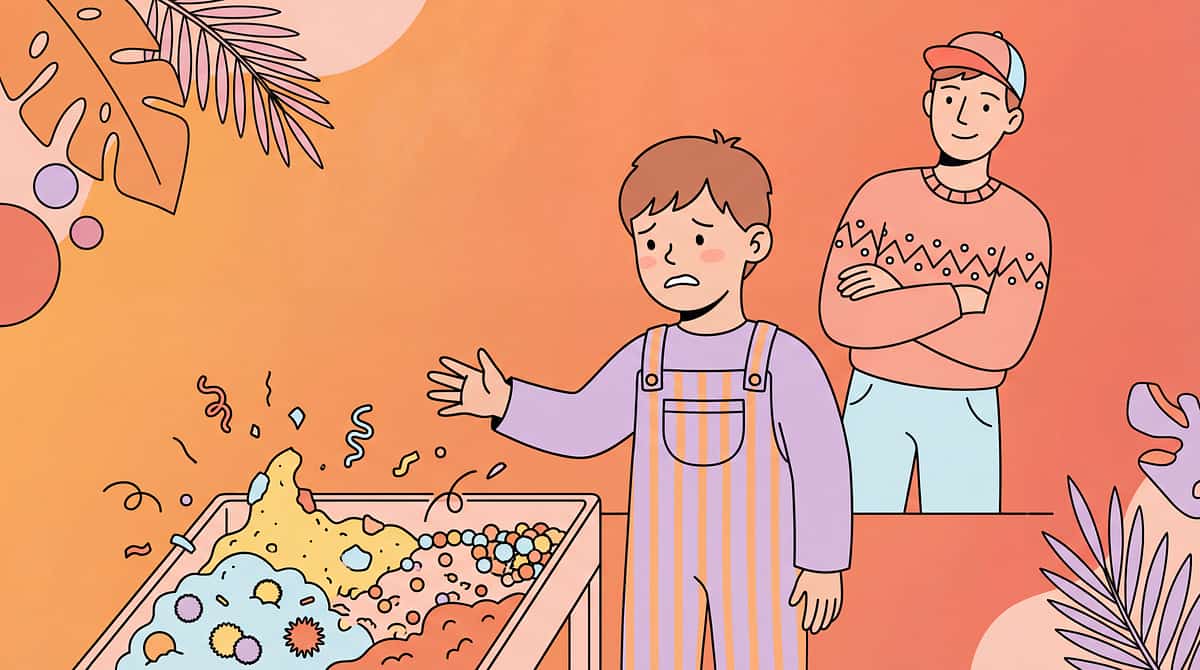
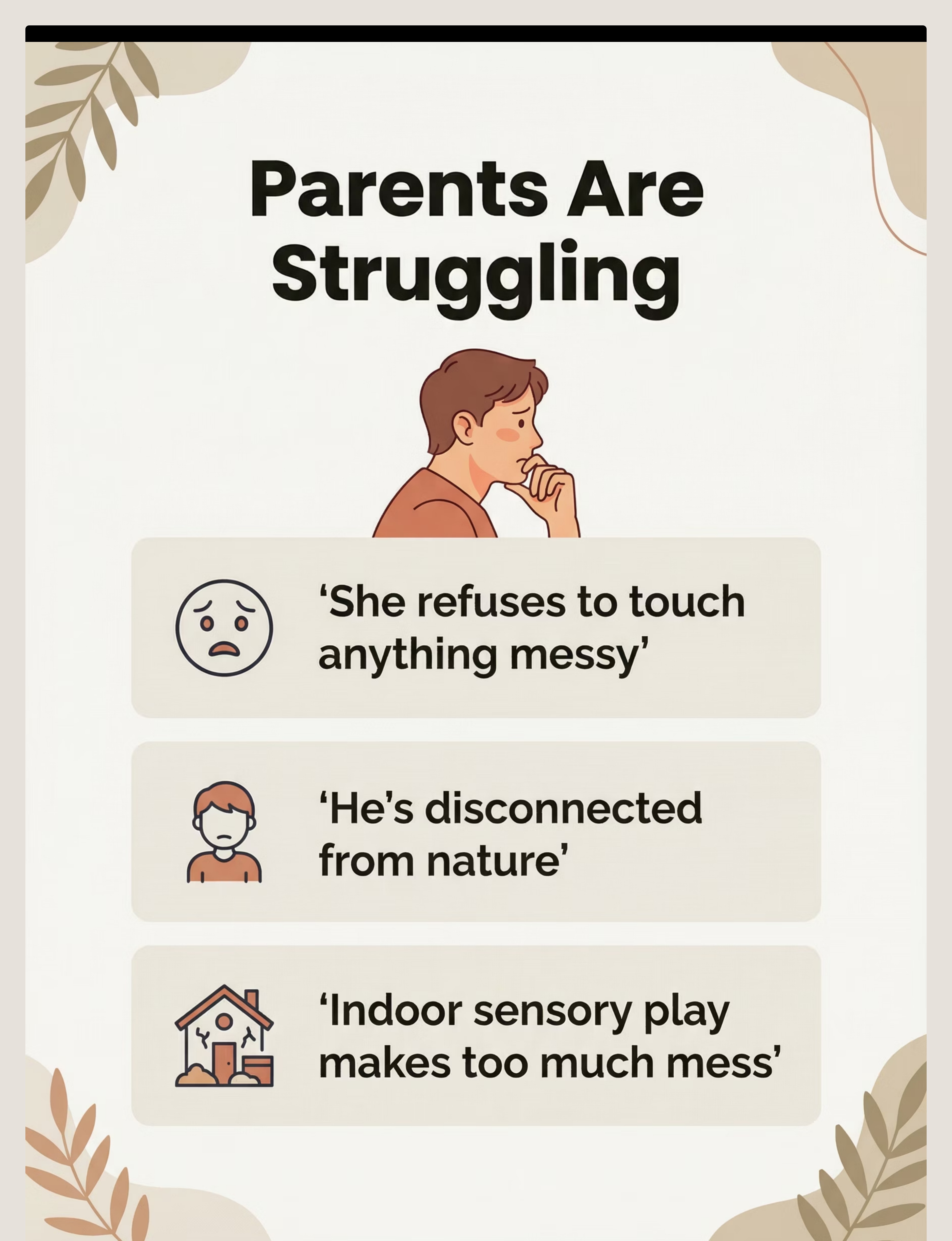
"She refuses to touch anything messy"
"He needs more tactile exposure"
"She's disconnected from nature"
"He doesn't know how to play"
"Indoor sensory play makes too much mess"
"She needs calming activities outside"
You're not alone. These are common challenges families face when children need tactile exploration but avoid messy experiences. The outdoor environment offers unique opportunities for sensory development that can't be replicated indoors—where mess stays outside and nature becomes the therapist.

A Day Without the Right Support
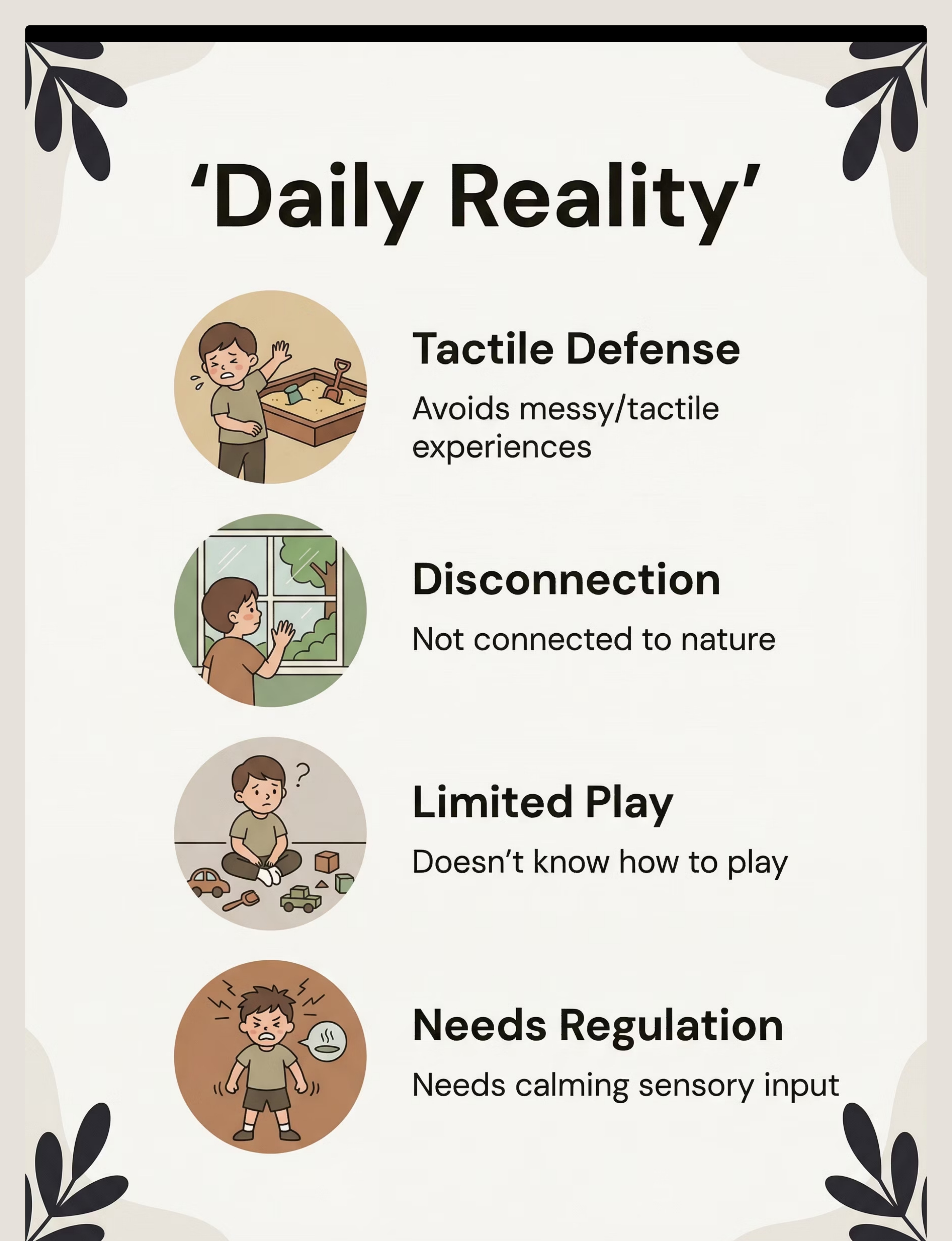
Tactile Defense
Avoids messy and tactile experiences throughout the day, missing crucial sensory development opportunities and limiting play exploration.
Disconnection
Stays indoors all day without engaging with natural world, missing the calming benefits of nature and varied sensory experiences.
Limited Play
Doesn't know how to play with open-ended materials, needs constant structured activities, imagination and play skills delayed.
Regulation Needs
Requires calming sensory input but has limited options available, leading to dysregulation and limited self-soothing strategies.

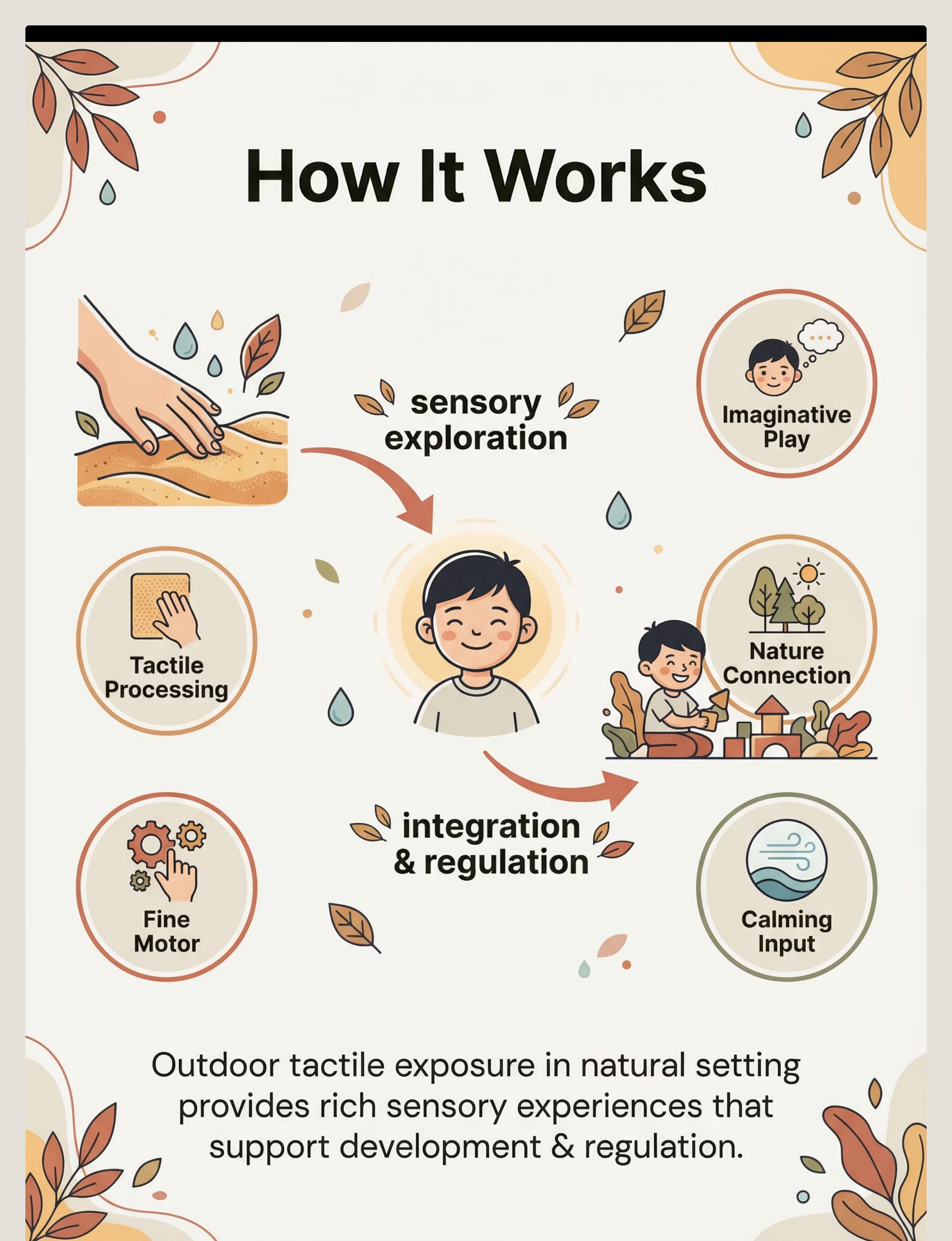
The Science Behind It
Tactile Exposure
Natural outdoor setting provides rich tactile input through varied materials and textures
Sensory Exploration
Child-led exploration activates multiple sensory systems simultaneously
Integration
Repeated exposure supports tactile desensitization and sensory integration
Proprioceptive Input
Heavy work with sand, water, mud provides calming deep pressure
Development
Imaginative play emerges, fine motor skills strengthen, nature connection builds
Outdoor sensory play leverages the therapeutic power of natural materials to support comprehensive development. The outdoor environment is often more tolerable for tactile-sensitive children than indoor activities, making it an ideal setting for gradual exposure and skill building.
Tactile Processing
Sensory Exploration
Fine Motor
Imaginative Play
Regulation
Nature Connection

How to Use It Right
Allow Child-Led Exploration
Follow your child's interests and pace. The most powerful learning happens when children discover and explore according to their own curiosity and comfort level.
Gradual Exposure for Sensitive Children
Start with observation, then tools for indirect contact, gradually moving toward direct tactile experiences. Never force—invite and model instead.
Offer Tools Initially
Provide scoops, containers, and utensils that allow participation without direct tactile contact. Many children gradually transition to hands-on exploration.
Combine Sensory Elements
Mix sand with water, add natural materials to bins, rotate experiences to maintain interest and provide varied sensory input.
Supervise Water Safety
Active supervision is essential for any water play. Even small amounts of water require constant attention with young children.
Maintain Clean Materials
Use play sand (not beach or construction sand), cover sandbox when not in use, check for debris before each play session, wash hands after play.
Duration: As long as child is engaged—outdoor sensory play naturally regulates itself as children move in and out of activities based on their sensory needs.
Expert Endorsement
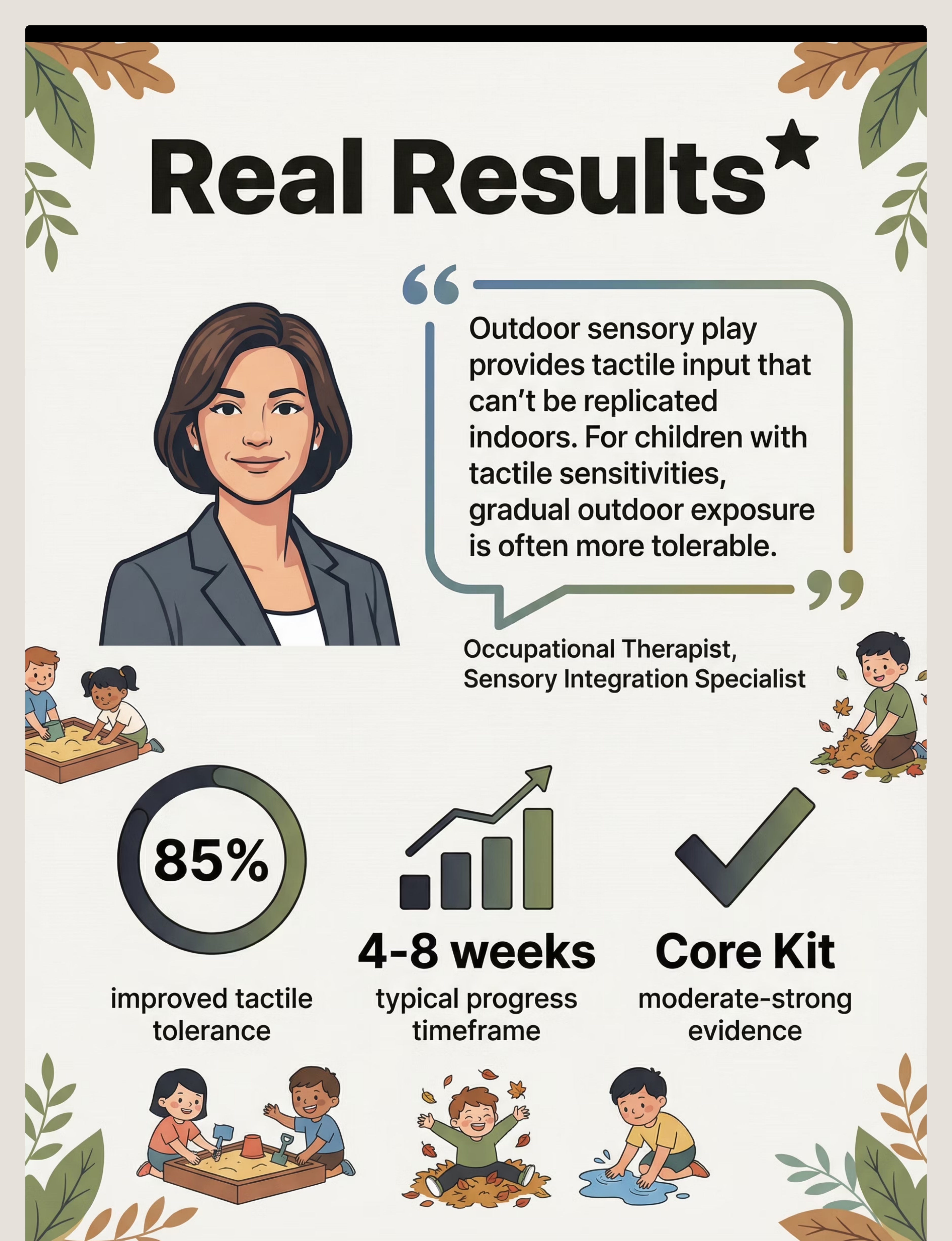
"Outdoor sensory play provides tactile input that can't be replicated indoors. Sand, water, mud, and nature materials offer rich sensory experiences that support integration and regulation. For children with tactile sensitivities, gradual outdoor exposure is often more tolerable than indoor."
— Occupational Therapist, Sensory Integration Specialist

OT + SpEd Recommended
Moderate-Strong Evidence
Rank #1 in Category
Core Kit Essential

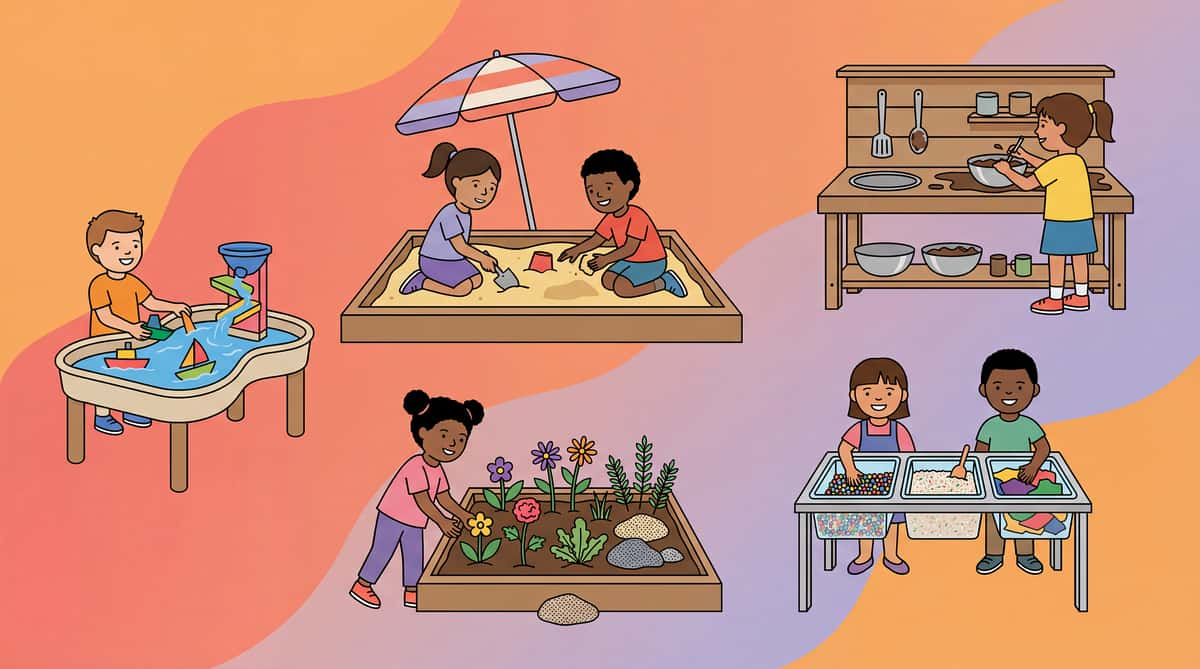
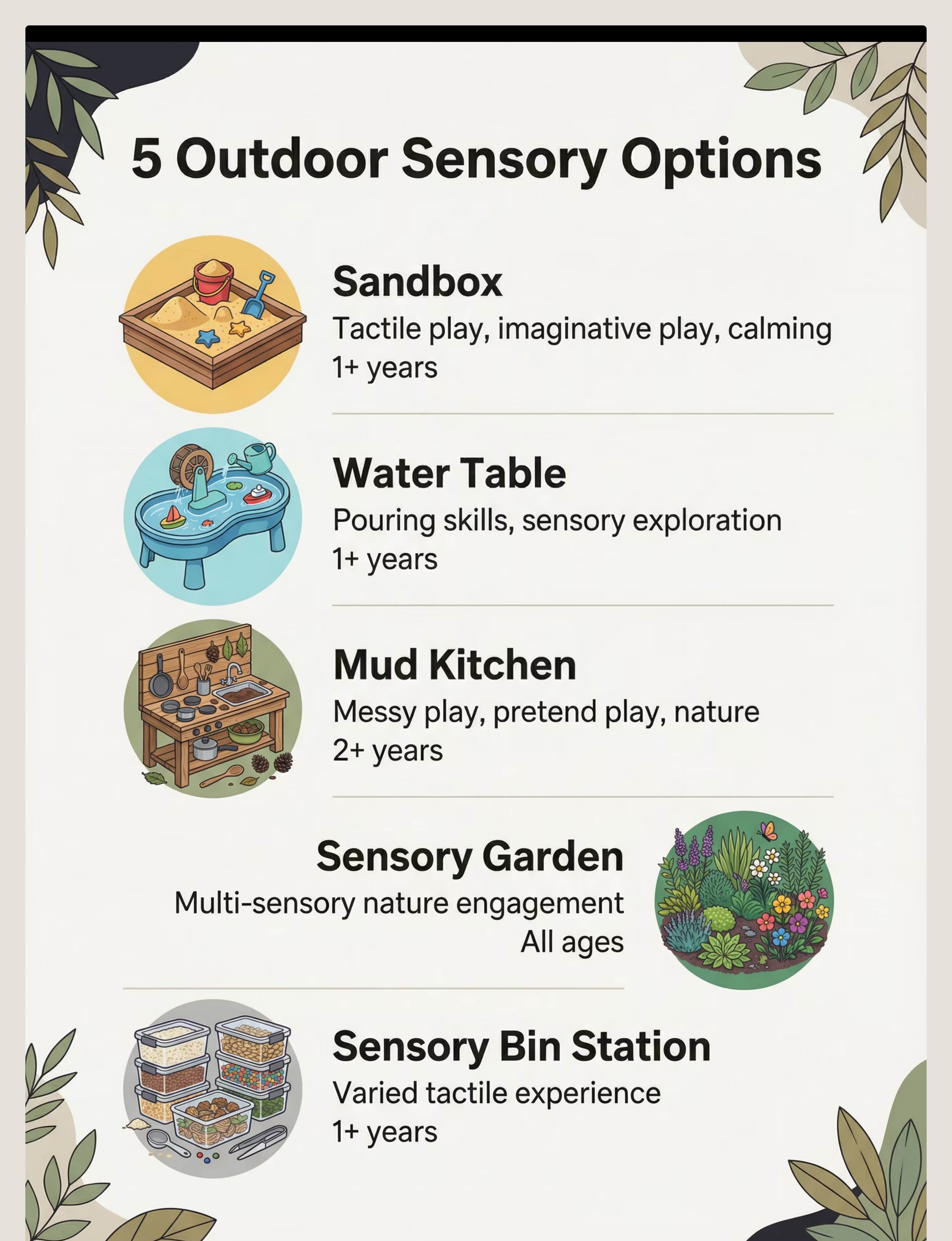
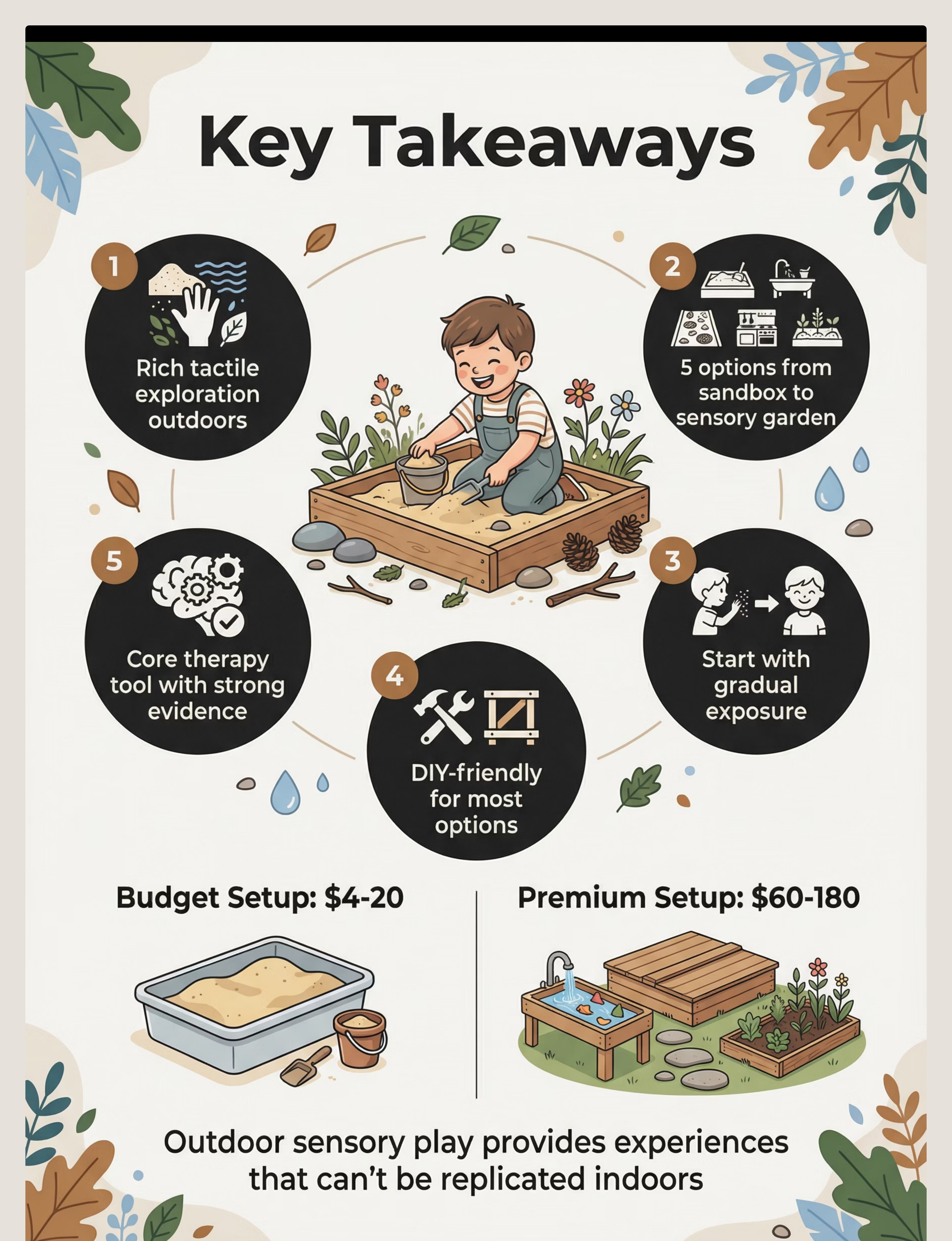
Choose Your Option (5 Variants)
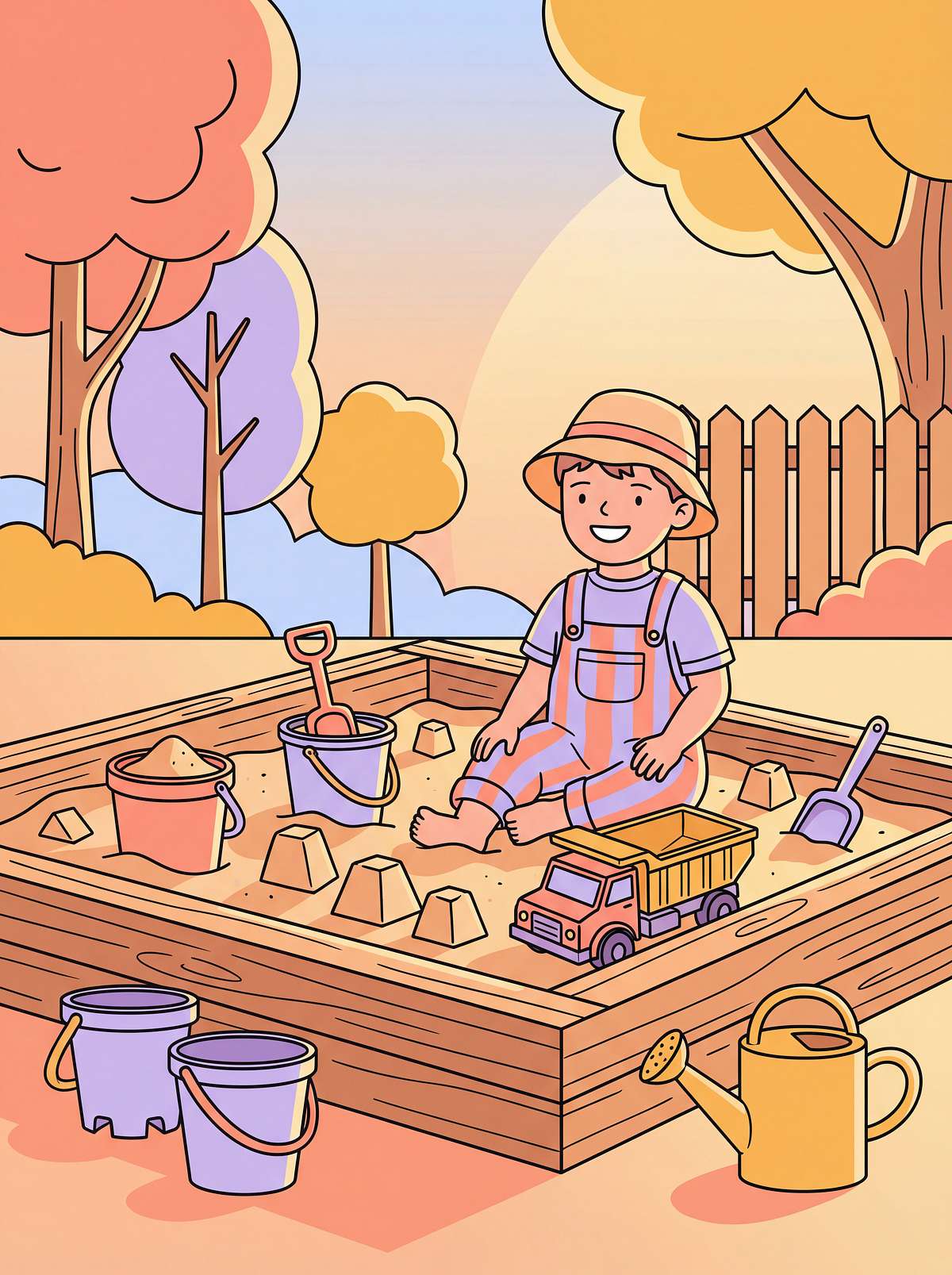
Sandbox
Best for: Tactile play, imaginative play, calming
Type: Tactile exploration
Size: Contained sand play area
Ages: 1+ years | Settings: Backyard
Portability: N/A (installed) | Price: ₹1,000–10,000
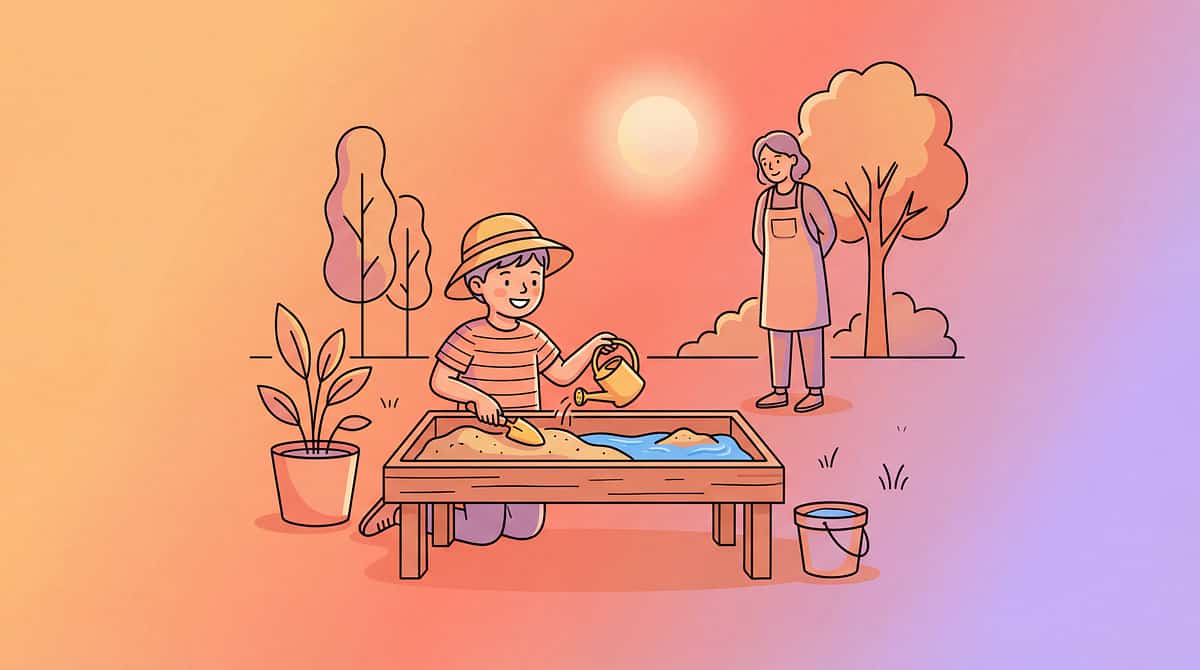
Water Table (Outdoor)
Best for: Water play, pouring skills, sensory
Type: Tactile + pouring
Size: Standing water play table
Ages: 1+ years | Settings: Backyard, Patio
Portability: Medium | Price: ₹800–4,000
Mud Kitchen
Best for: Messy play, pretend play, nature engagement
Type: Imaginative sensory play
Size: Outdoor pretend kitchen for mud/nature play
Ages: 2+ years | Settings: Backyard
Portability: Low | Price: ₹1,500–8,000
Sensory Garden
Best for: Nature engagement, multi-sensory experience
Type: Multi-sensory nature
Size: Garden with varied textures, scents
Ages: All ages | Settings: Backyard
Portability: N/A | Price: ₹500–5,000
Outdoor Sensory Bin Station
Best for: Varied tactile experience, exploration
Type: Variable tactile
Size: Rotating outdoor sensory bins
Ages: 1+ years | Settings: Backyard, Patio
Portability: Medium | Price: ₹300–2,000
Each variant offers unique sensory experiences and benefits. Consider your space, child's preferences, and developmental goals when selecting. Many families start with one option and gradually add others to create a complete outdoor sensory system.
How to Choose
By goal: Tactile exposure (sandbox/bins), water exploration (water table), imaginative play (mud kitchen), nature connection (sensory garden)
By setting: Small spaces (bins/water table), larger yards (sandbox/mud kitchen/garden)
By portability: Moveable (bins/water table), permanent (sandbox/mud kitchen/garden)
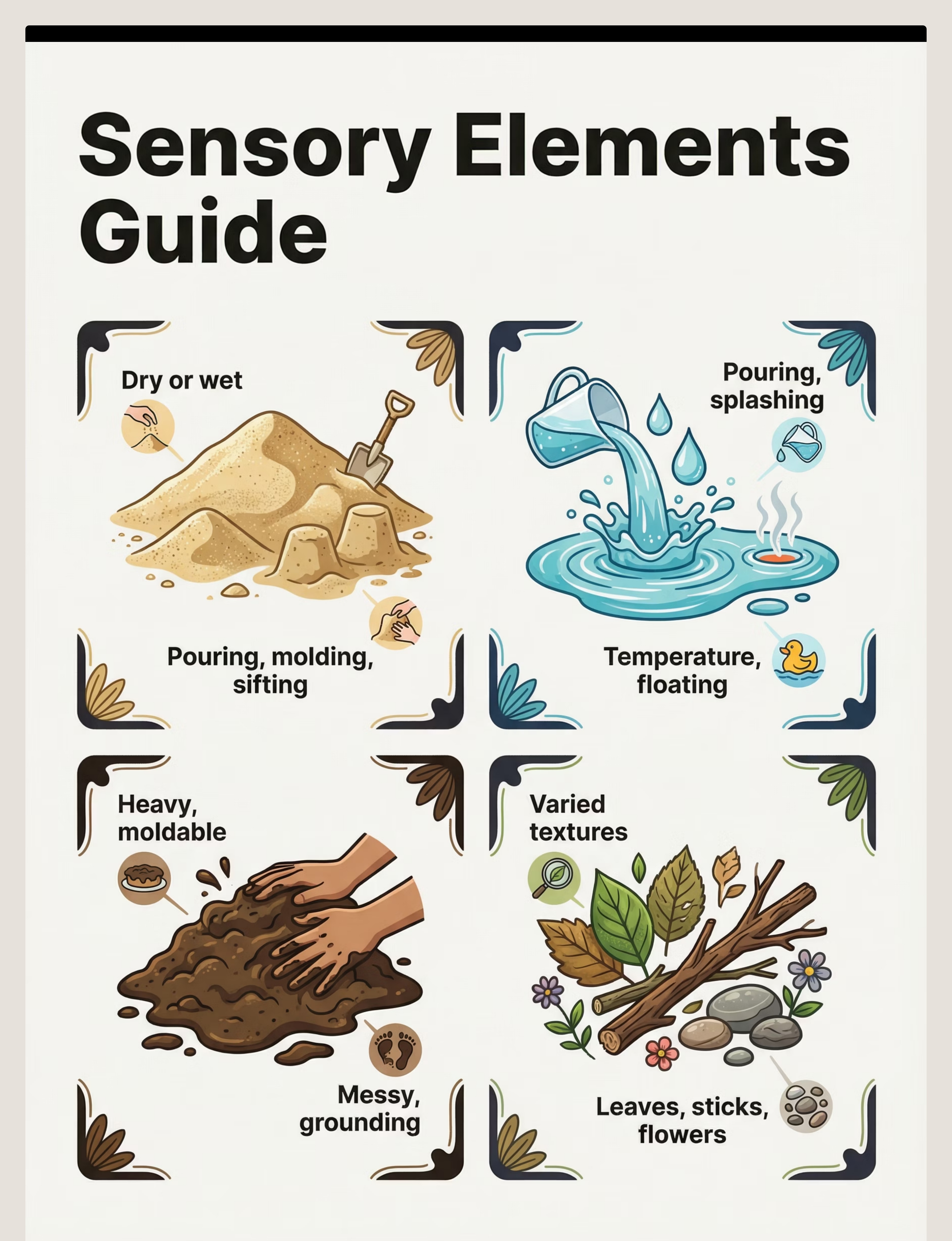
Specifications & Sensory Elements Guide
Sensory Elements

Sand
Dry or wet textures, pouring, molding, sifting experiences. Variable texture based on moisture level provides rich tactile input.

Water
Pouring, splashing, temperature exploration, floating objects. Fluid movement and sensory feedback support multiple developmental areas.

Mud
Heavy, moldable, messy, grounding sensory experience. Deep proprioceptive input combined with tactile exploration.

Nature Materials
Leaves, sticks, stones, flowers—varied textures, temperatures, and weights. Natural diversity supports comprehensive sensory exploration.
Materials & Features
- Safe Materials: Play sand (not construction/beach), clean water, natural materials checked for safety
- Weather Appropriate: Designed for outdoor use in various weather conditions
- Easy Cleanup: Contained areas, hose-off capability, outdoor mess management
- Child-Accessible: Appropriate heights and sizes for independent exploration
- Varied Textures: Multiple sensory experiences available
- Natural Elements: Connection to nature and natural world

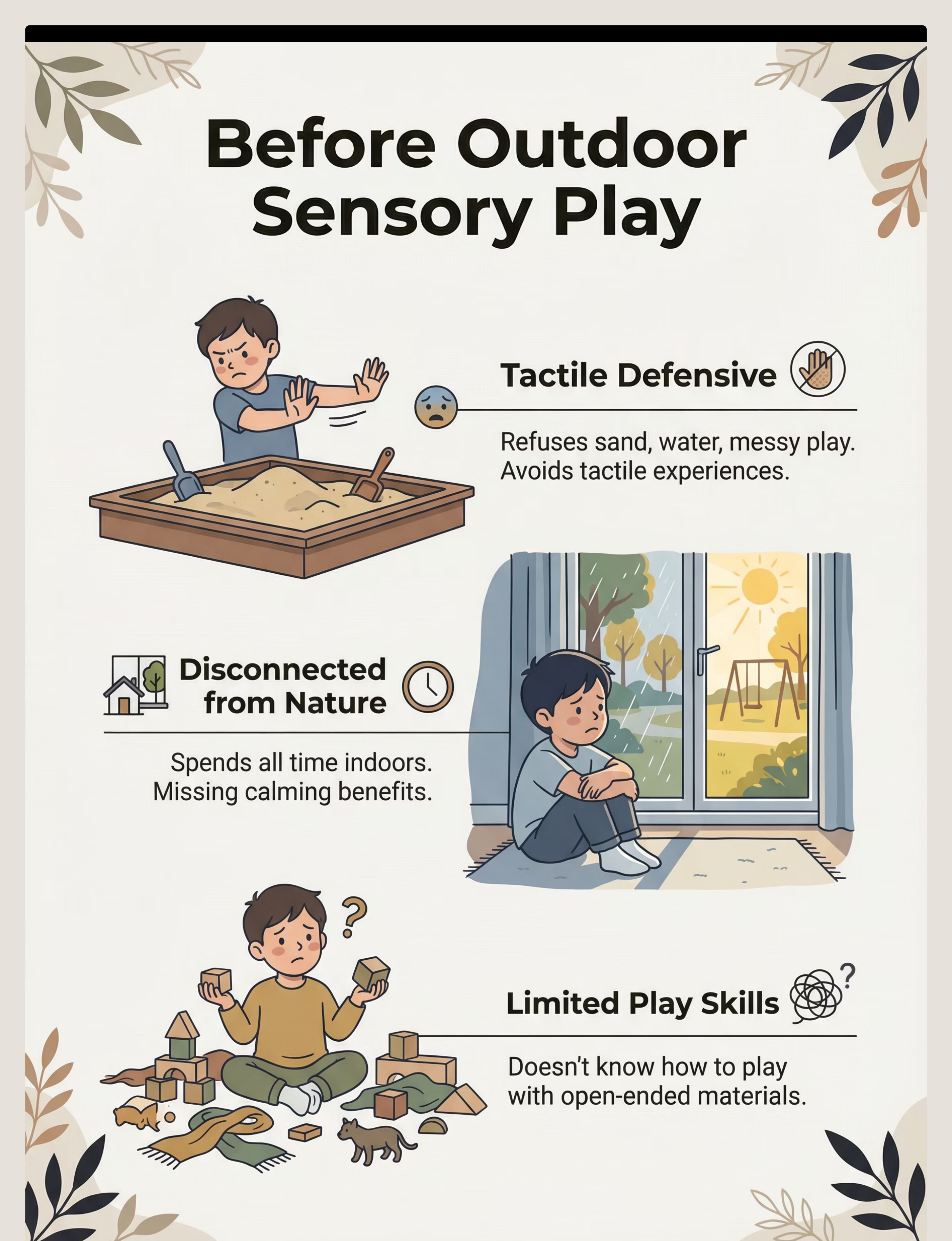
The Struggle (Before)
Tactile Defensive
Situation: Child refuses sand, water, messy play. Avoids tactile experiences consistently.
Experience: Limited sensory exposure, missing crucial development opportunities, play options severely restricted.
Emotion: Avoidance, limited, anxious around new textures
Disconnected from Nature
Situation: Child spends all time indoors with no engagement with natural world.
Experience: Missing calming benefits of nature, sensory diet limited to indoor options, no outdoor exploration.
Emotion: Disconnected, indoor-bound, missing natural regulation
Limited Play Skills
Situation: Child doesn't know how to play with open-ended materials, needs structured activities constantly.
Experience: Limited imagination, play development delayed, requires adult direction for all activities.
Emotion: Uncertain, limited play, dependent on adults

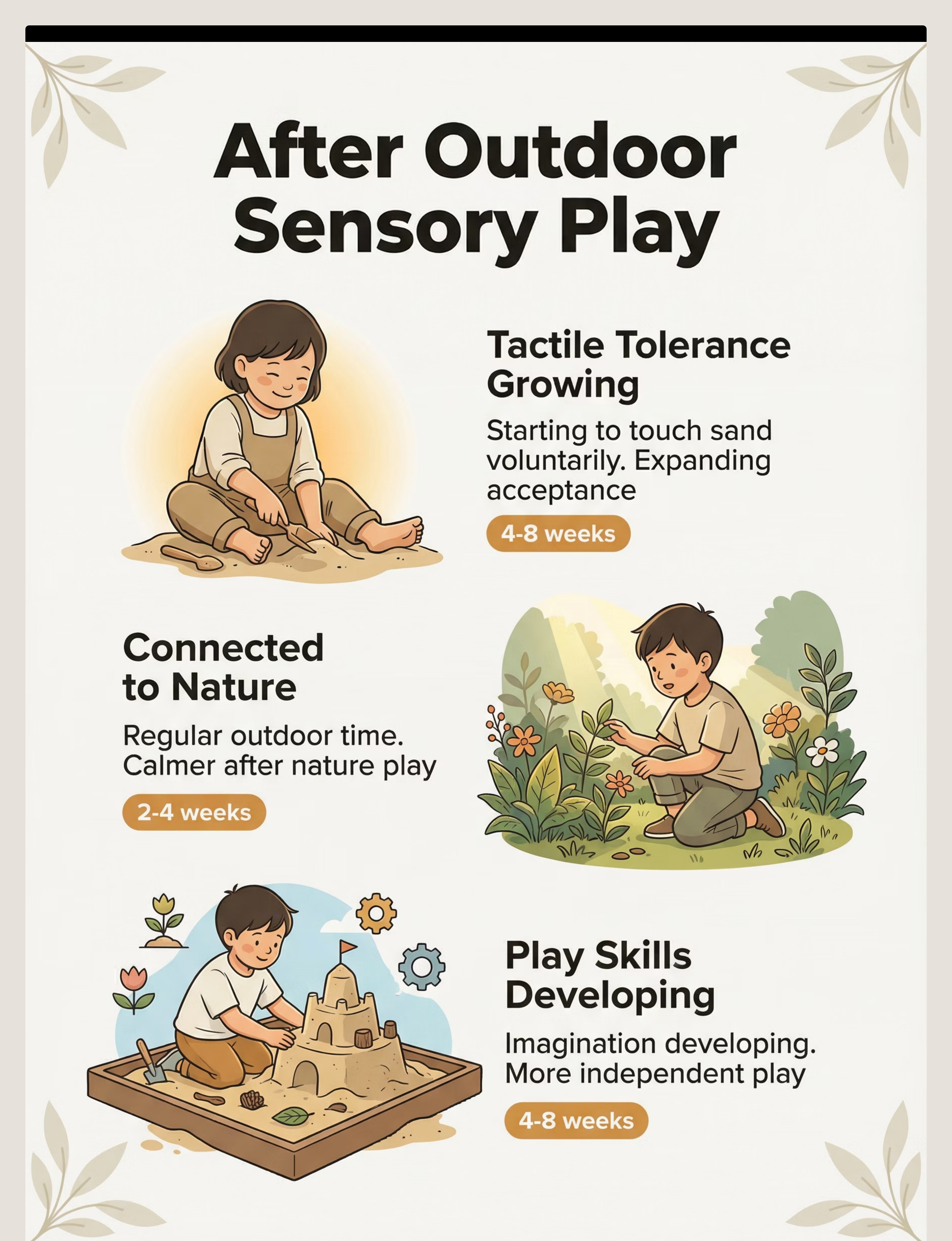
The Breakthrough (After)
Tactile Defensive → Expanding Tolerance
Situation: Gradual sandbox exposure with tools building comfort and confidence.
Experience: Building tolerance through child-led exploration, starting to touch sand voluntarily, expanding tactile acceptance daily.
Emotion: Expanding, tolerating, gaining confidence
4-8 weeks
Disconnected → Nature Connected
Situation: Sensory garden and outdoor play engaging child with natural world regularly.
Experience: Regular outdoor sensory time established, calmer after nature play, building relationship with outdoor environment.
Emotion: Connecting, calmer, enjoying nature
2-4 weeks
Limited Play → Imagination Emerging
Situation: Sand and water play teaching open-ended exploration and creativity.
Experience: Imagination developing through unstructured play, play skills growing, more independent play emerging.
Emotion: Playing, imagining, creating independently
4-8 weeks

What to Expect (Realistic Timelines)
Outdoor sensory play available
Setup complete and child has access to outdoor sensory experiences
1-7 days
Regular outdoor sensory time
Routine established with consistent outdoor sensory play opportunities
1-2 weeks
Nature connection building
Child engaging more with natural materials and outdoor environment
2-4 weeks
Tactile tolerance improving
Decreased avoidance, increased willingness to touch varied textures
4-8 weeks
Play skills developing
Imaginative play emerging, independent exploration increasing
4-8 weeks
These timelines represent typical progression with consistent use. Every child develops at their own pace—celebrate small victories and trust the process. Outdoor sensory play builds foundational skills that support development across multiple areas.

Is This Right for My Child? (2-Minute Check)
Does your child avoid messy/tactile play?
If yes, this indicates: Gradual outdoor sensory exposure would be highly beneficial for building tactile tolerance
Does your child have access to outdoor sensory play?
If yes: Good foundation—optimize variety. If no: Consider adding outdoor sensory options to developmental toolkit
Does your child engage with nature?
If yes: Build on this strength. If no: Sensory garden or nature play components needed for holistic development
Does your child benefit from calming sensory input?
If yes, this indicates: Sand and water play can provide regulating proprioceptive and tactile input naturally
Interpretation: 3+ "yes" answers indicate strong fit for outdoor sensory play. Even 1-2 "yes" answers suggest outdoor sensory activities would support your child's development.

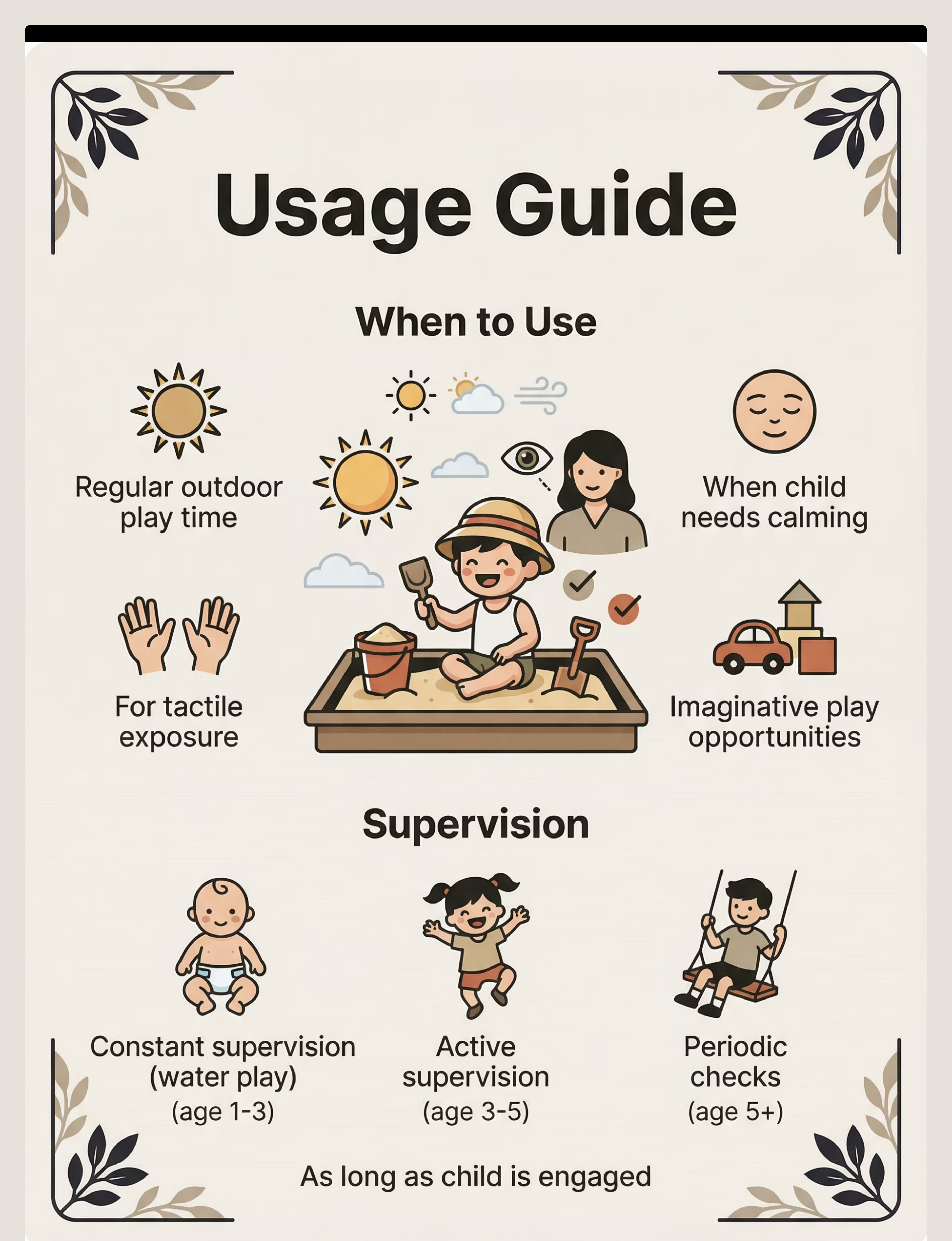
Usage Guide
When to Use ✓ | When NOT to Use ✗ | |
Regular outdoor play time—build routine and consistency | Extreme weather conditions (too hot, cold, stormy) | |
When child needs calming sensory input | Without appropriate water supervision | |
For tactile exposure and desensitization work | If materials are contaminated or unsafe | |
Imaginative play opportunities and skill building | When child is ill or medically compromised | |
Nature connection and outdoor engagement | ||
Weather-permitting daily sensory experiences |
Supervision by Age
Age Range | Supervision Level | Notes | |
Young children (1-3 years) | Constant supervision | Especially critical with water—never leave alone | |
Developing skills (4-6 years) | Active supervision | Check-ins, visual monitoring, nearby presence | |
Older children (7+ years) | Periodic checks | Age-appropriate independence with boundaries |
Duration: As long as child is engaged
Settings: Backyard, Patio, Playground

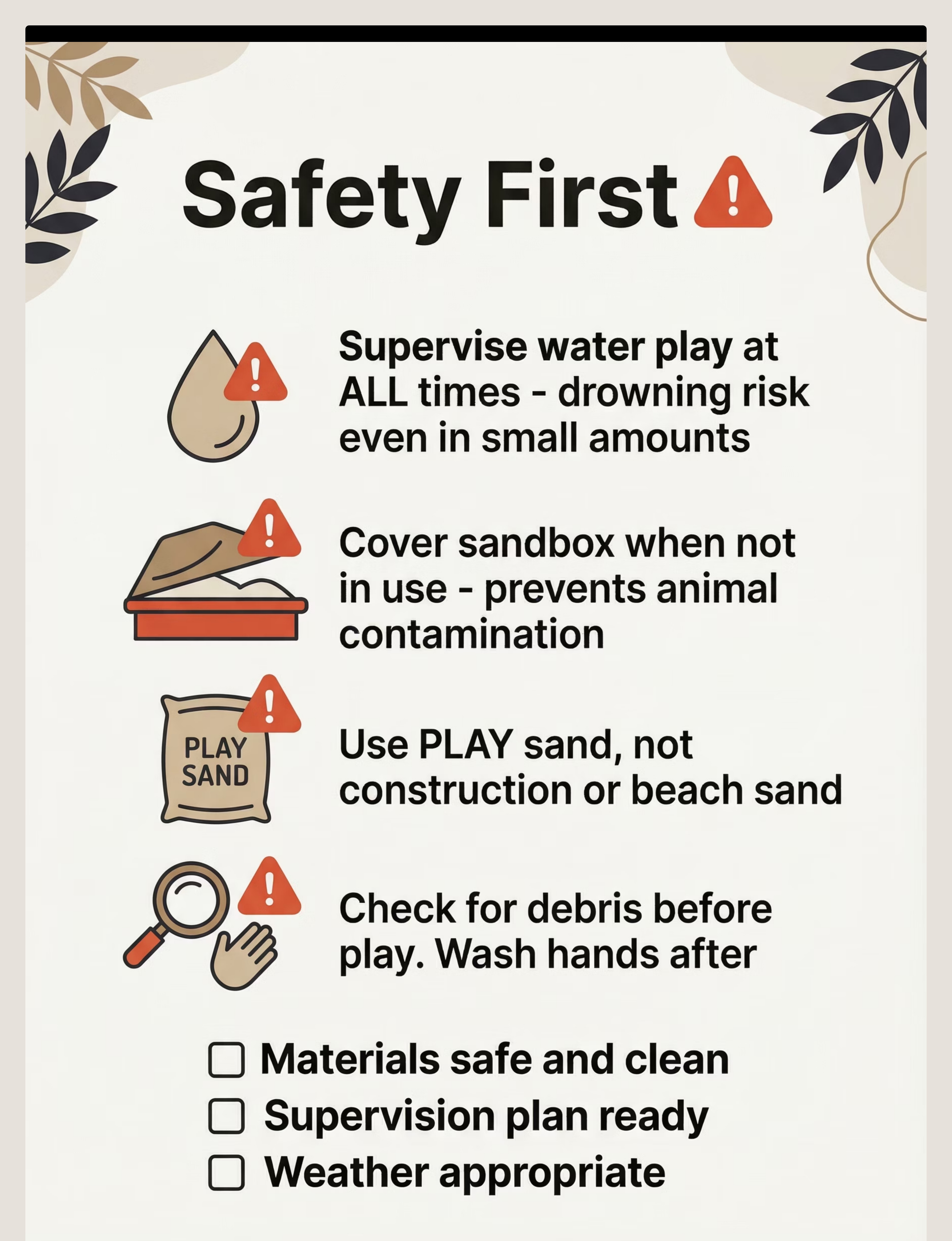
Safety First
Critical Safety ⚠
- Supervise water play at all times—drowning risk exists even with small amounts
- Cover sandbox when not in use to prevent animal contamination
- Use play sand only, never construction or beach sand
- Check for debris before every play session
- Wash hands thoroughly after all outdoor sensory play
Warnings ⚠
- Drowning risk with water play—even small amounts require constant supervision
- Animals may use uncovered sandbox as litter box
- Some children eat sand or other materials—monitor closely
- Sun protection needed for extended outdoor play
- Sharp objects or debris can hide in sand—check thoroughly
Contraindicated ✗
- Unsupervised water play under any circumstances
- Uncovered sandbox between uses
- Unsafe or contaminated materials
- Extreme weather exposure
Before Use ✓
- Materials safe and clean
- Sandbox/area checked for debris
- Supervision plan clear (especially water)
- Weather appropriate
During Use ✓
- Supervised appropriately
- Safe play behavior
- Not ingesting materials
- Engaged and enjoying
Signs of Success ✓
- Tactile tolerance improving
- Engaged in exploration
- Calmer after play
- Play skills developing

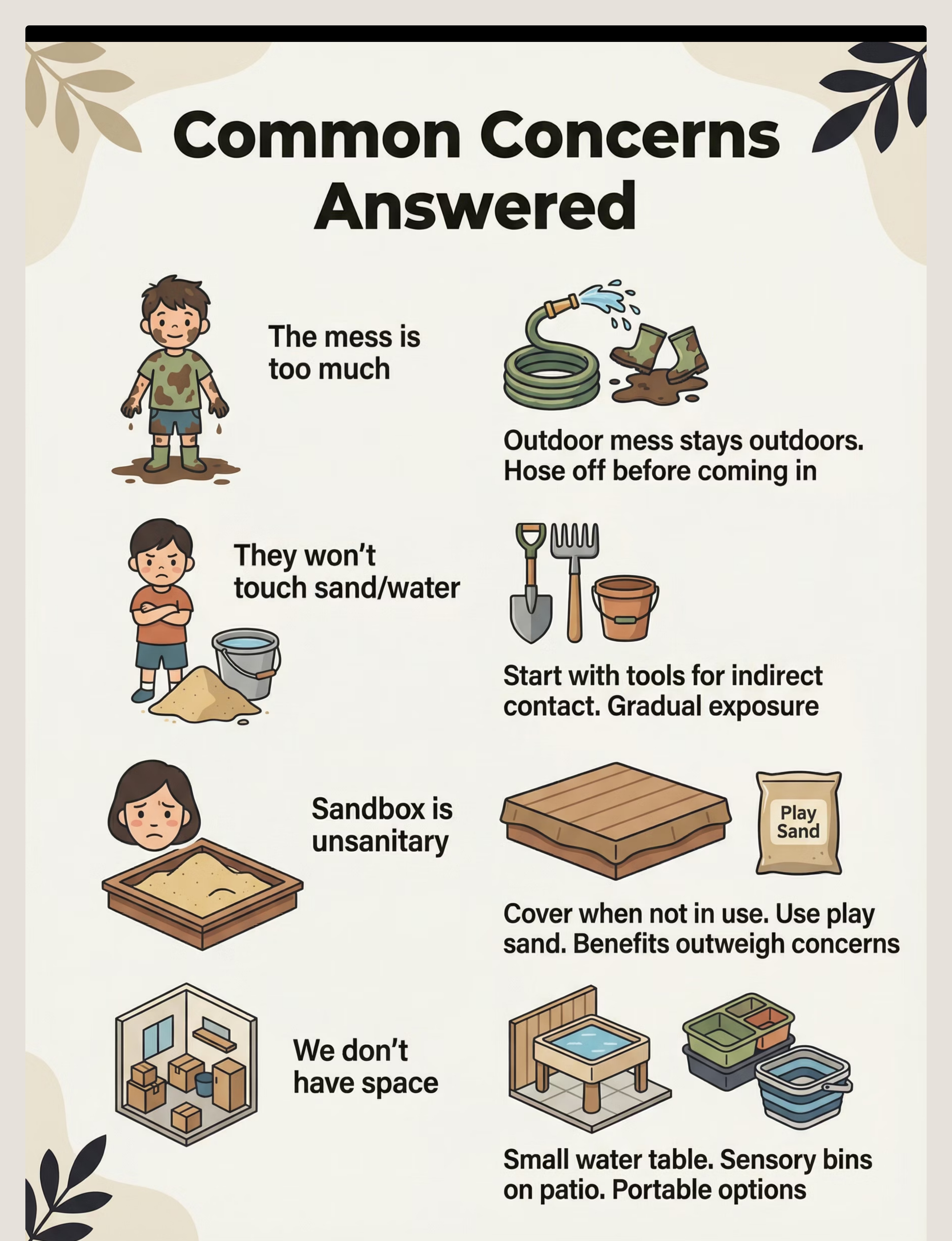
Common Questions (Honest Answers)
Q: The mess is too much
A: Outdoor mess stays outdoors—this is the key advantage. Hose off your child before coming inside, designate 'messy play clothes' specifically for outdoor sensory time, and remember that mess is developmental. The sensory input and skill building are absolutely worth it. Many families find outdoor mess far more manageable than indoor sensory activities.
Try this: Keep a designated bin by the door with outdoor play clothes, establish a hose-off routine that becomes part of the fun.
Q: They won't touch sand/water
A: Start with tools for indirect contact—scoops, containers, utensils. Use gradual exposure at child's pace. Many children accept outdoor materials better than indoor ones because the natural setting feels less threatening. Never force participation—invite, model, and wait. Tolerance builds over time.
Try this: Begin with observation, then tools, slowly working toward direct contact as comfort builds.
Q: Sandbox is unsanitary
A: Cover when not in use to prevent animal access. Use play sand specifically (not beach or construction sand). Check for debris before each play session. Replace sand periodically (annually or as needed). The developmental benefits far outweigh sanitation concerns when proper maintenance is followed.
Try this: Make sandbox checking part of the routine—turn it into a treasure hunt game before play begins.
Q: We don't have space
A: Small water table takes minimal space on patios. Sensory bins work on balconies. Container sandbox can fit in compact areas. Multiple portable options exist for limited spaces—you don't need a large yard to provide outdoor sensory experiences.
Try this: Start with one portable option (water table or sensory bins) to assess fit before expanding.

Investment Guide
Choosing the right outdoor sensory play setup involves considering your budget, available space, and long-term commitment. Here's a breakdown of common investment options:
Feature | Budget Option | Premium Option | |
Cost Range | ₹500–1,500 | ₹5,000–15,000 | |
Key Components | Container Sandbox + Sensory Bins | Built Sandbox + Water Table + Mud Kitchen | |
Description | Affordable starting setup using large plastic containers, play sand, and rotating sensory bin materials. Provides excellent tactile exposure without major investment. | Complete outdoor sensory system with permanent sandbox, water table with features, and dedicated mud kitchen area. Comprehensive setup for maximum developmental benefit. | |
Best For | Testing fit, small spaces, budget-conscious families, starting outdoor sensory journey. | Committed families, adequate space, long-term investment in outdoor development. | |
Brands/Examples | DIY with readily available containers. | Little Tikes, Step2, DIY custom builds. |
Budget-Friendly Benefits
Accessible Entry
Provides an affordable way to introduce outdoor sensory play without a large upfront cost.
Space-Efficient
Perfect for smaller outdoor areas, balconies, or patios where permanent installations aren't feasible.
Flexible & Portable
Easy to move, store, and adapt to changing needs or locations.
Test & Expand
Allows families to test their child's interest and gradually expand their setup as desired.
Investment Progression
Starting Small
Begin with simple sensory bins or a small water table to gauge interest and suitability.
Mid-Tier Expansion
Consider adding a dedicated container sandbox or expanding with a basic mud kitchen setup.
Premium Integration
Invest in a built-in sandbox, a water table with advanced features, and a fully equipped mud kitchen for a comprehensive experience.
Long-Term Development
A well-planned outdoor sensory space supports continuous learning and engagement for years.
₹300
Minimum investment
Outdoor sensory bins—most affordable entry point
₹15K
Maximum investment
Complete outdoor sensory system with all components
60-80%
DIY cost savings
Save significantly by building your own setup
Overall Range: ₹300–15,000 INR (approximately $4–180 USD)

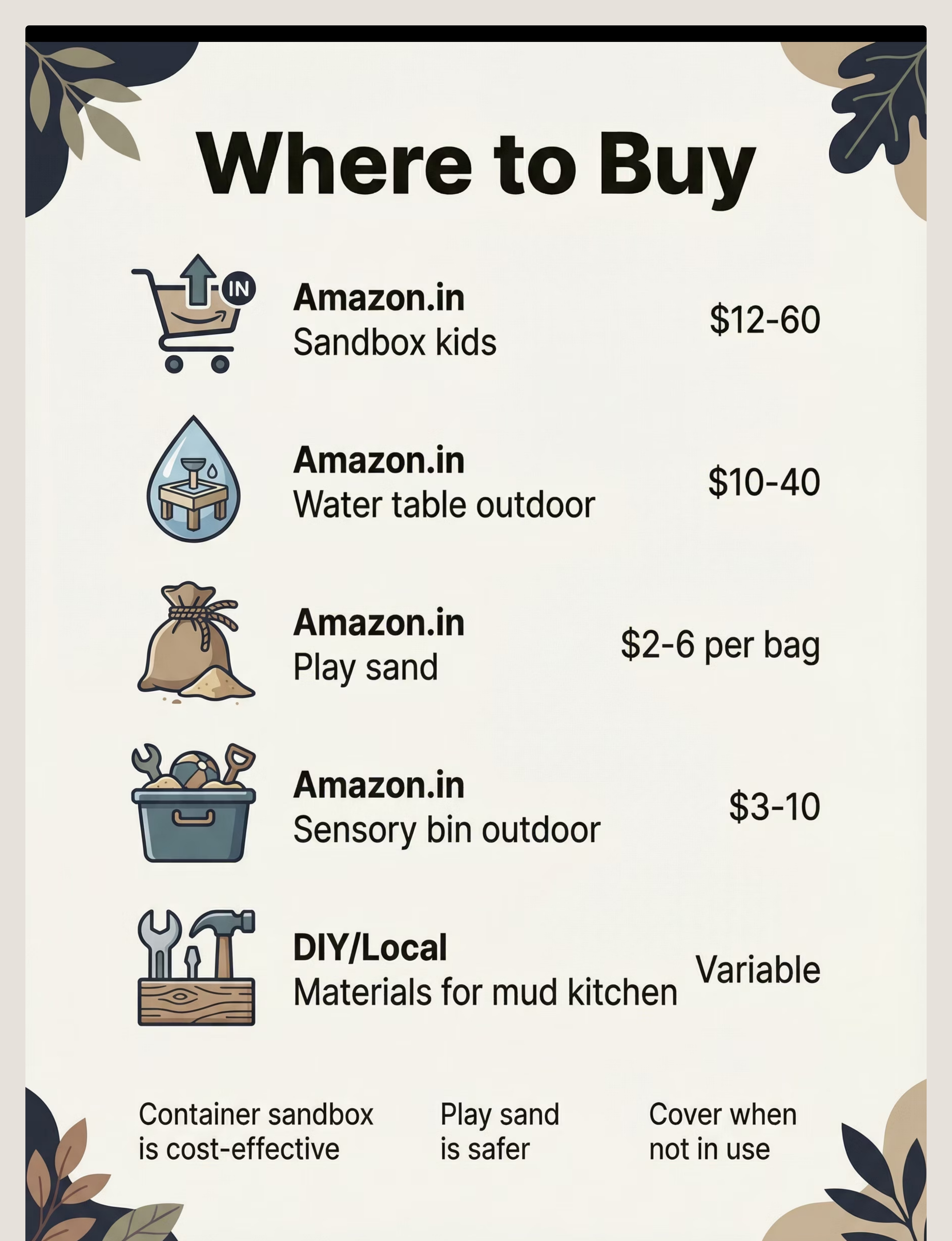
Where to Buy in India
Availability: Widely Available across online and local channels throughout India
Amazon.in
Search Term: "sandbox kids"
Price Range: ₹1,000–5,000
Amazon.in
Search Term: "water table outdoor"
Price Range: ₹800–3,000
Amazon.in
Search Term: "play sand"
Price Range: ₹200–500 per bag
Amazon.in
Search Term: "sensory bin outdoor"
Price Range: ₹200–800
DIY/Local
Search Term: "materials for mud kitchen"
Price Range: Variable
Buying Tips ✓
- Container sandbox is most cost-effective starting point
- Play sand is safer than beach sand—always use play-grade
- Cover sandbox when not in use—invest in quality cover
- Rotate sensory bin materials to maintain interest
- Mud kitchen can be simple DIY—repurpose old furniture
- Start with one option and expand based on success
Red Flags ⚠
- Unsafe sand (not play-grade sand)
- Uncovered sandbox (animal contamination risk)
- Unsupervised water play (drowning hazard)
- Sharp or dangerous materials in play areas

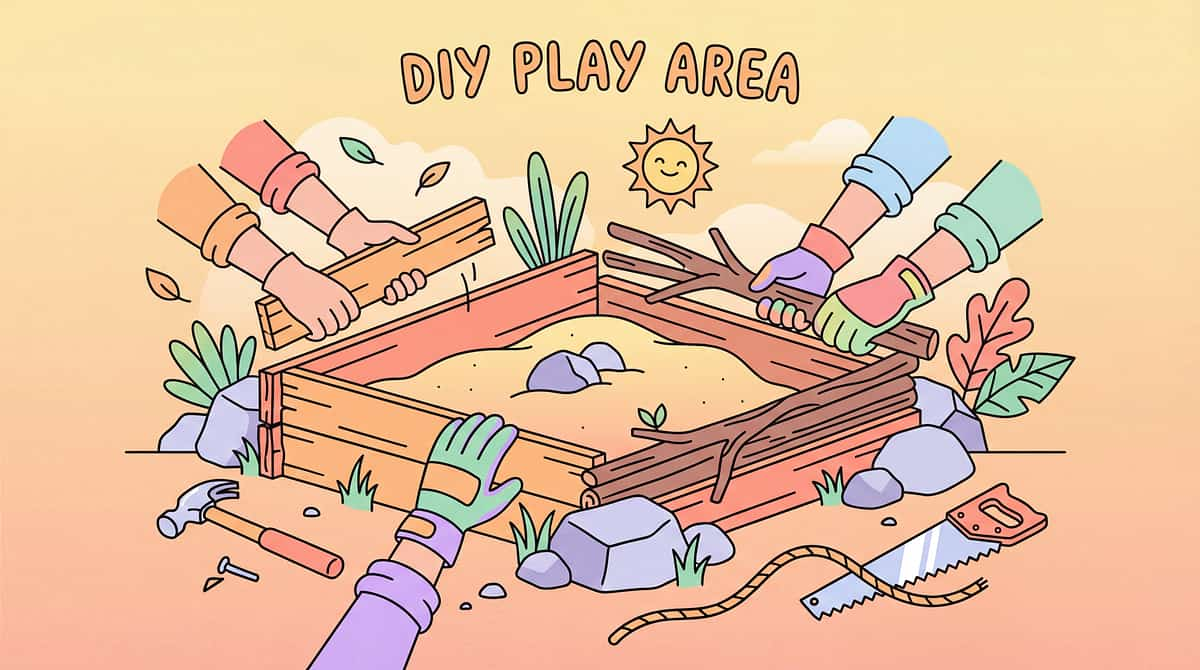
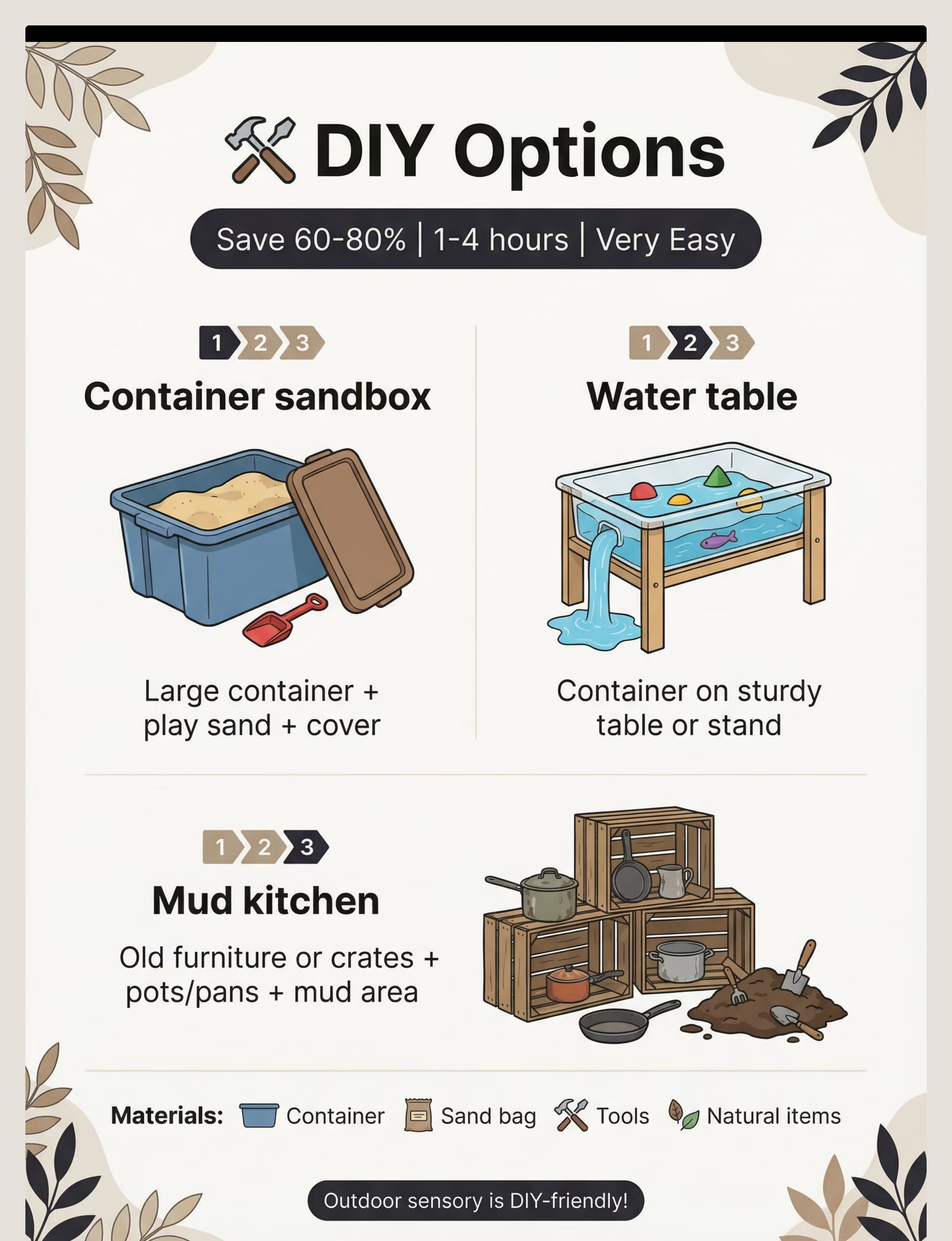
DIY Alternative (Save 60-80%)
Feasibility: Very High | Time Required: 1-4 hours | Cost Savings: 60-80%
1
Container Sandbox
Use a large plastic container or tub, fill with play sand (from hardware or online), and add a waterproof cover. Drill drainage holes if needed.
2
Water Table
Place a water container on a sturdy table or stand at your child's height. Add water play accessories and other floating items.
3
Mud Kitchen
Repurpose old furniture, crates, or pallets for the structure. Include old pots, pans, and utensils for imaginative play. Create a designated mud area nearby.
4
Sensory Garden
Plant natural materials like lamb's ear, lavender, rosemary, or ornamental grasses to provide varied textures and scents.
5
Nature Bins
Collect natural materials such as leaves, sticks, stones, and pinecones. Place them in containers and rotate seasonally to maintain interest.
6
Add Tools
Enhance exploration by adding scoops, various containers, molds, funnels, and measuring cups to all play areas.
DIY vs Commercial Comparison
When to DIY
- Almost always—outdoor sensory is very DIY-friendly
- Container solutions work excellently
- Mud kitchen is perfect DIY project
- Nature and sensory garden can be homemade
- Testing concept before major investment
When to Buy Commercial
- Want finished, polished appearance
- Need large permanent sandbox structure
- Prefer water table with built-in features
- Limited time for DIY projects
Tradeoffs: DIY works excellently for outdoor sensory play with minimal compromise on effectiveness. The therapeutic value comes from the materials and experiences, not expensive equipment.
Preview of sandbox sensory outdoor play Therapy Material
Below is a visual preview of sandbox sensory outdoor play therapy material. The pages shown help educators, therapists, and caregivers understand the structure and content of the resource before use. Materials should be used under appropriate professional guidance.


Share this resource
Help others discover thisLink copied!

Complete Your Outdoor Sensory System
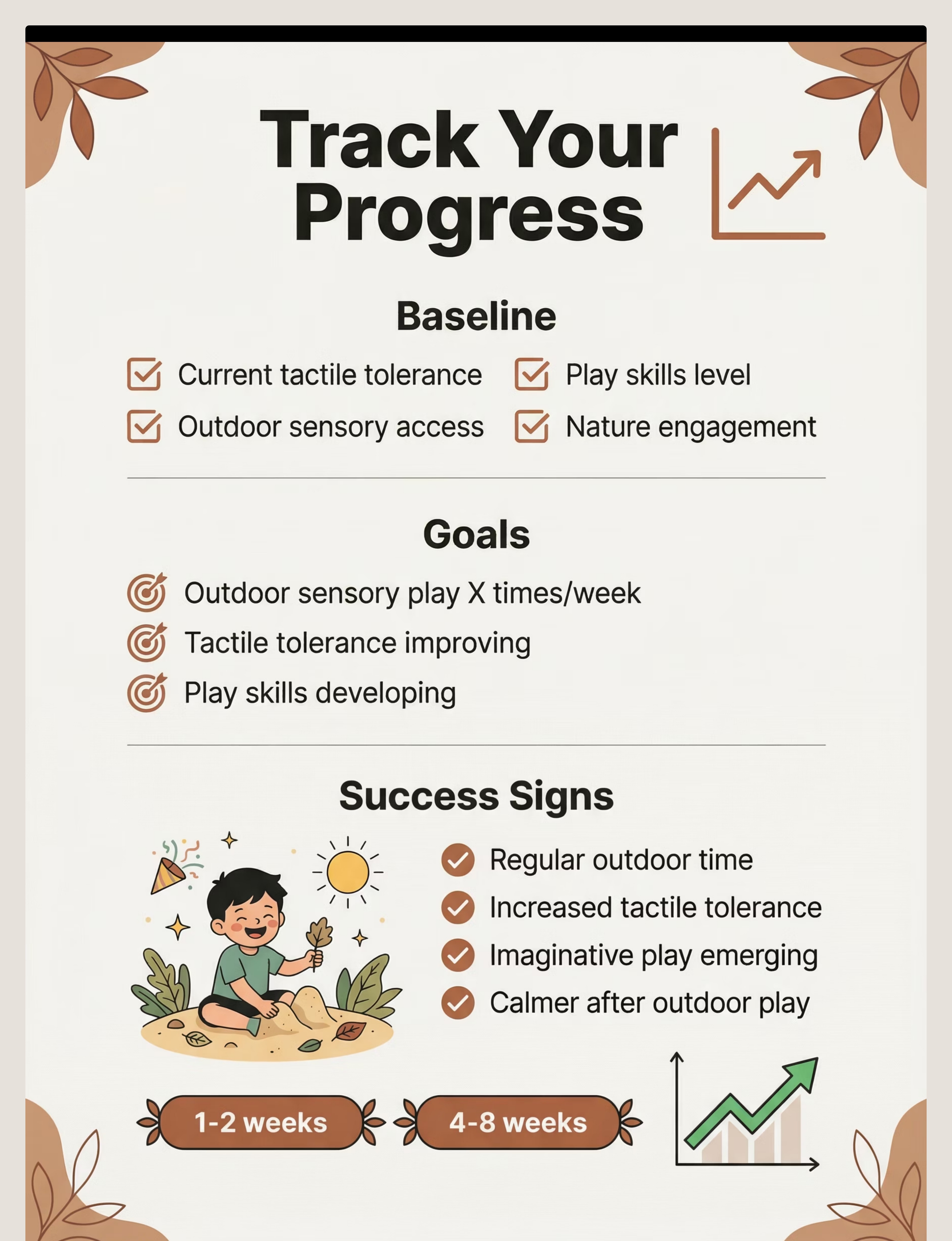
Measuring Success
Baseline Assessment
- Current tactile tolerance level
- Existing outdoor sensory access
- Play skills and imagination development
- Nature engagement and connection
Development Goals
- Child will engage in outdoor sensory play [specify frequency] times per week
- Tactile tolerance will improve with varied materials
- Play skills and imagination will develop
- Nature connection will build through regular exposure
Success Indicators
- Regular outdoor sensory time established in routine
- Increased tactile tolerance and decreased avoidance
- Imaginative play emerging during outdoor activities
- Calmer behavior after outdoor sensory play
- Child-initiated requests for outdoor play
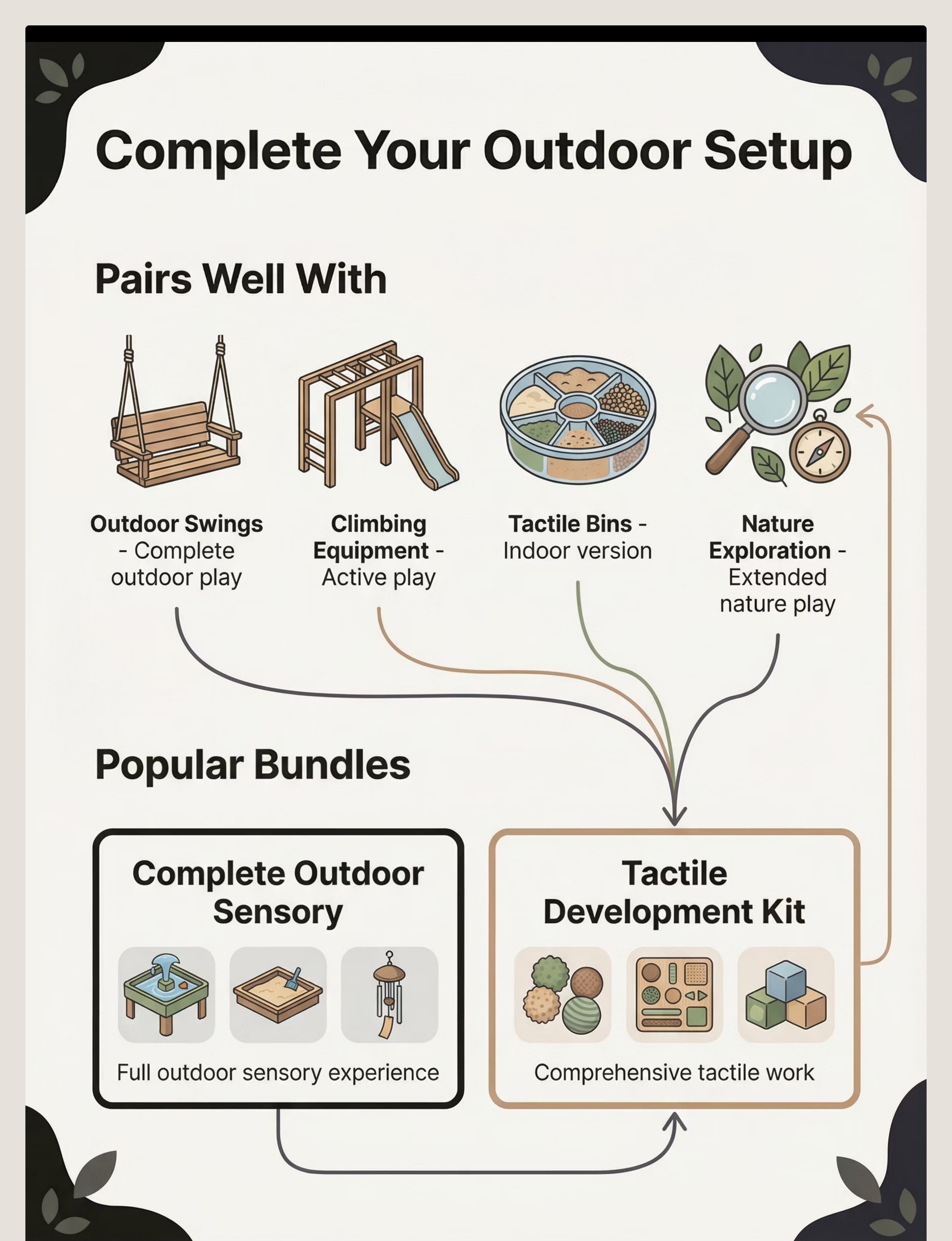
Pair It With...

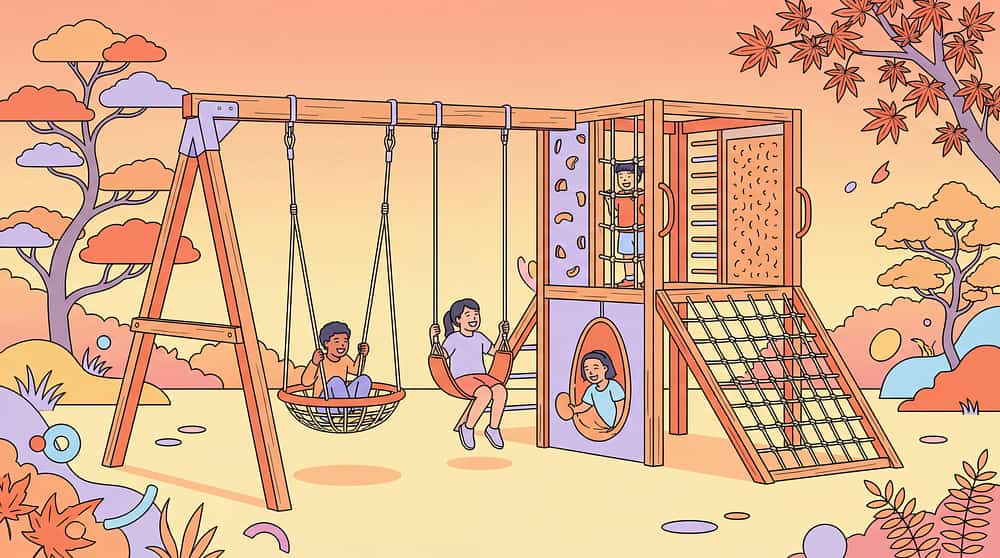
Outdoor Swings (ID: 15.1)
Complete outdoor sensory experience with vestibular input. Creates comprehensive outdoor sensory system combining tactile and movement.

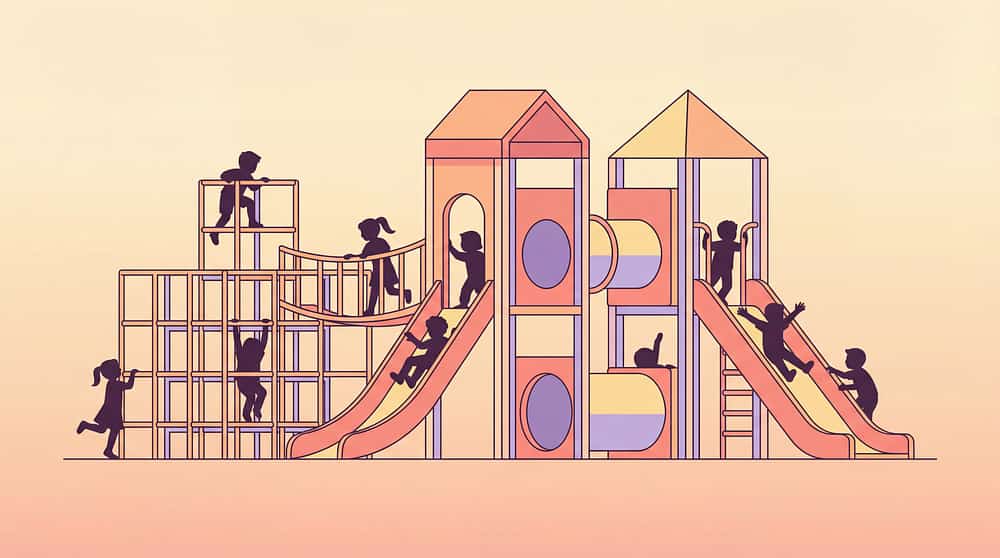
Climbing Equipment (ID: 15.2)
Add active outdoor play and proprioceptive input. Complements tactile exploration with gross motor development.

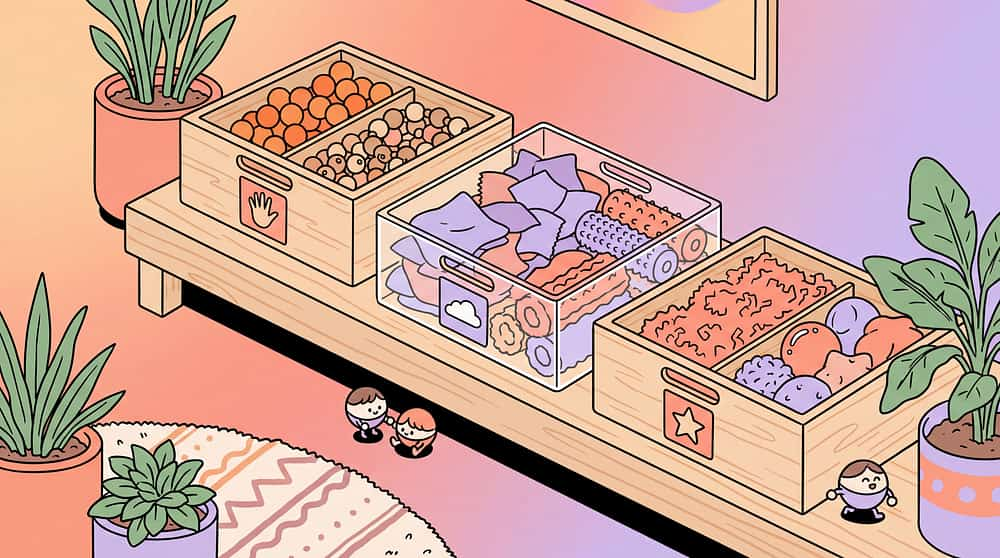
Tactile Bins (ID: 1.8)
Indoor alternative for weather-dependent days. Extends tactile work indoors when outdoor play isn't possible.

Nature Exploration (ID: 15.4)
Extended nature play and learning opportunities. Deepens connection to natural world beyond sensory play.
Recommended Bundles:
- Complete Outdoor Sensory: Sandbox (15.3) + Nature Exploration (15.4) + Outdoor Swings (15.1) = Full outdoor sensory experience addressing tactile, vestibular, and nature connection
- Tactile Development Kit: Sandbox (15.3) + Tactile Bins (1.8) + Messy Play Materials (1.9) = Comprehensive indoor and outdoor tactile work for all weather conditions
Quick Summary
Sandbox and sensory outdoor play provides rich tactile exploration and nature connection through sand, water, mud, and natural materials for sensory integration and play development. Core Kit essential (Rank 1 in category), moderate-strong evidence base, OT + SpEd recommended for daily use weather permitting.
sandbox
sensory
outdoor
tactile
water play
nature
OT
SpEd
core-kit
Common Searches: sandbox autism, sensory outdoor play, water table sensory, mud kitchen, sensory garden, tactile play outdoor, nature play sensory
Get Support
FREE National Autism Helpline
Phone: 9100 181 181
Languages: 16+ languages supported
Website: pinnacleblooms.org
Platform Integration
This tool integrates with Pinnacle Blooms Network's comprehensive platform:
- AbilityScore® identifies tactile and sensory needs
- TherapeuticAI® prescribes personalized outdoor sensory activities
- EverydayTherapyProgramme™ includes outdoor sensory in daily routines
- Sensory Index tracks tactile tolerance and integration progress over time
Disclaimer: This is educational information provided by Pinnacle Blooms Network. Always consult qualified occupational therapists, speech-language pathologists, or pediatricians for personalized recommendations. Individual results vary based on child's unique profile, consistency of use, and comprehensive intervention approach.