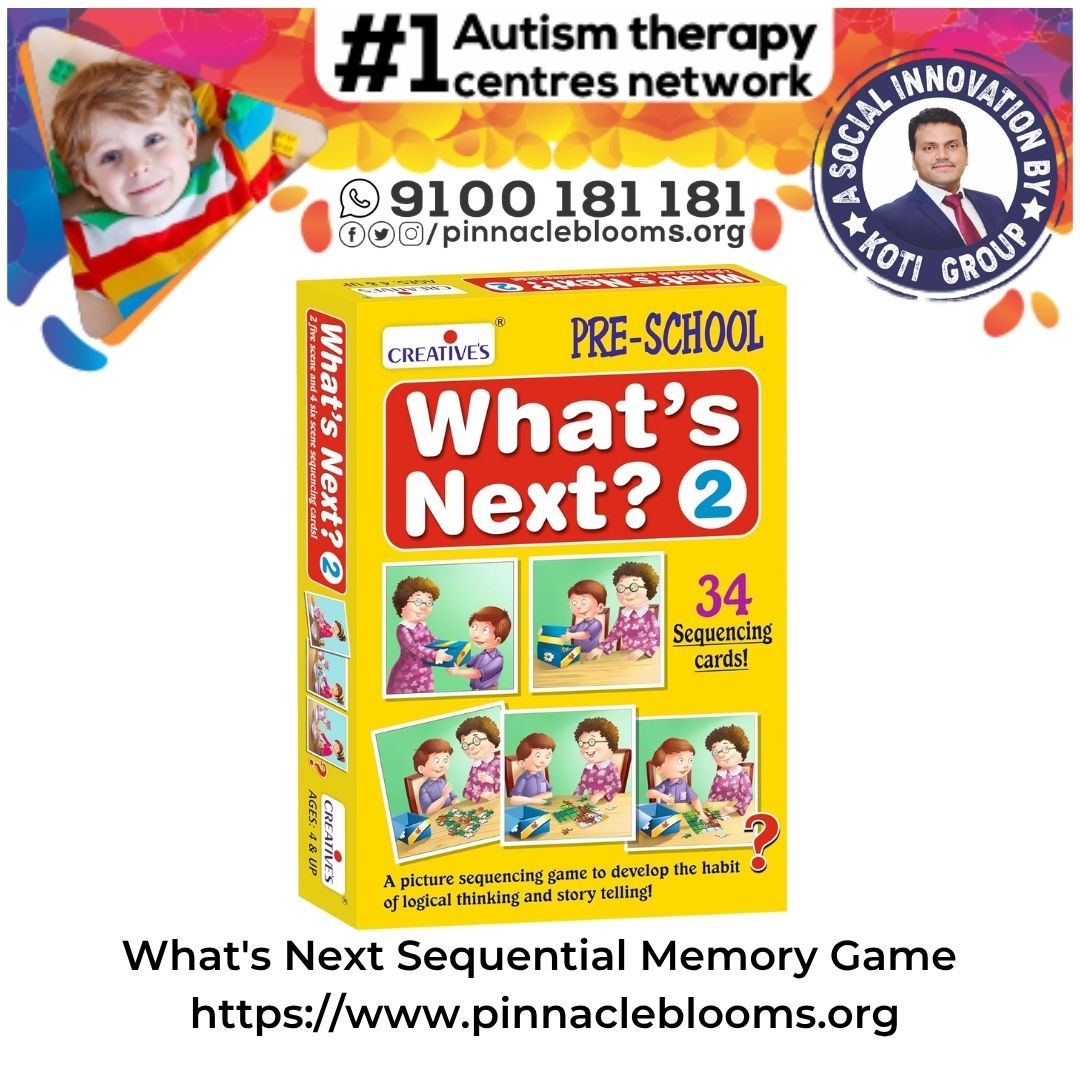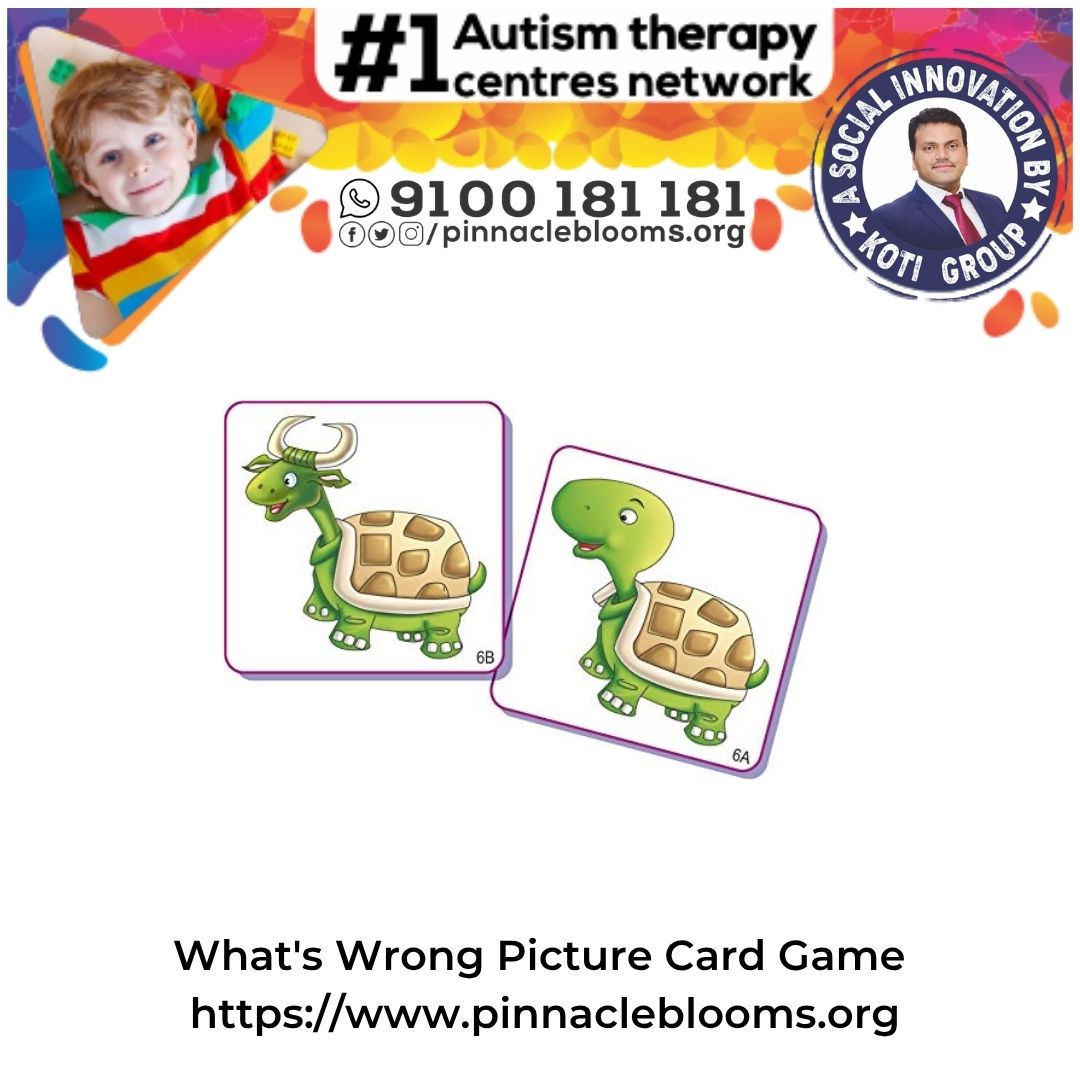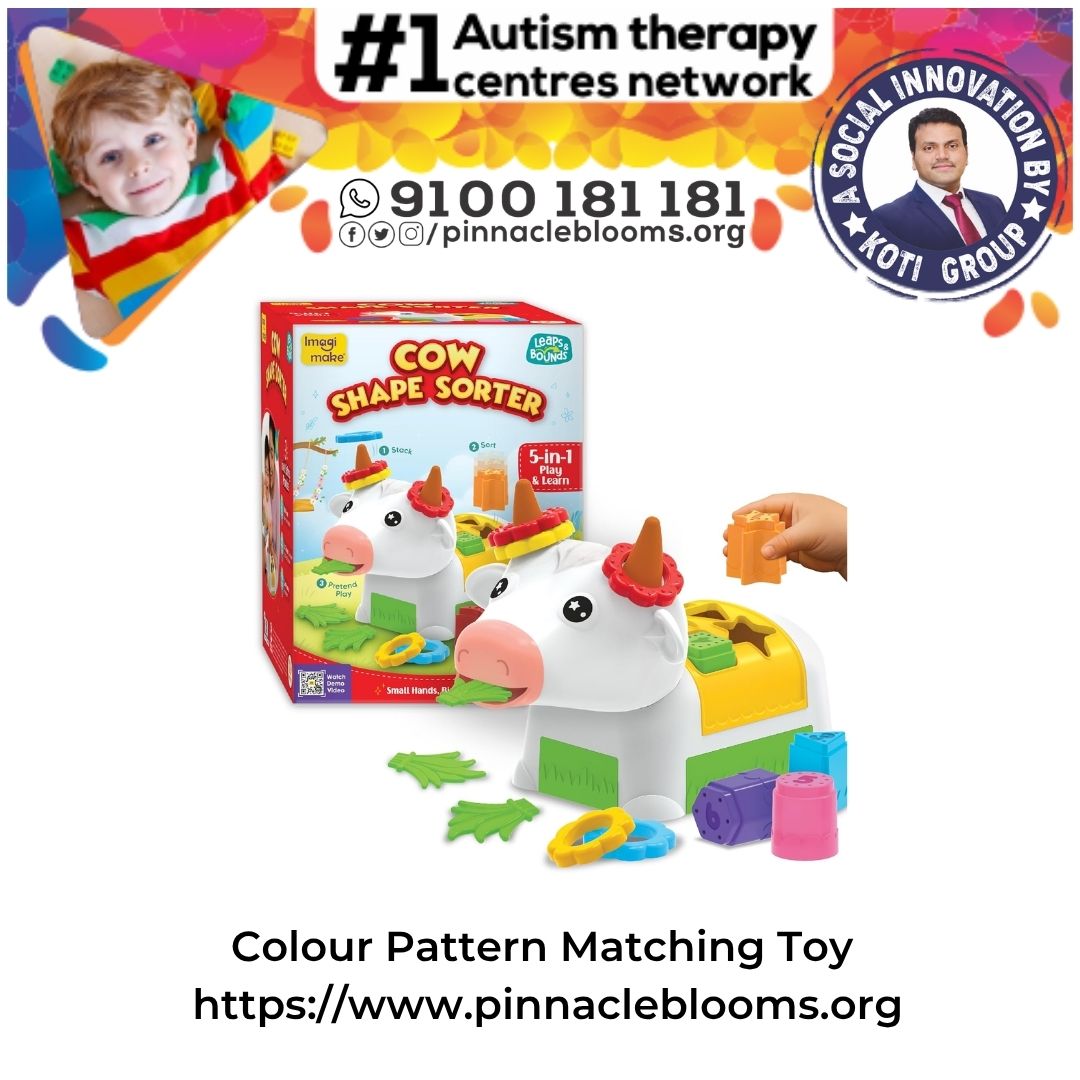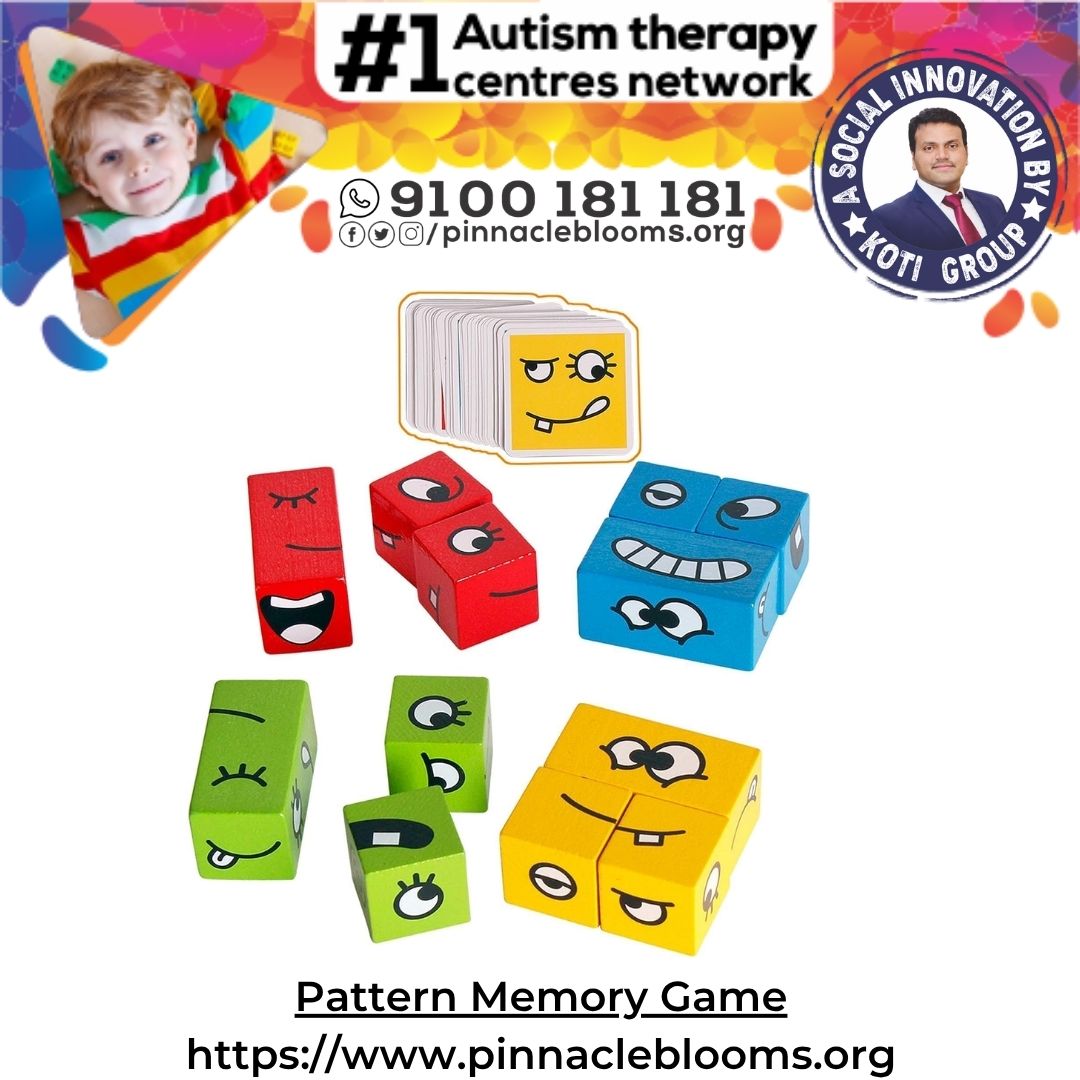














Sequencing & Pattern Activities
Temporal & Sequential Thinking
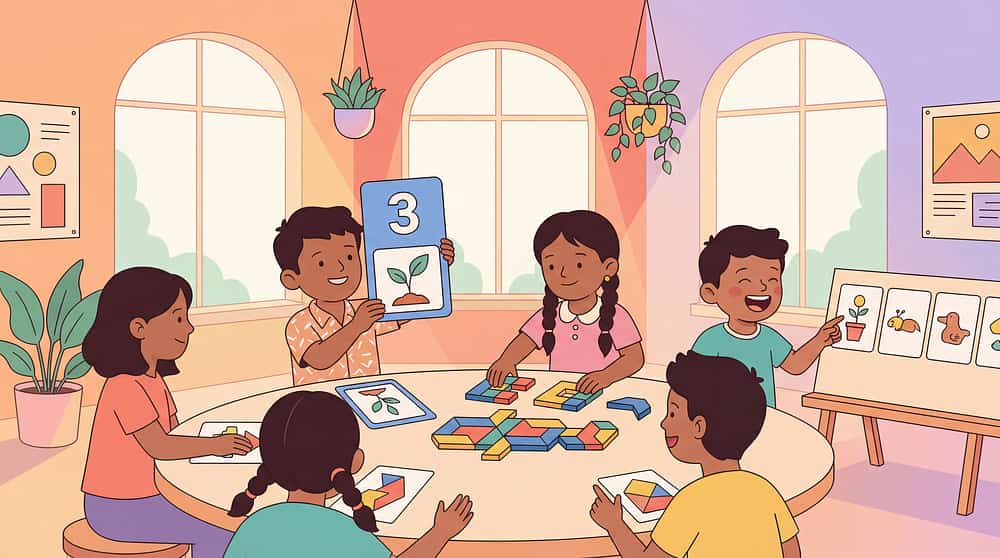
Develops temporal ordering, sequential thinking, and the ability to organize thoughts, follow multi-step directions, and understand cause-and-effect.
Pattern Recognition & Prediction
Enhances the ability to recognize patterns and make predictions, crucial for cognitive development.
Narrative & Mathematical Foundations
Essential for understanding stories and building strong foundational skills in mathematics.
Temporal Ordering
Pattern Recognition
Sequential Thinking
Narrative Understanding
Mathematical Foundation
Prediction
Ages 3-9 Years
Adjustable complexity grows with your child's developing abilities
Home, Clinic, School, Outdoors
Versatile tools work in any learning environment
Best For
Children learning to order events, understand routines, recognize patterns, and build math readiness
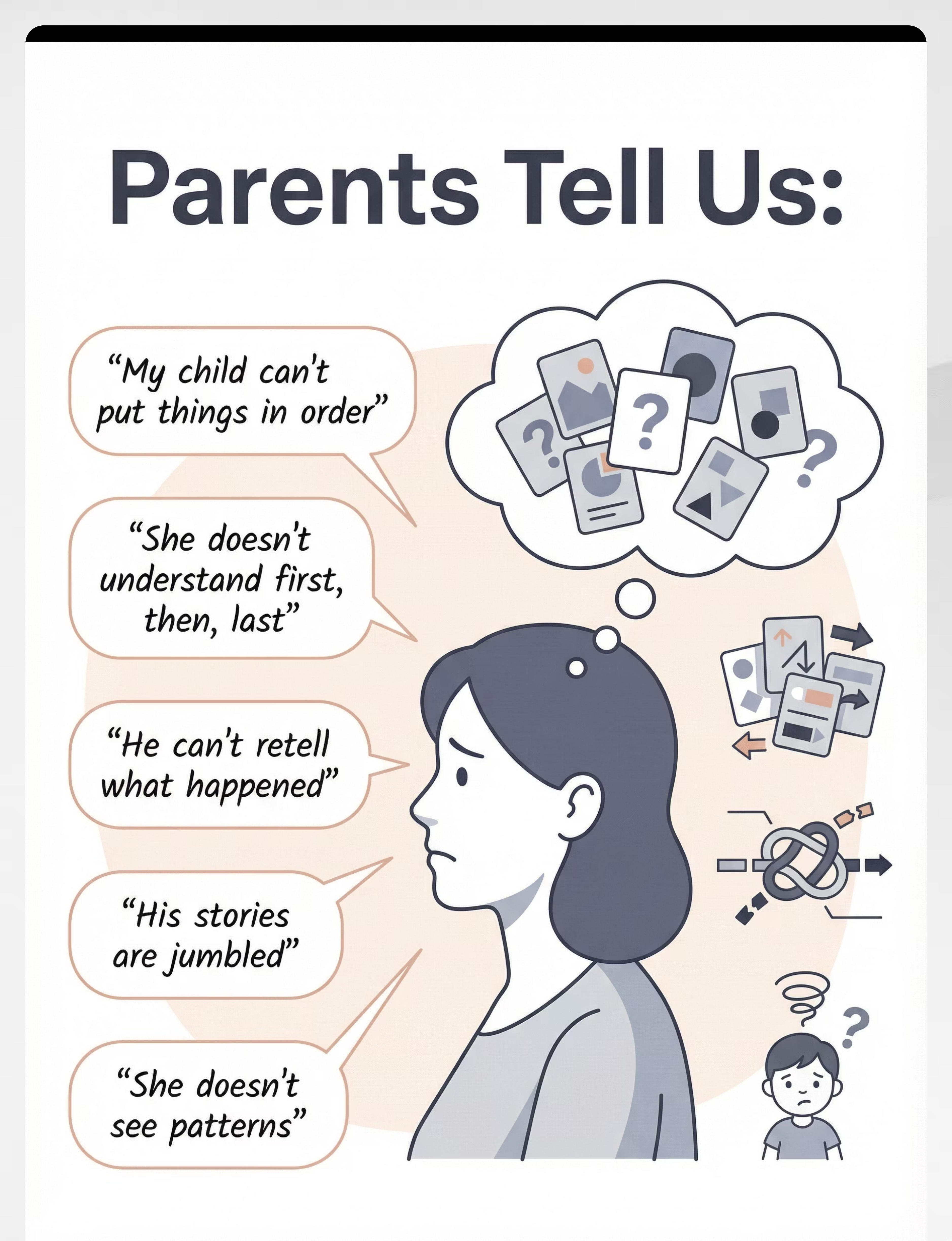
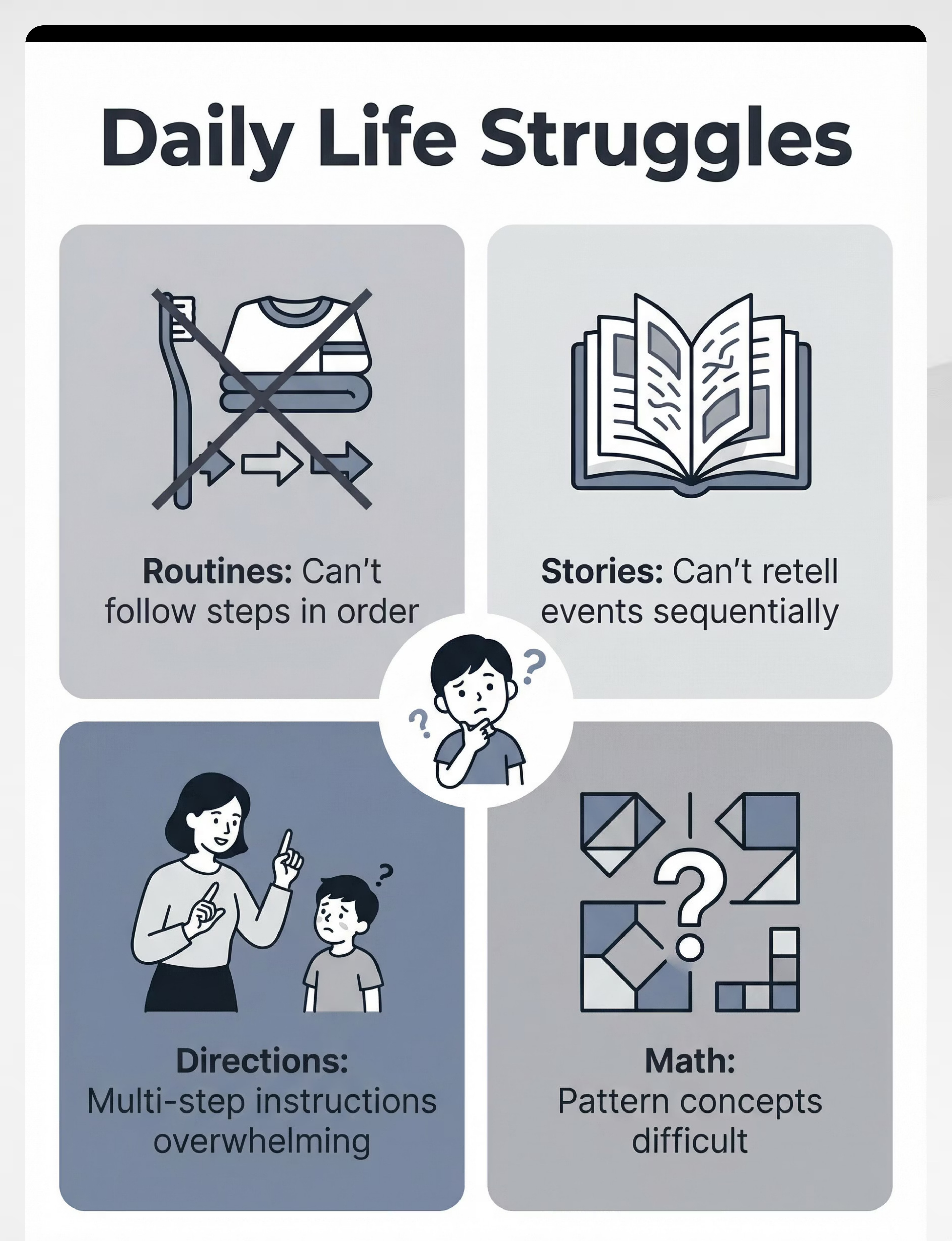
Does This Sound Familiar?
"My child can't put things in order. Everything feels random and disorganized."
"She doesn't understand first, then, last. Following directions is so hard."
"He can't retell what happened in order. His stories are jumbled and confusing."
"She can't follow multi-step directions. I have to repeat everything."
"His stories are jumbled and confusing. I can't follow what he's trying to tell me."
"She doesn't see patterns. Math concepts seem completely foreign."
You're not alone. These are common challenges for children developing temporal understanding and pattern recognition. Sequencing and pattern activities provide the structured practice needed to build these essential cognitive skills.
A Day Without the Right Support
Morning Routines
Can't understand or follow sequence of routine. Needs every step prompted. Getting ready takes forever.
Transitions
What order does it go? Confusion about what comes next. Resistance to changes.
School & Therapy
Struggles with multi-step instructions. Can't retell or understand story order. Pattern concepts are mysterious.
Story Time
I can't remember the story. Tells events in random order. Listeners can't follow.
Without temporal understanding, every part of the day becomes harder. Children struggle to organize their experiences, follow routines independently, and share their thoughts coherently.
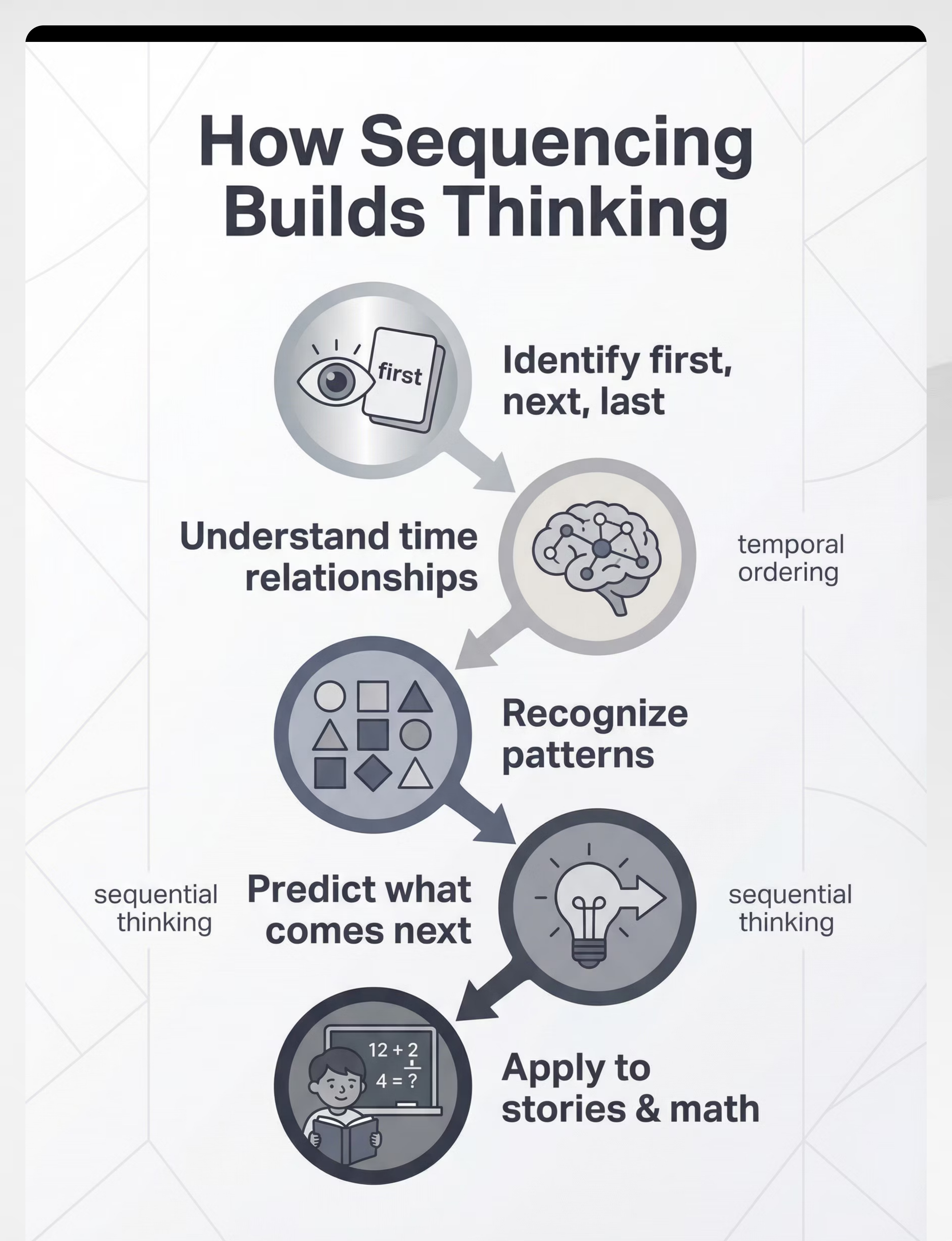
The Science Behind It
Identify Order
Recognize first, next, and last in sequences
Understand Relationships
Grasp temporal connections between events
Recognize Patterns
Identify repeating elements and structures
Predict Outcomes
Anticipate what comes next based on patterns
Apply Broadly
Transfer skills to stories, routines, math concepts
Build Foundation
Create basis for narrative comprehension and mathematical thinking
Temporal Ordering
Pattern Recognition
Sequential Thinking
Narrative Understanding
Mathematical Foundation
Prediction
This systematic progression builds the cognitive architecture children need for complex thinking, storytelling, and academic success.
How to Use It Right
Start with 3-step sequences, progress gradually
Begin where success is achievable. Short sequences build confidence before adding complexity.
Use familiar routines first (brushing teeth, getting dressed)
Known content lets children focus on ordering skills without learning new information simultaneously.
Verbalize temporal words (first, next, then, last)
Explicit language teaching embeds vocabulary needed for independent temporal thinking.
Patterns: start with AB, progress to ABC, AABB, etc.
Systematic pattern complexity development ensures mastery at each level before advancing.
Connect sequencing to daily life routines
Functional application ensures skills transfer beyond practice activities into real-world independence.
Story retelling reinforces sequencing
Narrative practice strengthens temporal skills while building language and comprehension abilities.
Duration: 10-20 minutes daily with varied activities keeps practice engaging and effective.
Expert Voice
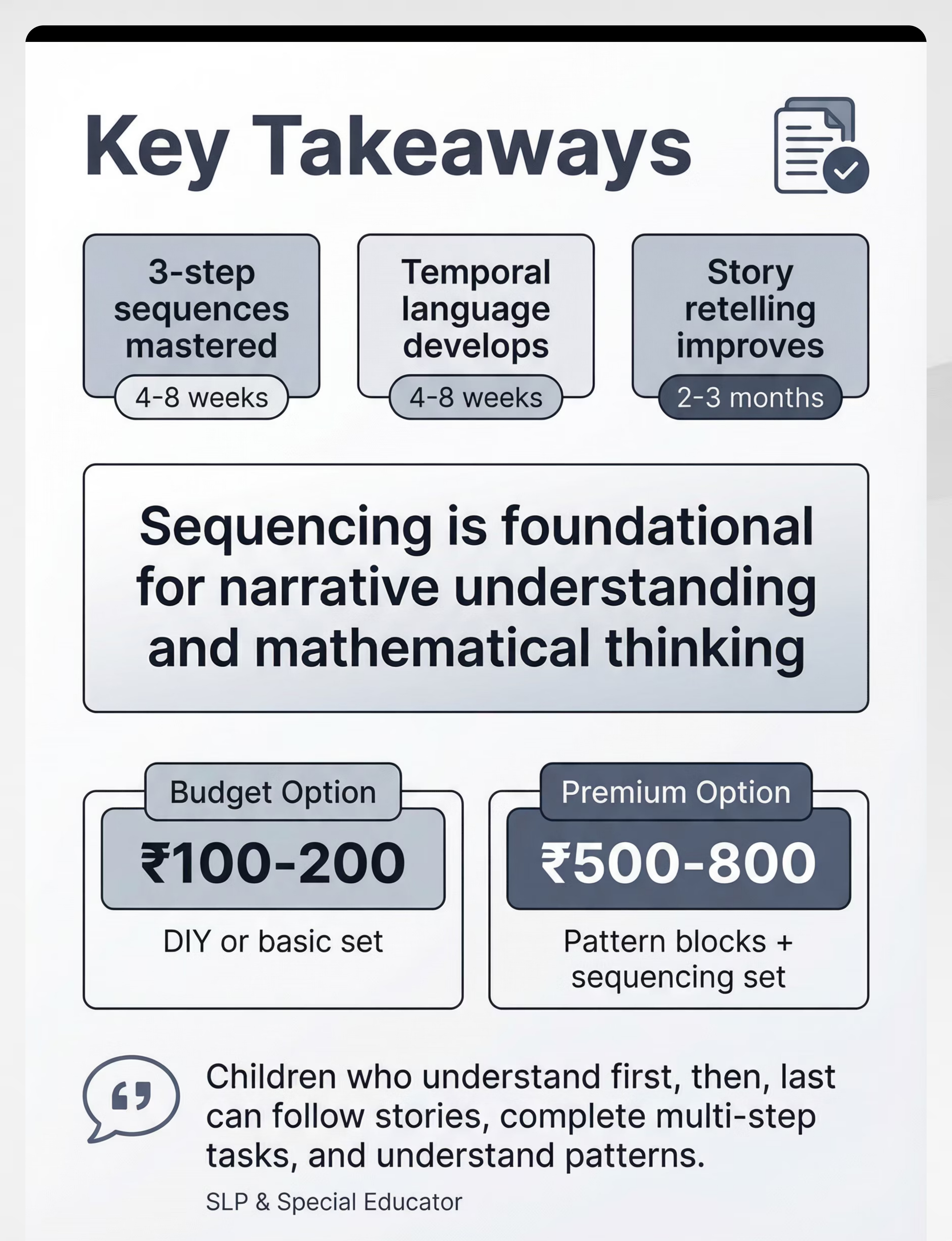
"Sequencing is fundamental to both narrative comprehension and mathematical thinking. Children who understand 'first, then, last' can follow stories, complete multi-step tasks, and understand patterns. It's a cornerstone skill."
— Speech-Language Pathologist & Special Educator
SpEd + SLP Recommended
Collaborative endorsement from special educators and speech-language pathologists
Strong Evidence
Research-backed effectiveness for temporal and pattern skill development
Rank #1 in Category
Top-rated tool in Cognitive & Learning category
Core Kit Essential
Foundational tool recommended for every therapy toolkit
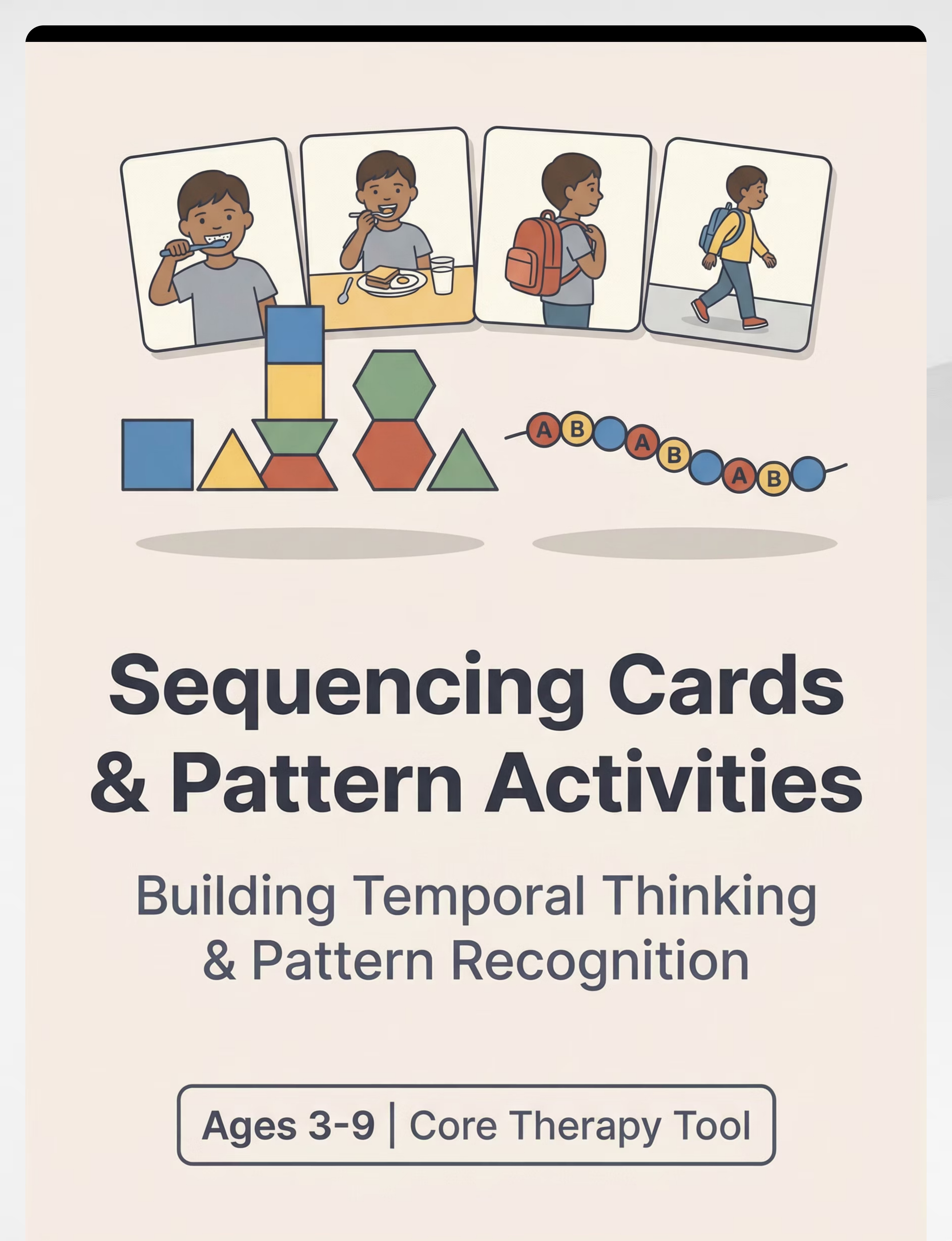
sequencing-cards-pattern-activities therapy material
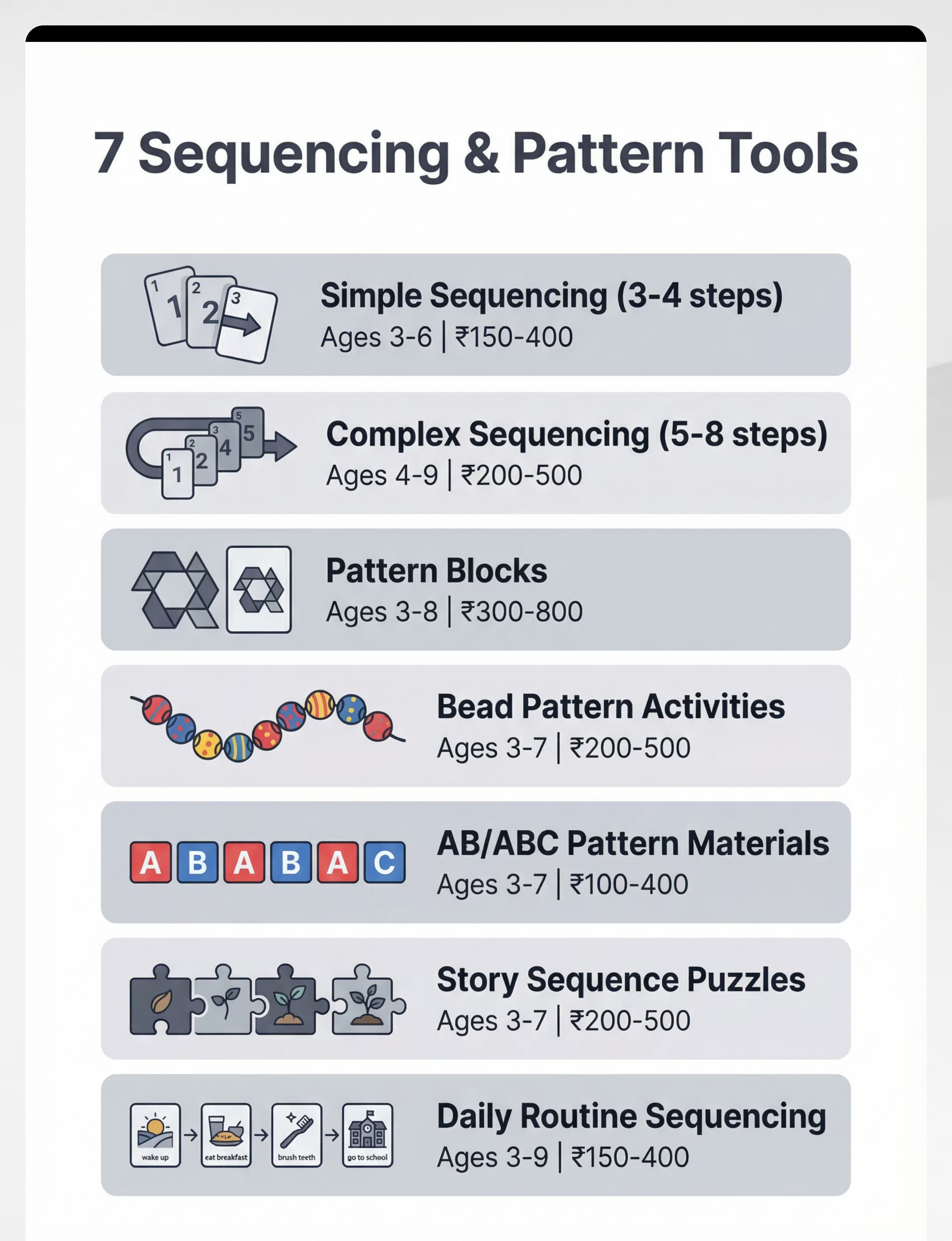
Choose Your Option (7 Variants)
Select the right sequencing and pattern tools based on your child's current skill level, learning goals, and preferred activity types. Each variant addresses specific aspects of temporal ordering and pattern recognition development.
Simple Sequencing Cards
3-4 Steps
Complex Sequencing Cards
5-8 Steps
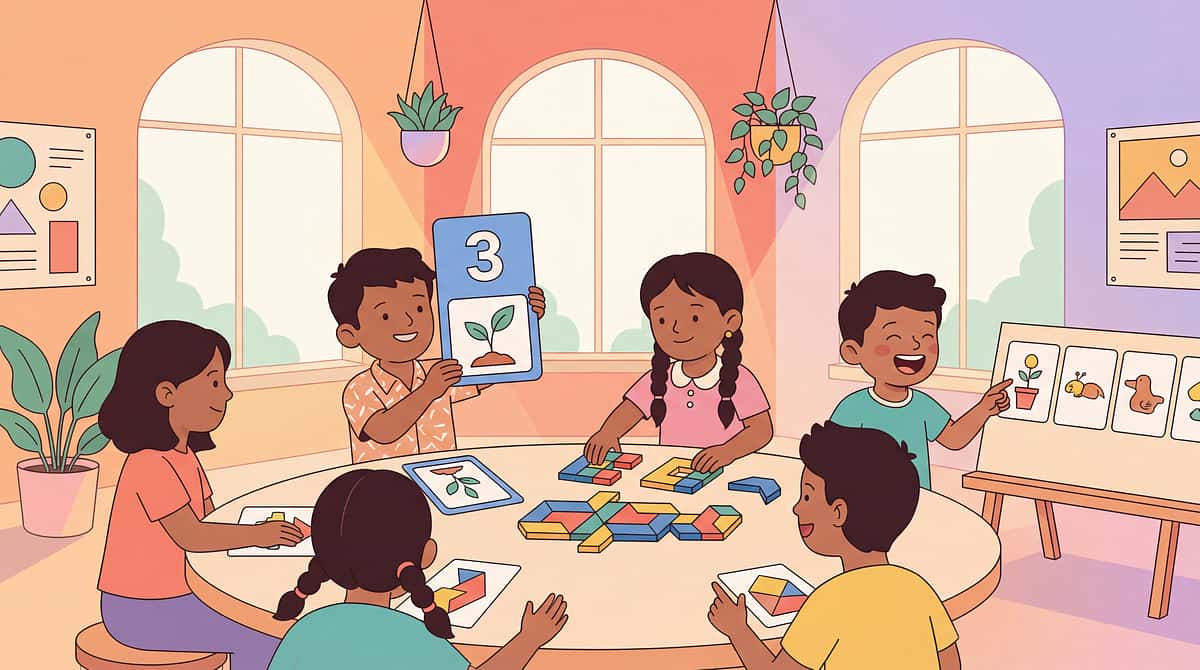
Pattern Blocks with Cards
Visual & spatial patterns
Bead Pattern Activities
Pattern recognition + fine motor
AB/ABC Pattern Materials
Mathematical foundation
Story Sequence Puzzles
Narrative & puzzle skills
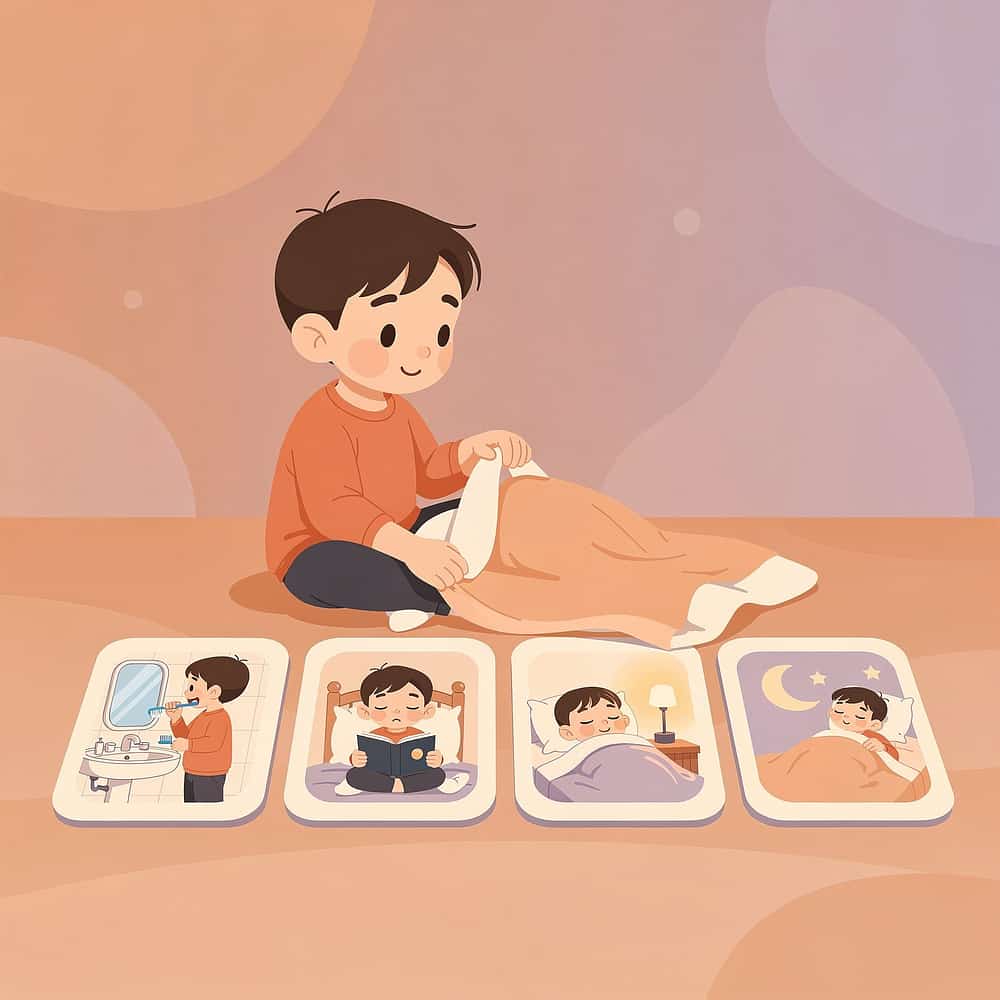
Daily Routine Sequencing
Daily living & understanding
Details for each variant:
1. Simple Sequencing Cards (3-4 Steps)
Best for: Beginners, simple routines, story sequences
Ages: 3-6 years | Settings: Home, Clinic, School
Portability: Very High | Price: ₹150–400
2. Complex Sequencing Cards (5-8 Steps)
Best for: Developing sequencing, narrative understanding
Ages: 4-9 years | Settings: All
Portability: Very High | Price: ₹200–500
3. Pattern Blocks with Cards
Best for: Visual patterns, spatial reasoning
Ages: 3-8 years | Settings: All
Portability: Medium | Price: ₹300–800
4. Bead Pattern Activities
Best for: Pattern recognition + fine motor
Ages: 3-7 years | Settings: All
Portability: High | Price: ₹200–500
5. AB/ABC Pattern Materials
Best for: Mathematical pattern foundation
Ages: 3-7 years | Settings: Home, School, Clinic
Portability: Medium | Price: ₹100–400
6. Story Sequence Puzzles
Best for: Narrative sequencing, puzzle skills
Ages: 3-7 years | Settings: All
Portability: Medium | Price: ₹200–500
7. Daily Routine Sequencing
Best for: Daily living, routine understanding
Ages: 3-9 years | Settings: Home, Clinic
Portability: High | Price: ₹150–400

How to Choose
  • By goal: Narrative skills → Story sequences; Math readiness → Pattern materials; Independence → Daily routines
  • By setting: Home → High portability options; Clinic → Comprehensive pattern blocks; School → Versatile card sets
  • By portability: Travel needs → Simple card sets; Stationary use → Pattern blocks with manipulatives
Specifications & Progression Guide
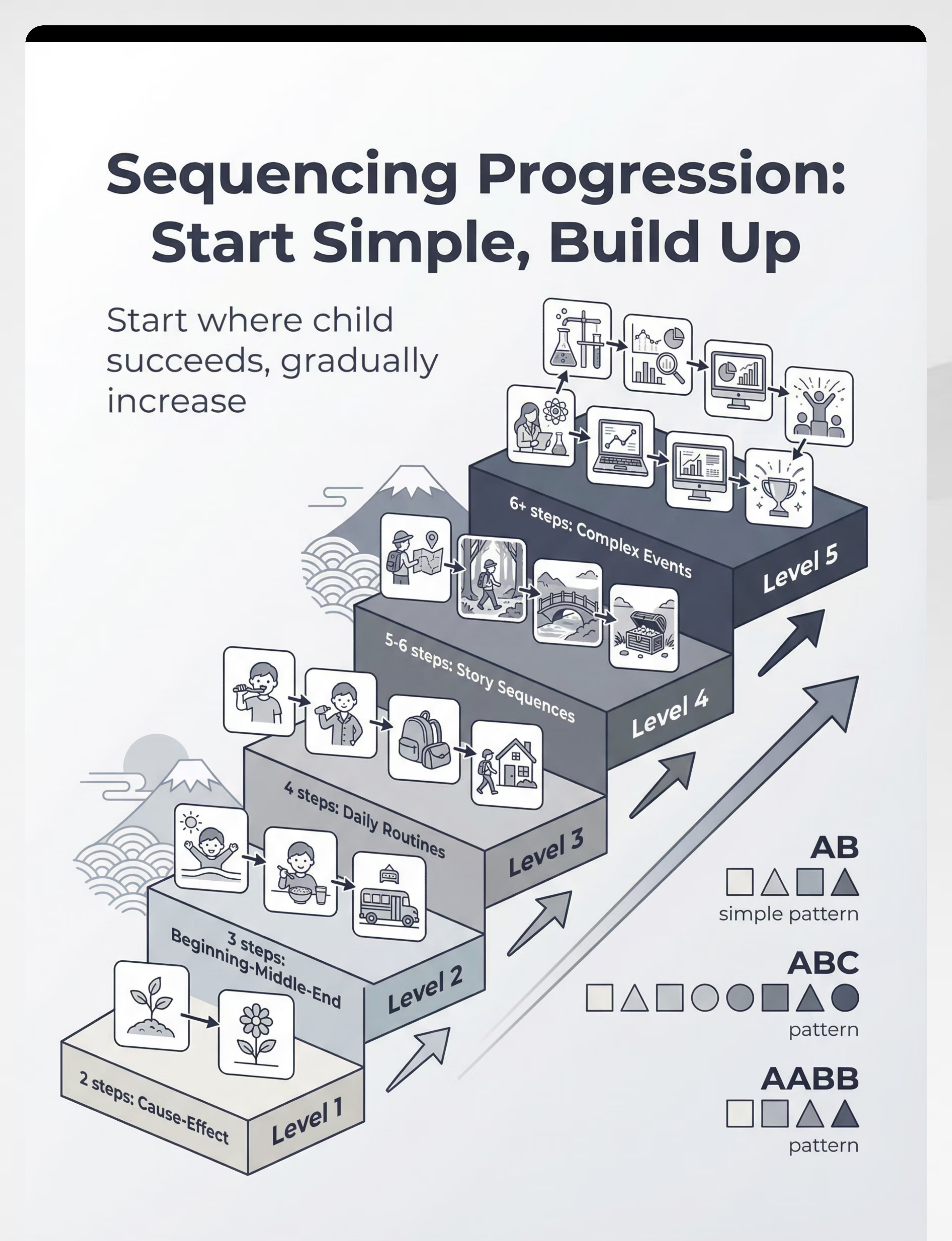
Sequencing Progression
Level 1: 2-step sequences (cause-effect)
Simple before/after relationships
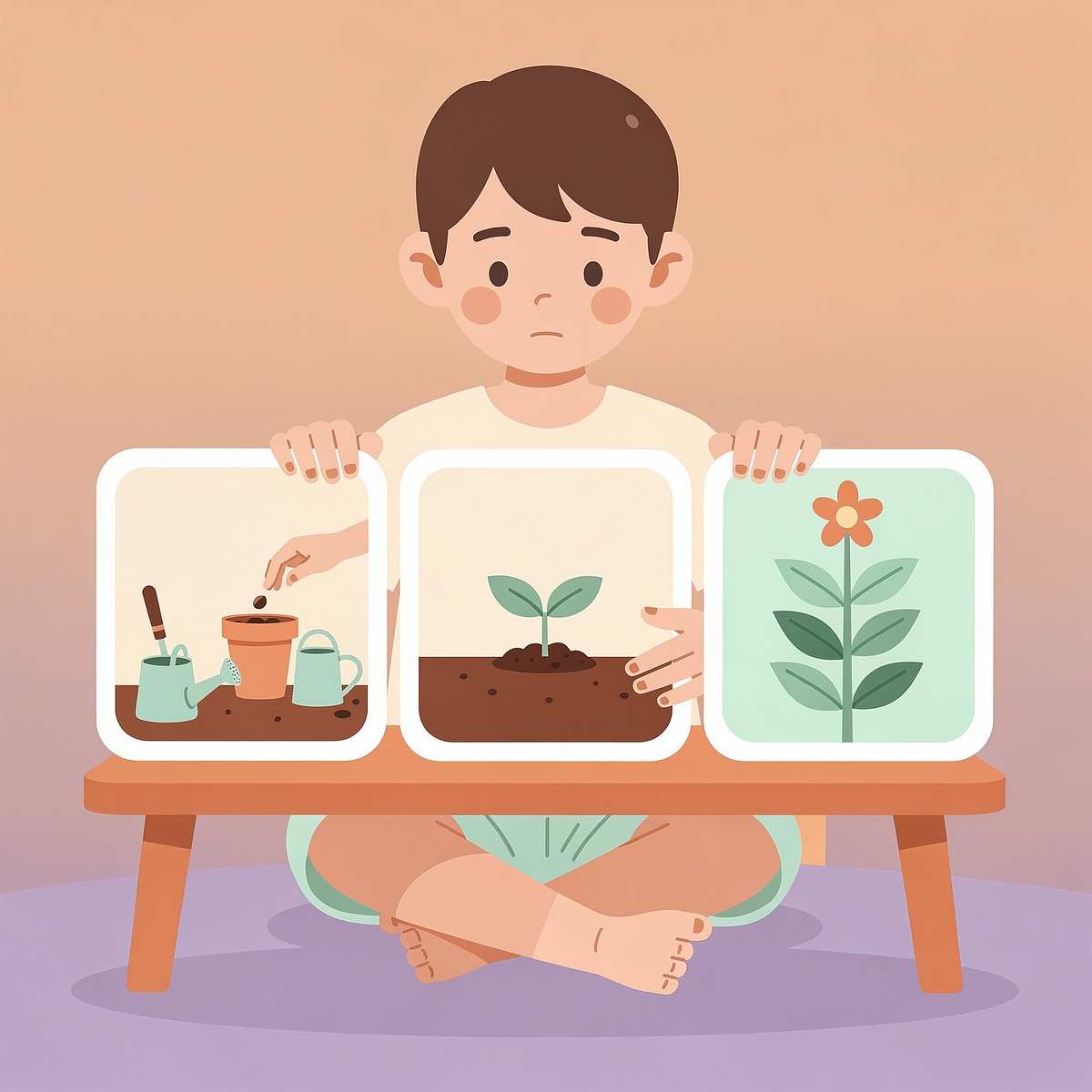
Level 2: 3-step sequences (beginning-middle-end)
Basic story structure understanding
Level 3: 4-step sequences (routine sequences)
Daily routine ordering skills
Level 4: 5-6 step sequences (story sequences)
Extended narrative comprehension
Level 5: Complex sequences (6+ steps, multiple events)
Advanced temporal organization
Pattern Progression
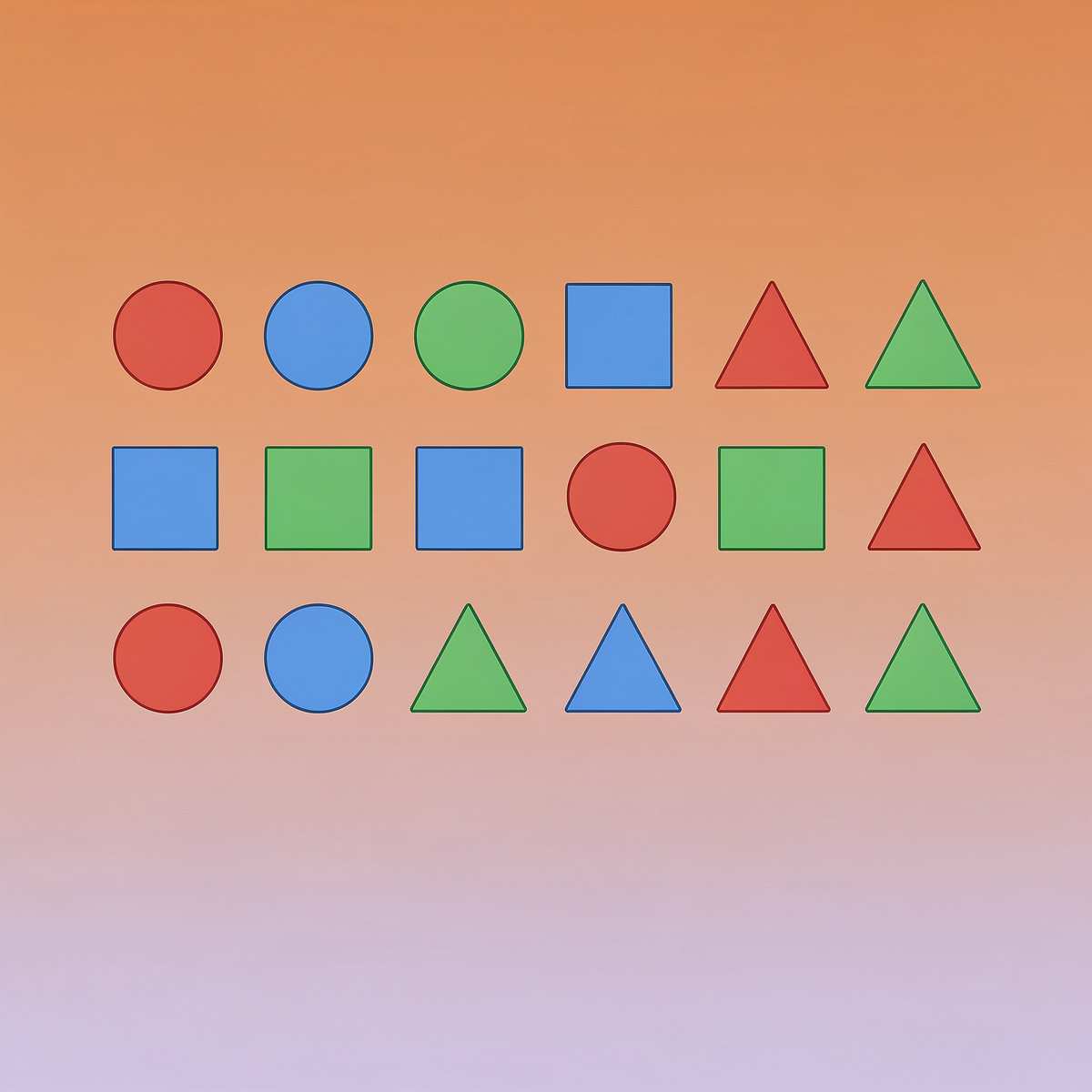
AB Pattern
Two-element repeating pattern (red-blue-red-blue)
ABC Pattern
Three-element repeating pattern (red-blue-green-red-blue-green)
AABB Pattern
Doubled two-element pattern (red-red-blue-blue)
ABB Pattern
Asymmetrical repeating pattern (red-blue-blue-red-blue-blue)
Complex Patterns
Advanced multi-element and growing patterns
Materials & Key Features
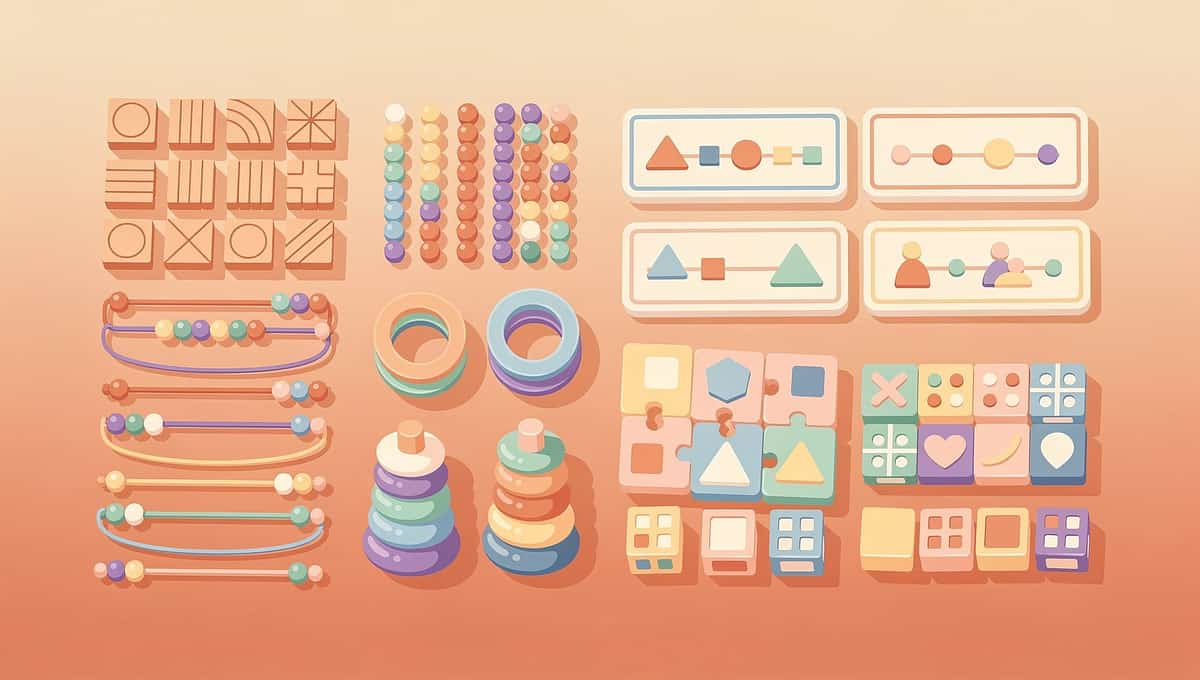
  • Materials: Picture cards, pattern blocks, beads, puzzle pieces
  • Key Features: Clear temporal cues in pictures, logical sequences, appropriate length for skill level, engaging content that maintains interest
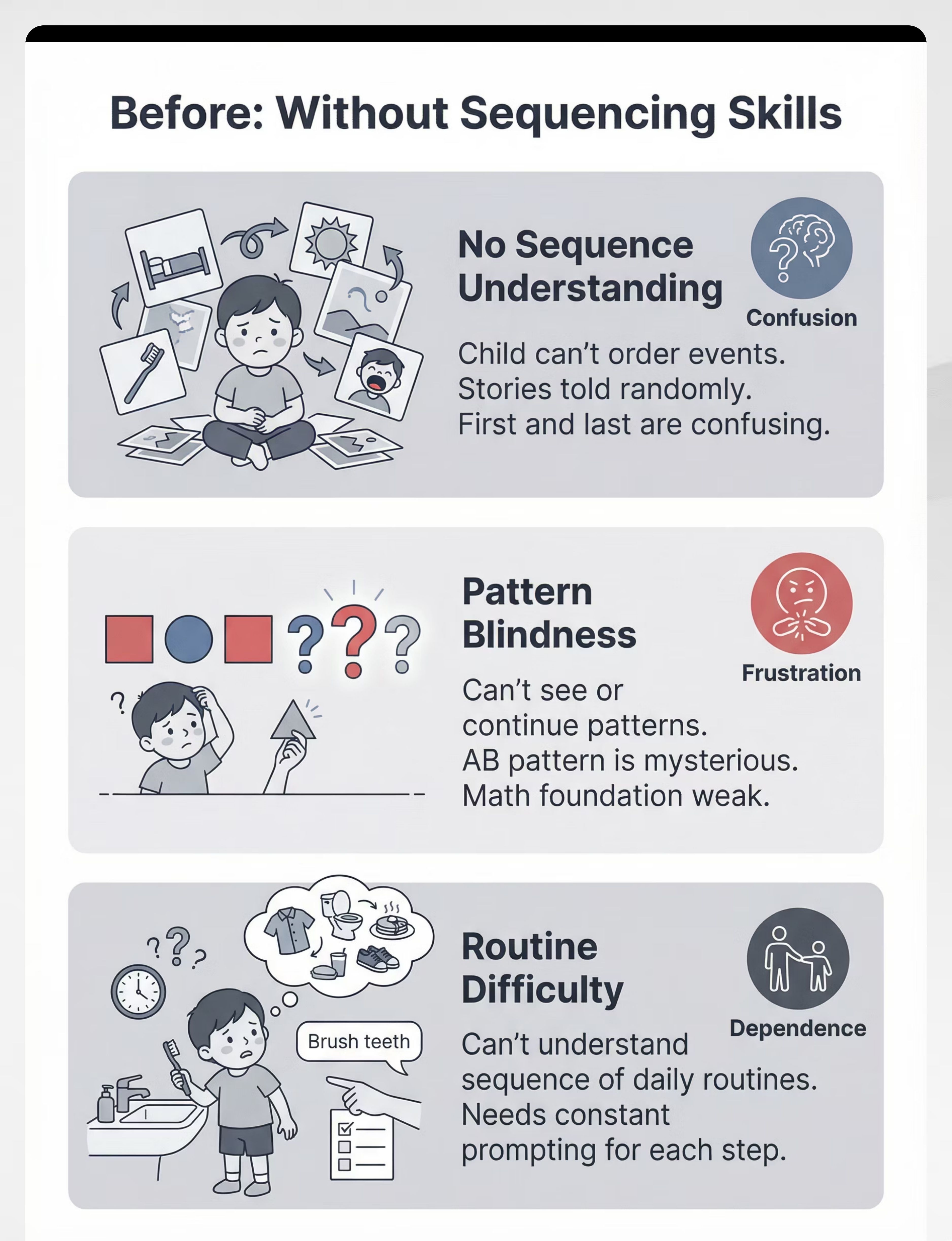
The Struggle (Before)
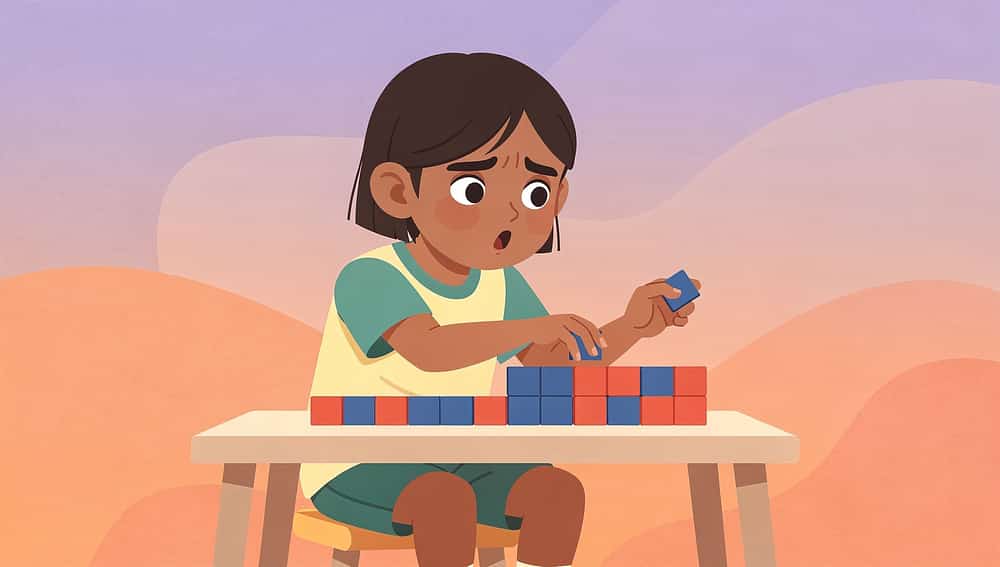
Situation: Child can't order events. Tells stories in random order. Doesn't understand first/last. Sequences are confusing.
Experience: Everything feels disorganized. Following directions is impossible. Daily routines need constant prompting.
Emotion: Confusion, disorganization, frustration
Situation: Child can't see or continue patterns. AB pattern is mysterious. No pattern awareness. Math foundation weak.
Experience: Pattern activities make no sense. Can't predict what comes next. Mathematical thinking doesn't develop.
Emotion: Confusion, frustration, disconnection from math concepts
Situation: Child can't understand sequence of daily routines. Needs constant prompting. Can't do steps in order.
Experience: Morning routine takes forever. Every transition requires adult direction. Independence feels impossible.
Emotion: Dependence, frustration, lack of autonomy
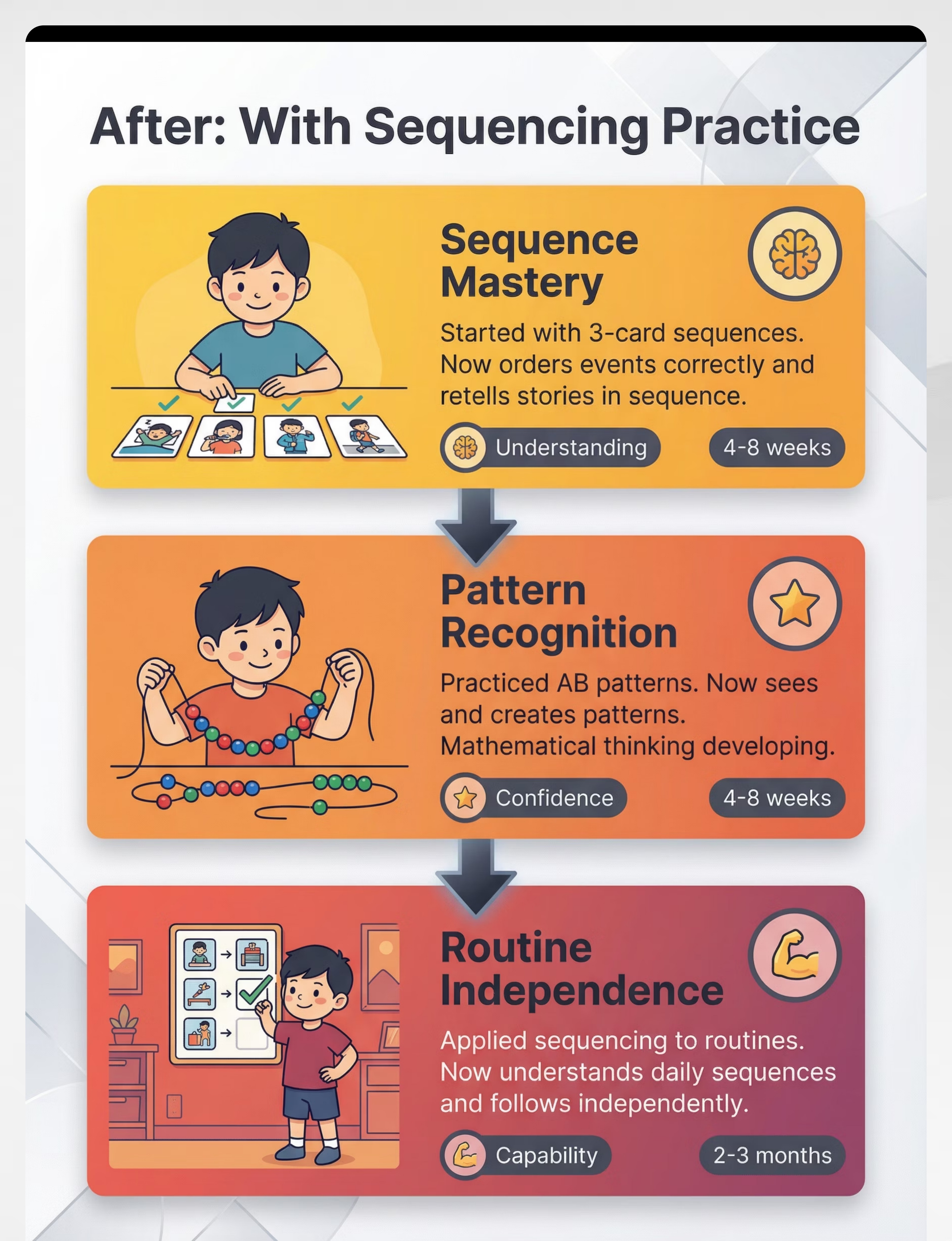
The Breakthrough (After)
No Sequence Understanding → Sequential Mastery
Situation: Started with 3-card sequences. Built to longer sequences gradually. Now orders events correctly. Can retell stories in proper sequence.
Experience: Stories make sense now. Can follow and give multi-step directions. Events have clear order and logic.
Emotion: Understanding, organization, confidence
Timeframe: 4-8 weeks
Pattern Blindness → Pattern Recognition
Situation: Practiced AB patterns with beads and blocks. Now sees and creates patterns independently. Mathematical thinking developing naturally.
Experience: Patterns are everywhere! Can predict what comes next. Math concepts starting to click.
Emotion: Recognition, prediction, mathematical confidence
Timeframe: 4-8 weeks
Routine Difficulty → Routine Independence
Situation: Sequencing practice applied directly to daily routines. Now understands and follows sequences independently. More self-sufficient.
Experience: Morning routine flows smoothly. Knows what comes next. Can complete multi-step tasks without constant reminders.
Emotion: Independence, capability, pride
Timeframe: 2-3 months
What to Expect (Realistic Timelines)
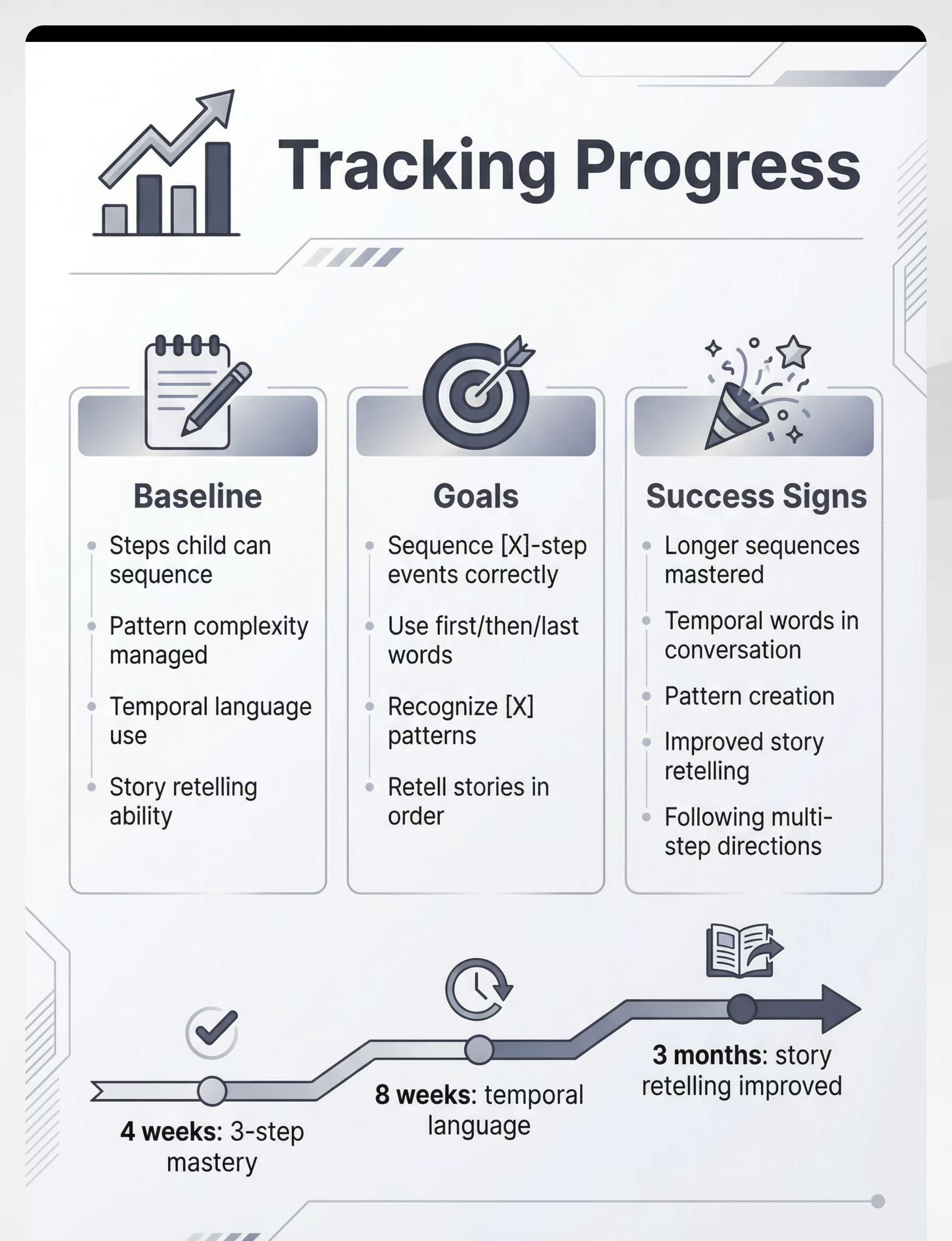
3-step sequencing mastered
Child can correctly order simple 3-card sequences of familiar routines and stories
4-8 weeks
Temporal language develops (first, then, last)
Uses ordering words naturally in conversation and directions
4-8 weeks
Pattern recognition develops
Identifies and continues AB and ABC patterns with various materials
4-8 weeks
Story retelling improves
Recounts events in logical order with clear beginning, middle, and end
2-3 months
Routine understanding improves
Follows multi-step daily routines with decreasing prompts and increasing independence
2-3 months
Mathematical pattern foundation built
Applies pattern thinking to early math concepts and problem-solving
Ongoing development
Progress builds systematically. Each skill reinforces others, creating a strong foundation for narrative and mathematical thinking.
Is This Right for My Child? (2-Minute Check)
Can your child put 3-4 pictures in correct order?
If yes: Basic sequencing developing—ready to progress to longer sequences
If no: Start with simple 2-card sequences showing clear cause-effect relationships
Does your child understand first, next, last?
If yes: Temporal language developing—can advance to complex sequence narration
If no: Practice explicitly with sequencing activities while verbalizing temporal words
Can your child recognize and continue simple patterns?
If yes: Pattern recognition developing—ready for ABC and AABB patterns
If no: Practice AB patterns with concrete, interest-based materials
Can your child retell events in order?
If yes: Narrative sequencing developing—can work on longer story sequences
If no: Build skills with 3-step sequencing cards of familiar routines

Interpretation: 3+ 'yes' answers indicate strong fit for standard sequencing activities. Fewer 'yes' answers suggest starting with simpler variants and building gradually. Every child can develop these skills with appropriate support.
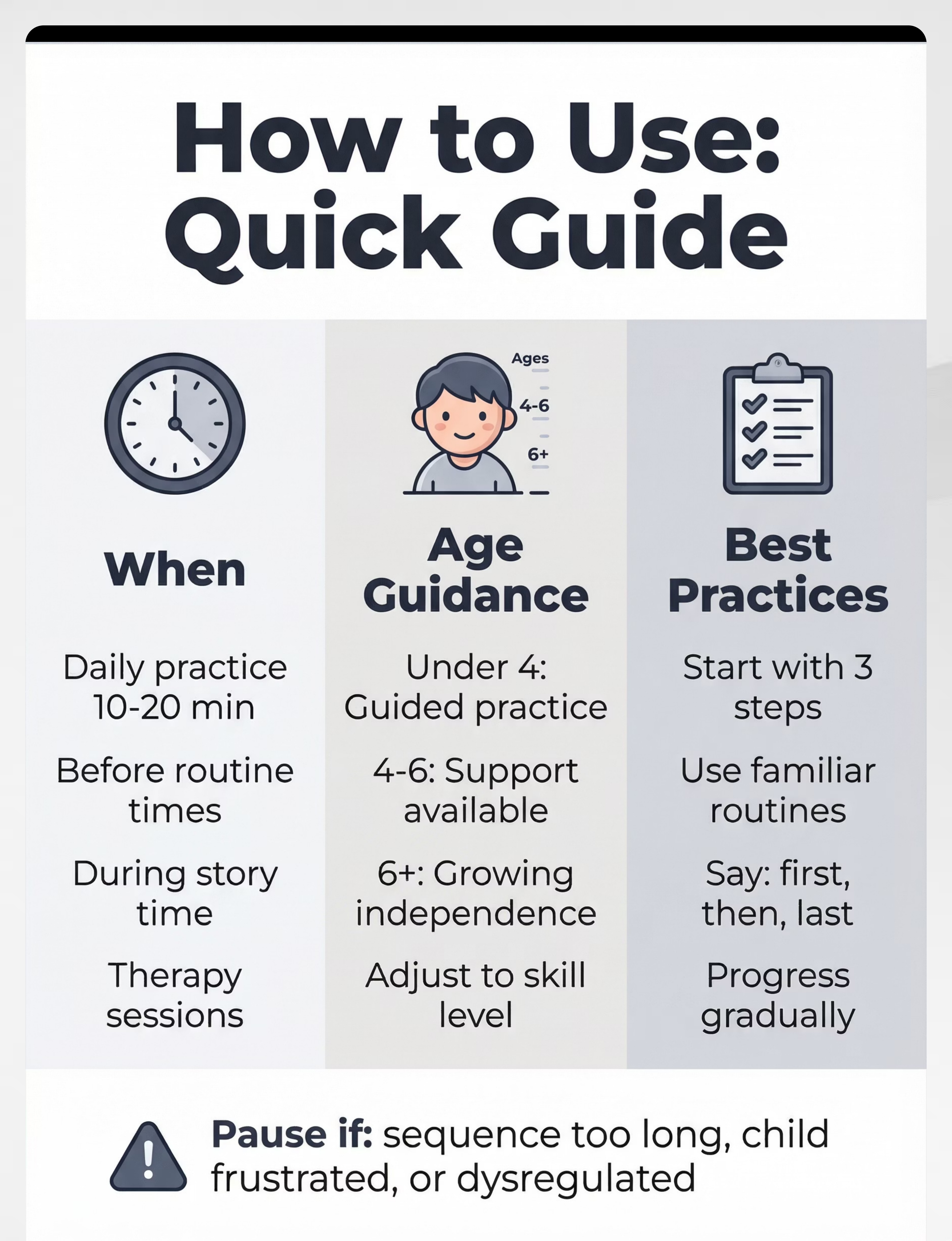
Usage Guide: When & How
When TO Use
Daily cognitive practice
Consistent skill-building sessions
Before or during routine times
Functional application to real activities
Story time (sequence retelling)
Narrative comprehension practice
Therapy sessions
Structured skill development
Math readiness activities
Pattern foundation building
When NOT to Use
When sequence is too long
Shorten to appropriate length for success
When child is dysregulated
Wait for calm, regulated state
As forced activity
Keep practice voluntary and engaging
Supervision by Age
Age Range
Supervision Level
Notes
Under 4 years
Guided practice with modeling
Adult demonstrates, child imitates with support
4-6 years
Support available, increasing independence
Adult nearby, child attempts with decreasing prompts
6+ years
Can work increasingly independently
Self-directed practice with periodic check-ins
Duration & Settings: 10-20 minutes daily with varied activities. Works in Home, School, Clinic, and Outdoors settings.
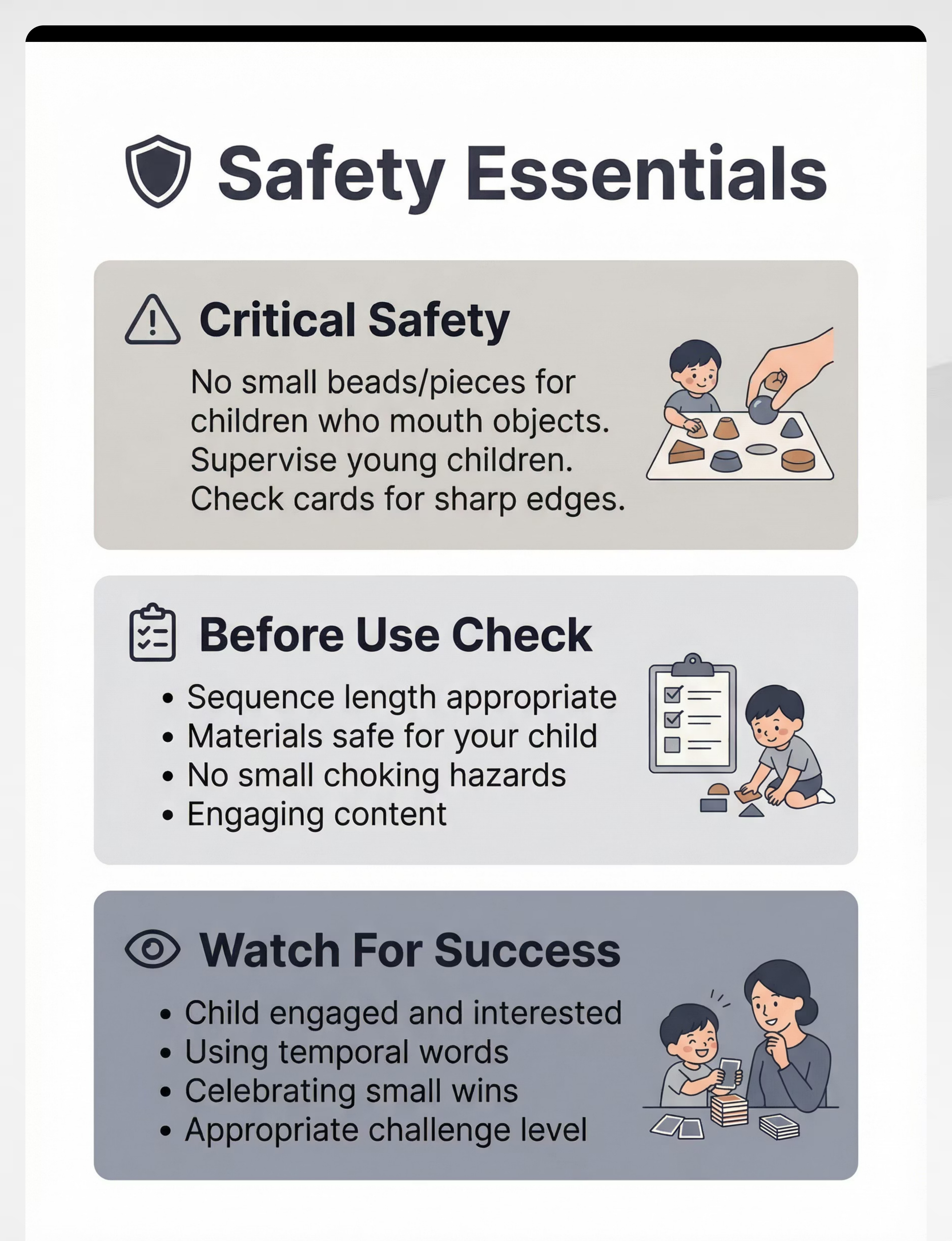
Safety First
Critical Safety
  • No small pattern pieces for children who mouth objects
  • Supervise young children during all activities
  • Check for sharp edges on laminated cards before use
Warnings
  • Small beads and blocks can be choking hazard for children under 3
  • Laminated cards can have sharp corners—file smooth if needed
  • Always supervise bead use with young children
Contraindicated
  • Small pieces for children who mouth objects
  • Sequences too long for working memory capacity
  • Frustrating complexity beyond current skill level
Safety Checklist
Before Use
  • ✓ Sequence length appropriate
  • ✓ Pattern complexity appropriate
  • ✓ Materials safe for child
  • ✓ Engaging content selected
During Use
  • ✓ Child engaged
  • ✓ Verbalizing temporal/pattern language
  • ✓ Appropriate support provided
  • ✓ Celebrating success
Signs of Success
  • ✓ Correct sequencing
  • ✓ Using first/then/last language
  • ✓ Creating and continuing patterns
  • ✓ Applying to daily life
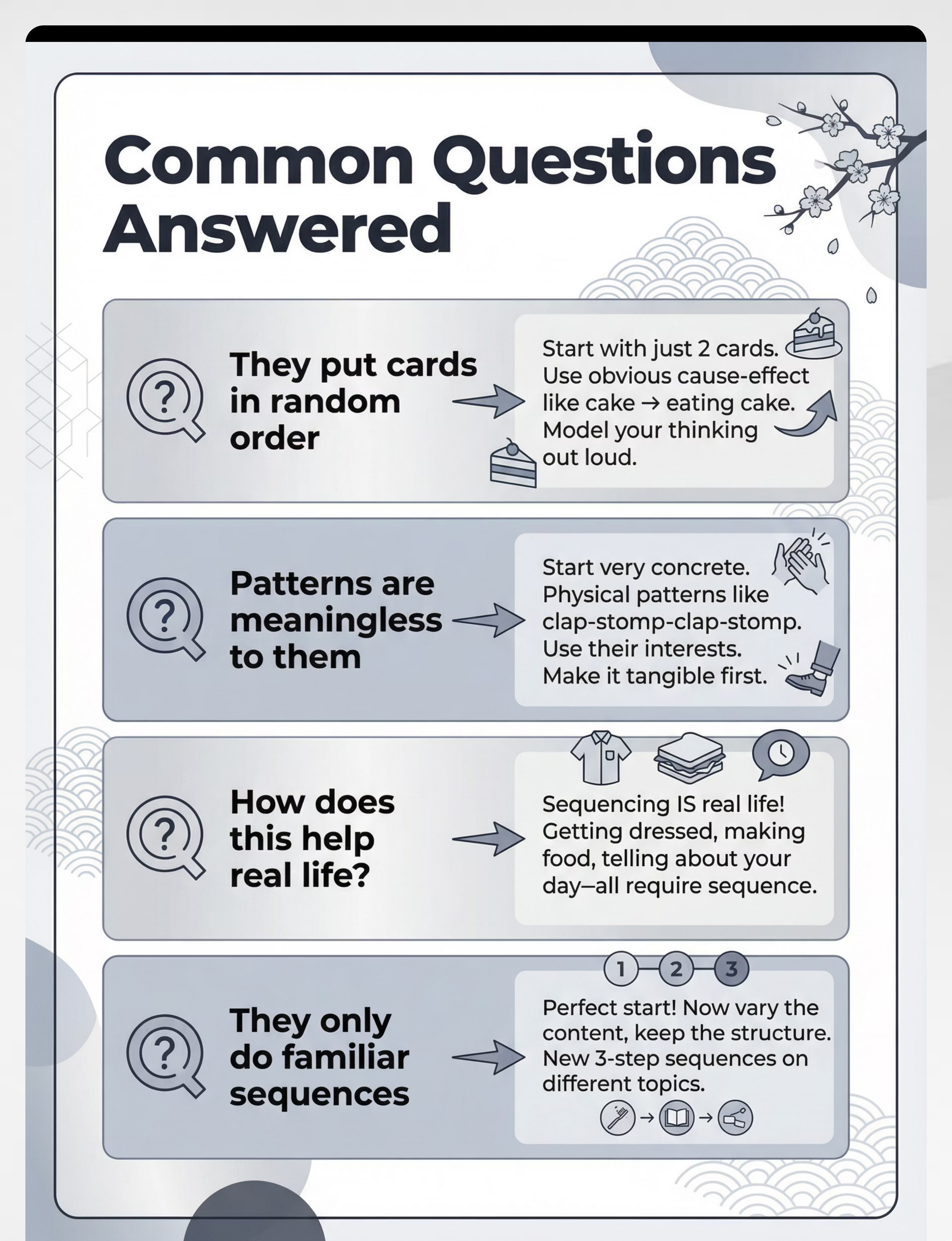
Common Questions (Honest Answers)
They put cards in random order
Response: Start with 2 cards only (before/after). Use obvious cause-effect relationships like "whole cake → eating cake." Narrate your thinking as you model. Build very gradually from success.
Try this: 2 cards only with clear before/after; obvious cause-effect sequences; model your thinking process aloud
Patterns are meaningless to them
Response: Start very concrete with physical patterns your child can do—clap-stomp-clap-stomp. Use their special interests (train-car-train-car). Make it tangible and embodied before moving to abstract visual patterns.
Try this: Physical movement patterns; interest-based content; concrete manipulatives before abstract concepts
How does this help real life?
Response: Sequencing IS real life! Getting dressed has a sequence. Making food requires steps in order. Telling about your day requires temporal organization. This fundamental skill transfers to every multi-step task and conversation.
Try this: Apply directly to daily routines; practice functional sequences; connect to storytelling and conversations
They only do the familiar sequences
Response: That's a good start—mastery of familiar content! Now vary the content while keeping the structure. Introduce new 3-step sequences with different topics. Generalization builds through multiple diverse examples.
Try this: Vary content themes; maintain same sequence length; provide many different examples for generalization
Investment Guide
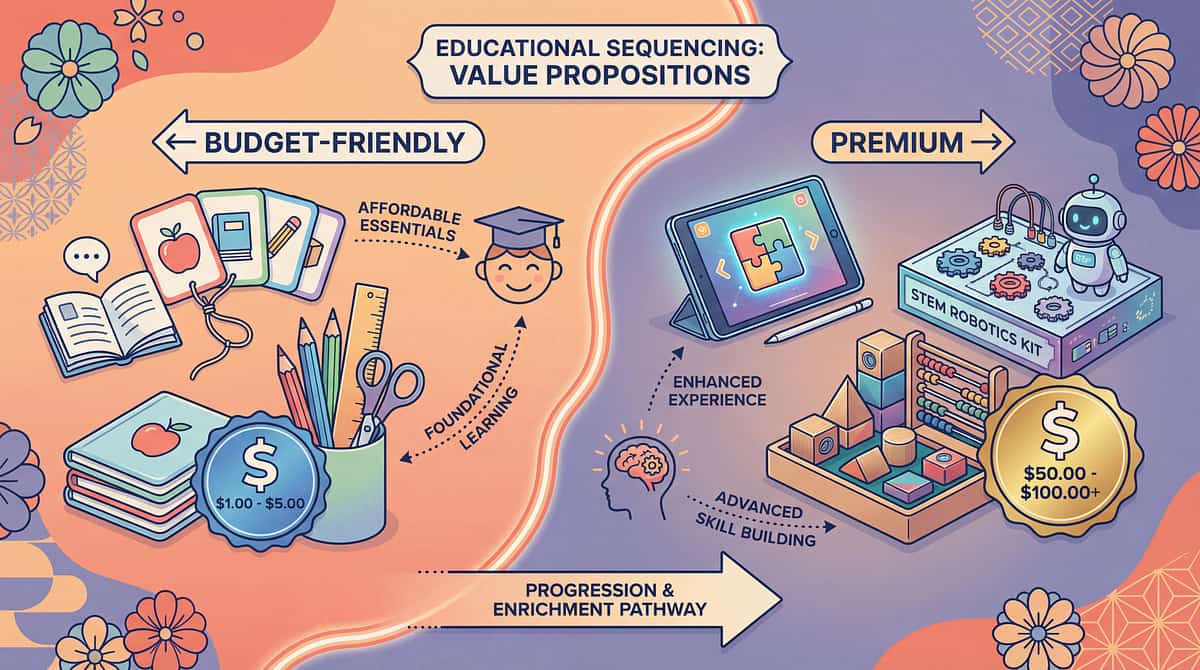
Overall Range: ₹100–800 (approximately $1–10 USD)

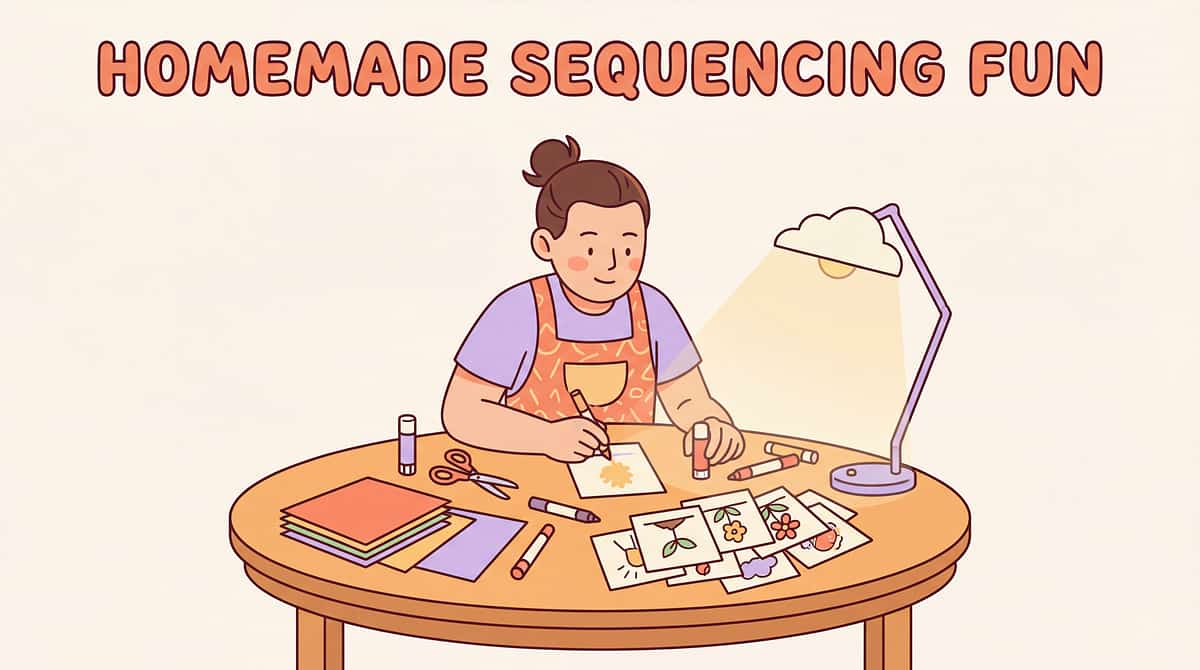
Best Starting Point: If budget allows, pattern blocks (₹300-800) offer exceptional versatility—they support pattern activities, spatial reasoning, and fine motor skills. For tightest budgets, DIY sequencing cards using photos of your child's routines (₹100-200) provide highly personalized, effective practice.
Item
DIY sequencing cards or basic purchased set
Pattern blocks with cards + sequencing card set
Cost
₹100–200
₹500–800
What you get
Effective tool for building sequencing skills through homemade photo sequences or simple commercial card sets.
Comprehensive system covering both sequencing and pattern recognition with durable, versatile materials. Brands include Learning Resources, Melissa & Doug, Educational Insights.
Best for
Families wanting personalized content or starting exploration affordably.
Families wanting long-term investment with maximum skill coverage.
Key Considerations
Start Simple
Focus on fundamental sequencing concepts before advancing to more complex patterns.
Personalize Content
Utilize familiar objects or daily routines to make learning engaging and relevant.
Versatile Tools
Invest in materials that support multiple skills like fine motor and spatial reasoning, not just sequencing.
Long-Term Value
Choose durable, adaptable resources that can grow with your child's developing abilities.
Investment Progression
Assess Needs
Identify your child's current skill level and specific interests to guide your choices.
Start with Basics
Begin with budget-friendly DIY options or basic sequencing card sets to test the waters.
Evaluate & Adapt
Monitor engagement and skill development, adjusting your approach based on what works best.
Expand Resources
Consider investing in premium options like pattern blocks as skills advance and new learning needs emerge.
Where to Buy in India
Availability: Widely Available across online and offline retailers throughout India
Amazon.in
Search: "sequencing cards kids"
Price: ₹150–400
Wide selection
Amazon.in
Search: "pattern blocks"
Price: ₹300–700
Multiple brands
Amazon.in
Search: "story sequence cards"
Price: ₹150–400
Narrative focus
Teachers Pay Teachers
Search: "sequencing printables"
Price: Free–₹200
Digital downloads
Educational stores
Search: "pattern activities"
Price: ₹200–500
Local availability
Buying Tips
Start with routines child already knows
Pattern blocks are versatile long-term investment
Printable sequencing cards widely available online
Beads for patterns also build fine motor skills
Use real photos for personalized sequences
Red Flags

  • Sequences too long for skill level
  • Pictures unclear or ambiguous
  • Patterns too complex to start
  • Content not engaging for child
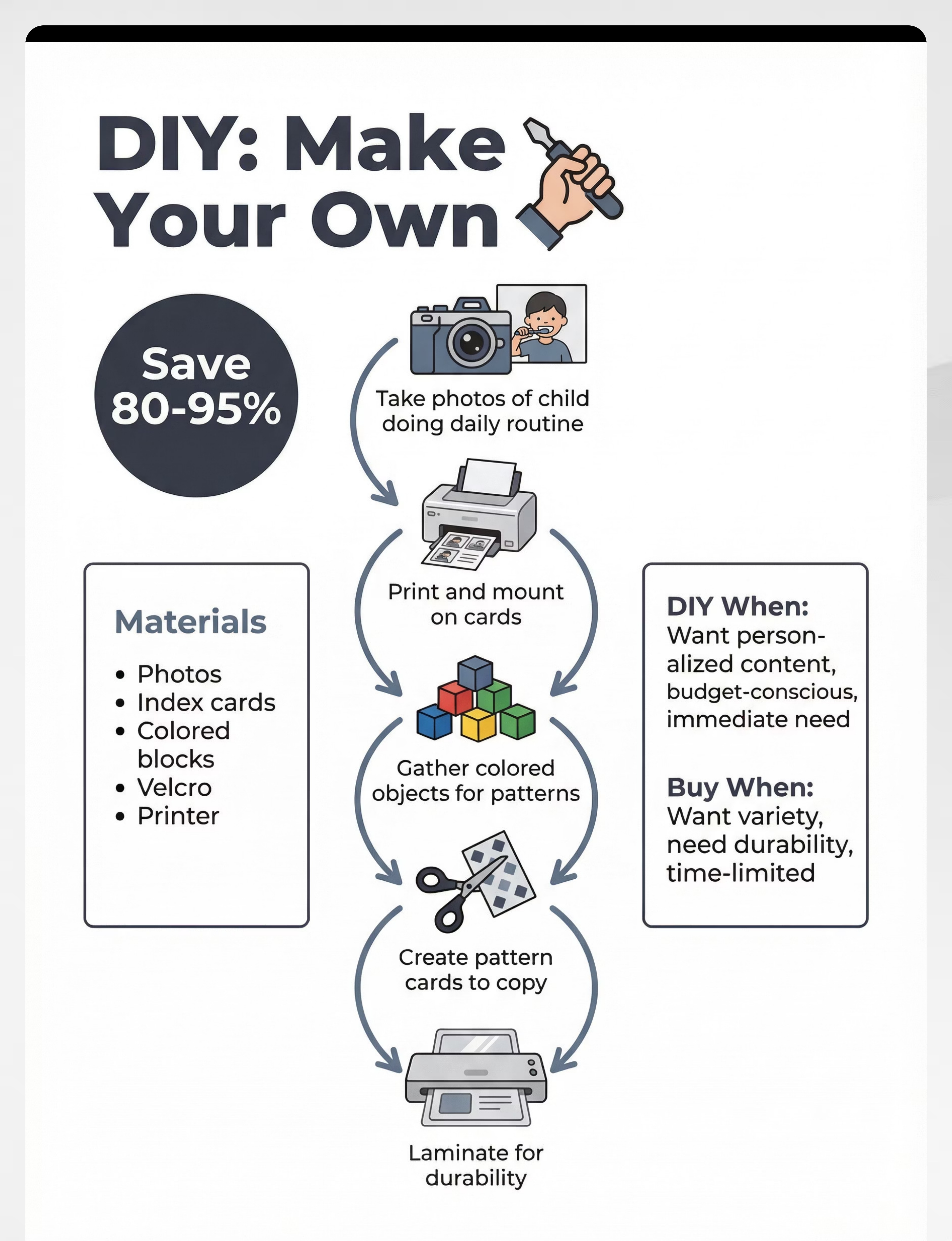
DIY Alternative (Save 80-95%)
Feasibility: Very High | Time Investment: 30-60 minutes | Cost Savings: 80-95%
Materials Needed
Photos of daily routines (your child doing familiar activities)
Printed sequence pictures from free online resources
Colored blocks, buttons, or toys for pattern creation
Index cards or cardstock
Velcro strips for reusability (optional)
Laminating sheets or clear contact paper for durability
Step-by-Step Instructions
1
Take photos of child doing routine (3-4 steps)
Photograph familiar sequences: brushing teeth, getting dressed, eating breakfast
2
Print and mount photos on cards
Use cardstock or index cards for stability
3
Gather colored objects for patterns
Collect blocks, buttons, or toys in 2-3 colors
4
Create pattern cards to copy
Draw or photograph simple AB and ABC patterns
5
Download free sequencing printables online
Many educational sites offer free resources
6
Laminate for durability
Protect cards with laminating sheets or contact paper
7
Add velcro for interactive board (optional)
Create reusable activity board for repeated practice
DIY vs Commercial: When to Choose Each
Consideration
Choose DIY When...
Choose Commercial When...
Personalization
Want personalized sequences with child's photos
Generic content works well
Budget
Budget-conscious, need immediate solution
Can invest in long-term durability
Content
Custom content needed for specific routines
Want variety and professional design
Time
Have time for creation
Time-limited, need immediate use
Setting
Home use primarily
Classroom or clinic use
Durability
Can remake as needed
Need professional durability
Tradeoffs: DIY requires time investment and may be less durable, but offers maximum personalization and dramatic cost savings.

Preview of sequencing cards pattern activities Therapy Material

Below is a visual preview of sequencing cards pattern activities therapy material. The pages shown help educators, therapists, and caregivers understand the structure and content of the resource before use. Materials should be used under appropriate professional guidance.

Page 1
Page 2
Page 3
Page 4
Page 5
Page 6
Page 7
Page 8
Page 9
Page 10
Page 11
Page 12
Page 13
Page 14
Page 15
Page 16
Page 17
Page 18
Page 19
Page 20
Link copied!
Measuring Success & Building Your Toolkit
Track Progress
Baseline (Measure First)
  • Number of steps child can sequence correctly
  • Pattern complexity child can manage (AB, ABC, etc.)
  • Use of temporal language (first, next, last)
  • Story retelling ability and coherence
Goals
  • Child will sequence [X]-step events correctly
  • Child will use first/then/last language spontaneously
  • Child will recognize and continue [X] pattern types
  • Child will retell stories in logical sequence
Success Indicators
  • ✓ Longer sequences mastered
  • ✓ Temporal language in conversation
  • ✓ Pattern recognition and creation
  • ✓ Story retelling improved
  • ✓ Following multi-step directions

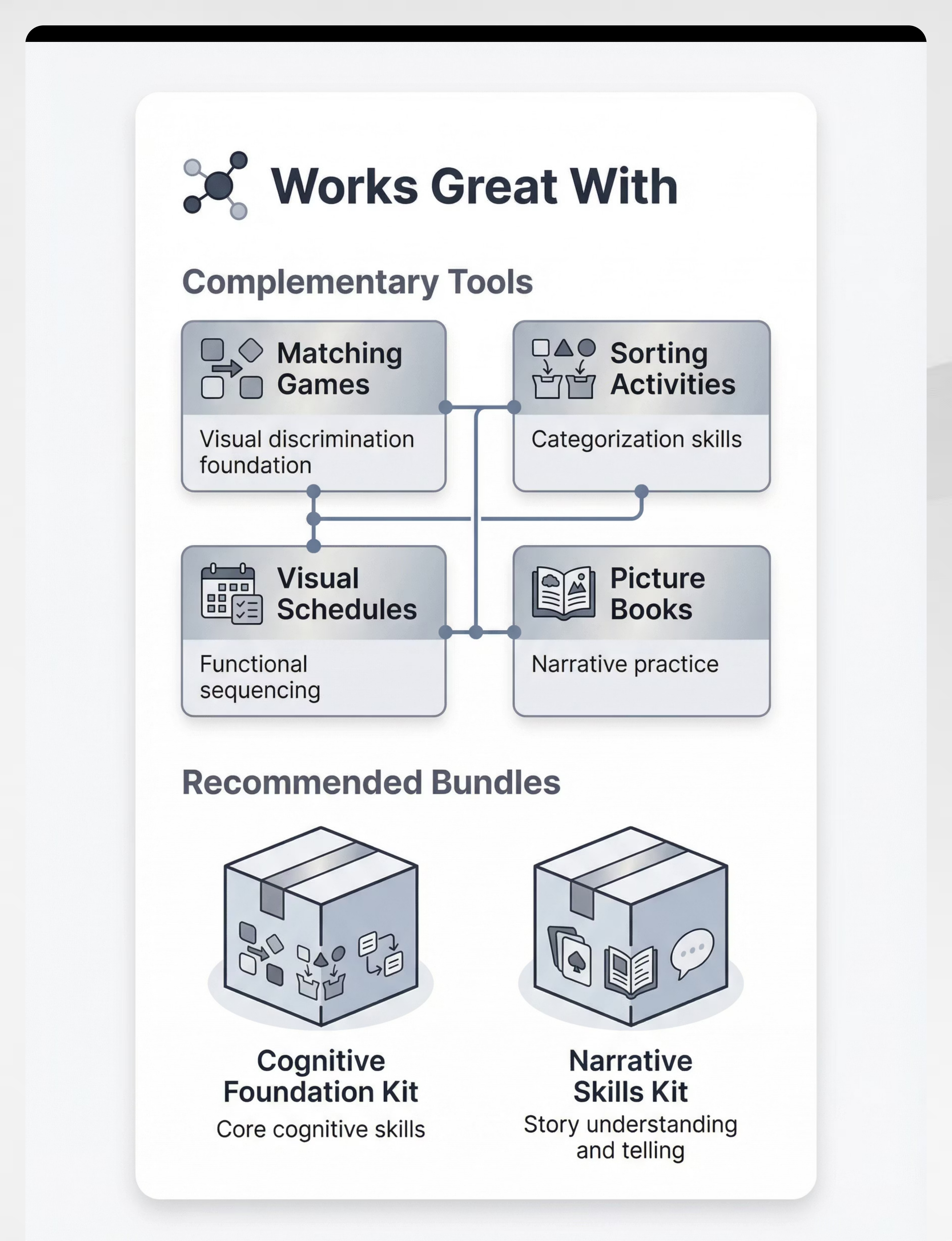
Complete the Kit: Pair It With...
Matching Games (ID: 8.1)
Visual discrimination foundation supports pattern recognition
Sorting Activities (ID: 8.2)
Categorization skills complement pattern and sequence work
Visual Schedules (ID: 3.1)
Functional sequencing applied to daily life routines
Story/Picture Books (ID: 5.4)
Narrative sequencing practice through engaging stories
Recommended Bundles
  • Cognitive Foundation Kit: Matching Games (8.1) + Sorting Activities (8.2) + Sequencing Cards (8.3) = Complete core cognitive skill development
  • Narrative Skills Kit: Sequencing Cards (8.3) + Story/Picture Books (5.4) + Social Stories (4.3) = Comprehensive story understanding and telling

Quick Summary
AI Summary: Sequencing and pattern activities develop temporal ordering, pattern recognition, and sequential thinking essential for narrative comprehension and mathematics. Core Kit (Rank 1), strong evidence, foundational cognitive skill.
sequencing
patterns
temporal
ordering
cognitive
narrative
math
SpEd
SLP
core-kit
Common searches: sequencing cards autism, pattern activities kids, story sequence cards, temporal ordering, AB pattern activities, narrative sequencing, first then last autism

Get Support
FREE National Autism Helpline
Phone: 9100 181 181
Languages: 16+ Indian languages
Website: pinnacleblooms.org
Compassionate support from trained professionals who understand your journey
Platform Integration
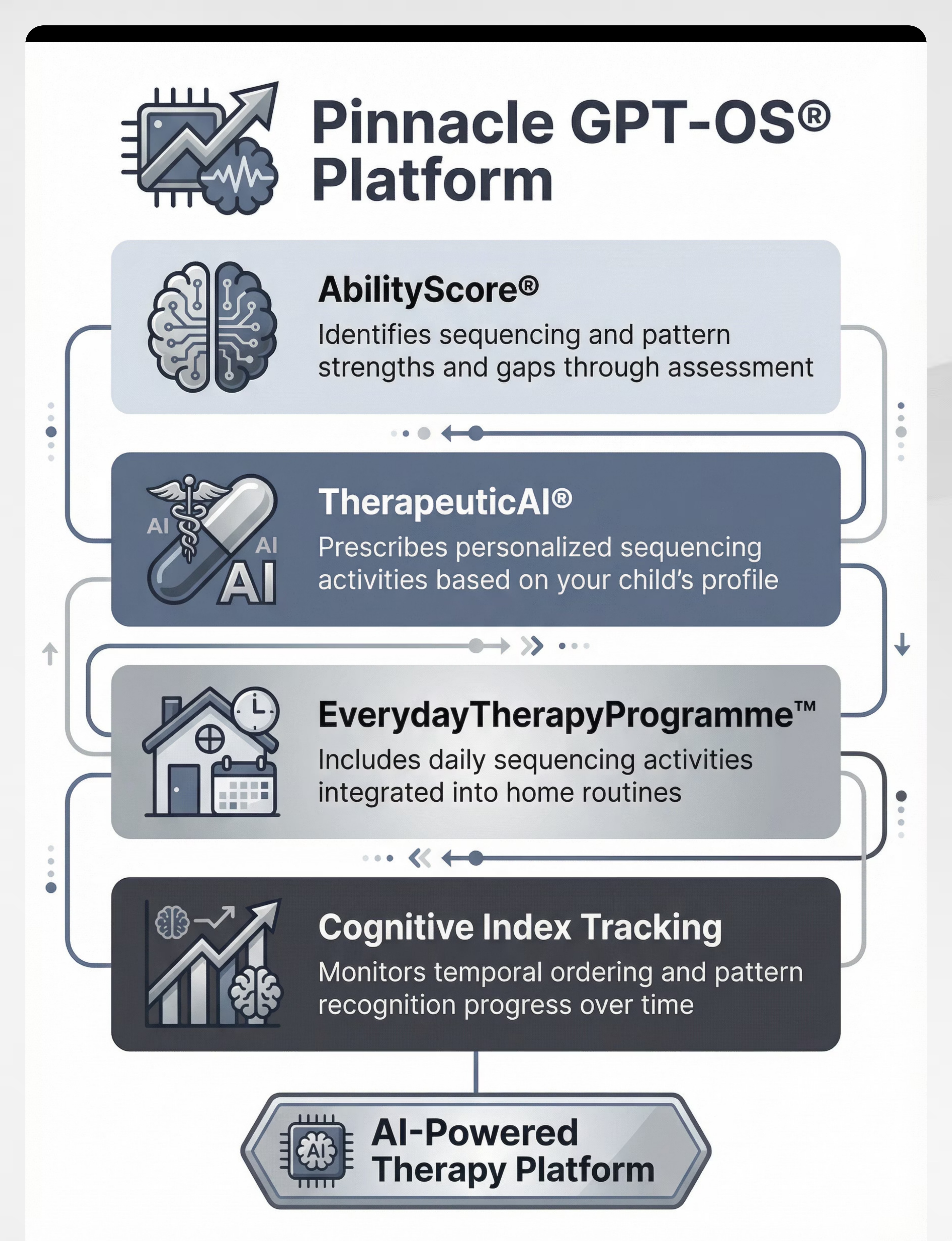
Sequencing and pattern activities integrate seamlessly with Pinnacle Blooms Network's comprehensive therapeutic ecosystem:
  • AbilityScore® identifies sequencing and pattern skill patterns through comprehensive assessment
  • TherapeuticAI® prescribes appropriate sequencing activities based on individual needs
  • EverydayTherapyProgramme™ includes daily sequencing practice in home routines
  • Cognitive Index tracks temporal and pattern skill development over time

Disclaimer: This is educational information provided by Pinnacle Blooms Network. Always consult qualified occupational therapists, speech-language pathologists, or pediatricians for personalized recommendations. Individual results vary based on child's unique profile, consistency of practice, and quality of implementation.