
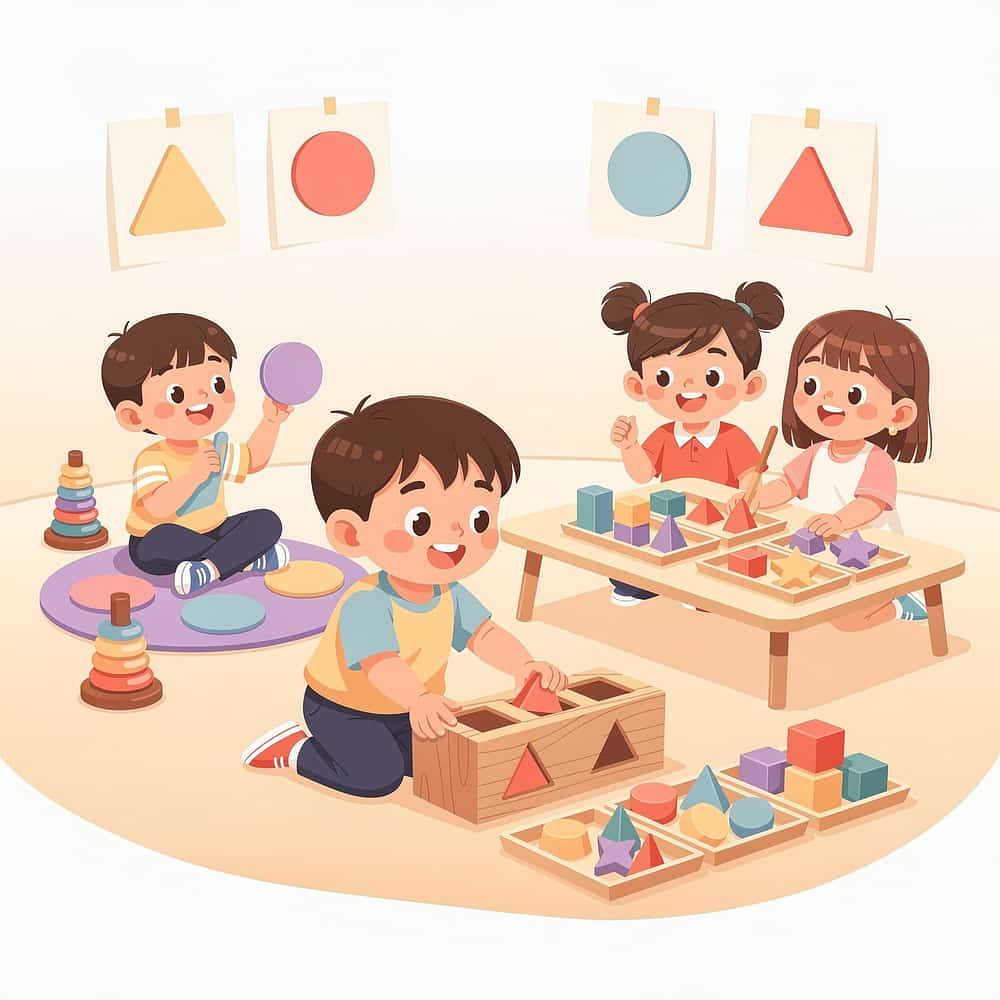








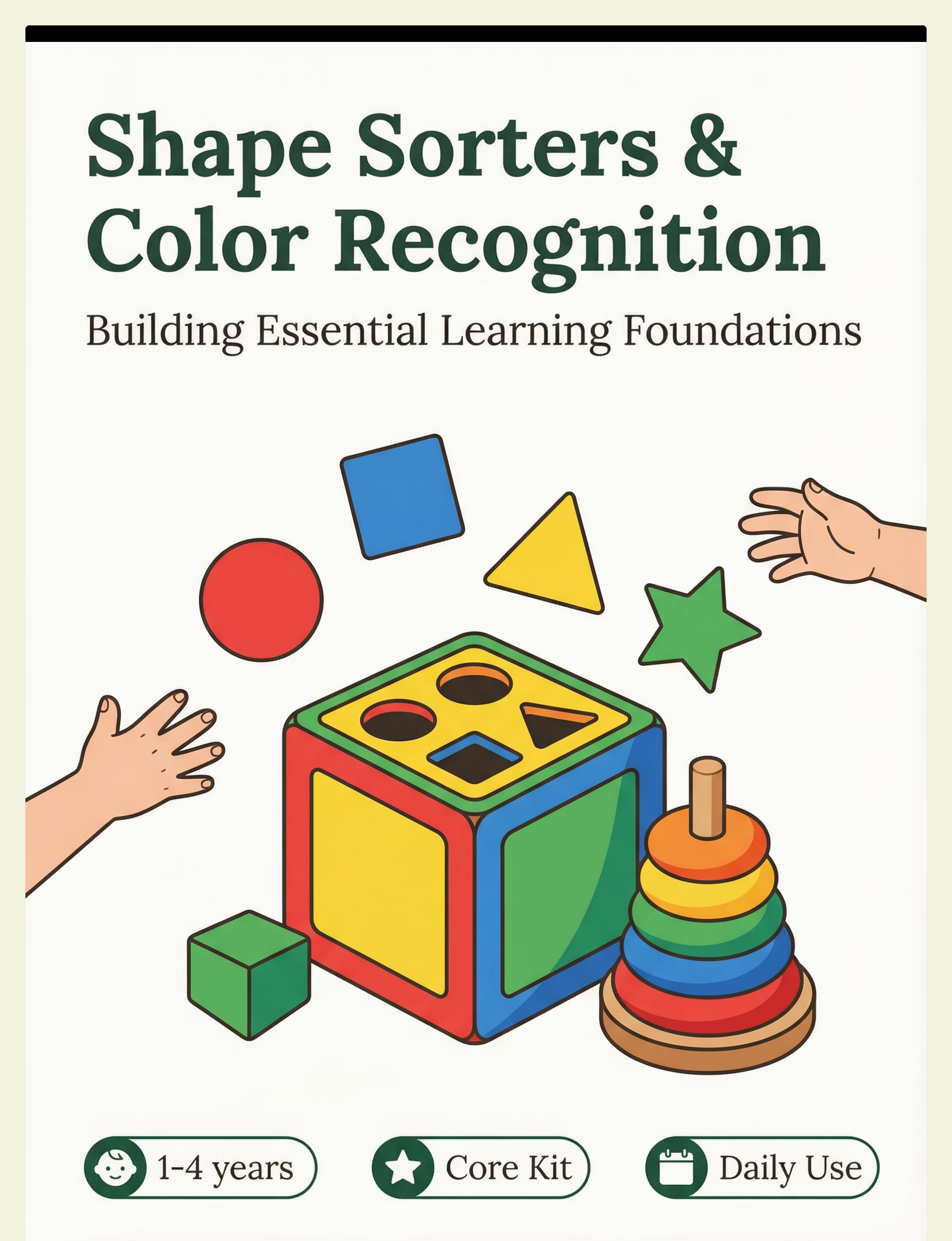
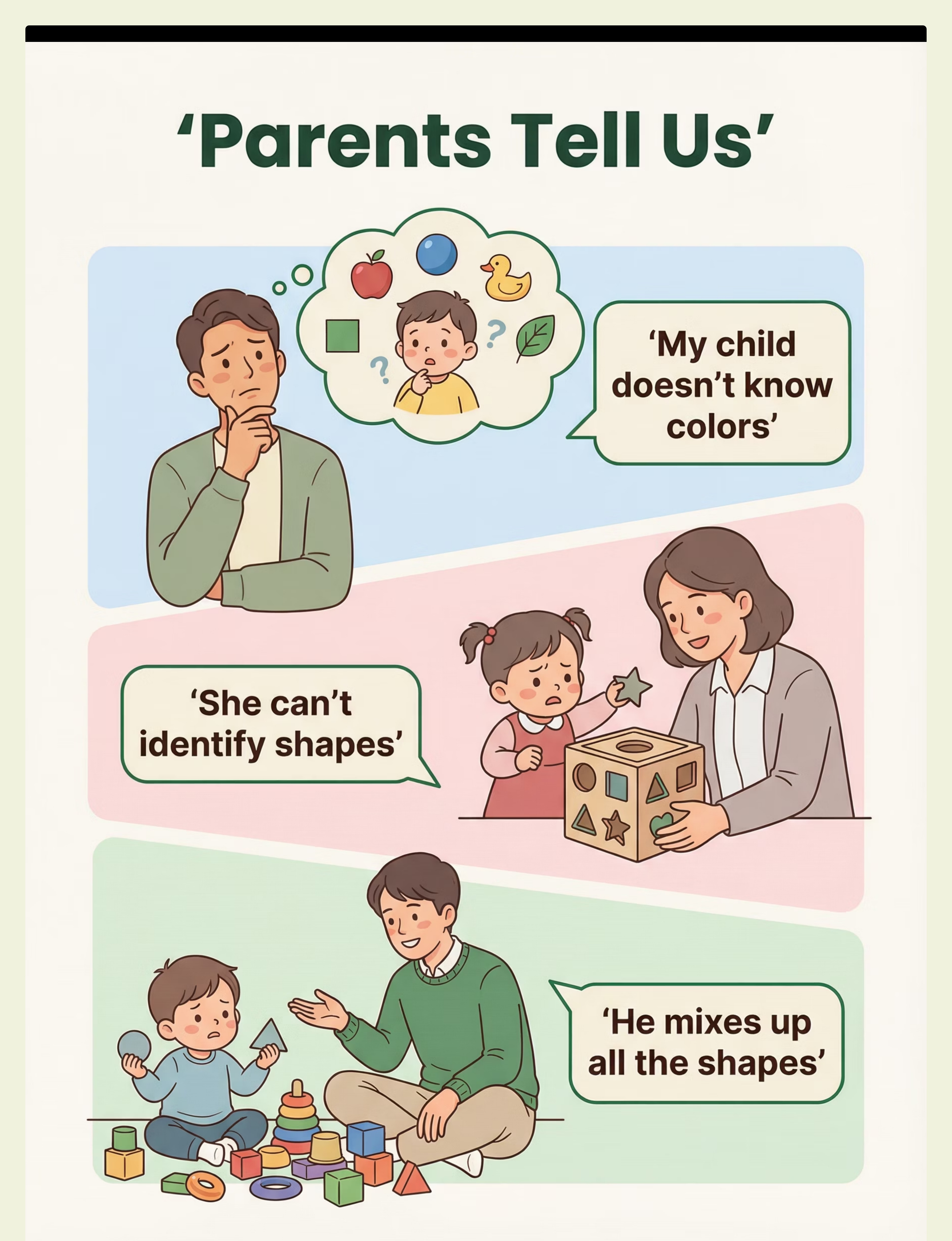
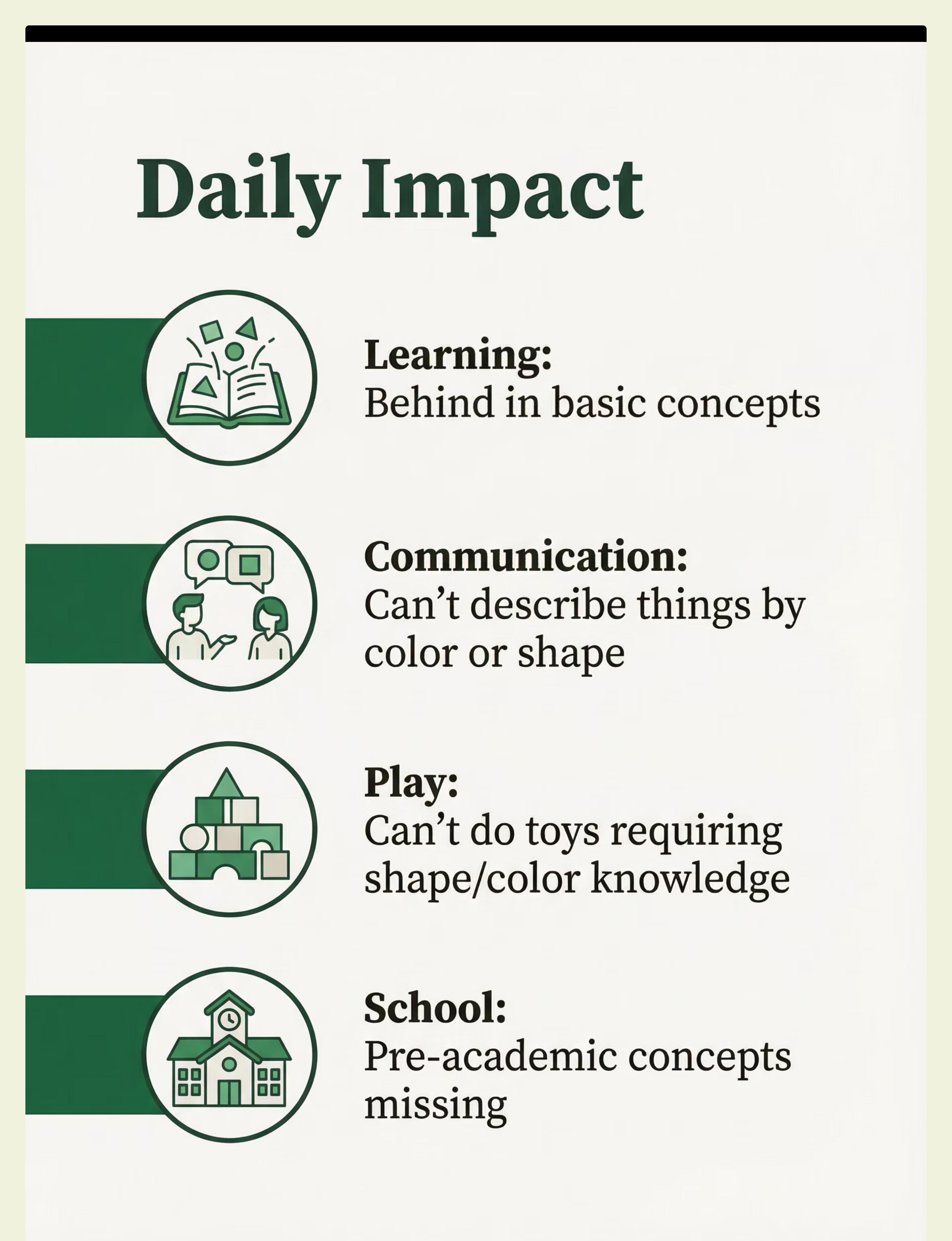
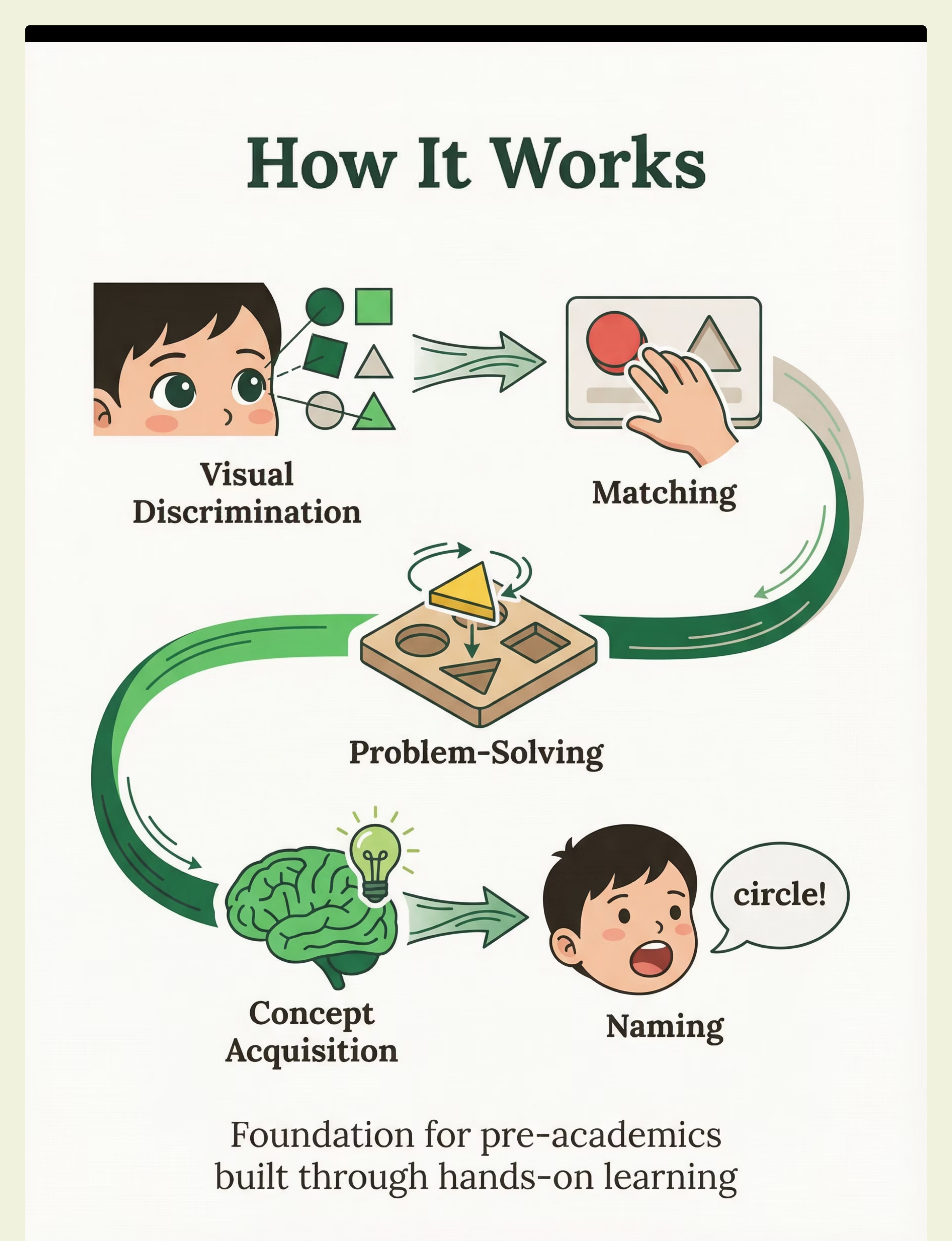
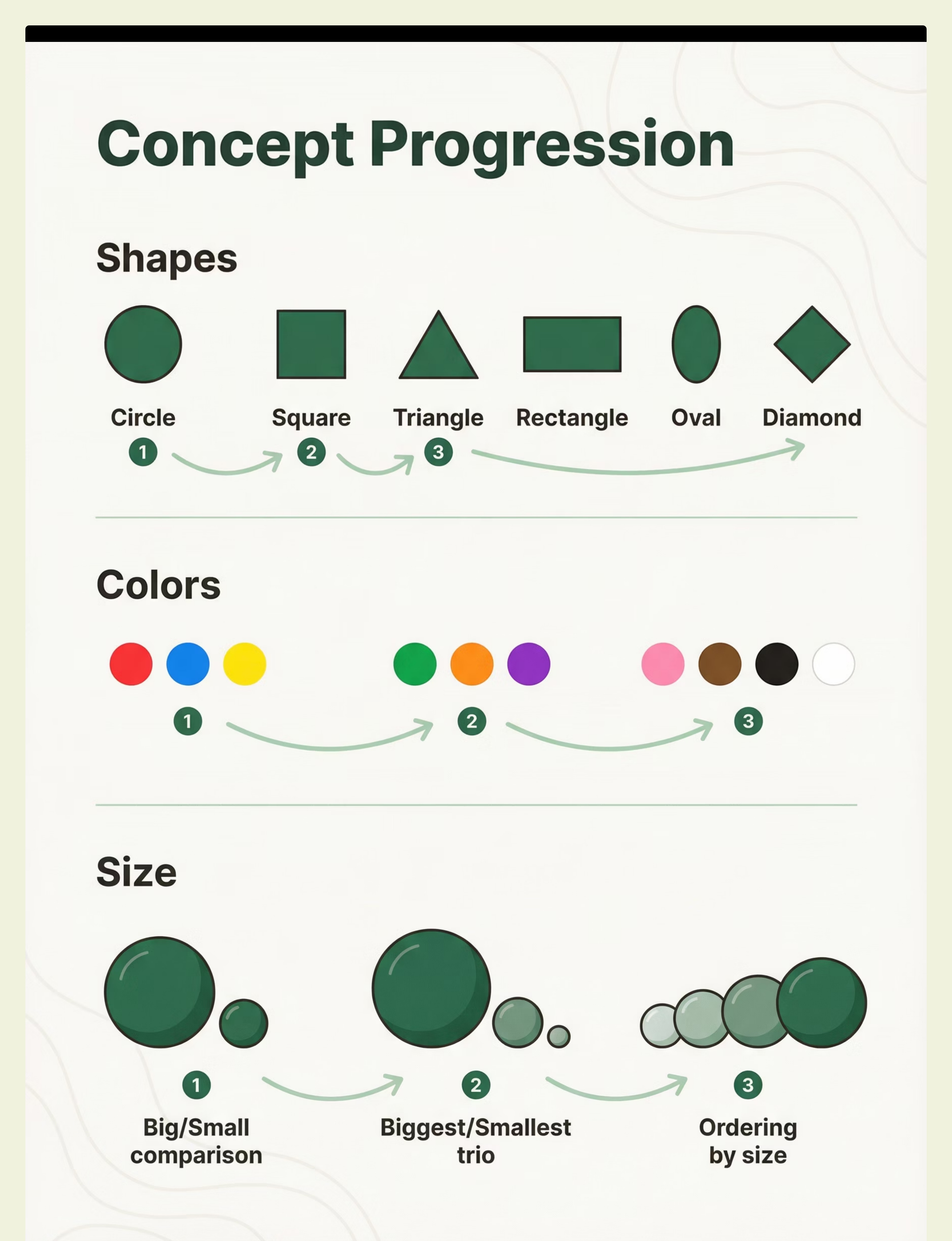
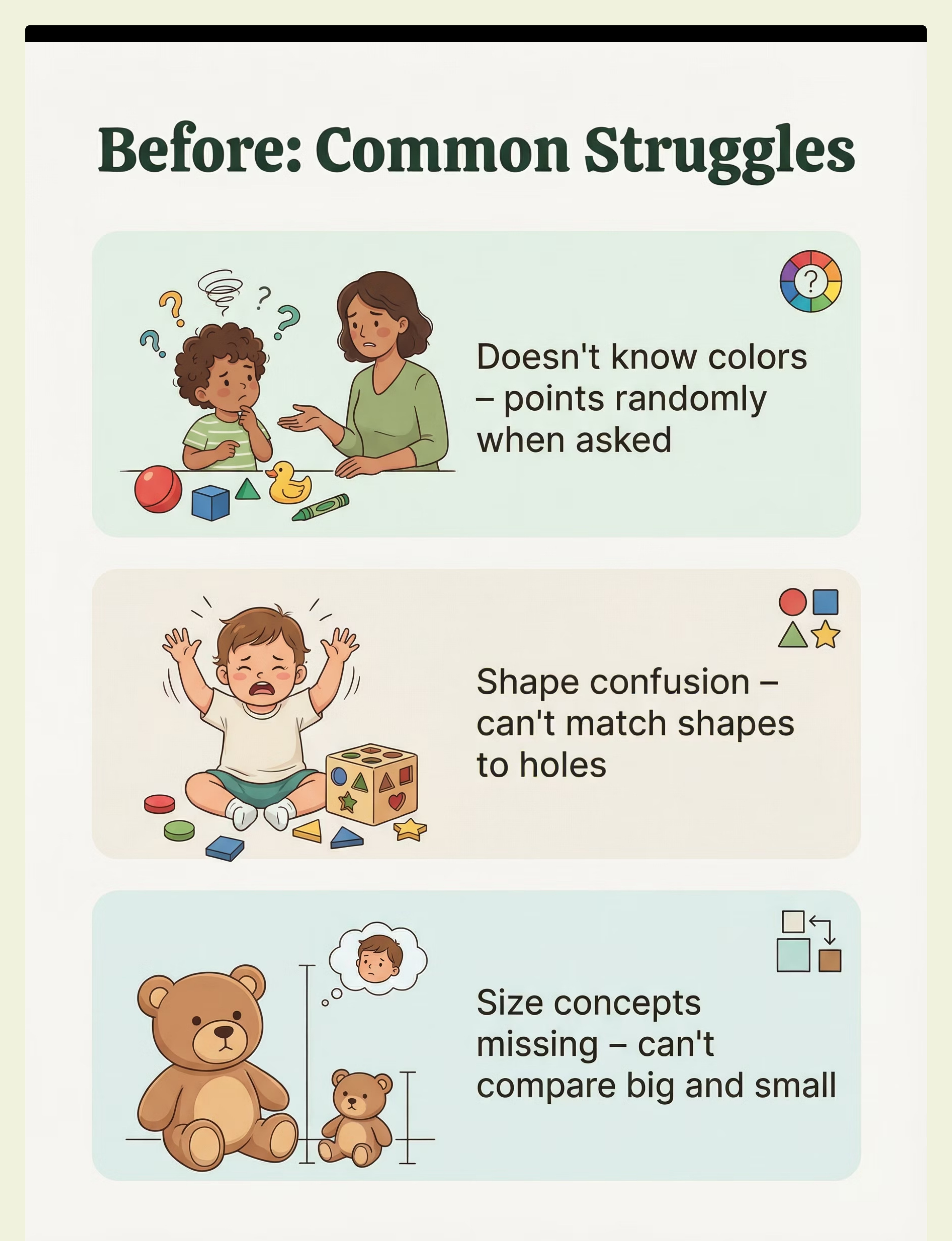
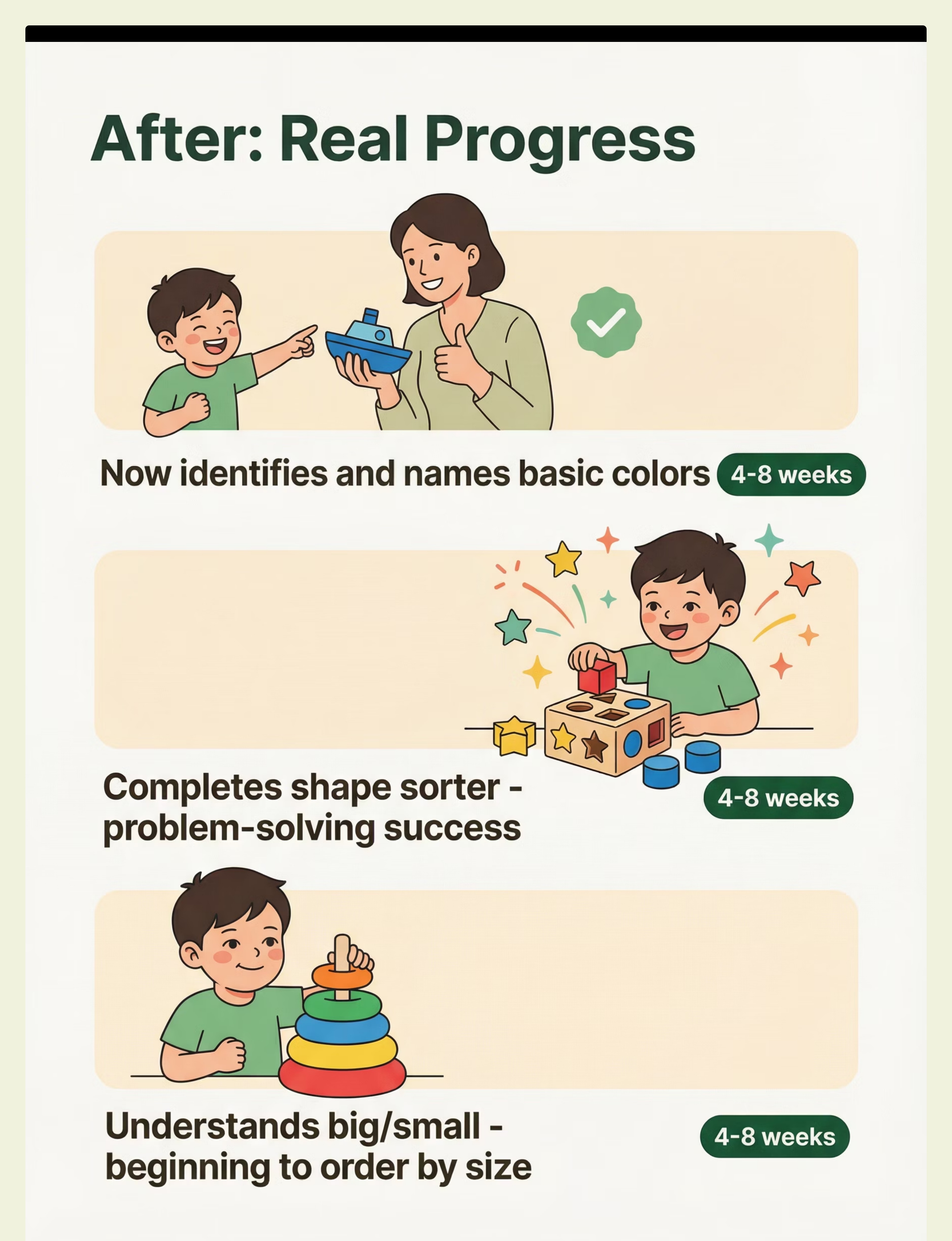



"Shape and color recognition are gateway concepts. They provide the vocabulary and discriminations needed for all future learning. Shape sorters add problem-solving - children must rotate and try different orientations. Simple but powerful."— Special Educator, Early Intervention Specialist

Choose Your Option (7 Variants)
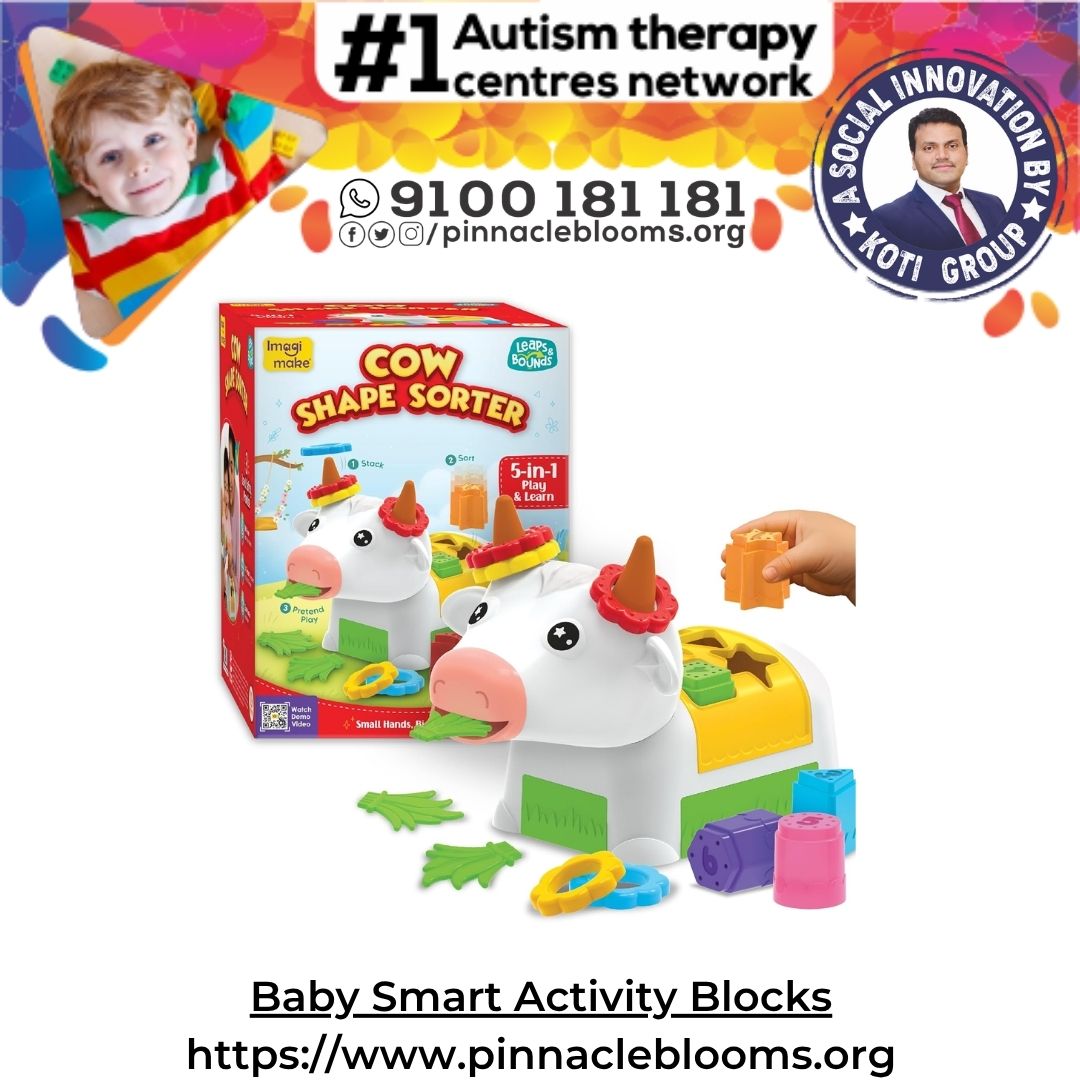
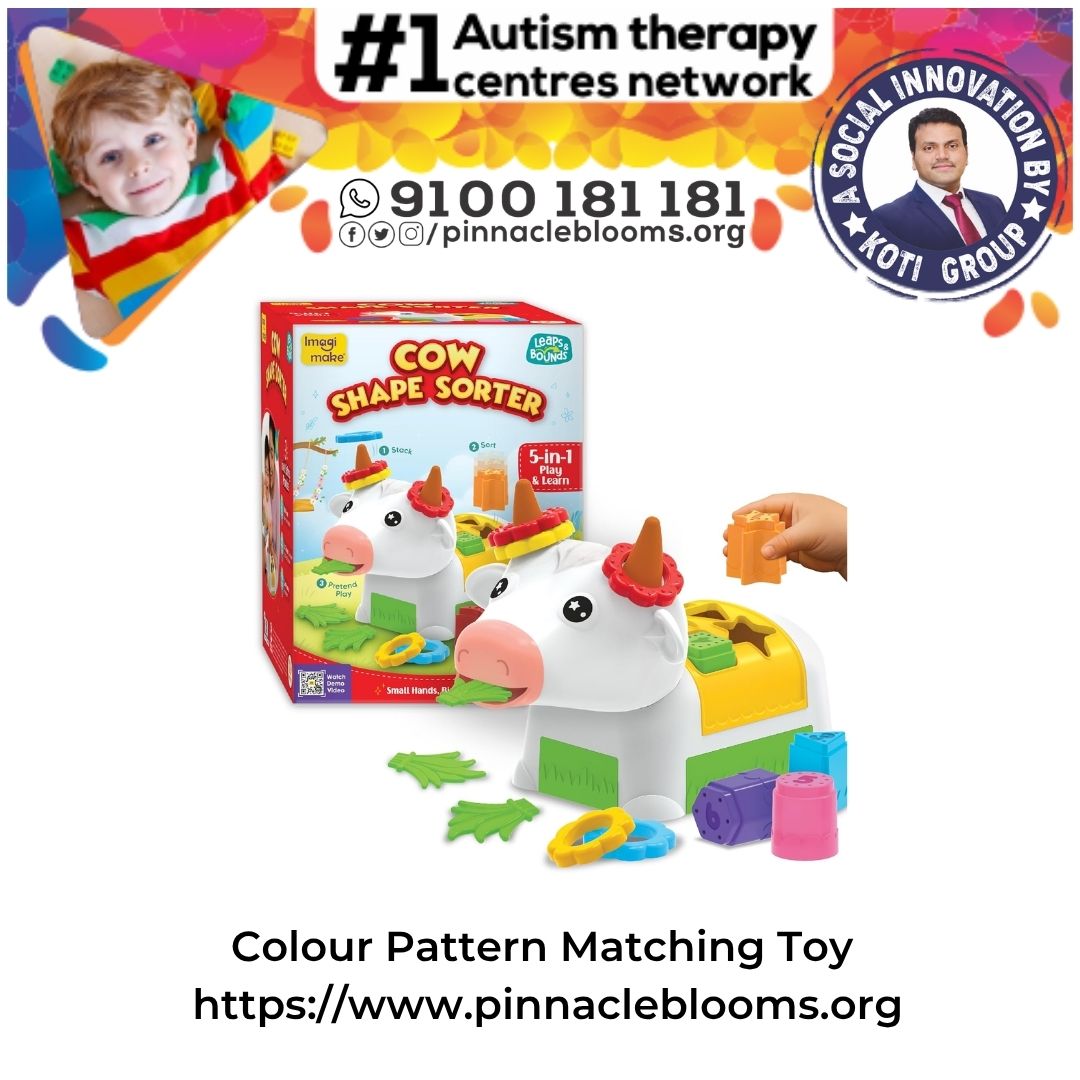
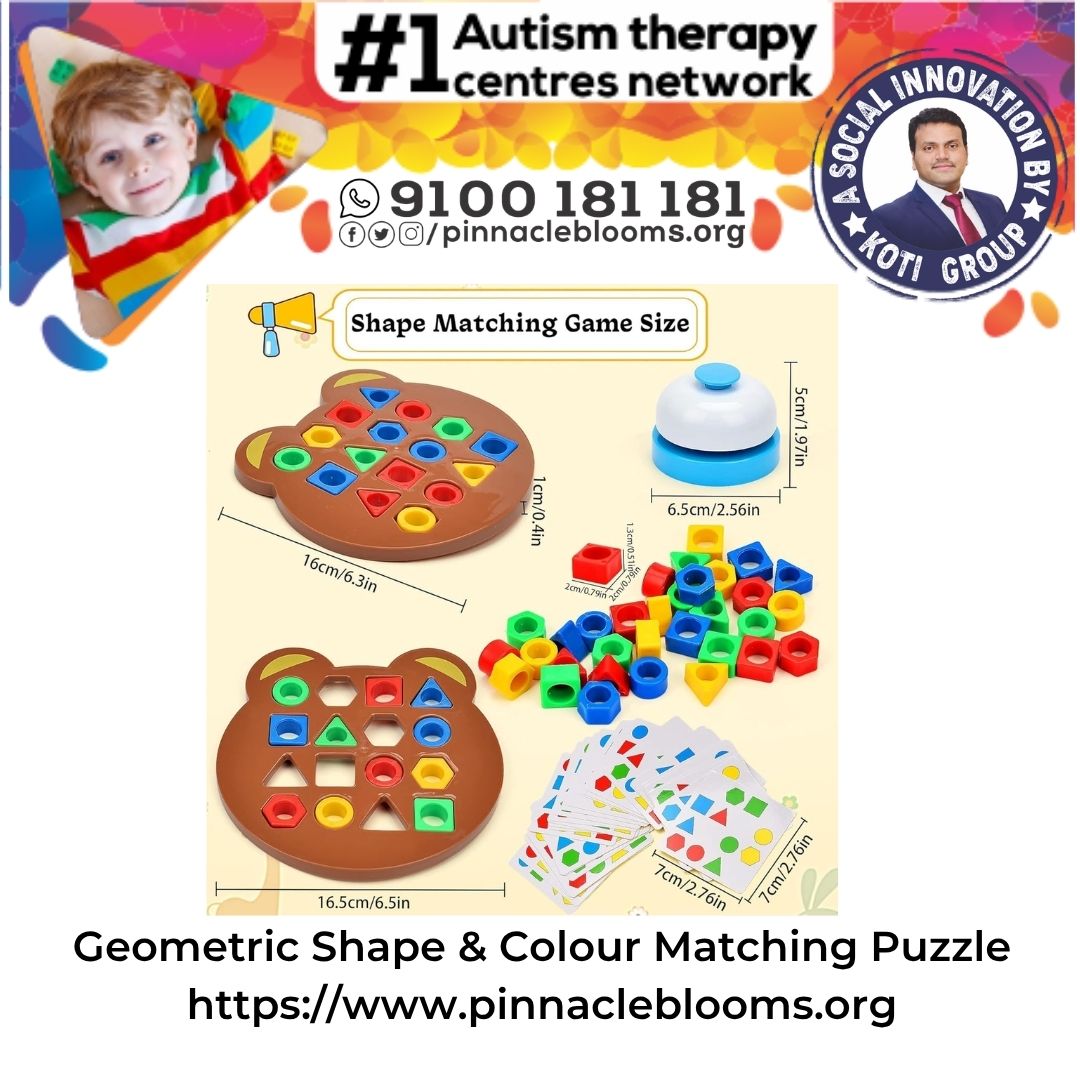
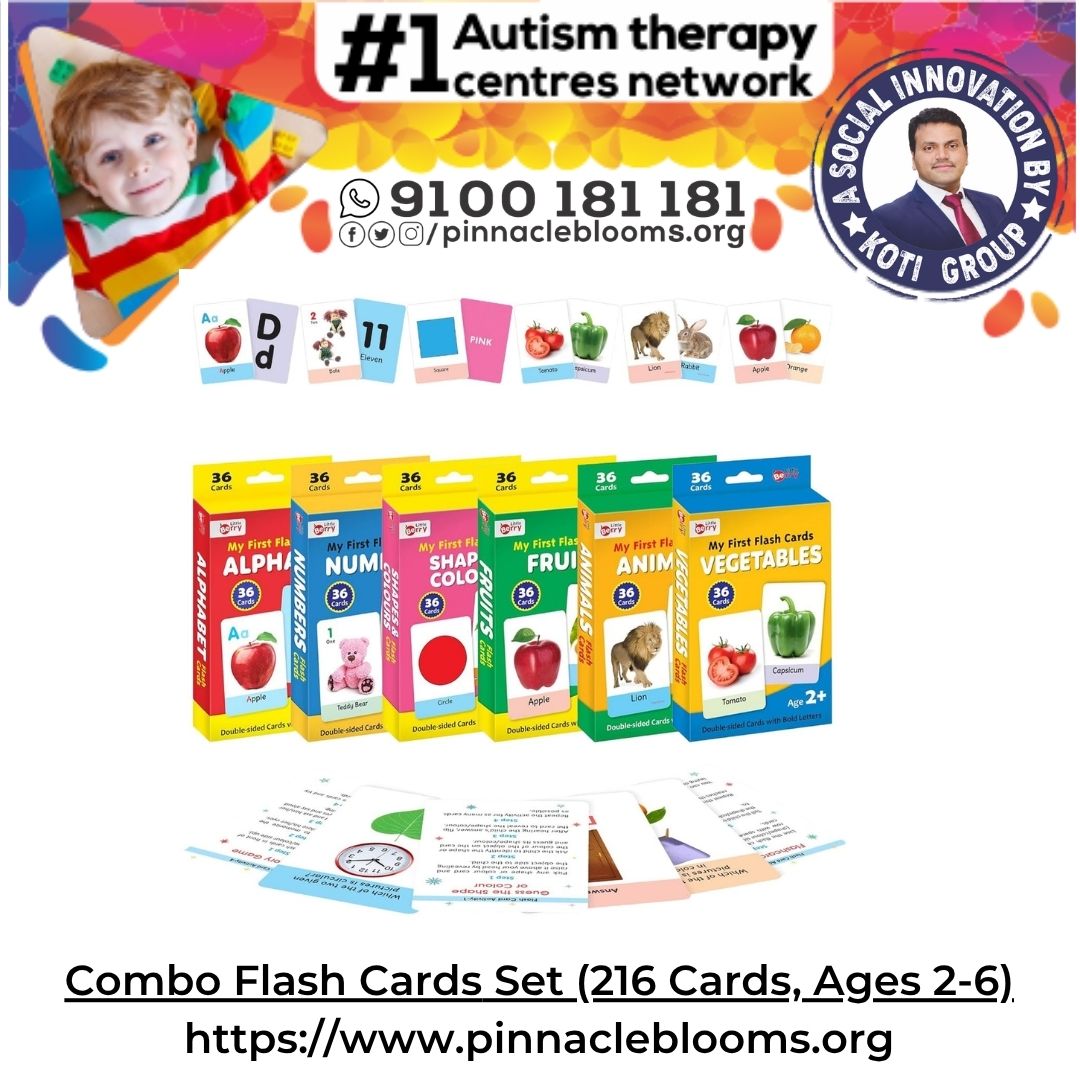
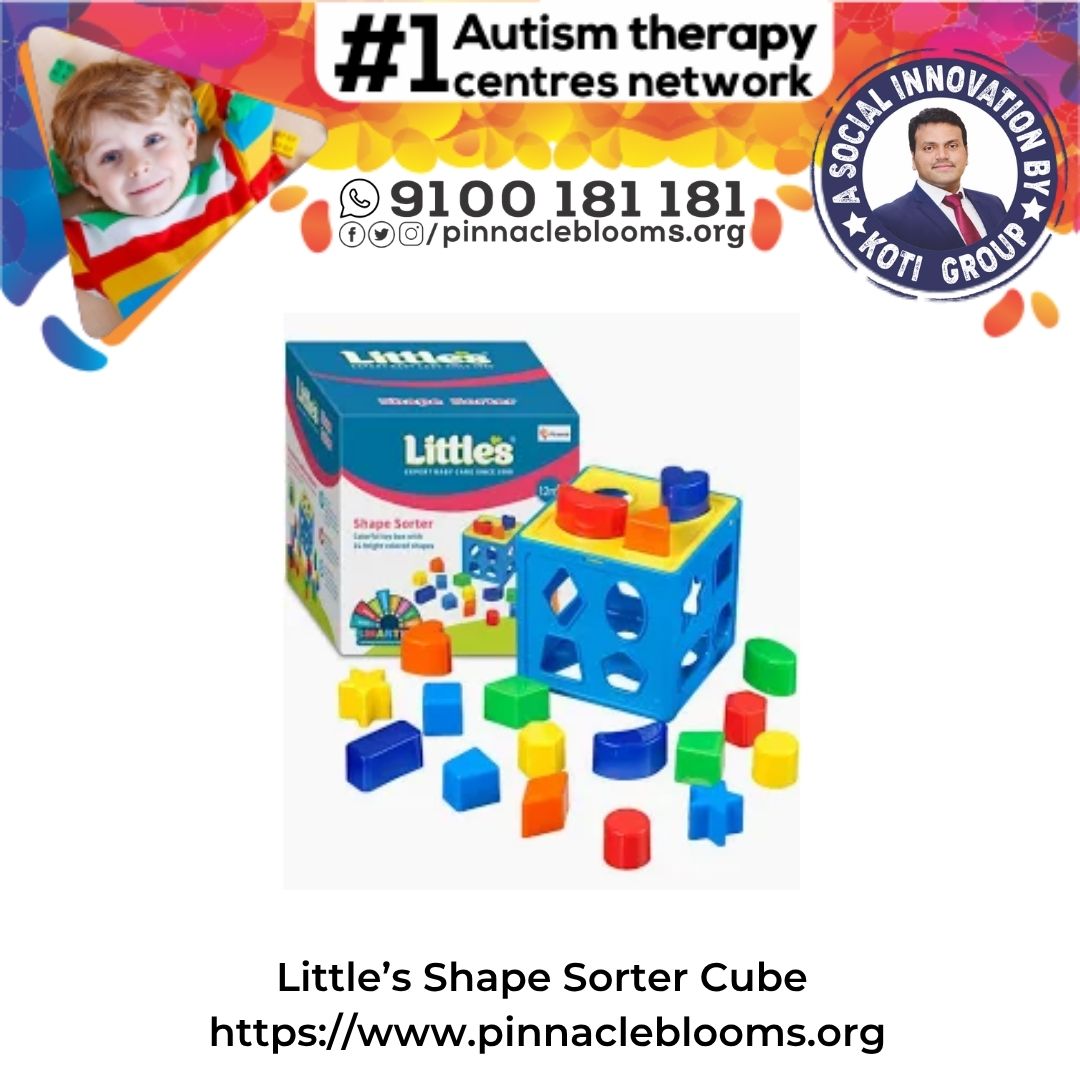
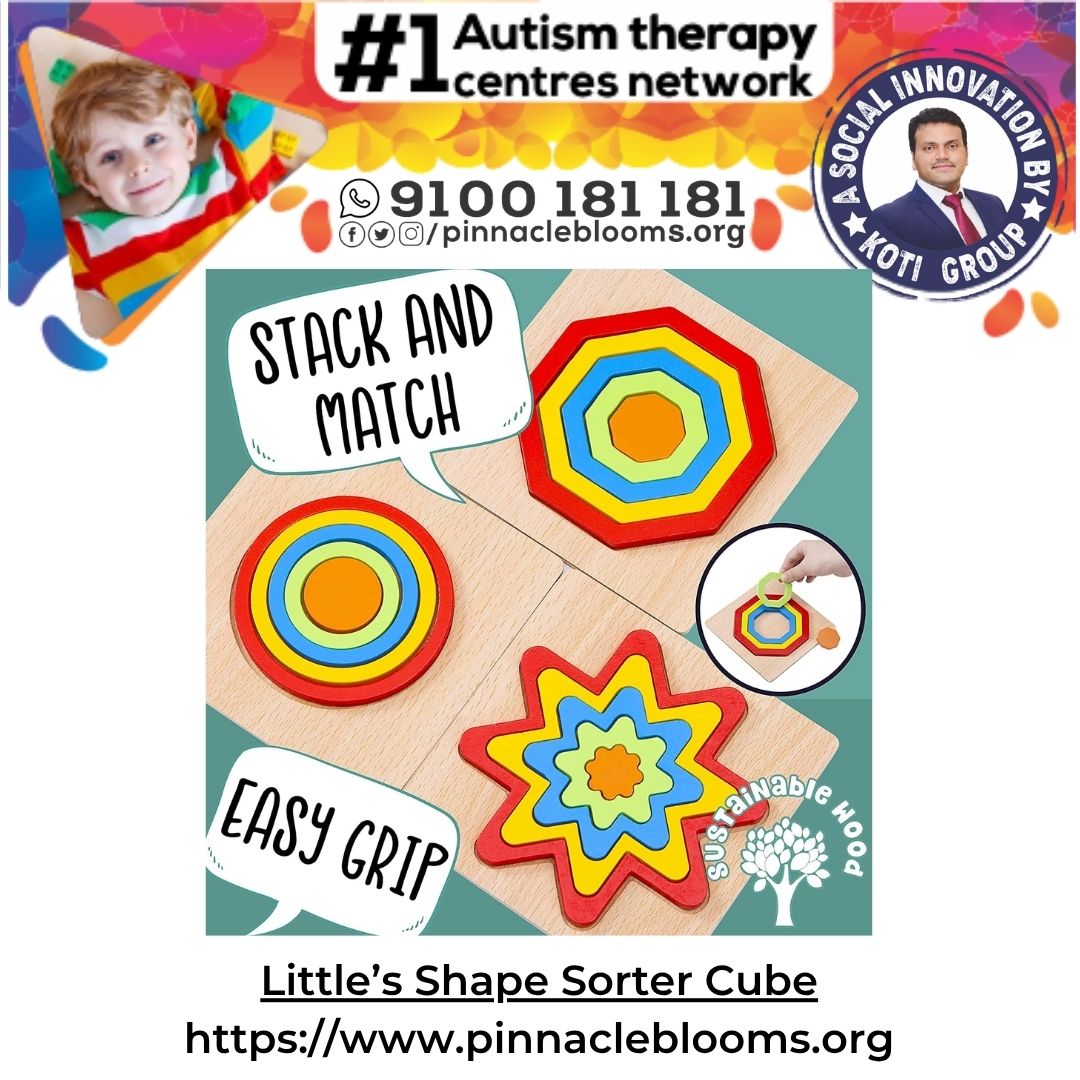
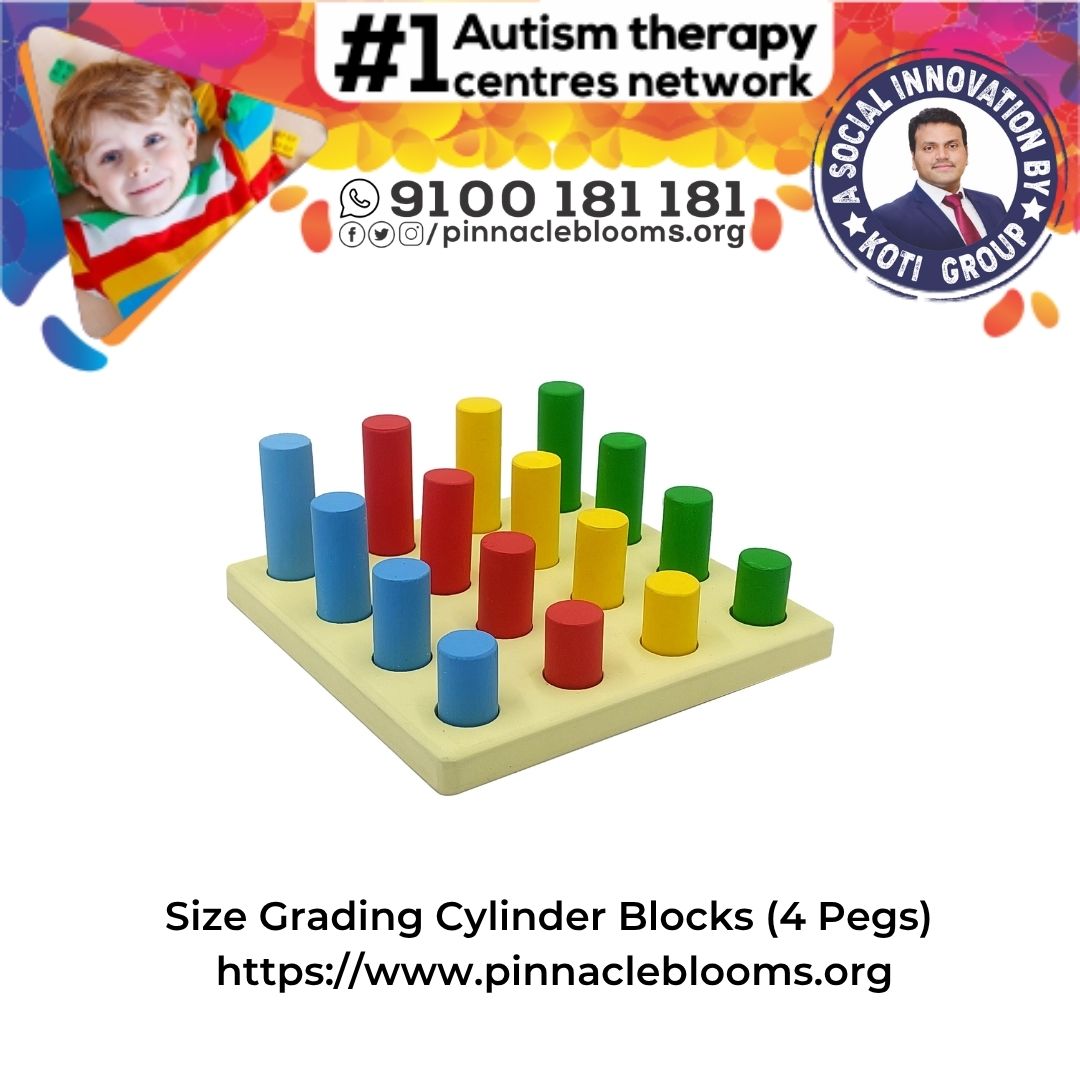
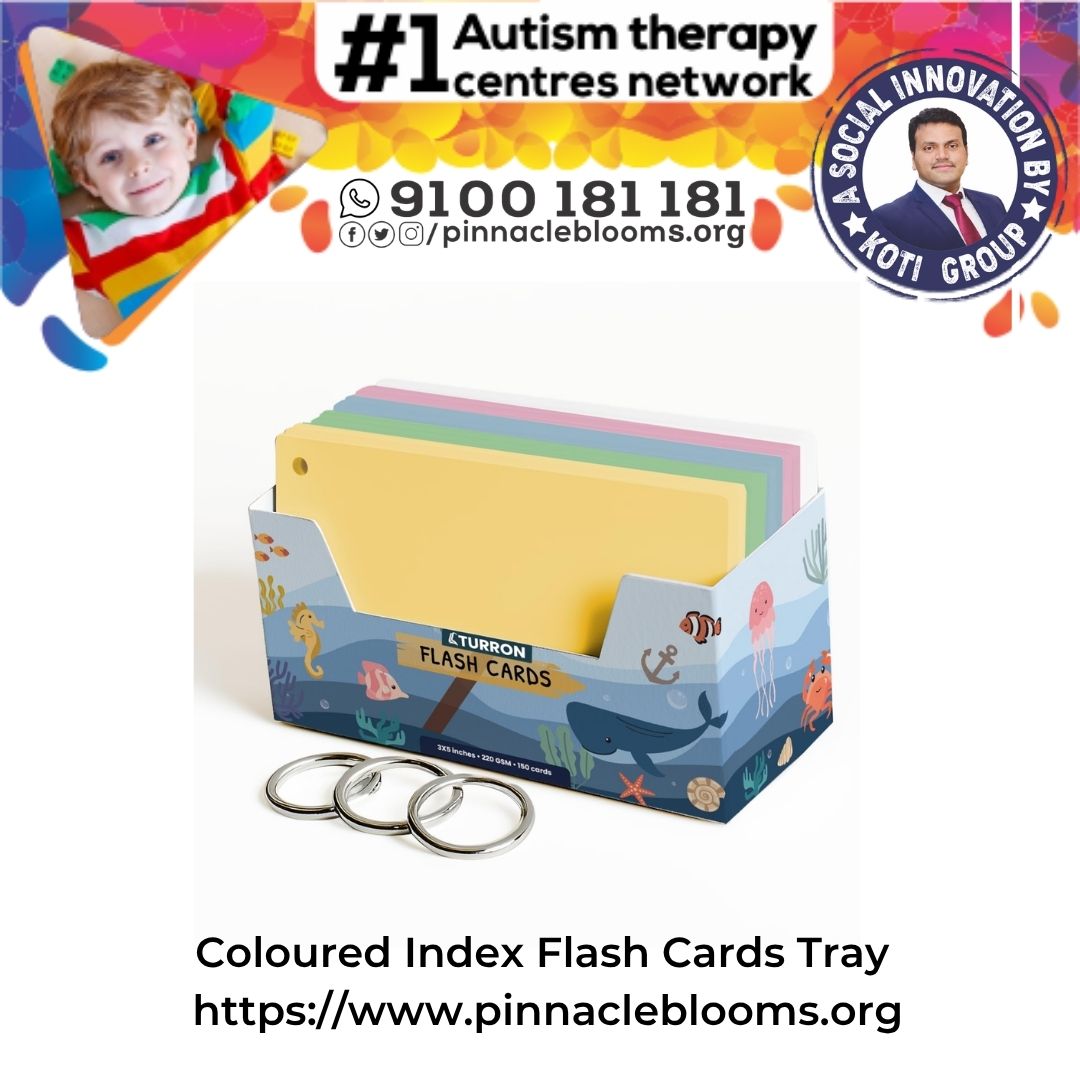
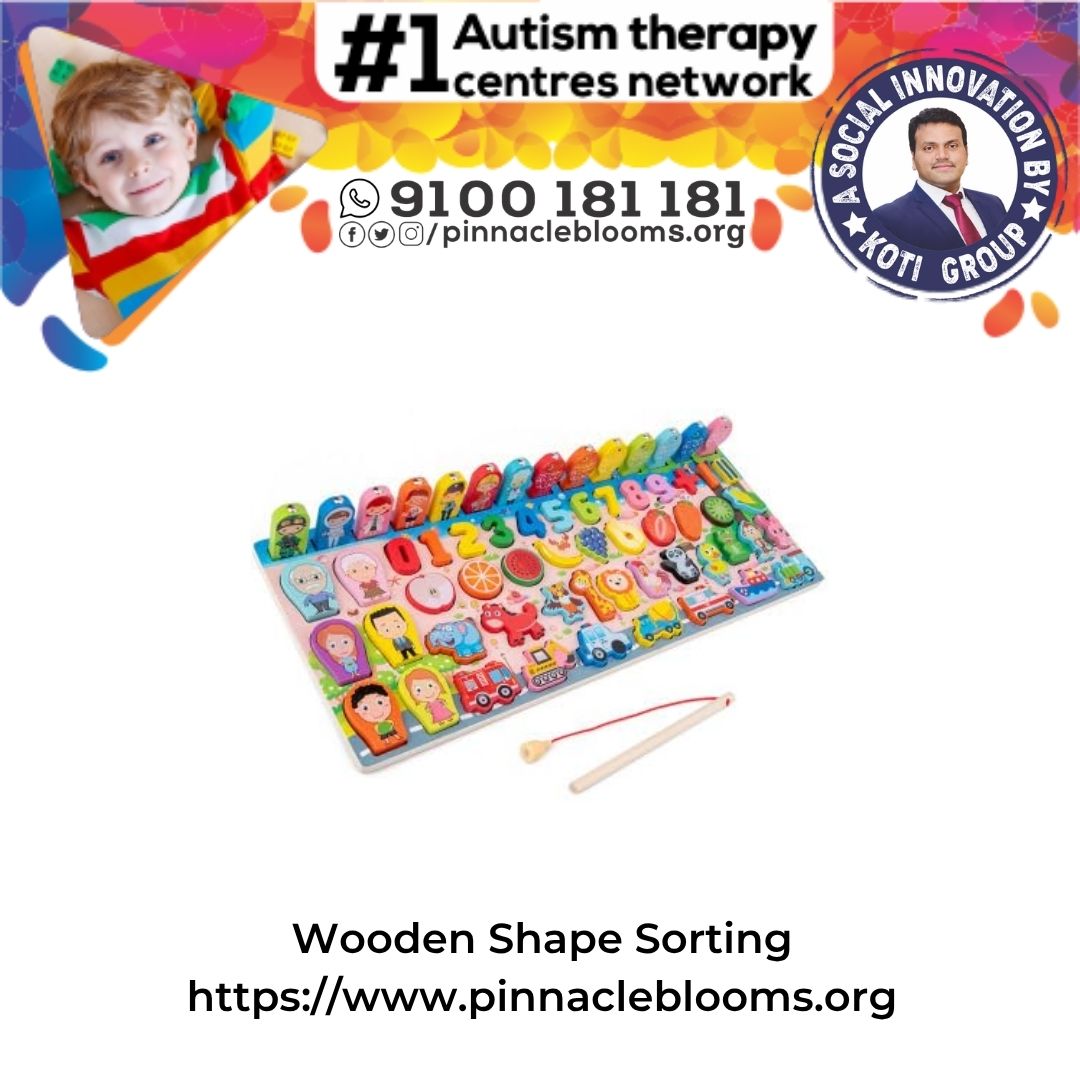
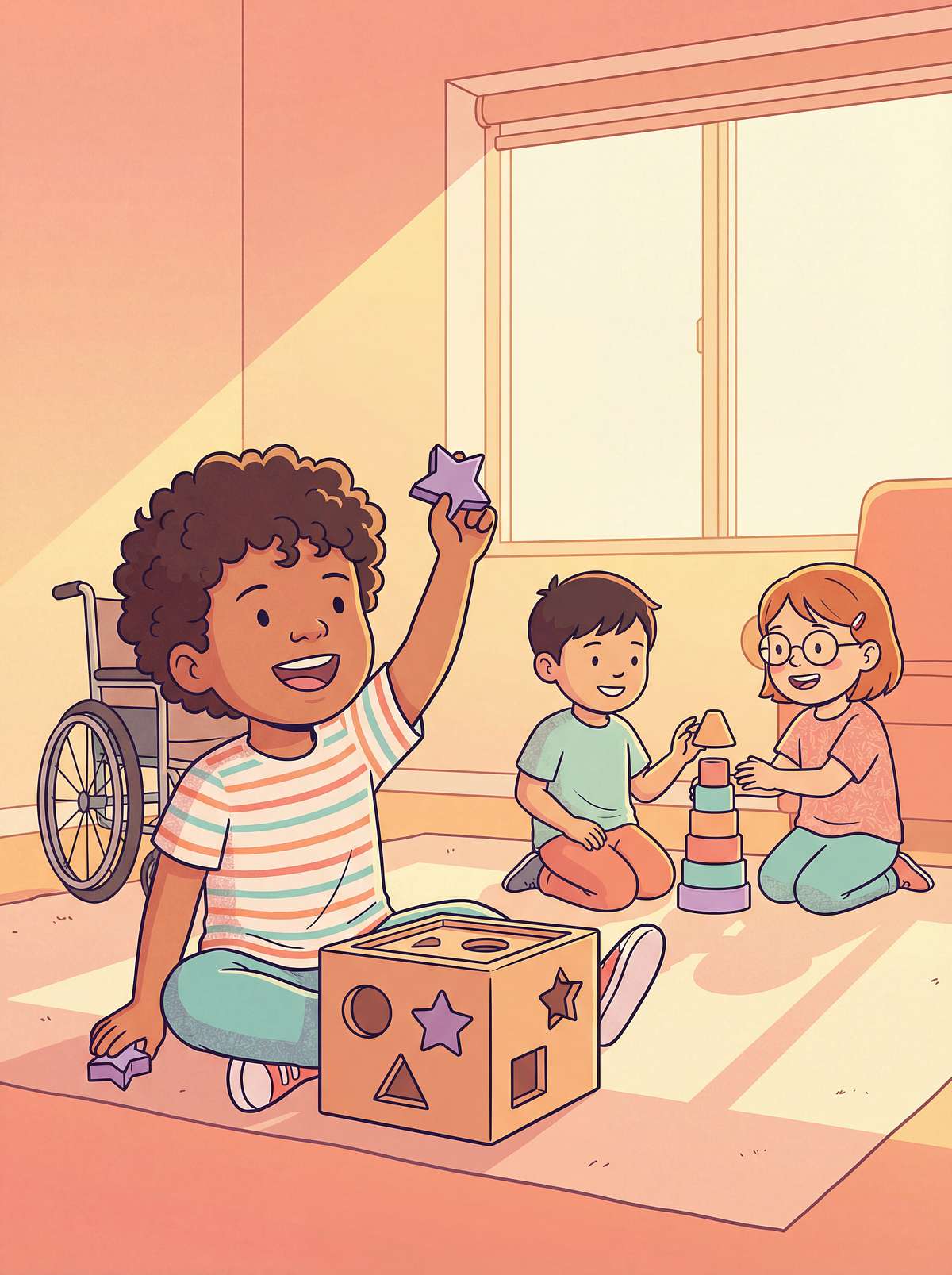
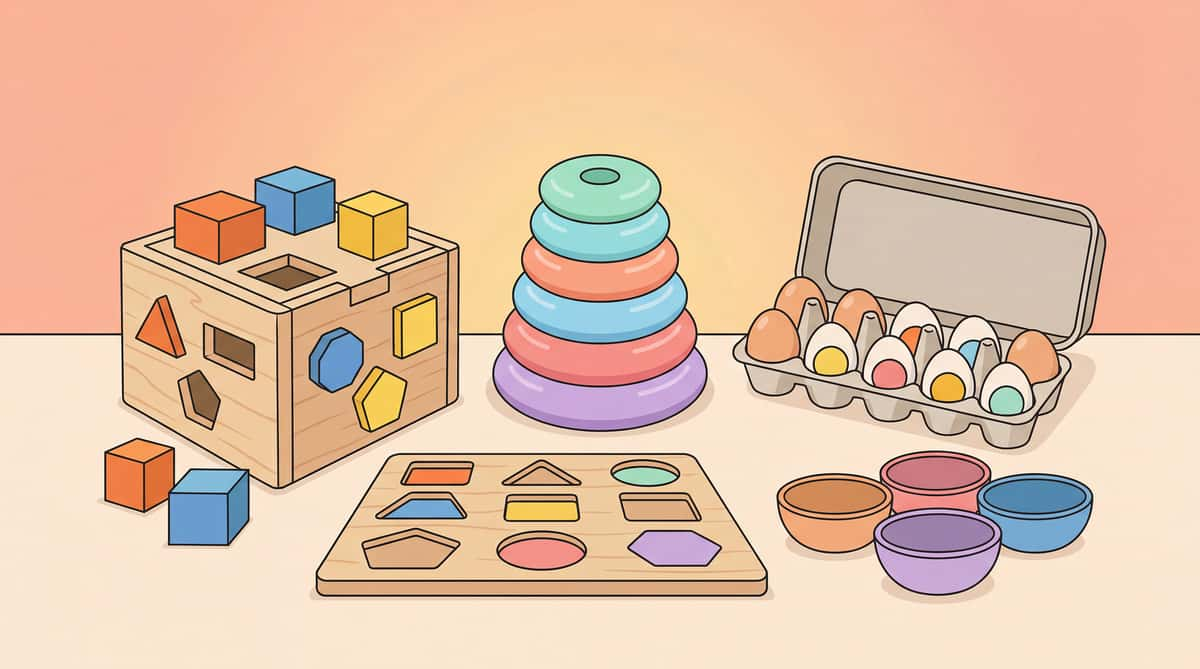
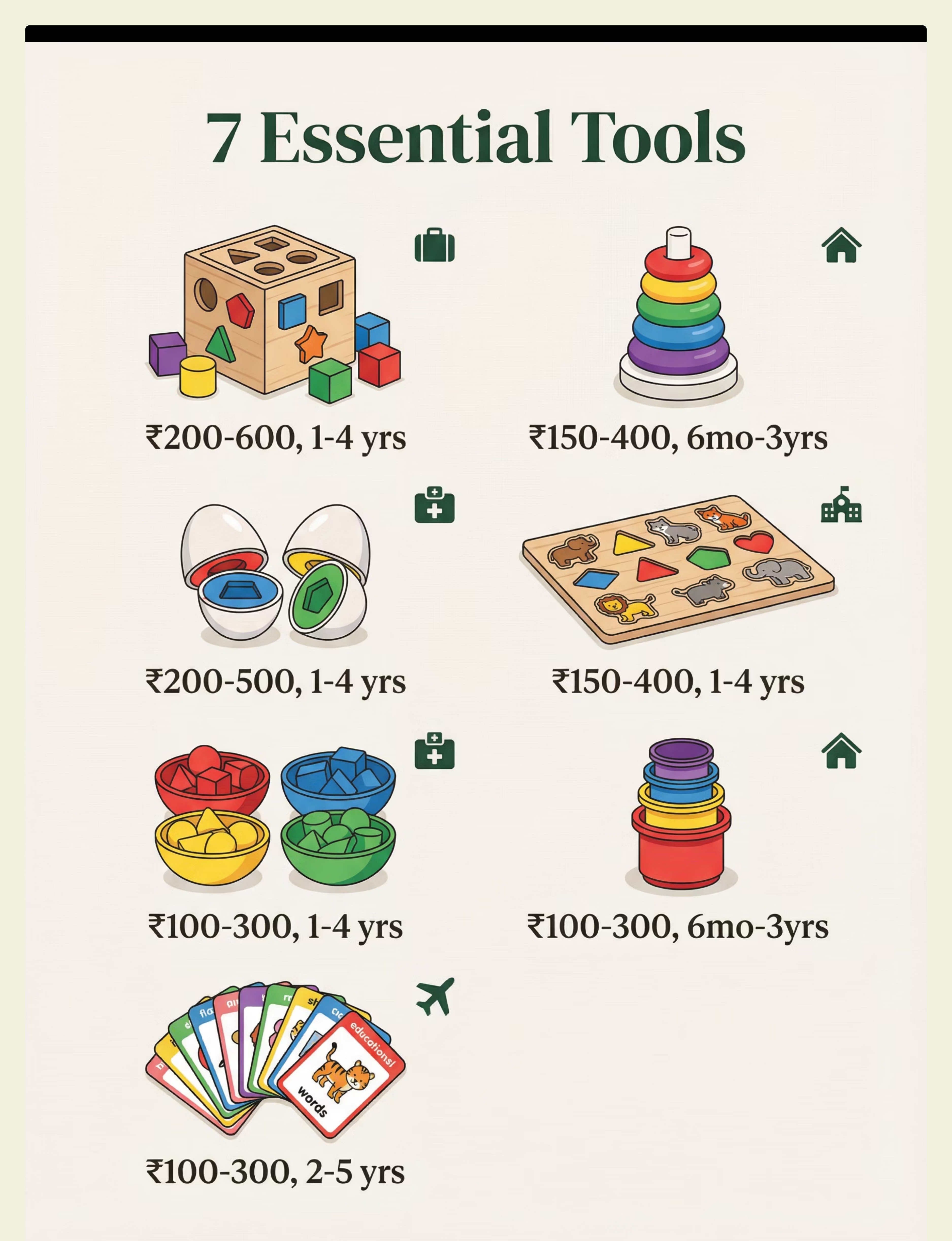
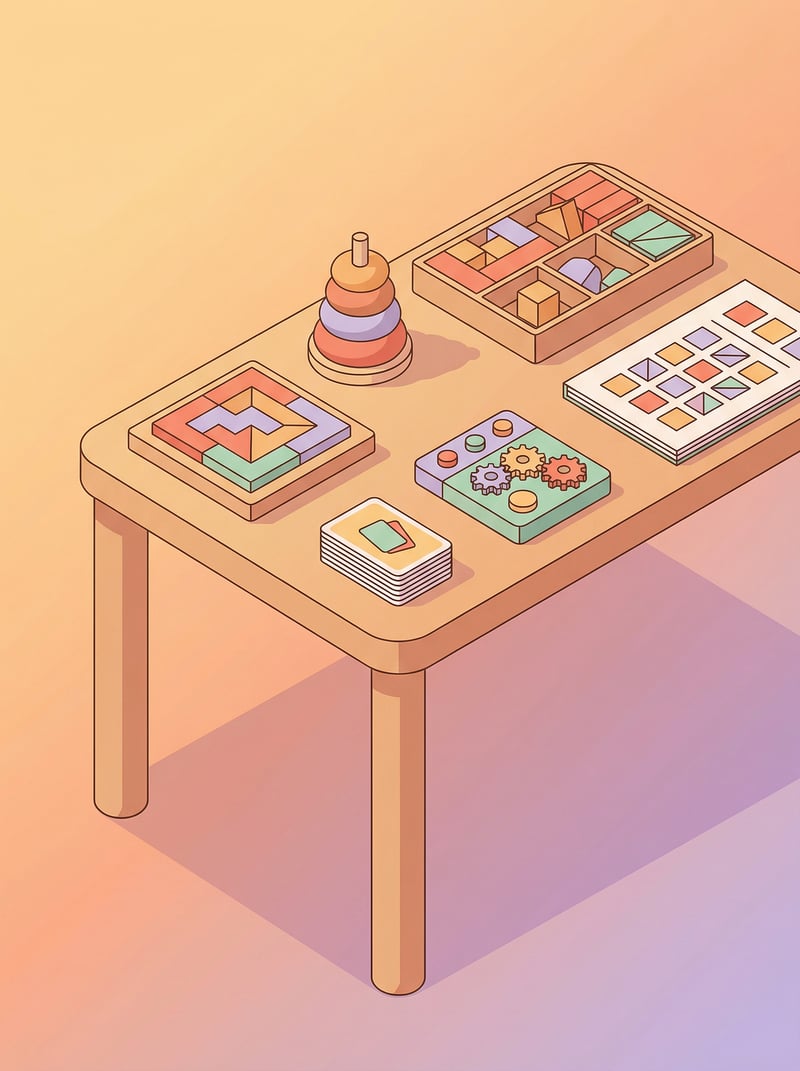
1. Classic Shape Sorter Best for: Shape recognition, problem-solving, fine motor. Ages: 1-4 years. Type: Insert shapes through matching holes in container. 2. Stacking Rings (Color/Size) Best for: Size concepts, color recognition, seriation. Ages: 6 months - 3 years. Type: Rings stacked on post, ordered by size. 3. Color Matching Eggs Best for: Color matching, fine motor, surprise element. Ages: 1-4 years. Type: Plastic eggs that split and match by color. 4. Shape Puzzles (Inset Puzzles) Best for: Shape recognition, visual-spatial skills. Ages: 1-4 years. Type: Shapes placed in matching board spaces. 5. Color Sorting Bowls/Trays Best for: Color recognition, sorting foundation. Ages: 1-4 years. Type: Match objects to colored containers. 6. Nesting/Stacking Cups Best for: Size concepts, cause-effect, early building. Ages: 6 months - 3 years. Type: Graduated cups that nest or stack. 7. Shape and Color Flash Cards Best for: Naming shapes and colors, drill practice. Ages: 2-5 years. Type: Visual learning cards for practice. Each variant targets shape, color, or size concepts through different mechanisms. Choose based on your child's age, current skills, and learning goals. You may need multiple types to cover all concept areas. How to Choose: By Goal: Shapes only → shape sorter or puzzles | Colors only → sorting bowls or eggs | Size → stacking rings or cups | Multiple concepts → combination By Setting: Home → any option | Clinic → durable options | Portability needed → eggs or flashcards By Difficulty: Beginner → stacking rings or simple puzzles | Intermediate → shape sorter or sorting bowls | Advanced → multiple variants together


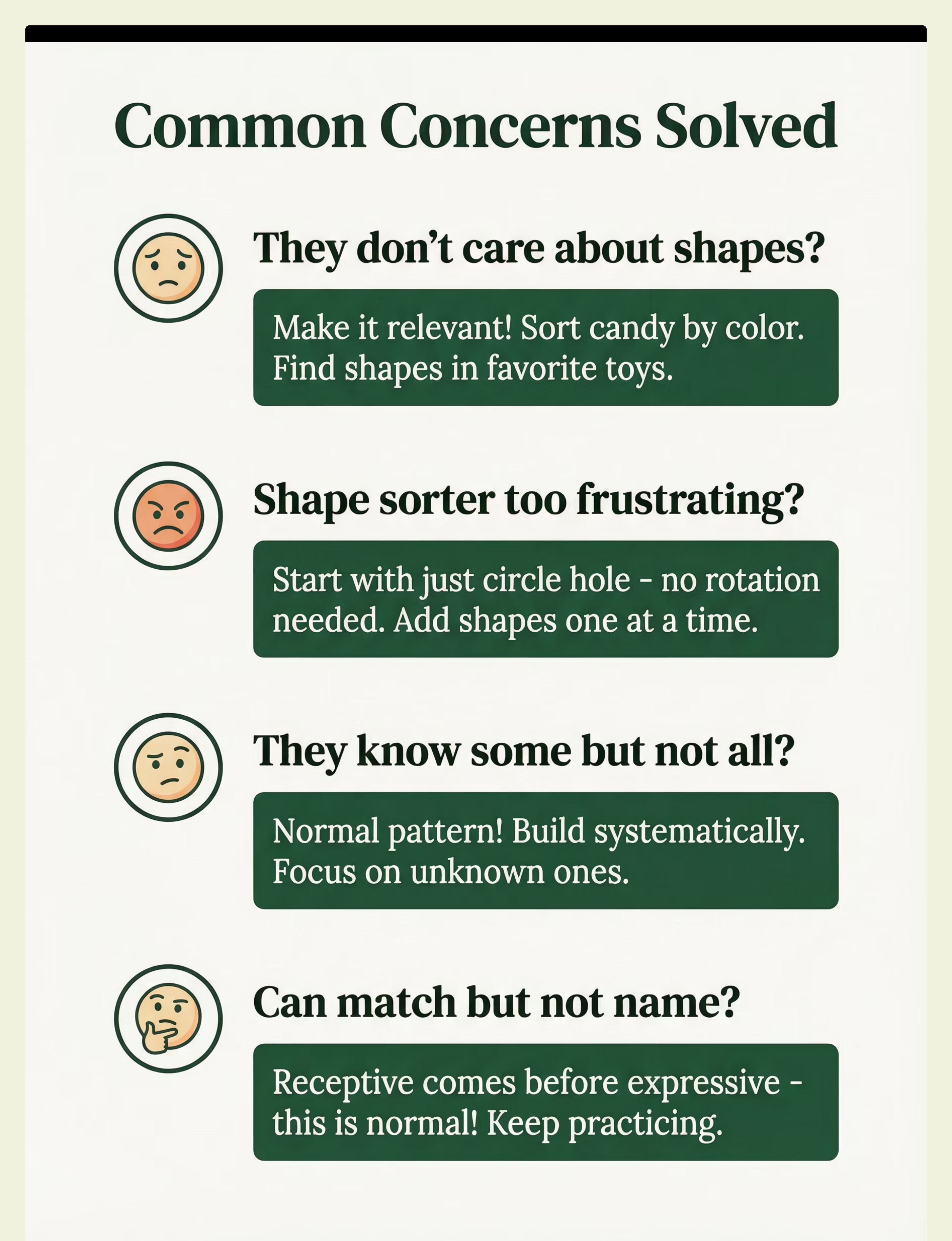
Lack of Interest | Integrate concepts into child's existing interests. | |
Sorter Frustration | Simplify the task, use puzzles before sorters. | |
Partial Knowledge | Systematically target unknown shapes/colors. | |
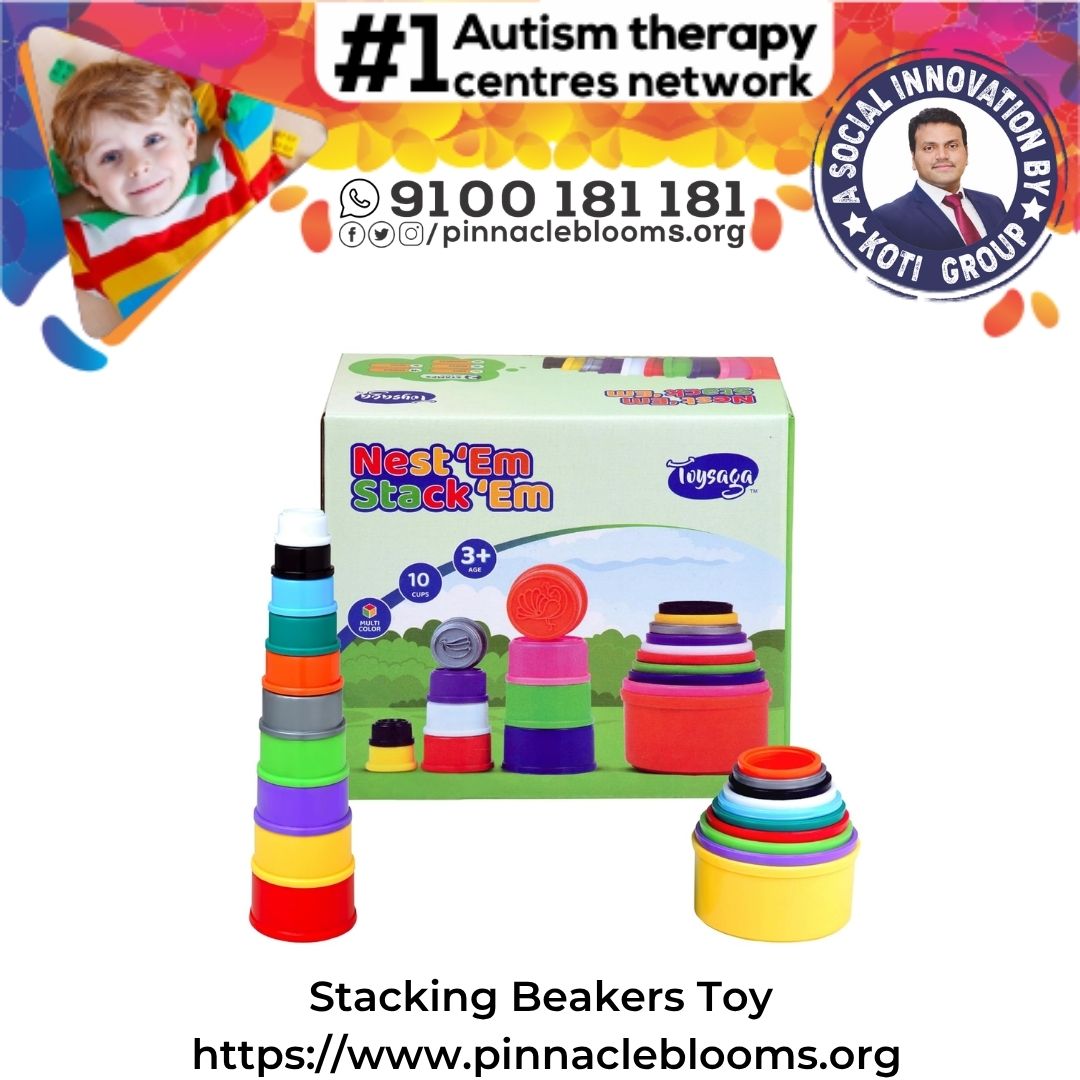
Matching vs. Naming | Prioritize matching, introduce naming gently. |

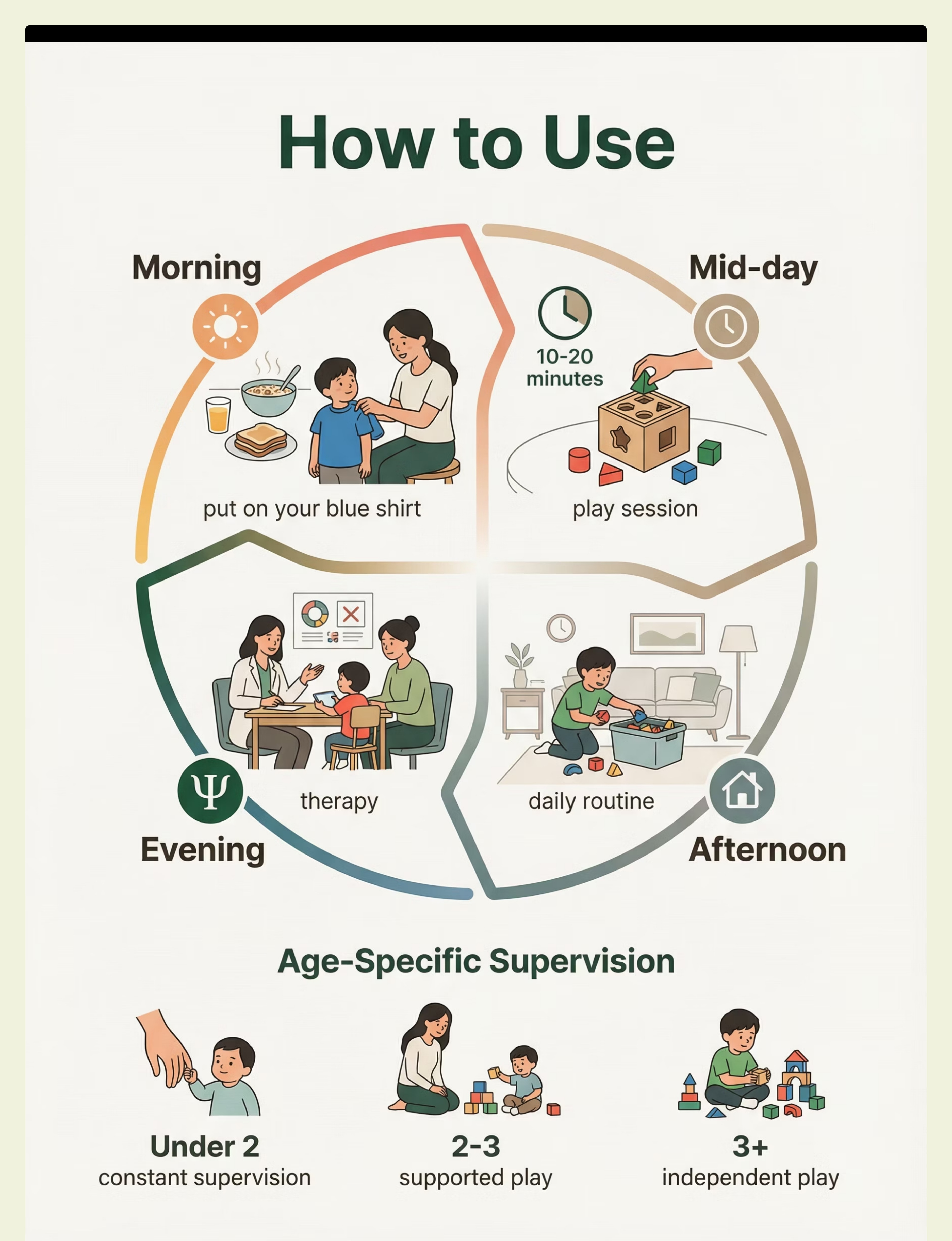
Age Range | Supervision Level | Notes | |
Under 2 years | Constant supervision and guidance | Check for mouthing, provide hand-over-hand support, ensure safety with small pieces | |
2-3 years | Supported play | Nearby supervision, provide guidance and labeling, celebrate attempts and successes | |
3+ years | Can play more independently | Check in periodically, continue language reinforcement, increase complexity as skills develop |

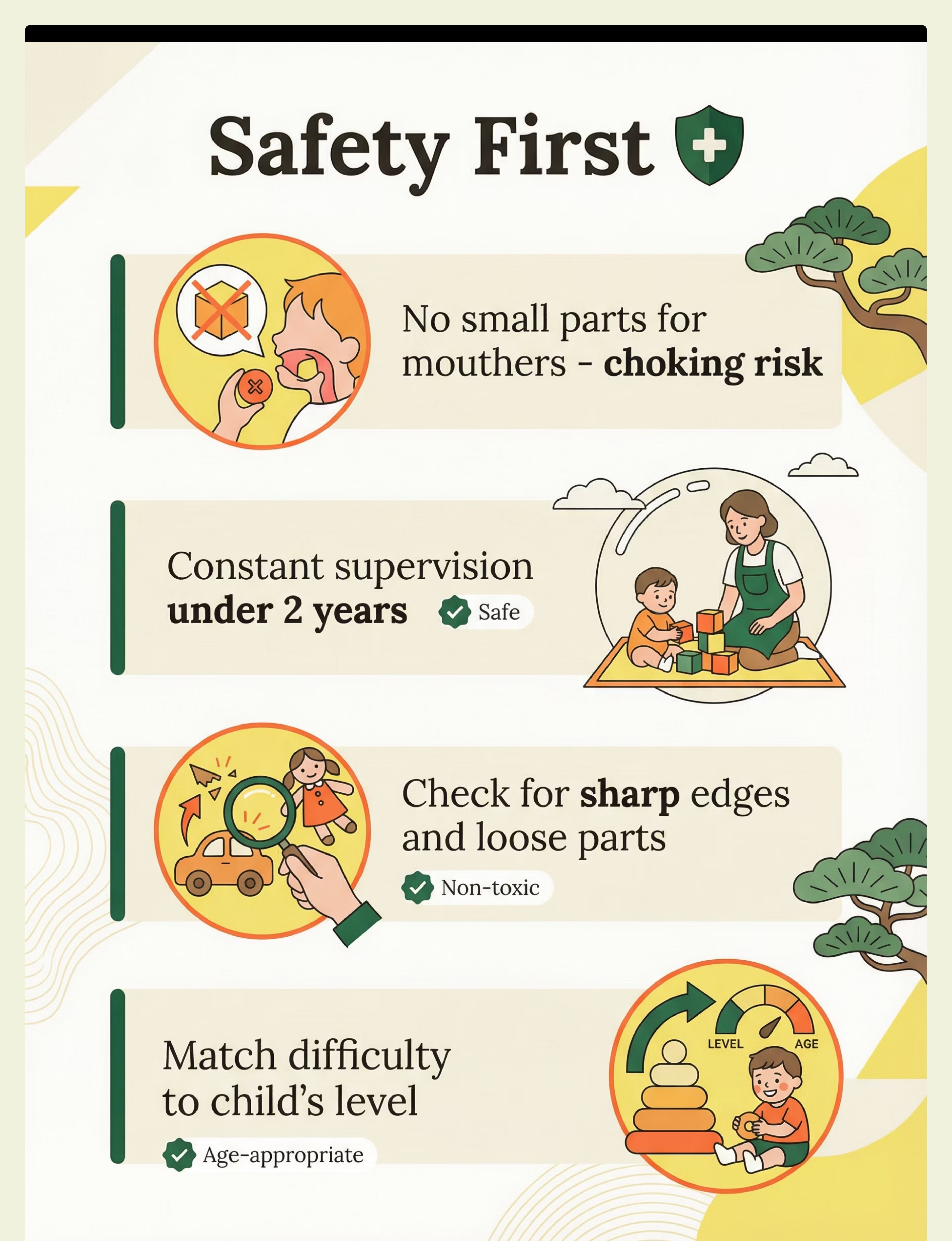
- Small parts hazard: Shape sorter pieces can be choking hazards for children who mouth objects—use age-appropriate toys only
- Constant supervision: Always supervise young children during play, especially those who put objects in their mouth
- Check for damage: Inspect toys regularly for sharp edges, broken pieces, or loose parts that could pose injury risk
- Small shape sorter pieces pose choking hazard—supervise closely with children under 3 or those who mouth objects
- Check for loose or broken parts before each use—damaged toys can injure or become more dangerous
- Ensure stacking toys are stable—toppling toys can startle or frustrate children
- Materials too advanced for child's developmental level—will cause frustration rather than learning
- Small pieces with children who actively mouth toys—serious choking hazard
- Activities beyond current skill level—build foundations before advancing complexity
- ✓ Age-appropriate materials selected
- ✓ Toys are safe, non-toxic, well-constructed
- ✓ No choking hazards present
- ✓ Difficulty level matches child's current skills
- ✓ Child engaged and not frustrated
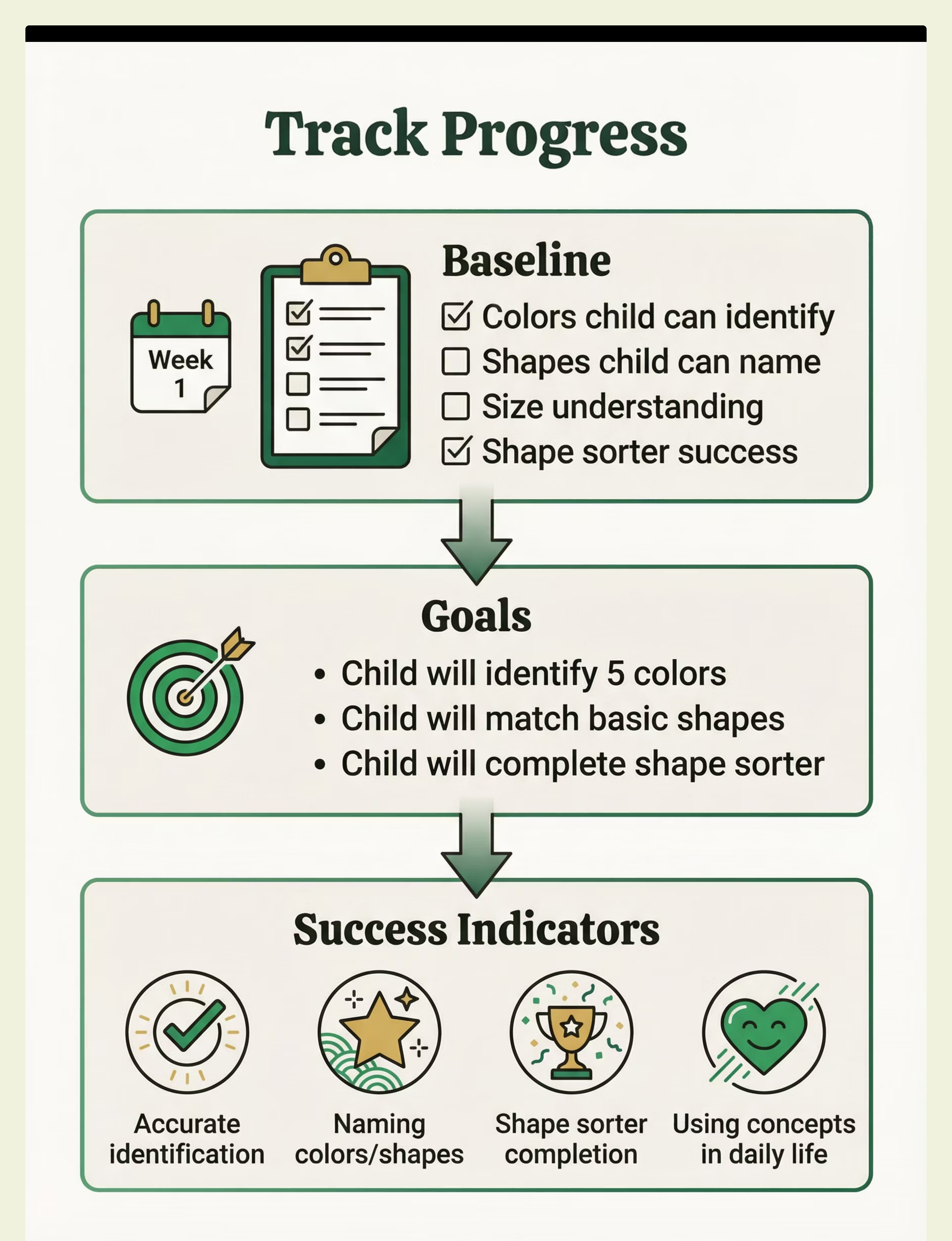
- ✓ Adult is labeling colors/shapes
- ✓ Appropriate support and guidance provided
- ✓ Celebrating successes enthusiastically
- ✓ Matching shapes/colors correctly
- ✓ Beginning to name shapes/colors
- ✓ Problem-solving on shape sorter
- ✓ Generalizing to new examples

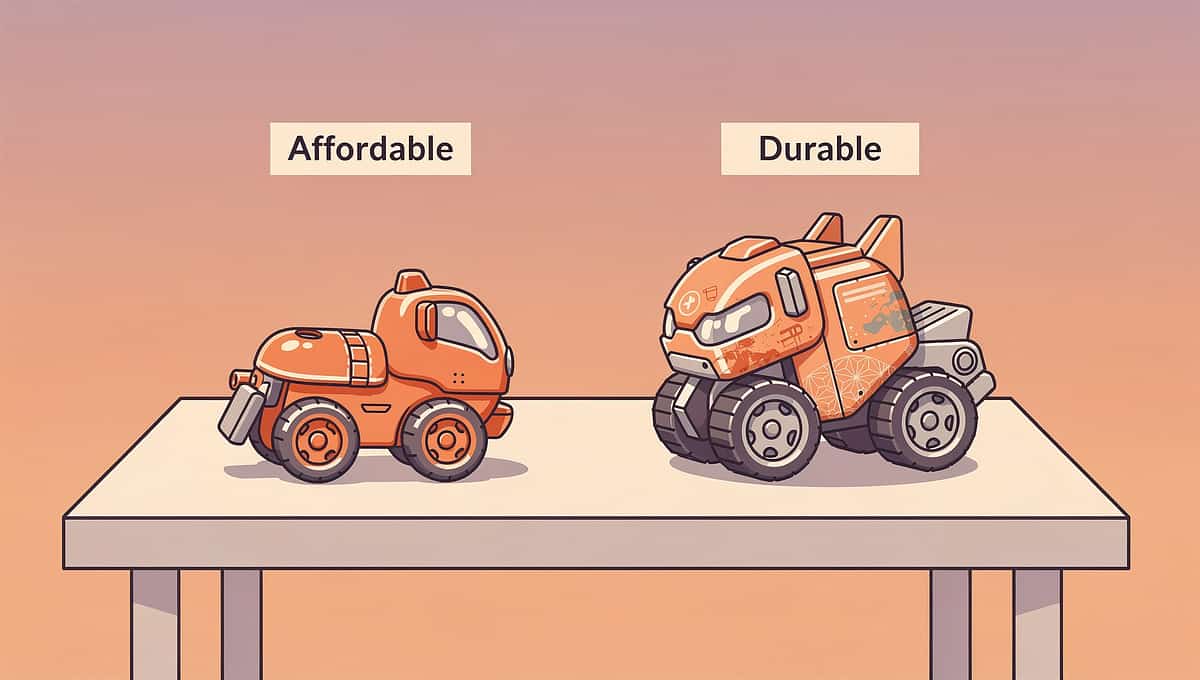
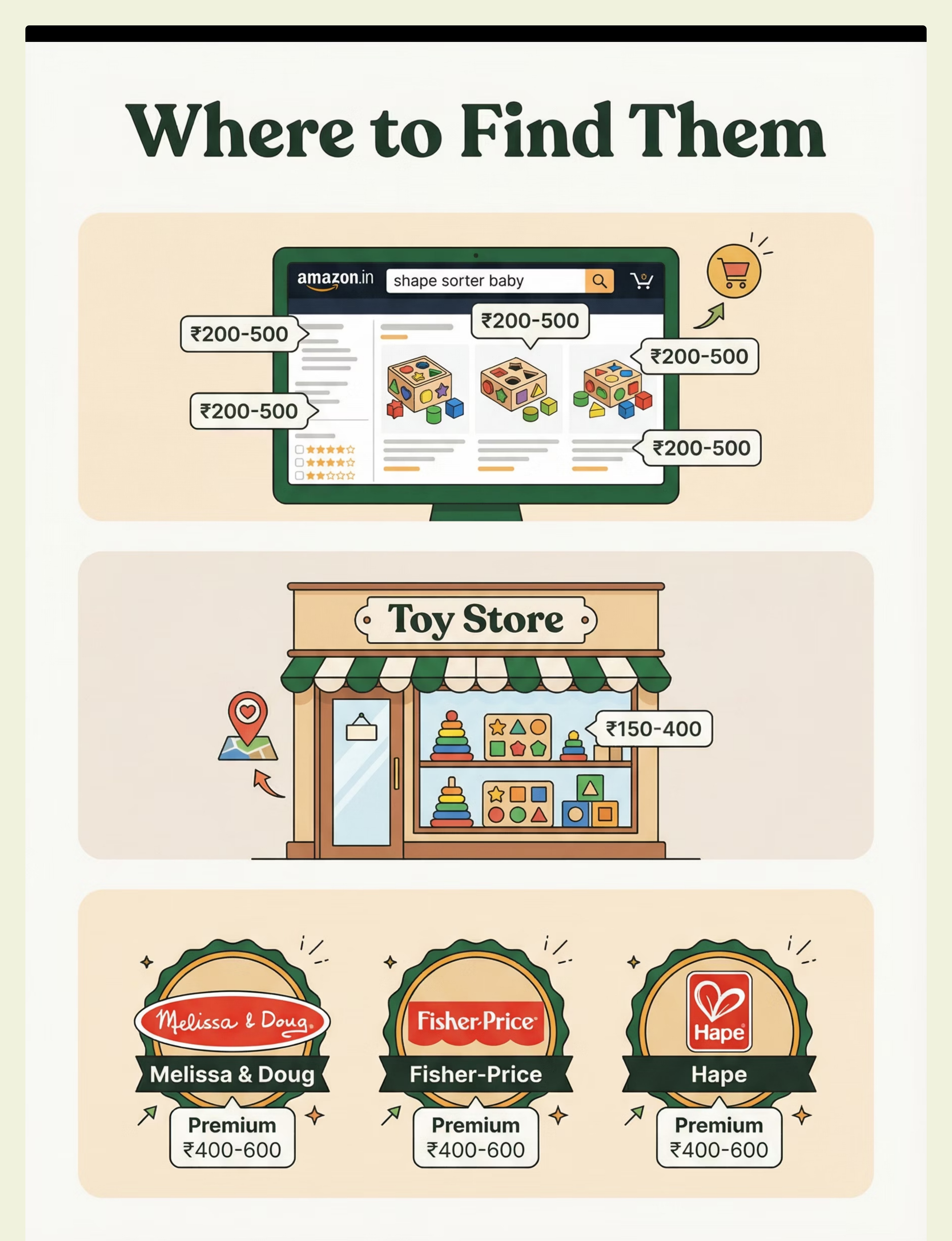
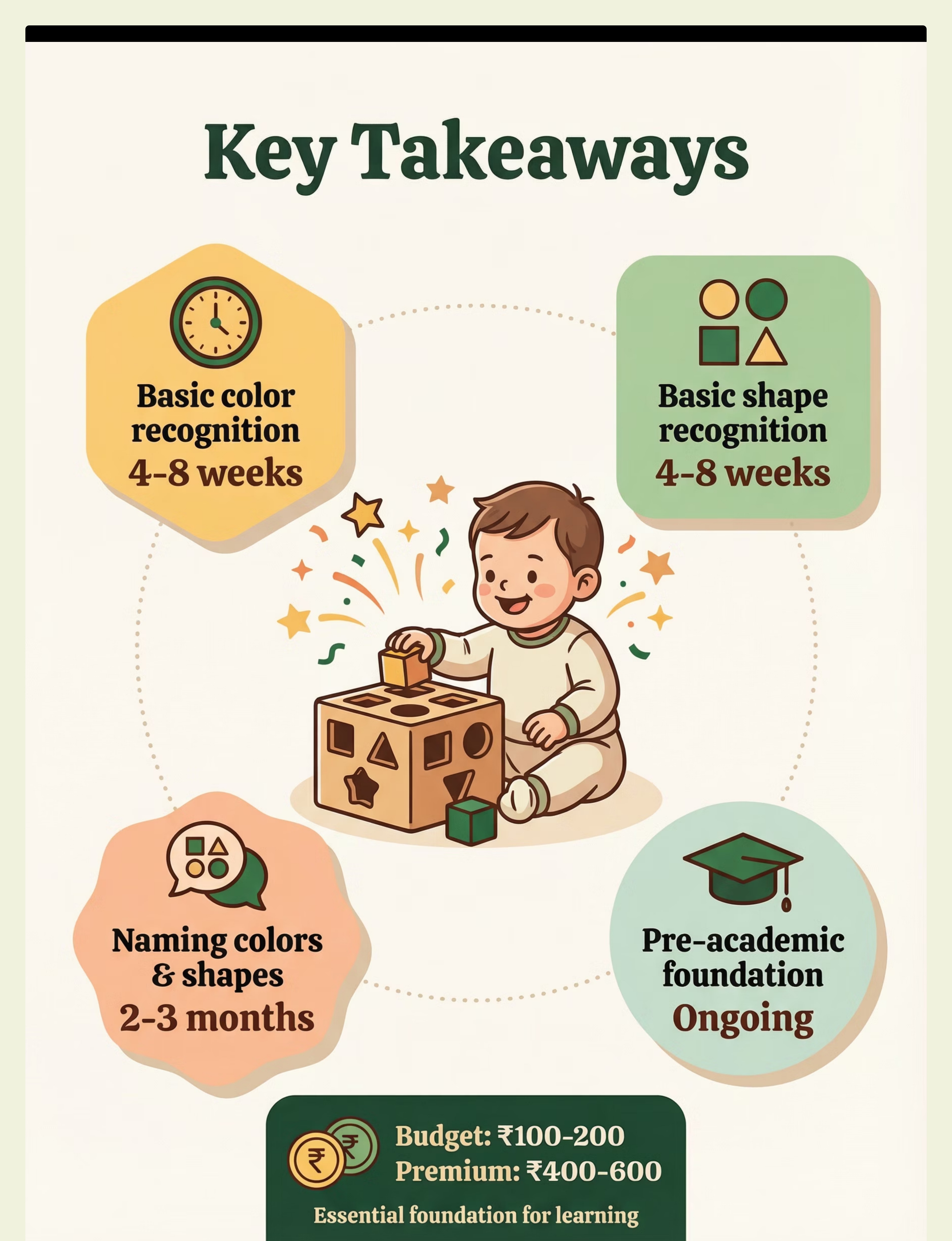
Budget Option | 100 | 1 | |
Premium Option | 400 | 5 |

- Classic shape sorter is excellent investment—gets used for years as complexity increases
- Stacking rings/cups are incredibly versatile—color, size, building, nesting—multiple learning opportunities
- Wooden shape sorters are more durable than plastic—worth premium if budget allows
- Buy multiple examples of shapes/colors—generalization requires seeing concepts in many forms
- Incorporate shape/color language throughout the day—toys are just one part of comprehensive teaching
- Read reviews for quality—poor construction means pieces don't fit, causing unnecessary frustration
- Shapes too similar to discriminate—defeats the learning purpose entirely
- Poor quality that doesn't fit well—shape sorter pieces should fit smoothly, not require force
- Too many shapes for beginner—3-5 shapes sufficient initially, 10+ shapes overwhelming
- Boring or unclear colors—bright, clear primary colors teach concepts better than muted or ambiguous shades

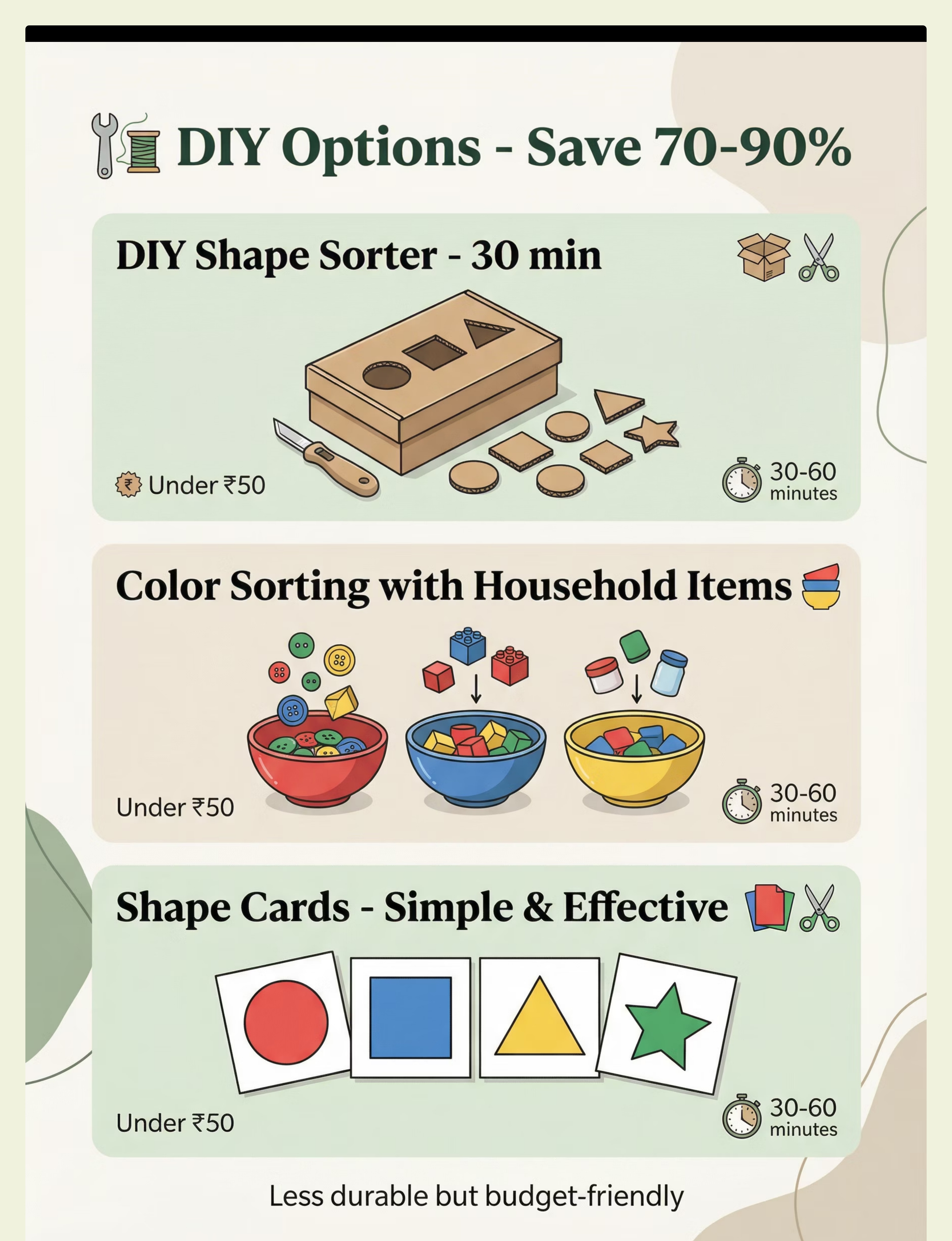
- Cardboard box + craft knife (for shape sorter)
- Colored bowls or cups from kitchen
- Colored objects from around house (toys, blocks, clothes)
- Colored paper or cardboard for shape cards
- Markers or crayons
- Household items of different sizes
- DIY Shape Sorter: Cut clear shape holes (circle, square, triangle) in cardboard box lid using craft knife—start with just circle
- Create Matching Shapes: Cut corresponding shapes from sturdy cardboard that fit through the holes you created
- Color Sorting Station: Use colored bowls or cups from kitchen as containers, gather matching colored objects to sort
- Shape Cards: Cut shapes from colored paper or cardboard for matching and naming practice—make multiple examples of each
- Color Matching Game: Gather household items by color (red toys, blue clothes, etc.) for sorting and matching activities
- Size Activities: Use household items of different sizes (spoons, boxes, cups) for big/small comparison and ordering practice
- Budget-conscious families—DIY is nearly free using household items
- Supplementing commercial toys—more examples aid generalization
- Custom shapes/colors needed for specific teaching goals
- Need immediate activity—can make tonight with materials on hand
- Want precise fit for shape sorter—commercial toys have tighter tolerances
- Durability needed—will be used daily for months or years
- Want attractive design that motivates child
- Gift giving—polished appearance matters
Preview of shape sorters color recognition Therapy Material
Below is a visual preview of shape sorters color recognition therapy material. The pages shown help educators, therapists, and caregivers understand the structure and content of the resource before use. Materials should be used under appropriate professional guidance.


Share this resource
Help others discover this
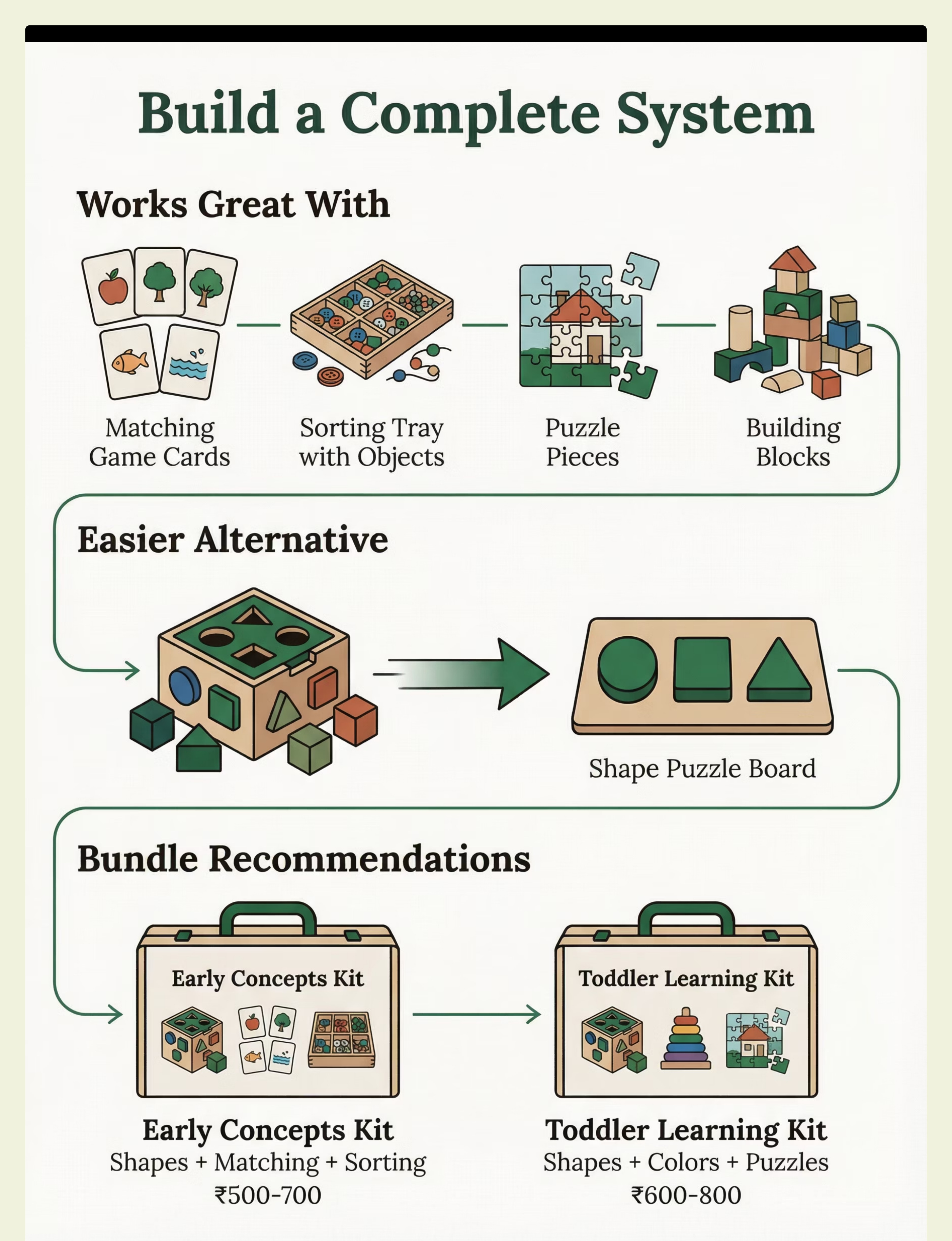
- Early Concepts Kit: Shape Sorters (8.4) + Matching Games (8.1) + Sorting Activities (8.2) — Complete foundation for basic concept development
- Toddler Learning Kit: Shape Sorters (8.4) + Numbers/Counting (8.5) + Puzzles (7.8) — Essential early learning tools for toddlers
- AbilityScore®: Identifies concept development patterns through comprehensive assessment
- TherapeuticAI®: Prescribes personalized concept-building activities based on your child's needs
- EverydayTherapyProgramme™: Includes daily concept practice routines integrated into family life
- Cognitive Index: Tracks concept acquisition progress over time with detailed metrics