











Tool ID: 14.5
OT + Parent
Moderate Evidence
Rank #2
Daily Use
₹500–25,000
Specialty Bedding / Sleep Environment
Tactile and physical sleep comfort system
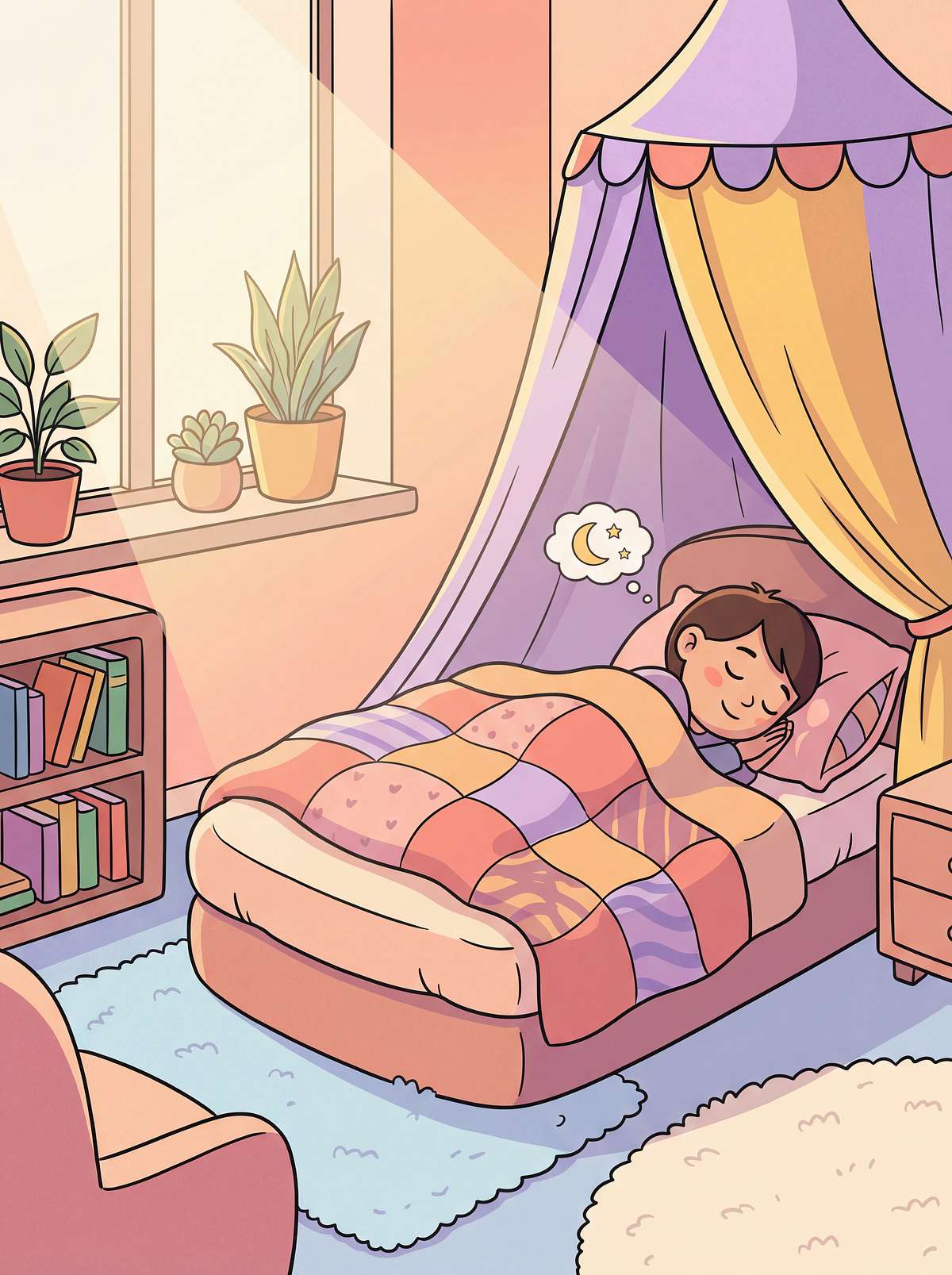
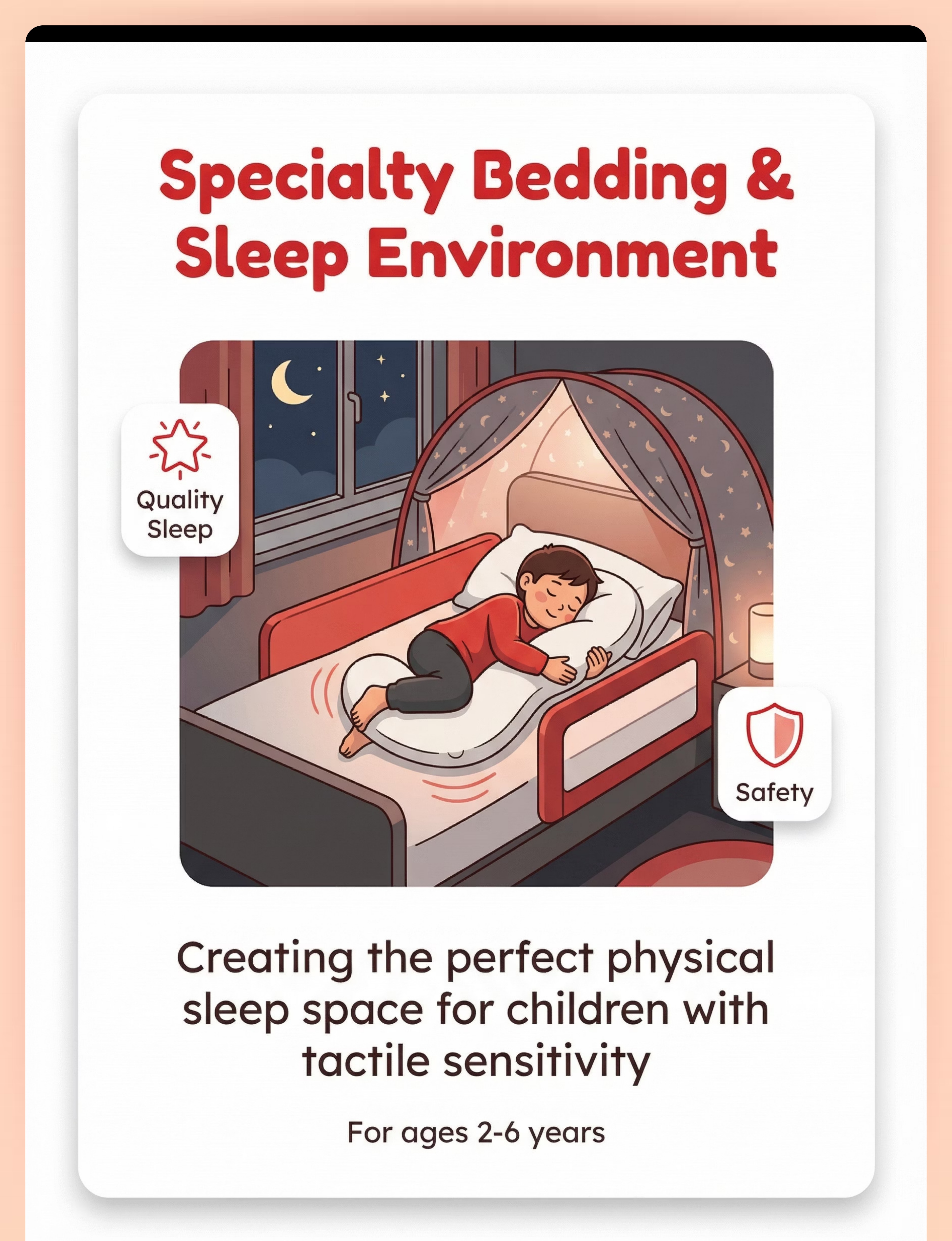
Transform your child's sleep space into a sanctuary that meets their unique sensory needs. Specialty bedding and sleep environment solutions address deep pressure preferences, containment needs, visual overstimulation, and safety concerns—creating the foundation for restorative sleep that supports daytime function and development.

Who This Helps
Specialty bedding creates optimal physical sleep environments through solutions that address sensory preferences and containment needs, supporting better sleep quality and improved daytime function.
Sleep Comfort
Sensory Preferences
Containment
Fall Prevention
Physical Security
Sleep Quality
Ages: 2+ years
Home - Bedroom
Children who kick off blankets but need deep pressure input
Active sleepers who fall out of bed or move excessively during sleep
Children who seek enclosed spaces and need visual containment to settle

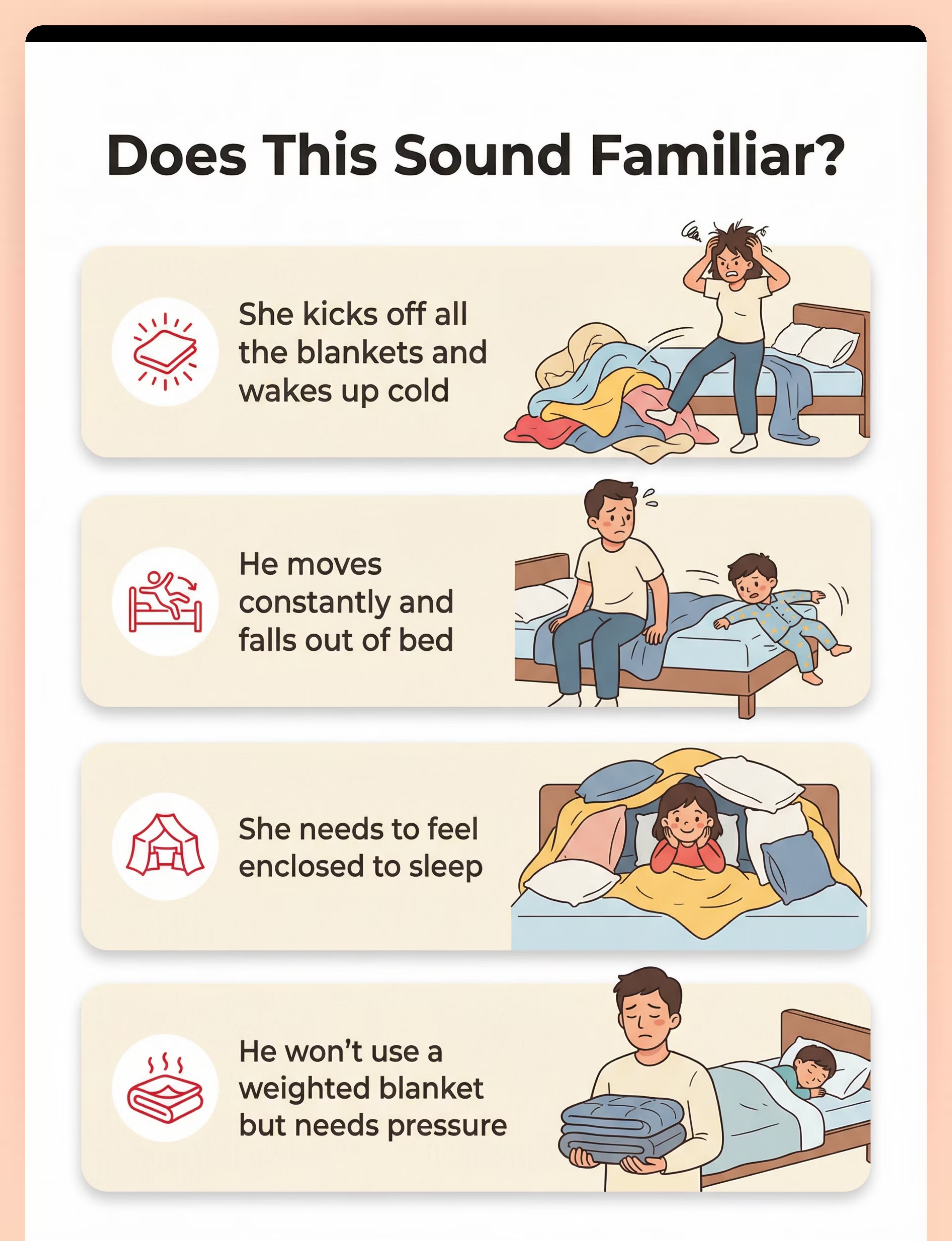
Does This Sound Familiar?
"She kicks off all the blankets every night. We find her uncovered and cold in the morning. She needs the pressure but won't keep anything on."
"He moves all over the bed constantly. Some nights he falls out completely. We're worried he'll get hurt."
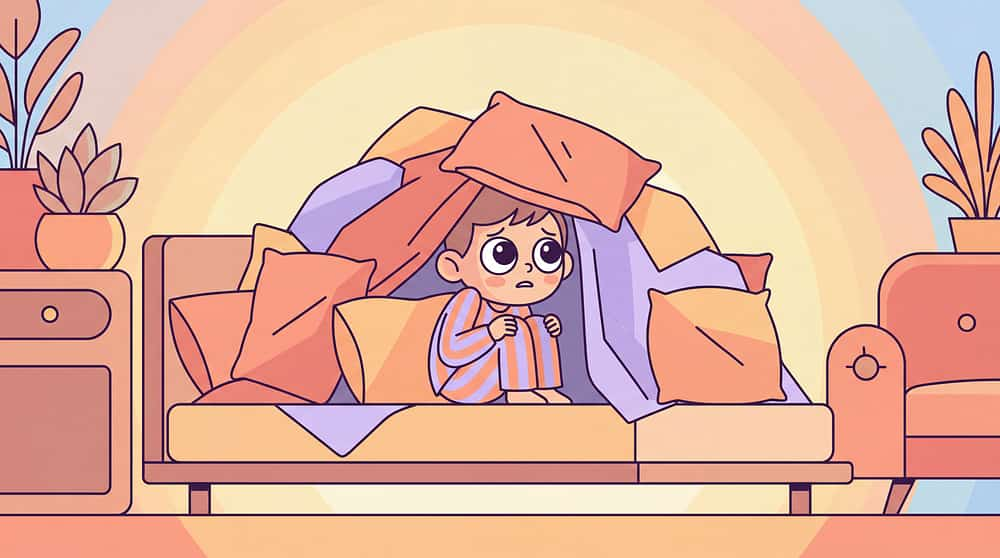
"She needs to feel enclosed to sleep. She tries to build pillow forts every night. Regular beds feel too open for her."
"Regular sheets just aren't comfortable for her. She's so restless. He won't use a weighted blanket but clearly needs some kind of pressure."
You're not alone. These are common challenges faced by families of children with sensory processing differences, autism, ADHD, and anxiety. The right sleep environment can transform these struggles into peaceful nights.

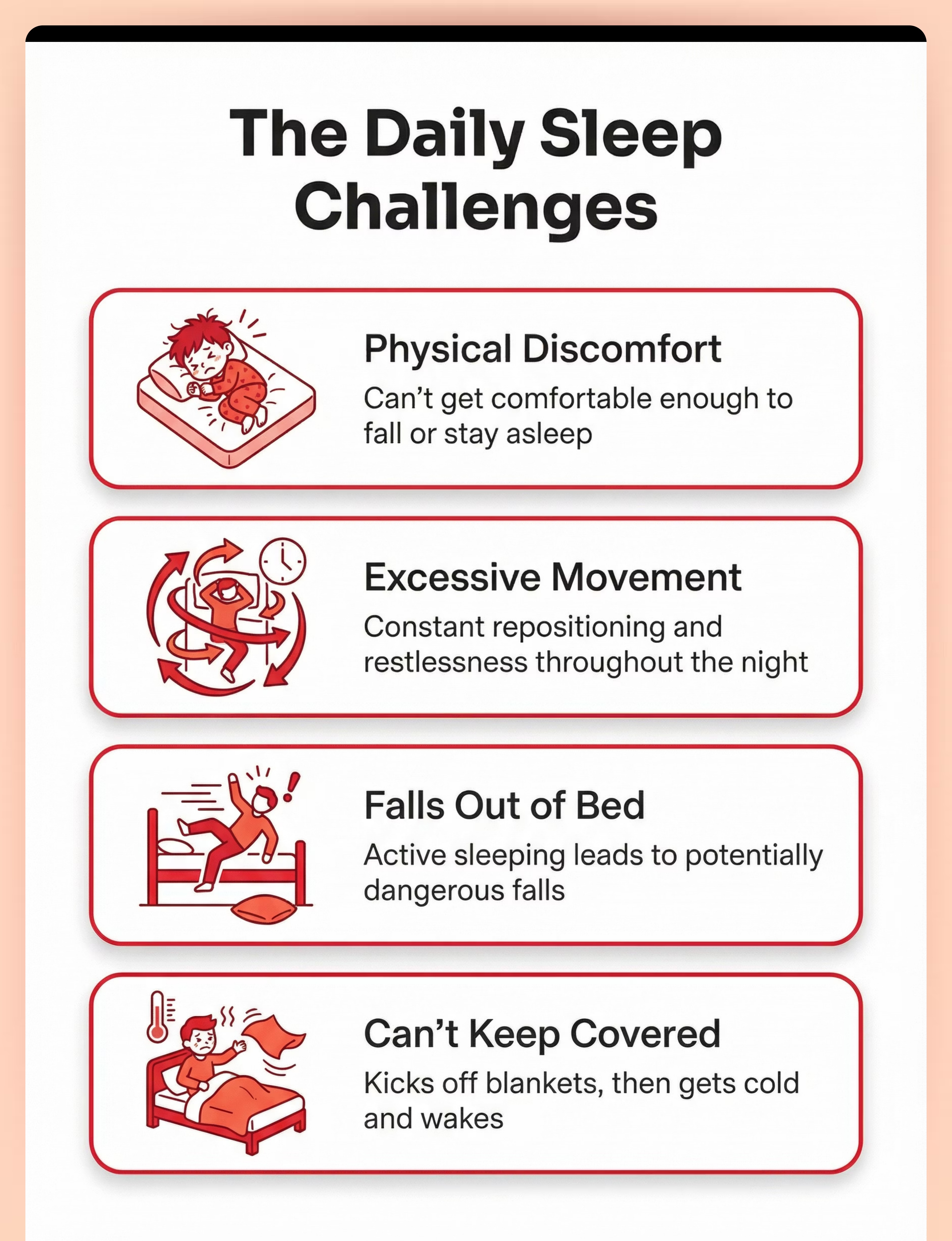
A Day Without the Right Support
Bedtime Struggle
Child can't settle in open bed. Feels exposed and unsafe. Takes hours to fall asleep. Physical discomfort affecting every attempt to rest.
Middle of Night
Kicks off all blankets within an hour. Gets cold but doesn't wake to cover up. Moves constantly seeking comfort. Falls out of bed with a thud and cry.
Early Morning Wake
Wakes cold, uncovered, disoriented. Poor sleep quality means waking too early. Body is tired but bed is uncomfortable. Another night of insufficient rest.
Next Day Impact
Dysregulated from poor sleep. Therapy is harder. Learning is harder. Behavior is harder. Everyone exhausted. The cycle continues.

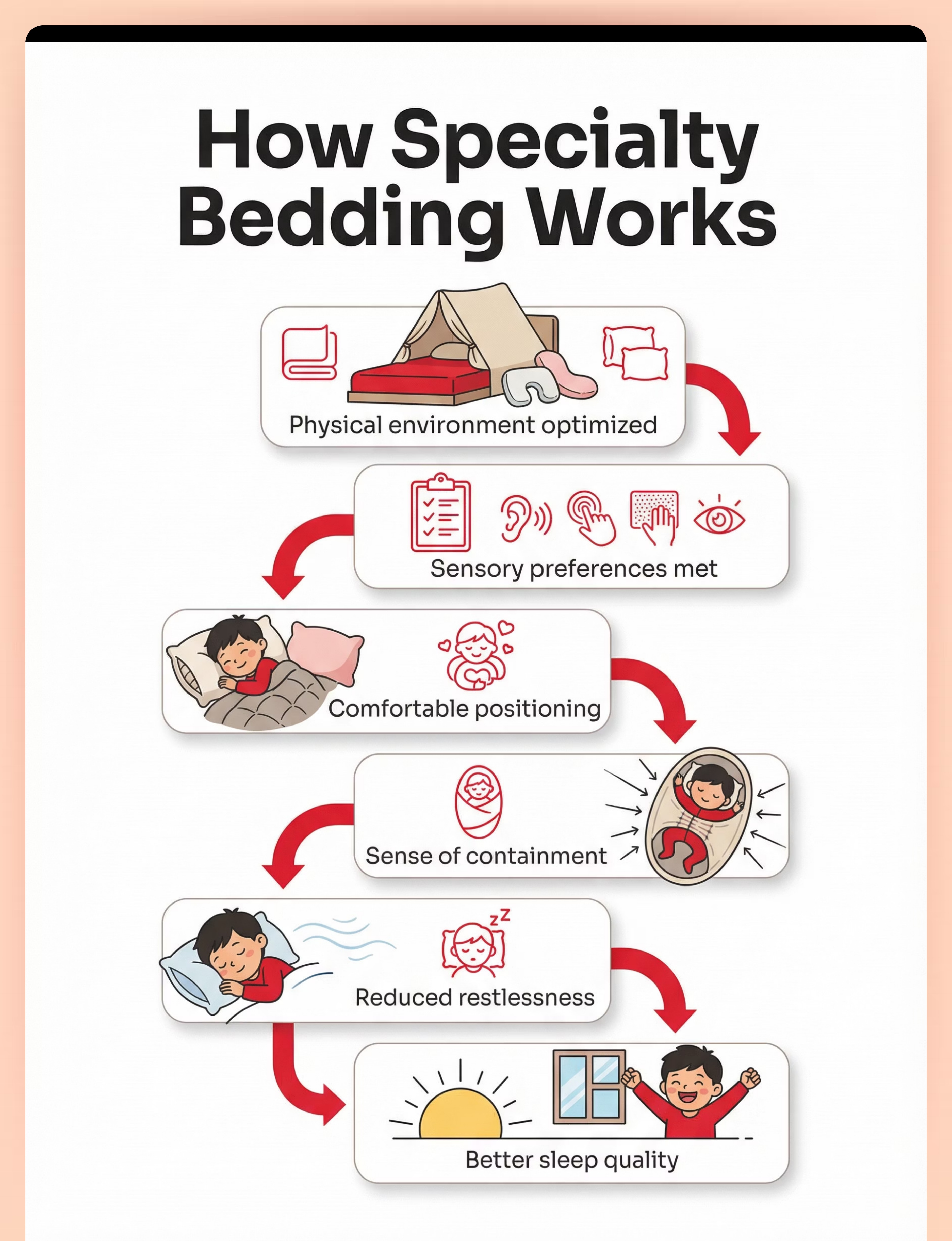
The Science Behind It
Physical Environment Optimized
Bedding and containment solutions matched to child's specific sensory profile and physical needs
Sensory Preferences Met
Deep pressure, containment, temperature, and visual needs addressed through specialized materials
Comfortable Positioning Achieved
Body feels secure, contained, and physically comfortable throughout the sleep cycle
Sense of Security Established
Containment and physical boundaries create psychological and physical sense of safety
Reduced Movement and Restlessness
Optimal sensory input decreases need to seek stimulation through movement during sleep
Better Sleep Quality and Daytime Function
Restorative sleep supports regulation, learning, therapy progress, and overall development
Sleep Comfort
Sensory Preferences
Containment
Fall Prevention
Physical Security
Sleep Quality

How to Use It Right
Match to Sensory Profile
Choose bedding solutions that align with your child's specific sensory seeking or avoiding patterns. Deep pressure seekers benefit from compression; containment seekers need enclosures.
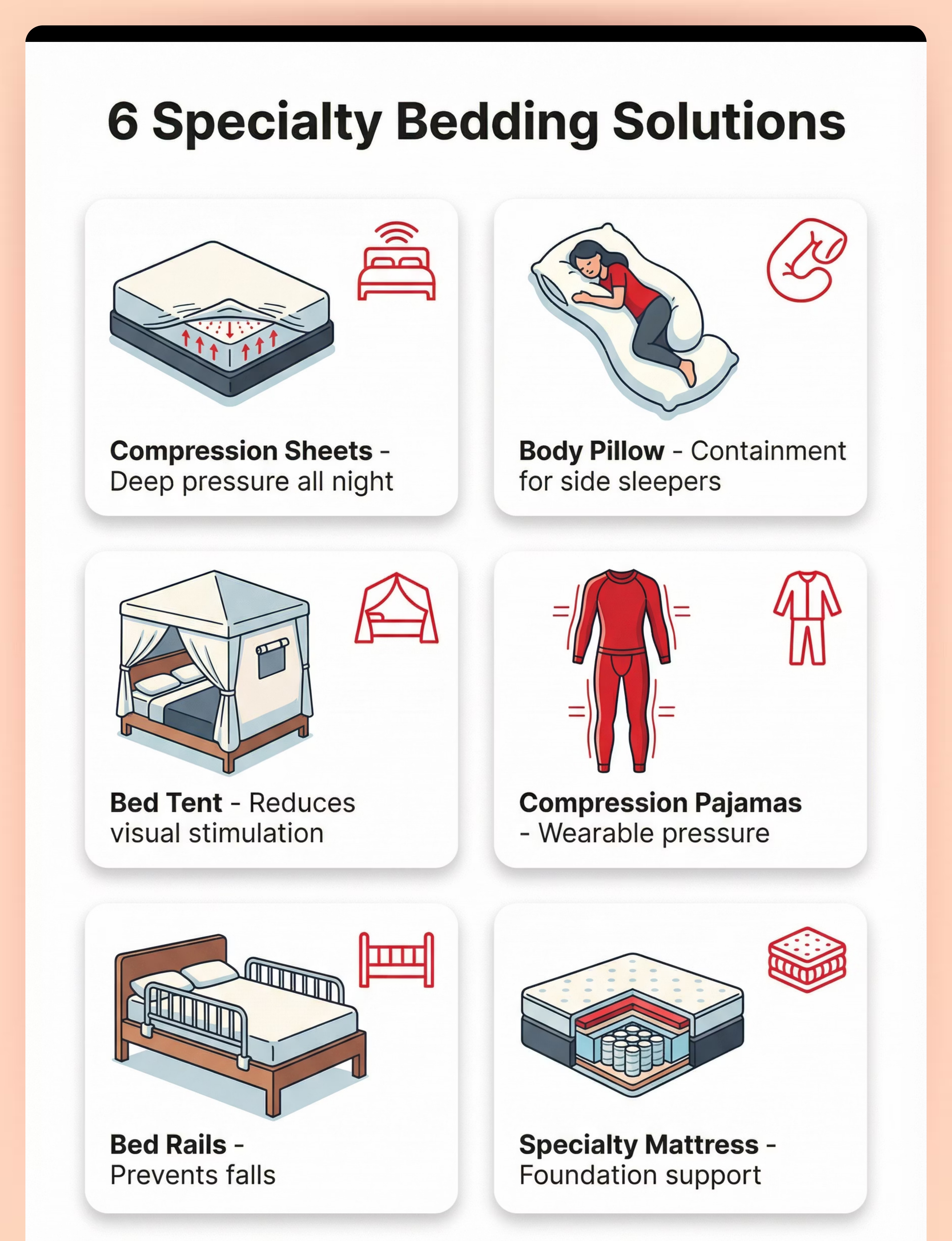
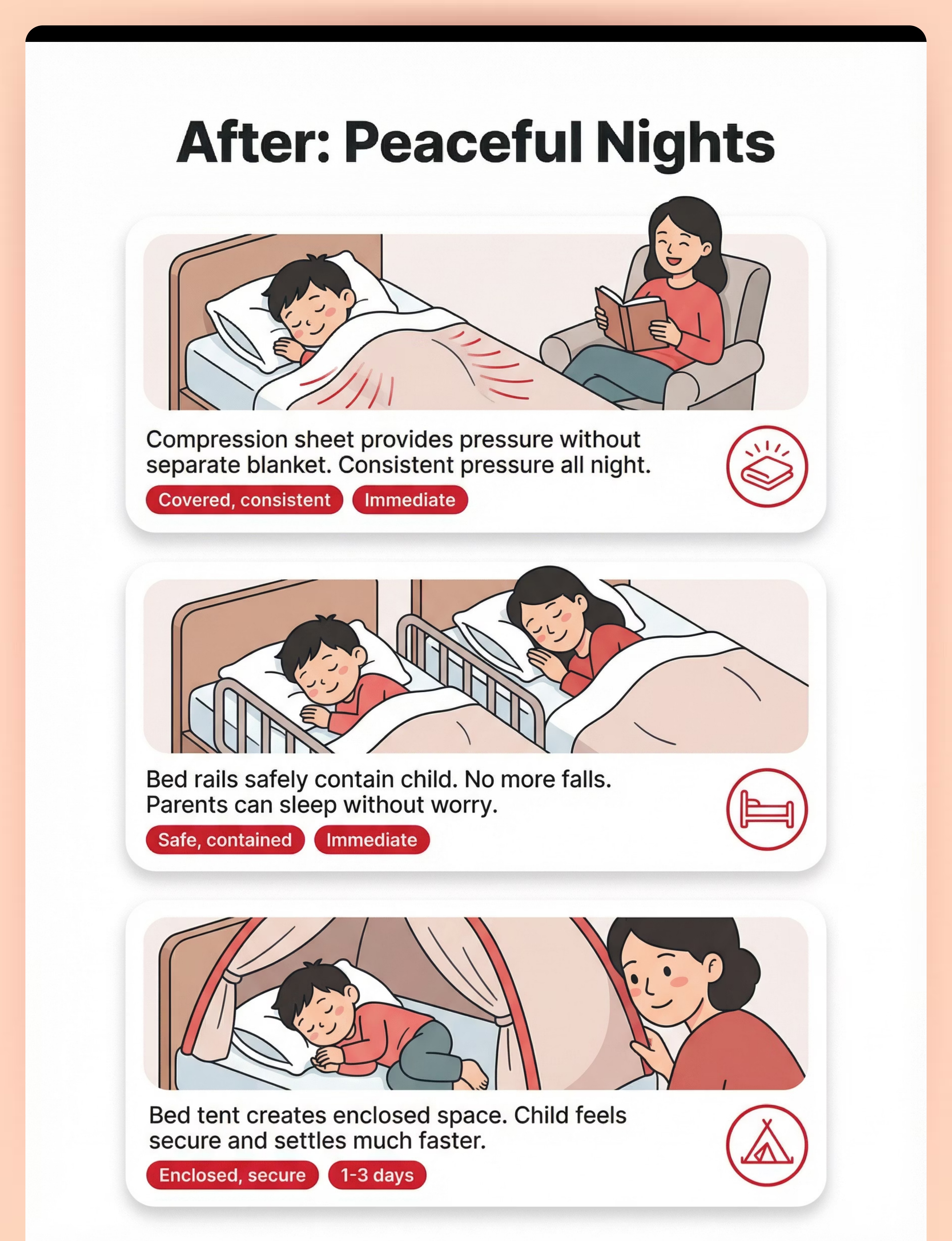
Compression Sheets for Pressure
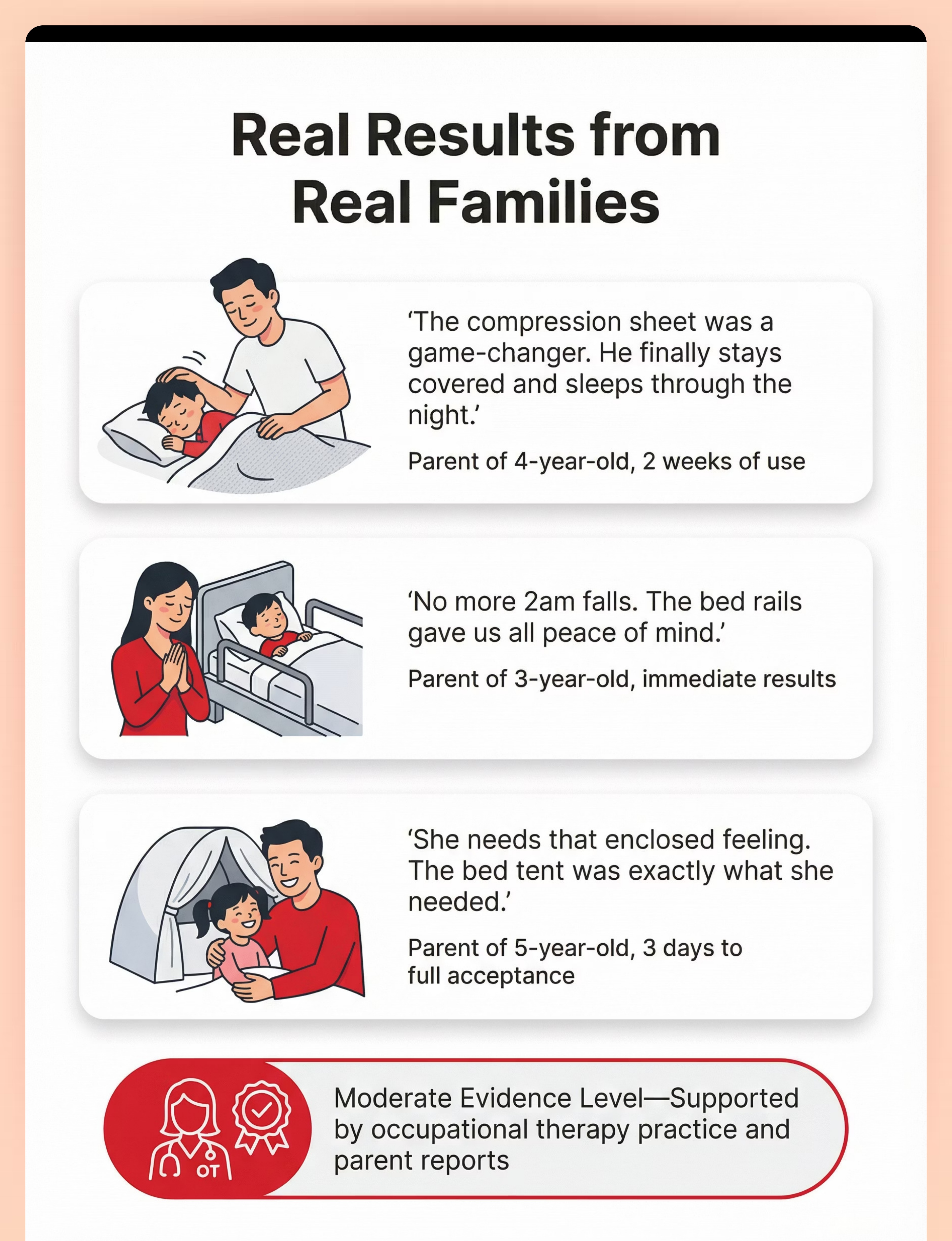
Use compression sheets for children who need deep pressure input but kick off blankets. Provides consistent all-night pressure without separate covering.
Bed Tents for Visual Reduction
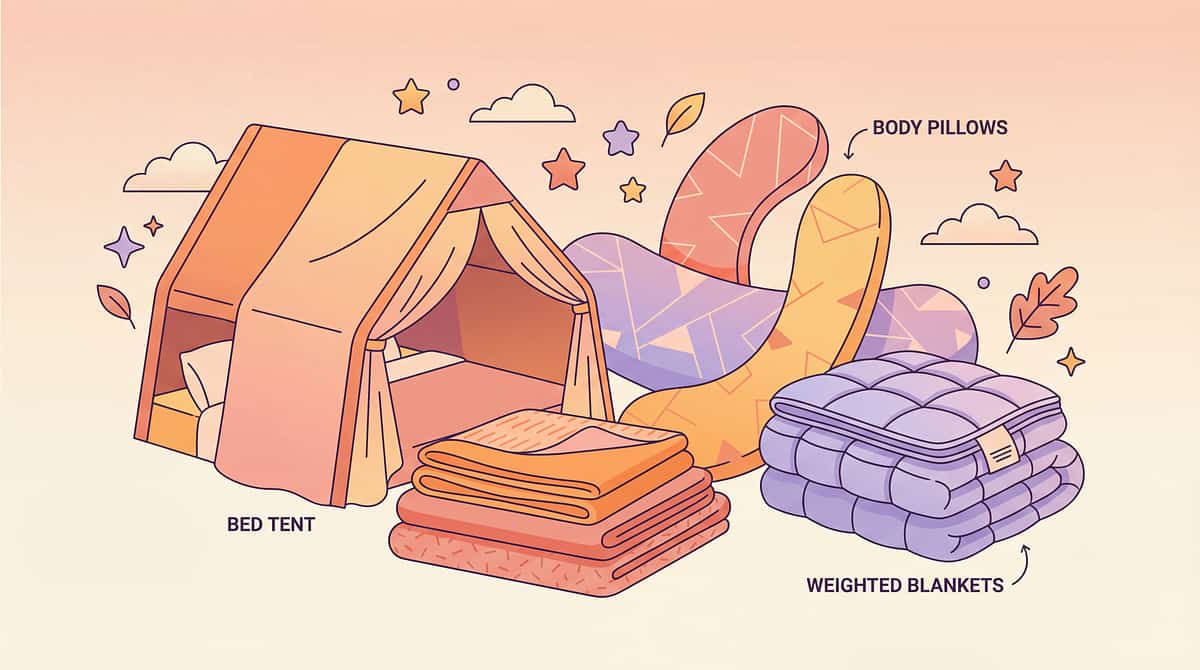
Install bed tents for children overwhelmed by visual stimulation or who seek enclosed spaces. Creates cozy, contained sleep environment.
Body Pillows for Containment
Position body pillows to provide physical boundaries and containment without restriction. Excellent for side sleepers who need to feel enclosed.
Bed Rails for Active Sleepers
Install secure bed rails for children who move excessively during sleep or have fallen out of bed. Safety is paramount.
Monitor Temperature
Always monitor for overheating when using compression items. Choose breathable fabrics and adjust room temperature accordingly. Duration: Throughout sleep, every night.

Expert Endorsement
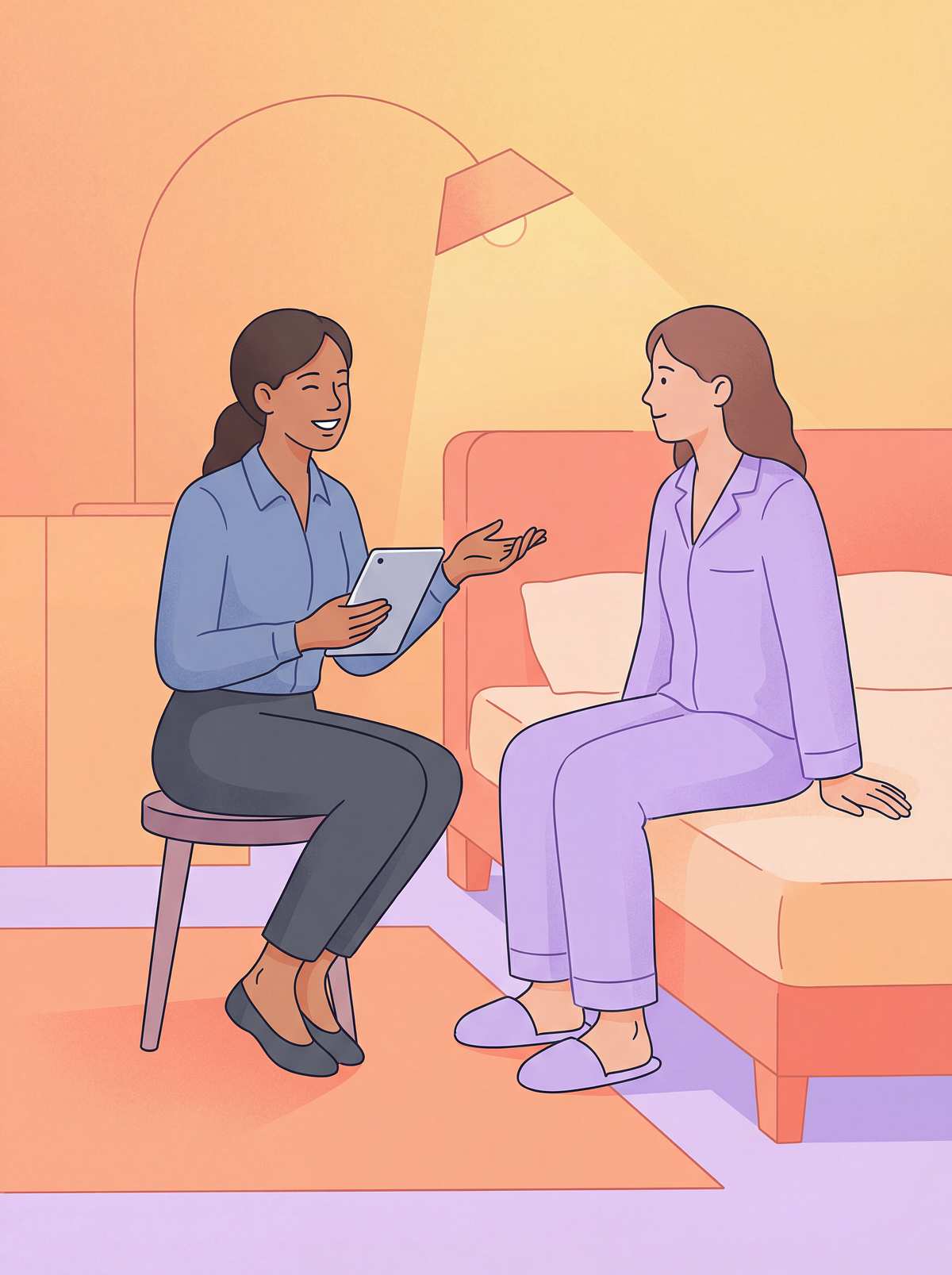
"The physical sleep environment matters enormously. Compression sheets provide continuous deep pressure. Bed tents reduce visual stimulation. Body pillows give containment without restriction. Matching the environment to the child's sensory profile optimizes sleep."
— Occupational Therapist, Sleep Environment Specialist
OT + Parent Recommended
Moderate Evidence
Rank #2 in Category
Extended Kit

Compression Sheets / Sensory Sheets
Best for: Deep pressure throughout night
Type: All-over compression (fitted sheet providing compression)
Ages: 3+ years | Settings: Home - bedroom
Portability: Low | Price: ₹1,500–5,000
Body Pillow
Best for: Side sleepers, sense of containment
Type: Physical containment (long pillow for body support)
Ages: 4+ years | Settings: Home - bedroom
Portability: Low | Price: ₹500–2,000
Bed Tent / Canopy
Best for: Reducing visual stimulation, containment
Type: Visual/physical containment (enclosure over or around bed)
Ages: 3+ years | Settings: Home - bedroom
Portability: Low | Price: ₹1,000–5,000
Specialty Pajamas (Compression)
Best for: Children who won't use blankets
Type: Wearable compression (tight-fitting sleepwear)
Ages: 2+ years | Settings: Home, Travel
Portability: High | Price: ₹800–2,500
Bed Bumpers / Rails
Best for: Active sleepers, fall prevention
Type: Safety containment (barriers preventing bed falls)
Ages: 2+ years | Settings: Home - bedroom
Portability: Low | Price: ₹500–2,000
Specialty Mattress
Best for: Specific sensory preferences
Type: Foundation support (mattress designed for sensory needs)
Ages: All ages | Settings: Home - bedroom
Portability: N/A | Price: ₹5,000–25,000
Choose Your Option (6 Variants)
Select the specialty bedding solution that best matches your child's specific needs—whether deep pressure, containment, visual reduction, or safety. Many families combine multiple options for comprehensive sleep environment optimization.
How to Choose
- By Goal: Deep pressure → compression; Containment → tent/pillow; Safety → rails
- By Setting: Home bedroom (most options); Travel (compression pajamas)
- By Portability: High (pajamas); Low (sheets, tents, rails, mattress)

Specifications & Bed Environment Needs
The right bedding environment is crucial for comfort and specific sensory needs. This section details common bed environment requirements and the materials and features that address them effectively.
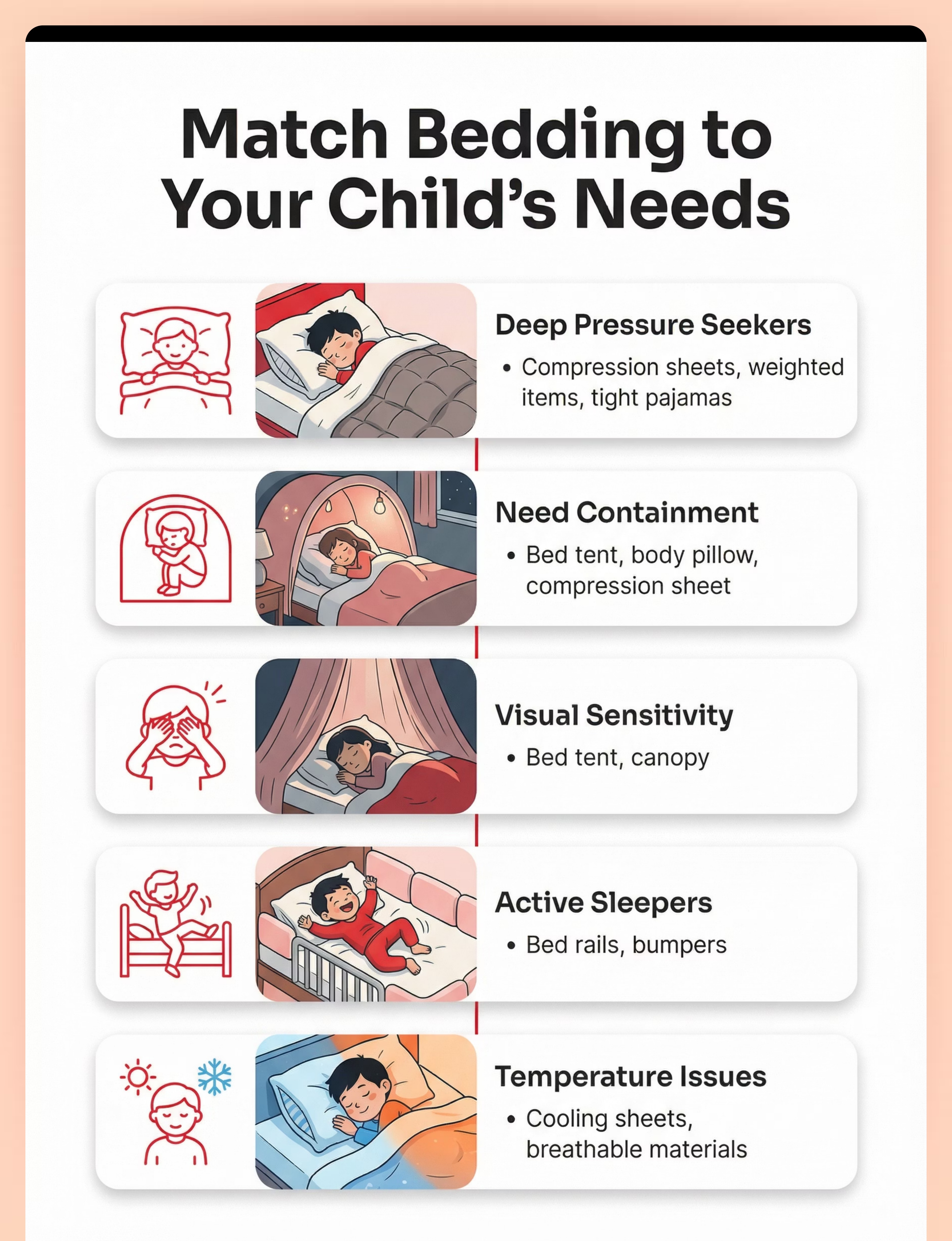
Bed Environment Needs
Deep Pressure
- Compression sheets
- Weighted items
- Tight pajamas
Containment
- Bed tent
- Body pillow
- Compression sheet
Visual Reduction
- Bed tent
- Canopy
Physical Safety
- Bed rails
- Bumpers
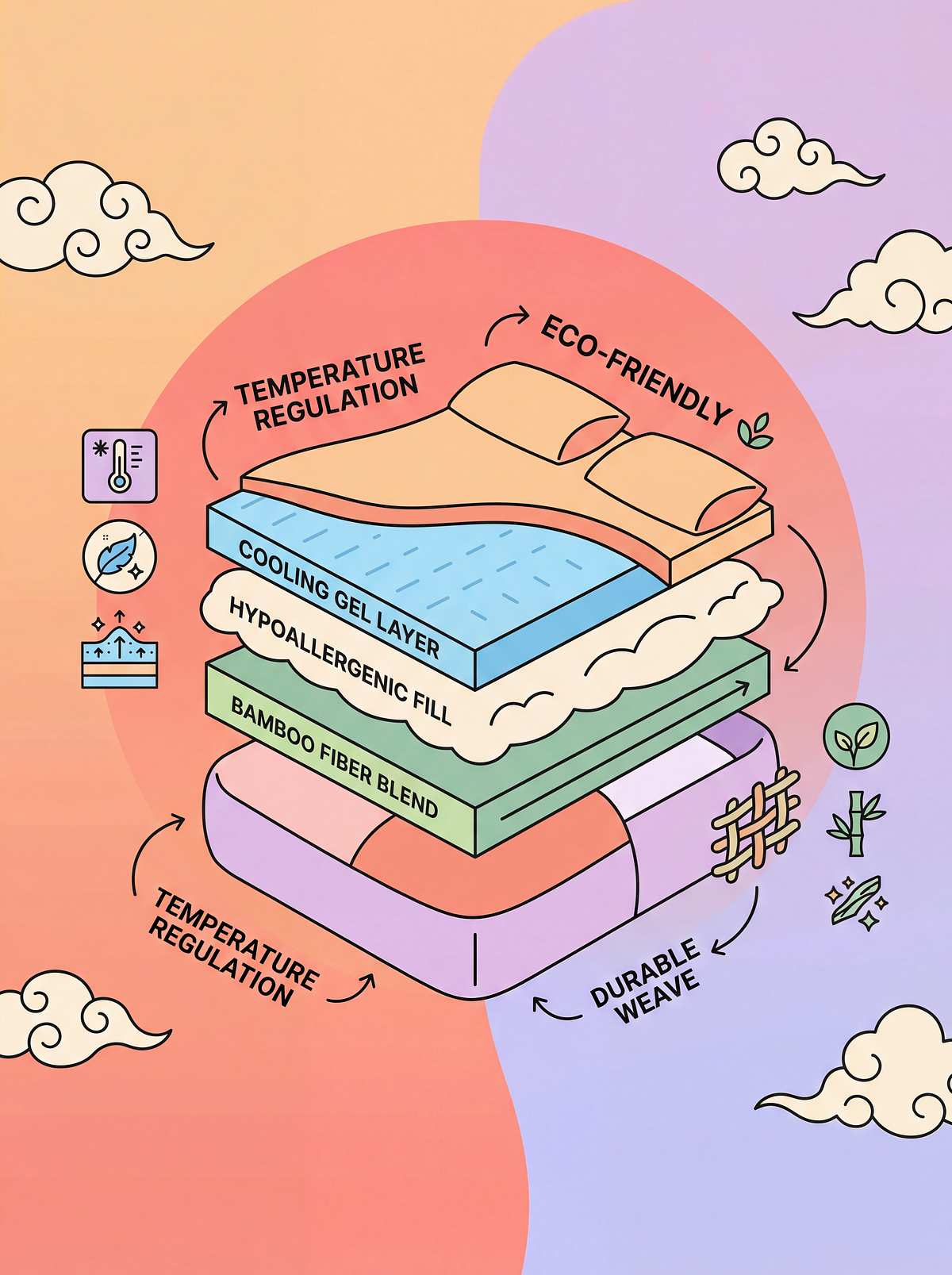
Temperature Regulation
- Cooling sheets
- Breathable materials
Materials & Features
Core Materials
- Lycra/spandex (compression)
- Various pillows (memory foam, microfiber)
- Mesh/fabric (tents, canopies)
- Various foams (mattresses, bumpers)
Key Features
- Matched to sensory profile
- Safe and secure design
- Comfortable for extended use
- Durable construction for longevity
- Easy-to-clean, washable materials
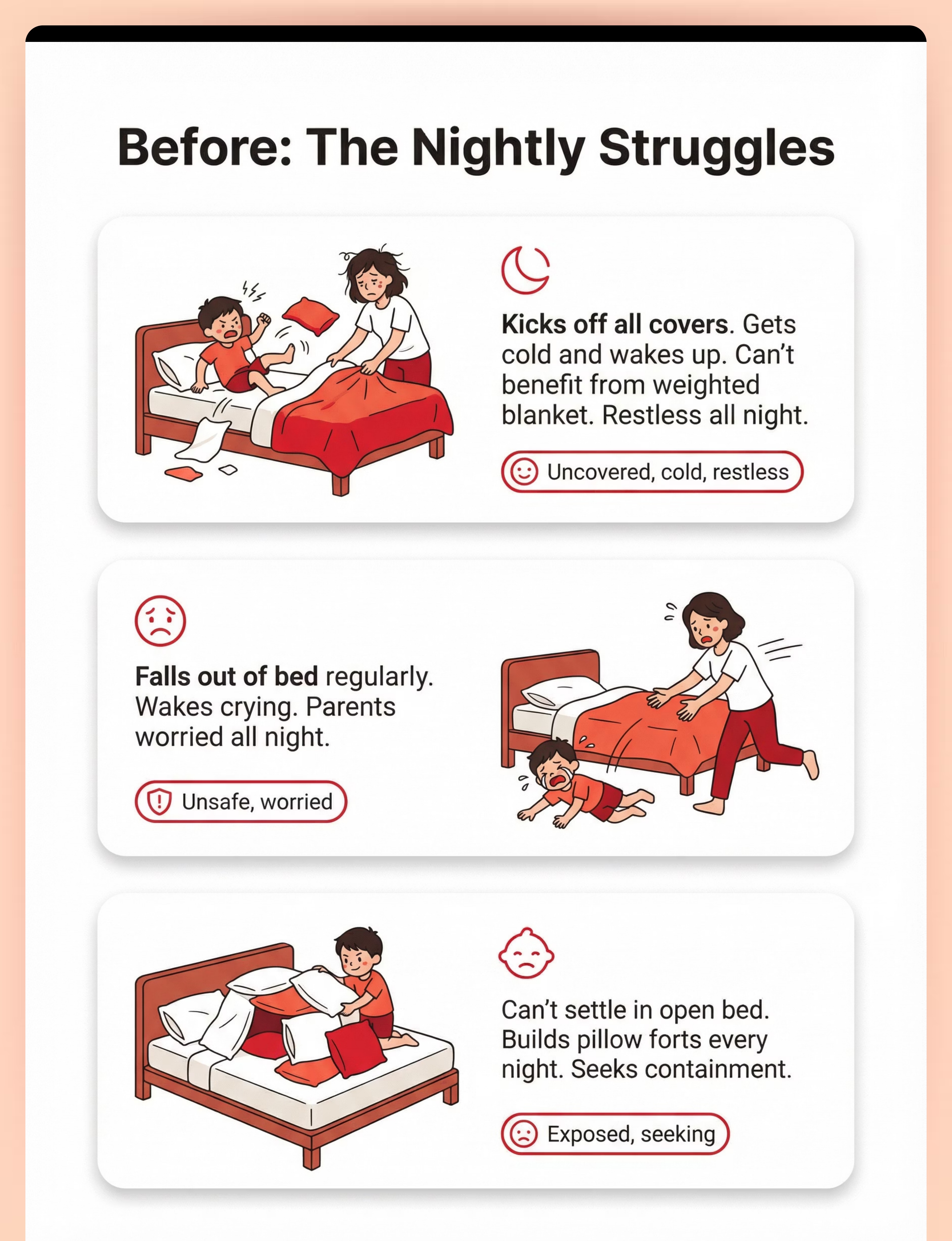
The Struggle (Before)

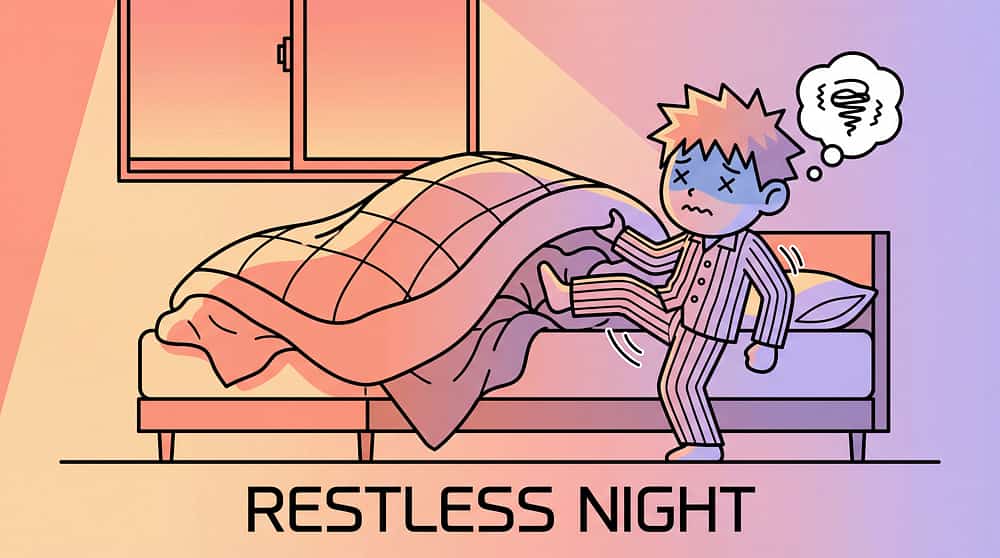
Kicks Off Blankets
Situation: Child kicks off all covers during sleep. Gets cold during the night. Wakes up uncomfortable. Can't benefit from weighted blanket because it's on the floor. Restless movement all night long.
Experience: Constant uncovering, temperature dysregulation, interrupted sleep
Emotion: Uncovered, cold, restless, uncomfortable

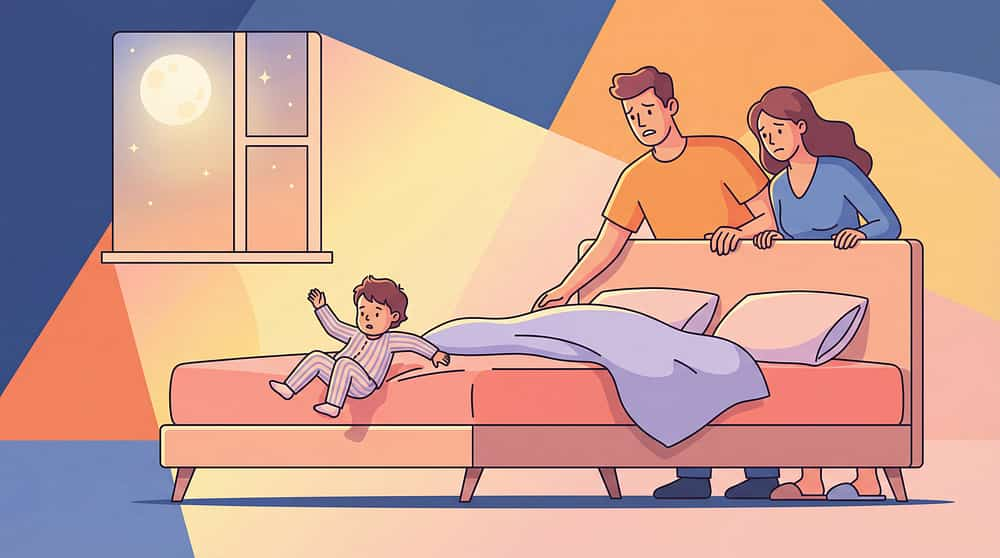
Falls Out of Bed
Situation: Active sleeper falls out of bed regularly during the night. Wakes up crying from the fall. Potential for injury with each incident. Parents worried and checking all night.
Experience: Dangerous falls, nighttime injuries, constant parental vigilance
Emotion: Unsafe, worried, anxious, hurt

Needs Enclosure
Situation: Child can't settle in open bed space. Needs walls or boundaries around them. Builds elaborate pillow forts nightly. Constantly seeking containment and security.
Experience: Unable to settle, seeking walls, building barriers, prolonged bedtime
Emotion: Exposed, seeking, unsettled, vulnerable

What to Expect (Realistic Timelines)
Environment matched to needs
The right bedding immediately addresses specific sensory preferences and physical safety needs.
Immediate
Physical comfort improved
Child experiences better physical comfort during sleep within the first few nights.
1-3 days
Falls prevented
Safety equipment like bed rails immediately prevents dangerous falls and injuries.
Immediate
Sleep quality improved
Overall sleep quality shows measurable improvement as body adjusts to optimal environment.
1-2 weeks
Less nighttime disruption
Reduced nighttime waking and disruption for both child and entire family.
1-2 weeks

OUTCOMES + TIMEFRAMES (WHAT TO EXPECT)
Understanding the expected timeline for improvements can help parents anticipate changes and support their child effectively. Here’s a realistic progression of outcomes when optimizing the sleep environment.
Week 1-2: Initial Adaptation
Parents observe immediate changes in physical comfort and safety. The child begins adjusting to new sensory inputs, showing reduced resistance to bedtime and potentially fewer minor sleep disruptions. Focus on consistency.
Week 3-4: Early Improvements
Noticeable positive shifts in sleep patterns become evident. Children show increased comfort, fewer middle-of-night awakenings, and may appear more rested upon waking. Bedtime routines become smoother and more predictable.
Month 2-3: Established Patterns
Sleep quality significantly improves with more consolidated sleep periods. Parents often report better daytime behavior, improved mood, and enhanced focus in the child. The optimized environment becomes a comfortable norm.
Long-Term: Sustained Well-being
Consistent use of the appropriate sensory bedding supports healthy development, learning, and overall family well-being. Strategies can be adapted as the child grows, ensuring continued comfort and restorative sleep for years.

Is This Right for My Child? (2-Minute Check)
Does your child kick off blankets?
If yes, this indicates: Compression sheet or pajamas may help provide consistent pressure
Confidence: 88% fit
Does your child fall out of bed?
If yes, this indicates: Bed rails are needed for safety and fall prevention
Confidence: 95% fit
Does your child seek enclosed spaces to sleep?
If yes, this indicates: Bed tent may help provide needed containment and security
Confidence: 85% fit
Is your child an active/restless sleeper?
If yes, this indicates: Specialty bedding may help address underlying sensory needs
Confidence: 82% fit
3+ "yes" answers = strong fit. Specialty bedding addresses specific sensory and safety needs that significantly impact sleep quality.

Usage Guide
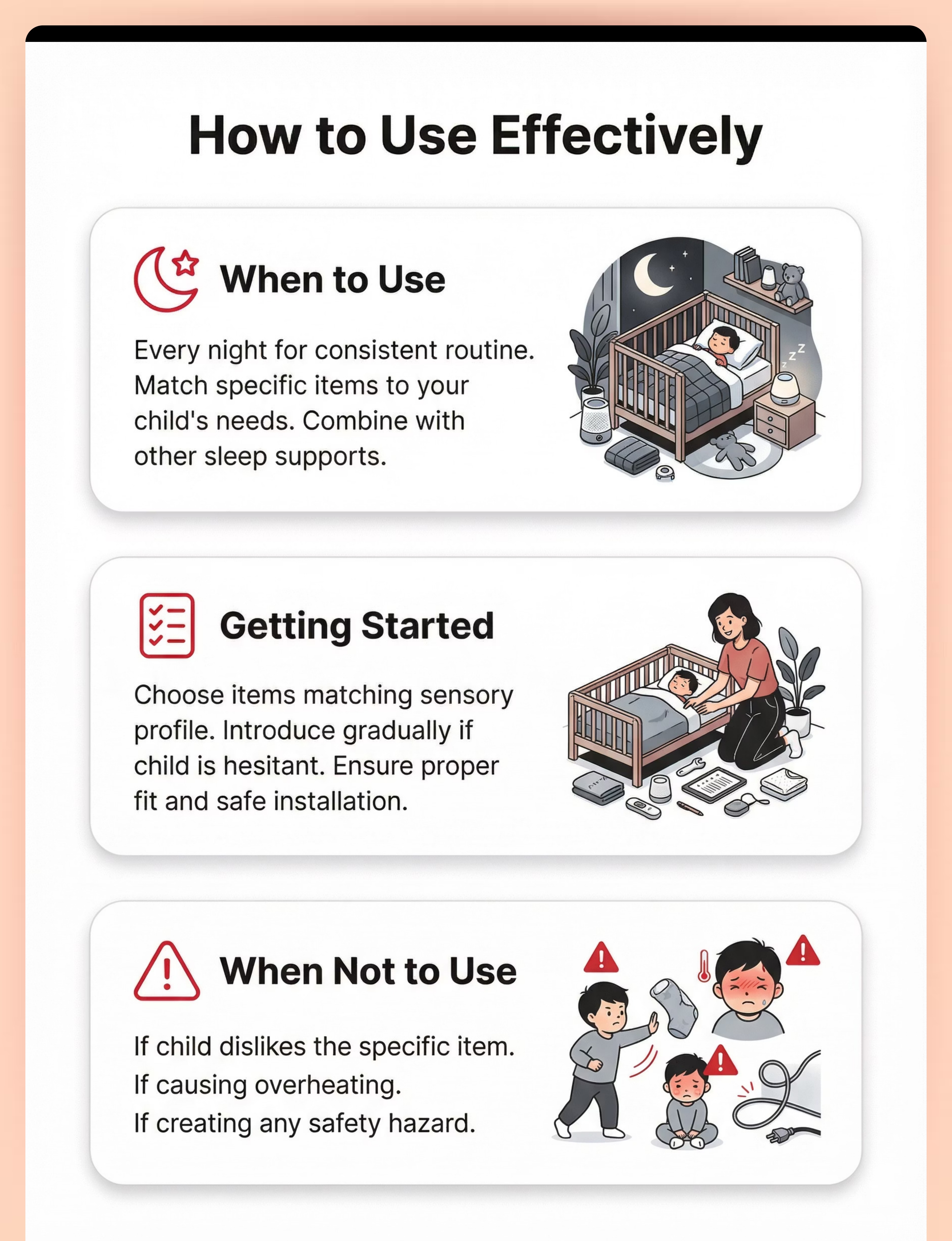
When to Use ✓
- Every night for consistency and routine
- Match specific items to specific needs (compression for pressure seekers, tents for containment seekers)
- Combine with other sleep supports like weighted items, white noise, or blackout solutions
When NOT to Use ✗
- If child dislikes or resists specific item after proper introduction period
- If item is causing overheating or discomfort
- If creating any safety hazard or improper fit
Duration & Settings
Duration | Throughout sleep, every night | |
Settings | Home - bedroom primarily |
Ages 2+ years
Supervision by Age
All Ages | Ensure safe setup initially; monitor comfort and temperature regularly |

Safety First
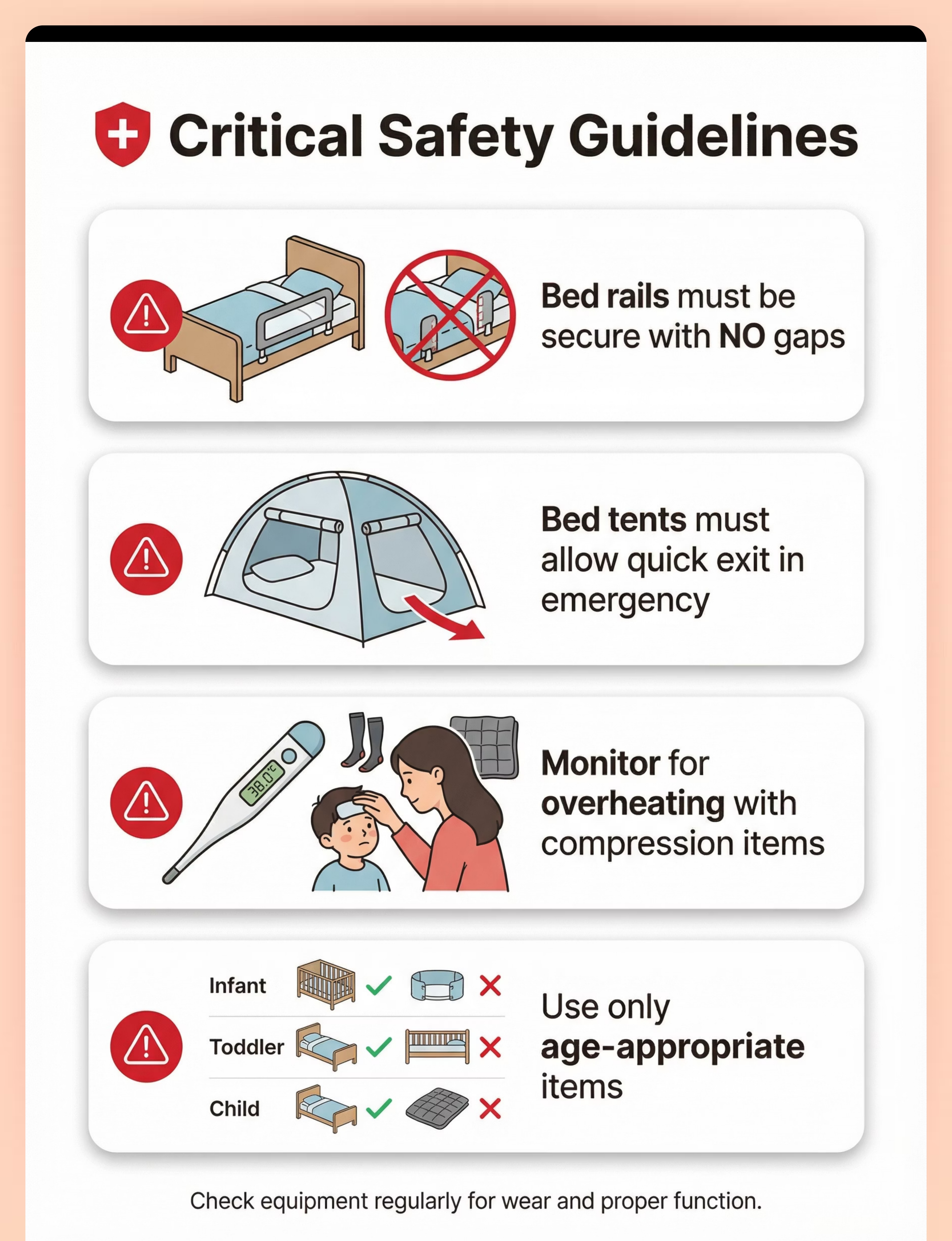
Critical Safety
- Bed rails must be secure with absolutely no gaps that could cause entrapment
- Bed tents must allow quick exit in emergency situations—never trap child inside
- Monitor carefully for overheating with compression items, especially in warm climates
- Use only age-appropriate items sized correctly for child
Warnings
- Bed rail gaps can cause serious entrapment injuries—measure carefully
- Compression items can cause dangerous overheating—use breathable fabrics
- Tents must not trap child or prevent emergency exit
- Check regularly for wear, damage, or loosening of equipment
Contraindicated
- Unsafe bed rails with gaps or poor installation
- Items child cannot escape from independently in emergency
- Situations creating overheating risks
Safety Checklist
Before Use
- Correct size for bed and child
- Safe installation (especially rails)
- Child can exit tents independently
- Temperature appropriate for compression
During Use
- Child appears comfortable
- Not overheating or sweating
- Equipment remains secure
- Child sleeping better
Signs of Success
- Better sleep quality observed
- Less nighttime disruption
- Improved physical comfort
- Zero safety incidents

Common Questions (Honest Answers)
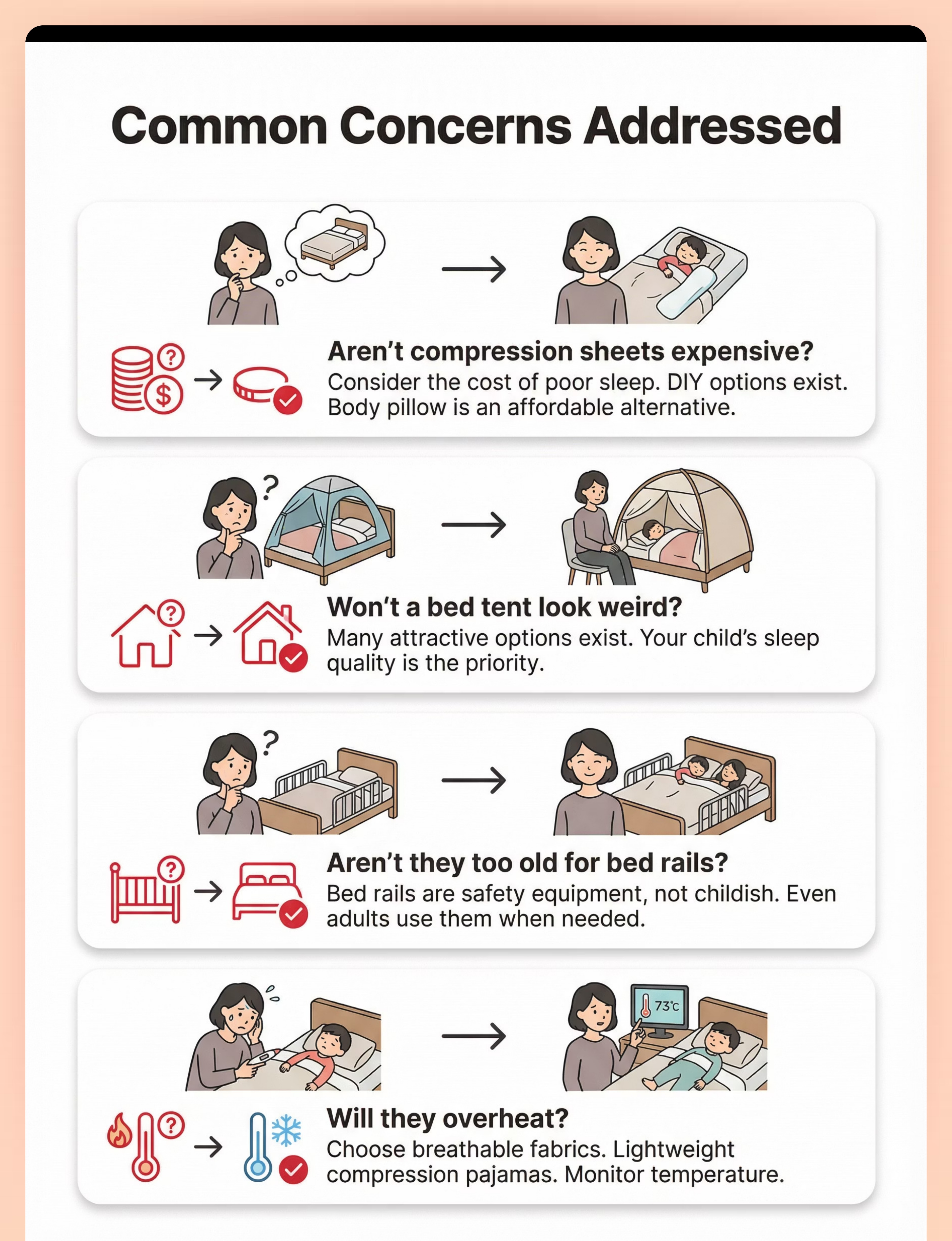
Q: Compression sheets are expensive
A: Consider the cost of ongoing poor sleep and constantly replacing blankets that get kicked off. DIY options exist using fitted lycra fabric. Body pillow offers a more affordable containment alternative. This is a long-term investment in sleep quality.
Try this: Start with DIY options; try alternatives; view as long-term investment
Q: Bed tent looks weird
A: Many attractive, modern options exist that look great in bedrooms. Function matters far more than appearance in a private bedroom space. Your child's sleep quality and development are the priority here.
Try this: Attractive options available; function over form; prioritize child's needs
Q: They're too old for bed rails
A: Bed rails are safety equipment, not childish items. Adults routinely use them after surgery or with mobility issues. Safety has absolutely no age limit—protection is always appropriate.
Try this: Safety equipment for all ages; not childish; protection matters
Q: Will they overheat with compression items?
A: Choose breathable, moisture-wicking fabrics specifically. Use lightweight compression pajamas rather than heavy sheets. Monitor temperature carefully. Some children do better with compression plus lighter, cooler room temperature.
Try this: Breathable fabrics; lightweight options; monitor carefully; adjust room temperature

Investment Guide
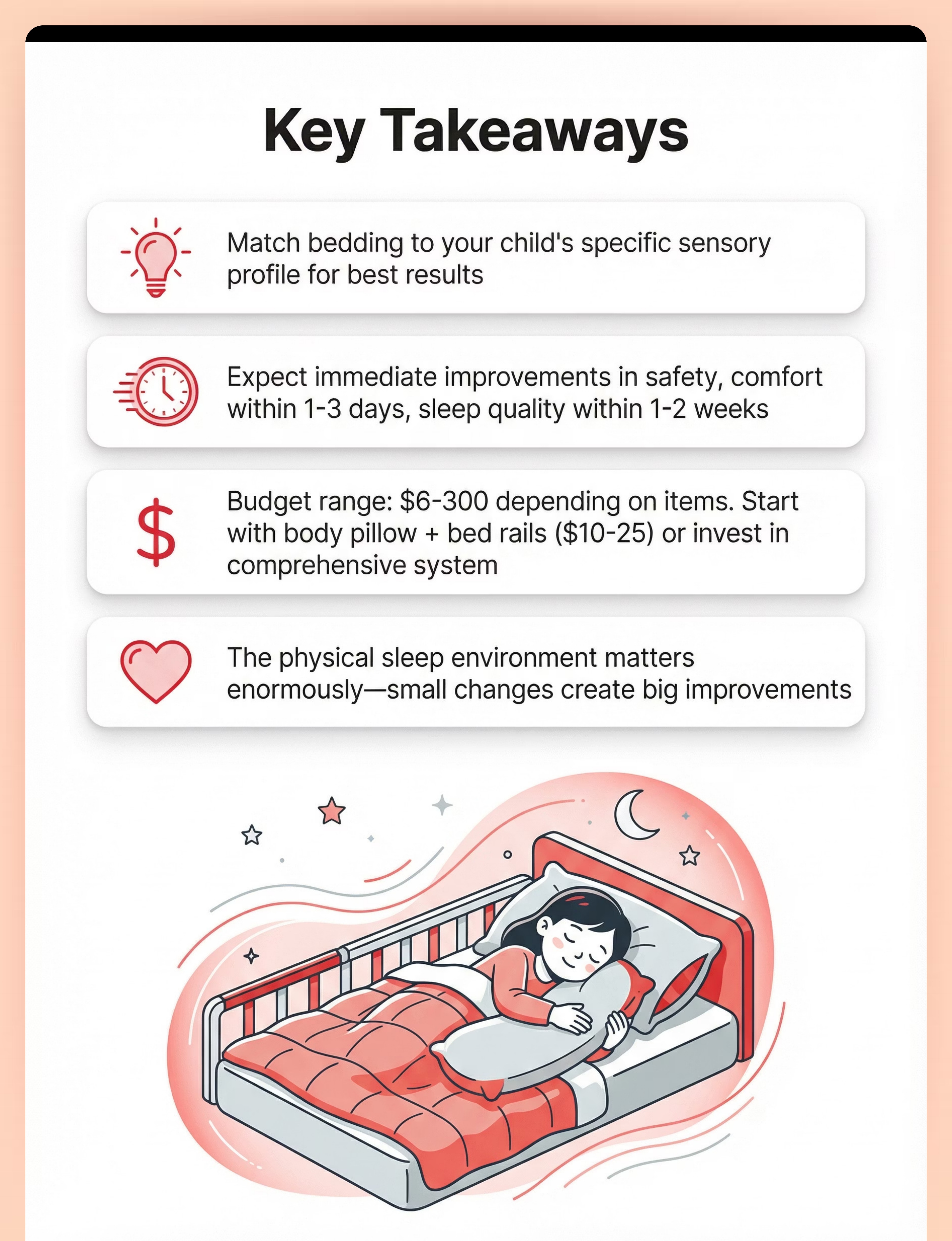
Overall Range: ₹500–25,000 (USD $6–$300)
Tier: Mid-High | Most families find solutions in the ₹1,500–5,000 range that significantly improve sleep quality.
Budget Option: Body pillow + bed rails | ₹800-1,500 | Affordable containment and safety. Provides physical boundaries, prevents falls. Good starting point; can add compression later. | |
Premium Option: Compression sheet + bed tent + specialty mattress | ₹8,000-25,000 | Comprehensive sensory environment. Addresses multiple needs. Maximizes sleep quality; long-term investment. Brands: Lycra Works, Privacy Pop. |
Start with foundational support
Body pillow plus bed rails provide excellent value and address basic needs.
Customize based on sensory profile
Add compression sheets or bed tent only if specific sensory input is required.
Build system gradually
Develop a comprehensive system over time, adding components as needed.
Identify Core Needs
Understand specific sleep challenges and sensory requirements.
Implement Foundational Solutions
Begin with cost-effective options that offer immediate benefits.
Iterate & Customize
Introduce specialized products as necessary to fine-tune the sleep environment.
Monitor & Adjust
Continuously evaluate effectiveness and adapt the system for long-term well-being.

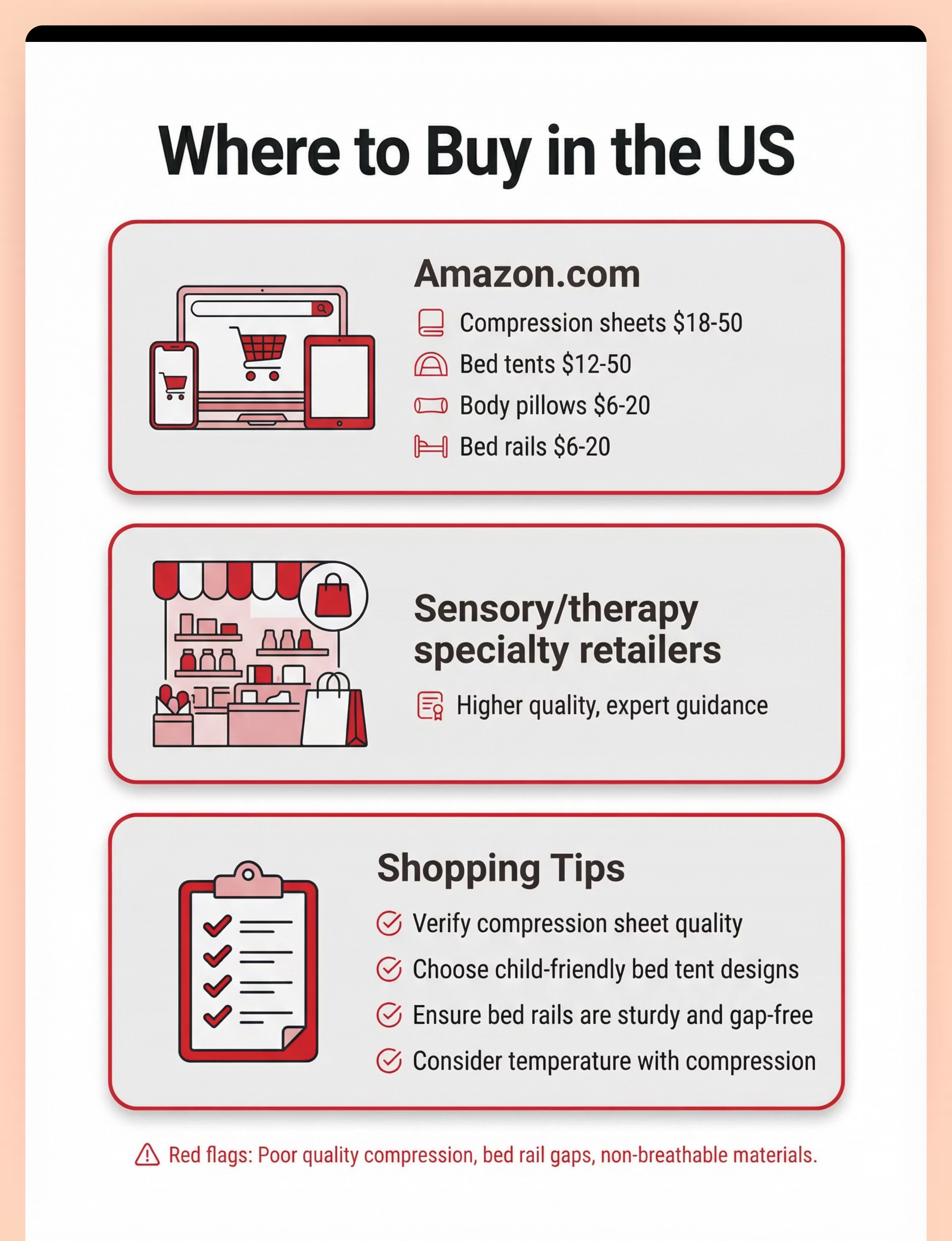
Where to Buy in India
Availability: Moderately Available. Body pillows and bed rails widely available. Compression sheets and bed tents require more searching for quality options.
Amazon.in: "compression sheet sensory"
₹1,500-4,000
Amazon.in: "bed tent kids"
₹1,000-4,000
Amazon.in: "body pillow"
₹500-1,500
Amazon.in: "bed rail toddler"
₹500-1,500
Amazon.in: "compression pajamas kids"
₹800-2,000
Buying Tips
- Compression sheets are specialty items—verify quality and stretch before purchasing
- Bed tents come in many styles—consider your child's preferences and room layout
- Body pillows are widely available—standard options work well
- Bed rails should be sturdy and completely gap-free for safety
- Consider temperature regulation with any compression items in Indian climate
Red Flags
- Poor quality compression that stretches out quickly after washing
- Bed rail gaps of any size—serious entrapment hazard
- Non-breathable materials that will cause overheating
- Items too small for bed size—creates safety issues

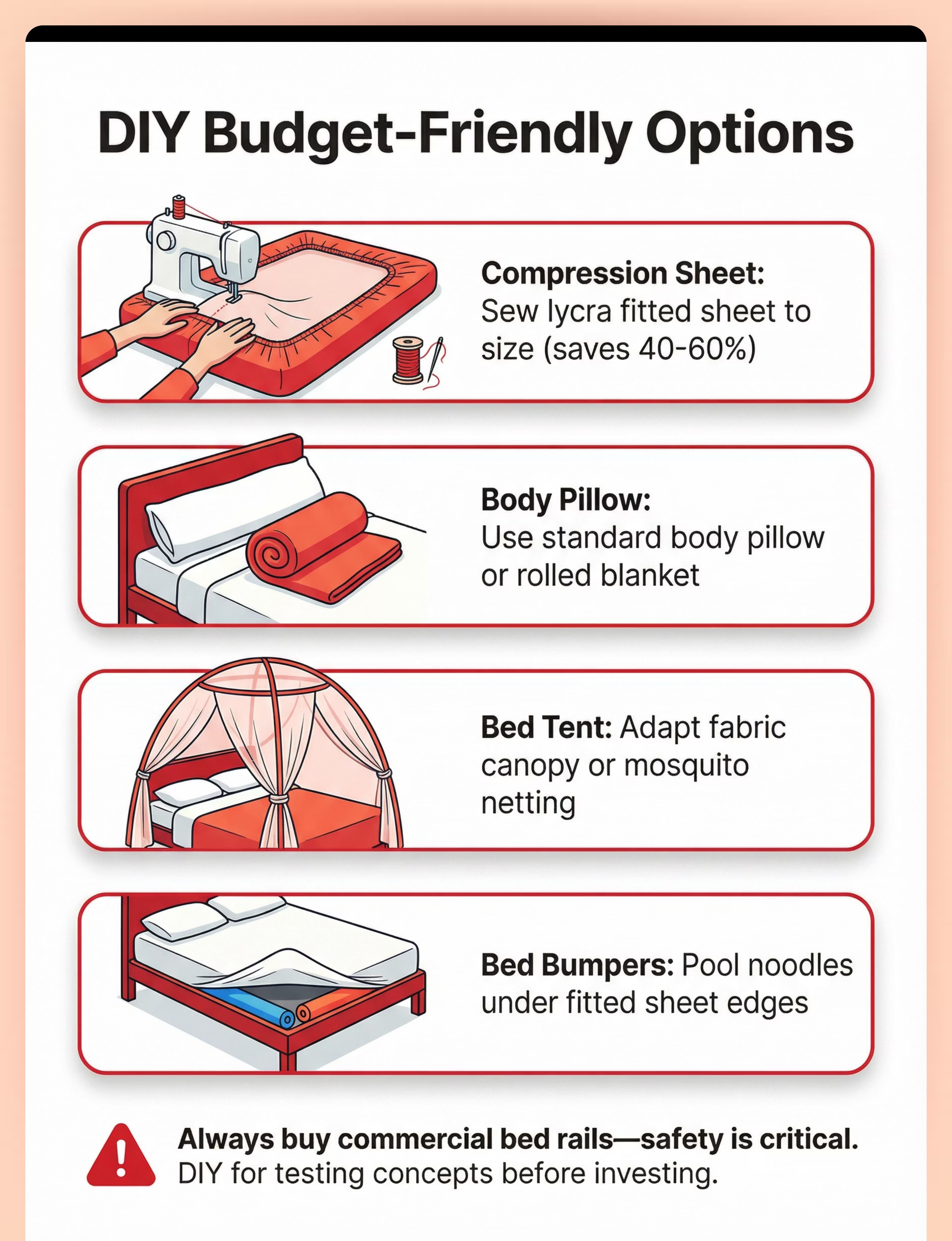
DIY Alternative (Save 40-60%)
Feasibility: Medium | Time: 1-3 hours | Cost Savings: 40-60%
1
Materials Needed
- Lycra fabric (for compression sheet)
- Body pillow (standard)
- Fabric canopy or mosquito net
- Pool noodles (for bumpers)
- Basic sewing supplies
- Weights for blanket corners
2
Steps
- Compression sheet: Sew lycra fitted sheet to exact bed size with plenty of stretch
- Body pillow: Use standard body pillow or tightly rolled blanket secured with ties
- Bed tent: Adapt fabric canopy or mosquito net over bed frame
- Bed bumpers: Place pool noodles under fitted sheet edges to create gentle barrier
- Weighted corners: Sew small weights into corners of regular blanket
- Enclosed feel: Arrange pillows strategically around bed perimeter
3
When to DIY
- Basic containment solutions (pillows, pool noodles)
- Body pillow alternatives for testing
- Testing concepts before investing
- Budget is extremely limited
4
When to Buy Commercial
- Compression sheets (quality and durability matter)
- Bed rails (safety is absolutely critical)
- Bed tents (durability for long-term use)
- Long-term solutions and daily use items
5
Tradeoffs
DIY compression may not be as durable as commercial options and may lose elasticity faster. Bed rails should always be commercial products—safety is too critical for DIY. Body pillow alternatives work well for testing before investing in specialized bedding.
Preview of specialty bedding sleep environment Therapy Material
Below is a visual preview of specialty bedding sleep environment therapy material. The pages shown help educators, therapists, and caregivers understand the structure and content of the resource before use. Materials should be used under appropriate professional guidance.


Share this resource
Help others discover thisLink copied!

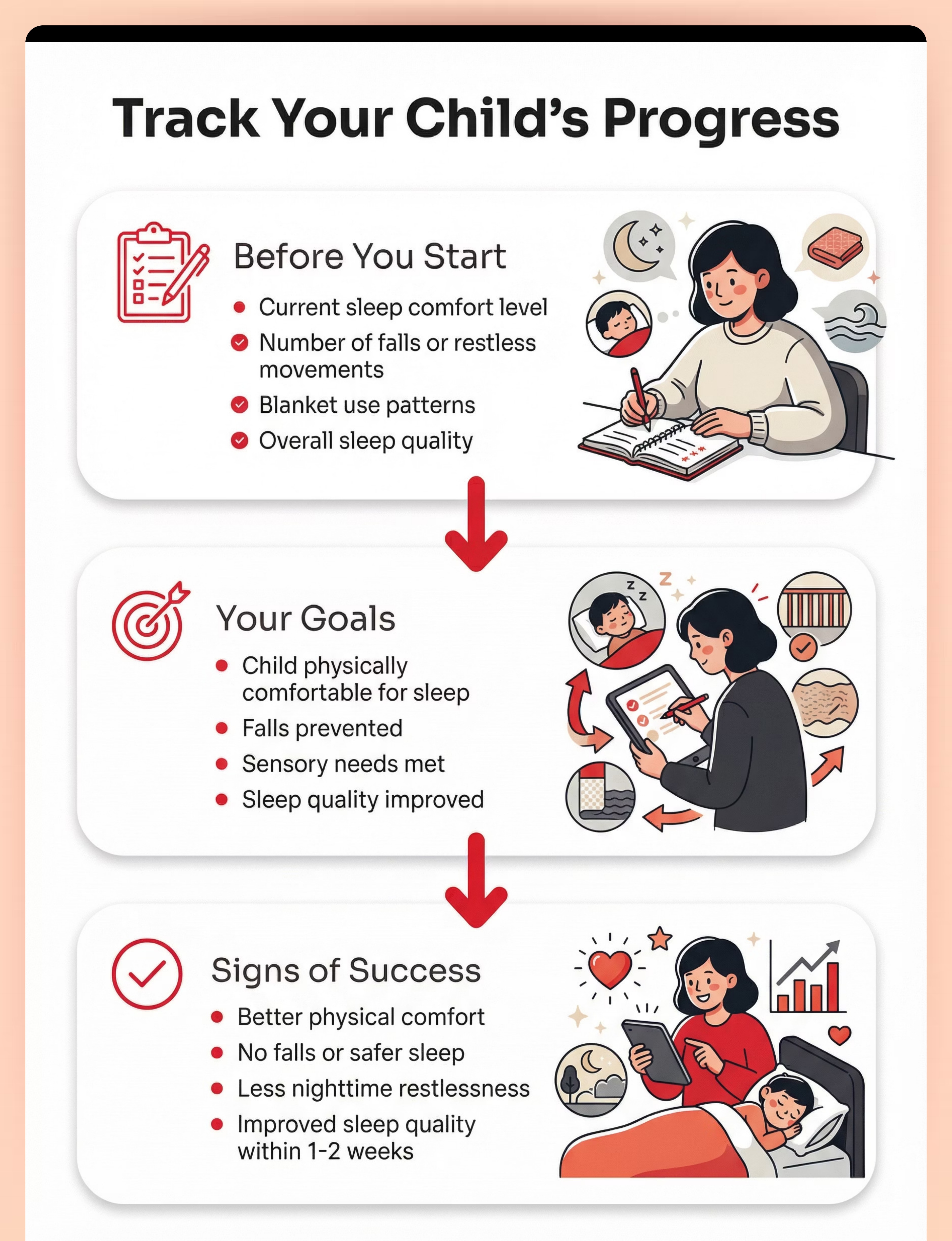
Measuring Success & Complete Support
Track Progress
Baseline (Measure First)
- Current sleep comfort level
- Falls and movement issues frequency
- Blanket use patterns
- Overall sleep quality
Goals
- Child will be physically comfortable during sleep
- Falls will be prevented completely
- Sensory needs will be met consistently
- Sleep quality will improve measurably
Success Indicators
- Better physical comfort observed
- Zero falls from bed
- Less restlessness during night
- Improved overall sleep quality
Complete the Kit
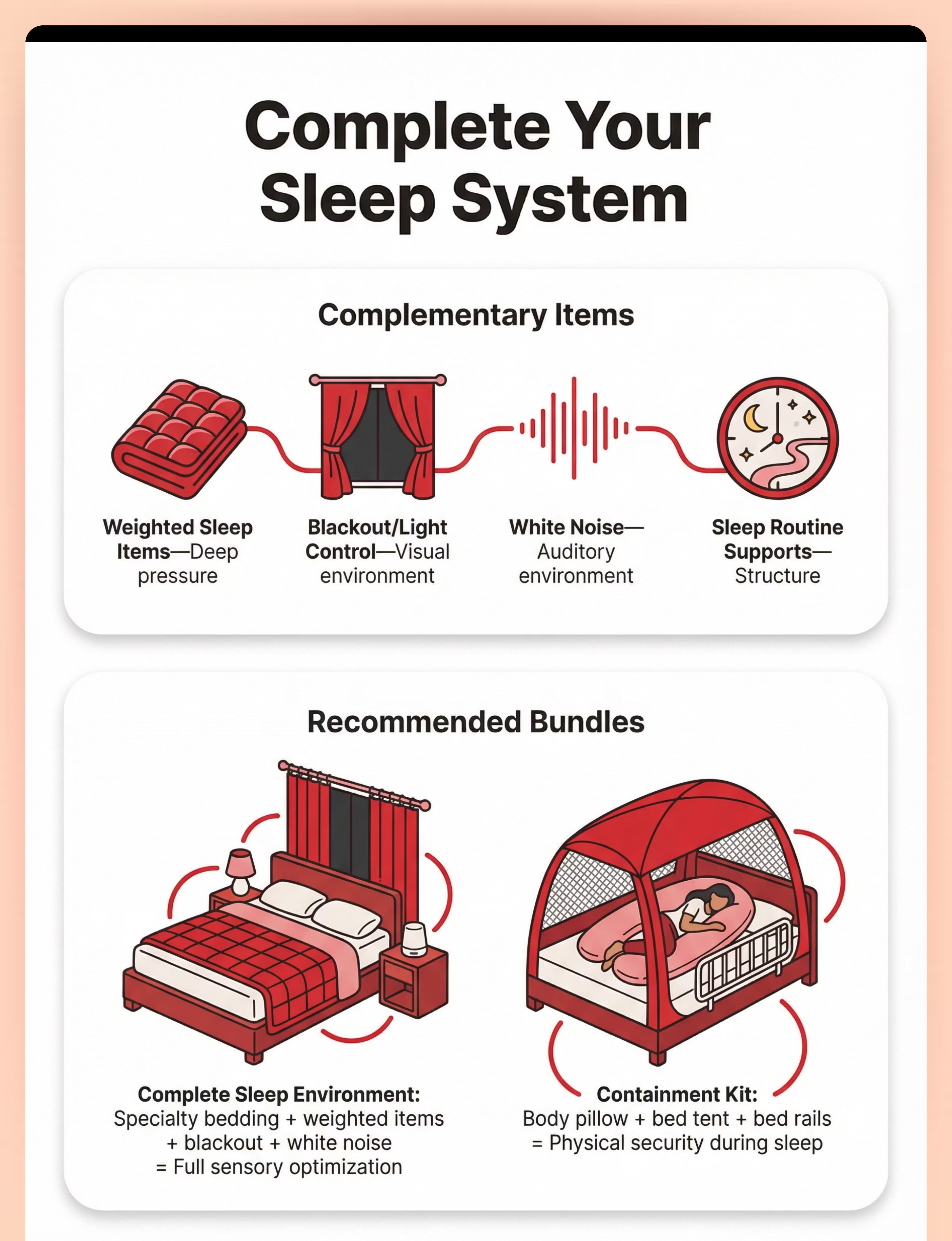
Pair specialty bedding with these complementary tools for comprehensive sleep support:

Weighted Sleep Items (14.1)
Add deep pressure input to complement physical containment and environment optimization.

Blackout/Light Control (14.2)
Optimize visual environment alongside physical bedding for complete sensory support.

White Noise (14.3)
Create complete sensory environment addressing auditory needs along with physical comfort.

Sleep Routine Supports (14.4)
Structure bedtime routine to complement optimized physical sleep environment.
Recommended Bundles
- Complete Sleep Environment: Specialty Bedding (14.5) + Weighted Items (14.1) + Blackout (14.2) + White Noise (14.3) — Full physical and sensory environment optimization
- Containment Kit: Body Pillow (14.5.2) + Bed Tent (14.5.3) + Bed Rails (14.5.5) — Physical security during sleep
Quick Summary
Specialty bedding and sleep environment items optimize the physical sleep space through compression sheets, bed tents, body pillows, and bed rails to match sensory preferences and safety needs. Extended Kit (Rank 2), moderate evidence, valuable for specific needs.
bedding
sleep environment
compression
bed tent
containment
safety
extended-kit
Common Searches
compression sheet autism, sensory bedding, bed tent kids, body pillow sleep, bed rails special needs, compression pajamas, specialty mattress sensory
Get Support
FREE National Autism Helpline
Phone: 9100 181 181
Languages: 16+ languages supported
Website: pinnacleblooms.org
Platform Integration
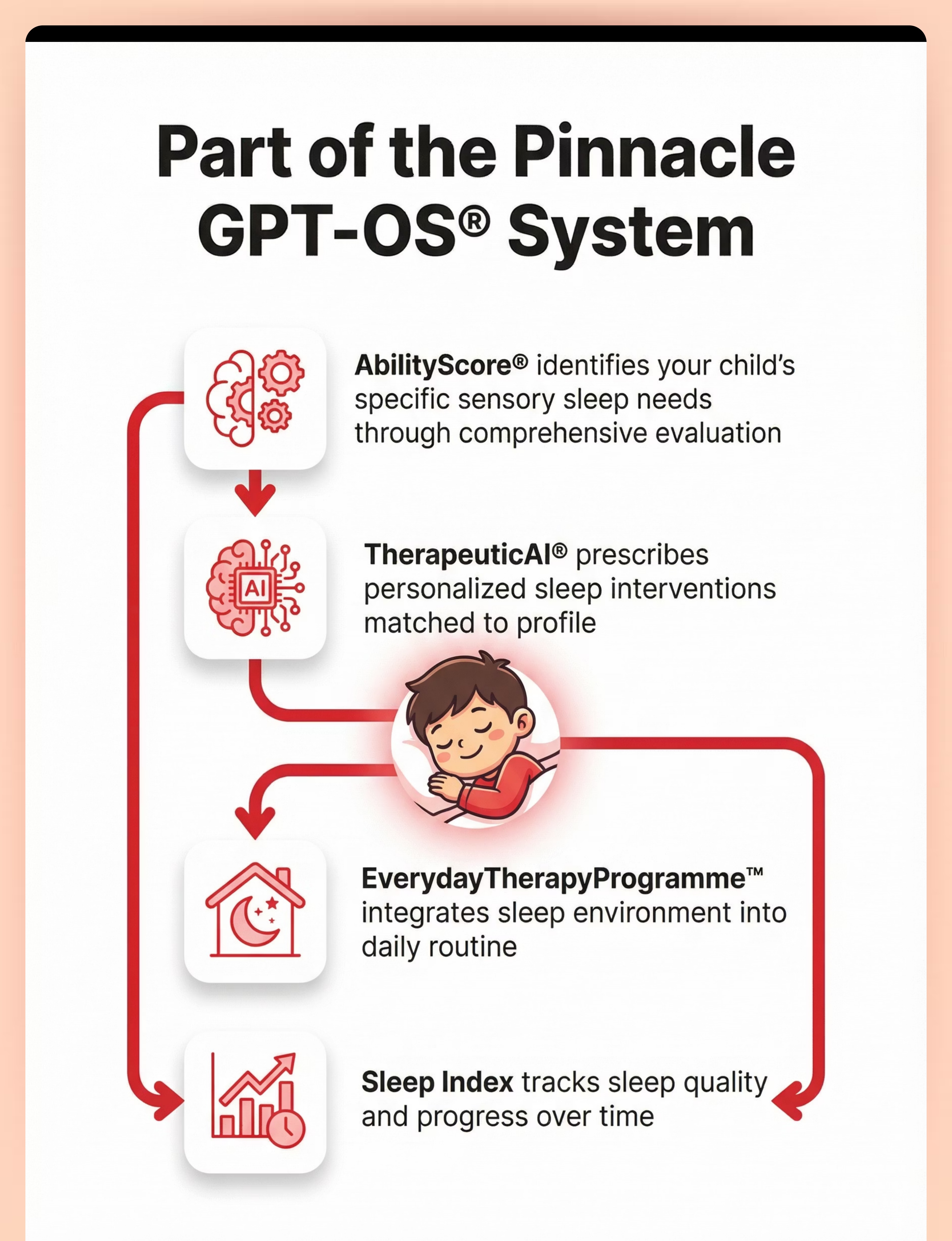
This tool integrates seamlessly with Pinnacle Blooms Network's comprehensive support system:
- AbilityScore® identifies your child's specific sensory sleep needs through comprehensive assessment
- TherapeuticAI® prescribes personalized sleep interventions matched to your child's profile
- EverydayTherapyProgramme™ includes sleep environment optimization in daily routines
- Sleep Index tracks sleep quality improvements over time with data-driven insights
Disclaimer
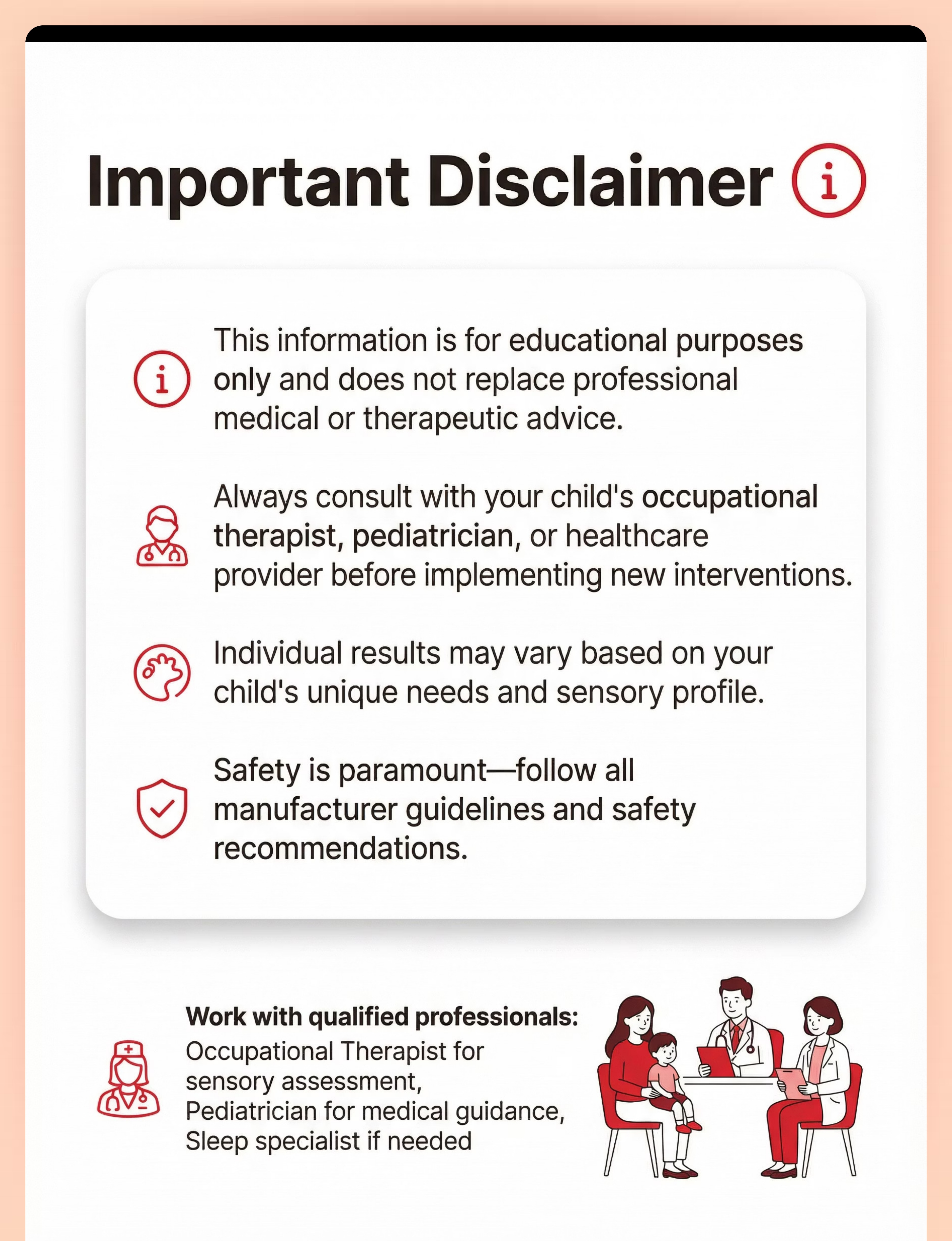
This is educational information designed to support families and professionals. Always consult qualified occupational therapists, speech-language pathologists, or pediatricians for personalized recommendations. Individual results vary based on child's unique needs and consistent implementation.