










Tool ID: 19.4
Tool ID: 19.4
SLP Professional
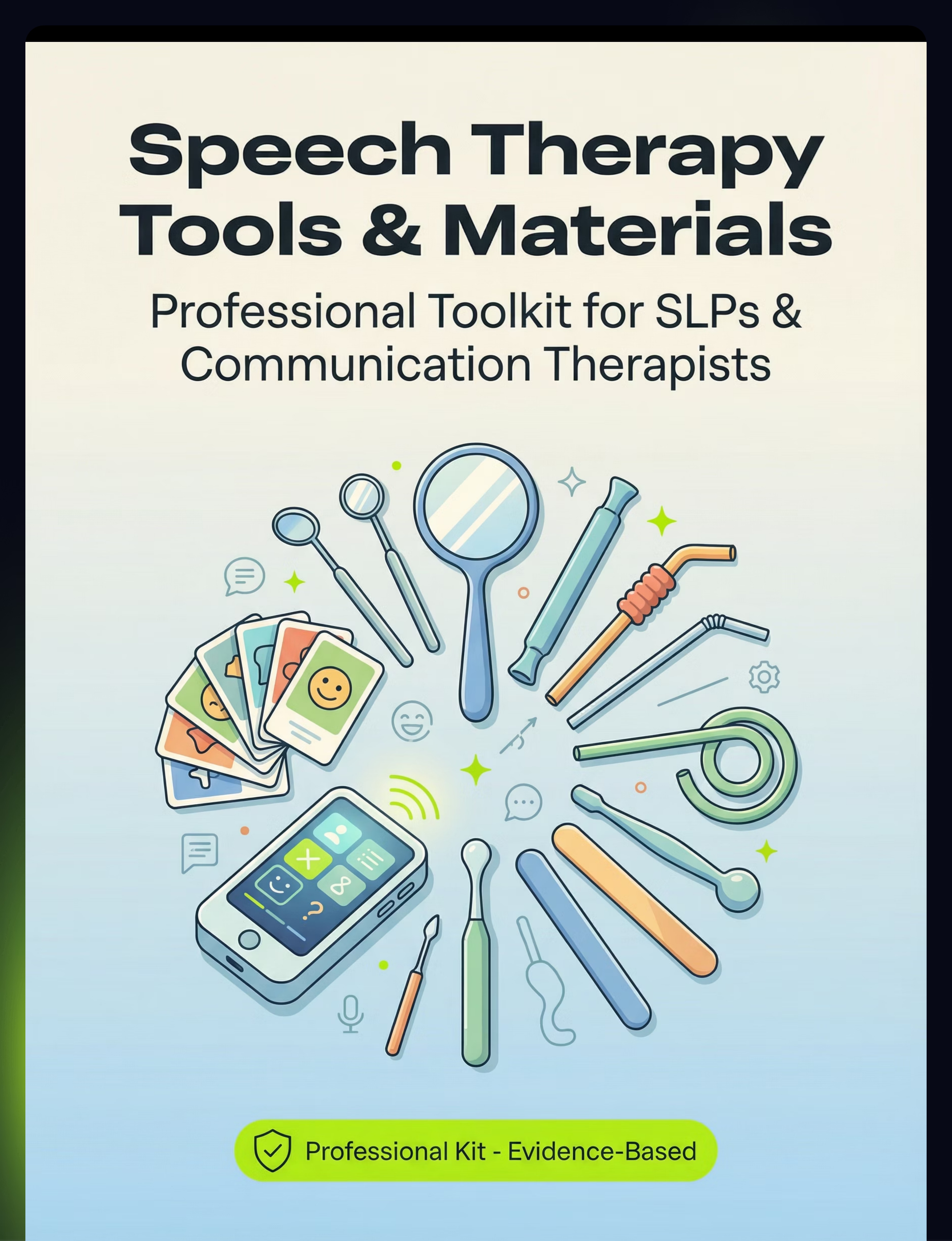
Speech Therapy Tools & Materials
Communication and speech development professional toolkit
SLP
Strong Evidence
Rank #1
Daily Use
₹500–50,000
Who This Helps
Professional tools and materials enabling speech-language pathologists to provide comprehensive assessment and evidence-based intervention across all communication domains.
Articulation
Targeting clear and correct speech sounds.
Language
Supporting understanding and use of spoken and written language.
Fluency
Addressing stuttering and other speech flow difficulties.
Voice
Working on vocal quality, pitch, and loudness.
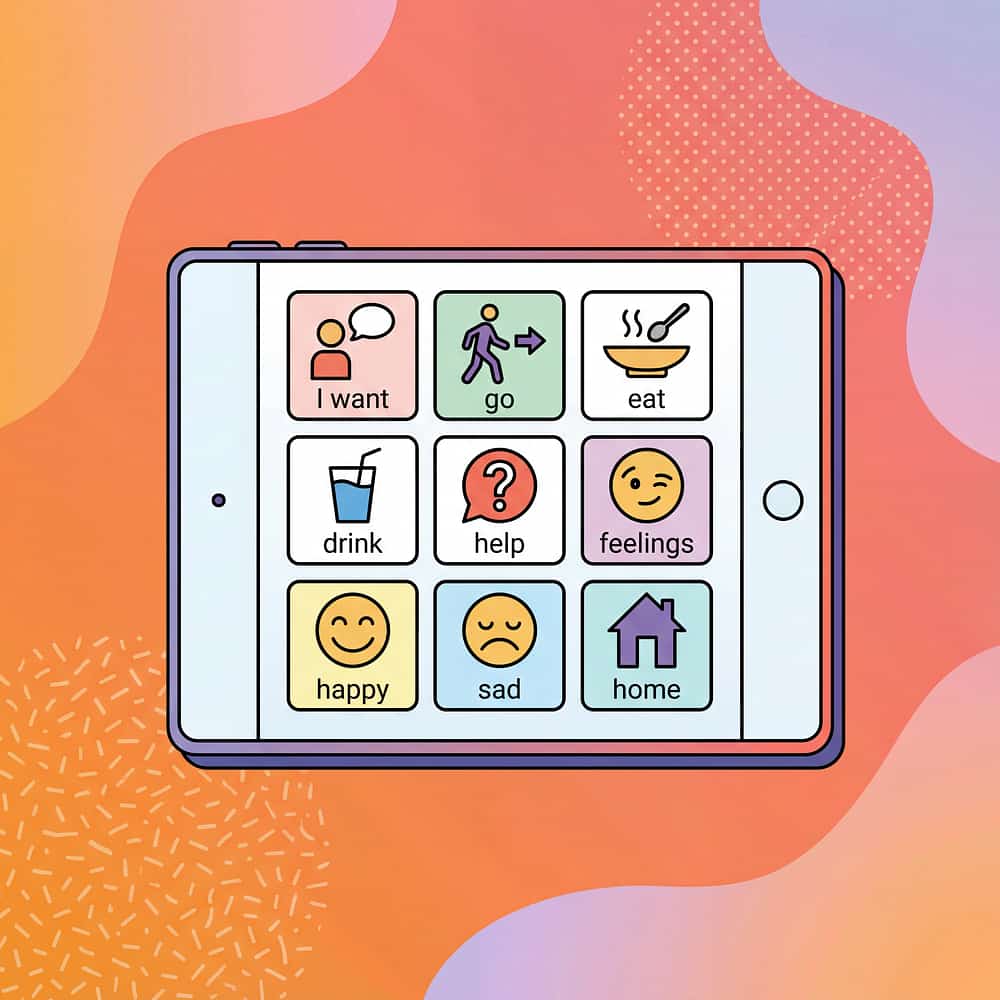
AAC (Augmentative and Alternative Communication)
Providing alternative methods for communication.
Oral Motor
Strengthening muscles used for speech and feeding.
Social Communication
Developing pragmatic language skills for effective interaction.
Age Range
Birth+ (tools selected for individual developmental needs and communication goals)
Settings
SLP clinic, school speech rooms, early intervention programs, guided home practice
Best For
Children needing professional speech-language assessment, targeted intervention for speech sound disorders, language delays, or alternative communication systems
Does This Sound Familiar?
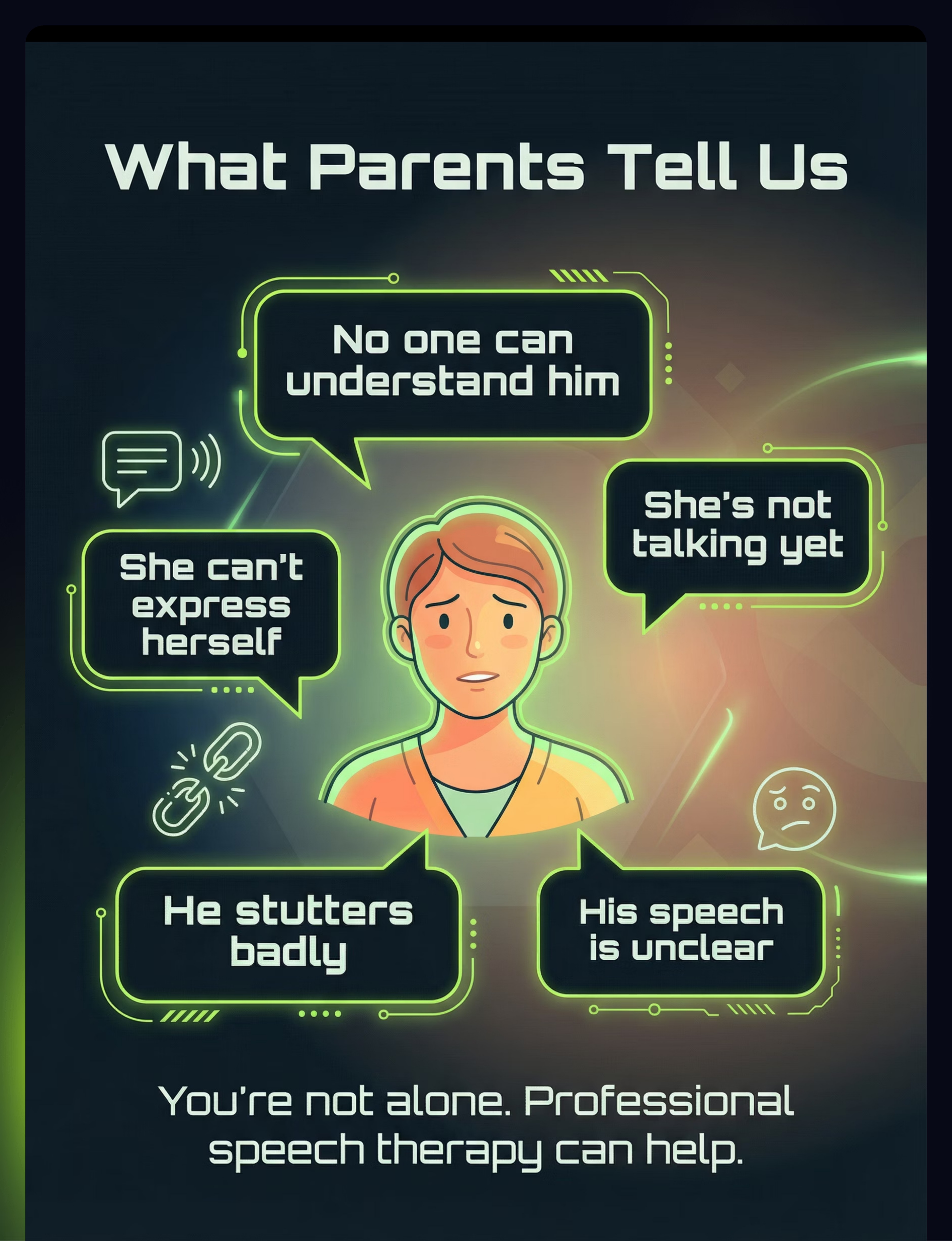
"No one can understand him. Even I struggle sometimes. He gets so frustrated when people don't understand what he's trying to say. It breaks my heart."
"She's not talking yet and she's already three. All the other children her age are speaking in sentences. I'm worried about what this means for her future."
"His speech is so unclear. The teacher says she can't understand him in class. He's starting to avoid talking altogether. I see his confidence disappearing."
"She can't express herself. She knows what she wants to say but the words won't come. The frustration leads to meltdowns every single day."
"He stutters badly. Other kids are starting to notice and make comments. I can see it affecting his willingness to participate in school."
"Her voice sounds unusual and people always ask if she has a cold. The pediatrician says we should see a speech therapist but I don't know what to expect."
You're not alone. These are common challenges that speech-language pathologists are specifically trained to address using professional assessment tools and evidence-based intervention materials.
A Day Without the Right Support
Morning Routine
Child tries to tell parent what they want for breakfast. Speech unclear. Multiple attempts. Frustration builds. Morning starts with tears and stress for everyone.
School Transitions
Teacher asks questions. Child knows the answer but can't articulate it clearly. Other children respond instead. Child stops raising their hand. Confidence erodes with each passing day.
Therapy/Play Time
Wants to play with peers but communication breakdowns lead to misunderstandings. Other children move on to play with someone else. Social isolation increases. Child feels left out and alone.
Bedtime
Child wants to share their day but struggles to express experiences. Stories get lost in unclear speech. Connection moments missed. Both parent and child feel the communication gap deeply.
The Science Behind It
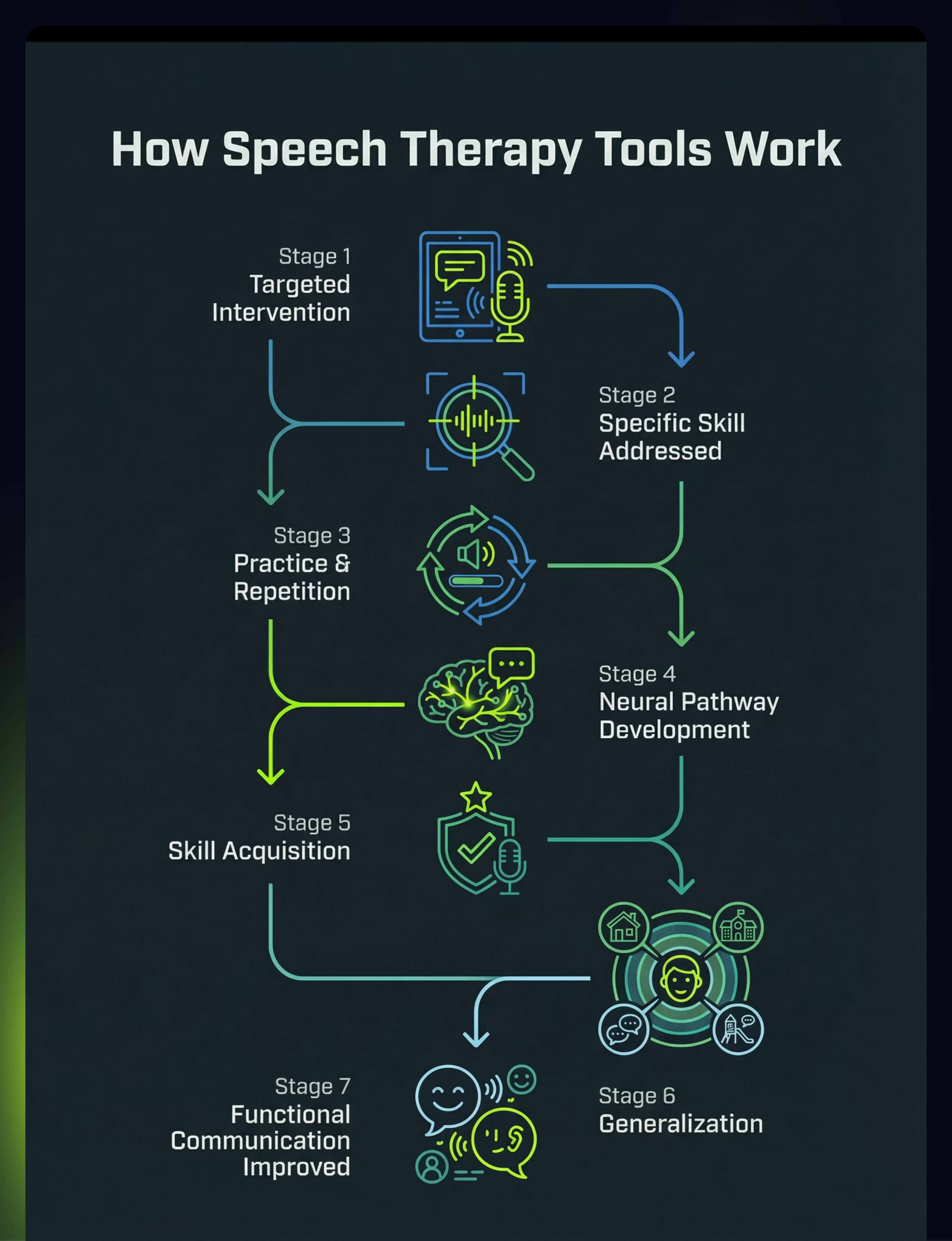
Targeted Intervention
SLP identifies specific communication challenge through professional assessment tools and standardized testing protocols
Specific Skill Addressed
Professional materials target exact area of need—articulation, language concepts, fluency patterns, voice production, or AAC implementation
Practice & Repetition
Engaging therapy materials provide multiple opportunities for practice in varied, motivating contexts that maintain child's attention and effort
Neural Development
Repeated practice with feedback strengthens neural pathways, making correct speech patterns or language structures increasingly automatic and effortless
Skill Acquisition
Child masters skill in therapy setting with SLP support, demonstrating consistent accuracy and improved communication abilities
Generalization
Skill transfers to real-world settings—home, school, community—supported by home practice materials and family training
Functional Communication Improved
Child communicates effectively in daily life, achieving academic success, social connection, and independence in expressing their needs and ideas
Articulation
Language
Fluency
Voice
AAC
Oral Motor
Social Communication
How to Use It Right
Evidence-Based Assessment & Treatment
Use standardized assessments and research-supported intervention protocols. Select tools and materials that have demonstrated efficacy for specific communication disorders and age groups.
Individualized Intervention Planning
Design therapy plans tailored to each child's unique needs, strengths, learning style, and family priorities. One-size-fits-all approaches don't work in speech therapy.
Regular Progress Monitoring
Track data systematically using assessment tools. Measure progress toward goals at regular intervals. Adjust intervention based on objective evidence of what's working.
Home Practice Coordination
Provide families with specific activities, materials, and guidance for daily practice. Home practice significantly accelerates progress when done correctly and consistently.
Family Training
Teach families how to support communication development in daily routines. Model strategies, provide feedback, and build parent confidence in supporting their child's communication journey.
Generalization Planning
Design intervention to promote transfer of skills from clinic to real-world settings. Build in variety, practice across contexts, and involve family and school teams in implementation.
Duration: 30-60 minute therapy sessions, with frequency determined by individual needs and goals. Consistency across sessions and home practice are key to achieving optimal outcomes.
Expert Perspective
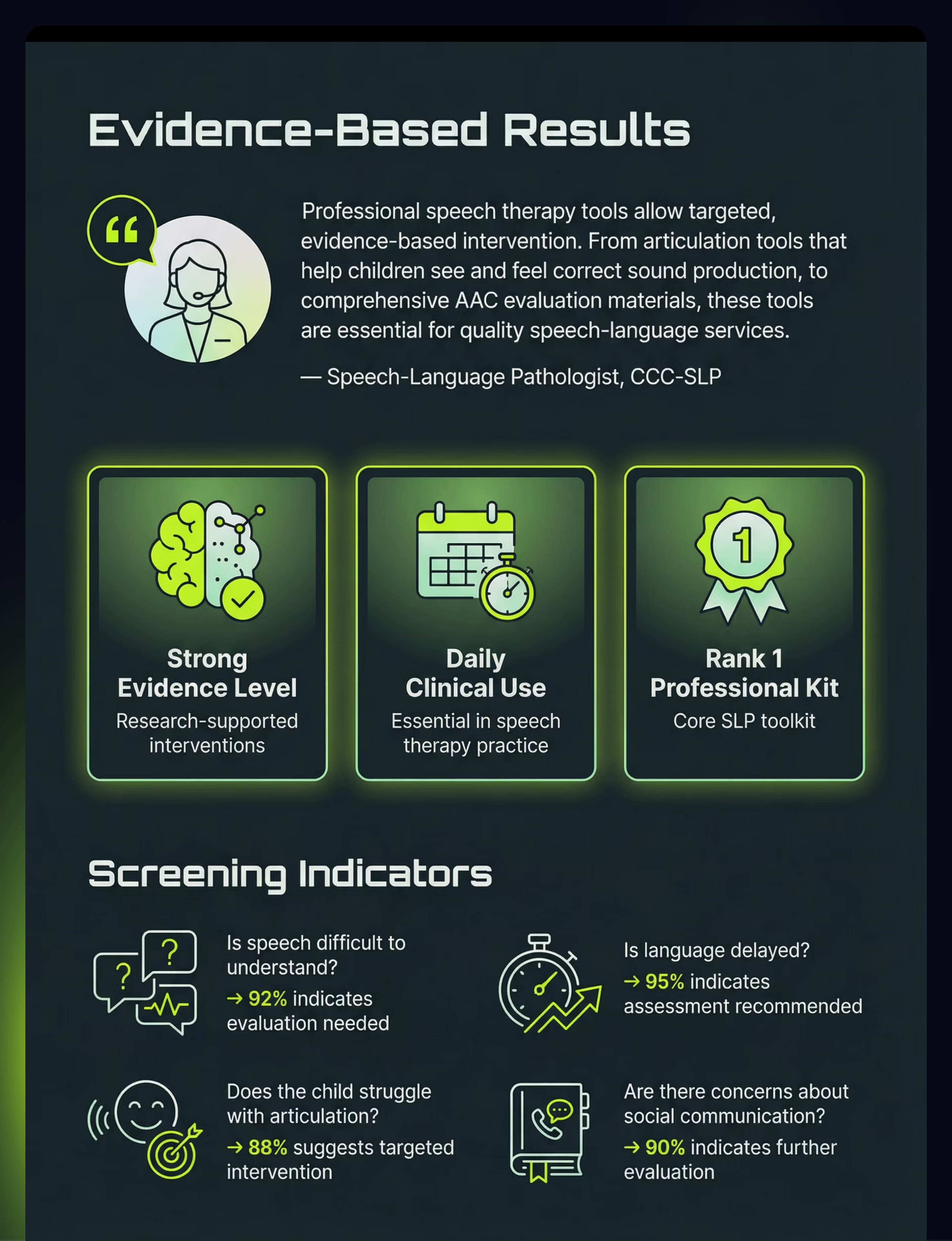
"Professional speech therapy tools allow targeted, evidence-based intervention. From articulation tools that help children see and feel correct sound production, to comprehensive AAC evaluation materials, these tools are essential for quality speech-language services."
— Speech-Language Pathologist, CCC-SLP
SLP Recommended
Professional toolkit requiring specialized training
Strong Evidence
Research-supported assessment and intervention materials
Rank #1
Essential professional toolkit in therapy equipment category
Choose Your Option (6 Variants)
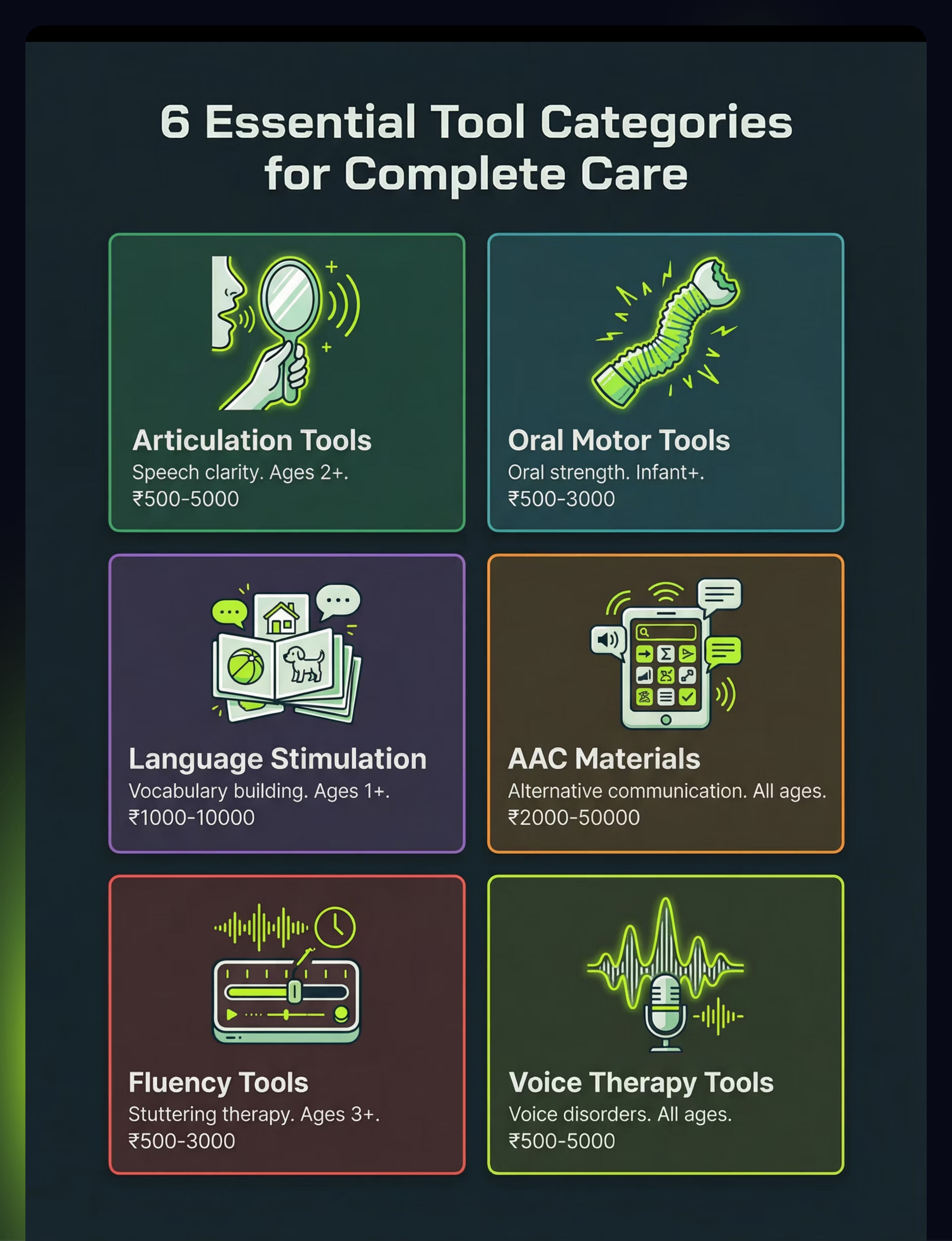
Articulation Tools
Best for: Speech clarity, sound production
Ages: 2+ years
Settings: Clinic, Home practice
Portability: High
Price: ₹500–5,000
Tools for speech sound production including mirrors, placement tools, phoneme cards, and visual feedback materials
Oral Motor Tools
Best for: Oral strength, coordination, feeding
Ages: Infant+
Settings: Clinic, Home
Portability: High
Price: ₹500–3,000
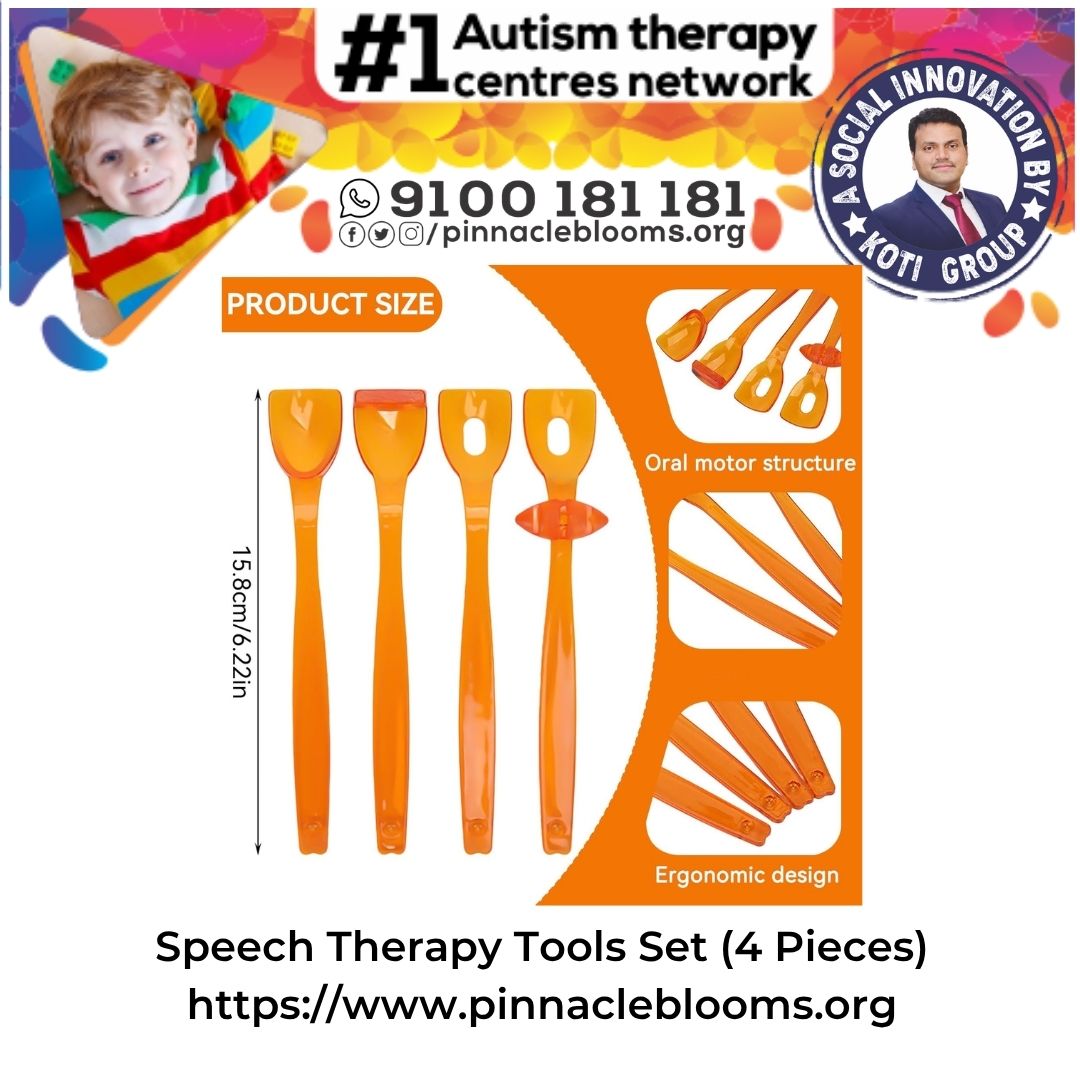
Tools for oral motor development including chewy tubes, straws, horns, and massage tools
Language Stimulation Materials
Best for: Vocabulary, concepts, comprehension
Ages: 1+ years
Settings: Clinic, Home
Portability: Medium
Price: ₹1,000–10,000
Materials for language development including picture cards, books, manipulatives, and software
AAC Professional Materials
Best for: AAC evaluation, setup, training
Ages: All ages
Settings: Clinic
Portability: Variable
Price: ₹2,000–50,000
Professional AAC assessment and implementation materials including symbol sets, device trial equipment, evaluation tools
Fluency Tools
Best for: Stuttering, fluency disorders
Ages: 3+ years
Settings: Clinic, Home practice
Portability: High
Price: ₹500–3,000
Materials for stuttering therapy including pacing boards, delayed auditory feedback devices, visual feedback tools
Voice Therapy Tools
Best for: Voice disorders, prosody
Ages: All ages
Settings: Clinic
Portability: High
Price: ₹500–5,000
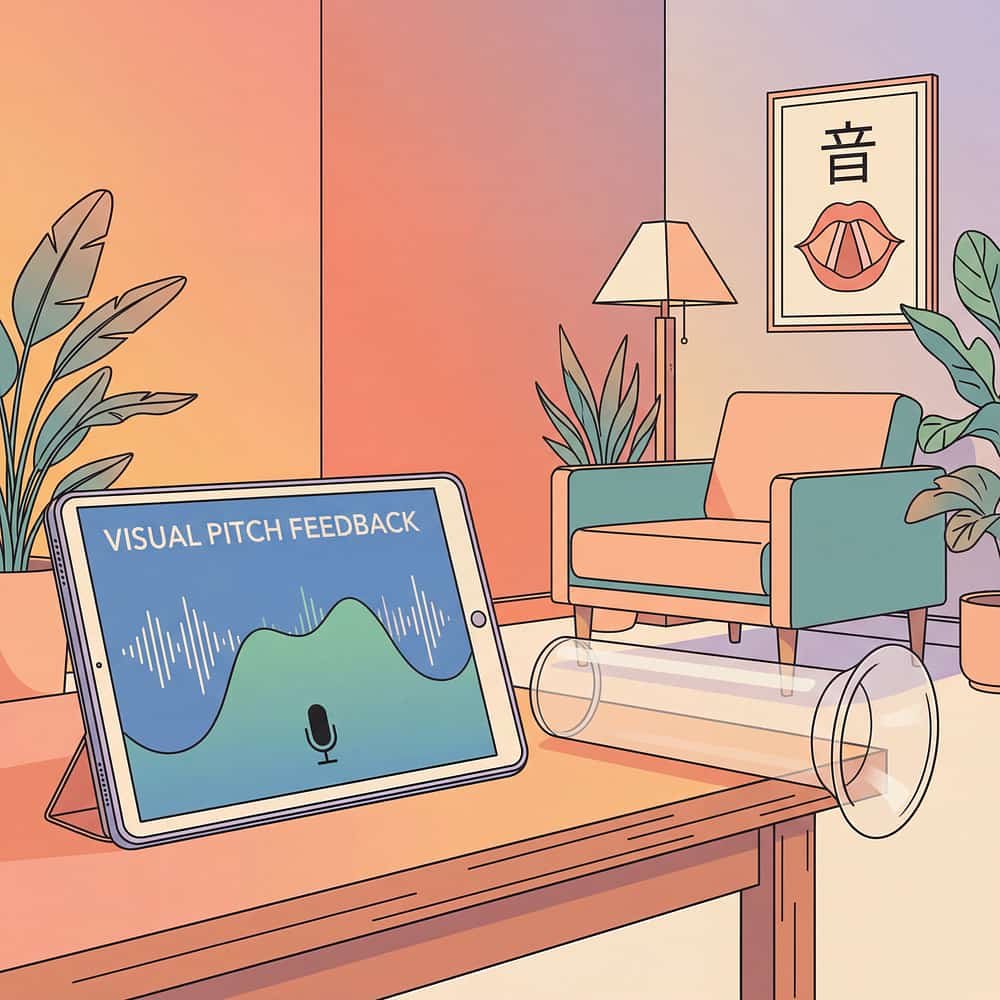
Materials for voice therapy including visual pitch feedback, resonance tools, recording equipment
Speech therapy encompasses multiple domains of communication. Professional SLPs build comprehensive toolkits over time, starting with essential materials for their primary practice areas and expanding as needed.

How to Choose
By primary practice area: Start with tools for your most common caseload—articulation and language materials are foundational for most pediatric practices
By setting: Clinic-based SLPs need comprehensive assessment tools; early intervention may prioritize oral motor and language stimulation materials
By portability needs: Mobile therapy requires portable, durable materials; clinic-based practice can include larger equipment and technology
Specifications & Types Guide
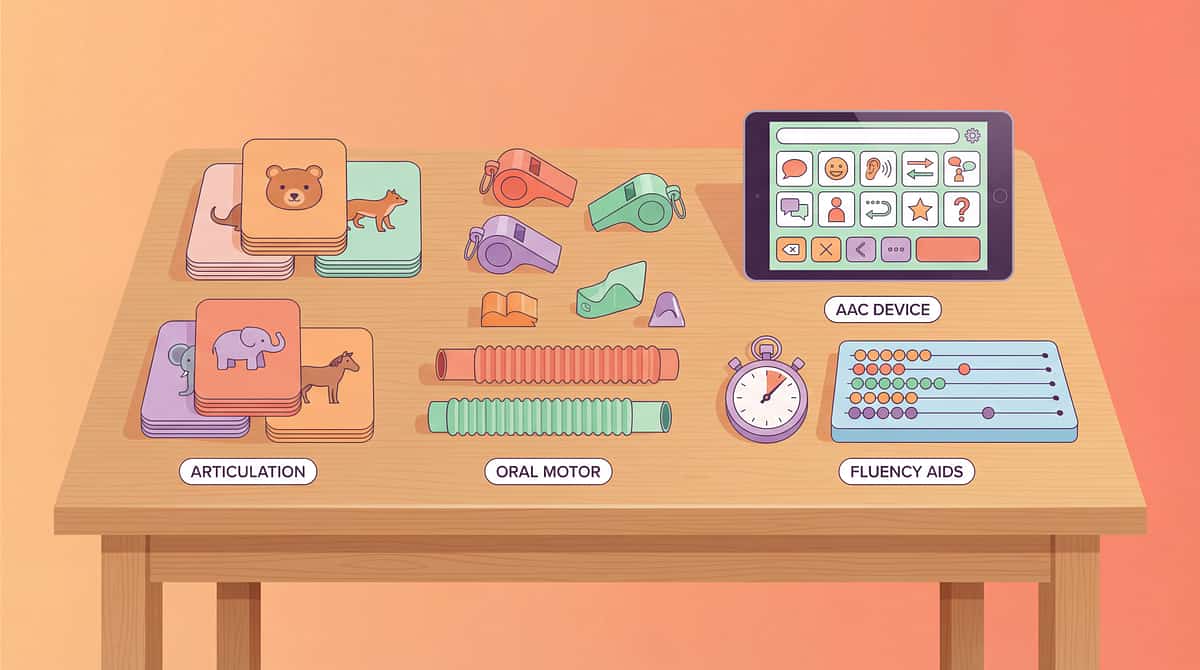
SLP Tool Types by Domain
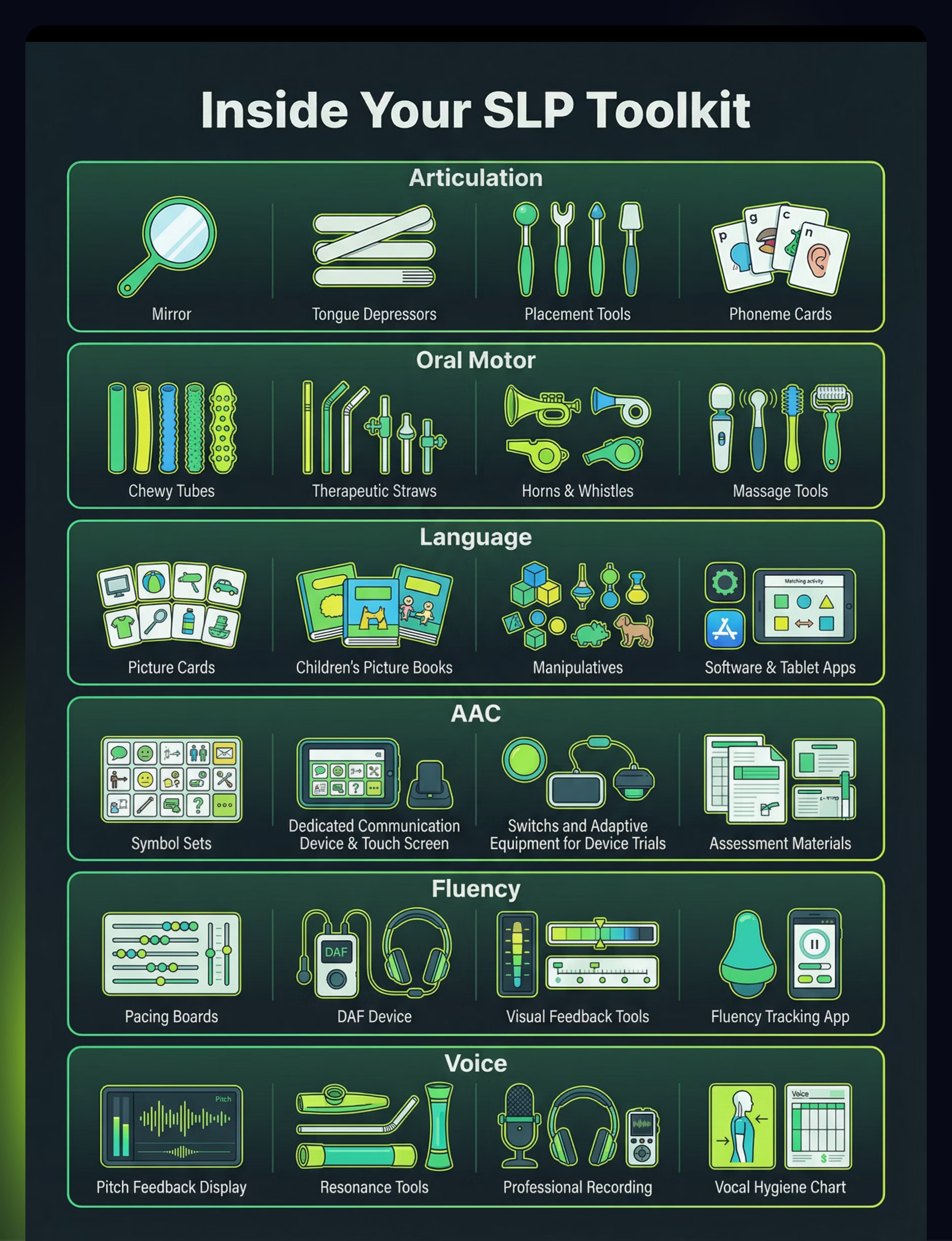
Articulation
Mirrors, tongue depressors, speech placement tools, phoneme cards for targeting specific speech sound production
Oral Motor
Chewy tubes, therapeutic straws, horns, oral massage tools for building oral strength and coordination
Language
Picture cards, vocabulary books, manipulatives, language software for developing comprehension and expression
AAC
Symbol sets, device trial equipment, assessment tools for augmentative and alternative communication evaluation and implementation
Fluency
Pacing boards, delayed auditory feedback devices, visual feedback tools for stuttering and fluency intervention
Voice
Visual pitch feedback, resonance tools, recording equipment for voice disorder treatment and prosody development
Materials & Key Features
Common Materials:
speech-therapy-tools-materials therapy material
  • Durable plastic tools for daily clinical use
  • Laminated cards for longevity
  • Engaging books and manipulatives
  • Professional software platforms
  • Specialized assessment equipment
Essential Features:
  • Evidence-based: Materials based on research and proven intervention approaches
  • Durable: Built to withstand daily clinical use with multiple children
  • Engaging: Motivating and developmentally appropriate to maintain child attention
  • Population-appropriate: Suitable for the specific age range, diagnosis, and cultural context
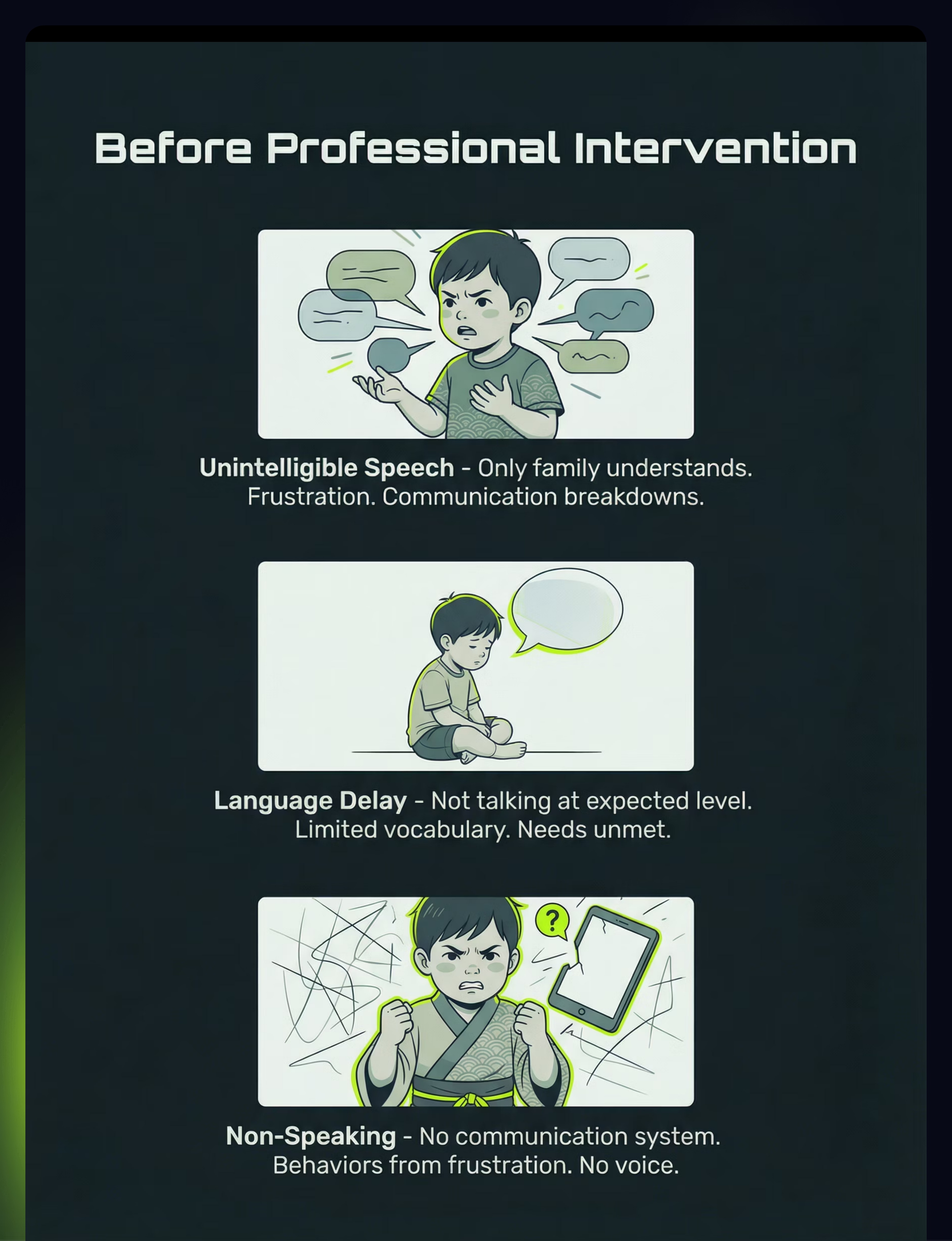
The Struggle (Before Professional Intervention)
Unintelligible Speech
Situation: Child's speech is unclear and difficult to understand
Experience: Only family members understand some words. Constant frustration in social situations. Communication breakdowns lead to tantrums and withdrawal. Academic participation severely limited. Child aware others understand peers but not them.
Emotion: Unintelligible, frustrated, isolated, misunderstood
Language Delay
Situation: Child not talking at expected developmental level
Experience: Limited vocabulary for age. Cannot express needs clearly. Missing out on social communication with peers. Following directions is difficult. Increasingly aware of being "behind" other children developmentally.
Emotion: Delayed, limited, left behind, different
Non-Speaking—Needs AAC
Situation: Child not using verbal speech for functional communication
Experience: No communication system in place. Basic needs unmet because they can't be expressed. Behaviors escalating from extreme frustration. Family struggling to understand child's wants and needs. Child has thoughts and feelings but no voice.
Emotion: No voice, trapped, frustrated, unheard, misunderstood
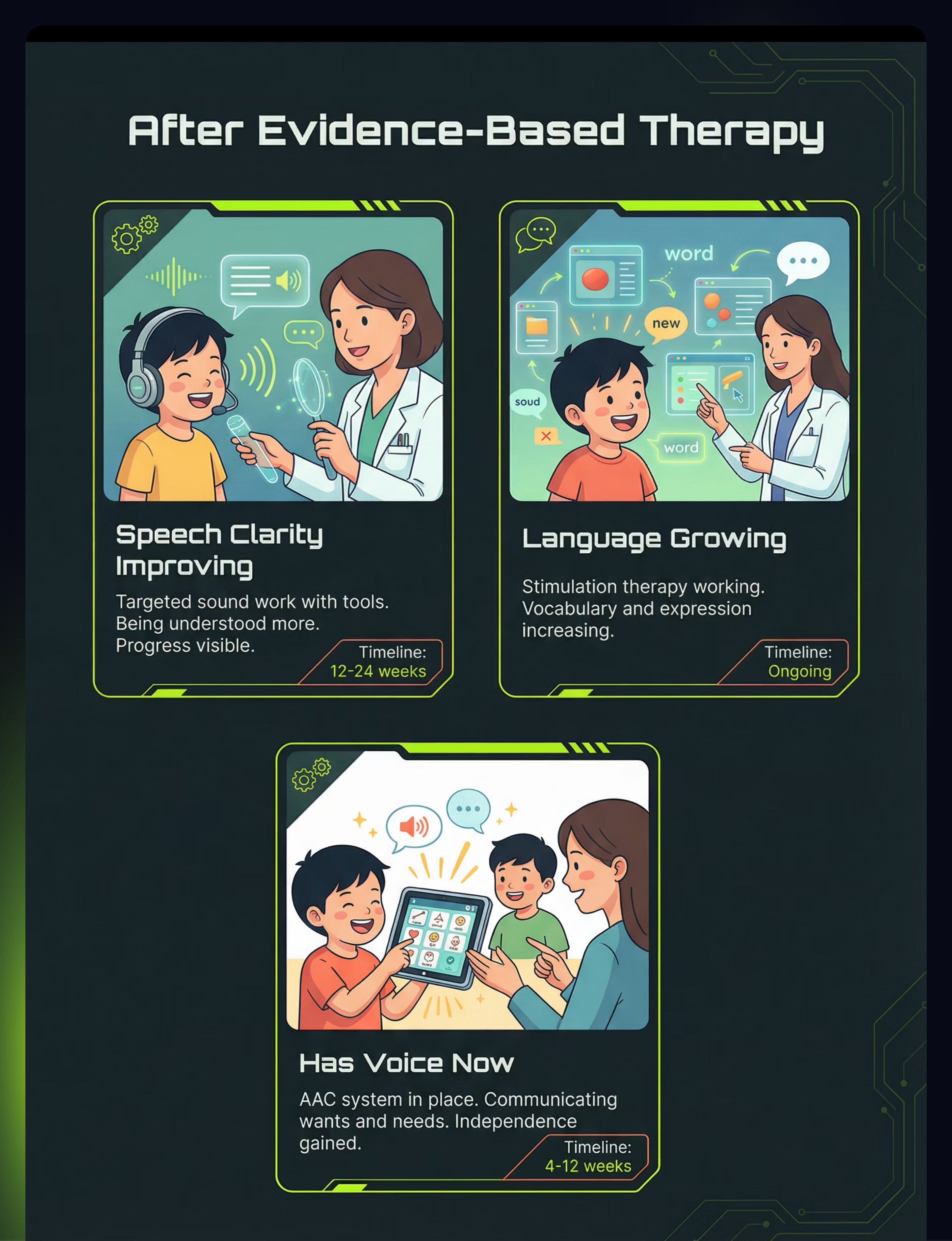
The Breakthrough (After Evidence-Based Therapy)
Unintelligible Speech → Clear Communication
Situation: SLP targets specific sounds with professional articulation tools
Experience: Consistent progress with therapy using mirrors and placement tools. Speech clarity steadily improving each week. Being understood more by teachers, peers, and unfamiliar listeners. Confidence growing. Participation increasing. Child excited to speak now.
Emotion: Clearer, understood, confident, included
12-24 weeks
Language Delay → Language Growth
Situation: Language stimulation therapy using engaging materials
Experience: Vocabulary visibly growing week by week. Expression increasing with new words and concepts. Comprehension improving—following directions better. Communication expanding in natural ways. Catching up developmentally. Connecting with peers through language.
Emotion: Growing, communicating, capable, connected
Ongoing progress
Non-Speaking → Has a Voice Through AAC
Situation: Comprehensive AAC evaluation and implementation completed
Experience: Appropriate AAC system selected for child's needs. Training provided to child, family, and school team. Child now using AAC to communicate wants, needs, thoughts, and feelings! Voice finally achieved. Behaviors dramatically decreased. Connections deepening. Future opening up.
Emotion: Has voice, heard, empowered, connected, hopeful
4-12 weeks
What to Expect (Realistic Timelines)
Professional speech therapy is a journey with measurable milestones. Progress timelines vary based on the child's specific needs, severity, consistency of therapy, and home practice implementation.
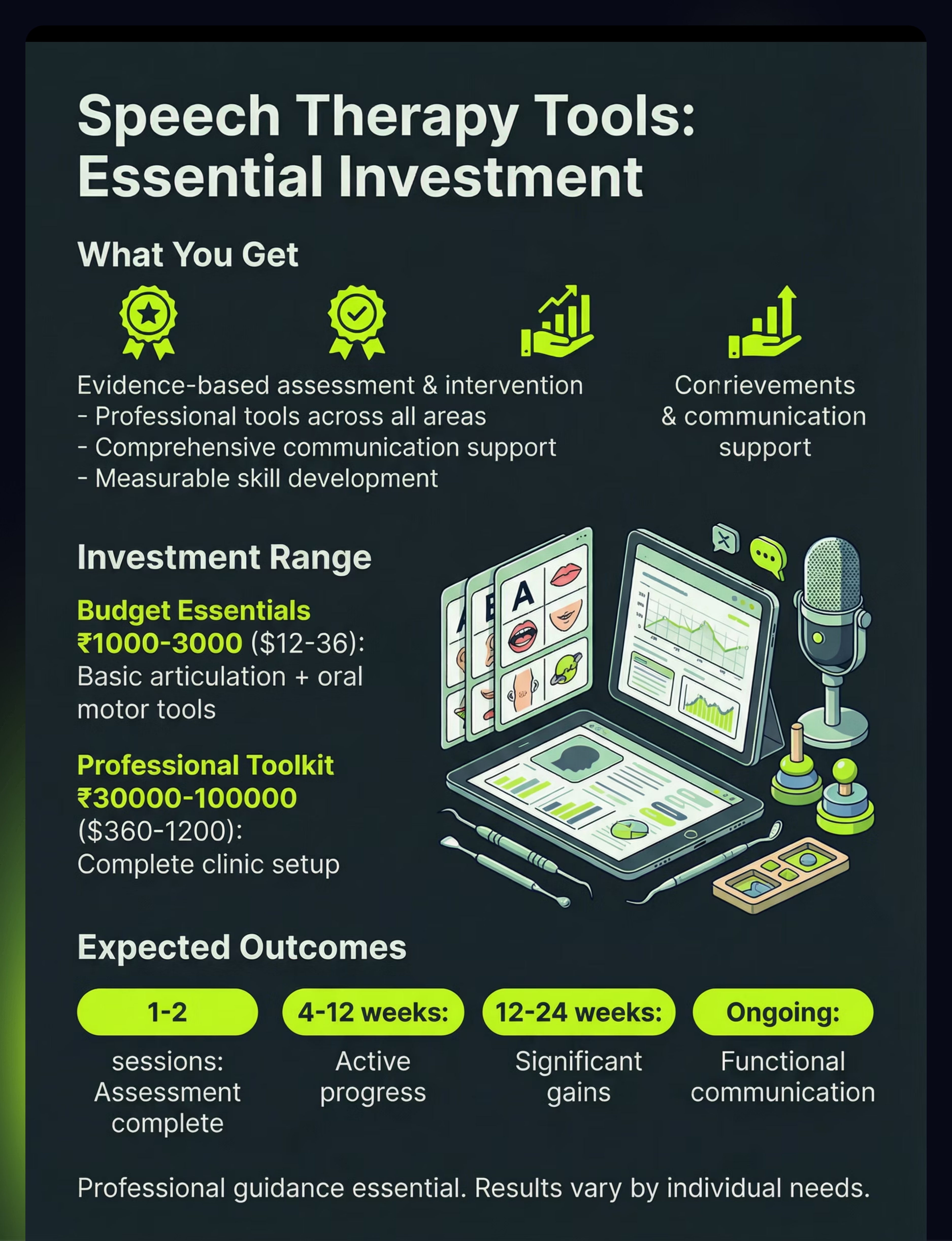
Communication Needs Assessed
Comprehensive evaluation using standardized tools identifies specific areas of need and establishes baseline functioning
1-2 sessions
Intervention Plan Developed
Individualized goals written based on assessment results, family priorities, and functional communication needs
2-4 sessions
Active Treatment Begins
Evidence-based intervention using professional tools and materials, with data collection to track progress systematically
Ongoing
Skills Developing
Measurable progress toward goals observed in therapy setting, with gradual emergence of skills in natural environments
4-24 weeks
Functional Communication Improving
Skills generalizing to home, school, and community. Child communicating effectively in daily life. Quality of life improving significantly.
Ongoing

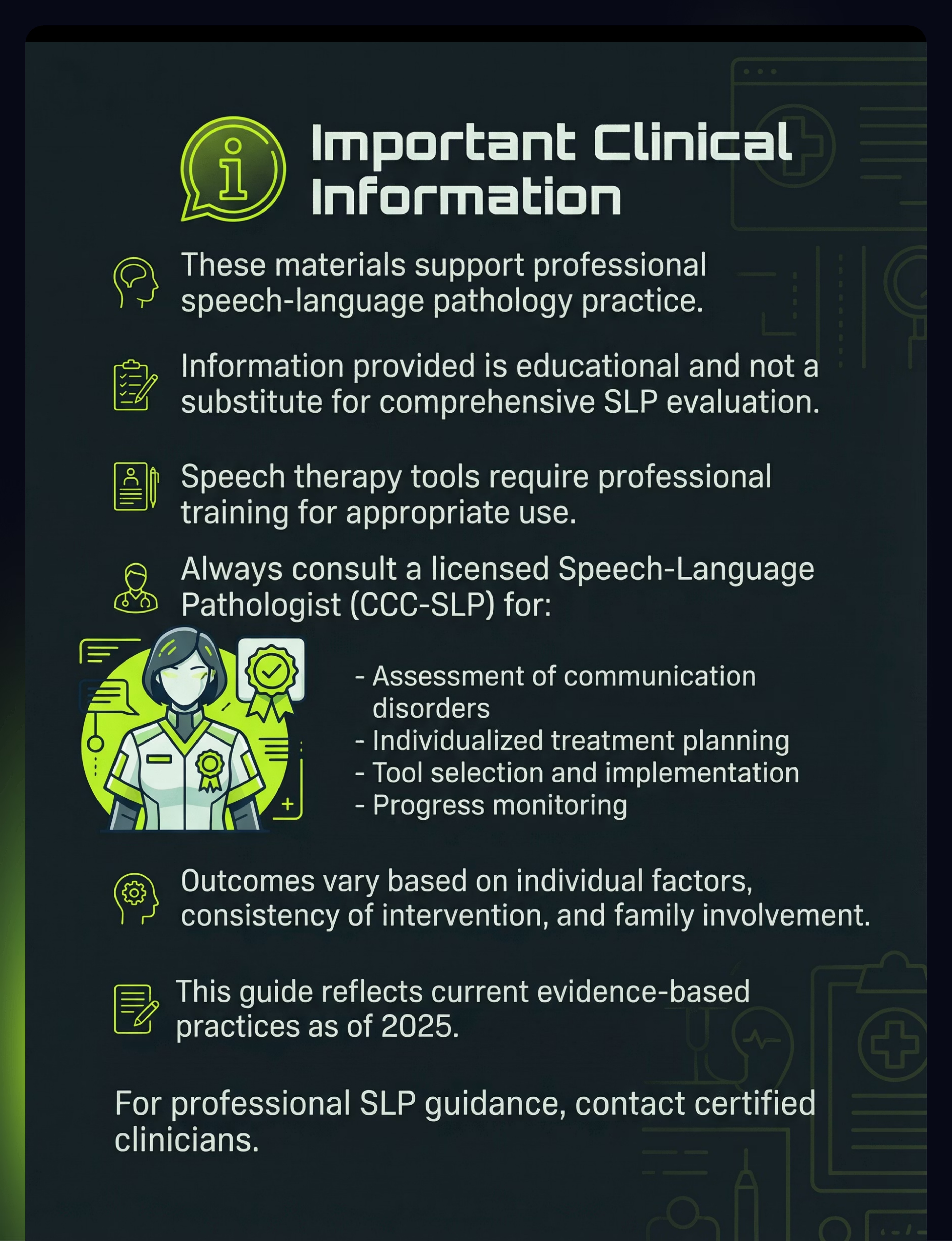
Important: These timelines are general estimates. Every child is unique. Some goals are achieved quickly while others require sustained intervention. Consistency in therapy attendance and home practice significantly impacts the rate of progress.
Is This Right for My Child? (2-Minute Check)
Answer these questions honestly. Three or more "yes" answers strongly indicate that professional speech-language evaluation would be beneficial for your child.
Is your child's speech difficult to understand?
If you or familiar listeners frequently struggle to understand what your child is saying, this indicates speech clarity concerns that benefit from articulation assessment and intervention.
If yes, this indicates: Speech therapy evaluation recommended
Is your child's language delayed?
If your child isn't meeting language milestones—first words by 12-15 months, two-word phrases by 24 months, sentences by 3 years—professional evaluation is important.
If yes, this indicates: Language evaluation recommended
Does your child have difficulty expressing themselves?
If your child seems to know what they want to say but struggles to put words together, or relies heavily on gestures instead of words, SLP assessment can help.
If yes, this indicates: Speech-language evaluation recommended
Is your child receiving speech therapy?
If your child is already in speech therapy, the SLP is using professional tools and materials designed for evidence-based assessment and intervention.
If yes, this indicates: SLP using professional tools for your child's therapy
Interpretation: 3+ "yes" answers = strong fit for speech therapy services. Even one "yes" answer warrants consultation with a speech-language pathologist for screening and guidance.
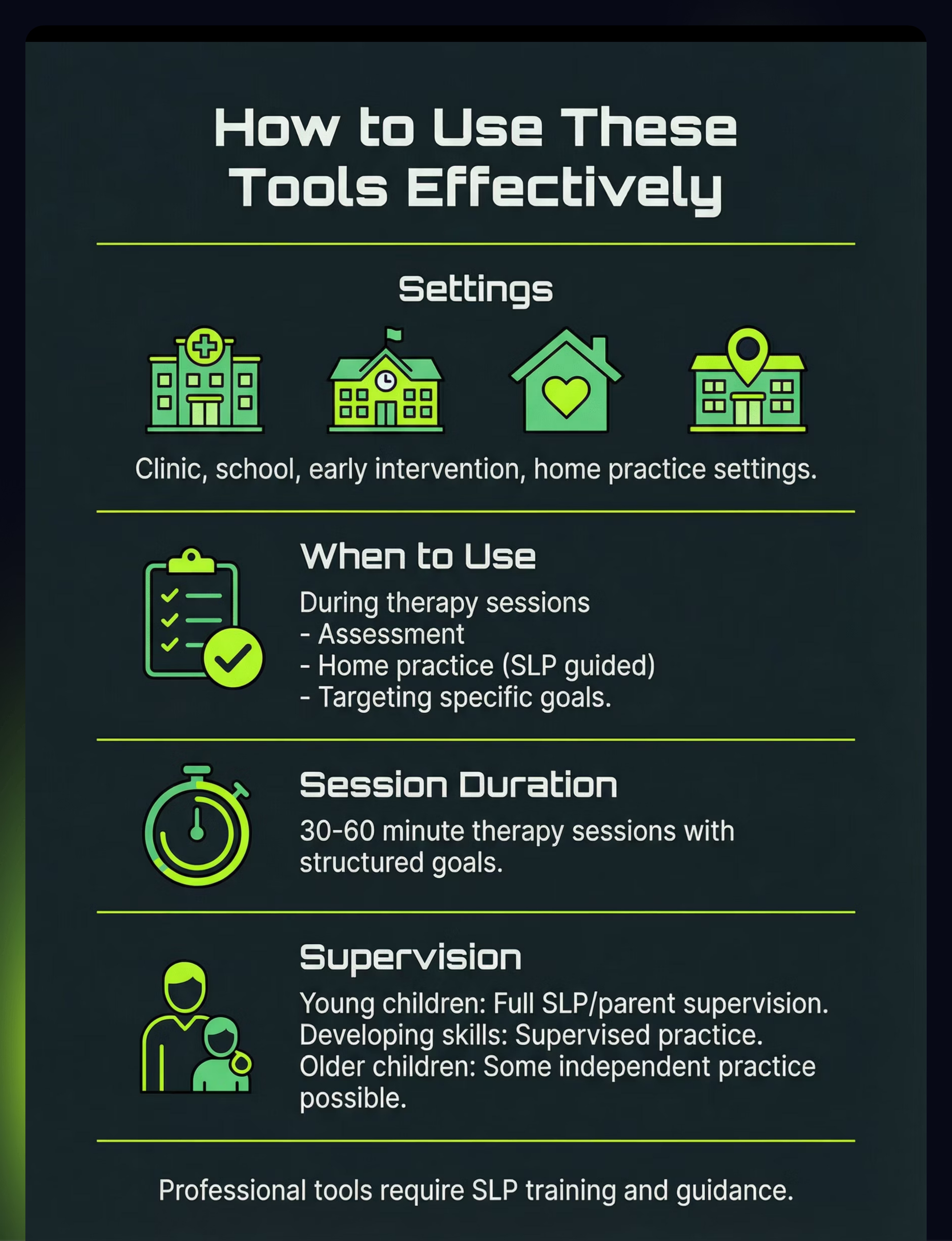
Usage Guide
When to Use
  • During speech therapy sessions with trained SLP
  • For comprehensive communication assessment
  • Home practice activities as guided by SLP
  • When targeting specific communication goals
  • As part of individualized intervention plan
When NOT to Use
  • Without SLP training for professional tools
  • Without individualized assessment and plan
  • As substitute for professional evaluation
  • For general play without therapeutic purpose
Supervision by Age
Age Range
Supervision Level
Notes
Young children (0-5 years)
Direct supervision
SLP or parent supervises all tool use; many tools require one-on-one attention
Developing (6-10 years)
Supervised practice
Practice activities completed with adult guidance; building independence with familiar activities
Older (11+ years)
Some independent practice
Some home practice can be independent after thorough training; new activities still require guidance
Duration: Standard therapy sessions are 30-60 minutes, with frequency (1-3x weekly) and duration of treatment determined by individual needs, goals, and severity of communication disorder.
SLP clinic
School
Early intervention
Home practice
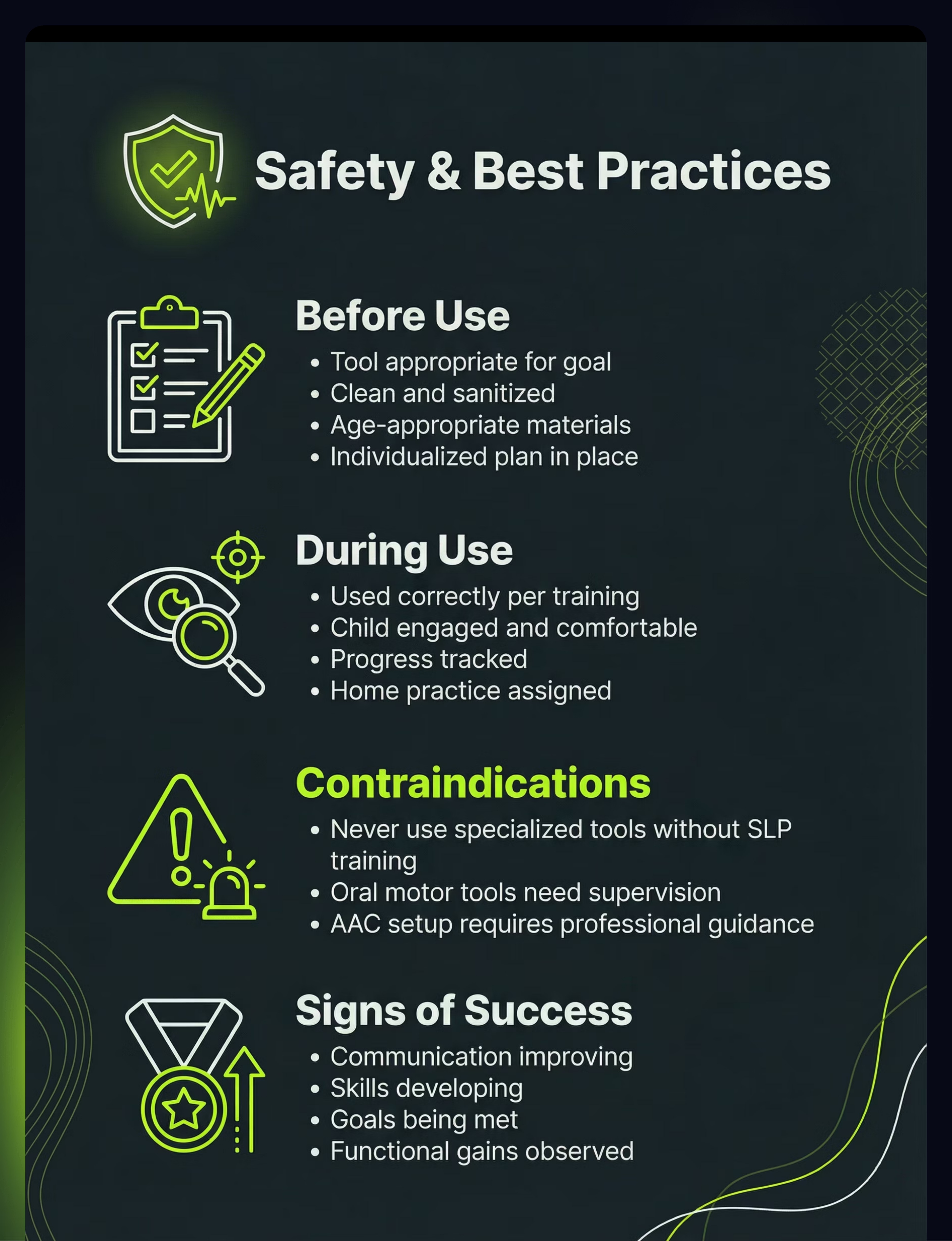
Safety First
Critical Safety
  • Clean and sanitize all tools between clients
  • Ensure materials are age-appropriate for each child
  • Screen for choking hazards with oral motor tools
  • Use oral motor tools correctly per training protocols
Warnings
  • Some specialized tools require professional training
  • Oral motor tools need constant supervision during use
  • AAC setup and training needs SLP expertise and guidance
  • Do not use tools in ways they were not designed for
Contraindicated
  • Untrained individuals using specialized professional tools
  • Using assessment tools without proper certification and training
  • Implementing intervention without individualized evaluation and plan
Safety Checklist
Before Use
  • ✓ Tool appropriate for specific communication goal
  • ✓ Cleaned and sanitized properly
  • ✓ Age-appropriate for child's developmental level
  • ✓ Individualized intervention plan in place
During Use
  • ✓ Tool used correctly per evidence-based protocols
  • ✓ Child engaged and motivated
  • ✓ Progress data tracked systematically
  • ✓ Home practice activities assigned appropriately
Signs of Success
  • ✓ Communication skills steadily improving
  • ✓ Specific targeted skills developing
  • ✓ Goals being met on expected timeline
  • ✓ Functional gains observed in daily life
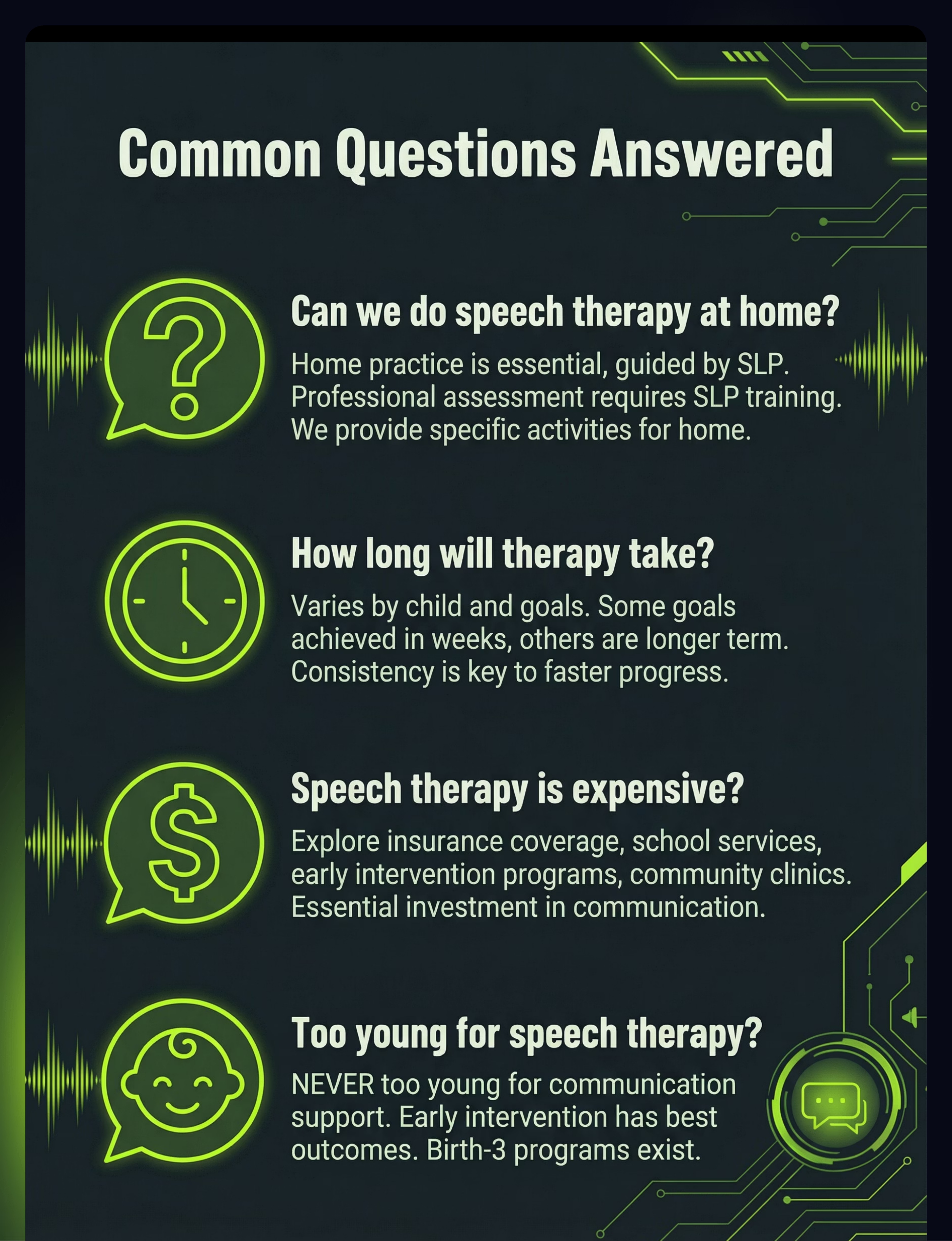
Common Questions (Honest Answers)
Q: Can we do speech therapy at home?
A: Home practice is absolutely essential and significantly accelerates progress—BUT it must be guided by a trained SLP. Professional assessment and core intervention require specialized training and clinical tools. The SLP will provide specific activities tailored to your child's needs for daily home practice.
Try this: Home practice supplements professional therapy; SLP guides activities; professional evaluation essential for diagnosis and treatment planning.
Q: Speech therapy is expensive
A: Cost is a real concern for families. Explore these options: health insurance often covers speech therapy with diagnosis; government schools provide free services; early intervention programs (birth-3) are often free or low-cost; community health centers may offer sliding scale fees. This is an essential investment in your child's communication, education, and future independence.
Try this: Explore insurance coverage, free school services, early intervention programs, community clinics; essential investment in child's future.
Q: How long will therapy take?
A: This varies greatly by child, diagnosis, severity, and goals. Some targeted goals can be achieved in a few weeks or months, while others represent longer-term intervention spanning months to years. Your SLP tracks progress with objective data and adjusts intervention accordingly. Consistency in attendance and home practice is key to faster progress.
Try this: Timeline varies by individual needs; SLP tracks progress with data; consistency significantly impacts rate of improvement.
Q: They're too young for speech therapy
A: This is a myth. Children are NEVER too young for communication support. Early intervention produces the best long-term outcomes. Birth-to-three programs exist specifically because early brain development is so critical. SLPs are trained to support infants and toddlers. The earlier you start, the better the outcomes typically are.
Try this: Never too young for communication support; early intervention yields best outcomes; birth-3 programs exist for this reason.
Investment Guide
Speech therapy tools range from basic starter materials to comprehensive professional clinic toolkits. Most SLPs build their collection gradually over time, prioritizing tools for their primary caseload areas.
Budget Option
₹1,000–3,000
Basic articulation cards, oral motor tools, mirror
New SLPs, home practice, early intervention
Premium Option
₹30,000–1,00,000
Comprehensive assessment, varied oral motor, extensive materials, AAC, fluency, voice tools
Established clinics, comprehensive service delivery
Detailed breakdown of what to expect from different investment levels:
Basic Therapy Materials
Essential phoneme cards, simple oral motor tools, and visual feedback aids for core articulation therapy.
Starter Clinic Kit
Building an initial toolkit ideal for new speech-language pathologists or those focusing on early intervention.
Advanced Assessment & Therapy
Comprehensive tools for a wide range of assessments, including articulation, language, AAC, fluency, and voice.
Extensive Resource Library
A vast collection of picture cards, books, and specialized equipment to cater to diverse communication needs.
Strategic growth of your professional toolkit:
Initial Investment
Focus on articulation and language materials for your most common caseload. Quality basic tools for ₹500–5,000.
Early Practice Growth
Most SLPs invest ₹10,000–25,000 over their first 1-2 years, gradually expanding their essential toolkit.
Specialized Tool Expansion
As you develop practice areas like AAC, fluency, or voice, add specialized tools. This is a worthwhile investment.
Established Clinic Toolkit
For comprehensive service delivery across all communication domains, a full clinic setup can range from ₹30,000–1,00,000.
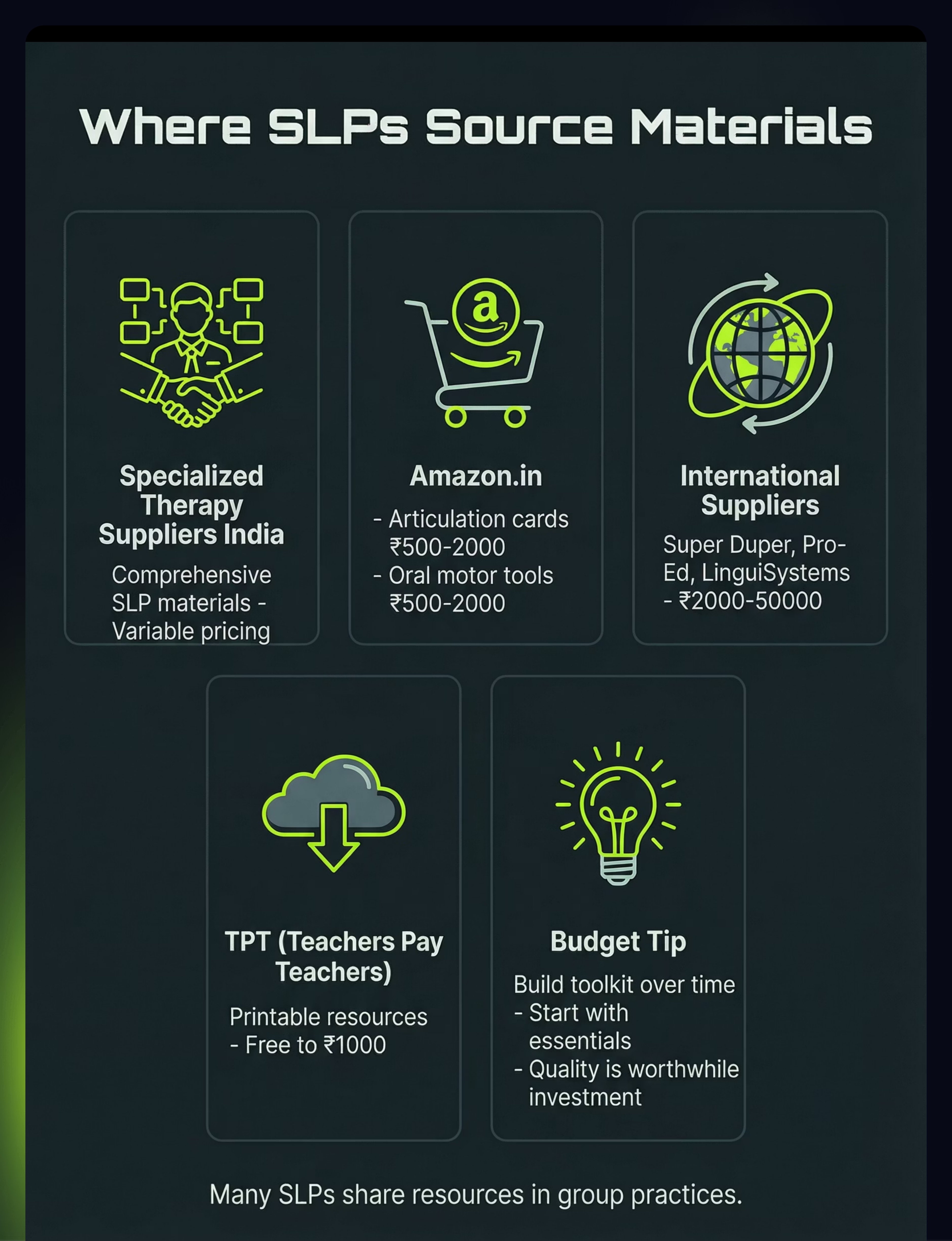
Where to Buy in India
Availability: Specialized Speech Therapy Suppliers, international retailers, educational platforms, and some general e-commerce sites
Therapy Suppliers India
Search: "speech therapy materials"
Price range: Variable, typically ₹1,000-30,000
Specialized suppliers often carry professional-grade materials and can provide guidance on selections
Amazon.in
Search: "articulation cards" or "oral motor tools therapy"
Price range: ₹500-2,000
Good for basic materials, flashcards, some oral motor tools; verify quality before purchasing
International Suppliers
Example: Super Duper, Pro-Ed, LinguiSystems
Search: "speech therapy materials"
Price range: ₹2,000-50,000 (plus shipping)
Highest quality professional materials; consider shipping costs and customs
TPT (Teachers Pay Teachers)
Search: "speech therapy printables"
Price range: Free-₹1,000
Excellent source for printable materials, activity ideas, home practice resources
Buying Tips
  • Most SLPs build toolkits gradually over time as practice grows
  • Many excellent printable resources available online (free or low-cost)
  • Start with essential tools for your primary practice area first
  • Consider resource sharing if working in group practice setting
  • Quality materials are worthwhile investment—they last for years of daily use
  • Connect with local SLP community for supplier recommendations
Red Flags to Avoid
  • Materials claiming to be "evidence-based" without research citations
  • Very poor quality tools that won't withstand daily clinical use
  • Age-inappropriate materials for your target population
  • Non-SLPs attempting to use professional assessment or specialized intervention tools
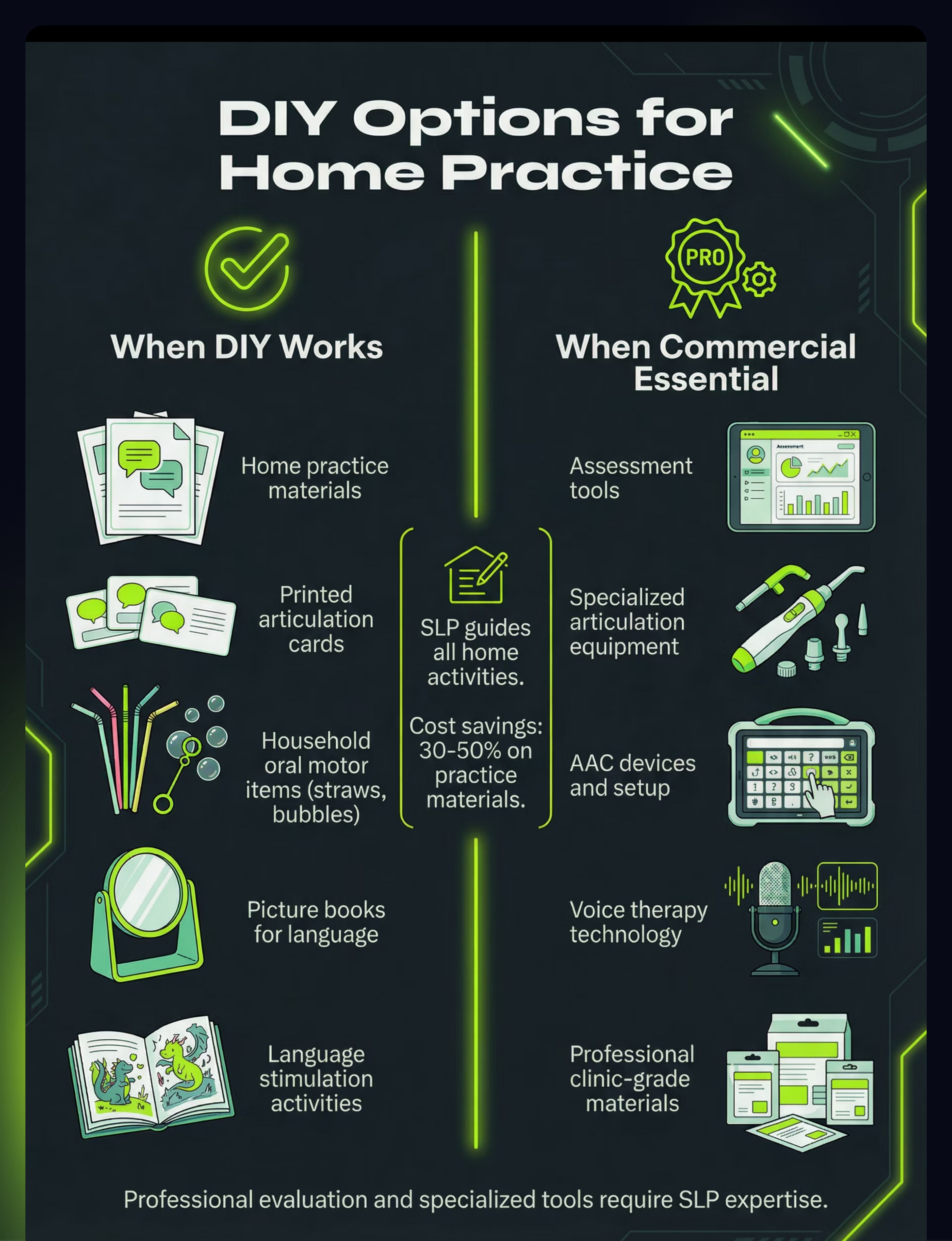
DIY Alternative (Save 30-50%)
Feasibility: Low-Medium (must be SLP guided) • Time investment: Variable • Cost savings: 30-50% on home practice materials
Materials Needed
1
Computer & Printer
For printable resources
2
Laminator/Contact Paper
For material durability
3
Household Items
Straws, bubbles, mirrors
4
Picture Books
From the library
5
Craft Supplies
Basic items
Steps to Create Home Practice Materials
1
Consult SLP
For appropriate activities and materials.
2
Print Resources
Use free online sources or TPT for articulation cards.
3
Household Items
Utilize straws, bubble wands, whistles for oral motor practice.
4
Position Mirror
For visual feedback during articulation work.
5
Utilize Picture Books
From the library for language and vocabulary development.
6
Create Simple Materials
As directed by SLP for specific goals.

Important: While home materials can effectively supplement therapy, professional assessment tools and specialized clinic equipment should be purchased commercially. Never substitute DIY materials for professional evaluation.
DIY vs. Commercial Comparison
Aspect
When to DIY
When to Buy Commercial
Purpose
Home practice materials, printed cards and pictures, language stimulation activities, basic oral motor (straws, bubbles)
Professional assessment tools, specialized articulation tools, AAC equipment, voice therapy equipment, durable clinic-grade materials
Cost
₹500-2,000 for home practice kit
₹5,000-50,000 for professional toolkit
Quality
Adequate for home practice when SLP-guided
Professional durability and standardization
Key tradeoff: Home materials can supplement and extend therapy practice cost-effectively, but professional tools are essential for clinic-based assessment and intervention. Work closely with your SLP to determine what can be created at home versus what should be purchased professionally.

Preview of speech therapy tools materials Therapy Material

Below is a visual preview of speech therapy tools materials therapy material. The pages shown help educators, therapists, and caregivers understand the structure and content of the resource before use. Materials should be used under appropriate professional guidance.

Page 1
Page 2
Page 3
Page 4
Page 5
Page 6
Page 7
Page 8
Page 9
Page 10
Page 11
Page 12
Page 13
Page 14
Page 15
Page 16
Page 17
Page 18
Page 19
Page 20
Link copied!
Complete Picture: Tracking, Related Tools & Support
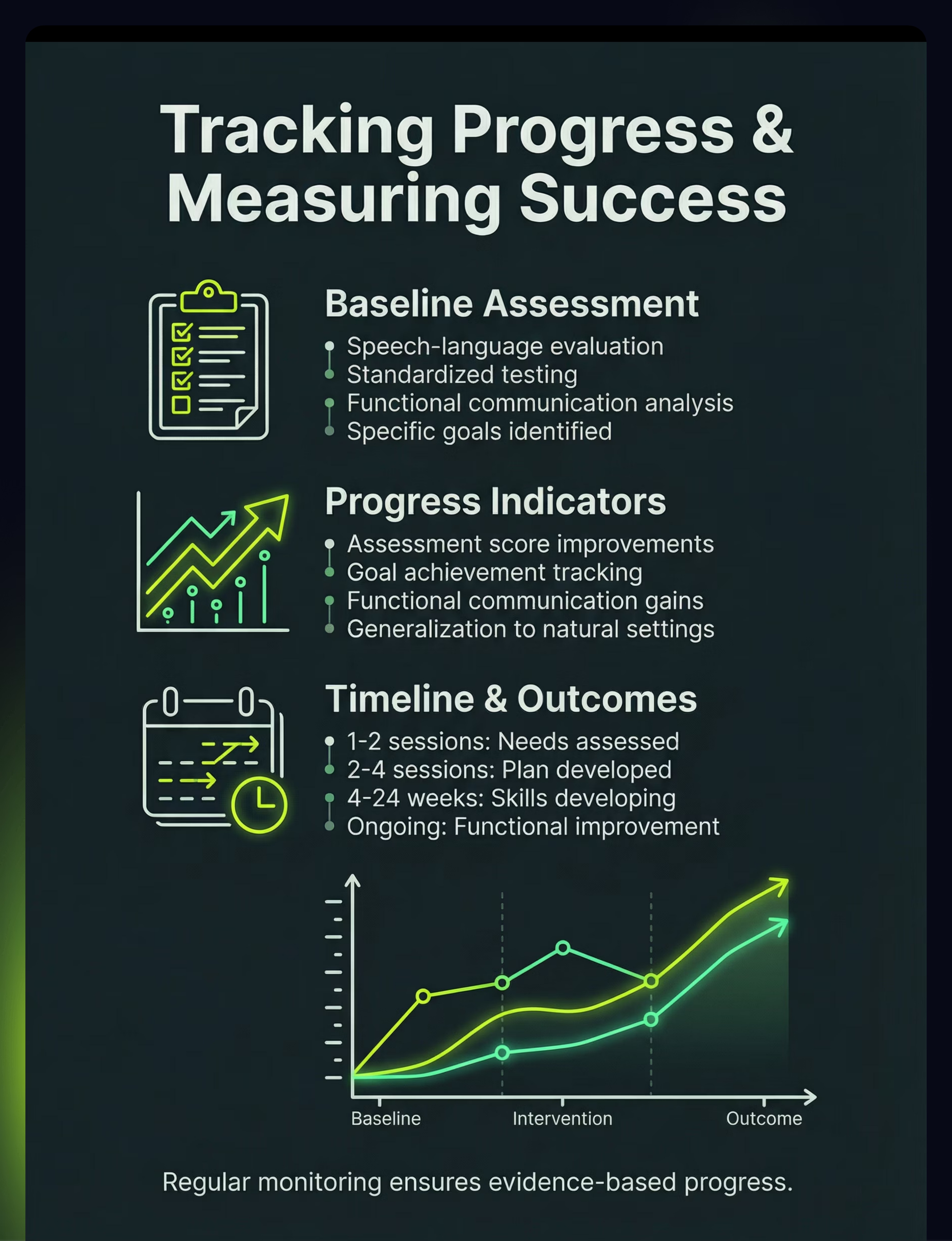
Measuring Success
Speech-language pathologists use systematic data collection and standardized reassessment to track progress objectively and adjust intervention as needed.
Baseline (What to Measure First)
  • Comprehensive speech-language assessment results
  • Standardized testing scores across domains
  • Functional communication abilities in natural settings
  • Specific goals identified based on evaluation
Goals
  • Speech clarity will improve to age-appropriate intelligibility
  • Language skills will develop toward age expectations
  • Functional communication will increase in daily life
  • Individual goals specific to each child's unique needs
Success Indicators
  • Improvement on standardized reassessment scores
  • Measurable achievement of individualized goals
  • Functional communication gains in home, school, community
  • Skills generalizing beyond the therapy room successfully

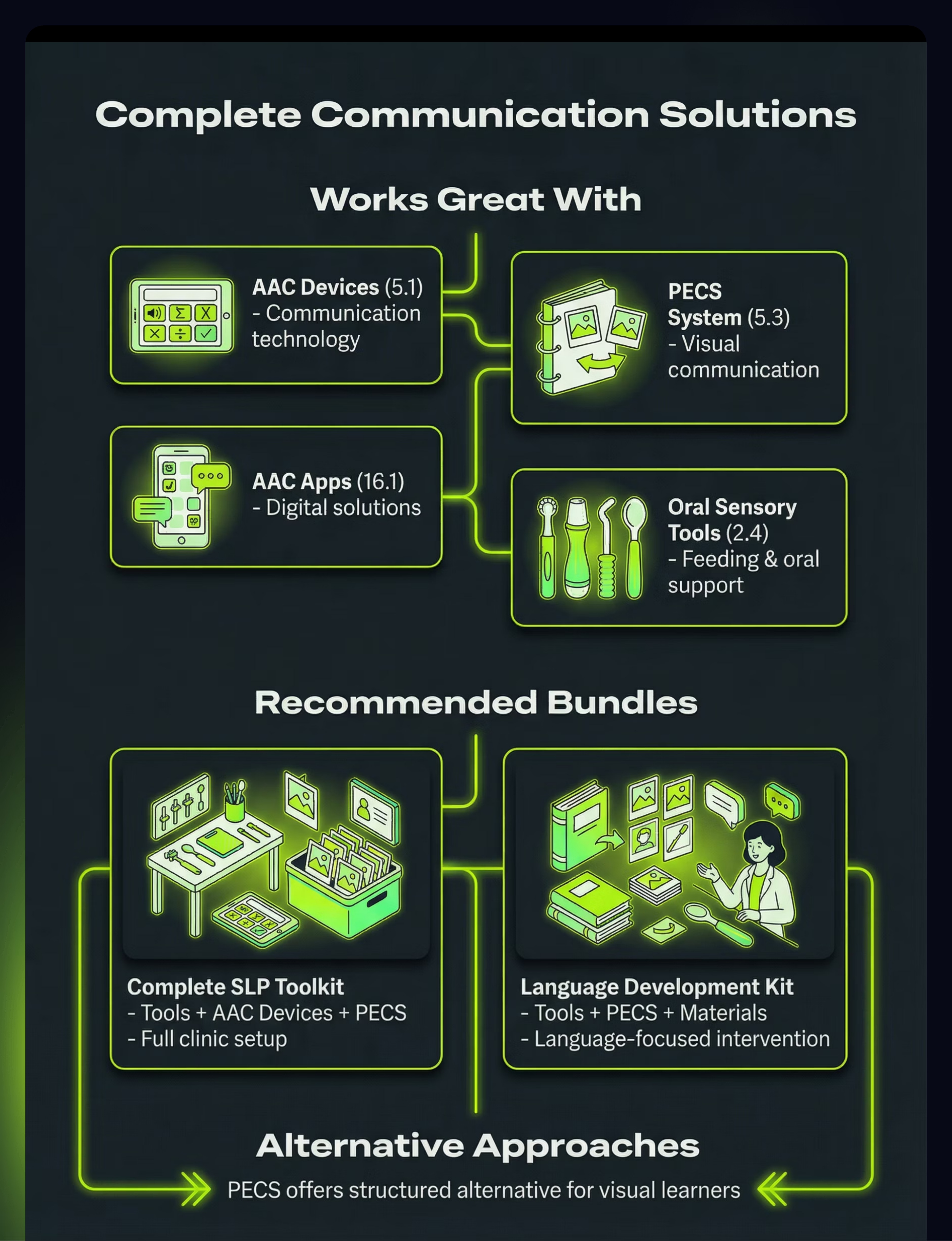
Pair It With... (Complete the Kit)
These complementary tools work together with speech therapy materials to support comprehensive communication development:
AAC Devices (ID: 5.1)
Why pair: Communication devices that SLPs evaluate, program, and train using professional AAC materials
PECS (ID: 5.3)
Why pair: Picture Exchange Communication System often used as AAC approach, requires SLP training and materials
AAC Apps (ID: 16.1)
Why pair: Digital AAC solutions that SLPs evaluate and implement as part of comprehensive communication assessment
Oral Sensory Tools (ID: 2.4)
Why pair: Supports oral motor development, often used in conjunction with oral motor therapy tools
Recommended Bundles:
  • Complete SLP Toolkit: Speech Therapy Tools (19.4) + AAC Devices (5.1) + PECS (5.3) — For full-service communication clinic offering comprehensive assessment and intervention
  • Language Development Kit: Speech Therapy Tools (19.4) + PECS (5.3) + Books (8.6) — For language-focused intervention with multiple modalities and materials

Quick Summary
Professional speech therapy tools and materials enable comprehensive, evidence-based assessment and intervention across articulation, language, fluency, voice, and AAC domains. Essential toolkit for quality speech-language services.
speech therapy
articulation
language
AAC
oral motor
SLP
professional-kit
Common searches: speech therapy materials, articulation tools, oral motor tools, language therapy materials, AAC assessment tools, SLP materials, speech pathology equipment

Get Support
FREE National Autism Helpline
Phone: 9100 181 181
Languages: Support available in 16+ languages
Website: pinnacleblooms.org
Connect with specialists who can guide you to appropriate speech-language services and support for your child's communication needs.
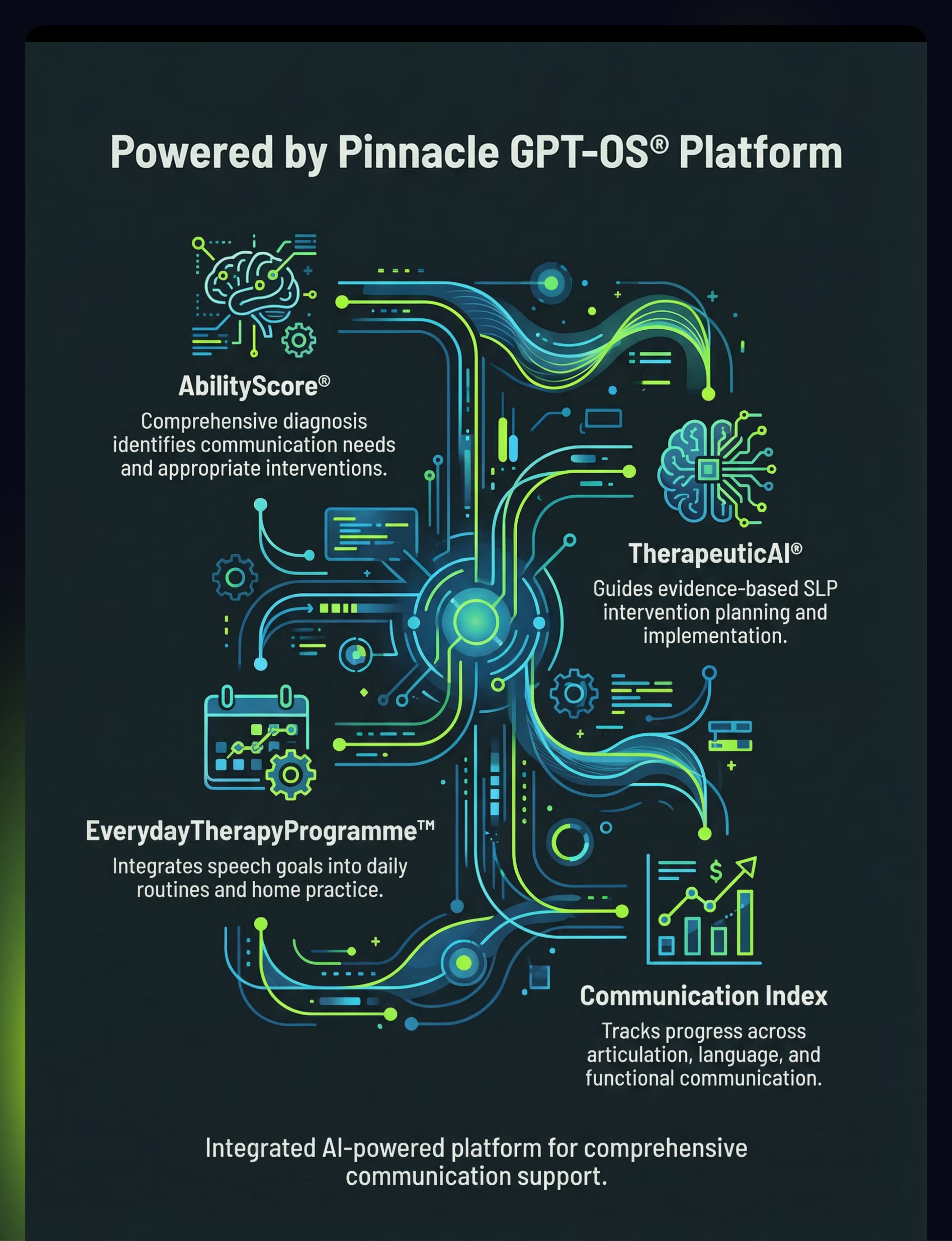
Platform Integration
AbilityScore® identifies communication needs through comprehensive developmental assessment
TherapeuticAI® guides SLP intervention planning with evidence-based protocols and progress tracking
EverydayTherapyProgramme™ includes speech and language goals integrated into daily routines for home practice
Communication Index tracks progress across speech, language, and communication domains systematically

Disclaimer: This is educational information about professional speech therapy tools and materials. Speech-language intervention requires evaluation and treatment by qualified, licensed speech-language pathologists (SLPs). Always consult qualified SLPs, occupational therapists, or pediatricians for assessment, diagnosis, and individualized treatment planning. Individual results and timelines vary significantly based on diagnosis, severity, consistency of intervention, and home practice implementation.