









Tool ID: 11.2
Tool ID: 11.2
SLP + OT
Strong Evidence
Rank #2
Daily Use
₹100–800
Straws (Therapy/Specialty)
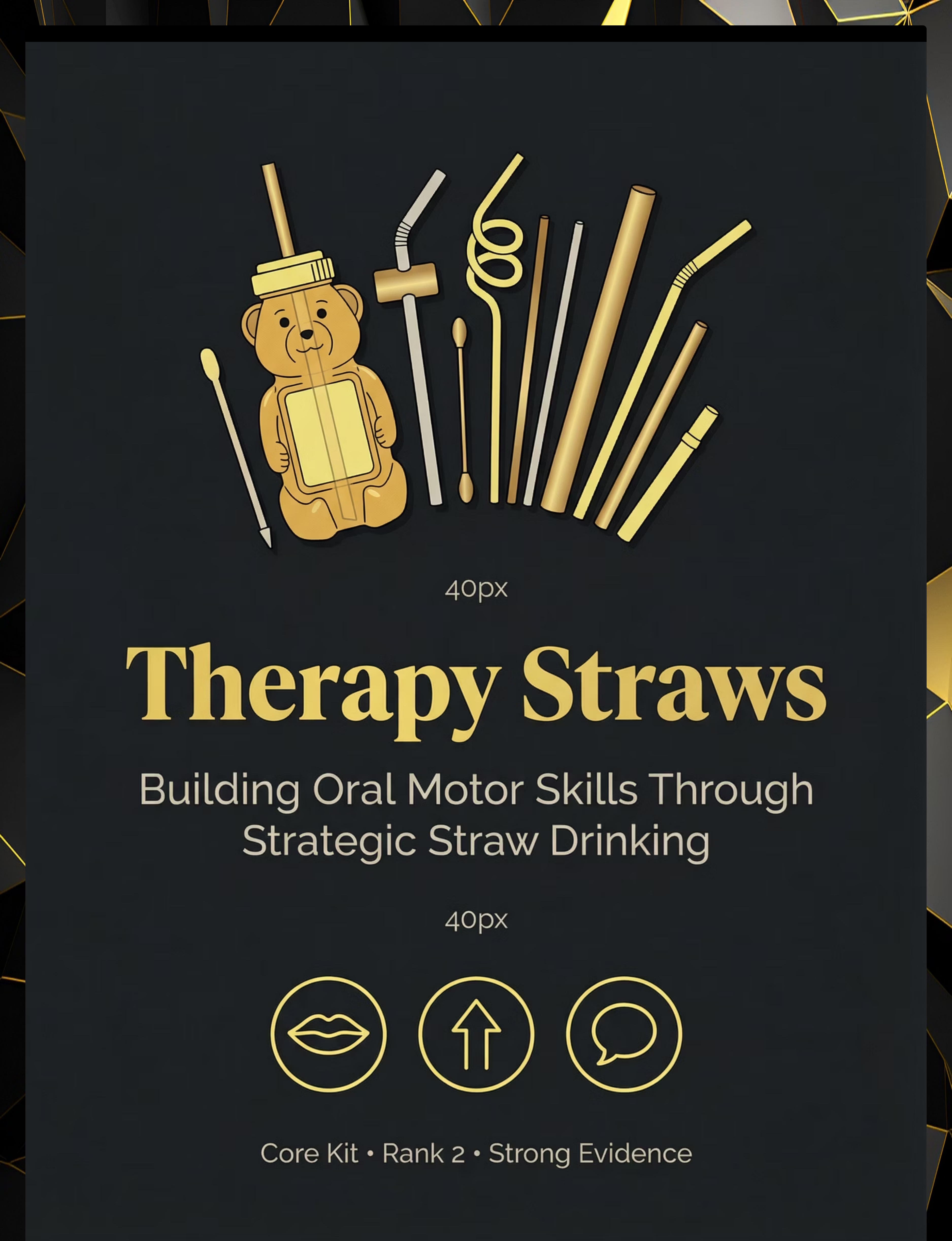
Oral motor strengthening and drinking skill system
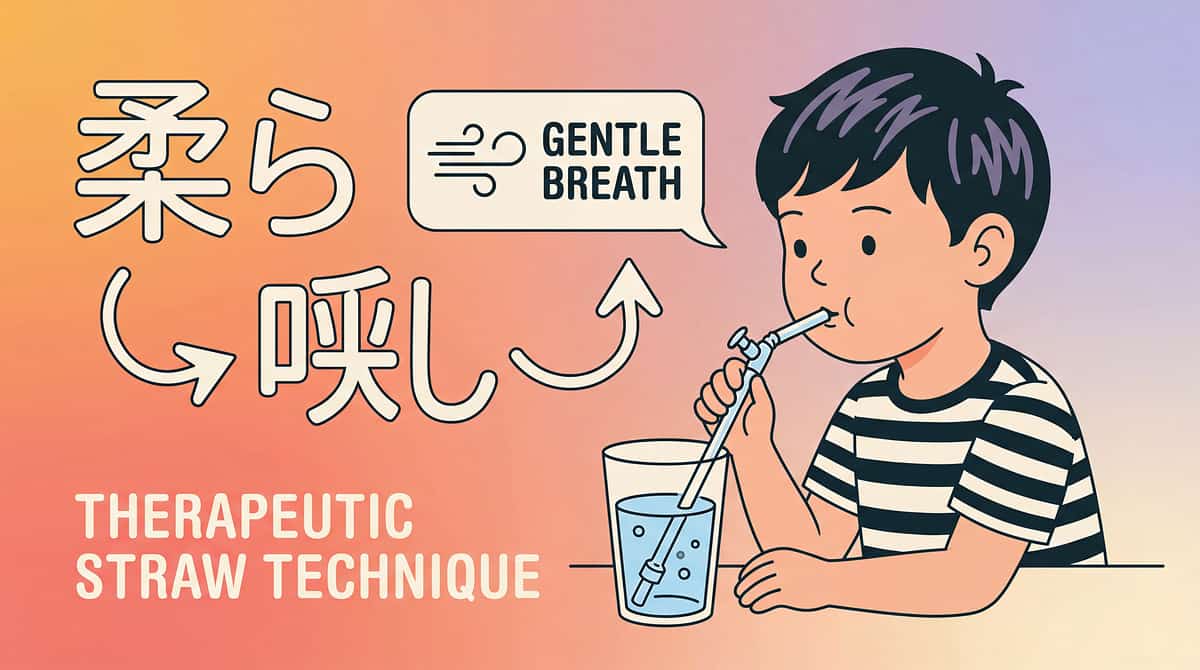
Transform your child's drinking skills and oral motor development with therapeutic straws designed by speech-language pathologists. These specialized straws build essential skills including lip closure, suction strength, and tongue coordination—foundational abilities that support both eating and speech development.
straws-therapy-specialty therapy material
Who This Helps
Develops oral motor skills including suction, lip closure, and jaw stability through therapeutic straw drinking. This isn't just about drinking—it's about building the foundational oral motor patterns that support eating solid foods and producing clear speech sounds.
Lip Closure
Suction Strength
Cheek Stability
Tongue Retraction
Swallowing Coordination
Speech Preparation
Ages: 6 months+
Home
Clinic
School
Best for children learning straw drinking for the first time
The honey bear method teaches cause-and-effect while building confidence in new drinkers aged 6 months and up.
Best for children with weak oral motor skills
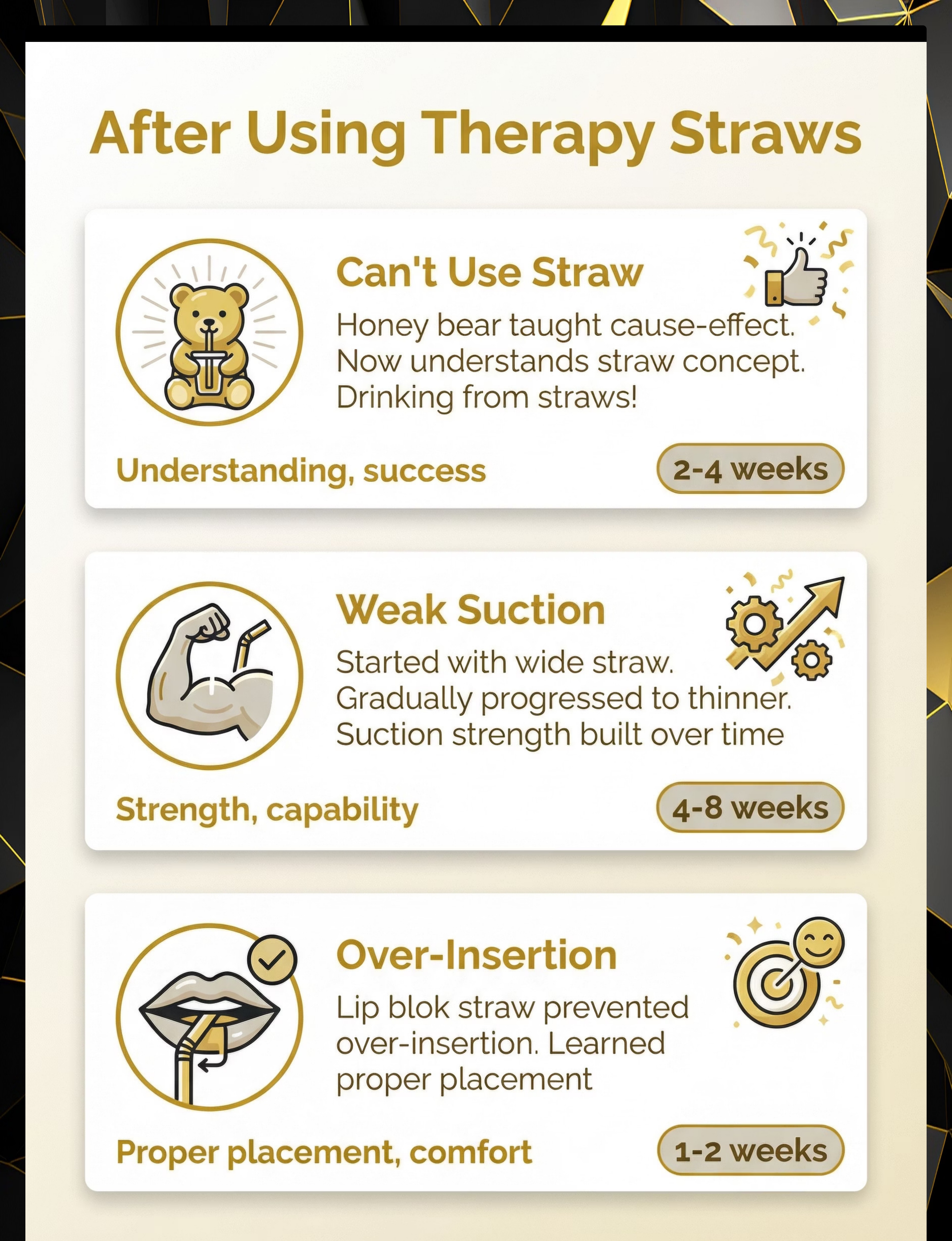
Graded progression from wide to thin straws systematically builds suction strength and endurance over 4-8 weeks.
Best for children still bottle-dependent beyond typical age
Therapeutic straws provide a developmentally appropriate bridge from bottles to independent cup drinking.
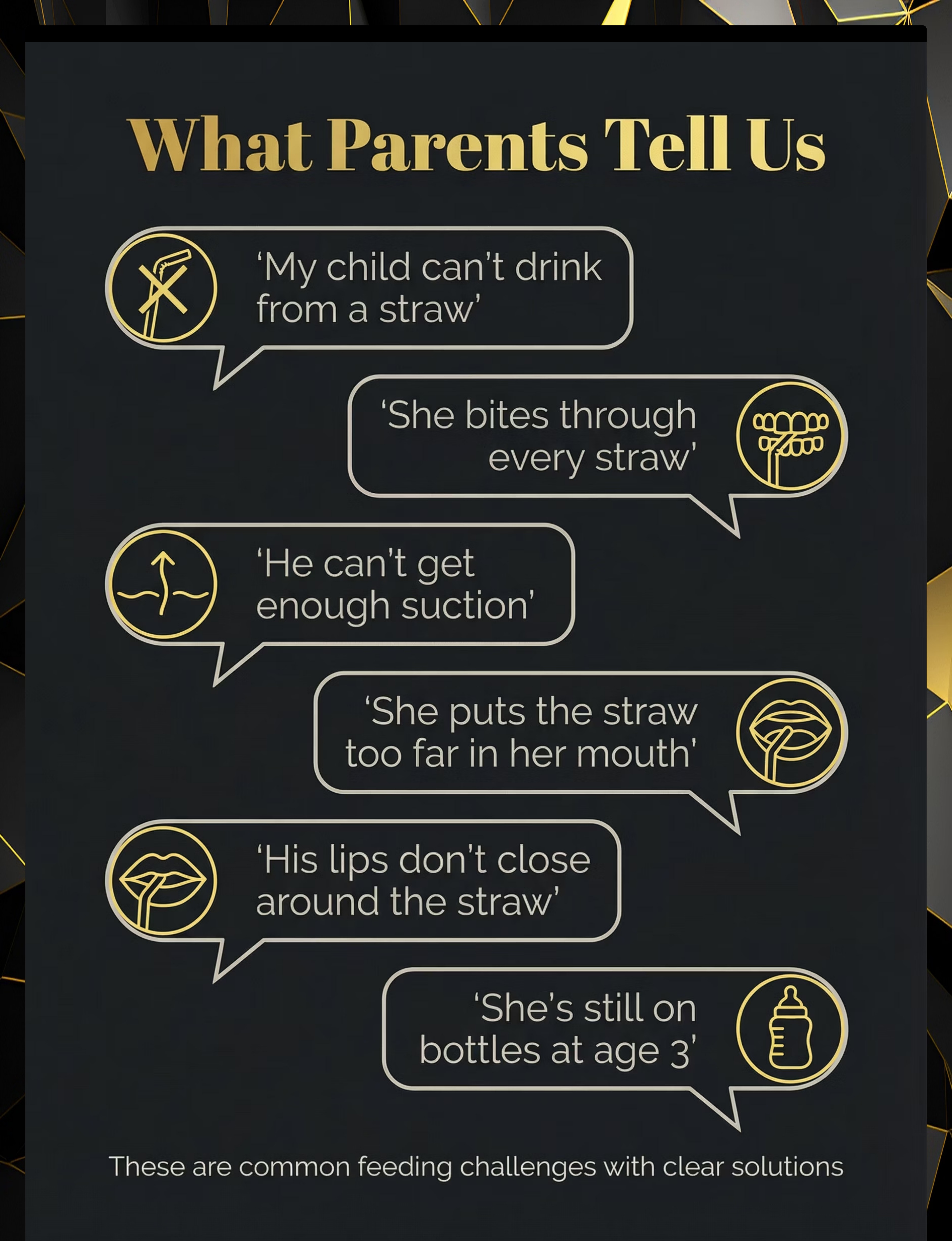
Does This Sound Familiar?
"My child can't drink from a straw. She's 2 years old and still completely dependent on bottles. Every time I try to introduce a straw, she just doesn't understand what to do with it."
"She bites through every straw we give her. We've gone through dozens of them. I don't know if it's a sensory thing or if she just doesn't know how to use it properly."
"He can't get enough suction to make the liquid come up. He tries so hard, but nothing happens. I can see him getting frustrated and giving up."
"She puts the straw too far in her mouth and gags herself. Every drinking session ends with tears. I'm worried she's going to develop negative associations with drinking."
You're not alone. These are common challenges faced by thousands of families. Straw drinking isn't just about convenience—it's a complex oral motor skill that some children need systematic support to develop. The good news? With the right therapeutic approach and specialized straws, these skills can be taught successfully.
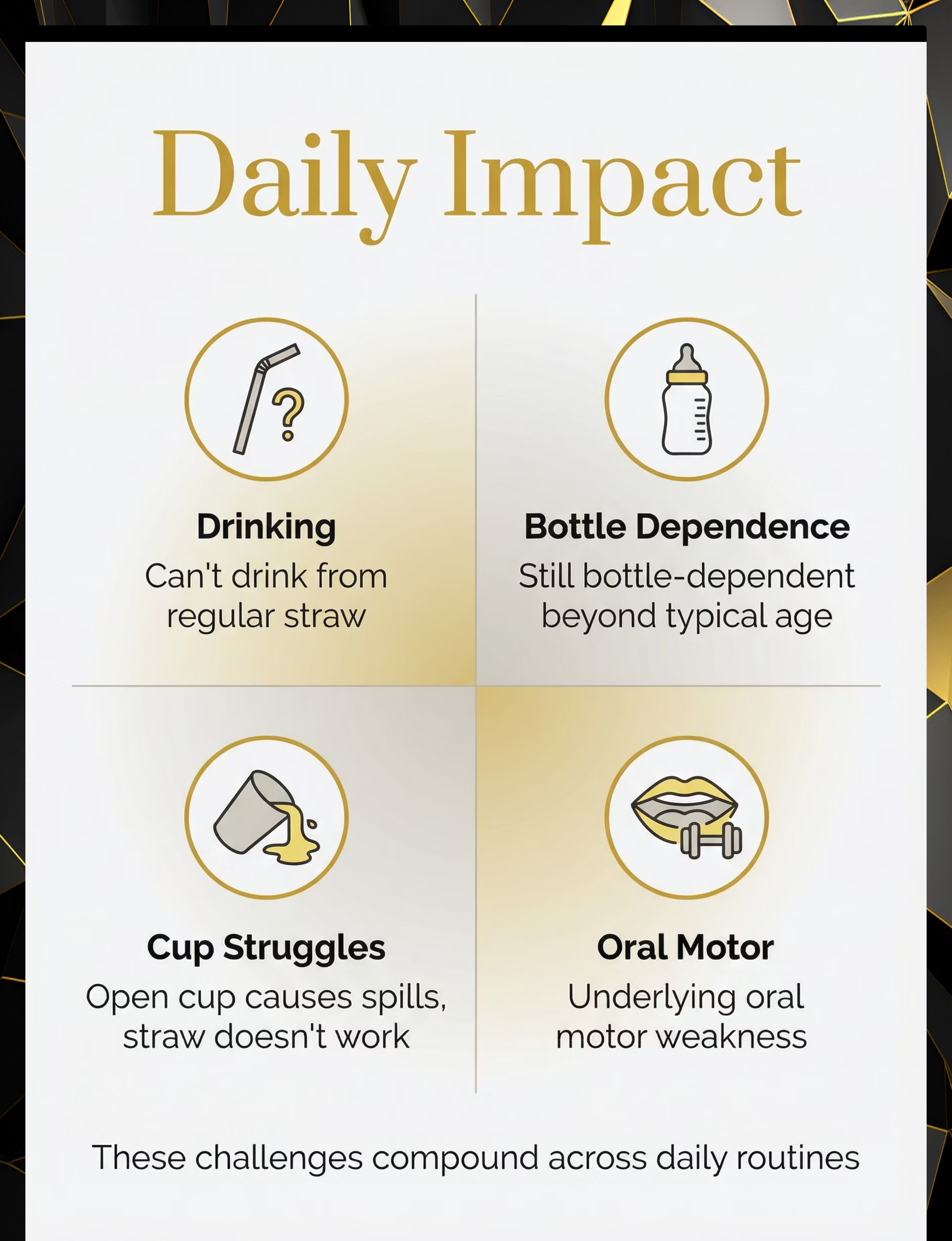
A Day Without the Right Support
Morning Routine
Breakfast is delayed because your child can't drink from anything except the bottle. You're trying to wean them off bottles, but there's no bridge to the next stage. The milk spills everywhere when you try a regular cup, and straws just don't work. Every morning starts with stress and mess.
Transitions & Outings
You can't go anywhere without bringing bottles, even though your child is past the typical bottle age. Other parents look at you with judgment. Your diaper bag is still full of baby gear when it should have transitioned to just sippy cups and snacks.
Therapy & School Time
The therapist mentions oral motor delays again. The teacher notes that your child can't keep up with peers during snack time. Everyone is drinking from juice boxes and straws, but your child still needs bottle or assistance. The gap is becoming more visible.
Evening Meals & Bedtime
Dinner time hydration is a battle. Your child refuses water from anything except bottles, which the dentist says is contributing to dental issues. Bedtime bottle dependency continues, affecting sleep training efforts. The cycle repeats tomorrow.
The Science Behind It
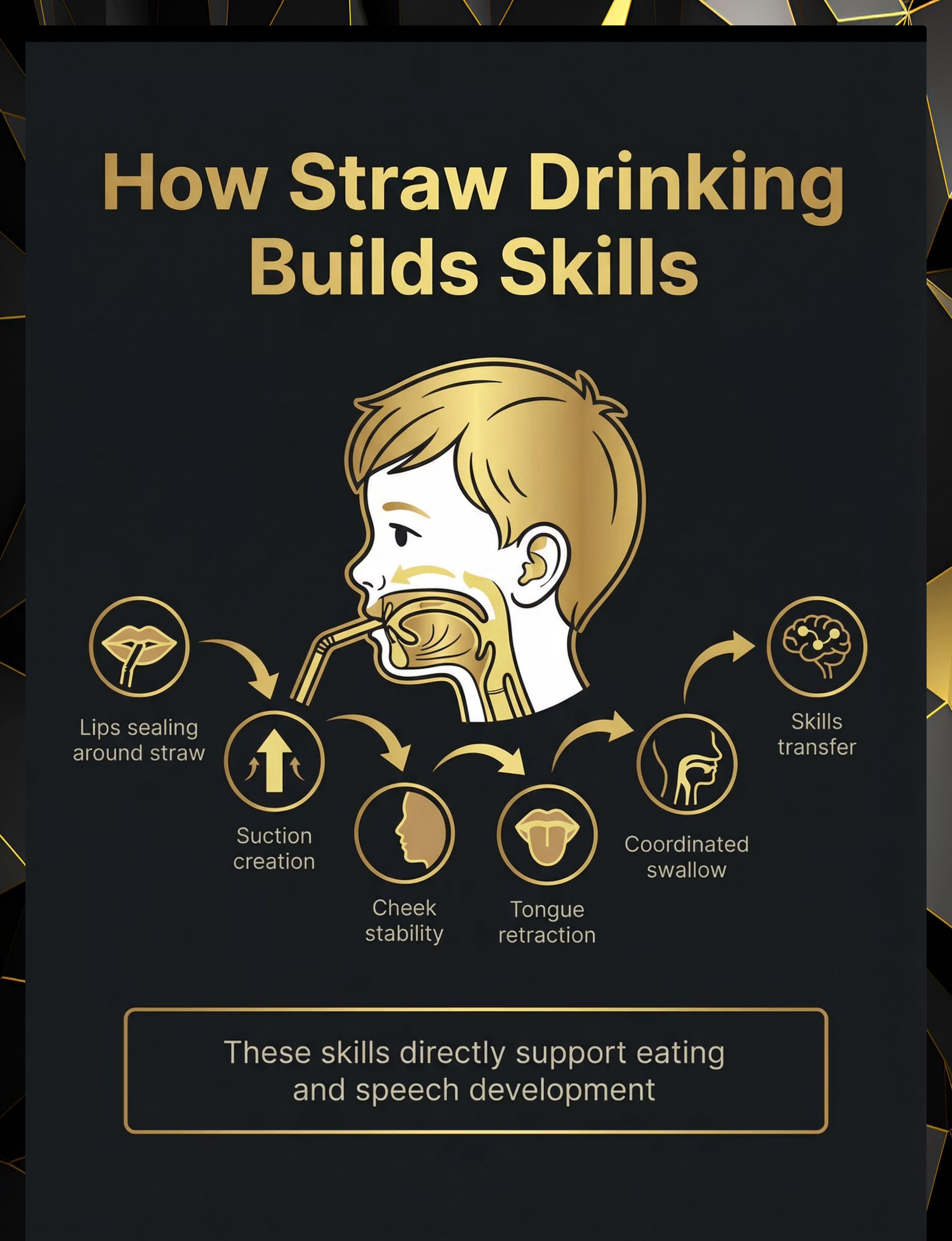
Therapeutic straw drinking isn't just about getting liquid from point A to point B—it's a sophisticated oral motor exercise that builds multiple essential skills simultaneously. Understanding the mechanism helps you appreciate why specialized straws are so effective.
Lip Seal Formation
Child creates tight seal around straw with lips, preventing air leakage and building labial strength needed for speech sounds.
Suction Generation
Negative pressure created inside mouth draws liquid upward, strengthening cheek muscles and oral cavity control.
Jaw & Cheek Stability
Maintaining stable jaw position while generating suction builds foundational strength for chewing and articulation.
Tongue Retraction
Tongue moves backward in coordinated pattern, essential for swallowing safety and speech sound production.
Coordinated Swallow
All oral structures work together in precise timing, preventing aspiration while transferring skills to eating.
Speech Skill Transfer
Oral motor patterns developed during straw drinking directly support articulation, resonance, and speech clarity.
How to Use It Right
Honey bear teaches straw drinking to beginners
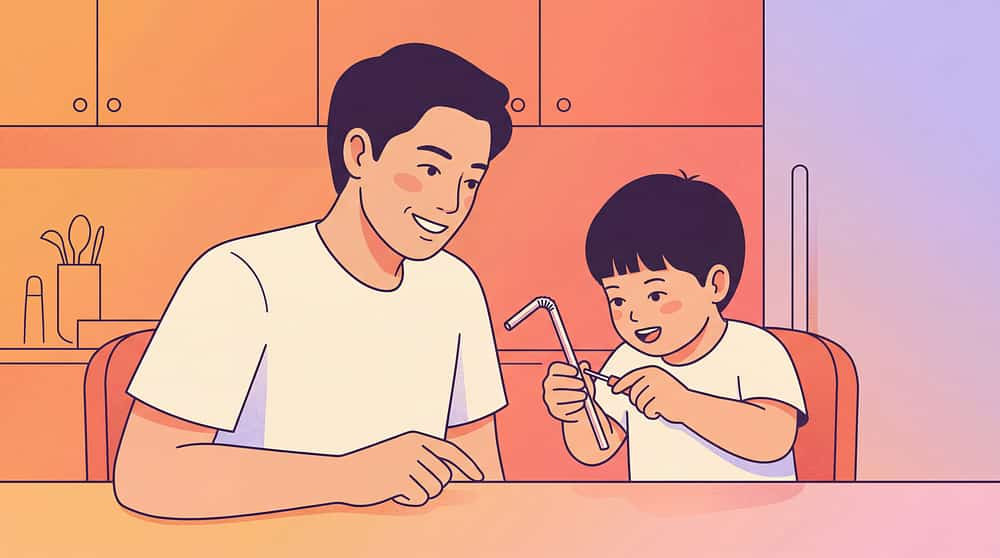
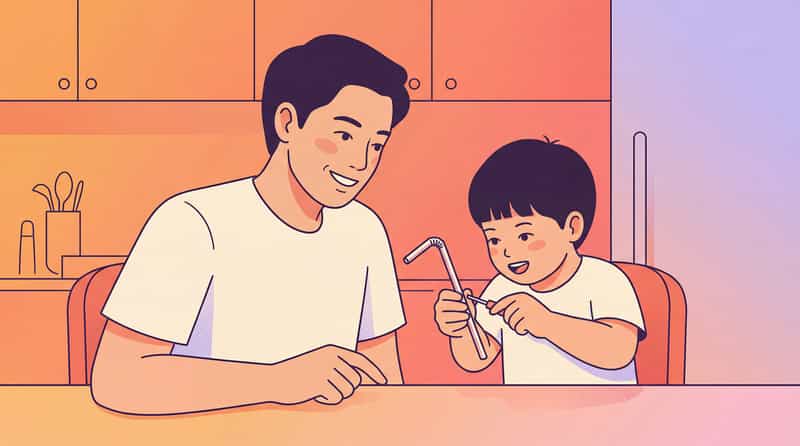
Start with the squeezable bear to create cause-and-effect understanding. Your gentle squeeze brings liquid to the child's mouth, teaching them what success feels like before they need to generate suction independently.
Lip blok straws prevent over-insertion
The built-in lip rest stops the straw from going too far back in the mouth, preventing gagging while teaching proper positioning. This builds safe, comfortable straw drinking habits from day one.
Progress from thicker to thinner straws
Start with wide-diameter straws that require less suction strength. As oral motor skills develop over 4-8 weeks, gradually introduce narrower straws that challenge growing abilities.
Curly straws increase challenge
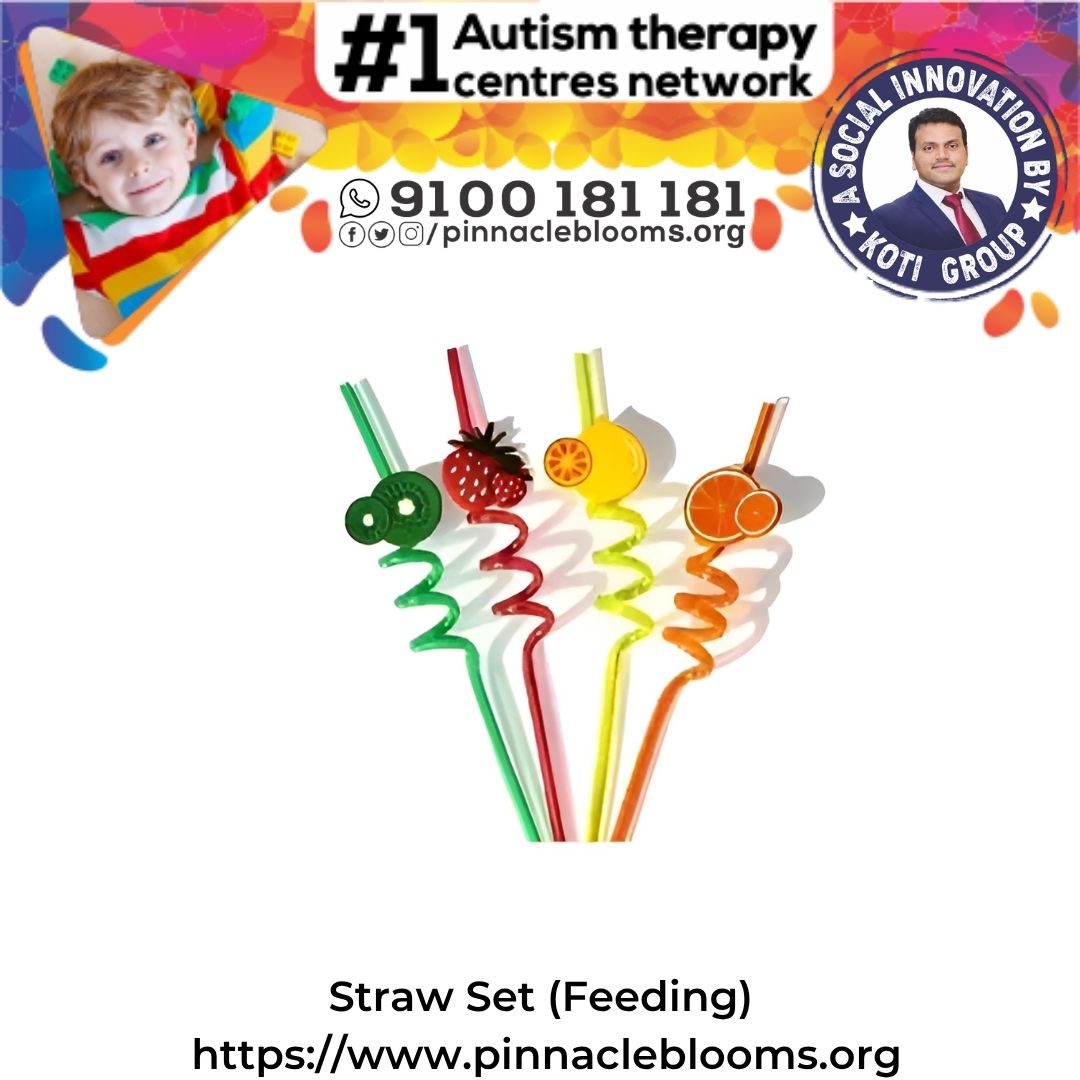
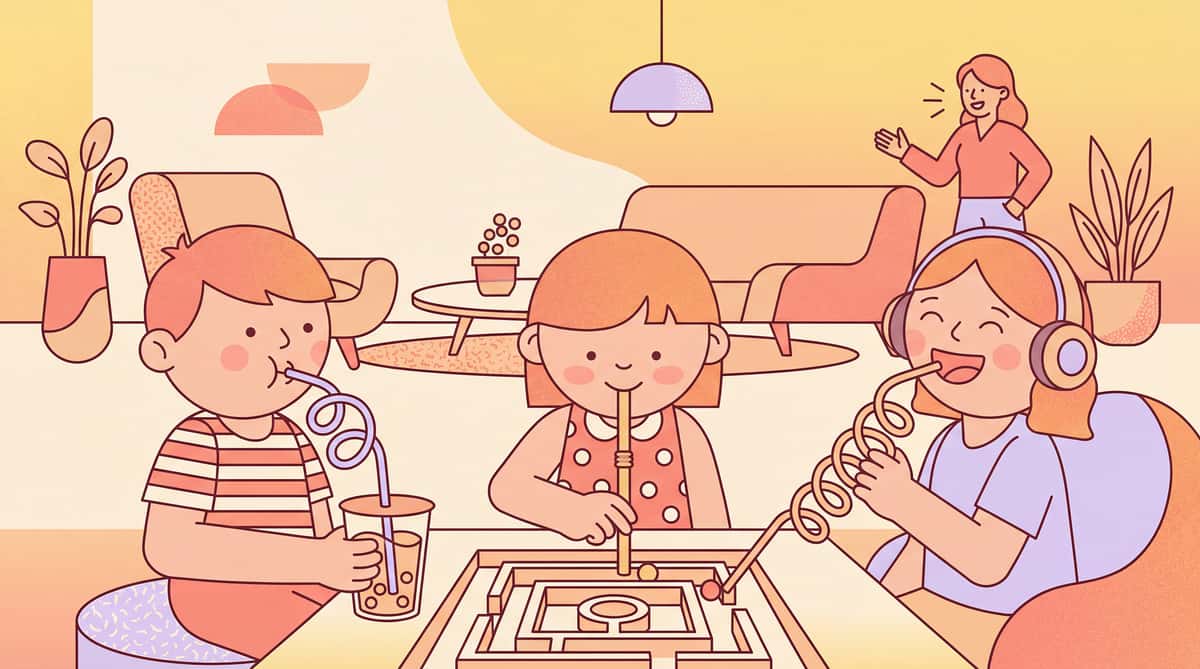
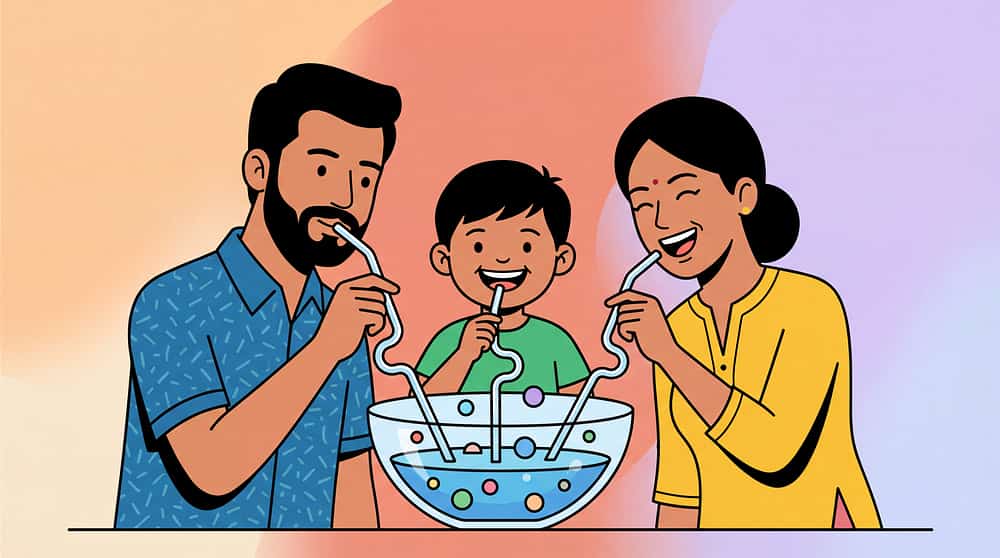
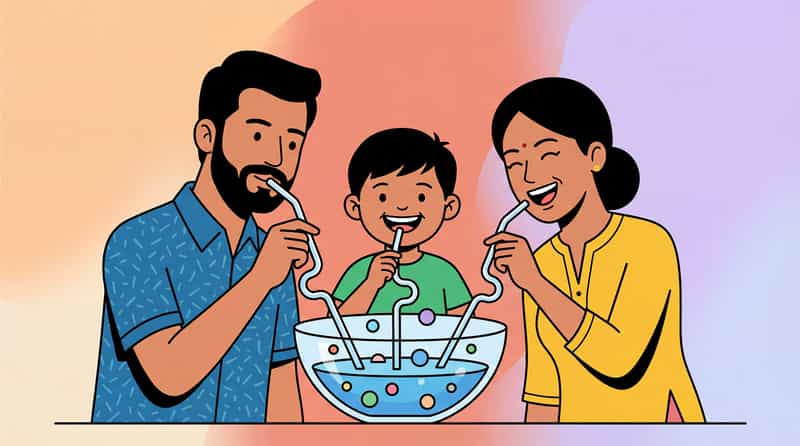
Once straight straw drinking is mastered, loops and curves add resistance that builds advanced suction strength. Make it fun—the visual appeal keeps children motivated to practice.
Use with thicker liquids first if needed
Thicker liquids move more slowly, giving the child more time to coordinate swallowing. Progress to thinner liquids as skills strengthen and confidence builds.
Monitor for aspiration signs
Always watch for coughing, choking, or wet-sounding voice during or after drinking. These signs require immediate consultation with a speech-language pathologist to ensure safety.
Duration: Practice during every drinking opportunity throughout the day. Skills build progressively over 4-8 weeks with consistent use. Even 5-10 practice attempts per day can make significant difference when done correctly.
Expert Endorsement
"Straw drinking is an excellent oral motor exercise. It builds lip seal, suction, and tongue retraction—all skills needed for eating and speech. The honey bear method teaches straw drinking brilliantly to beginners. I've seen children who struggled with bottles for months master straw drinking in just 2-4 weeks with proper therapeutic progression."
— Speech-Language Pathologist, Feeding Specialist
SLP + OT Recommended
Strong Evidence
Rank #2 in Category
Daily Use
straws-therapy-specialty therapy material
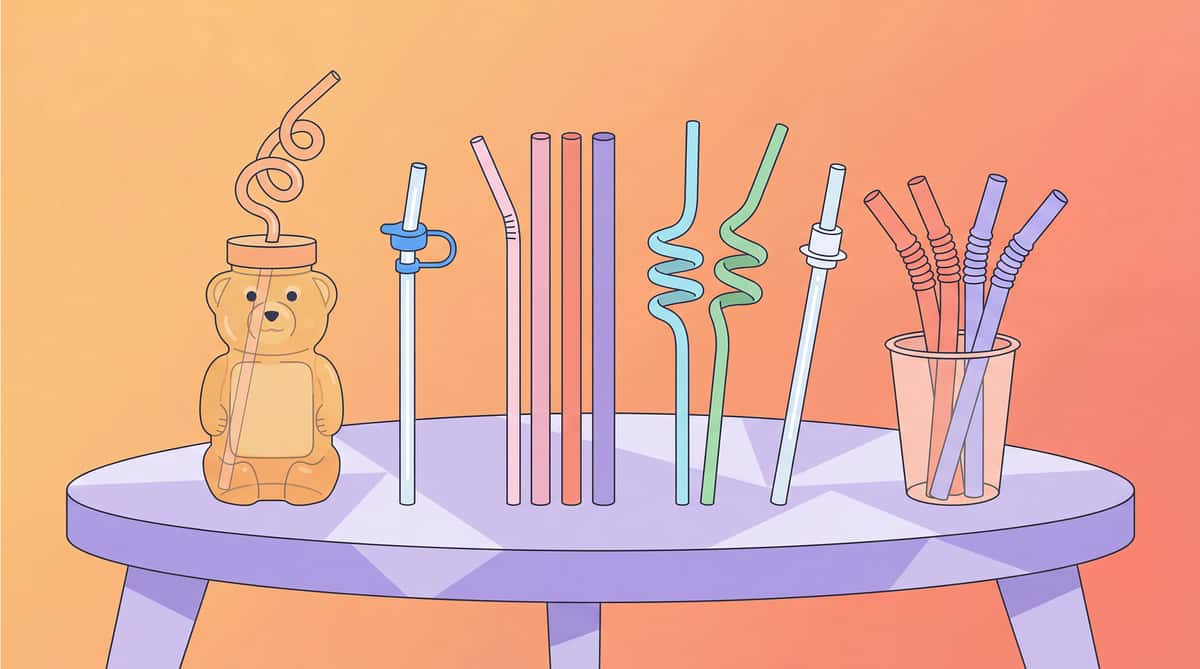
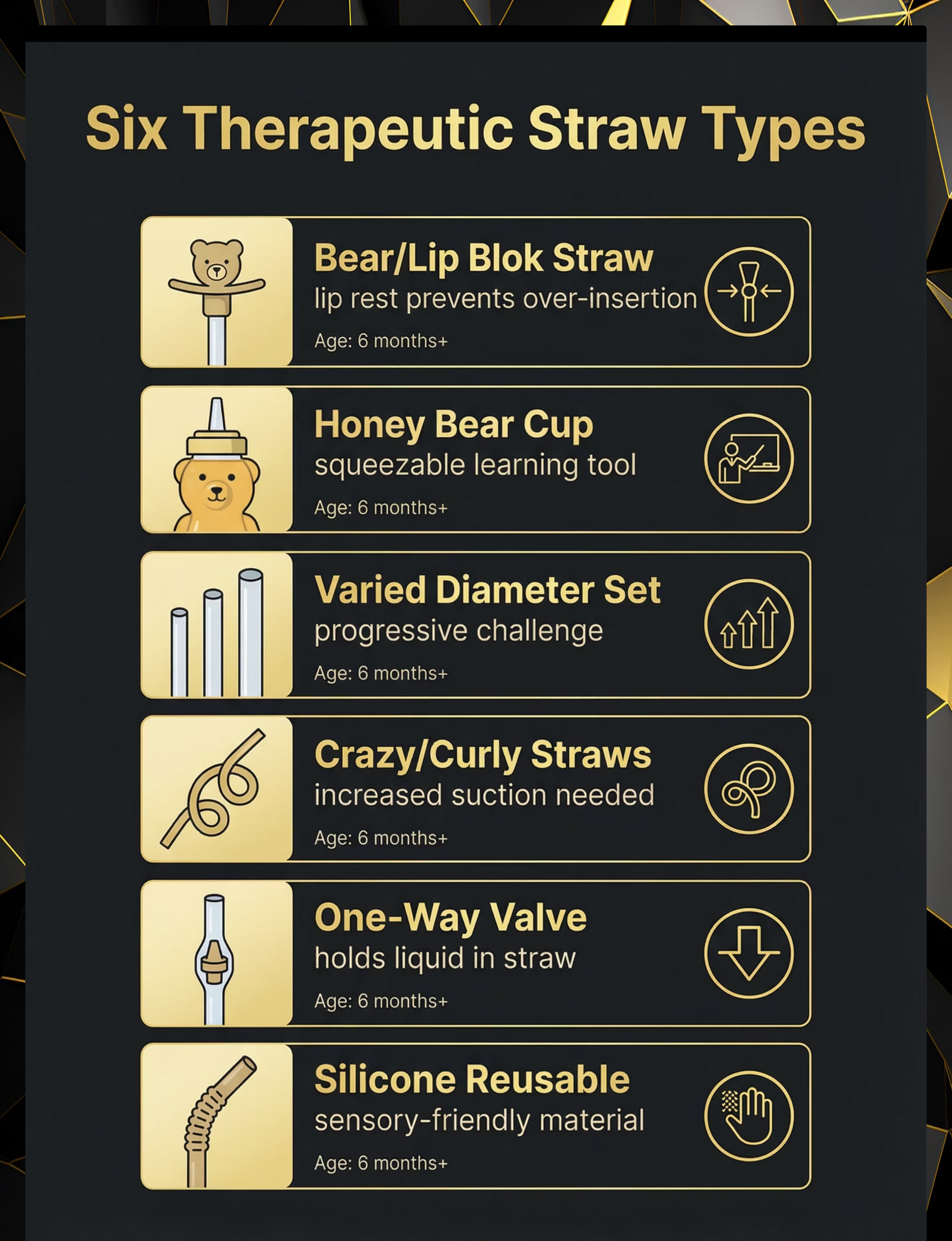
Developmental Progression Through Straw Variants
Honey Bear Straw Cup
Introduce straw drinking and cause-effect.
Ages: 6 months – 3 years
One-Way Valve Straws
Reduces suction demand for beginning straw drinkers or those with weak suction.
Ages: 6 months+
Bear Straw / Lip Blok Straw
Trains lip closure and prevents over-insertion of the straw.
Ages: 6 months+
Varied Diameter Straws
Provides graded oral motor challenge to progressively build suction strength.
Ages: 1+ years
Crazy/Curly Straws
Offers an increased suction challenge in a fun, engaging way.
Ages: 2+ years
Silicone Reusable Straws
Ideal for oral sensitivity and a safe, sensory-friendly drinking experience.
Ages: All ages
Choose Your Option (6 Variants)
Each variant serves a specific therapeutic purpose in your child's oral motor development journey. Choose based on your child's current skill level, specific challenges, and developmental goals. Many families build a complete kit over time as skills progress.
Choose by goal
Choose by setting
Choose by portability
This timeline illustrates a common progression, but individual needs may vary. Consult with a specialist to determine the best options for your child.
Specifications & Straw Progression Guide
Understanding the materials and the developmental progression of straw use is key to supporting oral motor development. Each type of straw offers specific benefits for different stages and needs.
Food-Grade Silicone Straws
Soft, safe, and durable, ideal for sensitive mouths. Provides a flexible and safe option for initial straw introduction.
BPA-Free Plastic Straws
Lightweight and affordable, these straws are a practical choice for everyday use and various skill levels.
Stainless Steel Straws
Durable and often used for advanced oral motor challenges, offering a firm and consistent drinking experience.
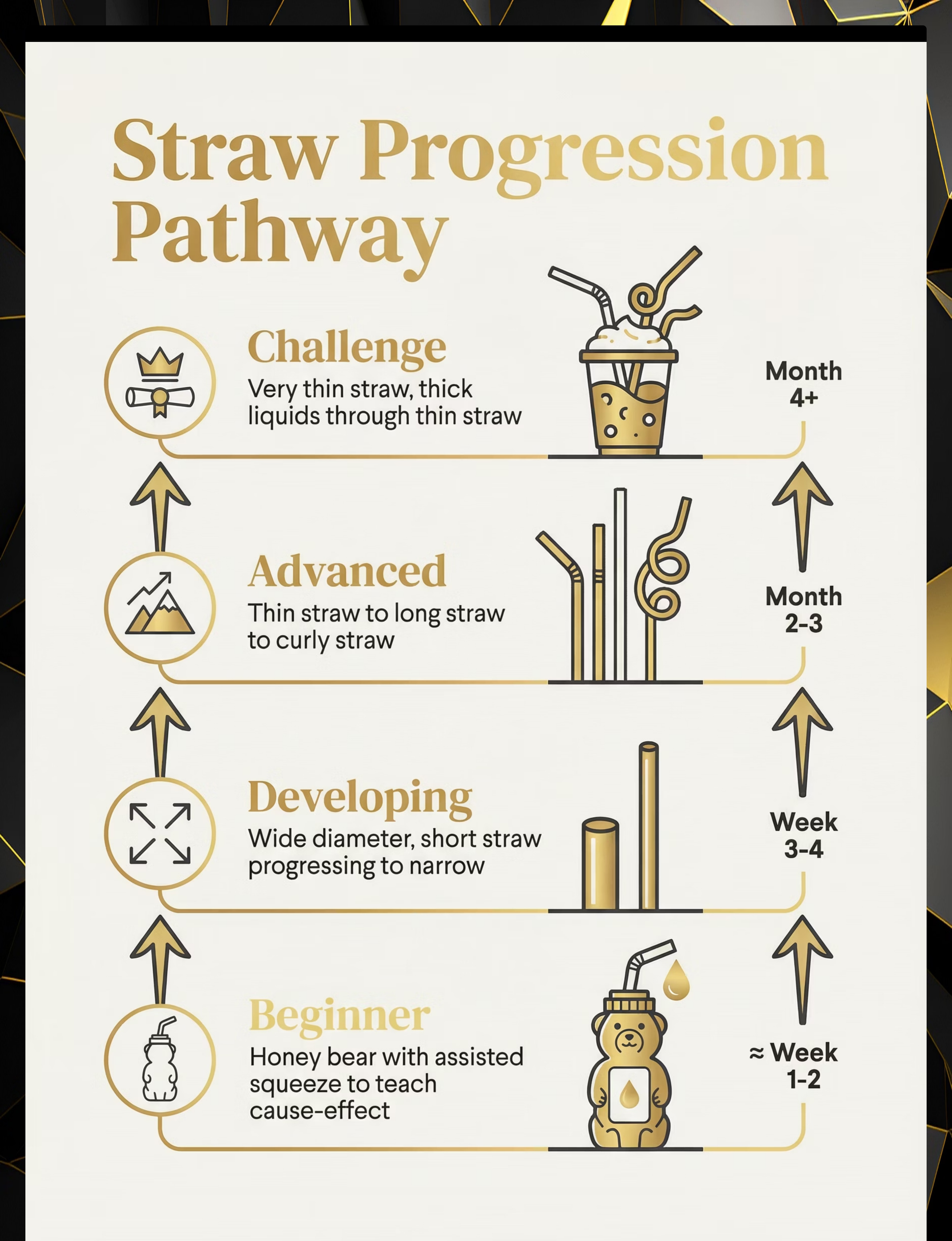
Beginner Progression
Start with a honey bear cup or assisted squeeze to teach cause-and-effect before independent suction.
Developing Skills
Transition from wide, short straws to narrower ones to build foundational suction strength over 2-4 weeks.
Advanced Challenges
Progress to thin, long, and curly straws to systematically challenge and refine growing oral motor abilities.
Mastery & Challenge
For mastery, introduce very thin straws or thick liquids through thin straws to build high-level oral motor strength.
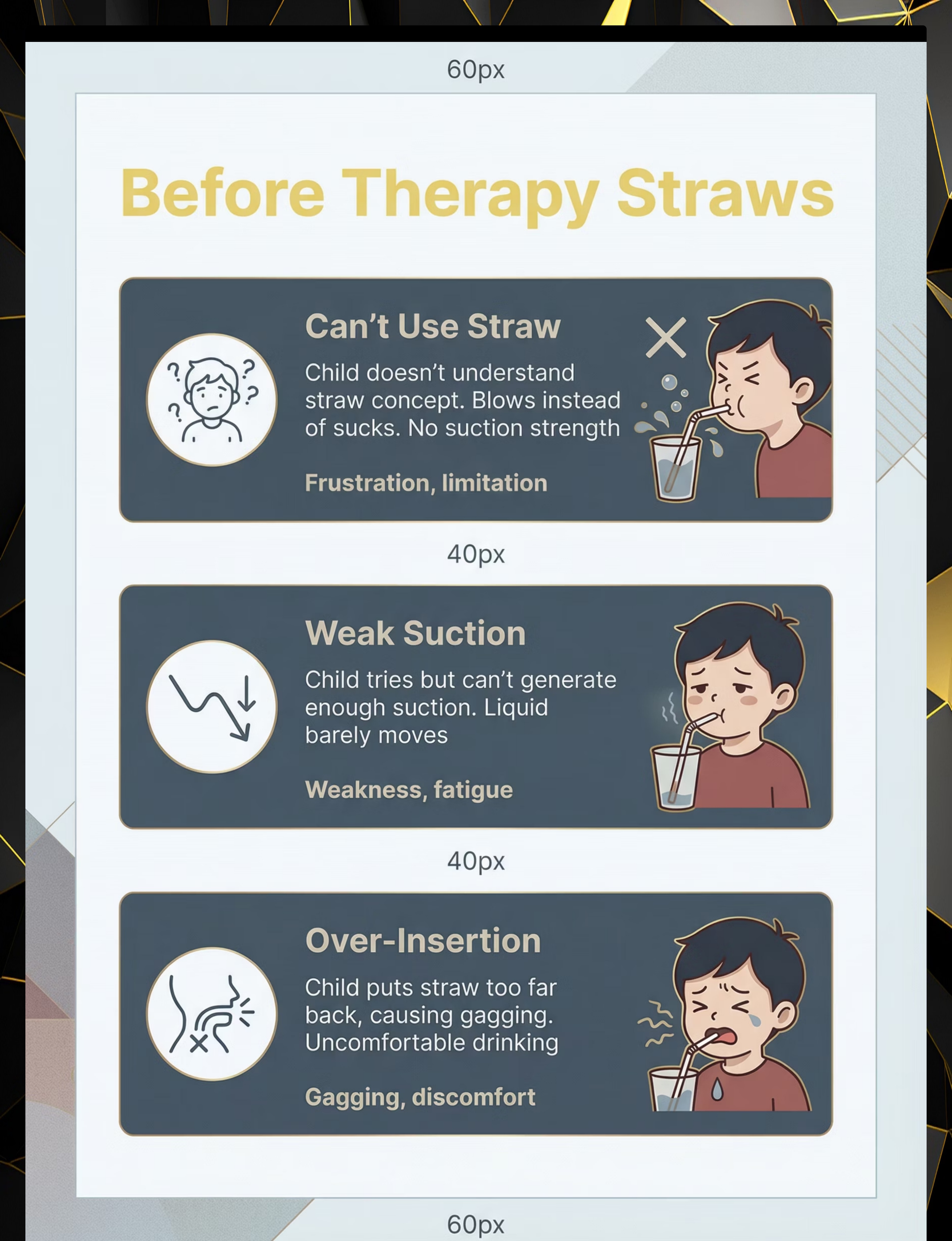
The Struggle (Before)
Can't Use Straw
Situation: Child doesn't understand straw concept at all. Blows air out instead of sucking liquid in. No suction strength developed yet.
Experience: Every attempt at straw drinking fails. Limited drinking options restrict outings and create bottle dependency beyond typical age.
Emotion: Frustration, limitation, feeling stuck in baby stage
Weak Suction
Situation: Child tries hard but can't generate enough suction power. Liquid barely moves up the straw despite effort.
Experience: Oral motor weakness evident. Child fatigues quickly, gives up, returns to easier bottle. Delays in overall oral development becoming apparent.
Emotion: Weakness, fatigue, discouragement
Over-Insertion
Situation: Child puts straw too far back in mouth, triggering gag reflex. Doesn't understand proper positioning.
Experience: Every drinking attempt ends in gagging and tears. Uncomfortable experiences create negative associations with straw drinking.
Emotion: Gagging, discomfort, aversion to practice
Is This Right for My Child? (2-Minute Check)
straws-therapy-specialty therapy material
Can your child drink from a straw?
If NO: This indicates teaching with honey bear method is recommended. Start here to build foundational understanding.
If YES: Basic straw skill present. Consider progression to more challenging straw types.
Does your child have weak suction?
If YES: This indicates graded straw progression will help systematically build oral motor strength over 4-8 weeks.
Does your child put the straw too far in their mouth?
If YES: This indicates lip blok straw is recommended to teach proper positioning and prevent gagging.
Is your child still bottle-dependent?
If YES: This indicates straw drinking can help provide a developmental bridge for transitioning away from bottles.

Interpretation: 3+ "yes" answers = strong fit for therapeutic straw intervention. Even one "yes" indicates this tool could support your child's development. Consult with an SLP for personalized assessment and recommendations.
straws-therapy-specialty therapy material
Usage Guide
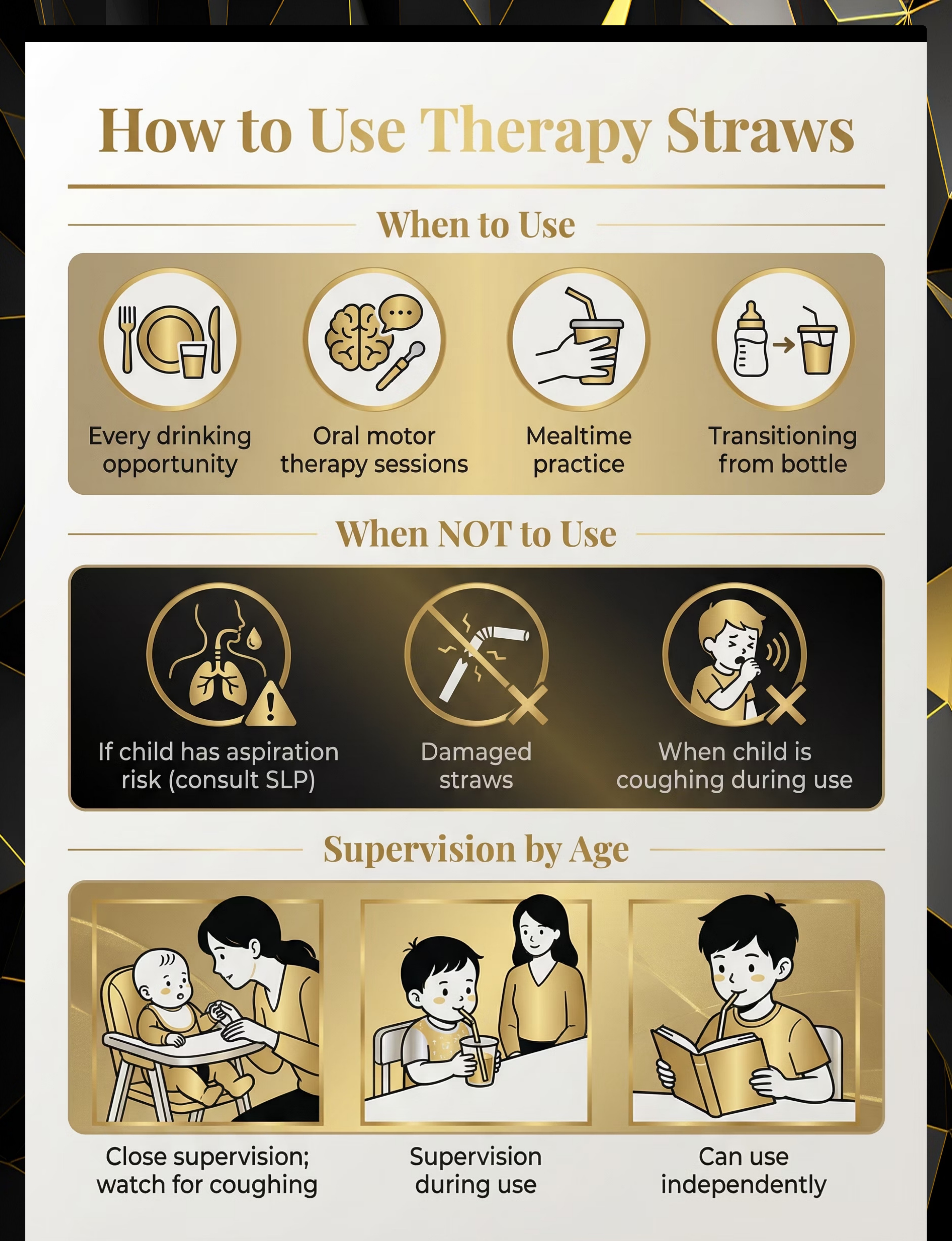
When to Use ✓
When NOT to Use ✗
Every drinking opportunity throughout the day
If child has aspiration risk (consult SLP first)
Formal oral motor therapy sessions
Damaged, cracked, or split straws
Mealtime practice at breakfast, lunch, dinner
When child is actively coughing during use
Transitioning from bottle dependency
If choking signs are present
Snack times at home or school
Straws that are too thin for current skill level
Therapy homework assignments
Supervision by Age
Age Range
Supervision Level
Notes
Infant (6-12 months)
Close supervision
Watch continuously for coughing, choking, aspiration signs. SLP guidance recommended.
Toddler (1-3 years)
Active supervision
Monitor during each use. Ensure proper straw positioning and safe swallowing.
Older (3+ years)
Can use independently
Once skill mastered and safety demonstrated. Periodic check-ins still valuable.
Duration: Practice during every drinking opportunity. Skills build progressively over time with consistent use. Even 5-10 attempts per day makes significant difference.
Home
Clinic
School
Safety First
straws-therapy-specialty therapy material
Critical Safety
  • Watch for coughing/choking when learning: Immediate signs that liquid may be entering airway
  • Consult SLP if aspiration concerns: Never proceed without professional guidance if swallowing safety is questionable
  • Supervise young children: Age-appropriate supervision prevents accidents
  • Safe straw materials only: Food-grade silicone, BPA-free plastic, or stainless steel
Warnings
  • Don't leave child unattended with straws, especially during learning phase
  • Watch continuously for aspiration signs: coughing, watery eyes, change in voice quality
  • Replace damaged straws immediately—cracks harbor bacteria and create sharp edges
  • Never force straw drinking if child shows distress or consistent refusal
Contraindicated
  • Aspiration risk without SLP guidance: Professional assessment required first
  • Damaged straws: Cracked, split, or torn straws are unsafe
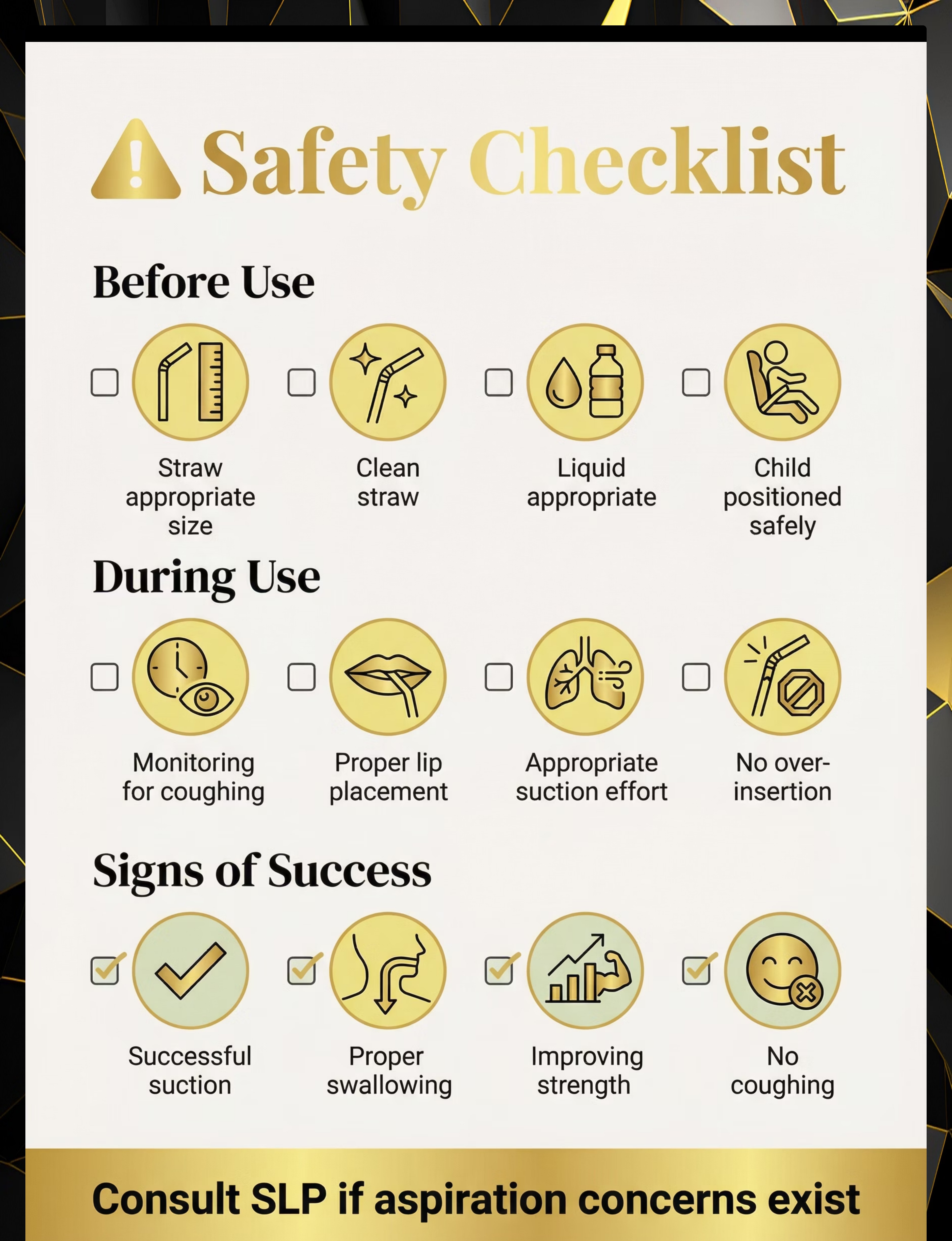
Before Use ✓
  • Straw appropriate for skill level
  • Straw is clean and undamaged
  • Liquid appropriate thickness
  • Child positioned safely upright
During Use ✓
  • Monitor for coughing continuously
  • Check proper lip placement
  • Ensure appropriate suction effort
  • Watch for over-insertion signs
Signs of Success ✓
  • Successful liquid intake
  • Proper swallowing without coughing
  • Improving strength over time
  • No coughing or wet voice
Common Questions (Honest Answers)
straws-therapy-specialty therapy material
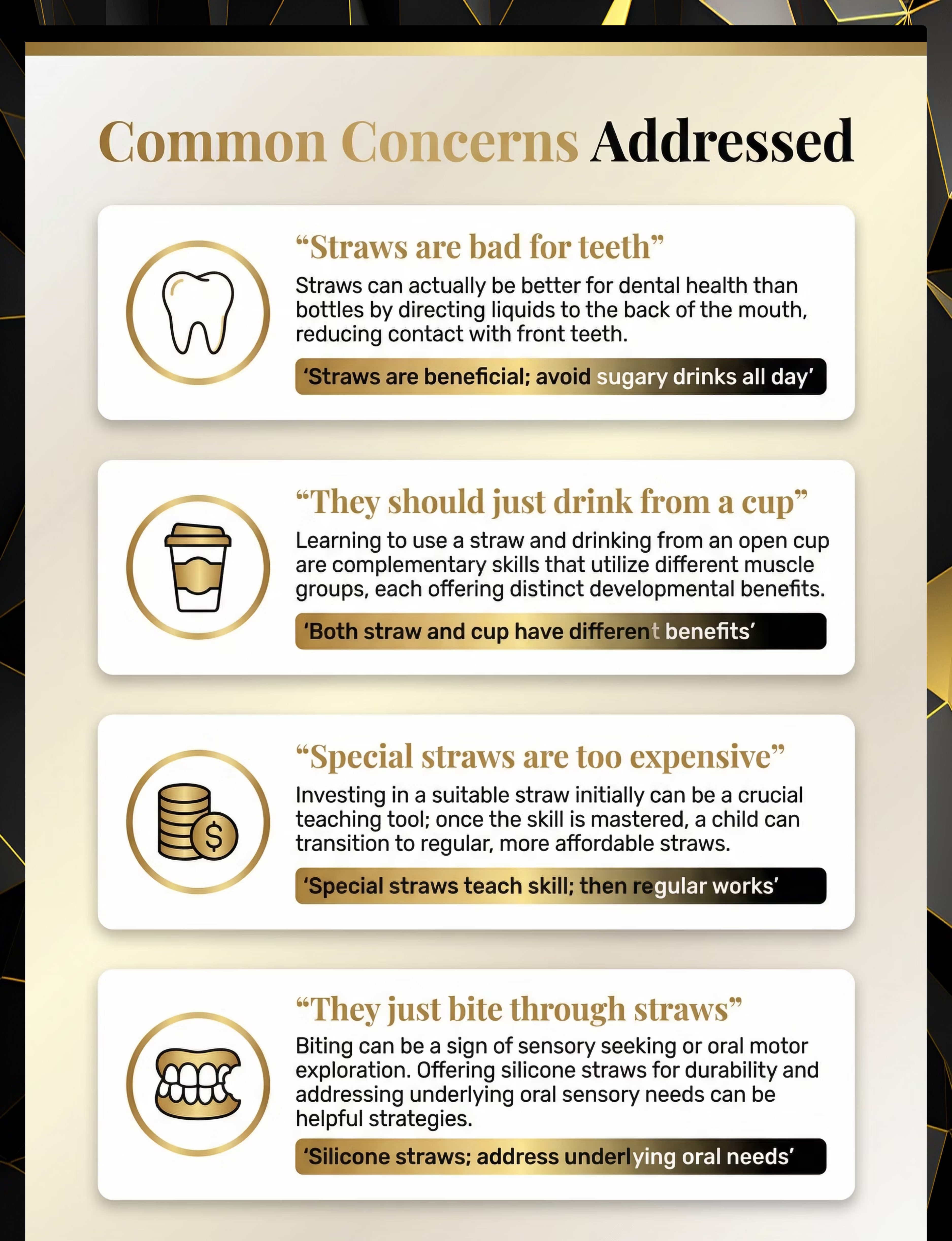
Objection: "Straws are bad for teeth"
Honest Response: Straw drinking is actually better for teeth than bottles (where milk pools around teeth) or sippy cups (which can affect bite development). The liquid bypasses front teeth and goes directly to the back of the mouth. Proper straw technique supports oral development without harming teeth.
What to do instead: Use straws confidently, but avoid sugary drinks all day regardless of container. Water in straws is excellent for dental health.
Objection: "Special straws are too expensive"
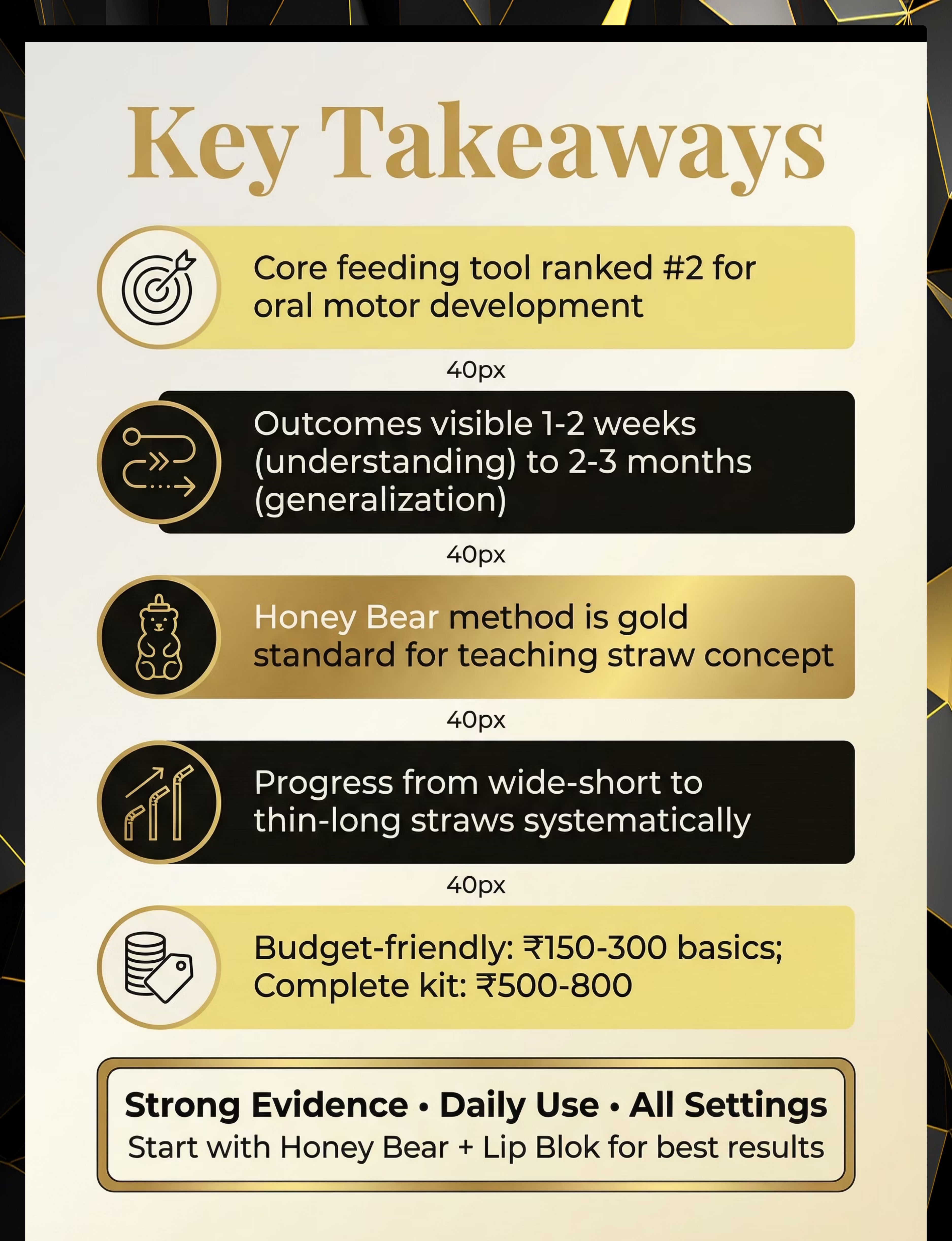
Honest Response: Honey bear is an investment (₹400-800) that teaches a lifelong skill. After your child learns the straw concept, regular straws work fine. Varied diameter straw sets are quite inexpensive (₹100-400). Special straws solve specific problems efficiently.
What to do instead: Start with honey bear for teaching. Once skill is learned, transition to affordable regular straws for daily use. The special straws are teaching tools, not lifetime requirements.
Objection: "They should just drink from a cup"
Honest Response: Open cup drinking is wonderful and should absolutely be practiced too! But straw drinking builds specific oral motor skills (suction generation, lip seal, cheek stability) that cups don't target. Both have developmental value and serve different therapeutic purposes.
What to do instead: Include both straw practice AND open cup practice in your child's daily routine. They're complementary, not competing approaches.
Objection: "They just bite through straws"
Honest Response: This indicates oral sensory seeking behavior or jaw instability—both underlying oral motor needs. Use silicone straws which are much harder to bite through and safer if chewed. Address the root cause with chewy tubes and oral motor exercises.
What to do instead: Switch to silicone straws immediately. Consult an OT about oral sensory needs. Provide appropriate oral motor input through therapeutic chews between drinking times.
Investment Guide
straws-therapy-specialty therapy material
Overall Range: ₹100–800 (approximately $1–10 USD)
Pricing Options Comparison
Budget-Friendly Starting Point
₹150–300
Silicone reusable straws + varied diameter regular straws. Durable and safe for sensory seekers, supports progression practice.
Families practicing affordably once basic straw concept is understood, or for daily practice after initial teaching phase. (Note: May need Honey Bear initially for complete beginners.)
Premium Complete Teaching Kit
₹500–800
Honey Bear + Lip Blok straws + varied diameter set. A full therapeutic progression system including teaching tool, positioning guide, and skill-building variety pack.
Complete beginners, children with significant oral motor delays, or when SLP-guided progression is recommended.
Initial Teaching Tool (Honey Bear)
₹400-800
Single tool designed to brilliantly teach the foundational concept of straw drinking for never-before-successful users.
First-time straw users who haven't successfully used a straw before. Once skill is established, transition to budget-friendly options.
Budget-Friendly Benefits
Silicone & Regular Straws
Get a set of durable silicone straws, safe for sensory seekers, plus a collection of different diameter regular straws for progression practice.
Affordable Practice
This option is best for families wanting to start straw practice affordably once the basic concept is understood, or for ongoing daily practice.
Important Note
Good for practice once skill is learned, but may require a Honey Bear initially for teaching the concept to complete beginners.
Premium Teaching Kit Progression
Step 1: Comprehensive System
Acquire a complete therapeutic progression system designed for effective straw drinking instruction.
Step 2: Key Components
Includes a teaching tool (Honey Bear), a positioning guide (Lip Blok Straws, e.g., ARK Therapeutic), and a skill-building variety pack.
Step 3: Ideal Candidates
Best for complete beginners, children with significant oral motor delays, or when comprehensive SLP-guided progression is recommended by a professional.
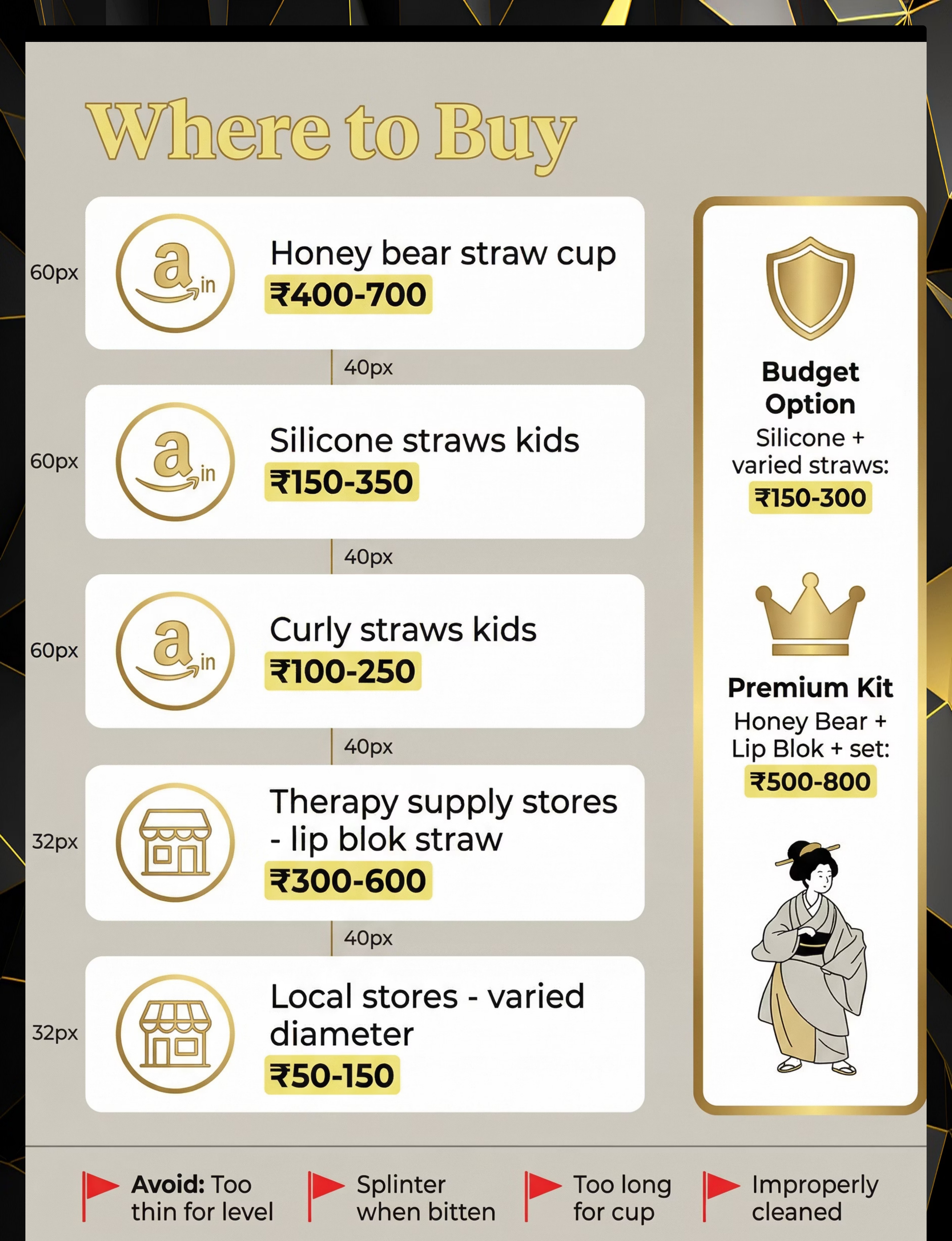
Where to Buy in India
Availability: Moderately Available—specialty items like honey bear and lip blok straws require specific searches on therapy supply platforms, while basic options are widely accessible.
Amazon.in
Search Term: "honey bear straw cup"
Price Range: ₹400–700
Amazon.in
Search Term: "silicone straws kids"
Price Range: ₹150–350
Amazon.in
Search Term: "curly straws kids"
Price Range: ₹100–250
Therapy supply stores
Search Term: "lip blok straw"
Price Range: ₹300–600
Local stores
Search Term: "various diameter straws"
Price Range: ₹50–150

Buying Tips
  • Honey bear is essential investment for teaching straw drinking to complete beginners—don't skip this
  • Lip blok straws prevent over-insertion and gagging—critical for children who struggle with positioning
  • Start with short, wide diameter straws for easiest initial success
  • Progress gradually to thin, long straws as skills develop over 4-8 weeks
  • Silicone straws are durable, safe, and worth the investment for sensory-sensitive children or frequent biters

Red Flags—Don't Buy These
  • Straws too thin for current skill level—sets child up for frustration and failure
  • Cheap plastic straws that splinter or create sharp edges when bitten—safety hazard
  • Straws too long for cup depth—creates unnecessary oral motor challenge and spills
  • Not cleaning reusable straws properly between uses—serious hygiene and health risk
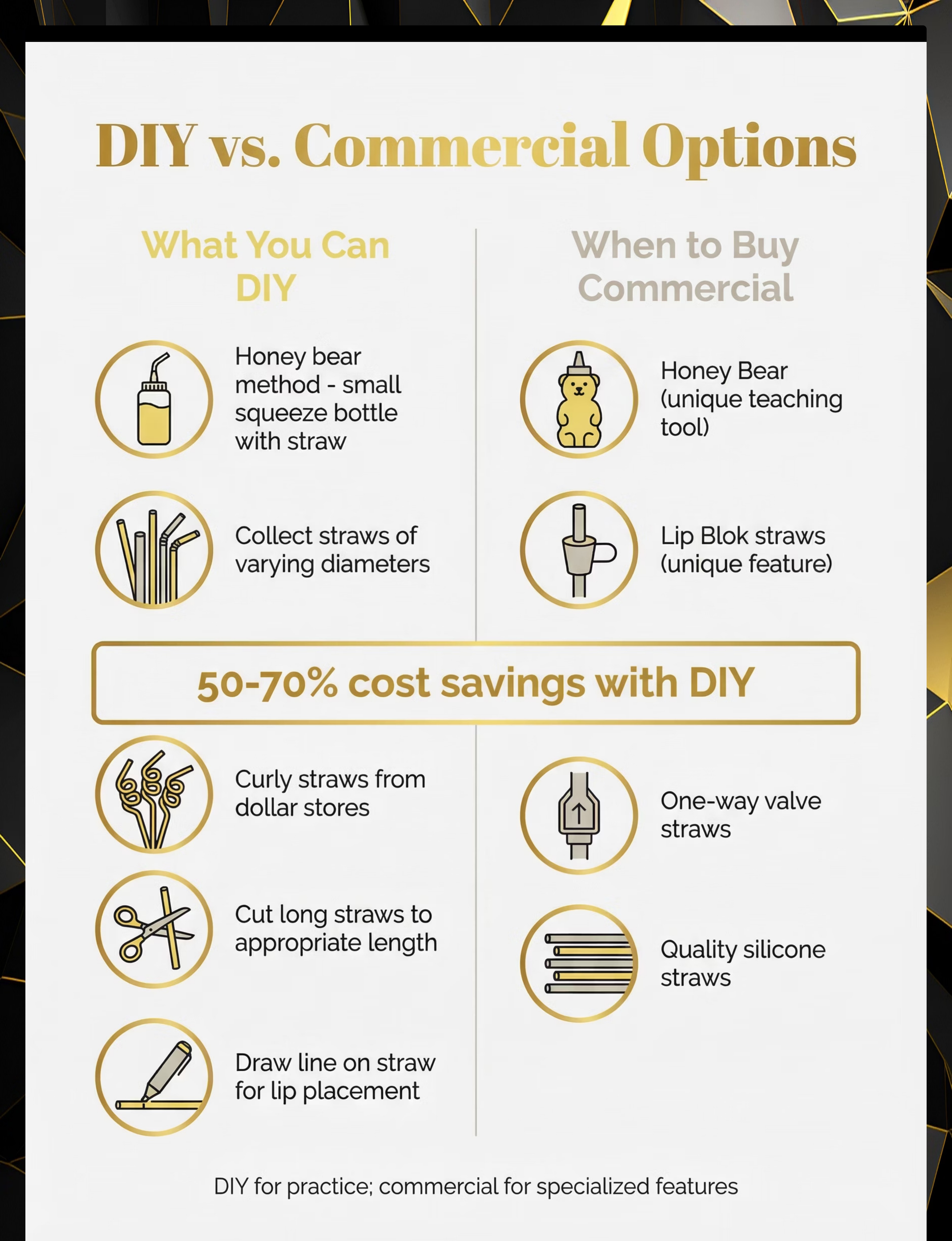
DIY Alternative (Save 50-70%)
Feasibility: Medium—some specialized tools like honey bear and lip blok have unique features that are hard to replicate, but basic straw progression can be built affordably at home.
Cost Savings: 50-70% compared to commercial therapeutic straw kits
Time Required: Minimal—mostly involves collecting and organizing straws rather than complex crafting
Materials Needed
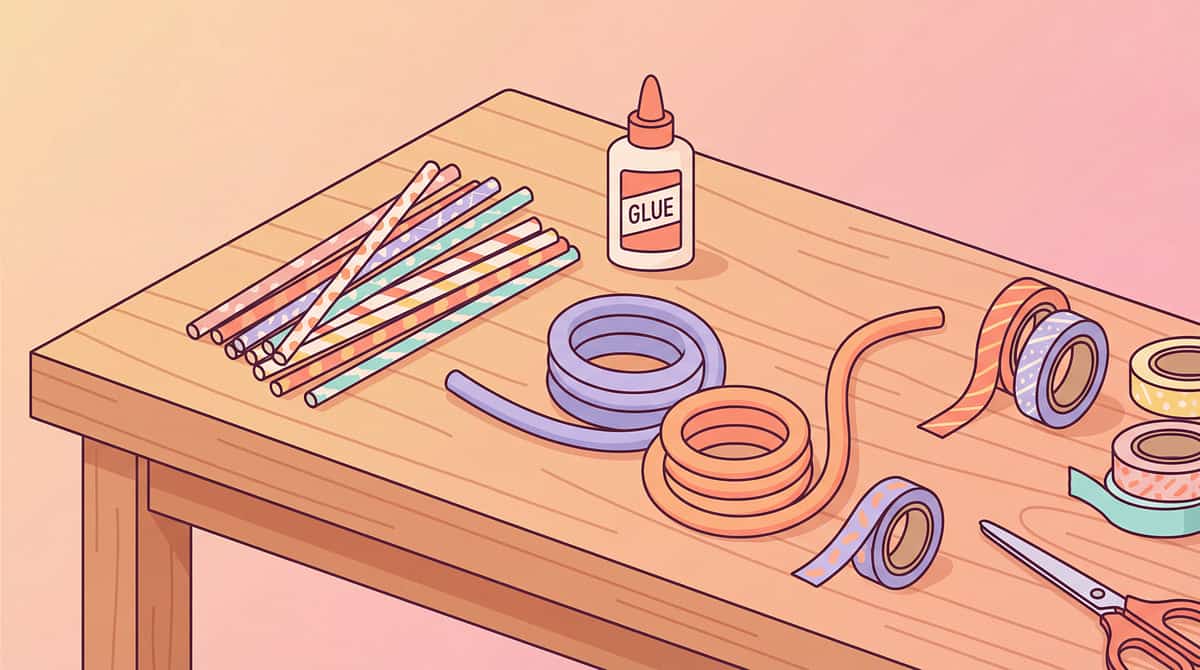
  • Regular drinking straws of various diameters (wide milkshake straws to thin cocktail straws)
  • Small squeeze bottle with lid for honey bear alternative (₹50-100)
  • Silicone straws from affordable home goods stores (₹100-200)
  • Curly/novelty straws from party supply or dollar stores (₹50-100)
  • Permanent marker for marking lip placement
Step-by-Step DIY Instructions
  1. Honey bear method: Drill hole in small plastic squeeze bottle lid, insert straw through hole. Fill with liquid. Squeeze gently to bring liquid to child's mouth, teaching cause-and-effect concept.
  1. Straw progression collection: Collect straws of varying diameters from wide (milkshake) to standard (regular) to thin (cocktail). Organize from easiest to hardest.
  1. Curly straw challenge: Purchase inexpensive curly/crazy straws from party supply stores. Use these for advanced suction strength building once straight straw is mastered.
  1. Straw length adjustment: Cut long straws to appropriate lengths for your cups using clean scissors. Start with shorter lengths (less challenge) and progress to longer.
  1. Lip placement guide: Draw a line on straw with permanent marker to show child exactly where lips should be positioned. Visual cue prevents over-insertion.
When DIY Works Well
  • Building varied diameter straw collection for progression practice
  • Creating honey bear alternative for teaching basic concept
  • Adjusting straw lengths to match cups and skill levels
  • Adding visual cues for proper lip positioning
  • Basic straw progression once concept is understood
When to Buy Commercial
  • Honey Bear cup (purpose-built, perfectly sized, easy to use)
  • Lip Blok straws (unique lip rest feature can't be replicated safely)
  • One-way valve straws (specialized mechanism)
  • Quality silicone straws (durability and safety worth investment)
  • When working with SLP who recommends specific tools
Tradeoffs to Consider
Lip Blok Precision
Can't replicate the precise lip blok positioning feature—this specialized tool is uniquely valuable for preventing over-insertion.
Honey Bear Quality
Honey bear cups are purpose-built with perfect squeeze resistance and size—DIY alternatives work but aren't quite as ideal.
Silicone Durability
Commercial silicone straws are more durable and safer than cutting regular straws.
straws-therapy-specialty therapy material
Real Parent Stories & Success Timeline
Hearing from families who've walked this path helps set realistic expectations and provides encouragement during challenging moments. These are real experiences from Indian families using therapeutic straws with their children.
"We started with the honey bear at 18 months. Priya couldn't understand straws at all—she would just bite them. Within 2 weeks of daily practice with the bear, she got it! Now at 2 years, she uses regular straws everywhere. Her speech therapist says her lip closure improved dramatically."
— Anjali M., Mumbai, Mother of child with developmental delay
"My son has low muscle tone and couldn't generate enough suction. The lip blok straw was a game-changer. It forced proper lip placement and within a month, his suction strength doubled. He's now eating better too—the oral motor skills transferred!"
— Rajesh K., Bangalore, Father of child with hypotonia
"I was skeptical about spending money on 'special straws' but the progression from wide to thin diameter made such a difference. My daughter went from bottle-dependent at 3 years to independently drinking from straws in 6 weeks. Worth every rupee."
— Deepa S., Delhi, Mother of child with autism

Realistic Timeline Expectations
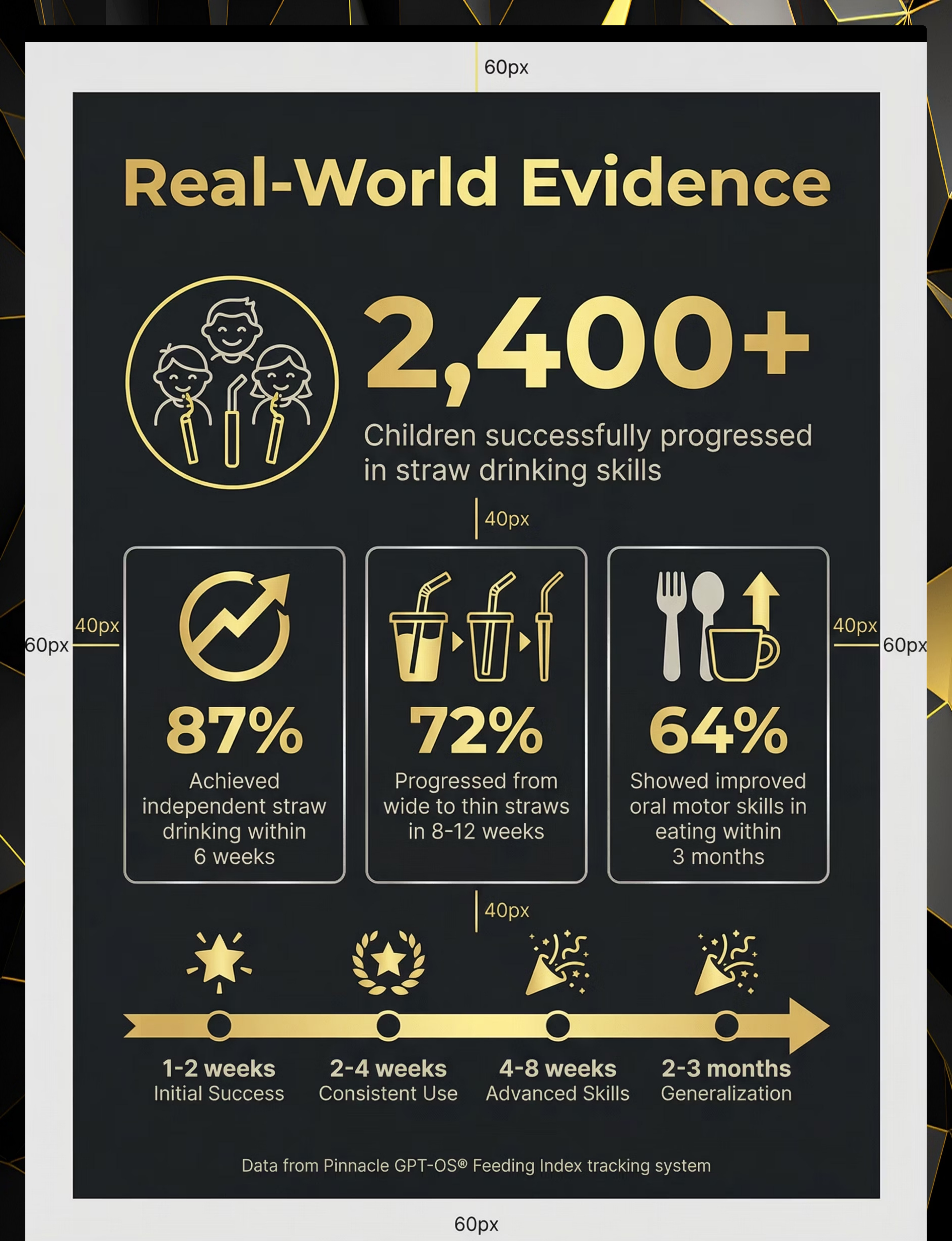
Week 1-2
Initial Learning Phase - Child explores straw, learns cause-effect with honey bear, may resist or show confusion
Week 3-4
Skill Emergence - First successful independent sips, inconsistent performance, needs encouragement
Week 5-8
Skill Consolidation - Consistent straw drinking, ready to progress to thinner diameters, generalizing to different settings
Month 3+
Mastery & Transfer - Independent straw use everywhere, improved oral motor skills visible in eating/speech, ready for advanced challenges
Remember: Every child progresses at their own pace. These timelines are averages—some children move faster, others need more time. Consistency matters more than speed.
straws-therapy-specialty therapy material
Troubleshooting Common Challenges
Even with the right tools, you'll encounter obstacles. Here's how to solve the most common problems families face when introducing therapeutic straws.
Child Bites the Straw Instead of Sucking
This is normal oral exploration. Use firmer silicone straws that resist biting. Practice with honey bear to teach cause-effect. Place straw to side of mouth (not center) to discourage biting reflex. Model proper lip closure yourself.
Child Blows Out Instead of Sucking In
Demonstrates breath control but wrong direction. Use honey bear with thick liquid (mango shake, yogurt drink) so child sees immediate result of sucking. Practice "kissing" exercises to strengthen lip rounding. Try straw in cup with lid to prevent blowing bubbles.
Liquid Leaks from Corners of Mouth
Indicates weak lip closure. Start with lip blok straw to provide physical cue for proper placement. Practice with thicker liquids that move slower. Do lip strengthening exercises (blowing bubbles, kisses). Use shorter straw length initially.
Child Refuses Straw Completely
Don't force it. Start with straw play—blow bubbles in water, transfer pom-poms by sucking through straw. Let child see siblings/parents using straws. Try different liquids (favorite juice, chocolate milk). Make it fun, not a battle.
Works in Therapy But Not at Home
Skill hasn't generalized yet. Use identical straw type at home and therapy. Practice in multiple settings (kitchen, living room, outdoors). Start with same liquid used in therapy, then vary. Celebrate every attempt, not just success.
Progress Plateaus After Initial Success
Time to increase challenge. Move to thinner diameter straw. Try longer straw length. Use thinner liquids. Add straw to different cup types. Introduce straw use in social settings (restaurants, playdates).

When to Seek Additional Help
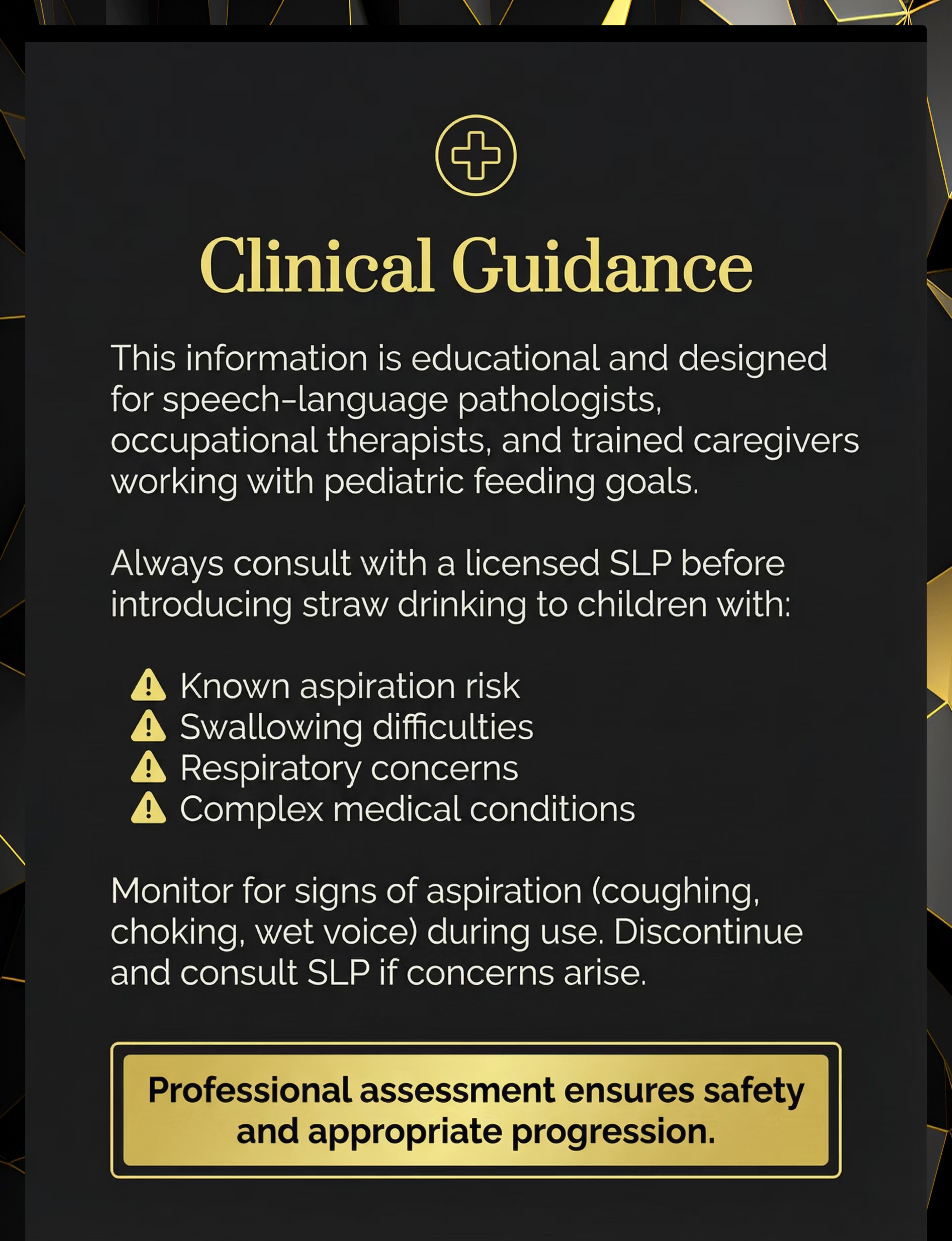
Contact your speech-language pathologist if you notice: persistent coughing or choking during straw drinking, liquid coming out of nose, complete refusal lasting more than 2 weeks despite varied approaches, regression in previously mastered skills, or concerns about aspiration risk. Professional assessment ensures safety and identifies underlying issues requiring specialized intervention.

Preview of straws therapy specialty Therapy Material

Below is a visual preview of straws therapy specialty therapy material. The pages shown help educators, therapists, and caregivers understand the structure and content of the resource before use. Materials should be used under appropriate professional guidance.

Page 1
Page 2
Page 3
Page 4
Page 5
Page 6
Page 7
Page 8
Page 9
Page 10
Page 11
Page 12
Page 13
Page 14
Page 15
Page 16
Page 17
Page 18
Page 19
Page 20
Link copied!
Complete Support & Resources
We provide comprehensive resources to guide your child's journey, from initial assessment to ongoing progress tracking and integrated support systems.
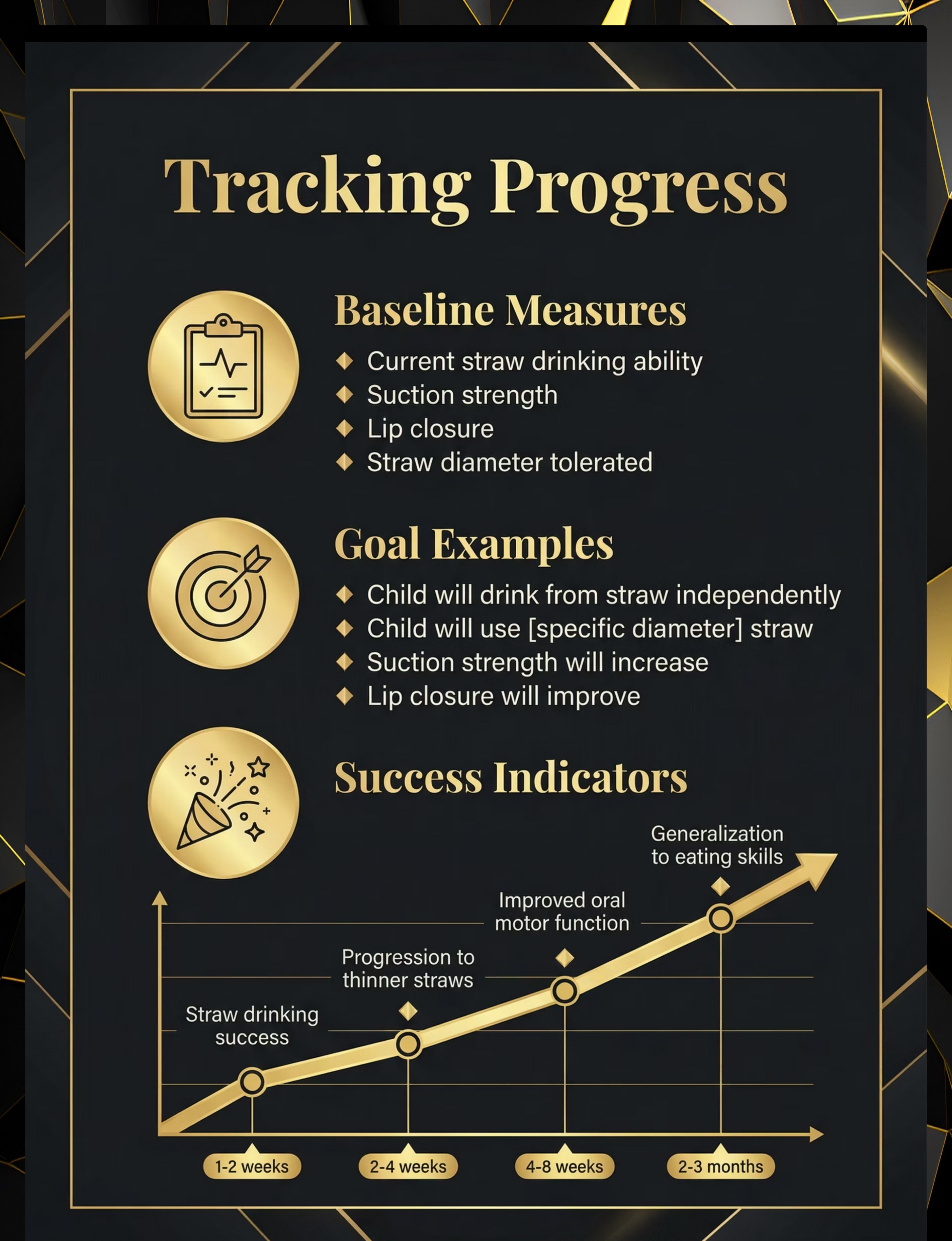
Measuring Success
Establish Baseline
Document your child's current abilities before starting.
  • Can child drink from straw at all? (Yes/No)
  • Current suction strength (Weak/Moderate/Strong)
  • Lip closure during straw use (Poor/Fair/Good)
  • Straw diameter currently tolerated (Wide/Standard/Thin)
Set Clear Goals
Define achievable milestones for progress.
  • Child will drink from straw independently by [date]
  • Child will use [specific diameter] straw successfully
  • Suction strength will increase to [measurable level]
  • Lip closure will improve to functional level
Track Success Indicators
Monitor progress and celebrate achievements.
  • Successful straw drinking attempts per day
  • Progression to thinner straw diameters over time
  • Improved oral motor function in eating and speech
  • Skill generalization to restaurants, school, various settings

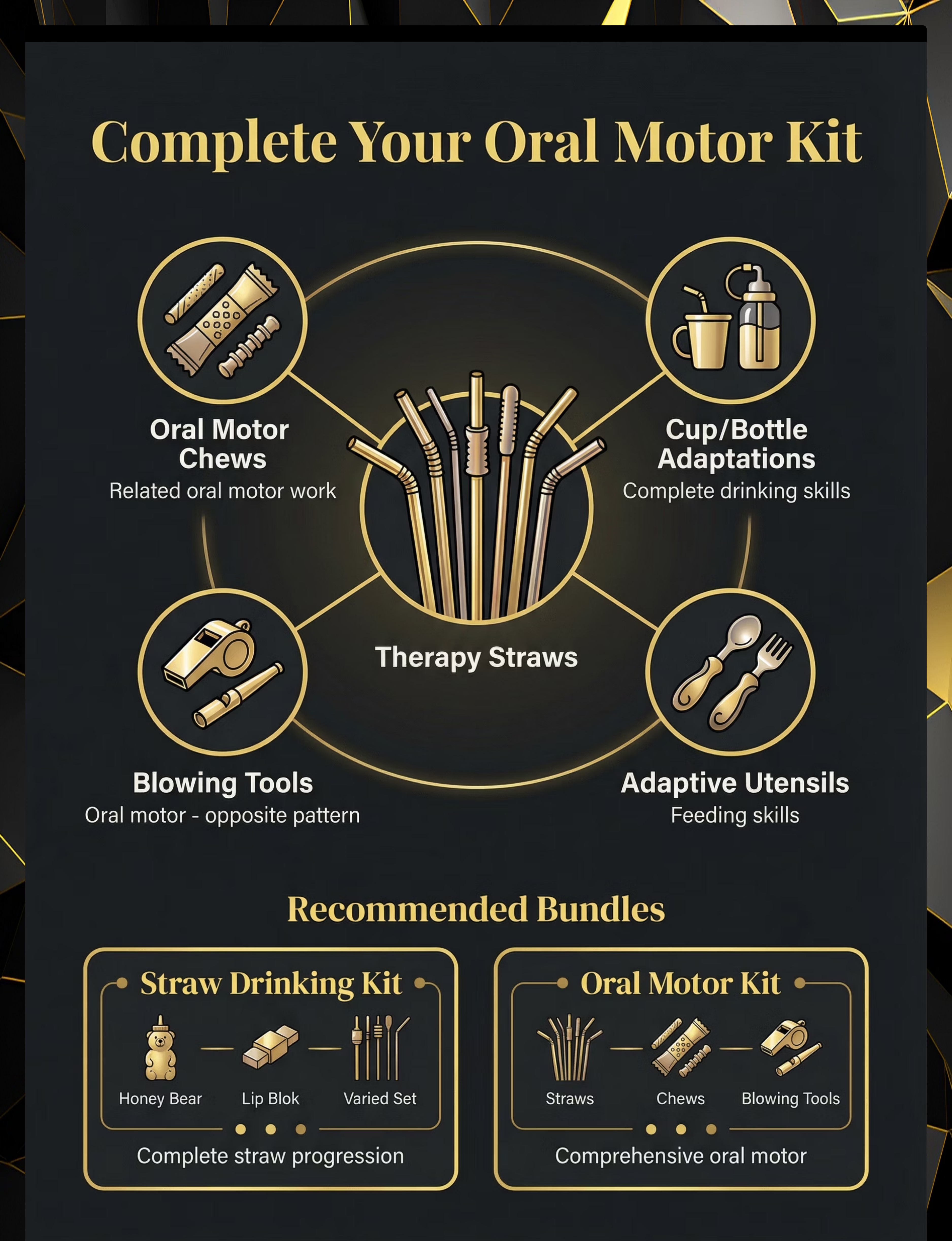
Complete the Kit—Pair It With...
Build a comprehensive oral motor development program by combining therapy straws with these complementary tools:
Oral Motor Chews (ID: 11.1)
Provides complementary oral motor strengthening through chewing and biting exercises. Addresses sensory needs and jaw stability.
Cup/Bottle Adaptations (ID: 11.6)
Complete your child's drinking skills toolkit with cups designed for various stages of development and motor challenges.
Blowing Tools (ID: 11.7)
Develops the opposite oral motor pattern (blowing vs. sucking), building comprehensive breath support and oral control.
Adaptive Utensils (ID: 11.5)
Supports overall feeding skill development as oral motor abilities improve and child progresses to solid foods.
Recommended Bundles:
  • Straw Drinking Starter Kit: Bear Straw (11.2.1) + Honey Bear (11.2.2) + Varied Diameter Straws (11.2.3)—Complete progression from teaching to mastery
  • Complete Oral Motor Kit: Therapy Straws (11.2) + Oral Motor Chews (11.1) + Blowing Tools (11.7)—Comprehensive oral motor strengthening program

Quick Summary
AI Summary: Therapy and specialty straws develop oral motor skills including suction, lip closure, and tongue retraction through progressive straw drinking challenges. Core Kit tool with Rank #2 status, backed by strong evidence, providing essential daily feeding support under SLP and OT guidance.
straws
oral motor
suction
lip closure
feeding
drinking
SLP
OT
core-kit
Common Searches: therapy straws autism, honey bear straw cup, oral motor straws, lip blok straw, straw drinking therapy, feeding therapy straws, suction strength

Platform Integration & Support
How This Tool Integrates with Pinnacle Blooms Network:
  • AbilityScore® Diagnosis: Comprehensive assessment identifies specific oral motor patterns and feeding challenges requiring straw therapy intervention
  • TherapeuticAI®: Prescribes personalized straw progression protocol based on your child's current abilities, challenges, and developmental goals
  • EverydayTherapyProgramme™: Embeds straw drinking goals into daily routines with specific practice schedules and progress milestones
  • Feeding Index Tracking: Monitors oral motor progress over time, documenting improvements in suction strength, lip closure, and skill generalization

Get Expert Support
FREE National Autism Helpline
Phone: 9100 181 181
Languages: 16+ languages supported
Website: pinnacleblooms.org
Connect with speech-language pathologists and occupational therapists who can provide personalized guidance on therapeutic straw use, assess your child's specific needs, and recommend the most appropriate progression protocol.

Disclaimer: This is educational information designed to help families understand therapeutic straw options and oral motor development. Always consult qualified occupational therapists, speech-language pathologists, or pediatricians for professional assessment and personalized recommendations. Individual results vary based on child's specific needs, consistency of practice, and underlying conditions. Never use straws with children who have aspiration risk without direct SLP supervision and guidance.