
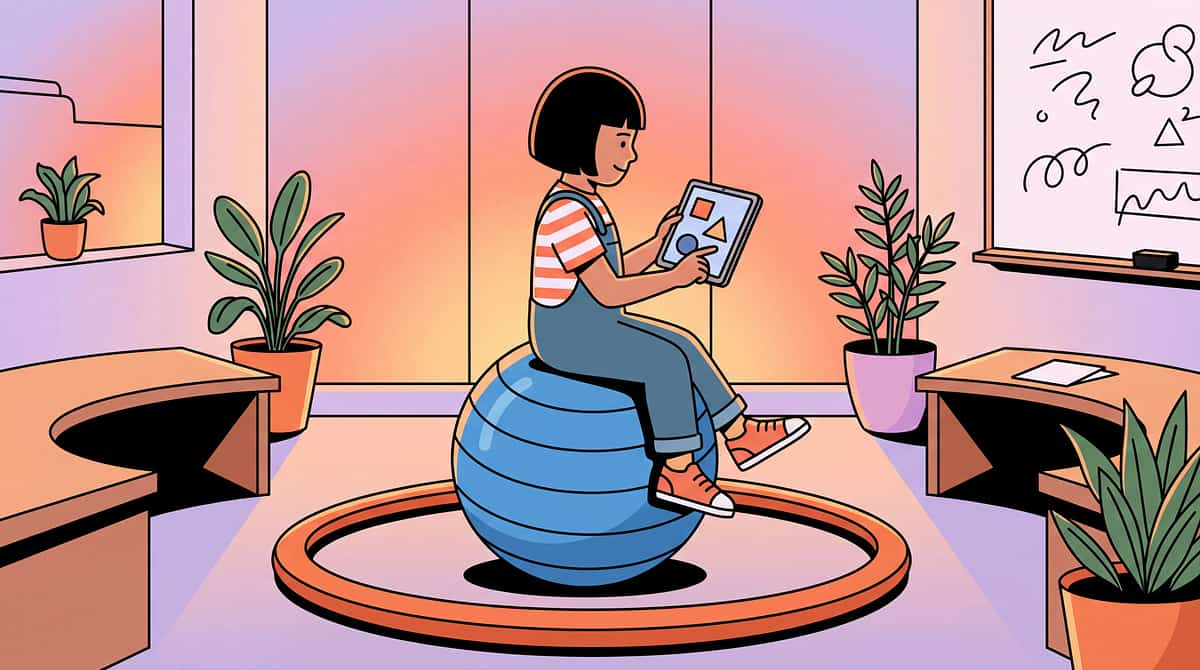
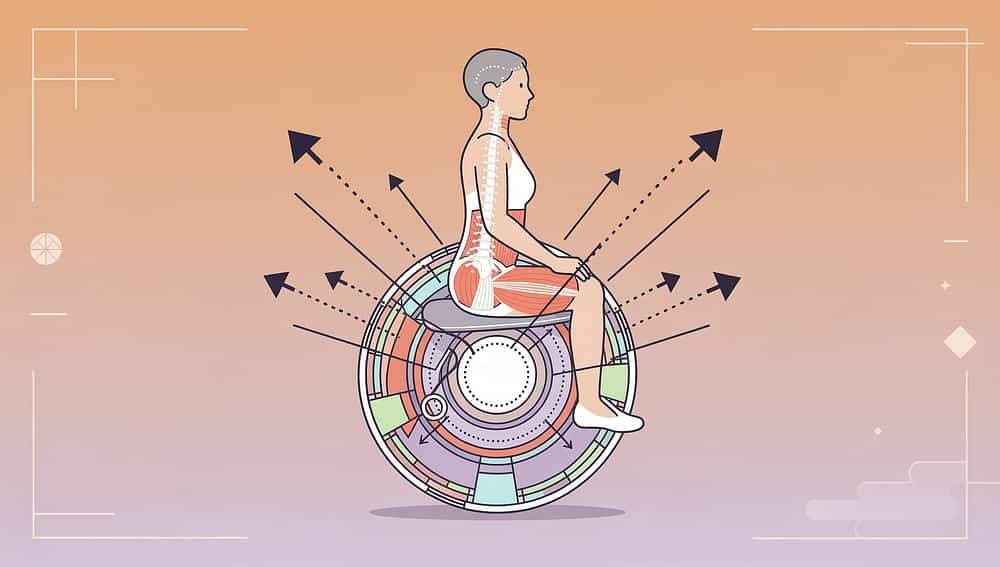
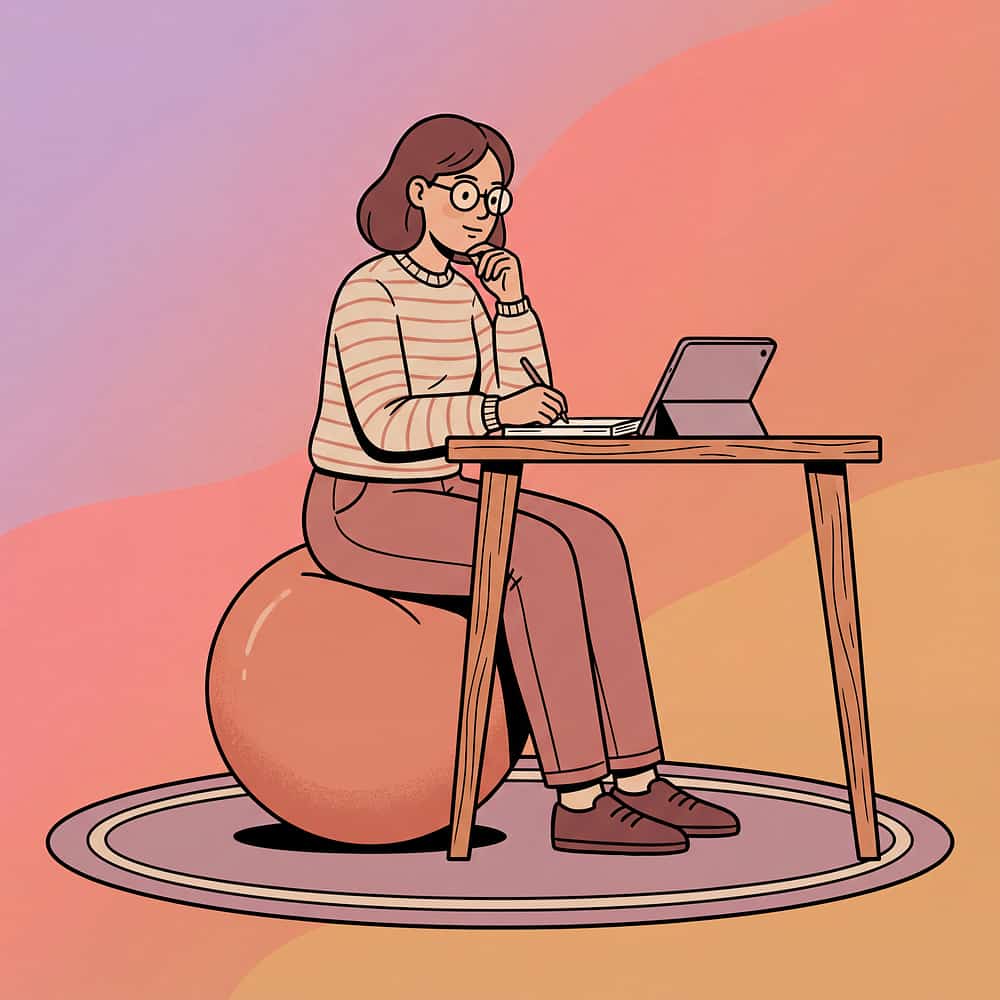
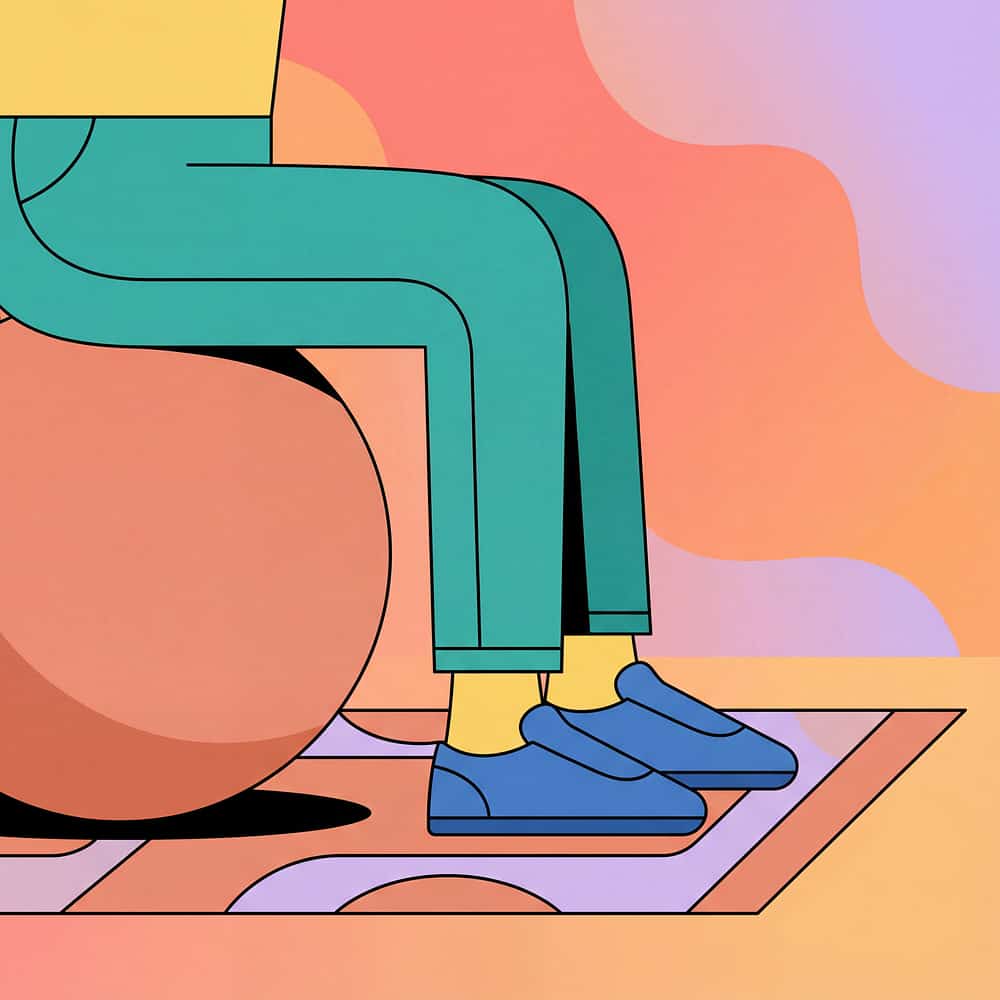


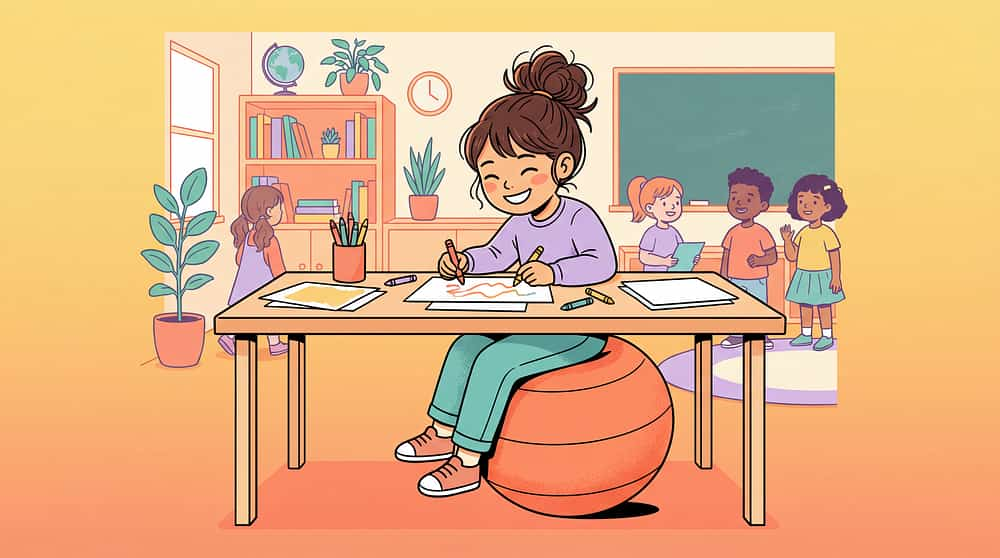





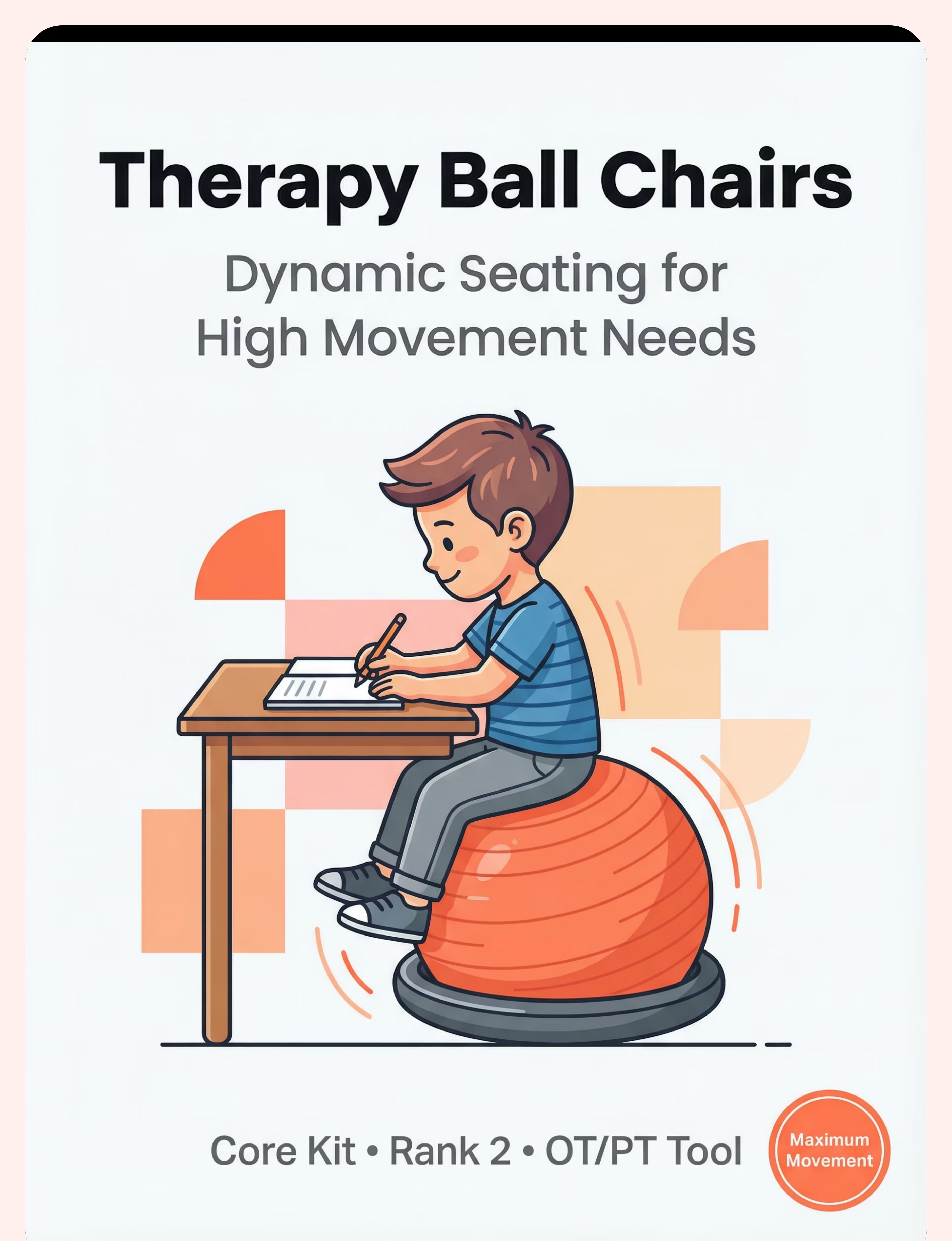
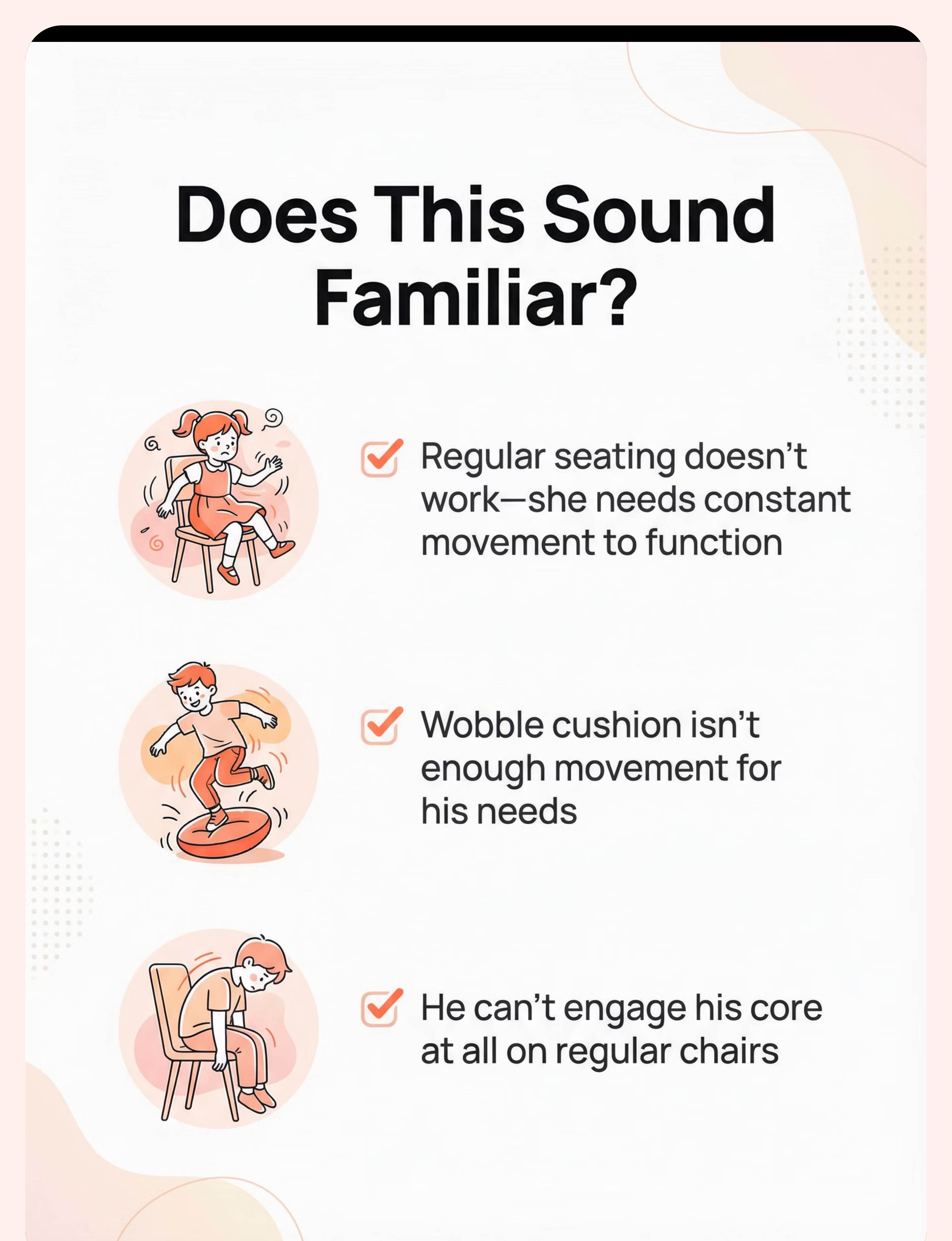
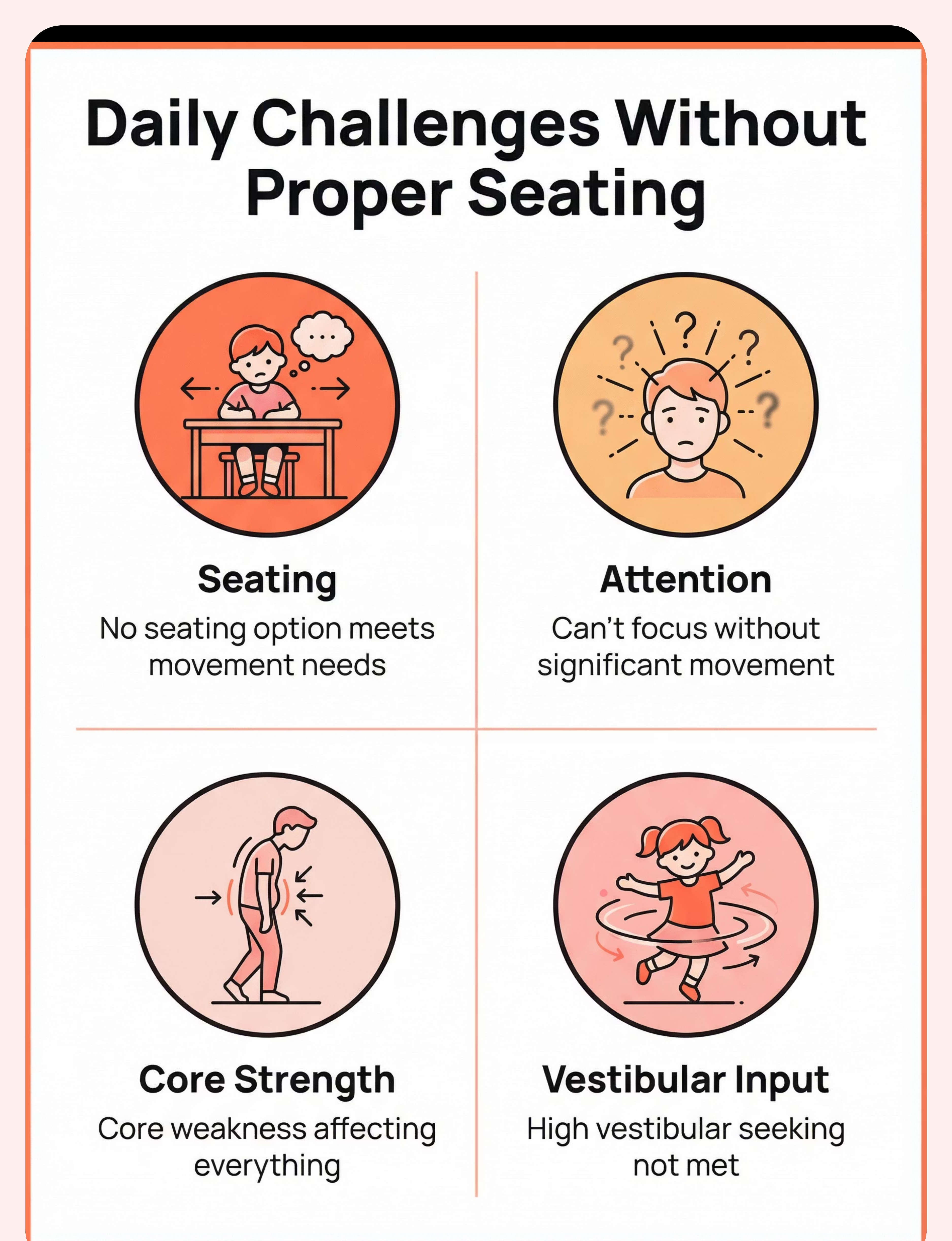
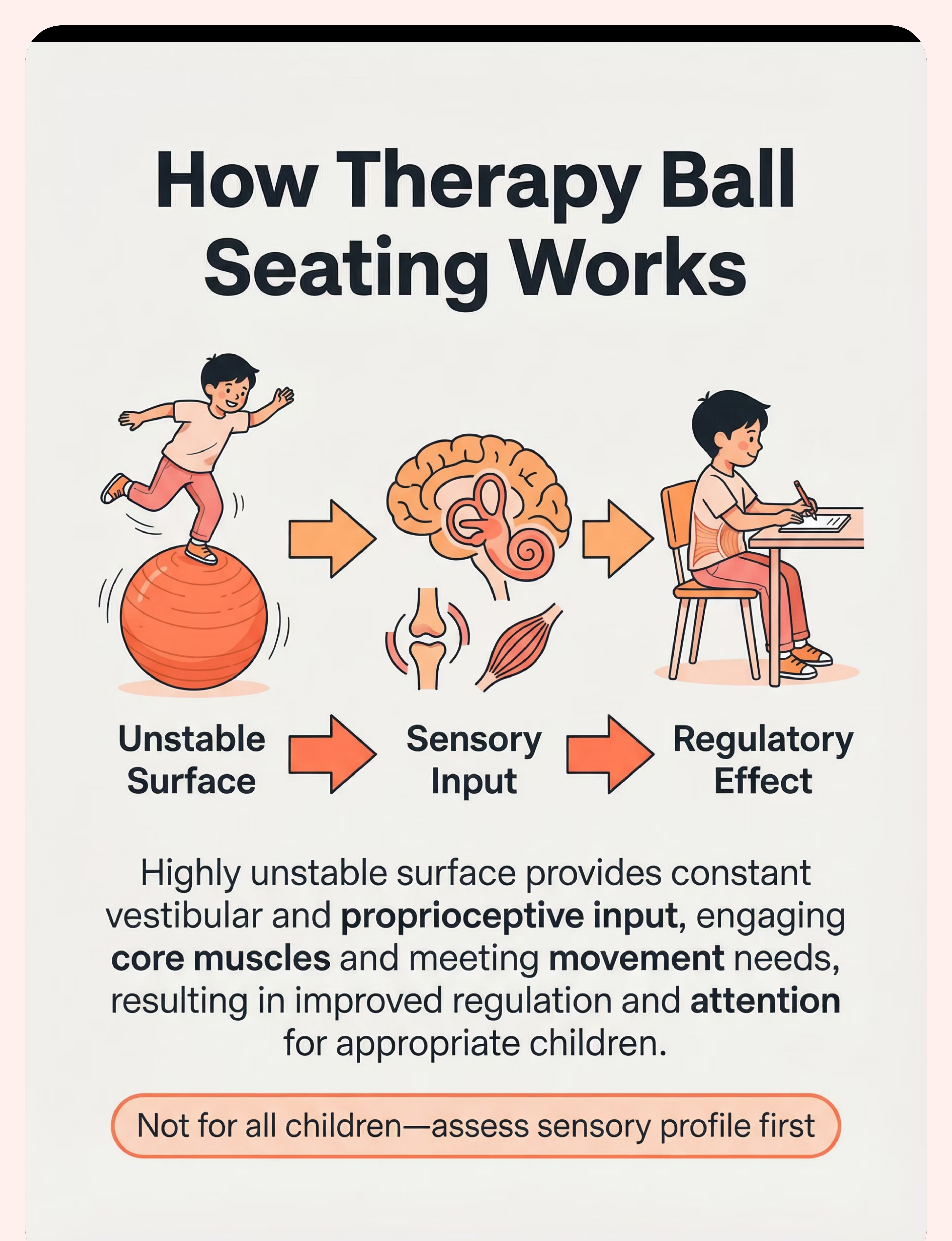
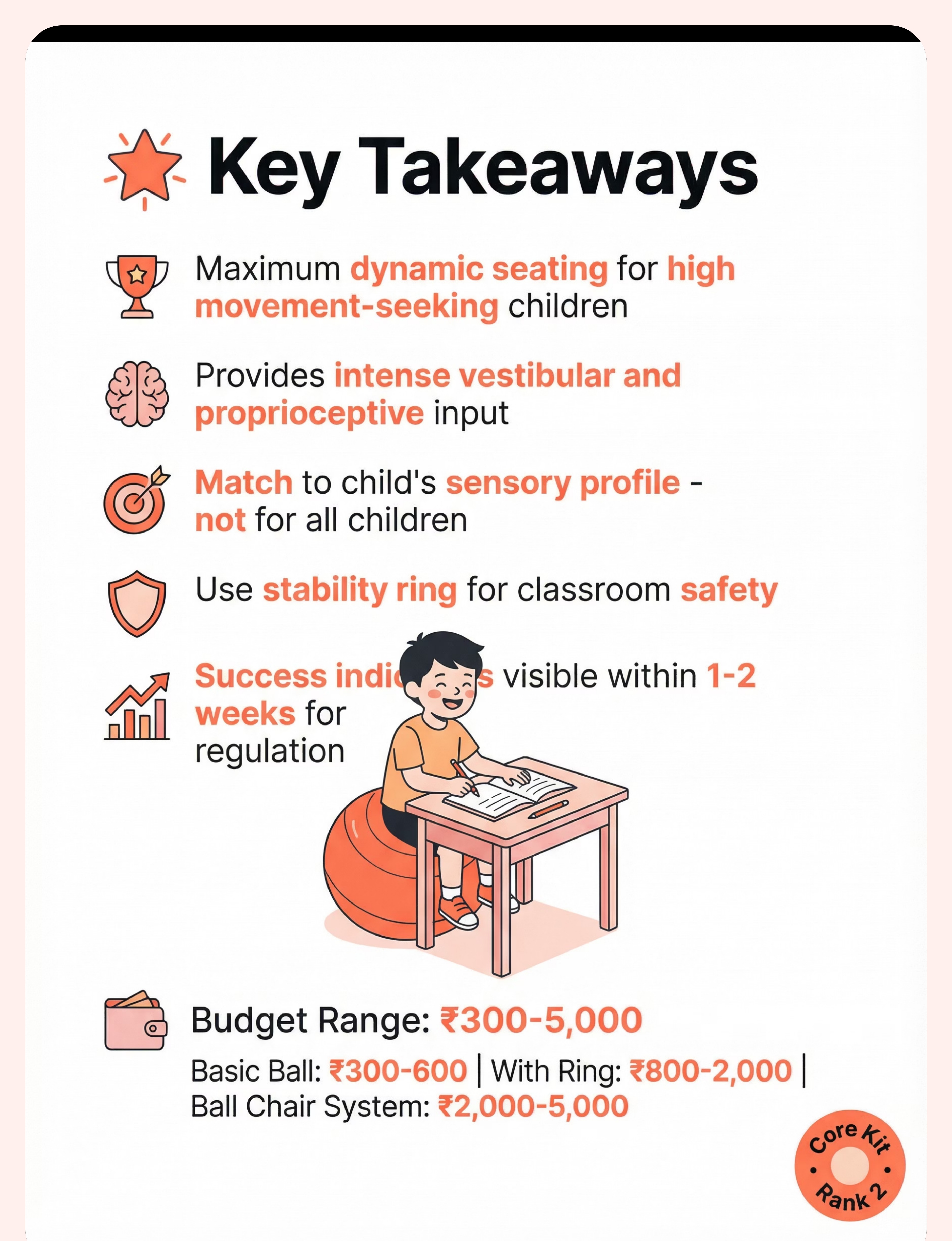



"Therapy ball seating provides intense vestibular and proprioceptive input—great for some children, too much for others. It's a powerful tool that needs to match the child's sensory profile. Stability rings make classroom use safer."— Occupational Therapist, Sensory Integration Specialist

Choose Your Option
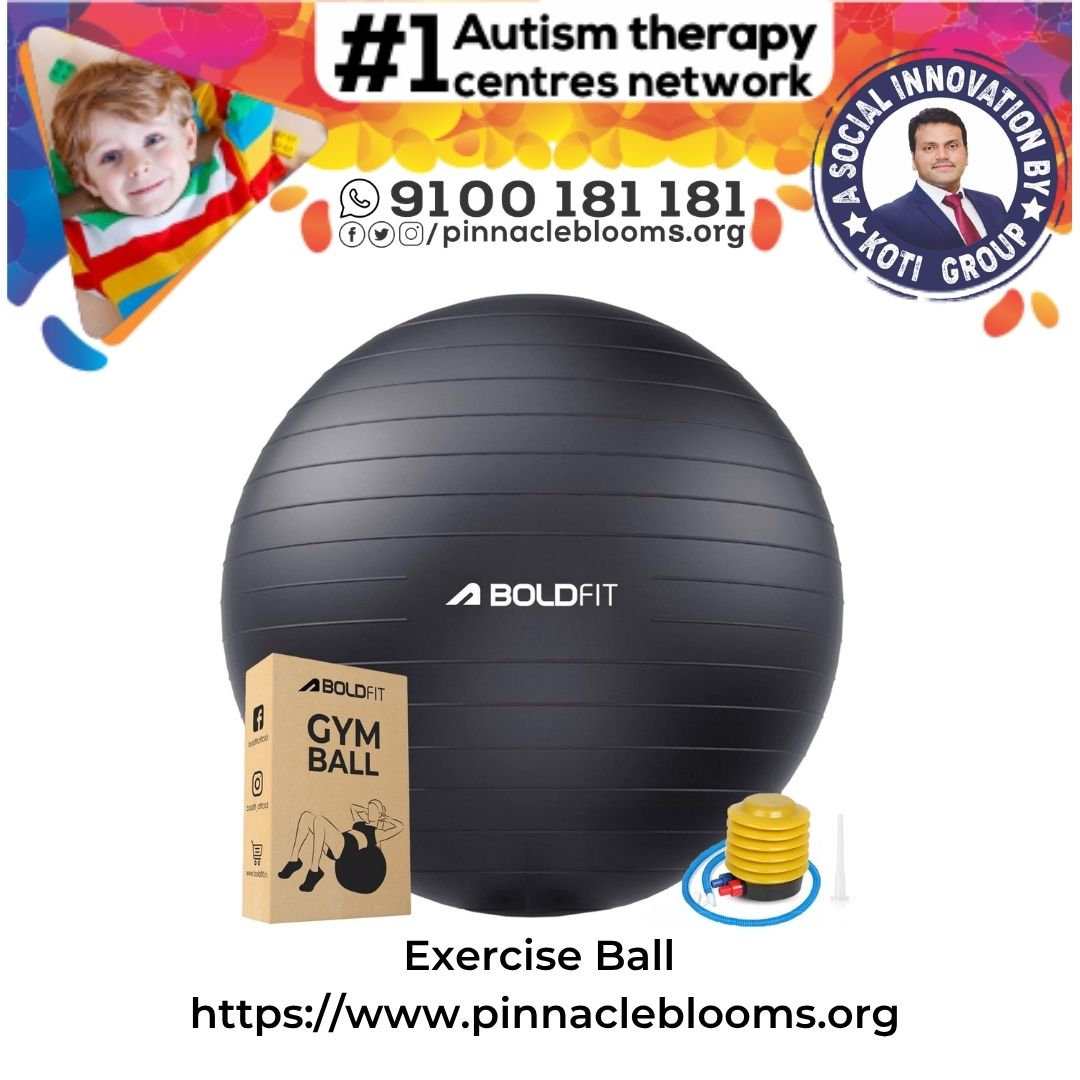
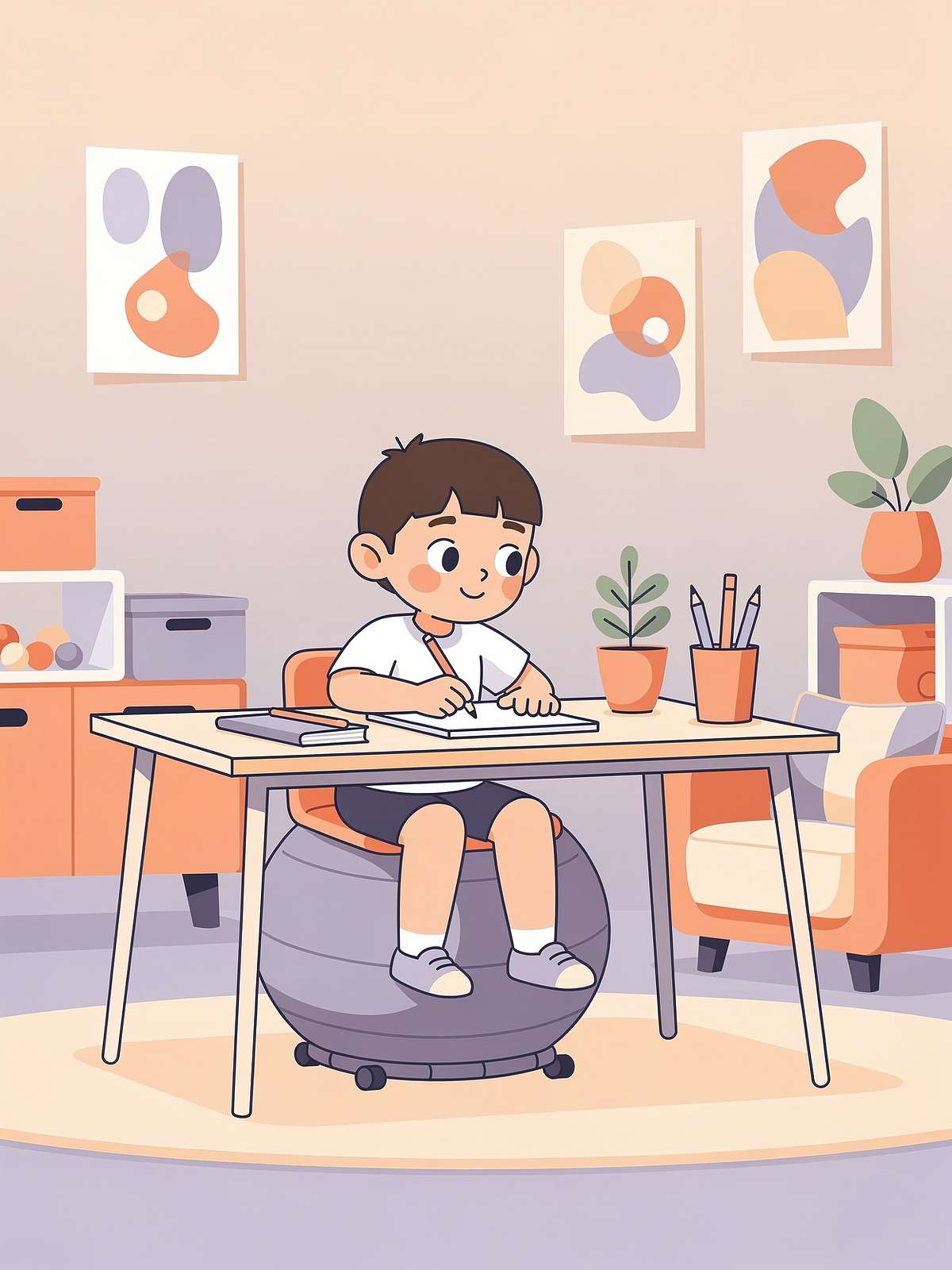
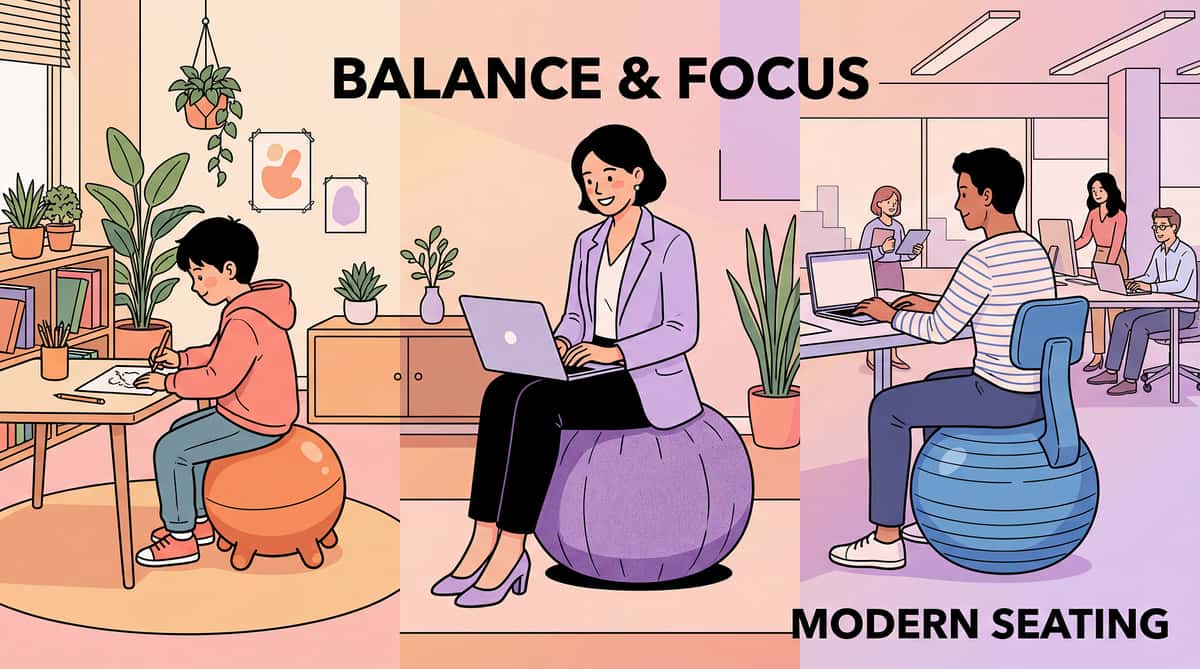
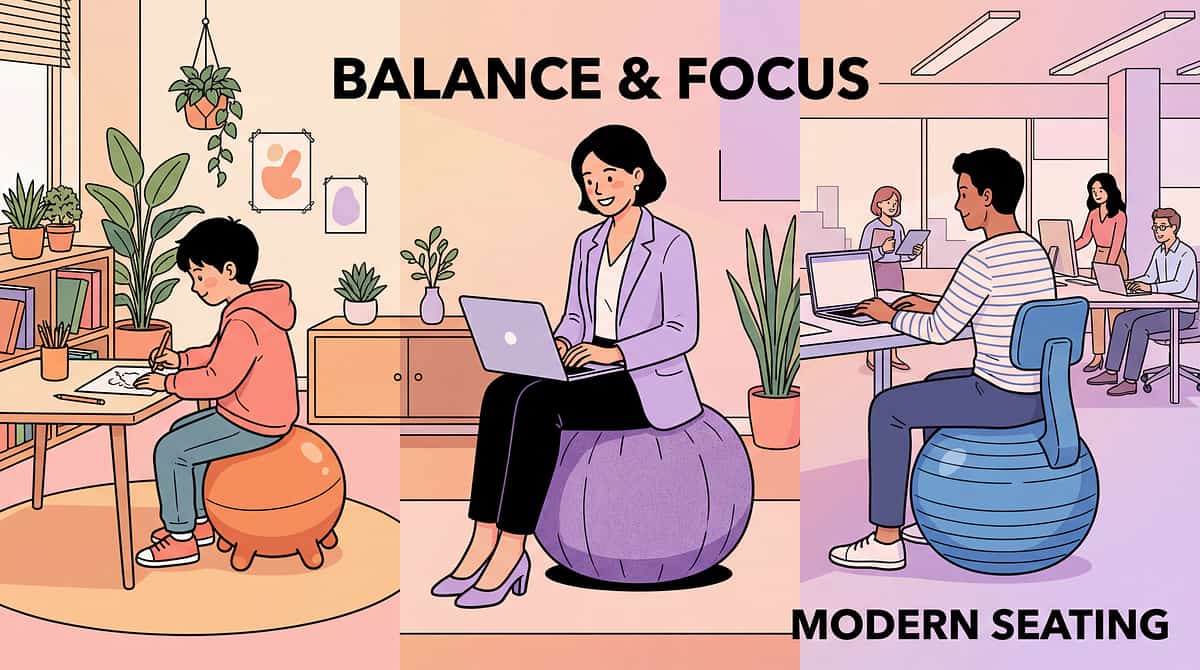
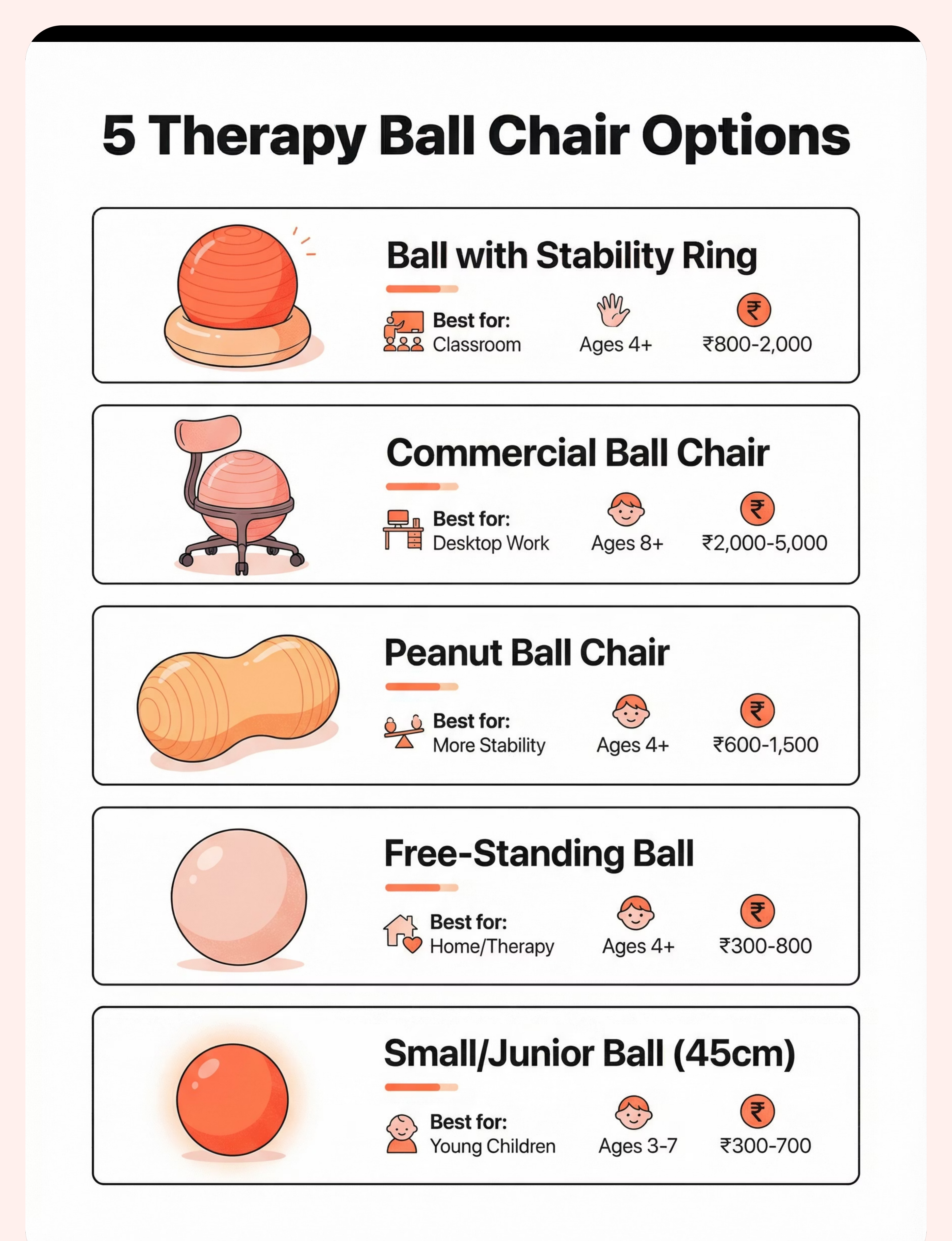
Select the right therapy ball seating based on your child's needs, setting, and desired stability level. Each variant offers different benefits for movement input and core engagement. Progression of Therapy Ball Seating Basic Therapy Ball Best for home use, therapy, high movement need. Ball with Stability Ring Ideal for classroom use, controlled movement. Ball Chair with Back Support Suitable for professional settings, desktop work, providing some back support. Ball Chair with Desk Integrated solution for focused work, combining a ball chair with a personal desk. Peanut Ball Alternative Offers more stability than a round ball while still providing dynamic movement. How to Choose By goal: Maximum movement (free-standing), controlled classroom (base/ring), professional settings (chair system) By setting: School requires stability ring, home allows more freedom, clinic offers flexibility By stability: Peanut ball most stable, round ball maximum movement, chair system professional appearance Detailed considerations for selecting the optimal therapy ball seating: Movement Needs: Free-standing balls provide the most dynamic input, while those with bases or full chair systems offer more controlled movement. Core Engagement: All variants encourage core strength, but the level of engagement varies with stability. Age and Size: Ensure the ball is appropriately sized for the user's height and weight for proper ergonomic positioning. Environment: Classrooms and structured settings often benefit from stability features for safety and focus, whereas home or therapy environments might allow for more freedom. Budget: Prices vary significantly depending on the type and features, from basic balls to integrated chair systems.
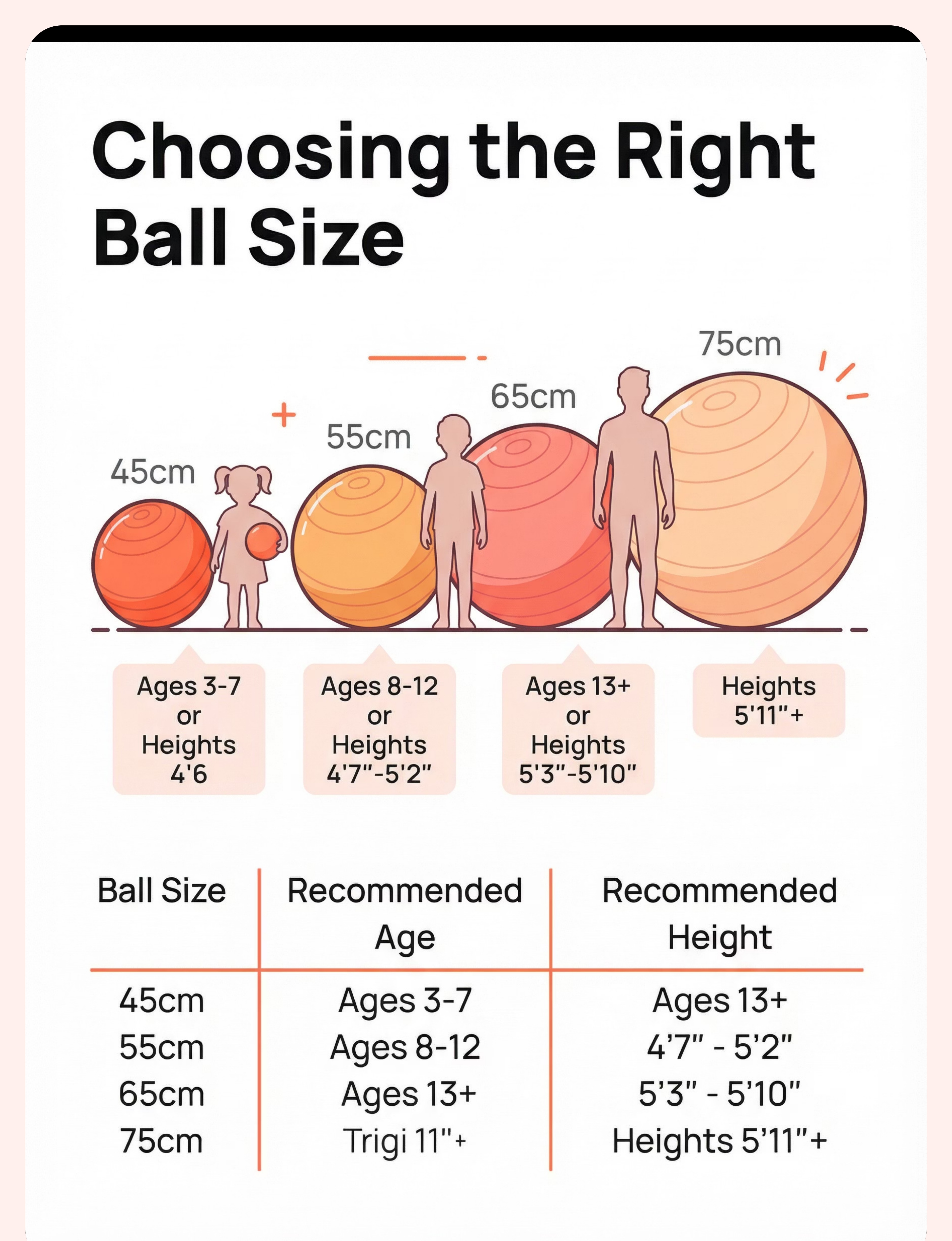
45cm Ball | Heights 4'6" - 5'0" (137-152cm) or children | |
55cm Ball | Heights 5'1" - 5'7" (155-170cm) | |
65cm Ball | Heights 5'8" - 6'1" (173-185cm) | |
75cm Ball | Heights 6'2"+ (188cm+) |
- Materials: PVC, anti-burst construction, various quality grades
- Anti-burst: Essential safety feature—ball deflates slowly if punctured rather than explosive pop
- Stability base: Ring or frame prevents rolling, required for classroom use
- Pump included: Most quality balls include inflation pump
- Weight capacity: Verify capacity matches user weight


Age/Ability | Recommended Duration | Considerations | |
Young (3-5 years) | 5-10 minutes | Frequent breaks, ensure posture is maintained | |
Developing (6-8 years) | 15-20 minutes | Monitor for fatigue, incorporate movement breaks | |
Experienced (9+ years) | 20-30 minutes | Self-monitoring, adjust as needed for task demands |
Age Group | Supervision Level | Notes | |
Young (3-5 years) | Close supervision required | Learning to use safely, high fall risk | |
Developing (6-8 years) | Supervision decreasing with skill | Occasional check-ins, stability ring essential | |
Experienced (9+ years) | Independent with safety setup | Self-monitoring ability, proper setup maintained |

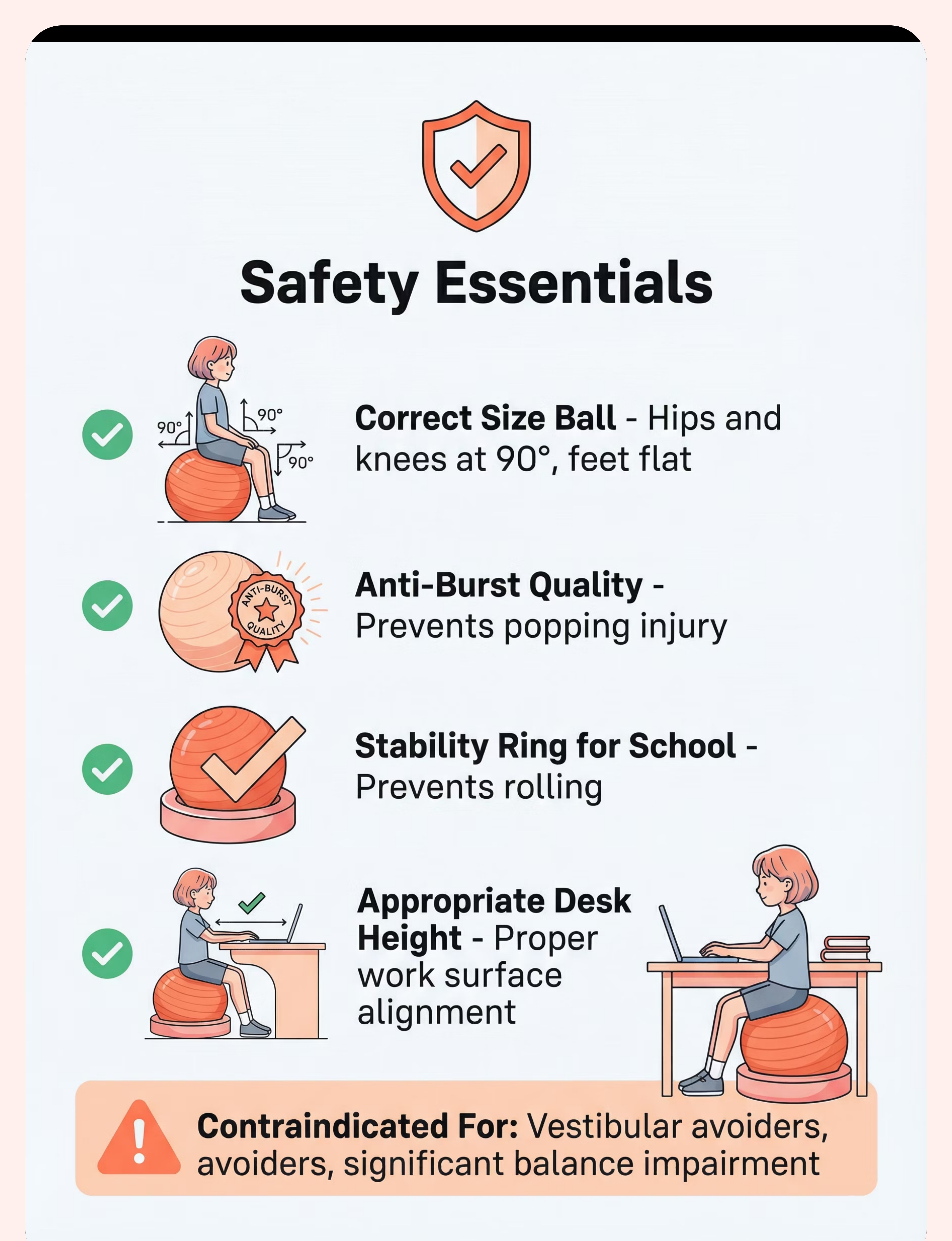
- Correct size ball for child's height is paramount; improper sizing creates serious safety issues.
- Ensure anti-burst quality construction; never use cheap balls that could pop explosively.
- Stability ring required for school or unsupervised use to prevent dangerous rolling.
- Feet must remain flat on the floor at all times, essential for balance and safety.
- Desk must be at an appropriate height to maintain 90-degree angles at hips and knees.
- Always verify the ball is correctly sized, anti-burst quality is good, and stability ring is installed if needed before use.
- Young Children (3-5 years): Require close supervision due to high fall risk and learning to use safely.
- Developing Users (6-8 years): Supervision can decrease with demonstrated skill, but stability ring remains essential.
- Experienced Users (9+ years): May be independent with safety setup, fostering self-monitoring ability and ensuring proper setup is maintained.
- A ball can roll away suddenly without a stability ring, creating significant fall hazards.
- Improper sizing leads to posture problems and serious safety issues.
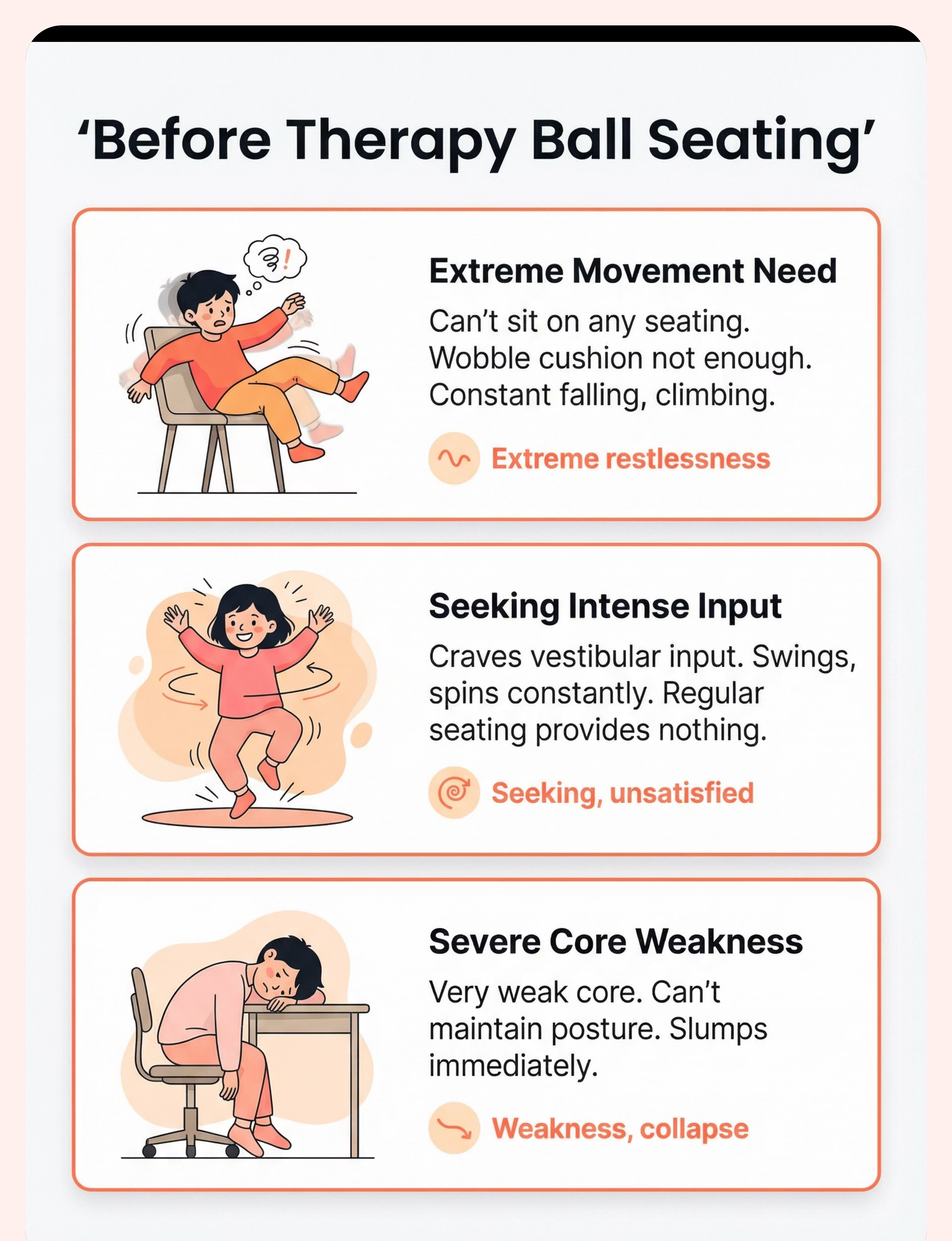
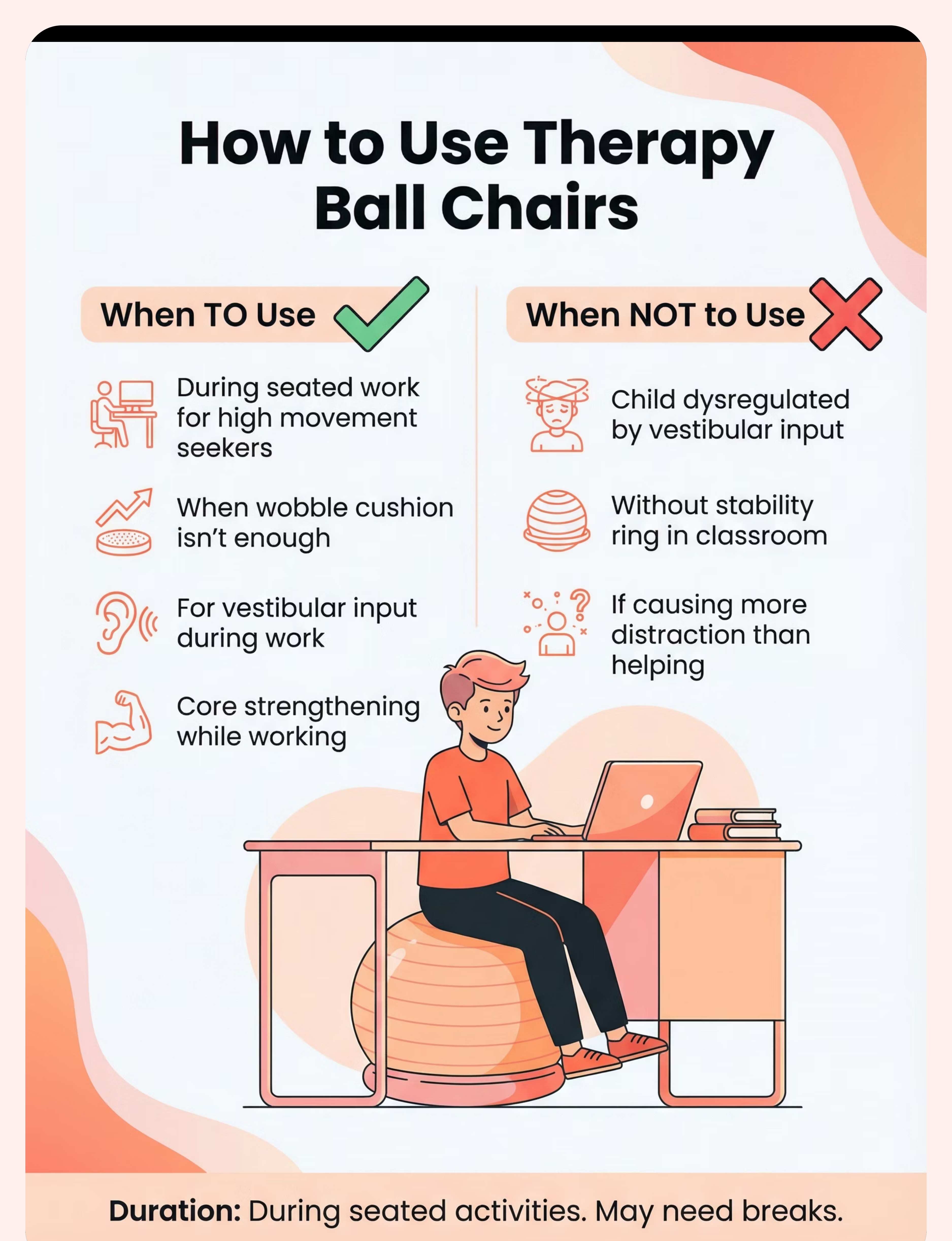
- Some children may over-bounce and struggle to regulate their movement on ball seating.
- Not appropriate for all sensory profiles; children who avoid or are dysregulated by vestibular input may become overstimulated.
- Avoid use in classrooms without a stability base or ring, or for children with significant balance impairment without proper support.
- In case of a fall or injury, immediately remove the child from the ball and assess for harm.
- Administer first aid as needed and contact appropriate medical personnel if the injury is severe.
- Document any incidents, including contributing factors and steps taken to prevent recurrence.
- Regularly review safety guidelines and ensure all users understand proper usage and limitations.

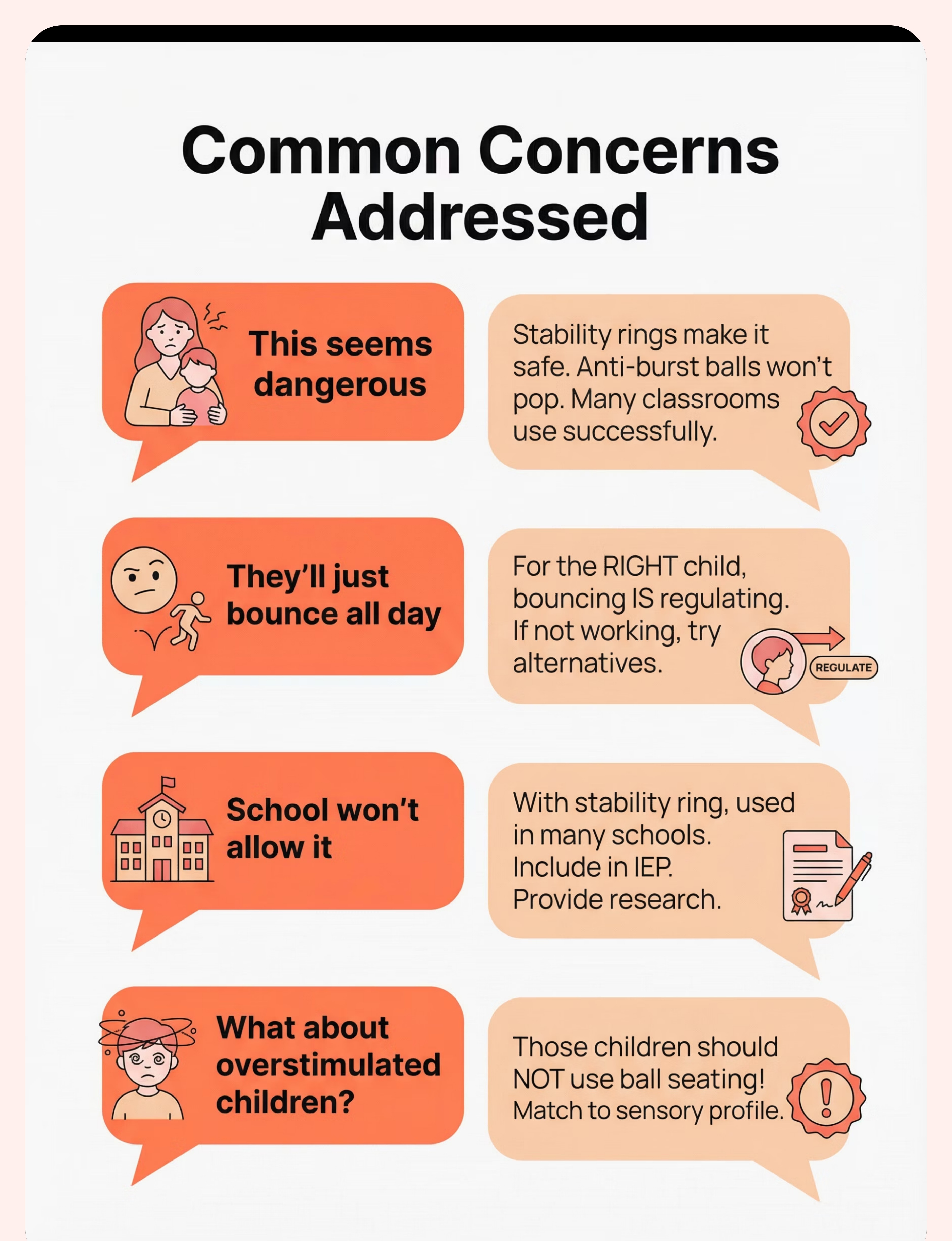
Evidence:Stability rings, anti-burst construction, proper sizing, initial supervision.
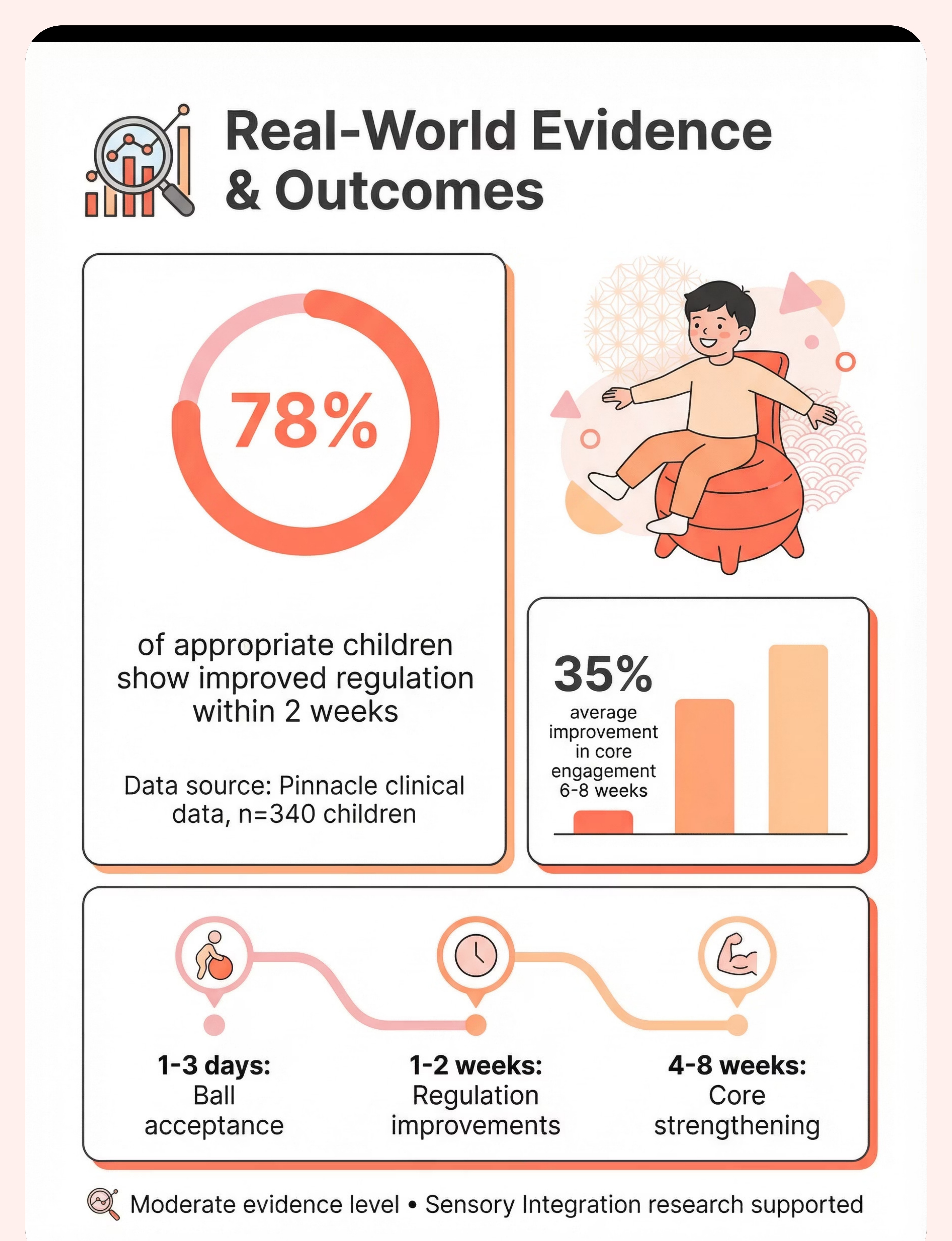
Evidence:Match intervention to the child's specific sensory needs.
Evidence:Consistent use, observation, and correct setup are crucial for progress.
Evidence:Stability ring, IEP inclusion, research, graduated approach.
Evidence:Avoid for vestibular avoiders; strictly match to sensory-seeking profiles.

Option Type | Item Description | Cost Range | Key Details | |
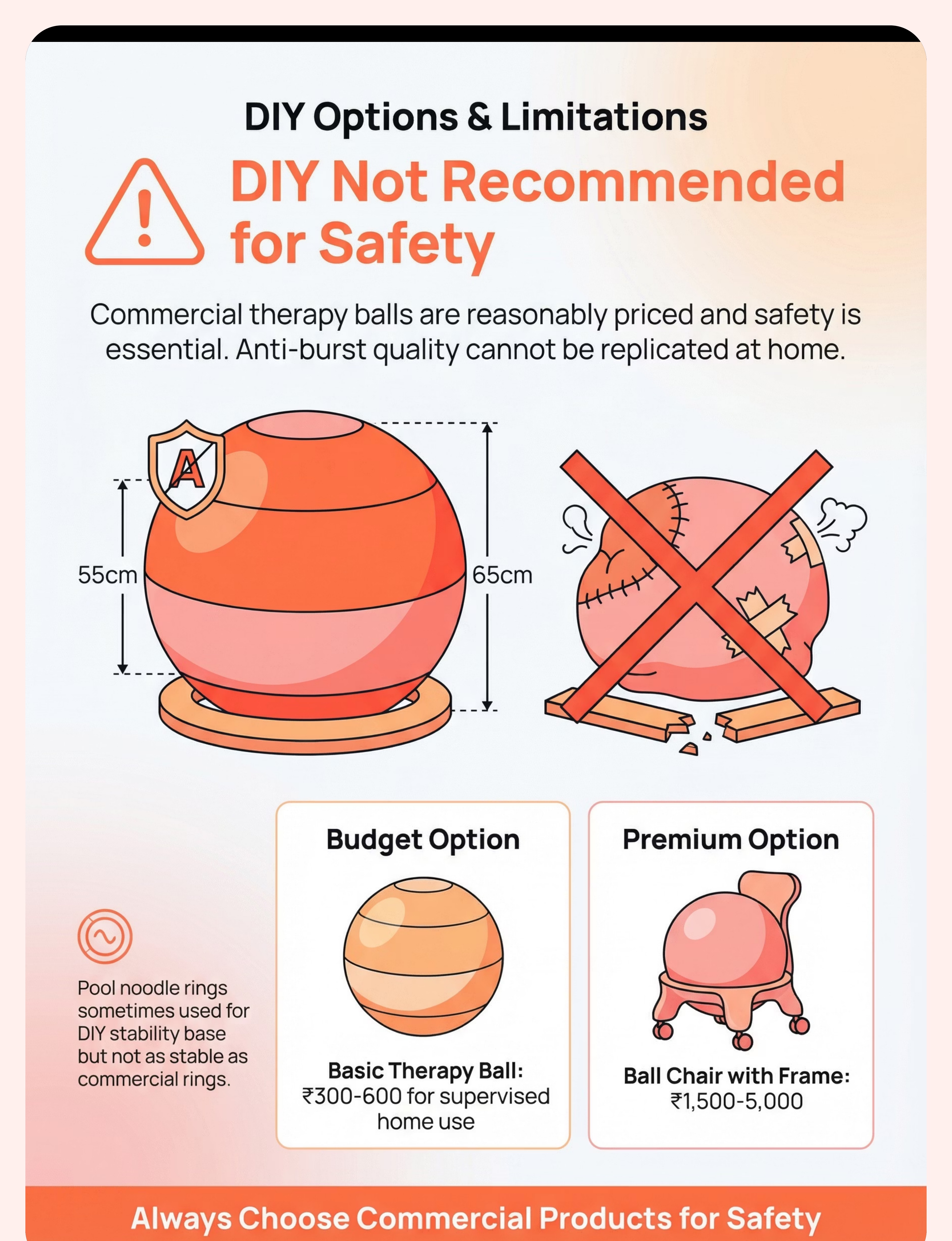
Budget Option | Basic therapy ball for supervised home use | ₹300–600 | Appropriate for home use with supervision. Add stability ring separately if needed (₹300-600 additional). | |
Premium Option | Ball chair with integrated frame or ball with professional stability ring | ₹1,500–5,000 | Quality Brands: Gaiam, Isokinetics, Balance Ball Chair. |

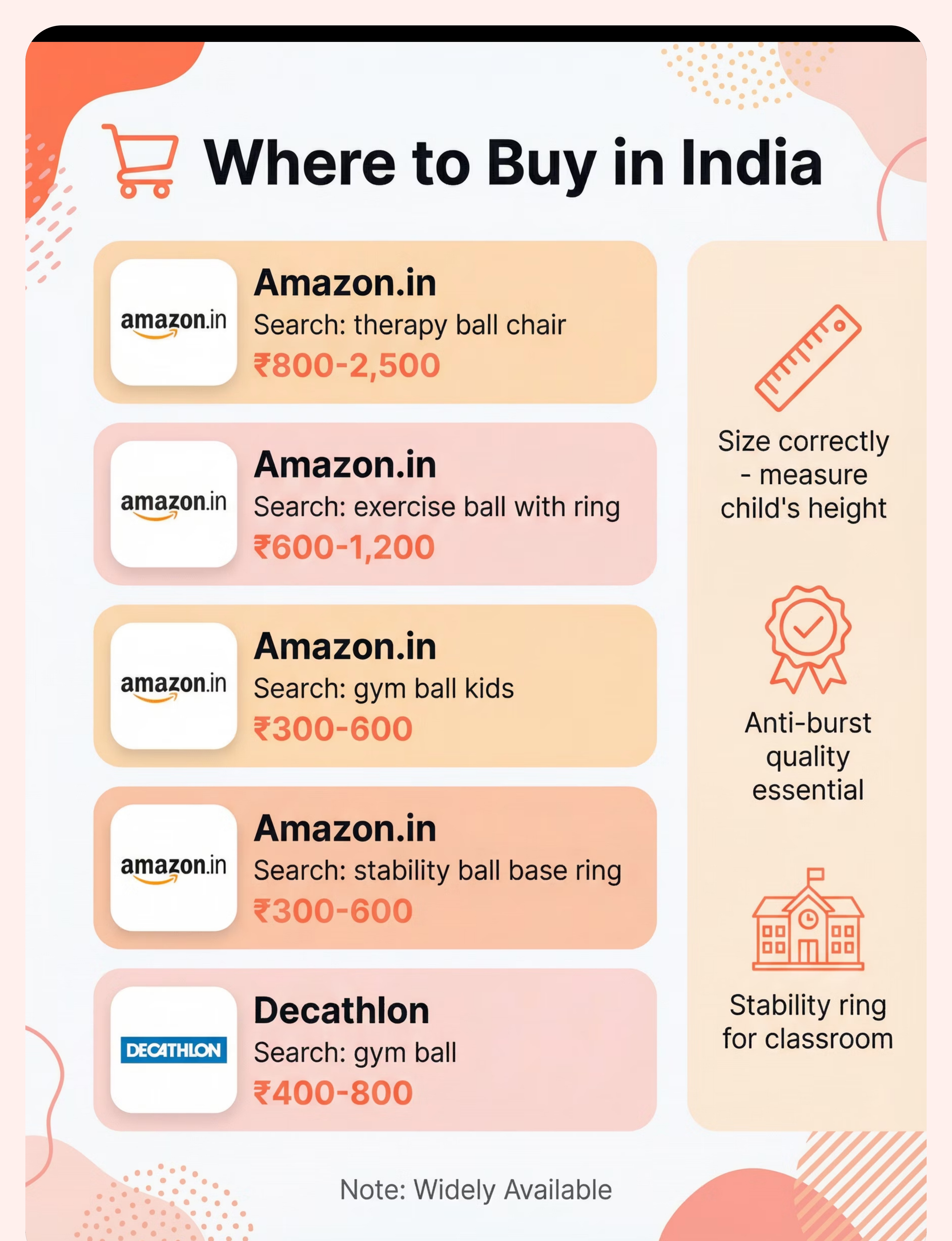
- Size correctly—measure child's height and select appropriate ball diameter
- Anti-burst quality is essential—never compromise on safety features
- Stability ring required for classroom use—verify compatibility before purchasing
- Ball chair systems offer most stability—consider for professional settings
- Peanut balls provide more stability than round—good intermediate option
- Wrong size ball for child's height—creates safety issues and defeats purpose
- Poor quality construction that may pop—serious safety hazard
- No stability ring for school use—school likely won't allow without safety base
- Purchasing for child who is dysregulated by movement—know sensory profile first

Preview of therapy ball chairs Therapy Material
Below is a visual preview of therapy ball chairs therapy material. The pages shown help educators, therapists, and caregivers understand the structure and content of the resource before use. Materials should be used under appropriate professional guidance.


Share this resource
Help others discover this
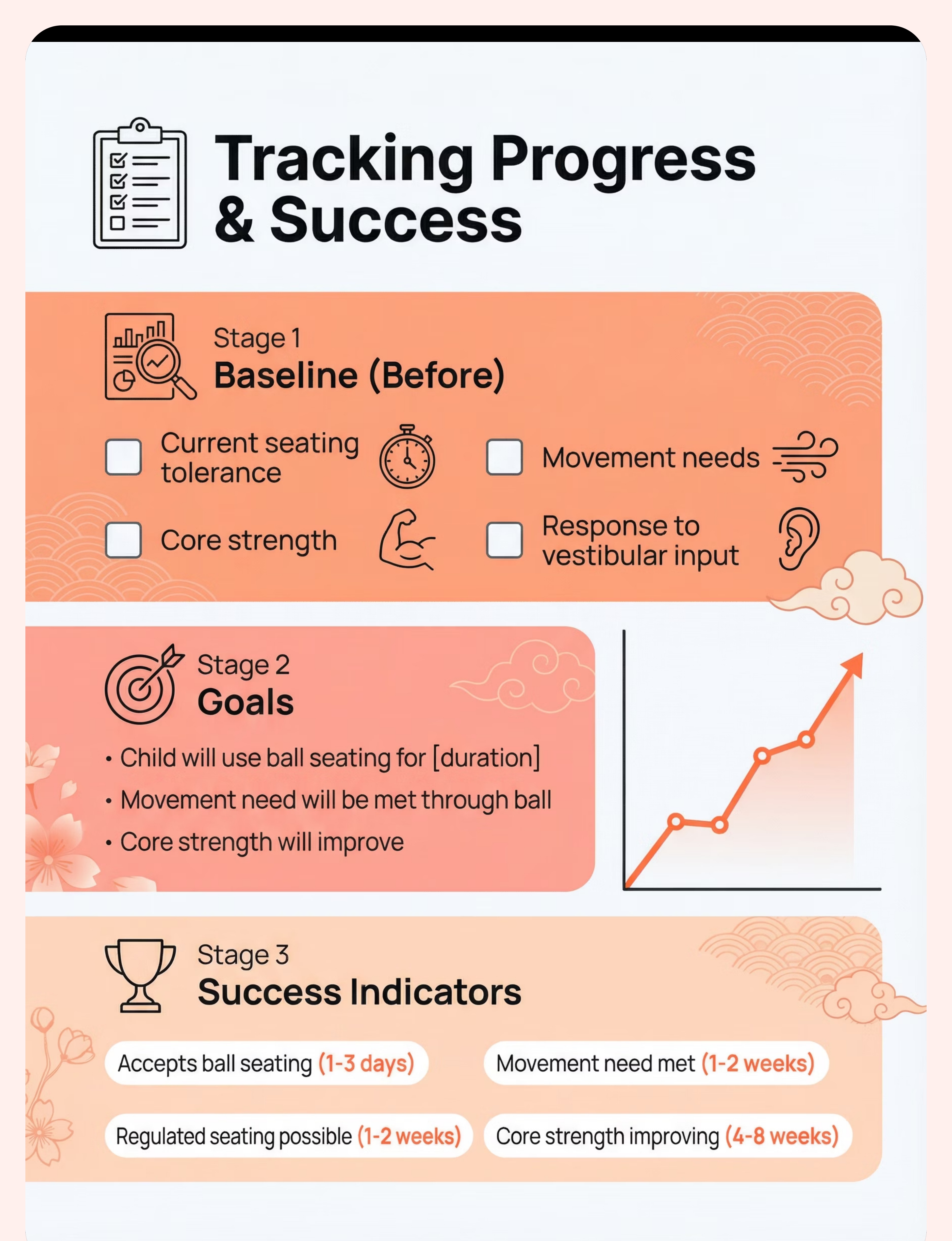
- Current seating tolerance duration
- Movement needs and seeking behaviors
- Core strength assessment
- Response to vestibular input
- Child will use ball seating for [specify duration]
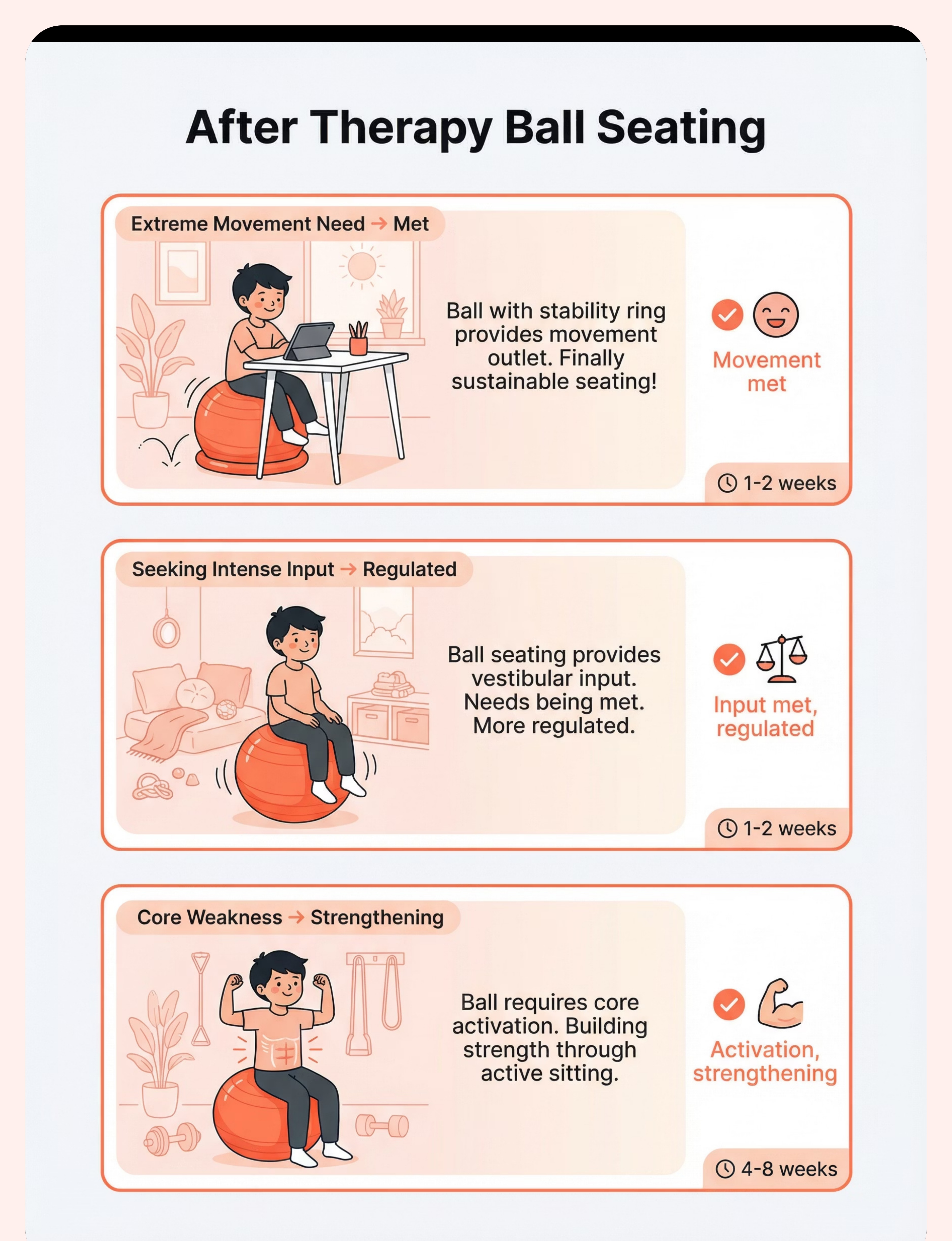
- Movement need met through ball bouncing
- Core strength will improve measurably
- Attention during seated work will improve
- Sustainable seating achieved
- Regulation maintained during work
- Work completion improving
- Core strength progression visible
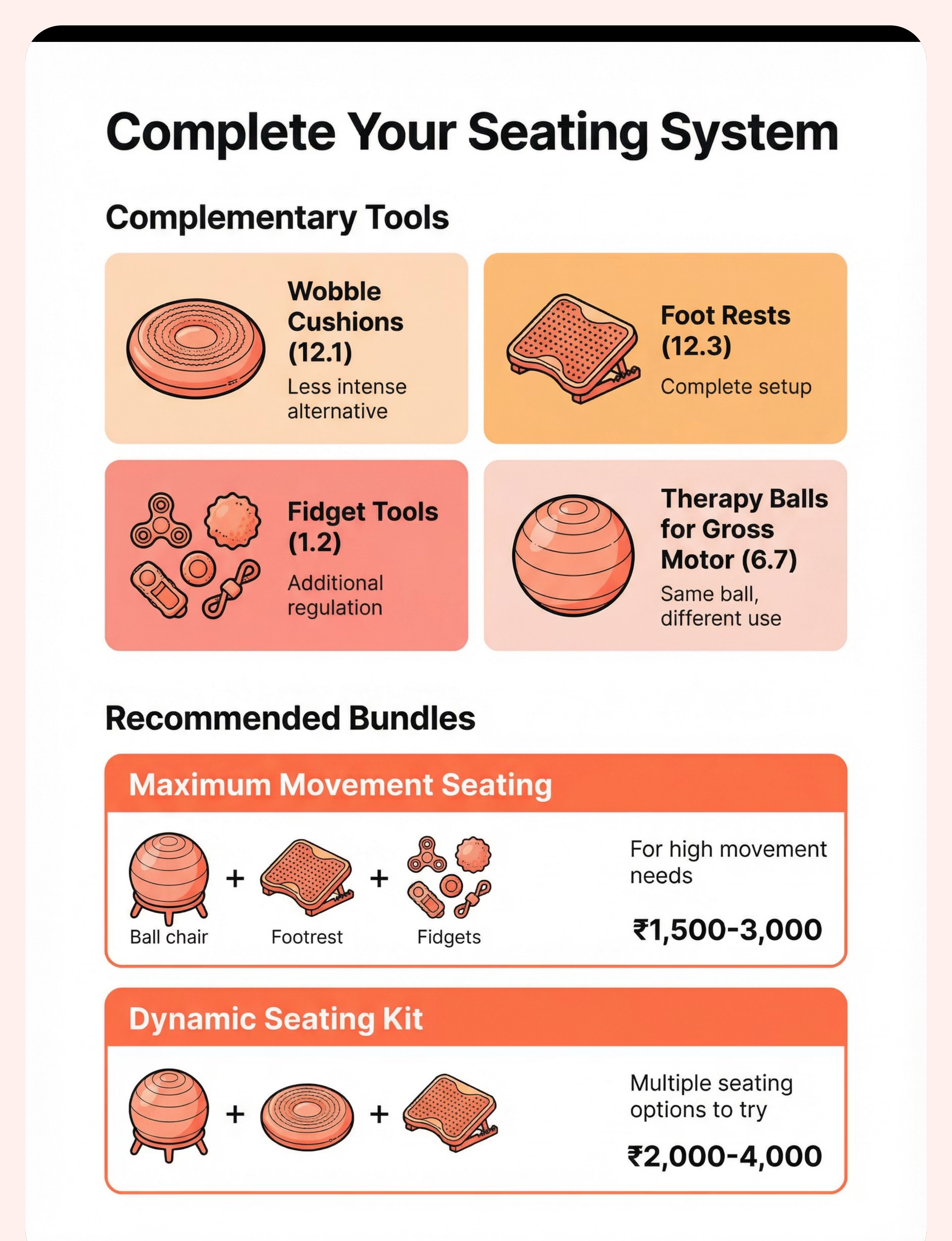
- Maximum Movement Seating Kit: Therapy Ball Chair (12.2) + Foot Rests (12.3) + Fidget Tools (1.2) — For children with high movement needs
- Dynamic Seating Options Kit: Therapy Ball (12.2) + Wobble Cushion (12.1) + Foot Rests (12.3) — Try different seating options to find best fit