















Tool ID: 19.1
Tool ID: 19.1
OT + PT
Strong Evidence
Rank #1
Daily Use
₹5,000–50,000
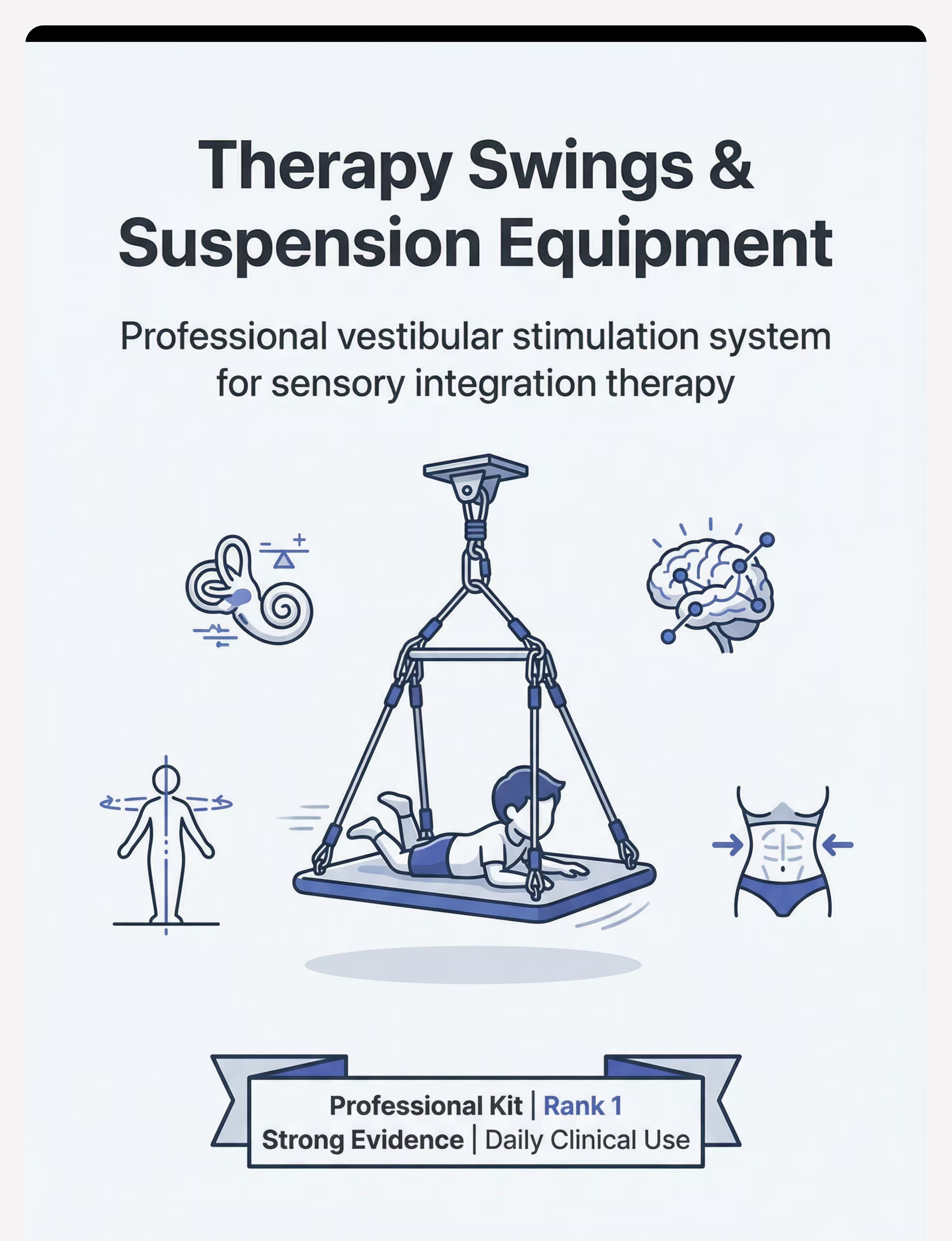
Therapy Swings & Suspension Equipment
Vestibular stimulation and sensory integration system
Who This Helps
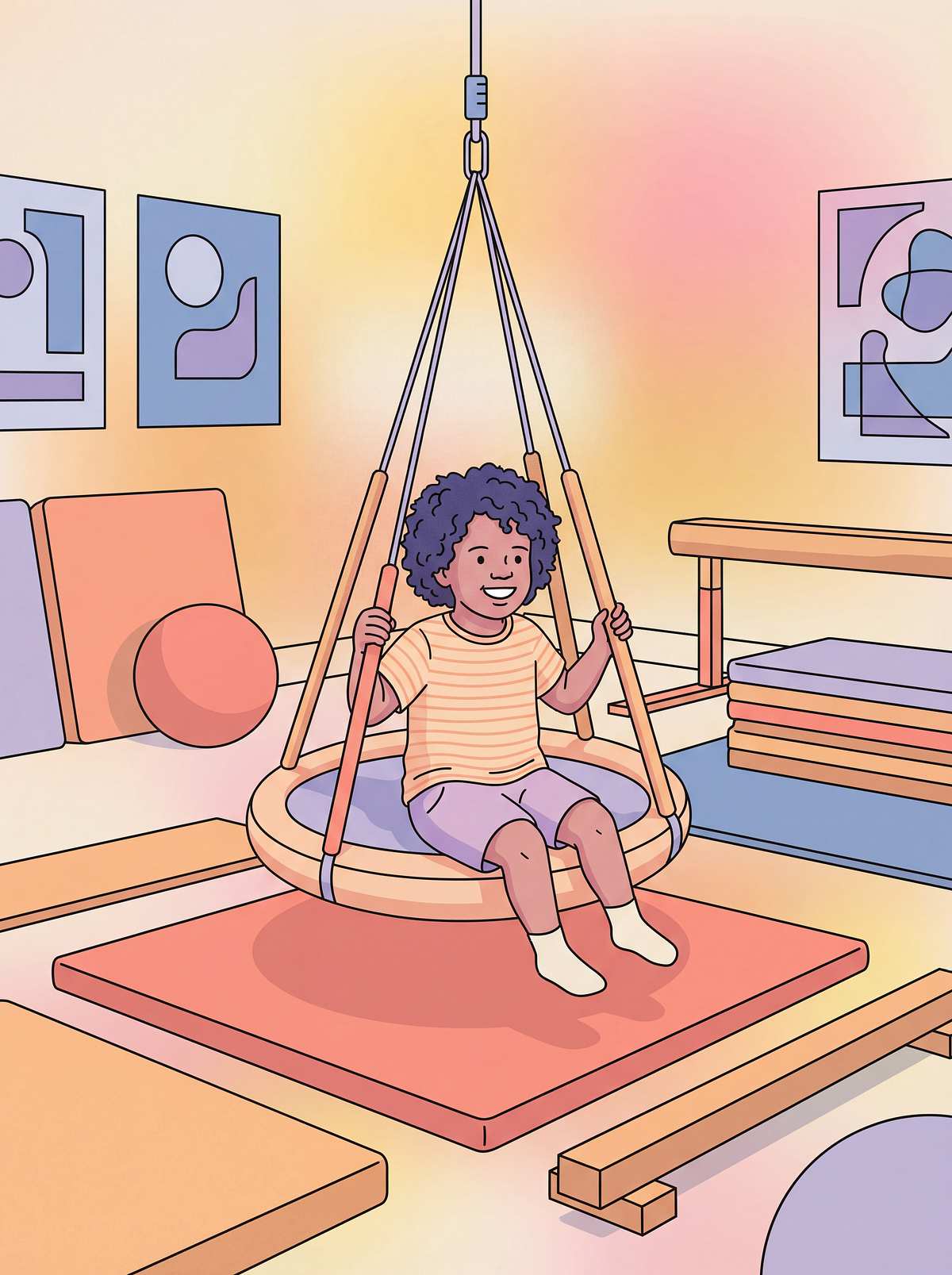
Therapy swings provide controlled vestibular stimulation through suspension equipment, supporting sensory integration therapy, postural control, and motor planning development in clinical settings.
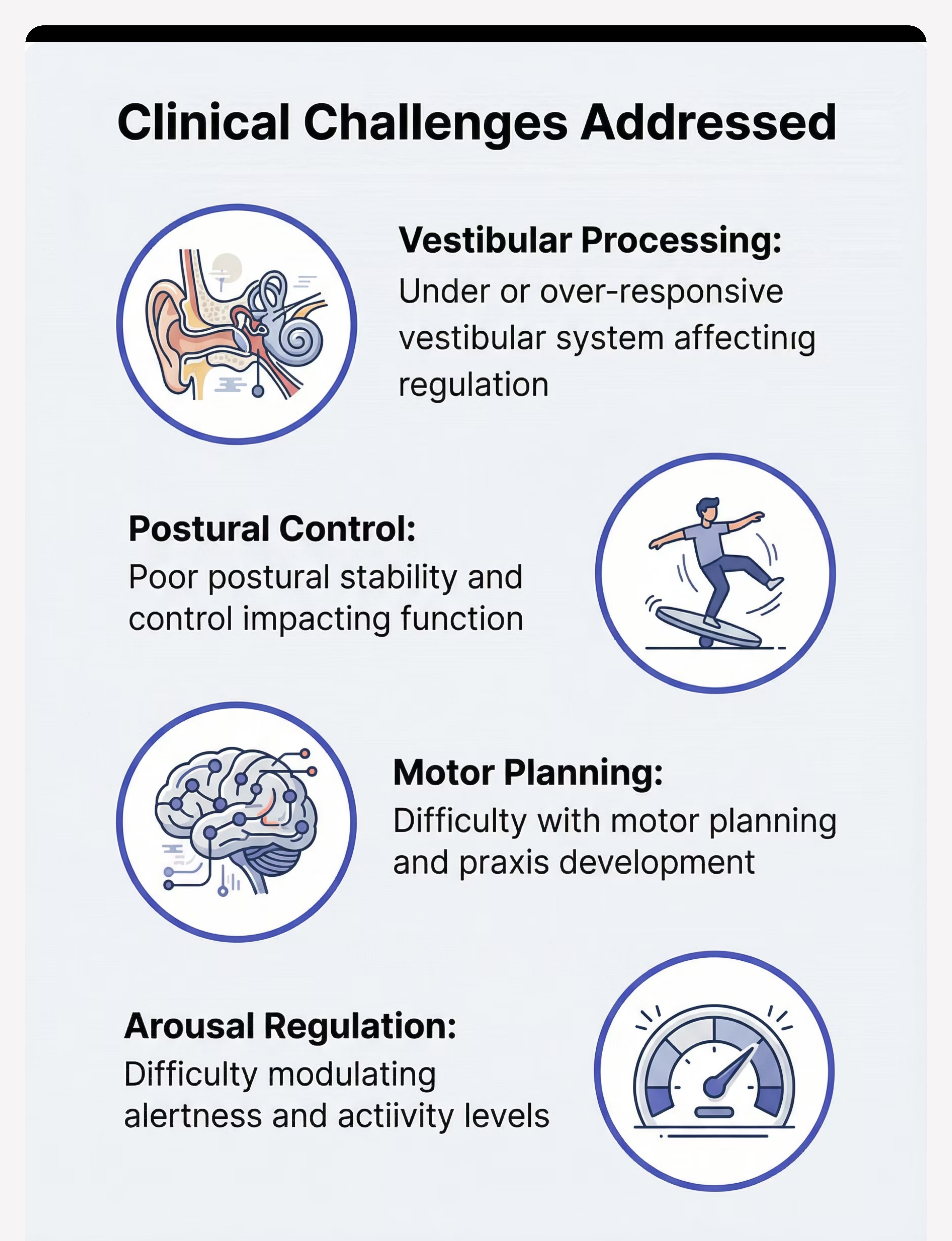
Vestibular Processing
Postural Control
Motor Planning
Core Strength
Bilateral Coordination
Sensory Modulation
Arousal Regulation
Ages 2+ years
Clinic
Specialized Home Setup
Outdoor
Movement Seekers
Children who crave constant movement and sensory input benefit from organized vestibular stimulation
Balance Challenges
Supports children developing postural control and coordination through therapeutic movement
Movement Avoiders
Helps children with gravitational insecurity gradually build movement tolerance and confidence
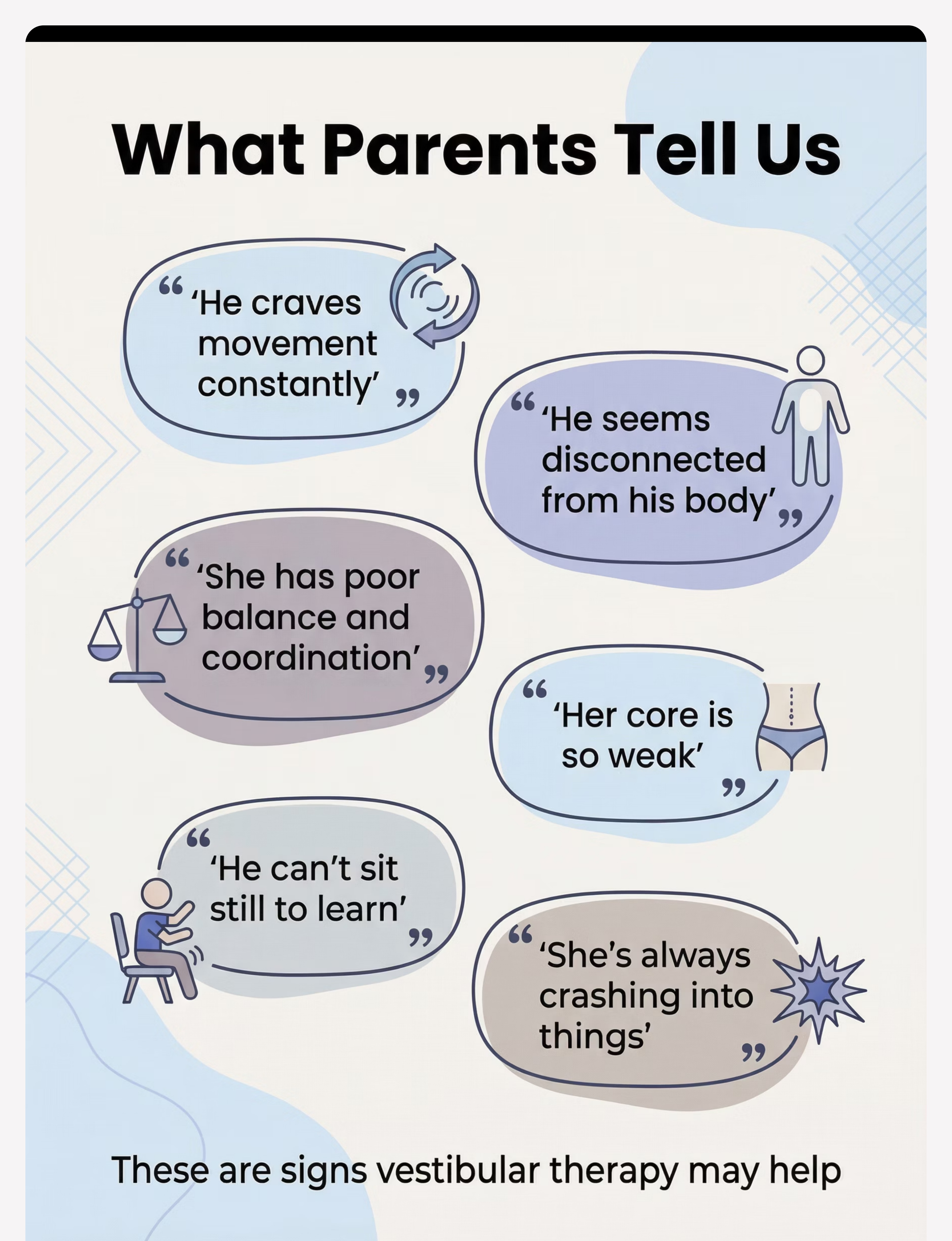
Does This Sound Familiar?
"He craves movement constantly"
"She has poor balance and coordination"
"He seems disconnected from his body"
"Her core is so weak"
"He can't sit still to learn"
"She's always crashing into things"
You're not alone. These are common challenges that occupational therapists address through therapeutic suspension equipment and controlled vestibular activities.
A Day Without the Right Support
Morning
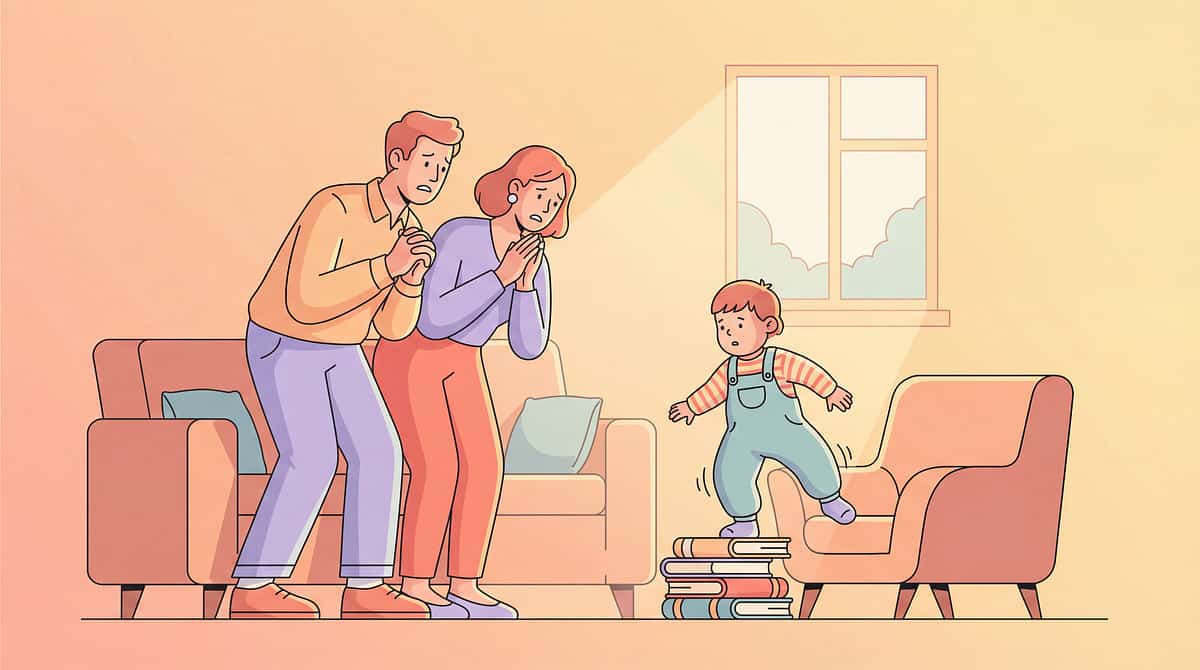
Constant movement seeking. Can't sit for breakfast. Unsafe climbing. Caregivers exhausted before day begins.
Transitions
Difficulty with changes. Poor balance navigating stairs. Fear of playground equipment. Missing peer play opportunities.
Therapy/School
Can't maintain seated position. Slumping and falling. Unable to focus on learning tasks. Postural fatigue interfering with participation.
Bedtime
Under-stimulated vestibular system. Over-aroused state. Difficulty calming for sleep. Family stress and exhaustion.
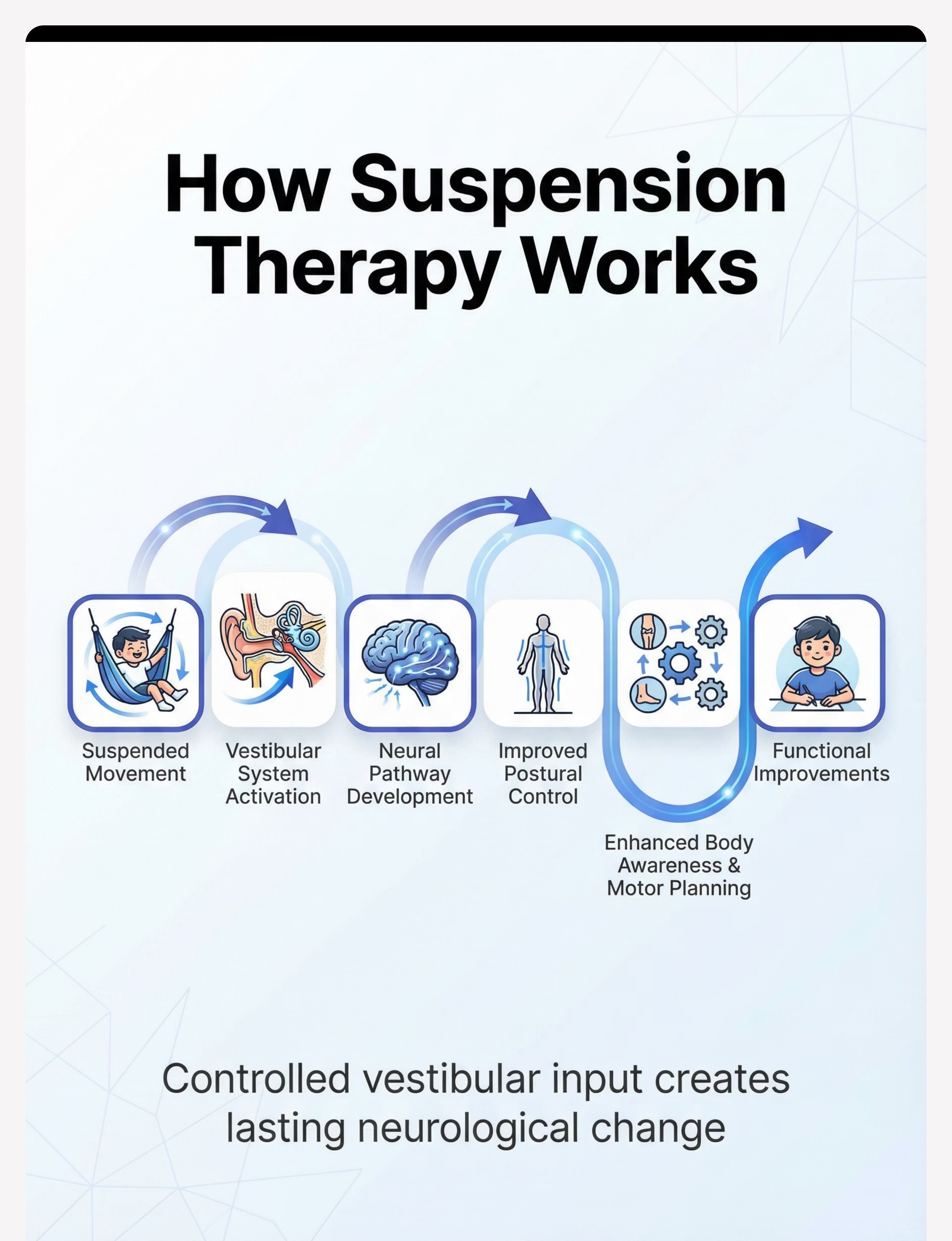
The Science Behind It
Suspended Movement
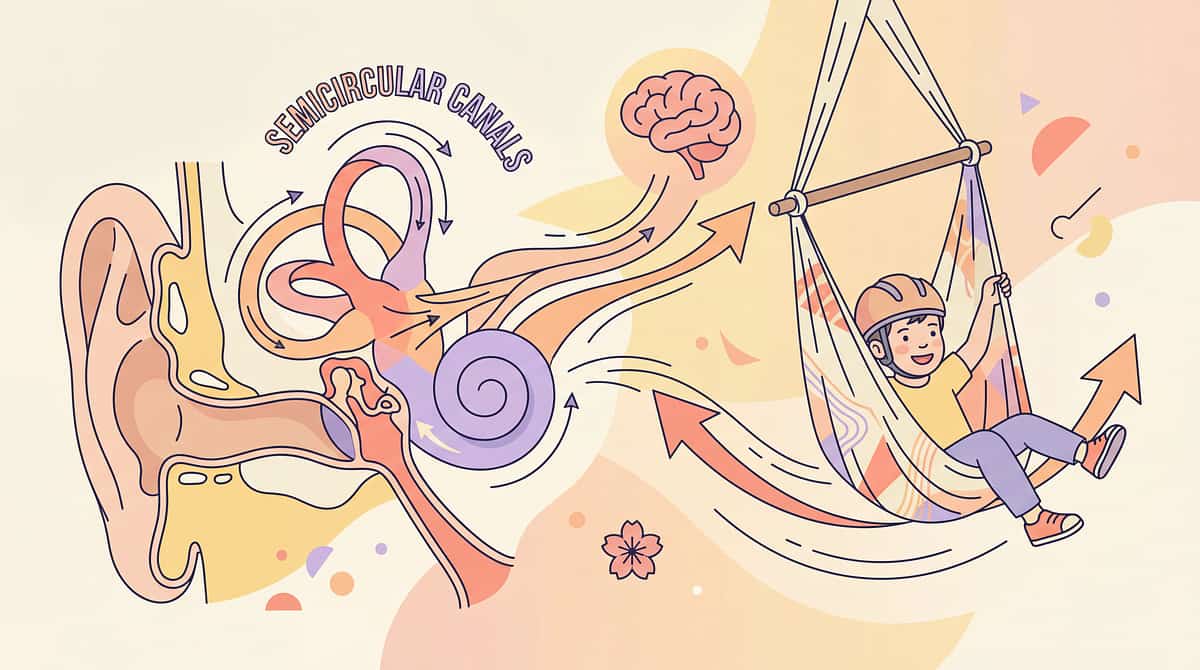
Therapeutic swinging provides controlled input in multiple planes
Vestibular Activation
Inner ear receptors detect movement and send signals to brain
Pathway Development
Neural connections strengthen with repeated, organized input
Postural Control
Body learns to maintain stability during movement challenges
Body Awareness
Enhanced understanding of body position in space develops
Functional Results
Improved regulation, motor skills, and daily function emerge
Target Areas:
Vestibular Processing
Postural Control
Motor Planning
Core Strength
Bilateral Coordination
Sensory Modulation
Arousal Regulation
How to Use It Right
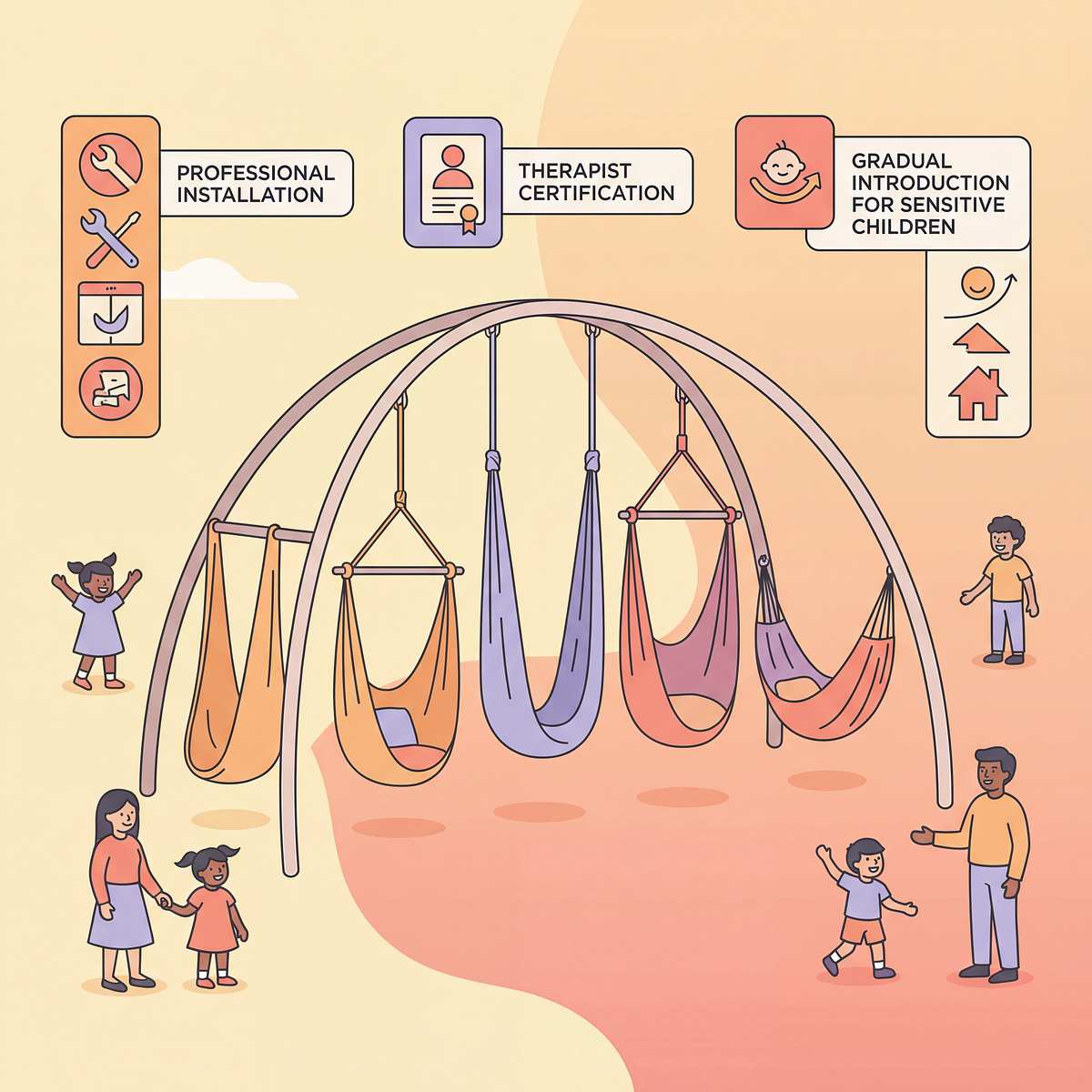
Professional Installation Essential
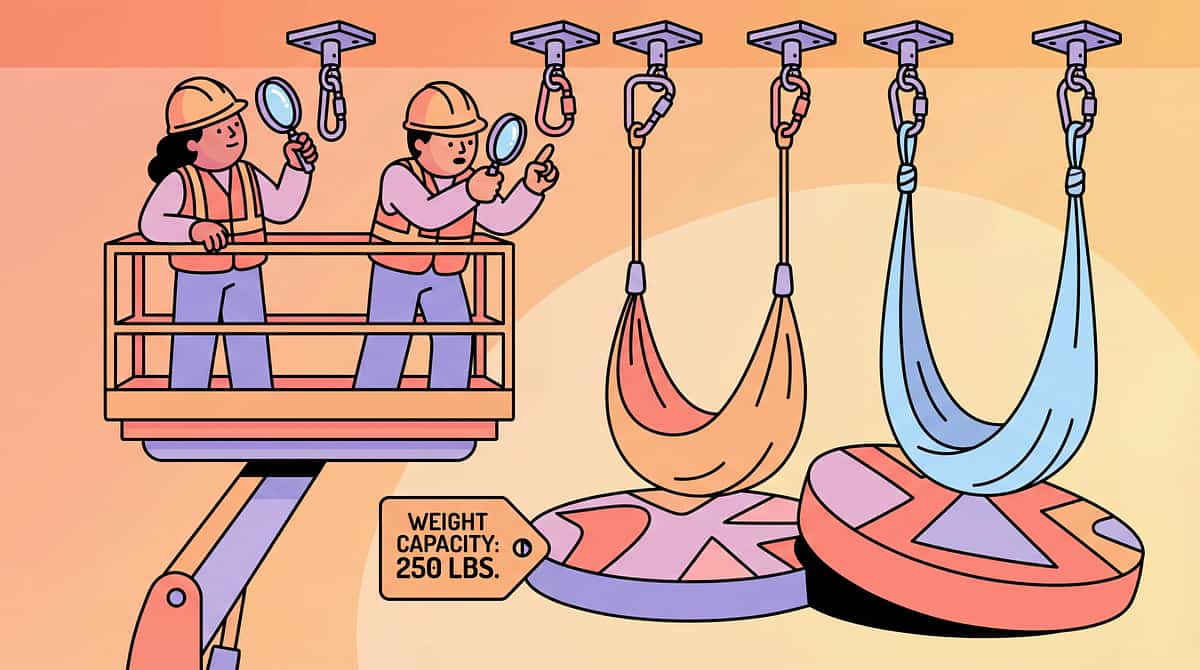
Ceiling structure must support 4x expected weight load. Only professional-grade hardware and installation ensures safety for therapeutic use.
OT/PT Trained in Sensory Integration
Therapist certification in sensory integration ensures appropriate activity selection, grading, and clinical reasoning for vestibular interventions.
Start Slow with Vestibular-Sensitive Children
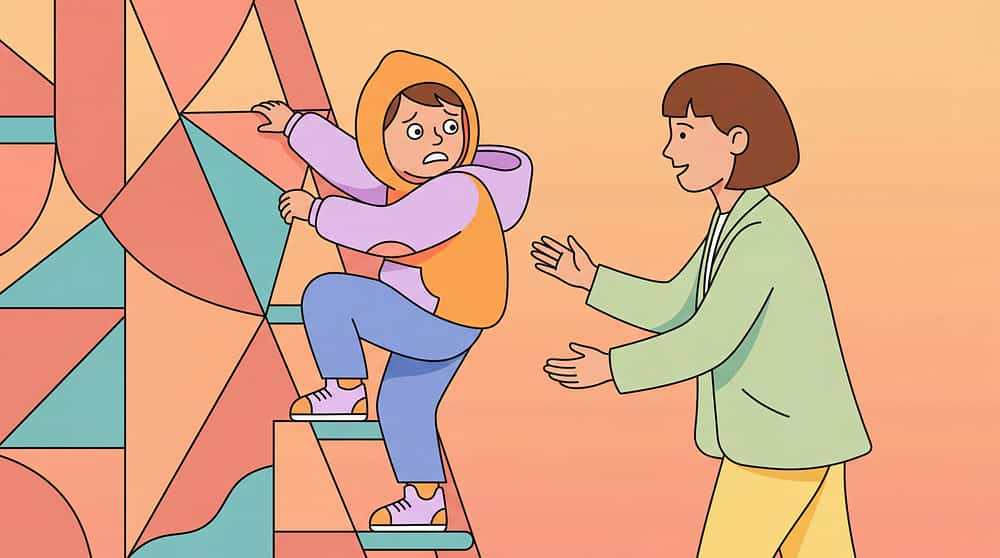
Children with over-responsive vestibular systems require gradual introduction. Monitor tolerance carefully and increase intensity systematically.
Monitor for Signs of Overstimulation
Watch for nausea, pallor, disorientation, or behavior changes. Stop activity immediately if adverse signs appear and allow recovery time.
Combine with Purposeful Activities
Swinging paired with reaching, throwing, or problem-solving tasks enhances motor planning and functional skill development beyond vestibular input alone.
Regular Equipment Safety Checks
Inspect hardware, fabric integrity, and suspension points before each session. Replace worn components immediately to maintain safety standards.
Typical Duration: 5-20 minutes per swing activity during therapy sessions, with activities graded to individual tolerance and therapeutic goals.
Expert Insight
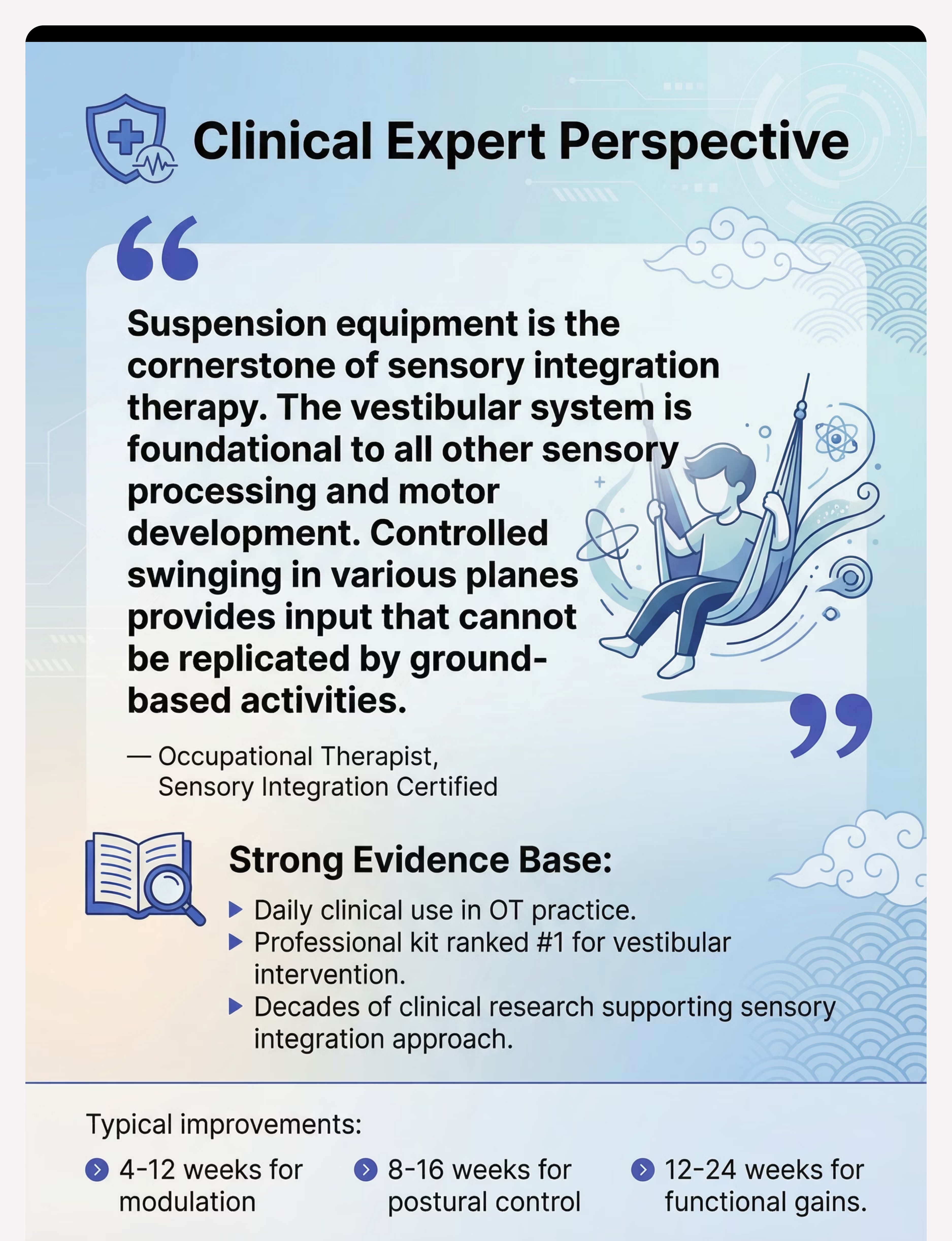
"Suspension equipment is the cornerstone of sensory integration therapy. The vestibular system is foundational to all other sensory processing and motor development. Controlled swinging in various planes provides input that cannot be replicated by ground-based activities."
— Occupational Therapist, Sensory Integration Certified
therapy-swings-suspension-equipment therapy material
OT + PT Recommended
Strong Evidence
Rank #1 in Category
Daily Use in Clinic
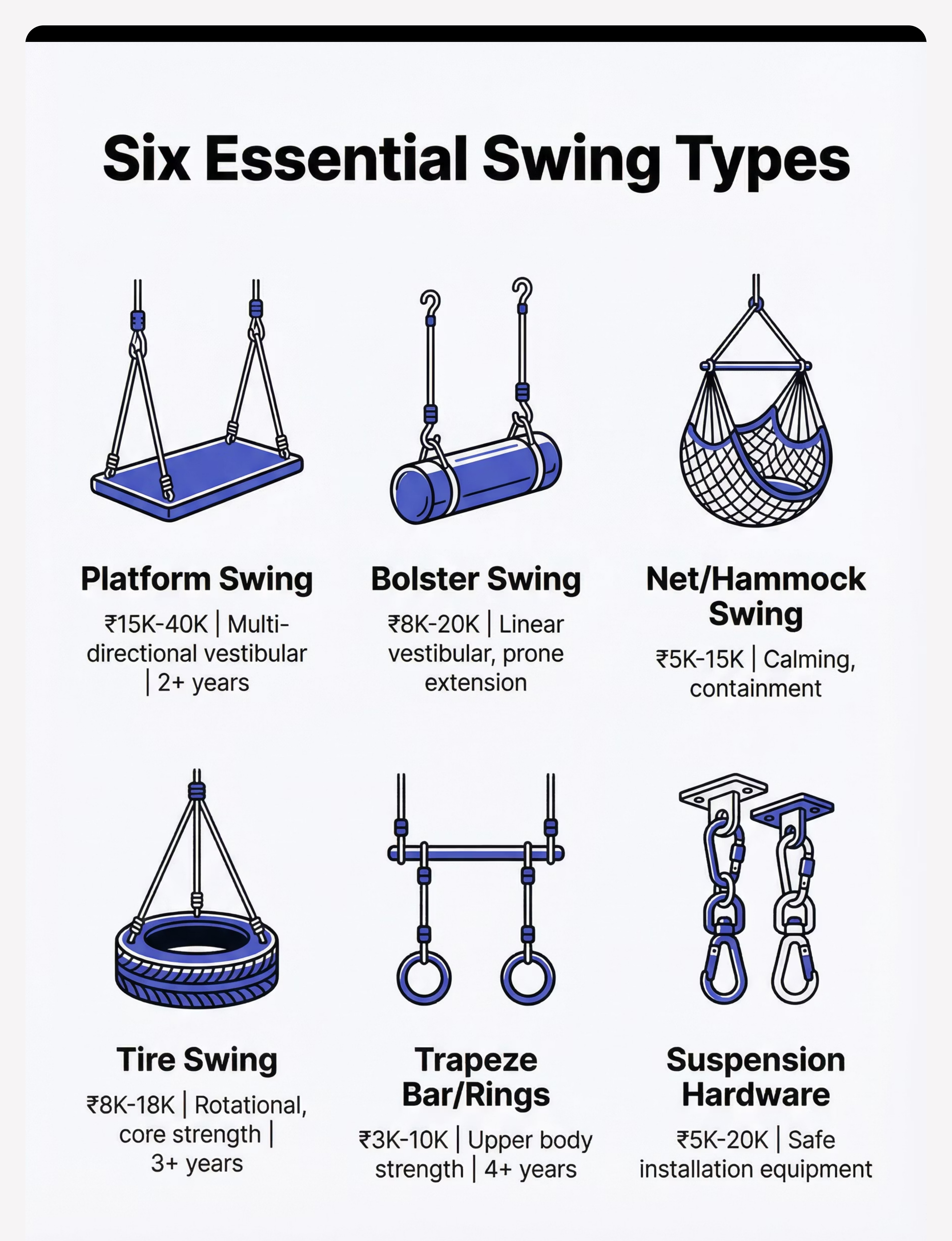
Choose Your Option (6 Variants)
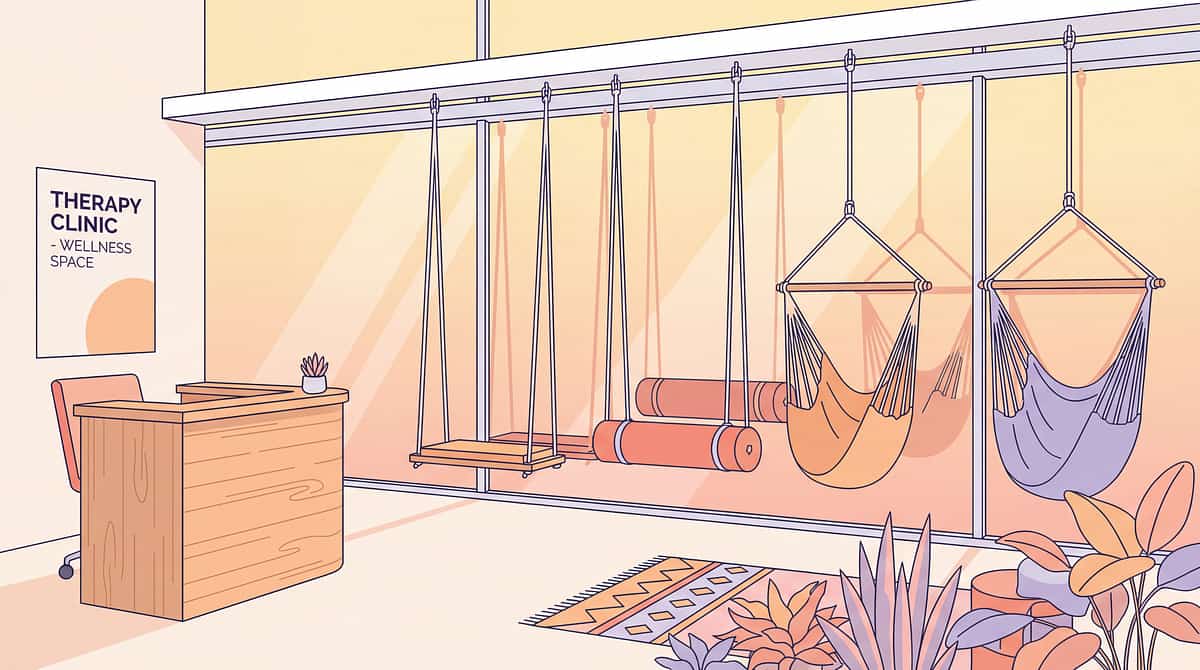
Each swing type provides unique vestibular input and serves different therapeutic goals. Selection depends on child's needs, treatment objectives, and available space.
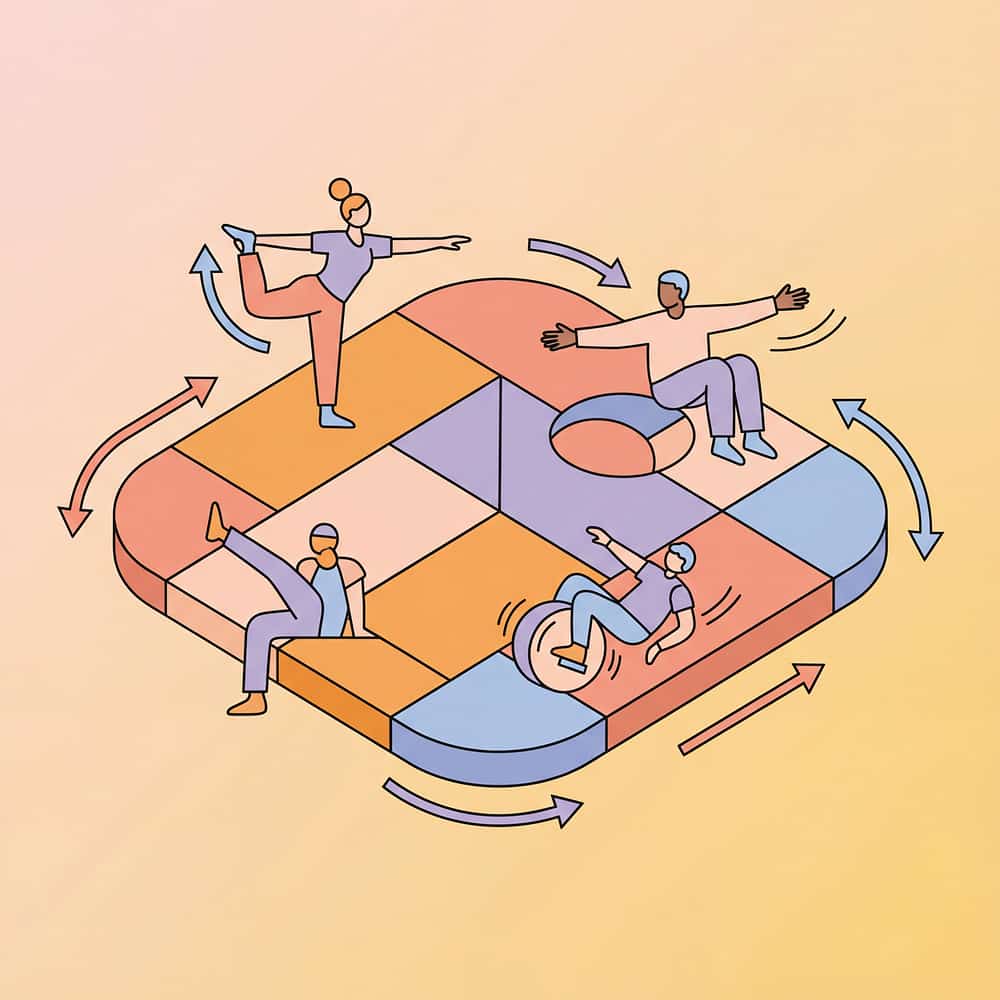
Platform Swing
Platform Swing
Best for: Prone, supine, seated vestibular input
Ages: 2+ years
Settings: Clinic, Specialized home setup
Portability: Very Low (clinic installation)
Price: ₹15,000–40,000
Bolster Swing
Bolster Swing
Best for: Prone extension, core strength, vestibular
Ages: 2+ years
Settings: Clinic
Portability: Very Low
Price: ₹8,000–20,000
Net/Hammock Swing
Best for: Calming, containment, vestibular
Ages: 2+ years
Settings: Clinic, Home (with proper installation)
Portability: Very Low
Price: ₹5,000–15,000
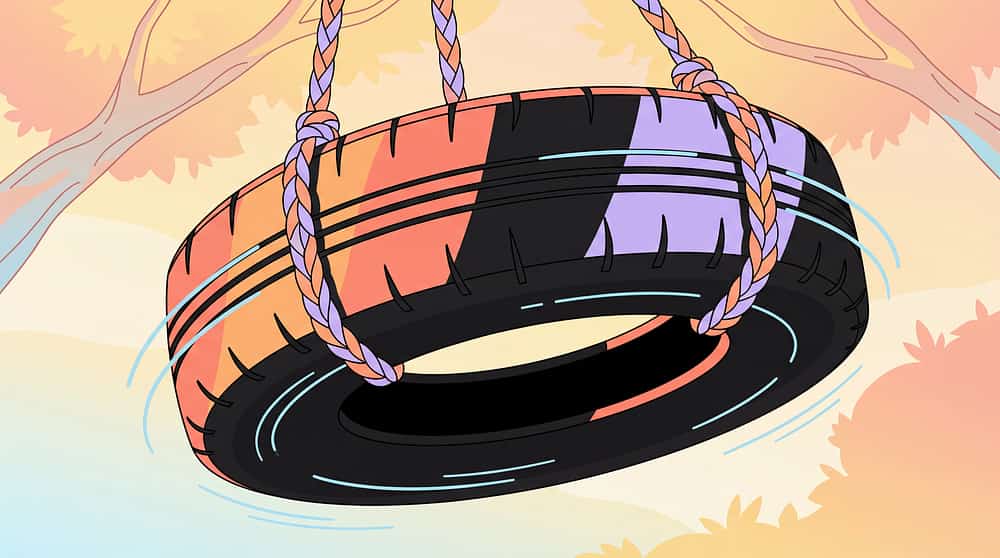
Tire Swing
Best for: Rotation, prone, core
Ages: 3+ years
Settings: Clinic, Outdoor
Portability: Very Low
Price: ₹8,000–18,000
Trapeze Bar / Rings
Best for: Upper body strength, grip, vestibular
Ages: 4+ years
Settings: Clinic
Portability: Low
Price: ₹3,000–10,000
Suspension Hardware
Best for: Safe swing installation
Ages: N/A
Settings: Clinic, Home
Portability: N/A (installation)
Price: ₹5,000–20,000

How to Choose
By Goal
  • Calming/Regulation: Net/Hammock (slow linear)
  • Core Strength: Bolster, Platform
  • Rotation Input: Tire, Net with rotational device
  • Upper Body: Trapeze Bar/Rings
By Setting
  • Clinic Only: Platform, Bolster, Trapeze
  • Home Possible: Net/Hammock (with installation)
  • Outdoor: Tire Swing
By Portability
  • Fixed Installation: All require professional setup
  • Most Versatile: Platform (multiple positions)
  • Simplest: Net/Hammock for home
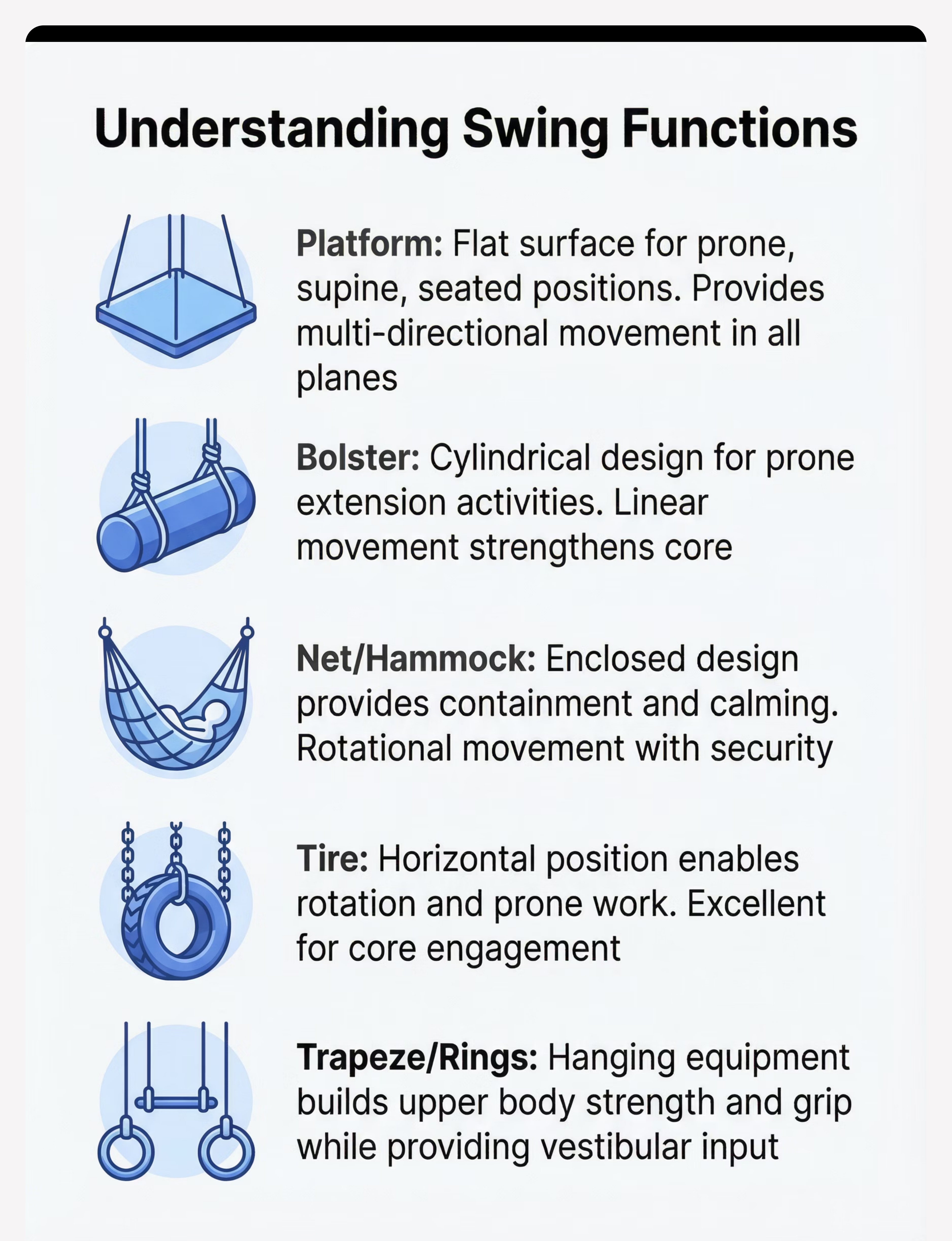
Specifications & Types Guide
Platform Swing
Flat surface for prone, supine, seated; multi-directional movement provides comprehensive vestibular input
Bolster Swing
Cylindrical shape encourages prone extension; linear movement strengthens core and postural control
Net/Hammock Swing
Enclosed design offers containment and calming; rotational movement with deep pressure benefits
Tire Swing
Horizontal tire position for rotation and prone positioning; core and vestibular challenge combined
Trapeze
Bar or rings for hanging, swinging, and upper body strengthening; vestibular input with proprioceptive loading

Materials & Features
therapy-swings-suspension-equipment therapy material
Construction Materials:
  • Heavy-duty fabric/nylon for durability
  • Steel hardware for weight-bearing capacity
  • Foam padding for comfort and safety
  • Rope/chains for suspension
therapy-swings-suspension-equipment therapy material
Key Features to Verify:
  • Weight capacity exceeds user needs
  • Adjustable height for different activities
  • Multiple attachment points for versatility
  • Safety ratings and certifications

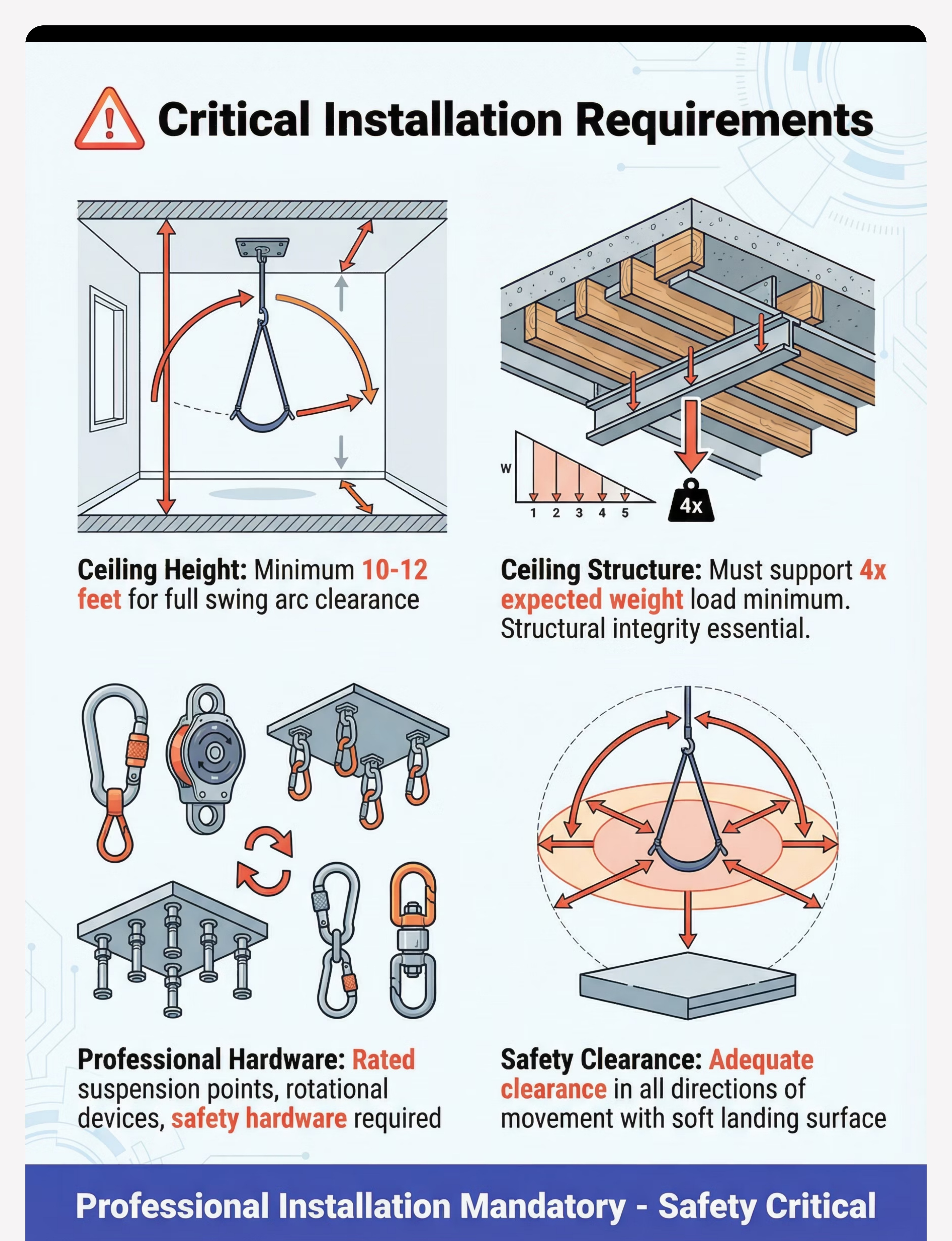
Installation Requirements
therapy-swings-suspension-equipment therapy material
Ceiling Height
Minimum 10-12 feet for full swing arc. Adequate height allows complete range of motion and safe deceleration space.
Ceiling Structure
Must support 4x expected weight load minimum. Structural evaluation by engineer required before installation.
Professional Hardware
Professional-grade suspension points, rotational devices, and rated hardware essential for safety.
Clearance Space
Adequate clearance in all directions of movement. Consider arc radius, plus safety margin for all swing types.
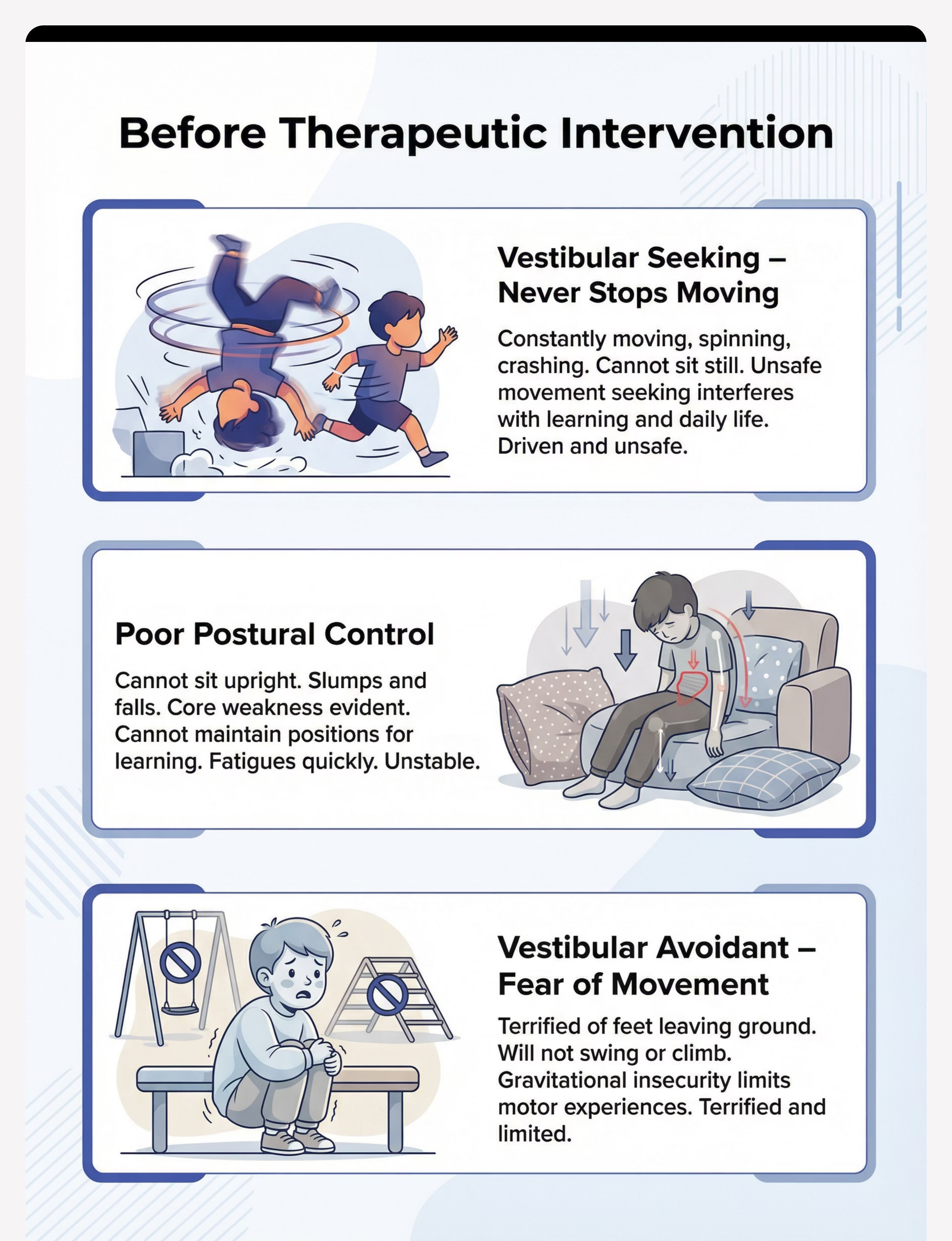
The Struggle (Before)
Vestibular Seeking - Never Stops Moving
Situation: Child constantly moving, spinning, crashing. Can't sit still. Unsafe movement seeking. Interferes with learning and daily life.
Experience: Driven movement that cannot be satisfied. Disrupts classroom, home routines, safety concerns throughout the day.
Emotion: Driven to move, unsafe
Poor Postural Control
Situation: Can't sit upright. Slumps. Falls off chair. Core weakness. Can't maintain positions for learning. Fatigues quickly.
Experience: Constant struggle to maintain seated position. Learning opportunities missed due to postural fatigue. Independence limited.
Emotion: Unstable, fatigued
Vestibular Avoidant - Fear of Movement
Situation: Terrified of feet leaving ground. Won't swing, climb, or move. Gravitational insecurity. Limited motor experiences. Missed development.
Experience: Extreme fear prevents participation in playground, physical education, typical childhood experiences. Social isolation developing.
Emotion: Terrified, limited
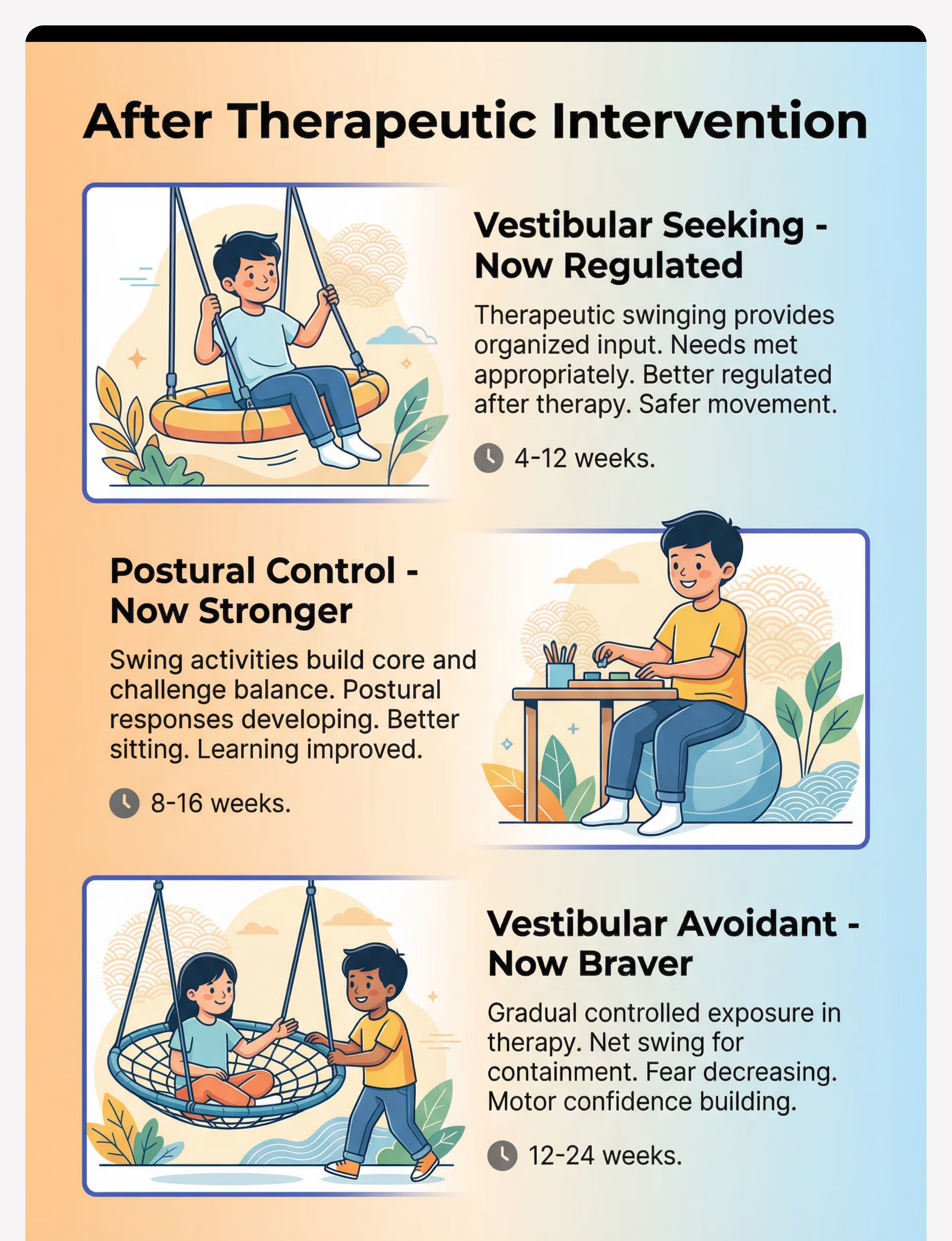
The Breakthrough (After)
Vestibular Seeking - Never Stops Moving
Situation: Therapeutic swinging provides organized vestibular input. Needs met appropriately. Better regulated after therapy. Safer movement.
Experience: Controlled environment satisfies sensory needs. Regulation strategies learned. Carry-over to home and school improving.
Emotion: Satisfied, regulated
Timeline: 4-12 weeks
Poor Postural Control
Situation: Swing activities build core, challenge balance. Postural responses developing. Better sitting. Can maintain positions. Learning improved.
Experience: Graduated challenges strengthen core muscles and postural reflexes. Endurance increasing. Academic participation improving with better positioning.
Emotion: Stronger, stable
Timeline: 8-16 weeks
Vestibular Avoidant - Fear of Movement
Situation: Gradual, controlled exposure in therapy. Net swing for containment. Slow introduction. Fear decreasing. Motor confidence building.
Experience: Supportive environment allows safe exploration. Small successes build confidence. Beginning to join peers on playground equipment.
Emotion: Braver, growing
Timeline: 12-24 weeks
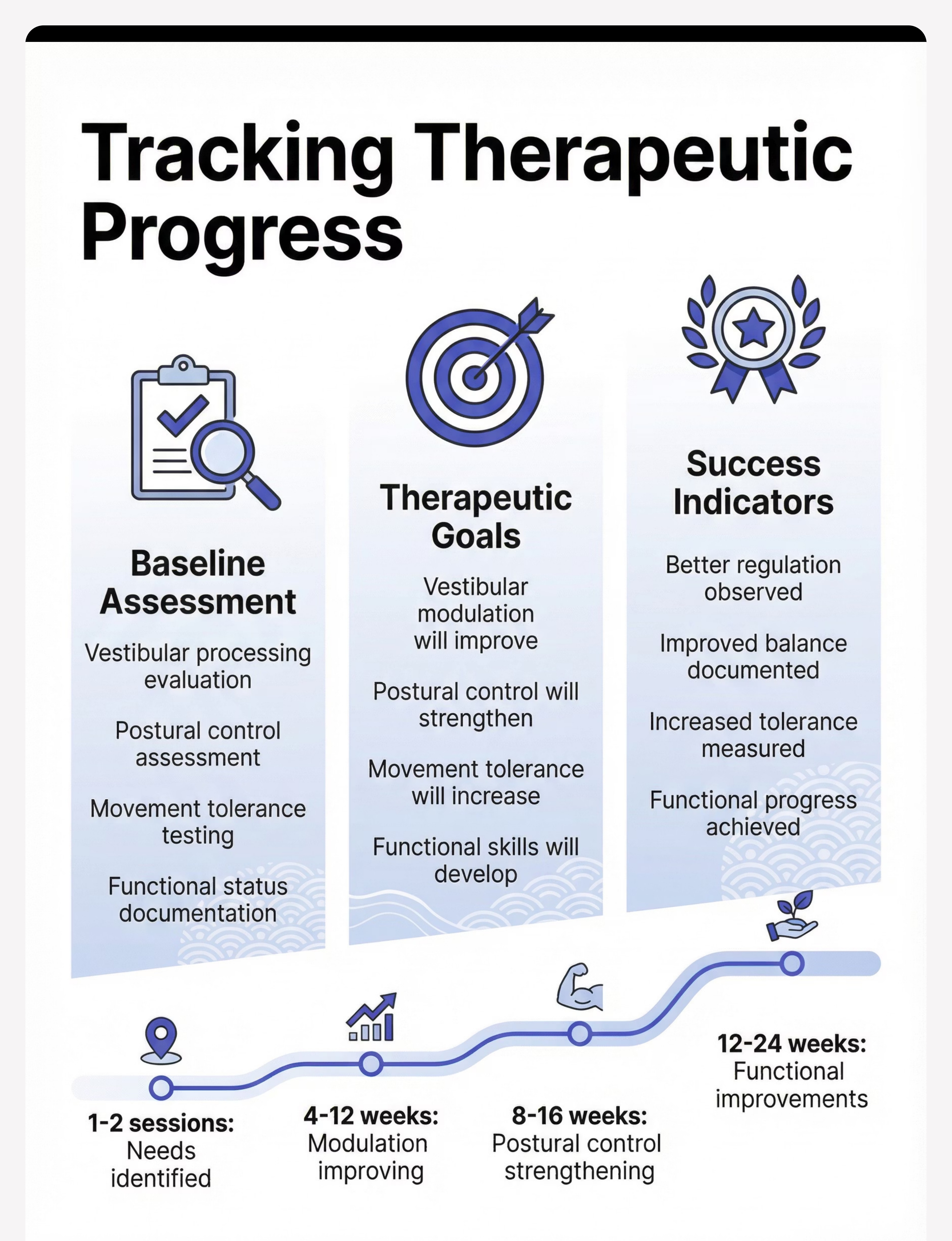
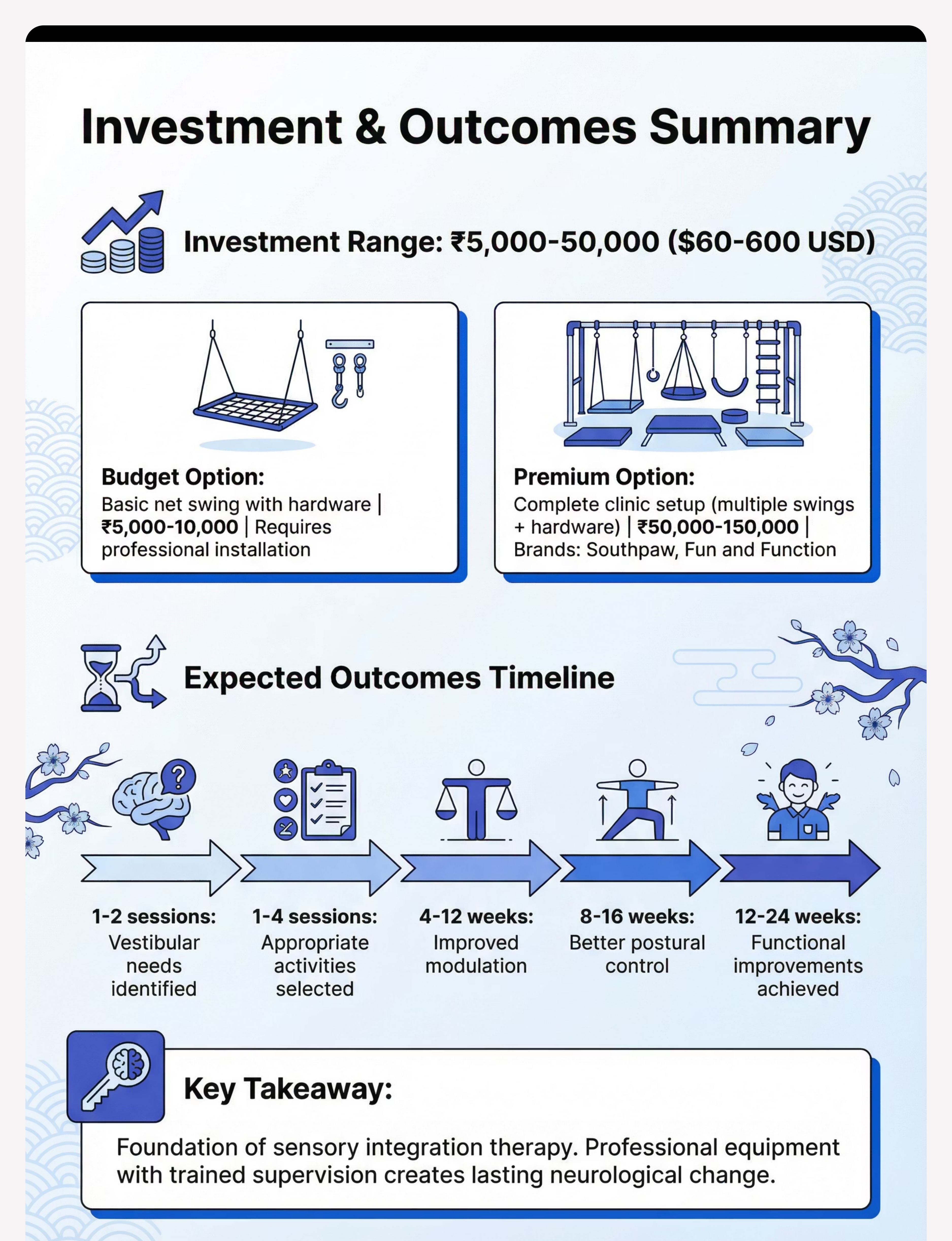
What to Expect (Realistic Timelines)
1-2 Sessions
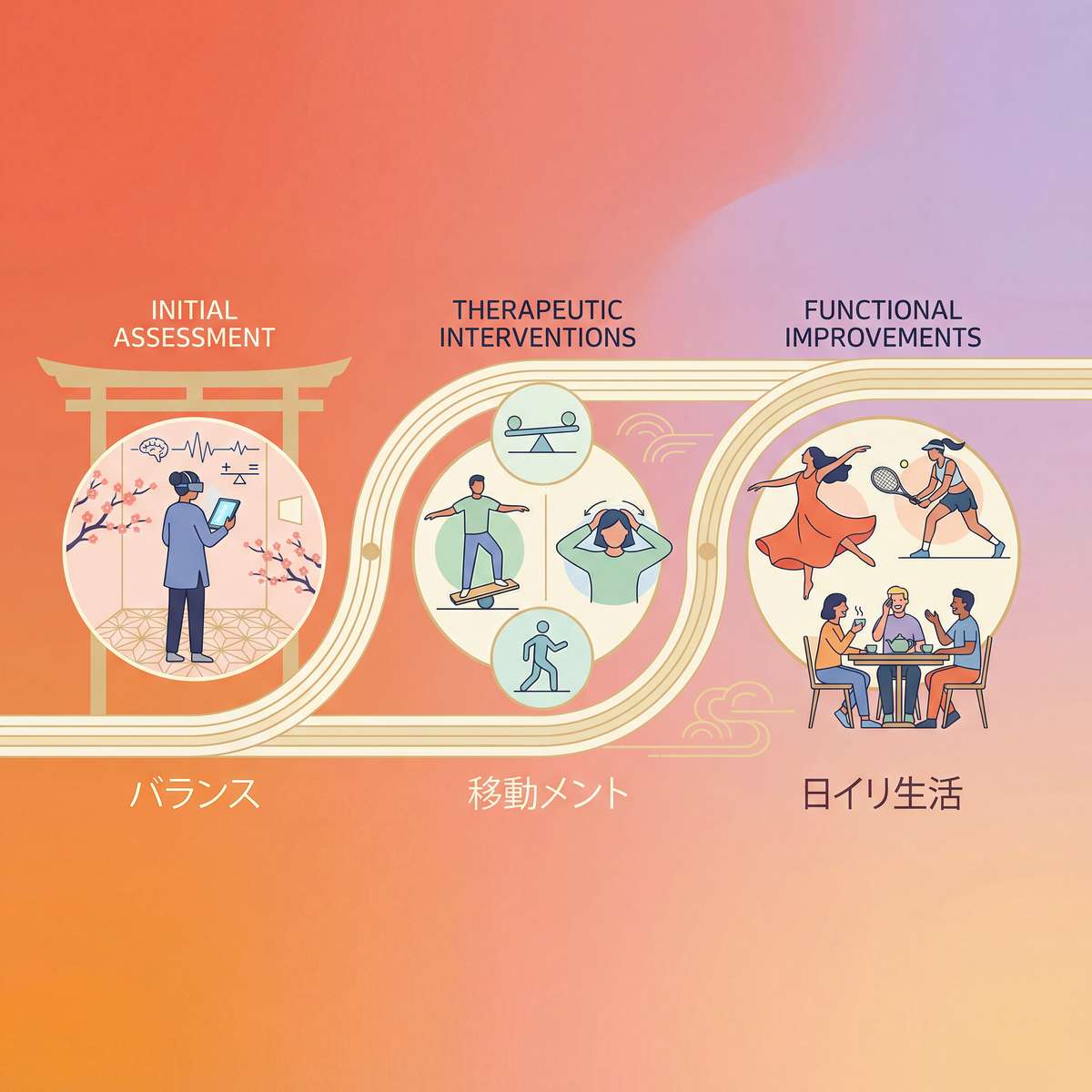
Vestibular needs identified — Initial assessment determines vestibular processing profile, tolerance levels, and therapeutic priorities
1-4 Sessions
Appropriate swing activities selected — Therapist identifies optimal swing types, movement patterns, and activity combinations for goals
4-12 Weeks
Improved vestibular modulation — Regulation of arousal improving. Better tolerance for movement. Sensory needs more appropriately met
8-16 Weeks
Better postural control — Core strength developing. Balance responses maturing. Can maintain positions for learning and function
12-24 Weeks
Functional improvements — Gains carrying over to daily life. Academic performance, social participation, and independence all improving

Individual Results Vary: Timelines depend on frequency of therapy, severity of challenges, co-occurring conditions, and home program follow-through. Your occupational therapist will develop realistic expectations specific to your child's profile.
Is This Right for My Child? (2-Minute Check)
Does your child seek or avoid movement excessively?
If yes, this indicates: Vestibular therapy may help regulate sensory processing and improve modulation
Confidence: 95%
Does your child have poor balance or coordination?
If yes, this indicates: Suspension activities beneficial for developing postural control and motor skills
Confidence: 90%
Does your child have weak core/postural control?
If yes, this indicates: Swing therapy can address core strengthening and postural stability needs
Confidence: 88%
Is your child receiving OT with sensory integration approach?
If yes, this indicates: Likely using or could use swings as part of comprehensive treatment plan
Confidence: 85%
Scoring: 3+ "yes" answers = strong fit. Discuss these findings with your occupational therapist to determine if suspension equipment should be part of your child's intervention plan.
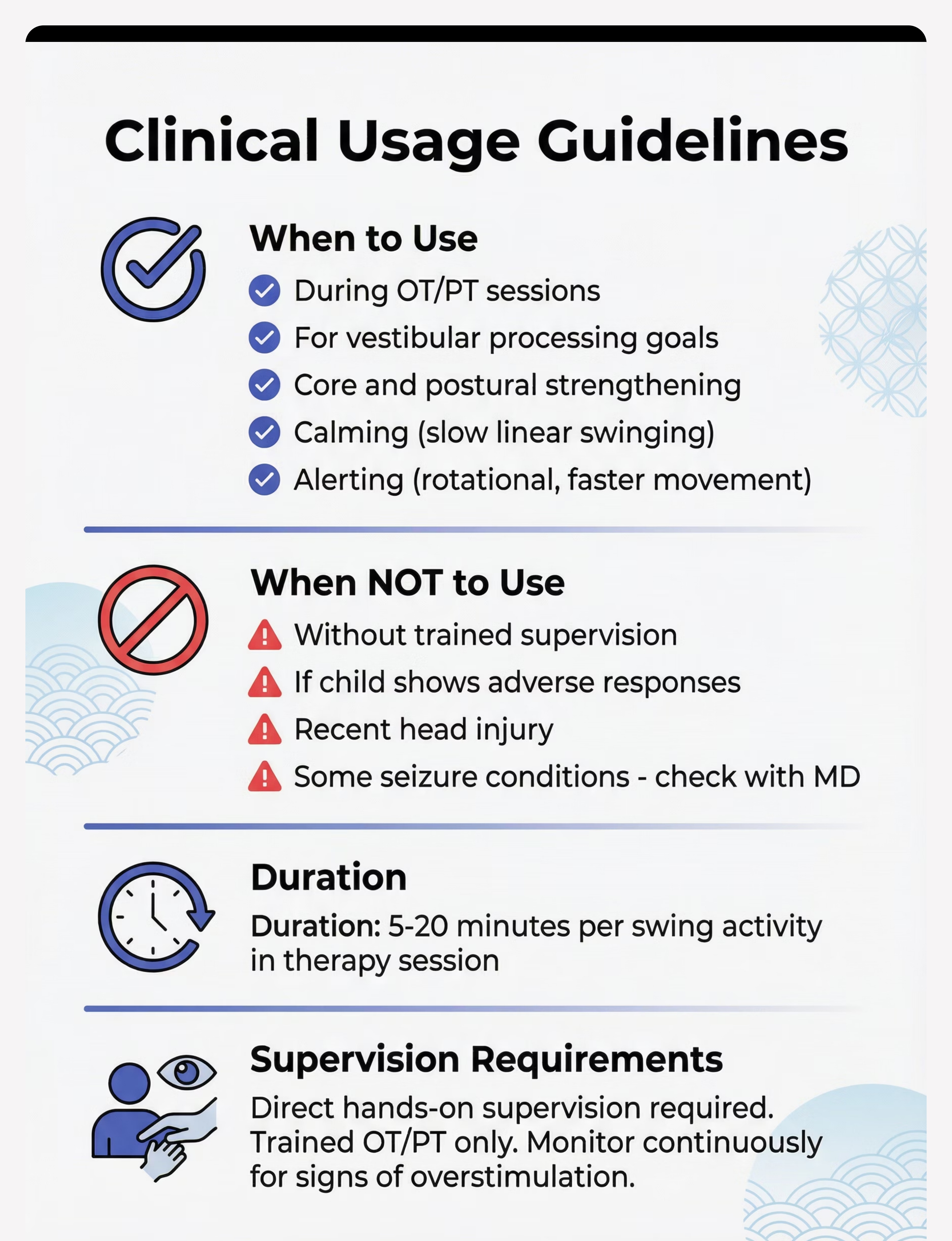
Usage Guide
When to Use ✓
  • During OT/PT sessions under trained supervision
  • For vestibular processing goals and sensory integration
  • Core strengthening and postural control development
  • Calming interventions (slow linear swinging)
  • Alerting activities (rotational, faster movement)
When NOT to Use ✗
  • Without trained professional supervision
  • If child shows adverse responses (nausea, pallor)
  • Recent head injury or concussion
  • Some seizure conditions (consult physician)

Supervision by Age
Age Range
Supervision Level
Notes
Young children (2-4 years)
Direct hands-on supervision
Constant physical support, spotting, and monitoring required throughout activity
Developing skills (5-8 years)
Close supervision with spotting
Within arm's reach, ready to provide support. Teaching safety rules and self-monitoring
Older children (9+ years)
Visual supervision
Teaching independent safety awareness. Therapist monitoring from distance with periodic check-ins
Duration: 5-20 minutes per swing activity during therapy sessions. Duration adjusted based on individual tolerance, therapeutic goals, and vestibular processing capacity.
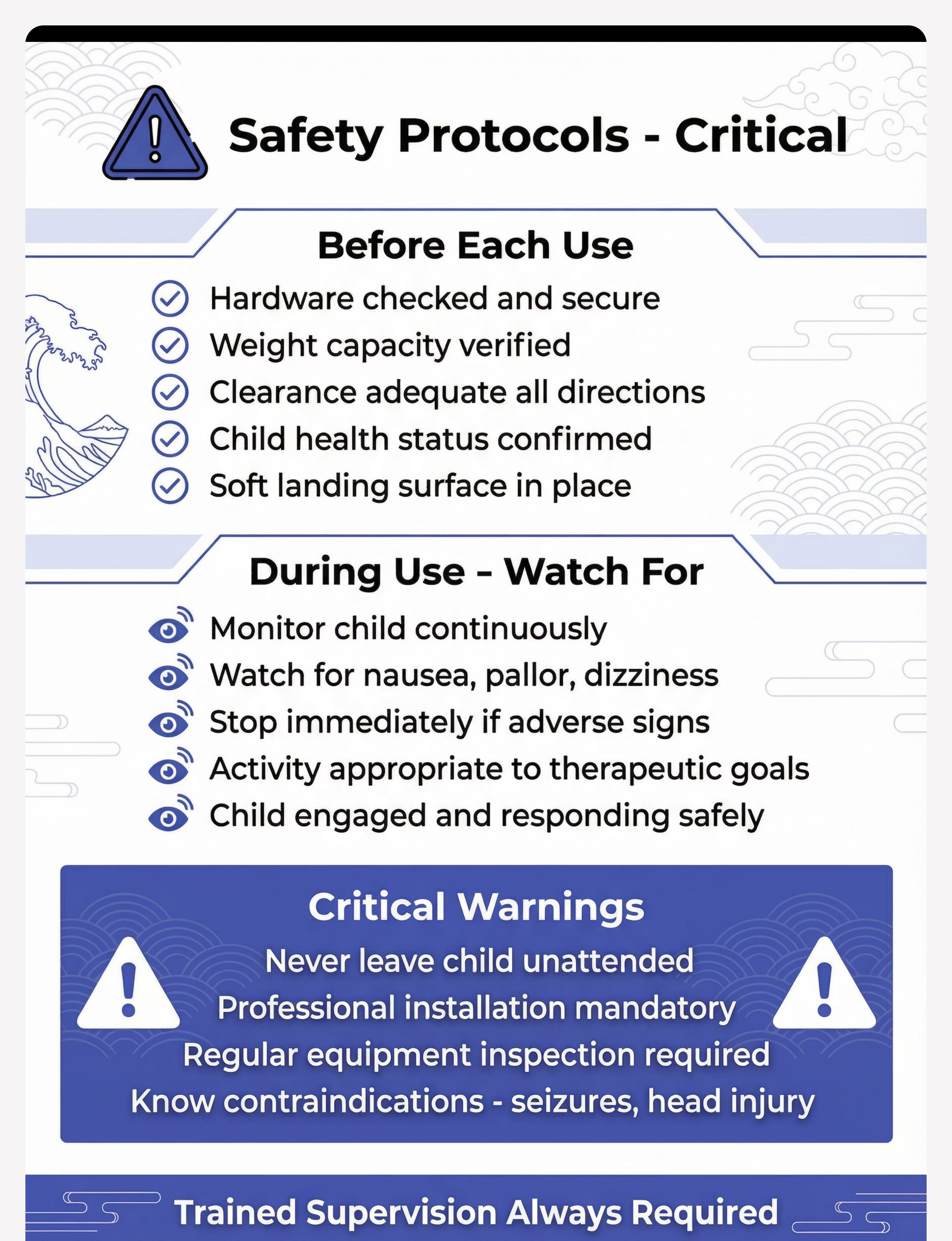
Safety First
Critical Safety
  • Professional installation mandatory — never DIY suspension points
  • Weight capacity must be 4x expected load minimum
  • Regular equipment inspection before each use
  • Trained supervision always required during use
  • Adequate clearance in all directions of movement
  • Soft landing surface below (mats minimum 6 inches thick)
Warnings
  • Watch for nausea, pallor, disorientation (stop immediately if seen)
  • Never leave child unattended on suspension equipment
  • Check all hardware, fabric integrity before each use
  • Know contraindications for each child's medical profile
Contraindicated For
  • Seizure disorders (some types) — consult neurologist
  • Recent head injury or concussion
  • Unsupervised use — professional oversight required
  • Severe motion sensitivity without gradual introduction

Safety Checklists
Before Use
  • ☐ All hardware checked and secure
  • ☐ Weight capacity verified for user
  • ☐ Clearance adequate all directions
  • ☐ Child health status reviewed
  • ☐ Soft landing surface in place
During Use
  • ☐ Child monitored continuously
  • ☐ Watching for adverse signs
  • ☐ Activity appropriate to goals
  • ☐ Child engaged and safe
  • ☐ Duration not exceeding tolerance
Signs of Success
  • ☐ Better vestibular modulation
  • ☐ Improved postural control
  • ☐ Reduced movement seeking/avoiding
  • ☐ Functional gains in daily life
  • ☐ Positive engagement in activities
Common Questions (Honest Answers)
Q: We don't have space for this at home
A: This is primarily clinic equipment designed for professional therapeutic settings. Some families install simplified versions at home with proper structural support and professional installation. Doorway swings offer home alternatives for basic sensory input.
Try this: Focus on clinic use primarily. Discuss doorway swing options with your OT for home sensory diet activities.
Q: My child is scared of swings
A: Therapy directly addresses this fear! Sensory integration-trained OTs use gradual exposure techniques. Starting with contained swings like net/hammock provides security. Child controls movement initially. Building tolerance and confidence is actually a primary therapeutic goal for these children.
Try this: Gradual exposure under OT guidance. Child-controlled movement initially. Celebrate small wins in building movement tolerance.
Q: Is this just playing?
A: Therapeutic swinging is purposeful clinical intervention, not recreation. Controlled vestibular input directly affects brain development and neural pathway formation. Activities are carefully designed and graded for specific therapeutic goals. Play is the primary vehicle through which children learn and develop.
Try this: Understand that purposeful therapeutic play is evidence-based intervention. Ask your OT to explain the specific goals being addressed.
Q: How often do they need this?
A: Typically 1-2 times weekly during OT sessions incorporating swing activities as part of comprehensive sensory integration treatment. Home activities and sensory diet strategies supplement clinic intervention. Duration and frequency depend on individual needs and goals. Your OT develops specific treatment plan.
Try this: Follow OT recommended frequency. Implement complementary home program. Consistency yields best results.
Investment Guide
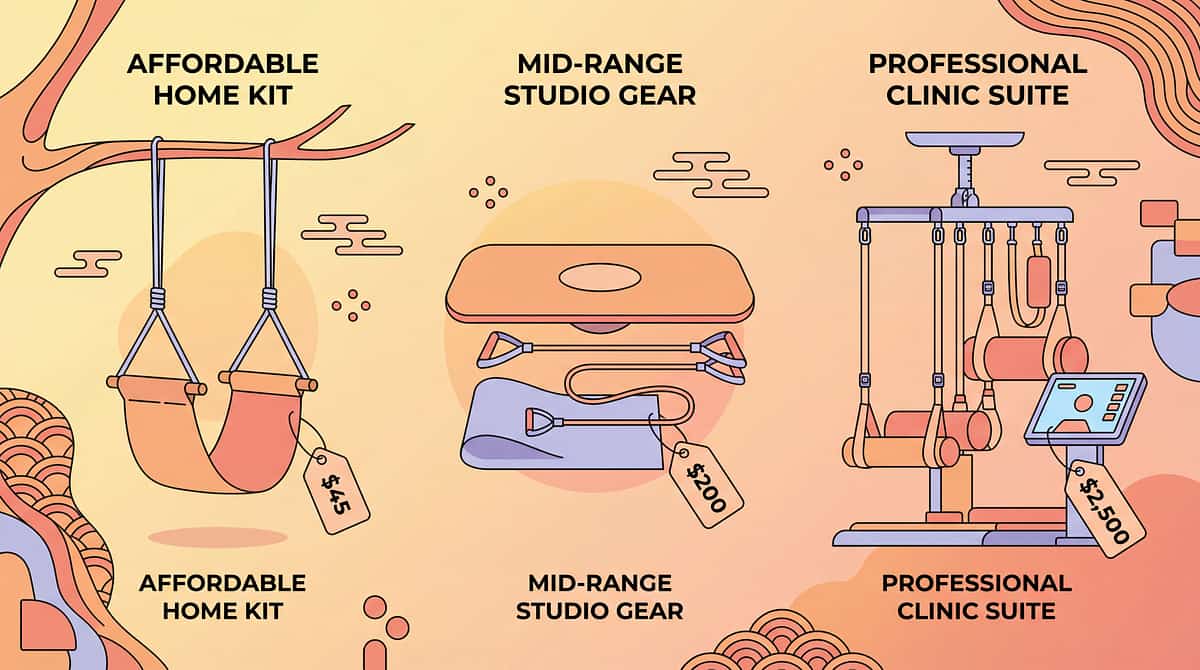
Overall Range: ₹5,000–50,000 (US$60–600)
Investment varies significantly based on swing type, quality, and whether purchasing for home or clinic use. Professional-grade clinic equipment represents higher initial investment but offers durability and therapeutic versatility.
Detailed Price Breakdown by Swing Type
Swing Type
Estimated Cost (INR)
Primary Use/Notes
Basic Net Swing (with Hardware)
₹5,000–10,000
Simple home option for calming & vestibular input; requires professional installation.
Platform or Bolster Swing (single)
₹15,000–40,000
Essential for clinic use, offers maximum therapeutic versatility.
Complete Clinic Setup
₹50,000–150,000
Professional clinics/schools; includes multiple swing types, rotational hardware, safety equipment, installation.
Key Features & Considerations
Home Use Options
Basic net swings provide effective calming and vestibular input for home under OT guidance, with proper installation.
Therapeutic Versatility
Professional-grade equipment like platform or bolster swings offer diverse therapeutic activities in clinic settings.
Safety & Installation
All swings, especially in home settings, require professional structural assessment and installation for user safety.
Quality & Durability
Higher initial investment in professional-grade equipment ensures longevity and consistent performance for therapy.
Investment Progression
Starter Home Option
Begin with a basic net swing (₹5,000-10,000) for effective, calming sensory input at home.
Essential Clinic Equipment
Invest in a versatile platform or bolster swing (₹15,000-40,000) for broader therapeutic applications in clinics.
Comprehensive Clinic Setup
For full functionality, consider a complete clinic setup (₹50,000-150,000) with multiple swing types and safety features.
Where to Buy in India
Availability: Specialized Therapy Suppliers, select online platforms, international suppliers with India shipping
Therapy Equipment Suppliers
Search Terms: "therapy swing occupational"
Price Range: ₹8,000-40,000
Amazon.in
Search Terms: "sensory swing kids"
Price Range: ₹2,000-8,000 (home versions)
International (Southpaw, etc.)
Search Terms: "Southpaw therapy swings"
Price Range: ₹20,000-60,000
Local Fabrication
Search Terms: "custom therapy swing"
Price Range: Variable (quote-based)
Hardware Stores
Search Terms: "ceiling mount swing hardware"
Price Range: ₹2,000-10,000

Buying Tips
  • Professional installation essential for safety — never compromise on this
  • Weight capacity must significantly exceed expected use for safety margin
  • Rotational devices (swivels) add significant therapeutic value for vestibular input
  • Consider ceiling structure before purchasing — may need reinforcement
  • Regular safety inspections required — establish maintenance schedule
  • Consult with child's OT before purchasing for home use

Red Flags to Avoid
  • Non-professional installation or DIY suspension points
  • Inadequate weight ratings for intended use
  • Poor quality hardware (rust, weak materials, no certifications)
  • Insufficient ceiling structure without proper reinforcement
  • Sellers suggesting any swing can be safely installed anywhere
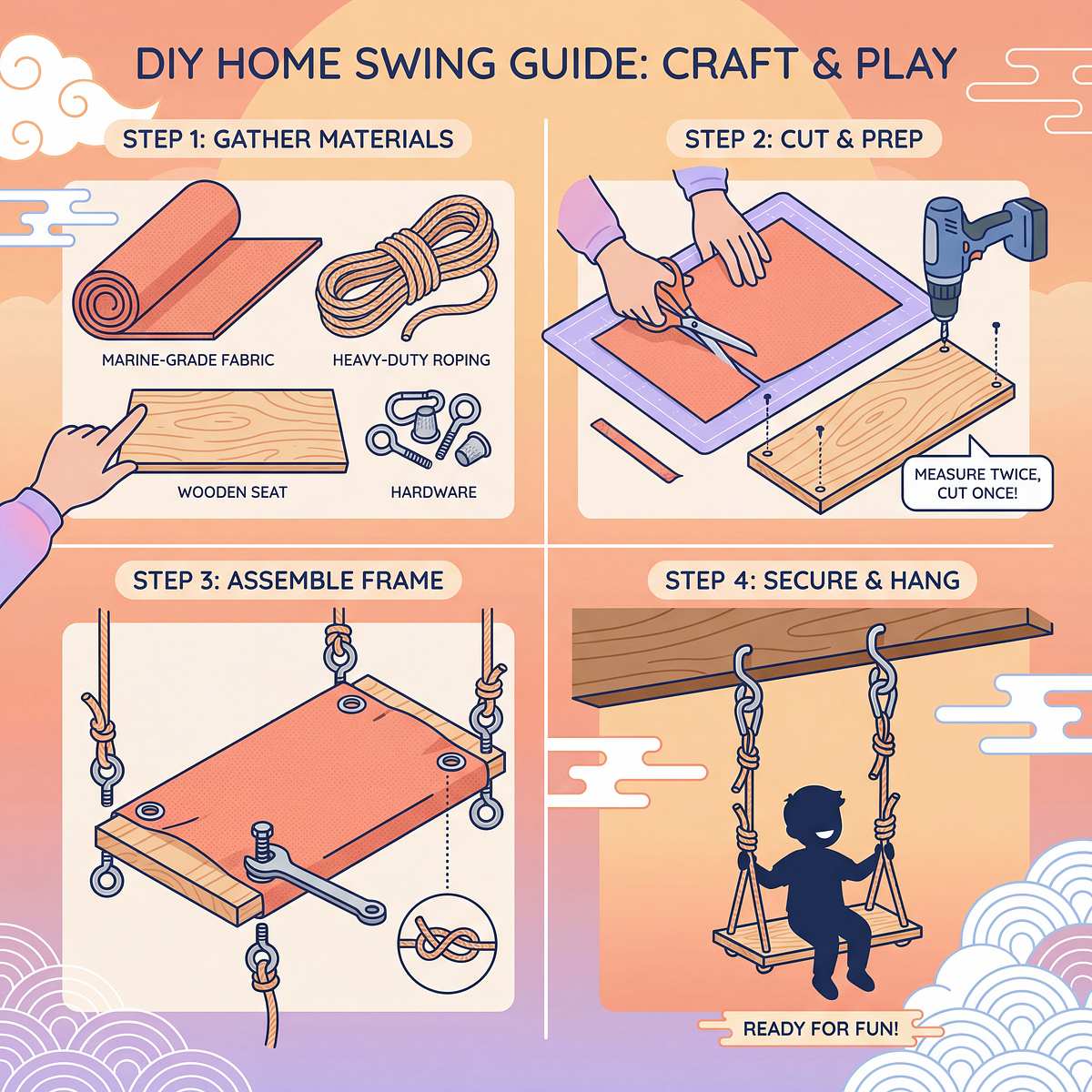
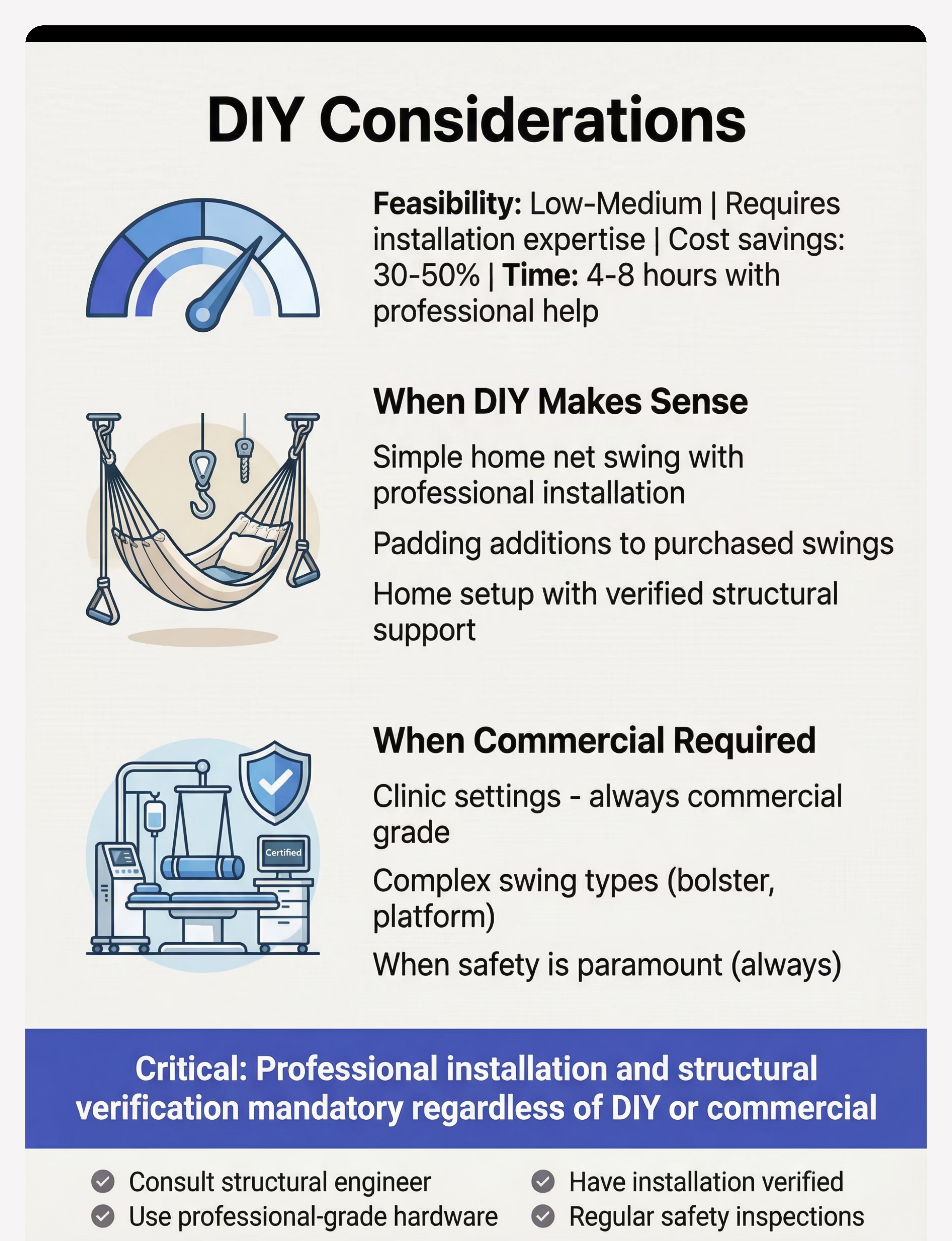
DIY Alternative (Save 30-50%)
Feasibility: Low-Medium (installation expertise essential) | Time: 4-8 hours with professional help | Cost Savings: 30-50% on materials, professional installation still required
Materials Needed
  • Heavy-duty fabric or nylon (marine grade)
  • Professional-grade ceiling mount hardware
  • Rated carabiners and swivel devices
  • Structural support reinforcement (if needed)
  • Foam padding for comfort
  • Rope or chain (weight-rated)
DIY Steps
  1. Consult structural engineer to evaluate ceiling load capacity and reinforcement needs
  1. Install professional-grade ceiling mount with proper structural support
  1. Use only rated hardware (carabiners, swivels, chains) — never improvise safety components
  1. Simple net swing can be sewn from heavy-duty fabric following pattern guidelines
  1. Platform can be constructed from marine plywood with foam padding and fabric covering
  1. Have professional verify complete installation before any use
  1. Establish regular inspection schedule for all components

DIY vs Commercial Comparison
Factor
When to DIY
When to Buy Commercial
Best for
Simple home net swing with professional installation; padding additions to purchased swings; home setup with proper structural support
Clinic settings — always commercial grade; complex swing types (bolster, platform); when safety is paramount (always)
Tradeoffs
Safety critical — professional involvement essential regardless of DIY approach. May not achieve same durability or therapeutic features as commercial equipment.
Higher cost but proven safety, durability, and therapeutic design. Warranty and support included.

Critical Warning: Never attempt DIY installation of suspension points without professional structural evaluation and installation. Ceiling collapse and serious injury can result from improper installation. The DIY savings should apply to swing construction only — professional installation is non-negotiable for safety.

Preview of therapy swings suspension equipment Therapy Material

Below is a visual preview of therapy swings suspension equipment therapy material. The pages shown help educators, therapists, and caregivers understand the structure and content of the resource before use. Materials should be used under appropriate professional guidance.

Page 1
Page 2
Page 3
Page 4
Page 5
Page 6
Page 7
Page 8
Page 9
Page 10
Page 11
Page 12
Page 13
Page 14
Page 15
Page 16
Page 17
Page 18
Page 19
Page 20
Link copied!
Measuring Success & Next Steps
Baseline (Measure First)
  • Vestibular processing assessment results
  • Postural control evaluation scores
  • Movement tolerance levels
  • Functional status in daily activities
Goals to Set
  • Vestibular modulation will improve
  • Postural control will strengthen
  • Movement tolerance will increase
  • Functional skills will develop
Success Indicators
  • Better arousal regulation
  • Improved balance and coordination
  • Increased movement tolerance
  • Functional progress in daily life
  • Academic/social participation improving

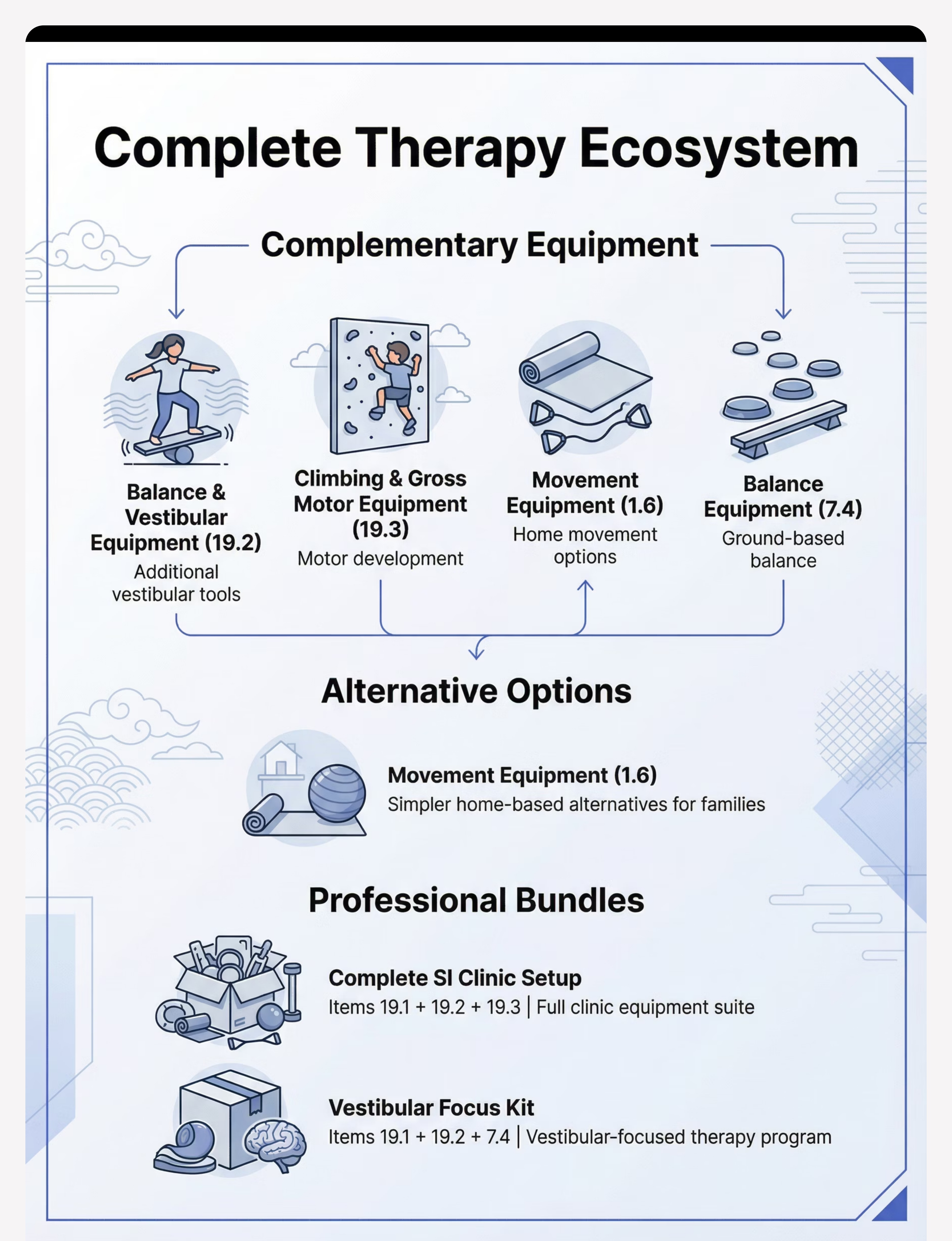
Complete the Kit — Pair It With
Balance & Vestibular Equipment (ID: 19.2)
Complementary vestibular activities and ground-based balance challenges enhance swing therapy outcomes
Climbing & Gross Motor Equipment (ID: 19.3)
Motor development equipment provides additional proprioceptive and motor planning opportunities
Movement Equipment (ID: 1.6)
Simpler home movement options supplement clinic therapy with daily sensory diet activities
Balance Equipment (ID: 7.4)
Ground-based balance tools provide complementary postural control challenges and variety
Recommended Bundles:
  • Complete SI Clinic Setup: Therapy Swings (19.1) + Balance & Vestibular Equipment (19.2) + Climbing & Gross Motor Equipment (19.3) — Comprehensive sensory integration clinic outfitting
  • Vestibular Kit: Therapy Swings (19.1) + Balance & Vestibular Equipment (19.2) + Balance Equipment (7.4) — Focused vestibular processing intervention suite

Quick Summary
AI Summary: Therapy swings and suspension equipment provide controlled vestibular stimulation for sensory integration therapy, addressing postural control, motor planning, and sensory modulation in clinical settings. Professional Kit (Rank 1), strong evidence, clinic essential.
swing
suspension
vestibular
sensory integration
OT
clinic
professional-kit
Common Searches: therapy swing occupational, sensory integration swing, platform swing therapy, bolster swing OT, vestibular therapy equipment, SI clinic equipment, suspension therapy

Get Support

FREE National Autism Helpline
Phone: 9100 181 181
Languages: 16+ Indian languages supported
Website: pinnacleblooms.org
Connect with experts who can guide you in accessing appropriate occupational therapy services and understanding suspension equipment options for your child.
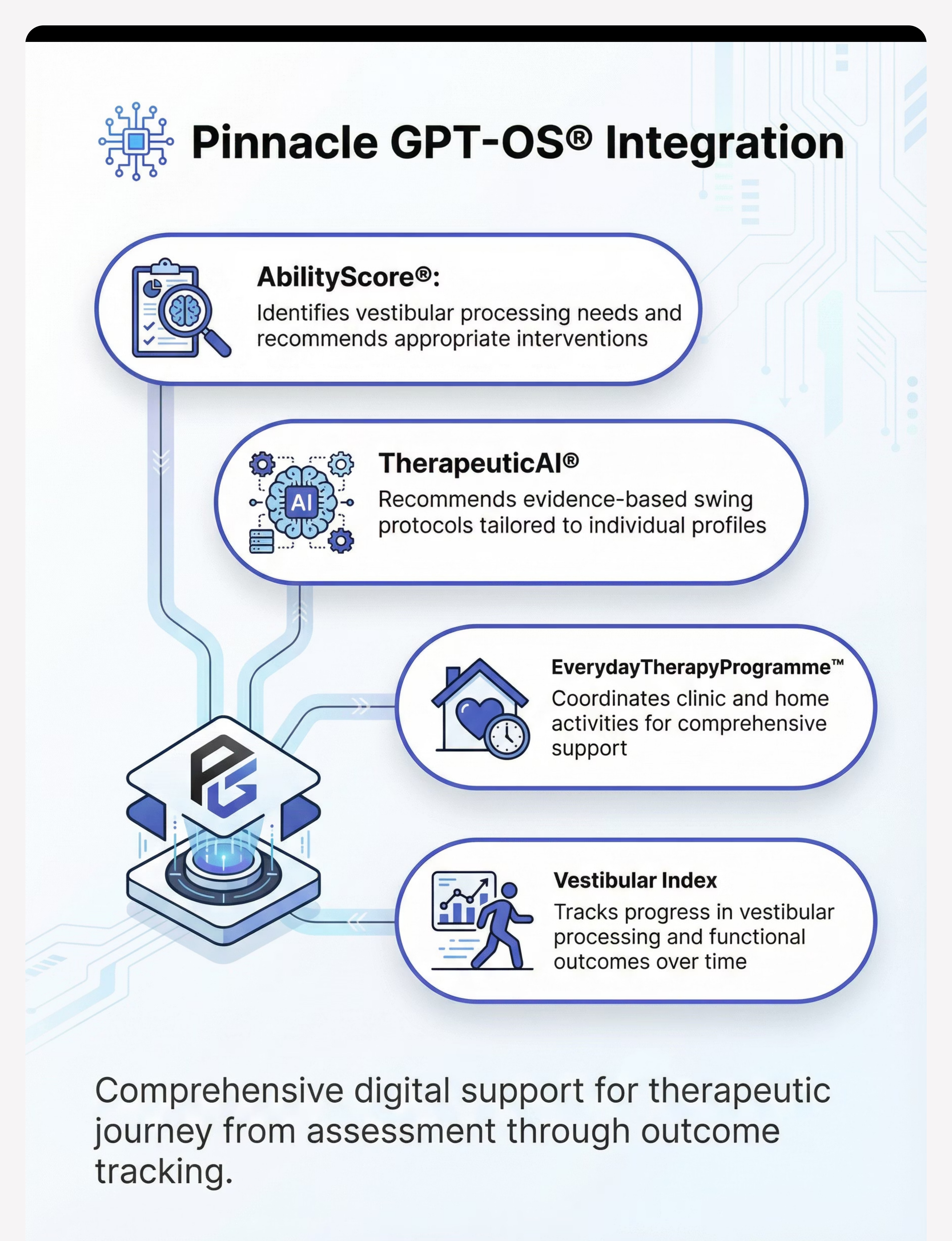
Platform Integration
Therapy swings integrate seamlessly with Pinnacle Blooms Network's comprehensive platform:
  • AbilityScore®: Identifies vestibular processing needs through comprehensive assessment
  • TherapeuticAI®: Recommends specific swing protocols based on child's profile and therapeutic goals
  • EverydayTherapyProgramme™: Coordinates clinic-based suspension therapy with home sensory diet activities
  • Vestibular Index: Tracks progress in vestibular modulation and functional outcomes over time

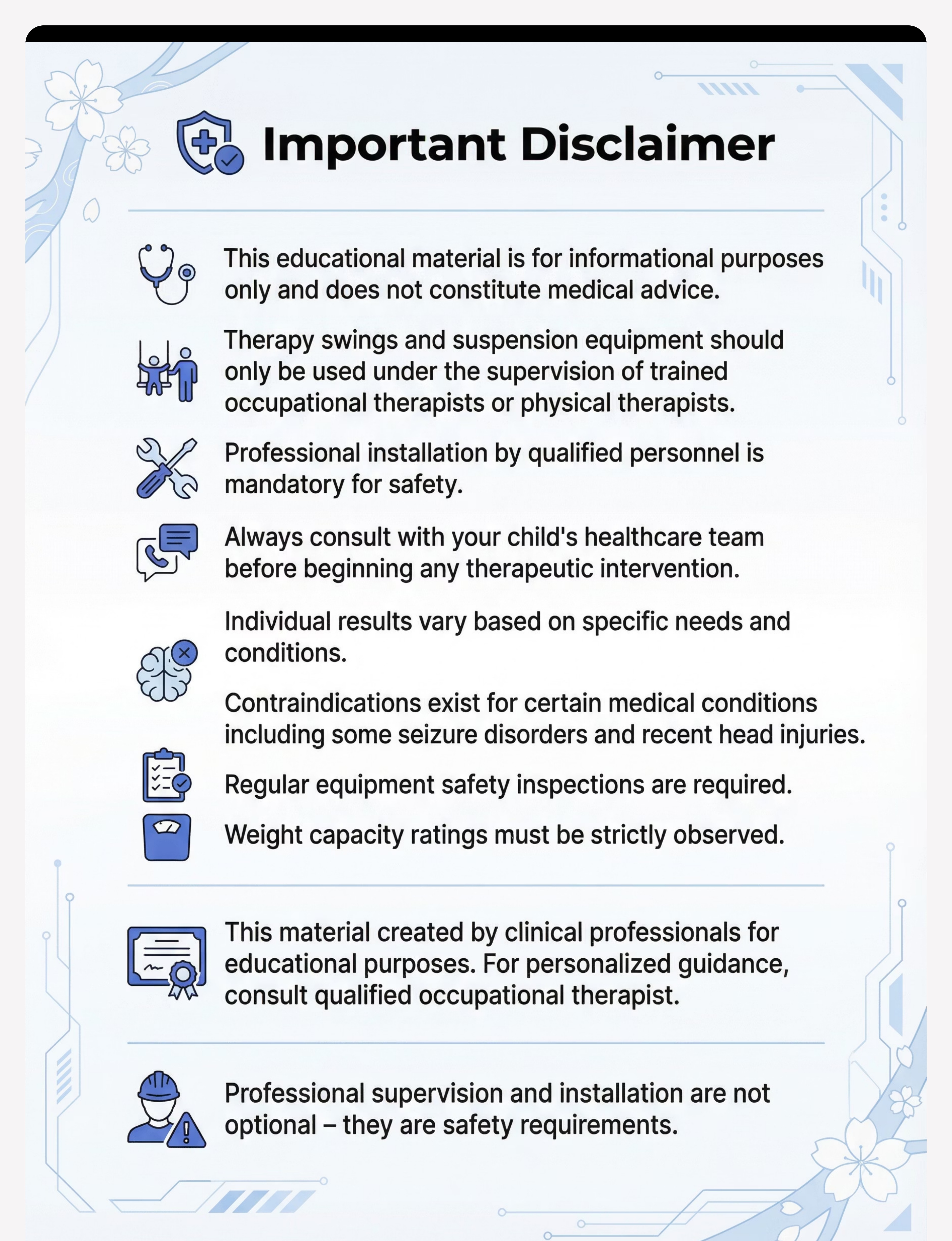
Disclaimer: This is educational information developed by occupational therapy and physical therapy professionals. Always consult qualified occupational therapists, speech-language pathologists, or pediatricians for assessment and individualized treatment planning. Individual results vary based on child's specific profile, co-occurring conditions, and consistency of intervention.