Tool ID: 9.4
OT + SLP
Strong Evidence
Rank #1
Daily Use
₹100–2,000
Toothbrushing Aids
Oral hygiene and dental care independence system
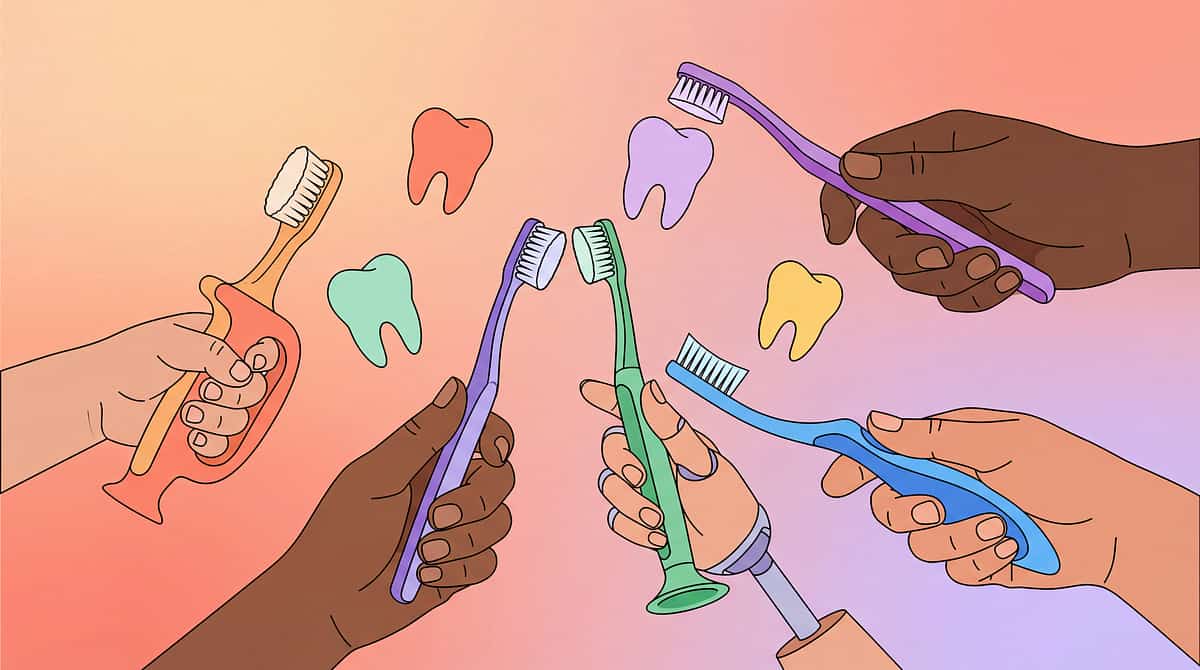
Transform toothbrushing from a daily battle into a cooperative routine. Evidence-based tools and strategies address sensory, motor, and behavioral barriers to enable effective oral hygiene and build lifelong independence in this essential health skill.

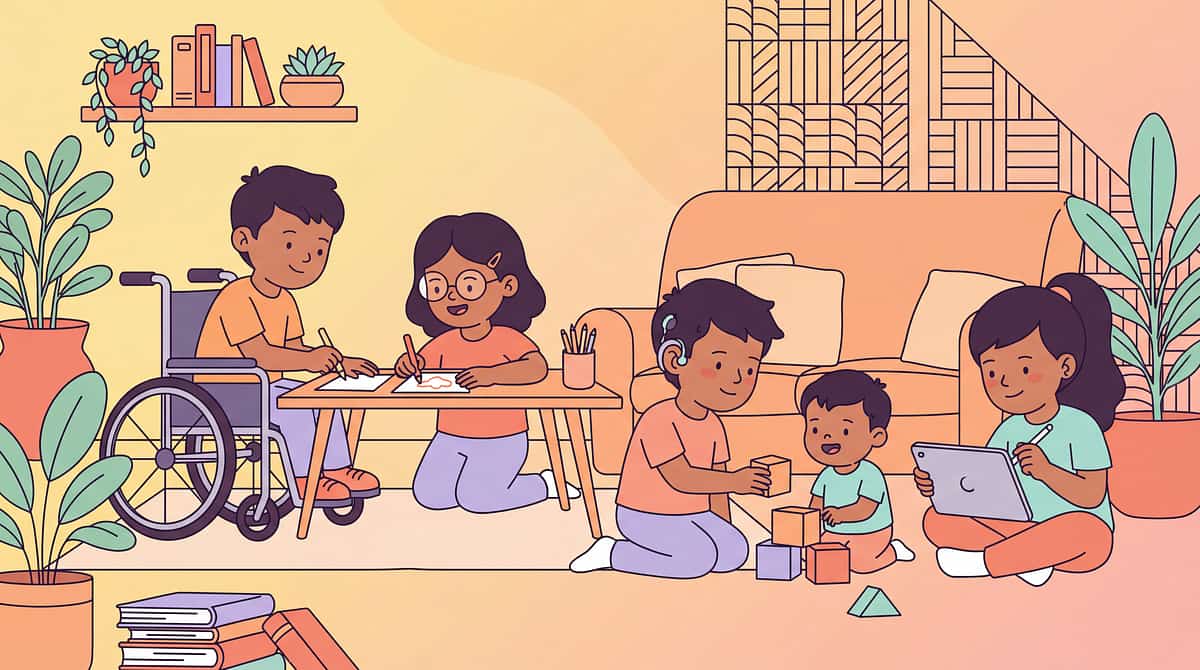
Who This Helps
Oral Hygiene Mastery
Enable independent and effective toothbrushing through adapted tools, sensory supports, and visual structure that address multiple barriers simultaneously.
Sensory Tolerance Building
Systematic desensitization reduces oral defensiveness and helps children tolerate brushing sensations, flavors, and textures.
Motor Skill Support
Adapted handles and electric brushes compensate for weak grasp or poor technique while building strength and coordination.
Ages 2+ years
Home Setting
Sensory Tolerance
Motor Skills
Routine Following
Self-Care Independence
Best for: Children who resist toothbrushing due to sensory sensitivities, motor challenges, or behavioral resistance. Essential for maintaining dental health while building cooperation and independence in this critical daily living skill.

Does This Sound Familiar?
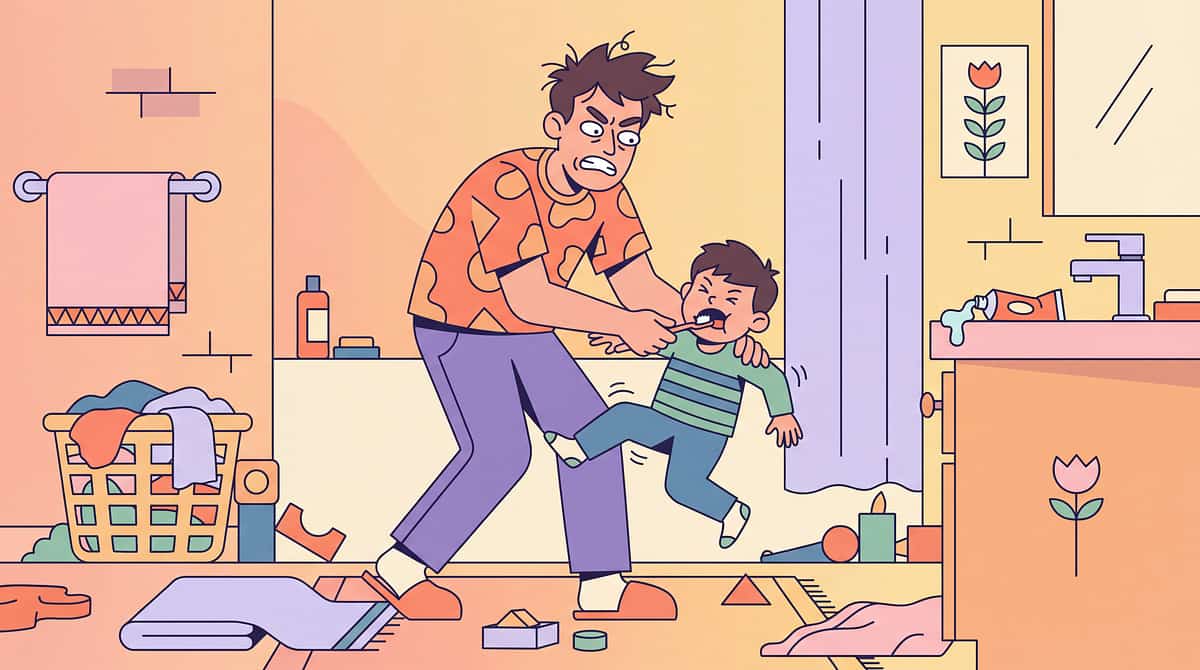
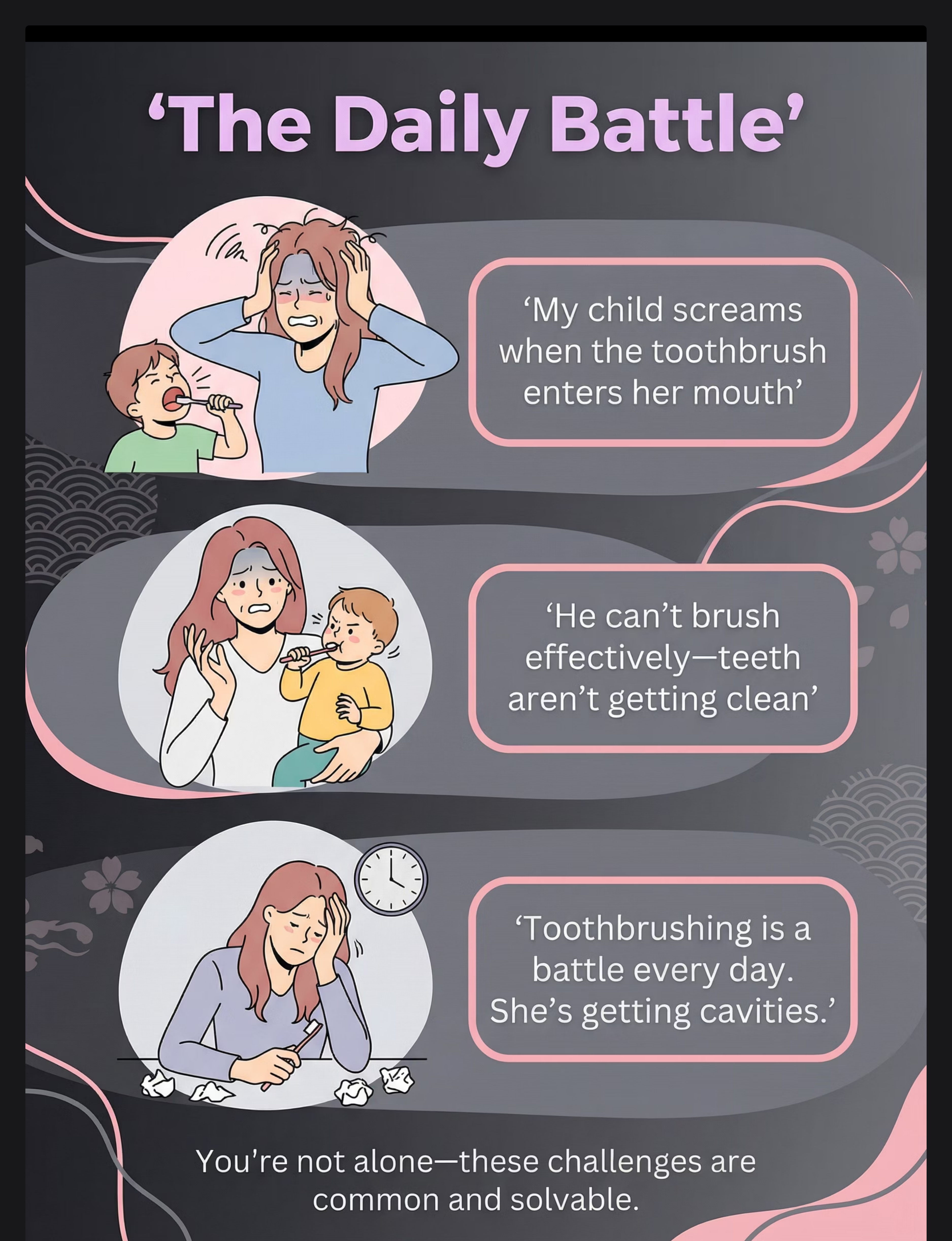
"My child refuses to brush teeth. Every morning and evening is a battle. I'm exhausted and worried about dental health."
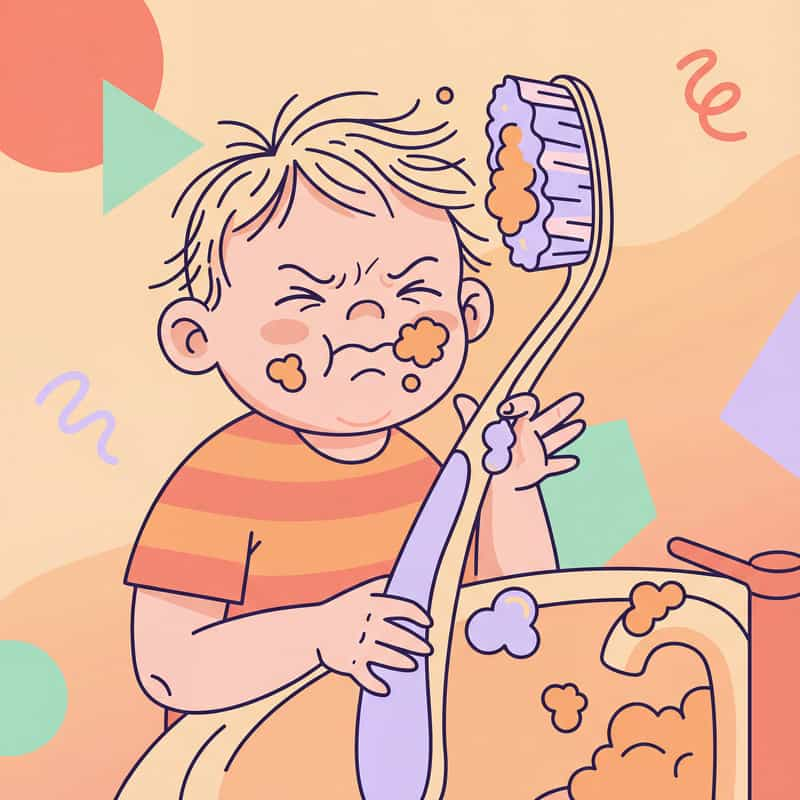
"She screams when the toothbrush enters her mouth. I don't know if it's pain or fear, but it breaks my heart every time."
"He can't brush effectively even when he tries. His grasp is weak and he misses most surfaces. We're seeing cavities develop."
"Toothbrushing is traumatic for the whole family. We dread it twice a day. Dentist visits are even worse."
You're not alone. These are common challenges that thousands of Indian families face daily. The good news? There are systematic, evidence-based solutions that work.

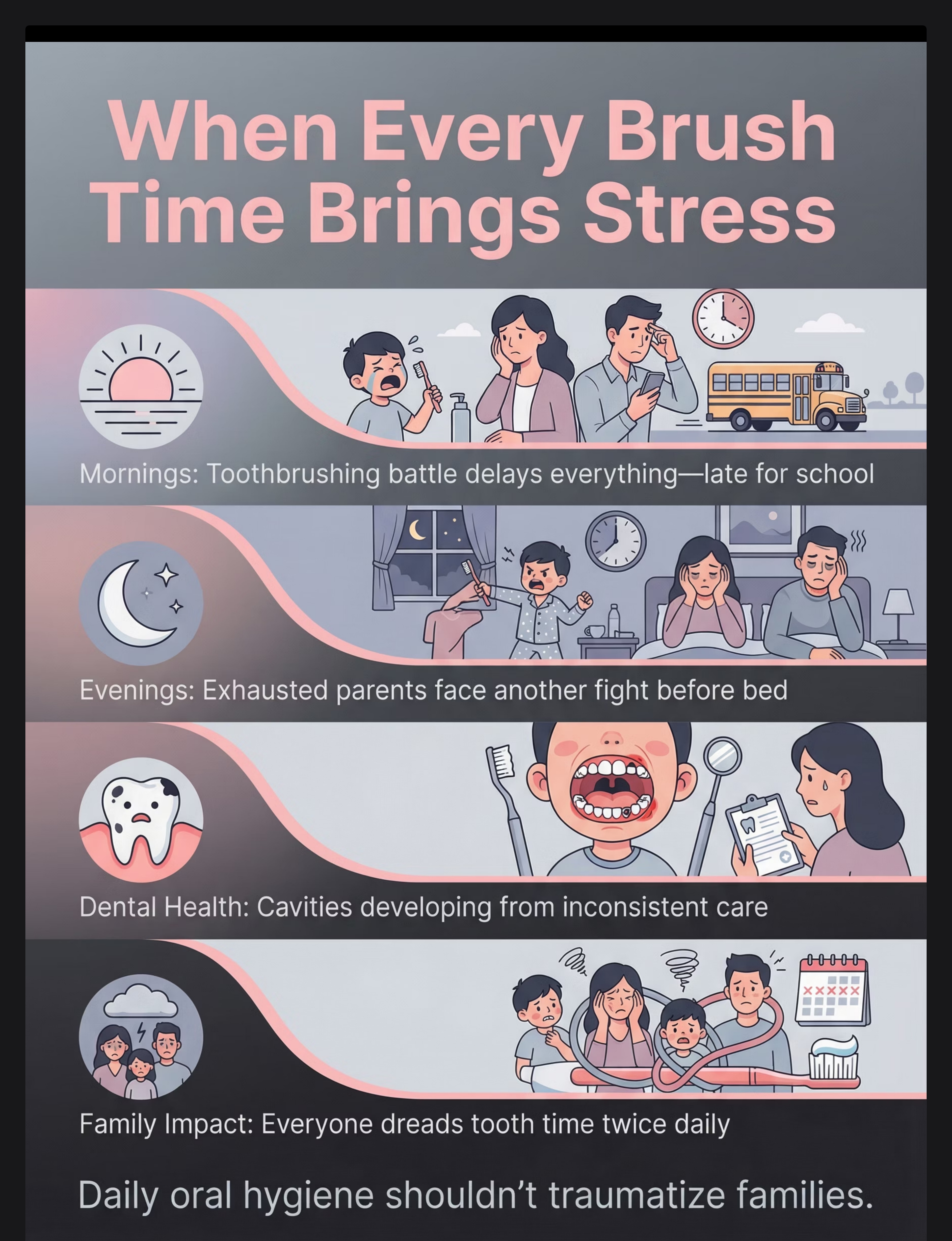
A Day Without the Right Support
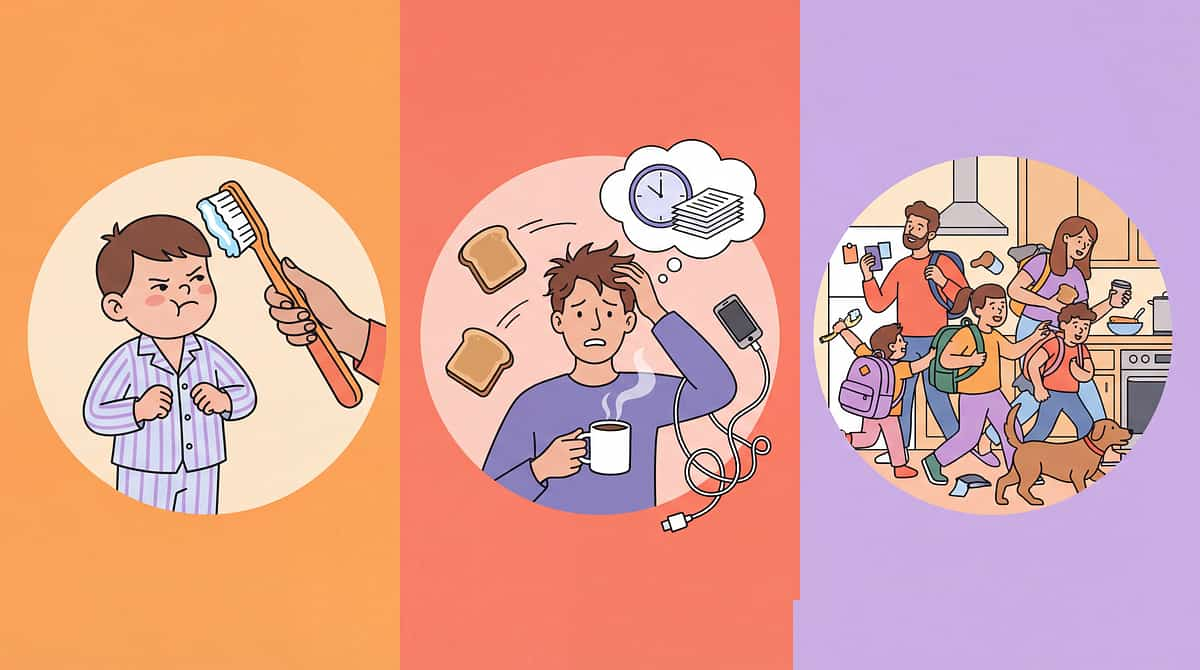
Morning Chaos
Toothbrushing battle delays everything. Child runs away, parent chases. Everyone starts the day stressed and late. Siblings witness the trauma.
School Worries
Teachers notice dental issues. Child self-conscious about smile. Parent receives notes about oral hygiene. Embarrassment adds to stress.
Evening Exhaustion
Already tired parents face another toothbrushing fight. Everyone's emotional reserves depleted. Sometimes parents give up just to have peace.
Dental Consequences
Cavities developing. Dentist appointments traumatic. Procedures needed. Cycle of dental anxiety deepens. Long-term health compromised.
The cumulative stress affects the entire family's wellbeing. What should be a simple two-minute routine becomes a source of daily trauma, affecting relationships, health, and everyone's emotional state.

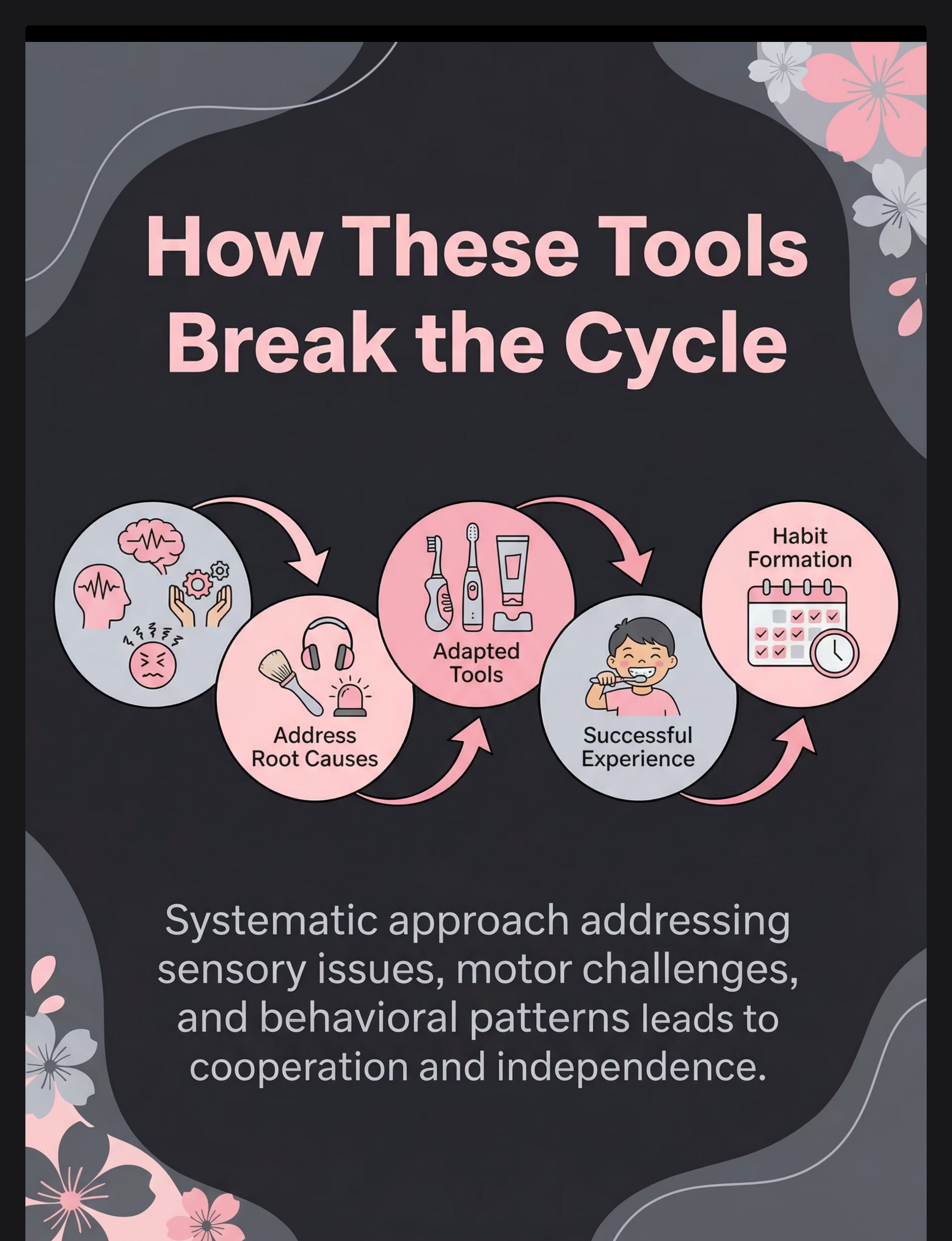
The Science Behind It
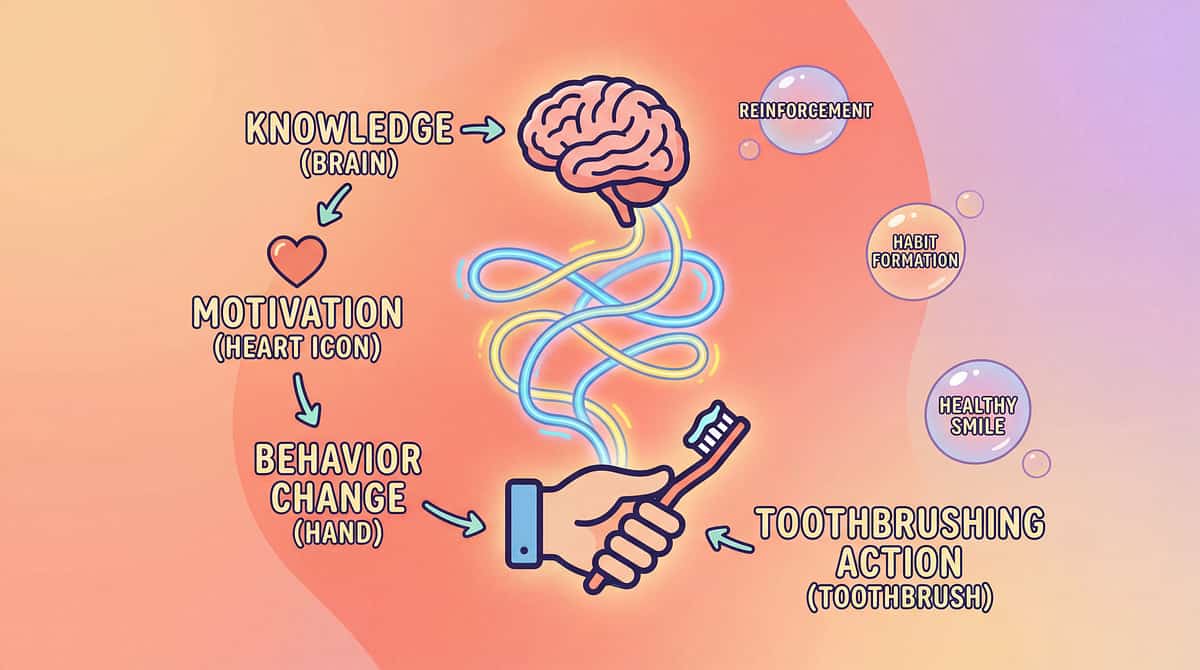
Identify Barriers
Assess sensory, motor, and behavioral factors preventing successful brushing
Reduce Aversion
Address each barrier systematically with appropriate tools and preparation
Create Success
Successful brushing experiences build positive associations and cooperation
Develop Skills
Repeated success builds motor skills, sensory tolerance, and routine mastery
Form Habits
Consistent routine becomes automatic, leading to independent oral hygiene
Oral Hygiene
Sensory Tolerance
Motor Skills
Routine Following
Self-Care Independence
Health Maintenance
This systematic approach addresses root causes rather than forcing compliance. By understanding why brushing is difficult, we can select the right combination of tools and strategies to make it successful. The result is cooperation instead of combat, and skills instead of struggles.

How to Use It Right
Address Sensory Issues First
If oral defensiveness is present, start with desensitization activities before attempting brushing. This reduces resistance and builds tolerance systematically.
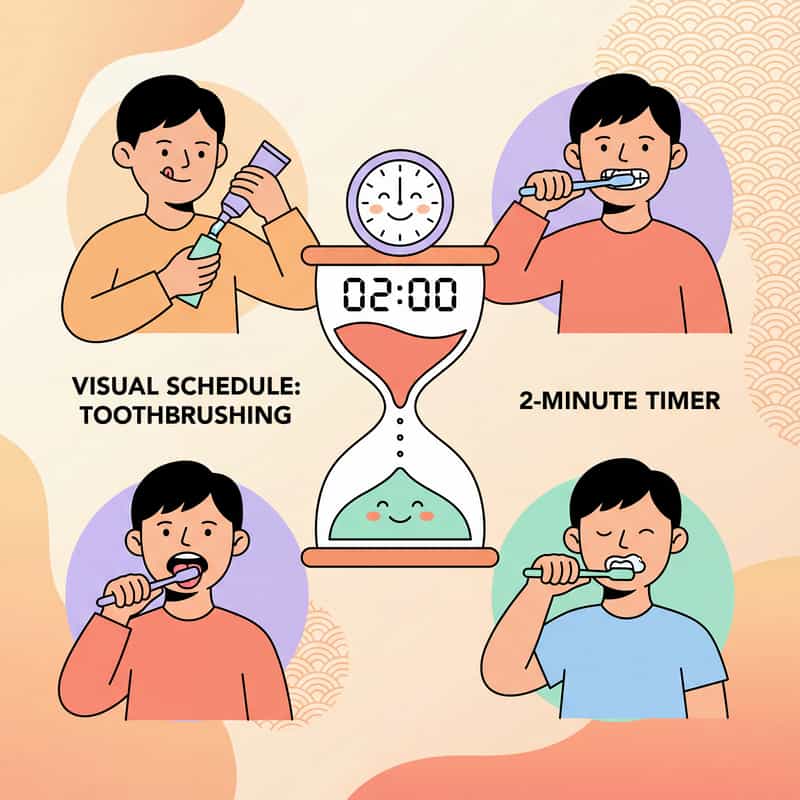
Use Visual Schedules
Break down the brushing sequence into clear visual steps. This reduces anxiety about what's coming next and builds independence through predictability.
Implement Timers
Visual or auditory timers ensure appropriate duration (2 minutes) and provide clear endpoint. This reduces battles about "how much longer."
Choose Adapted Tools
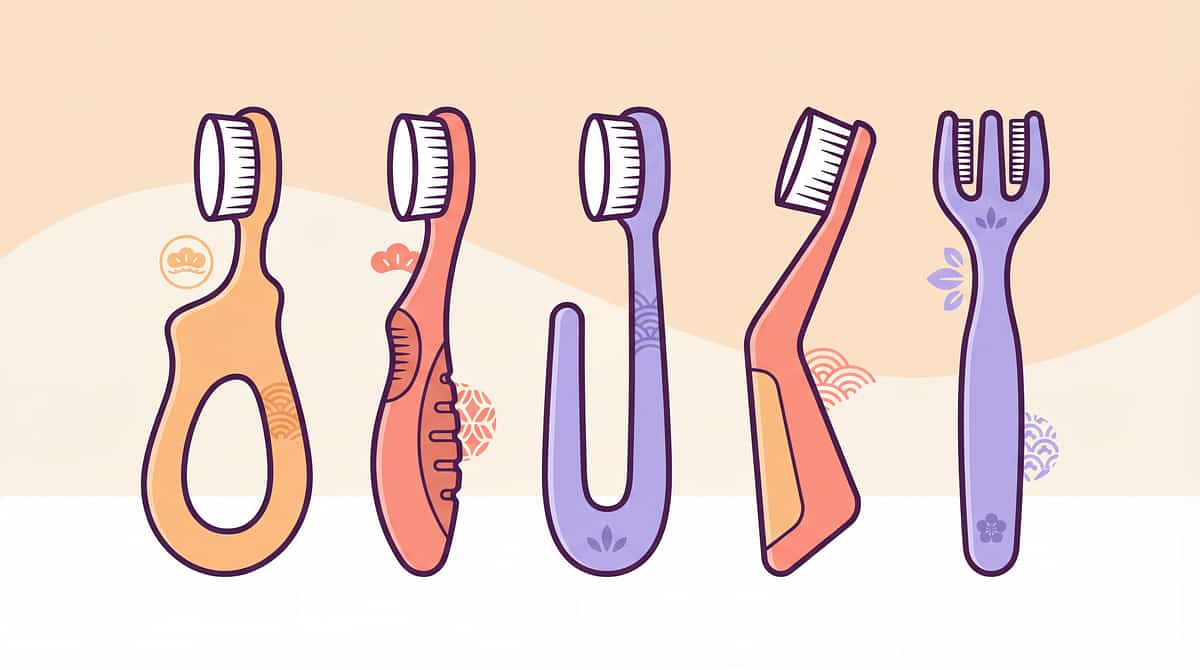
Electric brushes reduce motor demands significantly. Built-up handles compensate for weak grasp. Three-sided brushes simplify technique and ensure coverage.
Progress Gradually
Start with small successes and build systematically. Celebrate cooperation even if technique isn't perfect initially. Independence develops over time.
Maintain Consistency
Same time, same sequence, same location daily. Predictable routines reduce resistance and accelerate habit formation. Duration: 2-minute brushing; total routine time 5-10 minutes including preparation.
Expert Endorsement

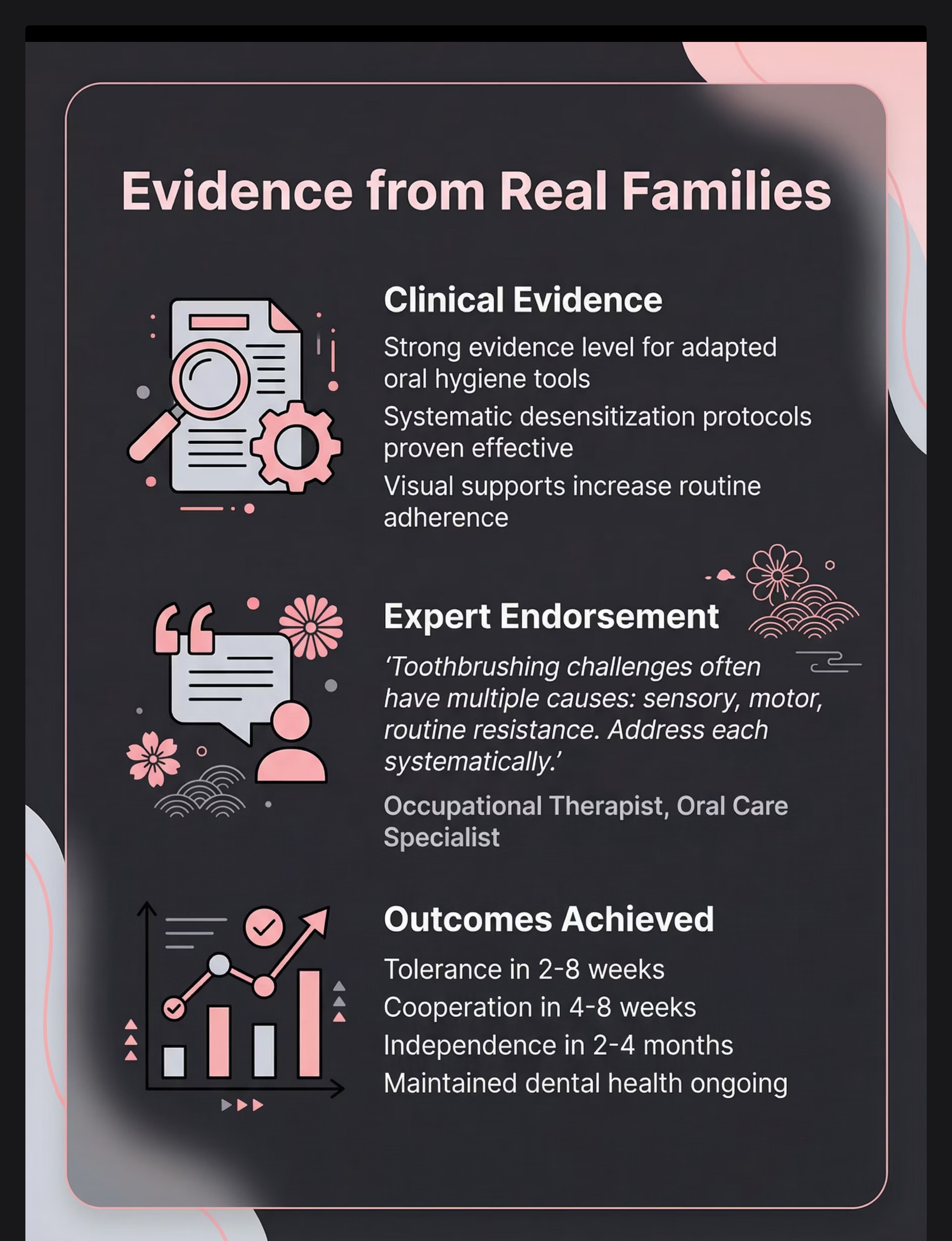
"Toothbrushing challenges often have multiple causes: sensory issues, motor challenges, and routine resistance. Address each systematically—sensory prep, adapted tools, visual supports, and patient progression."— Occupational Therapist, Oral Care Specialist
OT + SLP Recommended
Jointly endorsed by Occupational Therapy and Speech-Language Pathology professionals
Strong Evidence
Supported by clinical research and widespread successful implementation
Rank #1 in Category
Highest-ranked tool in Daily Living Skills for oral hygiene independence
Core Kit Essential
Designated as Core Kit item due to health necessity and daily use frequency

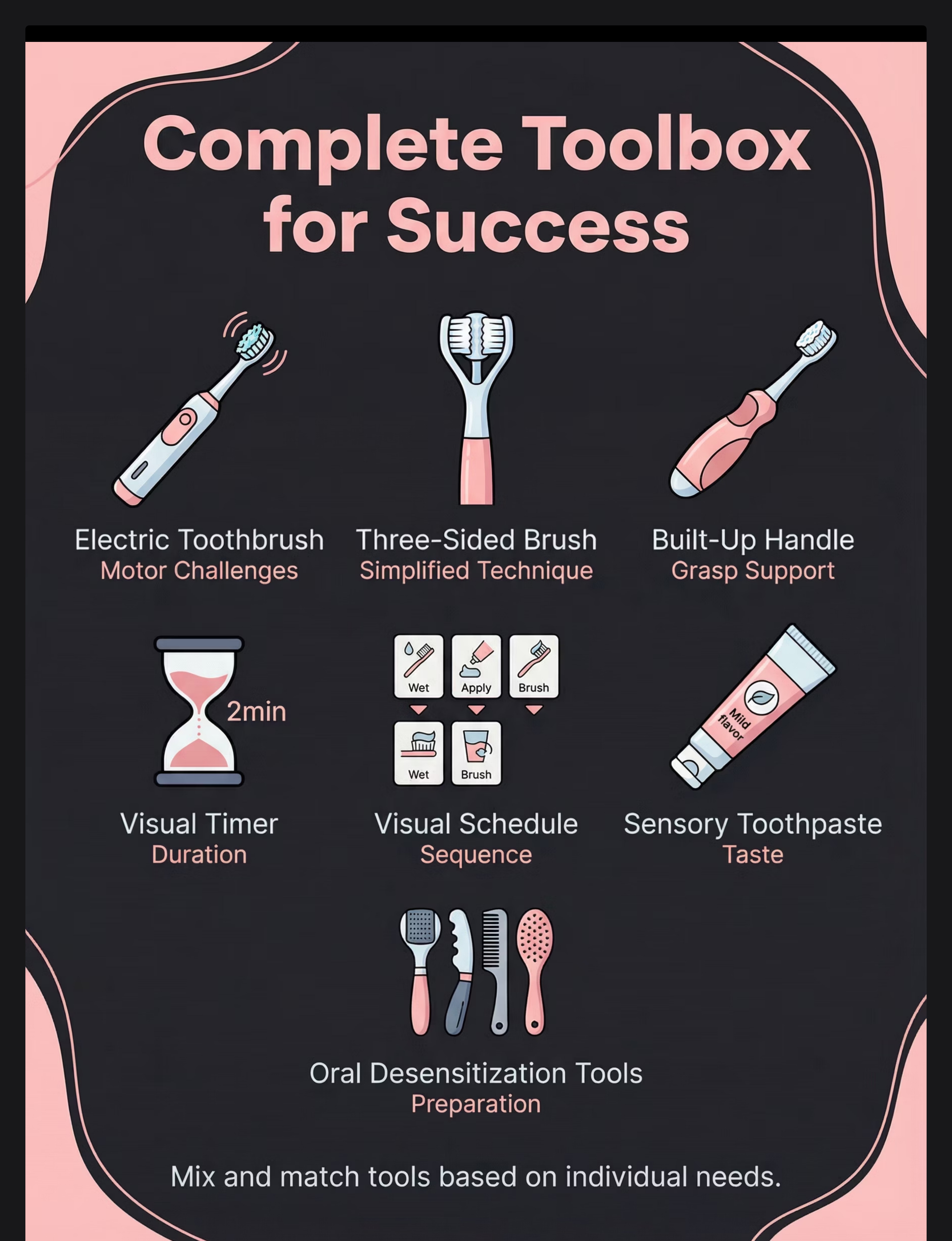
Choose Your Option (7 Variants)
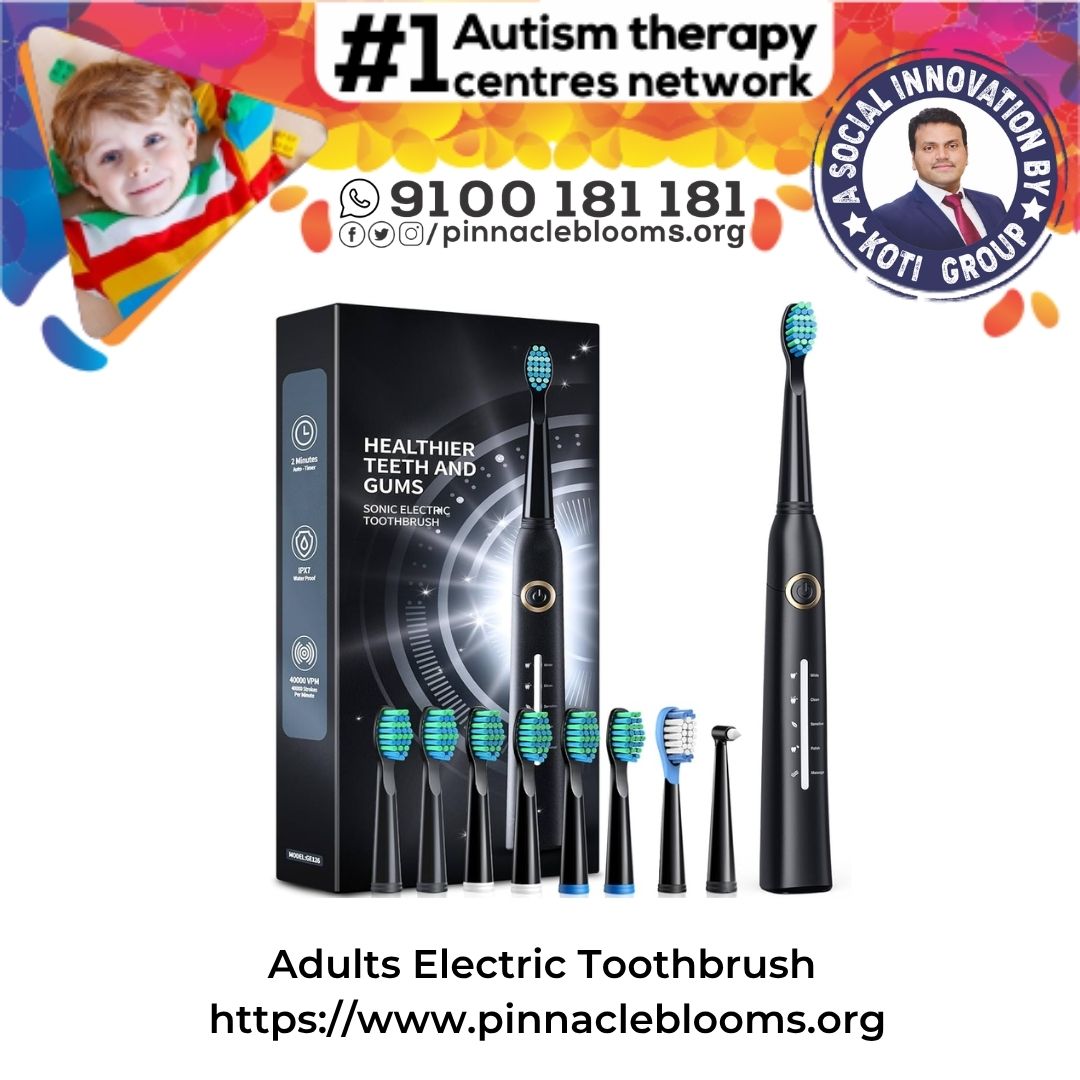
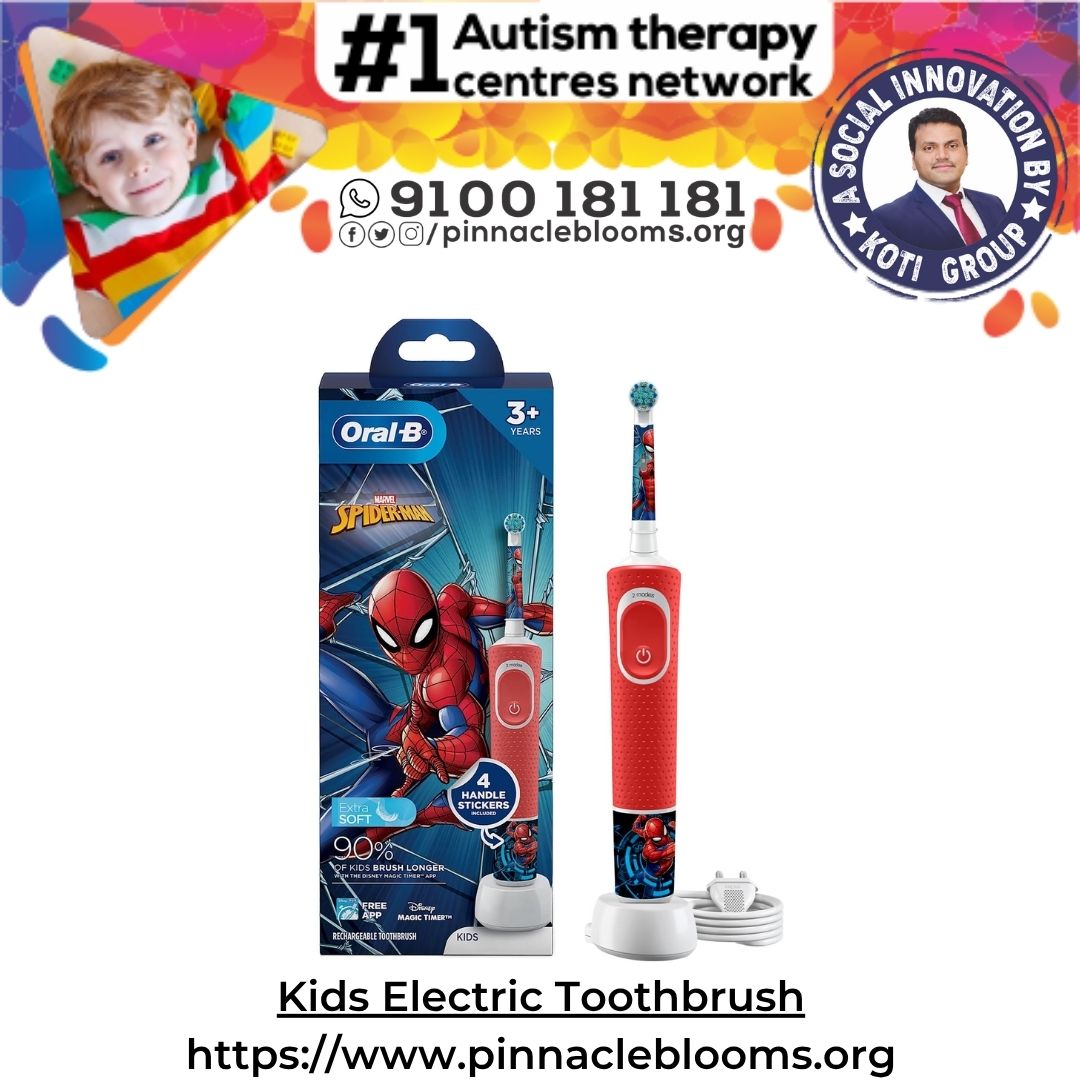
Electric Toothbrush (Vibrating)
Best for: Motor challenges, sensory seekers
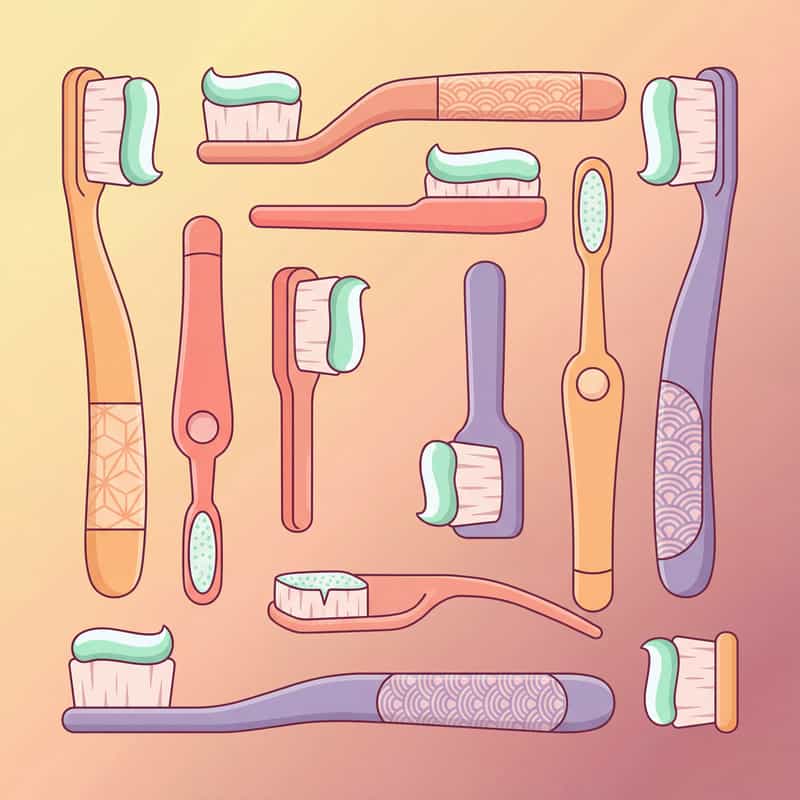
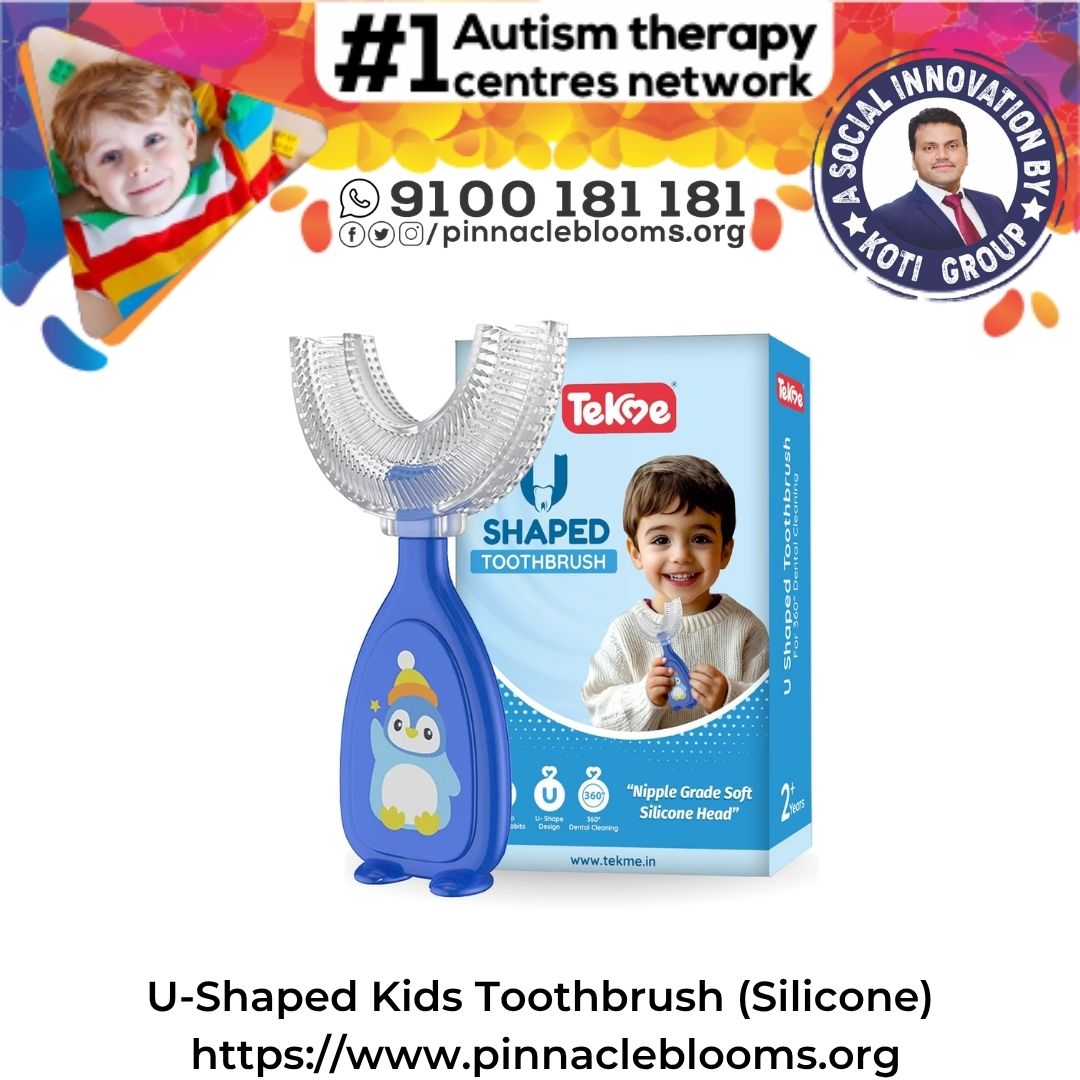
Three-Sided Toothbrush
Best for: Limited technique, faster brushing
Built-Up Handle Toothbrush
Best for: Weak grasp, motor challenges
Visual Timer for Brushing
Best for: Knowing when finished, routine consistency
Toothbrushing Visual Schedule
Best for: Learning steps, independence
Flavored/Sensory-Friendly Toothpaste
Best for: Sensory sensitivities, taste aversions
Oral Desensitization Tools
Best for: Oral defensiveness, sensory aversion
Electric Toothbrush (Vibrating)
Type: Reduced motor demand with powered oscillating brush
Ages: 3+ years | Settings: Home
Portability: Medium | Price: ₹300–2,000
Three-Sided Toothbrush
Type: Simplified brushing—cleans 3 surfaces at once
Ages: 2+ years | Settings: Home
Portability: High | Price: ₹200–600
Built-Up Handle Toothbrush
Type: Grasp assistance with thick handle for easier hold
Ages: All ages | Settings: Home
Portability: High | Price: ₹150–400
Visual Timer for Brushing
Type: Duration support with 2-minute timer
Ages: 2+ years | Settings: Home
Portability: High | Price: ₹100–400
Toothbrushing Visual Schedule
Type: Sequence support with step-by-step pictures
Ages: 2+ years | Settings: Home
Portability: High | Price: ₹50–200
Flavored/Sensory-Friendly Toothpaste
Type: Sensory accommodation with mild or preferred flavors
Ages: All ages | Settings: Home
Portability: High | Price: ₹100–400
Oral Desensitization Tools
Type: Sensory preparation with vibrating tools and oral swabs
Ages: All ages | Settings: Home, Clinic
Portability: High | Price: ₹200–600
How to Choose
- By Goal: Sensory issues → desensitization tools + mild toothpaste; Motor challenges → electric or 3-sided brush; Routine resistance → visual schedule + timer
- By Setting: Most tools designed for home use; desensitization tools also useful in clinic during initial therapy
- By Portability: Most tools highly portable except electric brushes (medium portability)
Specifications & Adaptation Categories
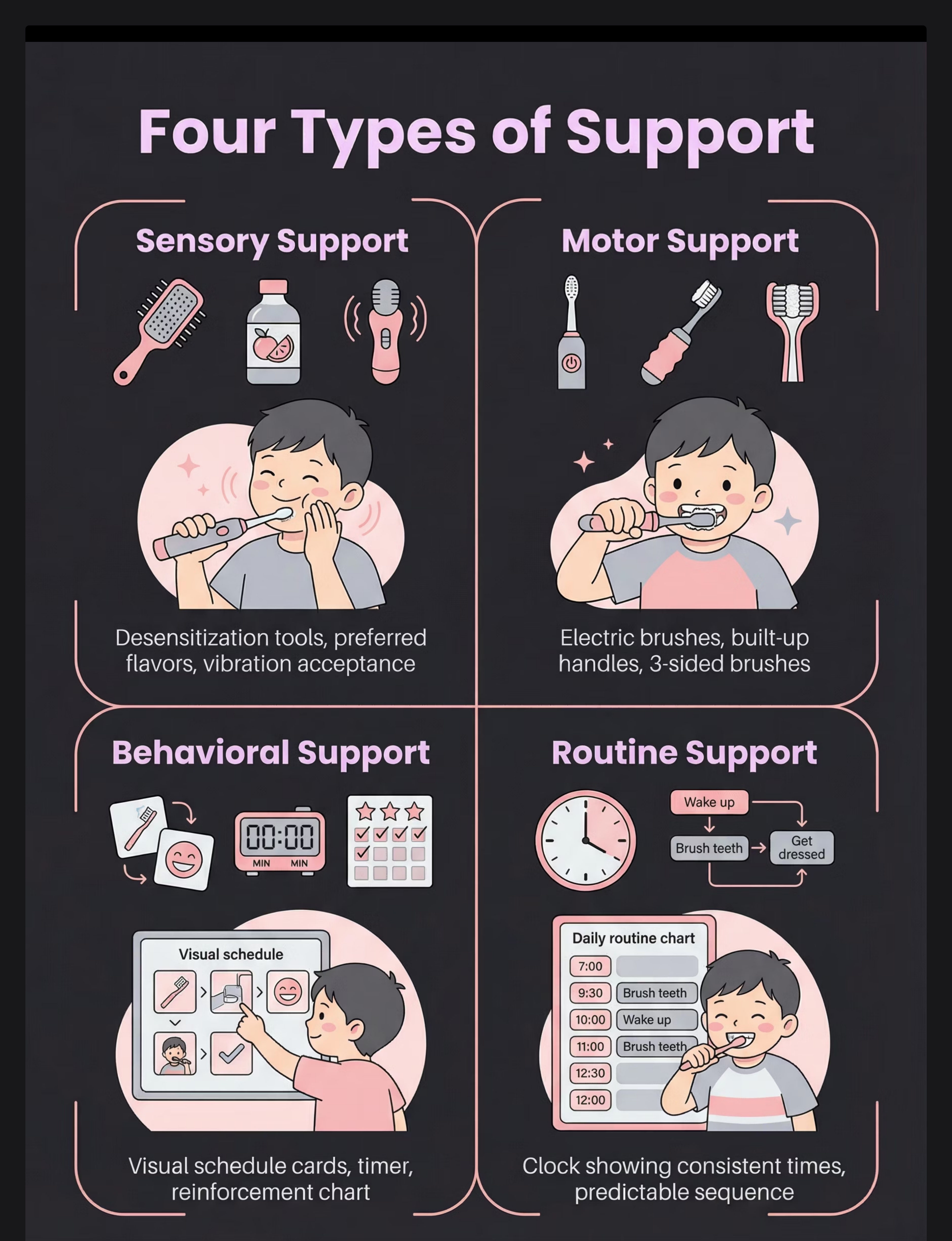
Adaptation Categories

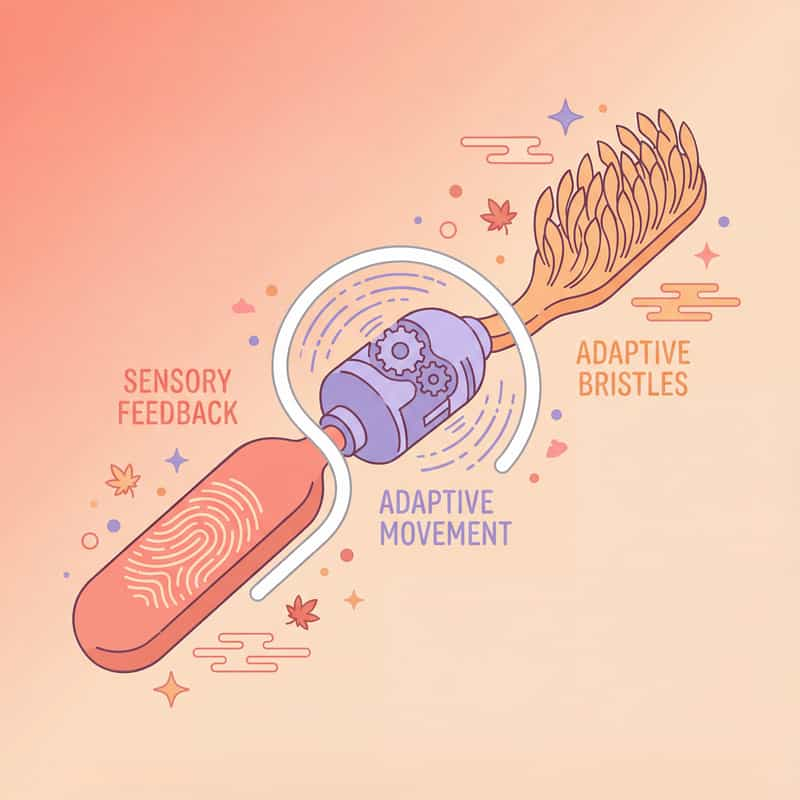
Sensory Accommodations
Desensitization protocols, preferred flavors, vibration acceptance building. Addresses oral defensiveness and taste/texture aversions systematically.

Motor Supports
Electric brushes eliminate need for repetitive wrist motion. Built-up handles compensate for weak grasp. Three-sided brushes reduce technique demands.

Behavioral Strategies
Visual schedules break down sequence. Timers provide clear endpoints. Reinforcement systems build positive associations.
Materials & Features

Common Materials
- Plastic handles (durable, easy to clean)
- Electric components (rechargeable or battery)
- Soft bristles (gentle on sensitive gums)
- Mild toothpaste formulations

Key Features
- Appropriate sensory level for child's tolerance
- Motor accessibility through adapted designs
- Visual supports for sequence and duration
- Consistent routine elements for predictability

Routine Structure
Consistent timing creates predictability. Same sequence reduces anxiety. Stable environment minimizes variables.
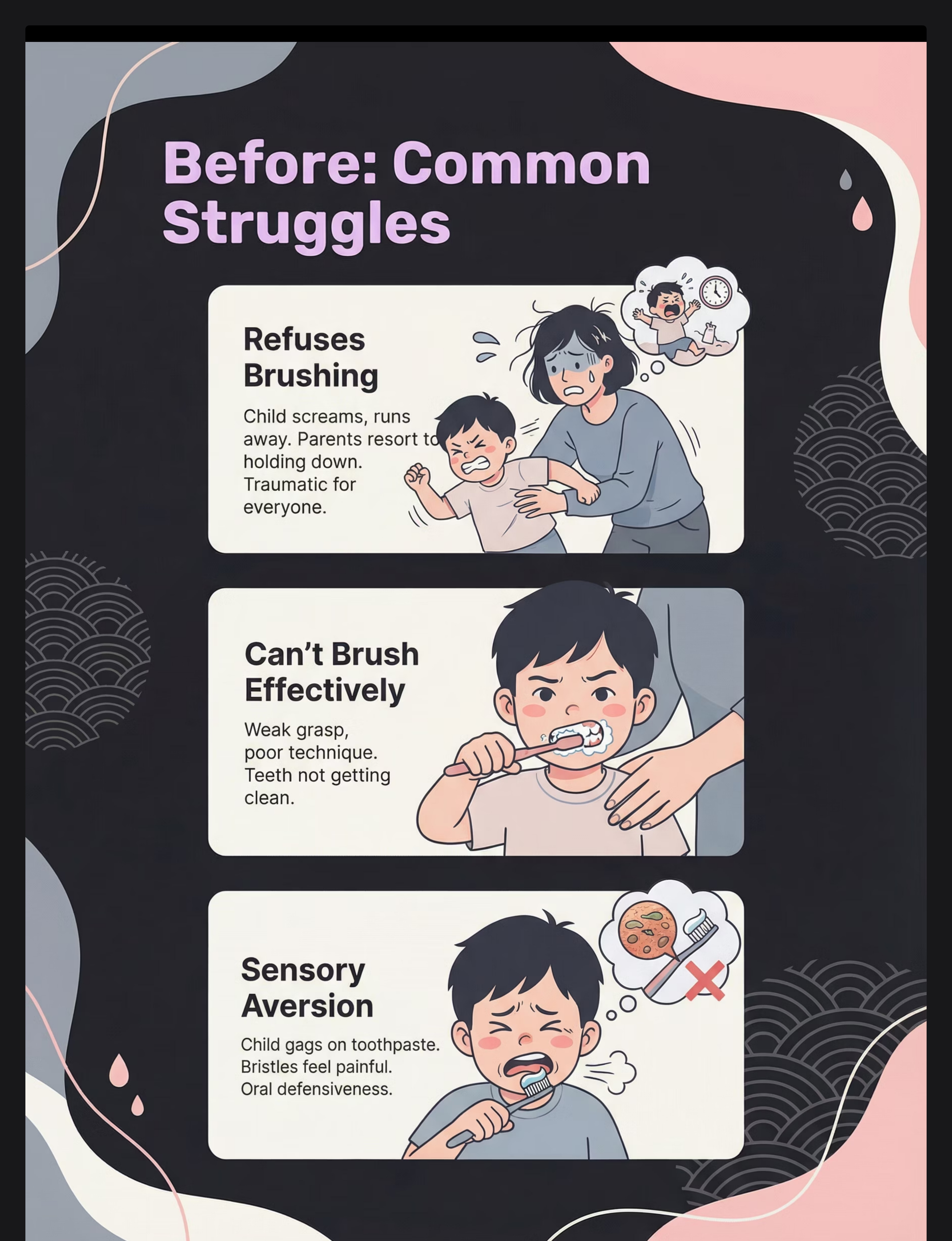
The Struggle (Before)

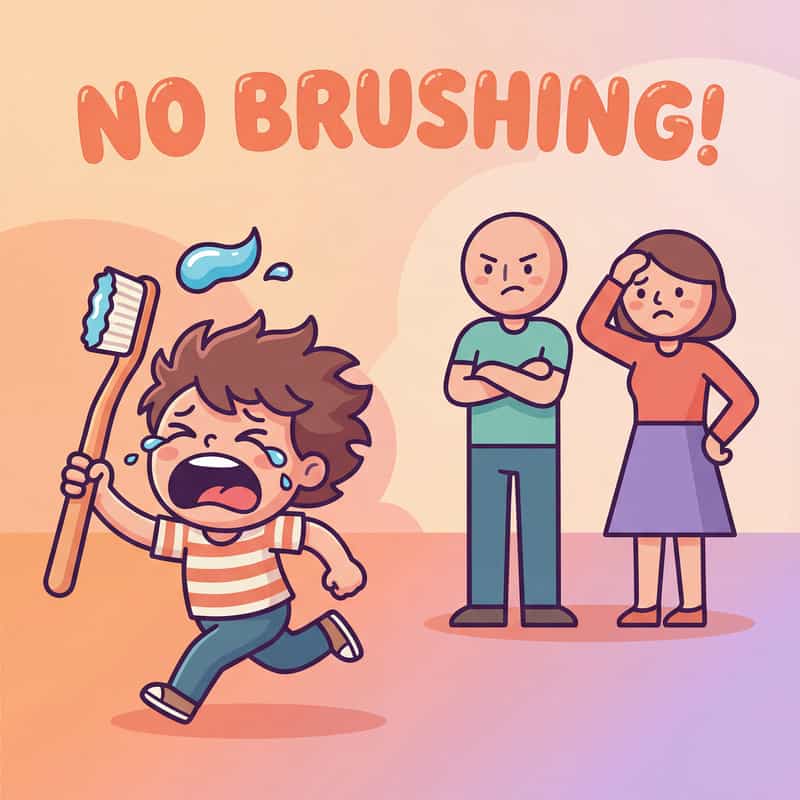
Refuses Toothbrushing
Situation: Child screams, clamps mouth shut, runs away from bathroom
Experience: Parents resort to holding down. Traumatic for all. Multiple attempts fail. Dental health suffering with each missed brushing.
Emotion: Trauma, battle, helplessness
Can't Brush Effectively
Situation: Child tries cooperatively but technique is poor
Experience: Misses most tooth surfaces. Weak grasp makes it difficult to hold brush properly. Poor motor coordination prevents effective cleaning. Cavities developing despite efforts.
Emotion: Ineffective, concern, frustration


Sensory Aversion
Situation: Child has extreme oral sensitivity
Experience: Gags on toothpaste flavor. Bristles feel painful or overwhelming. Oral defensiveness makes mouth intolerable to touch. Can't tolerate brushing for even a few seconds.
Emotion: Aversion, sensitivity, distress

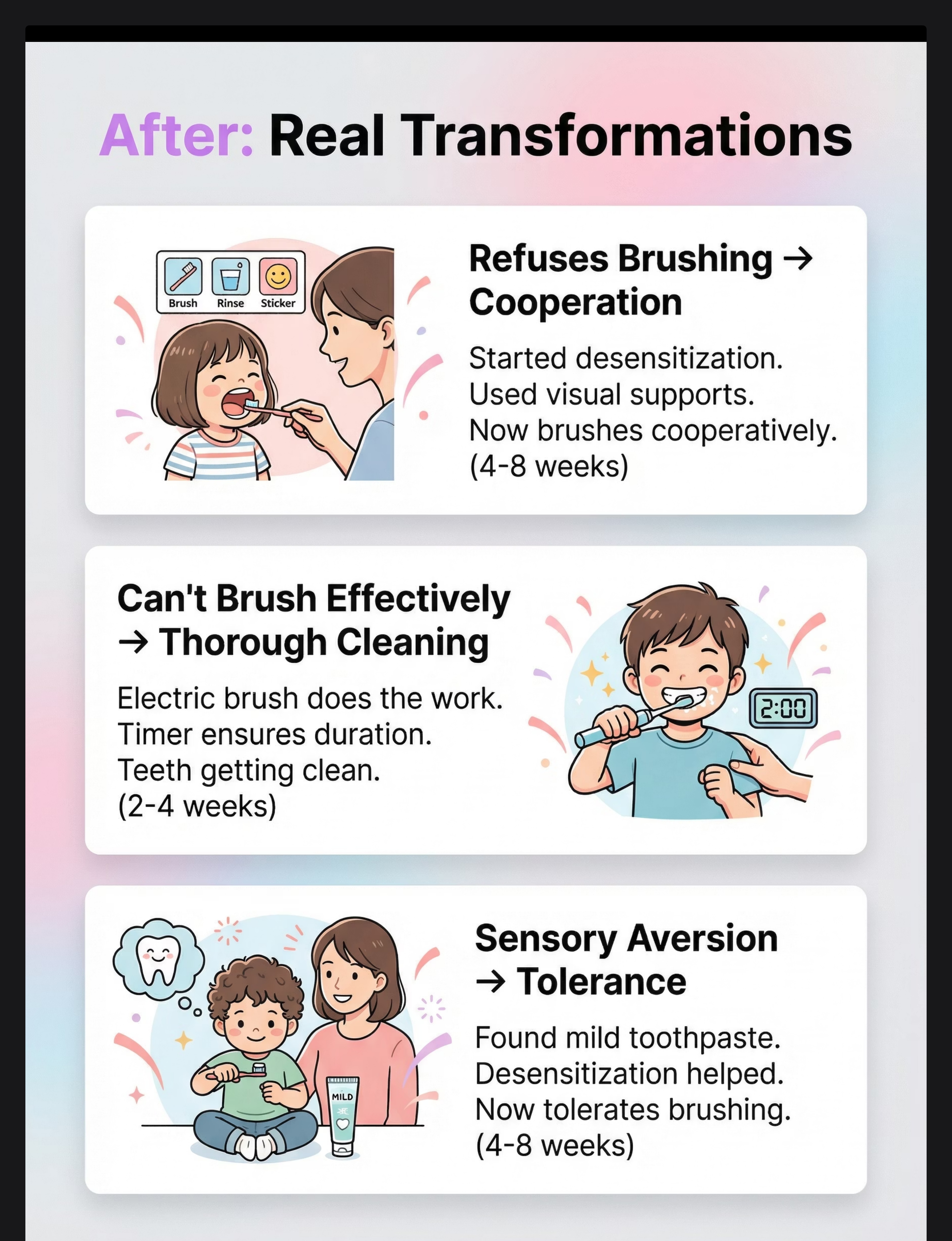
The Breakthrough (After)
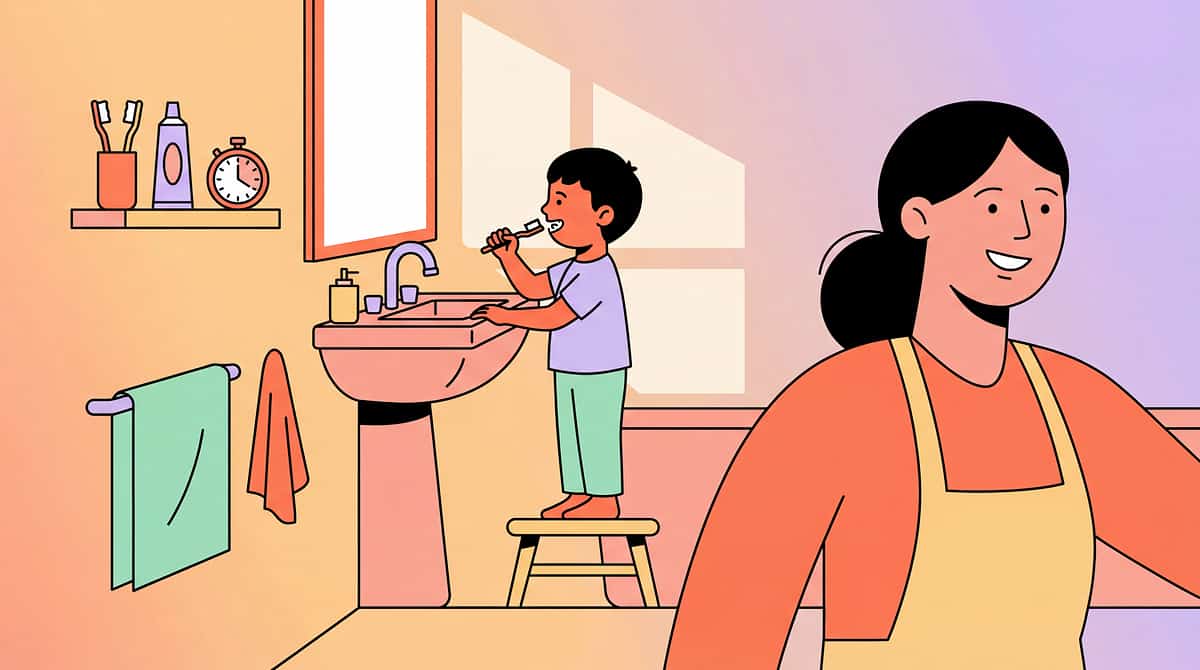
Cooperative Brushing Achieved (4-8 weeks)
Situation: Started with oral desensitization and visual schedules for predictability. Gradual progression from tolerating oral massage to accepting a toothbrush on teeth. Parents now support cooperative brushing, eliminating prior battles.
Emotion: Cooperation, peace, relief
Effective Cleaning Success (2-4 weeks)
Situation: Introduced an electric toothbrush and a three-sided brush. The electric brush handles motor work, and the three-sided brush covers all surfaces simultaneously. A timer ensures adequate duration, leading to thoroughly clean teeth.
Emotion: Effective, thorough, confident
Sensory Tolerance Built (4-8 weeks)
Situation: Switched to unflavored toothpaste and implemented a desensitization protocol. Systematic oral massage reduced sensitivity, and the child now tolerates and even enjoys the electric brush vibration and accepts toothpaste taste. Oral defensiveness has significantly decreased.
Emotion: Tolerance, acceptance, comfort

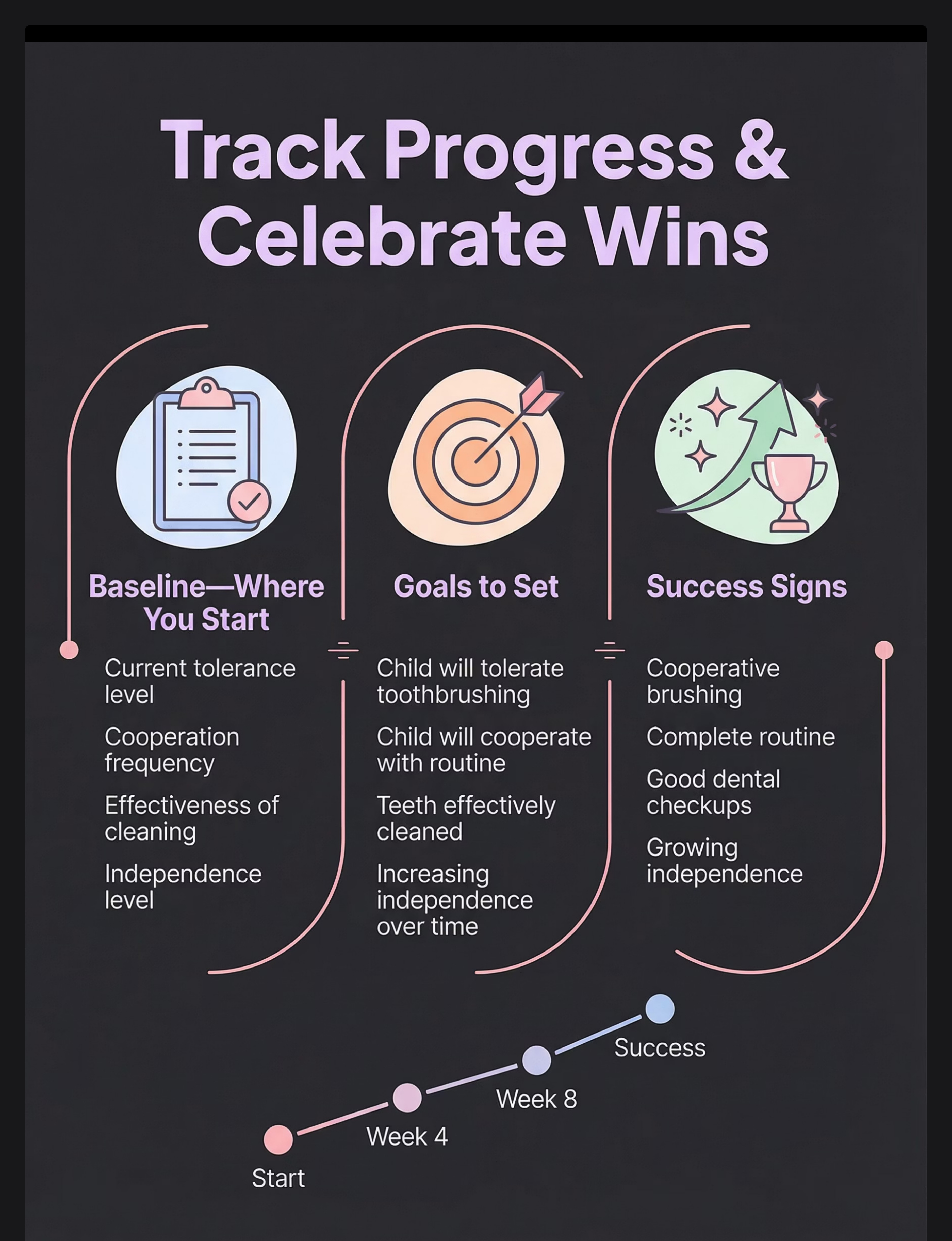
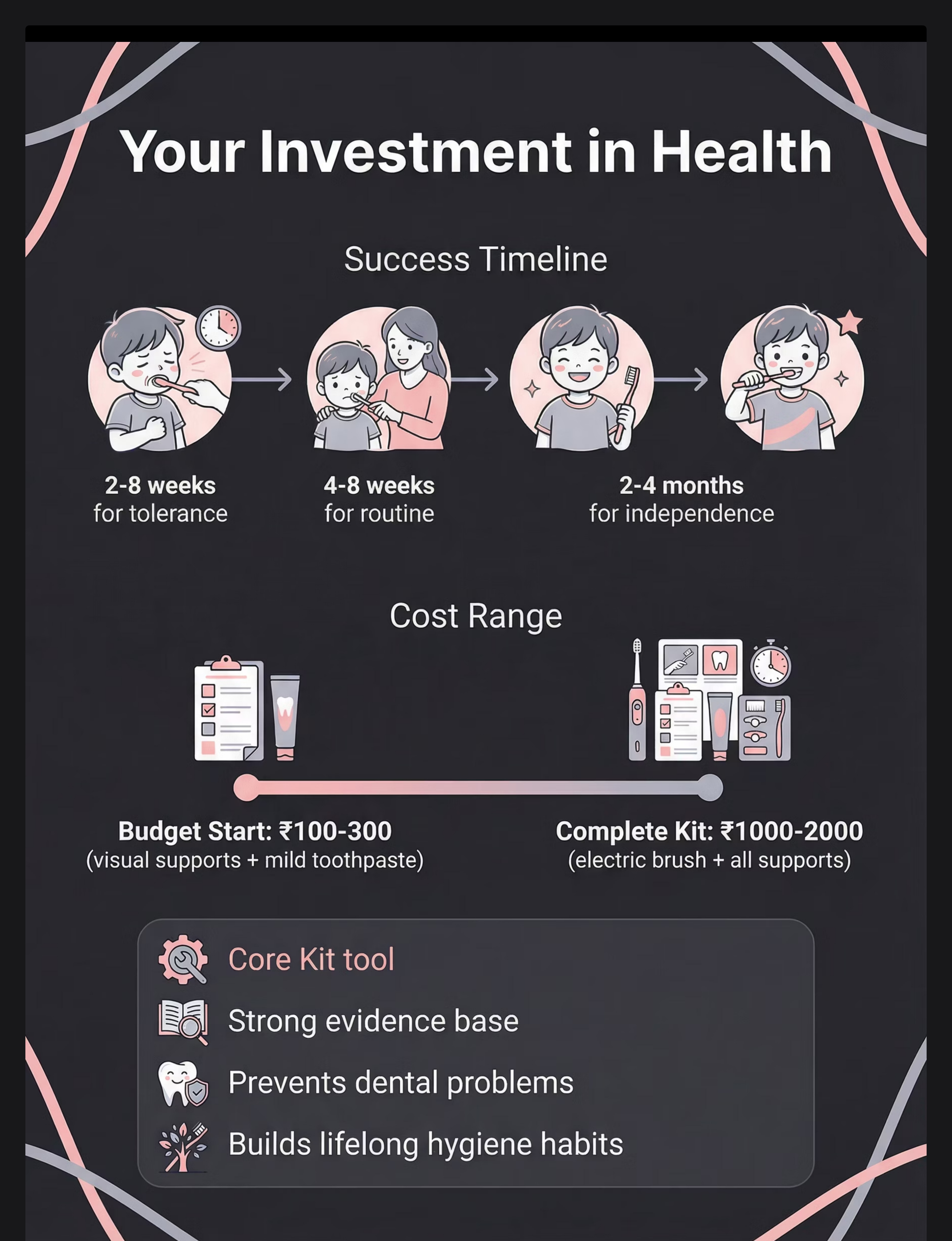
What to Expect (Realistic Timelines)
Tolerates toothbrushing
Child allows toothbrush in mouth without extreme distress. May still need support but accepts the activity.
2-8 weeks
Cooperates with brushing
Actively participates in routine. Opens mouth when asked. Follows visual schedule steps with reminders.
4-8 weeks
Follows brushing routine
Completes full two-minute brushing with all steps. Routine becomes predictable and less stressful.
4-8 weeks
Brushes effectively with supports
Using adapted tools, achieves thorough cleaning of all tooth surfaces. Technique adequate with accommodations.
4-8 weeks
Increasing independence
Begins to brush with less direct assistance. May still need supervision and checking but initiates routine.
2-4 months
Good dental health maintained
Dental checkups show healthy teeth and gums. Cavities prevented. Long-term oral health established.
Ongoing
Remember: Every child progresses at their own pace. These timelines reflect typical patterns, but your child may move faster or need more time. Consistency and patience yield results.

Is This Right for My Child? (2-Minute Check)
"My child resists or refuses toothbrushing. Is there a way to understand why this is happening?"
Indication: Need to identify cause—sensory, motor, or behavioral factors driving resistance. (Confidence: 95%)
"Oral sensory sensitivities make brushing a real challenge for my child."
Indication: Desensitization protocols and sensory-friendly products are essential starting points. (Confidence: 92%)
"I often wonder if my child can actually brush their teeth effectively."
Indication: If yes, focus on routine building and increasing independence. If no, adapted tools may be needed. (Confidence: 88%)
"Toothbrushing feels like a daily battle in our home."
Indication: This suggests a comprehensive approach addressing multiple factors simultaneously. (Confidence: 90%)
Result: 3+ "yes" answers = strong fit for toothbrushing aids and systematic intervention approach

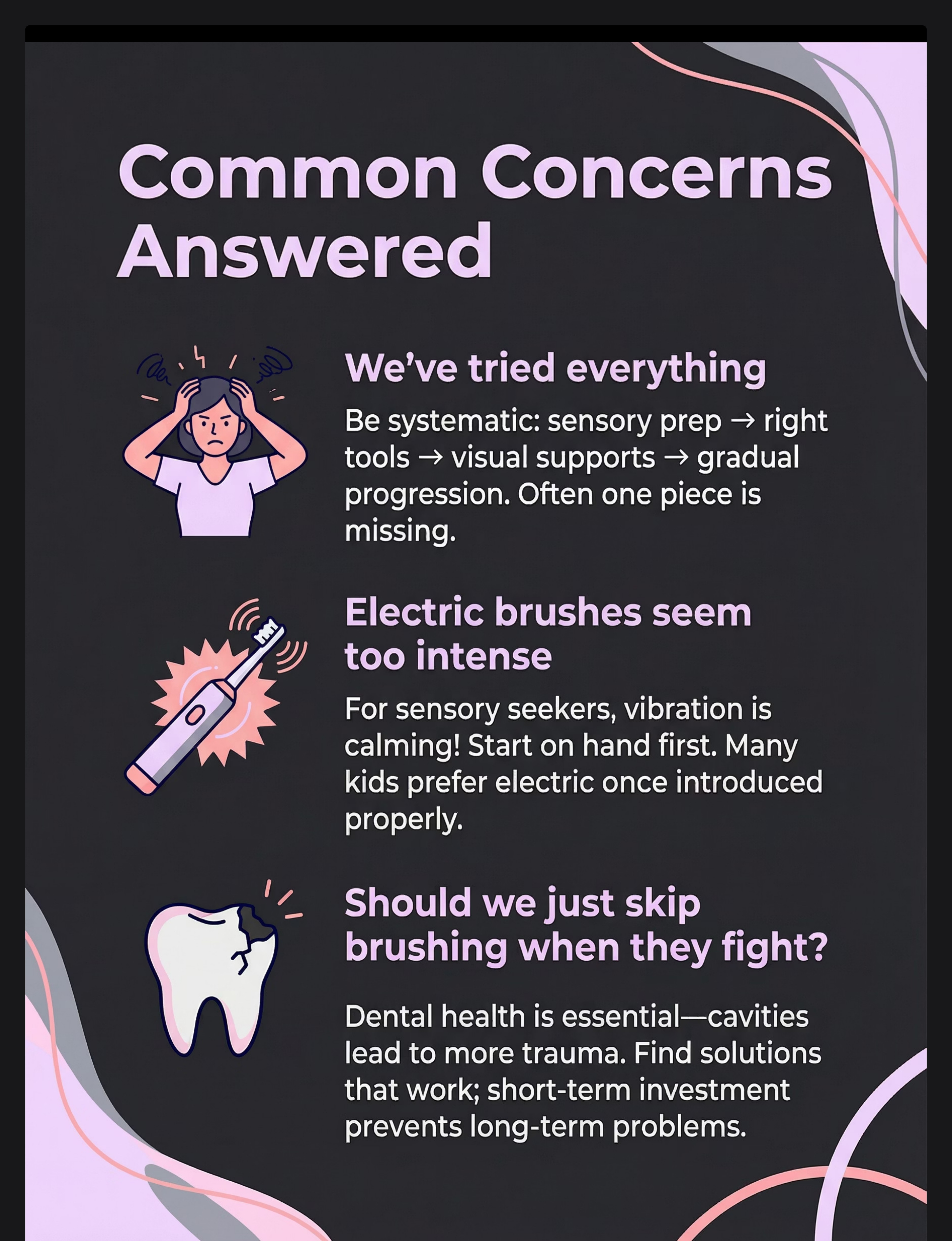
Common Questions (Honest Answers)
Q: We've tried everything | A: Let's be systematic: (1) Sensory prep first if needed (2) Right tools for specific challenges (3) Visual supports for predictability (4) Gradual progression (5) Positive association building. Often one piece is missing from the puzzle. Try this: Systematic approach; identify which element is missing in your current routine. | |
Q: Electric brushes seem too intense | A: For sensory seekers, vibration is actually calming and organizing! Start on hand or cheek first. Or find low-vibration options. Many kids who resist manual brushing prefer electric once introduced properly. Try this: Start on body first; sensory seekers often prefer vibration input. | |
Q: Should we just skip brushing if they fight? | A: Dental health is essential—cavities lead to pain, invasive procedures, and more trauma. Find ways to make it work. Short-term investment in solving this prevents long-term dental problems and associated stress. Try this: Find solutions; dental health is non-negotiable for long-term wellbeing. | |
Q: Dentist says to just hold them down | A: Restraint creates trauma and worsens future cooperation. Gradual desensitization builds genuine cooperation. Find trauma-informed dental care providers. Short-term restraint creates long-term problems and dental phobia. Try this: Trauma-informed approach; build cooperation systematically rather than forcing. |


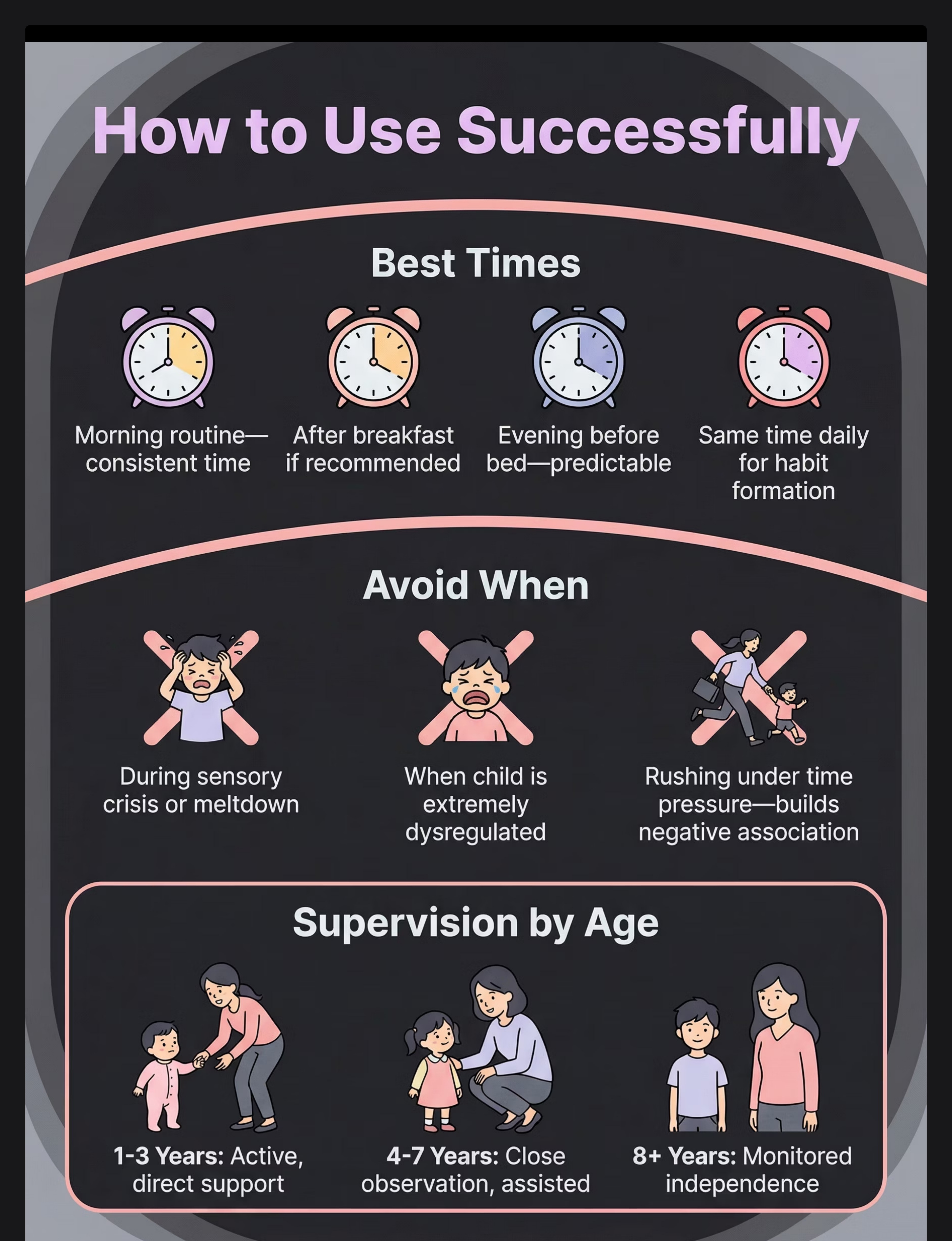
Usage Guide
When to Use
Morning brushing routine
After breakfast or before school, consistent timing builds predictability
Evening brushing routine
Before bed, same sequence and location every night
After meals if recommended
For children prone to cavities, dentist may recommend additional brushing
At consistent routine times
Predictability reduces resistance—same times daily
When NOT to Use
During sensory crisis or meltdown
Wait for regulation—forcing during crisis creates trauma
When child is extremely dysregulated
Prioritize calming first, then attempt routine
Rushing under time pressure
Better to skip once than create negative association through rushing
Supervision by Age
Under 6 years | Adult brushes or fully assists | Child cannot brush effectively alone | |
6-8 years | Child brushes with adult check/finish | Building skills but needs verification | |
8+ years | Supervision decreasing; spot checks | Independence emerging with monitoring |
Duration: 2 minutes brushing time; total routine time varies 5-10 minutes including preparation and cleanup. Note: Adapt approach for age and developmental level—chronological age is less important than skill level.

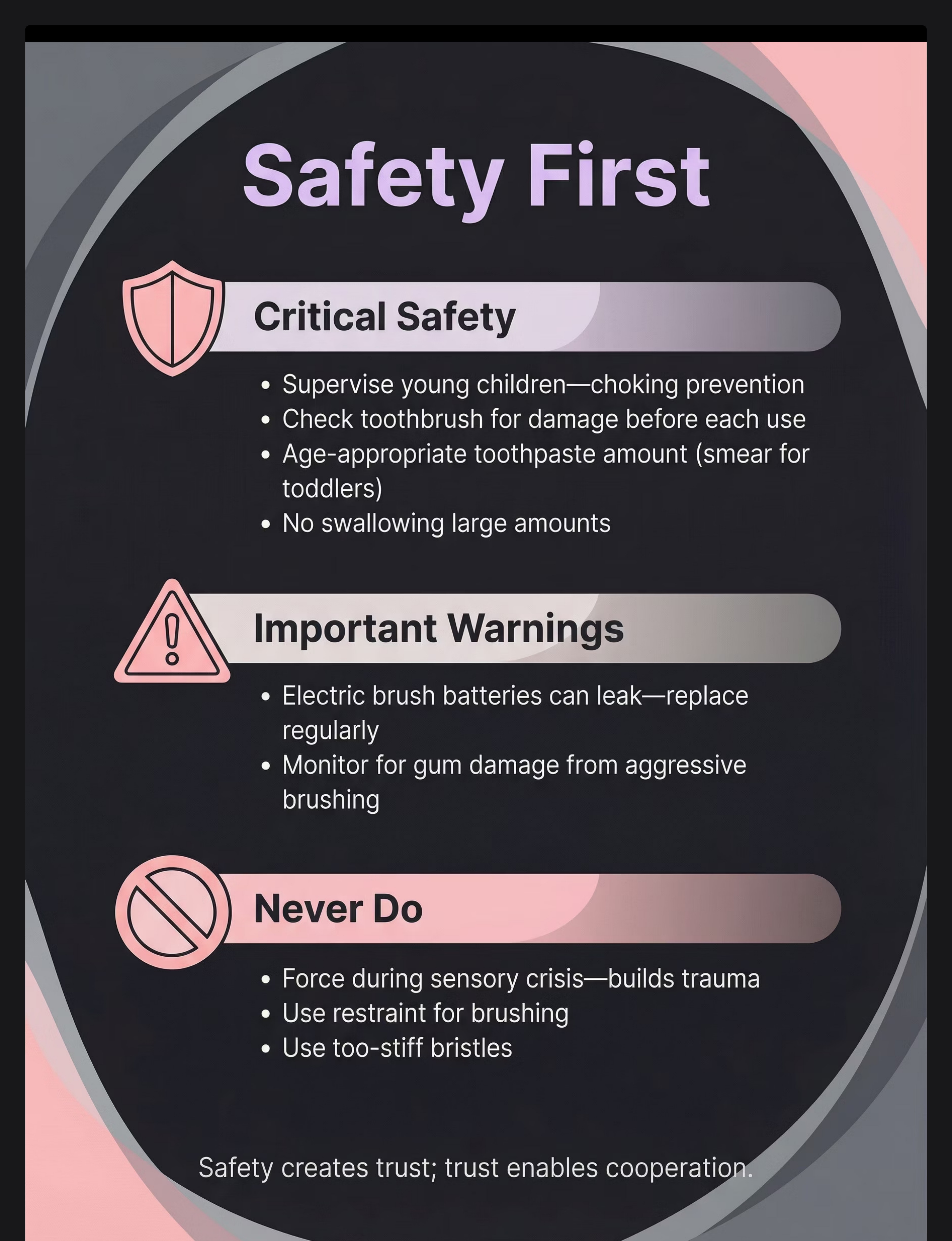
Safety First
Critical Safety
- Supervise young children to prevent choking on toothbrush or toothpaste
- Check toothbrush regularly for damage—replace if bristles frayed or head loose
- Use age-appropriate toothpaste amount: smear for toddlers, pea-size for older children
- Prevent swallowing large amounts of toothpaste—fluoride ingestion concerns
Warnings
- Electric brush batteries can leak—check compartment regularly
- Choking hazard if brush head detaches or comes loose
- Monitor for gum damage from overly aggressive brushing pressure
Contraindicated (Never Do)
- Never force brushing during sensory crisis or meltdown
- Never use restraint for toothbrushing—creates trauma
- Never use too-stiff bristles—causes pain and aversion
Safety Checklist
Before Use
- ✓ Toothbrush in good condition
- ✓ Appropriate toothpaste selected
- ✓ Visual supports ready
- ✓ Calm environment prepared
During Use
- ✓ Following established routine
- ✓ All tooth surfaces covered
- ✓ Appropriate duration (2 min)
- ✓ Positive interaction maintained
Signs of Success
- ✓ Cooperation increasing
- ✓ Resistance decreasing
- ✓ Complete routine achieved
- ✓ Good dental checkup results

Investment Guide
Budget Option: Visual Schedule + Mild Toothpaste + Timer
Cost: ₹100-300
What you get: Essential supports for establishing routine structure and reducing sensory barriers. Can be partially DIY.
Best for: Starting Point
Ideal for addressing routine resistance or mild sensory challenges. This option provides the foundational elements everyone needs for effective oral hygiene.
Great Starting Point
Premium Option Tools
Quality electric toothbrush + 3-sided brush + specialized supports
Investment Details
Cost: ₹1,000-2,000
Brands: Oral-B, Philips, Collis Curve (3-sided)
Comprehensive Toolkit
Addresses motor demands, technique challenges, and routine structure simultaneously for a complete solution.
Optimal Use Cases
Best for significant motor challenges or when multiple barriers are present. This investment often yields high returns in cooperation and improved dental health.
Complete Solution
Overall Investment Range: ₹100–2,000 (USD $1–25)
Recommendation: Start with budget option to establish routine structure. Add premium tools if motor challenges persist or sensory seeking requires vibration input. Most families find best results combining visual supports (budget) with one adapted tool (electric or 3-sided brush).

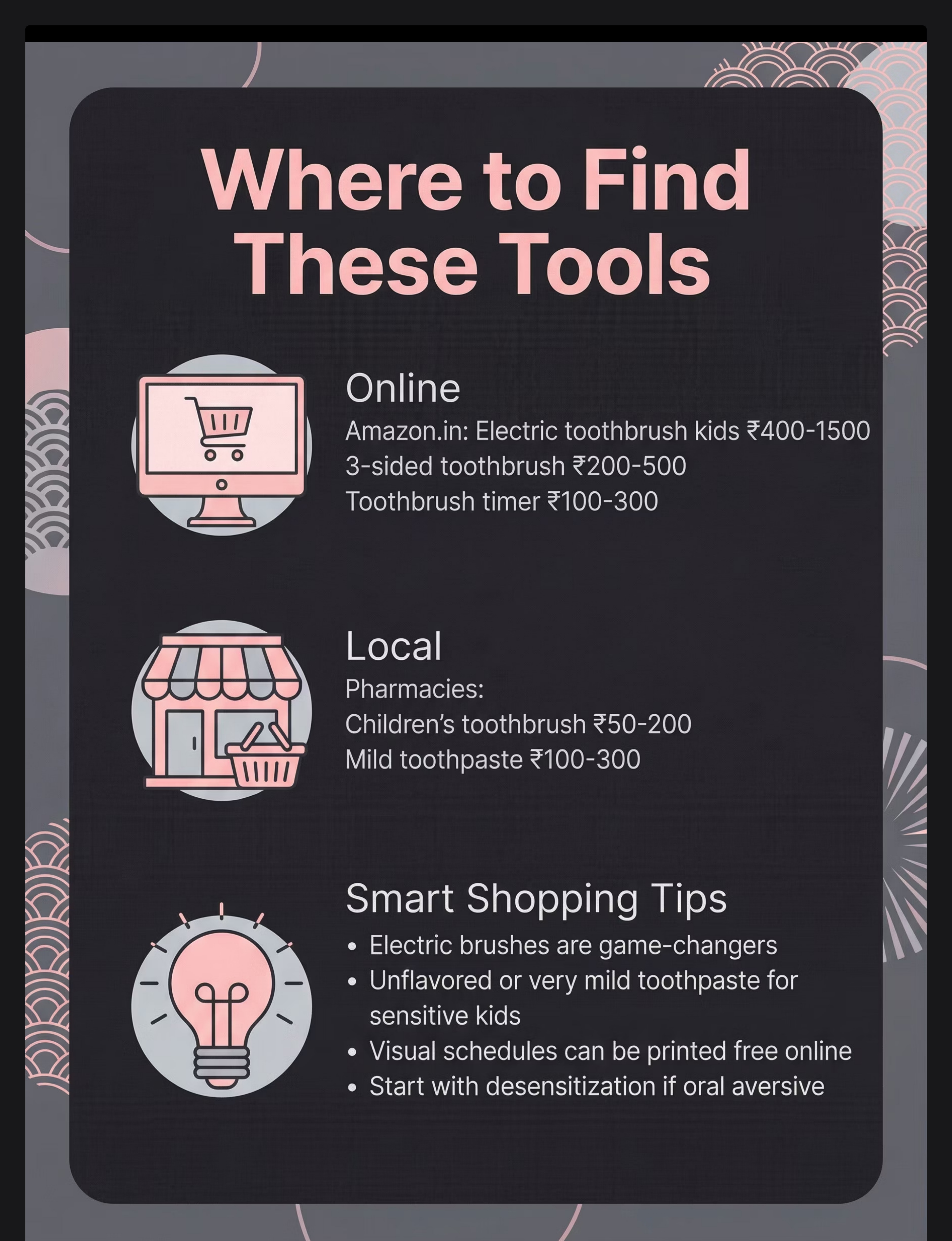
Where to Buy in India
Availability: Widely available through online and offline channels across India
Recommended Platforms
Amazon.in
Search terms: "electric toothbrush kids", "3 sided toothbrush", "toothbrush timer kids", "mild toothpaste kids"
Price Range: ₹100-1,500
Local Pharmacies
Search terms: "children's toothbrush"
Price Range: ₹50-200
Buying Tips
Electric brushes can be game-changers for motor challenges
3-sided brushes significantly simplify technique requirements
Unflavored or very mild toothpaste essential for sensory-sensitive kids
Visual schedules can be printed free online or created from photos
Start with desensitization if child has oral aversion
Red Flags
Too-stiff bristles that can damage sensitive gums
Strong mint or artificial flavors for sensory-sensitive children
Forcing tools too quickly without desensitization
Skipping sensory preparation step when oral defensiveness present

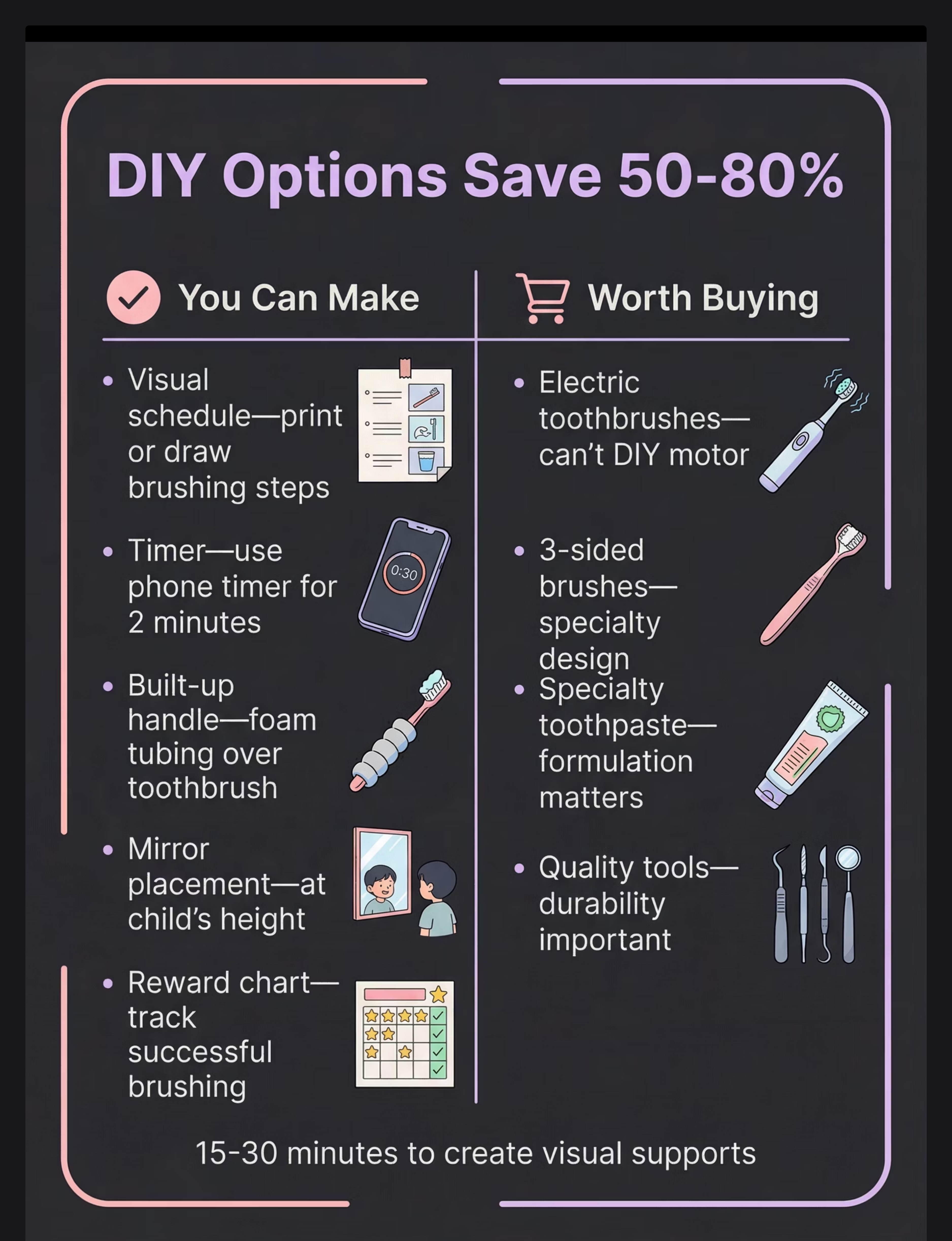
DIY Alternative (Save 50-80%)
Feasibility: Medium-High | Time Investment: 15-30 minutes | Cost Savings: 50-80%
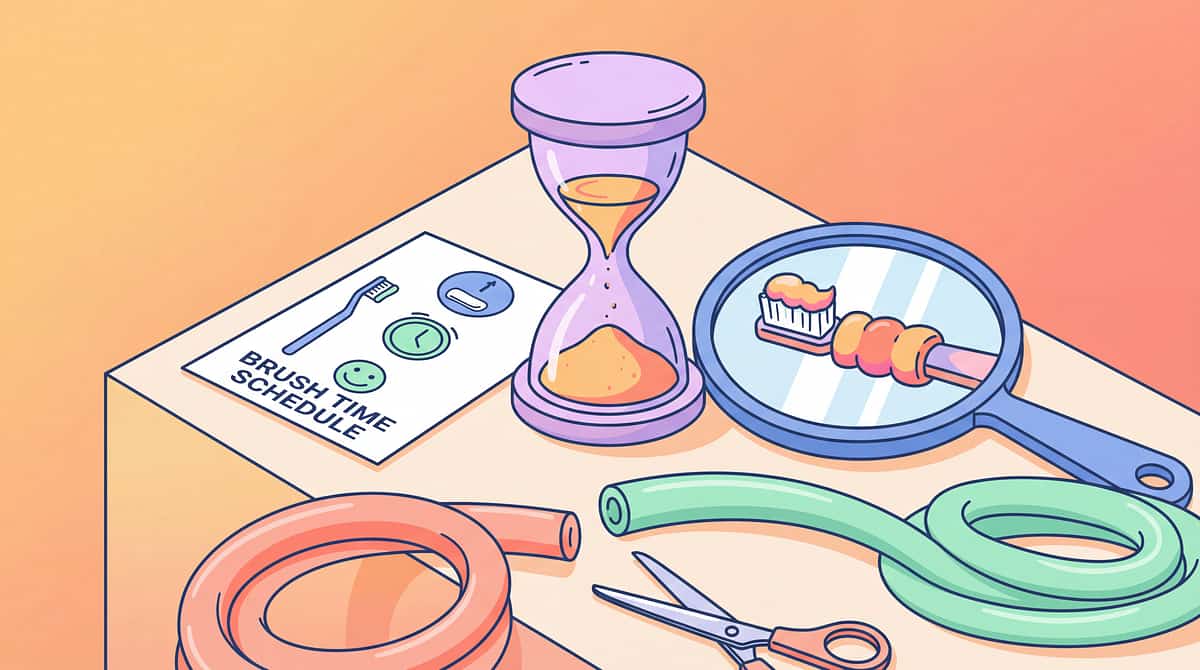
Materials Needed
- Printed visual schedule (free online templates or photos)
- Timer (smartphone timer or sand timer)
- Foam tubing for handle build-up (₹50-100)
- Mirror positioned at child's height for visual feedback
DIY Steps
Create Visual Schedule
Print or draw step-by-step brushing pictures: (1) Get toothbrush (2) Put toothpaste (3) Brush top teeth (4) Brush bottom teeth (5) Rinse (6) Put away. Laminate or put in plastic sleeve.
Set Up Timer
Use phone timer app with visual countdown or purchase sand timer. Set for 2 minutes. Place where child can see remaining time.
Adapt Toothbrush Handle
Cut foam tubing to length of toothbrush handle. Slide over handle to create thicker grip. Secure with tape if needed.
Position Mirror
Install mirror at child's eye level. Visual feedback helps with technique and provides sensory input.
Start Oral Desensitization
Before brushing, massage around mouth, then inside cheeks with clean finger. Progress gradually over days to build tolerance.
Create Reward Chart
Track successful brushing sessions. Sticker or checkmark for each completed routine. Celebrate progress.
DIY vs Commercial
1
When to DIY
- Visual supports and schedules
- Timers using phone or purchase simple sand timer
- Handle adaptations with foam tubing
- Routine tracking and reward charts
2
When to Buy Commercial
- Electric toothbrushes (can't DIY effectively)
- Three-sided brushes (must be purchased)
- Specialty sensory-friendly toothpaste
- Quality professional-grade tools
Tradeoffs: DIY excellent for visual supports and basic adaptations. However, can't replicate electric brushes or specialized designs like 3-sided brushes. Best approach: DIY the supports, invest in one key adapted tool based on child's primary challenge.
Preview of toothbrushing aids Therapy Material
Below is a visual preview of toothbrushing aids therapy material. The pages shown help educators, therapists, and caregivers understand the structure and content of the resource before use. Materials should be used under appropriate professional guidance.


Share this resource
Help others discover thisLink copied!

Integrated Approach to Oral Hygiene Success
Achieving consistent oral hygiene involves more than just the right tools—it requires tracking progress, leveraging additional support, and planning for sustained success. This final section helps you integrate all elements for long-term positive outcomes.
Track Progress & Measure Success
Implement a simple tracking system, like a sticker chart or a log in a notebook, to monitor daily brushing sessions. Note cooperation levels, duration, and any specific challenges or breakthroughs. Visual progress reinforces positive behavior and helps identify areas for adjustment.
- Cooperation Score: 1-5 scale after each session.
- Duration: Log actual brushing time.
- Challenge Areas: Note specific resistance points.
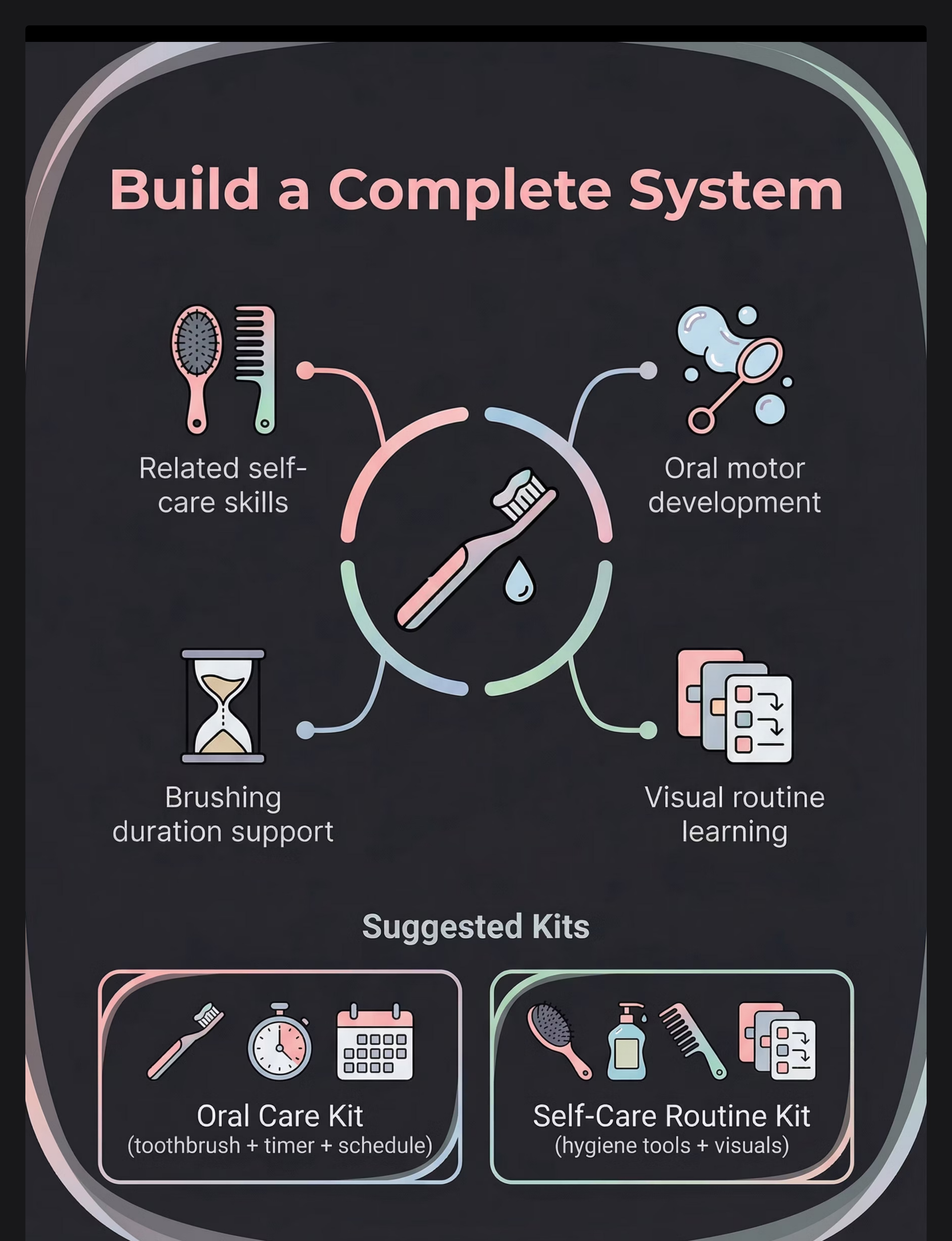
Related Tools & Complementary Interventions
Oral hygiene doesn't exist in a vacuum. Consider integrating complementary strategies to support overall sensory regulation and motor skill development. Consult with occupational therapists, speech therapists, or behavioral specialists for a holistic approach.
- Sensory Input: Chewy toys, weighted blankets, deep pressure.
- Fine Motor Skills: Play-based activities to strengthen hand-eye coordination.
- Social Stories: To prepare for and understand the brushing routine.
Additional Support & Resources
You don't have to navigate this alone. Many professionals and communities can offer guidance, strategies, and emotional support. Seek out pediatric dentists experienced with neurodiverse children, local support groups, and credible online resources.
- Pediatric Dentists: Look for those specializing in special needs.
- Parent Support Groups: Share experiences and tips.
- Online Communities: Forums, blogs, and social media groups focused on autism and dental care.
Next Steps & Action Items
Armed with knowledge and tools, it's time to build a sustainable plan. Start small, be consistent, and adapt as needed. Remember that progress is not linear, and every step forward is a victory.
- Create a Personalized Plan: Based on your child's unique needs.
- Set Realistic Goals: Focus on consistency over perfection.
- Schedule Regular Check-ups: With a supportive dental professional.
- Celebrate Milestones: Reinforce positive experiences.