





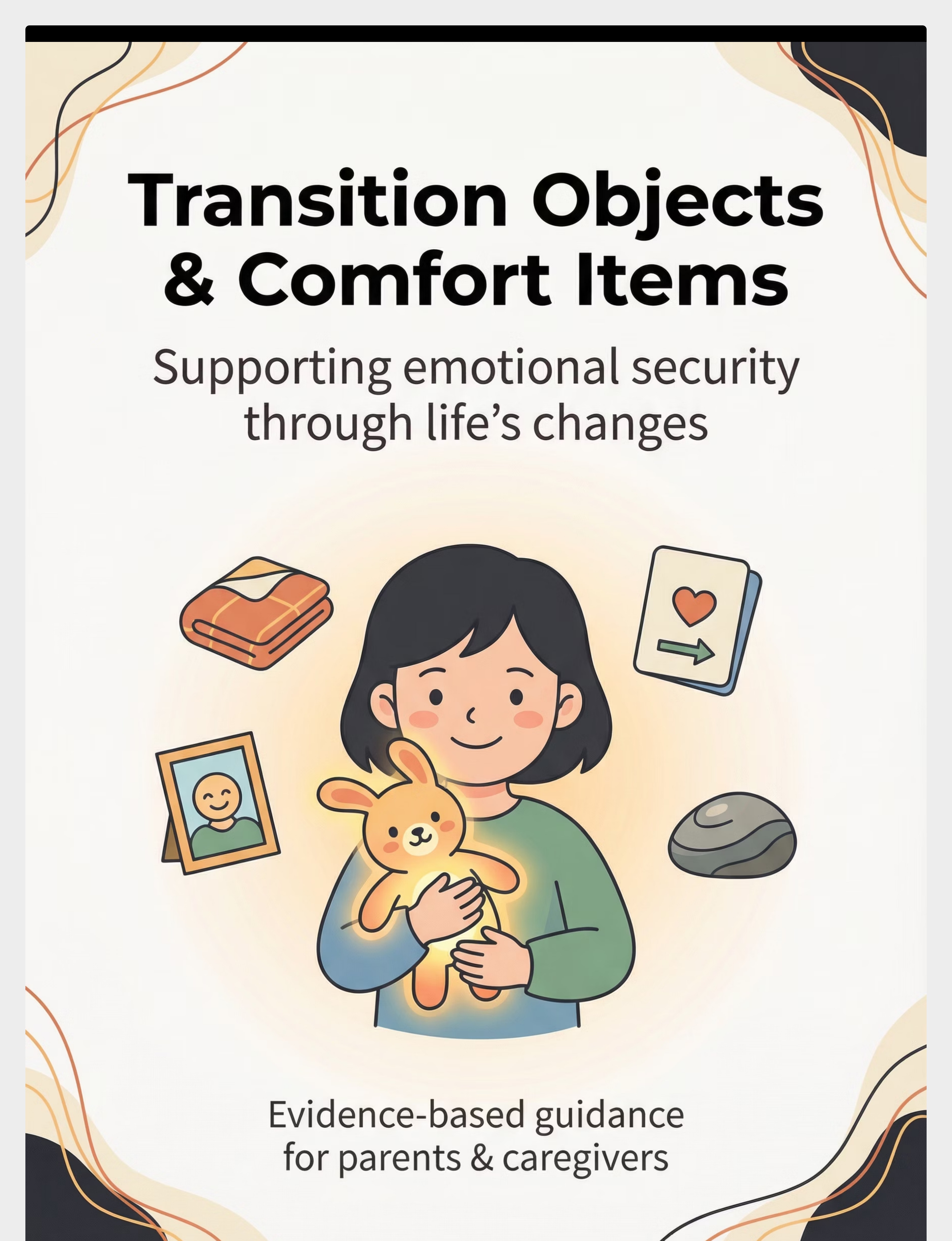
Transition Objects & Comfort Items
Essential emotional support tools for smoother transitions and reduced anxiety

Who This Helps
Transition objects and comfort items provide emotional security and reduce anxiety during transitions through comforting objects that maintain connection. These tools help children manage change, separation, and new environments effectively.
Transition Support
Anxiety Reduction
Emotional Security
Self-Regulation
Separation Tolerance
Change Adaptation
All Ages
Home
School
Clinic
Community
Children with Transition Challenges
Supports children who struggle with changes in routine, environment, or activities throughout their day.
Children with Separation Anxiety
Helps children manage the stress of being apart from caregivers or familiar environments.
Children Facing New Experiences
Provides security and emotional grounding when encountering unfamiliar places, people, or situations.

Does This Sound Familiar?
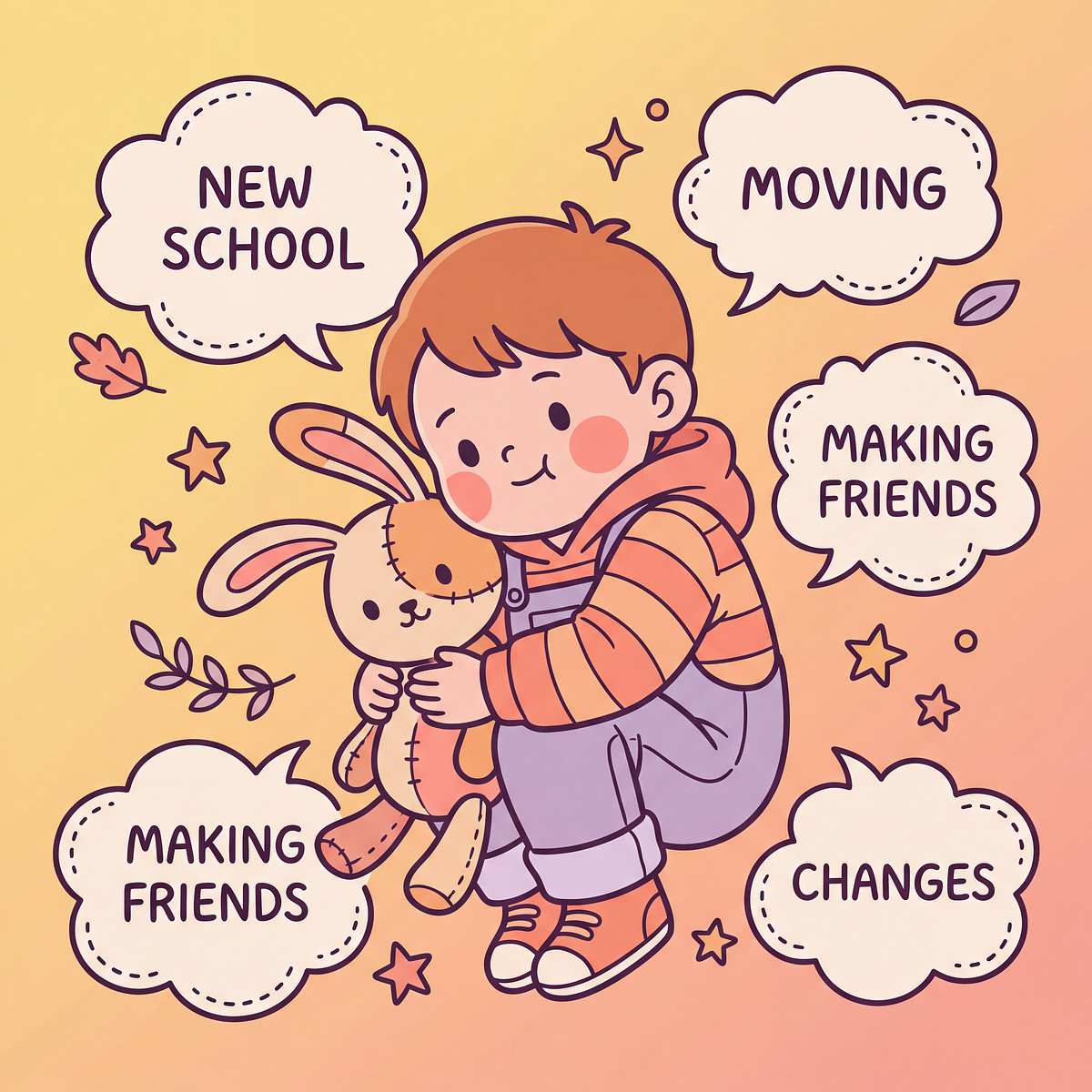
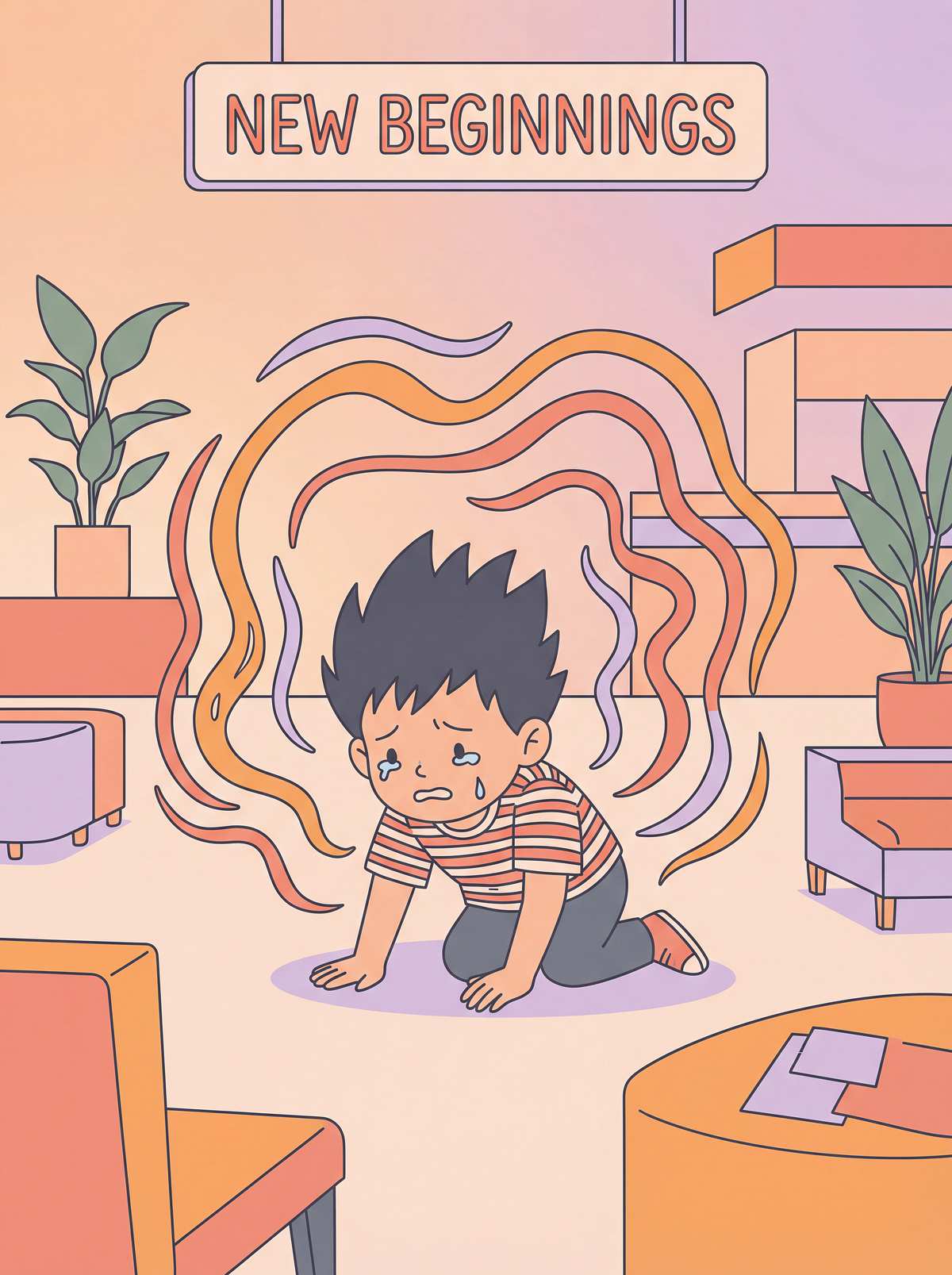
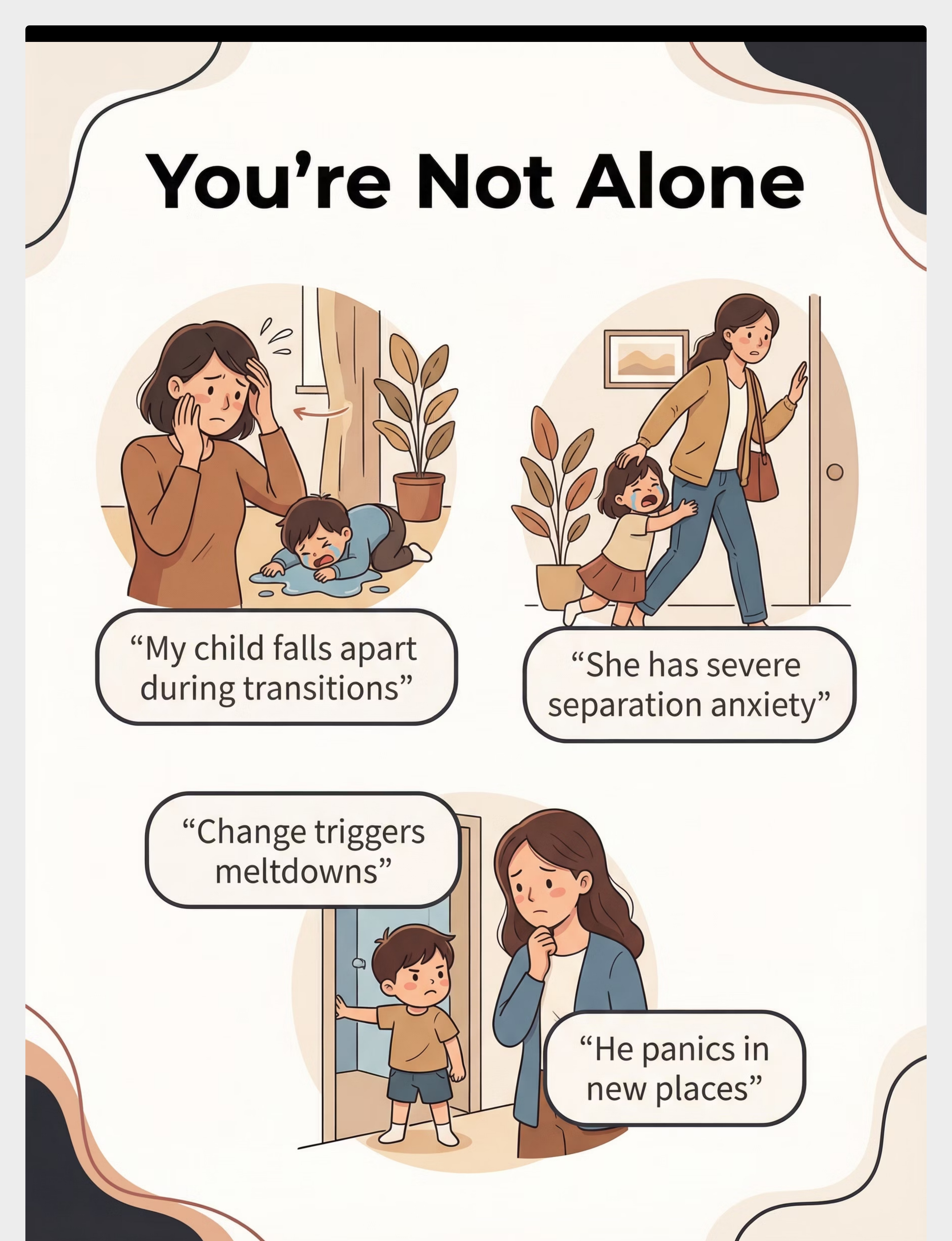
"My child falls apart during transitions"
"She has severe separation anxiety"
"He can't go anywhere without his blanket"
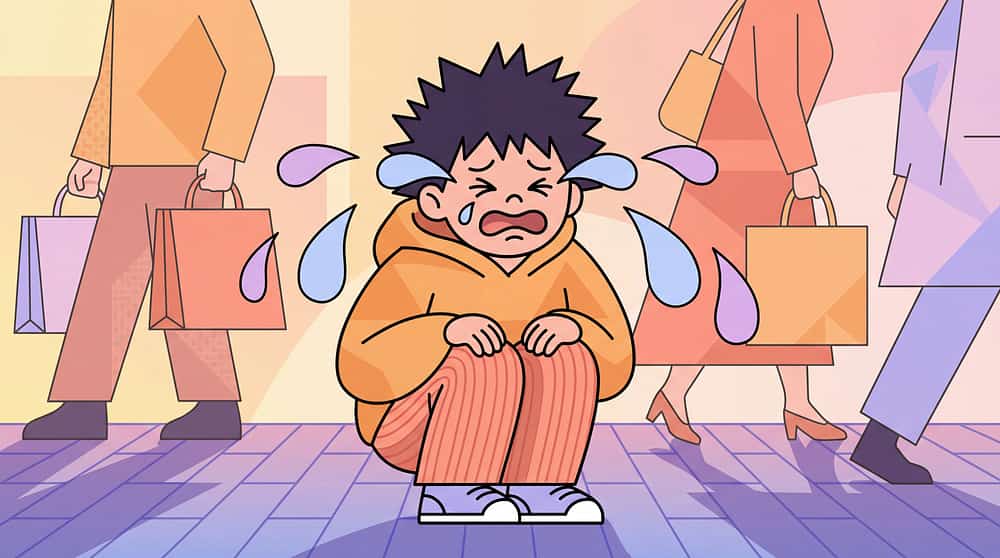
"She screams when it's time to leave"
"Change triggers meltdowns"
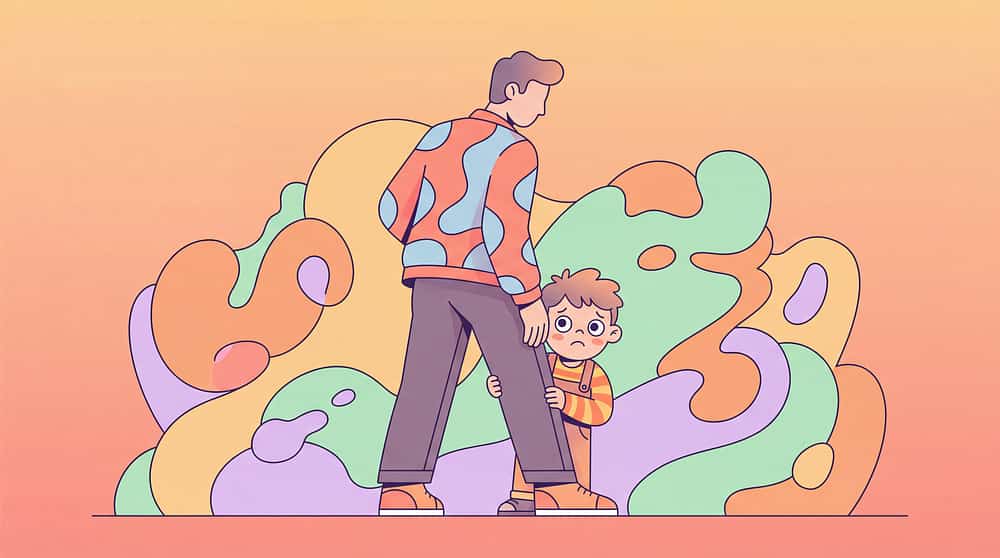
"He panics in new places"
You're not alone. These are common challenges faced by many families. Transition objects and comfort items can provide the emotional security children need to navigate change successfully.

A Day Without the Right Support
Morning Transitions
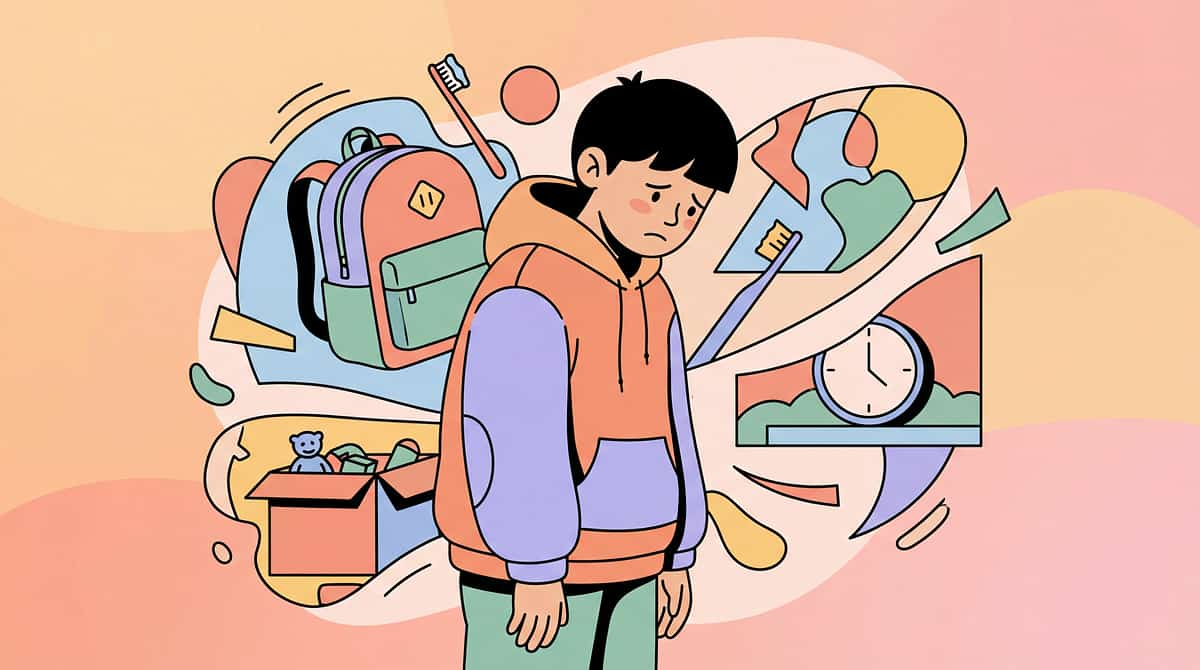
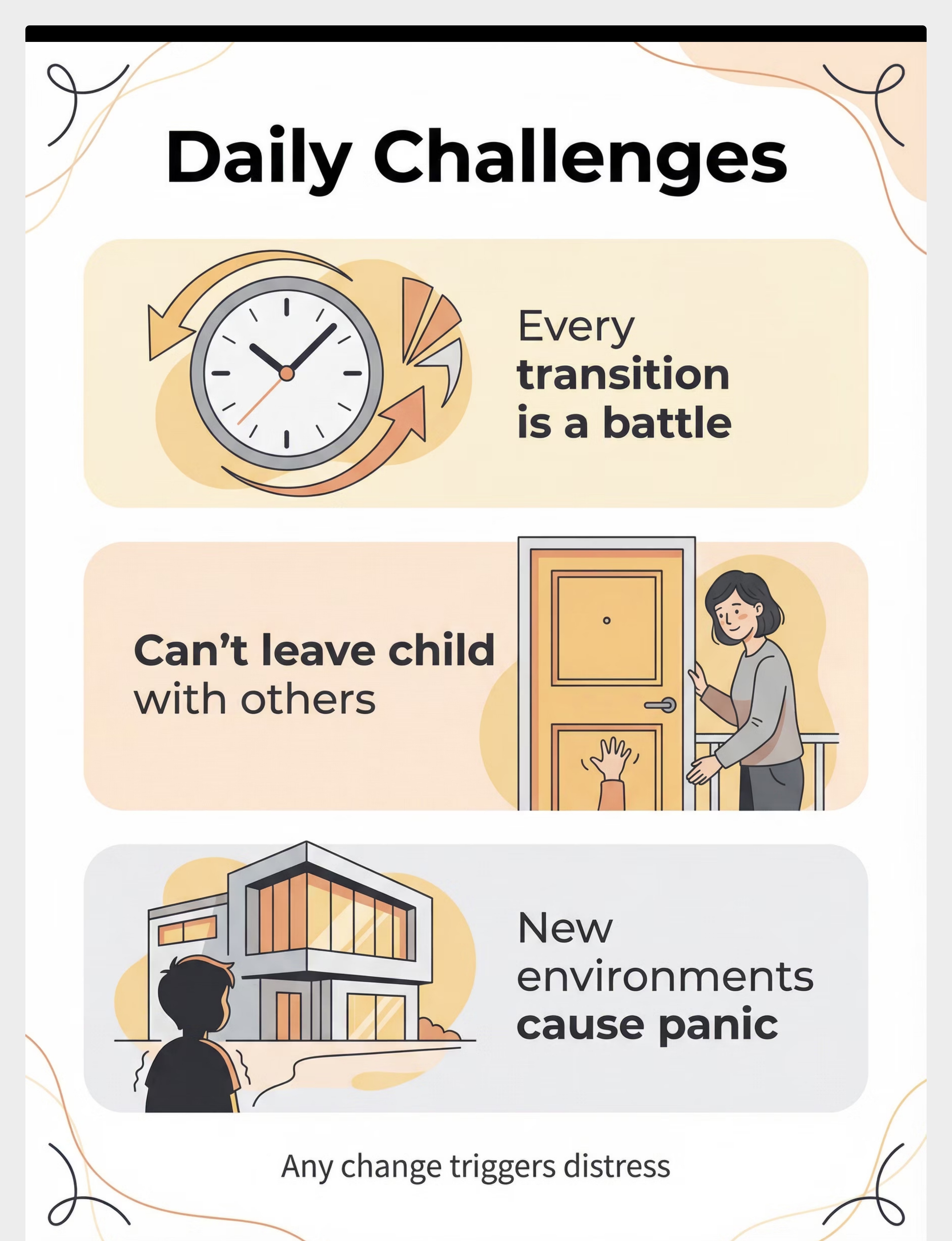
Every morning brings battles—getting out of bed, changing activities, leaving for school. Each transition triggers resistance and distress, making mornings exhausting for the entire family.
Separation at School
Drop-off becomes a daily ordeal. Your child clings, cries, and cannot separate. The anxiety is overwhelming for both of you, and sometimes they can't even enter the building.
Therapy Sessions & Activities
Moving between activities during the day creates constant stress. Therapy transitions, changing classrooms, or shifting focus—each change brings meltdowns and refusal.
Evening & Bedtime
Ending activities and transitioning to bedtime routines trigger more distress. The day that began with struggle ends the same way, leaving everyone exhausted.

The Science Behind It
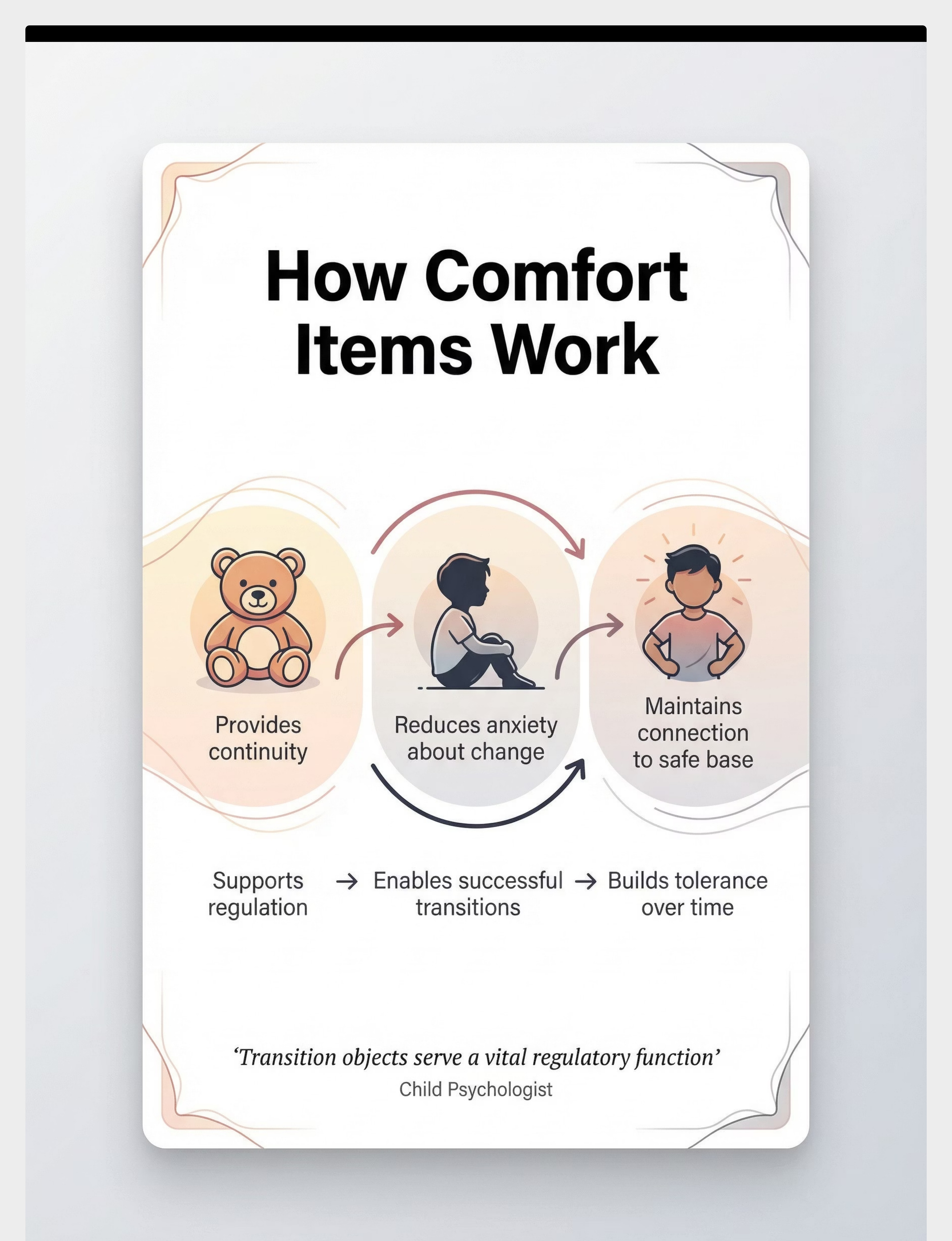
Transition Object Provides Continuity
The familiar comfort item maintains a consistent presence across changing environments and situations.
Reduces Anxiety About Change
Having something known and safe helps lower the stress response triggered by transitions and uncertainty.
Maintains Connection to Safe Base
The object serves as a physical reminder of security, home, or loved ones during challenging moments.
Supports Regulation During Change
The comfort item becomes a self-regulation tool that helps the child manage emotional responses to transitions.
Enables Successful Transitions
With reduced anxiety and improved regulation, the child can navigate changes more smoothly and independently.
Builds Transition Tolerance Over Time
Successful experiences create positive associations, gradually increasing the child's capacity to handle change.
This mechanism supports development across multiple domains:
Transition Support
Anxiety Reduction
Emotional Security
Self-Regulation
Separation Tolerance
Change Adaptation

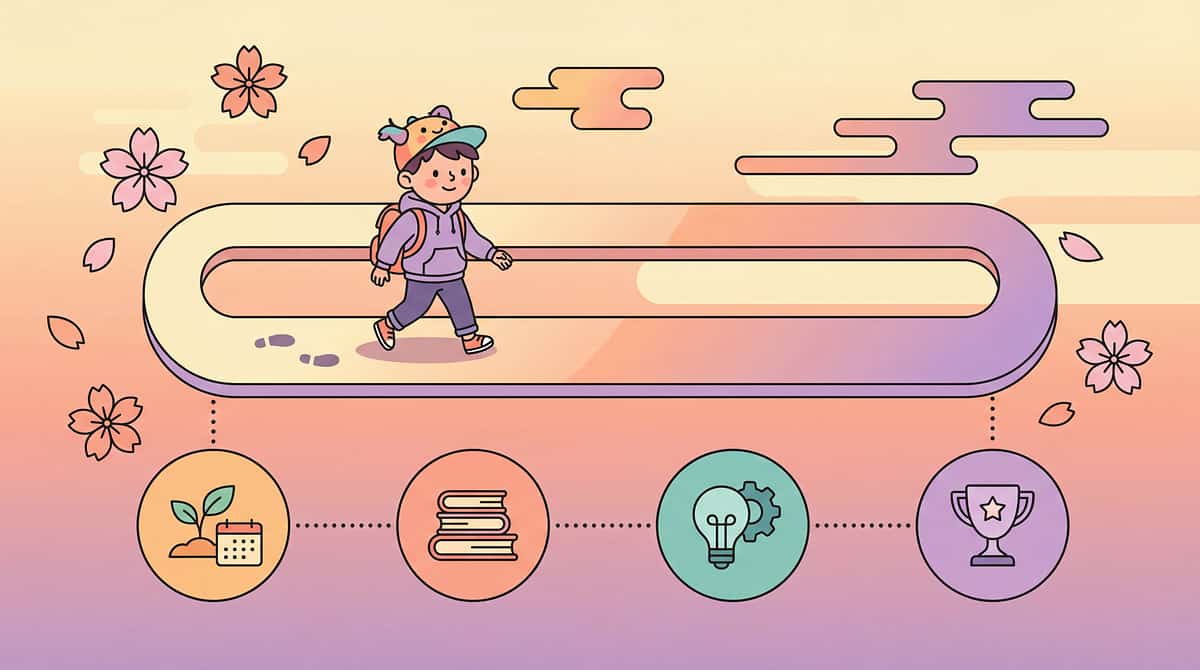
How to Use It Right
1
Allow comfort objects during difficult transitions
Never restrict access when your child needs emotional support. The object serves a vital regulatory function during challenging moments.
2
Gradually fade if needed, never suddenly remove
If reduction is appropriate, make changes slowly and respectfully. Sudden removal can damage trust and increase anxiety.
3
Use transition objects for separation anxiety
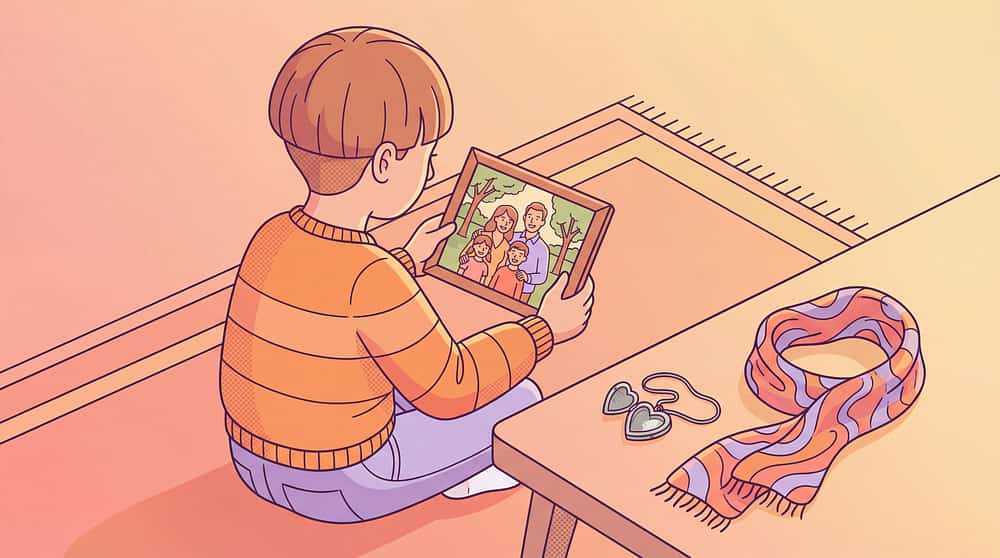
Photos, parent's items, or connection objects help maintain emotional bonds when apart, making separation more tolerable.
4
Prepare for transitions with visuals and objects
Combine comfort items with visual supports to give advance notice of changes, reducing surprise and anxiety.
5
Respect the object's importance to child
What may seem trivial to adults serves a critical function for the child. Honor their attachment and need for this support.
6
Have backup if possible for loss
Losing a comfort object can be devastating. When feasible, maintain identical backups or rotate similar items to prevent crisis.
Duration: Comfort objects should be available as needed throughout the day. Access should not be time-limited during periods of high stress or transition.

Expert Perspective
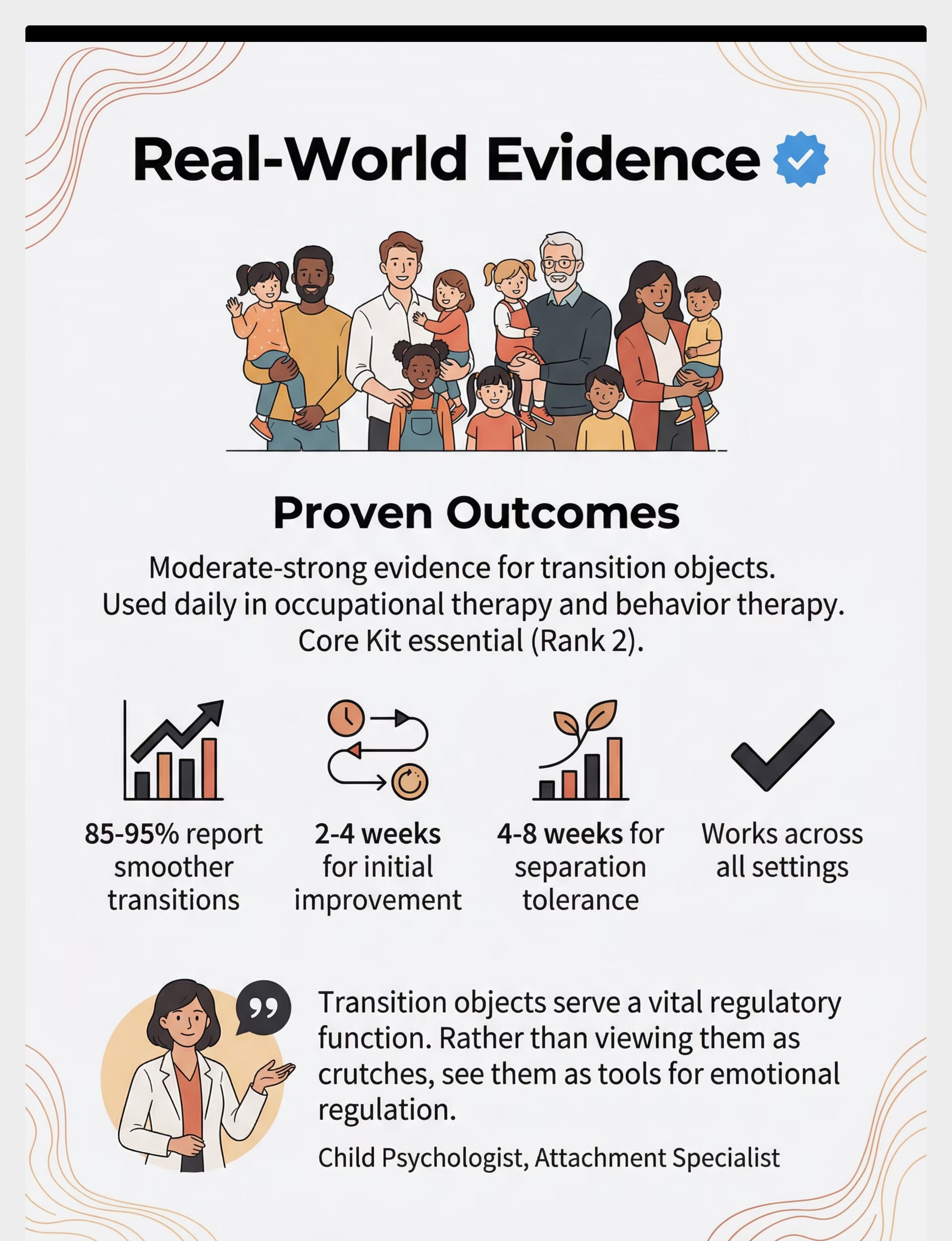
"Transition objects serve a vital regulatory function. They maintain connection when things change."
"Rather than viewing them as crutches, see them as tools for emotional regulation. Fade gradually if needed, but respect their importance."
— Child Psychologist, Attachment Specialist
OT + BCBA Recommended
Occupational therapists and board-certified behavior analysts both recognize the value of transition objects in supporting emotional regulation and behavioral success.
Moderate-Strong Evidence
Research demonstrates clear benefits of comfort objects and transition supports in reducing anxiety and supporting successful transitions across settings.
Rank #2 in Behavior Support
Highly ranked among behavior support tools for effectiveness, versatility, and evidence base in supporting emotional regulation during transitions.

Choose Your Option (6 Variants)
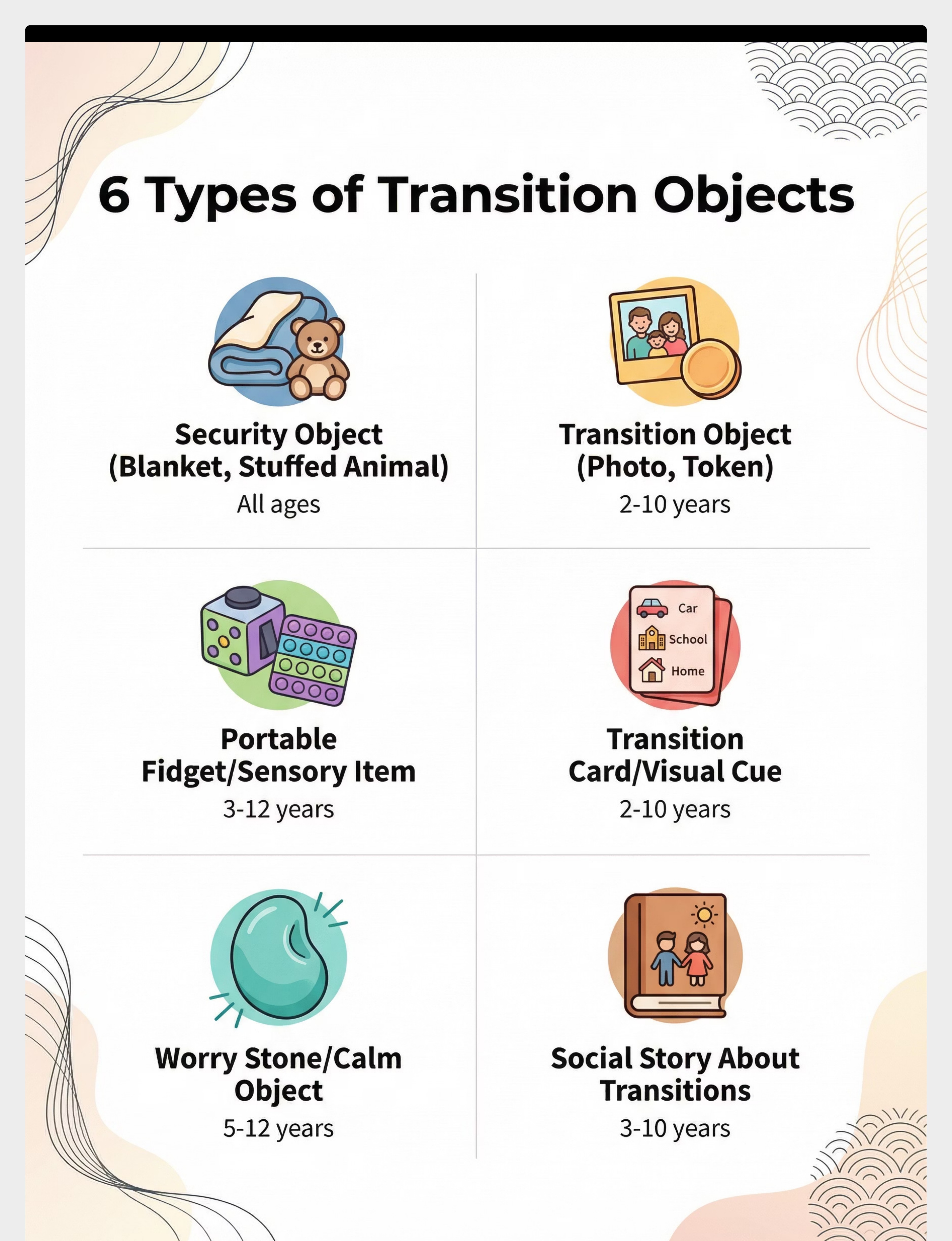
Different types of transition objects serve different functions. Choose based on your child's specific needs, the situations requiring support, and setting requirements. All variants support emotional security, but each has unique strengths.
Security Object
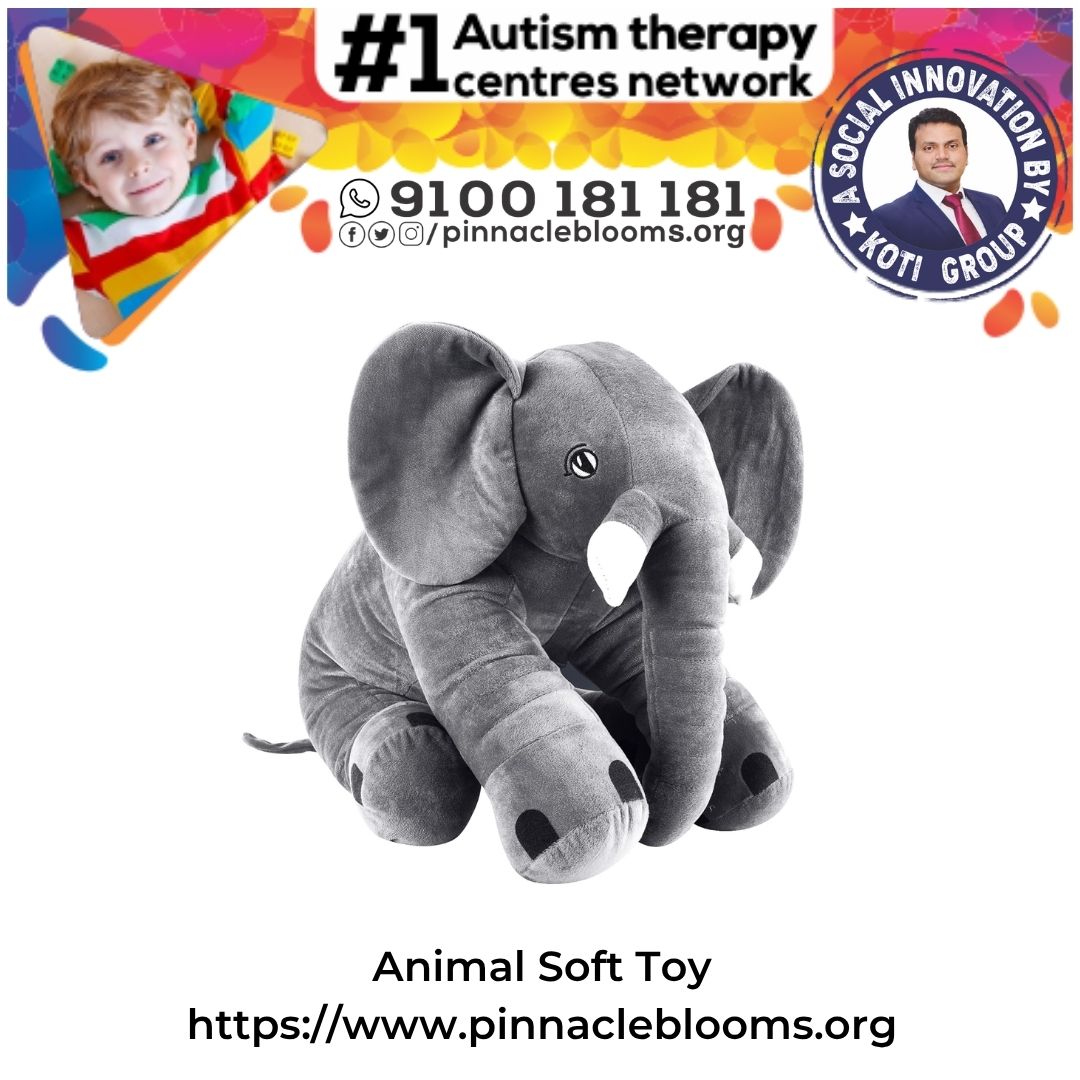
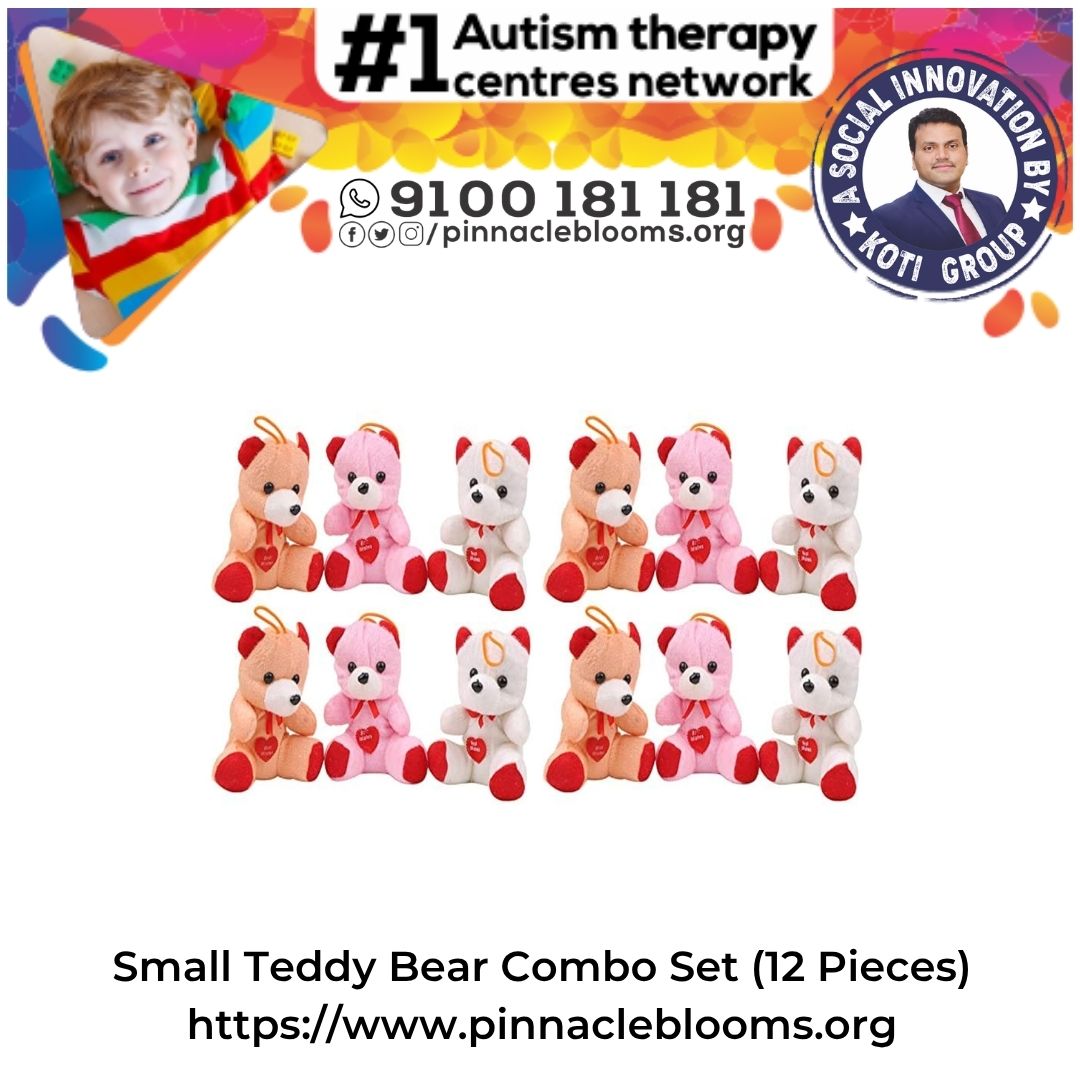
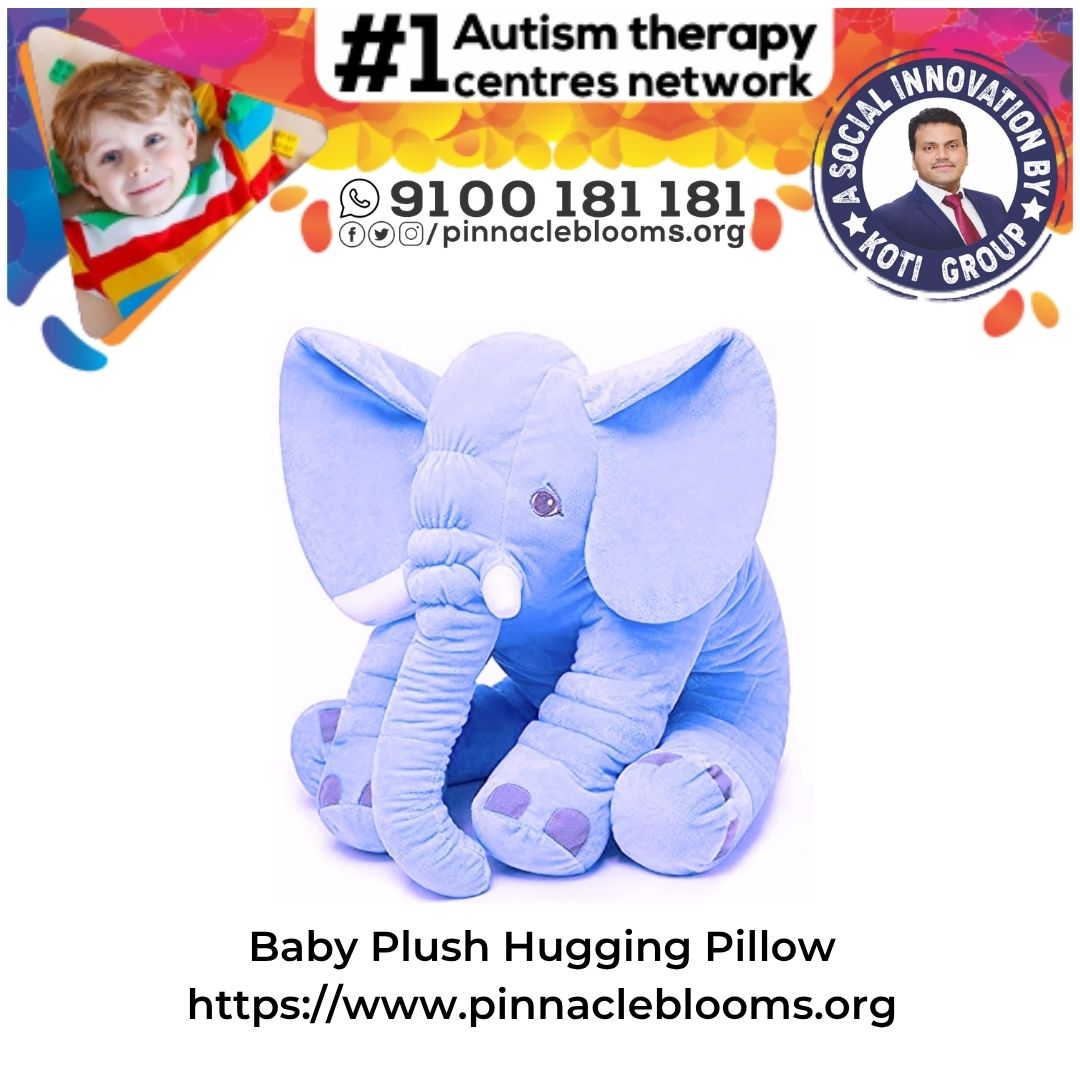
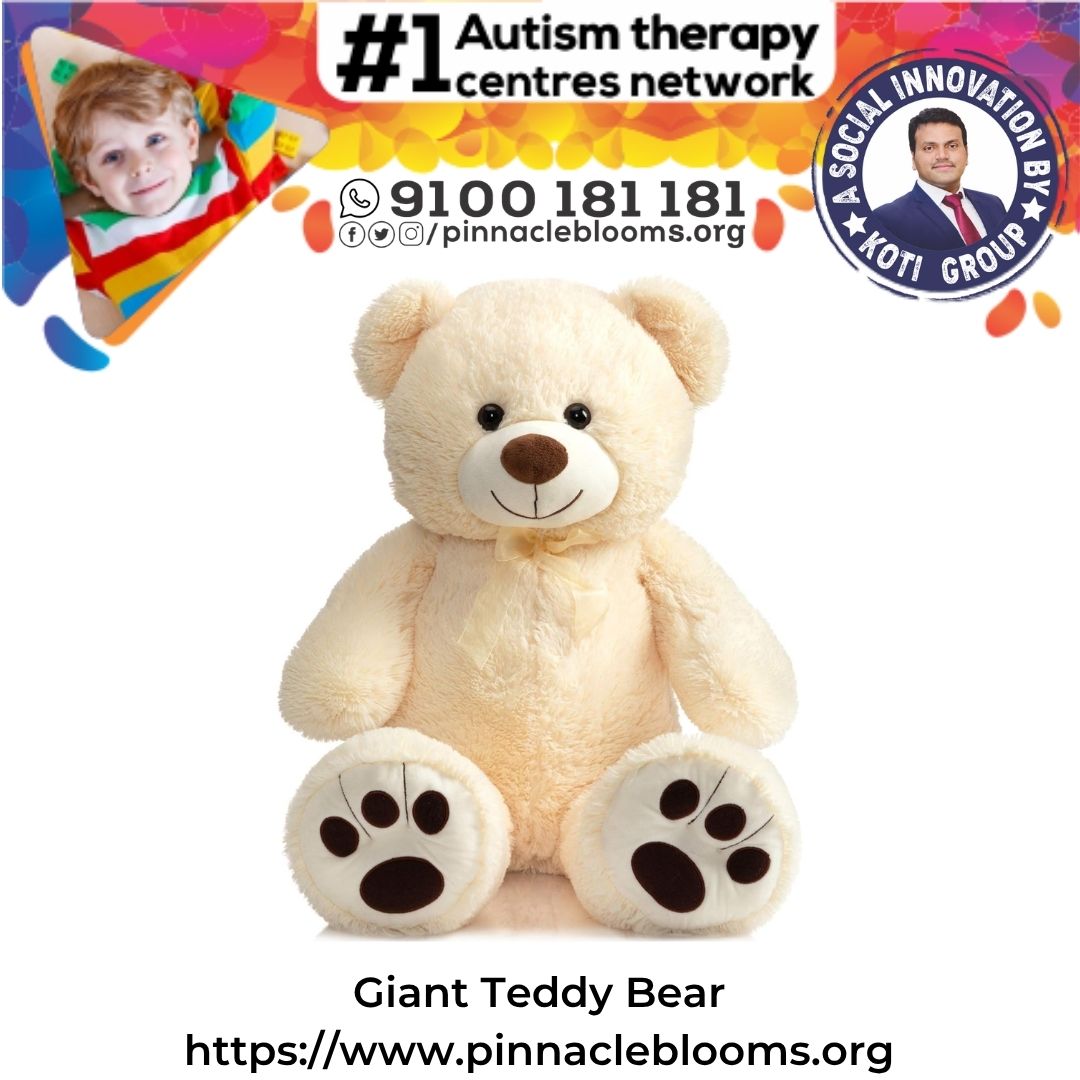
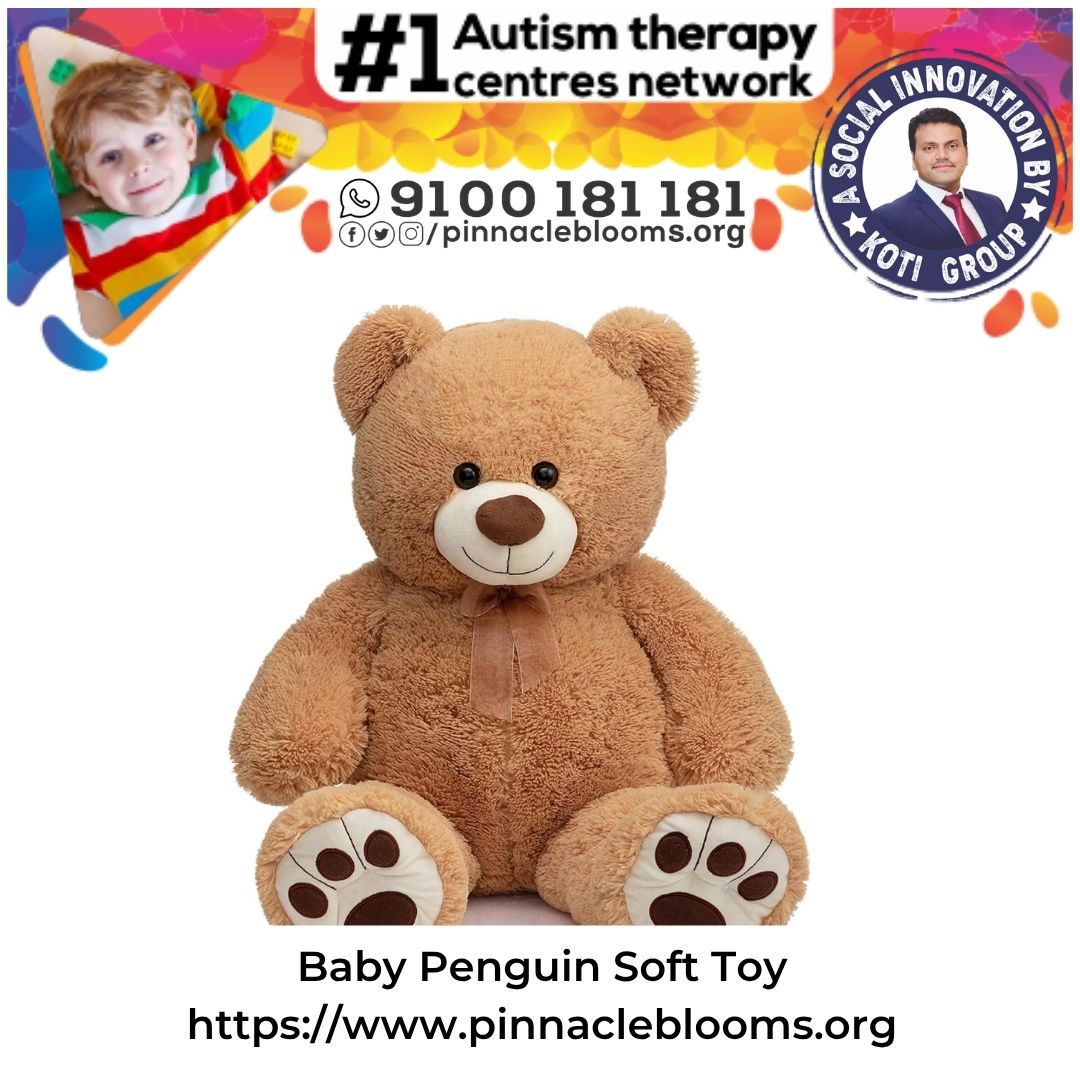
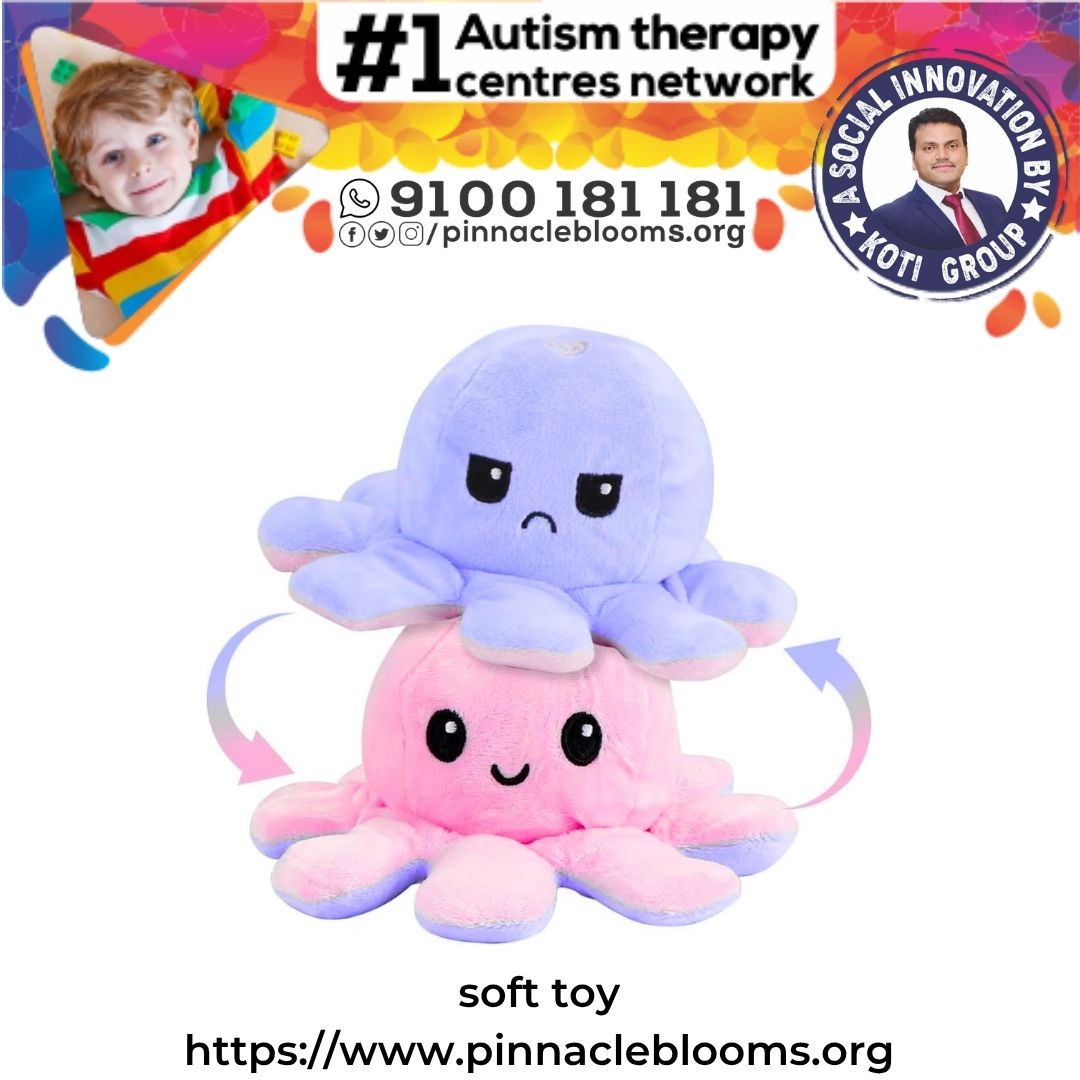
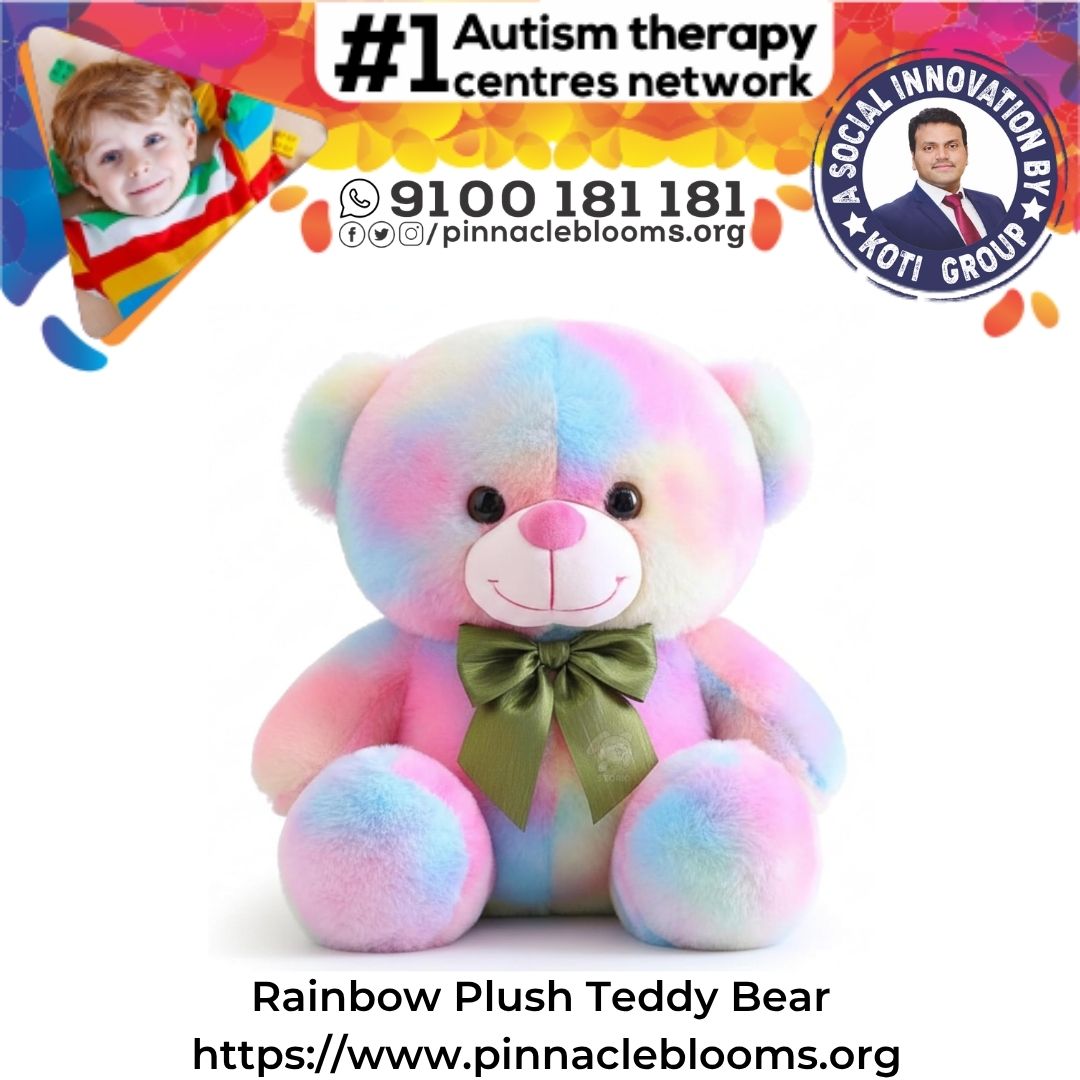
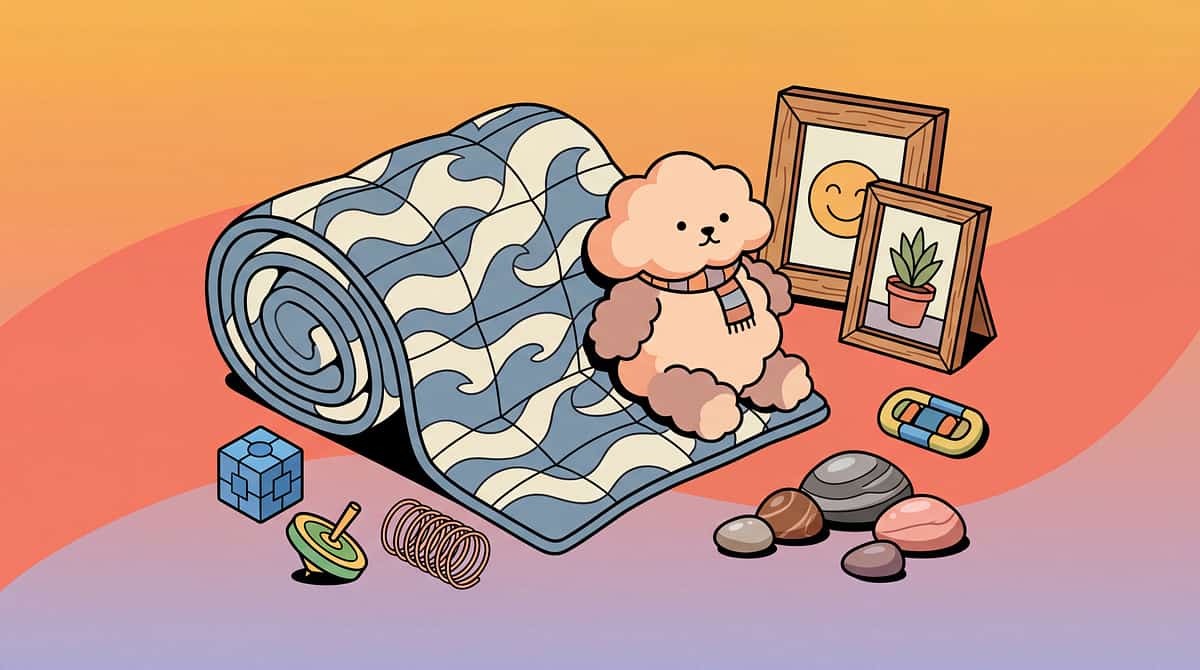
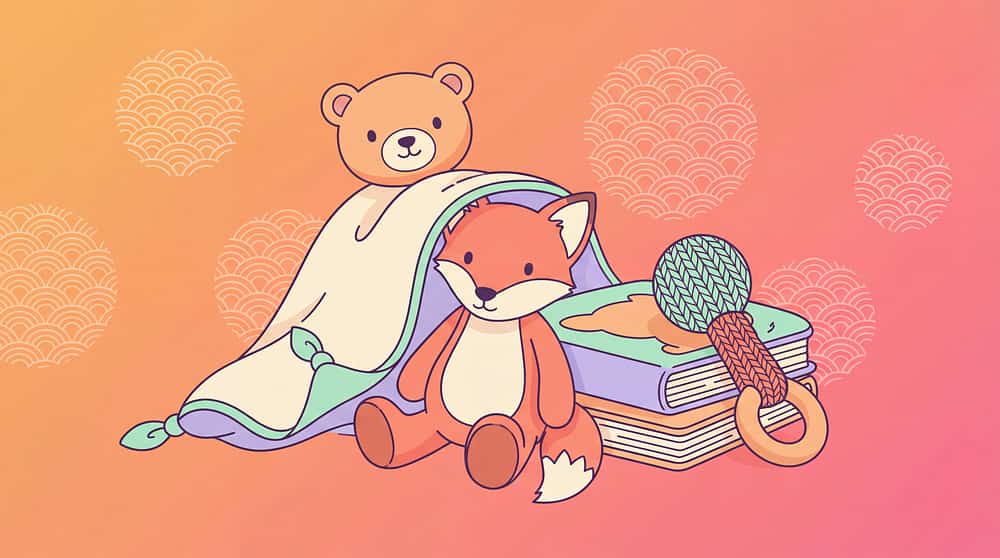
Blanket, Stuffed Animal. Best for general security and anxiety reduction across all ages and settings.
Transition Object
Photo, Token. Ideal for separation anxiety and new settings for children 2-10 years old. Very portable.
Portable Fidget/Sensory Item
Helps with transitions, waiting times, and anxiety, providing sensory regulation for ages 3-12 years.
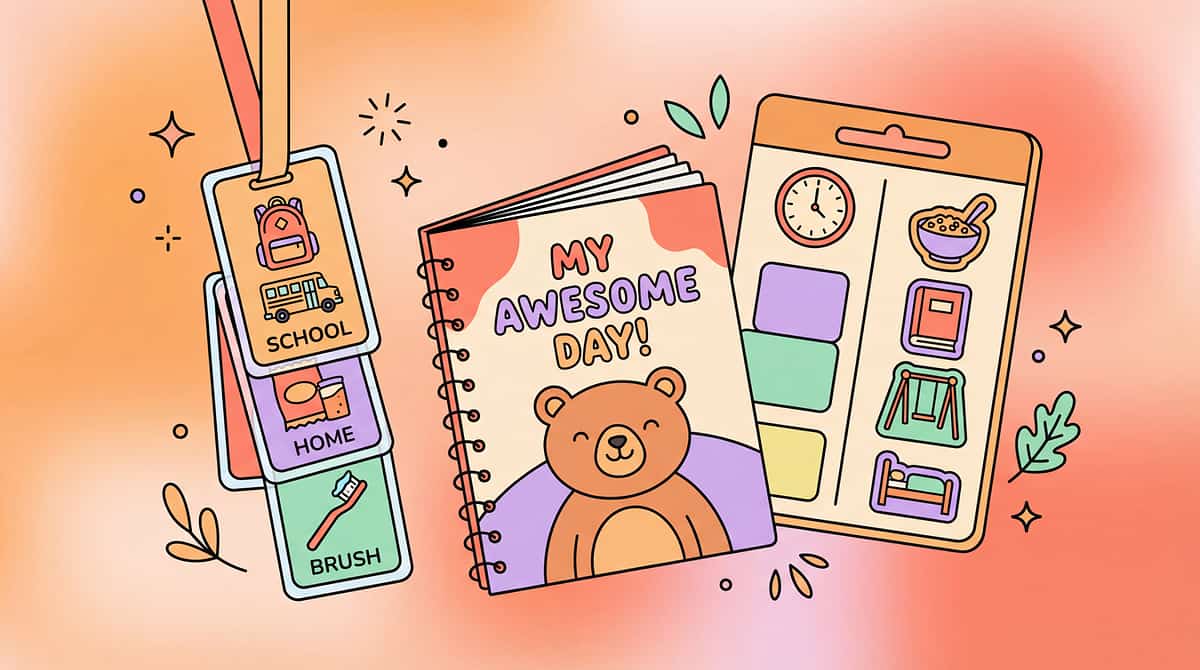
Transition Card/Visual Cue
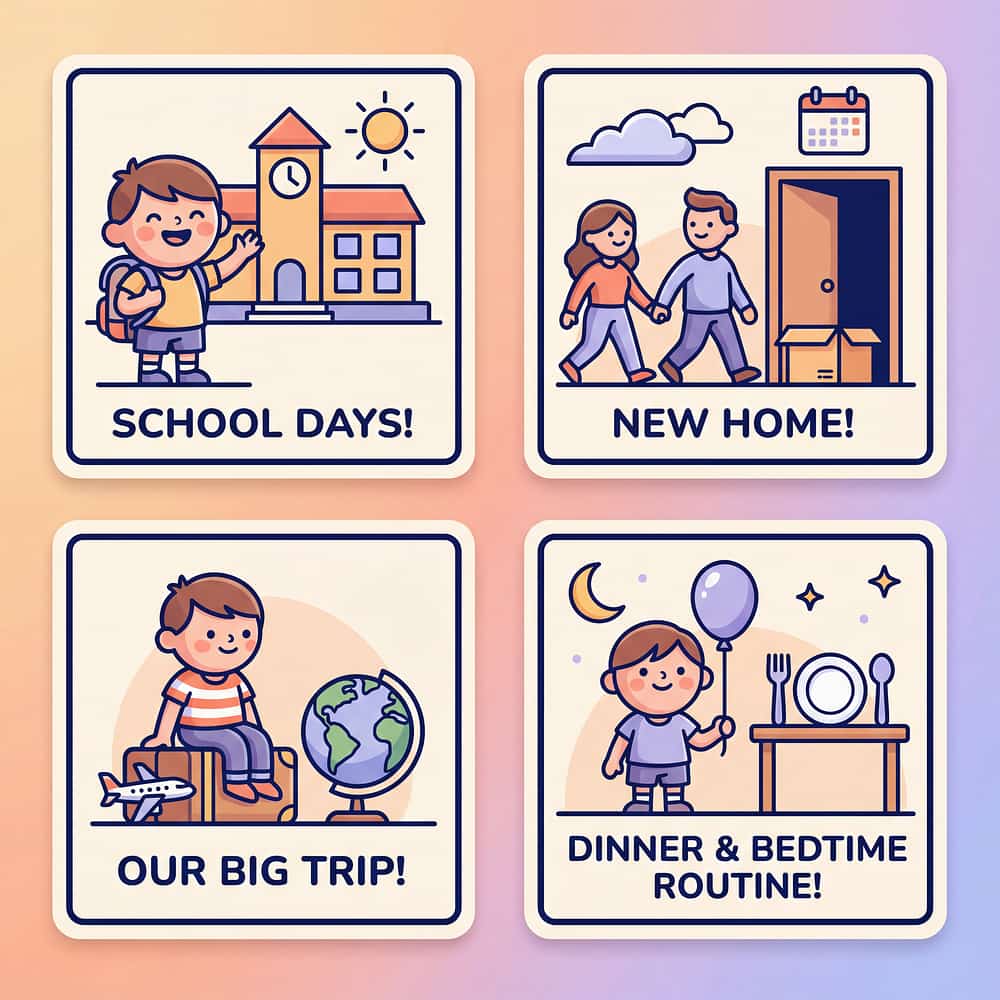
Prepares children (2-10 years) for change, reducing surprise and aiding cognitive preparation.
Worry Stone/Calm Object
Offers discreet, tactile self-calming for anxiety in children aged 5-12 years across all settings.
Social Story
Helps children (3-10 years) understand and accept change through cognitive preparation, typically used at home or clinic.
How to Choose
By goal: Security/calming → security objects or worry stones | Separation support → photos/tokens | Preparation → cards/stories
By setting: Home/clinic → any option | School/public → small, discreet items like worry stones or pocket fidgets
By portability: High mobility needs → photos, cards, worry stones | Home-based → larger comfort objects acceptable
Specifications & Types Guide

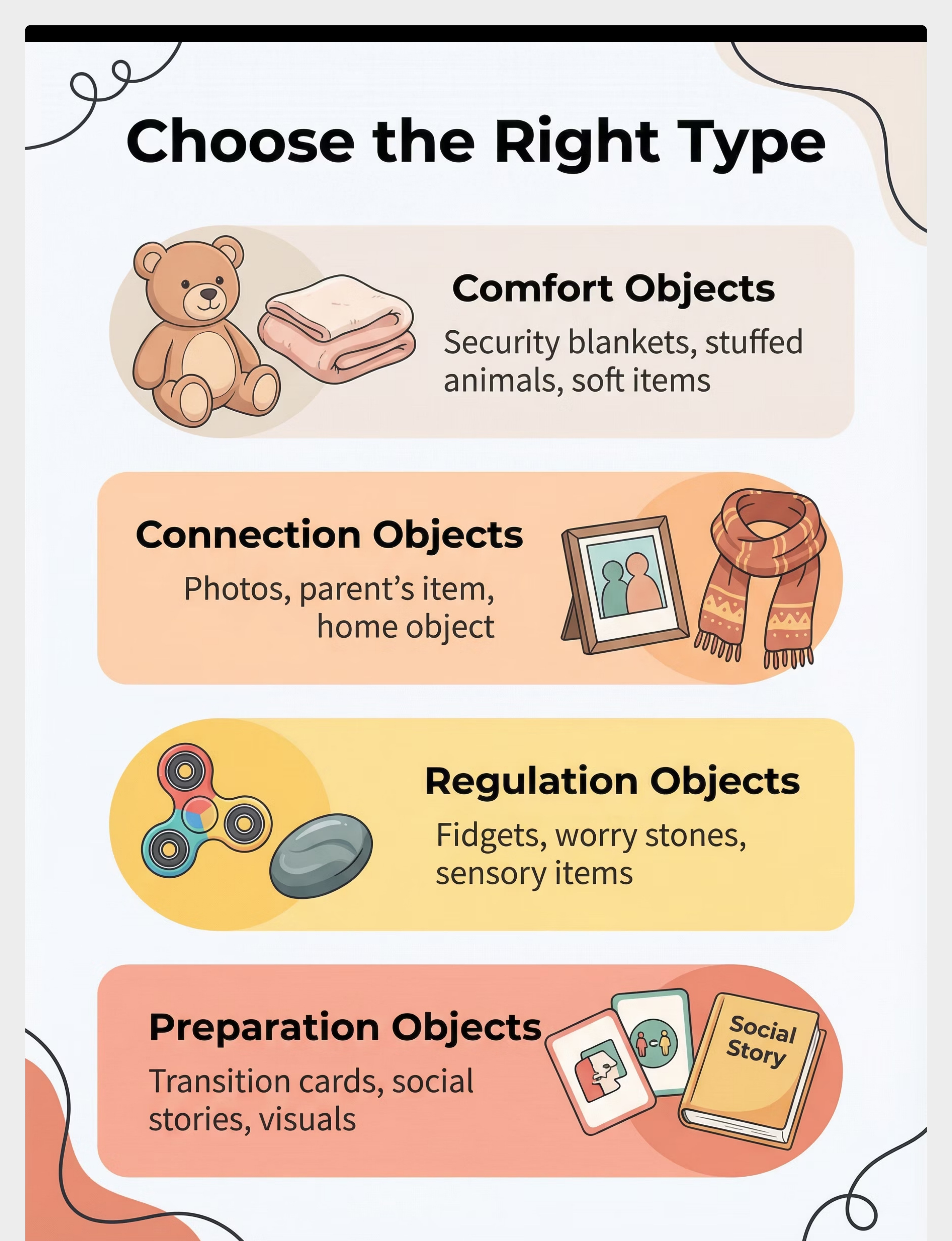
Comfort Objects
Security blankets, stuffed animals, and other soft items that provide tactile comfort and emotional security through familiar texture and presence.

Connection Objects
Photos, a parent's item, or a home object—these items help maintain an emotional connection to loved ones or safe places, especially during times of separation.

Regulation Objects
Fidgets, worry stones, and other sensory items that offer tactile input and self-soothing support, particularly useful during stressful moments or transitions.

There was an error generating this image
Preparation Objects
Transition cards, social stories, and visual aids that cognitively prepare a child for upcoming changes, helping to reduce surprise and anxiety.
Materials & Key Features
Common Materials
- Soft fabric (blankets, stuffed animals)
- Photos (printed, laminated, keychain)
- Small fidgets (various textures)
- Smooth stones (worry stones)
- Cards/visuals (laminated for durability)
Key Features to Consider
- Portability: Can the child bring it everywhere needed?
- Durability: Will it withstand daily use and washing?
- Personal meaning: Does it have emotional significance?
- Setting appropriateness: Is it acceptable in all required environments?

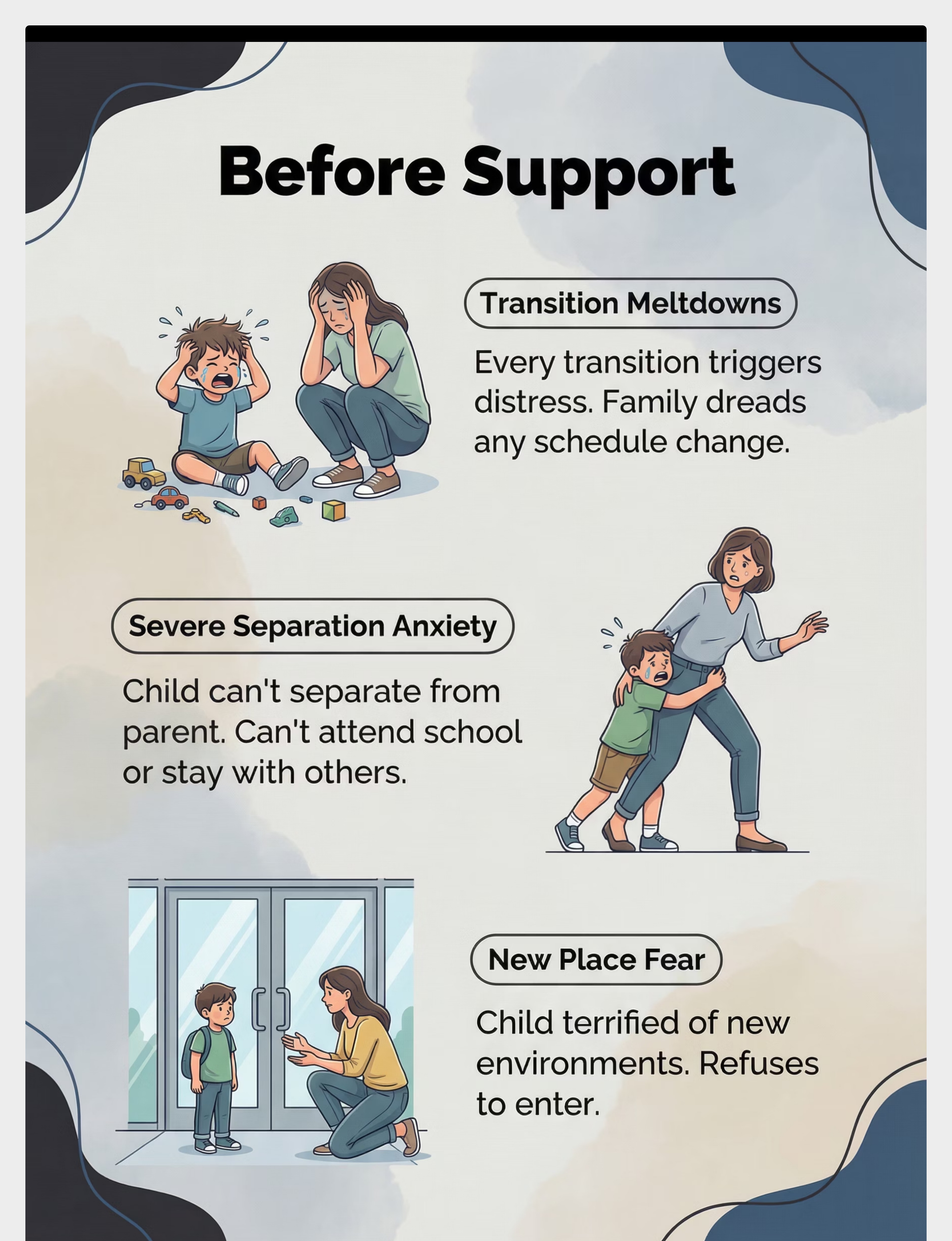
The Struggle (Before)

Uncontrollable Meltdowns
Situation: Every slight change or transition explodes into a full-blown meltdown. The smallest shift in routine can derail the entire day.
Experience: Parents walk on eggshells, constantly bracing for the next outburst. Daily life feels like navigating a minefield of emotional triggers.
Emotion: Exhaustion, despair, constant anxiety for both child and family.

Heart-wrenching Separation Anxiety
Situation: The mere thought of separation sparks intense panic. Leaving the child, even for a moment, feels like tearing a piece of your heart away.
Experience: Goodbyes are prolonged battles, filled with tears, screams, and desperate pleas. Social events, school, or even a quick errand become impossible.
Emotion: Guilt, helplessness, profound sadness, isolation for the caregiver.

Crippling Fear of New Places
Situation: New environments are perceived as threats. Entering an unfamiliar room or building becomes an insurmountable obstacle, leading to complete shutdown.
Experience: Opportunities for growth and fun are missed. Family outings, birthday parties, or school field trips are often avoided, limiting experiences.
Emotion: Overwhelming fear, frustration, social isolation, missed opportunities.

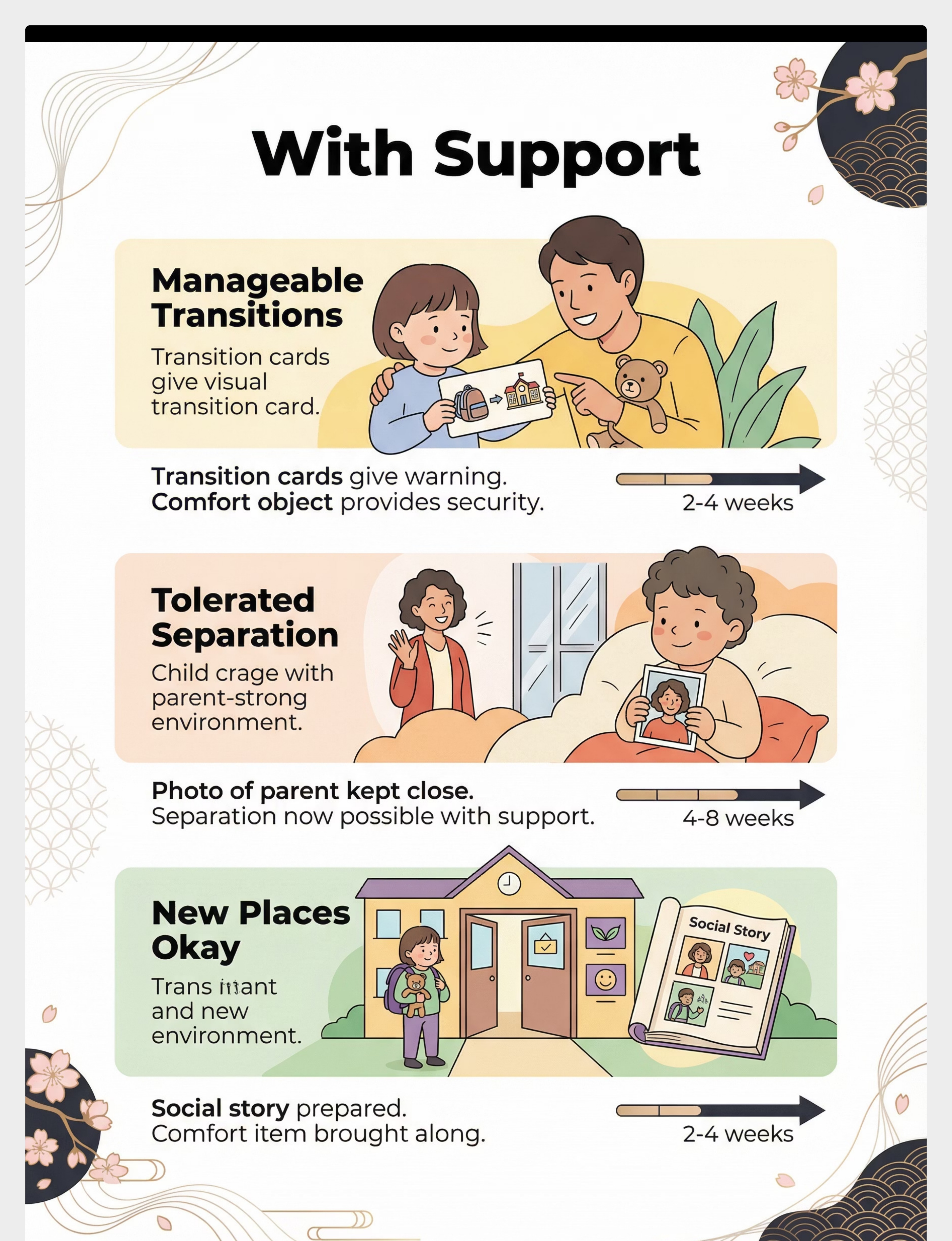
The Breakthrough (After)
Transition Meltdowns
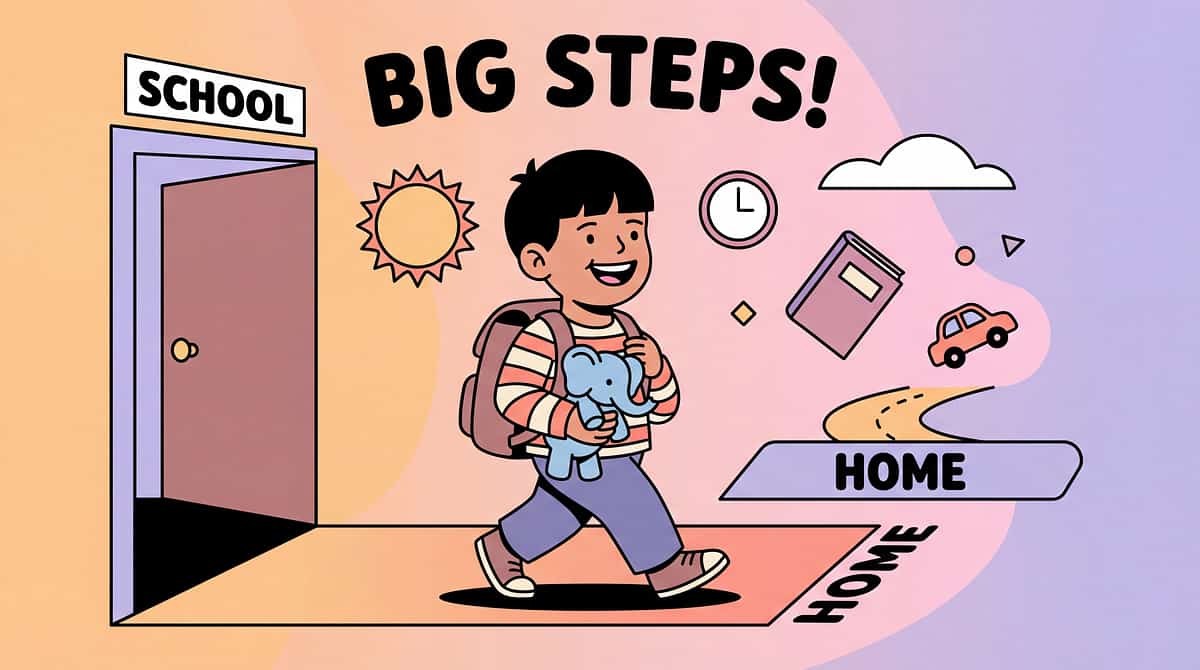
Situation: Transition cards give warning. Comfort object provides security. Transitions becoming manageable.
Experience: With preparation and emotional support, the child can anticipate changes and maintain regulation through transitions.
Emotion: Prepared, coping, increasing independence
2-4 weeks
Severe Separation Anxiety
Situation: Photo of parent kept close. Parent's scarf provides connection. Separation now possible with support.
Experience: Connection objects maintain emotional bond during separation, allowing the child to tolerate being apart with less distress.
Emotion: Connection, tolerance, growing confidence
4-8 weeks
New Place Fear
Situation: Social story prepared for new place. Comfort item brought along. New environments more tolerable.
Experience: Cognitive preparation combined with emotional support helps the child enter and explore new environments successfully.
Emotion: Preparation, coping, expanding world
2-4 weeks

What to Expect (Realistic Timelines)
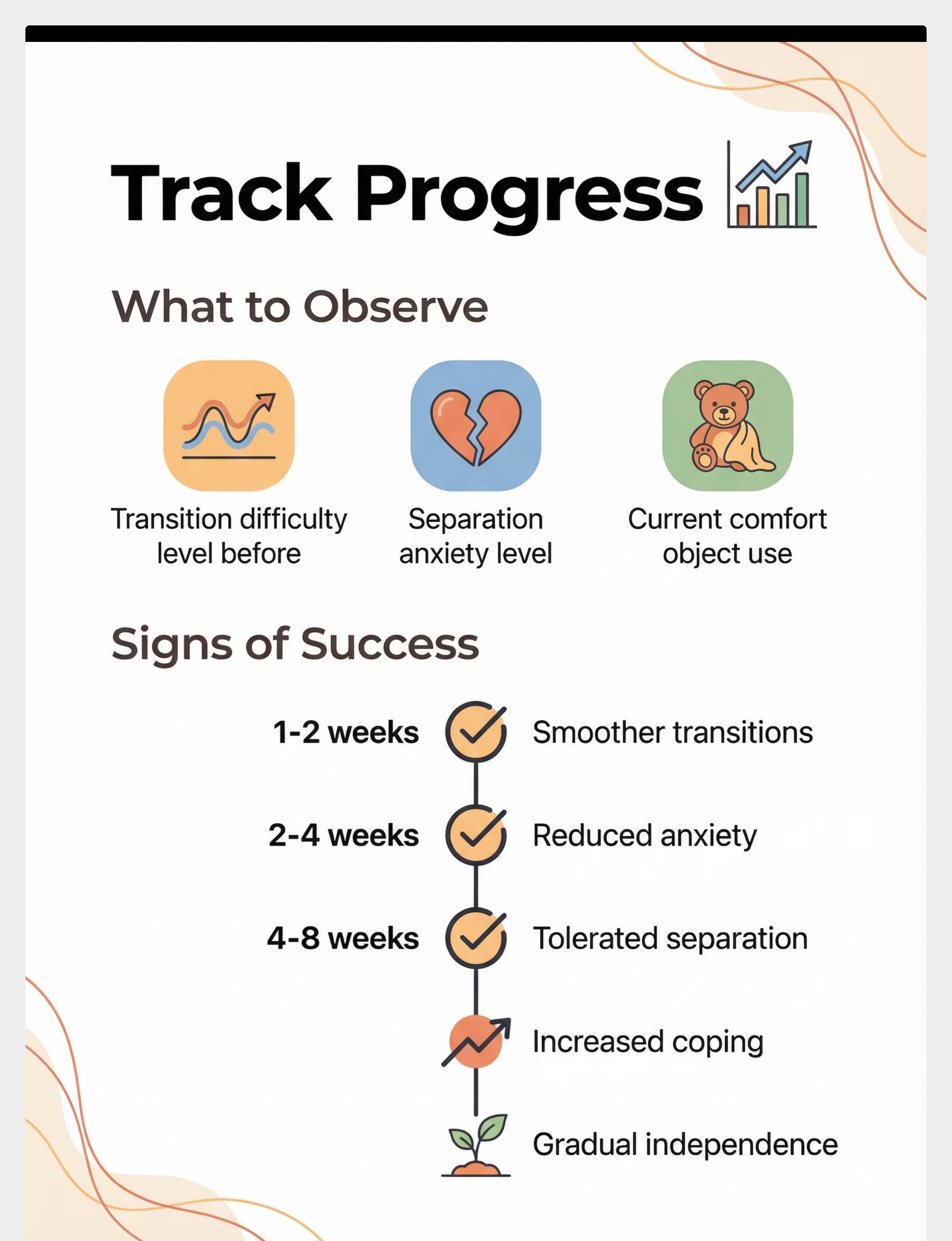
Transition warnings accepted
Child begins to accept and respond positively to advance notice of changes using cards or verbal cues.
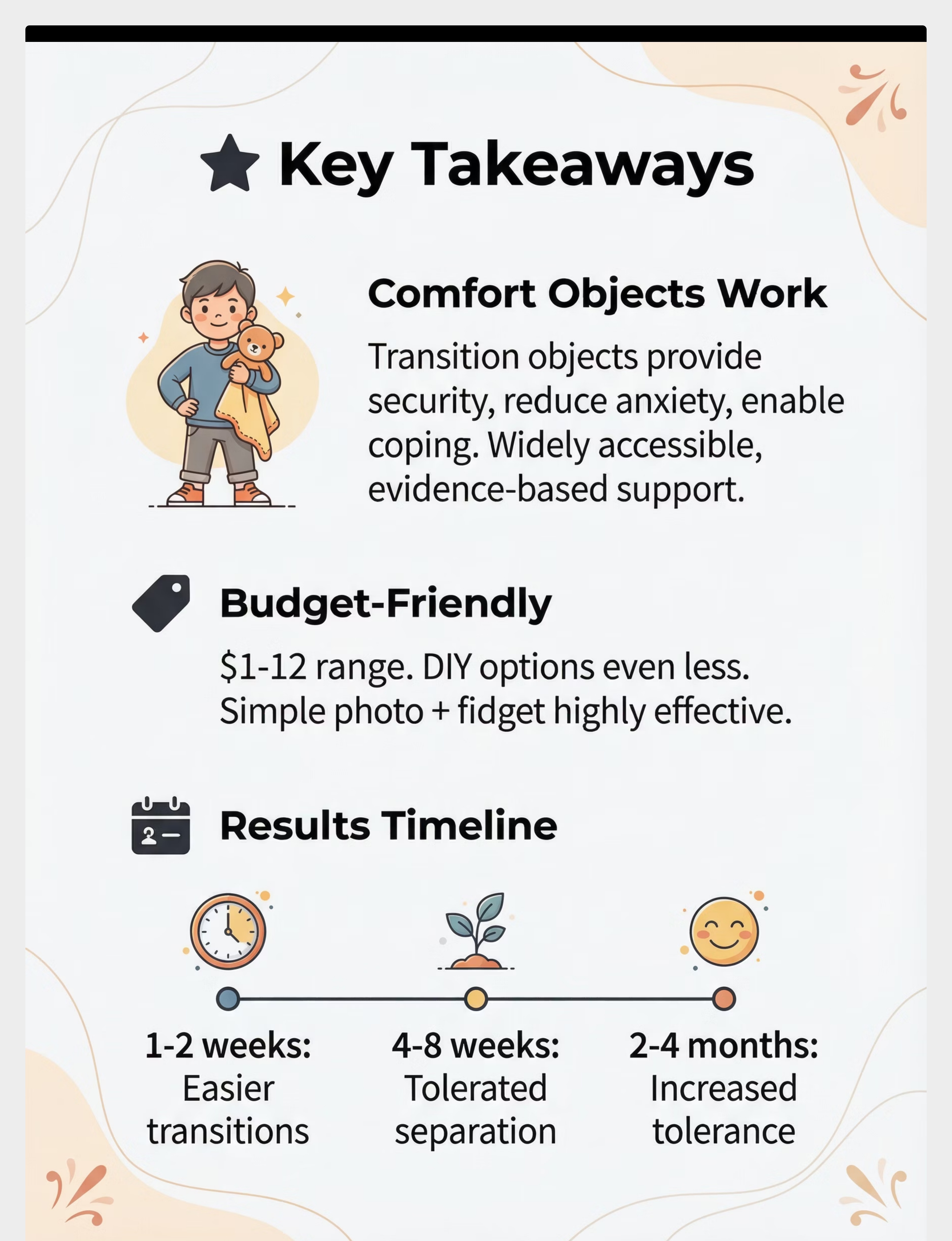
1-2 weeks
Comfort object supports transitions
Child actively uses comfort item during transitions, showing visible reduction in distress and resistance.
1-2 weeks
Separation tolerated with support
Child can separate from primary caregiver when connection objects are available, though may still need reassurance.
4-8 weeks
New environments managed
Child enters and participates in unfamiliar settings with preparation and comfort items, showing decreased avoidance.
2-4 weeks
Transition tolerance increases
Overall capacity to handle change improves. May need objects less frequently or in fewer situations over time.
2-4 months
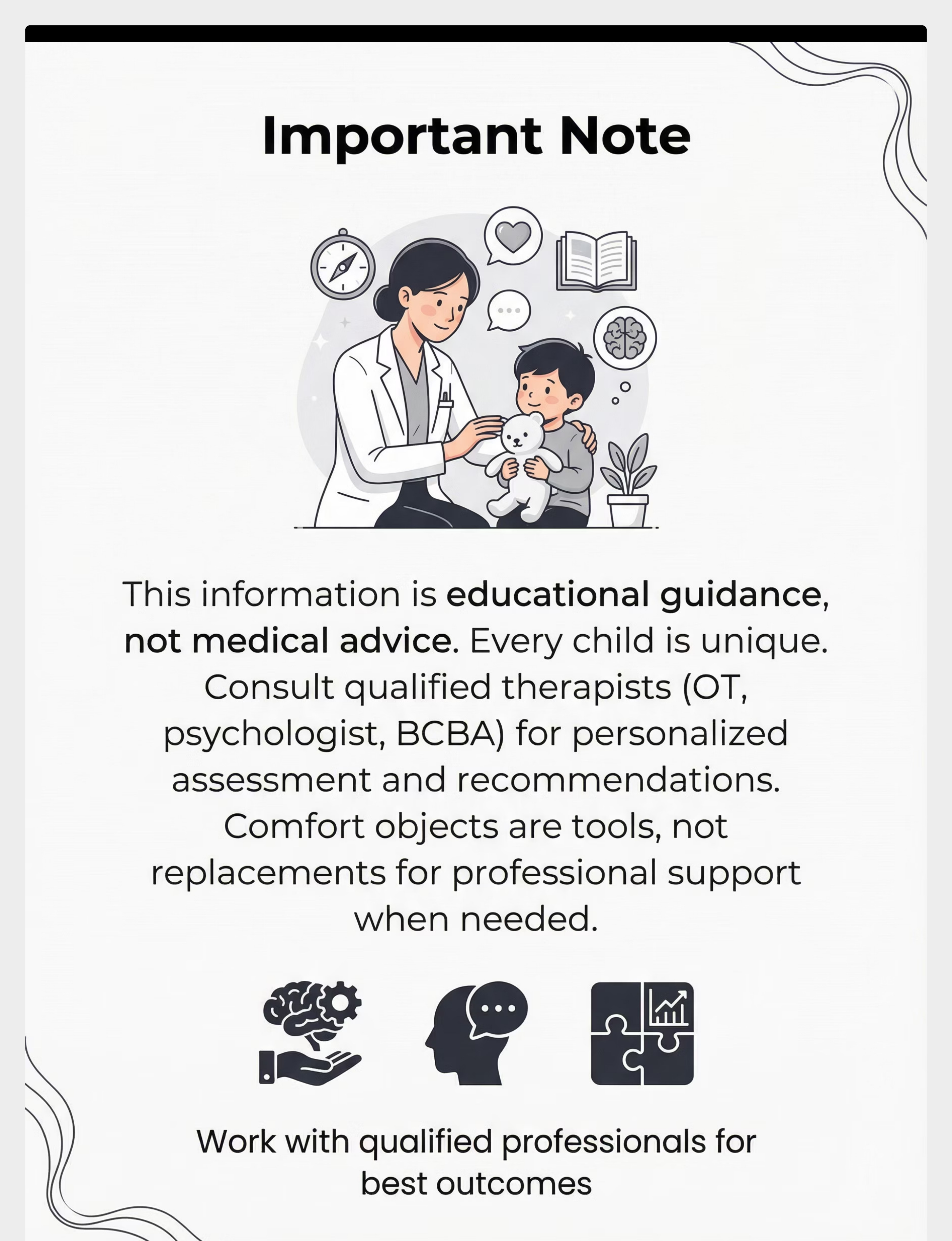
Progress varies significantly by child, situation, and consistency of support. Some children will always benefit from comfort objects, and that's completely appropriate. The goal is functioning and wellbeing, not eliminating support tools.

Is This Right for My Child? (2-Minute Check)
"Do you often see your child struggle when moving between different activities or places?"
Difficulty shifting focus or adapting to changes in routine is a key sign that transition supports could be very helpful.
"Does your child experience distress when you're apart from them?"
If separation anxiety is a challenge, connection objects like a photo of you or a familiar item can offer significant emotional comfort.
"Does your child already have a favorite comfort item, or do they seem to need one?"
Whether they cling to a teddy bear or could use a new source of soothing, a comfort object suggests a need for regulatory support.
"Are new environments or unfamiliar settings typically difficult for your child to navigate?"
A fear or avoidance of new places often indicates a need for both cognitive preparation (like stories or visual cards) and emotional reassurance through a comfort item.
Strong Fit Indicator: 3 or more "yes" answers suggest transition objects and comfort items would be highly beneficial for your child. Even one "yes" indicates potential value in trying these supports.

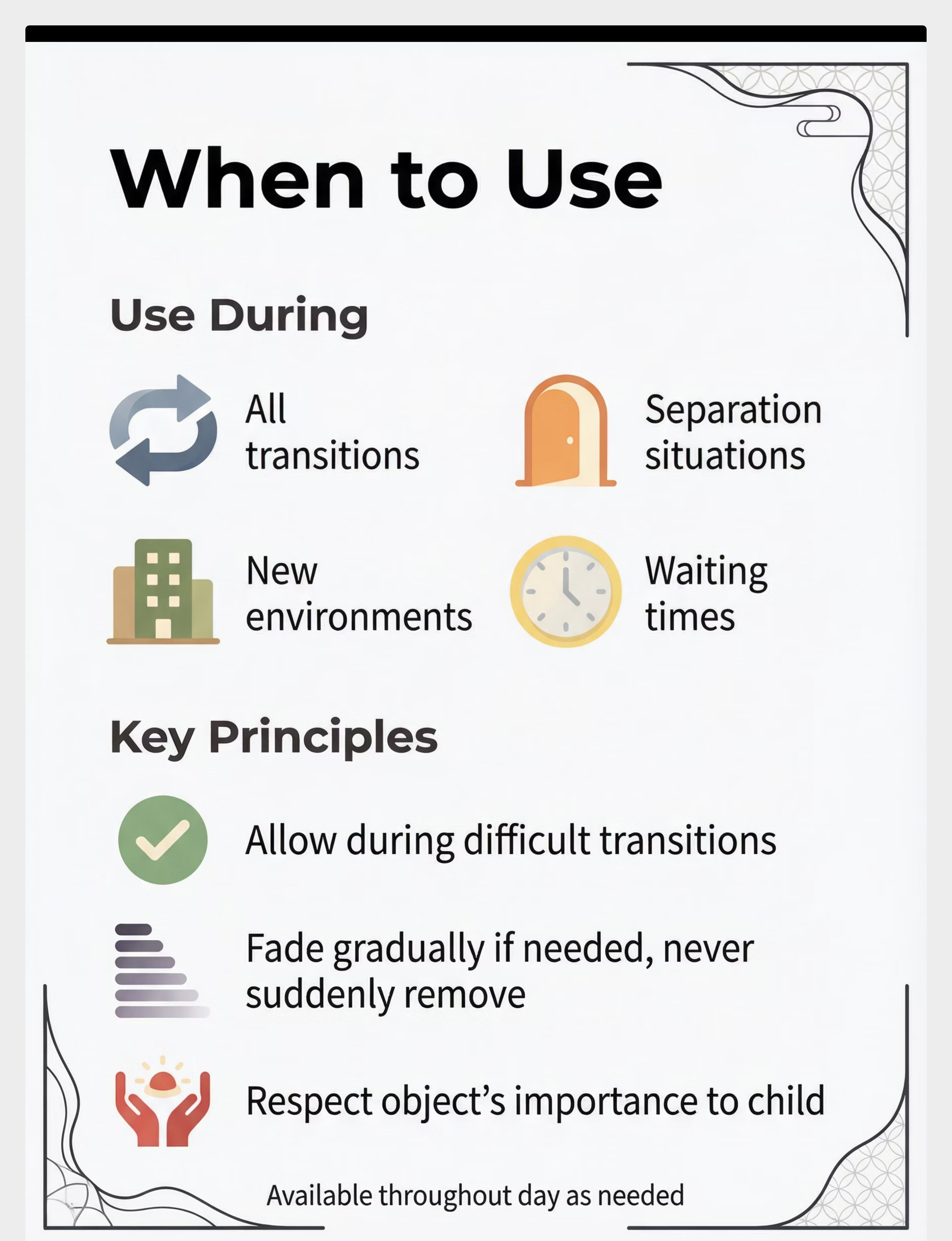
Usage Guide
This guide provides practical recommendations for effectively using transition objects and comfort items with children.
Usage Scenarios: A Quick Reference
When to Use ✓ | When NOT to Use ✗ | |
During all transitions between activities, places, or people | When object causes safety issues (choking hazard, interference with essential activities) | |
Separation situations when apart from primary caregivers | When object interferes with essential activities that cannot be modified | |
New environments or unfamiliar situations | Forcing object on child who doesn't want it or finds it unhelpful | |
Anxiety-provoking situations that typically trigger distress | ||
Waiting times when patience and self-regulation are needed |
Supervision by Age
Young Children | Adult ensures availability and access. May need help carrying or locating object. | |
Developing Skills | Child carries and accesses independently with occasional reminders or support. | |
Older Children | Discreet self-management. Child determines when and how to use support independently. |
Duration & Settings
Duration: As needed; available throughout day. Not time-limited.
Settings: All—Home, School, Clinic, Community. Adapt object type for setting appropriateness if needed.
All Ages
Adapt object type for age-appropriateness if needed

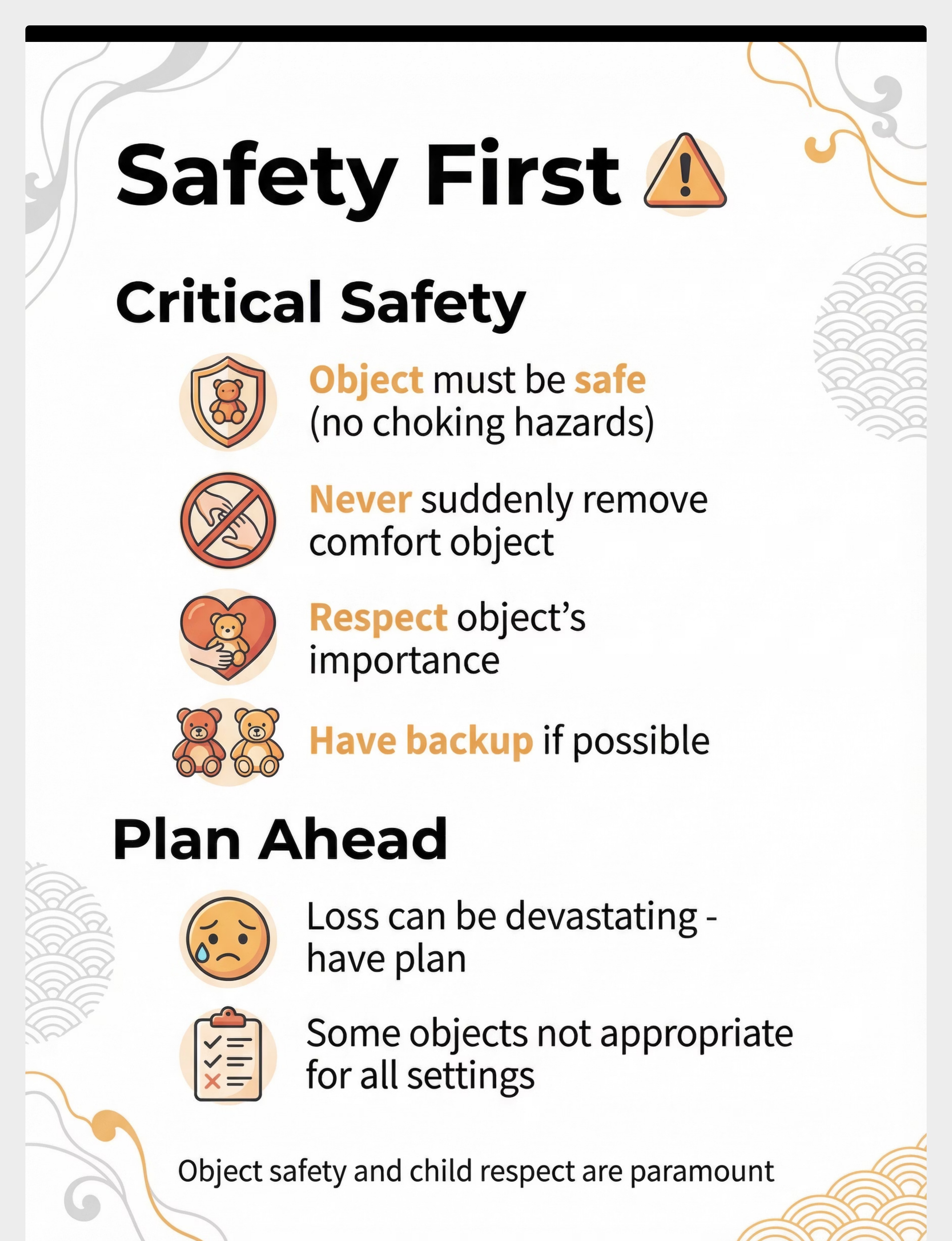
Safety First
Critical Safety
- Object must be safe (no choking hazards, age-appropriate)
- Never suddenly remove comfort object—this damages trust
- Respect object's importance to the child's wellbeing
- Have backup if possible to prevent crisis from loss
Important Warnings
- Loss can be devastating—have contingency plan
- Some objects not appropriate for all settings—adapt as needed
- Objects can get dirty/need cleaning—establish care routine
Stop Signs
- Sudden forced separation from object
- Shaming child about comfort object needs
- Unsafe objects (choking hazards, dangerous materials)
- Forcing separation from comfort object suddenly
Safety Checklist
Before Use
- ☑ Object is safe
- ☑ Object is appropriate for setting
- ☑ Object is available when needed
- ☑ Backup exists if possible
During Use
- ☑ Child has access as needed
- ☑ Object serving its function
- ☑ Transition supports in place
- ☑ Not interfering with essential activities
Signs of Success
- ☑ Transitions easier with object
- ☑ Separation tolerated
- ☑ Anxiety reduced
- ☑ Gradual fading possible (if appropriate)

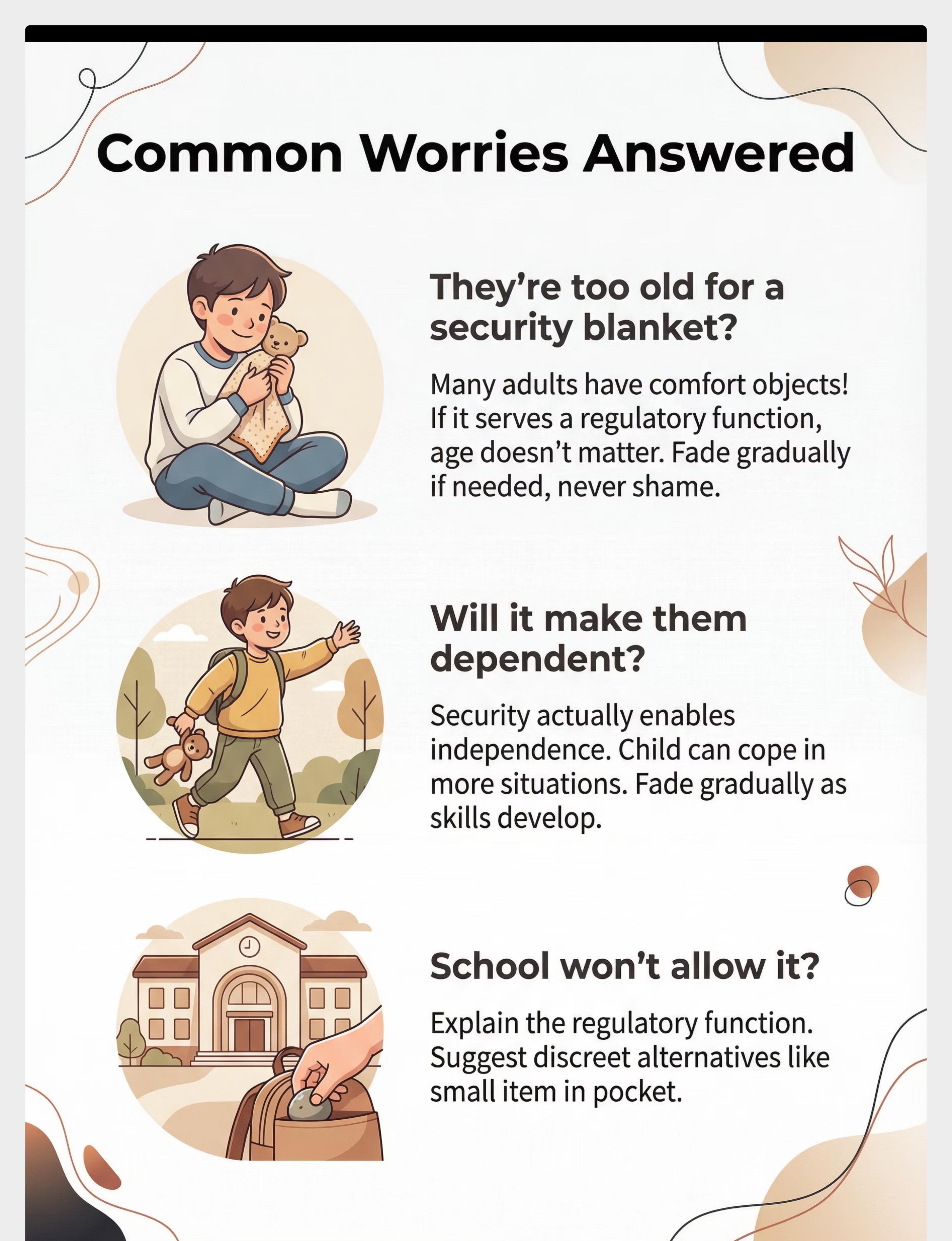
Common Questions (Honest Answers)
Q: They're too old for a security blanket
A: Many adults have comfort objects! If it serves a regulatory function, age doesn't matter. The goal is functioning, not appearance. Focus on function over age; many successful adults maintain comfort rituals or objects. Fade gradually if needed, never shame.
Q: It will make them more dependent
A: Actually, comfort objects often enable more independence. A child can cope in more situations because of the security provided. This security allows for exploration. View the object as a bridge to independence; it enables participation that wouldn't otherwise be possible. Fade gradually as skills develop.
Q: School won't allow comfort items
A: Advocate for your child by explaining the regulatory function of the object to school staff. Suggest discreet alternatives, such as a small item in a pocket or a photo in a desk. Many schools accommodate when they understand the genuine need.
Q: What if they lose it?
A: This is a valid concern! If possible, have an identical backup object. Take photos of the item for comfort or as a guide for replacement. Some families rotate identical objects periodically so no single one is irreplaceable, and the child is used to slight variations.

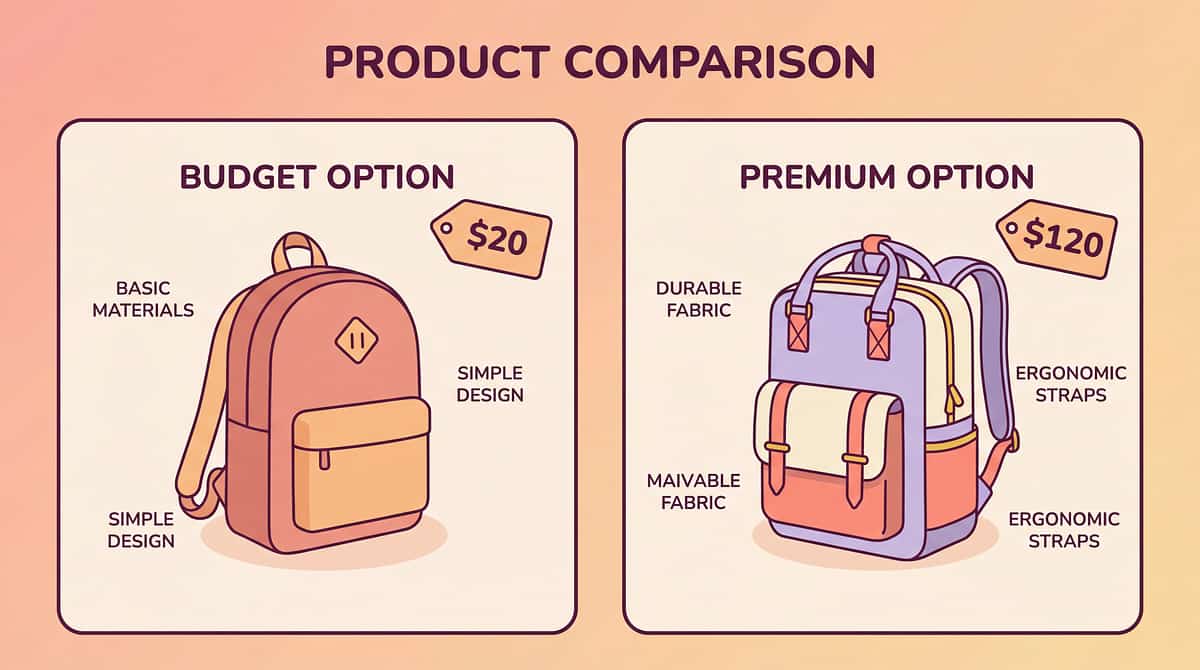
Investment Guide: Comfort Items
Budget Option
Starting Cost: ₹50
A highly effective and accessible starting point.
What You Get
- Photo of parent or loved one
- Small, simple fidget toy
- Estimated cost: ₹50-100
Why This Works
Simple yet powerful. The photo provides vital emotional connection, while the fidget offers essential tactile regulation during transitions and separations. Effectiveness is not determined by price.
Premium Option
Starting Cost: ₹500
Comprehensive support for more intensive needs.
What You Get
- High-quality comfort item (e.g., Jellycat stuffed animal)
- Professionally designed transition cards
- Customized social story addressing specific challenges
- Estimated cost: ₹500-1000
Why Upgrade
This option provides a durable, washable comfort object, versatile transition cards for various situations, and a tailored social story, ideal for children requiring more intensive or specialized support.
Overall Investment Range
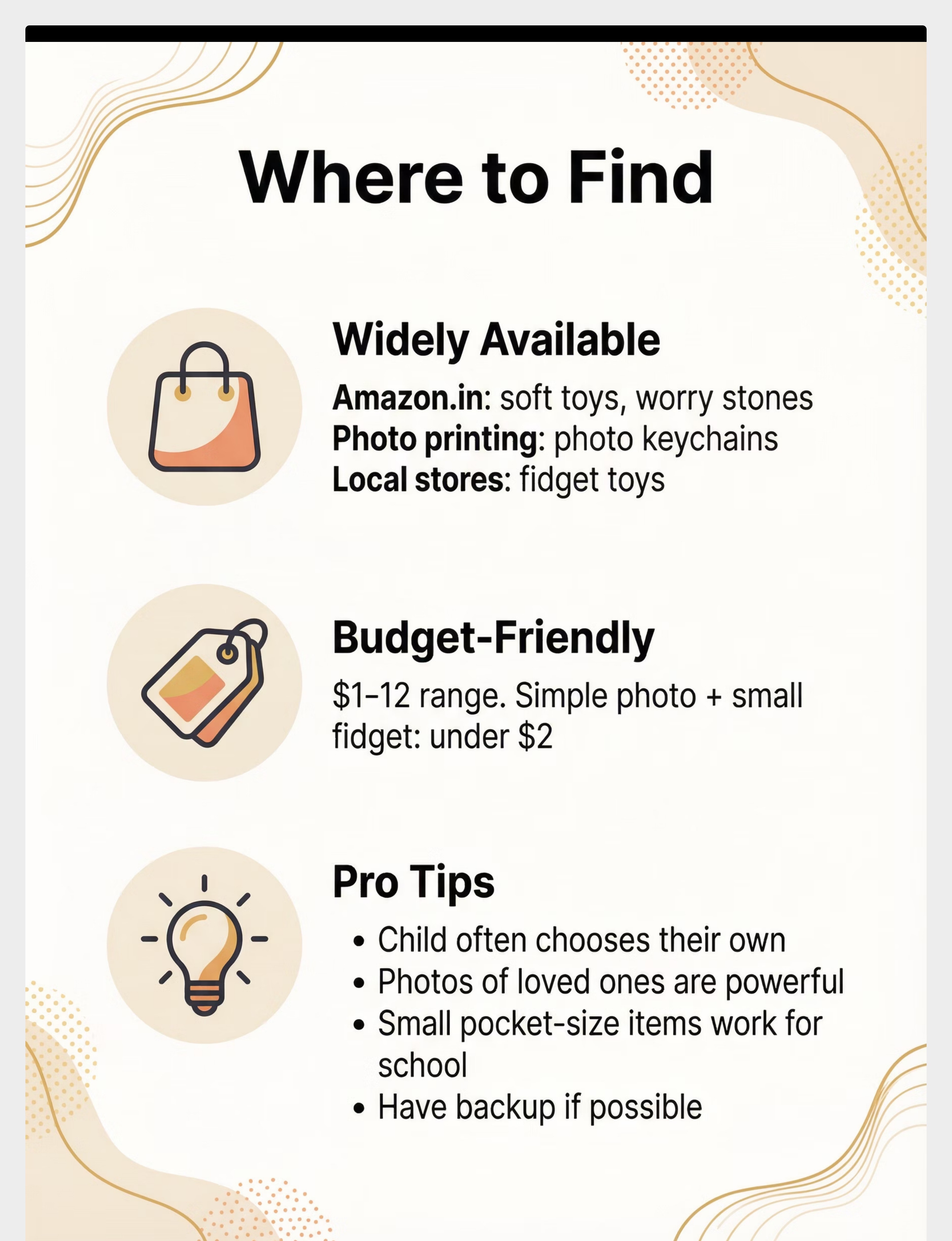
Complete range: ₹50–1,000 | USD equivalent: $0.50–$12
Best starting point: Begin with budget option (photo + fidget). If child benefits and needs are clear, gradually add premium elements like quality comfort object or professional social stories. Many children do extremely well with simple, inexpensive options—effectiveness isn't determined by price.
Price Comparison Table
Budget | Photo + Small Fidget | 50-100 | |
Premium | Quality Comfort Item + Transition Cards + Social Story | 500-1000 |

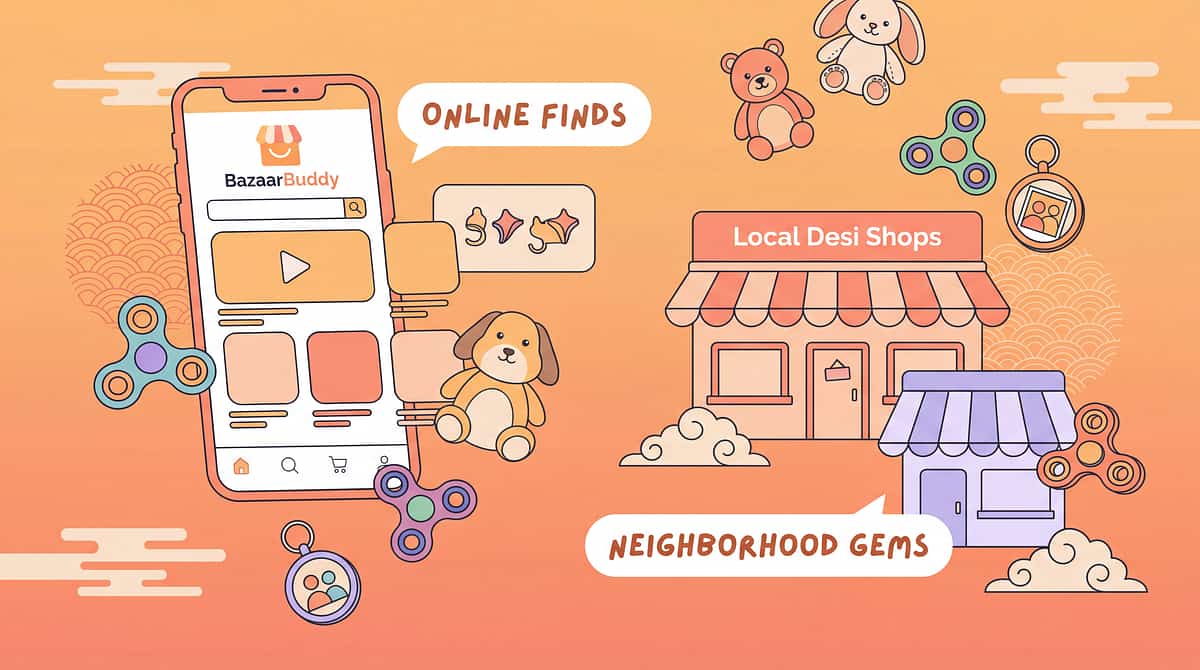
Where to Buy in India
Availability: Widely Available
Platform Options
Amazon.in
Find a wide range of comfort items including soft toys, comfort blankets, worry stones, calming stones, small fidget toys, and pocket fidgets.
Price Range: ₹50-800
Photo Printing Services
For personalized comfort items, explore options like photo keychains and photo lockets.
Price Range: ₹50-150
DIY / Local Printing
Create custom transition cards and visual schedule cards easily with local printing services or DIY methods.
Price Range: ₹50-100
Buying Tips
- Child often chooses their own comfort object naturally
- Photos of loved ones are powerful connection tools
- Small, pocket-size items work for school settings
- Worry stones are discreet and age-appropriate
- Backup comfort objects are valuable investments
- Washable materials are essential for hygiene
Red Flags ⚠
- Forcing separation from comfort object
- Shaming child about needing object
- Objects that are safety hazards (choking, sharp edges)
- Objects too large for practical use in required settings

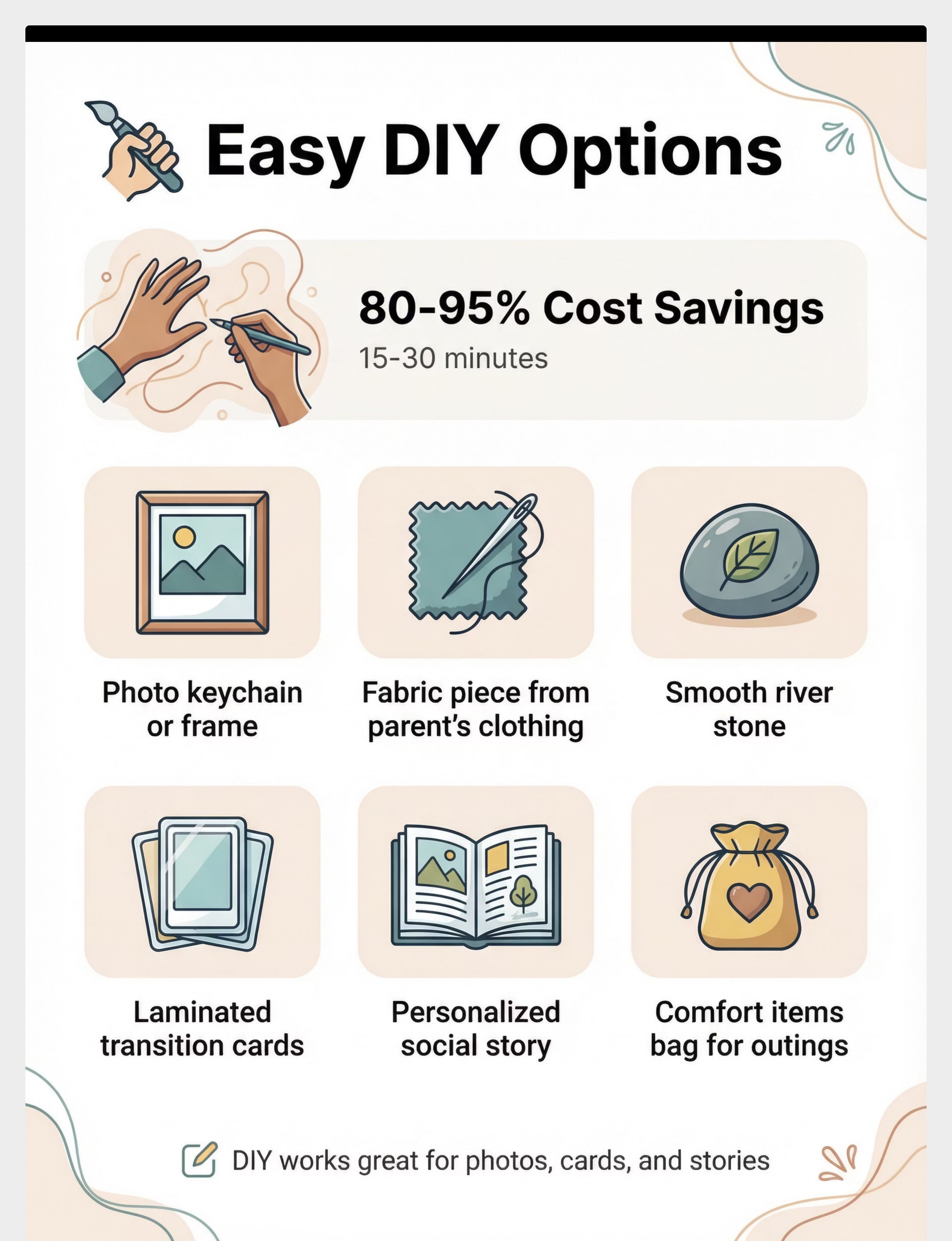
DIY Alternative (Save 80-95%)
Significant Savings
Save 80-95% compared to commercial options on comfort items.
Practical DIY Instructions
Easy-to-follow steps for creating personalized, effective tools.
Understand Tradeoffs
Identify when to DIY and when commercial options are best.
Materials Needed
- Photos of loved ones
- Fabric from parent's clothing (scarf, t-shirt)
- Small smooth stones from nature
- Laminated transition cards (printed pictures)
- Social story materials (paper, printer, photos)
- Optional: keychain rings, lanyards, small pouches
DIY Steps
- Connection object: Create photo keychain or use piece of parent's fabric
- Transition cards: Print and laminate pictures of "next" activities
- Social story: Write and illustrate personalized story about specific transition
- Worry stone: Collect and wash smooth river stone or polish regular stone
- Comfort corner: Gather items from home for new settings (familiar blanket, photos)
- Transition kit: Create small bag with comfort items for outings
DIY vs Commercial
When to DIY
- Photo-based connection objects—highly personal and effective
- Transition cards and visuals—customizable to your situations
- Social stories—personalization is key advantage
- Simple fidgets—many household items work well
When to Buy Commercial
- Child's preferred comfort object (specific texture, character)
- Quality worry stones (properly polished, safe)
- Durable transition tools for intensive use
- Published social stories (if personalization not critical)
Tradeoffs
DIY comfort objects may not replace child's naturally chosen attachment object. Some children become attached to specific commercial items that can't be replicated. However, connection objects (photos, parent's items) and preparation tools (cards, stories) are often more effective when personalized.

Your Complete Support System
Measuring Success
- Track transition ease (1-10 scale before/after)
- Monitor meltdown frequency and duration
- Note independence improvements
- Document sleep quality changes
- Observe social interaction confidence
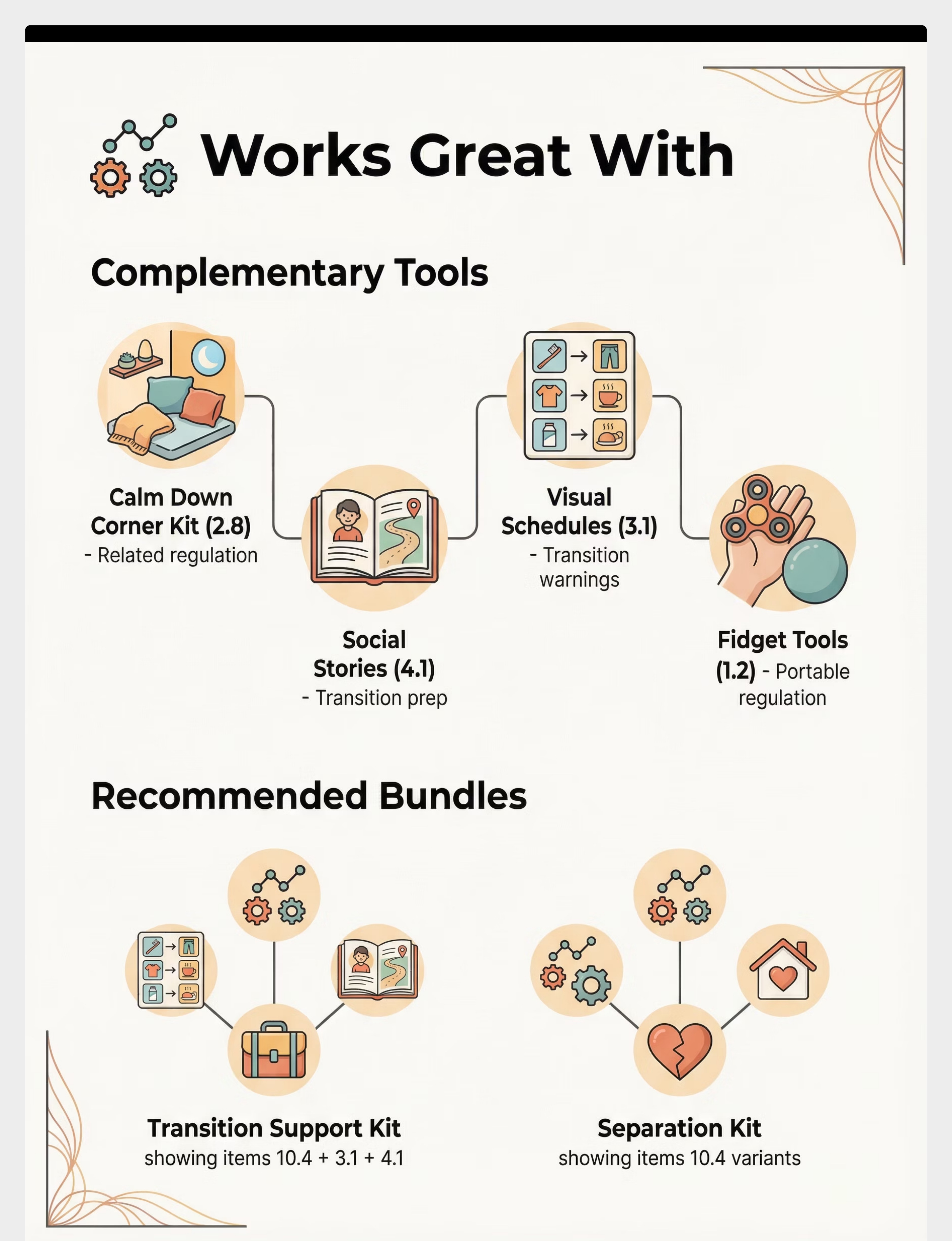
Pair It With (Related Tools)
- Visual schedules for predictability
- Social stories for preparation
- Sensory tools for regulation
- Calm-down corner for recovery
- Transition warnings (timers, songs)
Complete Kits Available
- Starter Transition Kit (3-5 items)
- School Success Bundle
- Travel Comfort Pack
- Bedtime Routine Set
Quick Summary
Transition objects provide emotional security during changes. Most effective when child-chosen, used consistently, and paired with preparation strategies. Results typically visible within 1-2 weeks.
Get Support
- Join parent communities
- Consult occupational therapists
- Access printable resources
- Connect with educators
- Find local support groups
Preview of transition objects comfort items Therapy Material
Below is a visual preview of transition objects comfort items therapy material. The pages shown help educators, therapists, and caregivers understand the structure and content of the resource before use. Materials should be used under appropriate professional guidance.


Share this resource
Help others discover thisLink copied!

Take the First Step Today
Begin your journey towards calmer transitions and a happier child. Small changes can make a profound difference!
1
Choose a Comfort Item
Identify one comfort item your child already loves or naturally gravitates towards.
2
Target One Transition
Start by implementing the comfort object strategy during one daily transition, like bedtime or school drop-off.
3
Be Consistent & Track
Use the item consistently for at least two weeks and note any changes in your child's ease during transitions.
4
Celebrate Small Wins
Acknowledge and celebrate every small improvement together, reinforcing the positive impact of this new strategy.
Even the smallest adjustments can lead to significant positive impacts on your child's emotional well-being and your family's daily life. You're not alone on this journey, and support is always available.