










Tool ID: 17.3
Tool ID: 17.3
SpEd + OT Recommended
Strong Evidence
Rank #1
Daily Use
₹0–1,000
Transition Warnings & Supports - Making Change Predictable
Change management and transition facilitation system
Provide advance warning and support for transitions between activities, locations, or states to reduce transition difficulties and meltdowns through consistent, predictable systems.
Who This Helps
Support for Transitions
For children who struggle with transitions between activities, locations, or states.
Making the Invisible Visible
Providing clear advance warnings for upcoming changes.
Creating Predictability
Establishing consistent warning systems to reduce anxiety.
Transitions
Flexibility
Time Awareness
Anxiety Reduction
Predictability
Independence
Ages: 1+ years
Home
School
Community
Travel
Therapy
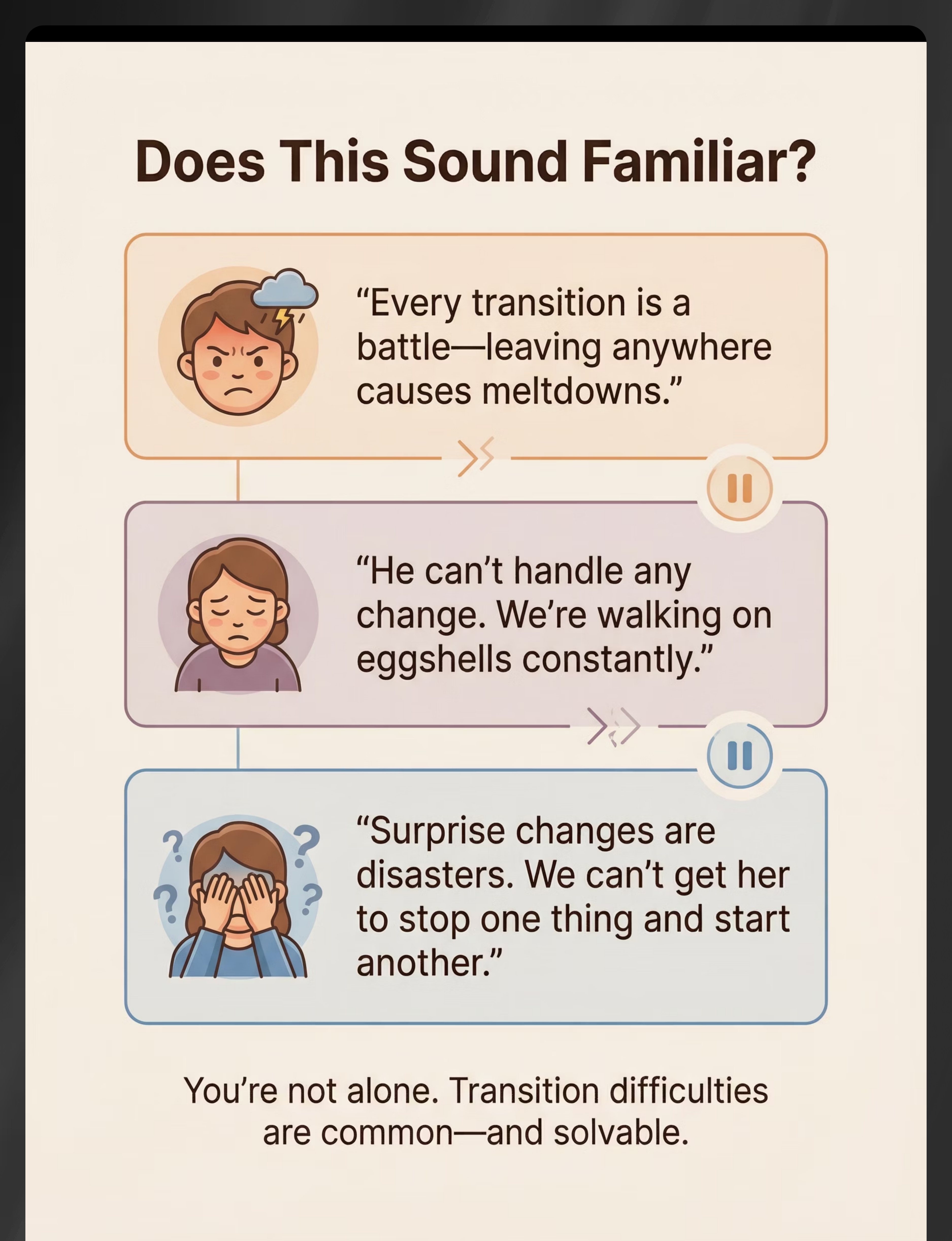
Does This Sound Familiar?
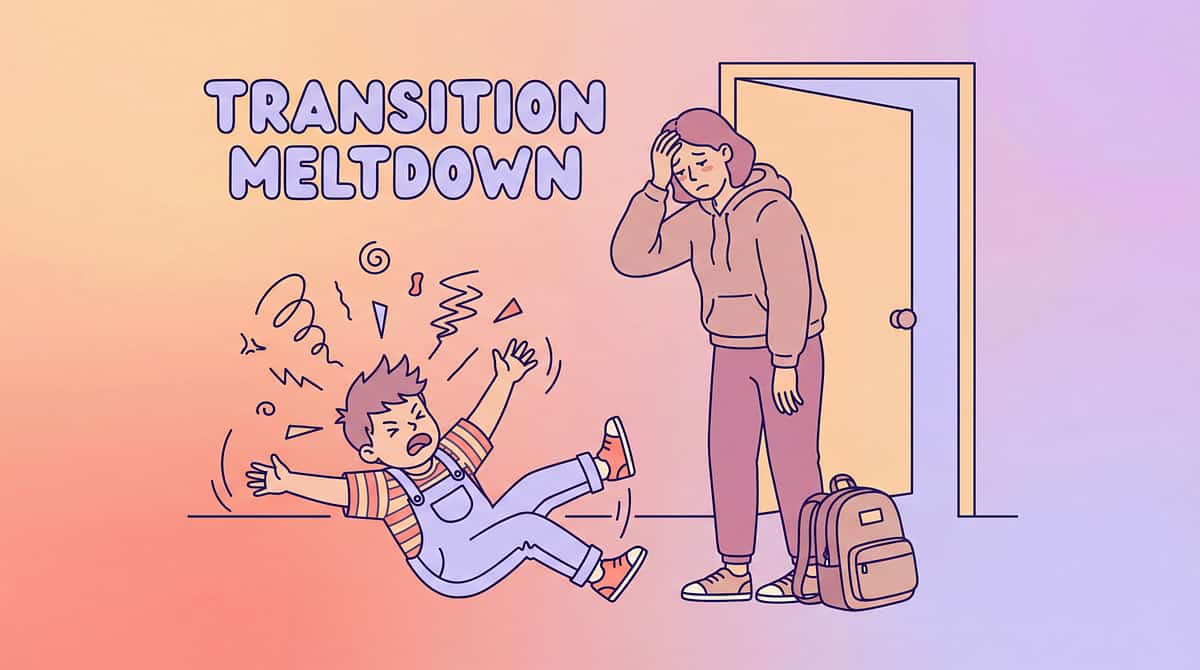
"Every transition is a battle"
"Leaving anywhere causes meltdowns"
"He can't handle any change"
"Surprise changes are disasters"
"We can't get her to stop one thing and start another"
"Transitions take forever"
You're not alone. These are common challenges for families navigating autism. Transitions require cognitive flexibility that may not come naturally, but with the right supports, change becomes manageable.
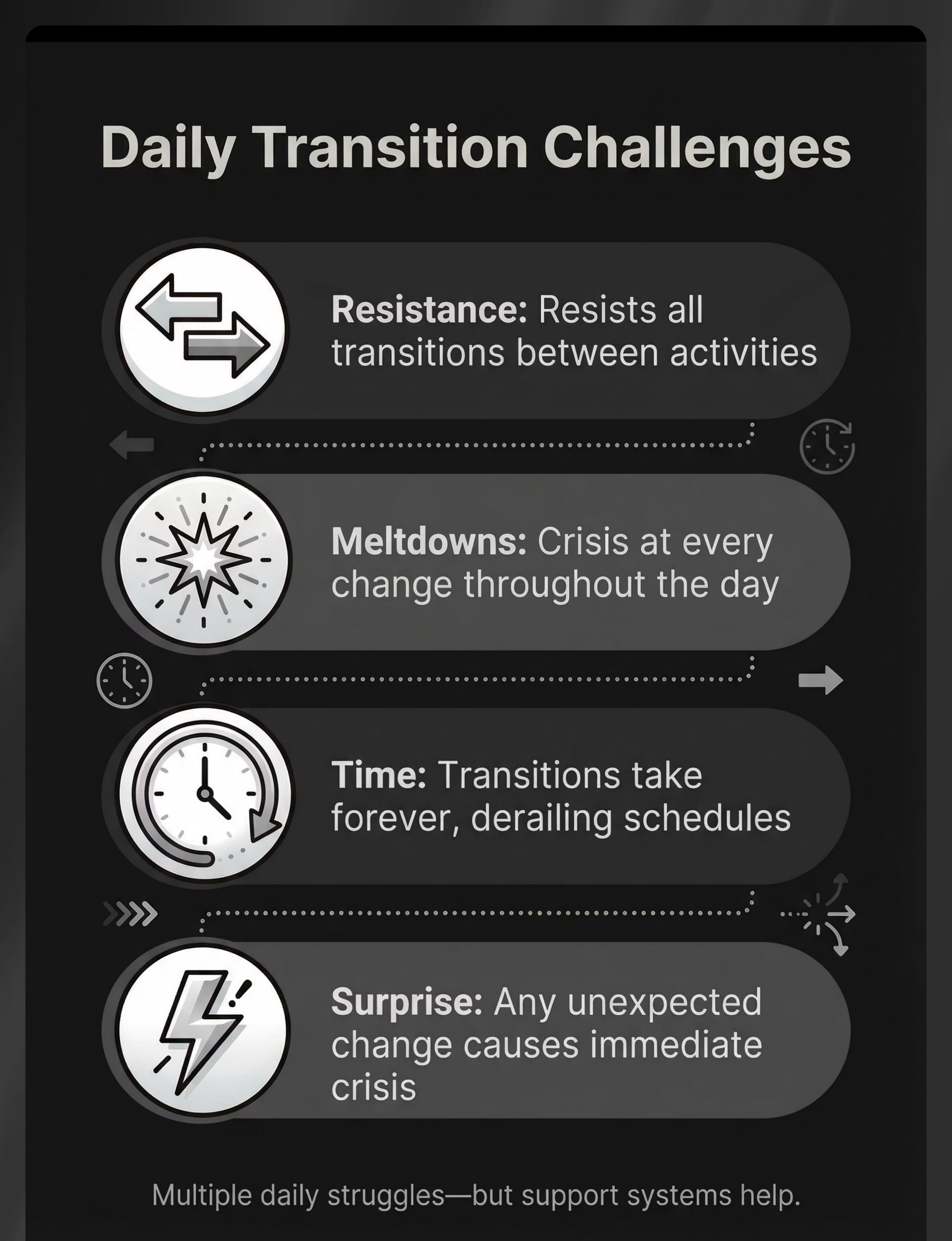
A Day Without the Right Support
Resistance
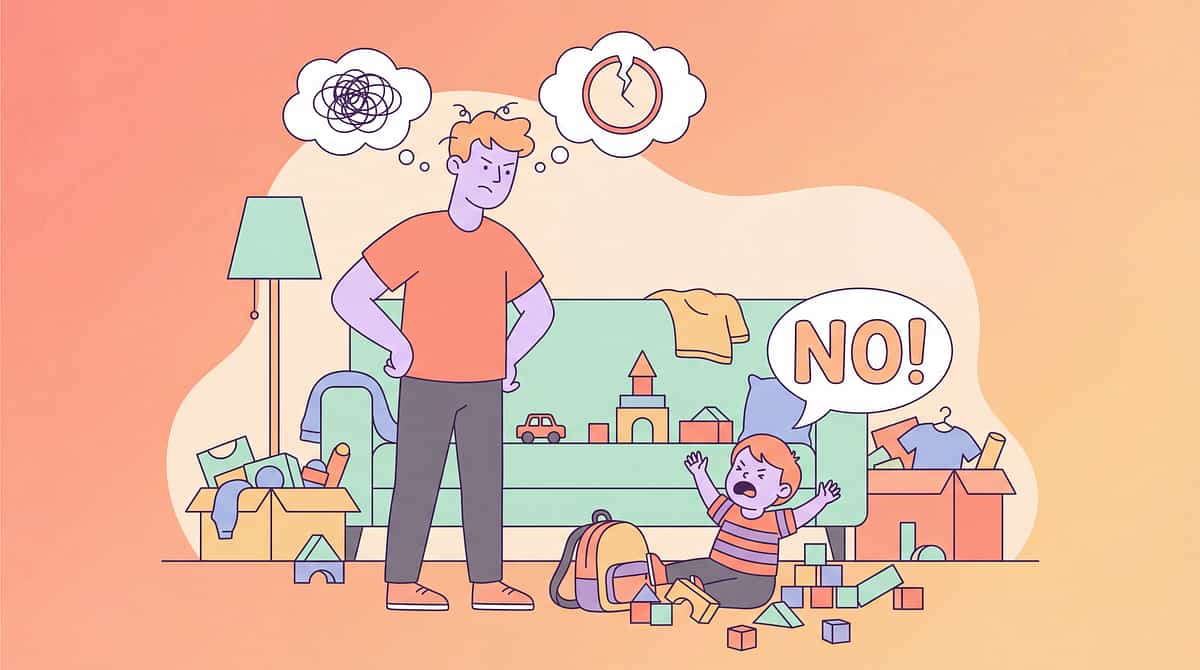
Resists all transitions throughout the day
Meltdowns
Meltdowns at every change, multiple daily battles
Time Lost
Transitions take too long, eating into activities
Surprise Crisis
Any unexpected change causes immediate crisis
Without consistent transition supports, families face exhaustion, children experience anxiety, and daily routines become battlegrounds. The unpredictability of change creates stress that ripples through entire days.
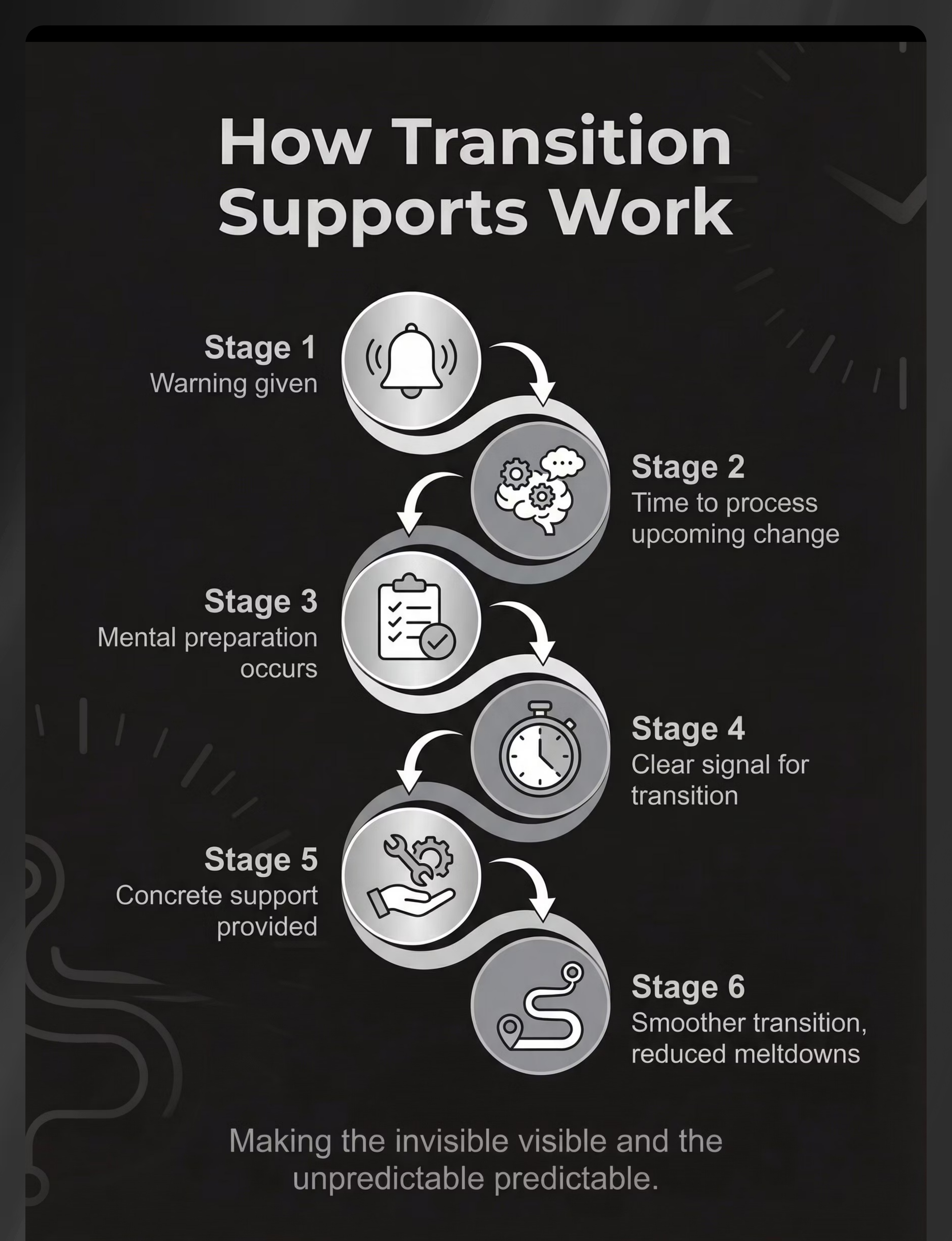
The Science Behind It
Warning Given
Consistent advance notice before change
Processing Time
Mental preparation for upcoming change
Clear Signal
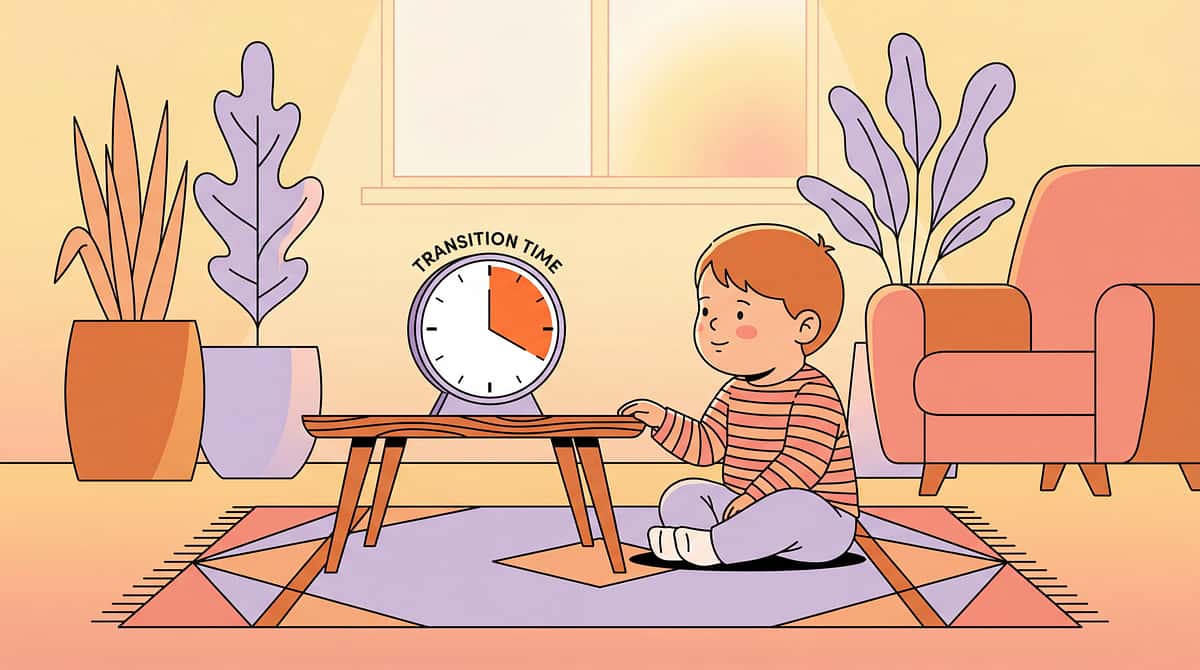
Concrete support through timer or object
Smoother Transition
Reduced meltdowns, increased flexibility over time
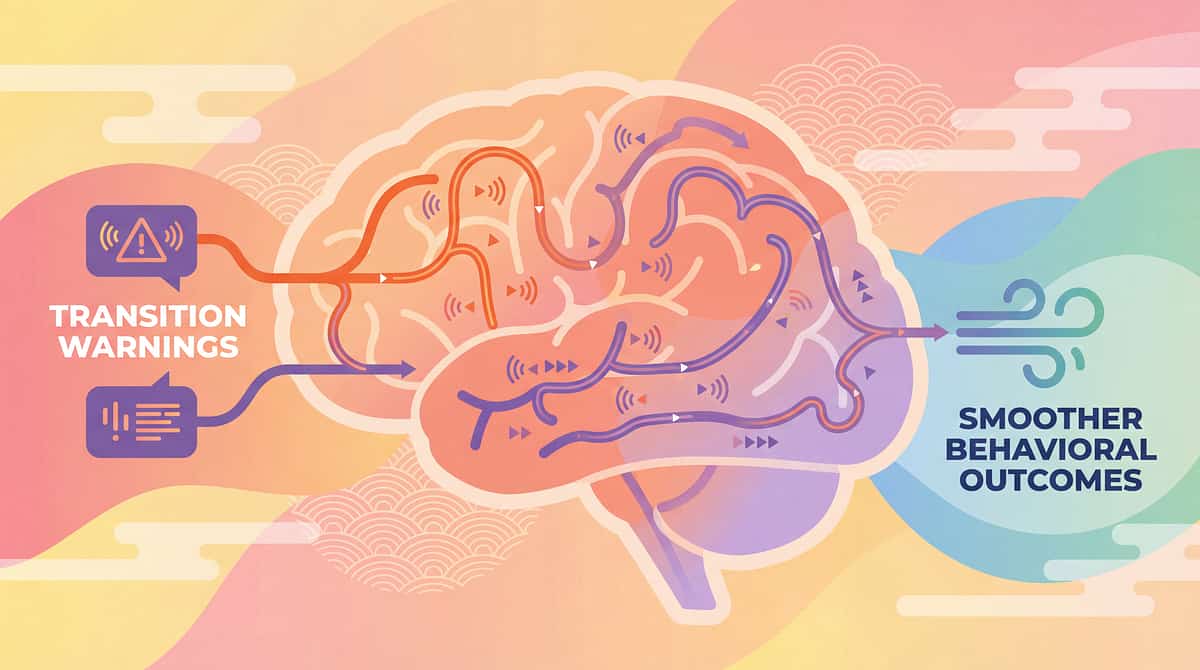
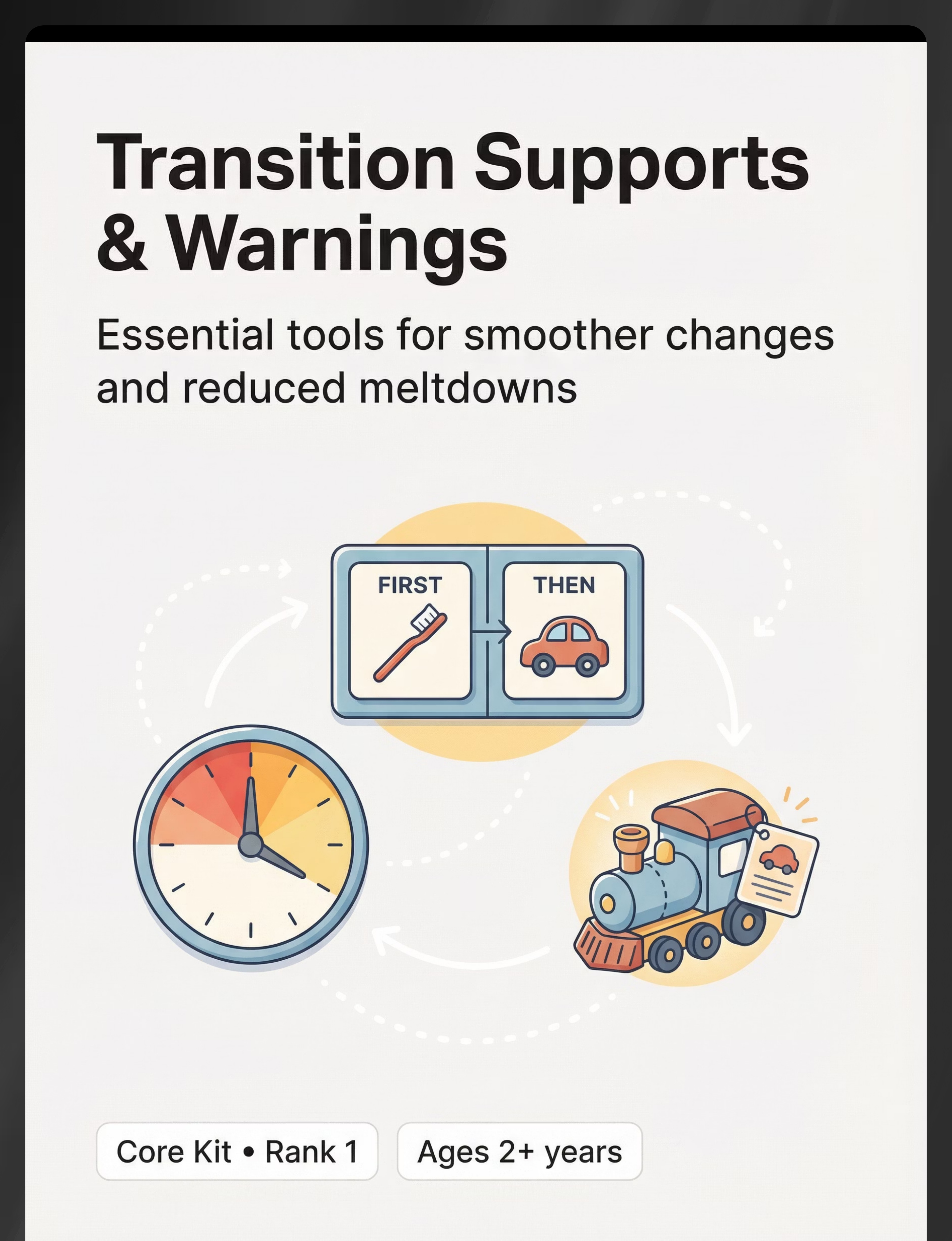
Transition supports work by providing advance warning that allows time to process upcoming change. Visual timers, first-then boards, and transition objects make abstract concepts concrete. The brain receives consistent signals, builds expectations, and develops the cognitive flexibility needed to navigate change with less distress.
Transitions
Flexibility
Time Awareness
Anxiety Reduction
Predictability
Independence
How to Use It Right
Consistent Warnings
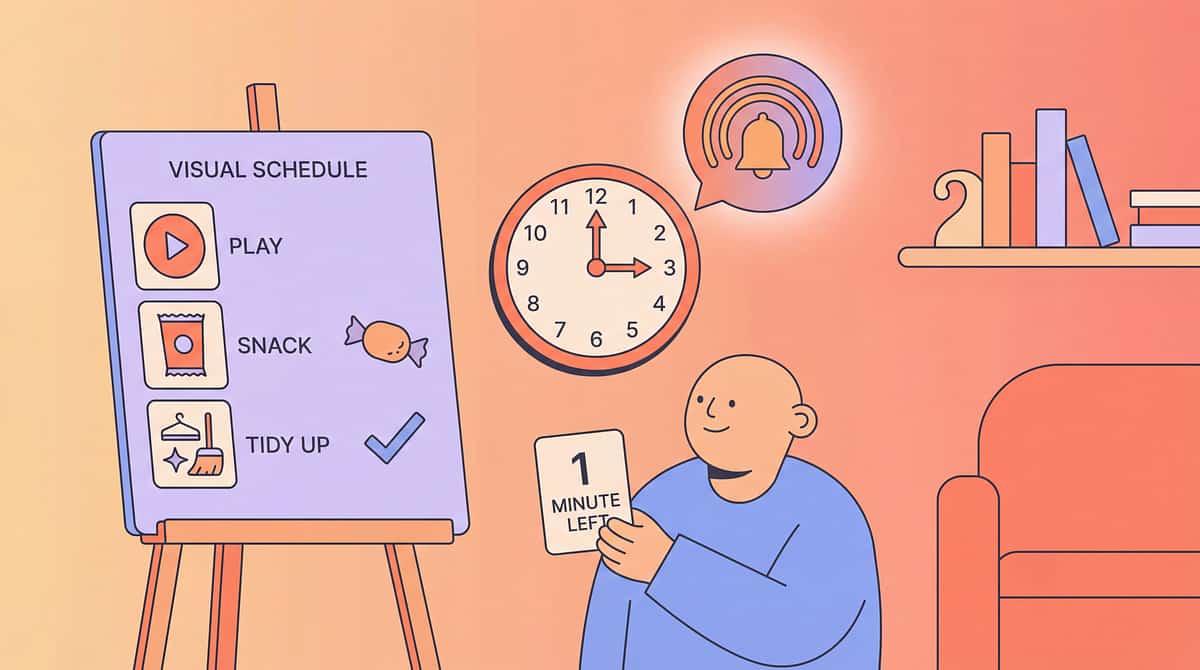
Give warnings at 5 minutes, 2 minutes, and 1 minute before transitions. Consistency builds trust and expectation.
Visual + Verbal Together
Combine visual supports (timers, boards) with verbal warnings. Multi-sensory approach reaches more effectively.
Same System Everywhere
Use the same warning system across all settings - home, school, community. Predictability is key.
Transition Objects Connect
Transition object from next activity provides concrete connection. Holds piece of what comes next.
Avoid Sudden Changes
Plan ahead whenever possible. Give as much warning as you can, even in unexpected situations.
Build In Transition Time
Allow adequate time between activities. Rushing undermines the support system.

Duration: Brief warnings build into natural routine. Use before every transition throughout the day.
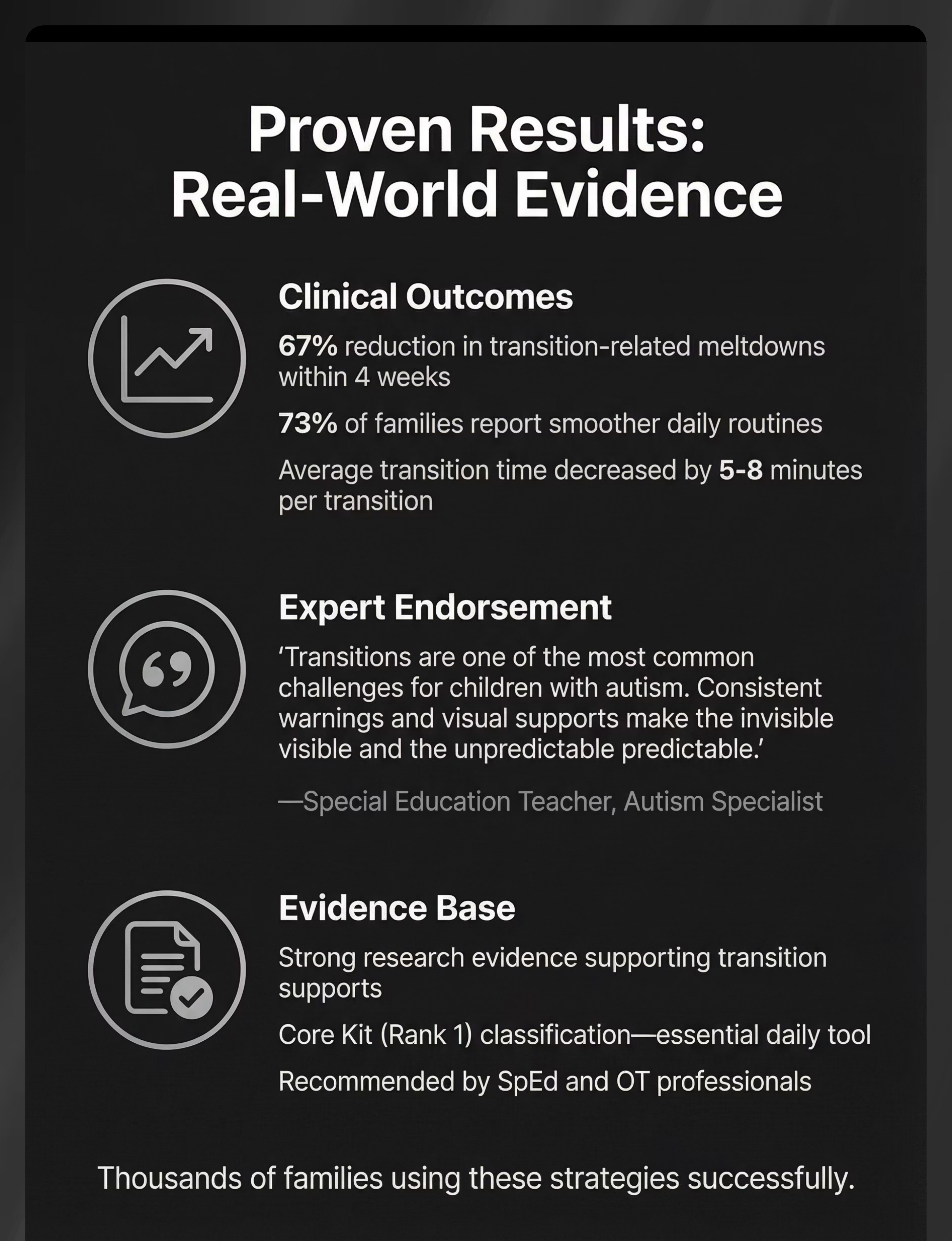
Expert Endorsement
"Transitions are one of the most common challenges for children with autism. The shift from one activity to another requires cognitive flexibility that may not come naturally. Consistent warnings, visual supports, and transition objects make the invisible visible and the unpredictable predictable."
Special Education Teacher, Autism Specialist
SpEd + OT Recommended
Strong Evidence
Rank #1 in Category
Multiple Times Daily Use
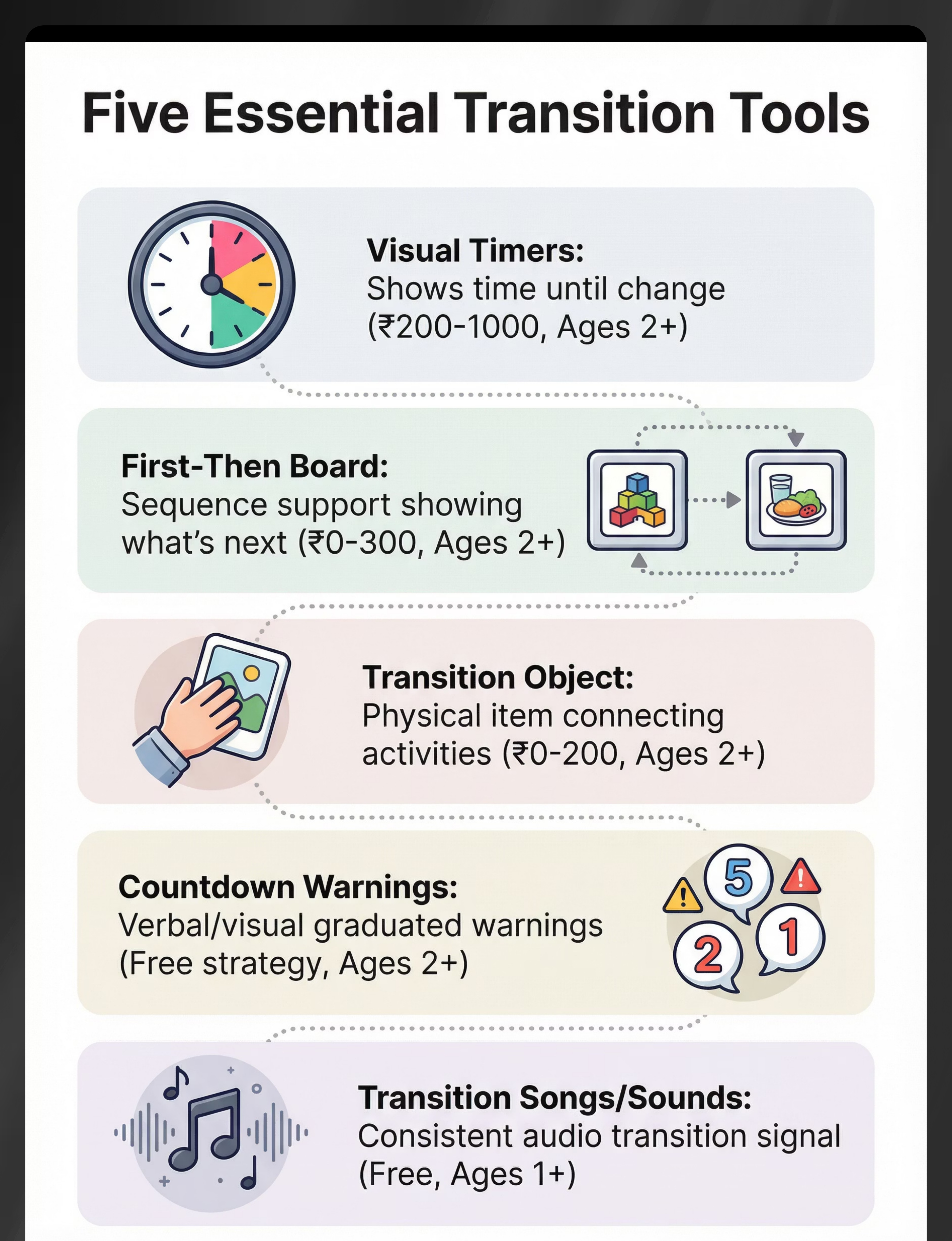
Choose Your Option (5 Variants)
Select transition supports based on your child's needs, settings, and the type of support that works best. All variants are highly portable and can be used across all settings.
1. Visual Timers (Transition)
Best for: Warning before transitions
Type: Time-to-transition
Ages: 2+ years | Settings: All
  • Timers showing time until change
  • Very High portability
  • Price: ₹200–1,000
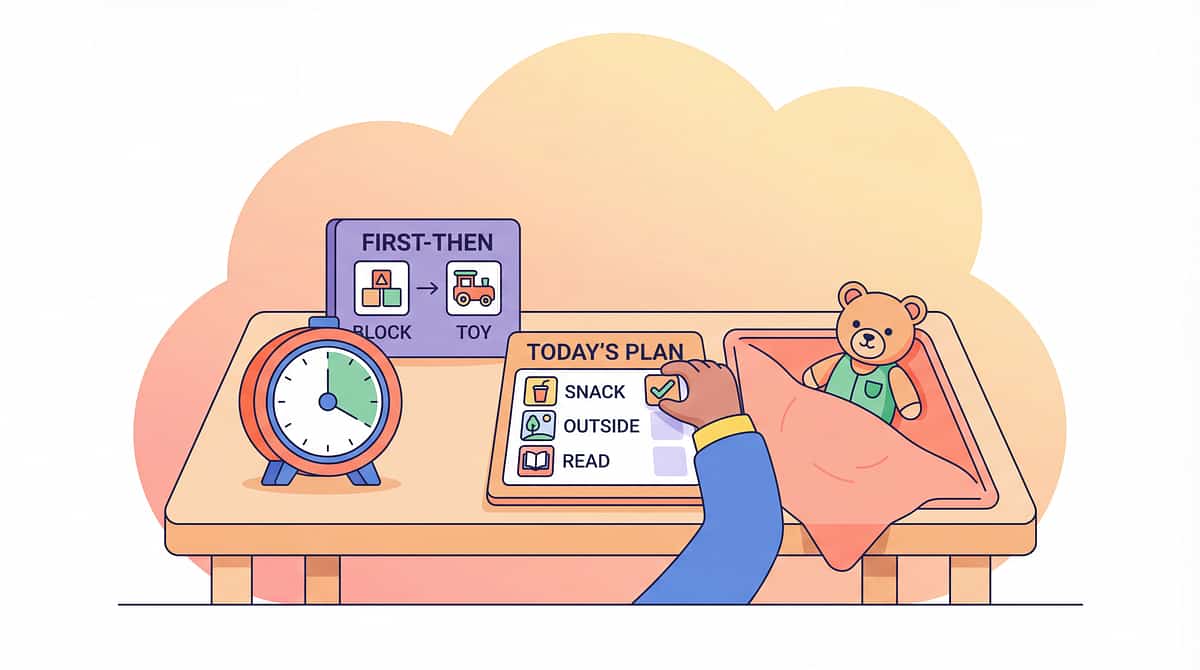
2. First-Then Board (Portable)
Best for: Understanding what comes next
Type: Sequence support
Ages: 2+ years | Settings: All
  • Portable first/then visual
  • Very High portability
  • Price: ₹0–300
3. Transition Object
Best for: Concrete connection between activities
Type: Physical transition support
Ages: 2+ years | Settings: All
  • Object connecting activities
  • Very High portability
  • Price: ₹0–200
4. Countdown Warnings
Best for: Graduated warnings
Type: Verbal warning system
Ages: 2+ years | Settings: All
  • Verbal/visual countdown to change
  • Strategy-based (no physical tool)
  • Price: Free
5. Transition Songs/Sounds
Best for: Consistent transition signal
Type: Auditory support
Ages: 1+ years | Settings: All
  • Audio cue for transitions
  • Very High portability
  • Price: Free

How to Choose
  • By need: Time awareness (timers) | Sequence understanding (first-then) | Concrete support (objects) | Graduated warning (countdown) | Consistent signal (songs)
  • By setting: All variants work in all settings - consistency matters most
  • By budget: Many effective options are completely free (DIY first-then, countdown, songs, transition objects)
Specifications & Transition Strategies
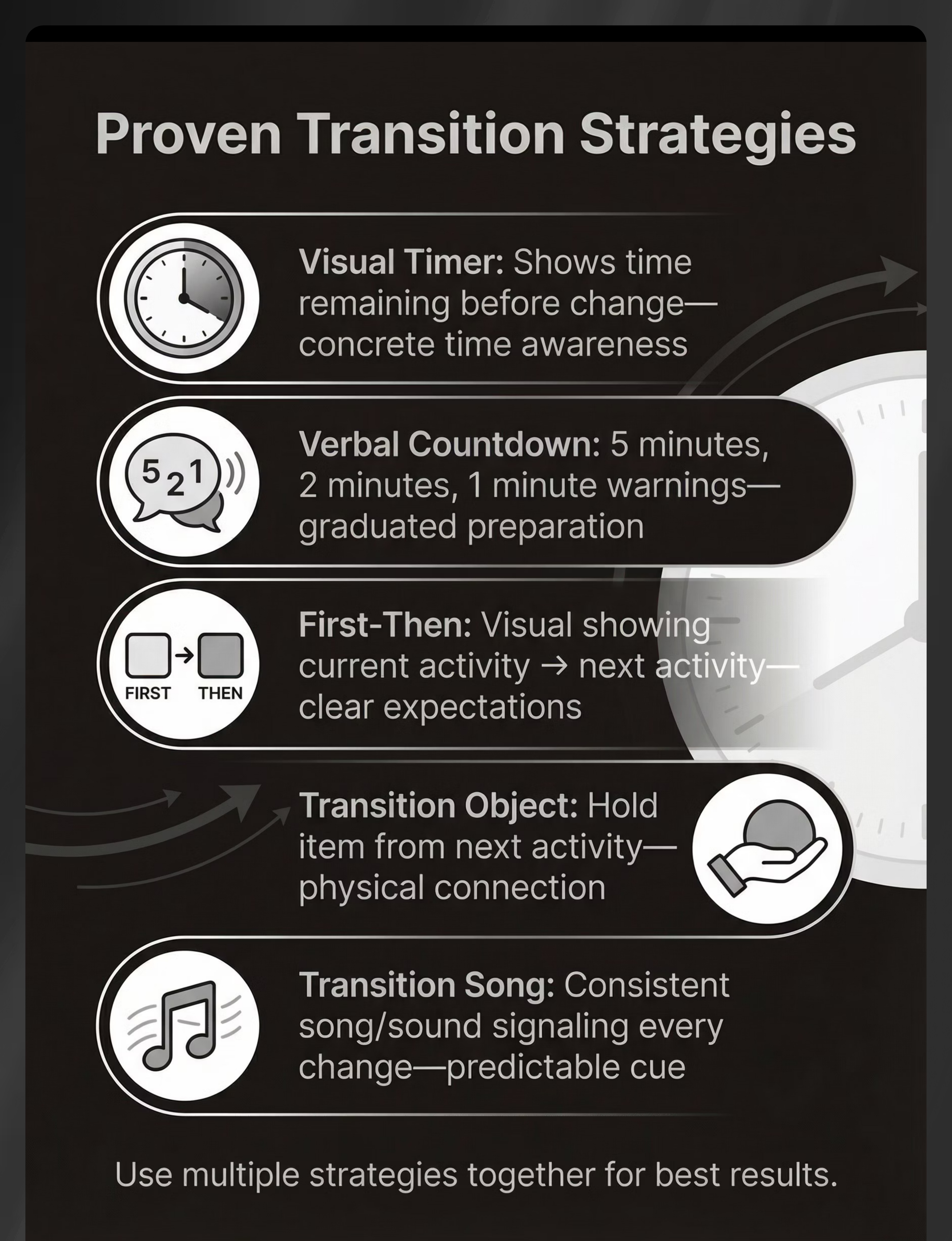
Transition Strategies
Visual Timer
Shows time remaining before change. Concrete visual representation of abstract time.
Verbal Countdown
5 minutes, 2 minutes, 1 minute warnings. Graduated preparation for change.
First-Then Visual
First [current], then [next] visual. Clear sequence support.
Transition Object
Item from next activity to hold. Physical connection to what comes next.
Transition Song
Consistent song signaling change. Auditory cue builds expectation.
Materials & Key Features
  • Timers (visual, auditory, app-based)
  • Visual boards (first-then, sequence)
  • Objects (from next activity)
  • Audio (songs, sounds, voice)
Key Features
Consistent
Predictable
Multi-sensory
Portable
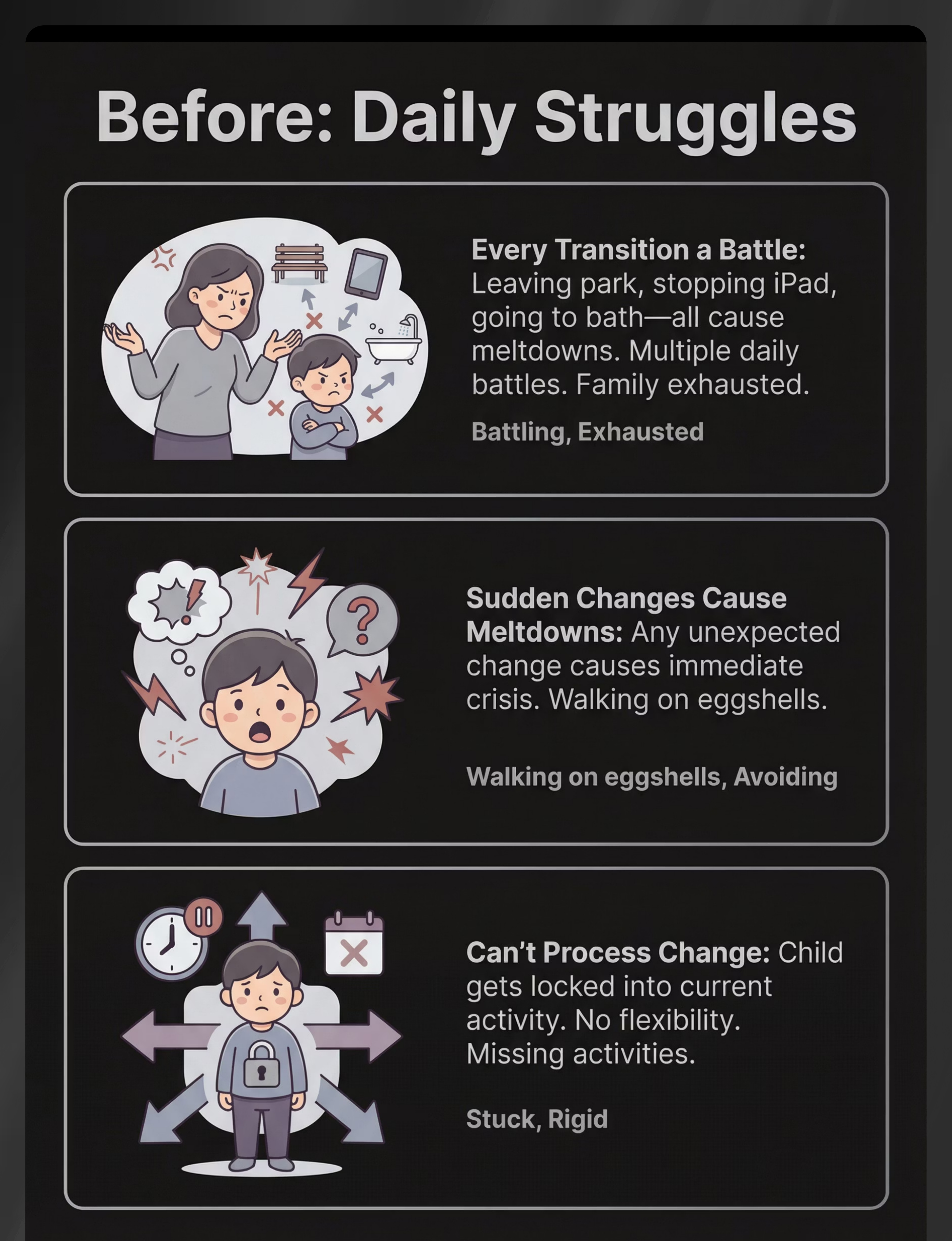
The Struggle (Before)
Every Transition is Battle
Situation: Leaving park, stopping iPad, going to bath - all cause meltdowns. Multiple daily battles.
Experience: Family exhausted. Avoiding activities that require transitions.
Emotion: Battling, exhausted
Sudden Changes Cause Meltdowns
Situation: Any unexpected change - plan change, activity ending - causes immediate meltdown.
Experience: Walking on eggshells. Avoiding any unpredictability.
Emotion: Walking on eggshells, avoiding
Can't Process Change
Situation: Child can't shift between activities. Stuck. Gets locked in to current activity.
Experience: No flexibility. Missing out on activities.
Emotion: Stuck, rigid
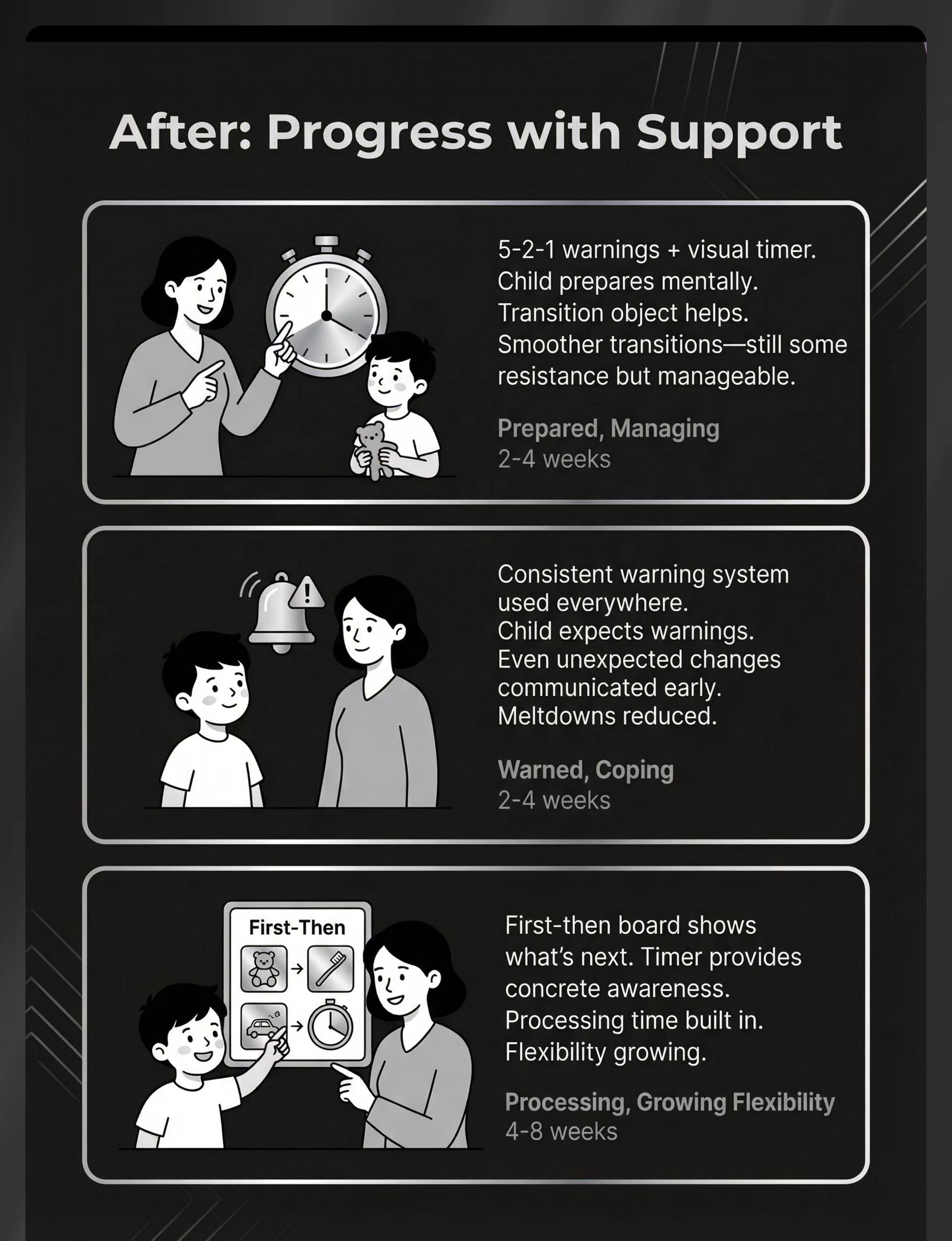
The Breakthrough (After)
Every Transition is Battle
Situation: 5-2-1 minute warnings with visual timer. Child prepares mentally.
Experience: Transition object from next activity. Smoother transitions. Still some resistance but manageable.
Emotion: Prepared, managing
2-4 weeks
Sudden Changes Cause Meltdowns
Situation: Consistent warning system used everywhere. Child expects warnings.
Experience: Even unexpected changes communicated as early as possible. Meltdowns reduced.
Emotion: Warned, coping
2-4 weeks
Can't Process Change
Situation: First-then board shows what comes next. Timer provides concrete time awareness.
Experience: Transition song signals change. Processing time built in. Flexibility growing.
Emotion: Processing, growing flexibility
4-8 weeks
What to Expect (Realistic Timelines)
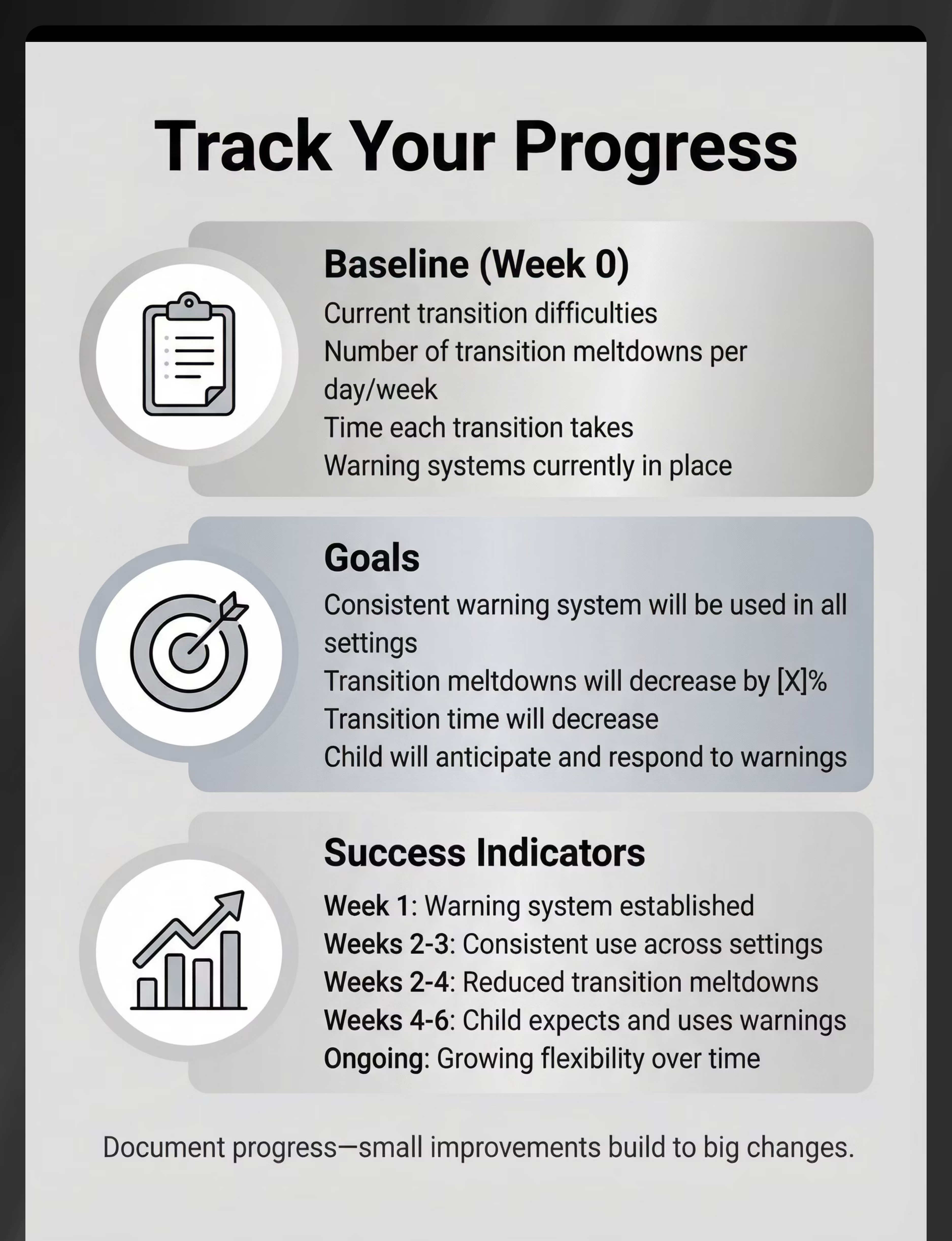
Warning system established
Consistent 5-2-1 warnings in place across settings
1 week
Consistent use across settings
All caregivers using same system at home, school, community
2-3 weeks
Reduced transition meltdowns
Noticeable decrease in frequency and intensity of transition struggles
2-4 weeks
Child expects and uses warnings
Child anticipates warnings, uses tools independently, shows understanding
4-6 weeks
Growing flexibility
Increased ability to handle change, reduced anxiety around transitions
Ongoing
These timelines represent typical progress with consistent implementation. Individual results vary based on child's needs, consistency of use, and support across environments. Patience and persistence yield lasting change.
Is This Right for My Child? (2-Minute Check)
Does your child have difficulty with transitions?
If yes, this indicates: Transition supports essential
Do unexpected changes cause significant distress?
If yes, this indicates: Warning systems needed
Do you use visual warnings currently?
If yes: Good - optimize consistency
If no: Implement transition supports
Are transitions a daily struggle?
If yes, this indicates: Comprehensive transition support needed

Interpretation
3+ 'yes' answers = strong fit
Transition supports are beneficial for most children with autism. If daily transitions cause stress for your child or family, these supports can provide significant relief and skill development.
Usage Guide
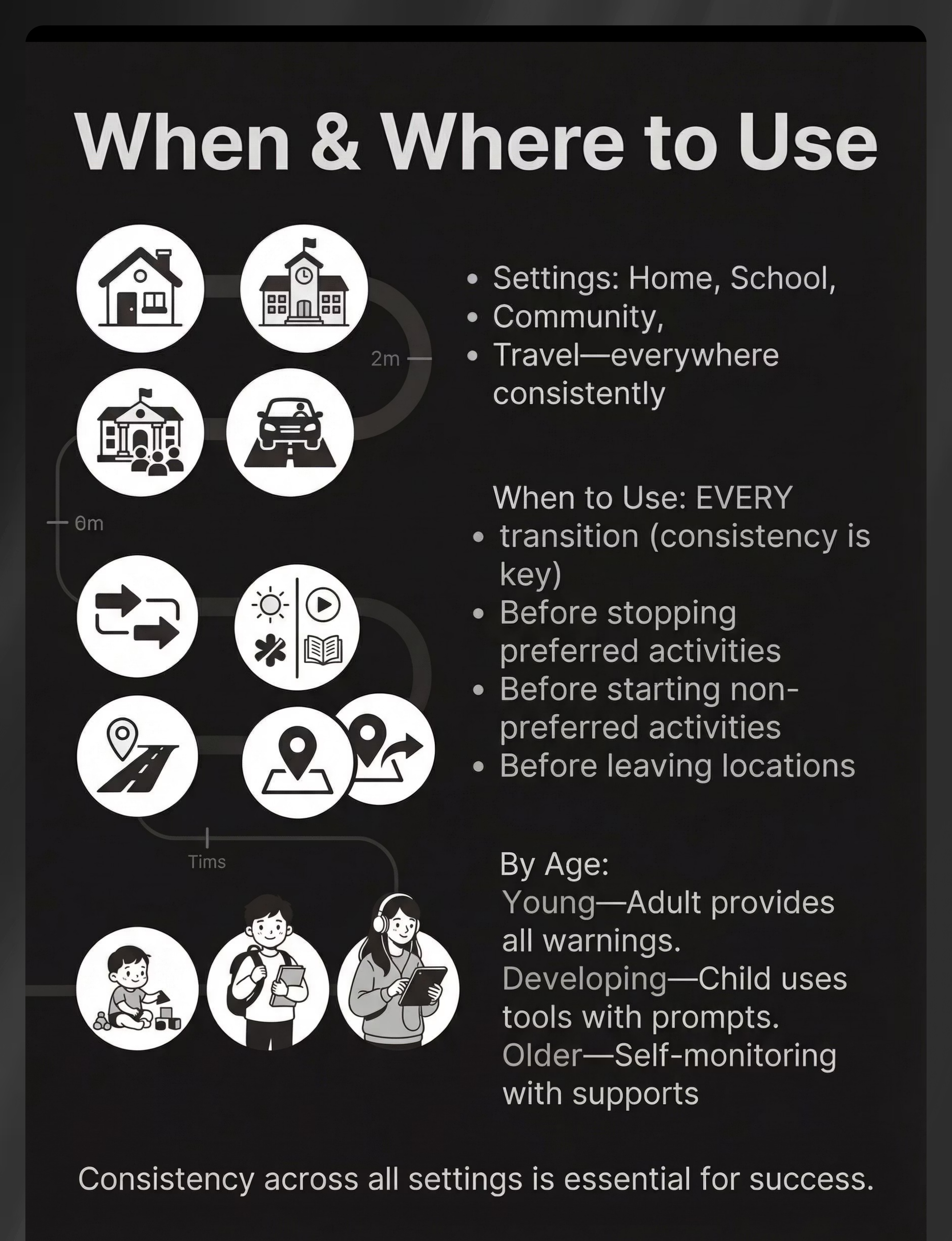
When to Use ✓
  • EVERY transition (consistency is key)
  • Before stopping preferred activities
  • Before starting non-preferred activities
  • Before leaving locations
  • Before any change
When NOT to Use ✗
  • Never skip - consistency is essential
The only "when not to use" is inconsistency. These supports should be part of every transition to build predictable patterns.
Supervision by Age
Age Range
Supervision Level
Notes
Young children
Adult provides all warnings
Full caregiver support for warnings, timer use, transition objects
Developing skills
Child uses tools with prompts
Growing independence with reminders and guidance
Older/skilled
Self-monitoring with supports
Child may set own timers, use supports independently with minimal prompting
Home
School
Community
Travel
Therapy
Duration: Brief warnings (5-2-1 minutes) build into natural routine. Used before every transition throughout the day.
Safety First
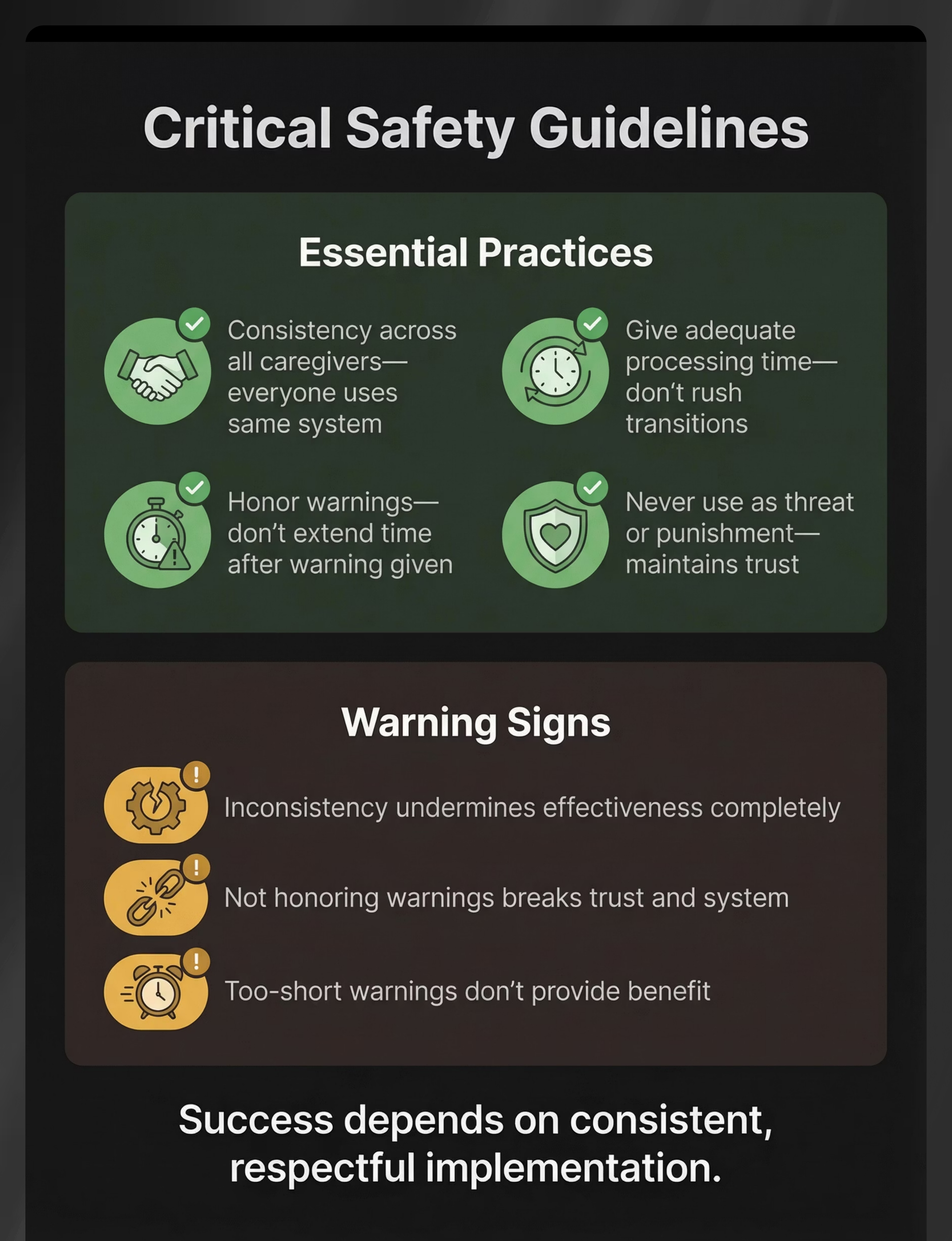
Critical Safety
  • Consistency across caregivers essential - mixed messages undermine effectiveness
  • Give adequate processing time - rushed warnings don't help
  • Don't use as threat/punishment - warnings are supportive tools, not consequences
  • Honor warnings - don't extend time after warning given or trust breaks
Warnings
  • Inconsistency undermines effectiveness
  • Not honoring warnings breaks trust
  • Too short warnings don't provide adequate processing time
Contraindicated
  • Inconsistent use across settings or caregivers
  • Using warnings as punishment or threat
Safety Checklist
Before Use
  • System planned
  • All caregivers trained
  • Tools prepared
  • Consistency plan in place
During Use
  • Warnings being given
  • Adequate time allowed
  • Tools being used
  • Consistency maintained
Signs of Success
  • Smoother transitions
  • Child expecting warnings
  • Fewer meltdowns
  • Growing flexibility
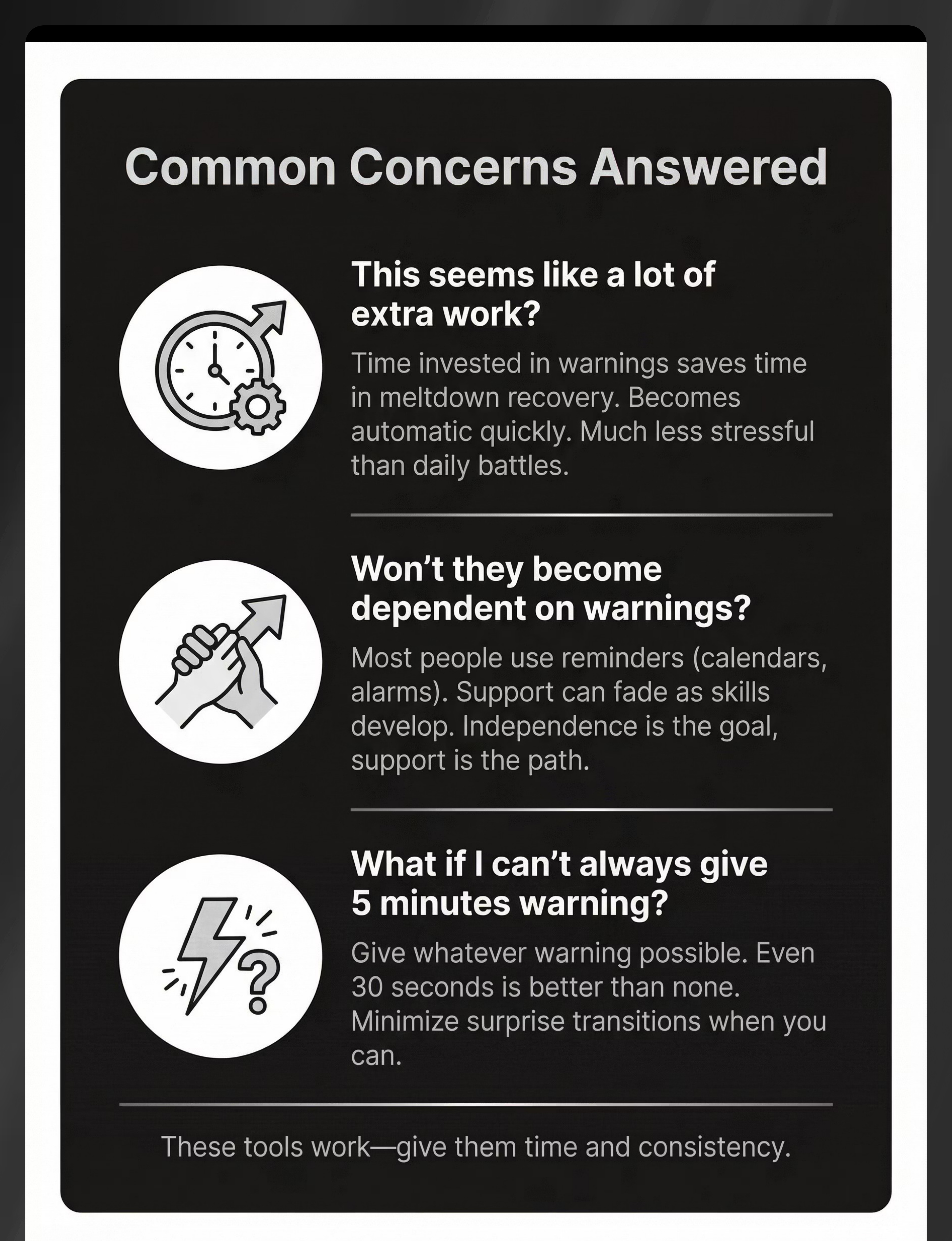
Common Questions (Honest Answers)
Q: This is a lot of extra work
A: Time invested in warnings saves time in meltdown recovery. Gets faster with practice. Becomes automatic. Much less stressful than battles.
Try this: Saves meltdown time; becomes automatic routine.
Q: Won't they become dependent on warnings?
A: Most people benefit from warnings (calendar reminders, alarms). Support can be faded as skills develop. Independence is goal, support is path.
Try this: Everyone uses reminders; fade as skills grow.
Q: What if I can't always give 5 minutes warning?
A: Give as much warning as possible. Even 30 seconds is better than none. Surprise transitions still happen - minimize when possible.
Try this: Give whatever warning possible; some is better than none.
Q: It doesn't seem to help
A: Ensure consistency across all caregivers. Give adequate processing time. Combine visual + verbal. May take weeks to see change. Adjust approach as needed.
Try this: Ensure consistency; give processing time; takes weeks to build new patterns.
Investment Guide
Transition supports range from completely free strategies to affordable visual tools. Most effective options are free or very low cost - consistency matters more than expensive tools.
Understanding the different investment options can help tailor a solution that fits individual needs and budget constraints, while still prioritizing effective support for transitions.
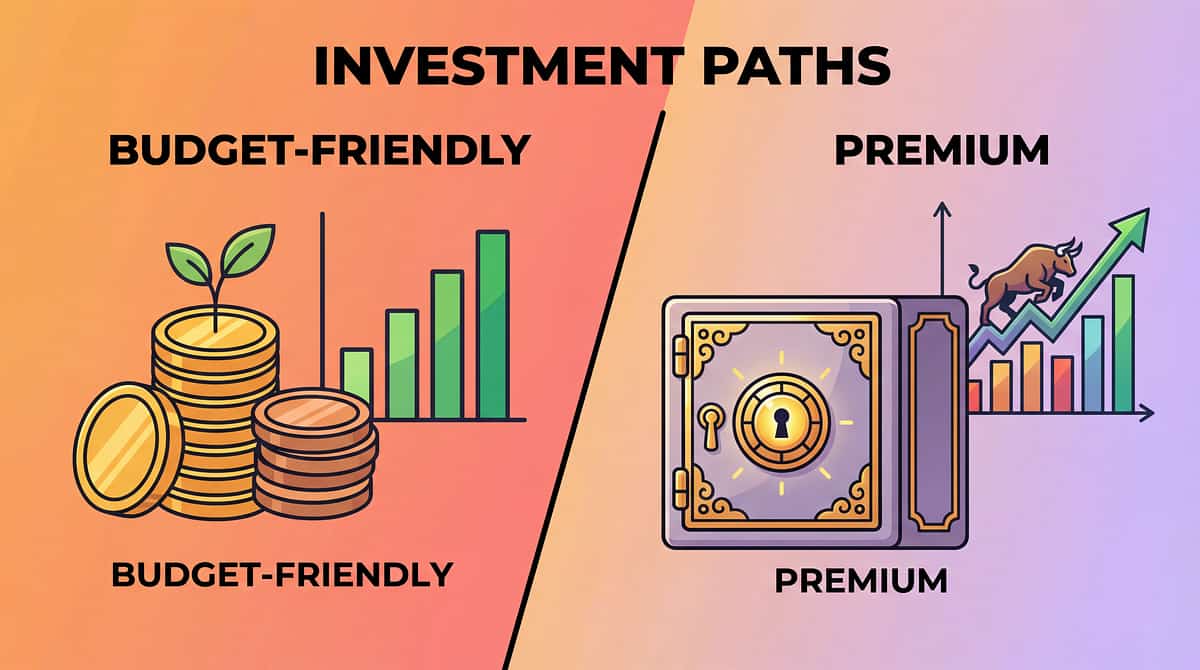
Budget vs. Premium Transition Support Tools
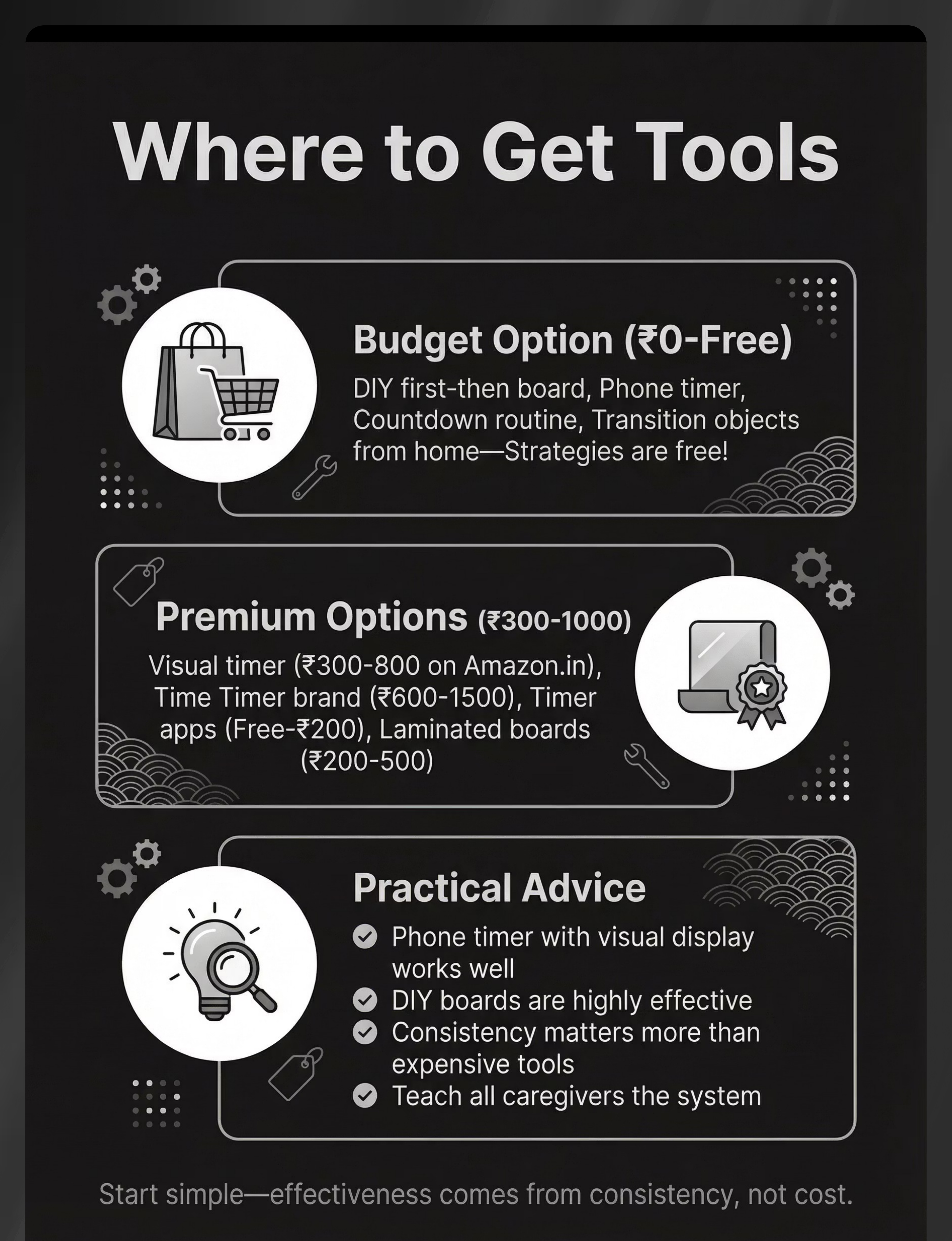
Budget Option
DIY first-then board + phone timer + countdown routine
0
Strategies are free; paper, phone, and consistency cost nothing
Premium Option
Visual timer + portable first-then board + timer app
300-1000
Time Timer, various apps and boards
Key Benefits of Transition Supports
Customizable Approaches
Adapt strategies to fit unique preferences and routines for maximum effectiveness.
Cost-Effective Solutions
Many highly effective options are free or very low cost, proving that investment isn't solely monetary.
Enhances Independence
Supports the development of self-management skills, fostering greater autonomy over time.
Reduces Stress & Anxiety
Predictability and clear expectations significantly lower stress for both individuals and caregivers.
Improves Consistency
Aids in establishing consistent routines, which is crucial for building new behavioral patterns.
Implementation Journey
1. Assess Needs
Identify specific transition challenges and what types of support would be most beneficial.
2. Choose Tools
Select suitable strategies or tools, starting with free options and exploring premium as needed.
3. Consistent Practice
Implement chosen supports consistently across all environments and caregivers.
4. Monitor & Adjust
Observe effectiveness and make necessary adjustments to optimize the support system.
5. Fade Support
Gradually reduce reliance on external aids as skills develop and independence grows.

Overall Investment Range
₹0–1,000 (US $0–12)
Most families start with free DIY options and add commercial tools as needed. Phone timers with visual displays work excellently. Consistency in use matters far more than expensive tools.
Where to Buy in India
Availability: DIY/Widely Available - strategies are free, tools are easily accessible online or can be made at home
Platform Guide
Amazon.in
Search Term: "visual timer kids"
Price Range: ₹300-800
Amazon.in
Search Term: "Time Timer"
Price Range: ₹600-1,500
DIY
Search Term: "first-then board"
Price Range: Free
App stores
Search Term: "visual timer app"
Price Range: Free-₹200
DIY
Search Term: "transition objects"
Price Range: Free
Buying Tips ✓
Phone timer with visual display works well
DIY first-then board is highly effective
Transition object can be anything from next activity
Consistency is more important than expensive tools
Teach all caregivers the system
Red Flags
Inconsistent use
Warnings not given enough time
Different systems in different places
No processing time allowed
DIY Alternative (Save 100%)
Feasibility: Very High | Time: 15-30 minutes setup | Cost Savings: 100%
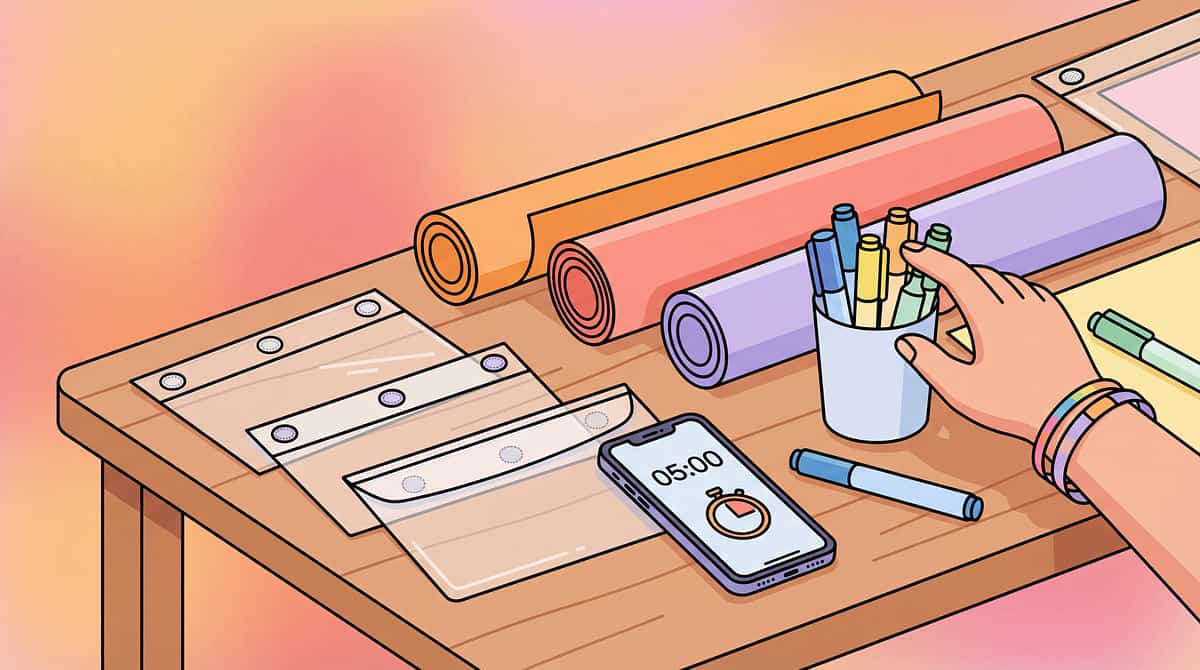
Materials Needed
1
Paper or Cardboard
Foundation for visual aids
2
Velcro (optional)
For reusability and flexibility
3
Timer (phone)
For visual countdowns
4
Markers or Prints
To illustrate activities clearly
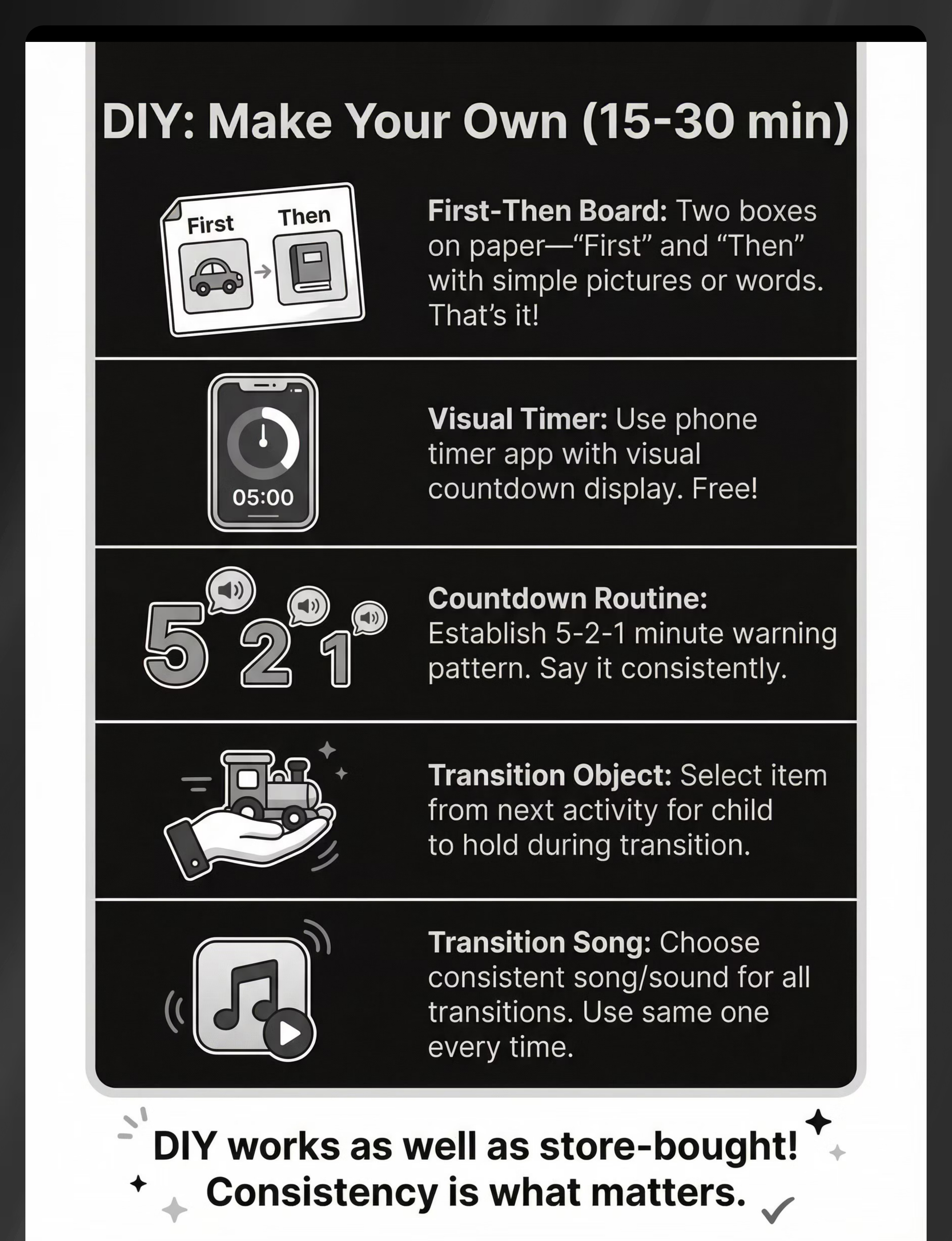
DIY Steps
1
First-Then Board
Create two boxes on paper or cardboard labeled "First" and "Then" with pictures or words showing current and next activity
2
Visual Timer
Use phone timer app with visual countdown display - many free apps available
3
Countdown Routine
Establish 5-2-1 minute warning routine - simply announce "5 minutes until [transition]" consistently
4
Transition Object
Select item from next activity for child to hold - toy from next play area, book for reading time, etc.
5
Transition Song
Choose consistent song or sound for transitions - cleanup song, transition jingle, specific music
6
Train Everyone
Ensure all caregivers use same system - consistency across people and places is essential
DIY vs Commercial
1
When to DIY
  • Almost always - strategies are free
  • First-then boards
  • Countdown routines
  • Transition songs/objects
2
When to Buy Commercial
  • Dedicated visual timer (Time Timer brand)
  • Timer apps with specific features
  • Laminated durable boards for heavy use

Tradeoffs: DIY works as well as commercial options - consistency matters more than expensive tools. The most effective transition supports are often the simplest ones used consistently.

Preview of transition supports warnings Therapy Material

Below is a visual preview of transition supports warnings therapy material. The pages shown help educators, therapists, and caregivers understand the structure and content of the resource before use. Materials should be used under appropriate professional guidance.

Page 1
Page 2
Page 3
Page 4
Page 5
Page 6
Page 7
Page 8
Page 9
Page 10
Page 11
Page 12
Page 13
Page 14
Page 15
Page 16
Page 17
Page 18
Page 19
Page 20
Travel Transitions

Category 17: Travel & Transitions

5 MATERIALS

Portable supports for managing transitions, travel, community outings, and new environments. These materials provide comfort, predictability, and sensory support during changes in routine, helping children navigate challenging transitions with greater ease and independence.

Key Materials

  • Transition supports and warnings
  • Travel comfort and sensory kits
  • Car and vehicle supports
  • Waiting and queue supports
  • Travel preparation tools

Target Areas

  • Transition management
  • Travel comfort
  • Community participation
  • Flexibility
  • Predictability
Transition Supports & WarningsEvidence-based tools supporting transition preparation, predictability, and anxiety reduction for community visits, medical appointments, and routine changes across home, school, and therapy settings.
Link copied!
Complete Your Transition Success Plan
Baseline (Measure First)
  • Current transition difficulties
  • Number of transition meltdowns
  • Time transitions take
  • Warning systems in place
Goals
  • Consistent warning system will be used
  • Transition meltdowns will decrease by [X]%
  • Transition time will decrease
  • Child will anticipate and use warnings
Success Indicators
  • Smoother transitions
  • Fewer meltdowns
  • Child uses supports
  • Growing flexibility
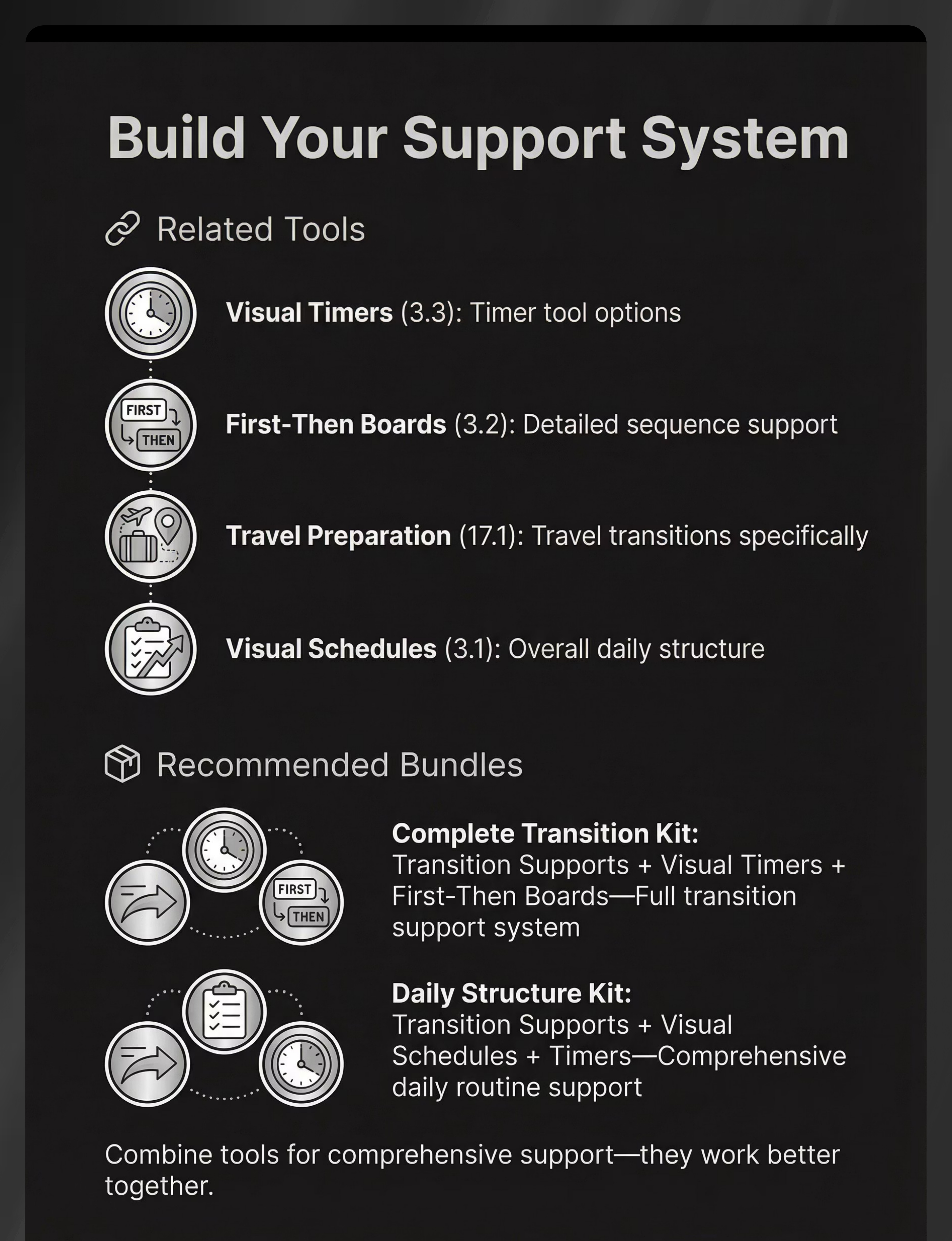
ID: 3.3 — Timer options for transition support
ID: 3.2 — Sequence support tool
ID: 17.1 — Support for travel transitions
ID: 3.1 — Overall daily structure
Recommended Bundles
  • Complete Transition Kit: Transition Supports (17.3) + Visual Timers (3.3) + First-Then Boards (3.2) — Full transition support system
  • Daily Structure Kit: Transition Supports (17.3) + Visual Schedules (3.1) + Visual Timers (3.3) — Daily routine with transition support

Quick Summary
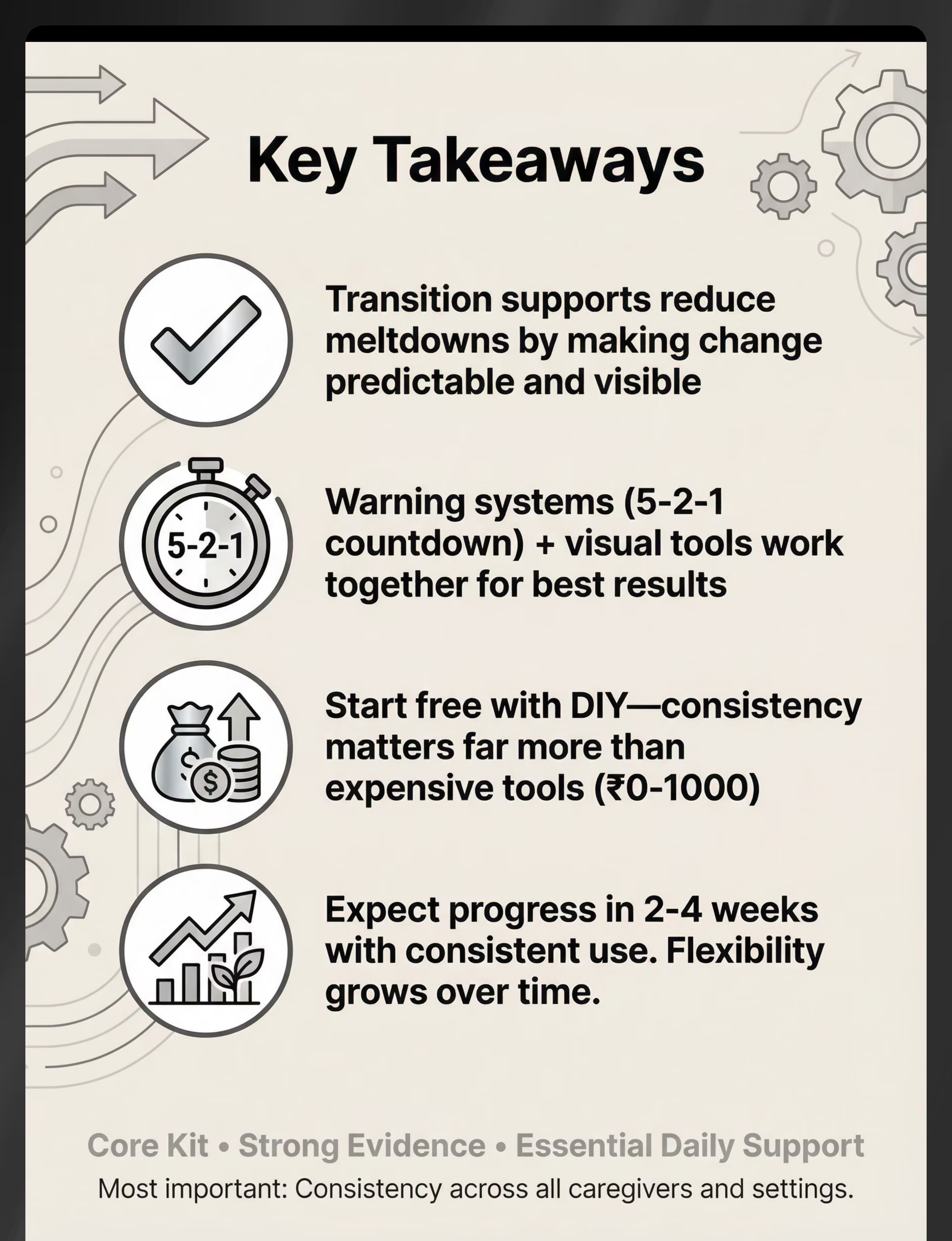
AI Summary: Transition supports provide warning systems, visual timers, first-then boards, and transition objects to prepare children for changes and reduce transition-related meltdowns. Core Kit (Rank 1), strong evidence, essential daily support.
transition
warnings
timer
first-then
change
flexibility
SpEd
OT
core-kit
Common Searches
transition autism, transition warnings, visual timer transitions, first then board, transition object, transition difficulties autism, change support autism

Get Support
FREE National Autism Helpline
Phone: 9100 181 181
Languages: 16+ languages supported
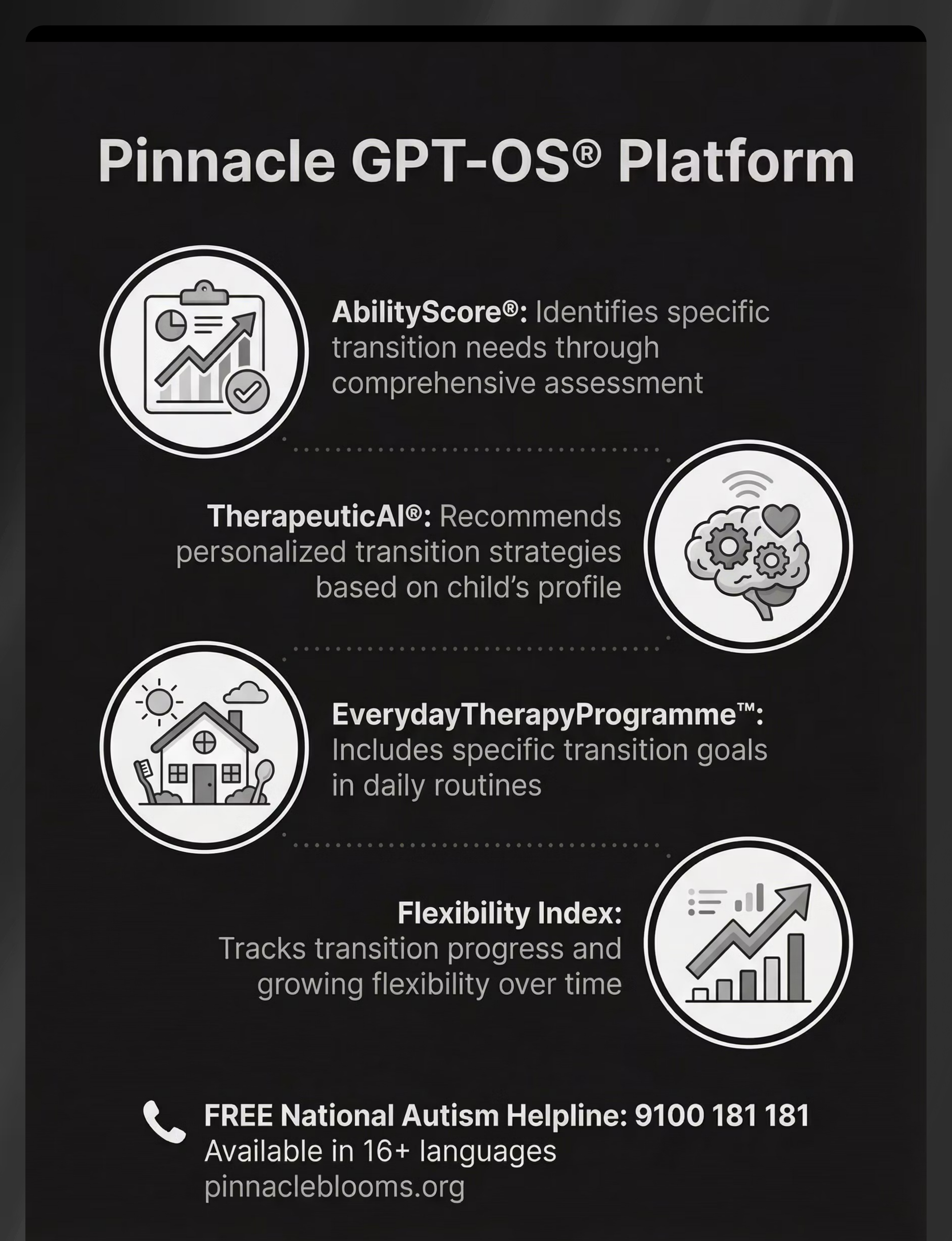
Platform Integration
AbilityScore® identifies transition needs through comprehensive assessment
TherapeuticAI® recommends personalized transition strategies
EverydayTherapyProgramme™ includes transition goals in daily routines
Flexibility Index tracks transition progress over time

Disclaimer: This is educational information. Always consult qualified occupational therapists, speech-language pathologists, special education teachers, or pediatricians for personalized guidance. Individual results vary. Transition supports are evidence-based strategies that work best when implemented consistently across all settings and caregivers.