




Tool ID: 17.2
Tool ID: 17.2
OT + Parent Recommended
Moderate-Strong Evidence
Rank #1
Daily Use
₹500–10,000
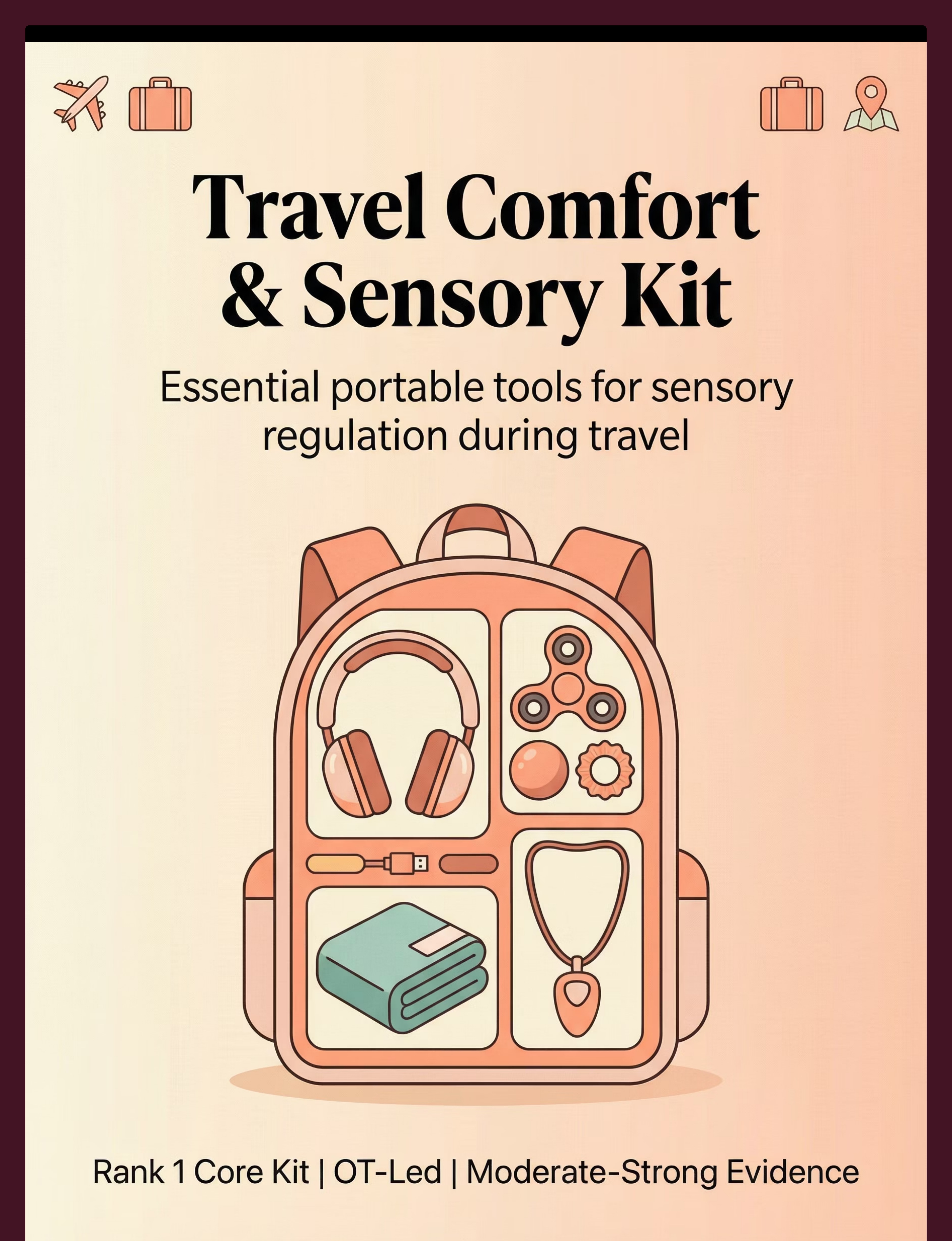
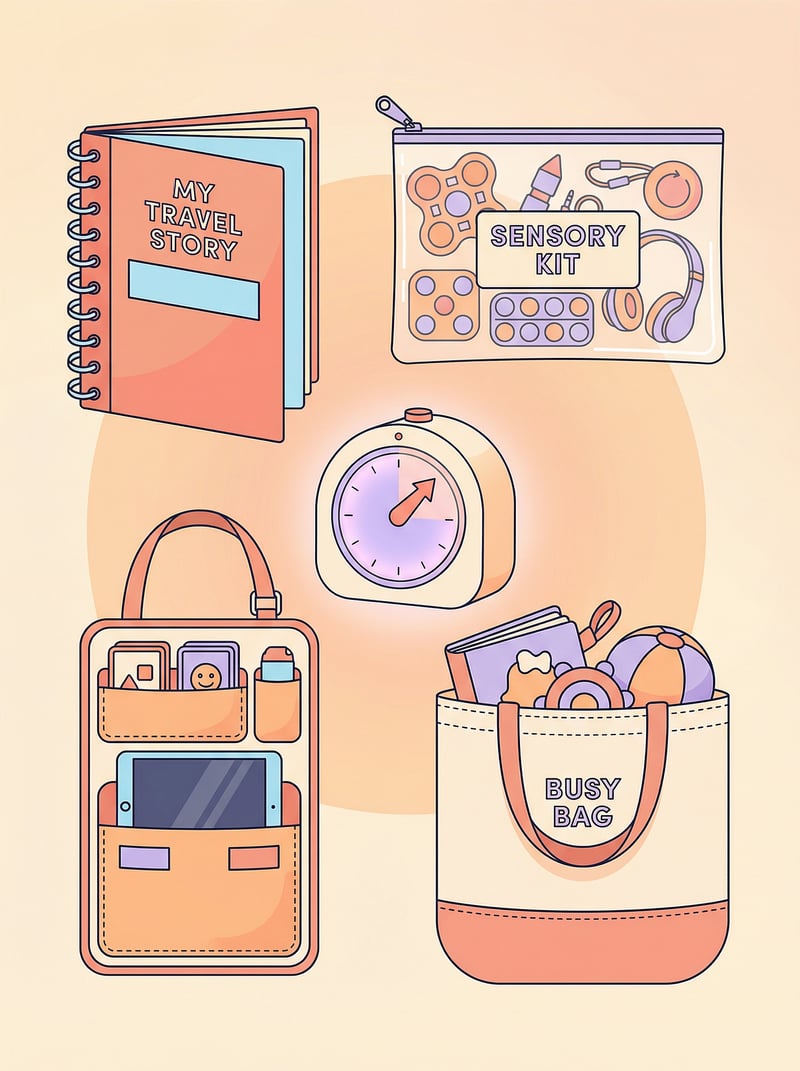
Travel Comfort & Sensory Kit
Portable sensory regulation and comfort system
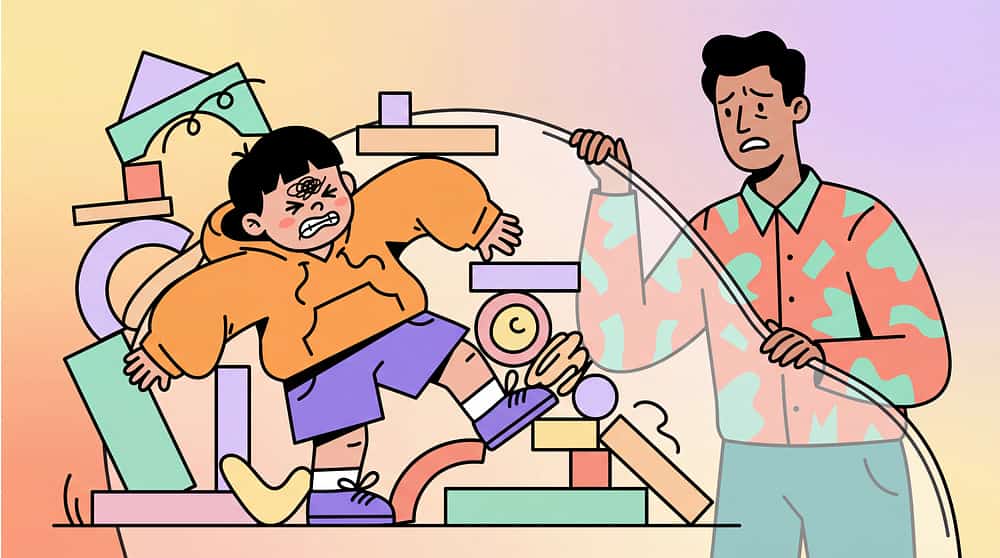
Travel presents unique sensory challenges for children with autism and sensory processing differences. Airports buzz with overwhelming noise, planes confine restless bodies, and unfamiliar environments trigger anxiety. Without the right supports, what should be an adventure becomes a crisis. A well-prepared travel sensory kit transforms these experiences, providing familiar regulation tools exactly when they're needed most. From noise-canceling headphones that soften airport chaos to weighted items that calm anxious bodies during long flights, this portable support system empowers children to navigate travel successfully while building confidence and independence.
Who This Helps
This portable sensory regulation system provides essential tools for managing the unique challenges of travel environments. Whether navigating crowded airports, enduring long flights, or adjusting to new destinations, children gain access to familiar supports that help them stay regulated and comfortable.
Sensory Regulation
Manage overwhelming sensory input from noise, crowds, lights, and confined spaces during all types of travel
Comfort & Security
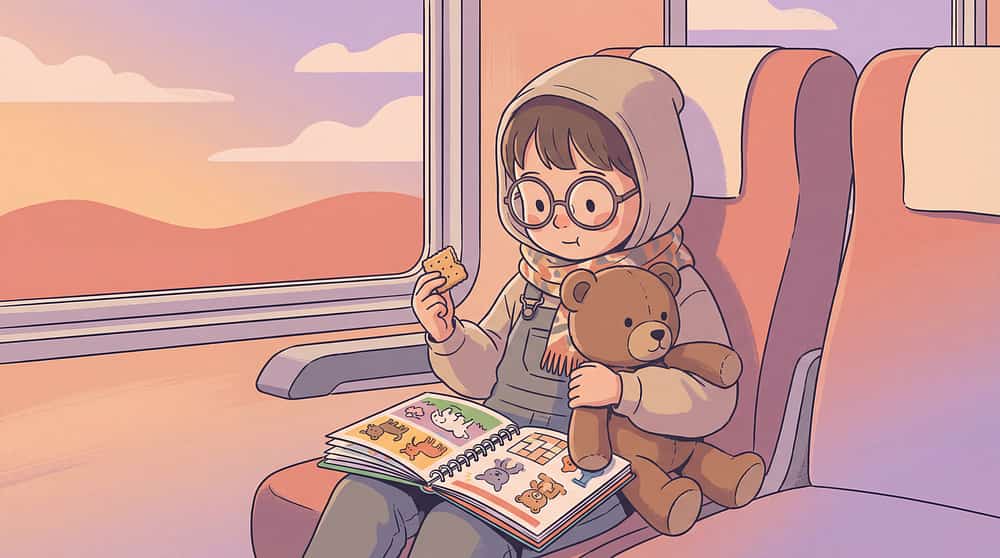
Maintain emotional regulation and reduce anxiety through familiar sensory supports and comfort objects
Self-Regulation Skills
Build independence by learning to identify sensory needs and select appropriate tools from personal kit
Anxiety Management
Reduce travel-related stress and prevent meltdowns through proactive sensory support
Ages 2+ years
All Travel Settings
Airports & Planes
Cars & Trains
Best for: Children who use sensory tools at home and need portable versions for travel, families who've experienced sensory-related travel difficulties, and anyone preparing for trips with a child who has sensory processing differences.
Does This Sound Familiar?
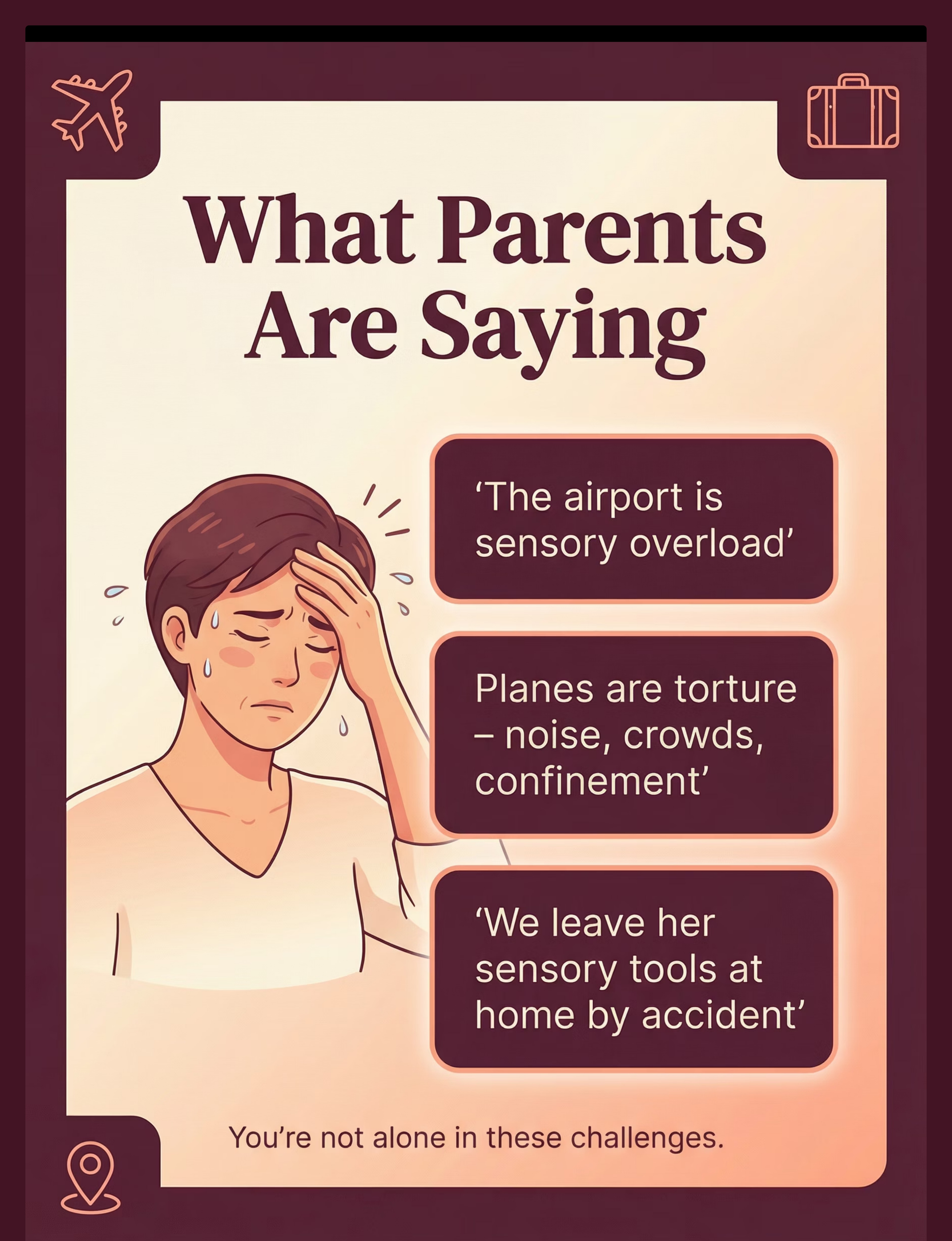
"The airport is sensory overload. Every trip starts with him already dysregulated before we even board. The noise, the crowds, the announcements—it's too much."
"Planes are torture for her—the noise, the crowds, the confinement. She has nothing to help her cope while traveling, and we all suffer."
"We accidentally left her sensory tools at home last trip. Without her headphones and fidgets, everything went wrong. The entire vacation was a disaster."
"She's dysregulated the entire trip, every single time. We have no way to help her regulate during travel. I dread family vacations now."

You're not alone. These are common challenges families face when traveling with children who have sensory processing differences. The unpredictable, overwhelming nature of travel environments—combined with being away from familiar supports—creates the perfect storm for dysregulation.
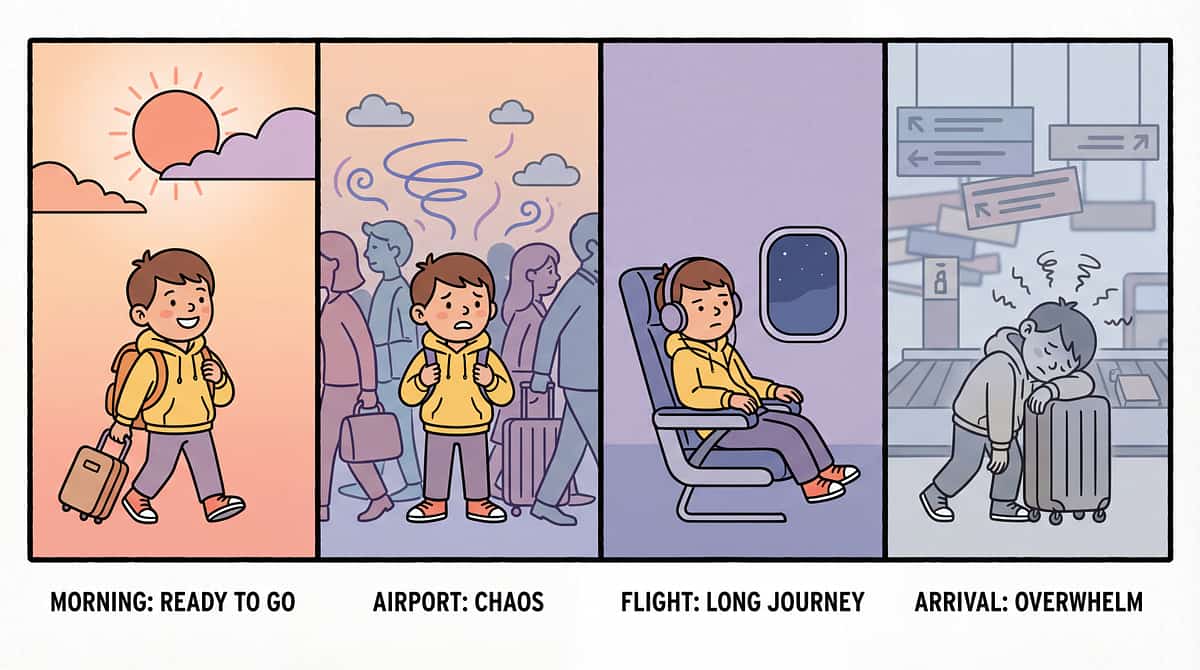
A Day Without the Right Support
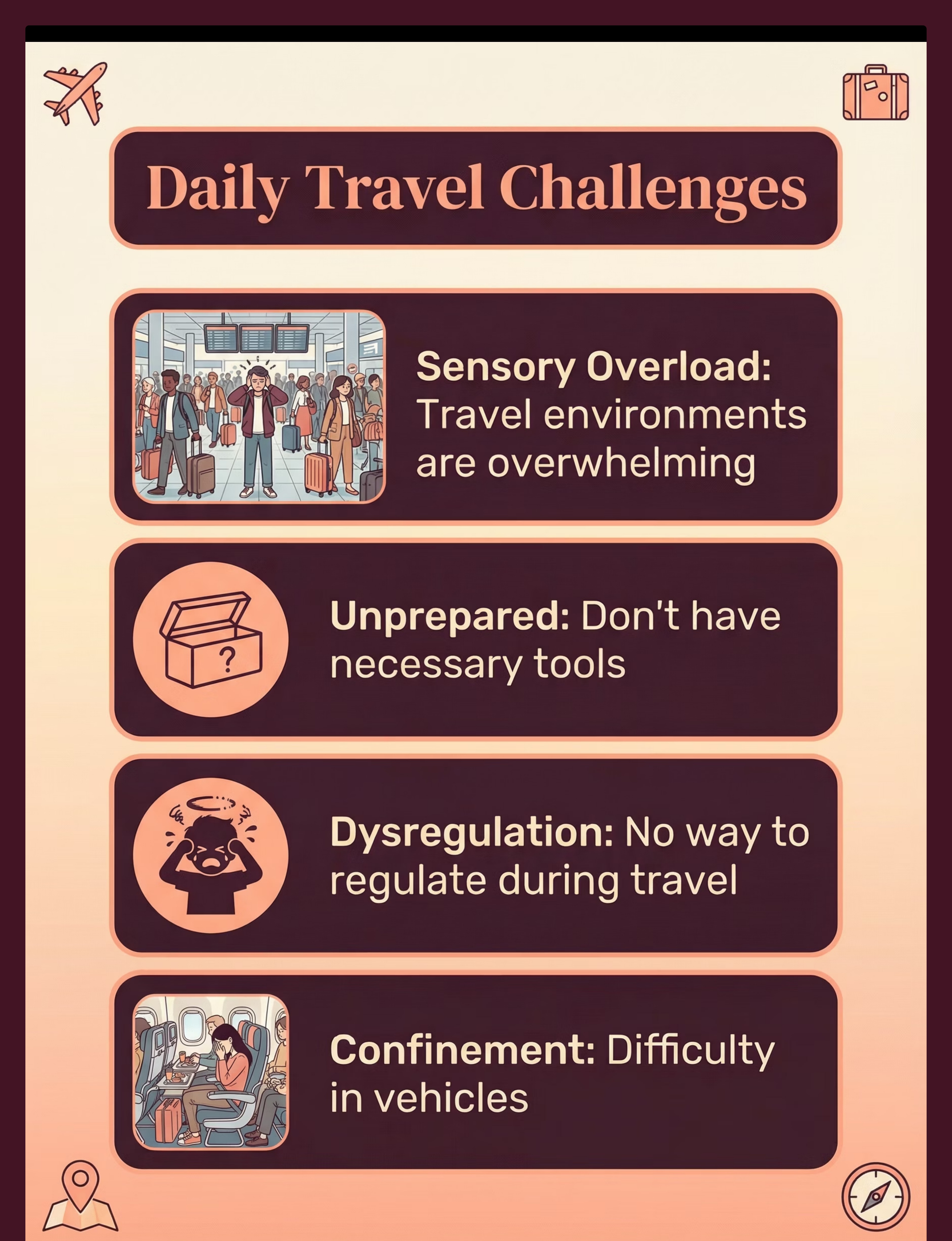
Morning Departure
Rushing to leave. Forgot to pack sensory items in accessible bag. Already starting the trip unprepared and anxious about what might happen.
Airport Chaos
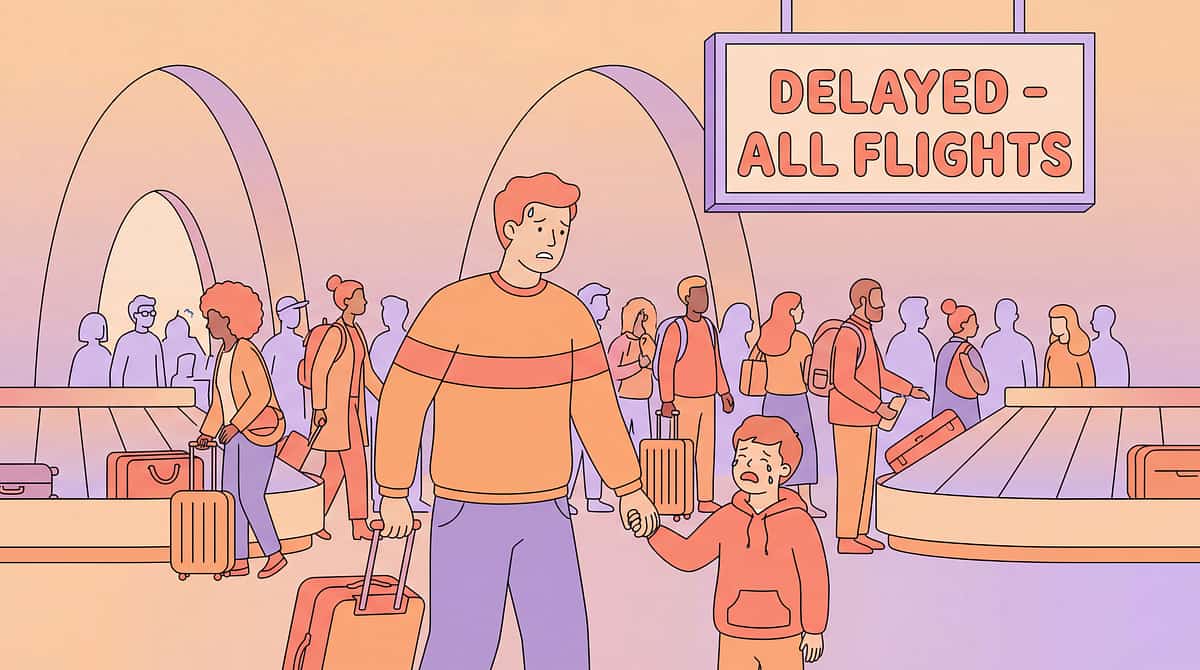
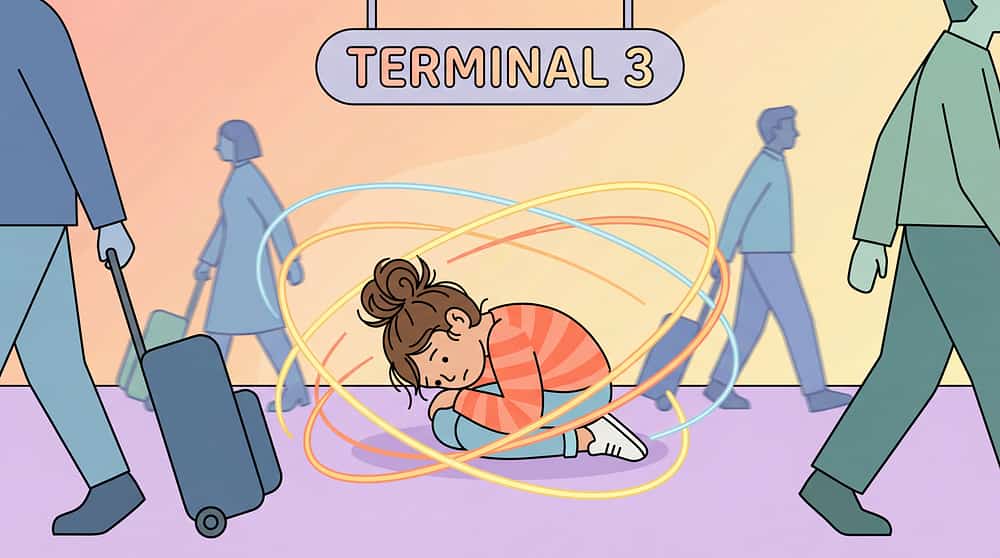
Crowds, announcements, bright lights, security lines. Child covering ears, becoming dysregulated. No headphones. No fidgets. Meltdown before boarding.
Long Flight
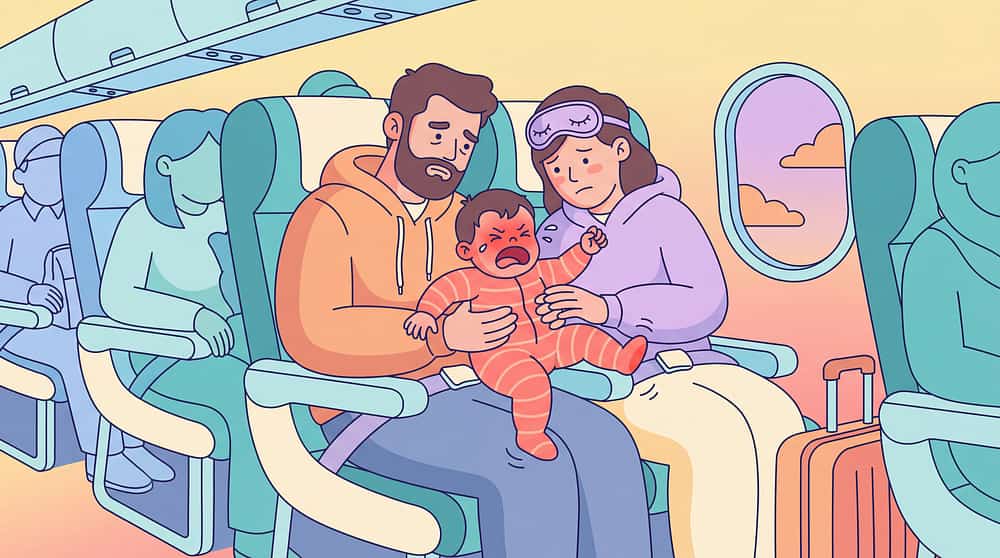
Hours confined in seat. Engine noise, people talking, nowhere to move. Child can't regulate. Parents managing constantly. Everyone exhausted and stressed.
Arrival Overwhelm
Already dysregulated from journey. New environment. No familiar tools. Vacation hasn't even started and everyone is at their breaking point.
Without proper preparation and portable sensory supports, travel becomes an ordeal that leaves the entire family depleted before the trip even begins. Each transition—airport, plane, destination—compounds the sensory challenges without tools to help manage them.
The Science Behind It
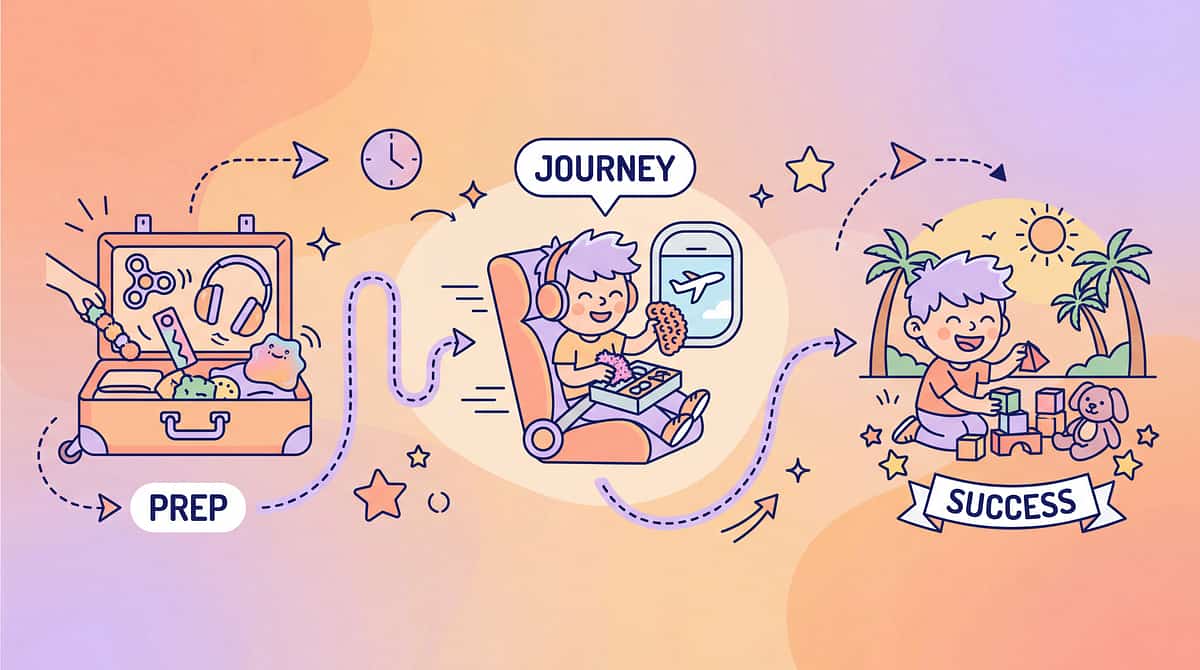
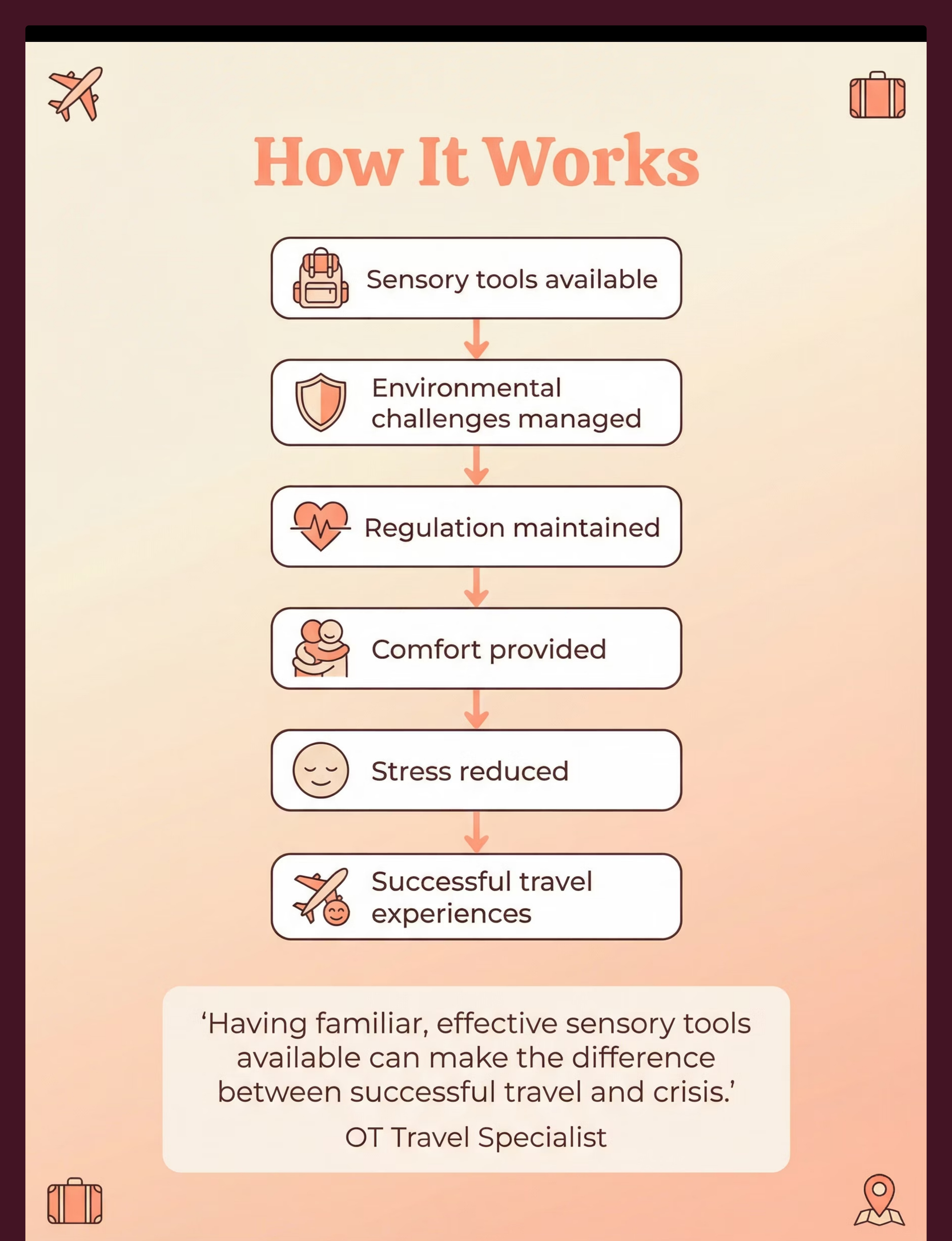
Travel sensory kits work by providing portable, accessible regulation tools that address the specific sensory challenges of travel environments. Understanding this mechanism helps families prepare effectively.
Sensory Tools Available
Familiar regulation tools accessible in portable kit
Environmental Challenges Managed
Noise, crowds, lights, confinement addressed with appropriate tools
Regulation Maintained
Child stays within window of tolerance despite challenges
Comfort Provided
Anxiety reduced, emotional security maintained through familiar supports
Successful Travel
Travel tolerated, skills built, confidence increased for future trips
Sensory Regulation
Comfort
Self-Regulation
Anxiety Management
Travel Tolerance
Independence
By having familiar, effective sensory tools immediately accessible, children can proactively manage their sensory needs rather than waiting until they're already dysregulated. This preventive approach transforms travel from crisis management to confident navigation.
How to Use It Right
Effective use of a travel sensory kit requires thoughtful preparation and consistent practices. These evidence-based strategies maximize the kit's effectiveness.
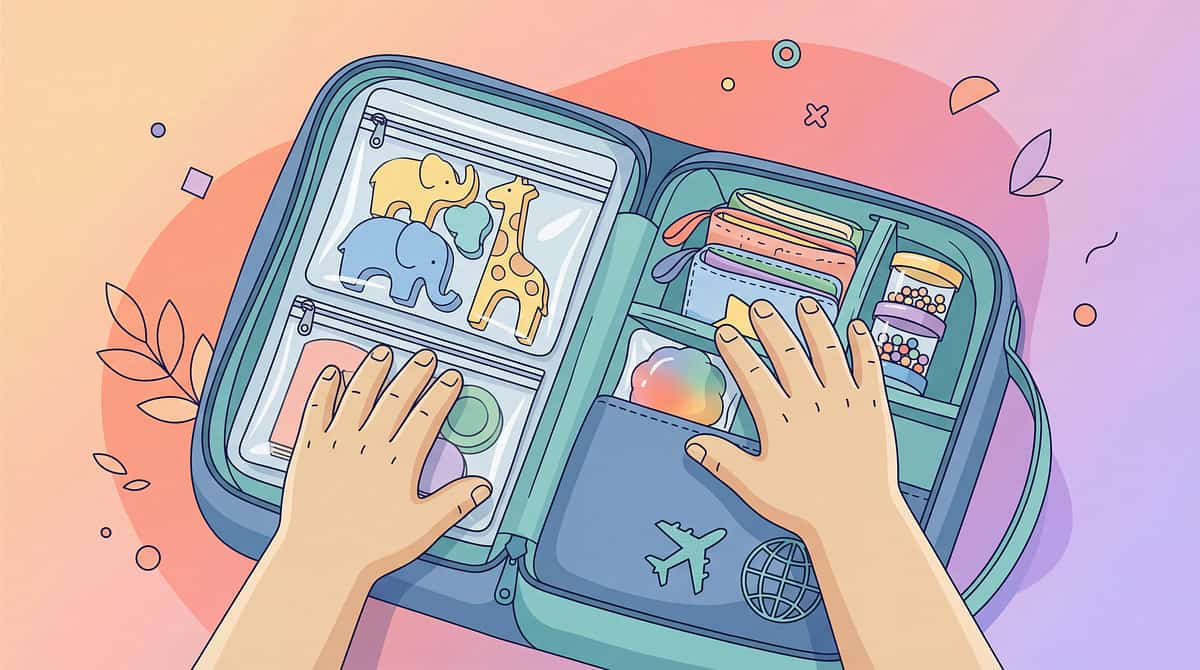
Pack Kit in Accessible Carry-On
Never check sensory tools in luggage. Keep kit in carry-on bag where items can be accessed immediately when needed during travel.
Include Child in Selecting Items
Let child help choose which sensory tools to pack. This builds ownership, ensures preferred items are included, and teaches self-advocacy skills.
Test Items Before Travel
Practice using all kit items before the trip. Confirm everything works, child knows how to use each tool, and nothing is broken or missing.
Have Backups of Essential Items
Include duplicate copies of critical items like ear plugs or favorite fidgets. Items can be lost during travel; backups prevent crises.
Update Kit Based on Experience
After each trip, review what worked and what didn't. Replace ineffective items, add new tools that might help, adjust contents based on learning.
Teach Child to Self-Select Tools
Coach child to identify their sensory needs and choose appropriate tools independently. Build self-regulation skills through guided practice.

Duration: Kit should be available throughout all travel. Items are used as needed, with some (like headphones) potentially worn continuously in challenging environments.
Expert Perspective
"A well-prepared sensory travel kit is essential. Travel involves unpredictable sensory environments—noise, crowds, bright lights, confined spaces. Having familiar, effective sensory tools available can make the difference between successful travel and crisis."
— Occupational Therapist, Travel Specialist
OT + Parent Recommended
Moderate-Strong Evidence
Rank #1 in Category
Core Kit Level
Professional endorsement combined with strong clinical evidence and top ranking within the Travel & Transitions category confirms this as an essential support for families. The recommendation from both occupational therapy and parent experience perspectives validates its practical effectiveness.
travel-comfort-sensory-kit therapy material
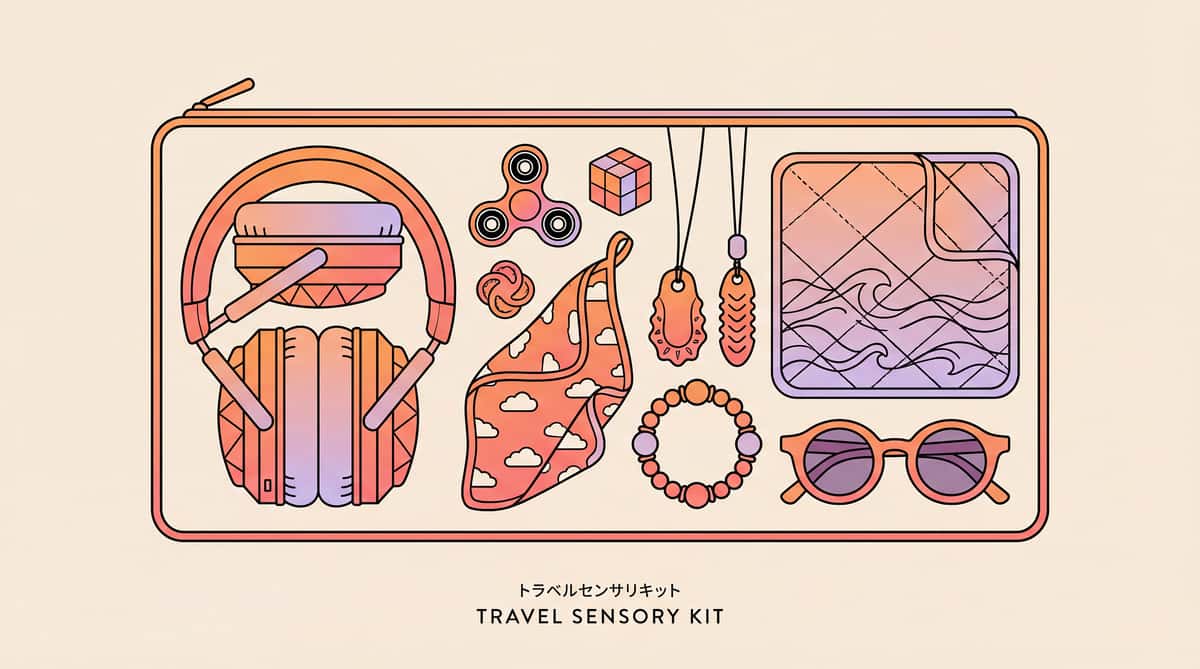
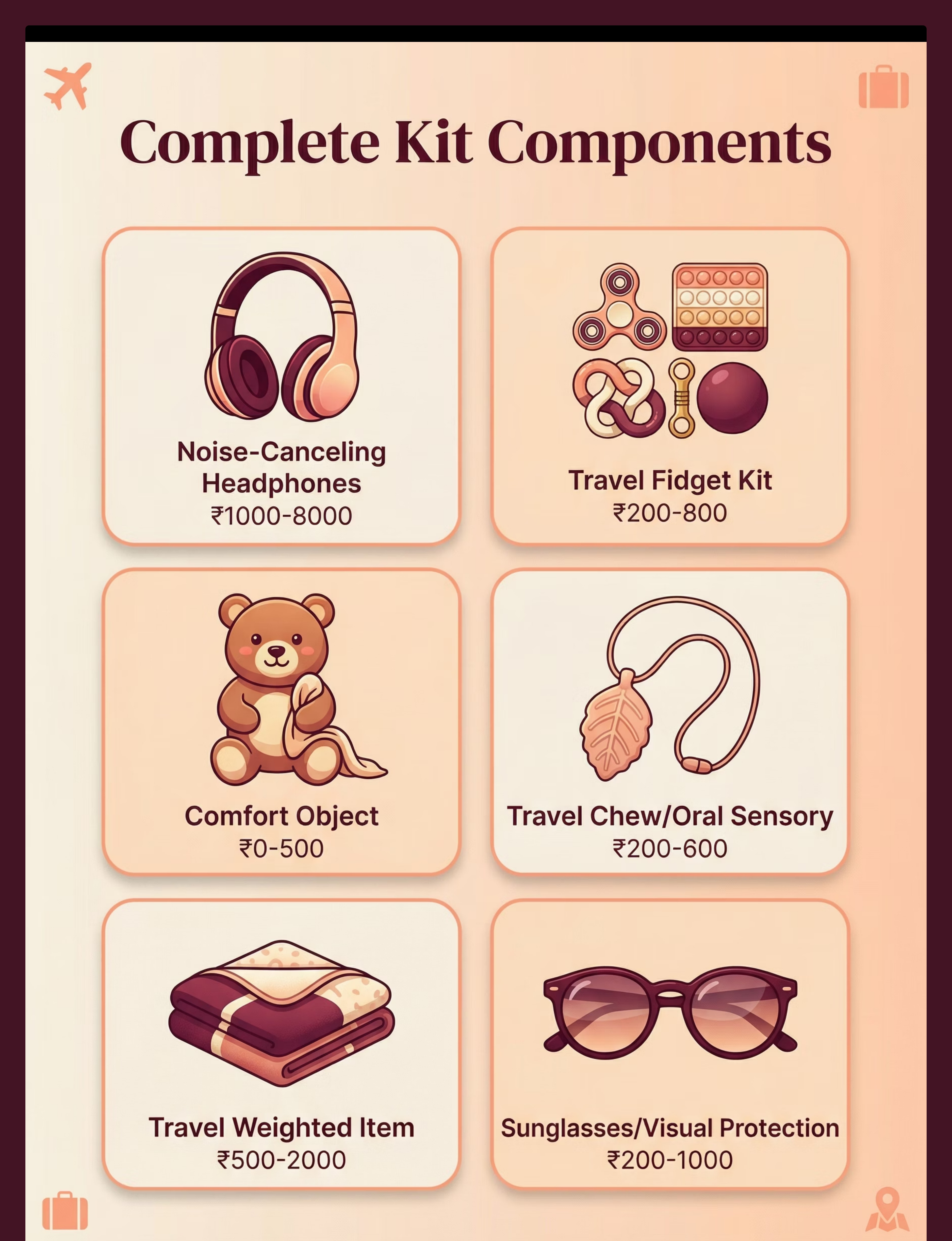
Noise-Canceling Headphones
Best for: Airports, planes, loud environments
Type: Auditory protection
Ages: 2+ years | Portability: High
Travel Fidget Kit
Best for: Waiting, sitting, regulation
Type: Self-regulation
Ages: 2+ years | Portability: Very High
Comfort Object
Best for: Security, calming, familiarity
Type: Emotional comfort
Ages: All ages | Portability: Very High
Travel Chew/Oral Sensory
Best for: Oral sensory needs during travel
Type: Oral sensory
Ages: 2+ years | Portability: Very High
Travel Weighted Item
Best for: Calming, regulation during travel
Type: Deep pressure
Ages: 2+ years | Portability: Medium
Sunglasses / Visual Protection
Best for: Bright lights, visual overwhelm
Type: Visual protection
Ages: 2+ years | Portability: Very High
Choose Your Option (6 Variants)
Travel sensory kits can be customized based on your child's specific needs, the type of travel, and environmental challenges you anticipate. Here are six essential variant categories to consider:

How to Choose
  • By primary need: Auditory overload → headphones first; tactile seeking → fidgets; anxiety → weighted item + comfort object
  • By travel type: Air travel → prioritize headphones + weighted lap pad; car trips → fidgets + chewables
  • By portability: Minimalist travelers → focus on very high portability items; those checking bags → can include larger weighted items
  • By budget: Start with comfort object + basic fidgets (under ₹500), add headphones and weighted items as budget allows
The price ranges for each item are also important to consider when building a personalized kit, allowing families to select options that fit both their child's needs and their financial plan. (Price: ₹1,000–8,000)
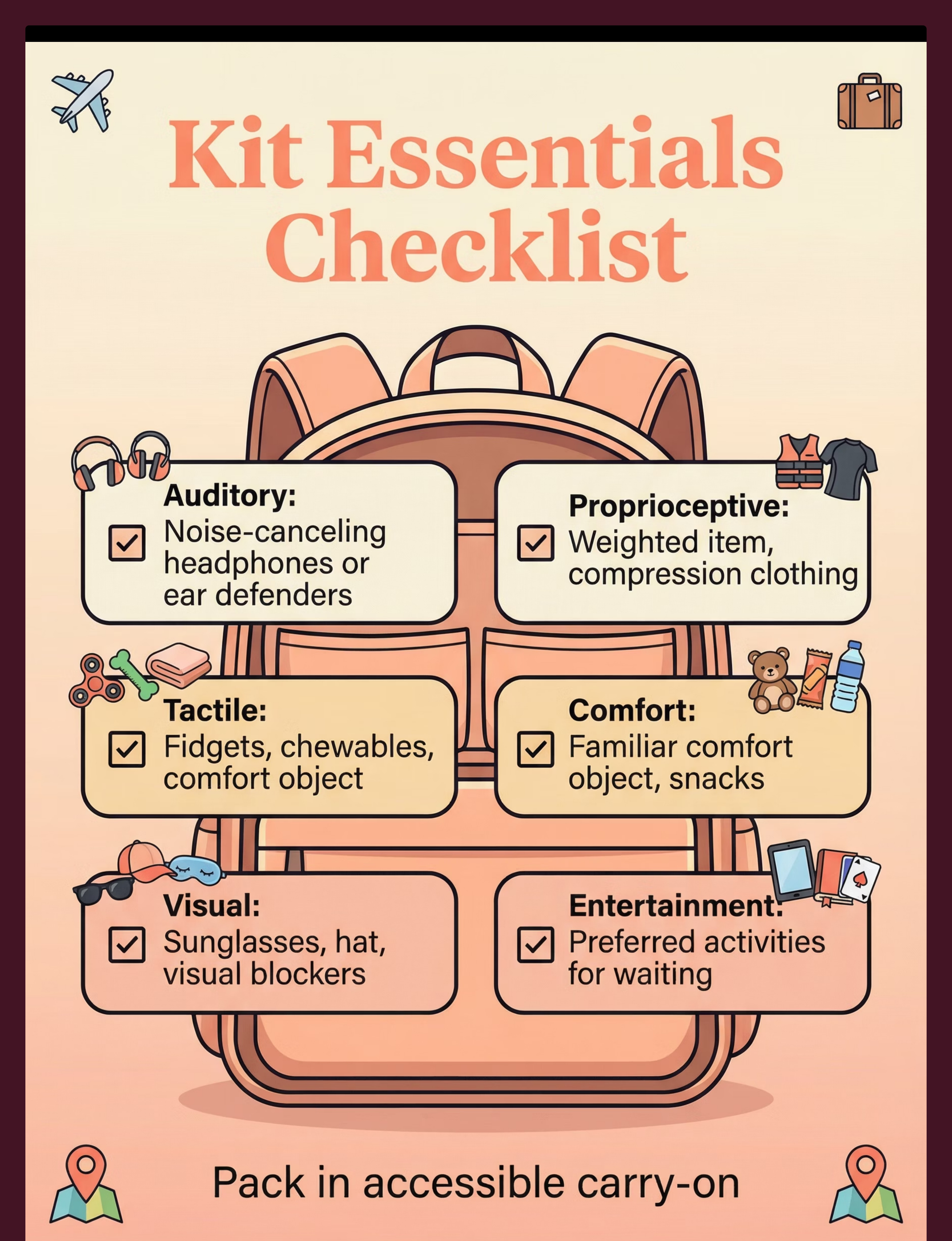
Kit Essentials Checklist
A comprehensive travel sensory kit should address multiple sensory systems. Use this checklist to ensure you've covered all essential categories:
Sensory Protection
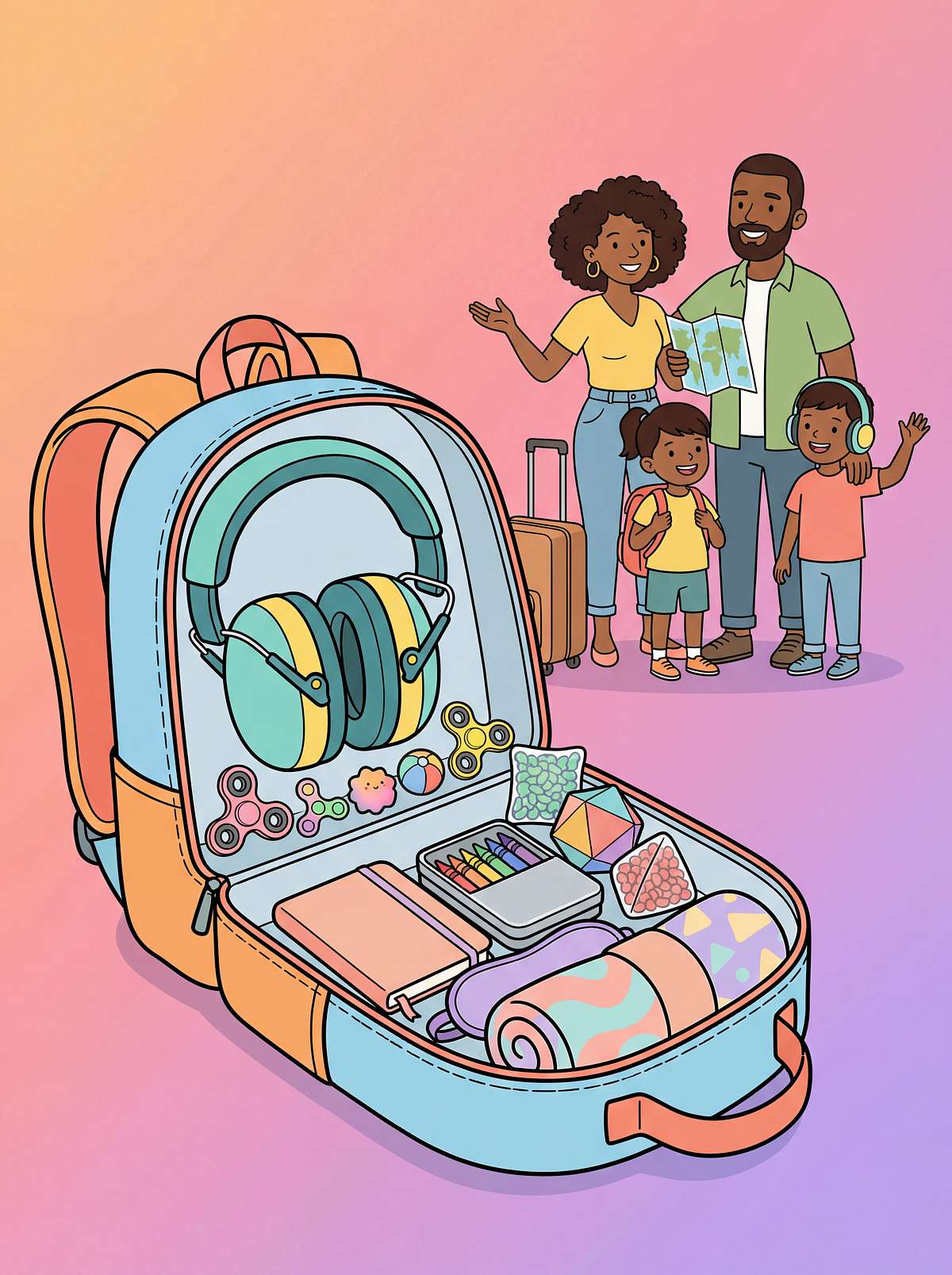
  • Auditory: Noise-canceling headphones or ear defenders for managing overwhelming sounds
  • Visual: Sunglasses, hat, or visual blockers for bright lights and visual overwhelm
Regulation Tools
  • Tactile: Fidgets, chewables, and comfort object for sensory seeking and self-regulation
  • Proprioceptive: Weighted item or compression clothing for calming deep pressure input
Comfort & Entertainment
  • Comfort: Familiar comfort object and preferred snacks (if allowed)
  • Entertainment: Preferred quiet activities for waiting periods
Key Features
  • Portable and easy to carry
  • Familiar items the child knows work
  • Effective for your specific child
  • Easily accessible in carry-on

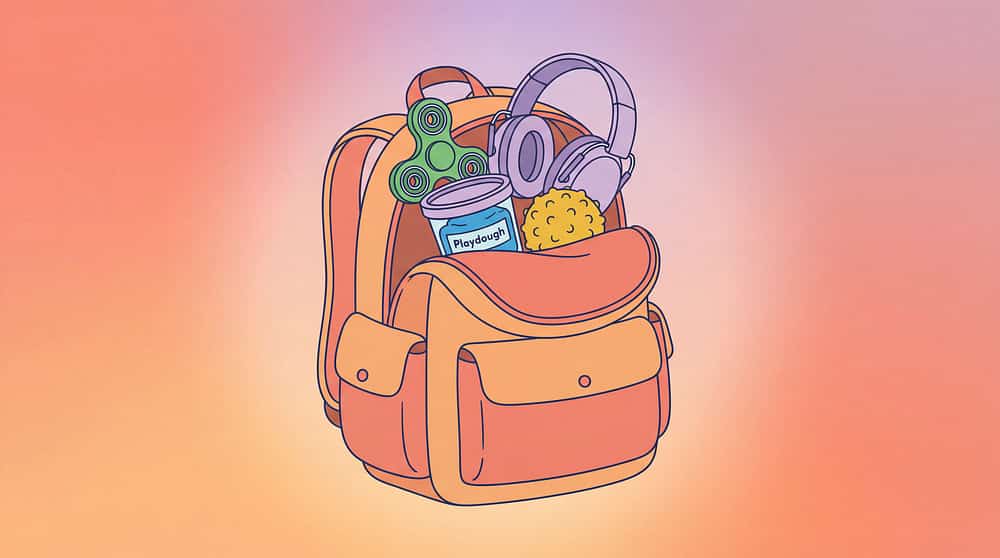
Materials: Various sensory tools appropriate for your child, plus a suitable carrying case or bag. Contents should be customized to your child's specific sensory profile and the type of travel anticipated.
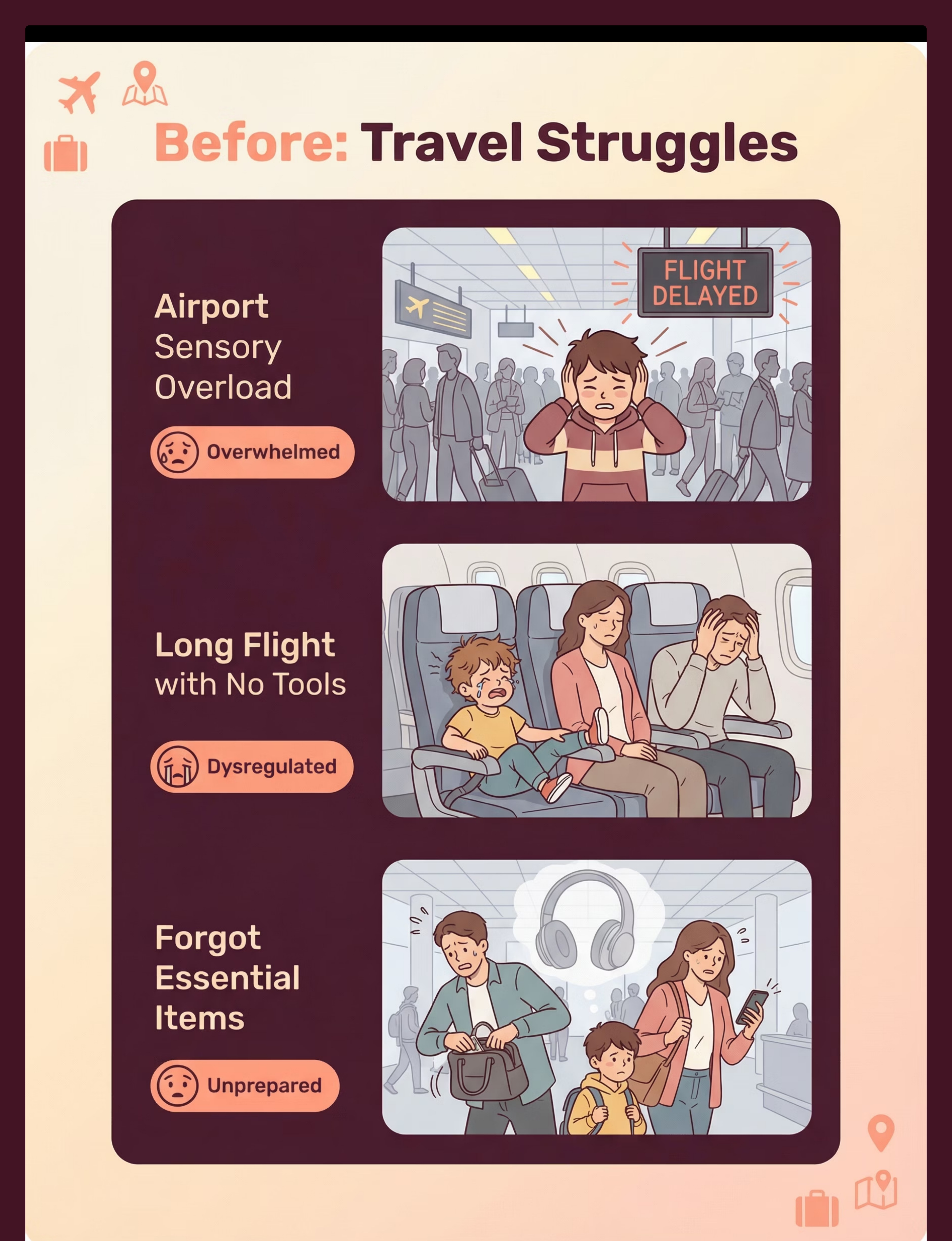
The Struggle (Before)
Airport Sensory Overload
Situation: Navigating busy airport without sensory supports
Experience: "Airport is disaster. Noise, crowds, announcements, bright lights. No tools to cope. Meltdown before even boarding plane."
Emotion:Overwhelmed, meltdown
Long Flight with No Tools
Situation: Extended air travel without regulation supports
Experience: "Hours on plane with no sensory supports. Child dysregulated entire flight. Parents managing constantly. Exhausting for everyone."
Emotion:Dysregulated, exhausted
Forgot Essential Items
Situation: Left critical sensory tools at home
Experience: "Left headphones at home. No fidgets packed. Nothing familiar. Child struggling without usual supports. Preventable crisis."
Emotion:Unprepared, struggling
These scenarios represent the reality many families face when traveling without proper sensory supports. The challenges are compounded by being away from familiar environments and the inability to retreat to a safe space. Each difficulty builds on the previous one, creating a cascade of dysregulation that affects the entire family and overshadows the purpose of the trip.
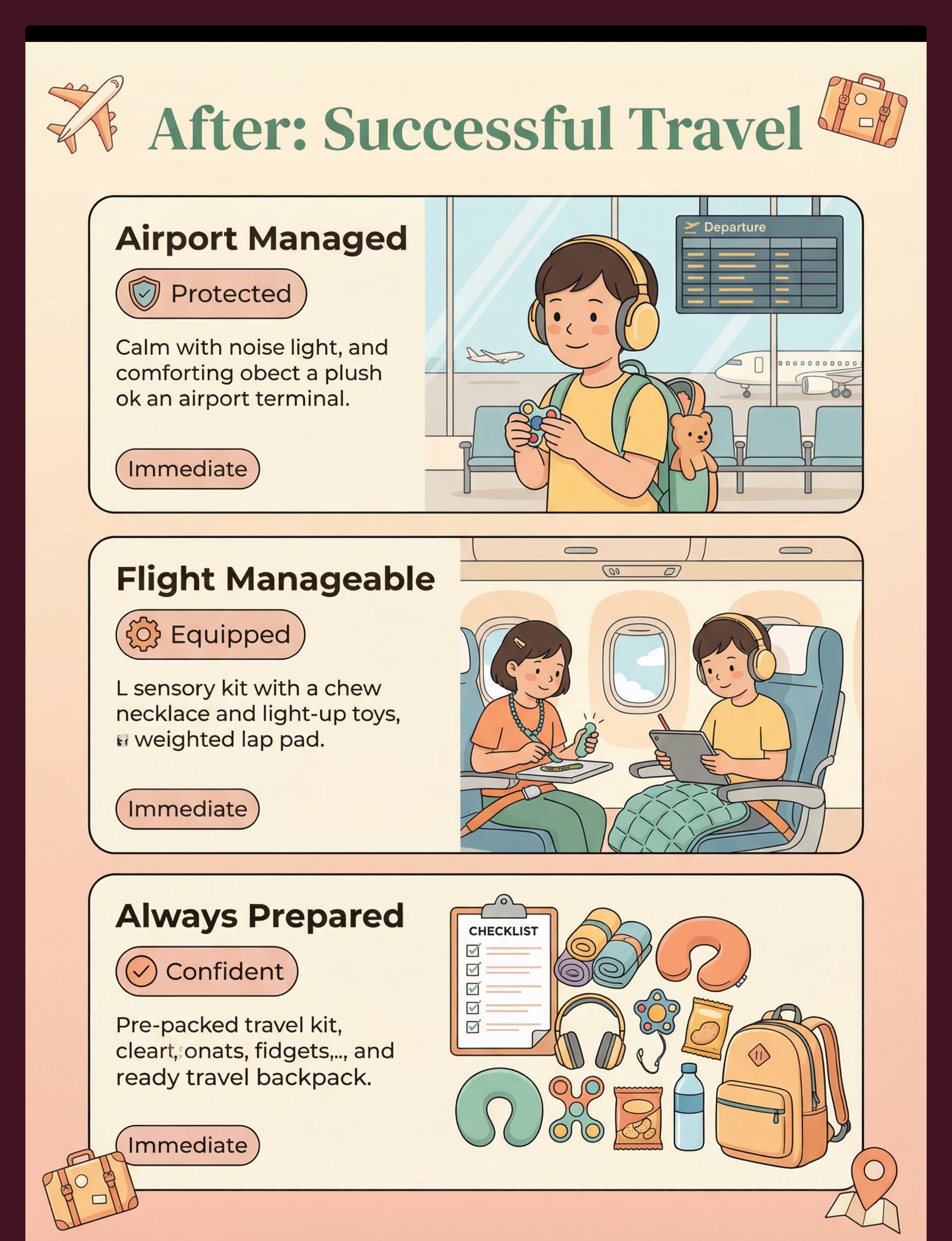
The Breakthrough (After)
Airport Sensory Overload
Situation: Navigating busy airport with sensory supports
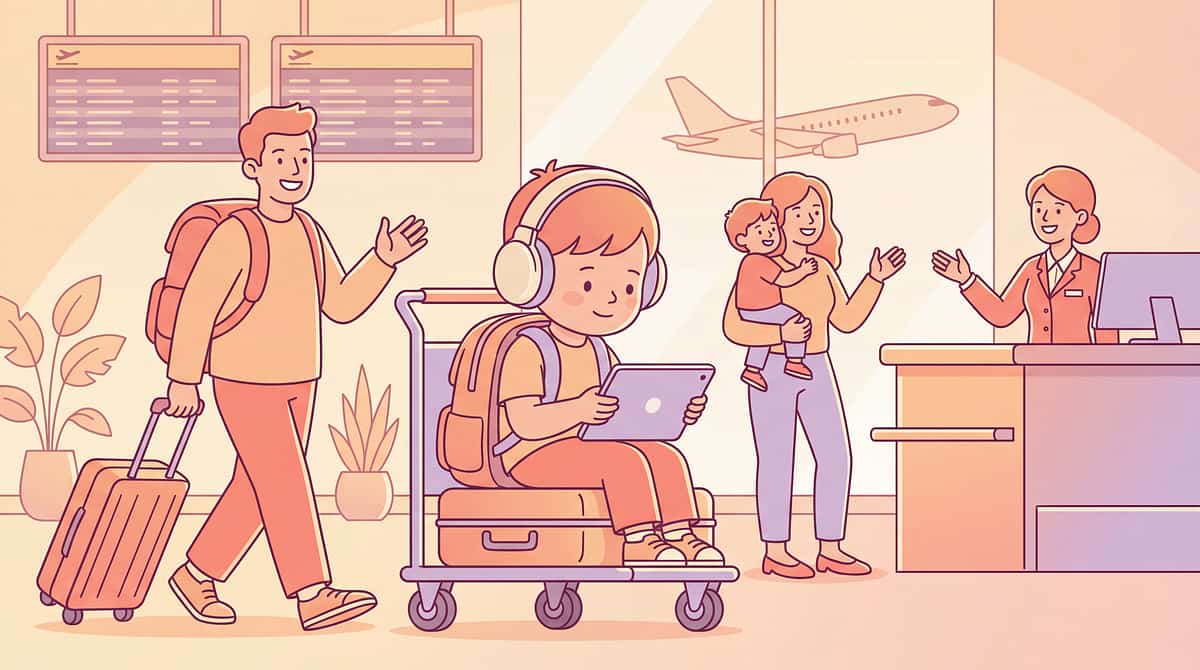
Experience: "Child wearing noise-canceling headphones. Fidgets in pocket. Comfort object in backpack. Managing airport sensory environment."
Emotion: Protected, managing
Immediate improvement
Long Flight with Tools
Situation: Extended air travel with full sensory kit
Experience: "Travel sensory kit in carry-on. Chewables, weighted lap pad, fidgets, entertainment. Child self-regulating. Manageable flight."
Emotion: Equipped, self-regulating
Immediate improvement
Prepared and Ready
Situation: Pre-packed kit with checklist system
Experience: "Pre-packed travel kit stays packed. Checklist ensures nothing forgotten. All essentials ready. No last-minute scramble."
Emotion: Prepared, confident
Immediate improvement
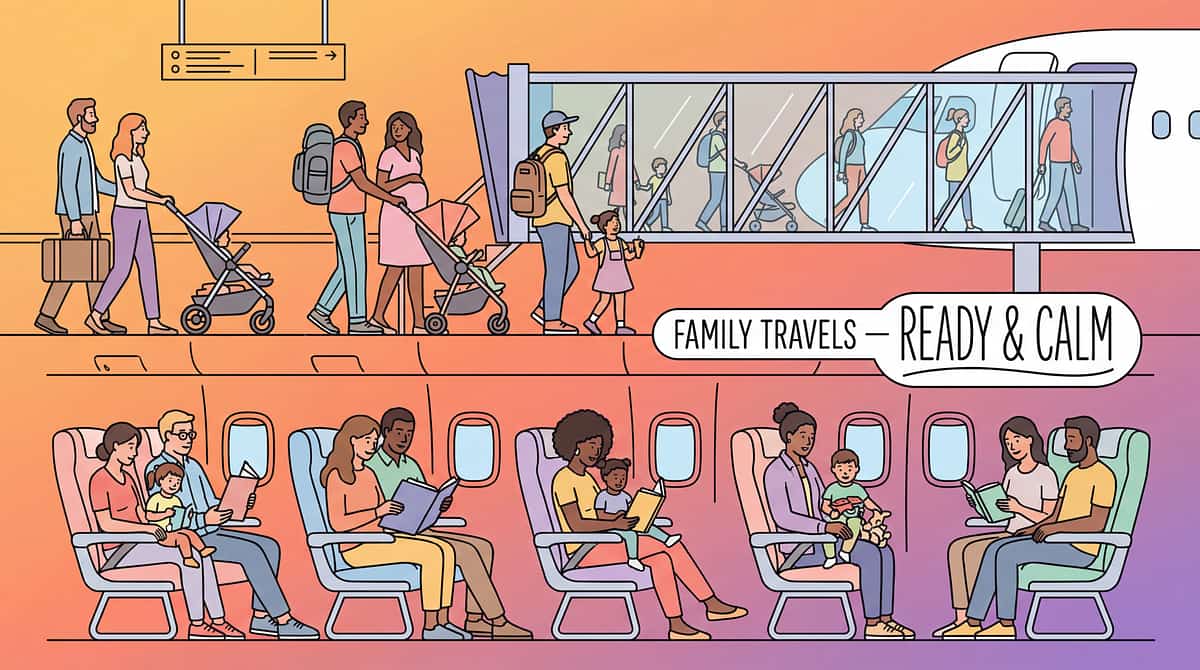
With proper preparation and a well-stocked sensory kit, travel transforms from crisis to manageable challenge. Children gain confidence through successful regulation, parents experience less stress, and families can focus on the purpose of their trip rather than constantly managing meltdowns. These improvements begin immediately and strengthen with each successful travel experience.
What to Expect (Realistic Timelines)
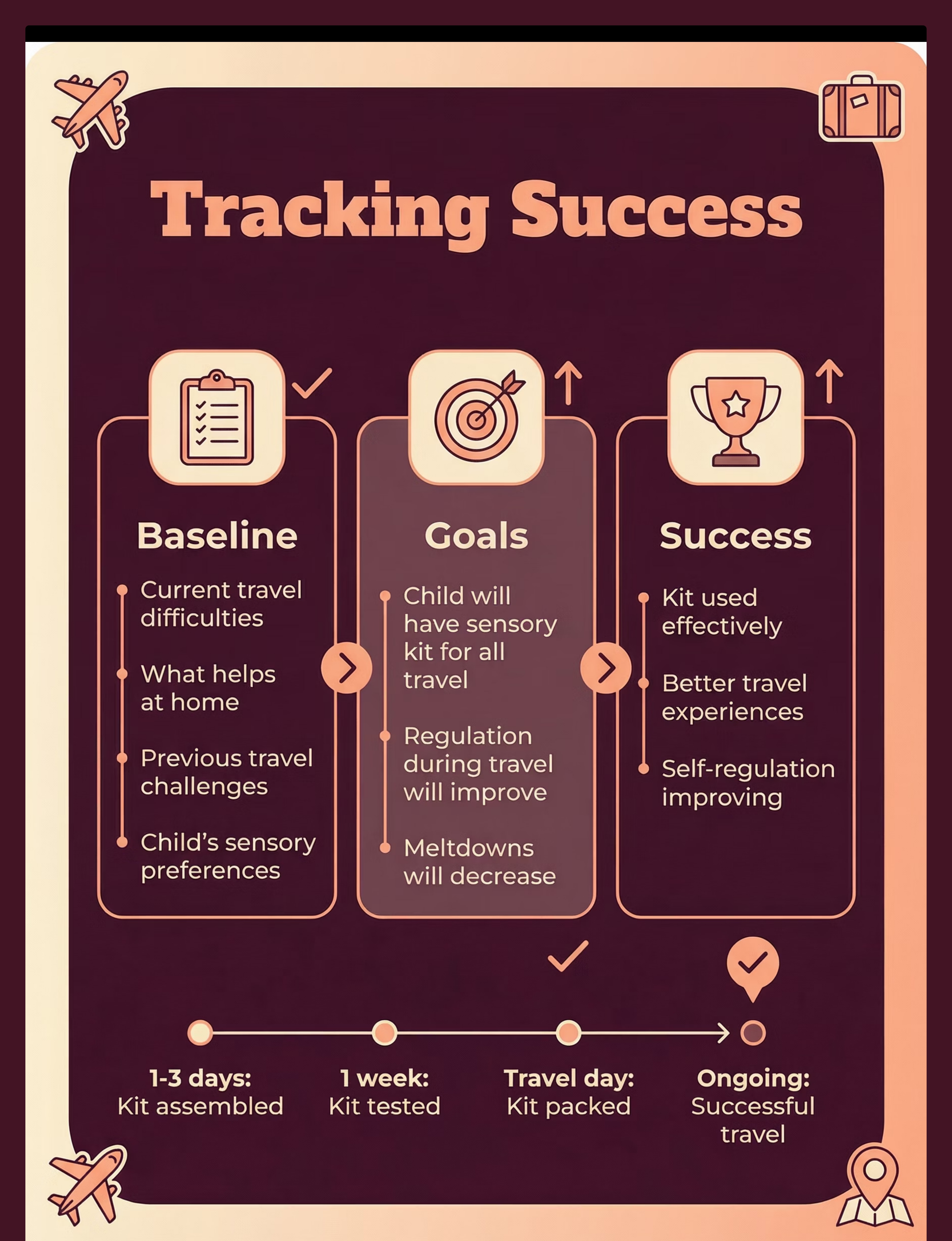
Understanding the timeline for assembling, testing, and using a travel sensory kit helps set realistic expectations. Progress is measurable and builds systematically.
Travel Kit Assembled
All essential items gathered, organized in appropriate carrying case, and ready for use
1-3 days
Kit Tested with Child
Child has practiced using all items, knows where things are located, and can access tools independently
1 week before travel
Kit Packed and Accessible
Sensory kit secured in carry-on luggage where it can be accessed easily during all stages of travel
Travel day
Better Regulation During Travel
Child uses tools proactively to manage sensory challenges, stays within window of tolerance more consistently
During travel
More Successful Travel Experiences
Family completes trips with fewer meltdowns, more positive memories, and growing confidence for future travel
Ongoing

The most dramatic improvements occur immediately—having the right tools available transforms the travel experience from the first use. Ongoing benefits compound as children develop skills in identifying their needs and selecting appropriate tools independently.
Is This Right for My Child? (2-Minute Check)
Answer these questions honestly to determine if a travel sensory kit is appropriate for your child. Three or more "yes" answers indicate strong fit.
Does your child struggle with sensory aspects of travel?
Noise, crowds, lights, confinement, or other sensory features of travel cause dysregulation or distress
If yes, this indicates:Travel sensory kit essential
Confidence score: 95%
Does your child use sensory tools at home?
Child already benefits from headphones, fidgets, weighted items, or other sensory supports in familiar environments
If yes, this indicates:Need portable versions for travel
Confidence score: 90%
Have you had sensory-related difficulties during travel?
Past trips included meltdowns, extreme dysregulation, or challenges managing sensory aspects of travel
If yes, this indicates:Better preparation with kit will help
Confidence score: 92%
Do you have a dedicated travel sensory kit?
Pre-packed kit stays ready between trips with all essentials included
If yes, this indicates:Good foundation—review and update contents
If no, this indicates:Create kit as priority
Confidence score: 85%

Interpretation: If you answered "yes" to three or more questions, a travel sensory kit is strongly recommended. Even one "yes" answer suggests benefits, particularly if your child already uses sensory supports at home. The kit simply makes those familiar tools portable and accessible.
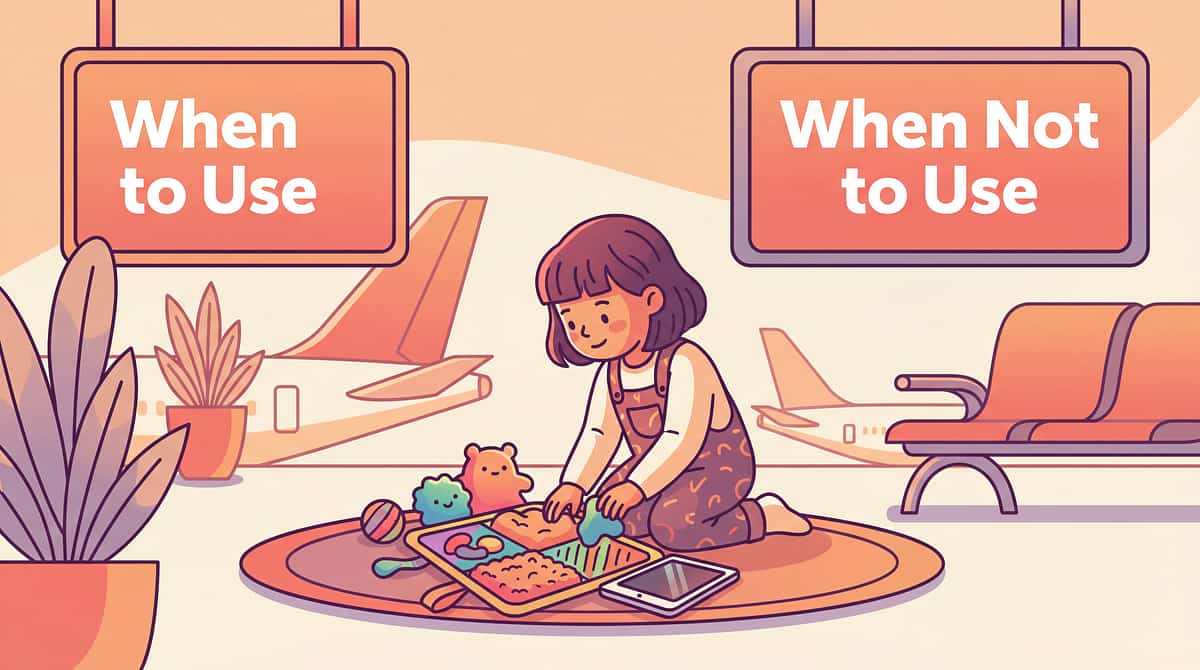
Usage Guide
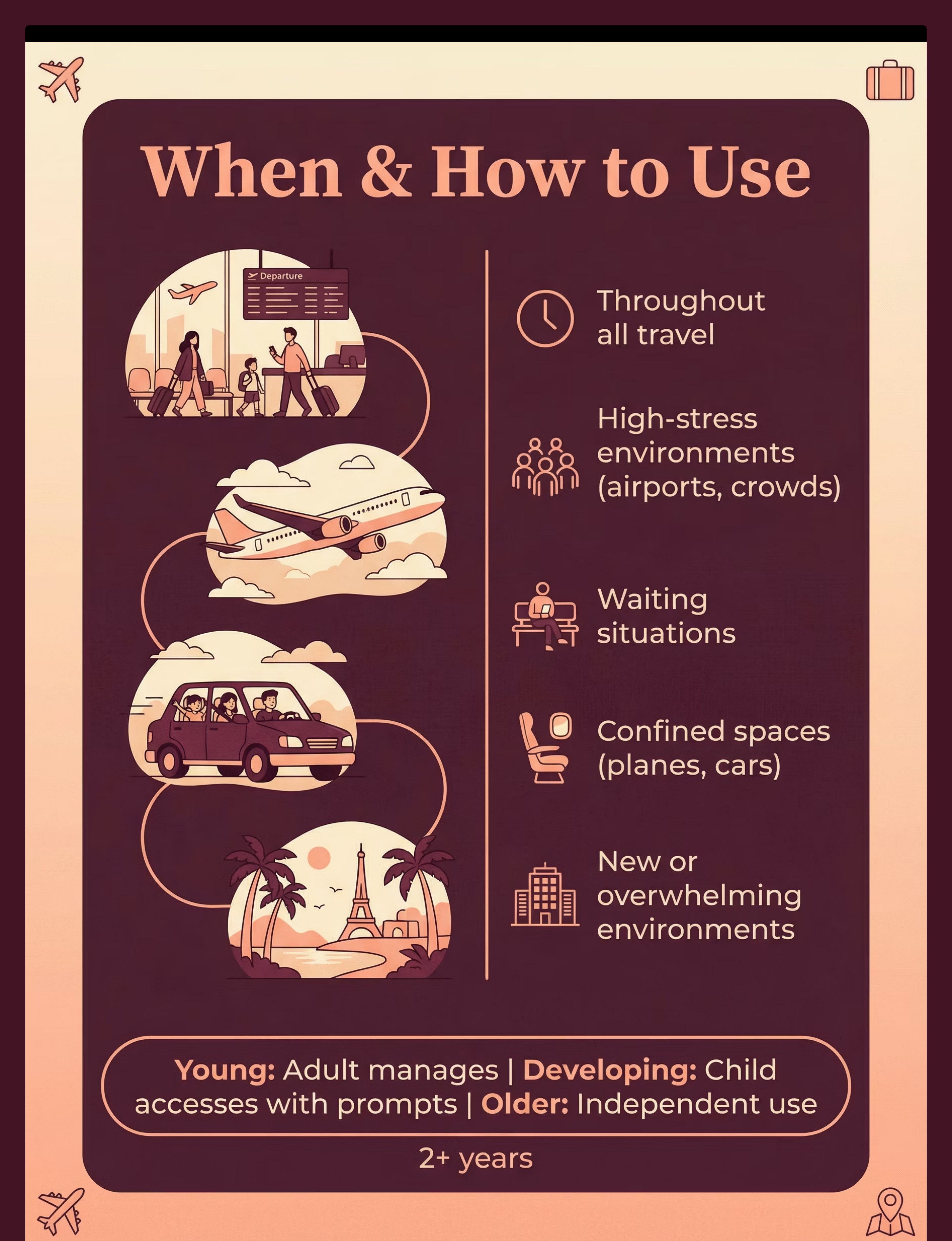
Throughout all travel: Kit available during entire trip
High-stress environments: Especially airports, crowds, security lines
Waiting situations: Gate areas, restaurant wait times, hotel check-in
Confined spaces: Planes, cars, trains, buses
New or overwhelming environments: Any unfamiliar or sensory-challenging location
Never—always have kit available during travel. There is no situation during travel when sensory supports should be unavailable. The kit should remain accessible throughout the entire journey.
Supervision by Age
Age Range
Supervision Level
Notes
Young children
Adult manages kit
Parent stores kit, offers specific items when needed, monitors use
Developing skills
Child accesses with prompts
Child can open kit and select tools with guidance and reminders
Older/skilled children
Independent use
Child manages own kit, identifies needs, selects appropriate tools without prompts
Available throughout travel
All Travel Settings
Duration: The kit should be available and accessible throughout all stages of travel—preparation, transit, arrival, and return journey. Individual items are used as needed, with some potentially used continuously (like headphones in loud environments).
Safety First
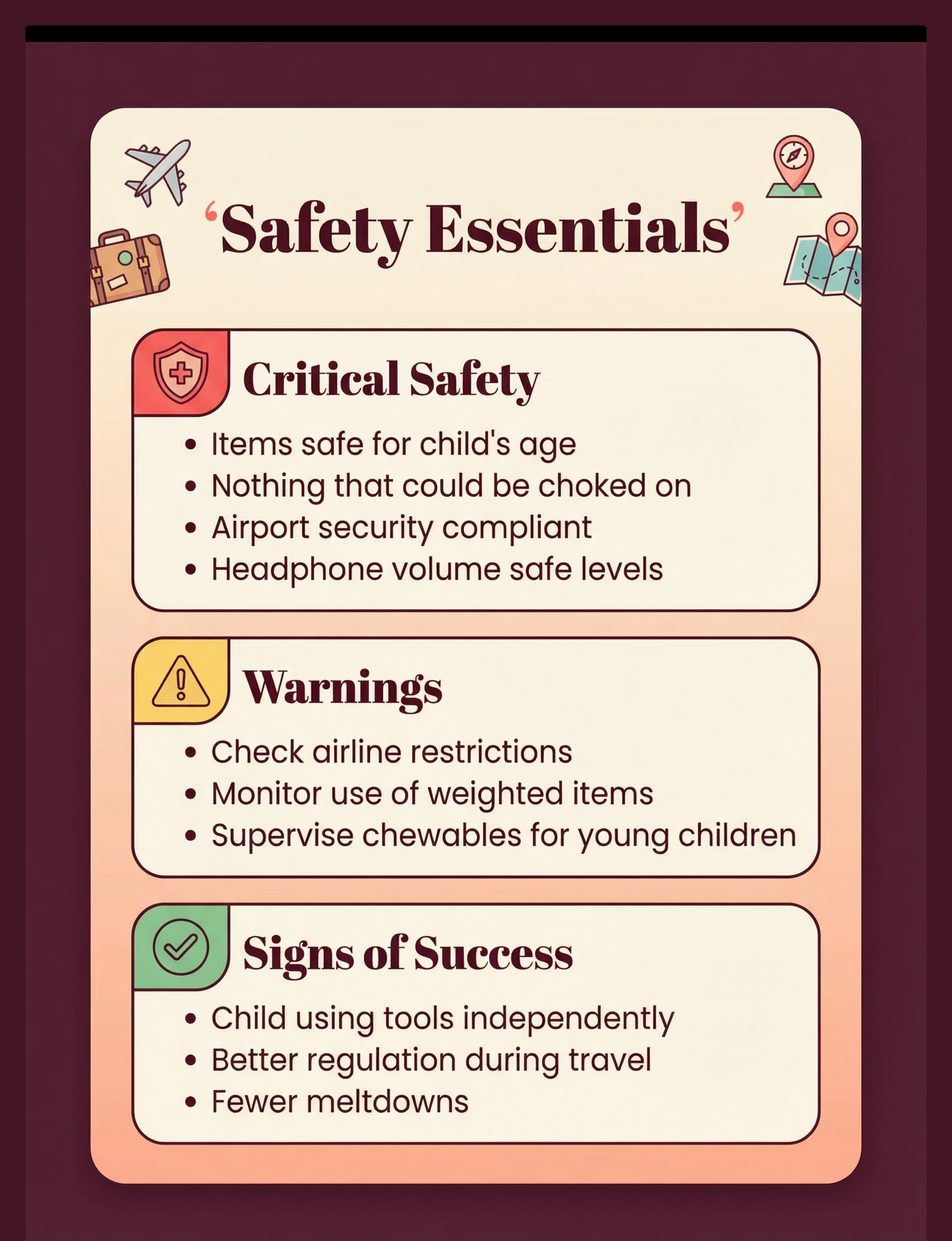
Critical Safety
  • Items safe for child's age: All tools must be developmentally appropriate and unable to pose choking or other hazards
  • Nothing that could be choked on: Verify all items are safe for your child's developmental level, especially for young children
  • Airport security compliant: Ensure all items meet TSA or local security requirements to avoid confiscation
  • Headphone volume at safe levels: Set maximum volume limits to protect hearing, especially for young children
Warnings
  • Check airline restrictions: Some items may have specific airline limitations; verify before packing
  • Monitor use of weighted items: Ensure weighted items are appropriate weight for child and used correctly
  • Supervise chewables for young children: Monitor oral sensory items to prevent choking or inappropriate use
Contraindicated
  • Age-inappropriate items: Never include toys or tools designed for older/younger children
  • Items violating travel security: Avoid anything that could be confiscated or cause security delays
Before Use
  • Kit assembled with essentials
  • All items tested and working
  • Security compliant
  • Child knows contents
During Use
  • Kit accessible in carry-on
  • Items being used appropriately
  • Child regulating successfully
  • Refilling/maintaining as needed
Signs of Success
  • Child using tools independently
  • Better regulation during travel
  • Fewer meltdowns
  • More successful trips overall
Common Questions (Honest Answers)
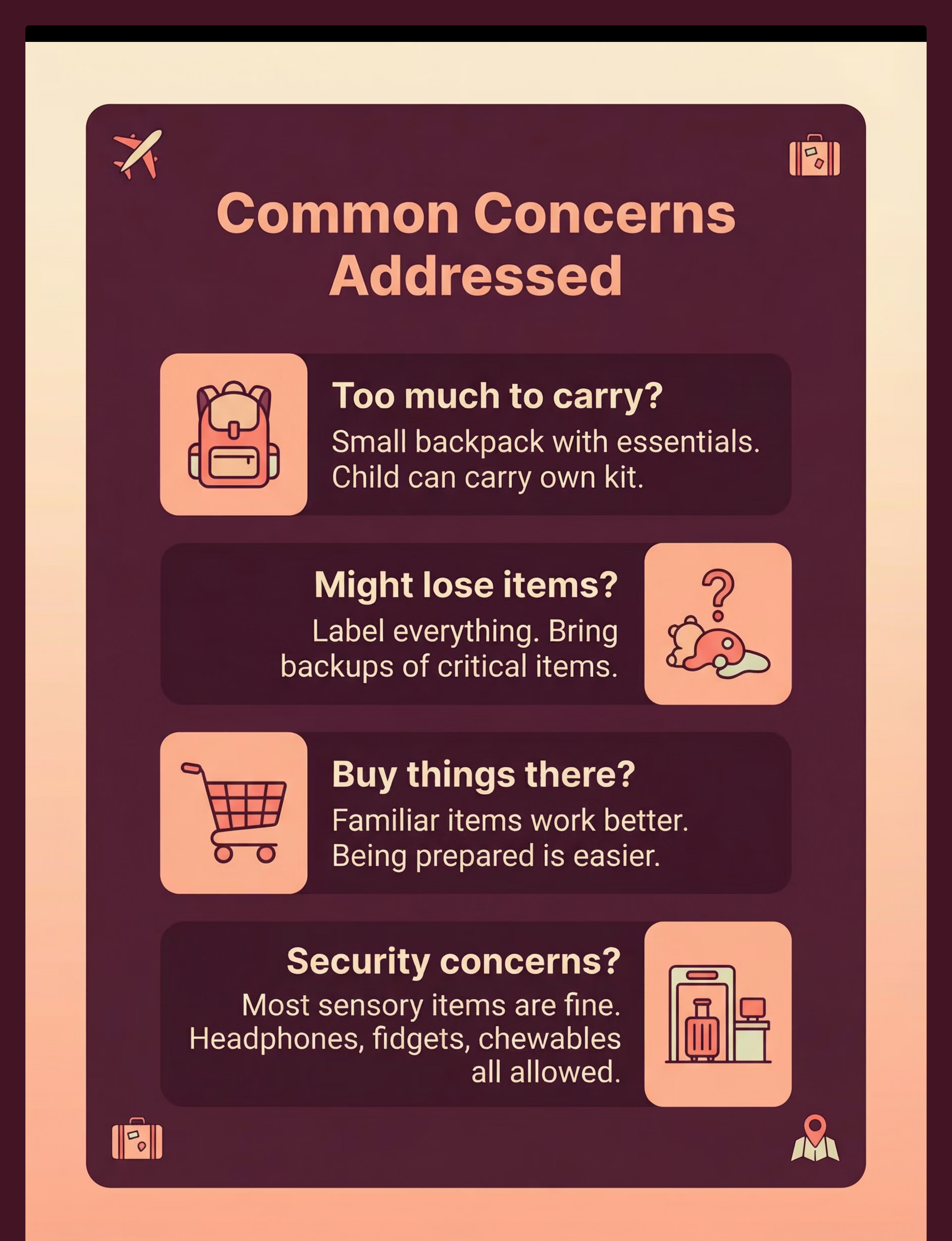
Q: "It's too much to carry—won't it weigh us down?"
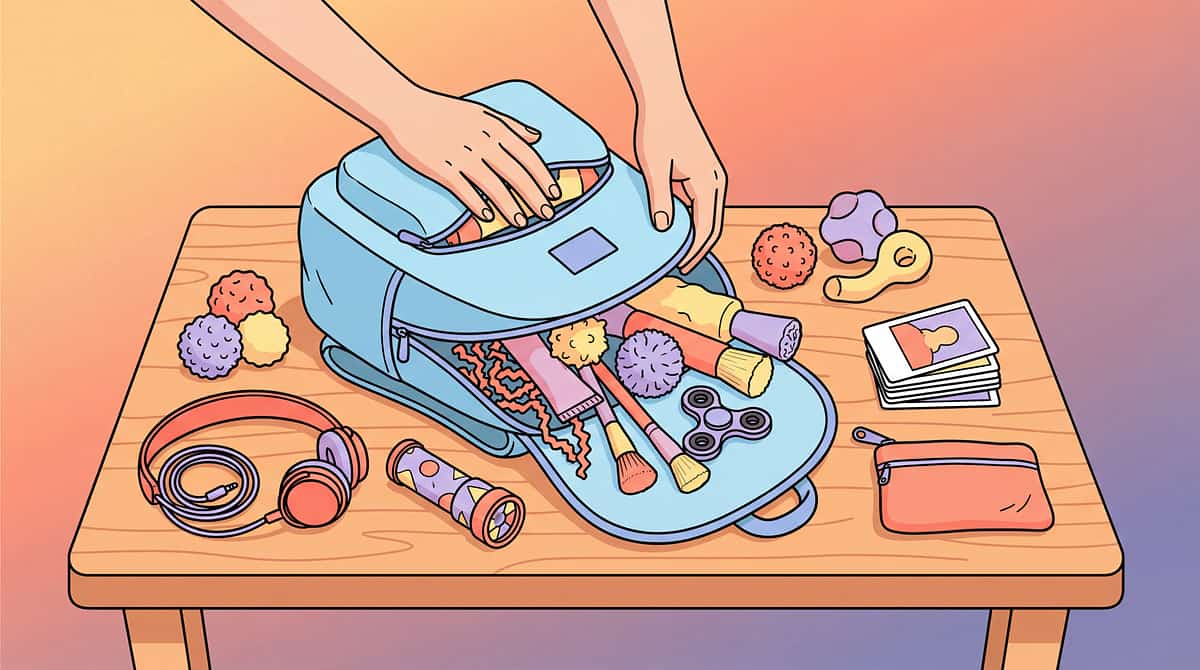
A: A small backpack contains all essentials without excessive weight. Consider having your child carry their own kit—this builds responsibility and ensures they have immediate access. Prioritize the most effective items for your specific child. The weight is minimal compared to the benefit of preventing meltdowns.
Try this: Small backpack; child carries; prioritize essentials based on what works best.
Q: "What if they lose the items during the trip?"
A: Use this as an opportunity to teach responsibility and self-management. Label everything clearly with contact information. Bring backups of critical items like ear plugs or favorite fidgets. Some loss is acceptable—having tools available is better than having none at all.
Try this: Teach responsibility; label everything; bring backups of essentials.
Q: "Can't we just buy things when we get there?"
A: Familiar items work much better than new ones, especially during stressful travel. You may not find appropriate sensory tools at your destination, particularly specialized items. Shopping while traveling adds stress and uncertainty. Being prepared with familiar, tested tools is significantly easier.
Try this: Familiar works better; may not find appropriate items; preparation reduces stress.
Q: "Will we have problems with airport security?"
A: Most sensory items are completely fine for air travel. Avoid liquids over size limits and questionable items. Headphones, fidgets, chewables, and weighted items are all allowed. If you're unsure about a specific item, check TSA guidelines online or contact the airline before packing.
Try this: Most items allowed; avoid large liquids; check specific items if unsure.
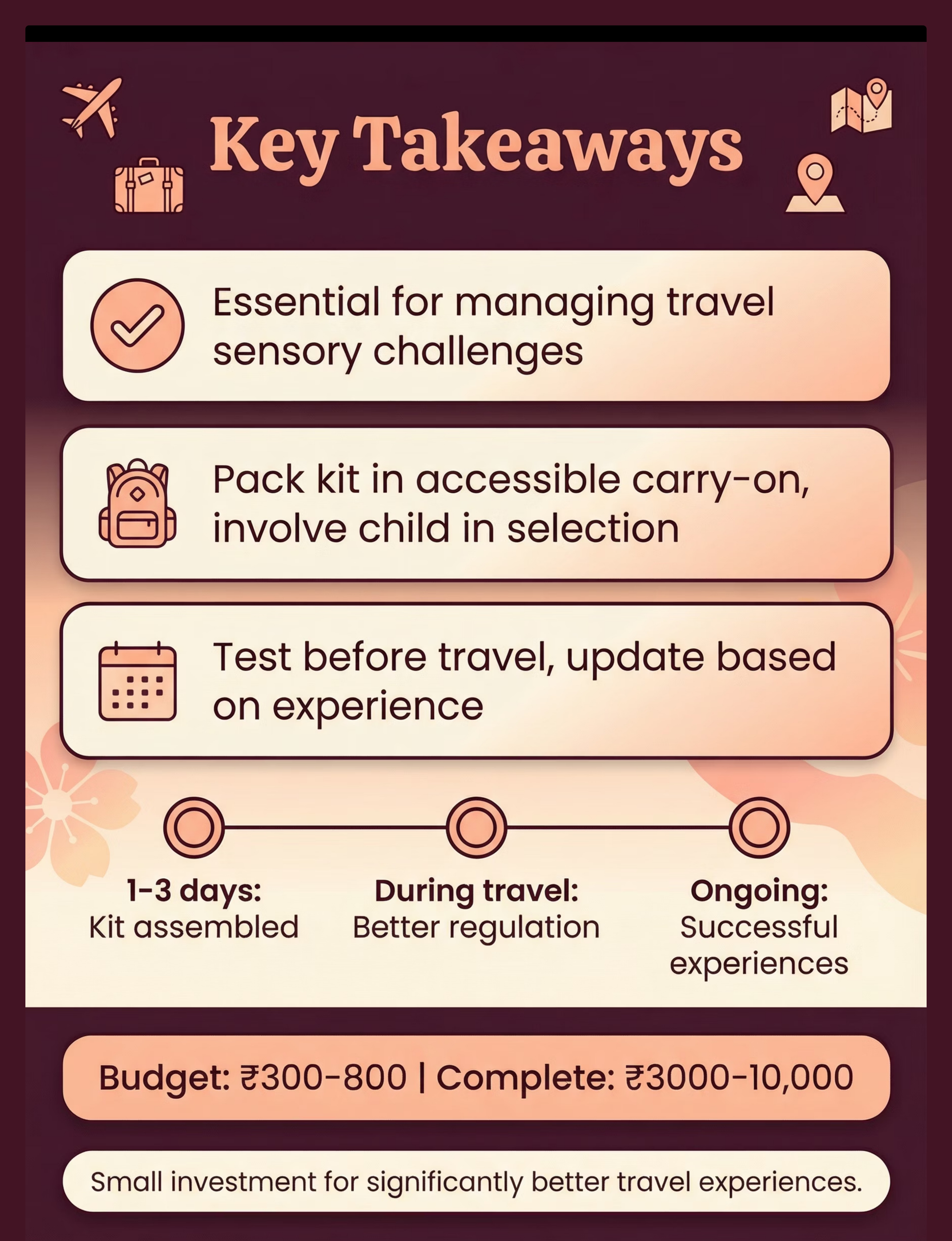
Investment Guide
Travel sensory kits can be assembled at various price points depending on the specific items selected. Understanding the range helps families make informed decisions.
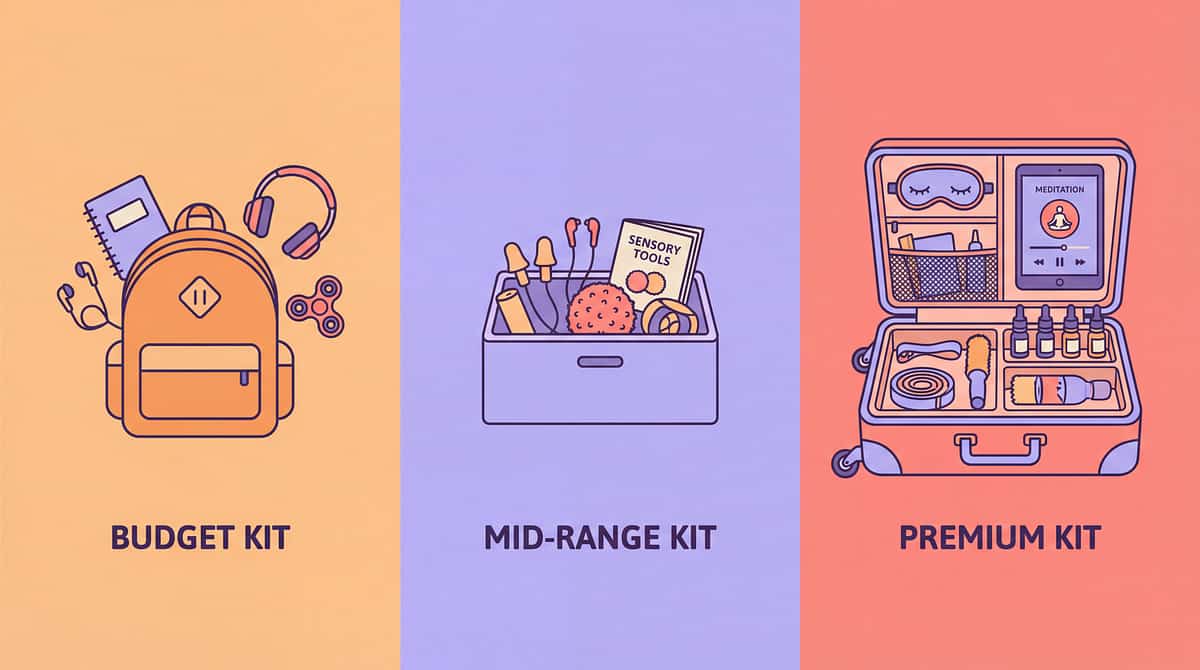
Budget
Basic kit with essential low-cost items
Ear plugs, basic fidgets, comfort object (may already own)
₹300–800
Testing concept, tight budgets, children new to sensory tools
Mid-Range
Balanced kit with quality essentials and some specialized items
Quality ear defenders, diverse fidgets, visual schedules, comfort item
₹1,500–3,000
Families seeking good value, growing sensory needs, regular travel
Premium
Comprehensive kit with high-quality specialized items
Noise-canceling headphones, weighted item, full range of sensory tools
₹3,000–10,000
Frequent travelers, children with significant sensory needs, families wanting comprehensive support
Key Features & Advice
Prioritize Essentials
Focus on the most effective items for your specific child, especially for initial kits.
Familiarity Over New
Familiar items are more effective in stressful situations than new ones. Audit what you already own.
Start & Expand
Begin with budget basics and one key item, then gradually expand based on what works best.
Label Everything
Use labeling as an opportunity to teach responsibility and ensure items are returned if lost.
Investment Progression
Budget Kit
Minimal investment to cover essential basics and test effectiveness.
Mid-Range Kit
Good value with quality essentials and some specialized tools for growing needs.
Premium Kit
Comprehensive support with high-quality specialized items for frequent travelers or significant needs.
Where to Buy in India
Availability: Travel sensory kits are assembled by combining items from multiple sources. Individual components are readily available through various platforms.
Platform Options
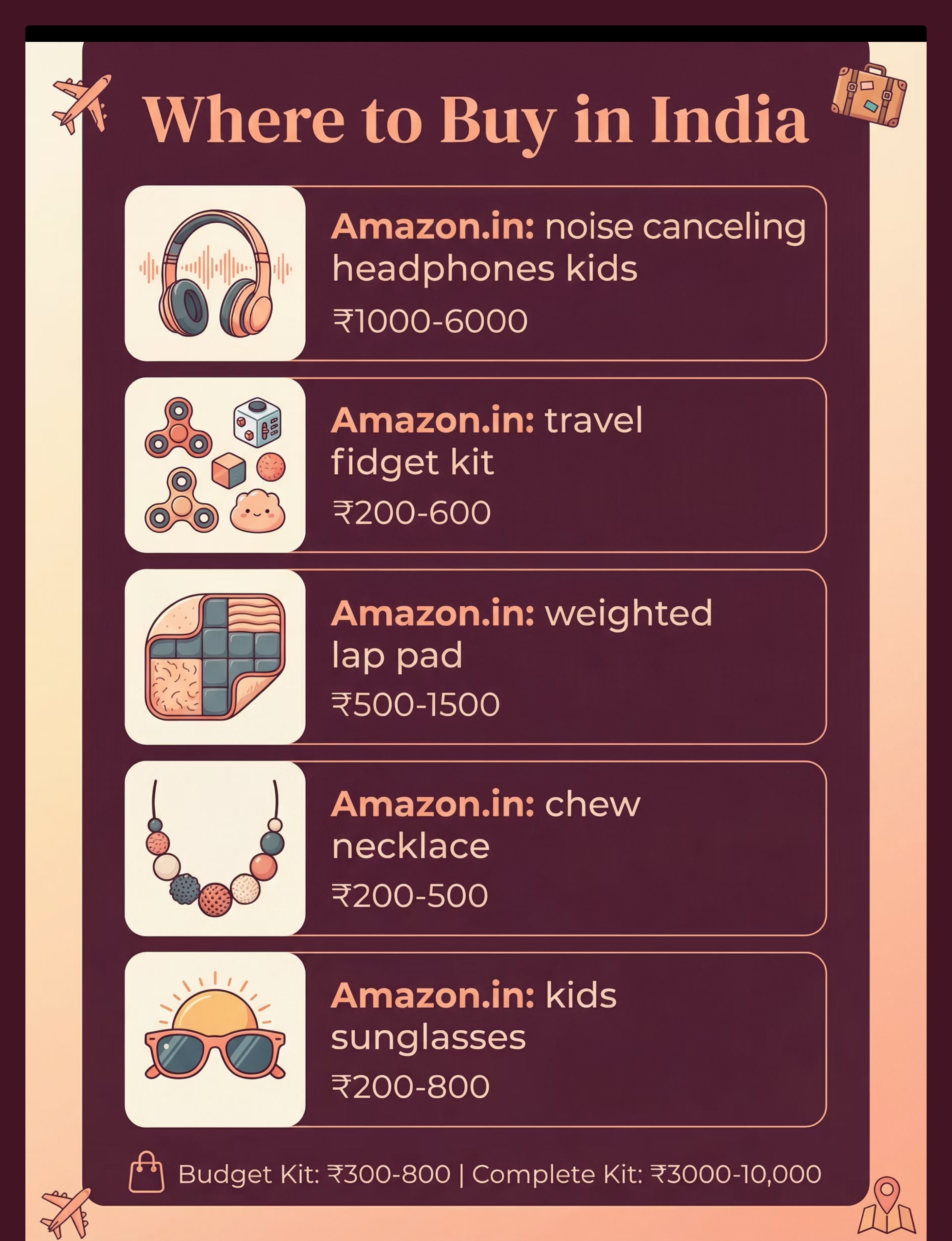
Platform
Search Terms
Price Range
Amazon.in
noise canceling headphones kids
₹1,000–6,000
Amazon.in
travel fidget kit
₹200–600
Amazon.in
weighted lap pad
₹500–1,500
Amazon.in
chew necklace
₹200–500
Amazon.in
kids sunglasses
₹200–800
Buying Tips
Keep kit pre-packed between trips so it's always ready. Designate a specific bag that stays packed with travel essentials.
Include child's favorite items rather than trying new tools during stressful travel. Familiar works best.
Test everything before travel to ensure items work properly and child knows how to use each tool.
Pack in accessible carry-on where items can be reached easily during all stages of travel, not checked luggage.
Include comfort snacks if possible within security restrictions. Familiar foods provide additional regulation support.
Red Flags

  • New/untested items only: Don't fill kit with brand-new tools; include familiar items that already work
  • Kit packed in checked luggage: Never check sensory tools; they must be in accessible carry-on
  • No backups of essentials: Critical items like headphones or key fidgets should have duplicates
  • Child doesn't know how to use items: Practice before travel; don't introduce tools during stress
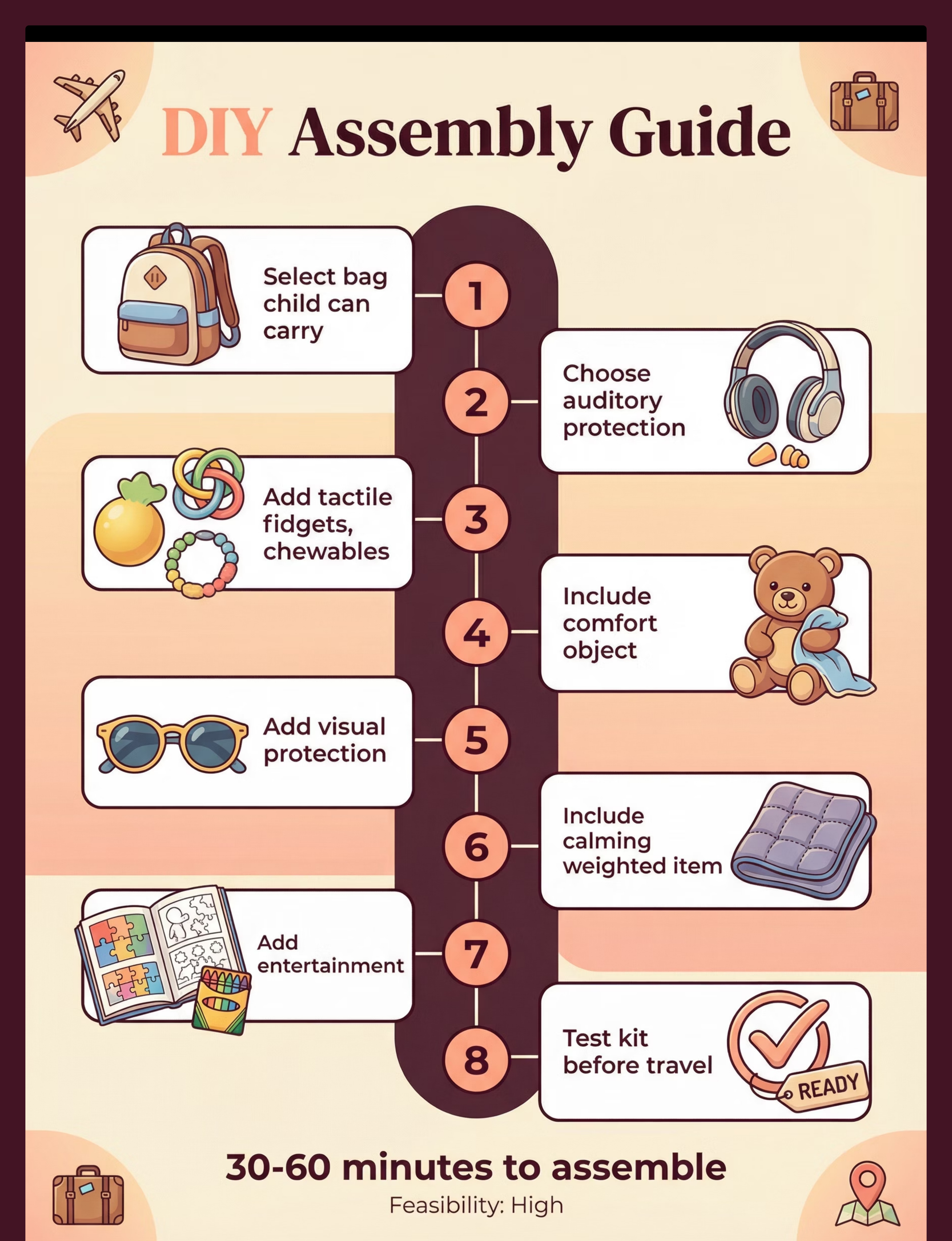
DIY Alternative (Save Variable Costs)
Feasibility: High (assembly) | Time Investment: 30-60 minutes | Cost Savings: Variable depending on items you already own
Materials Needed
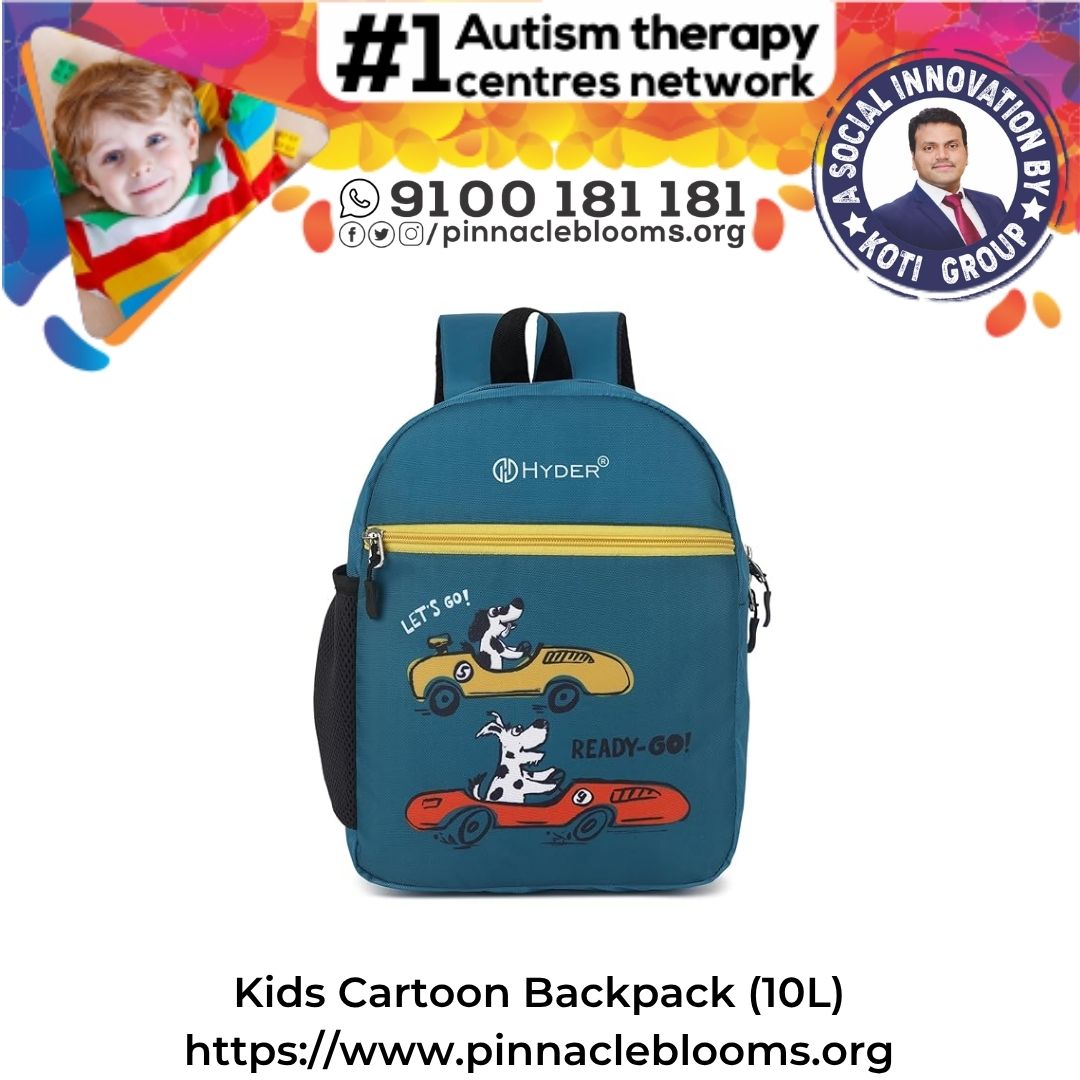
  • Small backpack or carrying bag
  • Various sensory items (some you may already own)
  • Comfort items from home
  • Labels or markers for identification
Assembly Steps
  1. Select bag: Choose small backpack child can carry comfortably
  1. Choose auditory protection: Add headphones or ear plugs
  1. Add tactile tools: Include favorite fidgets and chewables
  1. Include comfort: Pack familiar comfort object
  1. Add visual protection: Include sunglasses or hat
  1. Include calming: Add weighted item if space allows
  1. Add entertainment: Pack preferred quiet activities
  1. Test kit: Practice using before actual travel; adjust contents
DIY vs. Commercial Comparison
1
When to DIY
  • Assembling the complete kit
  • Creating DIY fidgets or comfort items
  • Customizing contents to child's specific needs
  • Using items you already own at home
2
When to Buy Commercial
  • Quality noise-canceling headphones (worth the investment)
  • Specialized weighted items (proper weight distribution)
  • Durable chewable jewelry (safety-tested materials)

Tradeoffs: Assembly of the kit is essentially DIY—you're selecting and organizing items rather than purchasing a pre-made kit. Individual items may be purchased commercially or made at home depending on the specific tool. The customization is the primary advantage, as you can tailor contents precisely to your child's needs and preferences. Most families save money by using items they already own combined with a few strategic purchases of specialized tools like quality headphones.

Preview of travel comfort sensory kit Therapy Material

Below is a visual preview of travel comfort sensory kit therapy material. The pages shown help educators, therapists, and caregivers understand the structure and content of the resource before use. Materials should be used under appropriate professional guidance.

Page 1
Page 2
Page 3
Page 4
Page 5
Page 6
Page 7
Page 8
Page 9
Page 10
Page 11
Page 12
Page 13
Page 14
Page 15
Page 16
Page 17
Page 18
Page 19
Page 20
Travel Transitions

Category 17: Travel & Transitions

5 MATERIALS

Portable supports for managing transitions, travel, community outings, and new environments. These materials provide comfort, predictability, and sensory support during changes in routine, helping children navigate challenging transitions with greater ease and independence.

Key Materials

  • Transition supports and warnings
  • Travel comfort and sensory kits
  • Car and vehicle supports
  • Waiting and queue supports
  • Travel preparation tools

Target Areas

  • Transition management
  • Travel comfort
  • Community participation
  • Flexibility
  • Predictability
Travel Comfort & Sensory KitPortable comfort and sensory regulation tools supporting travel readiness, sensory management, and comfort during journeys and community outings.
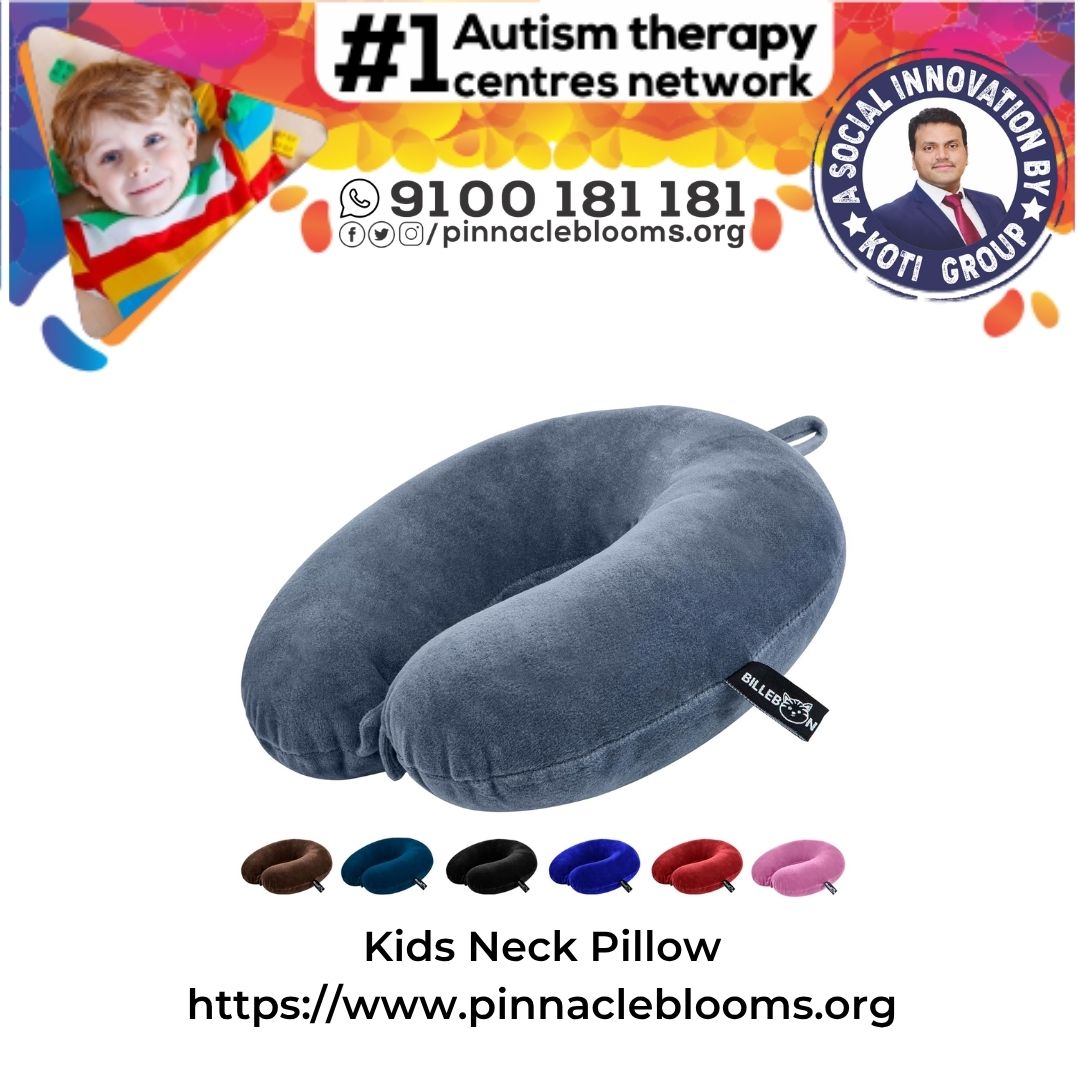
Kids Neck Pillow
TCK · 2278Kids Neck Pillow
Travel
Link copied!
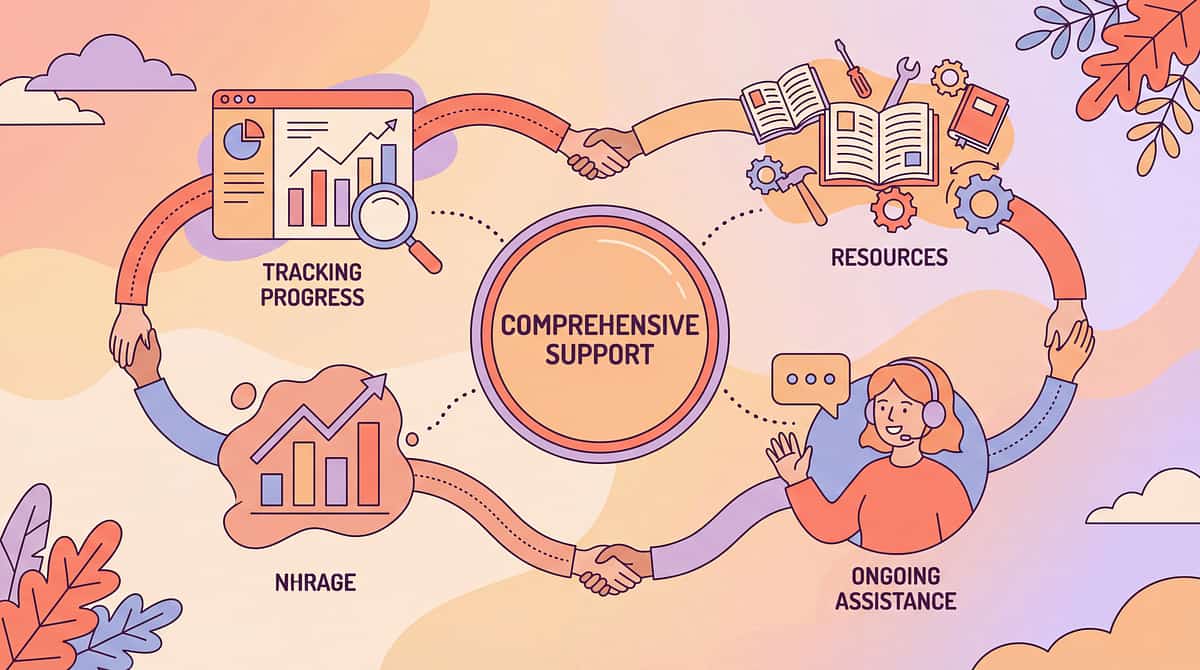
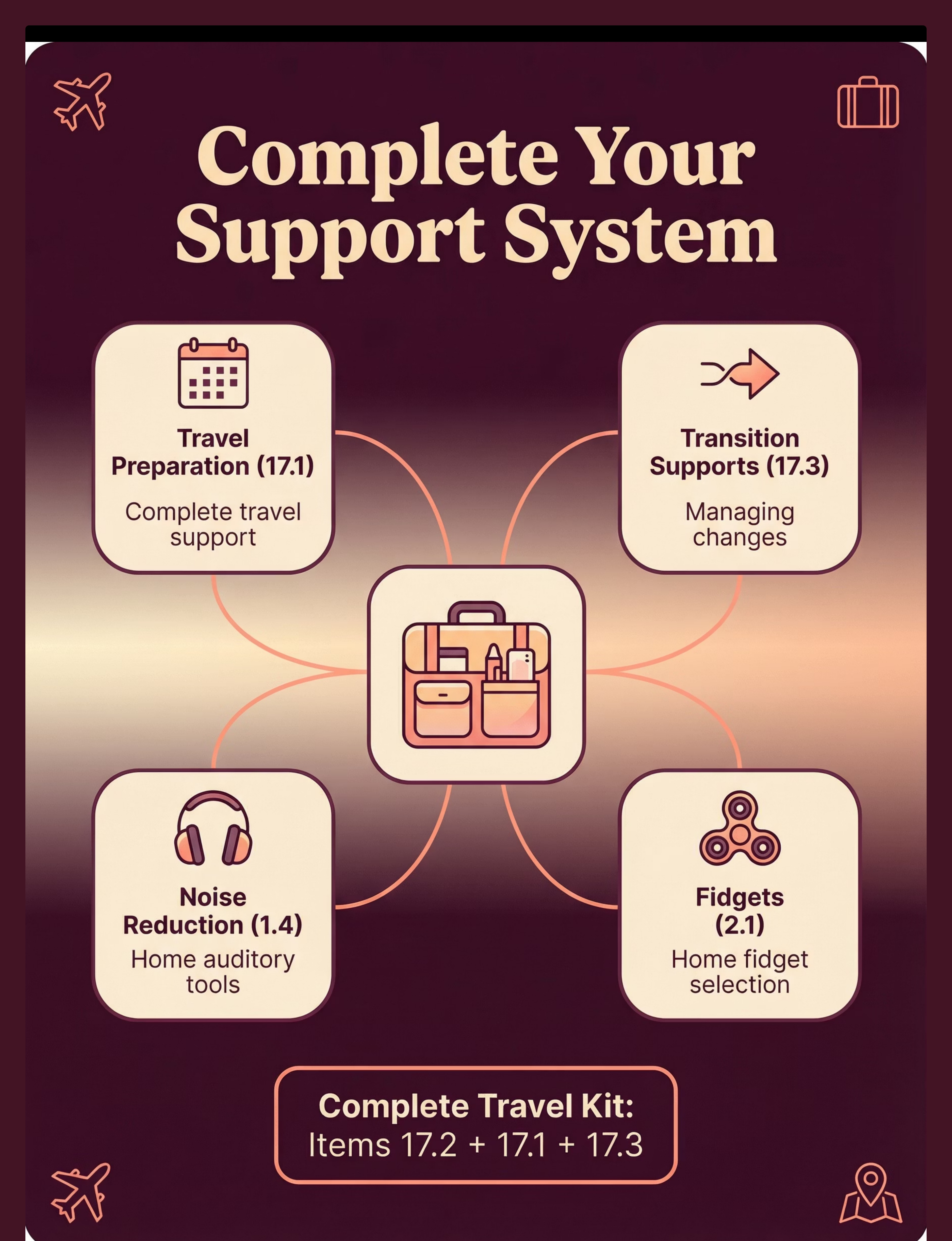
Complete Support System
Measuring Success
Track progress systematically to understand what's working and adjust the kit contents accordingly.
  • Baseline: Current travel difficulties, what helps at home, previous travel challenges, child's sensory preferences.
  • Goals: Kit for all travel, improved regulation, decreased meltdowns, more successful travel.
  • Success Indicators: Effective kit use, better travel experiences, improving self-regulation, family confidence.
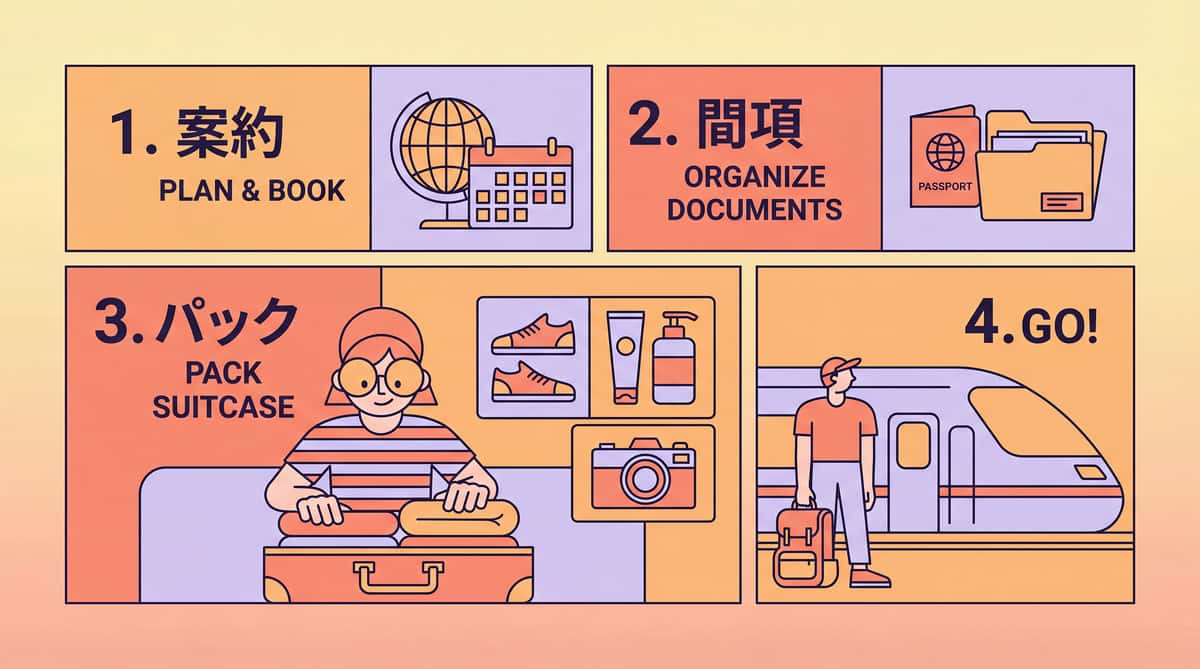
Pairing with Travel Preparation (17.1)
Combine preparation strategies with sensory tools for complete travel support.
travel-comfort-sensory-kit therapy material
Pairing with Transition Supports (17.3)
Manage the many transitions inherent in travel experiences with complementary tools.
travel-comfort-sensory-kit therapy material
Pairing with Noise Reduction (1.4)
Home auditory tools complement travel versions, ensuring consistent support.
travel-comfort-sensory-kit therapy material
Pairing with Fidgets (2.1)
Use home fidget selection to identify the best travel options for your child.
Recommended Bundles
  • Complete Travel Kit: Combine 17.2 + 17.1 + 17.3 for comprehensive support.
  • Sensory Travel Kit: Pair 17.2 + 1.4 + 2.1 for sensory-focused consistency.
Get Support
  • National Autism Helpline: 9100 181 181, 16+ languages, pinnacleblooms.org
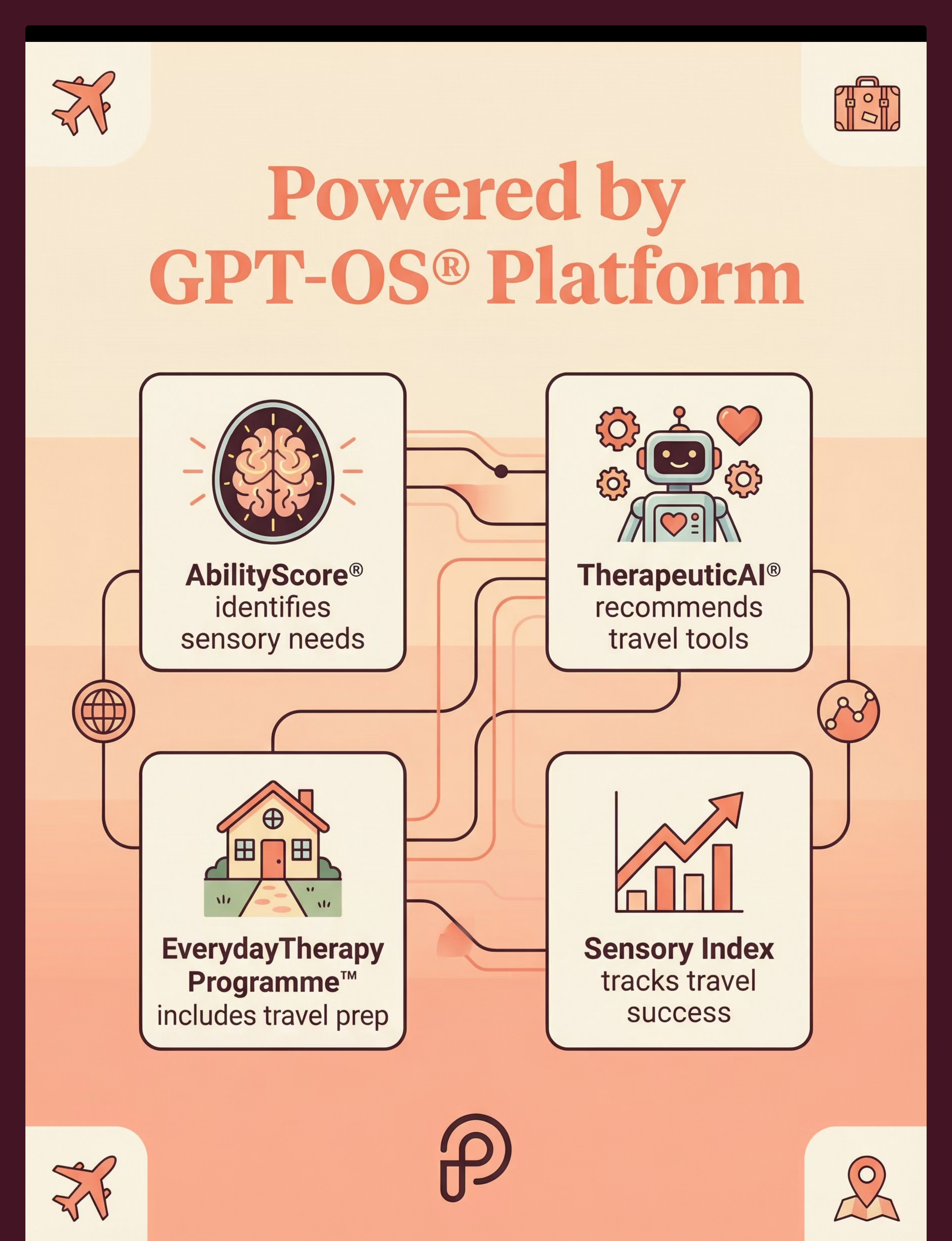
  • Platform Integration: AbilityScore®, TherapeuticAI®, EverydayTherapyProgramme™, Sensory Index.

Quick Summary
Travel comfort and sensory kits provide portable regulation tools including headphones, fidgets, chewables, weighted items, and comfort objects for managing sensory challenges during travel. Core Kit (Rank 1), moderate-strong evidence, essential travel support.
travel
sensory
kit
headphones
fidgets
comfort
portable
OT
core-kit
Common searches: travel sensory kit autism, airplane autism kit, travel headphones kids, sensory travel bag, travel comfort autism, flying with autism, travel regulation kit

Disclaimer: This is educational information designed to support families in assembling effective travel sensory kits. Always consult qualified occupational therapists, speech-language pathologists, or pediatricians for personalized recommendations based on your child's specific needs. Individual results vary. Travel sensory kits support regulation but do not guarantee specific outcomes. Professional guidance ensures tools are appropriate for your child's developmental level and sensory profile.